Archive for the ‘Uncategorized’ Category
The last post dealt with our time in southern France. From there we crossed into Italy and then turned north towards Assendria and then on to Aosta in the Italian Alps.
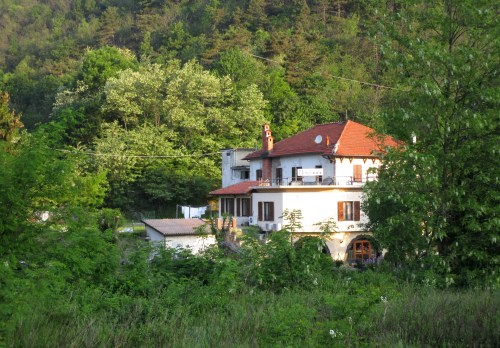
On the 7th we stopped for the night at a hotel near the town of Ovada in Italy. My reason for taking this route north to the Italian Alps was that I hoped to find Moltoni’s Warbler, a recent split from Subalpine Warbler. I think I have seen this species before, but the identification lies wholly on geographical grounds and I wanted to see and hear one well to be absolutely sure. This area is at the northern edge of its range and in spite of searching areas of scrub, field margins and waterside vegetation we drew a blank. The valley was narrow and held a six lane motorway, a railway line and the minor road we were travelling on, so noise levels were high – which didn’t help, but I did add a number of species to the trip list.
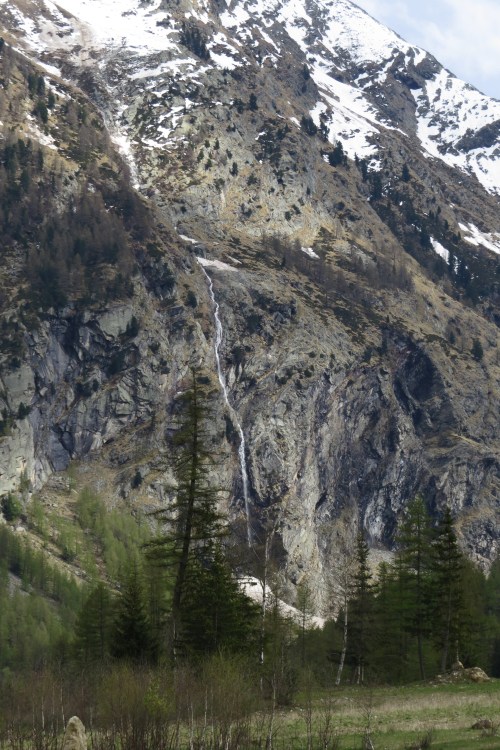
We arrived in Aosta in the mid-afternoon. A short distance west of Aosta a minor road entered the Gran Paradiso National Park from the north. The weather had deteriorated and there was light rain.
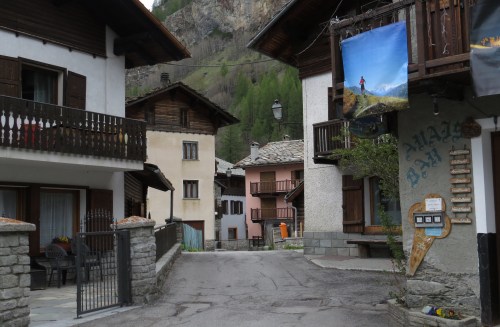
At the end of the road we stopped at the small town of Corbe.
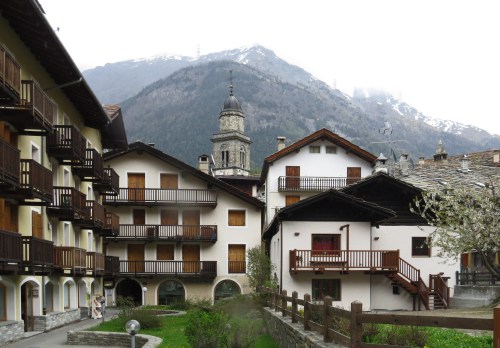
Fortunately the rain eased off although we didn’t get to see the 4000m peak of Gran Paradiso.

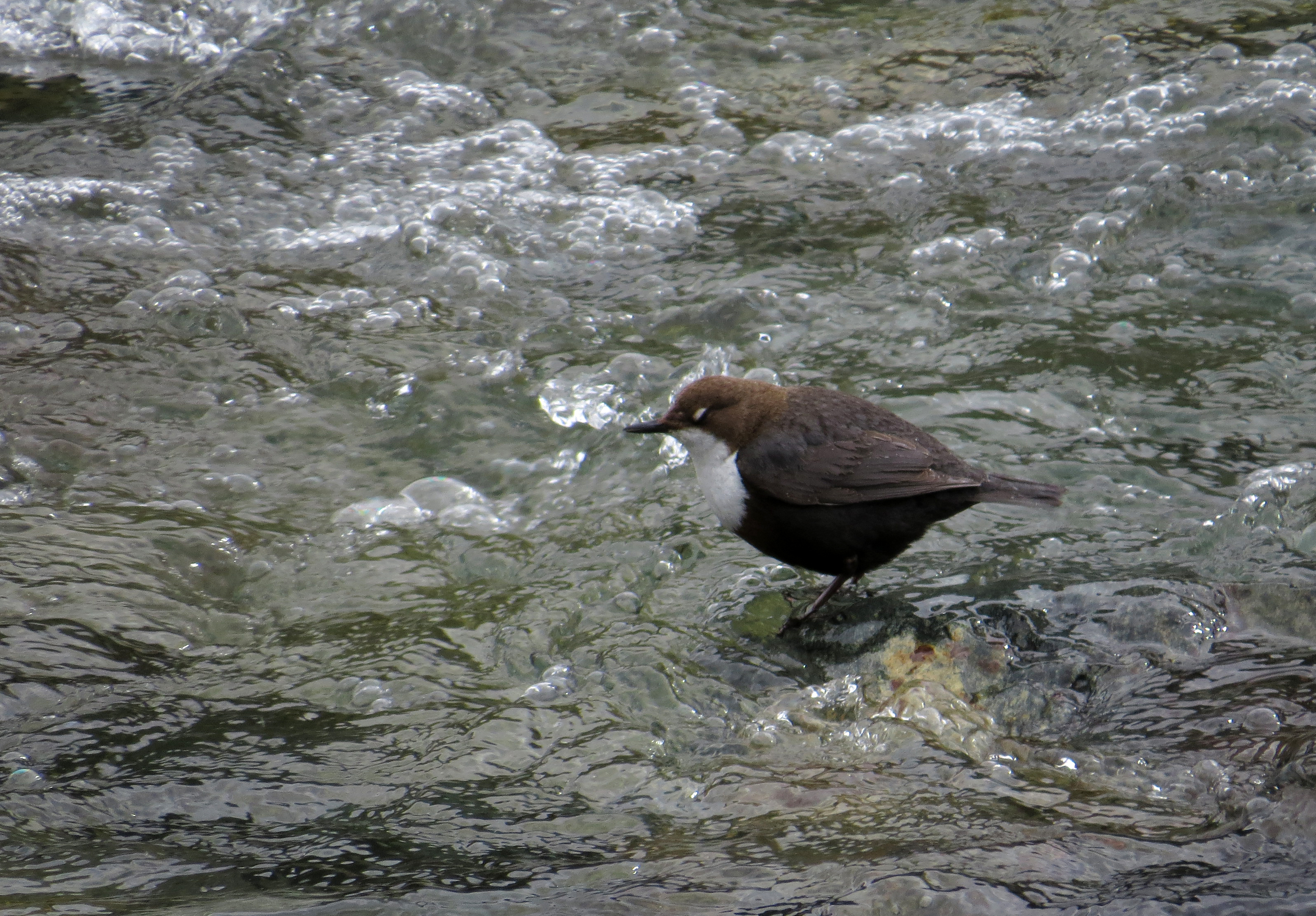
The river that flows through the town gave us great views of a pair of Dippers.

I have seen this species many times but usually they fly off at your approach or are seen distantly. On this occasion I could spend as long as I wanted photographing them
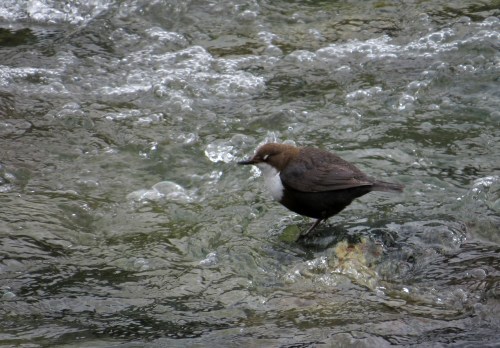
Note the white ‘third eyelid’ or nicitating membrane that protects the eye when they are underwater.

The following morning we drove east to the town of Breuil-Cervinia. On route we had great views of the mighty Matterhorn, at 4478m one of the highest of the Alpine peaks. Note the ‘banner clouds’ just below the summit. This is caused by winds blowing across the summit causing an area low pressure in the lee (just like an aerofoil does) this in turn pulls warmer, damp air up from below which turns to cloud as it cools.

The pretty town of Breuil-Cervinia is dominated by views of the Matterhorn.

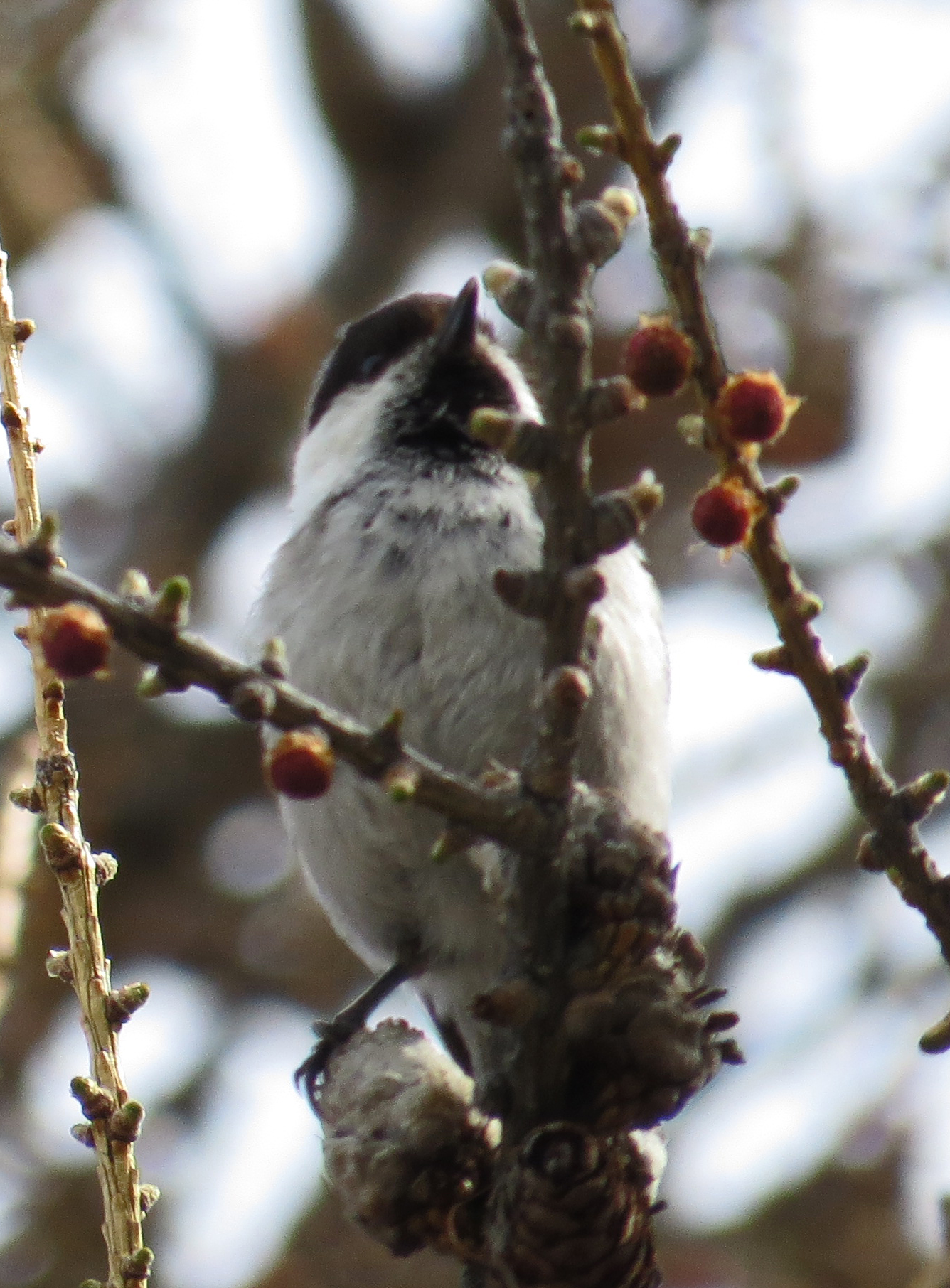
Woodland on the edge of the town held a number of Willow Tits, a species that I use to see here in Dorset but it has been extirpated from much of southern England for some time now.
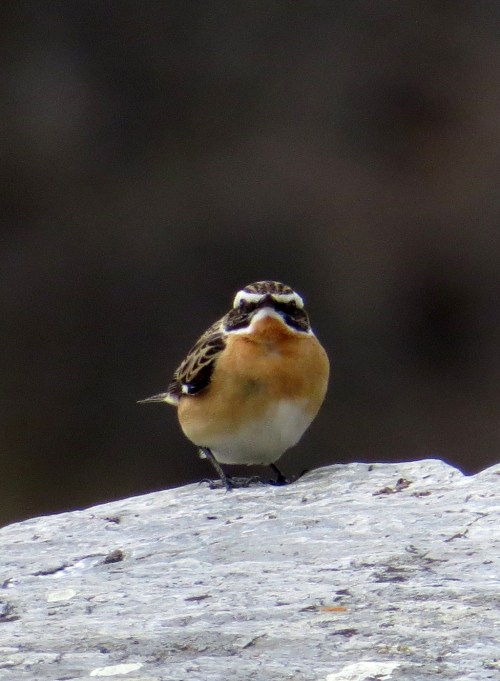
Just north of the town near the ski lift we came across a number of nice birds such as Fieldfare, Water Pipit, another Dipper, Grey Wagtails and this Whinchat.

I was particularly pleased to see several Citril Finches as I have only seen this European endemic a couple of times before. Surprisingly two days after I took this photo Britain’s twitching fraternity were watching the UK’s second ever Citril Finch in Norfolk.
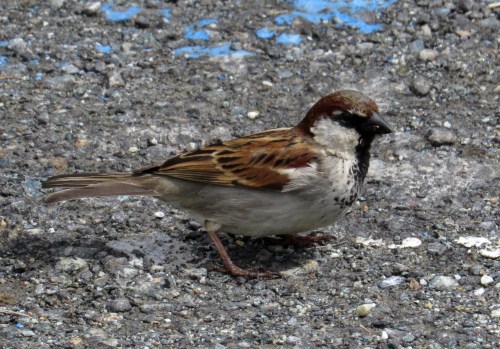
Since we arrived in Italy the familiar House Sparrow had been replaced by the newly recognised Italian Sparrow. Italian Sparrows occur as far north as Aosta but here at Cervinia, just a few Km from Switzerland a range of intermediates occur.

The white cheeks, supercilium and heavily spotted breast are all features of Italian Sparrow but the grey feathering on the crown indicates that it has House Sparrow genes in there as well.

For comparison, here is a photo of a pure Italian Sparrow taken by Lake Garda, Italy in 2013

I took the cable car up above the snow line in hope of finding some high altitude birds ….

….clearly the local Alpine Choughs were nest-building.
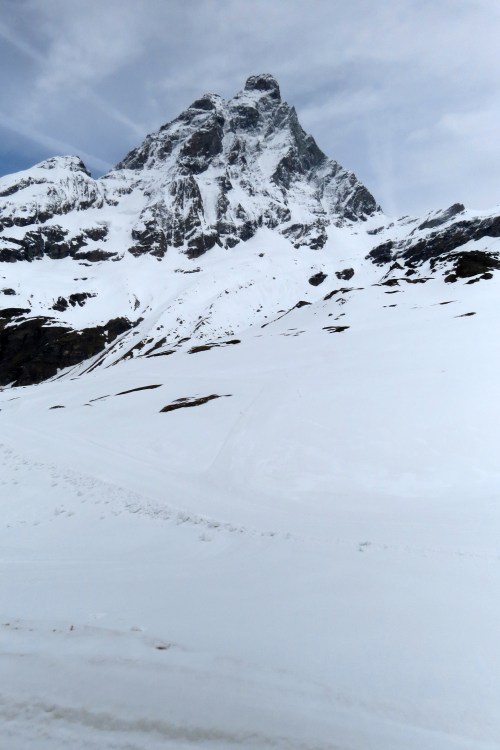
I also had a brief view of an Alpine Accentor plus a pair of Snowfinches. The area was full of skiers taking advantage of the fact that they could still ski as late in the year as mid-May.

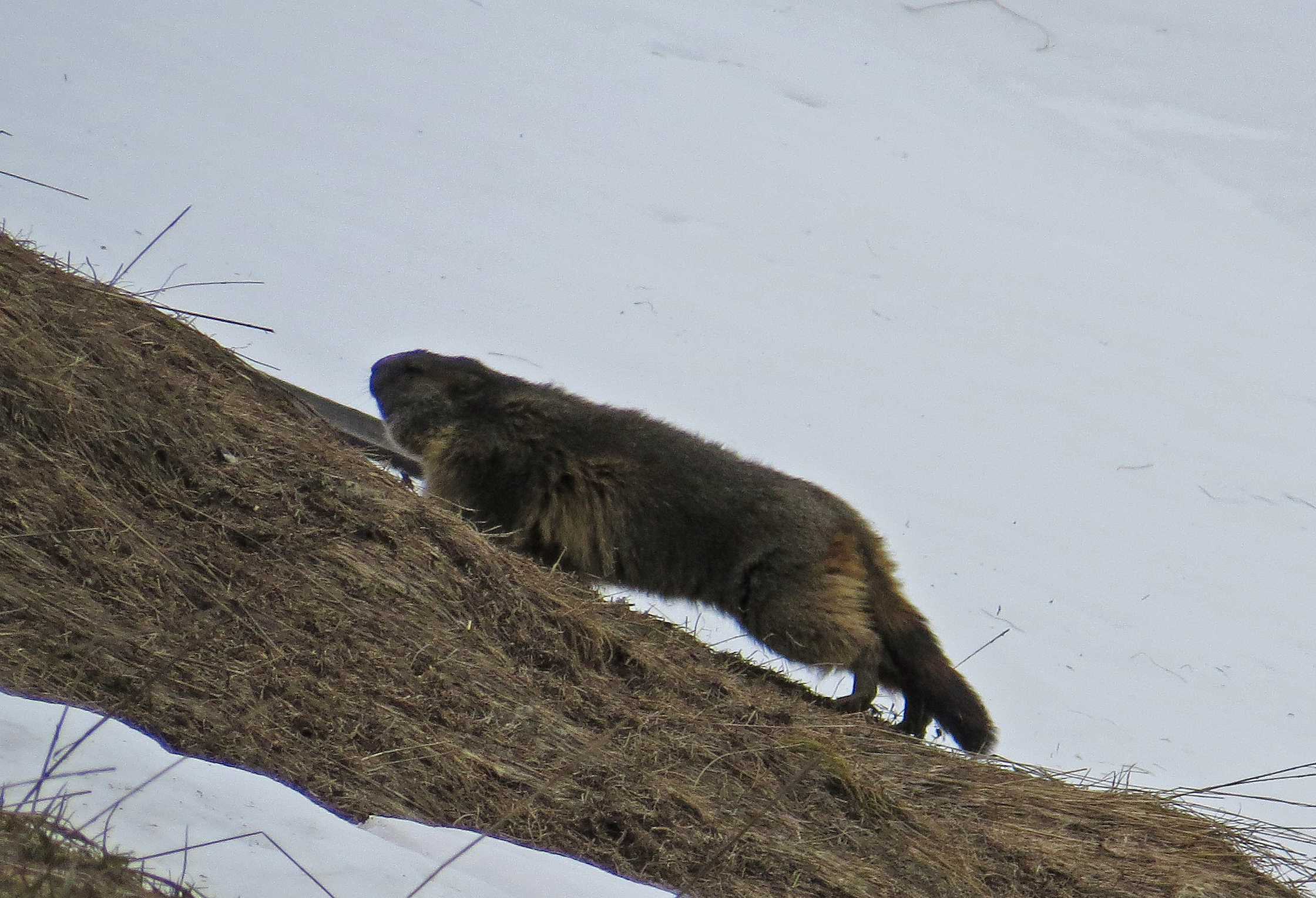
Whilst waiting to come down the ski lift I watched the antics of several Alpine Marmots.
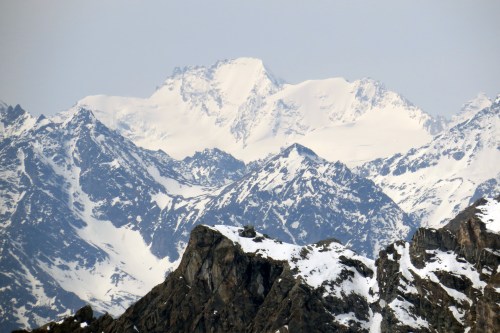
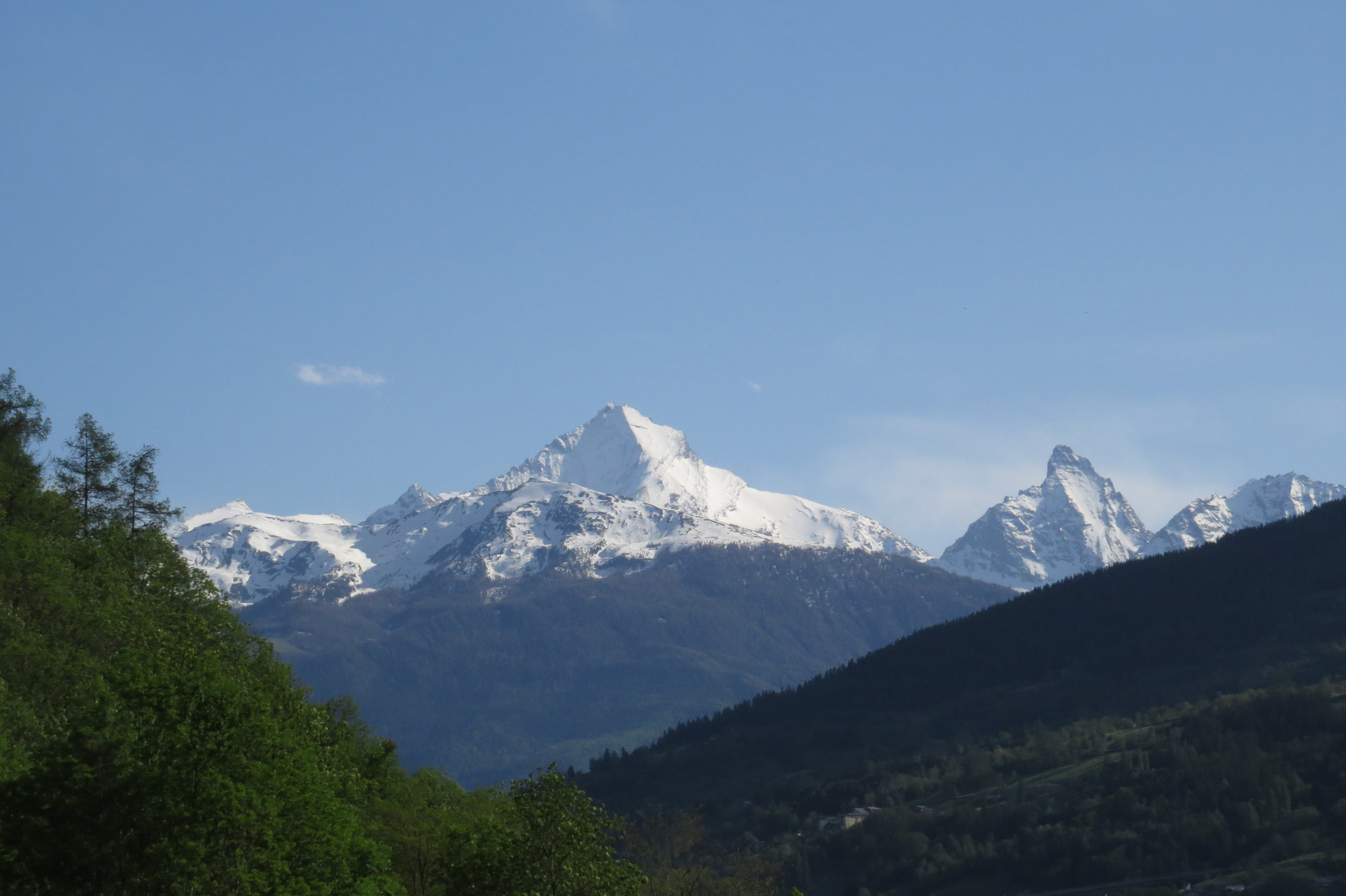
I asked a skier who was waiting to descend if he knew what this distant peak was, the answer was Gran Paradiso, the one that had been shrouded in cloud yesterday ….
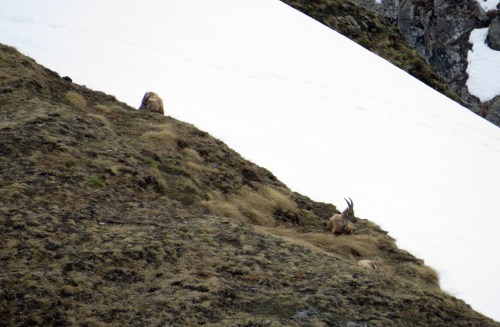
…. but more importantly the skier told me there were many ‘mountain goats’ around when he arrived earlier that morning. With the ski lift on its way I just had a couple of minutes to see if I could locate an Alpine Ibex before it was time to descend. They clearly had moved some way from the ski lift but I found a group of three about half a mile away just before I had to board the ski lift. A new mammal for my list which means that I had three ‘lifers’ on this trip: one bird, one mammal and one country.
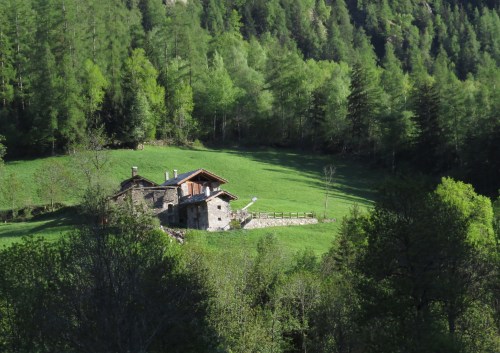
Later in the day we explored several areas closer to Aosta, seeing nice birds like Crested Tit ….

…. and this Short-toed Eagle.

The following day it was time to head northwest towards Chamonix in the French Alps.

Rather than go through the long (and expensive) Mont Blanc tunnel we decided to cross into Switzerland via the Gt St Bernard Pass and take the old road that climbs to the top of the pass before descending into Switzerland and then doubling back on ourselves to get to Chamonix.
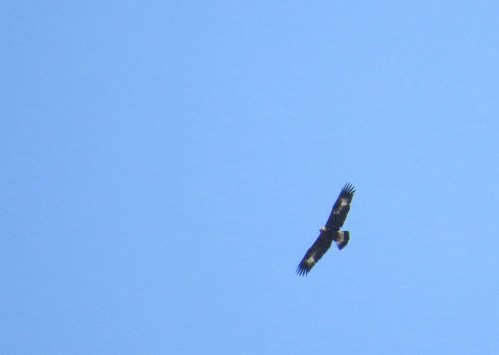
Unfortunately we found that this road was closed but we drove as far up it as we were allowed. Birding was good as we had the road to ourselves, and we found Firecrest, Black Woodpecker and this immature Golden Eagle.

We crossed into Switzerland via the St Bernard tunnel then took a side road into the scenic Valle de Ferret.

We saw quite a few birds here but the star of the show was this immature Lammergeier or Bearded Vulture, part of a reintroduction program to the Alps. The bird is clearly in wing moult but strangely the replaced feathers on the right-wing are white.

The bird reappeared after a while carrying a huge stick. I would have thought that it was too young a bird to be nest-building. Lammergeier’s are known to feed on the marrow of long bones by dropping them from a height to crack them open. Perhaps it was getting in some practice in with this stick.
From the Valle de Ferret we continued south to the town of Martigny then westwards and crossed back into France. We stayed the night in the beautiful town of Chamonix in the shadow of Mont Blanc. This will be the subject of the next post.
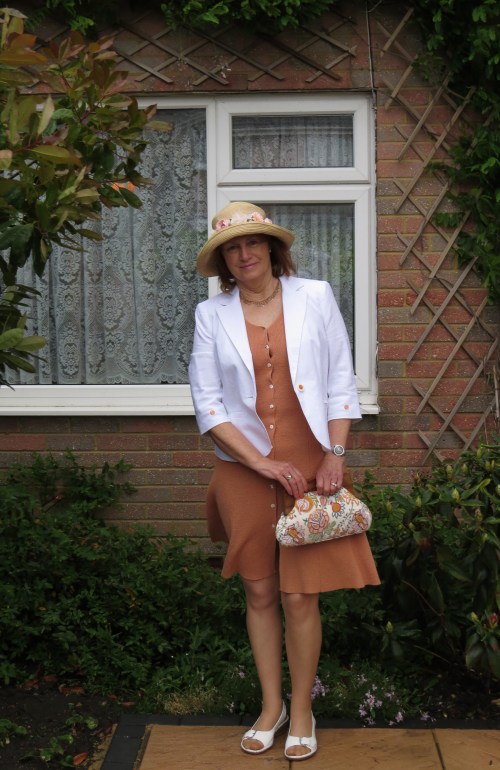
Margaret is a member of the Woman’s Institute, the WI, who are celebrating their centenary this year. As a result a representative from each group across the UK were invited to attend a garden party at Buckingham Place on the 2nd and Margaret was delighted to be chosen to represent the Upton group. Coaches were laid from all over the UK to bring the 8000 delegates to the Palace. The Royal Family was represented by the Duchess of Cornwall and Princess Alexandra. Margaret had a wonderful time, her friend Dottie from South Africa, who now lives in Sussex, was also chosen and said to her ‘haven’t we done well, a couple of scruffs from Africa getting an invite to the Palace’.

On the 28th of May Margaret and I visited Titchfield Haven, a reserve in Southampton on the east side of Southampton Water close to where it joins the Solen
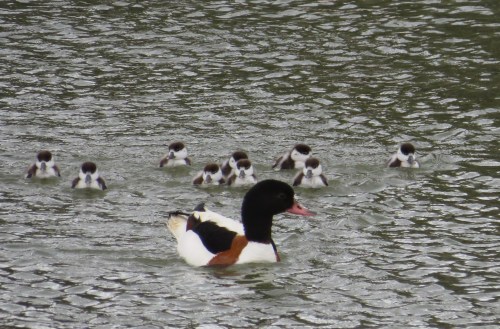
There were plenty of birds to see such as this female Shelduck and her brood ….

…. breeding Avocets ….
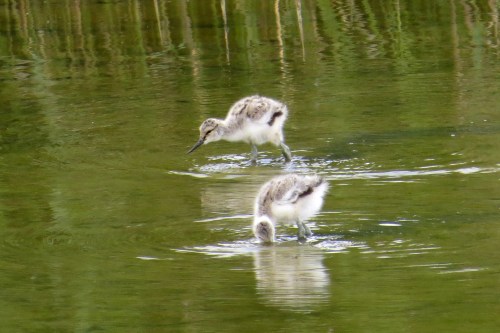
…. with their cute chicks ….

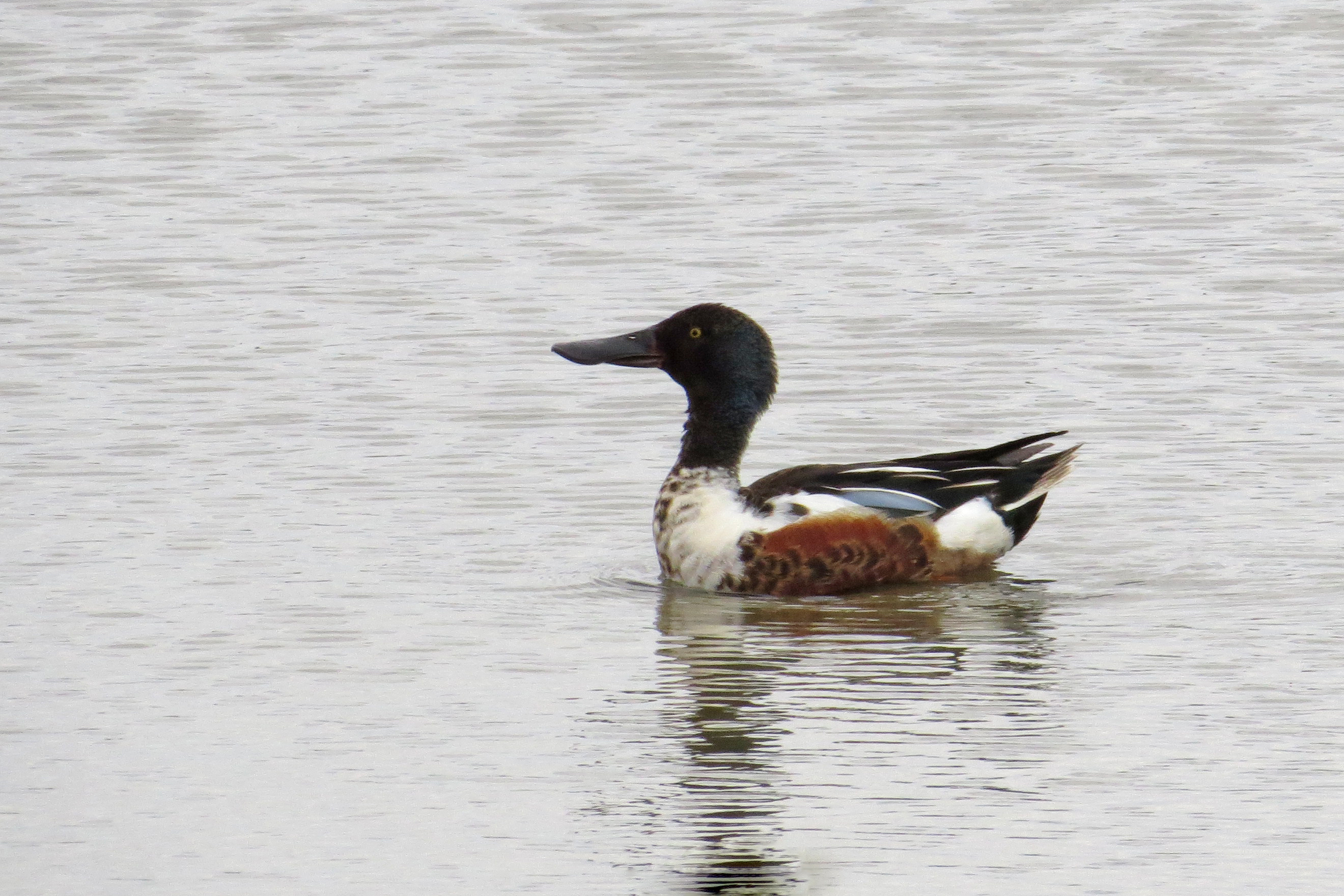
…. and plenty of ducks such as this drake Shoveler (note it has started to moult into its dull ‘eclipse’ plumage) ….
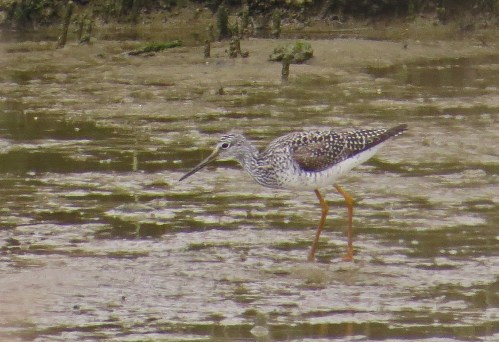
…. but our target was this rare Greater Yellowlegs, a wader from North America. Up to 2012 there have been 31 Greater Yellowlegs recorded in the UK compared to 334 Lesser Yellowlegs, its smaller and more northerly cousin. The bird gave us the run around for several hours before showing well from the coast road. I have seen this species once before in the UK, almost 30 years ago in July 1985 at Minsmere.

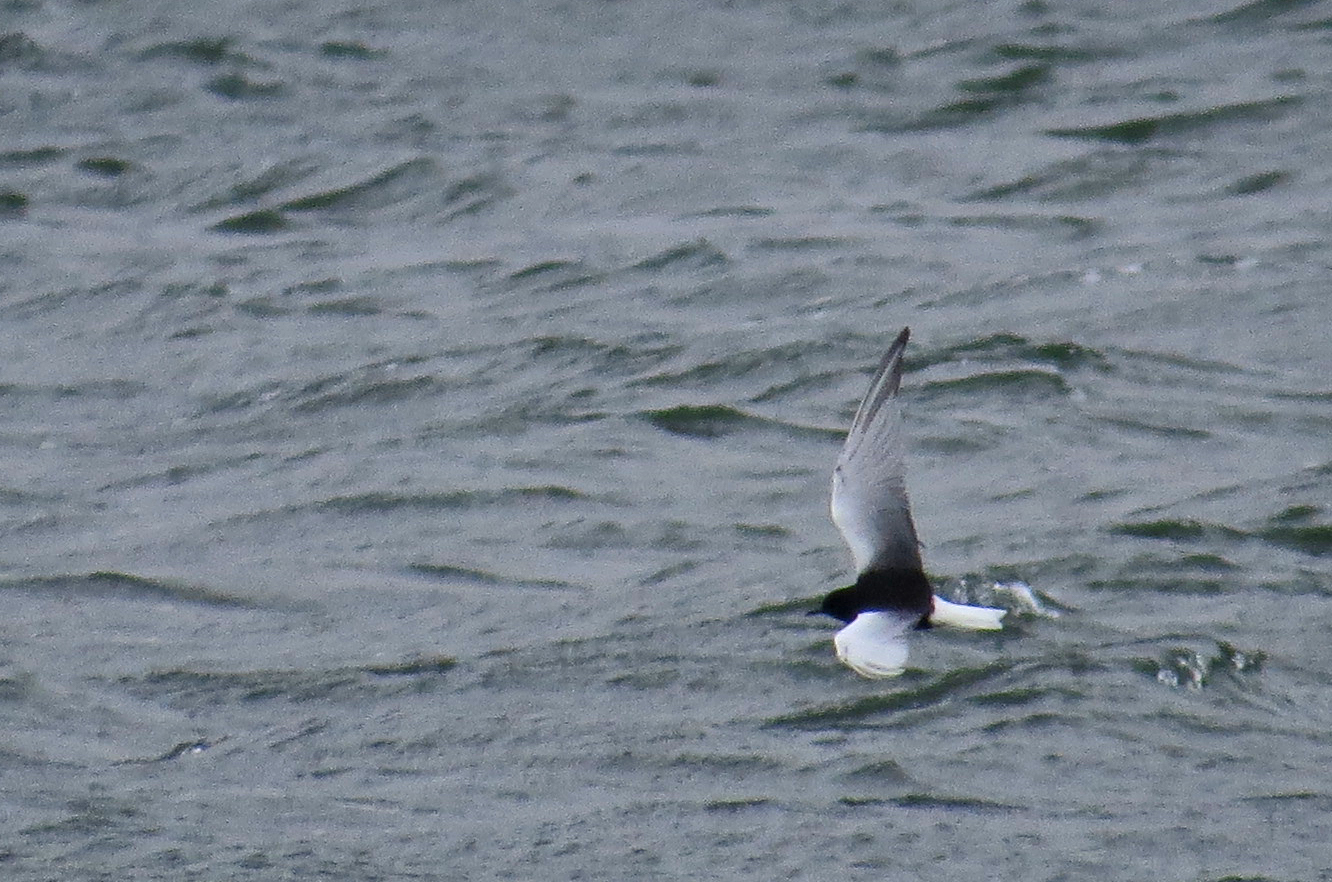
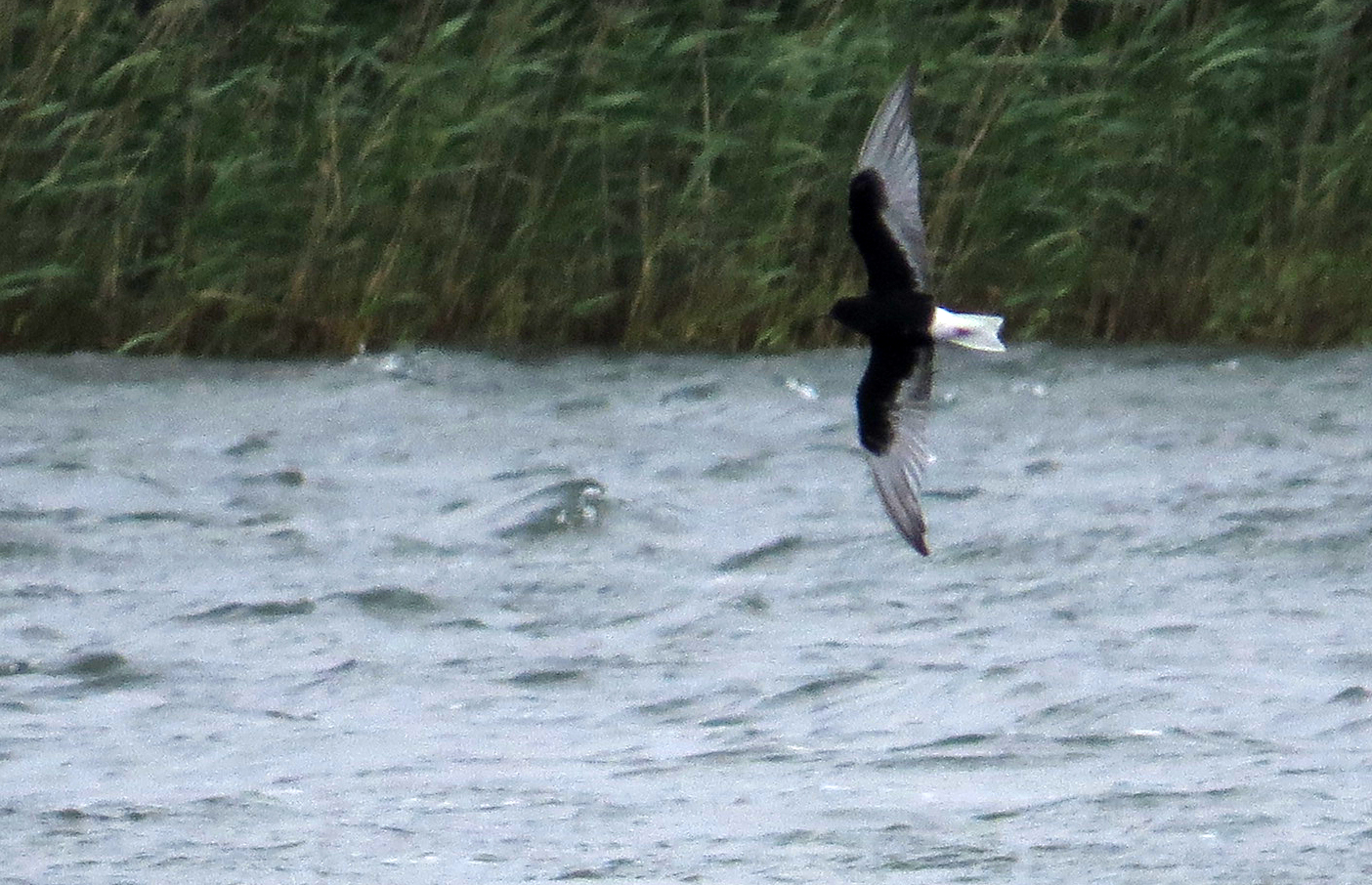
Good birds kept being found. On the 2nd of June, whilst Margaret was in London, an adult White-winged Black Tern was found at Swineham gravel pits. In spite of the strong wind it gave good views.
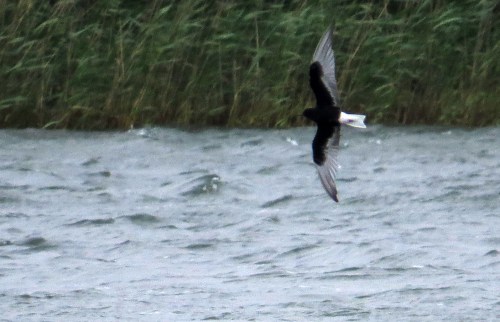
One of the most beautiful of all the terns, I was pleased that it stayed until the 3rd at least, so I could return with Margaret.
As I outlined in the last post, bad weather in the Alps caused us to retreat southwards. We left the rain behind once we were south of the congested town of Gap and then continued on our long drive to St Martin de Crau near Arles, where we booked into a nice hotel for three nights. We were heading for the huge wetland of the Camargue, the delta of the mighty River Rhône, but I was particularly interested in birding the stony plain known as La Crau. Once this was the delta of the River Durance until the river changed course and flowed north to meet the Rhône at what is now Avignon, the abundant stones on the plain were washed down from the Alps by the river in ancient times.
I visited the Camargue for several days in 1980 but the time spent on La Crau was rather short so I wished to explore the area again. In particular I wanted to see Little Bustard, a bird I have only seen on the 1980 trip, the famous Christchurch bird on New Years Day 1987 and once in Morocco in 1990. After 25 years I thought it was time I saw some more.

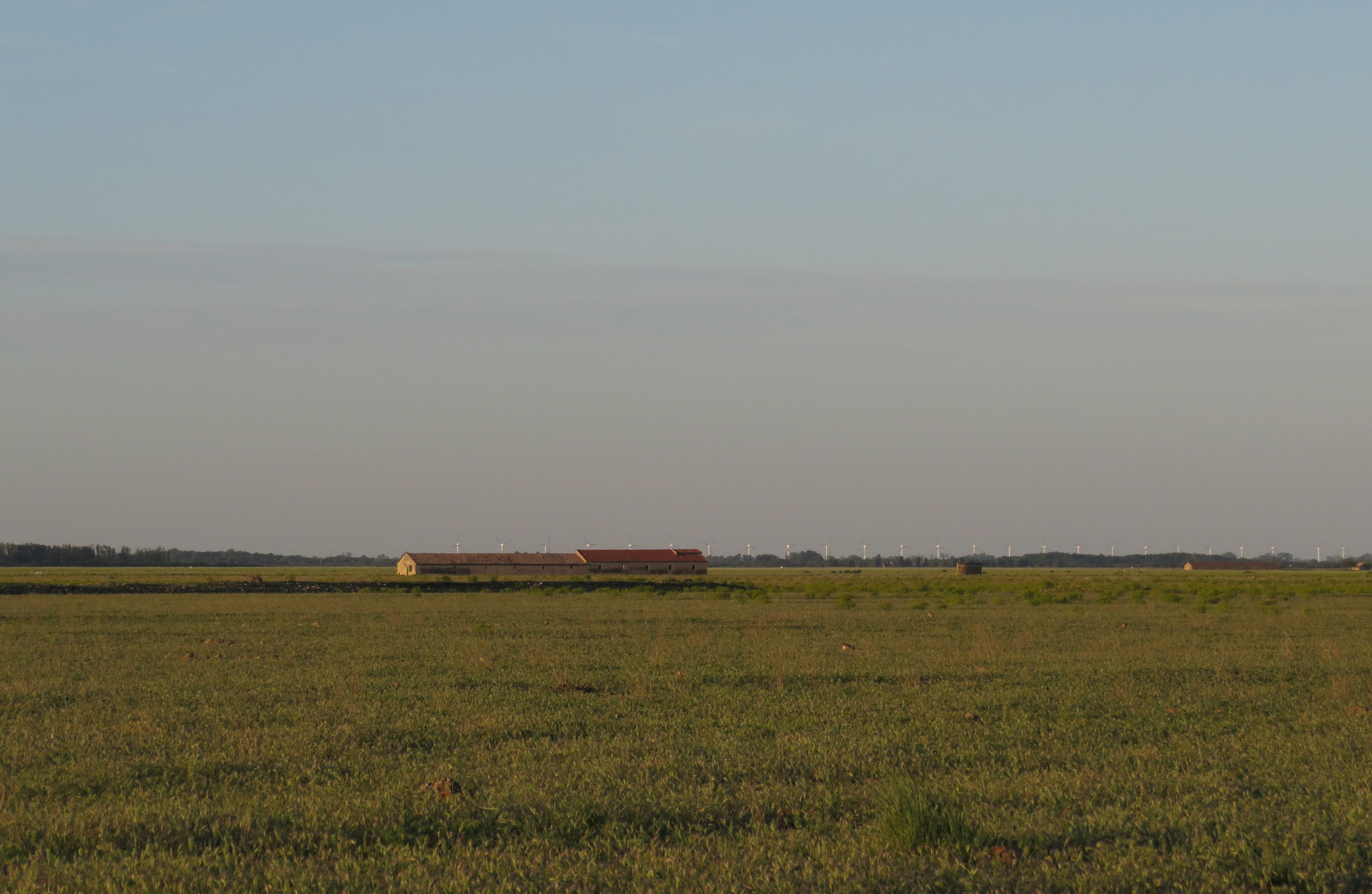
We had enough time on our first evening to visit the reserve at the northern end of the plain near Etang des Aulines.
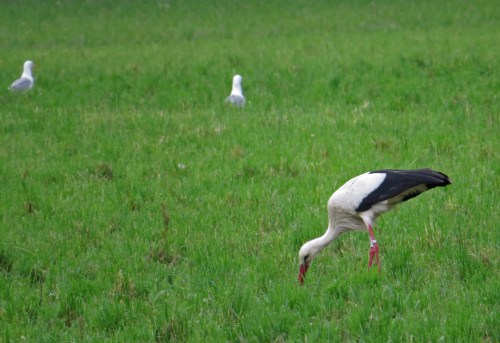
An adjacent field held this White Stork ….
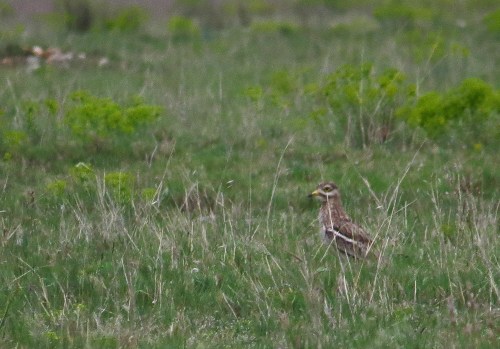
…. and on the reserve were several very vocal Stone Curlew, but there was no sign of our main targets, Little Bustard and Pin-tailed Sandgrouse.
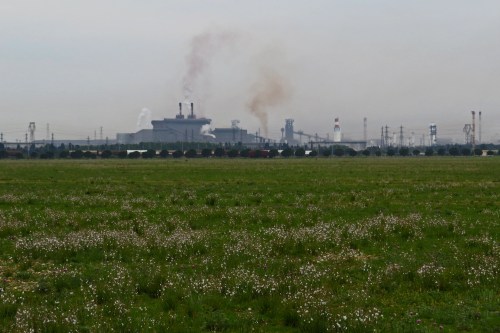
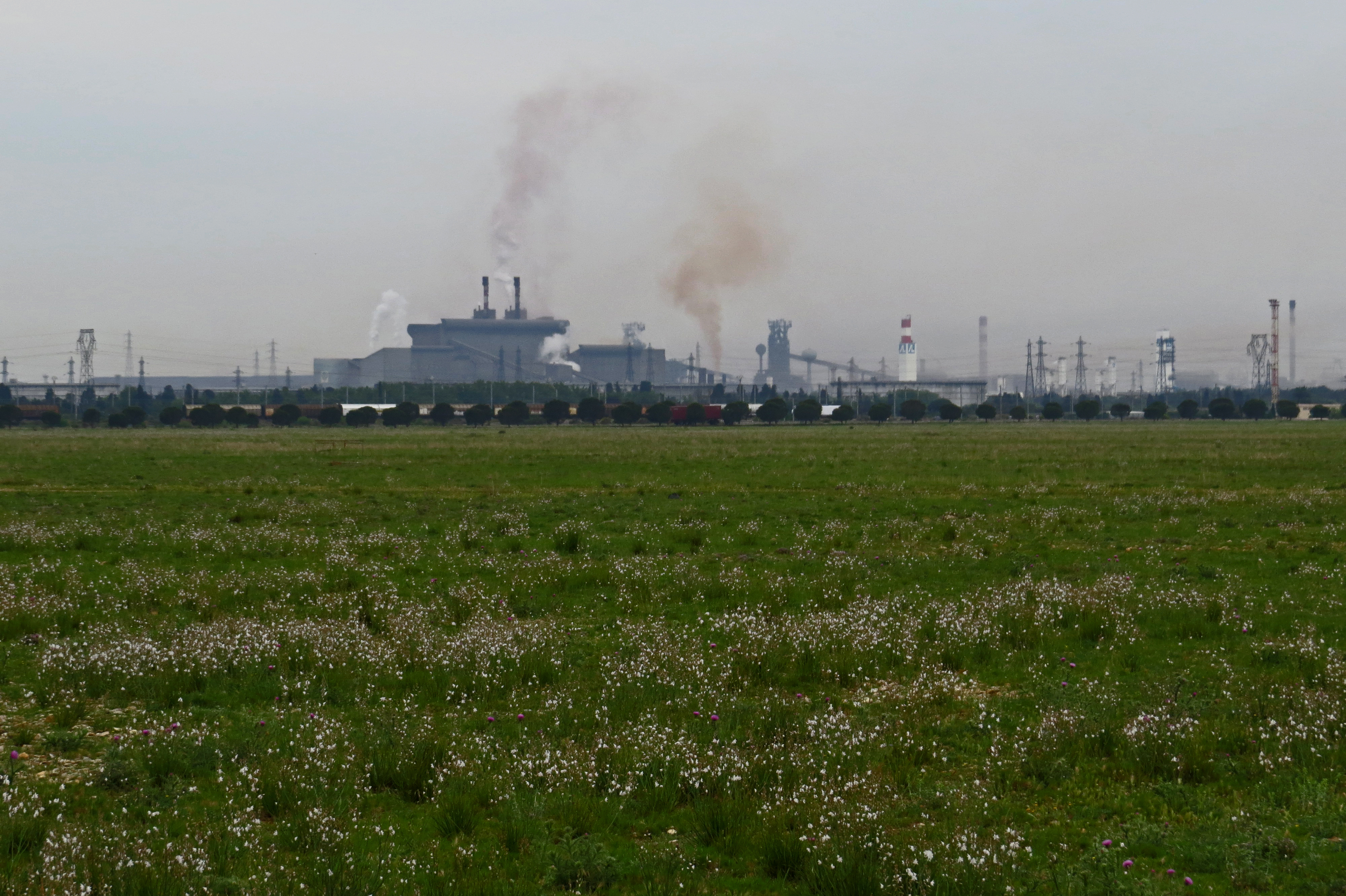
Checking the map showed that there were a number of tracks at the south end of the plain but this was adjacent to the industrial area of Fos-sur-Mer and the nearby port, but they looked promising so we made the effort to arrive there soon after dawn. There was a military airfield nearby and when the fighter jets took off, the sound was deafening but at least all was quiet for the first couple of hours.

In spite of these drawbacks we had a great mornings birding with wonderful views of up to 50 Bee-eaters

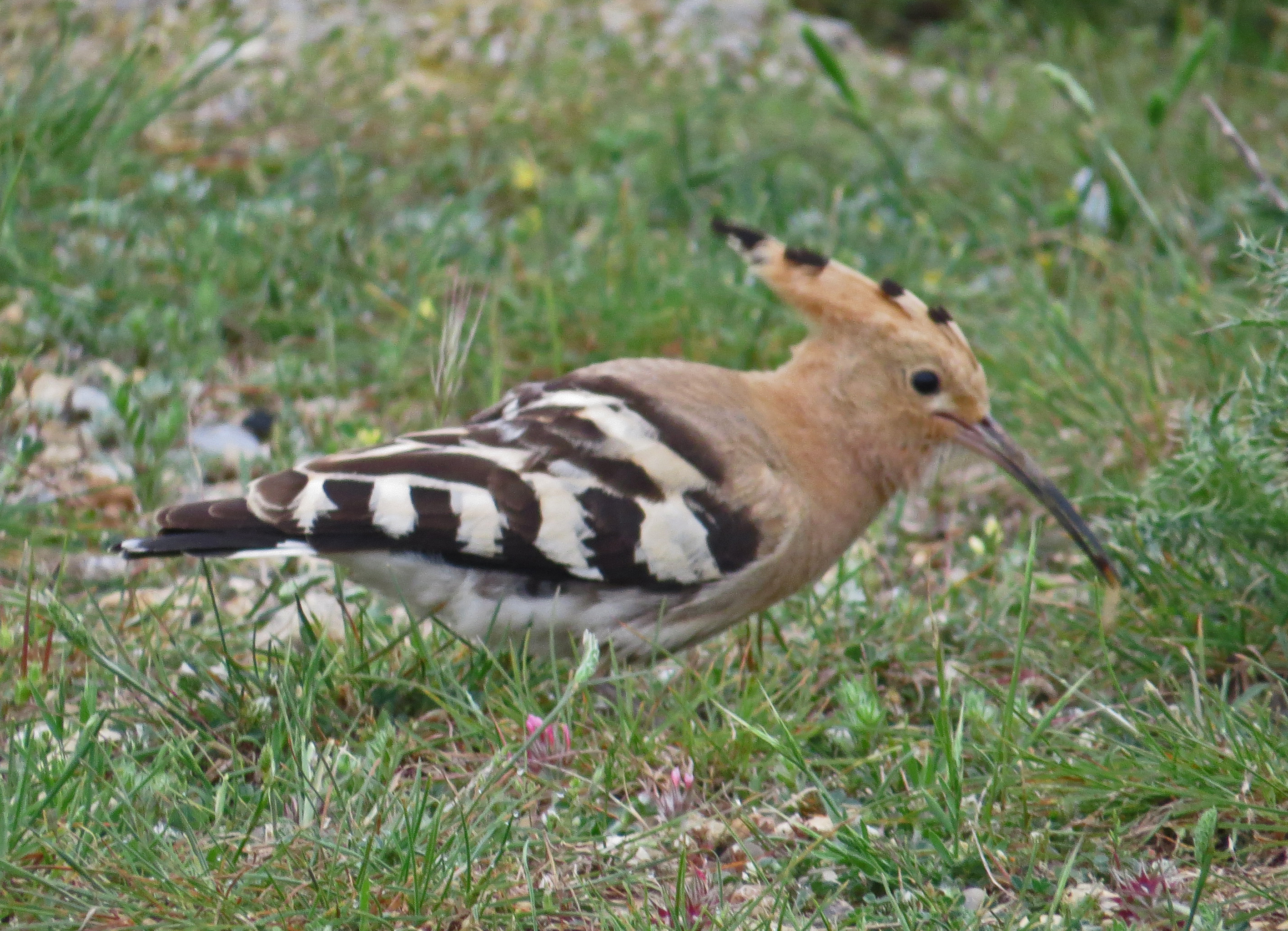
…. several Hoopoe ….
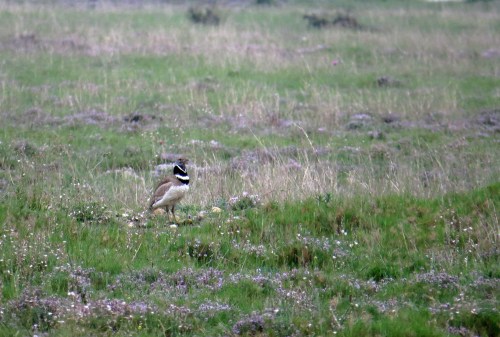
…. but the highlight of the morning undoubtedly was getting reasonable views of this male Little Bustard displaying ….
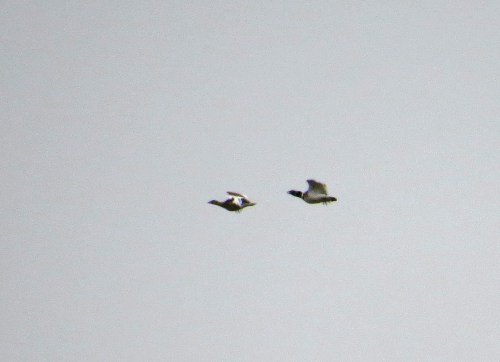
…. and later we saw several pairs in flight.

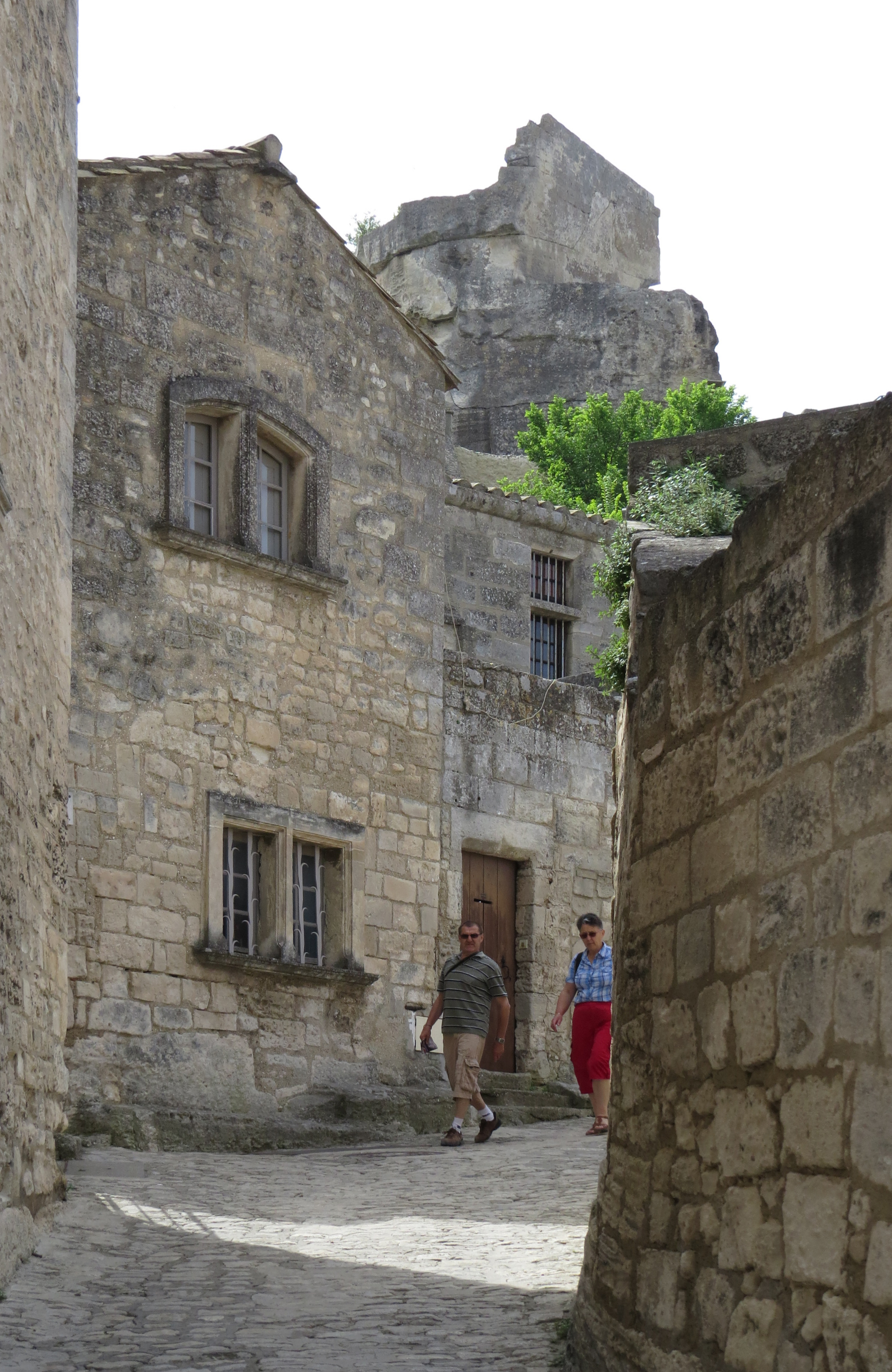
In the late morning we headed north to a range known as Les Alpilles and the hill-top town of Les Baux de Provence. The aluminium ore bauxite was discovered in these hills and was named after Les Baux. For the first time on our trip we saw the sun!

Once a defensive fortress, Les Baux is now wholly given over to the tourist trade.
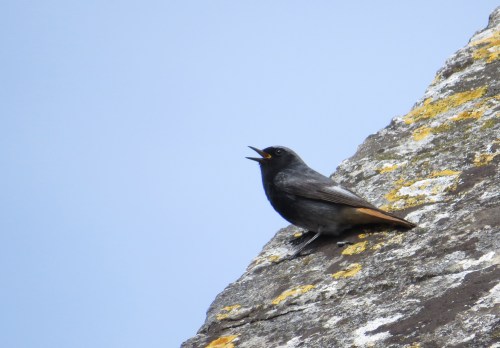
Black Redstarts were common and this singing male gave great views.

It was a bit of a climb to the top of Les Baux, we stopped at the top for a cuppa before returning to the hotel for a siesta, as we had started so early. When we went out again about 1615 I realised I hadn’t got my camera – I must have left it in the cafe. We rushed back to Les Baux hoping we would get there before closing time. We arrived at the cafe at 1650, but it was too late, they were already closed.

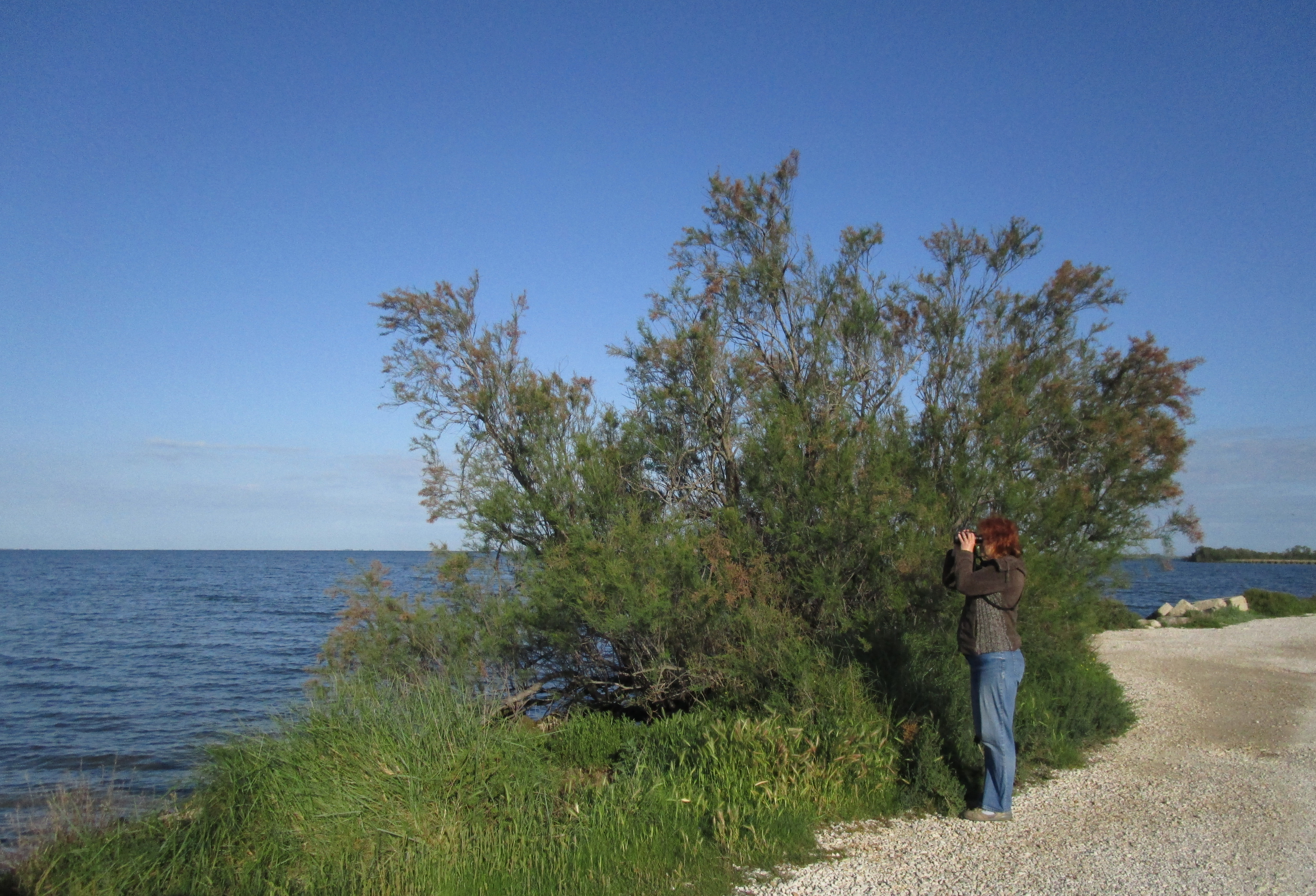
On the 6th we spent the morning in the Camargue. First we visited some freshwater marshes near Mas d’Agon, before driving down the east side of the massive Etang de Vaccares. The big lake itself was almost devoid of birds but we saw lots in the adjacent marshes, but of course I only had my pocket camera.
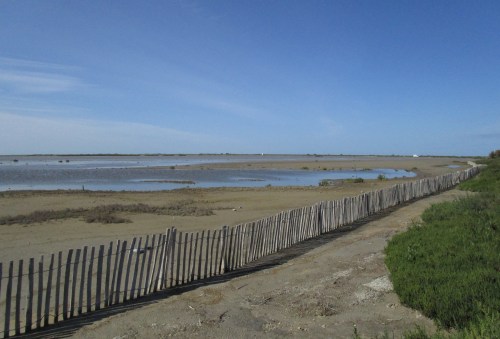
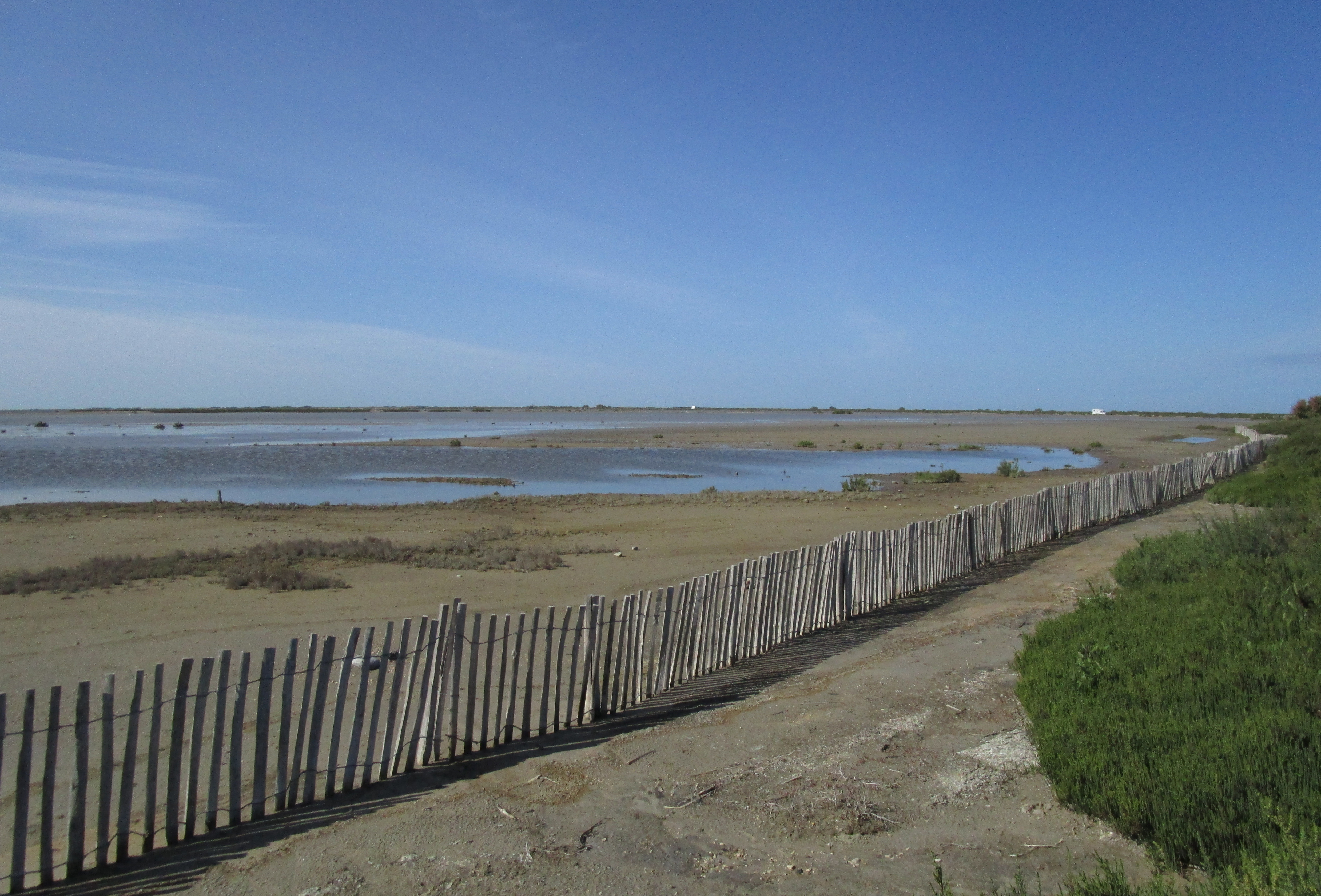
Eventually we arrived at the southern end near Le Paradis. Here were a number of saline lagoons with Stilts, Avocets, Kentish Plover and Little Stints.
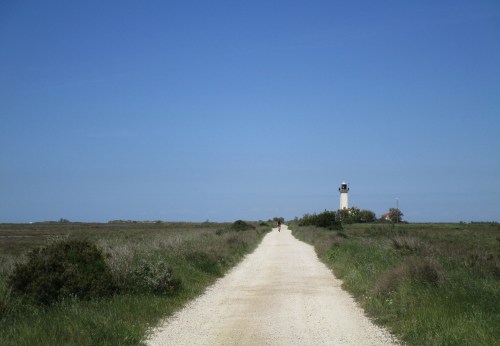
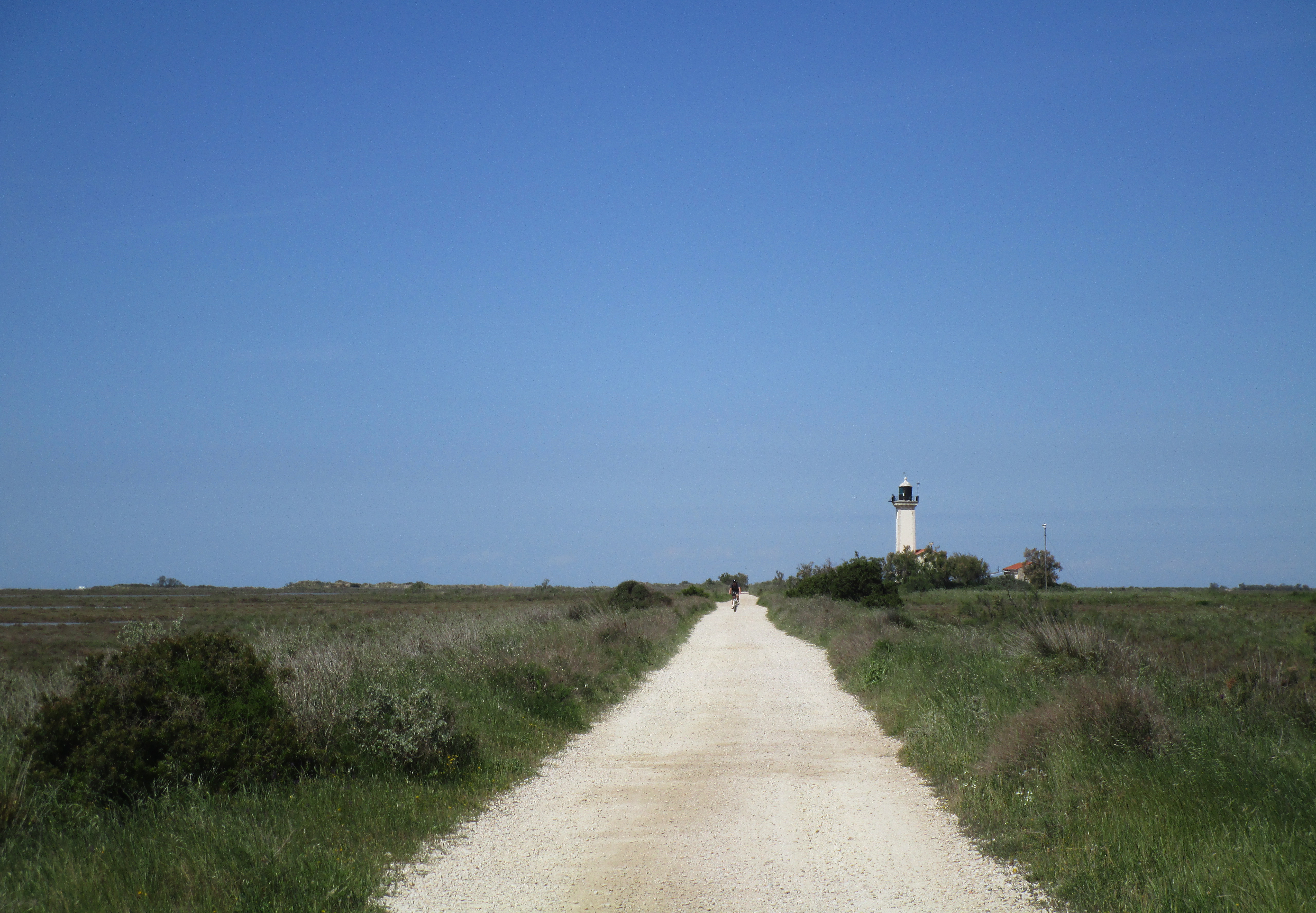
We initially drove and then walked along the track called Digue à la Mer as far as the lighthouse, Phare de la Gacholle. We saw many interesting gulls, terns and waders plus of course many of the Greater Flamingos for which the Camargue is famous.
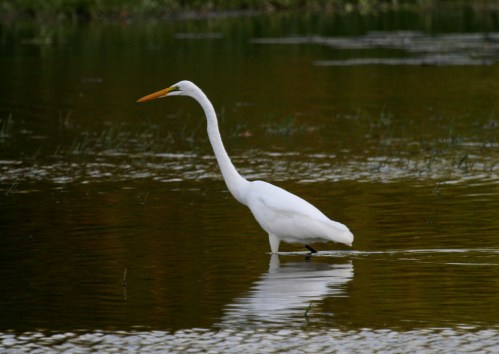
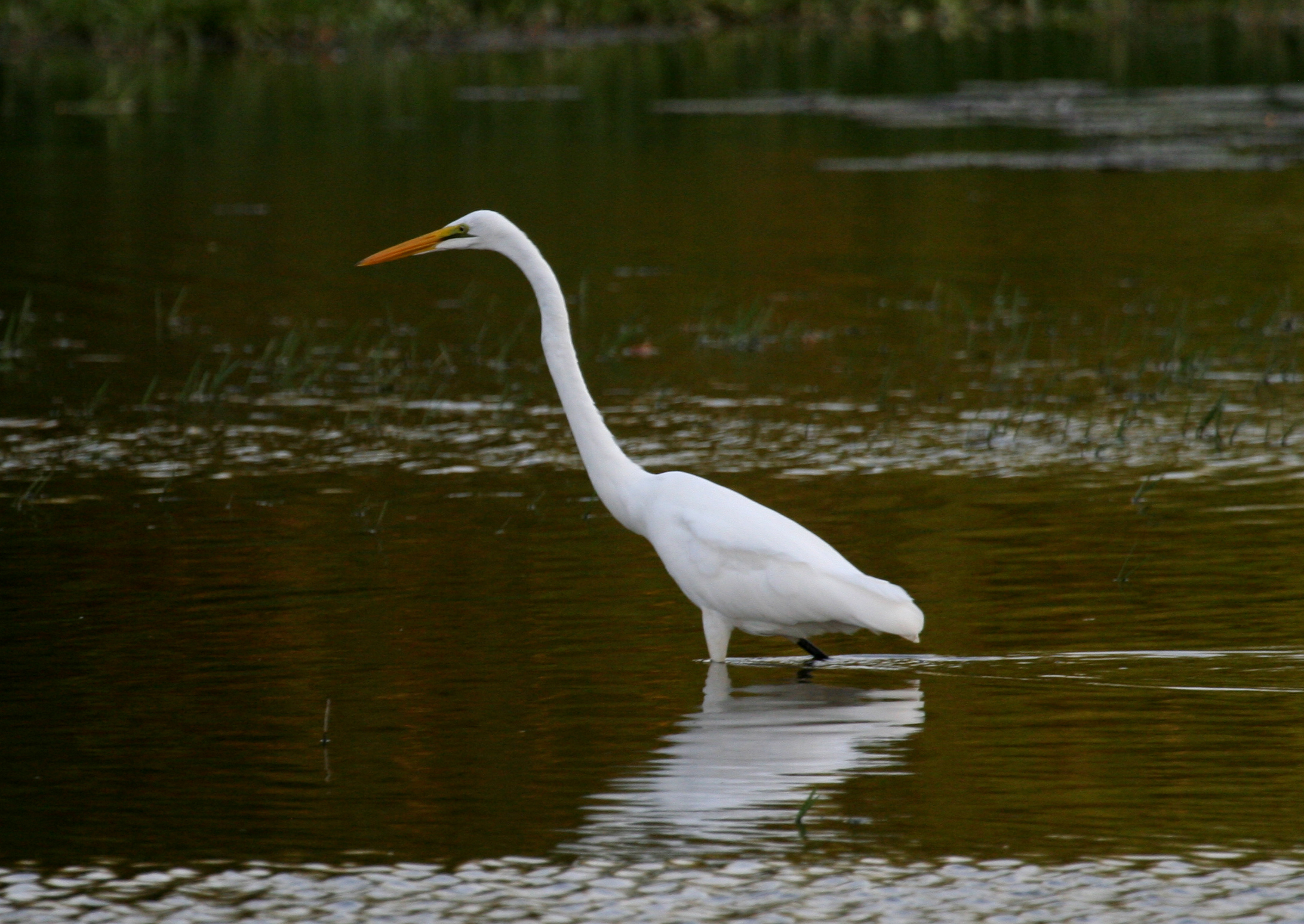
Without my camera I can’t post any photos of the birds we saw, which is a shame as it was the most photogenic part of the trip as far as birds are concerned. However I’ve included photos of two species that I have taken elsewhere, both notable because they were not found in the Camargue on my last visit 35 years ago and are relatively recent colonists. Firstly Great White Egret (photo taken in Ethiopia in 2011) ….

…. and Glossy Ibis (photo of a vagrant individual taken near Wareham, Dorset in 2012).

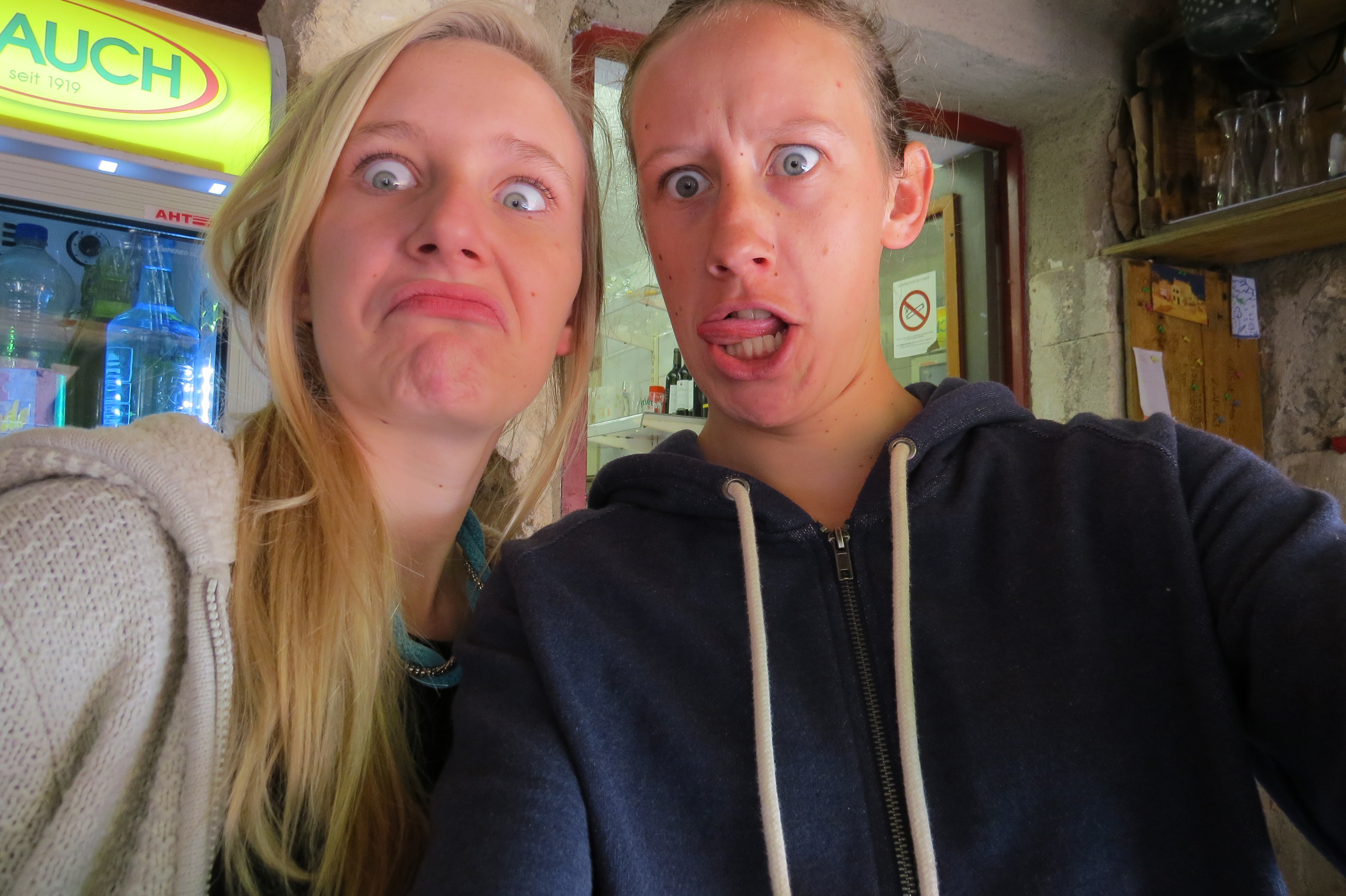
By early afternoon we had to cut short our visit to this outstanding area and drive back to Les Baux in the hope of rescuing the camera. To my relief the people at the café still had it and to my amusement they had been using it to take silly photos of themselves!
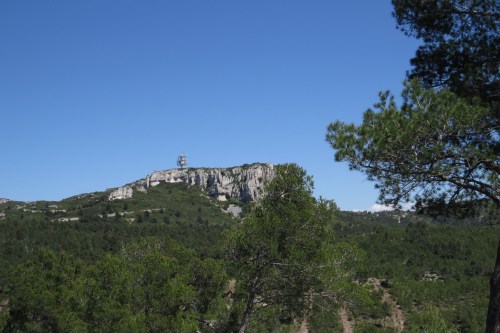
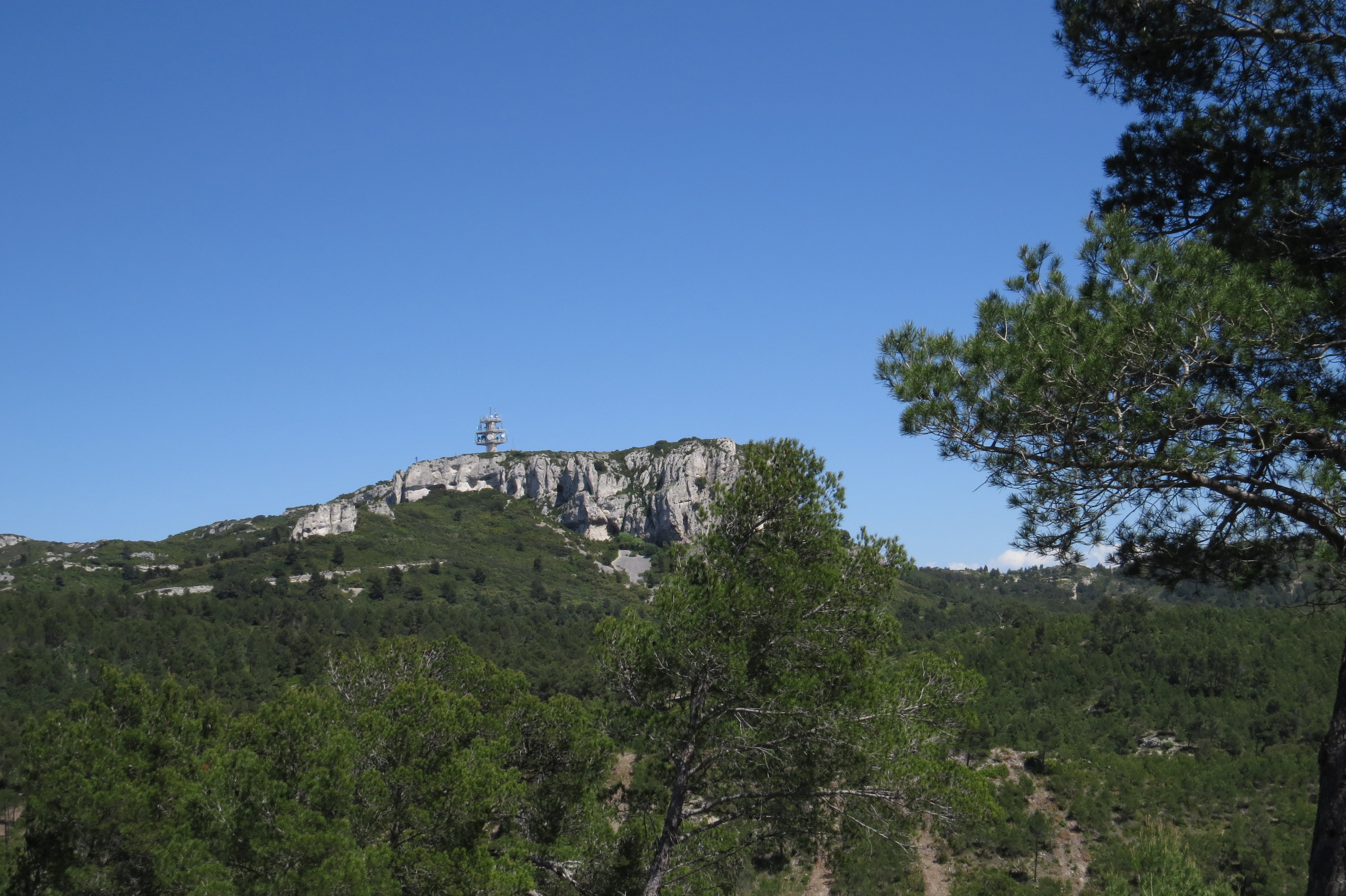
After Les Baux we spent a while at the nearby lookout of La Caume. This is said to be a stake out for the scarce Bonelli’s Eagle but we had no luck, although we did see a distant Egyptian Vulture.

We continued on to the town of Arles which is situated on the banks of the mighty Rhône.
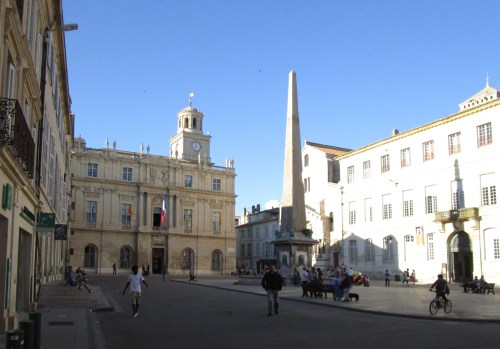
After failing to find Bonelli’s Eagle this afternoon you can imagine my surprise when an immature Bonelli’s flew over this square in the evening. I got a reasonable view, but of course didn’t have time to get a photo. I would imagine it had been hunting over the Camargue and was returning to Les Alpilles, a short distance to the north, to roost.

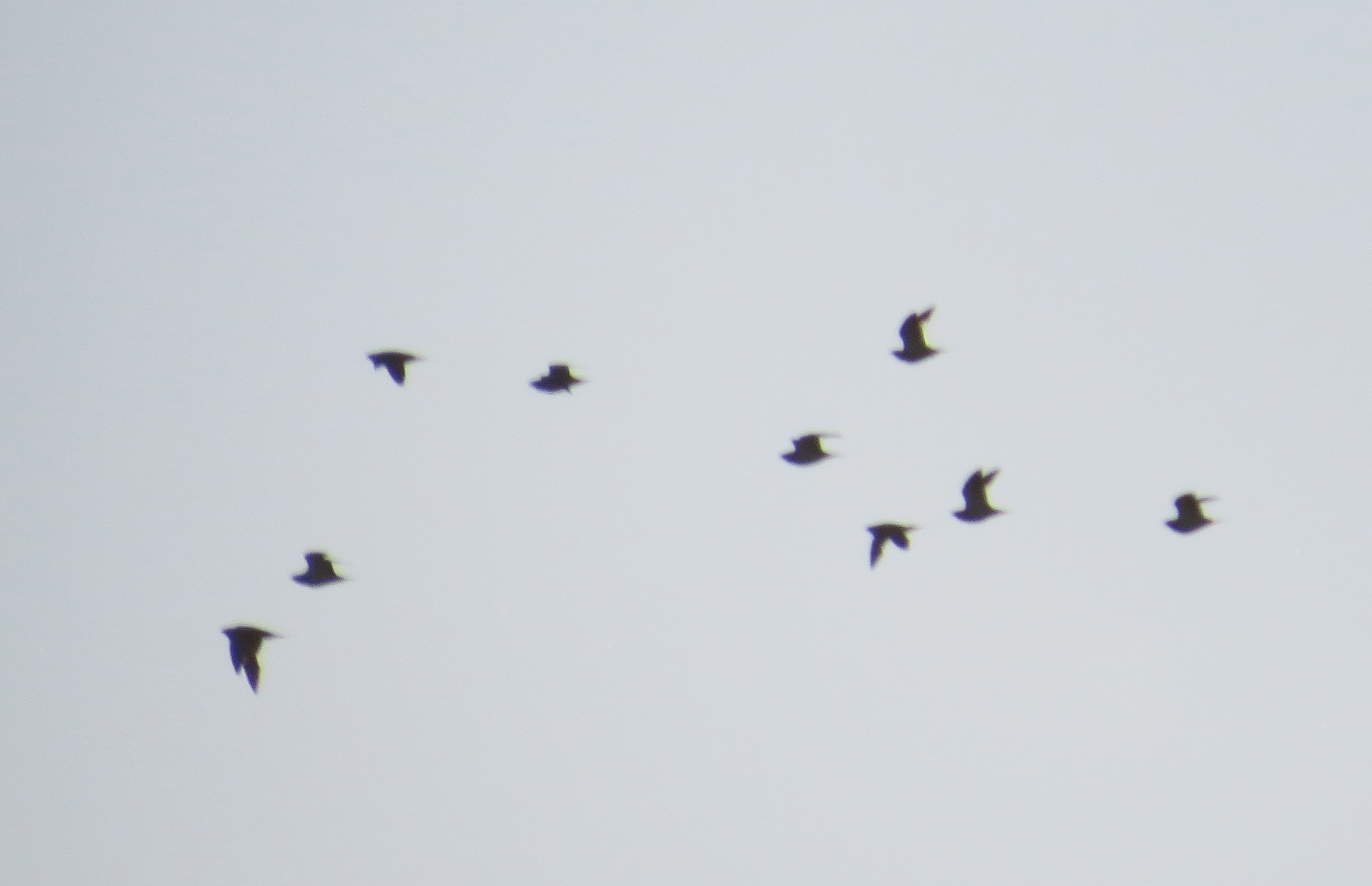
We spent the first couple of hours of the 7th back in the Etange de Aulnes area of La Crau. To our delight a flock of 12 Pin-tailed Sandgrouse flew over, nine of which are in this photo, but they flew directly into the sun and all I saw was a silhouette (however the ‘pin tail’ is just visible on some of the birds).

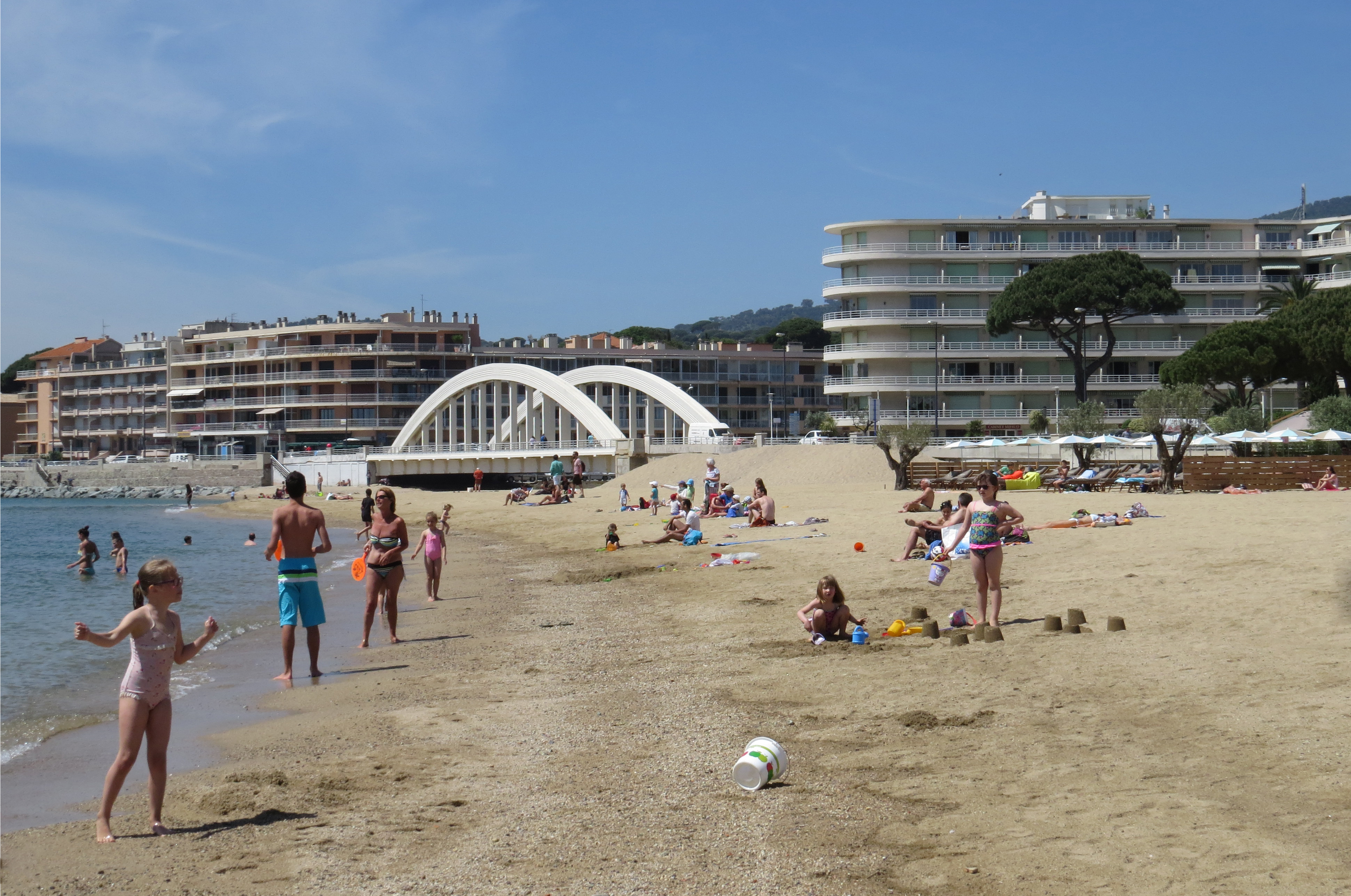
Before we left the south of France we thought it would be a good idea to visit some of the resorts that have made this area so famous, and none is more famous than St Tropez. However as we entered the nearby town of St Maxime we hit a huge traffic jam. Rather than waste an hour trying to get to St Tropez on the far side of the bay, we called into the beach at St Maxime for lunch, which was just like any other beach resort in the Med.

The next stop was at Monte Carlo in Monaco. The only reason for calling in here was to add it to my country list (number 107). All we saw was loads of expensive apartment blocks and hotels plus masses of traffic. A sea mist had rolled in making it all look rather gloomy and we were quite glad to move on.
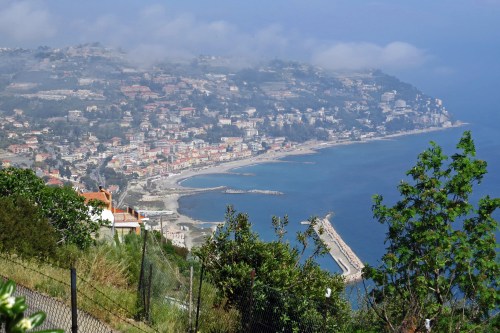
The rest of that day’s drive was quite demanding. We followed the A8 motorway east into Italy. It is an amazing piece of engineering; tunnel after tunnel joined by viaduct after viaduct with quite a lot of sharp bends. A challenging drive in itself, but made worse by big lorries taking up the narrow inside lane and a succession of BMW and Audi drivers following ridiculously close behind me, unhappy that I was driving at a mere 130 kph. Note that the moment we drove into Italy the houses all had the familiar red-tiled roofs unlike those in France. From here we headed north towards Piedmont and the Italian Alps (the subject of the next post).
This is the first post describing Margaret and my trip around the Alps and to southern France. When we were invited to the wedding of Margaret’s nephew Marc Hörburger to Elisabeth Lau on May 15th we decided to do a full 18 day trip and make the most of sightseeing and birding in this wonderful part of the world.
Due to an early flight we stayed overnight at a hotel near Heathrow on 1st May and arrived in Zürich, Switzerland late morning the next day. After the bad experience I had hiring a car with Europcar two years ago I specifically avoided them and chose a company called Unirent. Imagine my dismay when I found out that Unirent was administered by Europcar! We have yet to find out whether history will repeat itself or whether we had a trouble-free car hire this time (certainly nothing untoward happened to the car, but there again nothing untoward happened in 2013 either!)
The plan was to visit the high peaks of the Swiss Alps first, then go to the French Alps for Rock Partridge (which as the last post explained was the last European bird that I yet to see) before heading into Italy and reaching Austria via the Italian Lakes. The problem was a week of rain was forecast and there seemed no point in trying to visit the Jungfrau and the Matterhorn if we couldn’t see them.
At the last-minute we decided head straight for the French Alps and then if the weather didn’t improve, drive south to the Mediterranean coast.

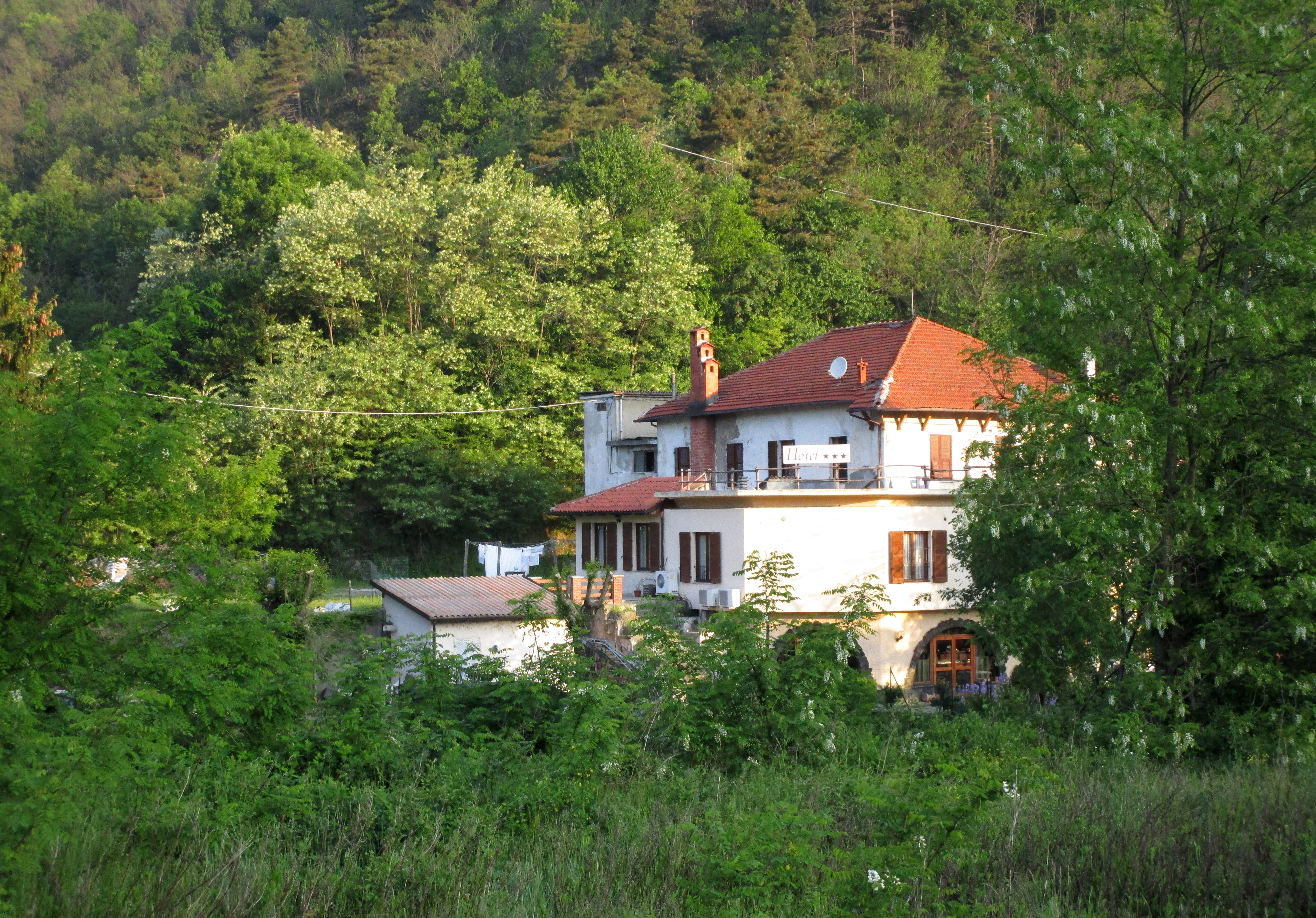
Our first night was spent in the little town of Vizelle south-east of Grenoble close to this charming chateau.
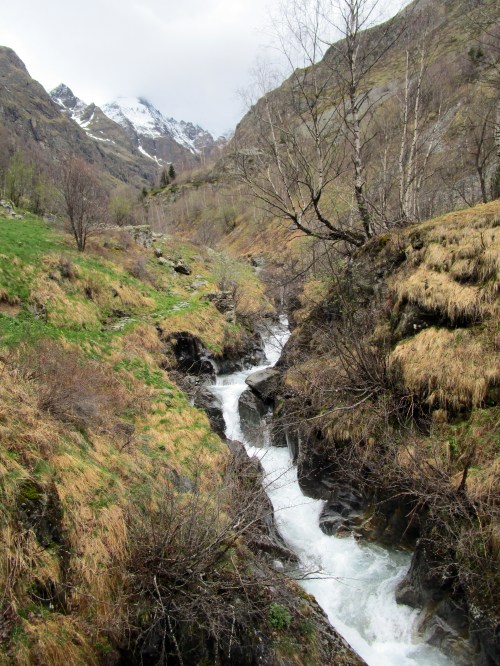
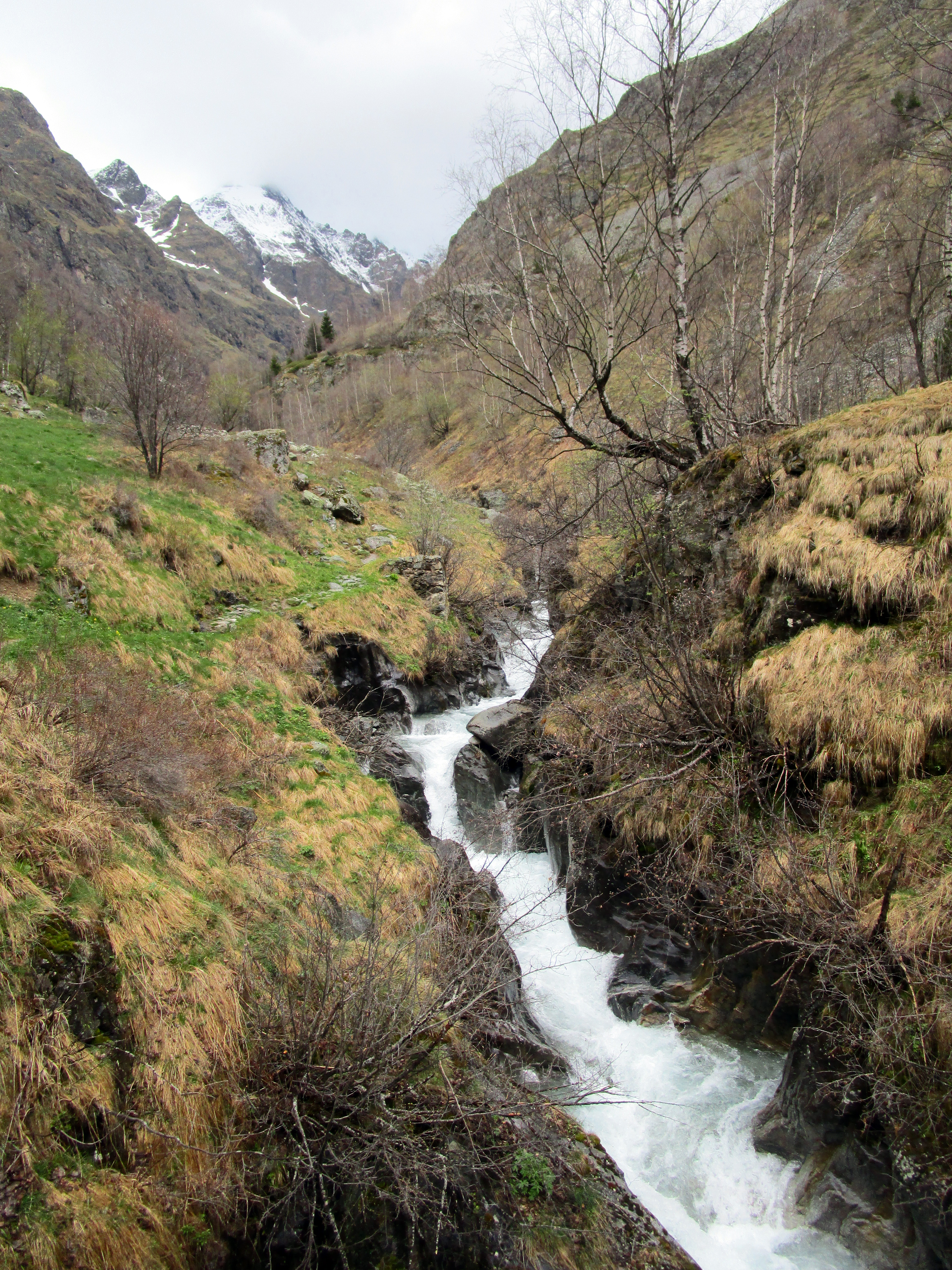
The following day’s forecast was spot on and it rained for the entire morning, but we drove to the village of St Christophe and started the hike up the mountain to the site I had been given for Rock Partridge. The early stages were easy enough as we followed the path alongside this stream and through birch woodland.

The track carried on up, climbing some 300m above the starting point. Margaret gave up about a third of the way up but I pressed on.

Climbing the outcrop was out of the question, so my only option was to descend a bit and cross the scree slope which was quite slippery due to the rain. Being on my own and having no phone signal I was quite nervous, as a slip could end in a broken ankle or worse. I left my waterproofs, scope, rucksack and camera behind in case anything would unbalance me and crawled over the loose rocks. Yes, I got a good view of the calling bird, which was as I thought in the hidden gully, but of course no photos. See the previous post for a photo of Rock Partridge from the internet.

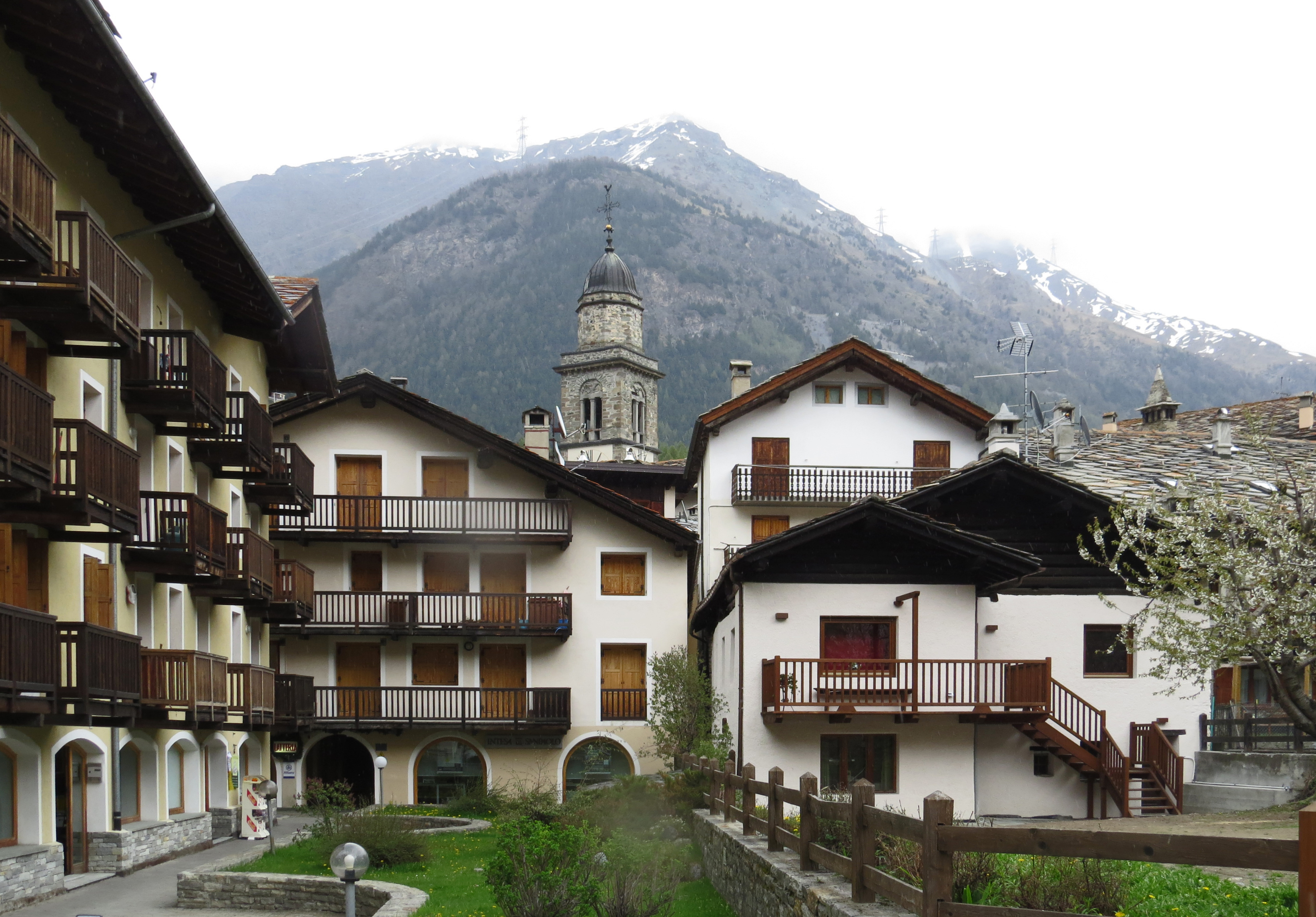
I was back at the car by early afternoon wet, but unscathed and delighted to have seen this bird at last. We decided to try another area for Rock Partridge a little to south where we thought they might be visible from the road, to give Margaret a chance of seeing one and so spent the afternoon driving through a succession of French alpine villages. Whilst they might not have the chocolate box lid perfection of Swiss alpine villages, these French one have their own charm and we stopped several times to wander about.
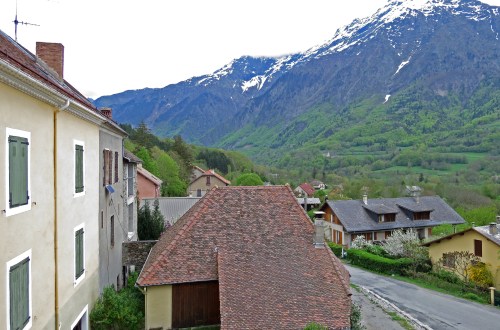
Eventually we stopped for the night at St Firmin, although finding the proprietor of the town’s only hotel was a bit of a mission. Languages were always my weak point and trying to communicate with the hotel’s gardener using (failed) O-level French that hasn’t been used for nearly 50 years was problematic. Anyway, once sorted out we had a lovely view from our room and even saw a Goshawk fly past.
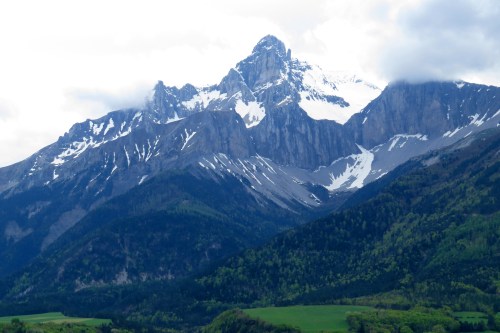
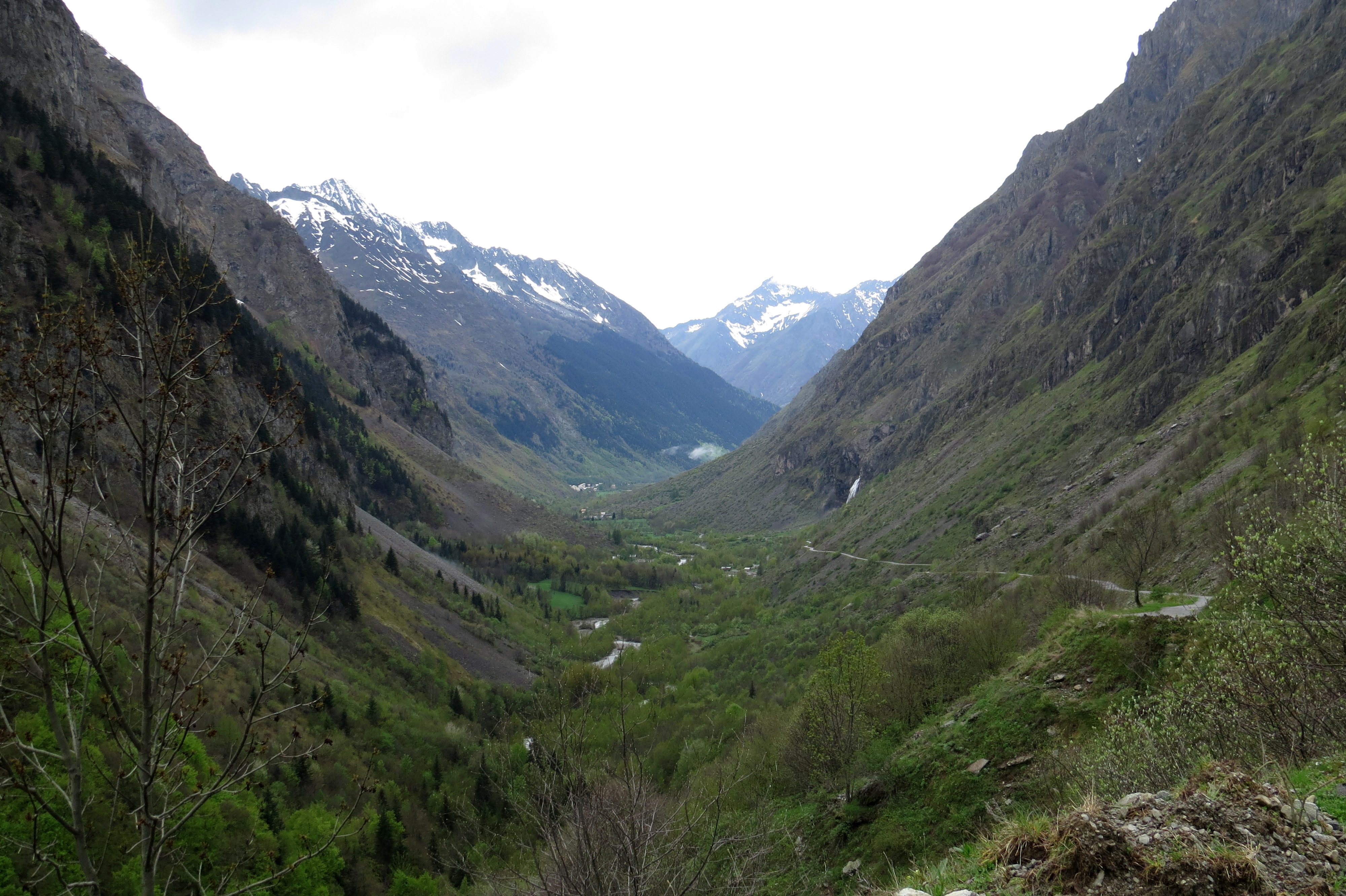
The following day we explored the valley as far as Chapelle-en-Valgaudmar but saw no sign of Rock Partridges. We did however see a Chamois perched high above us and a number of alpine birds.
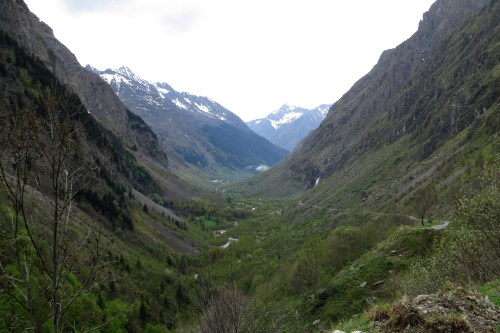
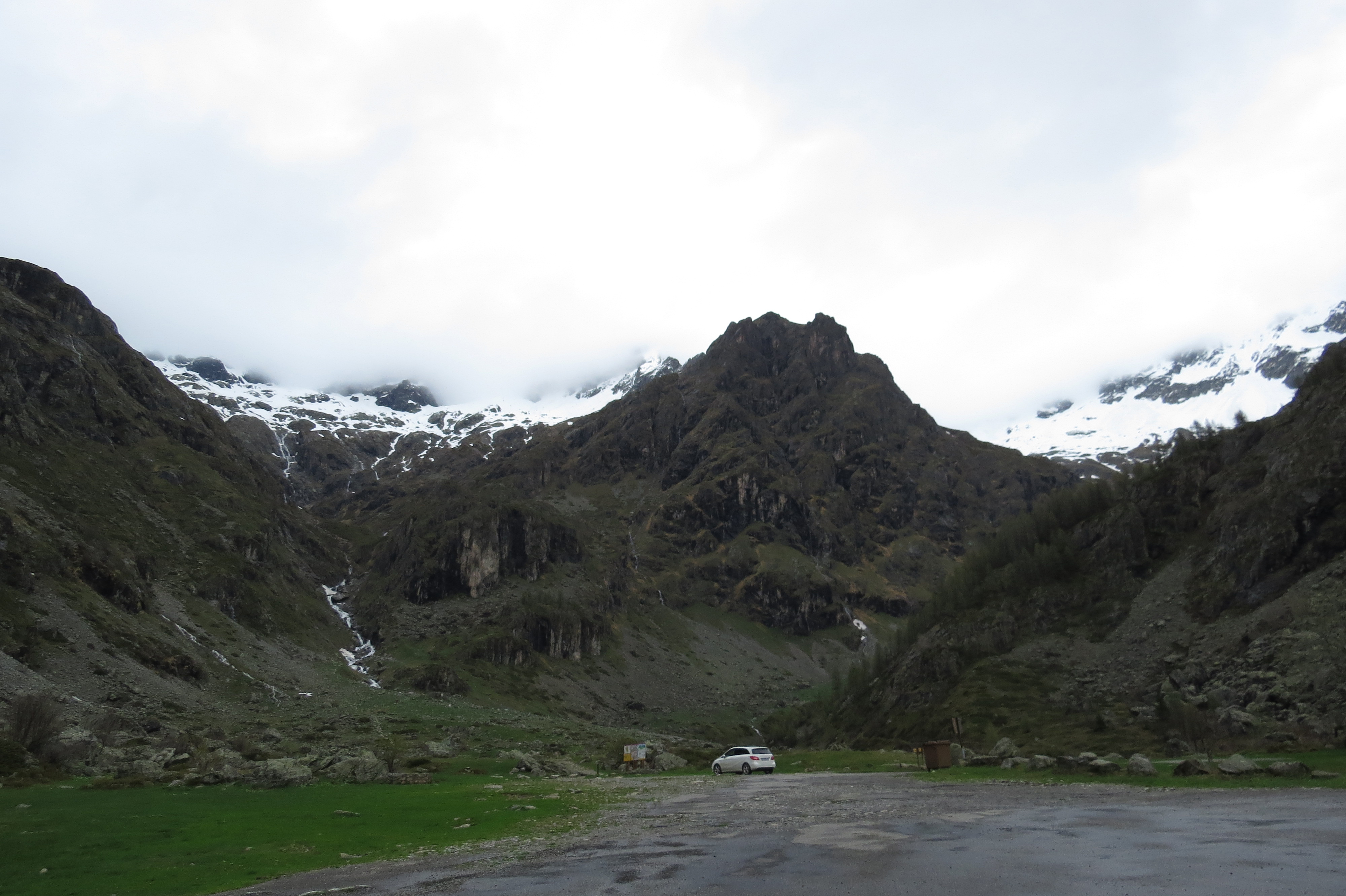
Although the weather was deteriorating we continued towards the head of the valley.

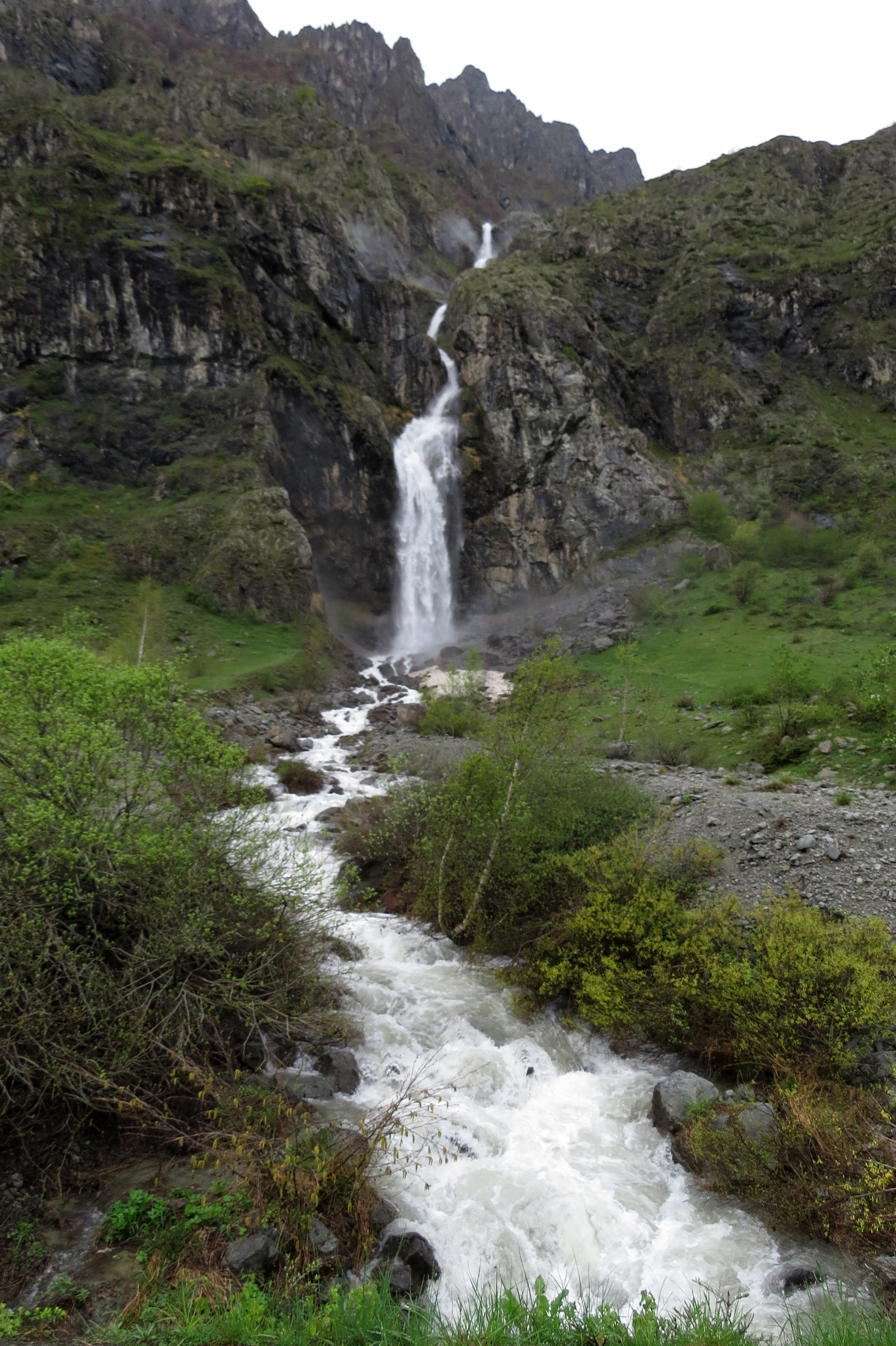
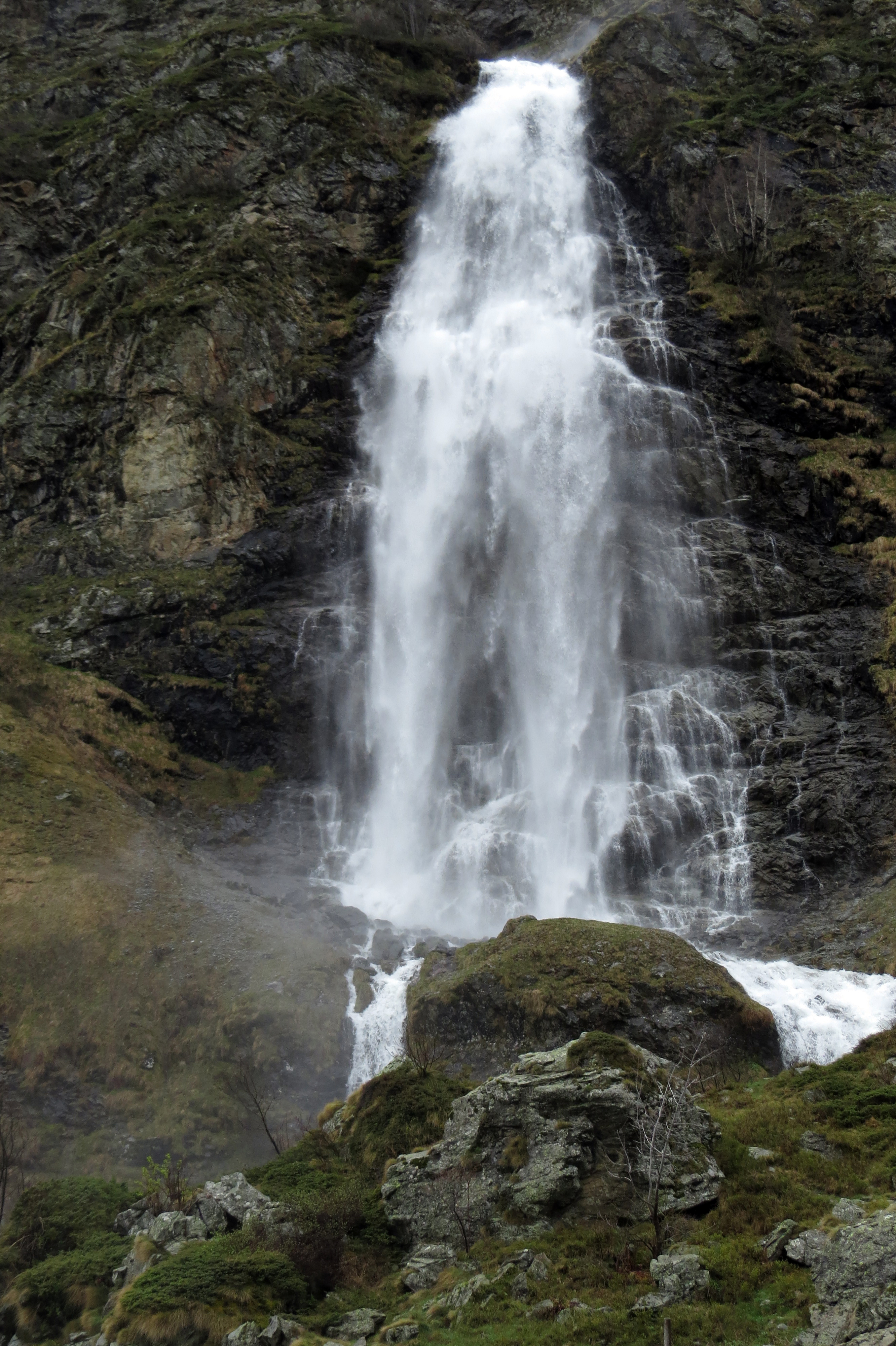
The recent heavy rain has swollen the streams and waterfalls abounded ….
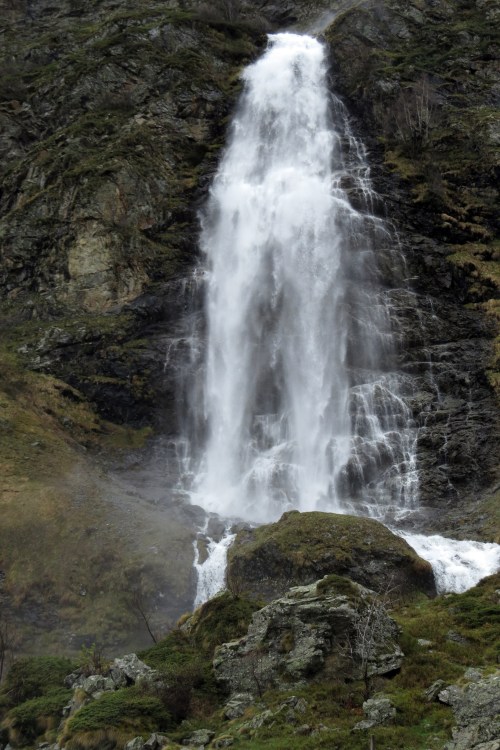
…. but with the rain and spray from the waterfall in the strengthening wind it was hard to keep the camera lens dry.

We eventually reached the head of the valley where we saw some Alpine Chough, a Rock Bunting, Western Bonelli’s Warblers and Crag Martins ….
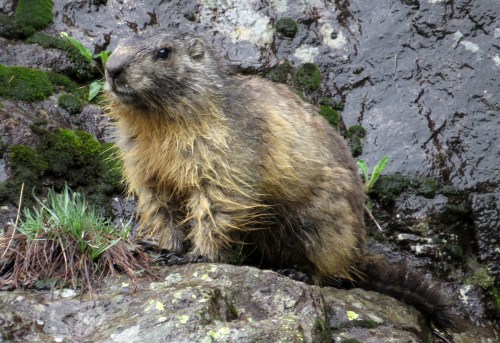
…. but the only thing that came close enough for photos was this rather wet Alpine Marmot.
With the forecast still giving rain for the next few days we thought it best to leave the Alps behind for now and head south. The Camargue and the stony plain of La Crau seemed a good option, the only trouble was we wouldn’t have time to give this extensive area the justice it deserved, but we would try!
Over the years I have got to see almost all the birds of Europe (at least somewhere in the world) but one remained elusive – Rock Partridge. Because of its shyness and difficult to access habitat, Rock Partridge remains one of the least observed birds on the continent. The fact that it closely resembles the easy to see Chukar of the Middle East doesn’t add to its desirability for many, but for some years now its been my most wanted European bird. I tried at a site in Austria two years ago without success (see https://atomic-temporary-24398266.wpcomstaging.com/2013/07/23/july-5th-21st-austria-and-italy-with-short-visits-to-germany-hungary-and-san-marino/). Since then some reliable sites in Croatia and central Italy have come to my attention, but as we were in the Alps anyway for Margaret’s nephew’s wedding, I thought it made sense to check out some areas in the French Alps. I’ll include some photos of the French Alps in the next post and concentrate in this one on my claim that Rock Partridge is my last European bird, just to say that after a stiff climb I saw one well near St Christophe, south-east of Grenoble on 3rd May.
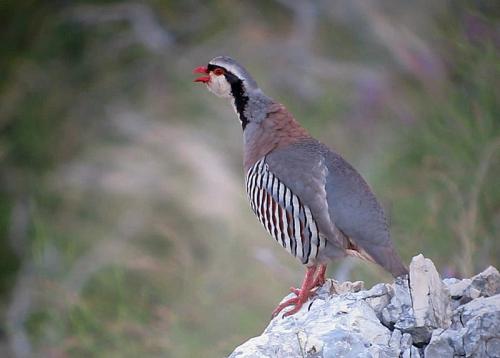
Due to the circumstances I will outline in my next post, I was unable to photograph the Rock Partridge but I got a view almost as good as this. This is the nominate race which is found in the Balkans whilst I saw the race saxitalis which occurs in the Alps. A third race whitakeri occurs in Sicily. Photographed by Martin Flack in Croatia, taken from the Internet Bird Collection.
So is this my last regularly occurring European bird? Well firstly there are several species that breed in Europe that I have only seen outside of Europe, for example Black-winged Kite (breeds in Spain, seen Morocco and many other places), Little Buttonquail (has bred in Spain, seen in Cambodia) and Little Swift (breeds in Spain, seen many places in Africa) and several others, but I am talking about whether I have seen the species anywhere within its world range.
There is another European bird that I need to see: Moltoni’s Warbler, this is a recent split from Subalpine Warbler. The chances are that I have seen this bird already before I knew about the possibility of a split but I cannot be 100% sure. I tried to locate one in Piedmont in NW Italy on this trip without success, but we are going to Mallorca next spring for a few days and should be no problem there. See http://www.birdwatch.co.uk/categories/articleitem.asp?item=1022
Also my claim to have seen every European bird depends on your definition of Europe. Is it a geographical unit, an economic one or do we include all the countries which take part in the Eurovision Song Contest? (in which case that would include Israel – I have never understood how Israel can qualify as European by any definition.) What about Turkey, Georgia and Azerbaijan. Most definitions include Turkey west of the Bosphorus and Georgia and Azerbaijan north of the highest ridge of the Greater Caucasus mountains in Europe, thus including northernmost Georgia and Azerbaijan. So there is another bird I haven’t seen that might just be considered European; Caspian or Hycranian Tit. This is a recent split from Sombre Tit and occurs in northern Iran and in eastern Azerbaijan. I have yet to find out if it occurs on the northern slope of the Caucasus. Having already birded in Georgia and Armenia I will have to decide if I want to go back to that region for a bird that looks very like the Sombre Tits I have seen elsewhere.
And then there are birds that are split by the Dutch national checklist committee but not by the major world checklists, such as Sicilian Rock Partridge (yes, a Rock Partridge still occurs on the want list), Mediterranean Storm Petrel, Slender-billed Barn Owl and Madeira Barn Owl and Lilford’s Woodpecker (split from White-backed) but none of these have passed the seven point test as used in the new Illustrated Checklist see http://www.birdlife.org/worldwide/news/birdlife-and-lynx-publish-first-ever-illustrated-world-bird-checklist. Also in this category are Hierro and Palma Blue Tits but of course the passerine volume of the Illustrated Checklist won’t be published until 2016 (a recent genetic paper has indicated that Palma Blue Tit, but not the Hierro one deserves full species status).
There are a few vagrants to Europe that I haven’t seen, although they don’t fall within the category of ‘regularly occurring’, these include – Tristan Albatross, Ascension Frigatebird*, Relict Gull, Aleutian Tern*, Horned Puffin*, Parakeet Auklet, Red-throated Thrush*, Gray’s Grasshopper Warbler, African Desert Warbler and possibly Sakhalin Leaf Warbler (views the Portland bird did not exclude Pale-legged Leaf-warbler) and Pallas’ Rosefinch. The birds marked with an asterisk are birds on the British List that I have yet to see.
Also there are a few birds, that although I am confident that I have seen them, I would like better views, these include Spanish Imperial Eagle, Houbara Bustard and Balearic Warbler, in each case I thought I had seen the species concerned on previous trips only to later find out it had been split and perhaps I made less of an effort to secure better views as a result, although in at least one case it was just bad luck.
So the conclusion is – I might have seen the regularly occurring birds in Europe, but there are still enough loose ends to keep me busy for some time yet!
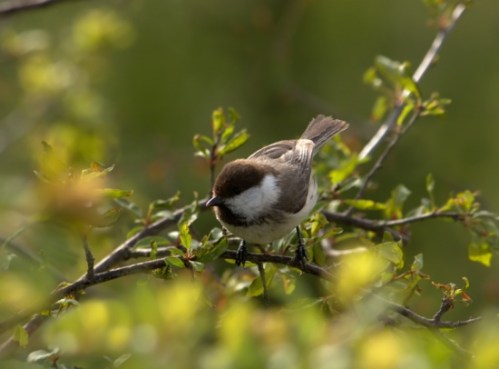
Caspian Tit, whether it occurs in Europe or not its still on the wanted list. Photographed by Greyowl in Iran. Taken from Bird Forum Opus.
Margaret and I have just returned from a two week trip to the Alps and the south of France which culminated in attending Margaret’s nephew’s wedding in Donbirn, in western Austria.
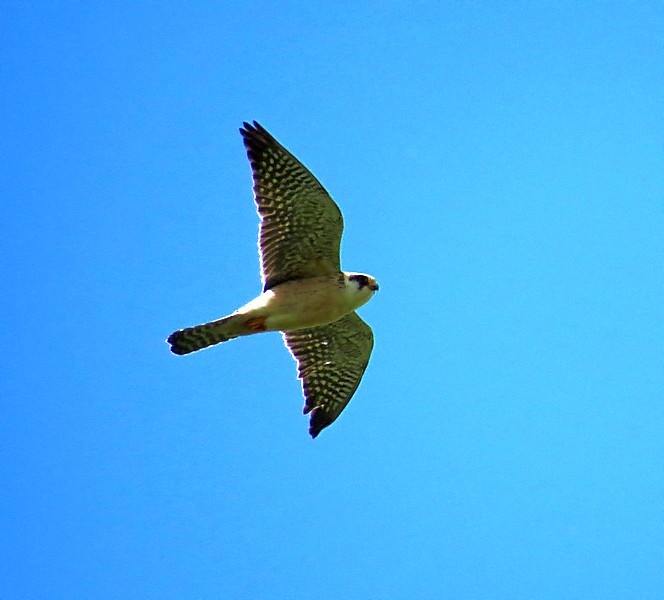
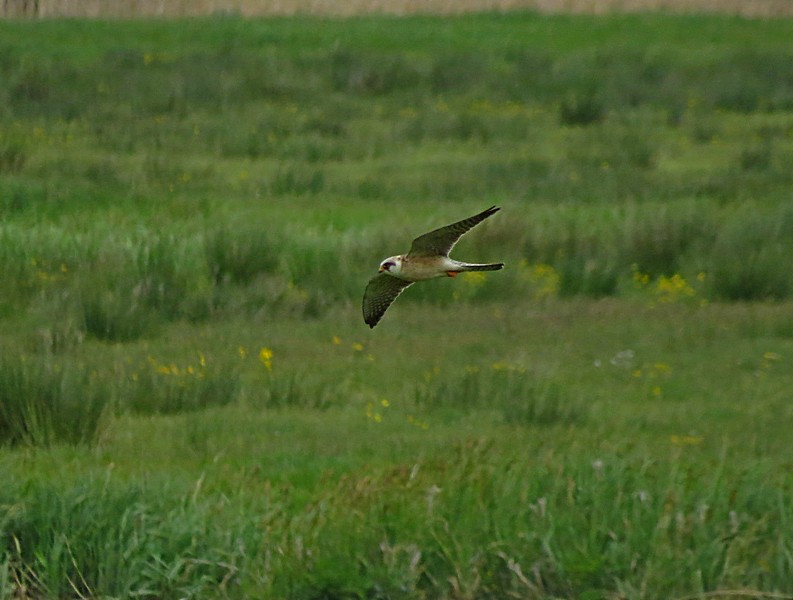
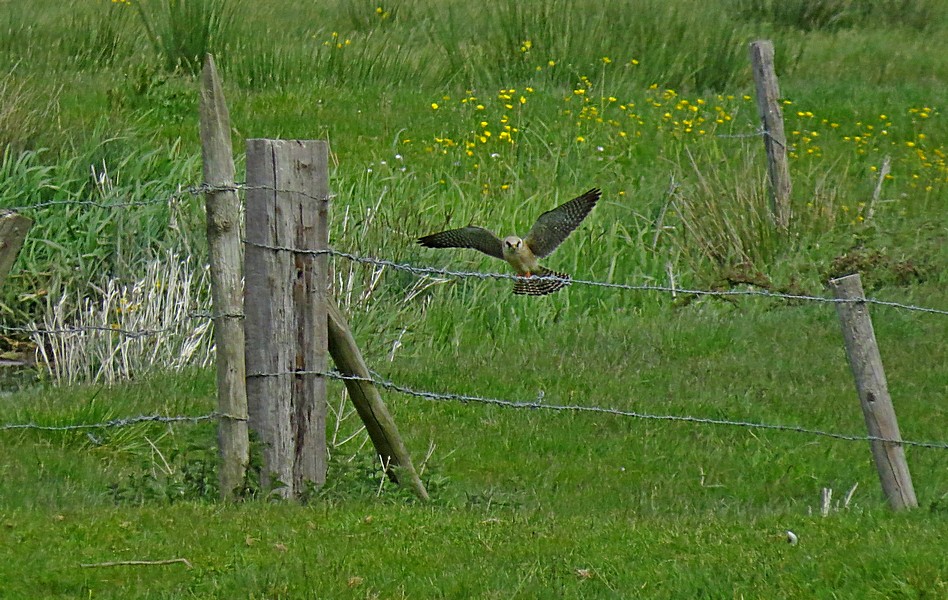
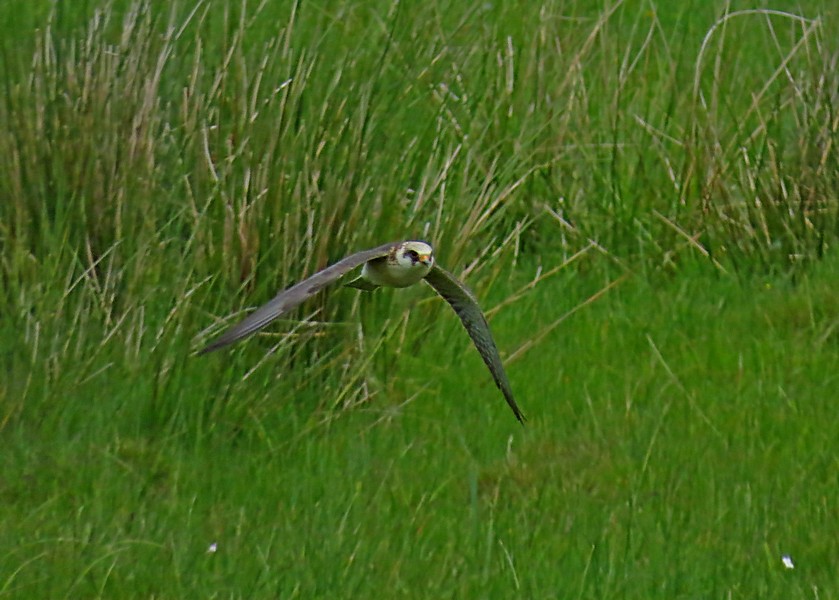
One of many bird species we saw whilst in the area was the beautiful Red-footed Falcon, a species that breeds from easternmost Austria eastwards across the steppes of Central Asia. Little did I expect that within a day and half of returning to the UK I’d be watching one just seven miles from my home at Wareham.
With most of my gear still unpacked I left the house without my camera, after all I reasoned it was going to be a spot in the distance and hardly worth photographing. How wrong I was as it gave wonderfuly close views at time, but Ian Ballam has kindly allowed me to use a selection of his shots.
Red-footed Falcons tend to migrate further to the west in spring than in autumn and turn up in Britain with some regularity in late spring. That said, although I have seen eight in the UK, it is 23 years since I last saw one in Dorset and this was my first one in the Poole Harbour area.

Red-footed Falcon. Second calendar-year female. Wareham Dorset 20/5/15 – Photo by Ian Ballam

Red-footed Falcon. Second calendar-year female. Wareham Dorset 20/5/15 – Photo by Ian Ballam

Red-footed Falcon. Second calendar-year female. Wareham Dorset 20/5/15 – Photo by Ian Ballam
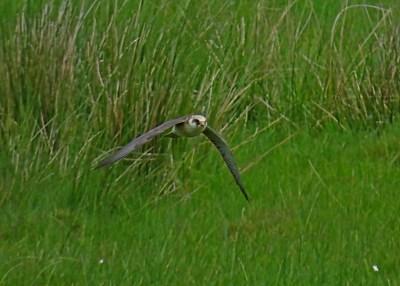
Red-footed Falcon. Second calendar-year female. Wareham Dorset 20/5/15 – Photo by Ian Ballam

Red-footed Falcon. Second calendar-year female. Wareham Dorset 20/5/15 – Photo by Ian Ballam
And just for comparison here is a shot of an adult male I photographed at the Bodensee in westernmost Austria on 17/5/15

Red-footed Falcon adult male

Red-footed Falcon adult male

Red-footed Falcon adult male
The trip to the Alps was a photographers dream and of course I have many hundreds of photos to edit. I managed three ‘ticks’ a new bird, a new mammal and a new country. I’ll be posting more on that soon.
With just a few weeks between our return from the USA and the upcoming get together with Margaret’s family in Austria for her nephew’s wedding, spring birding and ringing, has of necessity, taken a back seat. However I have managed a few trips out in the field and three ringing visits to Durlston (it would have been more but I was hampered by strong winds for much of the time). This short post highlights some of the more interesting birds ringed.

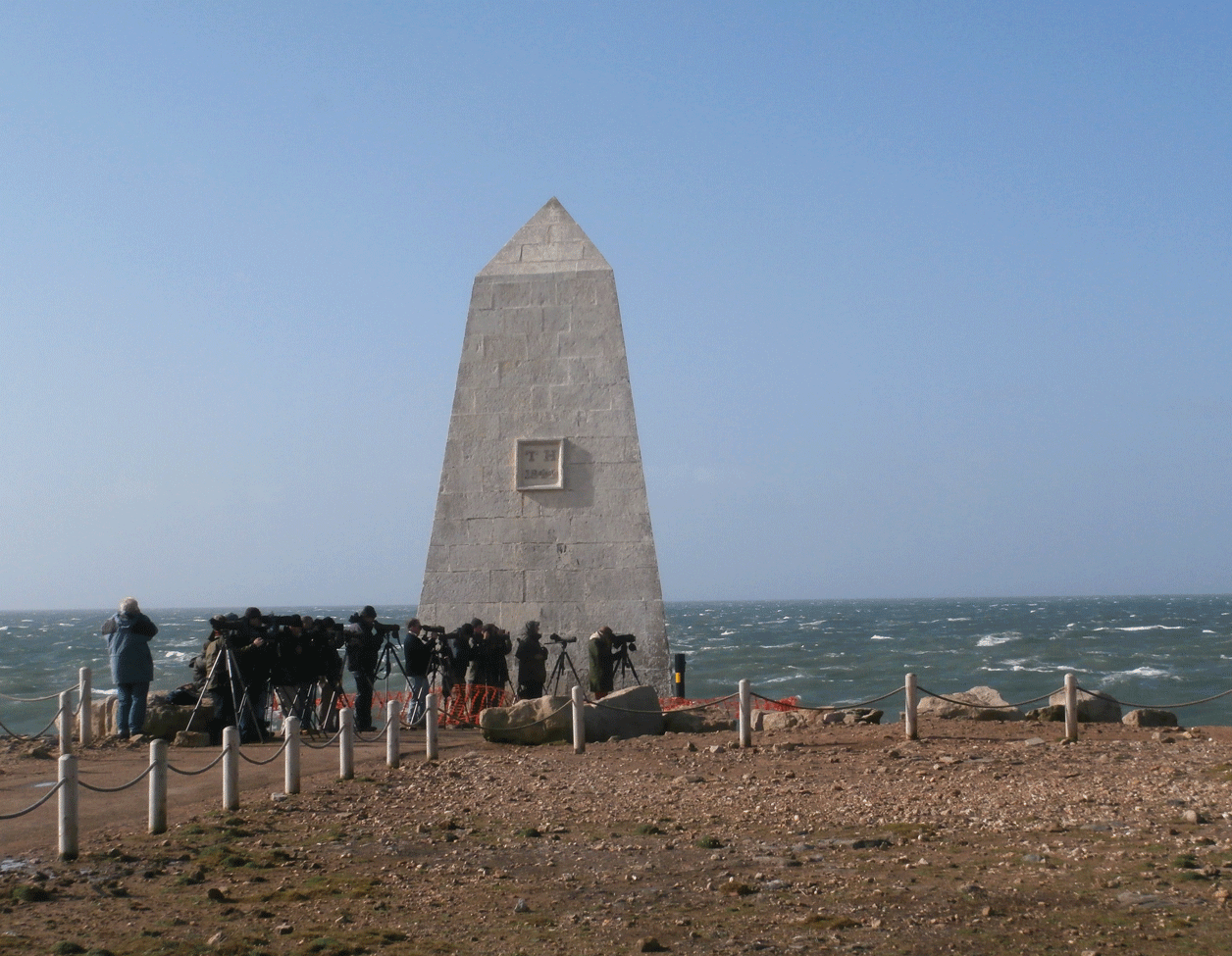
I made two visits to Portland and later to Lodmoor and or Radipole and was able to catch up with some of the spring migrants. Here in a photo taken in spring 2014 a group of birders are scanning for seabirds/passage migrants at the Obelisk at Portland Bill. On my last visit I saw Great and Arctic Skuas, Manx Shearwater, Common Scoter, Whimbrel and Sandwich Terns passing this point as well as the commoner or resident species like Common Guillemot, Razorbill, Puffin, Shag, Gannet, Fulmar and Kittiwake.
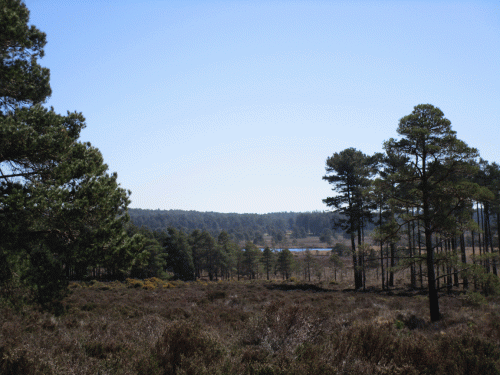
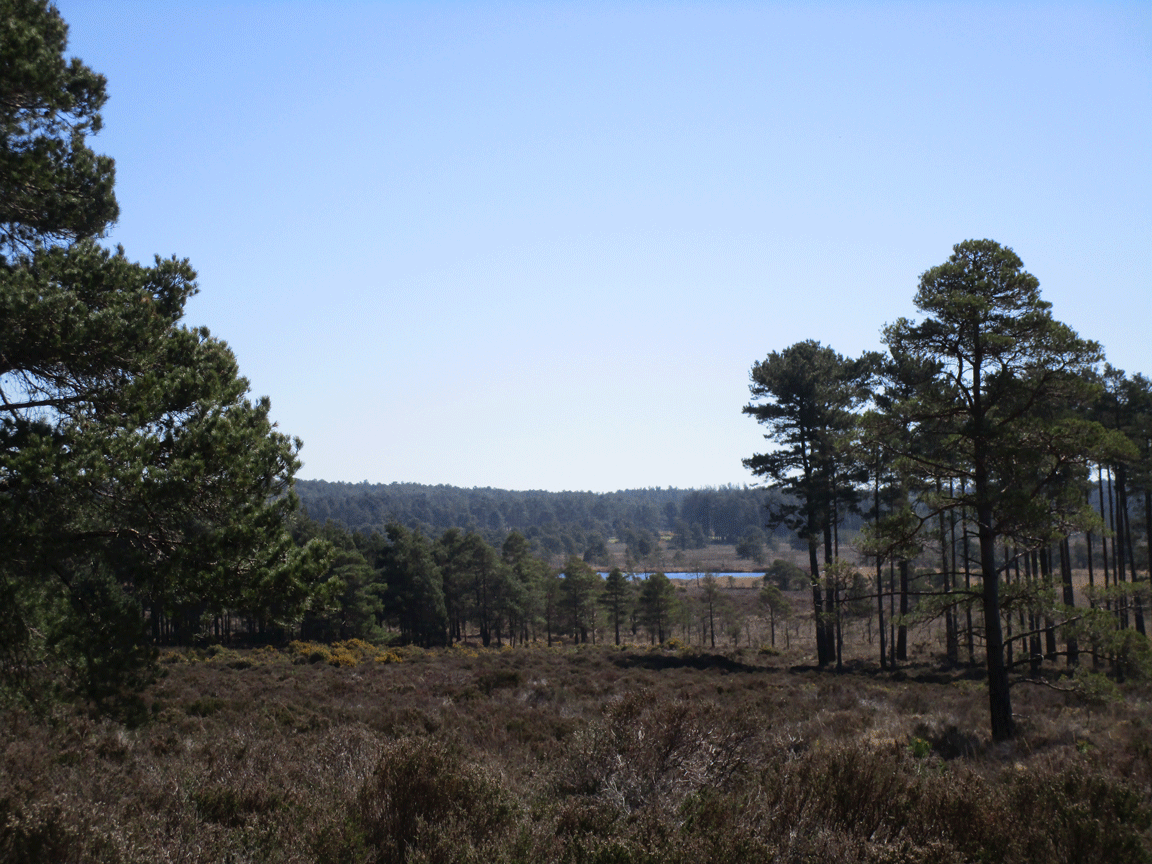
The area round Mordon Bog in Wareham Forest is a favourite of mine and although it hasn’t delivered many new birds for my year list recently, birding here is always a pleasure. Dartford Warbler, Woodlark and breeding grebes and ducks on the nearby lake are always nice to see and a heard only Cuckoo added enjoyment. I will have to leave it until my return from the Alps to see Hobby and Tree Pipit though.
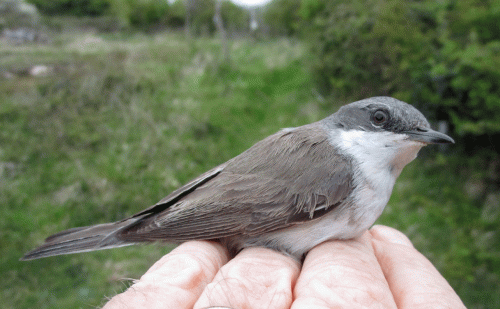
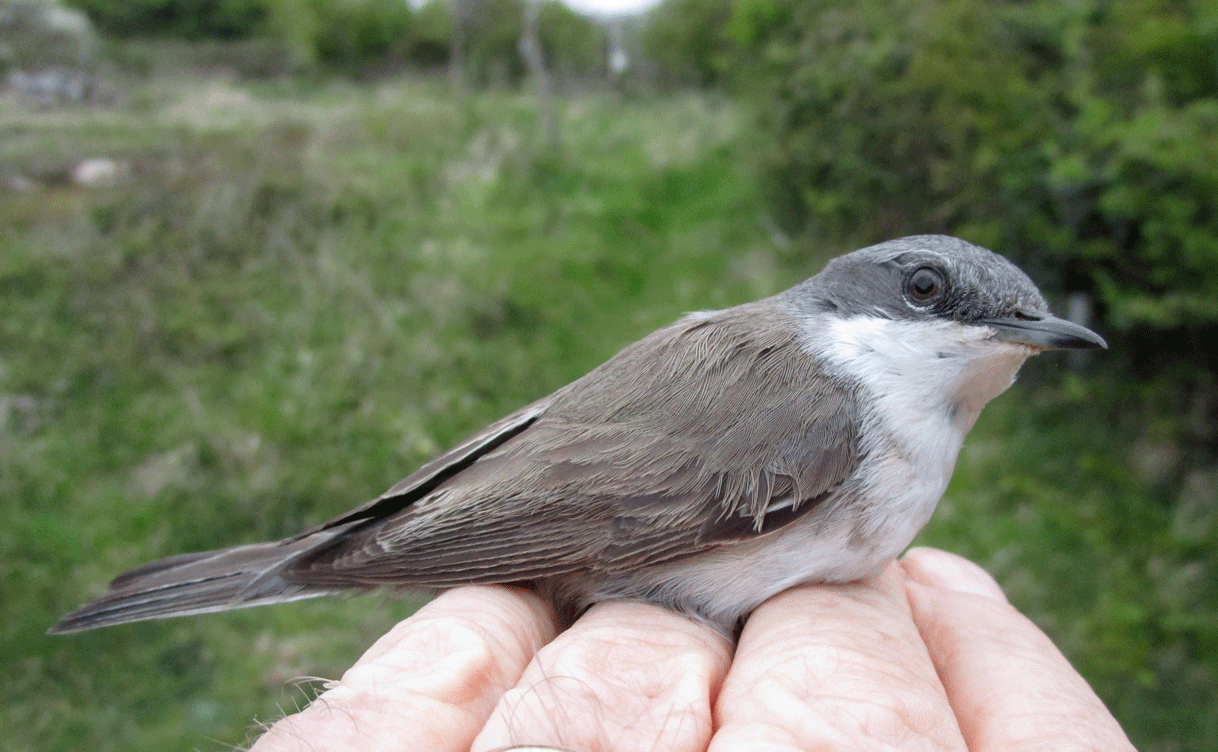
Spring ringing at Durlston has always been a hit or miss affair. Unlike Portland migrants seldom seem to linger and we get far fewer birds than in Autumn. Various hypotheses based on the geographical positions of the two headlands have been put forwards. A small number of Willow Warblers, Chiffchaffs and Blackcaps have been trapped as well as the five species shown in this post. This Lesser Whitethroat was ringed on 21/4/14 and was retrapped almost to the day and presumably breeds somewhere at Durlston.
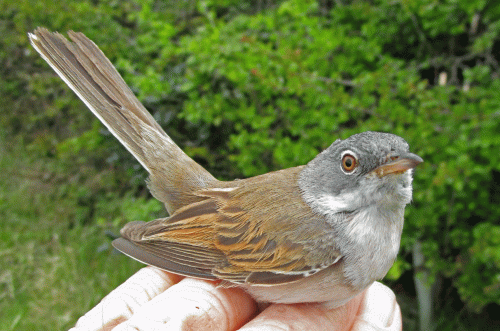
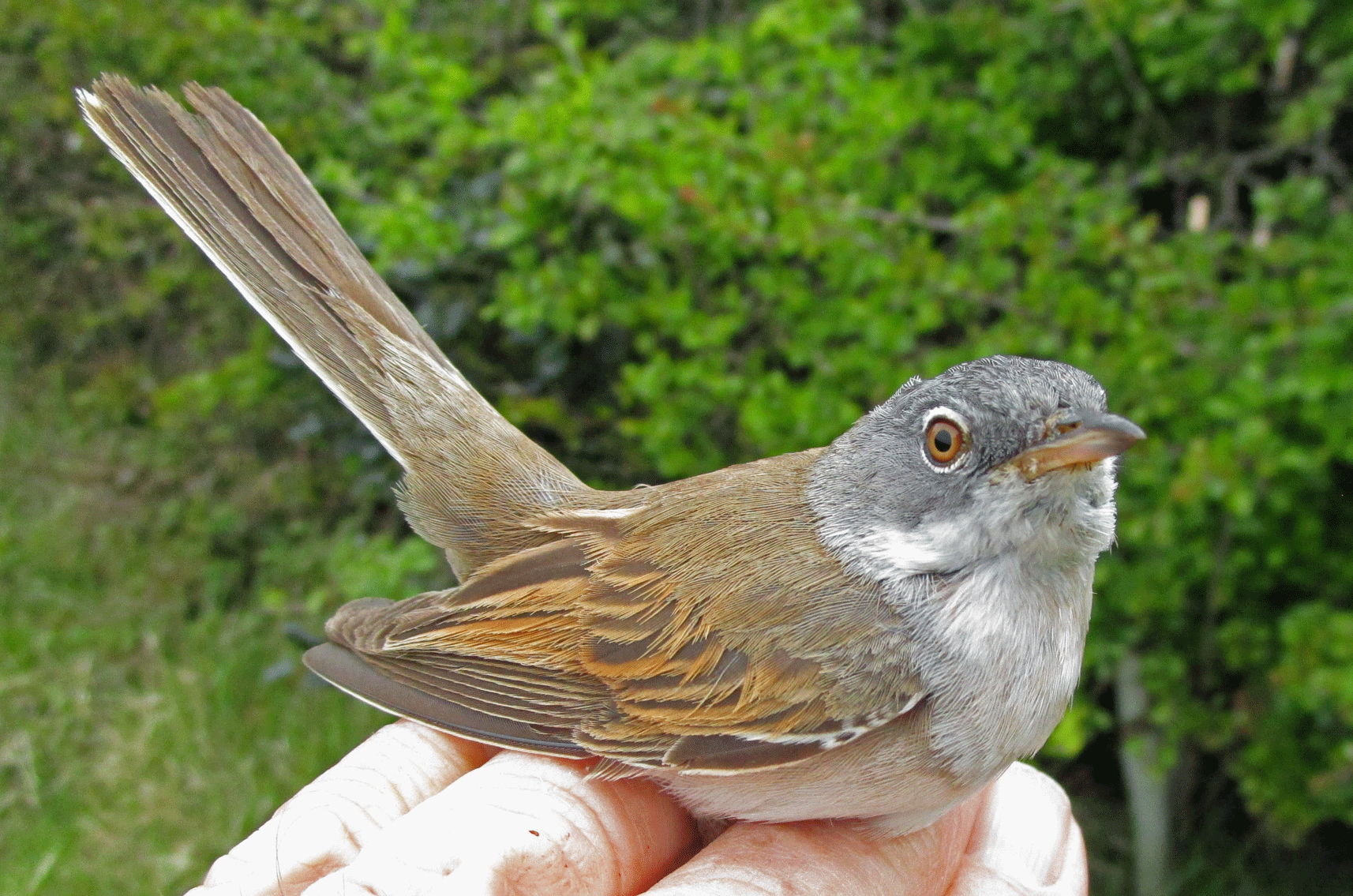
Common Whitethroats are as the name suggests, a much commoner birds with anywhere from 50 -100 pairs in the Park. Young birds have dark eyes but by the spring both second-calender year birds and adults have the same eye colour. A few can still be aged on the colour of the outer tail, white in adults, fawn coloured in second year birds, as having a complete moult after breeding these will be the same feathers that they migrated with in the autumn. The dark grey head is indicative of a male but many intermediates between this bird and the brown head of a typical female occur.

Garden Warblers belong to the genus Sylvia along with Common and Lesser Whitethroats (actually they are not warblers at all but babblers – but that is a different story). Unlike their congeners they undergo a partial moult post breeding and both adults and young undergo a complete moult in Africa. Thus adults are abraded when they migrate to Africa in autumn but both adults and second year birds are pristine on the return, as can be seen by the fresh pale tips to the primaries, secondaries and tertials and so cannot be aged.
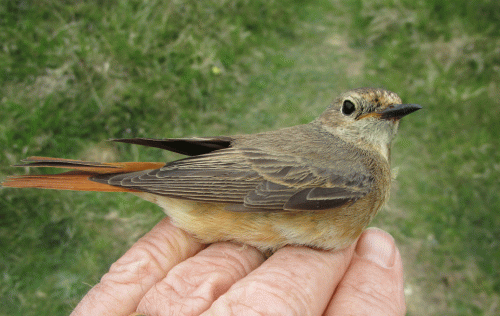
I was pleased to ring this female Common Redstart on the 23rd of April as we seldom trap many in the spring….

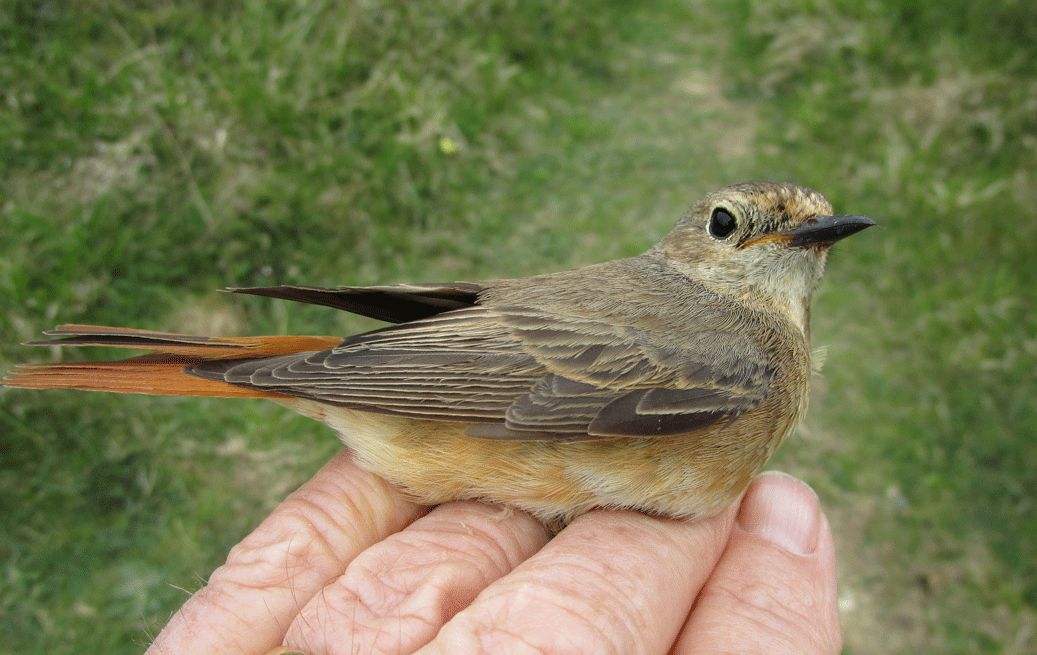
….but far more rewarding was its the capture of its cousin, a female Black Redstart. This was the first Black Redstart to be ringed at Durlston and the first I have seen in the hand. Common Redstarts breed in mature woodland, our migrant birds are probably heading for Wales and NW Scotland. Black Redstarts however are seen in the UK as winter visitors, summer visitors and passage migrants. They prefer rocky outcrops, cliffs, abandoned buildings, industrial sites etc to breed but are nowhere common. A pair has bred on the cliffs at Durlston for years but are never seen away from the immediate area. It is far more likely that this bird was a passage migrant.
We have fewer ringers to man the ringing site at Durlston this year but come the autumn I intend, weather permitting, to put in as much time as I can to help monitor migration at this outstanding location.
Prior to joining the Birdquest tour of Colorado, Margaret and I had a week touring the Mid-West. The last post dealt with the first four days, which we spent in Nebraska. This post features the remaining three days taken in South Dakota and Wyoming.

We spent the night of the 29th in the small town of Kadoka near the I-90 in South Dakota. From here it was just a short hop to the Badlands National Park.
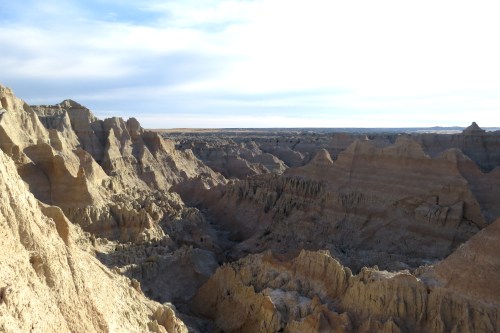
Copied from the National Parks website. ‘A quick look at the Badlands will reveal that they were deposited in layers. The layers are composed of tiny grains of sediments such as sand, silt, and clay that have been cemented together into sedimentary rocks. The sedimentary rock layers of Badlands National Park were deposited during the late Cretaceous Period (67 to 75 million years ago) throughout the Late Eocene (34 to 37 million years ago) and Oligocene Epochs (26 to 34 million years ago). Different environments—sea, tropical land, and open woodland with meandering rivers caused different sediments to accumulate here at different times. The layers similar in character are grouped into units called formations. The oldest formations are at the bottom and the youngest are at the top, illustrating the principal of superposition’.

The various sedimentary layers can clearly be seen in this photo and the next.

As this area was underwater during the Cretaceous period, no fossils of terrestrial dinosaurs have been found only those of marine reptile and fish. Those upper layers corresponding to the Eocene and Oligocene periods have yielded a rich haul of fossil mammals.

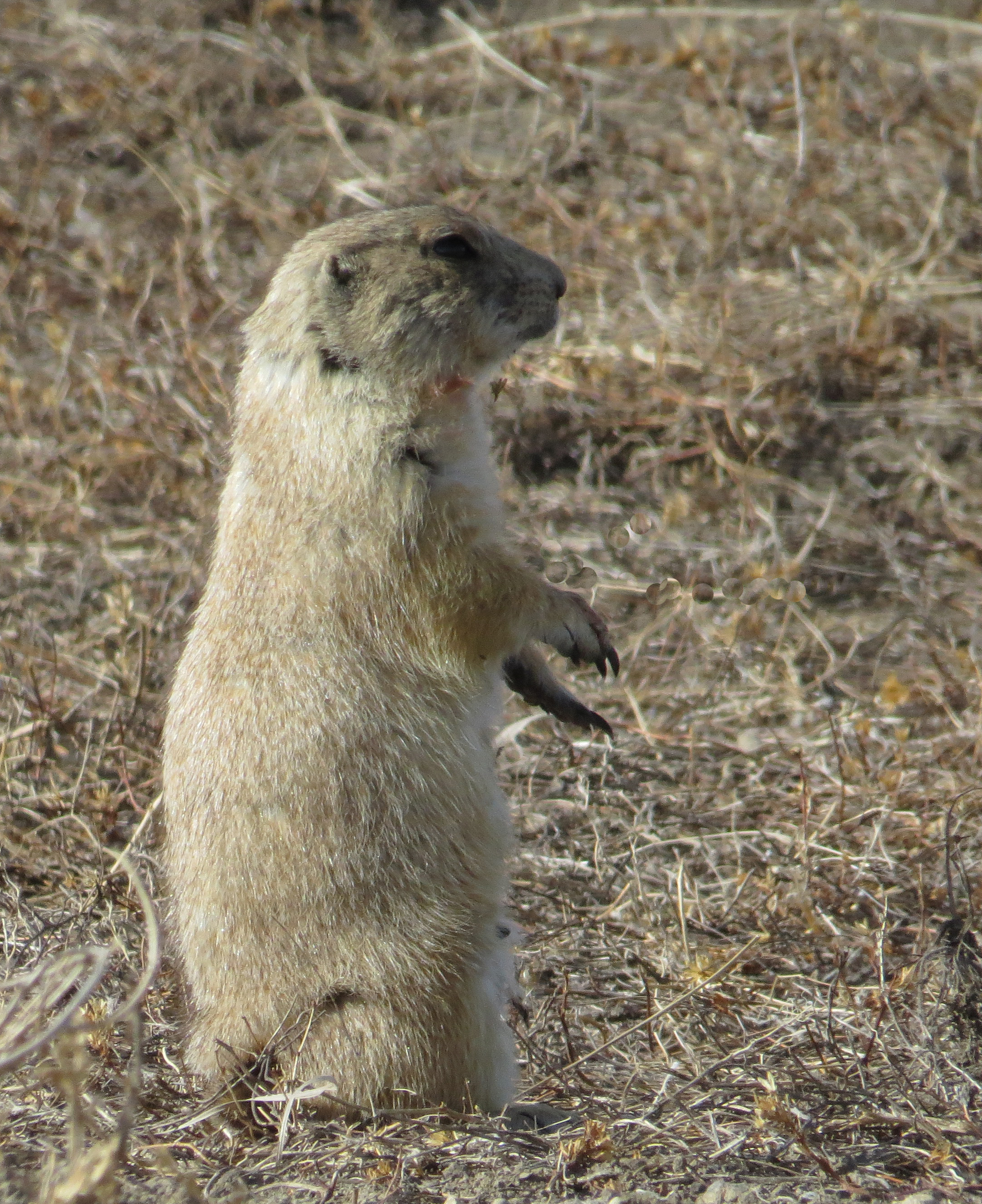
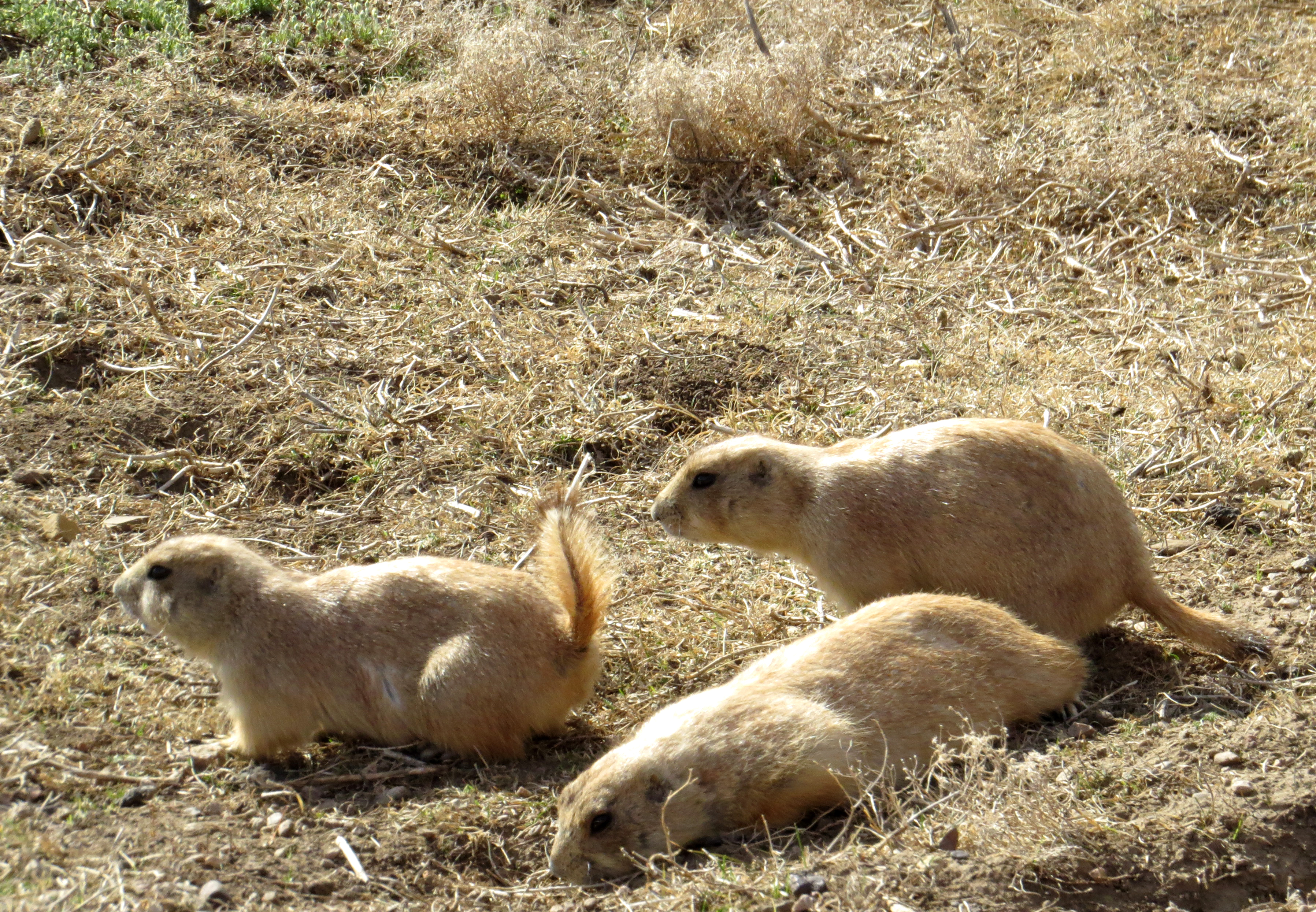
Black-tailed Prairie Dog ‘towns’ were a common site. Black-footed Ferrets which prey of Prairie Dogs were once considered extinct, a few were rediscovered in 1981. Following a captive breeding program a population has been reintroduced to the Badlands, but of course we weren’t lucky enough to see any.
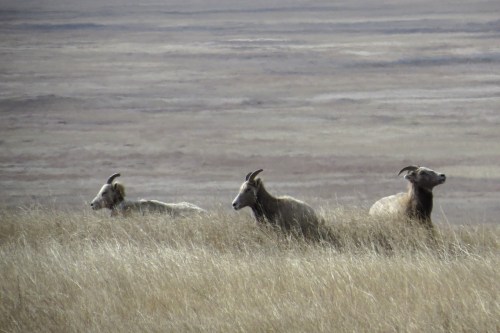
As well as the stunning geological formations the Badlands preserves the largest area of natural prairie grasslands in the USA and of course was the film location of ‘Dances With Wolves’. Some great mammals occur here, several distant herds of Bison were seen as well as these Bighorn Sheep.
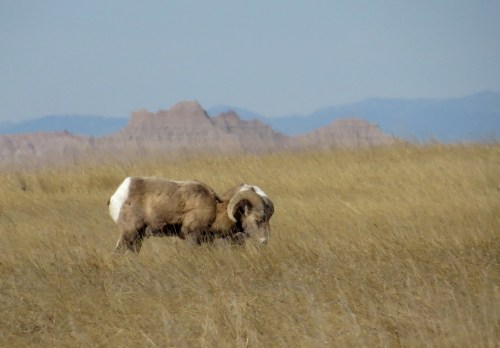
The male, with his great enormous horns which are used as a battering ram during conflict in the mating season, was a magnificent sight.
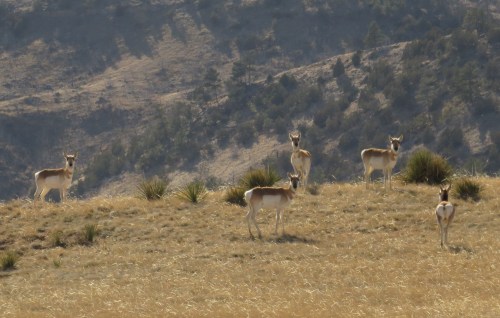
The plains of South Dakota held many Pronghorn antelope. This species, made famous in the line ‘home, home on the range where the deet and the antelope play’, is not related to Old World antelope but rather is the only surviving member of the family Antilocapridae.
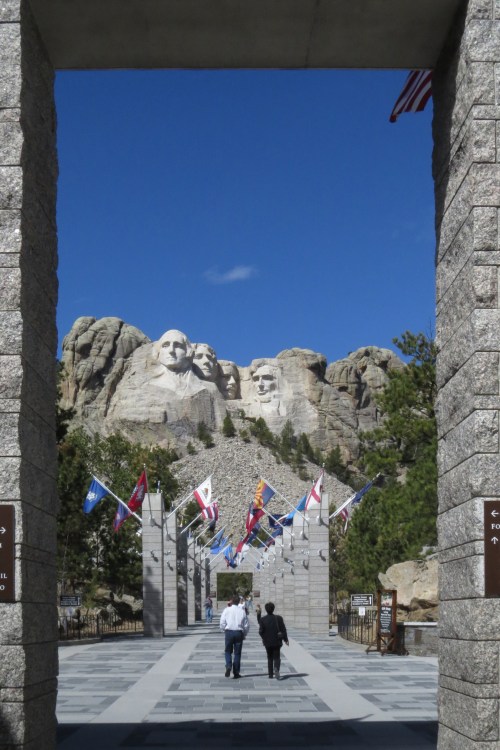
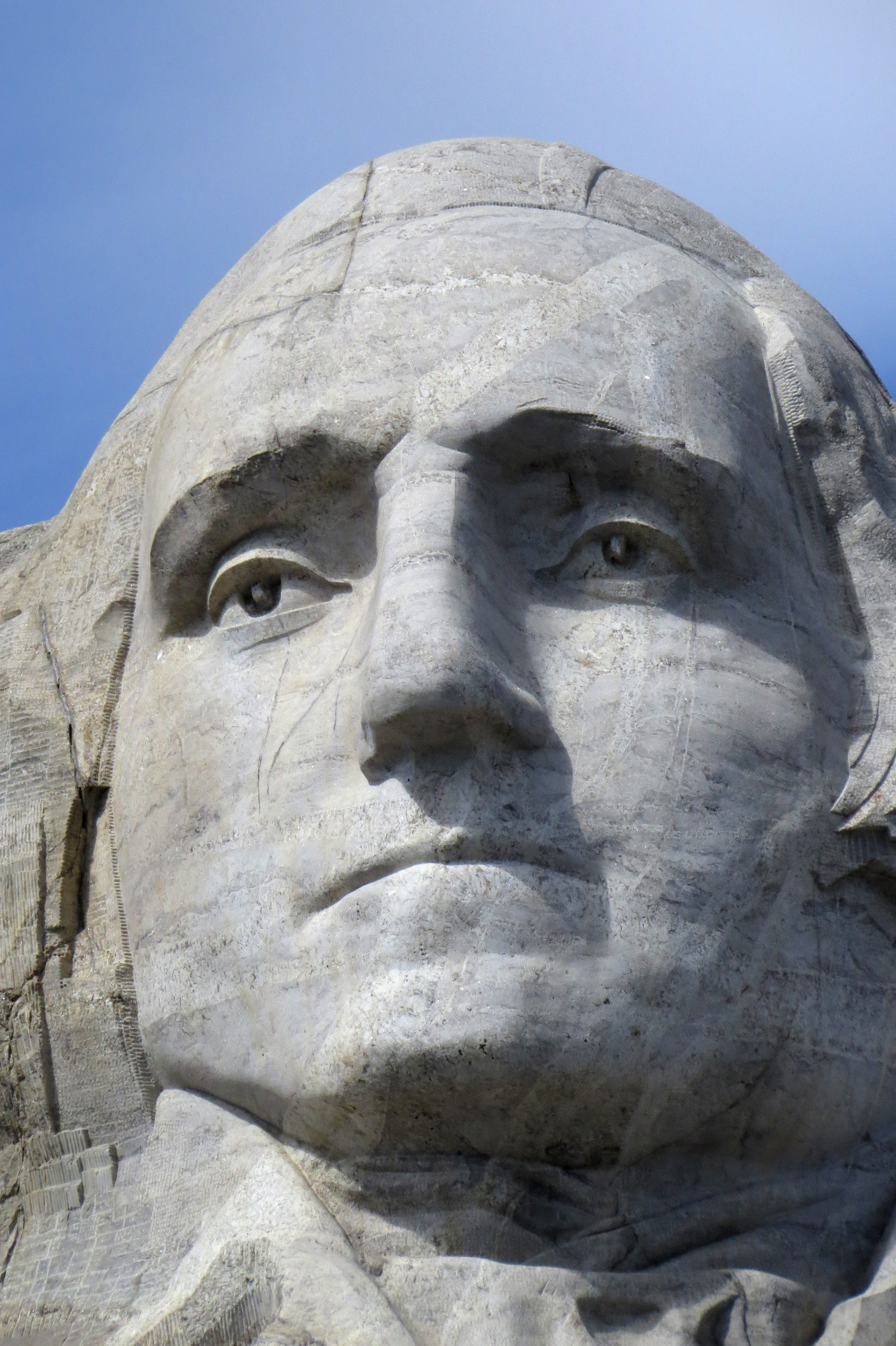
There was still much to fit in so by late morning we were back on I-90 heading west. We came off at Rapid City and entered the winding roads of the Black Hills. Our destination was Mount Rushmore, the famous National Monument where the heads of George Washington, Thomas Jefferson, Theodore Roosevelt and Abraham Lincoln have been carved into the granite.

George Washington in detail. The work was performed by sculptor Gutzon Borglum and his son Lincoln, it took from 1934 – 39 to carve the 60ft high heads. Originally the sculptures were to extend to the waist but Borglum senior’s death in 1941 and shortage of funding due to the War prevented the project being completed. Although, of course, the patriotic symbolism means little to us, it remains an amazing achievement and a wonderful thing to see.

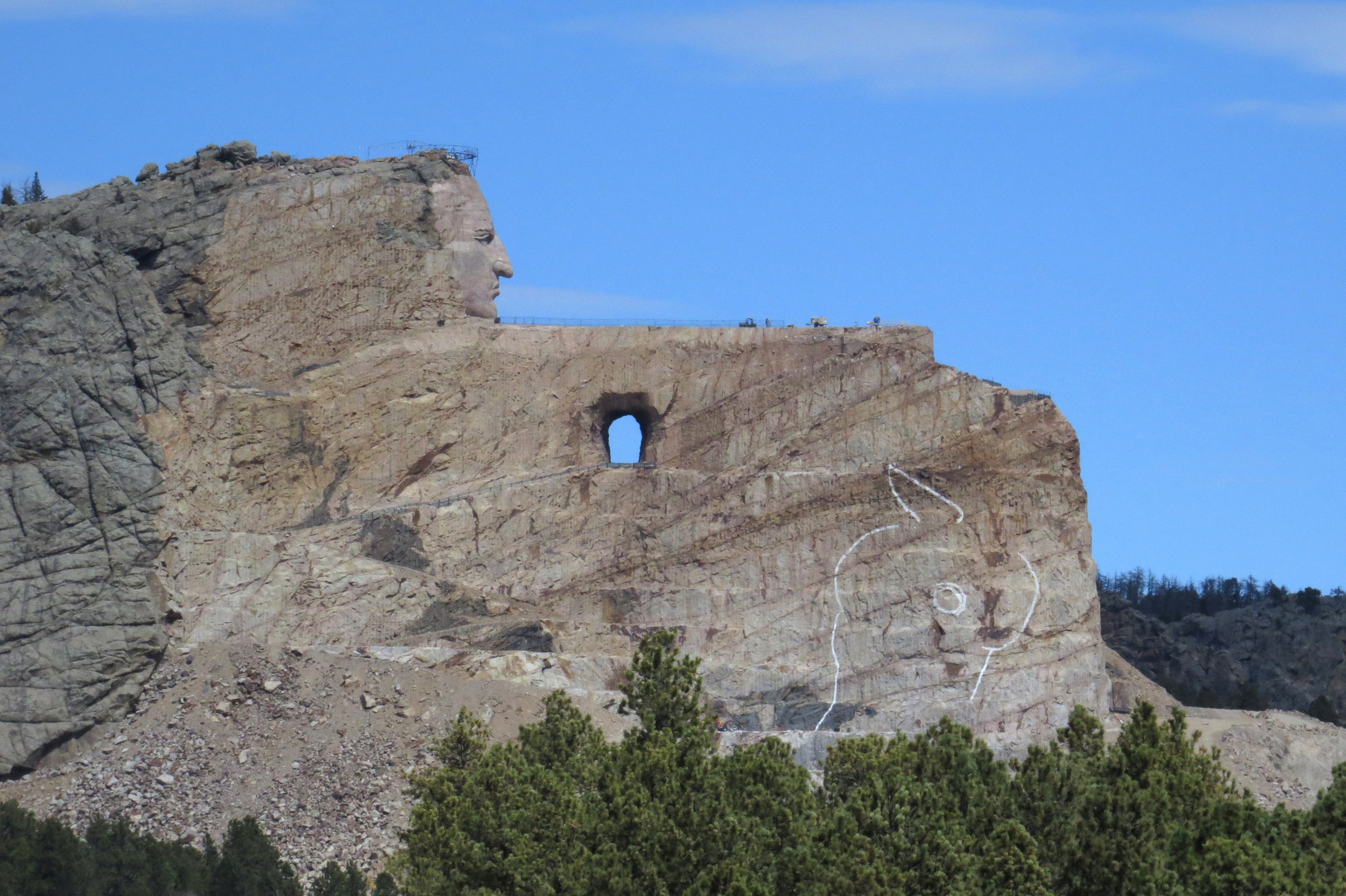
The Native American community have commissioned a huge stature of Crazy Horse which is being carved out of this rock outcrop ‘to show the white-man that the red-man has heroes too’. When complete Crazy Horse will be sitting astride his mount with his arm outstretched. I’m sure it will be magnificent, the entire statue will be nine times higher than the presidential heads at Mount Rushmore. The monument was commissioned in 1948 and as you can see only the head is complete. I doubt if it will be completed in our lifetime. The entry cost was quite high for a project that is still under construction, so we just took a photo from the main highway and moved on.

The Black Hills is famous for its cave formations. This one, the Jewel Cave, named after its beautiful mineral deposits on the cave walls, is the third largest in the world. Studies of the airflow in and out of the cave indicate that perhaps only 10% of the cave system has yet to be discovered. However our visit was a disappointing one. We had to wait an hour for the next tour, then found it was only to the first chamber, the longer tours only take place earlier in the day, so we didn’t see any rock formations or mineral deposits.

Whilst waiting for our cave tour I photographed this White-breasted Nuthatch. These montane birds could be a different species from those of the eastern lowlands. Everybody agrees that more than one species is involved but can’t decide if it should be split into two, three or four. The split has been pended pending further research, in the mean time note exactly where you saw them and try to remember what they sounded like.
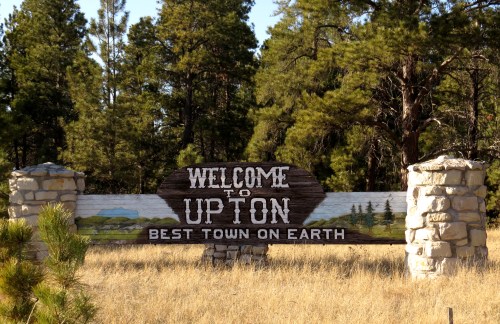
Just over the border in Wyoming we passed through the town of Upton. Living as we do in Upton, Dorset in the UK, I couldn’t resist stopping for a photo.

Pronghorns were once threatened with extinction but fortunately were saved from over hunting and habitat destruction in the 30’s and now number up to a million individuals. We saw good numbers in South Dakota, Wyoming and even on our short visit to Montana, smaller numbers were later seen in Colorado. Away from protected areas they are quite nervous and run off at amazing speed (said to reach 45 mph). Wire fences can cause problems but they usually seem to find a way under them.
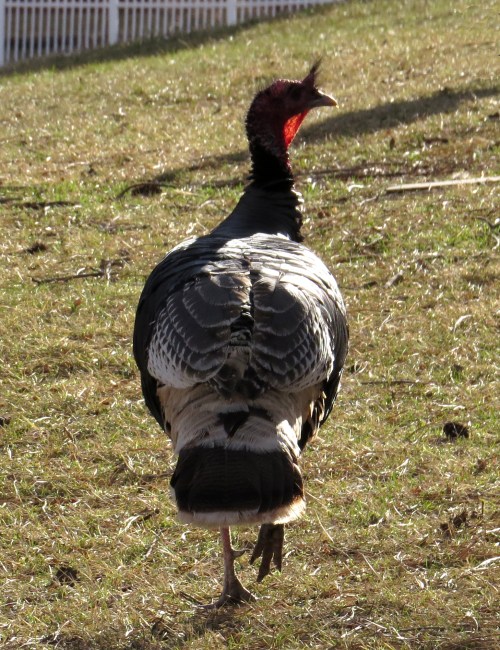
The following day we drove northwards through Wyoming. Whilst exploring Keyhole State Park we drove through a holiday village that had Wild Turkeys all over the lawns.
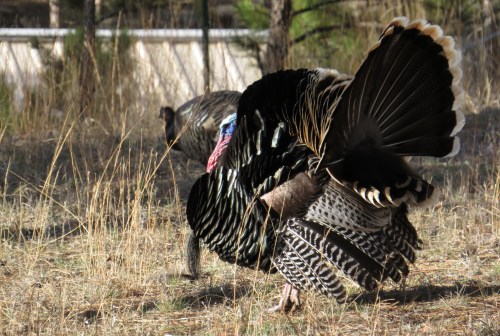
Fancy having one of these visiting your bird feeder?
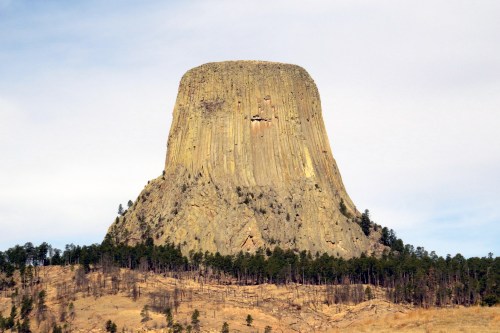
Our destination was the Devil’s Tower, a huge igneous intrusion soaring 1,267 ft above the surrounding plain. It is a very dramatic sight, no the less so for featuring in the epic 70s movie ‘Close Encounters of the Third Kind’.
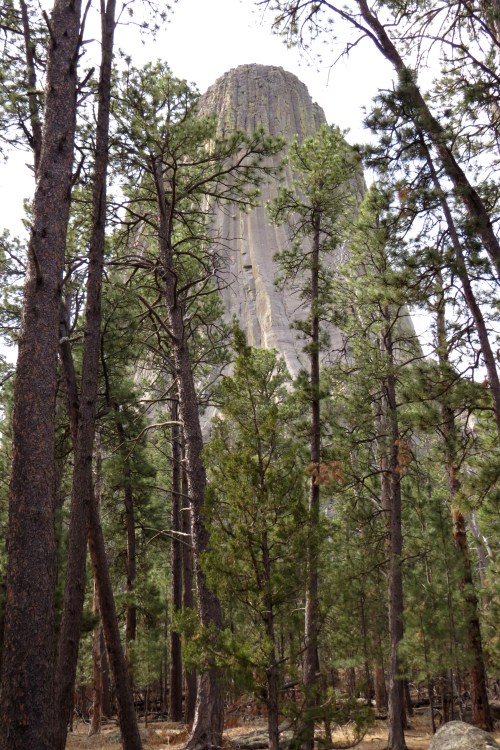
Closer to the Tower we took a circular walk around the base ….

…. and saw plenty of wildlife; more Prairie Dogs ….

…. American Red Squirrel ….
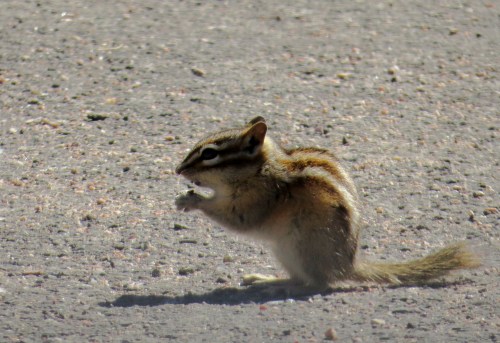
…. Least Chipmunk ….

…. and a species of thrush restricted to the west of North America, Townsend’s Solitaire.

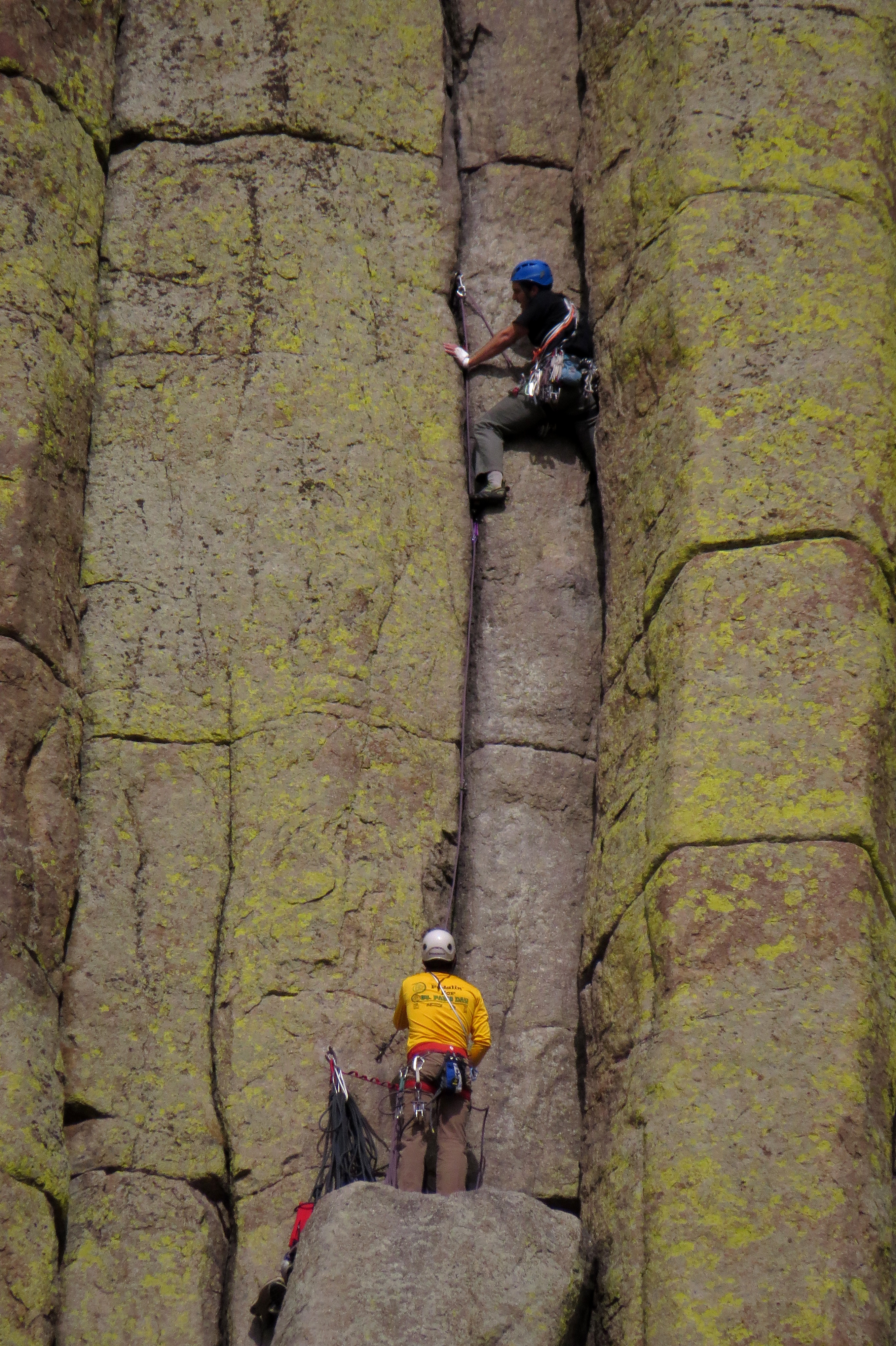
Devil’s Tower is a popular spot for climbers, however it is considered a sacred site by certain Native American people who consider climbing it a desecration.
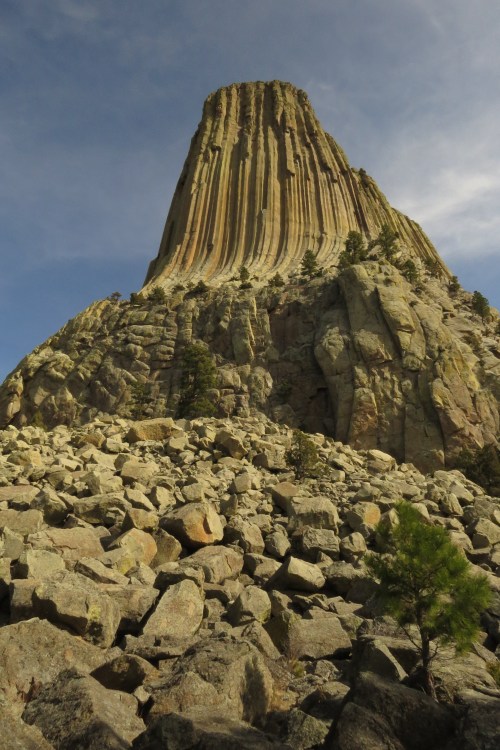
Notice boards told about the geological processes that formed this remarkable structure but also about the native legend which tells of seven young girls being chased by a giant bear, fearing for their lives they climbed a big rock and prayed to the rock to save them. The rock rose quickly into the air, the bear scratched at the side to try to get at the girls, leaving the marks that can still be seen on the Tower’s flanks, the girls however rose so quickly that they were propelled into the heavens where today they can be seen as the Pleiades or the Seven Sisters group of stars. A fanciful story perhaps, but none less so than some believed by those who take a literal approach to mainstream religions.

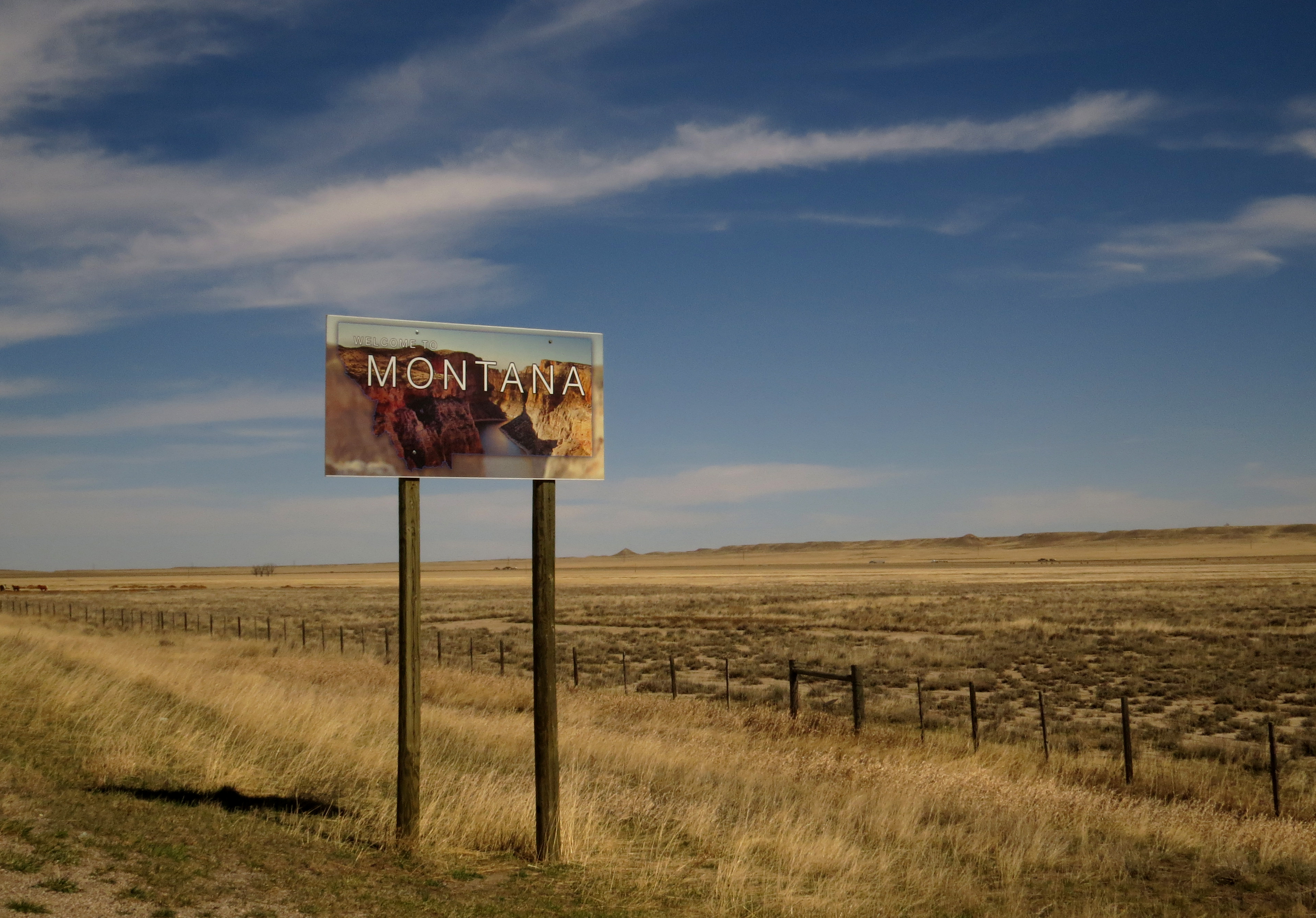
The Montana border was only about 15 miles to the north and being a Frank Zappa fan I couldn’t resist visiting, singing as I drove ‘I might be moving to Montana soon, to raise me up a crop of dental floss, waxing it up and waxing it down, in a little white box that I can sell up town’. FZ was once asked if his salacious lyrics in certain songs were contributing to the nation’s moral decay – he replied ‘I wrote a song about dental floss once, nobody’s teeth got any cleaner’.

OK, we didn’t see any ‘dental floss bushes’, ‘pygmy ponies’ or ‘zircon encrusted tweezers’ but we did find this bar with the sign ‘cheap drinks, lousy food’.

The bar had a sign saying ‘welcome to Montana, put back your watches 20 years’. The centrepiece of the bar dated back to the mid 1800s, there was sawdust on the floor, saucy photos in the loo ….

…. and a heavily tattooed barmaid.

We returned to Wyoming and started the long drive south. We wanted to be somewhere were we could go birding the following morning yet still have time to reach Denver by late afternoon. We settled on the small town of Glendo in the middle of a coal mining area which had a nearby State Park, but there was only one motel still open and that was right next to the railroad. There was nowhere to eat either, so we bought microwavable burgers from the gas station and I have to say they were the worst burgers I’ve ever tasted. Although the room was comfortable enough, the proximity of the railroad, the continual procession of coal-bearing trains through the nightand the habit of American train drivers of sounding their horns all the time meant that we had little chance of sleep. I counted 130 wagons being pulled by this train.
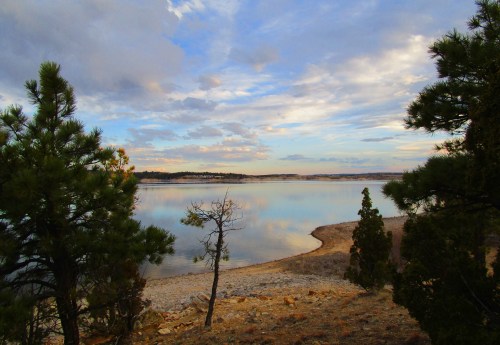
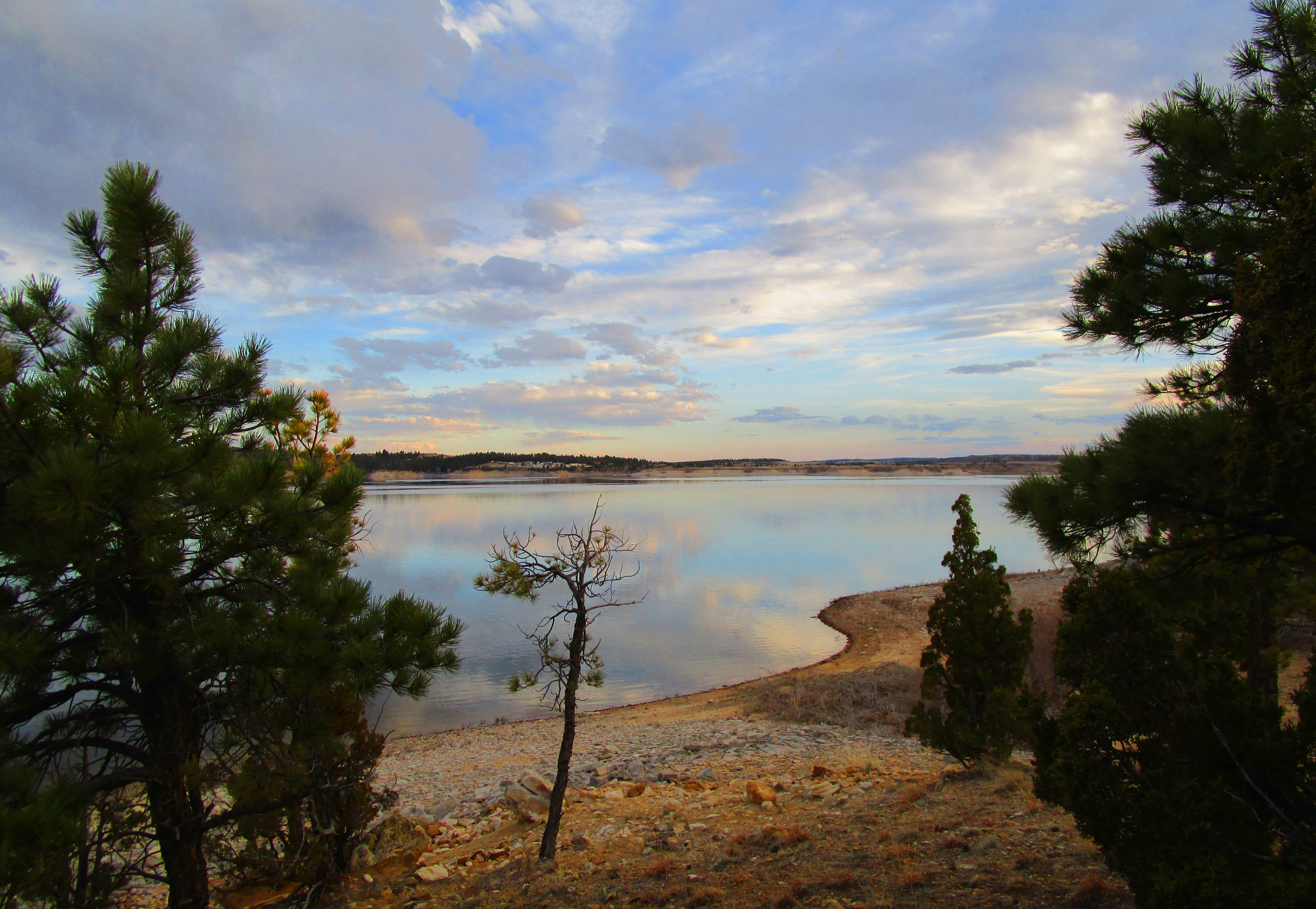
The gas station served breakfast and we were regaled with stories from the elderly storekeeper on how he should have taken up the place in the House of Lords that was promised to him by his aristocratic English grandfather! The rest of the morning was spent at Glendo State Park where we saw several Townsend’s Solitaires, Western Grebes ….

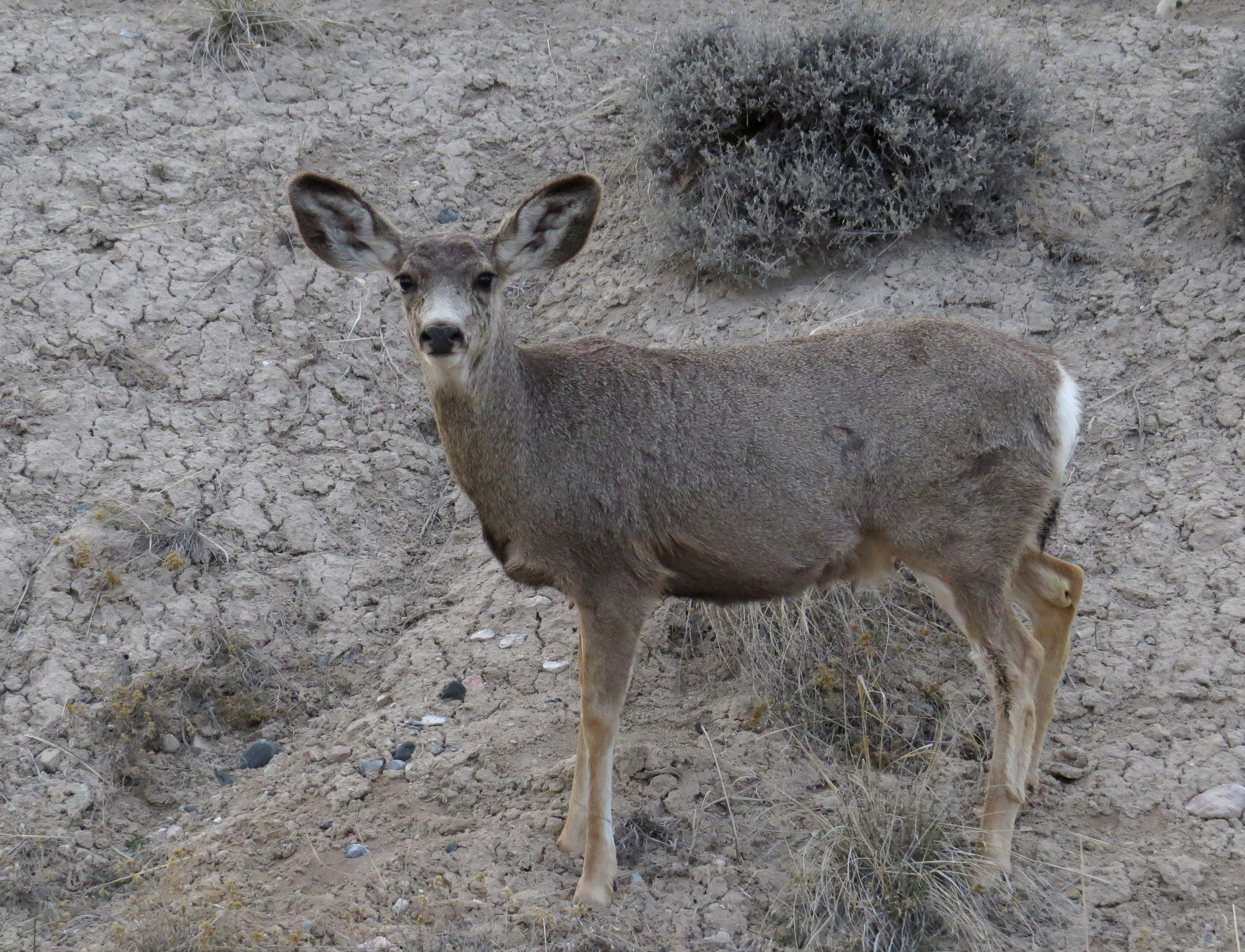
as well as numerous Mule Deer and Margaret added a mammal to the trip list in the form of two tiny mice that were taking shelter in the ladies loo. We later identified them as Deer Mice.

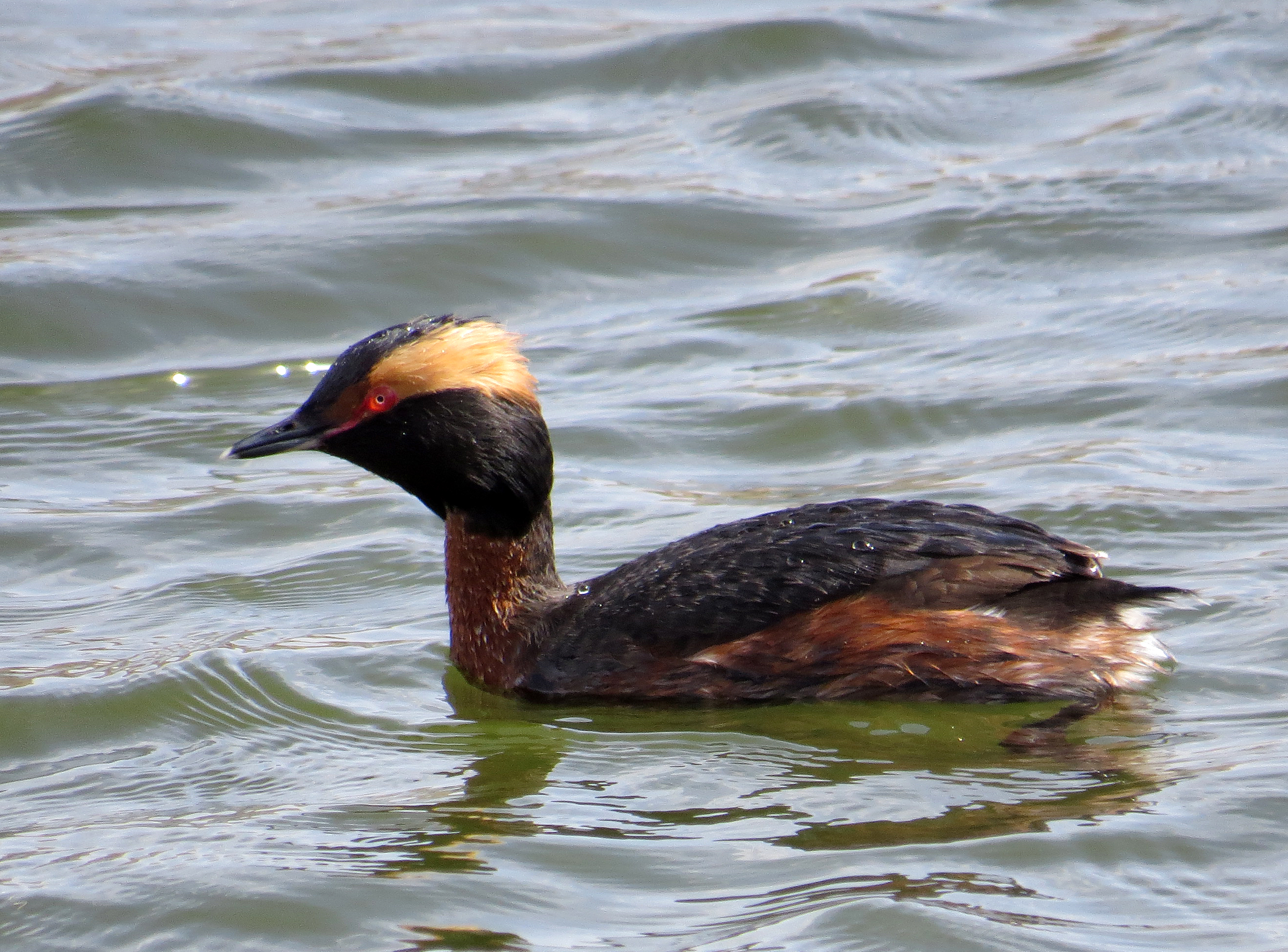
The final good birds of our private trip were a group of Horned Grebes. Known as Slavonian Grebes in the UK, they are a regular winter visitor to Dorset in small numbers but we usually see them as some distance on the sea and never in their gorgeous breeding plumage.
From here it was a three-hour drive to Denver where we dropped the car off before meeting the others on the Birdquest tour. The next two weeks was taken up with the tour of Colorado, one of the best commercial tours I have ever been on, full of great birds and great scenery. Unfortunately I haven’t edited any of those photos yet and Margaret and I have been invited to a wedding in Austria in the near future, so it might be a little while before I get a chance to post them here.
After several trips to the east, south and west of the ABA area most of my life birds are restricted to the centre of the continent, so a visit to Colorado seemed a good idea. As a trip to Colorado involves booking slots in various hides for grouse leks and benefits from contacts with locals for up to date news, we decided to join an organised tour, but prior to the tour Margaret and I opted to spend a week exploring on our own.
Whilst life birds remain the main focus for foreign birding, sometimes the draw of an avian spectacle can be just as alluring and there is no greater avian spectacle in the world than the spring gathering of over half a million Sandhill Cranes on the Platte River in Nebraska. So we booked three nights in a motel at Kearney, leaving the other three nights free so we could decide ‘on the hoof’ what to do whilst we were there.
Here are some photos from our four days in Nebraska, perhaps not the most scenic of the States but one full of bird life, especially along the Platte River.

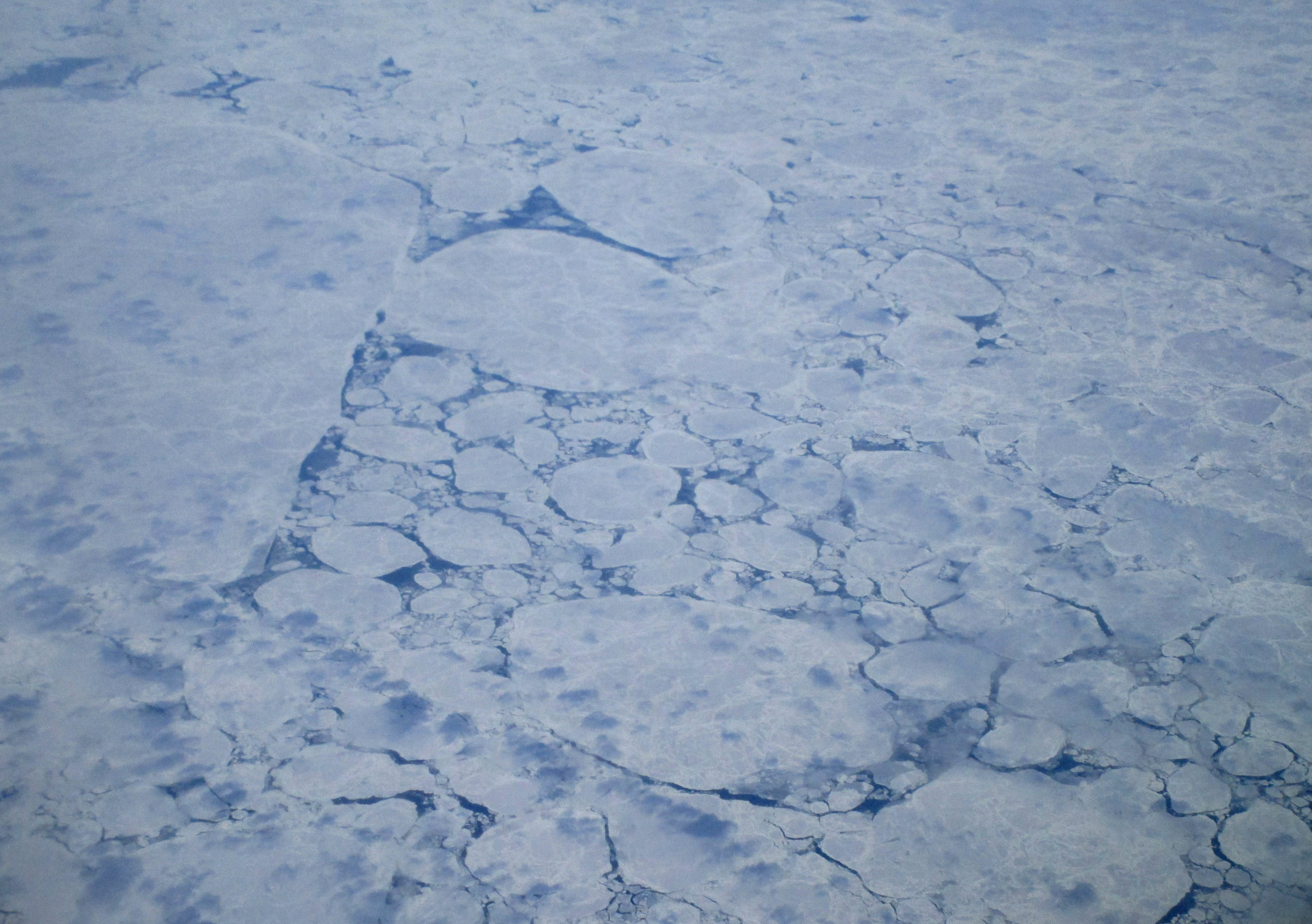
One of the nice things about flying to the western USA is that the flight takes you north over Iceland, Greenland and Arctic Canada and at this time of year the entire flight is in daylight. Although cloudy over most of Greenland we did get a good view of pack ice between Baffin Island and northern Hudson’s Bay.
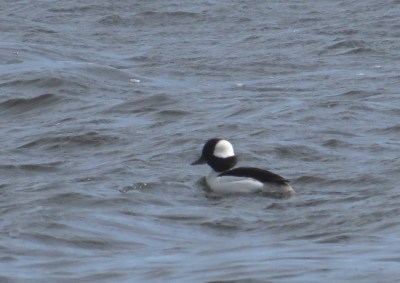
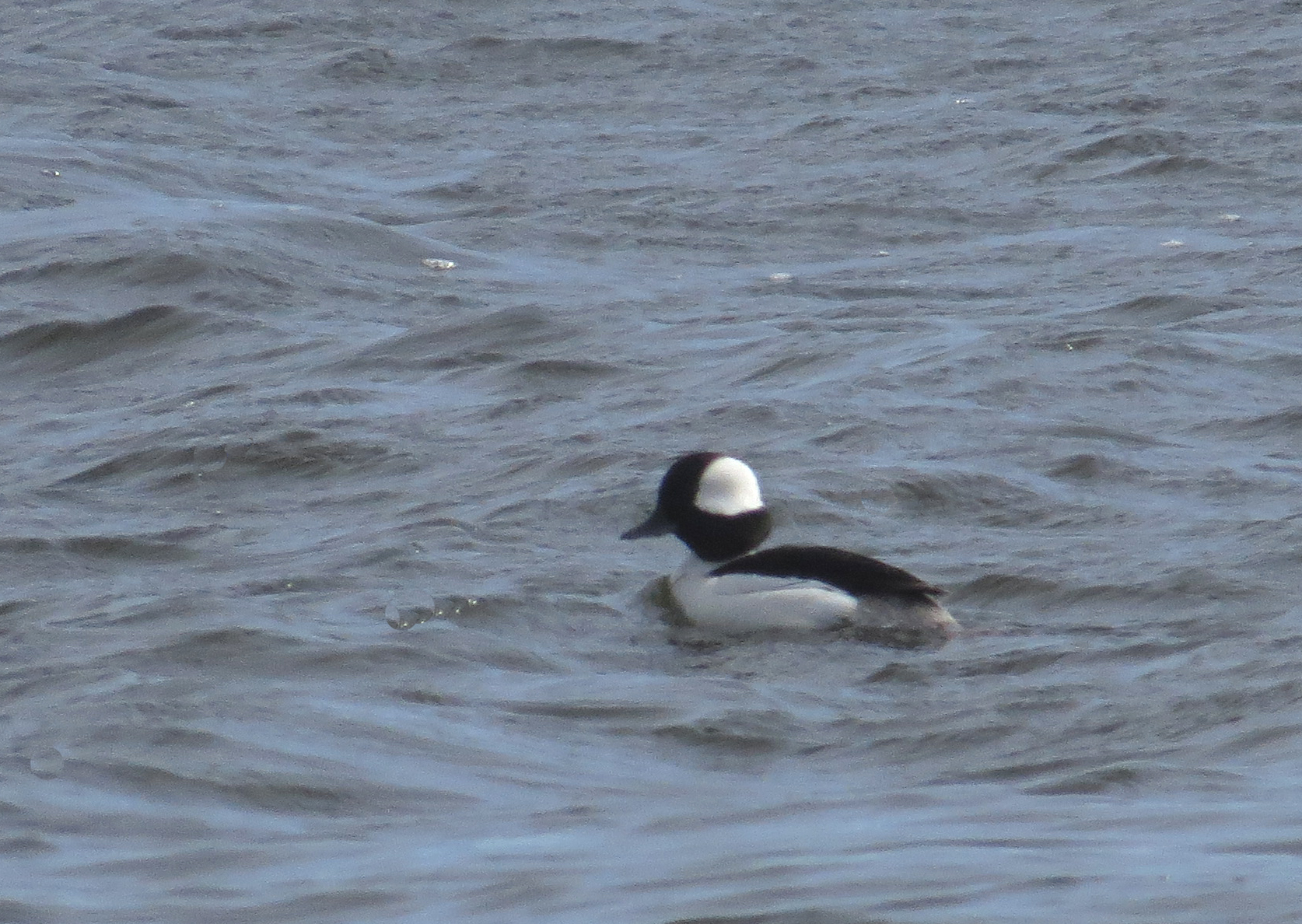
After a night in Denver, Colorado we set off on the 350 mile journey to Kearney, Nebraska. We broke the journey at Lake McConaughy just over the border in Nebraska. There was a strong westerly wind blowing and all that we could see on the lake itself were some distant ducks, but there were many waterfowl on a series of small lakes below the dam wall where it was much more sheltered. This is a male Bufflehead.
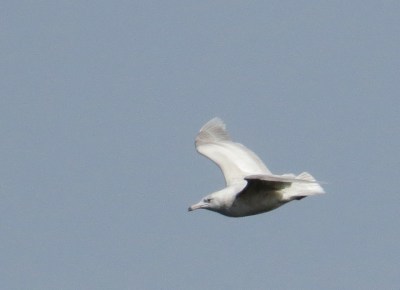
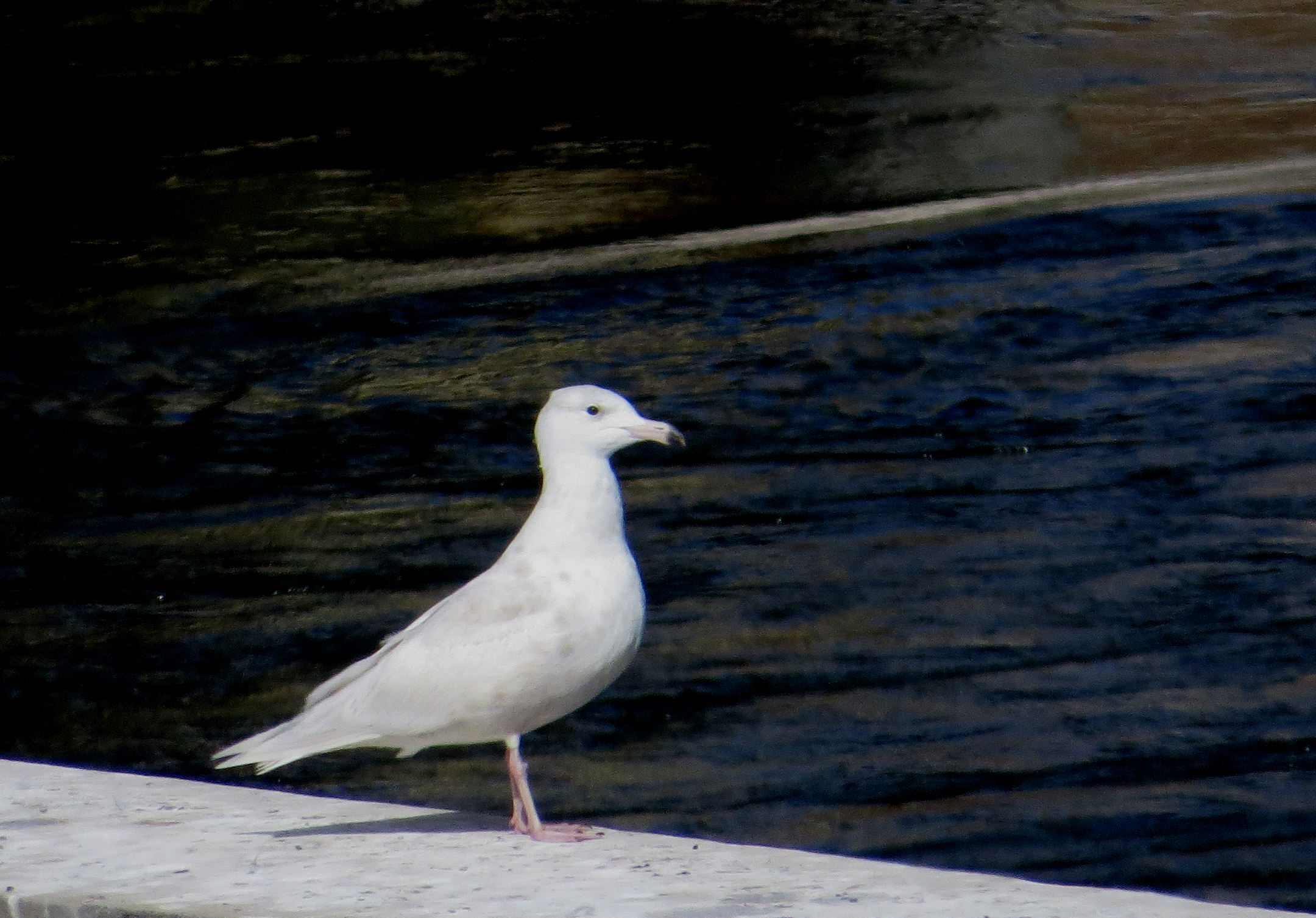
I had expected some ducks and perhaps some gulls but I did not expect to see a first winter Glaucous Gull, a visitor from the high Arctic. The robust structure and bicoloured bill distinguish it from an Iceland Gull of similar age.
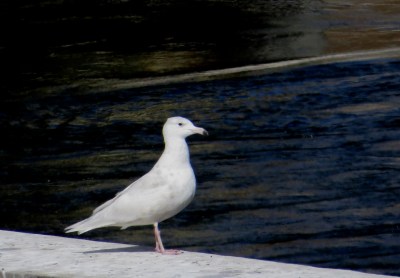
I have seen over a thousand Glaucous Gulls, mainly in Arctic Siberia and in Japan in winter. Surprisingly this might not be the southernmost Glaucous I have ever seen, Nebraska is on a similar latitude to Hokaido in northern Japan and I recorded one off a pelagic boat out of Monterey, California in 2003, however some on board thought the Californian bird might have been a hybrid (what with they didn’t say).
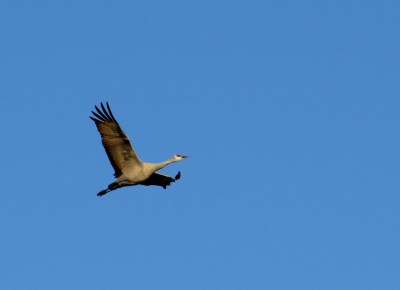
We carried on to Kearney, the self-styled ‘Sandhill Crane capital of the world’ arriving in the late afternoon. After checking in we immediately went out to Fort Kearney State Park, a good site to see the Sandhills coming into roost.

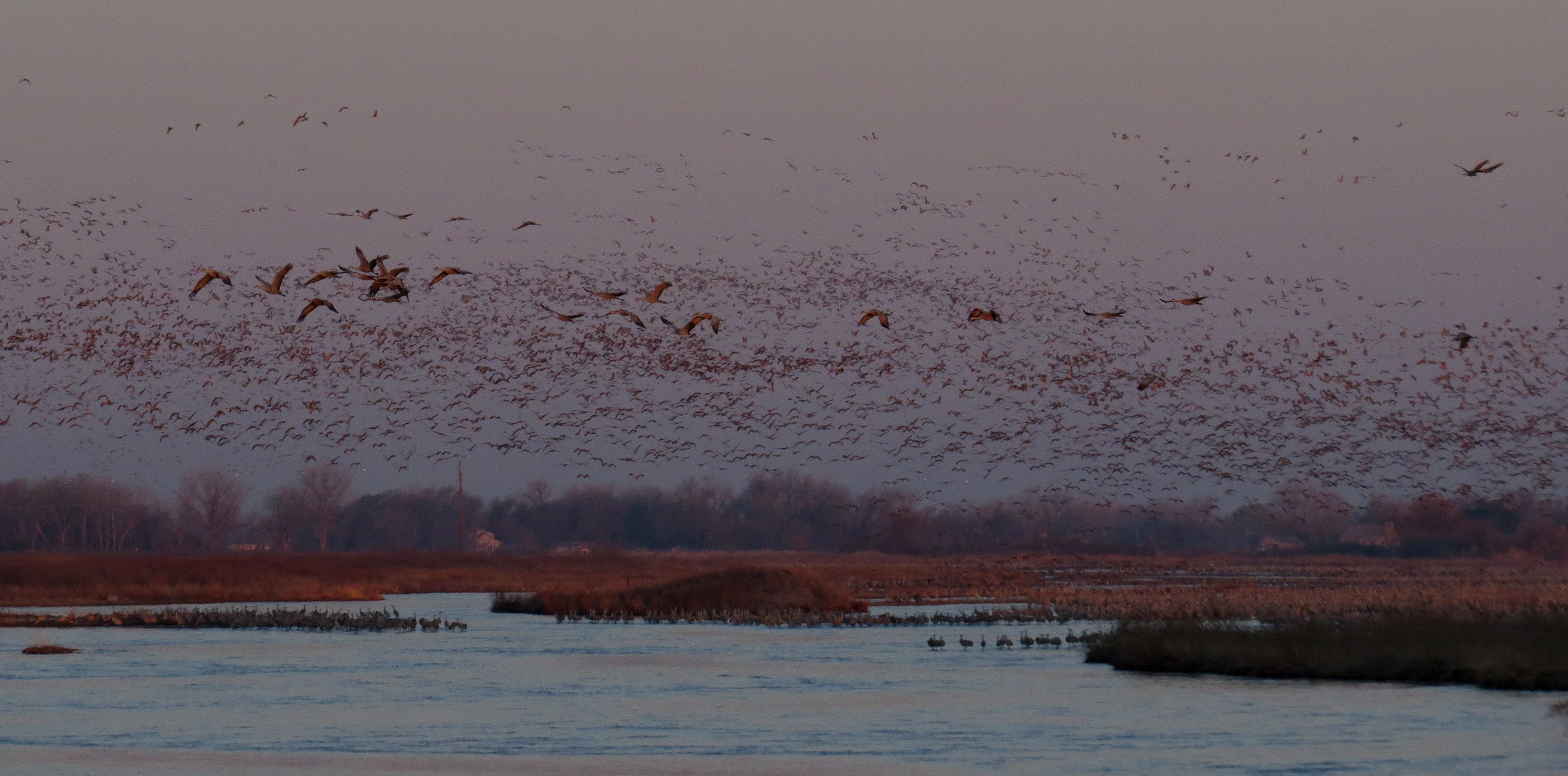
We didn’t have to go far before we found the fields and the sky above the fields to be full of Sandhill Cranes.
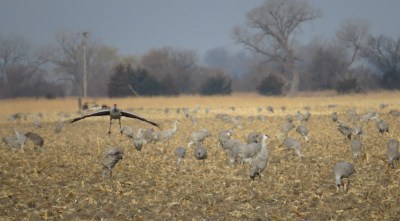
Once the Platte River was a mile wide but a mere foot deep. The conditions provided an ideal refueling stop for the cranes between their wintering grounds in southern USA and northern Mexico and their breeding grounds in Canada, Alaska and even eastern Siberia. Dams on the river such as the one we saw at Lake McConaughy have tamed the river which now runs in just two channels, but waste corn from the surrounding fields has provided the food that river can no longer supply, so the skies above the central Platte River still resounds to the sound of over half a million cranes every spring.

Many of the birds were performing their courtship dances. Over the next couple of days we visited two sites at both dusk and dawn as well as watching thousands of birds in the fields. In the Platte River valley there was never a time when we couldn’t either see or hear Sandhill Cranes.
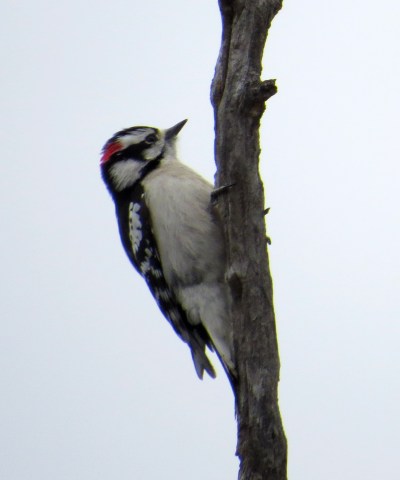
As well as watching the cranes I was searching for American Tree Sparrow, one of two North American sparrows that I have yet to see. In spite of a few tip offs I failed in my quest, but here are a few other birds that I saw in the Platte River valley: North America’s smallest woodpecker – Downy Woodpecker.

Northern Harrier, still considered con-specific with our Hen Harrier by some, but recent research has shown it to be more closely related to Cinereous Harrier of South America than the Palearctic Hen Harrier.

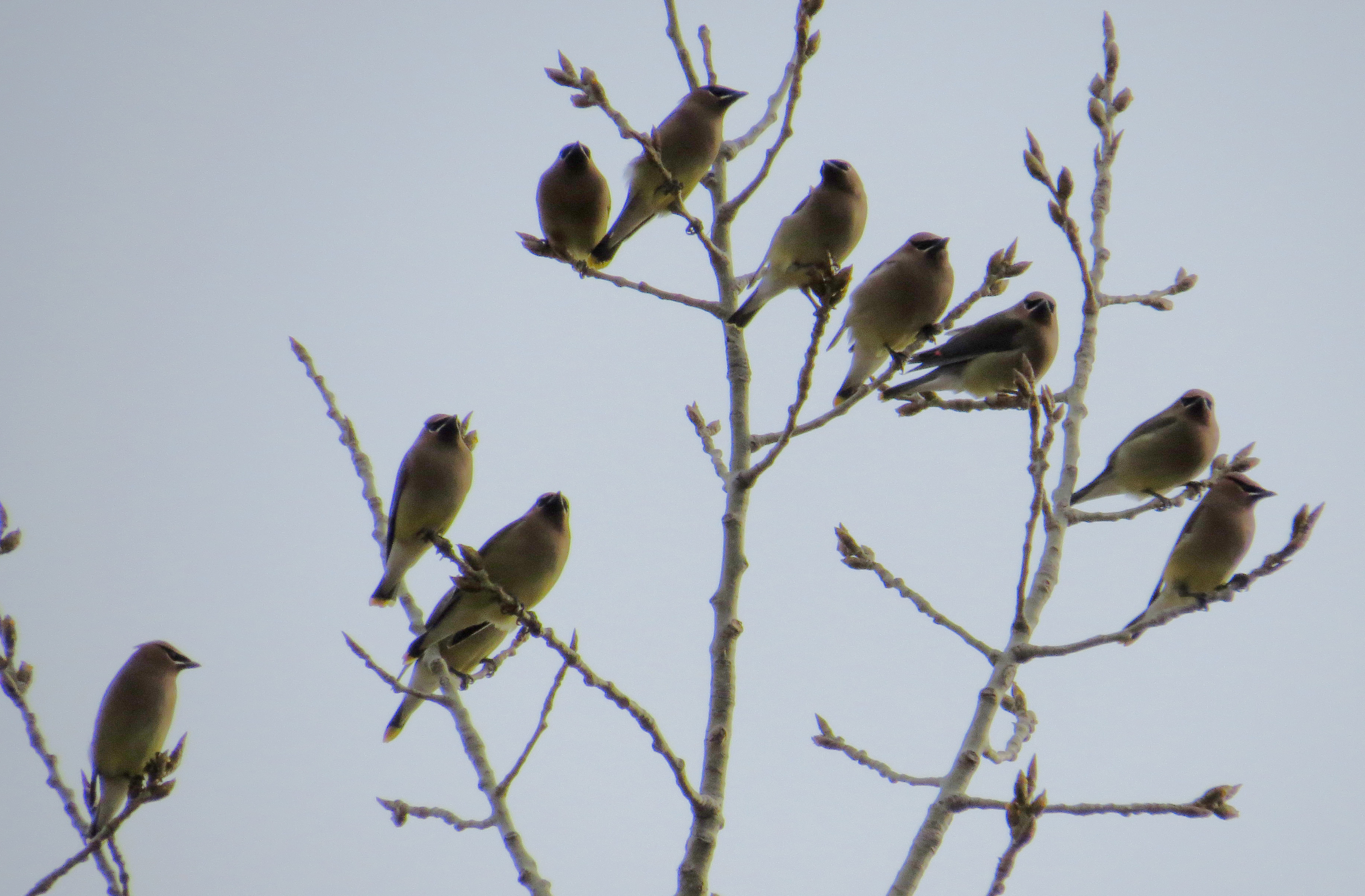
Several hundred Cedar Waxwings were seen in the Fort Kearney area.

Like American Tree Sparrow, Harris’ Sparrow is an Arctic breeder and occurs in the Lower 48 as a winter visitor, however it departs for the north a little later than the Tree Sparrow allowing us to catch up with this flock of seven birds near Kearney and again later in Colorado.
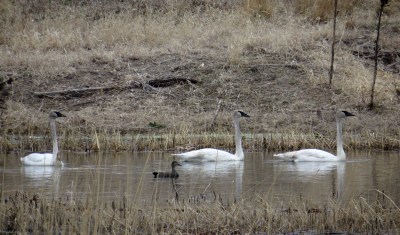
At a small reserve to the west of Kearney I finally caught up with Trumpeter Swans. This species was one of just five waterfowl that I had yet to see. Two of the other four as effectively impossible, I must make plans to see the other two Freckled Duck (Australia) and Andaman Teal some time in the future. These Trumpeter Swans were much more rewarding than the presumed escapes we saw in Suffolk earlier in the year.
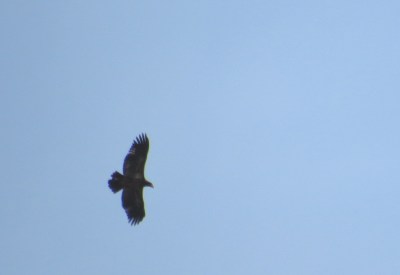
At least six Bald Eagles were seen along the river, four immatures (as seen above) and two adults. Some crane watchers thought these all brown birds were Golden Eagles but the proportions and jizz are totally different.
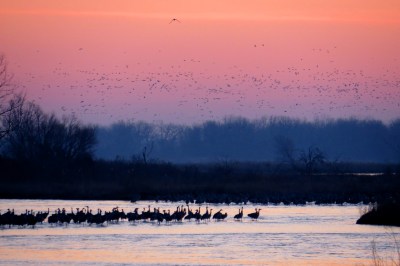
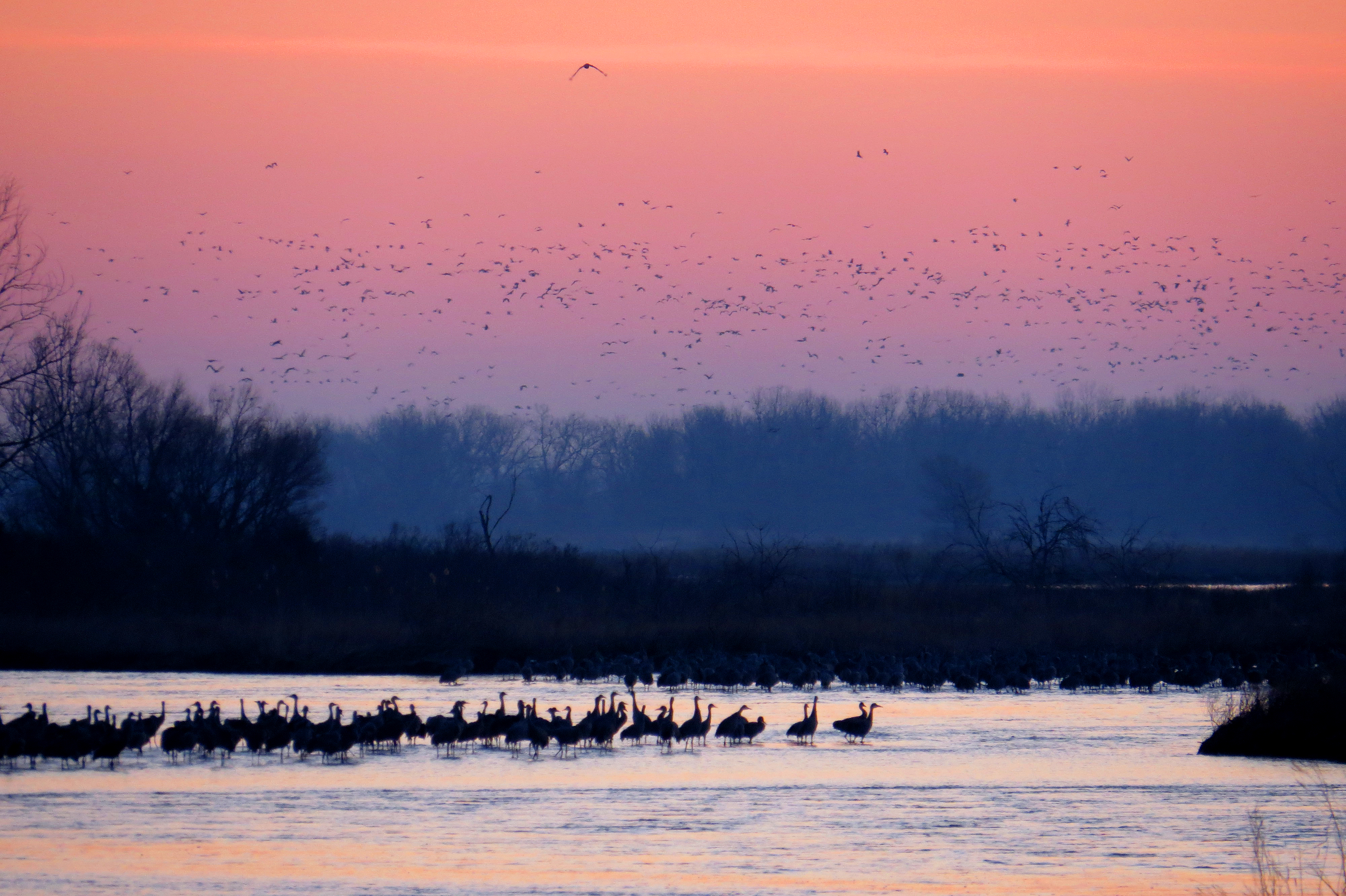
On our first evening along the river the presence of the eagles wouldn’t allow the cranes to settle and the huge flocks kept taking off and landing elsewhere.

On our second evening we positioned ourselves at a lookout platform further east. Here the cranes came in over a one hour period and quickly settled on the river. You can, if you book far enough in advance, go to a series of hides right on the river’s edge and watch the birds at close quarters but we didn’t find out about that in time.
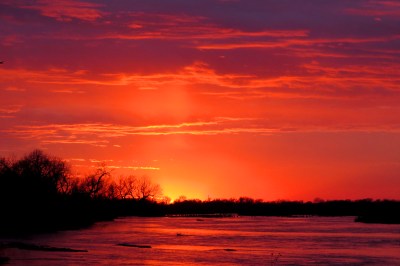
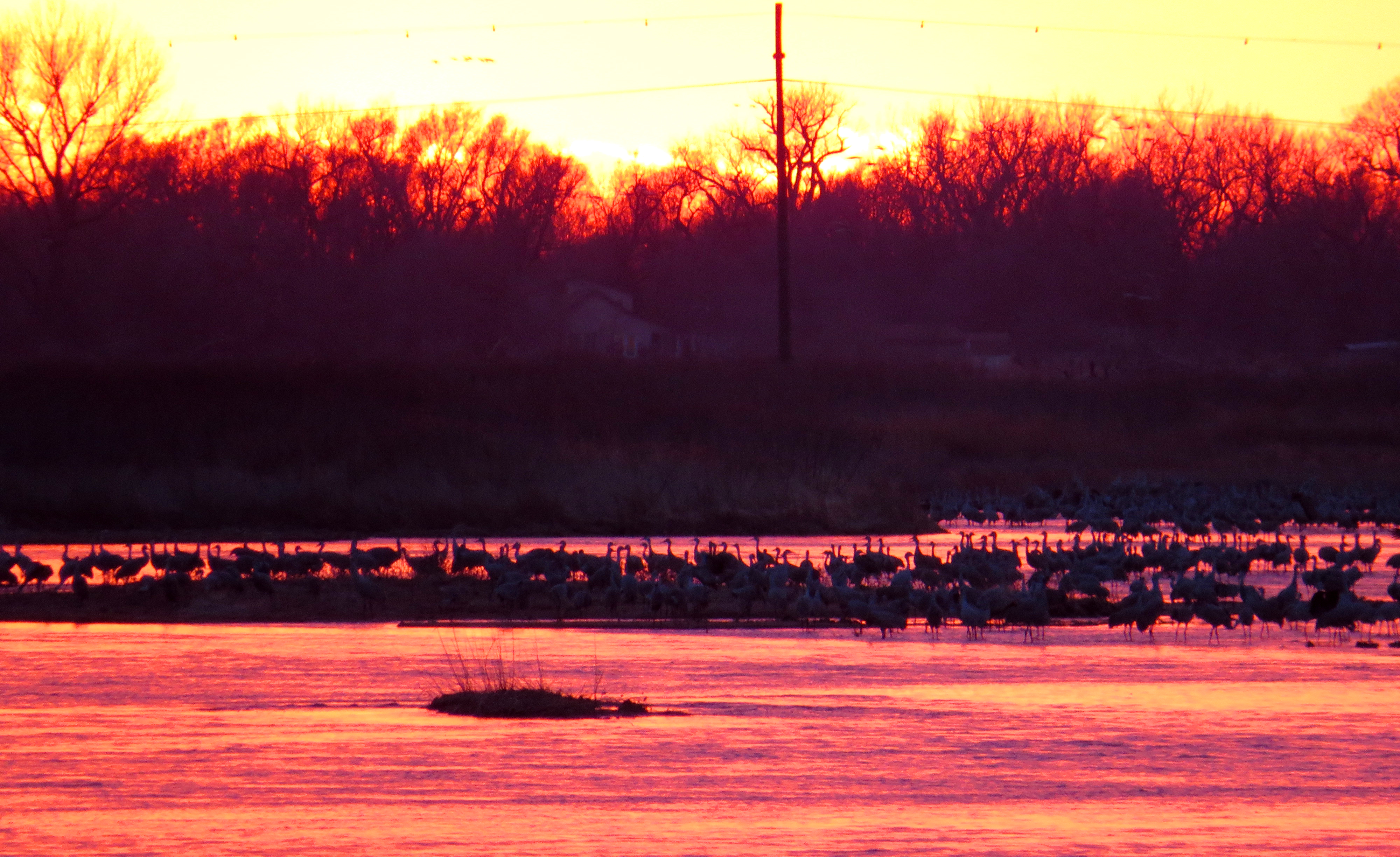
It was a glorious sunset ….
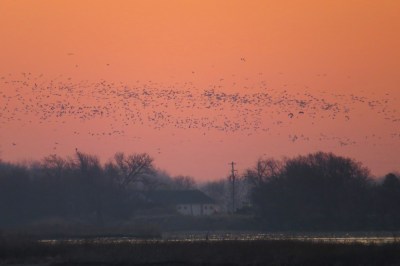
…. and the cranes kept arriving long after the sun had gone down.

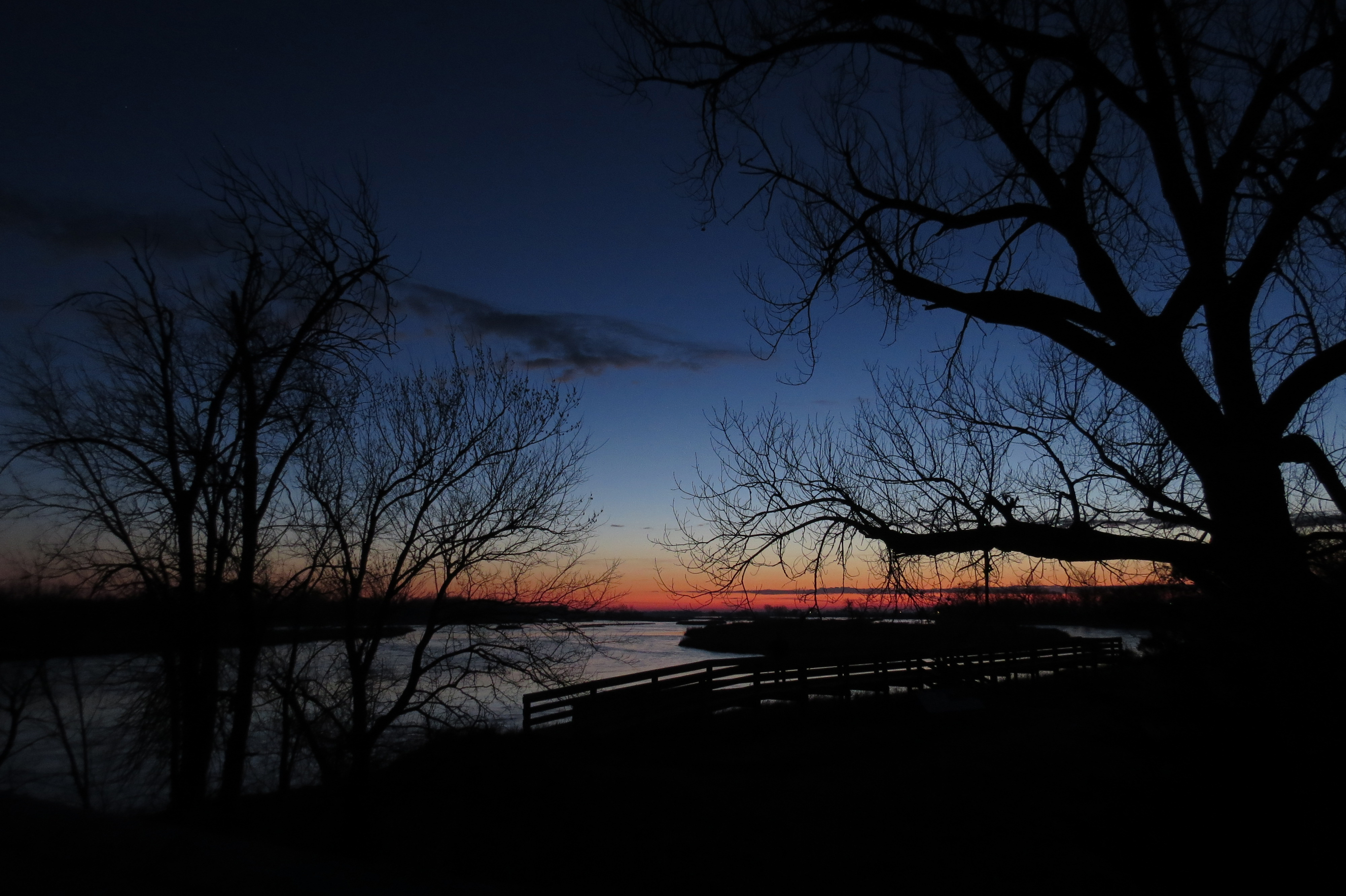
We were keen to return to the same spot for dawn, indeed Margaret was so keen that we arrived there when it was still pitch black on the observation deck. Even so the birds were active, calling loudly and as our eyes adjusted to the dark we could see that thousands were already taking off into the gloom.

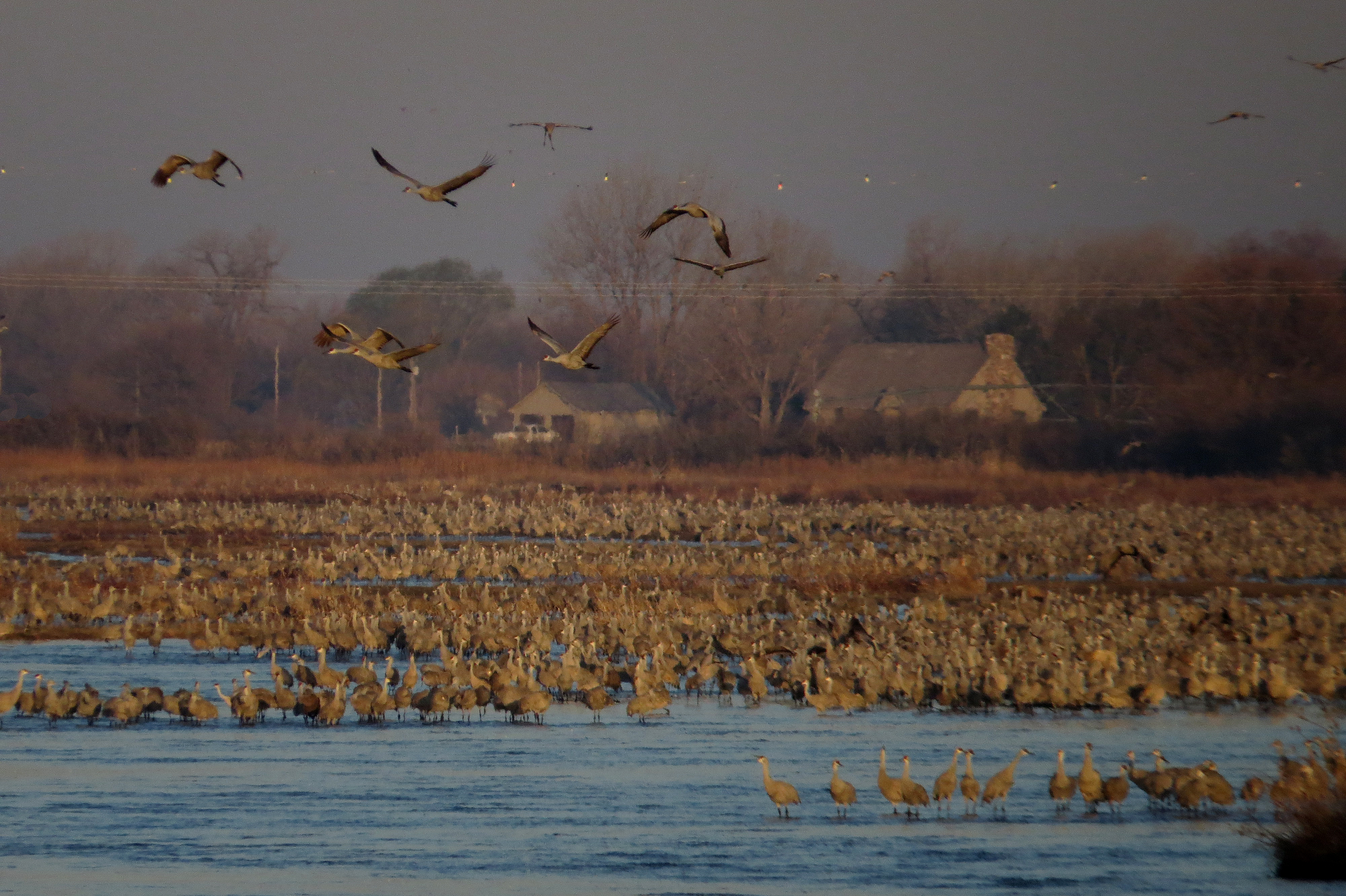
As the sun rose we realised that many more birds must have arrived after it got dark, as the river was even fuller with cranes than the night before. Also many must have come down to roost to the east of us, as vast flocks numbering tens of thousands were lifting off ….
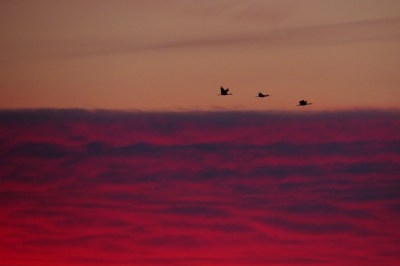
…. beautifully lit by the breaking dawn. As with the night before it was a thrilling and deeply moving (yet bitterly cold) experience ….

…. and the camera shutter worked overtime in an attempt to save the experience for posterity (ie this blog).
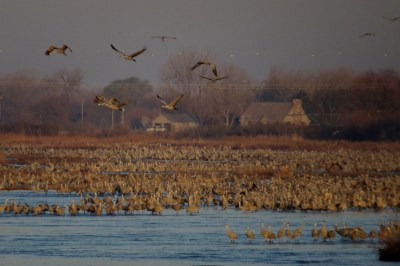
Looking back to the west, a vast grey carpet of birds extended as far as the houses in the distance, even though many had already departed. Indeed many stayed on the river until mid-morning. These birds had probably fed enough to be able to continue their migration north and were waiting for thermals to develop.

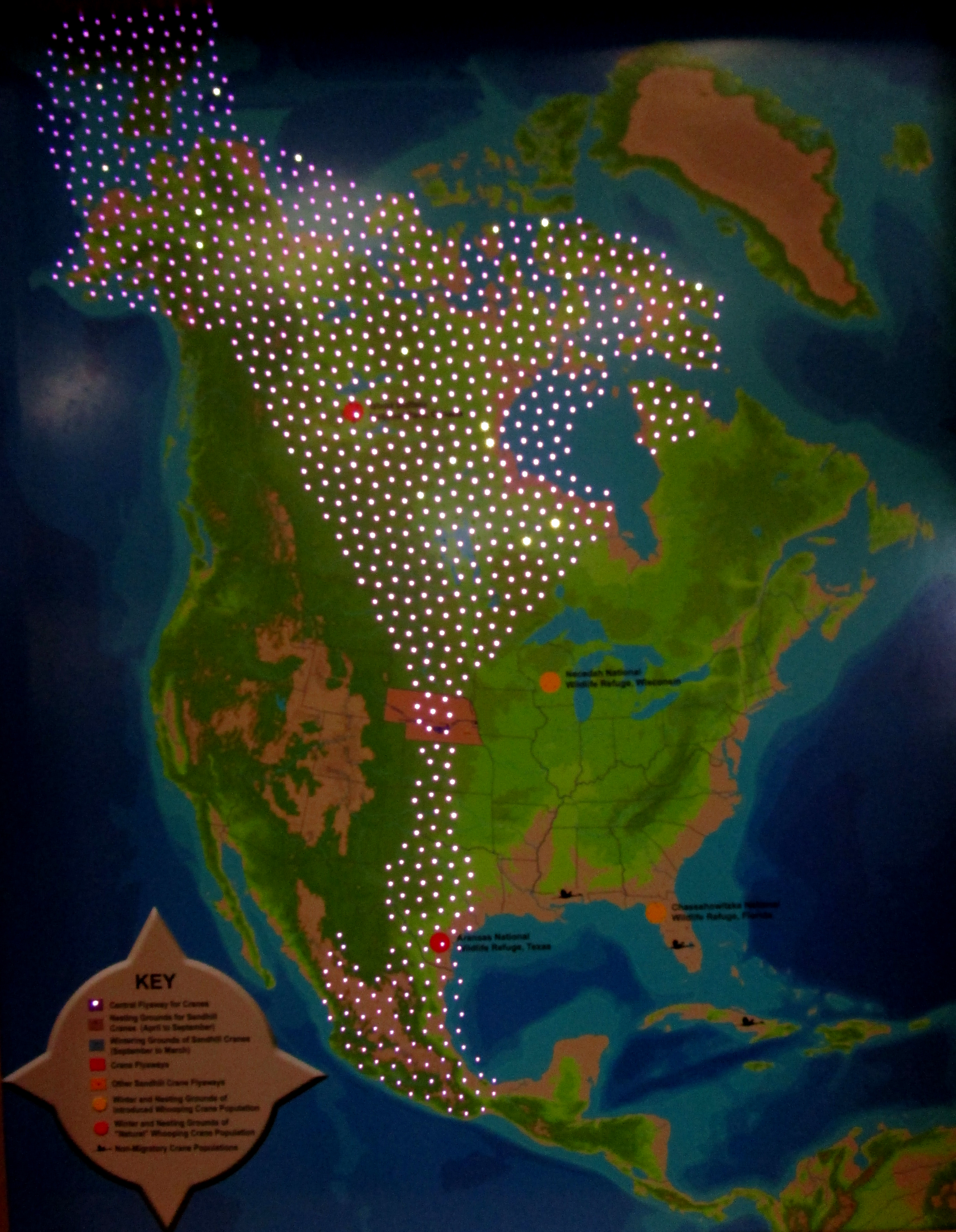
At the Crane Foundation near Grand Island some interesting displays and a very helpful member of staff explained that 80% of the world’s Sandhills stop on the 50 mile stretch of the Platte River between Kearney and Grand Island each spring. The spectacle which starts on Valentine’s Day, peaks on St Patrick’s Day and is over by Tax Day (April 15th) involves some 650,000 birds. The peak number at any one time is 350,000. It is impossible to estimate just how many we saw in our two and a half days there but somewhere between 100,000 and 150,000 i.e. between a third and a half of the birds present seems reasonable. The map shows the migration route of the 80% of the population that converges on the Platte River each spring. The red dots show the breeding and wintering range of the very rare Whooping Crane and the orange dots the breeding and wintering range of the artificially managed Whooping Crane population (the truly wild Whooping Crane population now number some 310 birds, up from 16 in 1941).
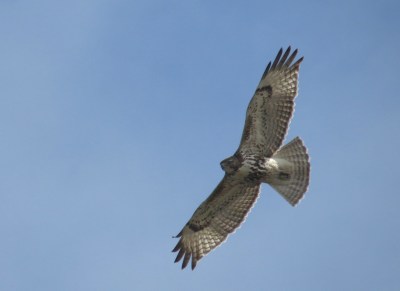
Later that day we drove south as far as the Kansas border. We saw many hawks, including this pale ‘Krider’s’ type Red-tailed Hawk and two hovering Rough-legged Hawks.

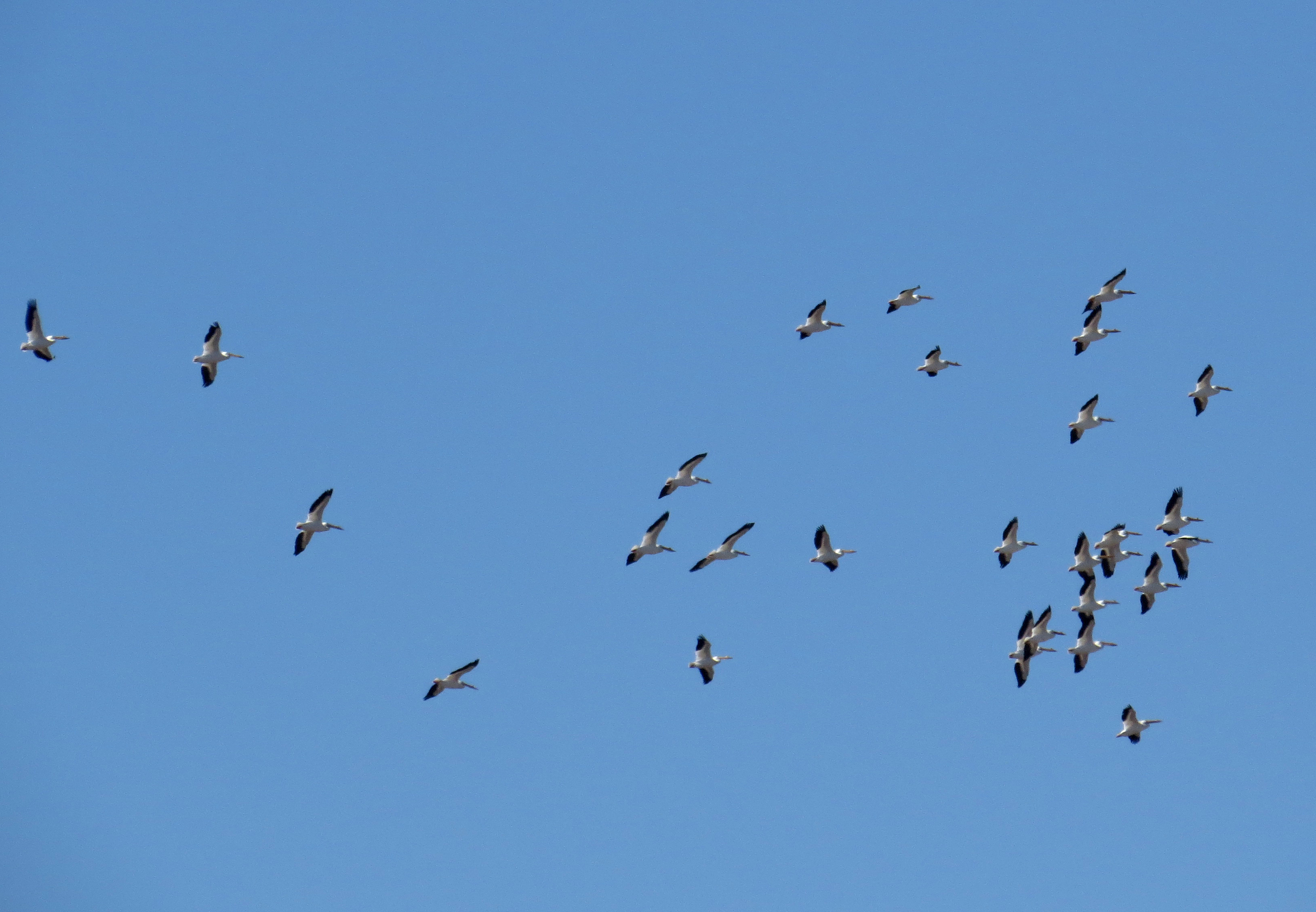
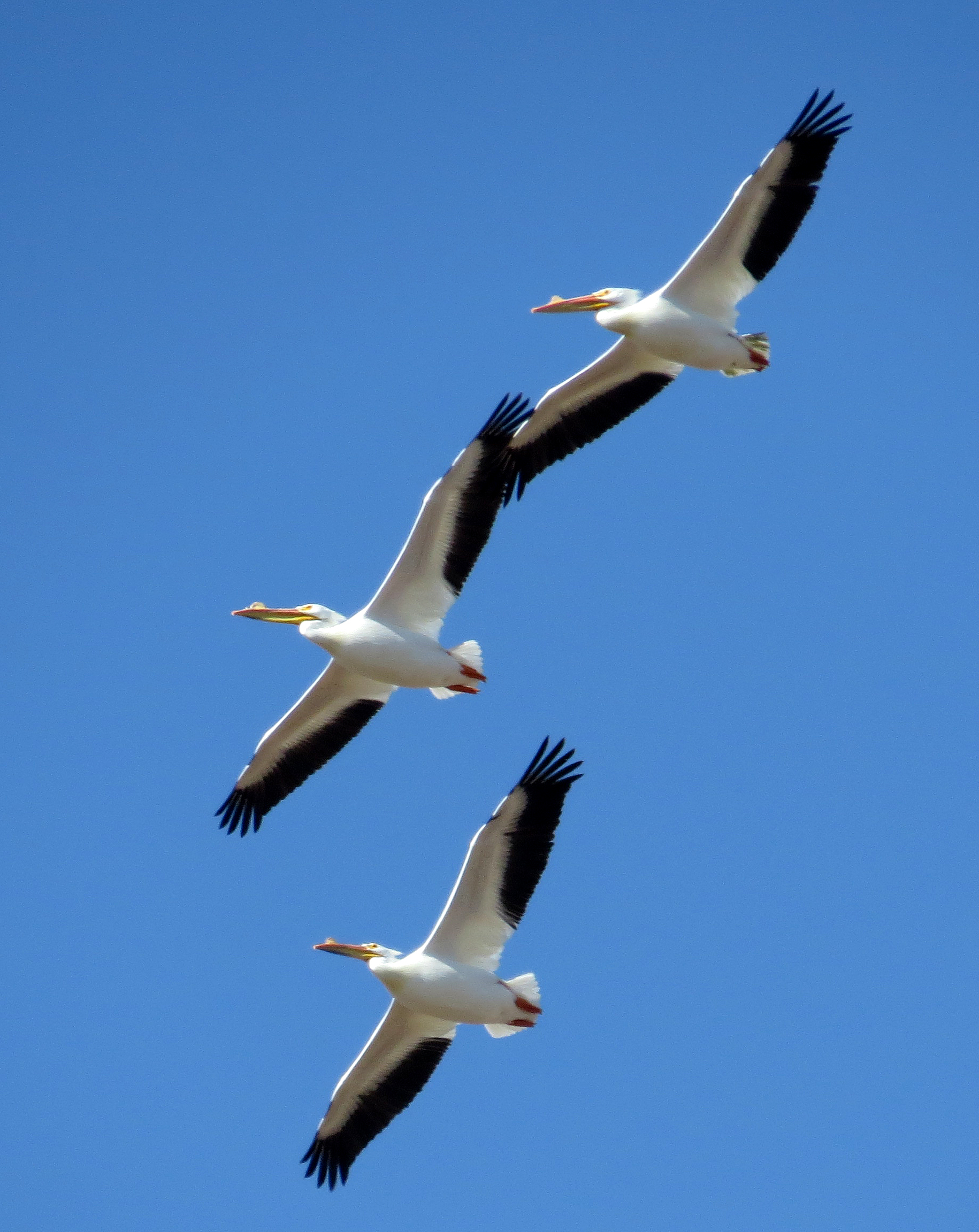
At Hanlon County Reservoir we encountered flocks of American White Pelicans, numbering some 200 in total.

Note the knob on the bill which develops during the breeding season.

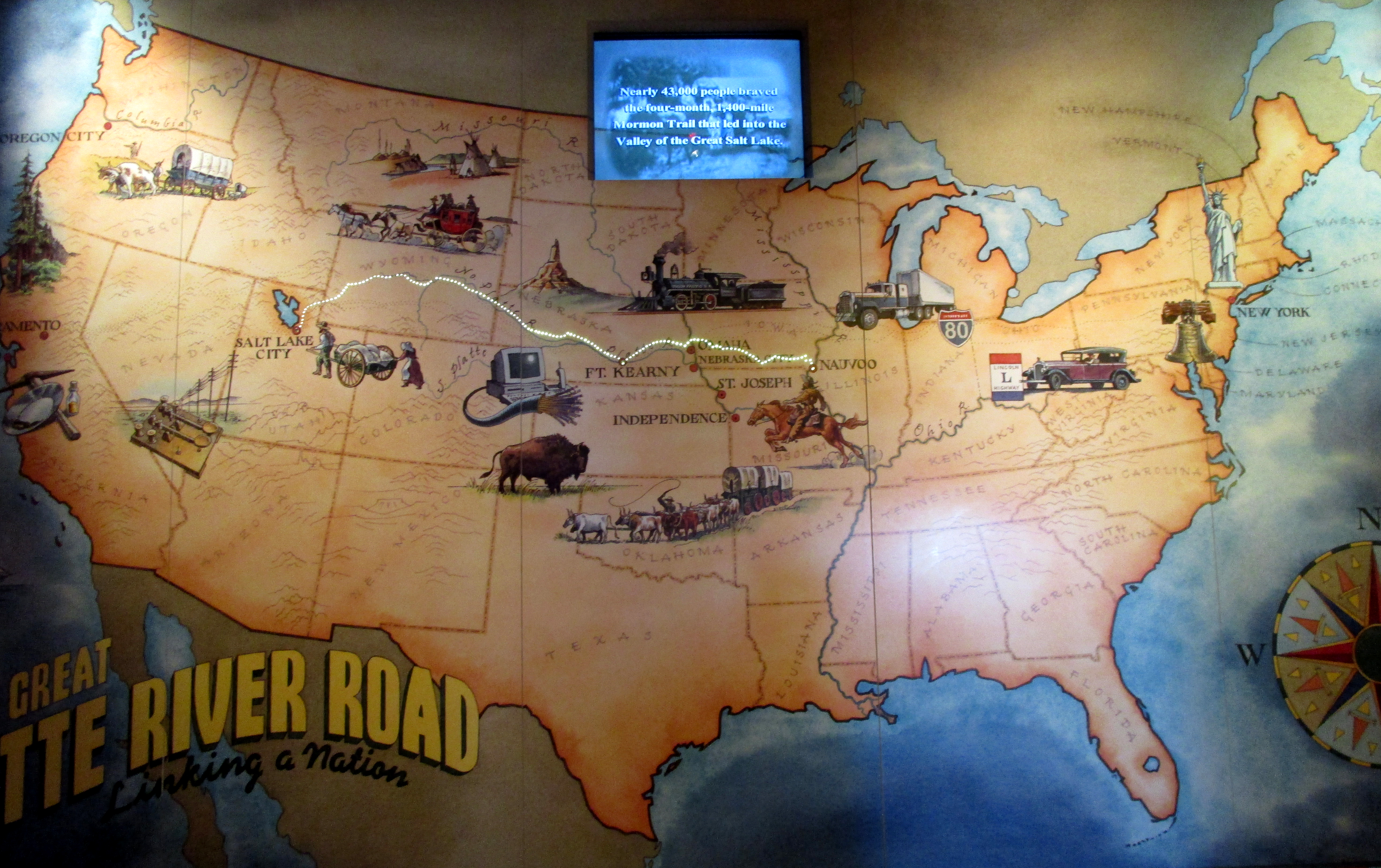
Back near Kearney we paid a short visit to the Archway Monument, an exhibition which features the history of the area housed in an arch that spans the Interstate Highway (Margaret took the photo, my hands were firmly on the wheel!).

What I hadn’t realised and the exhibition explained, was that the three routes that pioneers took from 1841 until the arrival of the railroad in the 1860’s; the Oregon Trail, the Mormon Trail to Salt Lake City and the 1849 gold-rush trail to California, all followed the Platte River valley and diverged just west of Kearney. The route of the Mormon Trail is shown above.
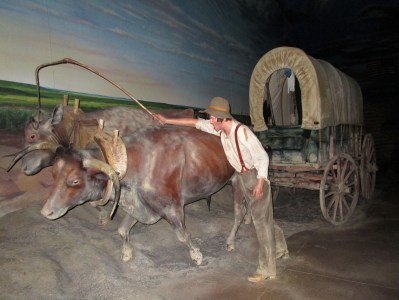
When the railroad opened as many settlers went west in a year as had gone by covered wagon in the previous twenty, given the hardships endured by those early pioneers, it is hardly surprising that relatively few chose to go.
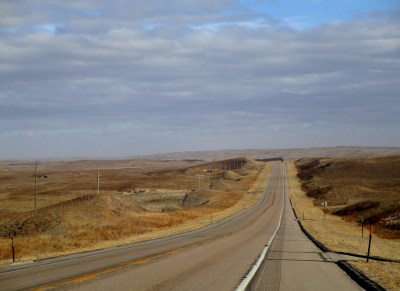
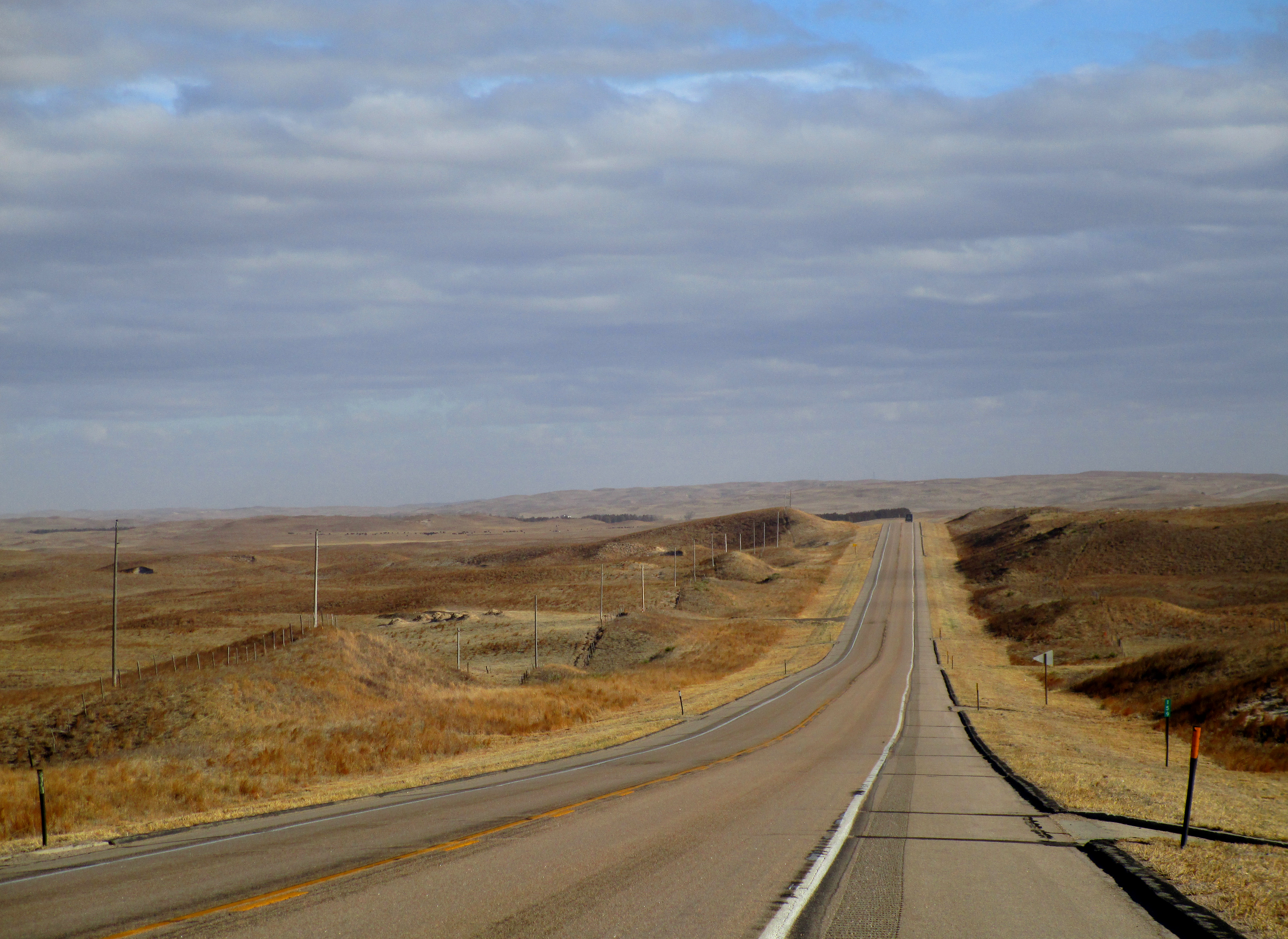
Our time at Kearney was over, so on the 29th we left early and headed north from North Platte to South Dakota. On route we travelled for hours through the sandhill country, mile after mile of rolling dunes, the habitat that gives the cranes its name.

Along the road Western Meadowlarks were abundant.

Roadside lakess held many wildfowl including Trumpeter Swans, Cackling Geese, Hooded Mergansers and these Canvasbacks.
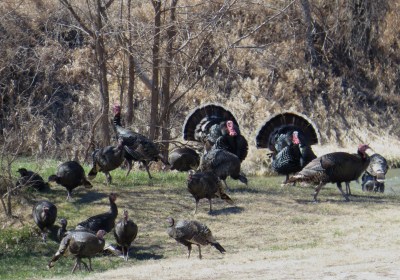
We broke our journey at Fort Niobara National Wildlife Refuge where these Wild Turkeys provided some entertainment ….

…. but it was here that I caught up with a mammal I have been wanting to see since I was a nipper. Of course like all my generation I was brought up on tales of Cowboys and Indians, but I was more fascinated by the wildlife, none more so than the mighty Bison.

The sight of herds numbering tens of thousands covering the prairies must have been absolutely magnificent as the small herd of 50 or so we saw at Niobrara looked pretty amazing. Even so I doubt if they (or most others for that matter) are truly wild as the refuge was fenced and the Bison didn’t appear to be free to roam at will, but seeing them was still one of the highlights of the entire trip.
From here we continued into South Dakota into the Badlands where ‘Dances With Wolves’ was filmed, the presidents heads at Mount Rushmore and the Devil’s Tower in Wyoming, the site of another epic movie, ‘Close Encounters Of The Third Kind’. That will be the subject of the next post.
Caspian Gull, Glaucous Gull, Hoopoe, Red-rumped Swallow even a Puffin. All quality birds that were seen Portland or Radipole, Weymouth on the morning of 19th April, but Margaret and I managed to miss them all ! We arrived at Portland Bird Observatory about 0730 to hear that a Caspian Gull had been seen, but had now gone from Radipole. We soon went down to the Bill where we arrived seconds after a Puffin had drifted by on the ‘race’. One observer on the East Cliffs saw a Red-rumped Swallow fly by but although we were on the Obs patio at the time we saw nothing. A Hoopoe that had been seen the day before was refound in Suckthumb Quarry, but an hour or so of searching failed to deliver the goods and when we got to Radipole we found that a Glaucous Gull outside the visitor centre had just flown off. Further insult to injury occurred when the Hoopoe was relocated on Portland in the afternoon and the Red-rumped Swallow was found at Radipole, both after we were on our way home. The point of all of this is, birding (as is so often stated) is unpredictable by nature and would soon become boring if it wasn’t. Just because a rare or unusual bird is present in an area doesn’t mean you will see it. The key factor is not luck, but skill and persistence. If I had been out birding every day, birded from dawn to dusk or been prepared to turn round on my way home and revisit places I had just left, then the success rate would have been higher, I might even have had found a good bird of my own! Due to my current preoccupation with ringing and foreign birding, I am making birding in the UK a lower priority than I once did and this low rate of success is a direct consequence of that. Margaret takes a much more relaxed attitude than I do, whenever we miss a bird she will point out that ‘the sun is shining, the birds are singing and that Robin over there is every bit as beautiful as any rarity’. Indeed, she calls my pager ‘the disappointment box’ due to my reaction to much of the news that it brings.

Suckthumb Quarry, Portland. Away from the area that is being actively quarried there are many nooks and crannies where a Hoopoe could hide.
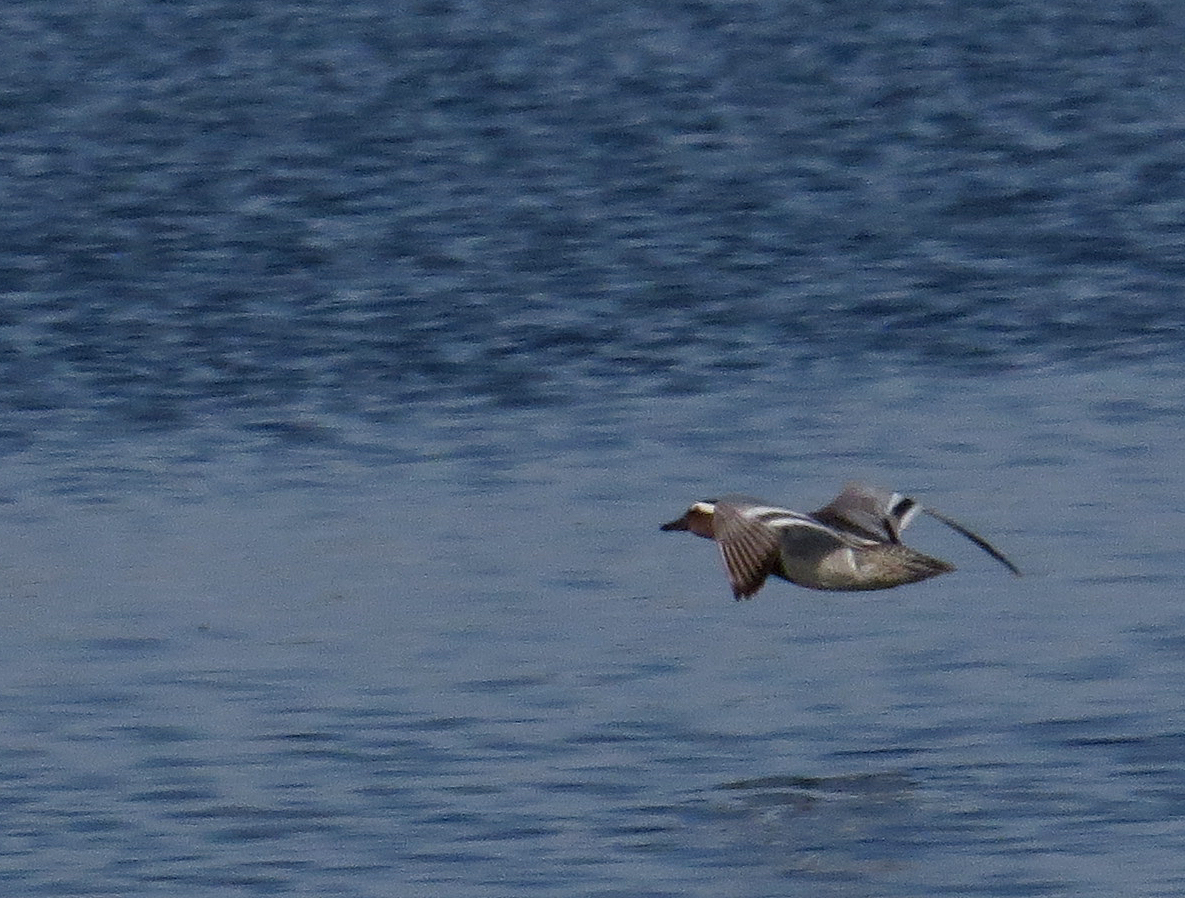
In spite of the dips, the visit to Portland and Weymouth was not without its rewards, we saw Common Redstart and Garden Warbler in the hand at the Observatory, had close up views of several common seabirds at the Bill, including Manx Shearwaters and Common Scoter, saw a male Garganey at Radipole and this beauty in the photo below:
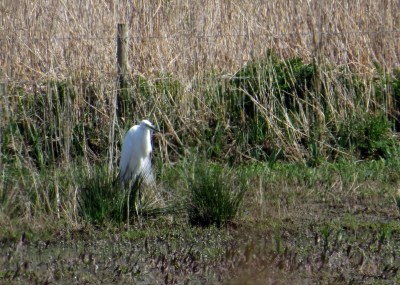
This Great White Egret gave us the run around at Radipole. Originally at the North Hide, it had flown to the inaccessible north end of the reserve by the time we had arrived. It was later reported back at the North Hide but in spite of a rapid return there we failed to find it. Eventually it was discovered that it could be seen through a gap in the trees from the adjacent by-pass. This is the first time I have seen a Great White Egret in the UK in breeding plumage. The bill is black with green lores and there are filamentous plumes or aigrettes hanging from the breast and upper tail and (although hardly visible in this photo) reddish legs.
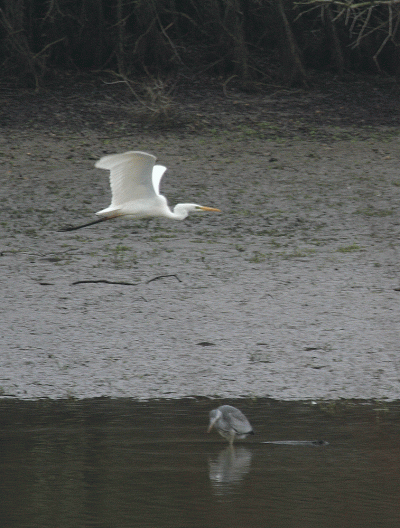
Compare with this photo taken at Sutton Bingham in February 2012. In non-breeding condition the bill is yellow, the legs black and the aigrettes are absent.
In fact the migrant birds we have seen over the past few days are the first of the year for us, the reason we have been in the mid-west of the USA since 25th March. Here are a few photos of the best birds we have seen since our return.

On 15th April, we visited nearby Longham Lakes to look for a drake Garganey. Initially it proved to be a bit elusive but soon flew in from behind an island ….

and gave wonderful views.
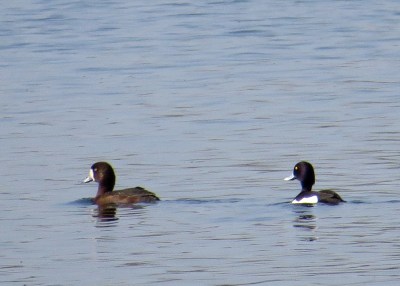
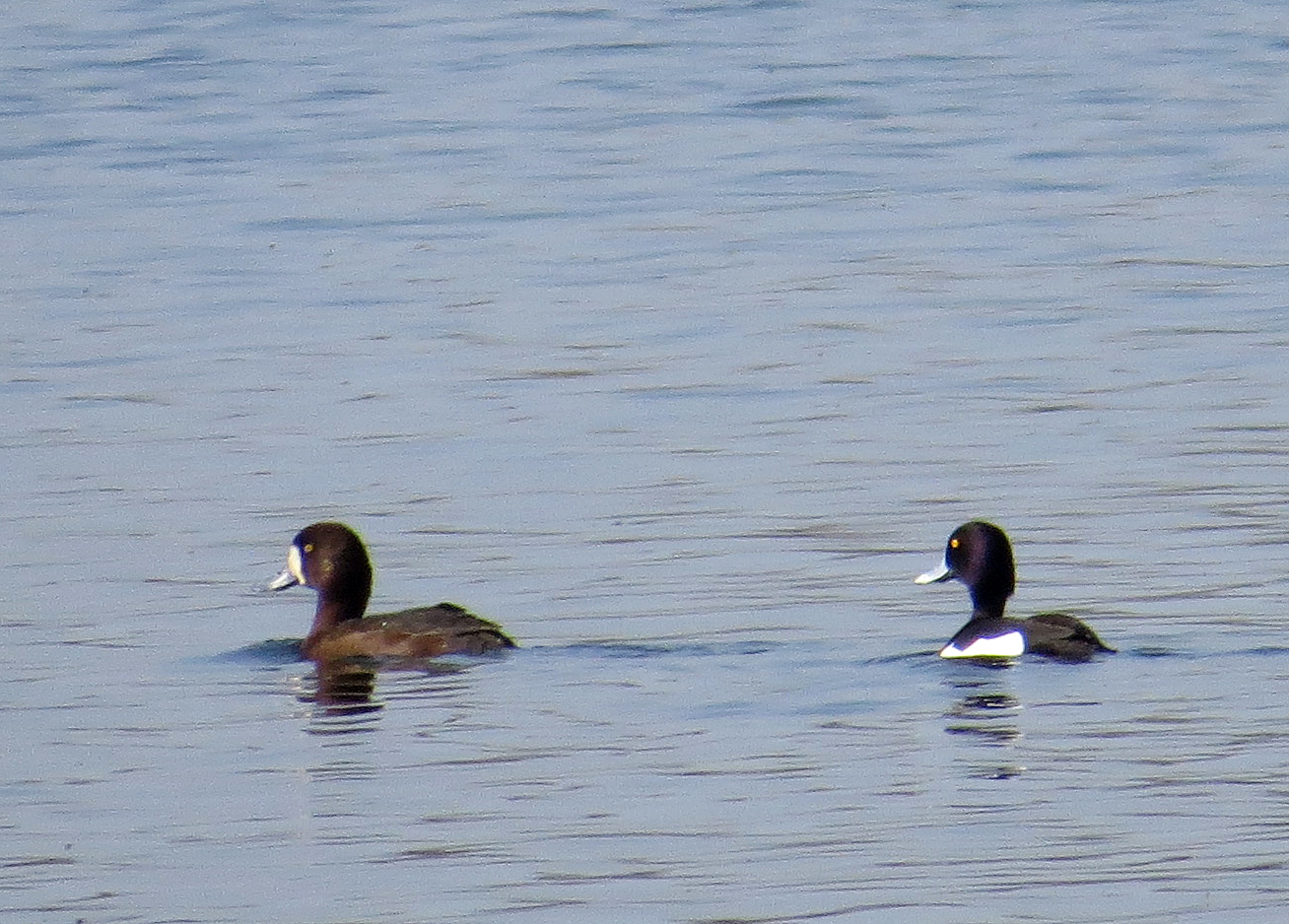
Longham Lakes has hosted a female Scaup since New Year. Rather than fly off and find a mate it has decided to shack-up with a male Tufted Duck. This species, more correctly called Greater Scaup, provided an interesting comparison with the many Lesser Scaup that we have been seeing in the USA.

On 16th we had a message to say that a Wryneck had been found at Lytchett Heath, a part of Lytchett Bay just a half a mile or so from home. The finder Dave Jones is new to the area and did well to find and identify this often skulking bird. Wrynecks, a species of woodpecker was once common in the UK but is now only seen as a scarce passage migrant, mainly recorded at coastal locations like Portland or Durlston during the autumn. This was the first record for Lytchett Bay.
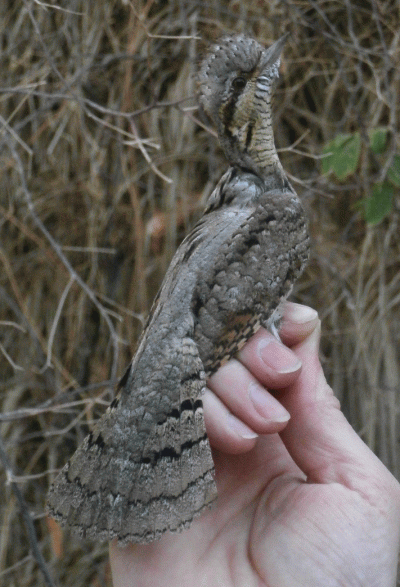
As the photo above, taken near dusk and at some distance, is of necessity rather poor, I have included a photo of one in the hand taken during my ringing trip to Israel in 2013.
On 17th I made my first visit of 2015 to Durlston and commenced ringing activities, with a brisk north-easterly wind success was low but we did have a few migrants such as Common and Lesser Whitethroat and unusually saw a flock of 8 Greylag Geese fly out to sea. As well as birding with me, Margaret has been busy with her allotment adjacent to Lytchett Bay. I find growing vegetables as enthralling as watching paint dry so, although I have no problem with eating the end results, I normally leave her to it, but here is a photo of her in her element.
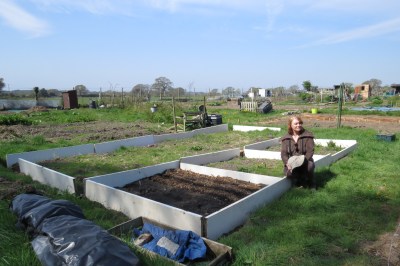
Using old shelving to partition the plots Margaret is slowly removing the wild grass that has colonised this abandoned plot and is planting a nice variety of vegetables.
Our trip to the USA was in two parts, a private tour round Nebraska, South Dakota and Wyoming on our own, mainly focussing on the enormous gathering of Sandhill Cranes on the Platte River but also visiting the Badlands, the Black Hills and Mount Rushmore and the Devil’s Tower to the north and also the Birdquest tour of Colorado. Both parts were outstandingly successful and it was one of the most enjoyable trips I have done for some time. I went overboard with photos and have about 3000 to work through so it will be some time before I can post the best on the blog, however here is one to start with.

The whitest birds in the world? White-tailed Ptarmigan at 12000 ft asl, Loveland Pass, Colorado.


















































 gryllosblog