Archive for the ‘Uncategorized’ Category
After our late arrival at Cerulea, a reserve set up to preserve the wintering grounds of the increasingly rare Cerulean Warbler, we were woken up by torrential rain during the night. We spent much of the first morning watching the hummingbird feeders from the shelter of our veranda and scored with several rare species.
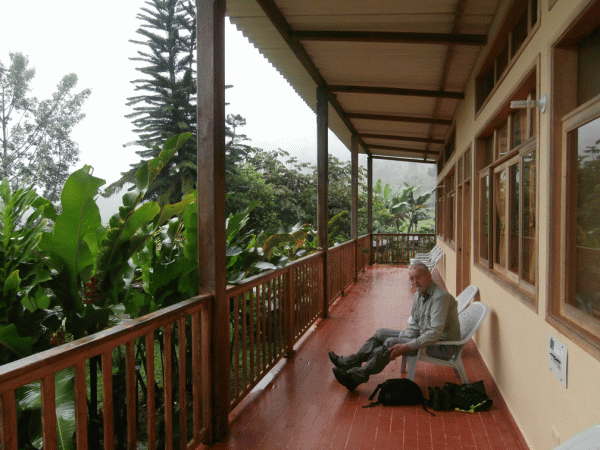
Rod watching birds from the comfort of the veranda.
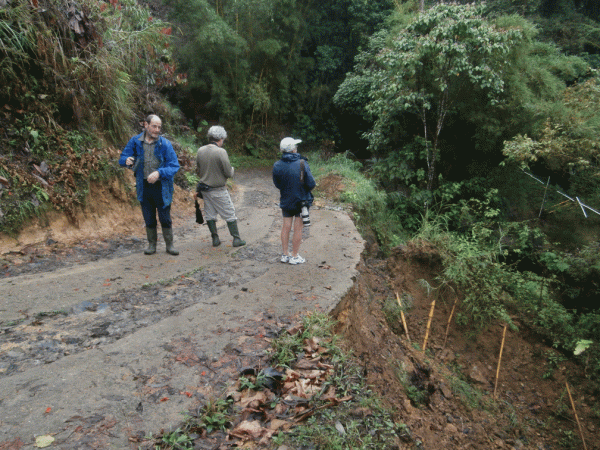
It looks like the road to Cerulea could disappear after another downpour.

Scrub Tanagers are fairly common in secondary growth.
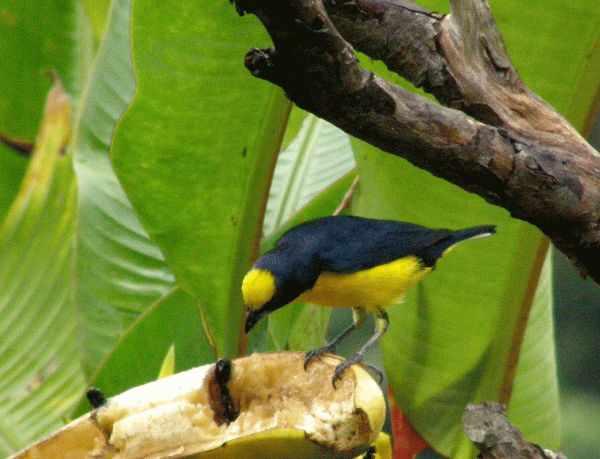
Thick-billed Euphonia male
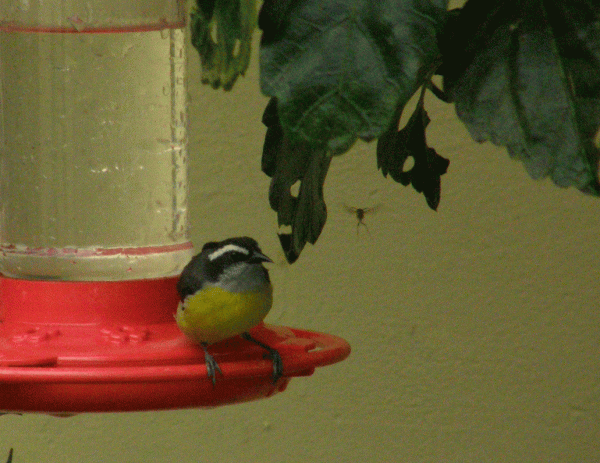
A colourful, if common bird is the Bannaquit. As it has no close relatives it has been placed in its own family.
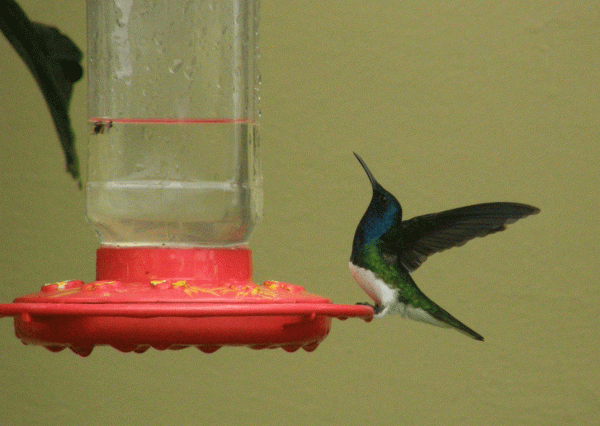
The rain didn’t affect the hummingbirds which could be watched coming to the feeders from the shelter of our veranda. This is the widespread White-naped Jacobin.
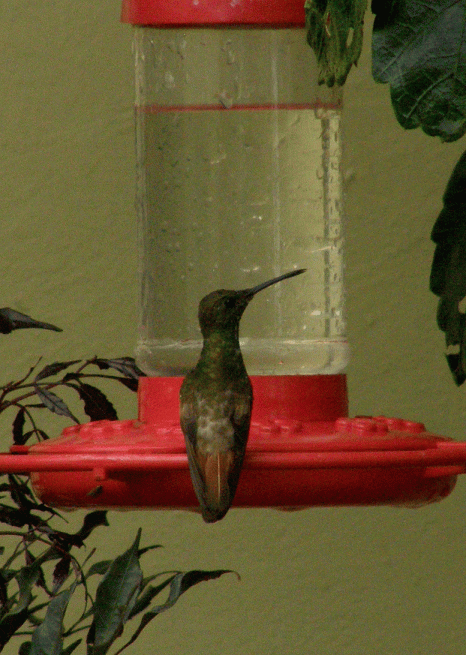
Cinnamon-rumped Hummingbird is much rarer and was a life bird for me.
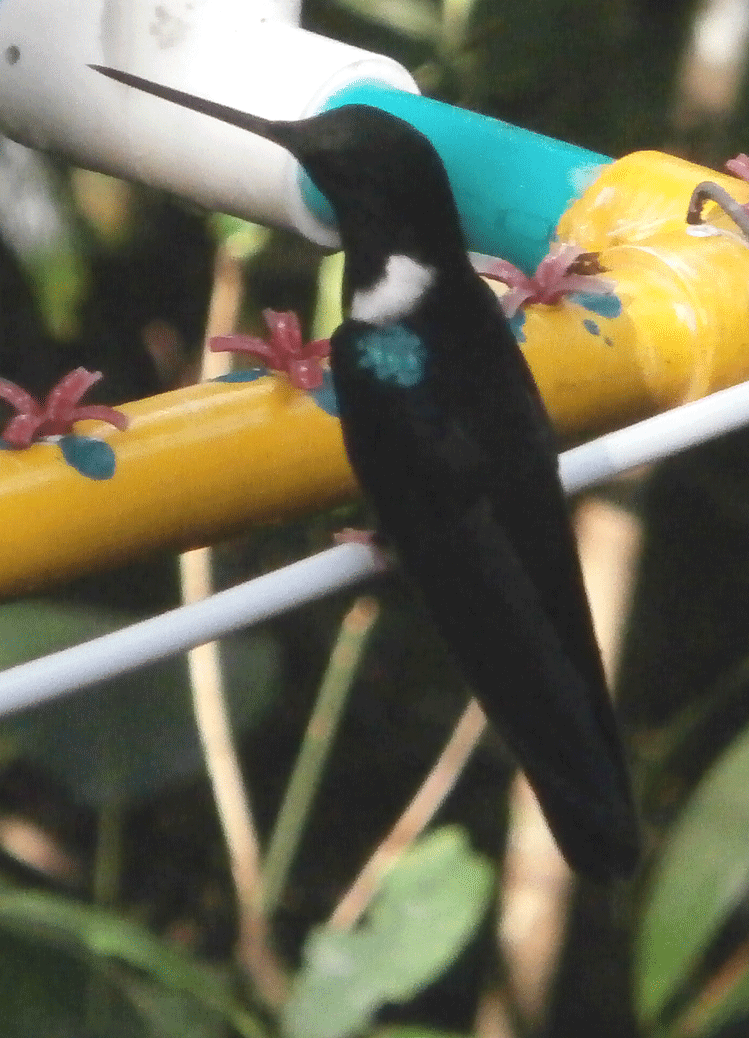
Later we made our first of three hikes up the hill to the reserve proper. An extensive set off hummingbird feeders in the forest allowed views of shyer species like Black Inca , but by far the best birds were the two Gorgetted Wood-quail seen feeding on the track. Wood-quails are usually ‘heard-onlys’ and this is only the second time I have seen any wood-quail species.

A climb of 300m up the hillside took us to some primary forest where we saw a range of goodies like Gorgetted Wood-quail and this Black Inca. A large hummingbird feeder inside the forest makes these elusive hummers easy to see., even if the light conditions weren’t optimal for photography.

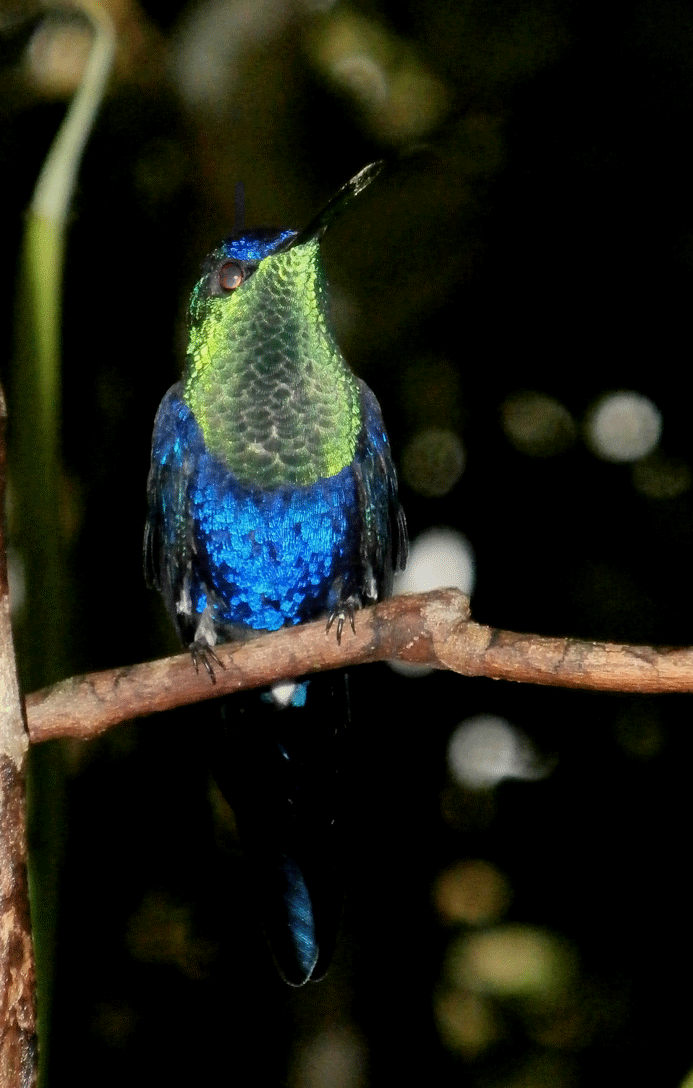
The metallic colours of this Violet-crowned Woodnymph are brought out by the flash.
Over the next two days we made two more visits to the forest, making the tough ascent before dawn. We saw some wonderful birds like Brown-billed Scythebill, Highland Tinamou, Bicoloured Antvireo and Yellow-throated Spadebill, all lifers for me and none of which I photographed. As I indicated earlier my old Lumix camera is giving up the ghost and I have taken very few quality pictures with it and soon after this I gave up on it completely. I have ordered a replacement which I hope arrives soon.
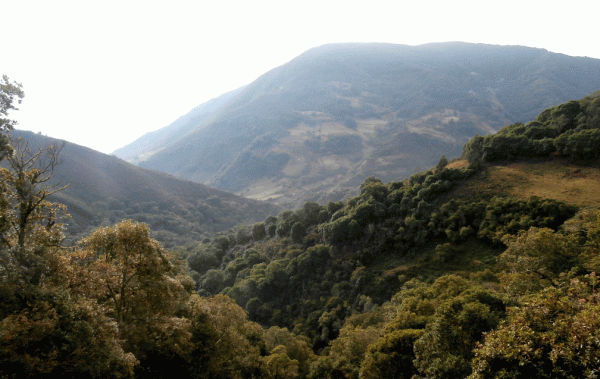
We birded in the forested hills above Soata where our main target was the critically endangered Mountain Grackle, after seven hours of searching we found a pair.
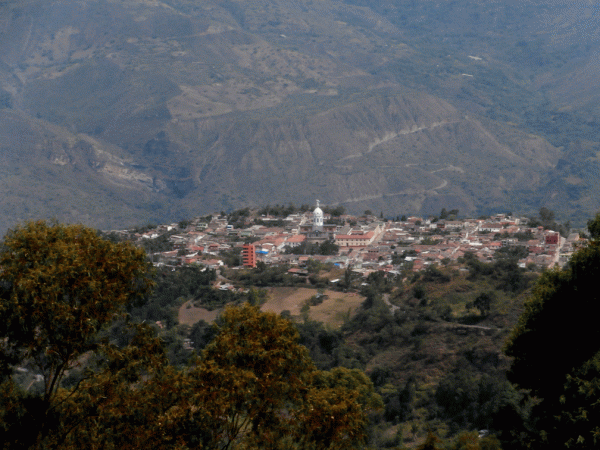
In the afternoon we birded some scrubby areas below the town of Soata where we heard and had brief views of Nicefero’s Wren.
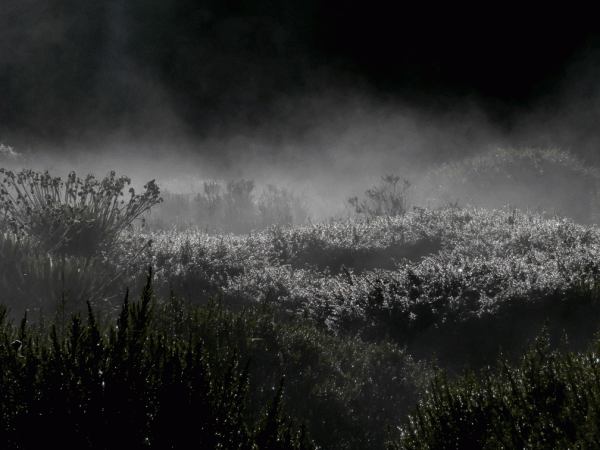
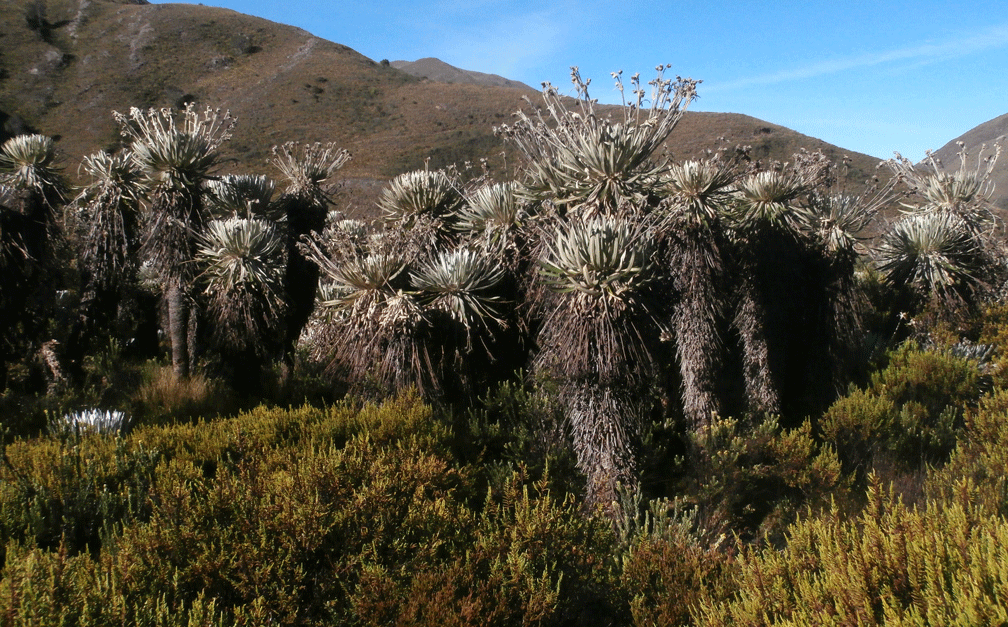
On the 7th we left Soata pre-dawn and arrived on the paramo just as the sun was rising. It was below freezing and there were dramatic views as the sun drove the frost off the espeletas.
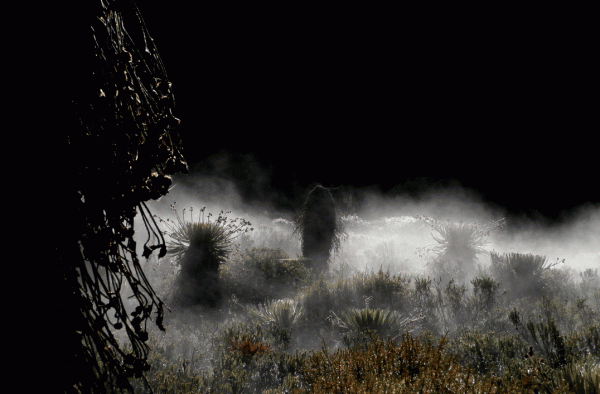
The nearby hills provided a dark background to highlight the back-lit espeletas.

Although conditions were idea, with many of the espeletas in flower, we still failed to find the beautiful Bearded Helmetcrest. This is my fourth unsuccessful search for this enigmatic hummingbird.
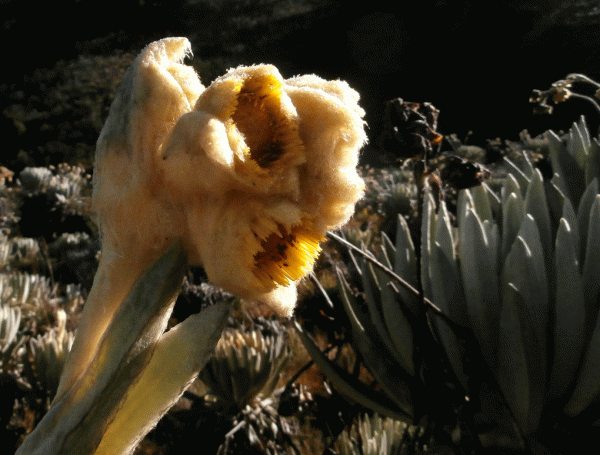
Espeletas are well adapted to the cold overnight conditions with furry leaves and flowers to prevent ice crystals damaging the plant.

Furry leaved espeletas characterise the high altitude paramo, a habitat that extends at altitudes of over 3000m from Venezuela to northern Peru. Further south paramo is replaced by high altitude grasslands called the puna.
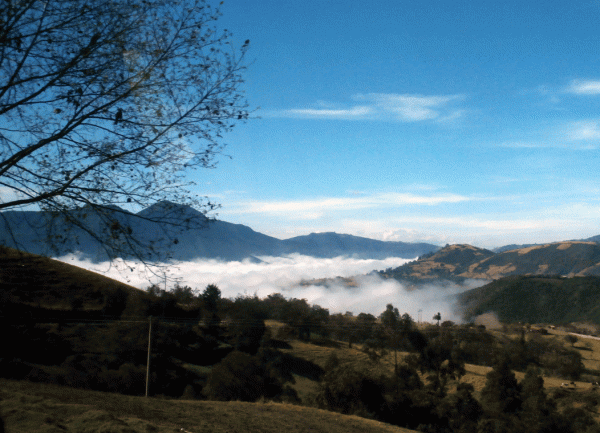
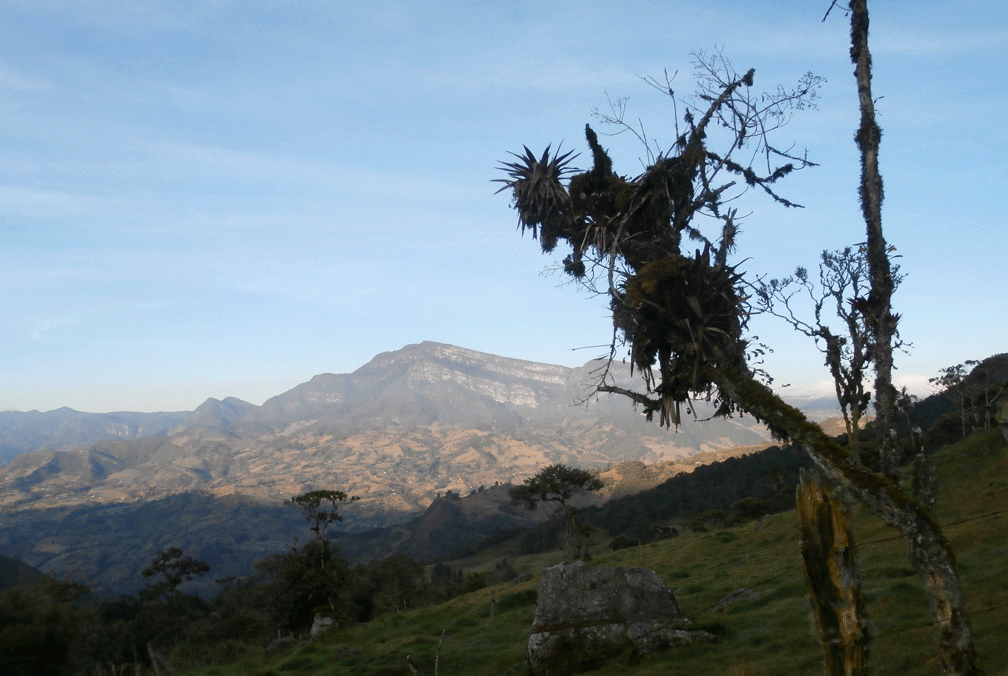
As we descended from the paramo we saw this beautiful cloud filled valley ahead.

Colombia is undergoing a major road building program. This along with lorries on narrow roads, accidents and congested towns greatly delayed the journey.

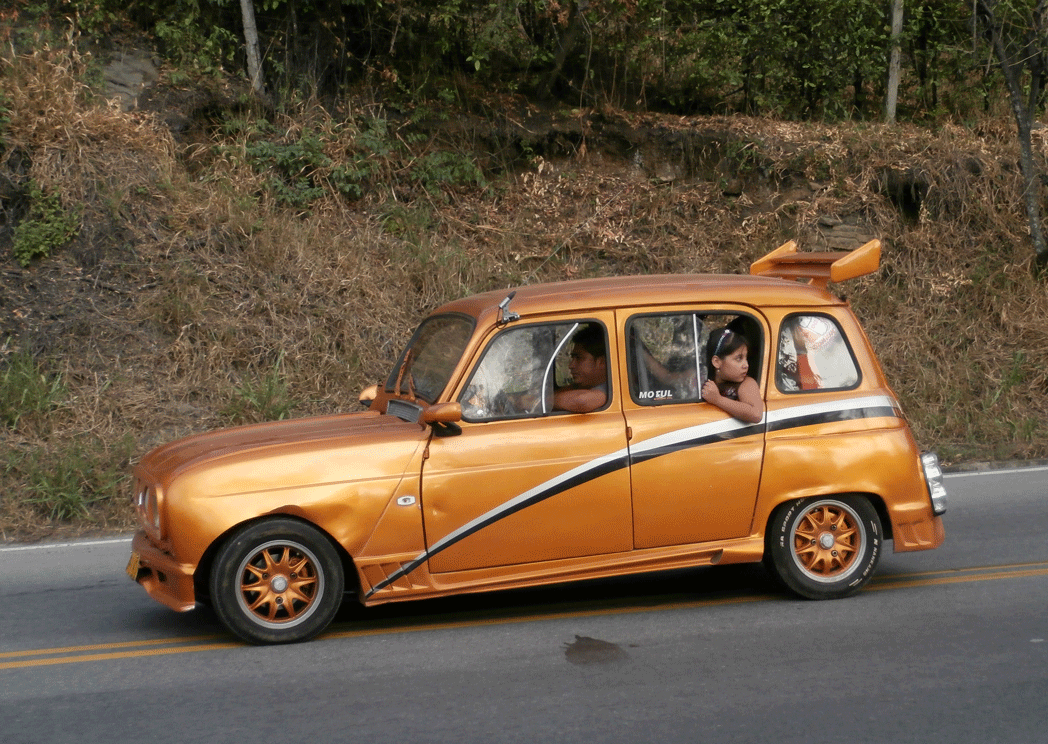
The driver of this pratmobile thought we were photographing his car because it looked so good! You can’t see the four giant speakers on the parcel shelf from this angle.

When there is an obstruction in the road, why do South American drivers push pass on the hard shoulder and on the wrong side of the road? As they are also doing this on the far side of the obstruction as well, it means that six lanes of traffic are trying to squeeze into one!
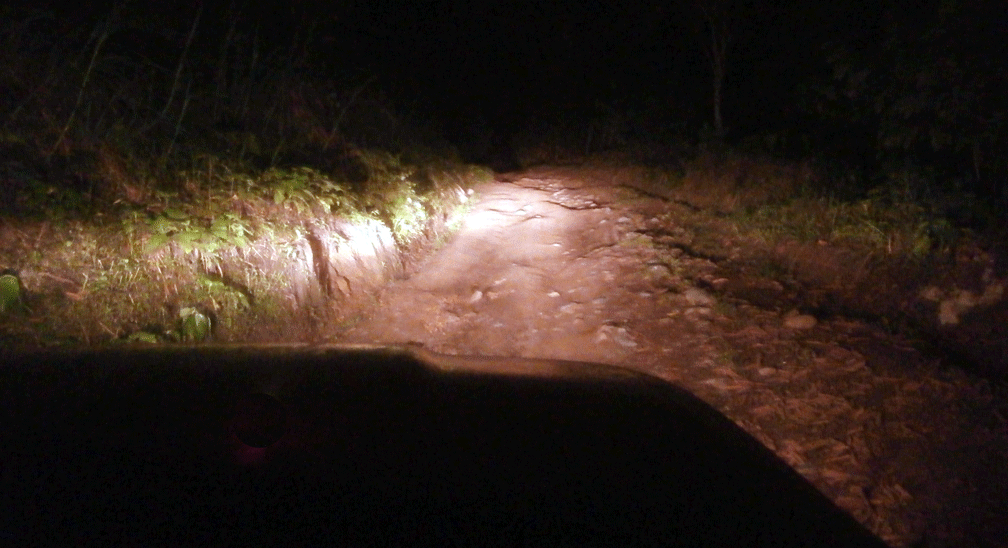
The last three hours of the journey was along rough tracks, we arrived at the Cerulea reserve at 0020 after 19.5 hours on the road!
I returned from Colombia late on the 24th February. As I hurt my foot during he latter part of the trip I have been more or less confined to home since then. I did go to the inaugural meeting of the Dorset Mammal Group in Dorchester on the 27th with Margaret and fellow birder Richard Webb and I managed to catch up with the Common Rosefinch which a friend of mine has seen visiting his garden in recent weeks earlier that day.

Common Rosefinch are usually scarce visitors to the Northern Isles in autumn so the occurence of one in a Dorset garden in winter is remarkable. Photo by Nick Hopper.
Returning to the Colombia trip, I take up the story on the 5th February. Leaving Bogotá pre-dawn we stop at the La Florida marsh for a few hours.

A pre-dawn breakfast out of the back of the van.
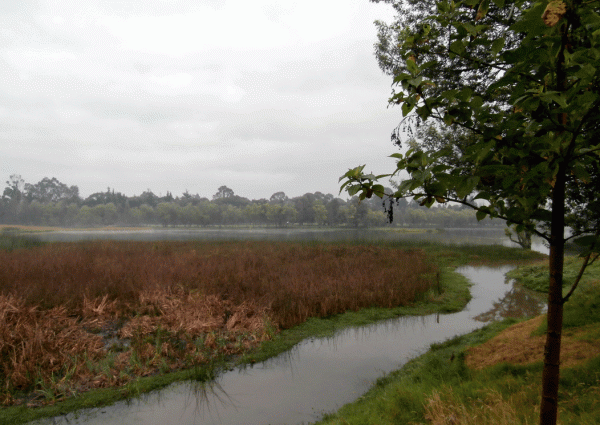
Early morning at the marsh, this area was once nearly destroyed but has recently been renovated and has become a nice visitor attraction.

An Andean Cavy (a sort of guinea pig) was feeding on the edge of the marsh
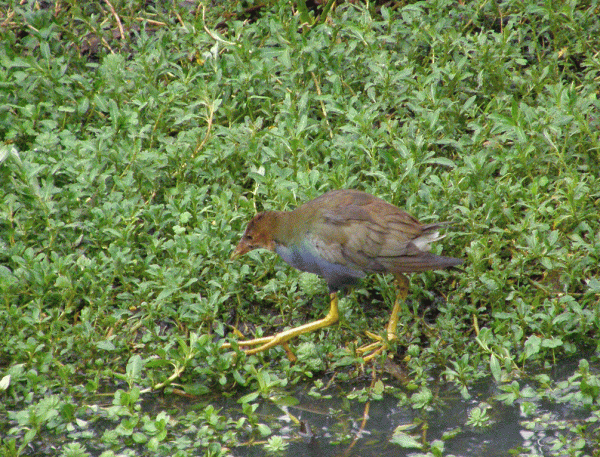
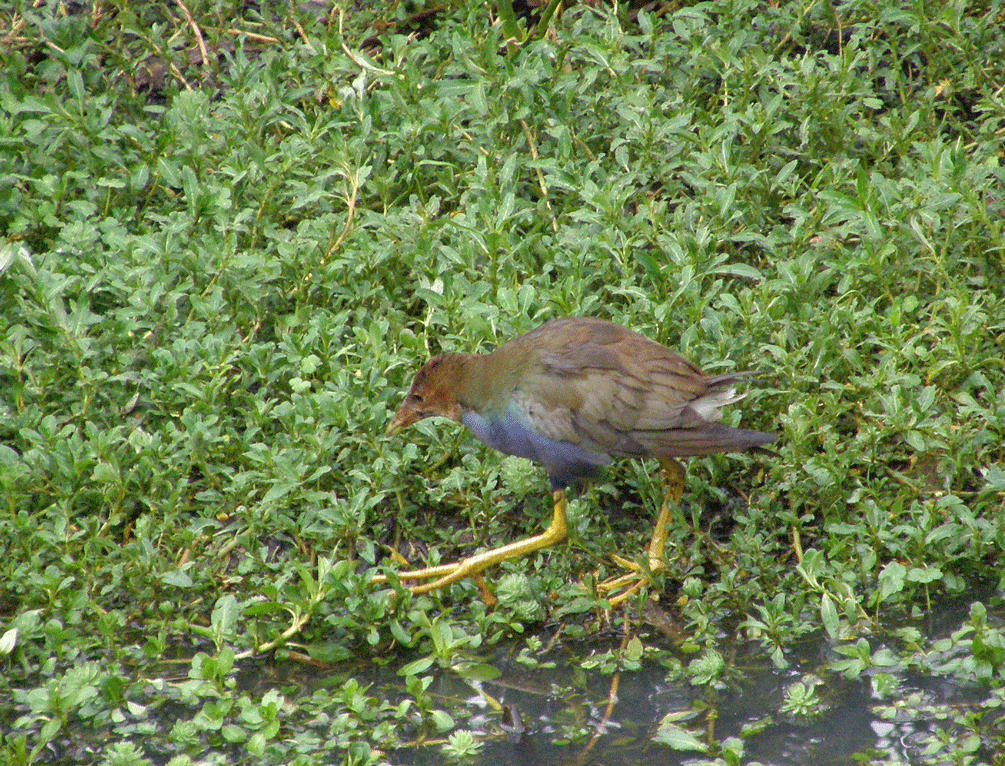
We saw an interesting selection of rallids: this is an immature Purple Gallinule.

A Sora Rail, a migrant from North America

Bogotá Rail, a rare endemic found only in the Bogotá area.

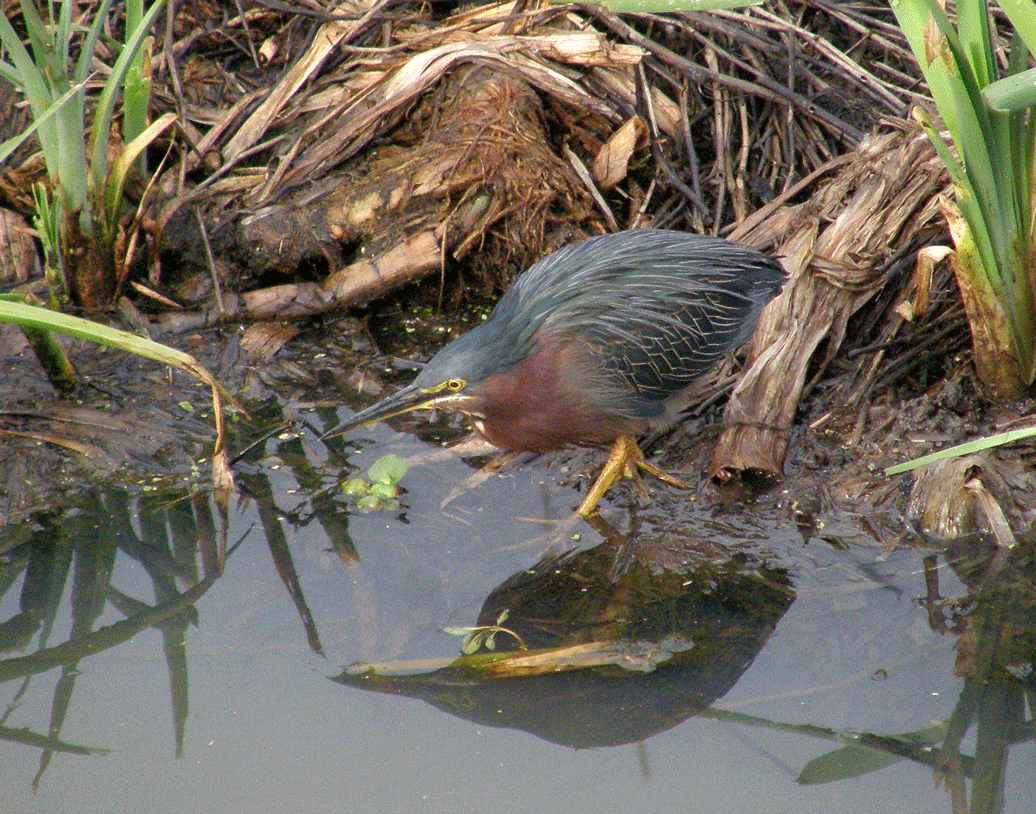
Green Heron, unlike the related Striated Heron is a rare visitor from North America.
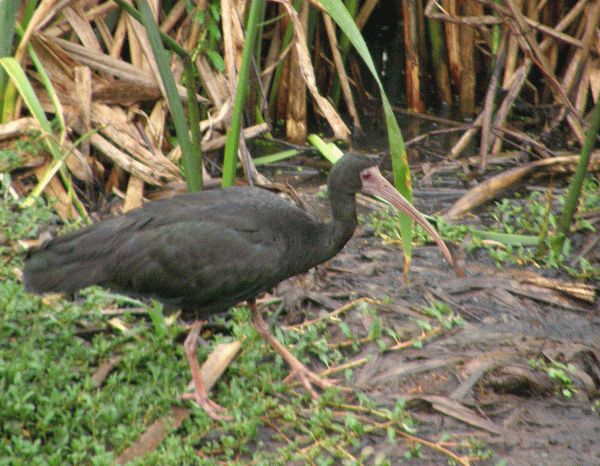
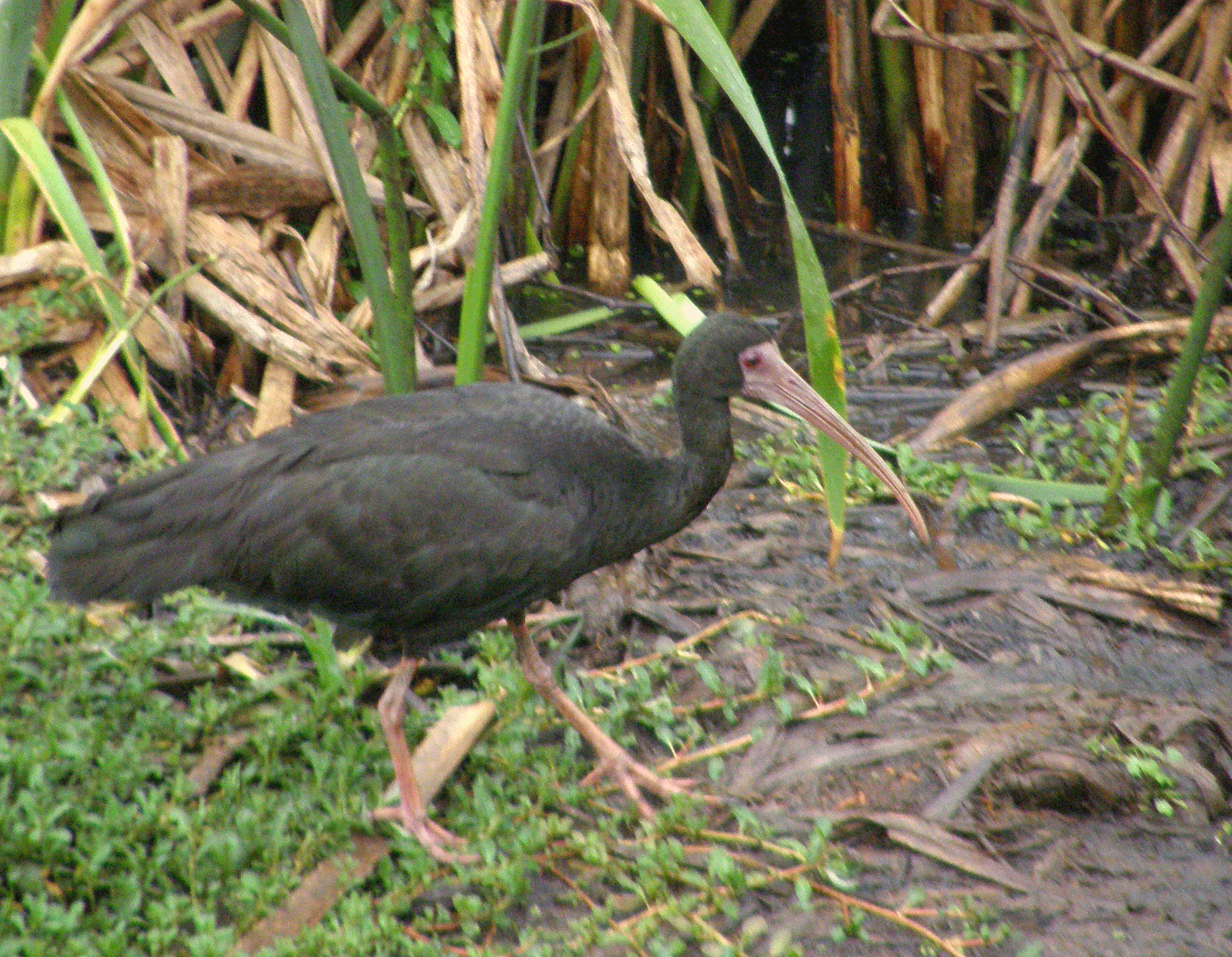
Bare-faced Rail is common at the marsh

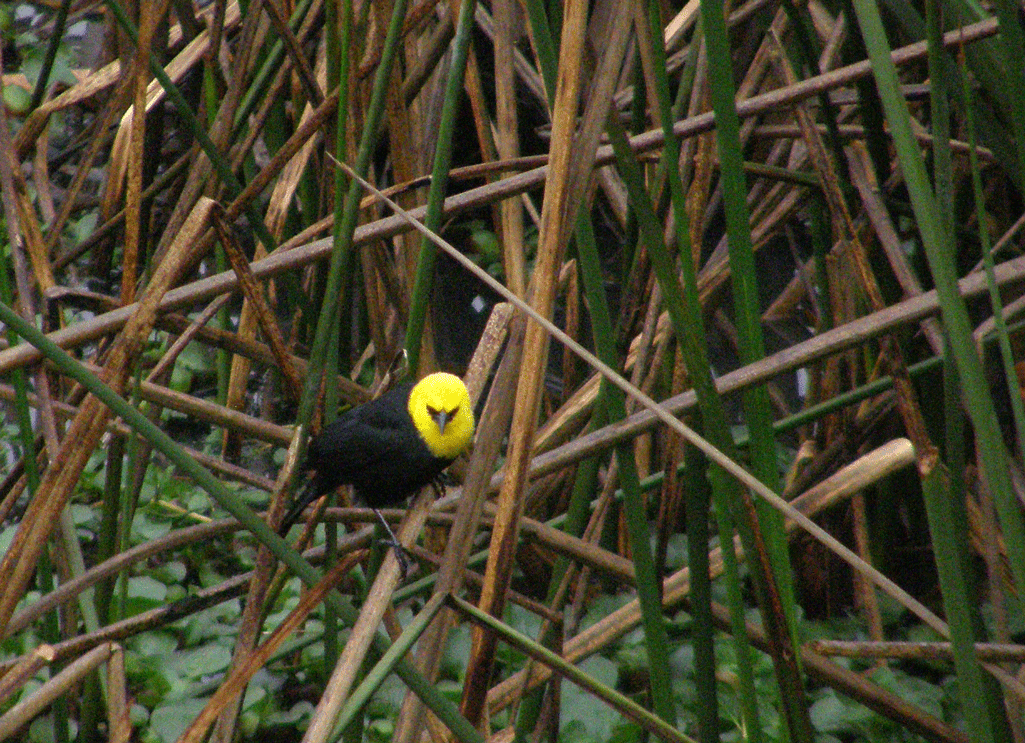
Flocks of Yellow-hooded Blackbirds fed in the reed beds.
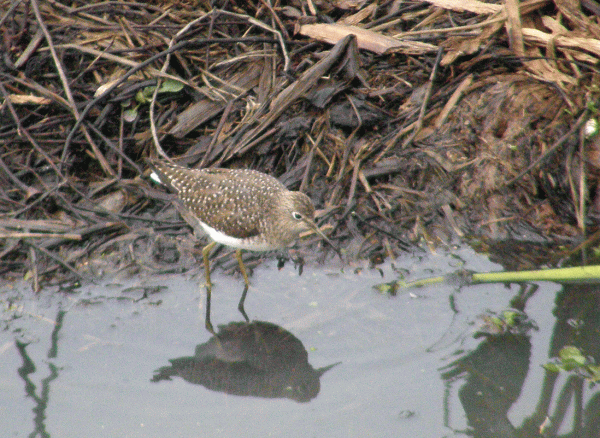
The last time I saw a Solitary Sandpiper was on the Isles of Scilly
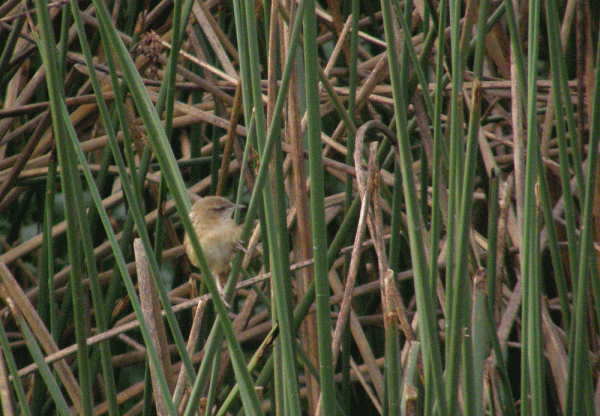
The endemic Apolinar’s Marsh Wren
After the marsh we made the long drive north to Soata. As we climbed up onto the paramo the clouds rolled in. We wished to see two special hummers, Bronze-tailed Thornbill and Bearded Helmetcrest but heavy rain destroyed any hopes. We arrived at our hotel in the early evening

The treeless paramo at 33500m asl. The plants in the foreground are espelitas, which have specially evolved furry leaves to cope with the extreme cold. Note the rain clouds rolling.
The Colombia trip continues to go well, but a lack of internet connection has meant I have been unable to post any updates. We are now at Medellin, the counties second city and tomorrow we fly to the Pacific coast.
Birding has been successful and I have added some 34 species to my world list so far, at times it has been slow at other times very exciting. Some of the slogs uphill have been arduous but well worthwhile. Unfortunately illness in one of the other participants has created some difficulties and delays. He is flying home tomorrow instead of continuing with the tour. I wish him a speedy recovery.
I have taken quite a few pictures, some of which I will post as soon as I return to the UK.
Today we visited an area on the far side of Chingaza. This meant we would have to take the main road out of Bogotá towards the Llanos and Venezuela which is descends some 1700m to our turn off, and is full of hairpin bends and crawling lorries. Even leaving at 0345 didn’t spare us from the lorry jam and it took three hours to reach our destination.
Birding, if measured by the number of forest species seen, was very good but we didn’t see any birds that were lifers for me. Three or four fast-moving flocks tested our identification skills (mine were certainly found wanting) as we picked up birds with wonderful names like Oleagenous Hemispingus and Montane Foliage-gleaner.
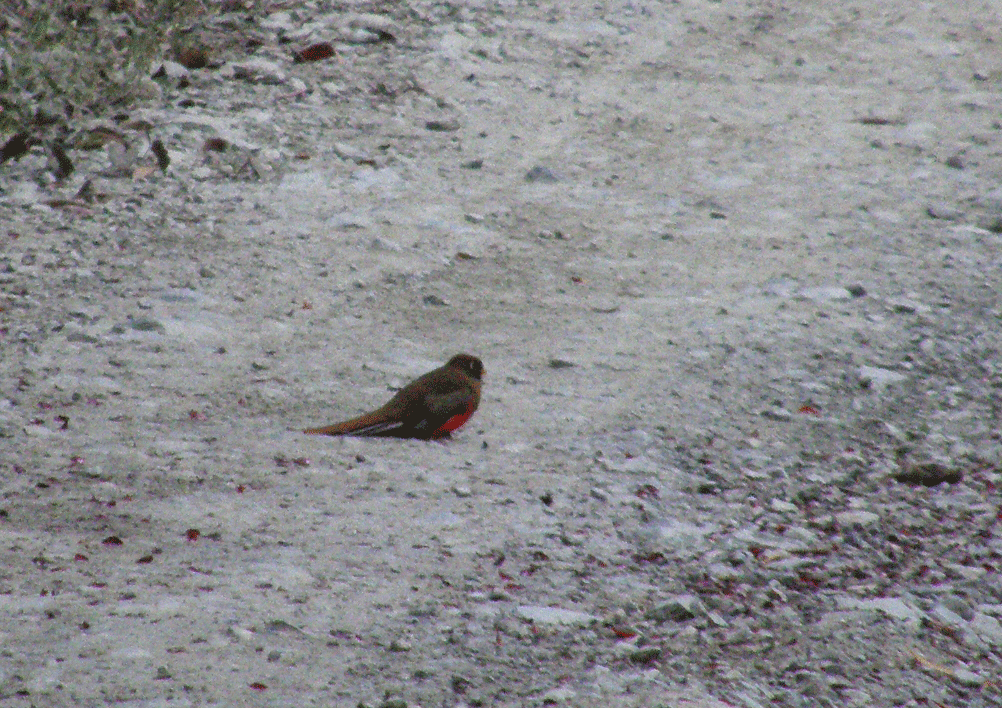
Surprises came in the form of the tree-dwelling Masked Trogon picking up gravel off the track and the skulking, ground dwelling Lined Quail-dove walking out in open in front of us. The bird we really wanted to see was the Cundinammarca Antpitta, a species only discovered in the late 80’s and then not seen for many years as this area was in Fark guerillas hands. We heard several, one very close to the road, attempts to tape it in brought it to within a few feet of our group, yet it remained invisible, you could even hear the leaves rustle as it moved !
Much of the rest of the morning was spent trying to find another more responsive bird but to no avail. It has been very dry in this area recently and perhaps they are not breeding, or perhaps too many birders have tried to tape out the same few birds and they won’t play ball anymore.

We were most surprised to see this Masked Trogon on the road ……
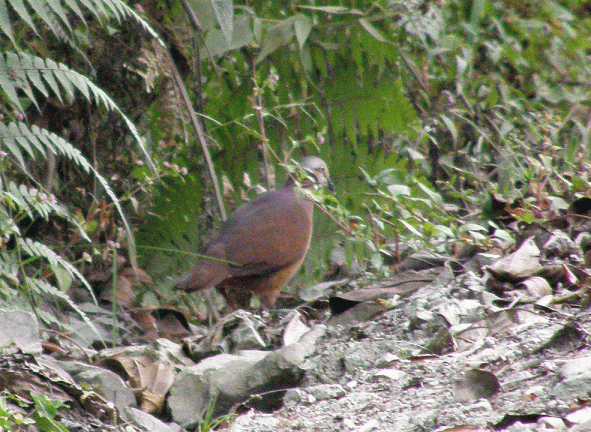
… but not as surprised as we were to see the mega-skulking Lined Quail-dove striding up the path.
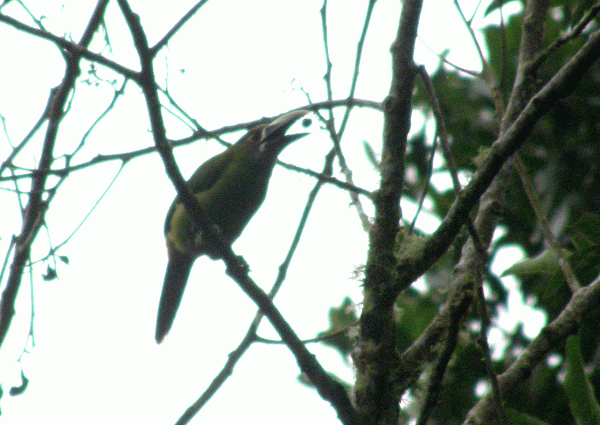
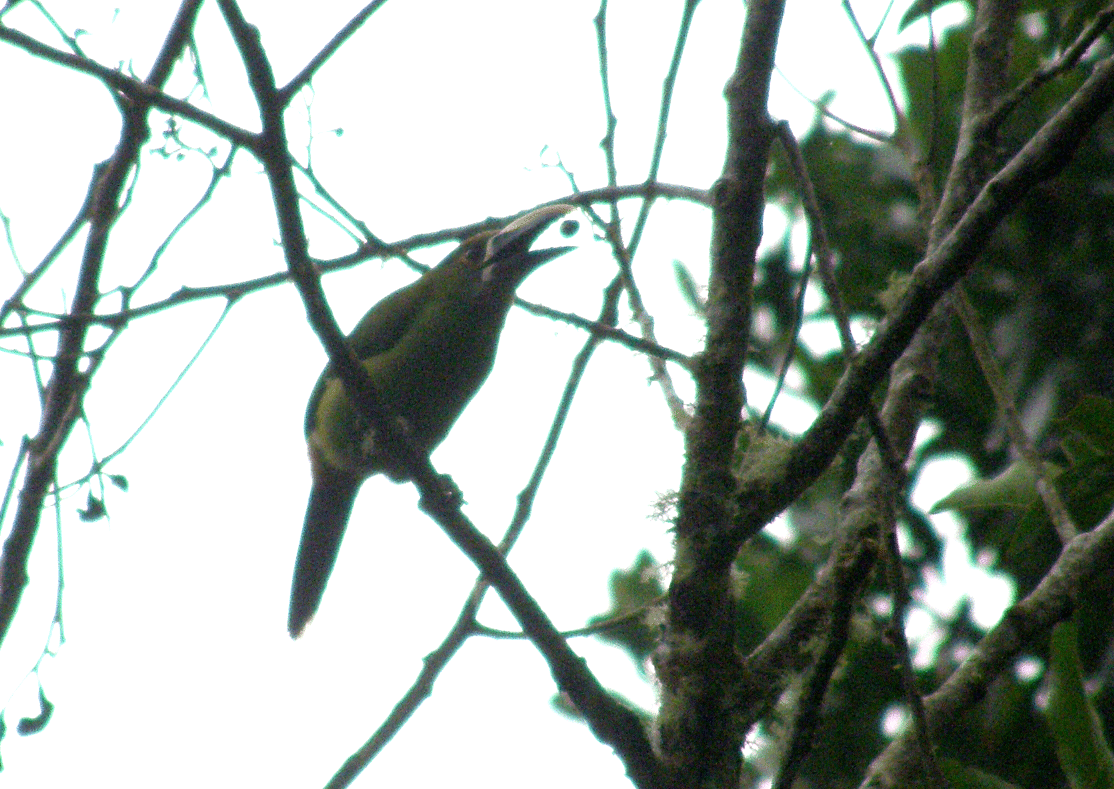
An Andean Toucanet seen plucking a fruit and catching it in its bill. I only took my pocket camera and my ageing Lumix camera on this trip. I think the Lumix will be retired on my return.
With the whole group now assembled we left Bogota at 0445 local time for the two-and-half hour drive to Chingaza NP. It’s not very far as the Mountain Cacique flies but it’s a long way by road.
We had a lot of success, my key birds were Flame-winged (or Brown-breasted Parakeet) which showed very well, Blue-throated Starfrontlet and Pale-bellied Tapaculo which weren’t quite so co-operative. We also saw another good hummer Longuemare’s Sunangel but it is usually lumped in Amythest-throated Sunangel these days.
There are only four punters on the trip and all are Birdquest regulars, between us we have done at least 210 tours, so although we saw plenty of other nice birds during the day it was these four endemics that drew most attention.
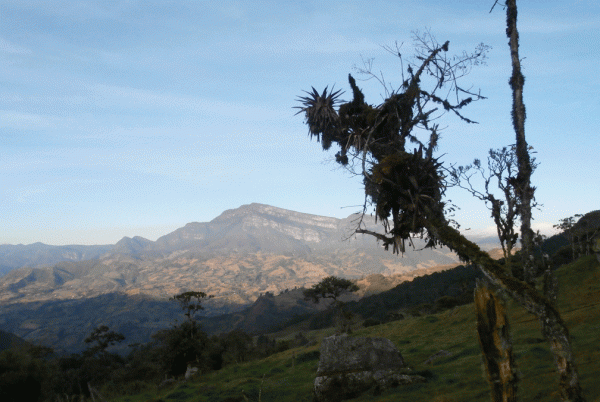
The hillsides near Bogotá are largely deforested …..
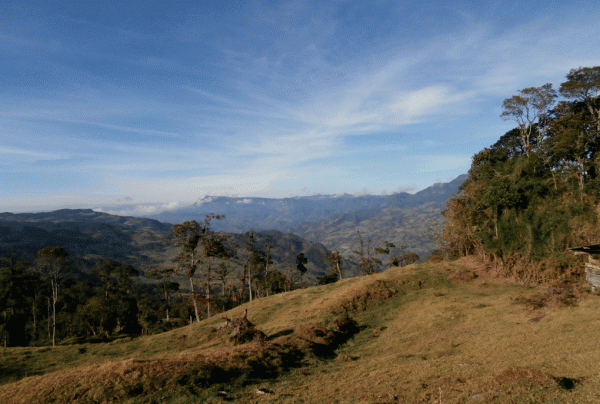
The Chingaza NP protects a large area of montane forest but it is very difficult to access.
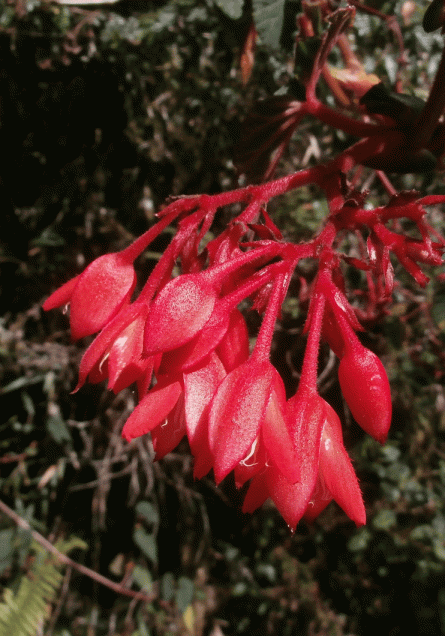
I’m no botanist so I can’t tell you the name of these red flowers but they were attractive to several species of hummingbird.
Many of the people from Bogotá drive out of the town on Sunday afternoon for a meal in the countryside, but this leads to dreadful congestion when they return about five pm so we left quite early and got back to the hotel by four. We have an even earlier start tomorrow so we were glad of the time to unwind.
I planned to start my Colombia trip 24 hours early. This was partly to get over the jet lag (I got up at 0200 BST on the 1st and arrived at 0300 BST on the 2nd at the hotel) but mainly to meet up with my former colleague from the lab; Maria Ospina. Maria and I must have worked together for about ten years but she decided to return to Colombia about a year after I retired.
After a much-needed, deep and very long period asleep I found out mid morning from Maria that a friend of hers had suddenly died and she would not be able to meet up with me. There’s not a lot to do around here, I’ve been for a short walk but it’s just offices and flyovers, so I’m killing time reading, checking e-mails and trying to get my trip list over its current low value of five. The rest of the group will arrive at 10 tonight and I’m sure that over the next few days I will long for a chance to snooze or read in the afternoon as we will undoubtedly be burning the candle at both ends.
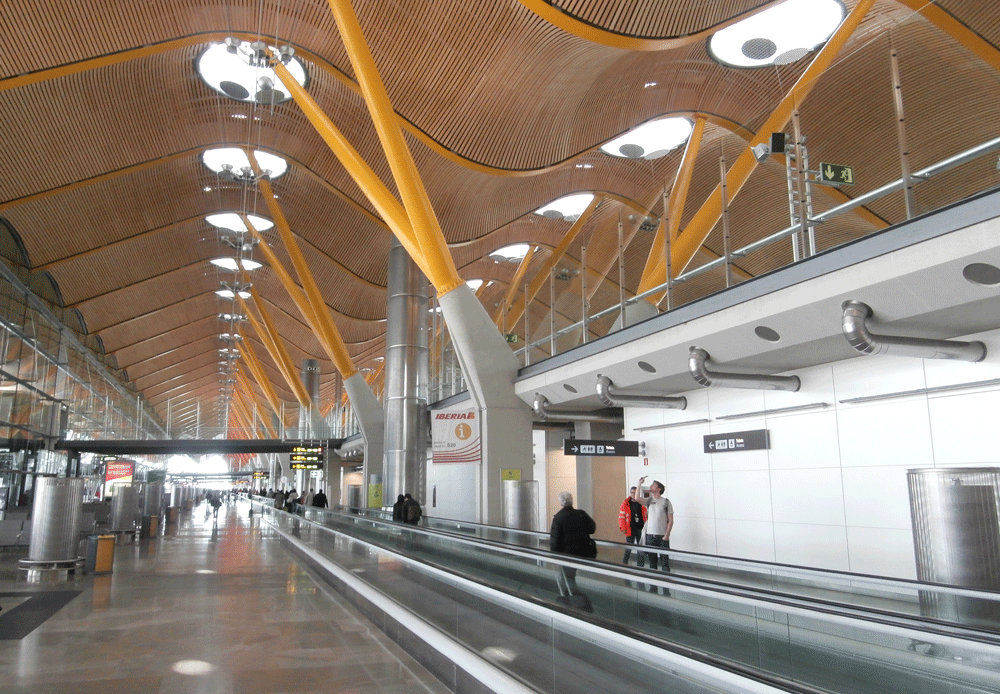
Colombia has undergone a great transformation in the last decade or so. Formerly infamous for the cocaine cartels and guerilla warfare, it has emerged as modern, affluent and efficient country, the new airport terminal, clean, efficient and welcoming, is testament to that.
Colombia, of course is best known in birding circles for having more species than any other country in the world. The fact that it has a Pacific and a Caribbean coastline, lowlands in the Orinoco and Amazon drainage and extensive wetlands known as the Llanos all contribute, but more than any other reason, the fact that the Andes divides into three discrete ranges in Colombia, each with its own avifauna adds huge numbers of species to the national bird list. I first visited Colombia in 2007 and saw lots of great birds but a series of mishaps varying from a knackered bus to an impromptu roadblock by over zealous youths prevented me from seeing all that I wanted to. Hopefully this trip will be hassle free.
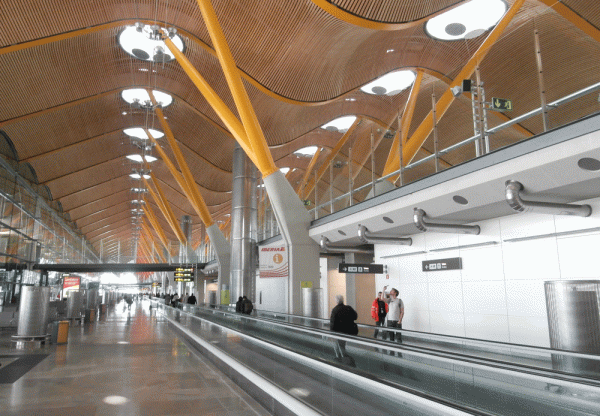
We had to change planes at Madrid, whilst this is far preferable to flying to Miami and then having to sit in their dreadful transit lounge and be treated like cattle, Madrid is not the most organised airport in the world. Eventually after a couple of hours I found where to get my new boarding card. Having been on over 20 trips to Spanish-speaking countries you would think I would be able to speak Spanish by now!
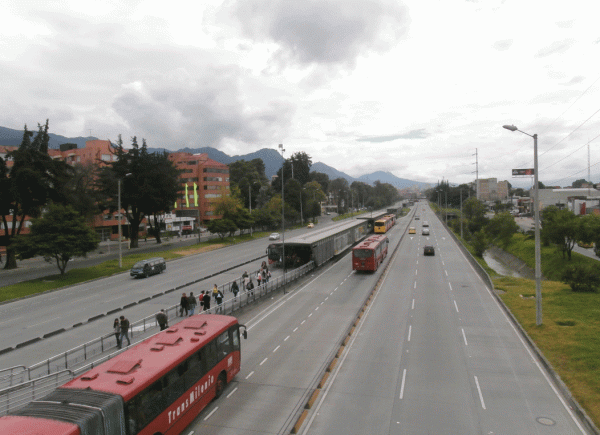
From a pedestrian bridge in Bogotá, they have introduced a central bus only lane with all the bus stops on the central reservation to try to avoid congestion.

A street view near my hotel. Really looking forwards to meeting the other participants, all of whom I know from previous trip and starting birding in the the most bird-rich country on Earth.
The Hoopoe story I reported in the last post has caused some hilarity among some Dorset birders, especially those around Weymouth who have a far better chance than us of seeing a Hoopoe.
This spoof article was written by Daragh who birds on Lodmoor. The reference to a Swanage woman is about Phyl England who proudly had a Waxwing eating her apples.
Dorset Echo Thursday:
As 4 twitchers flocked from as far away as 2 miles to see a rare Hoopoebird in Hamworthy, the feathered vagrant became embroiled in a major row.
Photographs of the Hoopoebird appeared on the day the Prime Minister announced plans for a referendum on British membership of the Single Market.
But UKIP leader Nigel Farage said the Hoopoebird’s presence demonstrated how the British people were being conned.
“Immigration tell us our borders are secure. And yet I have evidence that this bird has probably been here for months without anyone knowing. It is not British and has sneaked over from Continental Europe to take advantage of our lawns.
“The real scandal is that it has been here undetected for so long, lurking in an area where children play and pensioners walk the streets alone.
“And Dorset birders had no idea it was here. In fact, when the alarm was raised by a patriotic resident some birders dismissed her claim by pretending it was actually a good old British Jay.
“What’s more I have evidence that more foreign invaders, in the form of Waxwings, have come over here without any immigration checks. These are particularly sinister because they often prey on neighbourhoods in gangs.
“Dorset birders say they know all about these birds but the fact is they don’t really have any idea how many of these illegal immigrants are in the county and where they are going to turn up next.
“These birds pay no taxes and eat our berries. I’ve even heard a heart breaking story of a Swanage woman having her apples stolen by these vicious foreigners.”
And this reply was posted by Langton Matravers birder Steve Smith:
When asked for his comment Prime Minister Cameron said that the British people would be asked in a referendum whether they want to allow these birds to come to Britain. He will be proposing to introduce strict quotas for the European Redwings and Fieldfares as well, some of which have stayed beyond their 6 month visas and have raised families in the UK
.
After the excitement of finally connecting with the Hoopoe, Margaret and I reverted to our original plan of birding in the Sixpenny Handley area in north Dorset. First we stopped at the River Stour bridge at Wimborne where the resident Red-crested Pochard showed well. The road from Wimborne St Giles to Wyke Down had been closed due to flooding and although the road was now very muddy and wet in places we got through without difficulty.
.
Although the temperature was much higher than a week earlier, there was a strong wind and it felt pretty cold hanging around. The Great Grey Shrike that had been seen earlier wasn’t showing, but we did see a Short-eared Owl and a Barn Owl. As it grew dark we headed back towards Wimborne St Giles where two Barn Owls put on an excellent show over a meadow and even allowed some photos.
.
This Red-crested Pochard has been in the Wimborne area for several years now and is almost certainly of feral origin.
.
Three views of the Barn Owls near Wimborne St Giles
.
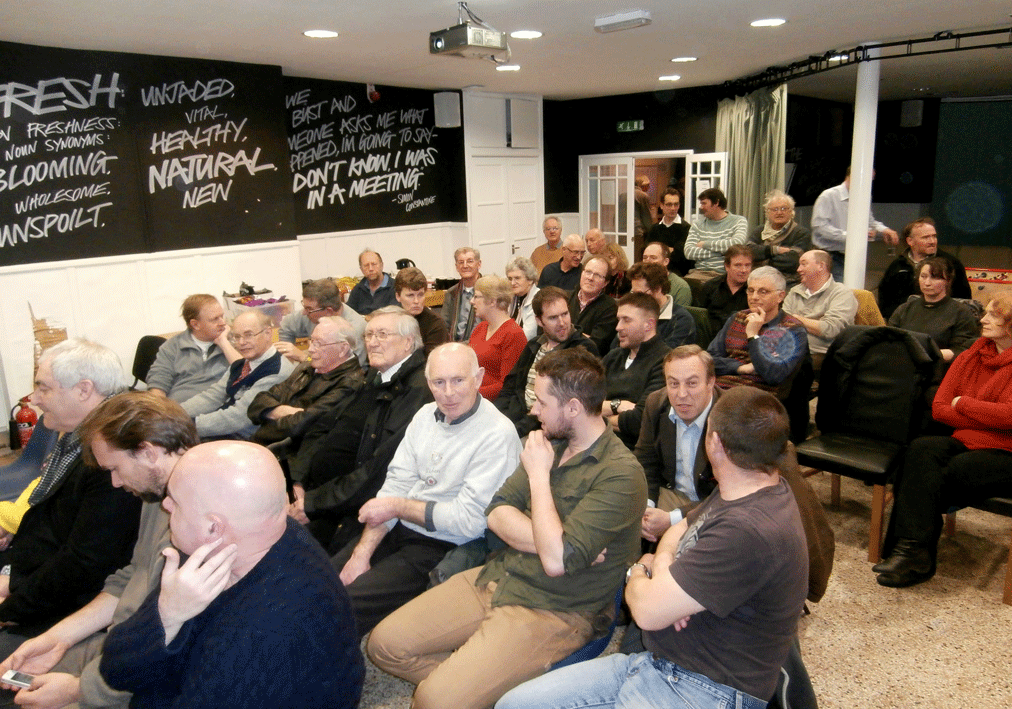
With high winds all week there has been no chance to go ringing. Much of the rest of the week has been spent preparing for my trip to Colombia at the weekend, however we went to an excellent talk on Wednesday night. Martin Garner who runs the Birding Fronteirs website spoke about some of the birding events that have inspired him during 2012 and showed that even with well-known species there is still much to learn, be it behaviour or identification features. He decried the widespread criticism of birders abilities by other birders and said his mission was to inspire everyone to be the best birder they could possibly be. Norwegian birder Tormod Armundson gave a presentation on his new home in the Varangerfjord area of extreme northern Norway. As well as showing some excellent bird photos he also explained how he is trying to make the area ‘birder friendly’ and bring more birders and hence more business to the area, something that was treated with incredulity by the locals, but is now welcomed with open arms.

Mark and Mo made the Lush offices in Poole available for the talk, we had an audience of over 50, possibly a record for a Bird Club meeting.
.
Tormod shows a photo of Vadso in far northern Norway at night. When I visited this area in June 1988 there was of course 24 hour daylight.
.
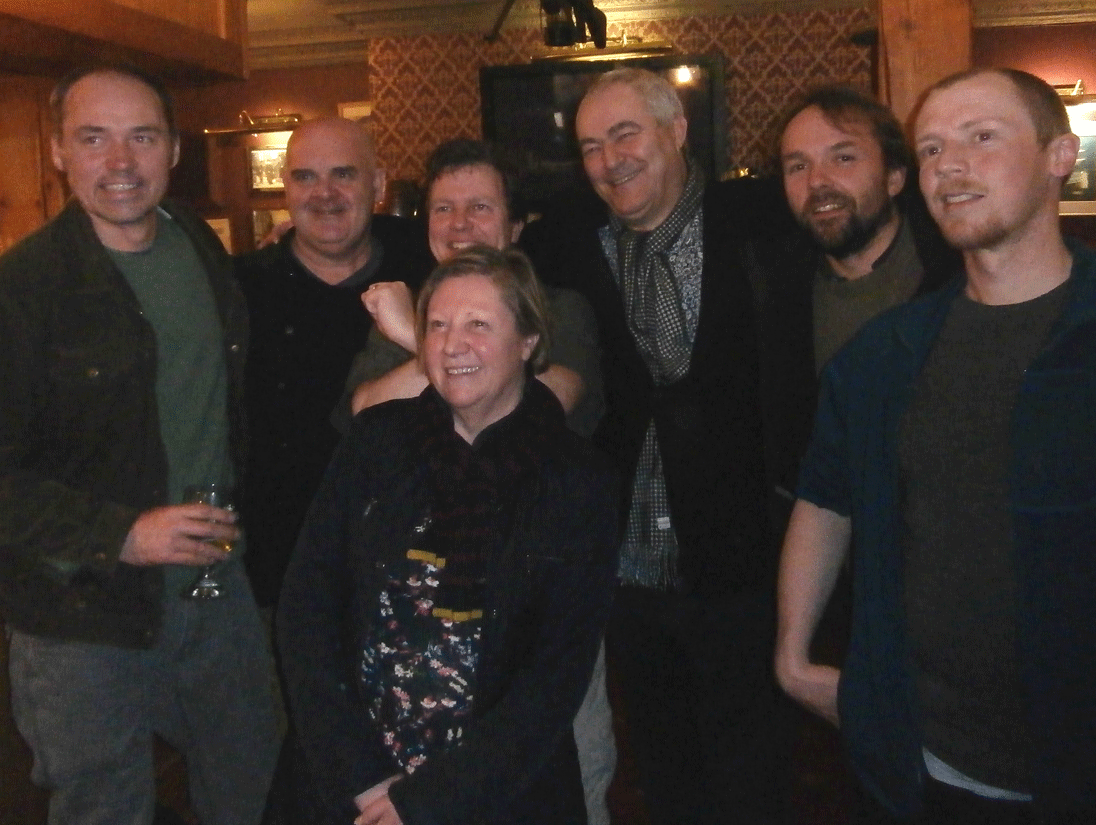
Many of us retired to the Blue Boar for a drink. L-R Nick Hopper, Simon Emerson, Martin Garner, Mo and Mark Constantine, Magnus Robb and Tormod Armundson, an eclectic mix of birders, musicians and entrepreneurs.
.
Unfortunately for reasons that are beyond me, WordPress is prevently me from adding captions to the photos in the normal manner. Hopefully it will be rctified by the time I get back from South America.
On Monday 21st having a few tasks to do at home I tried a little ringing in the garden, in the hope that the continuing cold weather might have driven a few birds into the garden. After a few hours all I had ringed was the Coal Tit below, so I packed up and headed to Lytchett Bay, intending to arrive on the low tide.
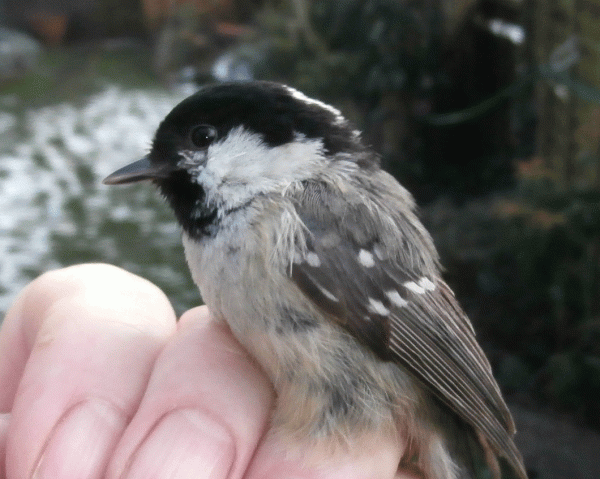
The failure of the conifer cone crop after the wet summer of 2012 has forced many Coal Tits into gardens searching for food.
Birding at the Bay was most successful, Fieldfares and Redwing were everywhere, five Golden Plover and many Lapwings fed in the fields, I flushed some 60 Common and one Jack Snipe, two Bramblings fed with a Chaffinch flock and a Spoonbill fed in the outflow from the sewage work.

There have been 16 Spoonbills in Holes Bay recently but yesterday one left the flock and fed on its own in Brands Bay. Has ‘Billy-no-mates’ flown to Lytchett, the other side of Poole Harbour to Brands Bay, or is it a new arrival?
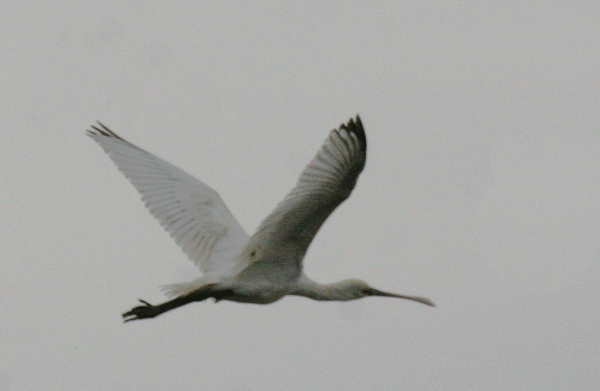
After a while the Spoonbill took off and headed north-west. The black wing tips indicate it is a first winter bird. Colour-ringed individuals have originated in Holland, which is presumed to the be the source of all our wintering birds.
Later I drove round to the other side of the Bay to the recreation ground at Turlin Moor. There had been a number of reports to the RSPB of a Hoopoe in Hamworthy but details where very sparse and I was quite skeptical (and even suggested it might be a Fieldfare due to the recent influx). Hoopoes usually occur in the UK in spring, and are usually associated with hot, dry locations like acacia scrub or olive groves, so one in snow covered Turlin Moor/Hamworthy seemed most unlikely. Not surprisingly all I saw was Fieldfare and Redwing.
On Tuesday I was invited round to Paul Morten’s house to do some ringing. With the recent addition of baby Jake to the family I was surprised that Paul had any time to devote to birds, but his wife Phillipa seemed happy for us to ring birds whilst she tended to the children. We had a very successful morning ringing a Fieldfare, a good number of Blackbirds, (which must have arrived in the cold weather movement) lots of Goldfinches, plus a Bullfinch and a Lesser Redpoll.

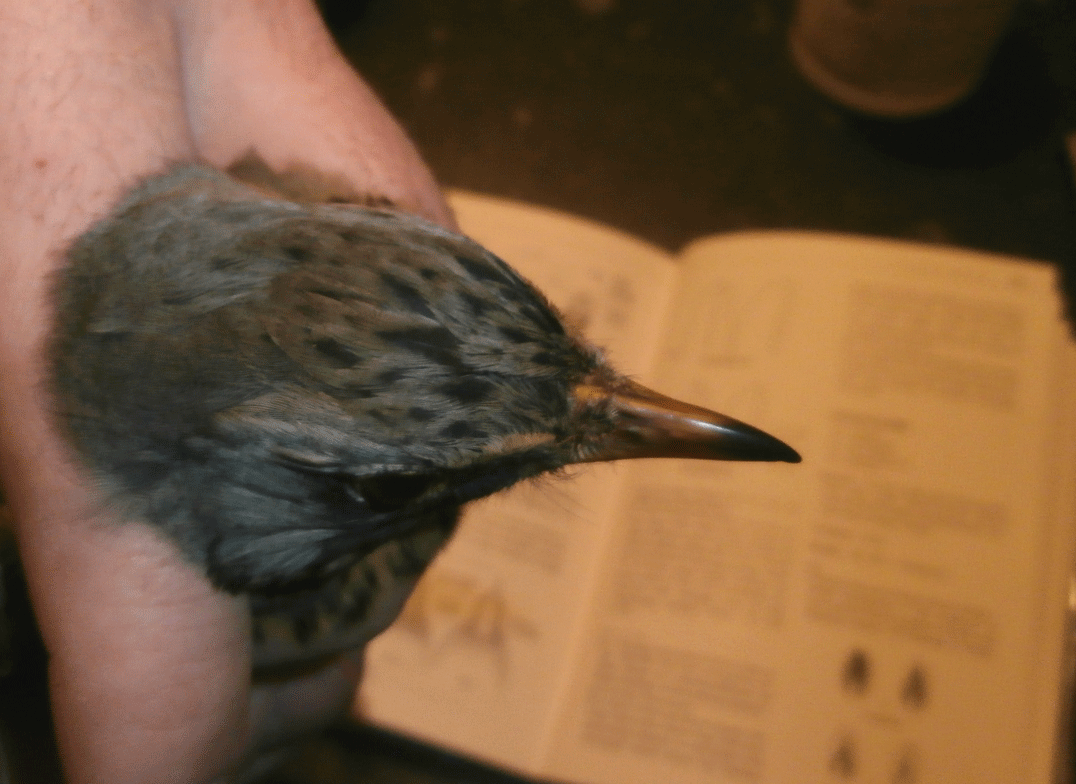
The first bird we trapped was a Fieldfare, the first I have handled for many years. Fieldfares can be sexed by the pattern of the feathers of the crown. The pointed black centres of the crown feathers show that this bird is a female. Our colleague Trevor from north Dorset ringed a Fieldfare in the autumn of 2011 which was found, killed by a cat, in Sweden the following spring. In the background is ‘Svensson’ – the ringer’s Bible.

Ringing was going well when suddenly the flock of Waxwings that has been seen elsewhere in Lytchett Matravers appeared on a wire over the nearby road. 31 in number, we fervently hoped they would come into the garden and indeed they did……
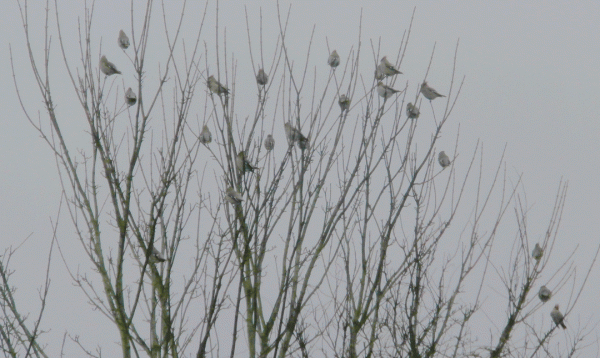
… but no amount of hoping would bring them down from the trees at the bottom of the garden to the catching area. Phillipa wondered why if Paul was ecstatic to get one Waxwing in the garden earlier in the week, he was so disappointed to get 31! Eventually a Goldfinch went into the net and Paul had to creep along the net to extract it in the hope that the Waxwings wouldn’t be disturbed by his actions. Both photos taken through a window hence the poor image.

Meanwhile five-day old Jake slept soundly…..

…. and two year old Millie played with her toy iPad.

At the end of the day it started to snow again, but unlike areas further north it didn’t settle.
On Wednesday 23rd I found out late morning that the Hoopoe story was not a rumour. A local birder had seen it out of the window from a factory in Hamworthy. Two other birders managed to relocate it a few streets away, but by the time I arrived it had vanished. About half a dozen of us scoured the nearby lawns, recreation areas and verges until dusk but to no avail.
Thursday morning saw me back at Paul’s. We didn’t ring as many birds (probably because it was sunny and the net was more visible) and there were no sign of any Waxwings. Later we heard that Hamworthy had turned up trumps again with Waxwings on Symes Road, but further suburban searching produced neither Waxwing or Hoopoe.

The proud father with son Jake
However news of three Bean Geese at Longham Lake saw me spending the last hour of daylight at this excellent spot watching these rare visitors to Dorset. Many consider there to be two species of Bean Goose; Tundra Bean Goose shown here is the more northerly breeding species and occurs sporadically in the UK in winter with no regular localities. The forest breeding Taiga Bean Goose has a longer bill, longer neck and winters in the UK in two discreet small flocks, one in Norfolk and one in south Scotland. Both IOC and Clements checklists treat Bean Goose as two species but the BOU hasn’t followed this treatment.

The Tundra Bean Geese were far too distant to be photographed so here is one from the internet taken in Norfolk.
Friday 25th saw me renewing my search for the Hoopoe, but mid morning I gave up and went to the gym. On my return about 1130 I heard that our friends Nick and Jackie Hull had located it, not in Hamworthy but slightly further north on the Turlin Moor estate. This estate lies north of the railway line and as it is adjacent to Lytchett Bay is included in the Lytchett Bay recording area. So now I not only had a potential year tick and Poole Harbour tick, I had a potential Lytchett Bay tick as well, something I really wanted as I had missed the bird that Shaun found at the Bay in 2003. However I by the time I got there it had gone and another afternoon was spent searching people’s front gardens (I think the postman got fed up of cars pulling up and asking if he had seen any black-and-white striped birds on his rounds).

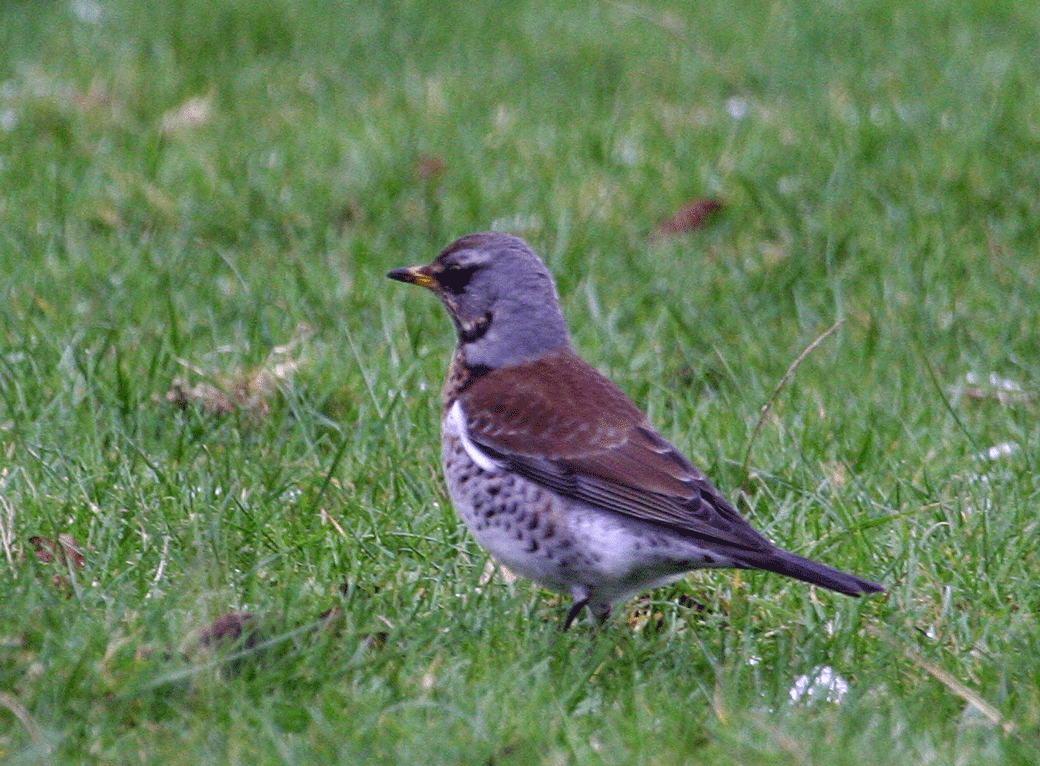
There were Fieldfares all over the grassy areas at Turlin Moor
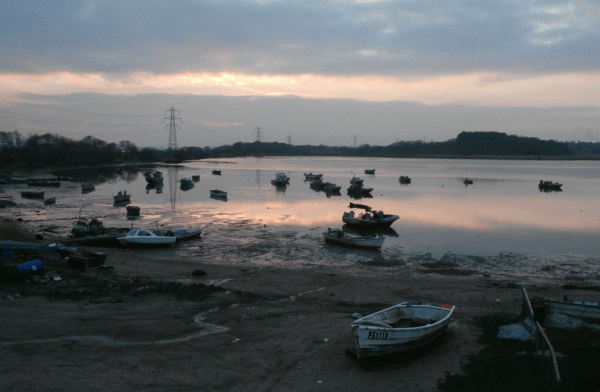
The south side of Lytchett Bay seen from the Turlin Moor estate. The line of trees to the left follows the railway line and divides Turlin Moor from Hamworthy.
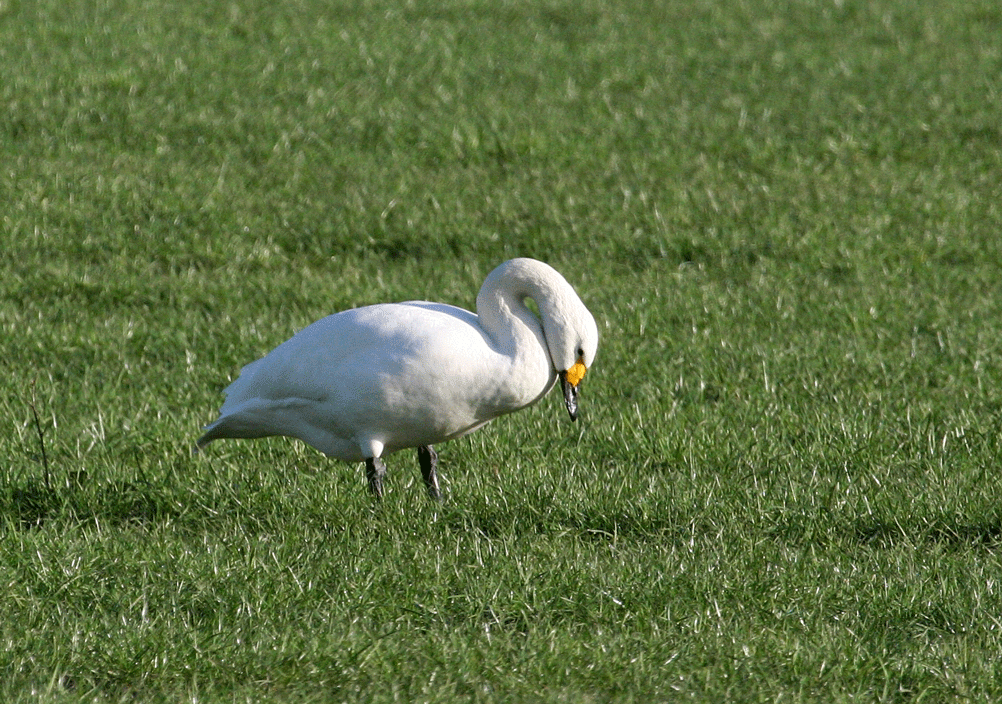
Saturday 26th I was back ‘kerb-crawling’ at Turlin Moor, with still no sign of the Hoopoe by mid morning I drove to Blashford Lakes just over the border in Hampshire. First I called in at nearby Harbridge where two Bewick’s Swans and 10 (introduced) Egyptian Geese weer hanging around with the Mutes. At Blashford on Ibsley Water a pair of Goosander, two Barnacle Geese, a Knot, a Black-necked Grebe were the highlights but there was no sign of the reported Smew. Hearing that there was one at Longham Lakes I called in there on the way back and had reasonable views. There were two Bewick’s there as well although the Bean Geese had gone. Later careful comparisons of times of observation showed that there were indeed different Bewick’s and Smew at both Blashford and Longham that day and the birds hadn’t been commuting between sites.
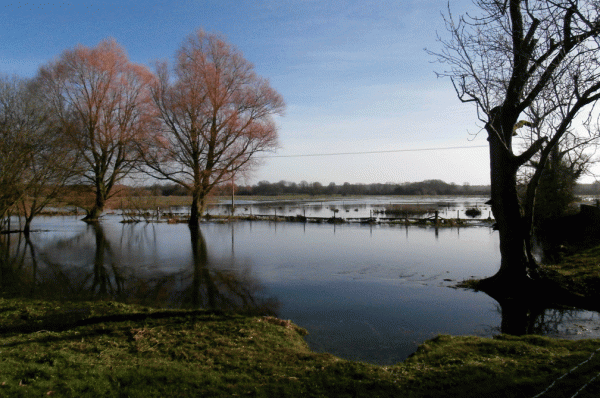
The Ibsley floods. These fields are usually wet in winter but the recent wet weather has caused the River Avon to break it’s banks.

Smaller and daintier than Whooper Swans, Bewick’s arrive in the UK each year from Arctic Siberia. Up to 150 used to winter at Harbridge/Ibsley but now many stop off at Welney in the Fens where they are fed.
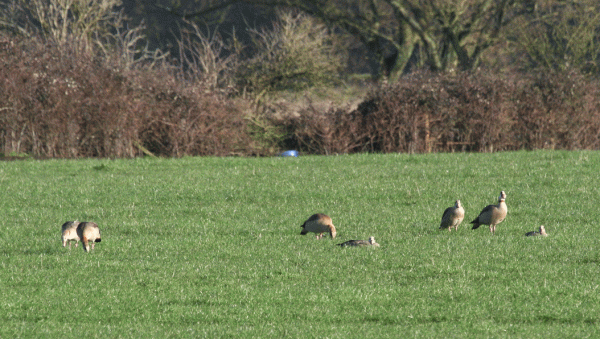
An introduced species, Egyptian Geese seem to be colonising the Avon Valley and may now breed there.

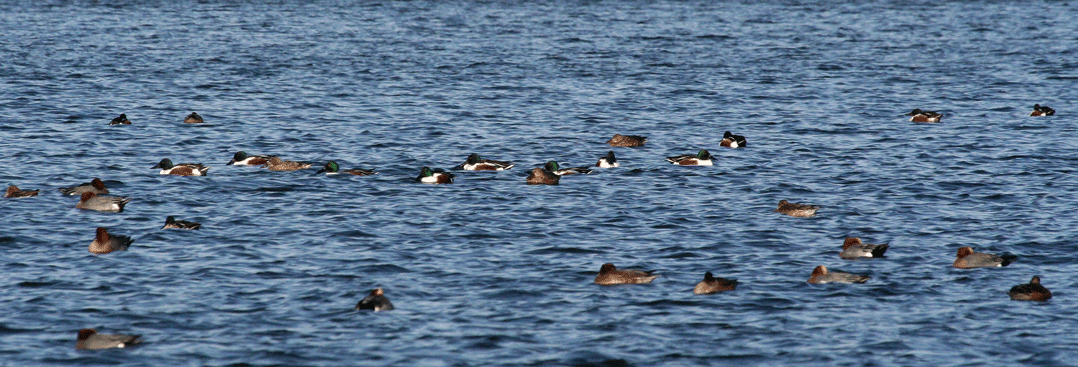
There were large numbers of Wigeon, Shoveler (in the photo) and also Pintail at Ibsley Water. Perhaps these birds were driven south to France or Spain by the recent snow and are now returning as the thaw continues.
The weather forecast had seemed to indicate rain on Saturday afternoon so I had booked us tickets to see Les Miserables at the cinema. Well, the weather was good but the film was superb so it was well worth missing some birding time.

I am not usually a fan of musicals but this tale of 19th century France is so very well produced and acted. Well worth seeing.
Sunday morning (27th) Margaret surprised me by suggesting we both go and look for the Hoopoe. The bird had inevitably been seem whilst we were in the cinema yesterday but no-one had managed to twitch it. We toured the streets of Hamworthy concentrating on the Galloway Road area where it had last been seen. With no luck there we drove around to Turlin Moor (a few yards as the Hoopoe flies but over a mile by car) and were searching Hamworthy rec for the bird when Steve phoned. He was looking at it in Galloway Road right where we had been 30 minutes earlier, I have never seen Margaret run for bird before! Question, should we go to the railway station and walk the underpass to Galloway Road or drive round. I choose the latter which was a mistake, as it had flown a minute before we arrived and the underpass came out on Galloway Road just feet from where it was. Further searching got us and the other dippers nowhere, so we headed home for lunch.
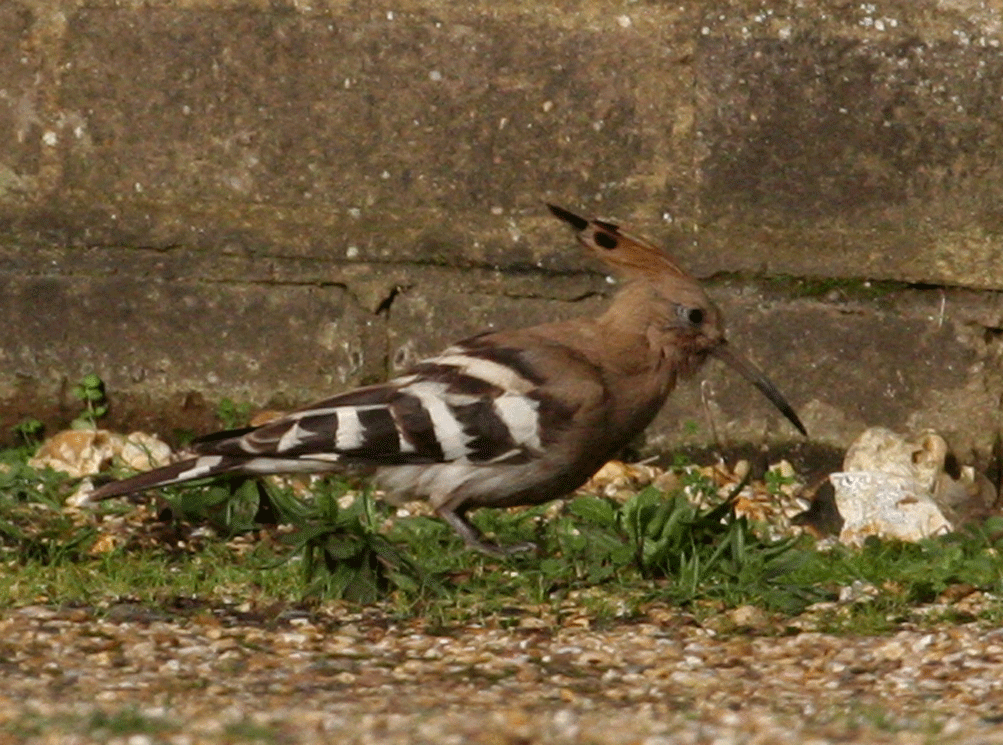
We had planned to spend the afternoon in north Dorset, but just as we were leaving Mark Constantine phoned to say they had relocated it on the industrial estate that backs onto Galloway Road. We dropped everything and got there in time to see this Mediterranean bird, looking very out of place in a factory yard in the middle of a Dorset winter.

8th time lucky! Thanks to Mark and Mo I finally caught up with the Hoopoe, my 16th for the UK, 12th for Dorset, but first for Poole/Poole Harbour area.
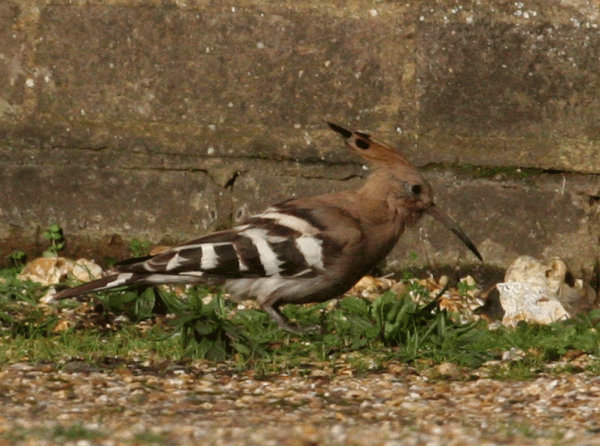
Although pretty obvious against a dark background it really blended in by the factory wall, clearly the species has evolved a camouflage to prevent it being located in an industrial setting!
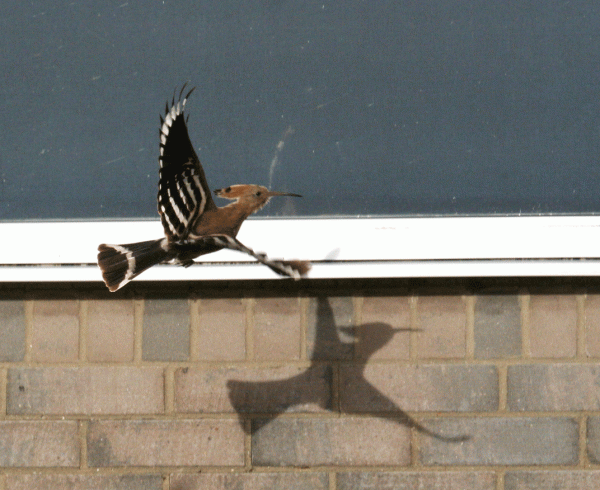
But soon it was off over the factories and back to Galloway Road.
Of course many would say why put yourselves through so much frustration for a bird that is common throughout southern Europe, southern Asia and Africa. The the truth is, it was so close to home that I would hate to miss such a quality bird on my ‘doorstep’, indeed the very frustration of birding is what make eventual success so rewarding. If birds were like say, stately homes, always there when you went to see them, then birding would never be be so fulfilling. The only way this could have been bettered was if I had seen it a hundred yards to the north within the Lytchett Bay area!
With the freeze continuing I spent some time birding over the weekend in the hope that I might see some interesting birds displaced by the cold weather. The temperature on Saturday was not only below freezing but there was a strong easterly breeze making it very raw in exposed areas.
As a lot of displaced birds had been reported from Weymouth and I knew of a few goodies there I drove to Radipole first. The area around the north hide was pretty quiet with just a group of Shoveler on view but I did hear several Bearded Tits on the way back and had a couple of sightings of Marsh Harrier.
I had no luck with Black Redstart at the usual stake out but a pair of Velvet Scoters showed very well in Portland Harbour. Nearby at Ferrybridge the sudden appearance of car park man had me running for the ticket machine and as a result I missed the resident Snow Bunting by seconds, which apparently flew north just before I arrived. Photographing Mediterranean Gulls and small waders was some compensation. Fieldfare were much in evidence with flocks everywhere and small numbers of Skylarks were moving east through Ferrybridge. I had intended to go on to Abbotsbury to look for Long-tailed Duck and Scaup but the wind was bitter at Ferrybridge and the thought of walking out to the ‘tank traps’ along the exposed shingle in a brisk easterly was daunting so I returned home via Lytchett Bay where I met up with Shaun. Again there were Fieldfare everywhere, two Marsh Harriers put on a show and a three Woodlarks flew over, most unusual for the site. Back home, I defrosted with a much-needed hot bath.

A flock of Black-headed, Common and Mediterranean Gulls at Ferrybridge.
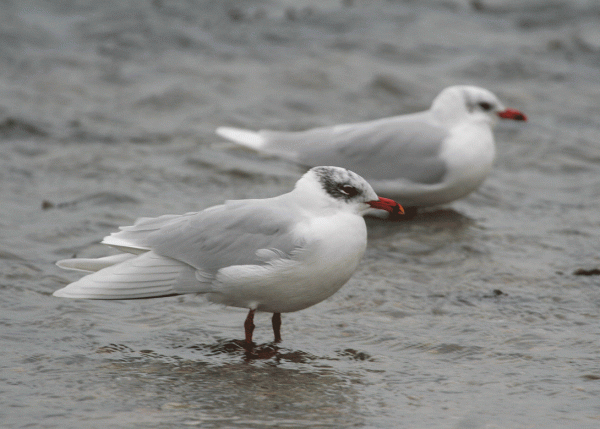
Adult winter Mediterranean Gulls
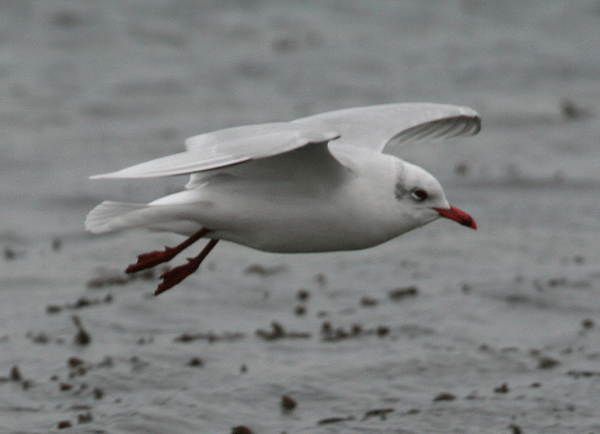
Adult winter Mediterranean Gull

Dunlin and Ringed Plover

Small numbers of Skylarks were moving east.
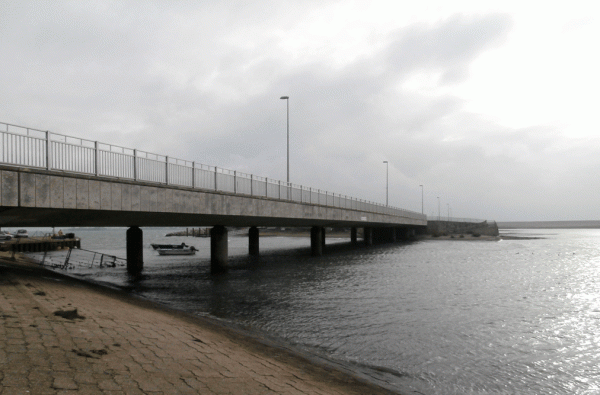
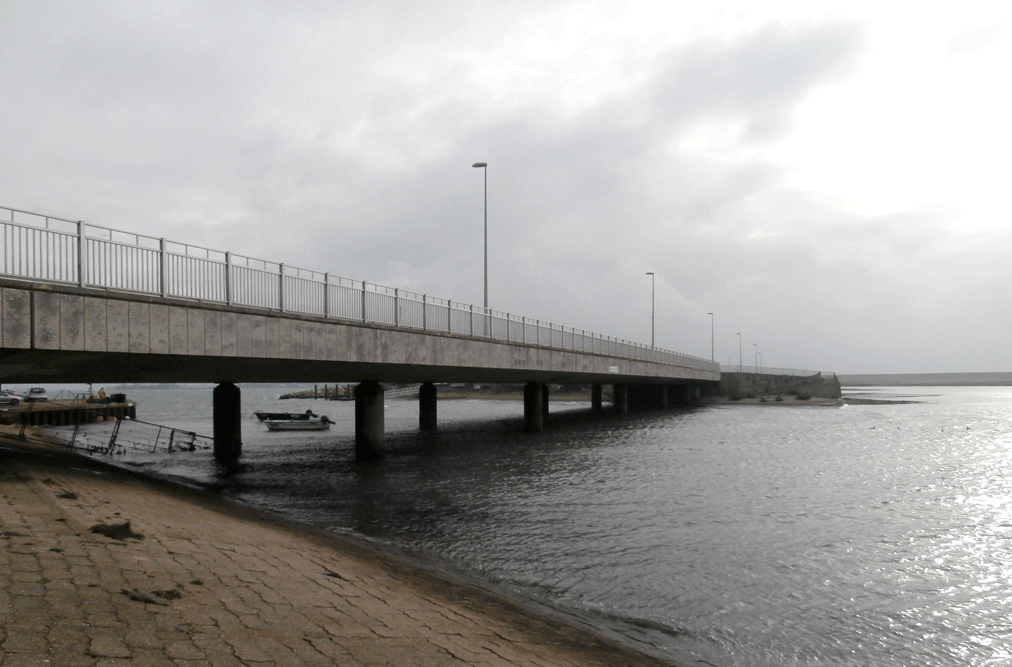
Small Mouth where the Fleet meets Portland Harbour. This is the place where Margaret first landed in the UK after her eight year boat -trip from South Africa. They sailed to Portland Harbour from France, anchored just the other side of the bridge and landed the dingy here.
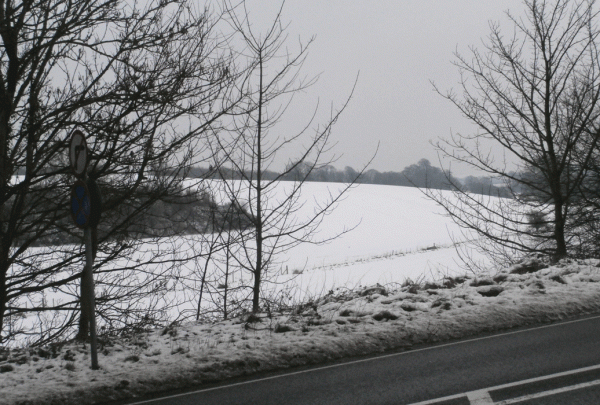
The snow cover was light in Poole and almost non-existent in Weymouth but still pretty deep between Dorchester and Bere Regis.
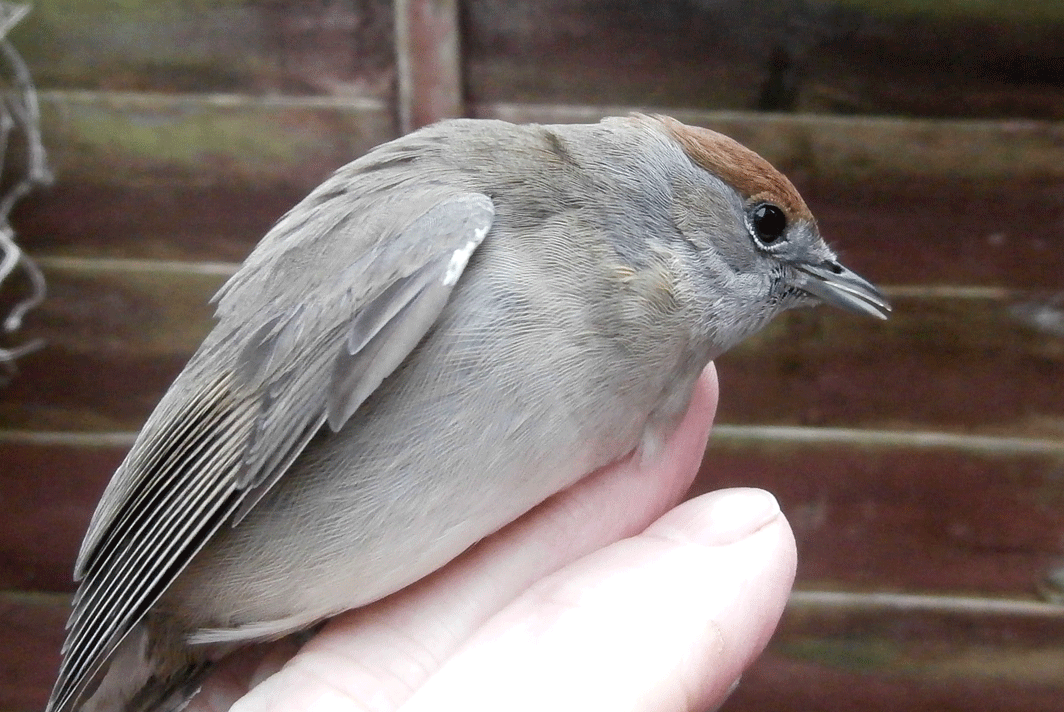
The WeBS count two weeks ago was cancelled due to fog and so was reconvened for today. With a couple of hours free beforehand I put a net up in the garden in case any wintering thrushes paid us a visi,t but instead caught two Blackcap, the first I have seen in the garden this year.
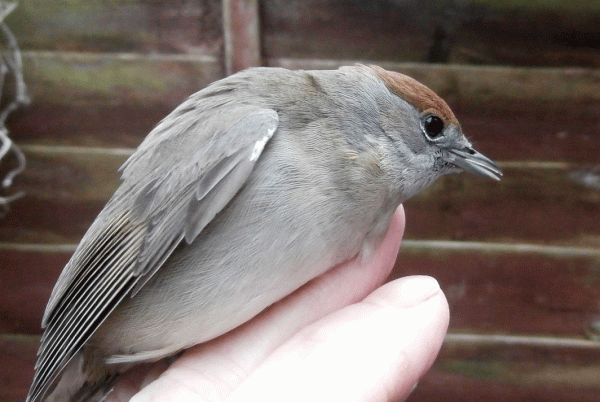
A female Blackcap. Numbers wintering in the UK seem to be on the rise and they seem to be able to withstand severe weather by visiting gardens.
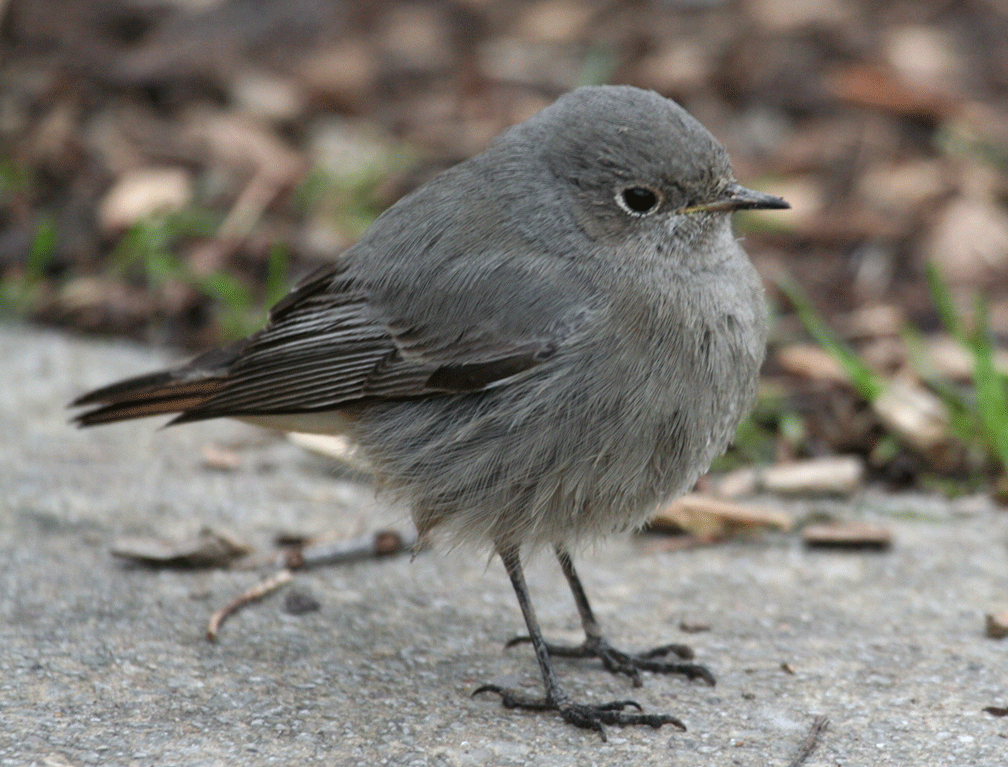
On my way to Holes Bay I had time to make two brief stops to see birds that had already been found, a Black Redstart at Upton Park and a two Ruff in a field just north of the Upton by-pass.
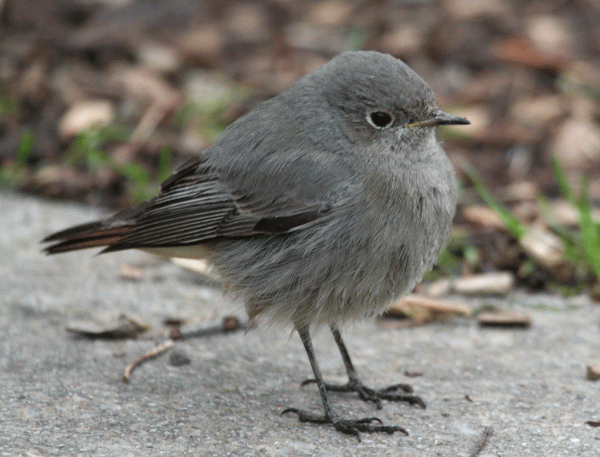
Black Redstart at Upton Park
Due to the low tide being higher than usual there were few birds in my section of Holes Bay during the count but the north-eastern quadrant was packed with Wigeon, Teal, Dunlin and other waders. 15 Spoonbill and 190 Avocets were highlights, whilst hundreds of Fieldfare flew over, accompanied by a few Skylarks and two Woodlarks. In the drain behind PC World at least six Chiffchaffs were braving the cold and a Common Sandpiper fed along the margins.
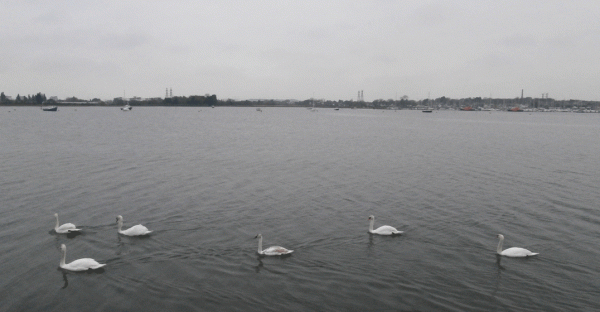
WeBS counts have shown that Holes Bay along with Poole Park and Wareham Channel are the best areas for Mute Swans in Poole Harbour.
Later we joined John and Anita at Poole Quay for lunch and in the later afternoon we all went round to Janis’ where Kara had been busy baking all day so even more food was on offer.

Janis was taking photos of the girls and was using a photo umbrella with a slave flash which fired when I used the flash on my pocket camera, this produced a very washed out picture although I think the effect is quite pleasing.
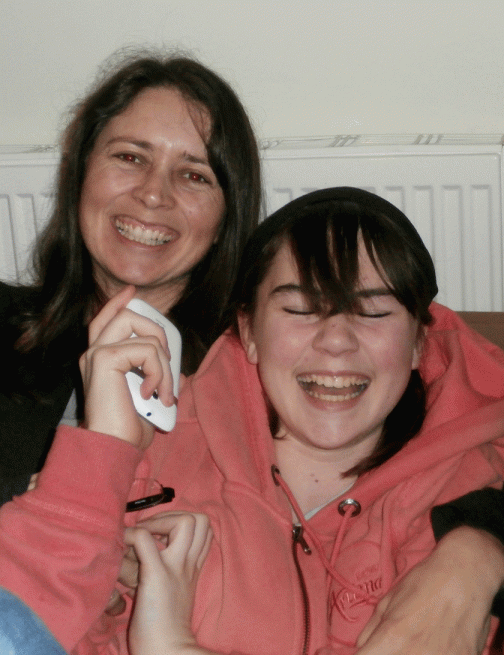
Amber was looking a bit glum when we arrived but a short time with auntie Anita cheered her up.
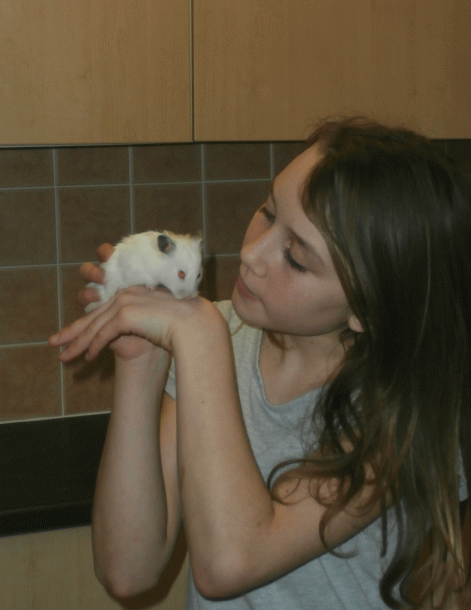
Kara and her hamster ‘Fluffpuff’
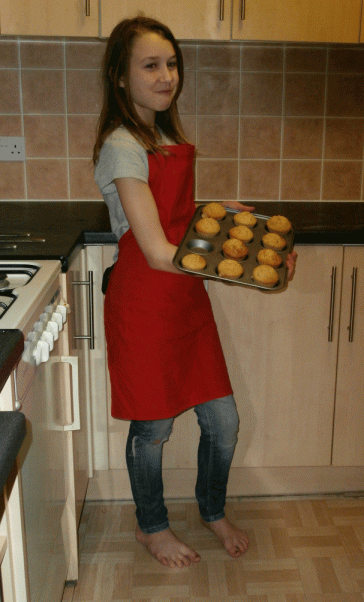
Kara had been baking cakes all afternoon …….
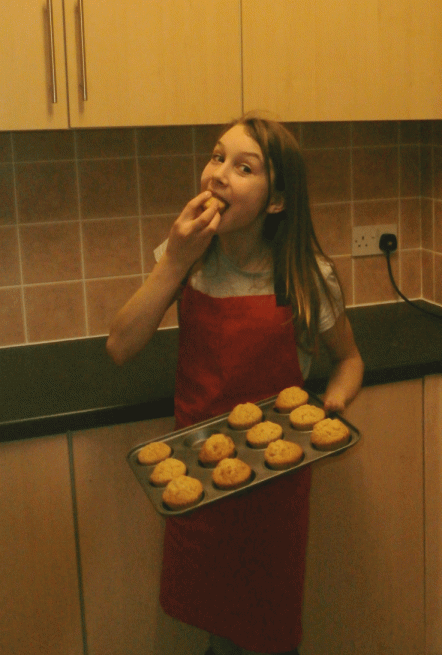
…. which were as delicious as they looked.






































 gryllosblog