Archive for the ‘Uncategorized’ Category
Several people have told me that the post about the talk I gave on the ‘Lands of the Queen of Sheba’ on the 14th of November had no visible pictures. I have no idea why this happened but have redone all the photos and reposted it here.
I often give slideshows on my travels to RSPB and other wildlife orientated groups, however the talk I gave to the East Dorset Antiquarian Society on 14th November was a completely new departure. Brian Maynard, a former colleague is a leading light in EDAS and I suggested to him that I might have enough material for a talk.
In November 2011, after my three-week bird tour of Ethiopia, I spent a further five days in the north of the country looking at the archeological wonders of Axsum and Lalibela. Their original suggestion for a title ‘Early Christian Churches in Ethiopia’ lacked impact so I suggested ‘the Lands of the Queen of Sheba, Myths, History and Endemics’, as this would allow me to dwell on the multiple ‘tall stories’ I was told on the tour, as well as showing a few pictures of endemic birds.

The EDAS meeting in Wimborne
I started by giving an overview of the stories pertaining to the Queen of Sheba and asked if there was any proof that she ever made the famous journey to Jerusalem to see Solomon or for that matter if she ever existed at all.
I then gave a brief overview of my travels around Ethiopia before starting to describe my visit to Axsum.

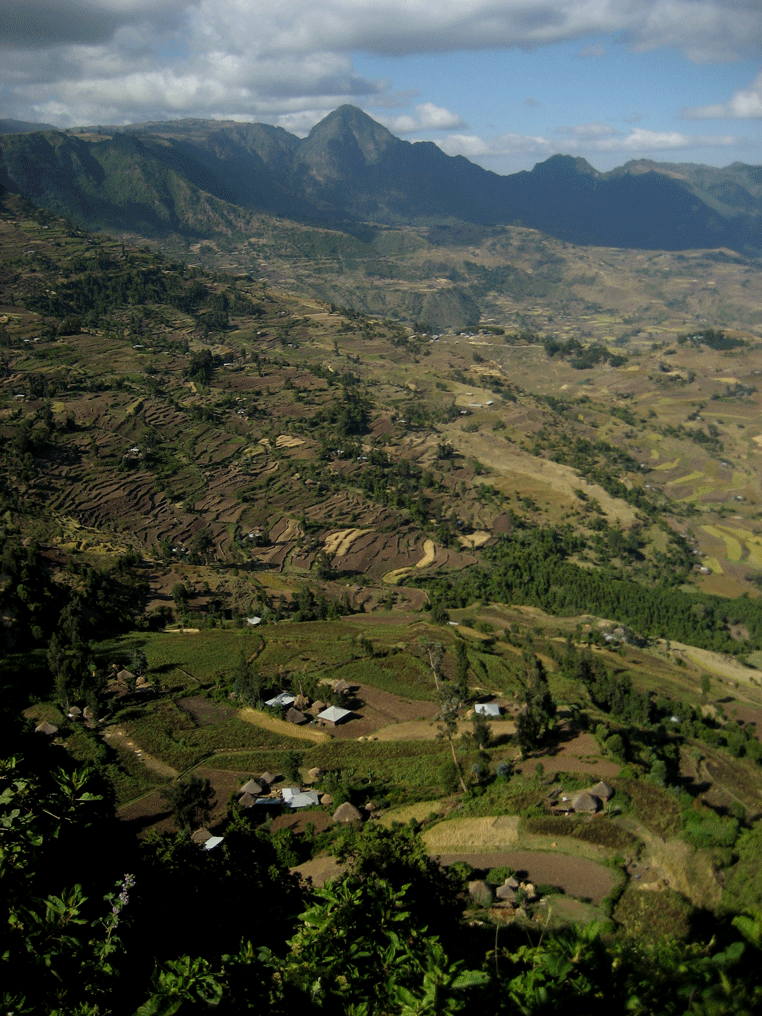
The stunning scenery of northern Ethiopia
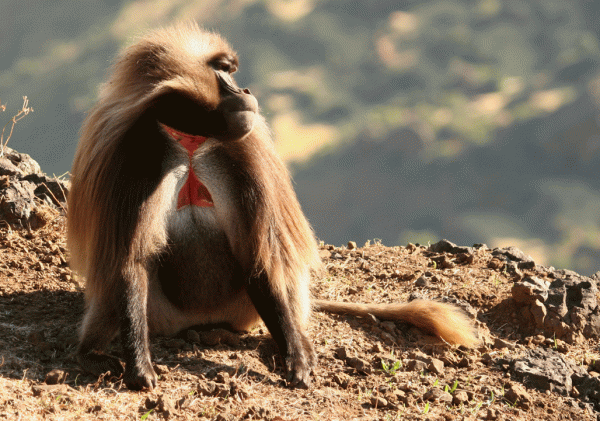
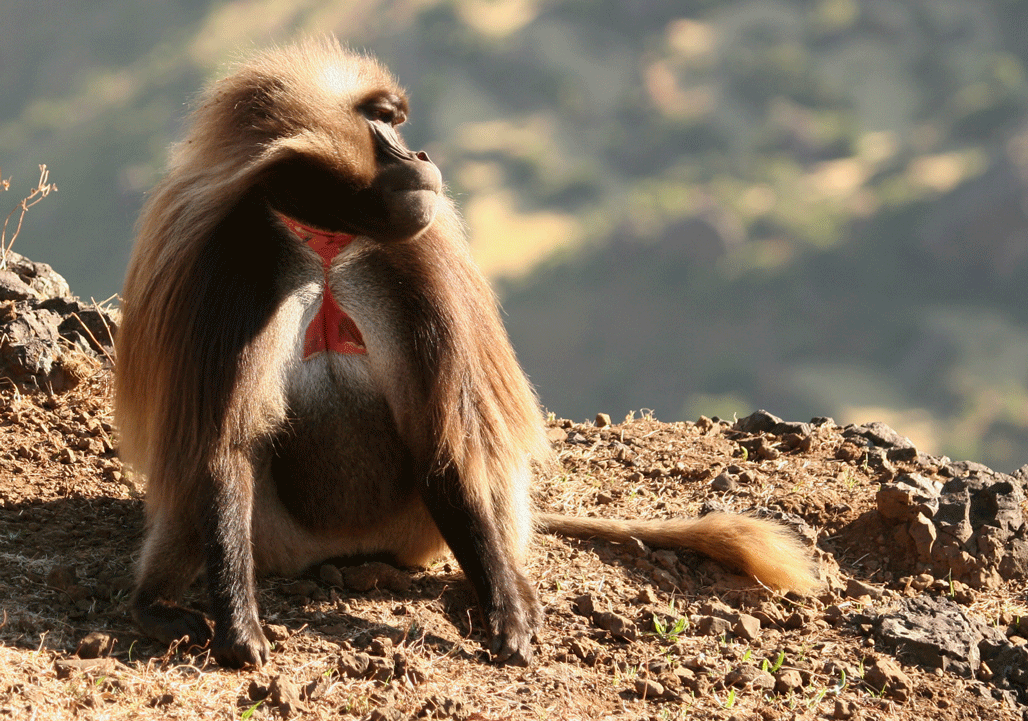
An endemic mammal – the Gelada Baboon

Perhaps the most beautiful of all the endemics: Prince Ruspoli’s Turaco. It’s titled discoverer was killed by an elephant soon after the type specimen was taken and for decades the whereabouts of this species remained a mystery. Photo by Brian Field.
At Axsum I was shown some markets, ruins that were claimed to be the palace of the Queen of Sheba (although archeology dates them to 7th century AD not 1000 BC), the famous Stele Park and the church of St Mary of Zion that is supposed to contain the Ark of the Covenant, the actual box that holds the stone tablets of the Ten Commandments, taken from the Solomon’s Temple in Jerusalem by Melanik, the supposed son of Solomon and the Queen of Sheba.
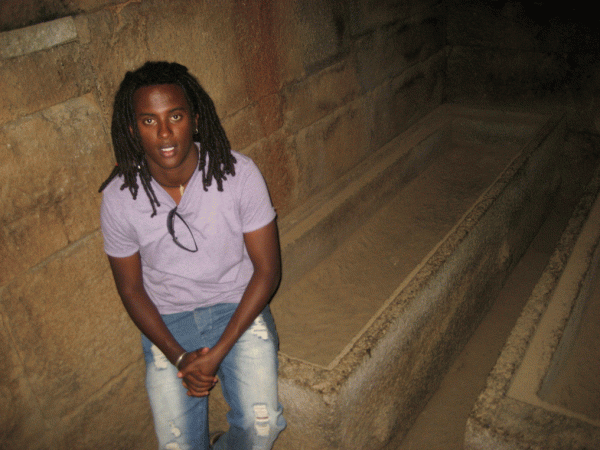
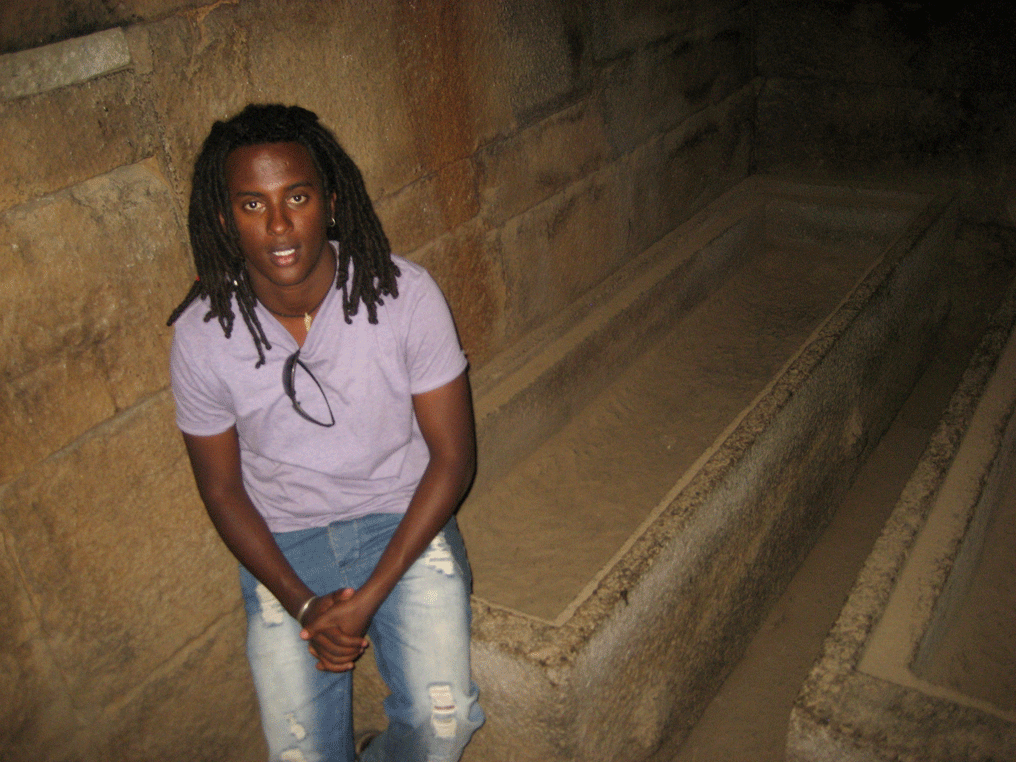
My guide in one of the royal tombs that date from the 5th century AD
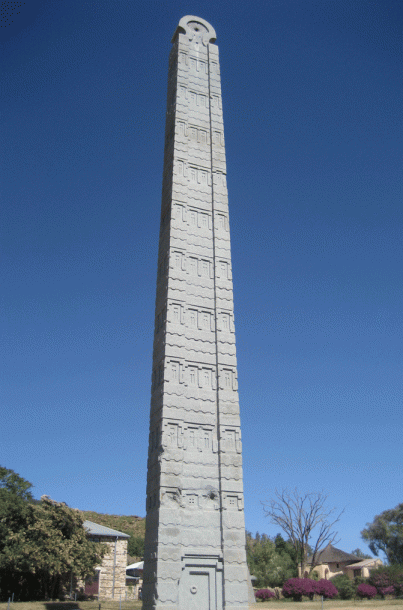
The incredible stelae, 4thC AD monoliths. 120 remain but only two are this tall, at over 24m.

The largest stele, 33m high toppled soon after erection, perhaps not surprisingly as there was only one metre of foundations. When it fell it crushed a royal tomb, the entrance of which can still be seen to the left of the stele.
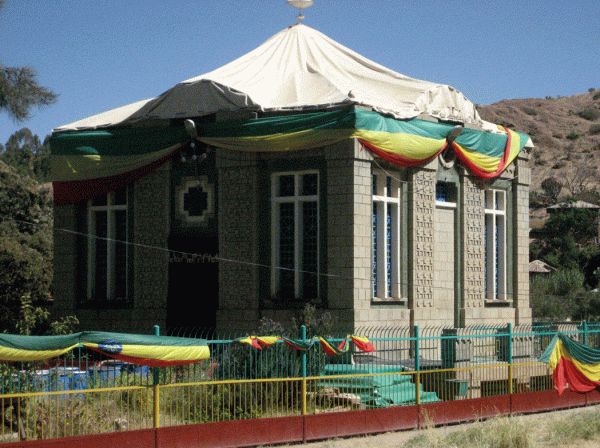
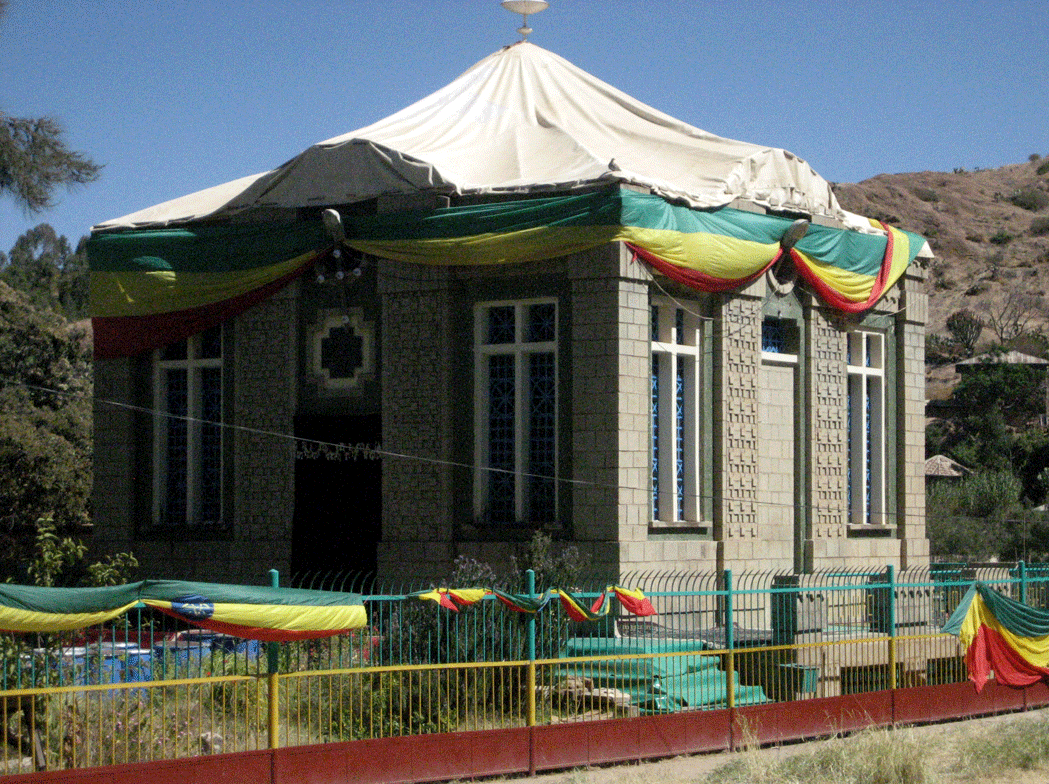
This chapel holds what Ethiopians believe is the Ark of the Covenant. Only one priest is allowed into the chapel and once there he never leaves until he dies.
After the break I showed pictures of the wonderful rock churches of Lalibela and told tales, both mythical and historical, of their construction and use.

St George’s Church, Lalibela. These remarkable rock churches are not built of rock, they are carved out of rock.
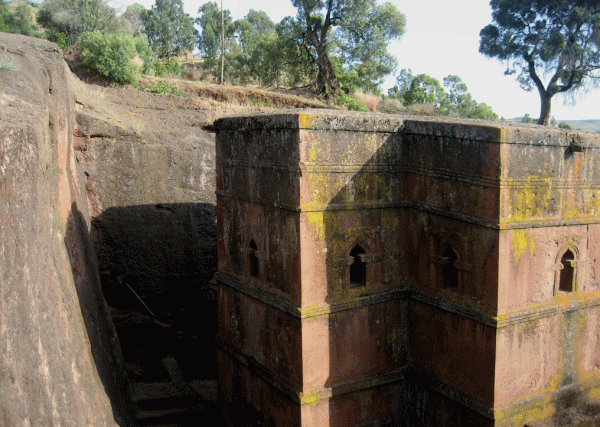
Estimated that it took 40,000 people 40 years to cut the 11 churches out of the rock although legend has it that the angels carved them in a small fraction of that time.

Most of the churches are collected by tunnels and walkways.
I then showed some shots I took in Yemen in 2009, another land that claims the Queen of Sheba as their own.
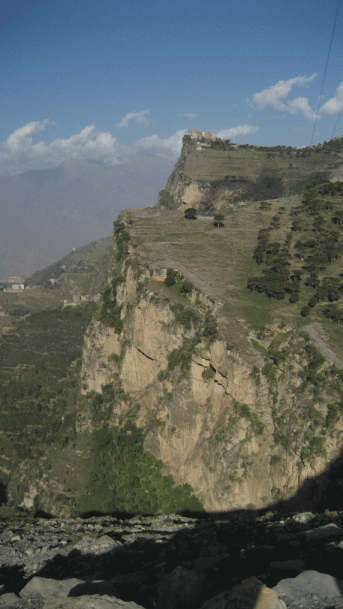
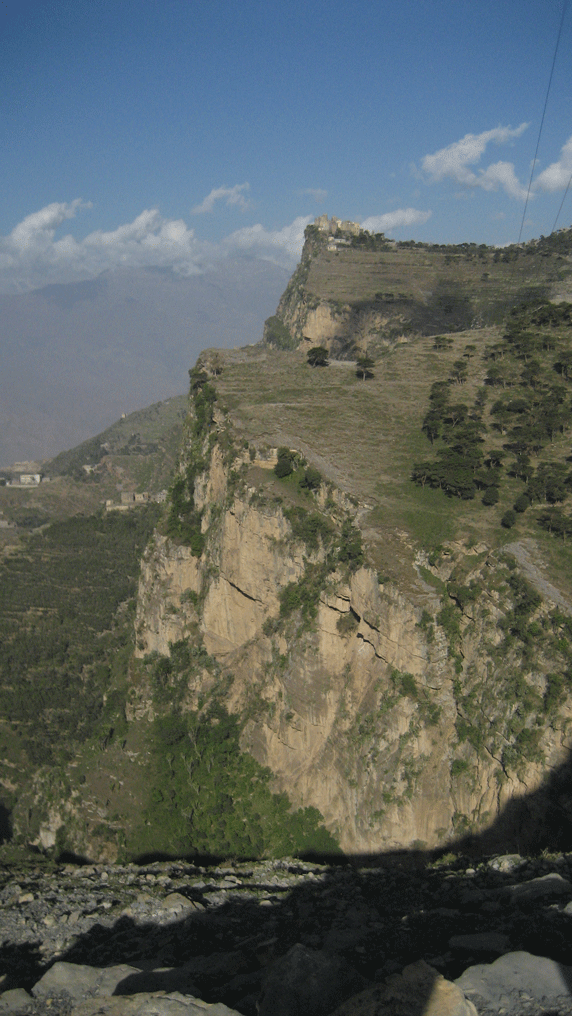
The Yemen highlands: ancient villages perched on the edge of precipitous cliffs.
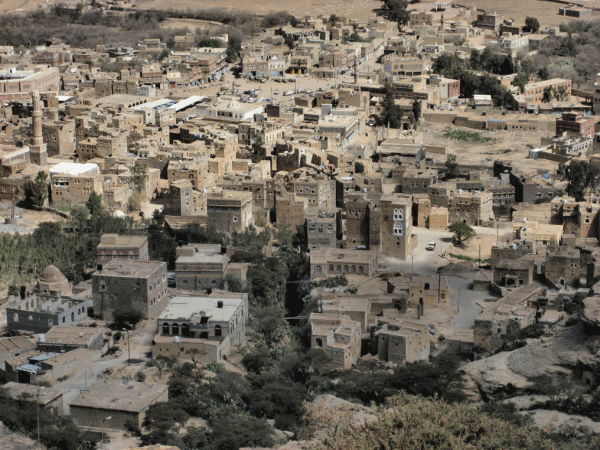
The old parts of Sana’a look unchanged since Biblical times. With some archaeological remains dating to nearly 3000 years ago. Was this really the land of the Queen of Sheba?

Lucy, named after the Beatles number ‘Lucy in the sky with diamonds’ which was playing at the time of discovery, is one of the most significant hominid fossils ever discovered.
The talk was concluded by returning to Addis Ababa, the capital of Ethiopia where I visited the National Museum to see the bones of ‘Lucy’, the 3.6 million year old Authralopithicus, one of humanities earliest known ancestors. I finished by saying that Lucy was no myth, was real history, well prehistory and was endemic to the Horn of Africa, thus bringing the three threads of this talk together at the end.
This talk had been quite a challenge, as I had never spoken to a historical society before. It had taken quite a bit of research but it had been good fun, both preparing and giving the talk and it seemed to be well received.
Proper winter weather at last. It has been cold all week but on Friday the forcasted snow arrived.
The past few days have still been dogged by this nasty viral infection. Whilst I have been getting better, Margaret has been off work for much of the time, however she hopes to be back at work fulltime on Monday
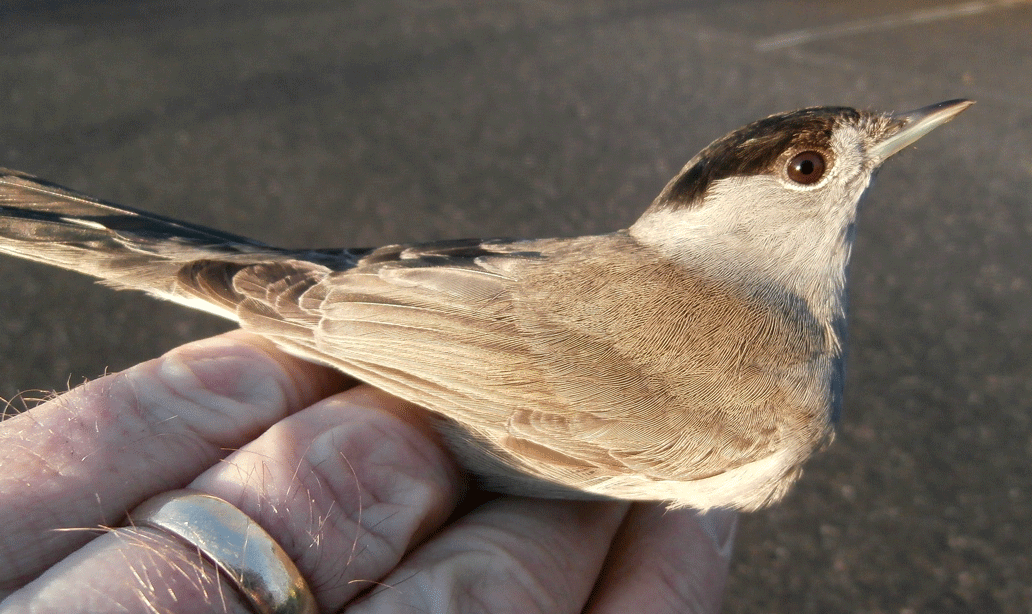
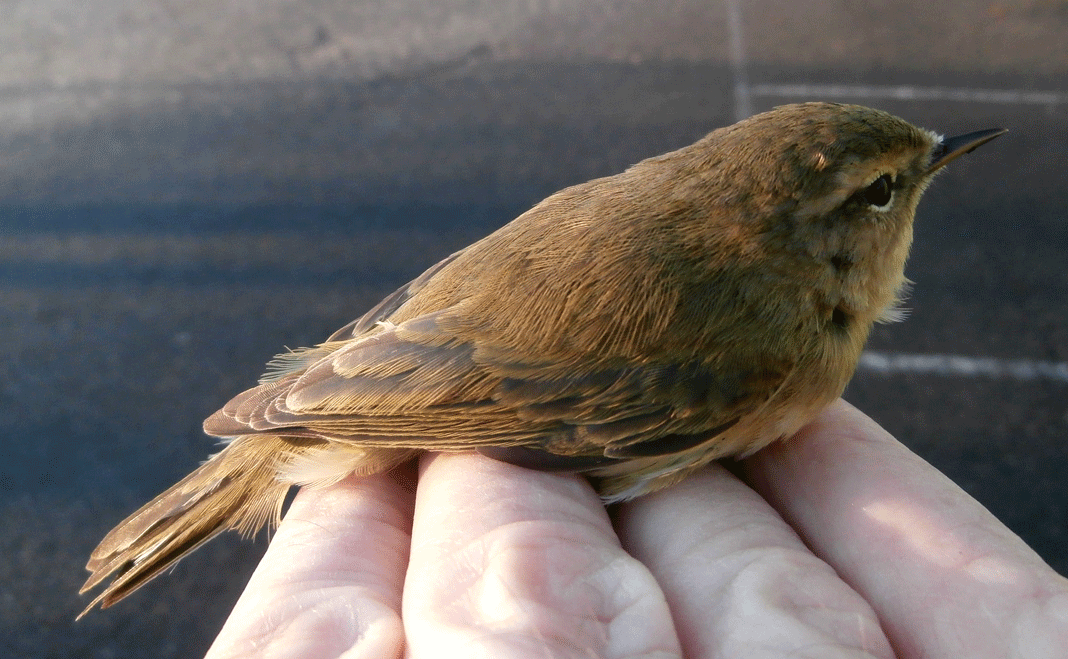
On Tuesday 15th Shaun, Kevin and I did some ringing at the drain behind PC World. We were very successful with over 40 birds trapped including 10 Chiffchaffs and a Blackcap both scarce in winter in the UK. There were another seven unringed Chiffchaffs present, so a total of at least 17 Chiffchaffs in one site in winter is most remarkable.
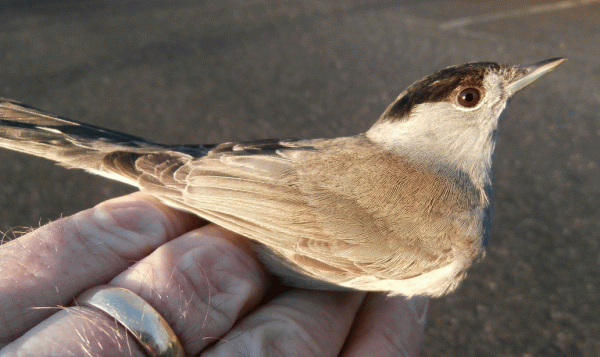
Although a common breeder Blackcaps are quite rare in winter. Ringing has shown that our wintering birds are not breeding birds that decide not to migrate but are from southern Germany.
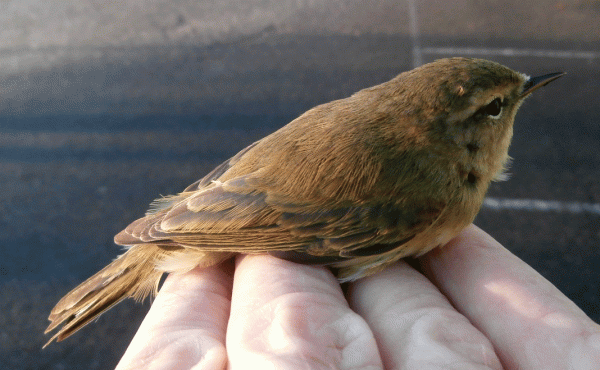
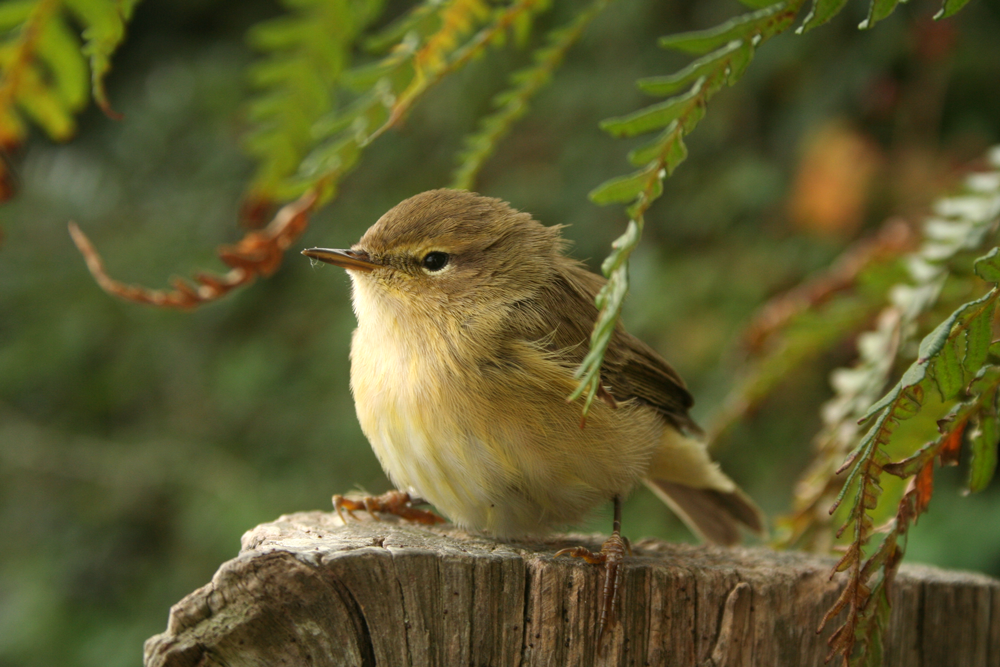
A typical nominate race (colybita) Chiffchaff

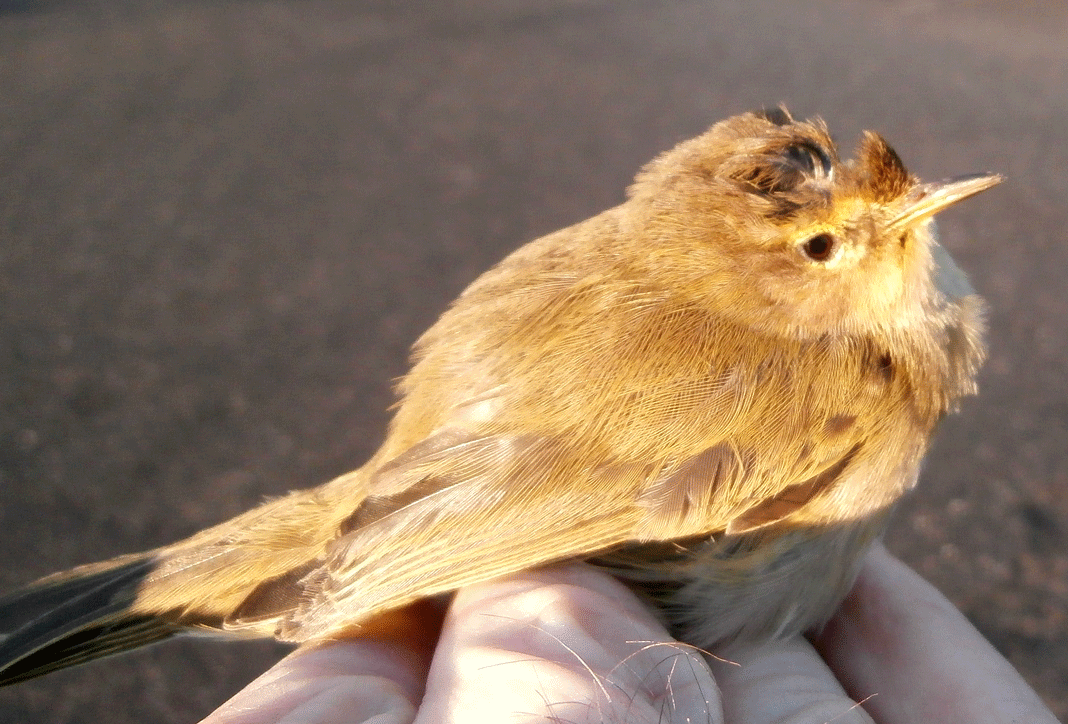
The matted feathers on the crown of this Chiffchaff is usually a sign that it has been feeding on pollen, but where would a Chiffchaff find pollen in winter?

This Chiffchaff with a very pale belly and greenish fringes looks quite like a Siberian Chiffchaff (race tristis) when held in the shade.

… but in the sun shows some green on the lesser coverts and above the bill. This bird was ringed at this site in winter 2009 and was retrapped in 2012, it would be most interesting to know where this bird goes in summer.
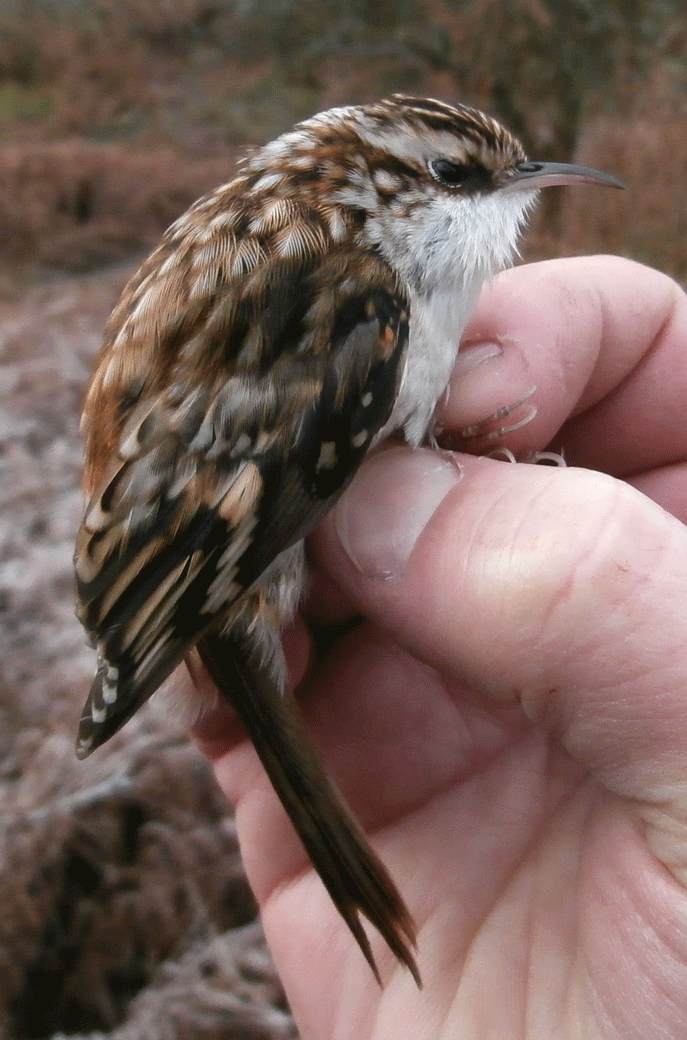
On Wednesday 16th Sean, Kevin and I made our weekly visit to Holton Lee. Again we trapped 50 birds, 32 of which were retraps. Best birds were two Treecreepers and a Sparrowhawk.

Details of the patterning on the primary feathers and the margins of the alula feather help separate this Common Treecreeper from its continental Short-toed cousin.

This male Sparrowhawk looks like an adult, but a few brown-fringed feathers on the lesser coverts show that is a third calender year bird, ie hatched in 2011 or age code 7 in ringing parlance ……
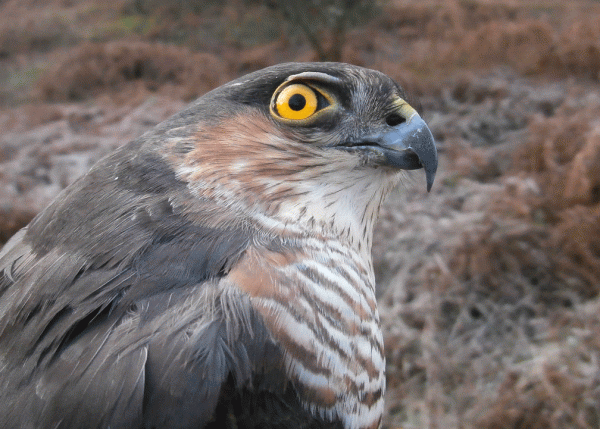
…. in addition the iris is a deep yellow, midway between the pale yellow of a juvenile and the orange of an adult.
On Friday 18th the expected snow arrived. Normally we don’t get much snow in Poole, due to the warming effects of the harbour, and what does fall usually melts during the day. By 0600 there was already a good covering and it continued to snow for much of the day, although it turned to a fine sleet in the afternoon. Of course we didn’t get anything like as much as snow as inland areas, especially in South Wales where a red alert had been issued. Weymouth, Portland and along the Fleet had very little snow and it was here that birds congregated. Cold weather movements used to be a feature of winter birding but we have seen few in recent years. In the afternoon I thought I would have a look at Holes Bay in case a Smew or other refugee from the cold had turned up. I did see a distant flock of Fieldfares, a group of Skylarks crossed the water, 16 Spoonbills (which have moved here from Arne), over 80 Avocets, a Spotted Redshank and a Kingfisher so my visit was hardly wasted. It is easy to get blase about the birds in our area but over much of the UK finding the aforementioned species alongside a major road just a mile outside of town would be unthinkable. Unfortunately the light was appalling and totally unsuited for photography.

Snow in Upton.

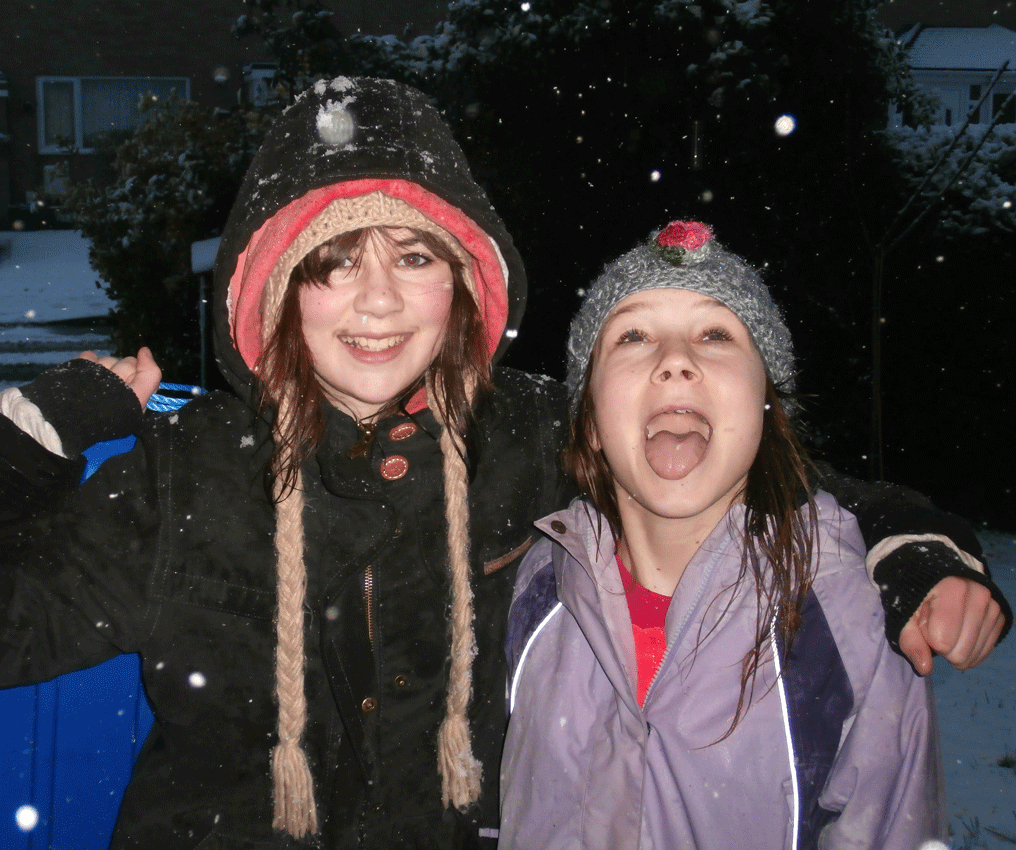
Both of the girl’s schools were closed due to the snow and they were both round before it was light, to tell us all about it. Kara is trying to catch snowflakes on her tongue.

We next saw the girls after dark when they popped round to build a snowman in our front garden.
Feeling much better on Friday 11th I opted for some birding. First I visited drain that runs behind PC World near Holes Bay, this forms the outflow for the nearby sewage works and the warm water produces a microclimate that attracts wintering warblers. Chiffchaffs are a common summer visitor but are quite scarce in winter so an aggregation of ten or more birds along the drain is most unusual. We ringed a number of these Chiffchaffs last year and it is pleasing to report that two (one of which may be of the Siberian race tristis) have returned this winter. We need to recatch these birds to be absolutely sure and we hope to be able to do this in due course.
With the tide in I didn’t bother to look at Holes Bay but headed out to Ringwood and a flooded area known as Bickersly Common. A Glossy Ibis took up residence here in December and remains into the new year. Once a major rarity, numbers have greatly increased in recent years and the copy of British Birds journal that arrived today has confirmed that it has been removed from the list of official rarities. The colonisation of the huge reserve of Coto Donana in southern Spain seems to be the reason for the change of status in north-west Europe.
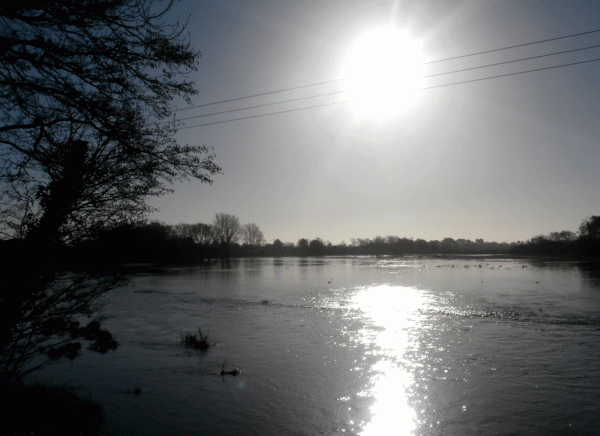
Viewing conditions at Bickersly Common were far from ideal.

The River Avon has flooded Bickersly Common making it a haven for wildfowl.
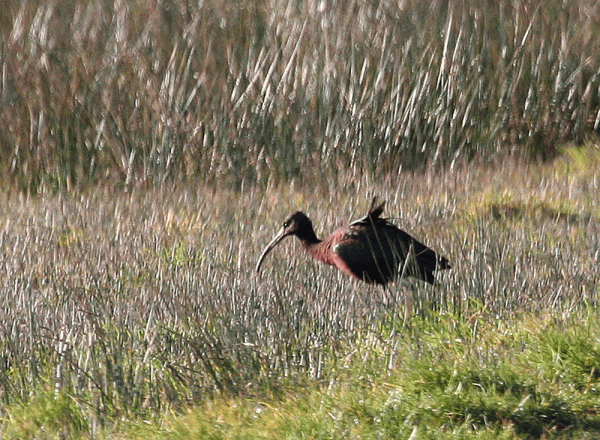
Looking directly into the sun it was impossible to photograph the Glossy Ibis, so here is one that I shot in 2012.
Later at Blashford Lakes I was able to see a Bittern, Great White Egret and many species of wildfowl. Several hides have smoky windows which allows you to get very close to birds, great for those who don’t have optics, but not for taking pictures, however one window does open and there are always a gaggle of photographers trying to squeeze in to use it.
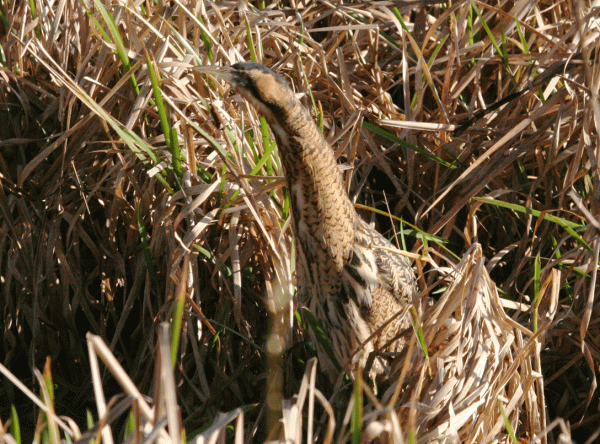
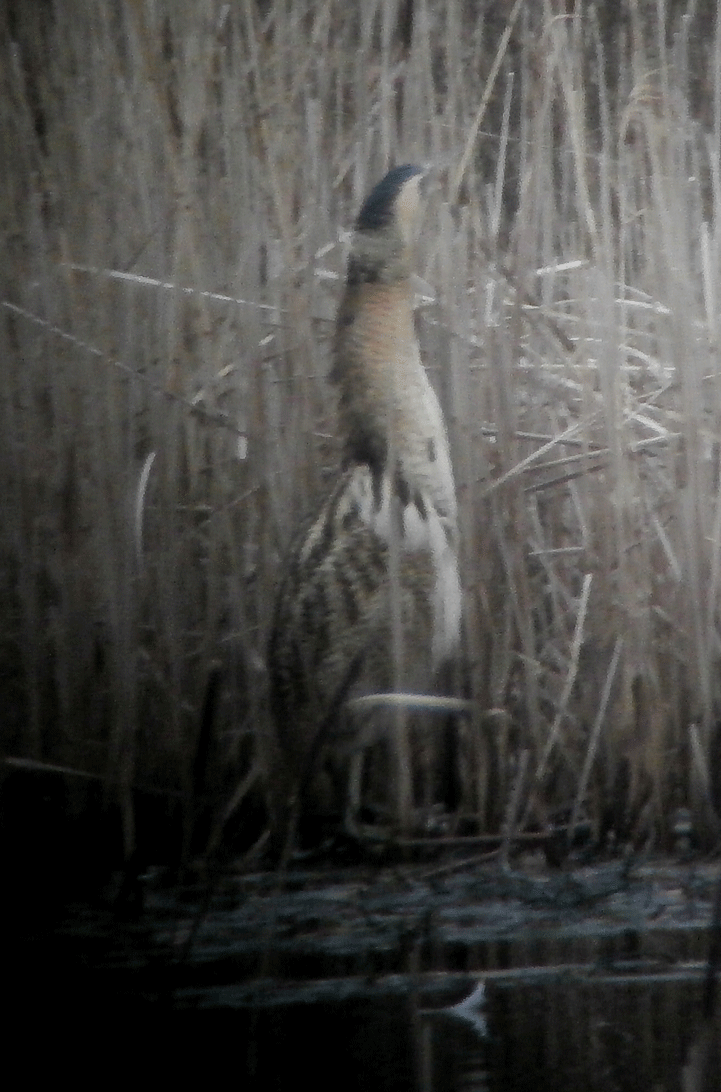
The wintering Bittern showed well at Ivy Lake
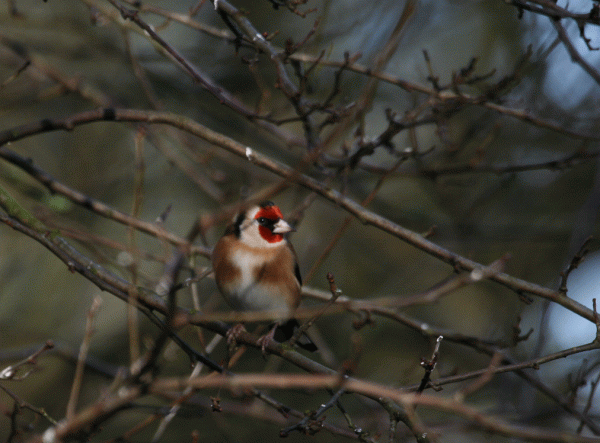
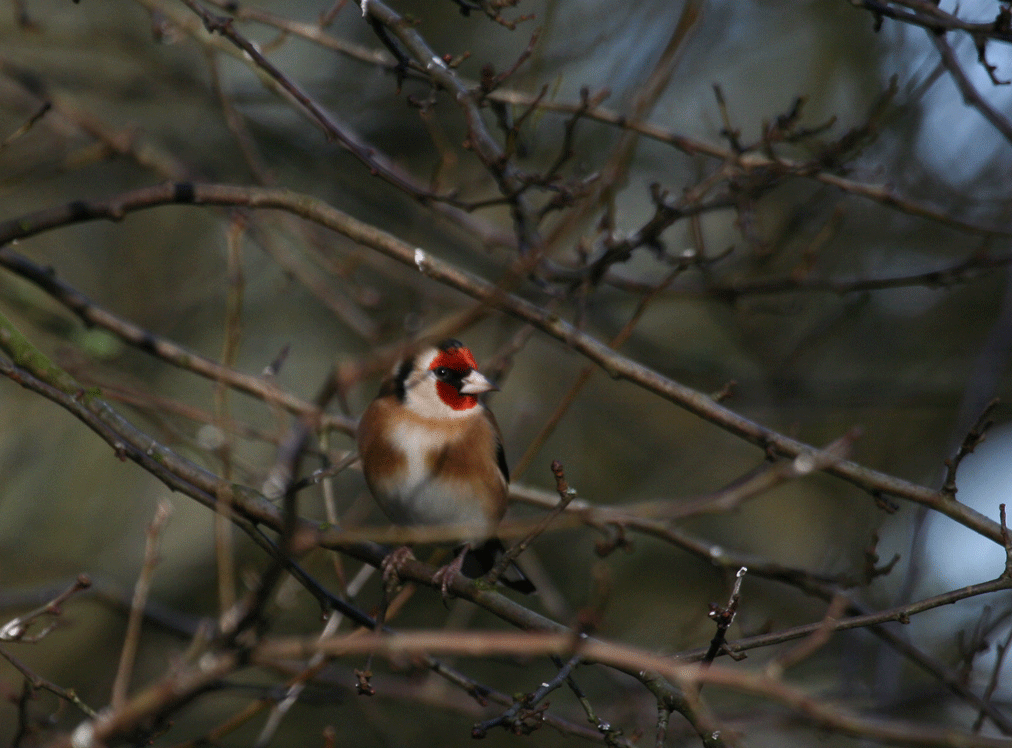
From the woodland hide I was able to photograph this Goldfinch ……..
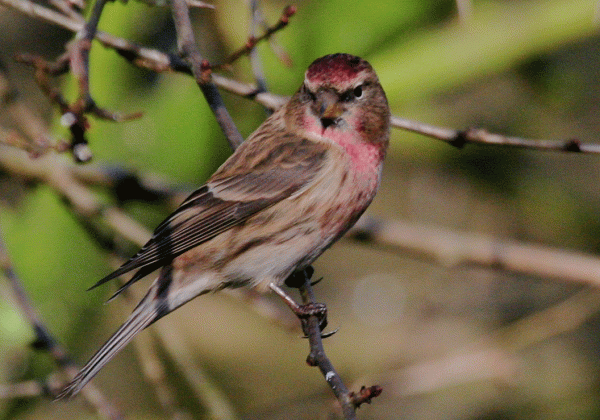
…. this male Lesser Redpoll ….
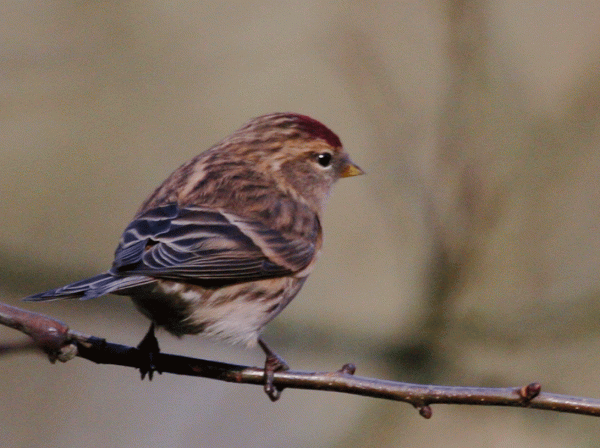
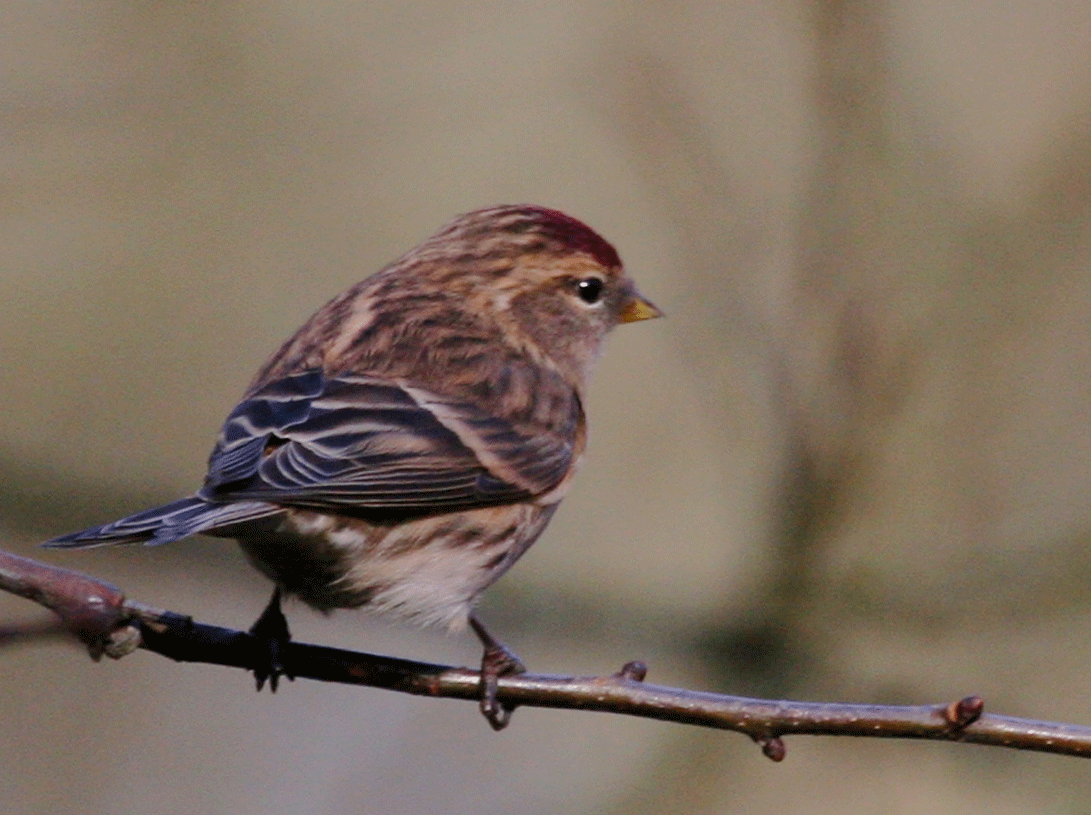
… along with this female Lesser Redpoll ….
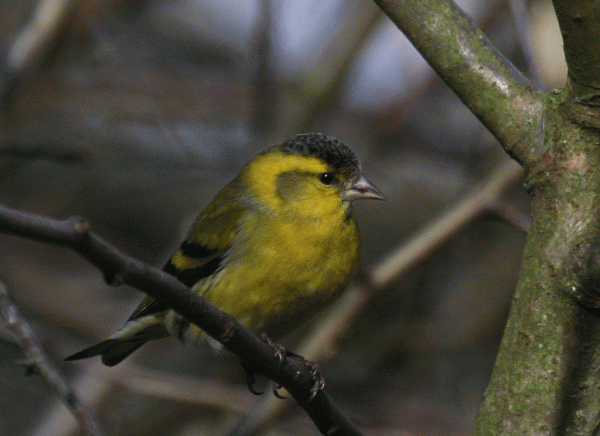
… a male Siskin ….
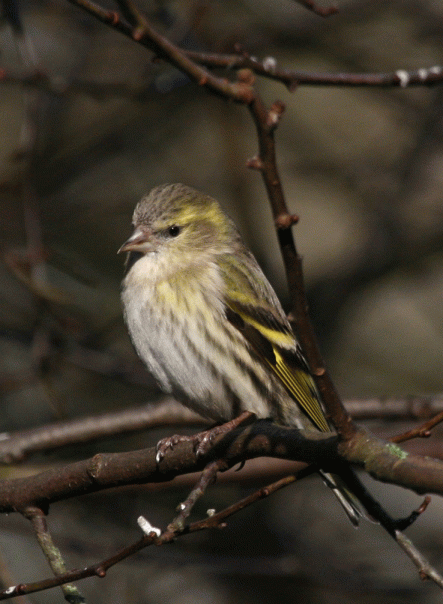
… and a female Siskin.

Unfortunately this Brambling had to be photographed through the smoky window.
With Margaret’s condition worstening I spent all of Saturday with her. The whole family came round on Saturday evening to wish her well and share some pizza. On Sunday morning I visited Holes Bay where I saw both Spotted Redshank and Common Sandpiper along with a few Chiffchaffs and a Kingfisher. Unfortunately visits to Holmebridge near Wareham on Sunday and Monday in search of the Pink-footed Goose that has been there since late December drew a blank.

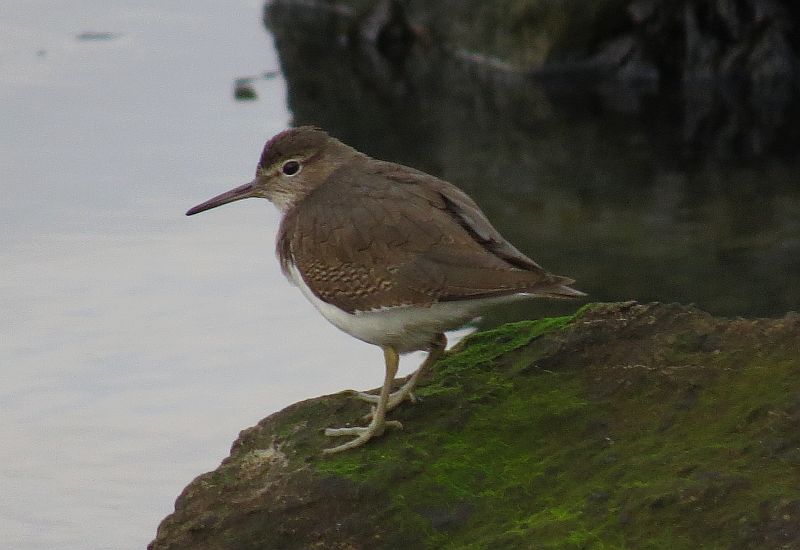
The same Common Sandpiper was photographed by ‘Poole Parrot’ and has been reblogged from Bird Forum.

The Spotted Redshank was photographed by ‘Poole Parrot’ and has been reblogged from Bird Forum.
Well it’s not been the best of weeks for Margaret and I. Margaret started a cold on Saturday 5th but soldiered on in spite of all our post bird race guests. By Monday she was well enough to go to work but I had started a sore throat, she seemed to recover during the week as I got worse, but then by the following Friday (11th) I had largely recovered but she had markedly deteriorated and has been almost bed bound since.
Although I have spent most of my adult life working with infectious micro-organisms I have suffered few serious respiratory infections. I have put this down to the fact that my immune system was being constantly challenged by the bugs at work and so was in a state of constant readiness. Maybe now that challenge has been removed I can look forwards to more colds and flu-like symptoms in the future (although reduced contact with infected people should help to mitigate this).
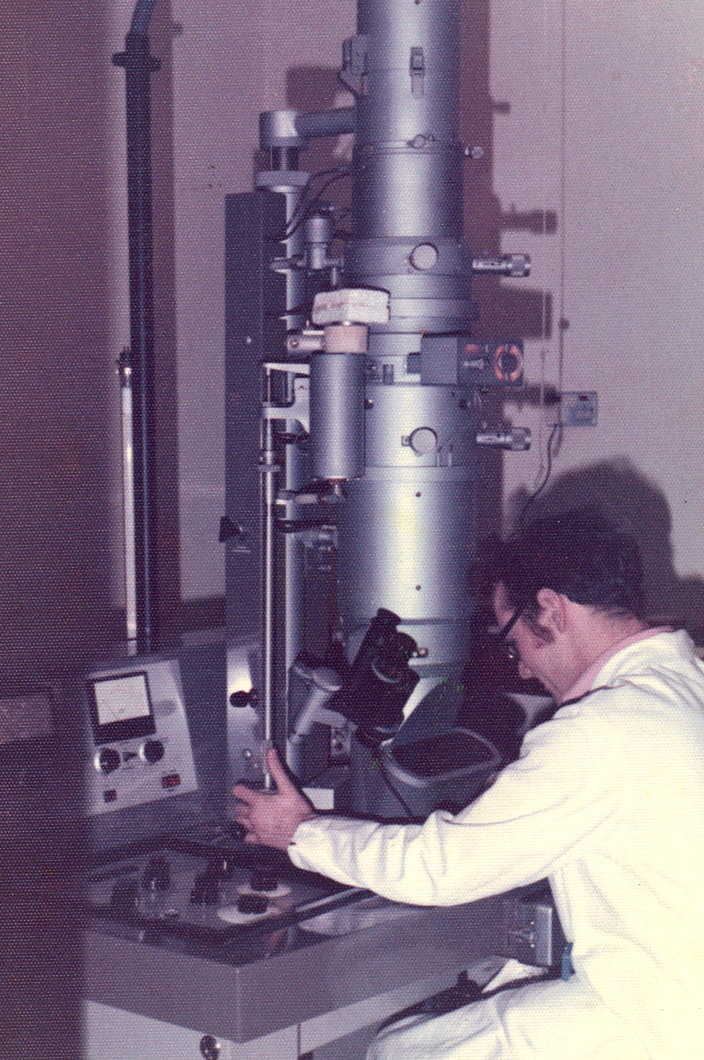
At the age of 17 I made the decision that I wasn’t going to get the grades to be a medic, the career the headmaster had been pushing me towards, and it was my biology teacher, whom we nicknamed ‘Noddy’, who recommended Microbiology as a degree subject. I soon became fascinated with electron microscopy and the detection of viruses (although later found that EM work can be most boring). I used an EM whilst I was at Leeds and soon after I moved to Poole in 1978 one was installed there, however new techniques meant that you no longer had to look at viruses to detect and identify them and it soon became obsolete.

Me working at an Electron Microscope in about 1974. The device is really just a modified TV. The electron beam is fired downwards. The specimen, stained with an electron opaque dye is placed in the apparatus just above my head and the image projected onto a screen below.

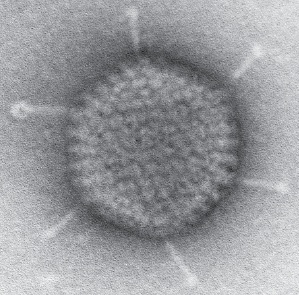
An electron micrograph of a single Adenovirus. A common cause of colds and respiratory infections. This virus is a masterpiece of design having 252 protein ‘capsomeres’ arranged into a perfect icosahedron. The diameter is about 60nm, ie 60 millionths of a millimeter. The protein spikes (6 visible here but 12 in total) can’t be much more than a nanometer (a millionth of a millimeter) in diameter and represent the limit of EM resolution. We certainly knew we had set the machine for optimum performance when we could see them.
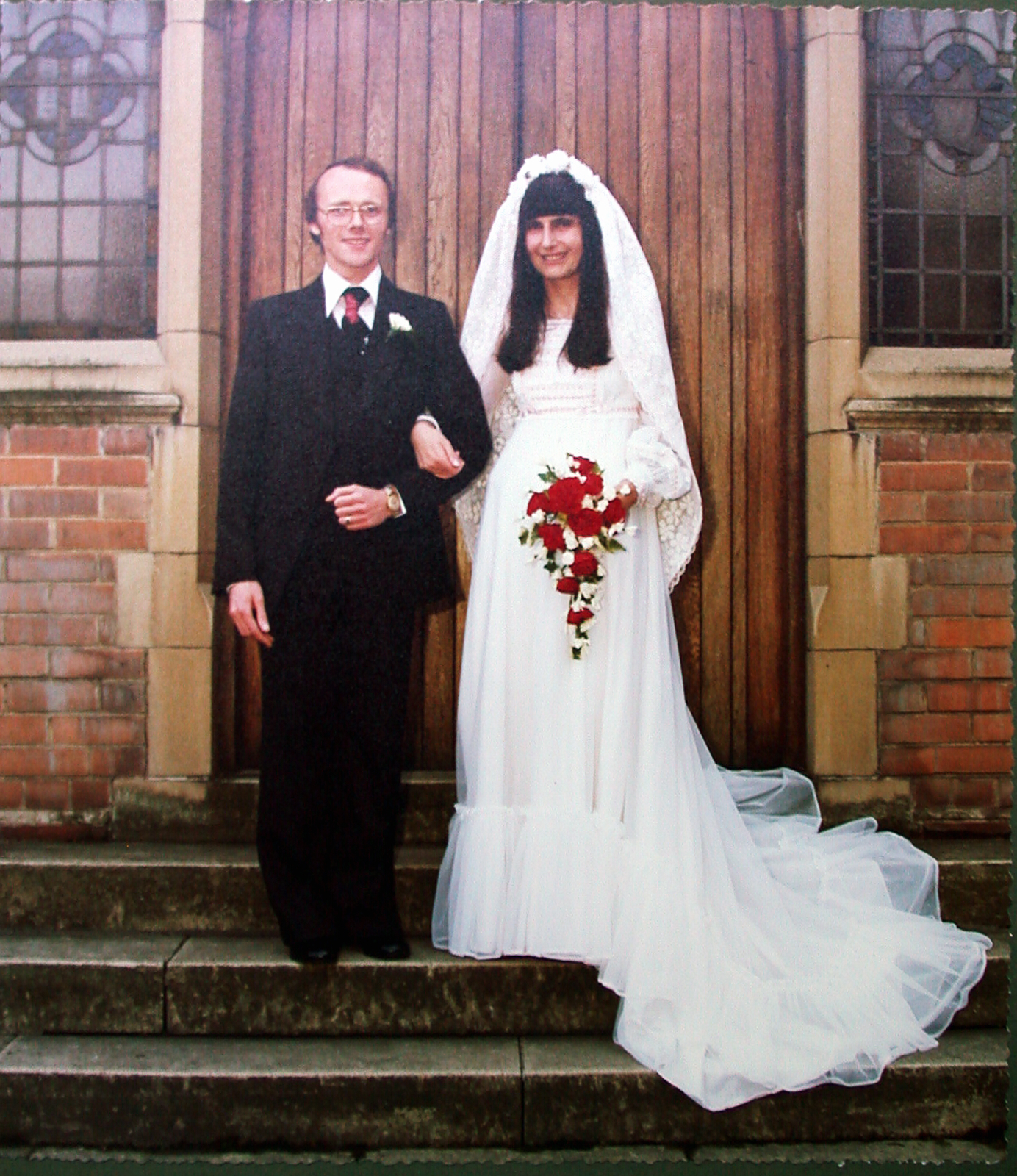
The 7th would have been the birthday of my first wife Janet. Although life has moved on, I will not let her memory fade and accordingly I visited her grave at the Parish Church. We were together for 30 years until her untimely and totally unexpected death in August 2004.

Janet and I at our wedding in September 1976. Although we lived in Leeds we opted to get married at her parent’s church in Long Eaton near Nottingham.
Later in the day I was told by my friend Paul Moreton of a flock of Waxwings near his house in Lytchett Matravers. A quick visit showed there were 27 in the flock but it was grey and dull and conditions were far from ideal for photos. Although I saw a few from the current invasion in late 2012, this was my first sighting this year.
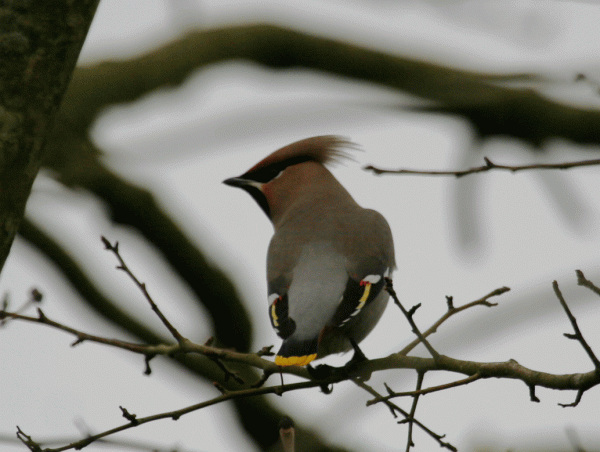
Although it was very dull I was pleased with this shot as it shows the red waxy projections on the wing coverts that give the bird its name.
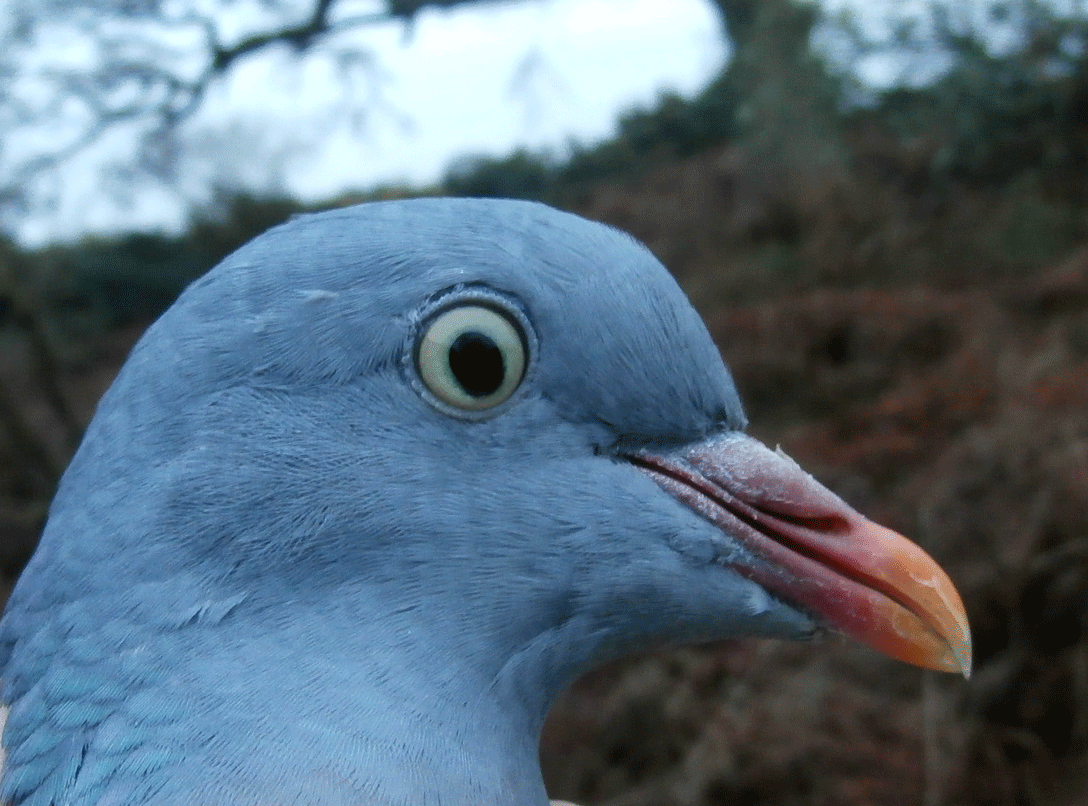
After a suitable rest on Tuesday I had a number of commitments to honour on Wednesday. I had promised trainee ringers, Kevin and Sean that I would ring at Holton Lee. We have found in the past that unless we continue to ring birds away from the main migration periods and maintain activity during the winter, then trainees quickly lose the skills they have built up during the autumn. As I want to continue to monitor the birds visiting Holton Lee this lets us ‘kill two birds with one stone’ to use an inappropriate expression. As both are quite experienced I was able to sit back and take a supervisory role. We trapped 48 birds, two-thirds of which we had ringed before. The surprise, I suppose, was this Woodpigeon that blundered into the net.

Although we see Woodpigeons migrating in huge numbers in November these local birds are most likely to be sedentary.
My other commitment was to give a talk to the Bournemouth RSPB group on my three visits to New Guinea. Somehow I croaked my way the talk, I felt it wasn’t the best slide show I had ever delivered but I was able to show that although New Guinea undoubtedly has the finest birds in the world, getting to see them can involve some hardship.
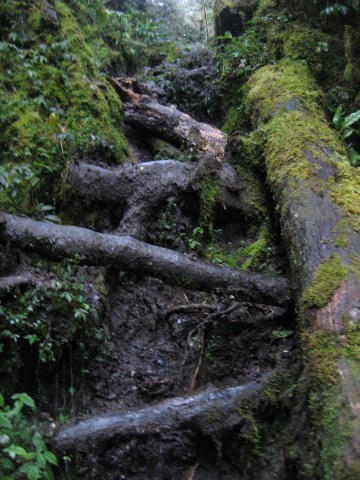
Undoubtedly the hardest of the three New Guinea trips that I have done is the one to the Indonesian province of West Papua, Trails like this over never-ending tree roots and through deep mud…….
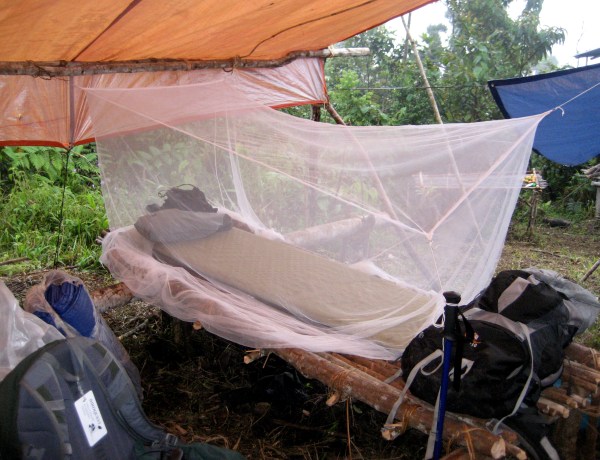
…. and accommodation like this …….
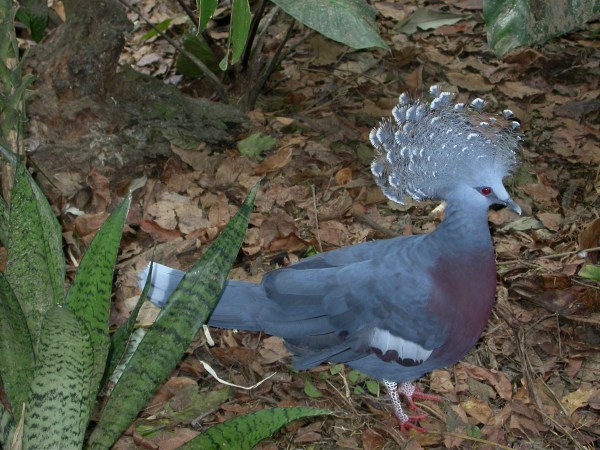
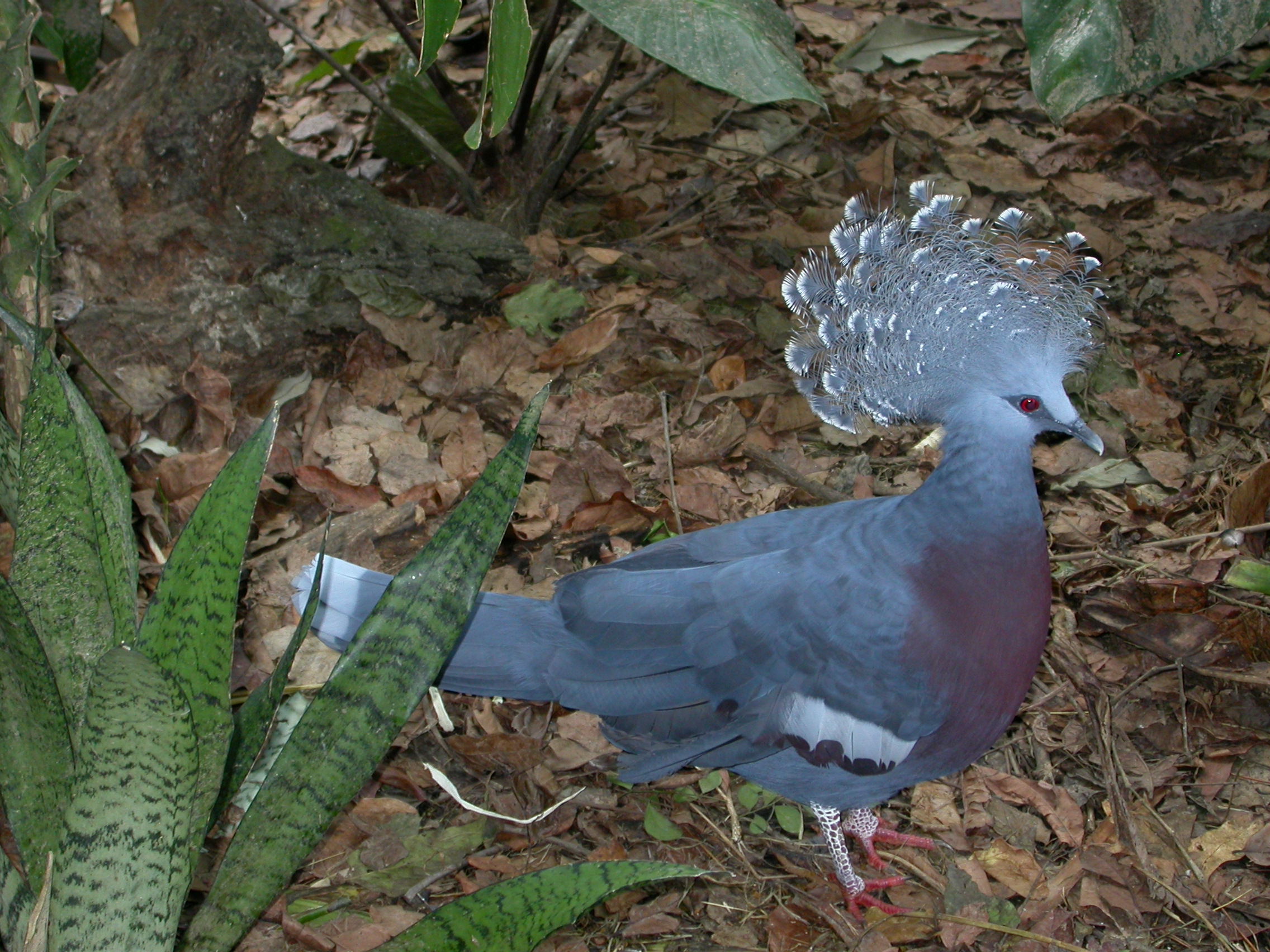
…. is obligatory if you are going to see gems like this turkey sized Victoria Crowned Pigeon …..
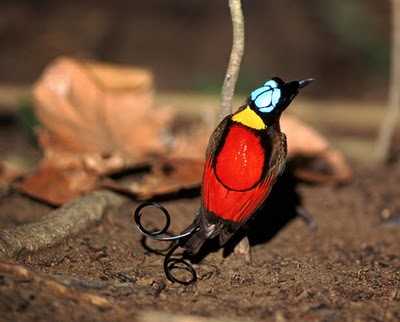
… or the best bird in the entire world, the unbelievable Wilson’s Bird-of-Paradise. (photo from the internet).
At the start of 2012 I set myself the challenge of seeing over 300 bird species in the UK during the year. I opted to count only species on category A and C of the official BOU list.
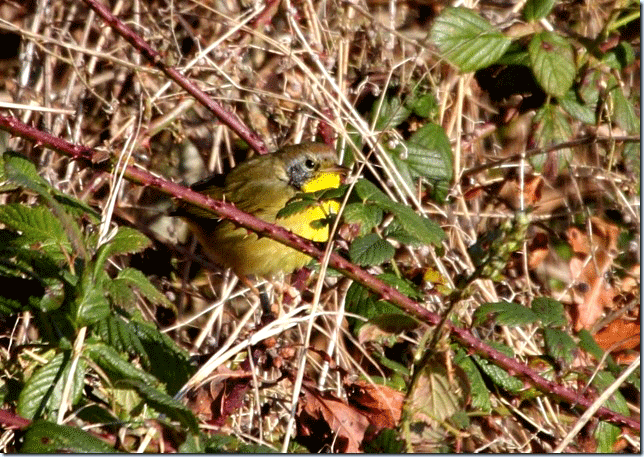
The year started well will several rarities left over from 2011, such as Hume’s Leaf Warbler and Spotted Sandpiper. The first goodie was a Blue-winged Teal at Longham Lakes seen on January 1st. Highlights in the first winter period were a Spanish Sparrow in Hampshire and a Paddyfield Warbler in Sussex, both of which were new to my British List. A long weekend in Norfolk brought Cranes, a Lesser White-fronted Goose and a Western Sandpiper but the car breaking down curtailed the year listing. A trip to South Wales for a Yellowthroat was most succesful with Lesser Scaup and Cackling Goose also seen.
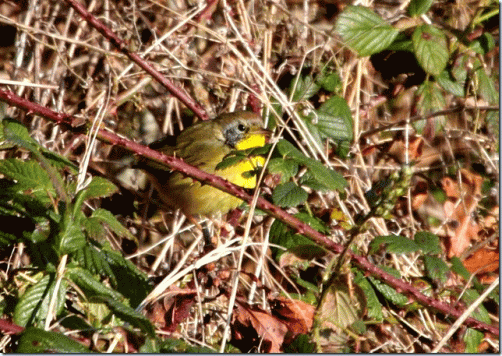
Common Yellowthroat – a North American warbler that wintered in South Wales (photo from the internet)
March saw the arrival of the first spring migrants such as Garganey and Wheatear but in general was relatively quiet; much of the time was spent searching, largely unsuccessfully, for Lesser Spotted Woodpecker. After the winter drought came the deluge; poor weather in spring meant many migrants were late arriving and although I did eventually see them all, rare birds essential to any big year list were largely absent.

A pair of Garganey at Christchurch.
In June we had a very successful trip to Scotland, visiting Shetland, Argyl, the Hebrides and Speyside. This did wonders for the list although towards the end we heard the sad news that my mother had passed away, as a result things were largely on hold until early July when I went to New Guinea for my only foreign trip of the year (chosen as a July trip would have the minimum impact on the year list). I managed to see a few rare waders in Hampshire during the last few days of the month.
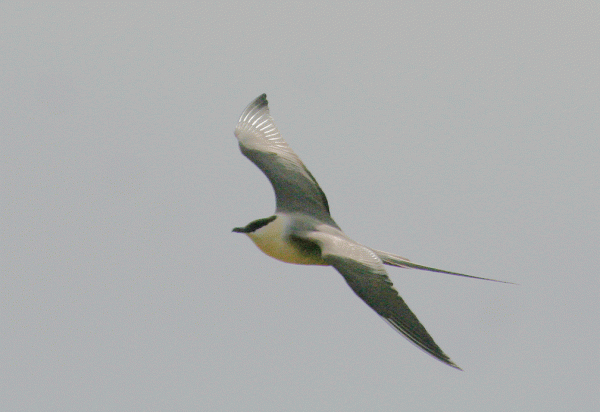
The highlight of our spring visit to Shetland was this wonderful adult Long-tailed Skua

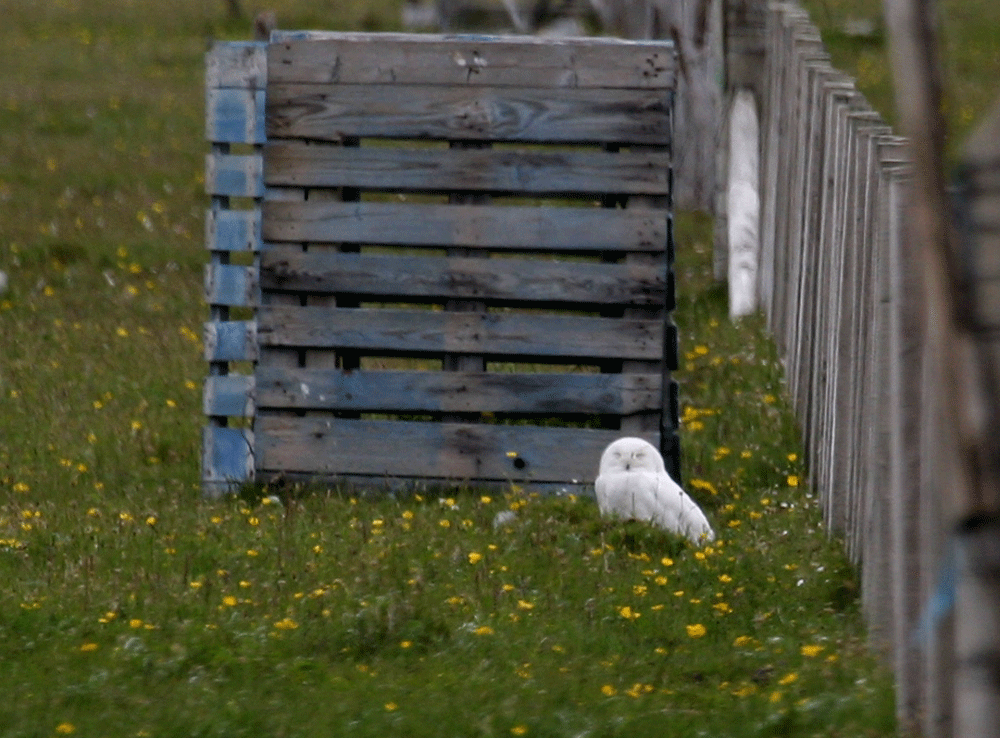
This Snowy Owl was seen on North Uist in the Outer Hebrides
August was a strange month, the tiring trip to New Guinea and the impact of the bereavement took its toll and I found it hard to motivate myself. Without a lot of traveling the only likely year tick was going to be the increasing rare Aquatic Warbler, but the only time that any were ringed at Lytchett Bay was the day when we left to go to the Bird Fair in Rutland. As a result August became the only month of the year where I didn’t add to the year list.
A Dorset Short-billed Dowitcher in early September was a British tick, but the highlight of the month was my second visit to Shetland. The trip was highly succesful with 18 new birds for the year list and two, Pechora Pipit and Lanceolated Warbler new for Britain. I returned on 8th of October and four days later went off to Cornwall and then over to Scilly. My visit to the ‘Fortunate Islands’ was good socially but not so good for birds with just three new additions, however I did manage to reach my goal of seeing 300 for 2012.

The Hornemann’s race of Arctic Redpoll wasn’t just a year tick or a British tick it was new for my world list!
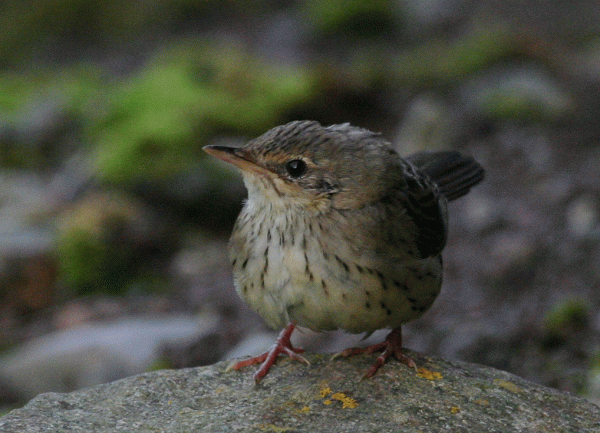
The normally skulking Lanceolated Warbler gave wonderful views in drainage culvert on Shetland
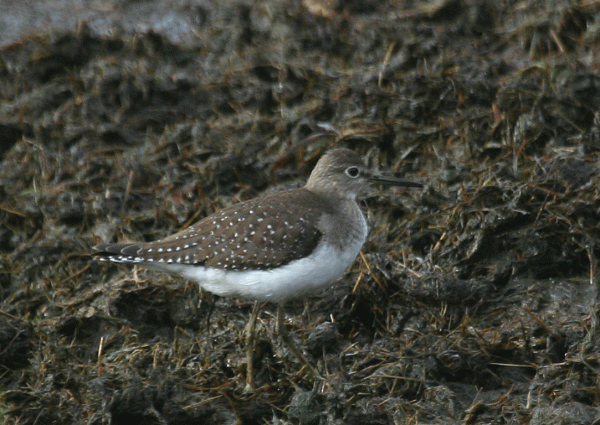
Number 300 – a Solitary Sandpiper on Bryher, Scilly
Late October saw some remarkably rare birds turn up in Dorset, but due the vagaries of taxonomy and suppression none made any impact on the list. A few more additions took us into December where the last year ticks were Waxwing in Oxford and a White-rumped Sandpiper at Longham Lakes, the same site as I saw my first rarity of 2012 on January 1st. And the final total, 309 plus another 12 that didn’t make the grade.
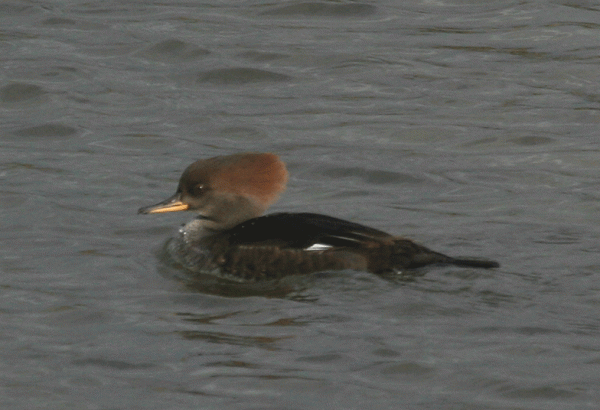
I finally saw a ‘tickable’ Hooded Merganser at Pagham in November
Species recorded in 2012. Includes two ‘heard onlys’.
Sorry about the problems in formatting the line spacing.
Taiga Bean Goose (Anser fabalis)
Pink-footed Goose (Anser brachyrhynchus)
Greylag Goose (Anser anser)
Greater White-fronted Goose (Anser albifrons)
Lesser White-fronted Goose (Anser erythropus)
Canada Goose (Branta canadensis)
Dark-bellied Brent Goose (Branta bernicla bernicla)
Barnacle Goose (Branta leucopsis)
Red-breasted Goose (Branta ruficollis)
Mute Swan (Cygnus olor)
Bewick’s Swan (Cygnus columbianus bewickii)
Whooper Swan (Cygnus cygnus)
Egyptian Goose (Alopochen aegyptiaca)
Common Shelduck (Tadorna tadorna)
Mandarin Duck (Aix galericulata)
Gadwall (Anas strepera)
Eurasian Wigeon (Anas penelope)
American Wigeon (Anas americana)
Mallard (Anas platyrhynchos)
Blue-winged Teal (Anas discors)
Northern Shoveler (Anas clypeata)
Northern Pintail (Anas acuta)
Garganey (Anas querquedula)
Eurasian Teal (Anas crecca)
Green-winged Teal (Anas carolinensis)
Red-crested Pochard (Netta rufina)
Common Pochard (Aythya ferina)
Ferruginous Duck (Aythya nyroca)
Ring-necked Duck (Aythya collaris)
Tufted Duck (Aythya fuligula)
Greater Scaup (Aythya marila)
Lesser Scaup (Aythya affinis)
Common Eider (Somateria mollissima)
Surf Scoter (Melanitta perspicillata)
Velvet Scoter (Melanitta fusca)
Common Scoter (Melanitta nigra)
Black Scoter (Melanitta americana)
Long-tailed Duck (Clangula hyemalis)
Common Goldeneye (Bucephala clangula)
Smew (Mergellus albellus)
Hooded Merganser (Lophodytes cucullatus) included as I saw the Pagham bird which I consider to be of wild origin.
Goosander (Mergus merganser)
Red-breasted Merganser (Mergus serrator)
Ruddy Duck (Oxyura jamaicensis)
Black Grouse (Lyrurus tetrix)
Rock Ptarmigan (Lagopus mutus)
Red Grouse (Lagopus lagopus scotia)
Red-legged Partridge (Alectoris rufa)
Grey Partridge (Perdix perdix)
Common Quail (Coturnix coturnix) heard only
Common Pheasant (Phasianus colchicus)
Golden Pheasant (Chrysolophus pictus)
Red-throated Diver (Gavia stellata)
Black-throated Diver (Gavia arctica)
Great Northern Diver (Gavia immer)
Northern Fulmar (Fulmarus glacialis)
Sooty Shearwater (Puffinus griseus)
Manx Shearwater (Puffinus puffinus)
Balearic Shearwater (Puffinus mauretanicus)
Little Grebe (Tachybaptus ruficollis)
Red-necked Grebe (Podiceps grisegena)
Great Crested Grebe (Podiceps cristatus)
Slavonian Grebe (Podiceps auritus)
Black-necked Grebe (Podiceps nigricollis)
White Stork (Ciconia ciconia)
Glossy Ibis (Plegadis falcinellus)
Eurasian Spoonbill (Platalea leucorodia)
Eurasian Bittern (Botaurus stellaris)
Black-crowned Night Heron (Nycticorax nycticorax)
Western Cattle Egret (Bubulcus ibis)
Grey Heron (Ardea cinerea)
Purple Heron (Ardea purpurea)
Western Great Egret (Ardea alba)
Little Egret (Egretta garzetta)
Northern Gannet (Morus bassanus)
European Shag (Phalacrocorax aristotelis)
Great Cormorant (Phalacrocorax carbo)
Western Osprey (Pandion haliaetus)
European Honey Buzzard (Pernis apivorus)
Red Kite (Milvus milvus)
White-tailed Eagle (Haliaeetus albicilla)
Western Marsh Harrier (Circus aeruginosus)
Hen Harrier (Circus cyaneus)
Eurasian Sparrowhawk (Accipiter nisus)
Northern Goshawk (Accipiter gentilis)
Common Buzzard (Buteo buteo)
Rough-legged Buzzard (Buteo lagopus)
Golden Eagle (Aquila chrysaetos)
Common Kestrel (Falco tinnunculus)
Merlin (Falco columbarius)
Eurasian Hobby (Falco subbuteo)
Peregrine Falcon (Falco peregrinus)
Water Rail (Rallus aquaticus)
Corn Crake (Crex crex)
Common Moorhen (Gallinula chloropus)
Eurasian Coot (Fulica atra)
Common Crane (Grus grus)
Eurasian Stone-Curlew (Burhinus oedicnemus)
Eurasian Oystercatcher (Haematopus ostralegus)
Black-winged Stilt (Himantopus himantopus)
Pied Avocet (Recurvirostra avosetta)
Northern Lapwing (Vanellus vanellus)
European Golden Plover (Pluvialis apricaria)
American Golden Plover (Pluvialis dominica)
Grey Plover (Pluvialis squatarola)
Common Ringed Plover (Charadrius hiaticula)
Little Ringed Plover (Charadrius dubius)
Kentish Plover (Charadrius alexandrinus)
Eurasian Dotterel (Charadrius morinellus)
Eurasian Woodcock (Scolopax rusticola)
Jack Snipe (Lymnocryptes minimus)
Common Snipe (Gallinago gallinago)
Short-billed Dowitcher (Limnodromus griseus)
Long-billed Dowitcher (Limnodromus scolopaceus)
Black-tailed Godwit (Limosa limosa)
Bar-tailed Godwit (Limosa lapponica)
Whimbrel (Numenius phaeopus)
Eurasian Curlew (Numenius arquata)
Spotted Redshank (Tringa erythropus)
Common Redshank (Tringa totanus)
Common Greenshank (Tringa nebularia)
Lesser Yellowlegs (Tringa flavipes)
Green Sandpiper (Tringa ochropus)
Solitary Sandpiper (Tringa solitaria)
Wood Sandpiper (Tringa glareola)
Common Sandpiper (Actitis hypoleucos)
Spotted Sandpiper (Actitis macularius)
Ruddy Turnstone (Arenaria interpres)
Red Knot (Calidris canutus)
Sanderling (Calidris alba)
Western Sandpiper (Calidris mauri)
Little Stint (Calidris minuta)
Temminck’s Stint (Calidris temminckii)
White-rumped Sandpiper (Calidris fuscicollis)
Pectoral Sandpiper (Calidris melanotos)
Curlew Sandpiper (Calidris ferruginea)
Purple Sandpiper (Calidris maritima)
Dunlin (Calidris alpina)
Buff-breasted Sandpiper (Tryngites subruficollis)
Ruff (Philomachus pugnax)
Red-necked Phalarope (Phalaropus lobatus)
Red Phalarope (Phalaropus fulicarius)
Black-legged Kittiwake (Rissa tridactyla)
Bonaparte’s Gull (Chroicocephalus philadelphia)
Black-headed Gull (Chroicocephalus ridibundus)
Little Gull (Hydrocoloeus minutus)
Mediterranean Gull (Ichthyaetus melanocephalus)
Common Gull (Larus canus)
Ring-billed Gull (Larus delawarensis)
Great Black-backed Gull (Larus marinus)
Glaucous Gull (Larus hyperboreus)
Iceland Gull (Larus glaucoides)
European Herring Gull (Larus argentatus)
Caspian Gull (Larus cachinnans)
Yellow-legged Gull (Larus michahellis)
Lesser Black-backed Gull (Larus fuscus)
Sandwich Tern (Thalasseus sandvicensis)
Little Tern (Sternula albifrons)
Roseate Tern (Sterna dougallii)
Common Tern (Sterna hirundo)
Arctic Tern (Sterna paradisaea)
Black Tern (Chlidonias niger)
Great Skua (Stercorarius skua)
Pomarine Skua (Stercorarius pomarinus)
Arctic Skua (Stercorarius parasiticus)
Long-tailed Skua (Stercorarius longicaudus)
Common Guillemot (Uria aalge)
Razorbill (Alca torda)
Black Guillemot (Cepphus grylle)
Atlantic Puffin (Fratercula arctica)
Rock Dove/Feral Pigeon (Columba livia)
Stock Dove (Columba oenas)
Common Wood Pigeon (Columba palumbus)
European Turtle Dove (Streptopelia turtur)
Eurasian Collared Dove (Streptopelia decaocto)
Rose-ringed Parakeet (Psittacula krameri)
Common Cuckoo (Cuculus canorus)
Western Barn Owl (Tyto alba)
Snowy Owl (Bubo scandiacus)
Tawny Owl (Strix aluco)
Little Owl (Athene noctua)
Long-eared Owl (Asio otus)
Short-eared Owl (Asio flammeus)
European Nightjar (Caprimulgus europaeus)
Common Swift (Apus apus)
Common Kingfisher (Alcedo atthis)
European Bee-Eater (Merops apiaster)
Eurasian Hoopoe (Upupa epops)
Eurasian Wryneck (Jynx torquilla)
Lesser Spotted Woodpecker (Dendrocopos minor) heard only
Great Spotted Woodpecker (Dendrocopos major)
European Green Woodpecker (Picus viridis)
Red-backed Shrike (Lanius collurio)
Isabelline Shrike (Lanius isabellinus)
Great Grey Shrike (Lanius excubitor)
Woodchat Shrike (Lanius senator)
Eurasian Jay (Garrulus glandarius)
Eurasian Magpie (Pica pica)
Red-billed Chough (Pyrrhocorax pyrrhocorax)
Western Jackdaw (Coloeus monedula)
Rook (Corvus frugilegus)
Carrion Crow (Corvus corone)
Hooded Crow (Corvus cornix)
Northern Raven (Corvus corax)
Bohemian Waxwing (Bombycilla garrulus)
Marsh Tit (Poecile palustris)
Willow Tit (Poecile montanus)
Coal Tit (Periparus ater)
European Crested Tit (Lophophanes cristatus)
Great Tit (Parus major)
Eurasian Blue Tit (Cyanistes caeruleus)
Bearded Reedling (Panurus biarmicus)
Greater Short-toed Lark (Calandrella brachydactyla)
Woodlark (Lullula arborea)
Eurasian Skylark (Alauda arvensis)
Horned Lark (Eremophila alpestris)
Sand Martin (Riparia riparia)
Barn Swallow (Hirundo rustica)
Common House Martin (Delichon urbicum)
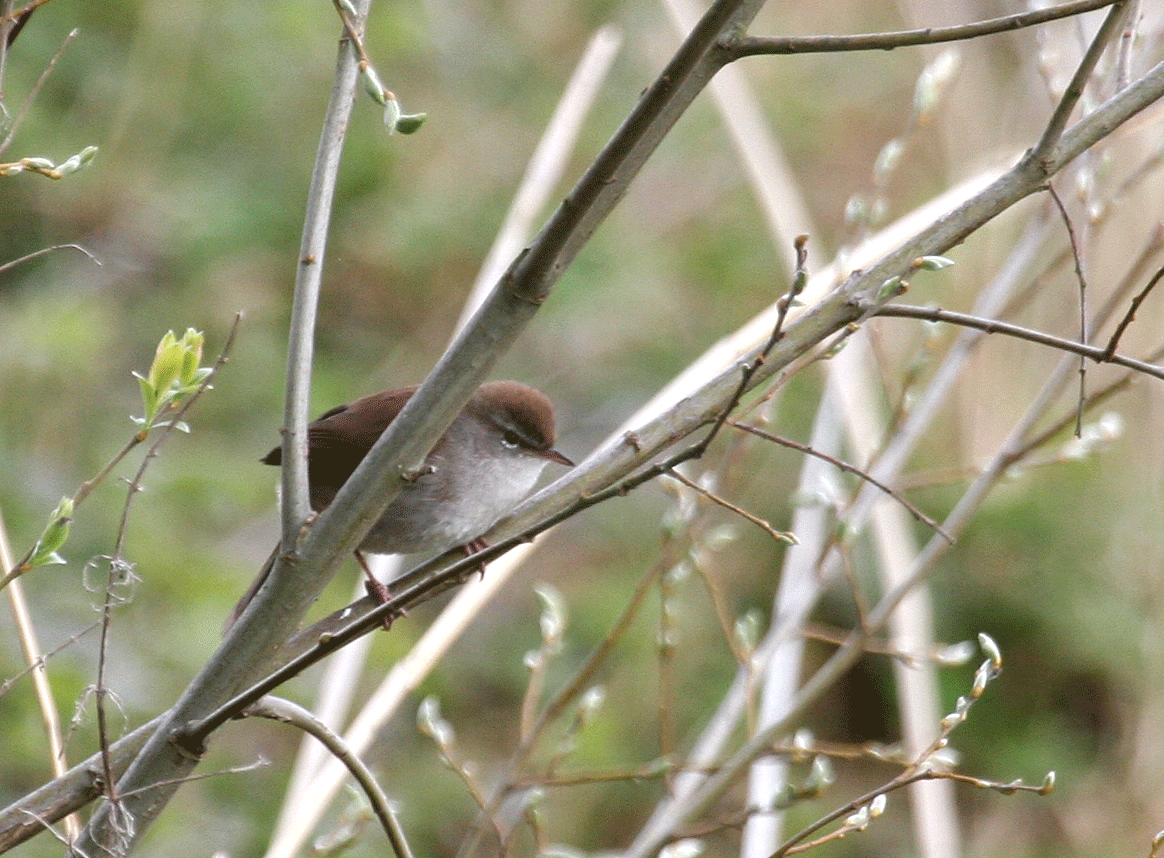
Cetti’s Warbler (Cettia cetti)
Long-tailed Tit (Aegithalos caudatus)
Willow Warbler (Phylloscopus trochilus)
Common Chiffchaff (Phylloscopus collybita)
Iberian Chiffchaff (Phylloscopus ibericus)
Wood Warbler (Phylloscopus sibilatrix)
Dusky Warbler (Phylloscopus fuscatus)
Yellow-browed Warbler (Phylloscopus inornatus)
Hume’s Leaf Warbler (Phylloscopus humei)
Great Reed Warbler (Acrocephalus arundinaceus)
Sedge Warbler (Acrocephalus schoenobaenus)
Paddyfield Warbler (Acrocephalus agricola)
Blyth’s Reed Warbler (Acrocephalus dumetorum)
Eurasian Reed Warbler (Acrocephalus scirpaceus)
Marsh Warbler (Acrocephalus palustris)
Booted Warbler (Iduna caligata)
Common Grasshopper Warbler (Locustella naevia)
Lanceolated Warbler (Locustella lanceolata)
Eurasian Blackcap (Sylvia atricapilla)
Garden Warbler (Sylvia borin)
Barred Warbler (Sylvia nisoria)
Lesser Whitethroat (Sylvia curruca)
Common Whitethroat (Sylvia communis)
Dartford Warbler (Sylvia undata)
Subalpine Warbler (Sylvia cantillans)
Common Firecrest (Regulus ignicapilla)
Goldcrest (Regulus regulus)
Eurasian Wren (Troglodytes troglodytes)
Eurasian Nuthatch (Sitta europaea)
Eurasian Treecreeper (Certhia familiaris)
Rosy Starling (Pastor roseus)
Common Starling (Sturnus vulgaris)
Ring Ouzel (Turdus torquatus)
Common Blackbird (Turdus merula)
Fieldfare (Turdus pilaris)
Redwing (Turdus iliacus)
Song Thrush (Turdus philomelos)
Mistle Thrush (Turdus viscivorus)
European Robin (Erithacus rubecula)
Common Nightingale (Luscinia megarhynchos)
Black Redstart (Phoenicurus ochruros)
Common Redstart (Phoenicurus phoenicurus)
Whinchat (Saxicola rubetra)
European Stonechat (Saxicola rubicola)
Siberian Stonechat (Saxicola maurus)
Northern Wheatear (Oenanthe oenanthe)
Spotted Flycatcher (Muscicapa striata)
European Pied Flycatcher (Ficedula hypoleuca)
Red-breasted Flycatcher (Ficedula parva)
White-throated Dipper (Cinclus cinclus)
House Sparrow (Passer domesticus)
Spanish Sparrow (Passer hispaniolensis)
Eurasian Tree Sparrow (Passer montanus)
Dunnock (Prunella modularis)
Blue-headed Wagtail (Motacilla flava)
Grey Wagtail (Motacilla cinerea)
White Wagtail (Motacilla alba)
Richard’s Pipit (Anthus richardi)
Tawny Pipit (Anthus campestris)
Meadow Pipit (Anthus pratensis)
Tree Pipit (Anthus trivialis)
Olive-backed Pipit (Anthus hodgsoni)
Pechora Pipit (Anthus gustavi)
Buff-bellied Pipit (Anthus rubescens)
Water Pipit (Anthus spinoletta)
Eurasian Rock Pipit (Anthus petrosus)
Common Chaffinch (Fringilla coelebs)
Brambling (Fringilla montifringilla)
European Greenfinch (Chloris chloris)
Eurasian Siskin (Carduelis spinus)
European Goldfinch (Carduelis carduelis)
Mealy Redpoll (Carduelis flammea flammea)
Lesser Redpoll (Carduelis cabaret)
Hornemann’s Arctic Redpoll (Carduelis hornemanni hornemanni)
Twite (Carduelis flavirostris)
Common Linnet (Carduelis cannabina)
Common Rosefinch (Carpodacus erythrinus)
Parrot Crossbill (Loxia pytyopsittacus)
Scottish Crossbill (Loxia scotica)
Common Crossbill (Loxia curvirostra)
Eurasian Bullfinch (Pyrrhula pyrrhula)
Hawfinch (Coccothraustes coccothraustes)
Common Yellowthroat (Geothlypis trichas)
Corn Bunting (Emberiza calandra)
Yellowhammer (Emberiza citrinella)
Cirl Bunting (Emberiza cirlus)
Little Bunting (Emberiza pusilla)
Common Reed Bunting (Emberiza schoeniclus)
Dark-eyed Junco (Junco hyemalis)
Lapland Longspur (Calcarius lapponicus
Snow Bunting (Plectrophenax nivalis)
The following birds were seen in 2012 but were not included in the above list because they are not accepted onto the British List, (either because of the escape potential or because they are not treated as a full species by the BOU).
Tundra Bean Goose (Anser (fablis) serrirostris) Treated as a full species by IOC, Clements, UK400 Club but not the BOU
Greenland White-fronted Goose (Anser (albifrons) flavirostris) Treated as a full species by UK400 Club
Ross’s Goose (Chen rossii) Not yet accepted onto the British List by the BOU
Cackling Goose (Branta hutchinsii) Although it occurs annualy in the UK, this species has not been accepted onto the British List
Pale-bellied Brent Goose (Branta (bernicla) hrota) Treated as a full species by Dutch Checklist Committee and UK400 Club
Black Brant (Branta (bernicla) nigricans) Treated as a full species by Dutch Checklist Committee and UK400 Club
Great Bustard (Otis tarda) Although the reintroducced birds on Sailsbury Plain have commenced breeding, the population cannot be considered established
Siberian Chiffchaff (Phylloscopus (collybita) tristis) Treated as full species by UK400 Club
Stejneger’s Stonechat (Saxicola (maurus) stejnegeri) Treated as a full species by IOC and Dutch Checklist Committee
Pied Wagtail (Motacilla (alba) yarrellii) Treated as a full species by UK400 Club and Dutch Checklist Committee
British Yellow Wagtail (Motacilla (flava) flavissima) Treated as a full species by the Dutch Checklist Committtee
Greenland Redpoll (Carduelis (flammea) rostrata) Treated as a full species by UK400 Club.
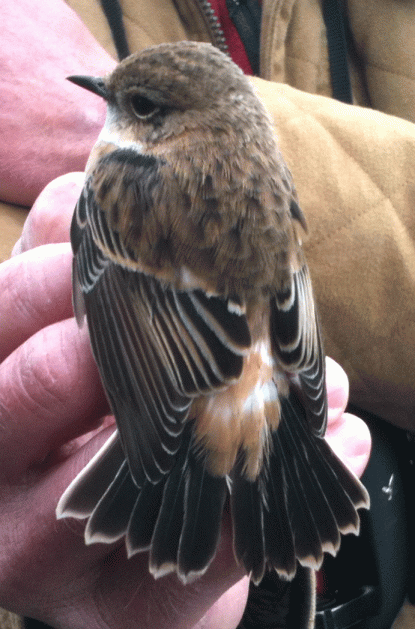
Stejneger’s Stonechat – almost certainly a full species but yet to accepted on the British List so not counted for the 2012 list.
There have been three major events during the first week on 2013. At 11am on New Years Day about 70 Dorset birders assembled to take a trip around Poole Harbour. Mark and Mo Constantine very kindly hire one of the Brownsea ferries to give us all a New Year treat and this year (unlike last year’s downpour) we had a flat calm sea and beautiful sunshine. Birds didn’t disappoint either, masses of waders and ducks on Brownsea lagoon, 16 Spoonbills at Arne, Red-necked Grebe, Black-throated and Great Northern Divers were among the highlights.

All those people haven’t turned up to see us of. Our departure from the Quay coincides with the annual New Year raft race

Brownsea laagoon was full of birds but identifying the trickier species from a moving boat can be problematic.
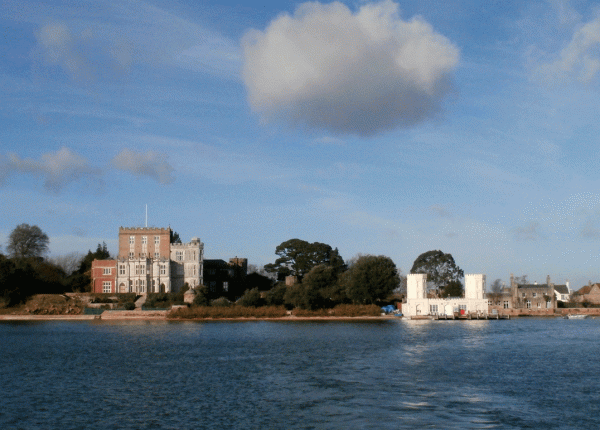
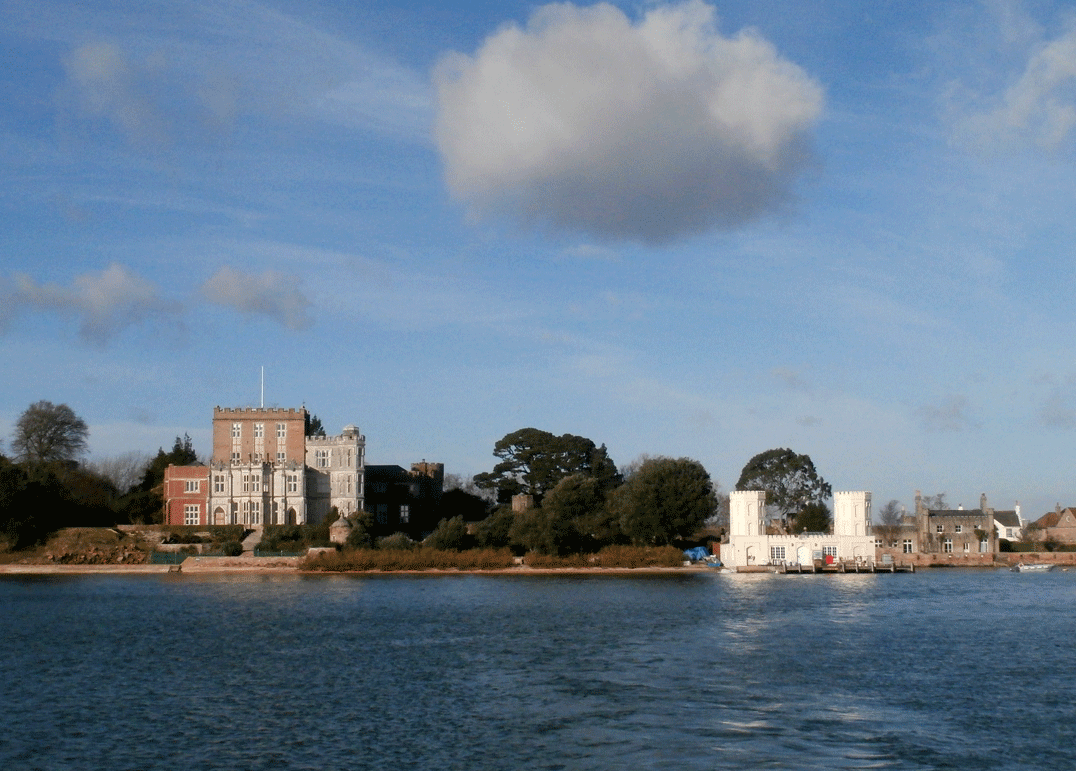
Built in Henry VIIIs time to defend the entrance to Poole Harbour, Brownsea Castle looked great in the winter sunshine.

The sandy cliff at Shipstall Point, part of the RSPBs Arne reserve.
On the 3rd I did the first ringing of 2013 at Holton Lee. A large flock of Long-tailed Tits made up much of the catch but most of the Blue, Great and Coal Tits were retraps,. By far the most unusual bird (from a ringing perspective) was a Jackdaw, only the second I have seen in the hand. Regrettably we were so busy that I forgot to photograph it! Although we are mainly ringing common woodland birds at this site, I feel we are beginning to get some data on productivity, survival and site fidelity.

We forgot to photograph the Jackdaw but here is one that was trapped as part of the Grampian Ringing Groups colour ringing program.
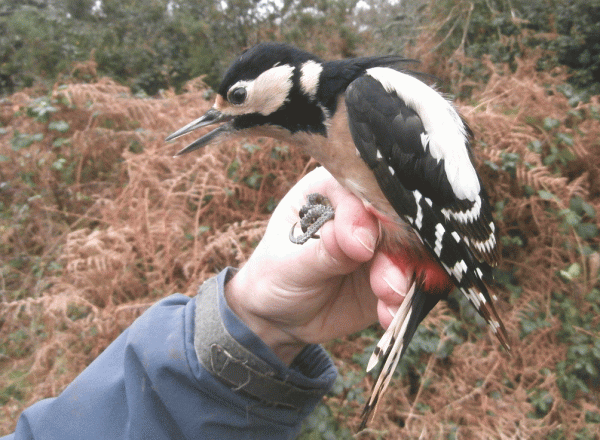
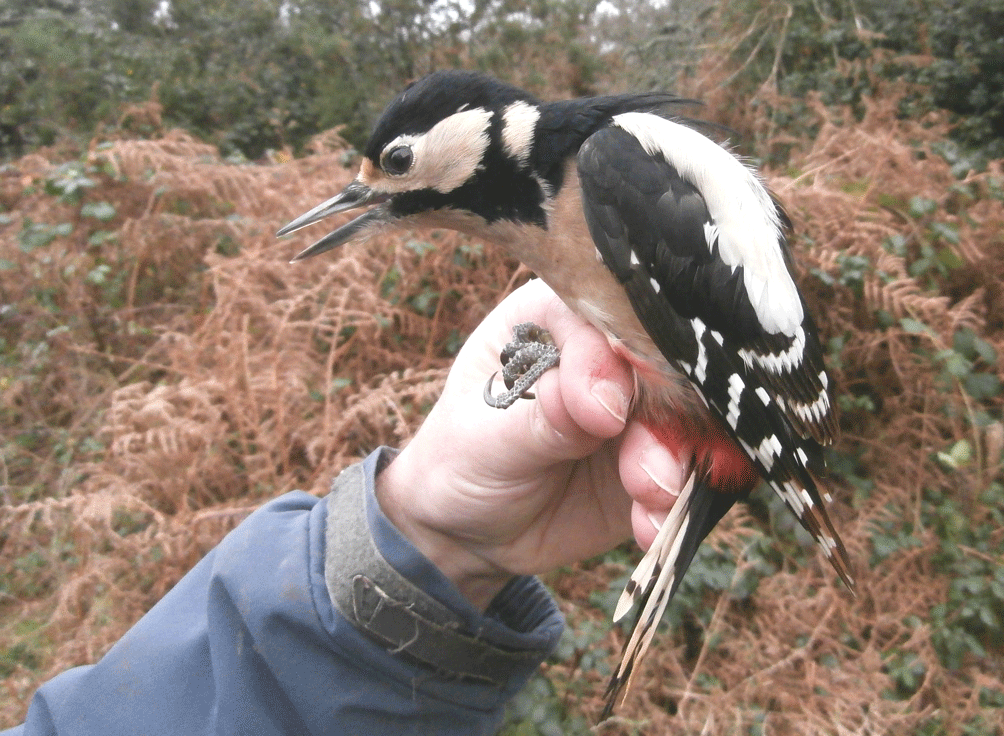
This female Great Spotted Woodpecker was more docile than most and didn’t attempt to drill holes in Kevin’s hand.
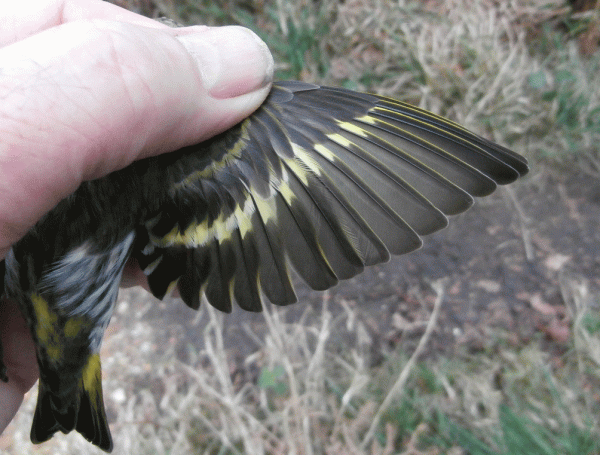
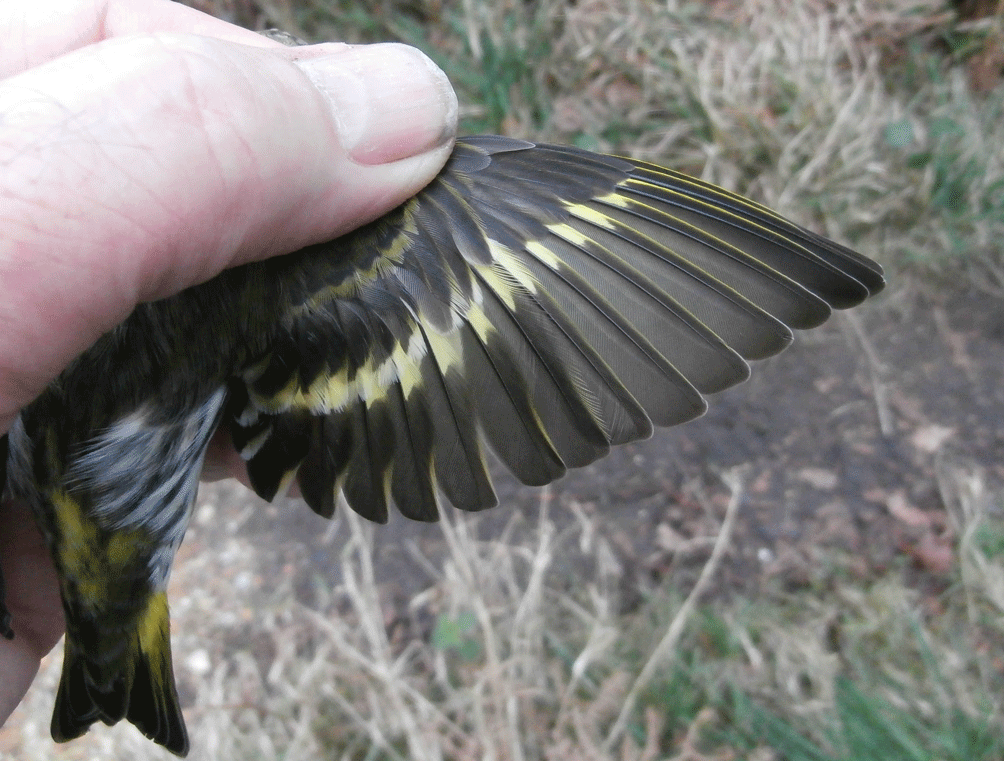
The yellow rather than white tips on the median coverts (just below my thumb) of this Siskin shows that it is an adult. We have to remeber to change the age codes for birds in the New year. 2’s become 4’s, 3’s become 5’s and 4’s become 6’s. Confused,well it takes a lot of trainee ringers quite a while to get the hang of it.
A lot of the rest of the week was taken up with end of year ringing figures that have to be submitted ASAP, preparing for a talk to an RSPB group next week and doing a recce for the Bird Race on the 5th.
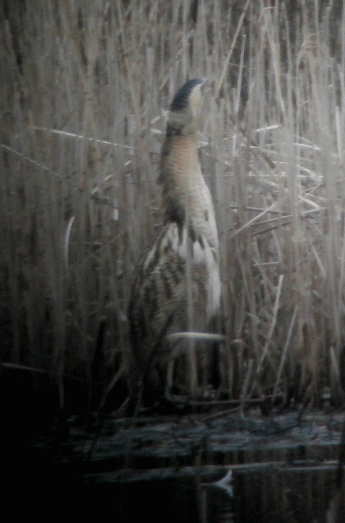
A poor digiscoped shot of the Hatch Pond Bittern. This winter the bird is hanging out on the far side which reduces photo opportunities. Shame it wasn’t there on the Bird Race!
The Bird Race on the 5th was an amazing event. After a couple of years with little interest there was real enthusiasm this year. Four teams of four and one of two took part; on my team were Nick Urch, Trevor Warwick and Paul Morton. We started at 0500 from my house, a night-time visit to Baiter failed to produce any waders so we headed west in search of owls. A Little Owl called at West Mordon, Tawny Owls called in Wareham Forest and we saw a Barn Owl in front of the hide at Middlebere.
Rather than do the long drive to Portland Bill for seabirds we had opted instead for Durlston but low cloud and drizzle meant we saw little except a few Shags and Guillemots, but a Woodcock and a Firecrest proved valuable additions to our list. Studland, Brands Bay and the area around the ferry all gave up their goodies, from distant Knot in Brands Bay, Dartford Warblers in the gorse or the Purple Sandpiper that fed near the ferry at North Haven.
Sanderlings at Shore Road, a Black-throated Diver near Evening Hill were noted as we hurried through Poole Park and on to Holes Bay where we hit our first major dips, there was no sign of Common Sandpiper or Spotted Redshank nor of the Bittern at Hatch Pond. A Chiffchaff showed behind PC World where we took advantage of the ‘Hopper short cut’ to save a few minutes.

Chiffchaffs are common breeders and migrants but are rare and local in winter. The sewage works outflow behind PC World provides a warm and sheltered habitat for wintering birds.
It was then on to Arne where thanks to Paul having worked there as a warden we could drive down to Shipstall Point where 16 Spoonbills and a Long-tailed Duck showed well and a pair of Marsh Tits were seen in nearby Slepe Copse. Birders in the hide at Middlebere were surprised when we rushed in, ticked the resident Yelllow-legged Gull and shot off, in spite of the wealth of waders (already on the list) in front of us. I think we were there longer at 0630 looking for Barn Owl than our late morning visit. The drizzle that had persisted all morning was now easing off and the rest of the day stayed dry.
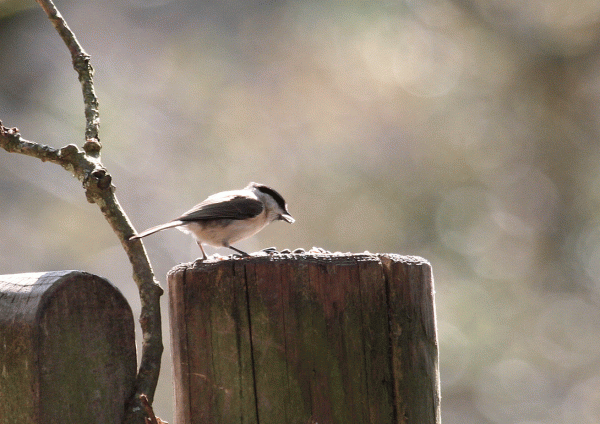
Marsh Tits have declined dramatically in recent years so it was great to see a pair near Arne.
After a quick visit to Nordon sewage works, where we added Grey Wagtail and Siskin, we headed to the floods in the East/West Holme area, just west of Wareham. This area has held Egyptian Goose, Whooper Swan, Pink-footed Goose and Mandarin Duck recently, all local rarities, but we only connected with the first two (although Kingfisher and Shoveler were compensation). A quick stop at Tincleton cress beds was followed by a stop where Bewick’s Swans are occasionally seen, we quickly located a distant swan with a yellow bill and just as quickly ticked it. It was only at the end of the day that we heard that Kevin Lane (who was not on a race) had conclusively identified it as a Whooper, a far rarer bird in Dorset but one that we had already counted.
The Monkey’s Jump/Bats Lane area west of Dorchester yielded Linnet, Stock Dove and Golden Plover but there was no sign of Corn Bunting or either partridge. We then headed to Weymouth where we located Common Scoter and Eider in Portland Harbour, saw the Snow Bunting at Ferrybridge and then finally caught up with our missing seabirds at Portland Bill. We ended the day at Lodmoor where in the gathering gloom where Marsh Harrier, Water Rail and Cetti’s Warbler brought our list to a very respectable 120.
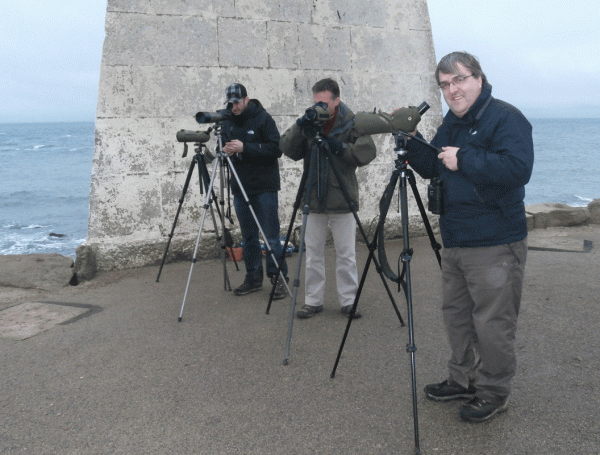
Not much time for photography on a Bird Race, but it was almost over when I took this shot. Paul, Nick and Trevor seawatching at Portland Bill.
We were now pretty tired as we had spent the last 13 hours constantly on the go without even pausing for a coffee. We drove back to Upton and by 6.30 all the bird racers had assembled at our house. Mo and Kevin also came and Margaret had invited Christine Arnold and Amber to help so we had 23 packed into our small house. Margaret had made four turines of delicious soups and apple crumble for us all. As always the post race banter flowed freely as teams compared experiences as well as scores, our 120 was good enough to put us in second place but Shaun, Mark, Hamish and Nick Hopper had scored an amazing 127, so even if we had have been right about the Bewick’s Swan we wouldn’t have won.

Although we only heard the bird, Cetti’s Warbler was our 120th bird of the day.
Bird racing is not a sport enjoyed by all birders, in fact many hate it with vengeance, but as a once a year friendly competiton followed by a social event it is greatly enjoyed by all the participants.
The 6th was the date for another WeBS count but it was rather foggy. I did the best I could at Holes Bay but when I got back I heard that the fog was so bad in parts of the harbour that the monthly survey had been postponed. Thank goodness it wasn’t like that yesterday!
After a lovely Christmas Day with the family we had a relaxed Boxing Day, but in the evening we invited our friend Christine Arnold around for a meal. Christine goes to the choir with Margaret and in spite of the age difference, we get on well with her.

Christine Arnold
Before we could leave for Derby on the 27th there was a sad duty to perform, saying a final farewell to an old colleague. I worked with Mike Brebner at the lab in Poole from 1978 until his retirement in 1995. Mike was an ‘old school’ microbiologist who worked in an era before Standard Operating Procedures and Risk Assessments. Mike would look at a problem and use his experience to find a way round it, something that is not encouraged today. After the funeral our group of six ex-colleagues reminisced, each describing of the some of the novel solutions that Mike employed. I remember when we thought the tissue cultures that we used to grow viruses where chronically contaminated with a resistant bacteria. Mike thought he could cure it a good dose of erythromycin, but he got the antibiotic from the Paediatric ward and it had a fruity flavour to make it more palatable to the kids, thus every time we opened a tissue culture flask or test tube it smelled of bananas!

Four lab retirees taken at Gio’s retirement a year ago. L-R: Me, Mike Brebner, Gio Pietrangelo, Geoff Westwood.
The journey northwards in the afternoon of the 27th was difficult in the extreme. Heavy traffic meant that the journey that normally takes three and a half hours took five and we only averaged 40 mph. We didn’t go straight to my brothers place but instead booked into a Travel Lodge near Alfreton. Back in early December we tried to meet up with my school and university friend Nigel in Leeds, but the arrangements didn’t work out. Nigel had joined his two brothers and his sister for Christmas and they had hired a large house in the wilds of Nottinghamshire for the entire family and we were invited around for the evening. I hadn’t seen his brothers Stewart and Iain or his sister Elaine since 1981 so it was really great to see them again and meet their various spouses and offspring. All together there were 13 of the family, there plus the two of us..

Nigel, Margaret and me.

Stewart, Iain, Elaine and Nigel Mackie
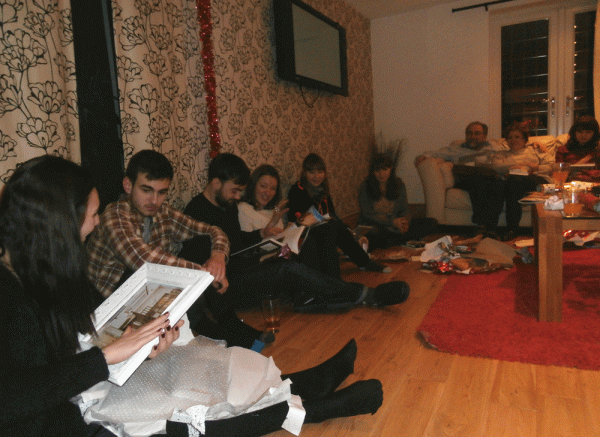
Another present unwrapping ceremony. It was a huge house with enough room for the 13 family members staying……

…. it even had an indoor swimming pool.

As we left we noticed there was a huge halo around the Moon. This is caused by moonlight passing through ice crystals in high altitude cirriform clouds. The halo is usually at a 22 degrees radius from the Moon.
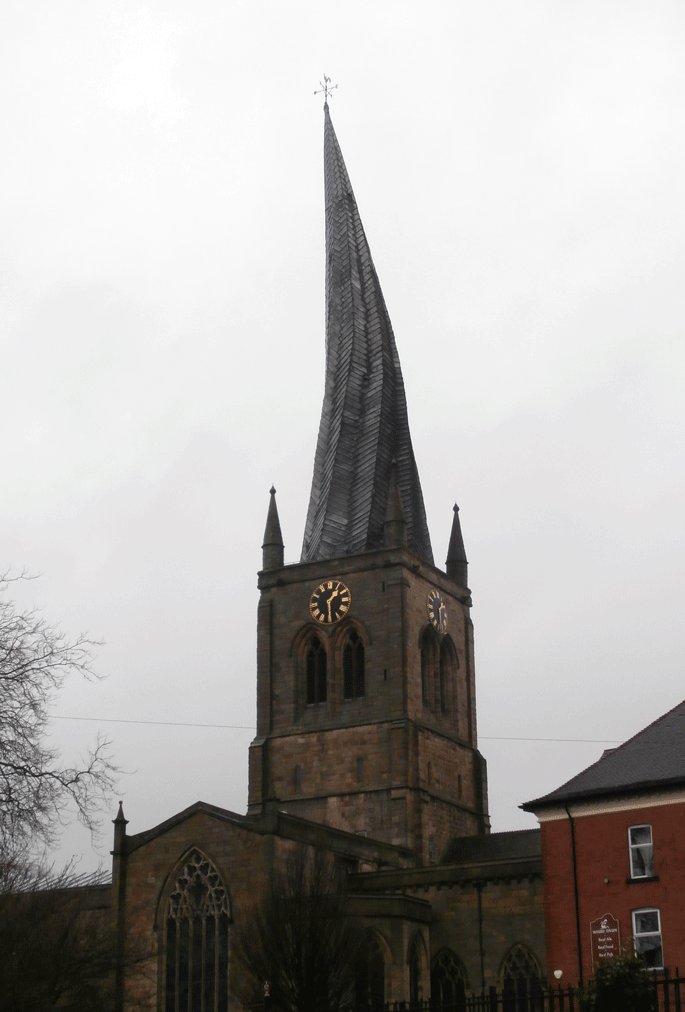
After nearly seven hours in the car yesterday we intended to take it easy on the 28th but after a bit of a lie in we drove north to Chesterfield so Margaret could see the famous wonky church spire. From here we heard that Nigel, Elaine and Iain were visiting the minster at Southwell, a small town in north Nottinghamshire and in spite of the fact that it was another hours drive, we decided to join them. Later we drove south towards Derby to stay at my brother’s place in Duffield.

There are two theories as to why Chesterfield’s 13th century church spire is twisted, One says the Devil perched on it on his way to visit Sheffield and the other is that they built it with unseasoned timber which warped after construction. I know which one I believe!

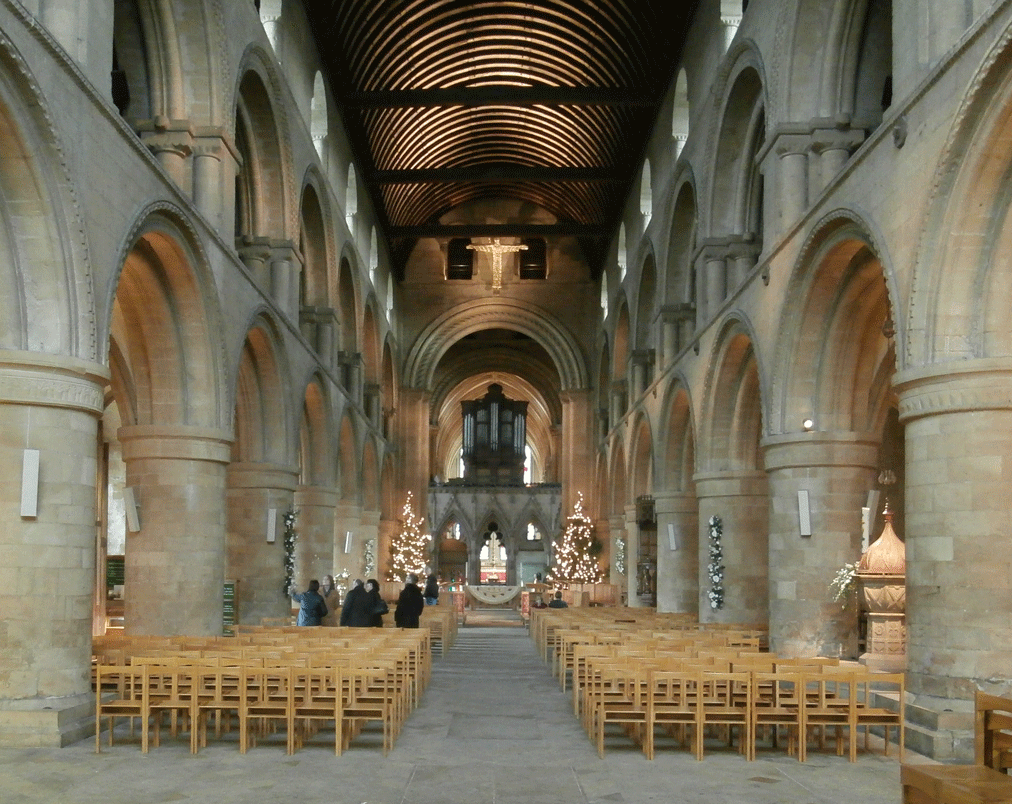
The Minster at Southwell (pronounced Suth-ull) in Nottinghamshire. A little known architectural gem well off the normal tourist route.

The Nave dates from 1108 and is a classic example of the three tiers of early Norman design which preceded the more famous and elegant Gothic style seen in many famous cathedrals of England and France.

The splendid sculpture of Christus Rex overlaid with copper and gold hanging above the congregation was erected as recently as 1987.

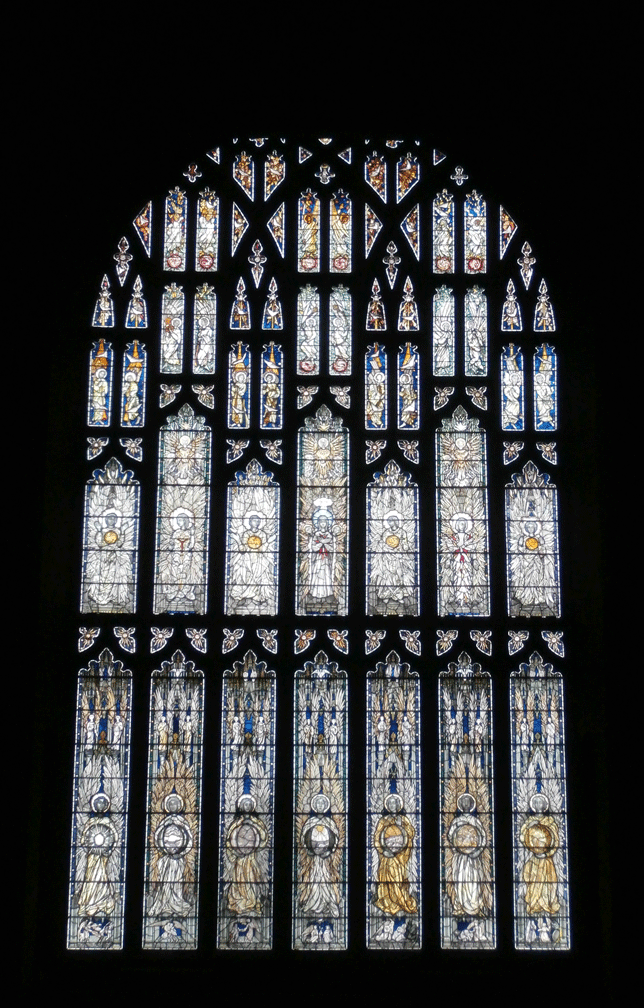
Another recent addition is this huge stain glass window at the west end of the Nave which was installed in 1996.

The original Quire at the east end of the church as demolished in 1240 and replaced with a larger version in English Gothic style.

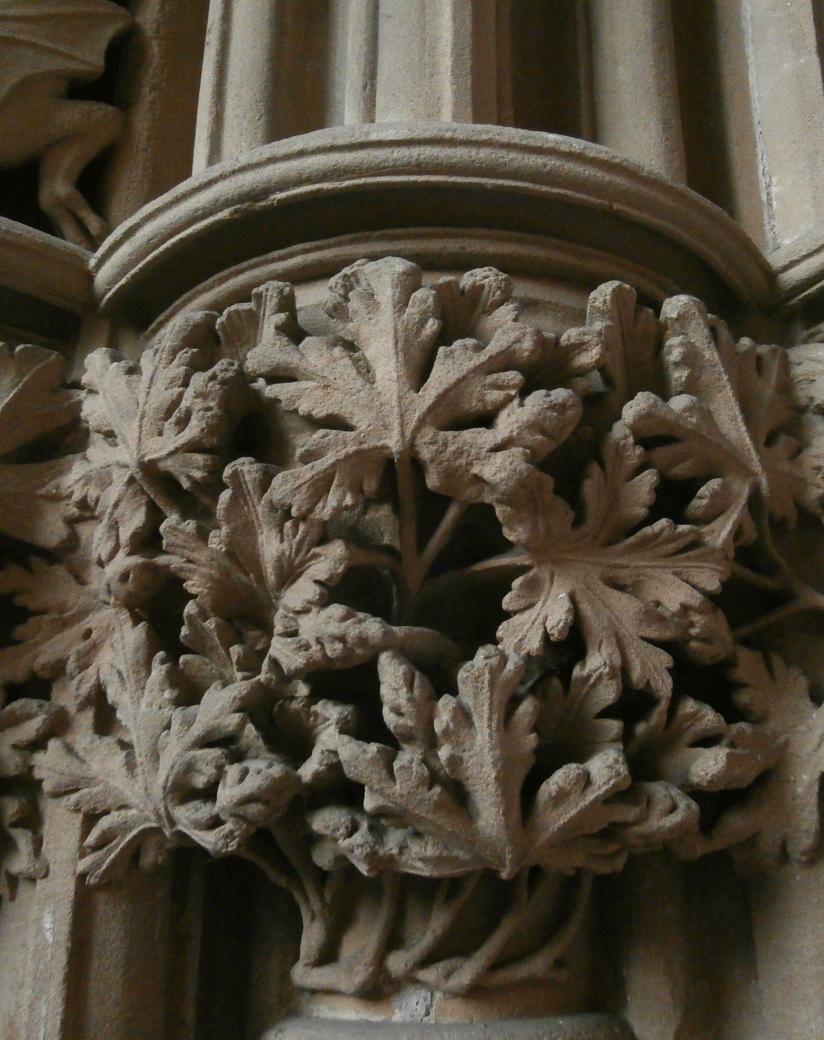
The incredibly detailed carving in the Quire. The Great West Window is visible at the end of the Nave
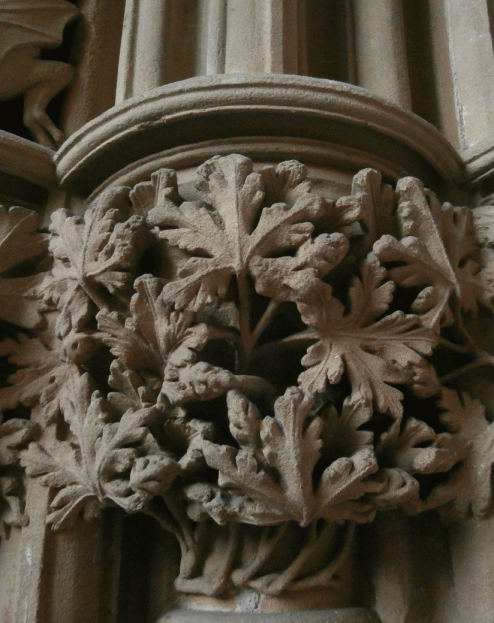
A close up of the carvings.

A series of modern sculptures depicting the 12 Stations of the Cross were on show.
By the 29th Nigel and Iain had moved down to their late mother’s house in Allestree, just south of Duffield, so we picked Nigel up in the morning and took him round to two more friends of ours, Martin and Tricia Gadsby. Nigel, Martin, Tricia and I were at school together and apart from my brother and a few of my cousins (whom I hardly ever see) they now represent my oldest acquaintances. I was shocked to hear that recently Martin had been so ill with a UTI that he ended up with renal failure and almost died. It is reminder, if one was ever needed, that as we get older simple clinical conditions can have very severe consequences. It was lovely to see my friends again and catch up on news and reminisce about old times in Derby and Leeds.
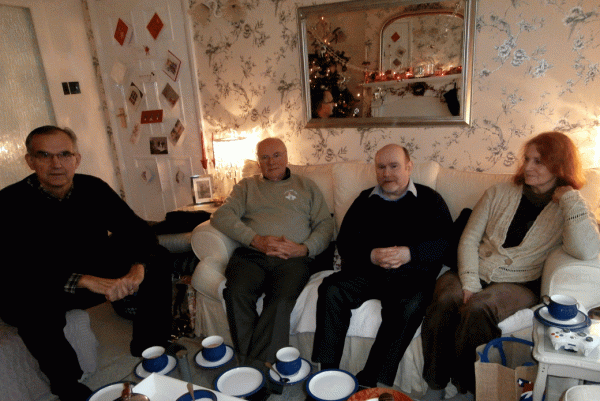
L-R: Martin, me, Nigel and Margaret. Photo by Tricia Gadsby.
Margaret’s daughter Anita and her husband John have friends from South Africa who live in north Derbyshire and they we re visiting them over New Year. As they would be driving through Duffield, I suggested they call into Simon and Viv’s to say hello, so we spent a pleasant afternoon all together.
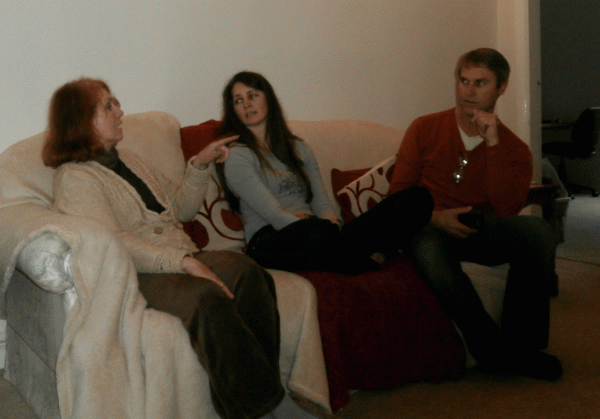
Margaret, Anita and John at Simon and Vivian’s house.
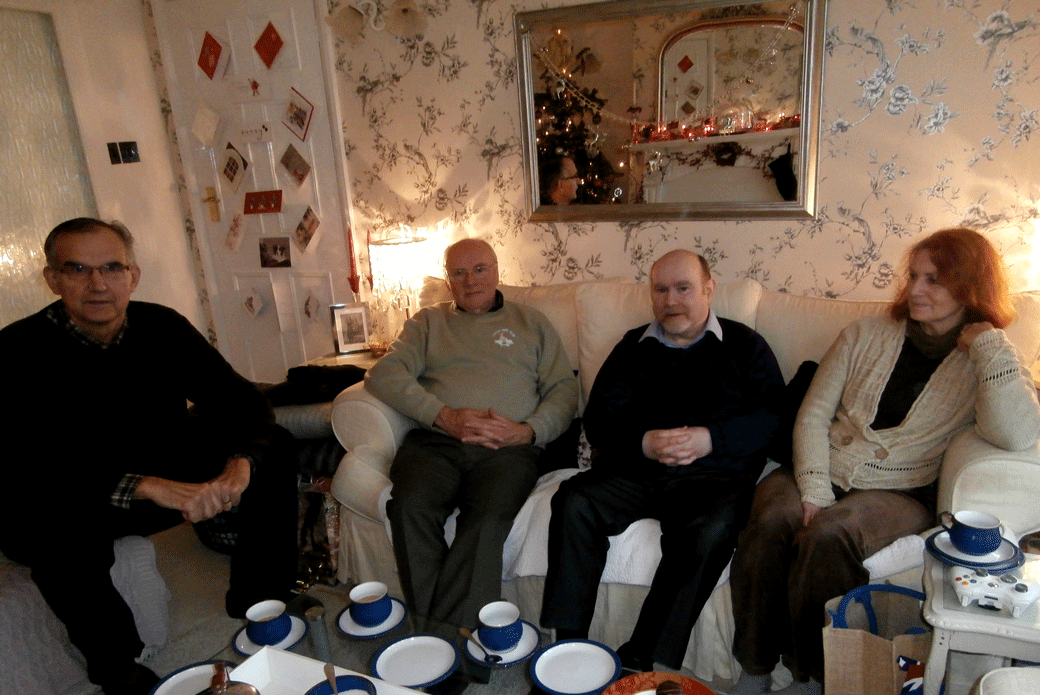
In the evening we all went round to Viv’s parents, Ida and Dennis, although both in their eighties they always host a family get together. With us, Simon and Viv, my nieces Miriam and Jennifer, Viv’s brother Graham and his wife Sally, their three daughters and their husbands and children (each of Graham and Sally’s girls has one young child) there were 19 of us.
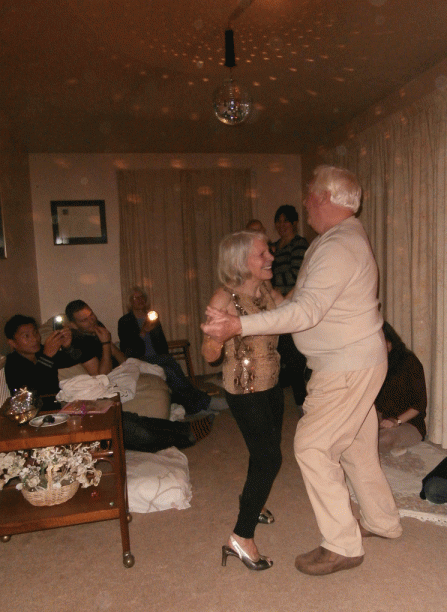
Ida and Dennis have known each other for 76 years and have been married for 59. They always make us very welcome. They have installed a glitter ball in one room for the kids but someone has to shine a torch on it.
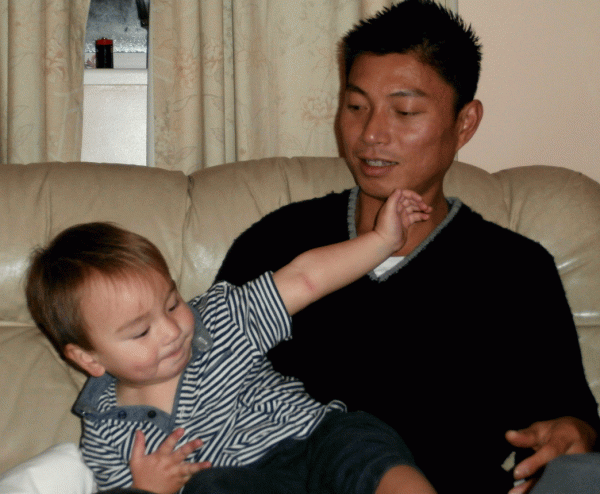
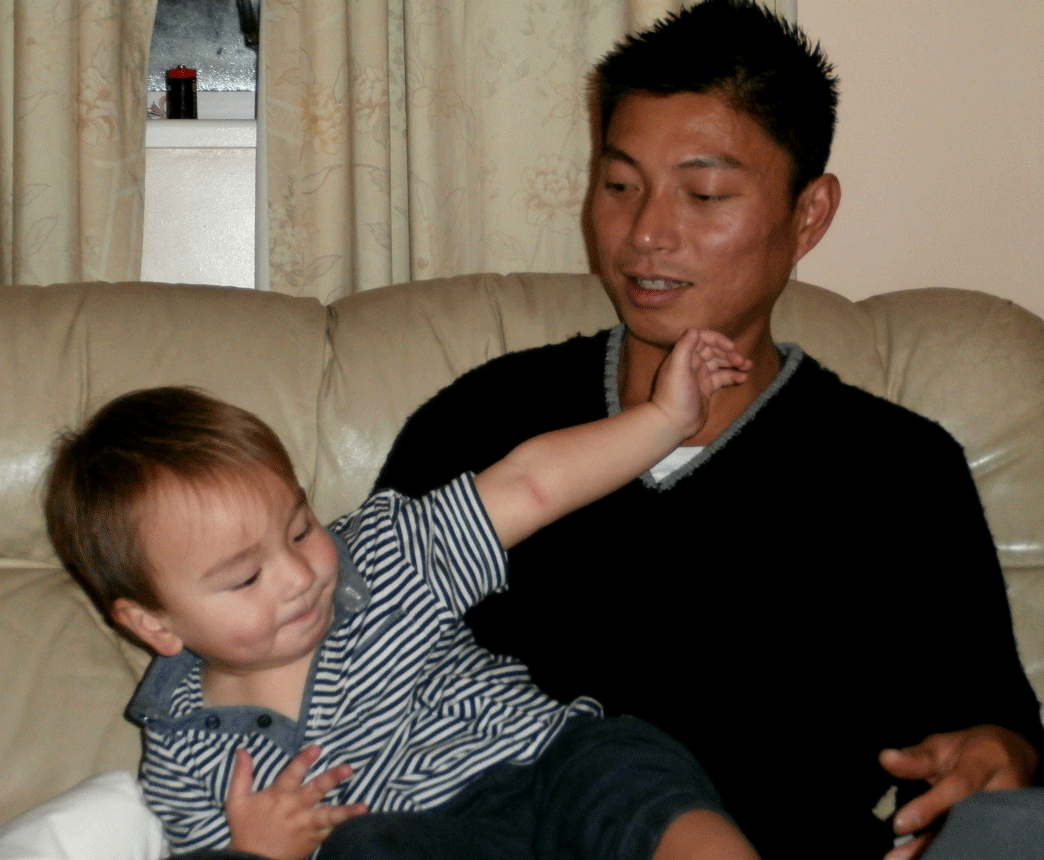
Choy with his son Arlo
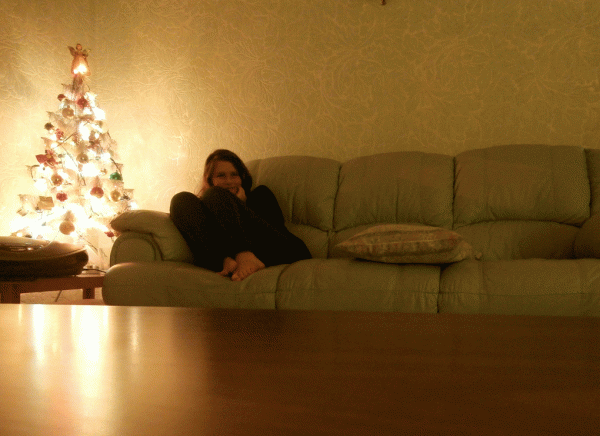
My niece Jennifer would do anything to get in a photo until she turned 14, now she’s gone all shy.

Now three and a half, Lauren soon became the centre of attention.
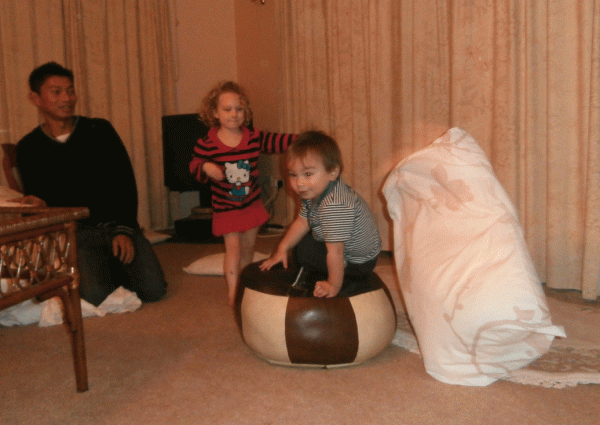
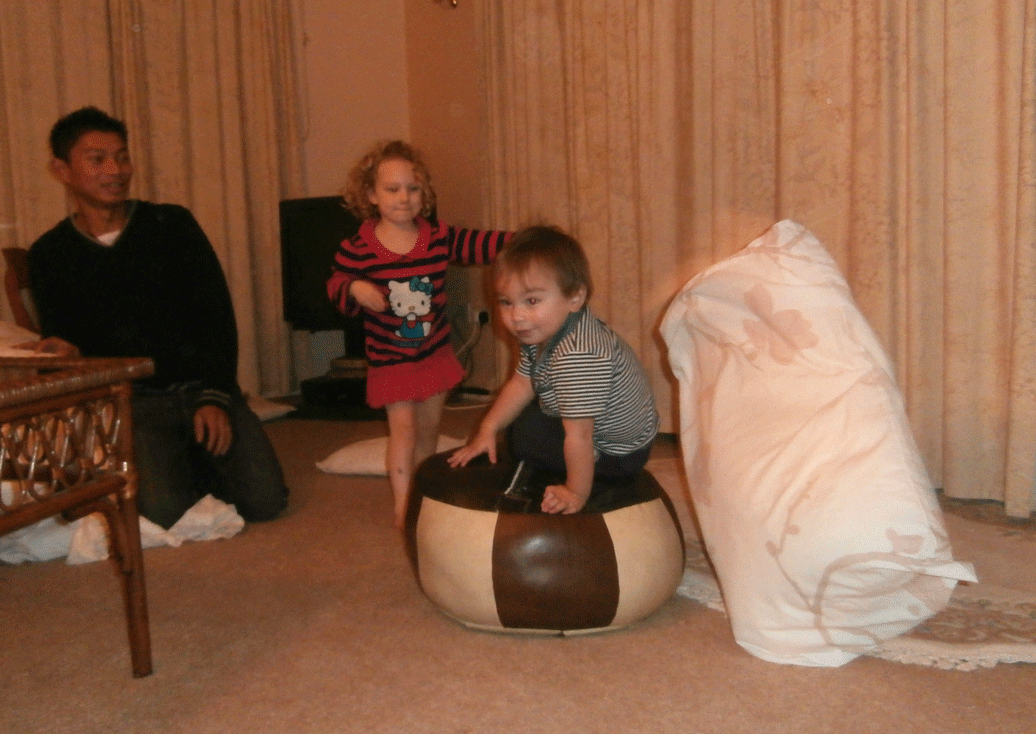
Arlo dodges a pillow thrown by his cousin whilst Choy looks on.
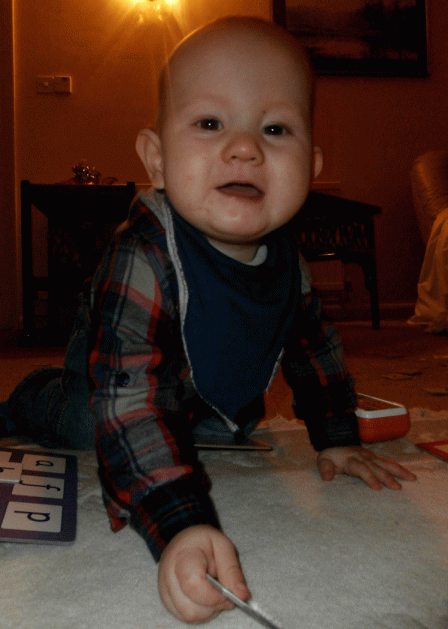
Eight-month old Archie can now crawl and is almost as mobile as the other two kids,
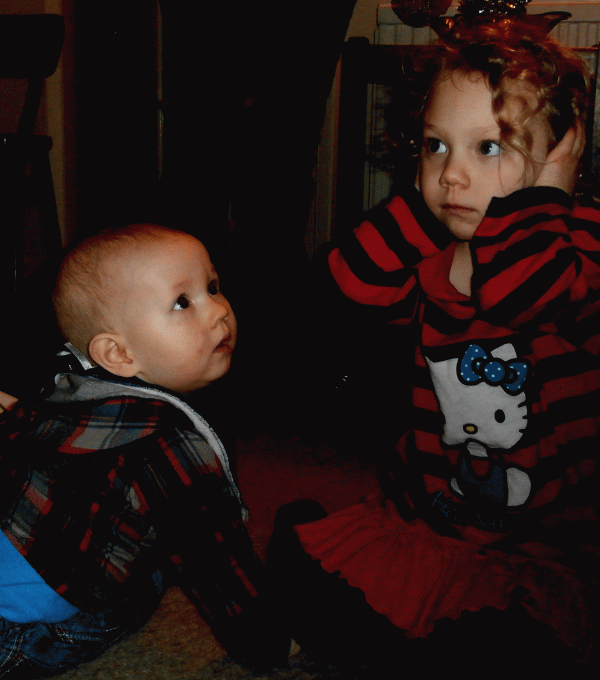
Arlo is banging a drum so Lauren protects her ears whilst Archie looks on. In spite of my best efforts I couldn’t get the kids to stay still long enough to get all three in the same photo.
We left early on the 30th and were back in Poole by early afternoon where after the hectic schedule of the last few days, not to mention the prodigious quantities of alcohol and food, we took it easy. We plan to have a quiet New Year’s Eve with Janis and Andy and will probably just watch Jules Holland to see 2013 in.
One nice present this Christmas is that WordPress have changed the options for uploading pictures. There used to be three options, ‘large’ which was massive, ‘medium’ which was a bit too small and ‘thumbnail’ which was tiny. Now there is a much wider choice of picture sizes.
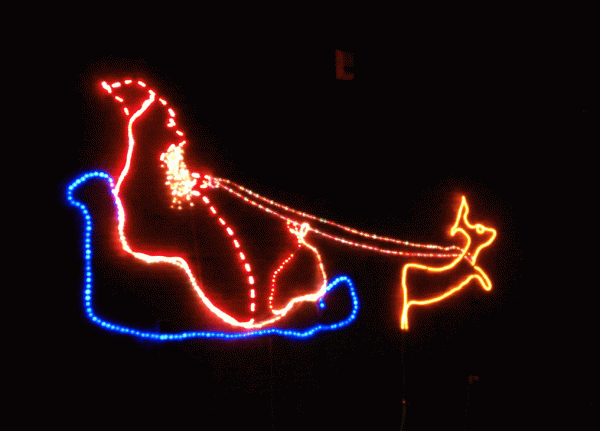
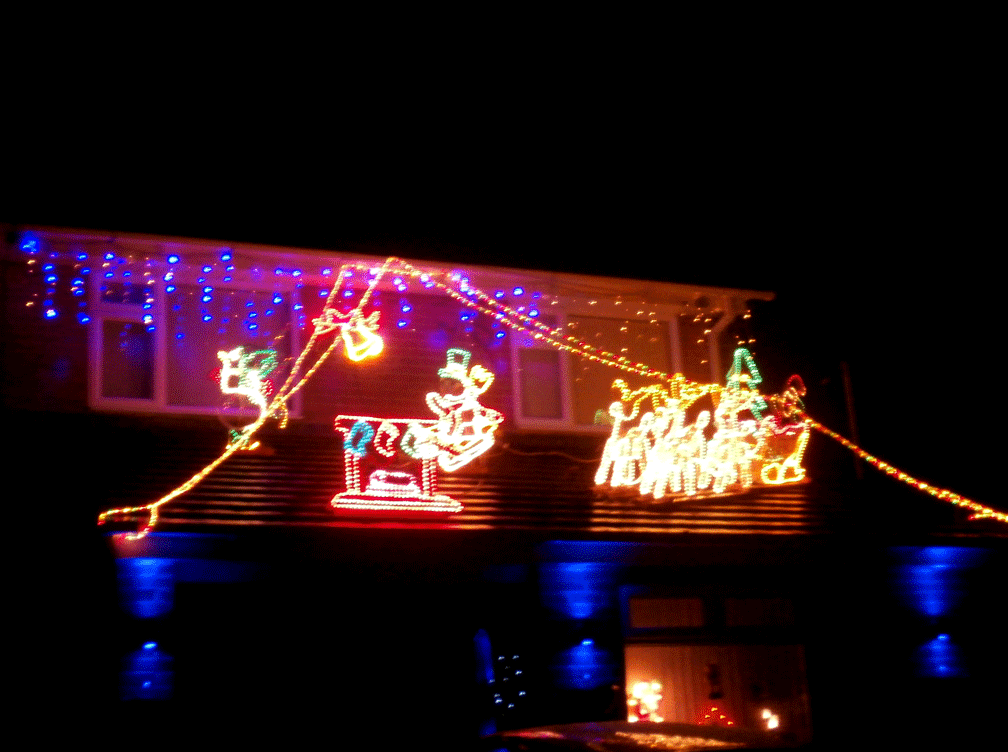
On the evening of the 24th we all went round to John and Anita’s for a Christmas Eve feast. On the way I photographed some of the Christmas lights on our neighbour’s houses.



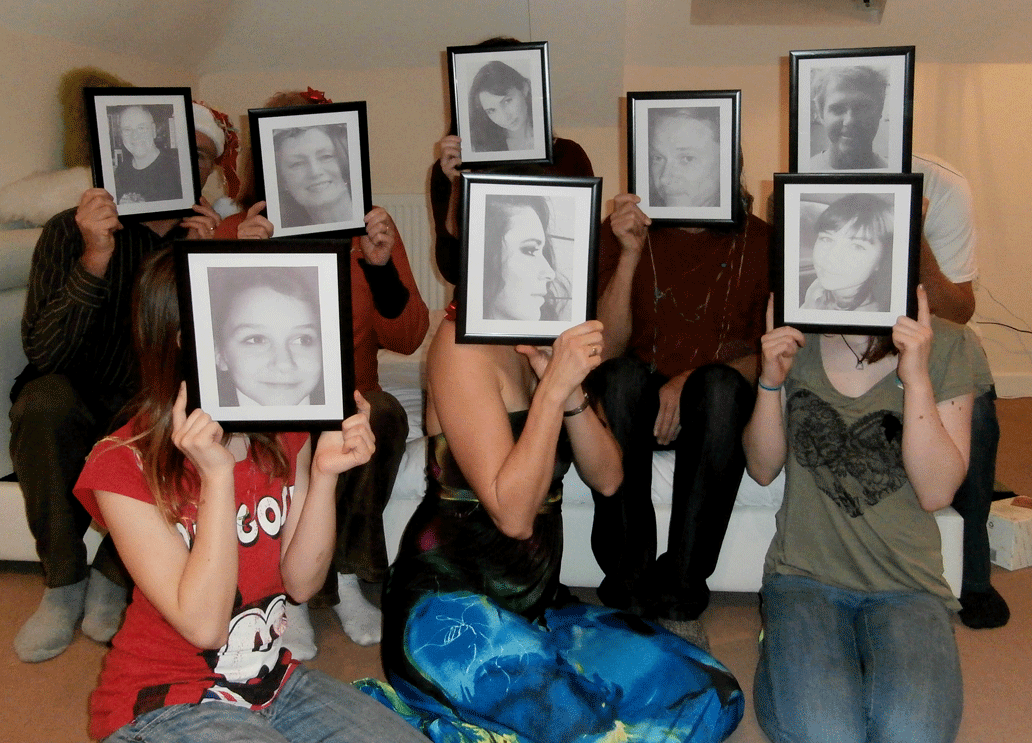
John and Anita had produced photos of us all as place mats …..

… so we had to pose with them. Back row: Ian, Margaret, Janis, Andy and John. Front row: Kara, Anita and Amber.

John and Kara

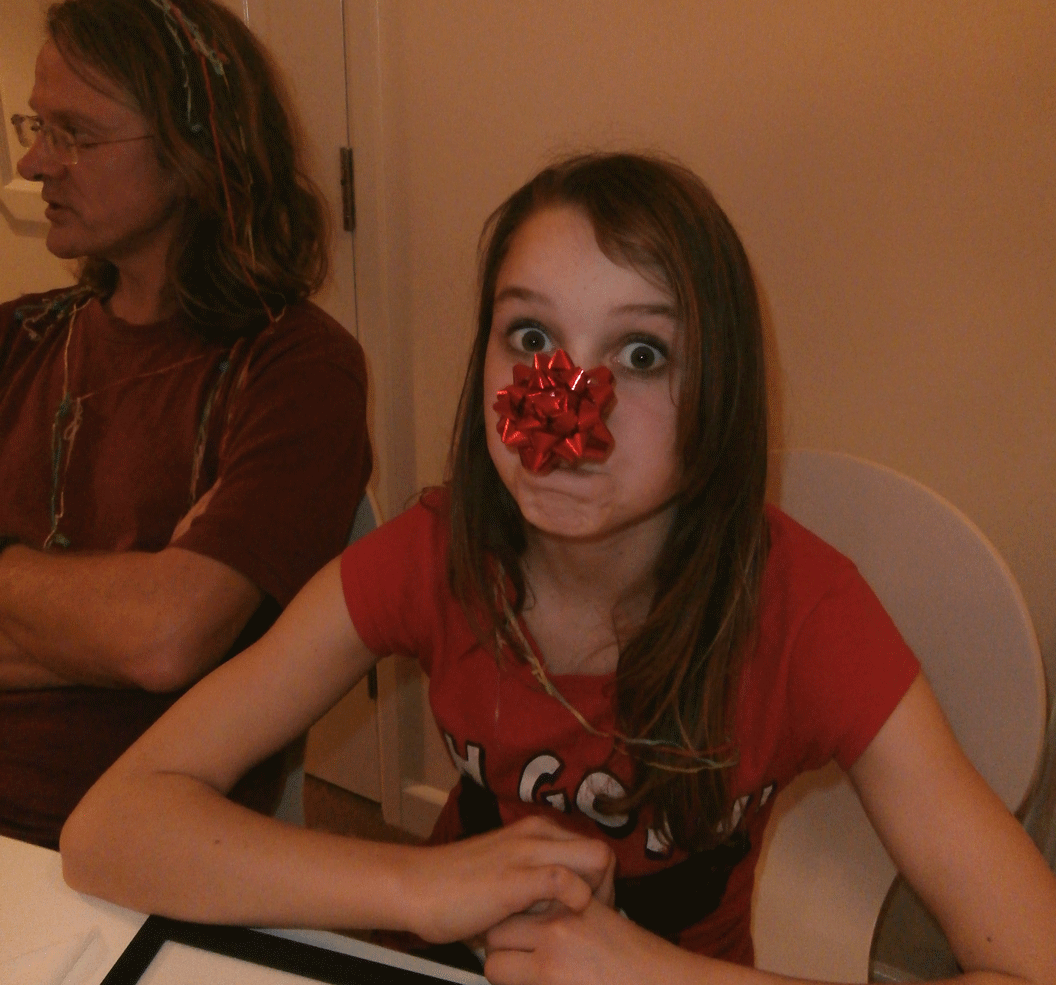
Andy has the remains of a party popper in his hair whilst Kara does a Rudolph impersonation.

Amber looks a little glum……

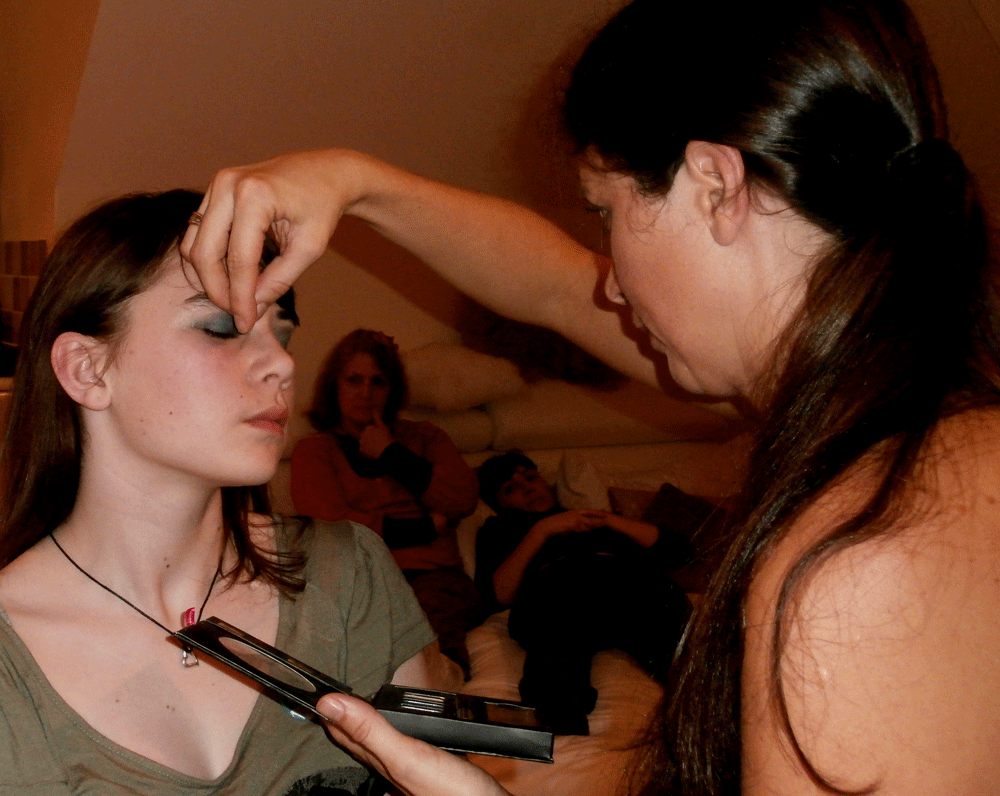
… perhaps getting a makeover from Anita would cheer her up.
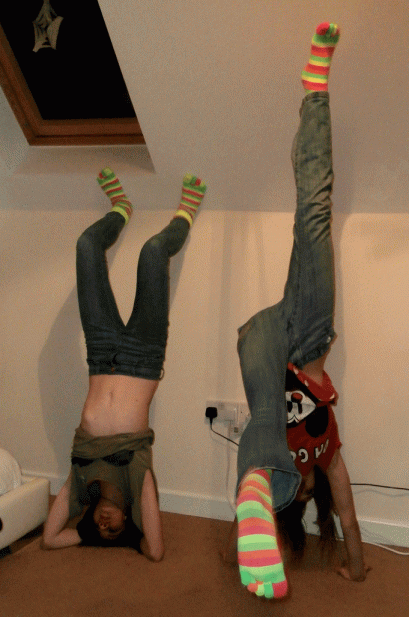
The girls were soon performing headstands so it must have worked.
Christmas Day brought a most unusual treat. Our friends Nick and Jackie Hull who live close to Lytchett Bay reported on the 24th that a neighbour had found a duck in his garden. The duck proved to be a Red-breasted Merganser, a fairly common sea duck, with a child’s hair band wrapped around its bill. It had presumably picked up the discarded hair band when diving and had got entangled in it. The bird seemed in good condition but they contacted an animal rescue center who agreed to hold the bird overnight and check it out.
Nick contacted me and asked if I’d like to ring the bird. Having checked in the ringer’s manual that this was permissible I headed to their house on Christmas Day morning. The lady from the center came a bit later than expected and I felt I was in the way as their family was arriving for Christmas dinner. However the duck soon arrived and was ringed and released at Lytchett Bay. It was in good health, if a little thin and we hope it had a good Christmas dinner as well.

Jackie Hull and her six month old granddaughter Leia

Female Red-breasted Merganser
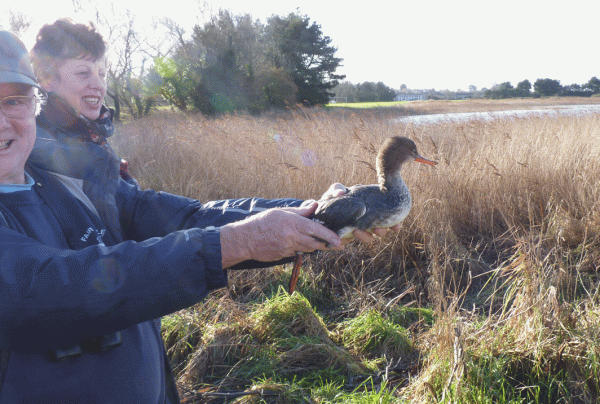
Holding the Merganser just prior to release at Lytchett Bay. Photo by Nick Hull.

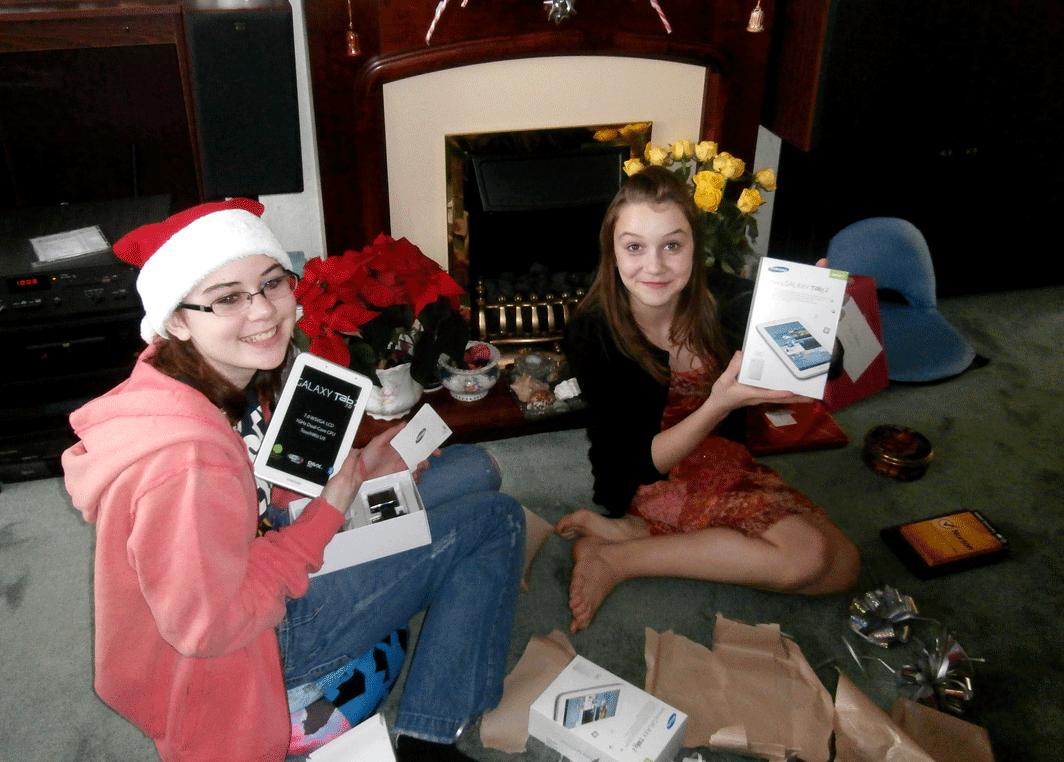
Returning to more traditional Christmas activities, I got home to find all the family had arrived. The grand opening of presents followed. Margaret and I had joined forces with John and Anita to buy them a computer tablet each. To say they were delighted was an understatement ….

… we hardly heard another thing from them all day.

… indeed everyone seemed fascinated by them. The capacity of tablets has greatly improved in recent years, as Moses required two of them just to download the Ten Commandments.

But the highlight of the day was the wonderful Christmas meal that Margaret cooked and being able to get together with my new extended family.
With continued wet and often windy weather we have just about given up ringing for the rest of the year, in addition several of the group have left to visit various relatives/friends for Christmas. Birding also has been pretty quiet apart but a break from the torrential rain allowed me to spend a nice hour at Holes Bay. A Common Sandpiper, a group of Avocets, a few wintering Chiffchaffs and the usual range of ducks were the highlights, but the Spoonbills have returned to their usual spot at Arne and there are no Spotted Redshanks around.
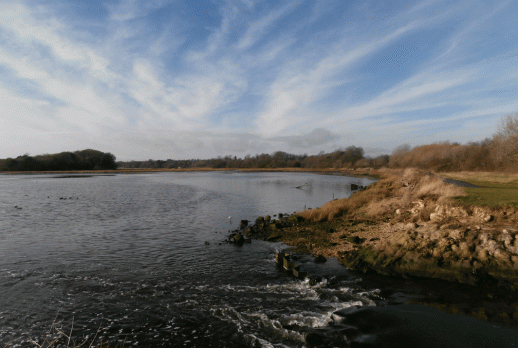
The outfall from the sewage works flows into Holes Bay and keeps the bay ice-free in very cold weather.
Later in the day I had a phone call from Steve W Smith to say he had found a Whooper Swan and Bean Goose on the flooded fields at East Holme near Wareham. I have seen both species this year but both are rare in Dorset so I headed down there ASAP. On arrival the Whooper, although distant, was easy enough to locate but the Bean Goose remained obscured by a flock of Greylags. After watching for some time, the balance of opinion changed to it being a Pink-footed Goose, but confirmation was impossible at that distance. The following day Steve was able to get better views and confirm that it was indeed a Pinky. Although Pinkies are much, much commoner than Beans in the UK as a whole, I have seen only one of each in the Poole Harbour area before, showing that they are both very scarce this far south.
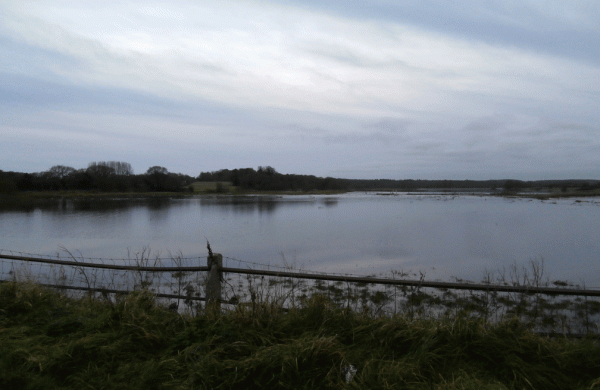
In spite of recent rain the fields at East Holme weren’t quite as flooded as on my last visit on the 10th when they threatened to cover the road.

Whooper Swan photographed earlier this year at Harbridge. I can easily fail to see Whooper Swan during the year, but in 2012 I have seen them in Dorset, Hampshire, South Wales and breeding and wintering in Shetland.
Margaret finished work on the 21st until the New Year. We seldom have much free time together except when we are away on holiday, so we looked forwards to a relaxing time over Christmas. Many years I fail to get into the Christmas spirit. For half of the years between 1978 and 2010 I have had to work or be on call from home over Christmas or New Year. Other years, such as 2011 when I went to Ethiopia, I have returned from a foreign trip in December and whilst everyone else is talking about gifts and parties, all I want to do is wind down from the trip. This year I am really looking forwards to the family getting together for a meal tomorrow and the ritual present opening and visiting my brother and family later in the week.
Generally we avoid TV soap operas and talent shows, preferring wildlife, historical and scientific documentaries, enlivened by the odd science fiction program or comic quiz like QI, but we have both become quite fascinated by this years Strictly Come Dancing. The final was a real cliff hanger and we spent most of Saturday evening glued to the screen.

The three couples in the final, personally I wanted Denise van Outen to win, but all three were excellent.
On Sunday 23rd we were paid a quick visit by Janis and family (who were on their way to visit Andy’s daughter in Sussex) and a longer one by John and Anita. In the evening Margaret and I went to the Parish Church for the Christmas carol concert. As always the church was packed and we ended up sitting behind the choir besides the altar along with a bunch of young kids. As the kids got restless Margaret entertained them by making paper hats and other origami with the hymn sheets.
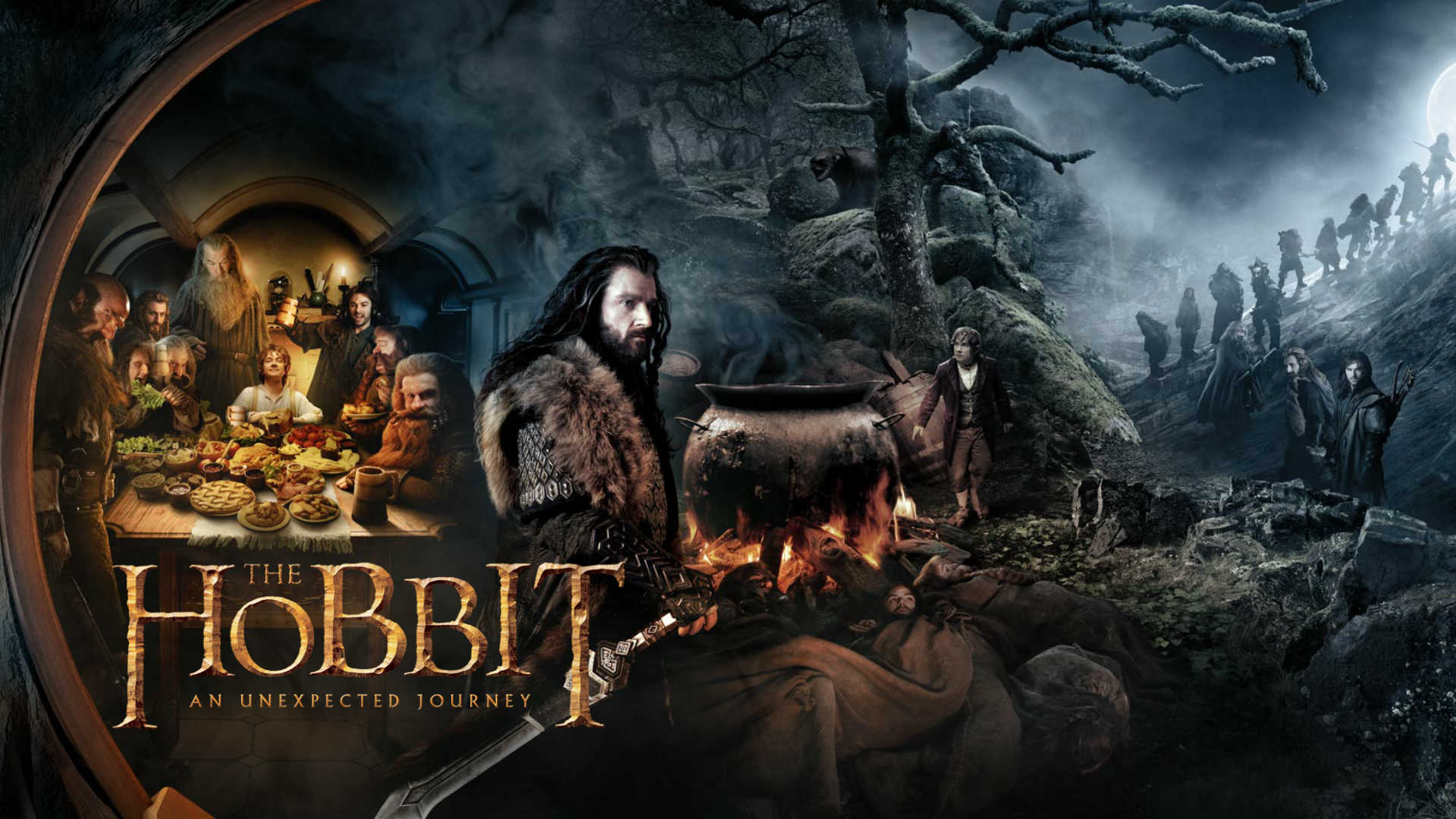
Rather than wait until after Christmas when the cinemas will be packed we opted to go and see The Hobbit this afternoon. I think by making it into three films Peter Jackson has strung the story out somewhat, as The Hobbit was only a single book compared to the Lord of The Rings trilogy. The special effects, fight sequences and locations were superb but I think it would be fair to say that the film lacks the depth and complexity of Lord of the Rings, but there again so does the book.
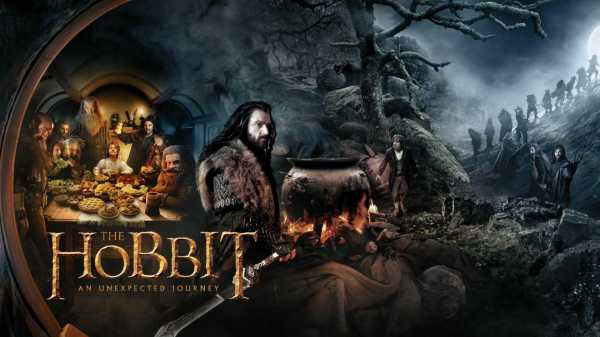
Unlike The Lord of the Rings, Tolkein wrote the prequel, The Hobbit, as a children’s book.
This evening we have all been invited to Anita and John’s for a meal but I’ll report on that in the Christmas Day update.
MERRY CHRISTMAS TO YOU ALL
The weather has turned again and it looks like 2012 will end in a rather soggy manner. I have not been inspired to do much birding recently but as often happens at this time of year, I’m looking forwards to starting all over again in the New Year.
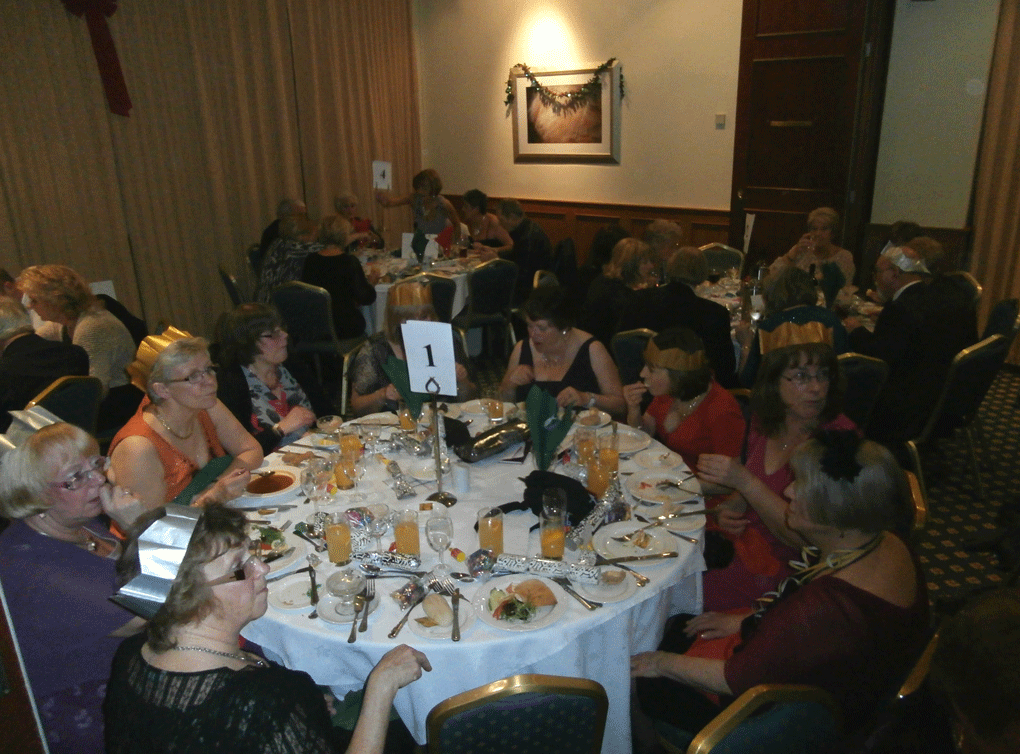
On Saturday 15th we went to the Nexus Christmas meal at the Queen’s Hotel in Bournemouth. Considering how many quests there were throughout the hotel, the food was good, served promptly and hot. There were several other groups sharing our dining room including a very boisterous group of young ladies and a another group dressed up as film characters. Considering that the Nexus organisation is being wound up there seems to be plenty of enthusiasm for keeping the local group going.
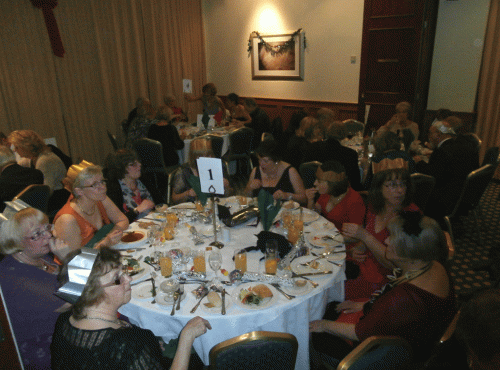
The Dorset Nexus group joined with the Salisbury group and about 40 members attended the Christmas dinner dance.

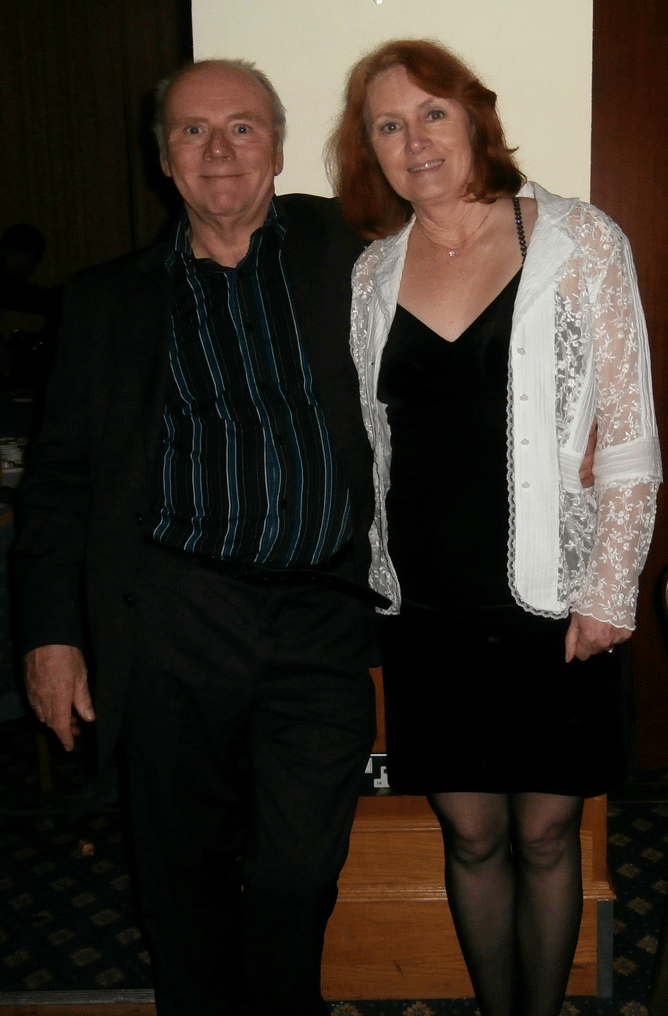
Don’t we scrub up well?
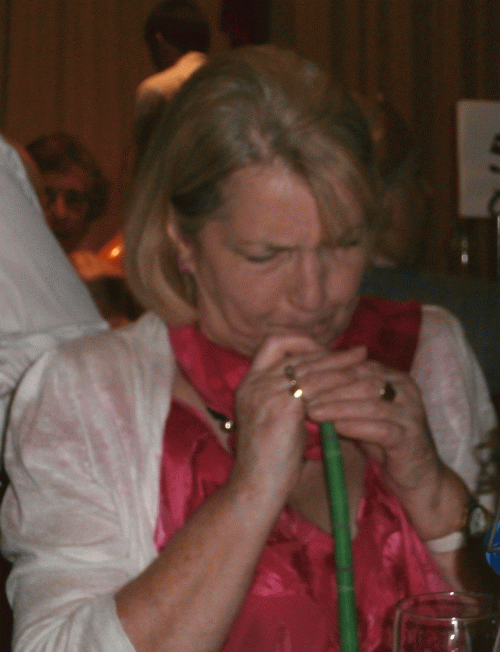
Rosemary struggles with one of those noisy party balloons.

Margaret

Another group in another room had a James Bond theme as shown by this ice sculpture.
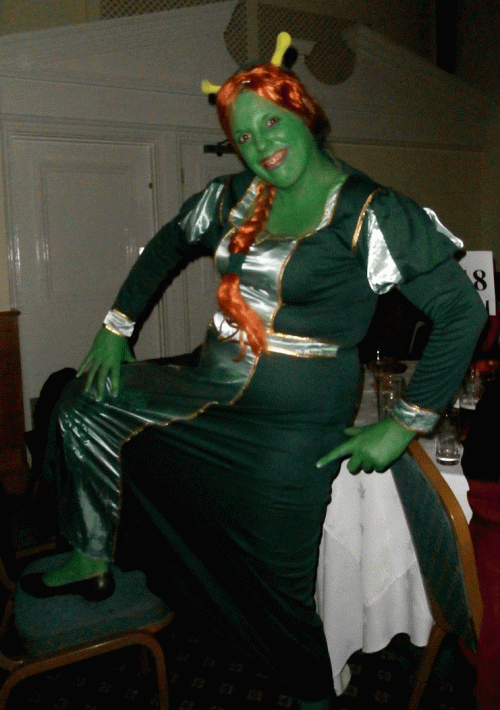
One group dressed up as film characters. By far the best was this Princess Fiona from Shrek.

Margaret enjoys a bop
On Sunday it was Margaret’s choir’s Christmas concert at St Peter’s Church at Ashley Cross. Unfortunately the heating had broken down and although they used some industrial heaters before the start it was still chilly. The choir and orchestra were excellent, although I found Benjamin Britten’s ‘ A Ceremony of Carols’ at bit tedious. Anita, John, Janis, Andy, Amber and Kara all went, along with our friends Gio and Jessica Pietrangelo and Ann Bunn. Afterwards Gio, Jessica, John, Andy and I went across the road for a drink where John and Gio had a humorous conversation comparing how the same English phase was pronounced in a South African or Italian accent.

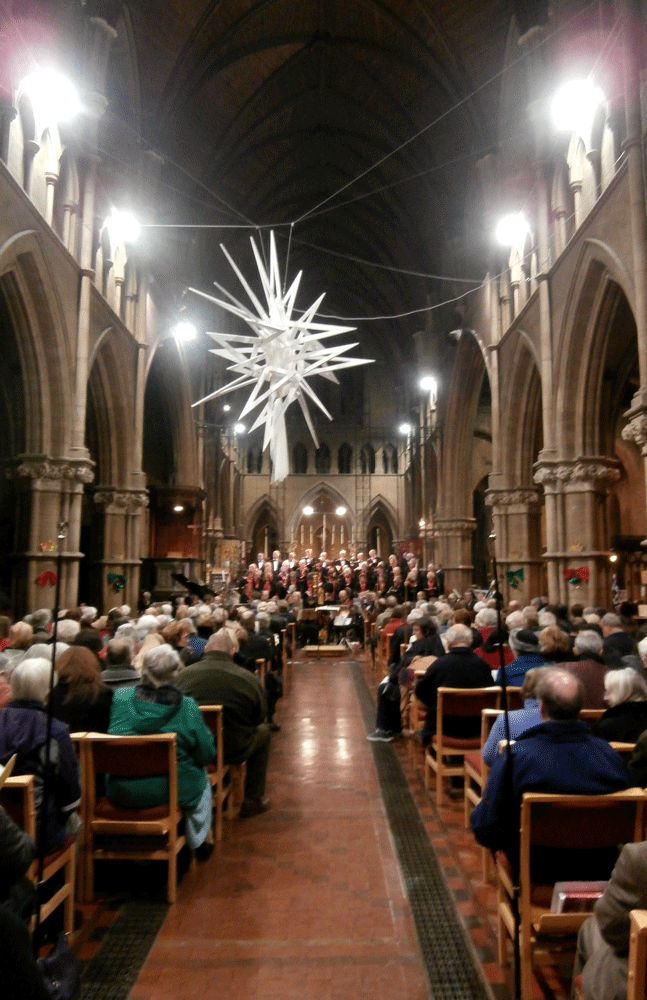
Barclay House Choir at St Peter’s Church
Tuesday was a nice sunny and still day and Kevin, Simon and I went ringing at Holton Lee. We had such a lot of new birds last time that most of today’s catch was retraps,which of course produces valuable data about site fidelity and given that 14 of the retraps were from last winter, about longevity and survival rates. As before, tits made up the bulk of the catch with a surprisingly high number of Coal Tits, but two Great Spotted Woodpeckers, four Nuthatches and a Siskin were also caught.

The pond at Holton Lee with the Lytchett Bay reedbeds beyond

Female Siskin
After a couple of years of little support for the New Year bird race, this year we have a lot of interest. My team of Nick Urch and Trevor Warwick have been joined by Paul Morton and we had planning meeting at the Baker’s Arm at Lytchett Minster on the 18th. The evening was going well until the pub quiz started, so wishing some peace and quiet we left and reconvened at St Peter’s Finger just up the road. Guess what, the had a pub quiz on as well! so there was nothing to it best to retire to my house where we could plan in peace.

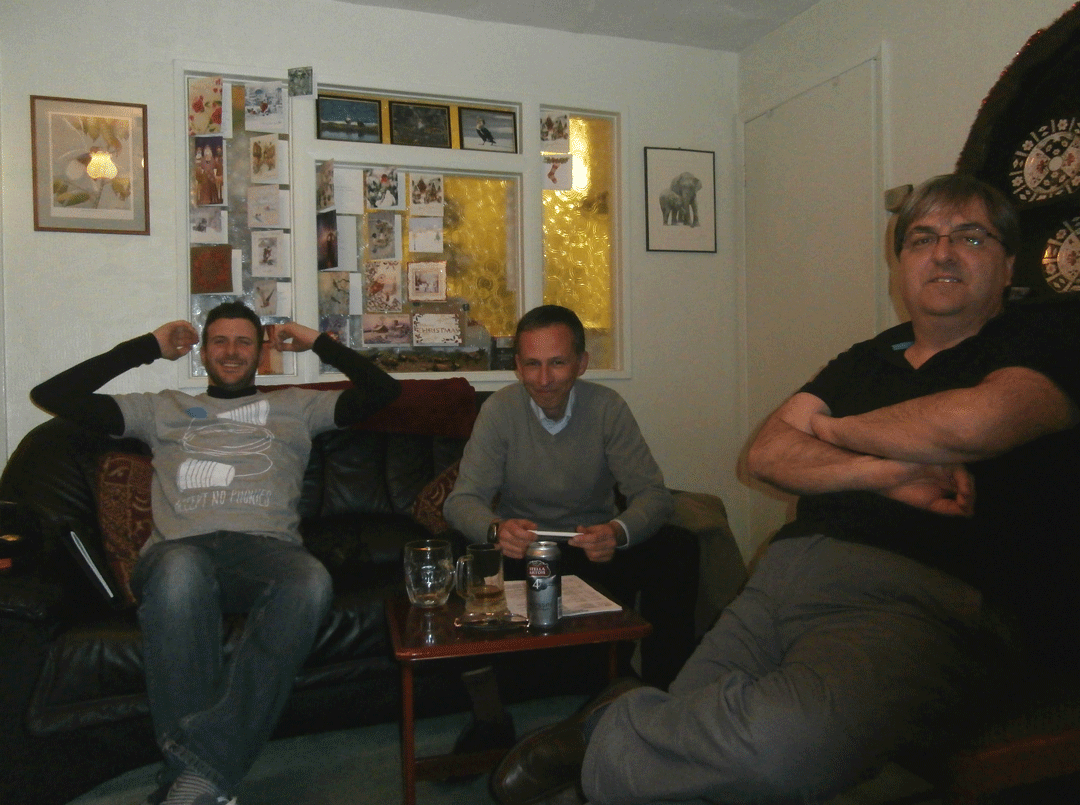
L-R Paul, Nick and Trevor. At least there was no pub quiz back at our house.
We had another pub get together on the 19th at the Blue Boar and many came wish their friends a Merry Christmas I think it was the biggest turn out we have ever had in 20 years of ‘Bird Pub’ with 18 birders present. The pub was quite crowded anyway and with such a large group it was very noisy but really good fun.
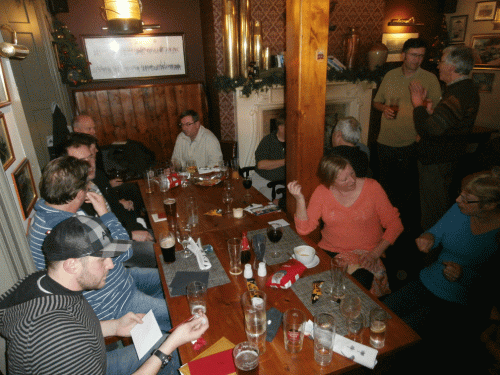
The biggest Bird Pub ever. Another six birders are out of shot.
And finally this could be, if some are to be believed, the last Bird Pub, my last blog entry and the end of the World altogether. Apparently the World will end on the 21st if the Mayan calendar is correct. I have lived through a number of these bizarre ‘end of the World scenarios’, although I must admit the Cuban Missile Crisis seemed pretty real. There are many threats to life on the planet, both natural and man-made, but I am confident that Earth itself will survive until it is swallowed up when the Sun becomes a Red Giant some five billion years from now!
























































 gryllosblog