Archive for the ‘Uncategorized’ Category
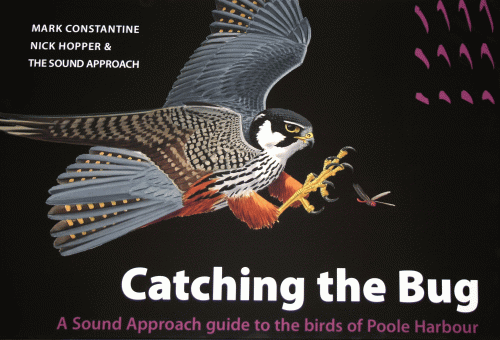
The cover of Catching The Bug.
On the 14th I had an early morning, yet unremarkable ringing trip to Durlston. I opted to rest during the afternoon as I knew I had a full evening ahead of me.
Mark Constantine and Nick Hopper have just written an excellent book on birds, birding and birders of Poole Harbour, called ‘Catching The Bug’. The book is an account of Mark and Nick’s fascination with the area and is based around conversations and debates that Poole birders have had at the pub (and also at the reception of Margaret and my wedding). Many of the local birders feature in the book and many of the best stories of the last quarter century are retold including several that involve me. I particularly liked Mark’s description of me ‘Ian is very well read, acting as the Wikipedia at the pub. You know, not always accurate but no one else knows enough to argue.’
Mark invited all us who are mentioned in the book to the book launch at Storms restaurant in Poole, as well as an excellent meal it was a great chance to meet up with many other Poole Harbour birders and their spouses.

Simon Emerson (R) of The Imagined Village with Mark and Mo’s son, also named Simon.

Margaret with the Olympic Torch. Mo Constantine was selected as one of the Torch bearers and many of us took turns to photographed with it.

On everyone’s behalf, Shaun thanks Mark for his generosity and congratulates Mark and Nick for producing the book. In the lower left is Arnoud van den Berg, fellow member of the Sound Approach and editor of Dutch Birding.

Mark responds to the toast and ensures us that at least some parts of the book are true! Apologies for the lack of sharpness, by this time a full bottle of wine was affecting my stability.
Clearly the book is of particular significance to those of us who live in Poole and are mentioned in the book, but Mark and Nick touch on many issues of wider interest; global warming, identification and possible speciation in Cuckoos, Cormorants, Chiffchaffs and Dartford Warblers, ups and downs of our local bird populations, record assesment, suppresion and release of rare bird news, bird races etc and, as you would excpect from a Sound Approach book, great photos, wonderful paintings by Killian Mullarney and two CDs of bird sounds mentioned in the text.
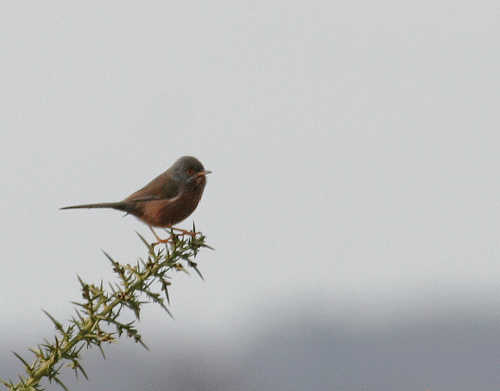
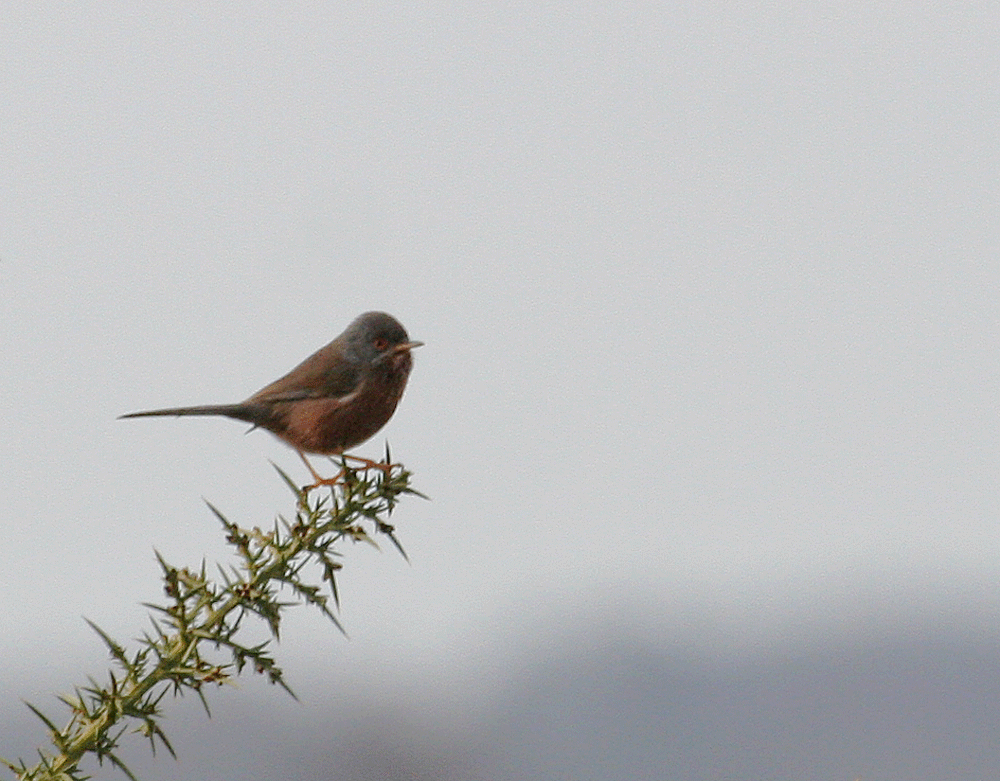
Sylvia (undata) dartfordiensis – Bibby’s Warbler – an English endemic? Read the book to find out.
On the evening of the 8th I was down at Lytchett Bay helping to set up the mist nets at Lytchett Bay for the following morning’s ringing. One net ride known as ‘Riverside’ is just that, it ends on the bank of the River Sherford. whilst trying to place the pole in the bank, I slipped and plunged head first into the river. The tide was in and the Sherford was sufficiently deep so that I couldn’t touch the bottom; to make matters worse, the bank by the net ride was undercut and I couldn’t get a footing to clamber out. Fortunately Terry Elborne and Paul Morton were setting up nearby and hearing the splash came to my rescue. I put a brave face on it and even asked them to use my camera to photograph the scene, then I realised that my camera was still on my belt and was completely ruined. This was the camera I had bought less than a week ago to replace the one I had lost in PNG and to make matters worse my phone was in my pocket. Fortunately my binoculars survived the immersion without damage.
It goes without saying the other members of the ringing group found the incident hilarious. There have been a number of requests to rename the net ride from ‘Riverside’ to ‘Tom Daley’, ‘Flipper’ or ‘Gryllo’s Swim’. Requests for reinactments, underwater photographs etc abounded. A final twist to this tale was when I contacted the insurers to claim for the phone. When I reported the details they asked if it was best to ring me back on the landline. I pointed out that I could hardly be contacted on my mobile!
We ringed at Lytchett Bay on the mornings of the 9th and 10th. Given the dreadful weather of this spring and summer, it is hardly surprising that numbers trapped are less than half those at this time next year. One particularly notable feature of this autumn is the greatly raised proportion of adult birds present. This reflects that there has been good adult survival in spite of the weather but very poor reproductive success. Also many of the young birds show pronounced growth bars on their tails. This is produced when birds suffer a severe depletion in nutrients for a few days whilst growing the tails feathers and shows most clearly in young birds as all the tail feathers are grown simultaneously. I will post some photos of this phenomena when I finally get a pocket camera again.
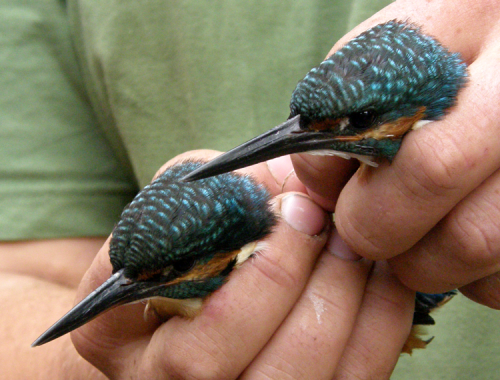
I have seen four Kingfishers in the hand over the last few days, three at Lytchett and one in north Dorset.
After the ringing on Saturday 11th, Margaret and I went down to the beach, unfortunately the hot conditions of the last two days had been tempered by a stiff easterly breeze. I considered a second swim in as many days, but the sea was so cold that I only went in ankle-deep, although Margaret was a bit more adventurous.
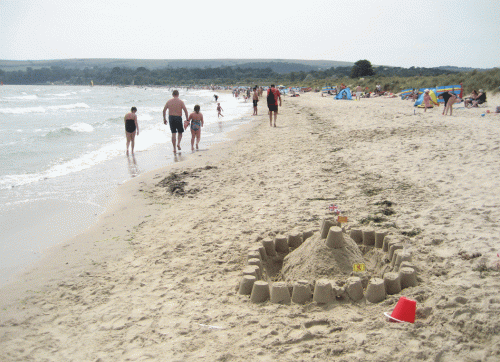
The joys of the British seaside……
We didn’t stay long as I had yet another outing to fit in. With Paul Harvey down from Shetland, Ian Alexander suggested that the three of us go and stay at Trevor Squire’s private reserve in north Dorset. Trevor trained me to ring in the 70s and early 80s and is one of the most experienced ringers in the country. After a pub meal we stayed overnight in his caravan, although we didn’t get much sleep, each person accusing the others of snoring all night. We trapped over 70 birds, mainly migrants, not bad for an inland site, indeed an inland site that was just a grassy field a few years ago.
I was back home by lunchtime on Sunday 12 and needed a well earned rest after a very busy few days.

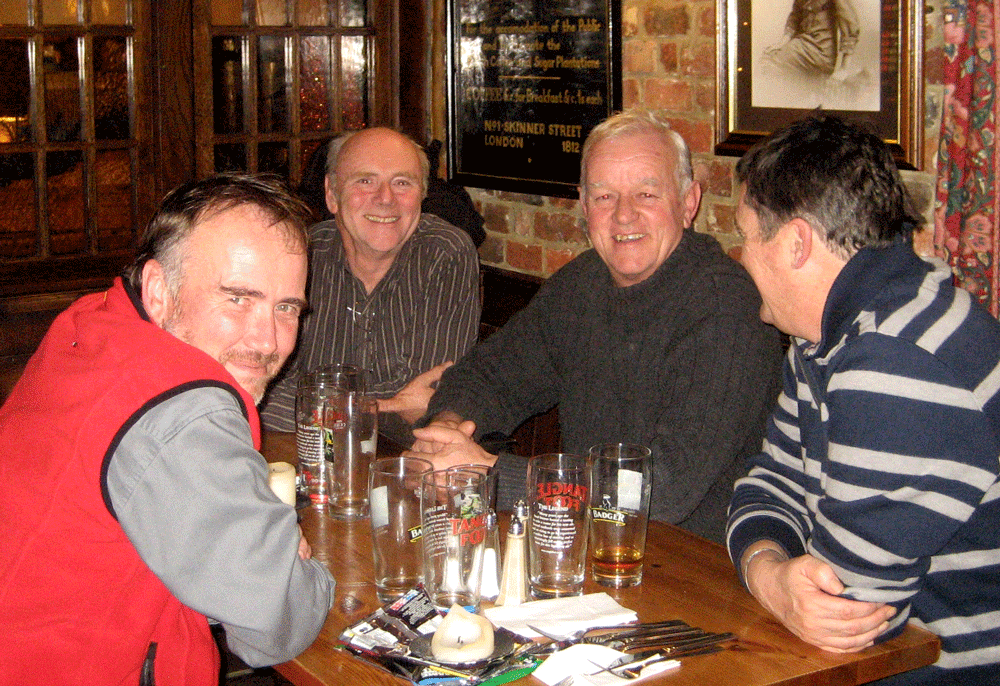
L-R Ian Alexander, me, Trevor Squire and Paul Harvey photographed in December 2011.

Trevor’s reserve photographed last summer, the vegetation has grown up considerably since then.
On the 7th Shaun and I had our first autumn ringing visit to Durlston. There were quite a few early migrants about but the wind soon got up. We caught mainly Willow Warblers plus a the odd Garden Warbler, Whitethroat and Blackcap, we trapped 42 birds in total.
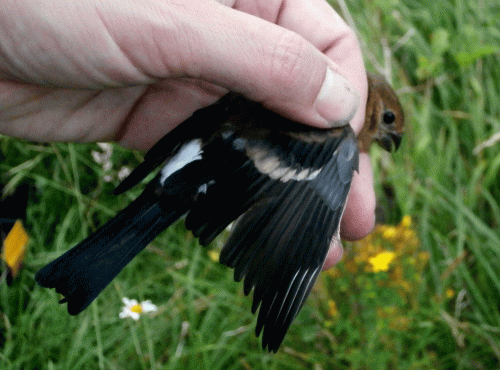
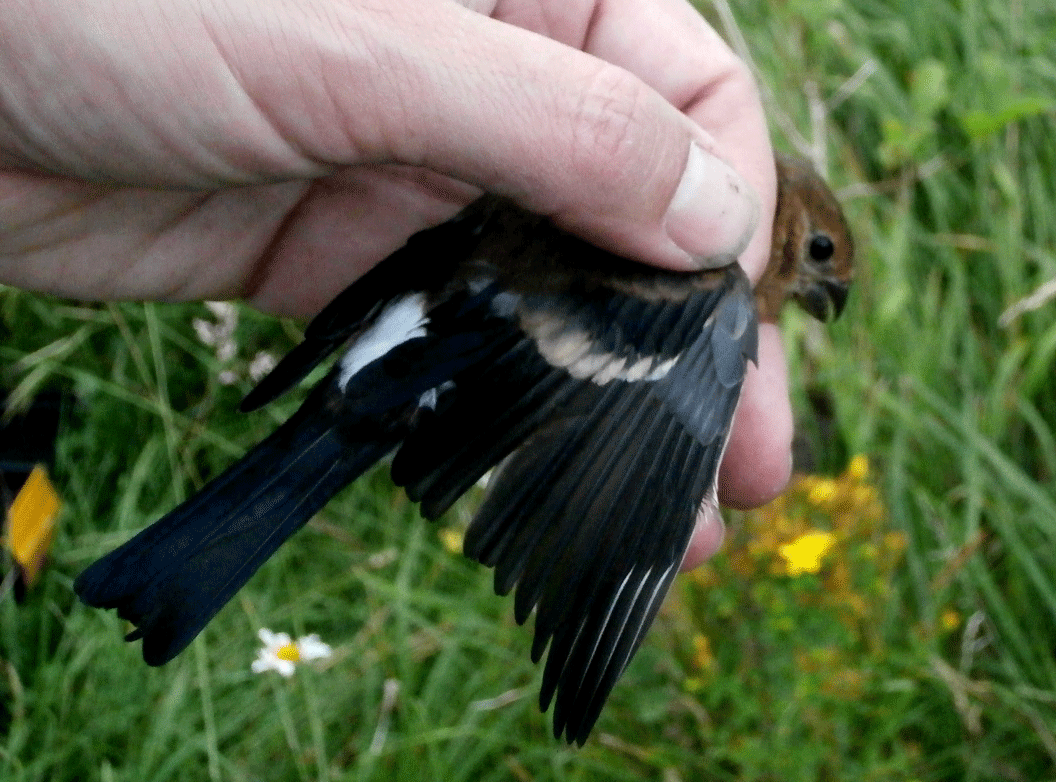
This juvenile Bullfinch cannot be sexed as males and females are identical until the commencement of the post-juvenile moult. The lack of a black crown separates juveniles from adult females.
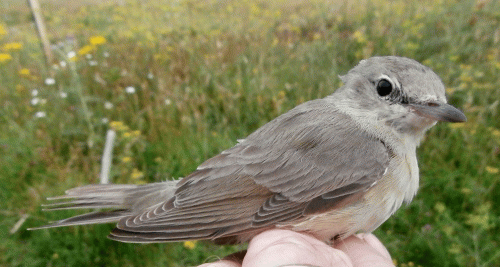
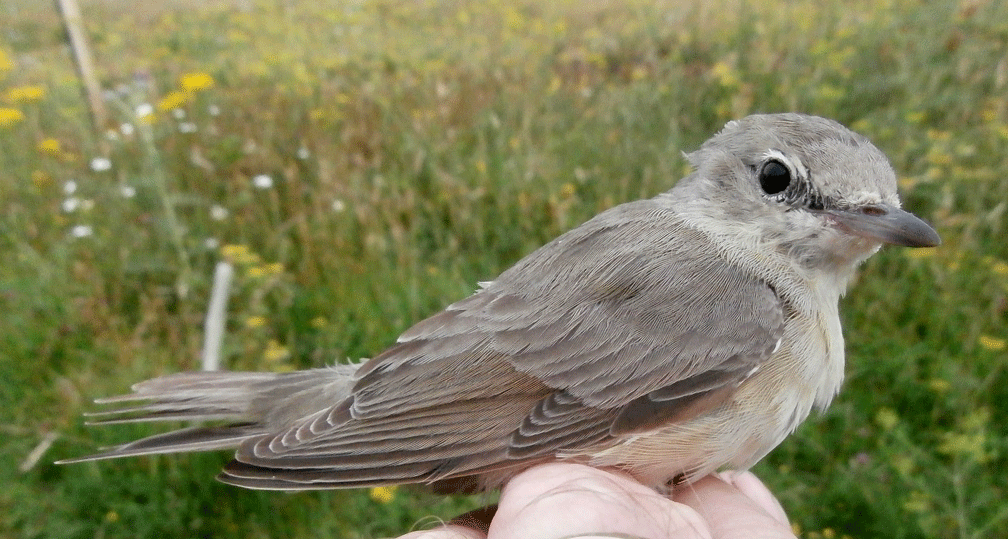
Most adult ‘Sylvia’ warblers have a complete moult after breeding, however Garden Warblers are more like ‘Acrocephaus’ warblers in that they moult in the winter quarters. Thus the tatty abraded appearance of this Garden Warbler proves it is an adult.
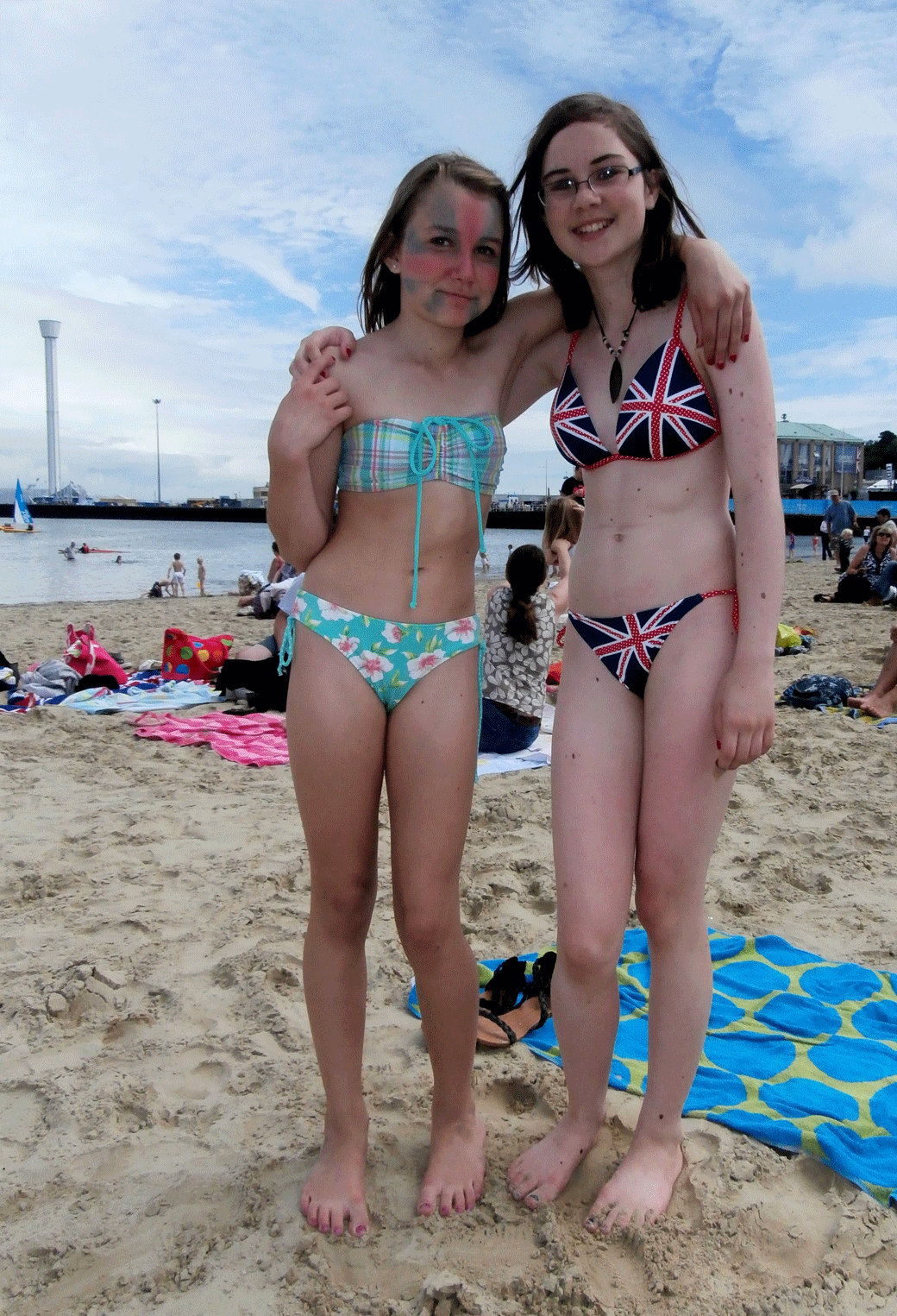
On the 8th I opted to take Amber and Kara to Weymouth to see the Olympic sailing. We parked at the back of Lodmoor and I was able to see a few migrant waders plus a Spoonbill on our way down to the beach. It was quite a long way along the sea wall to the area where the races were shown live on large screens. Kara and Amber wanted to go swimming so we didn’t go any closer, and I watched a couple of races on the screen. The yachts were just visible from the esplanade via binoculars, but to see the race properly you either need to go to the top of the new tower or get tickets to the Nothe gardens. Next to the display screens was an area where various sports were being displayed. The girls had a go at a ‘canoe race’, golf and tag rugby.
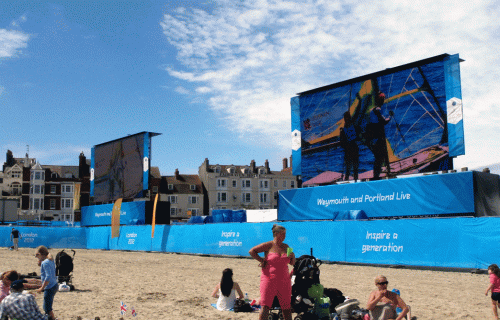
Screens on Weymouth beach relay the Olympic sailing races that occur just out of sight in Weymouth Bay.

With face paint and bikinis, Kara and Amber declare their patriotism.

Amber and Kara try a canoe race.
On the 9th I returned to Durlston along with my friend Paul Harvey who is down from Shetland for the Olympics and to see relatives. We only caught 32 birds, 19 Willows but also 6 Garden Warblers. It was quite busy for the first hour but it soon quietened down.
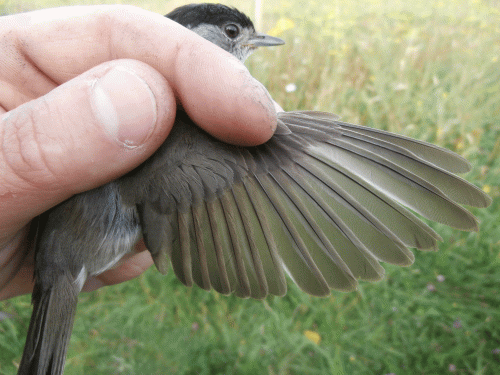
Although still showing signs of juvenile plumage, this male Blackcap had moulted some of its secondaries and greater coverts and also showed the very abraded primaries and tail feathers that would be associated with a pre-moult adult.
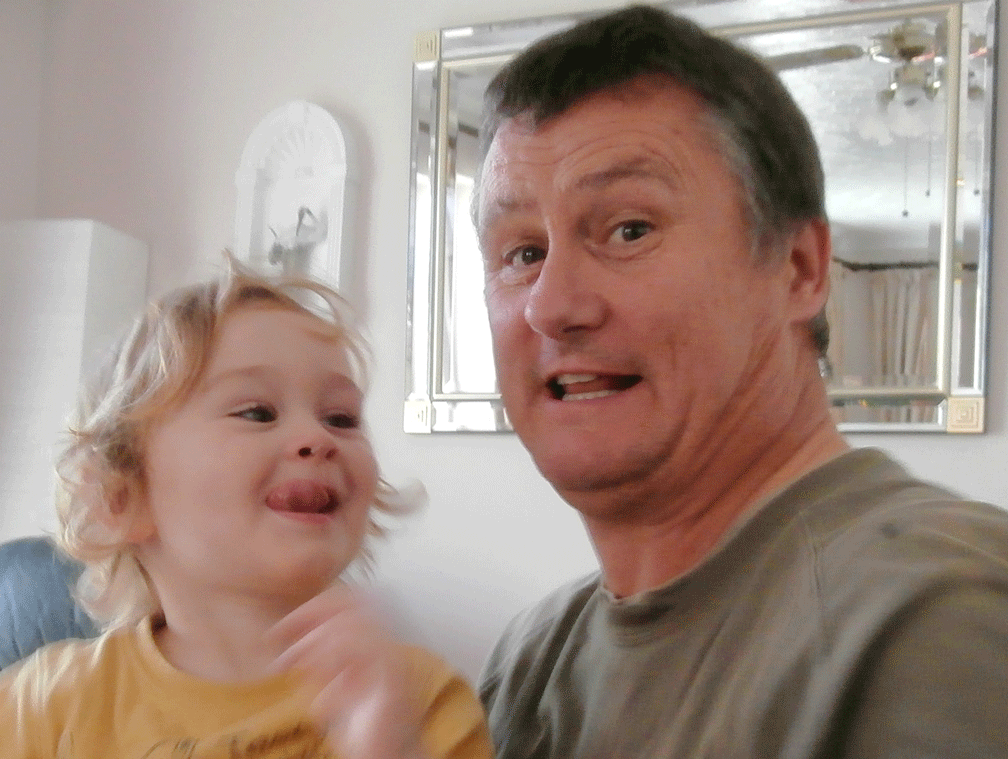
I dropped Paul back at his parent’s house in Upton later where his daughter Bryony and grandson Harvey were also staying. Two -and-half-year old Harvey has changed a lot since I last saw him, but there again it would be strange if he hadn’t.

Paul Harvey and Harvey Paul.
Since I have got back from New Guinea, I’ve only been birding a few times as there has been plenty to keep me busy at home and there are not that many birds about.
On the 29th July Margaret and I visited Normandy lagoon near Lymington, which is just east of the better known Pennington marshes. Our target was a Pectoral Sandpiper, a scarce but regular migrant from arctic Canada and eastern Siberia, we also saw a Little Stint making it two-year birds on the same lagoon. we later visited Margaret’s friend Jenny who lives in Lymington.
A probable White-rumped Sandpiper was found on Brownsea Island on the late afternoon of the 29th, views were distant and the ID was not, as far as I know, confirmed. Along with a few other local birders I scoured the lagoon on the morning of 30th for this vagrant from America, but in spite of a false alarm, we had no luck. One birder saw a small wader on the outside of the lagoon wall as he approached on the ferry and we were given special permission from the warden to walk along the wall to check it out. We only found Sanderling, but it was most interesting to see the lagoon from a new perspective.

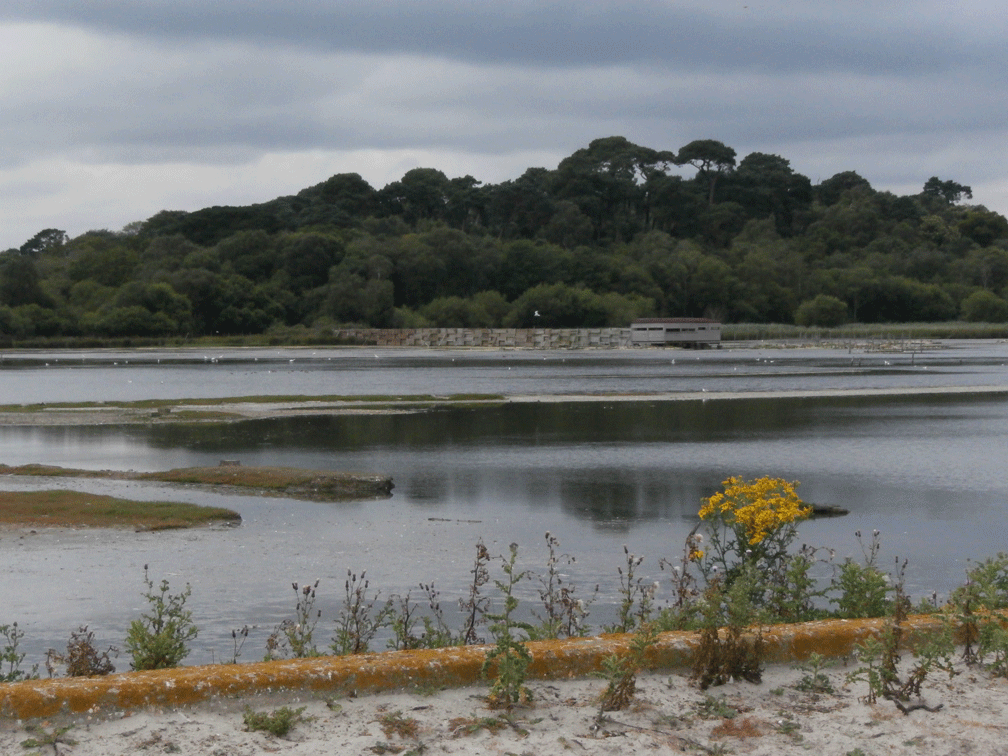
Brownsea Island lagoon seen from the sea wall.
On 4th August we held a Braai (South African style barbecue) and six friends and ex-colleagues and their partners attended along with Janis, Andy and the girls. We all had a great time and Margaret cooked some wonderful food.

L-R John Hitchcoe, Chris Bunn, Ken Pearce, Mike and Janet Boyle, Jessica Pietrangelo, Sheila Pearce, Gio and Paul Pietrangelo and Tim Kellaway.

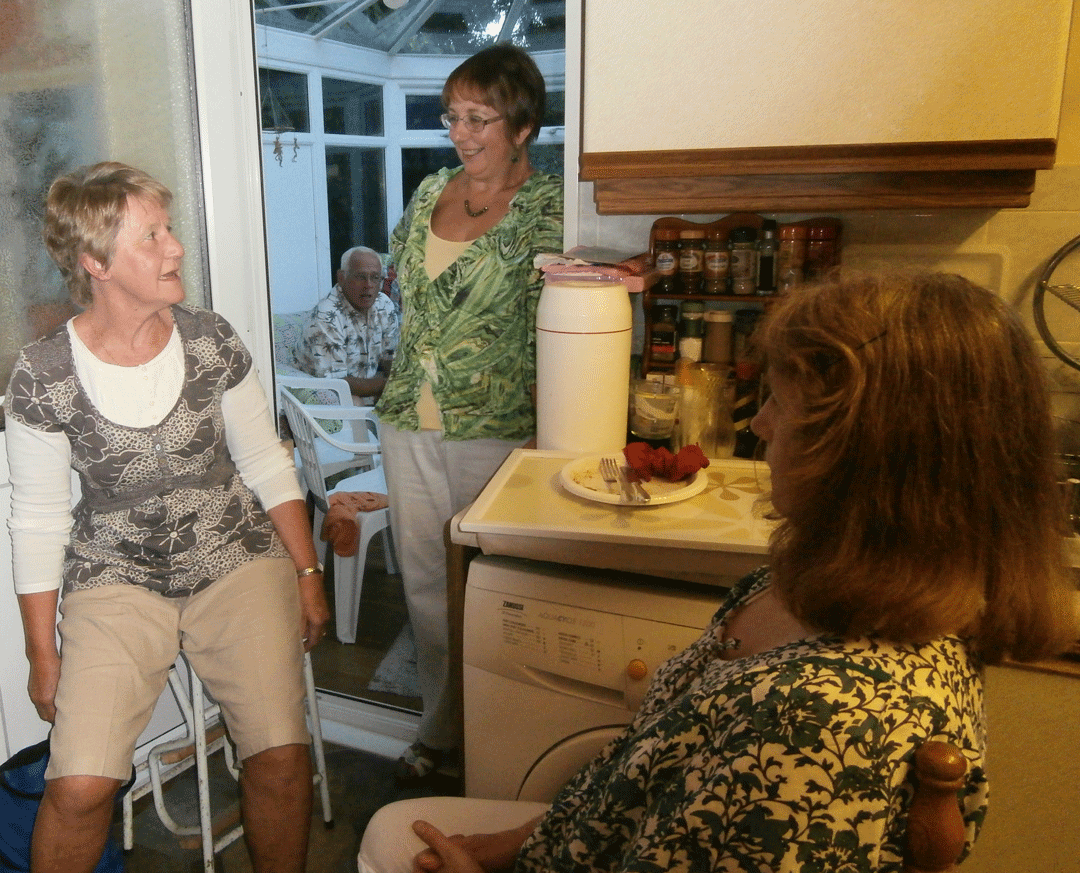
You always find them in the kitchen at parties. Ann Hitchcoe, Anne Bunn and Margaret.

Kara and Amber play with sparklers in the garden.
On a much more serious note, Monday 6th was the 8th anniversary of my first wife, Janet’s death, a date that still has a major impact on me in spite of the passing of time.
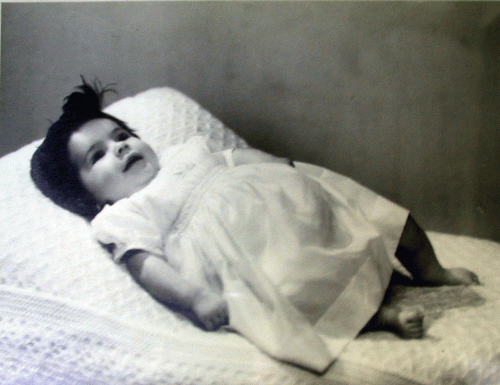
The first picture to be taken of Janet when she was one day old in 1947.

Janet and my wedding in September 1976
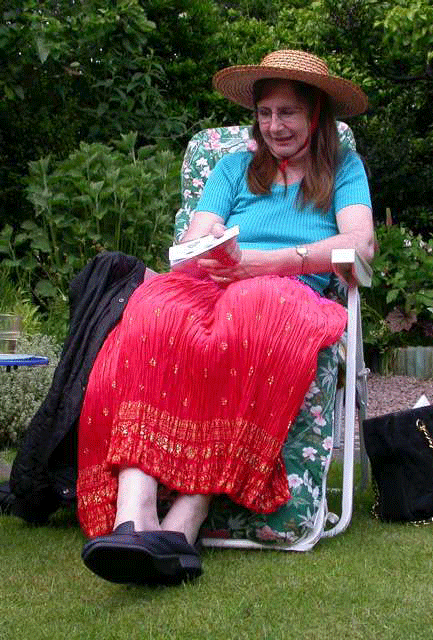
The last photo ever taken of Janet, at friends in Nottingham, May bank holiday 2004.
Back at home, a tree surgeon came to cut back some of next door’s giant eucalyptus, apparently that job has to wait for a few more weeks, but he offered to cut back one of our trees. Now we are certainly getting more light on our lawn. In the afternoon Amber and I did a few butterfly transects nearby for the national butterfly survey.
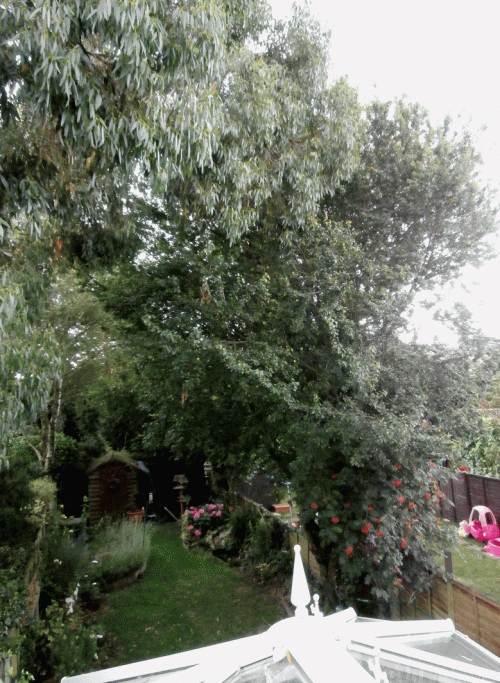
The garden before tree surgery.

The garden after tree surgery, the huge eucalyptus that overhangs our garden on the left will be cut back later in the summer, then we will really be able to see the sky.
At the end of July I returned from nearly four weeks away on Birdquest’s Remote Papua New Guinea tour. This tour visits five areas that cannot be covered on the main PNG tour, and requires more basic accommodation and rougher road conditions, although the accommodation and walking effort are nowhere near as demanding as the West Papua tour I did last year.

Ragianna Bird-of-Paradise, PNG’s national bird seen at Varirata near Port Moresby.
Flight rescheduling meant that the tour had to be done in reverse, so after a bit of birding near Port Moresby we flew to the second city of Lea, where we were taken to the hotel in a minibus with metal bars on the windows and armed guards, such is the risk from the so-called ‘rascals’. Fortunately we didn’t need to do any birding in the Lea area and the following morning we took a light plane charter to the tiny village of Wasu on the north coast. From here we headed in an open truck up a very rough road to the mountains of the Huon Peninsula where we slept on the floor of a missionary school.
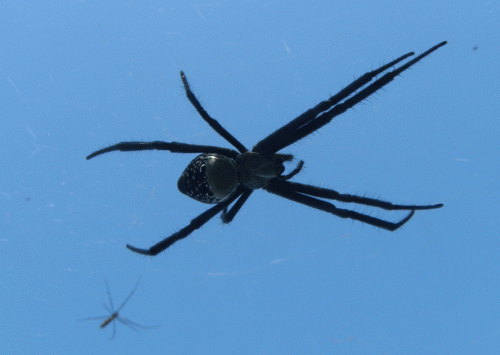
Of course I lost most of my photos from the early part of the trip but was able to photograph these giant spiders at a later stage.
The next two days produced some excellent birding, with all three of the Huon’s endemic Birds-of-Paradise (BoPs) recorded, although only females of the splendid Emperor BoP was seen, as the villagers had cut down the display tree for firewood. A fourth endemic, the splendid Spangled Honeyeater was easy, but the fifth, Huon Melidectes only occurs above the reach of roads and trails.
We returned to Wasu where another charter flight took us along the coast to the town of Madang. The pilot dropped us and our luggage near the runway and then departed in a hurry, we then realised the airport was closed and we were locked in! Eventually we found a way out and met up with the next guide who took us on another rough road to the basic but charming Keki Lodge in the Adelbert mountains. Over the next couple of days we tracked down the amazing Fire-maned Bowerbird, one of the most spectacular birds in the world, watched the incredible displays of the Magnificent and Superb BoPs and noted many beautiful pigeons and parrots. On one night walk we heard the falling bomb note of Sooty Owl, the double bark of Papuan Boobook, gruff growls of Papuan Frogmouth and the unbelievable whistles and pops of Marbled Frogmouth; yet only the latter showed in the spotlight and sadly the near-mythical Shovel-billed Kingfisher remained, as on my other two New Guinea trips, a disembodied voice in the gloom.
One thing you can rely on in PNG is that everything will be unreliable. Hence it was no surprise that the vehicles were three hours late in picking us up. We were staying the night in Madang before our next flight, but we didn’t arrive until the late afternoon and hence our boat trip to an offshore island to see New Guinea Scrubfowl had to be cancelled. Another downside to PNG, at least at the moment, is that elections are being held and away from hotels, you can’t get a beer. This is to reduce the inevitable riots, fights and even murders that occur when opposing political parties meet under the influence of a few cans of ‘South Pacific’.
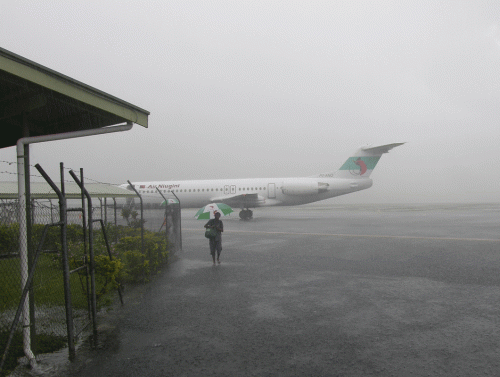
We got soaked just running from the plane to the ‘terminal’ at Manus
The next day we flew to the island of Manus, although it lies just to the north we had to fly via Port Moresby, this is like flying from Edinburgh to Aberdeen via Heathrow. On arrival we ran into an unbelievably heavy storm, I’m amazed the plane could land and amazed so much water could fall in such a short period of time. Whilst waiting for the luggage I realised my new purchased pocket camera was missing. I knew I had it on the plane, but returning to the aircraft was of no avail, it had already disappeared. I reported the loss at Air Niugini’s office, the guy phoned Port Moresby, a long conversation in Pigin followed where I could catch just three words, ‘camera’, ‘white fella’ and ‘buggarap’!
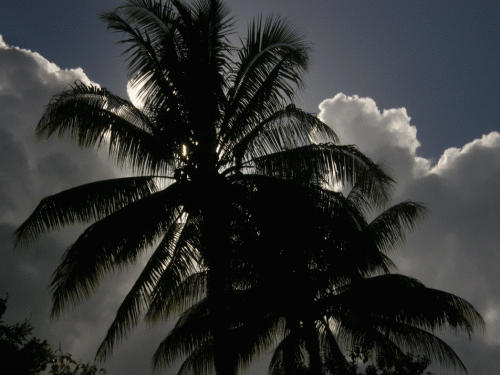
Sunshine after the storm.
We had nearly four days on Manus. Most endemics were easy to see, but this was not the case with the main target, the wonderful Superb Pitta. This is probably the rarest and most restricted pitta in the world, with nearly all records occurring within a ten-mile radius. They had been heard and seen a few days before our arrival, but the torrential rain may have destroyed all the nests as not a single bird was heard or seen during our visit. All known territories were tried and we slogged through the forest at dawn, dusk and most times in between, in fine weather and in heavy rain. We were a pretty demoralised group at the end of our stay, but a boat trip to the nearby island of Tong, was greatly appreciated as several important species not found on Manus were easily seen with yards of the beach. Nightbirding on Manus was tricky too, with the quite vocal Manus Boobook only showing briefly, however Birdquest’s first ever sighting of the endemic, arboreal, and nocturnal marsupial, Admiralty Cuscus was compensation.
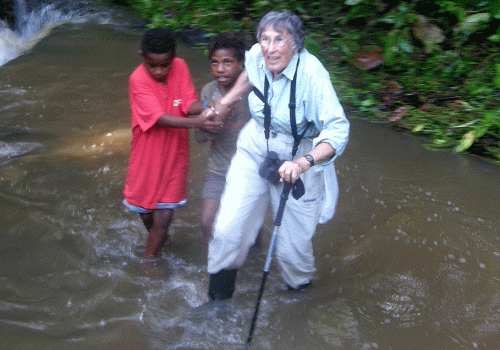
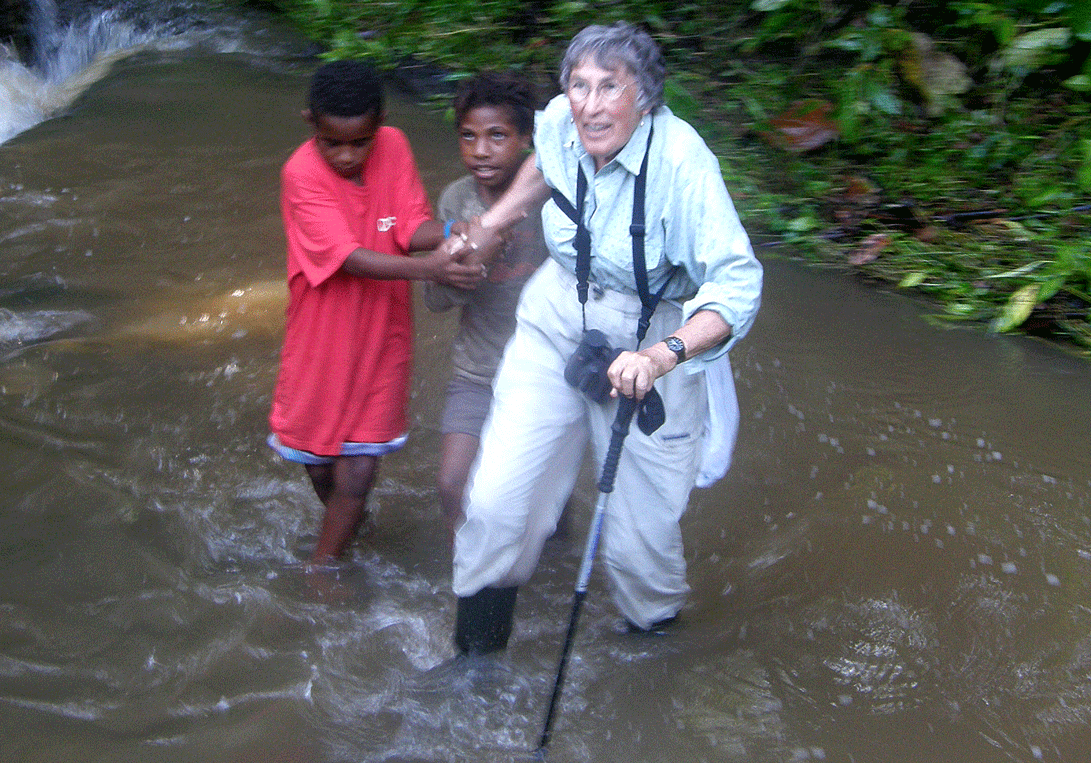
Local children help Elaine across the swollen stream.

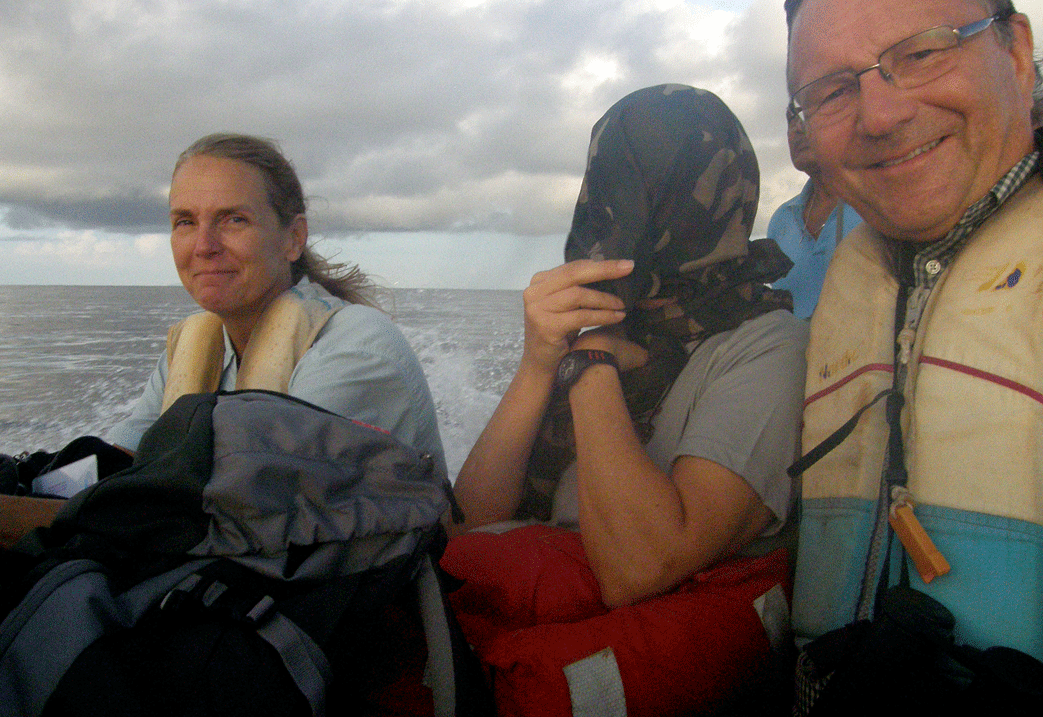
The boat to Tong, some enjoy the wind in their hair more than others.

Black Noddies accompanied us on the crossing to Tong.

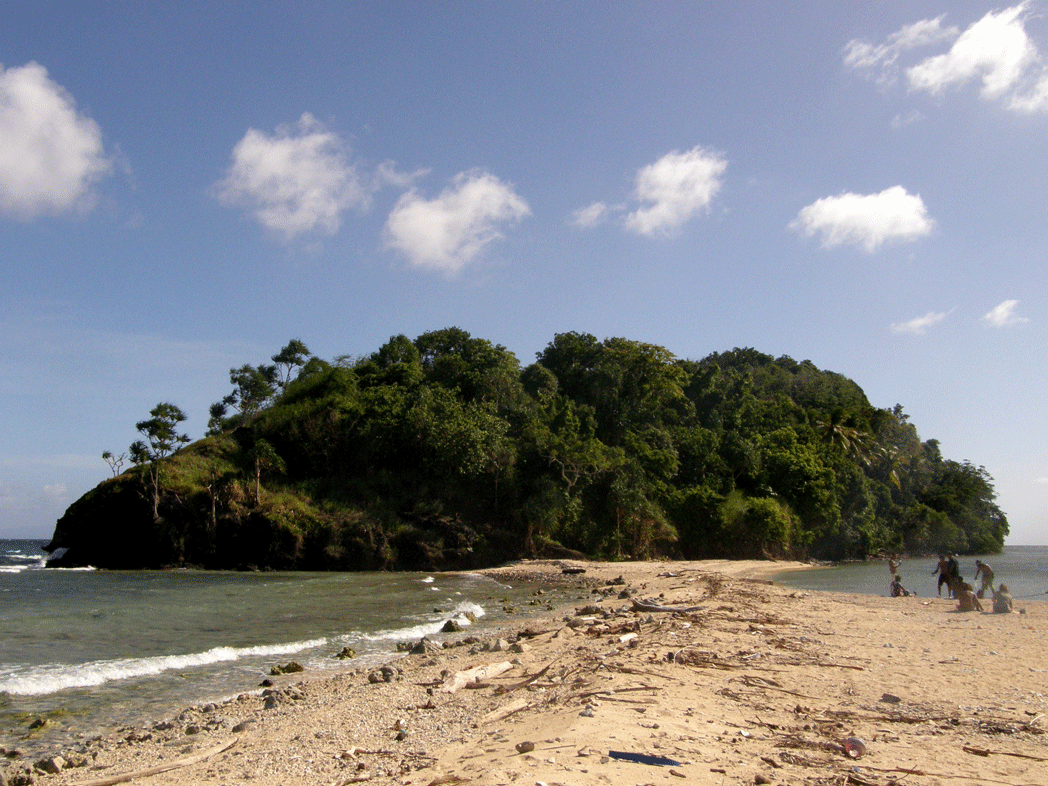
The lagoon on the island of Tong
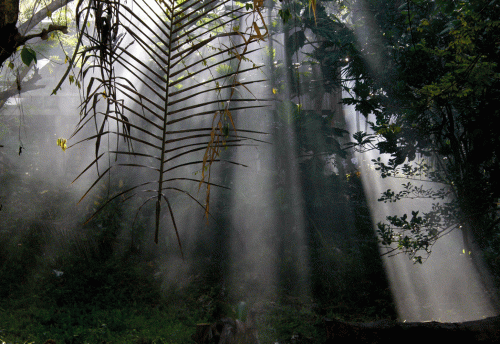
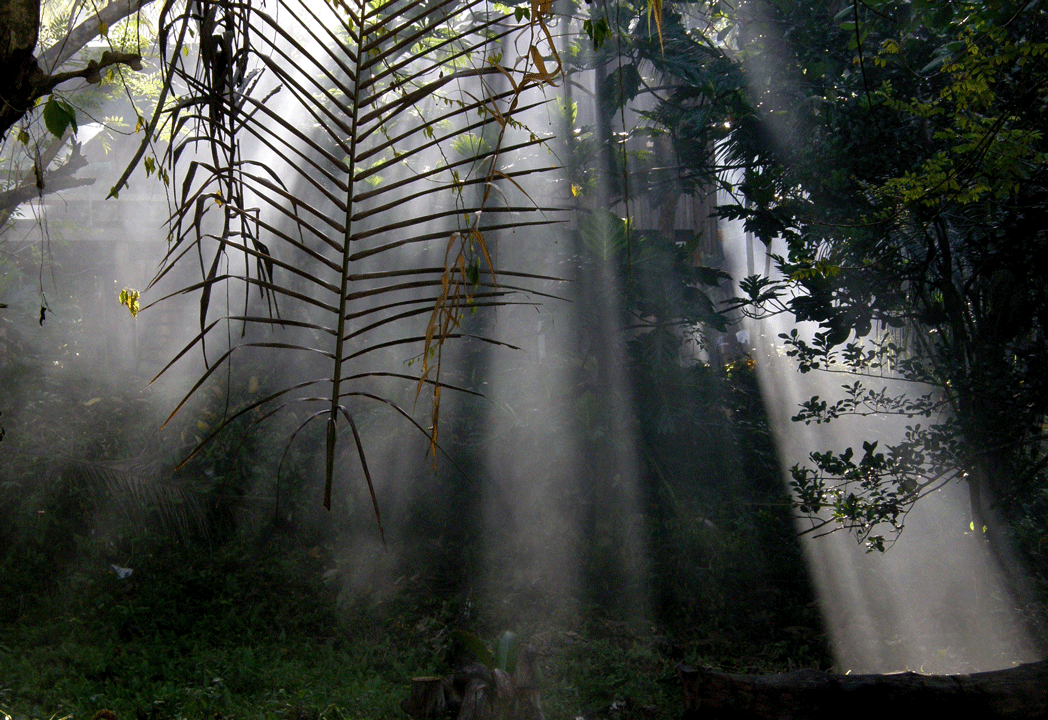
Smoke from the villages fires gave an atmospheric effect.
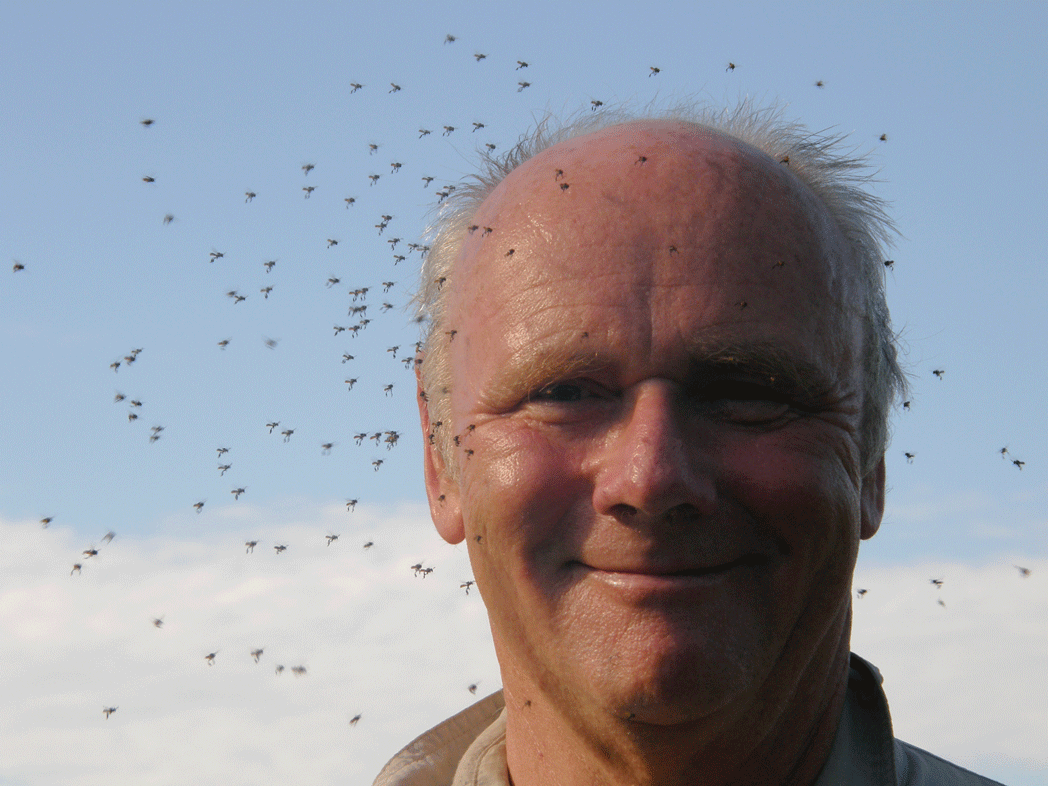
On New Ireland our plans had to be hurriedly rewritten as we couldn’t get the use of a boat on a Saturday (the locals are all Seventh Day Adventists). On our first morning we took a boat to New Hanover, to see its endemic mannikin. For some reason every fly on New Hanover seemed to congregate around my head and I gained the new nickname of ‘Lord of the Flies’.

Lord of the flies?
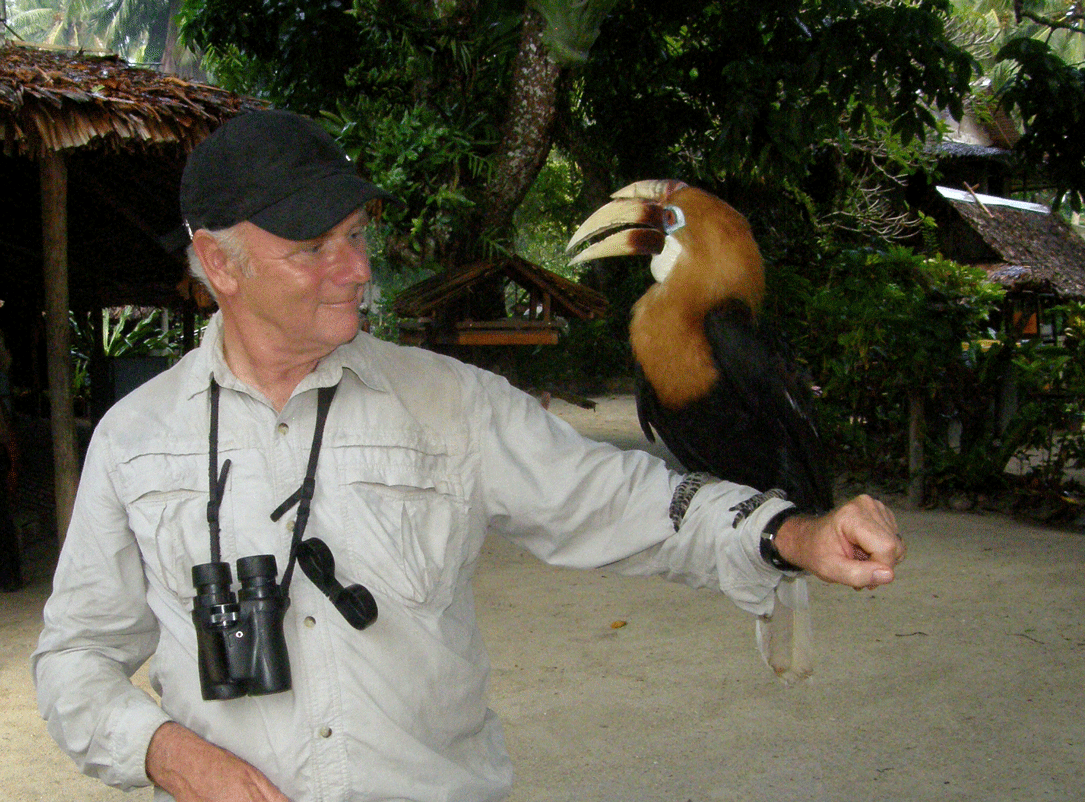
On our return the boatman took us to the island of Nusa where we found a Laysan Albatross was being cared for at a local diving centre. Picked up offshore, this USA ringed bird (probably from Midway or Laysan) was becalmed and now wandered around the huts with the chickens, eating fish from a bowl and was herded inside every night for its own protection. It was only a life bird for one of the group, so only he had to decide on the ethics of ticking it!

An unusual place to see a Laysan Albatross

Getting acquainted with the locals!

Safe sex and safe driving, presumably not at the same time!
Our time on New Ireland was divided between staying at a hotel in the north and a beautiful, if basic lodge on the beach further south. Here there was a nearby river to wash in and terns and tattlers along the shore. Birding in the mountains brought a good range of endemics but perhaps the most notable were Mayer’s Swiftlet, a bird known only from four specimens and a couple of field sightings and the as yet, undescribed ‘Bismark Flyrobin’. A real surprise was running into Richard Schofield, a former Birdquest leader on a private trip, who was less than satisfied with the Papuan way of doing things and the cost and lack of availability of beer.

It might look like an abstract painting, but it is actually tree bark.
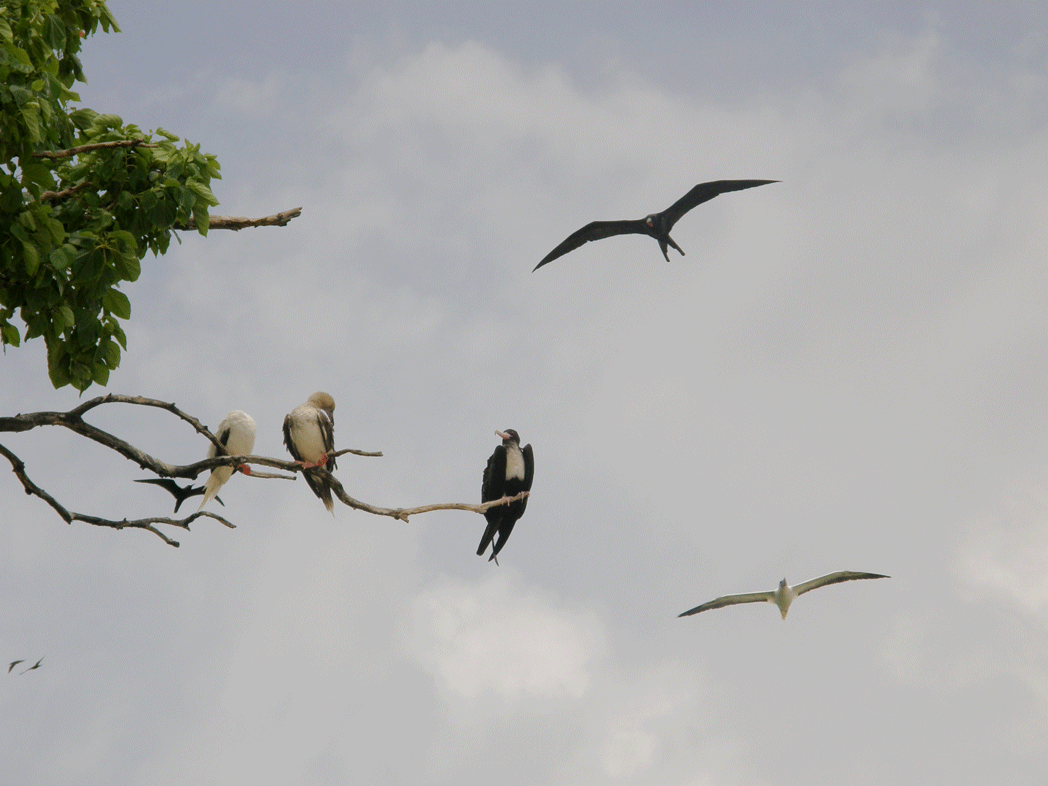
Perhaps the most memorable day whilst on New Ireland was our boat trip to the remote island of Tench. Situated 100km north of New Ireland and just south of the Equator, this tiny island of less one kilometer square is home to about 30 adults (and many children), huge numbers of Boobies, Noddies, Frigatebirds, White Terns and a few Tropicbirds and best of all Atoll Starlings, a bird only known from six tiny islets throughout Melanesia. It took three hours each way in a small boat, calm on the way, but rough and wet on the return. We were made very welcome by the islanders who live in almost total isolation and who had to be evacuated a few years ago when a large wave contaminated their water supply and destroyed their taro crop. They have only recently returned.

Tench islanders
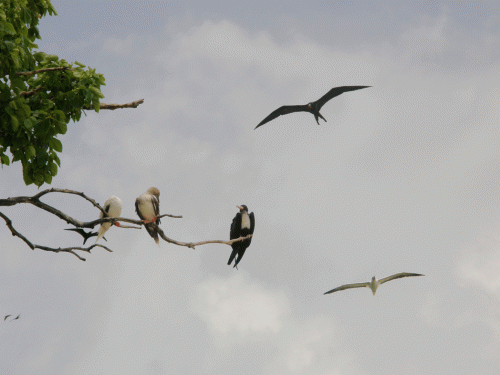
Great Frigatebirds and Red-footed Boobies

The beautiful White (or Fairy) Tern makes no nest but lays its egg on a fork in a branch.
Once again we had to return to Port Moresby before flying to Alotau in the extreme south-east. Here we boarded a dive boat that was to be our home for the next three nights. We motored through Goodenough Bay and the wonderful scenery of the D’Entrecasteaux Archipelago to reach Ferguson Island, where we encountered two more BoPs; Goldie’s BoP and Curl-crested Manucode. Again we were made welcome by the islanders. This boat trip proved to be a relaxing and very enjoyable conclusion to the tour.

Relaxing on the MV Chertan

Indo-Pacific Bottle-nosed Dolphins bow riding.

On arrival at Ferguson Island the locals rowed out to find out what we were up to.

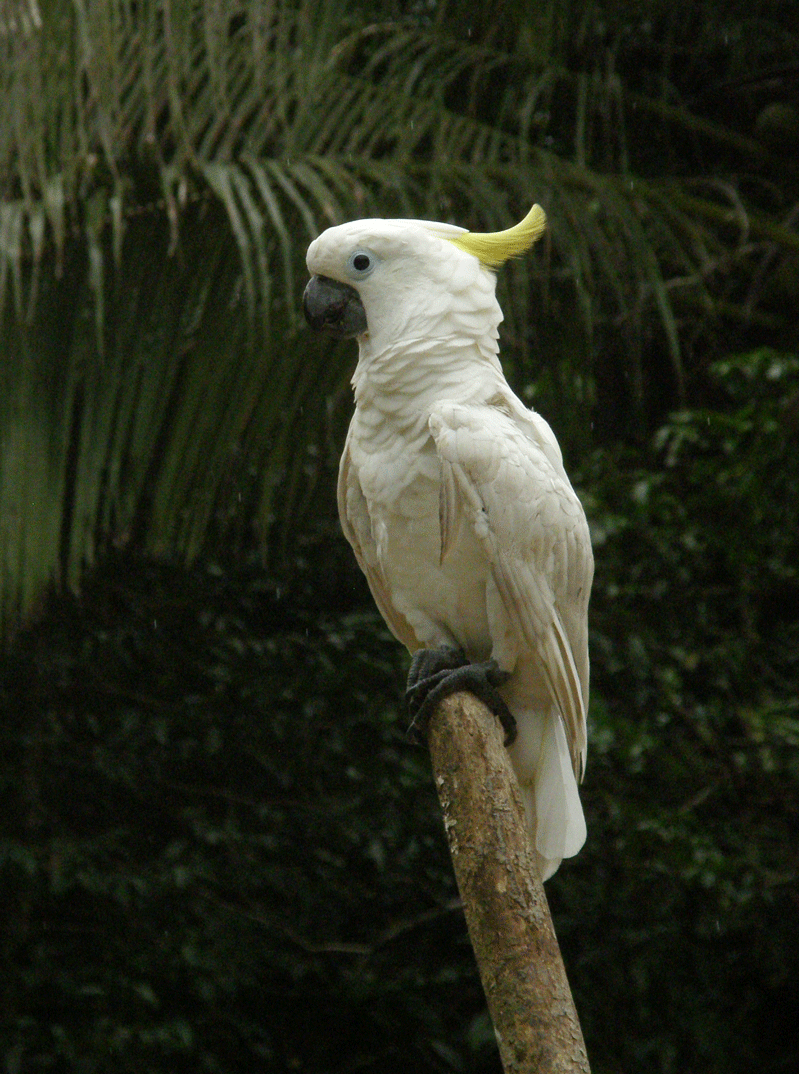
The widespread Sulphur-crested Cockatoo showed well.
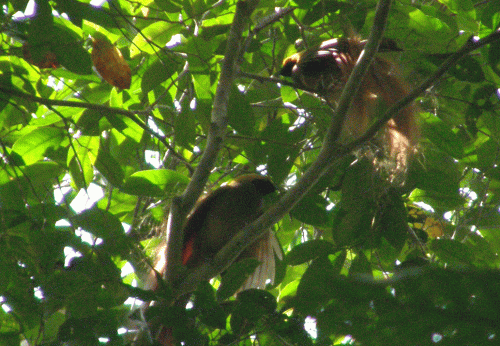
Two male Goldie’s BoPs displaying. This one of the least known BoPs, occurring only on two islands in the D’Entrecasteaux archipelago.
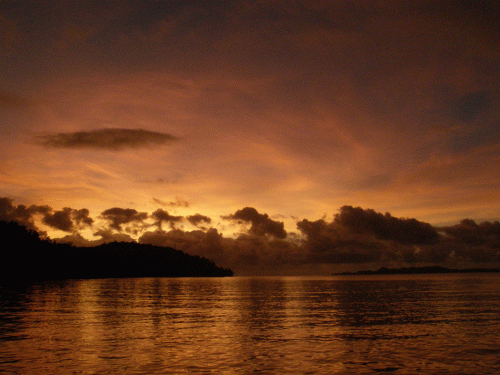
We returned to the boat to sleep and witnessed this stunning sunset.
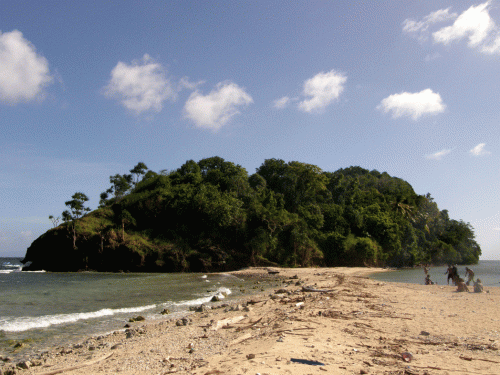
Our final birding was on the uninhabited Duchess Island where we searched without success for the Louisiades White-eye.
Sadly we had to return to Port Moresby where the group split up and went their separate ways. Such is the international nature of Birdquest groups these days (ours consisted of two Brits, two Belgians, two Yanks, a Swede and Frenchwoman) that I was the only person flying back to Heathrow. It had been a wonderful tour, great company, great fun and lots a great birds, I managed to add 36 new birds to my list and travel to some of the least visited areas of the world, it certainly was off the beaten track. The only downside was that, as in the UK recently, we experienced an awful lot of rain and this was the probable cause of us missing a few excellent species.
Since we returned from Scotland things have been very busy and I have had little time for birding. I have managed to add two species to my year list however. On the 18th and 19th I visited a densely vegetated pond at Pennington in Hampshire to search for a Night Heron. On my first visit I failed completely and I thought this was going to happen on the evening of the 19th as well, but at 2100 I heard a short bark overhead and looked up in time to see the Night Heron flying out to the coastal marshes.
On the 22nd during strong south-westerlies I headed to Portland where I saw three Balearic Shearwater. This is a very rare species globally but during the summer a proportion of the population migrates to the English Channel where they can be seen off the Dorset coast in the right conditions.
These two species took my year list to 275, well on the way to the 300 I hope to see or hear in 2012 and only half way through the year (although the law of diminishing returns kicks in big time now).
The 13th was our third wedding anniversary but unfortunately was also the date when we heard of my mother’s death. My brother dealt with the arrangements but we stayed in touch throughout. We went to Derby for the funeral on the 27th calling in at Coventry to pick up Mum’s sister, Audrey. We stayed overnight in Derby and returned the following day, fortunately leaving just before the torrential downpours, which caused widespread flooding, hit the area.
Tomorrow I leave for an extended visit to New Guinea (again). This time I will be visiting a couple of areas in the east of the mainland plus the islands of New Ireland, Manus and the D’Entrecasteaux archipelago, so there won’t be any blog updates until the end of July.
The 17th was the anniversary of my retirement, this last year has been one of the best and most fulfilling in my life. It was also the anniversary of the blog, in the last year I have uploaded 219 posts, with over 1500 photos and had nearly 18,000 views from some 80 or so countries (top scores UK, USA, South Africa and Austria).

As soon as we got back from Scotland, Amber and Kara presented with me with this T-shirt for my birthday. They call me G3, as they already have two natural granddads, so step-granddad is granddad number 3.
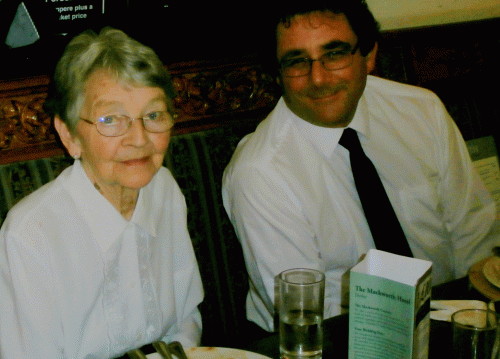
After Mum’s funeral we gathered at a nearby hotel for a meal. Simon is with our Aunt Audrey, Mum’s younger sister from Coventry. Of her four siblings two have already passed away and the other is too infirm to travel.

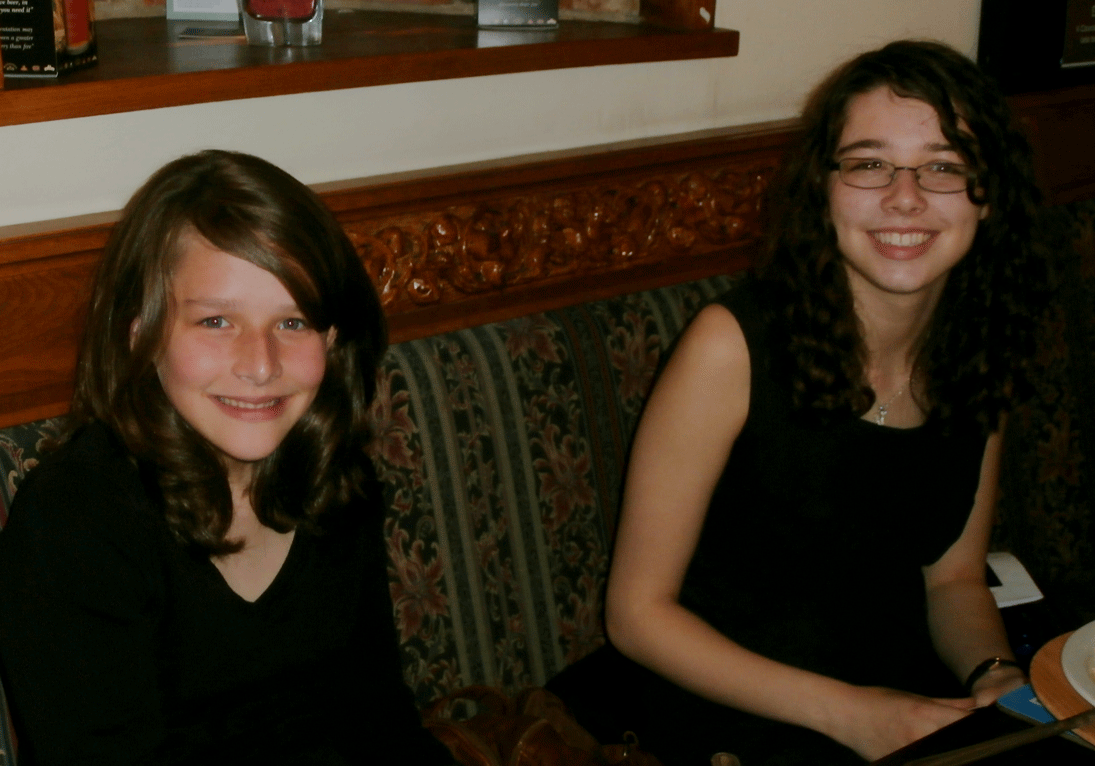
My nieces Jennifer and Miriam. Miriam has now finished her GCSEs and is set to start four A level courses in the autumn. Jennifer has just had her 14th birthday and has selected her GCSE subjects.
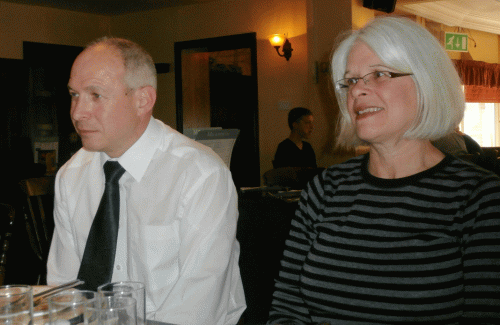
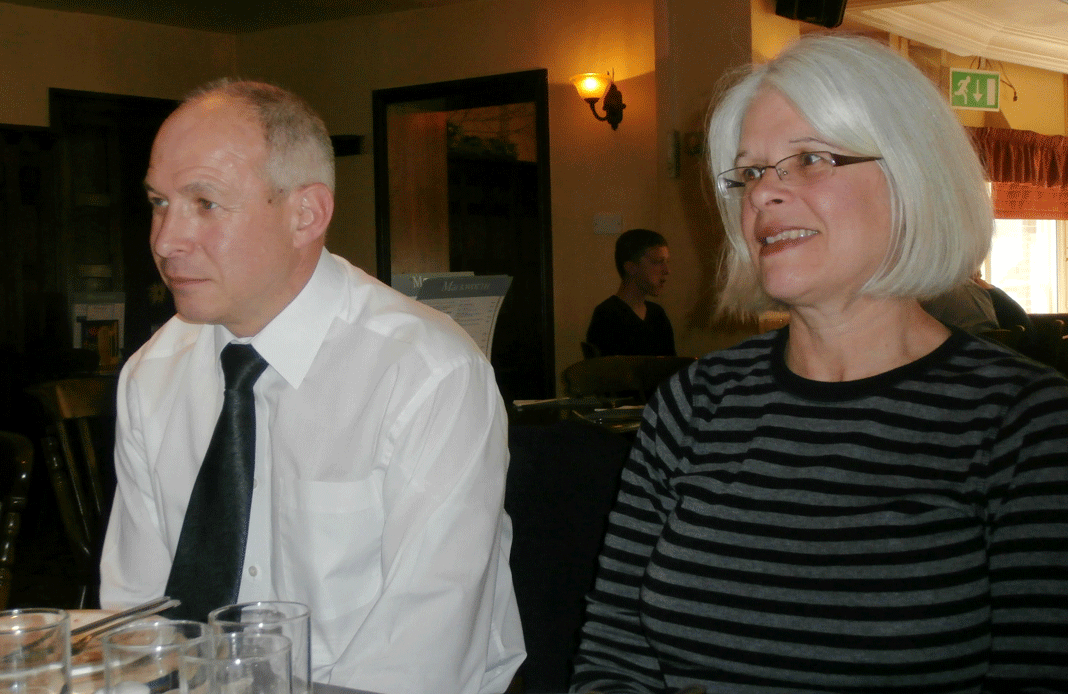
My sister-in-law Viv and her brother Graham.
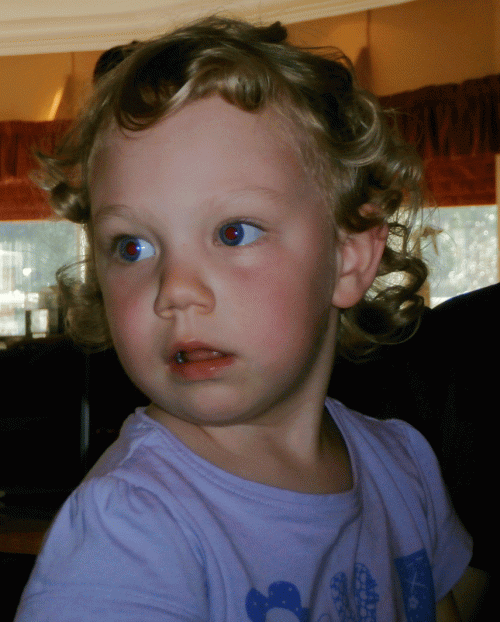
Graham and his wife Sally have three daughter’s (Miriam and Jennifer’s cousins) and each has had a child relatively recently. This is two year old Lauren.

…. and one year old Arlo…

… whilst Margaret holds her husband’s sister-in-law’s great nephew, two month old Archie. All three kids behaved extreamly well.

Caledonian pine woods once covered much of Scotland, but today native forest only remains around Speyside and a few areas to the north.
On the 13th we drove from Lochcarron across to Inverness and then south to Speyside where we stayed at Boat of Garten. The Speyside area is one of the most outstanding in the UK, with large areas of native Caledonian pine forest, birch woodlands, open heaths and on the Cairngorm plateau, an arctic/alpine zone. We had two full days and two half days to explore this area. We saw most of our targets, Red and Black Grouse, Ptarmigan, Dotterel, Scottish Crossbill, Crested Tit and breeding Slavonian Grebes, missing only the giant woodland grouse, Capercaille which is much easier to see in April when it leks.

Native Red Squirrels are fairly common.

In the late 50’s a pair of Ospreys returned to breed at Loch Garten, having been extinct in the UK for most of the 20th century.
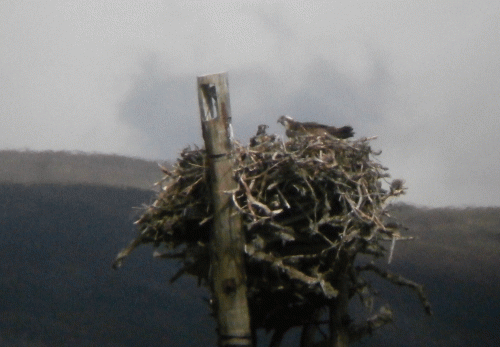
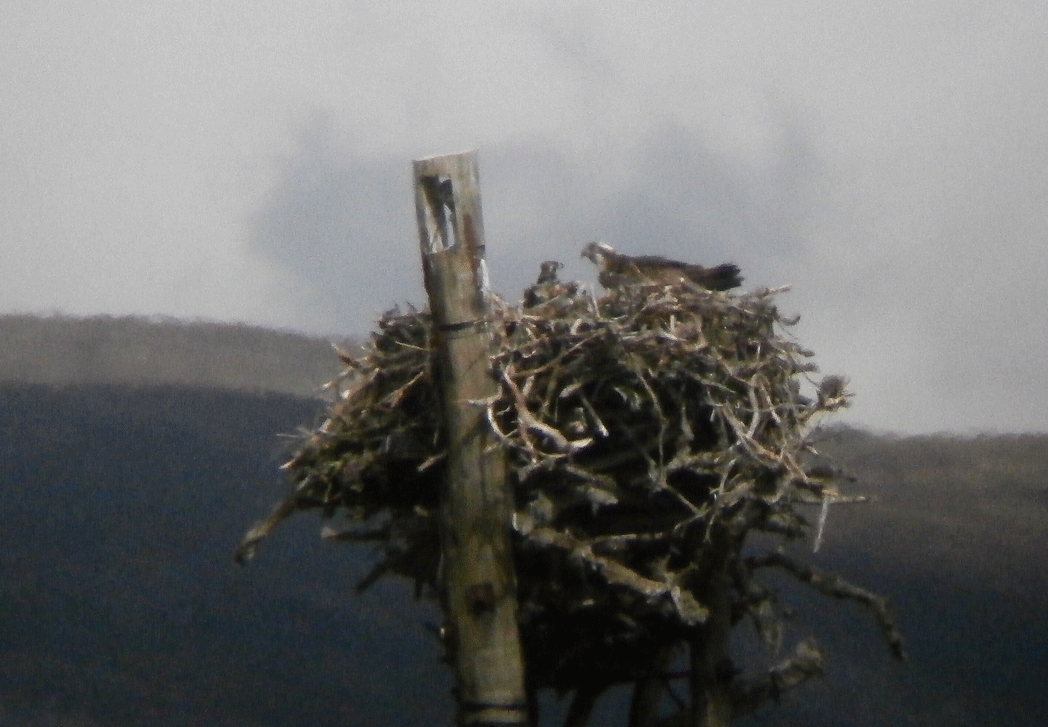
The same Osprey nest site has been used for the last 60+ years. In that time the nest has blown down, been robbed by egg thieves and the tree cut down by vandals. Today it is bolted together with metalwork and surrounded with electronic surveillance. The female Osprey and one of the three chicks can be seen in the digiscoped shot.
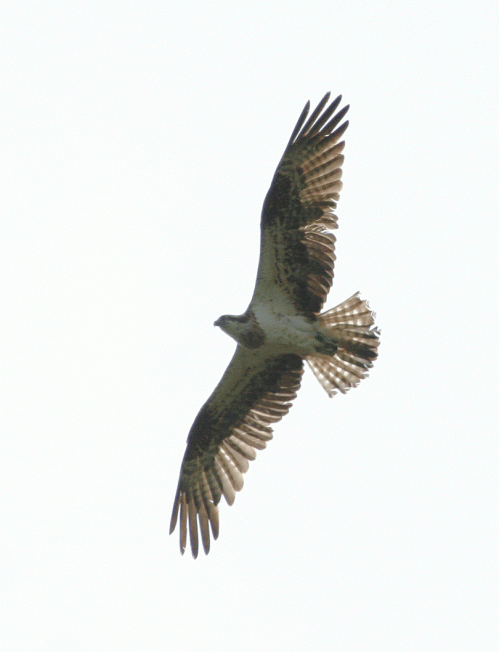
Osprey
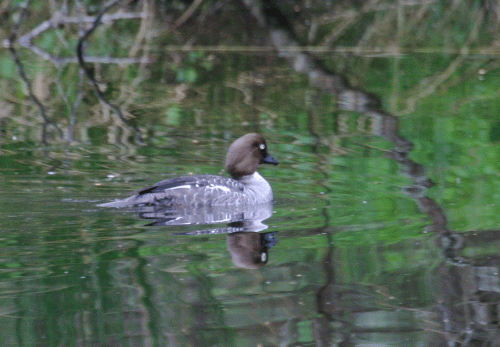
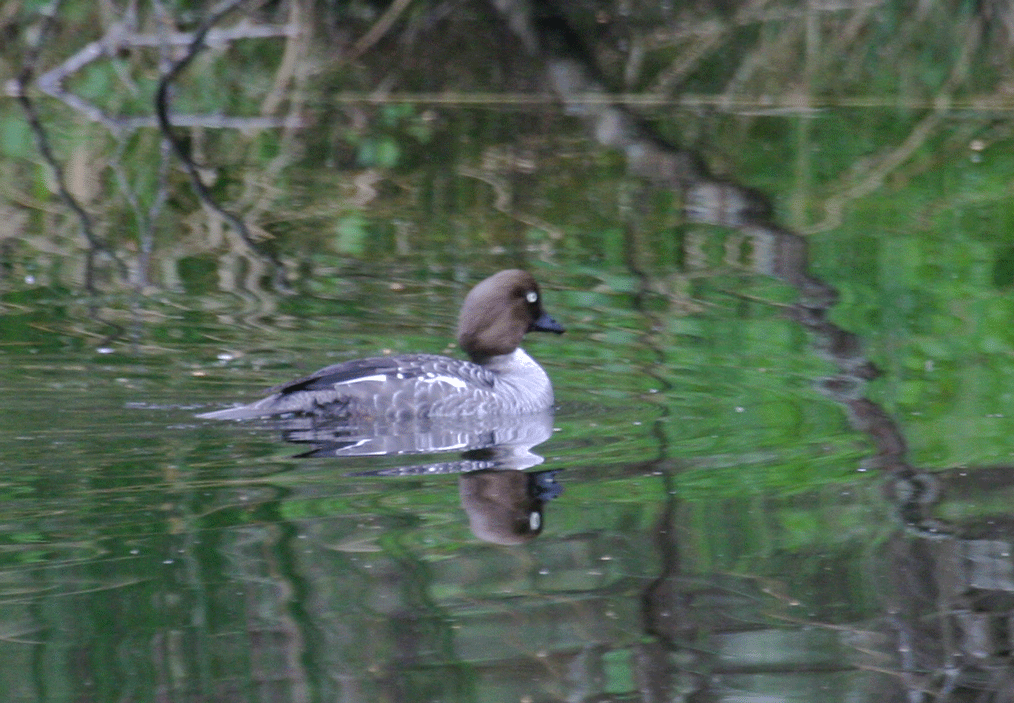
Nest boxes have allowed numbers of breeding Goldeneye to increase and they are a regular site on the largest lochs.
We hoped to go up the funicular railway on Cairngorm Mountain and then go on an organised walk to the summit (you are not allowed to walk on the summit plateau on your own unless you hike up from the base). Low cloud changed our plans and we headed up to a nearby ridge where my targets of Ptarmigan and Dotterel could be found but Margaret’s knees didn’t allow her to get to the top.

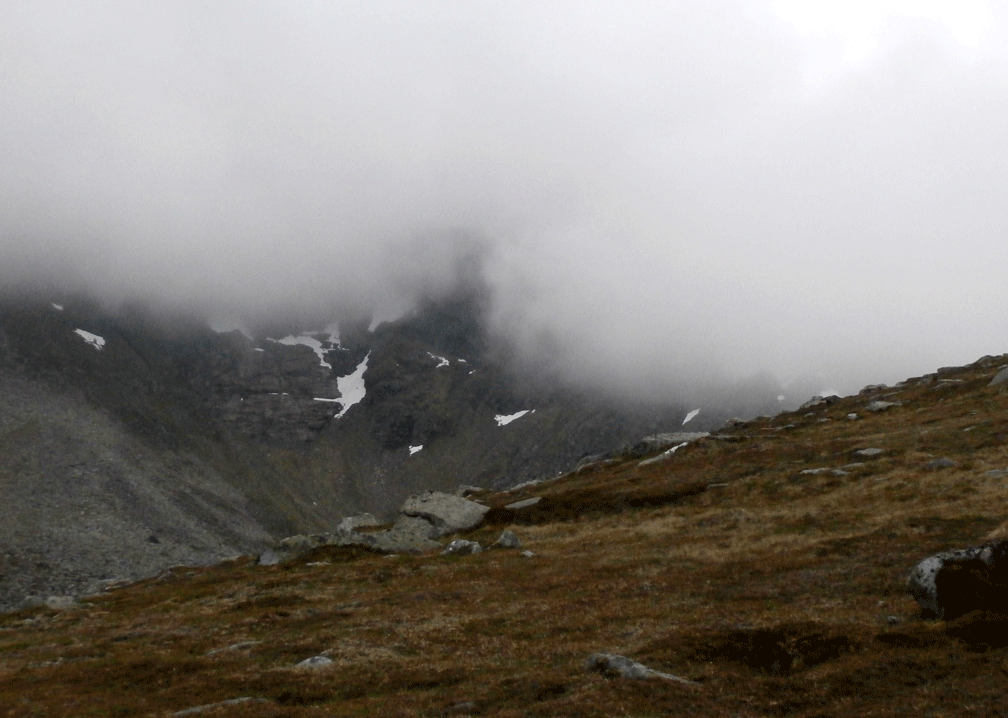
Cairngorm summit is at 1245 m but we were able to get into the alpine zone by following a nearby path to a ridge at 1080m, on the edge of the cloud base.

As the cloud lifted there were stunning views to the west, but not eastwards towards Cairngorm which remained obscured.
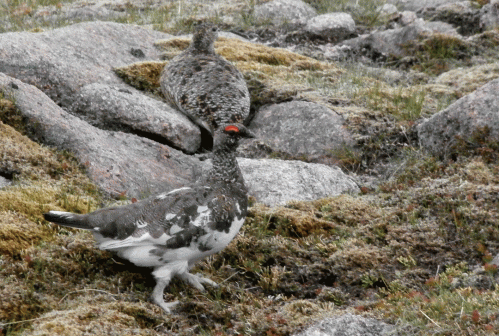
Ptarmigan, a bird with a silent P (like ‘swimming pool’)
One afternoon we drove north to Carrbridge, the Findhorn Valley, Loch Ruthven and the south side of Loch Ness.

The historic bridge at Carrbridge.

Mammals were much in evidence in the Findhorn Valley, with many Red Deer …..

…. feral goats ….

…. and Brown Hares.

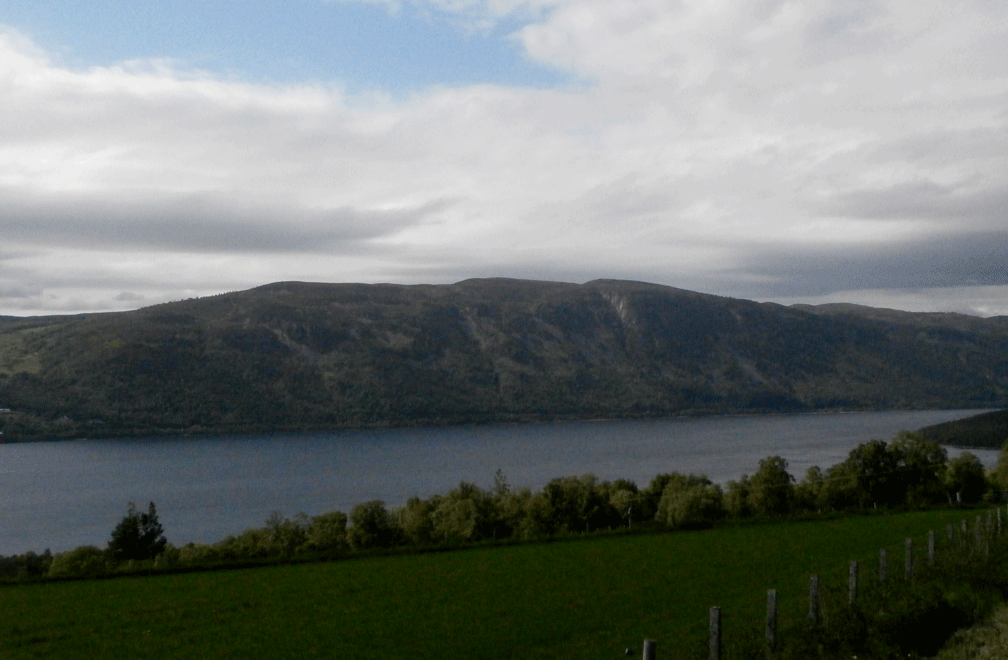
It’s not far from Loch Ruthven to the south shore of Loch Ness.
One wet afternoon we drove to the east coast near Aberdeen. After struggling with heavy traffic and lack of road signs in central Aberdeen we reached Blackdog. An American Black Scoter, several Surf Scoter and a King Eider had been reported here and the former was new bird for my British list. As it was June and most seaduck were on their breeding grounds I had expected an empty sea with just one or two seaduck on it. I was amazed to see over a 1000 Common Eider on the beach and similar numbers of Common Scoter offshore. With a strong NE wind, heavy rain and a pounding surf, sorting through these birds was difficult to say the least. Eventually I found about 20 Velvet Scoter and had flight views of the Black Scoter but dipped on the Surf Scoters and King Eider, which is not surprising considering the birds were scattered all along the coast.

It took a walk down the beach, a tricky crossing of this log and a clamber up into the dunes for shelter to get a good look at the ducks at Blackdog.
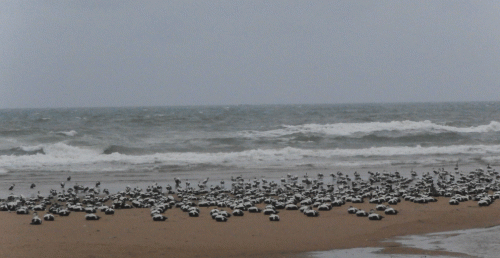
Male Eiders gathering to moult. Just a small part of the huge flock.
Late on the 16th we drove down to Edinburgh and stayed overnight with Margaret’s younger brother Duncan and his wife Wendy. We flew back to Southampton in the late afternoon of the 17th and were home by 9 pm after a most rewarding Scottish trip.

Margaret with (L-R) her nephew Darren and Sean, sister in law Wendy and brother Duncan.
Later on the 10th we headed south from Stornaway. Back in Harris we took the side road to Huisnis, the scenery was fantastic, with huge mountains to our right and white beaches to our left. The area was said to be good for Golden Eagles, but we didn’t have any luck in the short time we were there. In the evening we caught the ferry from the southern tip of Harris to the island of Berenay, which is connected to North Uist by a causeway.

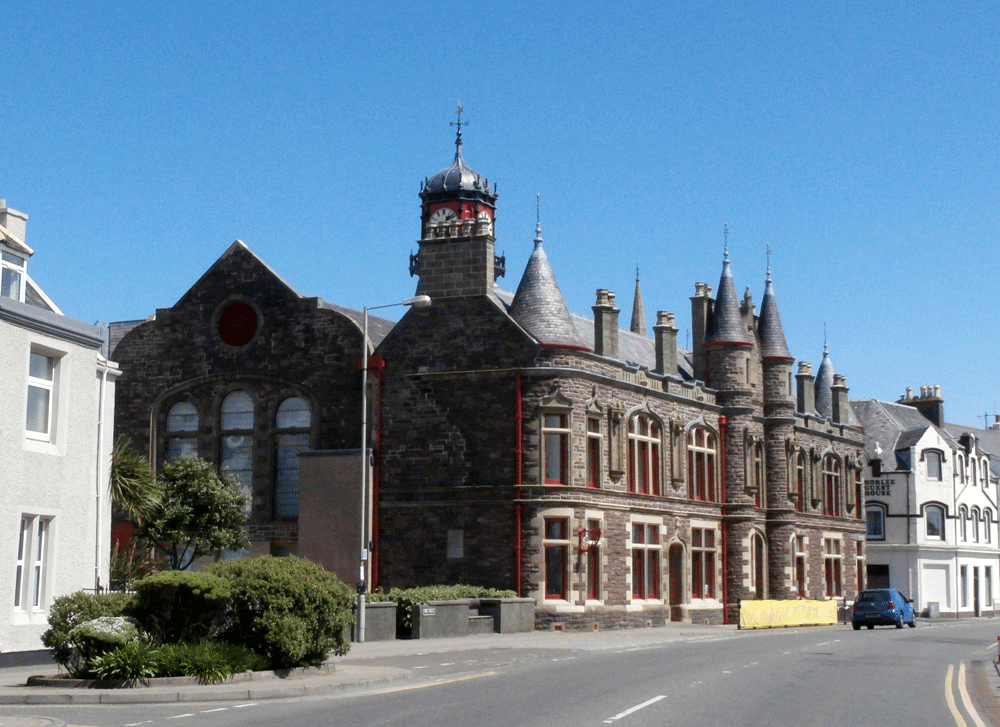
Stornaway, the capital of the Outer Hebrides.

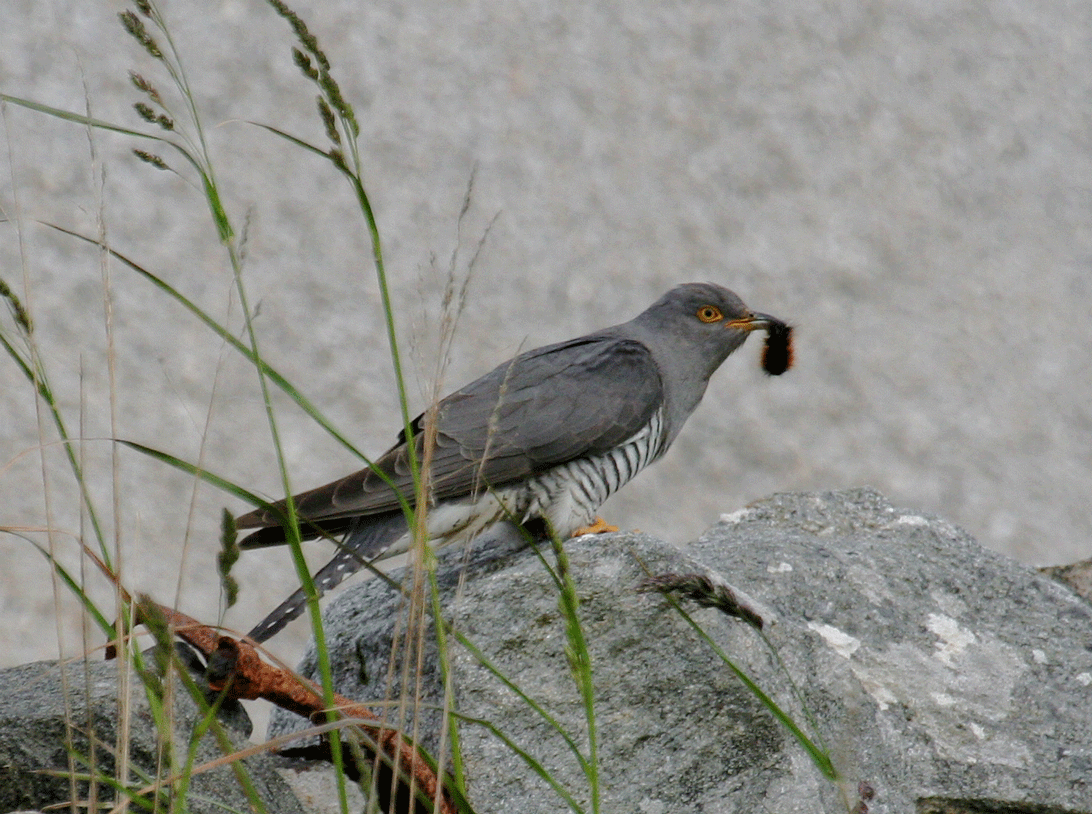
Cuckoos remain commoner in Scotland than the south.

The road to Huisnis passes through the grounds of this castle.

The mountains of west Harris …….

…. and beautiful white sand beaches.
Again we had trouble finding our pre-booked B&B, it was off a loop road that ran round the small island of Grimsay which between North Uist and Benbecula, but all we knew wa that it was number 7 but none of the houses were marked. With dusk not arriving until 11 pm there was time to head to Benbecula and search for a vagrant Greater Sand Plover that had been there for the last few days. I have seen one Greater Sand in the UK, but that was in 1978, so I was disappointed to find it had gone. The area was stuffed full breeding waders that noisily mobbed me as I headed for Stinky Bay, the last known site of the Sand Plover.

Oystercatchers called loudly in defense of their nests.
The Uists have a mountainous eastern side, full of small lochans and covered in bare rock whilst the western side is covered in flower rich grassland known as the machair, which has probably the highest number of breeding waders in Europe.

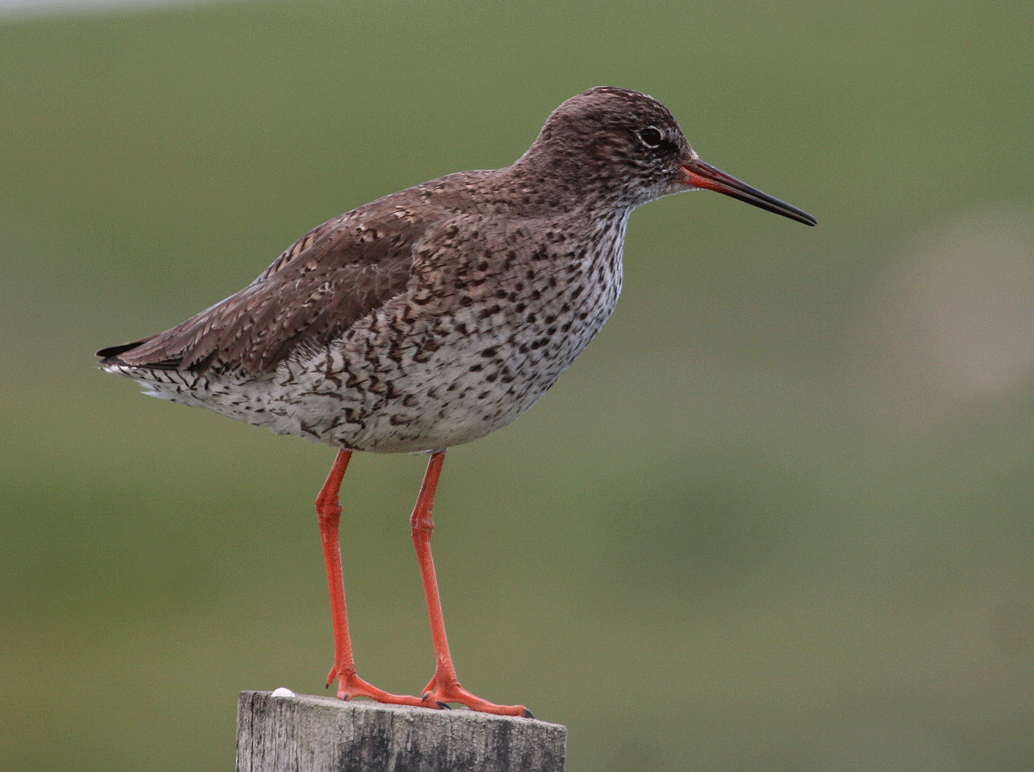
Breeding Redshanks call from fence posts
On Monday 11th I had a pre-breakfast visit to Stinky Bay, just in case, Short-eared Owl and a Hen Harrier were some compensation. Later we headed for the RSPB reserve at Balranald where Corncrakes were in good voice and then onto the north side of the island at Sollas where a beautiful male Snowy Owl was in residence. A quick visit to a viewpoint where Golden Eagle nest could be seen was a bit disappointing, we could just make out the nest but with the scope blowing about in the wind I couldn’t really make out any birds. Margaret had been suffering from a cold for the last few days and was feeling really rough this afternoon, so we returned to the B&B until the evening.

Short-eared Owl
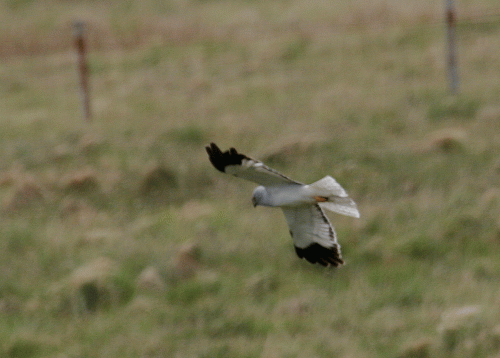
Male Hen Harrier

Once common throughout the UK, Corncrake numbers fell dramatically with agricultural intensification, their last outpost was the Outer Hebrides where only 400 pairs remained in the 90s. Active management has increased the population since.

Another bird that has declined precipitously but now has a stronghold in the Hebrides is the Corn Bunting
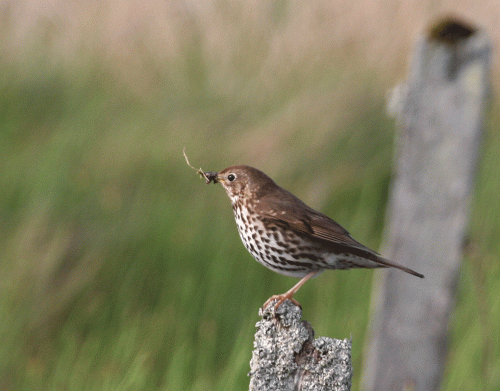
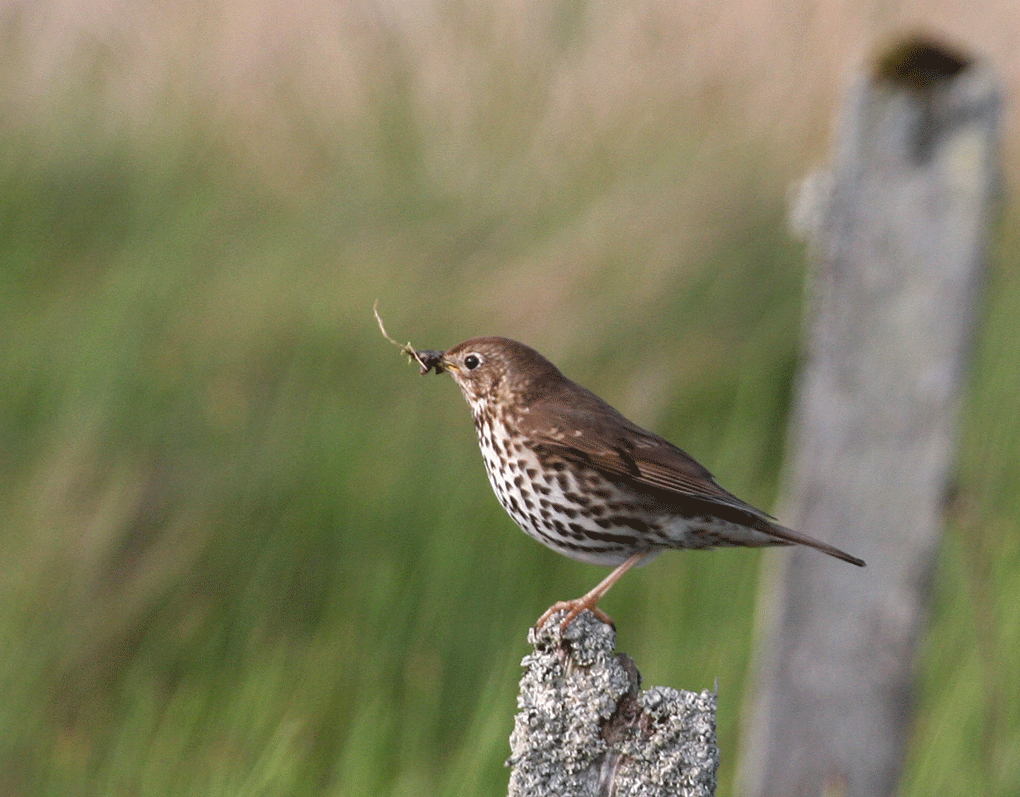
The Hebrides have an endemic race of Song Thrush, which lacks the buffy wash on the breast and flanks
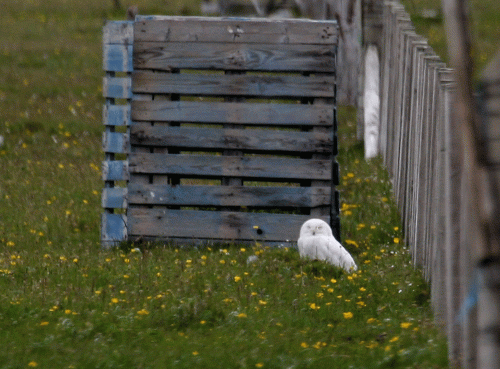
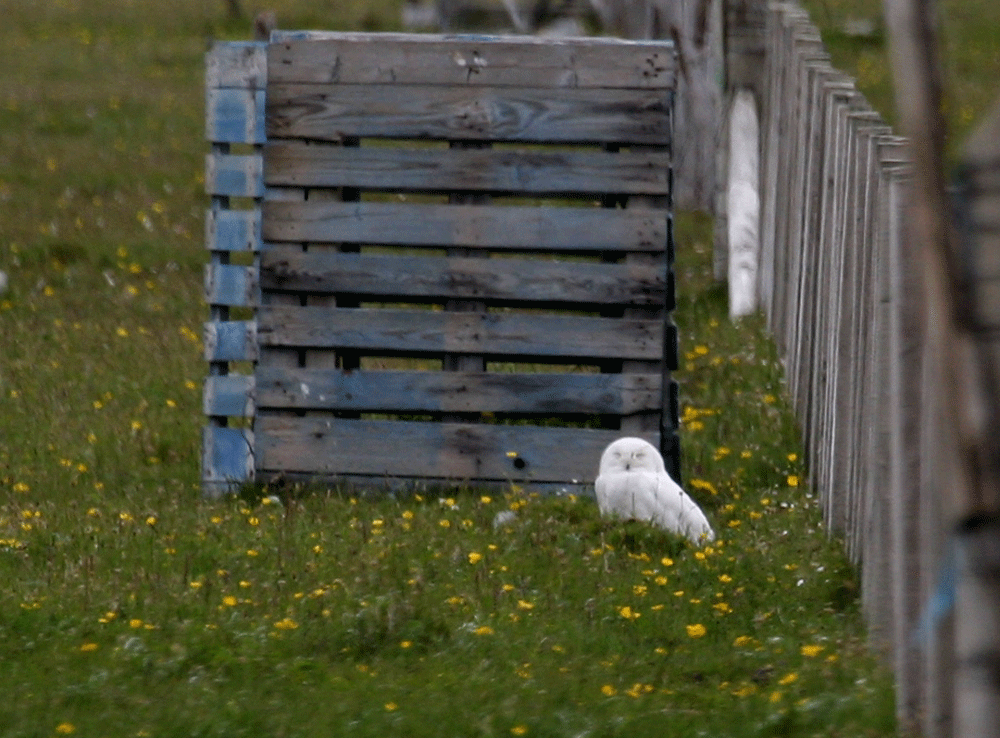
This beautiful male Snowy Owl has been on the Outer Hebrides for several years but this summer it has taken up residence in an accessible location.
Another visit to Stinky Bay in the evening was unsuccessful but again we saw large numbers of breeding Lapwing, Curlew, Ringed Plover, Dunlin, Redshank and Oystercatcher, along with many Greylag Geese, Eider and Shelduck, all with young. Twite, Short-eared Owls, a Hen Harrier and drumming Snipe all added interest. The sky had been grey but now in the late evening the sun appeared below the cloud bathing the machair in a wonderful purple glow.
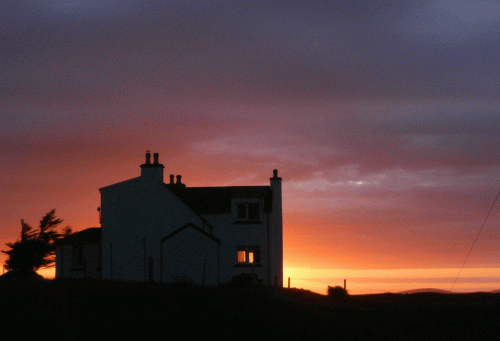
We were up early on the 12th in order to catch the 0730 Lochmaddy to Uig ferry. There were several other birders on board, one managed to find a Storm-petrel on the crossing but I failed to pick it up, but we did see a good number of Manx Shearwaters along with the expected auks.
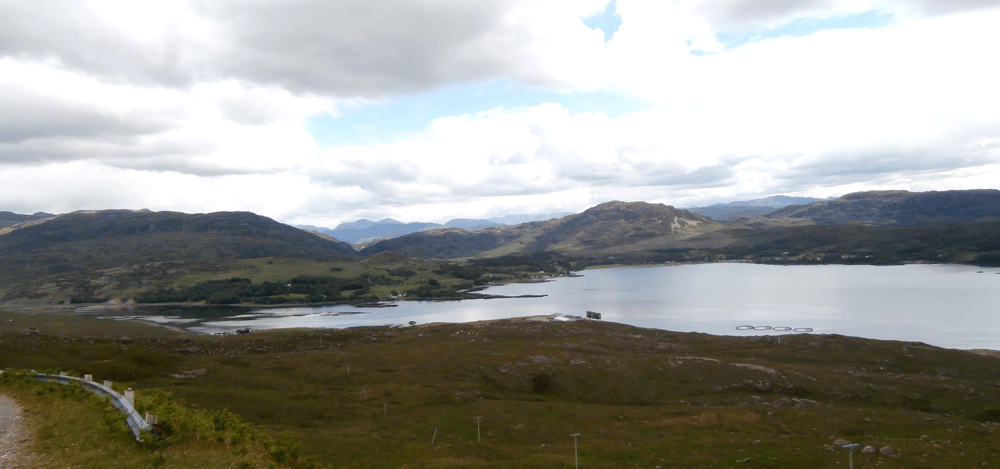
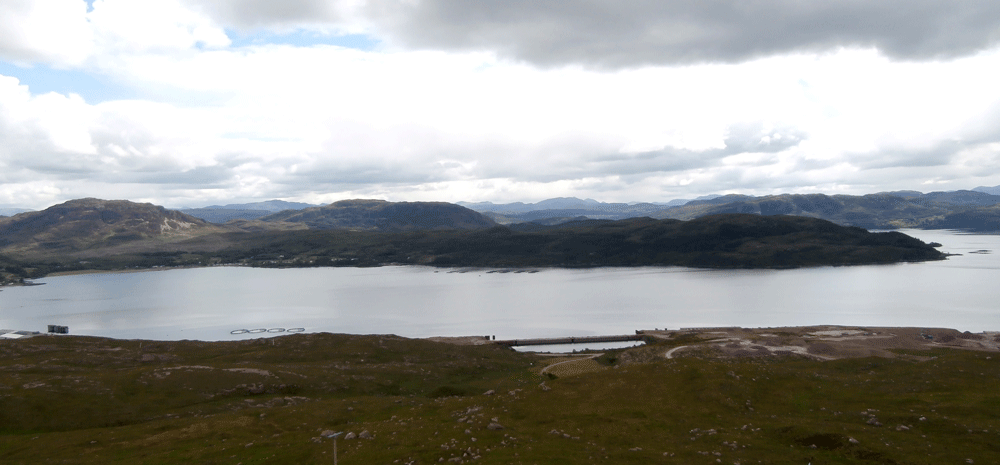
Back on Skye we drove across the island, over the bridge to the mainland and then north to Lochcarron. Our B&B here was a back up site for Pine Marten, but of course we had already seen one further south, however it proved to be an excellent base to explore the Applecross peninsula and to drive on Britain’s highest road. At the top we searched for Ptarmigan, but although I heard one, I got no more than a brief glimpse. One the way down we flushed a Red Grouse. The views from the top were stunning, an almost 360 degree panorama. We later drove around the narrow coastal road seeing some of the finest coastal scenery in the UK.

The Applecross peninsula
Below: 180 degree panorama taken in three photos from the top of the Applecross peninsula looking south over Loch Carron. Skye can be seen in the background to the right.


The Caledonian MacBrae ferry didn’t used to run on a Sunday but the islanders were obliged to relent.
On the evening of the 9th we caught the ferry from Uig on Skye to Tarbert on Harris. We saw loads of Puffins on the 90 minutes voyage, possibly up to a 1000 but none of the Storm-petrels I had hoped for. On arrival we headed for the small island of Scalpay which is joined to the mainland by a bridge. We had trouble finding our B&B, Margaret asked a local man but reported she couldn’t understand because he was talking in Gaelic, the common language of the islands. We later found out he was unintelligible because he had suffered a stroke!
Harris/Lewis (the division is an administrative, not a geographical one) is famous for its strict observance of the Sabbath, and today was a Sunday. There were no shops, filling stations, bars or visitor centres open and the roads were empty. We were lucky we had found a B&B that served breakfast and we had snacks with us and a full tank.
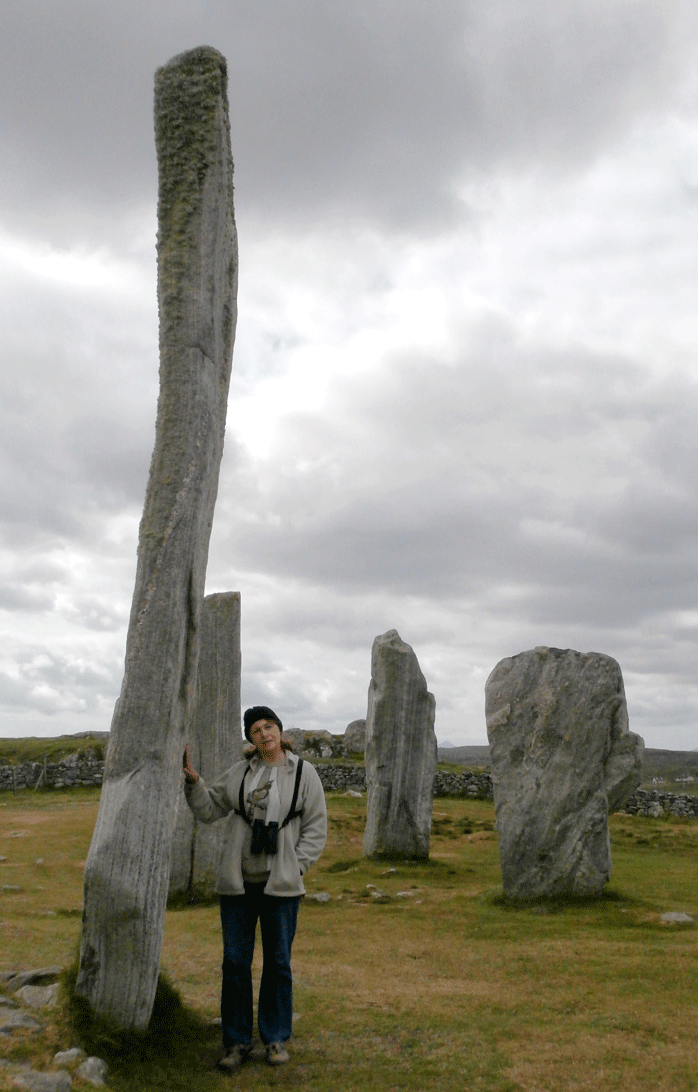
We headed for Lewis and the Stones of Stannish, one of the largest Neolithic stone circles in existence. The visitor centre was closed and the only people around were other tourists.
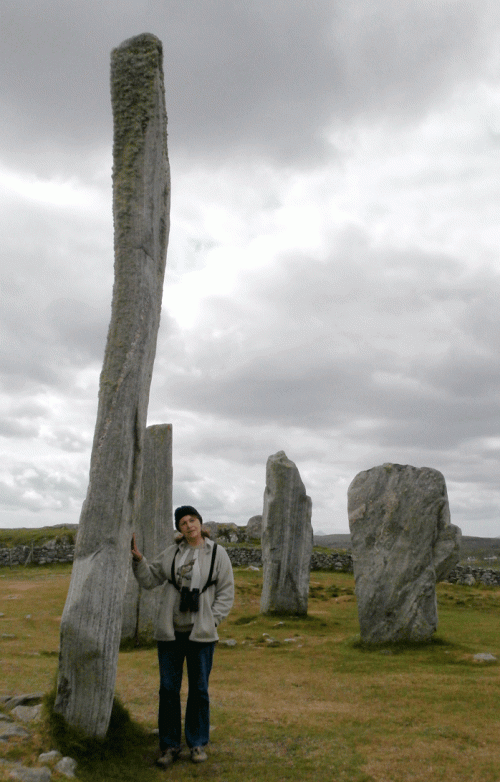
Margaret at the Stones of Stannish.
We then headed for the northernmost tip of the Hebrides, the Butt of Lewis, which is almost as far north as the north coast of the Scottish mainland. We then headed south via the quiet capital, Stornaway.

The Butt of Lewis

The butt of Lewis







































 gryllosblog