Archive for the ‘Uncategorized’ Category
On the 8th we crossed the bridge to Skye only to find that the whole island was in chaos. Metal thieves had tried to cut through the cable carrying all communications to the islands with a chainsaw only to find it was fibre optic not copper. As a result there was no internet, no payment by card, no ATM and no telephones. There was a large cruise ship due in on the 9th and traders were worried they couldn’t capitalise on it.
We headed for our pink B&B at Portree with a wonderful view of the harbour. Early on the 9th we took a boat trip out to the White-tailed Eagles nest. I would strongly recommend trips on the MV Brigadoon, the skipper is keen on natural history and seems to put in extra effort . We set off before the other tourist boats in the harbour and were taken to Golden Eagle’s nest on the cliff first. We then spent some time with a large flock of Guillemots and Razorbills before joining other boats to approach the White-tailed Eagle nest. The nest had failed due to bad weather but we located the two adults perched high on the cliff. The other boats then left but we stayed and saw one of the eagles fly down to the sea giving great views. We also had close views of a Red-throated Diver on our return.
The rest of our time on Skye was spent touring around, looking at the incredible Cuillin Mountains, the rugged scenery of the east coast and the dramatic uplands of the north before we caught the ferry to the island of Harris/Lewis in the evening.
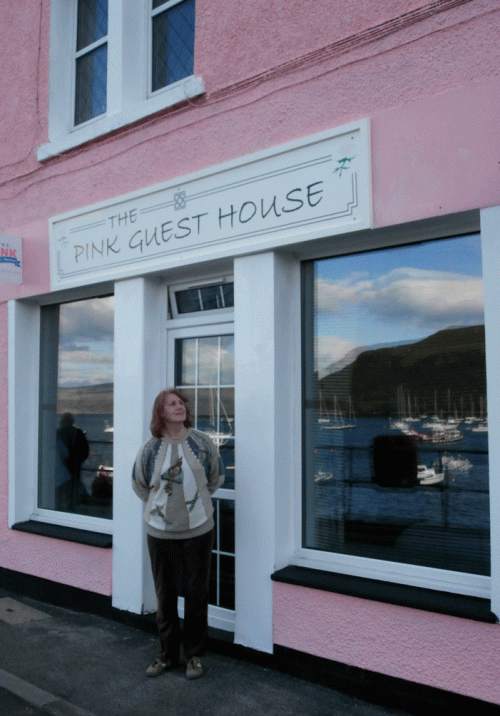
Margaret outside the eponymous Pink Guest House.

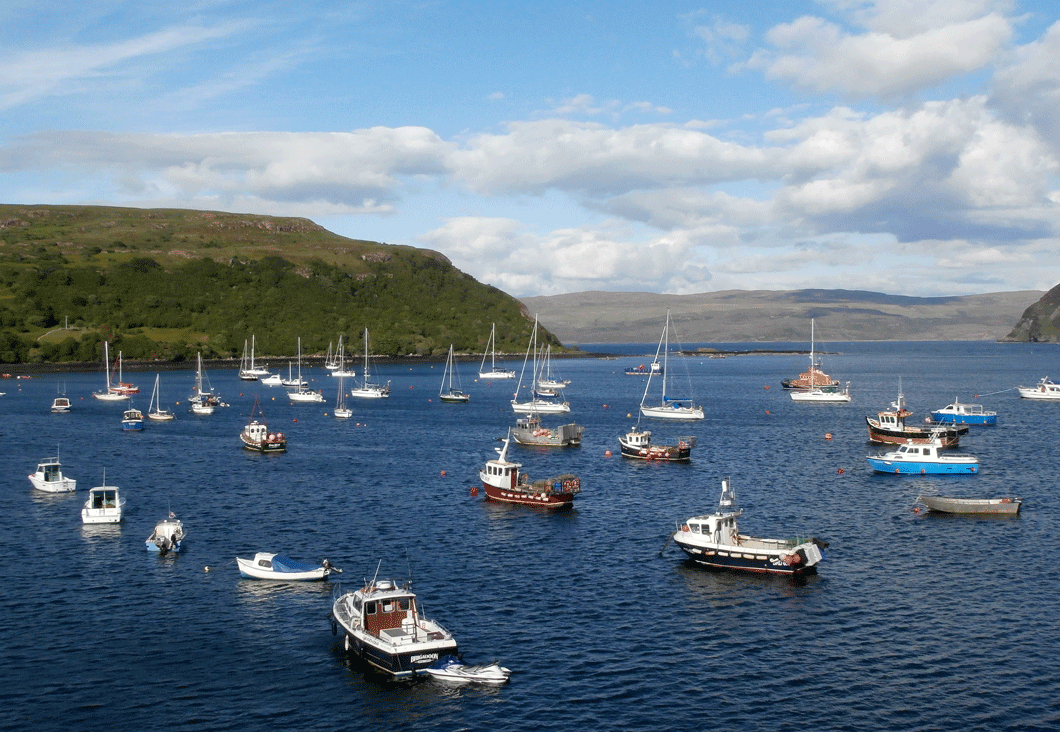
Portree harbour, the view from our room.

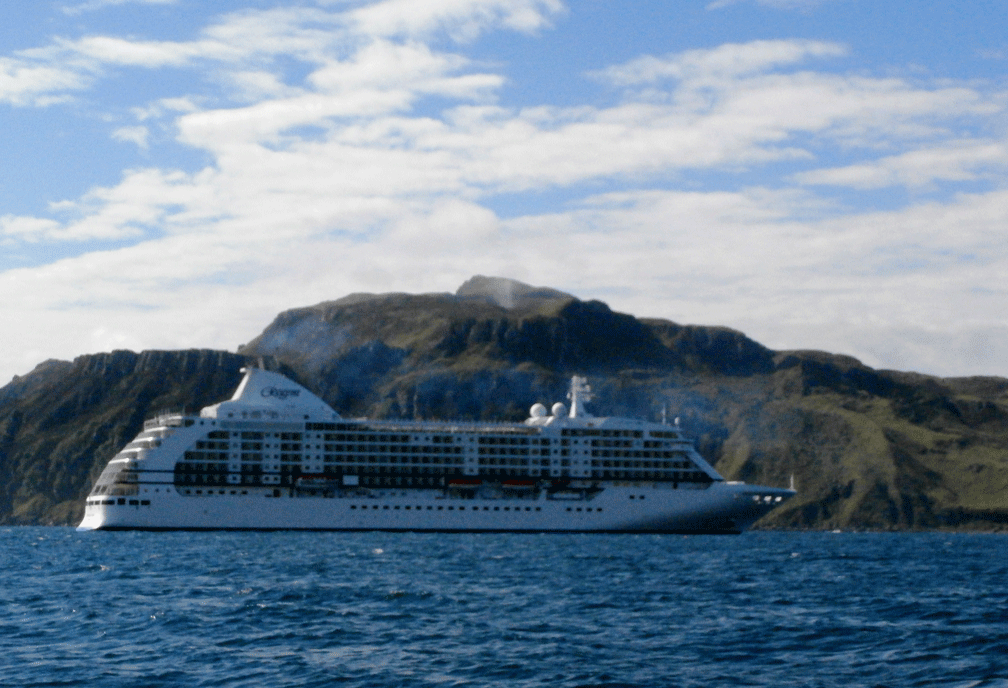
As we left the harbour on the MV Brigadoon, this huge cruise liner arrived. Fortunately for the islanders the cable link to the mainland had been repaired.
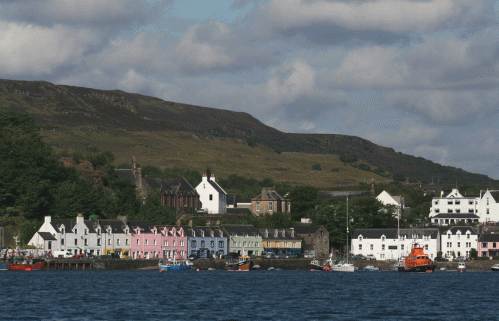
Portree harbour from the boat, guess which is our quest house.

Razorbills and Guillemots. Note the ‘bridled’ form of Guillemot in the lower left.

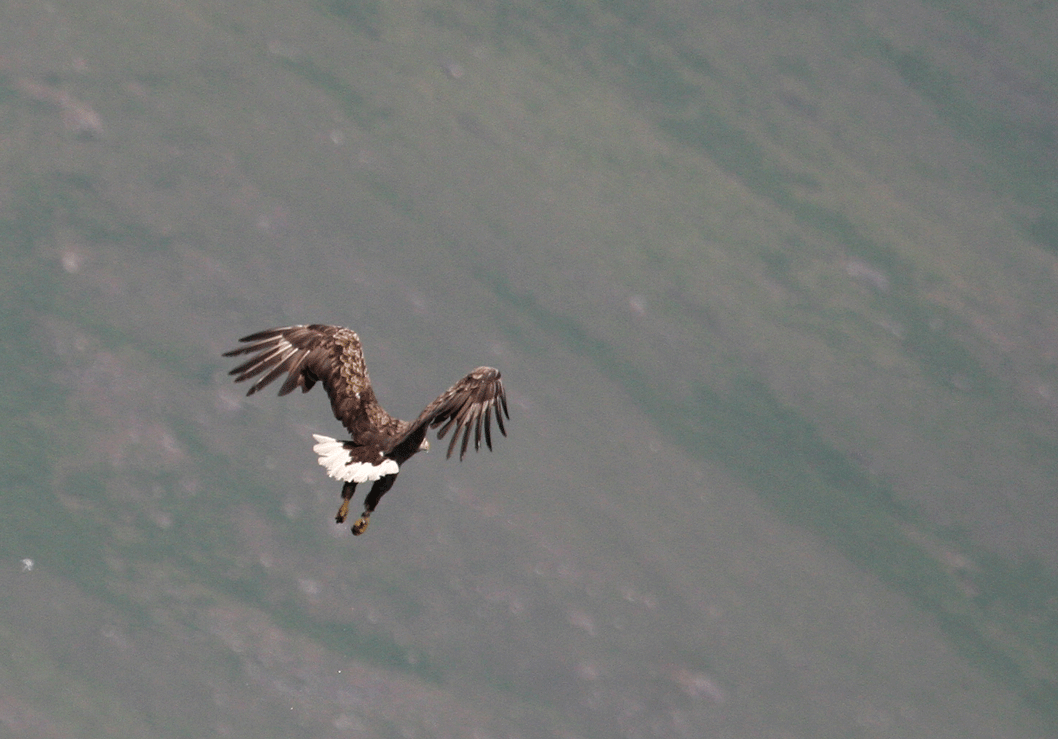
After giving poor views on the cliffs this White-tailed Eagle flew down to the sea, presumably investigating a fish …….

…. before flying back along the cliff to its distant perch.
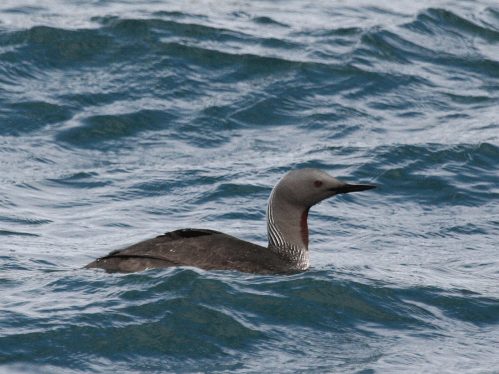
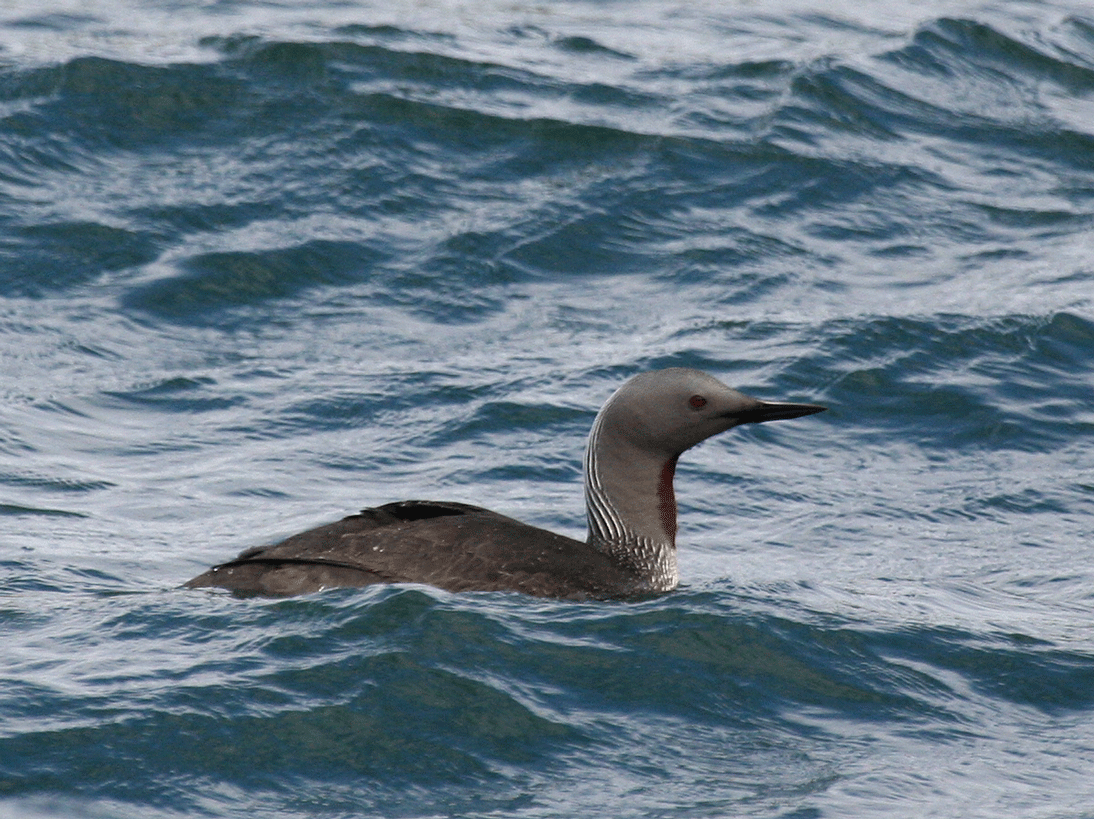
Summer-plumaged Red-throated Diver.
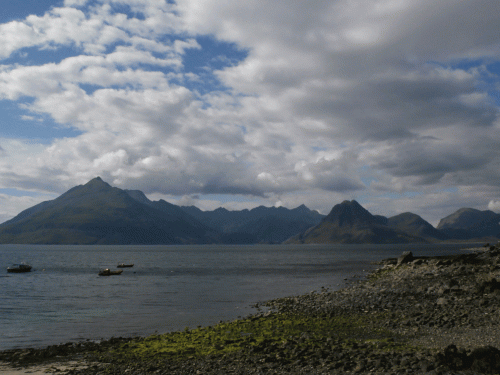
The peaks of the Cuillins, said to be the most challenging mountains in the UK. I was once friends with someone who traversed almost the entire ridge.

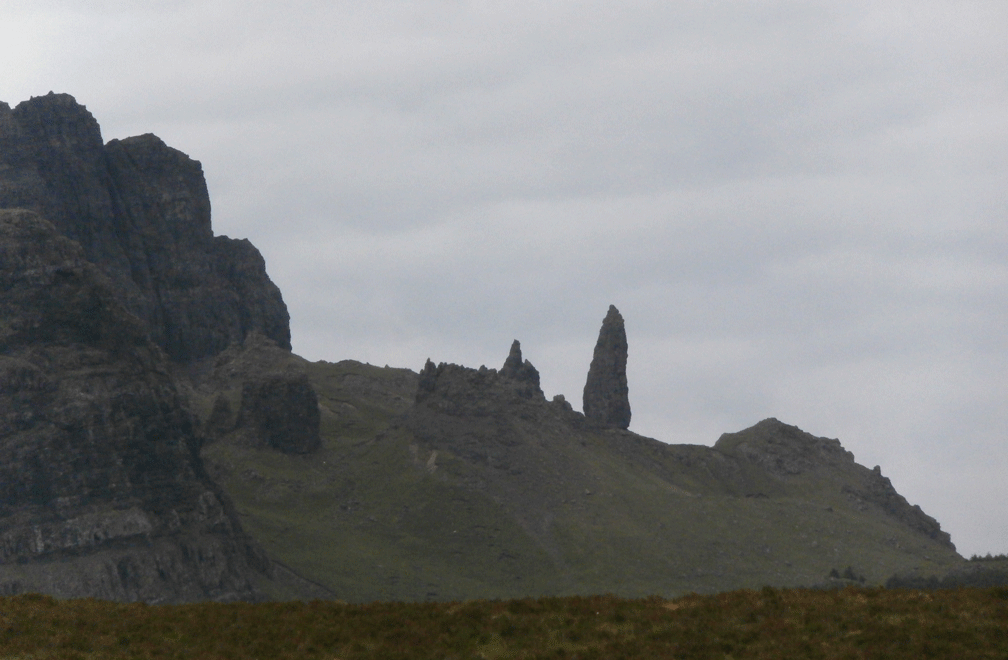
The pinnacle of the Old Man of Stour can be seen from the road along the east coast.
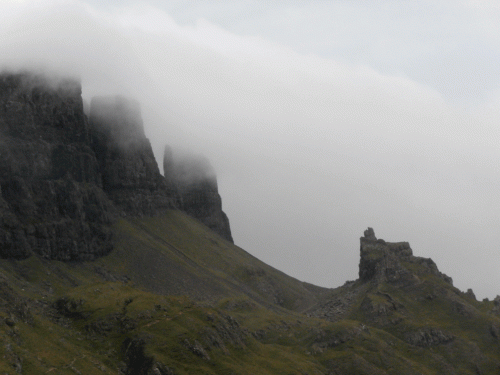
We didn’t have time to hike along the track to the Quiraing in northern Skye but the views from the car park were pretty impressive.
I attended my mother’s funeral in Derby yesterday. I read the following account of her life at the service and include it on my blog as a celebration of her life.
——————————————————————————————————————————————————————————–
Margaret was born in May 1921 in Caerphilly, South Wales. She was the eldest of five. Apparently some neighbours started calling her ‘Maggie’ and her mother then used her middle name Iris, a name that stuck with the family, but she prefered not to use elsewhere.
Her father was a coal miner and times were hard during the Depression. At the age of fourteen Margaret left school and was sent to live with family friends in Birmingham where she worked in a Post Office and sent most of her income home to help support the family. In due course the rest of the family left Wales and moved to Coventry where employment opportunities were better.
Later Margaret started work at Sainsburys in Coventry where, in the late 1930’s, she met Brian Lewis, although this was not approved of by the management who thought it inappropriate for staff to be ‘seeing each other’. With the outbreak of war Brian joined the RAF and she returned to live with her parents. They married in September 1940 at the height of the Battle of Britain, so a honeymoon was out of the question.
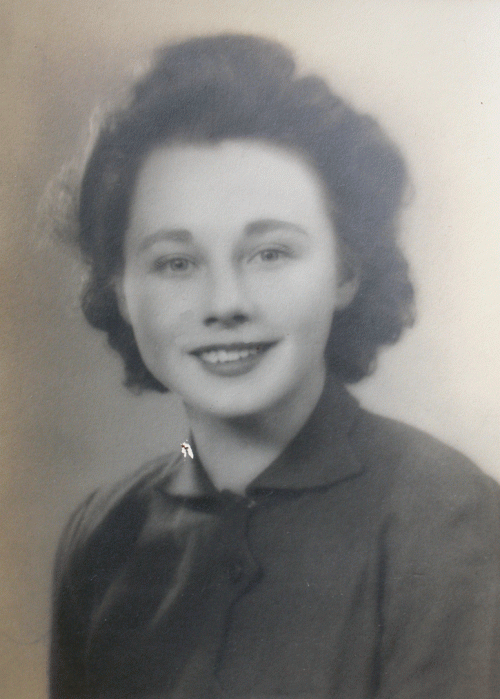
Margaret in the early 1940s
She lived in Coventry throughout the worst of the Blitz. One morning they discovered the terraced row in front and behind theirs had been destroyed by bombing, but throughout Sainsburys remained open and she continued to work, walking past unexploded bombs and bomb craters to get to work. On one occasion the detonation of an unexploded bomb prevented them from going home and they were sent to a nearby men’s hostel. Panic ensued as night fell and it was realized by the management that young women might have to share the same accommodation as the men!

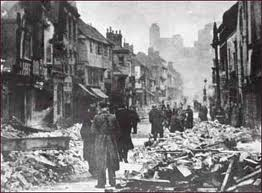
Coventry during the Blitz. Photo from the internet.
Eventually, with the glow of Coventry burning visible from Brian’s airfield in Bedford, he turned up with a suitcase and had her evacuated to his parents in the village of Cransley in Northamptonshire. Later in the war Brian was stationed in Yorkshire and they both lived there. After the war they returned to work in Coventry where they bought at house in Bell Green. Ian was born in June 1951.
With a promotion to manager, Sainsburys moved Brian to Kettering, Northants in 1955. Simon came along in June 1958 but it was not an easy birth. An emergency caesarian was followed by an emergency hysterectomy and Margaret nearly died. A long period of convalescence had her and Simon staying with her sister in the West Midlands, so Ian was looked after by family friends whilst Brian was at work.
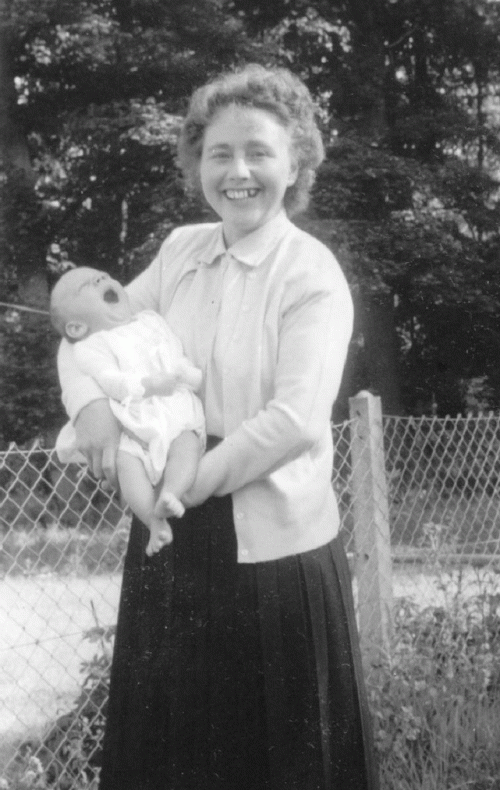
Margaret and Simon in 1958
In 1965 another work related move took the family to Derby. Margaret was to remain in the house they bought in Allestree until she was obliged to move to a nursing in 2010. Ian left home in 1969, first for Leeds, then Poole. Margaret was able to return to work and found employment with British Telecom as a telephone operator. She later moved to the night shift, this was a job she greatly enjoyed, we always joked that was because it meant she could chat all night. She continued to work well past retirement age until 1985, when Brian’s failing health meant she was needed at home.

The house in Derby where Margaret lived from 1965 to 2010
Tragically Brian died on New Years Eve 1985. The transition to living alone was eased by the fact that Simon still lived at home until his marriage in 1990. She coped well with living on her own but as her mobility decreased she became increasingly lonely, although Simon visited very regularly and Ian living 200 miles away in Dorset, phoned on a near daily basis.
By the time she reached her mid eighties it was clear that she was suffering from more than just ‘senior moments’. She struggled to cope, even with Simon’s daily help, and now, diagnosed as suffering from Alzheimer’s, help from the council was implemented. By autumn 2010, when she was aged 89 it was necessary for her to move into a nursing home where she remained until her death in June 2012 at the age of 91. The last few years were problematic; she never quite realized where she was or for that matter understood that her new daughter-in-law shared her name.

Margaret at Christmas 2004
Her final moments were in the company of Simon and his wife Viv and her granddaughters Miriam and Jennifer. Ian was able to speak to her on Simon’s mobile and Simon reported that there was a glimmer of recognition. She passed away peacefully moments later.
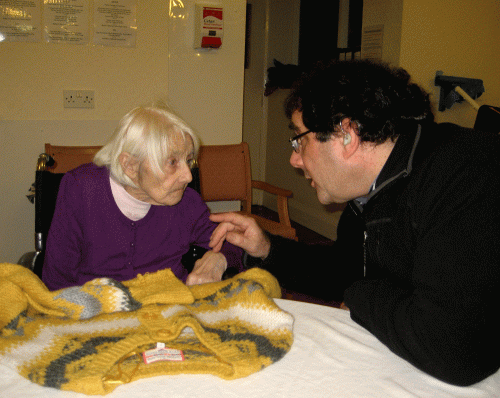
Margaret and Simon at Christmas 2011
This account has given the bare bones of Margaret’s life but says nothing of the type of person she was. Margaret was a wonderful loving wife and mother, prepared to do anything for her husband and children. She upheld traditional values of honesty, order, cleanliness, thrift and financial self-sufficiency. She was proud of her sons achievements, be it Simon academic success and church work or Ian’s globetrotting. She adored her granddaughters, cared deeply for her wider family and her friends. She was a wonderful cook, made the most amazing cakes with the most intricate icing imaginable and made the beautiful flower arrangements.
Simon and I could not have wished for a more caring and compassionate mother. She had been a devoted wife to Brian and loving grandmother to Miriam and Jennifer. It goes without saying that she will be sorely missed.
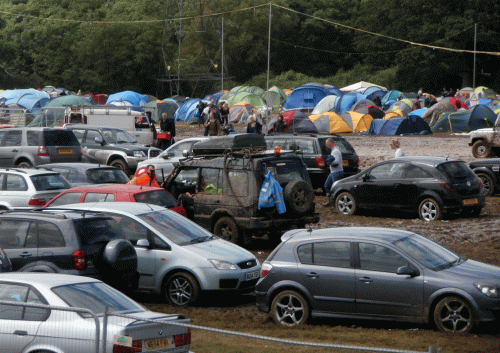
Cars had to be towed in and out the car park by tractor
With TV reports of seven mile traffic jams, flooded car parks and festival goers being stuck in their car overnight I was wondering if buying a ticket for the IOW festival had been a good idea. As Janis was at work on Friday we didn’t leave until Friday afternoon and made the ferry with seconds to spare. Once there we had no problem in getting to the site, just in finding somewhere to park. Eventually we found that all car parks were impassable and new traffic was being sent to a Country Park some five miles away and bussed back to the festival. That done, we then had to find somewhere to camp and as we had lots of food and drink with us, we had loads of gear to manhandle through five muddy fields before we could erect the tent in a gale!
On Saturday we watched bands like Big Country and Madness, and sat through Jessie J and Labyrinth for the sake of the girls. Janis retired to the tent in the evening and I watched Professor Green and Pearl Jam whilst the girls toured the funfair and went to a ‘silent disco’. I returned at midnight but the girls ignored the curfew and stayed out until nearly 2am, because they had to shelter from the heavy rain in the disco!
Sunday morning we awoke to a scene of destruction. The centre section of the tent was flooded, lakes had appeared in the camp site and some tents had blown down and been abandoned. We packed up, took the gear back to the car then returned for a great music session that included teenage heart-throb Matt Cardle, Suzanne Vega, Spector, Noel Gallagher and of course Bruce Springsteen and the E Street Band. ‘The Boss’ and the E Street Band were absolutely superb, the best live act in the world, a three-hour session with no breaks, full of energy and great music. They concluded with old favourites like ‘Born In the USA’ and ’10th Avenue Freezeout’ (with an extended and emotional pause in honour of recently deceased saxophonist Clarence Clemens) and then came back on stage for an encore performing ‘Twist and Shout’ to a backdrop of fireworks.
Leaving was not as bad as I had expected. We were so lucky to be parked in a mud free destination off-site. We caught the 0100 ferry and were home by 0300 after a fantastic weekend.

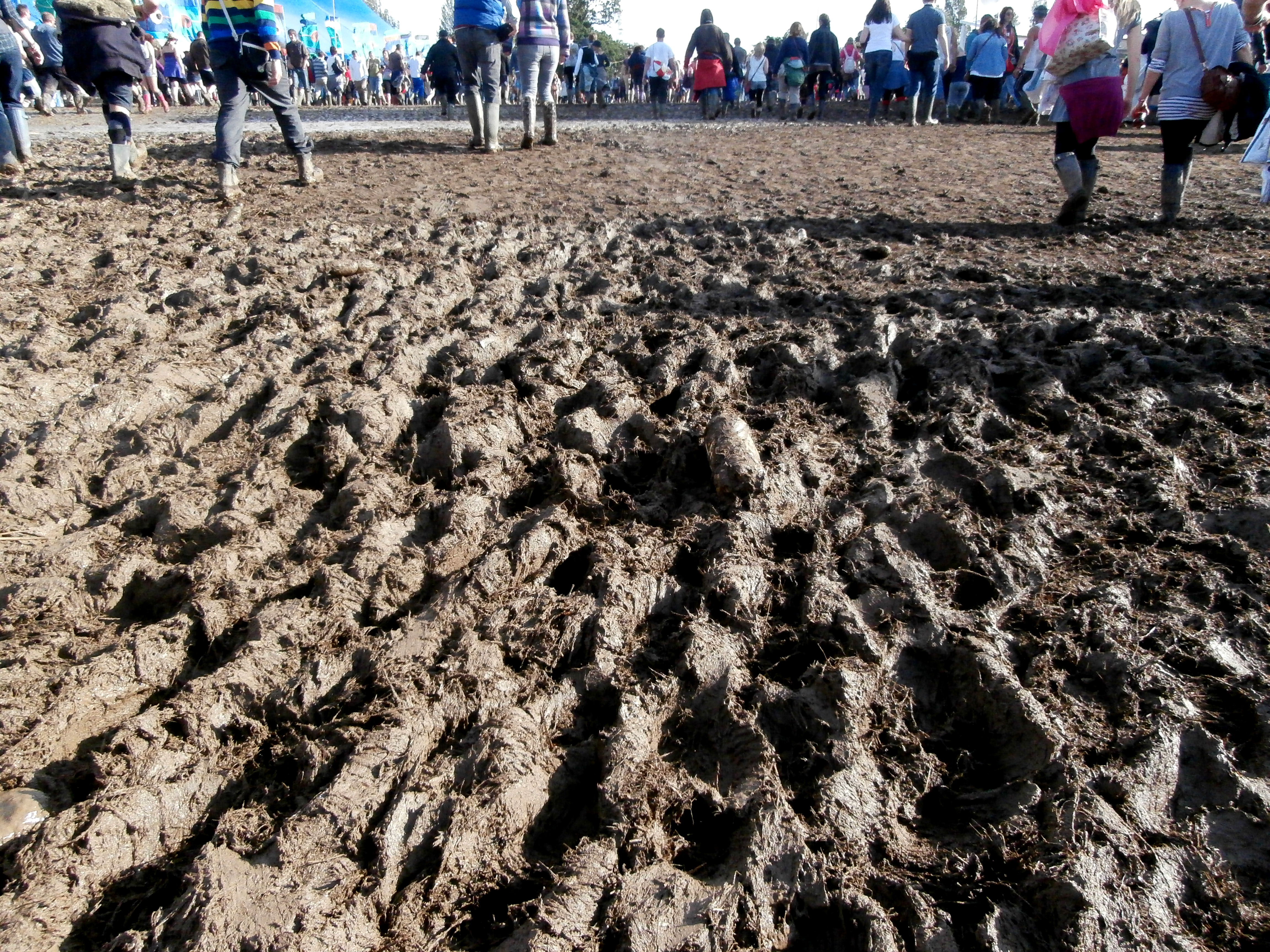
Mud, mud, glorious mud.
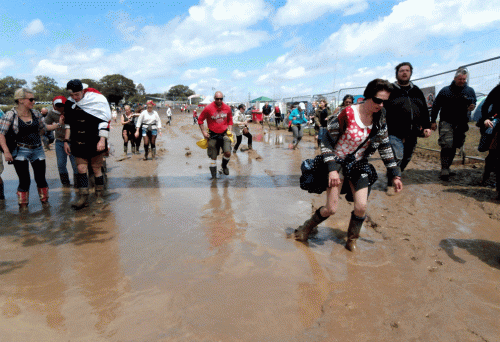
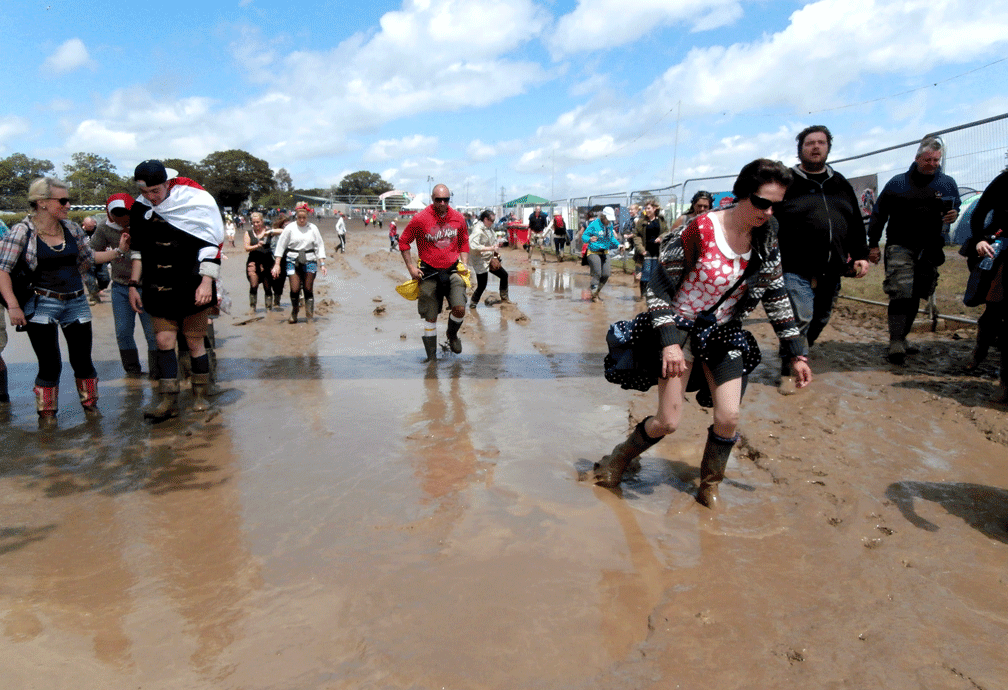
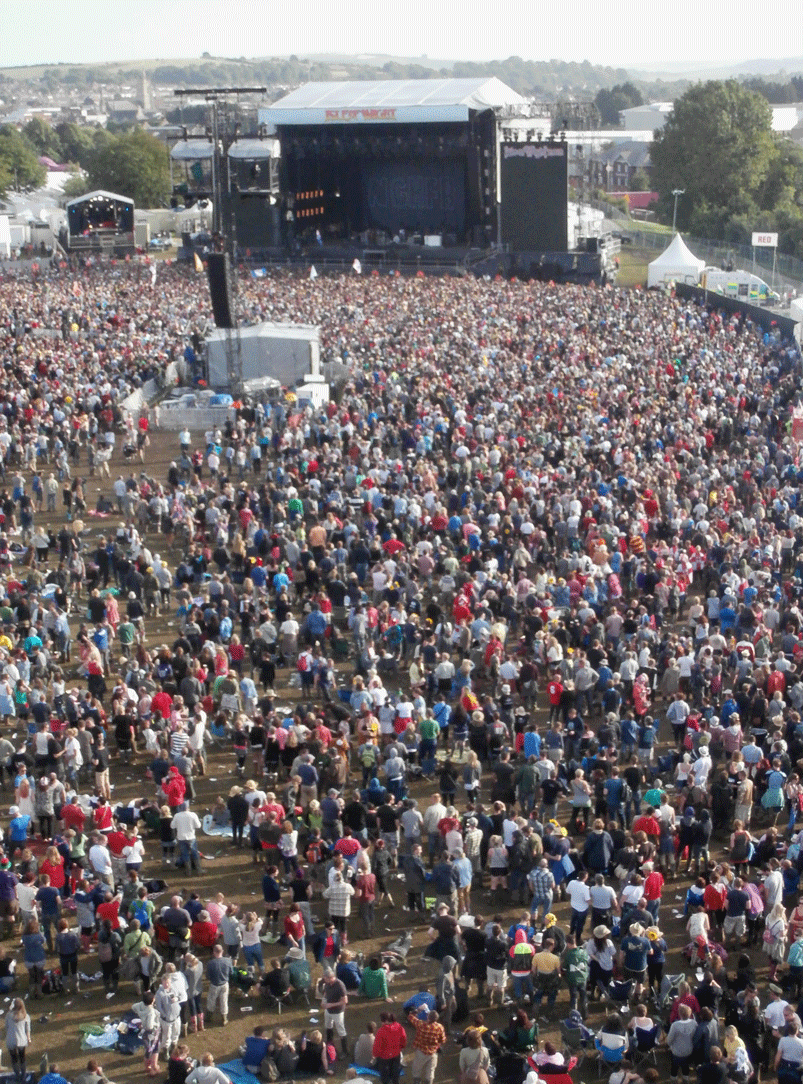
55,000 music fans, 110,000 welly boots!

Many tents were submerged in the flood and some had to be abandoned.

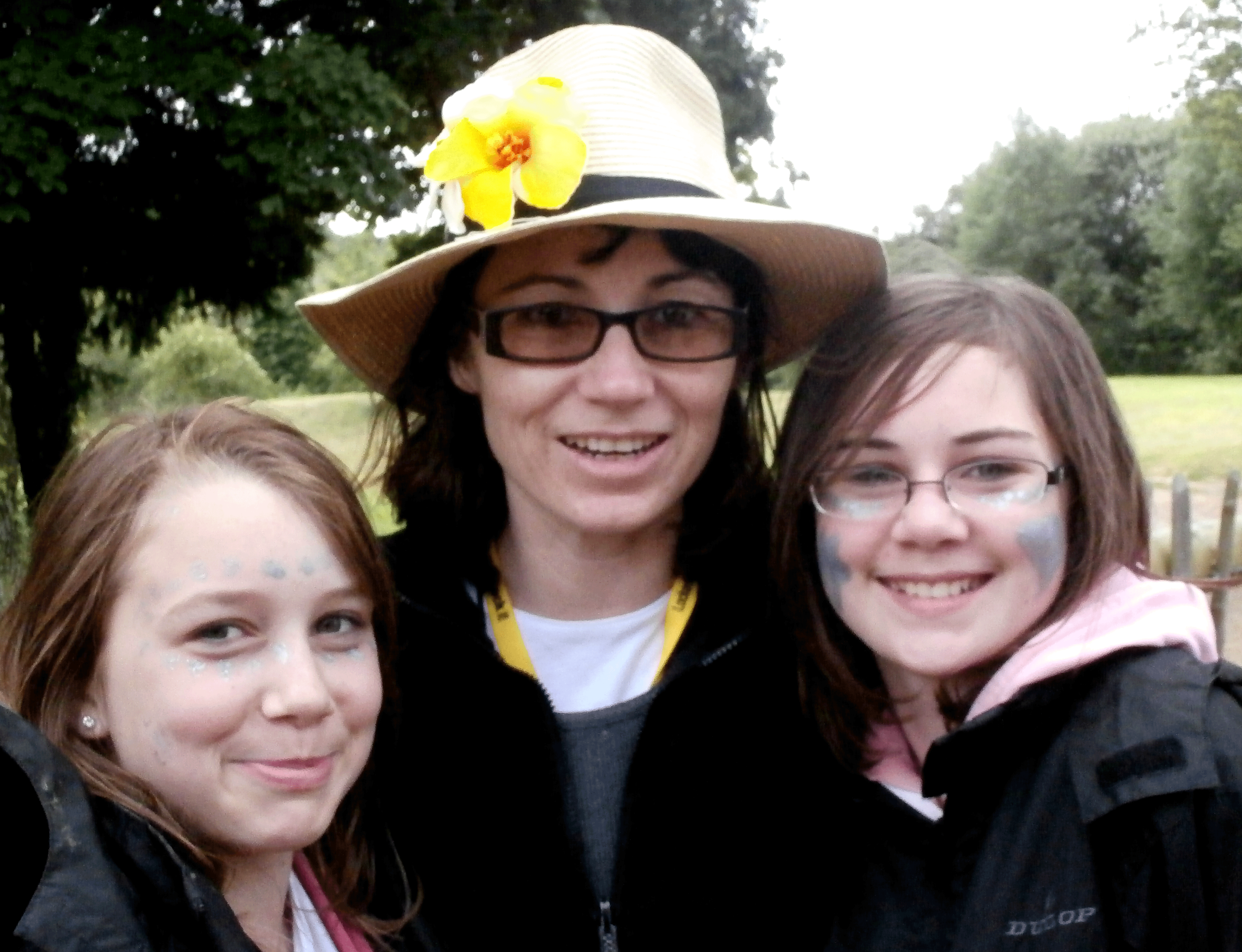
…. and of course I was camping with hyperactive and volatile teenagers (and their Mum). Kara, Janis and Amber with face paint and silly hat.

Surrounding the three stages were fairground, stalls , multiple stalls selling everything from trinkets to wellies, catering outlets and even a recovery room for those stoned out of their minds.

The girls went on some scary rides.

Our Saturday music session started with Scottish rockers Big Country.

With all the money she must be making on ‘The Voice’ you would think that Jessie J could afford a new pair of jeans.

Matt Cardle, another must see act for Amber and Kara

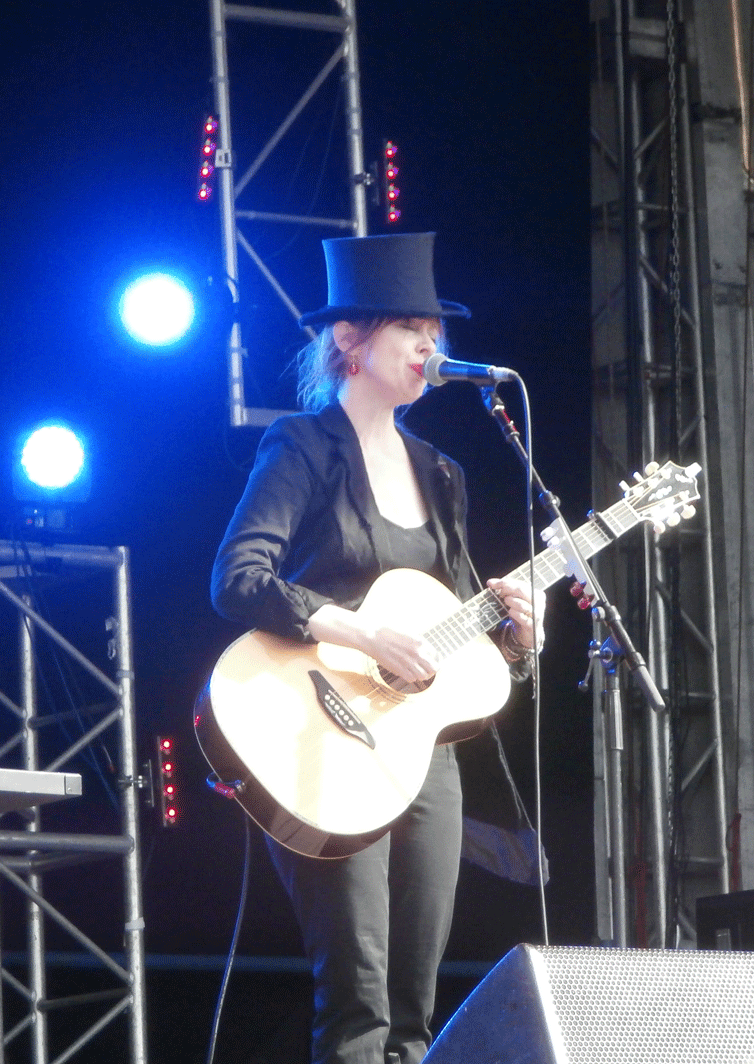
Suzanne Vega sang old favourites like ‘Marlene on the Wall’, ‘Luca’ and ‘Tom’s Diner’ along with several new ones
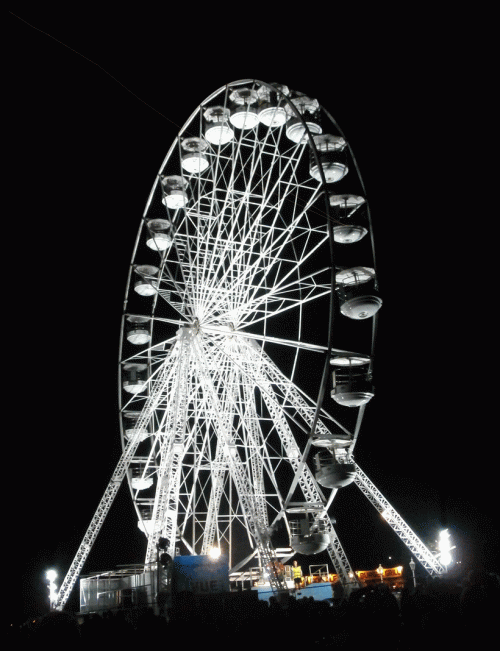
The area in front of the Main Stage is dominated by the Big Wheel.
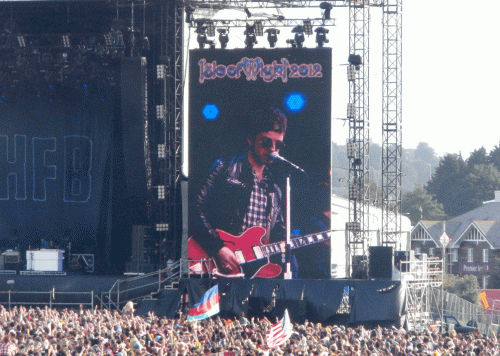
Whilst Noel Gallagher and his ‘High Flying Birds’ were on stage …….

…. we were high-flying on the Big Wheel and getting great views of the Main Stage on one side ……

…. and the fairground and Big Top stage to the other. The flooded campsites and car parks are out of shot to the top right.

‘The Boss’ with the E Street Band: maybe not the best band in the world, maybe not the best musicians in the world, but definitely the best live act in the world.

The finale: ‘Twist and Shout’ with fireworks.

It had been a tough, muddy and wet weekend, not very comfortable but a great experience and was enjoyed by all.
From Edinburgh we drove in heavy rain to the west coast, fortunately it had ceased by the time we reached Loch Lomond. We drove through mountains and sleepy towns to Knapdale, an area of extensive forestry at the north end of the Kintyre peninsula.
First we headed to some nearby Standing Stones and Neolithic burial grounds and then to the site of the Scottish Beaver trial, an attempt to re-introduce these magic mammals to the UK. Having established where the spot was we continued on to Kilmory where we had wonderful panoramic views to the islands of Jura, Islay and down the Kintyre Peninsula.

Views towards Jura and Islay
Having checked into our B&B we drove back to the Beaver site. This was not the open pond with surrounding woodland that I have seen at North American Beaver sites, but flooded birch and alder woodland with very little visibility. To make matters worse there were several Mallard families so the brown object glimpsed through the vegetation was not necessarily a Beaver.
Scotland is famous for its midges but I have never seen them in such numbers as at Knapdale. In spite of bug repellent and covering as much skin as possible we were still tormented almost beyond endurance. Margaret had to give up and wandered down to the main loch where she saw an Otter. Unlike Shetland there were large numbers of woodland birds, Willow Warblers and Siskins were abundant, whilst Lesser Redpolls provided a nice comparison with the Mealies we saw on Shetland.
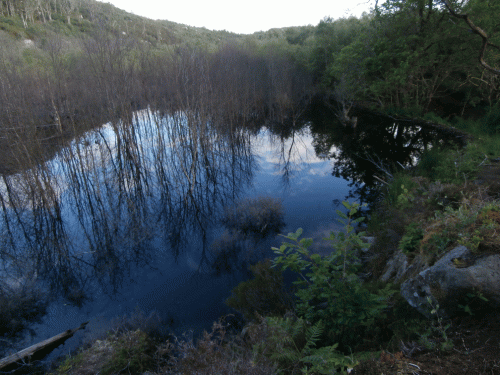
The Beaver pond, the dam is on the top right of the pond.
I was back early on the 7th, crossing the Crinan Canal which cuts across the head of the Kintyre Peninsula I headed for the introduction site where almost immediately I saw a leafy branch being towed through the water. Sure enough it was being towed by a Beaver! So far there are four Beaver families in Knapdale. I really hope this trial is a sucess and is extended elsewhere, not just because it would be nice to have these mammals back in the UK but because of all the wet woodland habitat they create.
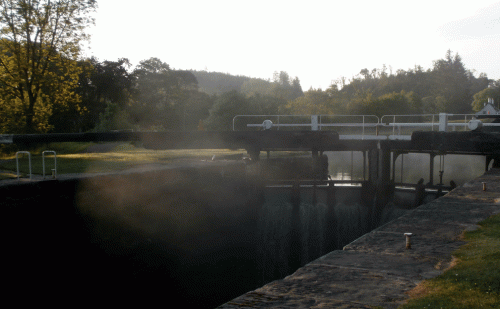
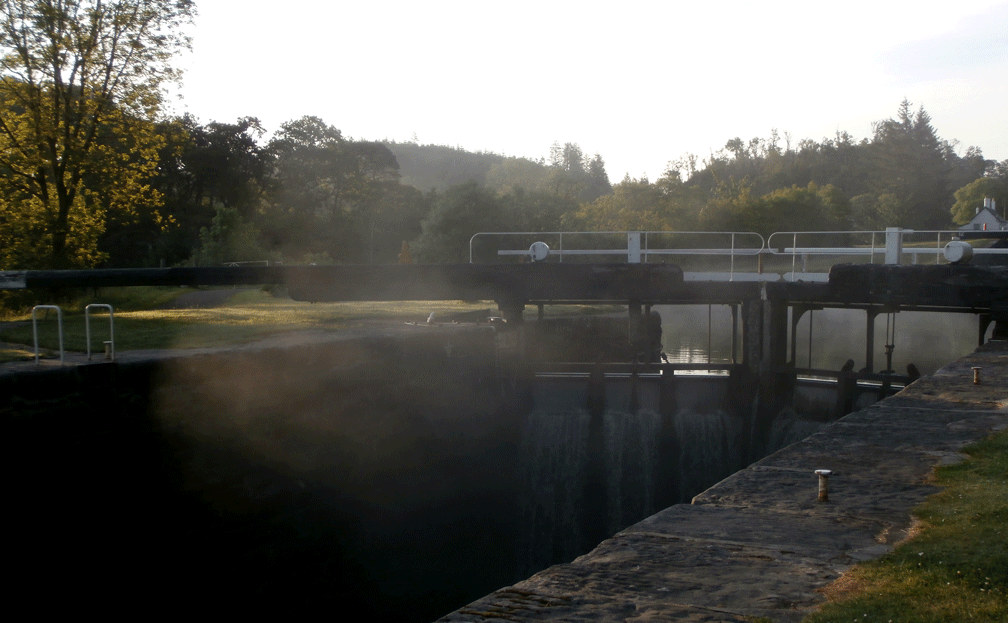
Early morning mist on the Crinan Canal.

A very poor shot in poor light of the Beaver towing a leafy branch.
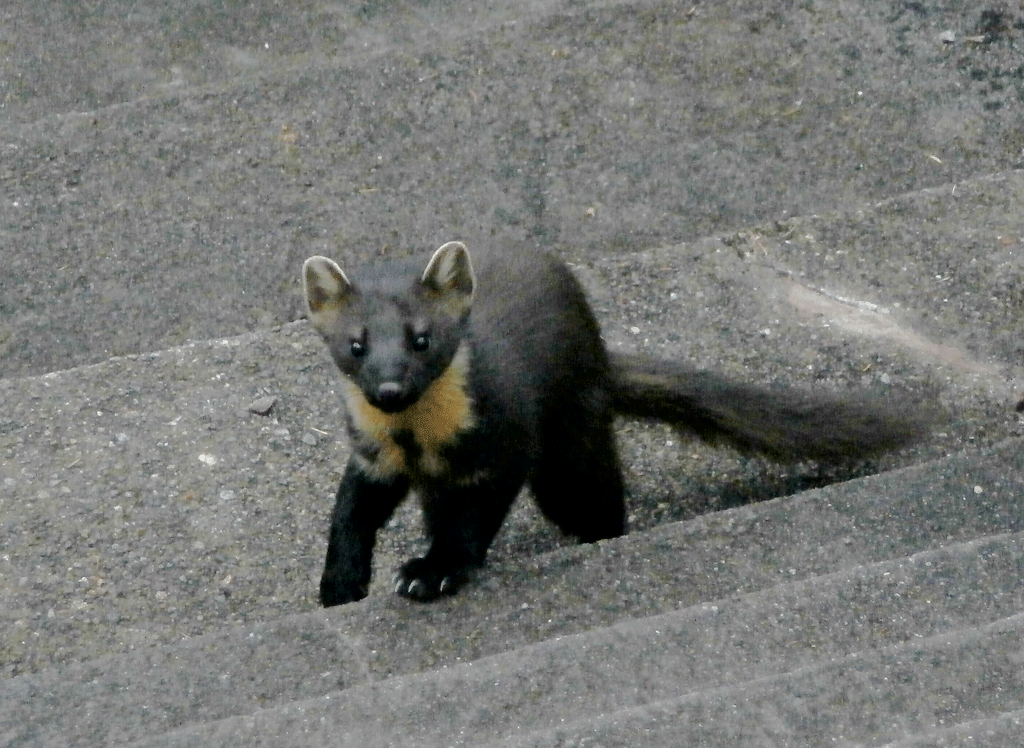
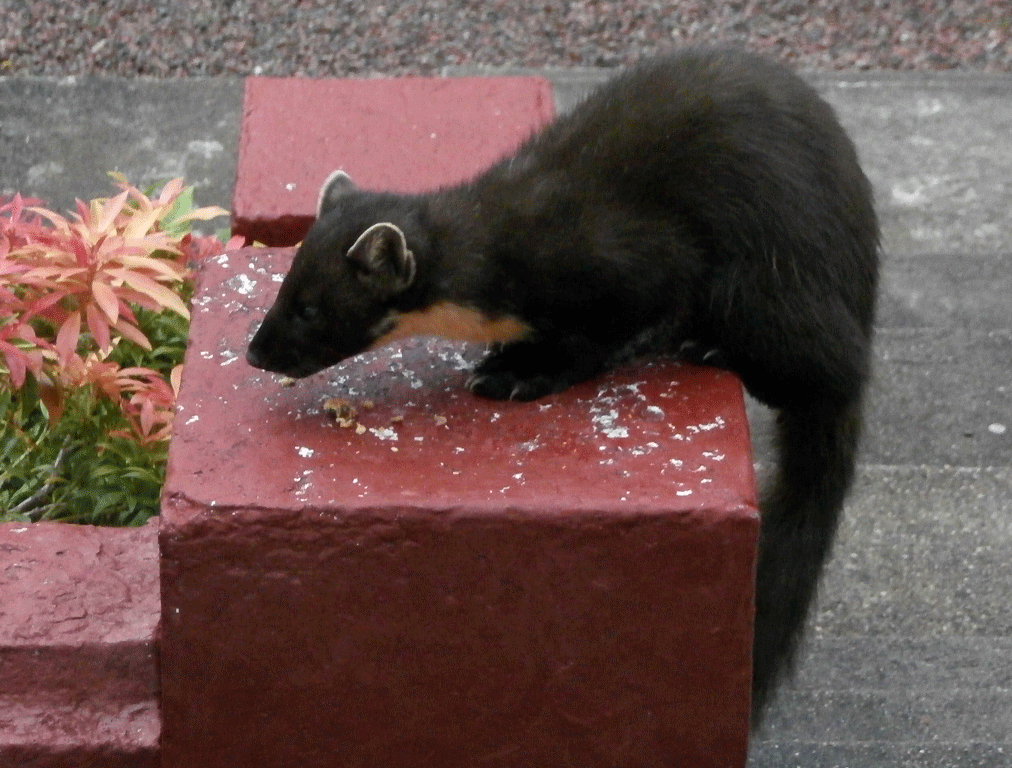
Later we headed north via Oban. From Oban we took a major detour, heading inland to cross Rannoch Moor before descending into Glencoe and rejoining the coast road. We drove through Fort William and headed for our B&B, Glendale Lodge near Banavie, famous for its visiting Pine Martens. We didn’t have to wait long in mid evening a Pine Marten appeared on the steps. I was sitting with my laptop on my knee editing photos. I rapidly ran off a few shots only to realise the memory card was still, of course, in my laptop! That sorted I got a few shots, the main problem that this attractive mustelid came too close, some times only inches away on the other side of the glass! I can certainly recommend this B&B to anyone who wants to see this wonderful animal.
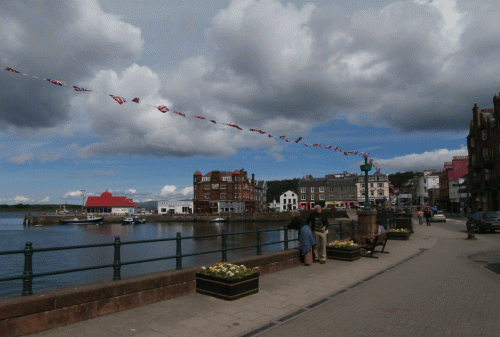
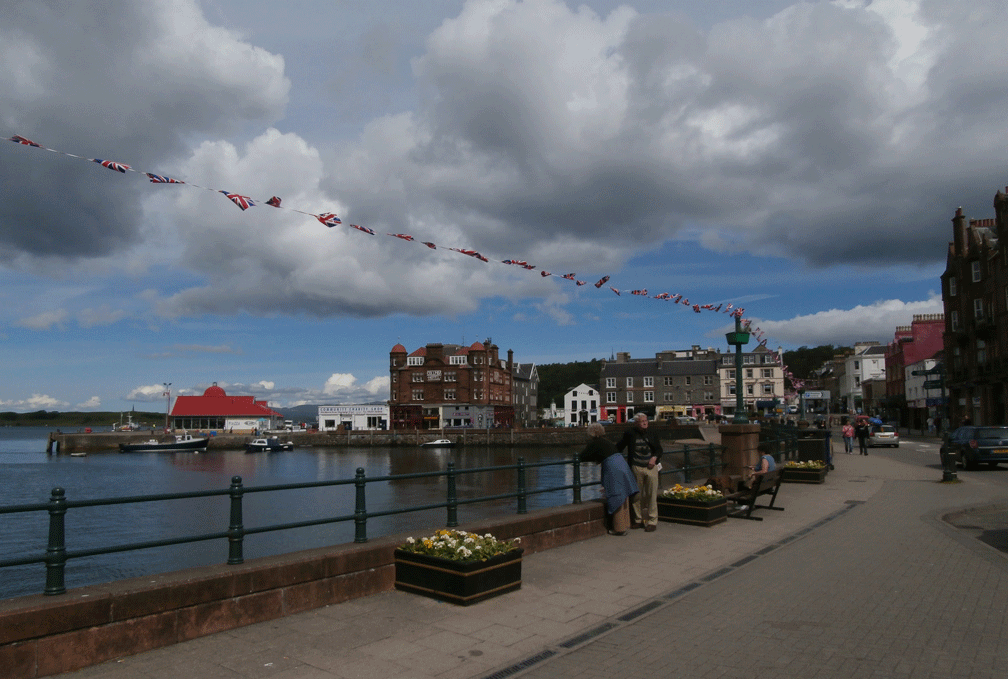
Oban
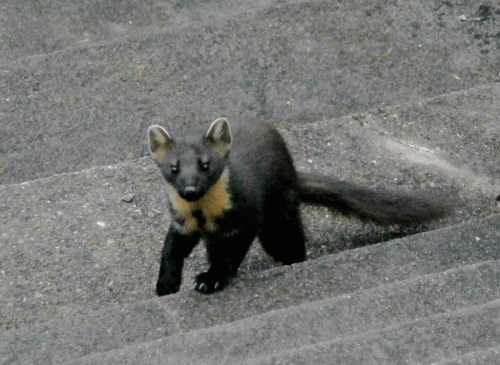
Pine Marten checking if it’s evening snack has been put out.
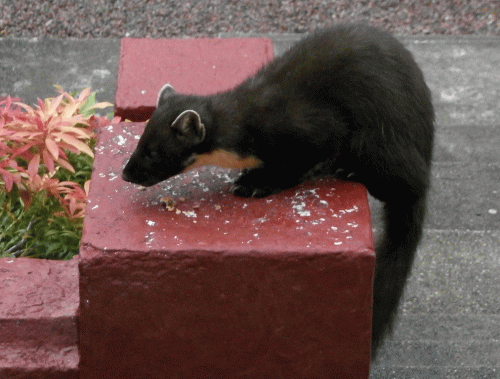
They really do come this close!

I was recommended this B&B by fellow Dorset birder Chris Chapleo. Who should I find at this B&B but Chris and his family, talk about co-incidence!
The following day we searched for Chequered Skipper, a butterfly whose UK range is confined to a 20Km radius around Fort William. I found one but in the strong wind and drizzle it only showed briefly. Our first White-tailed Eagle over Loch Archaig. Later we drove to Kyle of Lochalsh where we took the bridge over to Syke.

The Caledonian Canal joins Loch Ness and other lochs with the west coast allowing boats to pass from Inverness to Fort William. Ben Nevis, which at 1300m is the highest point of the UK can be seen in the background.

Bonny Prince Charlie had to ‘go over the sea to Skye’ but now there is a bridge. Well he didn’t have to go far by sea did he!
On the 2nd June after birding at Quendale and East Burra, Paul took us north to the island of yell, where a Black-headed Bunting had been seen for the previous few days. unfortunately it had gone. Paul’s car suffered a puncture and we had to go even further north to the island of Unst to get it fixed.
We didn’t have enough time to explore the riches of Unst properly so we returned, along with Liz, on the 3rd and took a long walk over the moors to Seito on the north-west cliffs, then north to Hermaness, the most northerly point you can practically reach in the UK.
The weather remained cold with a stiff northerly breeze, but it was sunny and felt quite warm in the few sheltered places. We birded a few more sites on the way back but saw little except for breeding waders.

Margaret and I reach the most northerly point of the island of Unst. Behind us are Muckle Flugga and Out Stack the most northerly points of the UK.

The cliffs of Hermaness, at the north end of the island of Unst.
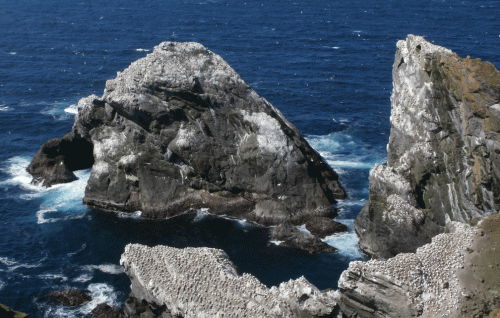
Nesting Gannets cover the offshore stacks.
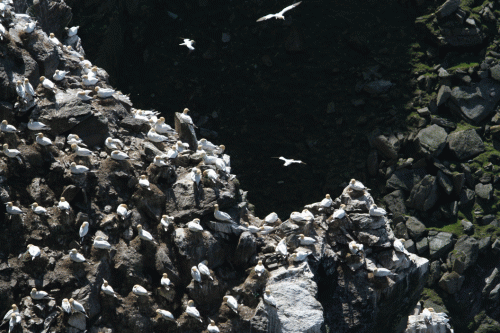
On my last visit to Seito in 1982, we saw a Black-browed Albatross that had built a nest in the dip on this ridge, just right of centre. It returned here for several years.

Notice the green tinge to these Gannet nests. This is caused by discarded fishing nets that the birds incorporate into their nests and often become entangled as a result.

Gannets were constantly on the move offshore
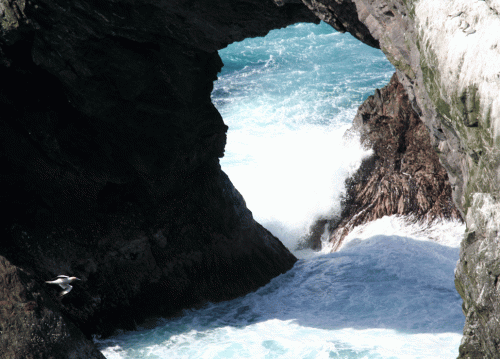
Rock stacks and arches litter the base of the cliffs.

Lambs lie on the very lip of the abyss.
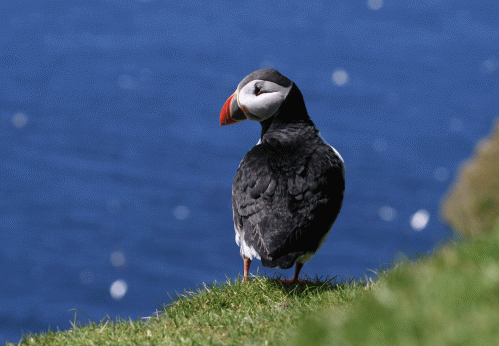
Puffins (or Tammie Norie in local parlance) used to sit on the cliff tops in large numbers but increased predation by Bonxies means they now fly directly to their burrows.

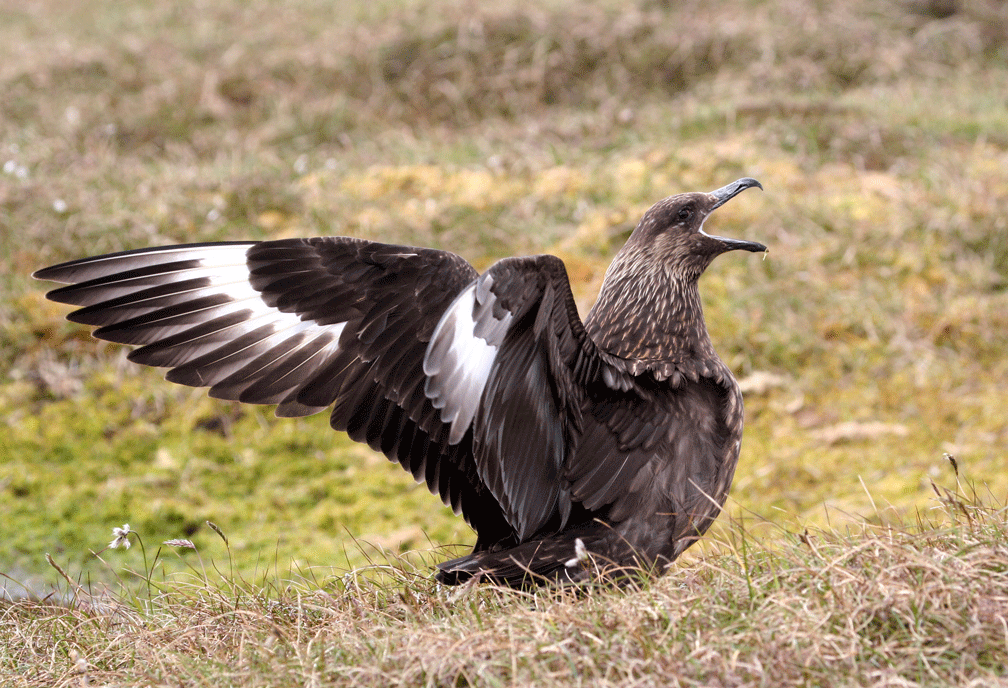
No visit to Hermaness would be complete without a visit to the Bonxie (or Great Skua) colony.

Bonxies attack anyone approaching their nest. They seldom strike but come very close and are quite intimidating.

This was taken with a wide-angle lens, you can see how close these large and aggressive birds will come.

And of course we had to photograph Unst’s famous bus shelter. Starting out when someone added a couple of comfy chairs for the kids to sit on, it snowballed into a fully furnished mock flat – with its own website!
For the Unst Bus Shelter website see http://www.unstbusshelter.shetland.co.uk/index.html
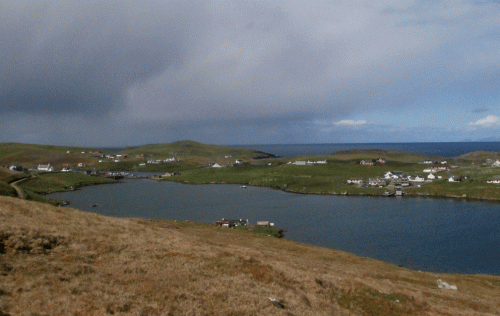
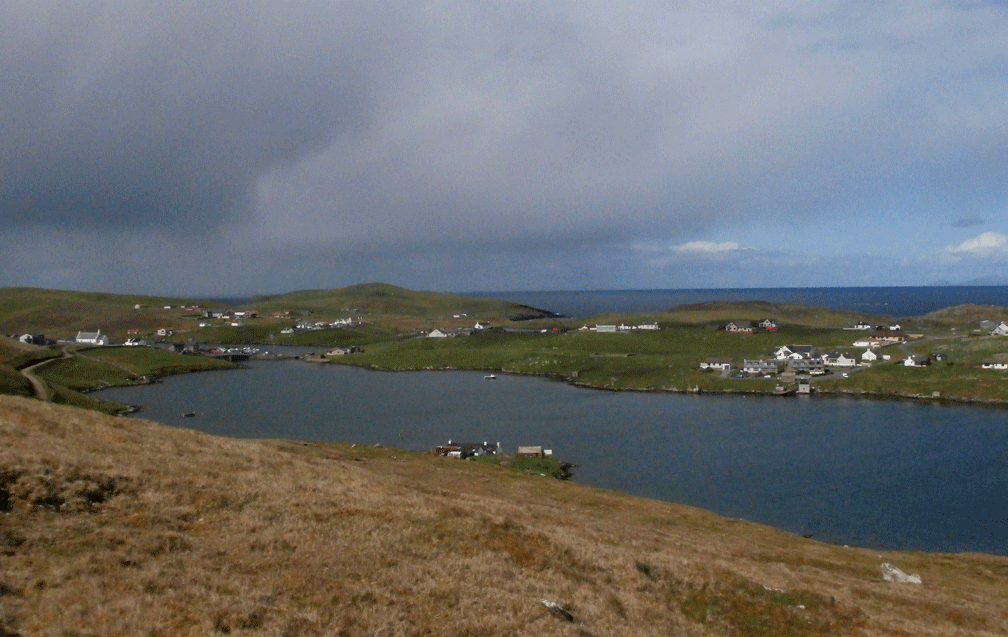
A typical Shetland view. Long sea lochs or voes, sheltered harbours and scattered houses.

Weather was mainly sunny but some showers were heavy. Rainbow over Sumburgh Head.
I will post photos about the southern part of Shetland in this post and the northernmost isles in the next.
Margaret and I flew up to Edinburgh and then with just an hour to spare we caught the flight to Sumburgh. I nearly missed this flight as they tried to confiscate the bottle of whisky I had bought at Southampton airport as a present for Paul. In the end there was a compromise, I left that bottle behind and picked up a replacement one in Edinburgh duty-free. This all took time and I ended up running for my flight.
Paul met us at Sumburgh and we were soon enjoying their hospitality in nearby Virkie. I have known Paul since 1978 when he lived in Dorset and his wife Liz since the late 80’s. and it was great to visit them again.

At 60 N the sun doesn’t set in Shetland until after 11 pm in June
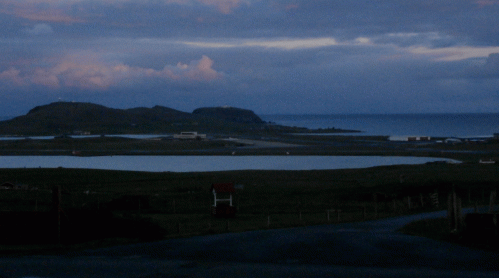
The residual twilight is known as the ‘Simmer Dim’ and lasts until the sun rises some time before 3. It is bright enough to read a book by. This is the view from Paul and Liz’s house over the Pool of Virkie and Sumburgh Head. The island of Fair Isle lies to the right just off the picture.

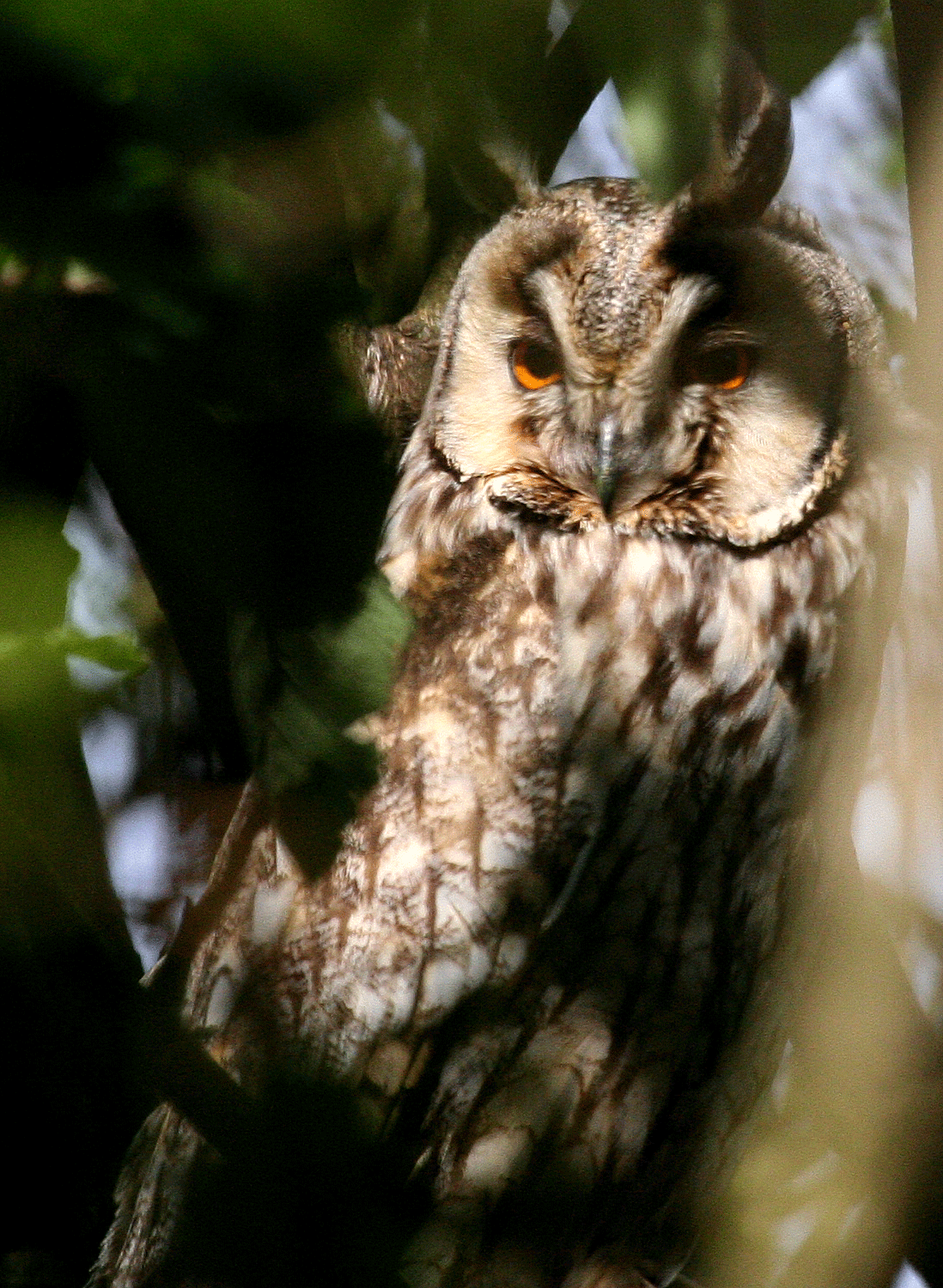
We saw this Long-eared Owl on our first evening on Shetland
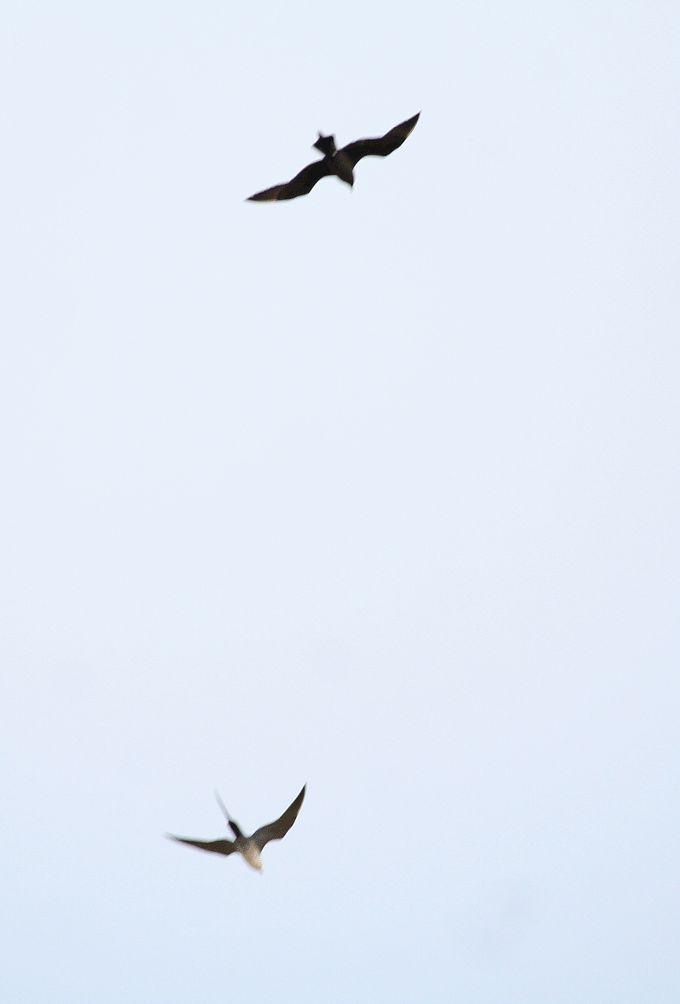
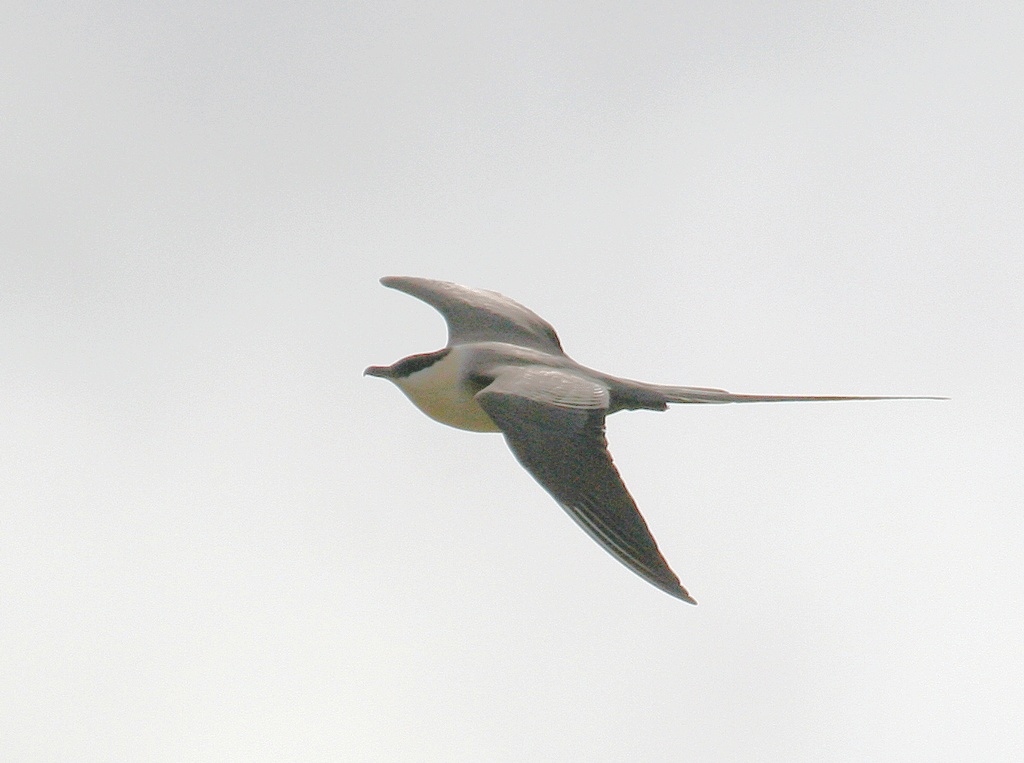
Our first port of call on the 2nd was Quendale, where we searched for and briefly saw a Subalpine that had been there for the last few days. we then crossed three islands (by bridge) to reach East Burra where an adult Long-tailed Skua has been present for the last few summers. The bird appears to be paired with an Arctic Skua. This is by far the rarest of the four skuas to occur in the UK and apart from one site in the Hebrides is known only from autumn seawatches in the south-west, I have only seen two birds in the UK both juvs and I was really keen to see this adult. The bird flew right over our heads and gave fantastic views. Definitely the best bird we saw in Shetland and one of the best of the trip.
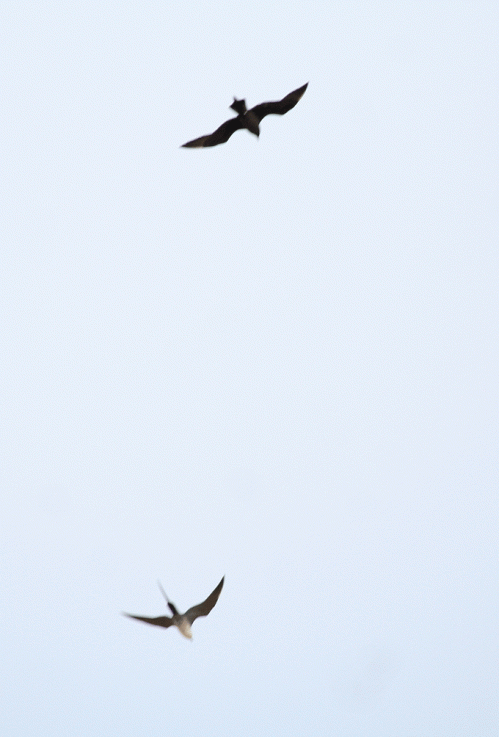
Easy to separate from the dark phase Arctic skua (top) in this photo, Long-taileds are harder to separate from pale phase Arctics, or when both are in juvenile plumage. Note the differences in structure in this photo and that juvs don’t have the long tail
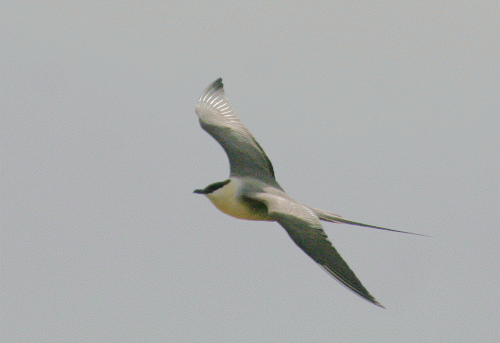
Smaller, daintier and less aggressive than other skuas, Long-taileds are sometimes described as feeding like terns.
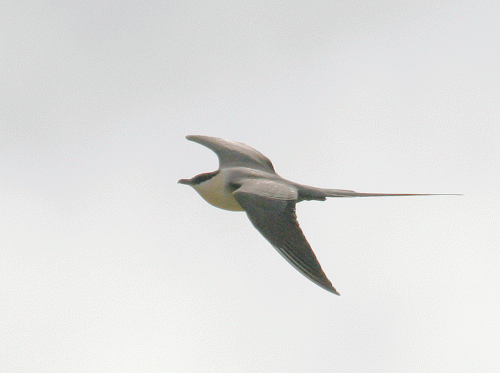
With a circumpolar arctic breeding distribution and a pelagic winter range, Long-tailed are hard to get to grips with. The two pale white shaft streaks best seen when the wing is in shade (see above) is diagnostic for this species.
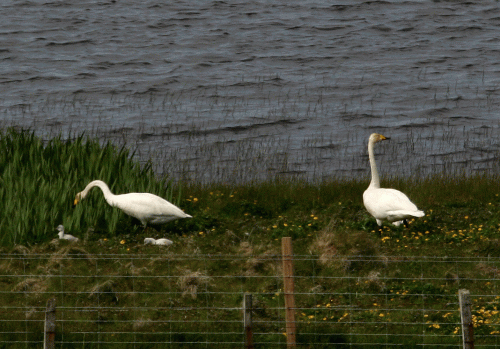
A few pairs of Whooper Swans nest in Shetland, the only location in the UK. Aggressive when breeding, they have been known to kill sheep that wander close to their nests. This pair had five cygnets, three of which are visible here.
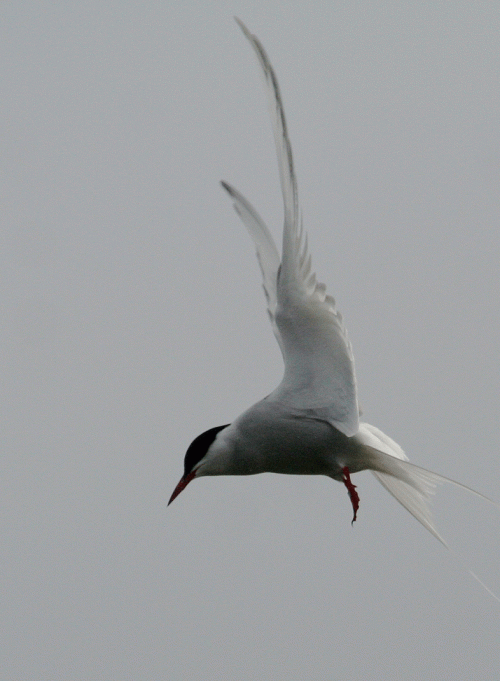
Arctic Terns are abundant (but declining due to the shortage of sand eels) and like skuas are aggressive in defense of their nests.

Great Northern Divers breed no closer than Iceland but several summer plumaged birds remain in Shetland waters for the summer.

Ancestors of the domestic or feral pigeon, wild (and hopefully genetically pure) Rock Doves are common.
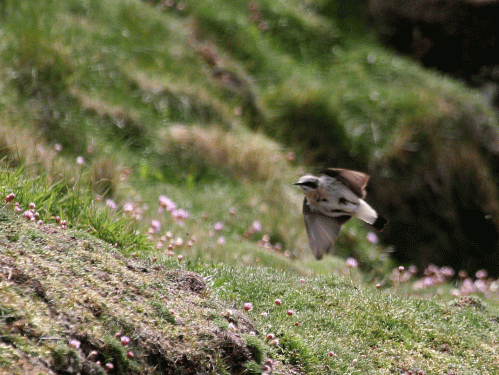
Wheatears are common breeding birds.
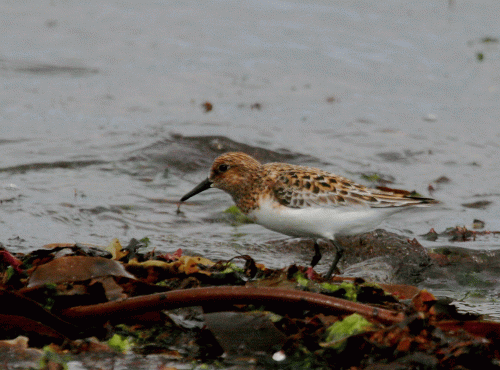
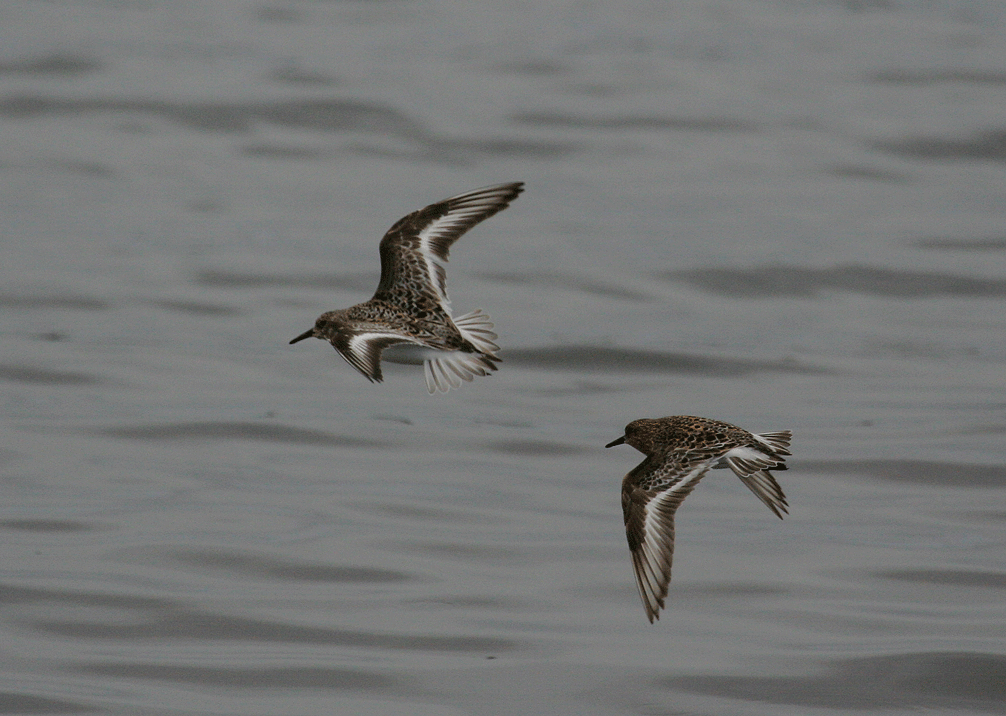
Sanderlings in breeding plumage are still migrating to their high arctic breeding grounds in early June

- Sanderlings in flight

There is a large colony of Guillemots at Sumburgh Head ….
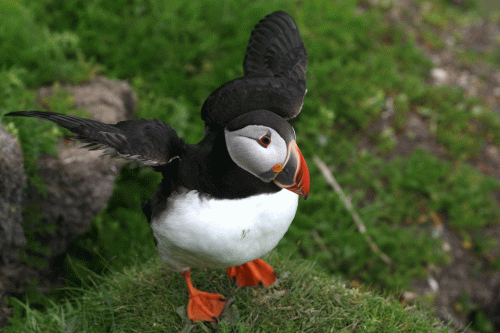
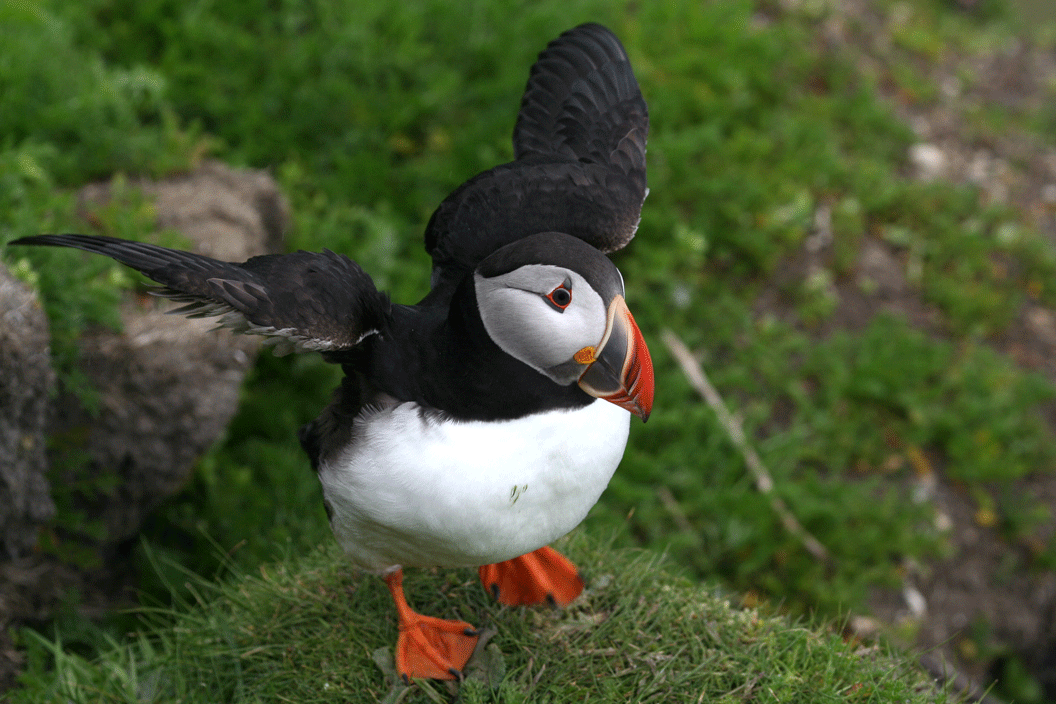
… whilst Puffins sit by their burrows at the top of the cliff.
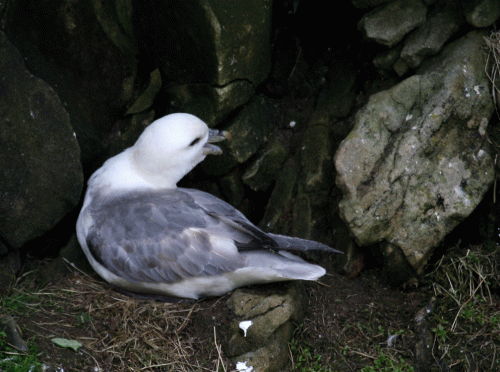
Fulmars nest in abundance on the rocky cliffs. They have a habit of spitting a foul-smelling oil at intruders as all seabird ringers and cliff climbers know to their cost.
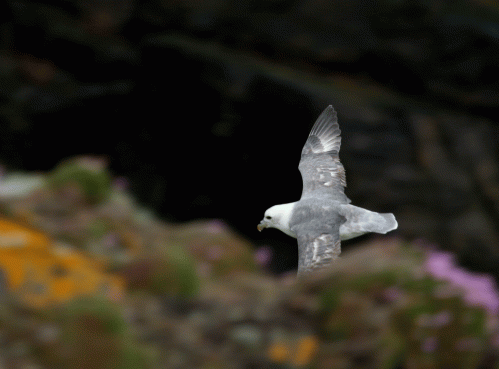
Closely related to albatrosses and shearwaters, Fulmars only superficially resemble gulls.
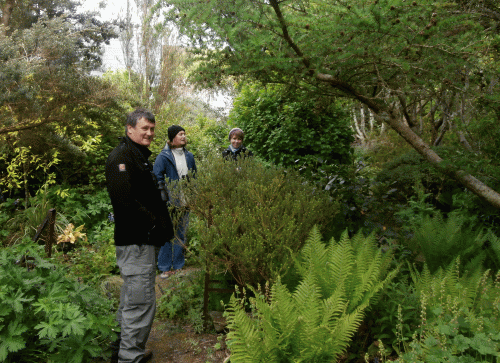
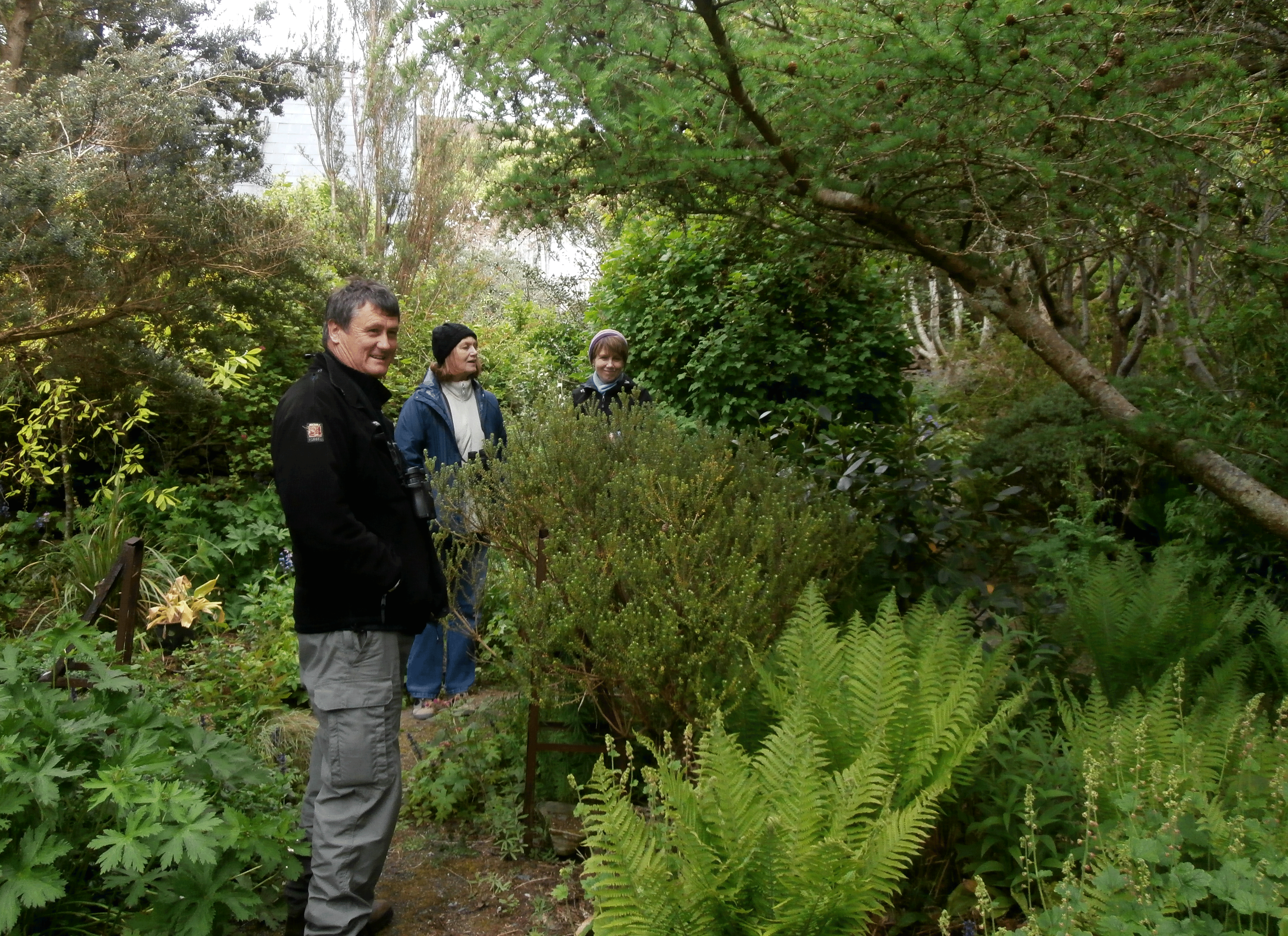
Paul, Margaret and Liz at Lea Gardens. Perhaps the most remarkable thing we saw in Shetland were these gardens belonging to Paul’s friends. With low temperatures, constant gales and high salt spray it is difficult to get anything to grow on these islands, but they have shown what can be done with time, effort and a lot of skill. It’s also a great place for Mealy Redpoll.
Sorry I haven’t been able to update the blog for so long but Margaret and I have spent the last couple of weeks in Scotland.
This is just a brief summary of the trip, a more detailed account and photographs will appear later.
We flew on 1/6 to Sumburgh in Shetland via Edinburgh and spent until 6/6 staying with Paul and Liz Harvey. We had cold but generally sunny weather but the bitter N wind put an end to migration, Paul had expected a lot of goodies at that time of year but migrants, other than breeding migrants like Wheatear were almost absent. Over four and a half days we recorded just four warblers, one each of Chiffchaff, Whitethroat, Subalpine and Marsh! Shetland lies at the same latitude as southern Greenland so we weren’t really expecting a hear wave.
We dipped on a vagrant Black-headed Bunting that had been there the day before, but had great views of the adult Long-tailed Skua and saw three of the increasingly rare Red-Necked Phalaropes (a tiny Arctic wader) distantly. We saw one Whooper Swan on the nest and also a pair with five cygnets, Shetland being the only place in the UK where this species breeds. There were several sum plum Great Northern Divers offshore and we even heard one calling.
Hermaness reserve which is as far north as you can get in the UK was excellent as ever, although Puffins no longer sit on the cliff top due to Bonxie predation and Arctic Skua is now rare for the same reason. Bonxies (or Great skuas) put on their usual vicious defense of their breeding area.

Just north of Hermaness on the island of Unst is the Muckle Flugga lighthouse and beyond that Out Stack. At 60 52′ this is the most northerly point of the British Ilses.
Back on the mainland we drove to Knapdale in Argyll where whilst being bittern by millions of midges, I scored with the introduced European Beaver. Glenroy Lodge near Fort William gave fantastic views of Pine Martin and to our amazement we found that fellow Dorset birder Chris Chapleo and family were staying there (he had recommended the B&B to me as place to see Pine Martins)
I only got a poor flight view of Chequered Skipper Butterfly, which is confirmed to a 20km radius of Fort William, mainly due to high winds and drizzle, but White-Tailed Eagle and Black-throated Diver in sum plum were compensation.
On Skye, a boat trip gave us great views of White-Tailed and Golden Eagle plus a close Red-Throated Diver (far closer and more photogenic than the 30+ we saw on Shetland). We saw many auks and few Manx on the crossing to and from the Outer Hebrides but no Storm Petrels. The Isles of Harris / Lewis were fantastic for scenery but quiet for birds. I expect that because it was a Sunday they were at church like the rest of the island, certainly all shops, garages and visitor centers were closed and there were no cars on the road.
North Uist produced great sightings of Corncrake, the long-staying male Snowy Owl, masses of breeding waders and distant views of a Golden Eagle eyrie. Unfortunately the Greater Sand Plover that had been there for several days disappeared just before we arrived.

The wonderful beaches and mountains of the Isle of Harris
We returned to the mainland via Skye and drove over and around the incredible Applecross peninsula, the highest road in the UK, before heading Speyside. Two full and two half days here gave us Red and Black Grouse, Ptarmigan, Dotterel, Ring Ousel, Slavonian Grebe, Scotsbill, Crested Tit, Goosander, Dipper and a total of 10 Ospreys and 5 Red Kites in the wider area.
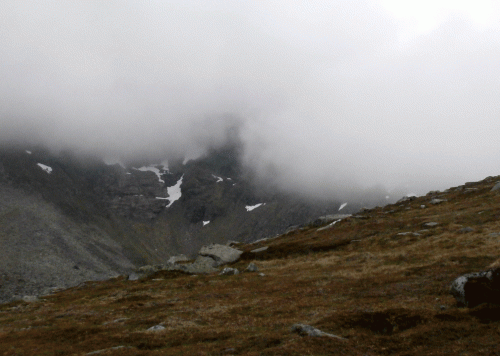
The hard slog up the Cairngorm Mountains
.
On a wet day we headed for the coast near Aberdeen where I got flight views of a vagrant Black Scoter but dipped on the King Eider. There were literally thousands of Common Scoters and Eiders on the sand or the sea, and with a stiff wind, rain and a crashing surf sorting through seaducks wasn’t easy.
We ended the trip with a visit to Margaret’s brother and his family near Edinburgh before flying home on Sunday evening.
A really great trip with far better weather than I expected and most of the target birds seen. I’m glad I flew and hired a car in Edinburg as we drove 1900 miles, that would have been 3000 if we had driven from Poole.
I have taken loads of photos, but due to other commitments, including those arising from a death in the family, I might not be able to post them on the blog for a while.
Today I joined two other lab retirees, Gio Pietrangelo and Ann Hitchcoe plus Tim Kellaway (who is still some years away from joining our fortunate position) for another pleasant ramble. Previously Gio had likened us to the three elderly guys in the TV series that go for a long walk and end up in the pub . Ann inevitably gained the nickname of Nora Batty, the series battle-axe with the wrinkly stockings!
We walked from the track to Greenlands Farm on the Studland Road to Corfe Castle along the minor roads and tracks that run on the south side of Poole Harbour, via Ower Quay and Wytch Causeway, about 7.5 miles in total. It was quite hot, at least to start with and we were quite tired by the time we reached Corfe Castle. With a car placed at each end of the walk, at least we didn’t have to hike all the way back.
Few birds were seen, but may were heard. The best sighting was of a Peregrine taking a Jackdaw right in front of us, but we also looked at many plants and also identified a few dragonflies.
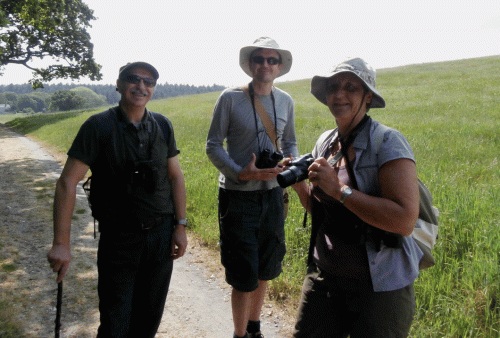
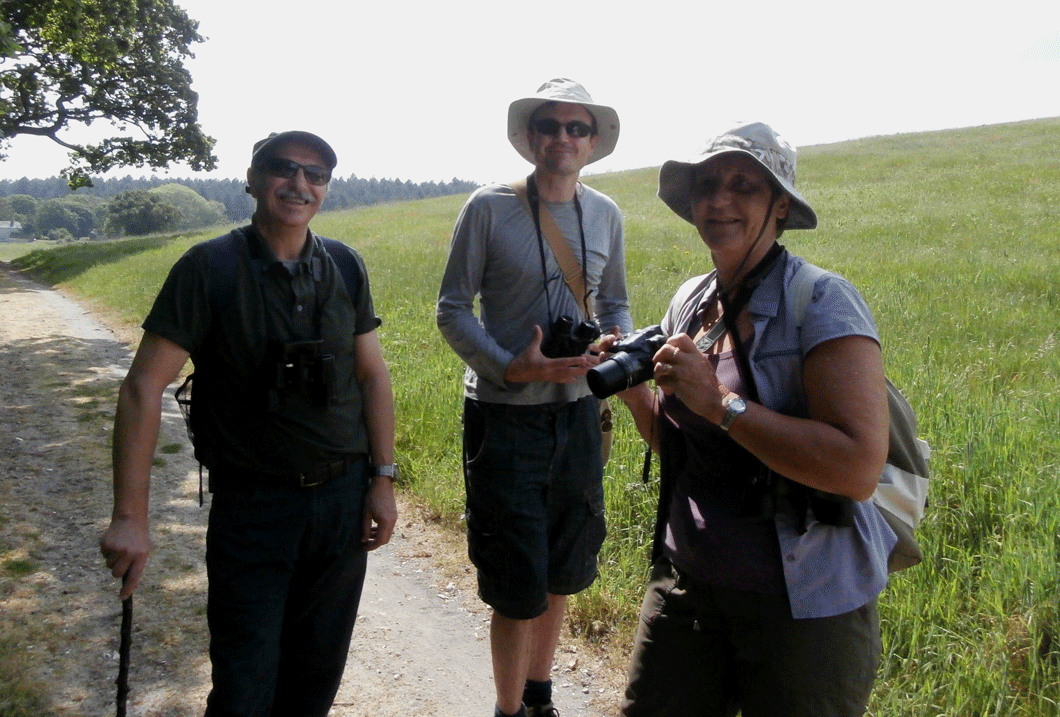
Gio, Tim and Ann
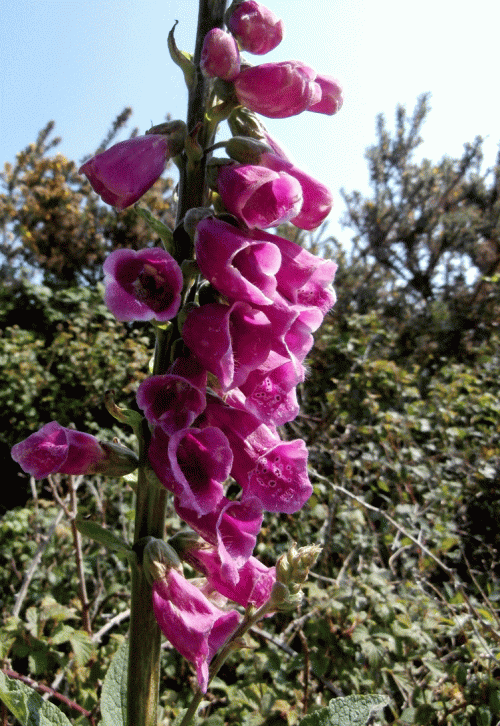
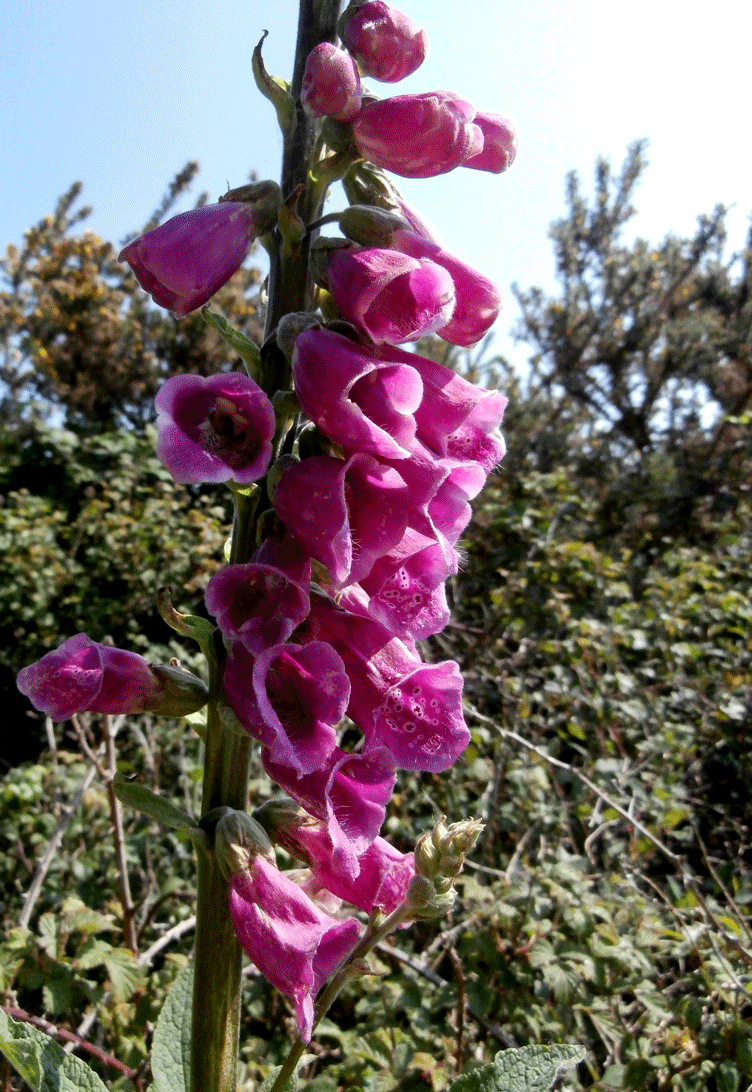
Foxgloves
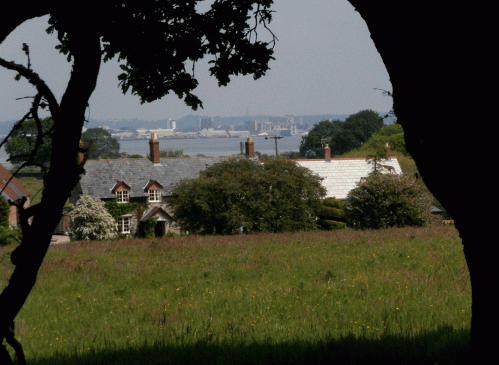
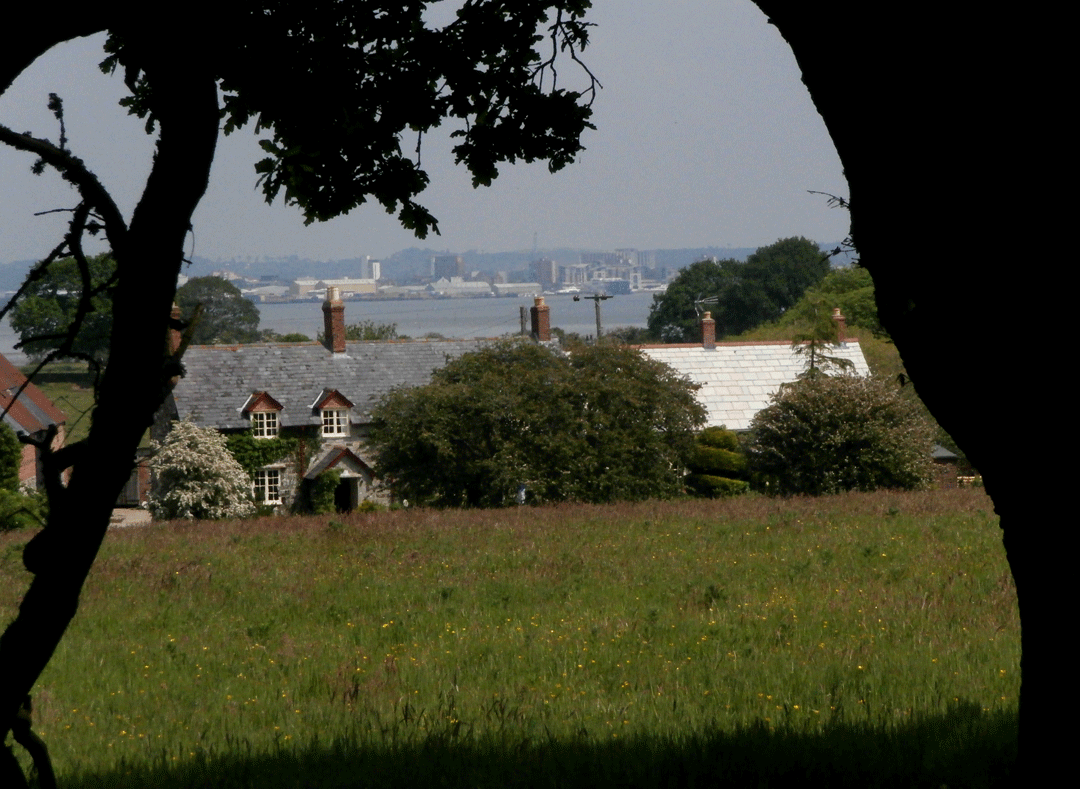
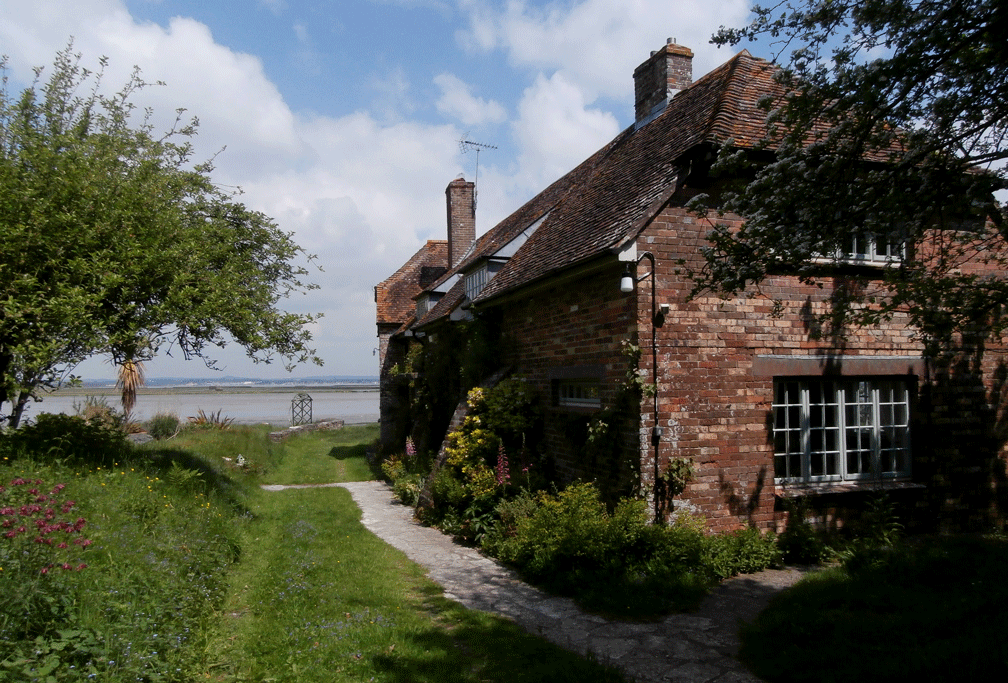
Ower Cottage with Poole in the distance
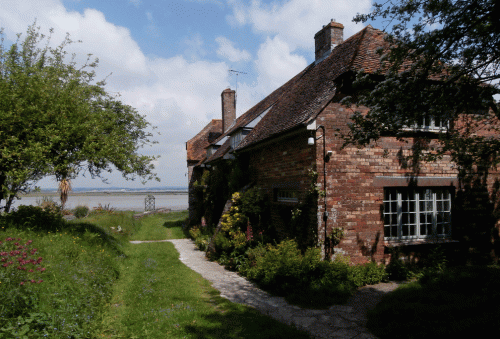
We walked down to Ower Cottage and had good views over the south side of Poole Harbour
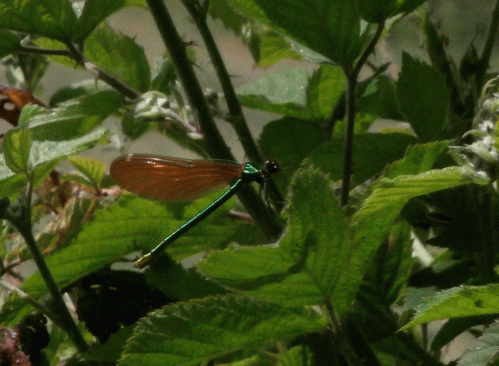
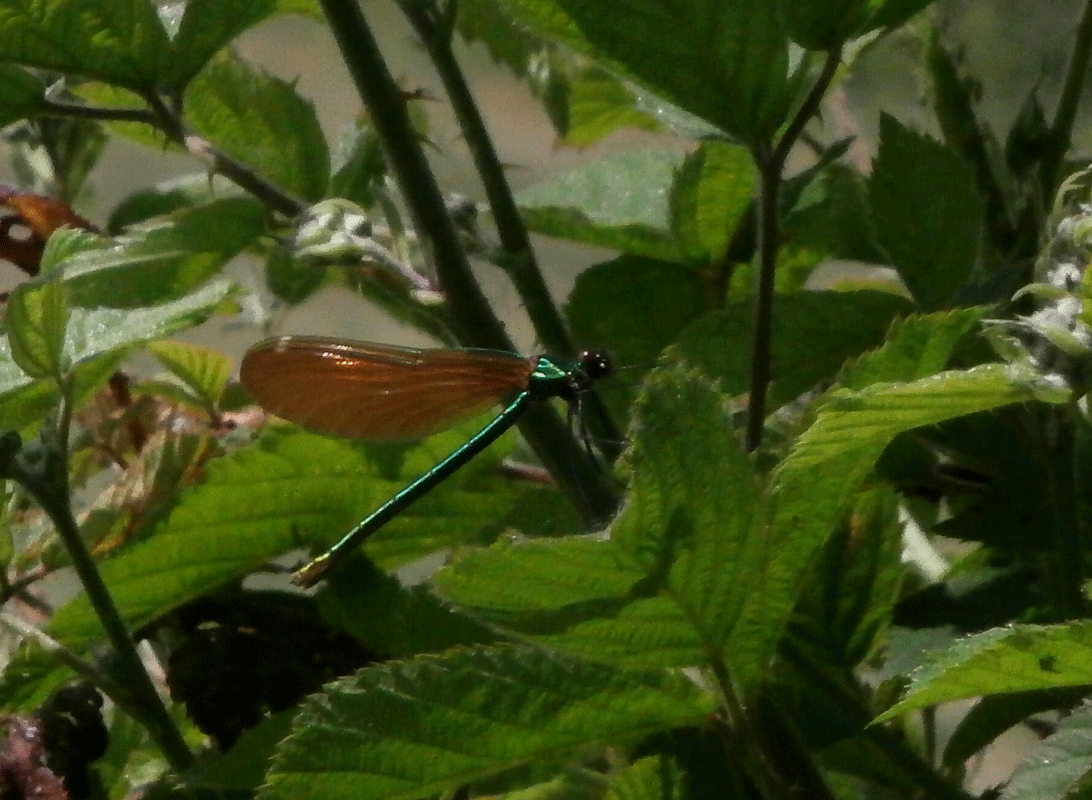
The Beautiful Demoiselle, one of the most attractive damselflies.
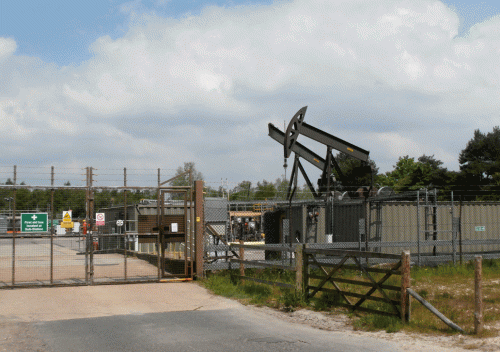
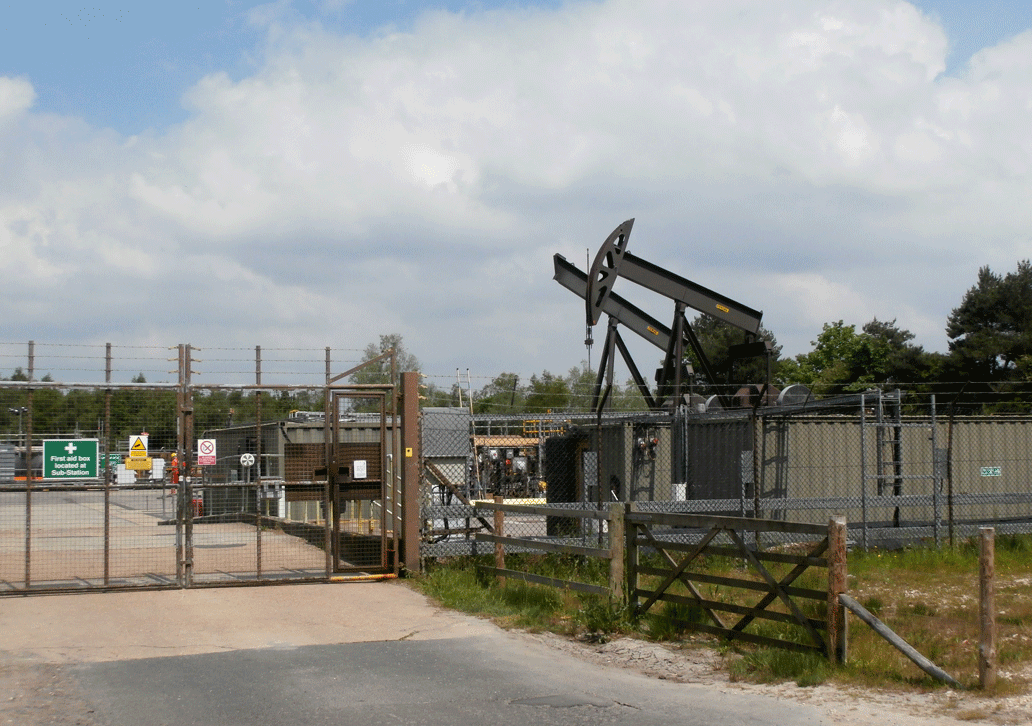
Nodding Donkeys at Wytch Farm, Europe’s largest onshore oil field.
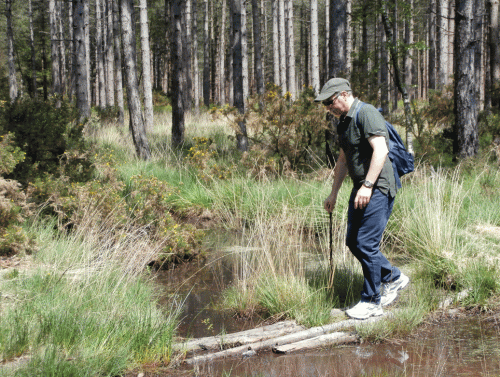
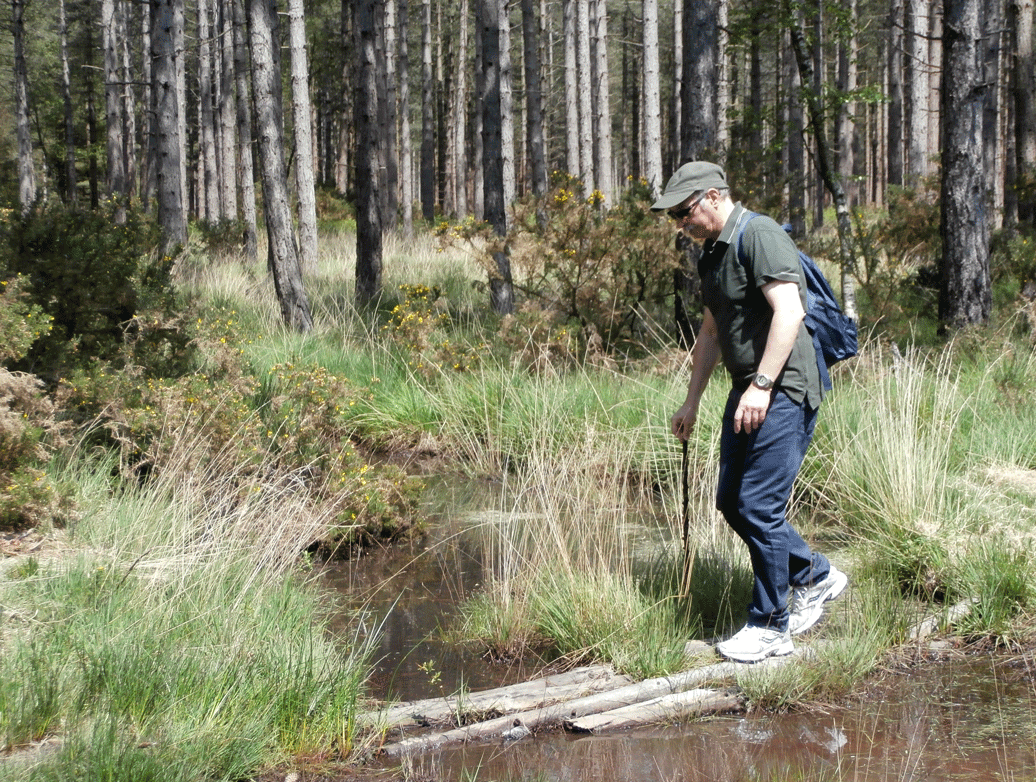
On an almost completely dry walk Gio finds the only wet crossing in Purbeck.
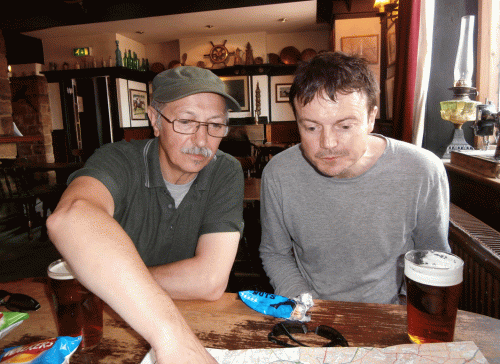
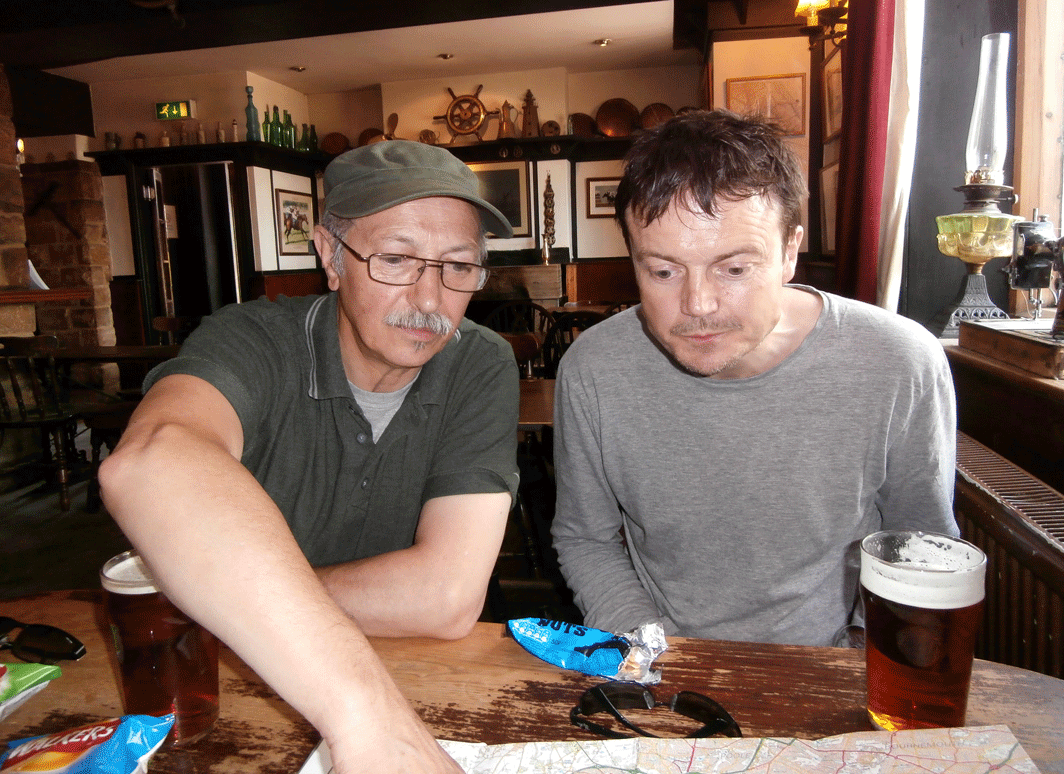
We discuss where we have just walked over a pint.
This may be my last post for a while as we are heading up to Scotland soon.
Birding has taken a bit of a back seat recently as I have many tasks to complete before our holiday. As Janis and Andy were away on Friday night the girls stayed with us. Amber said she was concerned that a photo of her I placed on this blog last September appears every time anyone does an image search for Purbeck School! I said that ‘there are many photos of you on the internet, many posted by your Mum’. She answered that was ‘before I had a social life’!
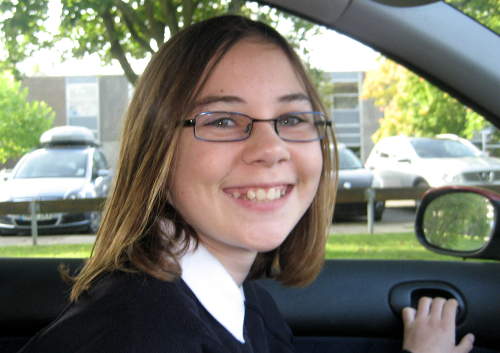
September 2011: Amber arriving at school, ‘before she had a social life’.
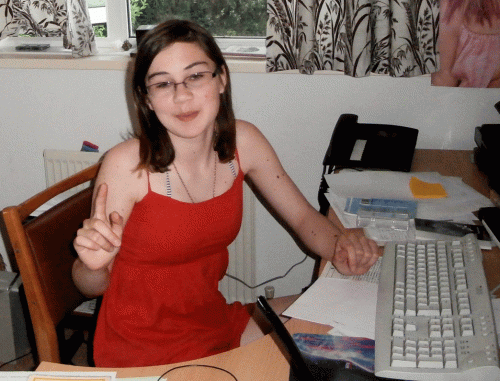
Amber taking over our PC last Friday (now having gained a social life).

Kara on the other hand, commandeers the telly in our bedroom to watch cartoons.

Downstairs we watched ‘Have I Got News For You’ chaired by none other than William Shatner. As Star Trek fans, we weren’t sure whether this was good entertainment or just a little embarrassing. However messers Hislop and Merton got some good puns about politicians who managed to ‘cling-on’ to power!

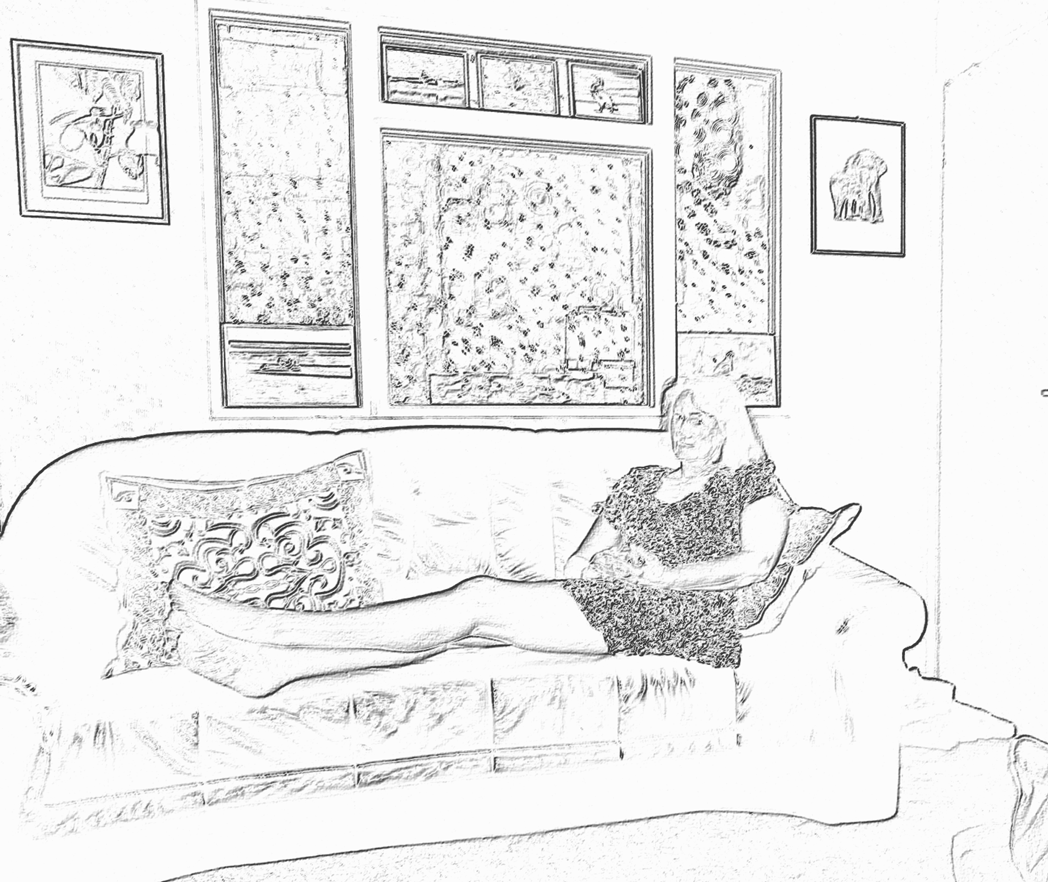
I have just bought a new pocket camera which has got a lovely wide-angle lens, a 10x zoom and megapixels galore. It can do weird things like producing this line drawing of Margaret watching telly.
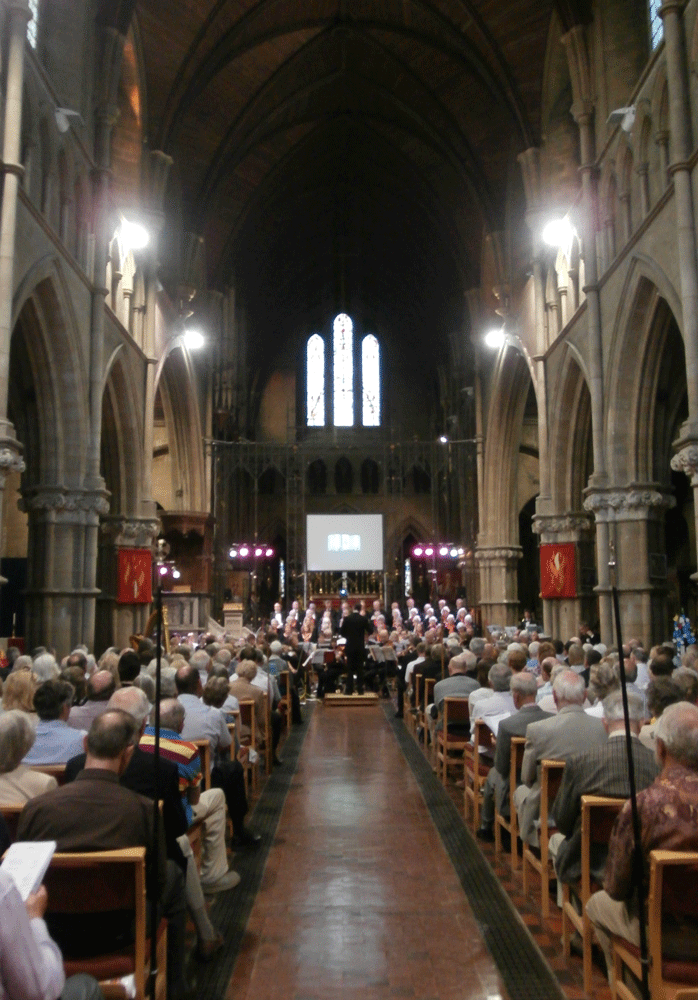
On the 26th the Barclay House Choir put on a performance of the music from the Queen’s Coronation. Margaret was busy for most of the day with rehearsals etc. In the evening Janis, Andy, Amber (Kara was at a sleep over) and I joined Janis’ friends Helen and Suzanne at St Peter’s Church in Parkstone. This was by far the best concert they have given. A double sized choir, a treble chorister from Winchester Cathedral and a full-sized orchestra sounded superb. The only downside was that scenes from the actual Coronation was projected onto a screen above the choir but the projector didn’t always work and the sound was so poor that you couldn’t make out what was going on.

The choir at a packed St Peter’s.
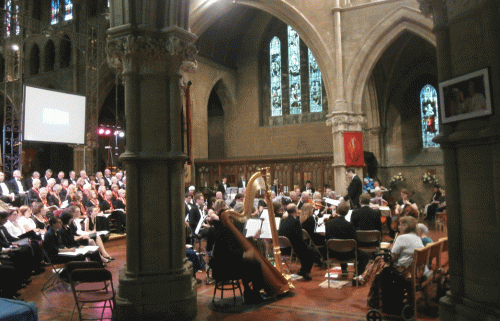
The Barclay House Choir at St Peter’s.

Later we went for a drink across the road. L-R: Amber, Andy, Janis, Helen and Suzanne. Is this Amber’s social life?
On Sunday Janis, Andy, Helen and the girls came round for an extended breakfast which took the whole morning. In the afternoon Margaret and I popped down to the beach and in the evening I joined fellow ringer John Dowling at Kingston Lacy House where he has permission to ring chicks (or pulli to use the correct term) in nest boxes.
The permission to ring pulli is included in my ringing license however it is many years since I have done so. I need a bit more practice so asked to join him when it was convenient. Ringing pulli is particularly useful technique as it fixes the origin of the birds concerned. No fledged bird can be proven to originate in the area it is ringed. Putting rings on pulli is no different to ringing adults, but judging the time to ring is critical, too young and the ring can slip over the toes and cause damage, too late and the birds can ‘explode’ from the nest, i.e fledge prematurely.

Kingston Lacy during the evening when all the tourists have gone home.

John checking nest boxes.
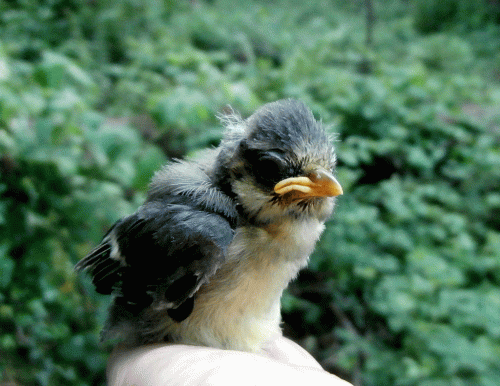
This Blue Tit pullus is at the upper age limit for ringing for a nest box breeder and would be too old to ring if it was a cup nest breeder (where the risk of exploding is much higher).
After a meeting the previous evening I had some urgent business to deal with, so I got up early went the gym with Margaret and then settled down to get the paperwork done. However over the next twenty minutes message after message came in about goodies in the Weymouth area. Icterine Warbler (in the hand), Common Rosefinch and Golden Oriole were seen at Portland Bill, whilst those watching the Great Reed Warbler at Radipole saw a Black-winged Stilt fly overhead.
It was clear that I should have been at Portland not at home, but by the time I arrived I found the Golden Oriole was long gone, the Rosefinch had only been seen by one person and the Icterine Warbler had only been glimpsed since release. After a couple of hours of searching I gave up and headed home.
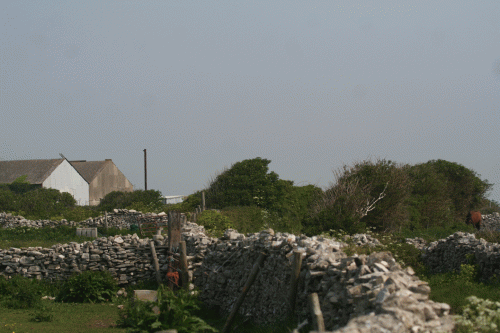
The ‘top fields’ at Portland Bill, the last known location of the Golden Oriole.
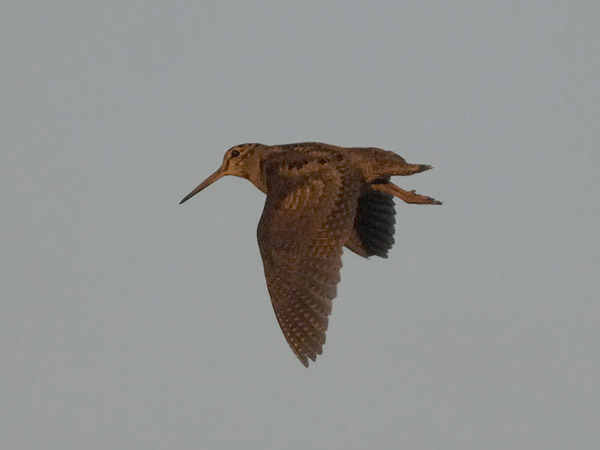
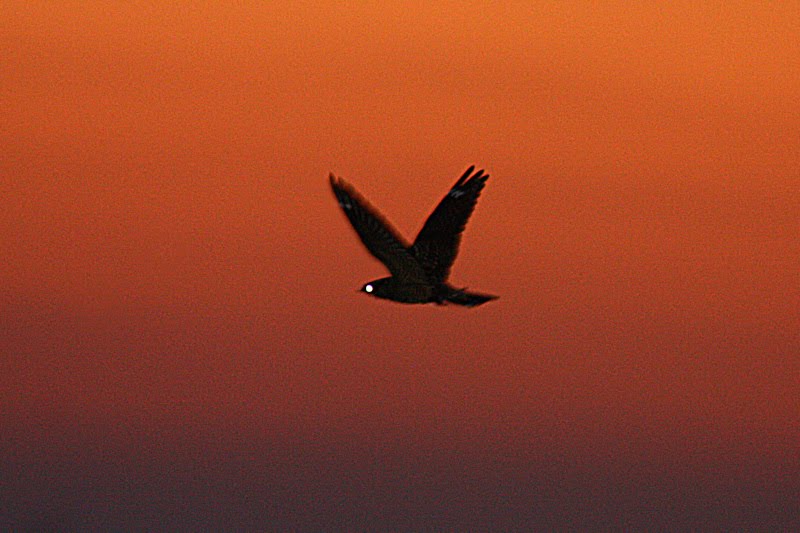
Now that we have long warm evenings we thought it would be nice to go looking for Nightjars. Nightjars breed just up the road from us at Upton Heath but we went much further, to Holt Heath north of Wareham, in the hope of seeing roding Woodcocks. I saw one Woodcock during the winter, but the view was very brief, so i was keen for a better view. The roding (or displaying) bird flies just over the tree tops making a ‘twisk twisk’ noise. If it passed close enough to you a deep frog like call can be heard as well.
Listen here for recordings of Woodcock.
http://www.xeno-canto.org/europe/browse.php?query=Eurasian+Woodcock+%28Scolopax+rusticola%29+34&species_nr=zgjxlp
We saw a roding Woodcock, had great views of displaying Nightjars and saw several Cuckoos, it was a lovely evening marred only by the emergence of countless midges.
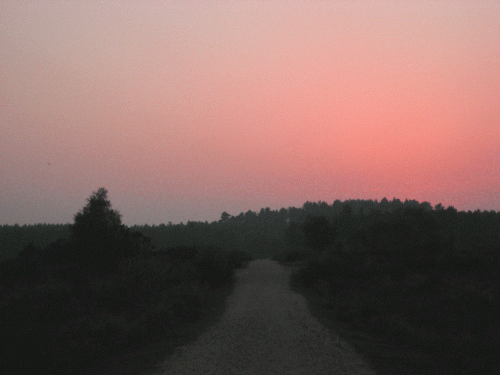
Dusk at Holt Heath

A roding Woodcock. Photo from the Internet
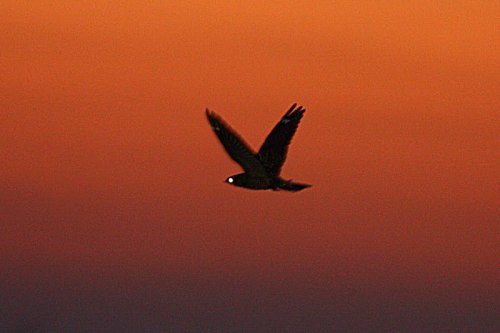
A Nightjar displaying at dusk. Photo from the Internet
Click here for recordings of Nightjars.
http://www.xeno-canto.org/europe/browse.php?query=European+Nightjar+%28Caprimulgus+europaeus%29+51&species_nr=wozfhw





































 gryllosblog