Archive for the ‘Uncategorized’ Category
Getting a big year list isn’t just about chasing rarities, you must also make sure that you see the regular but scarce species as well. I knew that I would bump into all three of this afternoons targets sometime in the year, but there was no harm in getting them out-of-the-way in January just in case.
I had heard that the Snow Bunting that is wintering on the shingle bank at Hengistbury Head could be seen from Mudeford Quay on the other side of the entrance to Christchurch Harbour. This would save the long hike out from Wick and more importantly save me time, however an hour spent scanning the shingle around the ‘Black House’ drew a blank.
I called in at Argyll Road on the way back to look for a Spotted Redshank, but the tide had dropped and all the waders had moved out of sight. This species is normally a regular winter visitor in small numbers to Holes and Lytchett Bay but this year all the birds seem to remaining on Brownsea lagoon which is closed for the winter (I failed to pick any up on the lagoon from the New Year bird boat due to the atrocious weather).
I then headed up to a site near Hurn airport in the hope for a Merlin. I found the road which led to an industrial estate just before 1600, but hadn’t realised that you have to cross a narrow causeway with room for a single line of traffic. All the factories were coming out and the road was hugely congested. Eventually I found a place to park and watched the area until dusk. I was just about to declare the day a triple dip when a shadowy shape shot across the end of the runway, typical Merlin behaviour. Not the best of views but I fully expect to come across more in the autumn.

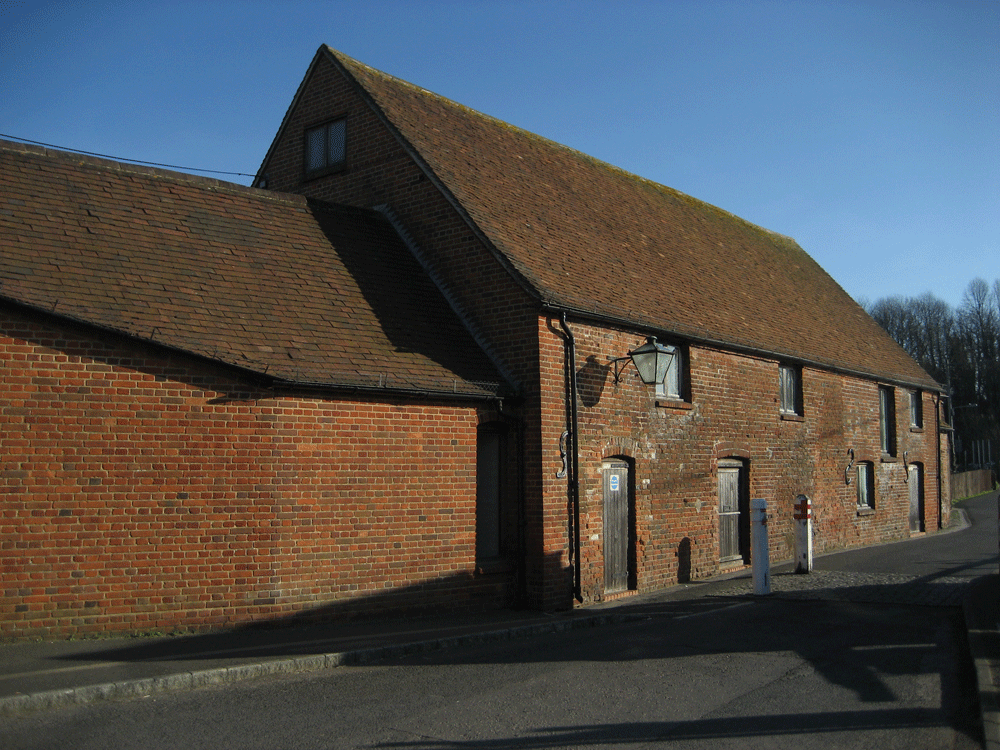
The Black House on Hengistbury Head seen from Mudeford Quay
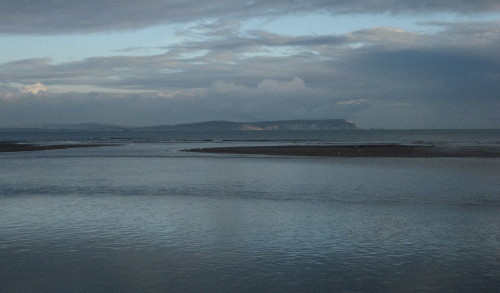
The view from Mudeford Quay towards the Isle of Wight
Bad weather kept me at home on Tuesday but in the afternoon I did a bit of local birding around Holes Bay where eventually I caught up with Spotted Redshank and later went to Holton Lee, the private estate on the south side of Lytchett Bay in the hope that a Woodcock would emerge at dusk or I would see Marsh Harriers coming in to roost but had no luck with either.
As Margaret was at choir on Tuesday evening I visited my friend, part-time birder and ex colleauge Tim Kellaway and chatted to him about the lab, music and birds.

Tim and his son Simon.
On Wednesday the 25th I decided to have another go for the Snow Bunting. I had expected to see many in Norfolk, but they were yet another species that we missed due to car troubles. I hope to see a few on their Cairngorm breeding grounds this summer, but bad weather could easily thwart the attempt.
I walked out to the far end of the shingle spit at Hengistbury but there was no sign of the bunting, others had seen it and I concluded that it must be elsewhere on the peninsula when some guy told me of a bird with a lot of white in the wing that he had been unable to identify. I headed for that spot only to find that it had flown back to where I was in the first place! I eventually got good if fairly brief views. I later headed back to Poole and had lunch with Margaret.
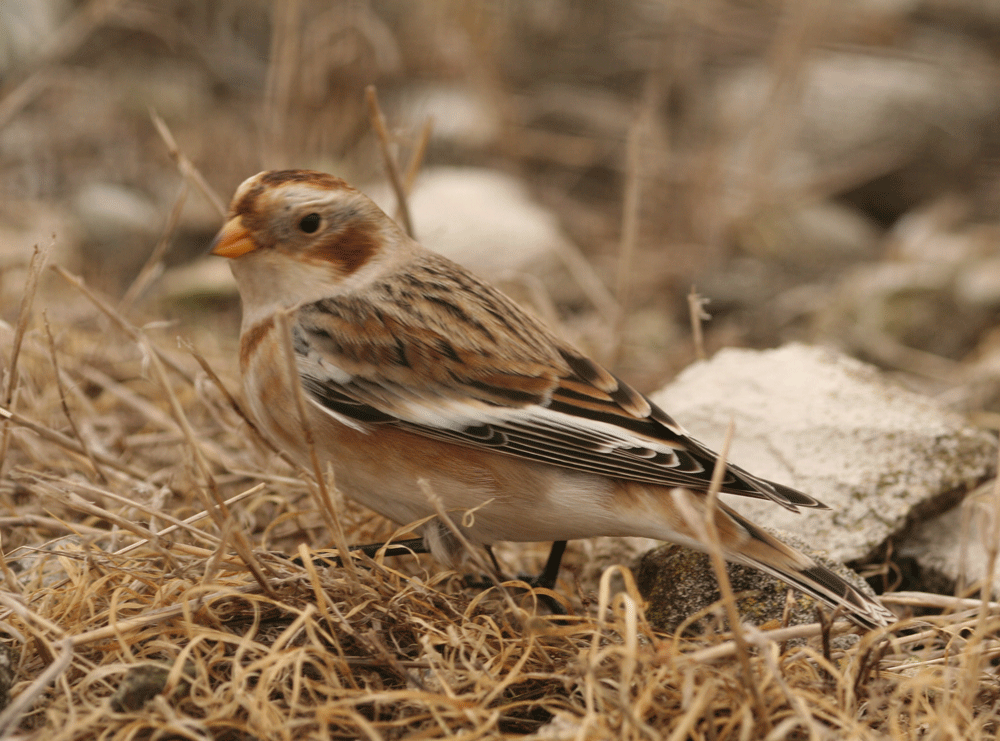
I didn’t get any photos of the bunting so I have included a shot of a very tame bird that I saw in Weymouth last autumn. Photos of the Hengistbury bird can be found on the CHOG website at www.chog.org.uk/Pages/sightings.htm under the 17th or 22nd of January.

Snow Bunting photgraphed in Weymouth last autumn.
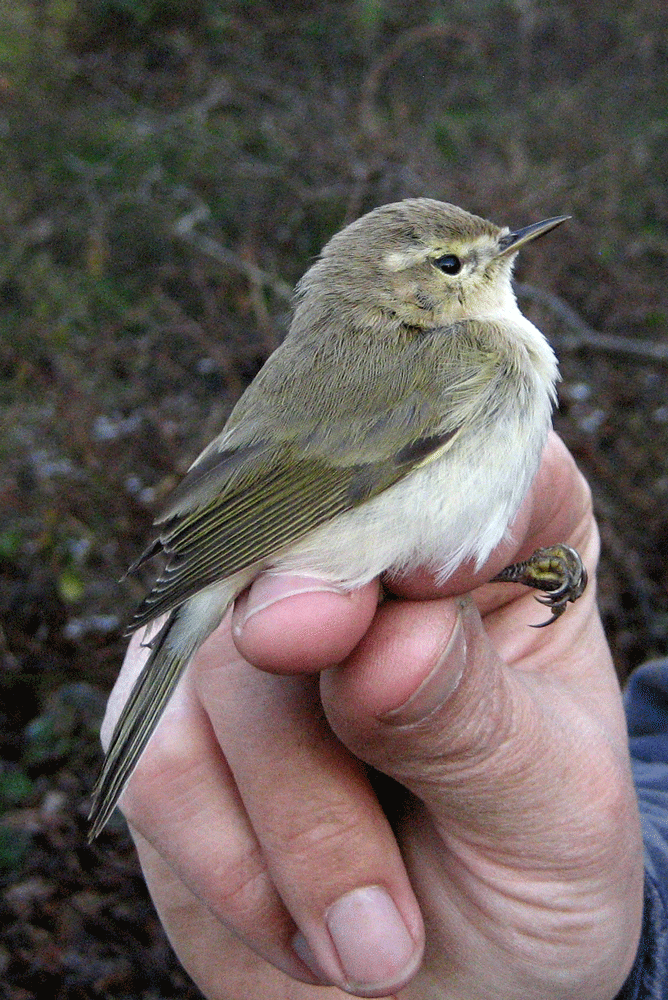
Chiifchaff is an abundant summer breeder and a scarce winter visitor to southern England. A sheltered drainage ditch in Poole has been a regular wintering area for this species. We have had three ringing attempts there this month and have trapped nine Chiffchaffs. One Chiffchaff was ringed (as a first year) at the same site in January 2009, making it close to four years old and also shows winter site fidelity.
A small number of wintering Chiffchaffs appear to be of ‘eastern’ origin, either of race albitenus or even of the Siberian race tristis. These races seem to have different origins, as tristis may have evolved from a Himalayan ‘proto-Chiffchaff’ rather than from western birds and have different calls and song. Unfortunately the boundaries between ‘our’ collybita and Scandinavian and Russian albetinus and between albetinus and tristis seem to be blurred. The different origin and vocalisations of tristis have led to some to consider it a different species, Siberian Chiffchaff, but to be sure you have one you must hear it give the ‘lost chick’ call!
A calling ‘Siberian’ Chiffchaff was present on our first ringing attempt, a good candidate was trapped but on release it was heard to give the typical ‘hoeet’ call of collybita. However later, what was presumed to be the same ringed bird was seen to respond strongly to tristis vocalisations. Can a single bird give vocalisations of both collybita and tristis or is it a hybrid or intergrade between the two?
Today we caught a typical collybita and an intermediate pale bird that may have been a Scandinavian albetinus – neither was heard to call!
We hope to continue monitoring these Chiffchaffs and hope to see if any remain to breed. One bird at least is giving the typical ‘chiffchaff – chiffchaff’ song.
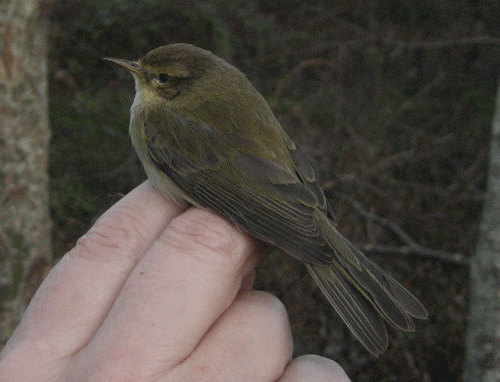
A typical collybita Chiffchaff with olive-green plumage and dirty underparts
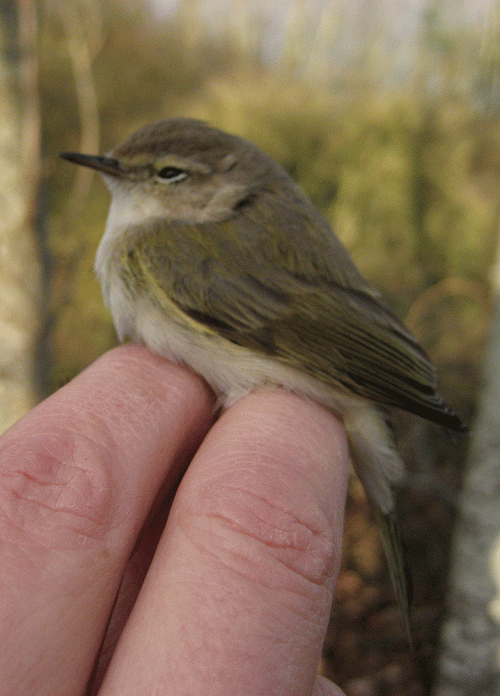
This pale Chiffchaff has very pale underparts and in the field might have been considered a candidate for 'Siberian' Chiffchaff but in the hand had some olive green in the upperparts

This bird trapped on 11 01 12 is our best candidate for a tristis but was heard to give a 'hoeet' call on release. Later it responded to tristis vocalisations
The birding over the last few days hasn’t been as succesful as earlier in the week. On the 18th the Crane that was seen over Corfe Mullen recently was seen again flying over the Wareham by-pass. I spent the morning trying to relocate it but to no avail. On the 19th I spent the afternoon in the Sixpenny Handley / Wyke Down area in hope of a Merlin or Short-eared Owl. Again I had no luck but did see a Barn Owl on the drive back at dusk.

Sympathetic management of the Wyke Down area has made this area rich in wildlife, but no owls were visible today.
Saturday 20th saw the Poole Harbour Bird Count. This was an attempt to systematically count the birds of Poole Harbour and drew about 60 volunteers. Each area was allocated a team with a team leader to co-ordinate activities. My area was Holes Bay and the Creekmoor Ponds. I birder the latter in the morning, seeing a Firecrest and few other woodland birds plus a few common water birds on the ponds. Later I checked the wood at Upton, the waste ground near the railway line (which has been seriously damaged by off-road motor bikes) and saw a Black Redstart near to Poole Hospital.

Creekmoor Ponds: these two small ponds in the middle of a housing estate in Poole can be surprisingly good for birds.waterbird
I returned home as Margaret’s friend Helen was coming to lunch (and picking up our old TV) but was back at Holes Bay in the afternoon for the low tide waterbird count. It was very windy at it was difficult to hold the scope steady in such an exposed location, best birds were a group of 65 or so Avocets and a Common Sandpiper, which although a regular migrant is a scarce winter visitor and was new to my year list.
I ended the day counting Pied Wagtails coming to roost at Tescos by Ferrybridge. Later about 35 of the counters met at Mark and Mo Constantine’s house for an excellent social get together.

Mark and Mo Constantine photographed in 2009.
Margaret and I spent much of Sunday 22nd at Lyme Regis in the far west of Dorset searching for the elusive Spotted Sandpiper, the American equivalent of the Common Sandpiper I saw yesterday. In spite of looking along the Cobb and all along the shore in the company of John and Mo Down, we had no luck, but enjoyed being out on a spring-like day and having a fish and chips lunch in the traditional manner.
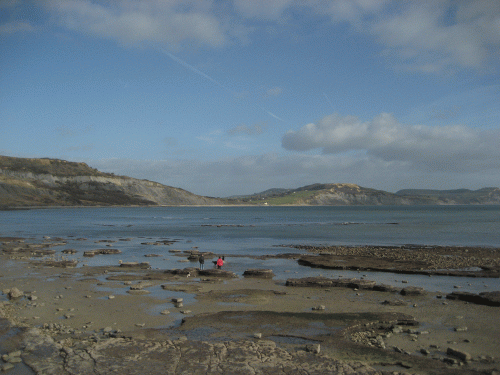
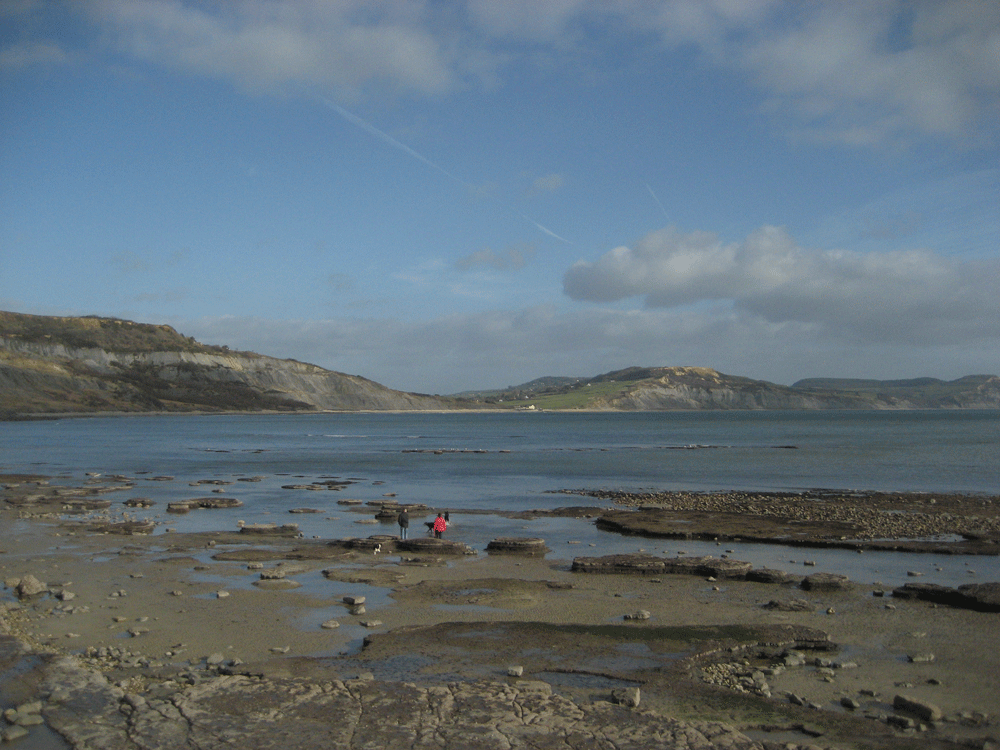
The view from Lyme Regis towards Charminster.
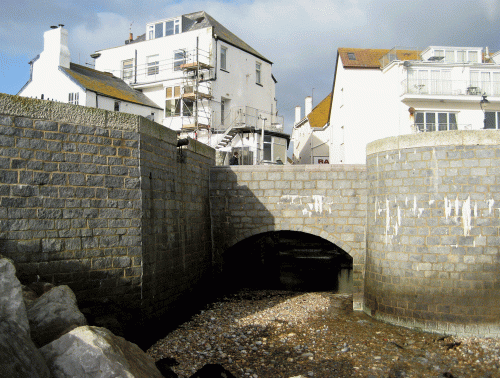
We waited for the tide to rise in the hope that the Spotted Sandpiper would return to the mouth of the River Lym, where it has been seen recently.
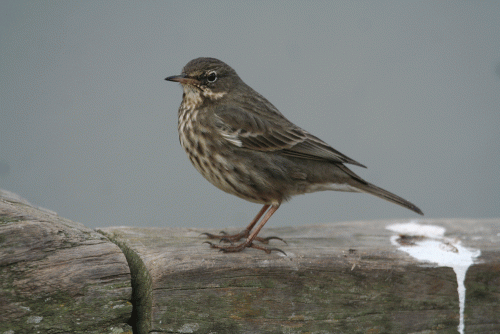
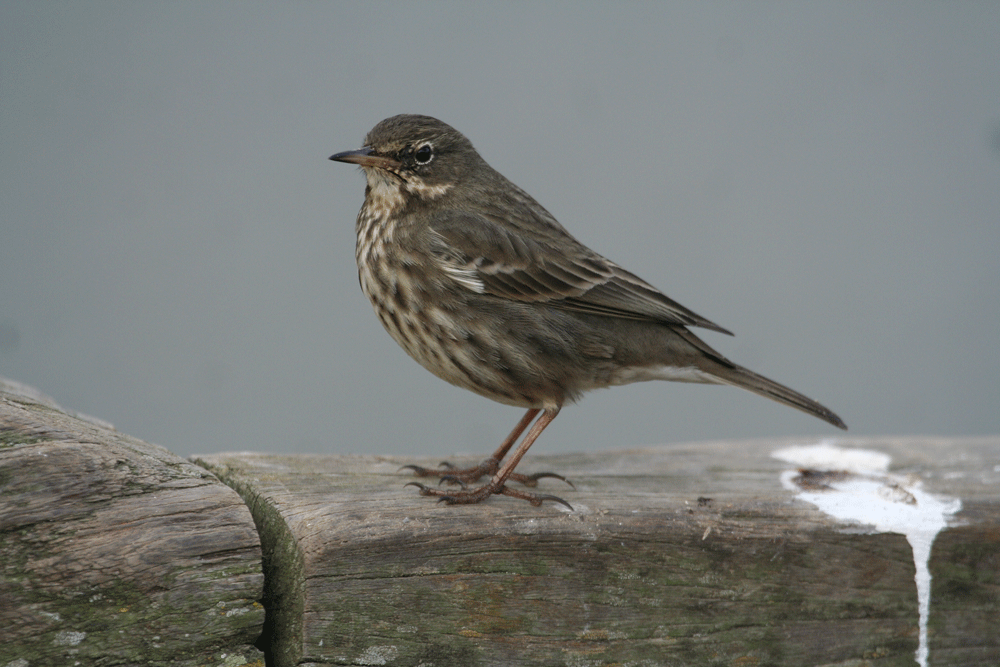
We may have missed the Spotted Sandpiper but this Rock Pipit posed nicely for photos.
Another excellent day, this time along the Exe Estuary.
I arrived at the Exmimster Marshes just after 9, as I entered the car park I saw a young birder staring at a tree, I was amazed to find that he was watching a roosting Long-eared Owl, a widespread species but because of its secretive habits, one i haven’t seen in the UK for 12 years.

Long-eared Owl
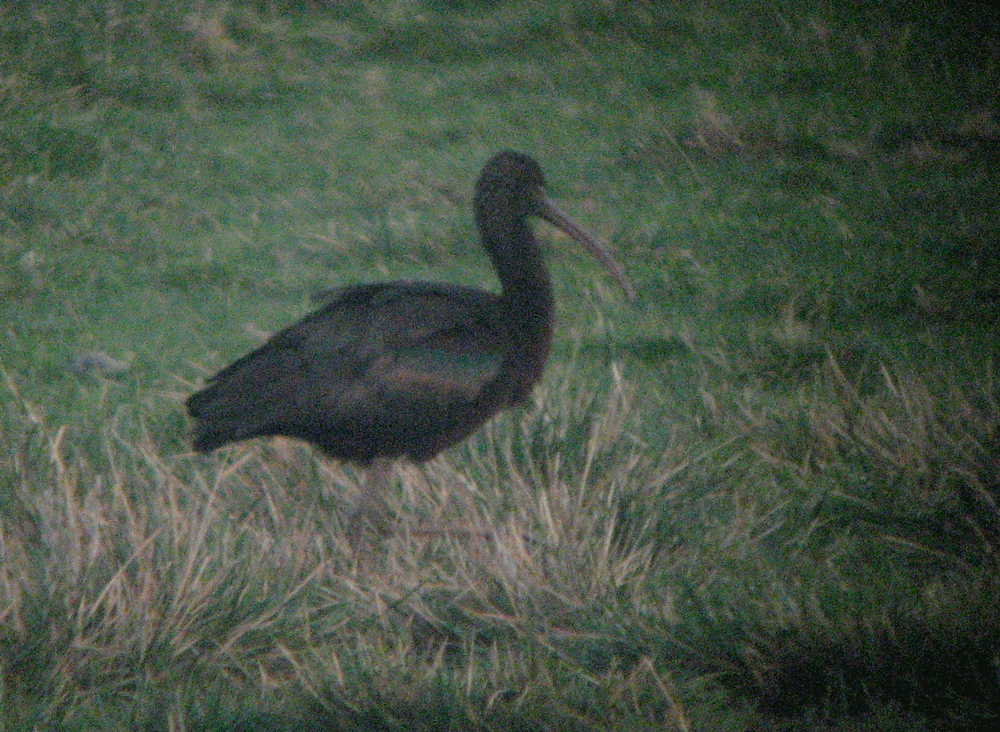
I was at the Exminster Marshes for two reasons, Glossy Ibis and Red-breasted Goose, but in spite of there being quite a few birders around neither had been seen recently. The morning was very cold and much of the marsh was frozen which certainly would explain why the ibis, which normally feeds in soft soil, was absent.

The frozen marshes
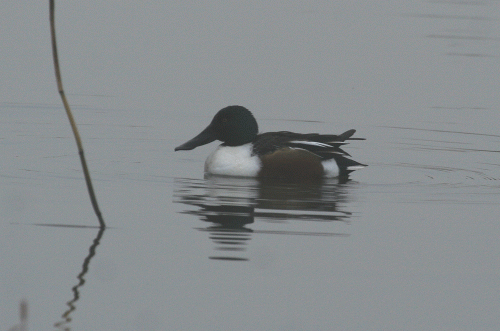
Many waterfowl such as this drake Shoveler were present
I spent a lot of time on the bank overlooking the Exe estuary searching through the big flocks of Brent Geese on the far shore, they were all very distant and in spite of spending some time there I failed to find the Red-breasted Goose. This vagrant, which should be wintering on the Black Sea, is probably the same individual that I saw near Christchurch in Dorset last year.
By late morning I given up on the goose quest but I had seen a Water Pipit on the marsh. I set off for Dawlish Warren at the mouth of the Exe in search of two North American ducks.
The first, a female Surf Scoter wasn’t on show when I arrived so I headed south of Langstone Rock to look for it. I then realised that this was exactly the same area as I visited on 12/11/06 to see Britain’s first Long-billed Murrelet which breeds no closer than the north-west Pacific. At the time this produced a real dilemma as I had arranged one of my first dates with Margaret and she was already on her way to meet me when news broke, did I blow off the date or risk dipping? I delayed the twitch until the following day and well the other part is history…..
On the way back I found the Surf Scoter had moved back to its usual spot and I enjoyed good if distant views and also saw a first winter Little Gull

Langstone Rock formed from red Triassic sandstone
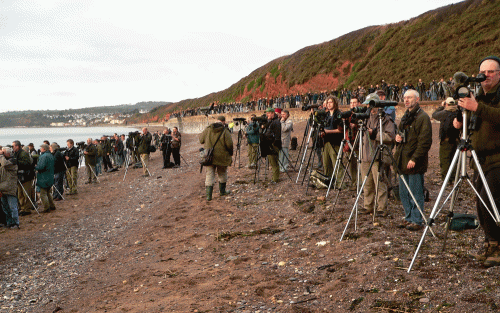
The same area in November 2005 as hundred of birders gather to see the Long-billed Murrelett. There were only two birders present today!
I then continued along the sand spit to a rather crowded hide where there was a high tide wader roost but no sign of the American Wigeon. Later on my way back I found an area in the corner of the salt marsh that could be viewed across the golf course and I enjoyed a reasonable if brief view of our Wigeon’s American cousin.
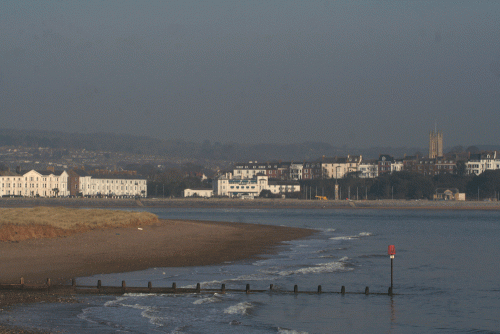
Exmouth on the far side of the Exe estuary
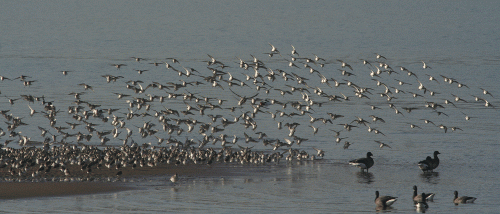
Roosting waders and Brent geese. Large numbers of Knot, Dunlin, Oystercatchers and Grey Plover were present.
I then returned to Exminster and tried for Cirl Bunting, a bird virtually confined in the UK to south Devon. My usual site drew a blank, I was worried that the area had been deserted but there again I have never visited in January, so they may well winter elsewhere. A final return to Exminster Marshes gave me views of the Glossy Ibis in the gathering gloom ending another excellent day.

Glossy Ibis

Exminster Marshes at dusk.
I had an excellent day in Hampshire today chasing new birds for my year list.
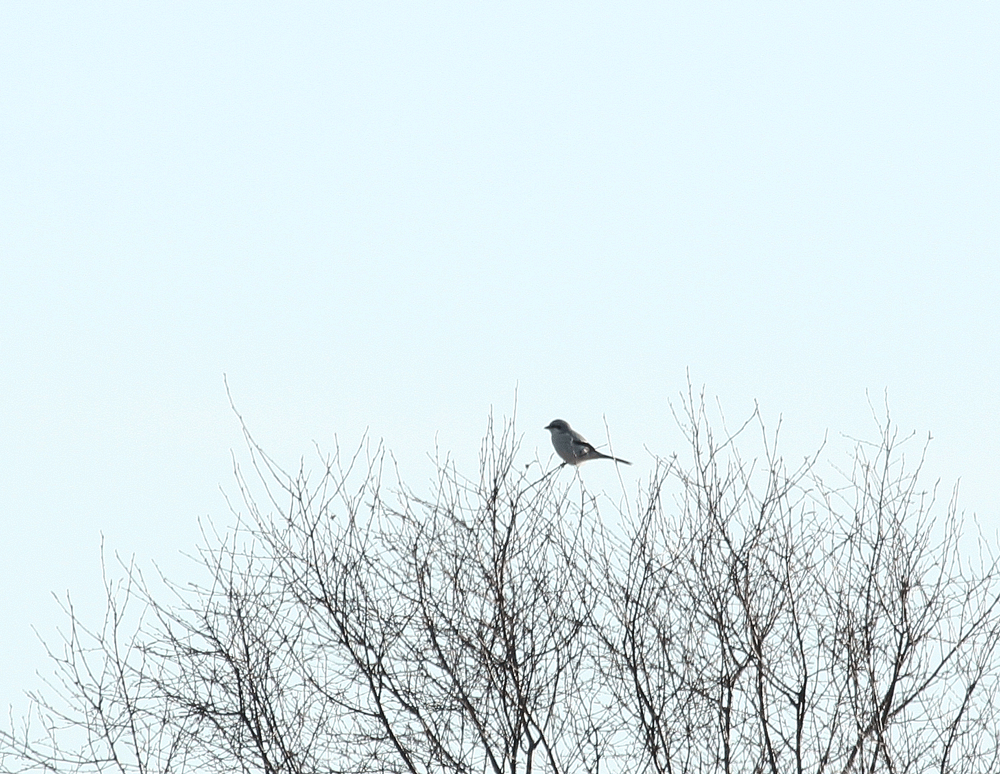
I started at Beaulieu Road Station in the New Forest where after a bit of searching I found the Great Grey Shrike, a scarce but regular winter visitor to the UK. I continued onto Eling on Southampton Water, the site of one of the last tidal mills, where a Black-throated Diver was seen.
I was pleased to hear that a Shore Lark had been seen yesterday on Hayling Island, I very much wanted to see this bird, as with our car break down in Norfolk we failed to see the species there. On arrival I met a local birder who had just located the bird on a shingle island, it was too distant for photos but I got great views through the scope.
Next, I continued on to nearby Warblington where a Cattle Egret showed well with a group of Littles before I braved the traffic of Portsmouth where a second winter Iceland Gull was feeding with Herring and Great Black-backs in the region known as Old Portsmouth.
I concluded the trip with a quick visit to Blashford Lakes, where a beautiful sunset ended a rewarding day.

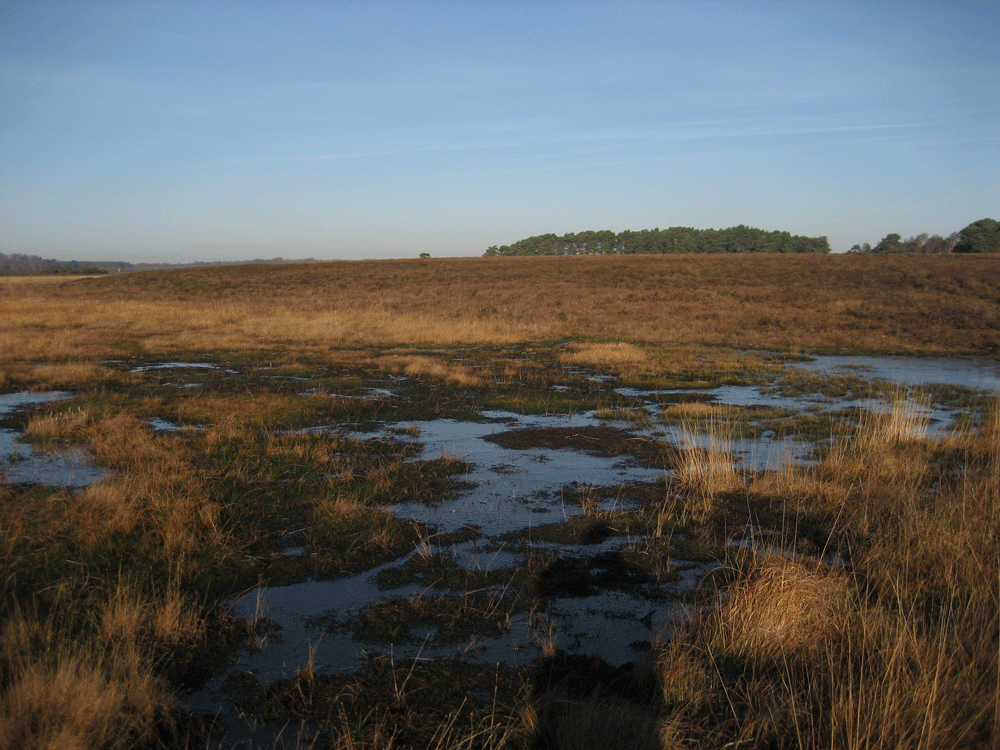
The Beaulieu Road area of the New Forest is a wonderful mixture of bogs, heath and forest

A distant Great Grey Shrike
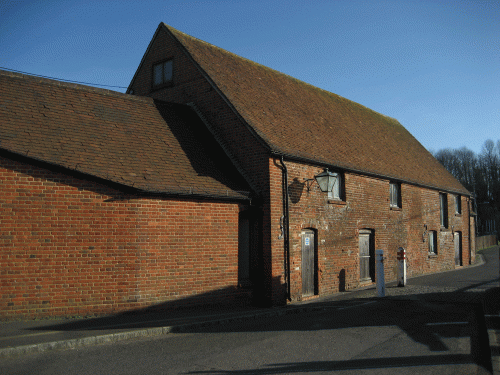
The Eling tidal mill
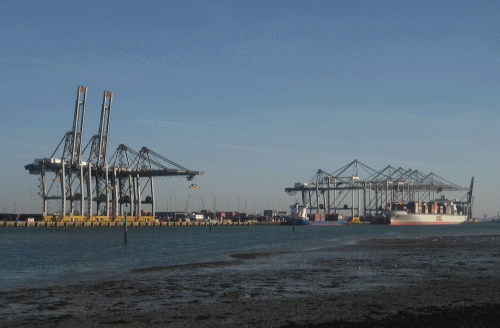
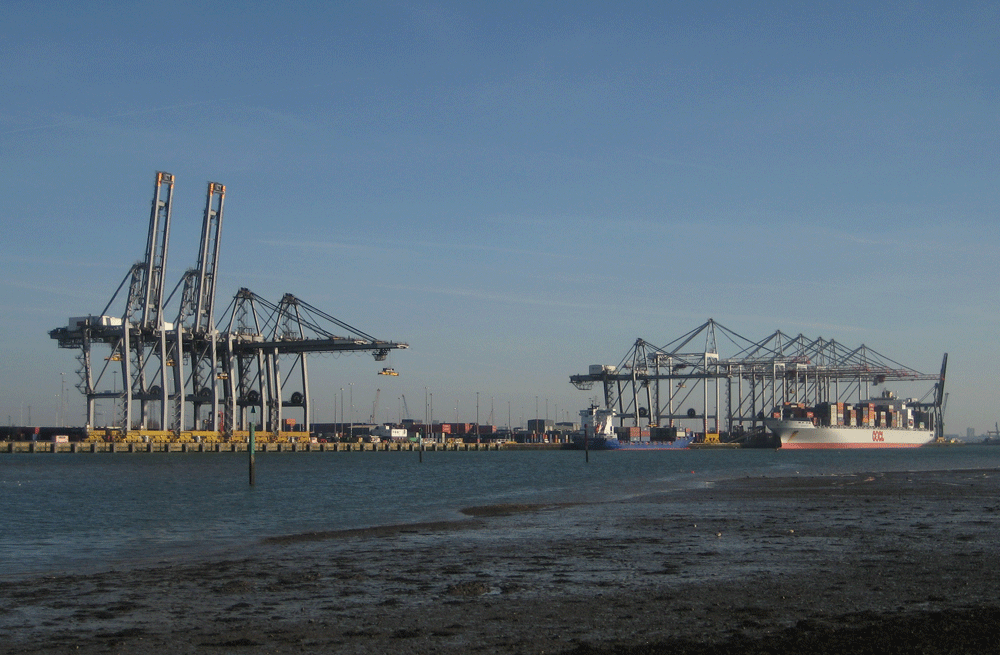
The Black-throated Diver was in the shadow of Southampton docks.
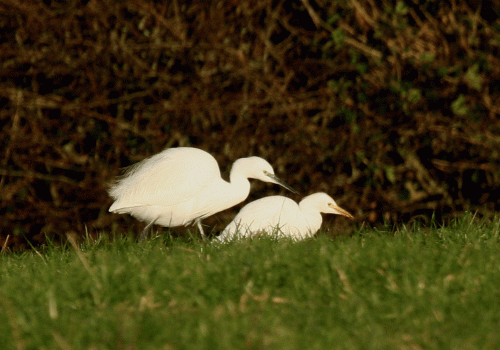
Little Egret (left) and Cattle egret (right) at Warblington

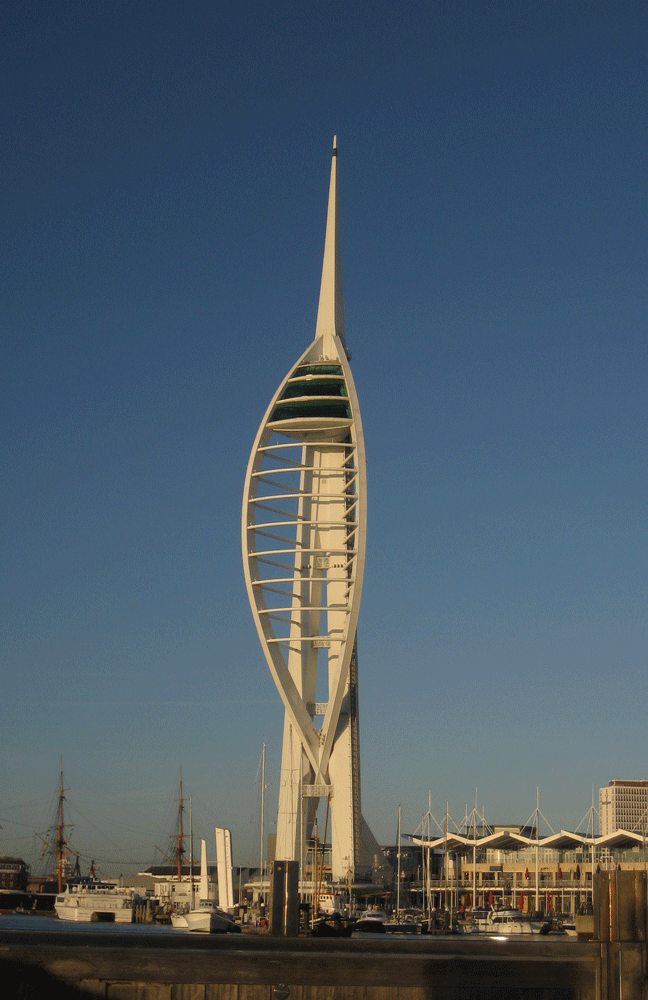
The Spinnaker Tower was adjacent to my next quarry. There has been an influx of Iceland Gulls to the northern and western isles this winter but few have made it as far south as the south coast.
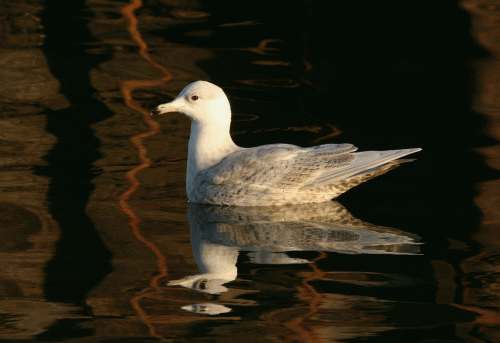
Second winter Iceland Gull. Iceland Gulls are daintier with more rounded heads and finer bills than the similar Glaucous Gull.

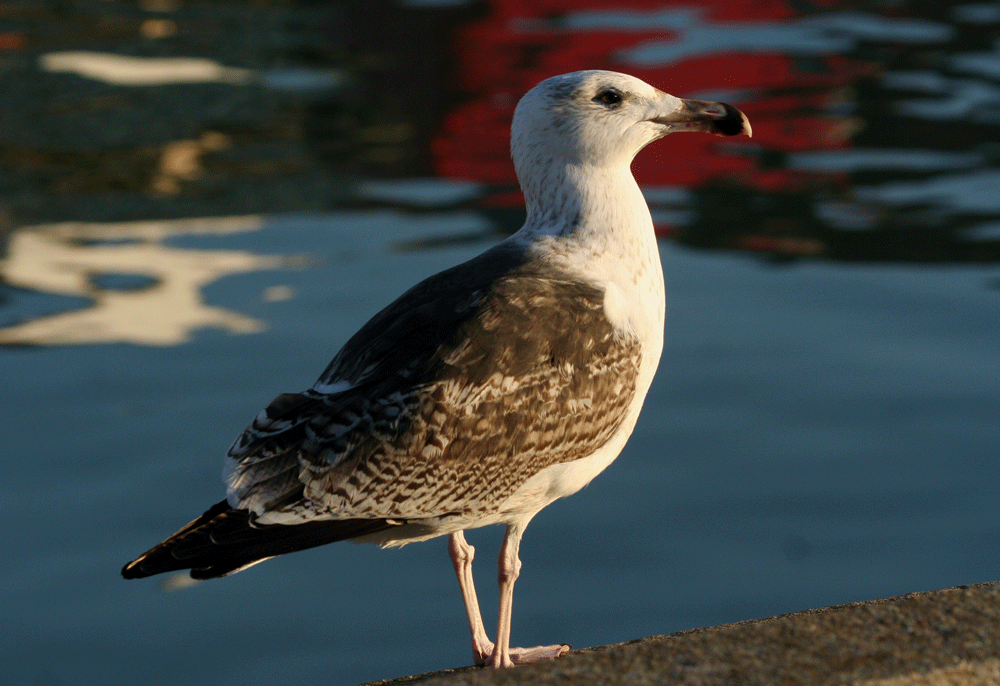
Great Black-backed Gull

A Blashford sunset
The idea of a bird race is for a team of birders to try to see or hear as many species of bird as possible in one day. A January bird race followed by a social gathering used to be a popular event amongst Dorset birders but recently interest has waned and this year only three teams took place. The highest number of species I have recorded in January is 127, the record score being 130. However today was not to be a high scoring day. Recent mild weather has not encouraged some species to migrate to Dorset for the winter, whilst the cold and windy conditions on the 14th didn’t encourage some species to show.
I joined Nick Urch and Trevor Warwick for an ‘all Dorset’ team, Michael Gould and Tom Carley also did ‘all Dorset’ but Roger Howell, James Phillips, Terry Elborne and Ewan Brodie decided to confine their ‘big day’ to the Poole Harbour area. Interestingly both our team and Roger’s team got the same score – 112.
We set out at 0445 for a ‘owling’ session in north Dorset, it was bitterly cold, -6 at times but it was still and the moon was bright. It should have been good for seeing owls, but all we managed was a few call notes from a Tawny Owl. Trevor informed us that one was calling outside his house before he set off. We could have had a couple more hours in bed and then gone to Trevor’s house!

A cold and frosty dawn at Longham
We arrived at Longham lakes at dawn and soon collected some goodies, the Blue-winged Teal and a Smew, then it was on to Hatch Pond (no Bitterns), Creekmoor for Firecrest and Holes Bay was many ducks and waders. We then proceeded around the harbour in an anticlockwise direction, picking up Spoonbill on Brownsea distantly from Evening Hill, Purple Sandpiper whilst waiting for the ferry and the usual parakeets at Studland. A quick visits to Middlebere followed, then it was off to Thornecombe woods near Dorchester, the Monkey’s Jump area for very distant Golden Plovers and a few farmland birds. We then headed to Radipole but we added nothing to our lists nor at Newton’s Cove where the ‘reliable’ Black Redstart wasn’t or at Castle Cove where little was seen on the water in Portland Harbour. It was clear by now that we weren’t going to do well, but we were determined to
Portland, on the other hand didn’t disappoint. It now was late afternoon, the wind had increased, it was cloudy and at this exposed location it felt bitterly cold, but we added seven species (mainly seabirds) to our list in about 30 minutes.
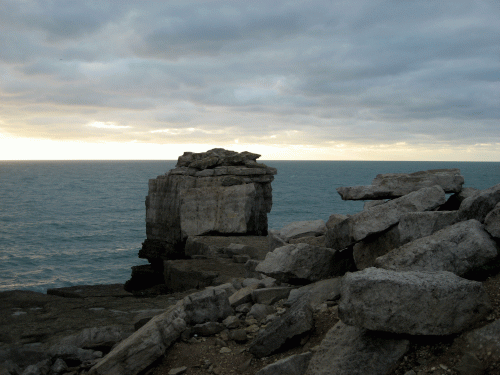
Pulpit Rock, Portland on a cold and grey afternoon.
We ended the day at Lodmoor in the gathering gloom where Water Rails and Cetti’s Warblers called and a Marsh Harrier flew in just before dark. We made a further abortive attempt for owls before returning to our house for in good time for the 1830 deadline. Margaret had cooked some delightful South African food for all the participants and we had an enjoyable evening discussing our day
This has been a very busy week and I have fallen behind in my blog entries. On Tuesday we had a new TV delivered, getting it wall mounted and getting the necessary cables to connect it to the digital box and hi-fi proved to be a much bigger job than I expected and had taken up much of the last few days.
I have managed to get some birding done. On Tuesday the news broke of a Spanish Sparrow at Calshot in Hampshire. As this was a new bird for the UK for me, I headed straight there. I didn’t get any photos, but there are plenty on the Surfbirds site http://www.surfbirds.com/cgi-bin/gallery/display.cgi?gallery=gallery9.
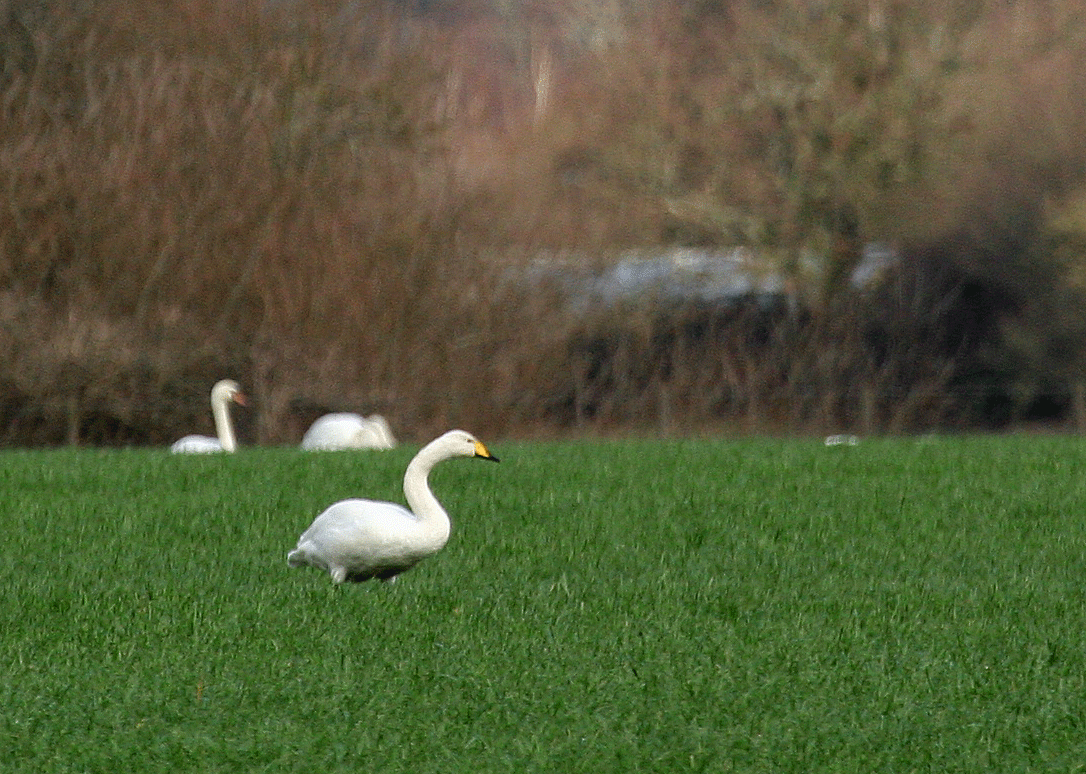
On the way back I was delighted to see both Bewick’s and the far rarer (in local terms) Whooper Swan with Mutes near Ibsley as I had missed both wild swans in Norfolk due to the car breakdown.
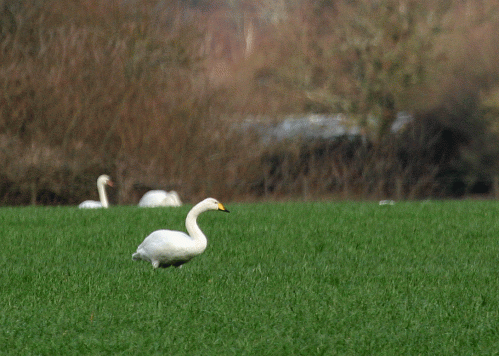
One Whooper (above) and three Bewick's Swans from Iceland and Siberia respectively had joined the resident Mutes
On Wednesday I joined Shaun and Kevin in an attempt to ring some wintering Chiffchaffs at a local site. Although the vast majority of our Chiffchaff population arrives in to breed in the spring a few winter and the origin of these wintering birds is much debated. Some have a cold greyish plumage with green wing edges and a trace of a wing bar and have a different song and call. This form tristis has even been considered a different species, however some birds looking like tristis give the familiar’ hweet’ of our breeding collybita. We caught three typical collbita and the bird shown below, which may look like a candidate for tristis but it called like collybita on release!
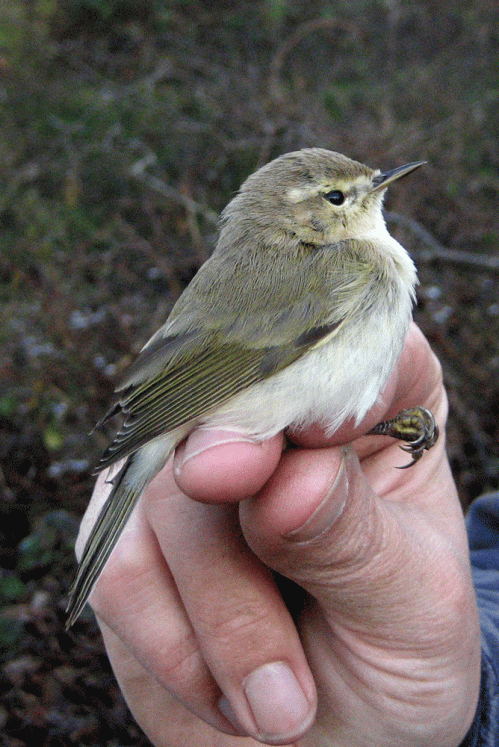
It would be easy misidentify this as a 'Siberian' Chiffchaff if it didn't call!
On Thursday I managed tpo catch up with a Firecrest at Creekmoor that Ewan had relocated and checked a few other local sites. In the afternoon I tried to see Short-eared and Barn Owls and a Great Grey Shrike, all of which have been hanging around the Sixpenny Handly area of Cranbourne Chase. Unfortunately I drew a blank on all three.
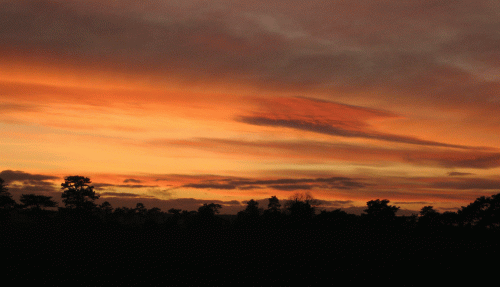
The best sighting at Sixpenny Handley was this sunset
Margaret and I had a three day trip to Norfolk at the weekend, staying in a B&B in Cley.
Our first destination was the Buckingham marshes near Norwich and our target was a Lesser White-fronted Goose, an increasingly rare vagrant to the UK. We found the Lesser Whitefront quite quickly but the views were into the light and there was a strong wind, making it hard to keep the scope still. Also present were good number of Greater Whitefronted, ‘Taiga’ Bean and Barnacle Geese.
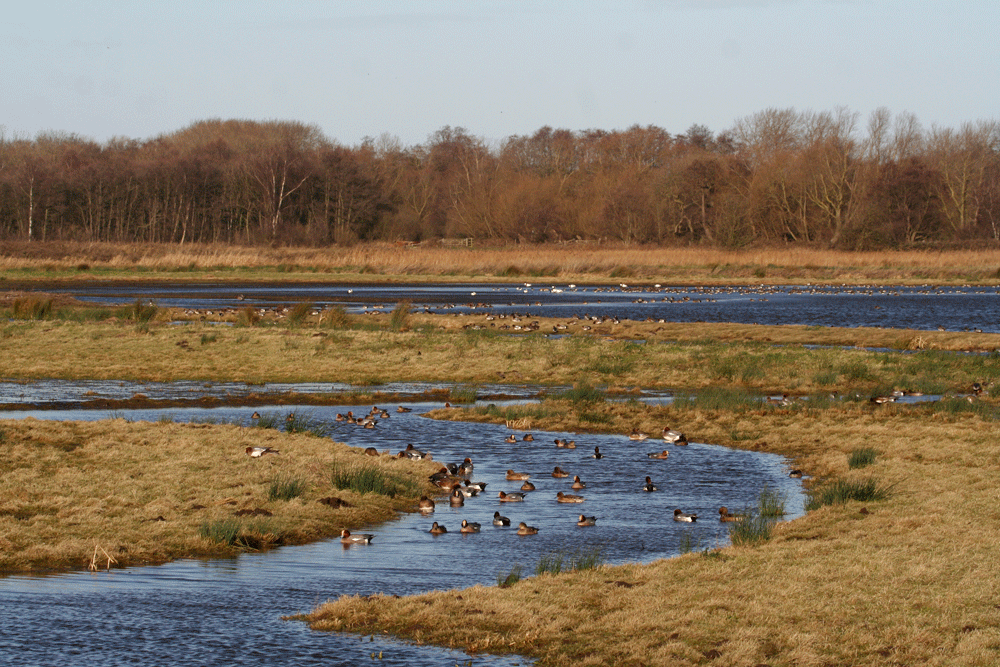
The most amazing feature of the marshes were the thousands of Golden Plover and Lapwings, which were repeatedly flushed by a couple of Peregrines, there were also large numbers of Wigeon and Teal.
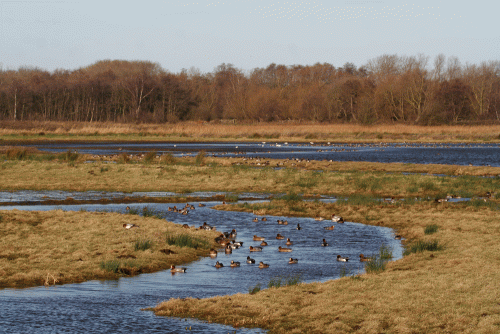
Buckingham Marshes, Norfolk
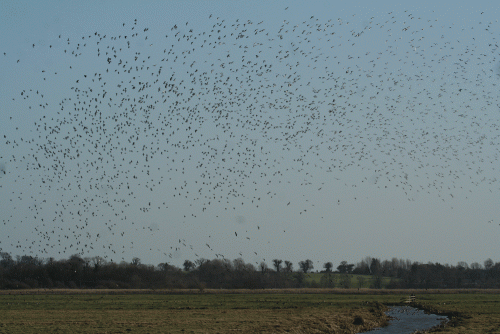
Golden Plovers by the thousand
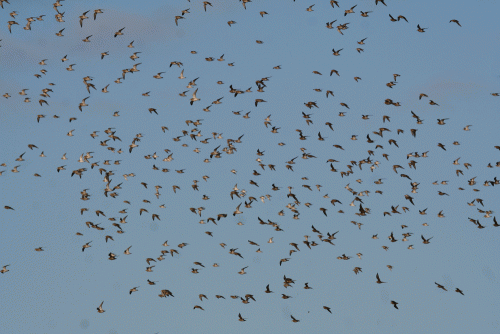
... the fllocks twisted and turned in response to the Peregrines

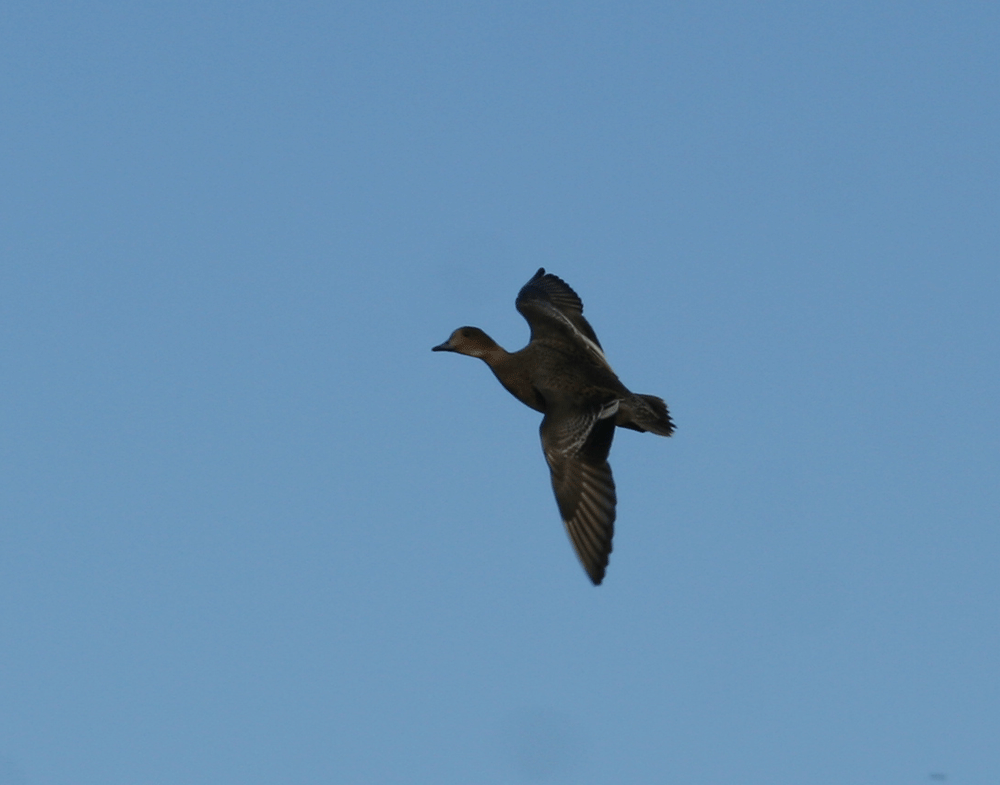
Female Wigeon in flight

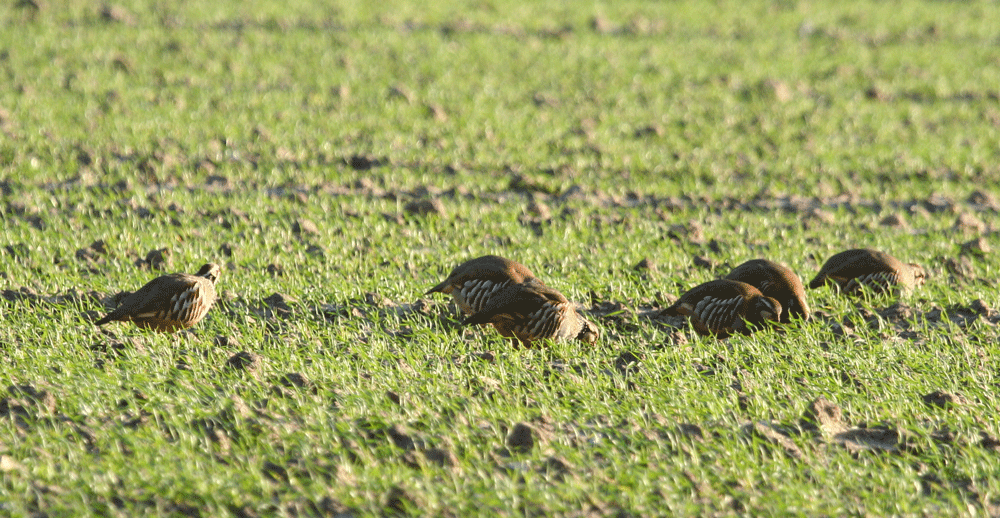
Red-legged Partridges in the nearby fields
Later we visited the Norfolk Broads, ending our day at Stubbs Mill, a raised bank by an old windmill overlooking a huge expanse of marsh and reed bed. This area has become famous as a roost site for Marsh Harriers and we were not disappointed as at least 80 came into roost along with a couple of Hen Harriers. At least 8 Cranes were seen, part of the slowly increasing Broads population.
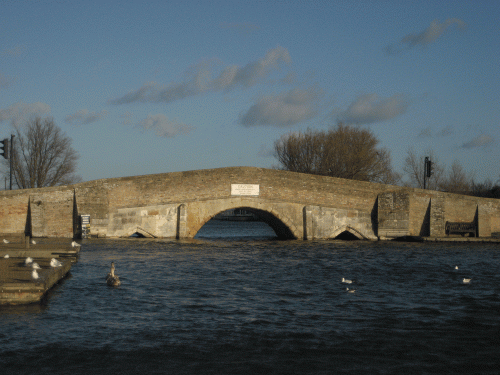
The low bridge at Potter Heigham is a nighmare for yachtsmen and cabin cruisers alike.

I doubt if this Greylag Goose is from the wild Icelandic population.....
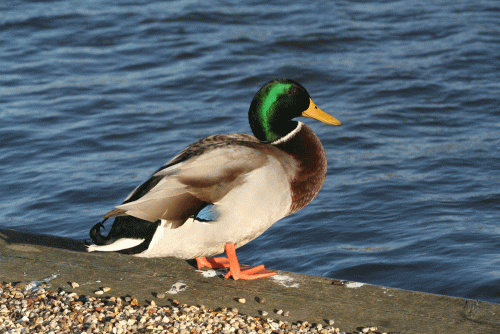
...particularly as it was keeping company with tame Mallards!

The marshes at Stubbs Mill, the dots in the sky are all Marsh Harriers

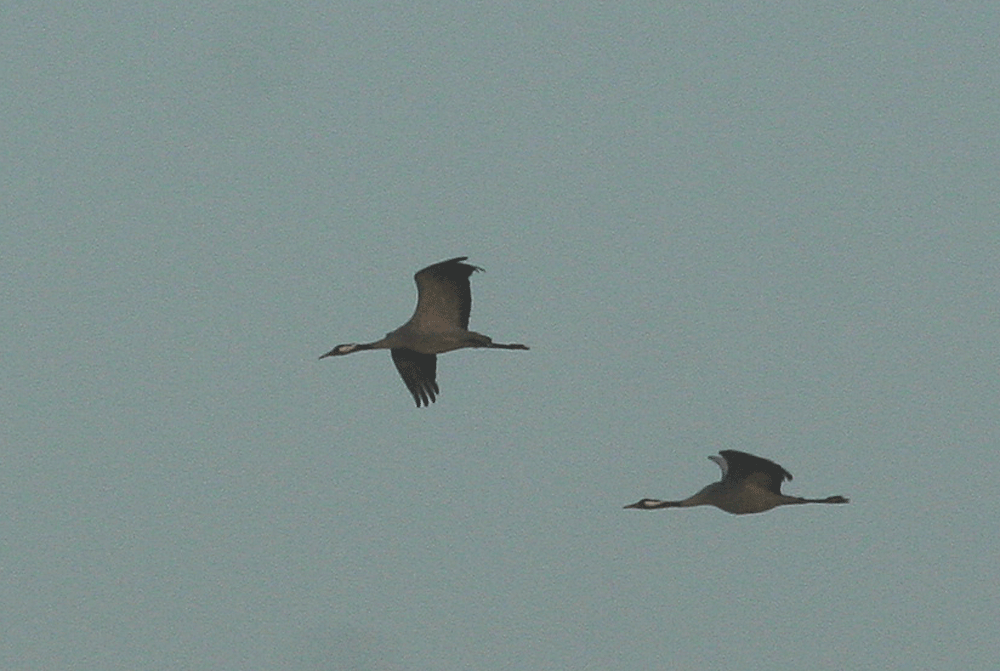
Over 30 Cranes can now be found in East Anglia.
Unfortunately I missed a Merlin that appeared briefly and we didn’t see Barn or Short-eared Owl, but being at the raptor roost was a great experience. The drive to Cley on the north coast took longer than I expected mainly because I followed the coast road through numerous small villages. Our B&B was an old 18th centuary former coach house in the village of Cley and must have subsided somewhat as the bedroom and the bed was on a noticable slant.
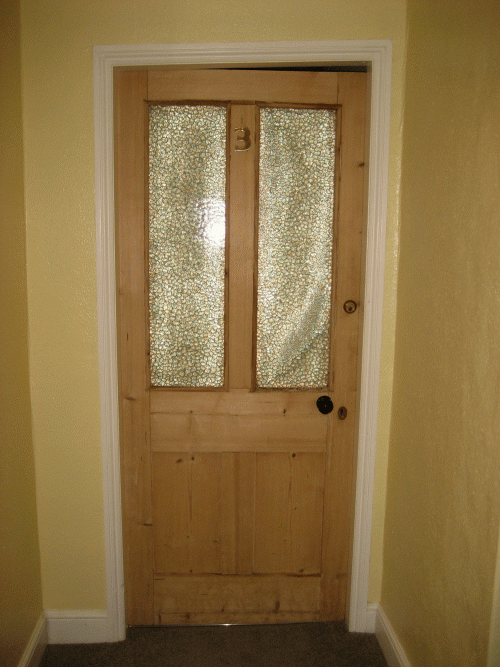
A nursery rhyme about a crooked sixpence comes to mind!
On the 8th we headed for the local reserve where the very rare North American Western Sandpiper was overwintering. A bird that breeds no closer than Alaska, this is, not surprisingly very rare vagrant to the UK. Unfortunately it wasn’t on show so we headed to Holkham to witness the huge gathering of Pink-footed Geese. Up to 70,000 Pink-feet winter in Norfolk, mostly centered on Holkham. There was a ‘Tundra’ Bean Goose, Barnacles, Whitefronts, Greylags and a couple of Ross’s Geese in the flock, a vagrant from artic Canada that for reasons I have yet to understand has yet to make it onto the British list.

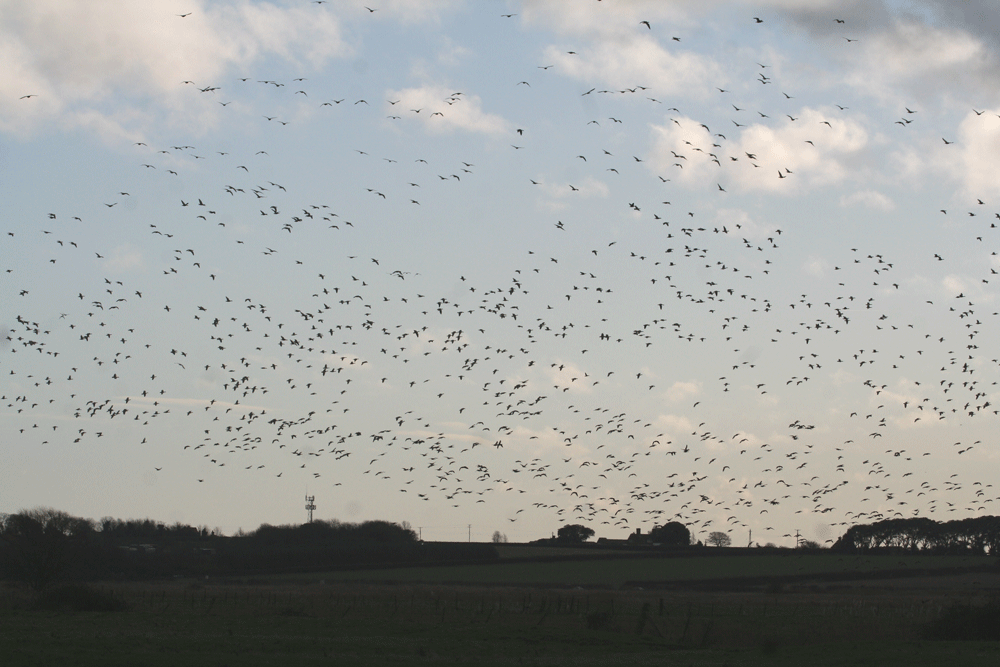
Wintering Pinkfeet. One of Britain's avian spectacles.

Breeding in Green;land, Iceland and Spitsbergen, most of the world's population winters in the UK
We had no luck with either the Rough-legged Buzzard that has been seen in the area or the Shorelarks on the saltings, so we returned to Cley where we had moderate views of the Western Sandpiper along with lots of other birds.

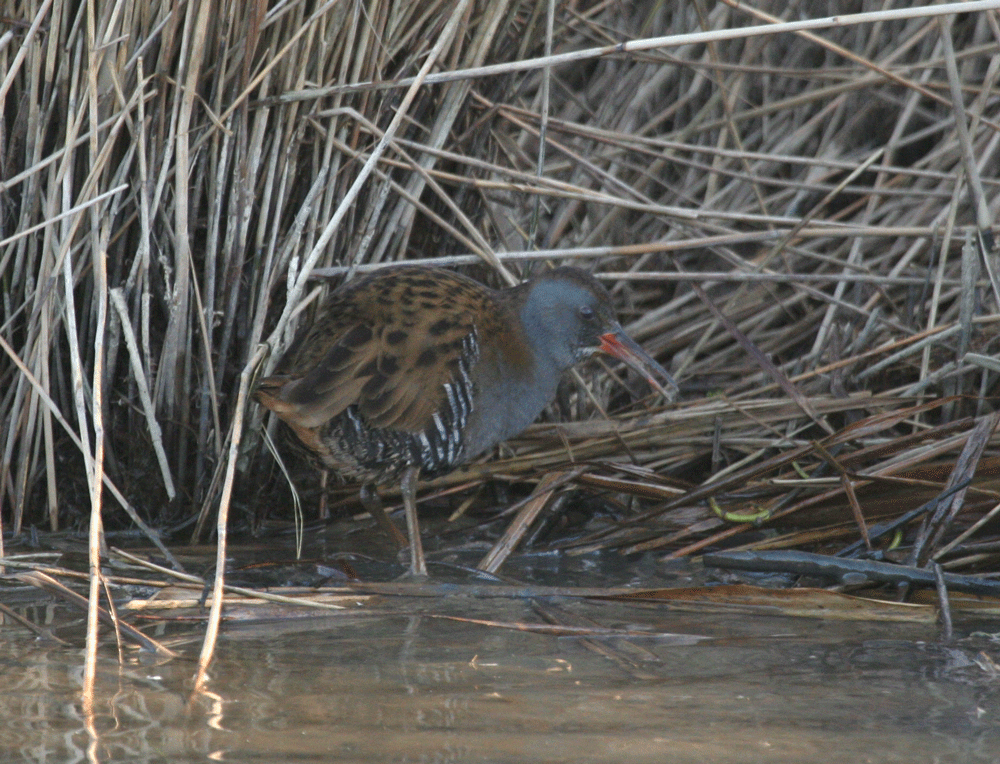
Water Rail
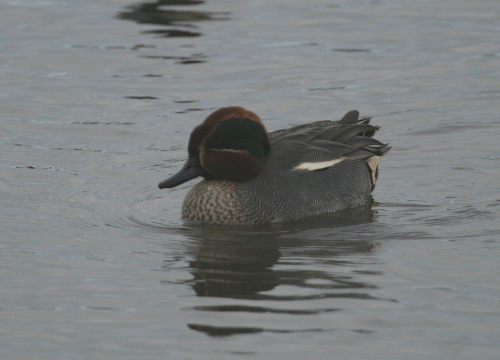
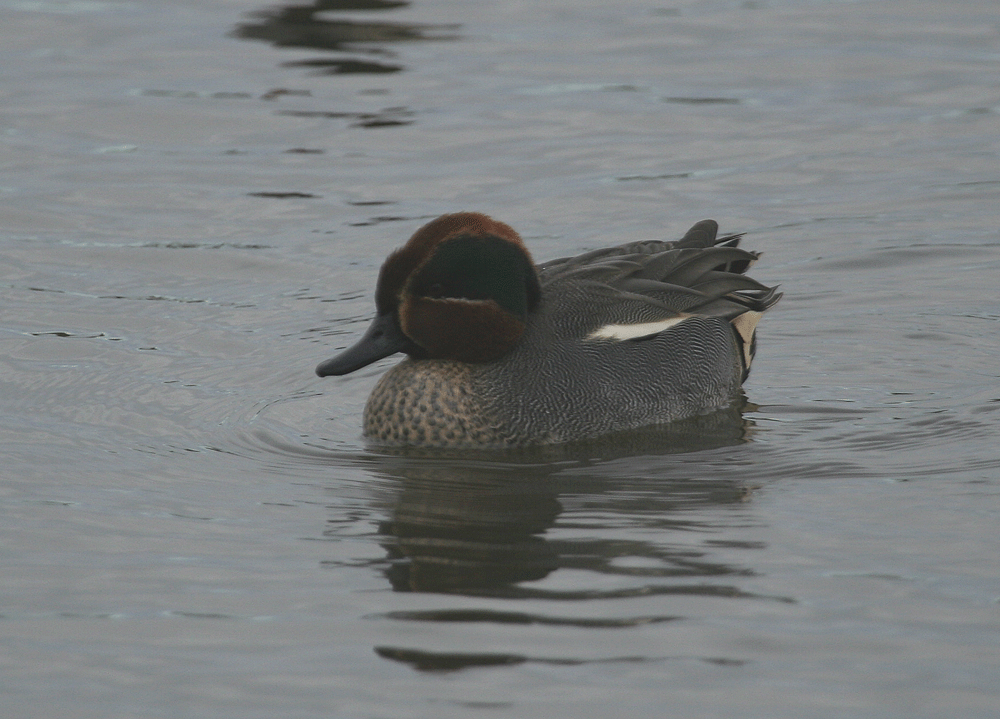
Drake Teal
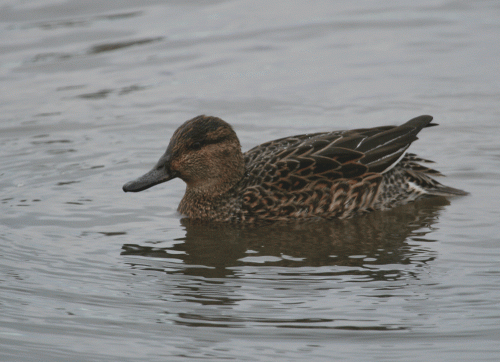
Female Teal
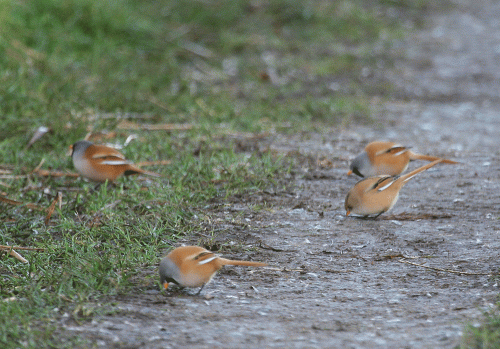
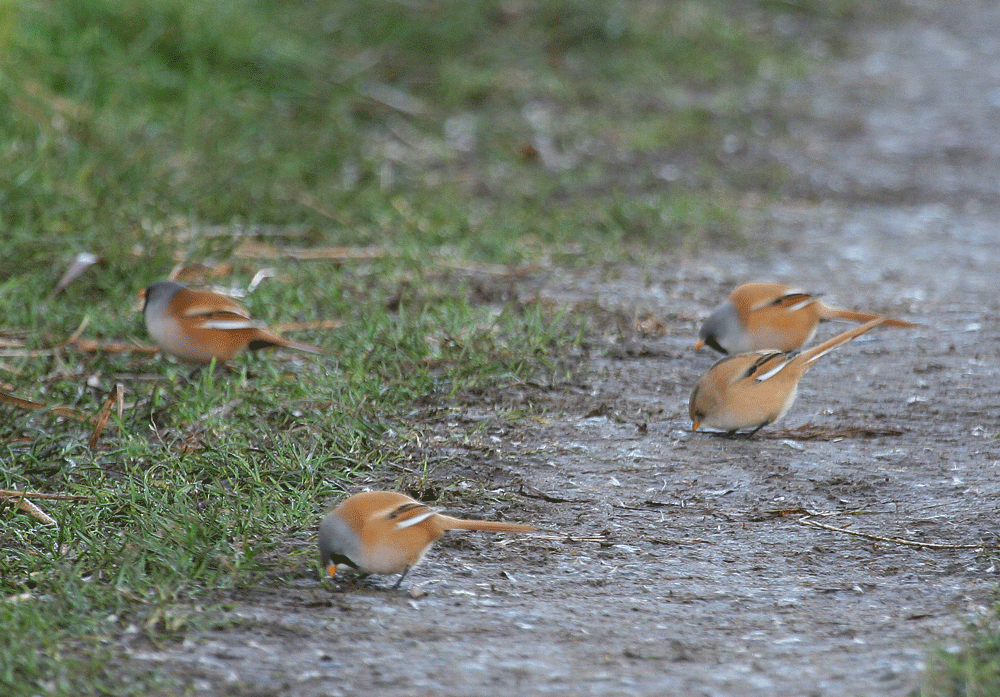
Bearded Tits
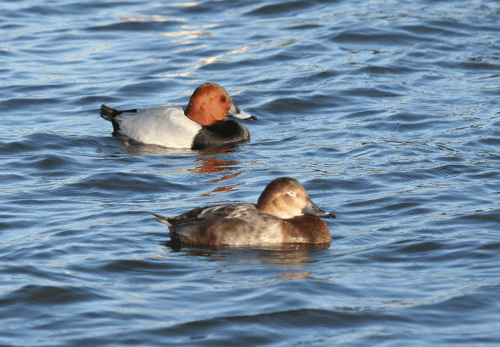
Pair of Pochards
On the 9th we planned to have another search for the Rough-legged Buzzard then head for Titchwell where three species of Redpoll were coming to the feeders and Snow Buntings were frequenting the shore line. Unfortunately the car broke down on the way. The AA were very helpful, initially they intended to tow us home but after for 50 miles a second AA driver told us he could locate the broken part and by late afternoon we were on our way home. So concludes a great weekend, marred only by the loss of a whole days birding.
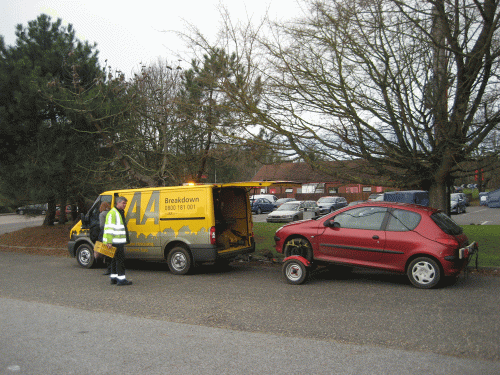
My 35 years of AA membership proved worthwhile!
After the recent gales it was a beautiful day on the Studland peninsula, the sea was like a mill pond and there was excellent visibility. After a few short stops on the Poole side of the harbour entrance I walked along Shell Bay to Pilot’s Point. The Red-necked Grebe that has been seen close inshore was now a long way out, but several Black-necked Grebes were seen close in, along with a Great Northern Diver and at the point a group of Sanderlings fed along the shore.

Shell Bay with the Haven Hotel and the chain ferry in the background. On her arrival in Poole in June 2002 Margaret nearly rammed the ferry, expecting it would give way to boat under sail!
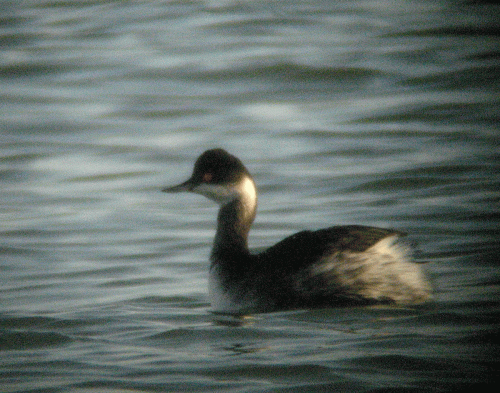
A digiscoped shot of a Black-necked Grebe
Inside the harbour many more Black-necked Grebes were seen, the air was so clear that I could identify the flocks of Avocets heading for Middlebere on the far side of the harbour. Littlesea, once the winter domain of hundreds of wildfowl is now completly birdless, recent illeagally introduced fish may have upset the enviromental balance of this freshwater lake, however I did see a Dartford Warbler in the surrounding heaathland.
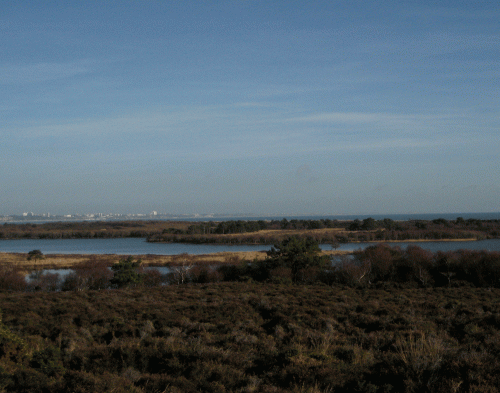
Littlesea, a fresh water lagoon in the middle of the dune system
More grebes and the introduced parakeets were seen near Studland. On my way back I received a phone call from Jackie Hull who was watching a Crane circling over Corfe Mullen. I headed quickly in that direction but later receiving a text to say it was heading south-west I went to the Baker’s Arms roundabout in the hope I could see it in Lytchett Bay airspace, but to no avail. I finally went to Mordon Bog, an area of lake, bog and forest to the west, which is not unlike Crane breeding areas in northern europe but again had no luck.
On a more serious note, today would have been my late wife Janet’s birthday, so I called in at her grave at the Parish Church to pay my respects.
Although my friend Paul Harvey hasn’t lived in his native Dorset since the early 80,s he still likes to add species to his Dorset list, so we headed to Longham Lakes. The first bird we found was a female Smew and I had a very pleasant shock when a pristine male Smew (quite rare in Dorset) flew over a few minutes later. In due course we found the female BB;ue-winged Teal and had good views.
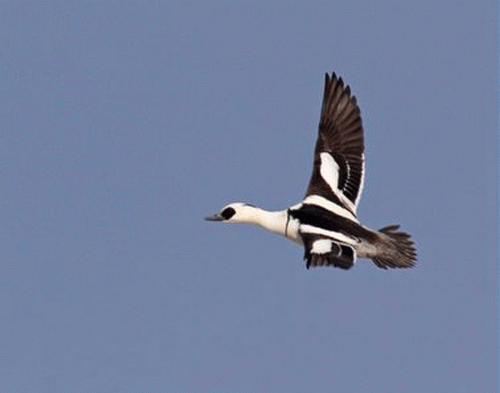
Drake Smew, photo from the internet
We continued on to Blashford lakes where we failed to find the drake Ferruginous Duck but there was a good selection of other wildfowl. Paul had to leave at this point to catch his flight back to Shetland. It had been a real pleasure birding with Paul again and I look forwards to seeing him in Shetland later in the year.

Mockbeggar Lake, Blashford
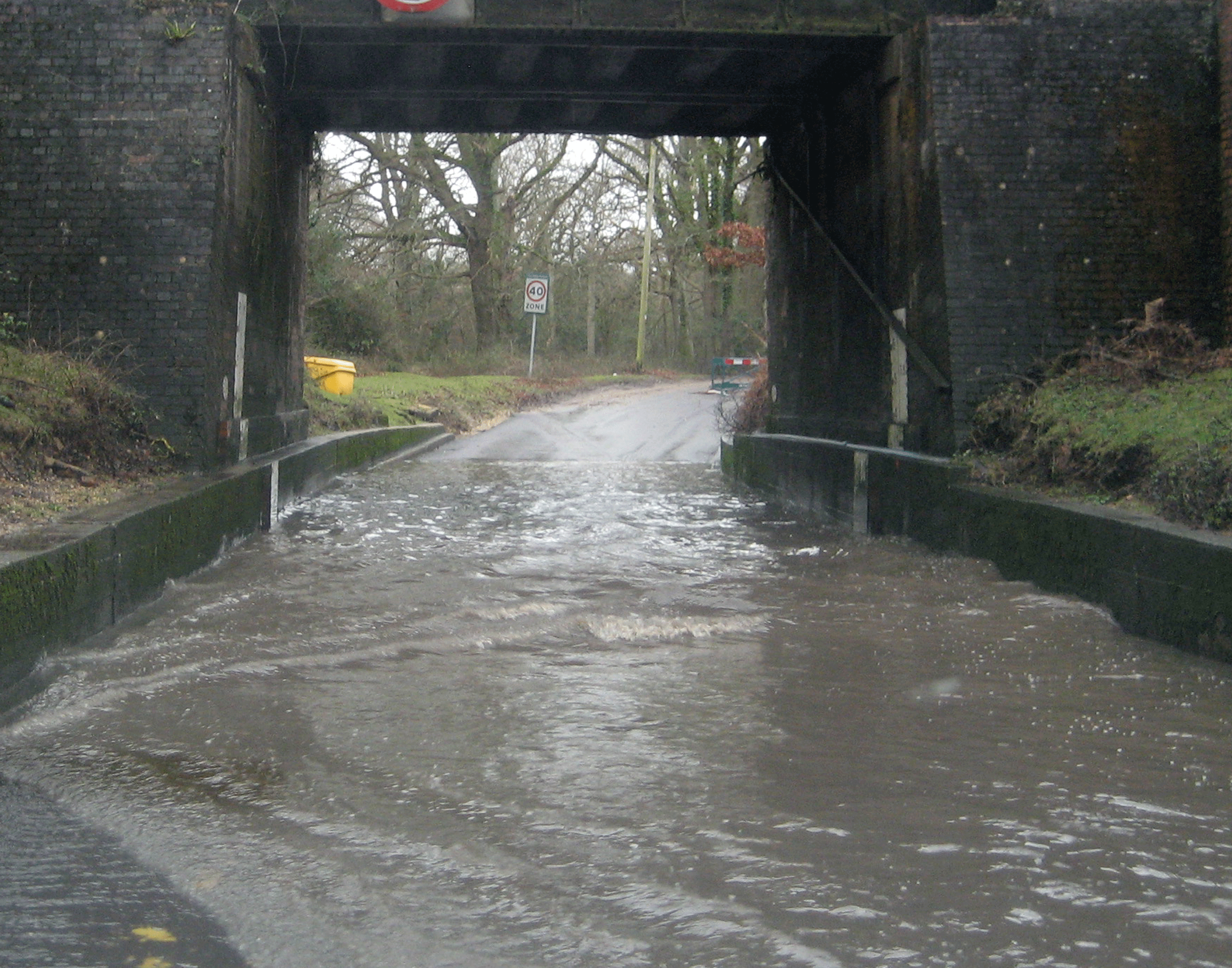
With a major rarity staked out in the New Forest I headed for Hawkshill Enclosure but had to negotiate the odd flooded road, a legacy of yesterdays storm. The Dark-eyed Junco, a sparrow like bird from North America showed well if a little distantly, after about an hours wait. This is the second time I have seen this species in the UK, although I have seen many in North America.
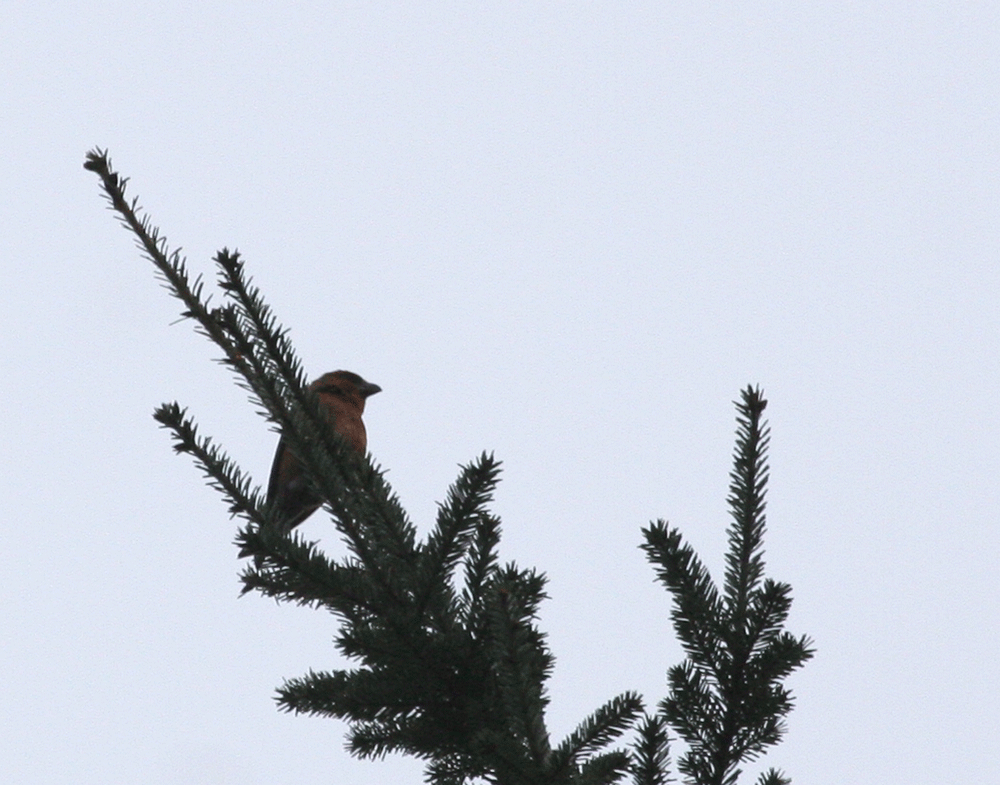
I continued on to Blackwater Arboretum, where after a long wait, a number of Crossbills and Hawfiches appeared in the gathering gloom. I made a quick visit to the Blashford Lakes on my return but there was still no sign of the Ferruginous Duck.

Flooded roads
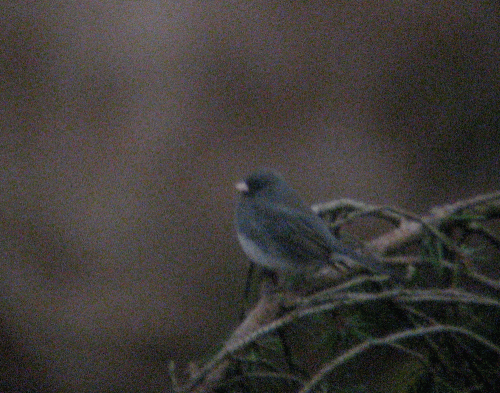
Dark-eyed Junco - a record shot
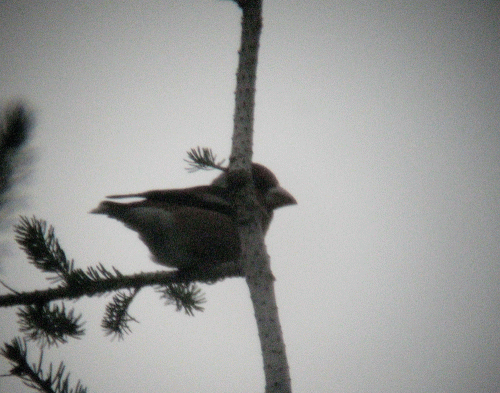
Hawfinch - another record shot

Male Crossbill, completes the trio of mediocre record shots
On the 5th I returned early to Ivy Lake at Blashford where I discovered the Ferruginous Duck sheltering from the vicous wind. Unlike yesterday the Woodland Hide feeders were stacked with birds, but I couldn’t find any Bramblings, a target bird for my year list. Further disappoinment occured when the nearby ‘staked out’ Bewick’s Swans appeared to have got blown away, when I failed to find any Egyptian Geese in the Avon Valley and when I found the road home closed due to a tree felled by the gale. However good views of the Ferruginous Duck and some good photo opportunities made the day well worthwhile.
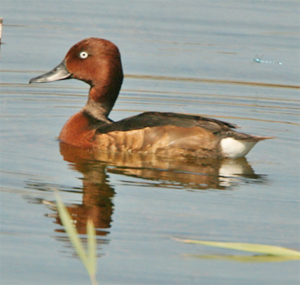
Ferruginous Duck drake - photo from the internet
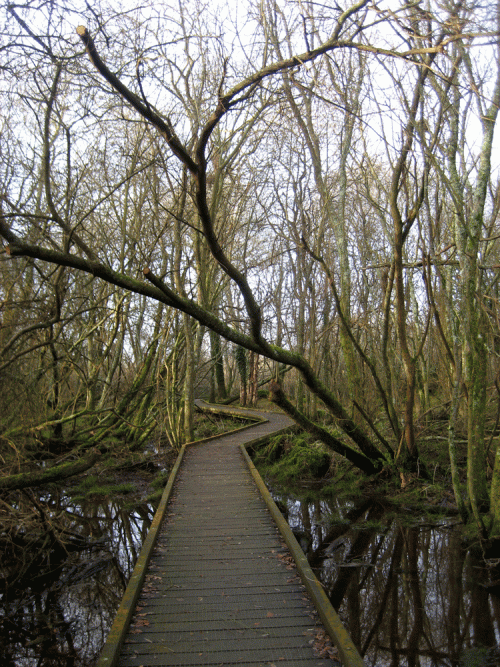
Ivy Lake boardwalk leading to the woodland hide

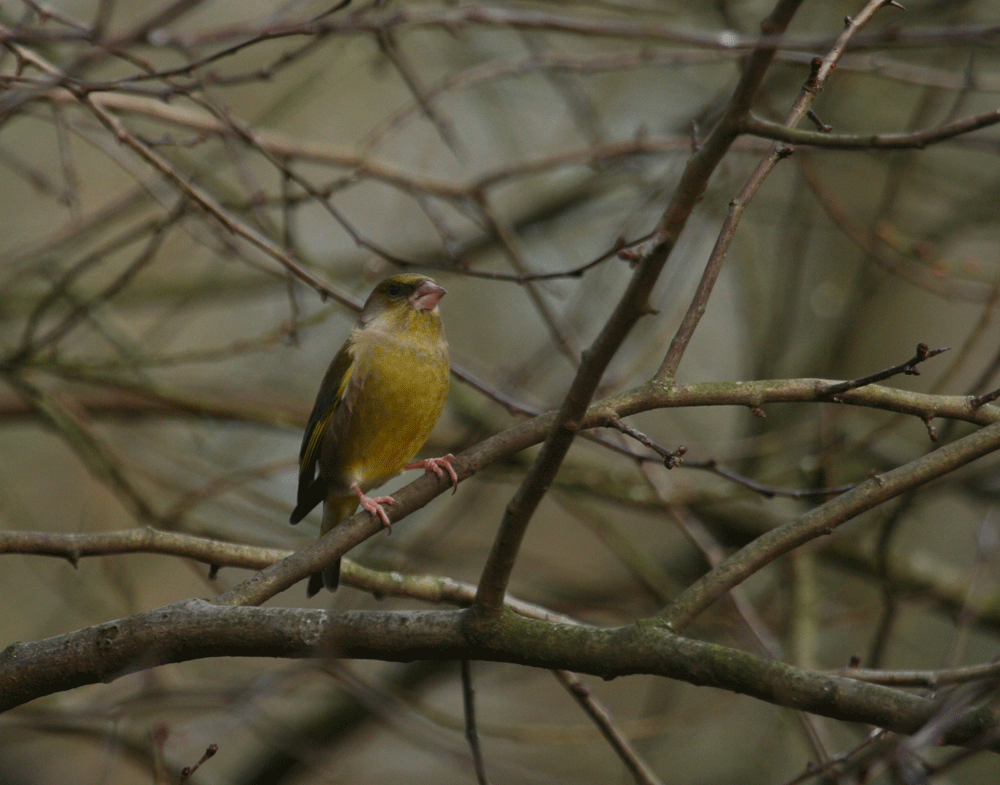
Greenfinch

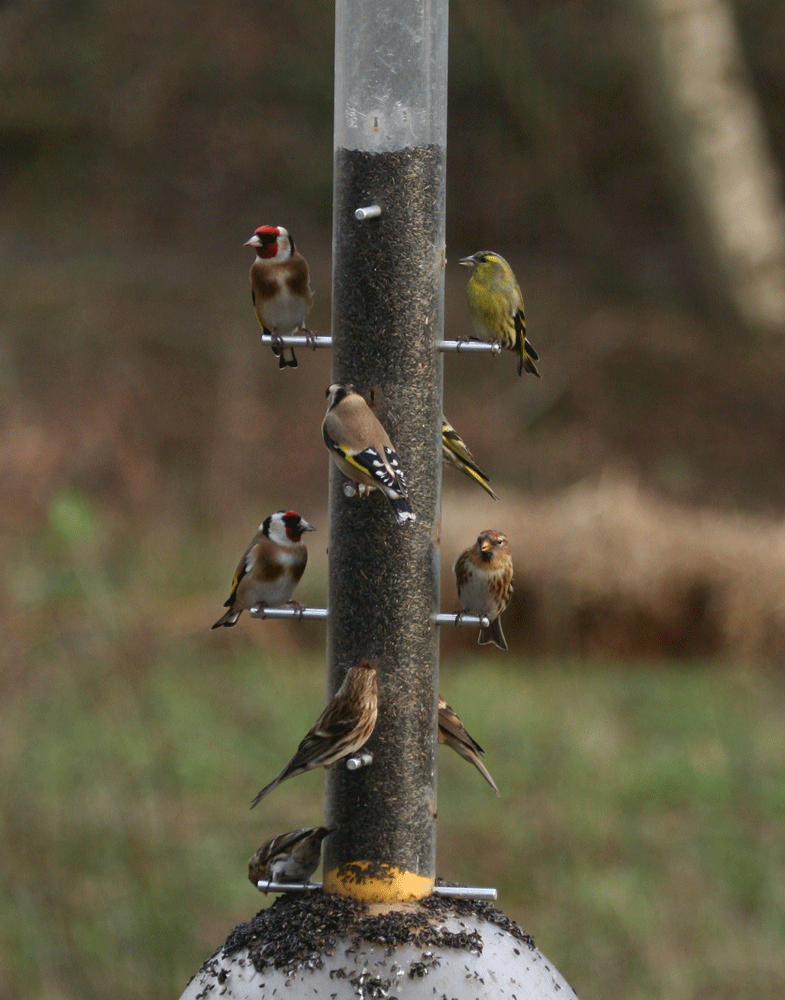
Goldfinch, Redpoll and Siskin

Nuthatch
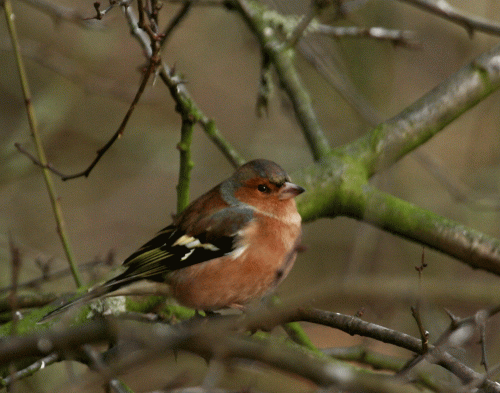
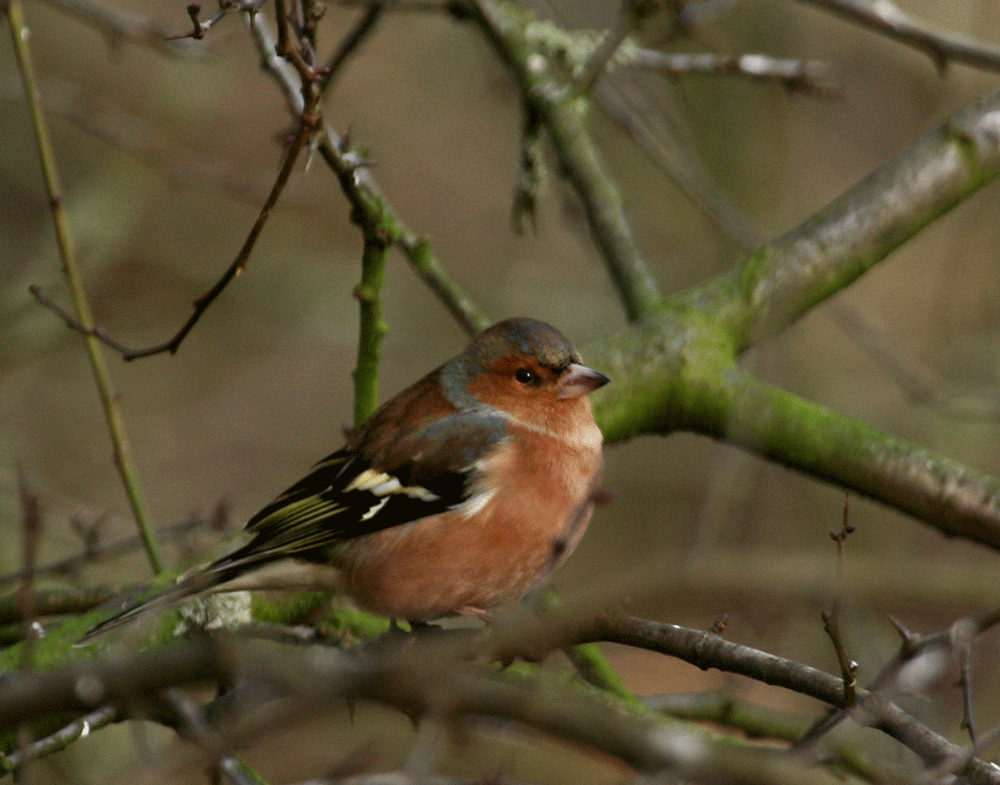
Male Chaffinch
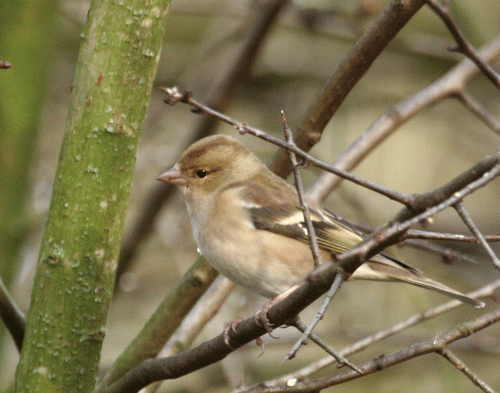
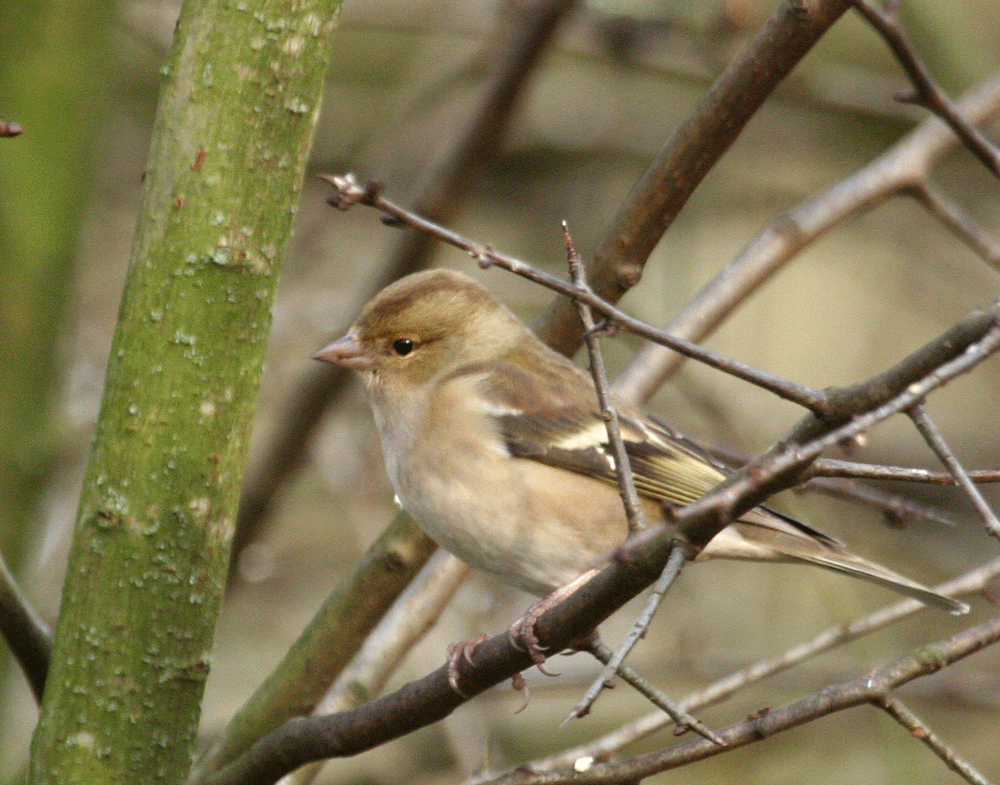
Chaffinch female

Great Tit




























 gryllosblog