Most of the last week has been taken up sorting photos and notes from the Oman trip, however we managed to get out on a couple of occasions but with the severe weather, options were limited.
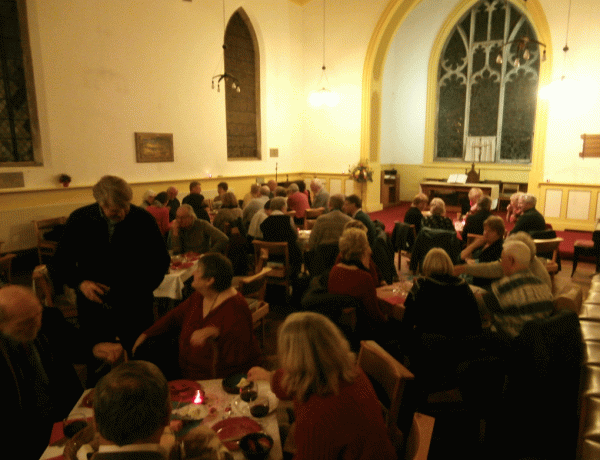
The local church held a fund-raising musical concert on Friday, however when we arrived we heard that due to the severe storm and flooded roads that the musicians couldn’t get there. The vicar and his wife managed to rustle up some quizzes and musical performances and it ended up being a very pleasant evening.
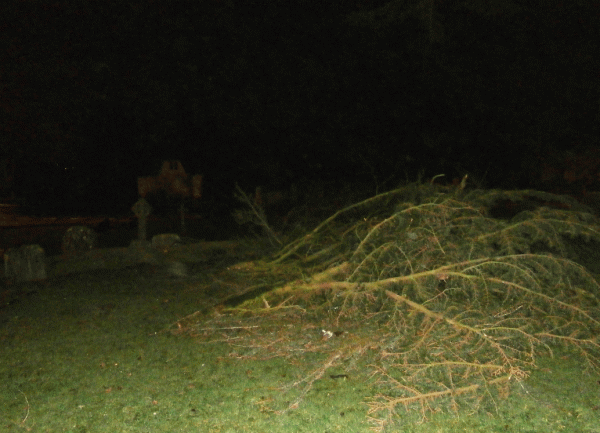
As we left we saw that the storm had brought down a huge branch from the big pine in the churchyard. Most of what can be seen in the photo is small branches, the giant bough can just be seen lying between the gravestones. It appeared that no serious damage was done.

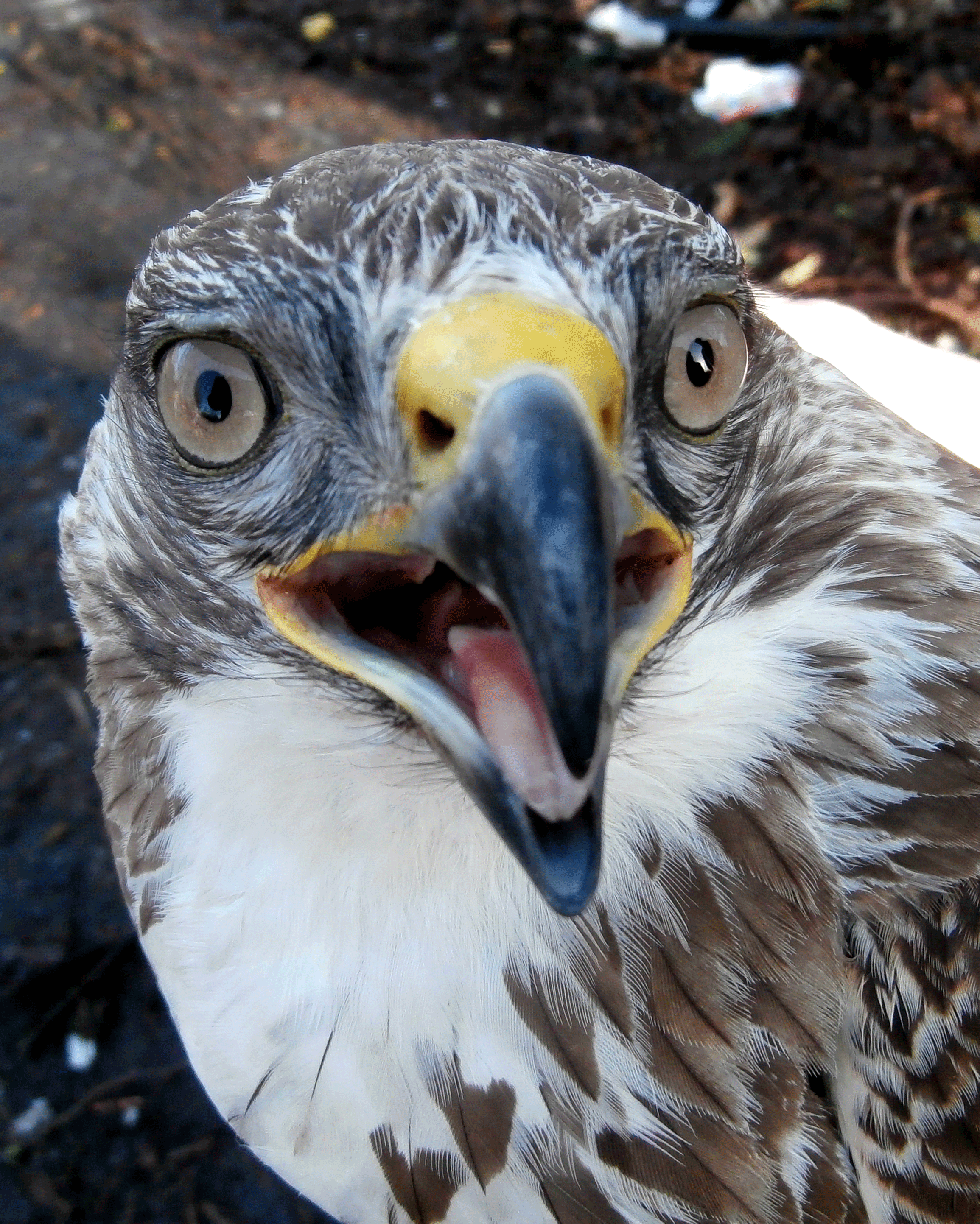
On Sunday the weather improved enough to allow us try ringing at Fleets Lane. We retrapped three Chiffchaffs, two had been ringed this winter but one had been ringed in 2012 , our third example of winter site fidelity. However the big surprise, in every sense of the world was this Buzzard, in 35 years of ringing I have only seen two adult Buzzards in the hand in the UK, both of them within the last four months.

Shaun with the Buzzard. The lack of a solid band at the tip of the tail and the pale grey eye shows that this bird is a first year (age code 5).

The eyes darken to a dark brown in adult birds..

It was soon given its liberty and could go back to perching on the lamp posts on the Holes Bay Road.

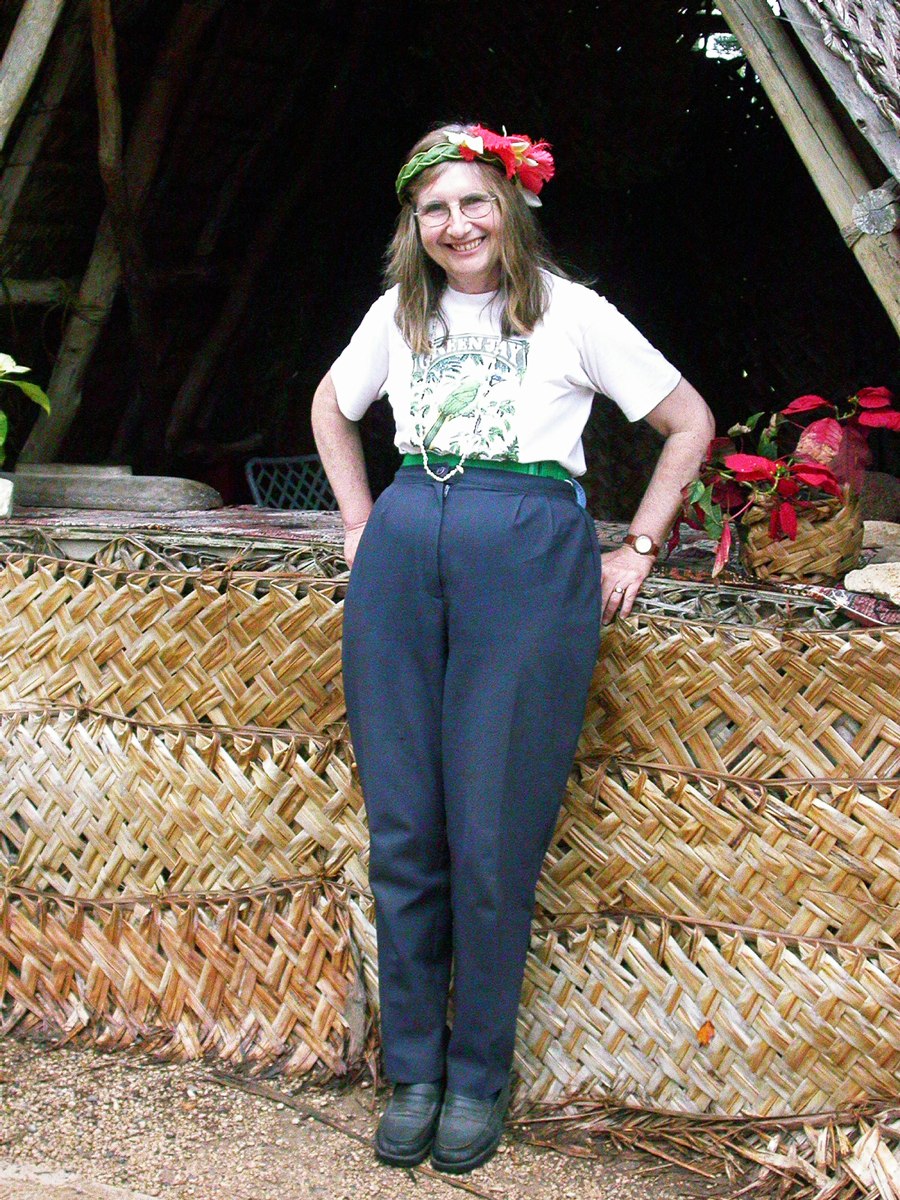
Terry popped down with his three year old daughter, Kimberly. Mum isn’t going to be happy about those trousers.
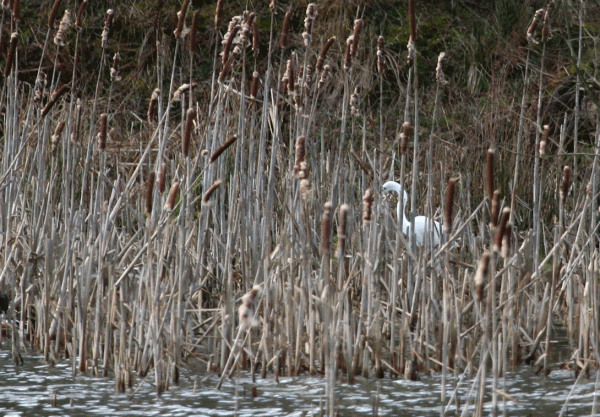
On Sunday afternoon we visited Blashford Lakes again. This has proved to be my most regularly visited site in 2014 as there has been quite a run of good birds in the area. Unfortunately due to work on electricity cables downed in Friday’s storm, the reserve was closed. We were able to access the lakes via another path and, perhaps, because so few people were about, the wintering Great White Egret was out in the open. This colour-ringed bird was hatched in France in 20003 and has visited the Blashford Lakes every winter from 2003 to 2014 but can range widely and be quite elusive.

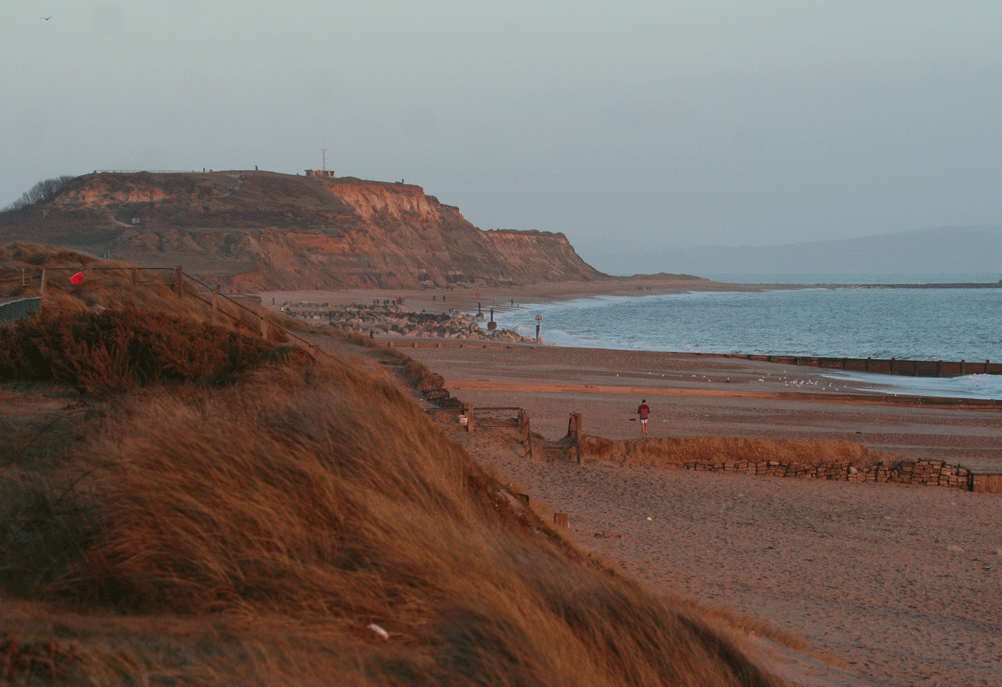
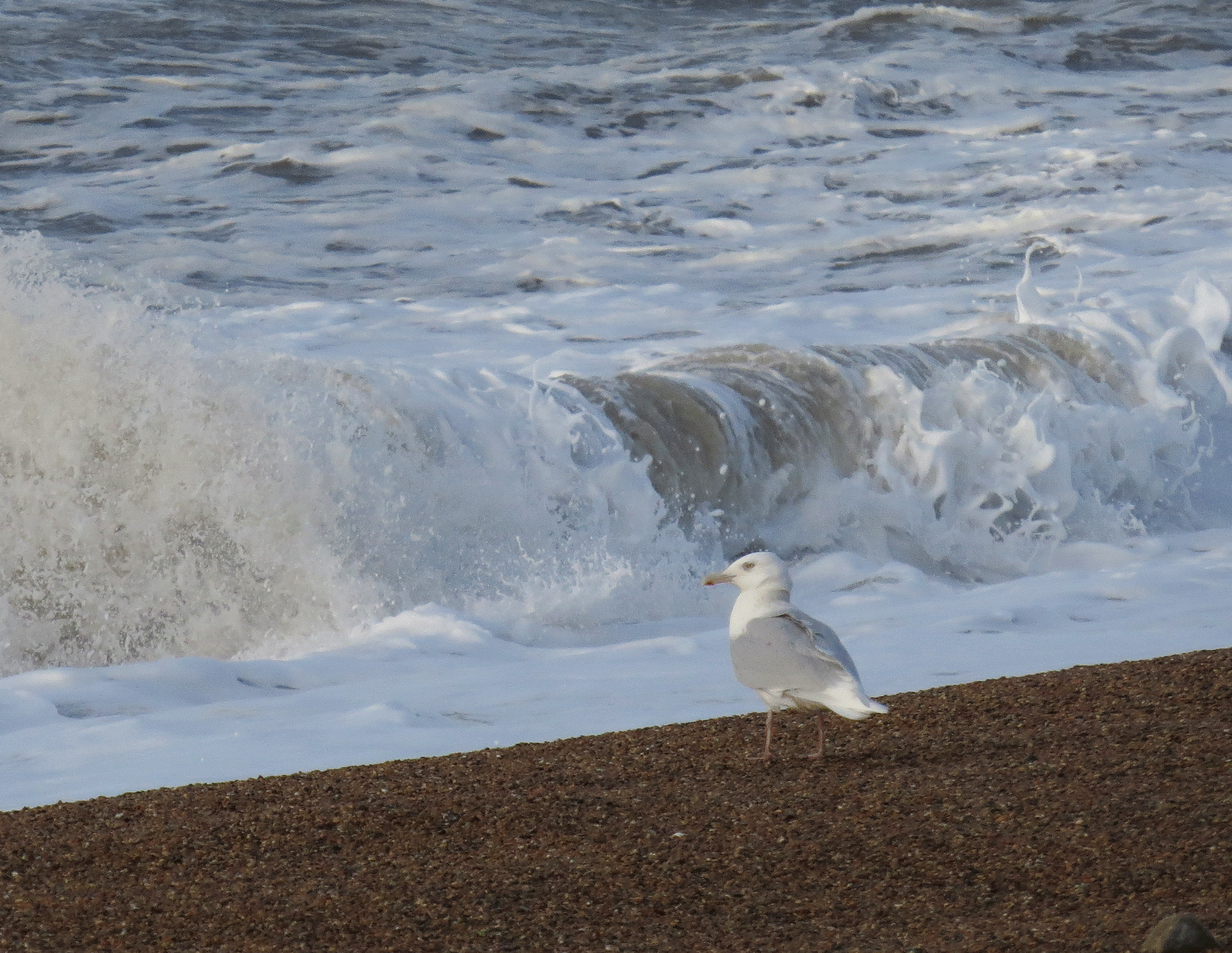
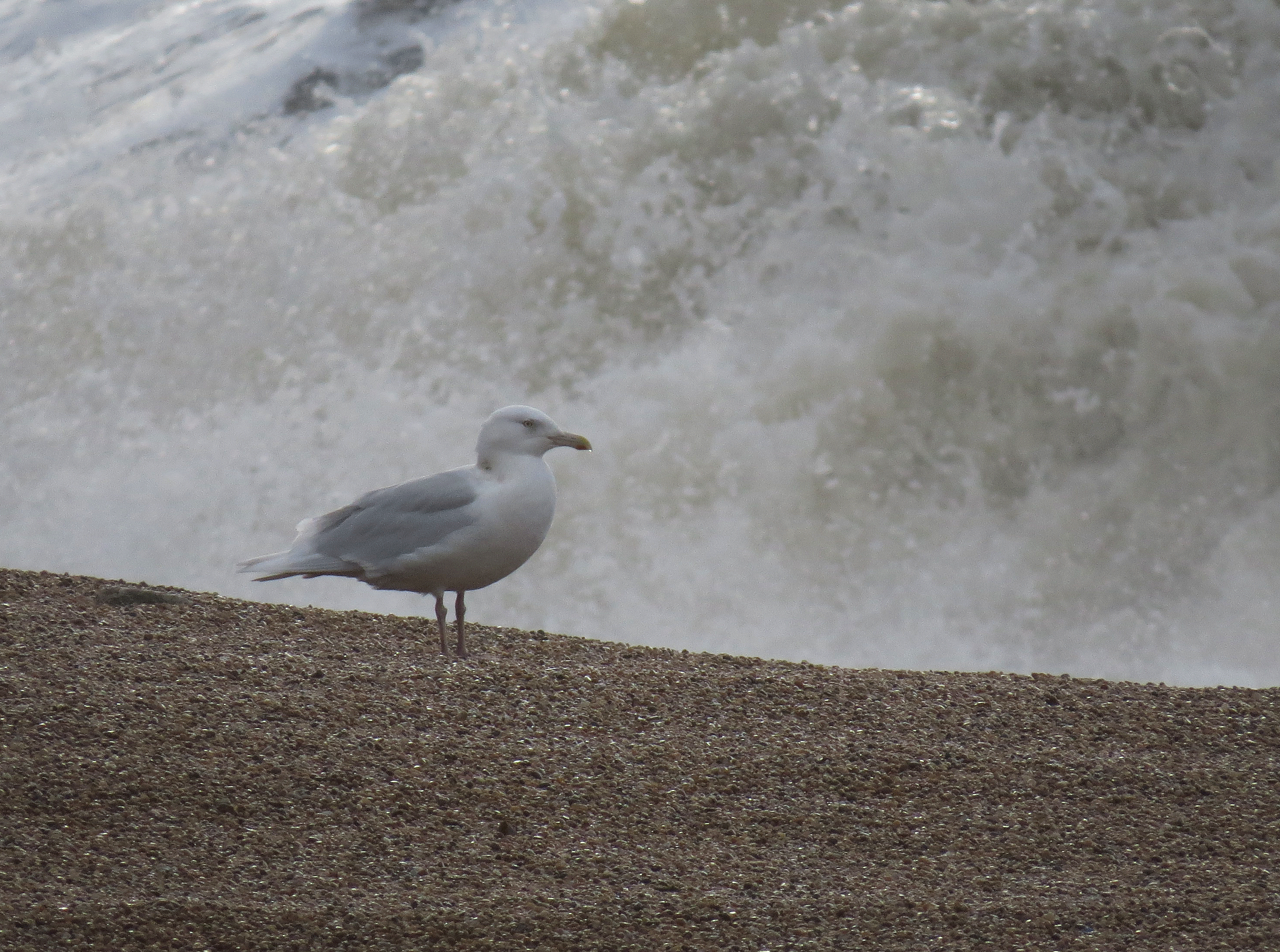
We headed down the flooded Avon valley, stopping at Avon Causeway to look in vain for the Green-winged Teal that was there in January. We then drove down to Hengistbury Head to search for the 1st winter Iceland Gull that has hung around offshore for the last few days. We dipped of course, we later found that it was on nearby Stanpit Marsh!
I am busy for the next few weeks but will update you again in mid-March
I don’t usually do a foreign trip based around finding a single species, but that is what happened during the first nine days of February.
In March last year Magnus Robb and Rene Pop of the Sound Approach made a startling discovery, whilst attempting to record Pallid Scops Owl, a new species to science, the Omani Owl, was found in the Al Hajar mountains of northern Oman. The paper in the link below was published on 5th October 2013.
http://soundapproach.co.uk/sites/default/files/Owl%20pdf.pdf Subsequently Arnoud van den Berg was able to take some amazing photos

The Omani Owl. Photograph by Arnoud van den Berg/the Sound Approach.
.
Partly because it was the first new non-cyptic bird species for science to be discovered in Western Palearctic (Shirihai and Svensson boundaries) for forty years and partly because I knew all the people involved in the discovery, I was very interested in seeing the owl. Discussions with Mike Watson of Birdquest led to the setting up of the Omani Owl Expedition for the first week of February, a time which was expected (but failed to be) peak time for vocalisations. In the event four of us booked on the tour and here is the story of the trip…..
.

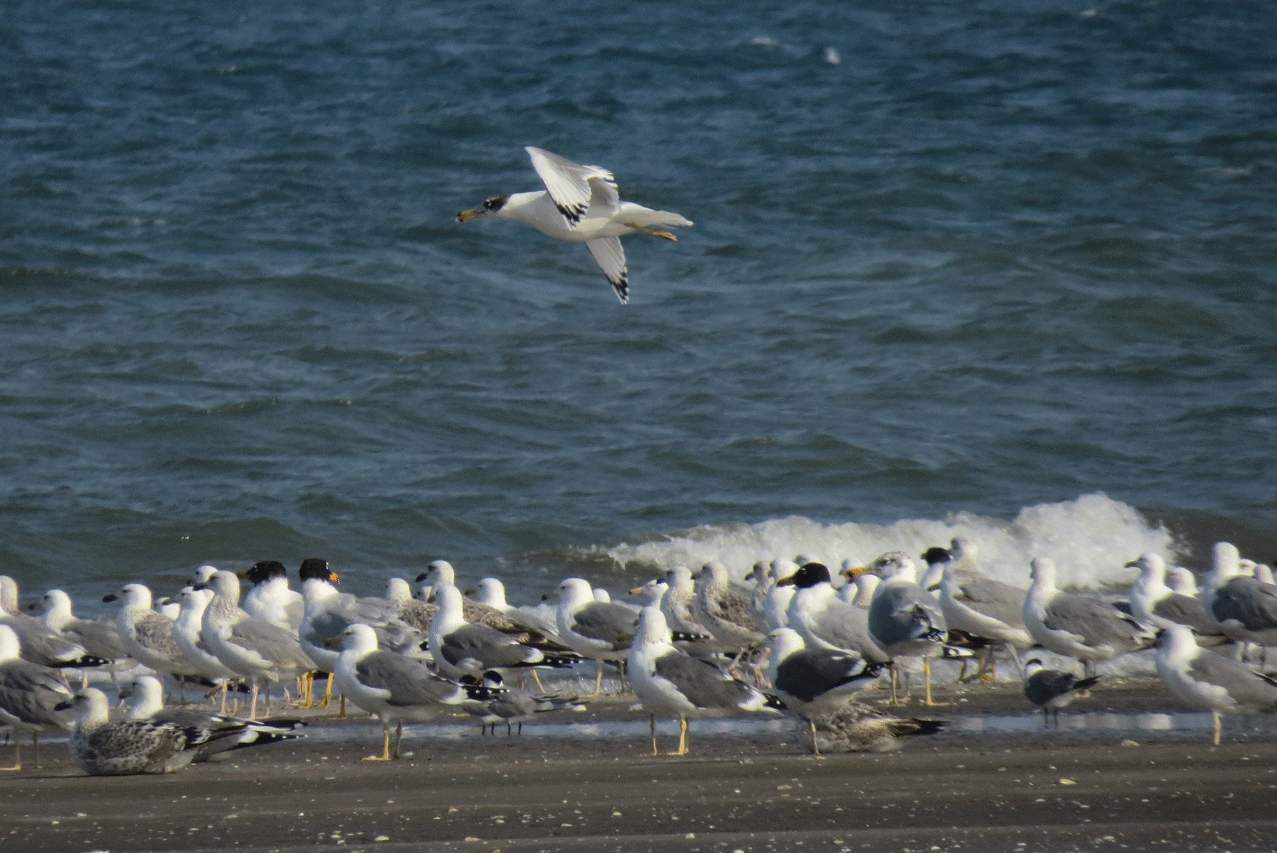
Day One. On our first afternoon we visited the beach at Ras As Sawadi. The main attraction being the large number of wintering gulls and terns. Most are Heuglin’s Gulls, a race of Lesser Black-backed from arctic Siberia, but include Slender-billed, Steppe, Caspian and the dark-headed Pallas’ Gulls from central and western Asia and the local Sooty Gulls.
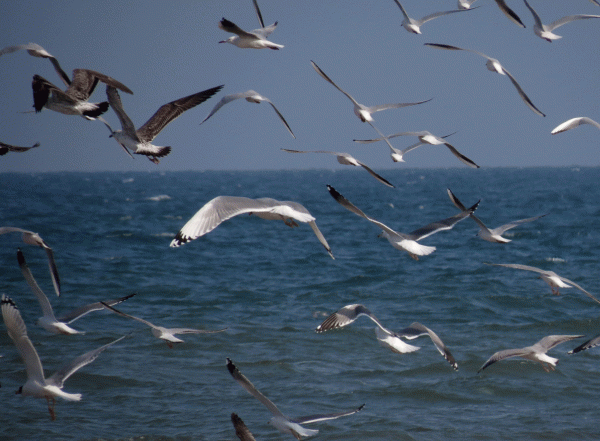
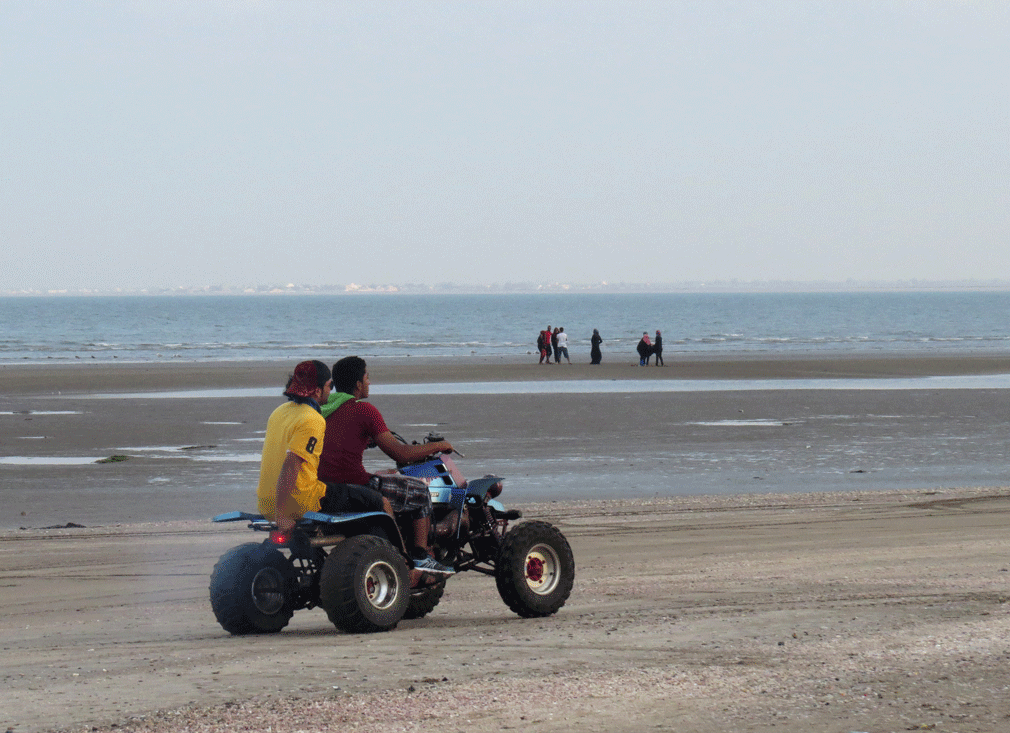
Unfortunately as it was the weekend many of the locals were racing 4x4s and off road buggies up and down the beach making the critical examination of the gulls difficult. The large gull in the centre and the one at bottom left are Pallas’, the rest are Heuglin’s Gulls and Slender-billed.

The bane of any gull watcher!
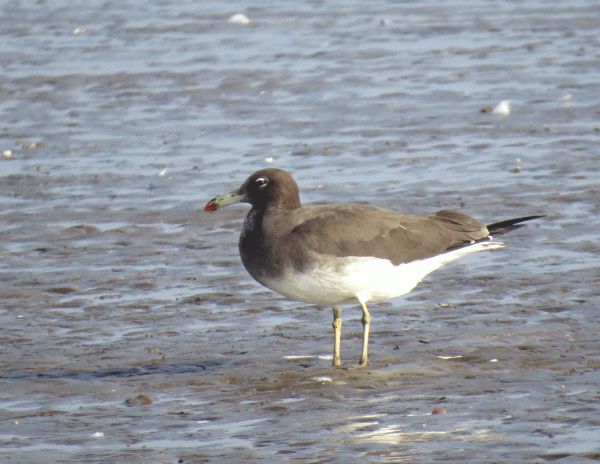
More or less confined to the Arabian Peninsula, Sooty Gull were easy to identify and quite common.
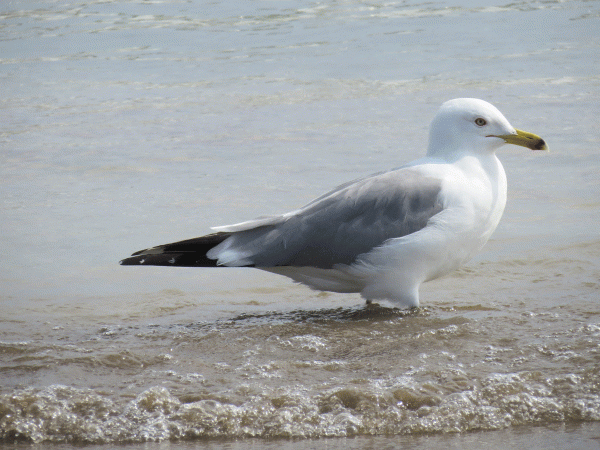
Of all the taxa of ‘large white-headed gulls’ one of the least known is ‘barabensis’ or Steppe Gull. Variously considered a subspecies of Lesser Black-backed or Caspian Gull or even a species in its own right, this individual had the correct wing tip pattern but had a pale, not dark eye, something that apparently occurs in those ‘barabensis’ that winter in the Arabian Gulf.
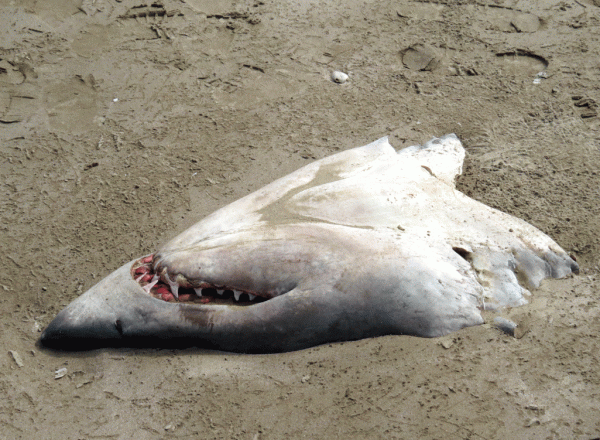
We were appalled to see about 20 decapitated sharks on one part of the beach. Worldwide over 100 million sharks are killed annually, mainly for shark fin soup. Clearly this is having a huge effect on the ecology of the oceans.
.
Early on day two we headed north to the Sohar Sun Farms. This agricultural area has irrigated fields, piles of slurry and sewage ponds, all highly attractive to birds in a desert environment. Unfortunately the farm is closing and even as we birded around the cow sheds we saw cattle being removed in trucks. However we saw lots of good birds, it was easily the birdiest site of the trip.

Vociferous Red-wattled Lapwings were common and conspicuous.

… but pride of place went to a group of 14 Sociable Lapwings on the irrigated fields.fields. This Central Asian species has declined precipitously in recent years and is considered to be critically endangered ….

… and several beautiful White-tailed Lapwings completed the trio of lapwing species.

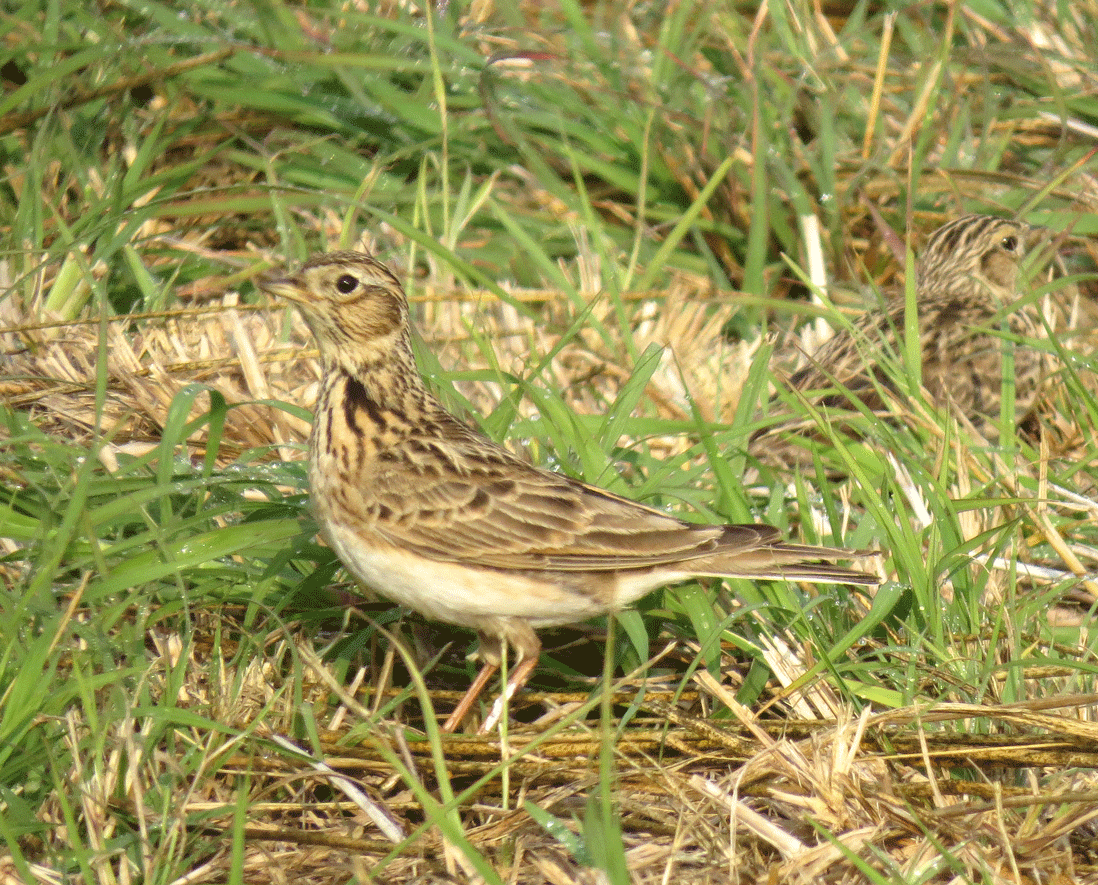
Three Oriental Skylarks was a good find.
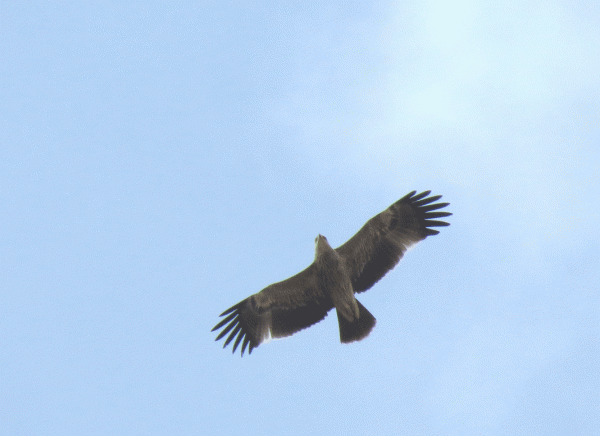
Raptors included Bonelli’s, Steppe, Greater Spotted and Imperial (in photo above) Eagles.

Pretty Indian Rollers were seen all along the coastal strip.
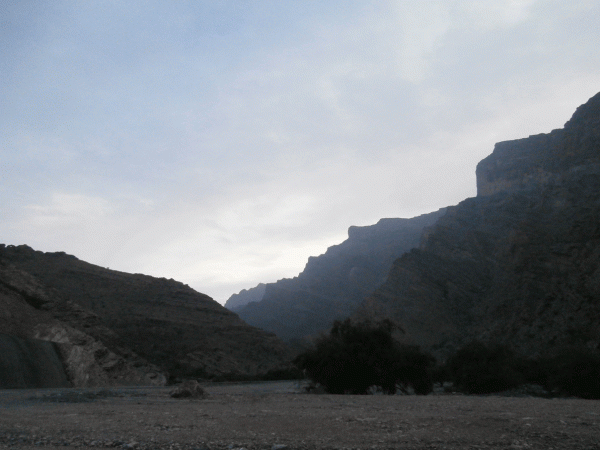
We returned for a late lunch and then headed out for our first owl sortie. We traveled to the wadi where the Omani Owl was first discovered and as dusk fell, searched at the ‘type locality’.

Once the New Moon had set it became very dark indeed. We stayed at the site from 1730 – 0030 seeing several little Pallid Scops Owls but no Omani Owls, although one was possibly heard to call once.
.
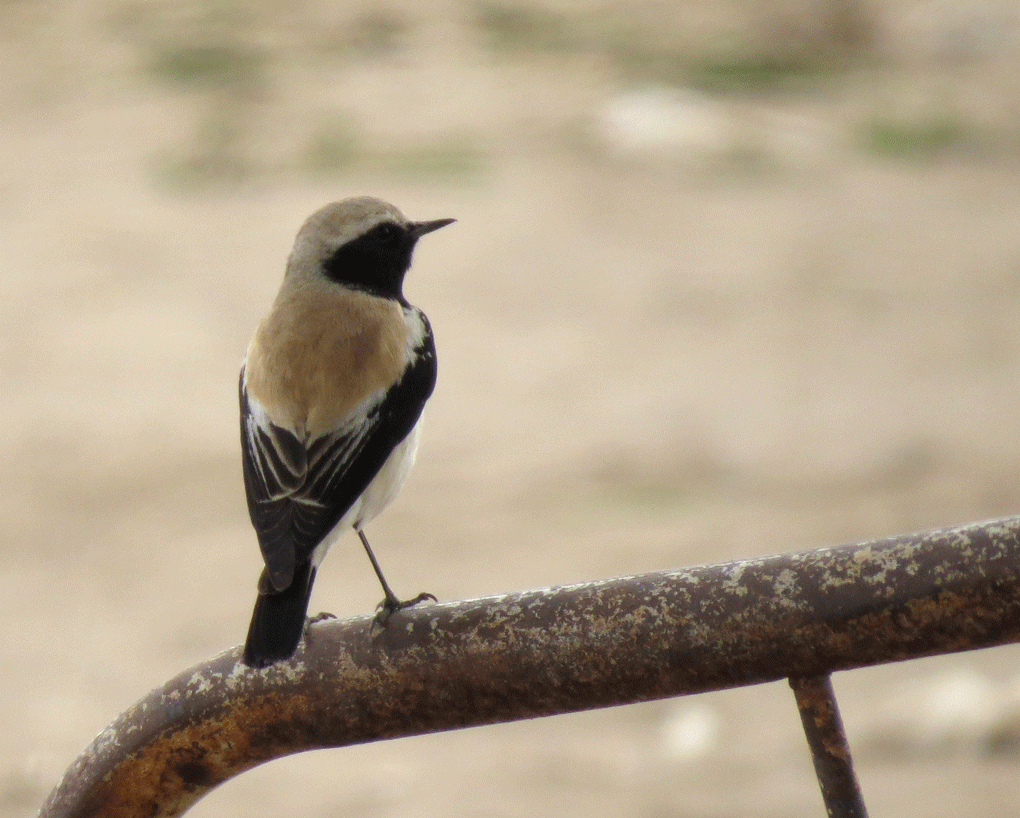
On day three we spent the morning at a farm close to the hotel. It wasn’t as good as the Sohar farm for birds but we did see several Desert Wheatears and in the nearby scrub, an Asian Desert Warbler. We also made a repeat visit to the beach at Ras Al Sawadi but the tide was very high and most gulls were too distant.
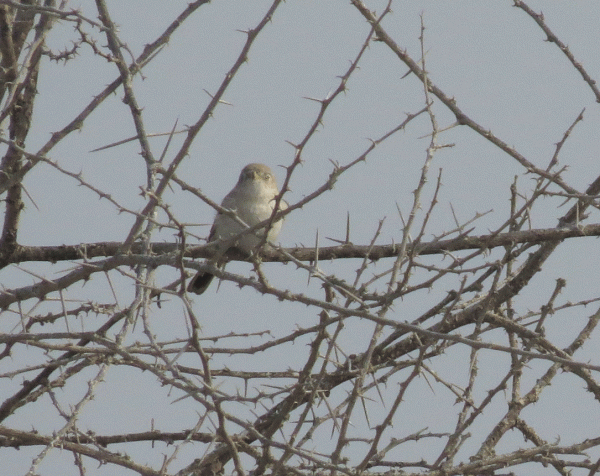
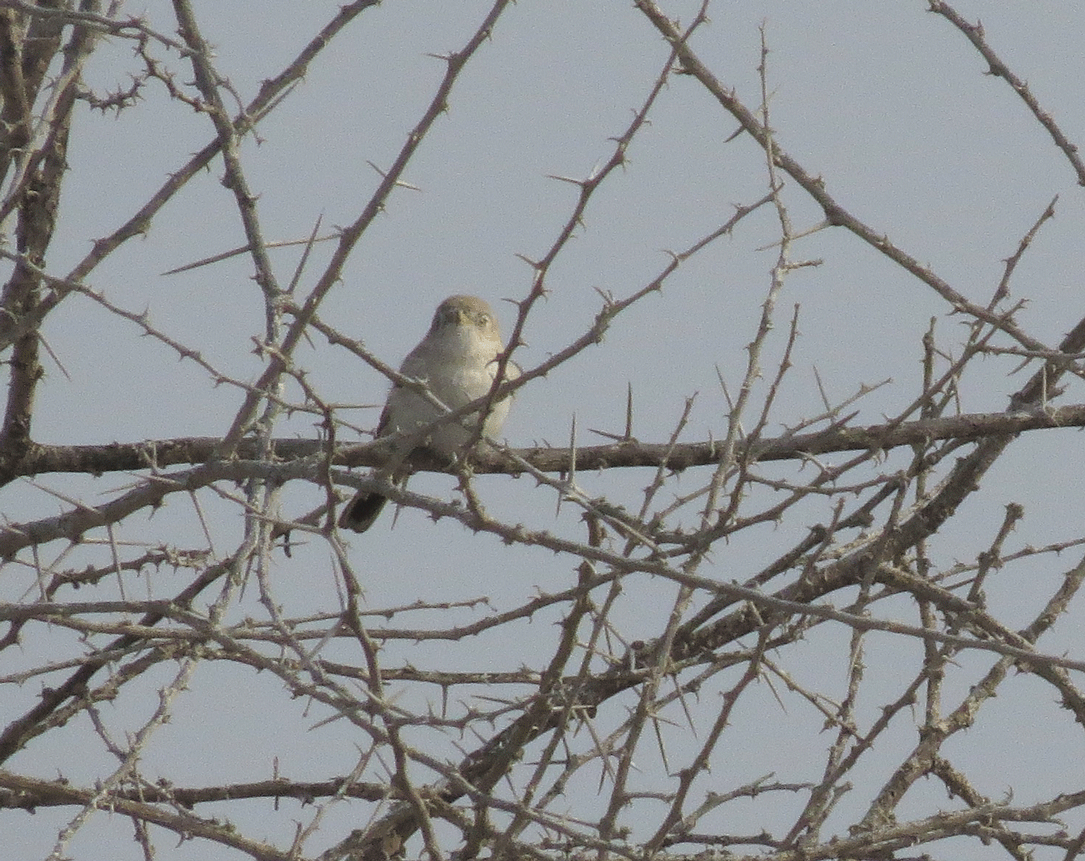
The pale-eyed Asian Desert Warbler is a scarce visitor from Central Asia.

This Isabelline Wheatear shows the diagnostic tail pattern.

Adult male Desert Wheatears are unmistakable but the all black tail is diagnostic in all plumages.

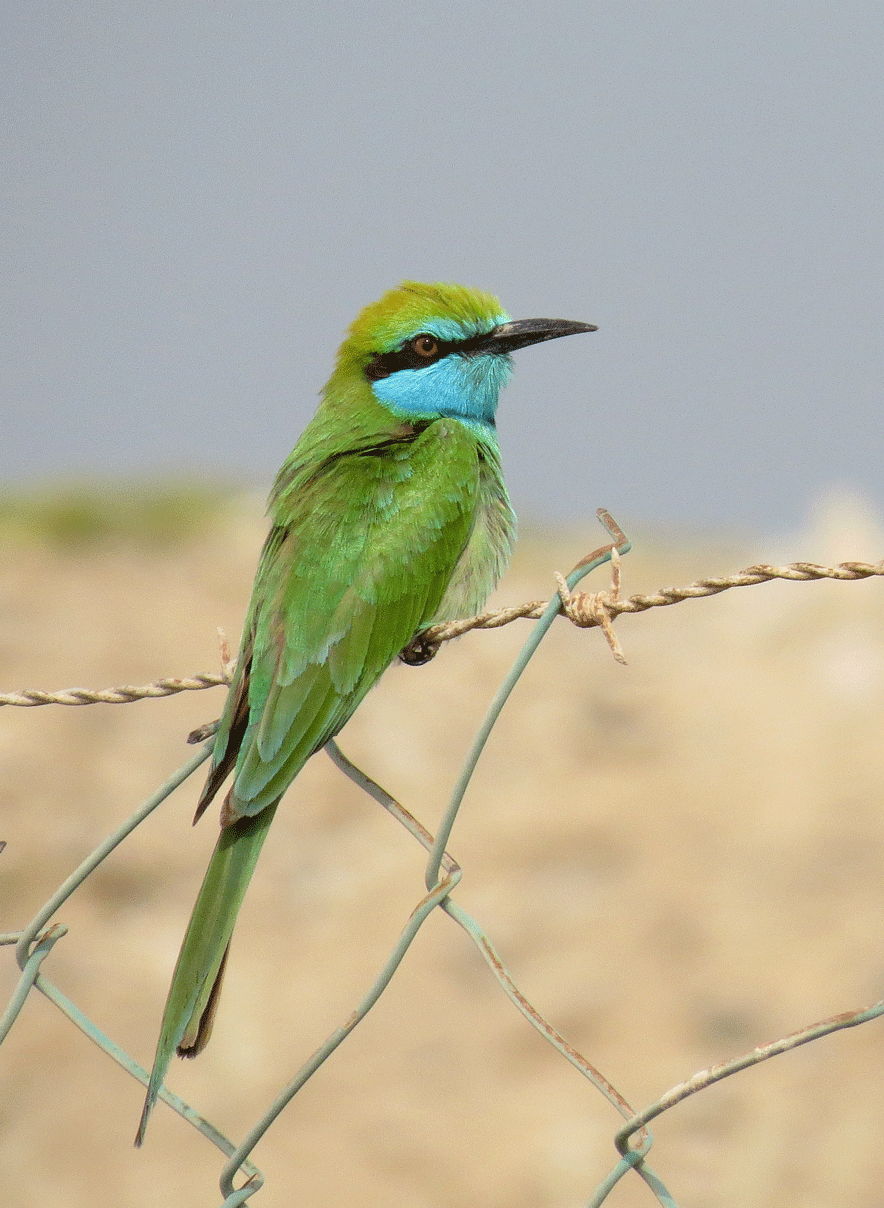
The beautiful Green Bee-eater perched an the wire fences.

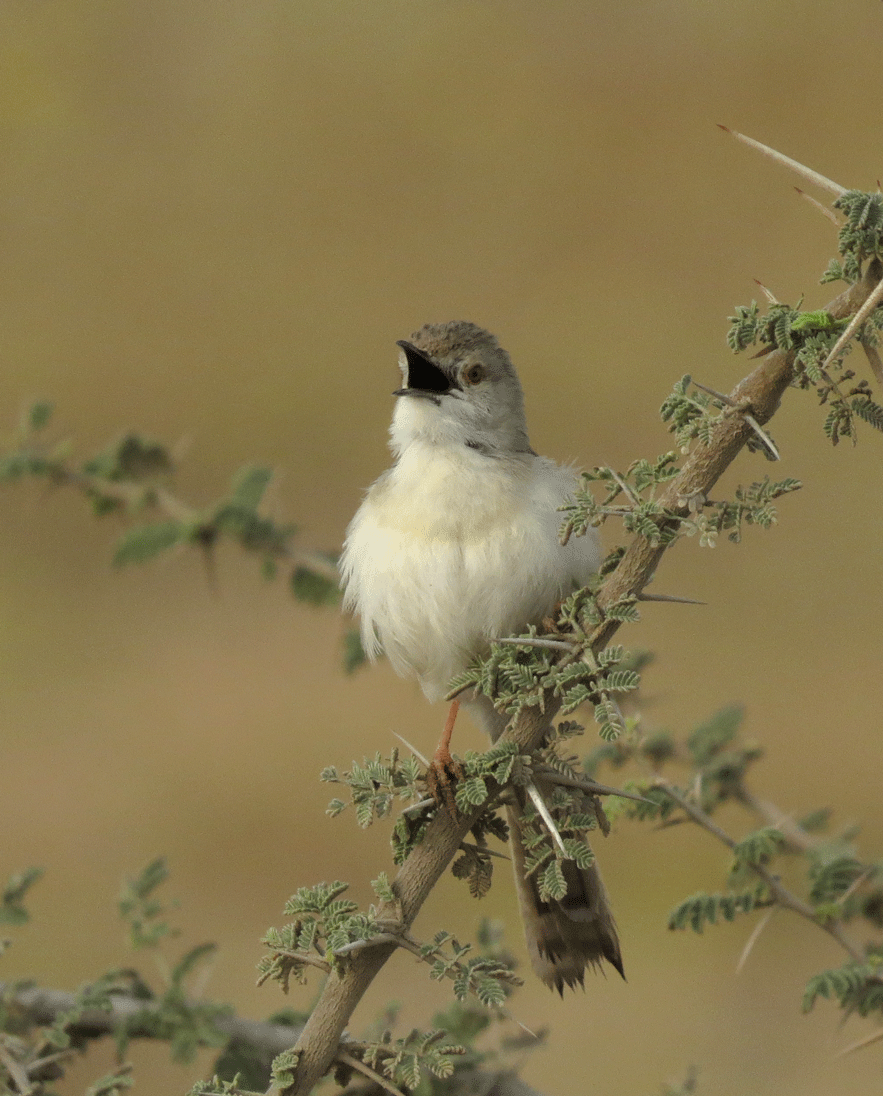
Due to it’s generally scruffy appearance it has been suggested that this bird would be better named the Disgraceful Prinia!
We returned to the owl wadi in the afternoon to allow us to have a good look around before it got dark. After dusk we joined up with another birder, John McLoughlin (aka Johnny Mac) who had contacted Mike in advance, we searched similar areas to the previous night, seeing more Pallid Scops Owls and hearing a definite contact note from the Omani Owl at the ‘type locality’, but no amount of searching with the spotlight would reveal the bird. We began to realise why this bird had remained undiscovered for so long!
At one stage we saw someone else spotlighting from the rough track that ran along the bottom of the wadi, some 200m or so from the road. We realised they were locals and when a spotlight was shone on them they spun the vehicle round and zoomed off, firing a shot in the air as they went. Clearly the presence of local hunters in the area wasn’t desirable whilst we were owling.
Around about 2145 we stopped at a pull-in near the start of the wadi to eat a snack. As soon as we got tucking-in we heard an owl call. A number of different calls were heard, one low and gruff, another like the ‘kwick’ of a young Tawny Owl and a few shrill notes that sounded rather familiar. The distant rock face was spotlighted and an owl found. Chaos, of course ensued, as we all tried to get views through the scope, pass the torch around so the torch holder could have a look as well and try and record the vocalisations, all this in a lay-by littered with discarded wood and plastic which had us tripping over in the dark. Although 300m or more away, the circular facial disk and dark streaked plumage could be seen in the powerful beam before it flew off into the inky blackness. We were elated, views were distant, but we were sure we had the owl ‘under the belt’. It was decided that if left now we could have a celebratory pint or two in the bar!
.
The morning of day four saw us return to the owl wadi. We found a rough track that led much closer to where the owl had been the night before – but then made an unwelcome discovery – Little Owls, or to be more precise Lilith Owls, a potential split from Little Owl named after the Babylonian queen of the night. We were downcast, had we screwed up, was the bird we saw last night in the torch beam merely Anthene (noctua) lilith? Back at the hotel we listened to the recording from last night, on reflection they were similar to Little Owl (differences would be expected if lilith was a separate species from Little Owl) but the strange gruff call hadn’t been recorded. I was adamant that what I saw in the scope wasn’t a Little Owl, was completely the wrong shape – both species must have been present. We contacted Magnus who suggested that the arrival of an Omani Owl may have caused the Little/Lilith’s to start calling; quite possible, but still an air of uncertainty hung over our sighting.

Other birds in the area included this smart Desert Lark ….

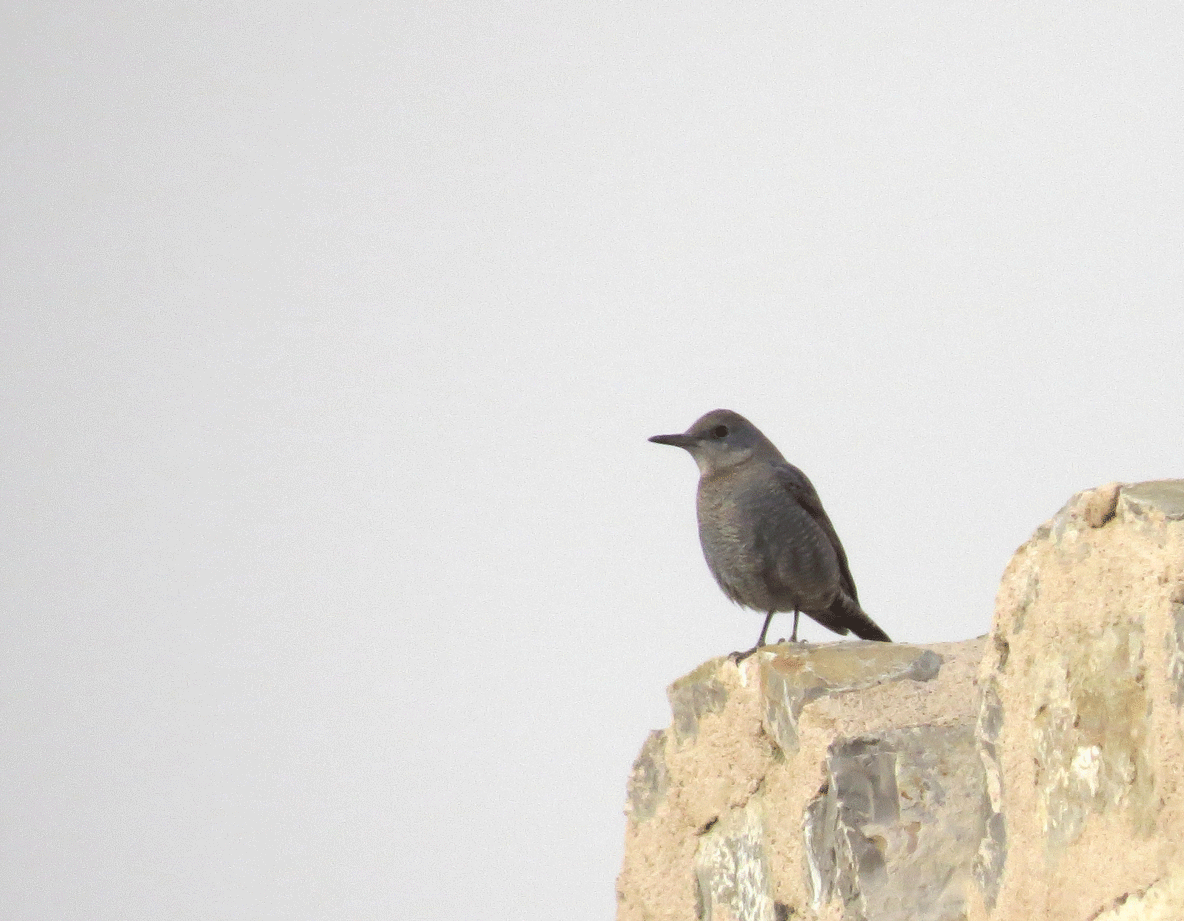
… and a Blue Rock Thrush
We decided the best option was to come back later in the night after the traffic had stopped and stay out until the early hours. We rested in the afternoon and arrived at 2045 and stayed until 0330. We didn’t get a squeak from Pallid Scops, Lilith or Omani Owls, the highlight perhaps being some very vocal Red Fox’s, their blood curdling cries echoing around the wadi.
At around 0230 I suggested Mike should play the lilith calls from last night at the same locality and then spotlight them. This worked. One responded immediately and when spotlighted it was obvious that it wasn’t the bird from the night before, appearing as just a tiny round ball on the cliff face. We felt better; yesterdays views weren’t much but at least they must have been of the real ‘McCoy’.
.
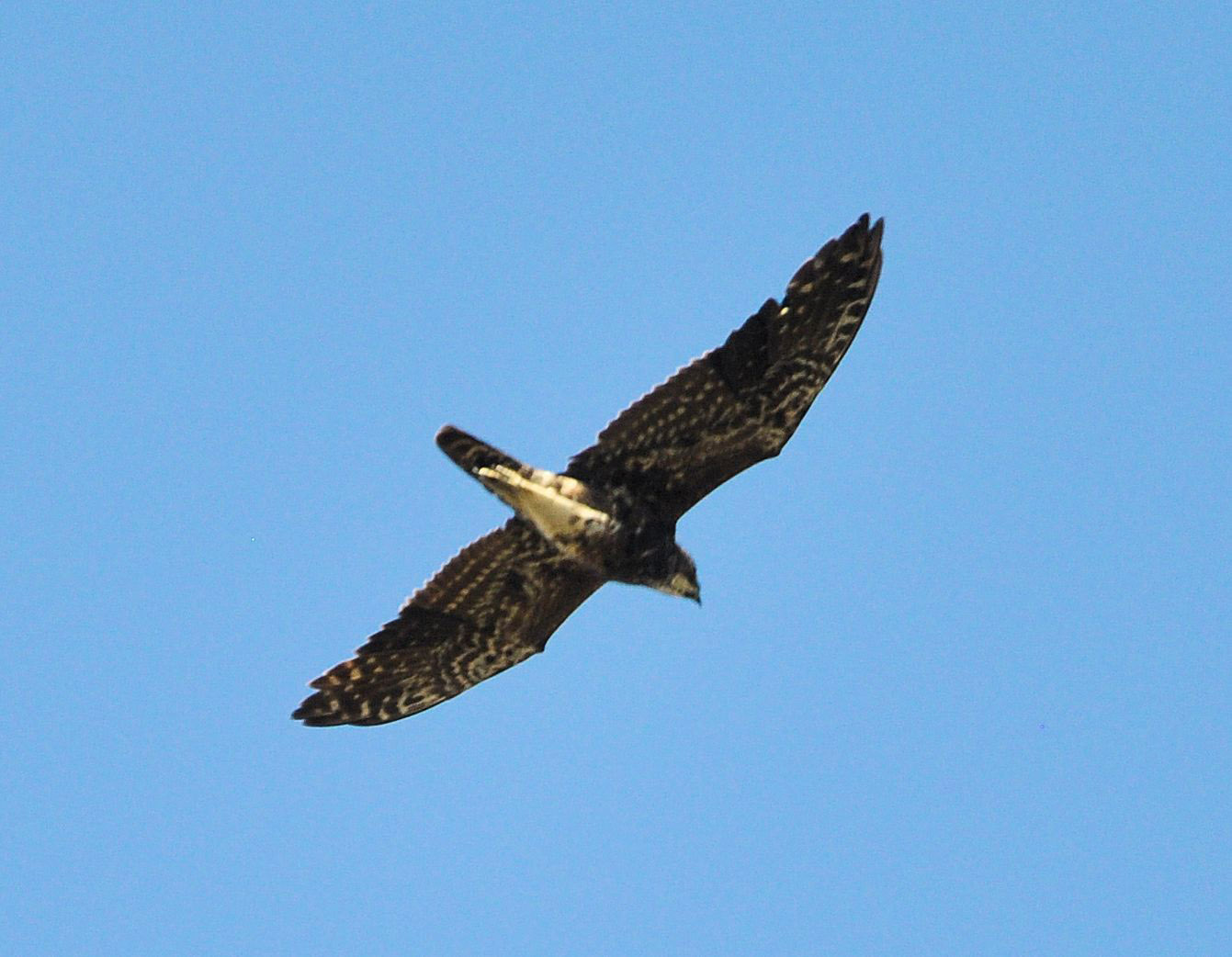
Day five Hardly surprisingly, as we didn’t get to bed until 0430, we weren’t up early. A very late breakfast was enlivened by views of a Crested Honey-buzzard outside the restaurant. This species is a very rare, but regular winter visitor to the Middle East from Siberia, the bulk of the population wintering in SE Asia. I got good views but didn’t have my camera with me. Mike got some good shots and I’ll post some here later when I can get a copy. We spent the afternoon and evening in a completely different wadi some distance away.

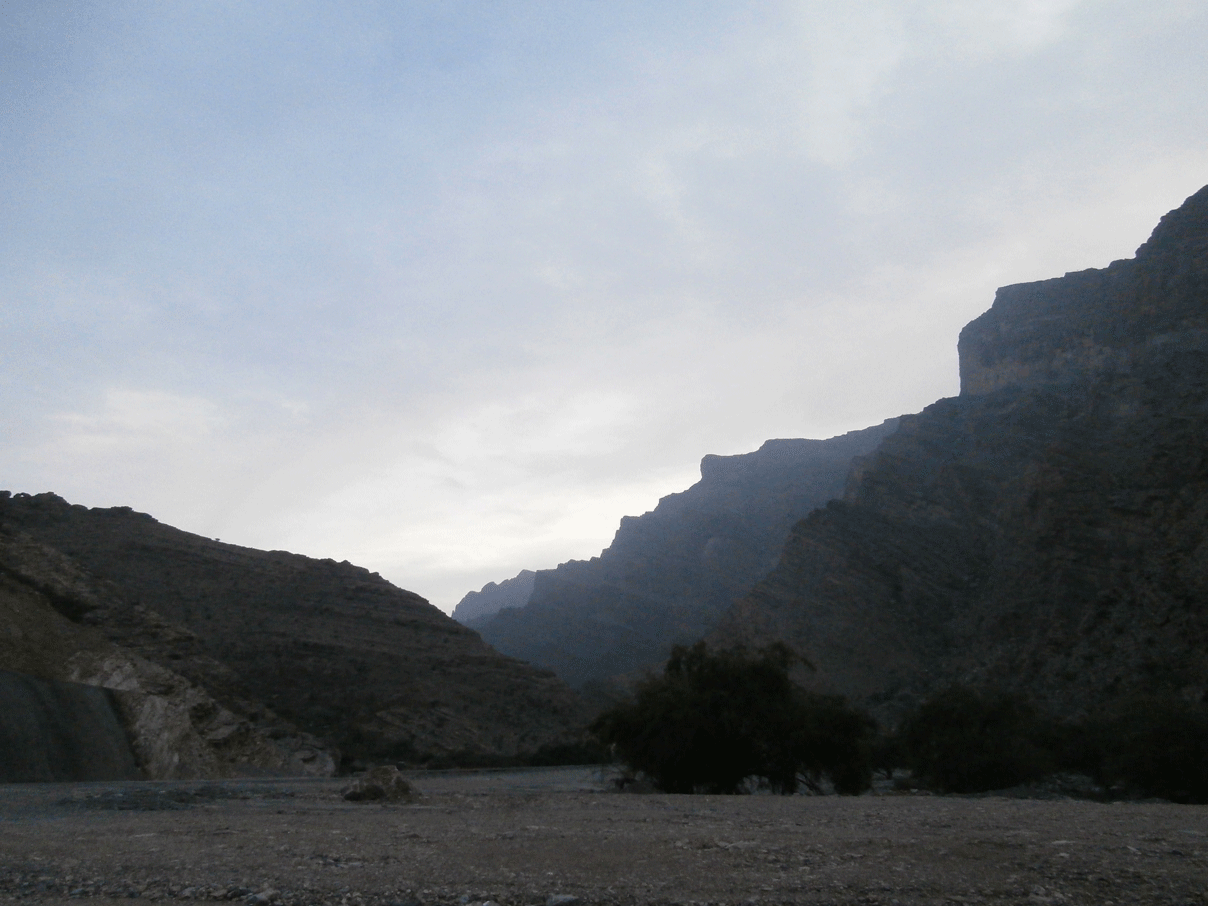
This extensive wadi system had many side valleys all with spectacular scenery.

We were shown around these charming irrigated gardens by some welcoming locals. They looked full of promise but actually were devoid of birds.
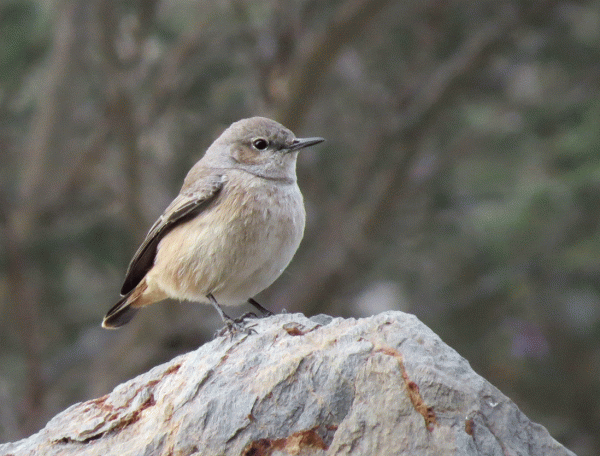
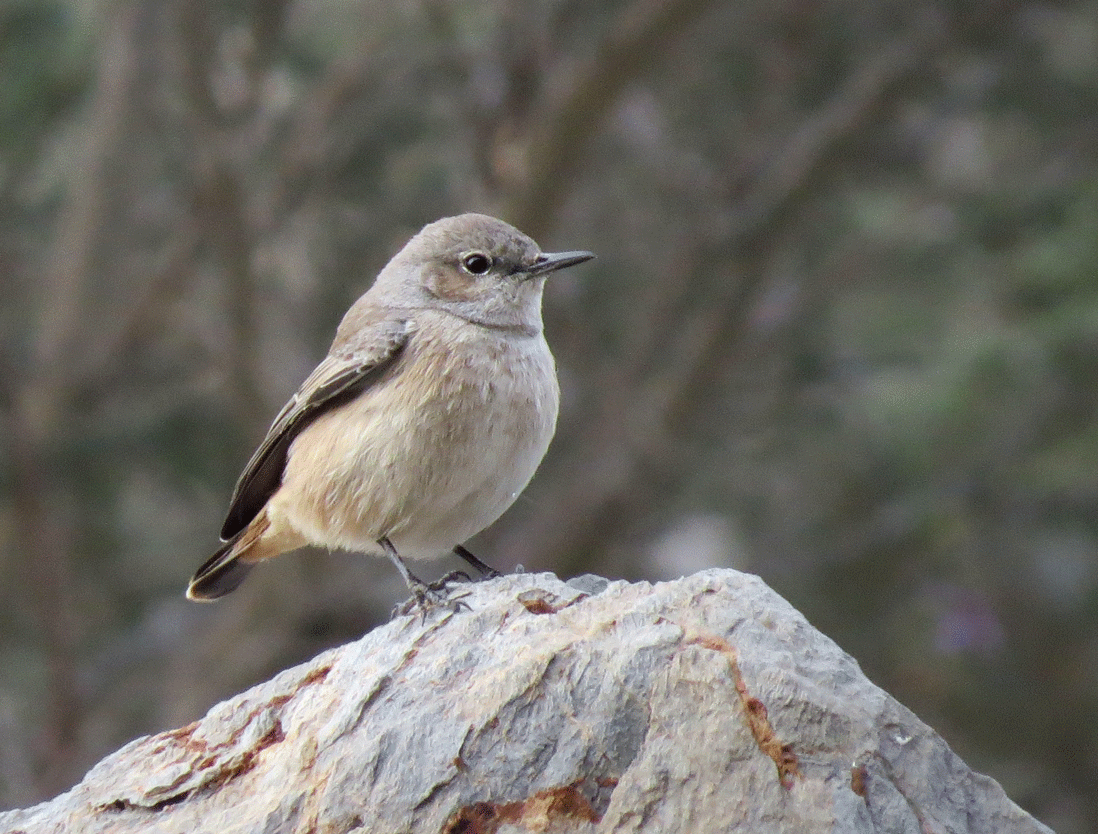
We did see a number of Red-tailed (or Persian) Wheatears, winter visitors from Iran.

As the sun set we waited for darkness, but by 2300 we had seen or heard absolutely nothing. The only good thing we discovered was that some of the locals knew the Omani Owl vocalisations, but said they could only be heard much higher up. You could hide a thousand owls in this terrain!
.
Day six saw us making a long drive up to the UAE border for two Omani specialties, the Arabian race of Collared Kingfisher and Varied Wheatear. Somewhat knackered after multiple late nights and irregular meals, we opted for breakfast before we left, which may have been a mistake as we dipped on the kingfisher but did, at least, see the wheatear.
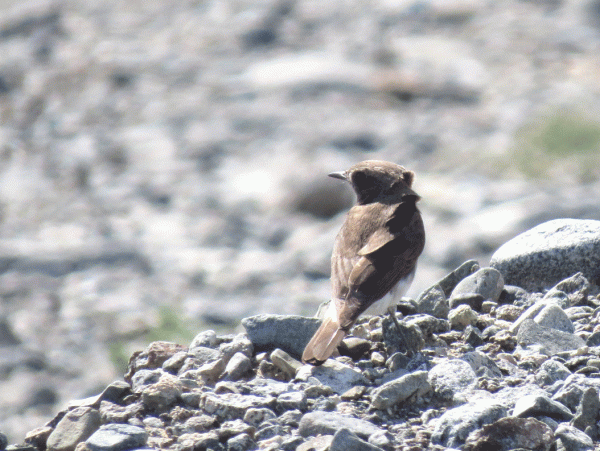
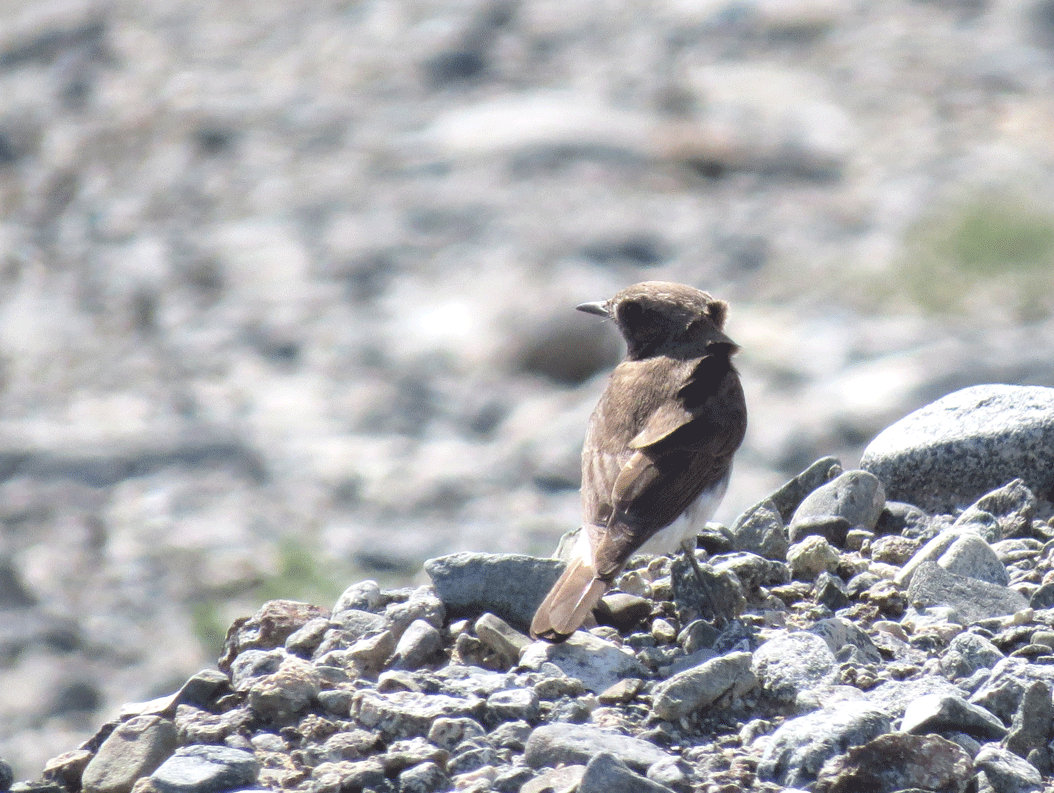
We found this Variable Wheatear just before we had to leave. The birds wintering habitat is being destroyed for yet more roads, something that Oman seems to have a surplus of. As the name suggest Variable Wheatears come in three different morphs (now ascribed to subspecies), this form is known as ‘picata’.
Back at the hotel we had good news, whilst we were searching the big wadi last night, Johnny Mac had found a separate smaller wadi and had heard an Omani Owl give its quiet contact call at 1830 and 2100. It was obvious where we were going to go owling tonight.
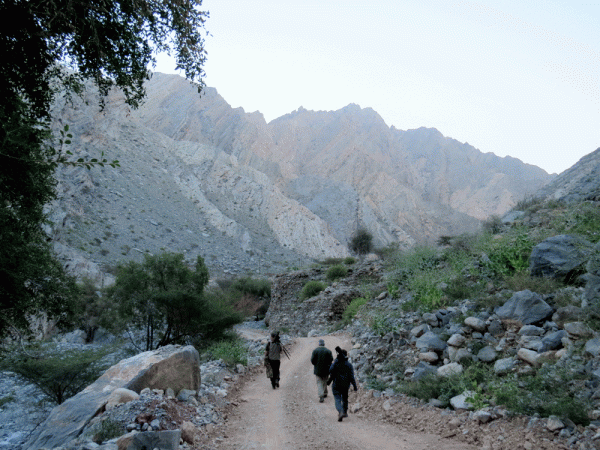
At the request of the Sound Approach guys who are still researching the Omani Owl, the location of the wadi is being kept quiet for now, we just called it ‘wadi Mac’

Again we waited patiently for dark but we had no success at all. However we returned pre-dawn on the seventh day and saw two Omani Owls perched and in flight. Views were too distant and too brief for photos but we now knew that there was a confirmed second locality for the species and we were the first two people see two together. We were delighted!
.
Day seven. After our pre-dawn owling we returned to the hotel and packed up and drove the three hours to the Sayq Plateau on the south side of the Al Hajar mountains. We spent the afternoon and all of day eight birding in this extensive area. As well as the birds in the photos below, we saw a Ring Ousel (a major Omani rarity) and a flock of 18 Mistle Thrushes, there have only been four previous records (two singles and a pair).
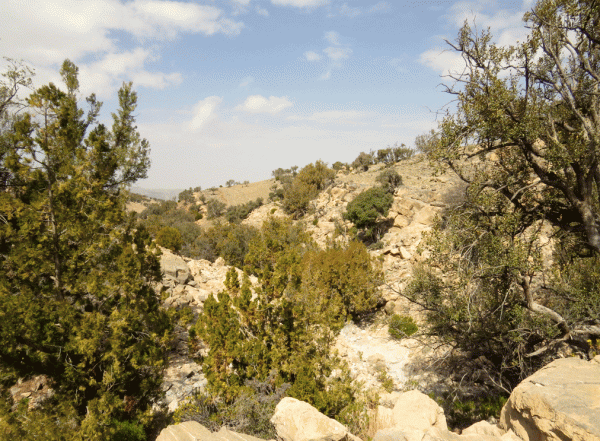
The Sayq Plateau consists of boulder strewn slopes covered with ancient twisted olive and juniper trees. Birds are few and far between but contain some real gems.
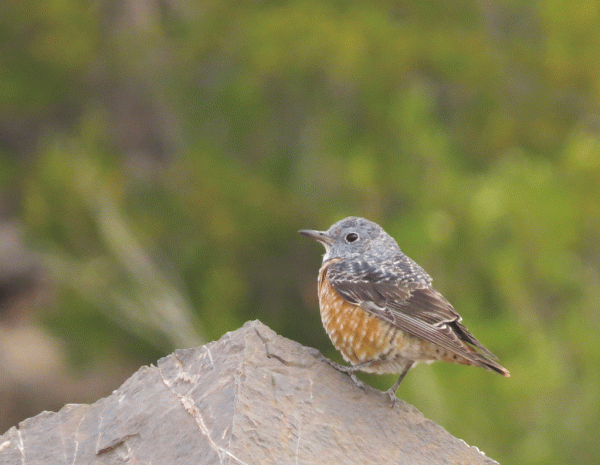
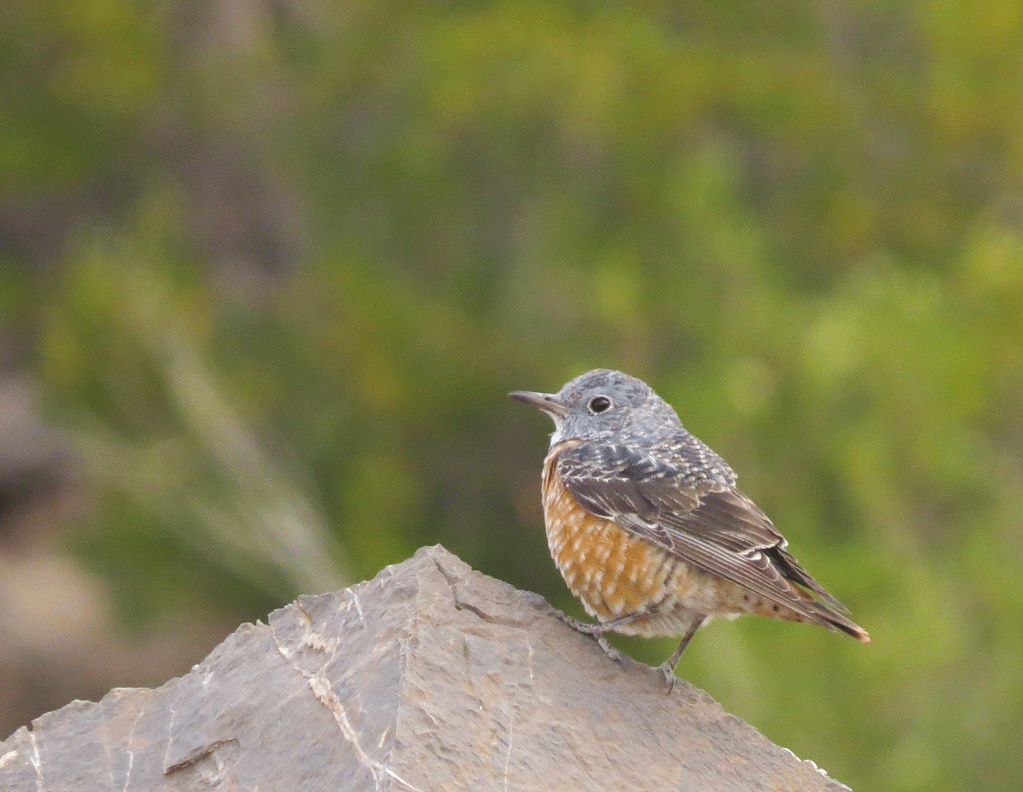
A number of Rufous-tailed Rock Thrushes showed well.
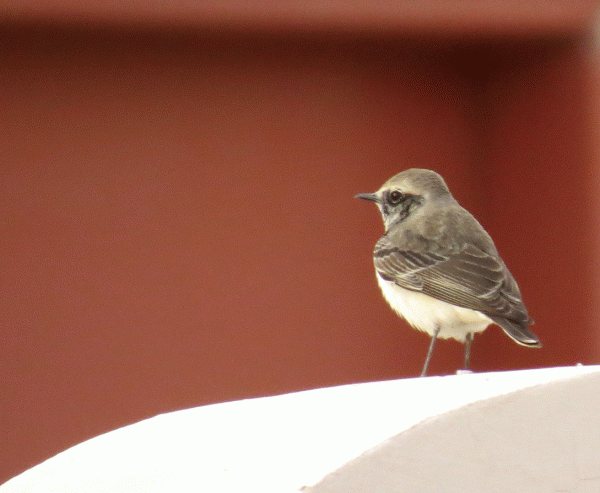
This wintering Pied Wheatear perched up in a village, hence the unusual background.

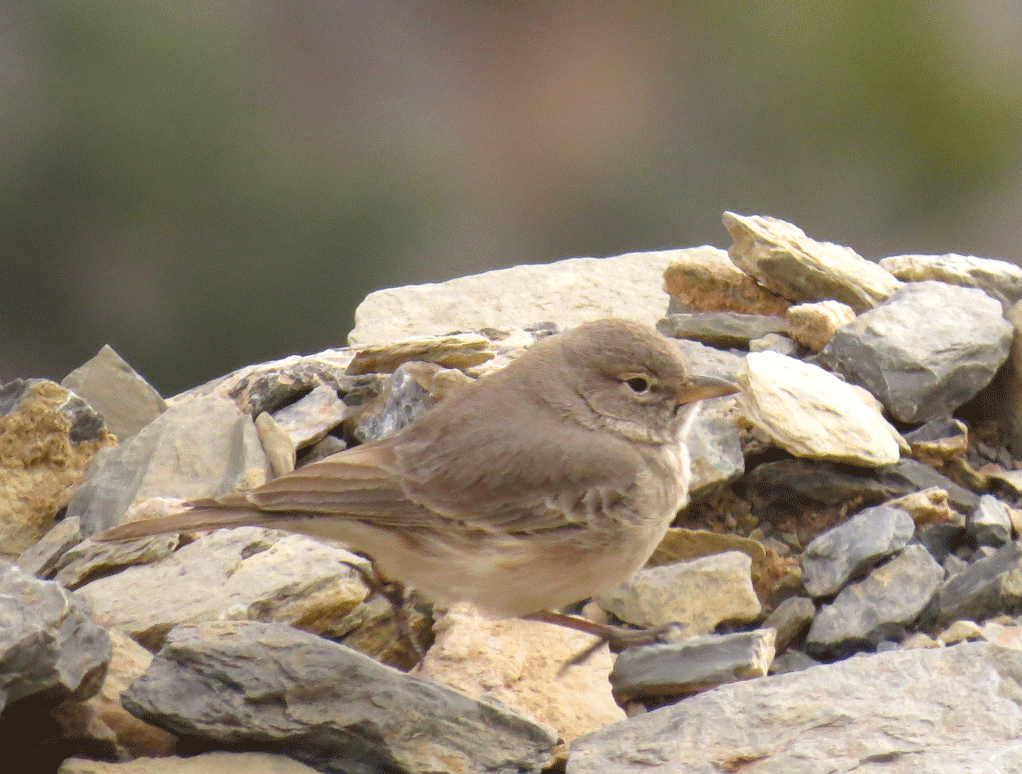
It took a long slog across the stony plateau before we found this Streaked Scrub Warbler – right back where we started. This species is now placed in it’s own monotypic family and so is high on ‘family listers’ hit list.

A number of picturesque village perched on the edge of deep chasms.

Spectacular!
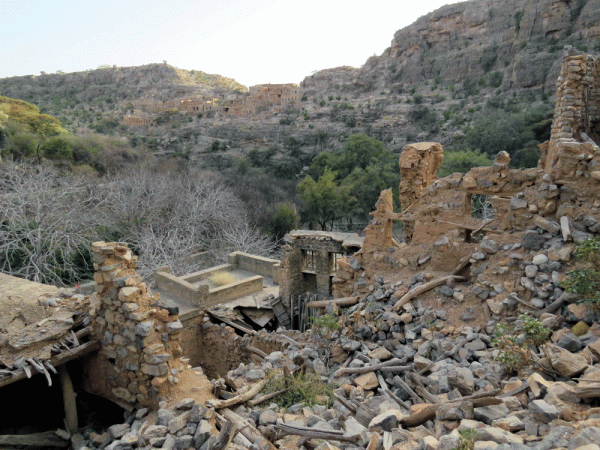
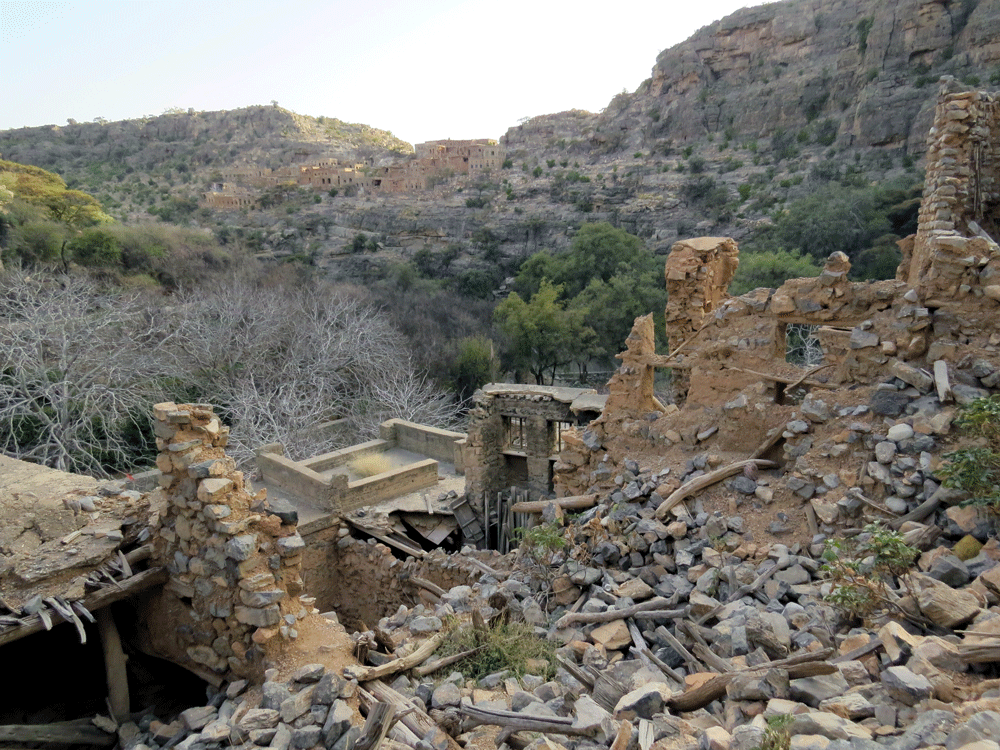
This village was a holdout for a number of insurgents in the 1950’s and was bombed by the British at the request of the then Sultan.
.
Day nine. We had intended to look for Omani Owls on the Sayq Plateau, but the nights were cold and windy and not conducive for listening for owls in the dark. After some debate we decided to return to ‘wadi Mac’ for one last try before we flew home. As a result we got up at 0130, checked out at 0200 and arrived at the wadi at 0500. At 0610 we found two Omani Owls perched high on the cliff and were able to watch them until it got light. One entered a small cave which could be a nest site, whilst the other perched some way away. We had to leave at 0630 to go the airport but somehow managed to stay until 0650. We did arrive in time for the flight and arrived home the same evening.
OK, the views were poor, the birds were nearly a half kilometer away but between us and Johnny Mac, we had found a new site for the owls, were the first to observe a pair together, found a possible nest hole and been the first to see the species in daylight.
The Sound Approach intend to follow up our sightings and hopefully soon, staked out Omani Owls will be on every Omani birding itinerary.

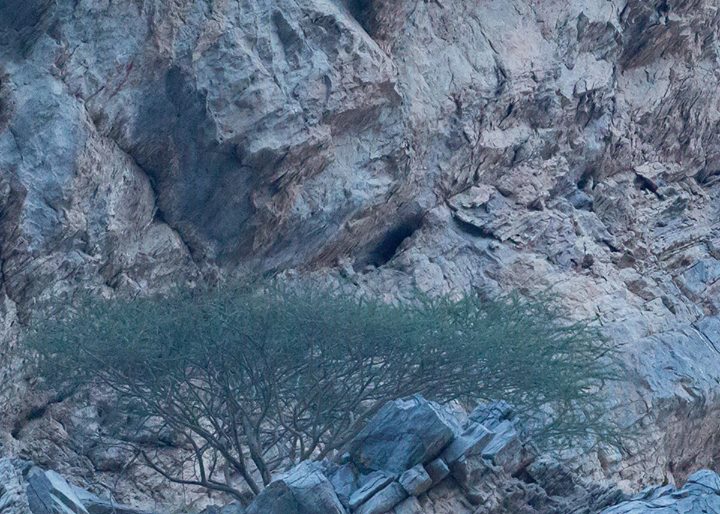
Omani Owl – can you spot it? It’s above the right hand corner of the tree. Photo by Mike Watson.
23.687916
57.356104
Yes, its official, January 2014 is the wettest month since records began, at least in Southern Britain. Many events have been weather affected throughout January but I have managed to go ringing on five or so occasions and do a little birding, as well as going on the East Anglia trip that I have already reported on.

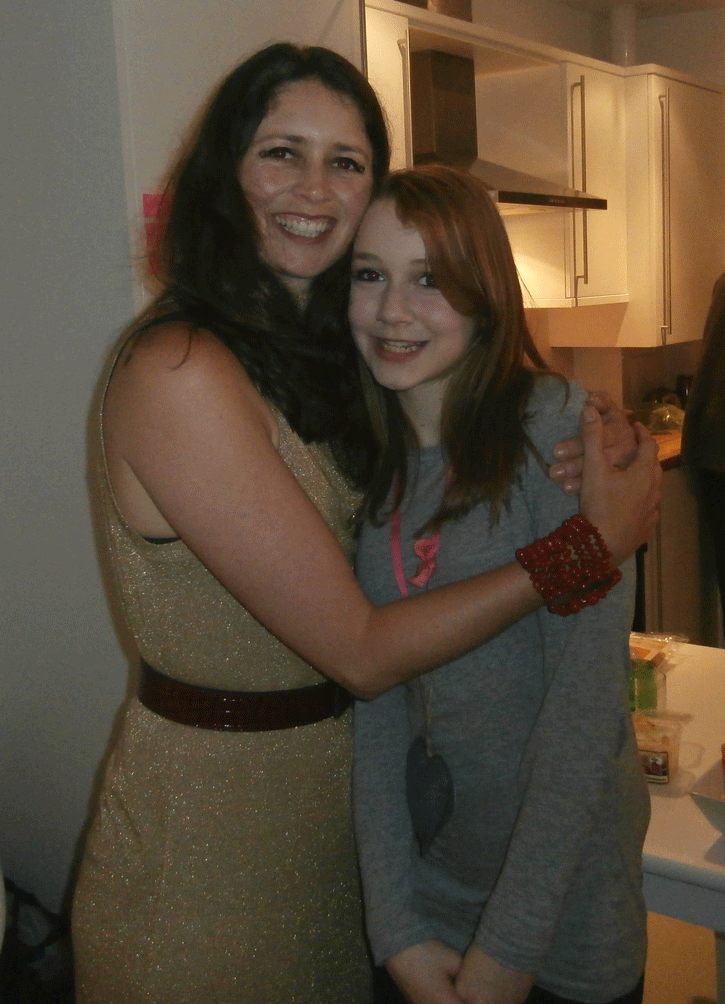
Anita and Kara at Anita’s flat in Bournemouth. John and Anita returned from their long trip to South Africa on the 4th and Anita held a belated 40th birthday party on the 11th
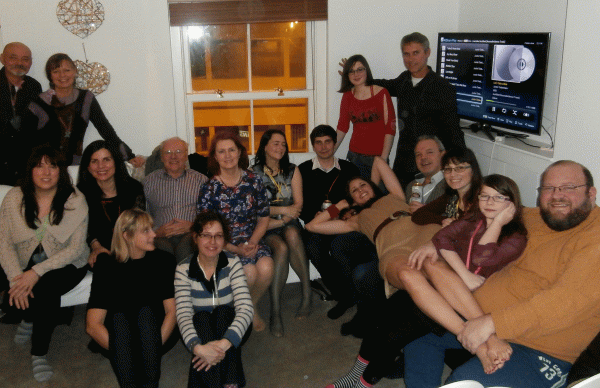
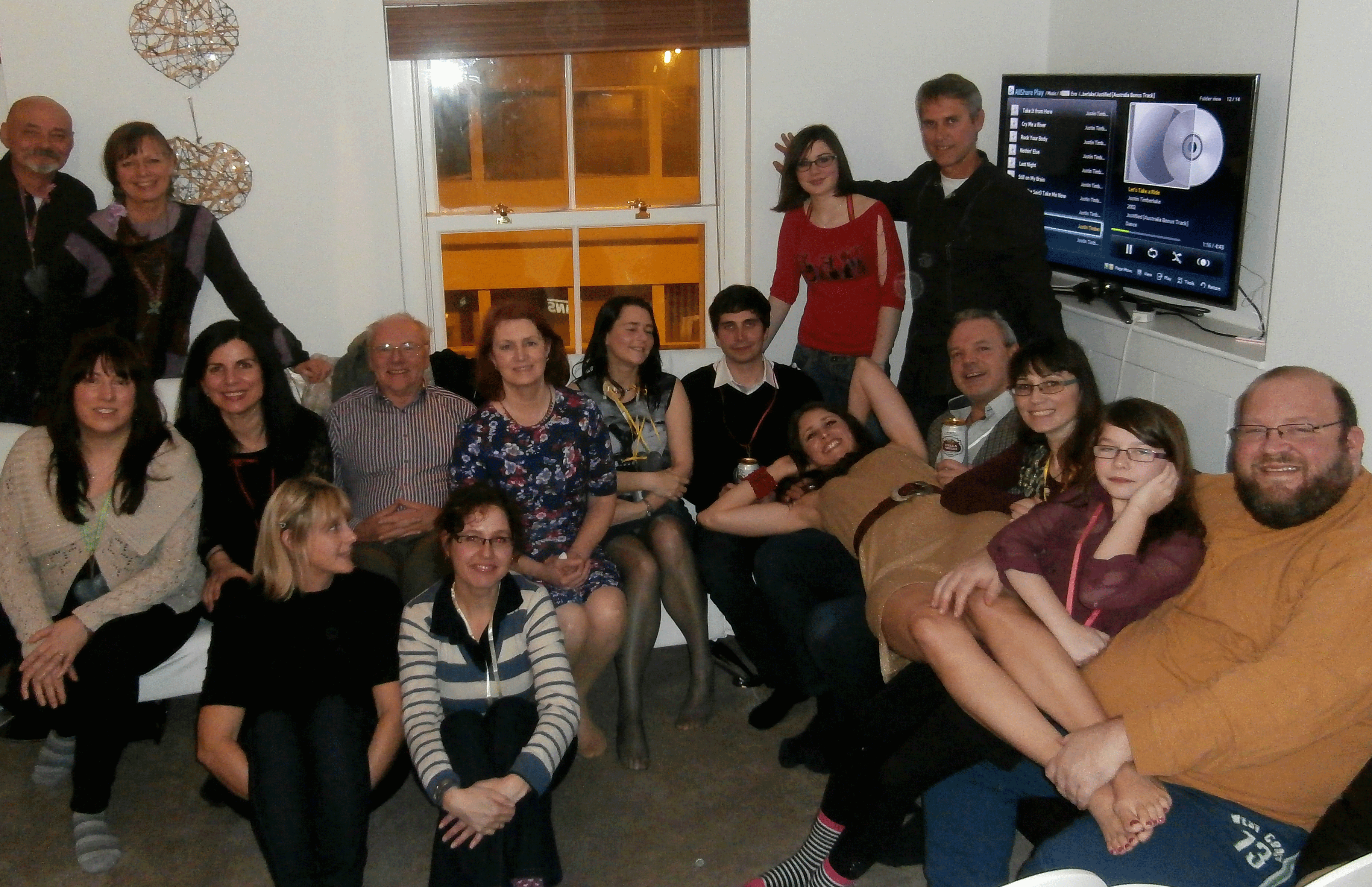
Anita relaxes with friends and family at her 40th birthday party. John, Amber, Janis, Margaret and I are all in there somewhere. Kara took the photo.
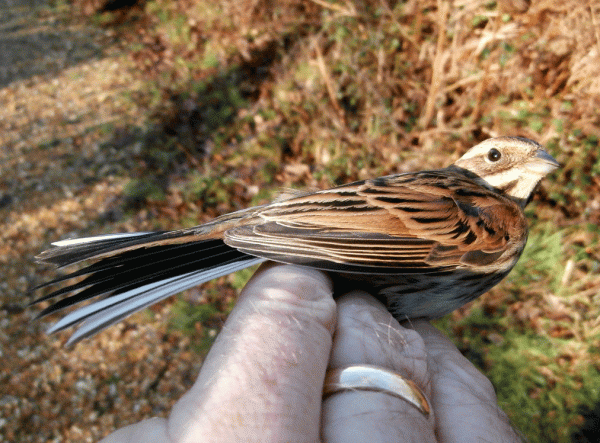
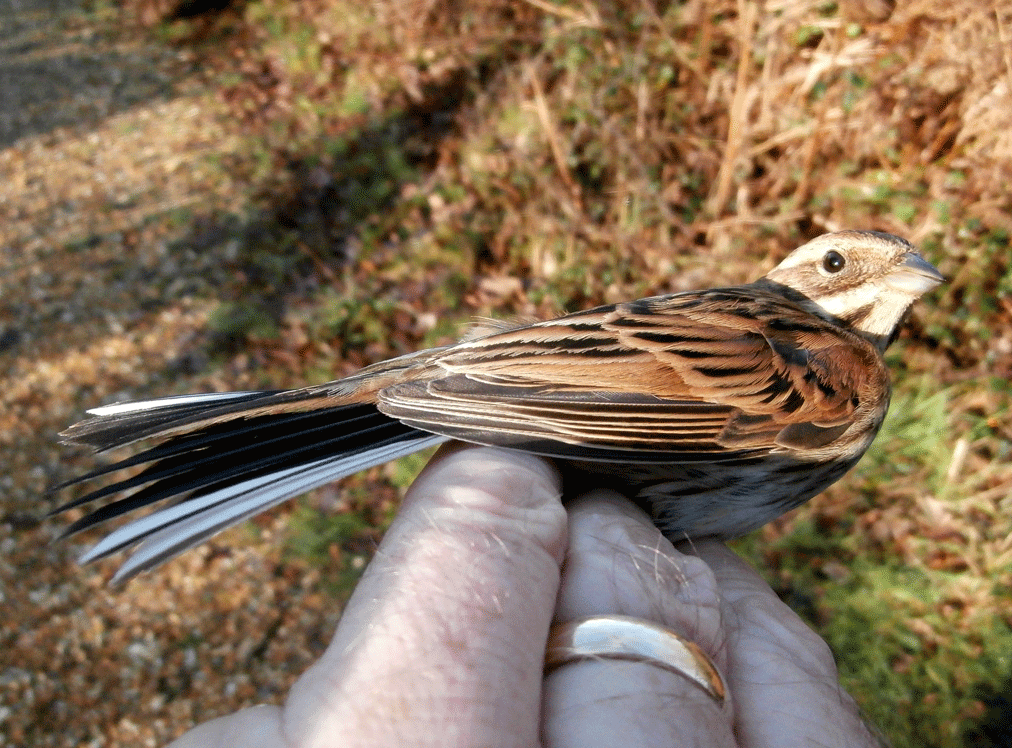
We managed three ringing visits to Holton Lee. As usual we ringed or retrapped lots of Blue, Great and Coal Tits, Robins and Dunnocks plus a small number of Great Spotted Woodpeckers and Nuthatches. The large number of retraps allows us to hone our aging skills by examining birds of known age and comparing the plumage against the published criteria. On the 14th we trapped the first Reed Bunting for the site on the but had already ringed as a juvenile (3J) female at Lytchett Bay on 23rd August 2013. I’m happy to report that we considered it to be a first-winter female (age code 5) which of course, it should have been.
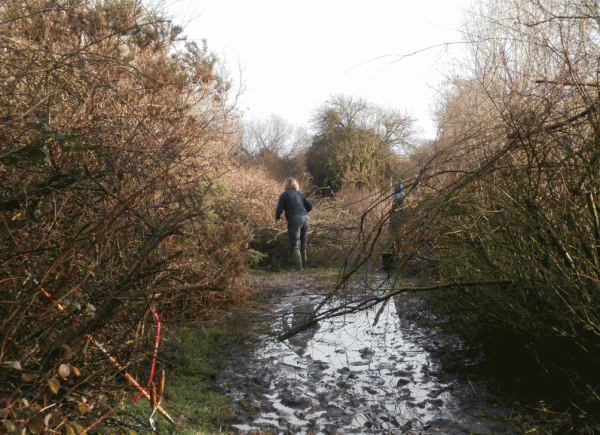
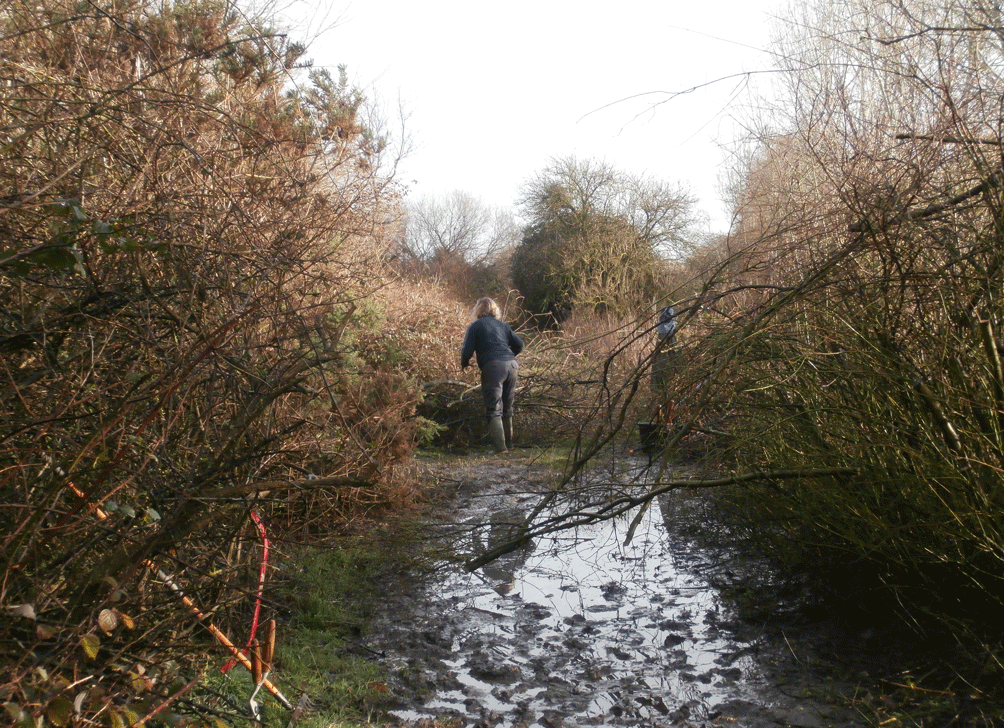
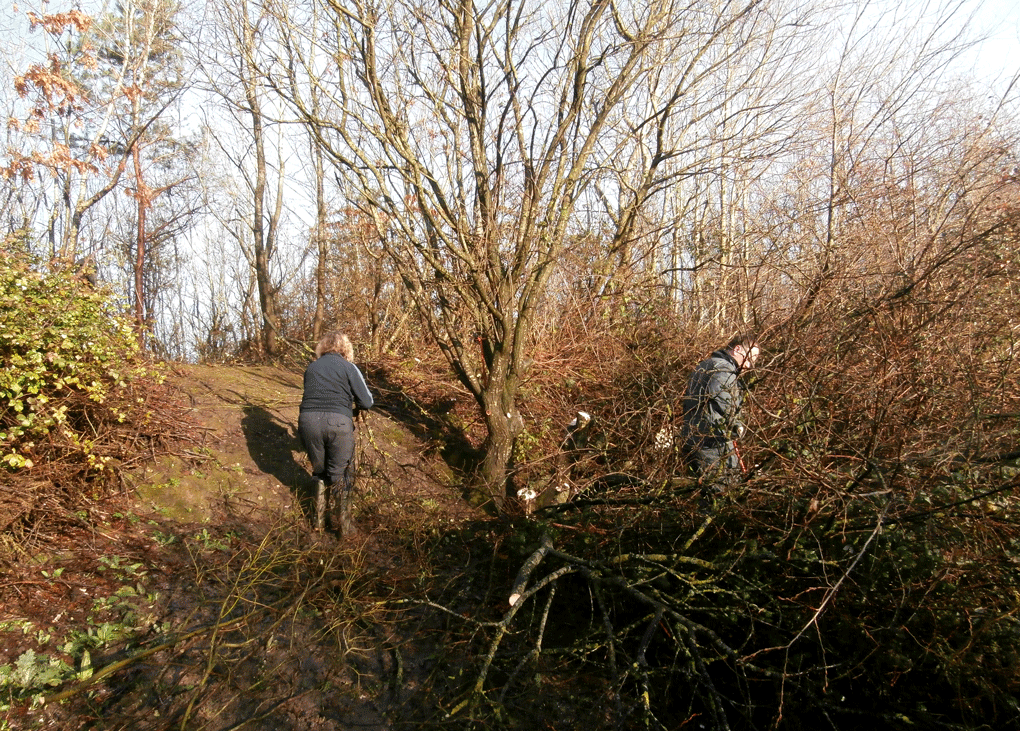
We have long considered that our ringing site at Fleets Lane needed some maintenance, mainly in reducing the height of the vegetation to promote new growth. Seven of us met up on the 26th for a very tiring four hours of cutting, trimming, hacking and trimming.
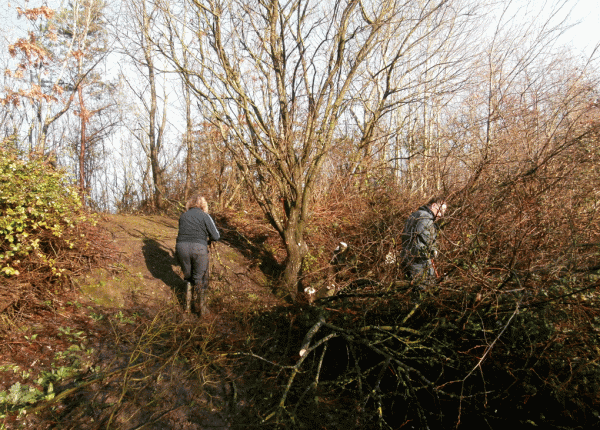
Like all newly cut vegetation it looks pretty hacked about now, but should be ideal for ringing once the new growth starts to sprout in March.
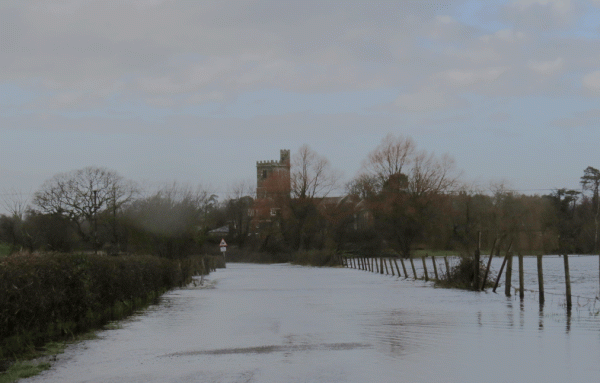
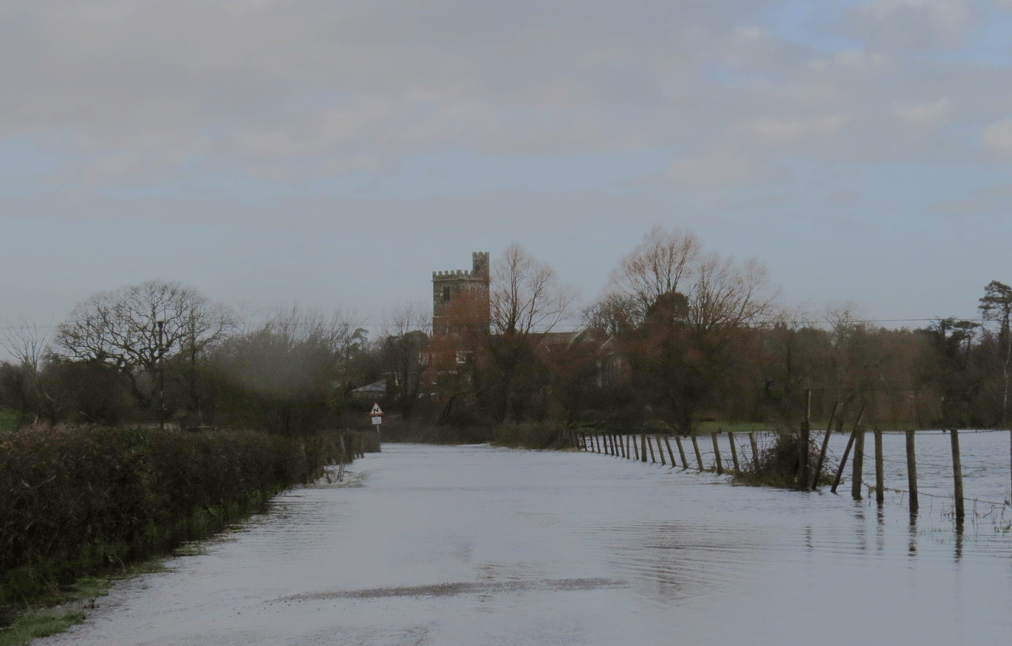
The 27th saw a very wet WeBS count at Holes Bay at lunchtime but later on the weather had eased of enough to warrant a trip up to the Blashford Lakes neat Ringwood. The causeway at Ibsley is still flooded and impassible to all but 4x4s.
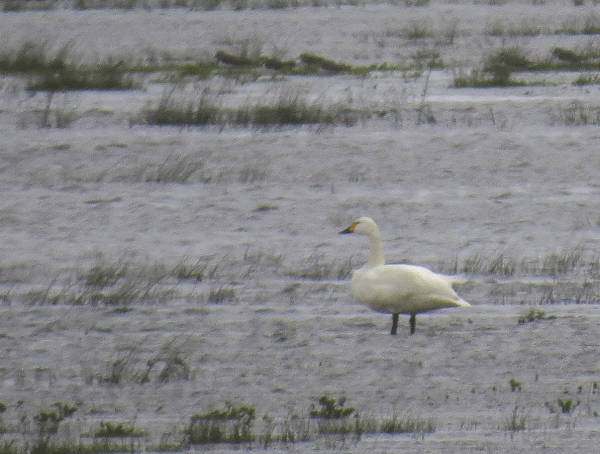
…. but a Bewick’s Swan posed for photos on the flooded meadows.
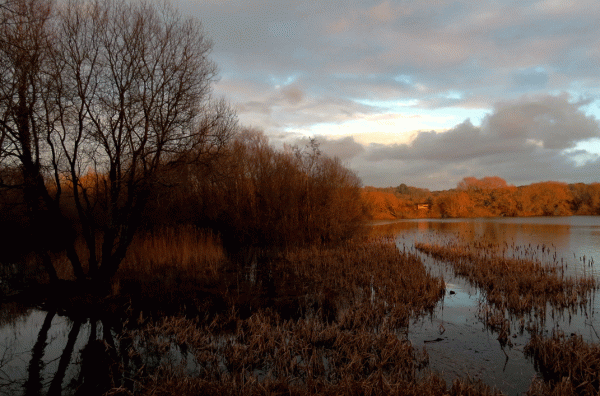
The main reason for going was to see a male Ferruginous Duck at Kingfisher Lake. This is a private lake surrounded by a high fence with lots of vegetation obscuring the view. I managed a brief and obstructed view of the ‘Fudgy Duck’ before it disappeared behind and island. We ended up at nearby Ivy Lake (above) where we waited in vain until dusk in the vain hope that either the resident Bittern or Great White Egret would put in an appearance.
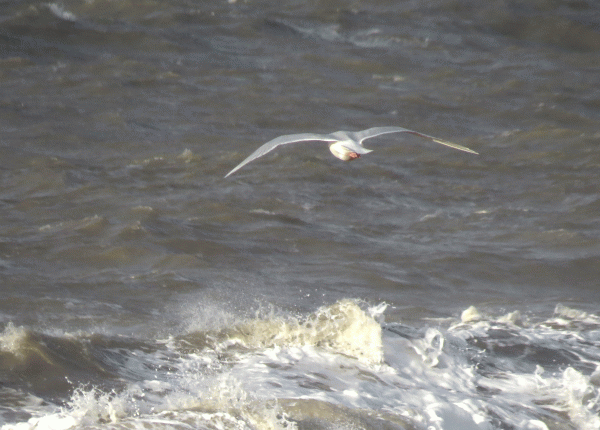
On the 28th I drove over to West Bexington in west Dorset to see the adult Glaucous Gull that had been there for about a week. It does wander up and down the coast so I was lucky to see it flying immediately in front of the car park as soon as I arrived.

It eventually settled on the beach. I tried to get it in the same photo as this beautiful rainbow. I’ll leave it to you to decide whether or not I succeeded.
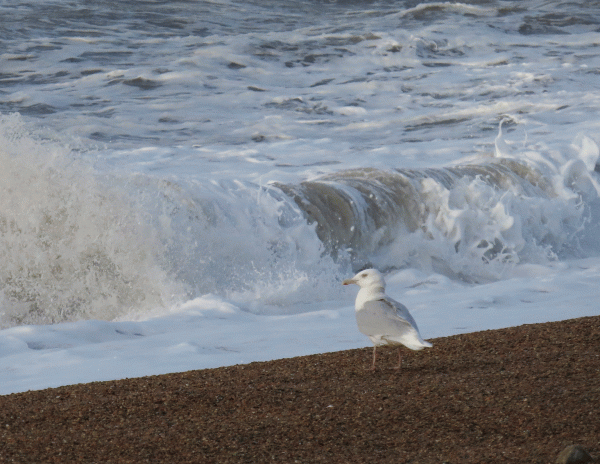
Glaucous Gull is a scarce but regular visitor to northern Britain from the arctic, but twitchable individuals this far south are pretty uncommon.
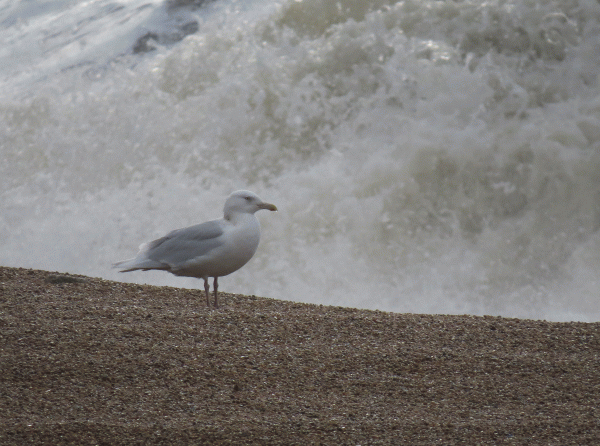
Glaucous Gulls share the white-wing tips with the closely related Iceland Gull, but are larger with a thicker bill and more fierce expression. This bird is at the smaller end of the Glaucous size spectrum.
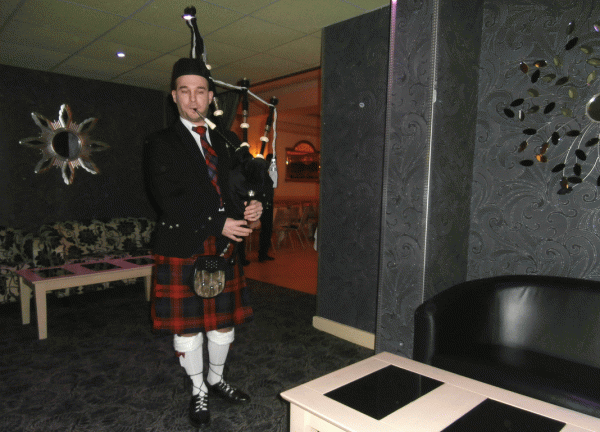
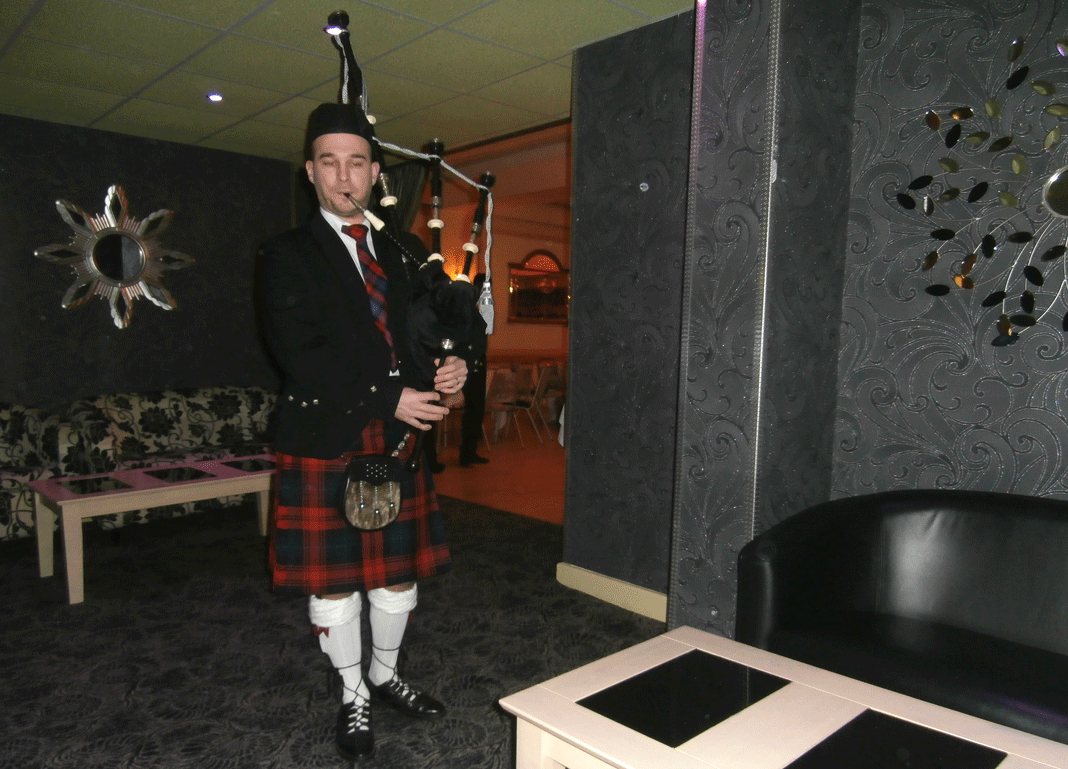
Christmas 2013 was the first since I was a kid that I didn’t get invited to a Christmas party or a Christmas dinner-dance, so when we heard that our friends at the Phoenix (previously Nexus) organisation were attending a Burn’s Night dinner we gladly joined them. Here the piper plays us into the dinning room.
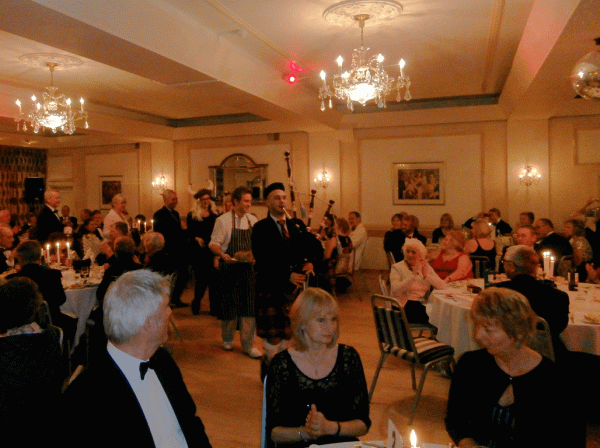
The haggis is piped in. It was an excellent meal but my injured toes are still recovering so we didn’t join in with the dancing.
And finally I have to report the sad end to Margaret’s car. The little Daihastu was over 20 years old but finally expired the day before yesterday. It was taken to the scrap merchants who crushed it into a little cube. Margaret bought it for £300 over seven years ago and got £80 back for the scrap – good value motoring in my opinion.
February brings new adventures including my first foreign travel of the year – more of that later.
The final part of the tour was in Zimbabwe. Very tired after the overnight flight we drove eastwards from the capital Harare to the Vumba Mountains on the border with Mozambique.

On route we saw large flocks of Abdim’s Stork, an intra-African rains migrant. With the rains imminent, large numbers had arrived in Zimbabwe. Some follow the monsoon rains as far north as Oman.

Our first day in the Vumba mountains was very wet and finding the birds was a struggle. Eventually the rain was replaced by a thick mist and we scored with our main targets, Robert’s Warbler, Chirinda Apalis ……
.
Leaving this lovely, if rather wet spot, behind, we returned to Harare for an overnight stay. There was just enough time in the afternoon to visit a nearby game park.
.

There were a number of mammals like these Blue Wildebeeste, but this park has almost certainly been restocked with game so it is debatable if these can be considered truly wild.
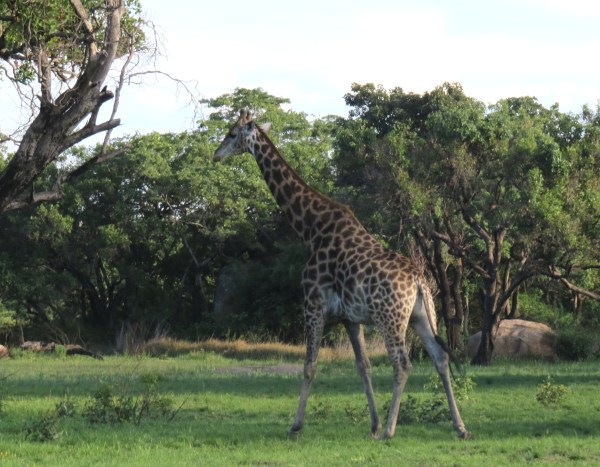
A large number of the ungulates in Africa have been split into multiple species in Vol 2 of Handbook of Mammals of the World. For example the Blue Wildebeeste above is a different species from those on the Serengeti. However this tick-fest did not extend to the giraffes, different races of which vary considerably in the pattern of the coat. If it was split this form would be the Southern Giraffe.

Zimbabwe has certainly had its fair share of political and economic problems. Hyper-inflation was halted when the Zimbawean Dollar was abandoned in favour of the US Dollar, but not before 100 trillion dollar notes were in circulation!
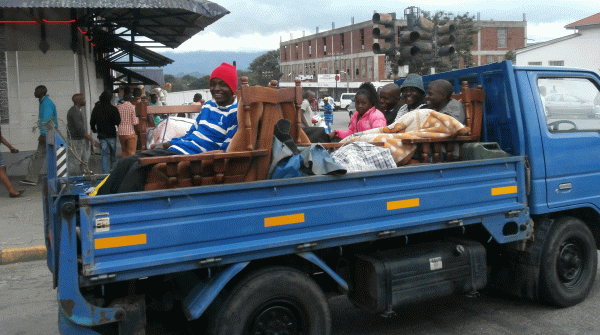
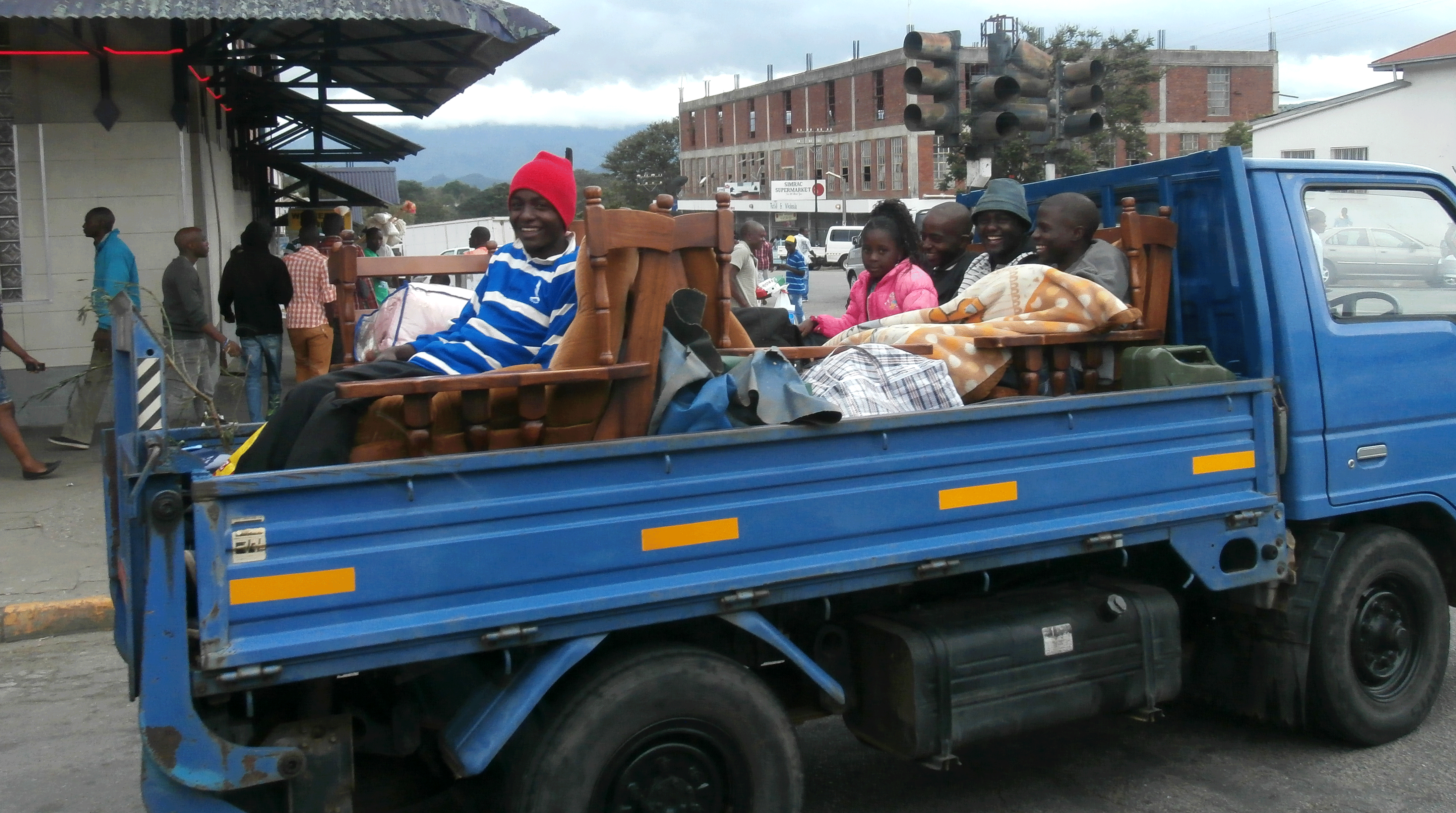
In spite of all these difficulties, Zimbabwe has better roads and a higher level of private car usage than most African countries. This family are certainly travelling in comfort!

The following day we headed north on a long drive to the Zambezi valley. The further north we went the hotter it got and the worse the roads became. On route we came across a group of beautiful Southern Carmine Bee-eaters.

We spent two days in the Zambezi valley. In spite of fairly basic conditions, we were looked after very well. The temperature was very hot, over 42c during the afternoon, and in spite of extensive searching we failed to find our main target – the elusive African Pitta. This species can only be seen when it starts to call after the onset of the rains and this year the rains were late.

Relaxing in the heat of the day at the lodge.

Retz’s Helmet-shrike
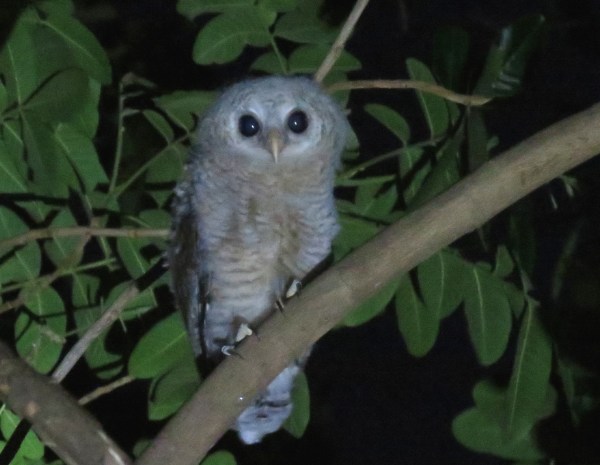
I’ve already posted pictures of the family of African Wood Owls in residence around the lodge, but the juveniles are so cute, I couldn’t resist posting another.

One of the features of the area was the regular sighting of a pair of Bat Hawks. It very unusual to see this crepuscular species in anything but poor light after sunset. Photo by Simon Cox.
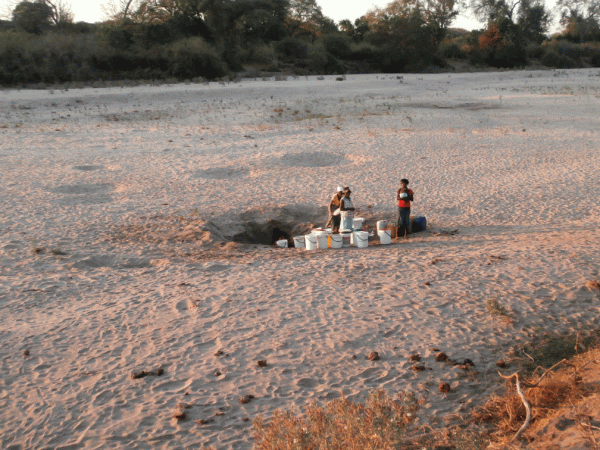
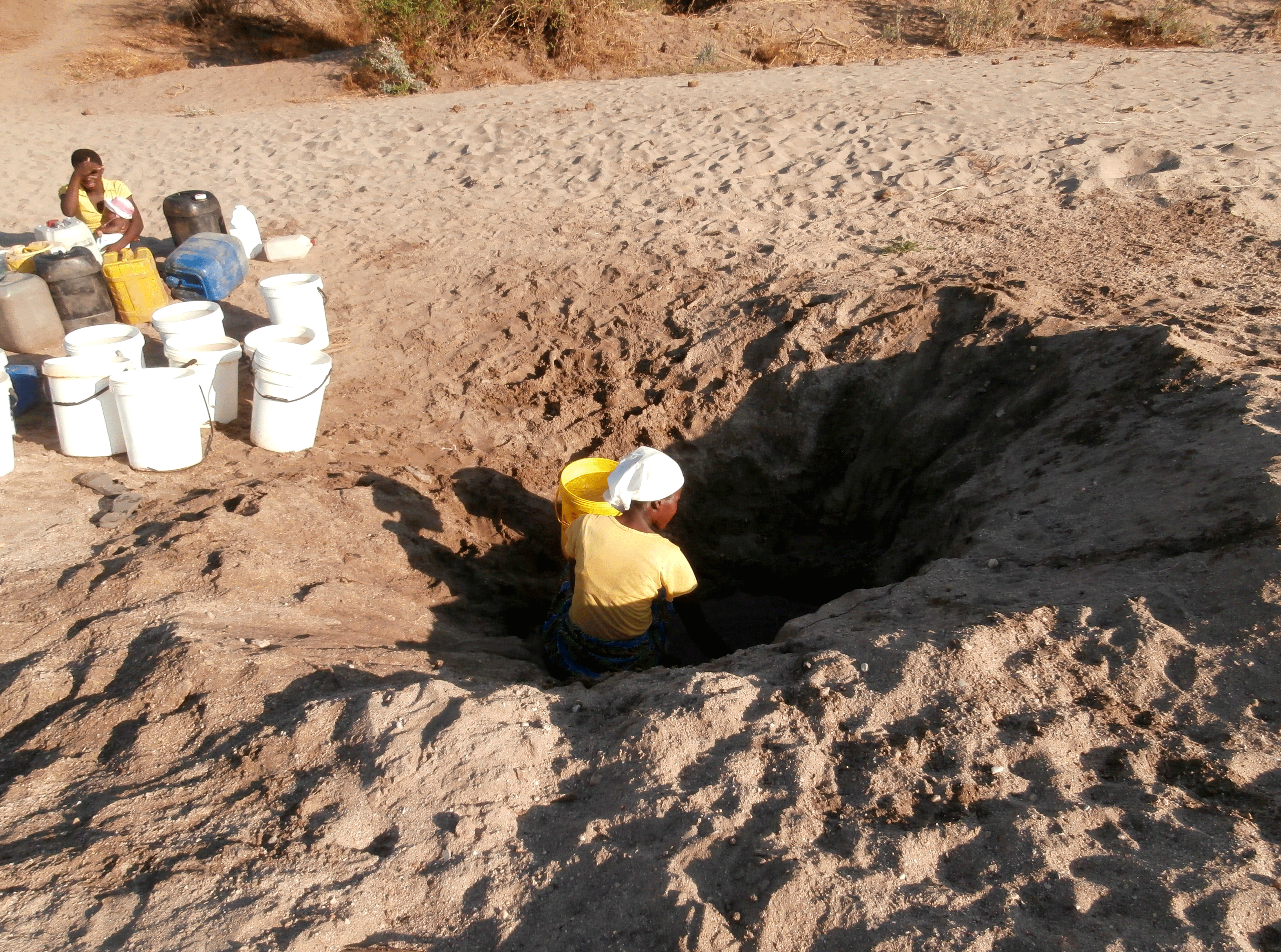
As I have said earlier the rains had yet to come. For us it meant dipping on a good bird, for the locals it meant having to dig in a dry river bed for water!
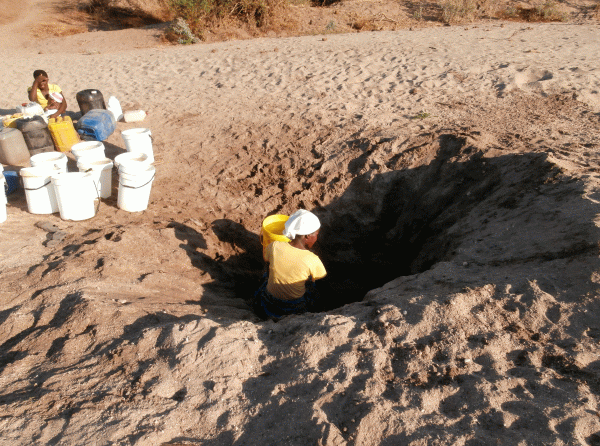
It is at moments like this that we realise just how privileged we are in Europe. Gas, electricity and water are taken for granted and a huge fuss is made if we are deprived of them for just a few hours. Imagine doing this every time you needed to do the washing up.
So we failed on our main quest in the north of Zimbabwe but we enjoyed birding in the area and in spite of the heat, had a a good time. We later returned to Harare for an overnight stay. The following day we were expecting a long, long transfer (seven hours) at Nairobi but instead delays at Harare meant we had the seven hour wait there, which was far preferable as it is a much better appointed airport. At Nairobi we just got off one plane and got straight on to another.
A lovely trip with some excellent and seldom seen birds, some good mammals and most enjoyable company.
Returning to the trip to Malawi in November/December 2013, we continue the saga on the Nyika Plateau in the far north of the country.

As we drove north we passed extensive rubber plantations. I was somewhat amused by this sign.
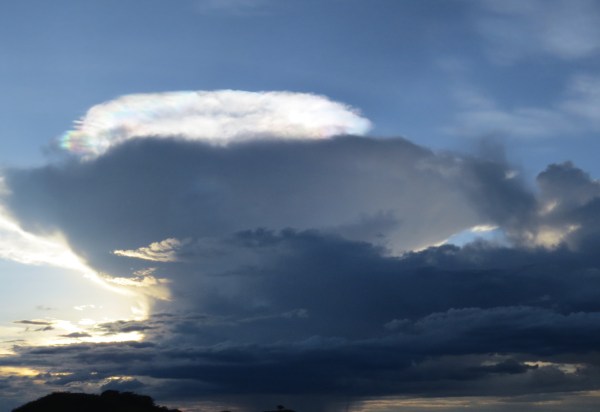
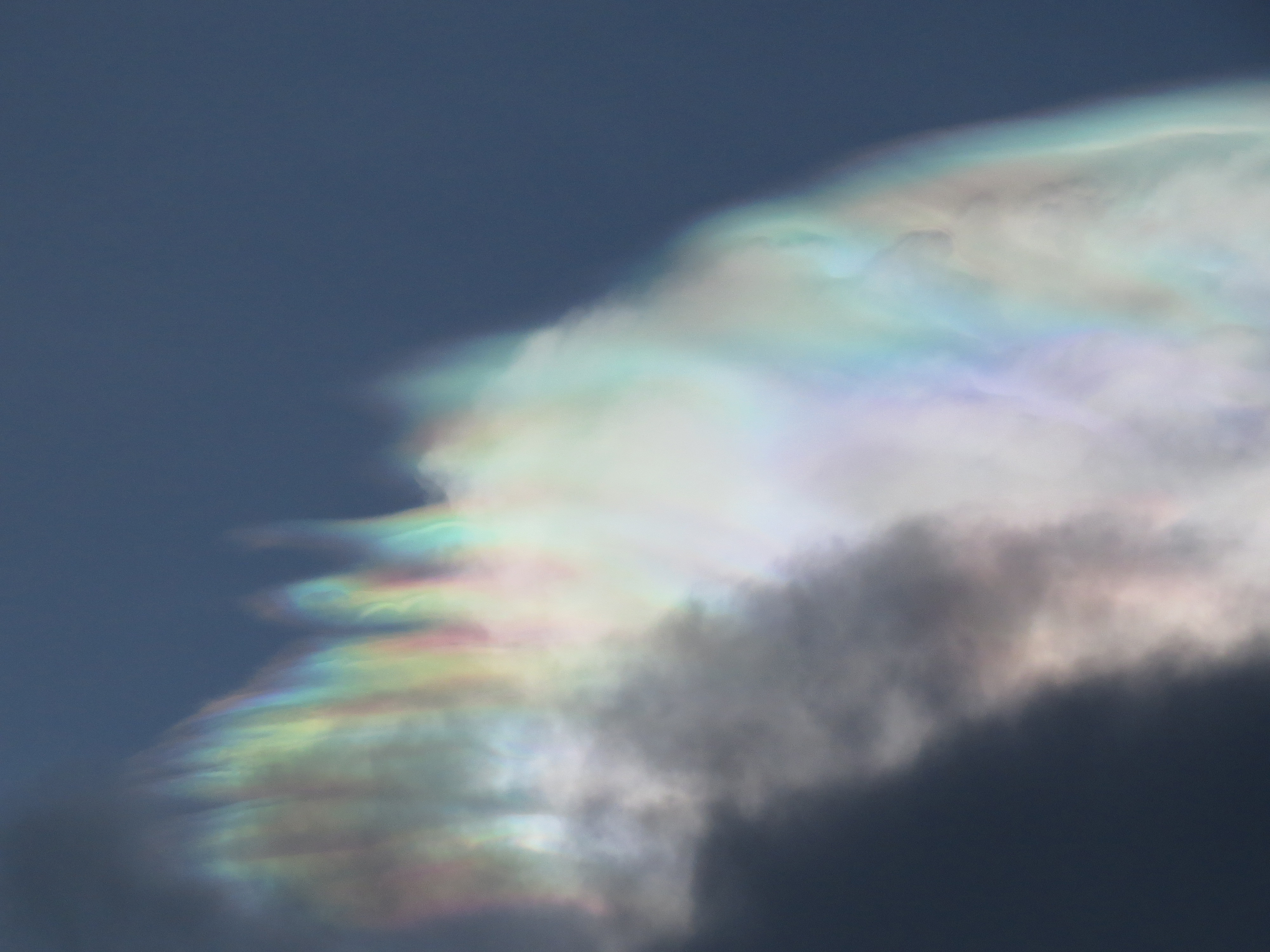
As we ascended the plateau we encountered huge thunder clouds and were particularly taken by the iridescent fringes to the upper layers.
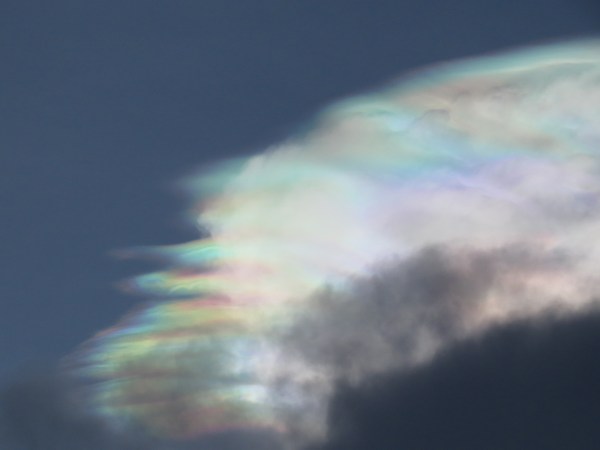
Caused by refraction through ice crystals in the upper and outer layers of the cloud, this presented a spectacular sight through a telephoto lens or binoculars.
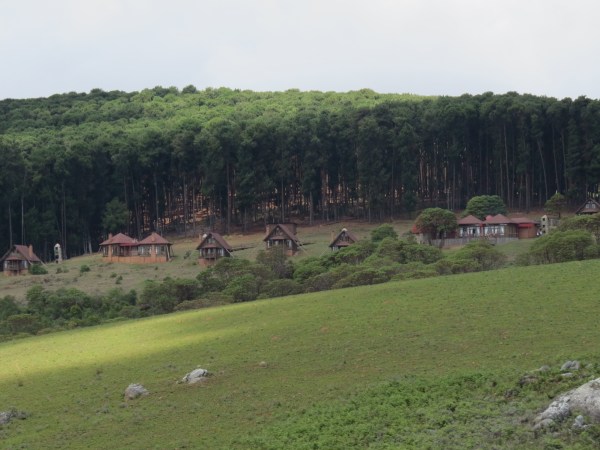
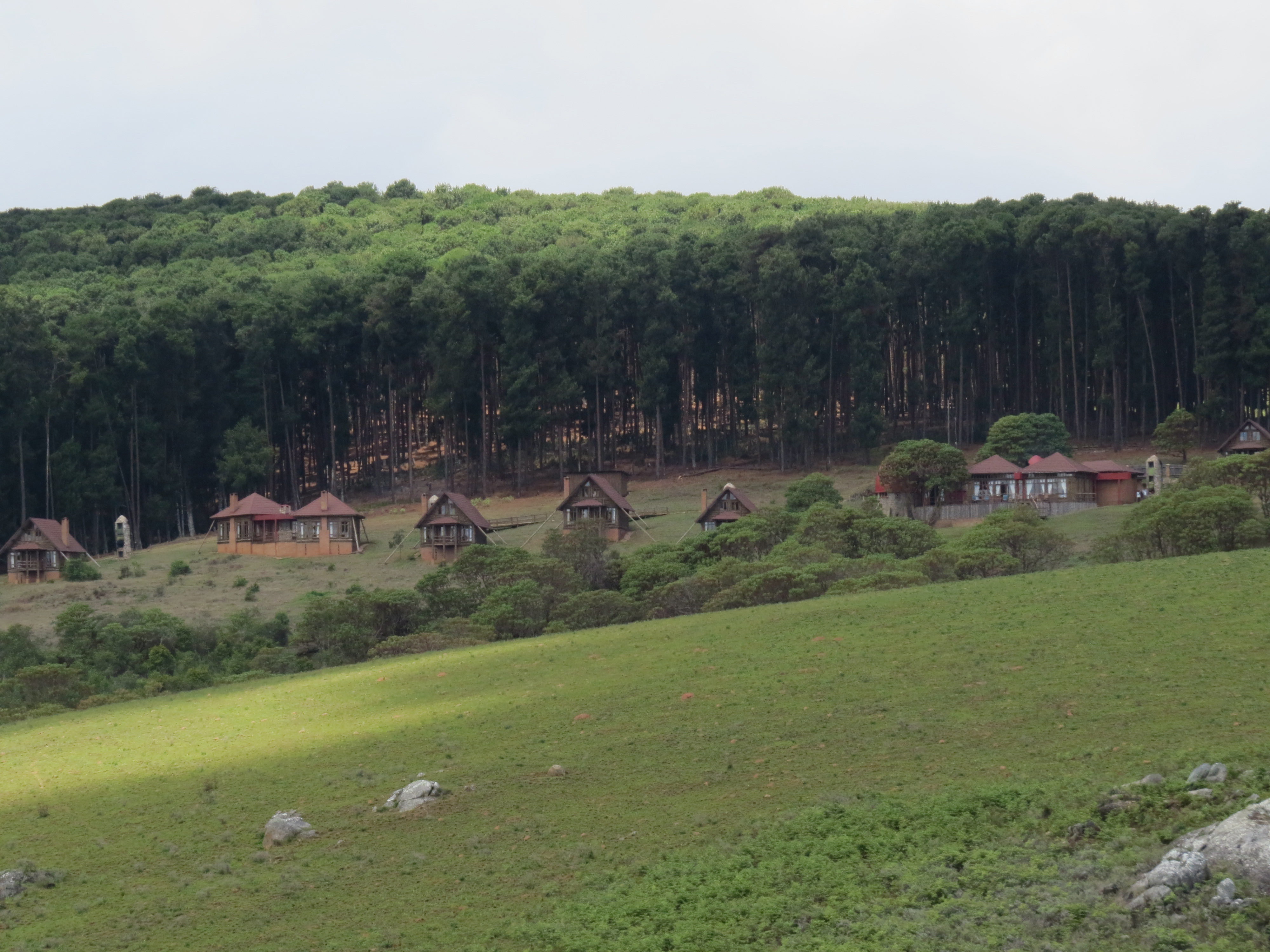
The accommodation on the plateau was at this lodge. During the British colonial administration an attempt was made to turn the entire plateau into a pine plantation but fortunately this failed as it was too costly to transport the timber to market. The pines themselves seem to have done little damage, Eland and other large mammals often shelter in them at night and they provide nest sites for many raptors but bracken spores arrived with the seedlings and are now taking over the natural grasslands at an alarming rate.
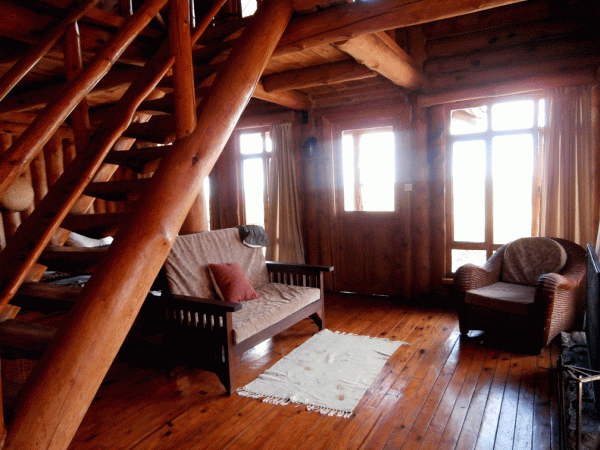
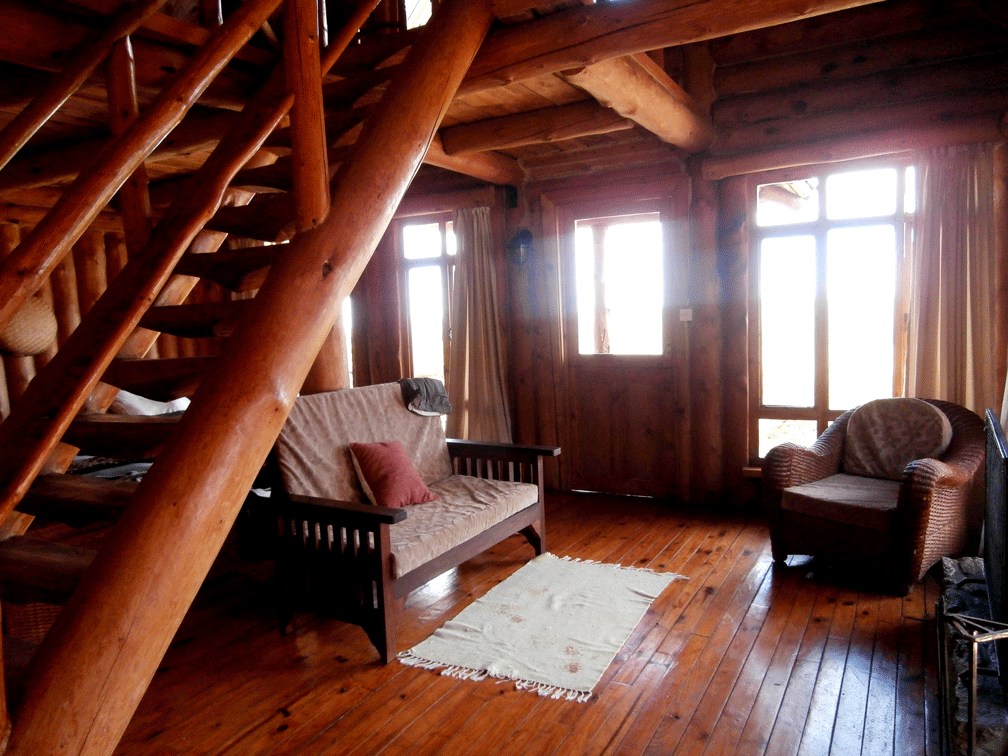
Although it was cool at night (about 7c) it wasn’t that cold, however the staff treated us as if we were in the Arctic with a roaring wood fire (from the pine plantation) in the cabins, hot water bottles in the beds and blankets for a night drive! The cabins were very spacious and comfortable Who says I rough it on foreign trips!

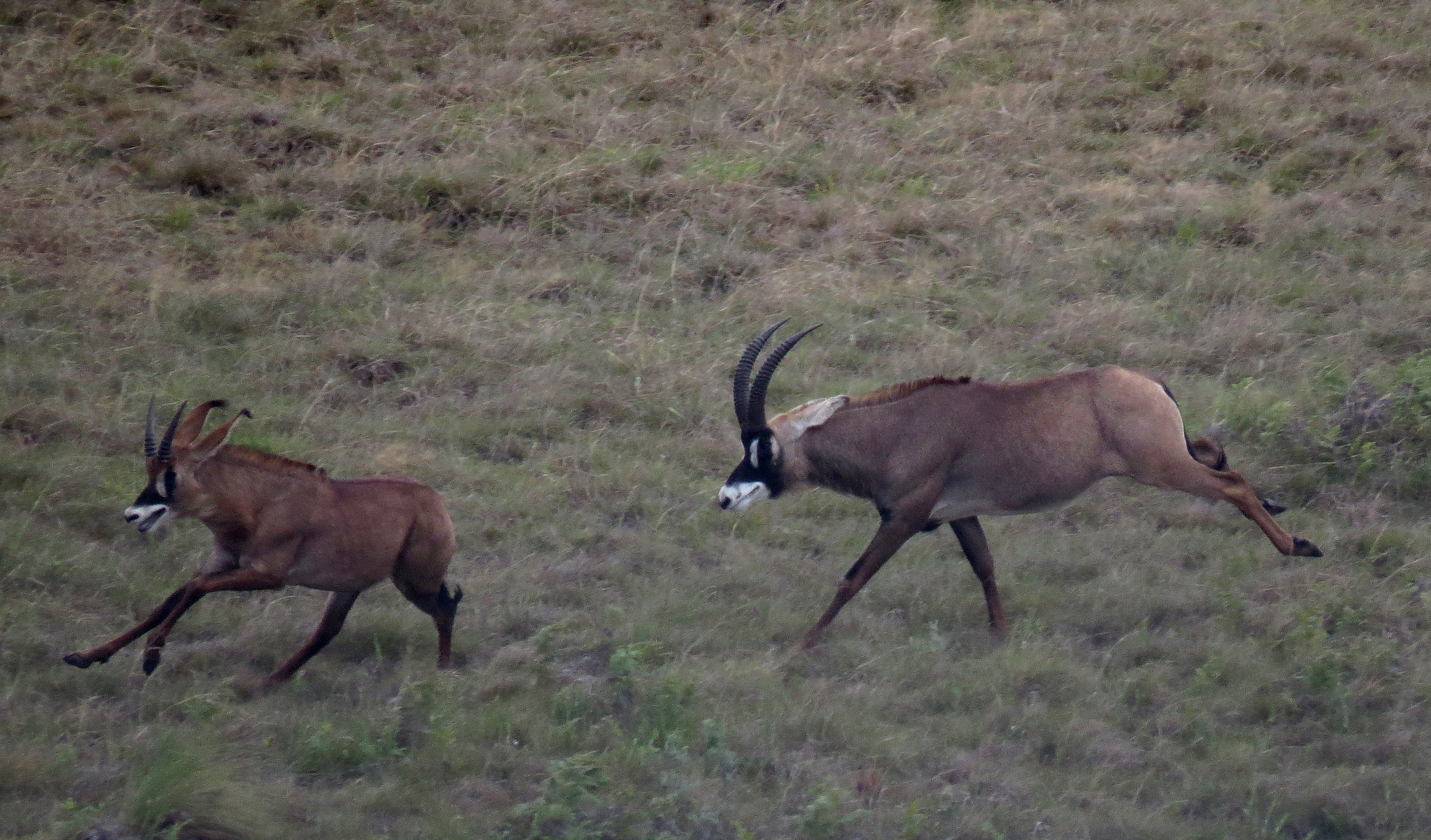
Abundant game on the plateau included many Roan antelope. Here a dominant male is seeing off a young male. The chase lasted for five minutes or so and the older male would not leave the youngster in peace.

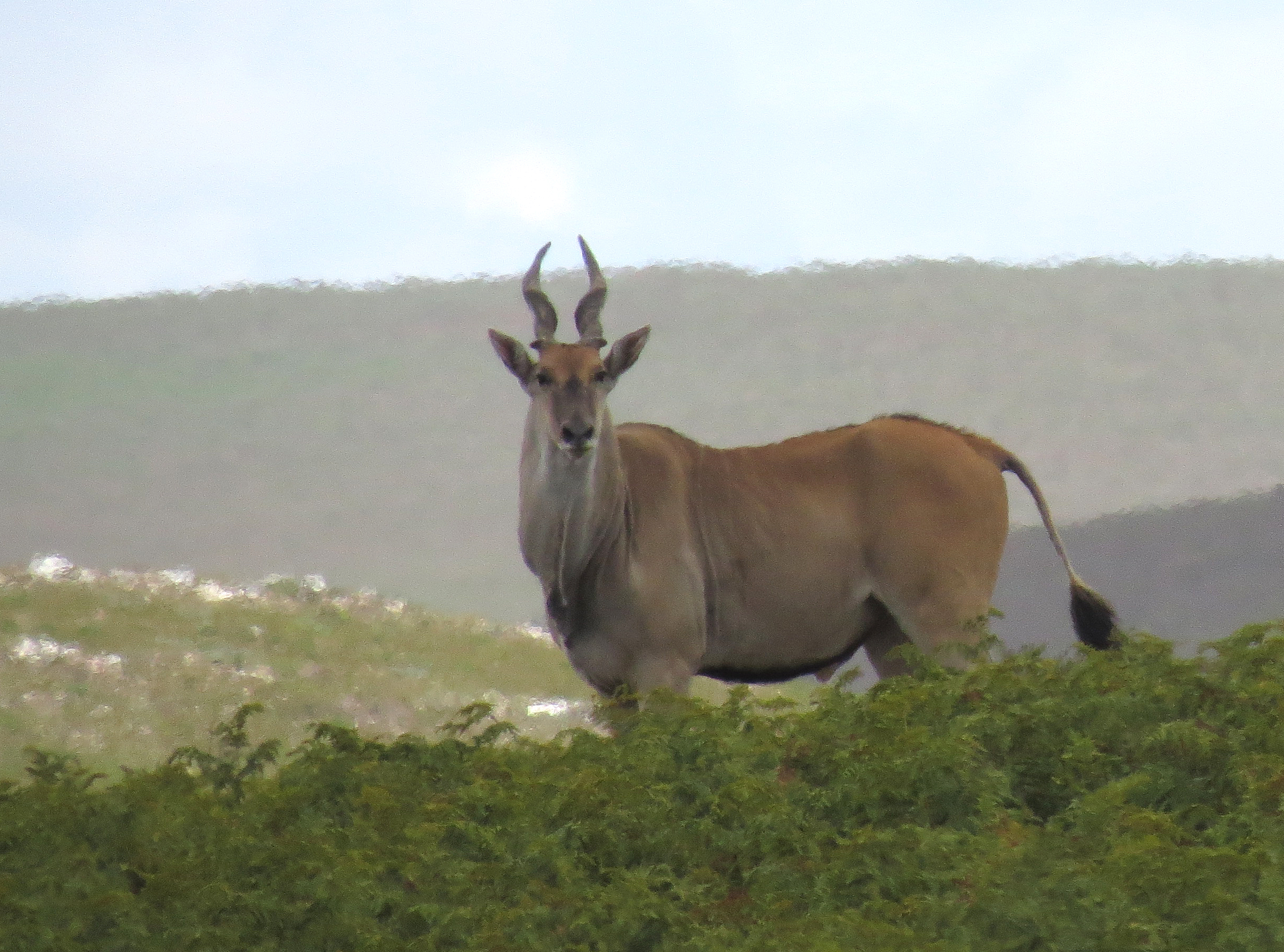
Herds of enormous Eland were a regular site especially on night drives.
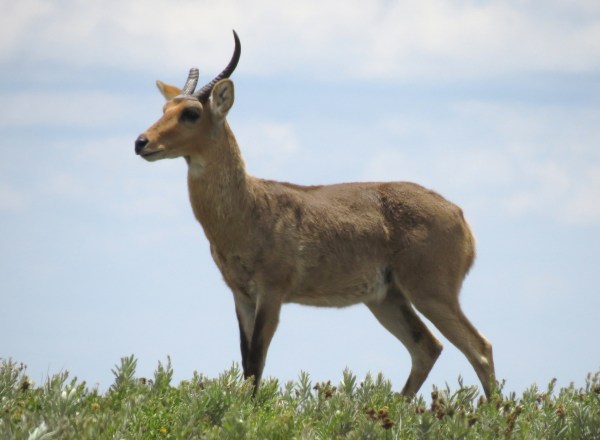
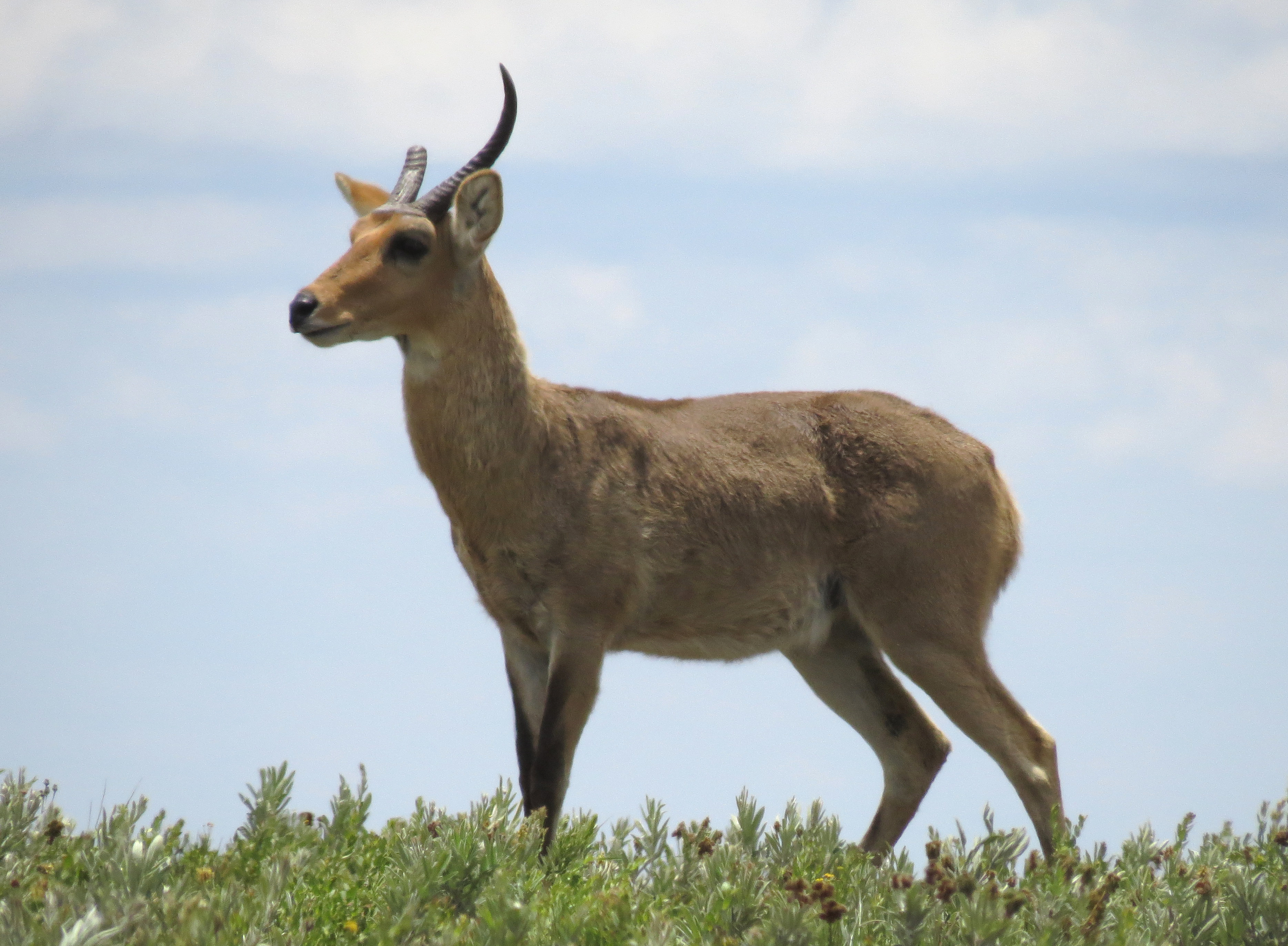
We saw many Zambian Reedbuck (above) as well as Cape Bushbuck and the occasional Common Duiker.
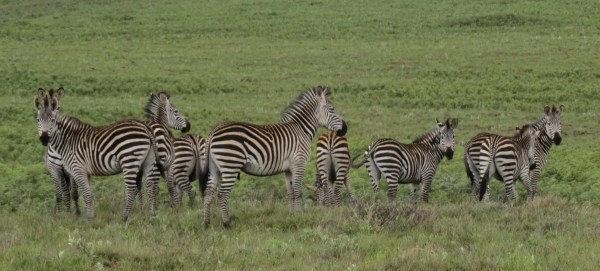
Herds of Common Zebra were seen on the grasslands but little game at all was seen in areas taken over by bracken. This herd approached but didn’t enter the bracken
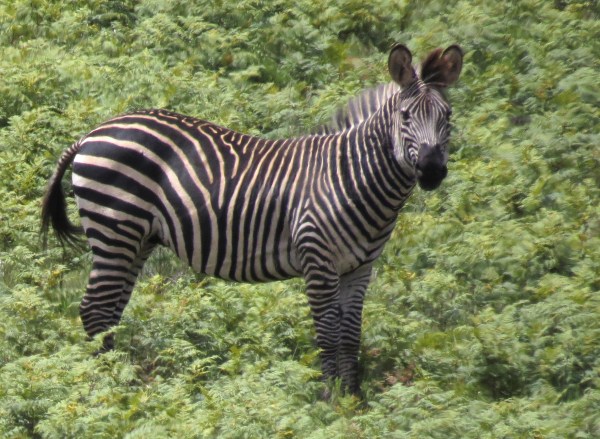
….. this Zebra of course being the exception that proved the rule

Part of the National Park is in Zambia and we freely moved between there and Malawi, as did this group of Zambian Klipspringers which got added to the list for both countries.
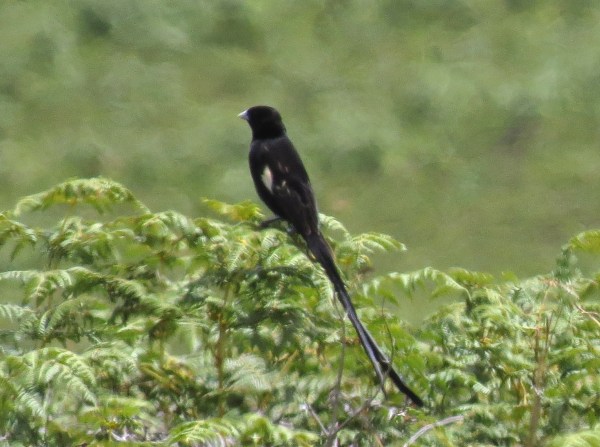
There were many special birds on the plateau including this Montane Widowbird ….

…. the widespread White-naped Raven ….
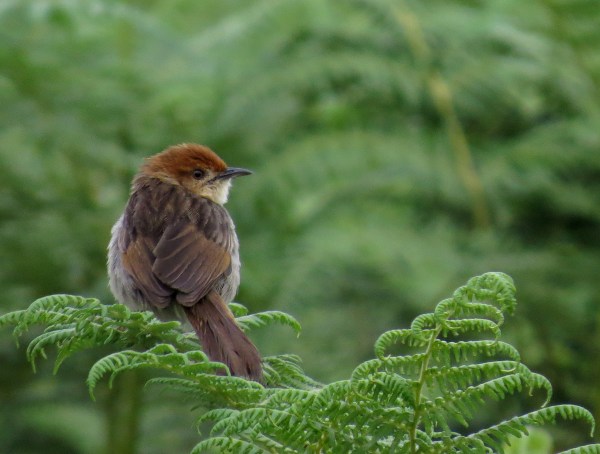
.. and the diminutive Churring Cisticola, which like many of its genus is named after its vocalisations.
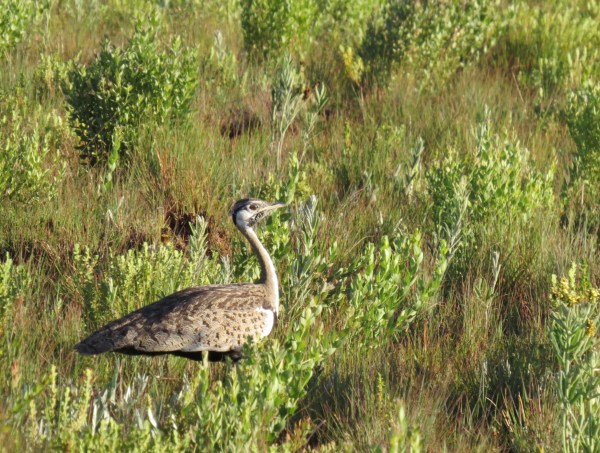
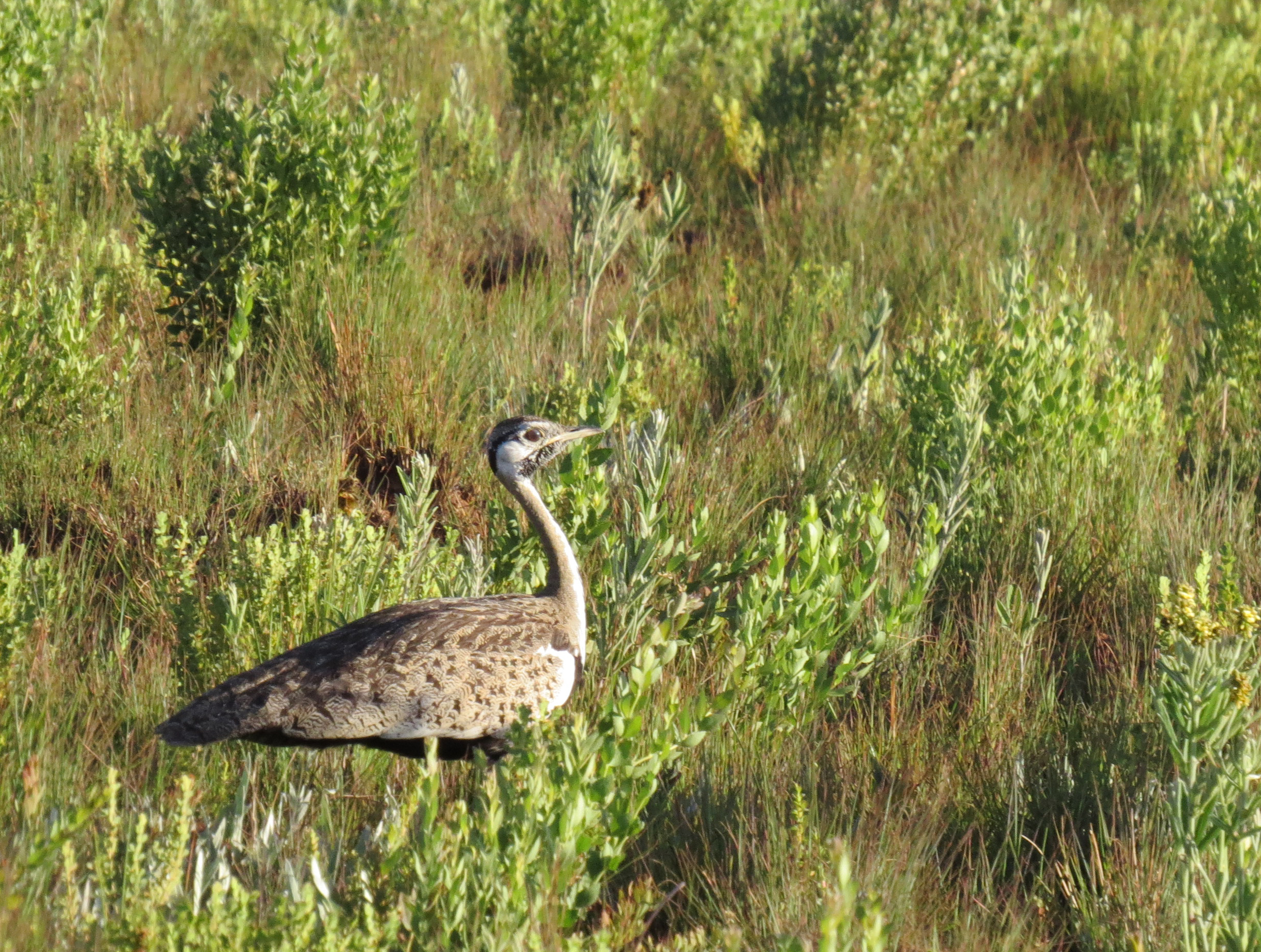
More spectacular species included this Black-bellied Bustard. Pictures of the same bird in display can be found on my first post about this trip.
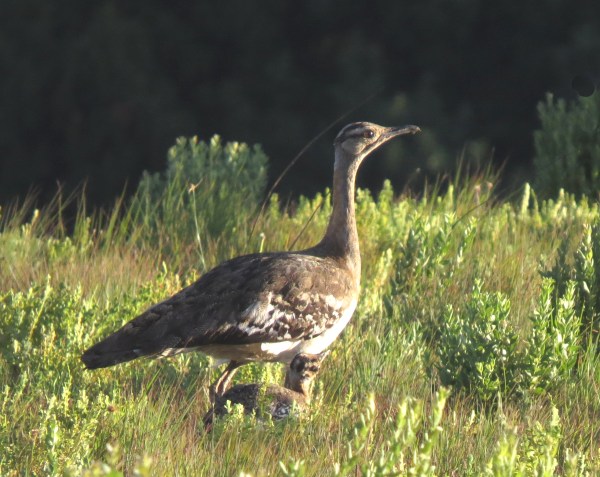
We were delighted to see a female Denham’s Bustard with a chick …..

… and later on to see daddy !
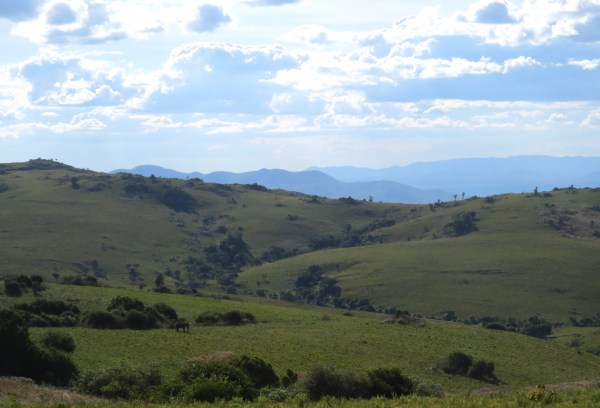
The rolling grasslands of the Nyika gave us species as diverse as Scarlet-tufted Sunbird, Blue Swallow and Pallid Harrier whilst the wooded patches provided Olive-flanked Bush-robin, Bar-tailed Trogon and various greenbuls.

We were on the trail of a diminutive cisticola when this stunning moth was found (which was considerably bigger than the bird). All thoughts of chasing a small brown bird vanished as we gathered round to photograph this beauty, which apparently goes under the name of Jackson’s Emperor.

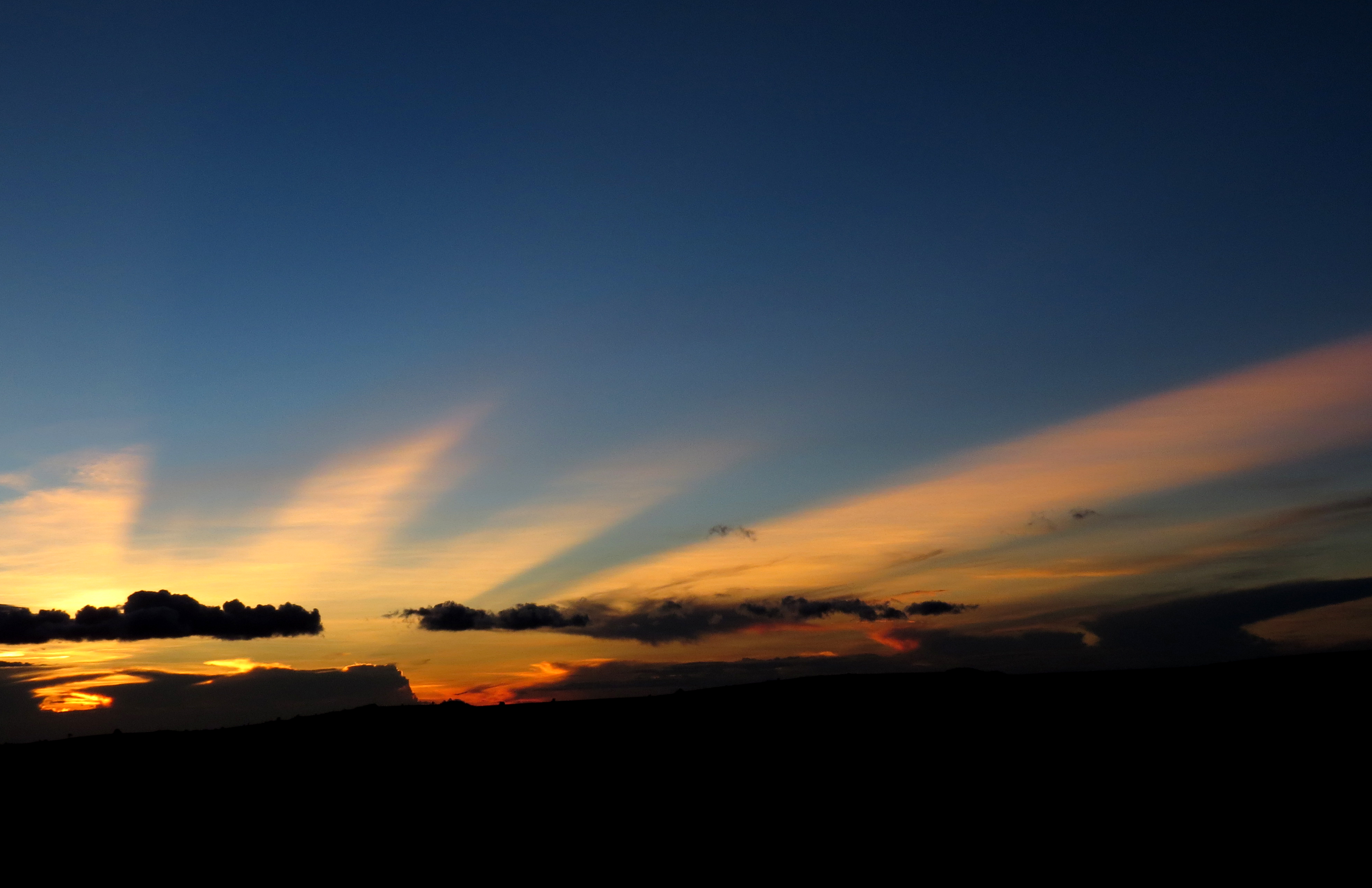
Each evening we stayed out late and enjoyed a sundowner before driving back in the dark. The best nocturnal sighting was probably a Side-stripe Jackal which was a new mammal for me. The various owls and nightjars seen have already been posted under the heading of ‘Malawi and Zimbabwe – the night birds’
Well that was that for Malawi. From the Nyika we returned to the miombo woodland area we visited on the way north before driving back to Lilongwe. Unfortunately the carrier who was to fly us to Zimbabwe had gone bust so we had to fly north overnight to Nairobi and then back south to Zimbabwe, so it was a tired and bedraggled group that arrived in Harare the following morning. More of that in the next post.
-10.800000
33.800000
After leaving Cambridge on the evening of the 17th we drove to the small town of Framlingham in Suffolk where we stayed with Terry and David for two nights. Terry is an old friend of Margaret’s from Plettenberg Bay in South Africa who came to the UK in 2002 after the death of her first husband. Here she met David and they married soon after. Margaret has only recently got in touch with her so, having not seen each other for over 15 years its was a great reunion.
David and I got on very well, he is very interested in birds and wildlife and in particular bird vocalisations, he has traveled extensively around the USA and hitch-hiked and camped all around Europe, he loves music, has a great collection of blues and folk, plays the guitar and keyboards and has met many famous musicians like Dave Gilmore and Nick Mason of Pink Floyd. All of this would be quite an achievement but when you realise that David has been totally blind since the age of 12 it becomes almost unbelievable. We both agreed that David was truly inspirational.
On the 18th we spent the morning at the RSPB’s Minsmere reserve before heading north to Blythburgh and back to Framlingham.
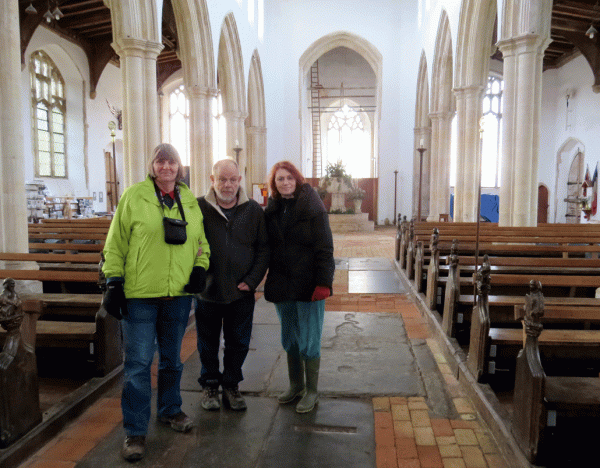
Terry, David and Margaret in Blythburgh Church

Minsmere is the RSPB’s flagship reserve. The area was flooded in WWII to deter invasion and rare birds like the Avocet soon returned to breed. The reserve consists of extensive reedbeds, woodland, heathland and a large wetland scrape.

A view over ‘the scrape’. To the south of the reserve is Southwell B nuclear power station.

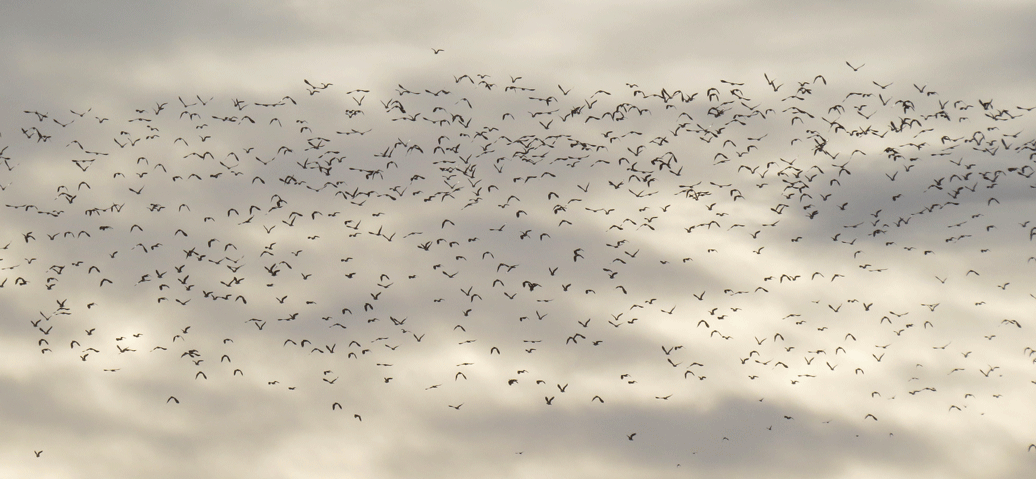
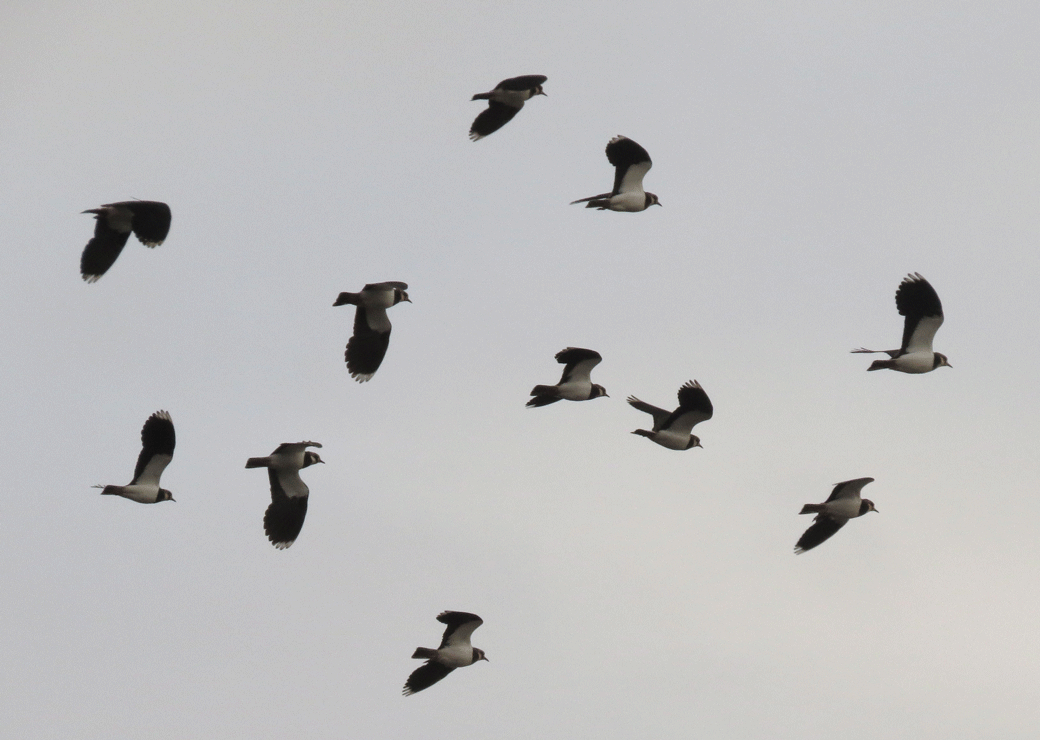
Moe unusual birds seen that day included Bittern, Marsh Harrier, Tundra Bean Goose, Peregrine and Red-throated Diver but this flock of over a thousand Lapwing wins ‘spectacle of the day’. There was a single Golden Plover in there somewhere, we did manage to find it.
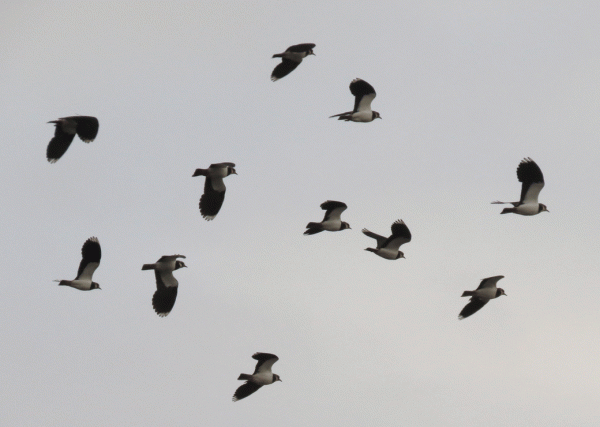
A close up of a few of the Lapwings. David really appreciated hearing their haunting calls
To hear the calls of Lapwings click on this link http://www.xeno-canto.org/species/Vanellus-vanellus

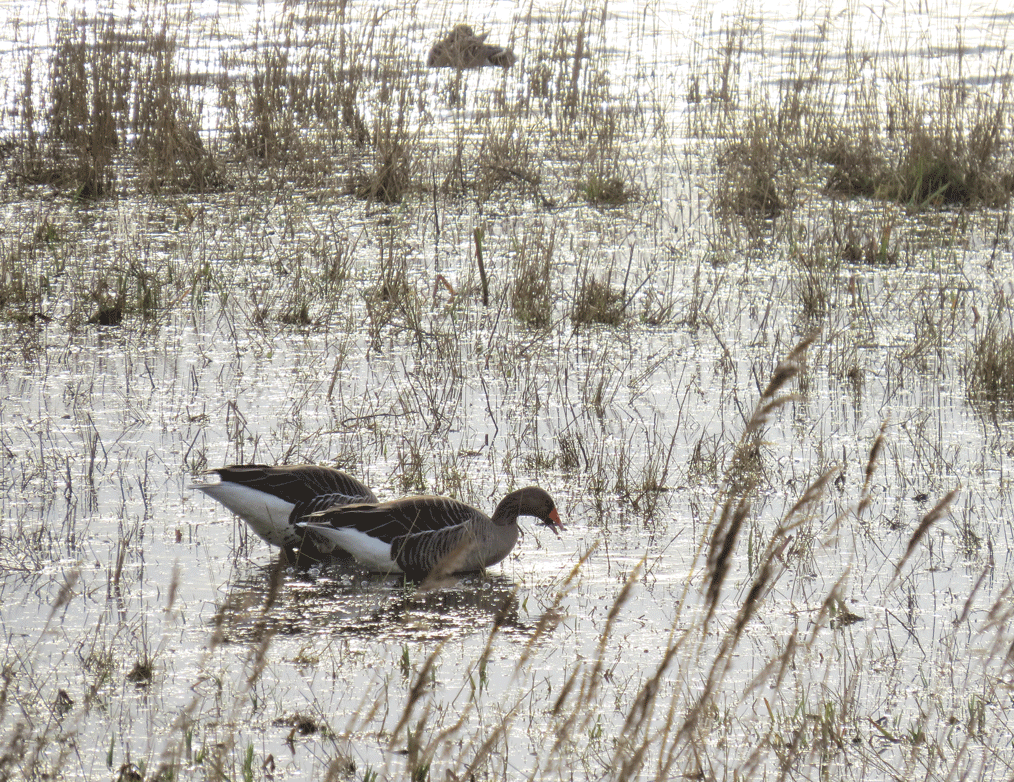
Greylag Geese where very common and unlike the birds we see in Dorset, were wild wintering birds from Iceland. Again David appreciated their constant vocalisations.
For Greylag Goose vocalisations click on this link http://www.xeno-canto.org/species/Anser-anser

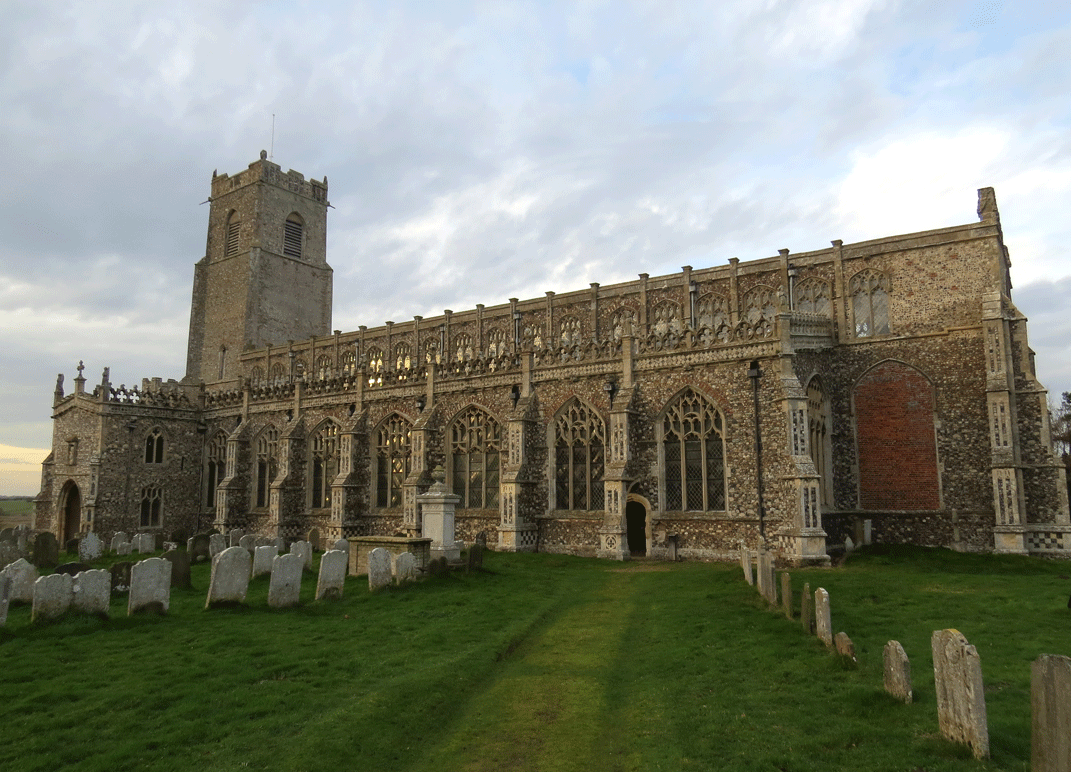
Birding done, we called in to see Blythburgh church and then visited a friend of Terry and David who lives in the village. Although a church has stood on this site since 654 the current church dates to the 12th century.

One it’s most important features is this ancient wooden ceiling with ornately carved angels.

Margaret explored a narrow spiral staircase only to find that it ended at a spy hole in the church wall.
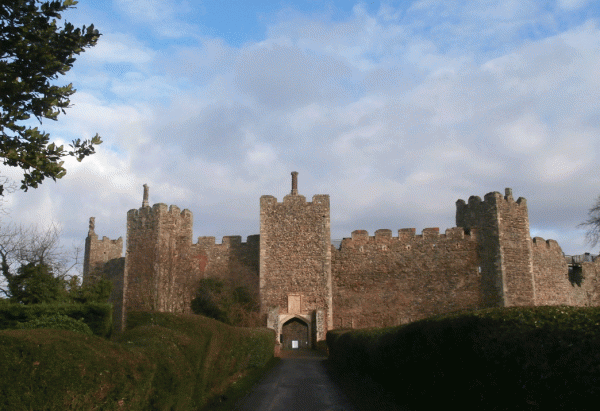
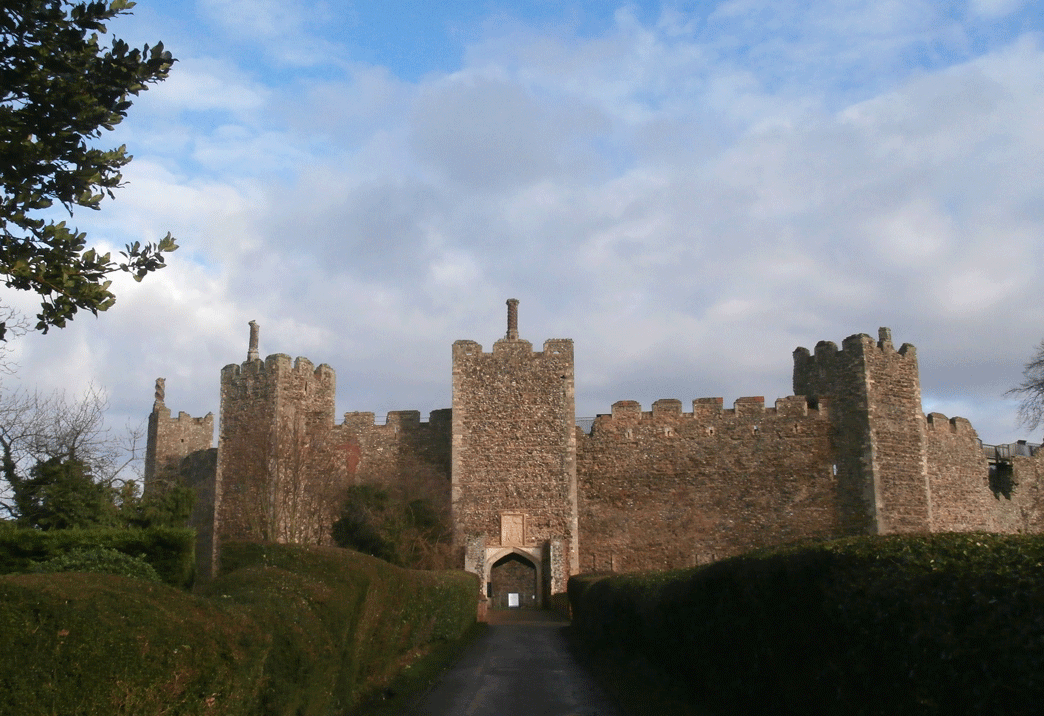
Before we left Framlingham on the 19th we called in to see the local castle.

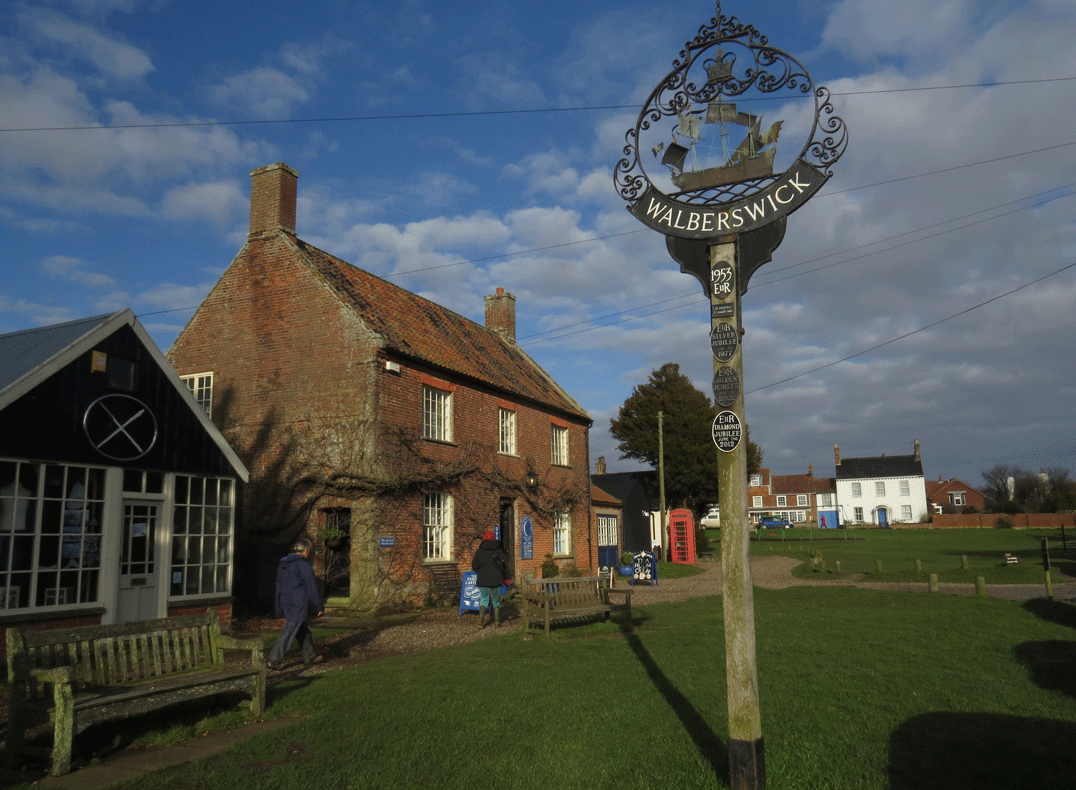
Later we visited the pretty village of Walberswick. I used to visit this area a lot in the 1980’s often seeing Snow Bunting and Twite in the area plus many birds of prey but today all I saw was a few Red-throated Divers offshore and a few Mediterranean Gulls.

However later that day just south of Lowestoft we came across this flock of 27 or so Snow Buntings.

They blended in perfectly with the shingle. Most British wintering Snow Buntings are of the Icelandic race insulae, but an increasing number of the Scandinavian nominate race are seen in East Anglia

A number of birds were coloured ringed. As all the colour rings were of the same type I would imagine they have been ringed locally. If I can find anything m,ore about them I will post it later.
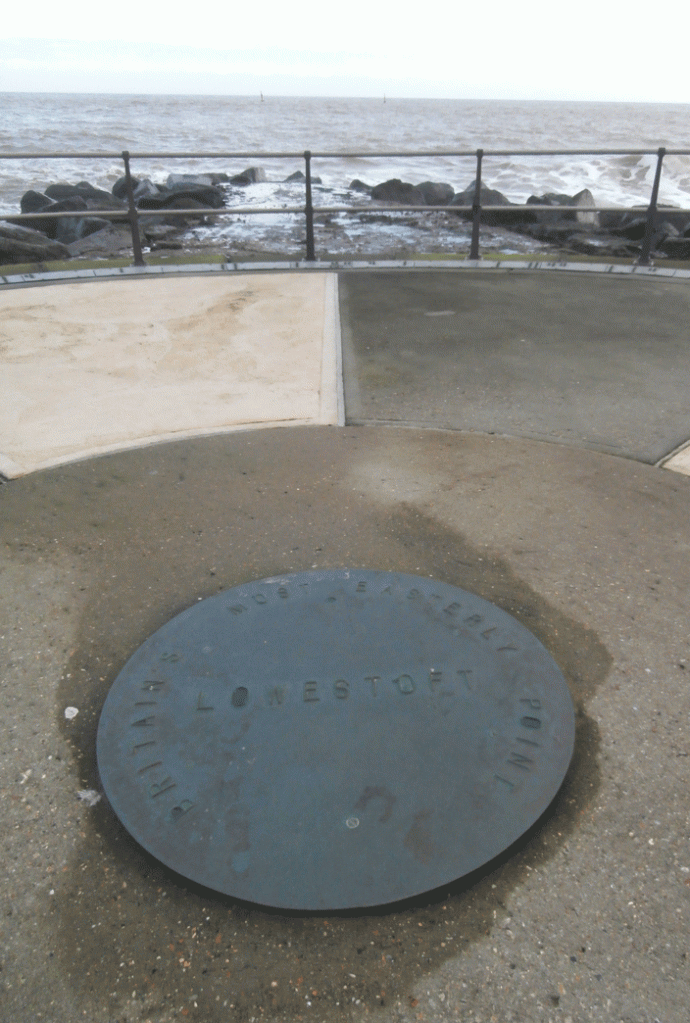
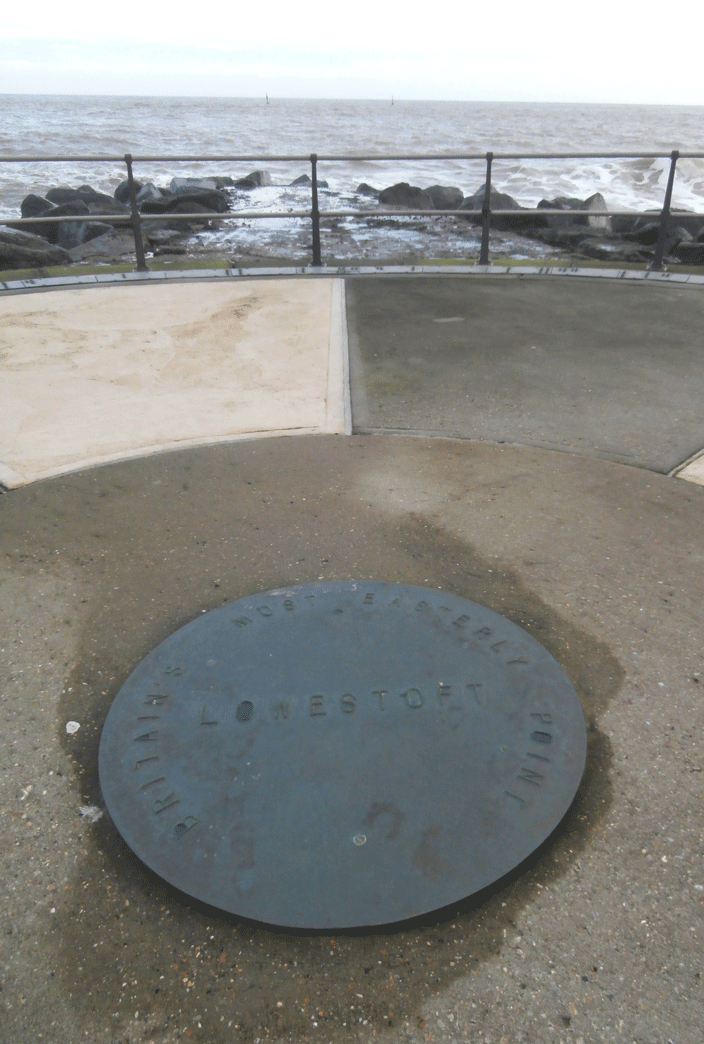
In increasingly cold and blustery conditions we visited Lowestoft Ness, the most easterly point of the British Isles.

We stayed overnight with my friends Alan and Debbie who live in Lowestoft. Although originally from Derby and living in the same road as me, I didn’t meet Alan until we both went to Leeds University in 1969. He was one of the ‘famous five’ who lived in the decrepit slum in Fraser Terrace and we have kept in touch ever since. I met Debbie in 1974, just before they were married. As I mentioned earlier about Jennie, visits have been less frequent in recent years and the last time I saw Alan was at our ‘Leeds reunion’ in 2003.
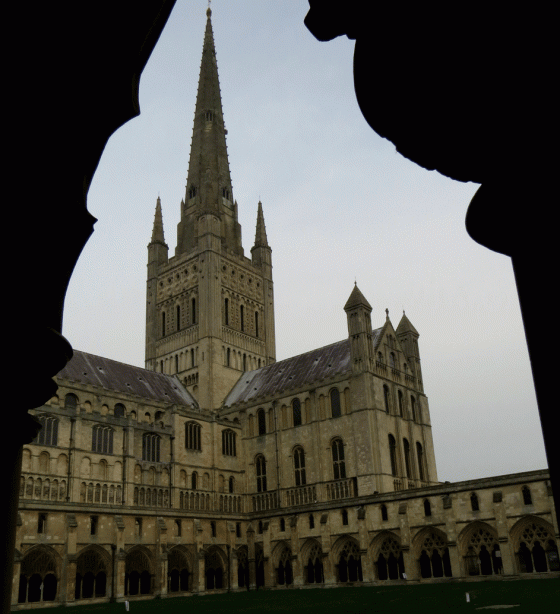
On the 20th we called in to the seafront at Great Yarmouth where after quite some effort we located a single Horned (or Shore) Lark. Wishing to avoid rush hour chaos on the M25, we only stopped briefly in Norwich where we made another ecclesiastical visit, this time to Norwich Cathedral.

As with the other churches visited this weekend, Norwich Cathedral is a magnificent building.

Many of East Anglia’s churches had their stained glass windows destroyed by Oliver Cromwell’s troops, who considered such beautiful works to be ‘superstitious ornamentation’. Fortunately Norwich’s cathedral largely escaped unscathed.
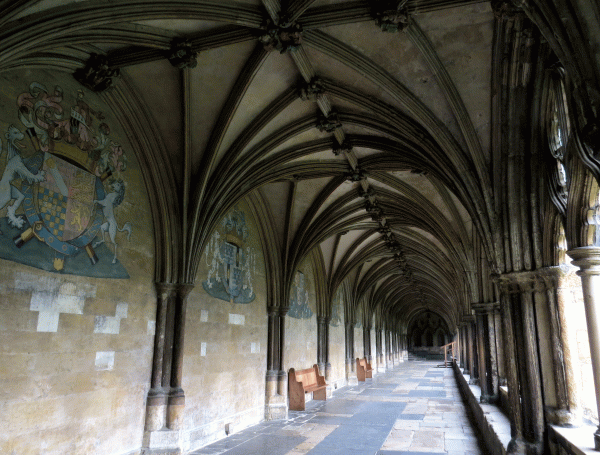
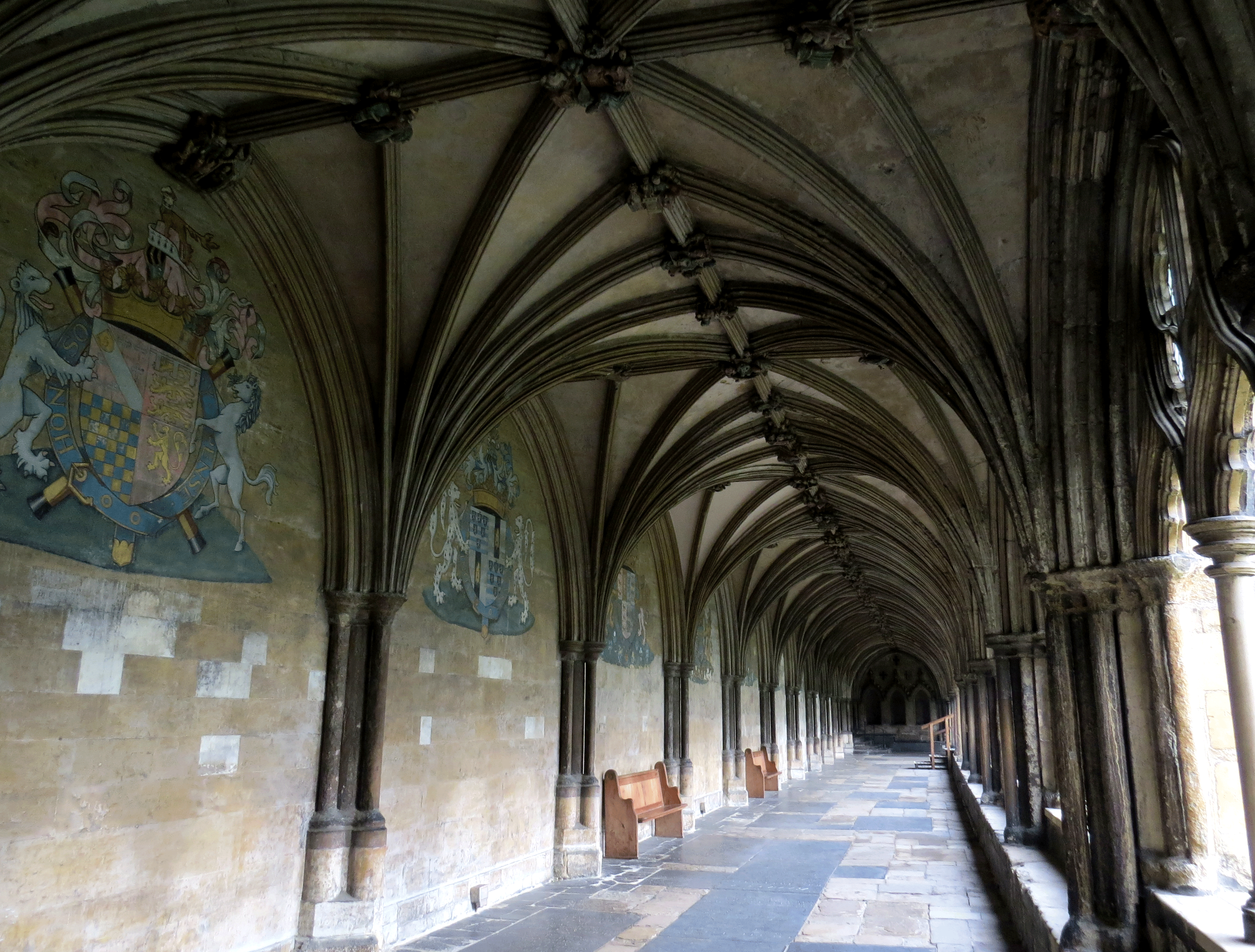
A quick look around the cloisters before we set out on the long drive home.
We spent a great long weekend in Cambridge and East Anglia. The main purpose was to visit friends, but we took the opportunity to do some sightseeing (mainly churches and cathedrals) and of course I managed a bit of birding.
We drove up to Cambridge on the evening of the 16th and met up with my friend Jennie the following morning. I first met Jennie in 1972 when she moved from Brighton to Leeds University to do a PhD. After I graduated in 1973 Jennie, along , Di and Nigel (whom I met up with at Christmas time) and Dave (whom I last saw in 2011) all friends from University, shared a house for three years in Leeds. After that we went our separate ways, Di married my friend Clive and moved to Newcastle, Jennie moved to Cambridge, Dave move to Co Durham and I married Janet and moved to the other side of Leeds. Only Nigel still lives in Leeds.
I kept in regular contact with Jennie initially, sometimes visiting her when I went birding in East Anglia, but as time passed visits became less frequent and we last met up when we had a ‘Leeds reunion’ in 2003. It was lovely to see her again and Margaret very much enjoyed meeting her for the first time.

Redheads united ! Margaret and Jennie
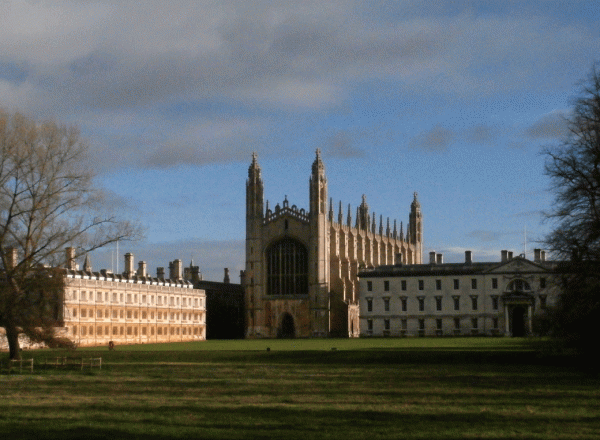
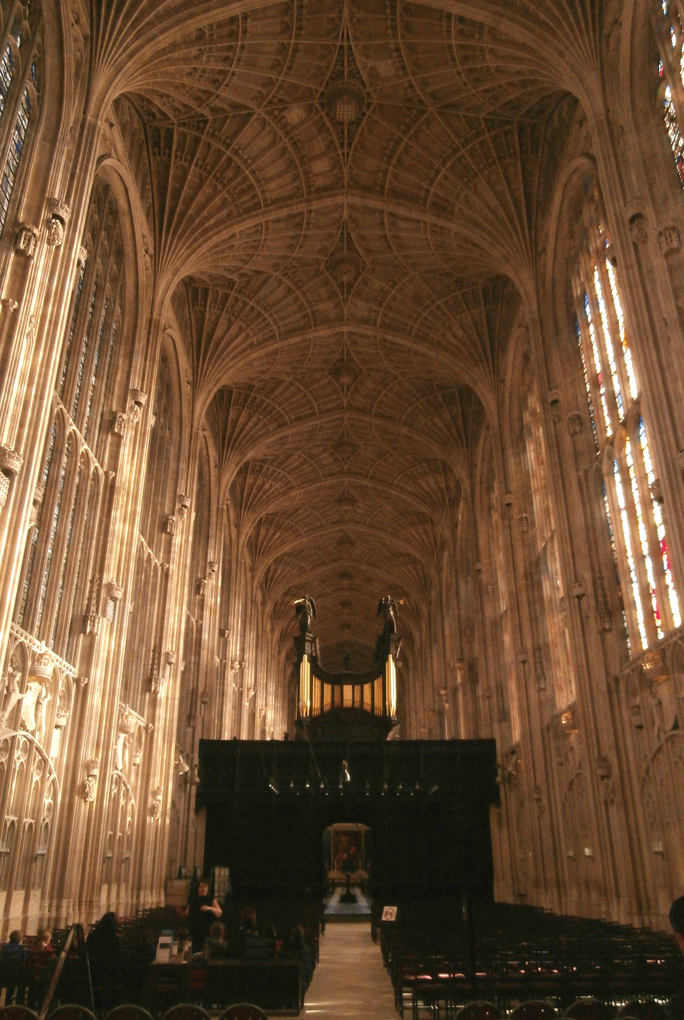
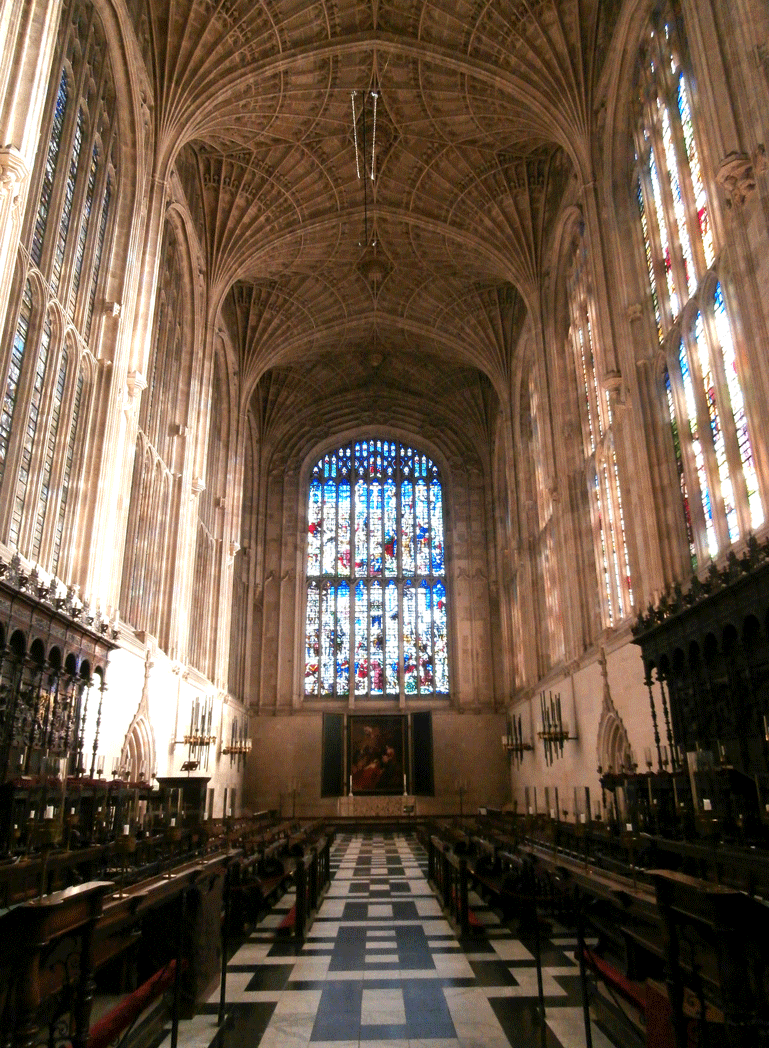
King’s College Chapel, the largest private chapel in the world and one of England’s finest churches.
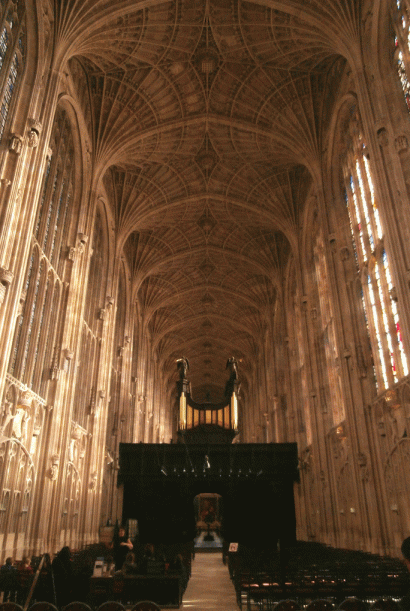
King’s College Chapel, Cambridge
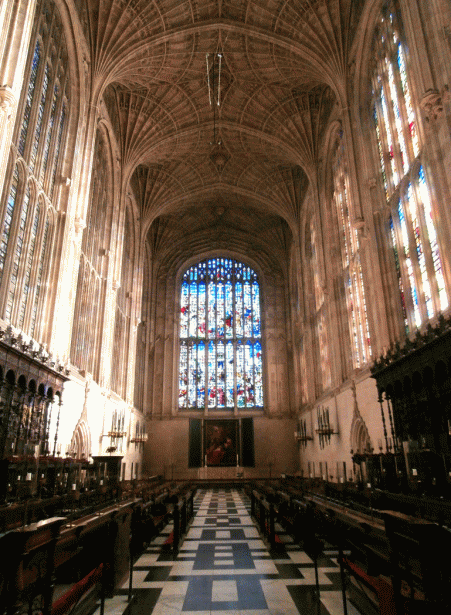
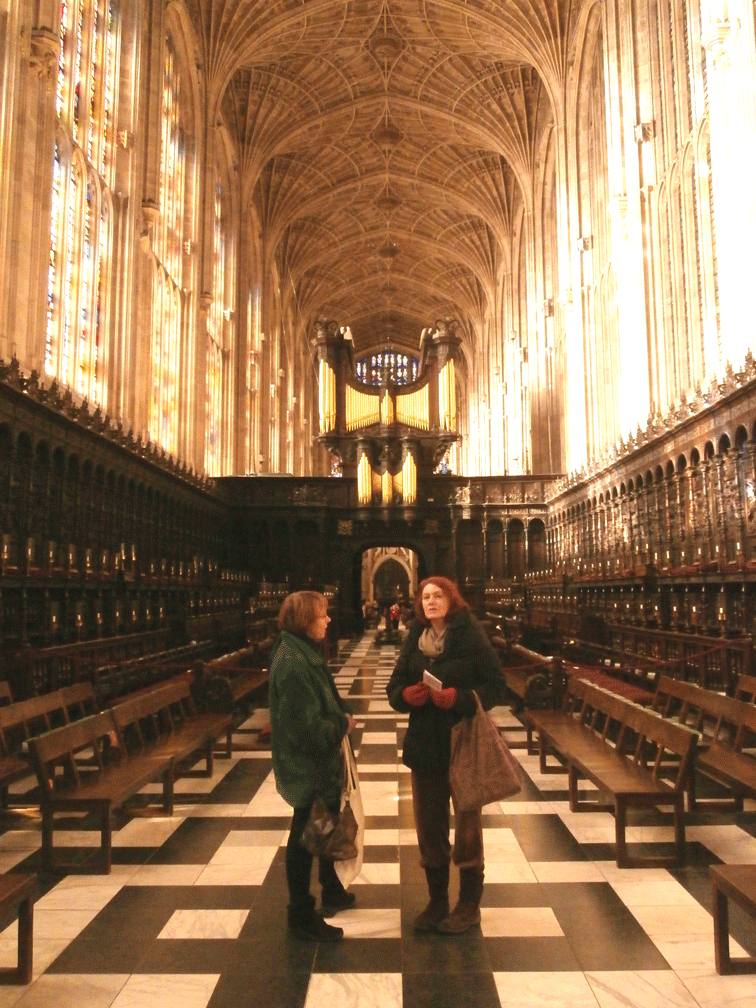
King’s College Chapel nave showing the largest fan vault in the world.

Jennie and Margaret at King’s College Chapel, it is here that the famous choir sits.

Later we visited Trinity College ….
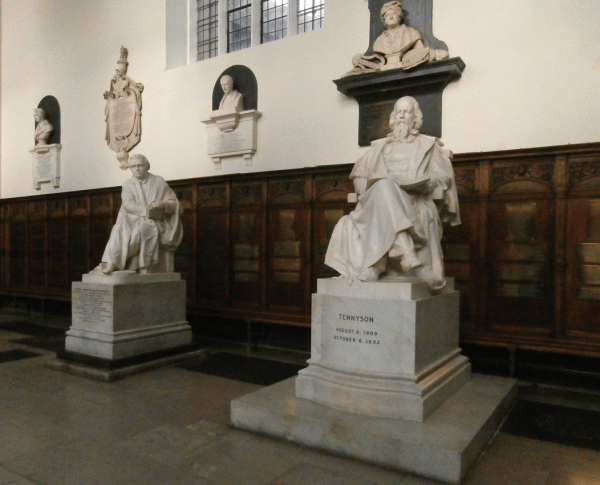
Statues commemorating some of the former students

Wonderful carved ceilings

Photography was banned in the fantastic Wren Library so I copied this photo from the internet.

In the afternoon we headed north to Ely to visit it’s famous cathedral. Once called the Isle of Ely as it stands on raised ground above the surrounding fen, it was here that Hereward the Wake held out against the forces of the William the Conqueror in 1071.
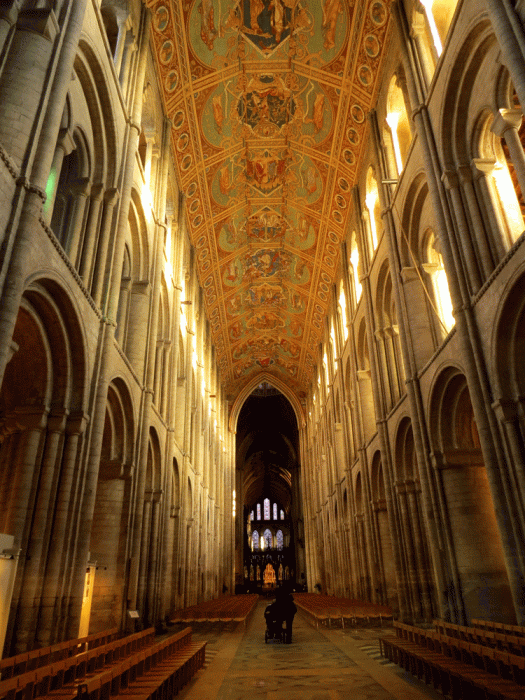
Every bit as dramatic as anything we saw in Cambridge, Ely Cathedral is one of our finest architectural wonders. It dates from 1083 although an earlier Saxon monastery stood on the site since 673
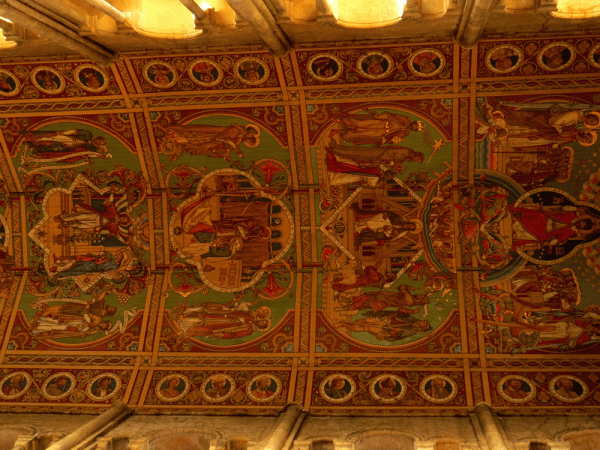
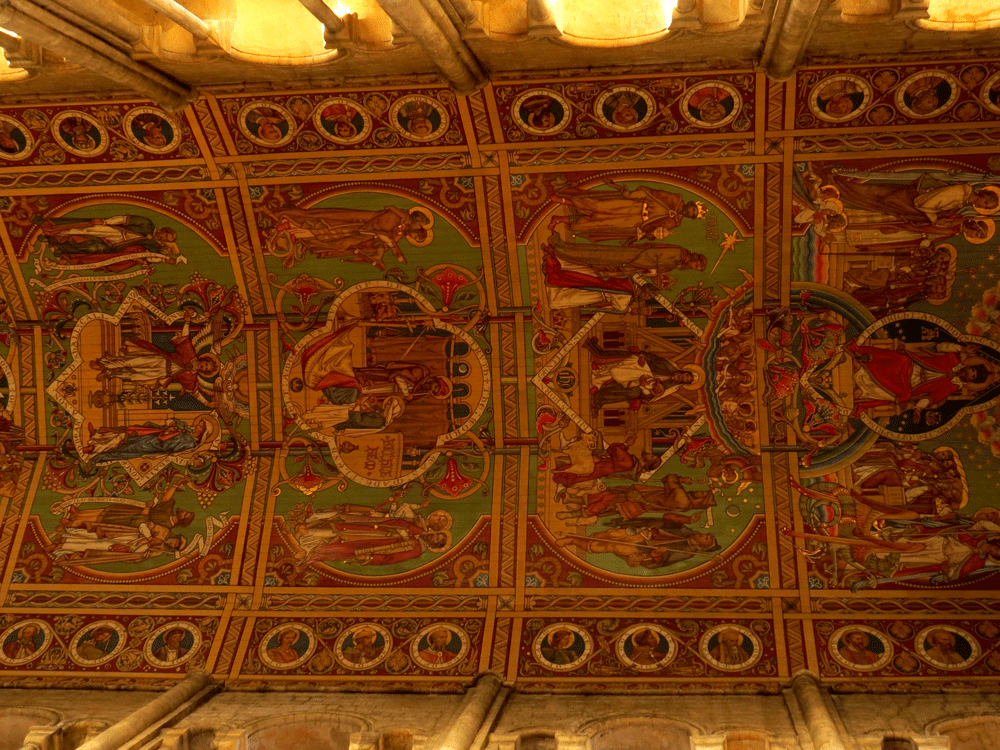
The ornate wooden ceiling is a masterpiece.
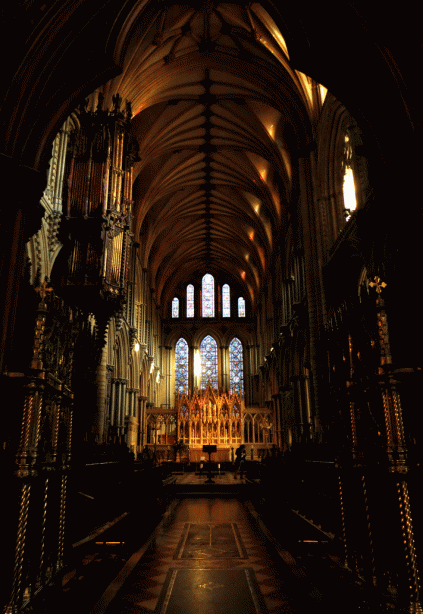
The nave
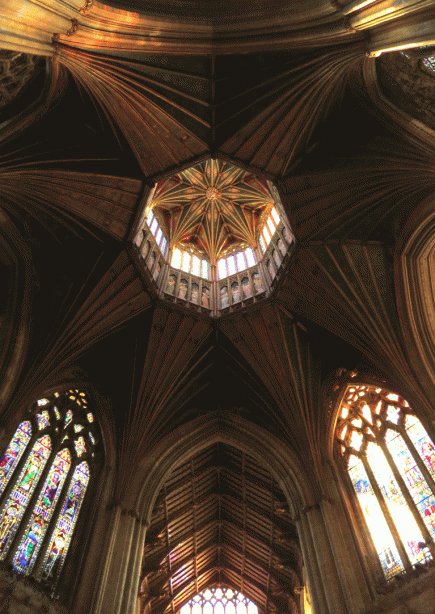
One of its unique features is this octagonal lantern …..

… built in 1322 when the earlier Norman tower collapsed.

Ely Cathedral, one of our architectural gems, I considered it to be the finest building we visited during the weekend.
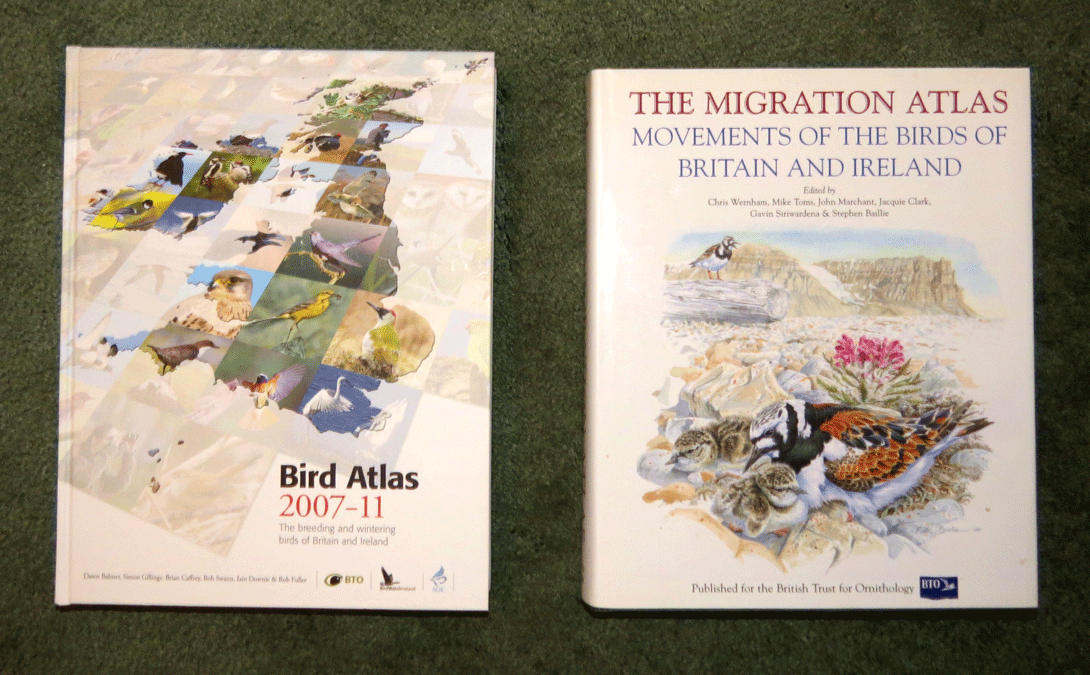
Citizen science is a concept that members of the public can add considerably to scientific knowledge if they take part in properly executed investigations. Examples in the ornithological world include the Garden Bird Survey conducted by RSPB members. Surveys by the BTO such as the Breeding Bird Survey, WeBS count (wetland birds survey) and Nest Recording Scheme need a higher level of expertise, but are still carried out by volunteers, as of course, is the BTOs Ringing Scheme, which I have reported on many times in this blog.

Although produced and published by professionals, the data in these two massive and highly informative tomes from the BTO were gathered by amateur birders (the Bird Atlas) and ringers (the Migration Atlas)
.
The reason I am posting this blog today is because yesterday I was stunned by two bits of news in which citizen scientist played a significant role. The first concerned the migration of Red-necked Phalaropes in Shetland. Whilst this research was carried out by the RSPB, I’m sure amateur ringers carried out a significant role. This tiny waders are on the edge of their circumpolar Arctic breeding range in Shetland and it had been long assumed that they migrate to the winter on the sea in the Persian Gulf and in the Indian Ocean off Oman, as do the European and west Siberian population.
By fitting data loggers the researchers found that the Shetland birds actually cross the Atlantic and Central America to winter off the coasts of Peru and Ecuador at the northern end of the Humbolt current. Thus the tiny British population probably derives from North America rather than Scandinavia.
More can be found about this research here http://www.bbc.co.uk/news/uk-scotland-25661650
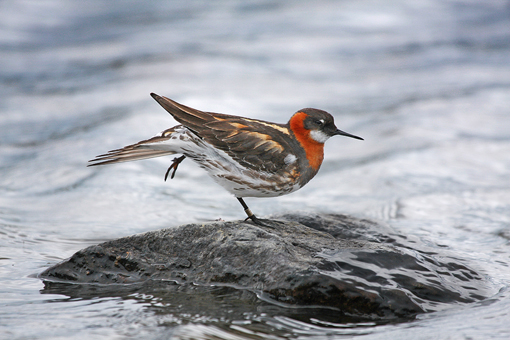
A female Red-necked Phalarope (females have the brighter plumage due to the reversed breeding roles in this species) Photo from Loch Funzie, Shetland by http://www.wildlife-photography.uk.com

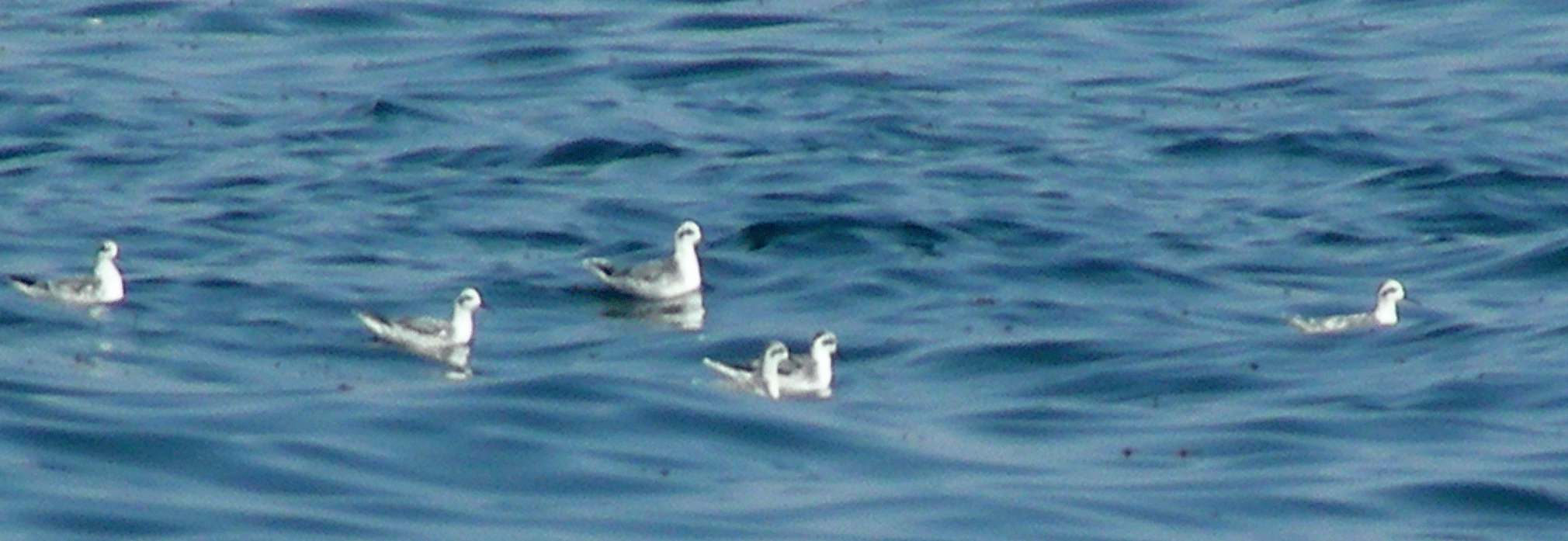
We saw many Red-necked Phalaropes in winter plumage off the coast of Oman, in November 2011. It would appear that the British birds don’t join them. Photo by Ewan Brodie.
.
The second item that I found astonishing was when I was watching Stargazing Live on the BBC. On the first program on Tuesday they asked for volunteers to scan through thousands of photographs of distant galaxies on the website looking for examples of ‘gravitational lensing’. Due to the distortion of space-time by a heavy object, the light from a very distant galaxy can be bent around a closer galaxy, so that instead of eclipsing it the closer galaxy forms the light of a more distant one into a circle around it.

Gravitational lensing. Picture from Wikipedia.
.
Within 48 hours 50,000 amateurs had examined 7,500,000 images and found 5 examples of gravitational lensing. One showed a very distant galaxy, the light of which had taken 11,000,000,000 years to reach us. This means it the image comes from a time when the first galaxies were forming and due to the ongoing expansion of the Universe is now 40,000,000,000 light years (c 400,000,000,000,000,000,000,000 Km) away!
This discovery was sufficiently significant that observatories in the UK, mainland USA, Chile and Hawaii immediately turned their telescopes to examine it wavelengths across the EM spectrum. A triumph for citizen science!

In the picture above, the light from the distant galaxy 11 billion light years away has been ‘lensed’ into a red ring around the closer galaxy, which itself is a ‘mere’ one billion light years away. Picture from BBC Stargazing Live website.
After an interval over Christmas and New Year I can return to the saga of the Malawi and Zimbabwe trip in November/December last year.
One of the highlights of the trip was time spent at Liwonde NP which lies just south of Lake Malawi. The Shire River that drains Lake Malawi flows to the Zambezi through the park. We traveled up the Shire River by boat and arrived at Mvuu camp about lunchtime. The area around the lodge was not fenced and you had to have a guard with you when you went to the chalets, especially at night as Elephants were often seen nearby. Pictures of the Liwonde chalets and of the Pel’s Fish Owl can be seen on earlier posts.

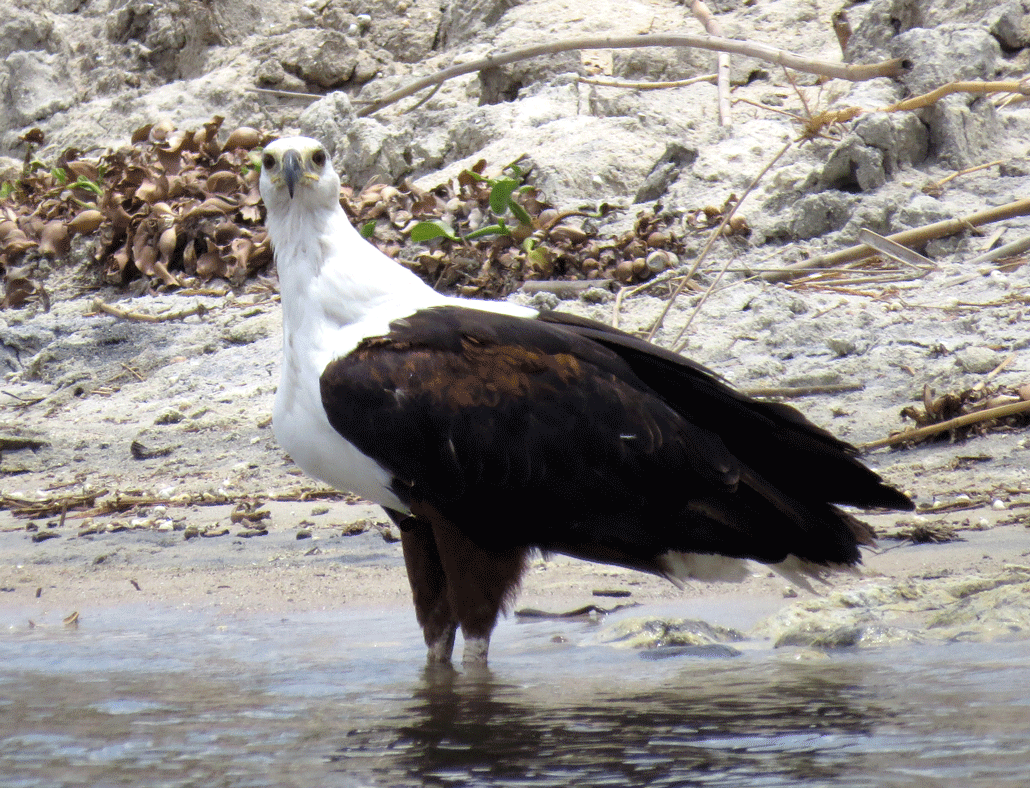
This African Fish Eagle was seen on our boat trip up the Shire River.

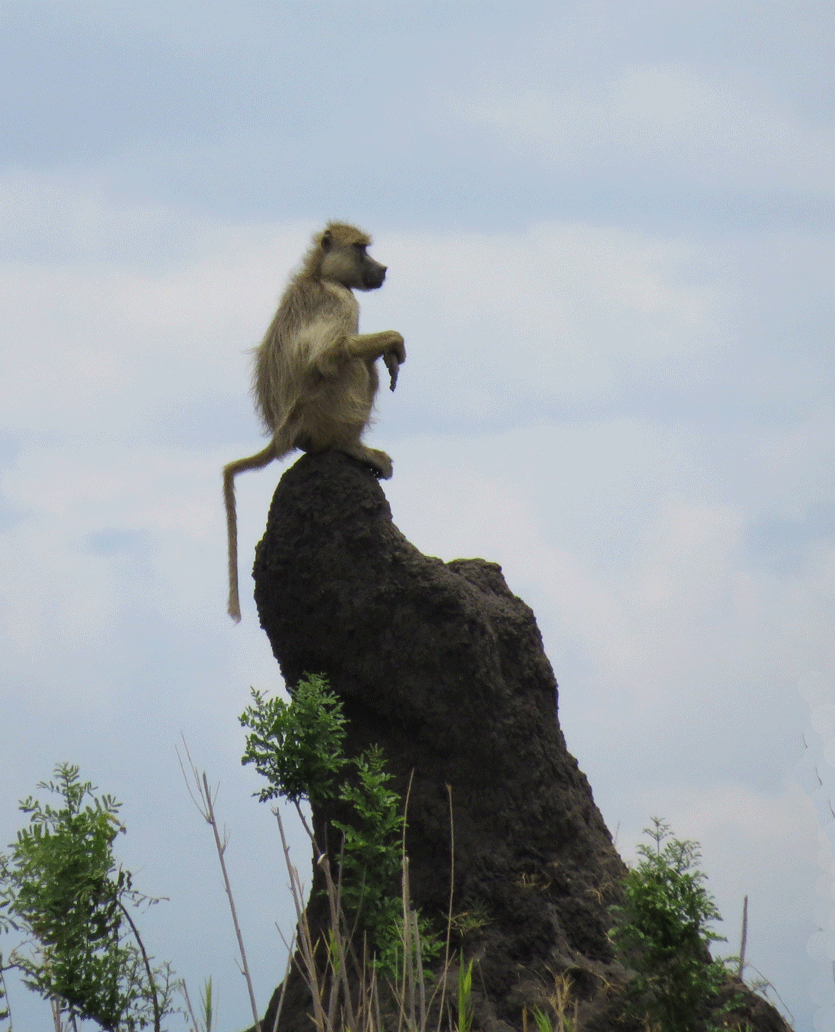
This Yellow Baboon seems to be surviving in spite of having a broken tail
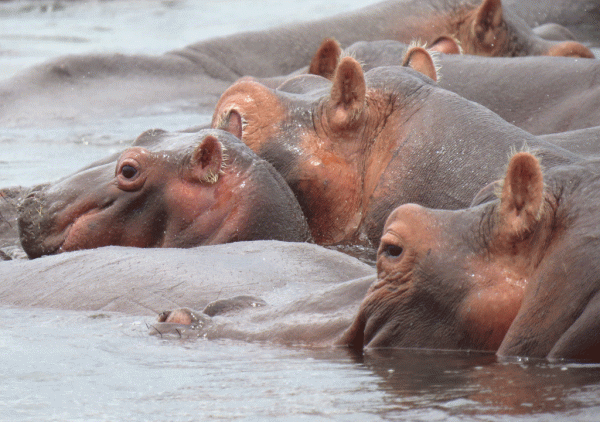
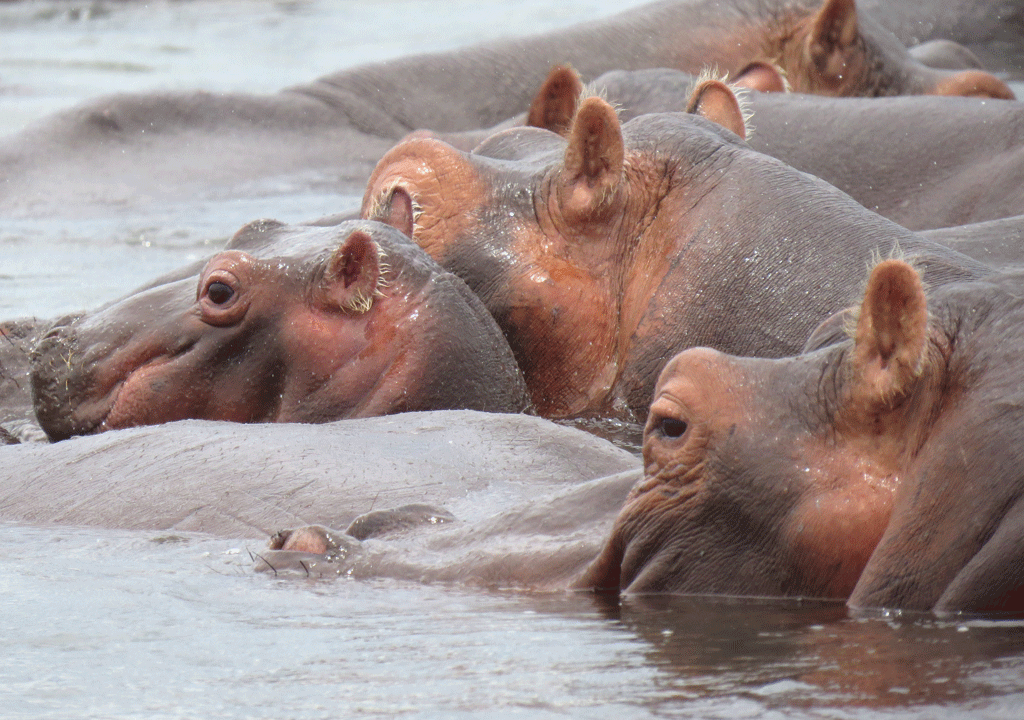
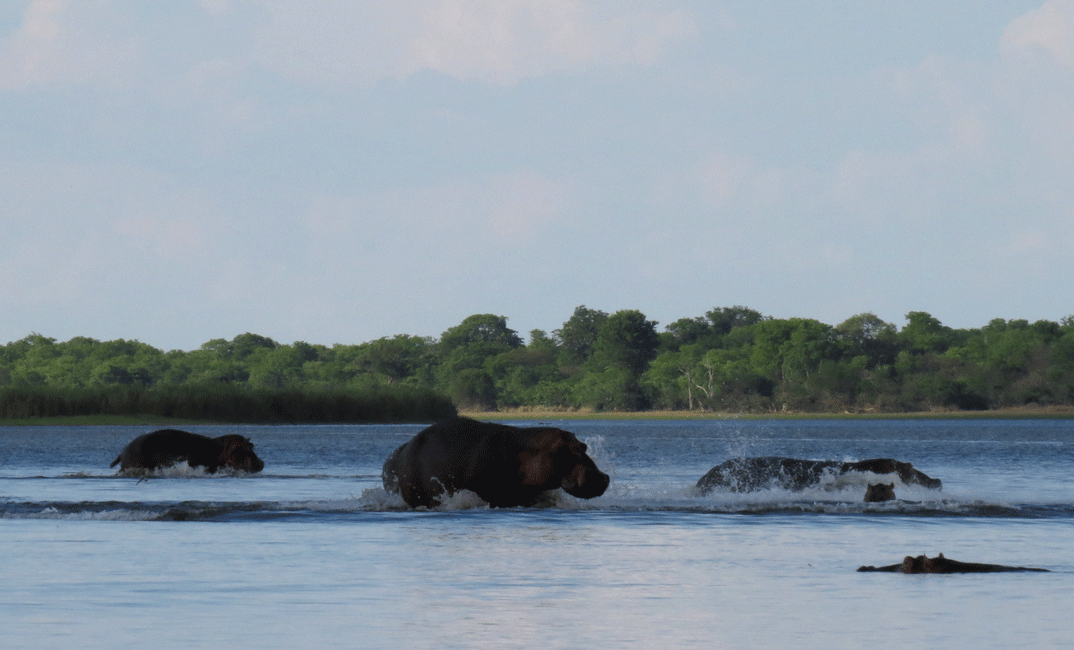
Hippos aren’t just common along the Shire River, they are abundant.
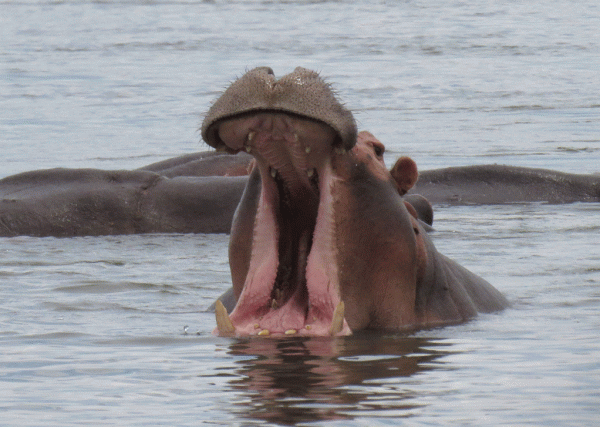
Are we keeping you up?

As with my trip to Uganda earlier in the year, a large flock of African Skimmers was seen along the river.
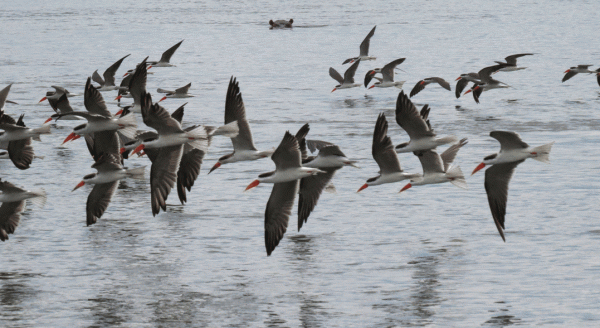
The three species of Skimmer (one in the Americas, one in Africa and one in Asia) have a unique bill shape. The lower mandible is much longer than the upper and when feeding in flight, is dragged through the surface of the water (described as unzipping the pond), if it makes contact with a fish the upper mandible snaps shut.

The view from the dining area. The grassy lawns on the banks of the river were favoured by Hippos in the early morning and Elephants and Waterbuck could also be seen whilst eating lunch.

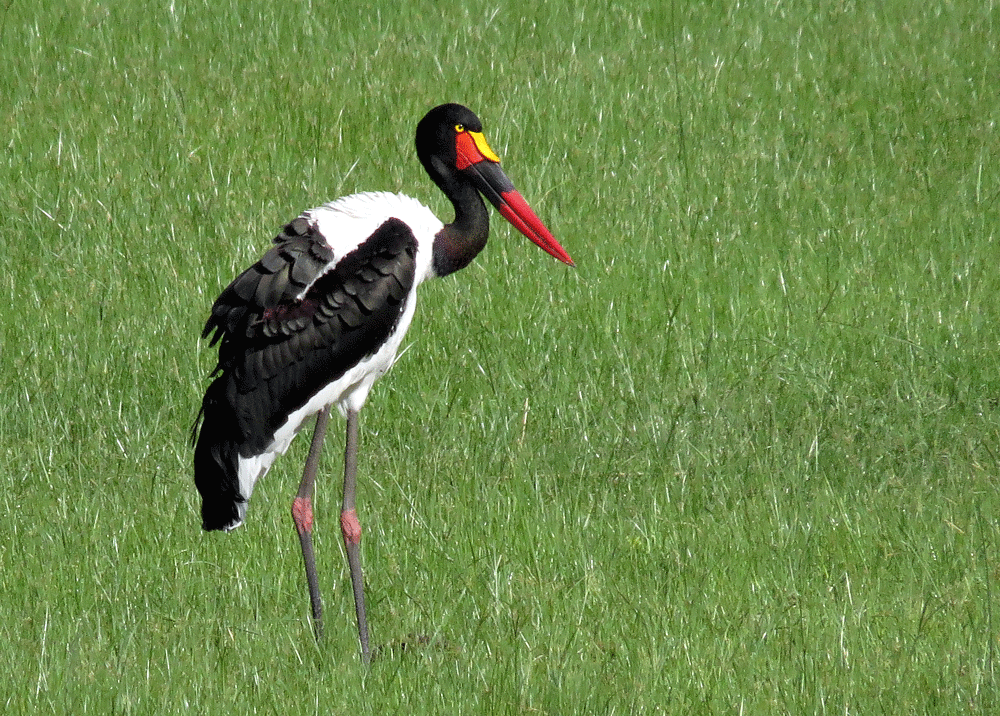
Also visible from the dining area was a pair of Saddle-billed Storks. This bird can be sexed as a female on the account of its yellow eye.

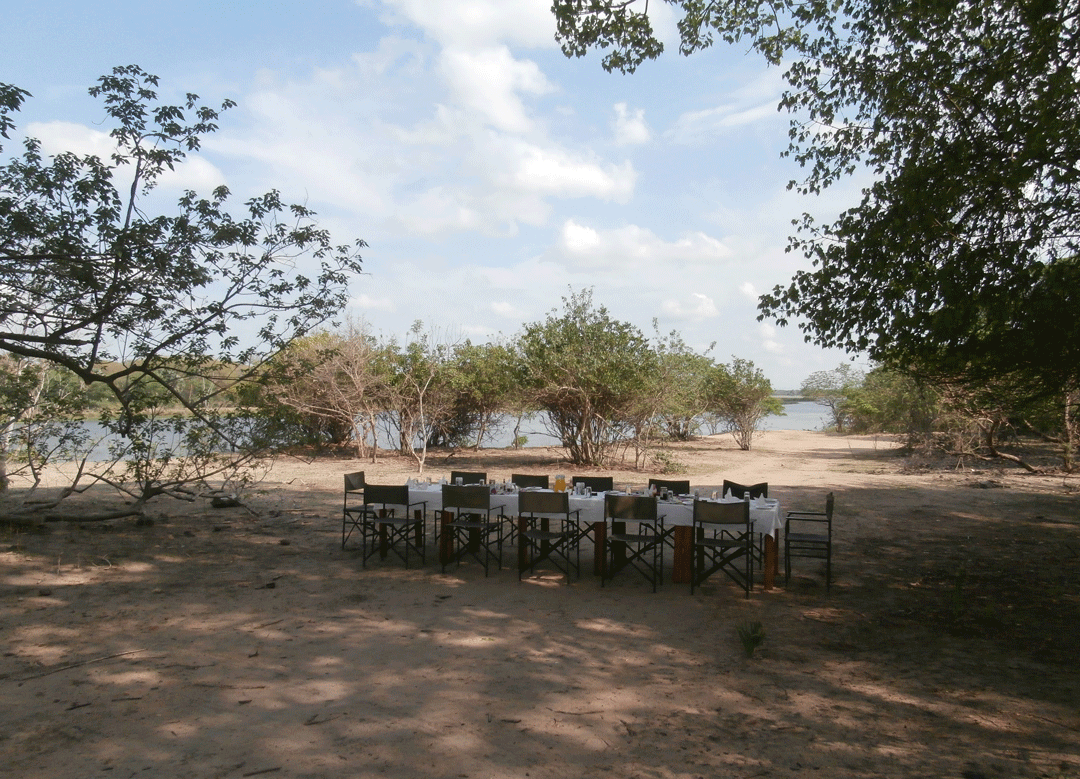
After an early morning game drive we were astounded to find the lodge staff had prepared an alfresco breakfast for us out in the bush.

The surrounding mopane woodland was studded with giant Baobab trees, but many of their trunks had suffered from extensive elephant damage as the leviathans know that below the bark there is a supply of water.

There have been a lot of taxonomic changes among the antelope, for example there are now six species of Kudu., rather than two. This is a male Zambezi Kudu.

We only saw a single Sable Antelope, this magnificent male was in the mopane woodland.
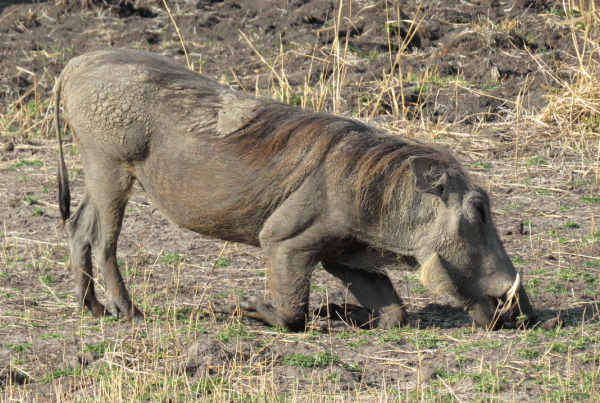
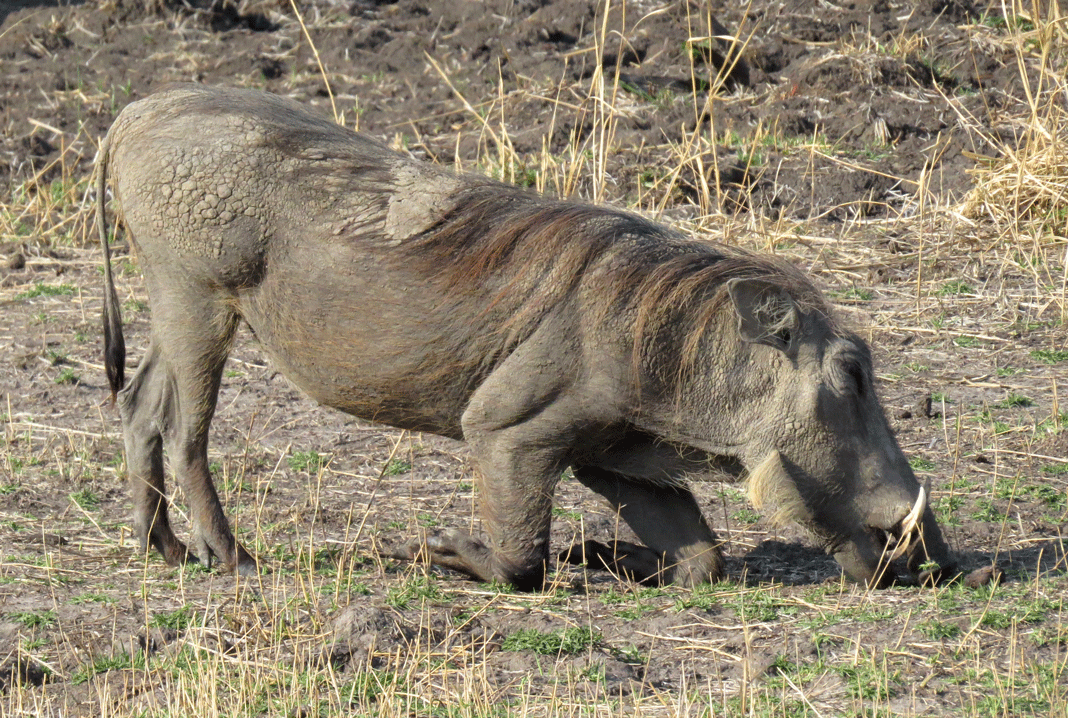
Do Warthogs get sore wrists? I strikes me that having to shuffle along like this to feed is a bit of a design fault.

Eastern Bearded Scrub-robin
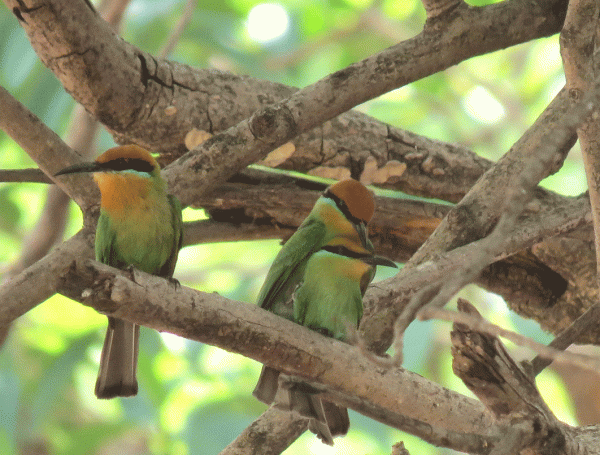
No wonder the Bohm’s Bee-eater on the left is looking away.
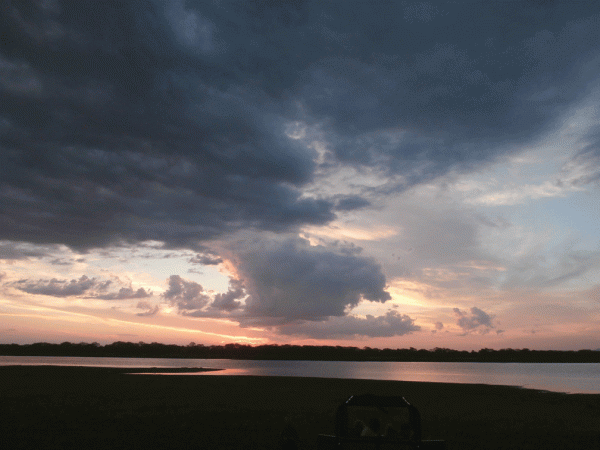
At the end of an afternoon’s birding we stopped by the river for a sundowner but we arrived a bit on the late side, so it was more of a ‘sungoner’
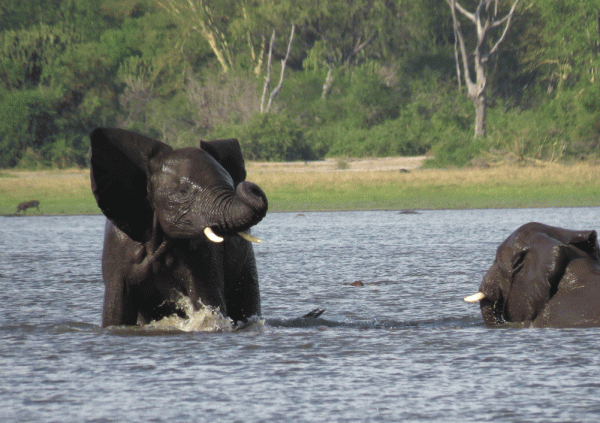
On the second day we took a boat upstream to try and find Rufous-bellied Heron but the river levels were too high and they appeared to have moved on. These young male Elephants were having a scrap in the river ……
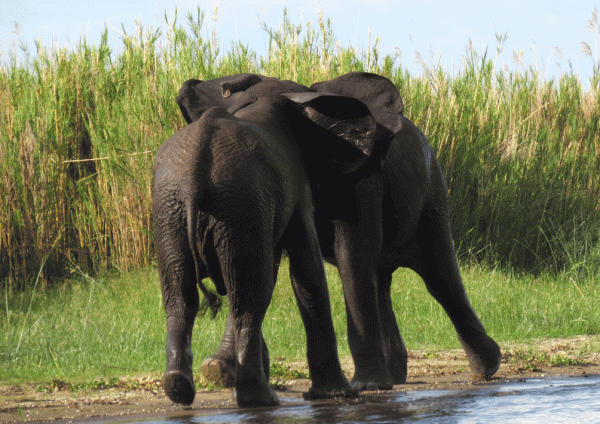
…. as our boat approached they took their flight onshore ……..
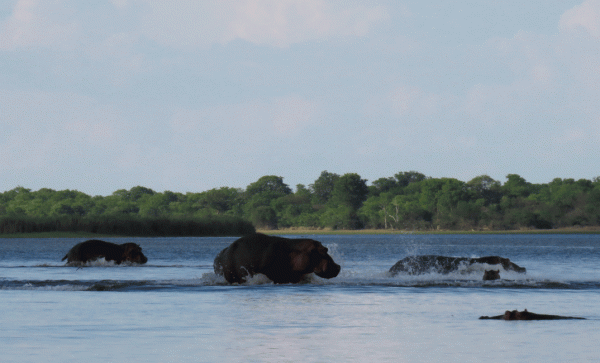
….. but they upset the Hippos in the process !
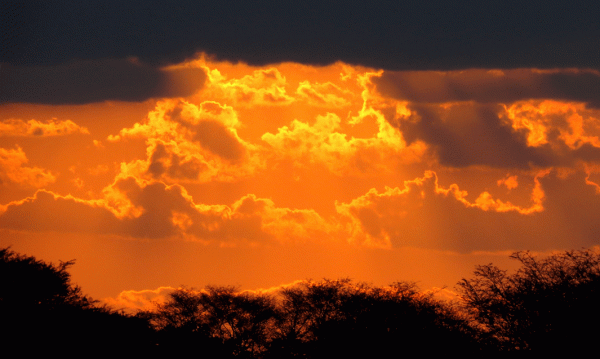
From the boat we were able to time our sundowner to perfection.
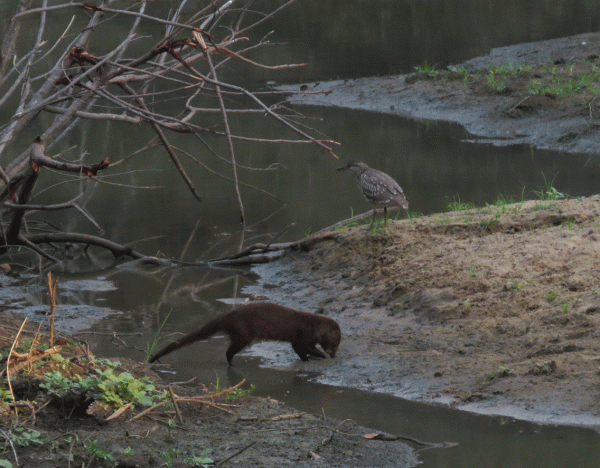
Ewan and I saw the rare Mellor’s Mongoose feeding in the creek at the back of our chalet. Also in the photo is a young Black-crowned Night Heron
In early January several of us usually do a bird race. The idea is to form several teams of up to four birders and then on an agreed date try to see or hear as many species as you can within Dorset. You can start as early as you like but you have to be at the finishing point by 1830. Bird racing is like Marmite, you either love it or hate it. It’s detractors say its not real birding, rushing from A to B seeing each species for a mere second or so; but we only do it one date in the year and its a lighthearted competition between friends that ends with a social gathering to welcome in the New Year. Bird racing involves several skills, not only the ability to pick out birds quickly by eye and ear, but detailed planning to optimise the route and accurate time keeping to overcome the inevitable temptation of ‘lets give it another minute or two’ when the target fails to materialise.
The trouble this year is that the weather forecast for the allotted date, the 4th of January, was diabolical and most teams cancelled. Team leader Nick Urch and I opted to try on the 2nd, the only dry day of the week. One of our group had already defected to another team and another was at work so we hastily replaced them with Paul Harvey, my friend from Shetland here visiting his parents and Marcus Lawson who holds the UK winter bird race record of 137 from Kent in 2009. In spite of including these ornithological heavyweights, we didn’t do that well as we had planned to spend the whole of the 2nd and 3rd of January in doing a recce of the route. Starting at 0430 in Poole Harbour we picked up a number of waders in the spotlight beam that would be difficult later due to the tide times, we then went on to get Barn and Tawny Owl but dipped on Little Owl and Woodcock. We arrived at Lodmoor at dawn and were surprised to see the Glossy Ibis that has been hanging around a playing field near Radipole in flight, it must roost on Lodmoor. Visits to Radipole, Portland Harbour and Portland Bill followed but we were already running late so we quickly headed to the Monkey’s Jump area, then Thornecombe Woods and Tincleton Cress Beds before heading to Poole Harbour about midday where we spent the rest of the day.
Although we kept the pressure up and worked hard we only saw/heard 114 species, well short of the Dorset record of 129. We had a lot of bad luck failing to locate common species like Pheasant, Lesser Black-backed Gull, Long-tailed Tit, Fieldfare and Jay but we were hampered by high water levels that caused some species to relocate and the mild conditions that meant some winter birds just hadn’t arrived.

The only photo taken on the Bird Race. The birders were enjoying the range of divers, ducks and auks in Portland Harbour, whilst the kite surfers were enjoying the continuing gale.
As none of the other teams that usually partake have taken part so far, it can hardly be called a race, a better description would be a ‘big day’ but it was enjoyable all the same. As Shetland in winter has very few species, Paul commented that it was the most birds he had ever seen in the UK in a day, but maths teacher Nick said that if it was a school report he would have commented ‘tried hard but was let down by a lack of preparation’.
The rest of the week has been hampered by continual heavy rain and high winds which resulted in extensive flooding. North America may be suffering from record low temperatures but here it is a very balmy 12c but very wet as depression after depressing sweeps across the Atlantic. After several attempts I did get to see a Smew that has taken up residence in a flooded field at Lytchett Bay, a bizarre occurrence as it is a diving duck that usually requires deep water, a Yellow-browed Warbler at Studland and a few waterfowl and woodland birds at Blashford Lakes in Hampshire, but access to other areas and other birds has been prevented by closed roads. Even the Baker’s Arms pub which we visited with Paul at Saturday is partially closed due to flooding.
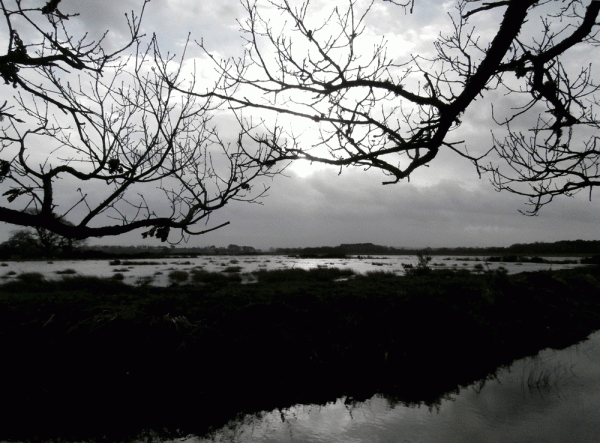
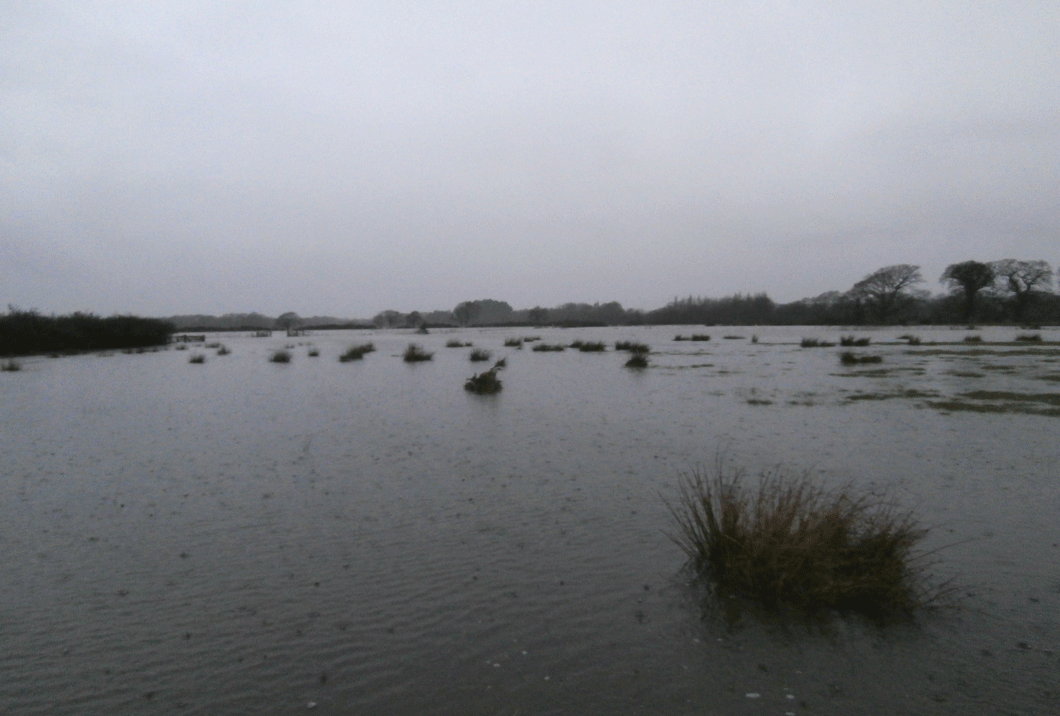
Leaden skies, wind and rain dominated all week. These fields at Lytchett Bay are usually grazed by cattle, Water Buffalo would be more suitable now.

You normally come across Smew on a deep gravel pit or a reservoir, but this one is catching fish on a grassy field!

A female or immature Smew, the so-called ‘redhead’. Photo from grc.forum.blogspot.com
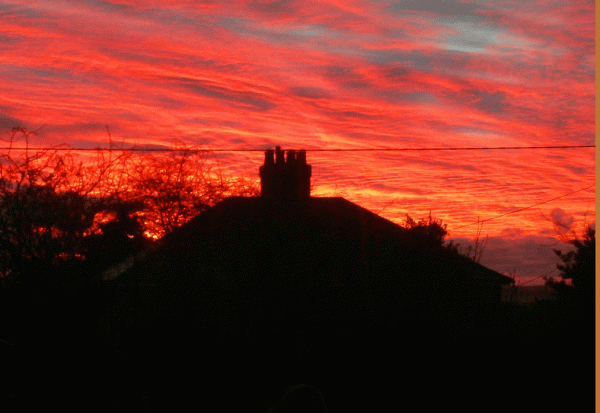
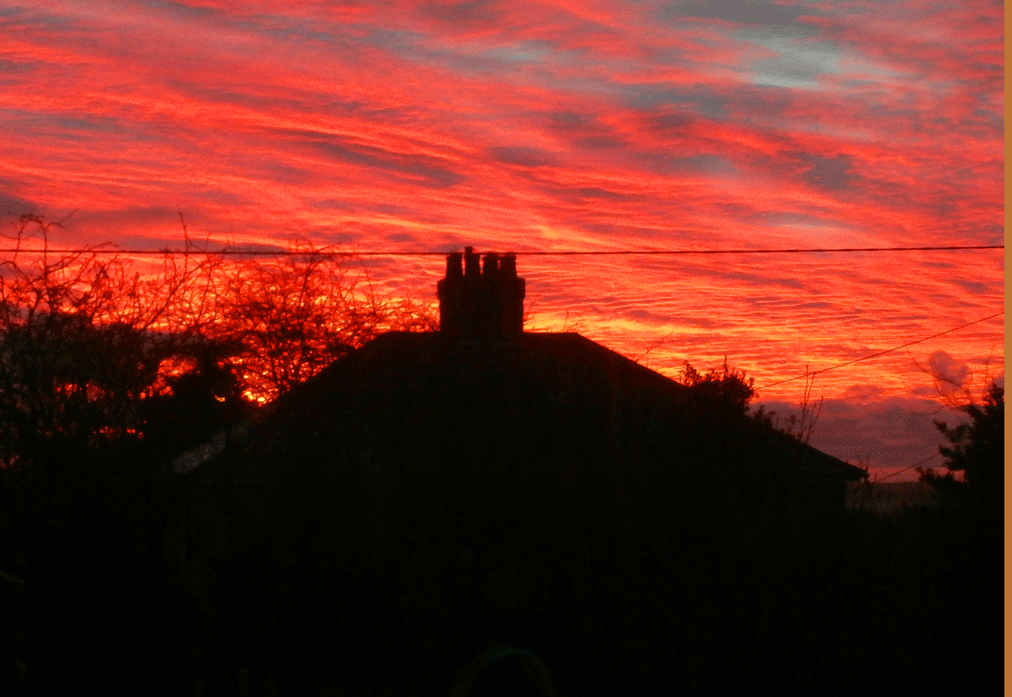
‘Red sky in the morning, ringers warning’. Surprisingly there was a short weather window on the morning of the 5th and Paul Morton and I tried to ring a few birds in his garden. Due to the mild conditions and the abundance of natural food ,few birds are coming into gardens and our catch of three Goldfinches and a Blackbird confirmed this.
I know I bring this up year after year but the 6th would have been my first wife Janet’s 67th birthday. It’s nearly ten years since she passed away and so much has happened in that time.
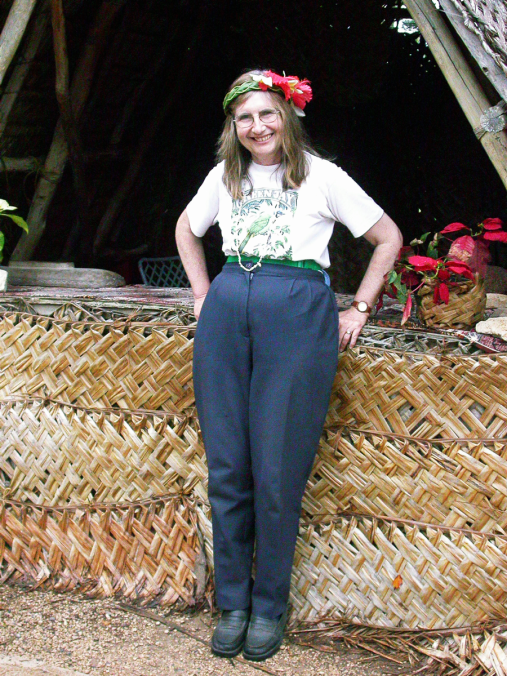
- Lest we forget.
On the 7th I finally had my ingrowing toe nails removed, so that’s me out of circulation until it heals. Lets hope there isn’t anything really rare that needs boots or wellies to get to in the next week or so!
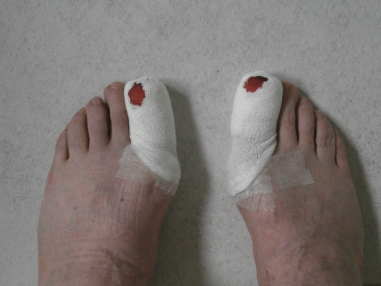
‘Sticks out like a sore toe’


























































 gryllosblog