For several weeks now a Hume’s Warbler has taken up residence near Littlesea holiday camp on the Fleet. This is a much rarer relative of the Siberian breeding Yellow-browed Warbler and is considerably rarer in a British context. The two species only differ slightly on plumage but considerably in voice. It took about an hour before the bird was located and I was fortunate to hear it call several times and get good, if somewhat brief views.
This is the third time I have seen this species in the UK and the second time in Dorset. there have been about five previous records in Dorset. Unfortunately, on arrival I found I had left the memory cards from both my SLR and pocket camera attached to this PC, so the following photos are taken from the internet.
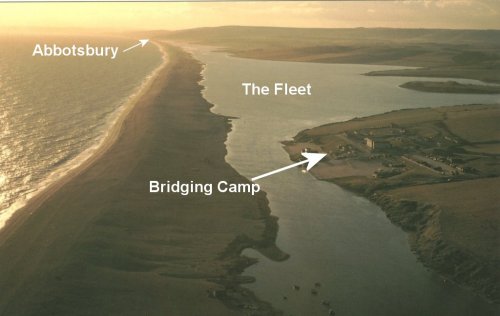
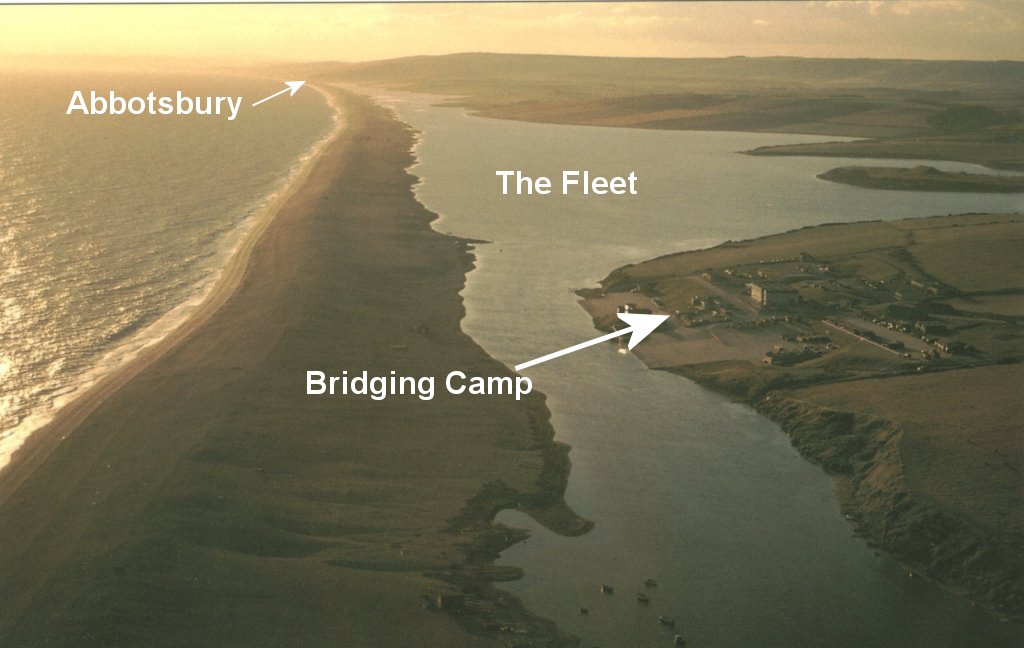
Aerial photo from the internet. The Hume’s Warbler was in sallows beyond and to the right of the Bridging Camp.


Closely related too, but much rarer than Yellow-browed Warbler, this was about the fifth record for Dorset. Photo from Wikipedia by JM Garg
Whilst at the Fleet I heard about a Great Bustard that had been found at Ringstead Bay, to the east of Weymouth. I called in and saw it well on the way home. The bird has wearing a satellite transmitter and was clearly from the Sailsbury Plain re-introduction scheme. The last native Great Bustards were shot in 1832 and over the last six years or so birds from Russian stock have been re-introduced to Sailsbury Plain. This has resulted in successful breeding in the last two years and hopefully will result in a self-sustaining population. Not all birders approve of this scheme but I think it is an excellent idea and it has my full support.
In recent years the odd bird has been seen in winter in Dorset, usually near the Fleet. True to form the Ringstead bird was seen flying in that direction over Upwey in Weymouth late on the 17th and was relocated at Buckland Ripers on the Fleet on the morning of the 18th.

Great Bustards from the Sailsbury Plain re-introduction scheme are being seen in Dorset on a annual basis.
Wednesday 14th.
Every year Poole Hospital provides a very good Christmas lunches at a very reasonable price for the staff. The catering staff must be complimented for producing the regular meals for those not booked in for Christmas meal, all the patients meals and the Christmas lunches all at the same time.
The lab had a couple of ‘no shows’ due to sickness and they phoned me to ask if I’d like to come, to which I readily agreed. Again I enjoyed catching up with my old colleagues, especially those who weren’t at last Friday’s evening out. Before the meal the lab had the traditional Secret Santa event which involves my former boss Andy (with all the presents) being pushed along on a lab trolley by a number of ‘little helpers’.
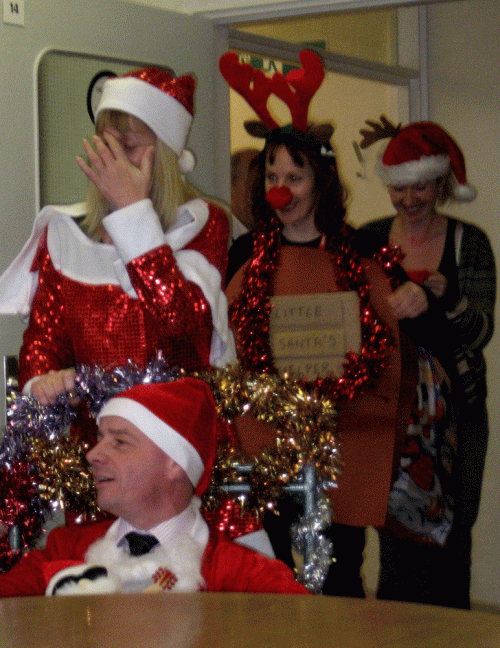
Andy plays the role of Santa .....

... but soon disappears under a pile of presents
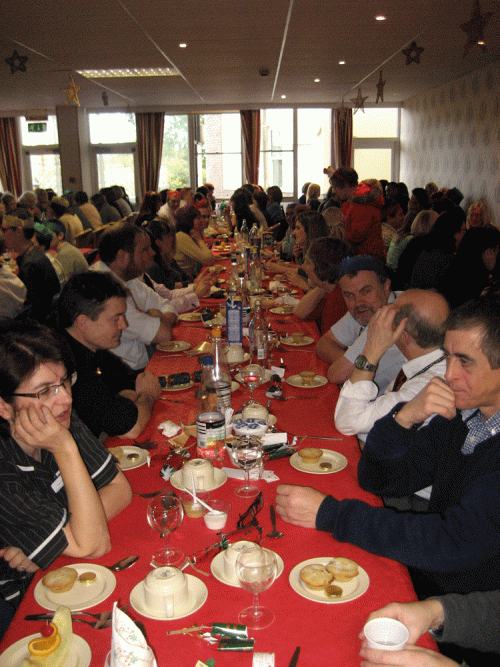
.. and soon we were down the canteen for the Christmas lunch.
Thursday 15th.
Amber has had the last few days off with a cold but really wanted to go to school before term ended. Rather than have her wait at a cold bus stop I volunteered to drop her off at school in Wareham. Afterwards I continued on to Middlebere for a few hours of excellent birding.
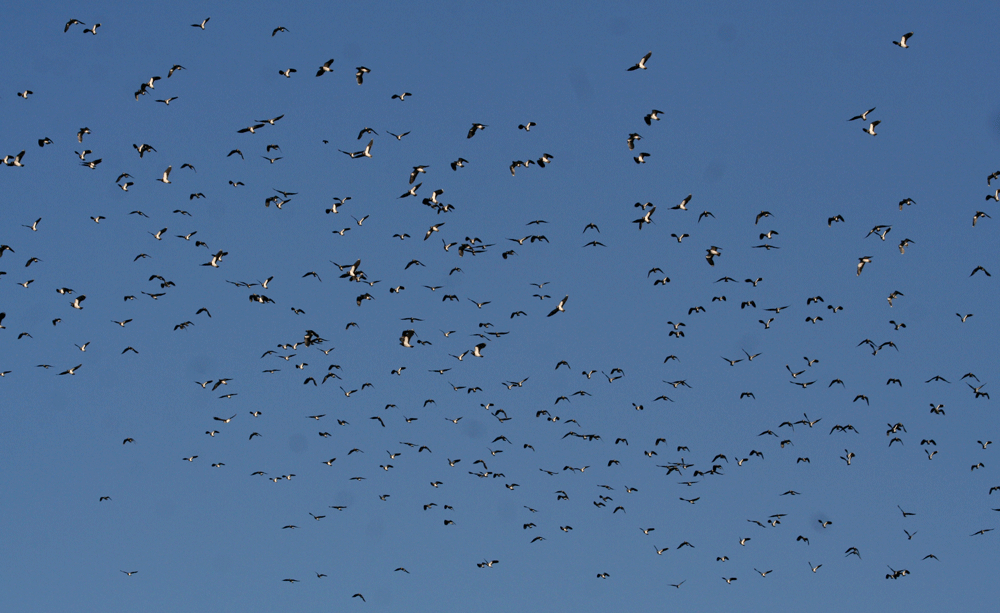
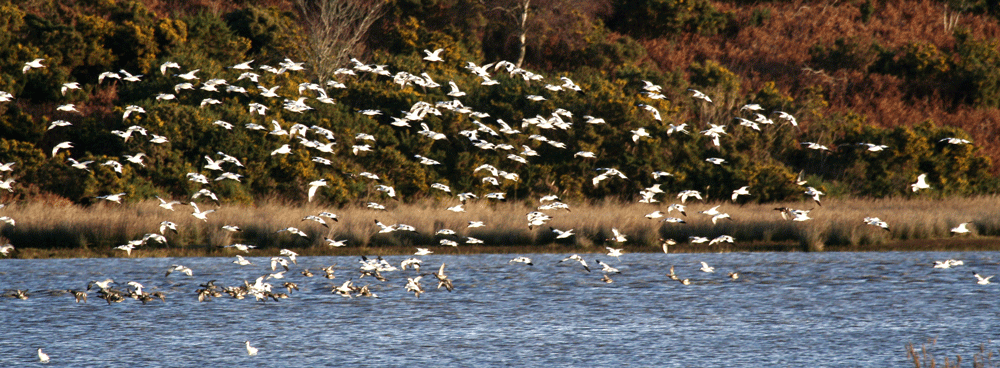
For once got the tide and the light just right. The sun was behind the hide and the tide was rising, driving flocks of Avocets, Black-tailed Godwits and Lapwings ever closer. There was nothing unusual but seeing over 800 Avocets and 1000 Lapwing performing aerial maneuvers was exhilarating. Along the access lane flocks of Redwing, Fieldfare and Blackbirds fed on berries and there were good numbers of Bullfinches in the area too.

Middlebere on the SW side of Poole Harbour, has wet fields, reedbeds, woods and an estuarine inlet.
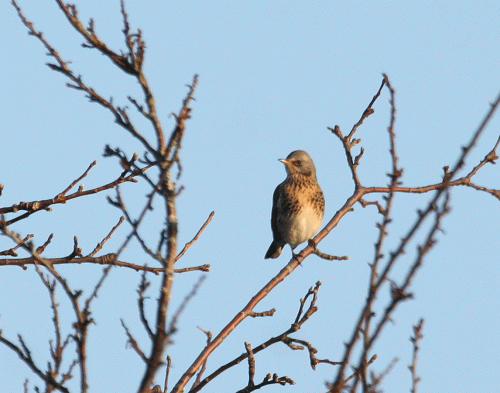
Fieldfare (above) and Redwing were common along the lane.
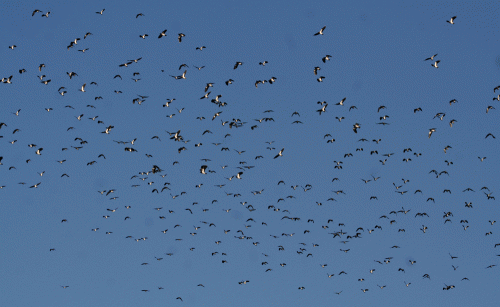
About 1000 Lapwings were on the nearby fields or the intertidal area.
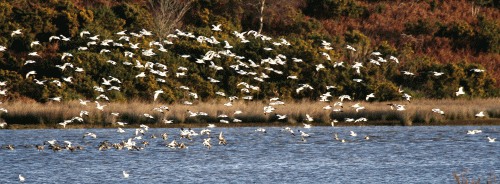
The Avocet flock flew closer as the tide rose.
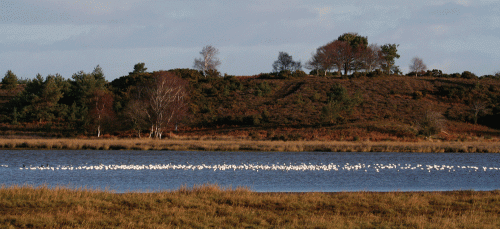
Poole Harbour has the largest wintering flock of Avocets in the UK. Up to 1800 have been recorded on Brownsea Island.
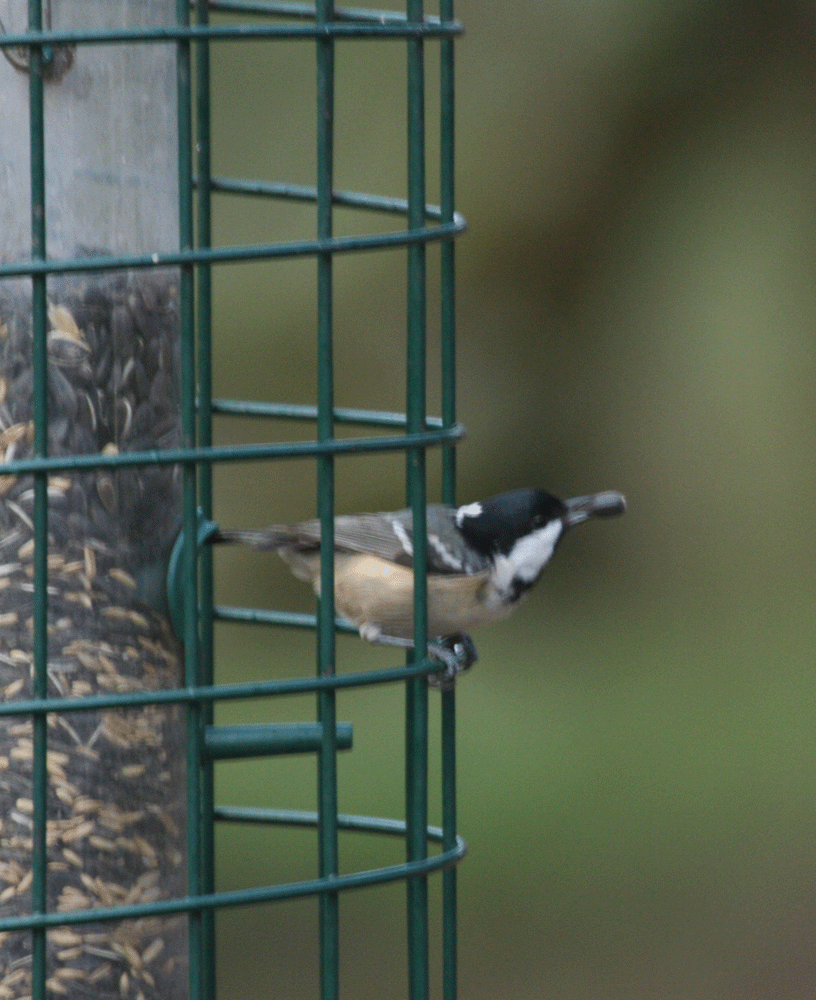
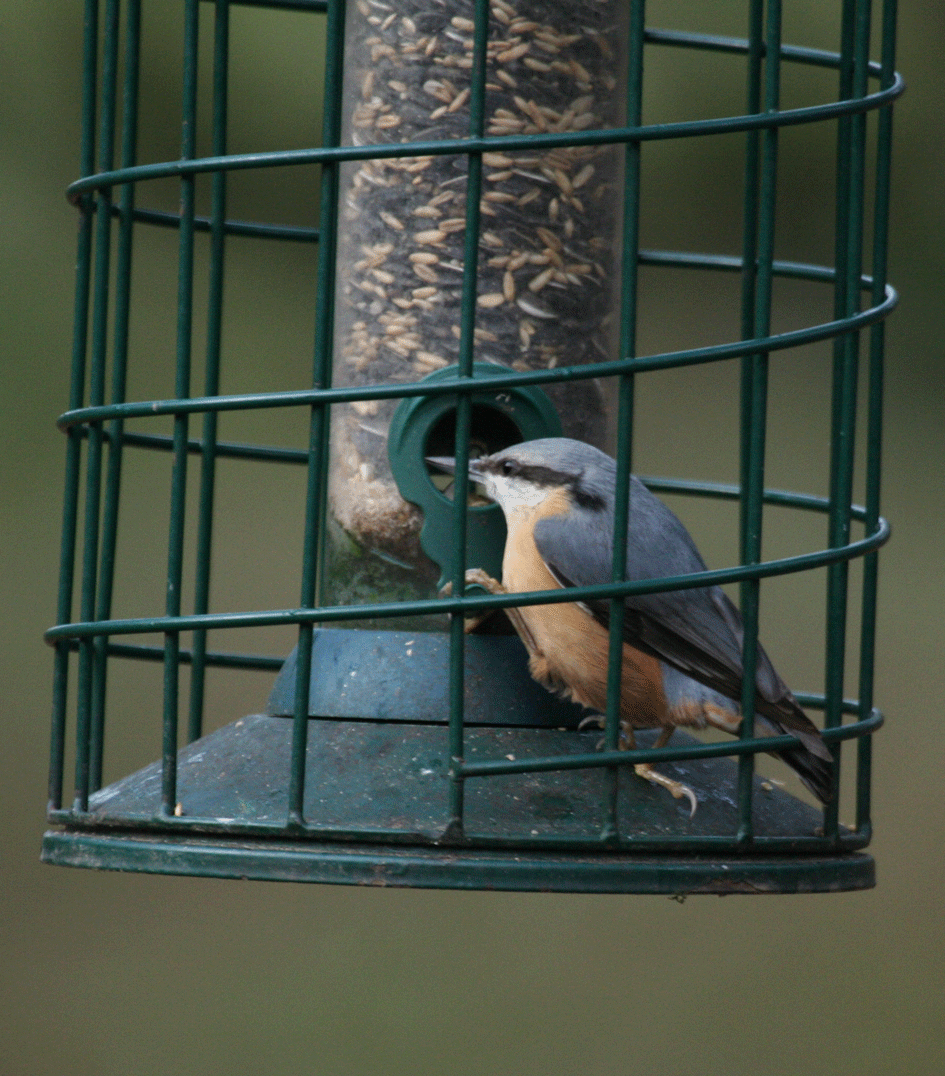
By mid morning the weather had turned so I retired to Arne RSPB car park to watch birds coming to the feeders. Although Coal Tits and Nuthatches were present there was no sign of the regular Marsh Tits and the warden told me none had been seen for weeks. I find this disturbing as this was always a reliable site for this diminishing species. During my time in Dorset I have seen first Willow Tit and now it appears, Marsh Tit disappear.
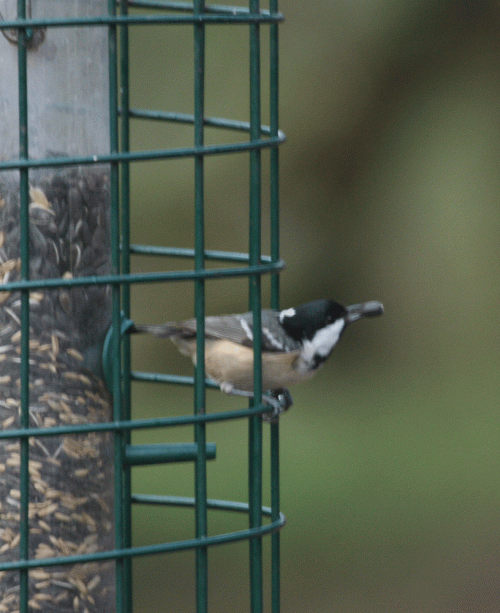
Coal Tits are regular at the Arne feeders....

... as are Nuthatches, but where have the Marsh Tits gone.
Before returning home I called in at the private estate of Holton Lee and joined ‘Friends of Holton Lee’ allowing me access to this great site which lies along the southern boundary of Lytchett Bay for 2012.
In the evening Margaret and I went to the cinema to see the latest offering in the Twilight series. whilst acknowledging that the books and films are more targeted those of Amber and Kara’s age group than ours, I have quite enjoyed the saga (although I prefer the suspiciously similar, but more adult, ‘True Blood’ TV series), however the final book, Breaking Dawn’ has been turned into two films, and there just isn’t enough material to justify that approach.

The rather twee but quite entertaining Twilight series.
Friday 16th
Another month another retirement! I don’t know if its rats leaving a sinking ship or that the lab just employed too many people of the same age but today marked the fourth retirement from the microbiology department this year (plus two who have left for other jobs). My Italian friend and longstanding colleague, Giovanni Pietrangelo retired today after 37 years of service.
Gio was given a good send off, with kind words from consultant Microbiologist Dr Paul Flanagan. many old colleagues attended to wish him well, including Dr Bill Hooper, who was the lab director in the 70s when Gio and I both started.
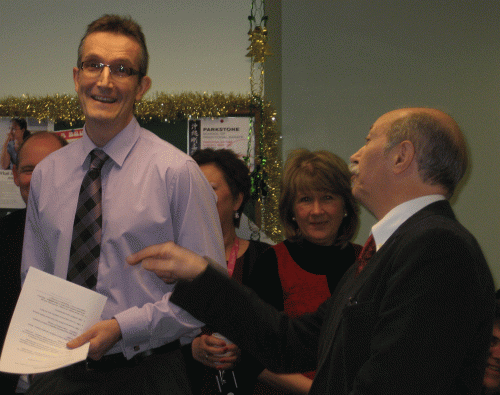
Paul Flanagan (L) presents Gio with his leaving gifts.
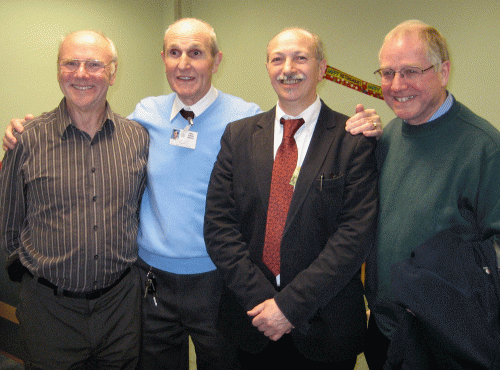
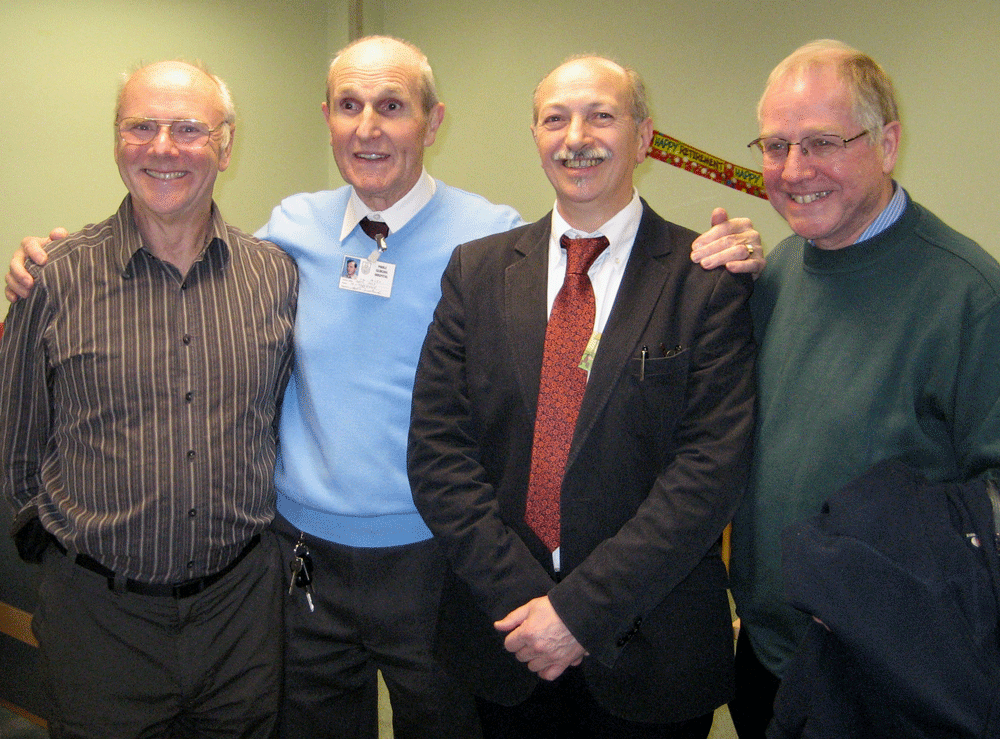
Former colleagues: L-R me, Mike Brebner (retired 1995), Gio and Geoff Westwood (retired 2003)
Stuck at home today whilst an electrician did some work at home but I did manage to escape for a few hours and go back to Longham Lakes. The female Blue-winged Teal did show, but only briefly as it slipped from the long grass on the island into a hidden inlet. I hope to return as soon as the weather improves for better views.
Blue-winged Teal is a vagrant from North America and is about the sixth record for Dorset. I have seen one previously in Dorset at Abbotsbury in 1999.
With no photographs taken I have included (with permission) a shot from Vaughan Ashby taken of the same bird last week.

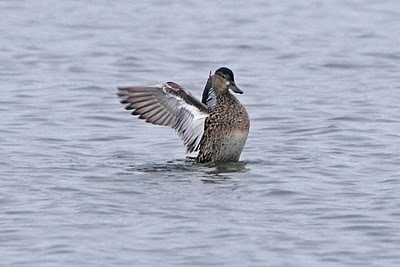
Female Blue-winged Teal, Longham Lake. Photo by Vaughan Ashby / Birdfinders.
I later made a brief visit to Hatch Pond where a Jack Snipe showed well for a few minutes in the recently cleared area adjacent to Elborn’s Cut.
Margaret, along with friends Christine Arnold and Ann Hitchcoe sing in the Barclay House Choir. Every year the choir puts on a concert in May and a carol service at Christmas at St Peter’s Church at Ashley Cross. The carol concert was most successful, probably the best I have heard and consisted of pieces sung by the choir, by soloists, a quartet, orchestral pieces and of course tradditional carols sung by the whole congregation. Janis, Kara and I attended, along with Christine’s friends Malcolm and Hazel and Ann’s husband John.
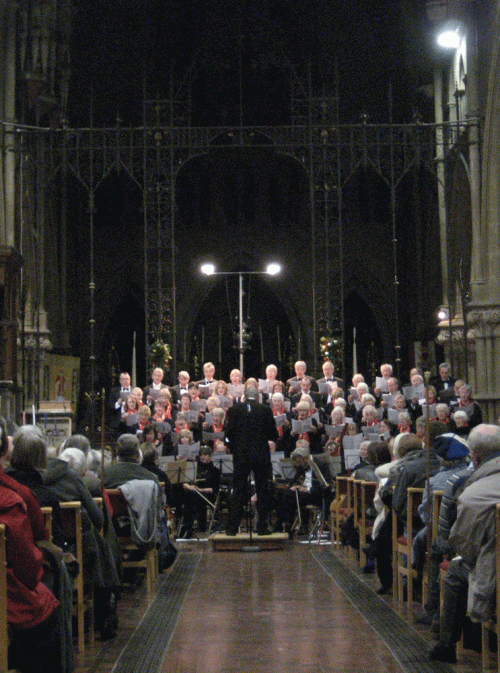
Barclay House choir and St Peter’s Orchestra, St Peter’s Church

Spot the Margaret competition

Margaret, Christine and Ann
From 12th November to 8th December I had a wonderful trip to Ethiopia. Although I had I had visited in 1988, the itinerary in those days didn’t include the south of the country and we missed many of the endemics. After many years I returned, doing a comprehensive three-week tour with Birdquest followed by a private extension to see some of the cultural sites in the north of the country.
The Ethiopian highlands are home to 31 endemics (some are shared with Eritrea) and there are a lot of near-endemics shared only with difficult of access neighbours like Somali and Sudan. With the exception of the Nechisar Nightjar, known only from a single wing rescued from a roadkill, we saw all of the former and most of the latter.
The country has changed greatly since 1988, then it was Communist, now a democracy and the population has more than doubled. It remains a fantastic birding destination and probably the most culturally diverse and fascinating destination in Africa.
From Addis Ababa we headed north to the deep gorge at Debre Libanos, home to several endemics, Lammergeiers and Gelada Baboons. Another valley gave me my first lifer, Harwood’s Francolin as well as Erkel’s Francolin which I had only previously seen as an introduced bird in Hawaii! A long drove took us to the escarpment that overlooks the huge Rift Valley, where we scored with endemic Ankober Serin amongst fantastic scenery. Dropping down the escarpment, we found the endemic Yellow-throated Seedeater along with many more widespread birds, but although we were close to Awash National Park, the road is unsuitable for vehicles and we had to return to the escarpment, drive to Addis and back down the Rift Valley to reach the park, although we did score with the very localised Sombre Rock Chat on route, a bird that does exactly what it says on the tin!
The arid scrub of Awash has been invaded by hordes of Afar tribesmen with their cattle and camels, but remains a good site for big game and a great place for birding. In 1988 we stayed in some very old and decrepit caravans, to my amazement they were still there, with shelters erected over them to keep the rain out, fortunately we were staying elsewhere. Big predators are very rare in Ethiopia so it was quite a shock when one of our group opened his cabin door to find a Lion outside!
We headed south visiting a number of Rift Valley lakes before heading up into the Bale Mountains, home to Rouget’s Rail and the endemic Mountain Nyala and Ethiopian Wolf. A side trip to the lowlands added another endemic, Salvadori’s Seedeater before we headed southwards again into what was virgin territory for me. One of the first specialities we saw was Price Ruspoli’s, a bird which went missing as soon as it was discovered, as Prince Ruspoli was killed by an elephant before he announced his discovery, and it remained lost for a century.
We had a lot of rain in the south which meant the land was green and lush. In torrential rain we searched to Liben Plain for Africa’s rarest bird, the Sidamo (or Liben) Lark and found two of the remaining 100 or so birds. Other restricted endemics such as Streseman’s Bush Crow and White-tailed Swallow soon followed and I picked up over the half of the life birds on the trip in two days. Soon we left the far south with its basic accommodation for the better lodges of the Rift Valley.
The tour ended in a valley to the west of Addis where in a final exciting morning I picked up five lifers, mainly finches. In the end we recorded some 540 species and I added 40 birds to my life list. Not bad for a second visit!
The trip was not over for me as I spent a further six days exploring the ancient stellae, tombs, churches and monasteries of Axsum and Lalibella, absolutely wonderful. The tour group had been one of the best I had every travelled with; good birders, great fun and enjoyable company, so being on my own and dealing with all hassles associated with travel in Africa was a bit of a shock, but the antiquities were well worth it. The antiquity that we all want to see is the one you never will; the Ark of the Covenant, which all Ethiopians believe resides in a chapel in Axsum, can only been seen by the attending priest, who remains from his election to the coveted role until his death, within the chapel.
A wonderful trip; a full write up will follow as will some photos, but with over 2000 to edit it may take some time!
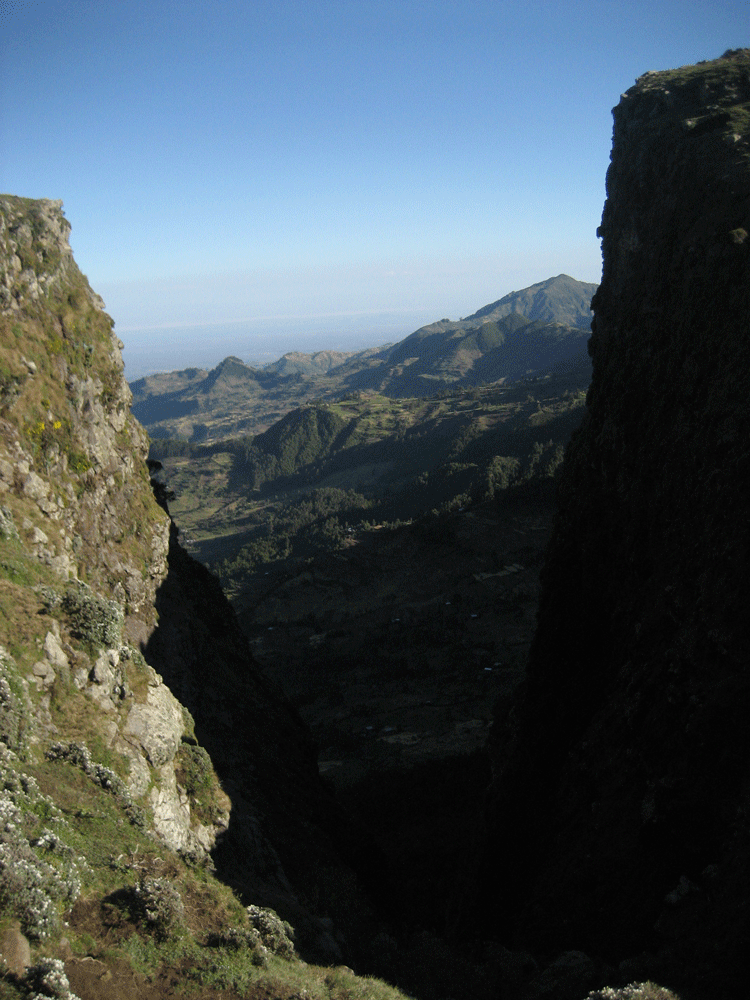
The Rift Valley escarpment at Ankober
Straight back from Africa and straight into the Christmas season! Most years the Microbiology Lab have a Christmas dinner dance at a Bournemouth hotel, but this year they opted for a pub meal at the ‘Slug and Lettuce’ in Richmond Road. Although I have left the lab, Margaret and I were still invited. The meal was fine, but the room was very noisy and it was hard to hear even the person next to you, not ideal for catching up with former friends and colleagues.

Margaret and I at the Christmas Party

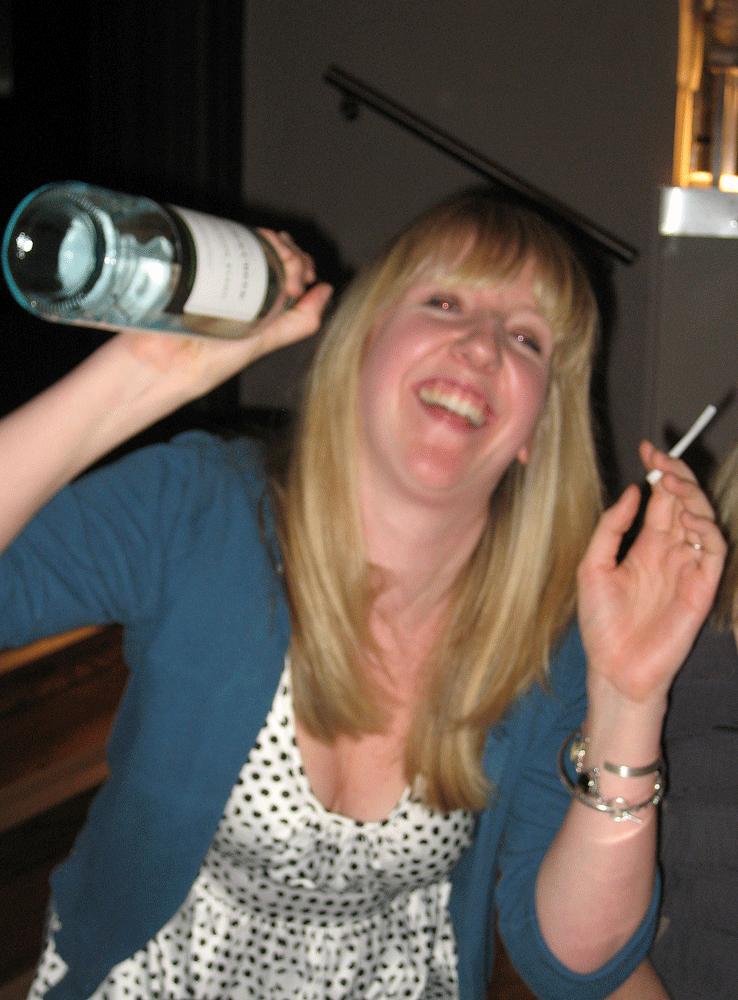
Polly in a party mood.

Rosey was away from the lab for several months before my retirement, so it was particularly nice to catch up with her again.

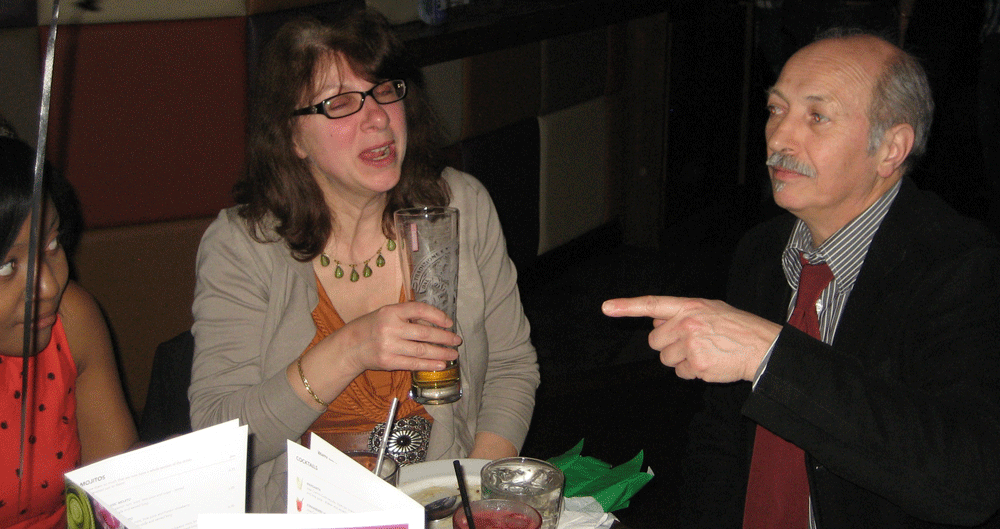
Gio makes a point

Natasha and Lisa, thanks go to Lisa for organising the event.

Sam and Simon are getting married next year.
After nearly a month in Ethiopia I returned home, after numerous flight delays, late last night. I will post a resume of the trip soon and upload some photos as I get round to editing them.
Today I visited Longham Lakes in search of a Blue-winged Teal that has been present for the last week. Normally associating with a pair of Shoveler it was not visible during the two hours I spent there or had been seen by any of the other birders I met. The hybrid duck showing Ferruginous Duck characteristics was also absent.
All was not lost, a female or immature Goosander showed well, as did a Water Rail and it was great to be out on such a lovely day after being cooped up at airports and in planes all of yesterday.

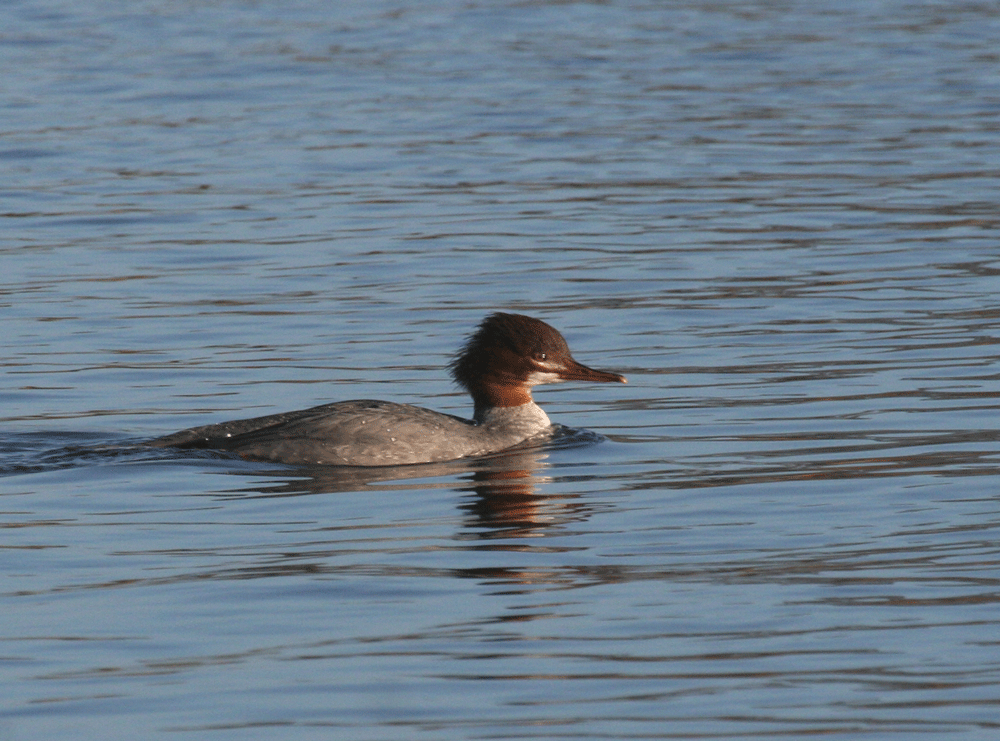
Female or immature Goosander
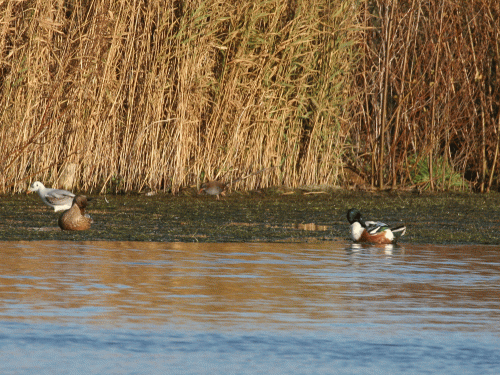
This pair of Shovelers was 'unassociated' with the Blue-winged Teal today. Note the Water Rail in the background..
this posting is just a test to see if I can upload a post from my iPhone
(which I apparently can – complete initially at least with spelling mistakes)

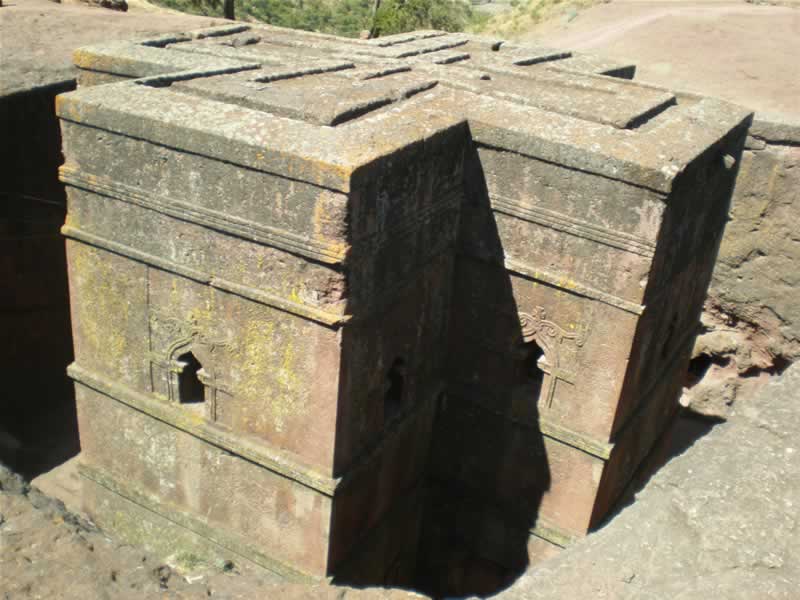
Lalibela: Ethiopia's famous underground rock churches.
This is just a post to apologise for not posting anything for the last few days!
In spite of the fact that I have done over 100 foreign tours I still find getting ready and packing before going abroad to be a bit of a stressful experience which takes three times longer than it should. Add to this damp and windy conditions for the last few days and you can see that I have little to report other than trips to town for last-minute supplies and a bit of very unsuccessful ringing in my garden, where all birds caught have proved to be retraps.
On the 12th I leave for Ethiopia for nearly four weeks, as I am doing a private cultural extension to the churches and tourist sites of Axum and Lalibela after the bird tour. I went to Ethiopia in 1988 but was never really satisfied with the trip, as the less than comprehensive itinerary missed at least ten of the endemics plus several other species found only in southern Ethiopia / Somalia or northern Kenya. This Birdquest tour should correct all that, but frustratingly (presumably for security reasons) doesn’t go to the areas close to the Somali border where such exciting species as Masked Lark, Somali Wheatear and Little Brown Bustard occur.
I won’t have the time or resources to update this blog regularly but might, depending on reception, be able to send an occasional update from my phone.
Photos and details to follow on my return.
Much of Monday was spent preparing for my upcoming foreign trip but in the late afternoon I popped into Hatch Pond where after a short wait a Bitten showed well. This is one of three that have been seen at this small reed bed this autumn. it was a cold, grey day and by the time it appeared light levels were low. Hopefully I will get some better photos later in the winter.
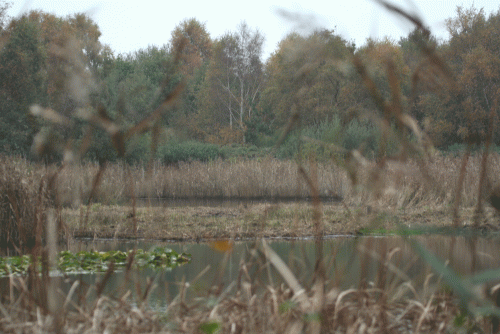
A large area of reed bed has been cut at Hatch Pond, allowing easier viewing of Snipe and hopefully Water Rail and Bittern.

This Bittern was photographed at considerable range in poor light.
On Tuesday morning five us attempted to ring at Durlston. The south-easterly breeze made the goat plots to exposed but we attempted to ring in the garden. The light drizzle at dawn became stronger and we had to pack in soon after 9 with just 12 birds ringed.

These three Blackbirds were caught at the same time and were presumed to be migrants....
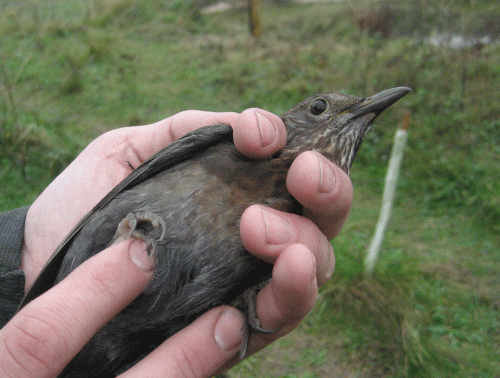
.....is the pale and streaked throat of the female Blackbird an indication of continental origin?












 gryllosblog