Archive for the ‘cotinga’ Tag

Central Peru part 3 – Carpish Tunnel and Bosque Unchog: 13th-17th November 2016.   Leave a comment

We spent four nights in the comfortable yet very noisy hotel in Huanaco. During this time we explored two areas, the partially degraded forests around the Carpish Tunnel and Paty Trail and the cloud forests of Bosque Unchog. We spent two and a half days at the former and two days at the latter.

img_7062-flower-fields

Rising out of Huanaco the road climbs through a mainly dry habitat now largely deforested to grow crops of decorative flowers.

img_6907-carpish-tunnel

As the road emerges from the tunnel under the Carpish Pass onto the eastern side of ridge the habitat changes markedly to humid cloud forest. Once the inevitable jokes about the ‘Carpish Tunnel syndrome’ were complete we set about exploring this wonderful area.

img_6888-cloud-forestjpg

Birding in cloud forest can be tricky. If the cloud lifts the birds tend to be inactive and silent, however too much fog and you can’t see the birds in the murk.

img_5111-football-in-the-fog

The locals are used to it, these kids seem to have no problem playing football in 30m visibility.

img_7057-grey-breasted-mountain-toucan

But when it’s clear enough to see the birds the cloud forest can deliver some real crackers, like this Grey-breasted Mountain Toucan.

img_5108-group-old-guy-on-paty-trail

Most of our time was spent on the Paty Trail which descends from about 2700m near the tunnel to the main road far below. This local man told us he had been down to the town at the start of the track and it had taken him seven hours to climb back up (we met him at about 0900 so most of that was in the dark). A long way to go if you run out of milk!

img_6913-flame-faced-tanager

Many consider the birding in the cloud forests of the eastern slope of the Andes to be the finest in the world. Certainly there is little that can match the flocks of dazzling multi-hued tanagers that appear and disappear out of the gloom, full of gems such as this Flame-faced Tanager ….
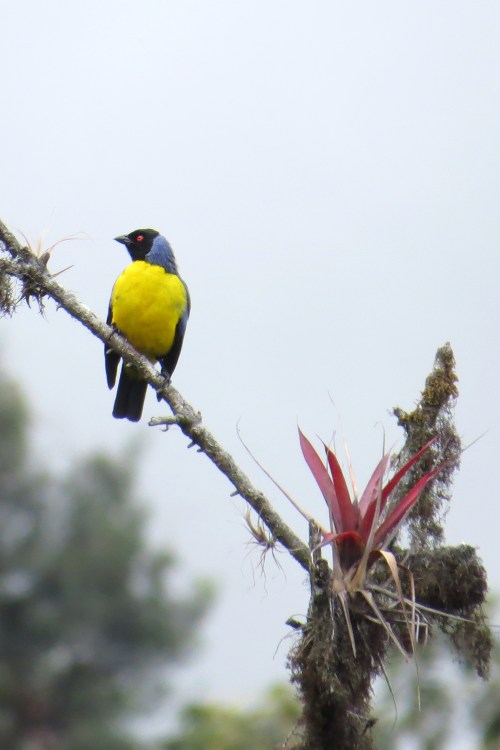
img_6923-hooded-mountain-tanager

…. or this Hooded Mountain Tanager

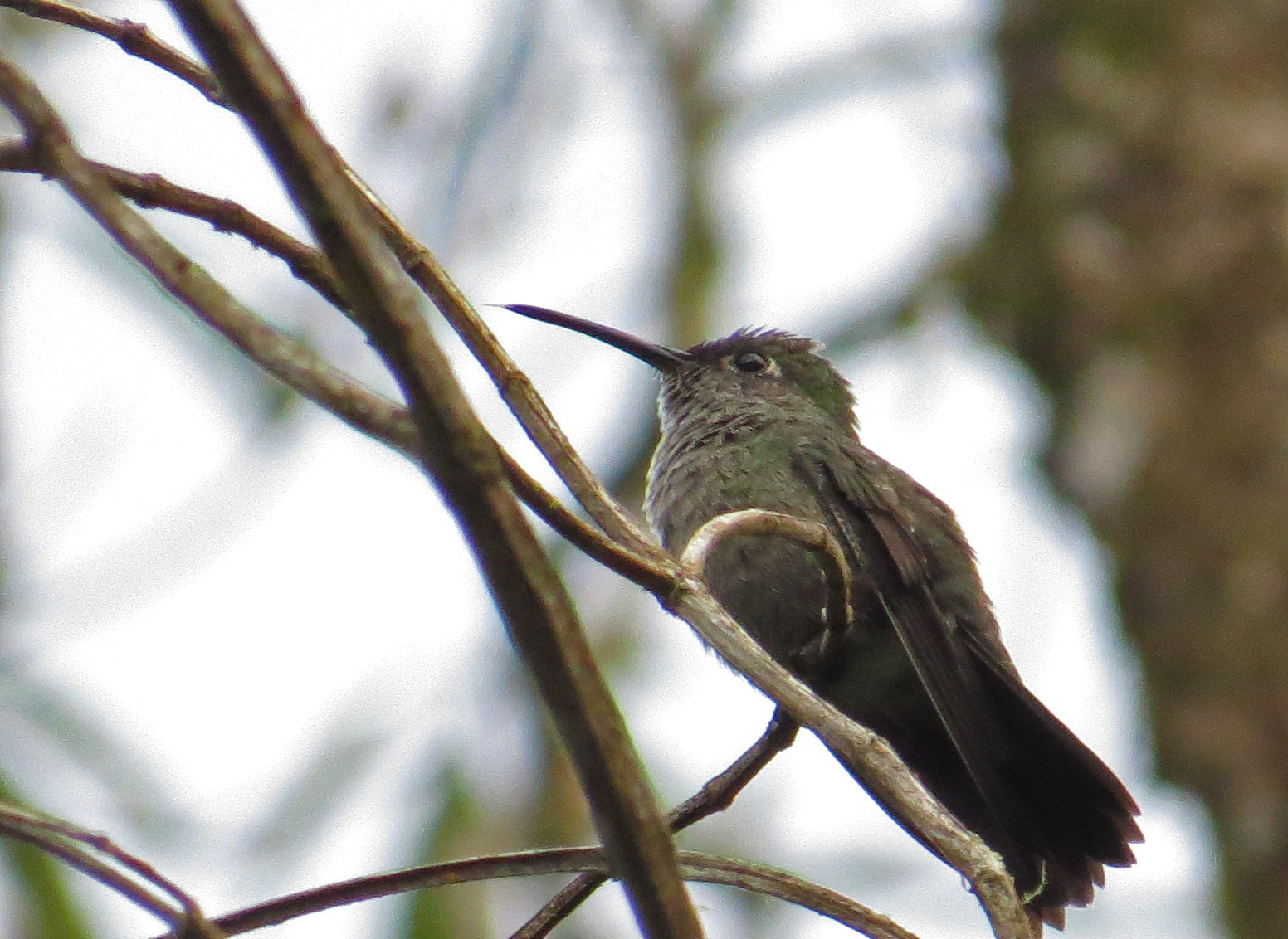
img_7064-hummer-to-id

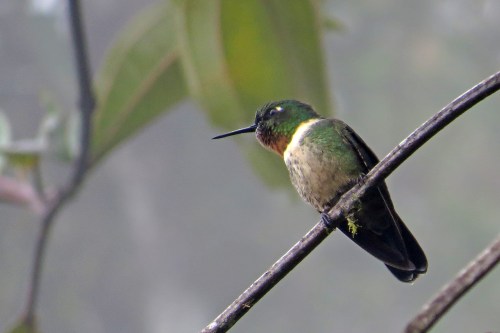
…. Hummingbirds were represented by Amethyst-throated Sunangel ….

img_6900-collared-incajpg

…. and Collared Inca.

img_6931-streaked-tuftedcheek

We didn’t see as many furnarids here as in the open puna habitats on this tour, but Streaked Tuftedcheek was seen quite regularly in the cloud forest.
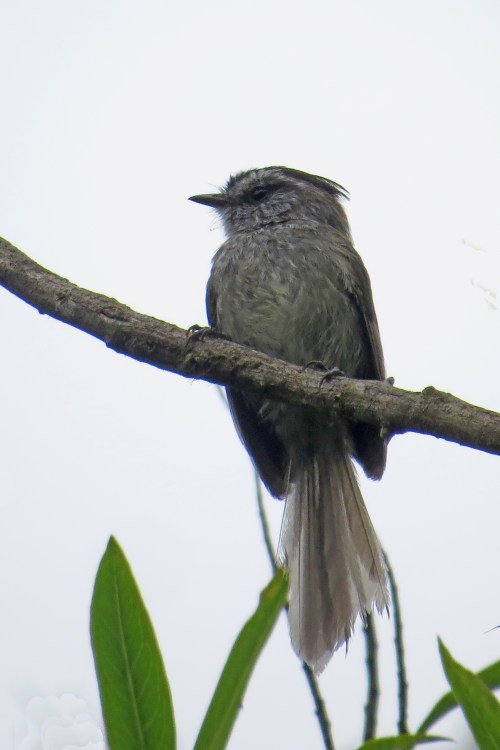
img_7070-unstreaked-tit-tyrant

No Neotropical forest would be complete without its quota of tyrant flycatchers – here an Unstreaked Tit-tyrant ….
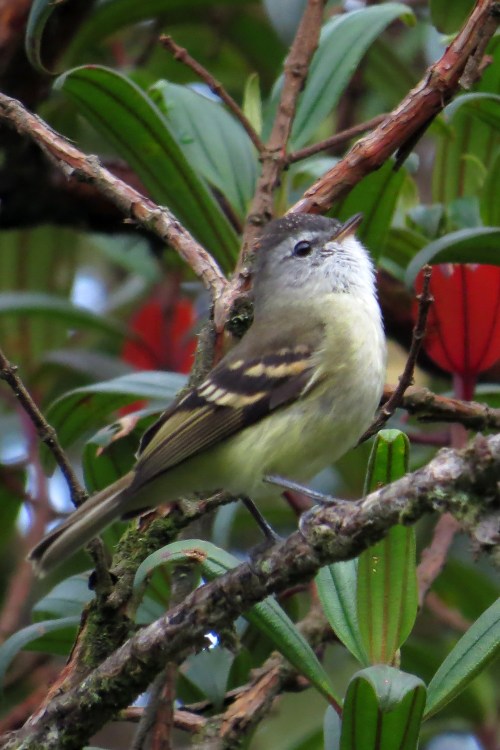
img_7164-tawny-rumped-tyrannulet

…. and here a lovely little Tawny-rumped Tyrannulet. Many UK birders if told this little bird with its wing bars, insectivorous bill and yellow, grey and brown plumage was a Phylloscopus warbler would go all dewy-eyed, however if told it was a tyrannulet they would diss it as ‘list fodder’.
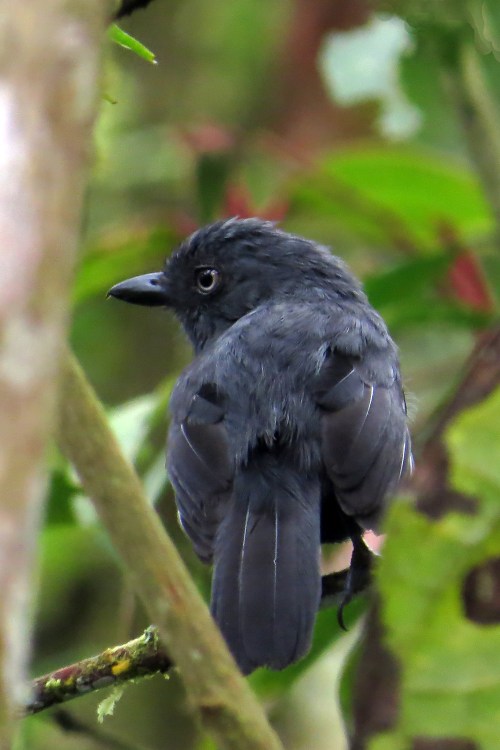
img_7182-uniform-antshrike

Antbirds tend to be more characteristic of lowland habitats, although a few reach mid-elevation. This Uniform Antshrike was one of them.
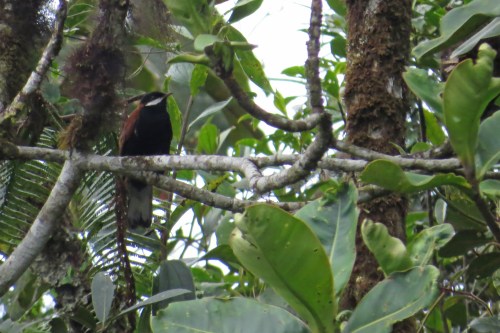
img_7078-wc-solitaire

This forest held a high concentration of White-eared Solitaires and their single high bell-like note, sounding like an alert on a mobile phone, was regularly heard.

img_7174-band-tailed-fruiteater

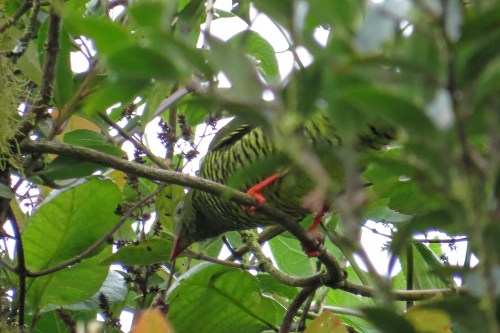
Of all of the neotropical passerines, the cotingas are some of the most spectacular. We may have dipped on White-cheeked Cotinga earlier on in the trip but here we scored with Band-tailed Fruiteater ….
img_6889-barred-fruiteater

…. and Barred Fruiteater.

img_7088-swallow-tailed-kite

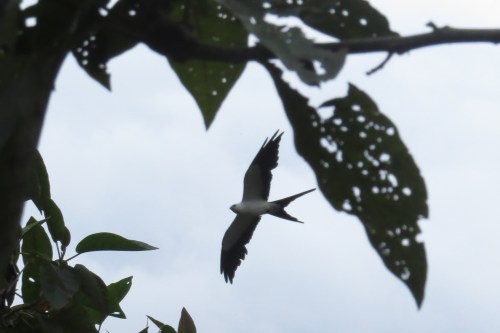
Overhead we caught a glimpse of the elegant Swallow-tailed Kite through the foliage ….

img_7059-paty-trail

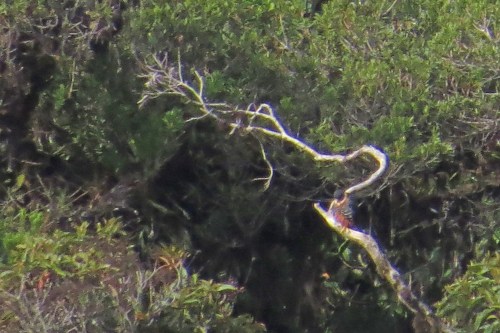
…. but it was much further down, below the level of the clouds, that we had distant views of one of the top birds of the trip ….
img_6949-ob-falcon

…. the widespread but rare and totally stunning Orange-breasted Falcon. I have made multiple trips to areas within this bird’s range which extends from Belize to Argentina, but have always dipped. We could hear it calling for ages before sharp-eyed Ken picked it up in flight and was able to follow it back to a perch. It was possibly over 1Km away but such is the power of digital photography that I was able to get a record shot.

img_6871-tschudis-tapaculo

Another group of neotropical passerines that always generate a lot of excitement are the tapaculos. In the south, in Chile and Argentina there are some large tapaculos that inhabit open areas but the cloud forests and puna are inhabited by the Scytalopus tapaculos. All Scytalopus are similar (there are 43 of them) and many can only be told apart by their vocalisations. This photo might not be in focus but it captures the jizz of these charming little birds perfectly. With their short wings and tail they seldom fly and skulk around invisibly on the ground. When responding to a tape they have been known to pass unseen between an observers legs. The dry La Nina conditions meant that many of the tapaculos and antpittas weren’t responding, although in the end we did see a full suit of seven tapaculos but only four out of the seven possible antpittas – and we had to do a lot of work to see those.
 

img_6958-bosque-unchog

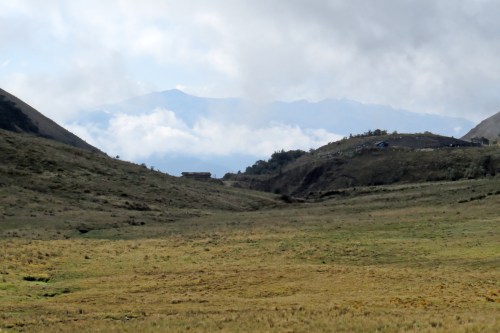
The other site we visited during our stay at in this area was Bosque Unchog. In the past you have had to camp at this rather wet and cold location but road improvements have made it possible to day-trip it from Huanaco

img_6956-andean-lapwing

The only birds we saw in the boggy areas were Andean Lapwings ….

img_6962-bosque-unchog

…. but our goal was the cloud forest below this escarpment.
img_6973-bosque-unchog

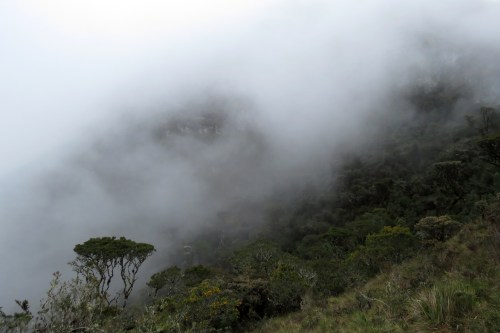
These cloud wreathed trees are home to a range of very special birds but finding them in the fog can be problematic.

img_6981-bosque-unchog

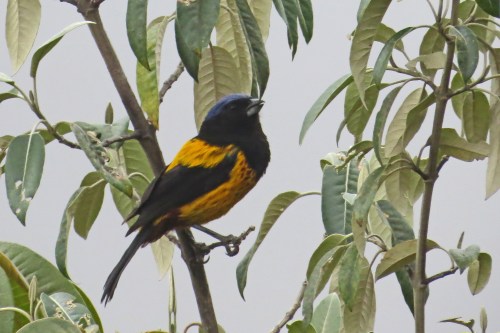
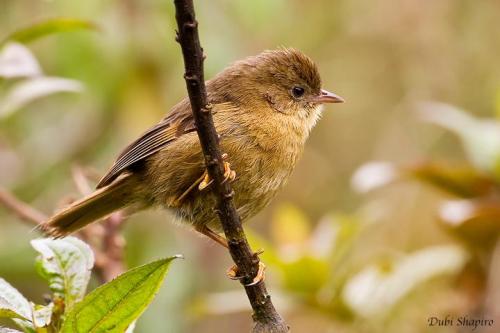
In the 1970s researchers from Louisiana State University discovered three new species to science at this site. In this high area of elfin forest they found a new mountain-tanager (Golden-backed Mountain-Tanager, one of the largest tanagers of all) a cotinga in a totally new genus (the Bay-vented Cotinga), and a very odd little tanager, the Pardusco. We were able to see all three of these wonderful birds.
img_7022-golden-mantled-mountain-tanager

Firstly the beautiful Golden-backed Mountain Tanager ….
 

pardusco-dubi-shapiro-bu

The second of the LSU’s discoveries was the Pardusco, a dull coloured gregarious tanager. Photographing these fast moving specialities in foggy conditions was tricky, so I have used a picture from the Internet Bird Collection taken by Dubi Shapiro at Bosque Unchog.

img_7123-bay-vented-cotinga

It took some time to find this Bay-vented Cotinga in the mist but we were eventually rewarded with great views.


rufousbhemispingus-martin-reid-at-bu

Another speciality was Rufous-browed Hemispingus, another species of tanager. This photo was also taken at Bosque Unchog by my friend Martin Reid. Martin used to live in Dorset and we went on a series of twitches together and even did a trip to Morocco. He now lives in Texas and I haven’t seen him for over 20 years, but thanks to social media its easy to stay in touch.

golden-collared-tanager

Another target species was this Golden-collared Tanager. I was the only one to see this gem at Bosque Unchog but fortunately everybody else connected later in the tour. This second bird (above) was photographed by tour participant and my roommate Steve Lowe.
 

img_7135-bosque-unchog

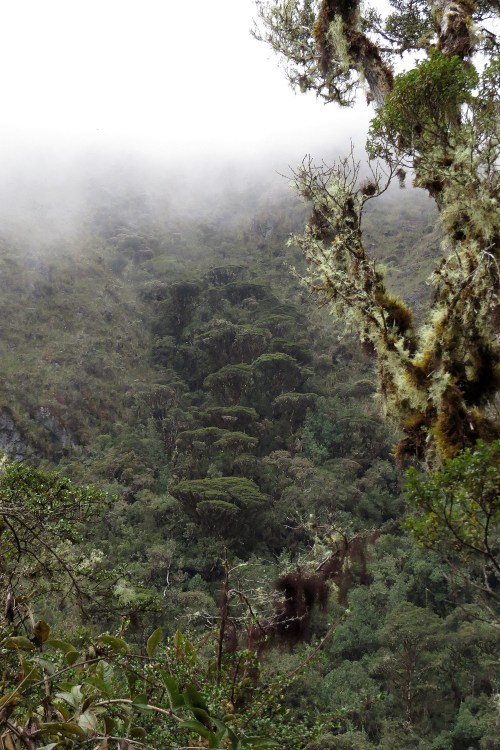
It was time to say goodbye to these beautiful moss-covered forests …..
img_7048-below-bosque-unchog

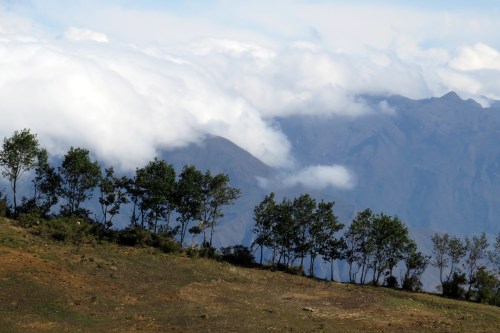
On the way back we stopped to explore the dry side of the mountain. As happens regularly in the Andes cloud builds up on the eastern slope during the day and overspills onto the drier western flank where it rapidly evaporates.

img_7045-below-bosque-unchog

We were able to investigate this drier habitat more fully on our second visit to Bosque Unchog and get good views of Brown-flanked Tanager and few other species that had eluded us on our first visit.

img_7153-ruined-building

Much of the habitat in this area has been degraded for agriculture – although many farmers are leaving for work in the cities as the many abandoned buildings attests.
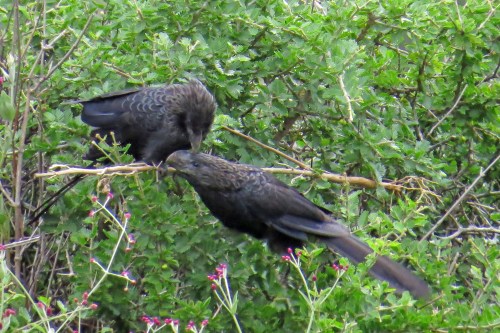
img_7159-groove-billed-anis

As well as seeing a some of the specialities of this region we also saw many widespread birds such as these Groove-billed Anis, a type of cuckoo.


The following day we left Huanaco and after some final birding on the Paty Trail drove to Huariaca for the night. The day after we reached the wonderful Lake Junin and that will be the subject of the next post.
Brazil part 5: Serra Bonita, Porto Segura and Itacare, Bahia – 29th Jan – 1st Feb 2015   Leave a comment

This is the fifth and final report on my north-east Brazil trip.

From Boa Nova we continued south to the Serra das Lontras range and the Serra Bonita reserve. From here we headed south-east reaching the coast at Porto Segura before heading north towards Salvador for our flight home.

IMG_1739 Serra Bonita

We spent three nights at the private reserve of Serra Bonita near the town of Camacan which produced some excellent birding.

IMG_1970 view Serra Bonita

There was a beautiful panoramic view over the town from the restaurant, especially first thing in the morning.

IMG_1647 RT Jacamar

Here are a few birds from the Serra Bonita forests – Rufous-throated Jacamar ….

IMG_1807 Crescent-chested Puffbird

…. Crescent-chested Puffbird ….

IMG_1981 Blue Mannakin

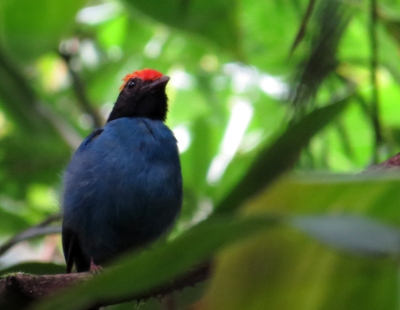
…. Blue Manakin ….

IMG_2149 Treehunter sp nov

…. but the star bird was this undescribed species of Heliobretus treehunter. A full description is in the pipeline and it will probably be given the vernacular name of Serra das Lontras Treehunter. This is a copy of a print by Ciro Albano https://www.flickr.com/photos/ciroalbanofotos/ and is used with permission.

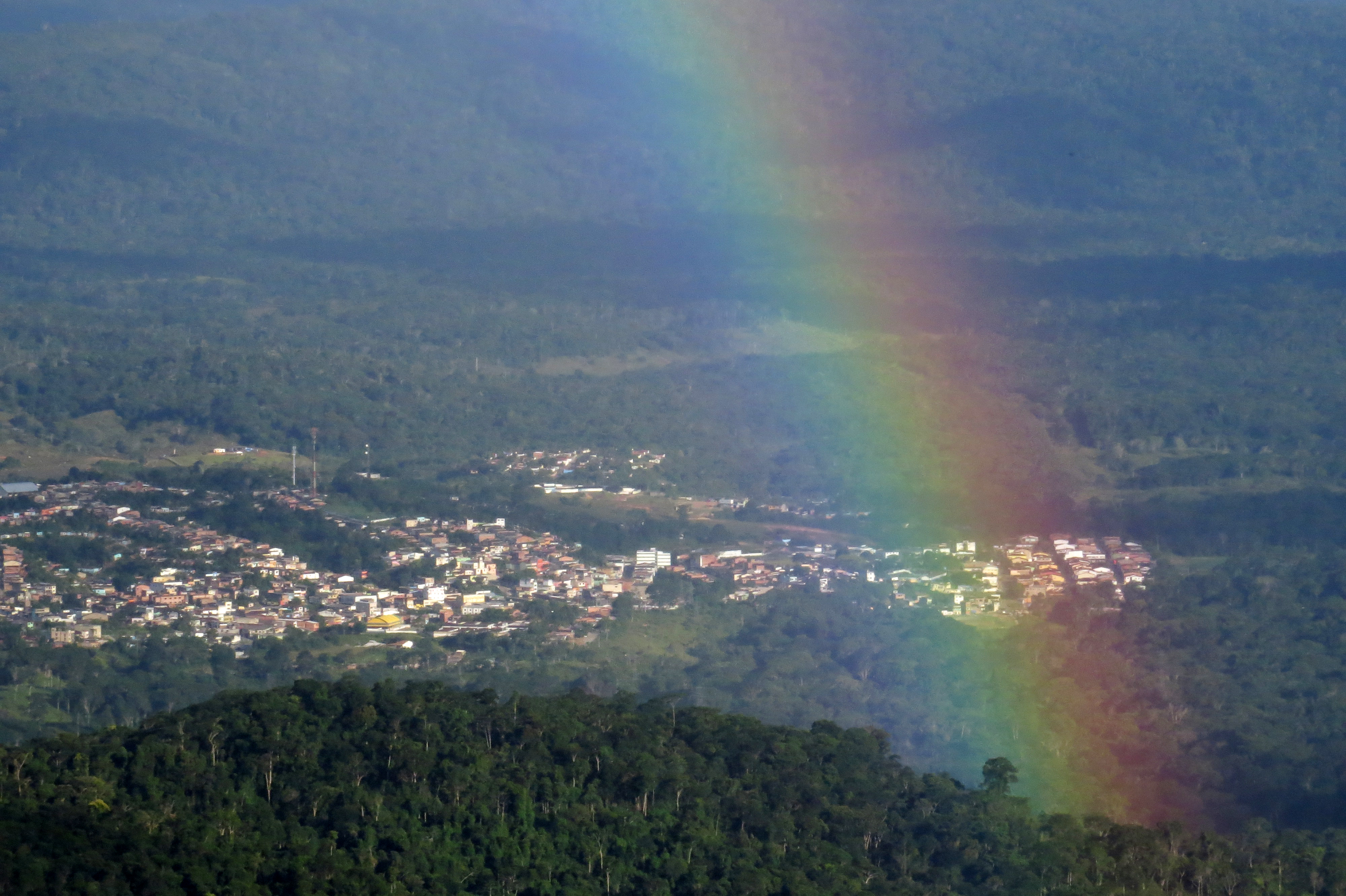
IMG_1827 rainbow Serra Bonita

A middle of the day shower produced a stunning rainbow over the town

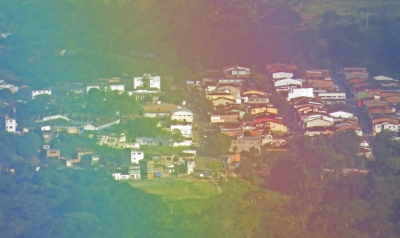
IMG_1818 rainbow

… giving some most unusual effect when I engaged the maximum zoom setting.

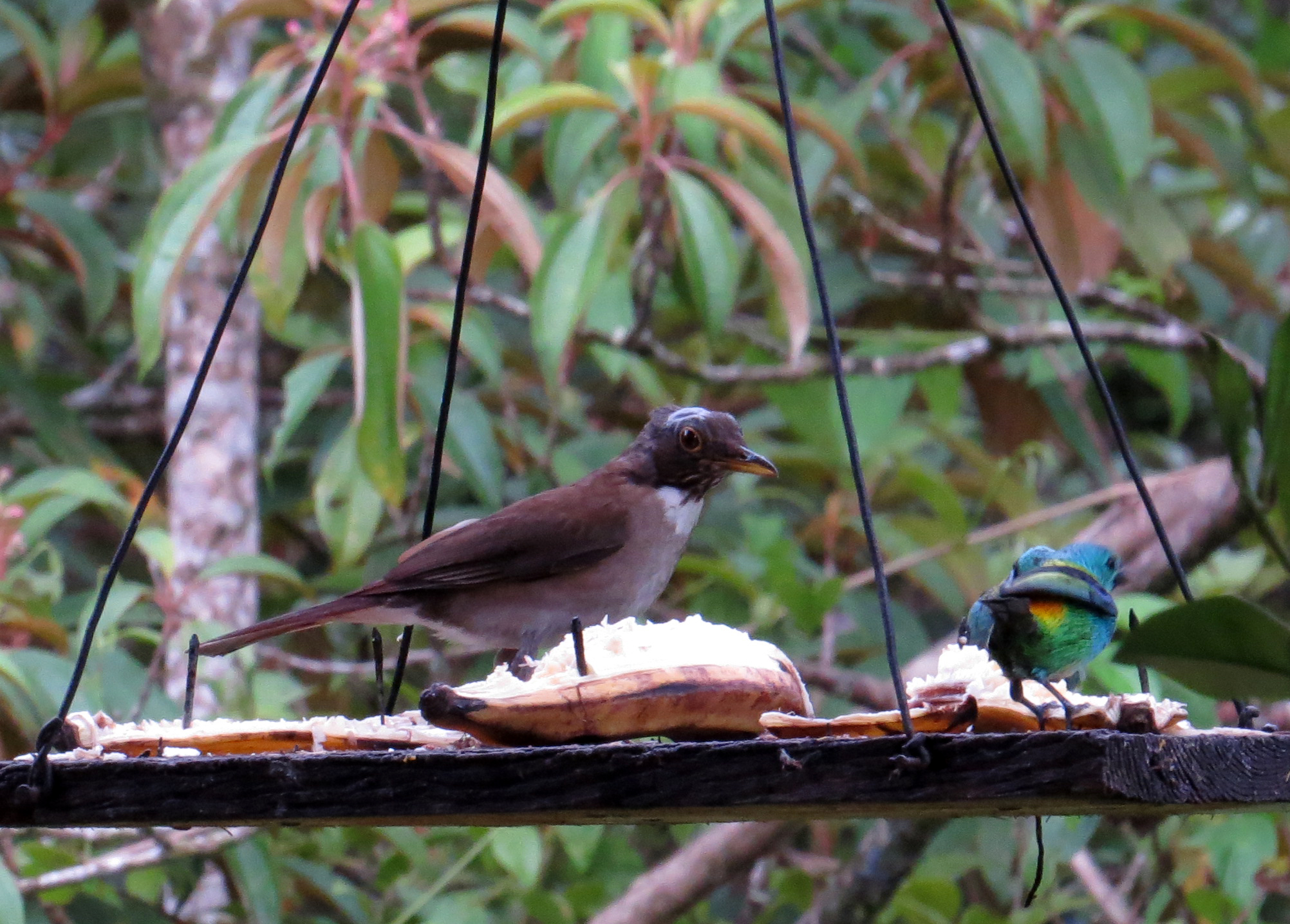
IMG_1837 Wn thrush

Feeders around the HQ gave some great photo opportunities – here a White-necked Thrush with two Green-headed Tanagers.

IMG_1928 GH Tanager & G Honeycreeper

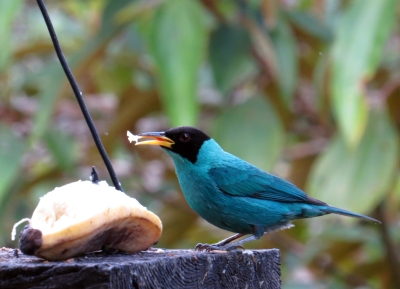
A Green-headed Tanager with a Green Honeycreeper.

IMG_2056 Green Honeycreeper

Female Green Honeycreeprs are just that, but the male is more of a blue colour.

IMG_1956 Chestnut-bellied Euphonia

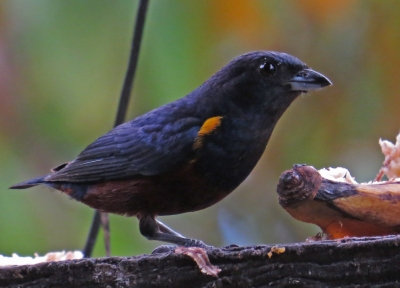
Chestnut-bellied Euphonias were out numbered by their orange-bellied cousins but I have kept a photo of that species for later.

IMG_1924 RN Tanager

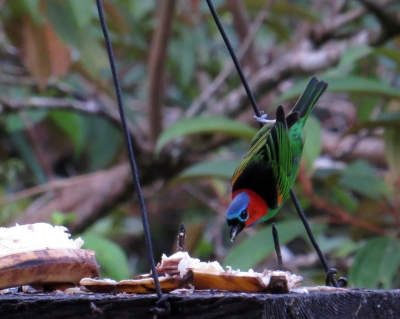
and finally the incredible Red-necked Tanager.

IMG_2103 Serra Bonita feeders

The hummingbird feeders were filled just before dusk to give the birds some calories before their overnight fast. Here Sombre Hummingbirds and a Black Jacobin vie for position.

IMG_1883 VC Woodnymph

A male Violet-capped Woodnymph catches the light just right.

IMG_1885 imm Black Inca

Only the immature Black Inca shows this brown moustachial stripe.

IMG_2157 Frilled Coquette

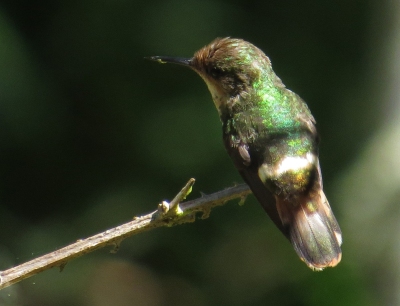
A tiny female Frilled Coquette. The smallest hummer in the world is the Bee Hummingbird of Cuba but the coquettes are not far behind.

IMG_2077 Serra Bonita views

Our final success at Serra Bonita was distant views of the rare Mantled Hawk from the highest peak.

IMG_1468 Hawk moth

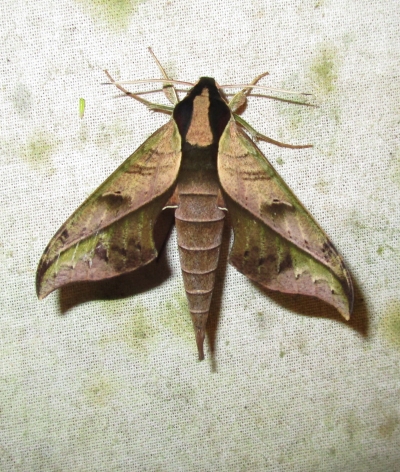
The owner of Serra Bonita is a moth expert and runs a mercury vapor light regularly. Of the 24,000 species known from Brazil, he has identified 12,000 just on this reserve. This contrasts with just 2,500 ever recorded in the UK where there are thousands of moth enthusiasts trapping on a regular basis. I’ve no idea of the name but presume this is some species of Hawk-moth.

IMG_1476 moths

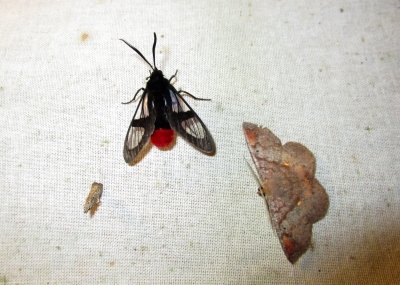
An unidentified micro-moth, a clearwing and what I presume is a one of the Geometridae.

IMG_2170 Variagated Fly

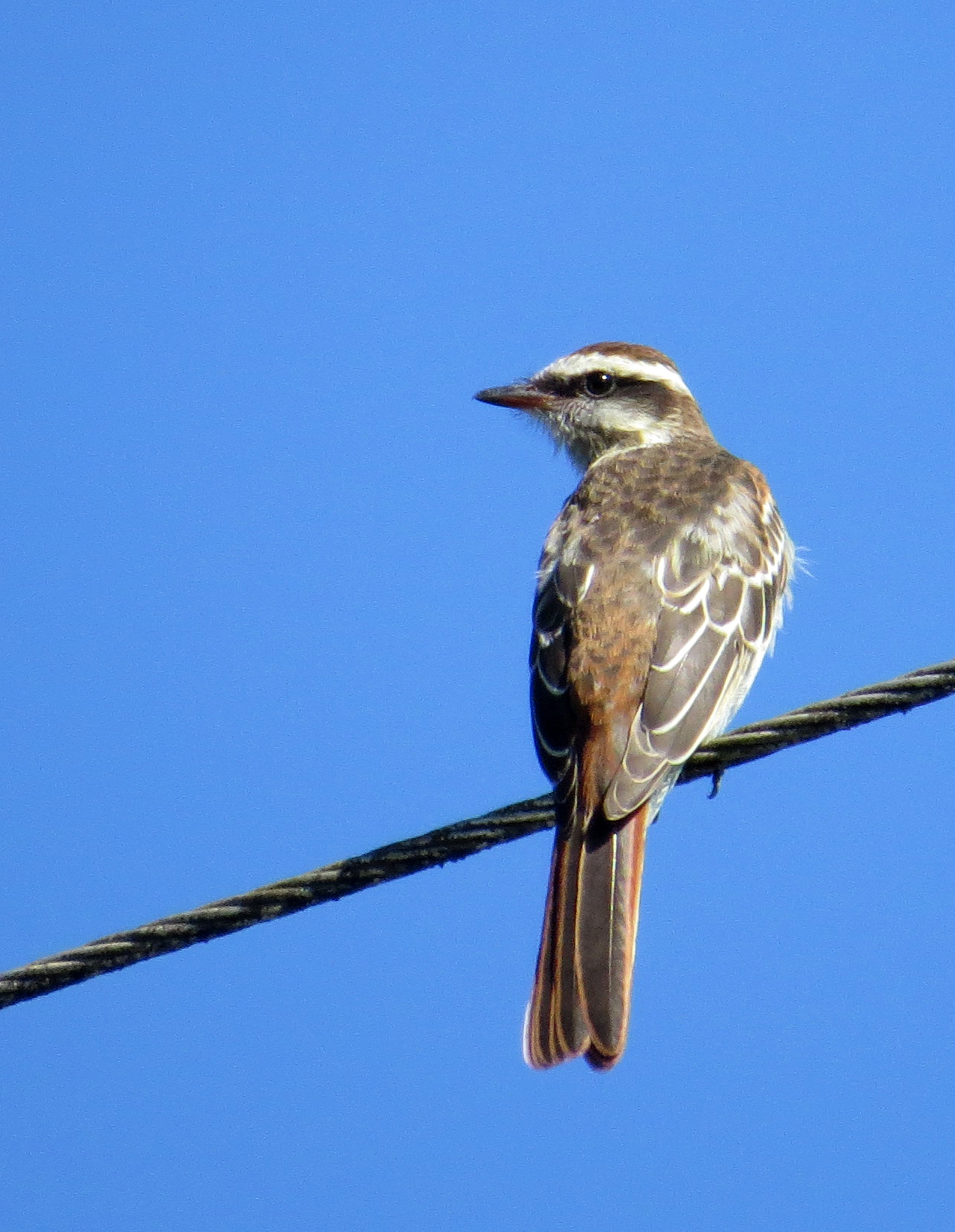
From Serra Bonita we continued to the most southerly point of the trip at Porto Segura. On route we saw many interesting species varying from the widespread Variegated Flycatcher ….

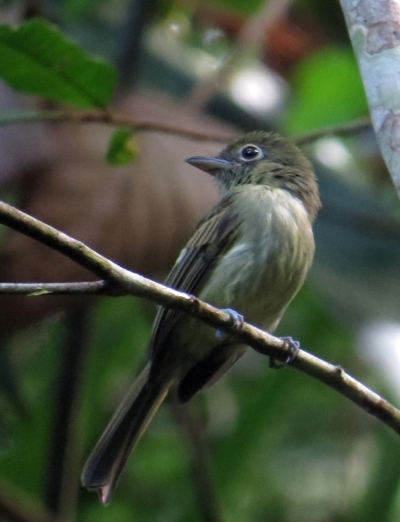
IMG_2209 Olivaceous Flatbill

…. Olivaceous Flatbill ….

IMG_2298 Southern Roughwing

…. and Southern Roughwing ….

IMG_2207 Eastern Striped Manakin

…. to the range restricted Eastern Striped Manakin ….

IMG_2222 Least Pygmy Owl

…. and Least Pygmy Owl.

IMG_1479 1st Portugeuse in Brazil - hotel foyer

Porto Seguro is famous as the first place in modern Brazil to be visited by Europeans, being first visited by the Pedro Álvares Cabral expedition in April 1500. As the area lay within the part of the world allocated to Portugal by the Treaty of Tordesillas, a Papal Bull declaring that all newly discovered lands were to be divided up between Spain and Portugal, the region was claimed for Portugal. This characature of Pedro Álvares Cabral was painted on the wall of the foyer of our hotel.

IMG_2066 Golden-bellied Euphonia

From Porto Seguro (the southernmost point of the trip) we headed north to Itacaré, our final birding destination. On route we stopped at our guide Eduardo’s brother’s house where we could see lots of nice birds coming to the feeder such as this Orange-bellied Euphonia ….

IMG_2335 RL Honeycreeper

…. Red-legged Honeycreeper ….

IMG_2344 Brazillian Tanager f

…. and a female Brazilian Tanager

IMG_2418 Aracari to ID

The following day we birded nearby forests seeing many species such as this Black-necked Aracari ….

IMG_2395 B& W Hawk-eagle

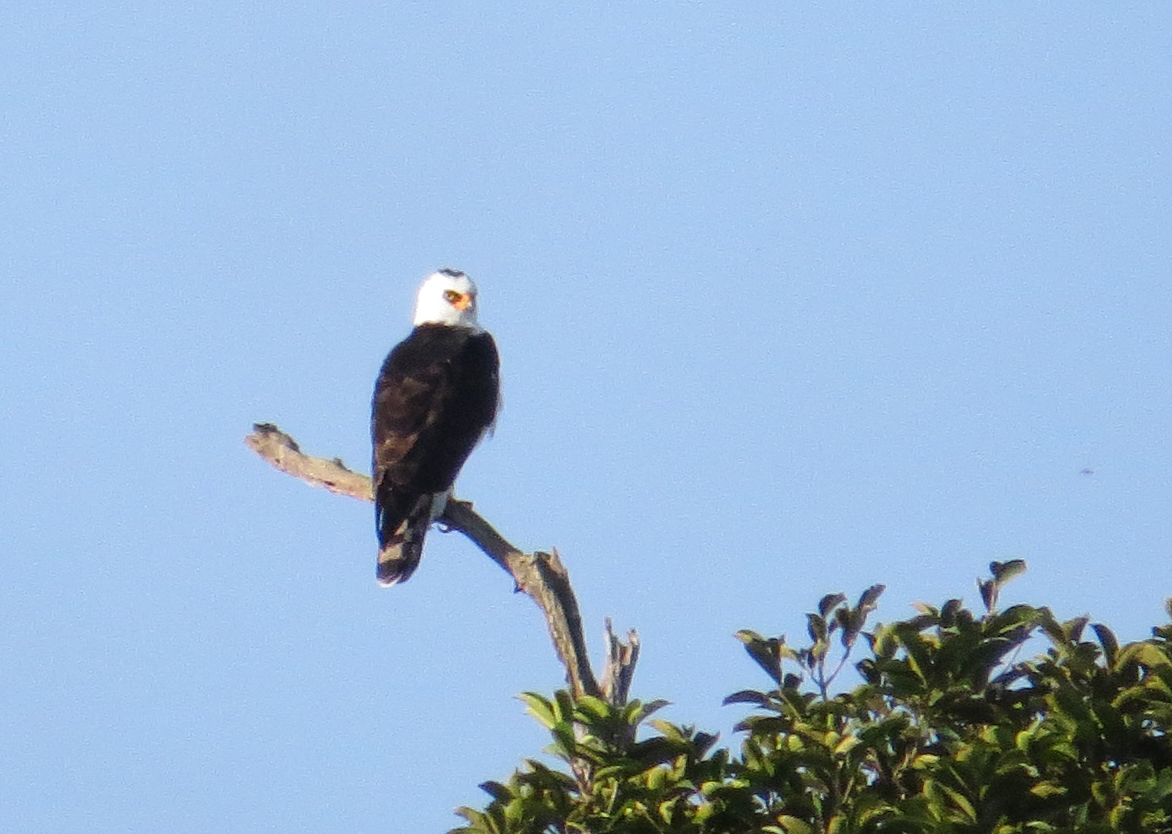
…. and this magnificent Black-and-White Hawk-eagle. This is the first time I have seen an adult of this species and the first time perched.

IMG_2435 mangroves

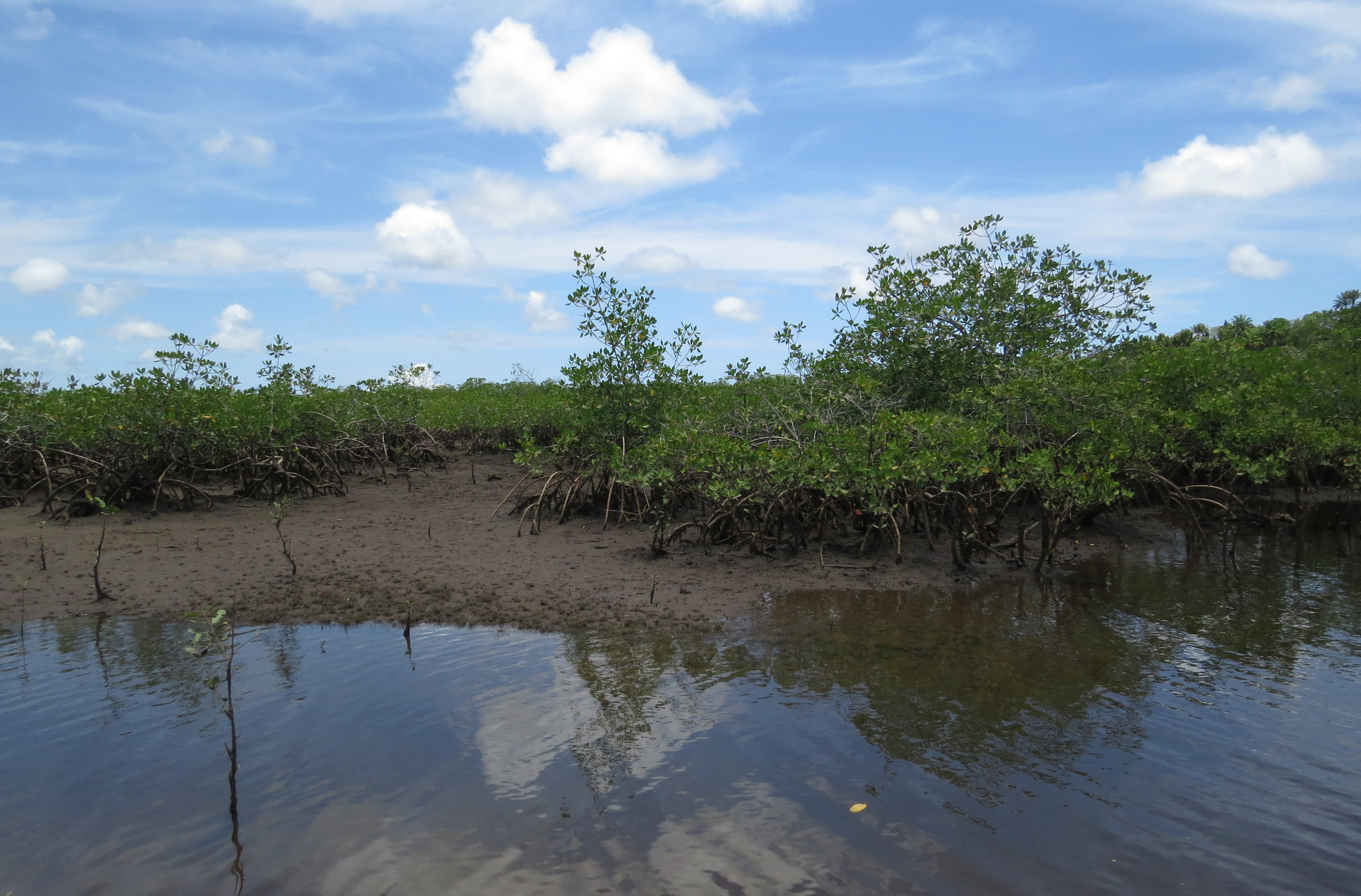
Later in the day we called in at an extensive area of mangroves in the hope of see the two species of rail that we had failed to find earlier in the trip, Little Wood-rail and Mangrove Rail. It was very hot and we had no luck. We hoped to return the next day but unfortunately it didn’t pan out that way.

IMG_2443 beach resort at Itarce

We had lunch by the beach at Itacaré ….

IMG_2444 Eduardo and brother

… at a beach restaurant run by (on the left) Eduardo’s brother Leo.

IMG_2484 lake

In the afternoon we visited the Catitu private reserve.

IMG_2450 BH Berryeater

We saw four excellent species of cotinga, both Black-headed Berryeater

IMG_2289 WW Cotinga

…. and White-winged Cotinga showed well. Bare-throated Bellbird was seen at a distance (but I only got very poor photos) but the best of all, the rare Banded Cotinga, was seen perched at such a distance that it couldn’t be identified until it flew.

IMG_1486 Itacire

Our final night was again spent in the pleasant holiday resort of Itacaré. The following morning we revisited Catitu in the hope of better views of Banded Cotinga. We had a very birdy morning but failed with our primary target. This was the only day on the whole trip when I failed to pick up a life bird.

IMG_1490 fiesta

Then it was  long drive north to Salvador for our flight to Lisbon and home. Initially following the coast road, the journey was delayed by poor roads, heavy traffic, a funeral procession and (above) a fiesta, but we arrived at the airport in good time, so concluding an excellent trip. I personally recorded just short of 500 species. I had expected 65 life birds, 70 if I was very lucky, I got 78 and saw a couple of fantastic species that I didn’t know were even possible on this itinerary. There is a lot of driving on this trip but the results make it more than worthwhile.

WW Potoo IBC Ciro Albano

But I will finish this narrative with another bird that deserves the epithet of ‘bird of the trip’ and one that wasn’t on my radar at all at the start. We bumped into Ciro Albano and his group at Veracel reserve near Porto Segura and after dark we all were able to get great views of two White-winged Potoos. Photo by Ciro Albano from the Internet Bird Collection.