One of the most interesting events Margaret and I have attended in the last couple of weeks was a talk in Poole by adventurer Ray Mears. Well known in the UK from his television programs on survival in the great outdoors and the skills of native people, he gave a fascinating talk illustrated with stills and videos on his travels in the boreal forests of Canada, Scandinavia and Siberia and of conservation initiatives that he has been involved in in many parts of the world.

Here Ray Mears explains what to do if confronted by an uncomfortably close Black Bear – apparently the answer is lower your head and don’t look it in the eye.
During the last week the weather has changed markedly. With the wind in the south it has remained unseasonably warm but there has been a lot of rain and high winds which had greatly curtailed our ringing efforts.
However before the change in weather we had great success with our ringing program at Durlston Country Park with catches of between 54 and 122 birds in the week leading up to the 15th, most of these predictably were Chiffchaffs and Blackcaps but we consider it most worthwhile to continue to monitor the movements of these common migrants. On the 15th I was on my own at Durlston ringing a nice selection of birds that included a very late Garden Warbler, two Stonechats and a Treecreeper. Although there were plenty of birds I was coping well, but about lunchtime I started catching a lot of Swallows. Everything else was packed away and I concentrated that afternoon on ringing Swallows ending up with over 160 of them. Back in the 80’s I used to ring a lot of Swallows at roost and got a large number of controls i.e the capture of a bird previously ringed by someone else but I had no such luck today. Final total was 227 and I was pretty knackered after ringing for nine hours without a break.

Although Stonechats breed at Durlston they are quite rare within our enclosed ringing area.
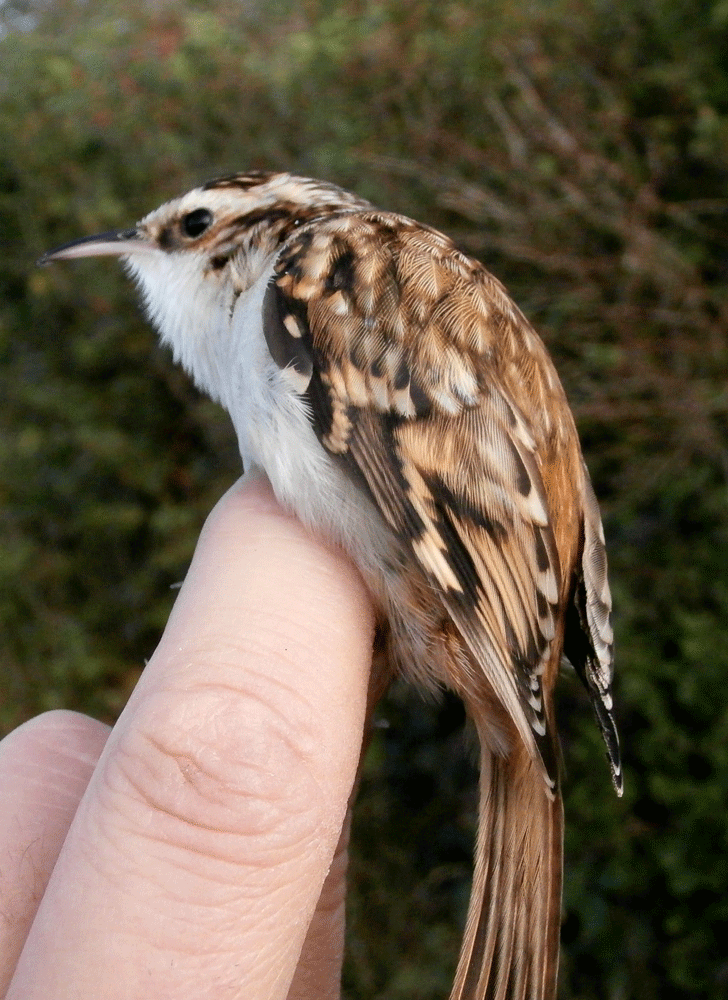
The first Treecreeper we have ringed at Durlston. Given the sites coastal locality it was carefully scrutinised to make sure it wasn’t the mega rare Short-toed Treecreeper from the continent.
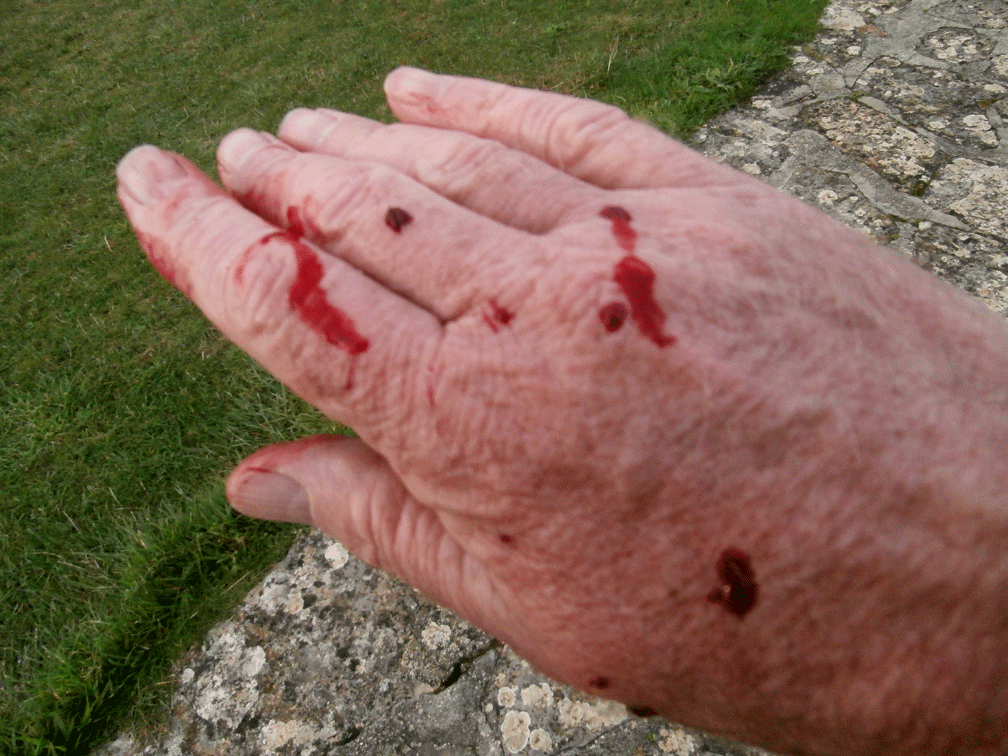
We know that a properly trained ringer can extract and handle a bird without hurting it, however the reverse is not necessarily true! A large female Sparrowhawk sunk both its talons into the back of my hand and the only alternative was to release the bird or pull my hand away until the skin tore. I chose the latter.

One day we trapped a Lesser Redpoll, the smallest, darkest and commonest (in the UK) of the various Redpoll taxa.

With the winds increasing after the 15th I made a couple of visits to Fleets Lane site in Poole which is much more sheltered. The blue rather than bluish-green moustachial stripe, paler legs and most importantly the presence of wing moult identifies it as an adult (the first I have seen in the hand) and the all dark bill as a male. The bird was already ringed and was originally trapped as a first year at Lytchett Bay in 2012.
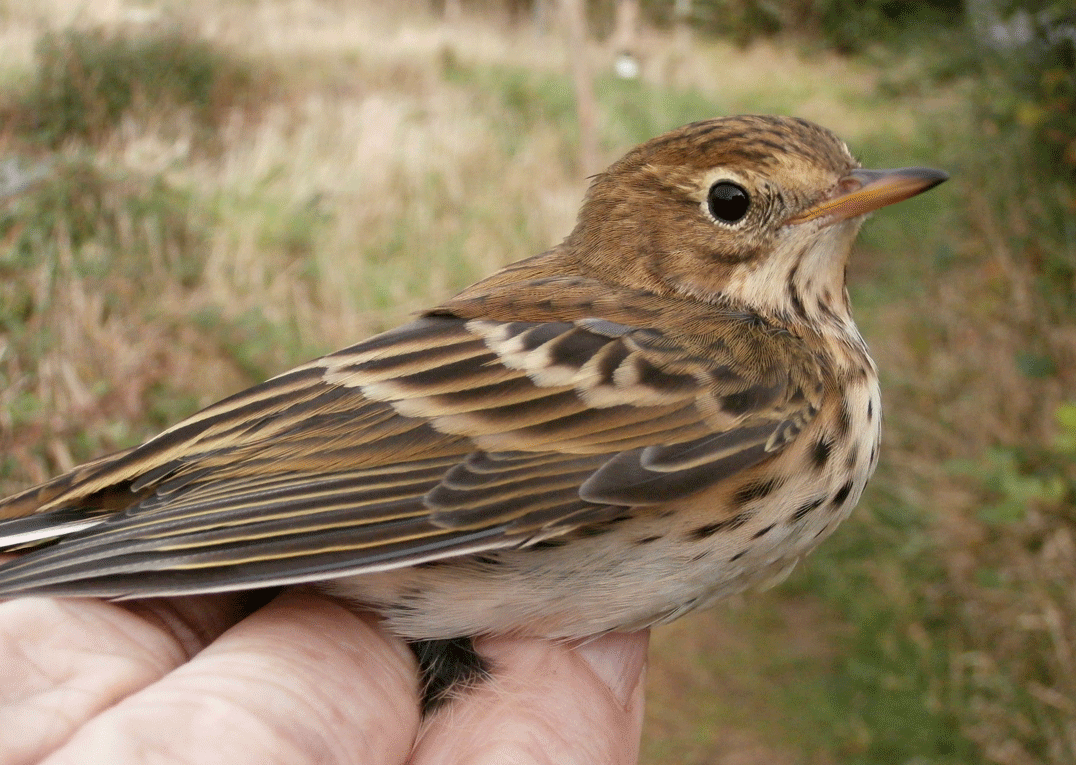
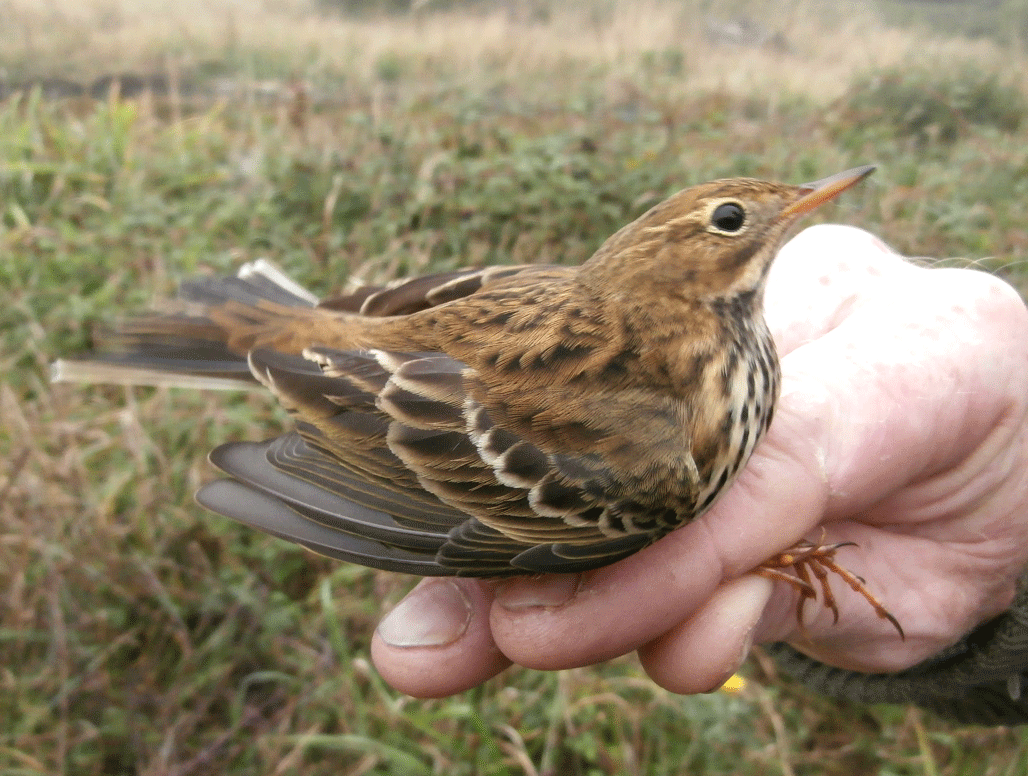
There was a break in the constant windy conditions on the 24th and I was back at Durlston. There were a good number of birds including a few Meadow Pipits (above) and Swallows passing overhead but the migration of warblers has all but stopped with just a few Chiffchaffs and Blackcaps trapped.

By far the commonest bird was Goldfinch, hundreds flew overhead and we managed to ring over 60. Up to 80% of the British Goldfinch population winters overseas and autumn is the time of peak abundance.
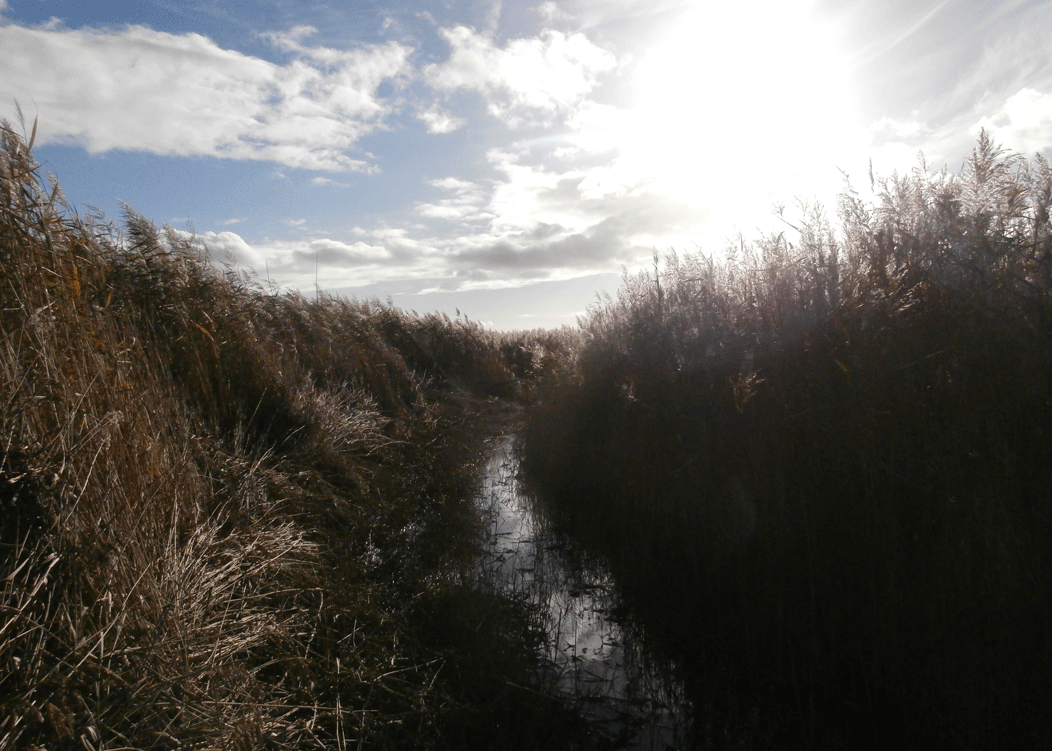
As well as ringing birds I have been involved in fair amount of maintenance work in the last few days with net rides either cut or maintained at Holton Lee, Lytchett Bay and Arne (for a public ringing demonstration on the 26th). The above photo shows the excessively smelly and muddy net ride at Lytchett that we used to trap wagtails on autumn migration.

Now that winter approaches the monthly counts of wildfowl and waders across the country restarts. Unfortunately the count on the 13th was marred by poor visibility and rain. You can hardly see the flats at the south end of Holes Bay let alone pick out small waders in the distance.
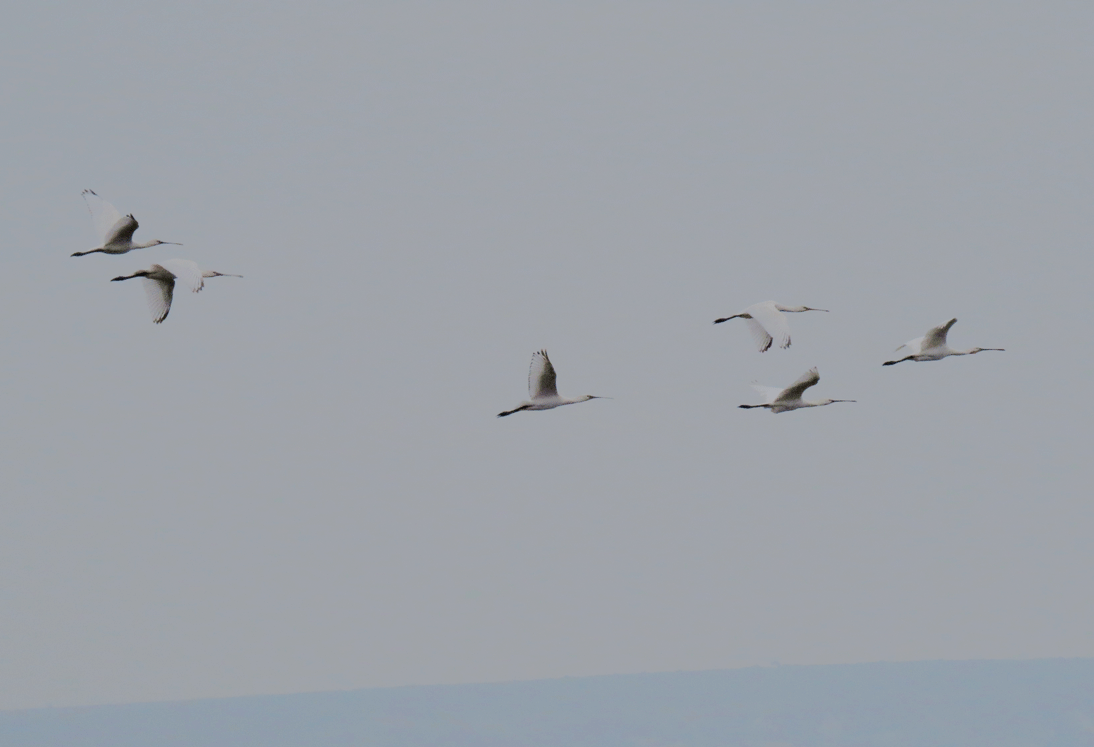
Over the last few days there have been a number of rare birds in Dorset however either I haven’t managed to go and see them or my attempts have been unsuccessful. On the 21st a report of an American wader Lesser Yellowlegs at Swineham near Wareham drew a blank and on the 22nd whilst doing some net ride clearance at Holton Lee I heard that a Great White Egret had been seen earlier at Arne RSPB, again I had no luck but there were 28 Spoonbills at Shipstal Point – I wonder if they will ever stay and breed.
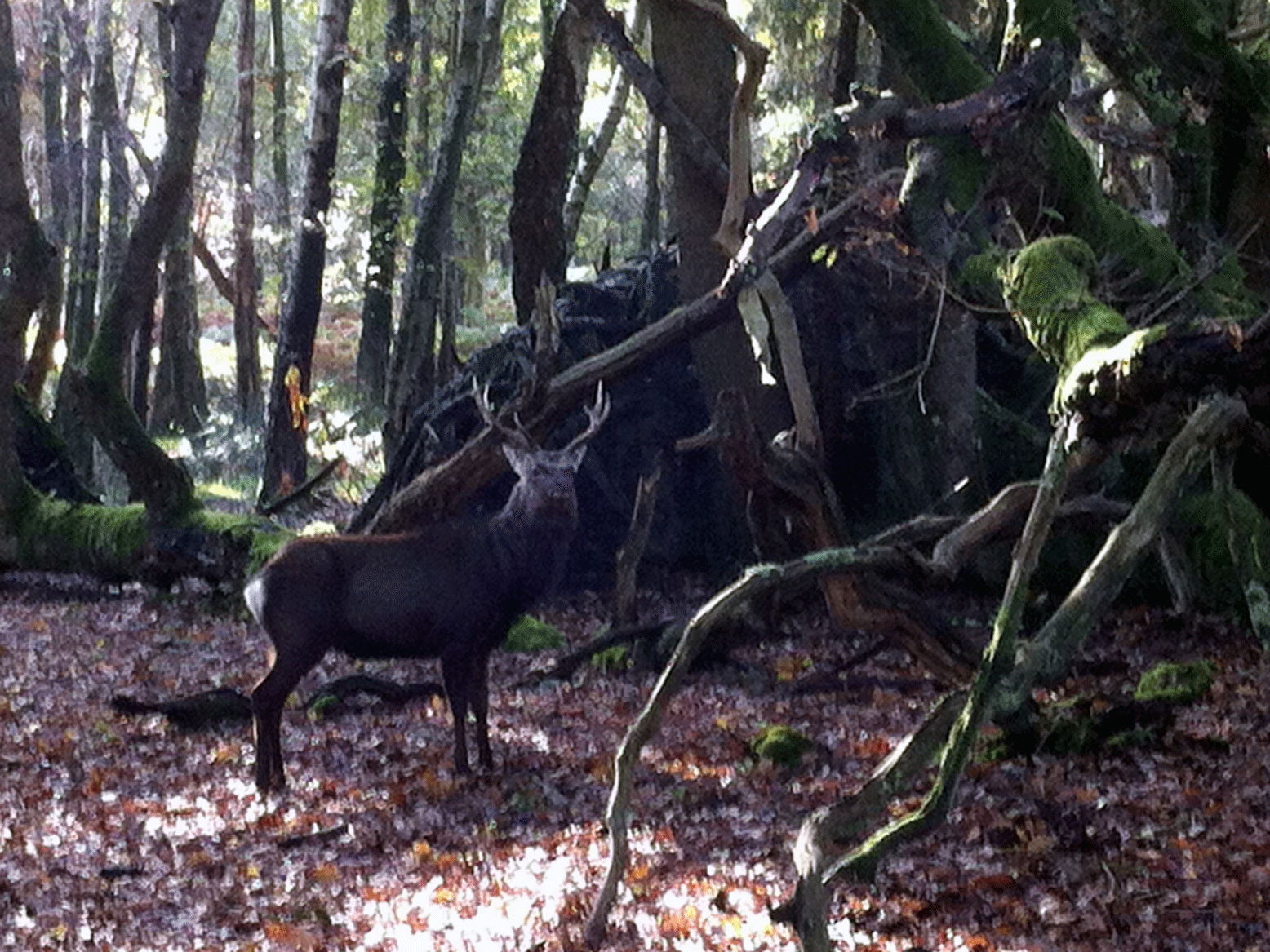
At Arne the woods echoed with the calls of rutting Sika Deer stags. I didn’t take a camera (after all I just went out to do some brush cutting) so this record shot was taken using my phone.

After taking the last photo I heard a clanking noise behind me and turned to see these two stags with their antlers entwined. Again a poor record shot taken on my phone.


 gryllosblog