This post updates what I have been up to over the last couple of weeks since I returned from the Madagascar / Comoros.
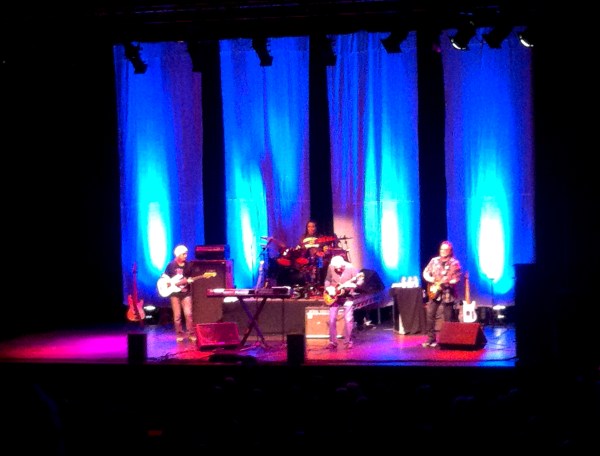
On the 23rd we went to see John Mayall’s Blues Breakers at Salisbury. This legendary blues player has played a pivotal role in the development of modern blues and rock music. Although he is now 80, he still plays harmonica, piano and guitar, although perhaps his keyboard skills aren’t what they used to be. The backing band, mainly from Chicago were excellent. I have enjoyed his music since I was at school. I last saw John Mayall in 1972 during an amazing week when we saw Led Zeppelin, The Rolling Stones and John Mayall at Leeds University during a eight day period. I forgot my camera so this blurry shot was taken on my phone.

The picture is from the cover of the classic 1965 album: L-R John Mayall, Eric Clapton, John McVie (later of Fleetwood Mac) and Hughie Flint. The album might be nearly 40 years old but its still one I play regularly today. The number of musicians who came to prominence by playing with John Mayall reads like at who-who of modern blues and rock: Eric Clapton (Cream), Peter Green (Fleetwood Mac), Jack Bruce (Cream), John McVie (Fleetwood Mac), Mick Fleetwood (Fleetwood Mac), Mick Taylor (The Rolling Stones), Don “Sugarcane” Harris (played with Frank Zappa), Harvey Mandel (Canned Heat), Larry Taylor (Canned Heat), Aynsley Dunbar, Hughie Flint, Jon Hiseman (Colosseum), Dick Heckstall-Smith (Colosseum), Andy Fraser (Free) and Johnny Almond just to name a few from the period 1965 – 1973

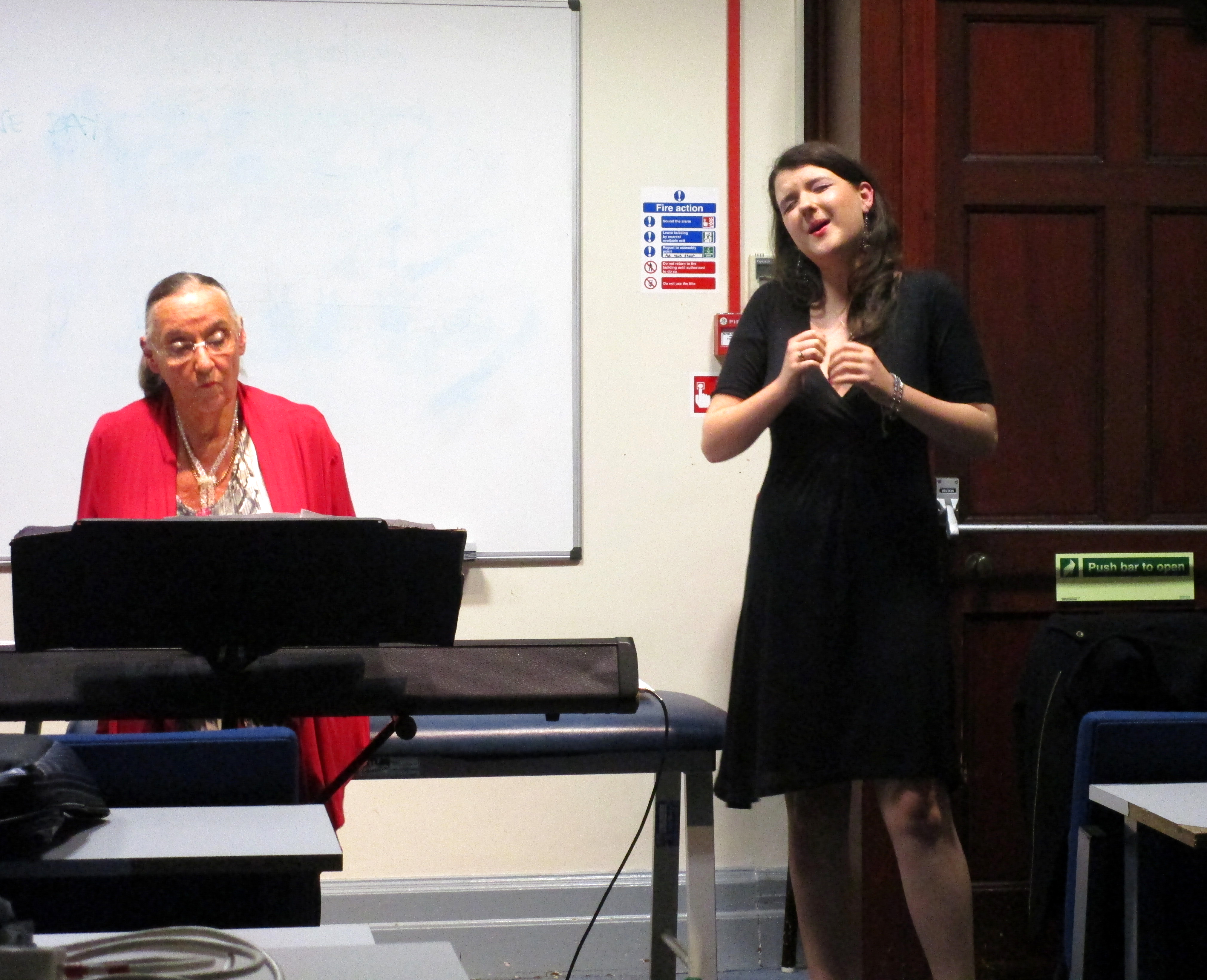
Now for something completely different. My friend Giovanni runs the Anglo-Italian Society. On the 28th they hosted a musical event where Patricia Bonelli (piano), Rachael Mathews (centre) and Elizabeth Senior (right) played and sang a history of Italian Opera. They performed many lovely songs and arias but i have to admit I had only heard of one piece and two composers before. Here Rachael and Elizabeth sing a piece by Rossini comprising entirely of the word ‘meow’.

What is really remarkable is that Rachael is only 17 and has had no formal training. The Anglo-Italian Society meets in the rather ancient Chiropractic College in Bournemouth. It seems strange listening to such lovely music in such a old fashioned and cluttered lecture theatre.

On the 2nd we went to Bournemouth’s Folk Club to hear Gigspanner, the new folk trio led by Peter Knight who has been the fiddle player for Steeleye Span for over 45 years. I first saw him play in Leeds in 1969 when the entrance fee was a mere 2 shillings (10p). Gigspanner have left behind the traditional folk jigs and reels and play some beautiful, thoughtful and highly entertaining music.

One morning whilst at Durlston I went down to Durlston Castle to see ‘Life, Light and Landscape’ an wildlife art exhibition by Bruce Pearson and Anne Shingleton. Here Bruce Pearson chats to Tasie Russell and Mo Constantine. Bruce and Anne were brought to our ringing station by one of the wardens earlier that day but unfortunately we had no birds to show them at that moment.

Of course 31st October brough ‘trick and treat’ and the local kids hit the street.

We are asked to do a number of public ringing demonstrations over the course of the year. This allows us to explain the purpose of our research and hopefully will convince the public to report any ringed bird that they might discover and show that that ringing can be carried out without harming the birds. Here Paul Morton is showing the public a Great Tit at the Arne Forage Festival on 25th October.
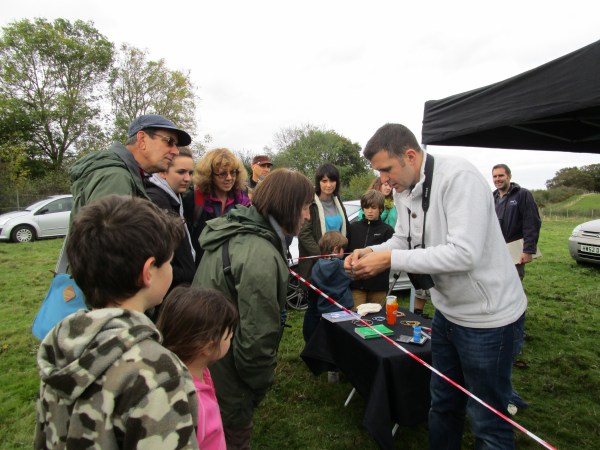
Know how to tell the age of a Blue Tit? Paul will explain.

We are still ringing at Durlston whenever the wind and rain allows it. Migration of grounded migrants has tailed off considerably but vis mig continue apace with large numbers of Woodpigeons, Goldfinches and Linnets overhead.

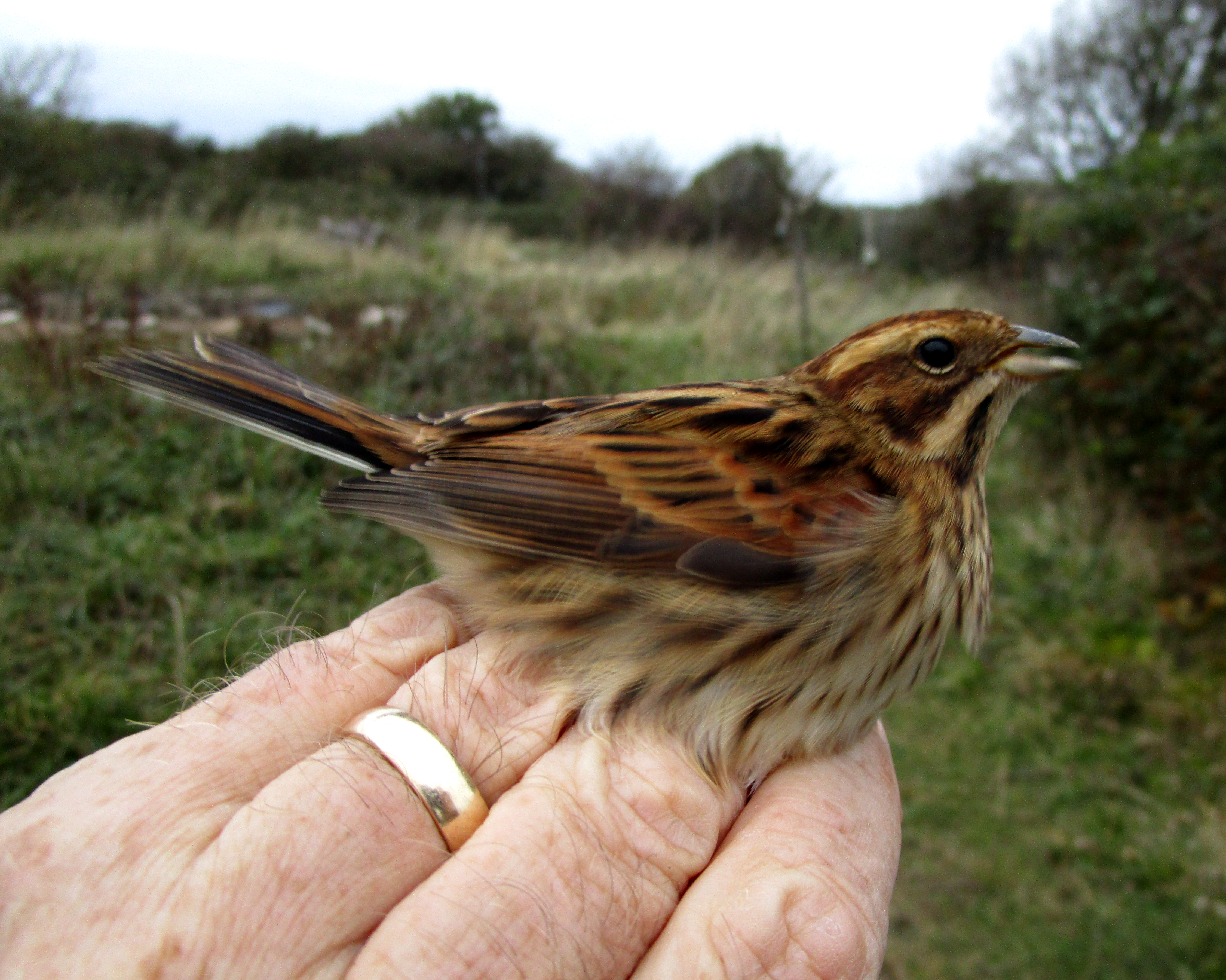
Common enough at Lytchett Bay, Reed Buntings are a bit of rarity at Durlston, at least in the hand.

This adult Linnet is much cleaner in appearance with well marked wings and tail and broad tail tips compared to a first-winter bird.
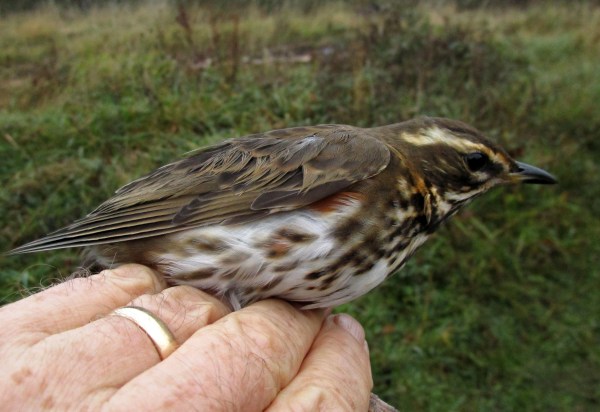
The mild conditions that persisted until recently haven’t been conducive to big thrush movements but we did trap this Redwing on 30th October.
I have been assisting with the training of ringers for many years but I haven’t had any trainees registered in my own name. However in the last few weeks I have taken on two trainees who are currently learning the basics of how to hold, measure, weigh and age birds in the hand.

Rik McCoy

Ginny Carvisiglia
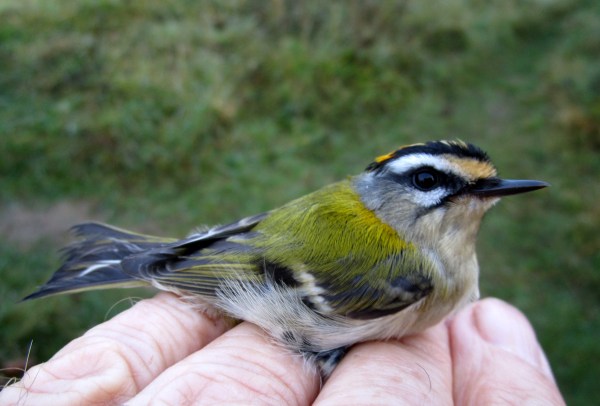
Rik was lucky on only his third outings to ring a Firecrest ….

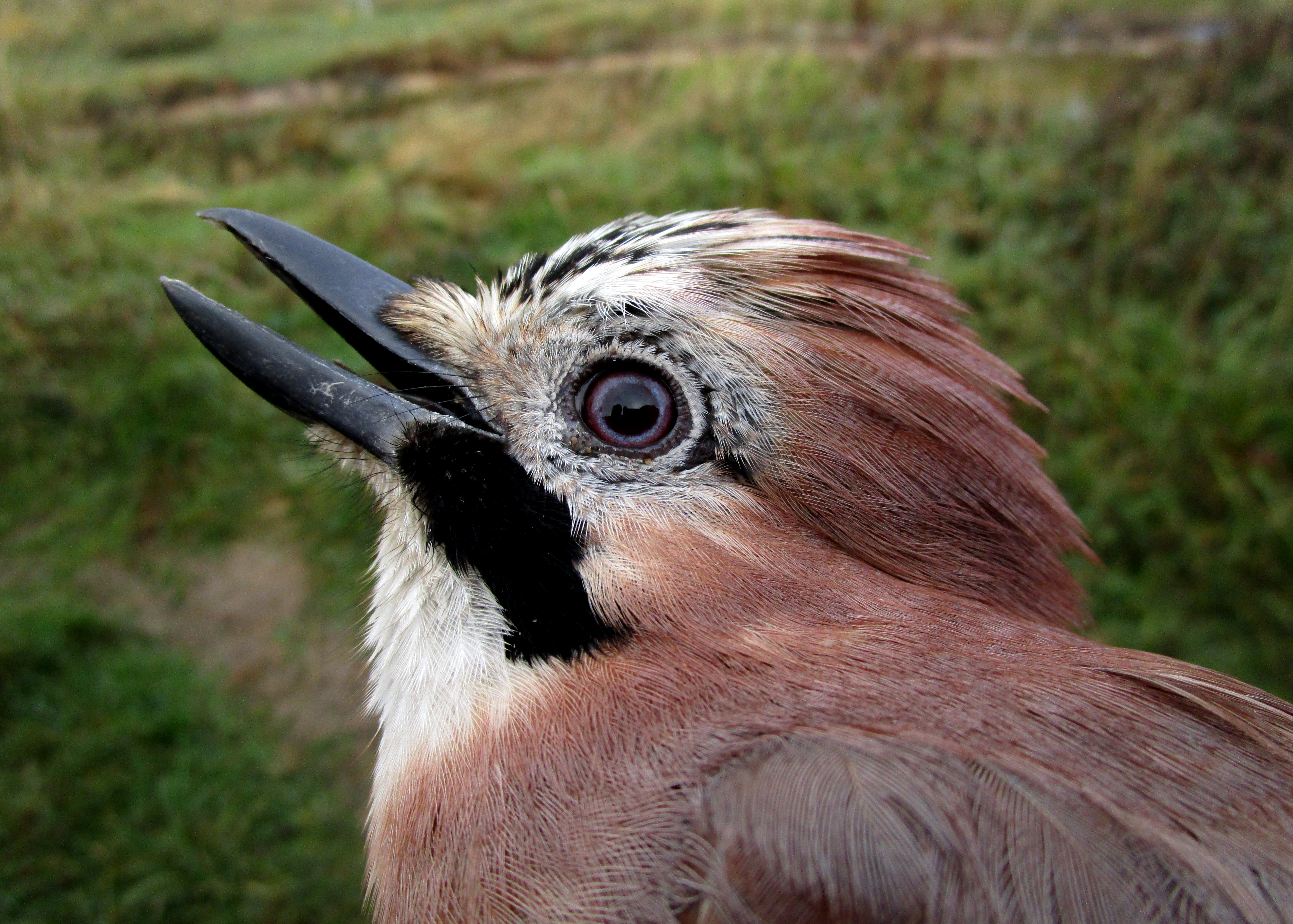
.. and this Jay, although great care had to given to make sure that the Jay didn’t sink its vicious bill into his fingers.
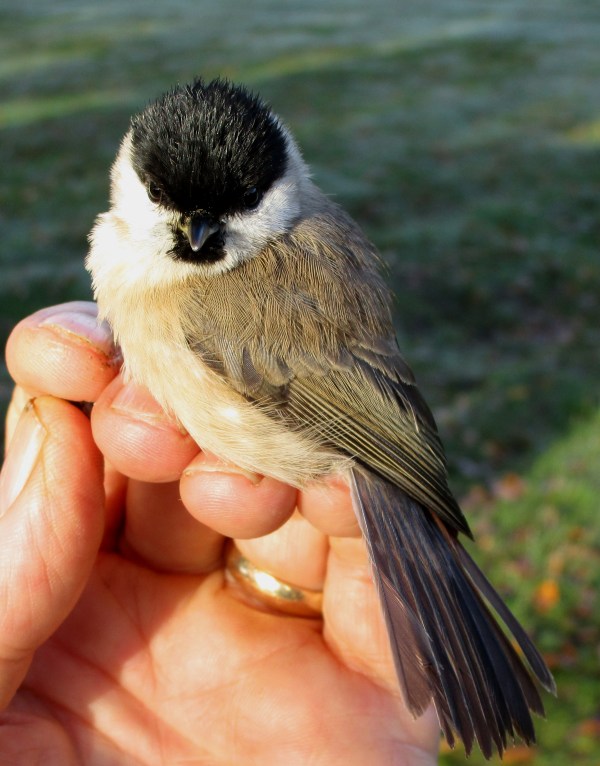
Whilst Ginny ringed the increasingly rare Marsh Tit at Holton Lee, a bird a lot of experienced ringers seldom see in the hand, at least in Dorset.
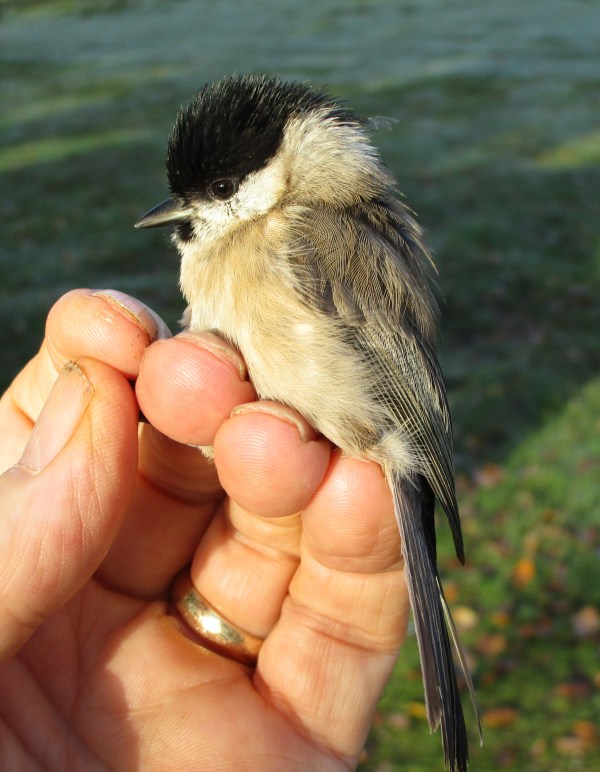
The glossy cap, lack of pale wing panel and less muscular neck all help separate Marsh Tit from Willow (which no longer occurs regularly in Dorset). However the best field characters undoubtedly are vocalisations.
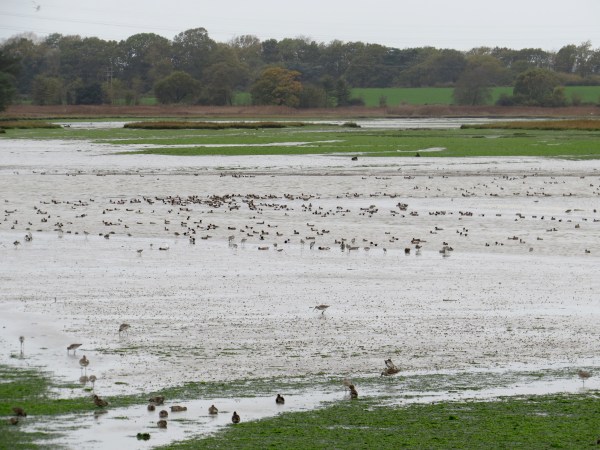
On the 2nd I did the monthly WeBS (wetland birds survey) count in Holes Bay. Numbers of common species have really built up in recent weeks with over 600 Wigeon in the NE sector of the Bay alone.
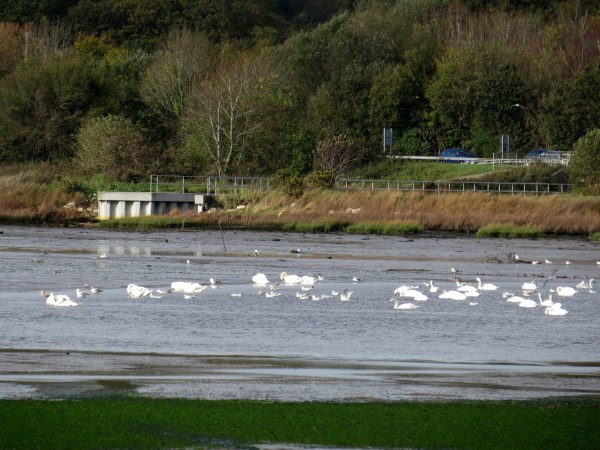
Holes Bay is one of the few places in Poole Harbour where Mute Swans congregate. it is not the most pleasant part of the Harbour to go birding, bounded as it is on two sides by dual carriageways and on one other by a railway line, but it does hold a lot of birds.

Attempts to make accurate counts were not helped by the Coastguards simulating a rescue of someone trapped in the mud!
As spring gathers pace we have resumed our ringing program at Durlston Country Park was well as continuing to ring at Fleets Lane in Poole. Migration has been slow so far this year, although as usual in spring Portland Bill has seen seen some large falls of migrants. Peak numbers out of three or four visits to Durlston have been between 30 and 40 birds ringed per session and numbers have been much lower at Fleets Lane.
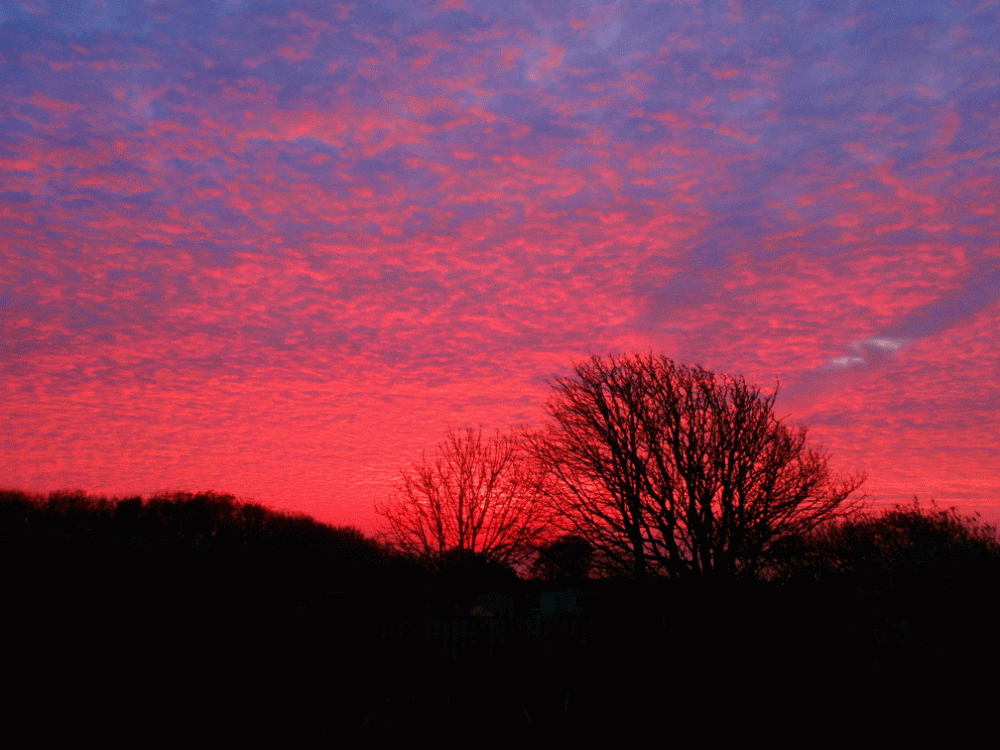
Another spectacular Durlston dawn.

This male Green Woodpecker was an unusual catch at Durlston.
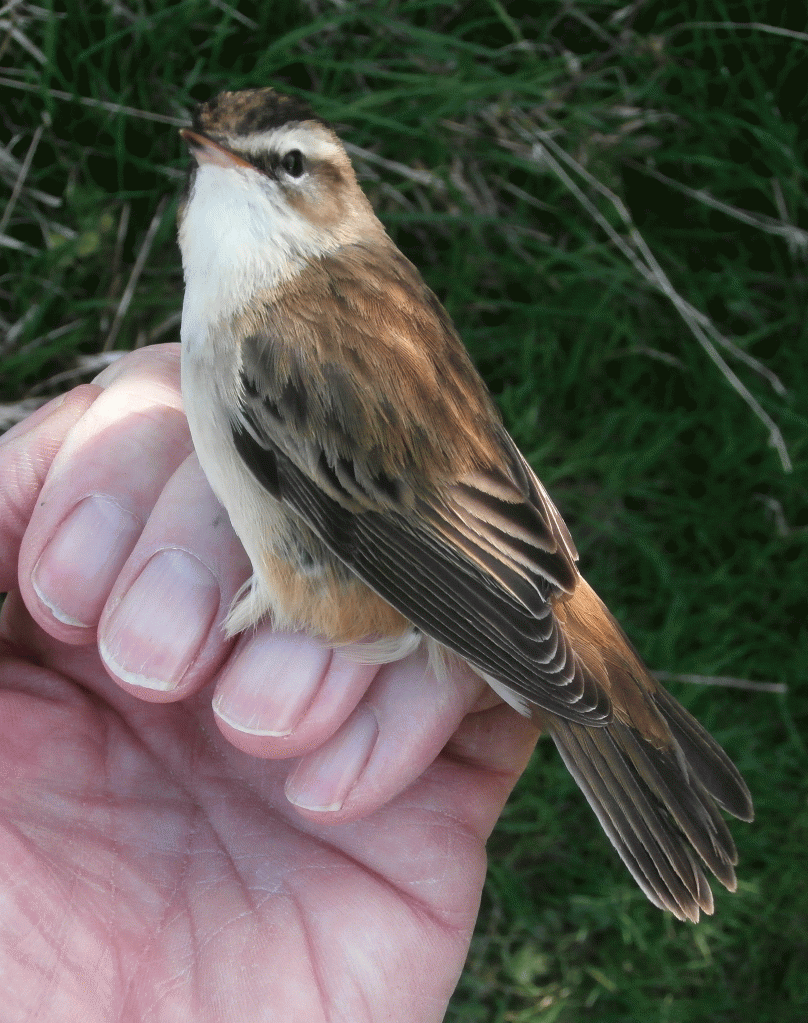
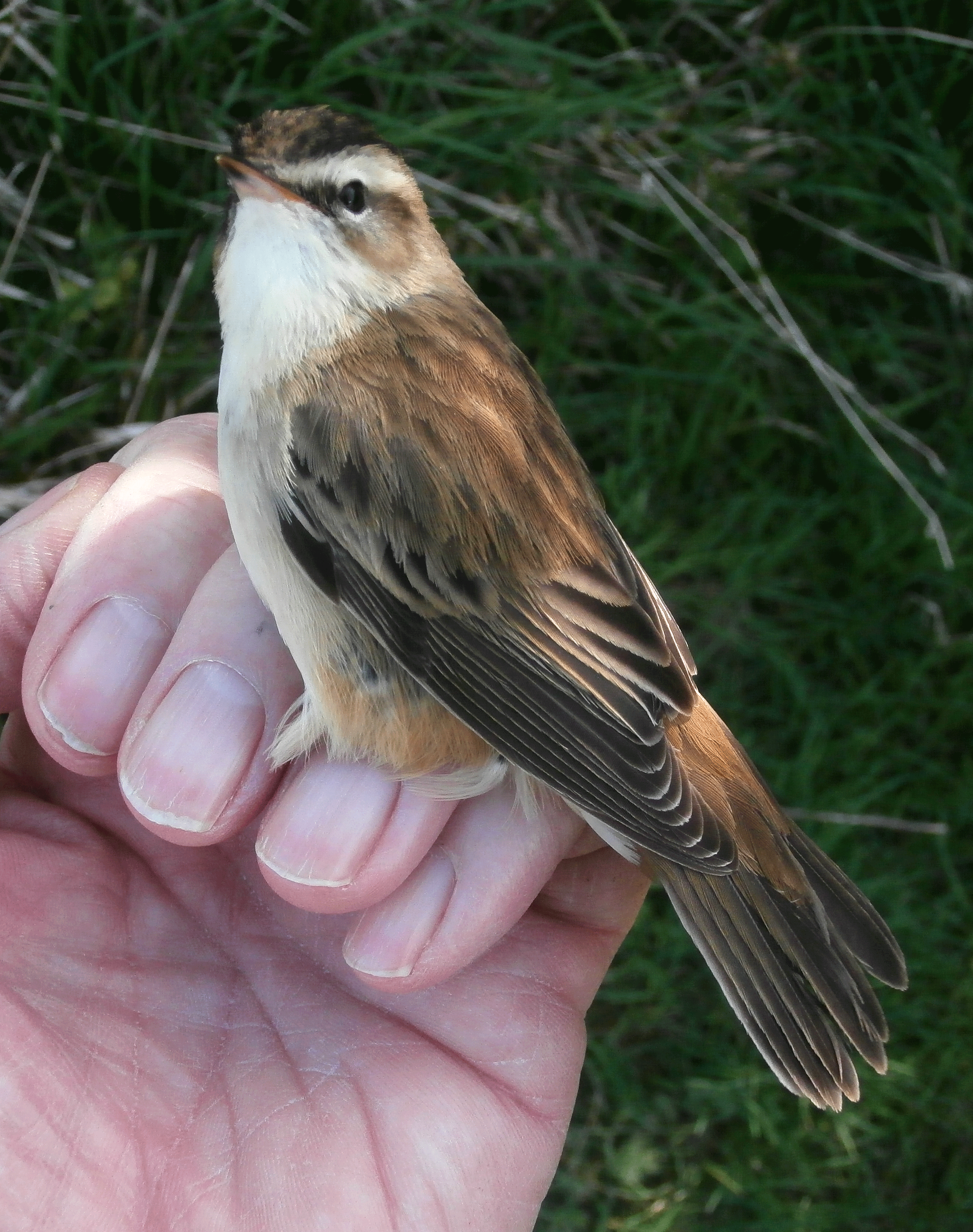
One of the delights of spring is seeing the return of the sub-Saharan migrants like Sedge Warbler ……..

….. Lesser Whitethroat and ….

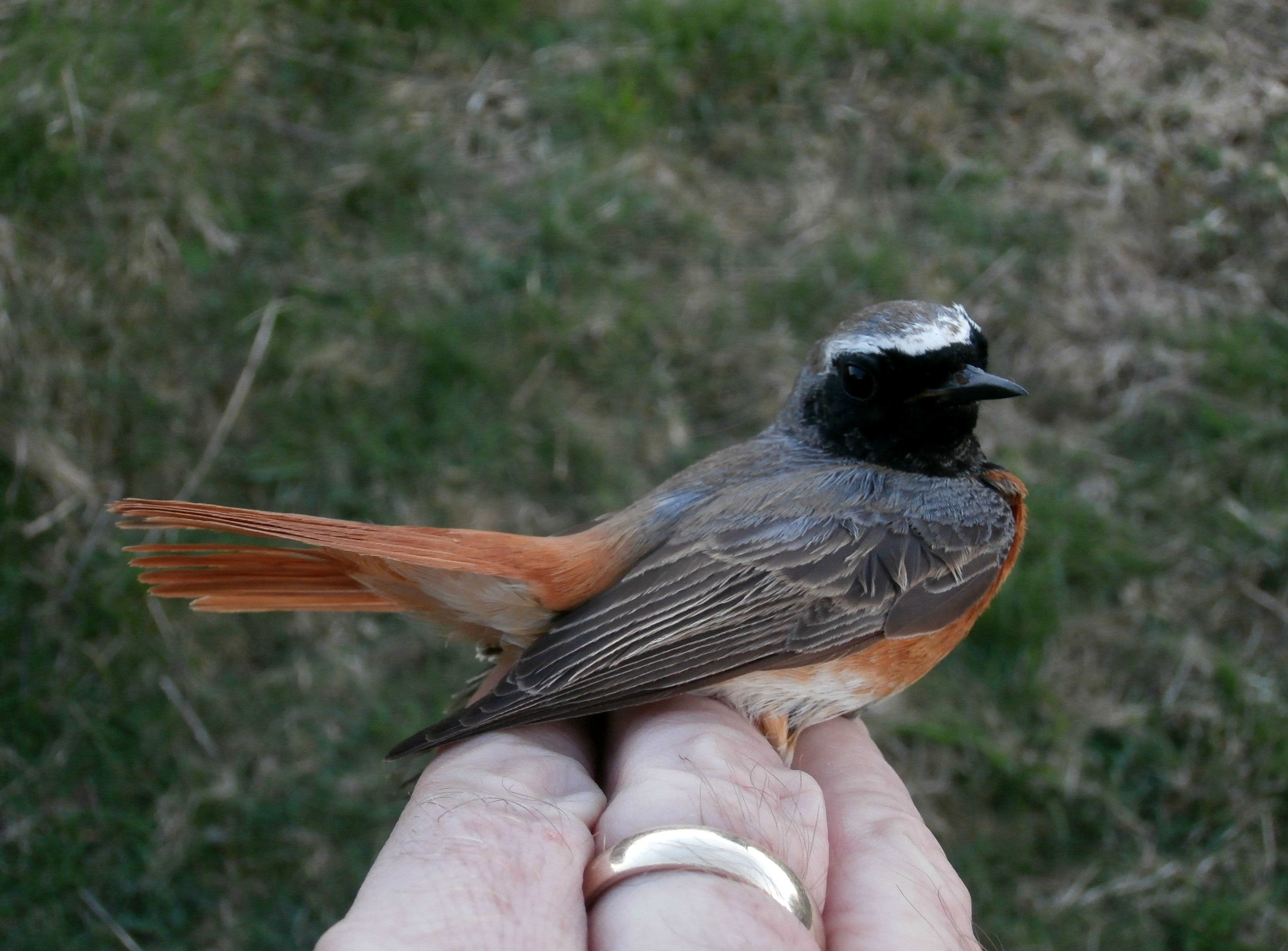
….. this beautiful male Common Redstart
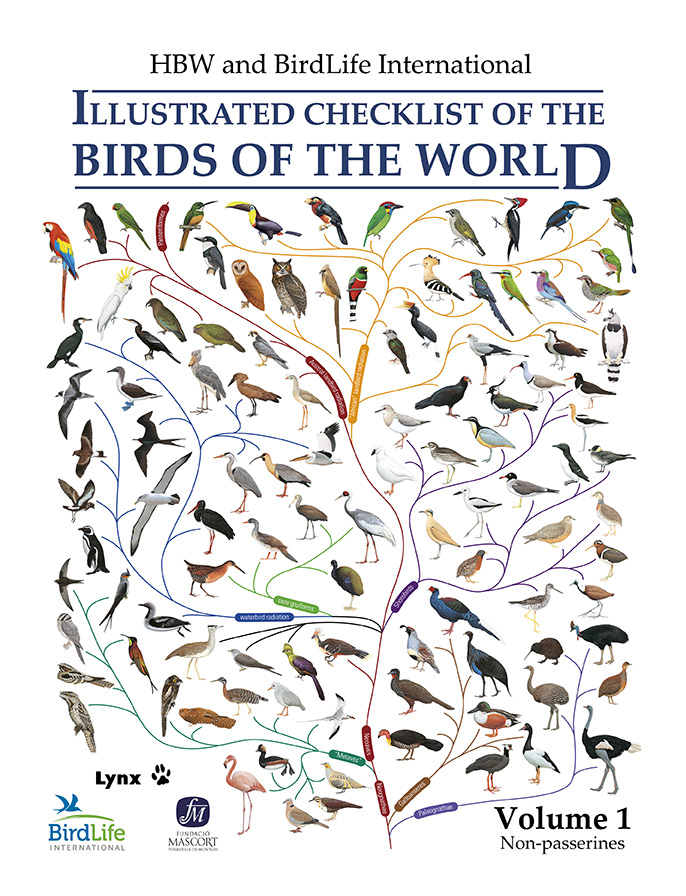
On the 15th I gave a talk to the Bournemouth Natural Sciences Society on the subject of ‘What Came First The Archaeopteryx Or The Egg’ The talk started with a section on the evolution of birds from feathered dinosaurs before I went rapidly through the various groups of birds extant today, describing their origins and explaining how they got to be where they are today. This, the cover of the forthcoming ‘Illustrated Checklist Of The Birds Of The World’ nicely demonstrates, the current best fit for entire bird family tree (with the exception of the Passerines which will be in a the second volume) and represented the baseline for my talk. Unfortunately the slide show didn’t go without a hitch, many of my slides had white lettered captions on a black background. For some reason when I showed the slides in Bournemouth, the white text projected black and the captions disappeared!

Like all teenagers, Kara is growing up fast. On the 10th she joined a school friend and her family on a holiday to the Canaries. She called in the night before to show off her new party dress.

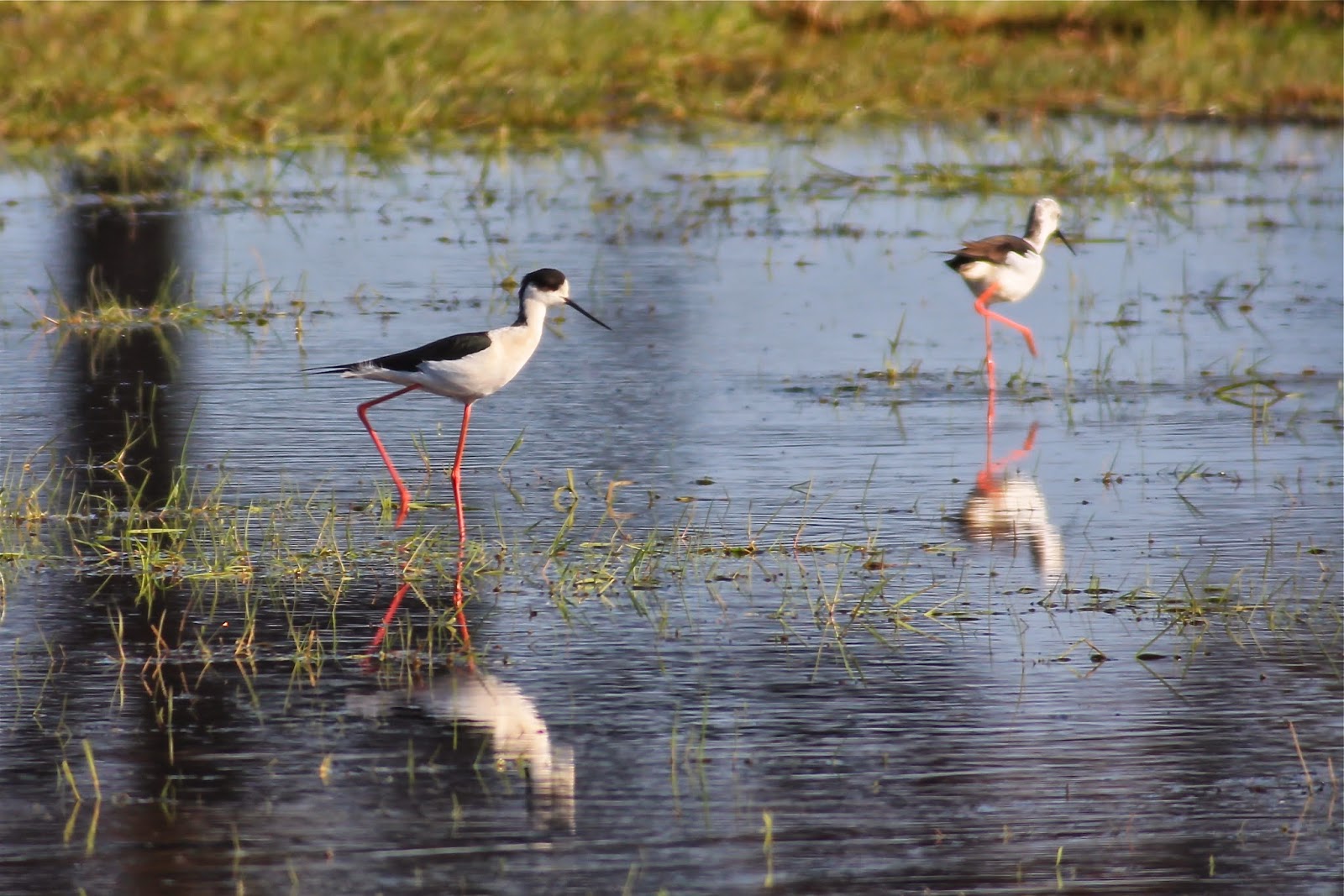
The 12th was a very busy day. I was up at 0500 to go ringing at Fleets Lane, Margaret had some former work colleagues from her days in Southampton round for lunch and in the evening we visited my old friend and former ringing trainer, Trevor Squire at his house in north Dorset. We were just about to leave for Trevor’s when we heard that Paul Morton had found a pair of Black-winged Stilts at Swineham. A mad dash ensued and although I only saw them from a distance, the views were acceptable; and we got to Trevor and Sheila’s in time for dinner as well! Photo by Paul Morton.

After an early start on the 12th and a very enjoyable, but late evening at Trevor and Sheila’s, we were slow to get going on the 13th. We opted for a short walk from Langton Matravers to the coast at Dancing Ledge. On arrival we found that due to erosion during the winter storm, the footpath was closed.

However it didn’t take much of a detour to get us to the scenic spot.
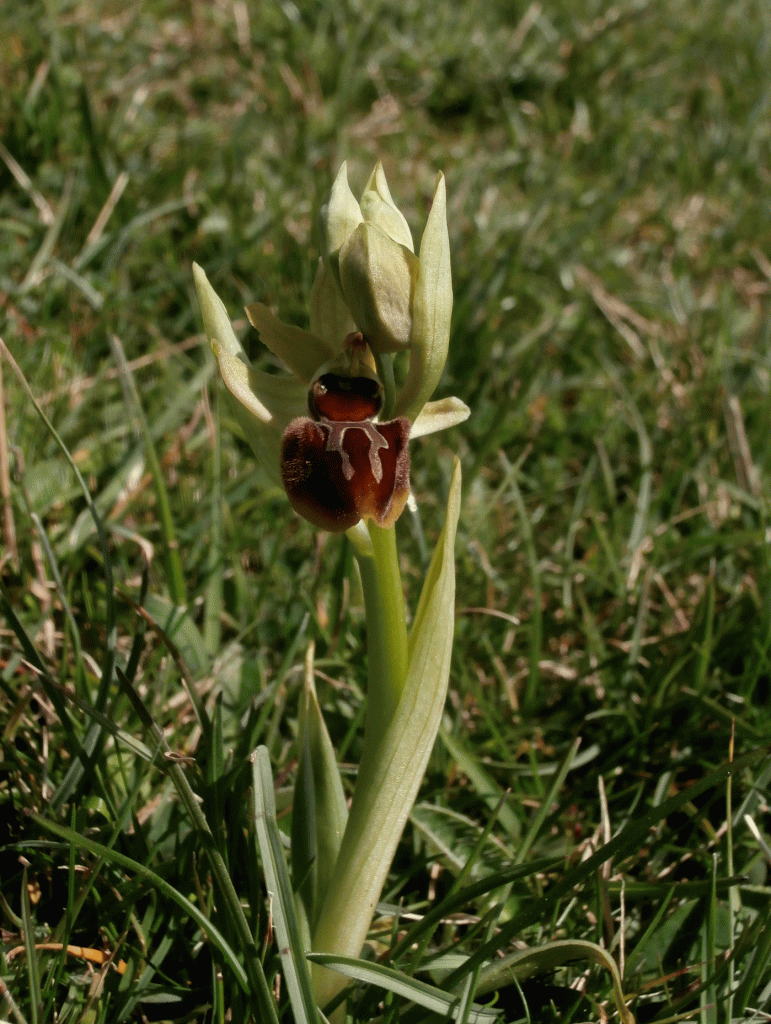
Good number of Early Spider Orchids were in bloom.

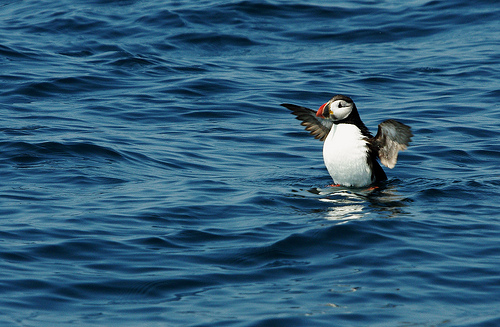
For the first time in decades Puffins failed to arrive at Portland Bill in March. There had been a mass mortality along the coasts of Biscay and to a lesser extent along the English south coast as a result of the winter storms and we feared the local breeding population had been wiped out. We also failed to see any at Dorset’s only other site, Dancing Ledge, but fortunately a couple were seen on my next visit to Portland on the 15th. This photo was taken in Shetland in 2012 and previously posted on the blog in this small format.

The only bird that came close enough to be photographed was this obliging Rock Pipit.

Rock Pipit, Dancing Ledge.

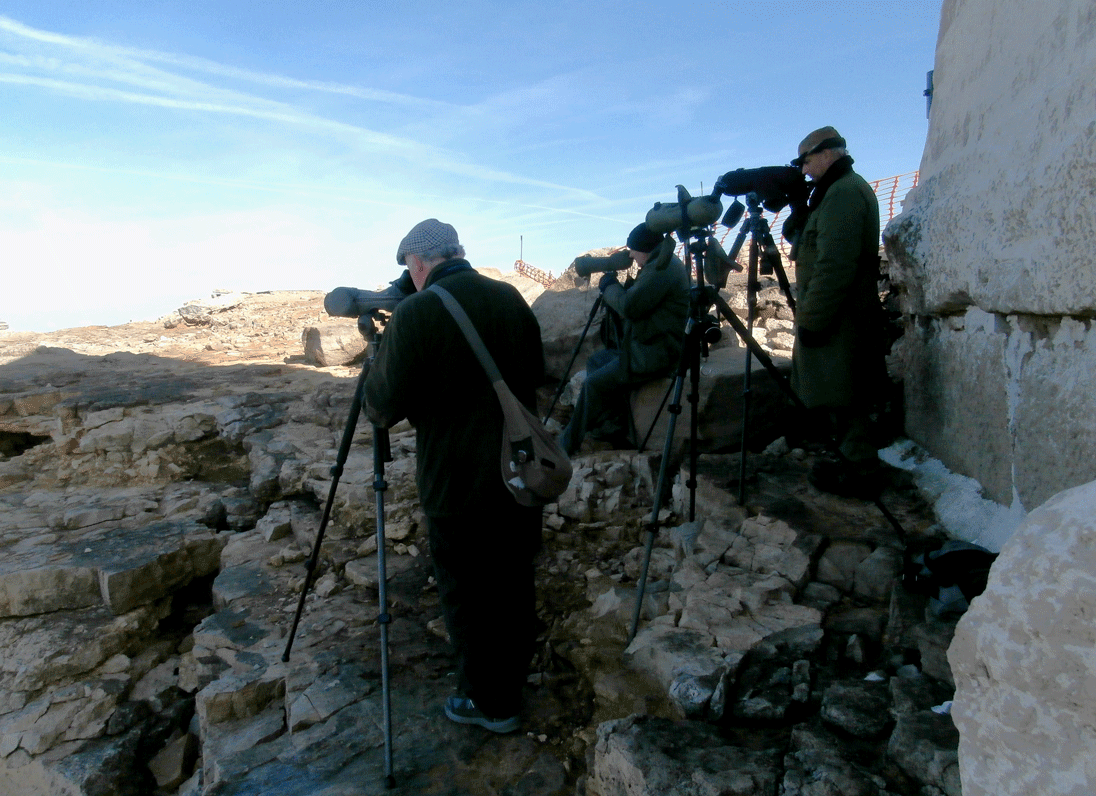
On the 15th I visited Portland. There were very few grounded migrants but seawatching was pretty good with Hobby, Merlin, Common Scoter, two species of Diver and as mentioned above, Puffins seen. Seawatching at Portland Bill. Out of the wind and out of the sun.

A Whimbrel was the only migrant to come close enough to be photographed. unfortunately is was just disappearing around the Obelisk when I pressed the shutter.
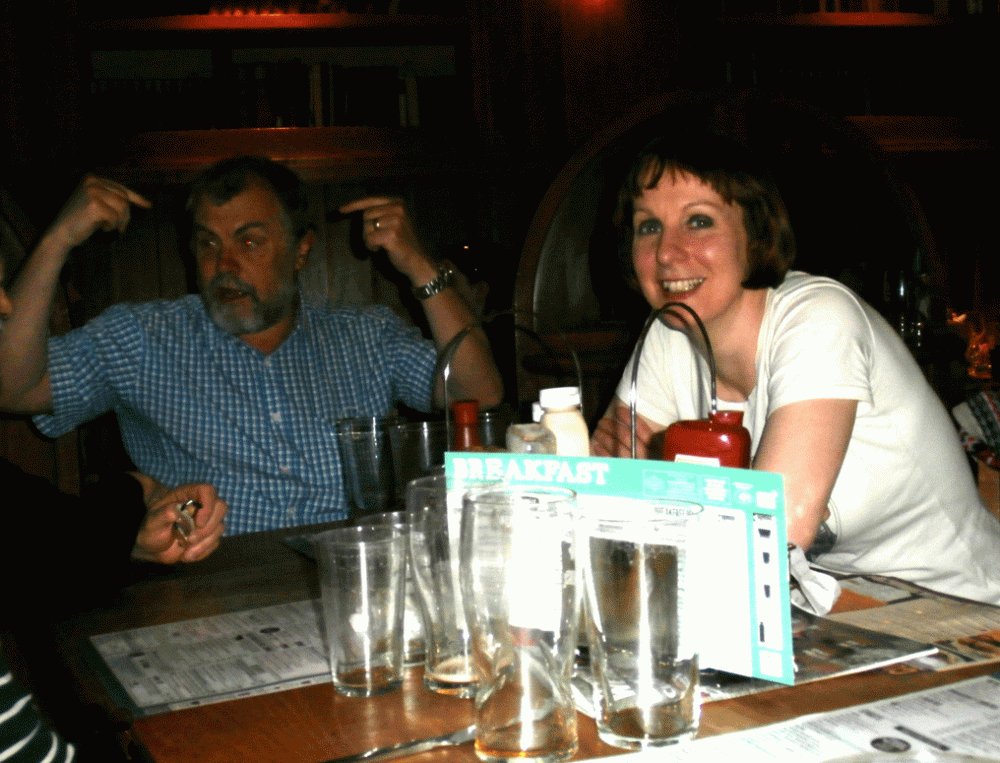
After an early visit to Durlston on the 17th I joined former colleagues for a post-work curry and drinks at Wetherspoons in Poole. Some like Dave, (on the left) are still stuck in the lab but Tash on the right has made a bid for freedom and now works as a primary school teacher.

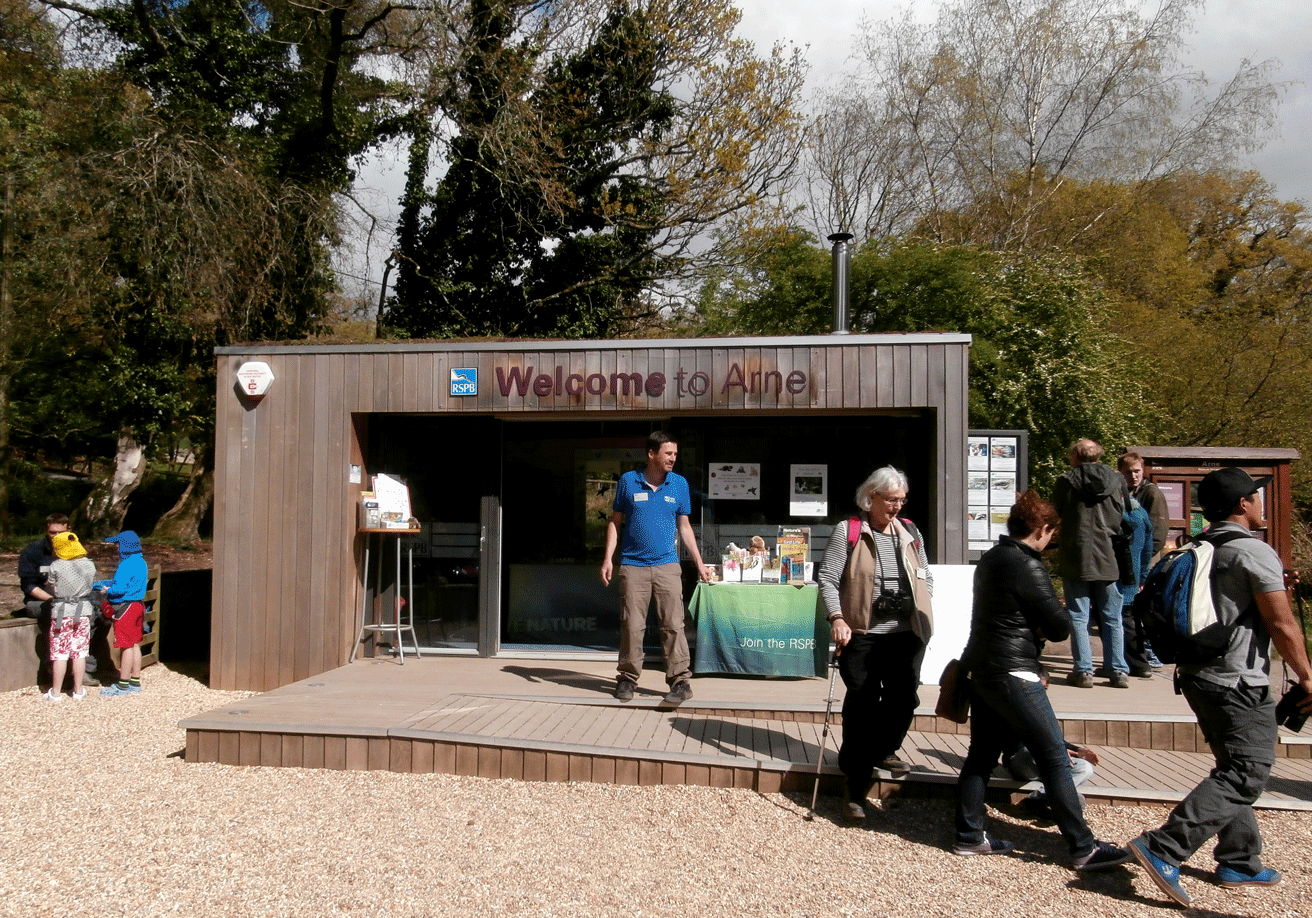
On the 19th we put on a ringing demonstration at Arne RSPB reserve as part of their ‘meet the wildlife day’. On the same day in 2013 they invited two RSPB employees with ringing permits from elsewhere and the ringed over 100 birds during the day. This year we put on the demo and caught just nine! The reason was the dreadfully cold April in 2013 delayed the onset of the breeding season but this year birds have left the vicinity of the feeding station early for their various breeding sites.

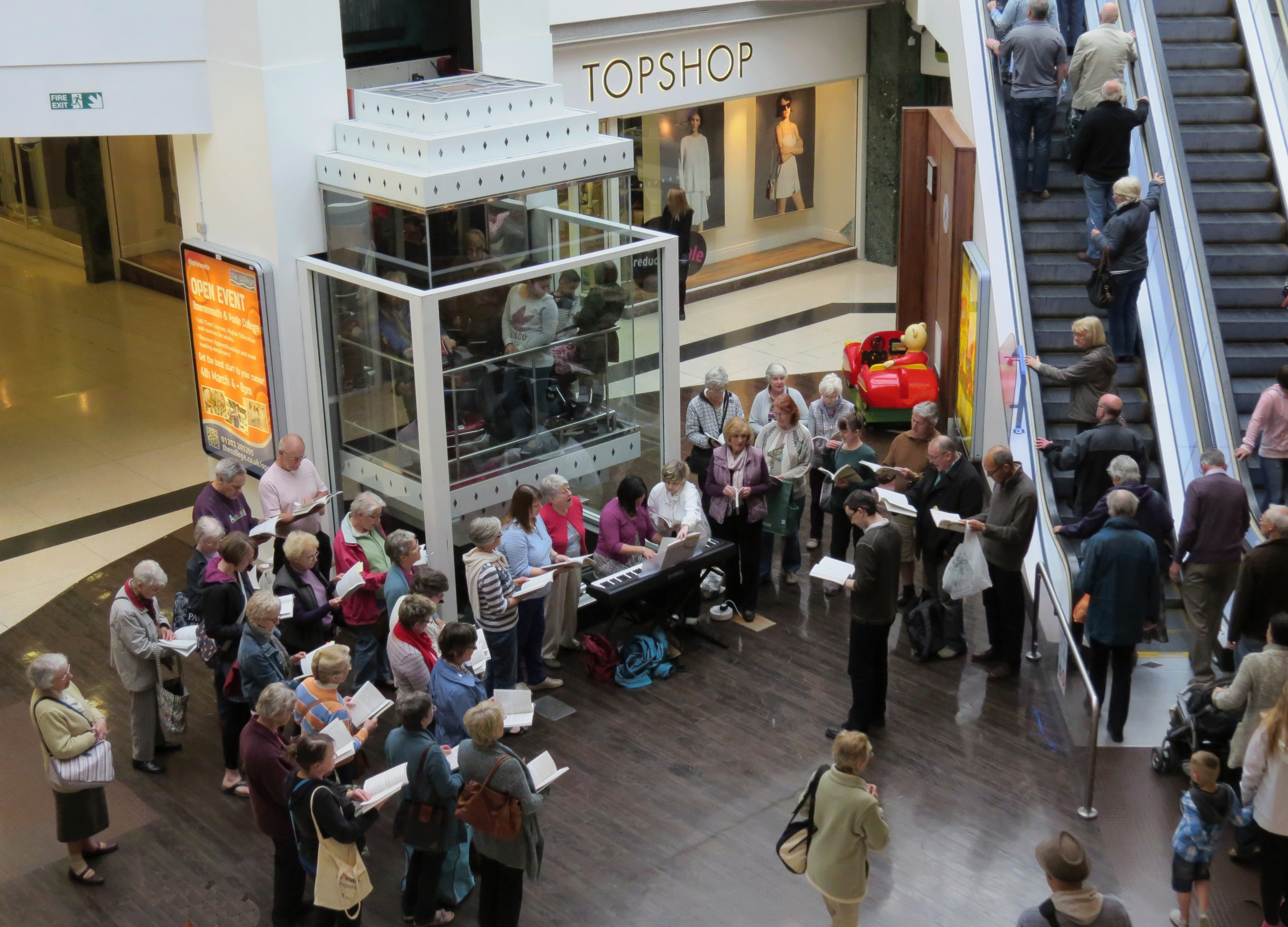
I had to leave the demo at Arne in the capable hands of Shaun, Carol and others and hurry back to Poole in Bank Holiday traffic conditions to see Margaret’s choir perform a ‘flash-mob’ in the Dolphin shopping arcade. The choir suddenly appeared out of nowhere and gave a good rendition of Handel’s ‘Hallelujah Chorus’ from the Messiah. They drew a large appreciative crowd but unfortunately it was over far too quickly and most drifted away wishing there had been more.

Margaret and Christine (bottom right) singing as part of the Barclay House Choir ‘flash-mob’. Christine came round for dinner about a week ago. She is currently studying for a teacher’s qualification in Bognor and regaled us with tales of the activities of her fellow students, activities that she clearly disapproves of !

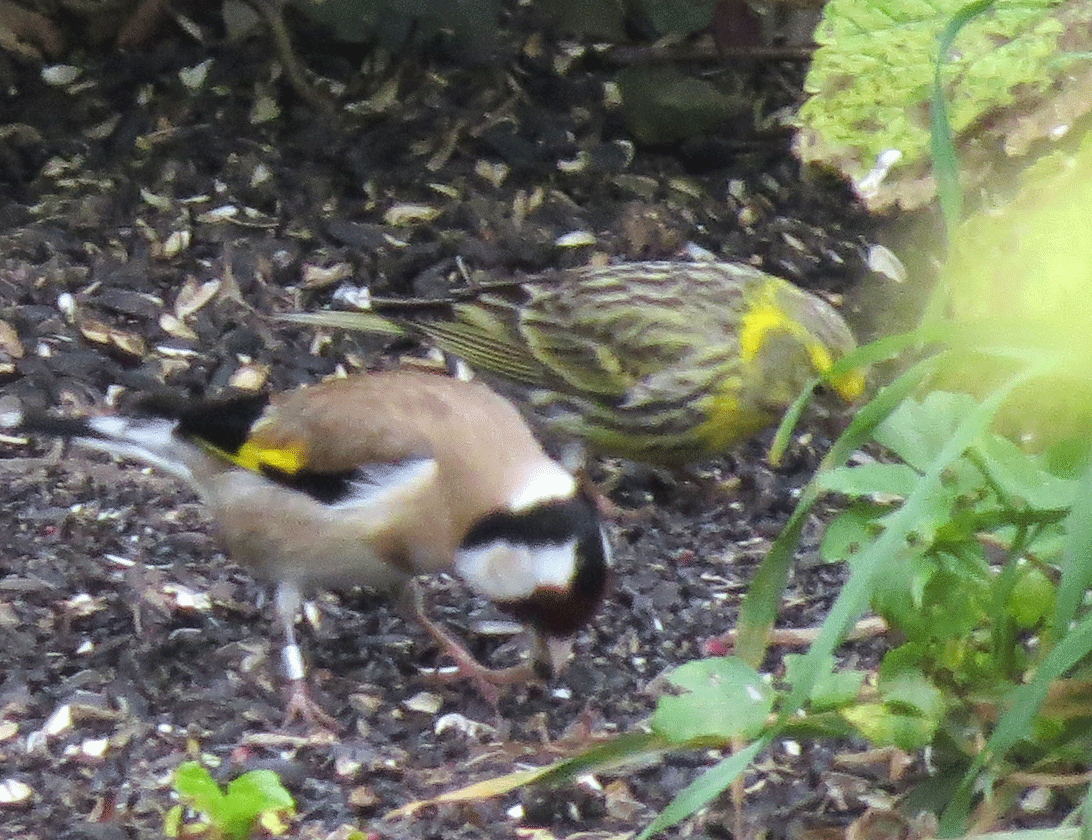
This morning (Easter Sunday) I set off early for Portland Bill. There was a strong wind, it was quite cold and in spite of clouding over during the night there were few migrants about. However I was delighted when a Serin was found feeding close to the Bird Observatory patio with some Goldfinches.

View initially were quite brief but later it returned to the same area and gave better views. Although common on the near continent, Serins are scarce in the UK with most records coming from southern watch points like Portland. My last decent view of one in the UK was in spring 2000, again at Portland.












 gryllosblog