The final part of the tour was in Zimbabwe. Very tired after the overnight flight we drove eastwards from the capital Harare to the Vumba Mountains on the border with Mozambique.

On route we saw large flocks of Abdim’s Stork, an intra-African rains migrant. With the rains imminent, large numbers had arrived in Zimbabwe. Some follow the monsoon rains as far north as Oman.

Our first day in the Vumba mountains was very wet and finding the birds was a struggle. Eventually the rain was replaced by a thick mist and we scored with our main targets, Robert’s Warbler, Chirinda Apalis ……

…. and the beautiful Swynnerton’s Robin. Photo from http://www.pers-birding-pages.com
.
Leaving this lovely, if rather wet spot, behind, we returned to Harare for an overnight stay. There was just enough time in the afternoon to visit a nearby game park.
.

There were a number of mammals like these Blue Wildebeeste, but this park has almost certainly been restocked with game so it is debatable if these can be considered truly wild.

A large number of the ungulates in Africa have been split into multiple species in Vol 2 of Handbook of Mammals of the World. For example the Blue Wildebeeste above is a different species from those on the Serengeti. However this tick-fest did not extend to the giraffes, different races of which vary considerably in the pattern of the coat. If it was split this form would be the Southern Giraffe.

Zimbabwe has certainly had its fair share of political and economic problems. Hyper-inflation was halted when the Zimbawean Dollar was abandoned in favour of the US Dollar, but not before 100 trillion dollar notes were in circulation!
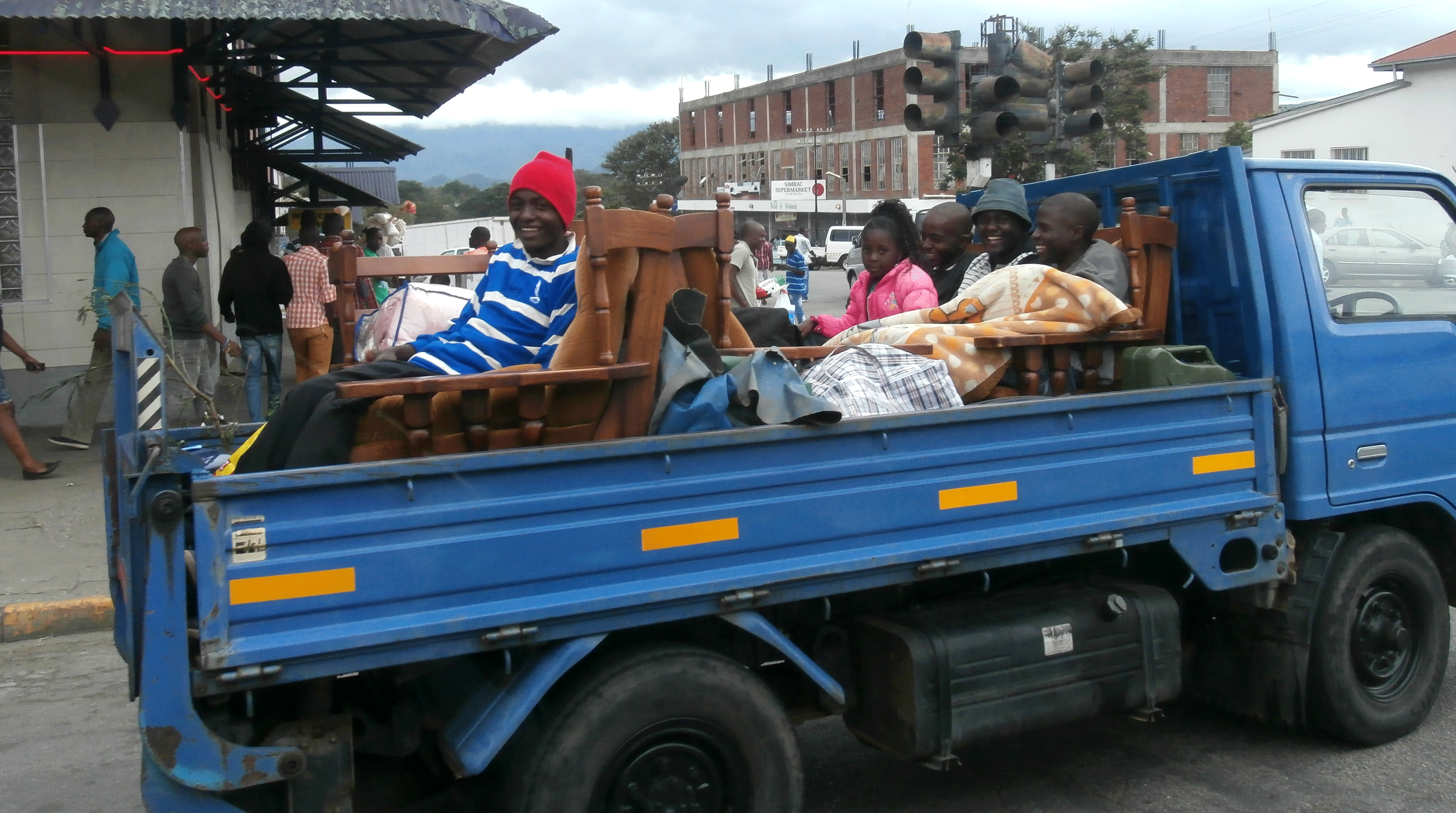
In spite of all these difficulties, Zimbabwe has better roads and a higher level of private car usage than most African countries. This family are certainly travelling in comfort!

The following day we headed north on a long drive to the Zambezi valley. The further north we went the hotter it got and the worse the roads became. On route we came across a group of beautiful Southern Carmine Bee-eaters.

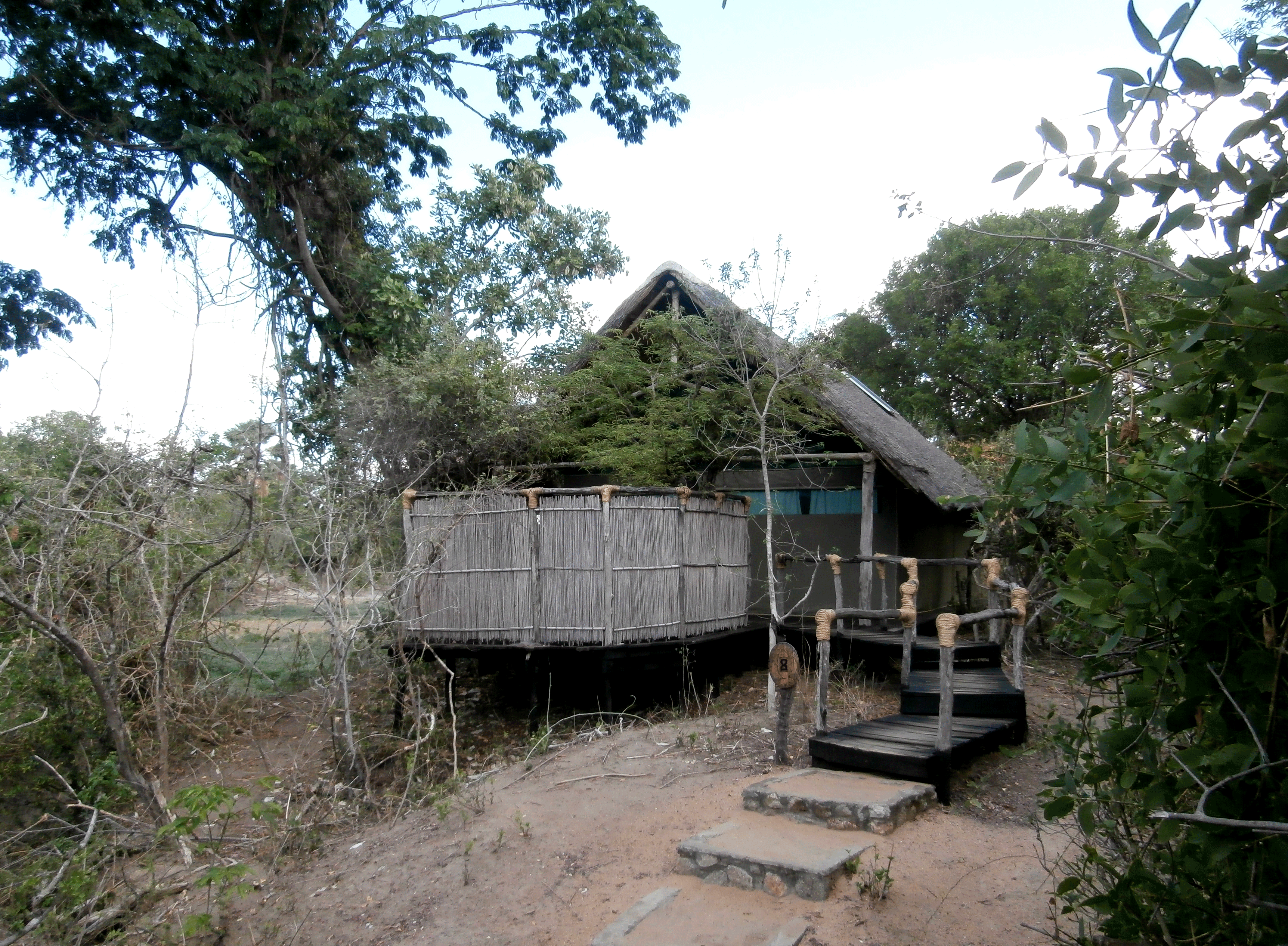
We spent two days in the Zambezi valley. In spite of fairly basic conditions, we were looked after very well. The temperature was very hot, over 42c during the afternoon, and in spite of extensive searching we failed to find our main target – the elusive African Pitta. This species can only be seen when it starts to call after the onset of the rains and this year the rains were late.
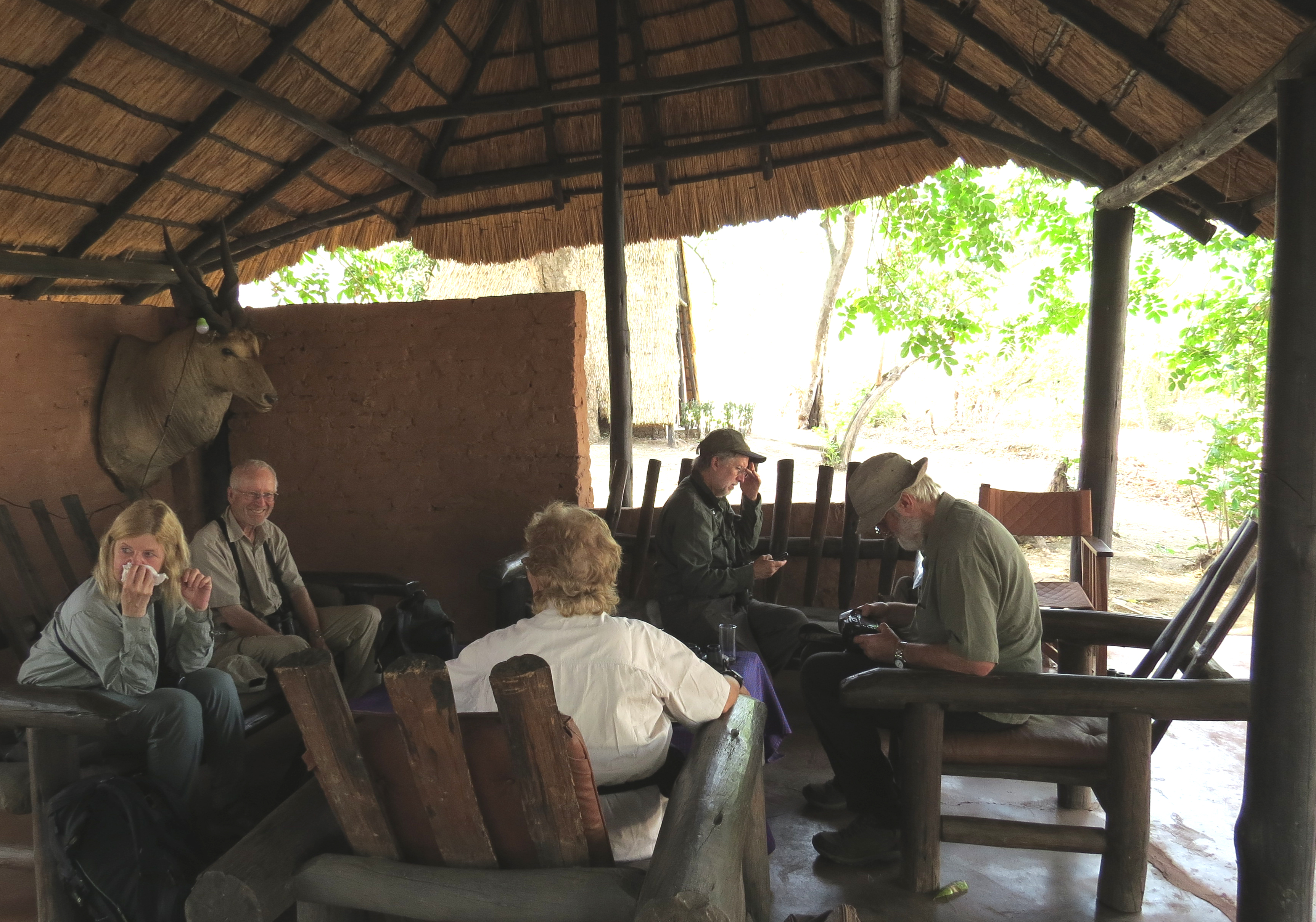
Relaxing in the heat of the day at the lodge.

Retz’s Helmet-shrike

I’ve already posted pictures of the family of African Wood Owls in residence around the lodge, but the juveniles are so cute, I couldn’t resist posting another.
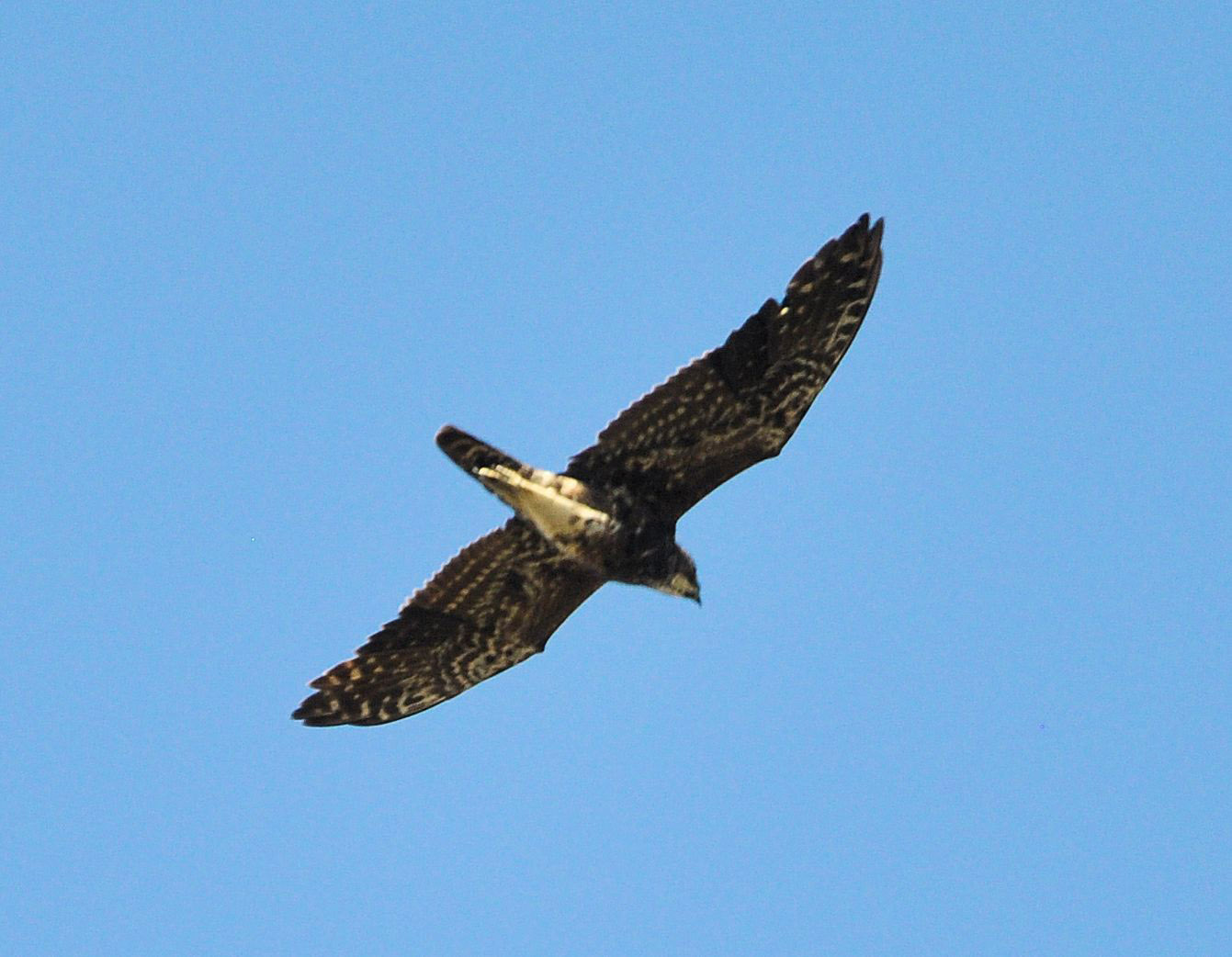
One of the features of the area was the regular sighting of a pair of Bat Hawks. It very unusual to see this crepuscular species in anything but poor light after sunset. Photo by Simon Cox.

As I have said earlier the rains had yet to come. For us it meant dipping on a good bird, for the locals it meant having to dig in a dry river bed for water!
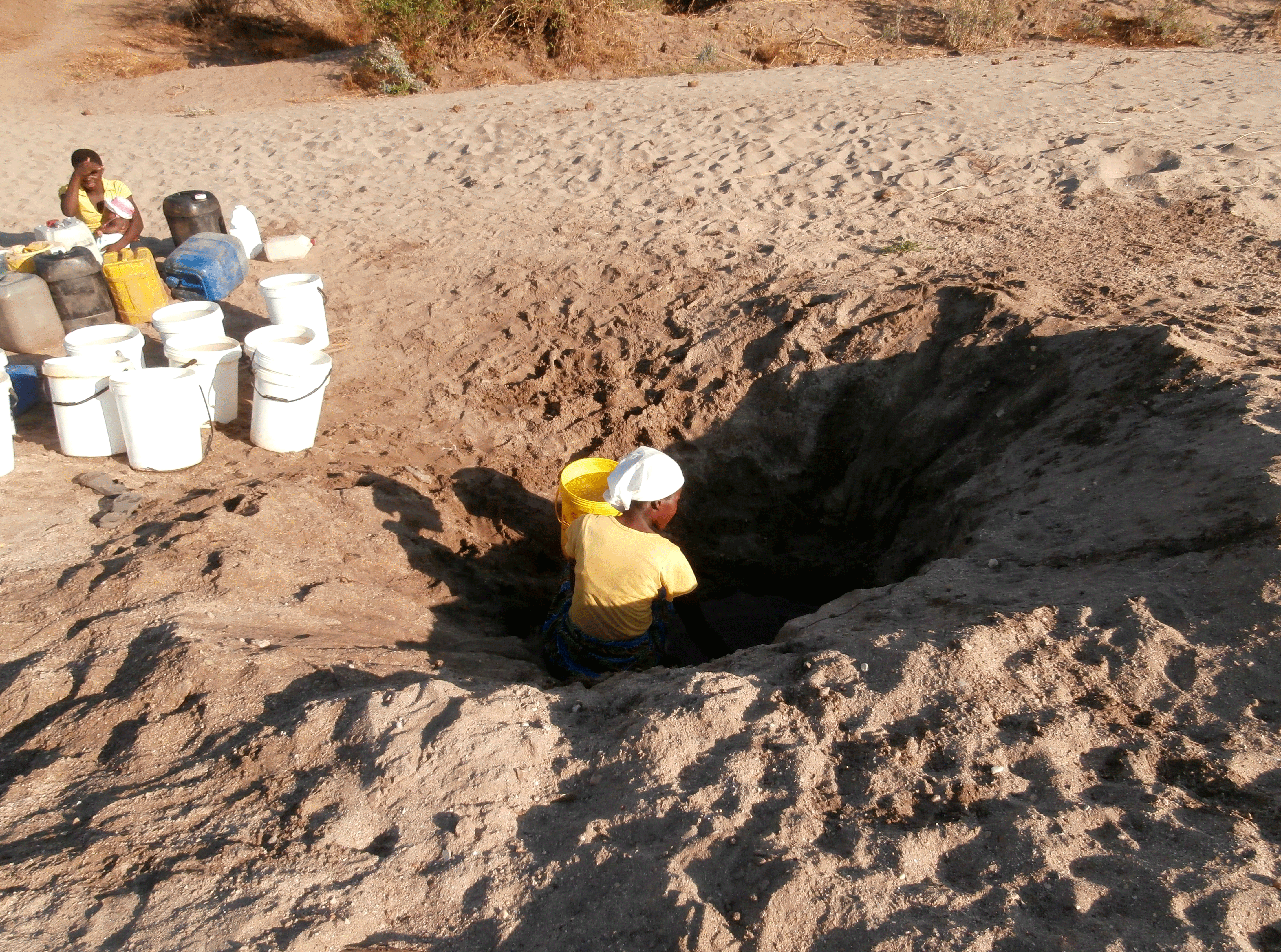
It is at moments like this that we realise just how privileged we are in Europe. Gas, electricity and water are taken for granted and a huge fuss is made if we are deprived of them for just a few hours. Imagine doing this every time you needed to do the washing up.
So we failed on our main quest in the north of Zimbabwe but we enjoyed birding in the area and in spite of the heat, had a a good time. We later returned to Harare for an overnight stay. The following day we were expecting a long, long transfer (seven hours) at Nairobi but instead delays at Harare meant we had the seven hour wait there, which was far preferable as it is a much better appointed airport. At Nairobi we just got off one plane and got straight on to another.
A lovely trip with some excellent and seldom seen birds, some good mammals and most enjoyable company.






 gryllosblog