Archive for August 2011
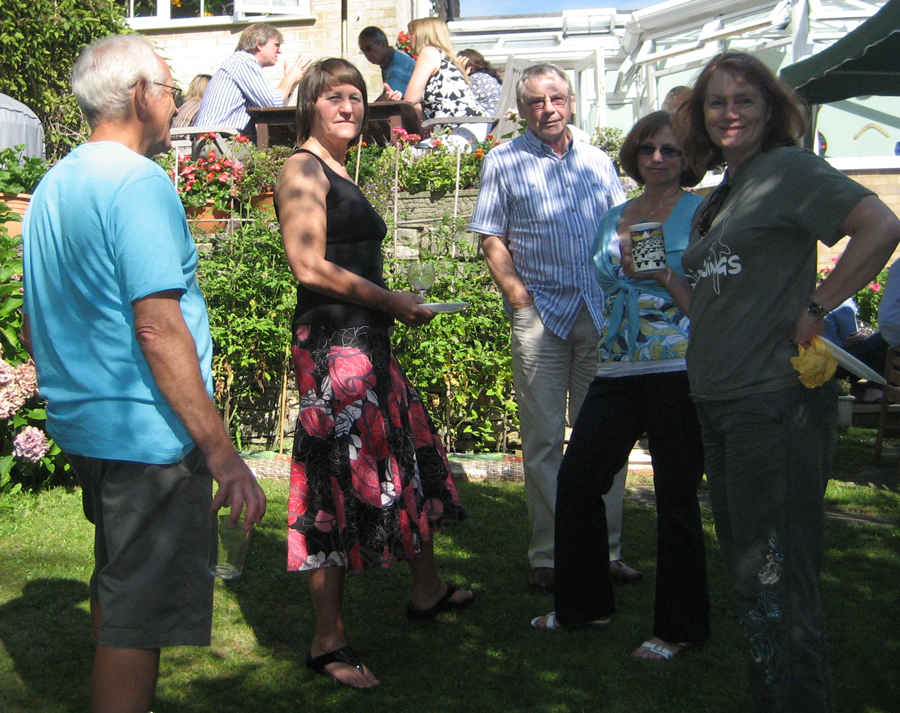
After further work on the house we returned to Poole. On arrival we called in on a garden party given by my former colleague Sheila Pearce for her husband Ken’s 60th birthday.
A very pleasant visit and a chance to meet a few old friends.

Are we nearly there yet?

Sheila Pearce - always cheerful !

Ken looks delighted to have turned 60
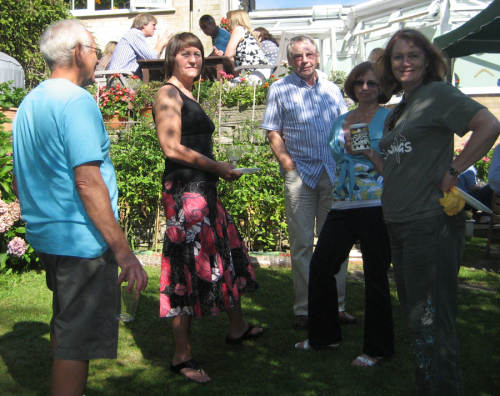
John, Ann, Jim, Linda and Margaret

Giant Jenga kept the girls amused
regrettably my 90 year old mother, who is also named Margaret, suffers from Alzheimer’s and is now in a nursing home. We took this opportunity this weekend to visit her several times.

Margaret Lewis and Margaret Lewis
My brother Simon has been working hard to renovate her house. We were able to assist a little this weekend.

I lived here from 1965 - 1969 and for short periods after then.
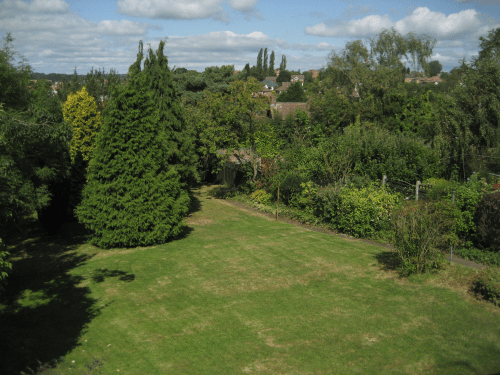
Margaret worked on the extensive but overgrown garden, whilst Simon and I painted the interior.

A new carpet, then the lounge will be completed.
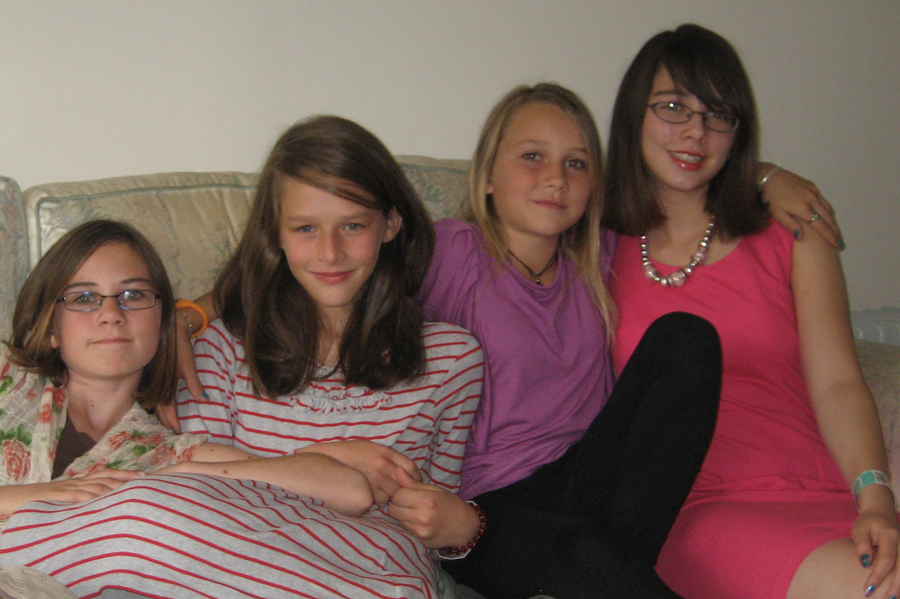
Today is my niece Miriam’s 15th birthday. Amber and Kara stayed with their second cousins and the four girls had a wonderful time.

L-R: Amber, Jennifer, Kara, Miriam
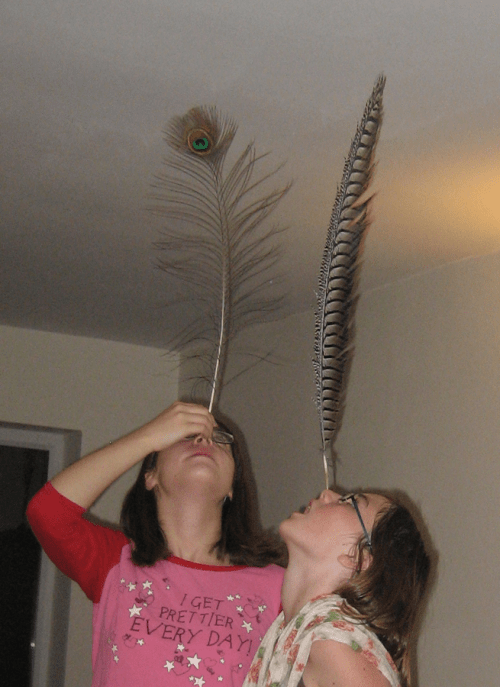
Are Peacock or Reeve's Pheasant tail feathers better suited for balancing on your nose?

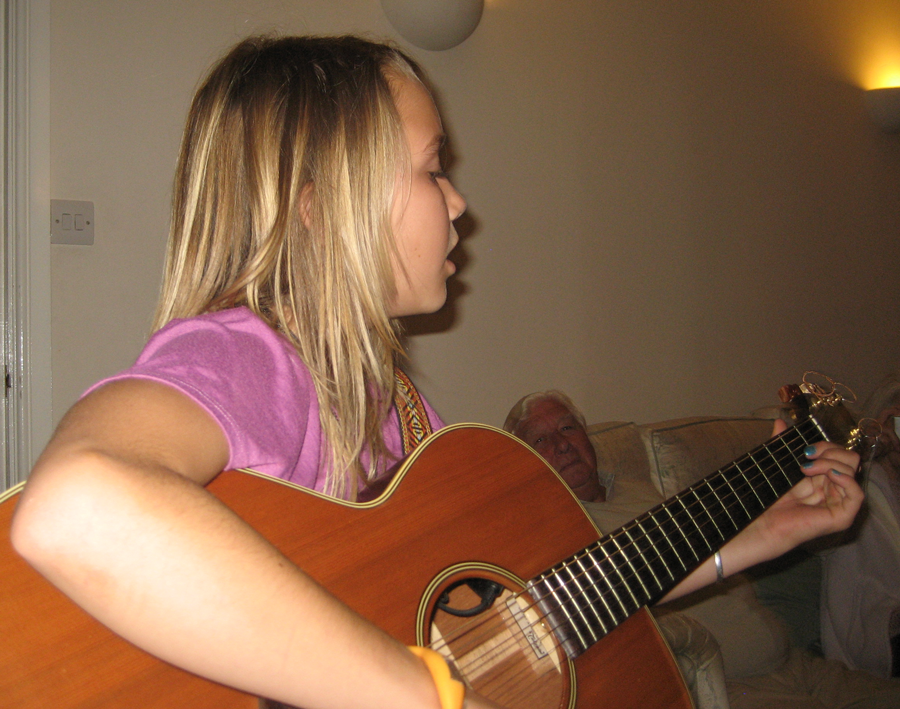
Kara entertained us with some of her own compositions and Miriam played the piano
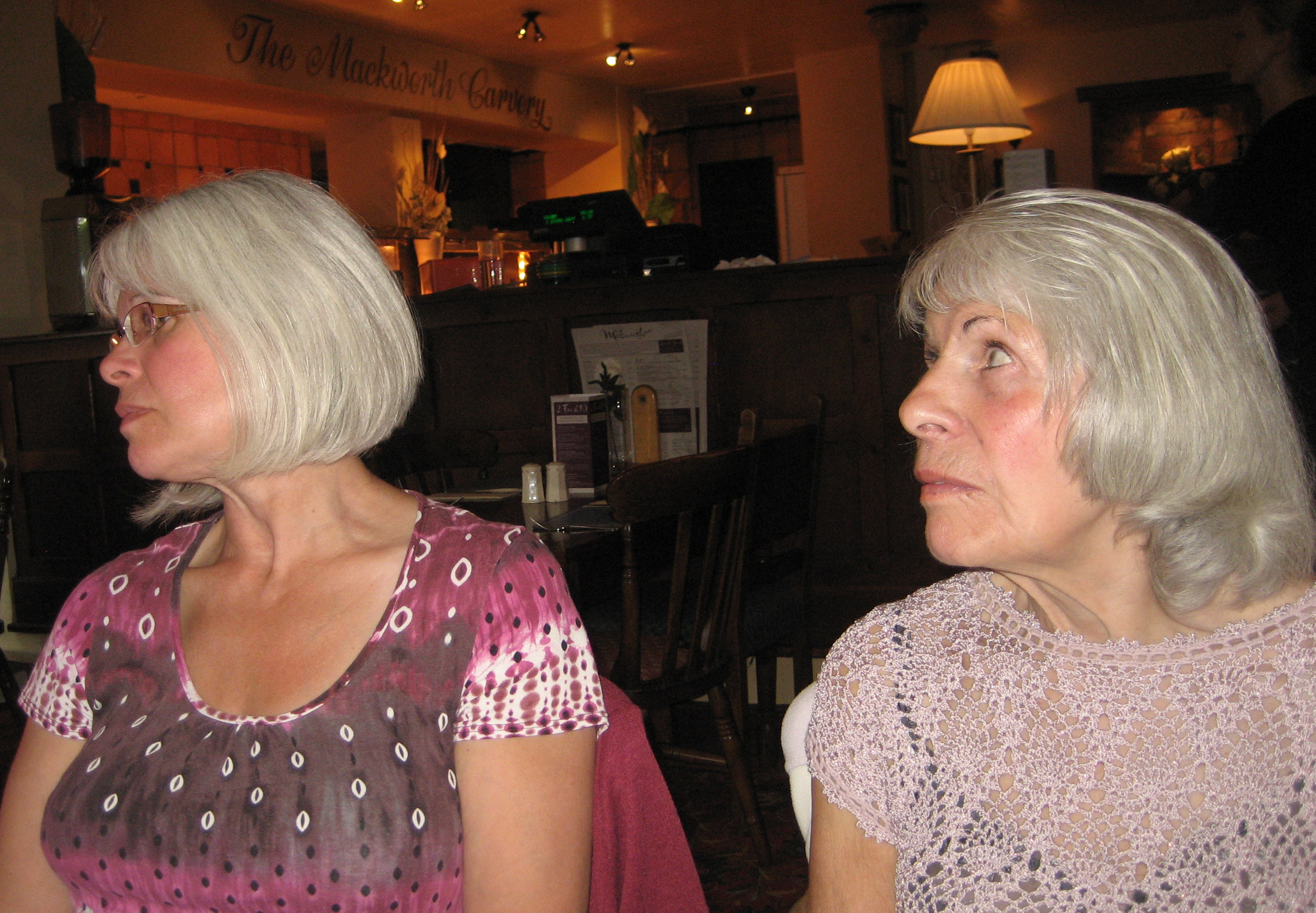
In the evening Simon and Viv, Margaret and I and the four girls were joined by Viv’s parent Ida and Dennis for an excellent meal in a nearby hotel.

My sister-in-law Viv and her mother Ida
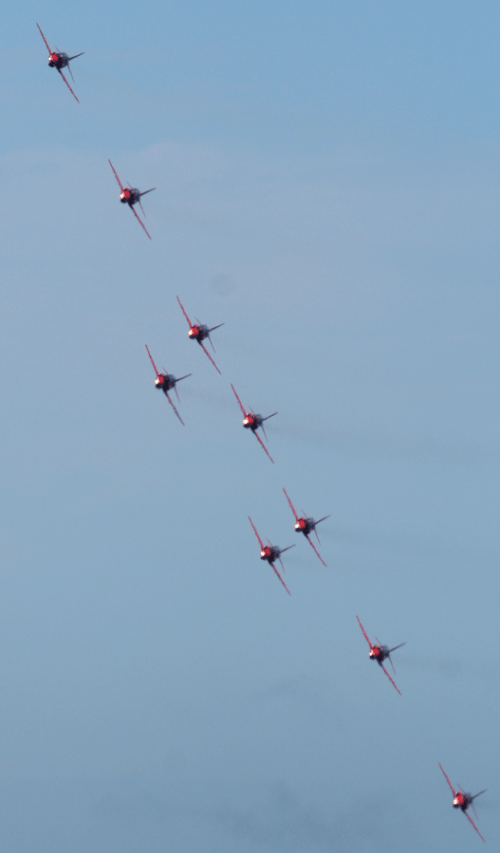
As a tribute to the skill, bravery and sheer entertainment value of the Red Arrows pilots, one of whom of course lost his life at the Bournemouth Airshow, I am posting a few photos taken over Ballard Down a couple of years ago.





If you are a birder and haven’t been to the Bird Fair then you are really missing a treat. It’s the perfect place to check out cameras, scopes and bins, research that next foreign trip or browse for a book or DVD and of course meet old friends, complete with the knowledge that you are contributing to bird conservation just by being there.
As we wanted to be in Derby on the Saturday, for the first time ever we went on Friday, hoping, in vain, that it would be less crowded. The fair just seems to get bigger every year. The journey from Poole takes about 3.5 hours (allowing 20 mins for the mandatory getting lost on the Northampton ring road!). We took the grandchildren this year and they had a great time, going pond dipping with the RSPB, blagging freebies off various stands and almost getting a free invite to Brazil!
After the Fair we continued on to my brother’s house in Duffield, just north of Derby.

Book signing at the Wild Sounds stand
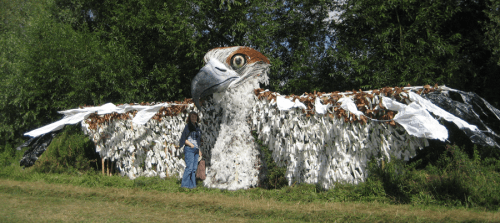
'Pandion giganticus'
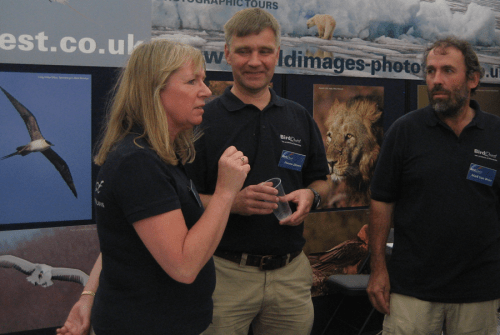
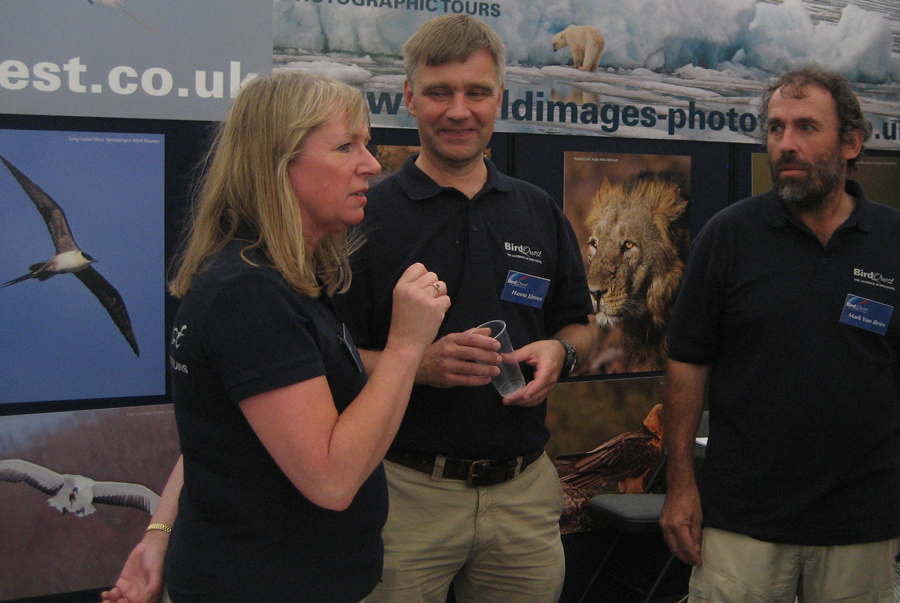
Of course I visited the Birdquest / Wild Images stand and discussed plans for 2012. Linda Kilby, Hannu Jannes and Mark Van Beirs.

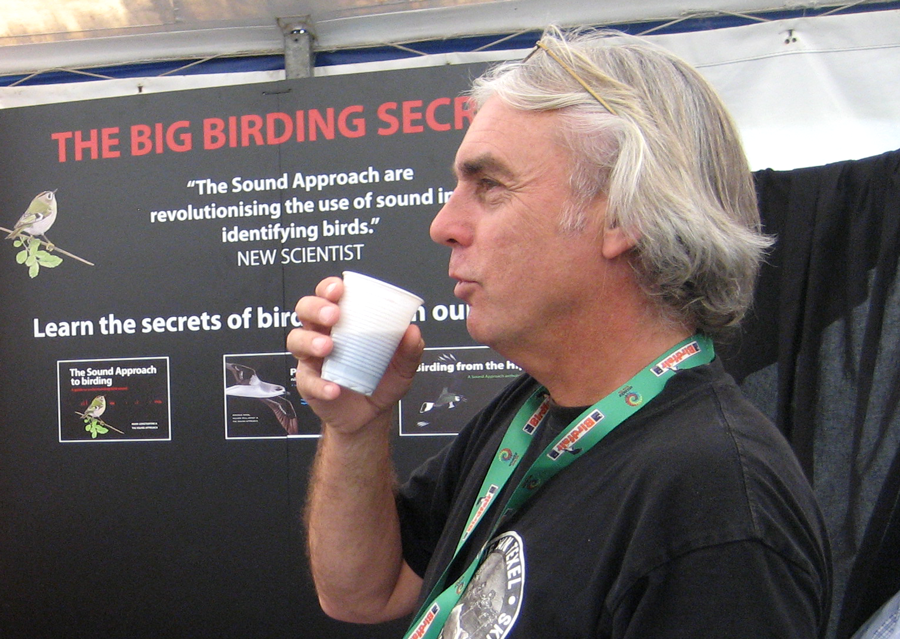
Rene Pop (aka Austin Powers) at the Dutch Birding / Sound Approach stand

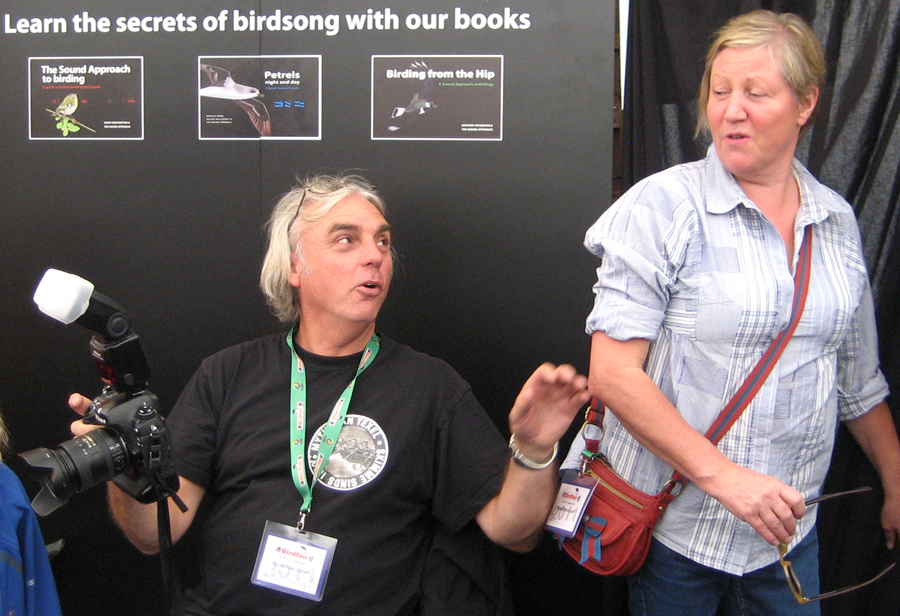
Austin Powers and Mo Constantine - Dutch Birding / Sound Approach

'and they really are this big in Holland...' Kate and Matt on the Dutch Birding / Sound Approach stand.
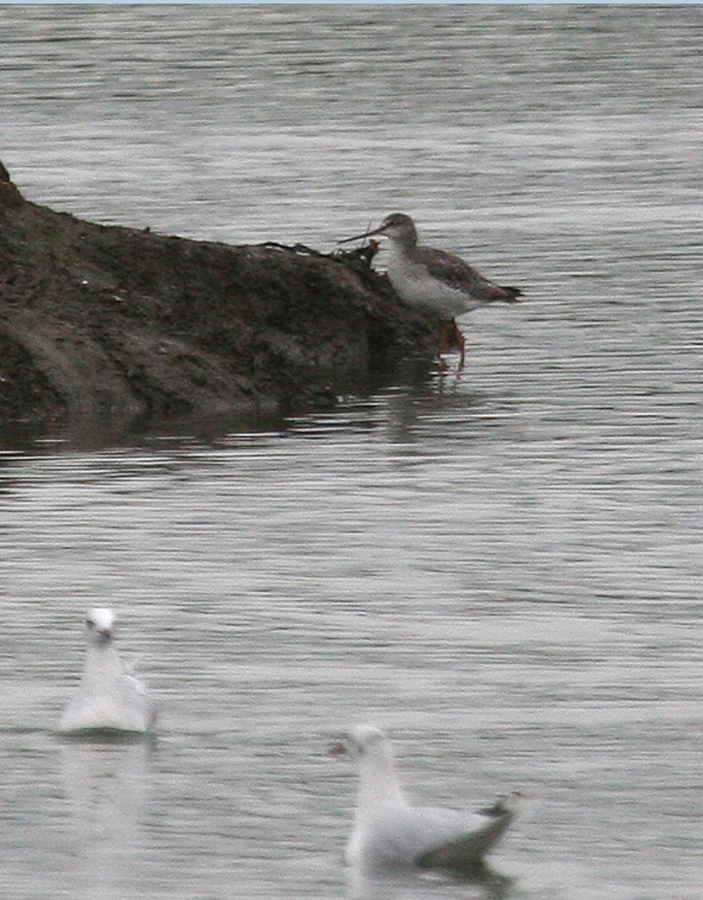
A short and rather wet visit to the western side of Holes Bay this afternon produced:
Redshank 120+, Spotted Redshank 2, Black-tailed Godwit 65, Whimbrel 4, Curlew 50+, Dunlin 2
Also the were several Mistle Thrushes on the lawn near Upton House.

A wet afternoon at Holes Bay

Spotted Redshank have become much scarcer in recent years, especially on passage. A few can be seen each winter in Holes Bay
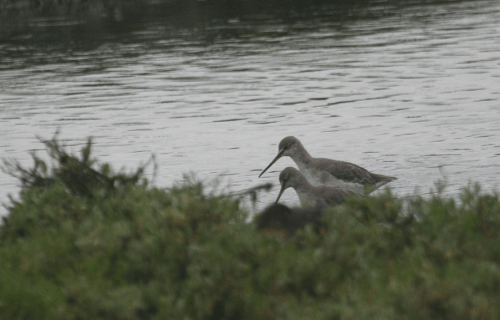
Holes Bay is reliable site for this species in winter.
A wet and unpleasant day like today provides an excellent opportunity to get my life list updated.
There are various checklists of the birds of the world, all with their merits. I personally prefer the one published by the International Ornithological Congress, which is updated regularly on line and is more likely to recognise the fruits of recent research than, say, the Clements checklist .
That said, because James Clements was a founding member of the American Birding Association, all American (and many birders from elsewhere) follow his checklist. Clements did a wonderful job of providing a world checklist for birders, but since his death in 2005, the work has been taken over by the Cornell Lab of Ornithology, who have proved to be very Americo-centric in their decisons. The most recent update posted on e-bird has gone a long way to correct this with many established Old World splits being finally published
I was pleased to find that I gained some 40 ‘armchair ticks’, i.e. birds that you can add to your list without getting out of your armchair, bringing my Clements based list to 7201. However if I was to count every split that had been published I could still add another 300! I have never worked out exactly what my list would be following the IOC, something for another rainy day.
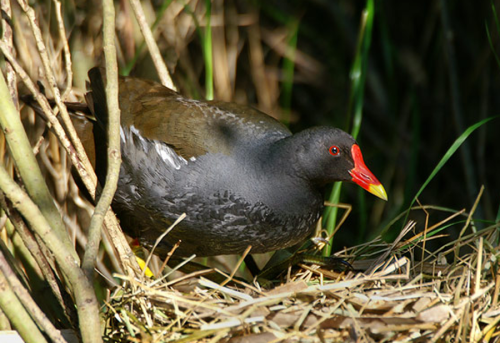
The New World Common Gallinule (above) has been split from the similar Old World Moorhen on the basis of very different vocalisations. This was first published by Mark Constantine in the Sound Approach to Birding. Photo from the internet.
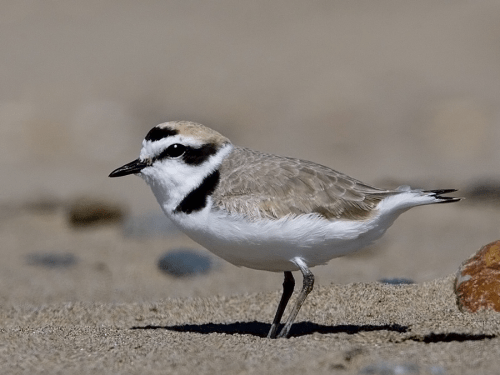
The lack of a deep chestnut cap, more black on the ear coverts and shorter legs separate the New World Snowy Plover (above) from the Old World Kentish. Photo from the internet
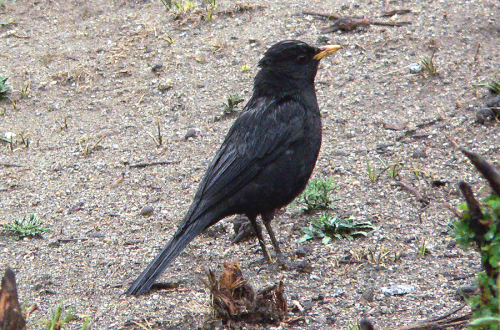
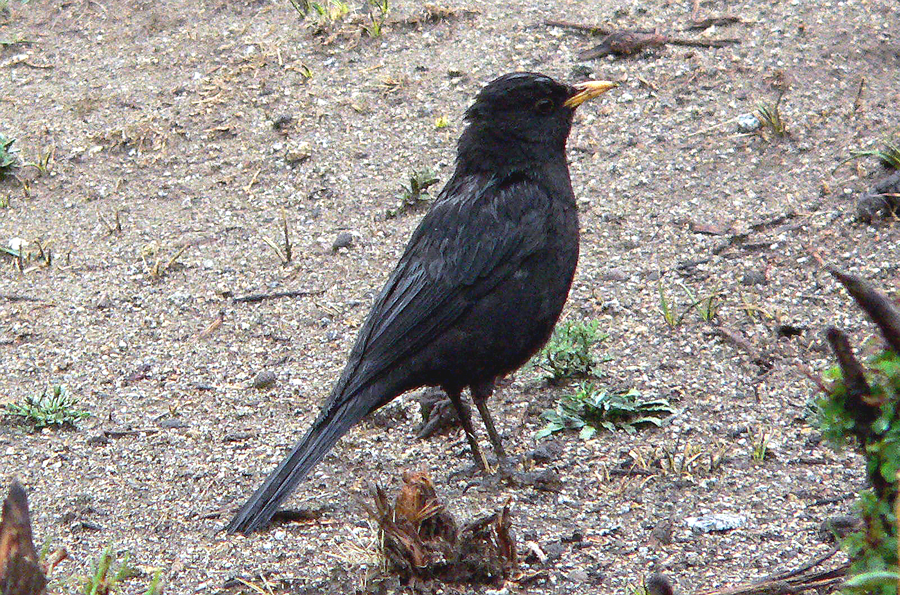
Tibetan Blackbird - near Lhasa 2005. Blackbird has been split into three, Eurasian, Indian and Tibetan. The above species is larger with a blue sheen to the mantle, little in the way of a yellow eye ring and vocalisations more like a Ring Ousel.
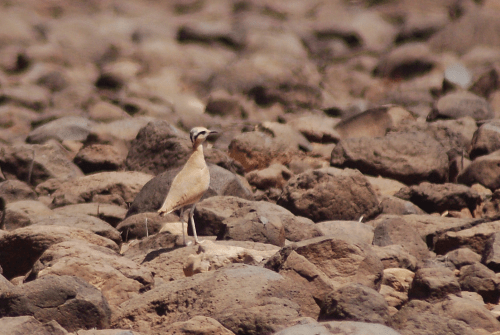
Cream-coloured Courser, Cape Verde 2008. East African population have been split as Somali Courser
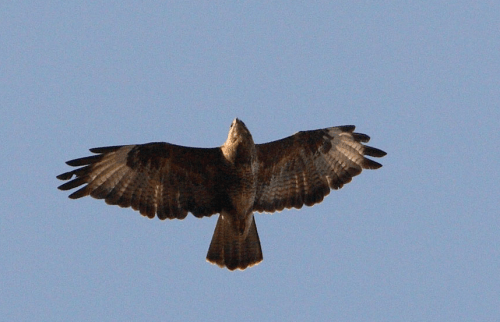
The very dark and critically endangered Cape Verde Buzzard is given full species status. On the other side of Africa the Socotra Buzzard is finally recognised as an a valid species. Photo by Tommy Ekmark, Cape Verde 2008

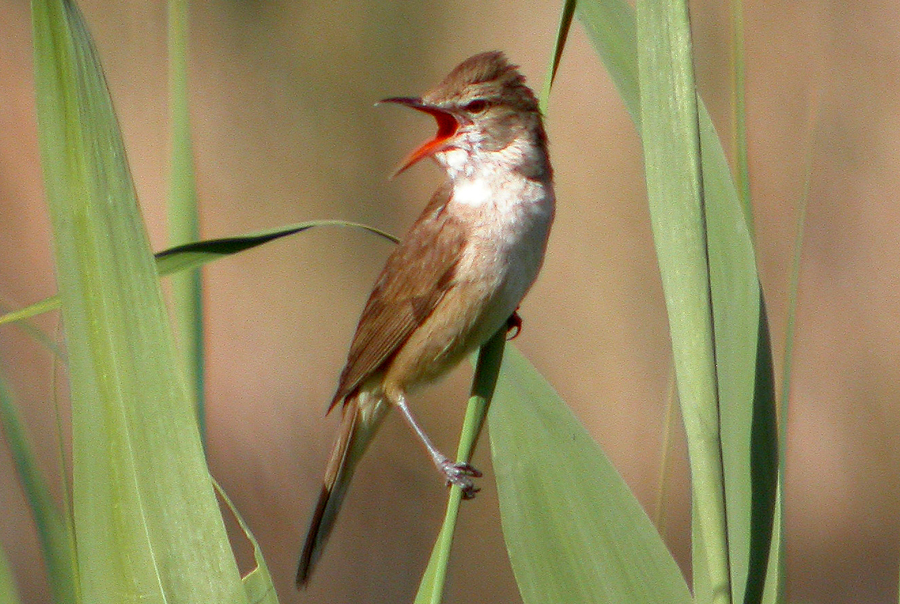
Not all proposed splits have been acted upon. The more easterly 'Indian' Reed-warbler remains lumped in Clamerous Reed-warbler. 'Indian' Reed-warbler Uzbekistan 2006 - photo by Dave Farrow
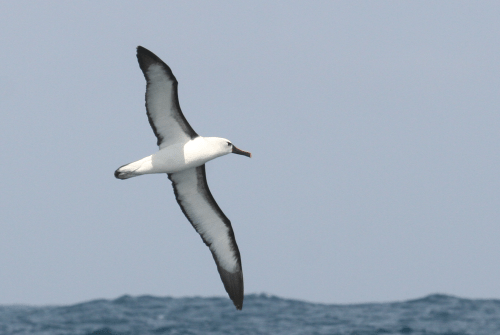
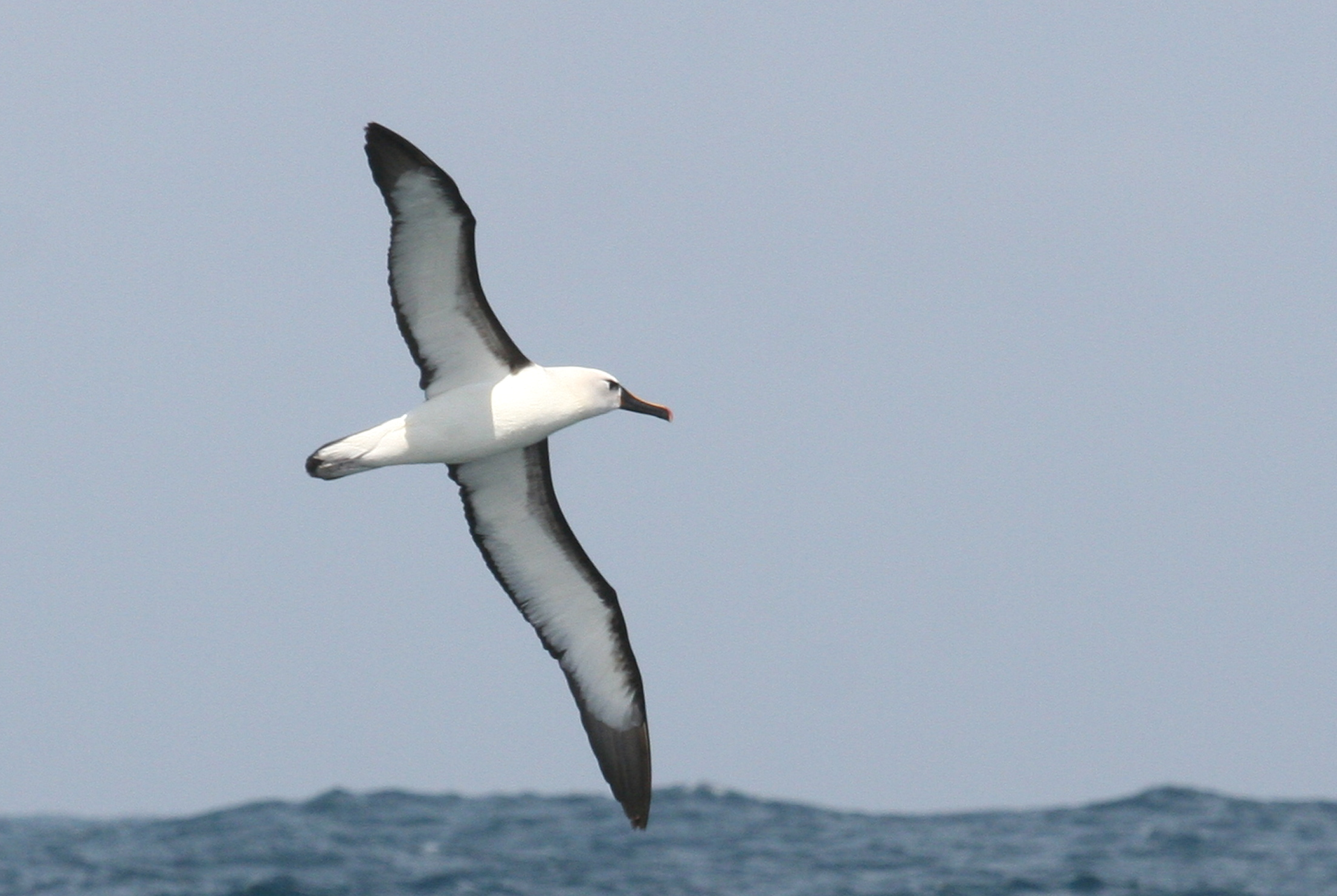
Similarly, Clements update has not adopted the widely accepted albatross taxonomay. This Indian Yellow-nosed Albatross remains lumped with its Atlantic counterpart.
Birders from Poole occasionally meet for a drink and a general birdy chat. Last night we were joined by Rene Pop (from Holland), James Lidster (now also living in Holland) and Magnus Robb (now living in Portugal). All had taken the opportunity to visit Poole either to see relatives or meet up with Mark Constantine on Sound Approach business ahead of this weekend’s BirdFair.
With so many distinguished birders visiting there was a good turn out from the locals and we were quite late leaving, so it was with some difficulty that I dragged my self out of bed at 0445 this morning to go ringing.
The dilemma was a simple one, join Mike at Durlston or Shaun at Lytchett Bay. In the end Lytchett won. We had a productive morning with 60 new birds, including two new Kingfishers ringed and another 5 Grasshopper Warblers. In addition we trapped a British control (a bird ringed elsewhere) Reed Warbler and a Whitethroat that we ringed at Durlston on the 10th (also one of our recent Durlston ringed Willow Warblers has just been retrapped in north Dorset) showing that not all birds travel south in the autumn.
A Wood Sandpiper flew over flew over but it was a ‘heard only’ for me as I was deep in the reed bed at the time.
Quote of the day:
Shaun: ‘its great being able to ring birds like Kingfishers before you go to work’
Me: ‘its better being able to ring birds like Kingfisher then NOT go to work’
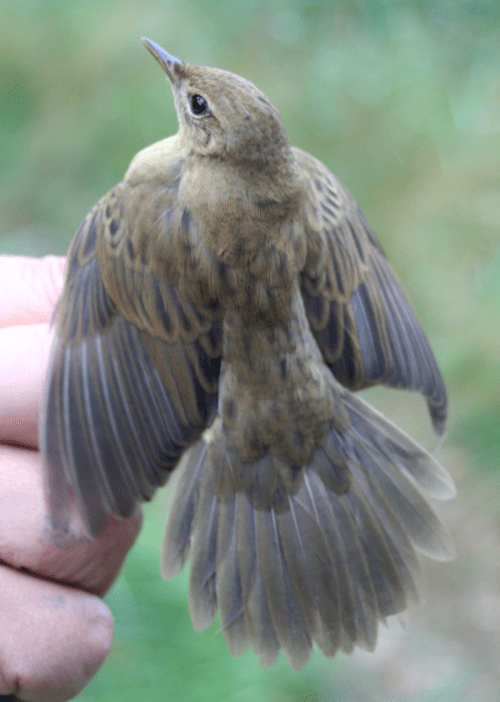
'Gropper heaven' that's 15 I have handled this week. Note the characteristic curve of the wings and the broad rounded tail.
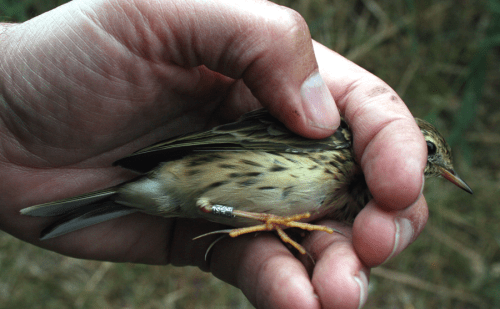
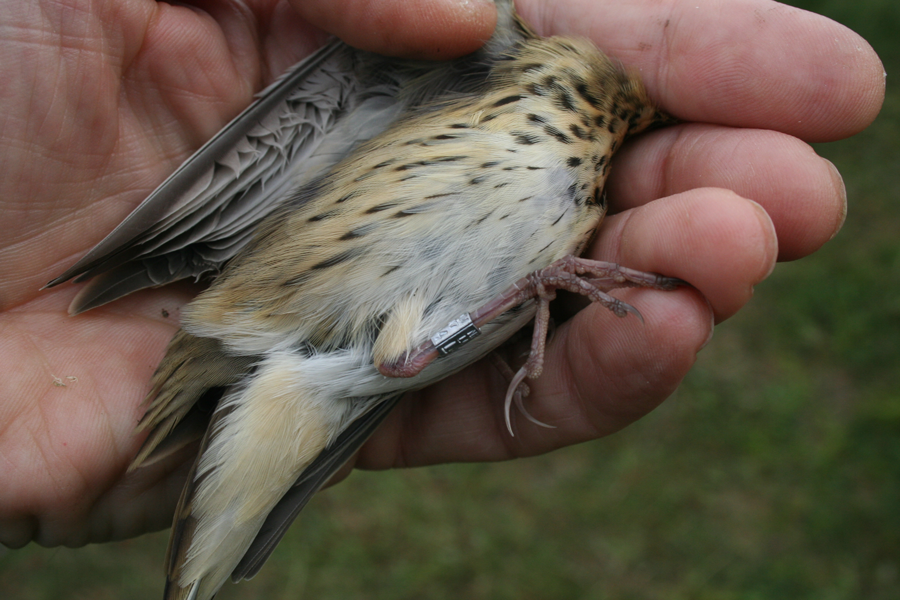
Meadow Pipit. Note the broader flank streaking and the longer straighter hind claw compared to the Tree Pipit on the right.

Tree Pipit ringed at Durlston earlier in the month, included here for comparison.
This morning Michael Gould and I attempted to ring at Durlston, but increasing wind meant that had to pack up after about an hour. Even so we ringed 15 birds comprising of six species of warbler. Although there weren’t as many migrants as yesterday, there was a steady passage of Swifts with at least 50 seen heading south, a number of Swallows and perhaps half a dozen Tree Pipits overhead.
After we had cleared away, I attempted a seawatch for about an hour, seeing a single Arctic Skua going east, 3 Manx Shearwaters west and a number of Gannets.
The best sighting of the day through was Britain’s smallest mammal, a Pygmy Shrew that boldly foraged along the path near the Tilly Whim caves for several minutes, the first time have had a prolonged view of this species.
On the way home I called into Holton Lee, in case the Honey Buzzard from a couple of days ago was still about. The Holton Lee estate which is on the other side of the River Sherford from Lytchett Bay, is private, but you can visit if you join ‘the Friends of Holton Lee’.
No luck with the HB but there was a female type Marsh Harrier over the Bay, a Green Sand, 31 Lapwing and a flock that consisted of Great, Blue, Coal and Long-tailed Tits, Nuthatch, Treecreeper, Chiffchaffs and many Willow Warblers were the highlights.
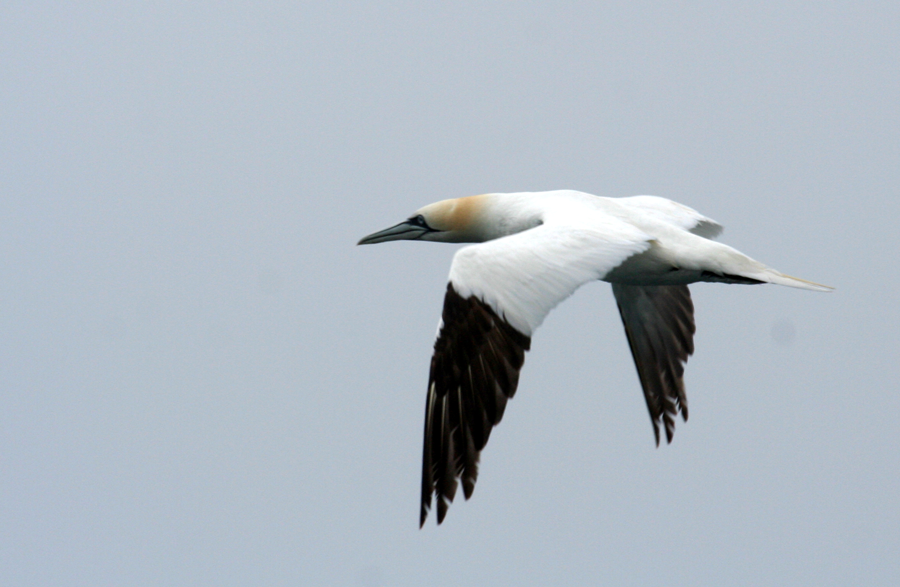
Not a great day for photography, so only the view from Holton Lee was taken today. The skua picture was taken on Spitsbergen, the Gannet off West Bay and the Pygmy Shrew was nicked from the internet.
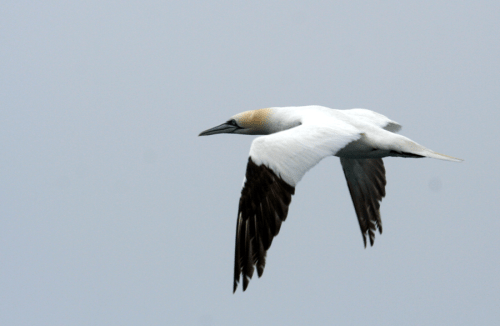
Adult Gannet
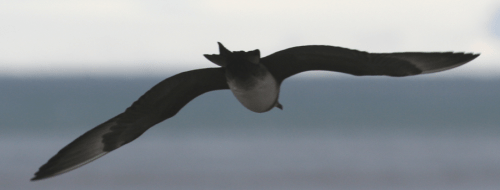
Pale phase Arctic Skua

Pygmy Shrew - photo from the internet

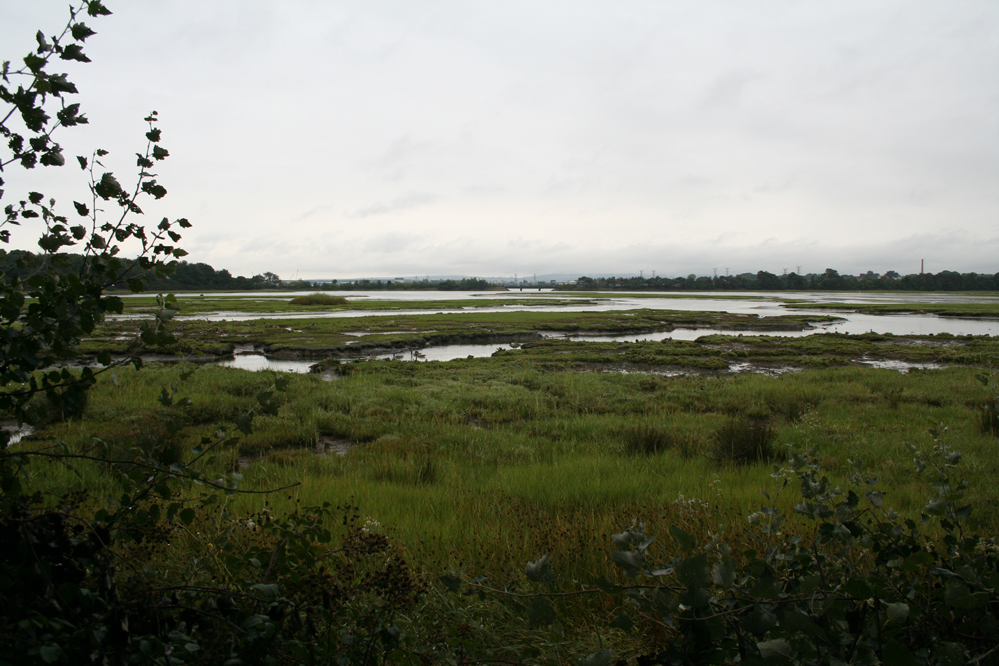
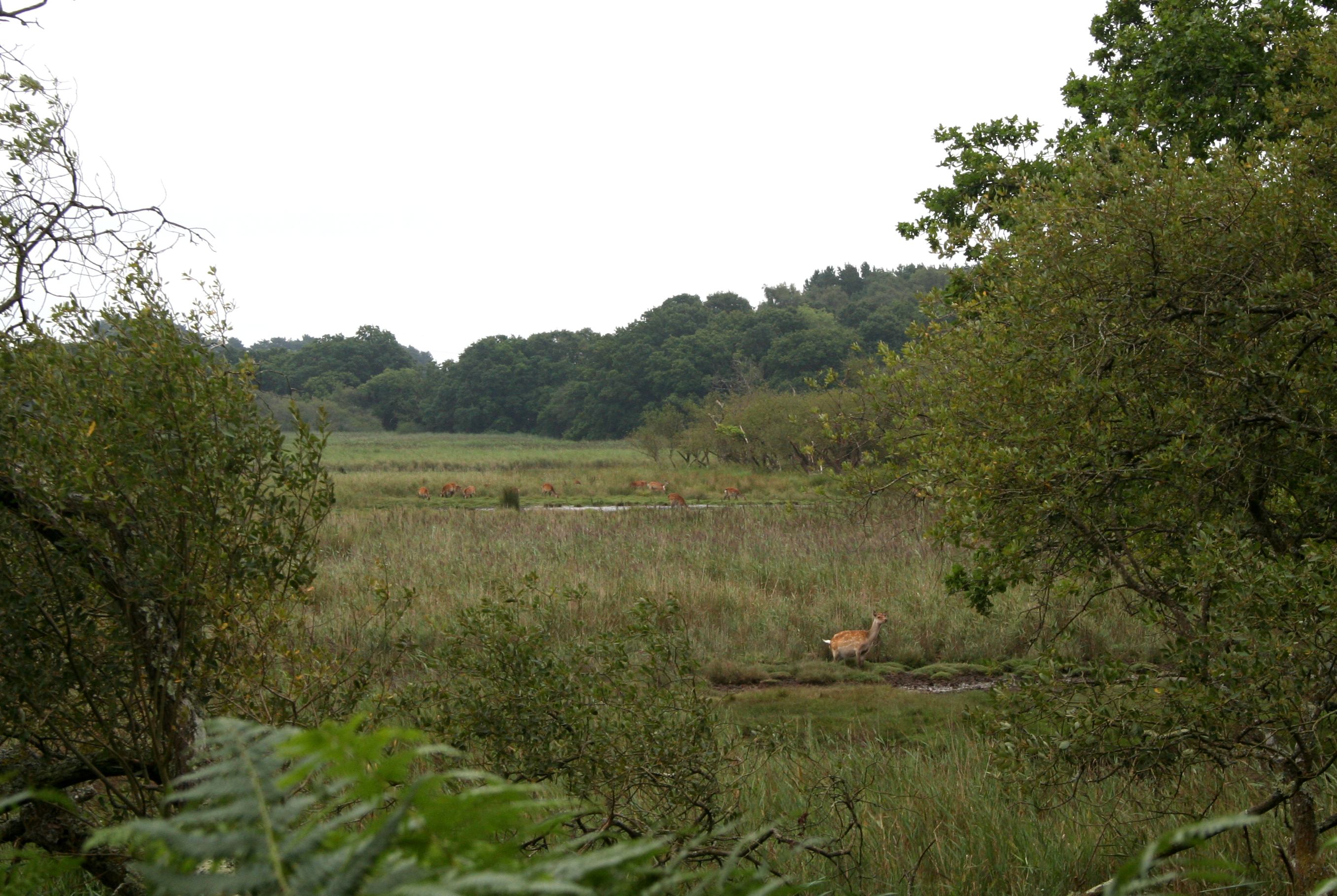
Holton Lee, the west shore of Lytchett Bay. Note the Sika Deer in the forground and the mid distance.
Birding folklore maintains that you seldom see a large arrival of migrant birds after a clear night, nocturnal migrants just keep going in those conditions and don’t make landfall. It is also believed that a full moon exacerbates the situation, allowing the migrants to see far ahead and cross the Channel without having to stop. Of all the wind directions, the north-west is generally considered to be the most unhelpful, so when I left home at 0500 to a chilly 8 C, a north-west breeze, a clear sky and a full moon I was resigned to catching just a handful of birds at Durlston.
How wrong could I be! The ringing totals for the morning were:
- Willow Warbler -78
- Common Whitethroat – 50
- Grasshopper Warbler – 10
- Garden Warbler – 8
- Sedge Warbler – 6
- Chiffchaff – 4
- Redstart – 3
- Blackcap – 2
- Lesser Whitethroat – 2
- Tree Pipit – 1
- Reed Warbler – 1
- misc common species – 10
Total 175 birds – fortunately Mick Cook joined me, that would have been a lot to cope with on my own.
Interestingly the Willow Warblers had longer wings than ones we have been trapping recently, presumably indicating a different origin.
There wasn’t time for much photography, but I could resist this side by side comparison of an adult and first year Grasshopper Warblers.
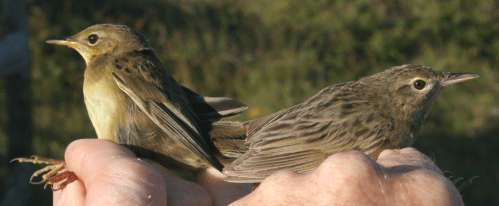
The adult (on the right) has not moulted since the winter and shows considerable abrasion to its plumage which causes a greyish unkept appearance. Also note the richer colour of the iris.

The abraded wings and tail of the adult (here on the left) can be clearly seen

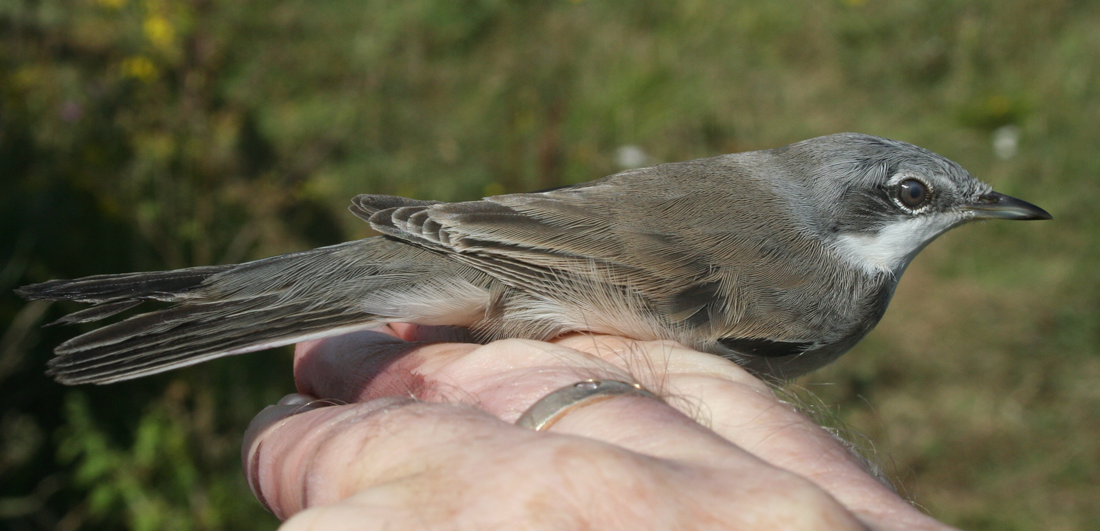
Unlike Acrocephalus and Locustella warblers, most adult Sylvias, like this Lesser Whitethroat, undergo a complete moult after breeding. As both adults and first years have fresh plumage, details of the iris and tail feather colouration are used for ageing.

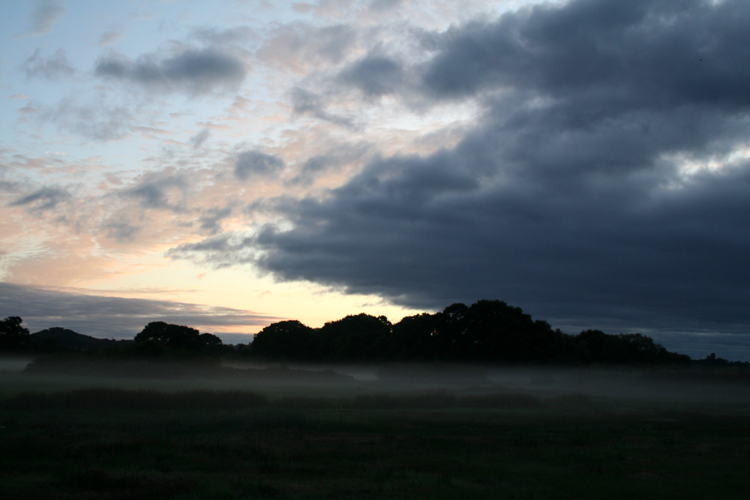
Lytchett Bay at dawn
Stour Ringing Group have signed up to an international Aquatic Warbler investigation. This merely means that we commit to a ringing session in suitable habitat two or three times a week in late July – early September. However with the ongoing westerly airstream we have next to no chance in actually catching one. In fact no Aquatic have been trapped at Lytchett since August 1983.
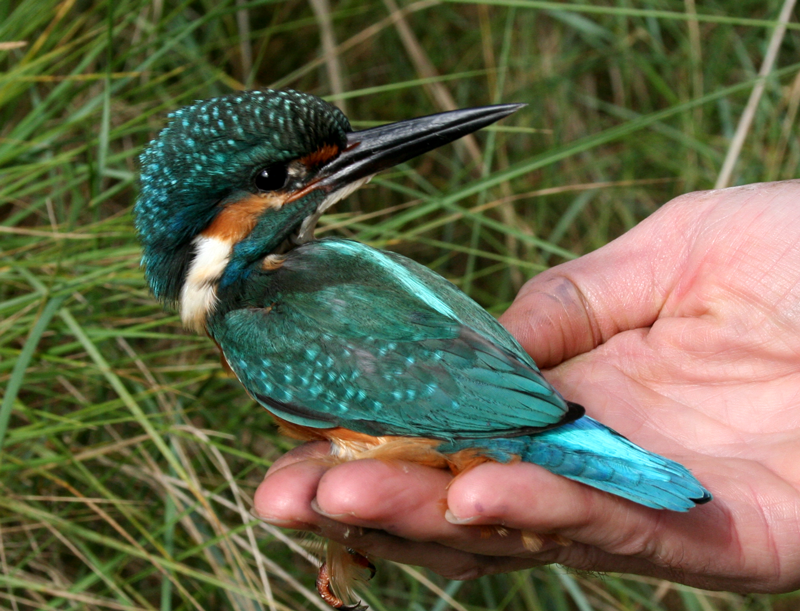
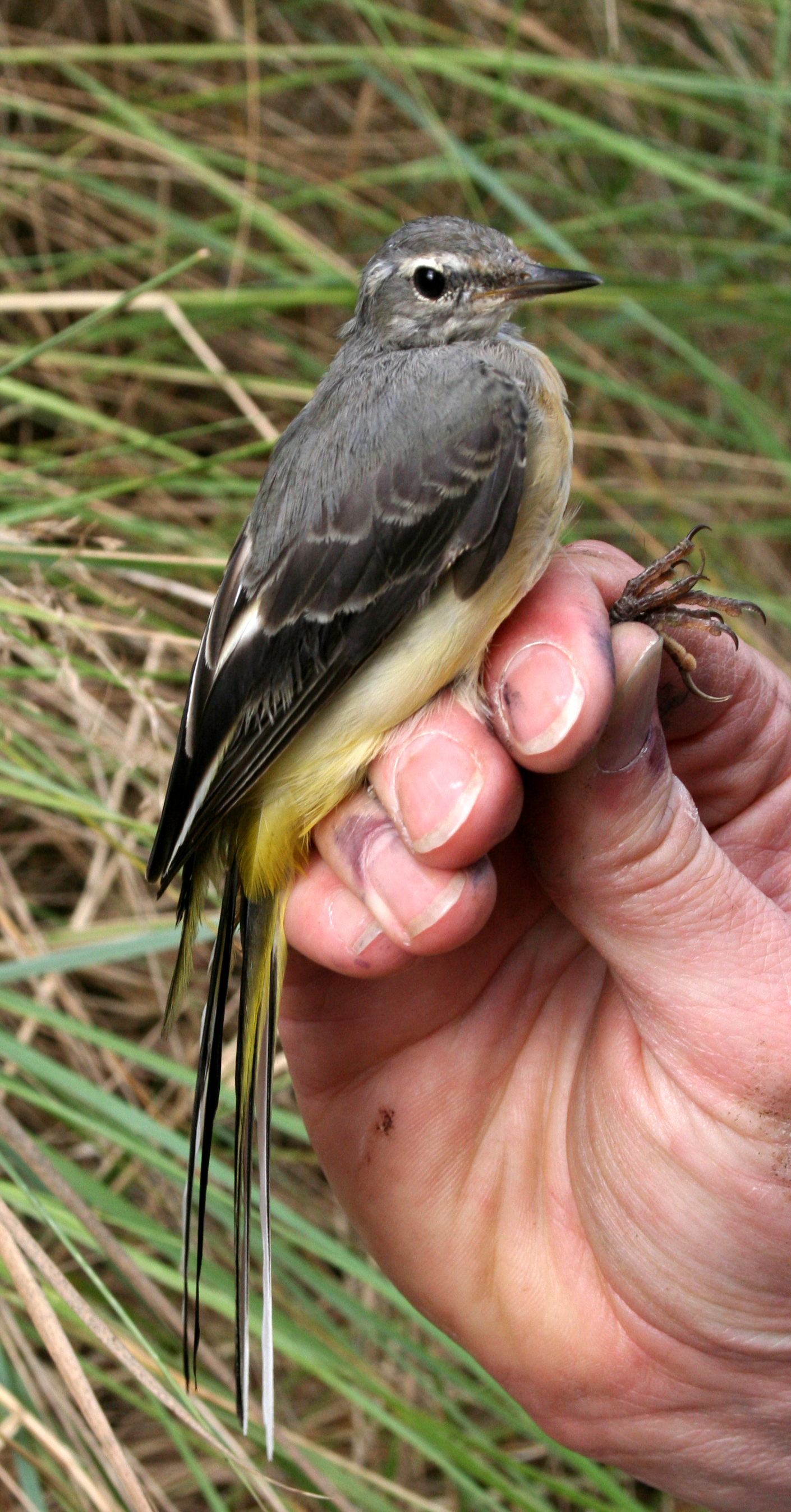
We did however catch three juvenile Kingfishers, two retraps and one new one. Most years Kingfishers seem to pass rapidly through the Bay but this year some seem to be hanging around. A Grey Wagtail and a Garden Warbler were nice bonuses.
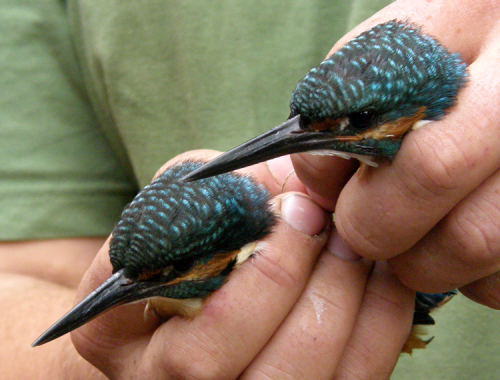
A couple of Kingfishers from Lytchett Bay

One of the ones we caught this morning

‘Sylvia fingers’ – if sylvia warblers eat blackberries, what goes in must come out!
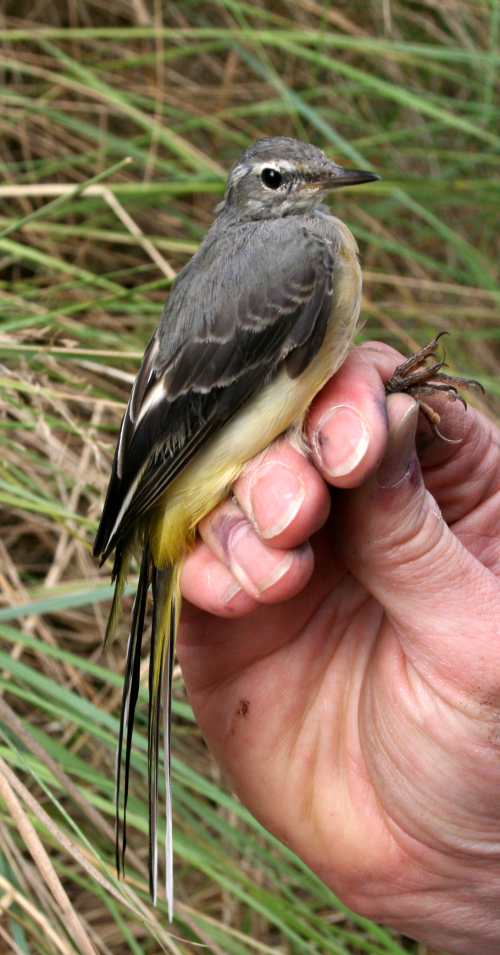
A juvenile Grey Wagtail was a nice surprise
But the highlight of the morning was a fine adult male Honey Buzzard picked up by Shaun Robson. The ID of this bird proved hard to confirm as it flew from one dead branch to another over Holton Lee but eventually soared giving excellent views. Steve Smith was later able to pick up the same bird at Kingsbridge drifting towards Wareham Forest.
I didn’t have my big lens with me but this photo taken in the midlands by Alan Lewis and copied from the web, bears a striking similarity to our bird, even down to the missing primary in one wing.

Honey Buzzard – adult male


























 gryllosblog