Archive for the ‘Uncategorized’ Category

Birding, ringing, Blandford, gardening and social events: August – October 2016   Leave a comment

This post is the final part of my trio of summer/autumn catch ups and deals with some birding, a bit of the ringing that has occurred in late October and a few general non-birdy activities.

For most of this time general birding has very much taken a back seat whilst I concentrated on ringing. With the exception of a couple of visits to Portland (one successful, the other not) most of the birds I have seen away from the ringing sites have been at nearby Lytchett Bay.
17191aqua-lb-ib

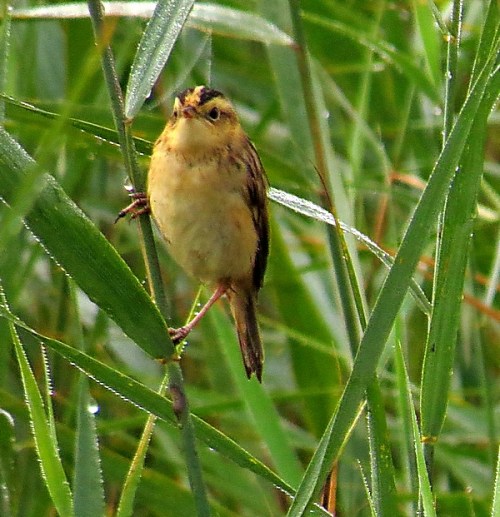
Aquatic Warblers are a rare and declining visitor to our shores from their breeding grounds in eastern Europe. Stour Ringing Group have had a long history of catching these elusive migrants with a total of 98 ringed over the years, although in recent years I missed them all by being at the Bird Fair or elsewhere at the time. Being highly elusive, ringing is about the only way to establish how many of these birds are passing through the UK. Whenever the winds turn to the south-east from late July to early September a ringing session is convened at Lytchett Bayin the hope that we might get lucky.. This year we had no luck but Lytchett Bay regular Ian Ballam found one at the wader view-point on 1st September. I was at Durlston at the time but fortunately the bird was still showing, albeit distantly, when I arrived about midday. I have seen 26 Aquatic Warblers in the UK but only three; on the Fleet, Dorset in 1987, Scilly in 1990 and this one have been seen in the field. Photo by Ian Ballam taken when the bird was first discovered and before it moved to the back of the marsh.


17190aqua-lb-ib

Just about all the identification features of Aquatic Warbler can be seen in these two photos. It separated from the similar and far more numerous Sedge Warbler by the central crown stripe, tiger-striped back, bronze patch above the bill, pointed tail feathers and lightly streaked flanks. I wrote a whole blog post on the occurrence of this magical little warbler in the UK see https://gryllosblog.wordpress.com/2011/09/08/where-have-all-the-aquatics-gone/        Photo by Ian Ballam.

yellowlegs-lb2-ib

Credit where credit is due, both Shaun Robson and Ian Ballam show enormous dedication to birding at Lytchett Bay, but Ian has the advantage that he works nights so as soon as his shift is over he can get to the Bay for dawn. His record of finding good birds there is quite remarkable. Great improvements by the RSPB to the wet fields, now known as French’s Field and Sherford Field have resulted in large numbers of waders using them as a high tide roost. As well as goodies like Curlew Sandpiper, Little Stint, Wood Sandpiper and Ruff, Ian found this Lesser Yellowlegs on 19th September. Again I was at Durlston at the time but saw it later in the day, but the tide had pushed it the back of the marsh and the sun was now glaring. I had better views the following day but not as good as the ones Ian had when he took these photos.

yellowlegs1-lb-ib

Lesser Yellowlegs are a common species in North America, breeding almost exclusively in Canada and Alaska. They are one of the commoner Nearctic waders to reach the UK with about 7 occurrences per year, but this is only the 3rd I have seen in Dorset. Photos by Ian Ballam.

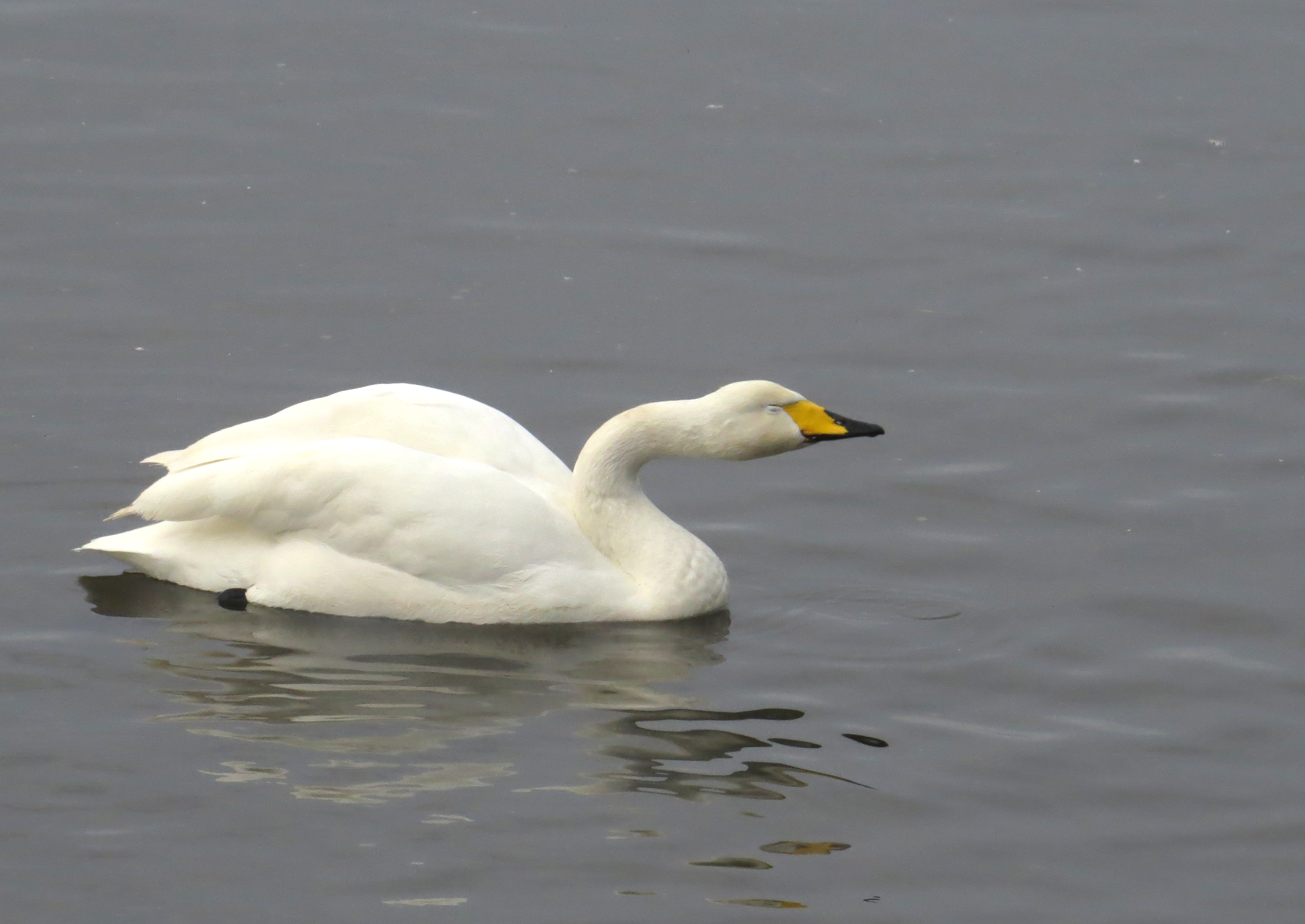
IMG_4069 Whooper Swan

Hat trick time for Ian Ballam when he found yet another goodie at Lytchett Bay on 20th October. This time I was at home, not at Durlston and was able to get down quickly to see this adult Whooper Swan, which was a good job as it flew off soon afterwards. Whooper Swans are winter visitors from Iceland but are rare as far south as Dorset. This is only the second record for Lytchett Bay. I was unable to get of photo of the Lytchett bird so I have used one I took at Welney, Norfolk in February of this year.

7f1a2074-balearic-shearwater

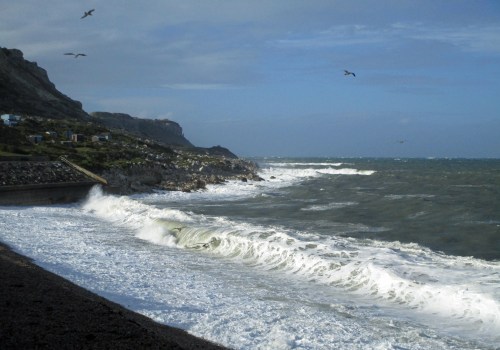
A spell of windy weather at the end of August prevented any ringing at Durlston so on 20th August I went to Portland in the hope of seeing Balearic Shearwaters. This species is classed as critically endangered due to the huge decline in breeding numbers in the Balearic Islands due to introduced predators. However post-breeding the entire population appears to relocate to the Western Approaches where gales can push them eastwards towards Lyme Bay and Portland Bill. I saw at least 60 but over the course of the whole day in excess of 500 were seen, which must represent a large proportion of the entire world population. Birds were of course too distant for photos, so I have included one that I took near the breeding grounds in Mallorca in May of this year.
img_4954-west-cliffs-portland_edited-1

Watching the Balearics from the Bird Observatory was interrupted with news that Portland birder Charlie Richards had found a Long-tailed Skua at Chesil Cove (the north-western corner of the Isle of Portland).

ltskua Nick Green

I quickly drove to Chesil Cove as I have only seen this species twice before in the UK and I am relatively unfamiliar with the juvenile plumage as most birds I have seen abroad have been adults. PBO warden Martin Cade located it on the sea but it immediately it took off and flew out of sight. This photo by Nick Green taken from the internet of a juvenile Long-tailed at Dungeness shows almost exactly what I saw, the pale head, barred plumage, fine white shaft streaks in the outer primaries, photographed against a stormy sea.

hazel-mouse-danielle-schwarz-wikipedia-commons

I was able to add a new mammal to my British list this autumn when I joined fellow ringer Kath Clay, the warden of Thorncombe Woods reserve, and members of the Dorset Mammal Group in checking the Hazel Dormouse boxes. We had brief but good views of one as it ran up the tree trunk. Photo from Wikipedia Commons.

img_5069-redwing-underwing-for-web

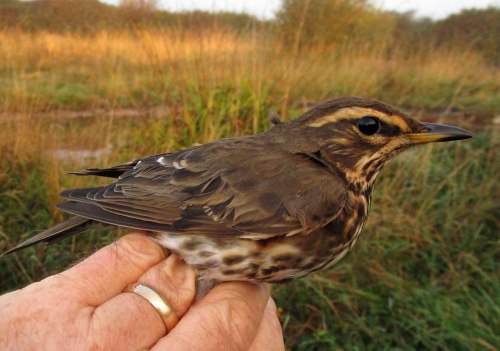
As autumn has progressed the numbers of our regular migrants at Durlston like Chiffchaffs and Blackcaps have declined markedly. There has been an increase in Goldcrest numbers, but nothing on the scale of last year’s influx. We have however had some success in catching Redwing with some 50 ringed. This photo shows how the species got its name.
img_5067-redwing-for-blog

Aging Redwings is straight forwards. The white edges to the tertials with a marked step at the shaft shows this is a first year bird.

img_5060-cm-tawny-owl-dcp-241016-for-web

On 24th October we had a surprise and found a Tawny Owl in our net just before dawn. Identified as at least a three-year old male it gave us a few scratches from those powerful talons before it was released.
bat-sp-dcp-020116-3-for-web

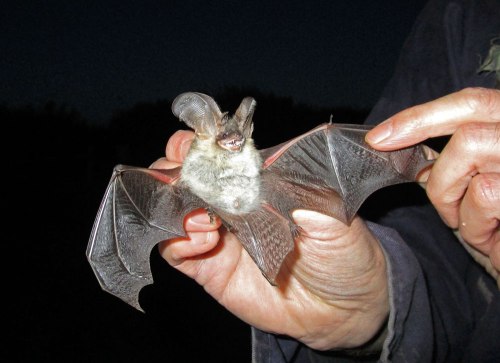
Another pre-dawn surprise was this long-eared bat which was found in one of our nets at Durlston. It was suggested that this could be the rare Grey Long-eared on fur colour and length of the thumb but bat expert Nick Tomlinson has said it is probably a juvenile of the commoner Brown Long-eared (based partially on the shape of its willy). For me at least manning the site at Durlston for this year is almost over. It has been our most successful year by a long way and I think those of us who worked it regularly can give ourselves a collective ‘pat on the back’.

img_4980-guided-tour-of-blandford-for-web

Moving on to non-birdy things now, We remain members of the organisation Phoenix, which is the local successor to Nexus, the organisation via which we met. These days we attend few of their events due to other commitments, but we did join a guided walk around Blandford Forum in September, a town about 12 miles north of Poole.


img_4976-two-bastards-sign-for-web

The fire started in the premises of a candlemaker and the town was rebuilt in the Georgian style by the brothers John and William Bastard – hence this commemorative plaque.

img_4987-the-old-house-for-web

This old house was one of the few to survive the fire and as a result has been adorned with a ‘blue plaque’.

img_4996-old-warning-sign-for-web

I wonder exactly which nuisance this notice prohibits.

img_4986-ceiling-of-old-shop-for-web

Some of the shops have wonderfully decorated Georgian interiors.
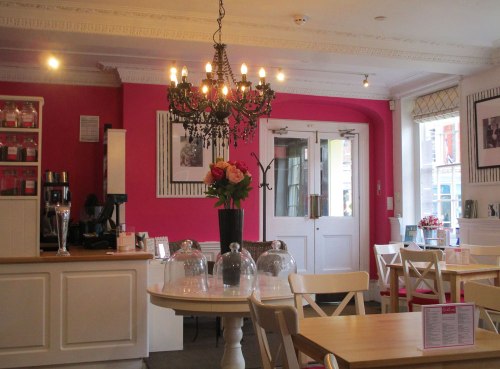
img_4998-blandford-tea-room-for-web

And as usual on these walks we concluded the afternoon in this quaint tea room.

img_4934-dinner-at-gios-for-web

In the summer my friend and former colleague Giovanni (Gio) invited some of us for a meal to celebrate the release of his daughter Carmela’s band’s first album. From right to left seated. My former boss Andy, his wife Cherie and daughter Megan, Margaret, my former colleague Anne, Tim a long time friend, former colleague and my best man at our wedding. Standing R-L Gio, his wife Jessica and Tim’s ever cheerful son, Simon.

ay-carmela

Unfortunately, as Carmela lives in London she couldn’t be there. She has been part of a band called ‘Colour Me Wednesday’ but now plays in her own group Ay Carmela!’ As well as the usual chat we listened to the Working Weeks CD (in the indie-punk style) and played some other music too.
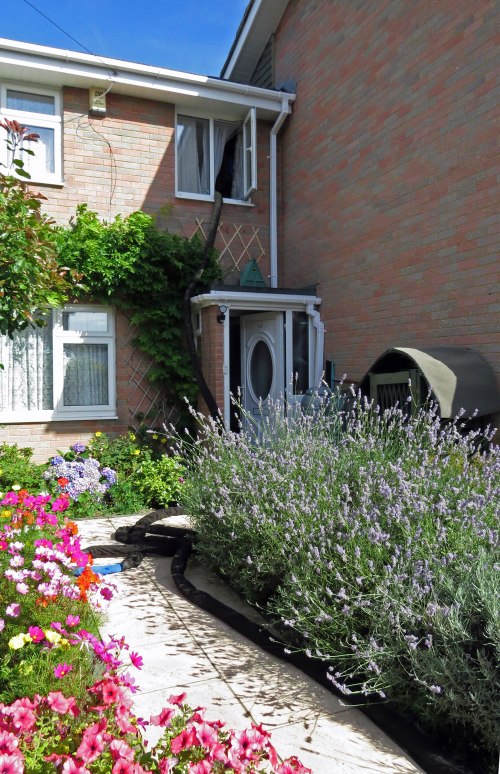
img_6302-insulating-the-roof-fw

Whilst I have been spending my time putting metal rings on birds legs, Margaret has done wonders to the garden both front and back. You might wonder what the pipes going into the upstairs window are for.
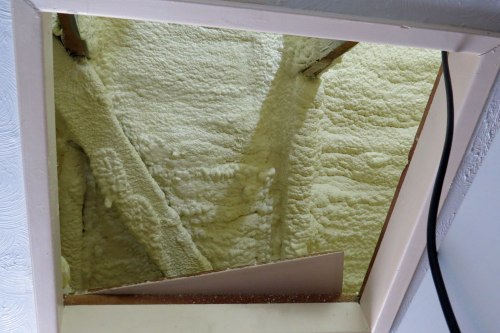
img_6303-roof-insulation-fw

During the summer we had the inside of the roof coated with a special insulating material, both to protect against the ravages of time and to provide further insulation. Along with our solar panels this has reduced our heating bills to about half that of the national average.
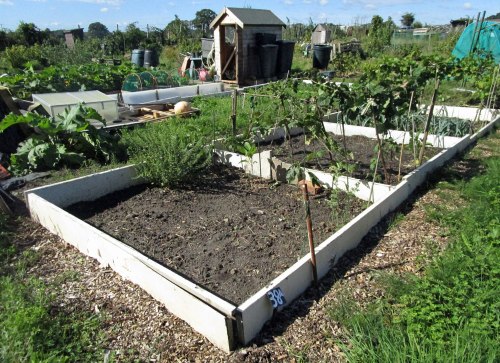
img_5026-allotment-for-web

If our garden wasn’t enough to keep her busy Margaret has also been working at her allotment.

img_5028-m-giant-pumpkin-for-web

Enormous courgettes and giant pumpkins have been on the menu at home.
kara-and-pumpkin

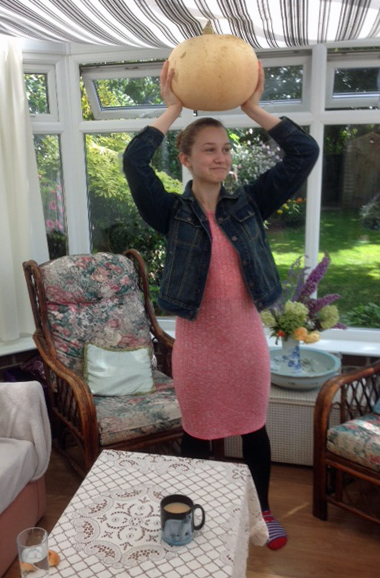
Kara, our fitness fanatic granddaughter, easily lifts an 8kg pumpkin above her head.

img_6410-10th-anniversary-celebration-for-web

And finally this October marked ten years since Margaret and I met so we invited family and a few friends around for a meal. Right to left: Margaret’s daughter Janis, granddaughter Amber (now doing an apprenticeship in leather work), our friend Christine, me, Margaret, granddaughter Kara (now at 6th-form college) and Janis’ partner Nigel. Photo taken by Nigel’s son William.

August – October 2016: Two trips to Spurn – we went through Hull and back (twice)   Leave a comment

At the end of August my friend and trainee ringer Chris and I went to the Bird Observatory at Spurn in East Yorkshire. I had hoped that Chris would get to ring a lot of new species and learn some new ringing techniques and I hoped I would have a chance to do some wader and tern trapping and see how ringing is performed at one of Britain’s best migration hot spots.

In the event, for a number of reasons, it wasn’t as good as I expected but it was still well worthwhile.

img_6306-spurn-lighthouse-fw

In East Yorkshire the north shore of the enormous Humber estuary turns southwards at its mouth and forms the Spurn Peninsular. Recent erosion has cut the road to the lighthouse and it is now a three-mile walk or cycle to the point. In this photo the lighthouse is at the tip of the peninsula whilst the shoreline to the right of the lighthouse is the south side of the estuary and is in Lincolnshire.

img_6307-spurn-fw

Setting off at 0600 and with an hour-long stop at my brother’s in Derbyshire, we arrived at Spurn Bird Observatory about 1300. As ringing was over for the day we immediately went to the nearby ‘canal’, an area of reeds growing near an overgrown ditch in search of a Barred Warbler that had been there for several days.

barred_warbler_sylvia_nisoria_-_geograph-org-uk_-_1036172

The Barred Warbler was distant and only showed intermittently. My photos weren’t worth reproducing so I have taken this one from Wikipedia. Virtually all British records of the central European species are of first years which lack the barred plumage and pale eye of an adult and look rather like a large Garden Warbler (with the addition of pale fringes to the wing coverts, flight feathers and tail tips). A regular, if scarce migrant mainly to the east coat of the UK, this was one of the species I had hoped to see in the hand at Spurn. I have seen the species 19 times in the UK but this was a first for Chris.

img_6316-humber-turbines-fw

The North Sea off Spurn used to be a migration stopover for thousands of migrating Arctic, Common and Sandwich Terns and I had hoped we might be able to ring a few of these at night on the beach. Local birders told me that the number of terns has reduced drastically since the building of this massive offshore wind-farm.

img_6312-grey-plovers-fw

Gravel pits between the Humber estuary and the North Sea provided a high tide roost for thousands of waders, mainly Dunlin, Knot and Ringed Plover but also included flocks of Grey Plover (above) and a few Turnstone, Sanderling, Little Stints and Curlew Sandpipers.

img_6314-grey-plovers-in-flight-fw

Most Grey Plovers we see in Dorset are in their drab grey winter plumage but here we saw flocks fresh in from Arctic Siberia still in their beautiful silver and black breeding plumage. Americans call this species Black-bellied Plover based on the summer plumage, but I like the French Pluvier argenté which translates as Silver Plover, a perfect counterpart to its cousin the Golden Plover.

img_6317-little-stint-juv-fw

During our time at Spurn we worked at two different locations ringing a small number of migrant and resident birds. It was clear we hadn’t coincided with a large migratory movement and with a freshening wind on the second day we trapped relatively few birds. One thing we tried on the first afternoon of the course was the spring trapping of small waders such as this Little Stint, but although the stints walked up to and around the trap they refused to trigger the spring mechanism. We did catch a Yellow Wagtail by the same method though.

img_4963-immature-gannet-for-web

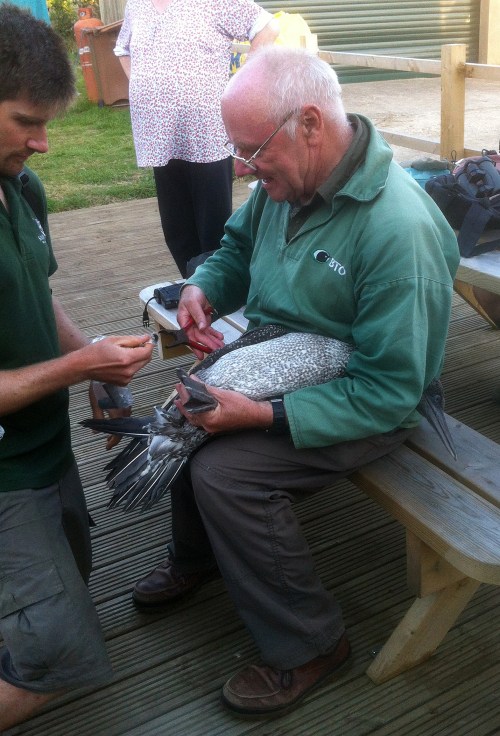
Returning from the unsuccessful wader ringing trip we were told that a surprise awaited us at the Observatory. It proved to be an immature Gannet that a villager had found trapped in some netting in his garden. One of the wardens is keeping hold of its dagger like bill, which could course some damage if it was not restrained.

gannet-spurn-2-cr

Having not ringed a single bird at this stage I quickly volunteered to ring this monster of a bird. However the ring didn’t fit well and it appeared that one leg was swollen. In case the bird was unwell (which indeed could be why it crash landed in someone’s garden) the ring was removed and the bird taken to the shore and released. Photo by Chris Minvalla.


western-swamphen-for-web

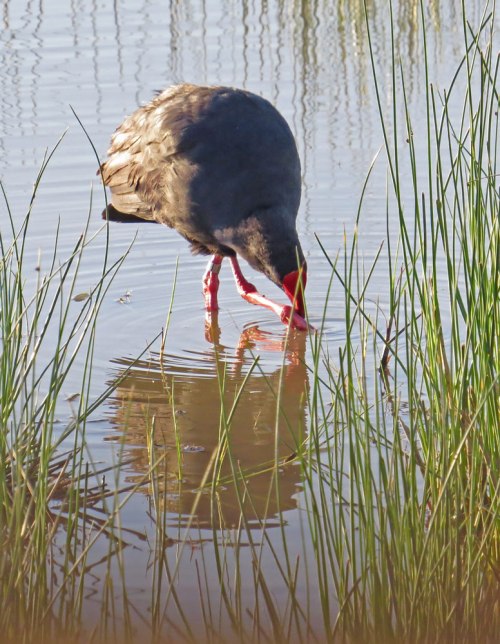
It was whilst attempting and failing to catch stints that we heard that on the other side of the Humber, at Alkborough Flats in Lincolnshire, there was a Western Swamphen (not ‘Purple Gallinule’ as some people call it, that is an unrelated American species) about an hour and a half’s drive away. This species has been seen once before in the UK, earlier this year in Minsmere, Suffolk. Earlier records refer to the closely related Grey-headed and African Swamphens which are undoubted escapes from captivity but the two records in 2016 appear to be part of an influx from the western Med into northern Europe. Chris and I were very interested in twitching it, but the following day it wasn’t seen at all, so we assumed it had gone. I photographed this individual in Mallorca this May.


img_6320-humber-sunset-for-web

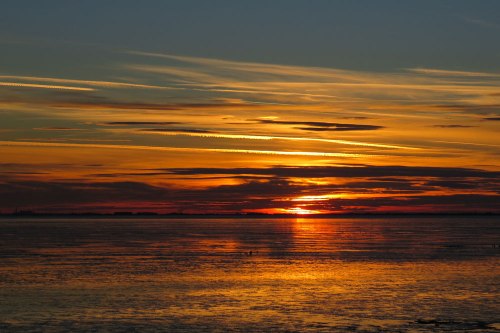
There was a lovely sunset over the Humber that evening. Very early in the morning (0230) we got up to do some wader ringing on the gravel pits, the early start was needed to coincide with the high tide. We ringed a few Redshanks, Knot and a Curlew and Oystercatcher, eight in total one for each on the course. Photography wasn’t allowed as it would take the birds eyes some time to recover so I have no shots of this activity.


On the second day of the ringing course Chris and I took our turn at the ringing station at the ‘breach’, the neck of the peninsular where the road has been washed away. Using mist nets and spring traps we trapped a few birds but the strong wind prevented us from catching much. An afternoon attempt to spring trap Wheatears also ended in failure. We were able to get a few hours much needed rest in the afternoon.

Back at the Obs we prepared some dinner and got ready to go out in an attempt to trap terns after dark, but then Chris heard the bad news that his father was seriously ill and had been taken to hospital. There was no alternative but to pack up and return immediately to Dorset, arriving about midnight. Fortunately Chris’s father made a total recovery after about a week in hospital, but it could easily have been so much worse.

So the ringing course concluded with me ringing just two birds, a Redshank and that Gannet, and the latter had to have the ring removed. Further frustration ensued when we found the Swamphen was seen again once we were back in Poole and remains there to this day.


img_6407-easington-gas-terminal-for-web

Fast forwards about six weeks and Chris and I were back at Spurn, this time with our friend Roger. This time our destination was the unglamorous setting of the nearby Easington Gas Terminal, where the North Sea gas is pumped ashore.

easington-twitch

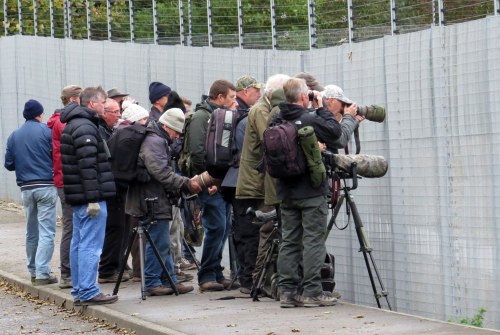
During early October there was a strong easterly airflow arriving all the way from Siberia. This brought with it a whole run of Siberian goodies including thousands of Yellow-browed Warblers. I have published some photos of Yellow-broweds in the hand in my last post. Far rarer was the occurrence of Britain’s first Siberian Accentor (a high latitude cousin of our Dunnock) in Shetland. This was followed by a second one at Easington a few days later and then another five scattered between Shetland and Cleveland. There was a huge twitch at Easington especially over the weekend where the crowd was measured in the thousands and a queuing system was in operation. This is a still from a video that appeared on ‘Penny Clark’s blog http://pennyshotbirdingandlife.blogspot.co.uk/

img_6408-sibe-accentor-twitch-for-web

I had seen a pair of Siberian Accentors twenty years ago in Arctic Siberia (otherwise I would have left immediately) and I dithered for several days about making the 600 mile round trip again. It was my friend Roger returning from Scilly on the 18th that made all the difference, he was very keen to go. I’m so pleased we went the following day as the bird wasn’t seen on the 20th. we arrived mid morning to find a modest crowd watching. The bird had moved between two lines of security fencing feeding contentedly on weed seeds. The only problem was that because of the close weave of the fence you could only see when looking at 90 degrees to the fence. It must have been a nightmare at the weekend.

sibe-accentor-spurn-cm-191016

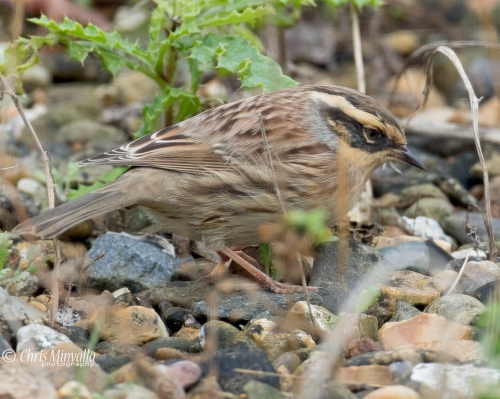
Even so, Chris with his 500mm mega lens was able to get some really nice photos. Breeding in a narrow zone from the northern Urals to Chukotka and wintering in eastern China (a time of year when few birders visit China), this was a once in a lifetime chance for most birders to experience this charming species.

issy-wheatear-spurn-cm-191016

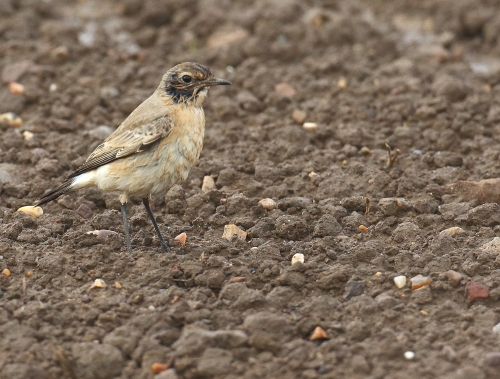
An added bonus was that only a few hundred yards away was an Isabelline Wheatear, a species I have seen on 19 foreign trips to its breeding grounds in Central Asia and wintering grounds in East Africa, but never in the UK. Whilst I wouldn’t have gone all the way to Spurn for this alone, it was a most welcome addition to my British List. Heavy rain and a habit of feeding in a muddy field has stained its face black, but the upright stance, long legs, short tail, the black alula contrasting sharply with the rather plain ear coverts ….

issy-wheatear2-spurn-cm-191016

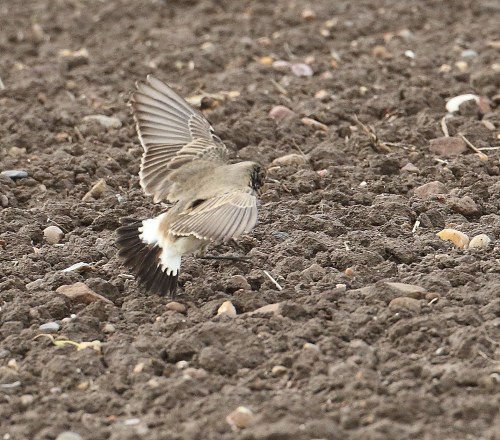
…. and in this photo, the extensive black in the tail with only a short projection of black towards the rump on the central tail feathers all indicate an Isabelline Wheatear. According to Wikipedia the word ‘isabelline’ may derive from Isabella I of Castile and the eight-month siege of Granada by Ferdinand II of Aragon starting in April 1491. She vowed not to change her chemise until the siege was over, which took rather longer than she anticipated (other versions of this legend are available). The name Wheatear of course derives from the Anglo-Saxon ‘white-arse’. Both the photos of the wheatear and the Siberian Accentor were taken by Chris Minvalla and are used with permission.

There had been no news about the Western Swamphen and the three of us headed home in the afternoon well pleased with what we had seen. The next day, of course, we heard that the Swamphen was being seen again in Lincolnshire. Never mind as Meat Loaf once sang ‘two out of three ain’t bad’. Indeed on this occasion it was bloody marvellous!

Mid July to October 2016 – Where have I been hiding for the last three months?   Leave a comment

Readers of this blog may have wondered whether I had abandoned it completely, was spending the last three months abroad or just had nothing to write about.

For a while I did nothing for the blog because I had used up all my storage space and was reluctant to pay for more. I’ve now capitulated and paid up for the extra space, although I will be uploading lower resolution photos in the future.

The main reason I have not updated this blog is because I have been incredibly busy manning the ringing site at Durlston near Swanage. Since 17th July I have visited no fewer than 50 times. My near-daily schedule has been getting up about two hours before dawn, arriving a good hour before sunrise and getting the nets up and ready for when the birds start moving. We have had the most successful season ever, by mid October we had ringed nearly 4500 birds, far more than any previous year with at least a month of autumn migration still to go.

Much of the afternoons have taken up with uploading the data onto my PC and sending it off via our group secretary to the BTO, preparing for the next day and sometimes having a nap after an early start. Hence the lack of blog posts. I have also been uploading our daily ringing totals from Durlston to the migration website Trektellen http://www.trektellen.org/ Go to captures and then select Durlston RS, the daily and annual totals. Summaries and graphs of occurrence for each species can be found by navigating the site. I have also been doing the laborious job of loading the daily totals from past years onto Trektellen. I have completed 2013-15 and have just got 2011-12 to do.

This post deals solely with ringing in Dorset at our sites at Durlston, Lytchett Bay and Fleets Lane in Poole from mid July to mid October.

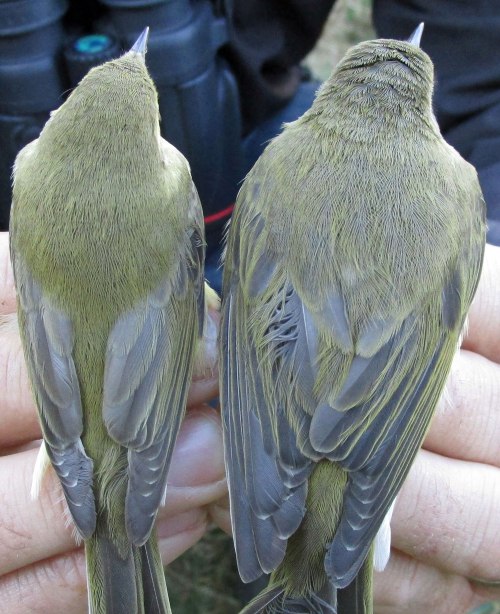
By far the largest number of birds ringed were the two species of Phylloscopus warbler, Willow Warbler (below in the photo) and Chiffchaff (above)Whilst superficially similar they do have a lot of characteristics that tell them apart. Chiffchaff is smaller overall, has shorter primary projection, darker legs, darker flanks, more rounded head, a less prominent supercillium, but the most conclusive features that can only be seen in hand are the length of the second to fourth primary and the presence (Chiff) or absence (Willow) of an emargination on the 6th primary.

img_4942-willow-warbler-mf-size-difference-for-web

Although I said that Willow Warblers were larger than Chiffchaffs there is some overlap. Small female Willow Warblers (left) certainly overlap in wing length and weight with largest Chiffchaffs. The bird on the right is a large male Willow Warbler with a wing length of 70mm. Only a proportion of Willows can be sexed on wing length as there is overlap between the sexes. In both the Willows above the long primary projection (the projection of the primary feathers beyond the tips of the tertials) can easily be seen.


ww-2016-trek

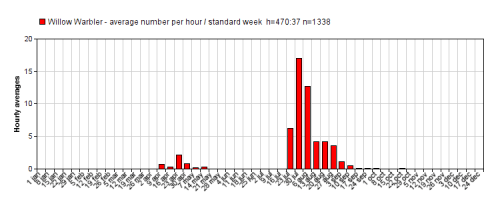
The following graph taken from Trektellen shows the numbers of Willow Warblers ringed at Durlston (averaged out per hour of ringing activity). The gap from early May and late July is partly because we do little ringing at this season but also because the species no longer breeds at the site, the range having shifted north with climate change. A few migrants are seen in spring, but numbers are dwarfed by the huge influx that occurs in late July and early August. By early September only a few are seen with the odd straggler occuring into early October. In total 942 birds were ringed with a maximum of 212 on 5th August this is our best year ever at Durlston and is well in excess of the previous maximum of 626 in 2013.

chiff-2016-trek

Chiffchaffs show a different pattern, Again migrants/returning breeders are seen in spring but because the birds breed locally they continue to be recorded into mid May and in late July to late August (no ringing took place between 14th May and 17th July). At the time when the Willow Warbler migration is tailing off Chiff numbers rise rapidly reaching a peak in late September to early/mid October. 1382 have been ringed so far this year, a huge increase on the best ever year (2013 – where 875 were ringed) and more than triple what was ringed last year. This is partially due to ringer effort/availability but also undoubtedly points to a bumper year for the species.

img_5003-blackcap-3m-with-little-black-for-web

The third most ringed bird in 2016 has been Blackcap. The total of 796 doesn’t quite match the bumper year of 2014 when 860 were ringed but the season isn’t quite finished yet. After the post-juvenile moult, Blackcaps can easily be sexed by the eponymous black cap of the male and the brown cap of the female. This bird presents a conundrum but it is far more likely to be a male that is showing some female-type brown feathers than a female that has somehow grown some extra male-type feathers. The colour and structure of the brown crown feathers does not fit that of the juvenile plumage and I think the entire crown has been moulted.

This biggest surprise of the year has been the capture of 102 Grasshopper Warblers, compared to the annual average of 16 over the last five years. It is true that we have been getting to the site earlier to try to catch this crepuscular skulker before the sun is up but that can only be part of the story.

We have also had our best ever year for Meadow Pipits with 220 ringed to date (although that was mainly down to one very successful day where we ringed 126). We have yet to get a recovery on any of the Meadow Pipits ringed at Durlston but we hope this year’s batch will change all that. Some Meadow Pipits can be hard to age but this one is easy. The brown not blackish centres and the diffuse buffy borders of the greater coverts and the unmoulted white edged median coverts showing a small black tooth clearly show it is a first year bird.

img_5009-whitethroat3-with-ad-tail-for-web

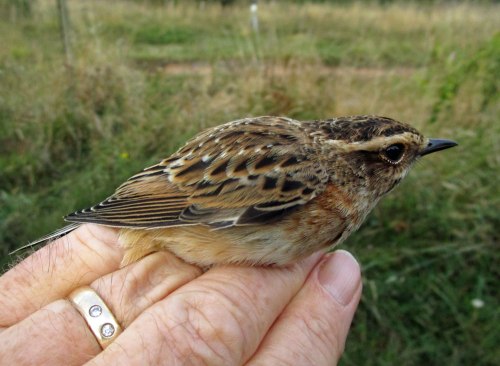
Common Whitethroats are regular breeders in the park and surrounding area and also occur as migrants. Young birds are easy to age due to their dark, rather than hazel coloured eyes.

img_5008-whitethroat3-unusual-tail-for-web

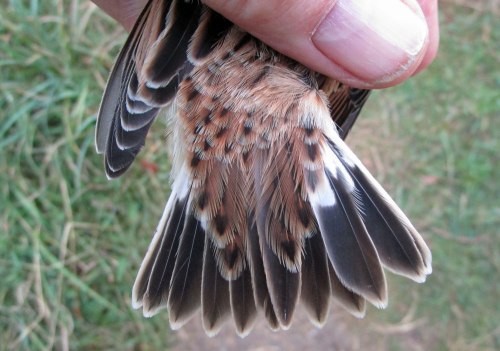
Another aging feature is the muddy brown rather than white on the outer tail feather plus a restricted pale area on the 5th (penultimate) tail feather. This first-year bird is unusual in that it has lost its left hand outer tail feather but not the right. The replacement has grown back as an adult type, clearly different from its first-year counterpart.

whitethroat-2016-dcp-trek

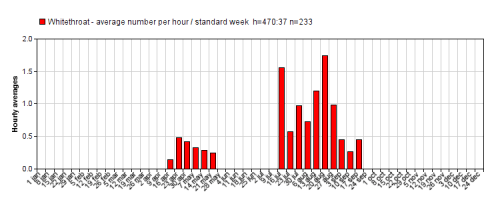
Whitethroats show an interesting pattern of occurrence. As a common breeder in the park we ring quite a few in the spring (one trapped on 1st May was ringed as a juvenile in July 15 – an example of natal philopatry) and would probably continue to trap some in late May – mid July if we had been active during that period. The spike in late July/early August represents locally bred juveniles before the main migration gets underway in mid August. The migration tails off rapidly in early September.


img_5018-whinchat-for-web

Now for some of the birds we ring less often. A first year Whinchat ….

img_5014-whinchat-tail-for-web

The species can easily be identified by the white bases to the outer tail feathers.

img_4971-wheatea-for-webr

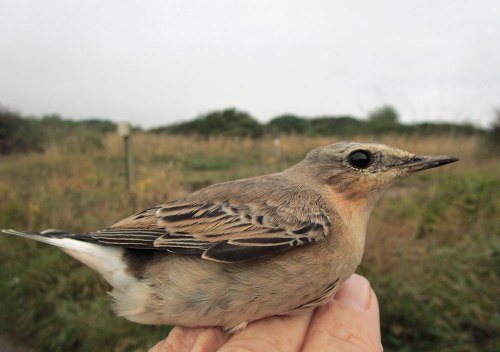
Although quite a common migrant, they prefer more open ground. We have ringed just two Wheatears this year. Both were of the Greenland race leucorhoa which leaves its breeding grounds in Greenland and eastern Canada and makes a non-stop flight across the Atlantic to Europe before continuing on to its wintering grounds in Africa.

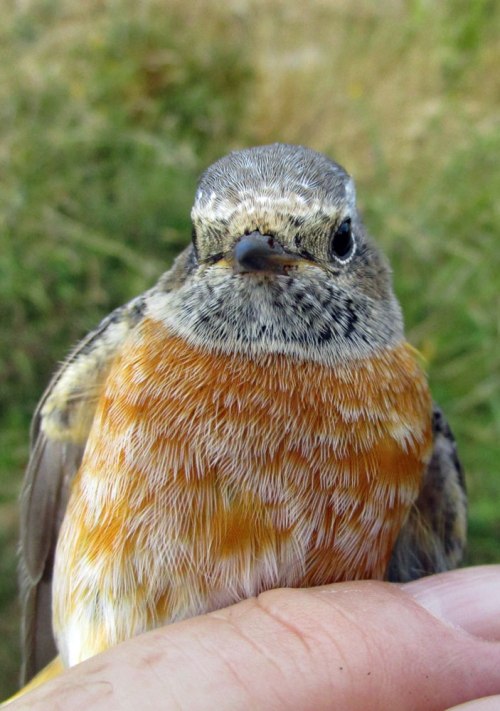
img_4955-3m-redstart-for-web

Common Redstarts weren’t all that common with an about-average showing of 15 . All but one showed the brown (rather than grey) tipped greater coverts of a 1st year bird

img_4956-3m-redstart-for-web

The grey head and black chin, still fringed with white tips (which will wear away by next spring) indicates that this is a male.


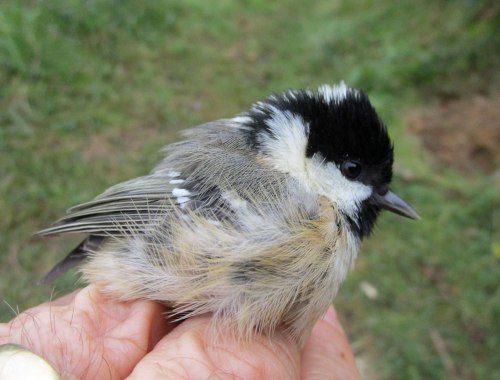
img_4975-coal-tit-dcp-for-web

Although common inland, especially in coniferous woodland, Coal Tits are very unusual in our ringing area and this is the only Coal Tit to be ringed there this year.

melwa5-260716-dcp-te

Melodious Warblers occur as close Dorset as northern France but are still no more than scarce migrants to the county. This bird was trapped on the early date of 26th July and is only the second to be ringed in the Park. Although its wing length is comparable to that of a Willow warbler, it is much stouter, has a much broader based bill, a plain-looking face with a beady eye. The short primary projection helps distinguish it from the similar Icterine Warbler.

srg-members-lhe-130816-sr

The group has been called on to do two public ringing demonstrations in 2016, one at Durlston and one at Lytchett Bay. At Lytchett (above) we had a good turn out of both ringers and public with about half of the group arriving to help. L-R Tony Taylor, me, Kevin Lane, Claire Young, Mike Gould, John Dowling and newcomer to the group Kath Clay, group ringing secretary Bob Gifford is at the front sat down. Photo taken by Lytchett stalwart Shaun Robson who did all the public demonstrating.

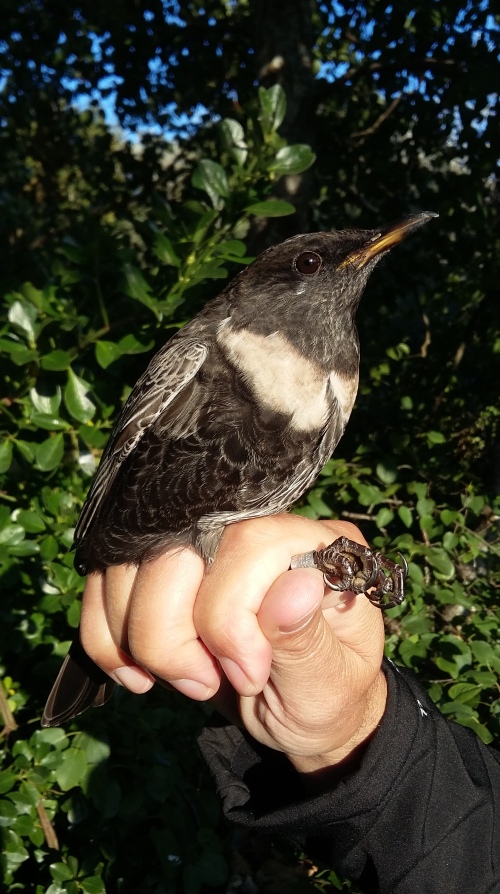
ring-ouzel-flc-061016-te

The weather has been quite good throughout the period concerned with little rain and without protracted periods of wind and this has helped boost our totals, However for the first two weeks of October the winds blew strongly from the east and brought exceptional numbers of Siberian birds to the eastern shores of the UK. Few filtered down to Dorset (with the exception of Yellow-browed Warblers – see below) but we did see an exceptional number of Ring Ouzels. Although they are a scarce breeder in the uplands of Britain, they occurred in such numbers that they must have been augmented by birds from Scandinavia or beyond. For several days the winds were too strong to ring at Durlston so I fell back to our more sheltered site at Fleets Lane in Poole where this Ring Ouzel was trapped. Another was trapped by Shaun and Bob at Lytchett Bay. Photo by Terry Elborn.

YBW DCP SB

Yellow-browed Warblers breed in the Siberian taiga zone as close as the Ural Mountains, but migrate to SE Asia to winter. Numbers have been increasing in Britain in recent years (and wintering has been proved in SW Iberia and in the Canaries) but 2016 has seen the biggest influx ever. Counts at single sites in Yorkshire have exceeded a hundred on a single day and the total in the UK must run to many thousands. Even as far south as Dorset records have been broken.

ybw-flc-041016-per-pm

Between 2004 and 2015 our group has ringed six Yellow-browed Warblers (3 of those in 2015) this year we have ringed twelve already. None of these has been retrapped indicating rapid onwards movement. It would be wonderful to get a recovery on one of these Siberian waifs and help elucidate where they are going and why some have taken up a new migration strategy and maybe country-wide the BTO will, but on numerical grounds the chances of any of our twelve birds being recovered is slim.


This article has discussed the various birds that we ring and their identification and aging/sexing characteristics. The timing and variation in migration year on year plus the ability to age and sex the birds concerned provides valuable ornithological data. However what we all hope for is that our birds will be trapped elsewhere by another ringer (controlled) or recovered by a member of the public.

Although this year has been good for the number and variety of birds ringed it has also provided us with many recoveries: those received in 2016 pertaining to Durlston are shown below. We have also got three more controls in the pipeline.

DCP = Durlston Country Park

Species Ringed Ringed at  Date recovered Where recovered
Goldcrest 08/11/2015 DCP 13/03/2016 Milton Abbas, Dorset cat
Chiffchaff 12/10/2014 DCP 25/03/2016 Longis Pond, Alderney, Channel Islands retrapped
Willow Warbler 02/09/2015 DCP 27/09/2015 Arneiros, Querenca, Faro, Portugal retrapped
Blackcap 25/09/2013 DCP 19/04/2016 Longis Pond, Alderney, Channel Islands retrapped
Blackcap 01/09/2014 DCP 17/04/2016 Chew Valley Lake,  Somerset retrapped
Reed Warbler 18/06/2016 Chew Valley Lake,  Somerset, 06/08/2016 DCP retrapped
Willow Warbler 06/08/2016 Billinge Hill, Merseyside, 14/08/2016 DCP retrapped
Pied Flycatcher 13/06/2015 Kentmere Hall Plantation, Cumbria, 18/08/2016 DCP retrapped
Whitethroat 17/07/2016 DCP 14/08/2016 Gravelly Marsh, Needs Ore, Hampshire retrapped
Blackcap 21/09/2016 DCP 24/09/2016 Brook Farm, Reculver, Kent retrapped

In addition there have been many recoveries/controls of birds ringed at Lytchett Bay including many Reed and Sedge Warblers that moved to France, as well as others that were recovered nearer to their ringing location.

Each recovery adds to the complex jigsaw that makes up the life history of our birds.

Northern England, Derbyshire and Essex: 2nd – 10th July 2016   Leave a comment

Wales trip route

In my last post I described the journey Margaret and I took through Wales. In this post I continue the saga as we drive from north Wales to Liverpool, Southport and Blackpool in Lancashire, Leeds and Harrogate in Yorkshire, Duffield in Derbyshire and eventually arrive at Maldon in Essex.

IMG_6126 dock

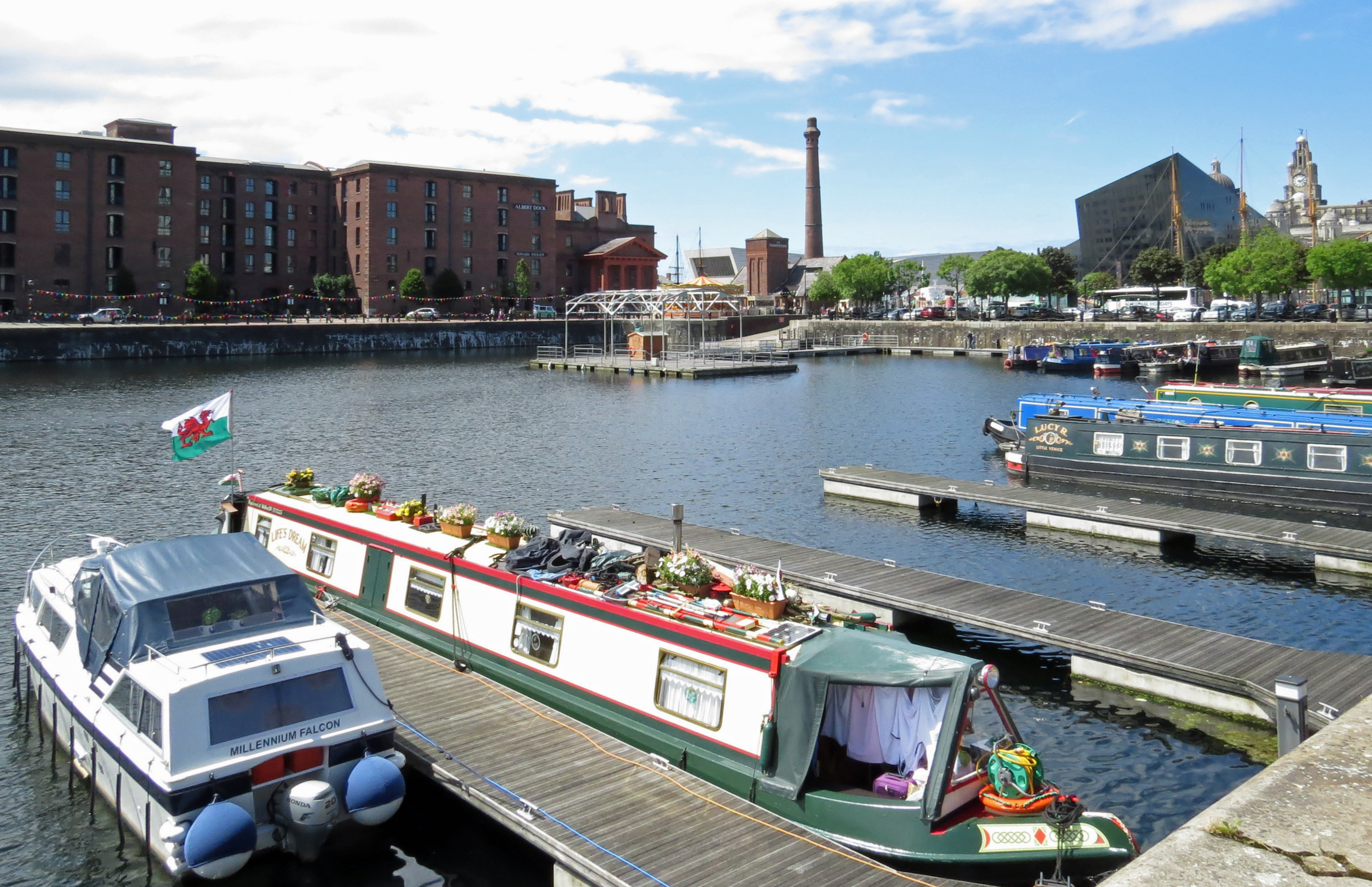
I have visited most of the major cities in the UK at one time or another but Liverpool has remained an exception. Margaret was keen to visit this most iconic of cities too. We arrived in the late afternoon and booked into our hotel adjacent to the newly refurbished docks.

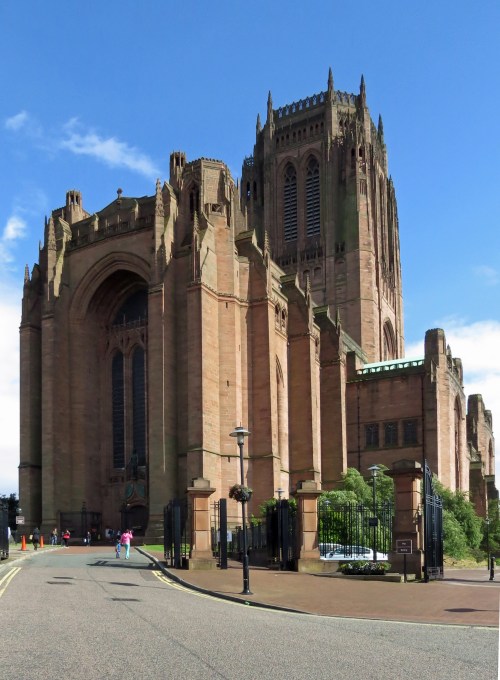
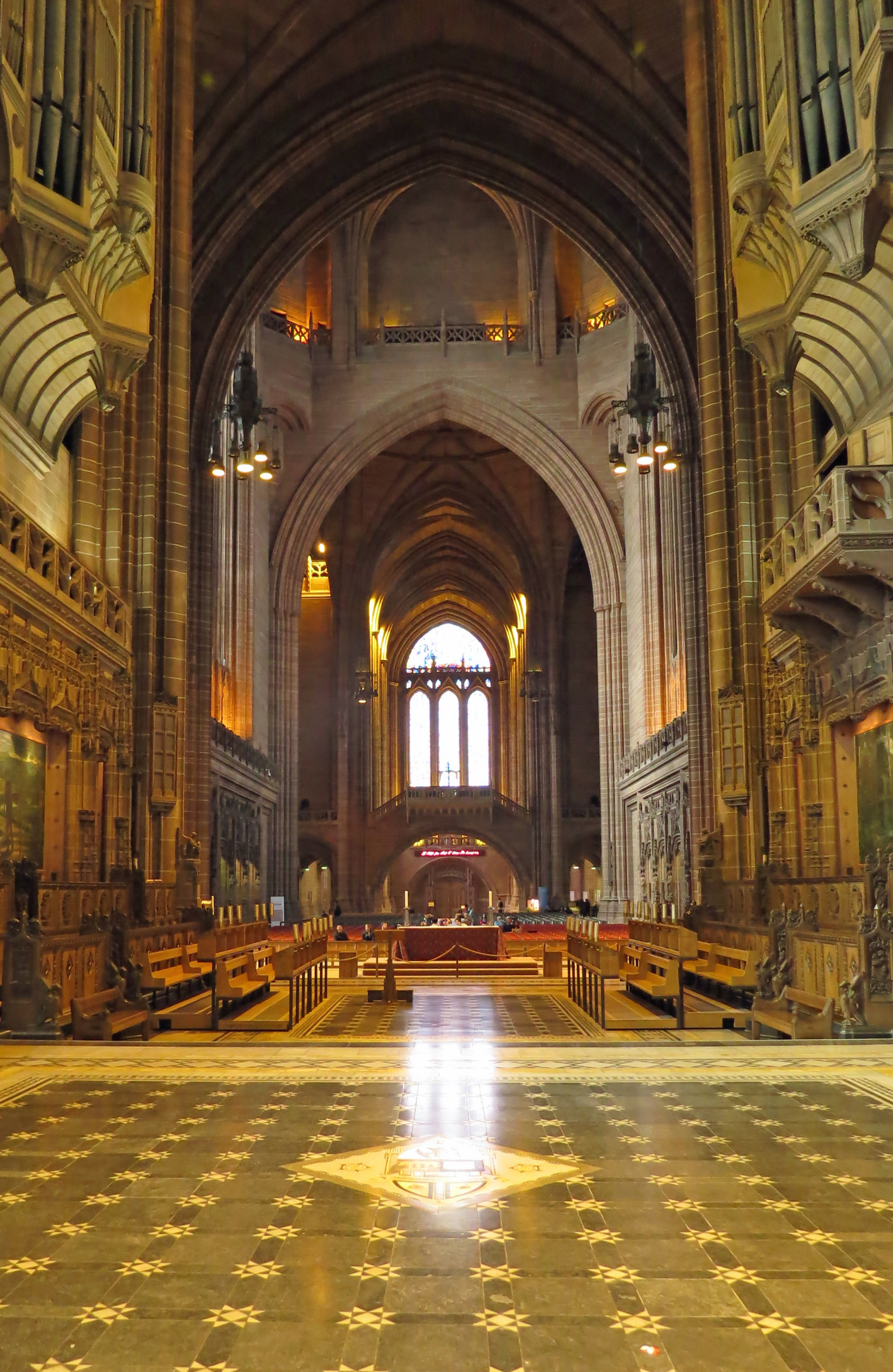
IMG_6105 Anglican cathedral

As it was Sunday the following day we thought we had better visit the two cathedrals straight away as services would be going on in the morning. First, Liverpool’s imposing Anglican Cathedral.

IMG_6096 Anglican Cathedral

According to Wikipedia: The cathedral is based on a design by Giles Gilbert Scott. The total external length of the building, including the Lady Chapel (dedicated to the Blessed Virgin), is 207 yards (189 m) making it the longest cathedral in the world;[n 1] its internal length is 160 yards (150 m). In terms of overall volume, Liverpool Cathedral ranks as the fifth-largest cathedral in the world[2] and contests with the incomplete Cathedral of Saint John the Divine in New York City for the title of largest Anglican church building. With a height of 331 feet (101 m) it is also one of the world’s tallest non-spired church buildings and the third-tallest structure in the city of Liverpool. The cathedral is recorded in the National Heritage List for England as a designated Grade I listed building.

IMG_6095 Anglican Cathedral

This cathedral spent a long time in the planning phase, as it’s construction was first authorised by Parliament in 1885. The initial site was unsuitable and due to various delays (including two World Wars) the opening ceremony wasn’t until 1978.

IMG_6101 Anglican Cathedral

The beautiful Lady Chapel was the first part of the cathedral to be completed.

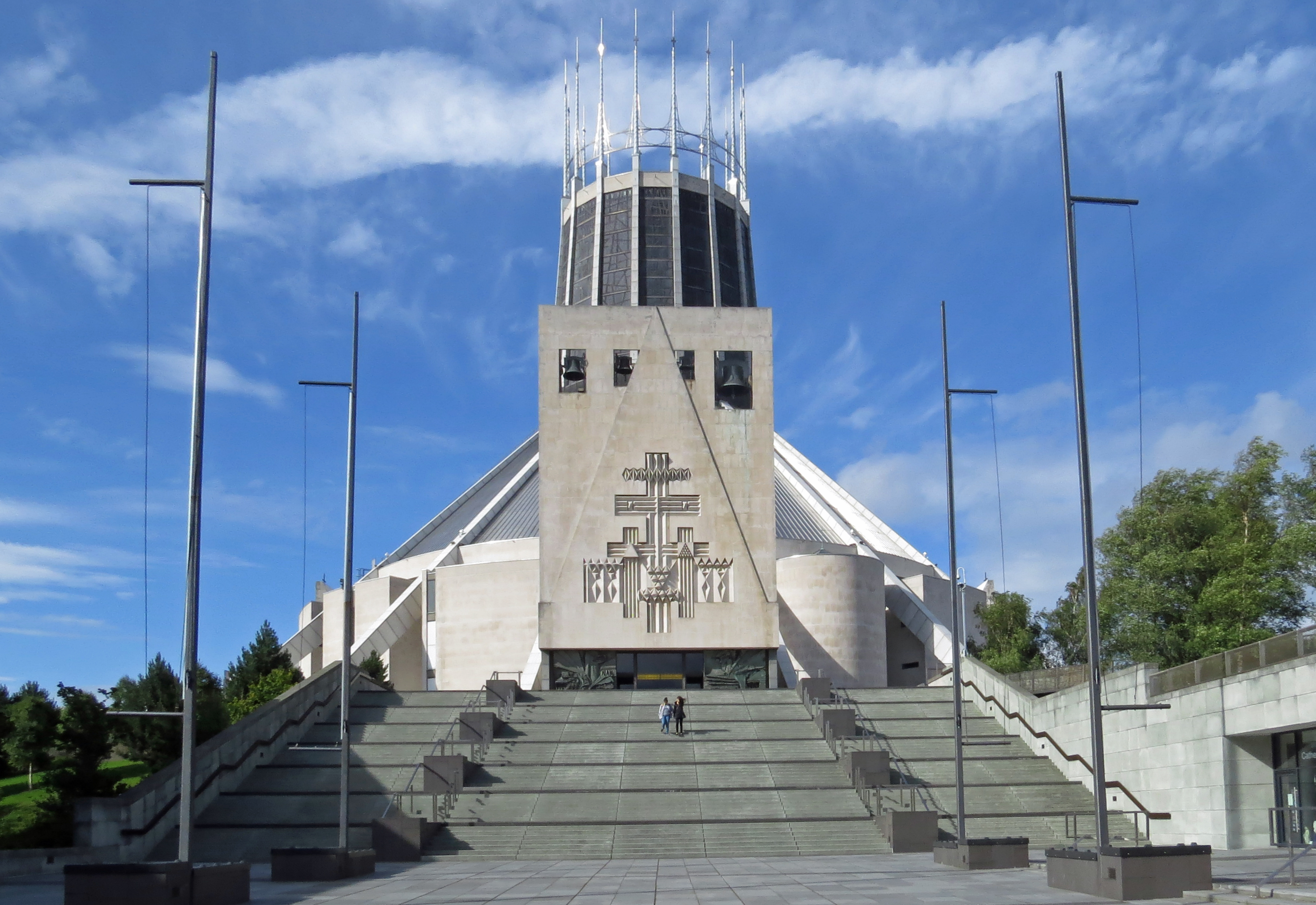
IMG_6111 RC Cathedral_edited-1

As the song In Our Liverpool Home goes if you want a cathedral we’ve got one to spare, Liverpool has two cathedrals. The Anglian version, although most impressive, is based on a traditional design, the Roman Catholic one is a wonder of modern architecture.

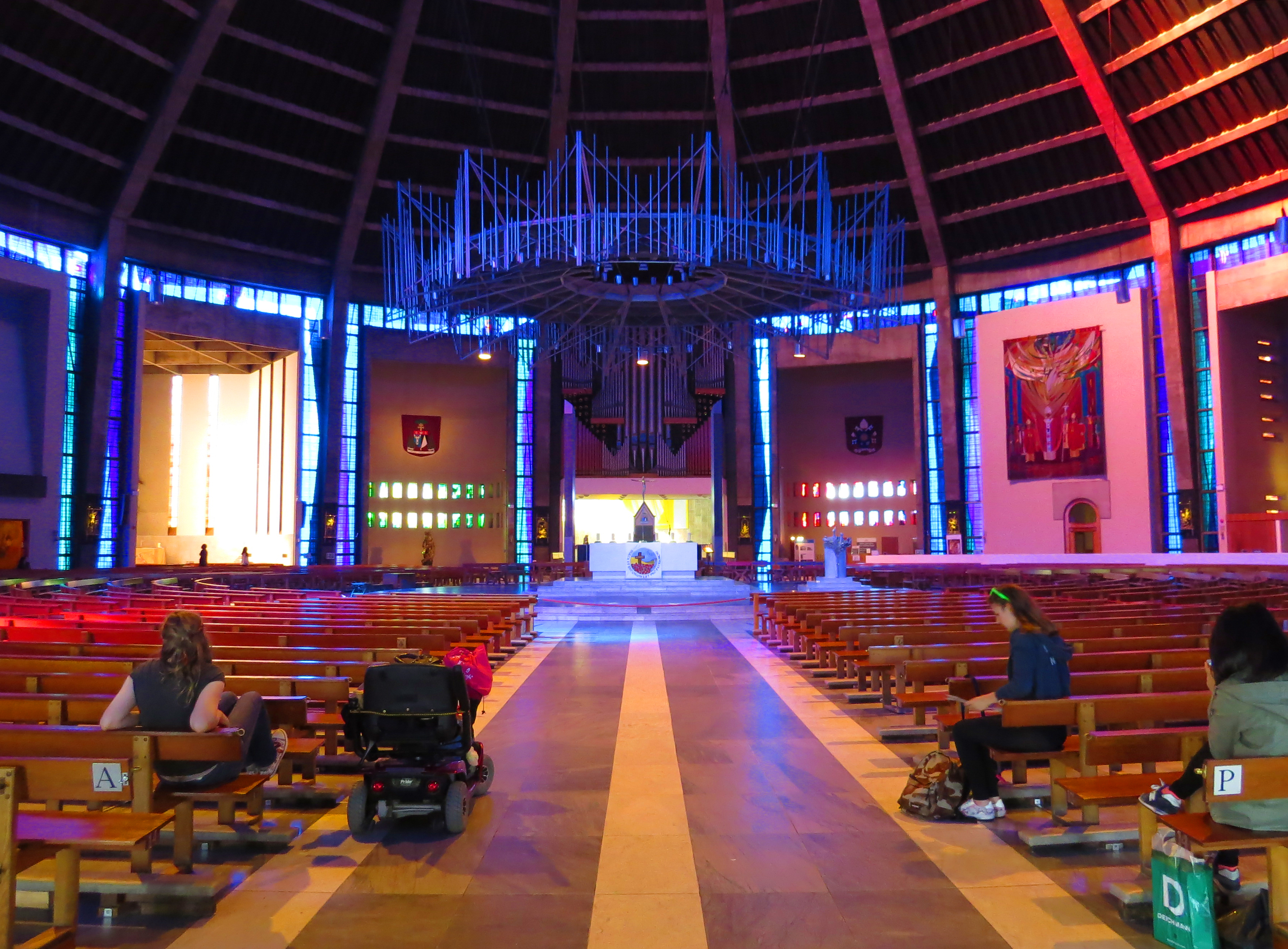
IMG_6114 RC Cathedral

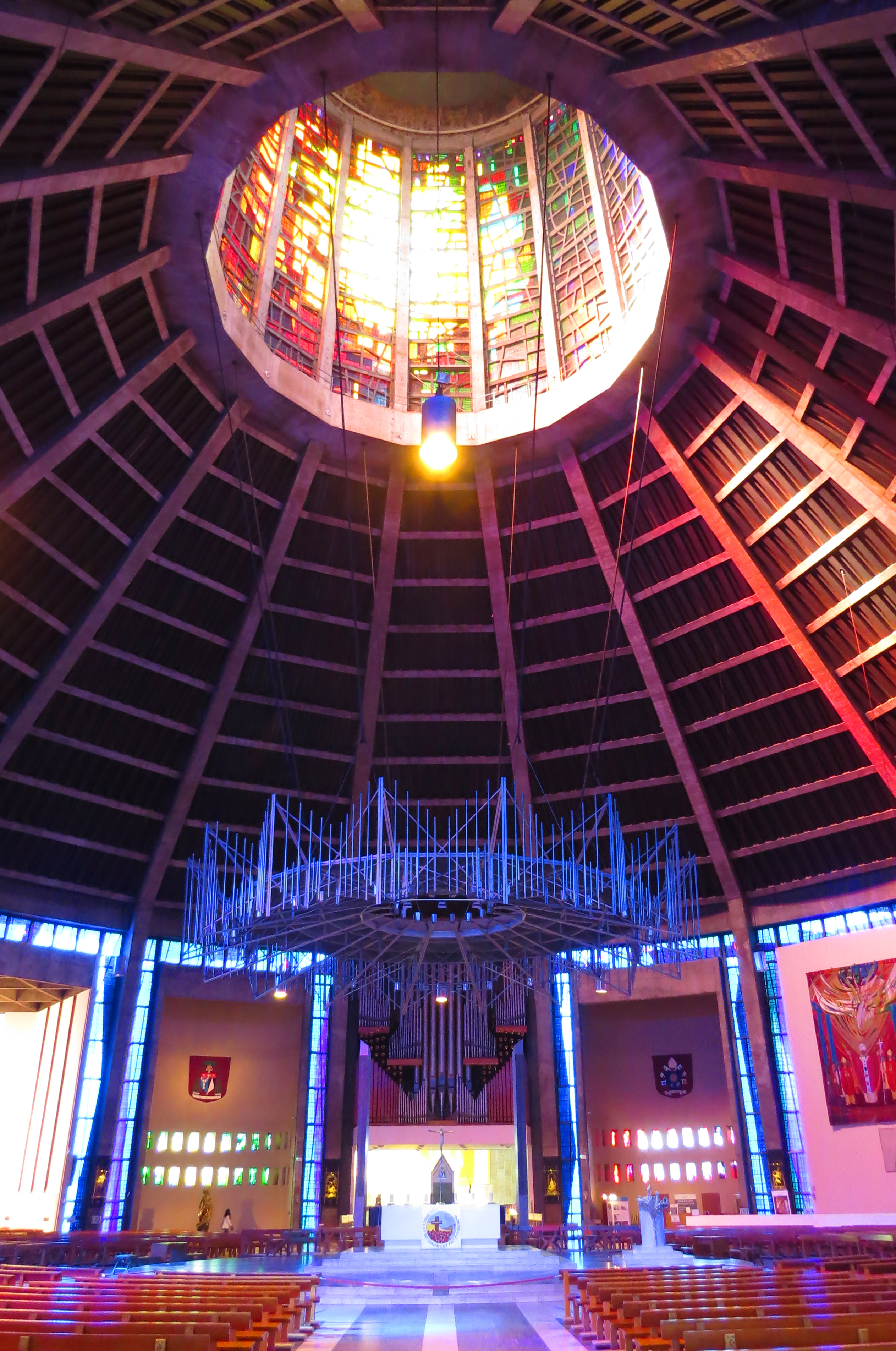
The circular design and the beautiful colours are quite breathtaking. Again from Wikipedia: ‘officially known as the Metropolitan Cathedral of Christ the King,[it] is the seat of the Archbishop of Liverpool and the mother church of the Roman Catholic Archdiocese of Liverpool in Liverpool, England. The Grade II Metropolitan Cathedral is one of Liverpool’s many listed buildings. To distinguish it from the Anglican Liverpool Cathedral, locals call it the “Catholic Cathedral.” Nicknames for the building include “Paddy’s Wigwam” and “The Mersey Funnel.” Unlike the Anglian one, construction was rapid, starting in 1962 and completed by 1967 although the site was purchased as long ago as 1930.

IMG_6115 RC Cathedral

We were glad we visited the cathedral on Saturday afternoon but wished we had come half an hour earlier as we arrived just as they were locking up and we just had time to take a few photos of its wonderful interior.

IMG_6109 China town

We completed the day with a nice (chinese) meal in Chinatown.

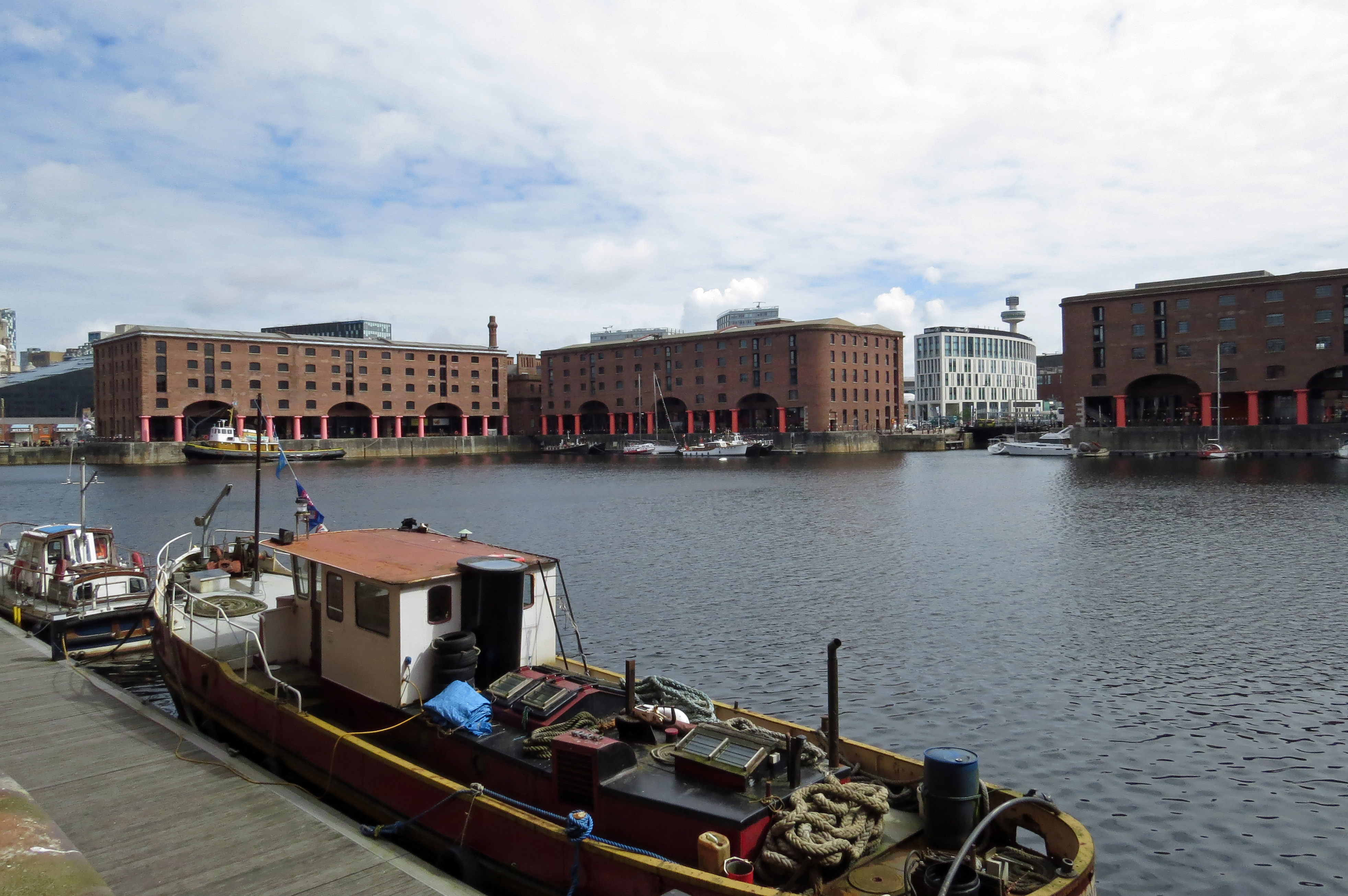
IMG_6135 Albert Dock

The following day we walked the short distance to Albert Dock, an area of dockland that has been renovated and turned into attractive accommodation, shops, museums and other attractions.

IMG_6150 Museum of Liverpool

We paid a quick visit to the Tate Liverpool (but although I like some modern art, I found little to my taste there) and a much longer visit to the Museum of Liverpool where we could have spent all day if we had the time.

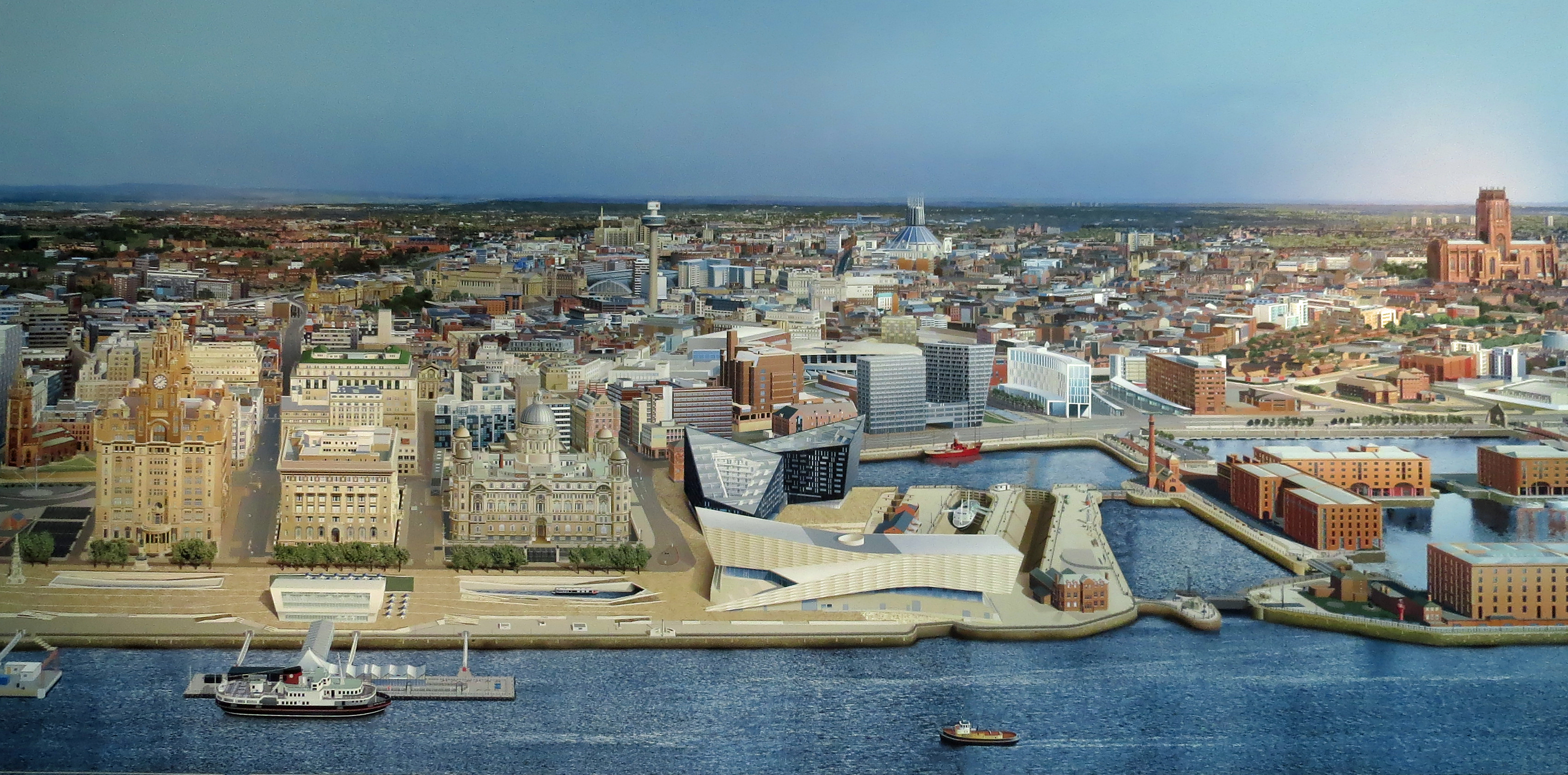
IMG_6152 Ben Johnson painting in museum

I was very impressed by this panoramic painting by Ben Johnson (not the athlete) of the Liverpool skyline, with both the Anglican and RC cathedrals being clearly visible

IMG_6156 Town Hall etc seen from museum_edited-1

The imposing Port of Liverpool Building, Royal Liver Building and Cunard Building at Pier Head are known as ‘the Three Graces’. This photo was taken through glass from the Museum of Liverpool, hence the unusual tint.

IMG_6142 Liver Bird

On the top of the Royal Liver Building are the two Liver Birds, the symbol of the City (and the name of an entertaining 70s Liverpudlian sitcom by Carla Lane).

IMG_6177 The Carvern

But for all it’s great architecture, unique culture and importance of one of Britain’s most famous ports, Liverpool is best remembered by most as the origin of the Mersey Sound in the early 60’s, when various talented artists started to play live music in this famous club.

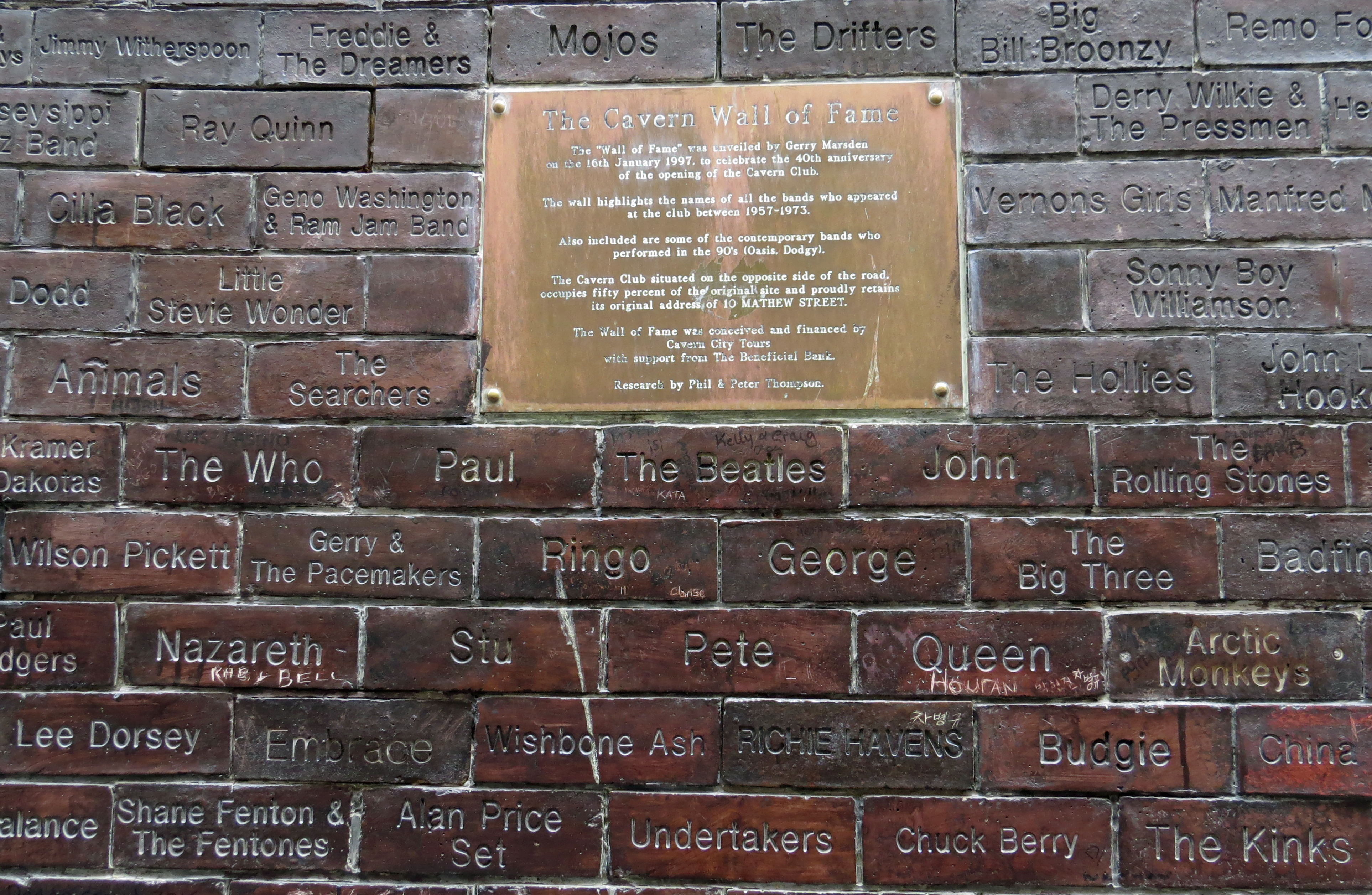
IMG_6160 wall of fame

Across the road from the entrance to the Cavern is the ‘wall of fame’ commissioned by Gerry Marsden of Gerry and the Pacemakers which lists all the artists who played at the club in the 60s and 70s and few who have played more recently since it was refurbished. Centre stage, of course, is kept for the ‘fab four’, the Beatles, who not only put Liverpool on the world’s musical map but changed the face of popular music for ever.

IMG_6159 wall of fame

However there is one artist I would have liked to see more than any other and his name is in the centre of this photo. I had a chance, but I was working at my father’s shop during University holidays in 1970 when Hendrix played at the Isle of Wight Festival. I could hardly go sick or just pack the job in without my father’s permission. If I had known that a few weeks later Hendrix would be dead then I might have acted differently!

IMG_6174 The Cavern

We took a look inside the Cavern ….

IMG_6165 The Cavern

….where even on a Sunday morning someone was playing ….

IMG_6173. guitar signed by Queen

…. and admired a number of guitars donated by famous artists, for example this one has been signed by all the members of Queen.

IMG_6184 Queen Vic

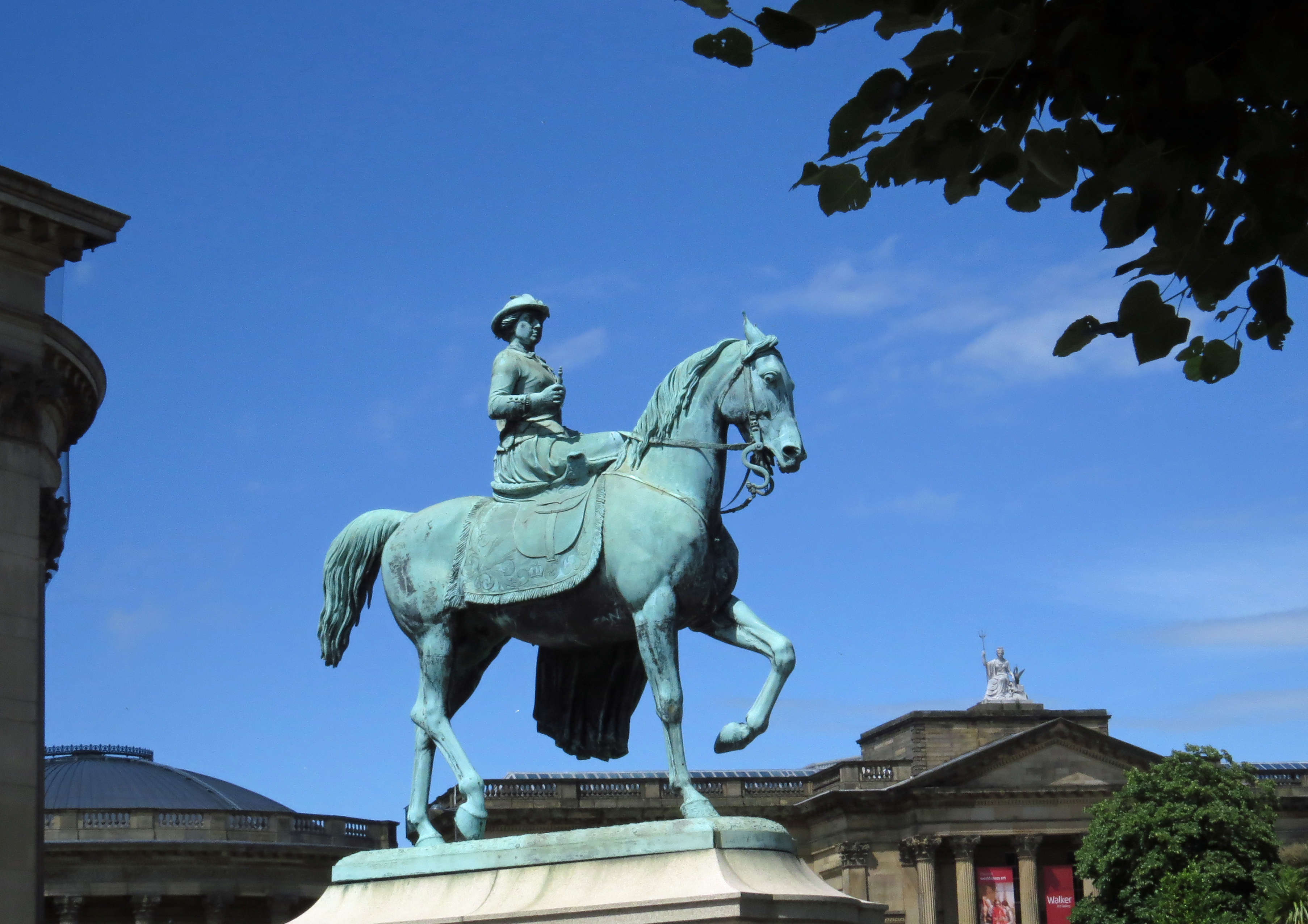
We carried onto St George’s Hall and Lime Street Station and the imposing statue of Queen Victoria before heading back through a series of shopping arcades and covered walkways ….

IMG_6189 Albert Dock Liverpool

…. until we were back at Albert Dock. There was much more to see in Liverpool but time was now pressing ….

IMG_6190 Nia and Graham

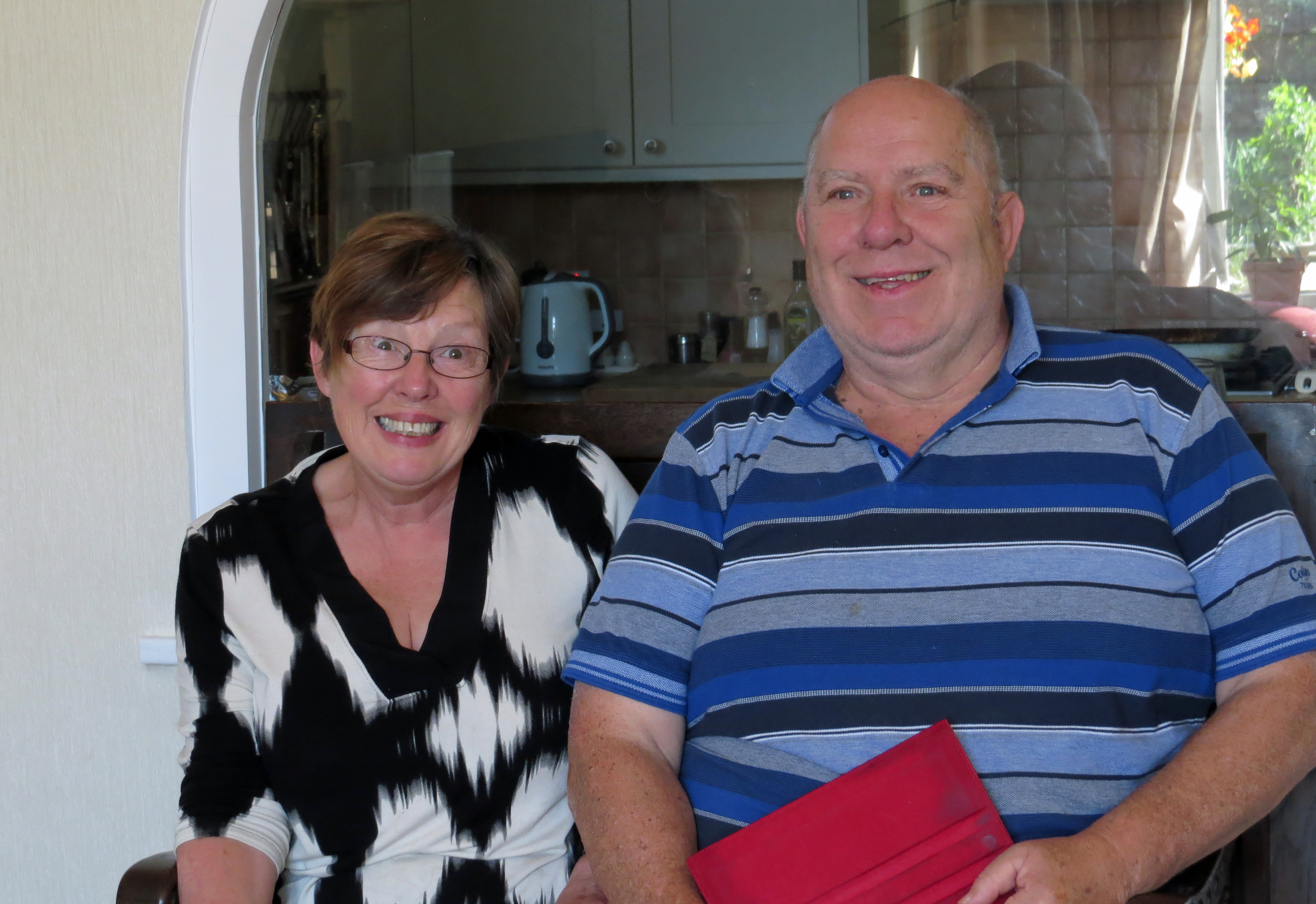
…. as I had a long-awaited reunion in front of me. I first met Nia in 1970 at Leeds University on our microbiology course. We worked together after University in the Leeds Public Health Lab, but in 1974 she moved to London and we lost touch. She contacted a mutual friend via Friends Reunited six or seven years ago and he put her in touch with me. In the mean time she had moved to Lancashire, brought up two children and has a number of grandchildren. She now lives in Southport with her husband Graham. It was great to meet up gain after 42 years!

IMG_6196 Southport pier

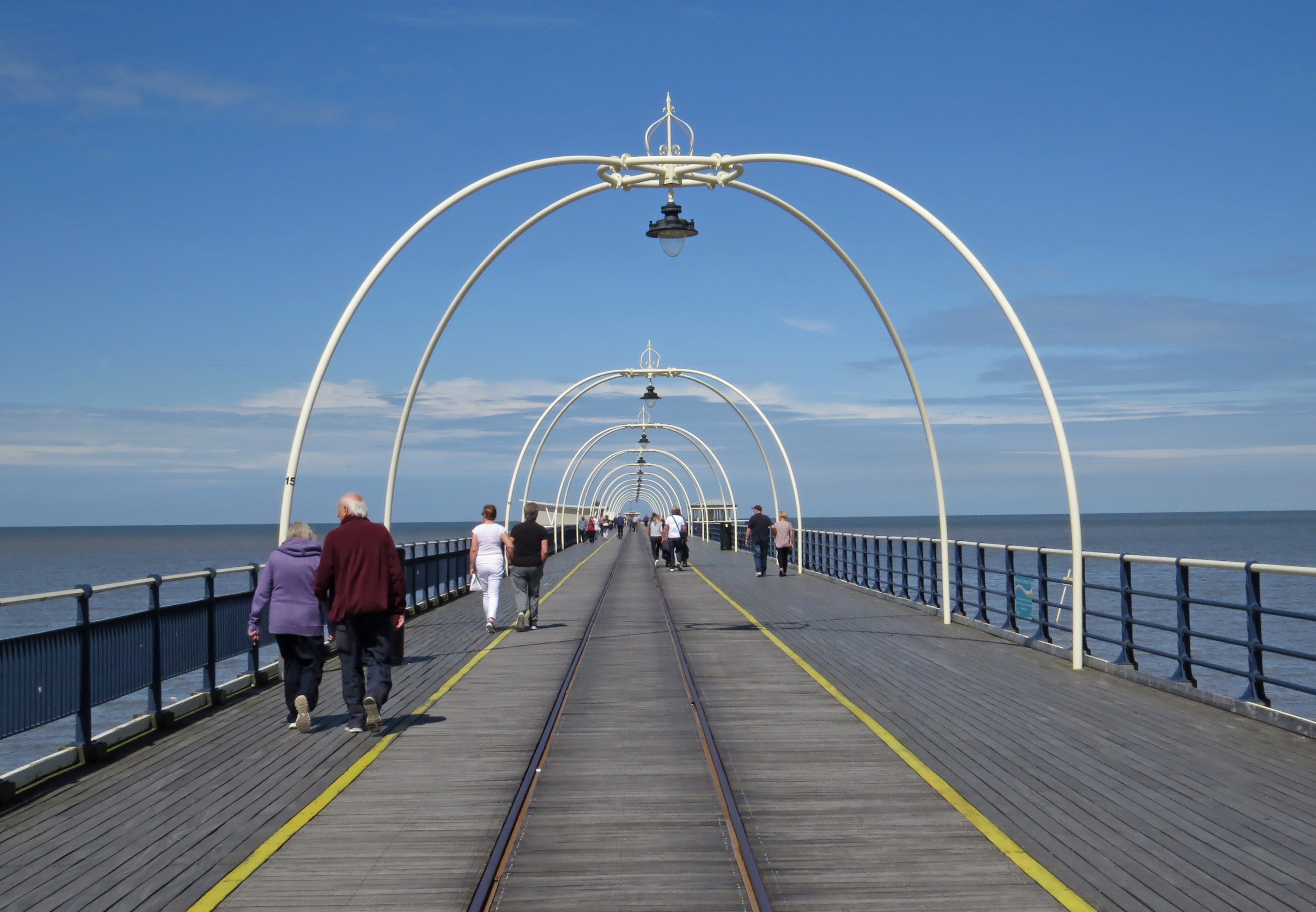
Before we left Southport we had a look at Southport Pier ….

IMG_6201 noddy train

…. which can be accessed either on foot or via a ‘noddy’ train.

IMG_6198 Southport pier

The pier overlooks the Ribble Estuary which is probably the second most important site in the whole of the UK for wading birds and wildfowl. In winter it plays host to tens, if not hundreds of thousands of waders but in July we just saw a flock of Dunlin fly by and a distant gathering of Oystercatchers.

IMG_6192 Marshside RSPB

The nearby RSPB Marshside reserve added a few new species to our trip list, but once again winter would have been the time to come. We had already agreed with Nia and Graham to come again sometime in the future, but this time in February or March.

IMG_6191 Marshside RSPB

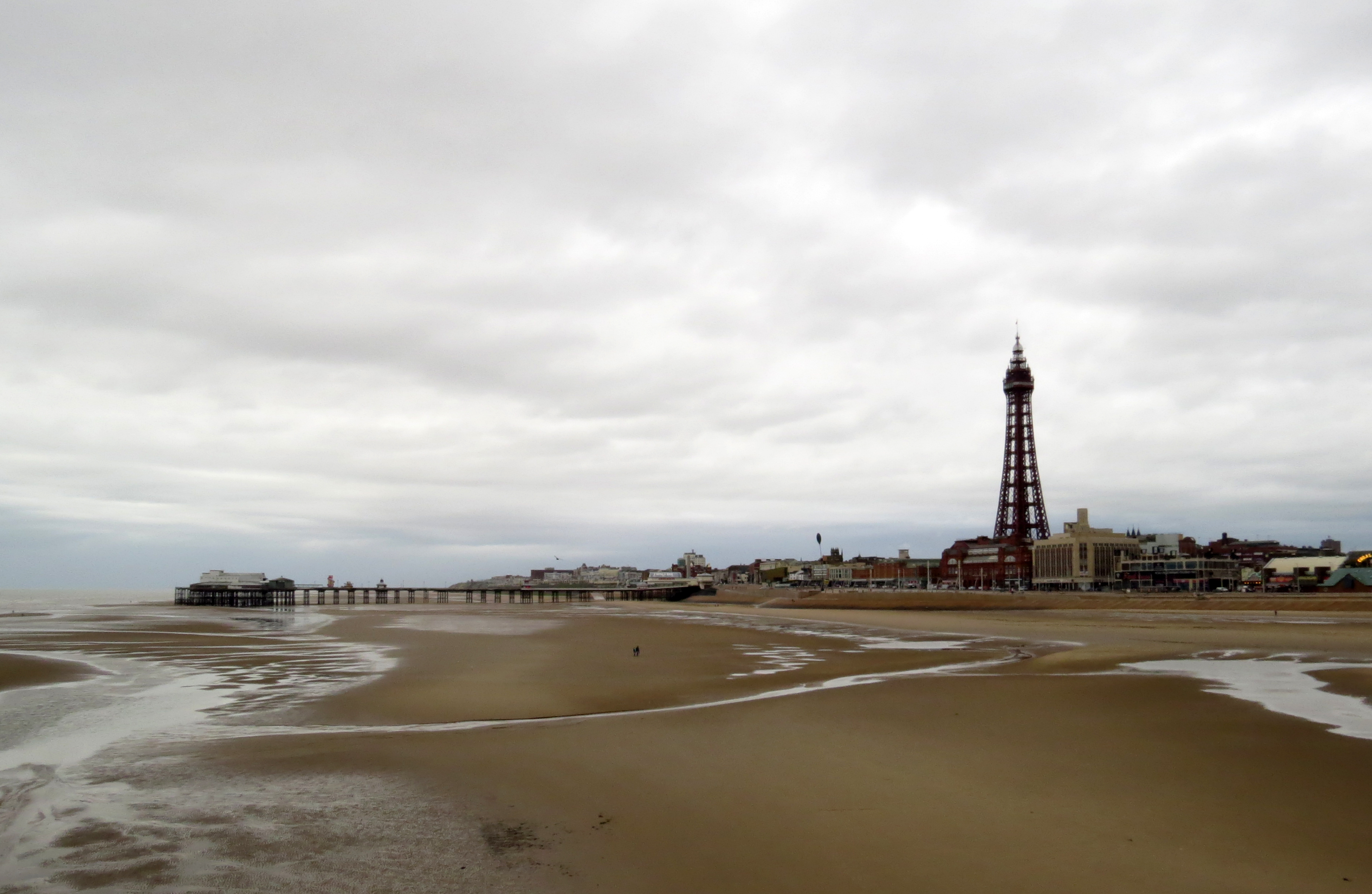
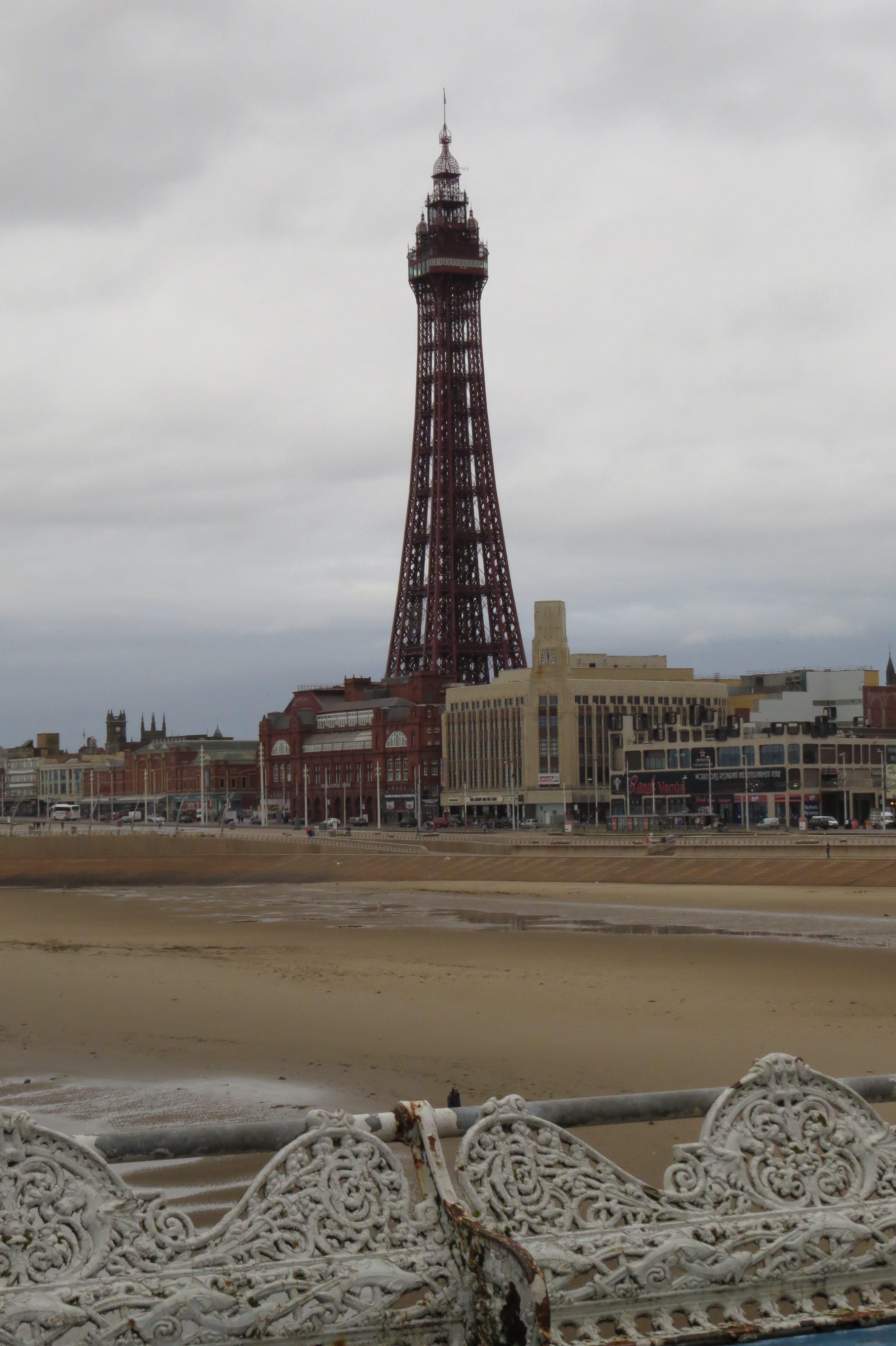
Looking across the mud-lats of the Ribble we could see the famous Blackpool Tower and the scary roller-coaster, and that was to be our next destination.

IMG_6235 Blackpool_edited-1

I have never been a fan of the traditional bucket and spade seaside resort, at least not in adulthood. Poole doesn’t fall into that category and Bournemouth only just does. Blackpool however is the epitome of ‘tack’ with its amusement arcades blaring out loud music, multiple fish and chip shops, candy floss stalls, the three piers with their ‘faded elegance’ and peeling facades and the ever-present smell of doughnuts.

IMG_6234 Blackpool Tower

The weather soon turned bad and there seemed to be no point in going up the famous Blackpool Tower as visibility was very poor ….

IMG_6217 Tower ballroom

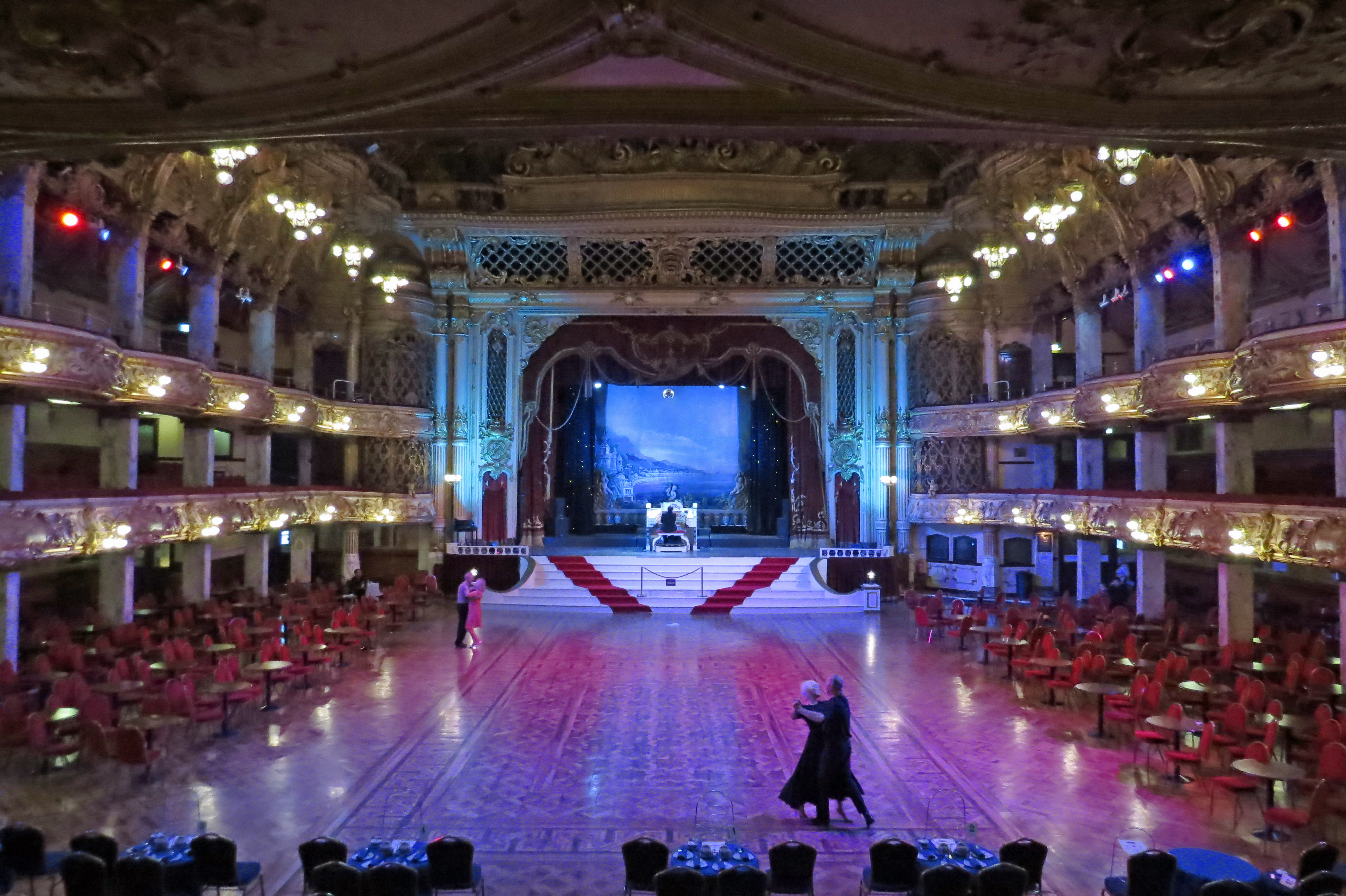
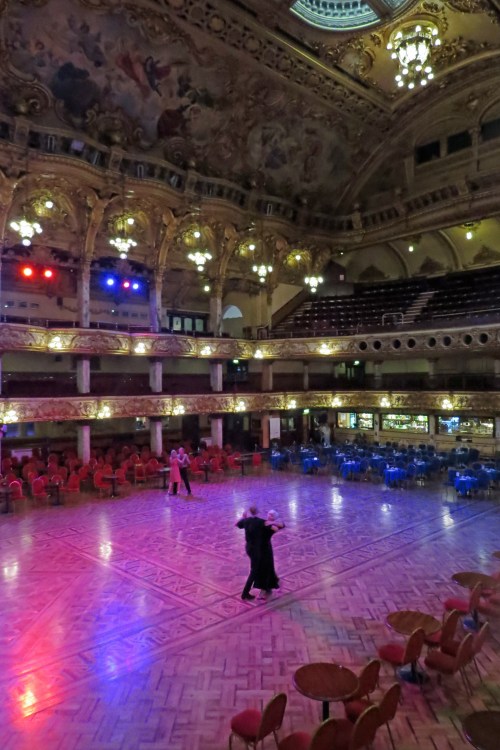
However Margaret, a fan of ‘Strictly Come Dancing’, was keen that we visit the overly ornate Tower Ballroom.
IMG_6214 Tower ballroom

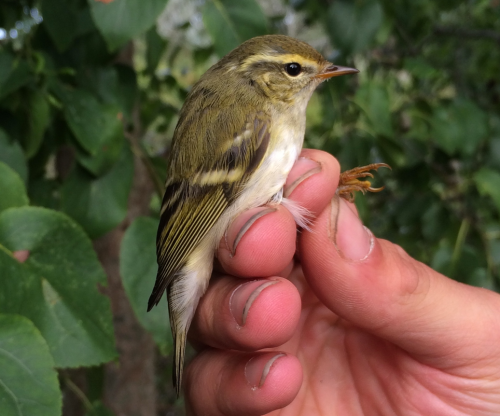
With only two couples dancing the visit was hardly the ‘Strictly’ Blackpool extravaganza but it was well worth visiting.

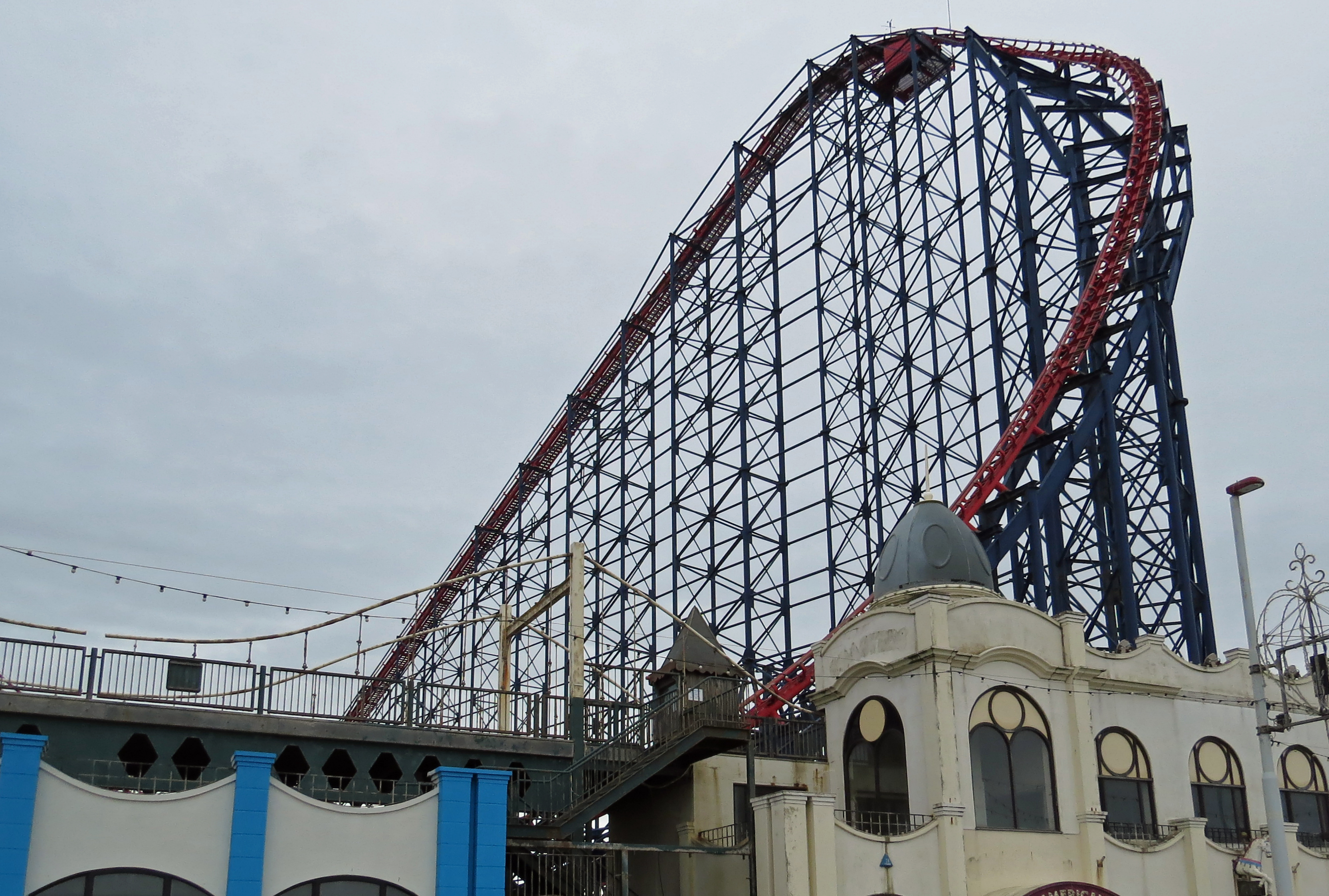
IMG_6204 Blackpool

I wasn’t too keen on the idea of going on Britain’s tallest roller-coaster ….

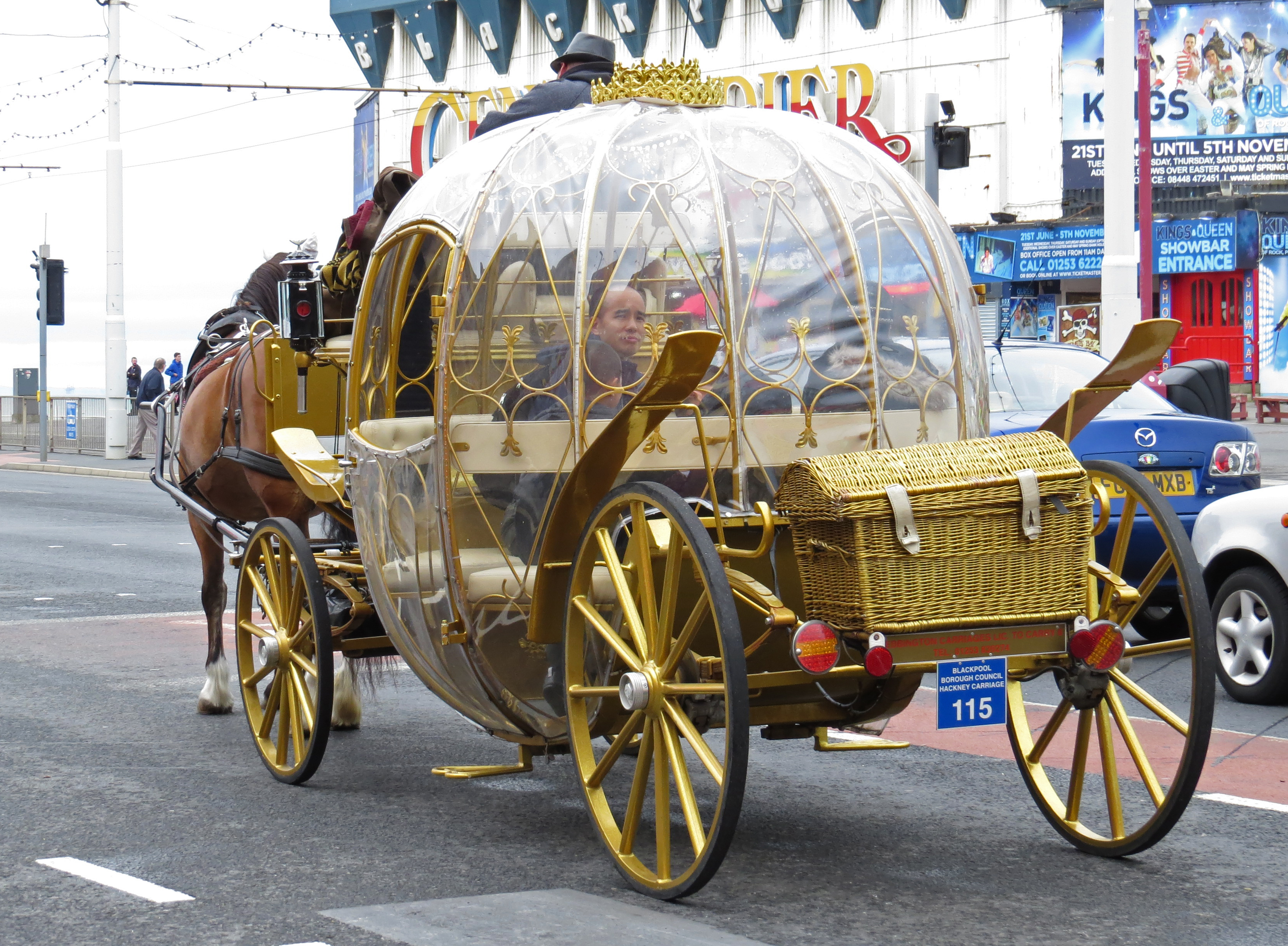
IMG_6207 horse and cart

…. or travelling in a gilded carriage ….

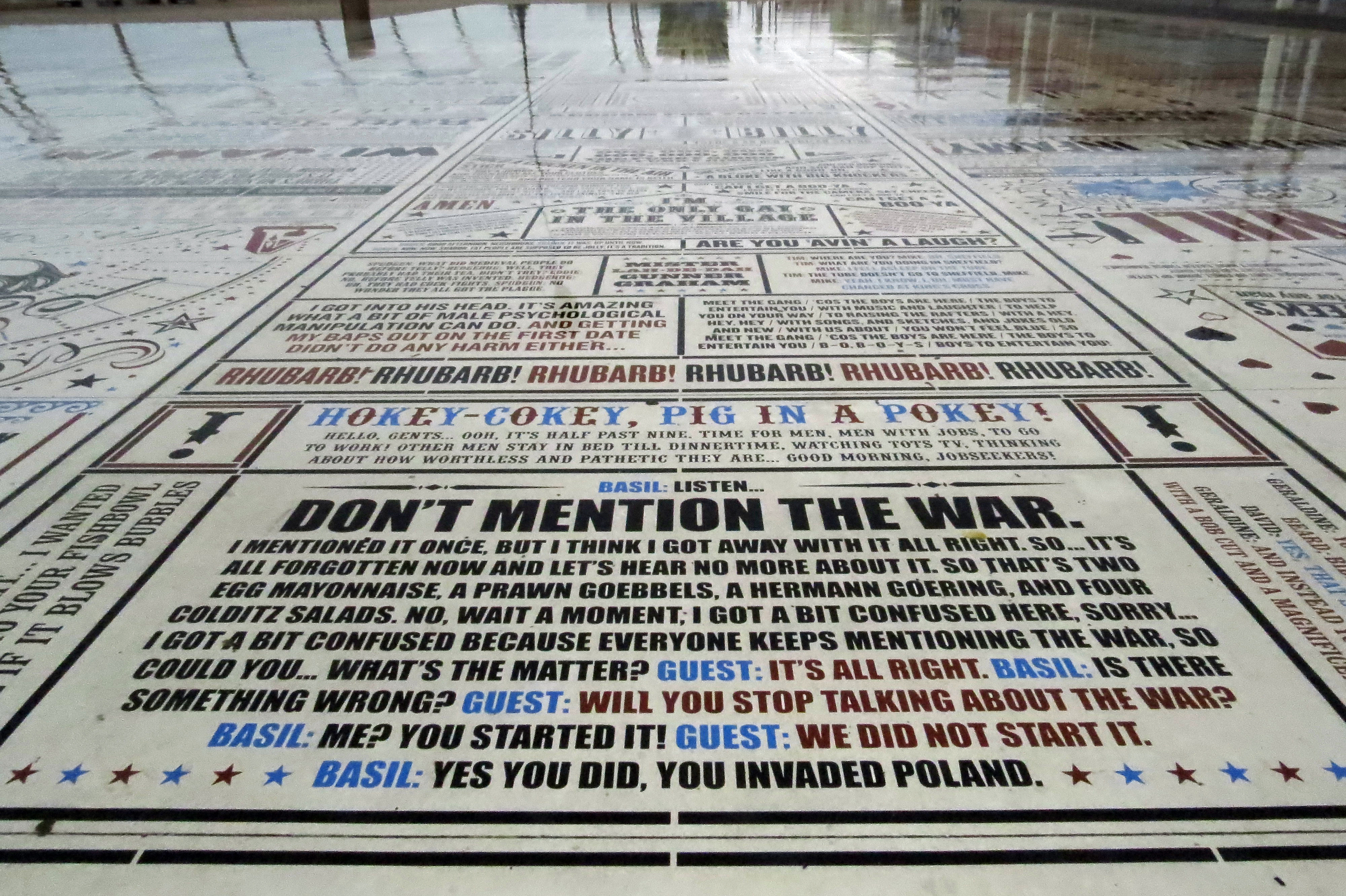
IMG_6221 comedy tiles

…. but I was amused by these tiles on the promenade composed of a collection of comedy punch lines and dialogues, none more so then this famous dialogue from Fawlty Towers. The sketch, of course, was not intended to be critical of the Germans but of those fuddy-duddy Brits (epitomised by Basil Fawlty) who couldn’t put the past behind them. As can be clearly seen in this photo the rain was now very heavy, so we returned to the hotel to dry out.

IMG_6224 gulls being fed

Some holiday makers complain about gulls swooping down to snatch their food and are campaigning for a cull. I think this is absurd because if they don’t want their food snatched outdoor they obviously should eat it where that can’t happen (like indoors) plus they would be better off directing their anger instead towards those to intentionally feed the gulls and teach them that holiday makers equals free food!

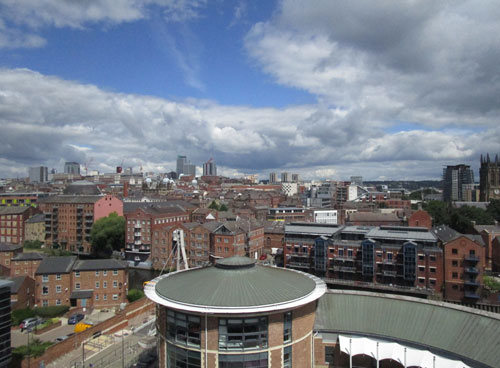
IMG_4885-view-from-hotel-in-Leeds-web

From Blackpool we headed east to Leeds where I used to live in the 70s and booked into a hotel on the south side of the River Aire.

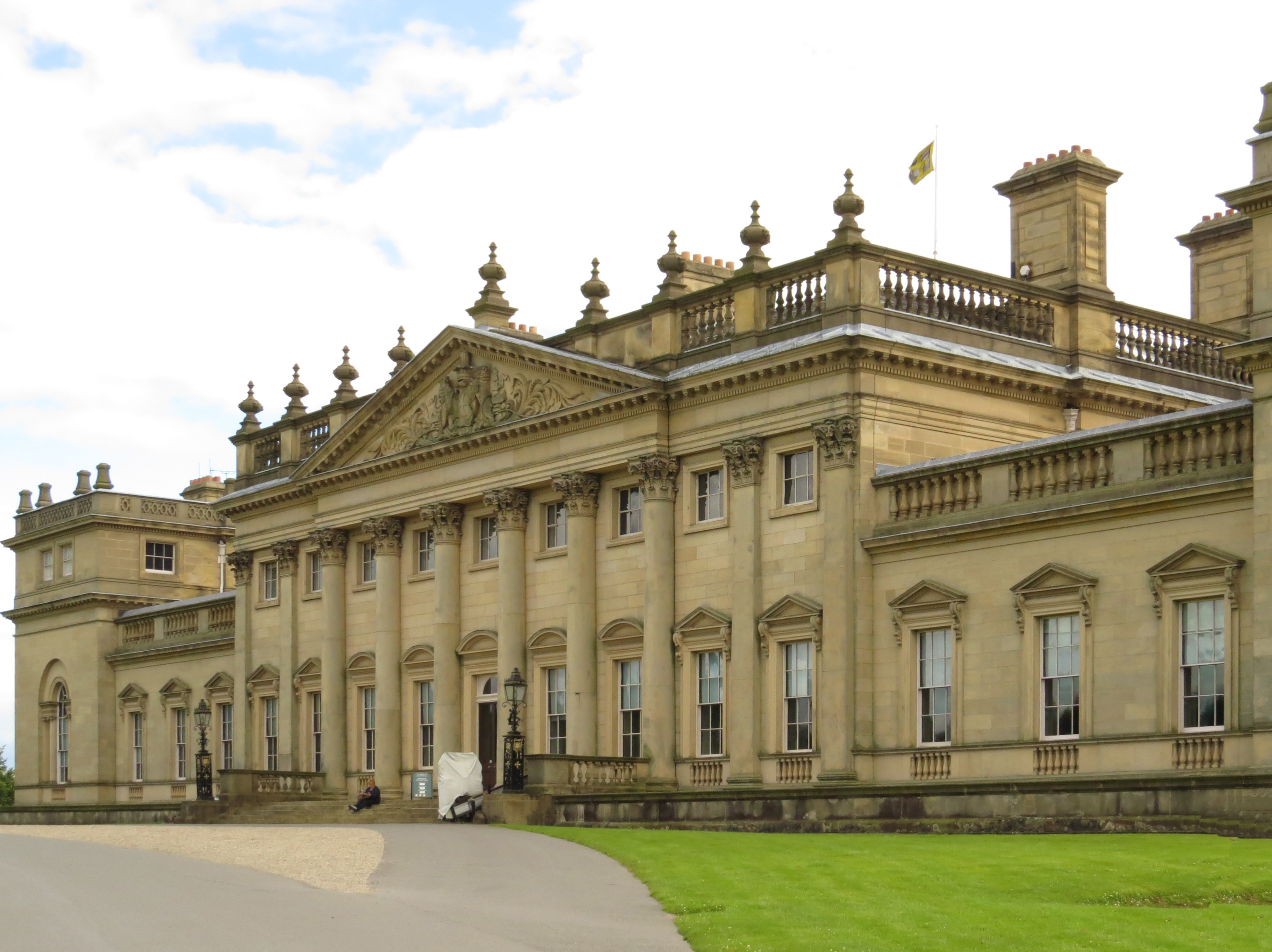
IMG_6242 Harewood House

We were visiting Leeds to meet up with my old school and University mate Nigel Mackie whom I have known since 1967. Nigel greatly influenced my choice of music and my choice of politics and it is a great shame that we live so far apart. Rather than wander around Leeds again, we took advantage of the nice weather and went to Harewood House near Harrogate.

IMG_6239 Harewood House

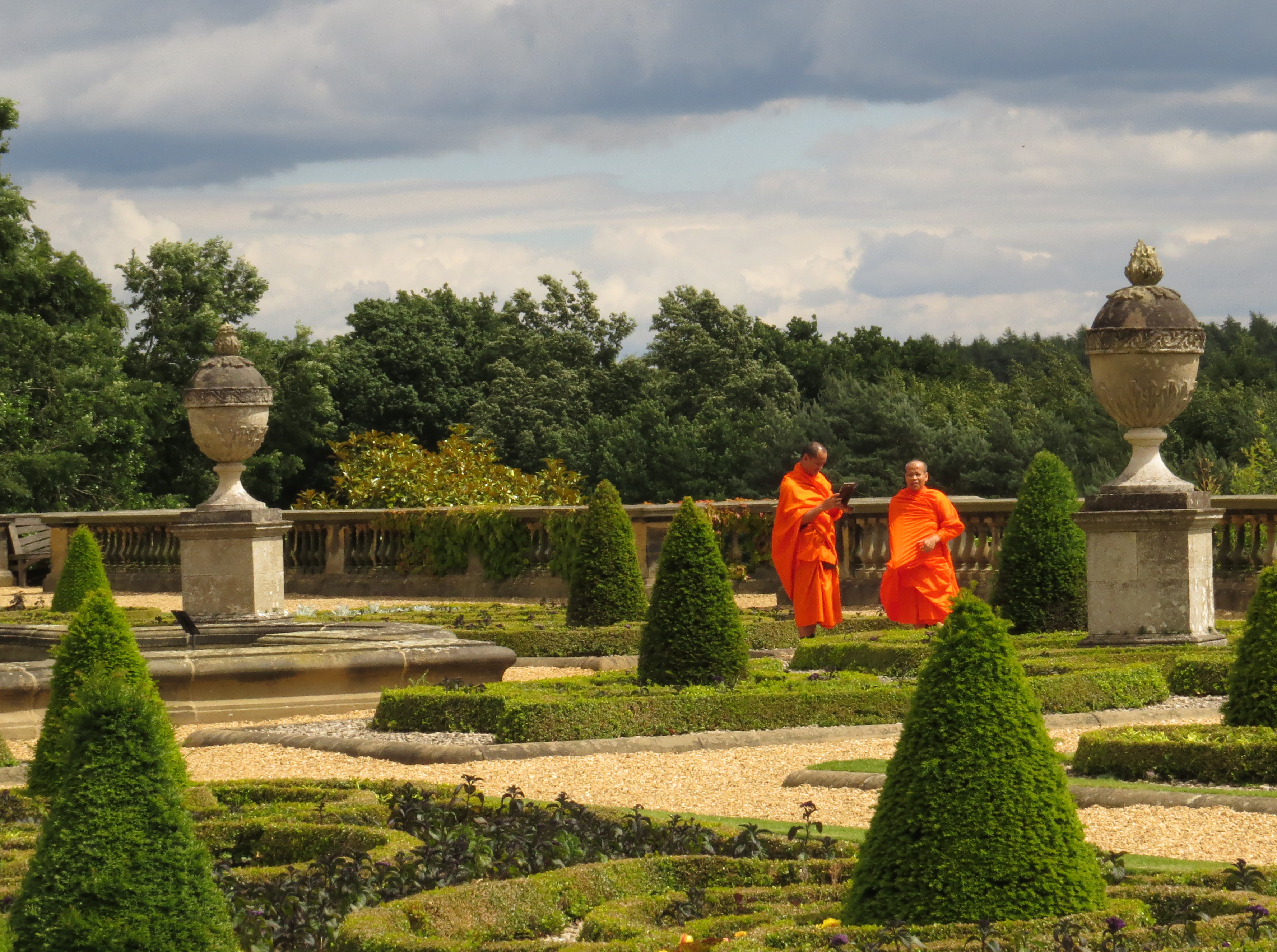
Buddhist monks in the gardens of a stately home was an unusual sight.

IMG_6253 Harewood House

Taken from Wikipedia (again): Harewood House is a country house in Harewood near Leeds. Designed by architects John Carr and Robert Adam, it was built between 1759 and 1771 for wealthy plantation owner Edwin Lascelles, 1st Baron Harewood. The landscape was designed by Lancelot “Capability” Brown and spans 1,000 acres at Harewood. Still home to the Lascelles family, Harewood House is a member of Treasure Houses of England, a marketing consortium for ten of the foremost historic homes in the country. The house is a Grade I listed building and a number of features in the grounds and courtyard have been listed as Grade I & II

IMG_6252 Harewood House

The house, the upper stories of which are still lived in, contains the usual wonderfully ornate bedrooms, sitting rooms and libraries ….

IMG_6258 Harewood House_edited-1

…. none more so than the beautiful gallery. The extensive grounds were the site of a Red Kite reintroduction program and in spite of the huge numbers we saw in Wales, it was wonderful to see these soaring over the park and even over the suburbs of Leeds.

IMG_6279-Carsington-Res-web

Leaving Leeds we drove south to Duffield in Derbyshire to visit my brother and his family. On route we called into Carsington Reservoir in the Derbyshire Dales as I know this to be a reliable site for two species we don’t see in Dorset – Tree Sparrow and Willow Tit. I’m glad to say we saw both.

IMG_4892-Dennis-Ida-and-M-web

As always we paid a visit to my sister-in-laws parents, Ida and Dennis. Dennis was full of his usual amusing stories and anecdotes – never a dull moment!

IMG_4896-old-house-Kettering-web

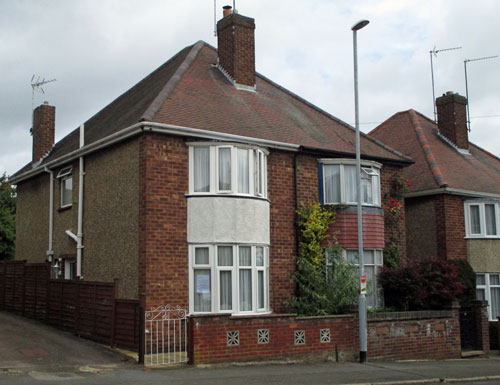
Leaving Derbyshire we drove south-east via the M1 and A14 to Essex. We had hoped to visit friends in Sussex on route but they had last-minute change of plans. With time on our hands we detoured to the town of Kettering in Northamptonshire where I lived from the age of 4 to 14 and I showed Margaret the house we used to live in, ….

IMG_4895-Wicksteed-Park-web

…. Wicksteed Park that I used to visit at lunchtimes as it was adjacent to my senior school ….

IMG_4898-Hawthorn-Primary-School-web

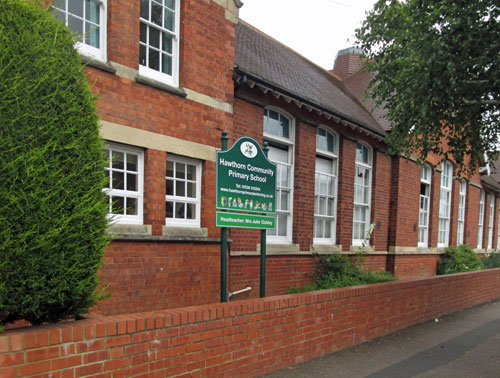
…. and my old primary school that I attended from 1956 – 62.

IMG_4905-Headlands-Kettering-web

There was more nostalgia as I returned an area known as Headlands. This railway bridge was much easier to look over then and several boys and I used to go train spotting from here. On the other side was open fields, a wood and a stream and here I remember seeing Water Voles, Foxes and a Barn Owl – all magical stuff for a kid like me. Now, of course, its a housing estate dominated by the roar of traffic on the A14.

IMG_6281-R-Gt-Ouset-Fen-Drayton-web

With time for another stop, we had lunch at Fen Drayton near Cambridge and did a little birding at the nearby gravel pits. My last visit was in 2014 when I twitched a Baikal Teal but there was nothing of that quality on view today. However on the nearby Great Ouse River we had prolonged views of a swimming Grass Snake, a species I haven’t seen for many years.

IMG_6286 Glossy Ibis

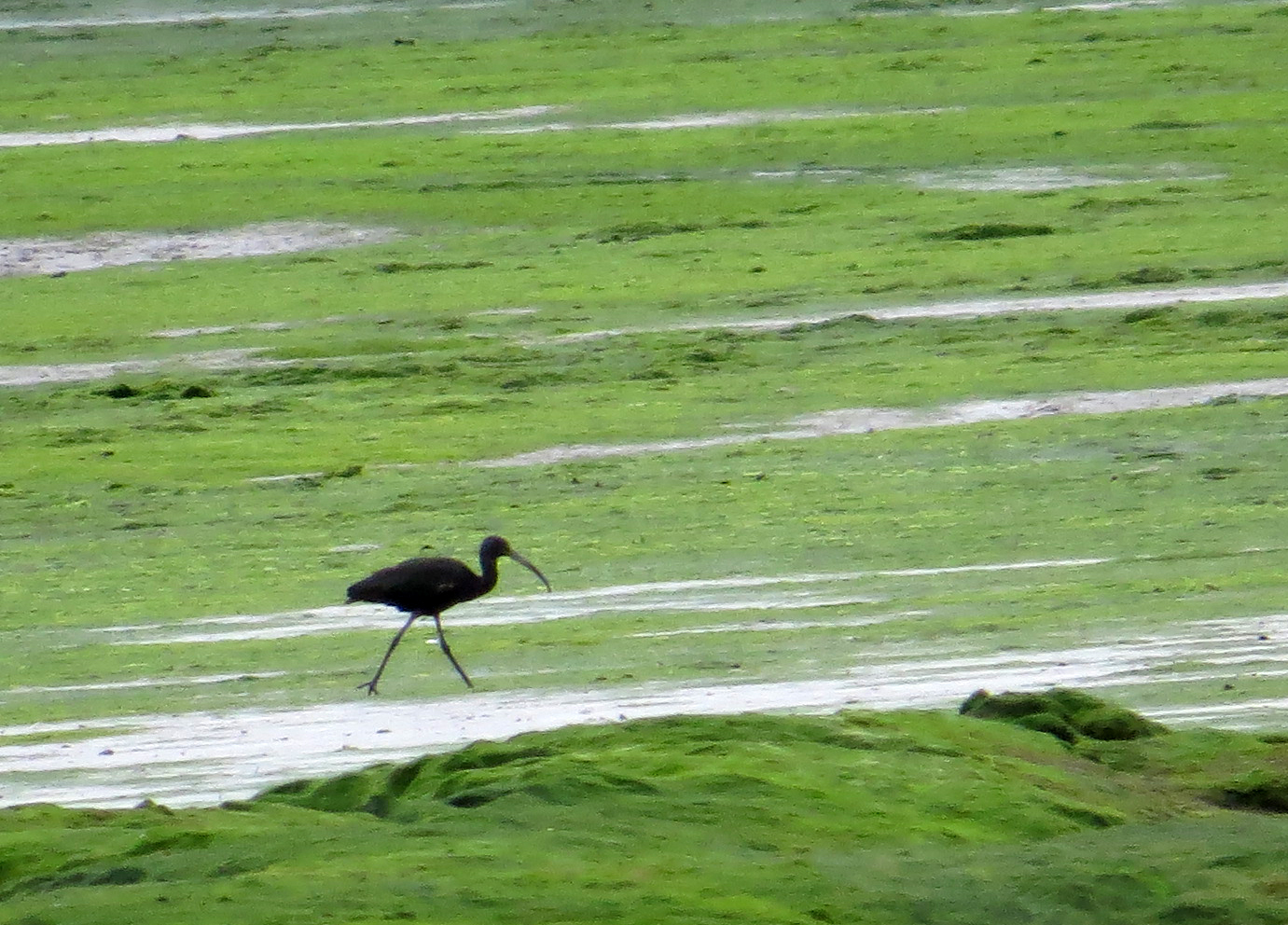
We arrived at Margaret’s daughter Anita’s place in Maldon Essex on the evening of 7th. As Anita and John were at work on the Friday we met up with Simon Cox, an Essex birder I have met on several BirdQuest trips and another ringer. He was not doing any ringing that day but agreed to take us to the RSPB’s Old Hall marshes where we found this Glossy Ibis. In spite of the recent increase in numbers this remains a fairly rare bird.

IMG_6294 cr Blackwit

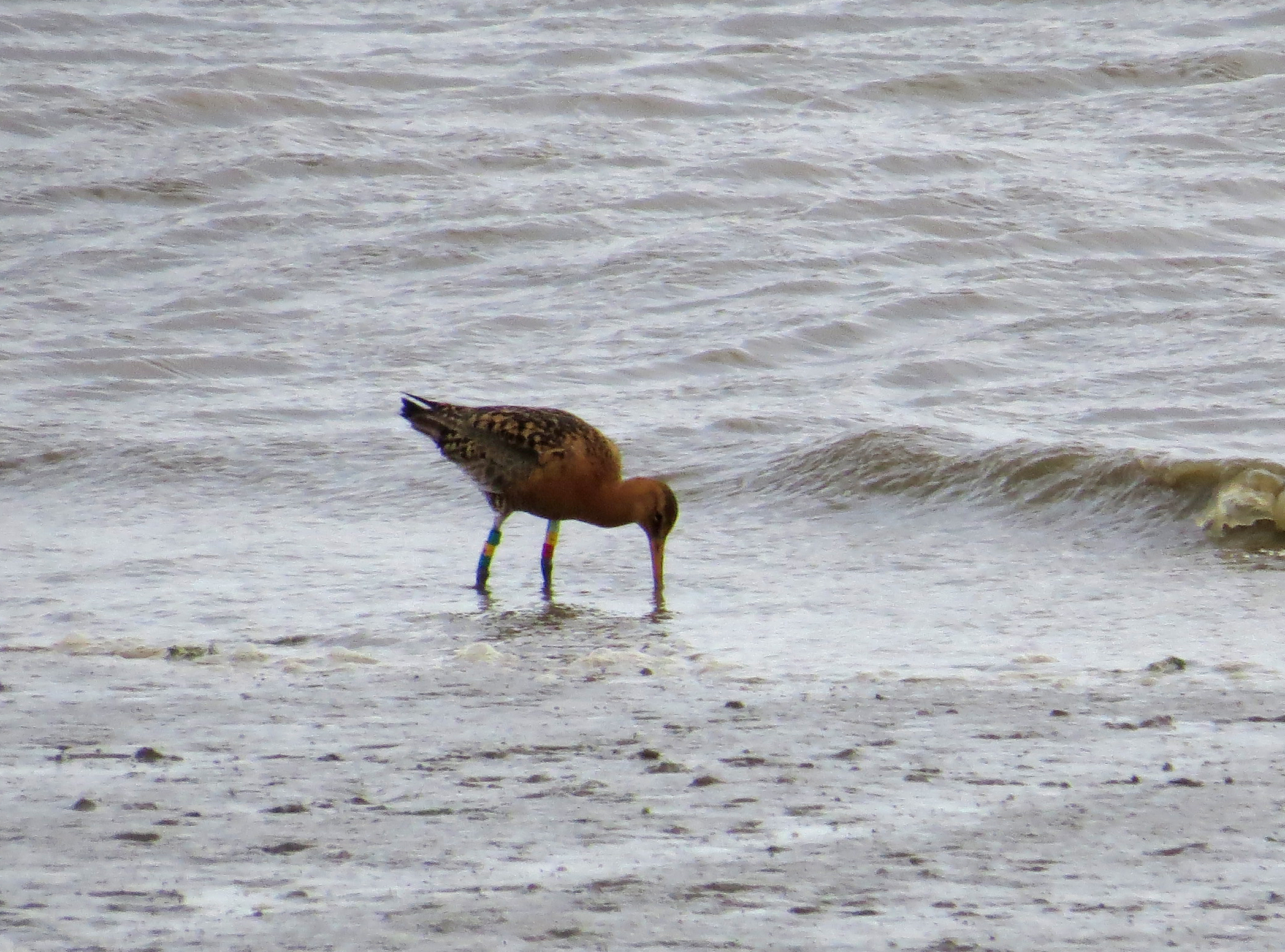
Whilst staying at Maldon I took the opportunity to bird at Haybridge Basin on the other side of the Blackwater Estuary from Maldon. In a flock of 400+ Black-tailed Godwits I found three colour ringed individuals. Colour ringing is an excellent way of tracking some birds movements but the colour rings only allows a certain number of combinations and works best on long-legged birds that feed in open areas like mud flats where the ring combination can easily be read. All three birds had made remarkable journeys during their life, the best of the three I have reproduced below, showing multiple sightings in eastern England in winter and Iceland in the breeding season as well as a visit to Holland.

Black-tailed Godwit adult, male
R8-LO 15.07.10 Siglufjordur, N Iceland
R8-LO 07.03.11 Mistley, Stour Estuary, Essex, E England
R8-LO 18.03.11 Mistley, Stour Estuary, Essex, E England
R8-LO 09.03.12 Gansooiensche uiterwaard, North of Waalwijk, Noord-Brabant, C Netherlands
R8-LO 23.03.12 Mistley, Stour Estuary, Essex, E England
R8-LO 27.08.12 Heybridge Basin, Maldon, Blackwater Estuary, Essex, E England
R8-LO 30.08.12 Heybridge Basin, Maldon, Blackwater Estuary, Essex, E England
R8-LO 10.09.12 Heybridge Basin, Maldon, Blackwater Estuary, Essex, E England
R8-LO 21.09.12 Heybridge Basin, Maldon, Blackwater Estuary, Essex, E England
R8-LO 09.10.12 Heybridge Basin, Blackwater Estuary, Essex, E England
R8-LO 15.01.13 Heybridge Basin, Maldon, Blackwater Estuary, Essex, E England
R8-LO 22.03.13 Mistley, Stour Estuary, Essex, E England
R8-LO 07.08.13 Heybridge Basin,Maldon,Blackwater Estuary,Essex,E England
R8-LO 12.08.13 Maldon, Blackwater Estuary, Essex, E Eng
R8-LO 20.08.13 Heybridge Basin, Maldon, Blackwater Estuary, Essex, E England
R8-LO 29.08.13 Heybridge Basin, Maldon, Blackwater Estuary, Essex, E England
R8-LO 3.10.13 Heybridge Basin,Maldon, Blackwater Estuary, Essex, E England
R8-LO 4.02.14 Mistley, Stour Estuary, Essex, E England
R8-LO 21.02.14 Stour Estuary, Essex, E England
R8-LO 26.02.14 Stour Estuary, Essex, E England
R8-LO 2.03.14 Mistley, Stour Estuary, Essex, E England
R8-LO 3.03.14 Mistley, Stour Estuary, Essex, E England
R8-LO 5.03.14 Mistley, Stour Estuary, Essex, E England
R8-LO 6.03.14 Mistley, Stour Estuary, Essex, E England
R8-LO 11.03.14 Heybridge Basin, Maldon, Blackwater Estuary,Essex, E England
R8-LO 11.03.14 Mistley, Stour Estuary, Essex, E England
R8-LO 16.03.14 Mistley, Stour Estuary, Essex, E England
R8-LO 20.03.14 Mistley, Stour Estuary, Essex, E England
R8-LO 21.03.14 Mistley, Stour Estuary, Essex, E England
R8-LO 26.03.14 Mistley, Stour Estuary, Essex, E England
R8-LO 02.04.14 Stutton Mill, Stour Estuary, Suffolk, E England
R8-LO 04.04.14 Stutton Mill, Stour Estuary, Suffolk, E England
R8-LO 08.04.14 Stutton Mill, Stour Estuary, Suffolk, E England
R8-LO 09.04.14 Stutton Mill, Stour Estuary, Suffolk, E England
R8-LO 11.04.14 Stutton Mill, Stour Estuary, Suffolk, E England
R8-LO 13.04.14 Stutton Mill, Stour Estuary, Suffolk, E England
R8-LO 14.04.14 Mistley Walls, Stour Estuary, Manningtree, Essex, E England
R8-LO 16.07.14 Frampton Marsh, the Wash estuary, Lincolnshire, E England
R8-LO 21.07.14 Heybridge Basin, Maldon,Blackwater Estuary,Essex,E England
R8-LO 23.07.14 Heybridge Basin, Maldon,Blackwater Estuary,Essex,E England
R8-LO 29.07.14 Heybridge Basin, Maldon,Blackwater Estuary,Essex,E England
R8-LO 7.08.14 Heybridge Basin, Maldon,Blackwater Estuary,Essex,E England
R8-LO 13.08.14 Frampton Marsh, the Wash estuary, Lincolnshire, E England
R8-LO 22.08.14 Heybridge Basin, Maldon,Blackwater Estuary,Essex,E England
R8-LO 5.09.14 Heybridge Basin, Maldon,Blackwater Estuary,Essex,E England
R8-LO 20.12.14 Mistley Walls, Stour Estuary, Essex, E England
R8-LO 20.12.14 Stour Estuary, Essex, E England
R8-LO 17.01.15 Mistley Walls, Stour Estuary, Manningtree, Essex, SE England
R8-LO 18.01.15 Mistley Walls, Stour Estuary, Manningtree, Essex, SE England
R8-LO 20.02.15 Mistley Walls, Stour Estuary, Manningtree, Essex, SE England
R8-LO 21.02.15 Mistley Walls, Stour Estuary, Manningtree, Essex, SE England
R8-LO 01.03.15 Mistley Walls, Stour Estuary, Manningtree, Essex, SE England
R8-LO 02.03.15 Mistley Walls, Stour Estuary, Manningtree, Essex, SE England
R8-LO 23.03.15 Stutton Mill, Stour Estuary, Suffolk, SE England
R8-LO 28.03.15 Mistley Walls, Stour Estuary, Manningtree, Essex, SE England
R8-LO 09.04.15 Mistley Walls, Stour Estuary, Manningtree, Essex, SE England
R8-LO 10.04.15 Mistley Walls, Stour Estuary, Manningtree, Essex, SE England
R8-LO 18.04.15 Arnarhóll, Flói, Árnessýsla, S Iceland
R8-LO 21.04.15 Arnarhóll, Flói, Árnessýsla, S Iceland
R8-LO 21.04.15 Vorsabær, Flói, Árnessýsla, S Iceland
R8-LO 29.08.15 Stutton Mill, Stour Estuary, Manningtree, Essex, SE England
R8-LO 1.09.15 Mistley Walls, Stour Estuary, Manningtree, Essex, SE England
R8-LO 2.09.15 Mistley Walls, Stour Estuary, Manningtree, Essex, SE England
R8-LO 11.09.15 Heybridge Basin, Maldon,Blackwater Estuary,Essex,E England
R8-LO 8.10.15 Heybridge Basin, Maldon,Blackwater Estuary,Essex,E England
R8-LO 14.10.15 Heybridge Basin, Maldon,Blackwater Estuary,Essex,E England
R8-LO 22.10.15 Heybridge Basin, Maldon,Blackwater Estuary,Essex,E England
R8-LO 22.11.15 Mistley Walls, Stour Estuary, Manningtree, Essex, E England
R8-LO 07.01.16 Heybridge Basin, Maldon,Blackwater Estuary,Essex,E England
R8-LO 09.01.16 Mistley Walls, Stour Estuary, Manningtree, Essex, E England
R8-LO 10.01.16 Mistley Walls, Stour Estuary, Manningtree, Essex, E England
R8-LO 11.01.16 Mistley Walls, Stour Estuary, Manningtree, Essex, E England
R8-LO 13.01.16 Mistley Walls, Stour Estuary, Manningtree, Essex, E England
R8-LO 16.01.16 Mistley Walls, Stour Estuary, Manningtree, Essex, E England
R8-LO 27.01.16 Mistley, Stour Estuary, Essex, E England
R8-LO 29.01.16 Mistley Walls, Stour Estuary, Manningtree, Essex, E England
R8-LO 30.01.16 Mistley Quay, Stour Estuary, Manningtree, Essex, E England
R8-LO 7.02.16 Mistley, Stour Estuary, Manningtree, Essex, E England
R8-LO 07.02.16 Mistley Walls, Stour Estuary, Manningtree, Essex, E England
R8-LO 20.02.16 Mistley Walls, Stour Estuary, Manningtree, Essex, E England
R8-LO 1.03.16 Mistley Walls, Stour Estuary, Manningtree, Essex, E England
R8-LO 7.03.16 Mistley Walls, Stour Estuary, Manningtree, Essex, E England
R8-LO 23.03.16 Stutton Mill, Stour Estuary, Manningtree, Essex, E England
R8-LO 9.07.16 Heybridge Basin, Maldon, Blackwater Estuary,Essex, E England
R8-LO 12.07.16 Heybridge Basin, Maldon, Blackwater Estuary,Essex, E England
IMG_4914-Margaret-and-Anita-Northy-Island-web

Of course we spent most of our time with Anita and John and went on a nice bike ride to the island of Northey which sits in the Blackwater Estuary opposite Heybridge Basin.

We headed home on the afternoon of the 10th after a very pleasant 14 days away having visited various friends and families and explored several areas of the UK that were new for us and driven some 1600 miles.

During the preparation of the post I found I had used up all the allowed space on this blog. This is entirely my fault for uploading high-resolution photos. As a result the last few shots were uploaded at a very low resolution and hence are poor quality. I need to decide how to proceed from here as the upgrade WordPress want me to take is quite expensive.


Wales: June 27th – July 2nd 2016   Leave a comment

More than ever I feel the need to keep in touch with our friends and family who are scattered around the country. Also Margaret was keen to visit mid and north Wales and the north-west of England, two areas she has never been to. Wishing to do this before the school holidays and before the onset of the ‘autumn’ ringing season we arranged a fortnight away in late June and early July.


Wales trip route

From Poole we drove to Rhayader in mid Wales, on to north Wales with a detour eastwards to Oswestry. From here we drove west to Snowdonia and Anglesey before continuing along the north coast of Wales to Liverpool. The rest of the journey, Liverpool, Lancashire, Leeds, Derbyshire and Essex will be the subject of the next post.

IMG_4741 Rhayader_edited-1

We stayed overnight in the pretty town of Rhayader.

7F1A5130 Gigrin Farm

The main reason for visiting was to see the famous Red Kite feeding station at Gigrin Farm

IMG_4723 Red Kites Gigrin Farm

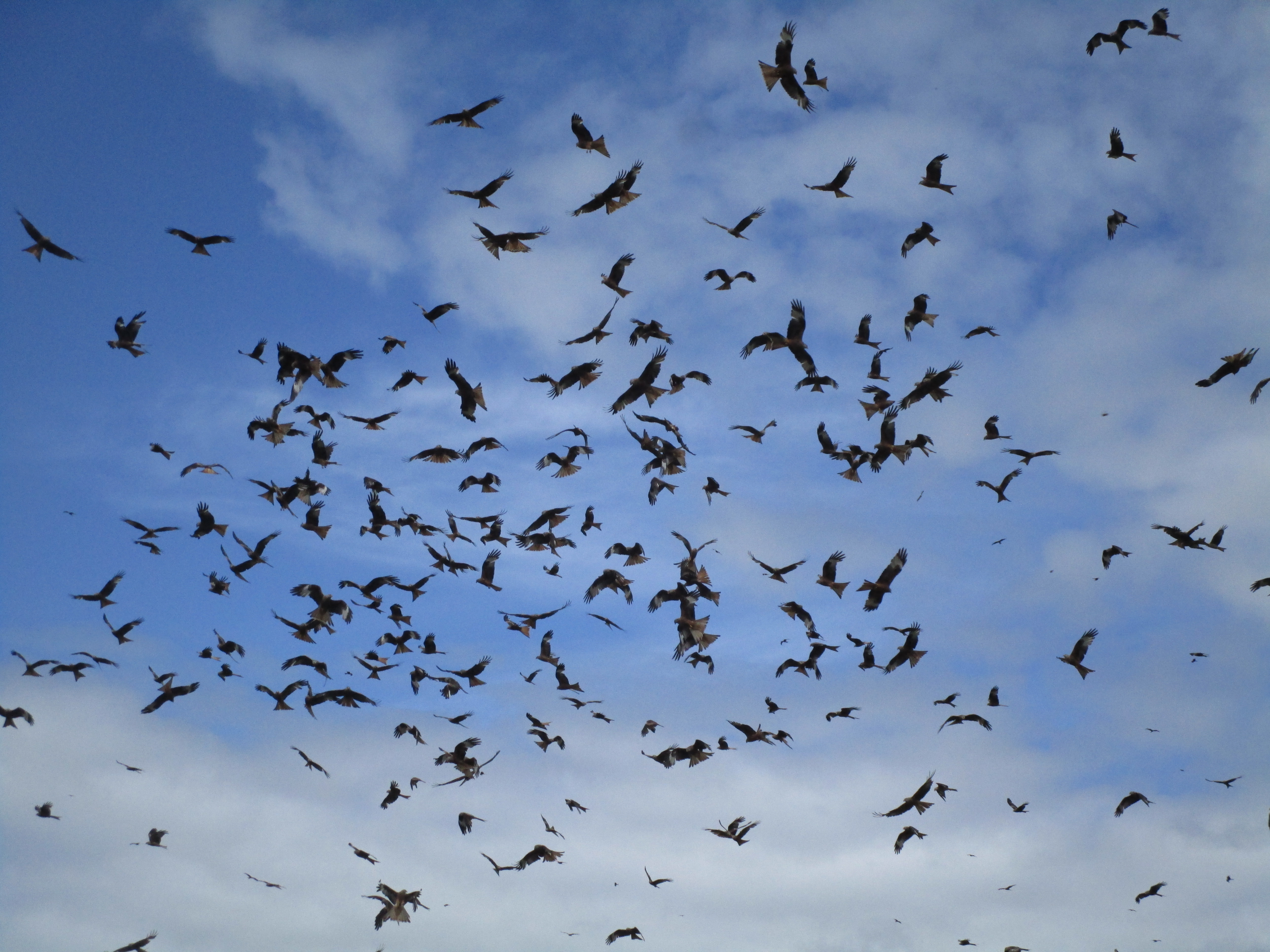
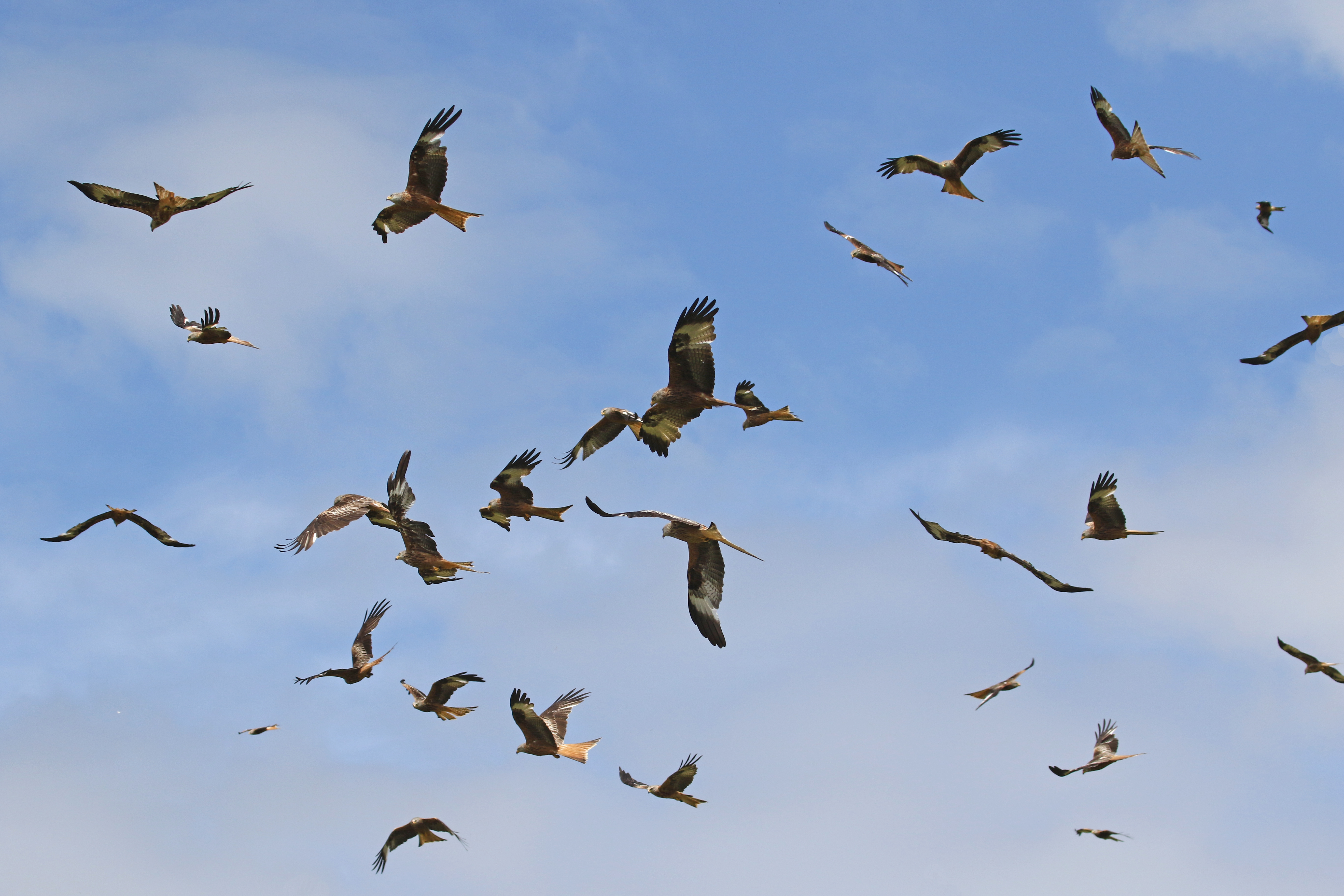
When I started birding in the 70s the Red Kite could only be found in mid Wales and there were only a few tens of pairs. Protection plus natural crossbreeding with the introduced populations of England (producing a wider gene pool) have all helped their in recovery, but the provision of meat scraps at Gigrin Farm in the core of their range must have helped too. Each afternoon over 300 Kites arrive to be fed.

7F1A5251 Red Kites

The following summary is copied from the RSPBs website: In the UK the red kite was a valued scavenger during the Middle Ages that helped keep streets clean and was protected by a royal decree; killing a kite attracted capital punishment. However, by the 16th century a bounty was placed on its head and, in common with many other birds of prey, it was relentlessly persecuted as ‘vermin’. The persecution continued through the following centuries largely by game keepers, who wrongly accused them of taking game. As the kite became rarer, it became a target for taxidermists and egg collectors, whose actions hastened the species towards extinction. Consequently, the red kite became extinct in England in 1871 and in Scotland in 1879. By 1903 when protection efforts started, only a handful of pairs were left in remote parts of central Wales. The small remnant population survived the persecution in the old oakwoods in the undisturbed upland valleys of mid-Wales, but despite extensive efforts, the numbers remained extremely low. The tightest genetic bottle-neck came in the 1930s. Even though several pairs survived, DNA analysis has since discovered that the entire Welsh population was derived from a single female bird. The population did not exceed 20 pairs until the 1960’s, when it started slowly to increase. There were many reasons for the slow recovery. The population inhabited an area where the climatic conditions and poor food availability depressed breeding success and prevented the birds from expanding their range. Until about 1950 when protection measures were starting to take effect, illegal poisoning, egg collecting and shooting of adults for taxidermy were severely affecting the population. During the 1950s the rabbit myxomatosis outbreak devastated a main food supply of the kites. This was followed by poor breeding success in the early 1960s, thought to be caused by effects of organochlorine pesticides. It was for a long time believed that the lack of genetic variability caused by the bottle-neck had resulted in the low reproductive rate. However, once the species had successfully spread to more productive land at lower altitudes, it became obvious that this was almost entirely due to poor habitat conditions. By the mid-1990s there were over 100 breeding pairs in Wales, and 350-400 pairs by 2003. Due to the low rate of chick production the Welsh population appeared to be unable to spread out of Wales to recolonise its former range. The re-introduction programme run by RSPB, Natural England and Scottish Natural Heritage, with support and sponsorship from many other bodies, started in 1989 and has helped to establish red kites in several areas of England and Scotland, and their range and numbers are slowly expanding. Consequently, the red kite’s future as a British breeding species is now much brighter

7F1A5261 Red Kites

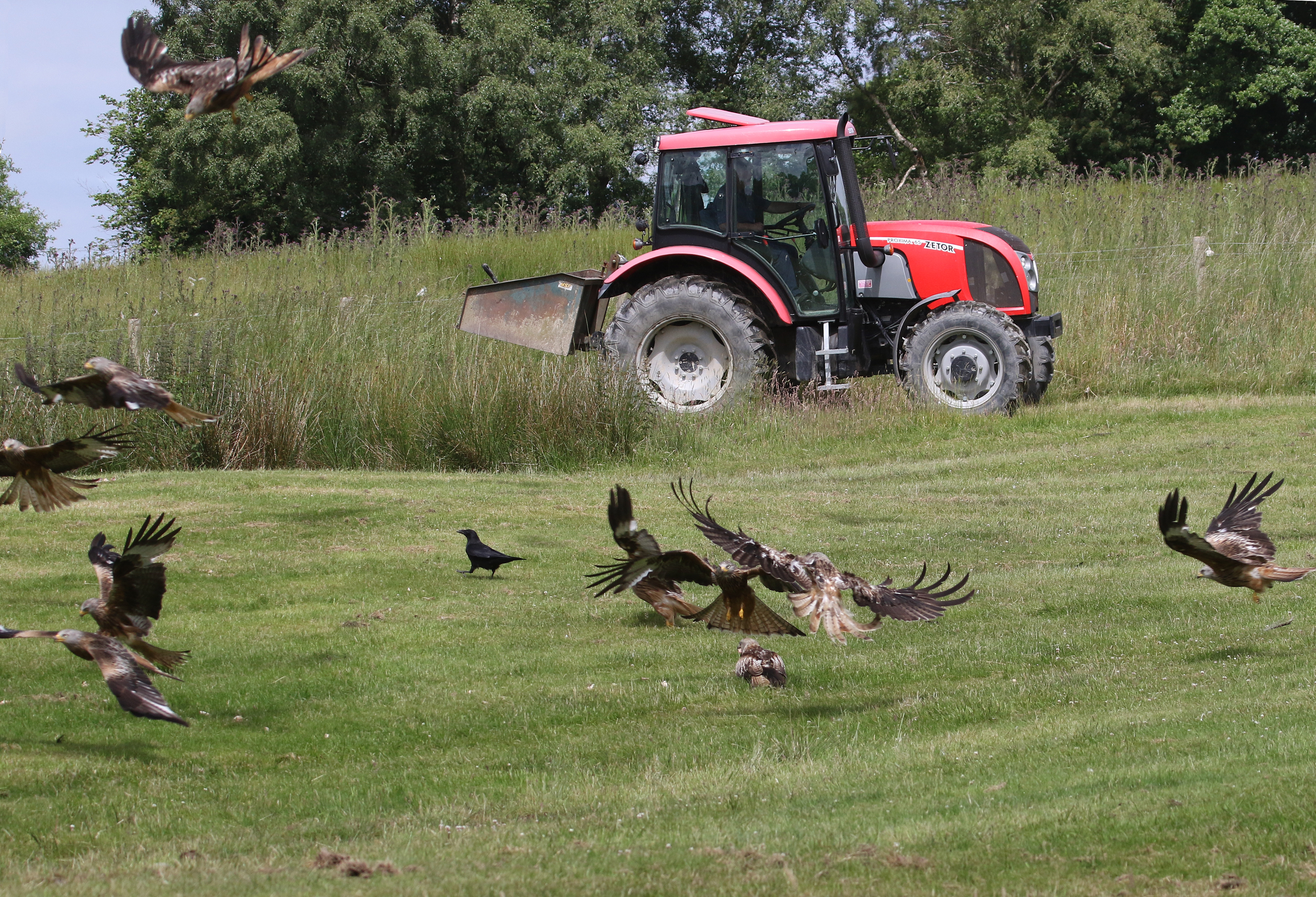
Dead on 3pm a tractor appears with the meat and the birds swoop down for their share. Visitors watch from nearby hides.

7F1A5224 Red Kites

Extremely agile, the Kites can snatch the food whilst on the wing.

7F1A5386 Buzzard

A number of Common Buzzards also attend but they have to feed on the ground and watch warily lest the Kites pinch their dinner.

7F1A5406 Buzzard & Kites

Here a Buzzard tries to fend of a Kite swooping down after its share of the meat.

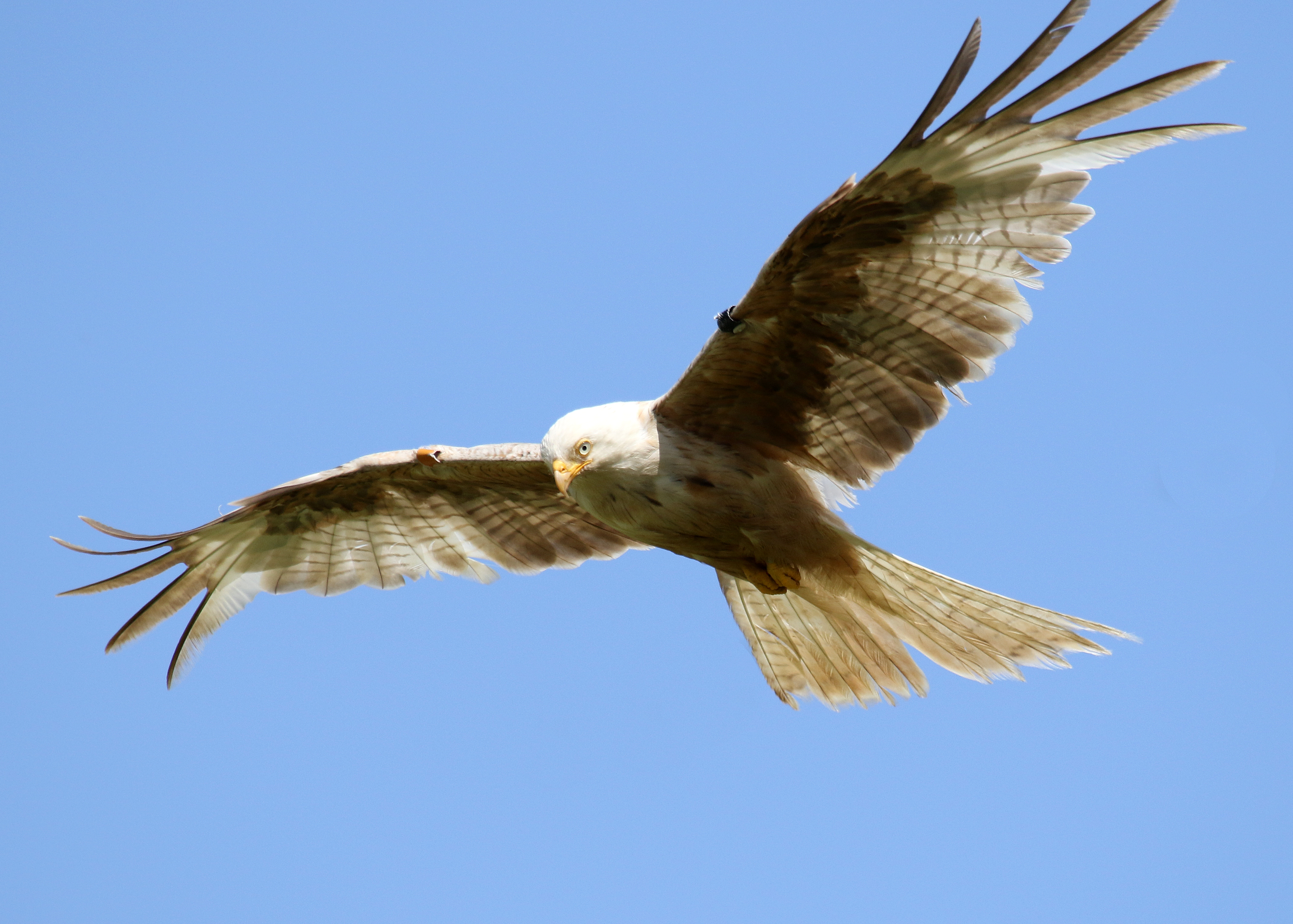
7F1A5349 leucistic Red Kite

There was a stunning ‘leucisitc’ individual, not an albino as some claimed as it wasn’t pure white and had dark not pink eyes. Most of the Welsh birds are not wing tagged but this individual is. it would be interesting to know where it originated from.

IMG_4732 Gilfach

Whilst in the Rhayader area we also did some birding at Gilfach reserve ….

IMG_4733 Elan valley

…. and at the woodland bordering the river in the Elan Valley. Our main target was Common Redstart and Pied Flycatcher, both of which we saw without difficulty, however we didn’t find the third species that these oak woodlands are famous for – Wood Warbler.

IMG_4736 Elan Valley dam

The Elan Valley dams have created a series of huge reservoirs (100,000 megalitres) which provide drinking water for Birmingham.
IMG_4749 above Elan valley

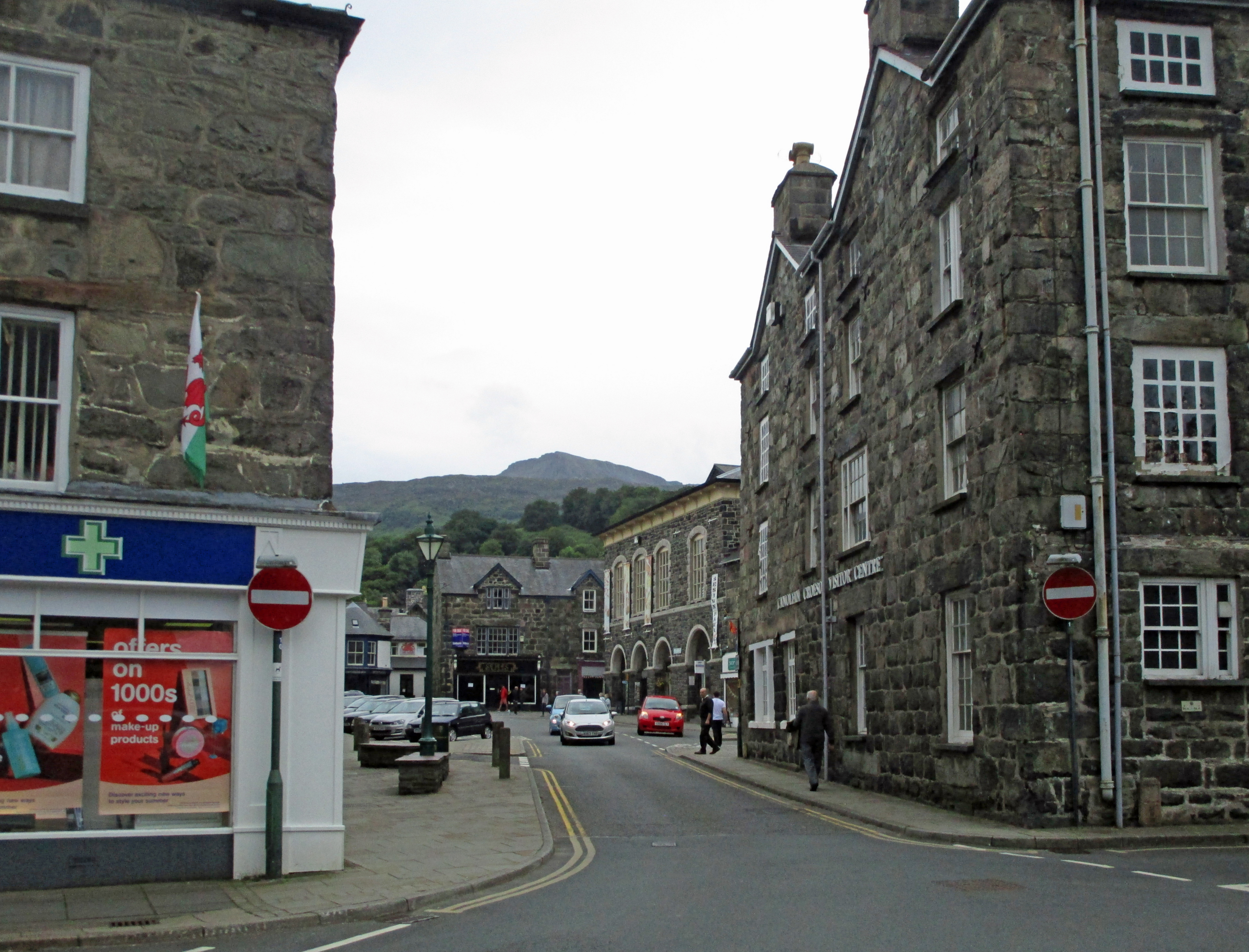
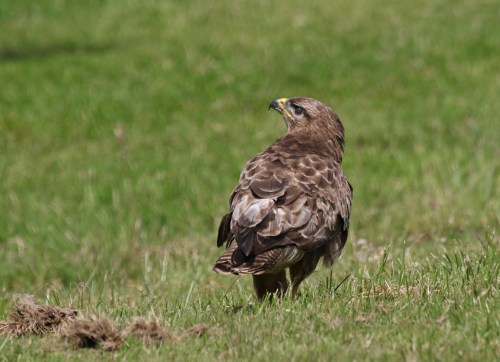
As we traveled northwards we had no particular route in mind, we just intended to explore various roads that led in the general direction of Lake Vrynwy. However the weather soon turned bad and we found ourselves driving along very narrow, tree-lined lanes. Eventually we arrived at the lake but it was too wet to do much. We climbed out of the valley and onto the moor in the pouring rain. I’m glad we ascended this hill in our car rather than on a bike, like the poor guy in the photo.

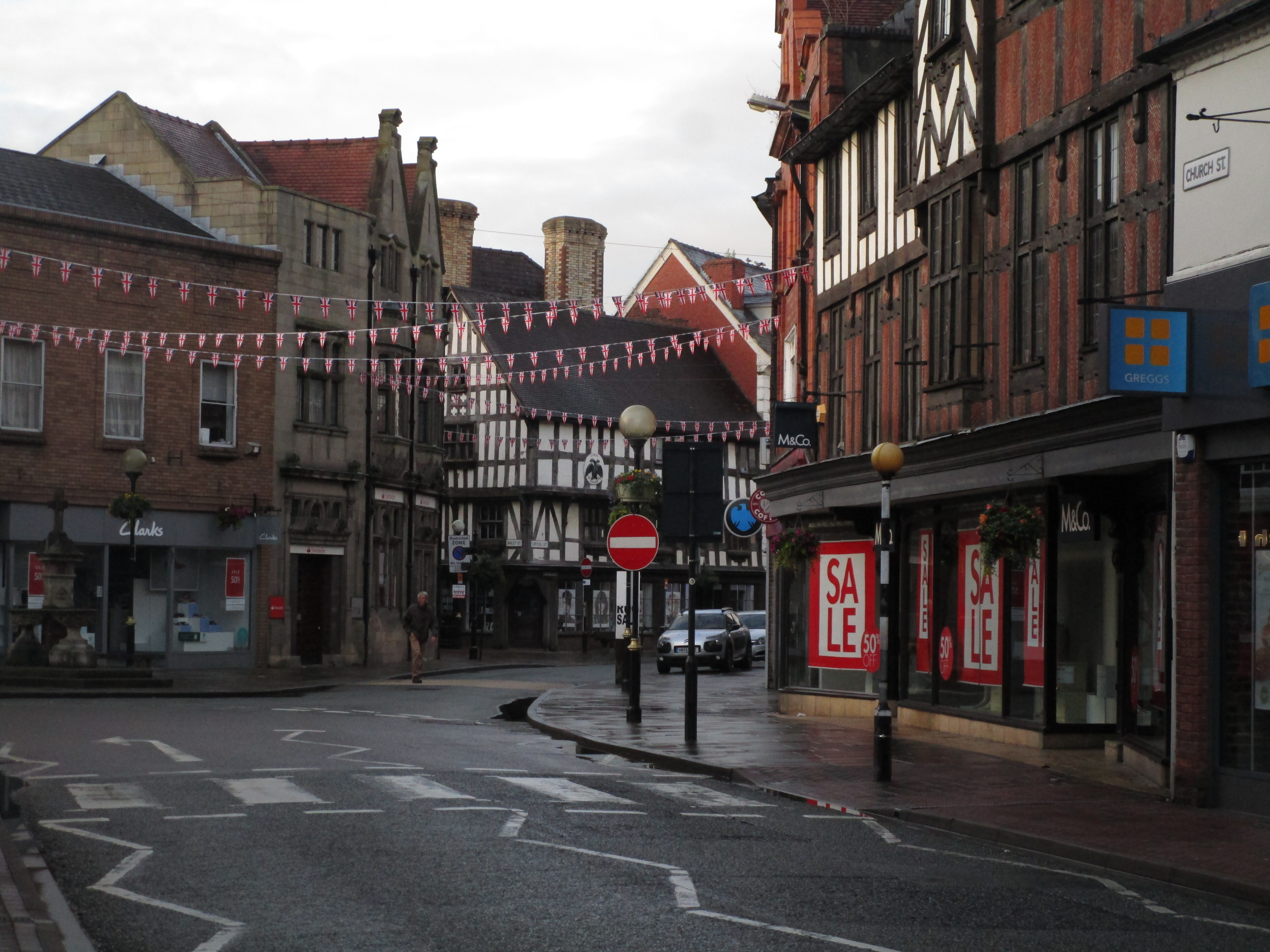
IMG_4761 Oswestry

As the afternoon progressed the rain eased and by the time we headed back east into England and the town of Oswestry it was almost dry.

IMG_4758 Oswestry

In the late evening the sun came out casting a beautiful light over the town.

IMG_4754 Soo and Margaret

We came to Oswestry to visit my old friend Soo (she always insists on spelling it this way). We first met when I was at University in about 1971 and have remained in touch ever since. She has lived much of the intervening years in Slough but moved to Oswestry a few years ago to be close to her family.

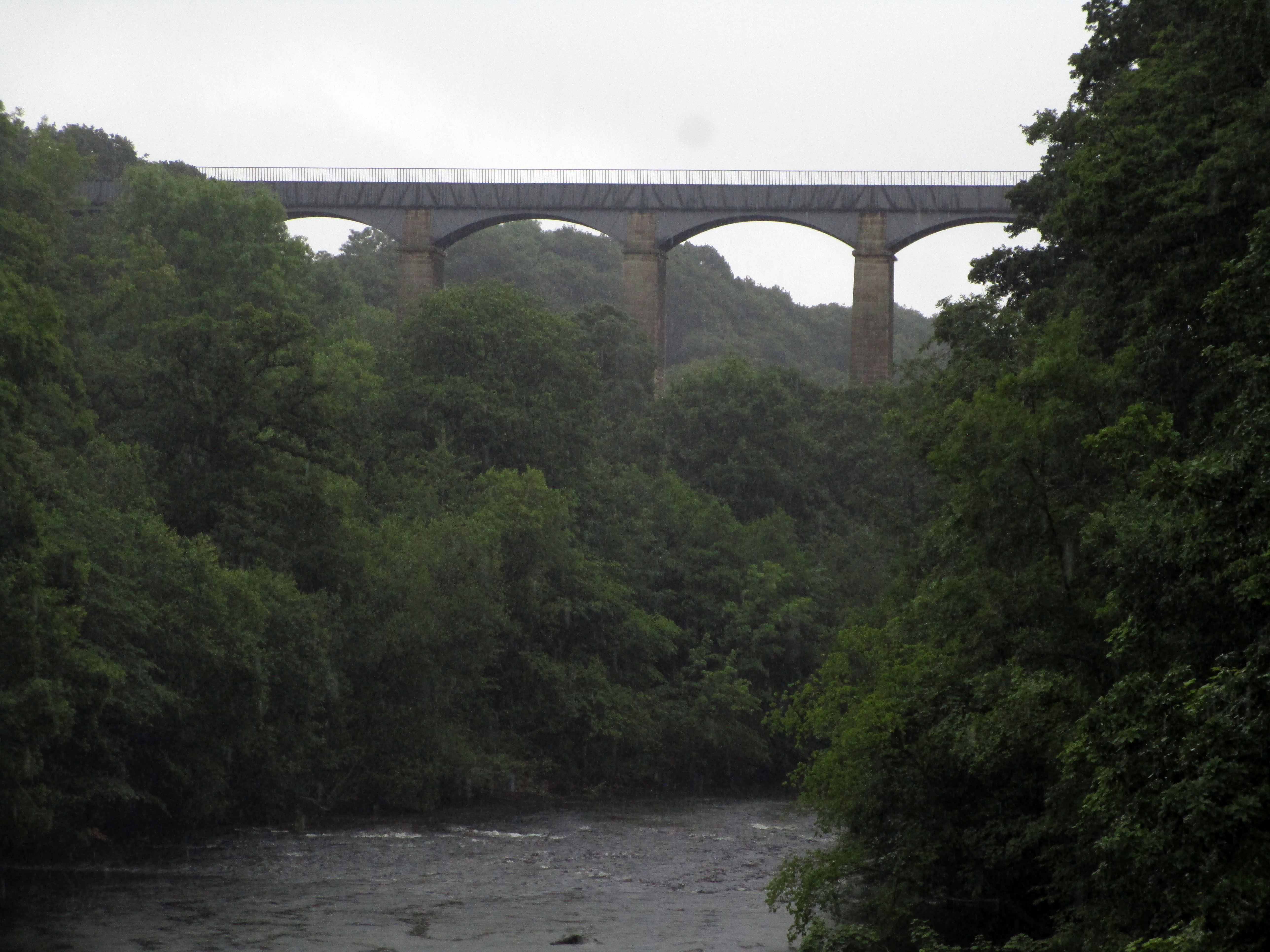
IMG_4762 Pontcysyllte aqueduct

It was back to bad weather the following day though. After departing Soo’s place we headed back into Wales and the Pontcysyllte aqueduct near Llangollen.

IMG_4770 Pontcysytyllte aqueduct

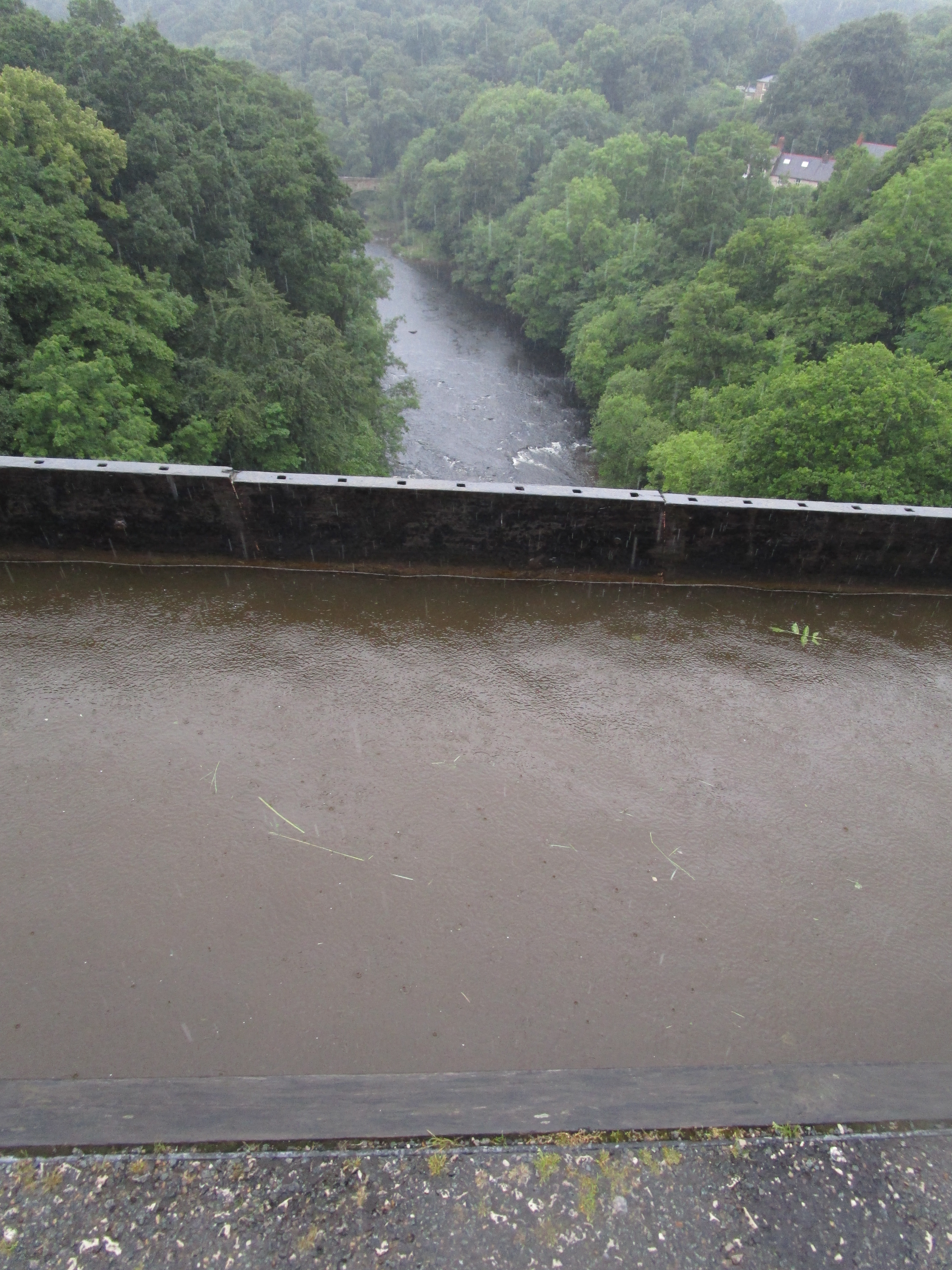
The aqueduct, built in 1805, is the longest and highest aqueduct in Britain and carries the Llangollen canal over the valley of the River Dee. Only wide enough for one narrow boat, it sits 34m above the river.

IMG_4766 Pontcysytyllte aqueduct

…. and the view over the unguarded western side is quite scary, not surprisingly Margaret didn’t walk far on the towpath. The now torrential rain can be seen marking the canal’s surface.

IMG_4778 Llanberis pass

By the time we reached the Llanberis Pass in Snowdonia the rain had eased but the mountains were still covered in low cloud. We were not to see the tops of the high peaks during our three-day stay and although we had planned to take the mountain railway to the top of Snowdon, in the end there seemed no point if all we would be able to see was cloud.

IMG_4795 Menai Strait's bridge

After booking into a hotel in Caernarfon for three nights we crossed the Menai Straits to Anglesey. Two road bridges join the island to the mainland, the original Suspension Bridge (above) built by Thomas Telford in 1826 and the Britannia Bridge built by Robert Stephenson in 1846. The latter was originally only for rail but after it was destroyed by fire in 1970 it was rebuilt as a two-tier rail and road bridge.

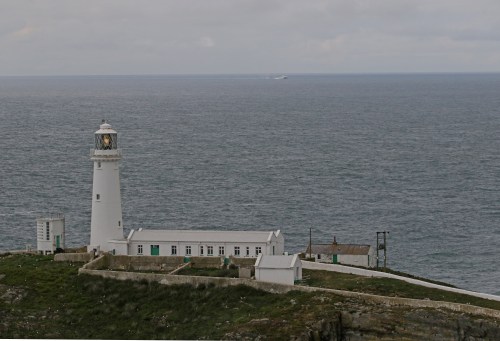
7F1A5450 South Stack lighthouse

We headed for the RSPBs South Stack reserve in the north-west corner of the island.

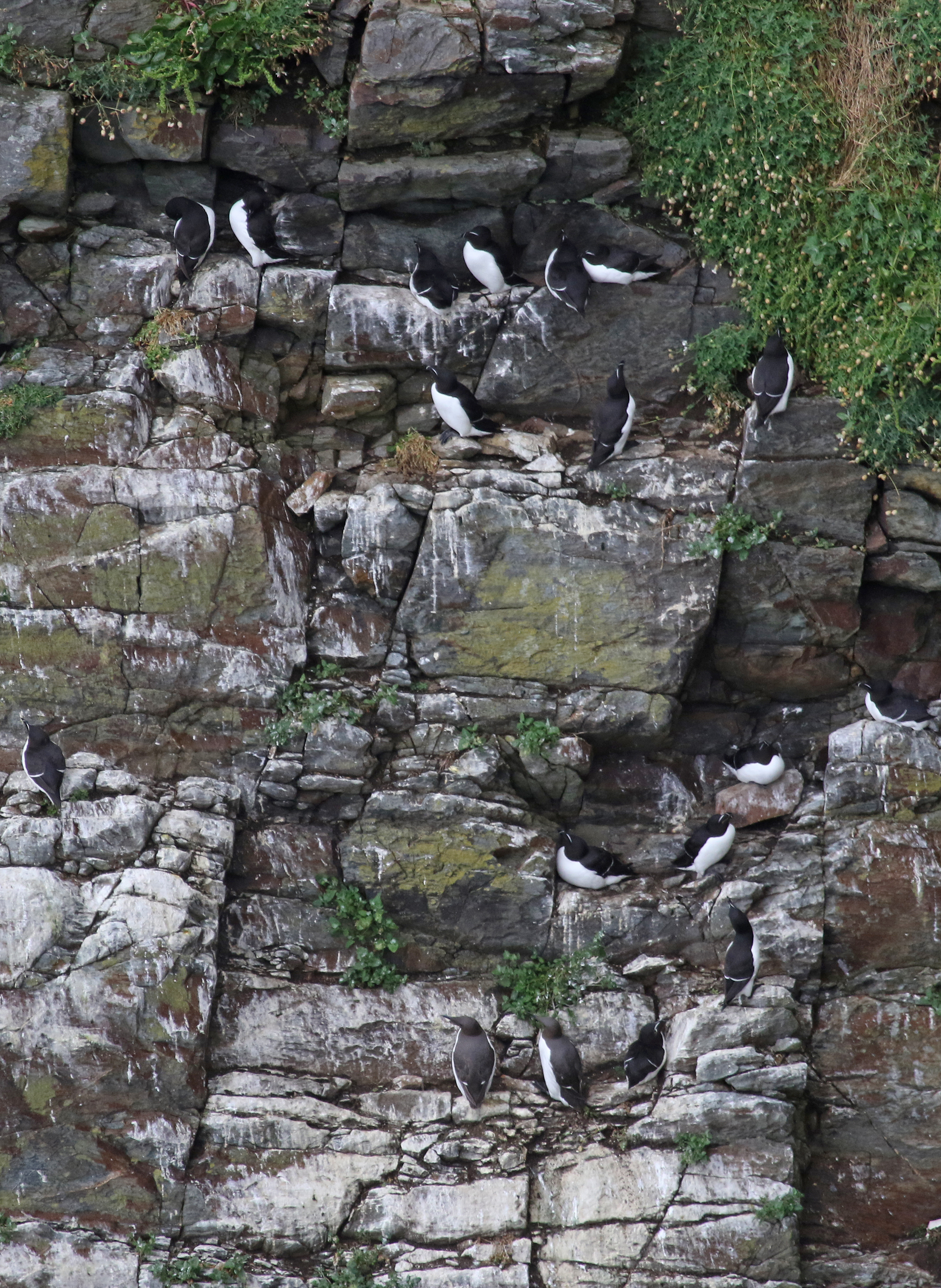
7F1A5436 Guillemots

Famous for its huge colonies of Guillemots ….

7F1A5441 Razorbills & 2 Guilles

…. and smaller numbers of Razorbills (there are two Guillemots for comparison towards the bottom of this photo. We also saw a few Puffins and a couple of Choughs.

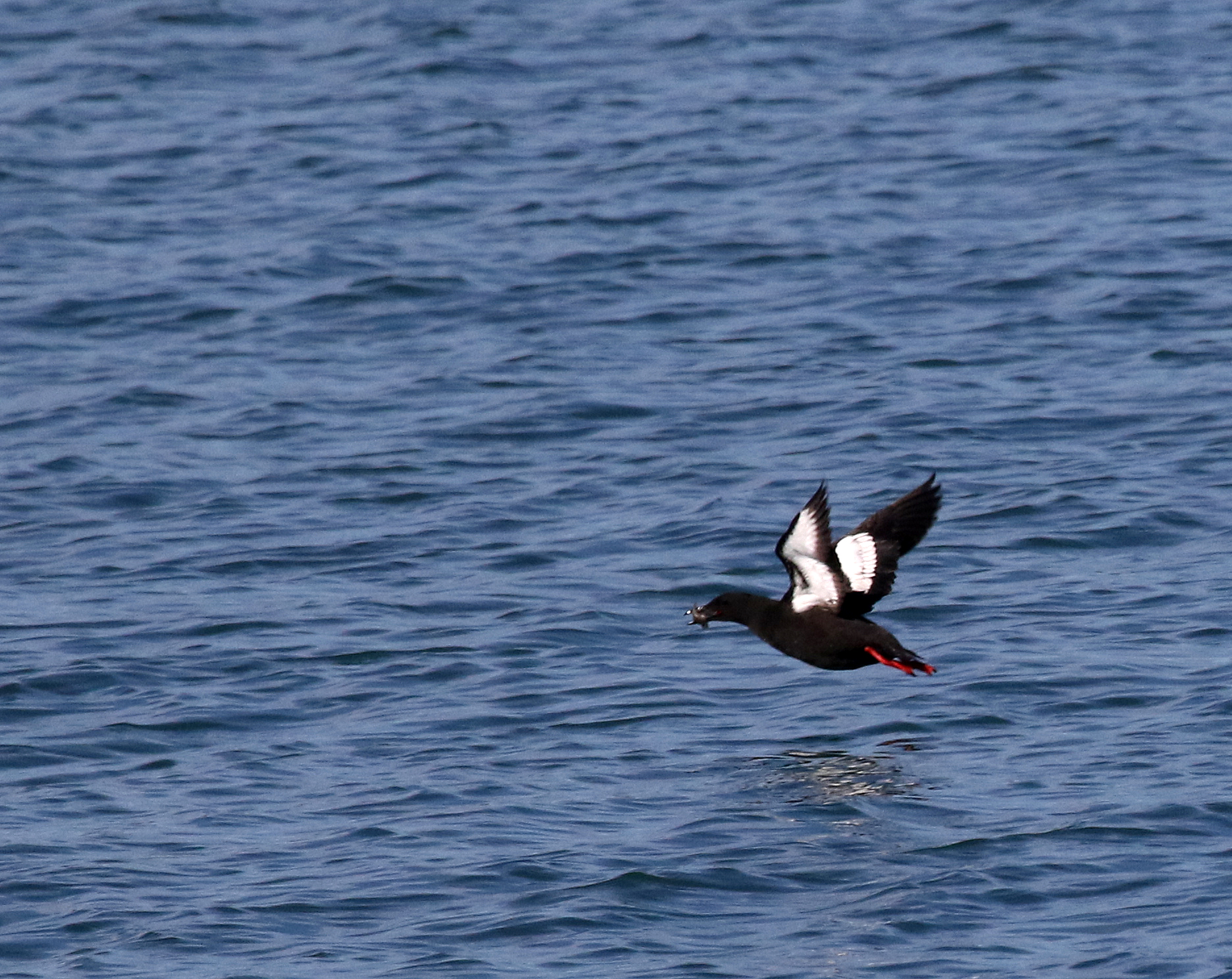
7F1A5480 Black Guillemot

In nearby Holyhead harbour we found a few breeding Black Guillemots, thanks to my amazing ‘Russian Ring of Fire’ tour in early June this was the 19th auk species I have seen this year.

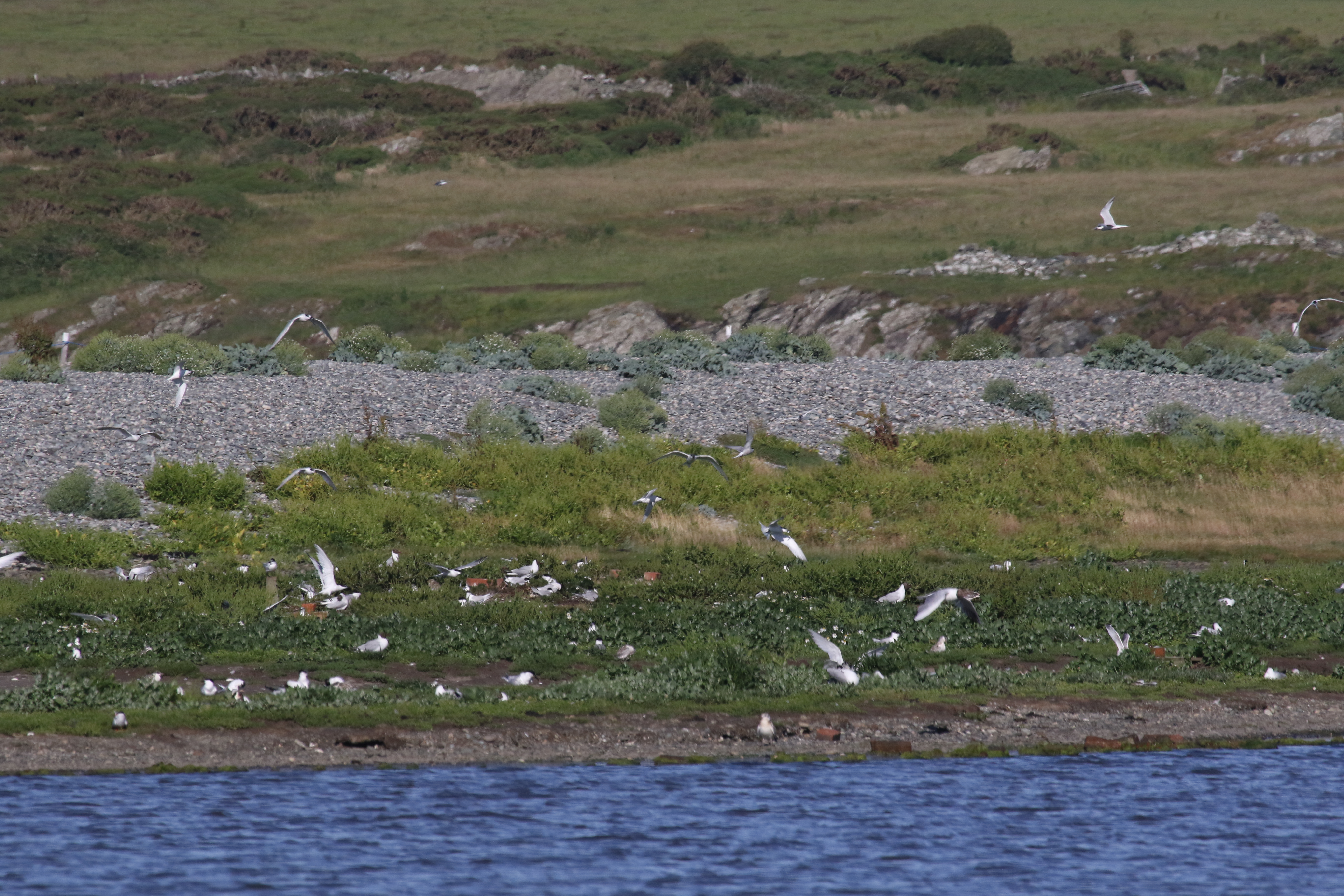
7F1A5486 Cemlyn tern colony

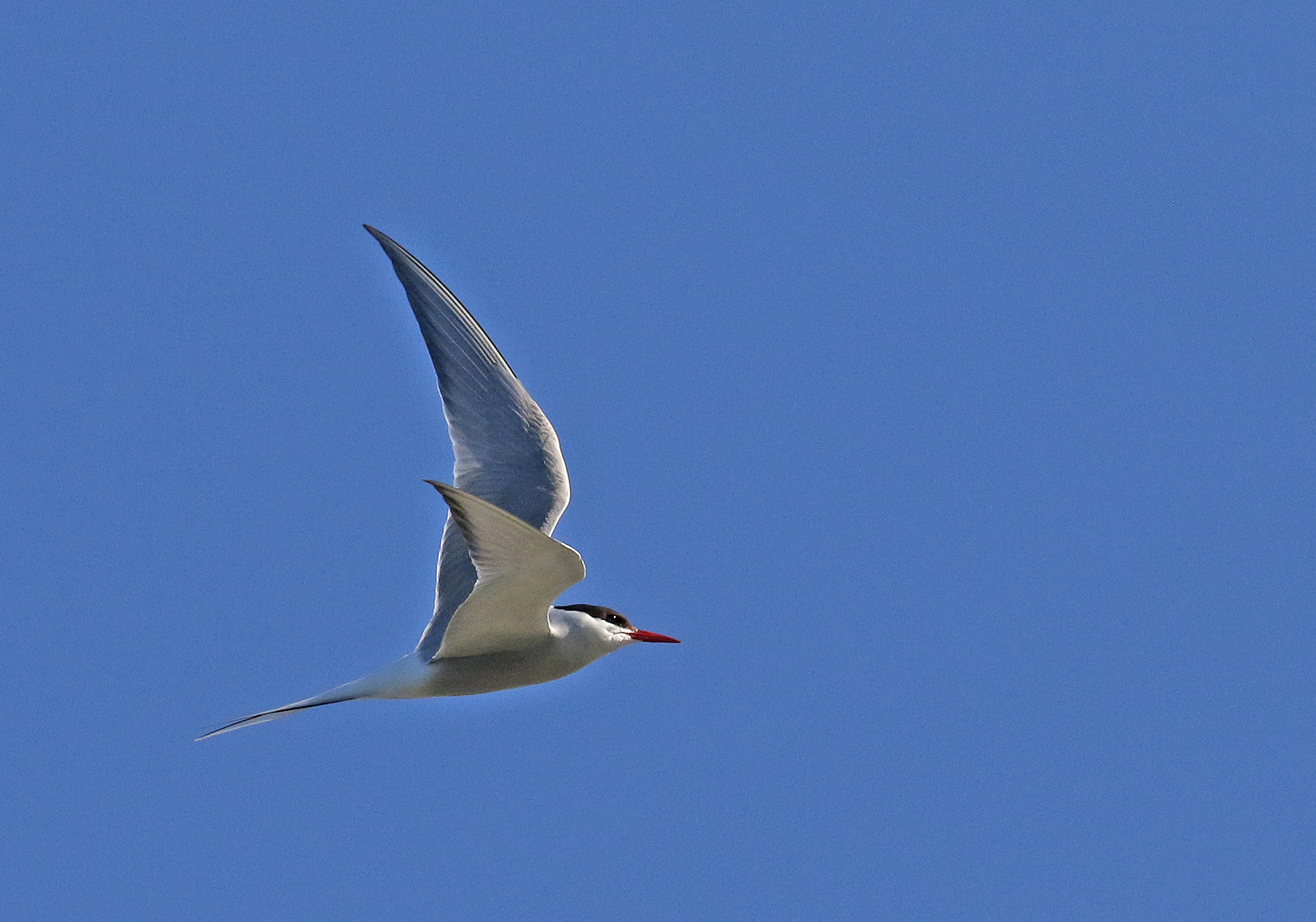
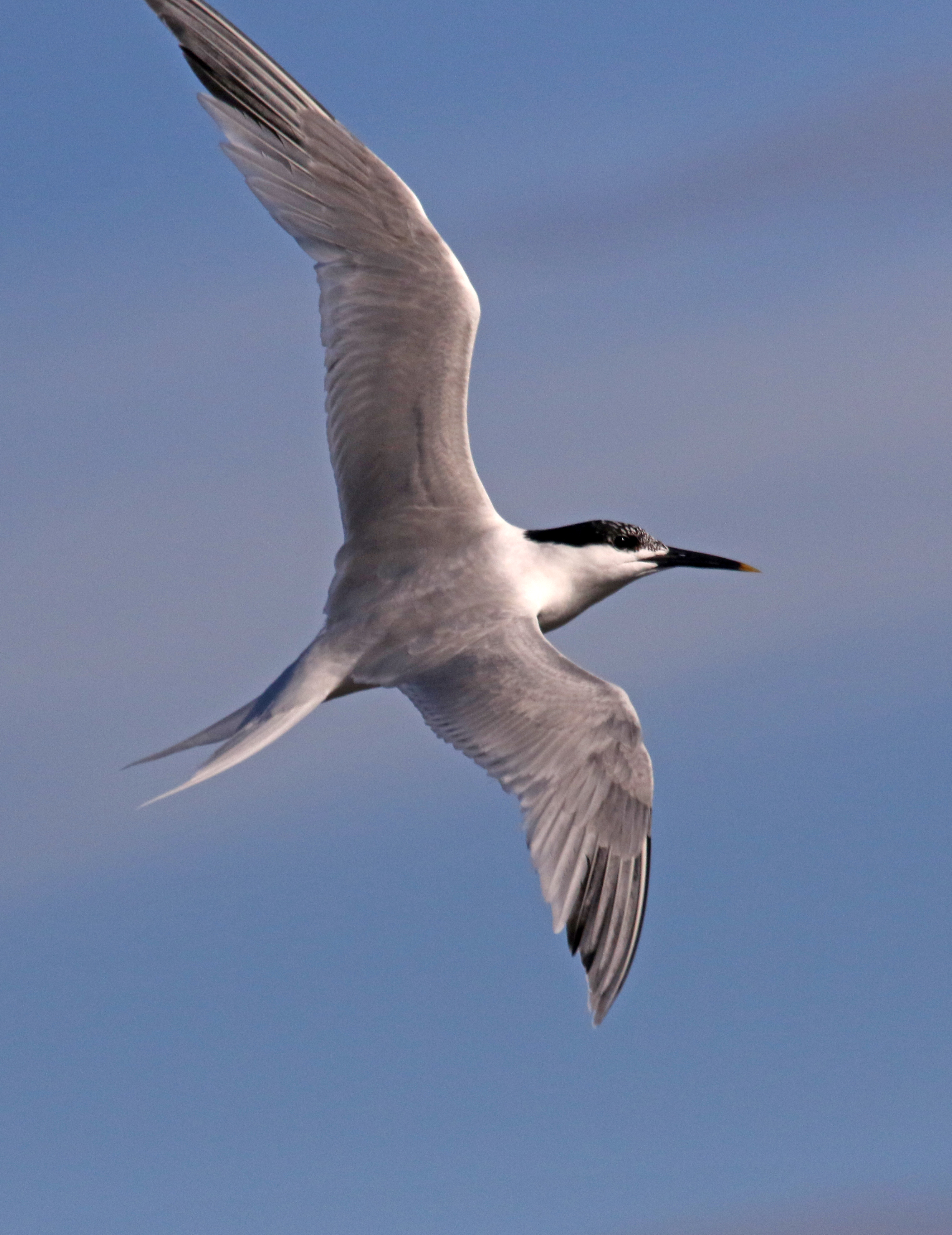
From Holyhead we headed for the north coast of the island and Cemlyn Bay and its breeding terns. My last visit to this site was 28 years ago on a twitch to see Bridled Tern but today our expectations were much lower. We saw a thousand plus nesting Sandwich Terns and a few tens of Common and Arctics.

7F1A5506 Common Tern

The best view was from the adjacent beach where a stream of sand eel bearing terns flew overhead on the way back to the colony, here a Common Tern

7F1A5532 Arctic Tern

…. the longer tailed, all red-billed and greyer bellied Arctic Tern. Also note the differences in the pattern of the trailing edge to the primaries.

7F1A5543 Sandwhich Tern

And most numerous of all, the larger Sandwich Tern with its black bill with a yellow tip.

IMG_4787 Llanfair PG

On our way back to Caernarfon we had to stop at Llanfairpwllgwyngyllgogerychwyrndrobwllllantysiliogogogoch for no other reason than it’s there.

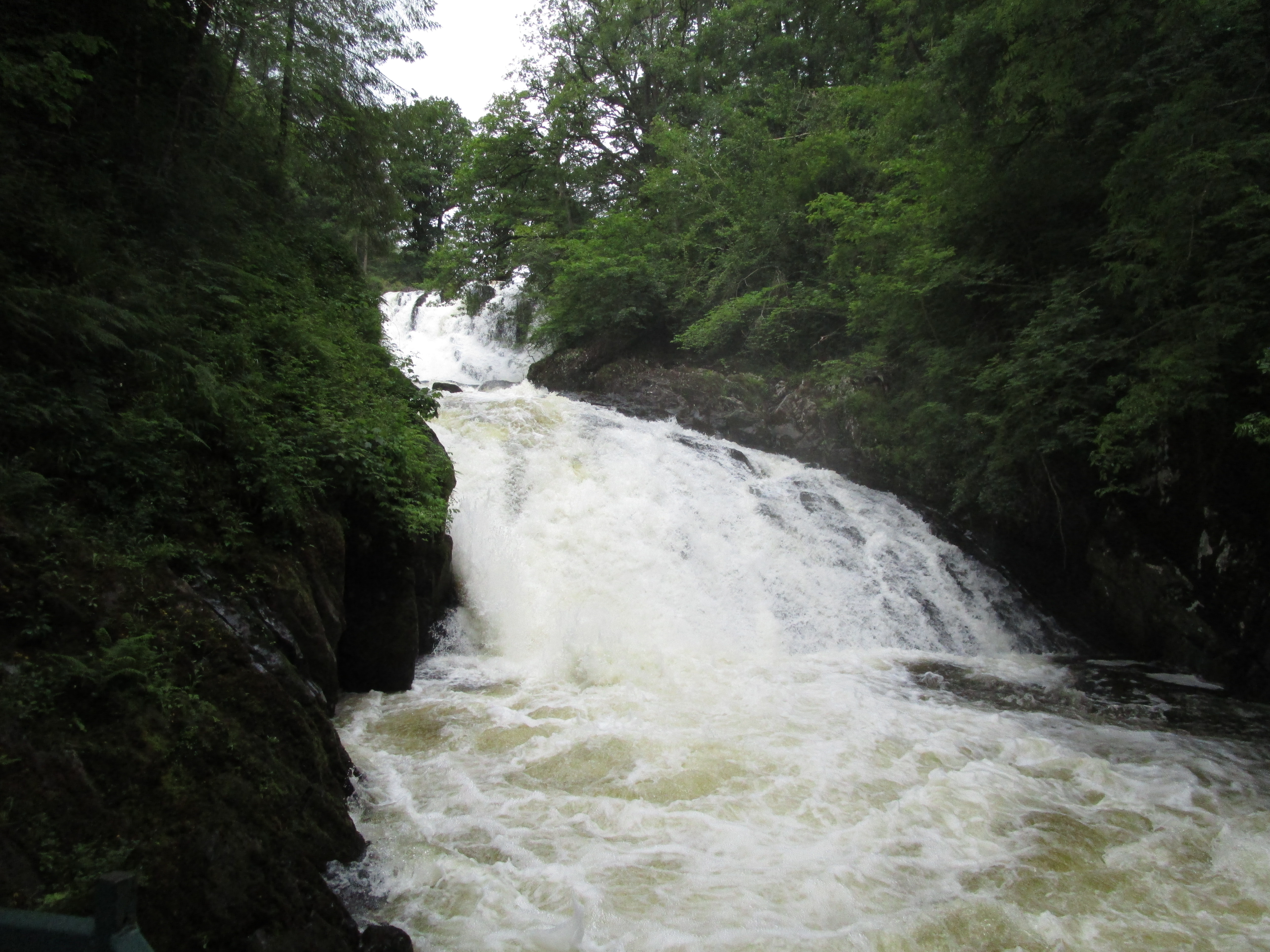
IMG_4797 Swallow Falls

The following day we took a long drive through Snowdonia, again the high passes were wreathed in cloud so we spent little time there. Out first stop was at Swallow Falls near Betws-y-Coed.

IMG_4801 Swallow Falls

The recent heavy rain meant the falls were quite spectacular.

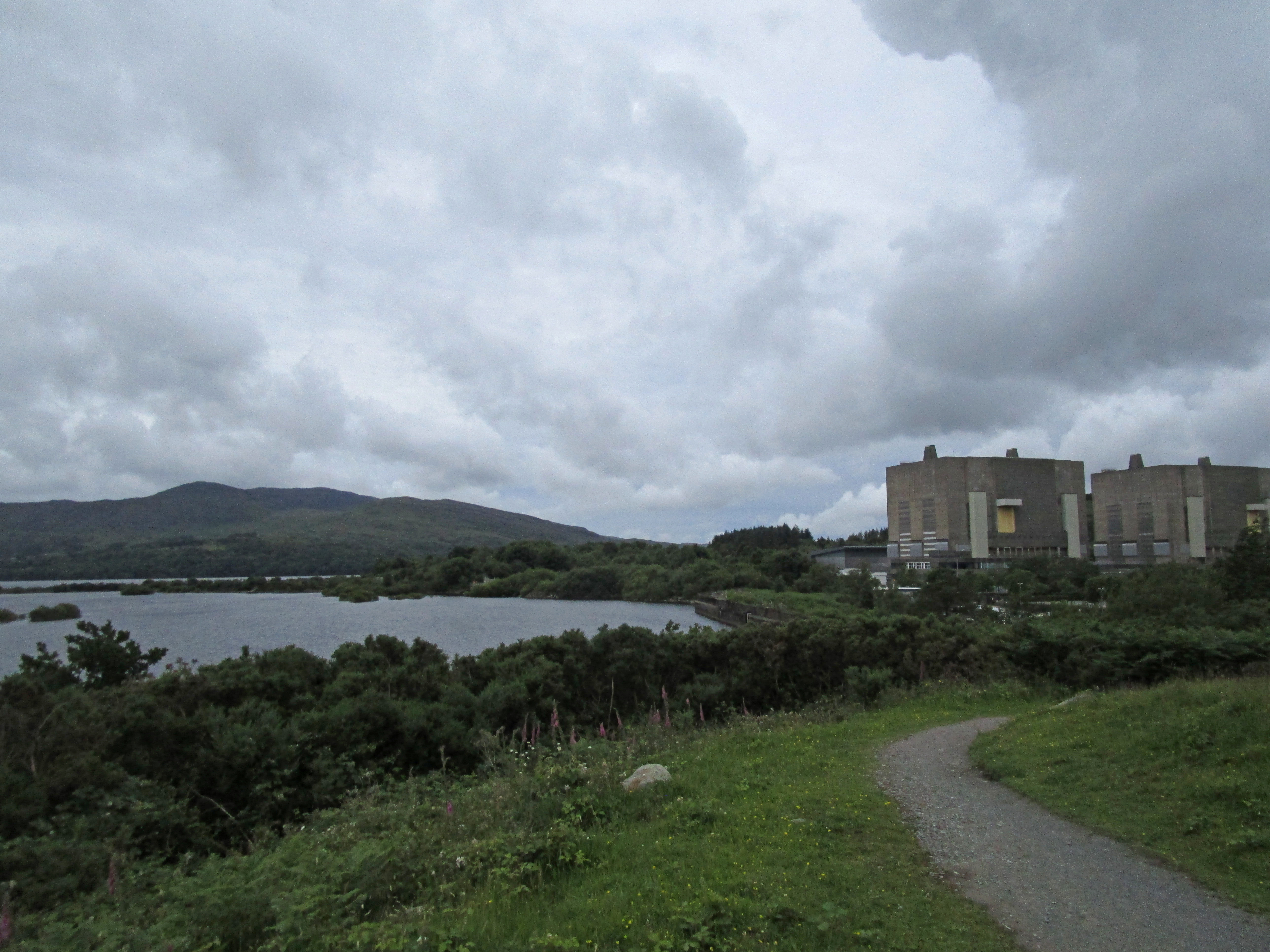
IMG_4805 Trawsfynydd

I remember visiting the lake by the nuclear power station at Trawsfynydd with my dad in 1966, it was functioning then, in operation from 1965 – 91, but the plant is still being decommissioned now and the site won’t be totally clear of nuclear material until 2090.

IMG_4807 Dolegellau_edited-1

We continued south as far as the pretty town of Dolgellau where we had lunch, then drove on to Barmouth on the coast. I was last here in 1966 when I was 15 on holiday with my parents and brother. I remember the area well even though it was 50 years ago and I could not help but feel sad when I thought of my parents, who are of course, no longer with us.

IMG_4835 Harlech Castle

Heading north from Barmouth we stopped at Harlech Castle.

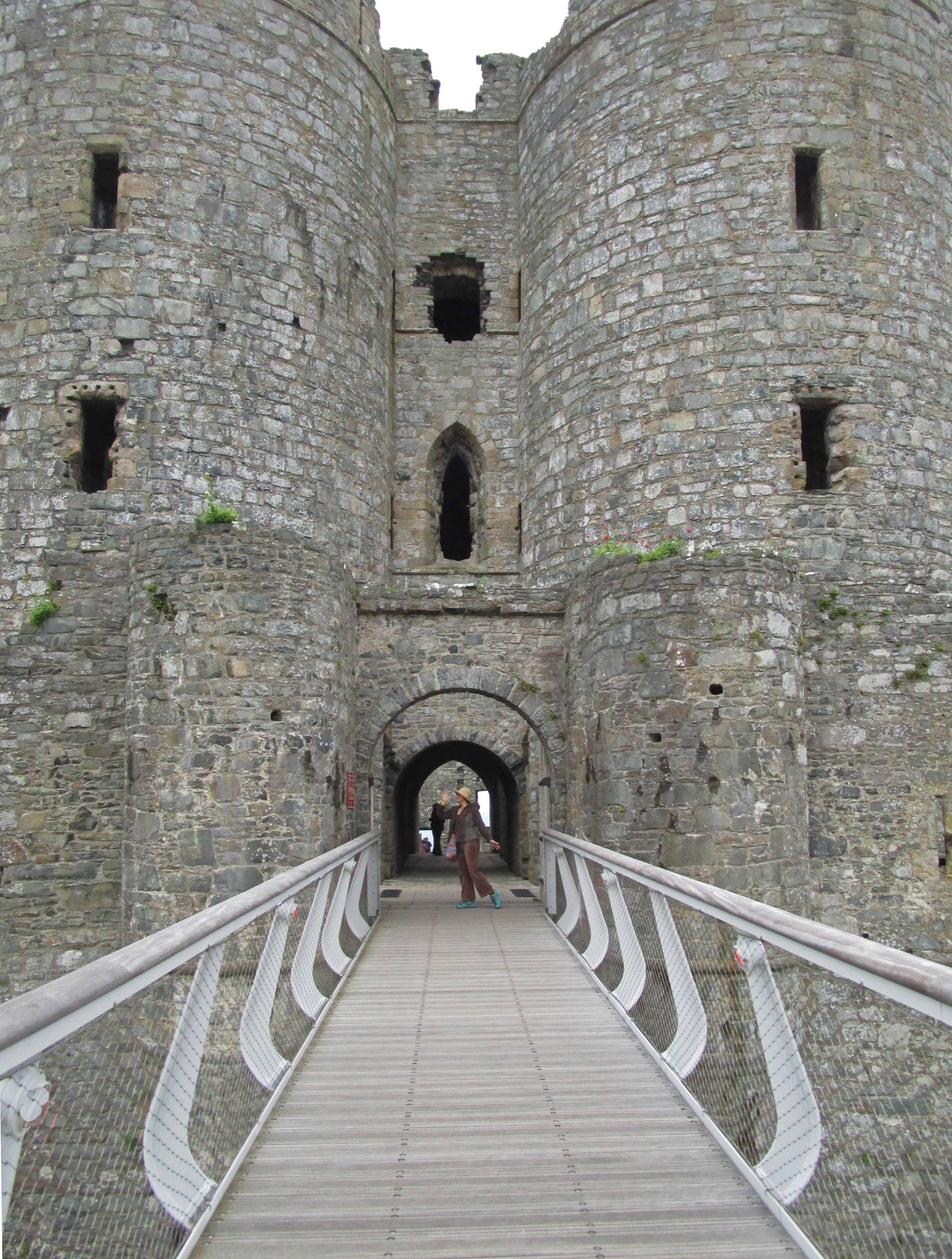
IMG_4816 Harlech,jpg

This would have originally been the site of a huge drawbridge. Any enemy reaching and getting past the portcullis would have had to contend with boiling pitch being tipped on them and a hail of arrows from the rooms above the entrance before them could enter the castle interior.

IMG_4822 Harlech Castle

Built between 1282 and 1289 by Edward I in his invasion of Wales. It was one of a dozen or so castles that Edward ‘Longshanks’ built around Snowdonia to pacify the Welsh. Originally on the coast and supplied by steps that led from a dock to the castle walls, the sea has greatly retreated over the ensuing centuries.

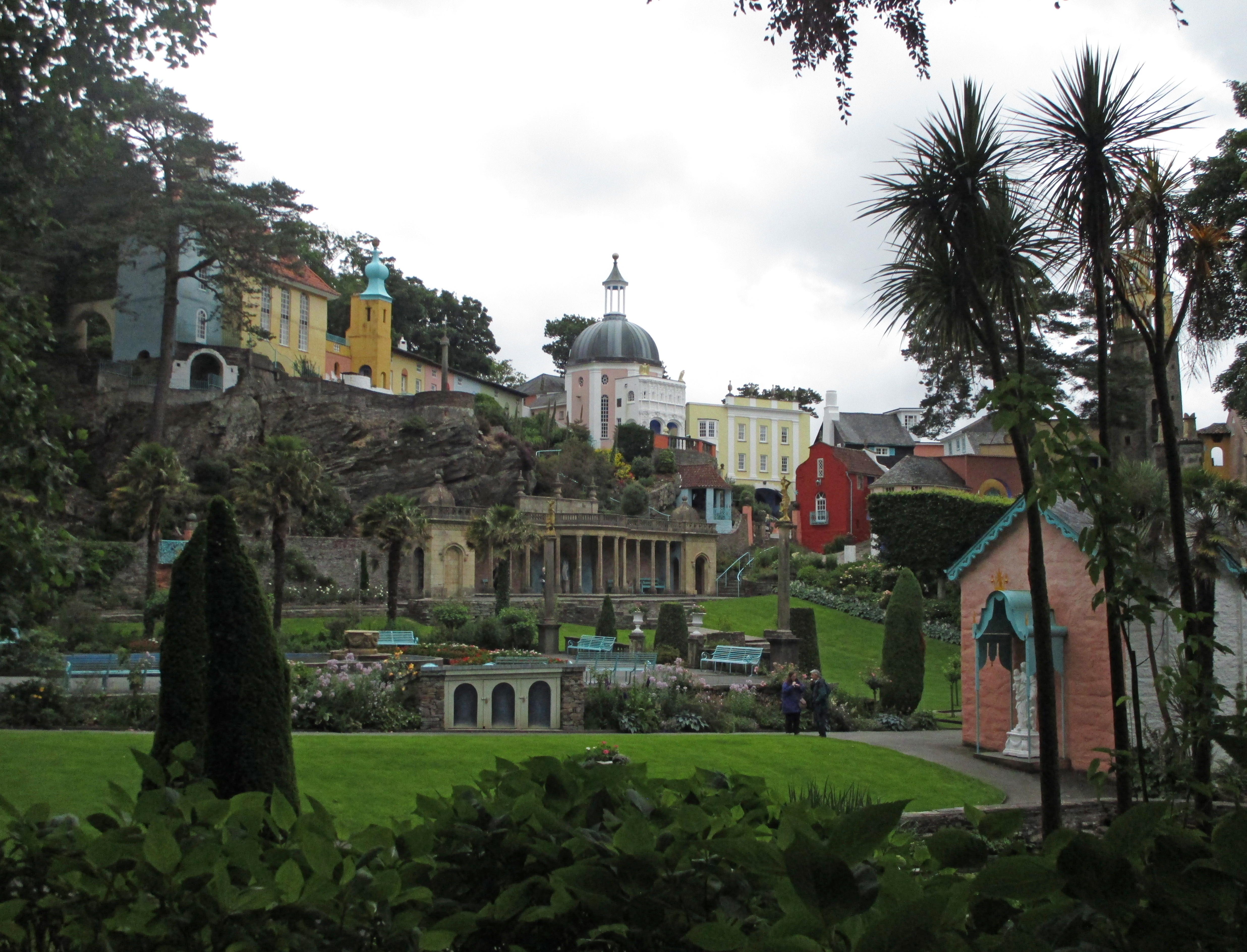
IMG_4847 Portmerion arch

We continued north to the Italian Village at Portmerion. This rather strange collection of buildings was designed and built by Sir Clough Williams-Ellis between 1925 and 1975 in the style of an Italian village and has been used many times as a set for film and TV series.

IMG_4854 Portmerion

Unfortunately it turned wet again whilst we there, so with no chance of catching the train to the top of Snowden we headed back to Caernarfon.

IMG_4862 Caernarfon

The following was sunny in Caernarfon but thick cloud still covered the peaks. we headed for the old walled town with the intention of exploring the famous castle.

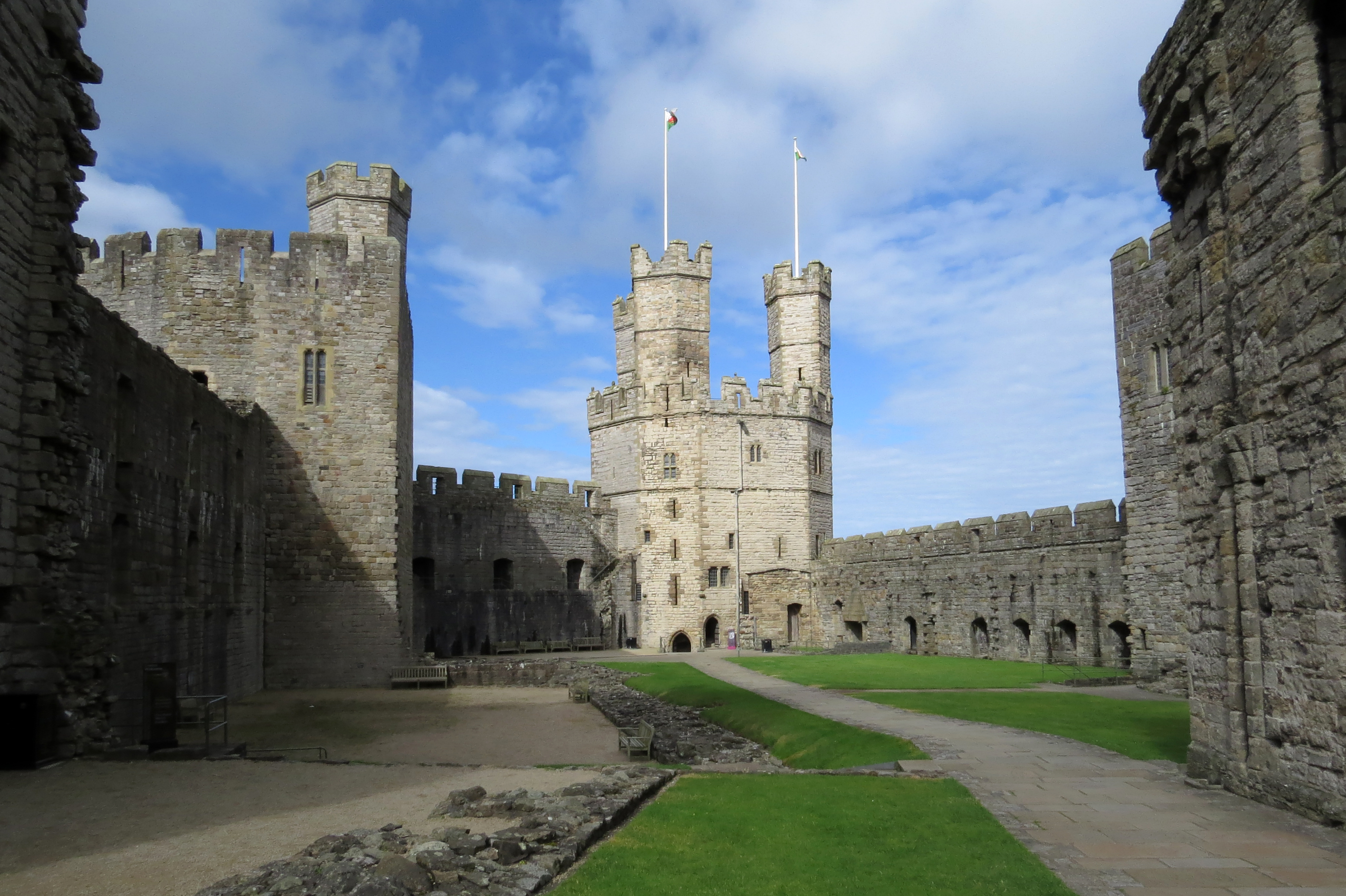
IMG_5948 Caernafon Castle

Caernarfon Castle is a much better state of repair than Harlech ….

IMG_5975 Caernarfon Castle

…. and used in recent centuries as the place for the investiture for the Prince of Wales. Edward Longshanks son, the ineffectual Edward II, was born in the castle. It is said that Edward I presented the infant to the newly defeated Welsh as their prince proclaiming that ‘he doesn’t speak a word of English’.

IMG_5971 Caernarfon Castle

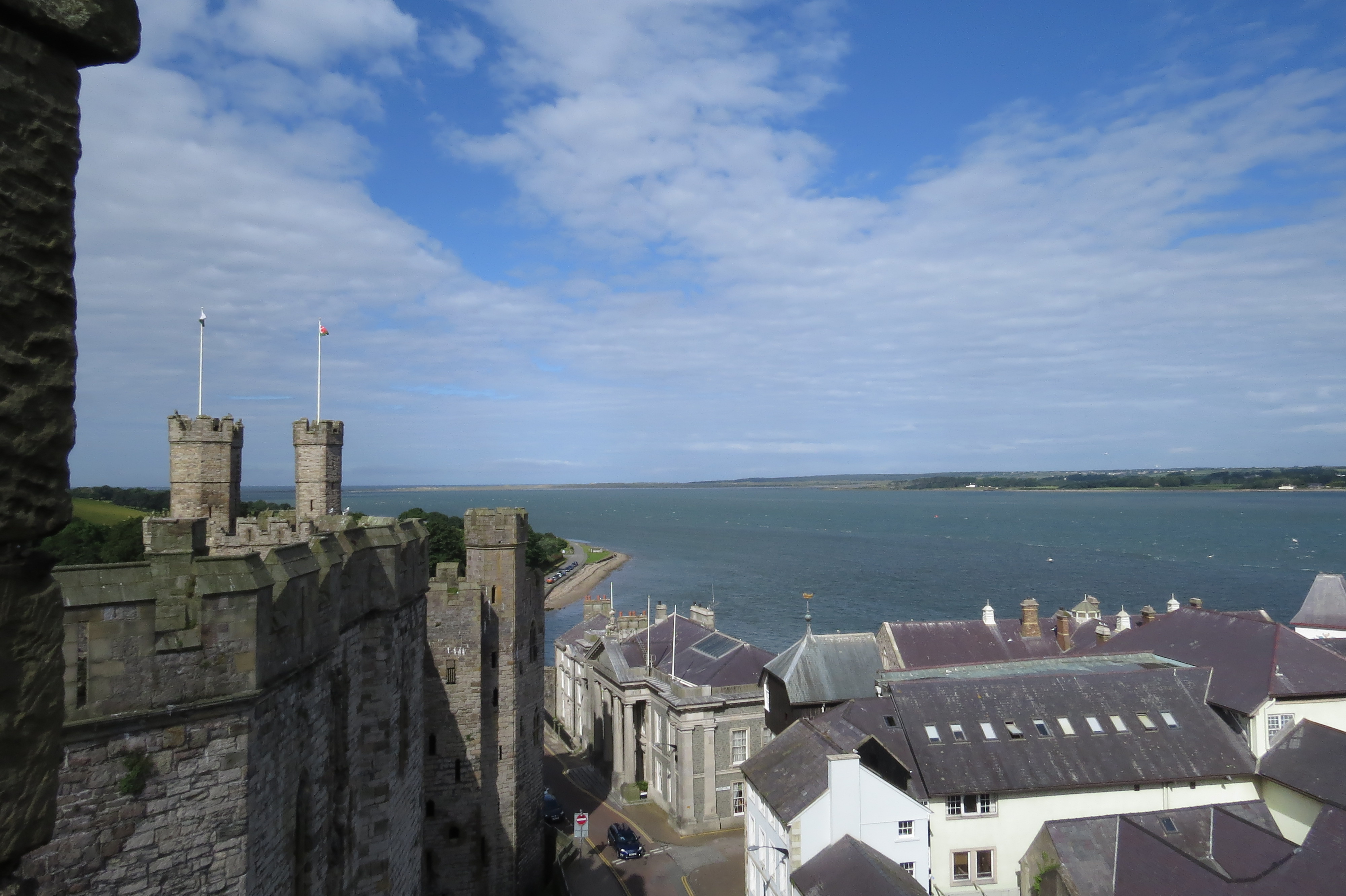
The castle gave great views over the Menai Straits ….

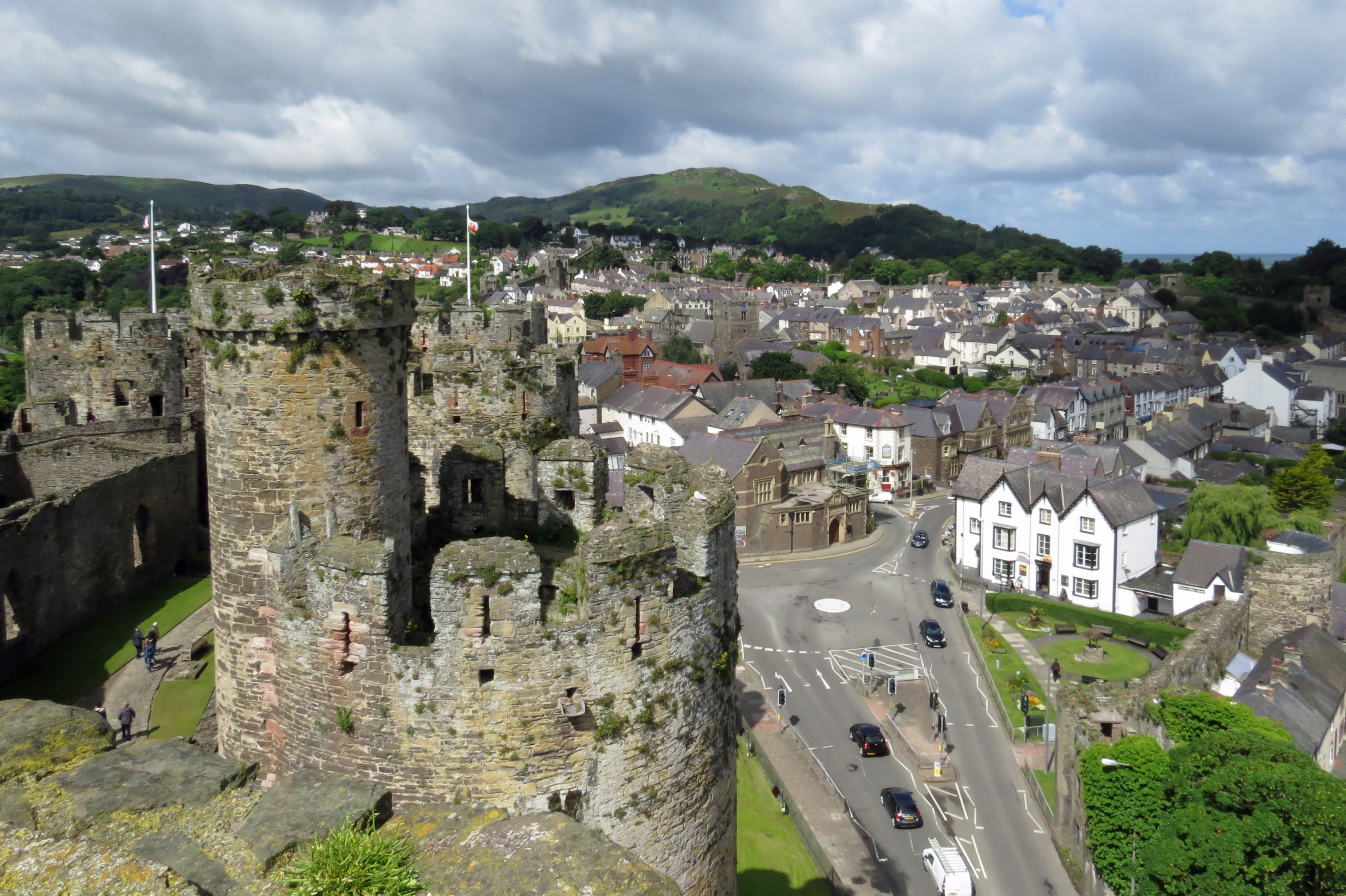
IMG_5963 Caernafon Castle view over twon

…. and over the town.

IMG_5956 Caernafon Castle view to Anglesea

The castle is another of the strongholds built on the order of Edward I but fell to the Welsh forces of Madog ap Llywelyn in 1294 and was besieged by those of Owain Glyndŵr in 1400. Later it was the seat from which the Tudor dynasty was founded and in the English Civil War it was a Royalist stronghold.

IMG_5939 Caernarfon

Welsh flags were out all over the town as there was a particularly significant football match that night.

IMG_4868 Wales v Belgium

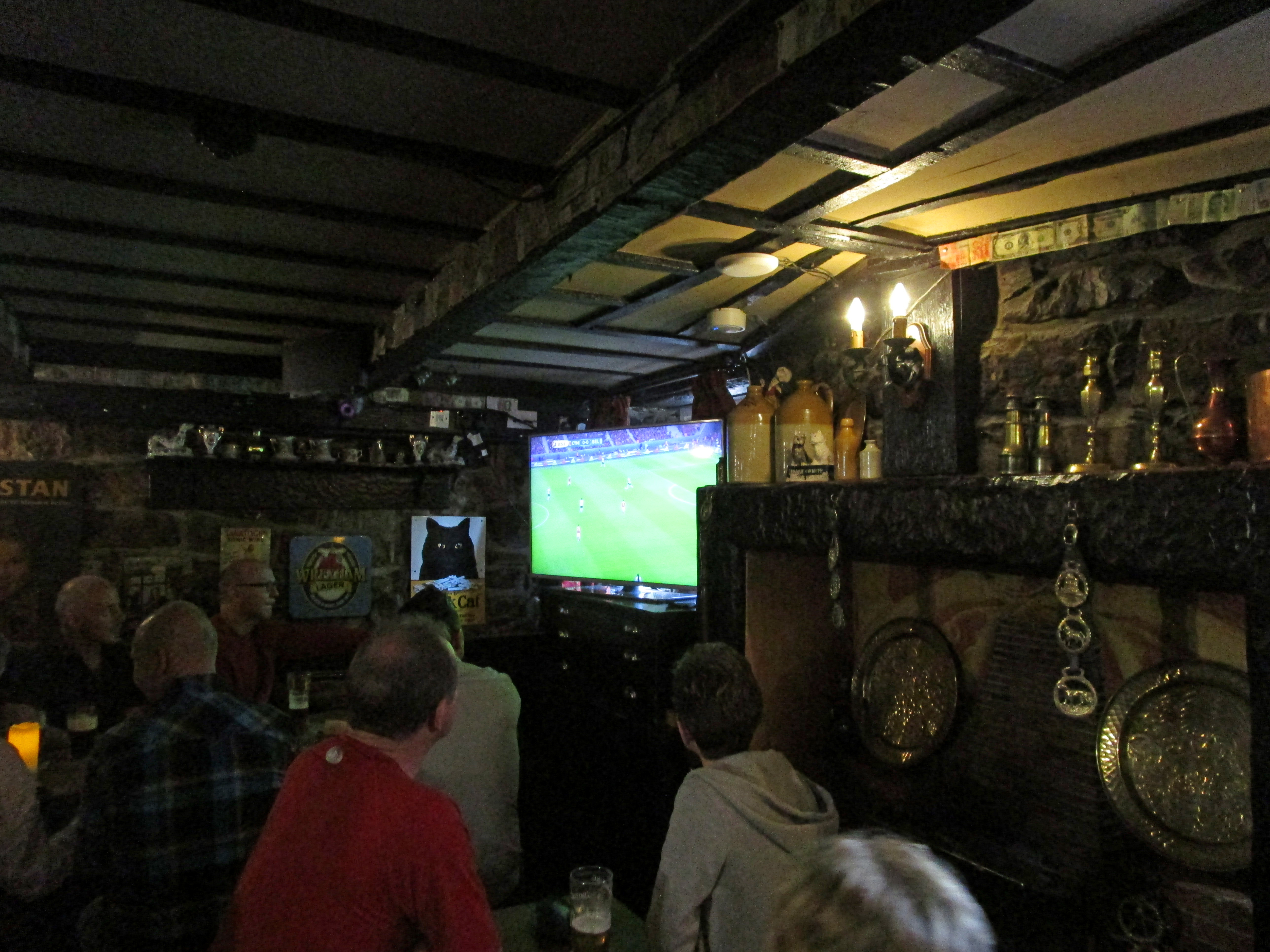
…. Wales were playing Portugal in the quarter-finals of the Euro soccer tournament. We have little interest in football but after our pub meal that evening I suggested we go to the bar next door for a drink and watch part of the action but we couldn’t get in due to the crowds. I tried a bigger bar further down the street but there they were queuing to get in the door. The unexpected victory undoubtedly resulted in much local celebration but we were back in our hotel by then.

IMG_6015 Aberdaron

In the afternoon we headed along the narrow lanes of the Llyn peninsula until we reached the little town of Abadaron.

IMG_5990 Bardsey Island

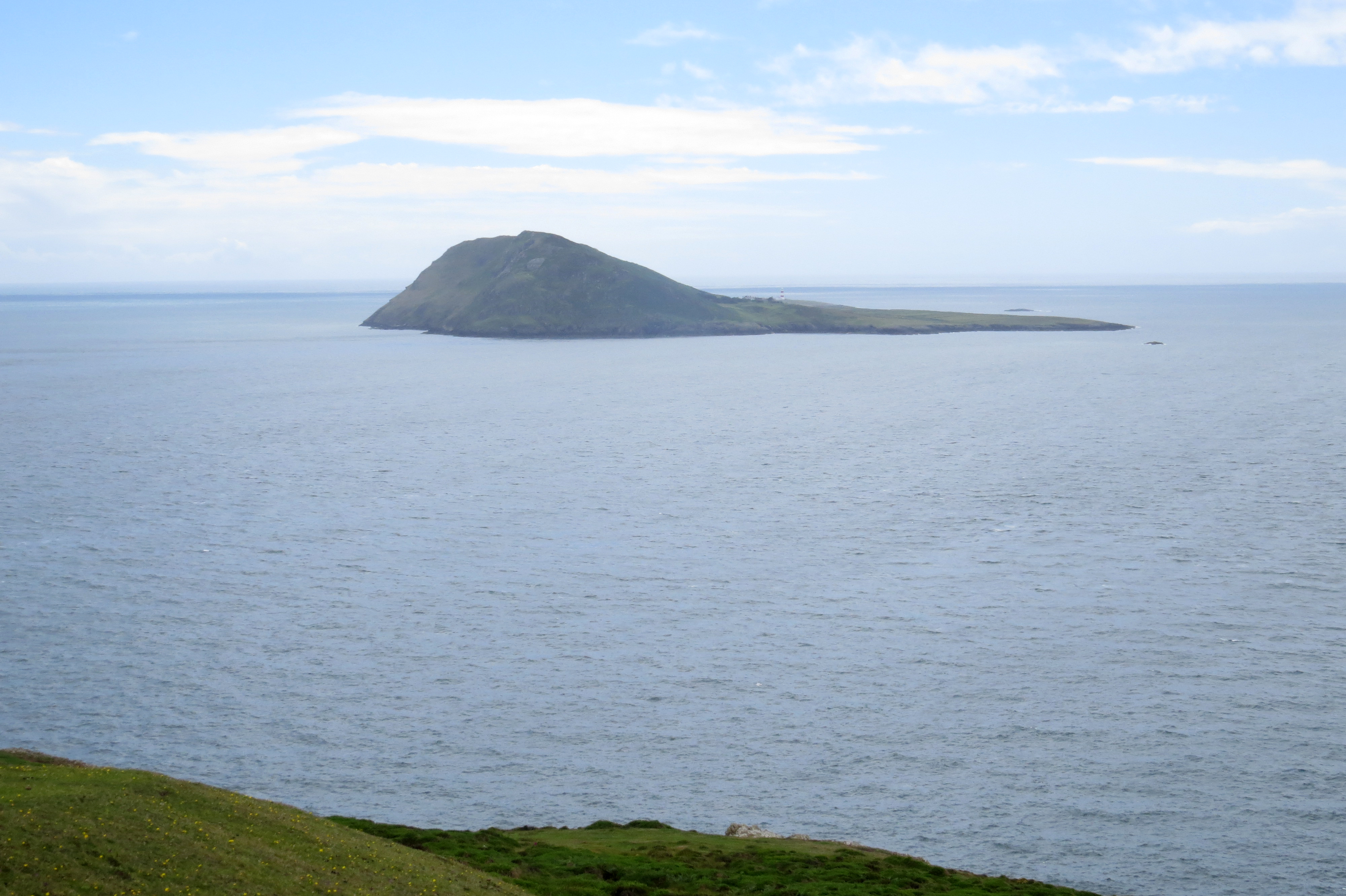
We drove out to the Arfordir Treftadaeth Penrhyn Llŷn reserve at the tip of the peninsula which gives a great view over to Bardsey Island but it was now very windy and the sunshine was punctuated by intense showers.

IMG_5994 Bardesy Island

Many years ago some of our ringing group had a week-long trip to Bardsey Island to assist with the ringing of seabirds. I was unable to go due to work commitments but I have always wished I could have done. Here is a telephoto shot from the mainland, probably the nearest I will ever get.

IMG_5989 Chough

From here I saw seven Choughs (above) and a few Gannets.

IMG_6046 Conwy Castle

Another day, another castle, this time at Conwy.

IMG_6032 Conwy Castle bridge

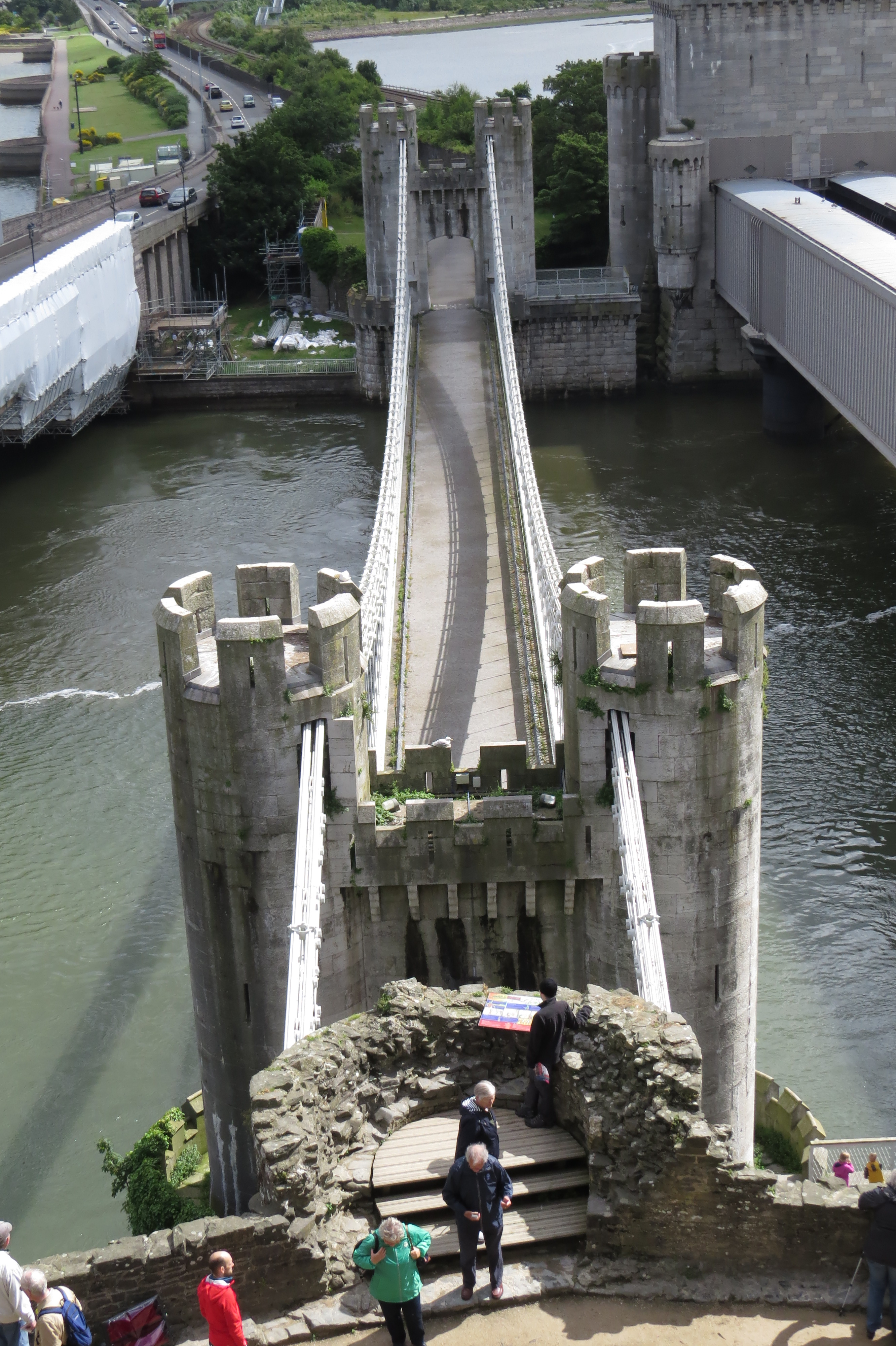
Conwy Castle is another of Edward I’s ring of steel around the Welsh stronghold in the mountains of Snowdonia but this road bridge dates from 1826. On the left is the modern road bridge and on the right the rail bridge.

IMG_6033 Herring Gulls

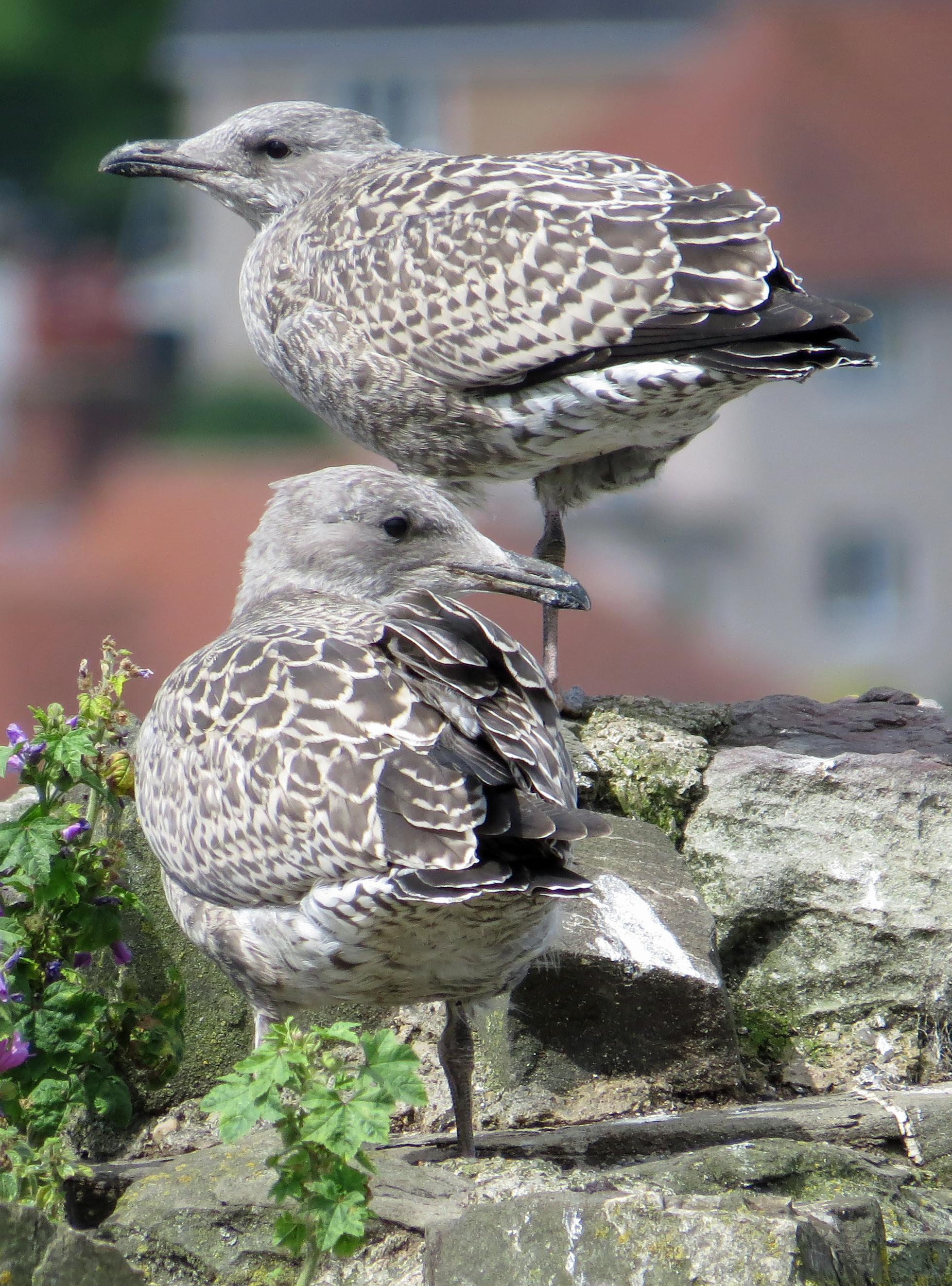
The castle walls are a breeding ground for Herring Gulls, here two recently fledged young ….

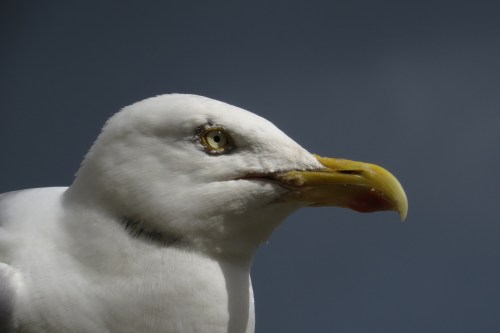
IMG_6059 Herring Gull ad

…. and their ever vigilant parent.

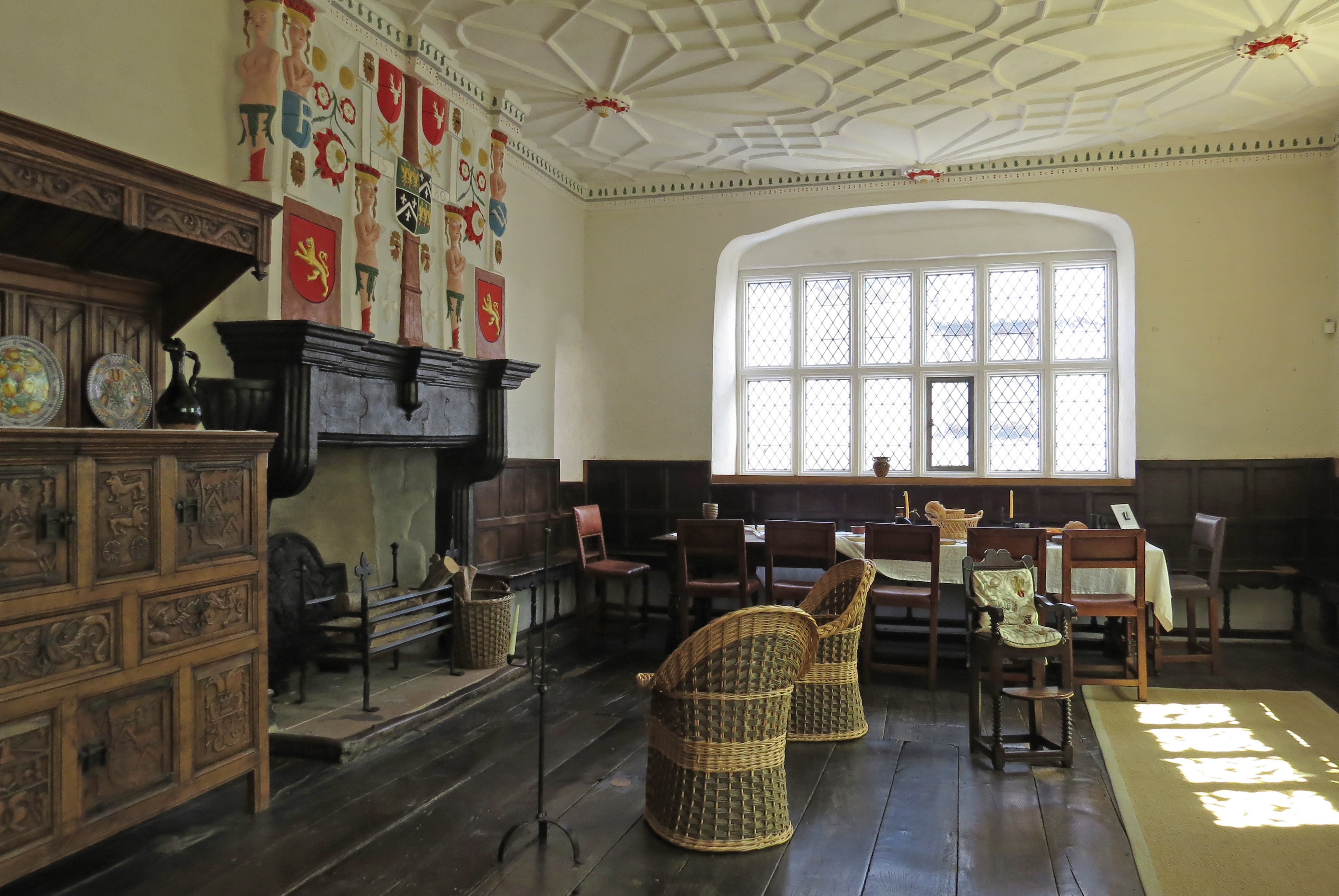
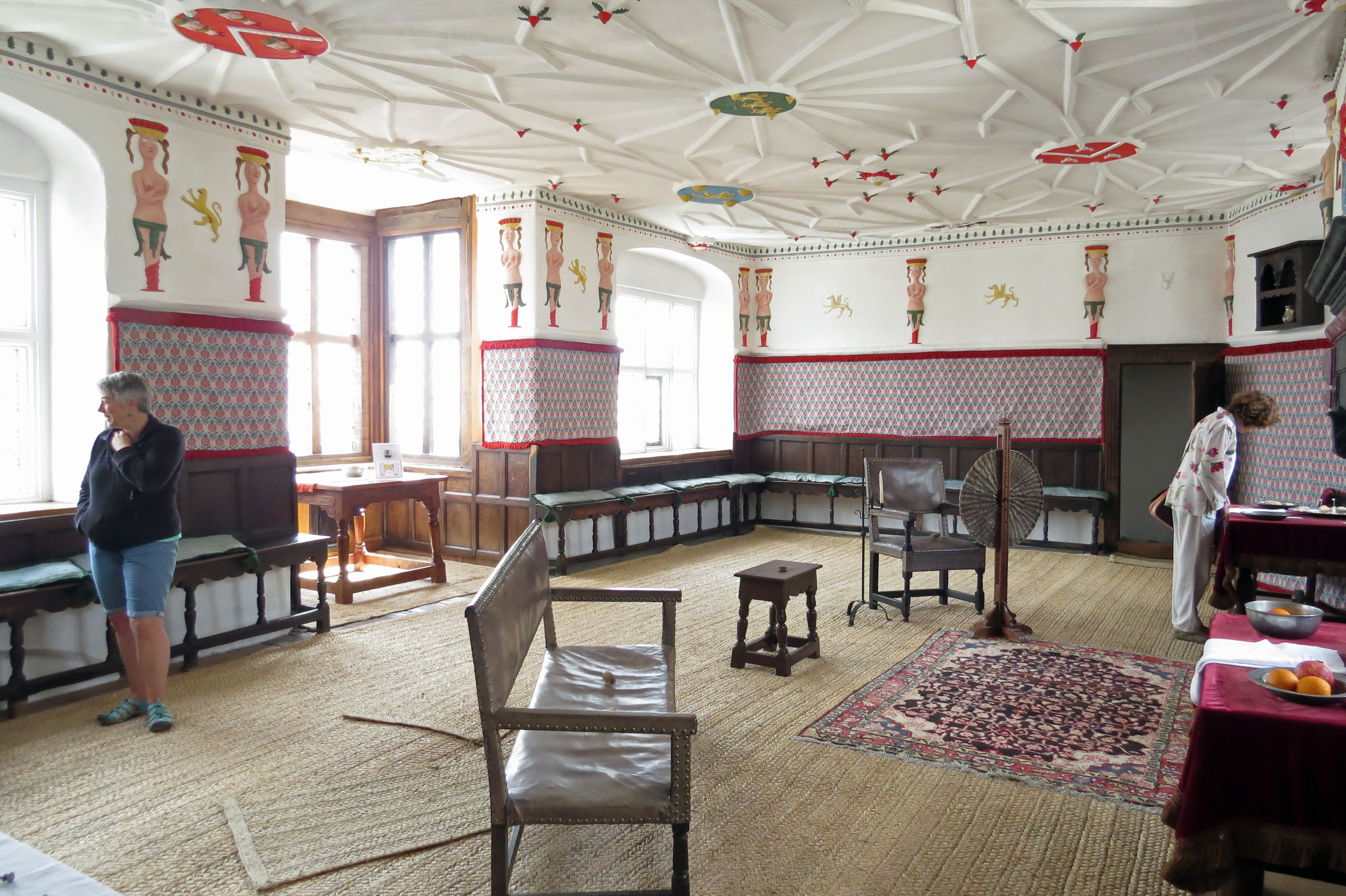
IMG_6069 Elizabethan House

Nearby we visited an Elizabethan house ….

IMG_6077 Elizabethan House

…. beautifully restored and giving a fascinating insight into the lives of the better off in those days.

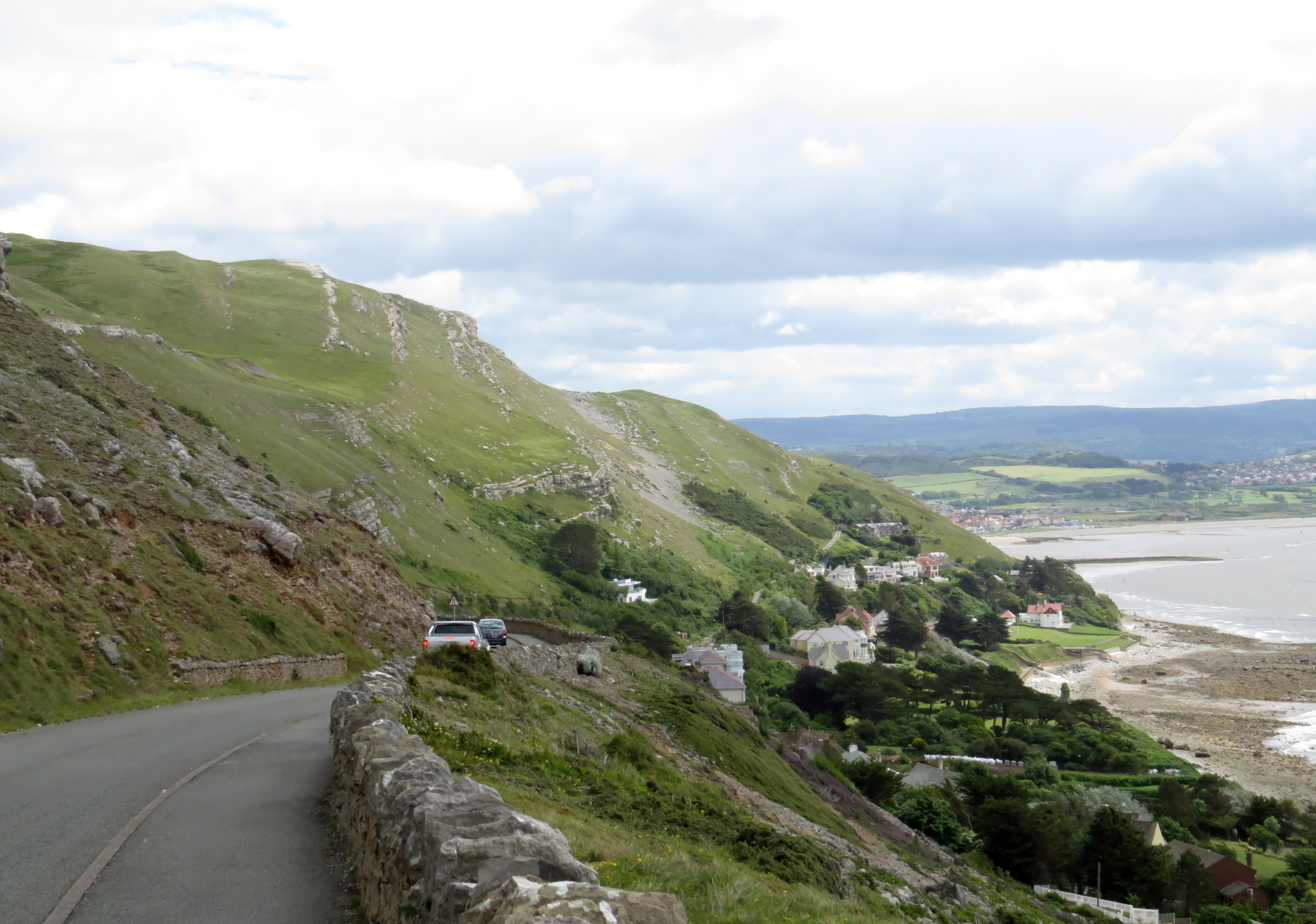
IMG_6087 Great Orme

Out visit to Wales concluded with a drive around the Great Orne, a hill that lies beside the sea adjacent to Llandundo.

IMG_6085 view from Great Orme

This hill on a coastal promontory is circumnavigated by a narrow road, however I was unaware that this route was one way and we spent some time trying to find the start. Eventually we ended up driving over the top of the hill and joining the one way system half way round. We stopped for lunch at a café on route but it was so windy that you could hardly stand up. After a few photos we abandoned the area and headed back to England. Our time in northern England and Essex will be the subject of the next post.

Russia’s Ring of Fire – May 23rd – 11th June 2016   1 comment

At long last, another post! This time about my recent trip to the Russian Far East, the Kamchatka peninsula, the Commander and Kuril Islands and Sakhalin in the Sea of Okhotsk – the so-called ‘Russian Ring of Fire’.
Getting to see the avian gems of the north Pacific has taken some time. In 1996 on my trip to Arctic Siberia trip we were delayed for four days on the north coast and had to completely abandon our visit to the seabird megacities of the Sea of Okhotsk and last year this trip, run by Heritage Expeditions, was cancelled due to Russian intransigence over the Ukraine situation.
Its taken 20 years, but at long last I have visited this wild part of the world and seen it’s amazing wildlife. Of course I didn’t plan to go on two cruises just a few weeks apart, but with last years cancellation that’s the way it worked out .
One thing that strikes you is how lucky we are in the UK with our climate, The northernmost point of the cruise was on the same latitude as northern England, the southernmost point is level with the French Riviera, but for part of the time, even in June, we had snow on the ground at sea level and had fog, gale force winds and temperatures that seldom rose above 5 – 10c. At sea level in Kamchatka birch trees were just coming into leaf, but ascend 100m and they were still bare and many migrants appeared not to have arrived.
This post is just a summary of the trip, as I still have most of my photos to edit. At its conclusion we were given a Powerpoint presentation prepared by a member of staff.  All photos in this post, except those labeled with my name, are taken from this presentation. Although each picture cannot be individually credited (as this information was not supplied) the photographers whose work has been used are: Lisle Gwynn, Leonid Kotenko, Meghan Kelly, Chris Collins and Katya Ovsyanikova.
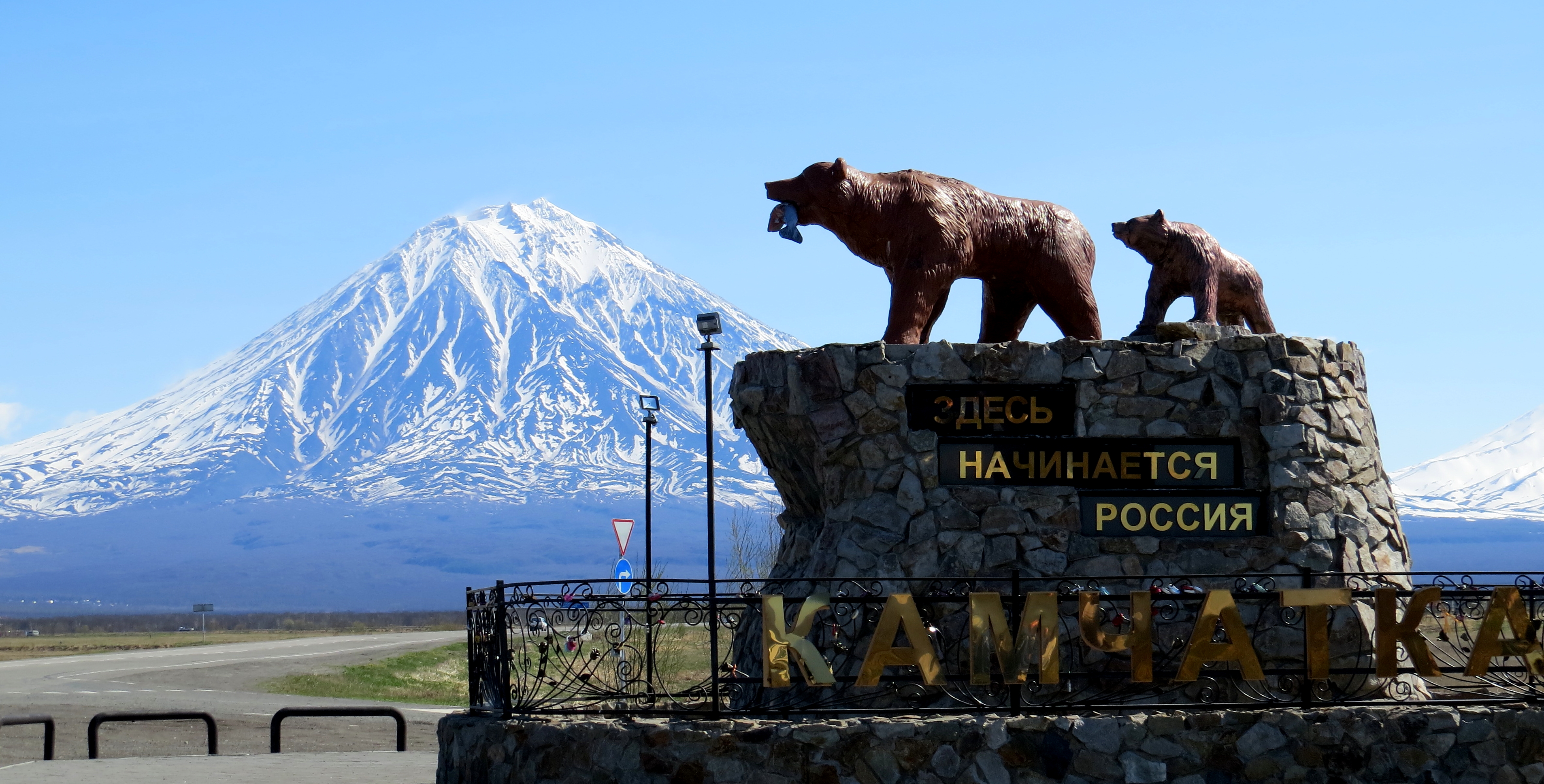
IMG_5030 Welcome to Kamchatka

Travelling across 11 time zones took ages, especially as there was a 13 hour wait between flights in Moscow. We arrived on a rare perfect day at Petropavlosk-Kamchatskiy (universally abbreviated to PK).

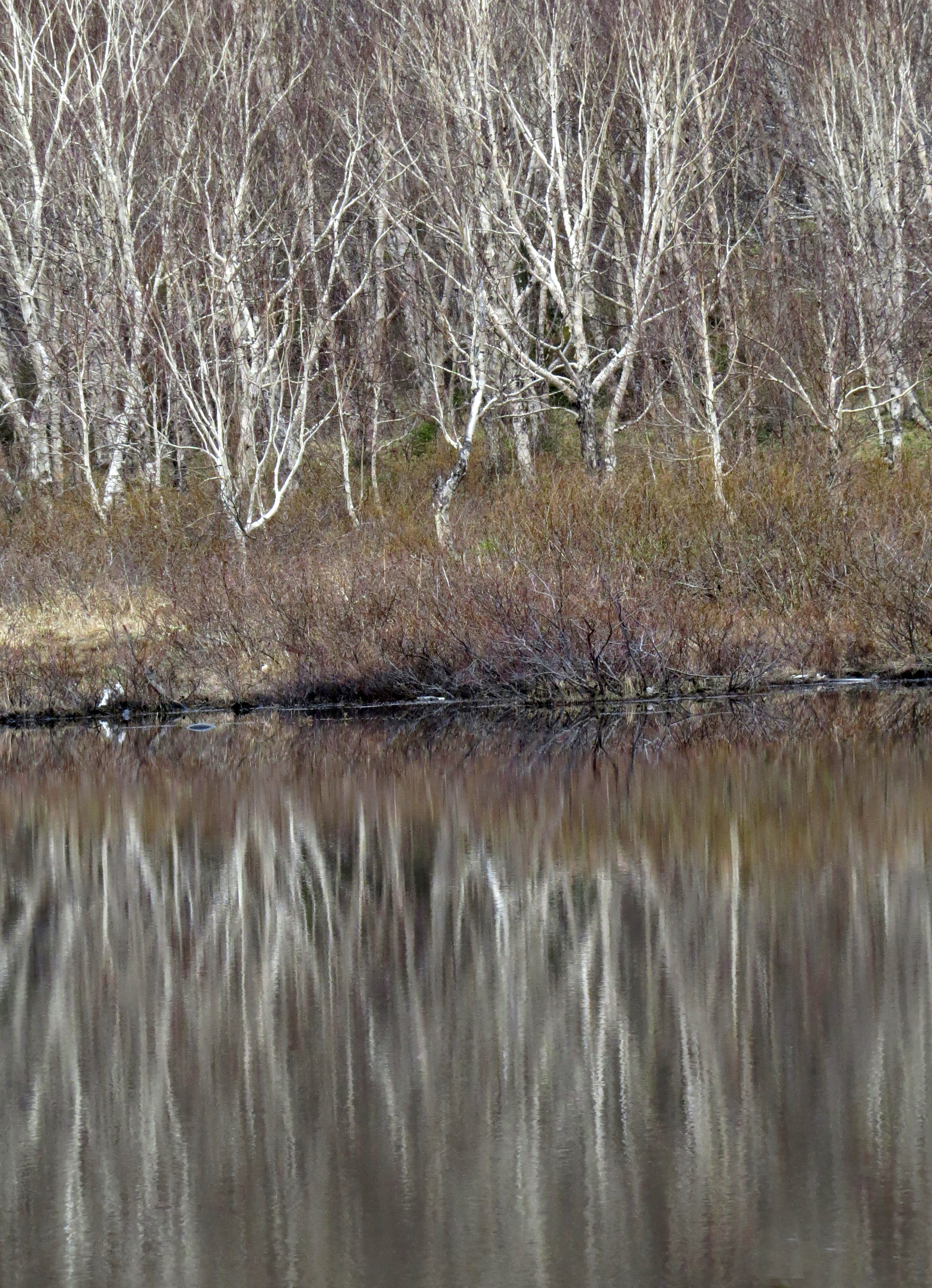
IMG_5099 Forests near PK

We birded the birch forest that surrounds PK. The birch forest was just coming into leaf ….

IMG_5118 Forest nr PK

…. but you only had to ascend about 100m and the trees were still bare. The prime avian target was the very elusive Black-billed Capercaille. We eventually all saw a female, but for me at least, it was under extremely frustrating circumstances.

IMG_5162 Avacha Bay

We also explored the shores of Avacha Bay, the beautiful natural harbour that surrounds PK. The above four photos taken by Ian Lewis

Picture3

In the evening we set sail on Heritage Expedition’s ship, the Professor Khromov or Spirit of Enderby as they call her, into Avacha Bay.

Picture1

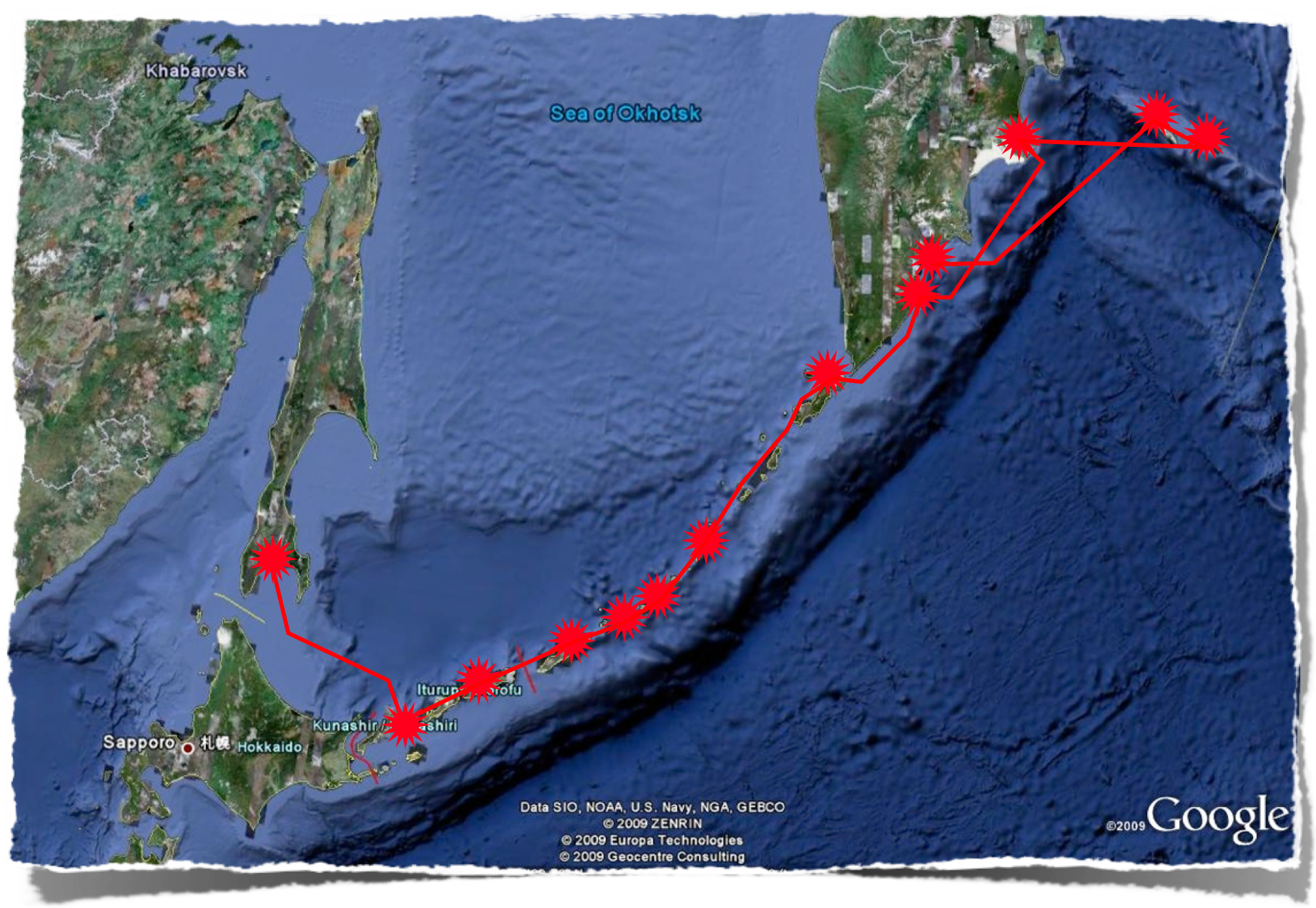
Pk is the central marked point on the Kamchatka peninsula. From here we sailed north to the Commander islands, back to two more locations in Kamchatka, visited seven islands in the Kuril chain before crossing the southern Sea of Okhotsk to Yuzhno-Sakhalinsk on the island of Sakhalin.

Picture8

The Sea of Okhotsk is very cold whilst the NW Pacific receives warmer water from the tropics. The result is fog, grey skies and bad weather. Even though the sun seldom shined once we left PK, we had calm seas and great wildlife viewing such as this flock of Red-necked Phalaropes on a glassy ocean.

Picture136

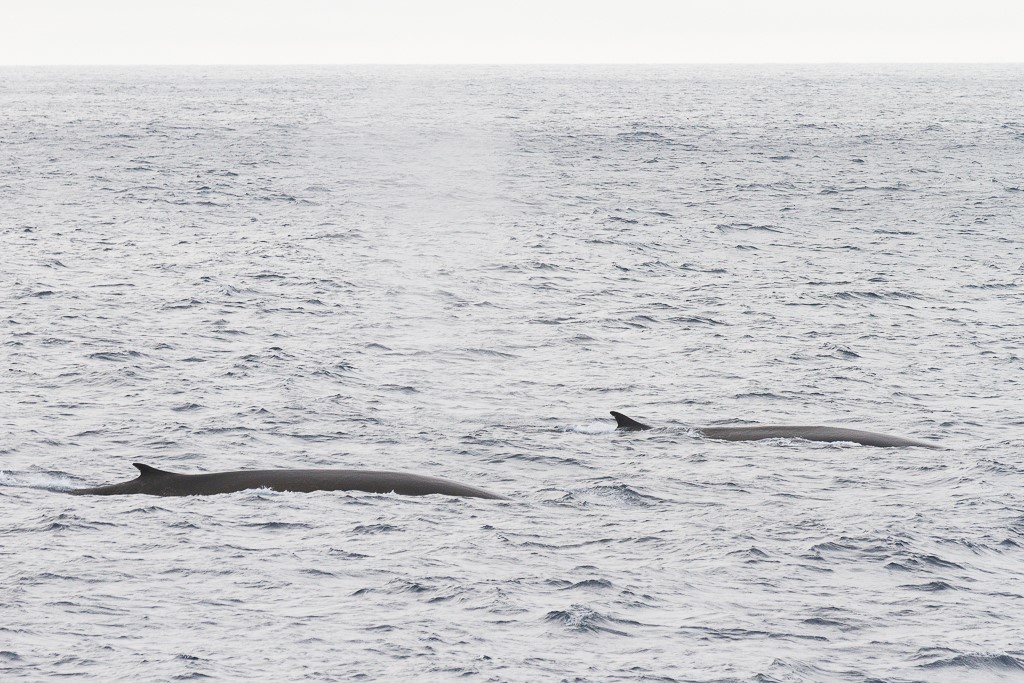
On the trip we saw four Blue Whales, two Fin Whales (above), Humpback Whale, many Sperm and Killer Whales, Baird’s and Stenejger’s Beaked Whales and Harbour and Dall’s Porpoise.

Picture22

We made three landing in the Commander Islands, the most easterly of the Aleutian Chain and the only ones not to belong to the USA. The islands are named in honour of Commander Vitus Bering who led the first expedition to explore these waters and died here after a shipwreck.

Picture11

A short climb took us to North-west Cape where lo0king over a cliff ..

Picture9

…. we had good views of Red-faced Cormorants ….

Picture13

…. and some enormous Steller’s Sea Lion bulls (the fourth biggest pinneped in the world) with an inquisitive Arctic Fox as a bonus.

Picture15

There were also large numbers of Northern Fur Seals in the area.

Picture16

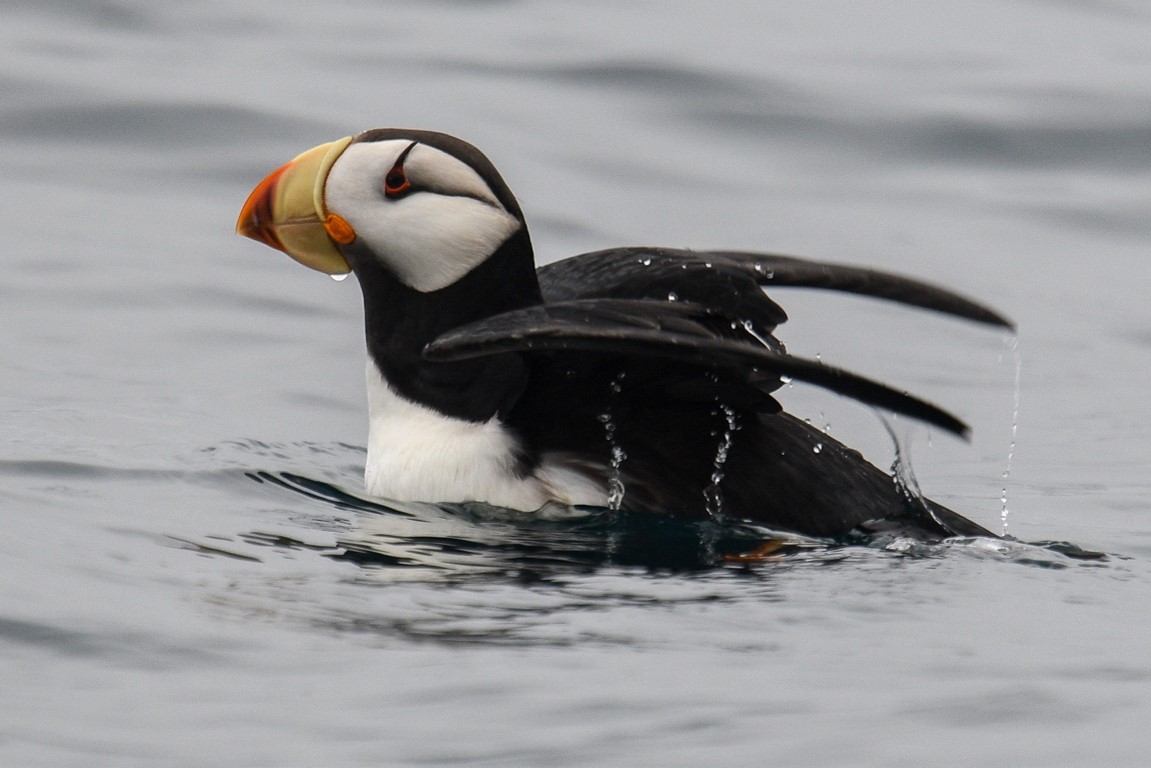
A visit to an offshore stack in the zodiacs gave us views of Horned Puffins ….

Picture14

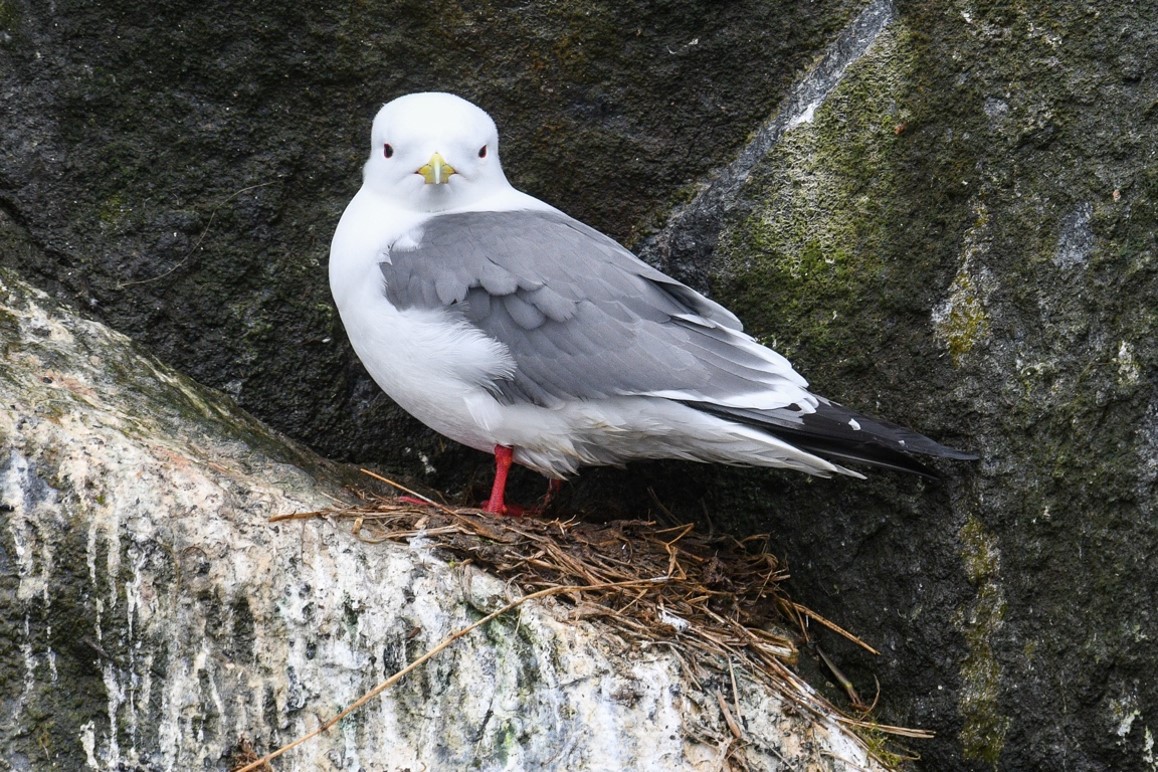
…. and the enigmatic Red-legged Kittiwake, a gull confined to the Aleutian chain.

Picture19

A wide-angle view of the island of Medney, although I never saw it from this angle as I was birding along the shoreline of the bay.

Picture26

After birding/exploring the bay we took a zodiac cruise along the spectacular shore line.

Picture29

There were plenty of Sea Otters, many with a little cub resting on their bellies.

Picture25

Most of the passengers were from Europe, North America or Australia but we also had four Russian tourists who could always be identified by their bright red jackets.

Picture31

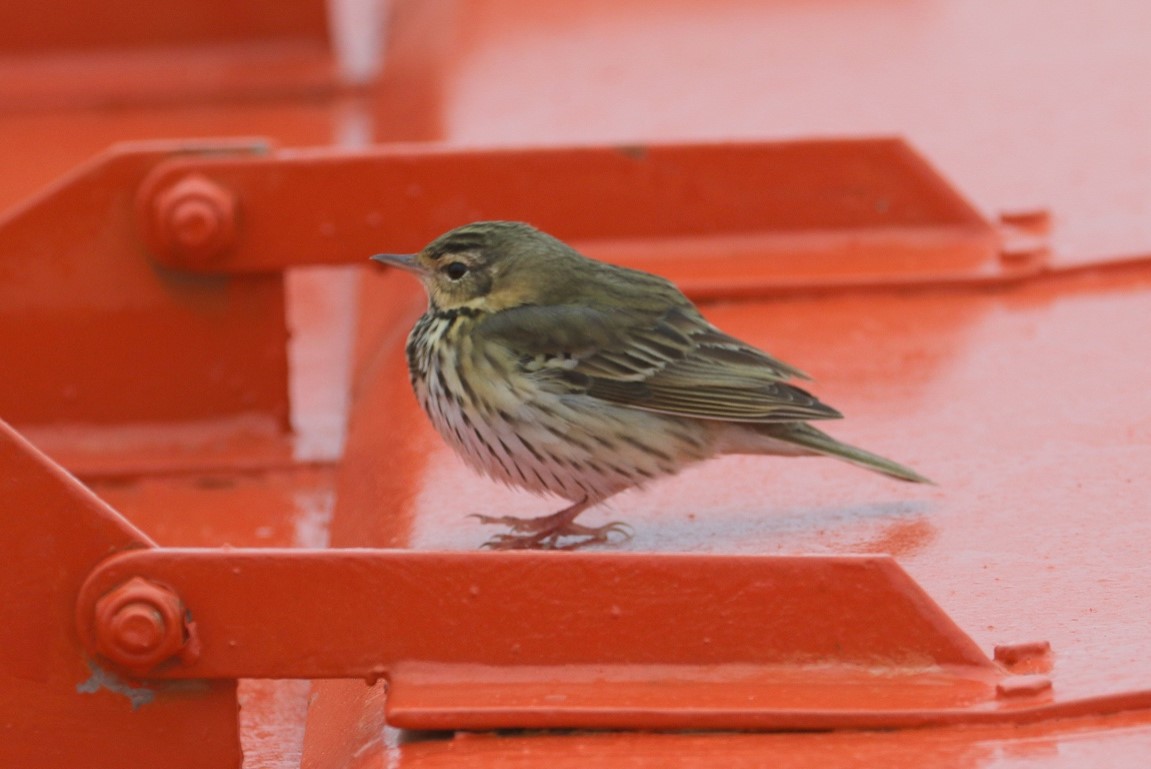
Overnight we sailed back to Kamchatka. Dawn was wet, with low visibility, quite a few migrants came aboard the ship, including Brambling, Eastern Yellow Wagtail and this Olive-backed Pipit; seeking refuge, appropriately on the lifeboat.

Picture32

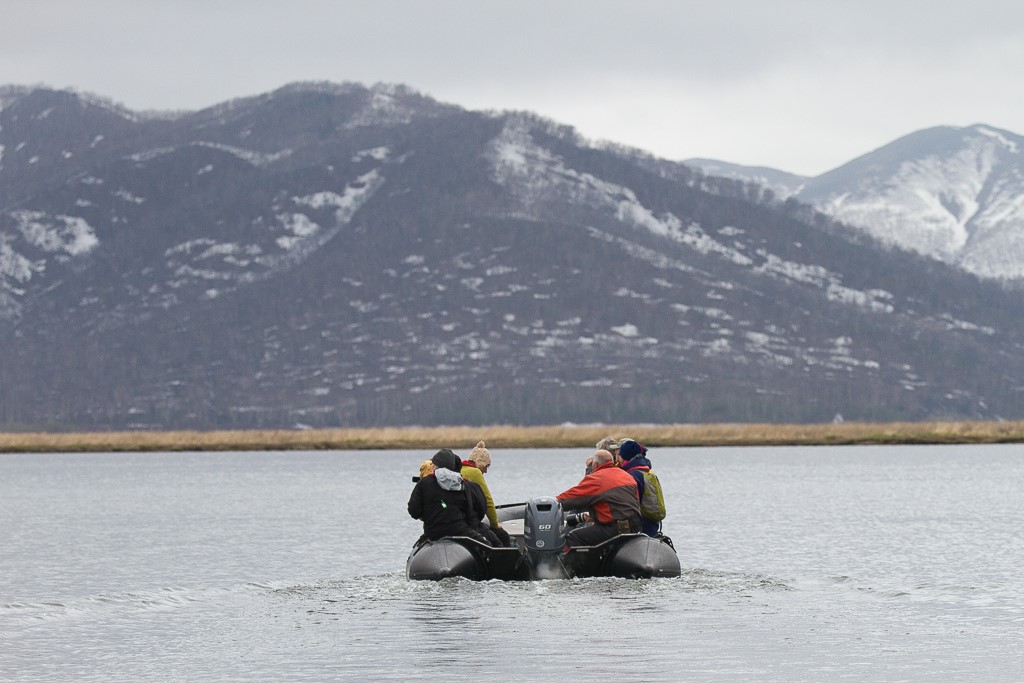
Conditions improved as we zodiaced ashore and headed inland up the Zhupanova River.

Picture135

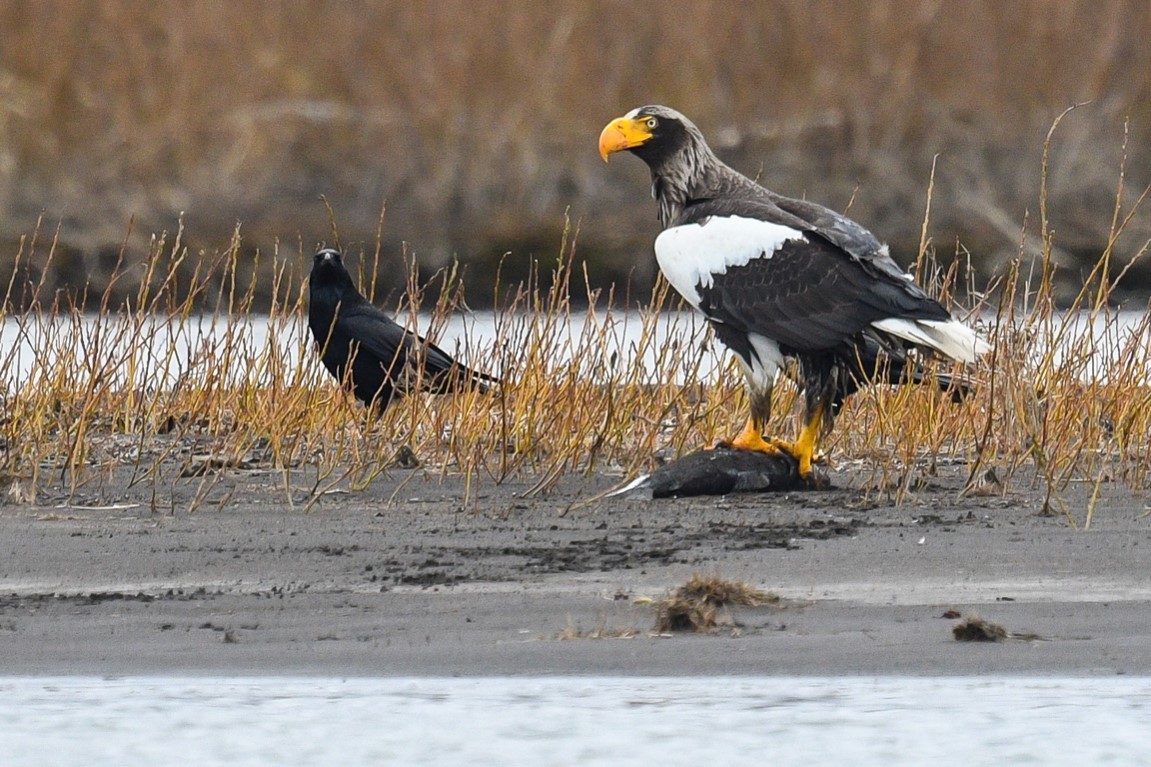
Our main target was the enormous and magnificent Steller’s Sea Eagle, here seen feeding on a salmon. Compare its size with the adjacent Carrion Crow.

Picture36

Several pairs of Steller’s Sea Eagles nest along the river. With the zodiacs it was possible to get quite close without disturbing them. The leader’s 500mm lens with 2x converter helped as well.
Picture38

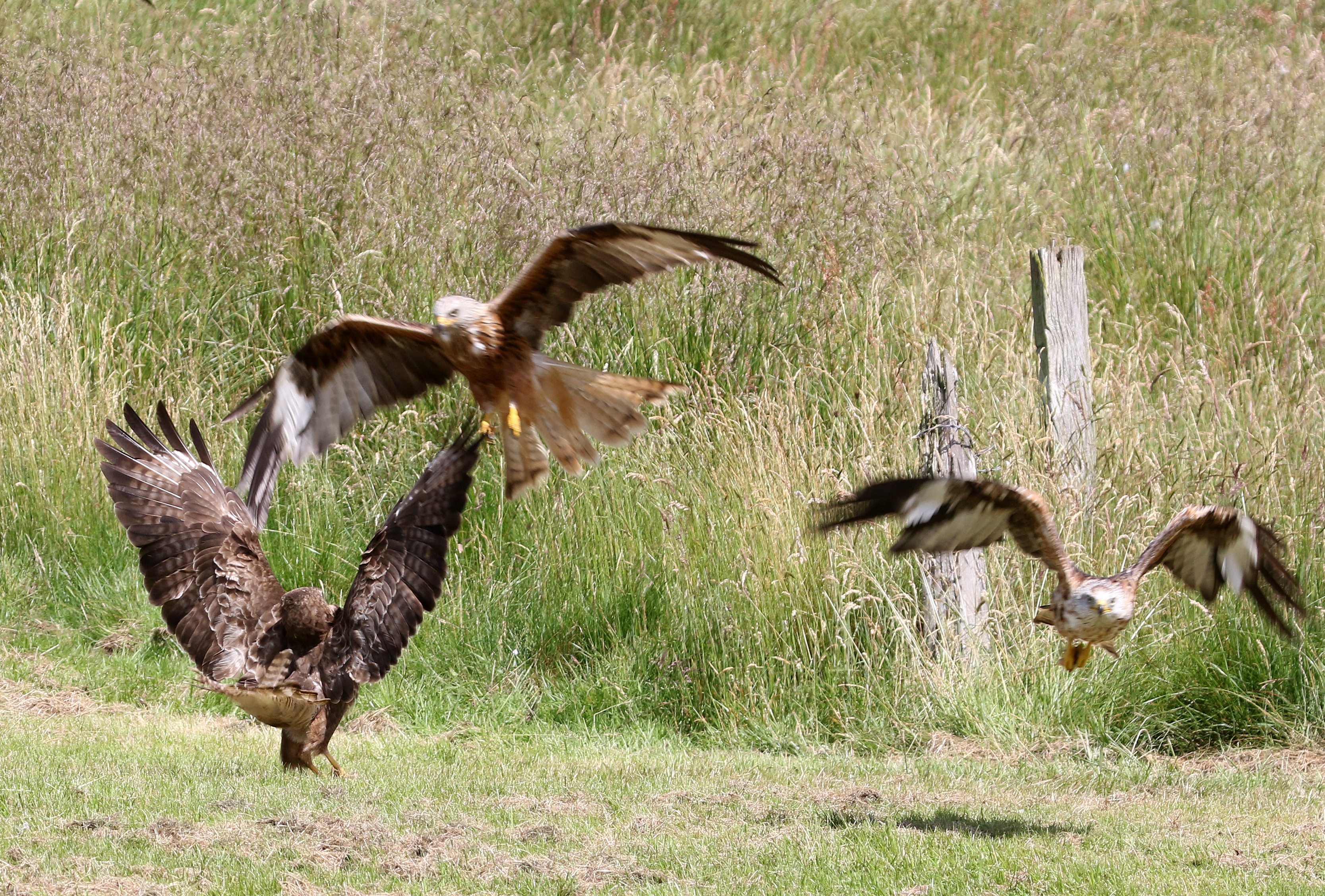
We returned down the Zhupanova River and spent some time near the mouth looking at terns.

Picture33

It didn’t take long to find our target, the range restricted Aleutian Tern, which calls more like a wader than tern. As this species has occurred in the UK (once) I was delighted to see it, as it my ambition to see every extant species on the British List (just one to go now).

Picture41

The next day we went ashore at a fjord near the southern tip of Kamchatka, in spite of the fact that it was already June and we were at the same latitude as London, the ground was covered by snow right down to sea level.

IMG_5432 Brown Bear

After some good birding we returned to the ship and at the mouth of the fjord I picked up this Brown Bear on the snowy slopes. It was at least a mile away but I got some record shots. The colour made it look more like a Polar Bear than a Brown Bear. The only other one we were to see at Kunashir in the far south of the Kurils looked more like an American Black Bear in colour!

Picture47

Our next stop was at Atlasova, one of the northernmost of the Kuril Islands. Here we had a real surprise, a Red-billed Starling, a species that was a mere 4000 km out of range!

Picture50

The deep trench off the Kurils is known as a good location for Killer Whales or Orcas and they certainly didn’t disappoint with up to 80 individuals seen.

Picture52

We heard that a cyclone was coming but we didn’t know just how bad. That evening the winds gusted over 80 knots (that’s 160 km/hr). Unable to anchor the ship took shelter in the lee of the island of Onekotan. Of course we couldn’t make a landing that afternoon and we weren’t able to make any landings the following day either.

Picture54

On the third day of rough seas, a brave attempt was made to get us ashore inside the flooded caldera of Simushir Island. However as can be seen from this photo the swell was still pretty bad and I nearly fell in the sea trying to board the zodiac and got soaked up to mid-thigh. The attempt to board the zodiacs was aborted and the ship steamed about 5km to a new location whilst we followed, bumping along in the zodiacs. By the time a more sheltered location was found I was very cold and had no alternative but to re-embark and get thawed out. Most of the others in the zodiacs stayed and many more still on the ship joined them, but it was now a hour’s ride to the caldera and an even longer journey back.

Picture59

Those that made it to Simushir and its former secret Soviet submarine base said the expedition was worthwhile and quite enjoyable, but they returned cold and wet several hours later.

Picture62

The number of seabirds in these waters is staggering, Fulmars and Laysan Albatrosses swarm around a trawler, there was another trawler about 2km away and the flock extended as far as the second boat. Estimates of the number of birds present varied from 100,000 to half a million.

Picture65

Heritage Expedition have done this itinerary at least a dozen times. They usually see one or two of the mega-rare Short-tailed Albatrosses per trip (but have missed it some years and there is no guarantee that any one observer will connect). This year we saw 14! The storm may have prevented some landings but it delivered quality seabirds. Short-tailed Albatrosses were hunted to the point of extinction on their only breeding island (Torishima, off southern Japan) in the early part of the 20th century for their feathers. It was only because there were a number of immatures still at sea that the species survived. The population now numbers a couple of thousand but they wander over a huge area of ocean and we were very lucky to see them so well and so often.

Picture66

Even better was the sighting of a couple of adults, one seen here is with smaller Laysan Albatrosses. The name ‘Short-tailed’ doesn’t do it justice, ‘Golden-headed’ would have been better, or perhaps  Torishima Albatross.

Picture67

For all of the birders on board (and most of the non-birders too) the highlight of the entire trip was the evening visit to Yanchika Island.

Picture137

Fortunately the swell had subsided enough to let us enter another flooded caldera, complete with its hot springs and fumaroles.

Picture2

On the way we saw prodigious numbers of Crested Auklets ….

Picture76

…. and the exquisite Whiskered Auklet, surely the most charismatic of the auk family.

Picture84

Inside the caldera the water was covered with auklets and both Crested ….

Picture77

…. and Whiskered could be found all over the rocks.

Ravens, Peregrines and at least six Arctic Foxes gathered to feast on the assembled auklets.

7F1A4405 auklets

For over an hour there was a constant stream of auklets pouring into the caldera. It was more impressive than even the biggest starling murmuration. It was hard to estimate numbers, but two million pairs are said to nest there, so a million Crested and perhaps ten thousand Whiskered would be a reasonable estimate. It was by far the best experience of the trip. Photo by Ian Lewis

Picture90

The next day saw us zodiac cruising alongside a lava flow on Chirpoy Island. The lava front was slow-moving and the lava had cooled from red-hot to merely hot ….

Picture92

…. but even so the site of hot rocks tumbling into a caldron of boiling water was spectacular to say the least.

Picture102

The island of Urup will be best remembered for the hours it took to get a (poor) view of Japanese Robin, so I’ll gloss over that one and go on to talk about the next island, Iturup (above).

Picture104

Unlike the other Kurils, Iturup is still inhabited and we were transported around the island in these big trucks, which was less than satisfactory as you couldn’t communicate with the driver and so couldn’t request a stop for birding ….

Picture103

…. but for the first time since boarding the ship we were able to get away from the coastal fringe. Unfortunately we didn’t have enough time to bird the area properly and although we heard a Japanese Accentor, we never saw it.

Picture124

In the southern Kuril Islands, Steller’s Sea Eagles are largely replaced with the smaller, yet still spectacular, White-tailed Eagle.

Picture112

The southernmost island in the main Kuril chain is Kunashir. After the bleak conditions of Kamchatka, the Commander and northern Kuril Islands it seemed almost tropical.

Picture117

The mature forest held many more birds,such as this exquisite Narcissus Flycatcher, but also a lot of mosquitoes.

Picture93

Quality birding continued as we sailed north across the southern Sea of Okhotsk bound for Sakhalin. Large numbers of Short-tailed Shearwaters were seen, along with a few Pacific Divers (or Loons) and hundreds Rhinoceros Auklets (above). Most surprising was a few Japanese Murrelets, a species that has not been recorded on this itinerary before and presumably had been displaced northwards by the cyclone.

7F1A5071 Gagarin Park

On the morning of 8th June we docked at Yuzhno-Sakhalinsk and the cruise ended. Many passengers departed for flights that afternoon, but some of us had delayed our departure to be able to do some birding on Sakhalin. We were joined by passengers on the next cruise (around the Sea of Okhotsk) who had just arrived in Russia. This woodland is in Gagarin Park (named in honour of the first man in space) which was immediately opposite our hotel. This photo and the next were taken by Ian Lewis.

IMG_5927 BB Reed Warbler

We were able to see the endemic Sakhalin Leaf Warbler (a species that may have occurred in Dorset) and Sakhalin Grasshopper Warbler, plus the super-elusive Rufous-tailed Robin, but it was only this Black-browed Reed Warbler that posed, in the rain, for photos. There were no flights on the 9th, I got to Moscow without difficulty on the 10th, but there was a major delay which meant I had to sleep in the airport overnight. I finally got home late on the 11th.

Picture125

Although there were some issues getting back and the weather was more like a British winter than what you would expect in June, I have to say that this was a most wonderful trip. I would like to thank Rodney Russ (above) the owner of Heritage Expeditions and all his staff plus the crew of the Professor Khomov/Spirit of Enderby for a truly fantastic experience.


 Again a reminder that only seven of the above photos are mine and the rest were taken by Heritage Expedition staff. Once I have edited all my photos I hope to upload many to the blog but I know have quite a backlog!


The Atlantic Odyssey: a summary – 23rd March – 6th May 2016   Leave a comment

Margaret and I have recently returned from a very long trip known as the Atlantic Odyssey, a repositioning cruise that is available once a year as a tourist ship ends its program in the Antarctic at the onset of the southern winter and moves to the Arctic for the northern summer. On top of that we went straight from Cabo Verde, the end point of the cruise, to Mallorca to join our friends at Birdquest in Mallorca to celebrate their 35th year of operation. It total we were away 45 days.

I hope to upload many photos from this remarkable and highly photogenic journey from each of the locations we visited, but for now here is a brief overview of the entire trip.

111 Atlantic Odyssey map

Here is a map of our route. There is one important difference to what shown above. In 2016 for the first time the operators, Oceanwide Expeditions, didn’t take the Plancius to the Antarctic Peninsula before heading to South Georgia, instead cruised directly from Ushuaia to South Georgia. You could take a Ushuaia – Antarctica – Ushuaia trip immediately prior to the Atlantic Odyssey, but this would have lengthened our entire tip to 55 days which we though was too much. I have already been to Antarctica but we both intend to to visit some time in the future.

IMG_1101 view from hotel on arrival

After a couple of days of travel we arrived at Ushuaia, the southernmost tip of Argentina, just as darkness was falling. The view from our hotel was breathtaking.

IMG_4510 Beagle Channel views

Over the next day and a half we explored the Tierra del Fuego National Park …,

IMG_4250 Andean Condor

…. seeing wonderful birds like Magellanic Woodpecker and this Andean Condor.

IMG_4587 Humpback Whale

We took a boat trip on the Beagle Channel and had close up views of Humpback Whales as well as several species of seals and seabirds.

IMG_4682 Plancius

In the afternoon we boarded the Plancius, the ship that was to be our home for the next 34 days.

IMG_4705 fogbow

The passage from Ushuaia to South Georgia was disappointing, we were following the line of the Antarctic Convergence and at this time of year this means fog. This meant few seabirds were visible, even though we did see some lovely fogbows.

7F1A6898 SG glacier

South Georgia was an absolute delight, one of the most wildlife rich and photogenic sites on the entire planet. Described as being like the Alps rising straight from the sea, huge glaciers sweep down from 3000m peaks to the coast.

IMG_4793 Wandering Albert fem + chick

We were able to see Wandering Albatrosses on the nest ….

7F1A7187 King Penguins

…. enormous colonies of King Penguins ….

IMG_5203 KPs

…. many which waddled by completely indifferent to us.

IMG_5227 Fur Seal

There can be few cuter things in this world than a Fur Seal pup.

IMG_5118 Grytviken

We also paid a visit to the old whaling station at Grytviken.

7F1A7748 rough seas

As we left South Georgia we headed north towards Tristan da Cunha we encountered rough seas and several icebergs.

7F1A7910 Wandering Albert

This was the best section of the entire trip for seabirds. Species varied from the enormous Wandering Albatross with its 3.5m wingspan ….

7F1A7931 Wilson's SP

…. to the tiny Wilsons’ Storm Petrel.

7F1A9629 Spectacled Petrel best

As we approached the island of Gough the endangered and much desired Spectacled Petrel put in its first appearance.

IMG_5474 approaching Gough

No landings are allowed on Gough but it is normally possible to cruise inshore in the zodiacs and see the endemic species. On arrival we found the stiff easterly wind had built up a big swell, so we couldn’t approach any closer.

IMG_5622 remotest island

Good weather the following day allowed us to land on the main island of Tristan – the most remote inhabited island in the world.

7F1A9801 Inaccesssible Island

We were not so lucky with the nearby (and appropriately named) Inaccessible Island. Although vertical cliffs prevent access to the interior, the tussocks at the base of the cliff hold a population of the smallest flightless bird in the world – the Inaccessible Island Rail. A swell breaking on the steeply shelving beach prevented any hope of landing and dashed our hopes of seeing this enigmatic bird.

IMG_6032

We were luckier with the neighbouring island of Nightingale, although the landing was far from easy. The endemic finch and thrush were abundant and we hiked up to the relict forest at the top to see the critically endangered Wilkin’s Finch.

IMG_5829 Great Shearwater on launch post

On route we saw many Yellow-nosed Albatross chicks and recently fledged Great Shearwaters (above) which launched themselves into the air from these take-off posts and sometime pattered across the top of our heads to give themselves an extra push.

7F1A0133 Flying Fish

The sea crossing between Tristan and St Helena was the quietest of the trip with only one or two individual birds seen on some days. There were plenty of flying fish about to challenge your photographic skills.

IMG_6154 Jamestown

The capital of St Helena, Jamestown is nestled in this steep-sided valley.

IMG_4093 Jacob's Ladder

There is a winding road connecting Jamestown to the rest of the island of course, but if you want a short cut you can always try the 700 step Jacob’s Ladder.

IMG_3990 White Tern

St Helena’s tourist trade is mainly based on sites associated with its famous former resident , Napoleon Bonaparte. Of course the birders were more taken with nesting seabirds, like this White (or Fairy) Tern photographed at the site of Napoleon’s former tomb.

IMG_4216 Wirebird

Although St Helena had a number of endemic birds before the arrival of man, only one remains, St Helena Plover or Wirebird. We had great views of up to 40 at two locations in the mountains.

7F1A1247 PTS Dolphins

We encountered a few more seabirds as we headed towards Ascension Island but we also saw a good number of cetaceans, such as these Pan-tropical Spotted Dolphins.

IMG_4405 view from Plancius

Ascension is basically just a huge military base and is covered with listening and communication devices. It is technically uninhabited as none of the 800 or so residents has right of abode or can buy property, all are on fixed term contracts.

7F1A1180 Ascension cliffs

Ascension, a relatively new volcanic island, has stunning coastal scenery comprised of layer after layer of lava and ash.

7F1A0921 Sooty Tern colony

The two biggest wildlife spectacles are the Sooty Tern colony on the mainland ….

IMG_4438 Frigates

…. and the huge offshore Ascension Frigatebird colony.

IMG_4443 Boatswain Bird Island

We arrived at the offshore stack of Boatswain Bird Island at first light and saw just about all of the world’s population of Ascension Island Frigatebird leave their roost.

7F1A1086 Ascension Frigatebird imm

As the light improved we had fantastic views of this rare and range restricted seabird right over our heads.

7F1A1417 Leach's SP

As we headed north we crossed the Equator and it became very hot on deck. The following day we passed through the doldrums and the sea was still and flat with an oil-like texture. You could see the reflections of the Leach’s Storm-petrels in the glass like surface ….

7F1A1389 Clymene Dolphin

…. and when a group of Clymene Dolphins came in to bow ride, you could see every detail underwater.

IMG_4286 Praia church

On the 28th of April, 34 days after we left Ushuaia, we docked at Praia on the island of Santiago, Cabo Verde. Margaret opted for a cultural tour of the city visiting churches, museums and sites of historical importance ….

IMG_4518 Santiago rocks

…. whilst I joined the other birders for a trip into the interior.

IMG_4523 GH Kingfisher

We saw three of Cabo Verde’s endemic species, a number of vagrants to the island (from the New World and the Old) and other residents like this beautiful Grey-headed Kingfisher.

From hotel

Whilst most of the other passengers headed home we continued on (via Lisbon and Barcelona) to the Mediterranean island of Mallorca. We spent much of the first day relaxing after our overnight flight, but in the evening we met up with 19 other Birdquest clients and 9 members of staff who had come to Mallorca to celebrate Birdquest’s 35th year of operation. Rain affected the first part of the trip but it brought down many migrants ….

IMG_4640 Tyrrenian Spotted Fly

…. as well as newly arrived ‘Tyrrhenian’ Flycatchers, the pale and lightly streaked local race of Spotted Flycatcher, which recent research had indicated is worth specific status.

7F1A2168 Tawny Pipit

Agricultural areas held lovely birds like this Tawny Pipit.

Formentor

The mountainous spine of the island ends in the picturesque Formentor Peninsula, a location for Crag Martins, Eleanora’s Falcons and other great birds.

7F1A2106 Cinereous Vulture

Higher up in the mountains we saw Griffon and Cinereous Vultures (above) ….

Albufera at dawn

…. whilst the marshes of S’Albufera and S’Albufeteta gave us views of many specialties ….

IMG_4774 Red-nobbed Coot

…. such as this Red-knobbed Coot, a mainly African species that in Europe is restricted to Spain.

Cabrera (3)

The highlight of the trip for me was our visit to the island of Cabrera off the south coast of Mallorca. In this untouched area of maquis and woodland we found many migrants and well as stunning views of the endemic Balearic Warbler ….

7F1A1738 Moltoni's Warbler

…. and the range restricted Moltoni’s Warbler (which contrary to what I posted last year) is actually the last European breeding bird that is a life bird for me.

7F1A2048 Scopoli's Shearwater

On the way to and from Cabrera I had my best ever views of Balearic and Scopoli’s Shearwater (above). All-in-all our four days birding on the reunion gave me many more species than I saw during the whole of my last two-week visit to the island.


As I said at the start this is just an overview of the trip. Probably starting some time in the summer I will post a lot more pictures, treating each site in more detail.

Great birds in May: 7th – 14th May 2016   Leave a comment

With no updates for two months regular readers of this blog could be forgiven for thinking I had given up with it. In fact Margaret and I have recently returned from a very long trip known as the Atlantic Odyssey, a repositioning cruise that is available once a year as a tourist ship ends its program in the Antarctic at the onset of the southern winter and moves to the Arctic for the northern summer. On top of that we went straight from Cabo Verde, the end point of the cruise, to Mallorca to join our friends at Birdquest in Mallorca to celebrate their 35th year of operation. It total we were away 45 days.

We arrived home on 6th May with many thousands of photos to sort and edit. Whilst I am making good progress, it will be some time before I can upload more than a few. On our return we found there was a whole suite of quality birds locally, which has greatly delayed progress on sorting photos and other matters. So my first post since returning will not be about the Atlantic Odyssey or Mallorca, but  on the good birds I have seen in the last week.

On Saturday 7th I was keen to get ringing again, especially as I had not seen my ringing colleagues for several months. Ringing at Durlston this spring has been pretty slow, but thanks to local ringer Mick Cook the site has been manned on eleven occasions. We have only ringed 72 birds over the spring but retraps have included a number of migrant birds that were ringed in previous years which have returned to breed, this is very useful data. Willow Warbler, Chiffchaff, Lesser Whitethroat and Common Whitethroat (above) have made up the bulk of migrant birds.

Red-footed falcon1 Chris Minvalla

After ringing my trainee Daniel and myself stopped off at Mordon Bog, he heard a Lesser Spotted Woodpecker drumming and a Cuckoo but the prize was this beautiful female Red-footed Falcon that hawked insects over the bog. Unfortunately the views were quite distant, but my other trainee ringer Chris Minvalla provided me with this superb flight shot he took a few days earlier. There has been speculation that this is the same individual that was seen at Wareham in 2015, but we will never know either way.

IMG_4760 Pom Skua

On Sunday 8th I went to Portland in the hope of seeing some of the spring migrants, but many have already passed through to their breeding grounds and I won’t be seeing them until the autumn. I was also keen to do some seawatching and in particular look for Pomarine Skuas, as the first ten days or so of May is the best time of the year to see them. In the event I saw three, along with two Arctic Skuas and a few Manx Shearwaters. Of course birds seen from the Bill are far too distant for photography, so I have included a shot I took from a pelagic off Cape Hatteras, North Carolina in May 2014. Note the lovely spoon-shaped tail feathers of an adult bird in spring, in the local vernacular ‘with a full set of cutlery’.

A full low tide at Lytchett Bay results in many waders feeding out of view in the creeks.

During the last few days the flooded fields and mudflats of Lytchett Bay have been attracting good numbers of migrant waders. A visit on Monday 9th gave me views of two Ruff and other birds but not the Whimbrels that have been regular at this site recently.

IMG_4966 Caspian Stonechat

Late on Tuesday news broke of a ‘Caspian’ Stonechat at Titchfield Haven in Hampshire so my friend Roger and I decided to pay a visit on Wednesday morning.

IMG_4941 Caspian Stonechat

The taxonomy of the Stonechats has been complex and controversial. DNA studies confirm what has long been suspected that at least three species (probably four) occur; African, Siberian and European. The trouble is that the DNA studies didn’t include the very distinctive ‘Caspian’ races of Siberian Stonechat variagatus and hemprichii.

IMG_4949 Caspian Stonechat

Siberian Stonechat is an annual vagrant to the UK with about 10 records annually but this is only the 6th record of ‘Caspian’ Stonechat. Whether this is considered a subspecies or a species, this is a bird well worth travelling for.

IMG_4956 Caspian Stonechat

One of the features of Siberian Stonechat is the black underwing coverts and the paler rump, in addition the ‘Caspian’ races also show extensive white in the tail …

IMG_4946 Caspian Stonechat

… the white rump, uppertail coverts and the base to the tail can be seen in this and later photos.

IMG_4945 Caspian Stonechat

There had been heavy rain that morning but Roger and I turned up just as it cleared up and the bird perched up to preen and dry out.

IMG_4971 Caspian Stonechat

Moult pattern clearly shows this is a second summer bird (one year old). The primaries and most of the flight feathers have been retained, whilst the tertials and outer secondaries and the remaining coverts have been moulted.

IMG_4979 BW Stilt

Whilst still at Titchfield Haven we heard that a Glossy Ibis had been seen at Lytchett Bay, less than a mile from my house, a first record for the site. We decided to return once we had the fill of the stonechat but later heard that it had flown off. Late that evening I had the news that a Black-winged Stilt had been found there, second record for the site but my first. I arrived with very little light left and a mist descending. Through my scope I could see a faint black and white blob but little else. Hardly a satisfying patch tick.

IMG_4976 BW Stilt

The following morning (12th) I had already arranged to visit Durlston with Daniel, Chris and Mick but only a few birds were around. Hearing that the stilt was still at Lytchett we packed in early and returned to Poole. To our delight we found that the stilt was showing well.

IMG_4975 BW Stilt

Himantopus stilts are another group with complex taxonomy, the six forms have been considered to fall into one, two or five (curiously never six) species, but the differences between the five ‘pied’ forms is rather slight, so perhaps two species is the best approach. Whatever the taxonomy, stilts are common in the tropics, subtropics and milder temperate reasons worldwide. The occurrence of another at Lytchett was not wholly unexpected, but was very welcome indeed.

IMG_4993 Glossy Ibis

Whilst admiring the Black-winged Stilt we learned that yesterday’s Glossy Ibis had returned, but was now in hiding. After a while all the Shelduck took to the air and the Glossy Ibis with them. Another Lytchett tick and a Poole Harbour one too. 

7F1A2267 GS Cuckoo

Friday’s schedule was greatly disrupted by the discovery of a Great Spotted Cuckoo on Portland. Initially the views weren’t great, as it was buried deep in a bush but later it perched up giving better views.

7F1A2278 GS Cuckoo

It returned on a number of occasions to this bush bordering a footpath (where it was sometimes spooked by passers-by) as there was a good supply of Brown-tail caterpillars.

7F1A2282 GS Cuckoo

Great Spotted Cuckoos are scarce summer visitors to Iberia, southern France, Turkey and parts of the Levant. There is also a breeding population in tropical Africa. Nowhere near as well known as Common Cuckoo, this species parasitises corvids, especially Magpies. On average one is found in the UK annually. This is the third record for Dorset but the first to be seen by more than one observer. This is the third I have seen in the UK (Humberside in 82, Hampshire in 00) and only the 22nd worldwide.

Great Spotted Cuckoo1 Chris Minvalla

Although it was sunny in Poole when I left there was rain, often heavy, at Portland not making for ideal conditions for photography. In poor light and rain I failed to get any flight shots, but again it was Chris Minvalla to the rescue, who turned up just as I was leaving and offered to share this wonderful photo with me. Note the rusty-brown tones of the primaries, these are unmoulted first year feathers and indicate that the bird is in its second summer.

IMG_4383 Daniel, Ginny and Chris

It was back to reality on Saturday, I was joined at Durlston ringing station by Mick Cook and my three trainee ringers, L-R Daniel, Ginny and Chris. I think this is the first time I have ringed with all three of them at the same time. However the results didn’t justify the effort, just two birds were ringed, a Whitethroat and a Willow Warbler. As far as the majority of migrants are concerned spring migration is over and we won’t man the site again until the start of autumn migration in mid-July.

HB Mustafa Sozen Turkey

That said, the morning wasn’t wasted as we had distant and rather brief views of a Honey Buzzard to the north of the ringing station. Of course I didn’t get a photo, so here is one from Internet Bird Collection taken by Mustafa Sozen in Turkey. Our success was short-lived as whilst we were taking down the nets we completely missed a Black Kite that was seen flying over the car park.


Birds and other things – March 2016   Leave a comment

This posts covers a few (mainly bird-oriented) events in March.

Pallas' Leaf W 2 feb 16 Nick Hull

The best bird in Dorset this month and arguably this winter has been a Pallas’ Leaf Warbler that was discovered in the village of Portesham in West Dorset. I went along with my trainee ringer Chris after a ringing session near Poole. We had good views, but in the afternoon the sun was in our eyes and my pics were rubbish. This photo and the next were taken by Nick Hull of Two Owls Birding  and is used with permission.

Pallas' Leaf W Feb 16 Nick Hull

Pallas’ Leaf Warbler is a rare but regular visitor from Siberia to the UK. Most records are in the late autumn, wintering is much rarer but is not unprecedented. Named after German ornithologist Peter Pallas who explored Siberia in the late 18th C, this tiny Phylloscopus warbler is little bigger than a Goldcrest. It is distinguished by the lemon rump, central crown strip, double wing bar, yellowish supercillium and long black eye-stripe. It is arguably the most beautiful of the genus. Photo by Nick Hull.

7F1A5982 RB Merg

I have recently bought a new digital SLR. I failed to get any usable photos of the Pallas’ but afterwards we went down to Portland Harbour where I used in the field for the first time – even so, these Red-breasted Mergansers were too far for a decent shot.

7F1A5972 Robin

I have debated for some time over the best way to photograph birds. My attempts at digiscoping have been pretty poor so I have dropped that. I used to have an old Canon SLR with a 100-400mm zoom lens but the sensor must have got damaged as spots appeared on the image that I was unable to remove. Since then I have gone over to using a bridge camera. Undoubtedly the SLR gives a better image (this one would be better still if I had upgraded my zoom lens as well and had photographed this European Robin on a bright day) but the main problem is weight. The bridge camera weighs 600g, the SLR & lens nearly 2.5kg. Add to that the weight of a telescope and tripod and I’ll be restricting my birding to a few hundred yards walk from the car. Also the bridge camera has a much greater telephoto capacity, 1200mm instead of 400, so four times the reach for a quarter of the weight. Bridge cameras however are useless in taking birds in flight, yes you might get the odd good image, but in general an SLR wins hands down in this category. With a couple of wildlife cruises coming up this year the choice was clear – buy a new SLR and my choice was the Canon EOS 7D MkII.

7F1A6008 Dartford Warbler

Even on a dull day I got a reasonable photo of this Dartford Warbler at Mordon Bog ….

7F1A6003 Dartford Warbler

…. but even with an SLR there is a limit to how far you can blow up the image before you lose resolution.

7F1A6019 Mordon Lake

However, although there were Tufted Ducks, Coots and Great Crested and Little Grebes on Mordon Park Lake none were close enough for anything other than record shots.

IMG_3829 Monties meeting

Several of us joined Paul Morton and Mark Constantine of the Birds of Poole Harbour charity for a drink in order to meet a number of British and Dutch ornithologist researching and conserving the threatened Montagu’s Harrier. Being free the next day I was able to attend their meeting which was held in the LUSH offices in Poole the following day.

IMG_3825 Montie's talk

There are only about a dozen Montagu’s Harrier pairs breeding in the UK and in spite of protection this number isn’t increasing. Certainly some birds have disappeared under suspicious circumstances (possibly mistaken for the similar and much persecuted Hen Harrier) but it may be that the wider countryside in the UK is unsuitable for this species. They are certainly much commoner on the continent as the Dutch speakers were able to demonstrate.

IMG_3828 Montie's routes

We were also told of the amazing results of a Europe-wide satellite tracking program which has shown that Monties winter in the Sahel to the SSW of their breeding locations. British birds, unsurprisingly, winter further west than others in western Senegal.

IMG_3835 Holton Lee

The Holton Lee estate (where I ring birds at the feeders) contains areas of heathland and foreshore currently managed by the RSPB.

7F1A6025 Holton Lee

It is great that I have these ‘wild’ areas on my doorstep, the houses in the distance are in Lytchett Minster, the next village beyond Upton.

7F1A6072 Grey Squirrel

Heading back to the feeders I was able to use my new camera on a bright day for the first time. This Grey Squirrel posed nicely ….

7F1A6036 GS Woodpecker

…. as did this Great Spotted Woodpecker. After many ringing visits to this area nearly all the birds visiting the feeders bear rings. This is allowing us to obtain useful data on longevity, over four winters we have ringed 36 Great Spotted Woodpeckers and have had 49 occasions when one has been recaptured. This has indicated that the average lifespan of the birds here is relatively short, only 2-3 years, less than many of the Blue and Great Tits we have ringed.

7F1A6045 Blue Tit

Speaking of Blue Tits ….

7F1A6061 Goldfinch fem

….but it was this photo of a Goldfinch that proves to me how much better image you get with a SLR compared to a bridge camera.

7F1A6063 Goldfinch fem

Unlike the Bullfinch and Chaffinch, Goldfinches are not easy to sex in the field (and not that easy in the had either). The extent of red behind the eye and the relatively short bill indicates that this is a female.

IMG_3842 Goldfinch 6m

On the other hand this bird that we ringed at Holton Lee on another date appears to be a male, the bill is longer (and it has a long wing length) and the red extends further behind the eye. One feature that I find unreliable is the colour of the nasal hairs, said to be black in males and grey in females. They both appear to be grey so either that feature is unreliable or the red behind the eye is. I find Goldfinches hard to age and sex and try to exercise caution.

7F1A6090 Pied Wagtail

We ring quite a few Pied Wagtails at roost in the late autumn but even the adult males in autumn don’t look as smart then as they do in the spring. This bird was photographed on a subsequent visit to Portland Harbour.

7F1A6085 Helicopter and boat

Whilst searching for ducks, grebes and divers we saw this helicopter practicing landing a crew member onboard a boat.

IMG_3852 Lodmoor

The reason for Margaret and I were in Weymouth on 16th March was that we had agreed to lead a birdwatching walk for our friends in the Phoenix organisation.

IMG_3850 Lodmoor

I chose the RSPB reserve of Lodmoor for the walk because there is a decent, usually dry, path around the reserve and there are always some birds on show and we saw or heard about 50 species.

7F1A6105 Little Egret

Most of the birds we saw on Lodmoor were common species that I would see on every visit  like this Little Egret ….

7F1A6100 Spoonbill Lodmoor

…. but we did get excellent views of three Spoonbills that were well appreciated by the group.

7F1A6099 Spoonbill Lodmoor

There has been a real increase in Spoonbill numbers in the last decade or so with a small breeding colony now established in Norfolk. Most of our birds seem to originate from the Netherlands, some pass through on their way to and from their wintering grounds in Spain, others spend the winter with us – mainly in Poole Harbour.

IMG_3881 Kara

Unfortunately our granddaughter Kara has seriously damaged her knee (again) doing taekwondo, she has been out of action for several weeks and it will be some time yet before she is back to normal. We wish her a speedy recovery.

IMG_3855 ETO Don Giovanni

And finally on the 18th we went to the Lighthouse Theatre in Poole to see a performance of Mozart’s Don Giovanni by the English Touring Opera. Opera is not my favourite musical category but I must say that I quite enjoyed it, I had expected it would be sung in Italian but it was in English with screen displaying subtitles, so I was able to follow the ‘plot’.

East Anglia and London: 23rd February to 1st March 2016   Leave a comment

We spent a few days in late February at my step-daughter Anita’s place in Maldon, Essex. Regular readers of this blog may remember that a wildlife cruise I had booked around the Russian Far East was cancelled at short notice in 2015. Well I’ve rebooked for this year, so that means a trip to London to be fingerprinted for my Russian visa (even though they have my fingerprints on file from 2015!). Rather than go to London from Poole we opted to wait until we were in Essex as that was a much shorter journey also we could spend the rest of the day sightseeing.


IMG_3882 The gerkin

We caught the train from Chelmsford to Liverpool St Station and were surprised to find how close we were to ‘the Gherkin’.

IMG_3883 painting

We walked to the Russian visa centre in Gee Street, passing some interesting murals on the way. You have to say one thing about the Russian visa system, once you have spent a day filling in the forms and have actually got to the visa centre, the process only takes a few minutes, so we were done by 0930 and had the rest of the day to ourselves.

IMG_3941 St Paul's

We chose to go to St Paul’s Cathedral which was in within walking distance. This photo was taken later in the day from Ludgate Hill.

St_Paul's_old._From_Francis_Bond,_Early_Christian_Architecture._Last_book_1913.

Between the early 7th C and 1666 at least four different St Paul’s Cathedrals stood on the site, the fate of the first is unknown, but numbers two and three were destroyed by fire in 962 and 1087  respectively. This drawing of the old cathedral as it appeared around 1561 was taken from Wikipedia.

Stpaulsblitz

The fourth St Paul’s was completely destroyed in the Great Fire of London in 1666. The current cathedral with its iconic dome was built by Christopher Wren starting in 1669 and was consecrated in 1708. The cathedral was almost destroyed when a bomb hit it during WWII. This photo of S Paul’s taken on 29/12/40 by Herbert Mason during the blitz has to be one of the most famous photographs ever taken. Copied from Wikipedia.

GTO 225 London.qxp:Regional Update.qxd

Photography within the cathedral is prohibited so I have taken this photo from www.grouptravelorganiser.com. Looking eastwards from the nave to the choir and the high altar.

St-Pauls interior

This stunning fish-eye view was taken from www.hdrone.com and shows the dome and the nave.

london-st-pauls-cathedral-whispering-gallery

It is possible to climb up into the dome and view the ‘Whispering Gallery’ Here you can look down directly into the nave. All sounds from the far side of the gallery are amplified by its curved structure – hence the name. Photo from www.planetware.com

St_Paul's_Engraving_by_Samuel_Wale_and_John_Gwynn_(1755)

The spire above the dome is 365 feet tall, one foot for every day of the year. Spreading the load of the dome was a problem, Wren’s solution was to create a dome within a dome supported by the brick cone seen in the diagram. It is possible to continue up from the Whispering Gallery to the lower ‘Stone Gallery’ and then up a narrow spiral staircase between the brick cone and the outer dome to the ‘Golden Gallery’. Picture from Wikipedia.

IMG_3905 spiral staircase

One place in the cathedral where you are allowed to take photos. Here the brick cone supporting the weight of the outer dome can clearly be seen.

IMG_3808 St Paul's

At the top of the inner dome you can look through an oculus to the floor of the nave far below.

IMG_3894 from St Paul's

From the Stone Gallery and the Golden Gallery you get a wonderful view over London. Light conditions changed rapidly hence the lack of clarity in some of the following.

IMG_3898 from St Paul's

Paternoster Row and the Temple Bar

IMG_3900 The Shard

At 306m The Shard is Britain’s tallest building.

IMG_3910 Millenium bridge

Unacceptably wobbly when first opened – The Millennium Bridge.

IMG_3914 from St Paul's

Looking east towards the Gherkin and other tall skyscrapers. Tower Bridge is just out of sight to the right of the photo.

IMG_3916 PO Tower

Looking north-west to the Post Office Tower.

IMG_3925 The Globe

On the other side of the Thames, The Globe, a reconstruction of Shakespeare’s famous theatre.

IMG_3927 The Eye

The London Eye.

IMG_3928 Templar Chapel

After St Paul’s and some lunch we walked to the nearby Temple Church.

IMG_3934 Templar Chapel

Whilst hardly matching the magnificence of St Paul’s, the Church has an interesting history. Built in the 12th C by the Knights Templar as their English HQ, in the reign of King John it served as the Royal Treasury, making the Knights Templar early examples of international bankers.

IMG_3938 Templar Chapel

The Knights Templar were originally formed to protect Christian pilgrims on their visit to Jerusalem and Solomon’s Temple after the first crusade in 1099 . They grew to be the wealthiest and most influential of the Christian military orders. Although the peak of their power only lasted for 200 years, they bankrolled much of Christendom (inventing aspects of the modern system of banking) and became a feared fighting force in subsequence crusades.

IMG_3939 Templar Chapel

Modern day stories or should I say myths, involve the Templars in the whereabouts of the Holy Grail, the Ark of the Covenant and the origins of Freemasonry and they have of course been highlighted in such influential books as the ‘The Holy Blood and The Holy Grail’ and the Templar Church itself featured in the film ‘The Da Vinci Code’.

IMG_3812 John, Lois, Gavin

We hurried back to Maldon in Essex as we knew that Anita’s husband John and his brother-in-law Gavin wanted to go out for a drink as it was Gavin (R) and his wife Lois’ wedding anniversary. Some of the pubs in Maldon are more like someone’s front room than a typical boozer.

IMG_3815 John Gavin

This one in particular is smaller than the typical living room, you have to wait for someone to leave before you can squeeze yourself in.

IMG_3944 Blackwater estuary#

On the Saturday I popped out to the nearby Blackwater estuary to do some birding but a strong easterly wind was blowing and it was bitterly cold.

IMG_3951 Brent Geese

The tide was coming in pushing the Brent Geese towards to me but they still remained too far away for good photos.

IMG_3957 Avocets and Blackwits

A flock of Avocets in flight with Black-tailed Godwits feeding on the water’s edge.

IMG_3965 Brent Goose

As the tide rose further many of the geese headed for the nearby fields.

IMG_3968 Blackwater estuary

To make matters worse I had left my gloves back at John and Anita’s so when I heard that Margaret and Anita were enjoying tea and cakes at a nearby cafe I abandoned the birds for a bit of warmth.

IMG_3986 Smew female

On Sunday I drove to Abberton Reservoir, a 30 minute drive to the north. I had not expected too much, so I was pleased to see three female/immature Smew.

IMG_3990 Smew drake

We have had a female Smew in Holes Bay near to where I live in Poole but its been a long time since I saw a drake in the UK, well 2004 to be precise.

IMG_3980 Smew Drake

The beautiful drakes seldom turn up west of London except in very hard weather when more easterly lakes and reservoirs freeze up, so I was delighted to see two of them here.

IMG_4009 Gippo

Less exciting was this Egyptian Goose, an introduced species that is slowing spreading westwards from it’s East Anglian stronghold. It is now quite numerous in the Avon Valley on the Dorset /Hampshire border but is still rare around Poole.

IMG_3821 Anita, M, John, Gavin, Lois

So on Sunday evening we said goodbye to the family and headed for Cambridgeshire to stay with my old friend Jenny. L-R Anita, Margaret, John, Gavin and Lois, with me making a guest appearance in the mirror!

IMG_4019 Jennie & Margaret

I have known Jenny since 1972 when she came to Leeds University to study for a PhD. Along with three others we shared a house from 1973-76 and have kept in touch since. Now that we visit Essex on a regular basis, calling in to see Jenny has been so much easier.

IMG_4014 Wicken Fen

Jenny works as a volunteer at Wicken Fen, in Cambridgeshire, mainly doing botanical work and demonstrating wildlife to visiting children The core part of Wicken Fen is a fragment of the original fen habitat that once covered much of East Anglia. With almost all of the fens drained and turned into agricultural land, there is a move now to recreate some large areas of former fen for wildlife. Areas like this on the edge of tWicken Fen have been bought up and are slowly being converted back to their former glory.

IMG_4015 Wicken Fen

The National Trust has a long term plan to restore an area of fen stretching from Wicken Fen in the north to the outskirts of Cambridge, a distance of 25 miles, although they have set a time span of 100 years in order to achieve that.

IMG_4031 Konig horses

The marshes are grazed by Konik horses from Poland, morphologically and genetically closest to the Tarpan, the original wild horse of Europe.

IMG_4034 konig horses

Tarpans went extinct in 1909 although they were probably extinct in the wild for some time before that. Their ability to survive unaided in wetland areas and lightly graze the area to deduce invasive vegetation makes them ideal for the recreation of lost fen habitats. As nice as Wicken was, at this time of year it wasn’t great for birds, so after lunch we headed north to the border of Cambridgeshire and Norfolk to look for wild swans.

IMG_4039 Whooper Swans

From wild horses to to wild swans. In the fields around the WWT reserve at Welney large numbers of Whooper Swans and a much smaller number of Bewick’s Swans were grazing.

IMG_4045 Whooper Swans

We used to get flocks of 100+ Bewick’s in Dorset and just over the border in the Avon valley, but these days they are very rare, just one has turned up this winter and that was only after we visited Welney. Whooper Swans have always been rare in the south. All of these birds are the larger Whooper Swans from Iceland with the triangular yellow mark on the bill. The smaller Bewick’s from arctic Russia have a rounded yellow patch on the bill. Bewick’s numbers have decreased noticeably across the UK in recent years, this may be due to climate change allowing them to winter on the (now much milder) continent ,but hunting on their migration routes must be a contributing factor.

IMG_4067 Whooper Swans & Pochards

The Welney reserve is part of the Ouse Washes, a twenty mile long embanked area where water from the River Ouse is pumped in winter to prevent the surrounding farmland flooding. This results in a haven for wildfowl in the winter and grazing marshes favoured by breeding waders in summer. This type of ‘sacrificial land’ could well be adopted in other flood prone areas, rather than the current system of channeling the flood water away ASAP to the detriment of those downstream.

IMG_4056 Whooper Swan

Around the margins of the flood were many Lapwings, Golden Plovers and the odd Ruff, whilst in the open water we saw many Mute and Whooper Swans and other wildfowl.

IMG_4069 Whooper Swan

The triangle yellow patch on the bill which separates this Whooper Swan from the smaller Bewick’s can be seen well in this photo.

IMG_4077 Pochard drake

Among the many ducks on the reserve where good numbers of (mainly male) Pochard. This species has declined in Dorset in recent years, probably because they are now wintering father east than before.

IMG_4085 Mute & Whooper Swans

At 1530 the swans are fed and the Whooper and Mute Swans come right up to the hide giving excellent views. There was supposed to be both White Stork and Great White Egret on the reserve but they could not be found during our visit.

IMG_4095 Whooper Swans

Whooper Swans migrate from Iceland as a family unit and remain together over the winter. Here an adult pair are accompanying their four cygnets (one is out of shot).

We returned to Jenny’s that evening and headed home the following day with nothing more exciting than a Red Kite seen on route. As before our trip to East Anglia was to see family and friends but its great to combine this with birding in this outstanding part of England.