Archive for the ‘Uncategorized’ Category
This time of year is a very productive one for ringers with many new fledged birds about. Migration is well underway and our coastal ringing site at Durlston has kept us busy.
I made visits on the 7th, 9th, 10th, 13th and 15th which ave ringing totals of 49, 11, 246, 117 and 27 respectively showing how much migration varies from day to day. By far the best day was the 10th which was also the date of a public ringing demonstration as part of the Durlston Bioblitz weekend; there was a huge pulse of migrants, mainly Willow Warblers, between 0630 and 0730 which kept us very busy and forced us to close some nets, but we managed to ring about 200 birds before the public demonstration at 0800 by which time things had returned to normal. I must stress that we don’t take on commitments like showing ringing to the public unless we have enough experienced ringers available to cope with all eventualities, nor erect more nets than the ringers present can cope with in the event of a fall of migrants.
Below is a selection of some of the birds we have been ringing. The highlight of the period the Melodious Warbler trapped on 13th but I have already posted photos of this bird on a previous post.
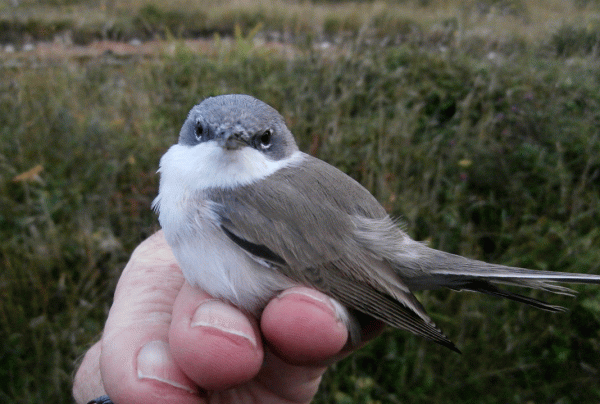
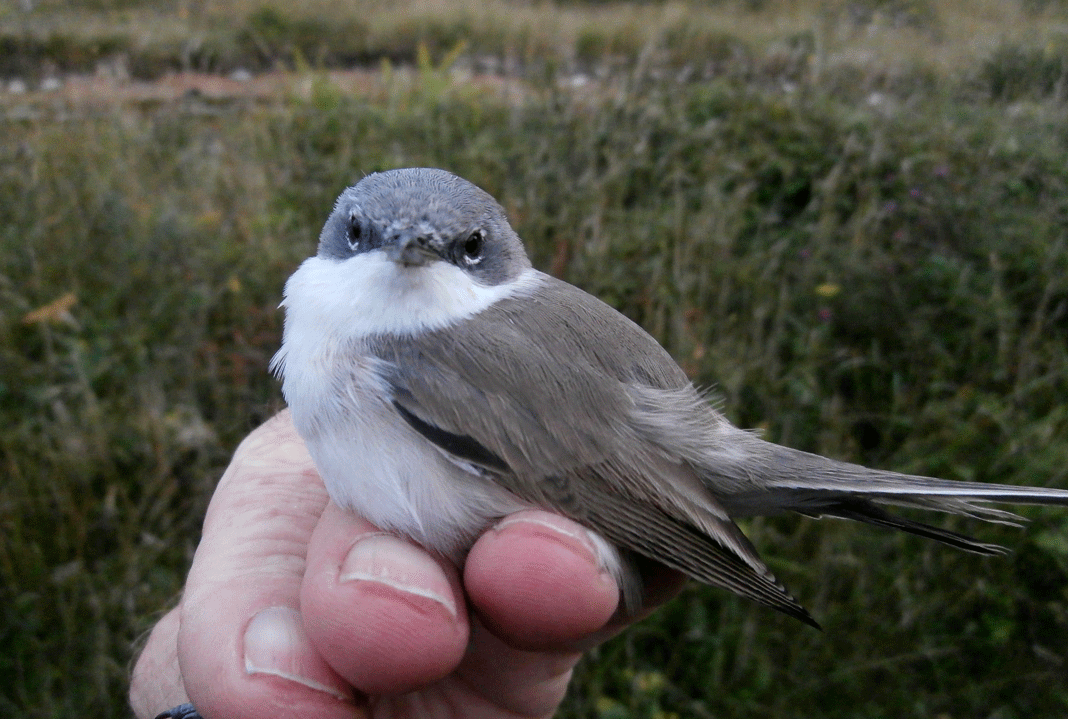
We have only ringed five Lesser Whitethroats this year.

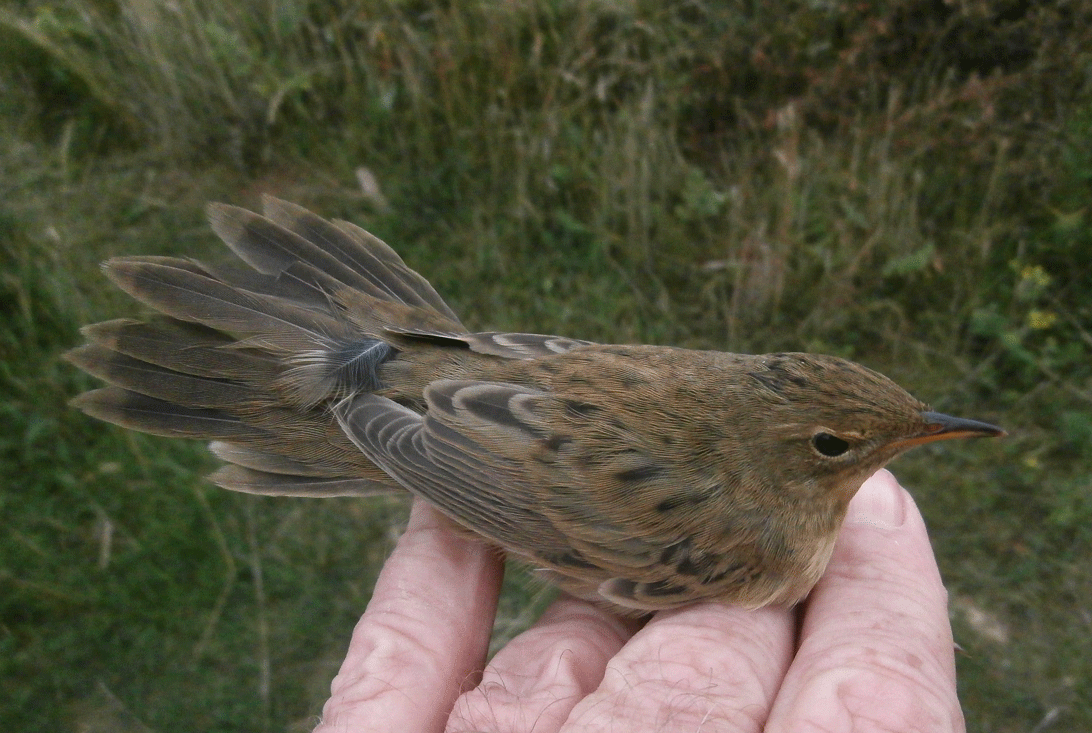
Grasshopper Warblers have also been in short supply both at Lytchett Bay and Durlston, where just this one bird has been ringed.
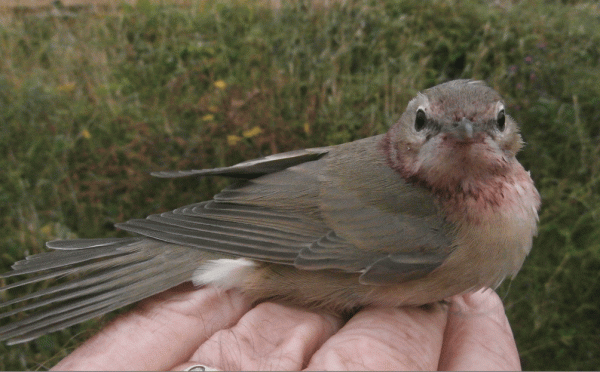
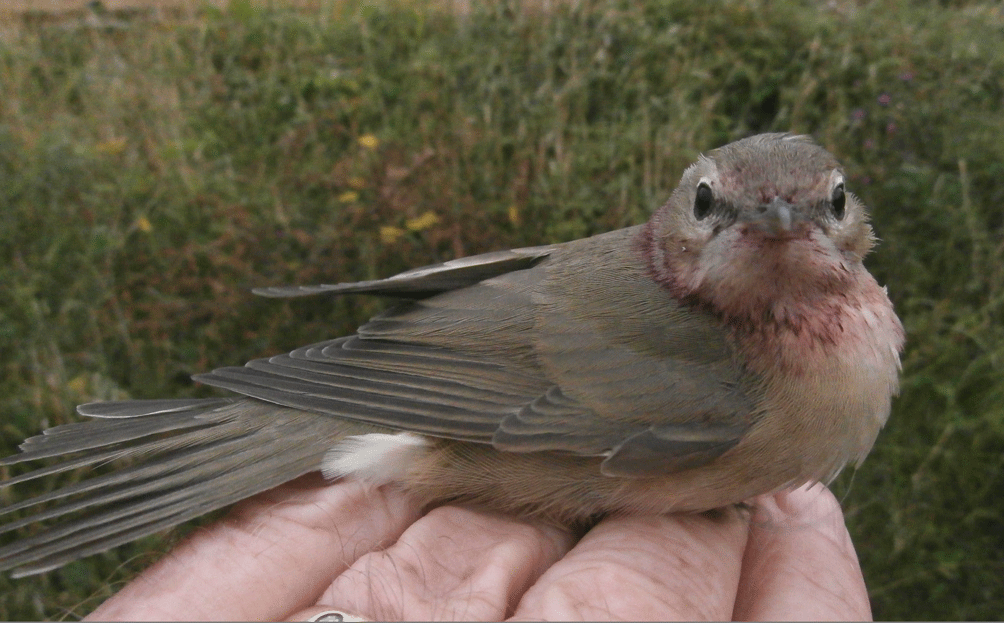
On the contrary Garden Warblers have been quite common, 37 have been ringed already compared with just 48 for the whole of last year, 22 were ringed on the 13th alone. Whether this represents a very good breeding season or just that a fluke of the weather brought them to Dorset remains to be seen. This bird has been gorging on blackberries hence the stained throat and breast.

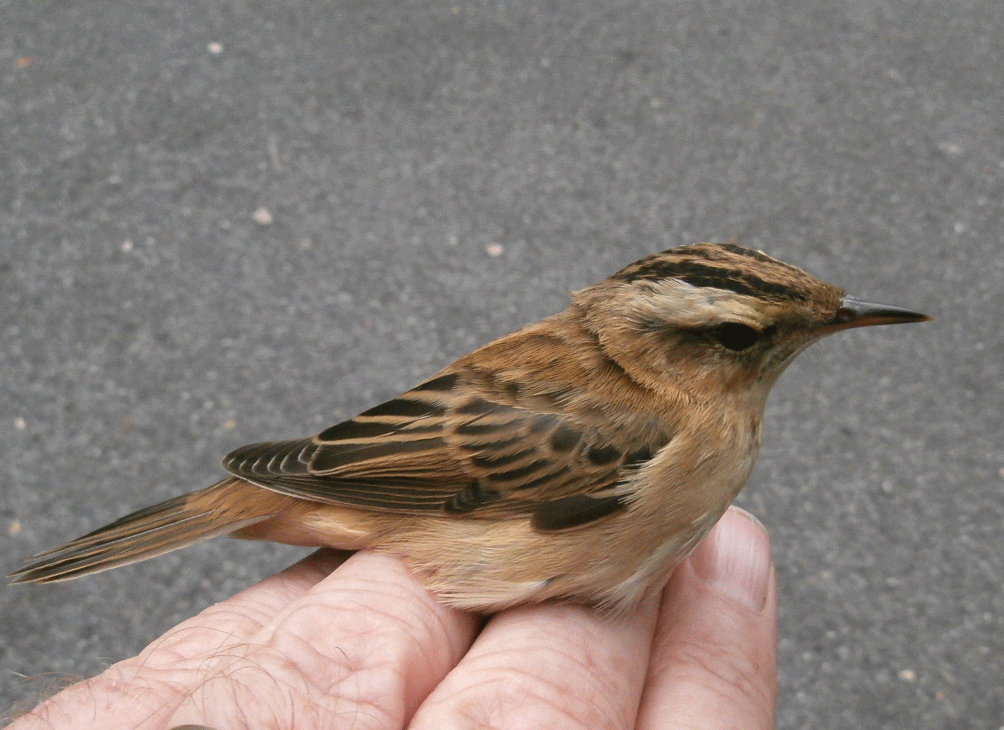
We have ringed quite a few Sedge Warblers at our reed bed site at Lytchett Bay but they have also been unusually plentiful at our Durlston and Fleets Corner sites.

On the 15th a visitor told us of a ‘swallow’ he had found on the ground which he had picked up and placed in his car. It proved not to be a Swallow but a recently fledged Swift, probably disorientated by the low cloud and mist. We tried to release it but it flopped to the ground. Simon took it into care and fed it meal worms and was able to successfully release it in the afternoon.

Note the scaly appearance of a juvenile caused by the presence of pale tips to the flight feathers, coverts and head.
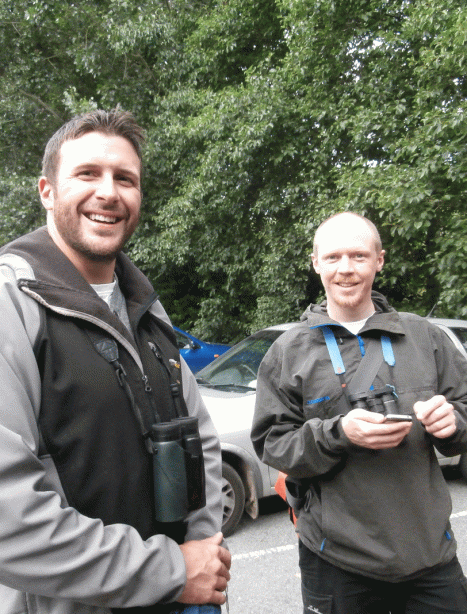
We have also started autumn ringing at our site at Fleets Lane Corner. Here Paul brings arctic Norwegian birder Tormud Amundson (R) along. Tormud is working with members of the Sound Approach on some interesting projects in the Poole area.

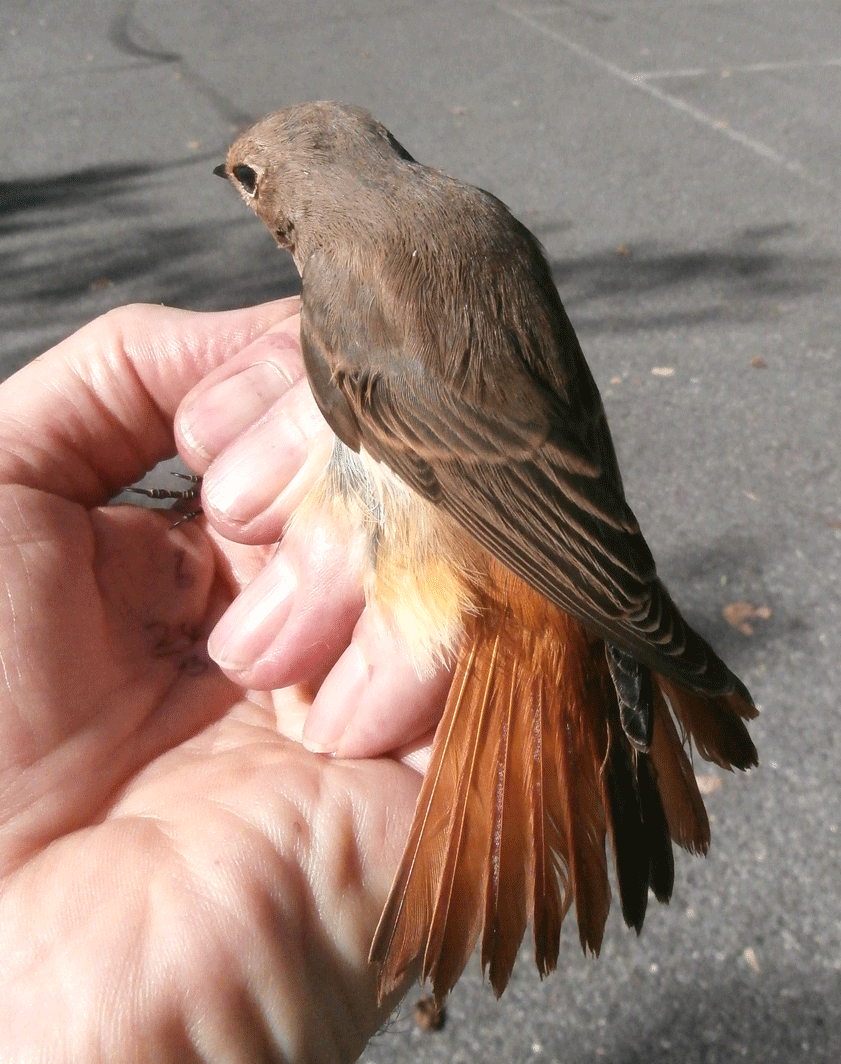
Ringing at Fleets Lane Corner has mainly involved recently fledged and moulting adult Dunnocks, Chiffchaffs and Blackcaps but a few arriving migrants have been present including Willow and Garden Warblers and most notably this first year Common Redstart.
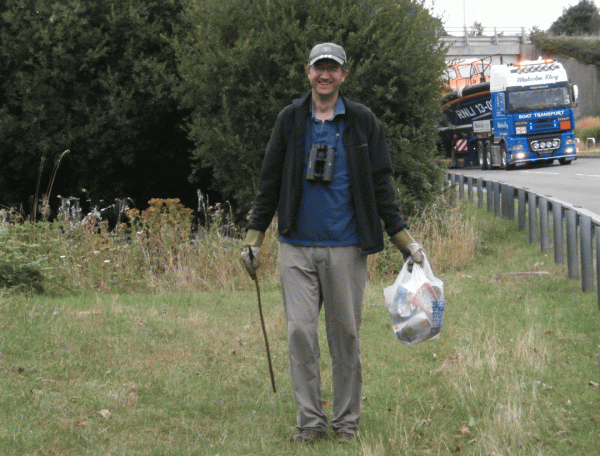
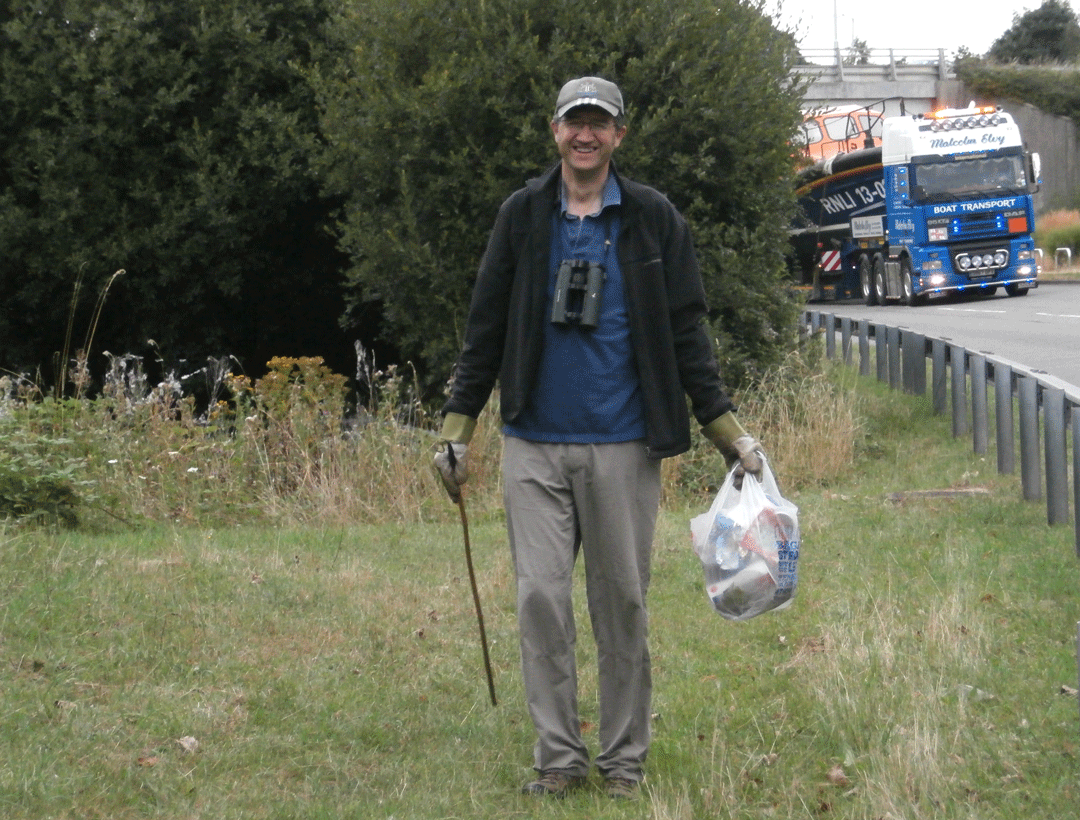
Poole Borough Council cuts have forced head of Environmental Services, Shaun Robson, to pick curbside litter in his spare time!
There has been a lot going on this week, too much for a single post, so here is a selection of other (non-bird) wildlife that I have been seeing plus a few family pictures.
There have been worries that Butterfly numbers were crashing following the last couple of bad summers but, in spite of the dreadful spring, the heat wave this summer seems to have turned things around and many species have been abundant.
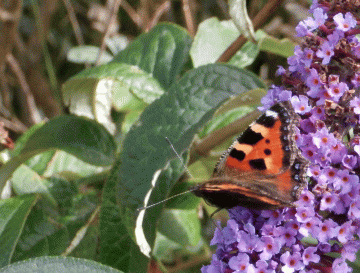
A buddleia bush at Durlston has hosted many species, including Dark-green Fritilary but the only species I got a reasonable shot of was this Small Tortoiseshell.

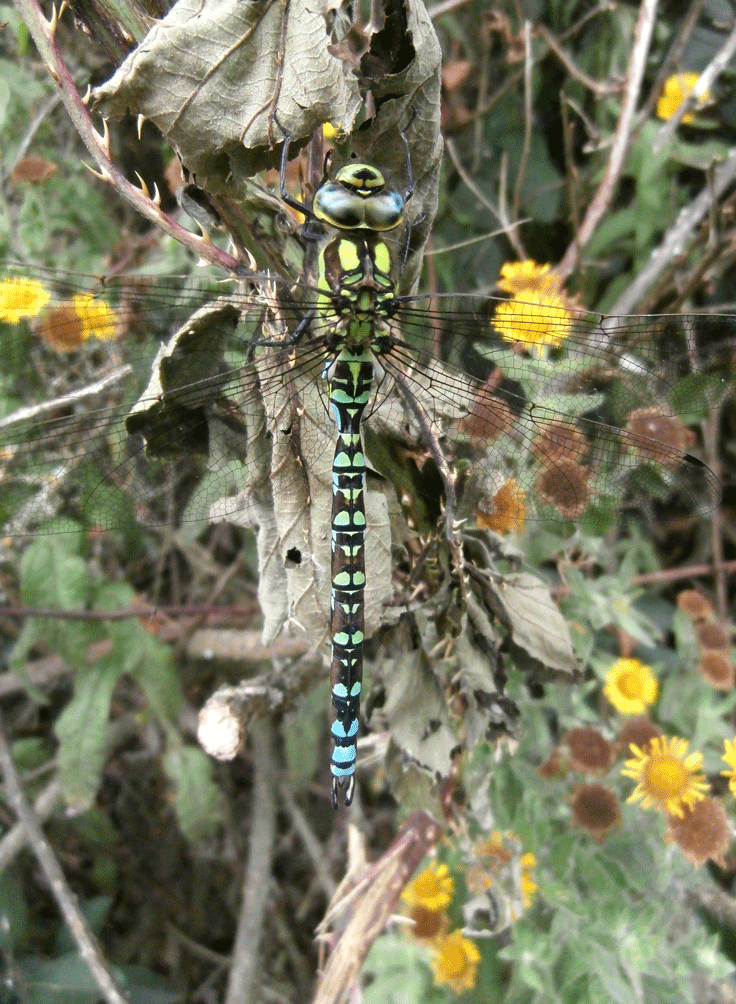
Also in the Durlston garden was this Southern Hawker Dragonfly (thanks for the info Nick)
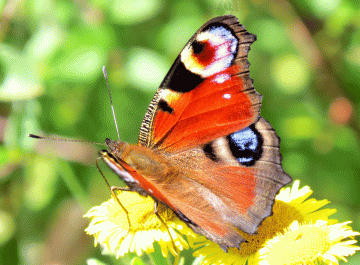
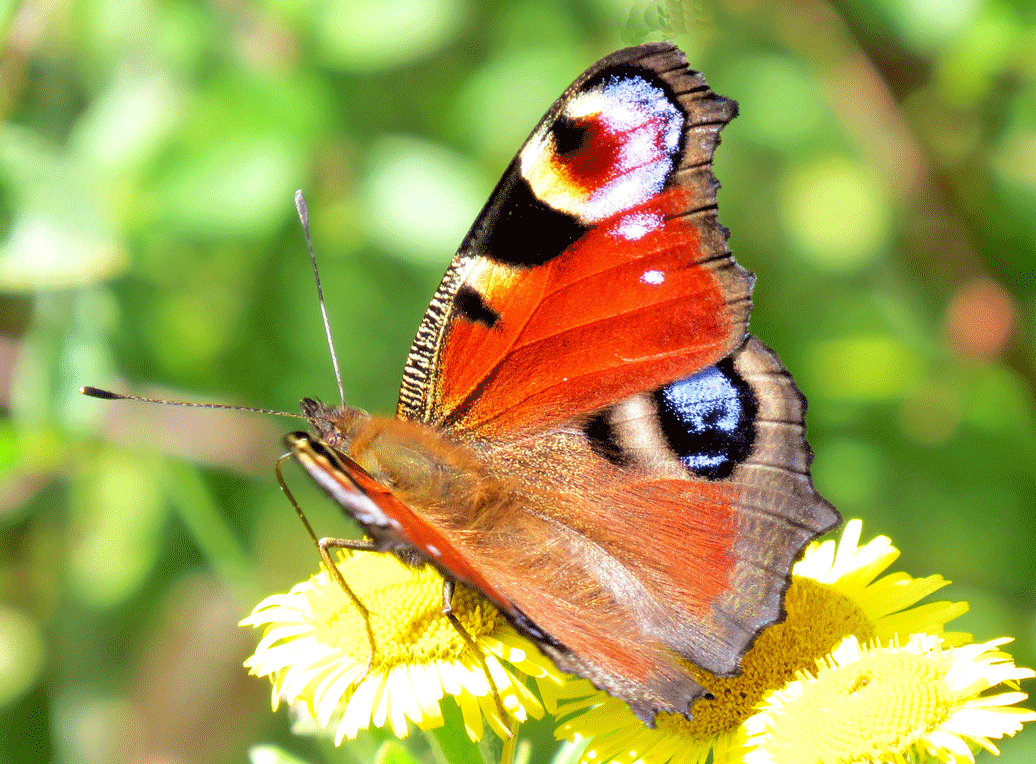
By far the best area for butterflies was Alner’s Gorse in north Dorset which visited late morning on Saturday. This common species is a Peacock.
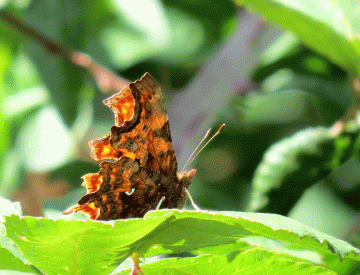
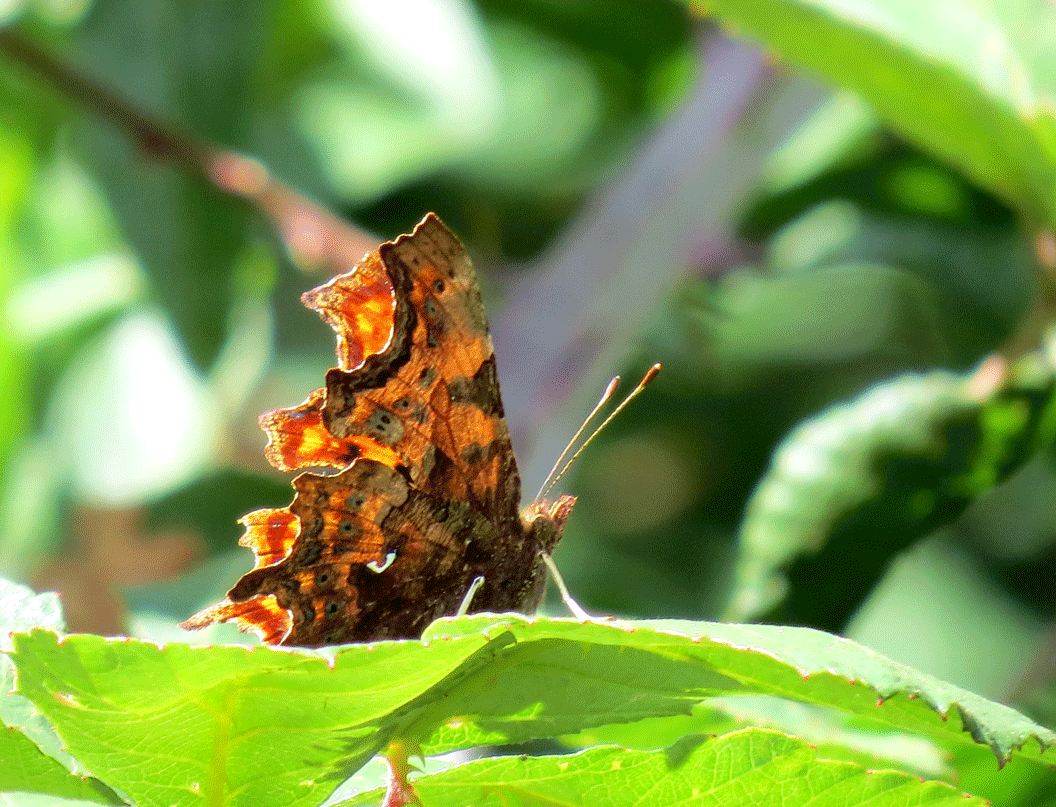
The Comma

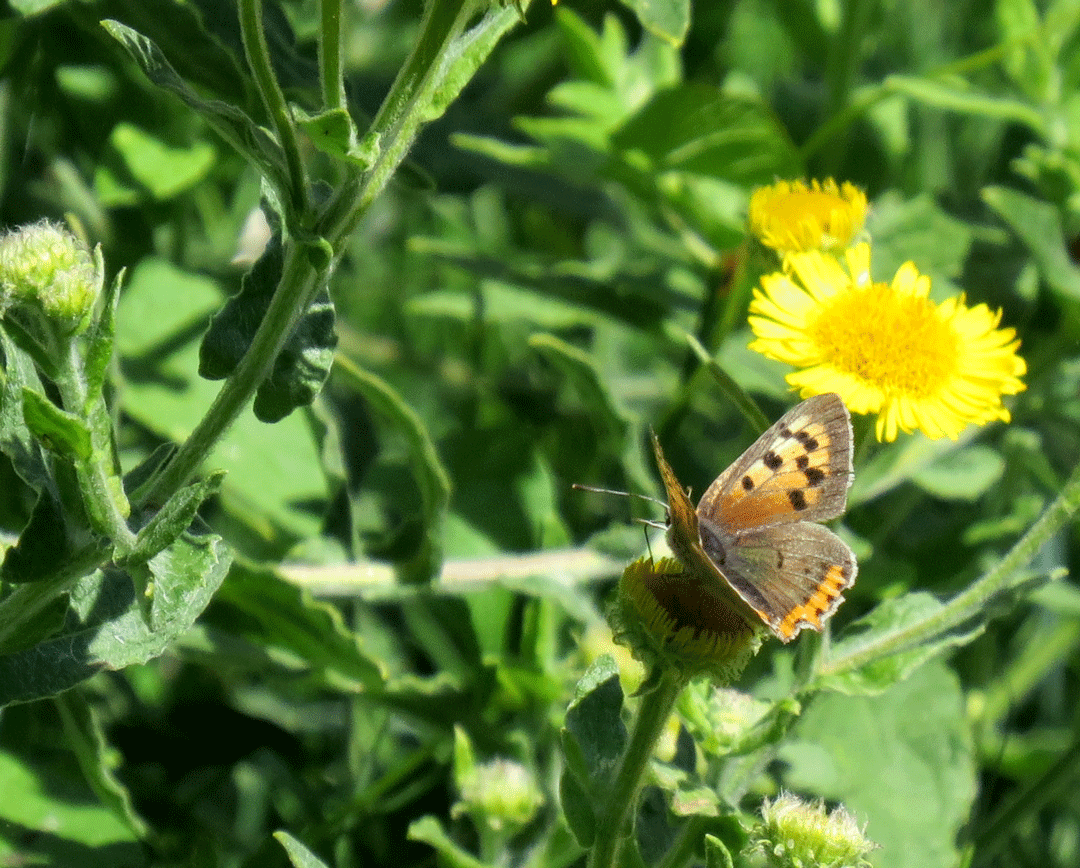
Small Copper
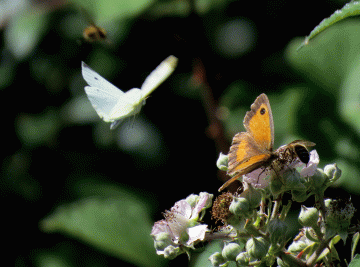
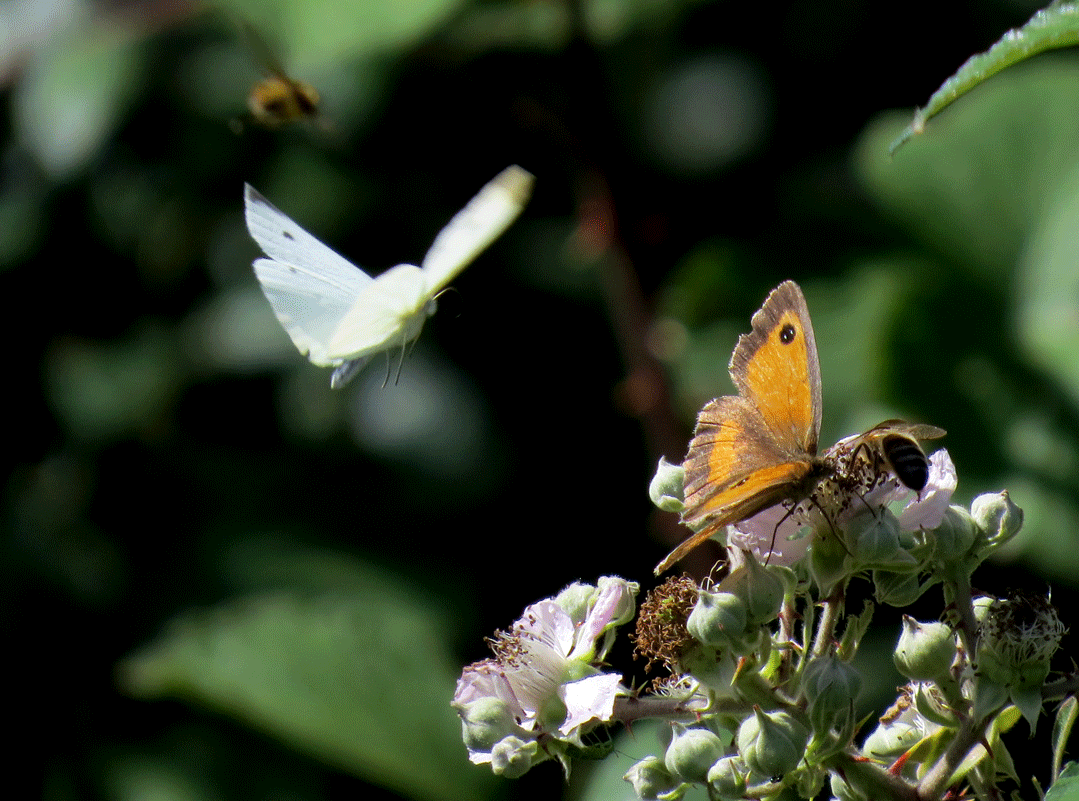
Small White and Gatekeeper

Silver-washed Fritilary
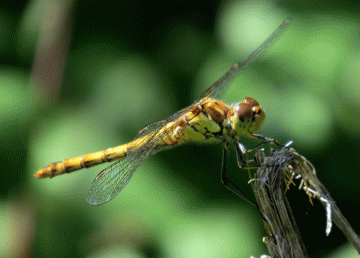
A Ruddy Darter dragonfly

The very common Speckled Wood.
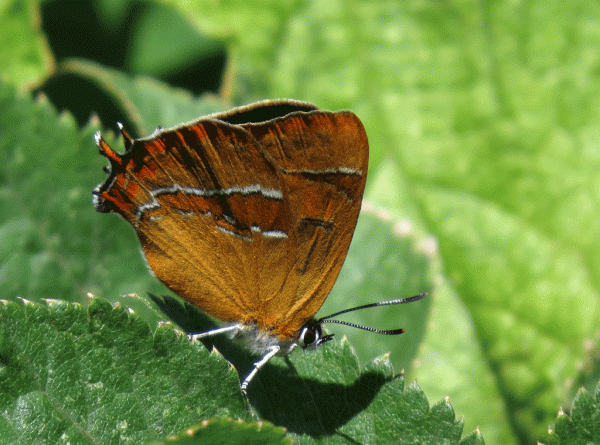
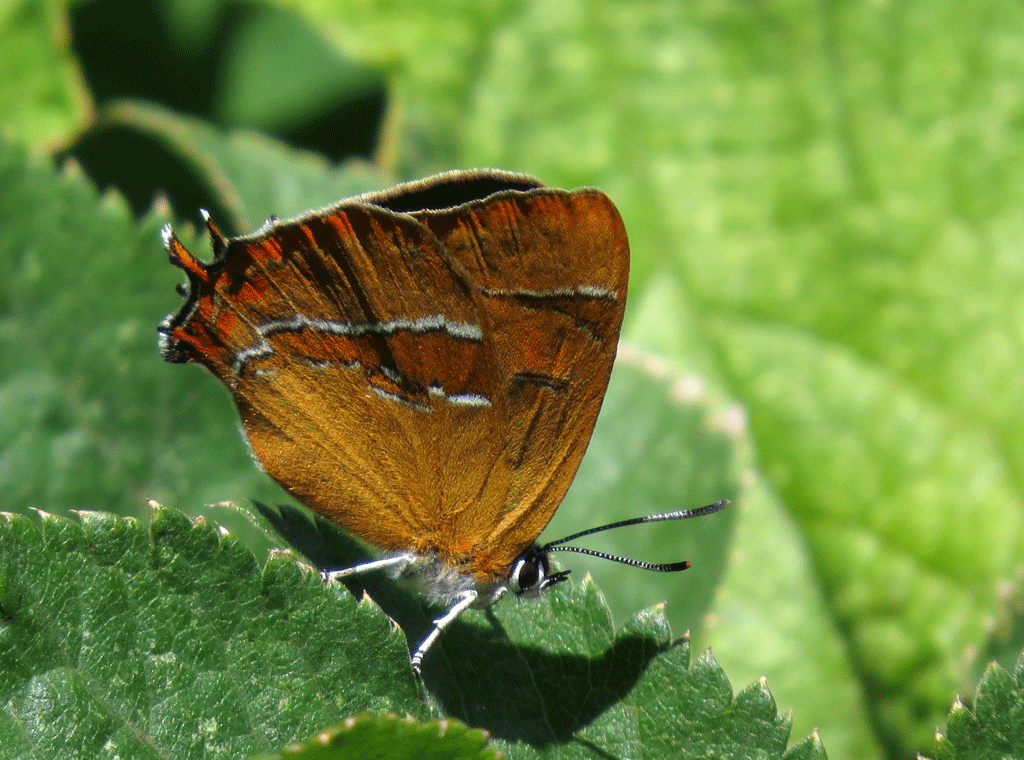
But it is these last two quite rare butterflies that we came to see – a Brown Hairstreak

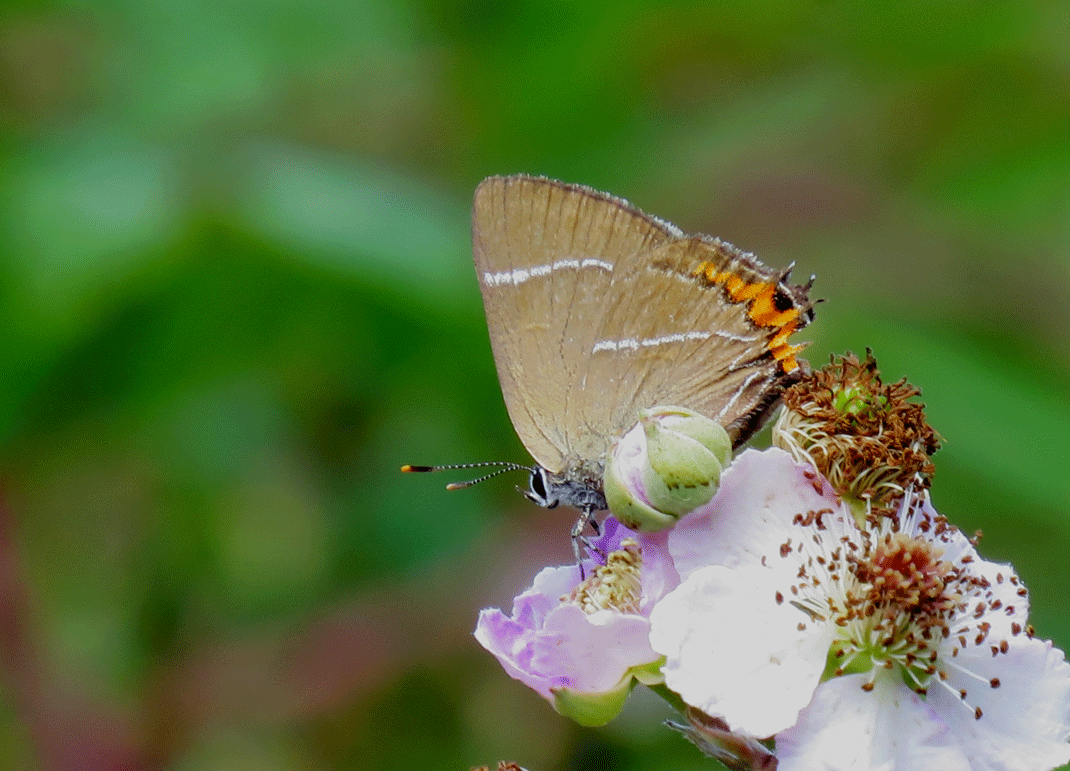
and White-letter Hairstreak.
Although I have probably seen most of the small mammals that occur in the UK (except I suppose the Orkney Vole) I am not 100% sure that I have identified them correctly as views of mice, voles and shrews are often so brief. Thus when the Dorset Mammal Group, of which I am a member ran a small mammal trapping session as part of the Durlston Bioblitz, I was there at 0630 to see them empty the traps.
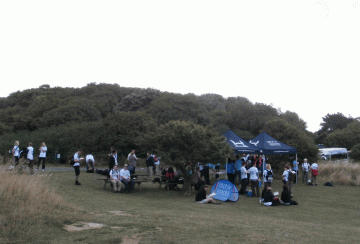
The Durlston Bioblitz wasn’t the only event going on that morning. A fund raising walk from Durlston to Lulworth in aid of Help For Heroes meant that there were buses full of contestants, stands and music playing all at 7 in the morning.

This is a Longworth trap for the live trapping of small mammals. 24 baited traps were placed in the Durlston garden overnight by DMG but in the morning 20 have been opened up and raided and four had vanished. No small mammals were found.
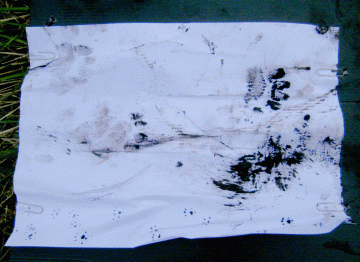
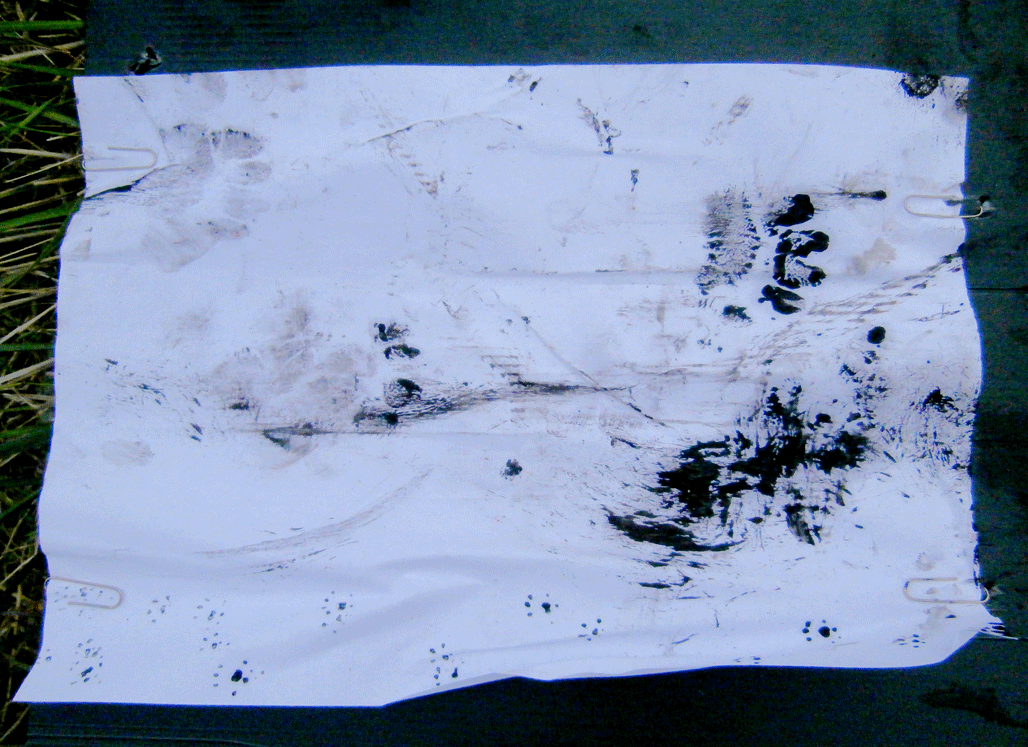
They also laid out tunnels with white paper and an ink pad to record footprints. The culprit is clearly a Badger, the black smear lower right is caused by its tail. Note some mouse footprints along the lower edge of the paper.
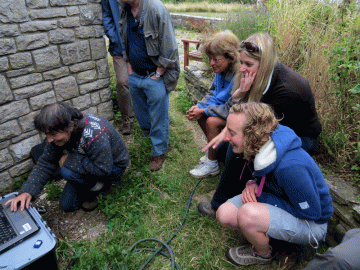
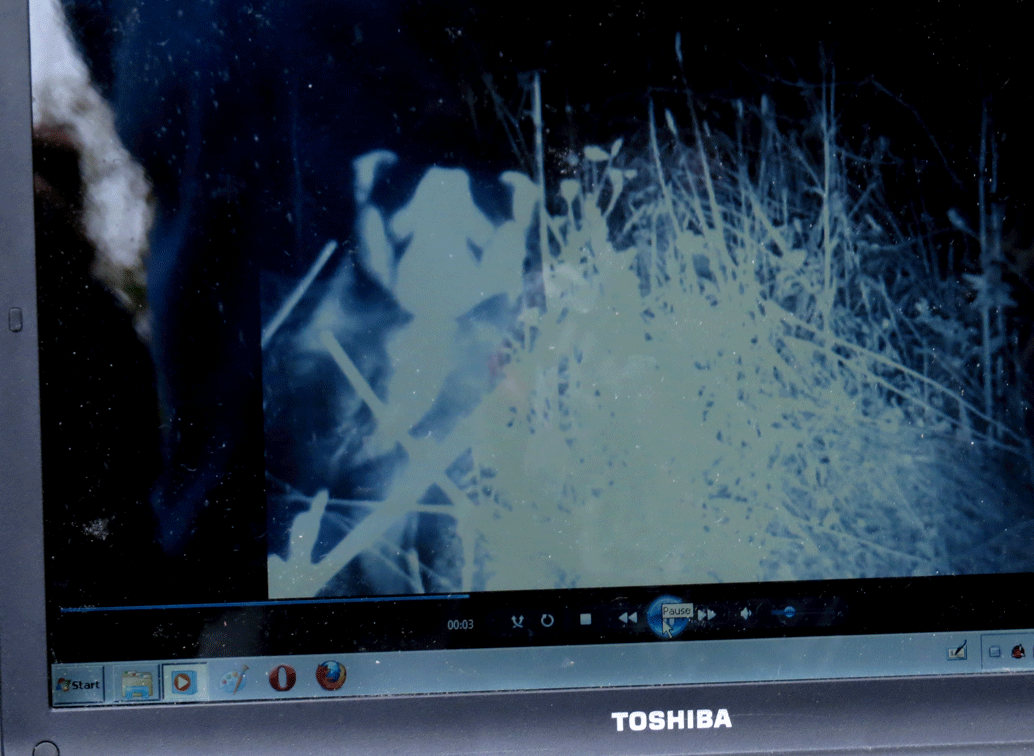
The group eagerly gathered around a laptop to see what had been recorded on the remote infra-red cameras.

Nothing we didn’t know already, it was Badgers that nicked all the bait and wrecked the traps. Apparently the final score on the cameras was three Badgers, one Fox and a tabby.
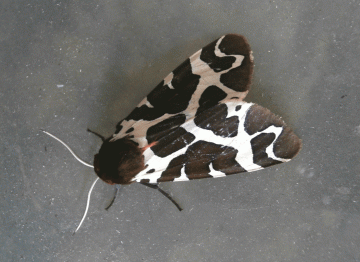
Also as part of the Bioblitz weekend Durlston staff ran several moth traps. About 100 species were identified including this beautiful Garden Tiger.
And finally for a few non-wildlife related shots.

How ever busy I am with wildlife related events I always make sure I have some time for the family. Here Kara attempts to show that she can go to sleep upside down.
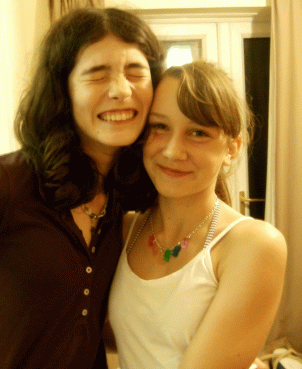
Kara and Amber have their friend from Southampton, Francesca, staying for a few days. They met Francesca when they first came to the UK and went to school in 2002. Once more the kids feel obliged to make faces whenever a camera appears.
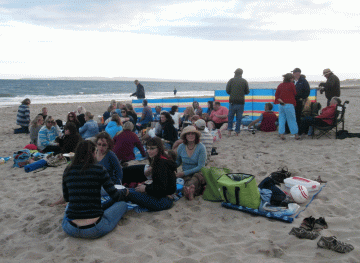
Anita and John have joined a ‘spiritual group’ who were having a beach BBQ at Boscombe. Unlike the last such BBQ it was cool and windy and we didn’t stay long. Anita, and her friend Donna, Janis and Margaret are in the foreground. Whilst they are all very nice people, I don’t share the group’s spiritual beliefs, as I tend to believe that phenomena need to be examined as part of a controlled, double-blind trial published in a reputable peer-reviewed journal before they are acceptable as fact. Perhaps I need in the words of the late, great Douglas Adams ‘an electronic monk to do my believing for me’ maybe even the deluxe version that is ‘capable of believing things they wouldn’t believe in Salt Lake City’ !
When you think of Afrotropical birds warblers probably aren’t top of the list, but Africa south of the Sahara has many interesting species.
About 120 species of warbler occur in the Afrotropics, of which around 30 are migrants from the Palearctic (all of which were absent in June at the time of our visit). Warblers used to be thought of as a monophyletic group, but are now split in anything from 9 to 16 different families, the majority of which occur in Africa.
Here are a few African warblers that we saw on the trip.

The cisticolas are a genus of at least 52 species, all but one of which occur in Africa. They are the bane of visiting birders due to their similarity but can be separated if seen well on size, degree of streaking, breast patches and most importantly voice. This Chubb”s Cisticola is submontane in its occurrence.
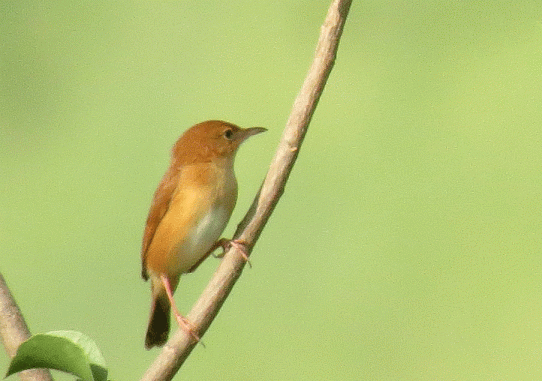
The small and uniquely coloured Foxy Ciscicola

Many cisticolas are named after their repetitive songs, eg Croaking, Rattling, Wailing, Chirping, Trilling, Whistling, Siffling (derived from the French siffleur – to whistle) and of course the more familiar Zitting. This Winding Cisticola was seen quite often in scrub habitat throughout the tour.

Red-pate Cisticola was first found in central Uganda by Birdquest a few years ago but are now quite common on route to Lake Bisina and appear to be colonising the area.
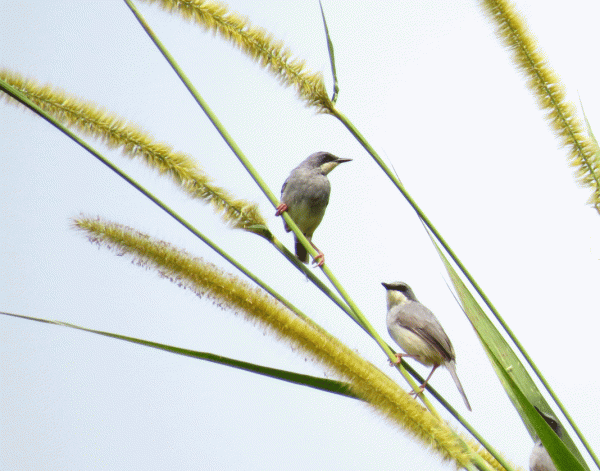
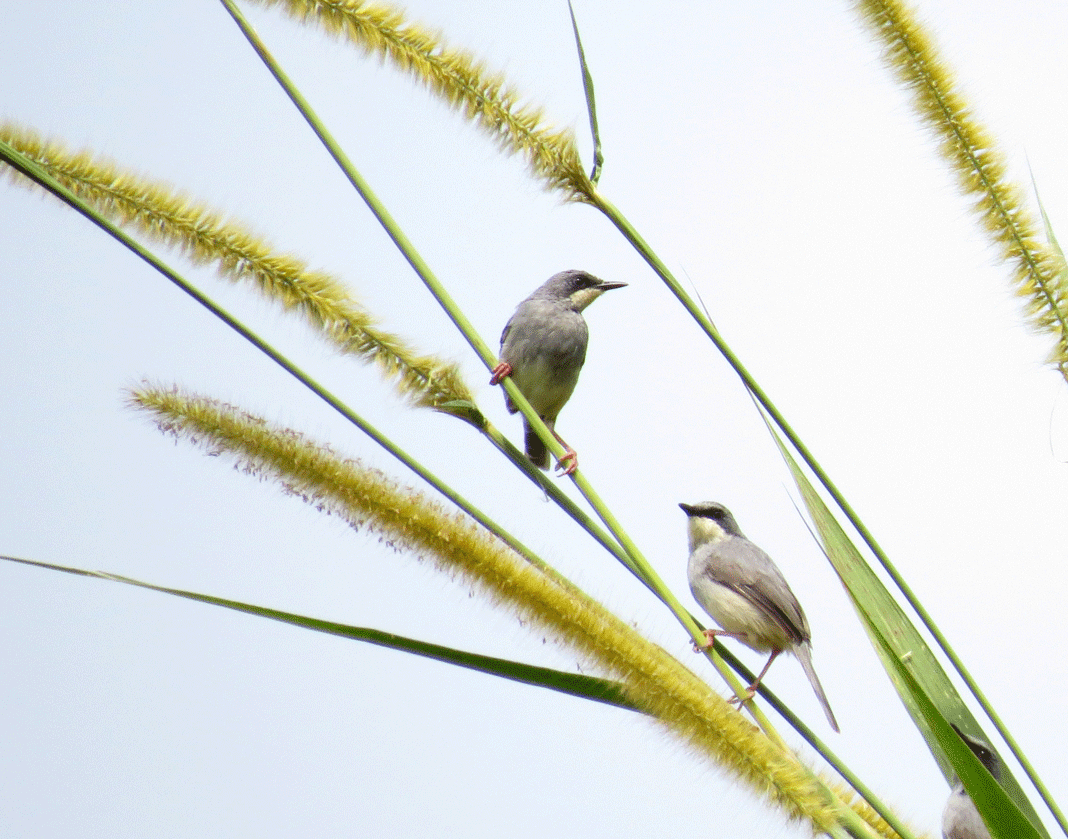
White-chinned Prinia. The dozen species of Prinias in Africa belong to the same family as the cisticolas.
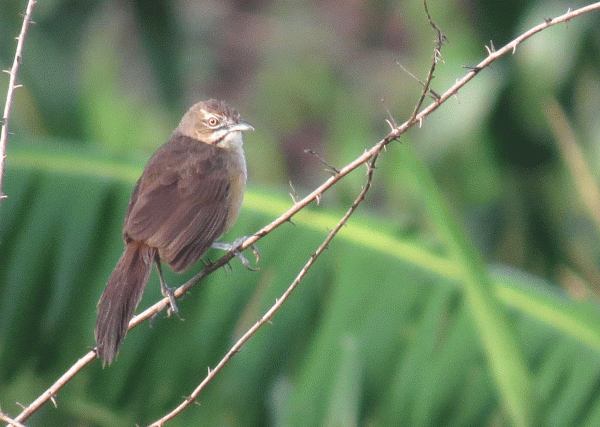
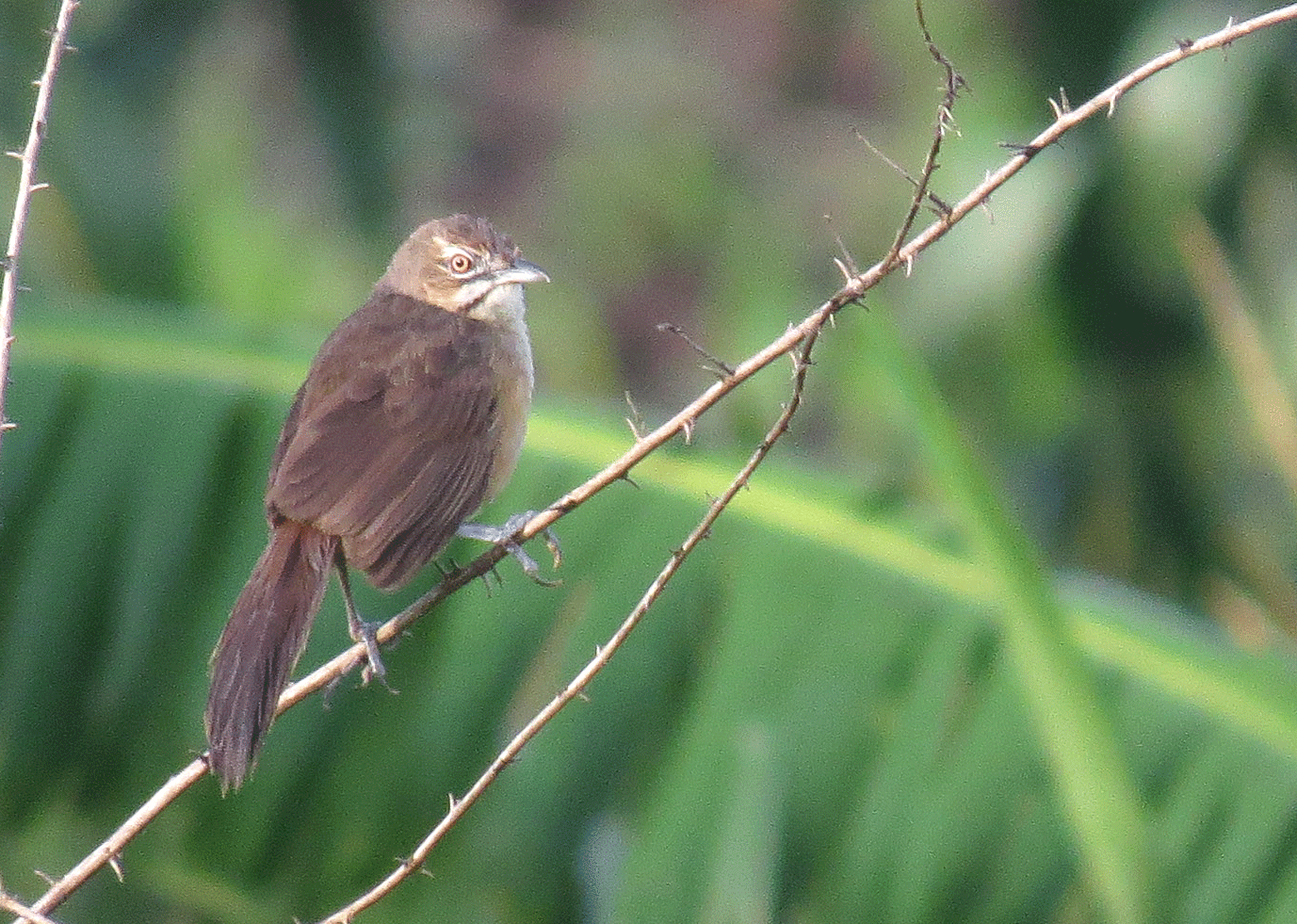
African Moustached Warbler. This enigmatic bird may be placed in its own family in the future.

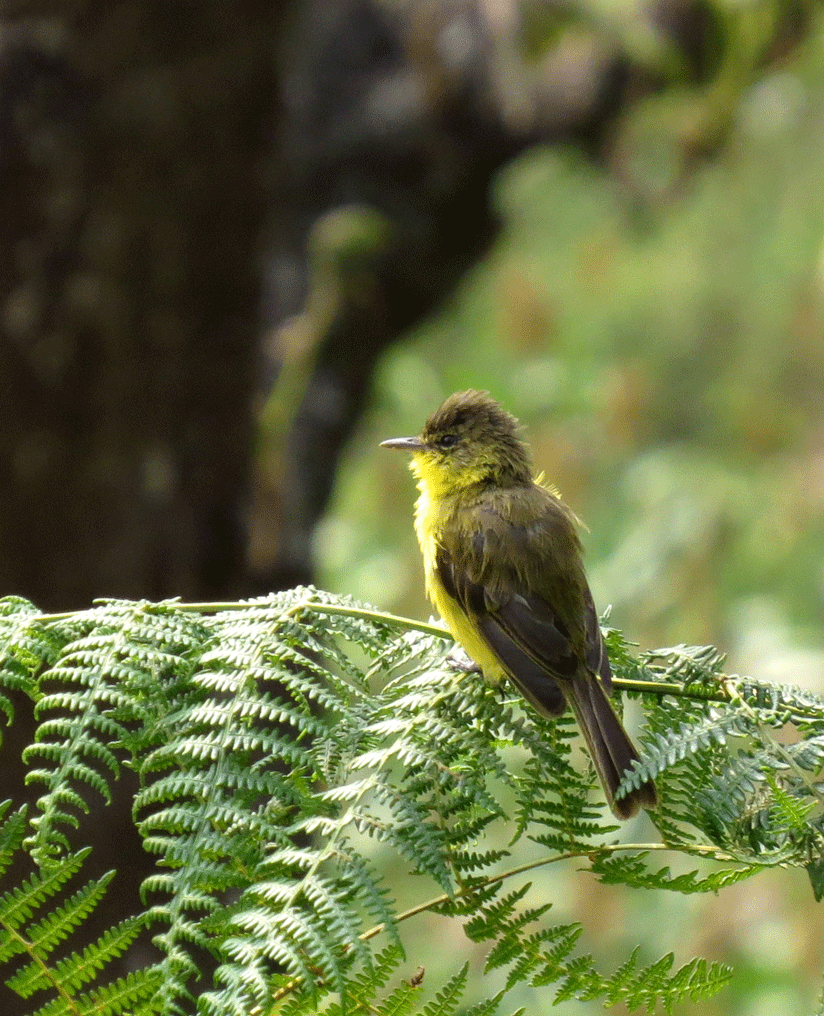
Dark-capped Yellow Warbler. This species surprisingly has been shown to be related to the palearctic, Booted, Sykes and Olivaceous Warblers whilst ……
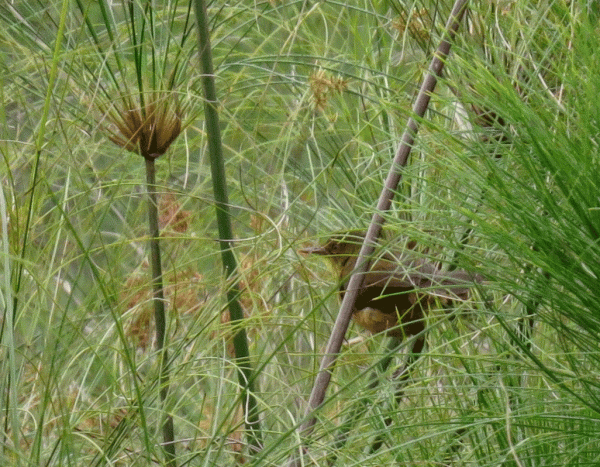
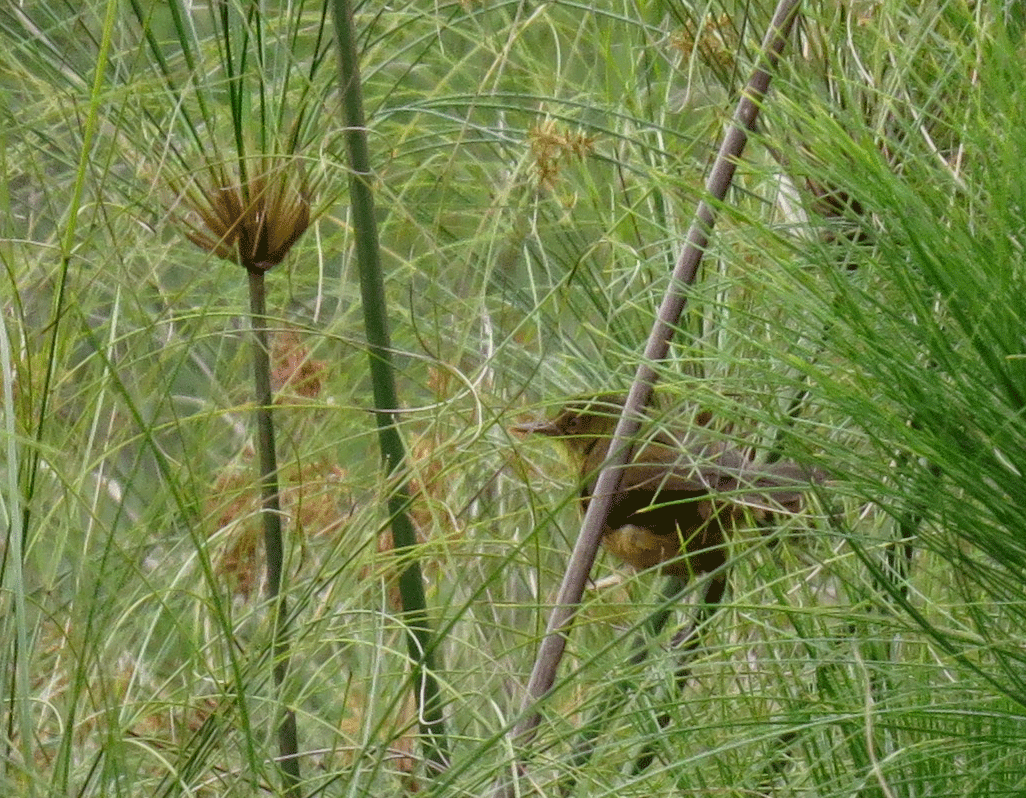
…. the similar Papyrus Yellow Warbler is placed in a different genus. This bird has a very restricted distribution in papyrus swamps of central Africa.
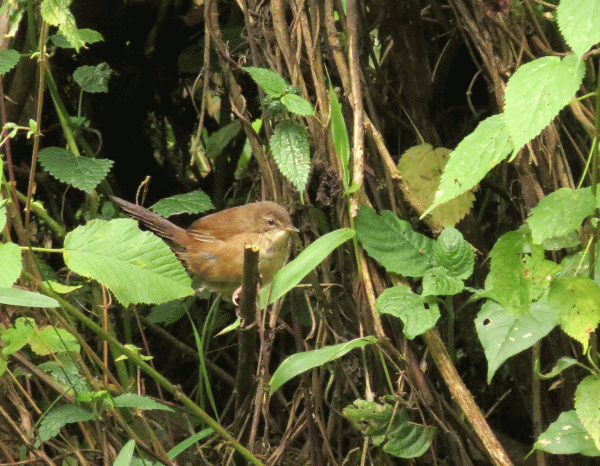
Evergreen Forest Warbler. I wanted to call this ‘nevergreen forest warbler’, I’ve seen it on a few trips and they have always been brown.
I was intending to update the blog tomorrow with an account of this week’s events, but in view of today’s ringing success I’ll do a quick post, just about Tuesday.
Shaun and I met at 0600 at Durlston and as there were only two of us we only erected three nets. As on Saturday we were very busy from 0630 to 0730, then it tailed off quickly. Apart from the 76 Willow Warblers that we ringed, the most notable feature early on were the number of Garden Warblers (22 were in total, a new record for the site) and two Common Redstarts. By midday when I packed in we had ringed 117 birds
At 1030 I extracted a Melodious Warbler, this is a scarce but annual migrant in Dorset mainly in August, breeding as close as northern France. However nearly all Dorset records come from Portland and although I have seen several in the field I have never seen one in the hand. Unfortunately Shaun had to depart for work at 0930, so I was alone when it was trapped, but Hamish Murray was still in his office nearby and was able to get to see the bird.
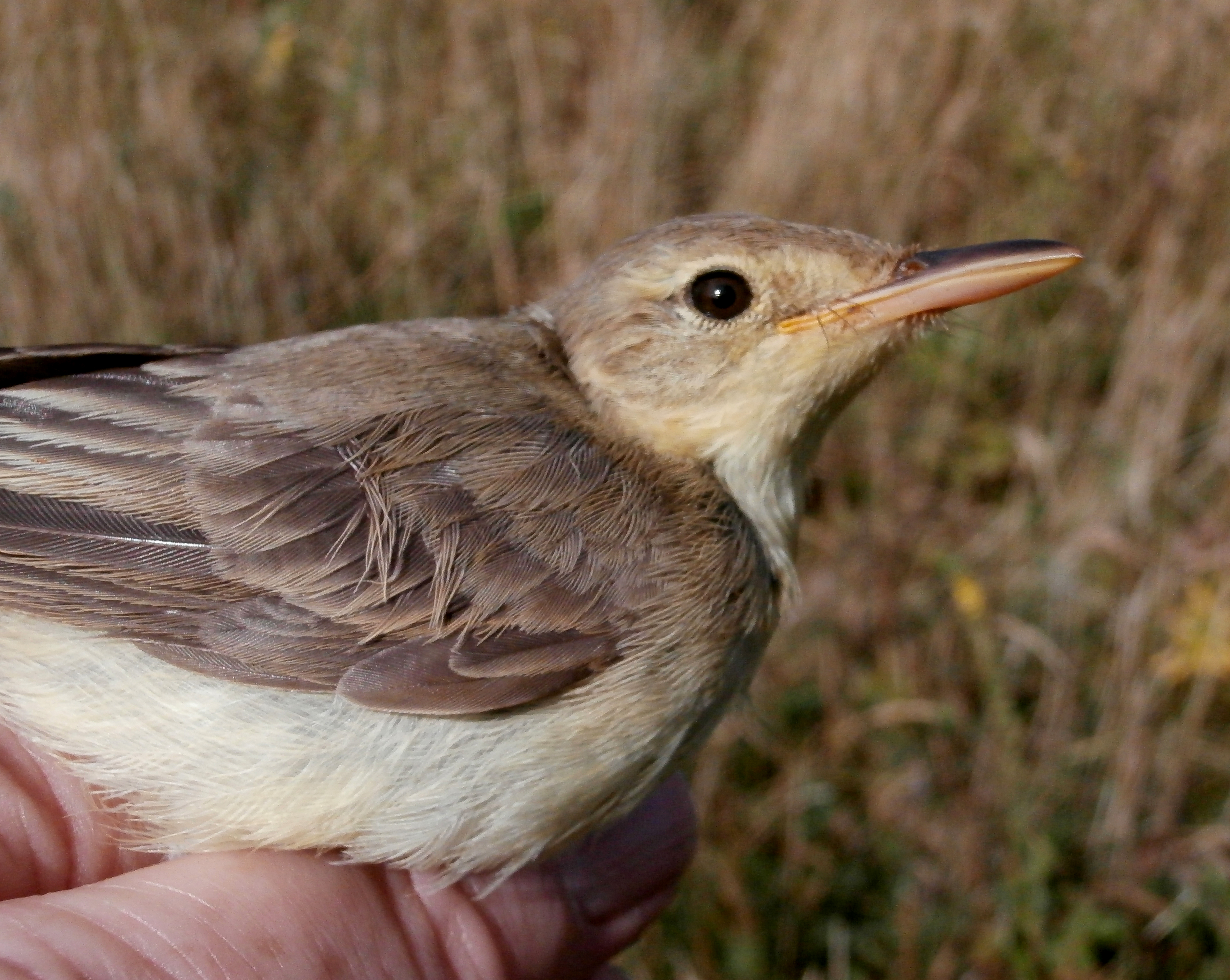
Melodious Warblers belong to the genus Hippolais, members of which have typically wide based bills, square ended tails and short undertail coverts. Melodious is best told from its closest relative, Icterine Warbler, by the short primary projection, i.e the degree to which the primaries extend beyond the exposed tertials. Compared to the Willow Warbler that was trapped at the same time, it had a similar wing length of 66mm but was a larger, stockier bird with a much heavier bill.
This was certainly the highlight of my ringing this year, I just wish there had been another ringer present to enjoy it.

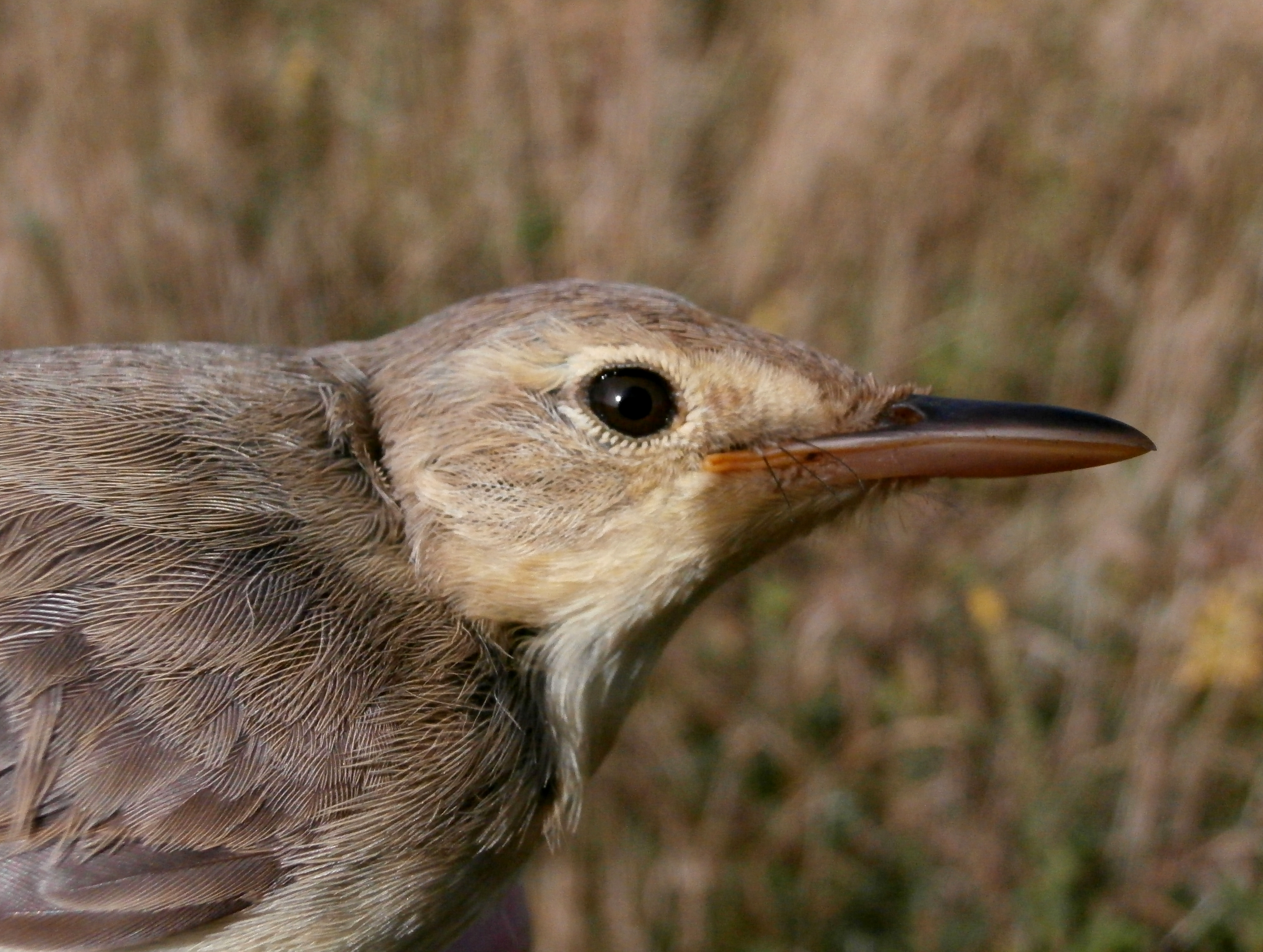
The plain face caused by the weak supercillium and pale lores, along with the stout, broad-based bill indicates a Hippolais warbler. The visible primary projection is only about half the length of the exposed tertials (equal in Icterine), with 7 primary tips showing. The tail projection beyond the tip of the primaries is at least twice the length of the exposed primaries (equal or less in Icterine) and the 1st primary extends well beyond the primary coverts (equal in length in Icterine).

As expected this was a fresh first year bird, like Acrocephalus warblers, adult Melodious moult on arrival on their winter grounds and hence would be abraded at this time of year. In the shade, the subtle yellow wash to the plumage in this species was more obvious.
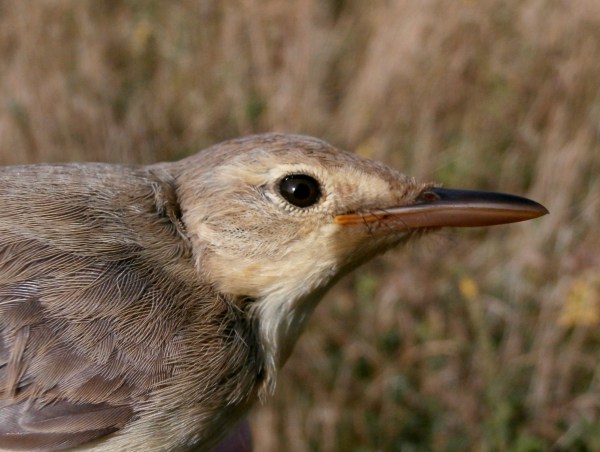
Unfortunately I have cast a shadow over the stonking bill.
An update of last weeks activities. Several of the photos were taken in poor light, so I have kept the image size small to compensate for poor quality.
On Tuesday 30th there was a large gathering of Poole birders in the Blue Boar. Mark Constantine had invited his Sound Approach colleagues over from Ireland, Netherlands and Portugal to meet legendary American bird sound expert Don Kroodsma. All together there were 20 of us and we had a excellent time exchanging news and views. Apparently the Sound Approach spent several days with Don. Mark later described the experience of having all his pet theories about bird vocalisations dismissed by an expert as being like the following Monty Python sketch – where Mark, of course, is the guy on the right!
http://www.youtube.com/watch?v=xCwLirQS2-o
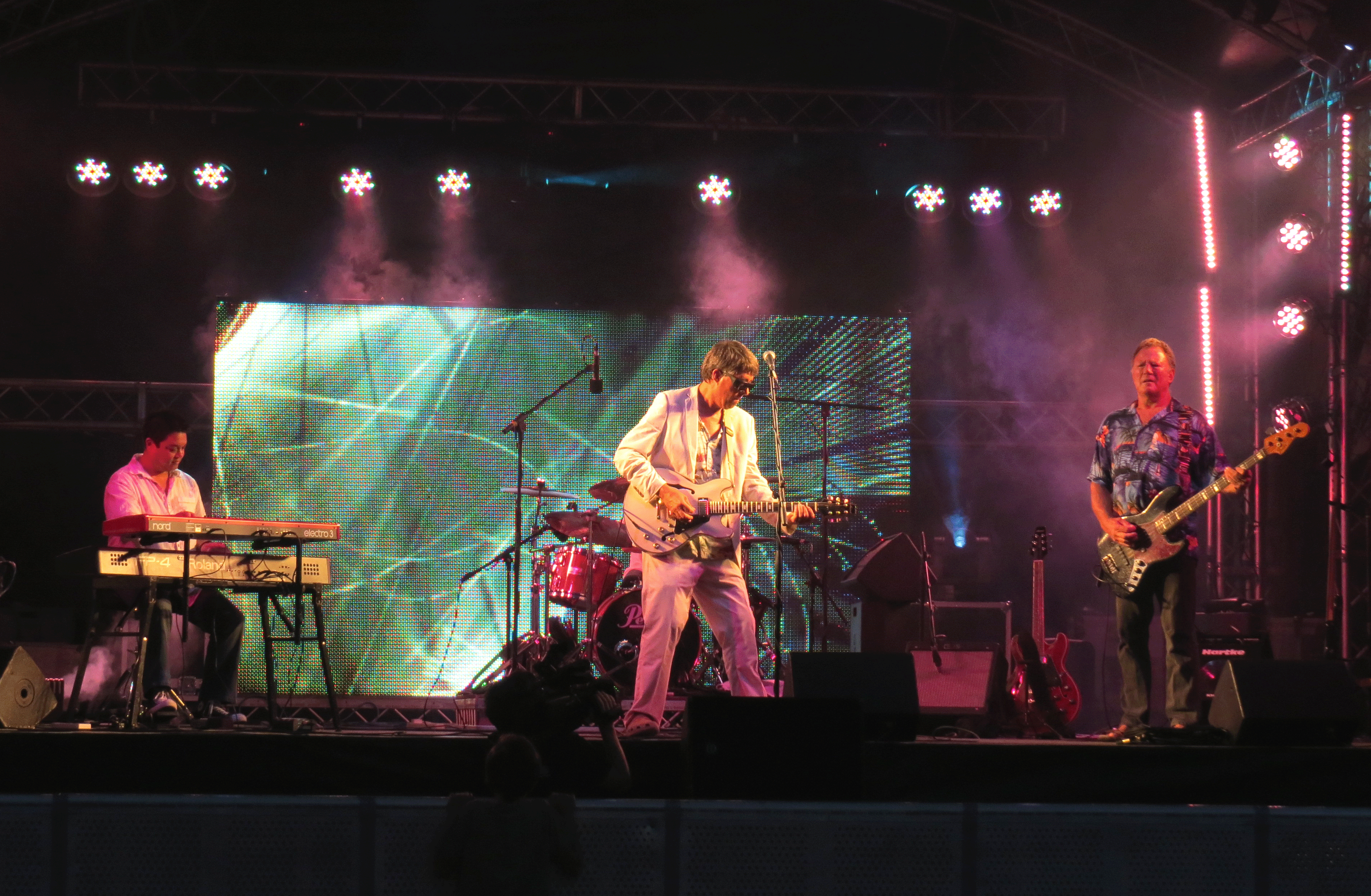
On Friday we joined Amber, Kara and her friend Lillie, John, Anita and two of their friends to see a band called the Producers who were playing near Bournemouth Pier
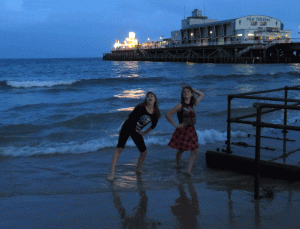
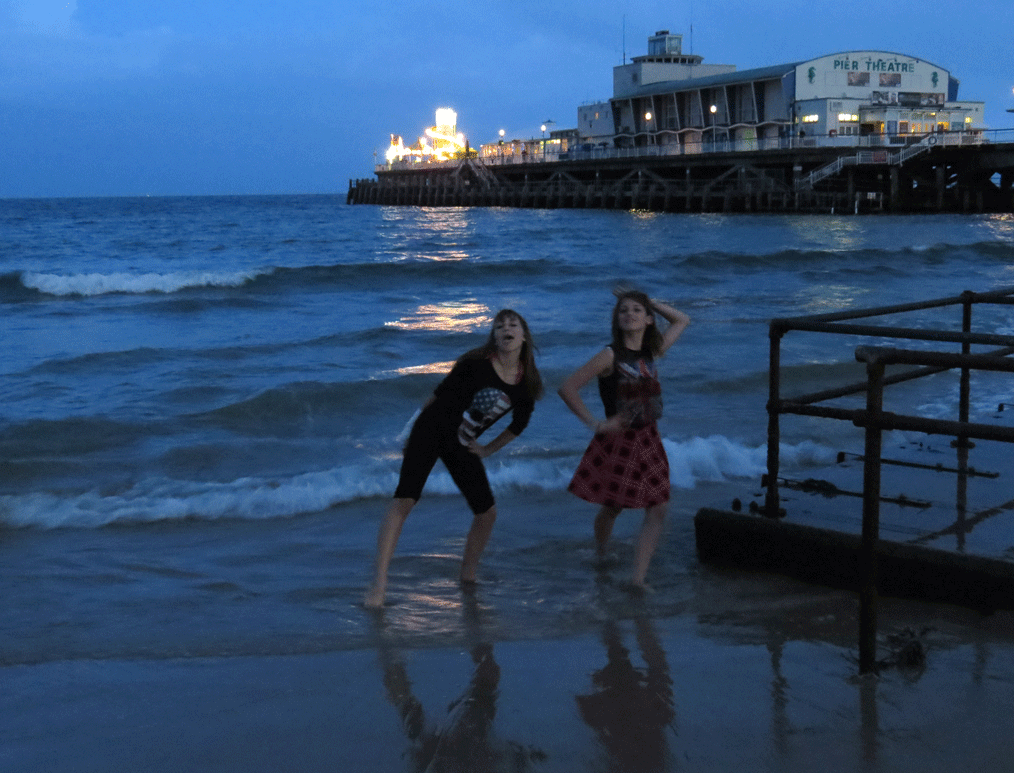
Kara and Lillie went for a paddle in spite the fact it was getting dark and was quite cool
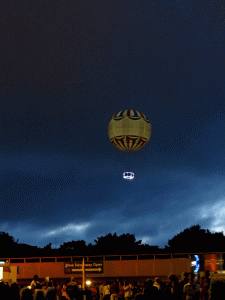
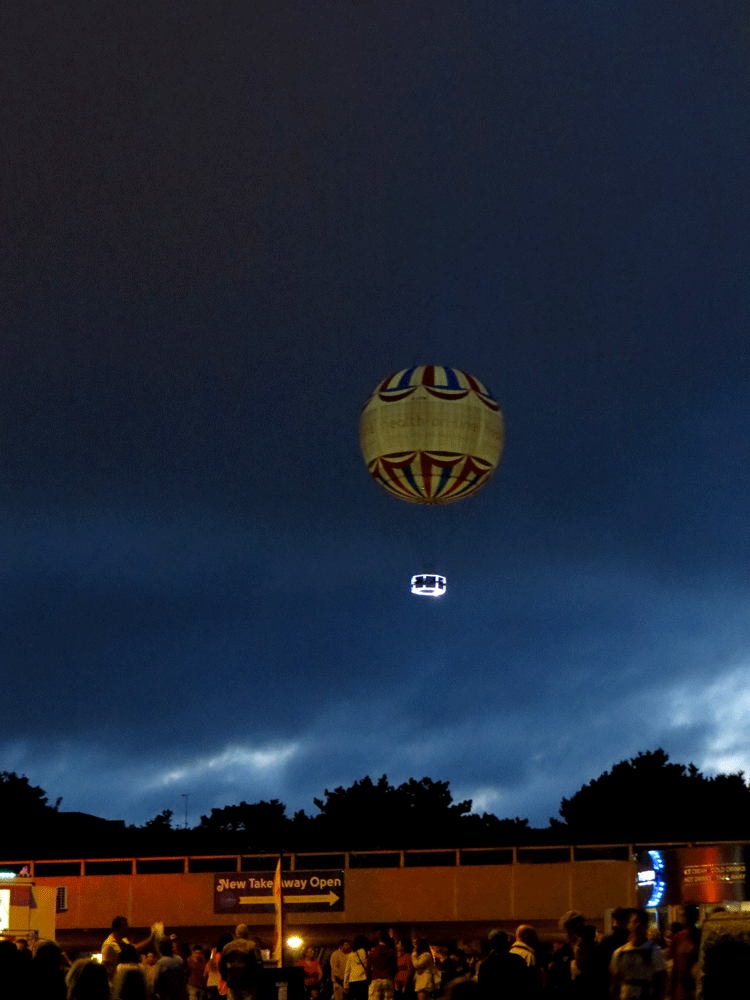
The Bournemouth Eye is still operating even after dark.
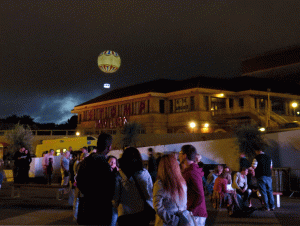
The area was packed with holiday makers, either watching the band or waiting for the fireworks to start
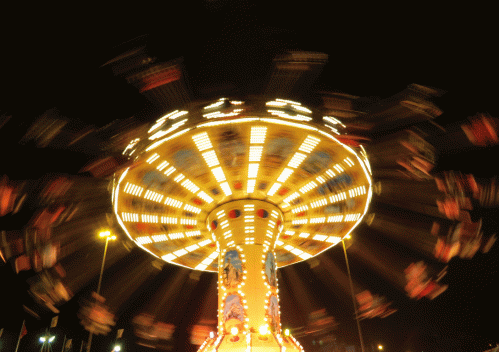
Scary rides were in operation ….
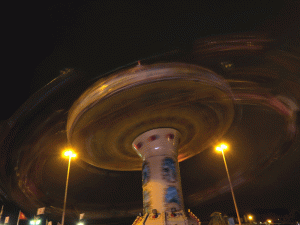
It looks like the ride has really speeded up but in reality I just used a slower shutter speed.
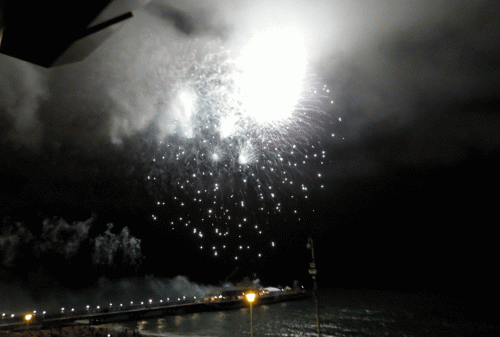
The fireworks started at ten but it started raining heavily, so we retreated to the bar of the BIC which gave a grandstand view in the dry.
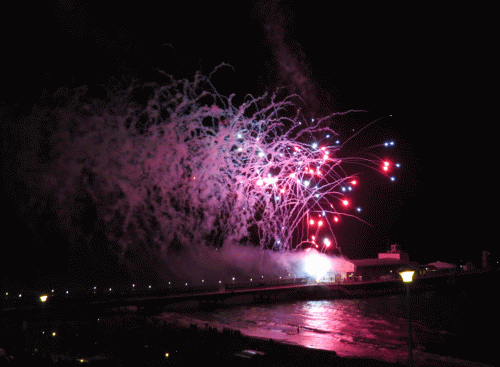
Both Bournemouth and Poole put on firework displays during the summer months, the ones at Bournemouth are set off at the Pier.
Walking back through Bournemouth Gardens at night

Kara and Lillie love hamming it up for the camera. Kara has damaged her hand whilst doing Taekwondo, its the fifth time this year she has been to A&E, she needs a frequent flyer pass!

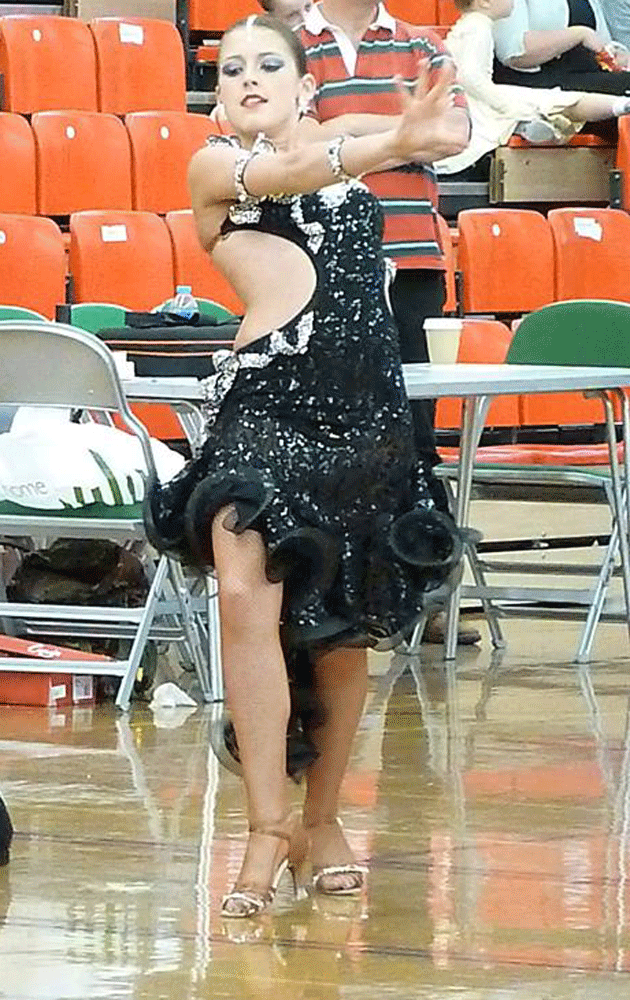
We didn’t realise until Monday evening when we visited Janis and the girls that Kara’s friend Lillie is a champion dancer in her age class. Here she is in competition, dancing the paso doble
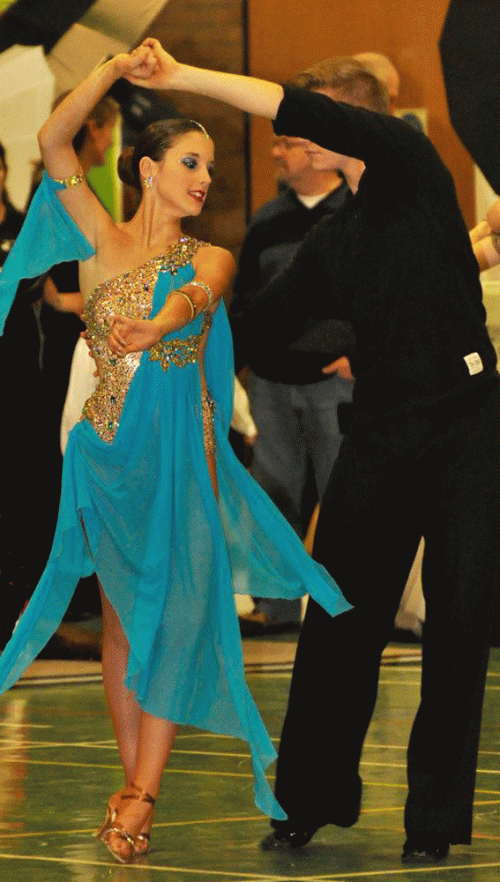
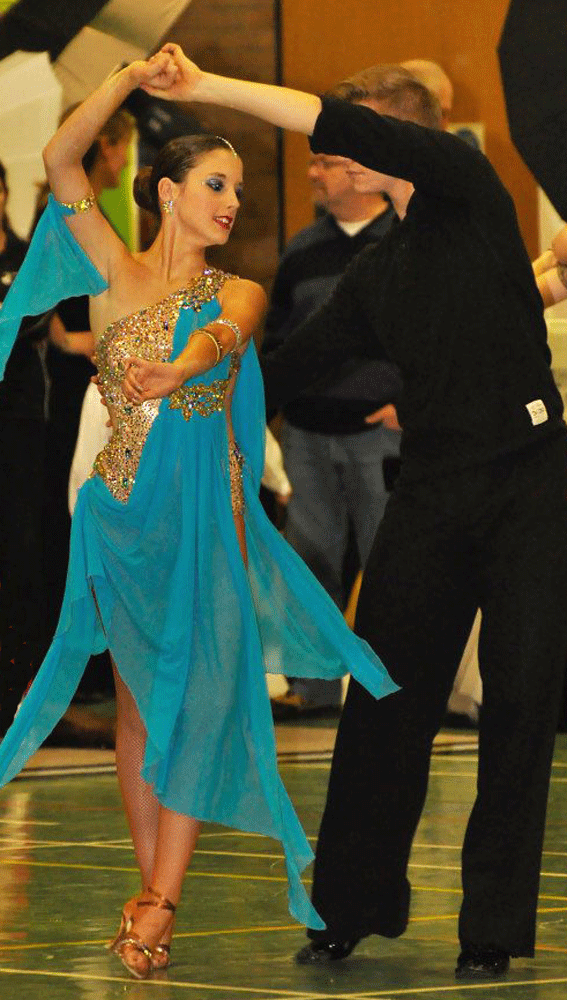
.. and here dancing the rumba
At 0530 Saturday morning I went down to Lytchett Bay to join the other ringers. Bob and Shaun had put up the nets the night before and furled them after dark. I was surprised to see no-one else there. Then I checked my phone – I had a message saying ‘canceled, meet later to take down’. Apparently at 0400 it was blowing a gale and raining. As it was now fine we hastily reconvened and had a successful morning. If I had checked my phone before departing, none of that would have happened.

Here Bob is using the group’s brush cutter to prepare a new net ride.
Later in the day Margaret invited a number of friends over for lunch and we were later joined by Janis, Anita and John. We spent the afternoon chatting in the conservatory and eating the lovely food she had prepared.

Clockwise: Margaret, Angela, Christine, Jennie, John, Anita and Janis.
Sunday morning was the reverse of Saturday. I was up at 0430 and by 0500 I was at the end of our road waiting for a lift from Shaun to Durlston when he phoned to say he had heard it was blowing a hoolie in Swanage. I suppose I should have carried on and gone seawatching at Portland or Durlston, but I’m afraid I went back to bed. Margaret and I later joined some of our friends from the Phoenix (formerly Nexus) group for a walk.
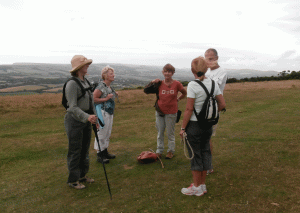
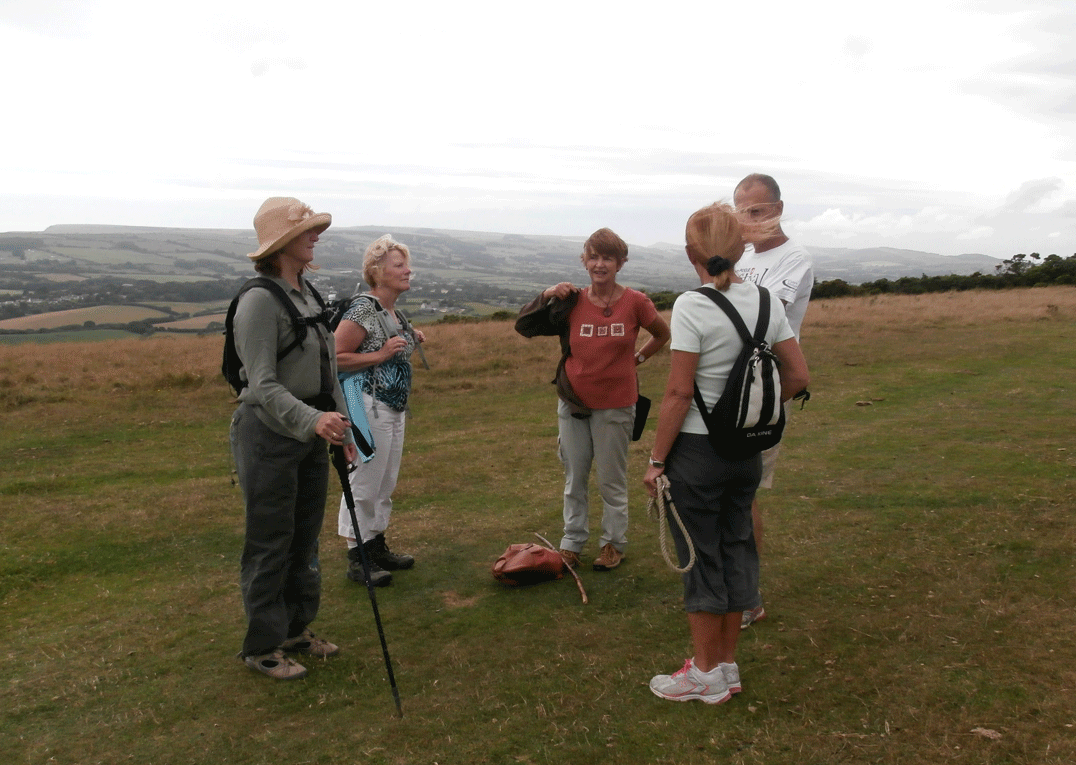
It was a small group of Nexuns who set off from Ulwell to Corfe Castle on a fairly grey and windy morning.
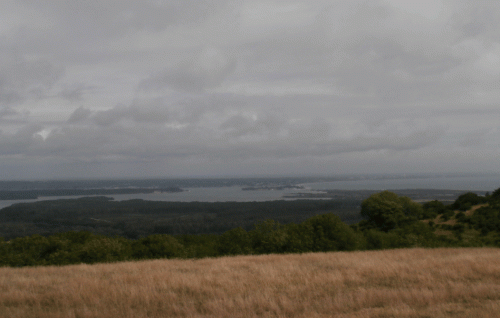
The walk was from Ulwell gap along the chalk ridge to Durlston where we had lunch and then back. about seven miles in total. There is a fine view over Poole Harbour from the ridge.
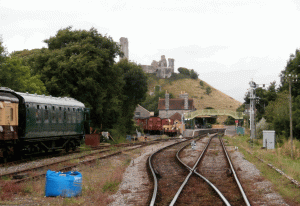
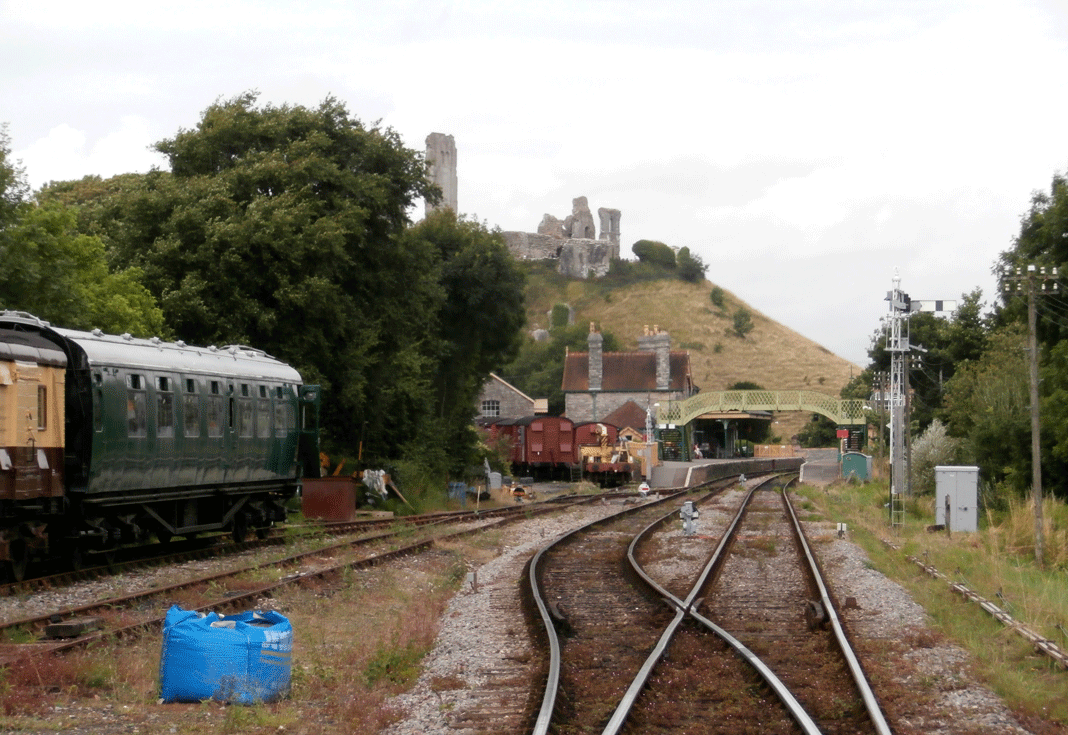
Corfe Castle is photogenic from just about every angle, we are crossing the tracks of the steam railway on our way to the Castle Inn for refreshments.

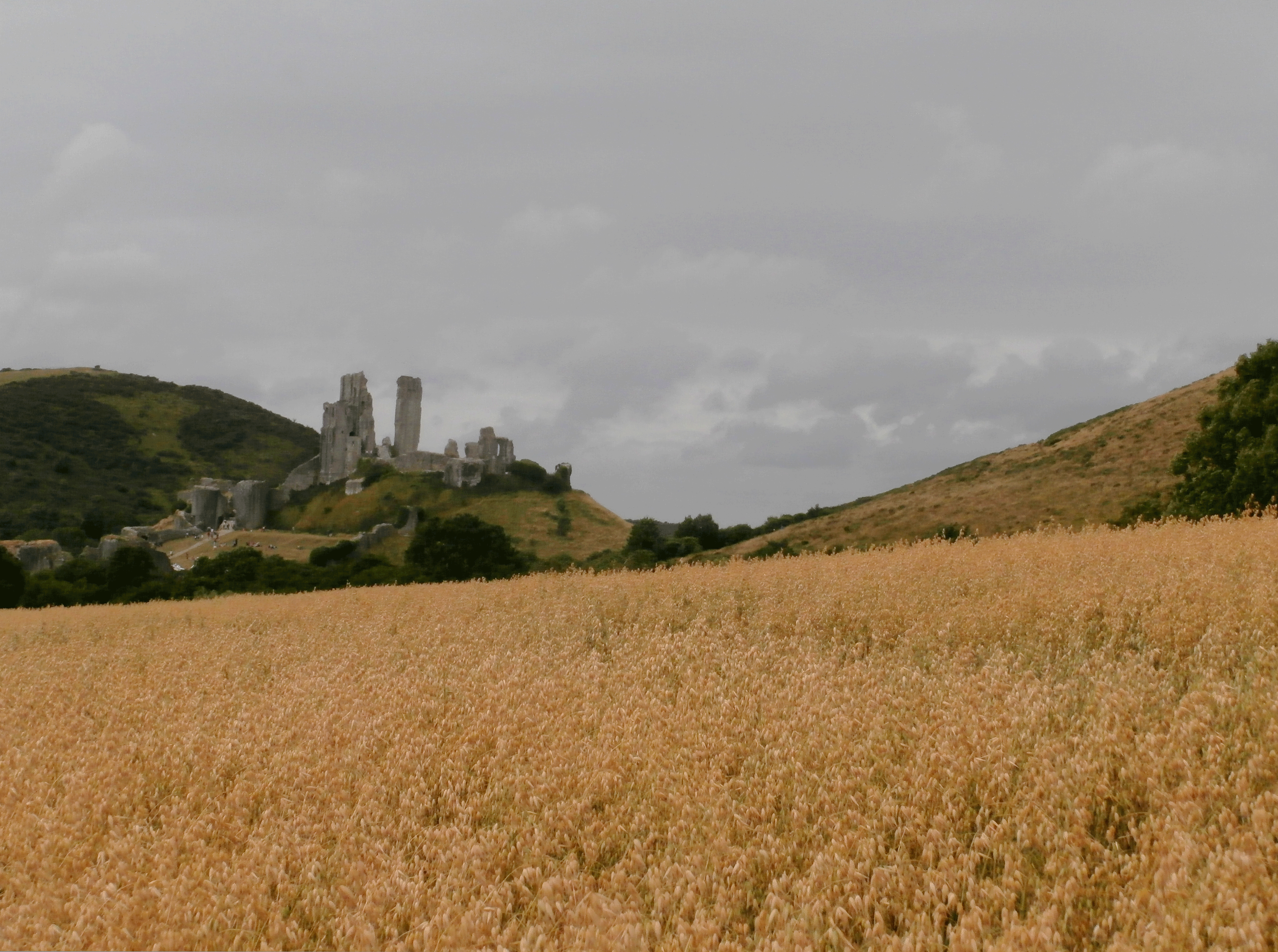
.. and here Corfe Castle can be seen from just outside the village, emerging from the fields of barley.

On the home stretch: Margaret descending the path back to Ulwel. Swanage is in the distance.

Our feet and knees aren’t what they used to be, after seven miles we wished we could get a lift, like Felicity’s little dog does.
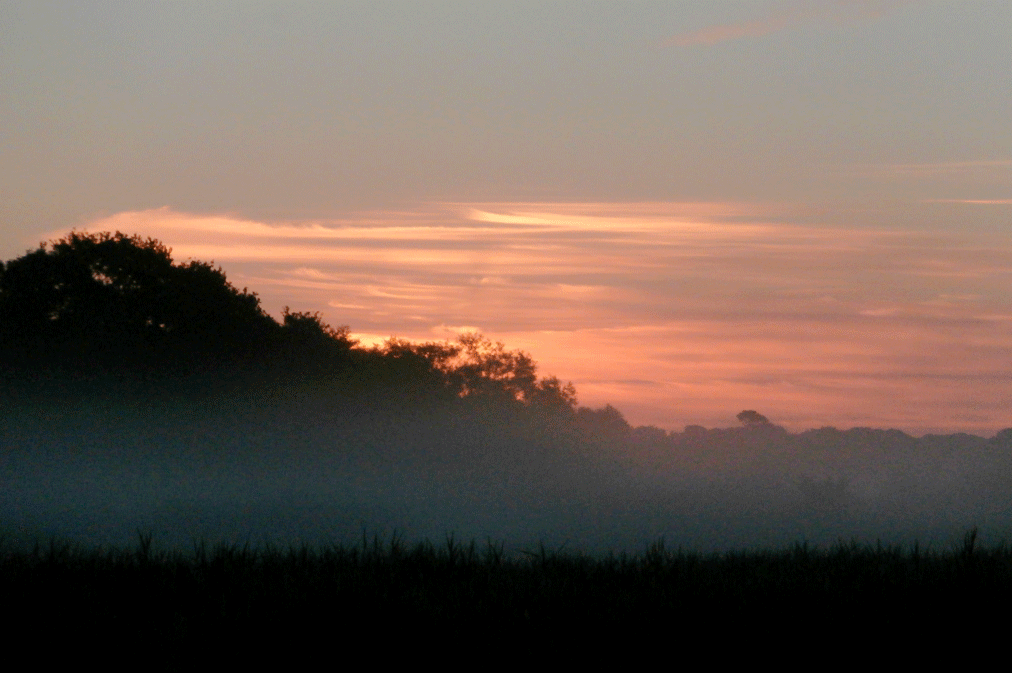
On the morning of the Tuesday 6th Shaun and I went ringing again at Lytchett Bay. It was very misty at dawn and the reeds were soaking wet as yesterday’s rain combined with a cool night had led to a heavy dew. we ringed 26 birds, all but one Sedge Warblers. There was quite an arrival of birds on the coast so we might have done better by going to Durlston.
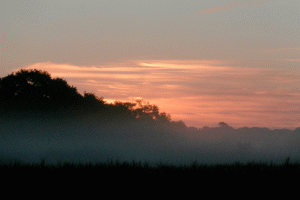
Misty dawn at Lytchett.
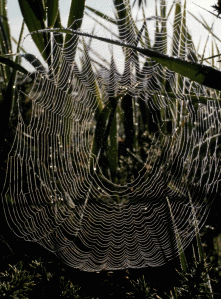
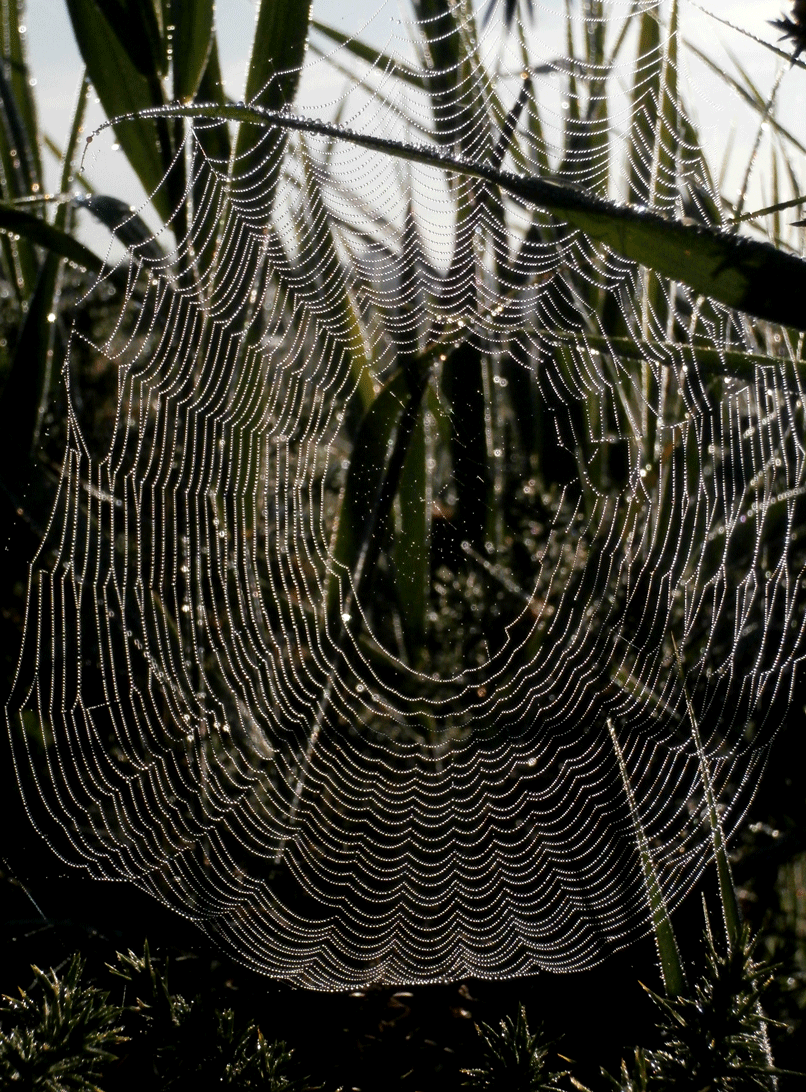
A spider’s web covered in dew.
On a serious note the 6th was the 9th anniversary of my first wife Janet’s death. Whilst is true that time is a great healer, I will always mark the anniversary in solemn contemplation of a life so tragically cut short. Incidentally I don’t have many digital images of Janet as I first started using a digital camera a short while before her passing. I have many slides of course, but scanned slides don’t look so good.
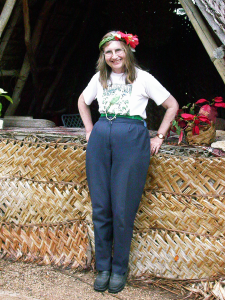
Janet in Hawaii in 2003
An old house mate of mine forwarded this link recently.
The pictures show what the older parts of Leeds looked like in the seventies.
I arrived in Leeds straight from school in 1969 and left in 1978 when I moved to Poole. Although I don’t remember these specific locations, except Quarry Hill flats which I often walked through on my way home from the city centre. Its amazing to think that there was only one telephone for all those people.
Five of us lived in a very run down area near the centre. The house we rented was compulsory purchased not long after we left, we believe the landlords were given £260 for it !
I have finally managed to go through and edit the 2,700 pictures I took in Uganda in June, of these I have retained about 950. With shots from the more recent visit to Austria and Italy to edit as well I thought that rather than post a chronological account of the trip to Uganda, as I have done for earlier trips, I would occasional post pictures on a particular theme. Uganda is one of the best countries in the world to see and photograph primates, so here is a selection of my shots.
We also saw Central African Red Colobus and the tiny Spectacled Galago but failed to get any photos.

Olive Baboons were a common site in most savanna areas like Queen Elizabeth and Murchison Falls NPs .
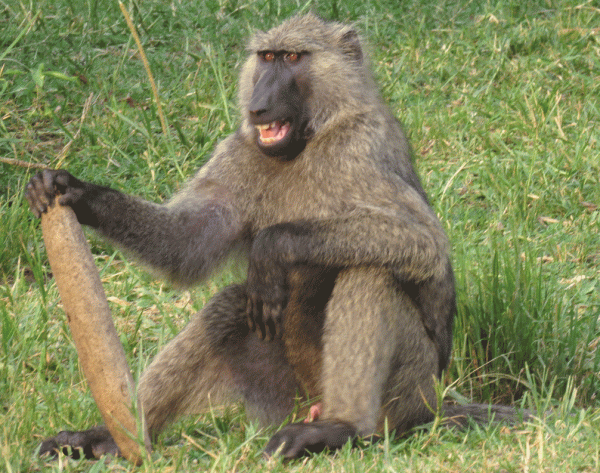
Bold and inquisitive, habituated baboons, especially mature males can be quite dangerous with larger incisor teeth than a Lion, but in most areas where they occur we were confined to the vehicles.
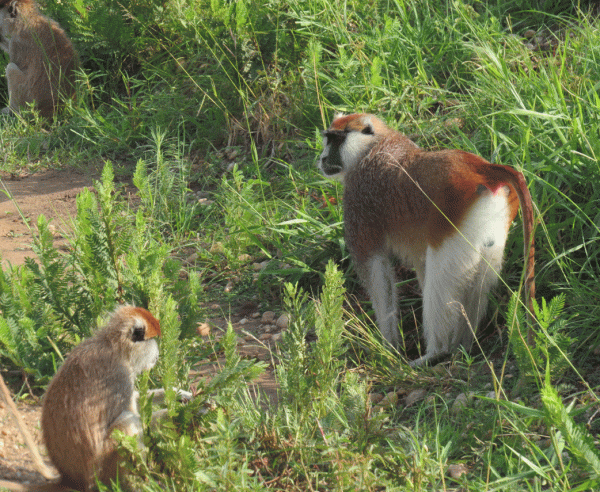
Patas Monkeys occur in savanna areas and are more often seen on the ground than in trees.

Patas Monkeys habitually stand on their hind legs to scan for predators. As primates moved out of the forest into the newly formed savannas millions of years ago, this behaviour may have led to the evolution of bi-pedalism in our earliest hominid ancestors.

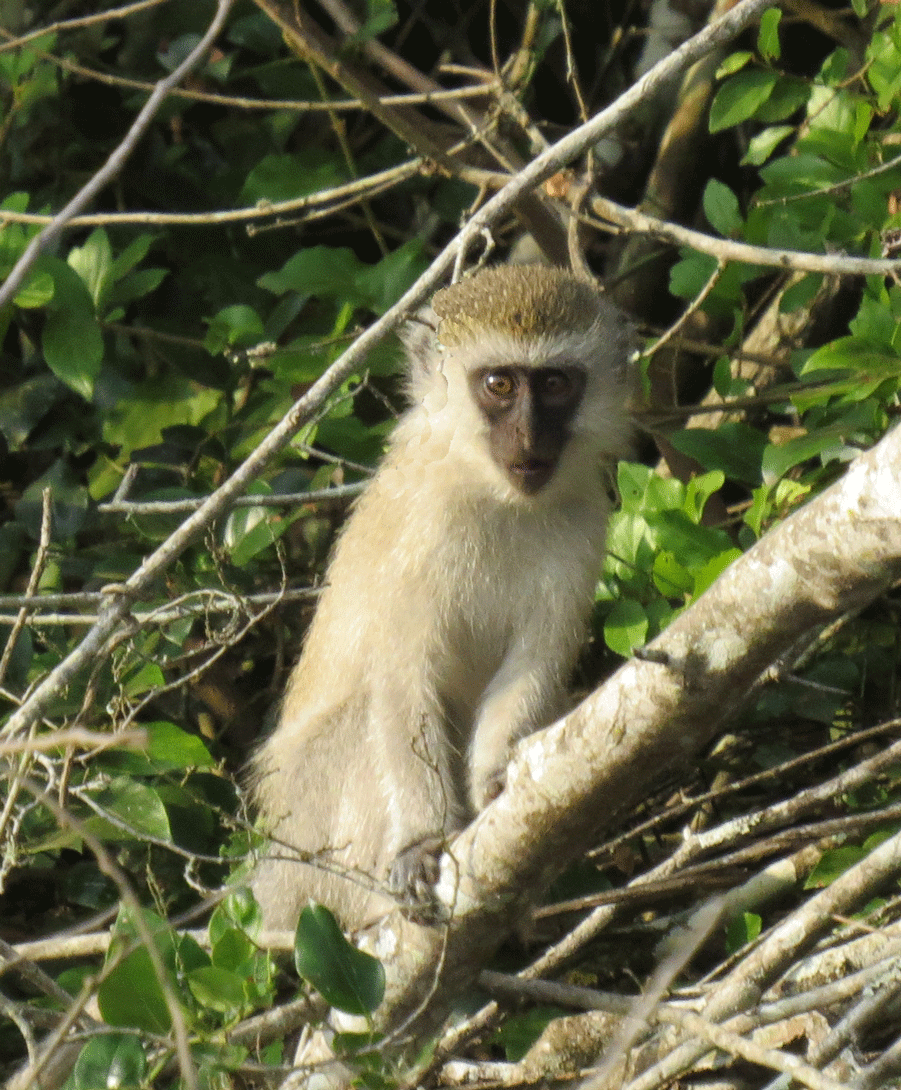
Vervet Monkeys are another typical primate of acacia dominated savanna.

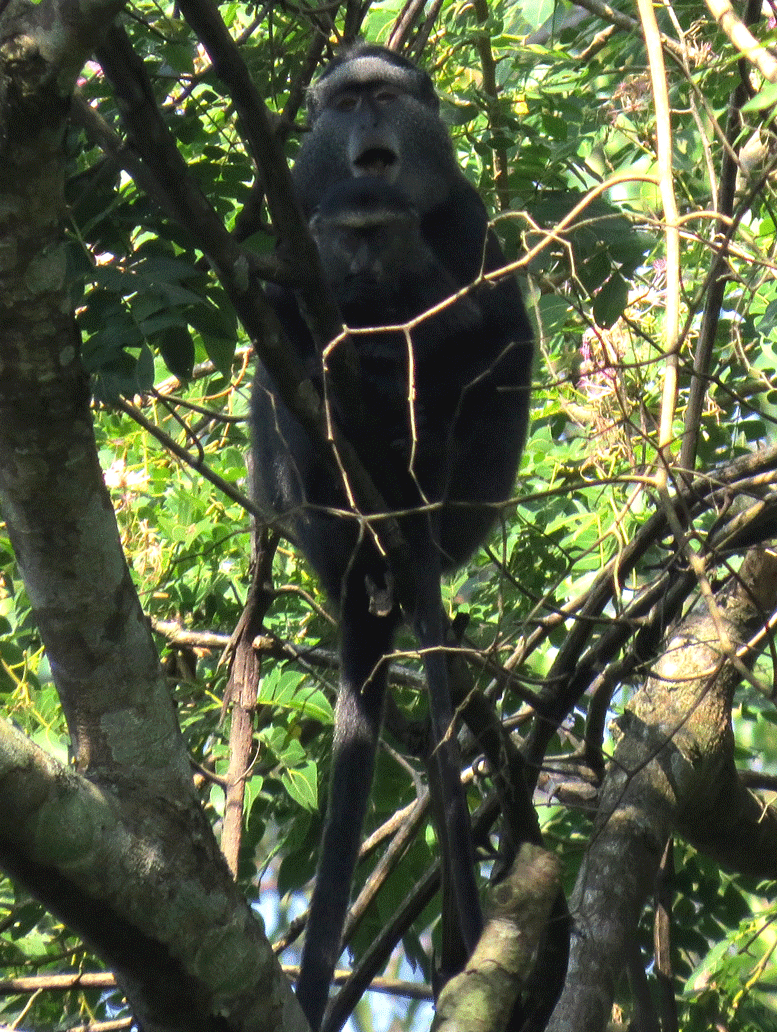
We saw these Blue Monkeys in the Budongo and Bwindi forests.

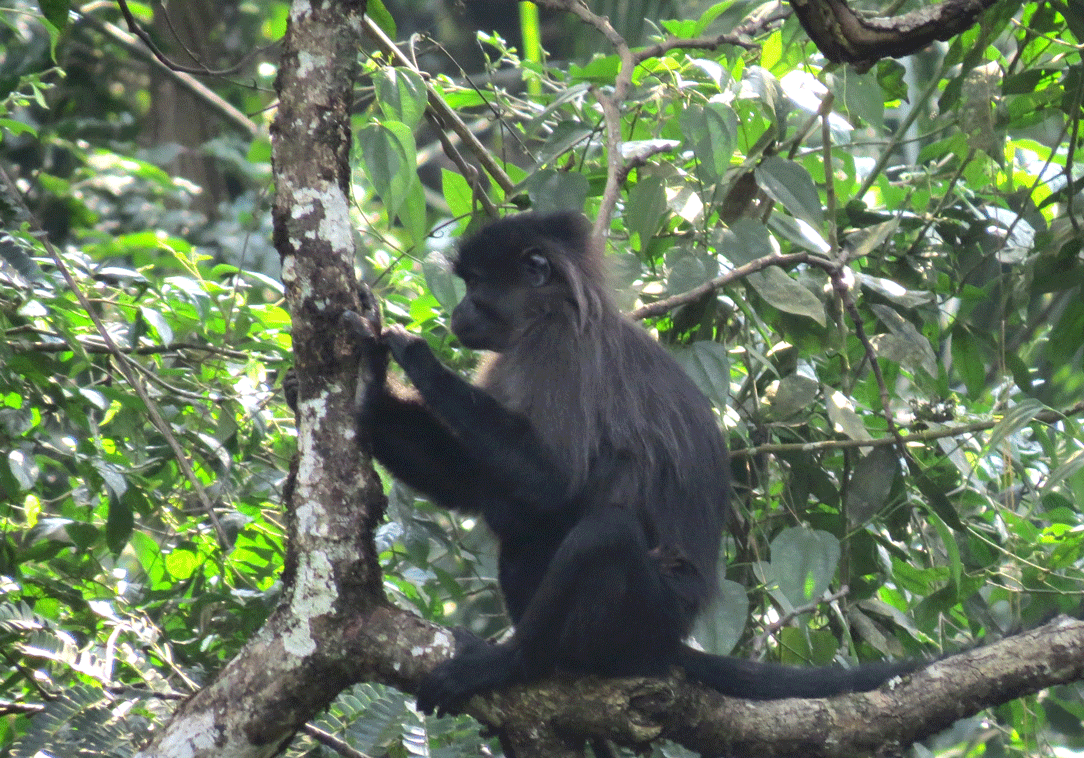
Red-tailed Monkeys are restricted to the Congo region reaching their easternmost point in western Uganda.
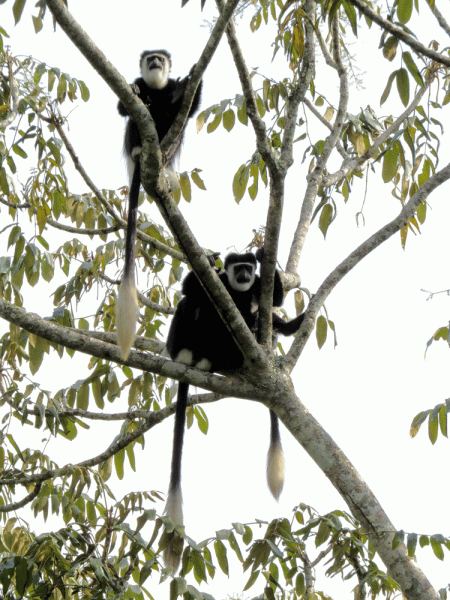
Guereza (or Eastern Black-and -white) Colobus always look like a collection of wise old men surveying the scene below.
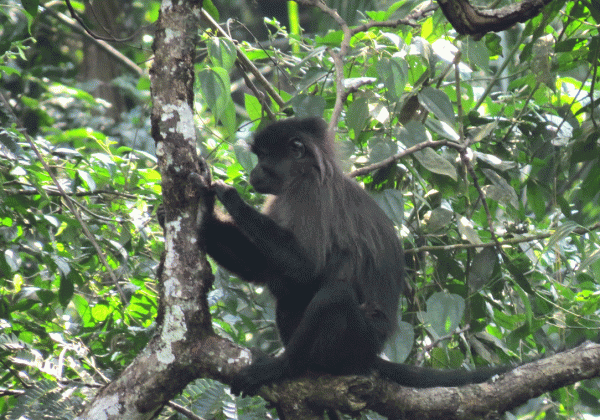
This Grey-cheeked Mangaby has an infant clutched to her chest.

The pretty little L’Hoest’s Monkey was a real treat at Kibale and Bwindi.
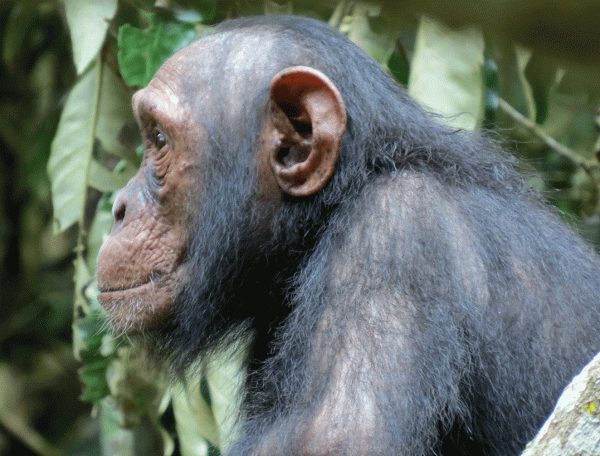
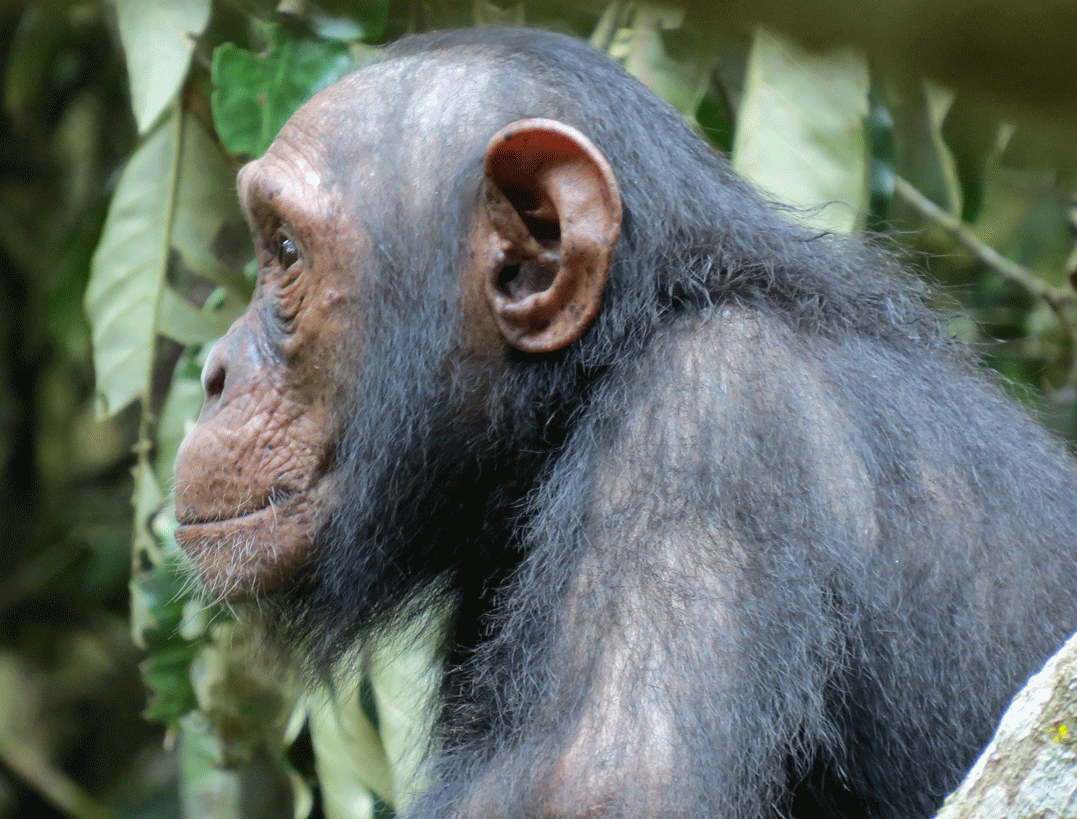
Seeing Chimpanzees at close range was one of the highlights of the trip. Their is real intelligence in their eyes. The chimps at Kibale are completely used to humans and just go on their way and ignore you.

One of several adult chimps we saw in the late afternoon. apparently it is scanning the tree tops looking for a place to build a nest for the night.

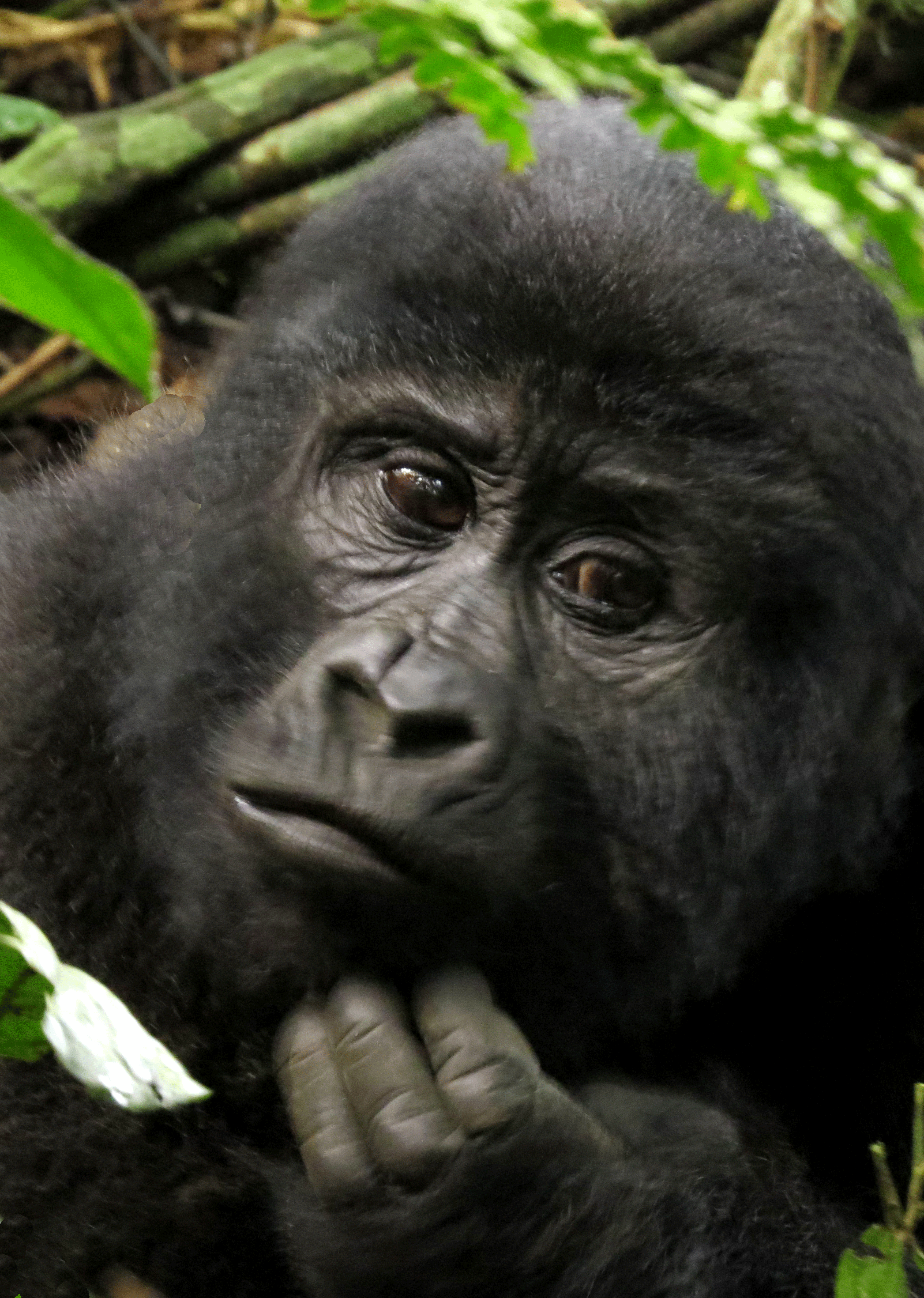
Probably the best experience of the trip, if not the best experience of any trip, was the hour spent with the Eastern Gorillas at Bwindi. This silverback, the dominant male of the group, was completely indifferent to us.
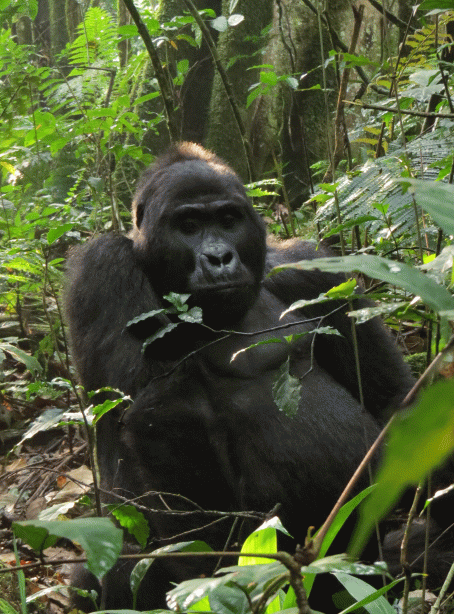
His ‘second in command’, a black-backed male, however watched us closely. When the troupe moved off we followed, but the black-back took up the rear and stayed behind us. There was no suggestion of aggression from these gentle giants, except when a our guide cut a branch with a machete to allow for better photos. The black-back did a mock charge, teeth bared and the guide sensibly withdrew.
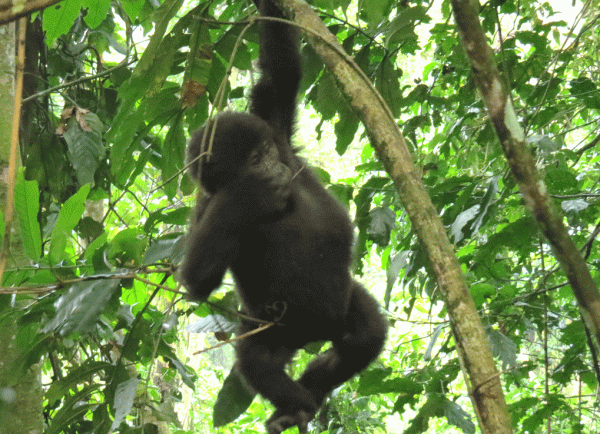
As you would expect, the young Gorillas were the most active.
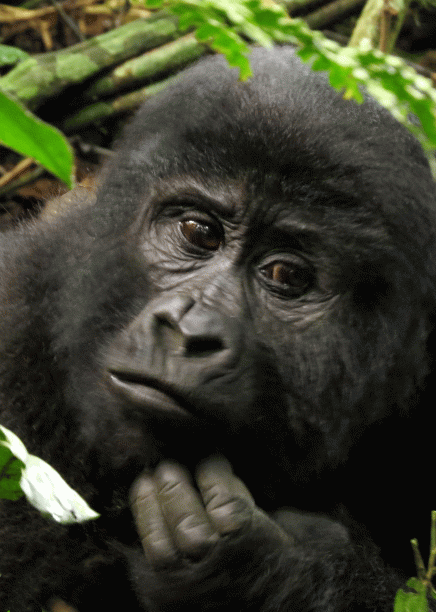
Most of the time the group just lay about, digesting their last meal and farting loudly.

As Sir David Attenborough famously said ‘there is more meaning and mutual understanding in exchanging a glance with a Gorilla than with any other animal I know’
Yes, it’s true, you don’t see old friends for years and then two turn up on the same day! My friend John Short had phoned me and said he was in the UK for a while and could visit me on 26th – 27th July.
I first met John in October 1969 when I first went to Leeds University. We shared lodgings for the first year and then John, myself and three others lived in decrepit house in Fraser Terrace for the next three years. We kept in touch after University, but meetings naturally declined, especially after he moved to live near Paris. Our last get togethers were in 2003 when ten of us had a Leeds reunion, in 2007 when along with two friends I stayed with John and his wife Florence on the way back from a short birding trip to the ‘French Lakes’ and tragically at the funeral of Clive Taylor, another of the Fraser Terrace lads, two years ago.
On the evening of the 25th several of us went ringing at Lytchett Bay and we caught over 80 birds, mainly roosting Sand Martins. These were ringed and roosted at Shaun’s place and at 0500 on the 26th we all assembled back down the Bay for a typical early morning ringing session. Imagine my amazement when another old friend, Guy Dutson, appeared. Apparently the others knew he was coming but hadn’t told me so it would be a surprise.
Guy was our young birding prodigy back in the early 80s. At the age of 13 he was already finding good birds and aged 14 he joined our ringing group and spent a lot of time with me training to ring birds. After studying veterinary science at Cambridge he had a number of veterinary jobs before working for BirdLife International in the Pacific, spending long periods in New Guinea, Melanesia, Polynesia and Australia. He authoured the definitive guide to the birds of Melanesia and led tours for Birdquest for a while (I went on two tours that he led, to PNG and New Zealand). I last saw him about 18 months ago when he came to visit his family, but recently he has married Suzie and they now live in Melbourne with their daughter Lila.
As always he had a packed schedule and had to return home and pack, as he was off to Cornwall to meet up with his brother and sister, but after the ringing session I managed a brief visit to his parents house in Corfe Mullen to meet his wife and daughter.

Guy and Suzie with six month old Lila
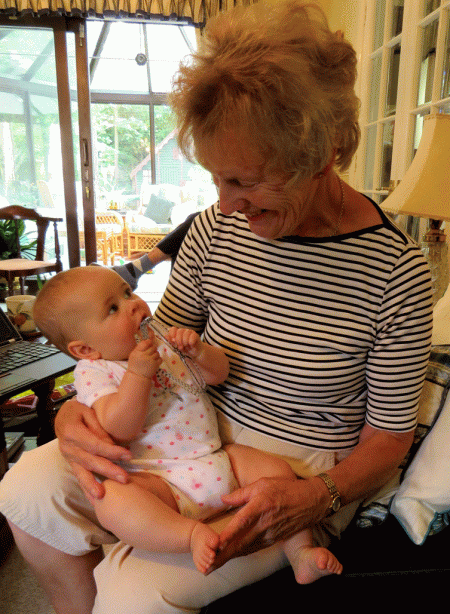
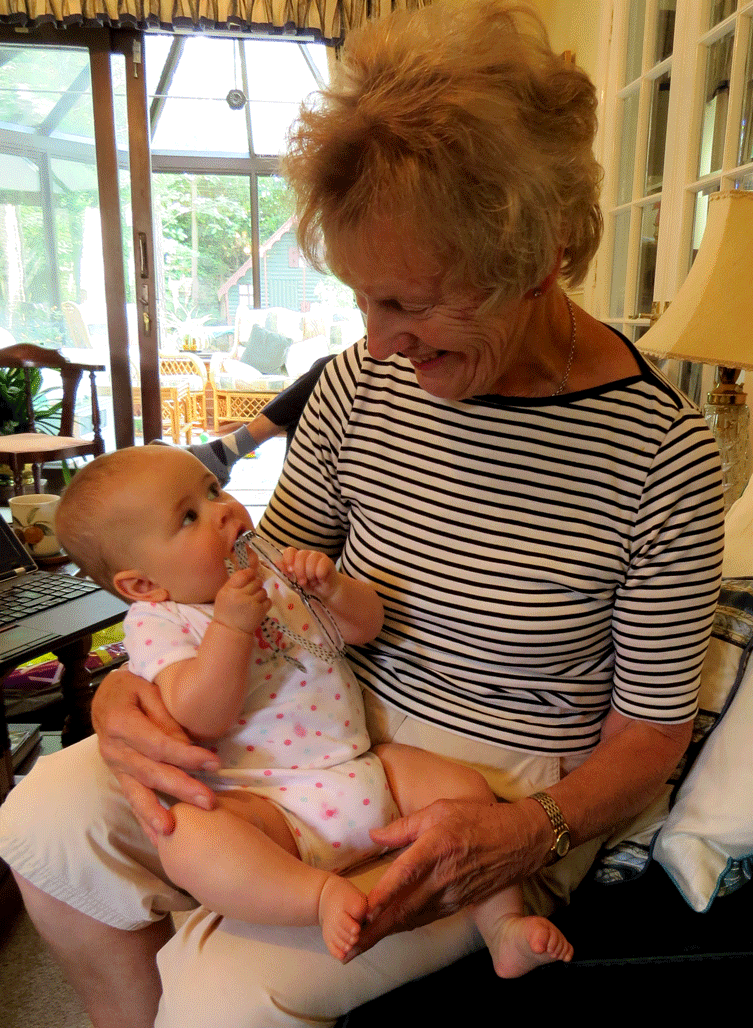
Bronwyn holds her latest grandchild.

Off to Cornwall, Lila prepares for the long drive to see her auntie and uncle.
I got back home about 1130 and tried to get forty winks before John arrived as I had had very little sleep the previous night. John phoned at about 1300 to say he had been involved in traffic accident just 10 miles from our house on the Blandford by-pass. A van had pulled out from a side road and driven straight into him. No-one was hurt but there was clearly going to be a delay. Apparently by the time the car (a write-off) was picked up and taken to the hire car company office in Bournemouth, the office was closing. John then had to wait several hours for another pick up to take him to Southampton airport where finally he was given another car. He arrived with us at 2315, just 10 hours later than expected!
Both John and Guy are highly respected and valued friends from various times in my past and it was amazing to meet up with both of them on the same day.

John and Margaret. Plenty of reminisces of the old times and lots of updates about life today.
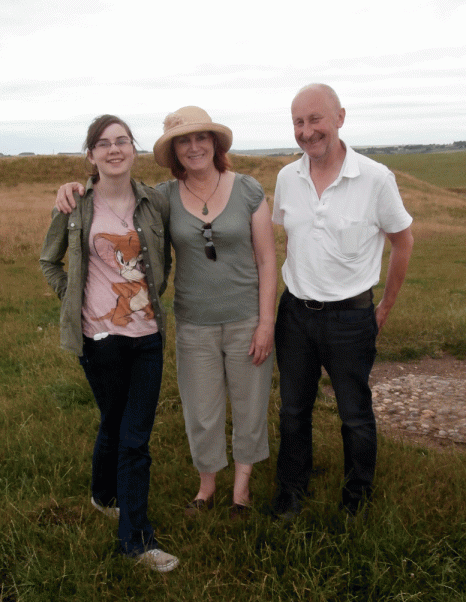
John wanted to see the Iron Age hill fort of Maiden Castle, near Dorchester, so on the 27th we picked up Amber, who was at a loose end, and went for a walk around the ancient structure.

Amber’s is looking like a typically bored teenager but actually she is very knowledgeable about all things archaeological and told us in detail how the the hill fort would have been defended in ancient times.
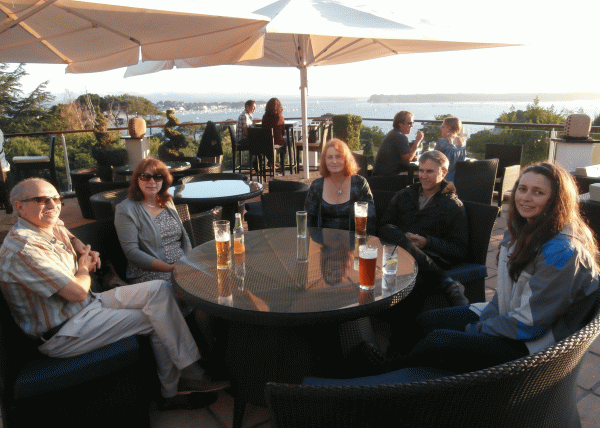
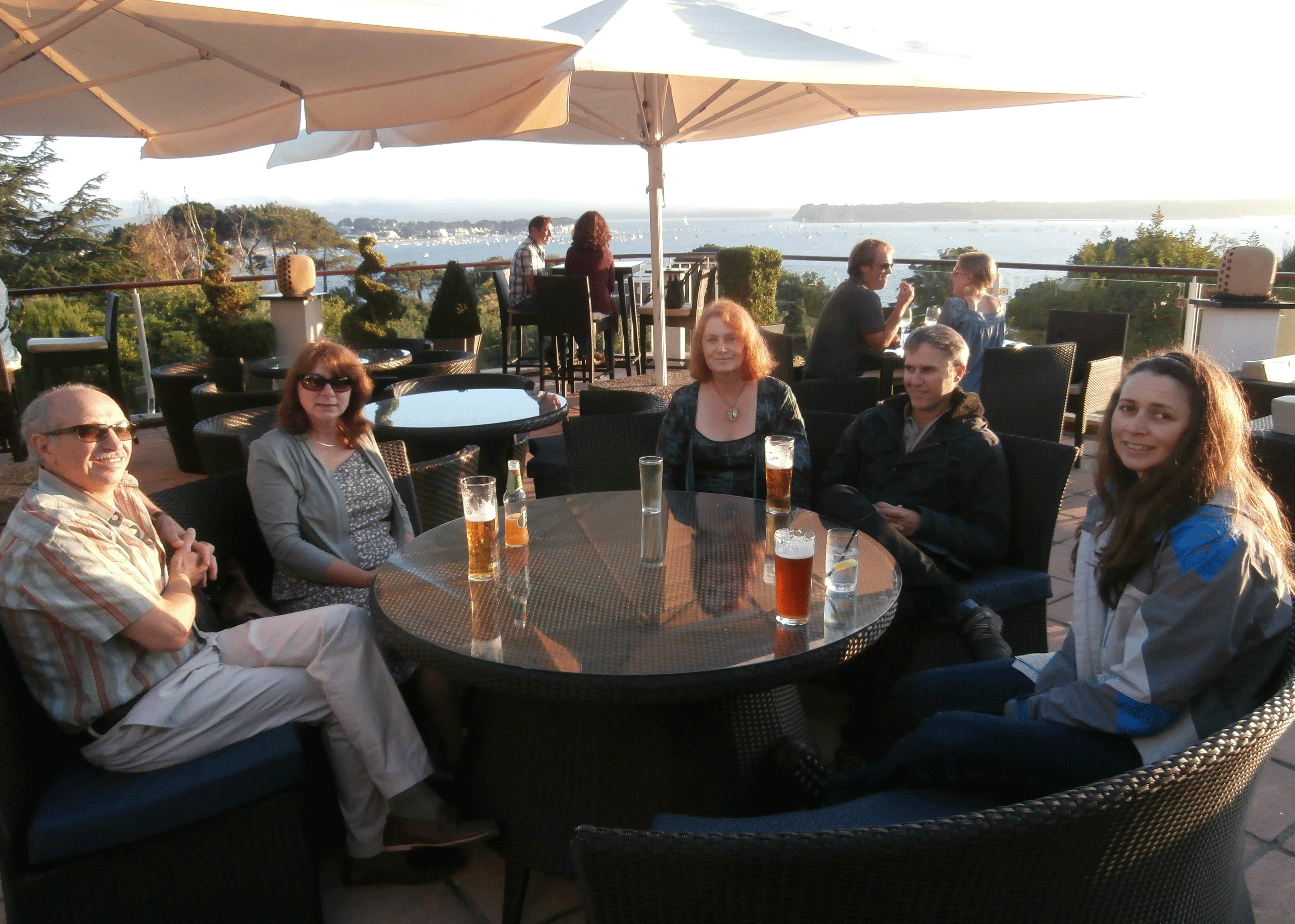
About the only other social event has been a drink with John and Anita and Gio and Jessica at the Harbour Heights Hotel on 24th
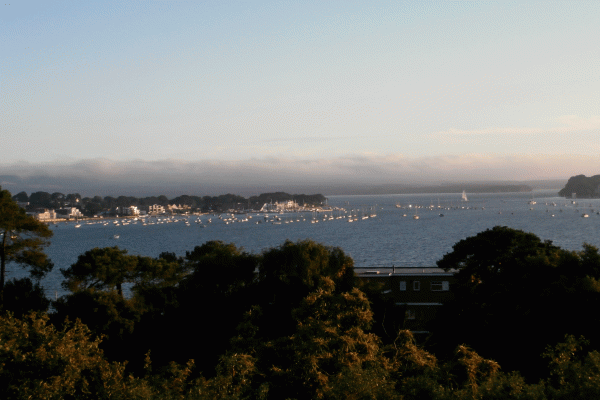
There is a wonderful view from the hotels terrace, note the fog covering the Purbecks.

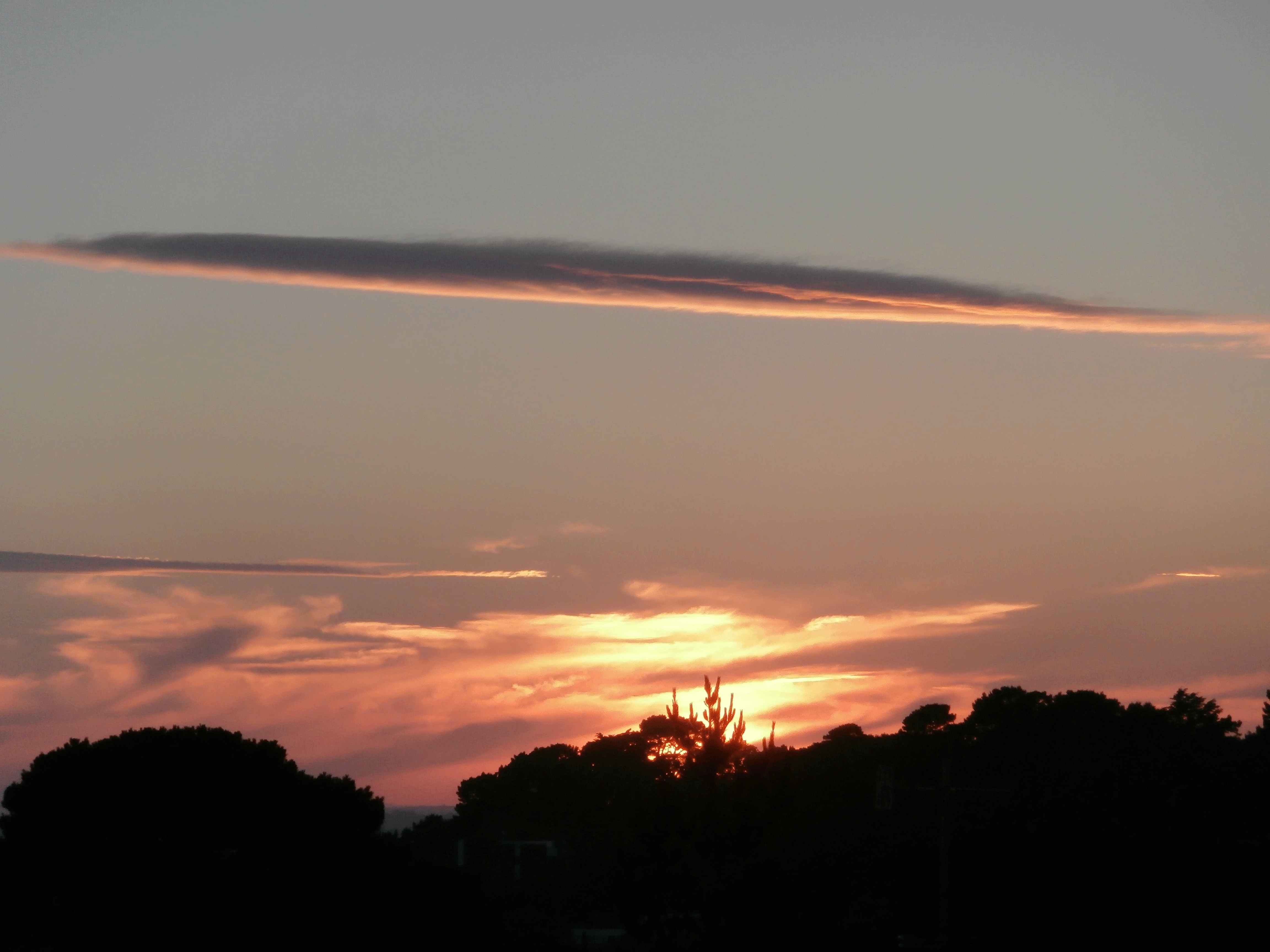
Time to admire the lovely sunset over Poole Harbour
We’ve back after a very enjoyable trip around Austria and northern Italy. The original plan was to search out the last two birds that I had yet to see in Europe, go sightseeing in northern Italy and visit Margaret’s sister in far eastern Austria. The latter two were completed to our satisfaction but seeing the much wanted Rock Partridge and Moltoni’s Warbler didn’t work out.
This is just a summary, I hope to post more photos as I get round to editing them.
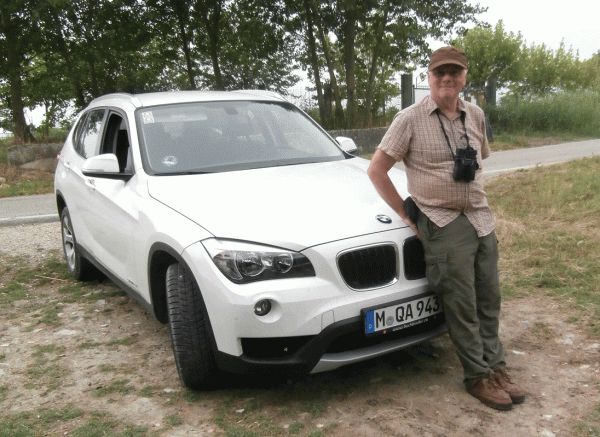
I ordered an Opel but the good people at Munich airport hired out a lovely BMW X1, in the words of Bruce Springsteen ‘a big foreign car that drives like paradise’

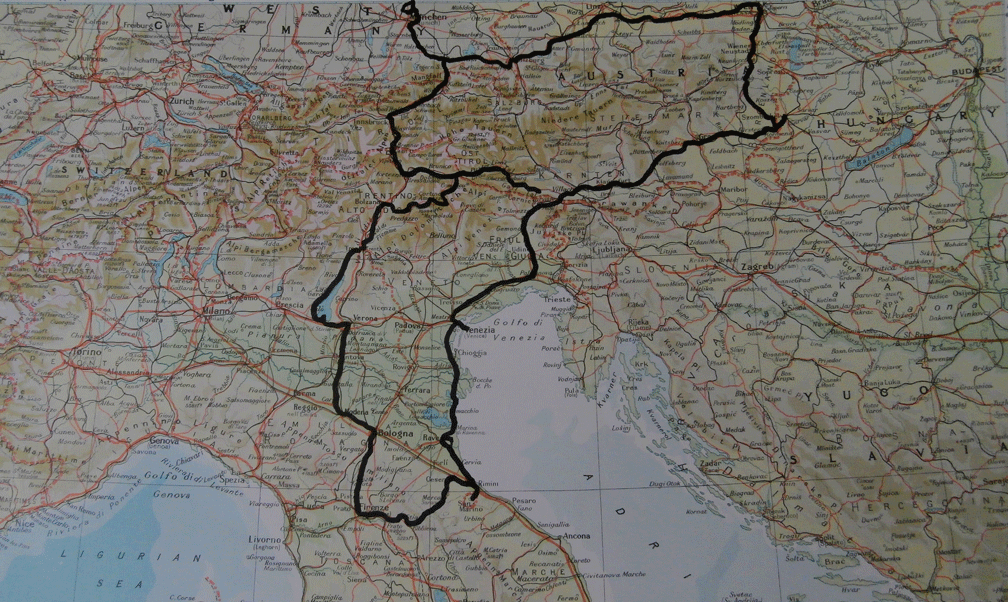
From Munich we drove south through the narrow ‘neck’ of Austria to Italy then back eastwards into southern Austria. From here we drove through the Dolomites to Bolzano and south to Lake Garda, Bologna, Florence, San Marino, Ravenna, the Po Delta and Venice. Then we drove to far eastern Austria to see Margaret’s sister before returning to Munich via Salzburg and Dachau.

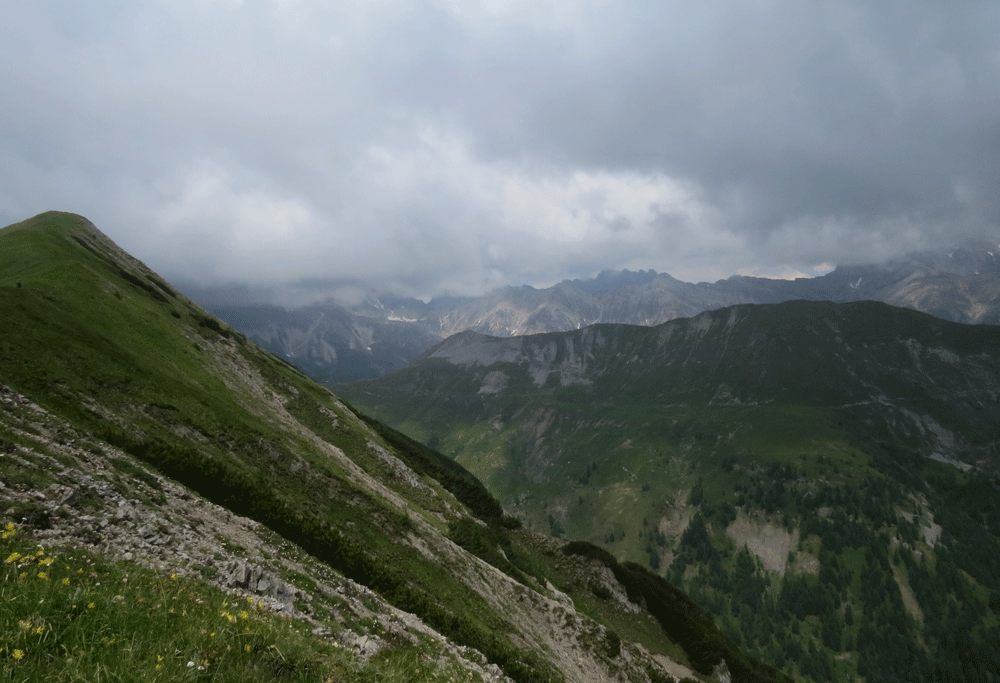
We drove from Munich through the narrow ‘neck’ of Austria into Italy and then back eastwards into southern Austria. We met Graham Tebb, a Viennese birder who I know from a trip to Ethiopia in 2011. The following day we tackled this mountain in the hope of seeing Rock Partridge. All Graham and I got for five hours of exhausting scrambling across the slope was a couple of distant call notes. It was to put it mildly, exhausting work.

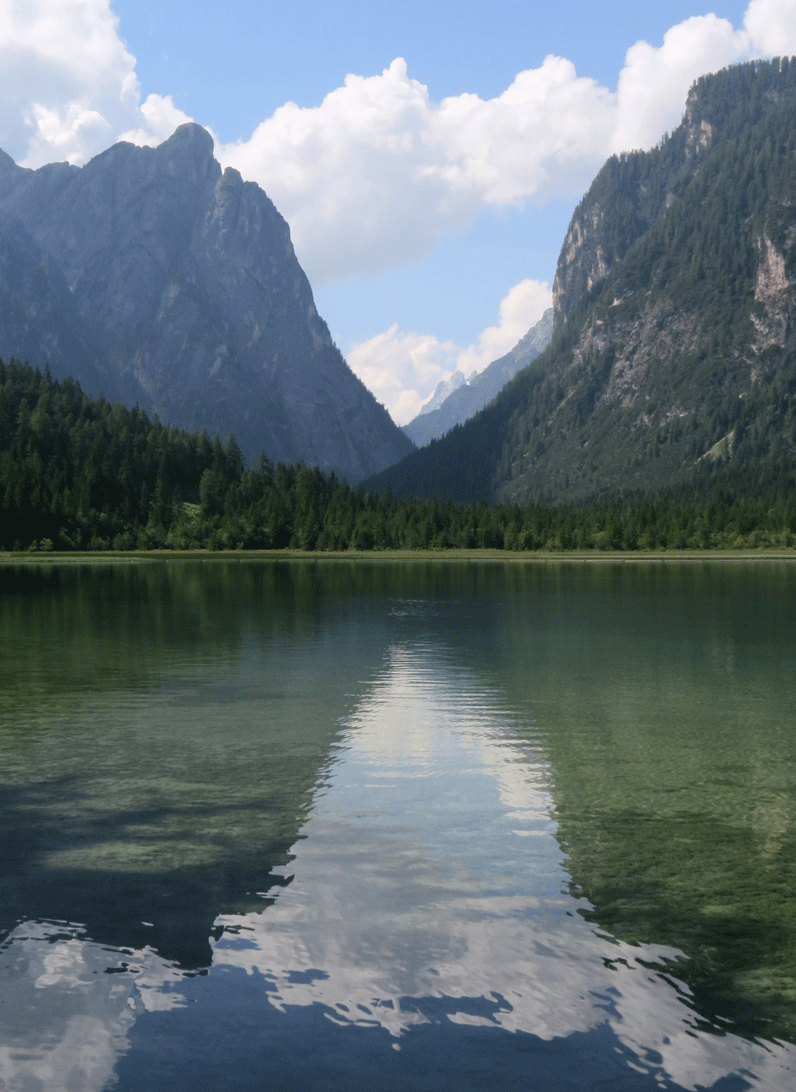
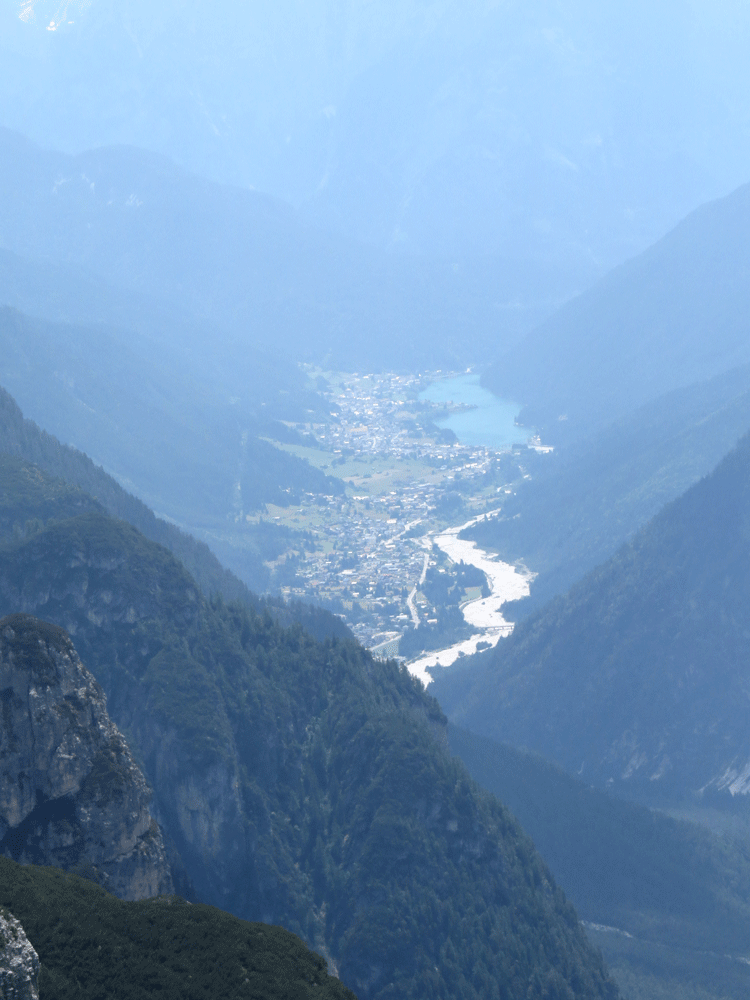
The southern Alps are in Austria but just over the border in Italy is the geologically unique Dolomites. I was surprised to find that we were very close to the site of my troubled hiking holiday to this region that I made in 2006. This lake is just south of the town of Dobbacio.
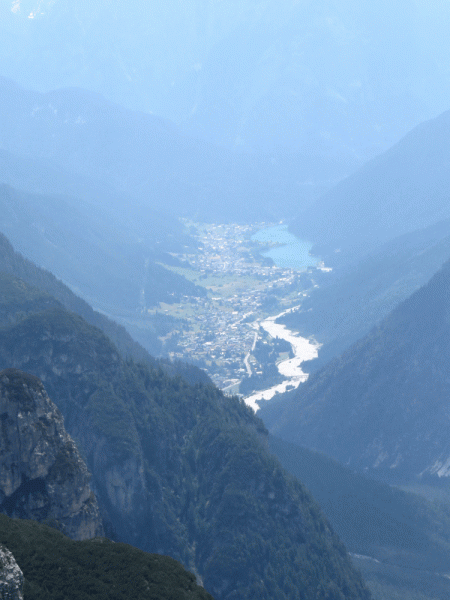
The area around Tre Cime (three chimneys) has outstanding scenery but views like this gave Margaret a severe attack of vertigo so we had to leave in a hurry.
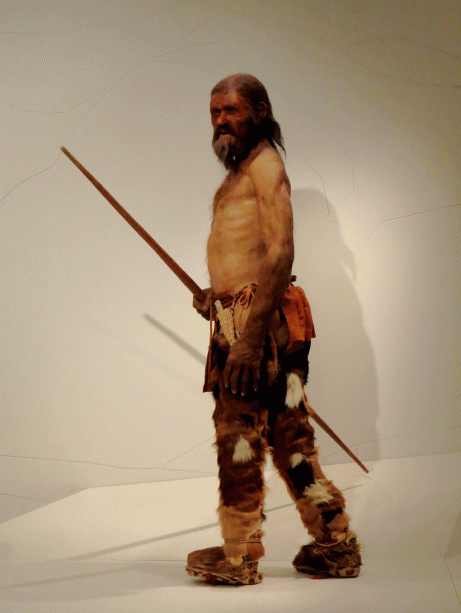
We visited Bolzano to see the famous Ice Man museum. A 5,200 year old body was found frozen in ice on the Italian-Austrian border and the body and all the artifacts found with it are preserved in this museum. Using modern reconstruction techniques, this a model of what the man, known as locally as Otzi would have looked like.
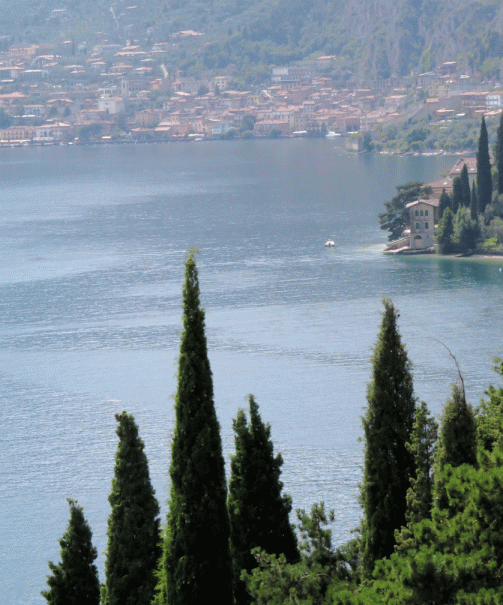
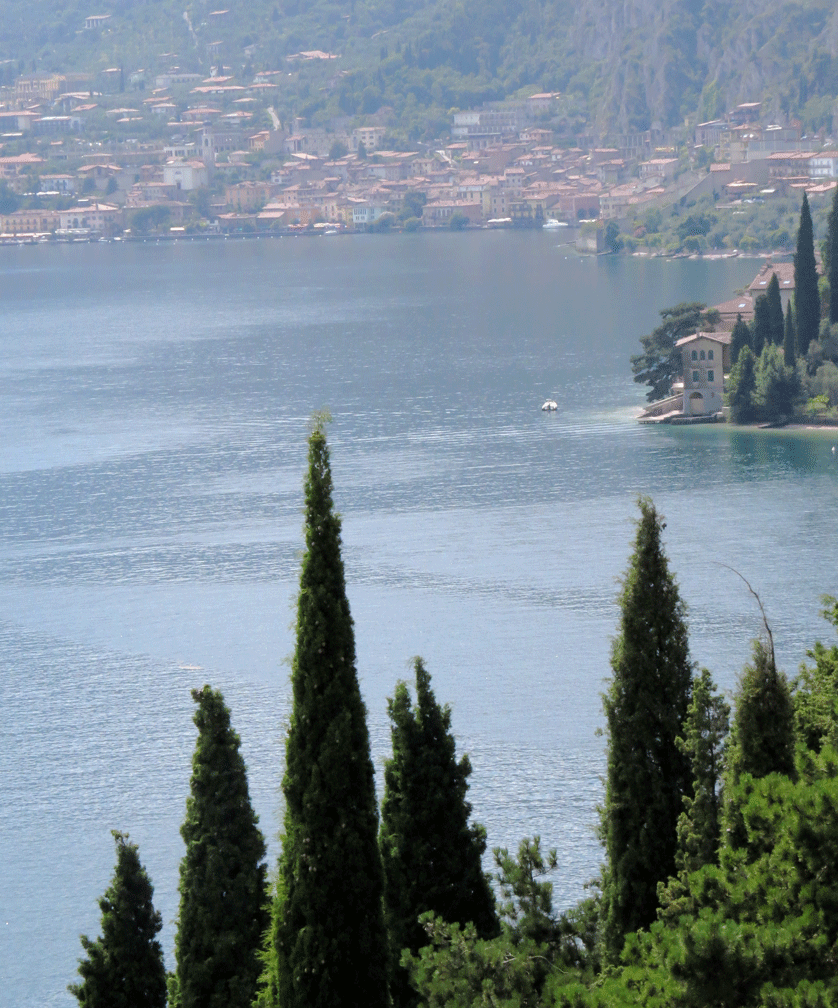
Although Lake Garda was undoubtedly beautiful, the entire northern section consisted of tunnel after tunnel, with nowhere to stop and enjoy the view. We had to stop at this hotel for a coffee to see this stunning panorama.

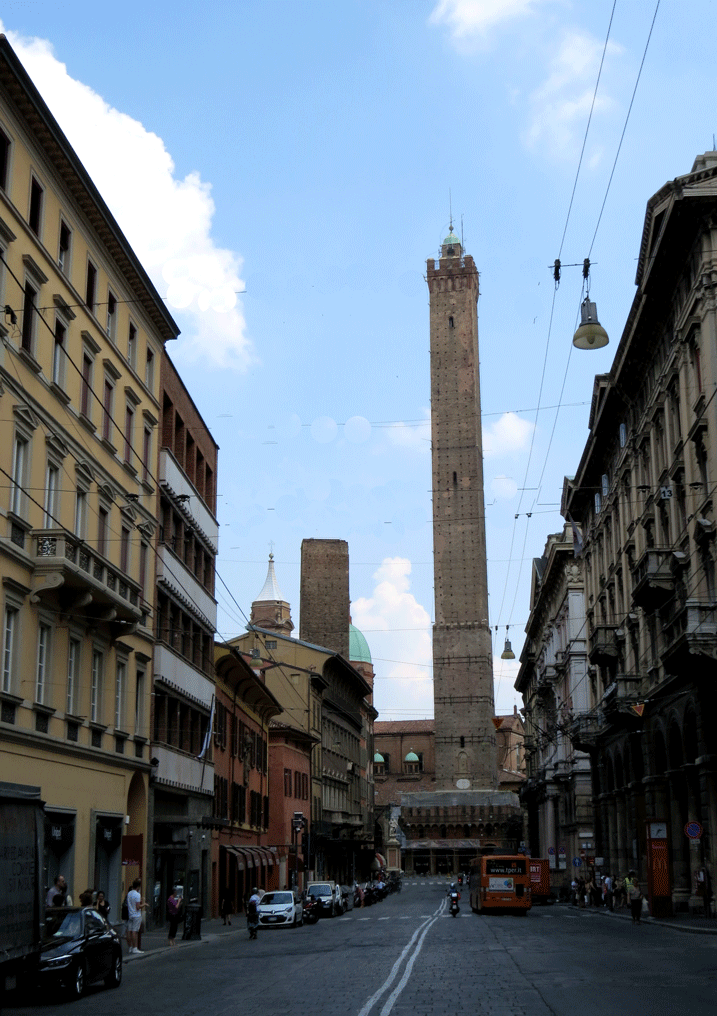
The guide book gave three warnings about driving in Italy: the price of fuel, which we agree is excessive, the standard of driving which we found, on the whole, to be ok and problems in parking ,which we certainly experienced in the ancient city of Bologna.
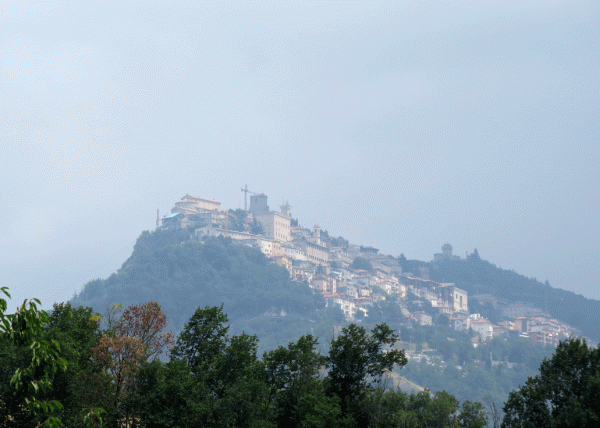
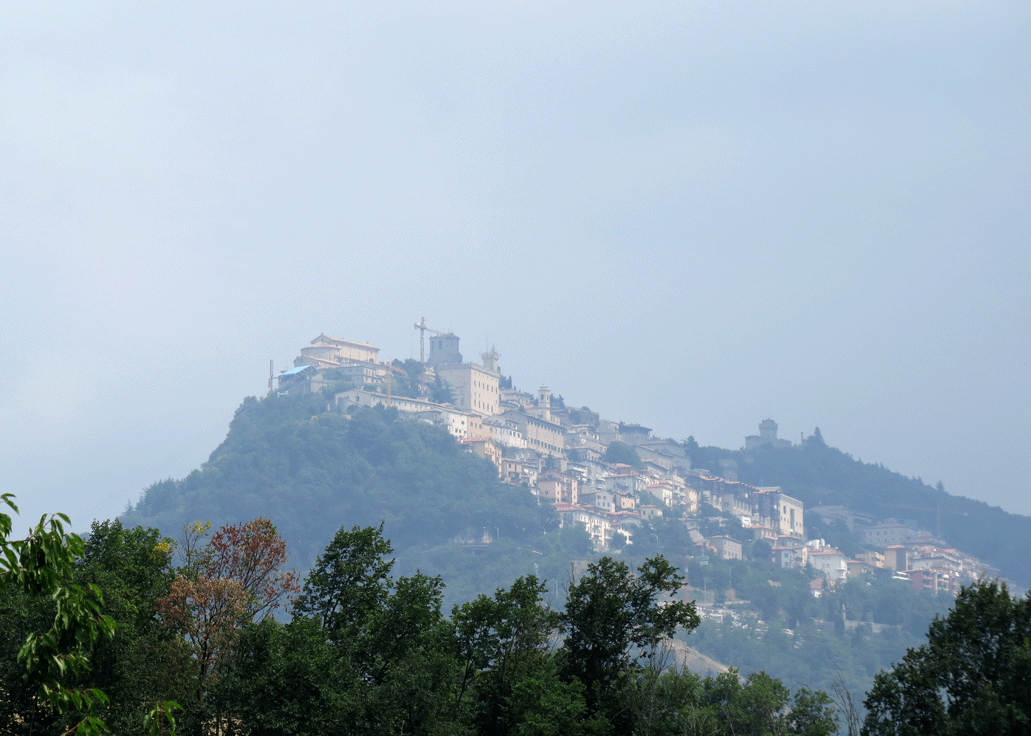
And then it was over the Apennines to the tiny independent principality of San Marino, my 99th country. The eponymous capital is perched precariously on a hill overlooking Italy which completely surrounds this tiny nation.

North along the Adriatic coast to Ravenna and the stunning mosaics in ancient Byzantine churches.

Just north of Ravenna is the delta of the River Po and the site of some excellent birdwatching areas. We spent two mornings and an evening watching Flamingos, Spoonbills Pygmy Cormorants, ducks, waders, terns and other waterbirds, whilst Golden Orioles and Turtle Doves appeared in nearby woodland. At night we saw a Scops Owl just yards from our hotel.
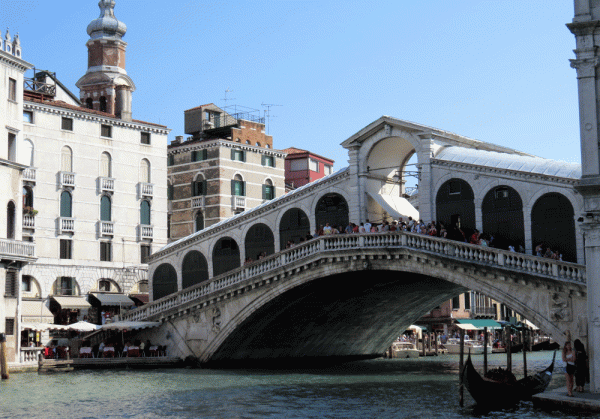
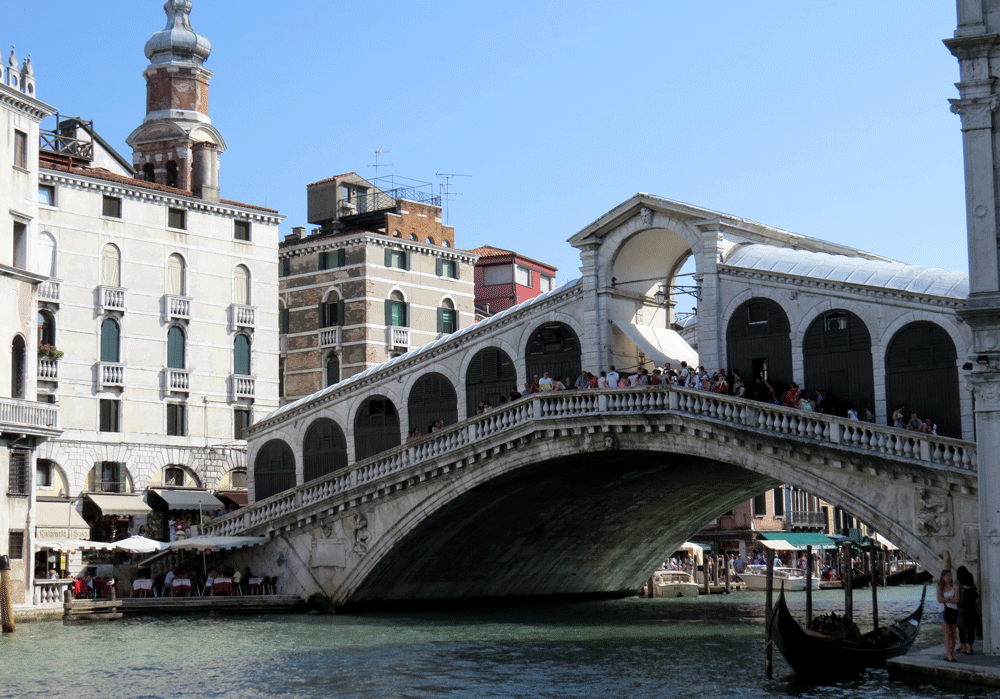
Rialto Bridge on the Grand Canal in Venice. Visiting Venice was hot and crowded but so very, very worthwhile.

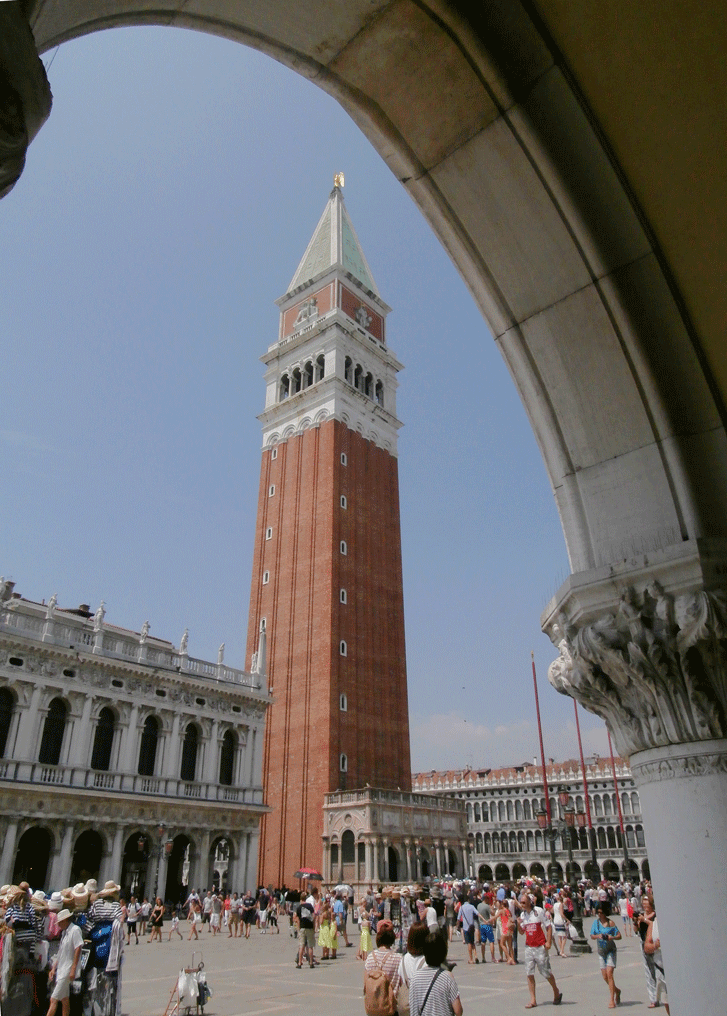
Venice get 14 million visitors a year and most seem to arrived on the same day as us. Long queues in the heat to get into San Marco were inevitable.

Well I missed Rock Partridge and didn’t get to the Moltoni’s Warbler area so was the trip tickless? In 2007 in the Dolomites I thought I had seen the recently split Italian Sparrow but close observation this year showed that most in that area were intergrades with House Sparrow. So these pure Italian Sparrows, seen from Bolzano southwards and east to Venice, were really a lifer. Note the brown cap, white not grey cheeks and the solid black bib.
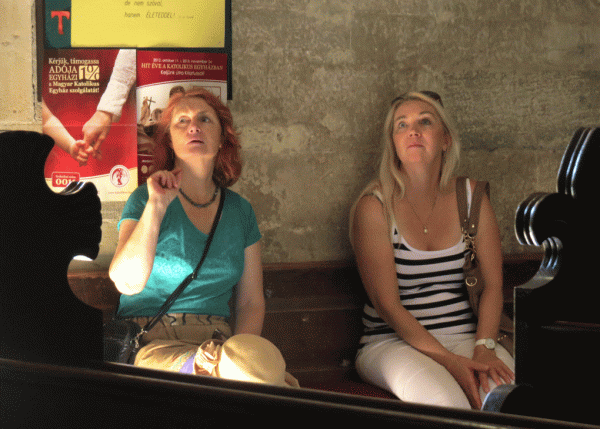
From Venice it was a long drive to the Austrian-Hungarian border where Margaret’s sister Cathy lives. As the border is at the bottom of her garden, we spent as much time in Hungary, whilst there, as we did in Austria. Here Margaret and Cathy admire a Hungarian church. Birding in the area was excellent even at this time of year. More of that later!
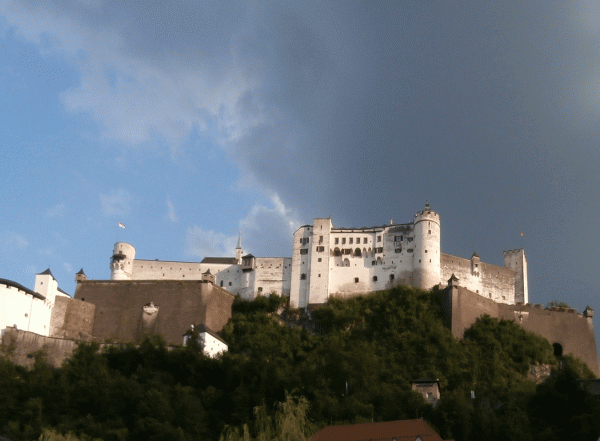
Salzburg Castle overlooks the town. We stayed here on our final night before driving through Bavaria to Munich.

With time to spare before our flight we visited the memorial site of the Dachau concentration camp just north of Munich. It could hardly be called entertainment, but the sensitive handling by the museum of one of the darkest periods in human history was informative and sobering. We think everyone should visit a site like this in memory of all those who died so needlessly. The lettering on the gate reads ‘work makes you free’.
47.809490
13.055010
For those who are interested in the family activities rather than just my foreign travels, I’ll quickly post this update, (bizarrely the captions box is working again, I must find out what I am doing wrong!)
Since returning from Uganda on the 27th I have spent most of my time editing photos, entering data on the computer etc, however on Saturday 29th we joined john and Anita and some of their friends at a beach BBQ at Boscombe and on Sunday we joined them on Poole Quay for a music event. Margaret and I also met up with several local birders at the Blue Boar on July 2nd to catch up with bird news.
The first signs of return (autumn) migration are already happening and should be in full swing when we get back from our trip to see Margaret’s sister in Austria later in the month.

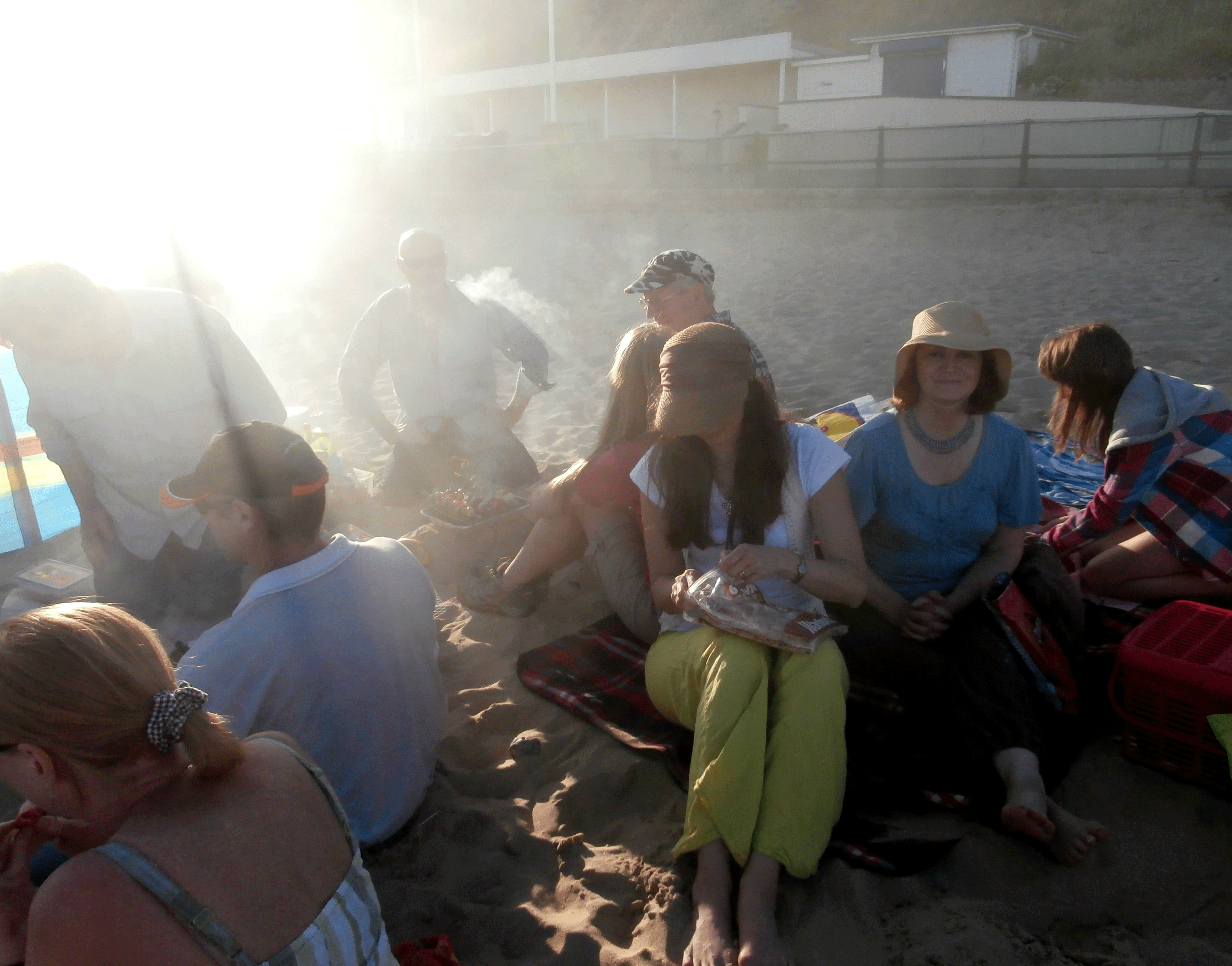
BBQ at Boscombe beach
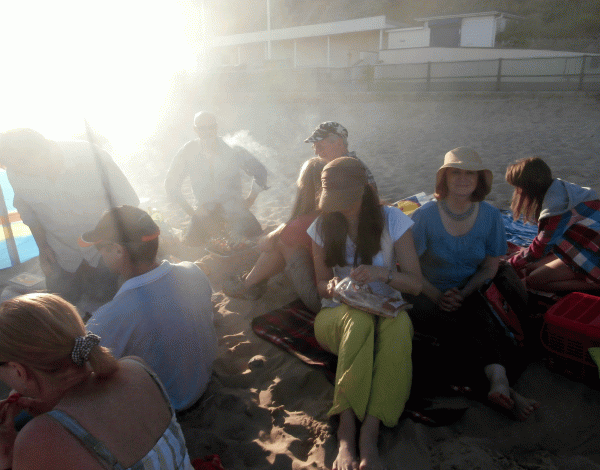
Low evening sun combined with smoke from the BBQs was dazzling.

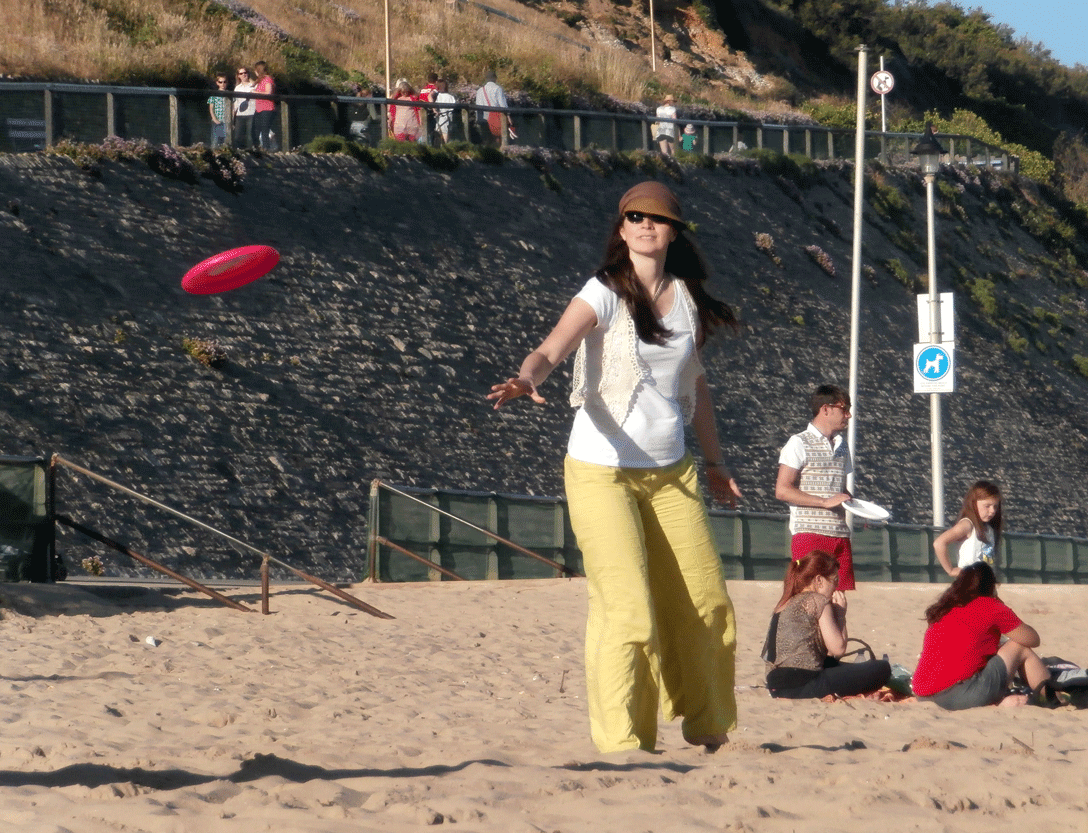
Anita playing frisbee
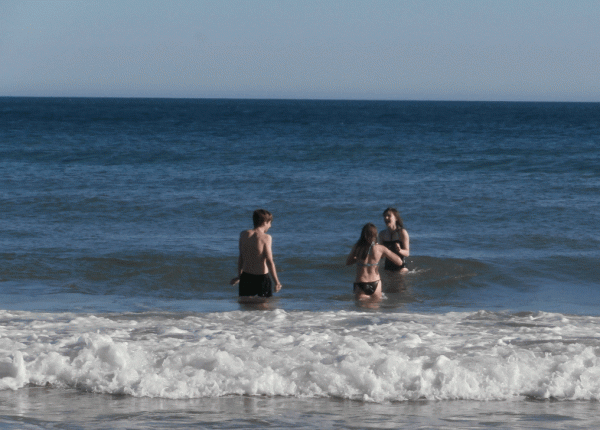
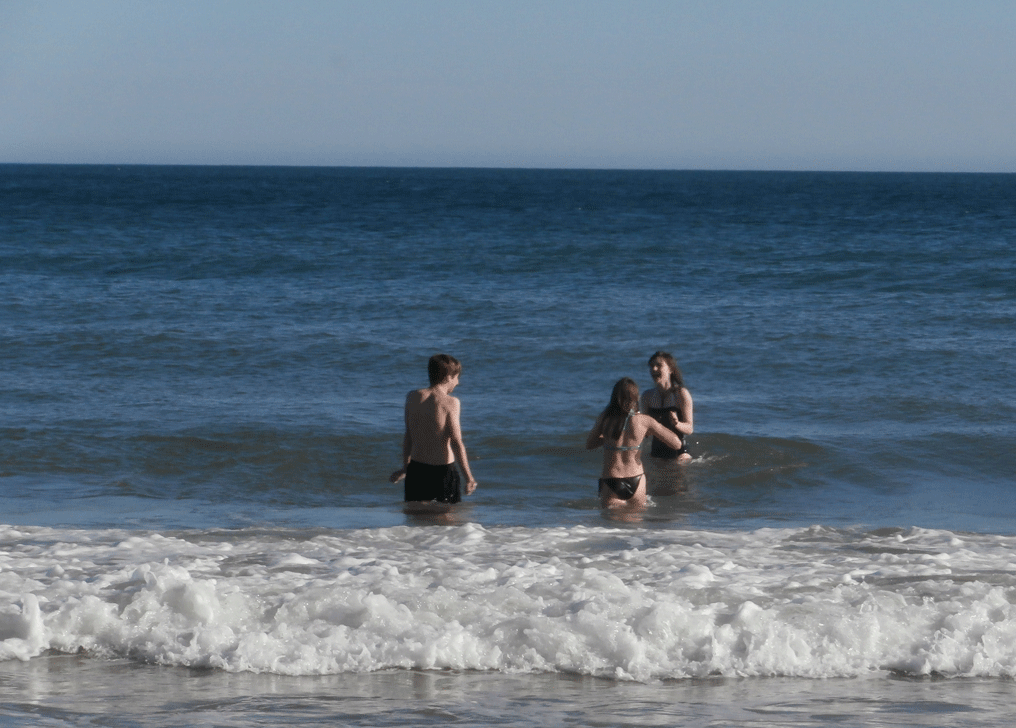
Amber with her boyfriend Zak and Kara go swimming – far too cold for me.
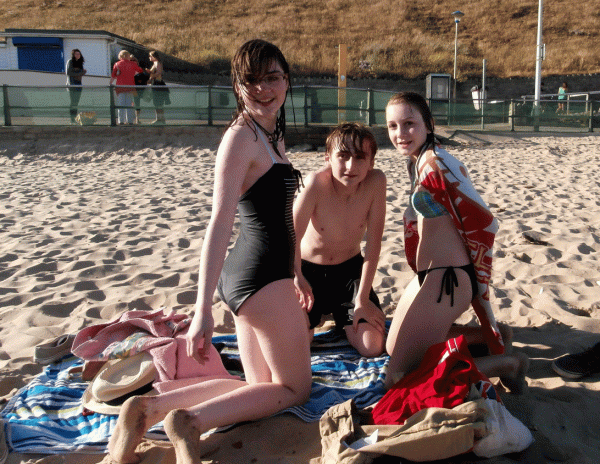
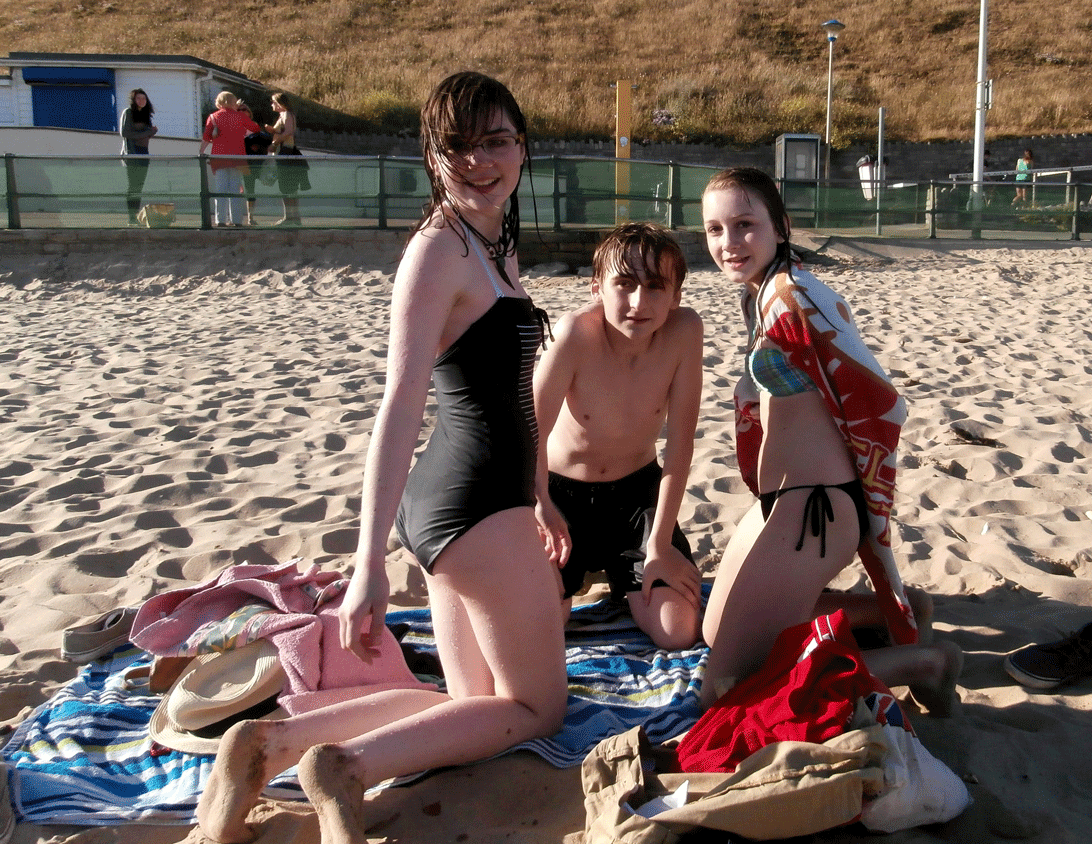
Amber, Zak and Kara shivering post dip.
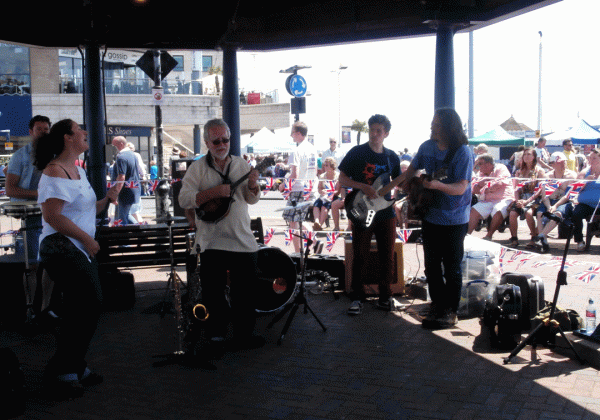
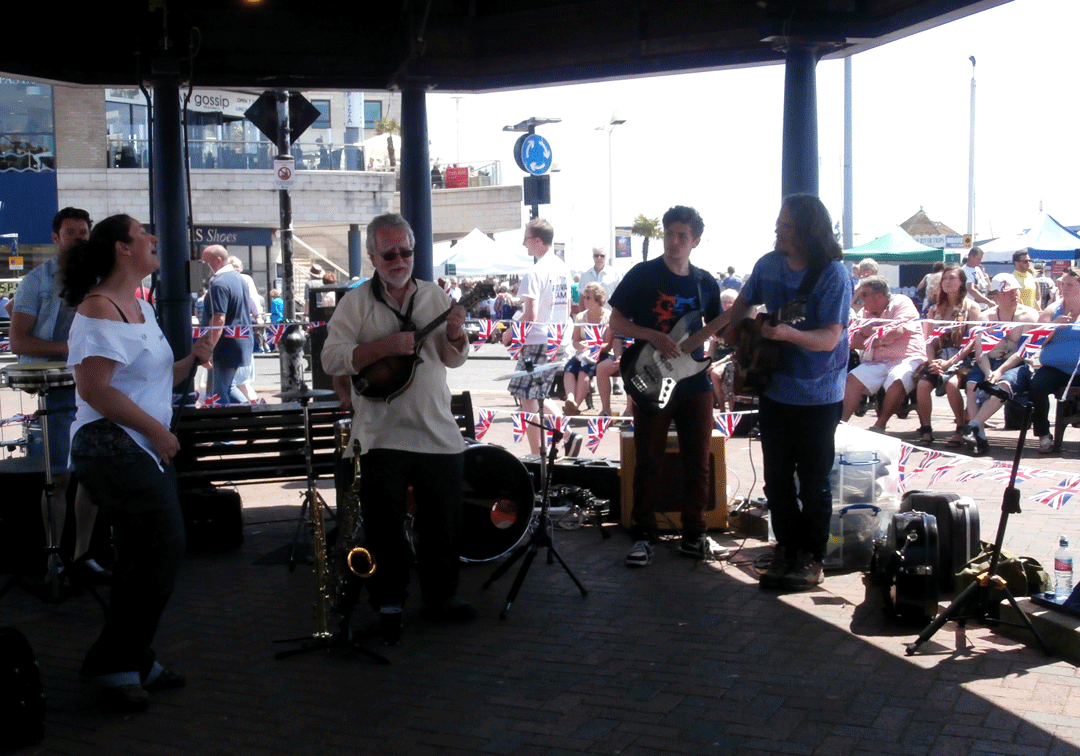
On Sunday Margaret and I enjoyed listening to a range of music on Poole Quay …..

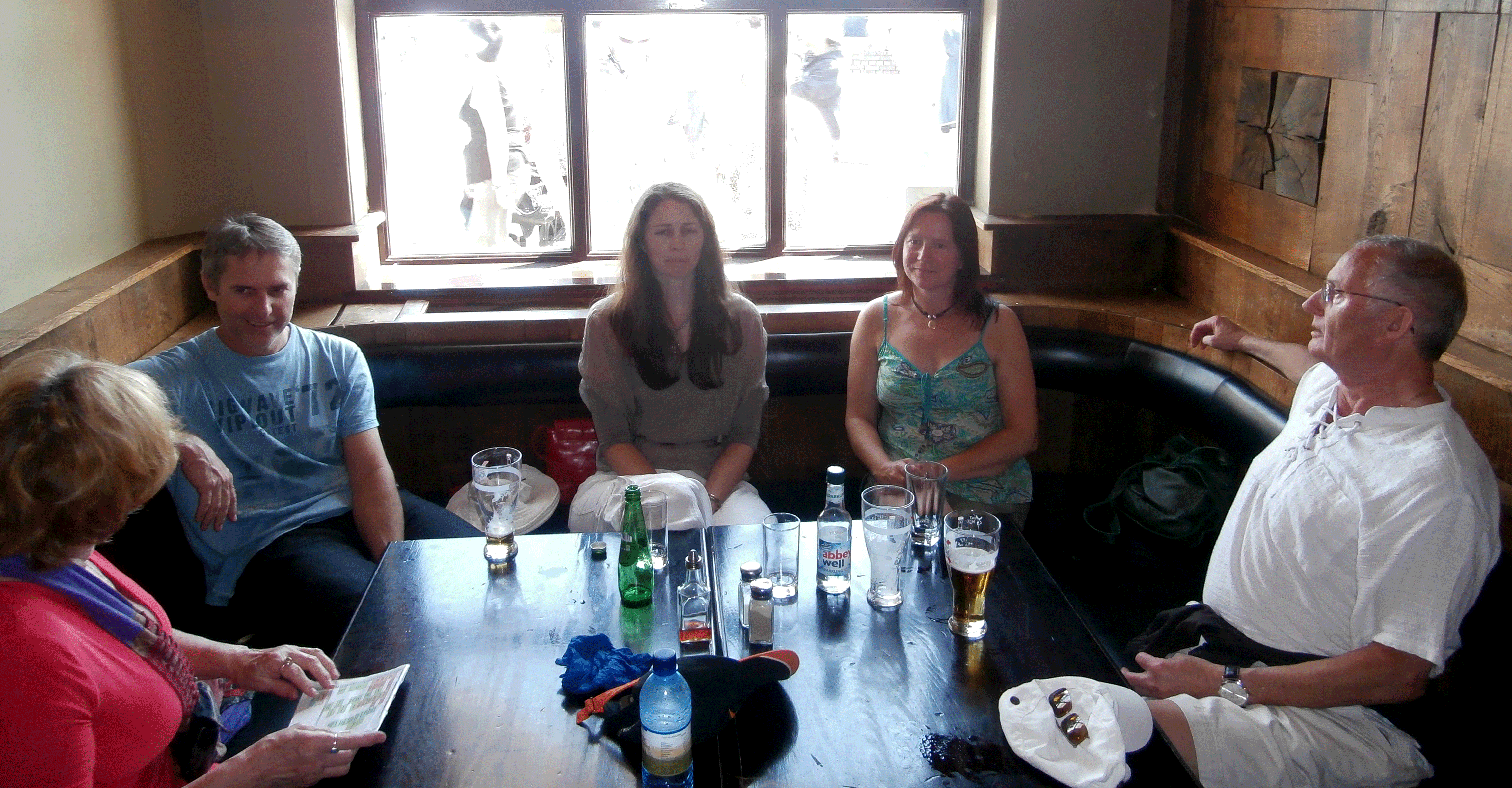
… before joining John and Anita and friends for a drink at the Portsmouth Hoy.










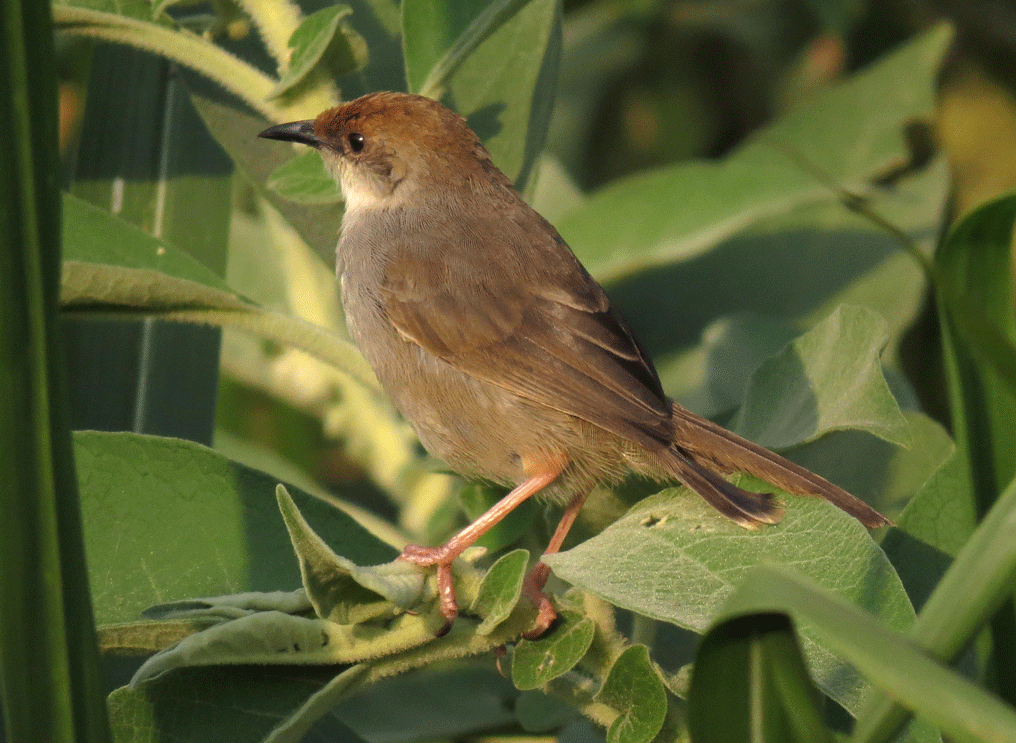

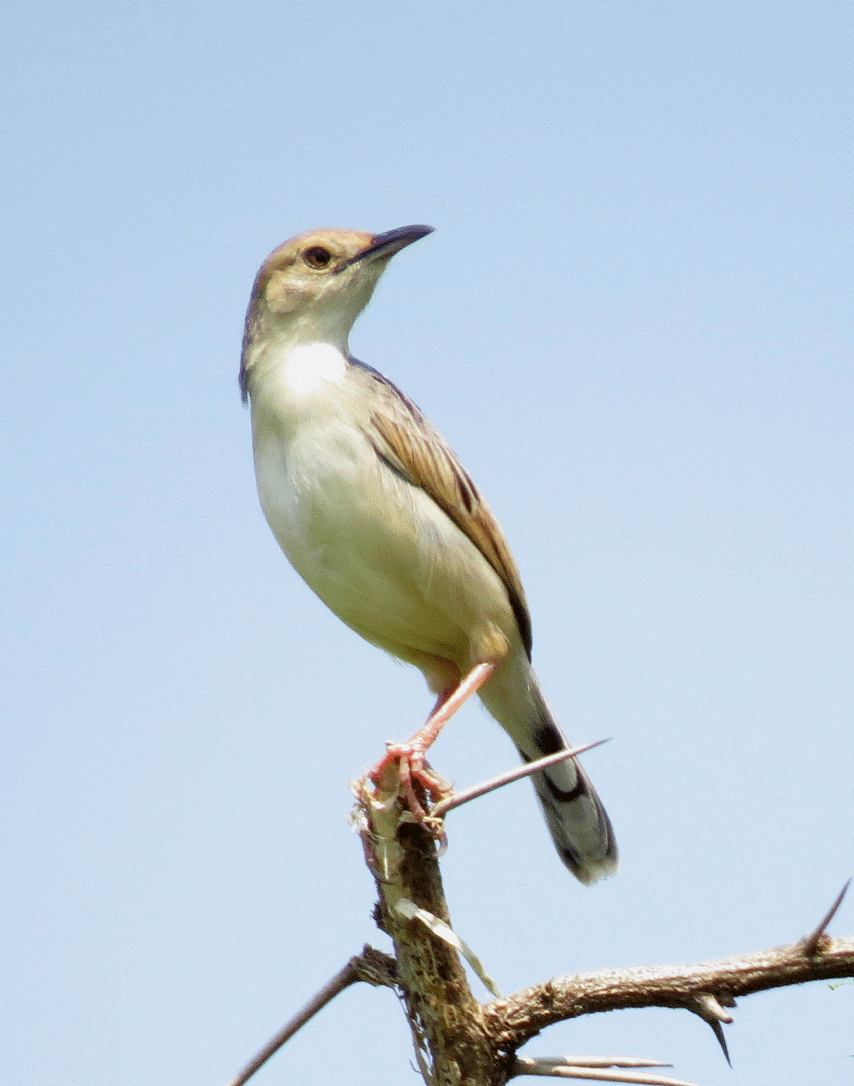
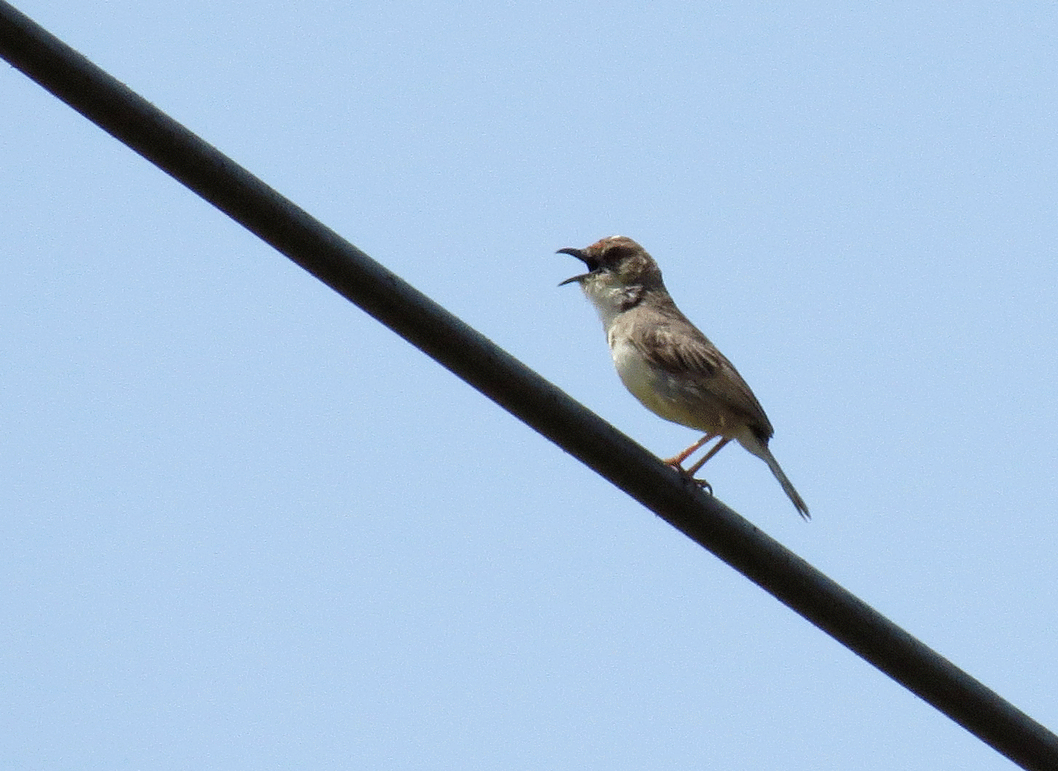





























 gryllosblog