Archive for the ‘Uncategorized’ Category

1st to 27th June – Uganda   Leave a comment

I started this blog with the intention of keeping interested parties up to date with my post-retirement activities. However I hadn’t envisioned that there would be times when I would be so busy that there wouldn’t be time to write a blog or edit the photos required. This is exactly what has happened recently. The 1st to 27th of June was spent on a highly successful Birdquest trip to Uganda. We saw a wide range of birds and mammals and I took over 2,700 photos, so editing even a selection for the blog has been a challenge. On top of that Margaret and I will be away in the near future, visiting her sister, so some preparation for that trip has been necessary as well.
Anyway here is a summary of the Uganda trip with just a few photos to illustrate it. For some reason I can’t add captions to the photos in the usual manner, so I apologise for the unusual formatting.
The rains had come early and had been prolonged, so everything was green and the grass very long, the weavers, bishops and wydahs sported their breeding finery but on the downside, because many forest species were now feeding young, they were less responsive than expected to recording.
.
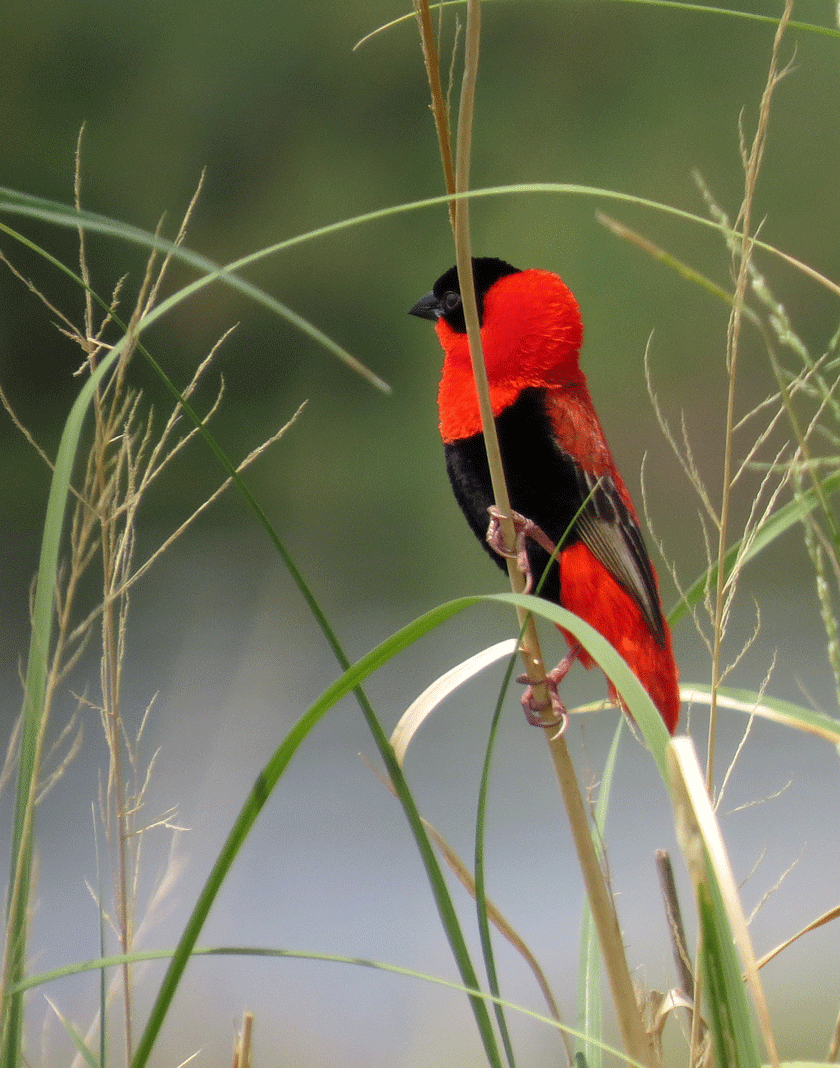
IMG_2582-N-Red-bishop
A Northern Red Bishop in breeding finery
.
Also high water levels meant that some birds weren’t in the usual spot, for example we had four encounters with the legendary Shoebill but only one was on the ground but another one was seen soaring over a wholly unexpected area.
.
IMG_3985-Shoebill
This Shoebill was seen feeding in the papyrus marsh but I couldn’t get a clear view for photos.
It later flew allowing this poor image to be captured.
Shoebills are so distinctive that they are placed in their own family. I now have just two families
for the set, one in New Caledonia and one in Borneo.
.
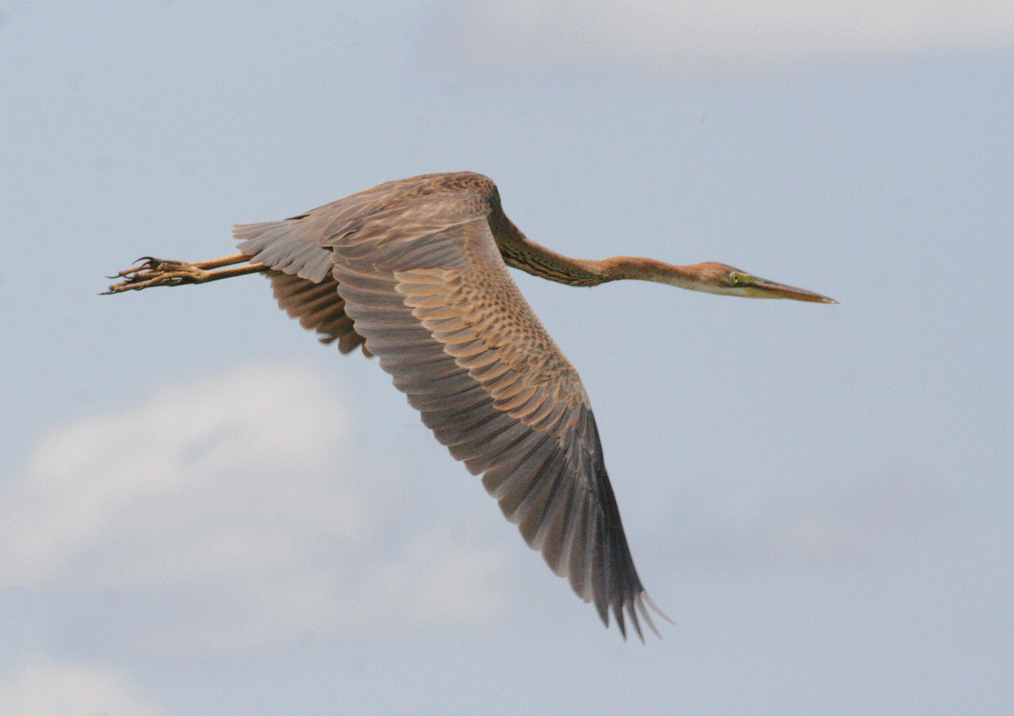
IMG_3997-Purple-Heron
As well as the migratory birds that breed in the Palearctic, Africa hosts a large resident population of Purple Herons.
.
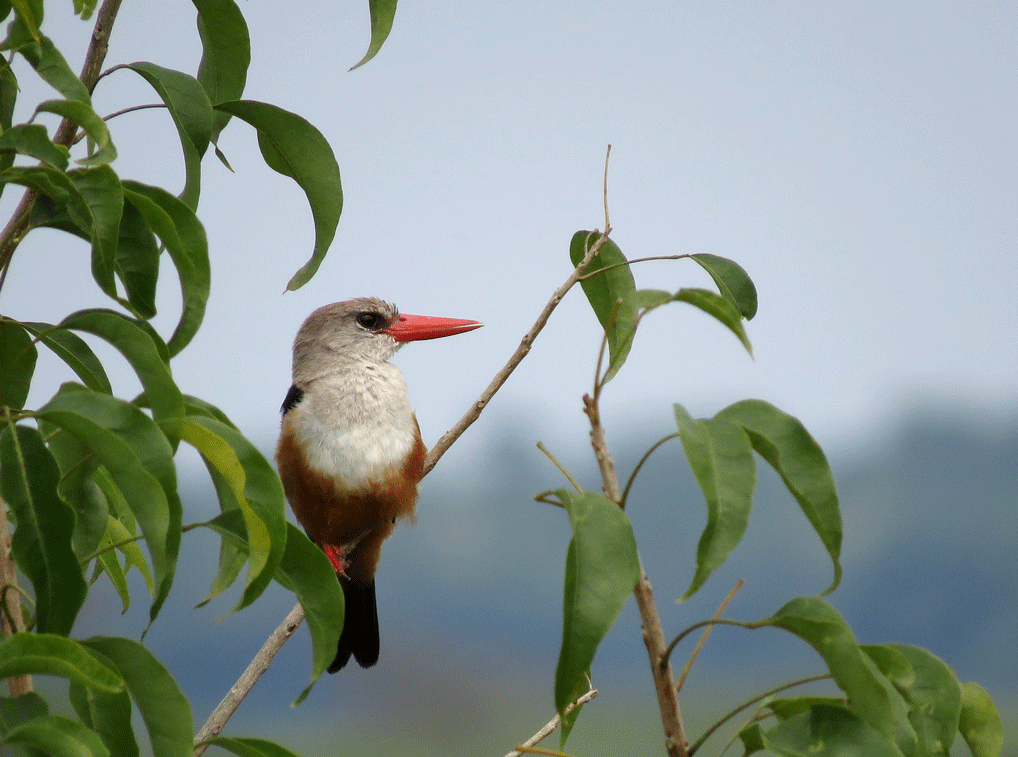
IMG_2291-GH-kingfisher
Grey-headed Kingfisher
.
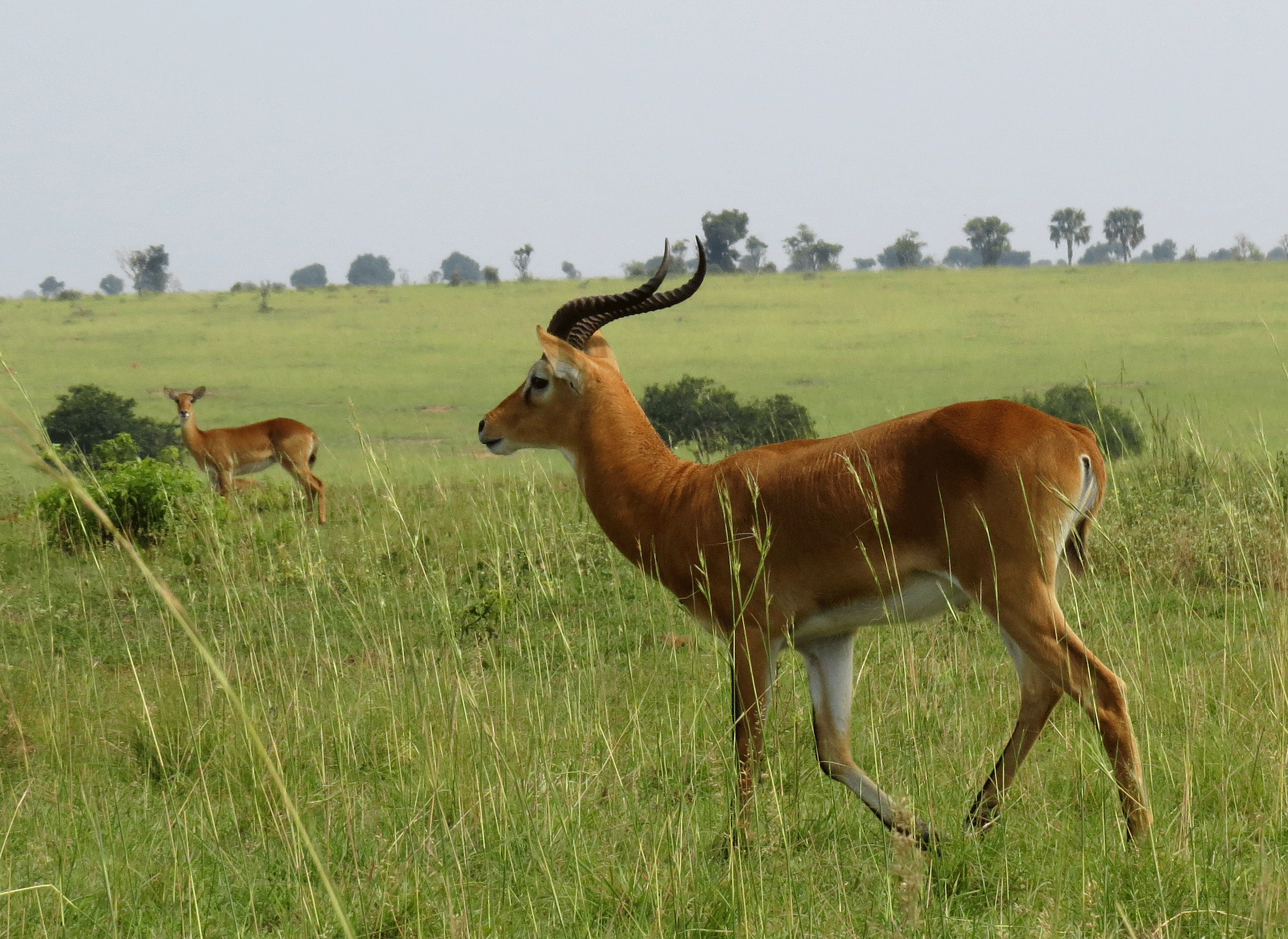
From Lake Victoria we headed north to Murcheson Falls NP where we saw lots of Oribi, Uganda Kob, Lake Chad Buffalo along with the fantastic Pennant-winged Nightjar and other great birds.
.
IMG_2202-Murchisson-Falls
The entire flow of the Nile is forced through this 10 metre wide gap at Murchison Falls
.
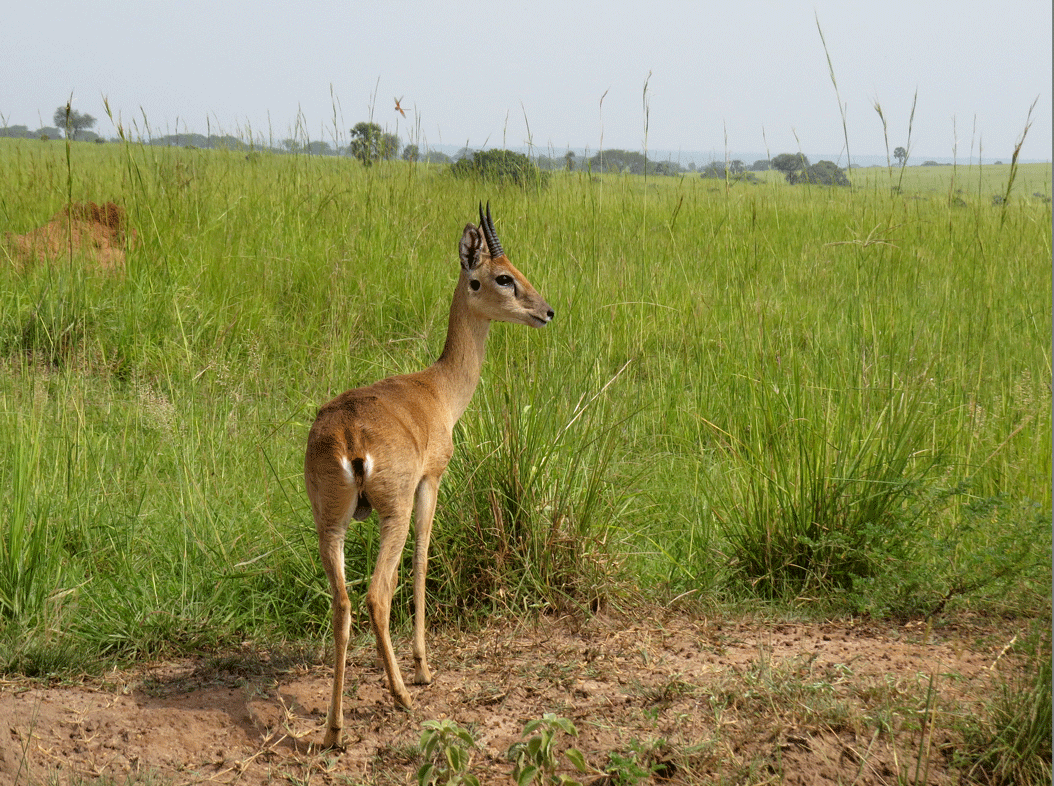
IMG_2387-Oribi
Sudan Oribi
.
IMG_2405
Uganda Kob
.
IMG_2575-Croc
There were plenty of large Nile Crocodiles on lake Albert below Murchison Falls.
.
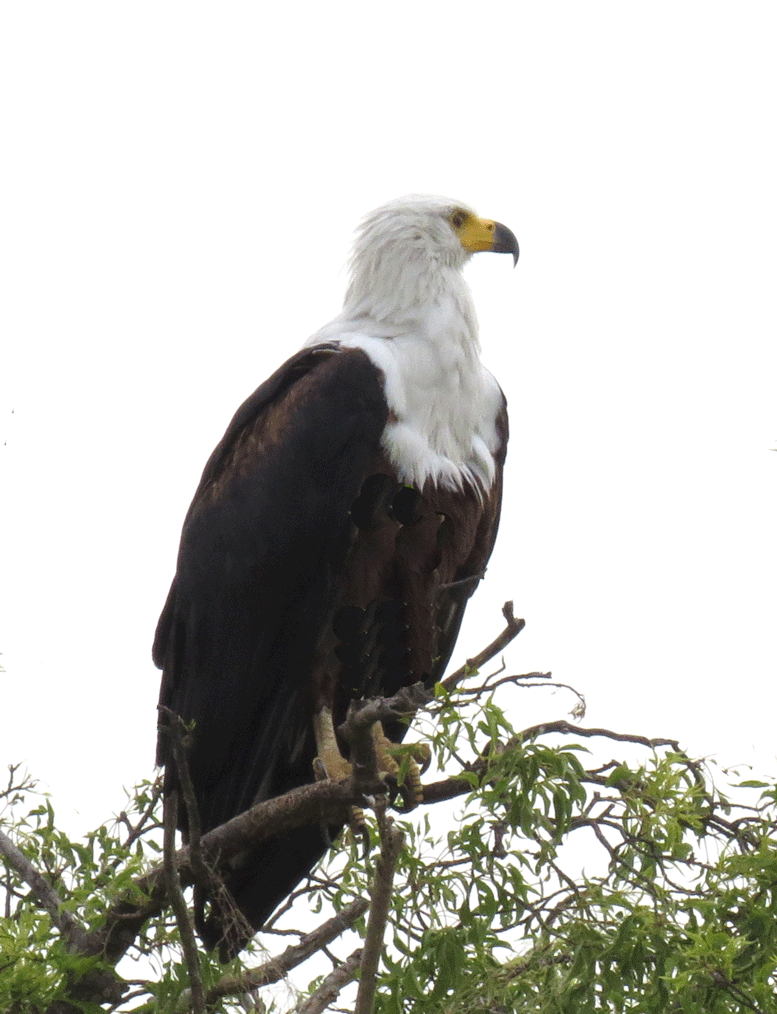
IMG_2457-Fish-eagle
African Fish Eagles are still a common site in Murcheson Falls but apparently
their numbers have declined sharply in recent years.
.
IMG_2249-Pennant-winged-Nig
Ok, its a bit blurred , but it was taken through the windscreen illuminated only by the headlights.
Pennant-winged Nightjar  is probably the most spectacular nightbird in the world.
Uganda is within the wintering range of the species, it breeds further south in Malawi and Zimbabwe,
and the amazingly long pennants (elongated primaries) aren’t fully grown.
.
Budongo forest produced restricted range birds like Ituri Batis and Nathan’s Partridge along with several monkey species. At Kibale we had close encounters with Chimpanzees and finally found a recently fledged Green-breasted Pitta.
.
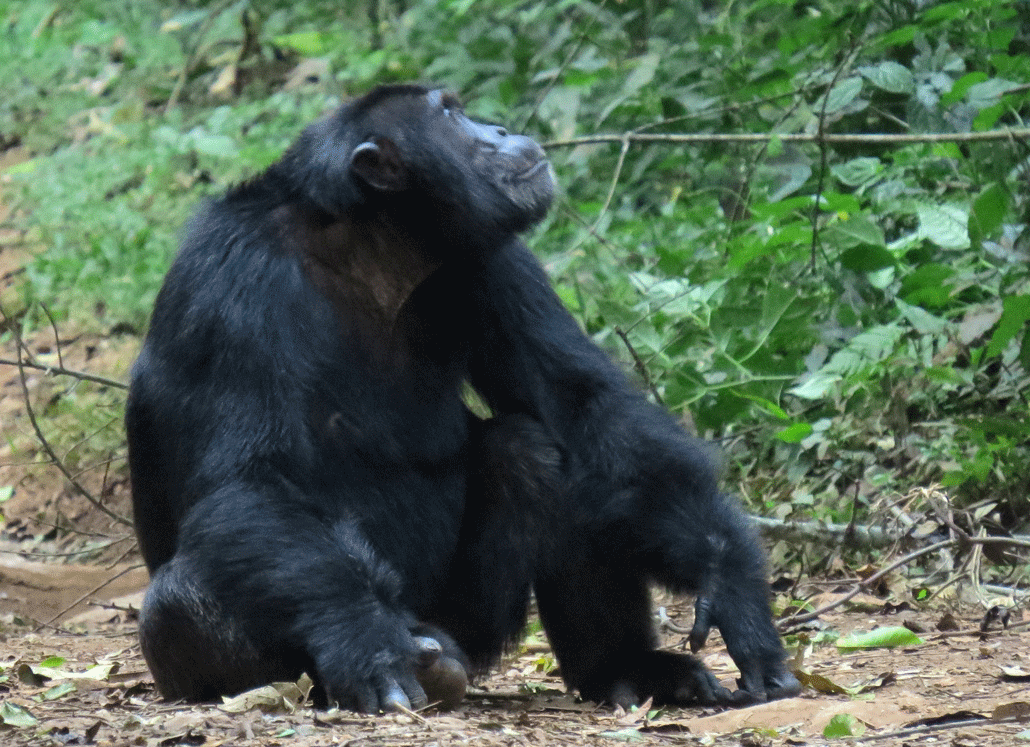
IMG_0082-Chimp
A large male Chimpanzee scans the tree tops for somewhere to spend the night.
.
Queen Elizabeth NP was superb, recently burnt areas held loads of Lapwing sp, but unfortunately not the much wanted Brown-chested, which had yet to arrive from its breeding grounds in west Africa. Dwarf Bittern was a long anticipated lifer and the Dusky Lark that leader Nik Borrow found was a first for Uganda,
.
IMG_0471-QE-fires
It was supposed to be a controlled burn but it looked anything but controlled to us.
.
IMG_0360-Af-Wattled-Lapwing
African Wattled Lapwing.  Also around the burnt areas were Senegal and Crowned Lapwing,
Temmink’s  Coursers and Collared Pratincoles.
.
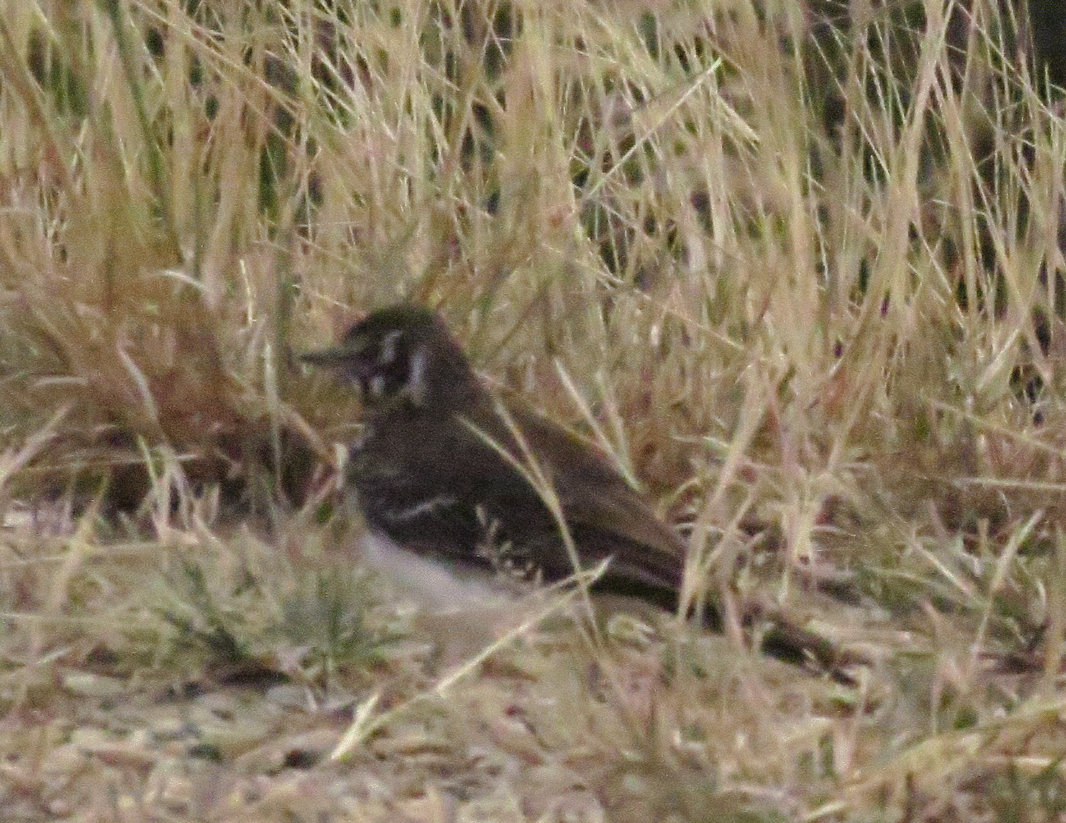
IMG_0877-Dusky-lark
Dusky Lark, a first for Uganda.
Nik got better photos and I’ll post those at a later date if I can get a copy.
.
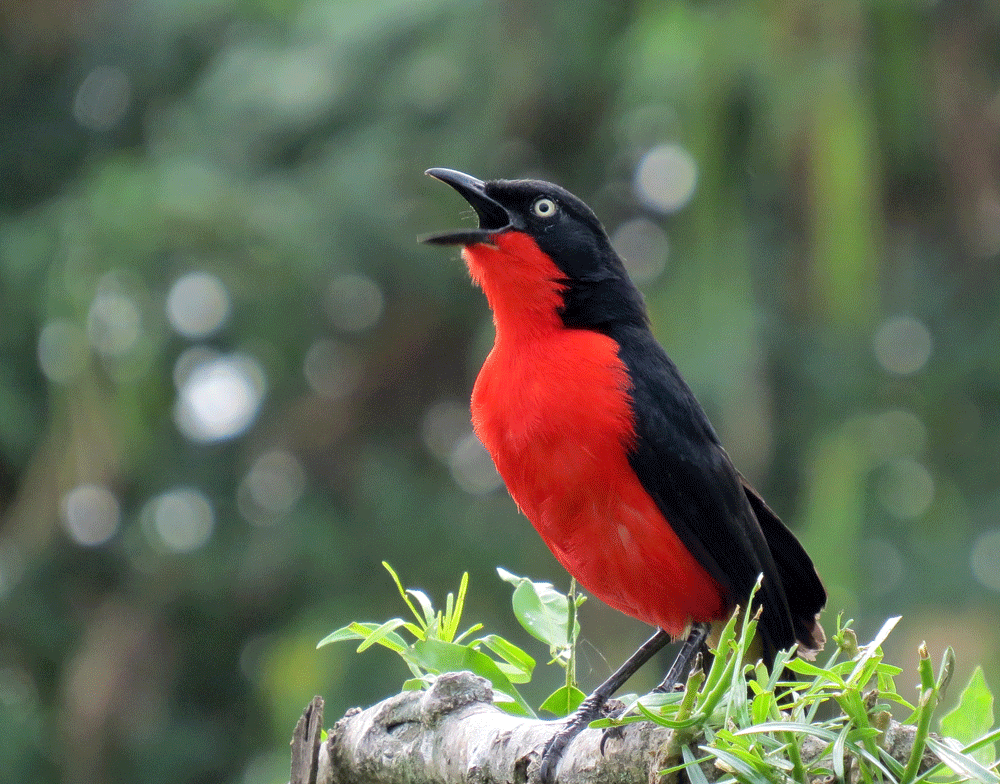
IMG_0576-BH-Gonolek
The beautiful Black-headed Gonolek, a species of shrike, was common around our accommodation.
.
One great aspect of this trip was the numbers of intra-African migrant wetland birds. I had seen the odd African Crakes, Allen’s Gallinules, Lesser Moorhens, Lesser Jacanas and African Skimmers before, but on this trip we recorded about 10 of each with the exception of the skimmers, where we found a flock of 800! Add to that a fantastic Red-chested Flufftail and you can see this was something special.
.
IMG_0388-African-Crake
African Crake
.
IMG_1910-Lesser-Jacana
Lesser Jacana is a rare example of neotony, a process where a species evolves from the
juvenile stage of a related species (in this case African Jacana).
.
IMG_0648-Af-Skimmers
I had only seen eight African Skimmers before, this flock totaled over 800!
.
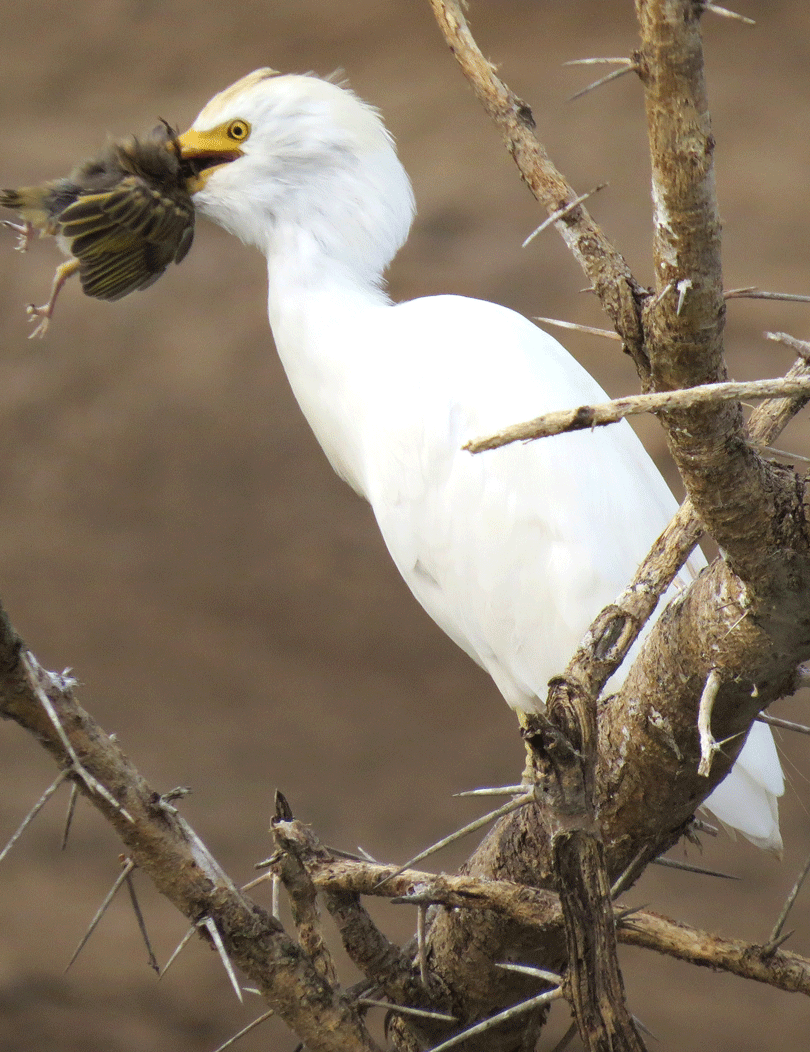
IMG_0770-Cattle-Egret-&-chi
Do you still think Cattle Egrets are cute?
.
The highlight of course was the Gorillas at Bwindi Impenetrable Forest. We were very luck and only had a 20 minute hike until we met the group, sometimes it takes six hours of arduous climbing, depending on where the Gorillas are that day. We had a wonderful hour watching them at close quarters. Further south, but still within the Impenetrable Forest NP, we came across a pair of African Green Broadbills building a nest.
.
IMG_1104-Gorillas
The hour spent with these gentle giants was one of the best field experiences ever.
More photos to follow in a future post
.
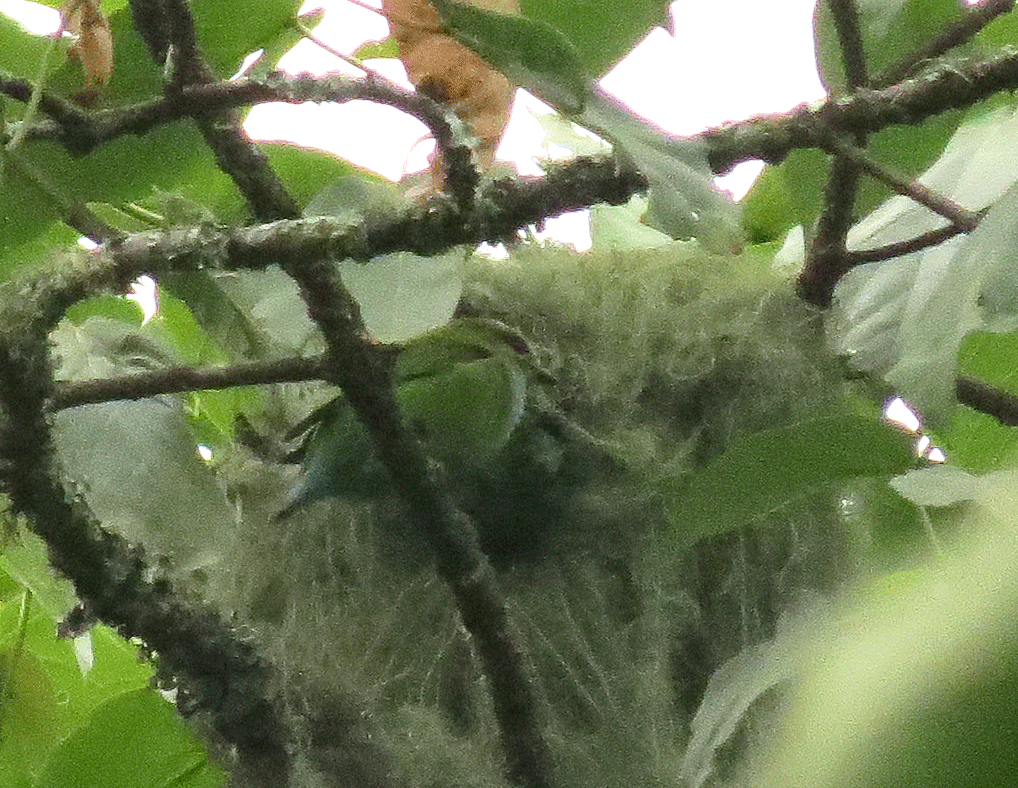
IMG_1342-Af-Green-Broadbill
The size and colour of a leaf, this diminutive Broadbill was building its nest of lichen high in a tree.
The nest was some distance from the path and had been found by a local ranger.
Seldom seen, yet much desired,this was one of the avian highlights of the trip and it
took an all day hike down into Muwindi swamp to reach 
.
Further south on the Rwandan border is Mgahinga NP, we had a great day in wonderful scenery and scored with many montane specialties, including several beautiful bush-shrike species.
.
P6200192-Virungas
A wonderful day in the Virunga Mountains
.
Last location was Mburo NP, where along with loads of game we saw Red-headed Barbet, Black-shouldered Nightjar, White-backed Night Heron and African Finfoot.
.
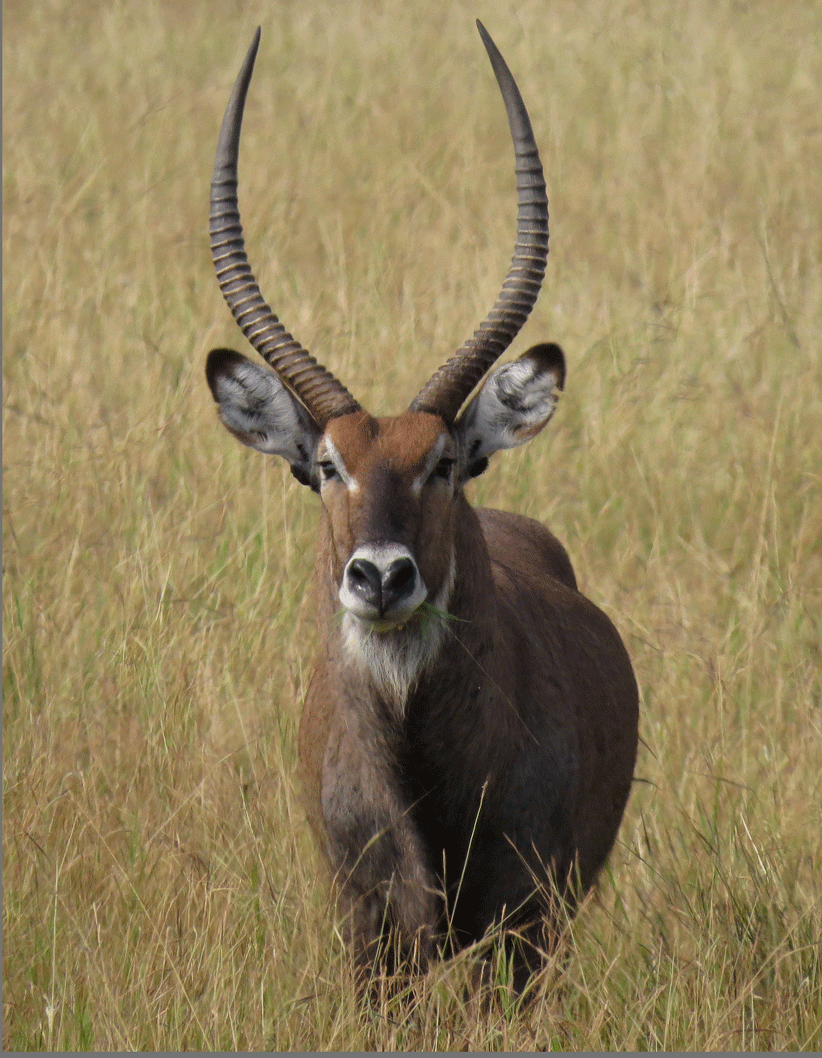
IMG_0370-Waterbuck
There were plenty of Waterbuck as well as Impala and Zebra at Mburo
.
IMG_1543-Ankole-Cattle
Mburo is also grazed by large herds of long horned Ankole Cattle,
which means that all large predators have been eliminated by the herdsmen.
.
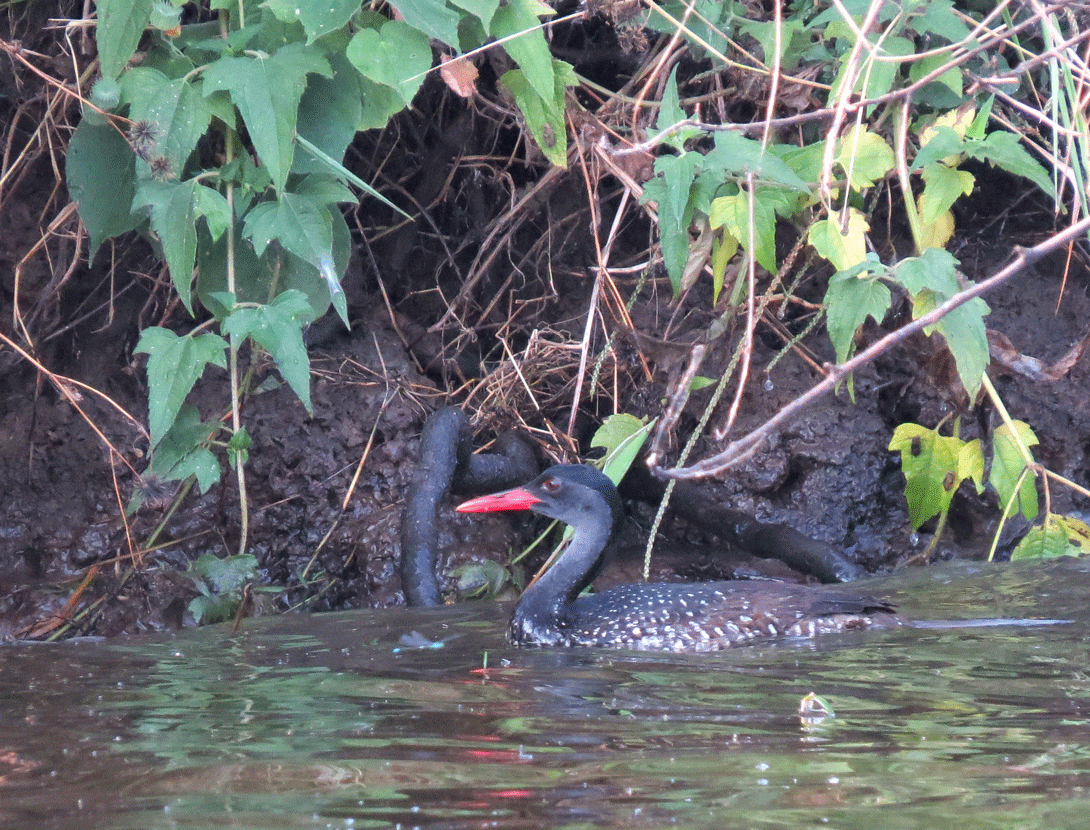
IMG_1698-African-Finfoot
Elusive, yet often showing well when it is finally located,  African Finfoot is
one of a three in this family, the others occurring in the Neotropics and SE Asia.
.
Half the group continued on with an optional extension, Mabira Forest gave me three more lifers, but the long drive north to Lake Bisina for Uganda’s only endemic, Fox’s Weaver drew a blank. A long way and a lot of money to dip, but then that’s birding for you.
.
P6250029-Lake-Bisiwi
We spent hours paddling around Lake Bisina in very uncomfortable, leaking canoes but there was no sign of Fox’s Weaver.
.
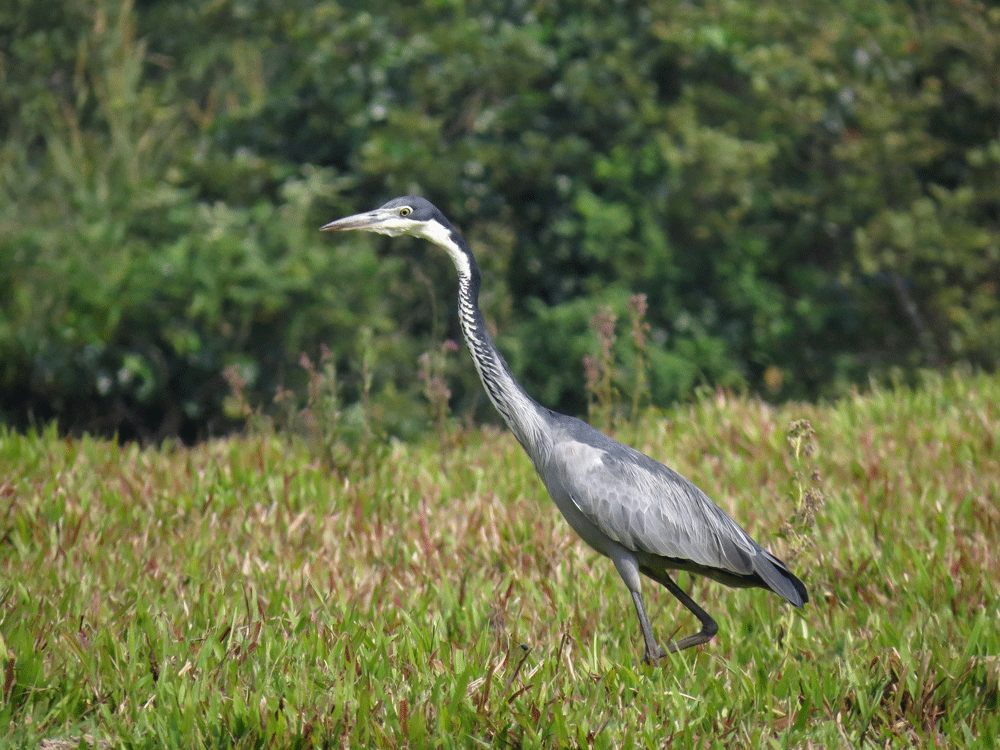
IMG_0156-BH-Heron
Black-headed Herons are as often found in dry habitats as marshes
.
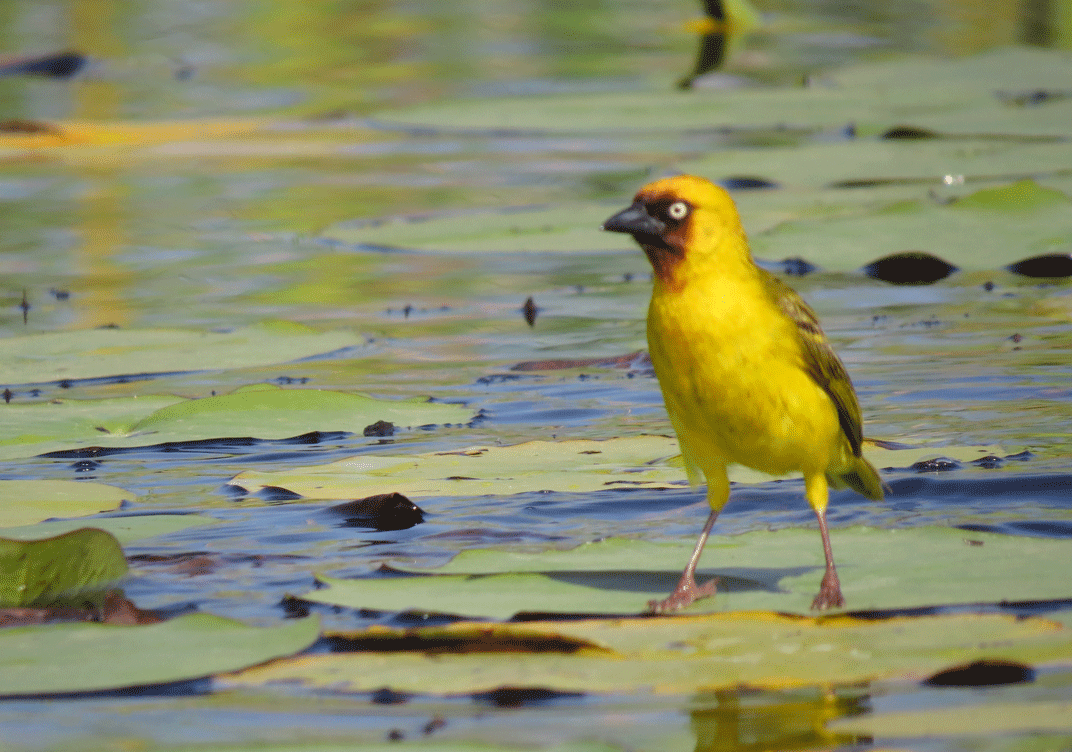
IMG_1927-NBT-Weaver
Fox’s Weaver is seldom seen but often strung! At least boat men used to take visiting birders to see
this species,  Northern Brown-throated Weaver which is common around the lake and call it Fox’s Weaver.
The problem is exacerbated by the fact that the illustration of Fox’s in the field guide is wrong,
showing Fox’s with a white, rather than red eye, like the above species.
.
We recorded about 580 species (another 50 are possible if we had gone in the winter, but then we wouldn’t have got the Green Broadbill) and I added 75 species to my life list, which has pushed it over 7500.  Also I had 25 mammal ticks.
.
Fantastic trip which I highly recommend. I will post more photos in due course.


Posted July 5, 2013 by gryllosblog in Uncategorized

23rd to 29th May – a nice walk at Kimmeridge and some family updates.   Leave a comment

Kara-taekwondo

Kara (right) lands a blow on her opponent. She continues to practice Taekwondo most nights of the week. Photo by Janis Dreosti.

Kara-capital-Cup-gold

Top in her age/weight class. At a recent competition in London she was awarded a gold medal. Photo by Janis Dreosti.

P5230607.gif-Kimmeridge

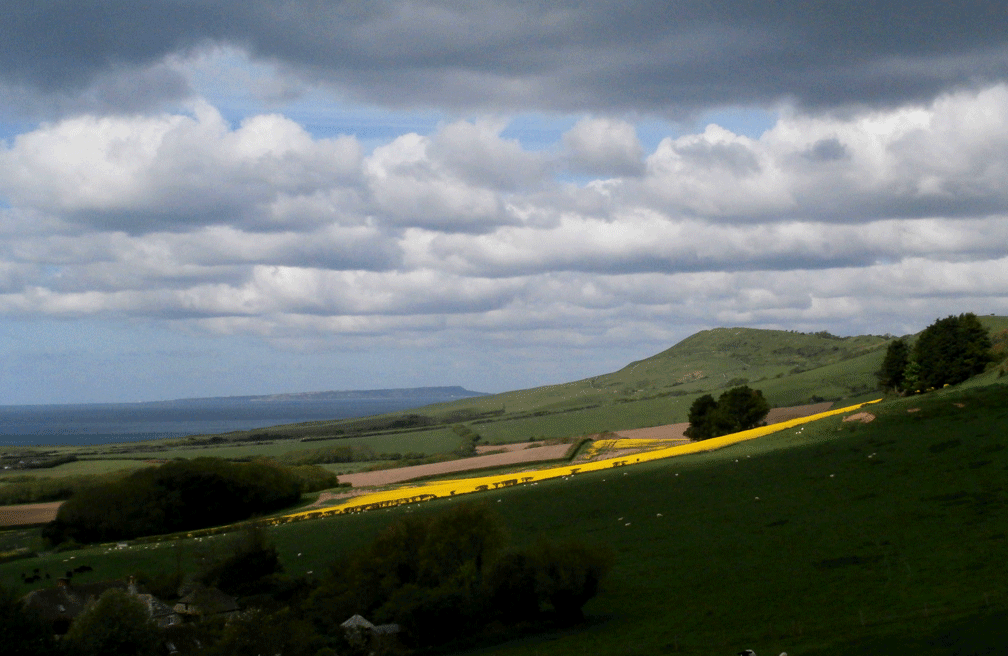
The 23rd of April started sunny and keen to get fit for my upcoming African trip, thought I would go for hike along the coast path. To avoid the excessive charge in the village, I parked in the quarry above Kimmeridge and walked down to the beach. Note the Isle of Portland on the horizon.

P5230612.gif-Kimmeridge

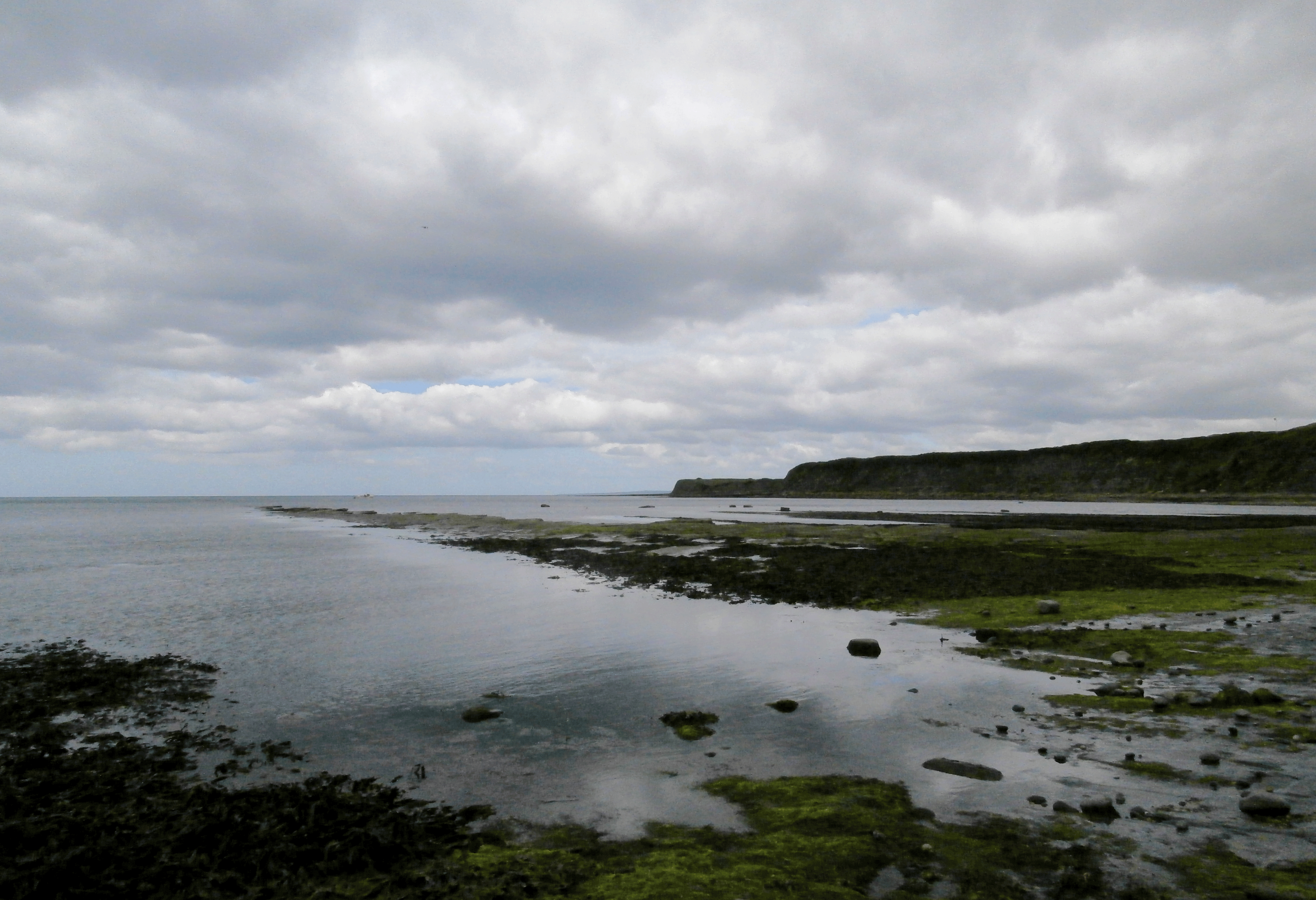
It had become quite cloudy when I reached Kimmeridge Bay. This is one of Britain’s first marine reserves and protects a wonderful selection of inter-tidal species.

P5230620.gif-Kimmeridge

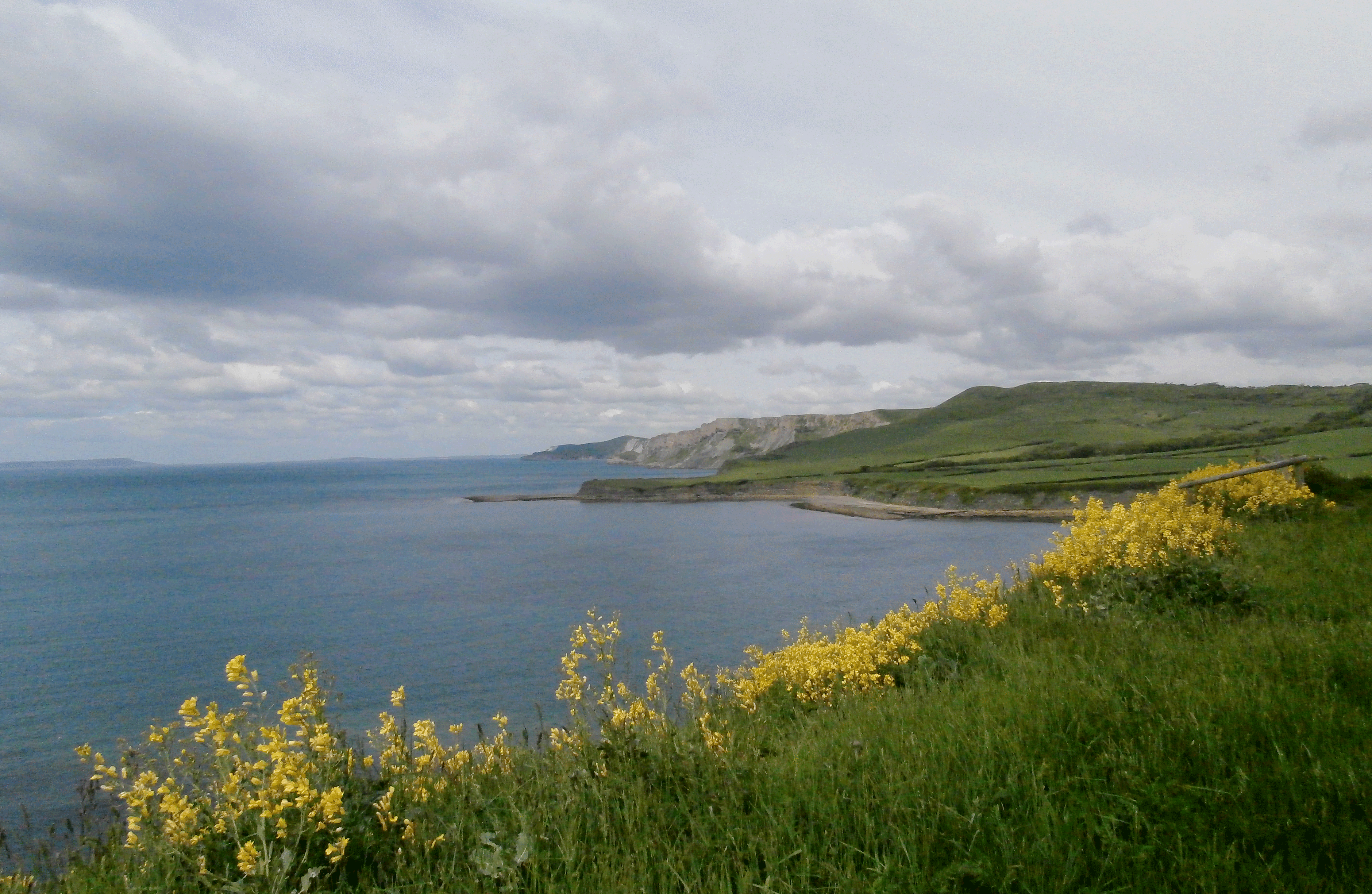
The coast path to the west of Kimmeridge was closed as it crosses the Lulworth Ranges as the army was on exercises, so I headed eastwards.

P5230619.gif-Clavel-Tower

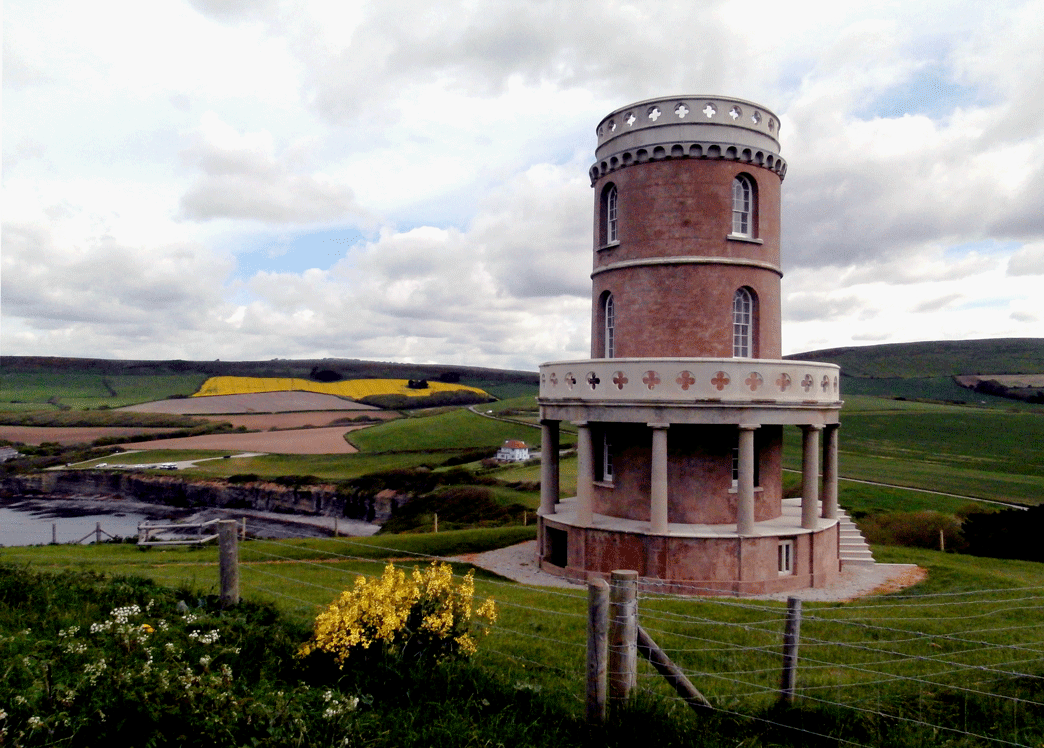
Just east of Kimmeridge is Clavell Tower. This folly, built in 1830, was in severe risk of falling into the sea due to cliff erosion and in 2006 was dismantled stone by stone and rebuilt slightly inland. It has been renovated so that two people can stay there and thanks to this work will remain an important landmark on the Jurassic Coast well into the future.

P5230625.gif-Corfe-Castle

Unfortunately the recent wet weather has had a devastating effect on the Jurassic Coast with numerous cliff collapses and landslides. The path was closed just east of Clavell Tower so I had no alternative but to retrace my steps and abandon the coastal walk. I headed home via Corfe Castle, which I seldom see from this angle.

P5240627.gif-moving

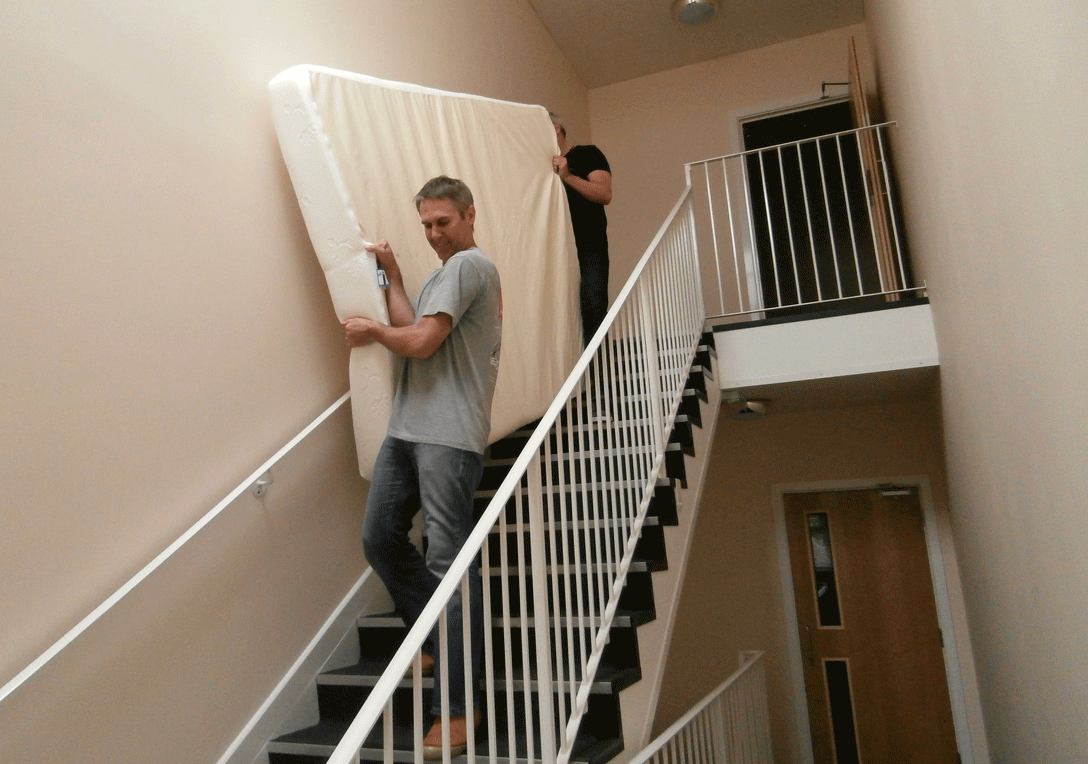
Anita and John have been living in a flat in Upton for eight months now, but it takes Anita almost an hour to get to and from her job in Bournemouth. They have now found a flat in the centre of Bournemouth which is only minutes away from work. On the 24th I helped John and his friend Ian move their gear out of the Upton flat.

P5240633.gif-new-flat2

In the evening Margaret and I went over to help them settle in.

P5240631.gif-Old-Xch-Rd

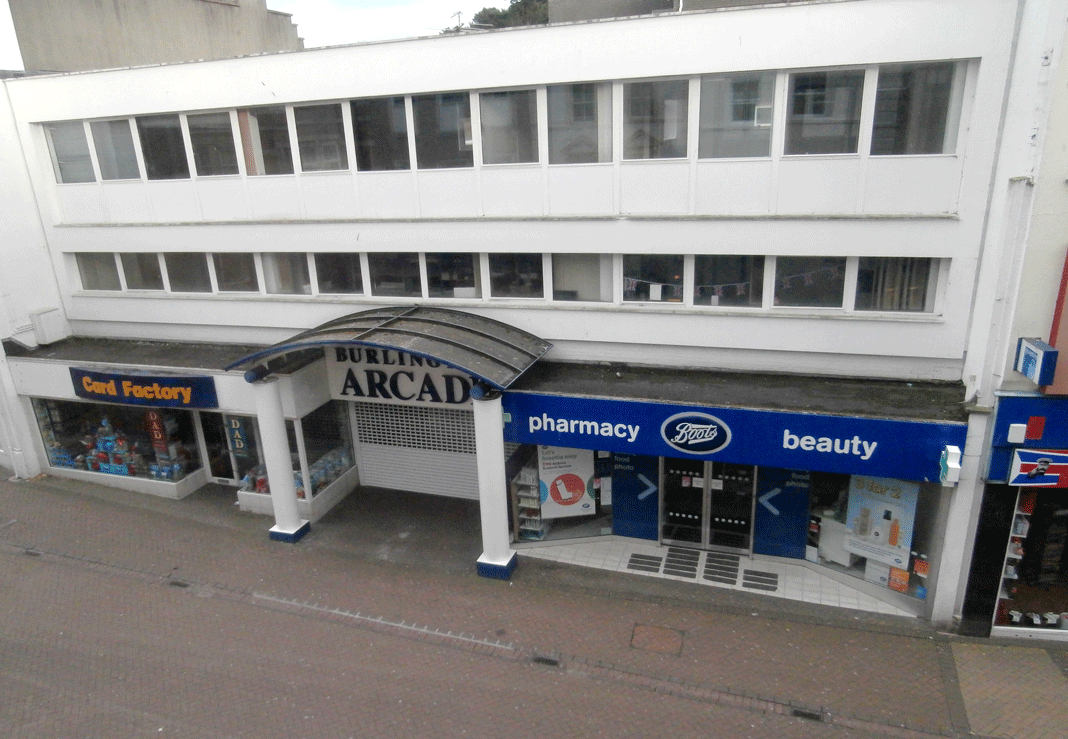
The flat overlooks the pedestrianised Old Christchurch Road. Its pretty quiet now but I told them that it will be a bit different at 11 pm on an August evening!

P5240630.gif-Snow-White

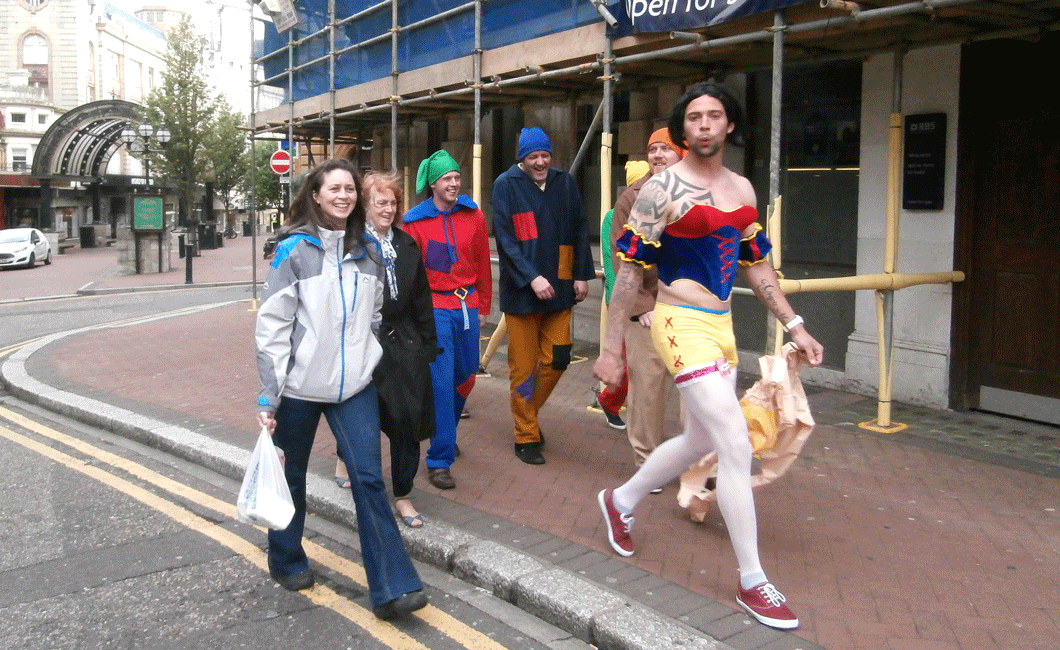
It might have been quiet but there were still some strange characters about. Here Margaret and Anita meet Snow White and the Four Dwarves in the road just outside the flat.

P5240635.gif-Kara

Kara arrived after Taekwondo and demonstrated the speed of her moves.

P5280764.gif-camping

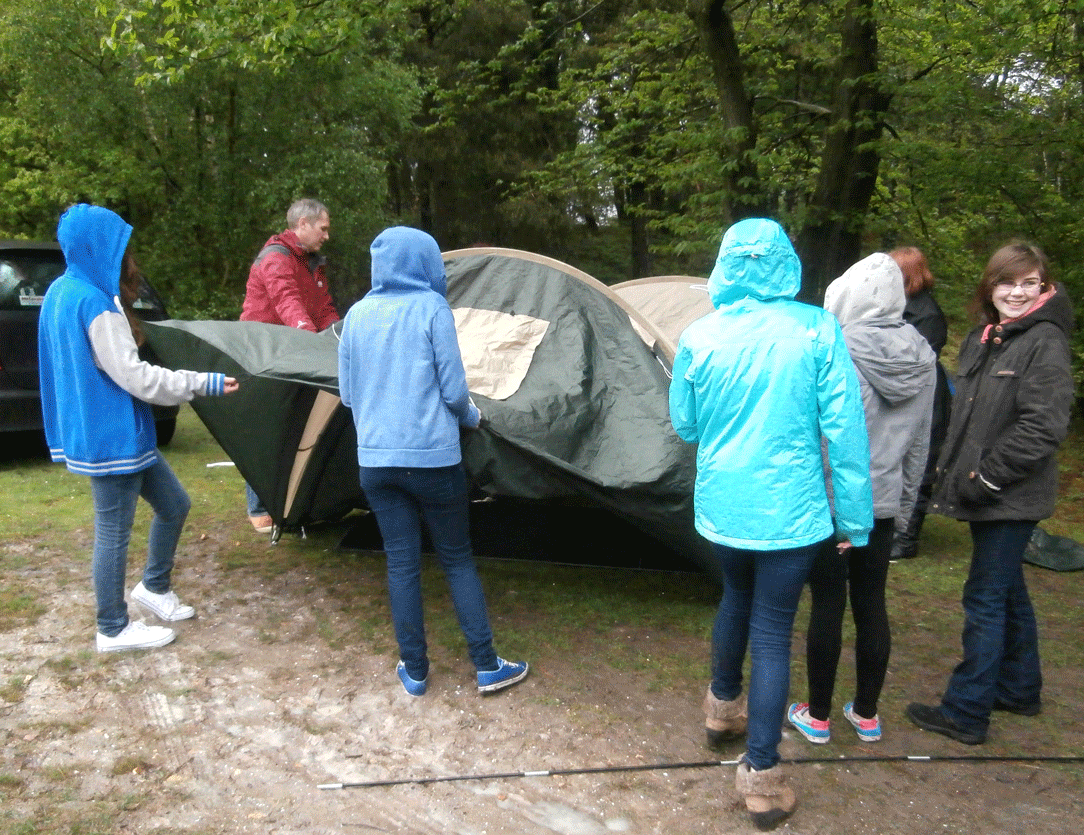
Amber birthday is in June, but as most of her friends will be involved in exams then, she opted to have a 16th birthday party at half-term break and had a camping and BBQ event at a nearby camp site. John opted to stay overnight for adult supervision and Margaret and I popped in to help. However the weather wasn’t too good, but eventually the tents got erected and the food cooked.

P5280783.gif-Freezing

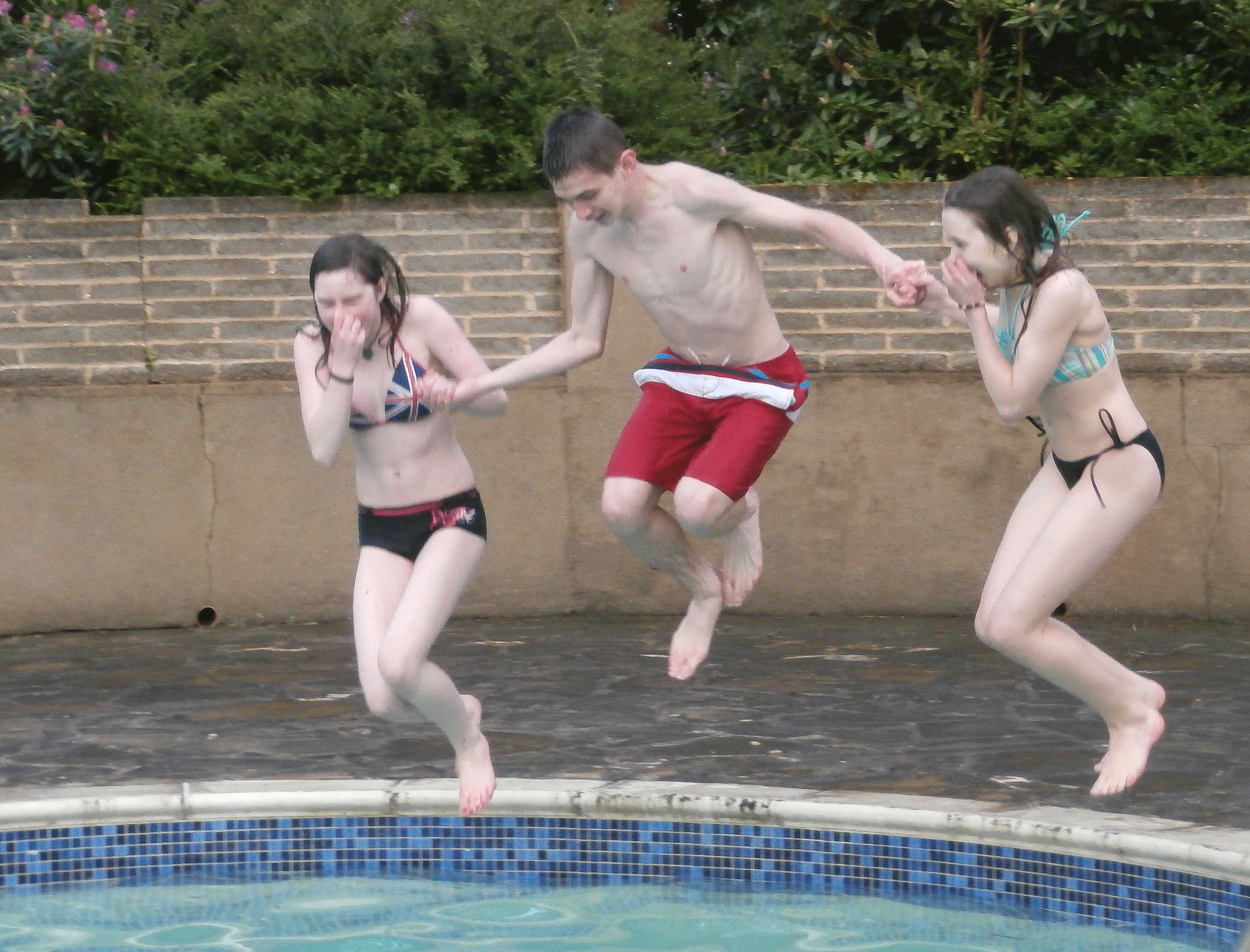
The cool and wet conditions didn’t stop Amber (L), Matt and Kara going swimming.

P5280768.gif-lee-at-pool

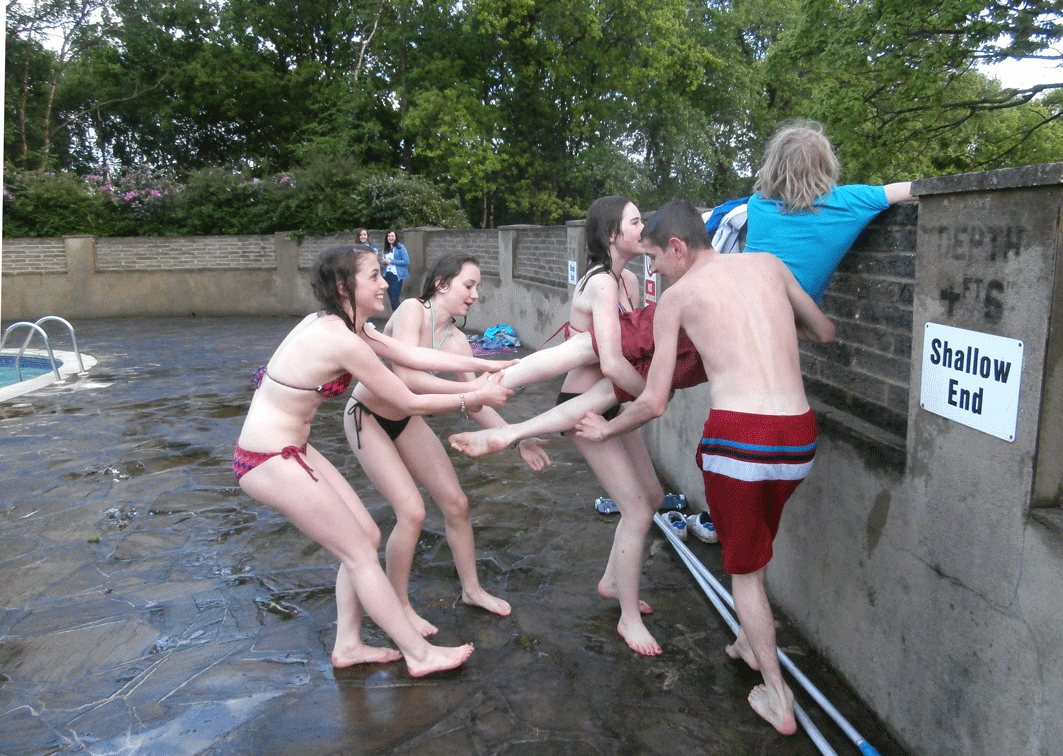
Lee seemed less inclined to go for a swim, but the others made sure that he did!

P5280791.gif-camping

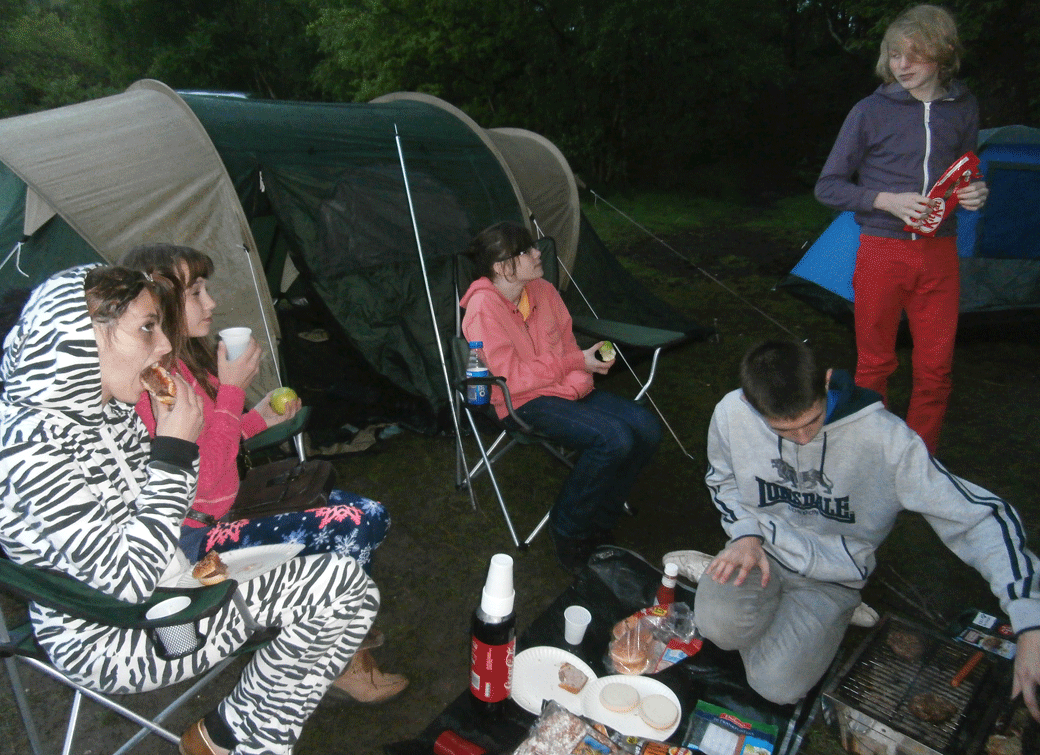
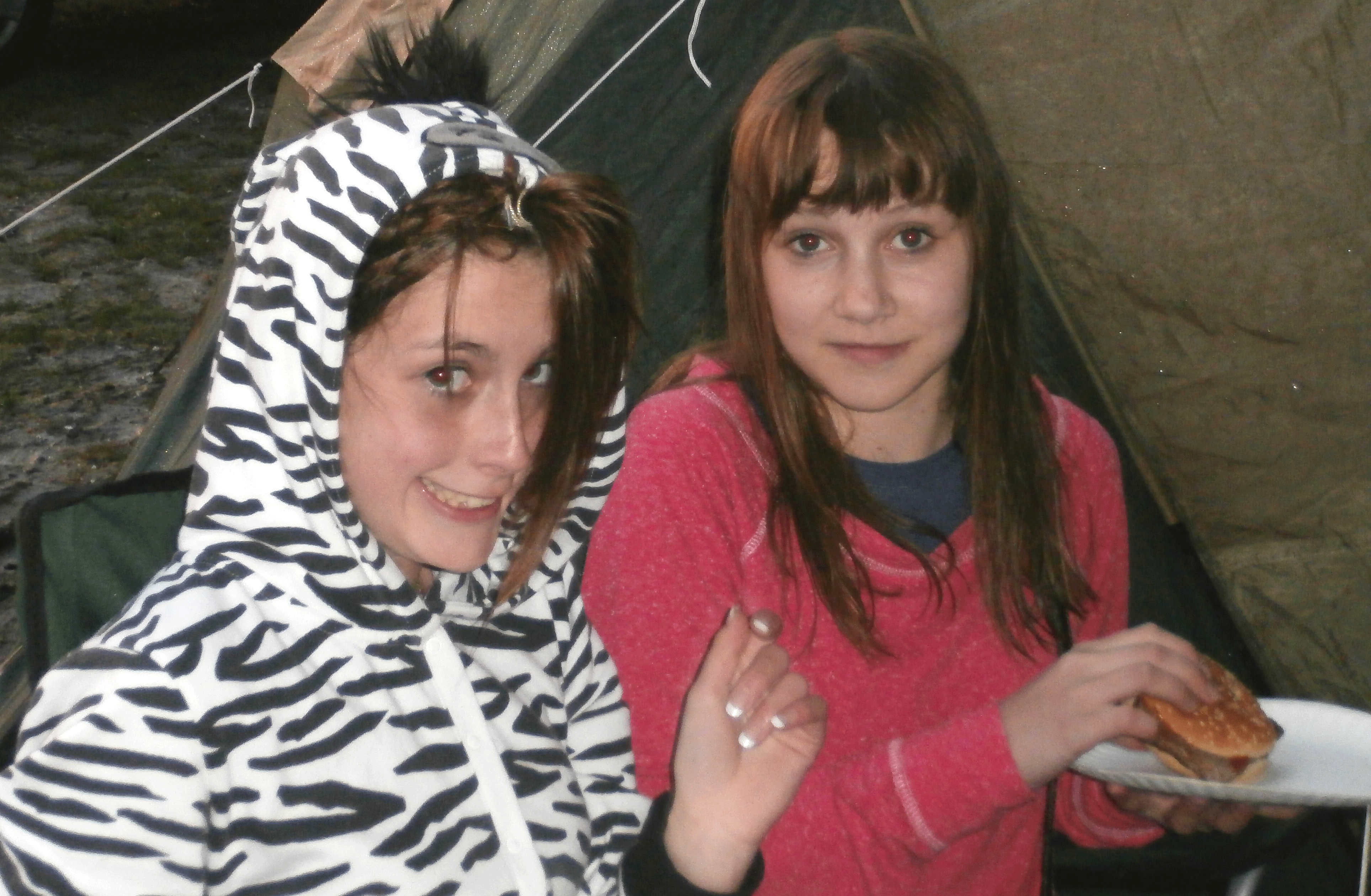
Eventually the food was ready and the kids settled in for a cool and rather damp evening. L-R Lillie, Kara, Amber, Matt and Lee. Charlie and Emily are out of shot.

P5280788.gif-Lilly-&-Kara

Kara and her zebraesque friend Lilly.

P5290795.gif-campsite

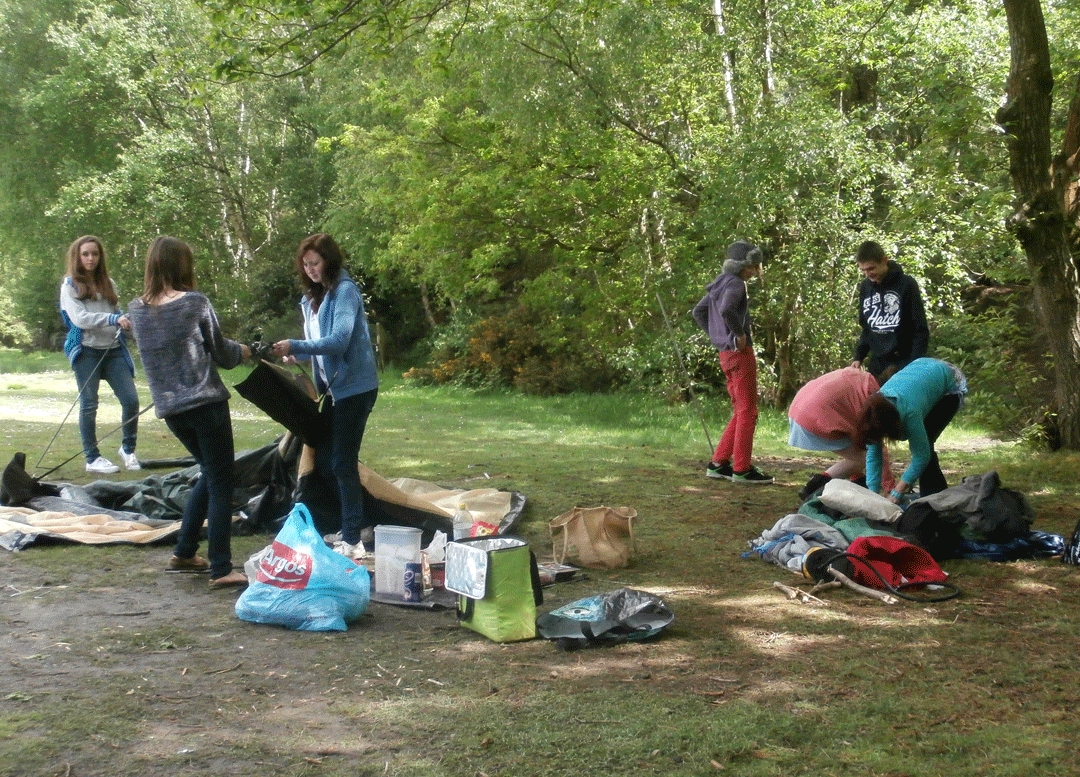
The next morning fortunately was much drier and I returned to help them take down, but (with a few notable exceptions) organising teenagers to put things away is a bit like nailing custard to the ceiling.

This will be the last blog post for a while as I leave soon for an exciting trip to Africa. More in due course.
Posted May 31, 2013 by gryllosblog in Uncategorized

26th May – The British Museum, London   2 comments

Getting away from the Emirates Stadium was surprisingly easy given the size of the crowd. We spent the night at a very basic B&B (well just a B) in Walthamstow. On the Sunday we spent about four hours at the British Museum. As always we just scratched the surface of these amazing exhibits, four hours is far too short a time to see it all, but I found that I just couldn’t absorb any more information after then. Here is a selection of some of these world-famous treasures.

P5260670-BM-atrium

The lovely atrium of the British Museum, usually just referred to as the BM.

P5260712-BM

Other treasures from the BM: enormous Assyrian statues.

P5260749-BM-Cleopatra's-mum

The actual mummy of Queen Cleopatra

P5260754-BM-Egypt-section

Another exhibit from the extensive Egyptology section.

P5260735-BM-Sutton-Hoo-helm

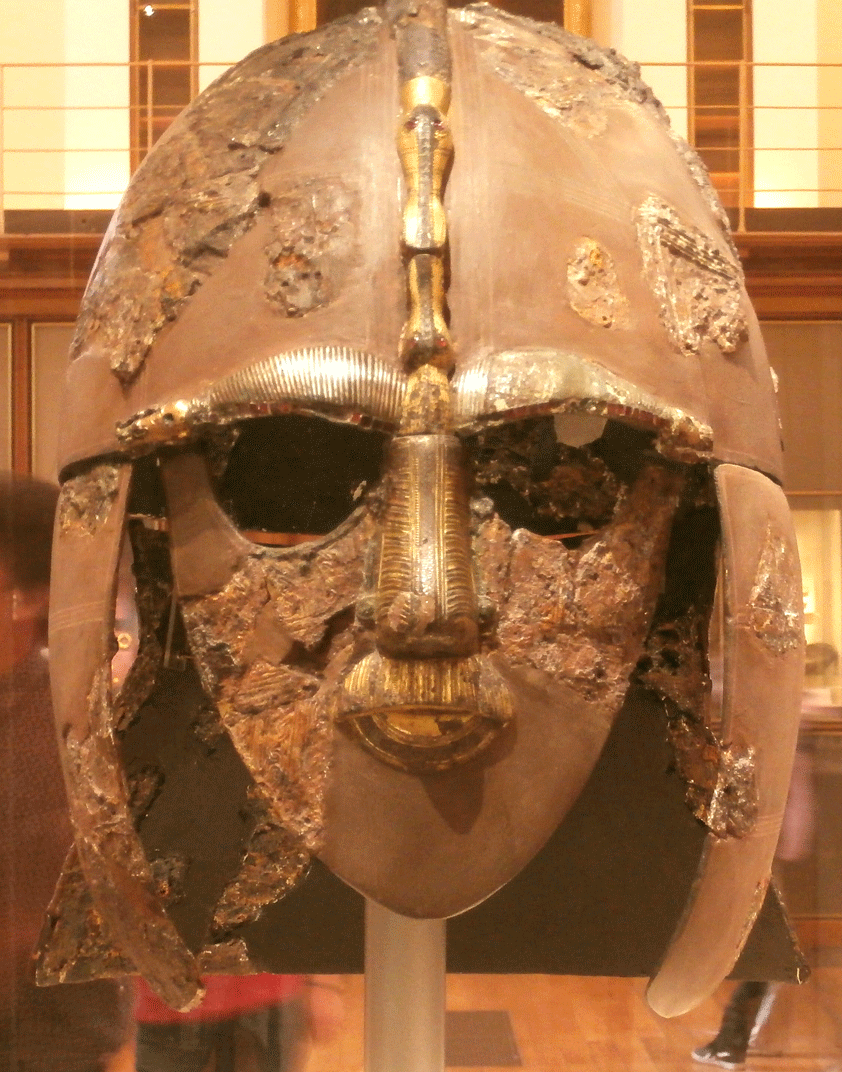
A wonderful Anglo-Saxon helmet from the Sutton Hoo treasure.

P5260746-BM-greek-vase

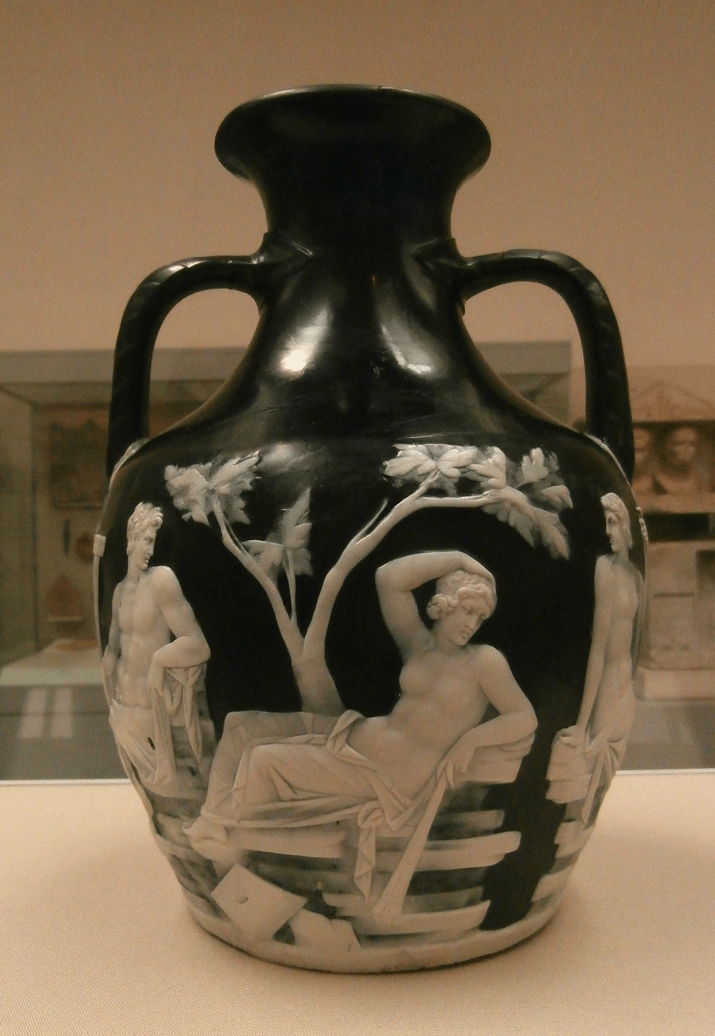
A beautiful Grecian vase

P5260706-Elgin-marbles

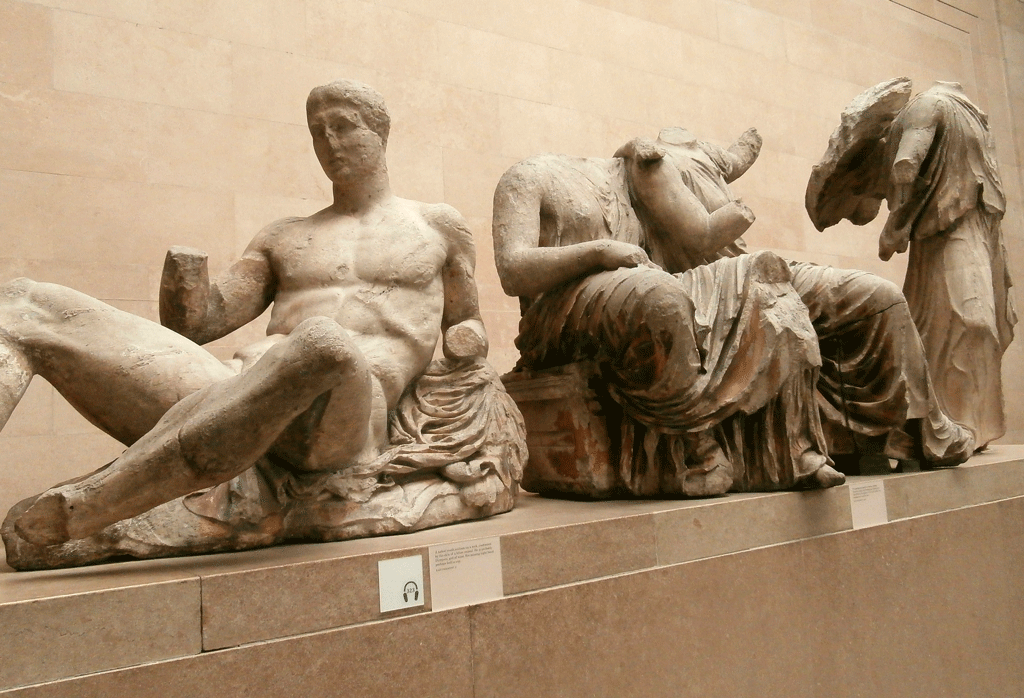
Part of the famous and controversial Elgin Marbles. Originally on the Parthenon in Athens, should they be returned to Greece?

P5260699-BM-Mauseleum-statu

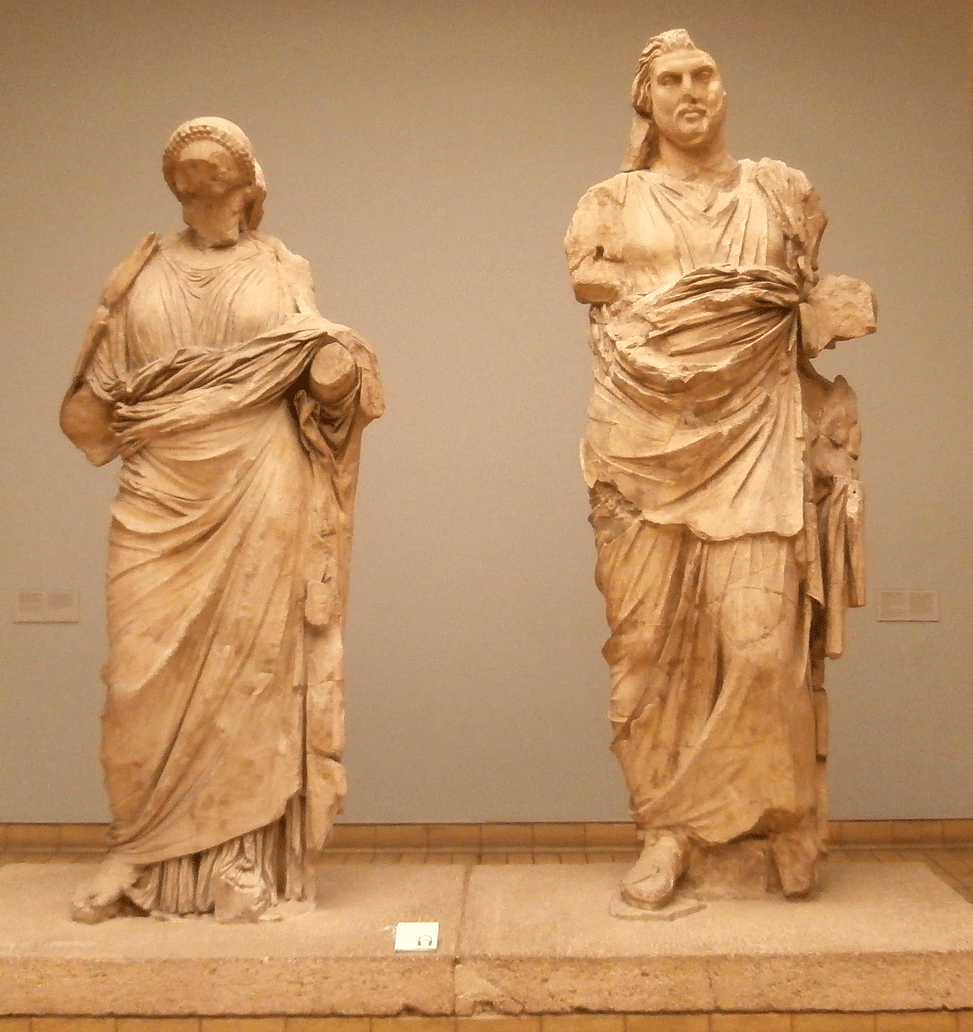
All but one of the Seven Wonders of the Ancient World (the Great Pyramids) has been destroyed but these enormous statues from the Tomb of King Mausolus (the original mausoleum) remain.


P5260681-bronze-shield

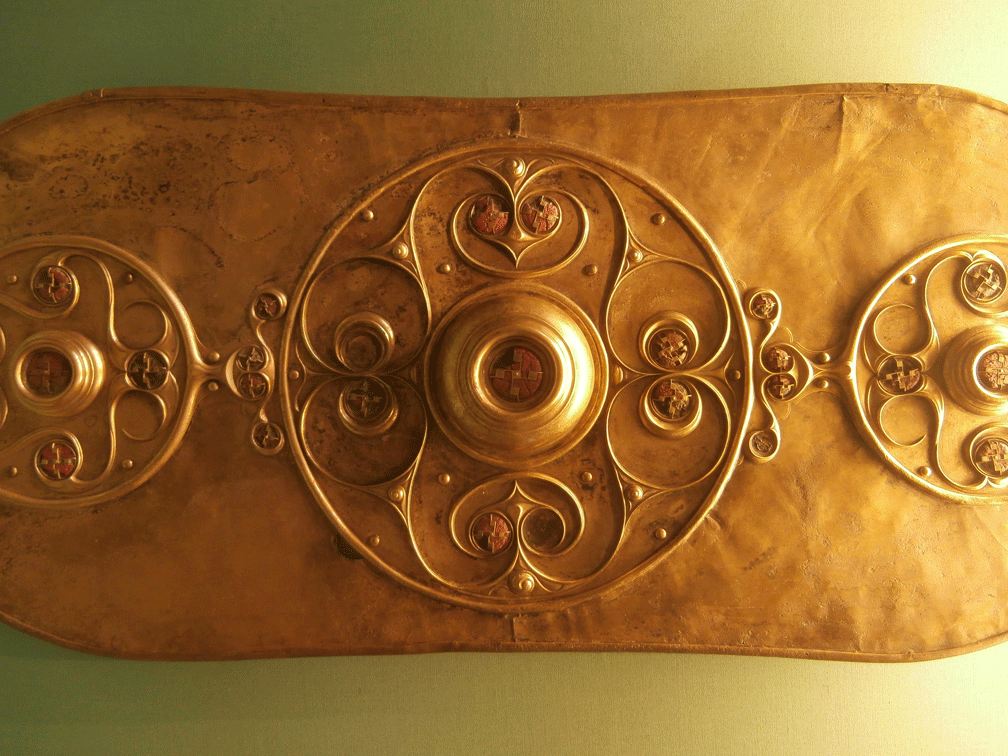
A beautiful bronze age shield.

P5260678-BM-gold-cape

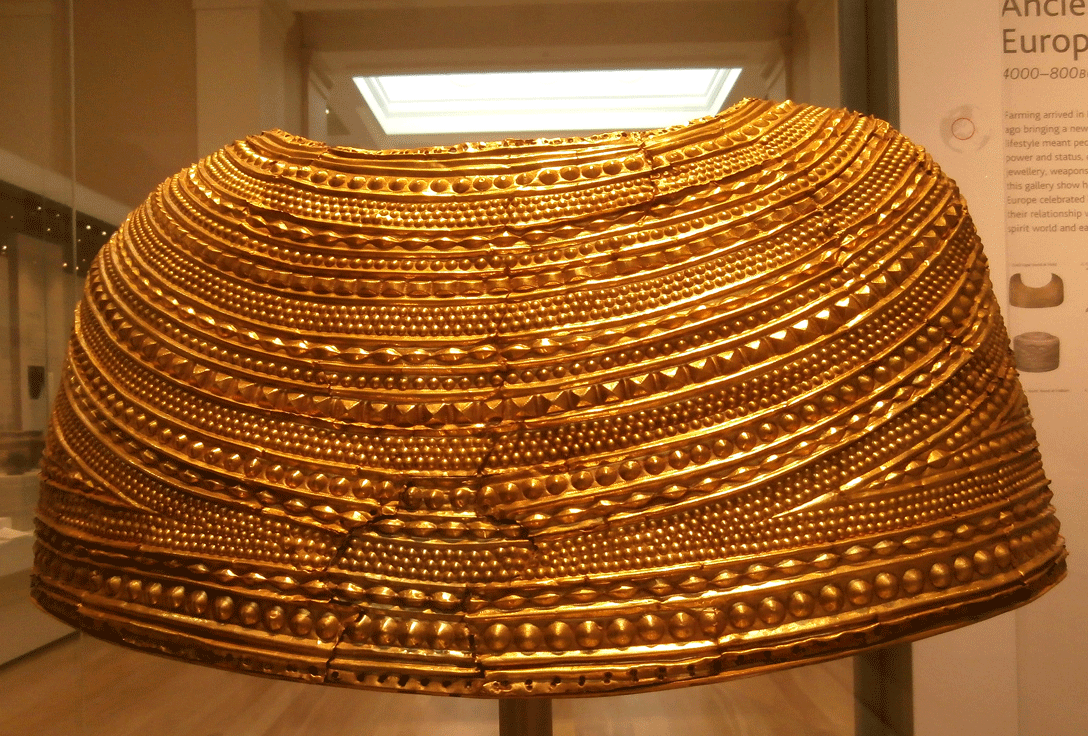
A gorgeous Bronze Age gold cape found in Wales.

P5260687-BM-rosetta-stone

The Rosetta Stone, one of the most famous archaeological finds of all time. Dating from Egypt 196 BC the stone has the inscription in Egyptian hieroglyphs, ancient Greek and Demotic Egyptian script and allowed hieroglyphs to be deciphered for the first time.

We had a wonderful time at the museum but with so many other great museums and art galleries to see in London it might be a while before we can return. We stayed so long that we almost missed the bus back to Poole.

Posted May 29, 2013 by gryllosblog in Uncategorized

May 25th – Portobello Road and the Emirates Stadium, London.   Leave a comment


P5250653-portobello-road

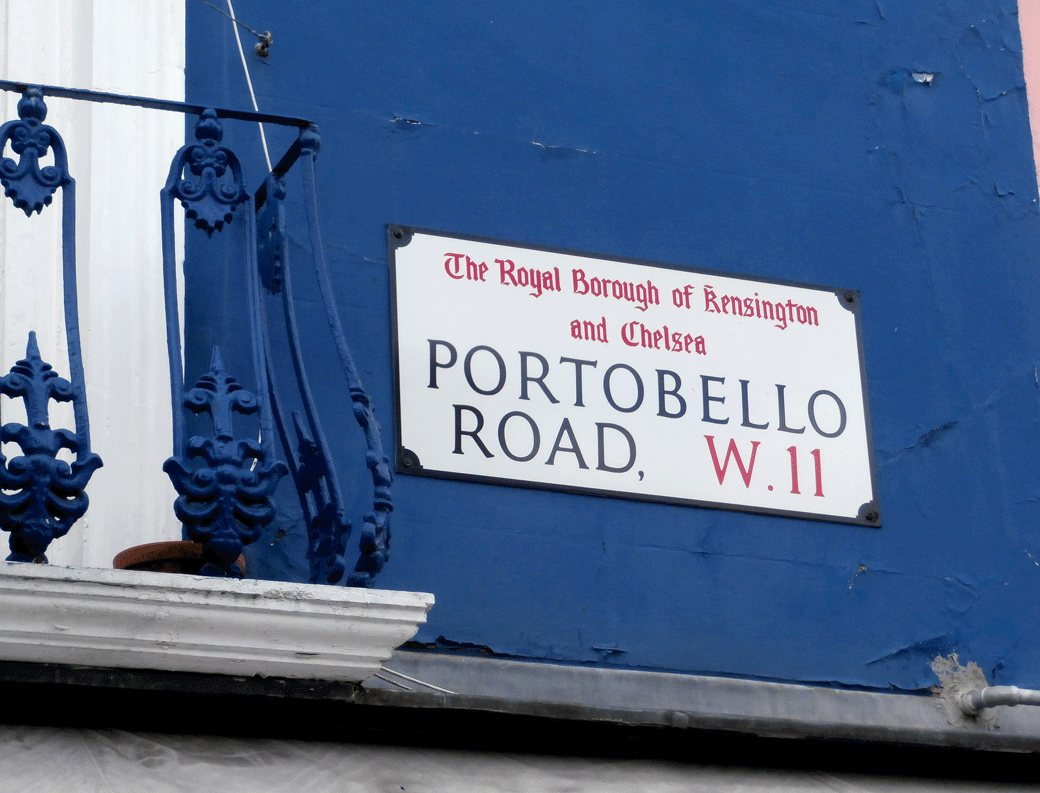
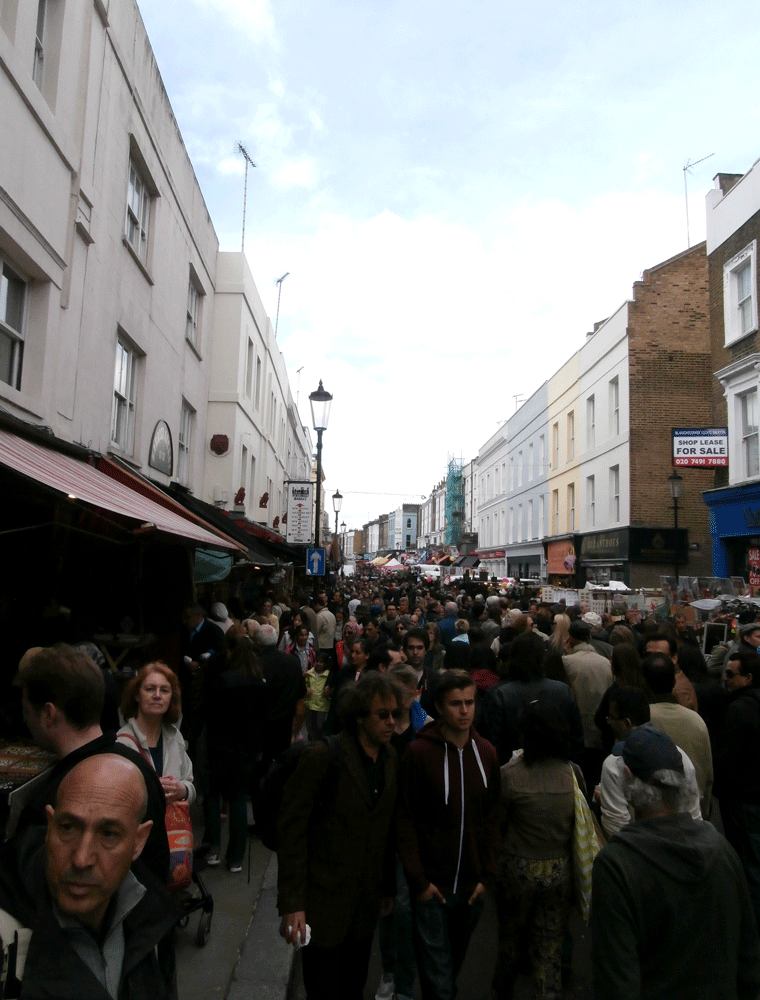
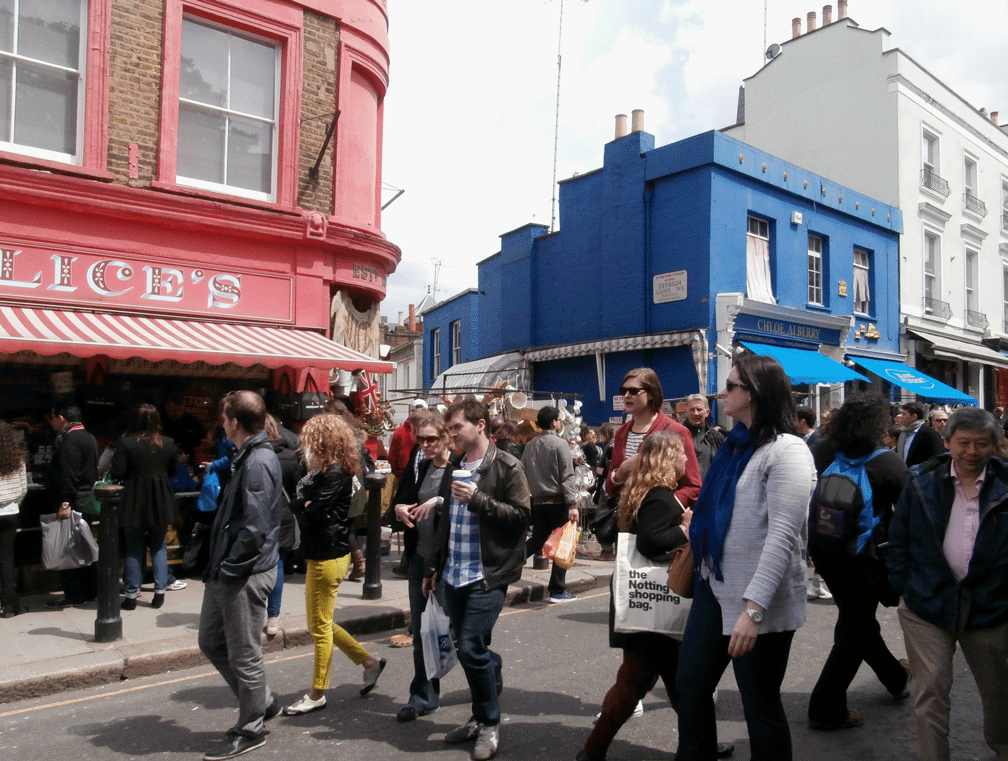
Our weekend in London started with a visit to Portobello Road market.

P5250647-portobello-road

Portobello Road was absolutely packed with tourists and progress was very slow.

P5250660-portobello-road

Brightly coloured buildings are typical of this attractive part of London.

P5250645-portobello-road

Attractive arcades full of interesting stalls.

P5250649-portobello-road

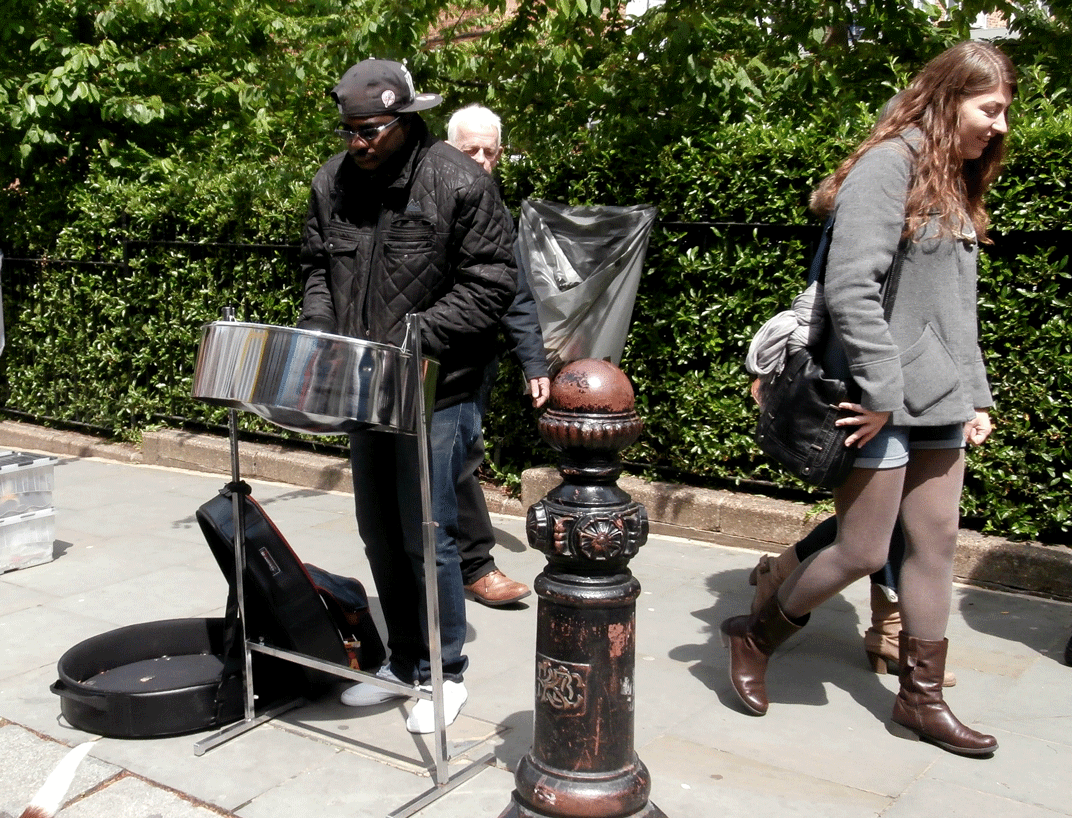
…. all to the sound of steel drums.

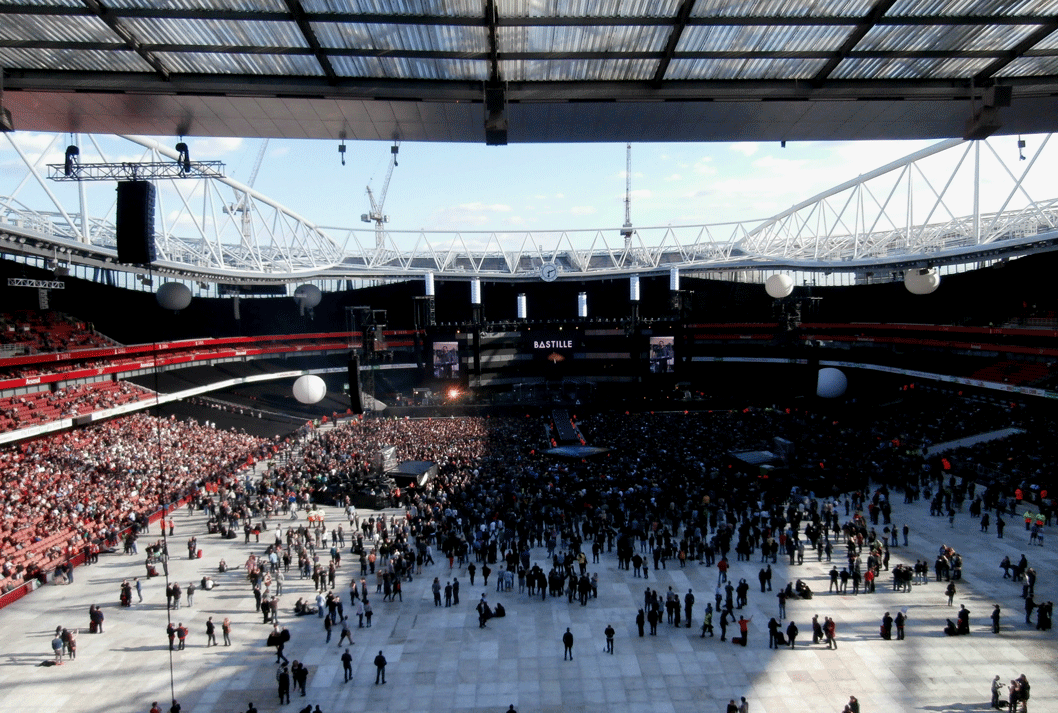
P5250663-emirates-stadium

Our main reason for going to London was to see the rock band Muse at the Emirates Stadium. Muse are a relatively modern band (been around for less than twenty years!) and their complex style which includes a mix of electronic music and heavy rock with classical influences reminds me of the progressive rock I loved as a youth. Unfortunately our seats were in the ‘gods’ at the highest point of the stadium and Margaret got an attack of vertigo, however the stewards got us seats lower down on the extreme left of this photo, which was actually closer to the stage.

IMG_2081-muse

In a huge football stadium the band members look tiny (the guitarist in real life can just be seen below and right of his screen image), but images projected on giant screens allow a good view of drummer Dominic Howard and guitarist and vocalist Matthew Bellamy. The huge back drop was used for some fantastic visual effects.

IMG_2105-muse

Using telephoto settings Matthew Bellamy is a bit more visible.

IMG_2112-muse

… and bassist Christopher Wolstenholme  plays as the lyrics of the song are displayed behind


IMG_2093-muse

These jets of flame were so powerful that the heat from them could be felt on the other side of the stadium,

IMG_2115

As darkness fell it was time to dim the lights and for the audience to wave their mobiles around.


IMG_2145-Muse

With it now fully dark, the lighting effects could really get going.


IMG_2140-muse

Bizarrely a giant robot appeared on stage ….

IMG_2129muse

…. but my favourite moment was during the song ‘my guiding light’ when this enormous light bulb floated around the stadium, then an acrobat dropped out of the screw thread and performed above the crowd. A great show, great music and a great day out.


Posted May 29, 2013 by gryllosblog in Uncategorized

10th – 21st May – areas near Poole, a choral concert and a serious dip.   Leave a comment

P5120547-Rubbish

We had a number of attempts to ring migrants at the back of PC World early in the week but none have been very successful. Most migrants seem to have have passed through now. The retail park is always covered in litter in the early morning. Why McDonald’s customers are incapable of using the many litter bins is beyond me.

star_trek_movie_enterprise

We also went to see the new Star Trek film. Certainly an amazing spectacle in 3D. I have long been a bit of a trekkie, and am glad that these recent prequel films have managed to keep the franchise going. Its remarkable that the concept has run for nearly 50 years.

P5160552-Dancing-Ledge

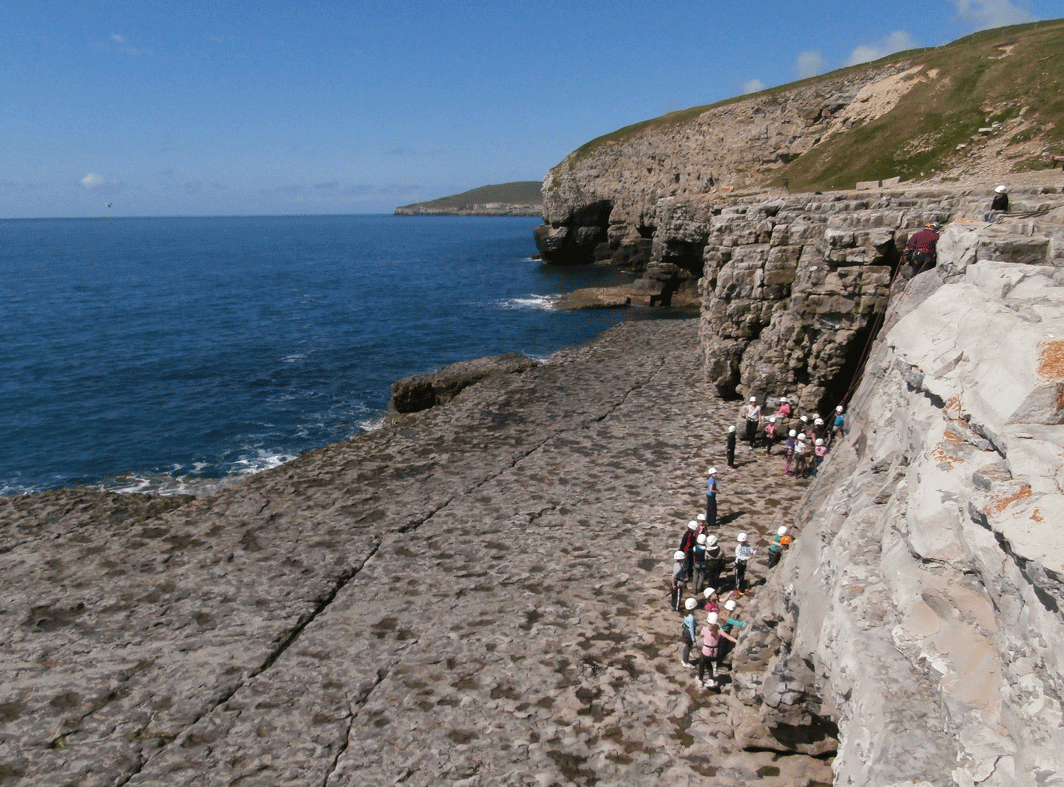
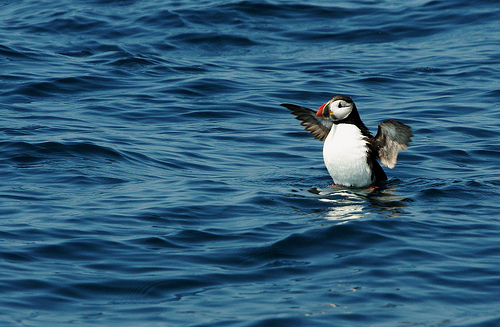
I have failed to see Puffins at Portland this year so on the 16th I walked down from Langton Matravers to Dancing Ledge. A few pairs breed on the nearby cliffs and I have seen as many as 18 birds here in the past. I found one on the water and an RSPB boat trip to the cliffs a few days later found only two. Whether this decline has anything to do with the recent spills of PIB in the Channel is open to conjecture. Note the school party on a rock climbing course.
4950055080_49ca2e92b8

A Puffin on the water, a similar view to that which I obtained off dancing Ledge. Photo from the Internet.

P5170558

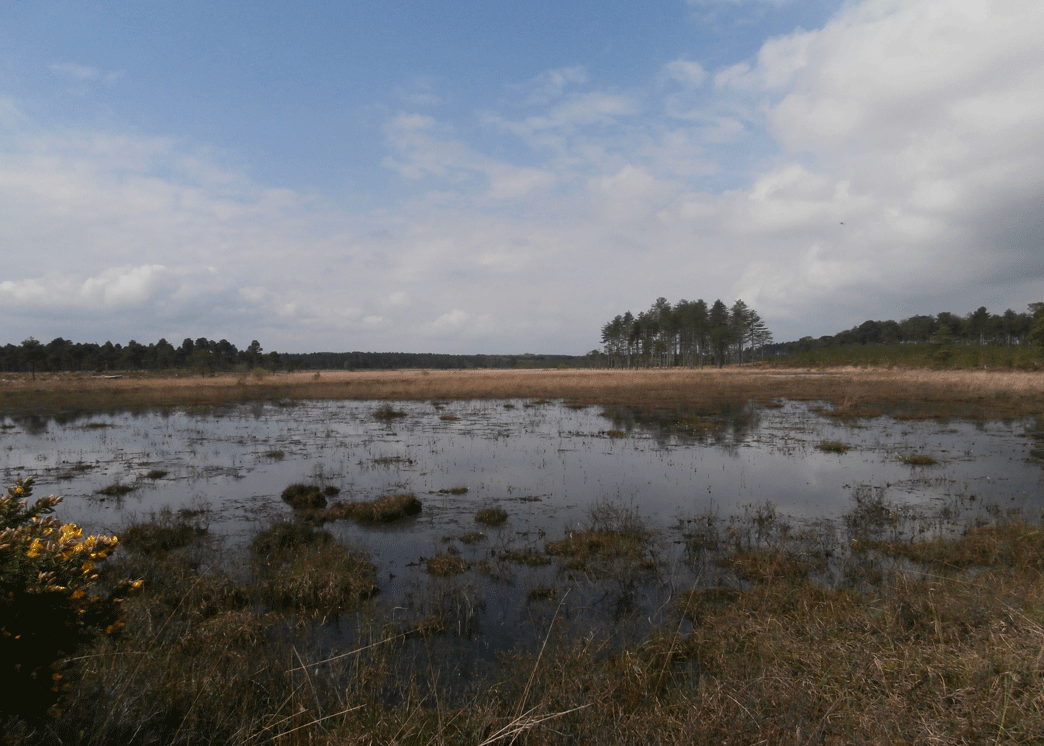
On the 17th I made a return visit to Mordon Bog, this was more successful than on previous trips with Redstart, Siskin, Crossbill, Spotted Flycatcher, Woodlark and Tree Pipit all seen and plenty of other birds heard.

P5170557-Mordon-Bog

For some reason gorse bushes look particularly vivid this year,

P5170559-Mordon-Bog

Threatening clouds looked they would curtail the birding but the rain never amounted to much.

P5180582-Bluebells

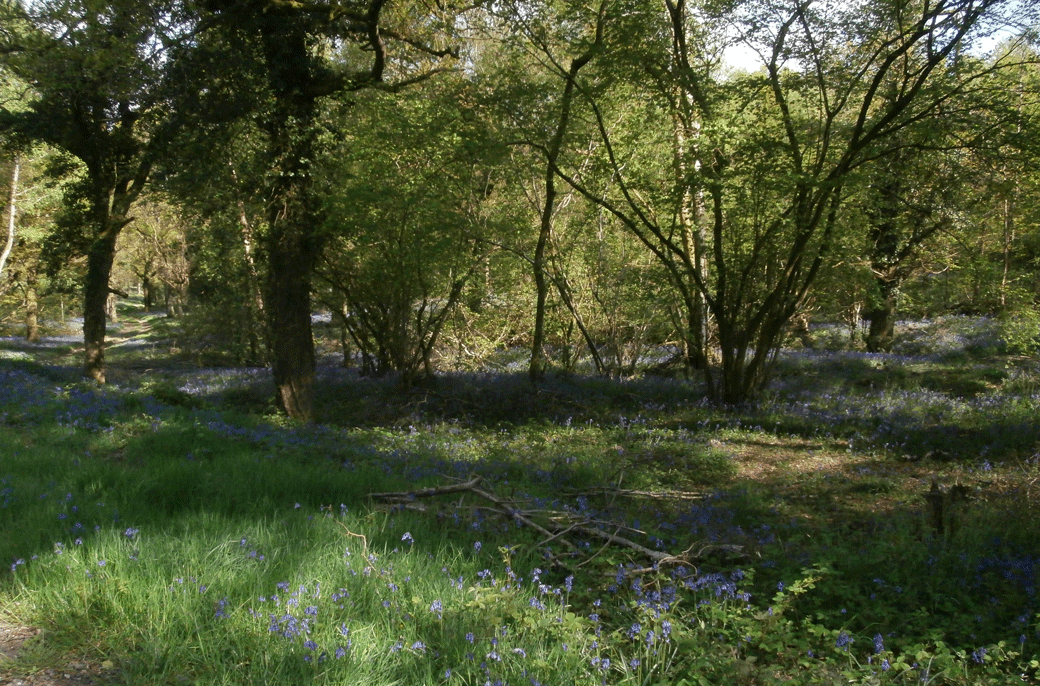
Margaret spent much of Saturday 18th rehearsing for the choir’s performance that evening, so I went up to Martin Down in the hope of seeing some Turtle Doves. I took the back route via Cranbourne and passed through these lovely bluebell woods.

P5180572-Martin-down

Martin Down, just over the border in Hampshire is an fragment of the chalk grassland that once covered the whole area and is a haven for many invertebrates and grassland flora. Nightingales and Turtle Doves were once common but the former no longer occur and the latter hasn’t been seen there yet this year.

P5180566-Orange-Tip

The lovely Orange Tip butterfly was some consolation …..

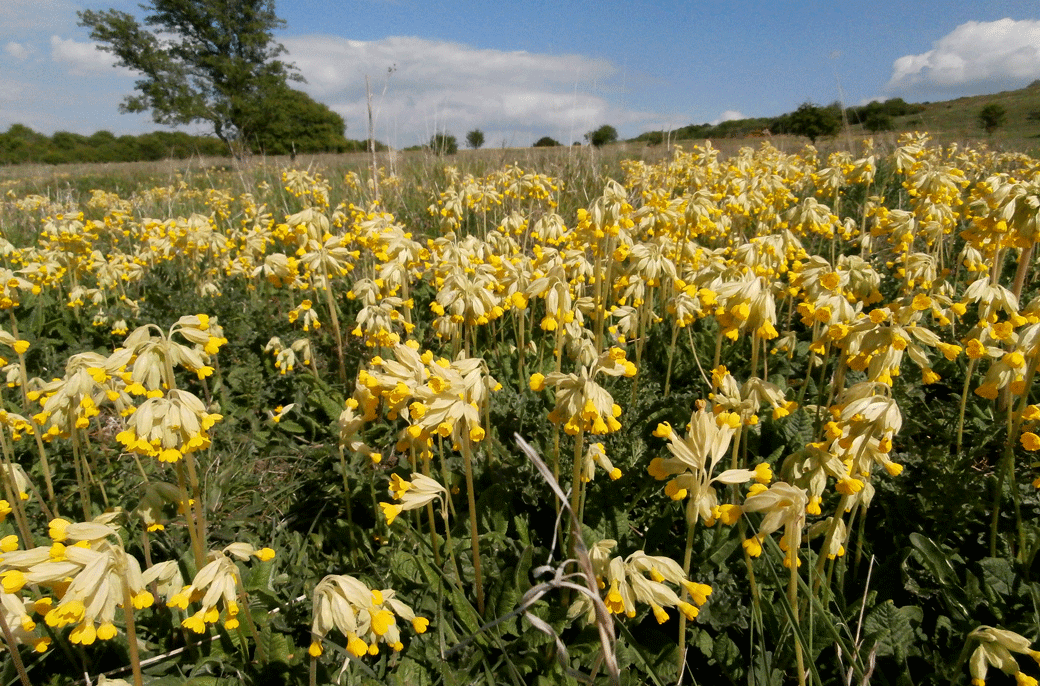
P5180575-Cowslips

… as was this gorgeous display of cowslips.

P5180587

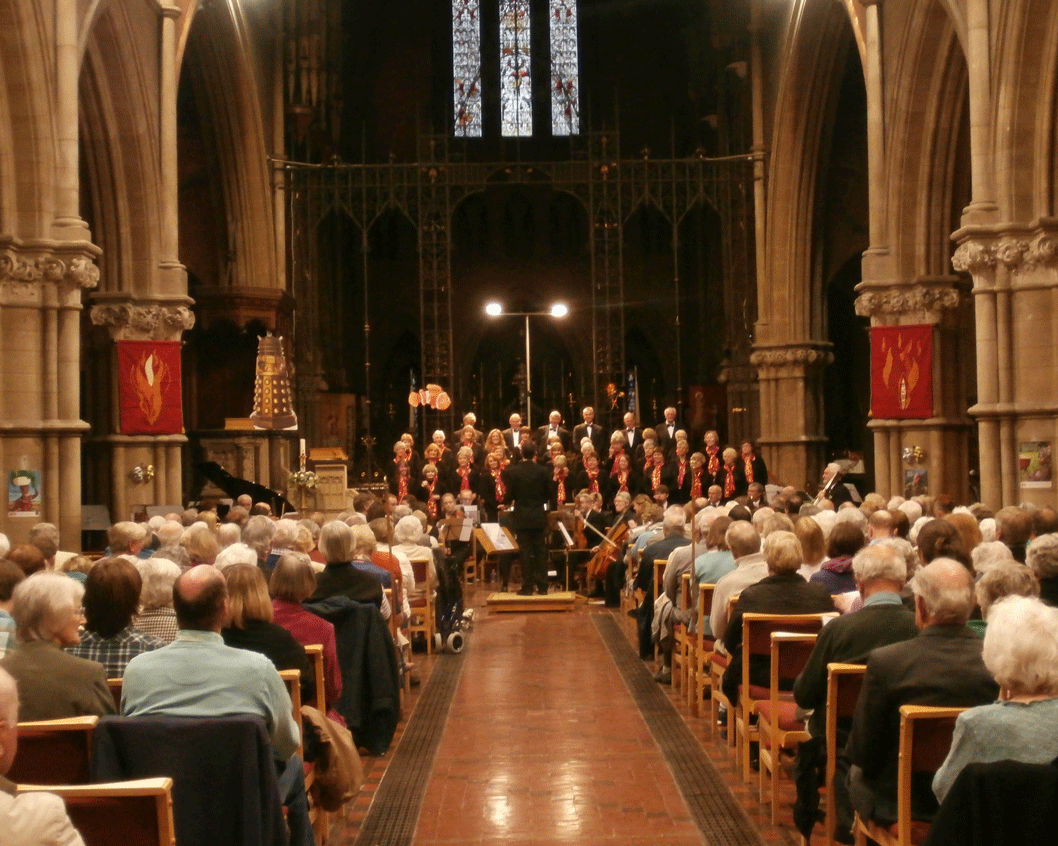
The Barclays House Choir’s spring concert at St Peter’s Church, Ashley Cross. Margaret is just to the left of conductor James Eaton.

P5180585-Concert

Soloists Pablo Strong and Ashley Duplechein gave a wonderful performance. It was a most eclectic mix of music , ranging from favourite operatic standards like March of the Toreador’s from Carmen, and the Anvil Chorus from Il Travatore to music from films and TV programs including pieces from Dr Who (hence the Dalek on the pulpit) and from Finding Nemo (hence the orange fish).

P5180590--Anita-&-Amber

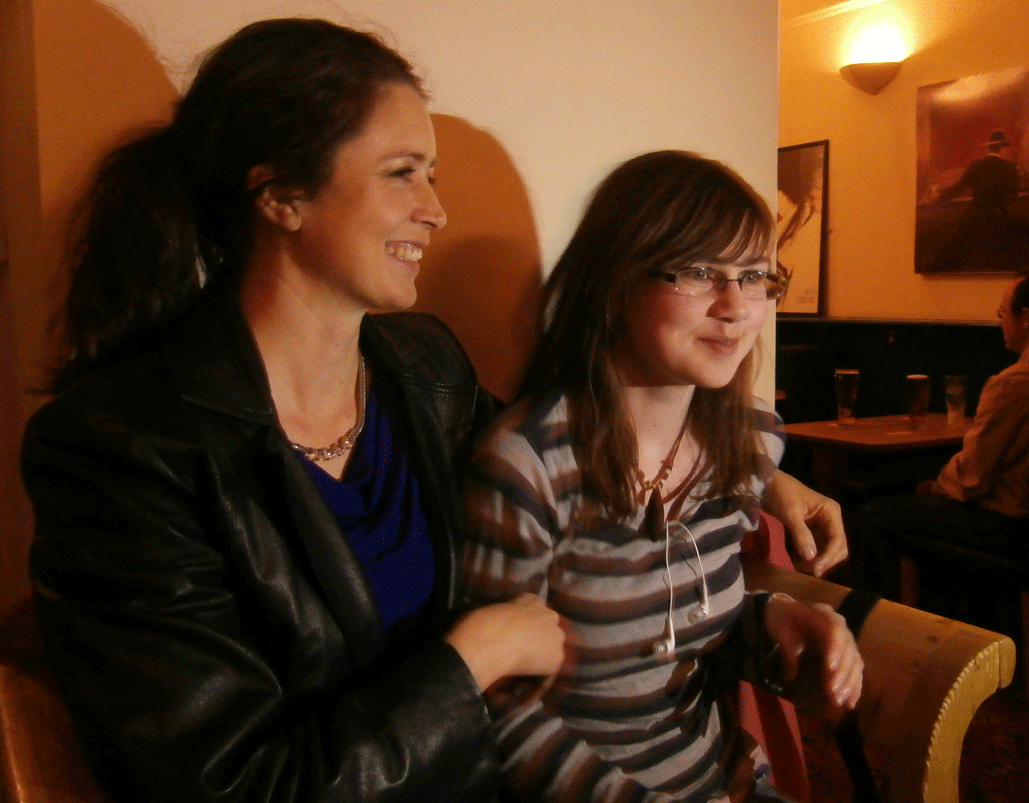
I keep getting in trouble with Amber for posting supposedly unflattering pictures of her on my blog, but she can’t complain of this nice pic of her and Auntie Anita in the pub afterwards.


Prior to the concert there was an unfortunate development. News broke very late on the Friday evening (after we had gone to bed) of a major rarity in Margate, Kent. A Dusky Thrush had been seen for several days but news only got out late at night. We had a lazy morning on Saturday and I didn’t pick up the news until 1000. Some friends were already  there and others said they could go on Sunday but then at 1030 I was offered a lift. Allowing 30 minutes to get to my lift, 3.5 hours driving each way and two at the bird and I would be back at  7 pm only 30 minutes before Margaret’s concert. Any delay and I would miss it. In the end I did the honourable thing, declined the lift and went on the Sunday.

Dusky Thrush is one of seven Asiatic thrushes (of the genus Turdus or Zoothera) that have occurred in the UK. I have seen all but one somewhere in Asia, but only three in the UK. The last twitchable Dusky Thrush was in 1959, so although I don’t chase rare birds anything like as often as I once did, this was a once in a lifetime opportunity.

The thrush was seen off and on all day but wasn’t seen on Sunday. Roger Howell, Jol Mitchell and I set off at 0530 but turned around on the M3 when it was obvious that it had gone. We birded a bit in the New Forest before calling it a day. At least I have seen good numbers of the species in China, Japan and Siberia. Margaret and Janis’ friends Angela and Helen had come over from Southampton for the concert and had stayed with us so I spent the rest of the day socialising with them and our  family.


IMG_3963-Mandarin-NF

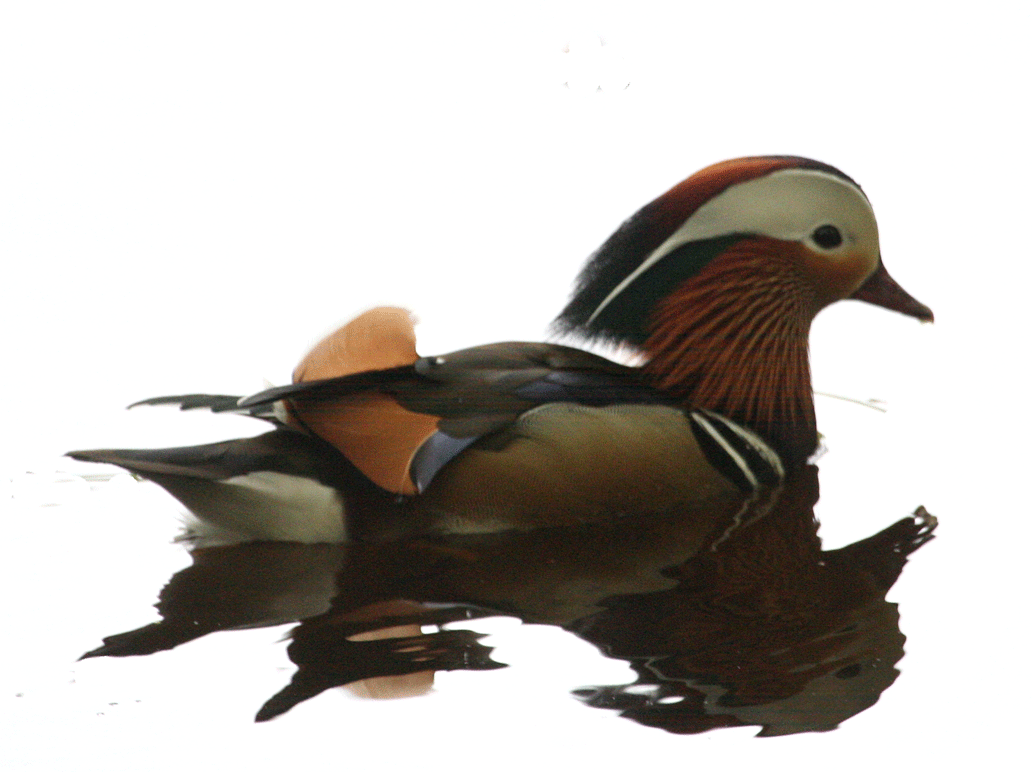
Mandarin Duck male: A small population of this introduced duck breeds in the New Forest. A beautiful bird, but scant compensation for missing a  Dusky Thrush.


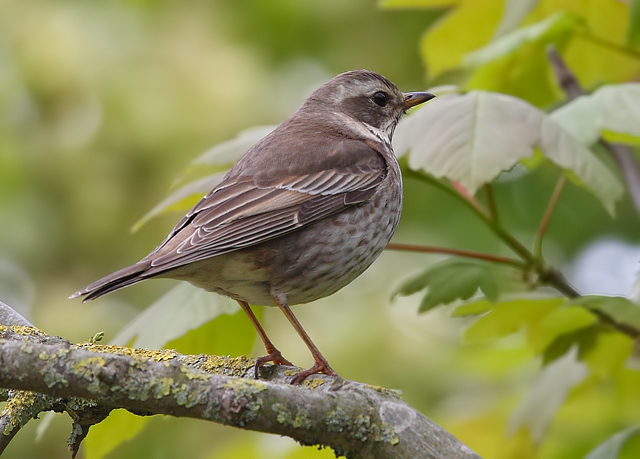
Steve Ashton Dusky Thrush

For anyone who wonders what the bird looked like, here is a photo from the internet by Steve Ashton. http://steveashtonwildlifephotography.blogspot.co.uk
If only news had broken earlier, if only I had checked the bird news earlier, if only it hadn’t been the day of the concert, if only it had stayed until Sunday, if only I’d stop whinging and accept that dipping is a normal part of birding!!


P5210603-Chalk-ridge-dusk

On the evening of the 22nd we climbed up the chalk ridge that runs between Corfe Castle and Old Harry as a Nightingale had been heard there recently. The view was spectacular, although in the fading light you can see little of the landscape in the photo. The Nightingale sang well, but as always, was invisible. Later we drove around Hartland Moor where we heard one Nightjar and saw another.

Posted May 22, 2013 by gryllosblog in Uncategorized

7th – 14th April – ringing at Kibbutz Lotan, Israel   Leave a comment

For my final post about Israel I’ll show a few photos that we took of birds in the hand at Lotan. Over the week we handled 628 birds of 38 species, the totals are shown below. We also ringed a few birds at the Eilat ringing station on our final evening.

If anyone doubts the value of ringing birds in Israel then may I direct you to this website showing where birds ringed in Israel have been recovered. If you click on each flag it gives the co-ordinates of when the bird was recovered but not the ringing and recovery dates. Israeli ringers use a six letter code for each species, which is the first three letters of the generic and specific scientific name,

e.g. Syl cur = Sylvia curruca = Lesser Whitethroat or But but = Buteo buteo = Common Buzzard etc

http://eilatbirding.blogspot.co.uk/p/ibrce-controls-recoveries.html

Number of birds ringed at Lotan

Blackcap 275
House Sparrow 104
Lesser Whitethroat 60
Red-throated Pipit 30
Thrush Nightingale 25
Common Nightingale 18
White-spectacled Bulbul 15
Common Whitethroat 11
Eastern Olivaceous Warbler 10
Common Redstart 9
Laughing Dove 9
Eurasian Wryneck 7
Eurasian Reed-warbler 6
Wood Warbler 5
Great Reed-warbler 4
Willow Warbler 4
Eurasian Hoopoe 3
Spotted Flycatcher 3
Tree Pipit 3
Balkan Warbler 2
Barn Swallow 2
Collared Flycatcher 2
Common Quail 2
Little Green Bee-eater 2
Masked Shrike 2
Ortolan Bunting 2
Red-backed Shrike 2
Sedge Warbler 2
Spur-winged Lapwing 2
Eastern Orphean Warbler 1
Eurasian Collared-dove 1
Eurasian Sparrowhawk 1
Namaqua Dove 1
Red-rumped Swallow 1
Rufous-tailed Scrub-robin 1
Whinchat 1
Grand Total 628
Total species 36
The Team at Neot Samadar Apr 13

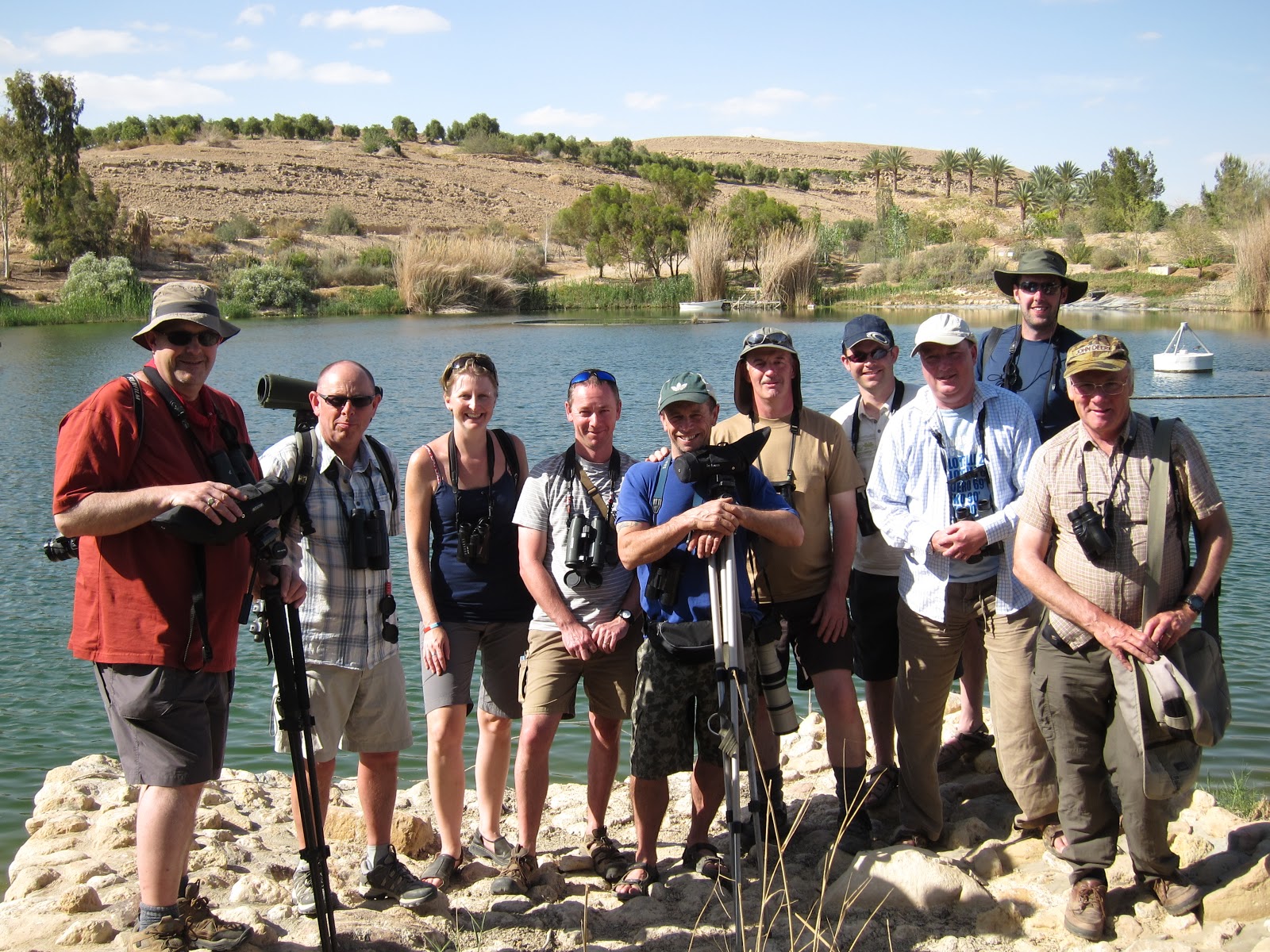
The team birding at Neot Samadar: L-R: Paul Aubrey, Roger Walsh, Rachael Eele, Paul Eele, Gary Elton, Bob Gifford, Mike Gould, Dave Taylor, Terry Elborne & some bloke from Poole. Shaun Robson took the photo and Ray and Katie Knock were back at Lotan.

P4090305-Lotan

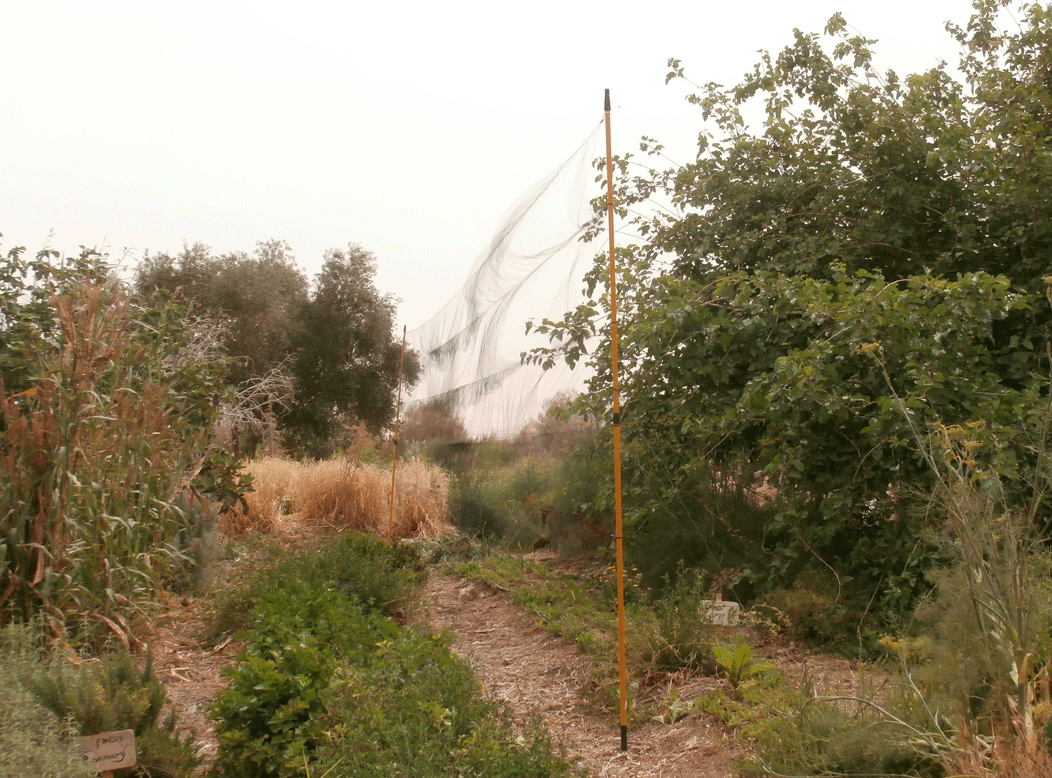
Most of the mist nets were erected in the organic garden. A few were also put near to the (empty) swimming pool.

P4080273-Hoopoe

A Hoopoe: just as wonderful to see in the hand as it is in the field.

P4080269-Hoopoe

Although only the nominate race occurs in the WP the sub-Saharan race ‘senegalensis’ can be identified by having more white in the secondaries. The southern African form, ‘africana’, usually treated as a full species, has much more white in the secondaries but has wholly black primaries.

P4080266-Hoopoe-aging

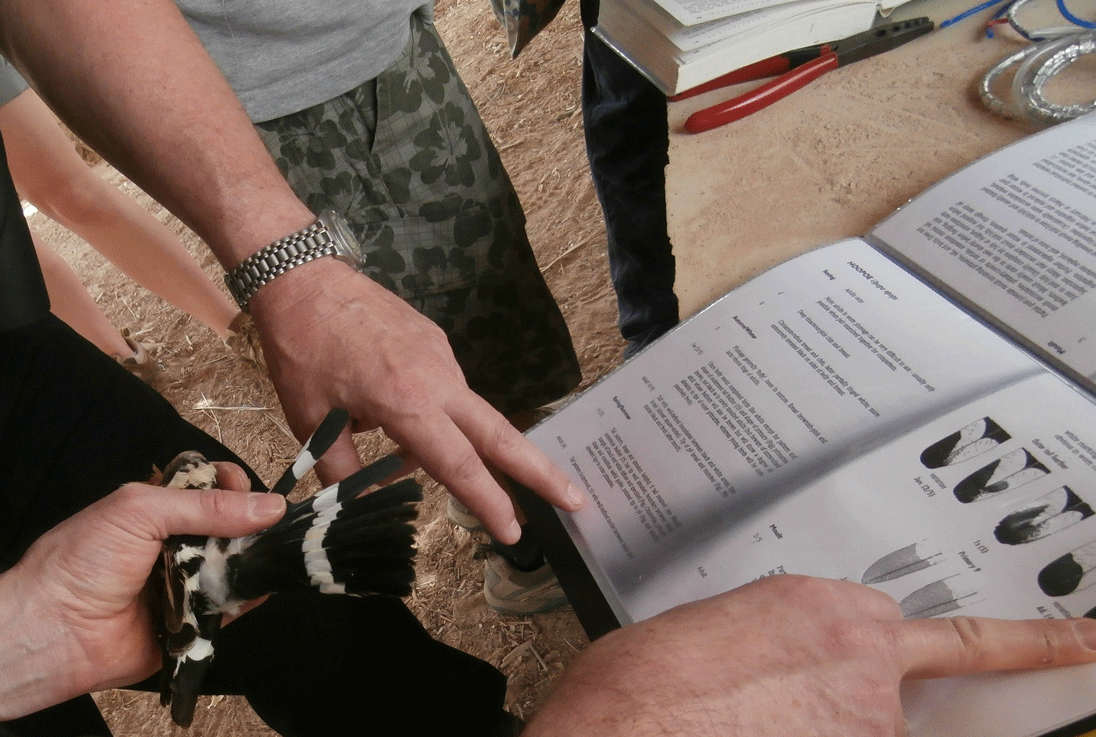
Learning how to age a Hoopoe from the shape of the white areas on the tail.

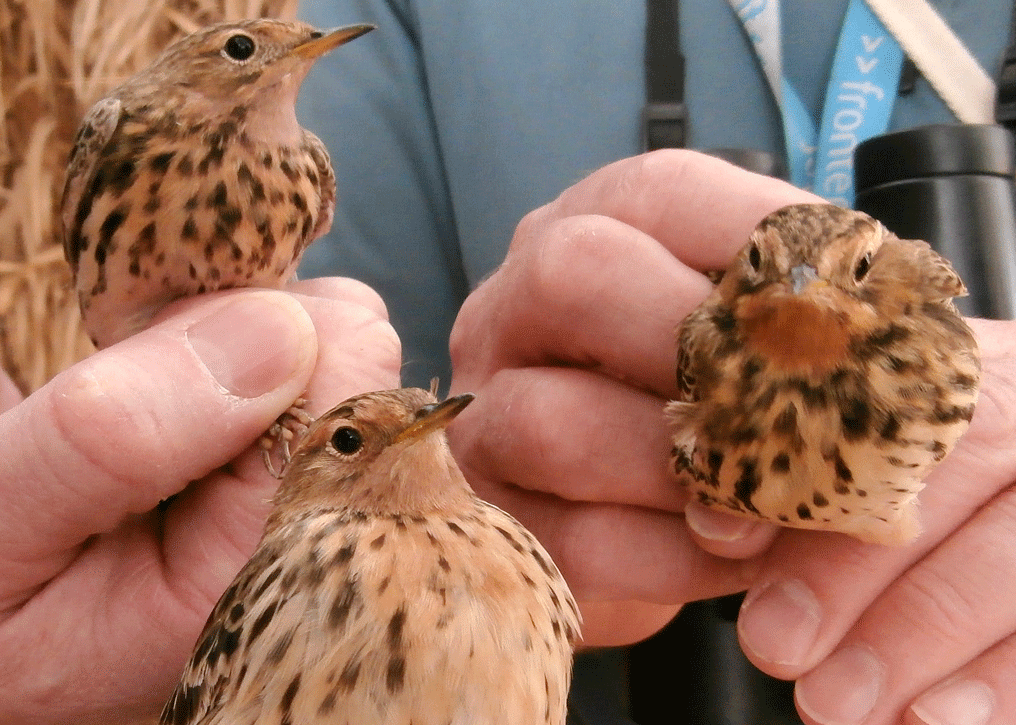
P4110373-RT-Pipit

There is some variation in the colour of a Red-throated Pipit’s throat but it isn’t clear if this is age or sex related.

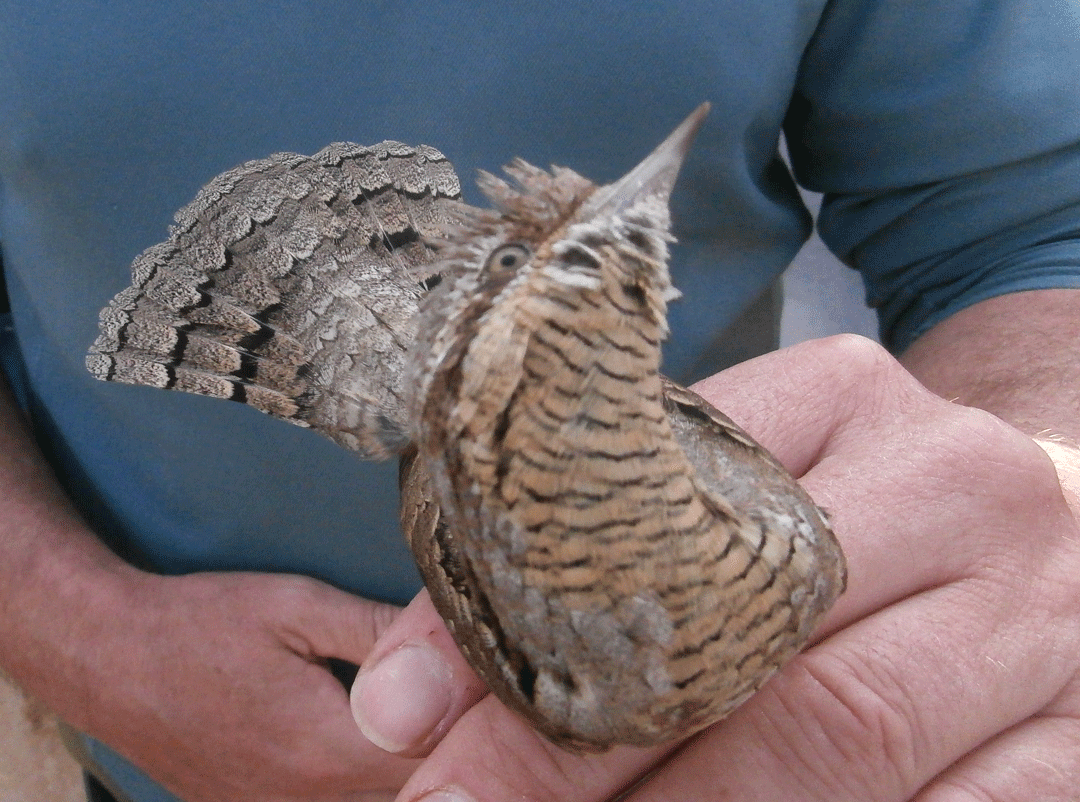
P4120385-Wryneck

Wrynecks constantly live up to their name by twisting their necks in a strange snake-like manner. This is thought to have evolved as a threat mechanism to predators. Photo by Terry Elborne

P4100320-Masked-Shrike

This female Masked Shrike was a firm favourite.

P4080250-GR-Warbler

In the hand you appreciate what a huge bird Great Reed Warbler really is.

P4080245-RT-Bush-robin

Since I started birding Rufous-tailed Scrub Robin has changed its vernacular name more often than Italy has changed governments. Also in that time there hasn’t been a twitchable one in the UK which is strange as they long-distance migrants and aren’t that rare in their Mediterranean and western Asian breeding grounds.

P4090281-Nightingale-&-Spro

Thrush Nightingale (R) is very similar to the eastern race ‘golzii’ of Common Nightingale (L), especially from behind. Common Nightingales we see in western Europe are much more rufous. There are differences in the colour and length of the tail and the streaking/blotching of the breast but the length of the first primary (> primary coverts in Common, < in Thrush) is diagnostic, but obviously isn’t easy to see in the field.

P4080253-Quail

A Common Quail that managed to escape being trapped for food on its long journey from Africa.

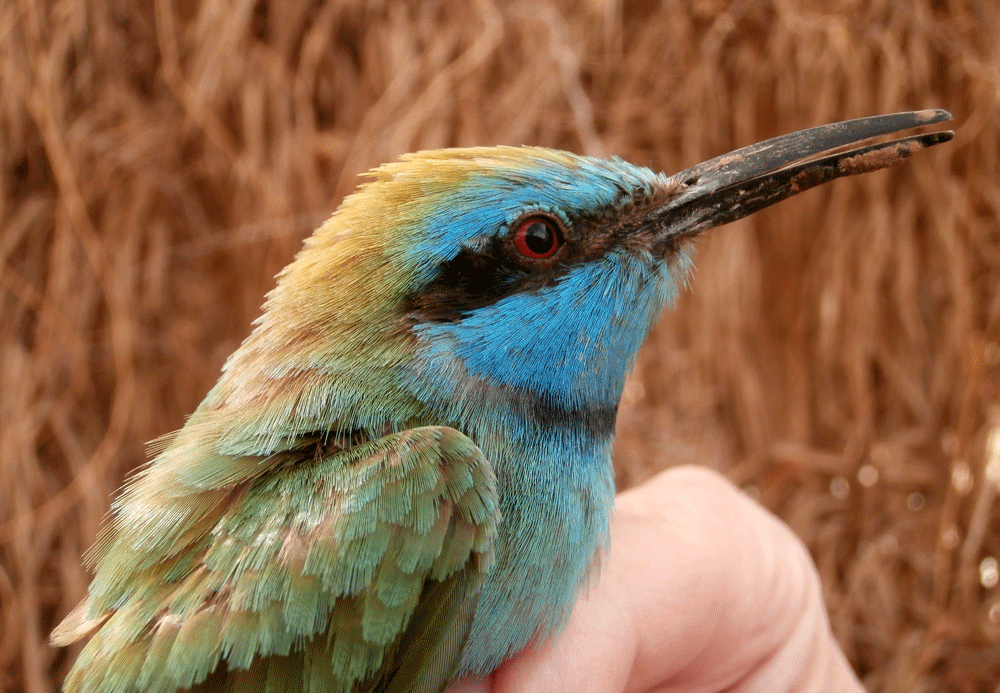
P4090301-Green-Bee-eater

Stunning !

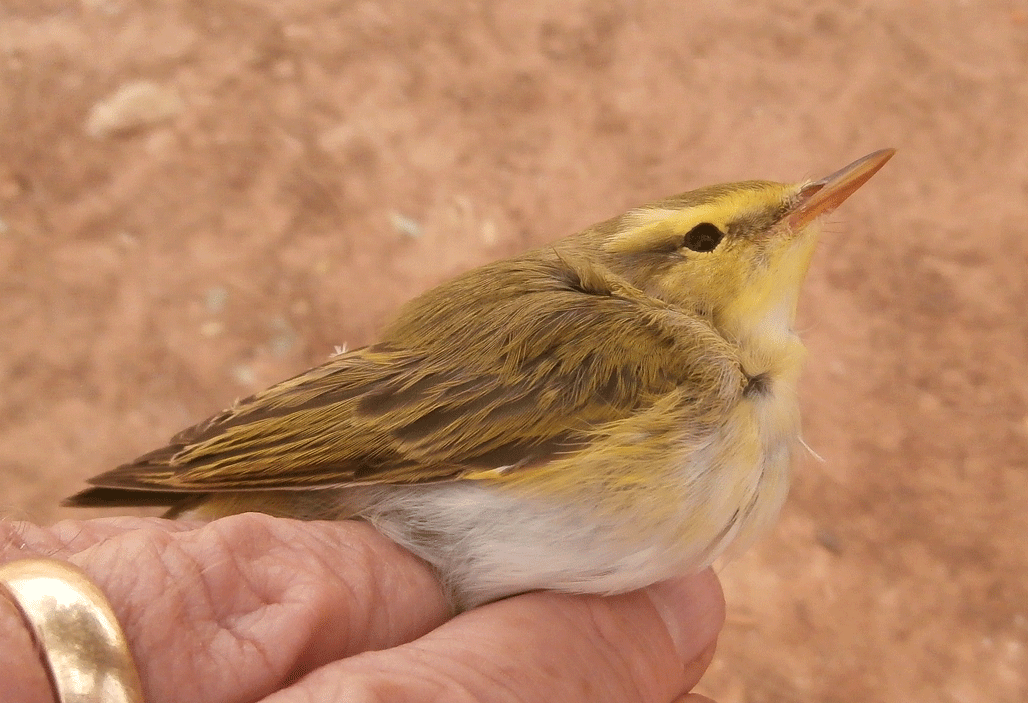
P4090309-Wood-Warbler

A Wood Warbler on route to some east European ancient woodland.

P4120384-Namaqua-Dove

This tiny male Namaqua Dove was a real surprise.

P4130402-Bob-&-kids

Our last full day was the Sabbath and with the kids of school many came down to find out what we were up to.

Laurel and Hardy

On our final evening we drove down to Eilat ringing station (at the Birdwatching Centre) where they were ringing Barn and Red-rumped Swallows at roost. Bob looks pretty pleased to be ringing a Red-rumped Swallow.

P1120488.gif-WT-Robin

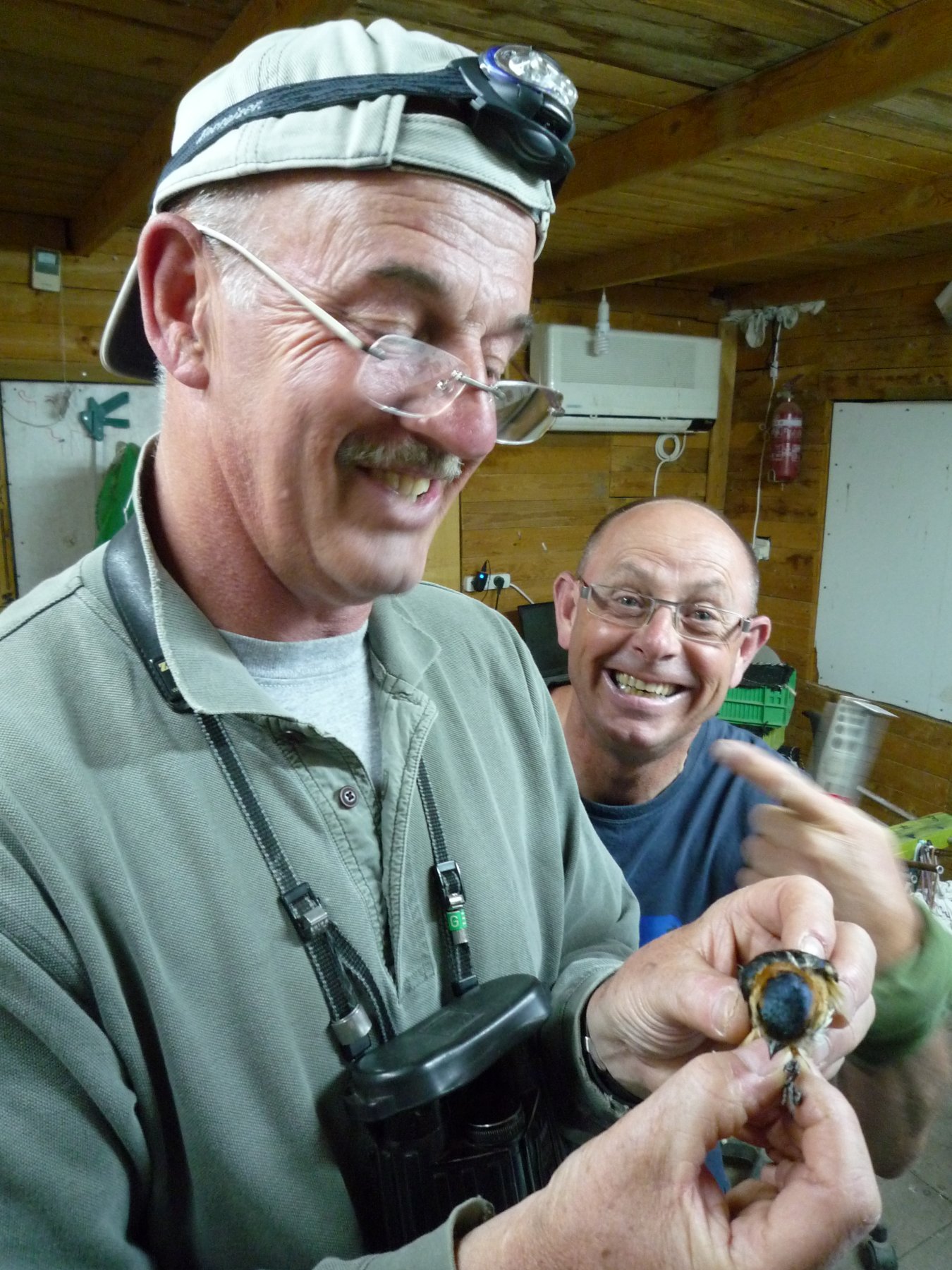
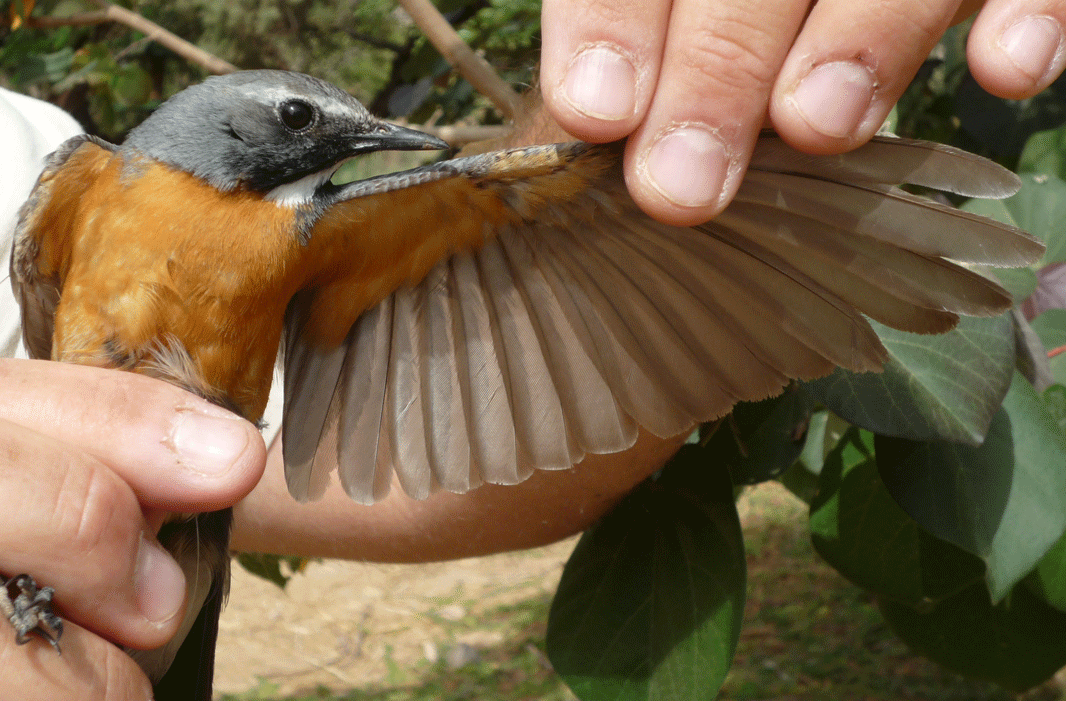
On our final morning we did a little ringing before packing up and heading back to Eilat. We were just outside the town refuelling the hire cars when Gary got a phone call to say they had just trapped a White-throated Robin at the Birdwatching Centre. We quickly detoured just in time to see this mega in the hand. I have seen this species before in Turkey and Armenia but it was a tick for most of the crew.

P1120507

And they then produced a second surprise, this fantastic male Levant Sparrowhawk. A very local breeder across Turkey and western Asia, Levants are hardly ever seen in winter in Africa and pass through Israel in late April when most visiting birders have left. We were lucky to see one of the vanguard at the very last moment of our trip. Photo by TE

Posted May 16, 2013 by gryllosblog in Uncategorized

7th – 14th April: Lotan and southern Arvava, Israel   Leave a comment

As I explained at the start of the Israel account, this trip was in two parts, eleven days sightseeing and birding with Margaret and a week bird ringing at Kibbutz Lotan with eleven other British ringers. Ringing abroad can only be done by qualified ringers at the request and with the permission of the local ringing authority. As many foreign ringing schemes are undermanned this allows for further research to be carried out, whilst giving visiting ringers valuable experience they couldn’t obtain at home.

On the  early morning of the 7th we dropped the hire car off at Ben Gurion airport and Margaret took the shuttle to the international terminal for the flight home and I went to the domestic terminal for the flight to Eilat. I had wondered about keeping hold of the hire car and driving down there but decided it would be best to do the same as the others and get on the same flight. I sat in the departure lounge for ages but there was no sign of the four from our ringing group or the seven other ringers who they were joining. In time I boarded the plane, but still no sign, I was feeling resigned to the fact that they had missed the flight when they arrived a couple of minutes before departure, apparently security had taken a dislike to Terry and Mike and had subjected them to repeated searches.
Once at Eilat we picked up hire cars (four between the 12 of us) and drove the 45 km north to Kibbutz Lotan. Having settled in we spent the afternoon setting up the nets for the following day. During the following week we settled into a pattern. The nets would be opened at 0530, we would ring until about 1130 (sometimes a bit early if it got too hot for the birds), have lunch and then go out birding in the afternoon. Usually all 12 of us (sometimes accompanied by Dave Taylor, a Dorset birder who was also staying at the kibbutz) would go to the same destination but occasionally we would split up. Most of the sites we visited were small wetlands (usually sewage works) or areas of open desert and included areas like Yotvata, Km 20 and Eilat Birdwatching Centre that have already been illustrated on the blog.

This post shows some of the birds we saw during the week. Unfortunately on the second day I accidentally changed the settings on my camera so that very low resolution pics were taken, this meant that cropping was impractical. As I result, I have posted some taken by Terry Elborne as well as my own.


Kibbutz Lotan - Arava Valley

Seen from the western Rift Valley escarpment Kibbutz Lotan stands out as a green oasis in the desert. The settlement close to the furthest mountains is in Jordan. Photo by Terry Elborne.


P4090313-Lotan

The accommodation at Kibbutz Lotan


IMG_1541-Caspian-Plover

At nearby Yotvata we saw this pair of Caspian Plovers on route from the savannas of East Africa to the breeding grounds in Central Asia. This is a male.

IMG_1573-Caspian-Plover

The rather dowdier female.

IMG_1594-Black-Bush-Robin

Black Bush Robin, a bird that I have seen before in Africa but not in the Western Palearctic. On my previous visits it was a very uncommon visitor to Israel, but now they are annual in small numbers in spring and may even have bred.

IMG_1599-BlackBush-Robin

Margaret and I searched for a very elusive individual at Km 19 without success so I was very pleased to get such good views of these birds and voted it my ‘bird of the trip’.

IMG_1614-Arava

Afternoon at Yotvata sewage works. Early in the week, southerly winds produced dust storms that obscured the sun and depressed migration. A switch to northerlies and clearer skies mid-week was most welcome.

IMG_1745-Blackcap

The general feeling was that there were much fewer migrant passerines around this spring than normal. Rain in Sudan, providing an alternative refueling stop and unregulated bird trapping for food in Sinai were suggested as reasons. Even so if we came across such ‘low’ numbers of Blackcaps back home as we experienced that week, we would declare it a major fall!

IMG_1838-ringtail

It wasn’t too hard to find ‘ringtail’ harriers migrating against the dramatic back drop of Jordan’s Rift Escarpment, it was identifying them as Pallid or Montague’s that was the problem.

Tanwy Pipit

This Tawny Pipit was found in an open desert area at Km 76. The surrounding vegetation is the result of the heavy winter rains, most years this would be completely barren. Photo by Terry Elborne

Semi-Collared Fly

One of the first birds we saw at Lotan was this superb male Semi-collared Flycatcher. Photo by Terry Elborne.


Collared Fly

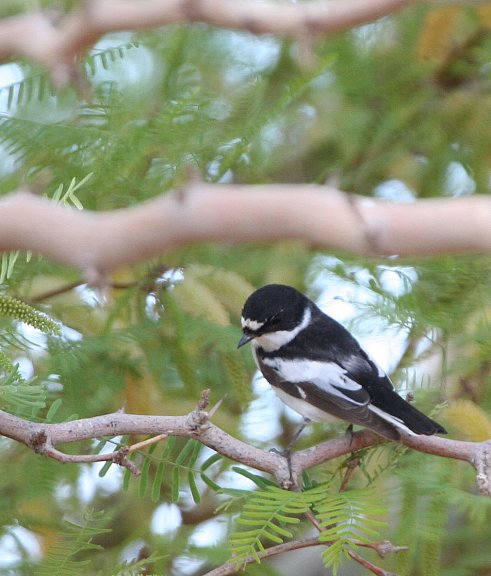
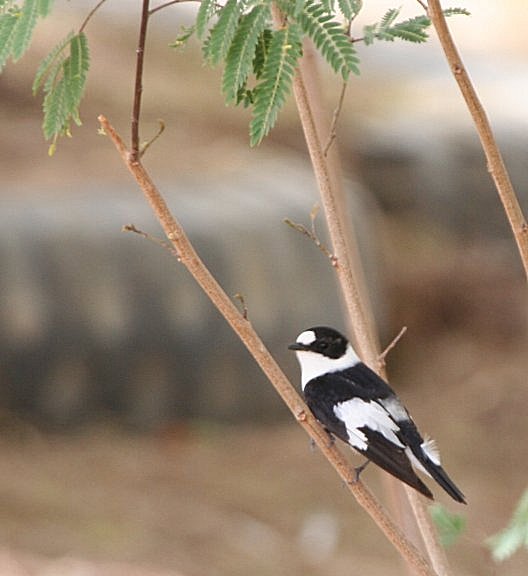
Here for comparison is the superb Collared Flycatcher, one of Europe’s most attractive breeding birds. Not all as easy to identify as this adult male! Identification of the ‘black-and-white’ flycatchers in female or first year plumage is complex and resulted in lengthy discussions.Photo by Terry Elborne.

Palenstine Sunbird 1

A few Palestinian Sunbirds were seen around the kibbutz gardens. Photo by Terry Elborne

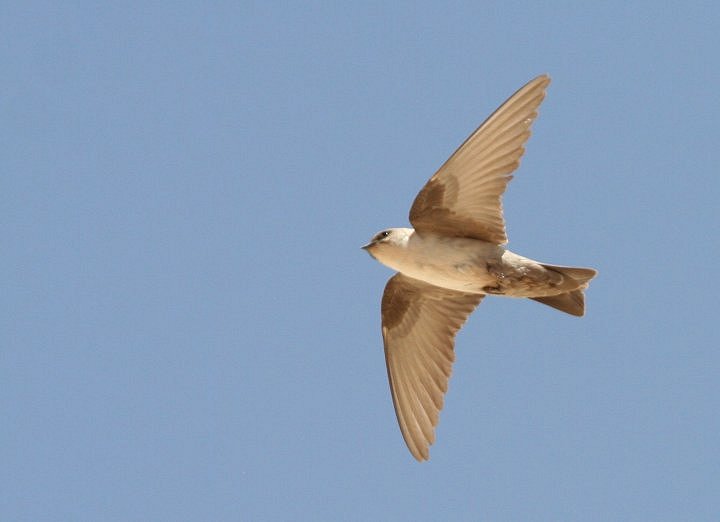
Pale Grag Martin

A pair of Pale Crag Martins were often seen over our nets but avoided all attempts to trap them. Photo by Terry Elborne

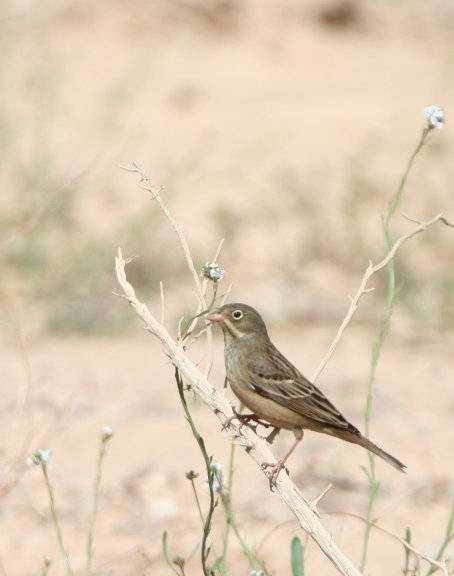
Ortolan Bunting

Flocks of migrant Ortolan Buntings were seen in desert areas. Photo by Terry Elborne

Kentish Chick

At the Km 20 salt pans loads of cute Kentish Plover chicks were running about. See earlier posts for pics of the adults. Photo by Terry Elborne


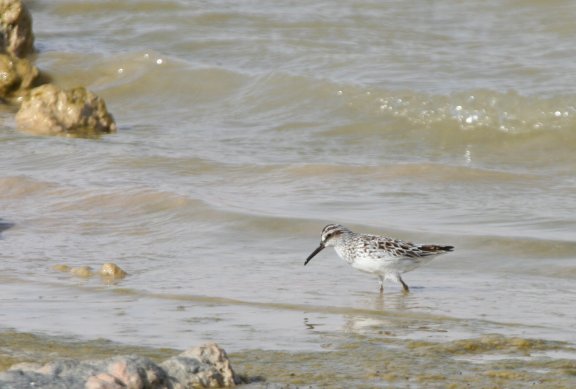
Broad-billed Sand

This Broad-billed Sandpiper was an excellent find at Km 20. Oman and the Gulf is the nearest wintering area for this species and they seldom pass through Israel on their way north. Photo by Terry Elborne

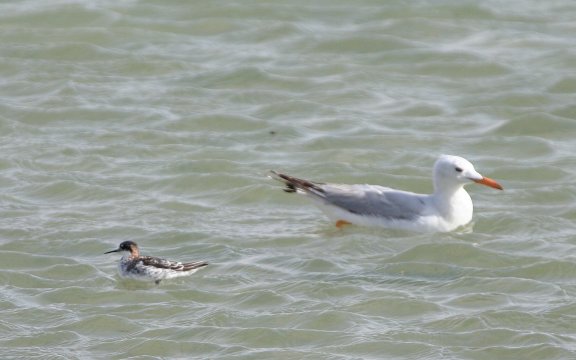
Red-n-Phalarope

This Red-necked Phalarope would have spent the winter at sea in the Indian Ocean before heading overland to its breeding grounds on the Russian tundra. Photographed (along with a Slender-billed Gull) by Terry Elborne at Km 20.

Marsh Sand

Marsh Sandpiper, one of the most attractive of the ‘tringa’ Sandpipers. Photo by Terry Elborne.

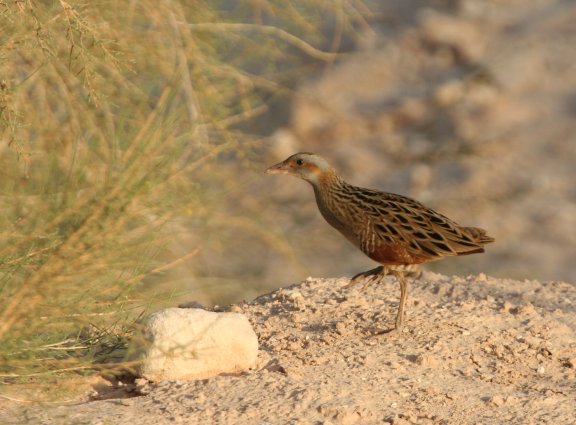
Corncrake

One afternoon Terry, Mike and Bob stayed behind whilst Shaun and I went birding elsewhere. They had superb views of this Corncrake at the Kibbutz and managed to release the news in a most amusing manner that evening. Photo by Terry Elborne.
White Storks

From mid-week onwards, migrants flocks of raptors and storks would appear over the kibbutz from 1000 – 1200. These are White Storks but we also had good numbers of Black Storks, Buzzards and Black Kites with a few Ospreys, Short-toed, Booted, Lesser Spotted and Steppe Eagles.

Little green Beeater

Green Bee-eaters were a common site around the Kibbutz. Photo by Terry Elborne

Squacco

Squacco Herons were seen on most bodies of water however small. Photo by Terry Elborne.

K33

Birding at Km 33. L- R: Rachael Eele, Paul Eele, Bob Gifford, me, Roger Walsh, Mike Gould, Shaun Robson, Dave Taylor. Photo by Terry Elborne.

Posted May 15, 2013 by gryllosblog in Uncategorized

April 29th – May 9th – at last a post that’s not about Israel!   Leave a comment

Over the last week and half I have made four or five ringing trips either to PC World drain or Durlston, none have been particularly successful. A run of cold northerlies and clear nights has not induced many migrant birds and a change of weather at the weekend brought coastal fog. Are efforts haven’t been totally in vain as we have re-trapped a number of Whitethroats from previous years showing breeding site fidelity in a sub-Saharan migrant. Keeping going though the less productive winter and spring months has also allowed three of our trainee ringers to gain sufficient experience to apply for their C permits, which means they will be able to ring unsupervised but their trainer will still be in overall control of their ringing activities.

P5060506-Durlston-dawn

Early morning fog was not what we wanted at Durlston, but it was very atmospheric.

I have made several birding trips to Lytchett Bay, where the Red-throated Diver and Little Gull previously reported were seen again but one of the most interesting outings was our attempt to see, or at least hear a Savi’s Warbler on the edge of Wareham Channel near Holton Lee. Heard earlier in the day by Dave Chown whilst doing a Water Rail survey, this is a very scarce visitor to Dorset. Several of us who had permits to visit this private area gathered in the evening to assess the practicality of arranging a twitch, which the owners indicated they would agree to if it was practical. In the end we failed to even hear the bird and assumed it must have moved on, but a twitch would have been hard to organise, as we had to walk though deep mud on the edge of Wareham Channel and this was only passable at low tide.

P4300502-Holton-Lee

Walking along the shore of Wareham Channel ……

P4300505-Holton-Lee

.. and then we had to find away through this very wet marsh. No sign of the Savi’s but we did see an Osprey and a Marsh Harrier and several groups of Whimbrel.

IMG_2044-Mordon-Bog

At the weekend Margaret and I had a wander around Mordon Bog in Wareham Forest. There weren’t birds around but Cuckoo and Tree Pipit were highlights.

IMG_2043-Margaret-at-Mordon

Margaret at Mordon Bog

P5060544-Sandbanks-fog

On Bank Holiday Monday, the girls wanted to go to the beach at Sandbanks. This was the same day I was fog bound at Durlston. The fog seemed to have cleared on my way back but once be drove down to Sandbanks we found I was wrong.

P5060535-Amber,-Janis,-Marg

Although the sun almost broke through, it remained quite cool. A shame as most of the country had the hottest day of the year. Amber, Janis and Margaret at Sandbanks.

P5060514-Kara-at-beach

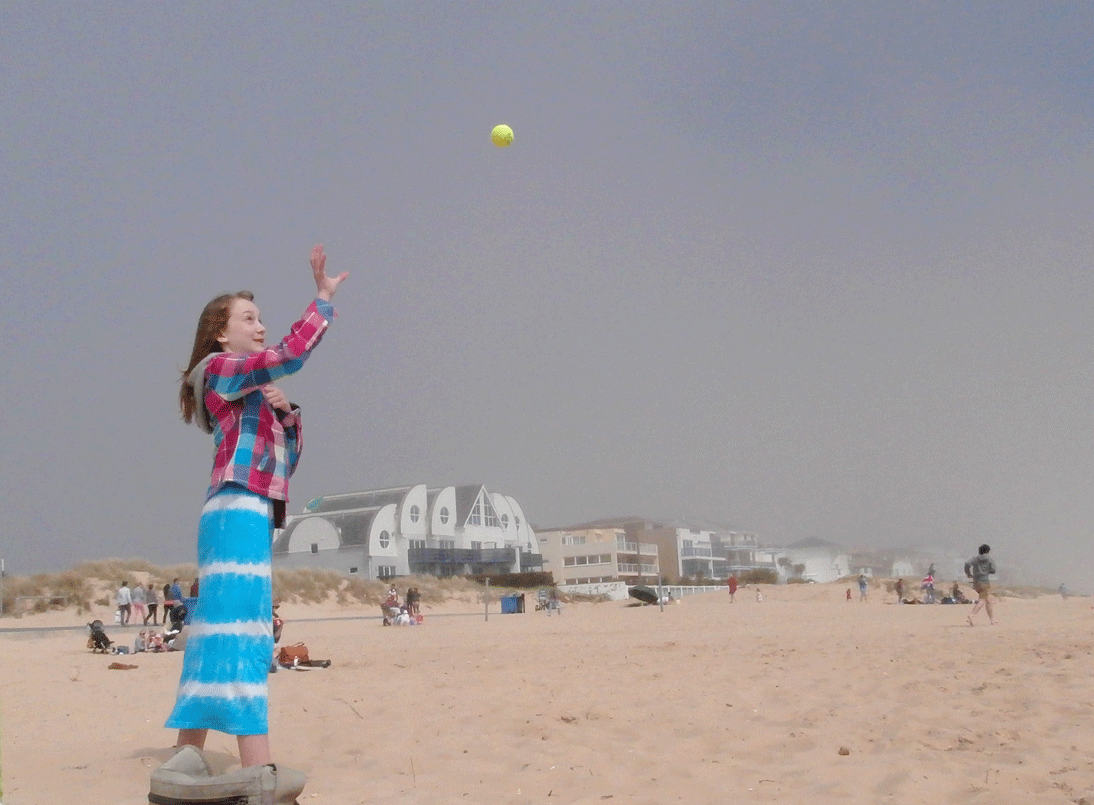
Kara playing ‘catch’

P5060529-Kara-at-beach

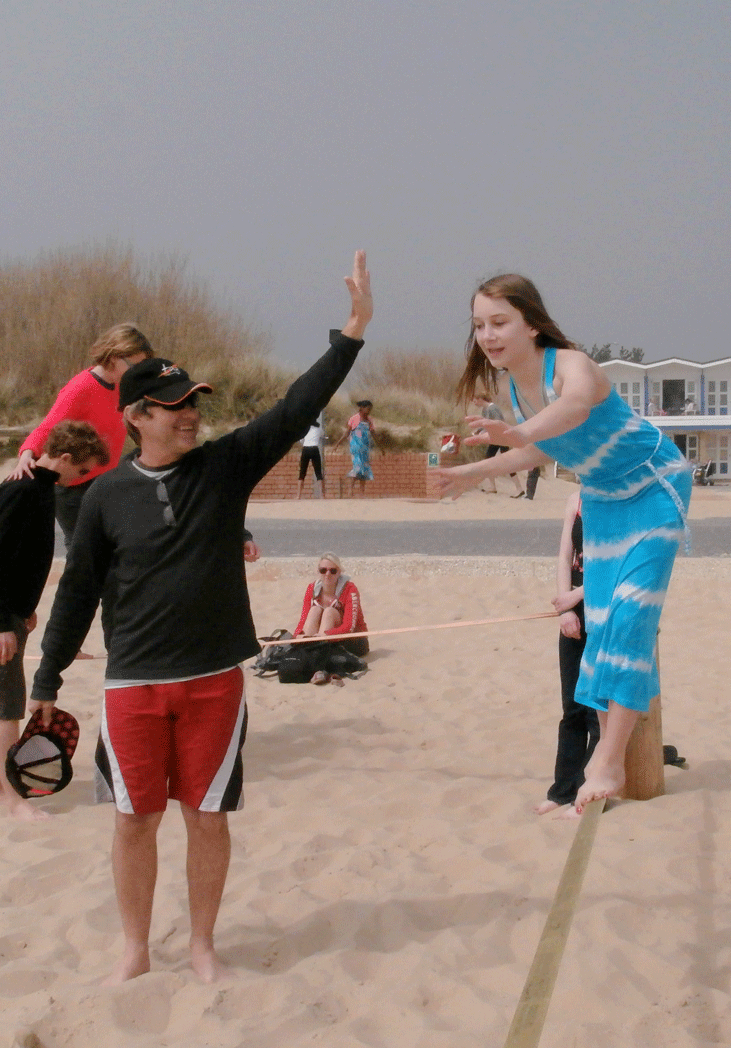
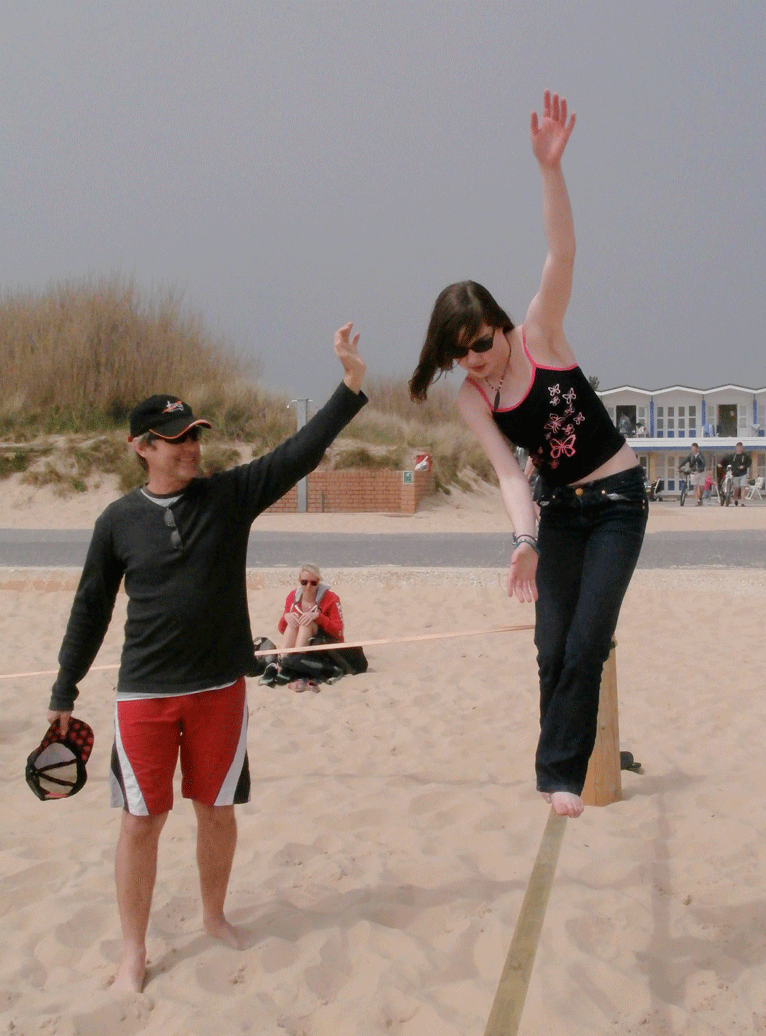
A number of straps secured between posts provided great fun for the girls.

P5060527-Amber-at-beach

Amber struggles to stay on ….

P5060521-John-at-beach

Evan John got in on the act but I couldn’t stay on long enough for any photos to be taken!

IMG_2062-Portland

I made a couple of visits to Portland in search of seabirds. The most successful was today (9th). Although very strong winds were forecast they didn’t materialise until the afternoon, after I had gone home, but I did see a Pomarine and Great Skuas, lots of Arctic Terns and a few Manx Shearwaters.

IMG_2049-Portland

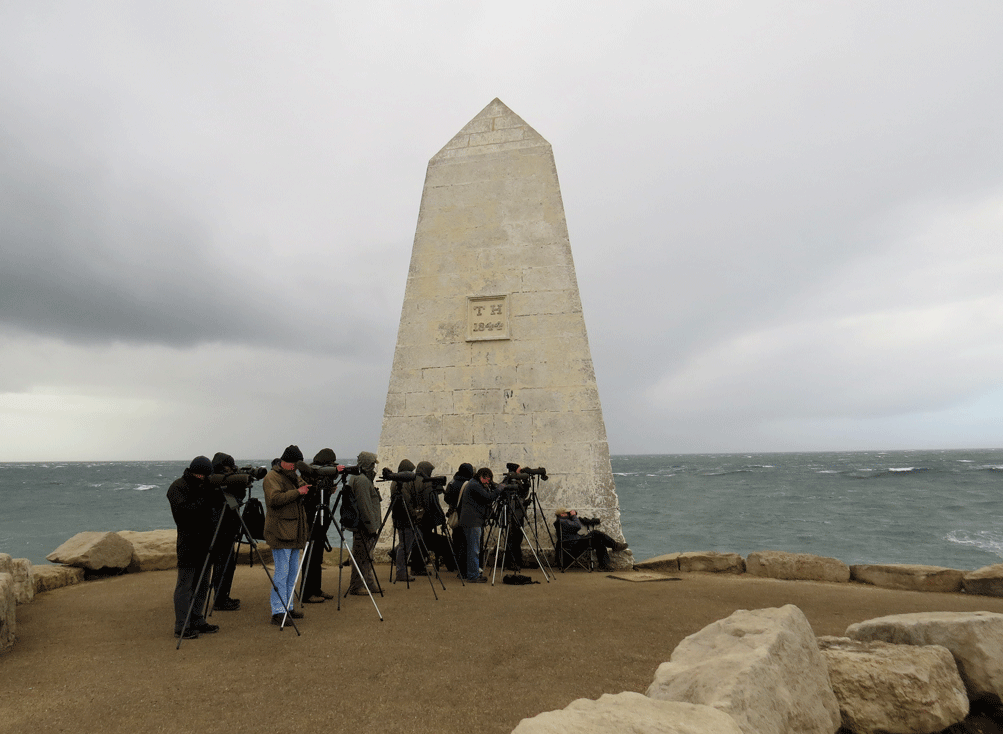
I wasn’t the only birder seeking seabirds at the Bill

IMG_2052-Cormorant

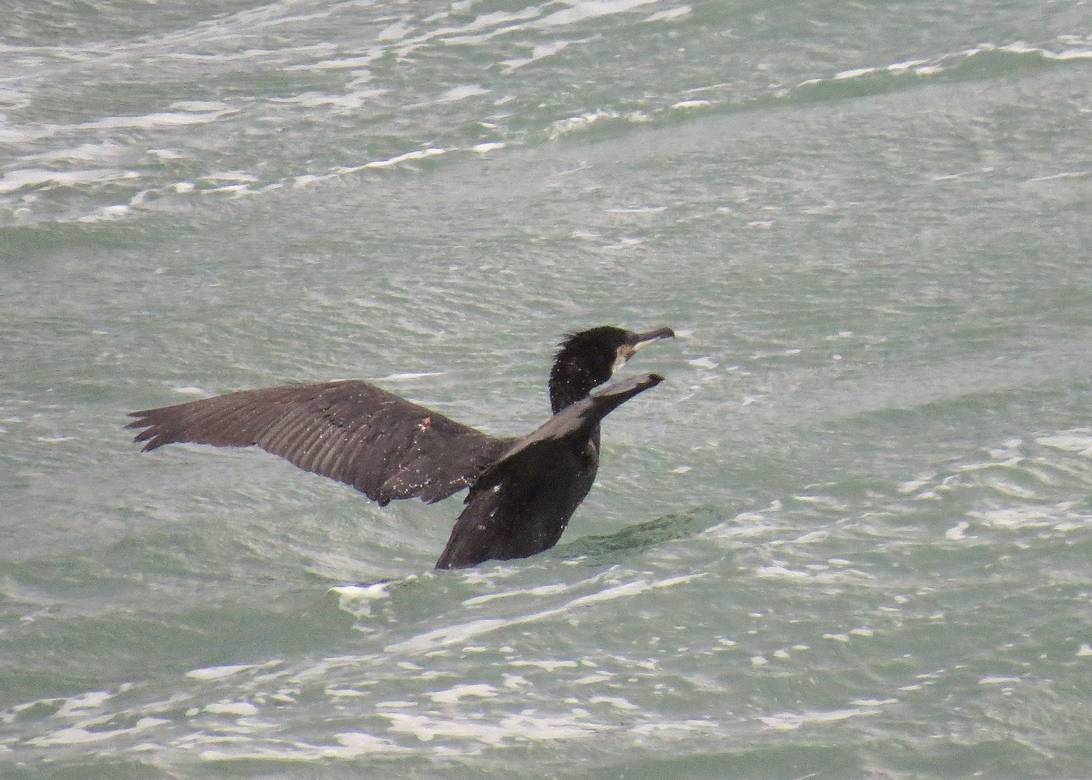
All attempts to photograph seabirds failed except for this Cormorant taking off close to the Bill. Interestingly the shape of the greenish gular patch is diagnostic of the Atlantic nominate race, which is exactly what you would expect.

Posted May 9, 2013 by gryllosblog in Uncategorized

April 6th – Jerusalem Bird Observatory and the Israel Museum.   Leave a comment

P4060194-Graceful-Prinia

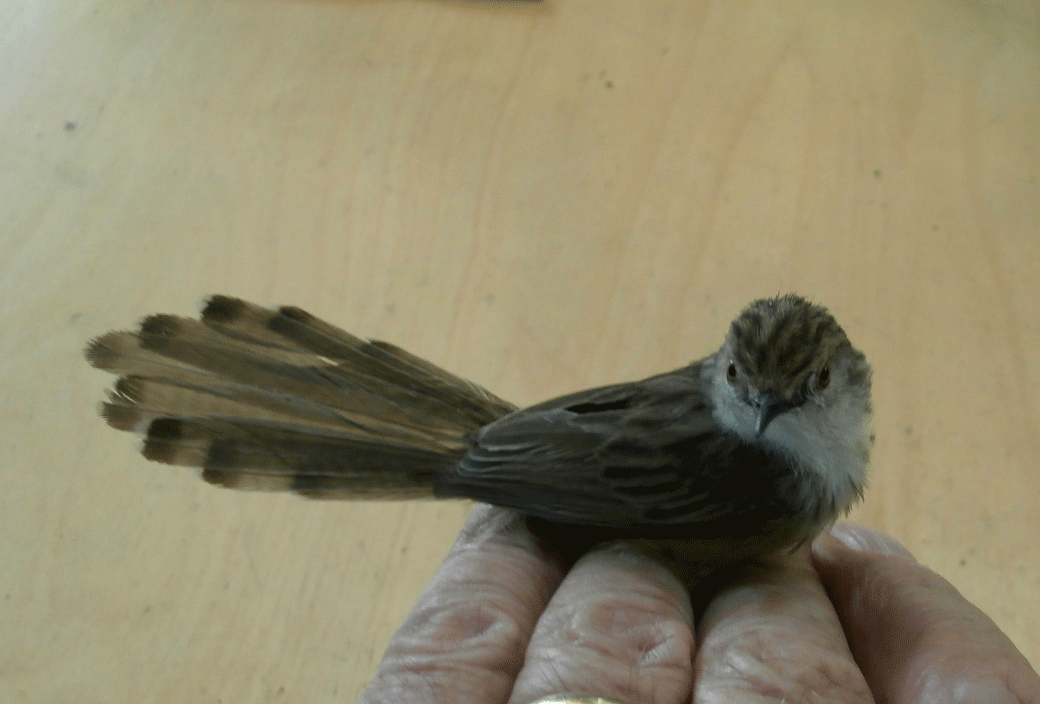
This resident Graceful Prinia was a retrap, ie had been ringed at this site previously.


Yoav Perlman, who had shown us the Nubian Nightjars, had recommended we visit the Jerusalem Bird Observatory whilst in the city. As his brother Gidon was in charge it was easy to arrange for me to do some ringing. This green oasis is sandwiched between the Knesset, the Israeli parliament and the Supreme Court. Finding the general area pre-dawn was easy enough, but finding where to park nearly sparked a full scale security alert.

Two days of bad weather had held migration up and we were blessed with a good number of migrants that morning. Local ringer Yoav Dax, Gidon and I ringed about 75 birds, mainly Lesser Whitethroats and Blackcaps but with a scattering of Common and Thrush Nightingales, Olivaceous and Orphean Warblers and best of all, a couple of Hawfinches.

P4060172-Orphean-Warbler

The eastern and western forms of Orphean Warblers are now treated as separate species. In Eastern Orphean Warbler voice, genetics and the marked undertail coverts are the diagnostic features.

P4060197-Sprosser

Thrush Nightingale (aka Sprosser) is a regular migrant in April. Although darker and greyer than the Common Nightingales we see in western Europe, it is not so different to the eastern races of Common Nightingale, so care is need in the field and in the hand. Fortunately the length of the first primary and the emargination of the 4th primary is diagnostic.

P4060182-Hawfinch

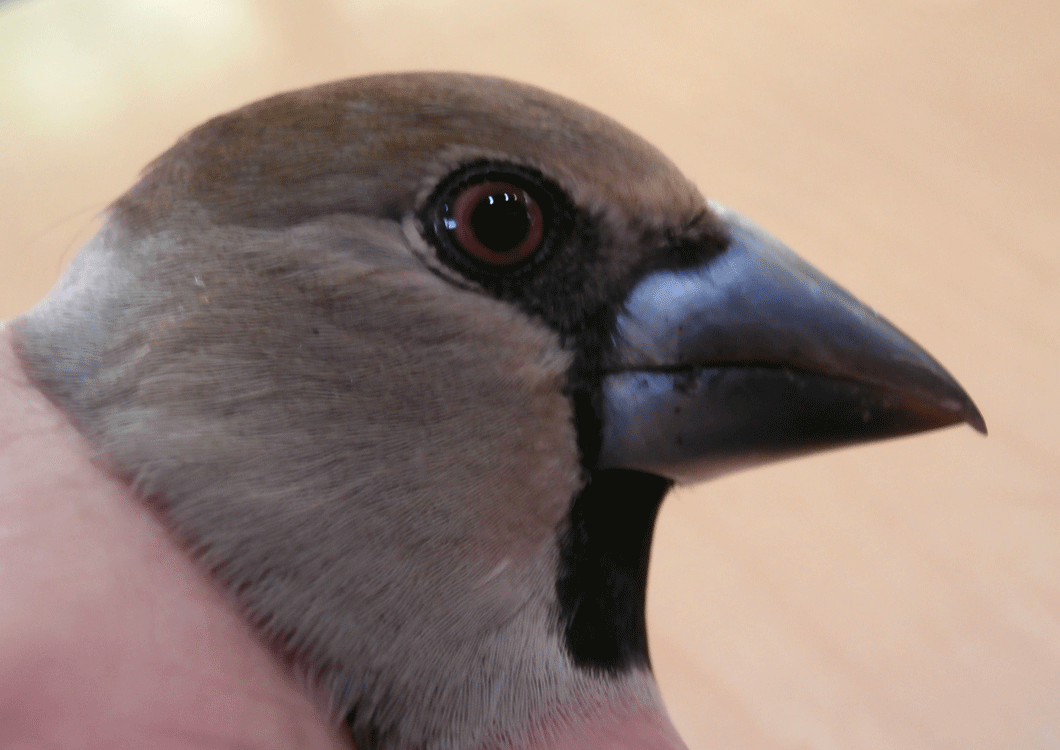
The best bird of the day was this Hawfinch. An uncommon bird in the UK it usually remains in the tree tops and is seldom ringed as an adult. The huge bill can crush cherry seeds and could certainly do serious damage to my fingers, hence I took a ‘head only’ shot.

P4060200-Dead-Sea-Scrolls-M

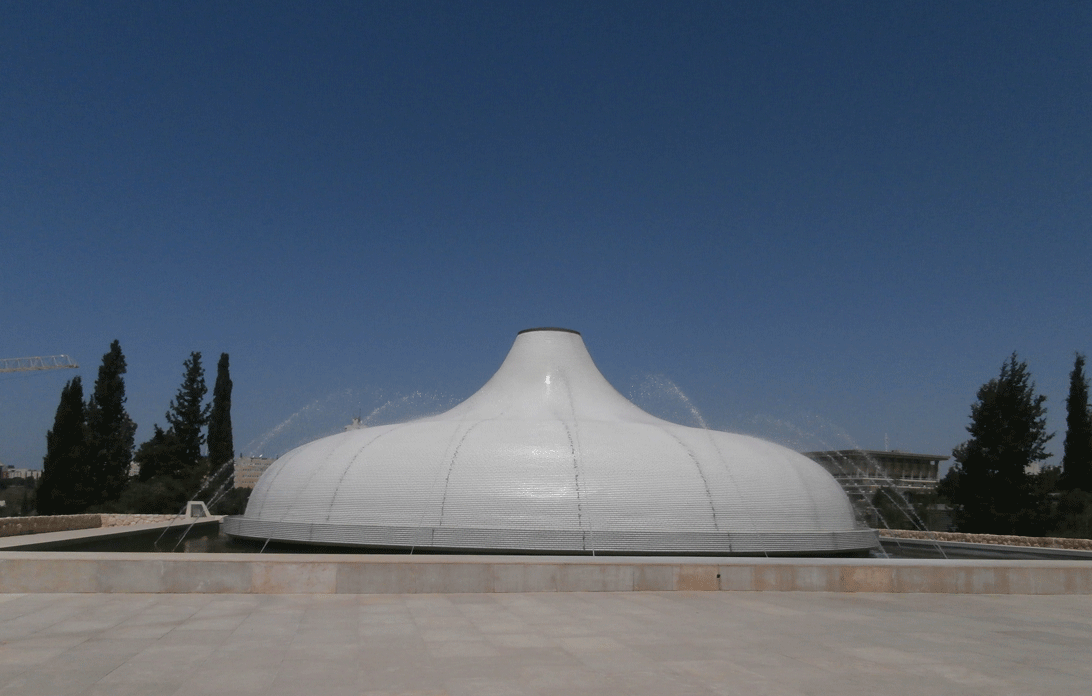
Later we visited the nearby Israel Museum and the Dead Sea Scrolls exhibit, which is housed in this building, designed to look like the storage jar that the scrolls were discovered in.

new-dead-sea-scrolls-theory_24016_600x450

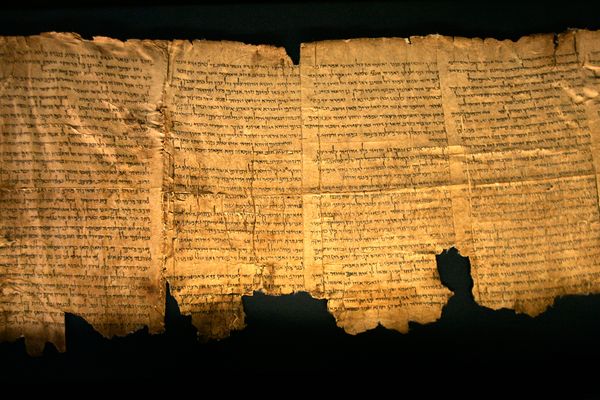
Photography is banned inside the exhibit, so this photo is taken from the internet. Discovered in 1947 the Scrolls date from 2nd century AD and are one of the most important archaeological finds ever, preceding the oldest original biblical documents by almost a thousand years.

P4060221-Israel-Museum

We only had a couple of hours to look around the rest of this very extensive museum. We chose to only look at the archaeology section, which was absolutely superb. Even so we only skimmed the surface. If we ever go back to Jerusalem than a longer visit to the museum will be high on the agenda.

P4060202-Model-of-Old-City

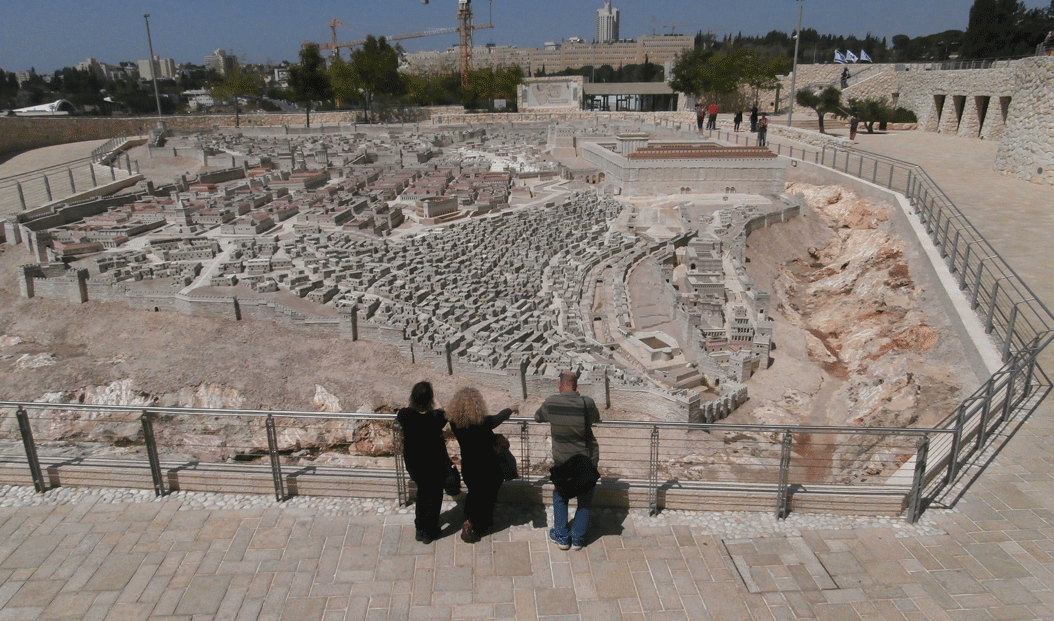
In the outdoor section of the museum is a scale model of Jerusalem at the Second Temple period, ie the time of King Herod or of Christ. To the right is the Valley of Kidron. The model is dominated by the Temple, sitting on the site that is occupied by the Dome of the Rock today. Inside the Temple is the Holy of Holies. The Western Wall, as it is known today, is the nearest part of the left hand wall of the Temple Mount.

P4060225-Israel-Museum

Margaret admires an outdoor sculpture at the museum.

From the museum we headed to Tel Aviv where we stayed overnight before going to the airport early on the 7th. We hadn’t used the car at all on the previous two days and hadn’t thought about how much fuel was left. I had hoped we had enough to get us to Tel Aviv but that was not to be. This was a bit of a problem as it was the Sabbath and all petrol stations were closed. We found one with an automated pump but it needed your Israeli ID number to proceed. Eventually a helpful local man paid on his credit card and we gave him the cash.

We toured the old streets of Tel Aviv searching for our hotel, getting a glimpse of the Mediterranean in the process. In the evening we went for a short walk before retiring early, as we had a very early start in the morning. On the 7th Margaret flew back to UK and I met up with the other ringers and caught a flight back to Eilat.

Posted May 8, 2013 by gryllosblog in Uncategorized

5th April – Bethlehem, Palestine and Jerusalem, Israel.   1 comment

IMG_1445-Palestine

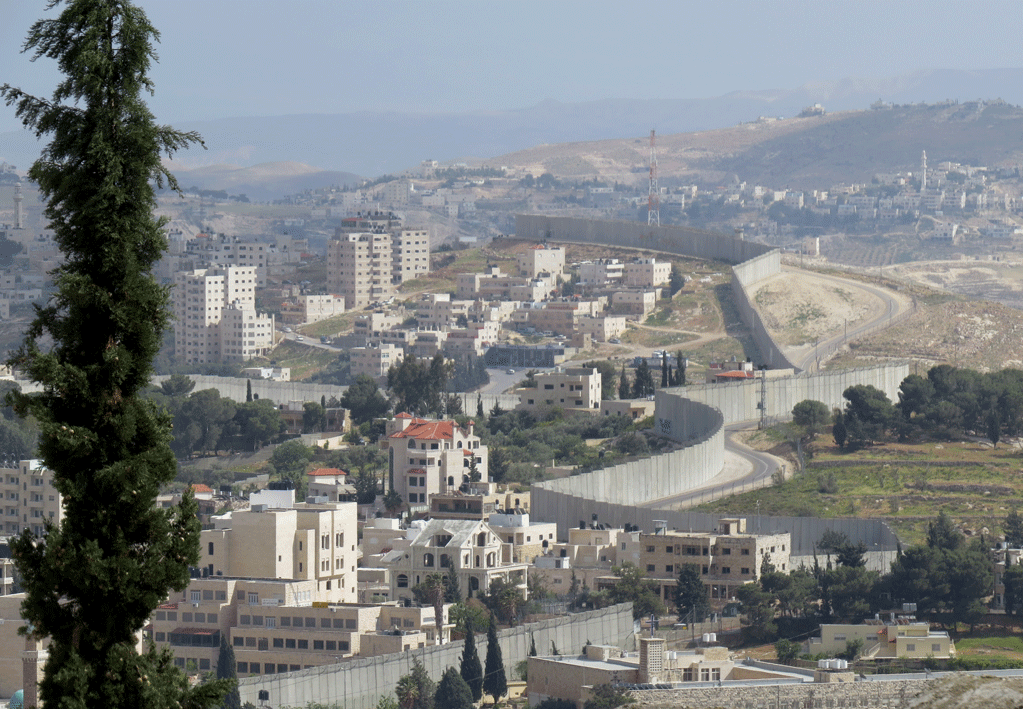
The view from the Mount of Olives over Palestine showing the ‘separation barrier’ that divides the Israeli Arab area around the Mount from their kin in Palestine.

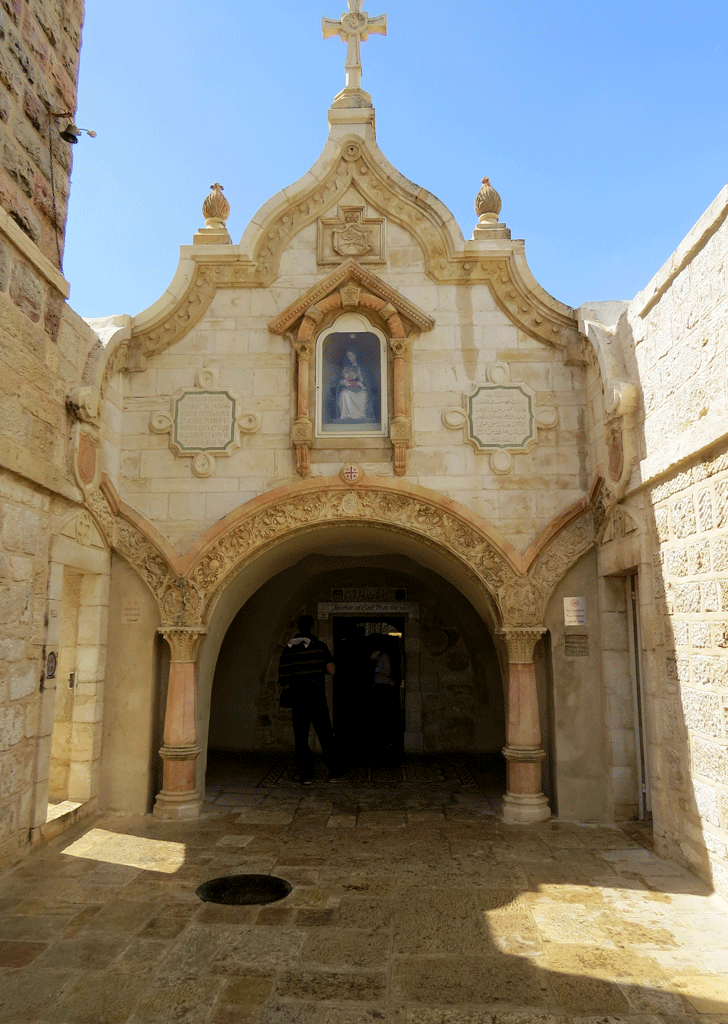
In 1986 Janet and I just drove the few miles from Jerusalem to Bethlehem, parked and had a look around the Church of the Nativity. Now things are very different. Israeli hire cars are not allowed to enter the now semi-independent Palestine Territories except on major roads, so to visit Bethlehem we had to book with an Israeli tour company which picked us up about 0715 and took us on a tour around Jerusalem in order to pick up the other clients. Eventually we crossed into Palestine and headed for the (little town of) Bethlehem. Our tour took us first to the Shepherds Fields where it is said that the Angels of the Lord announced the birth of Jesus, then to the Milk Grotto where tradition has it that Mary’s milk whilst nursing Jesus turned a red rock completely white, finally we arrived at Manger Square and the Church of the Nativity. Fortunately our guide was able to by-pass the huge queue and we were able to see the spot where tradition has it that Jesus was born without delays. The church itself is the oldest Christian church in the world dating from the 4th century.

IMG_1348-Bethlehem

The chapel at the Shepherd’s Fields – the tradition site for the visitation of the shepherd’s by the ‘multitude of heavenly hosts’

IMG_1374-Bethlehem

The entrance to the Milk Grotto

IMG_1369-Bethlehem

The ornate interior of the Grotto

IMG_1375-Bethlehem

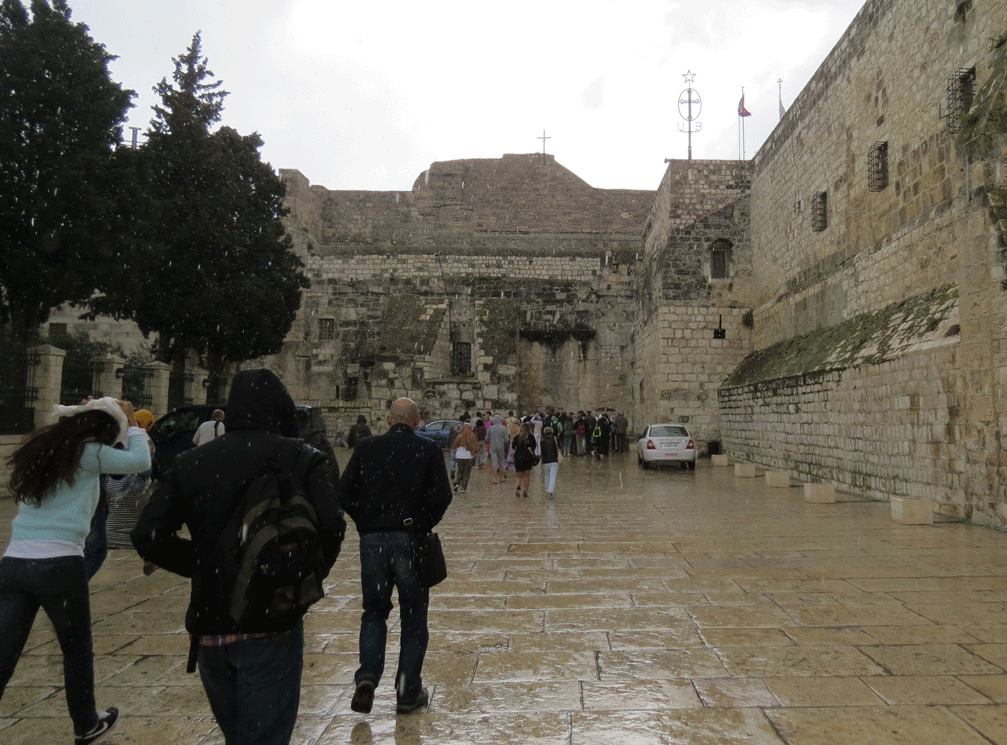
A sudden heavy shower had us running to the Church of the Nativity for shelter.

IMG_1387-Bethlehem

The Church of the Nativity, said to be established in 326 AD by Helena, the mother of Roman emperor Constantine. It was later destroyed but was rebuilt by Byzantine Emperor Justinian in the 6th century.

IMG_1399-Church-of-the-Nati

Part of the original floor mosaic of the 4th century church.

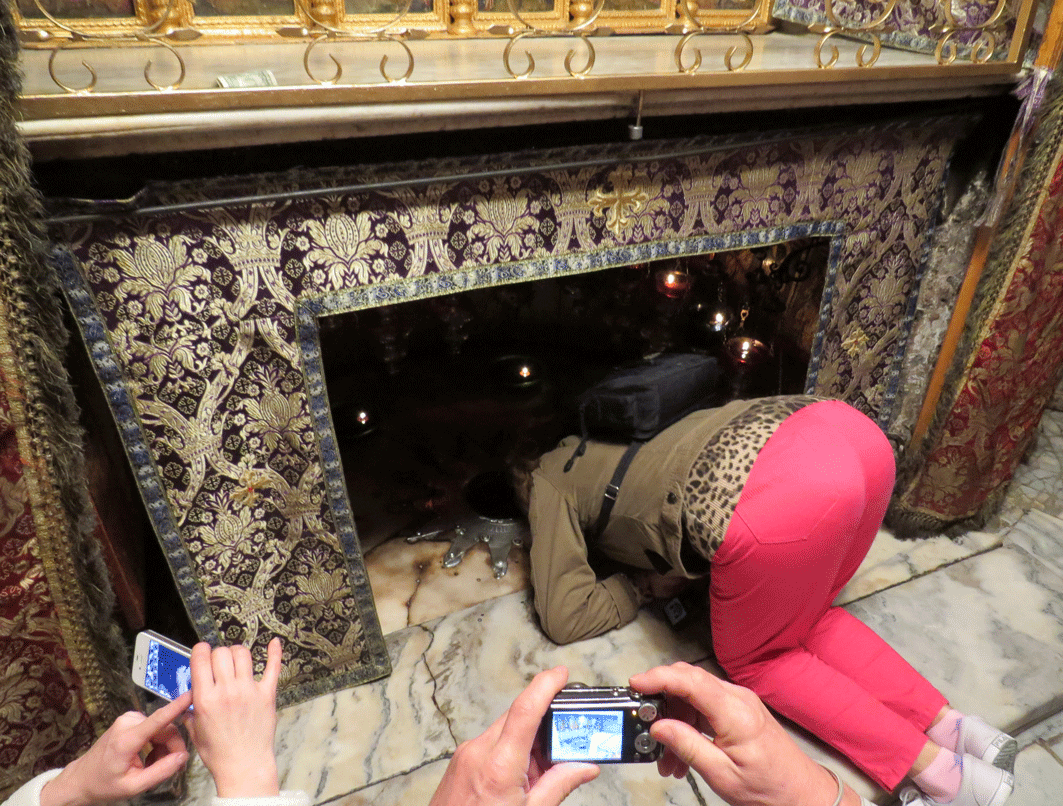
IMG_1384-Bethlehem

Pilgrims kneel to kiss the very spot where they believe that Jesus was born.

IMG_1415-Bethlehem

Perhaps the low point of the day was passing through the ‘separation barrier’. Erected between 2000 – 2006 to separate Israeli and Palestinian areas, it has divided communities in two and has effectively imprisoned Palestinians within a stockade. Whilst understanding the Israeli’s need for security, it seems regrettable that 20 years after the Berlin Wall came down that this sort of structure should be necessary anywhere in the world.

IMG_1428-Jerusalem

We were dropped on the far side of the Old City of Jerusalem and so made our way through the winding streets and along the famous Via Dolorosa to the Lion Gate. It was Friday afternoon and the Arab quarter was eerily quiet as they departed for Friday prayers, meanwhile Jews headed off for the Sabbath, whilst Christian organisations could be seen leading groups …

IMG_1426-Jerusalem

.. or dodging their way past crowds at the many retail outlets.

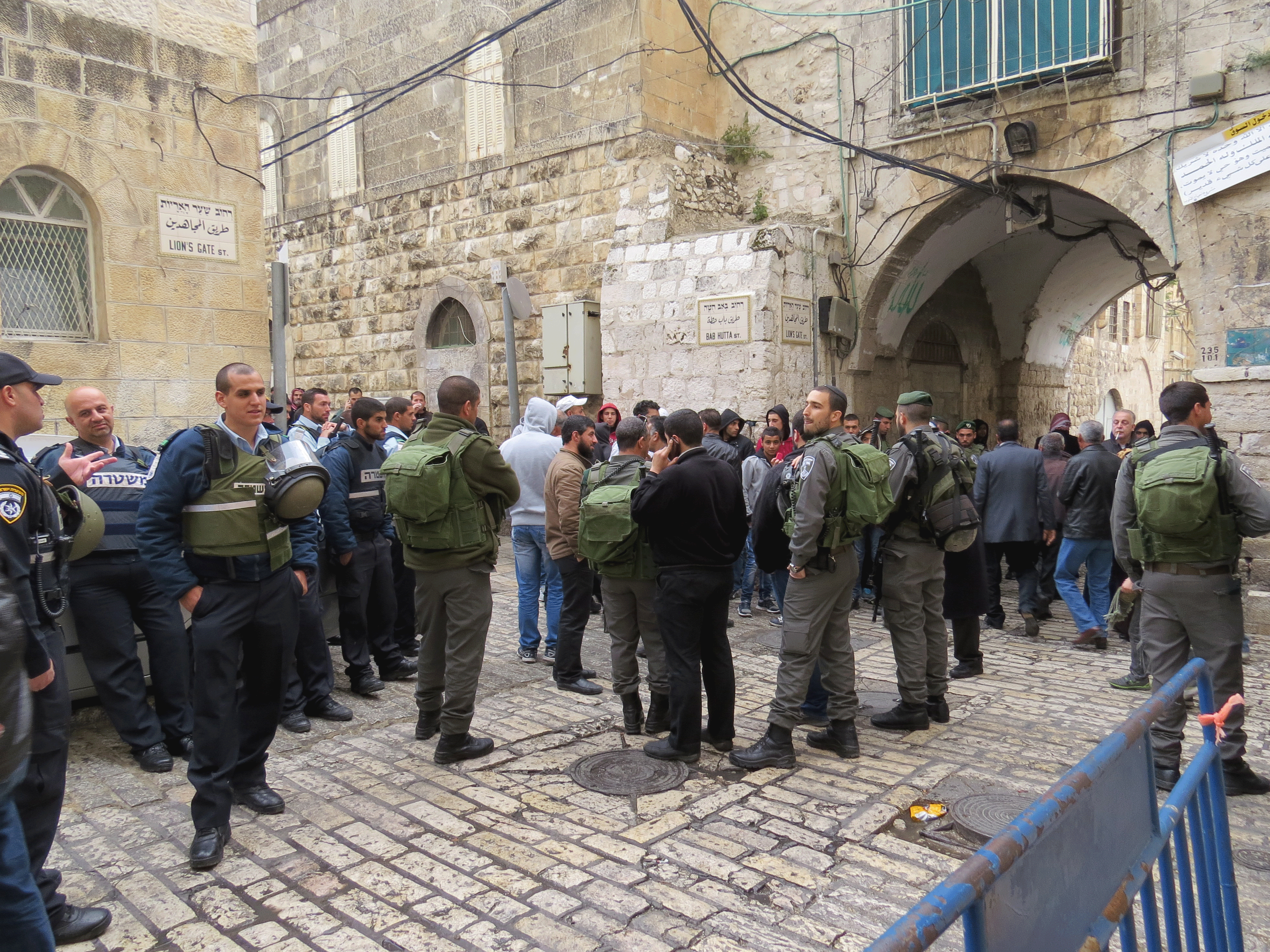
IMG_1432-Jerusalem

As we reached the Lion’s Gate we found masses of troops and police preparing to confront Muslims leaving the Al Aqsa Mosque. We heard shouting ahead and wondered if we should proceed, fortunately it was only boys selling food from carts to the emerging crowds.

IMG_1437-Mt-of-Olives

The long slog up to the Mount of Olives.

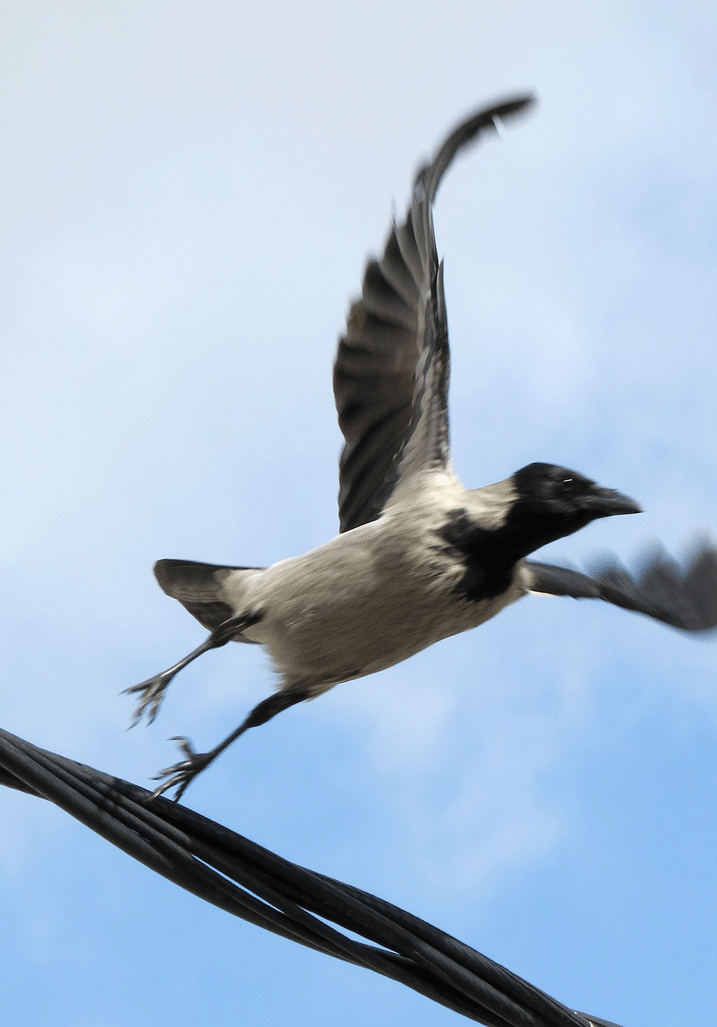
IMG_1447-Hooded-Crow

Not many birds today, this Hooded Crow was all I got to photograph.

IMG_1438-Mt-of-Olives

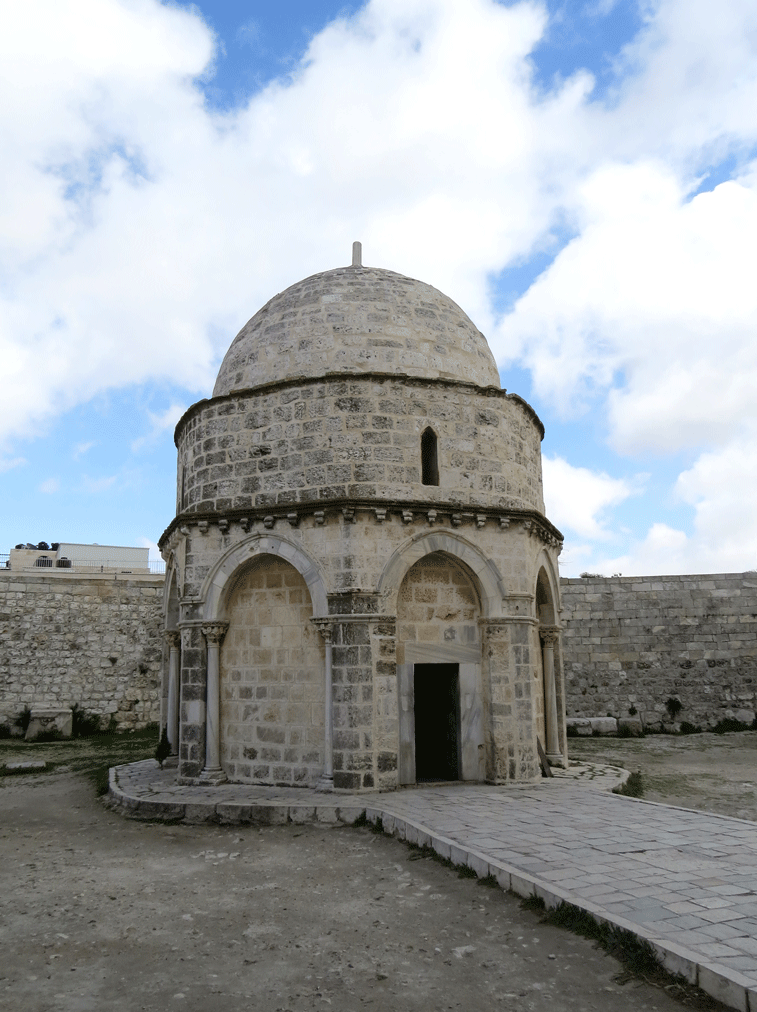
There are a number of conflicting claims to the spot where Christ is said to have ascended to heaven. This small Mosque of the Ascension (Islam treats Jesus as a prophet of God) was next door to our hotel and has been in Muslim possession since the 12th century. The nearby Russian Church of the Ascension marks an alternative claim, but was closed that day.

IMG_1442-Mt-of-Olives

Today we saw locations commemorating the very start and very end of Jesus’ life. This stone marks the point where he was said to have ascended to heaven.

Posted May 8, 2013 by gryllosblog in Uncategorized