Archive for the ‘Uncategorized’ Category
Margaret and I met in 2006 via a singles organisation called Nexus. Although we are no longer single we have remained members and although these days we only go to a few events. It was a bit of a shock therefore to hear that the owner of Nexus had passed away and the organisation had ceased to be. We had no idea that it was owned and run by a single person and had presumed it was run by a committee with clear plans of succession.
We joined other Nexuns for a meal in Wimborne on the 5th. All the members were clear that they wanted Nexus to continue locally in some form. A meeting has been called in January to discuss the future.
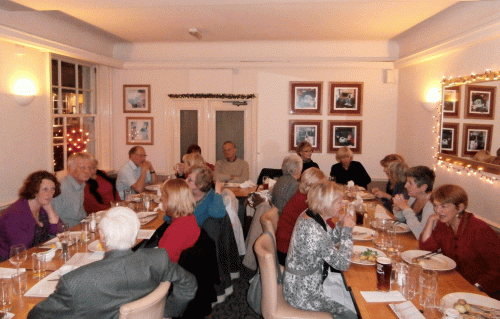
An enjoyable meal at the King’s Head in Wimborne Square with our Nexun friends.
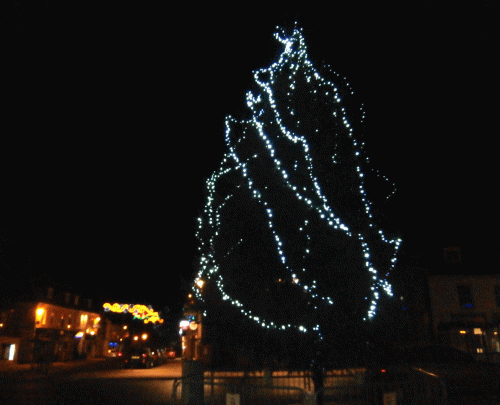
Wimborne Square at night.
The 7th was Kara’s 14th birthday and of course John, Anita, Margaret and I went round to see her.

Kara with Andy. She is holding the perfect gift for a 14-year-old: a Jessie J CD.
On the 15th Margaret, John, Anita and I joined a number of Nexuns for an evening out at Gaunt’s House . Gaunt’s House is a stately home to the north of Wimborne that is run as a spiritual retreat by the Gaunt’s House charitable foundation http://www.gauntshouse.com/ . After a substantial vegetarian meal we enjoyed a musical event. Over the two sessions about 10 musical acts performed varying from classical guitar to some quite avant-garde. The session ended with a young hippie character who sang several Beatles songs, like Strawberry Fields For Ever and All You Need IS Love. I felt he had been born 45 years too late.
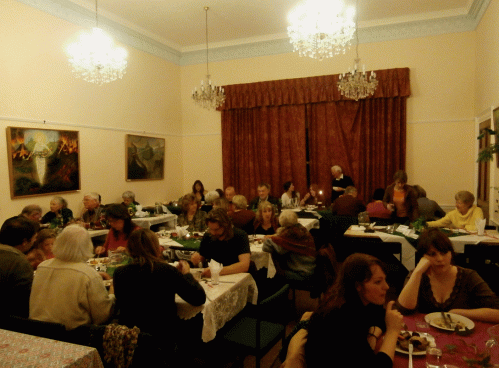
Gaunts House has a series of rather strange paintings on the wall, which I presume have some sort of spiritual meaning. The food was nice but I always feel that a vegetarian menu leaves me feeling somewhat unfulfilled.
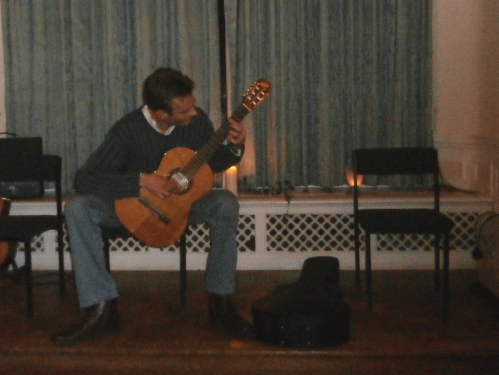
A bit of classical guitar in the first session

Anita and Margaret getting close to the open fire during the break.
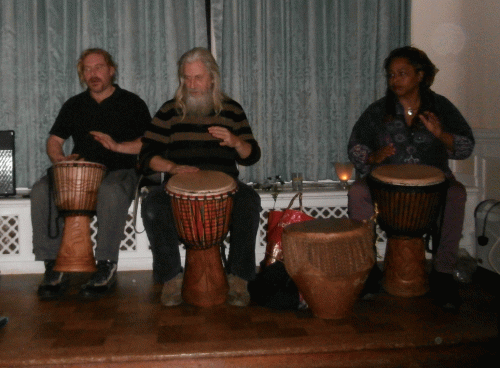
In the second session acts varied from African style drumming to two young ladies who played some imaginative pieces with a range of instruments ..

…. to our aforementioned hippie friend.
On Sunday I did the WeBS count in the late morning and later went round to Janis and Andy’s. Their friend Adrian and daughter Francesca had come over from Southampton and we went round to see them. Amber and Kara have known Francesca for as long as they have being to school and where very pleased to see her again.
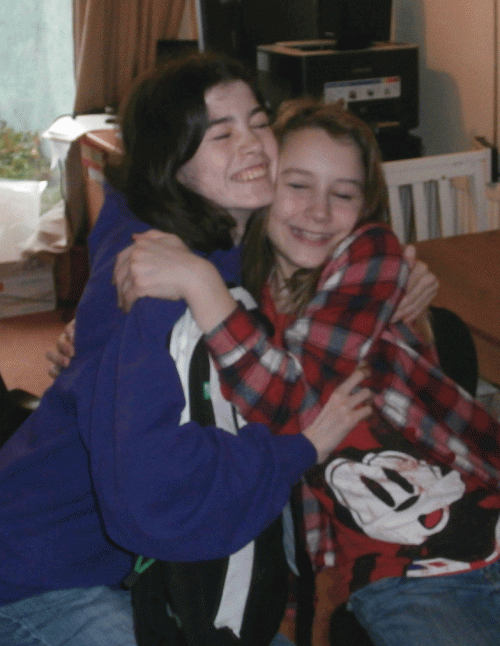
Francesca and Kara
On Tuesday Sean Walls and I had the first of our winter ringing trips to Holton Lee. It was a bitterly cold morning but it was still and quite ideal for ringing. Around the feeders we trapped four Great Spotted Woodpeckers, five Nuthatches (two of which were retraps from last winter) and 13 Coal Tits. In total we ringed 44 new birds and had 11 retraps.

A severe frost at Holton Lee

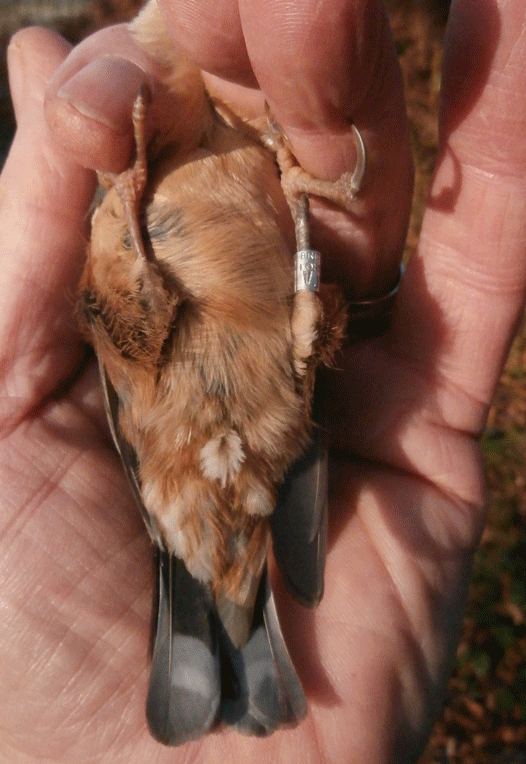
One of five Nuthatches trapped

Nuthatches cannot be aged once they have completed the post-juvenile moult but they can be sexed on the colour of the undertail. This is a female and has undertail coverts of similar colouration to the belly.

… compared to the rich chestnut and white undertail of the male.
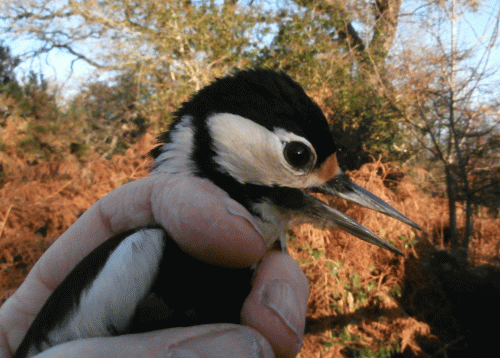
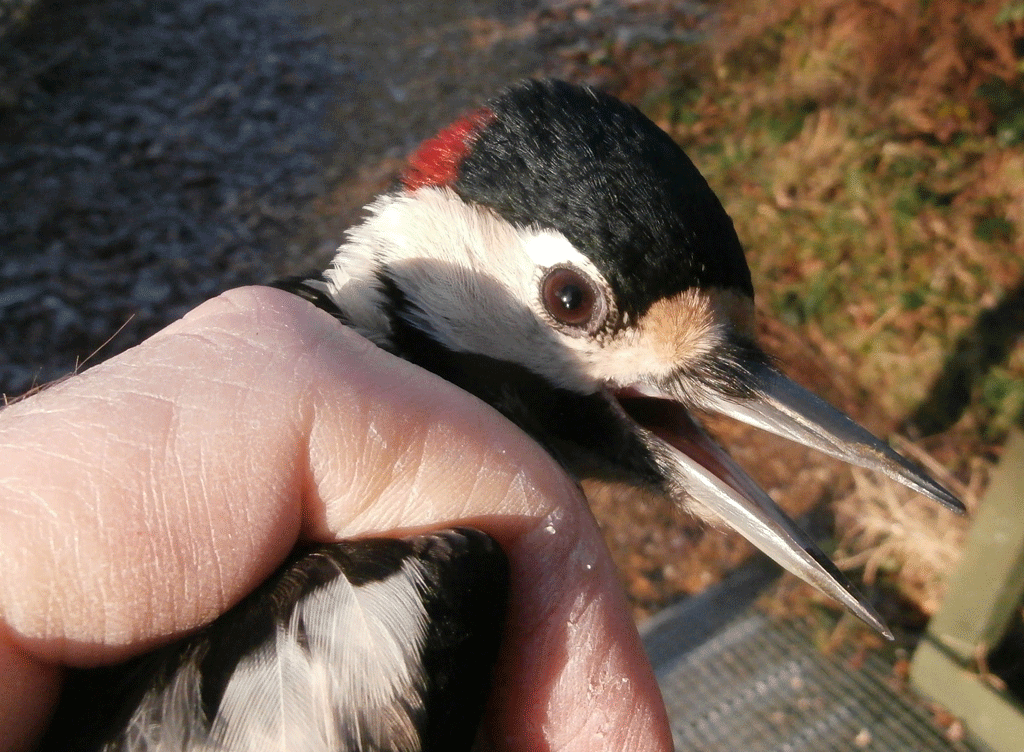
Female Great Spotted Woodpeckers lack the red nape of the male.
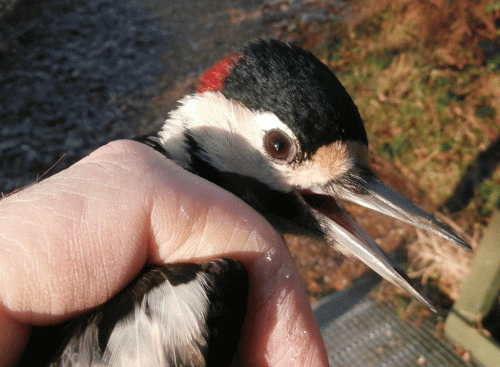
The males red nape is clearly visible. I would have liked to photograph the woodpecker without my fingers in the shot but if I let go it would ‘drum’ on my knuckles!
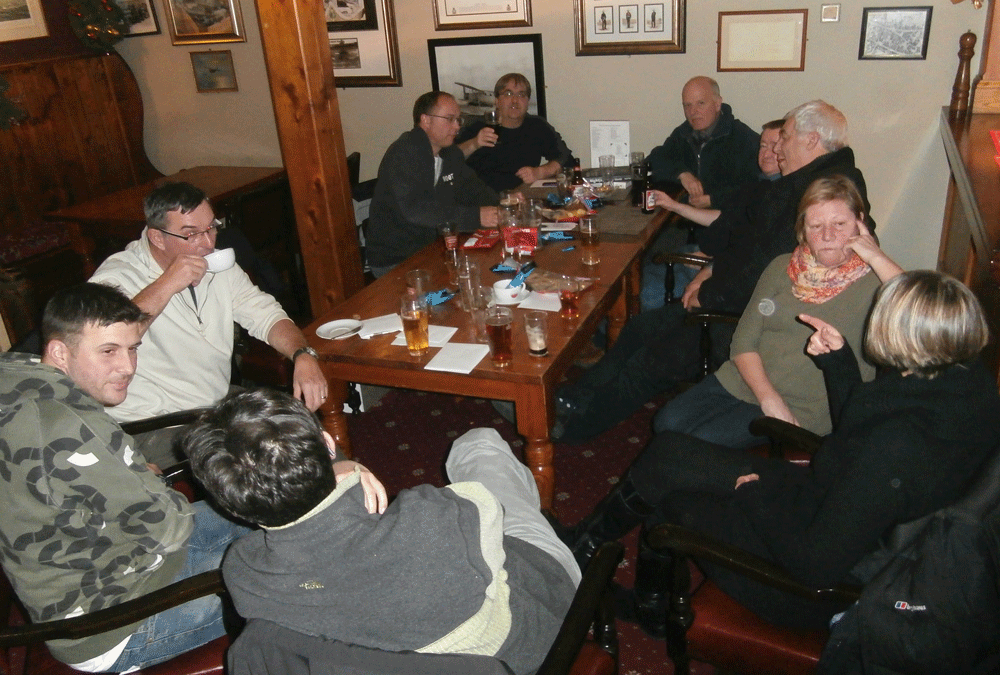
On Tuesday night we had a get together down the pub but Margaret was busy with the choir. It was a very enjoyable evening with a wide range of bird related subjects covered.

Clockwise from the wooden pillar: Marcus Lawson, Trevor Warwick, Steve F Smith, Mark Constantine, Mo Constantine, Marie Smith, Shaun Robson, Paul Morton and Nick Hull.
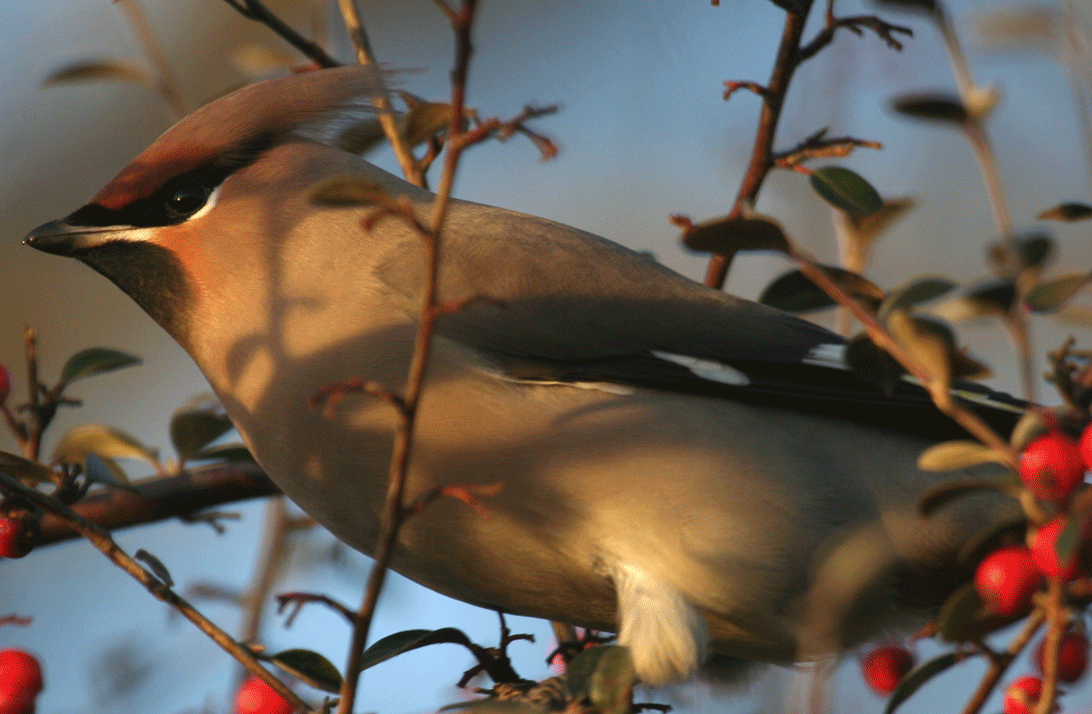
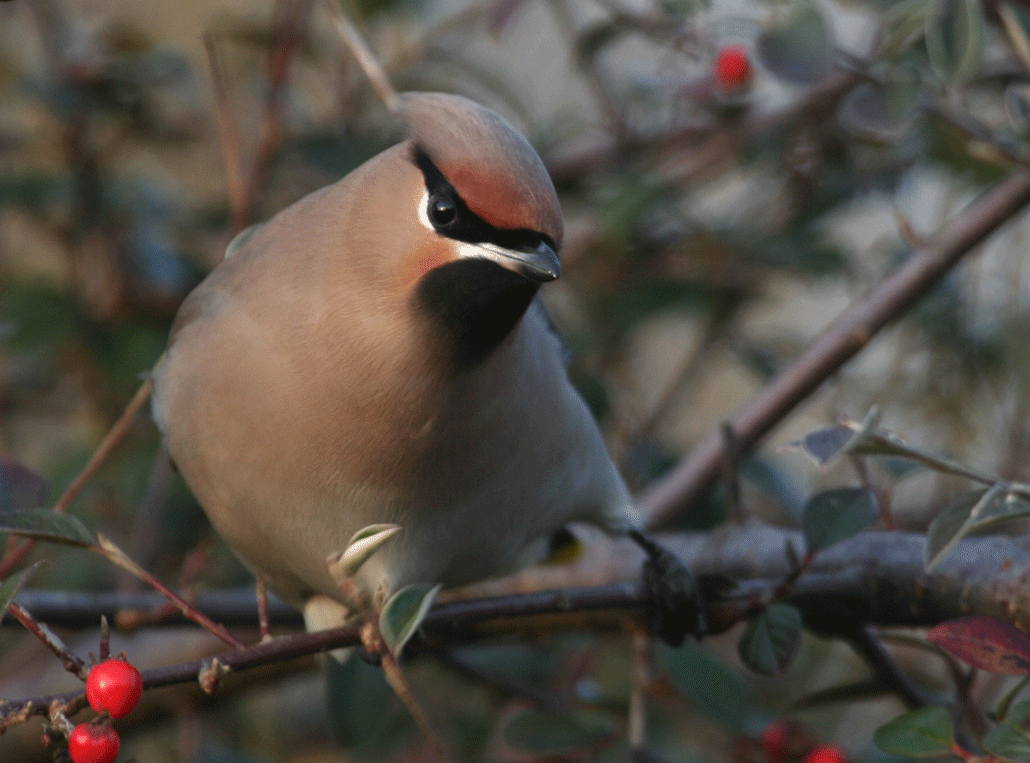
Although I had seen a Waxwing at Oxford on the way up to Ripon, news of three feeding beside the road in Tolpuddle had me driving over in the afternoon of the 12th. I was not disappointed as the birds kept flying down from nearby trees to feed on a Cotoneaster bush.

Winter irruptions to the UK have been recorded as long ago as 1685 but they seldom reach Dorset. Good numbers were seen in 2010/11 but only a few have been recorded in 2012.

One of the most photogenic winter visitors to the UK.

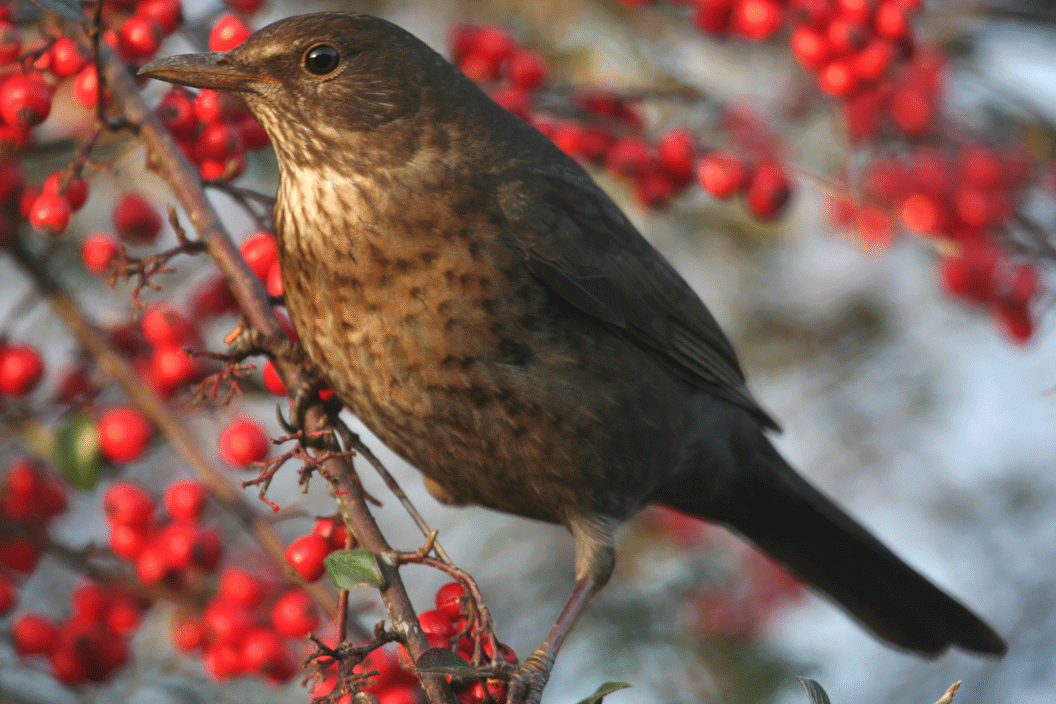
As well as the three Waxwings a number of Blackbirds were feeding on the Cotoneaster berries.
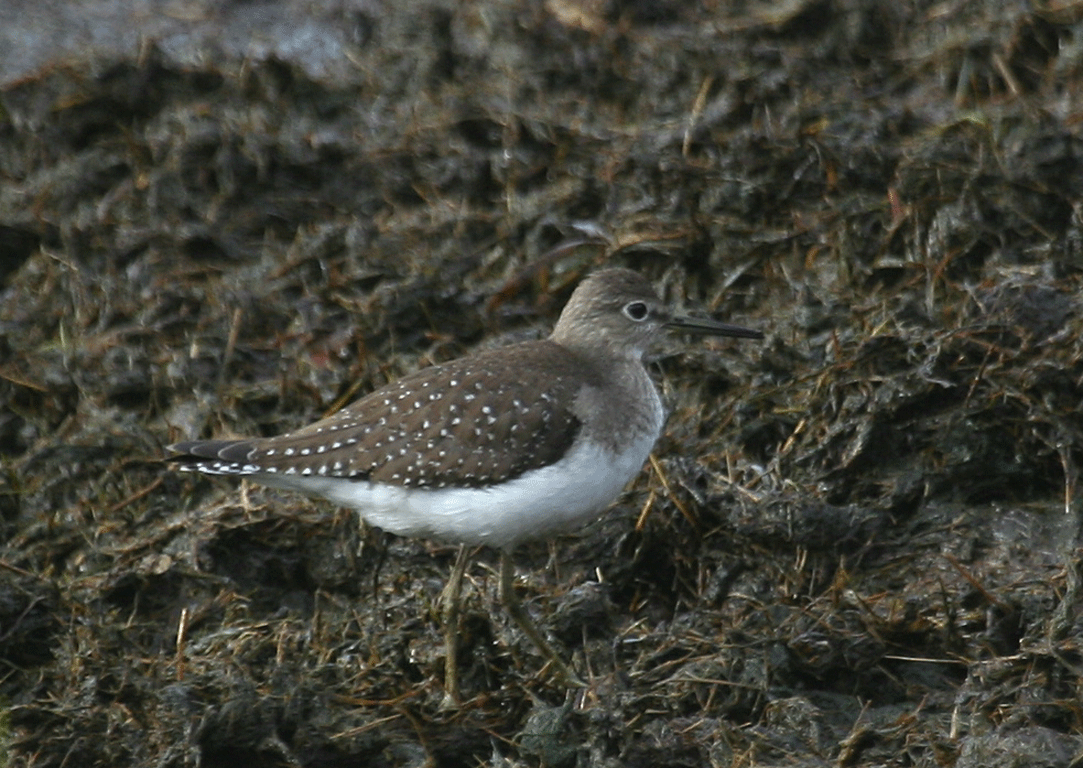
At the start of the year I set myself the target of seeing at least 300 bird species during 2012. The 300th bird was seen on Scilly on 13th October, but progress has been fairly slow since.

Number 300: Solitary Sandpiper on Scilly in October
On late autumn bird that I had hoped to see was Waxwing. Waxwings are irruptive, pouring into the UK when the berry crop on the Continent fails. The trouble is the berry crop seems to have failed here as well, so many flocks have moved on rapidly and hence have been untwitchable, at least here in Dorset. A small flock had been seen in the centre of Oxford at St Giles churchyard. It was only a short detour from the A34, so on our journey up to Ripon on the 1st we headed into Oxford where a single Waxwing was on show.
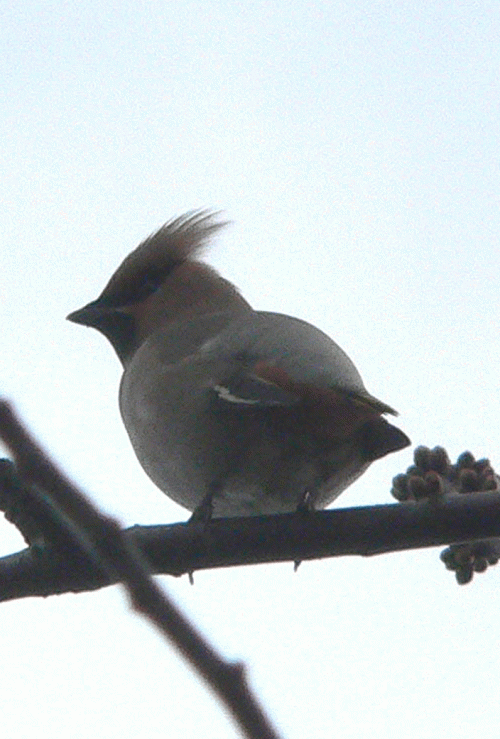
A quick stop in Oxford produced a single Waxwing. There has been a sizable influx this year but most of those that have reached the South Coast have quickly moved on.
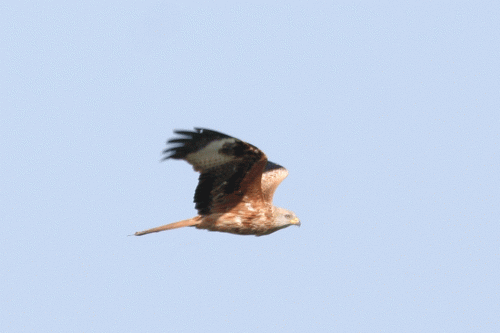
Red Kites have been successfully introduced to several areas of Britain, they are regularly seen in the area around Oxford but we also saw one on the 1st in the Vale of York, the first time I have seen one in the north of England.
Whilst we were away in Yorkshire news came through of a White-rumped Sandpiper at Longham Lakes just outside of Poole. This species breed in arctic Canada and Alaska and winters all the way down to southernmost South America. It is a rare visitor to the UK, it is the 6th I have seen in the UK and the second in Dorset. There had been a claim on Brownsea in the summer but it had gone when I got there and further research showed that it had to be an aberrant individual or a hybrid, so I was very glad that it was still at Longham Lakes on the morning of the 3rd. Unfortunately the island on which it had taken up residence was a bit distant and my photos were useless, however Christchurch birder Alan Hayden allowed me to post one of his.
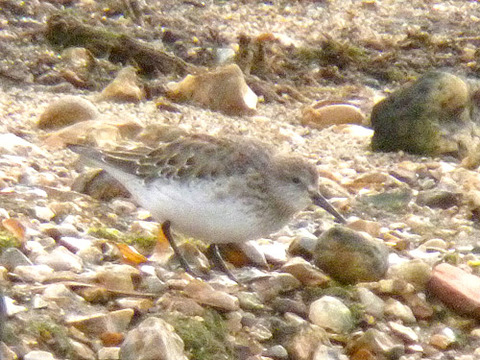
White-rumped Sandpiper at Longham Lakes. Photo by Alan Hayden
The White-rumped Sandpiper was year bird number 308. There might be another major rarity before the end of the month but I don’t think that is very likely, so it probably will be the last bird of the year. If so, there is a certain poetic justice to the situation as I started the year at Longham Lakes where I saw my first rarity of 2012, a Blue-winged Teal.
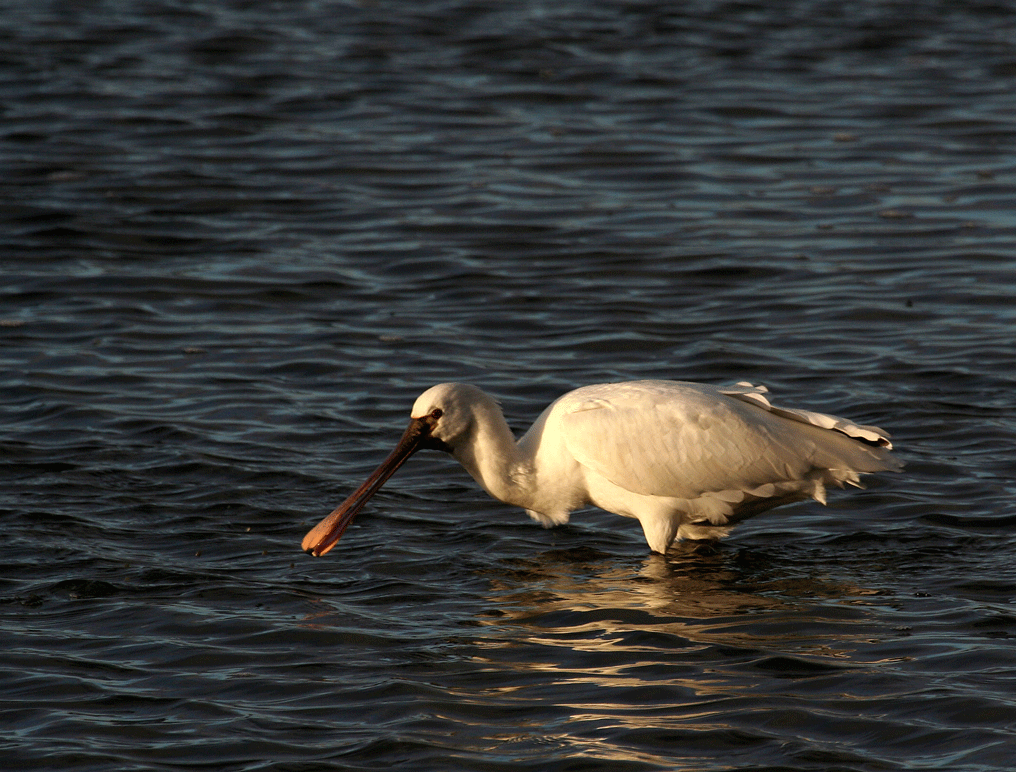
A visit to Holes Bay on Thursday 6th was very successful. Freezing conditions may have pushed a lot of birds off Brownsea (the lagoon was partially frozen) and Holes Bay was stacked with birds. 15 Spoonbills, over 100 Avocets plus 500+ Wigeon and Teal were just some of the birds on show, but there was a bitter eye-watering wind which made it hard to keep the scope steady.

Part of the flock of 15 Spoonbills in Holes Bay. Once a local rarity, numbers have increased greatly in the last decade. These birds originate in Holland and come to Dorset for the winter.
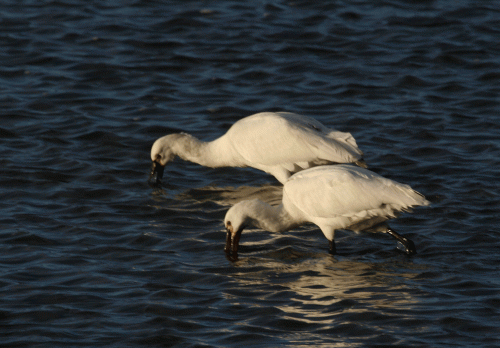
Spoonbills feed by sweeping their bills (held open) from side to side in shallow water.
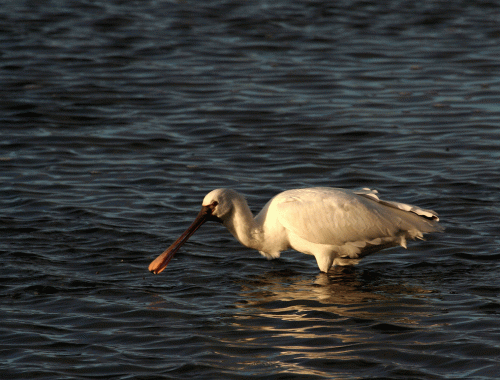
The flesh-coloured bill indicates that this bird is a juvenile. Juvenile birds show black tips to the primaries in flight.
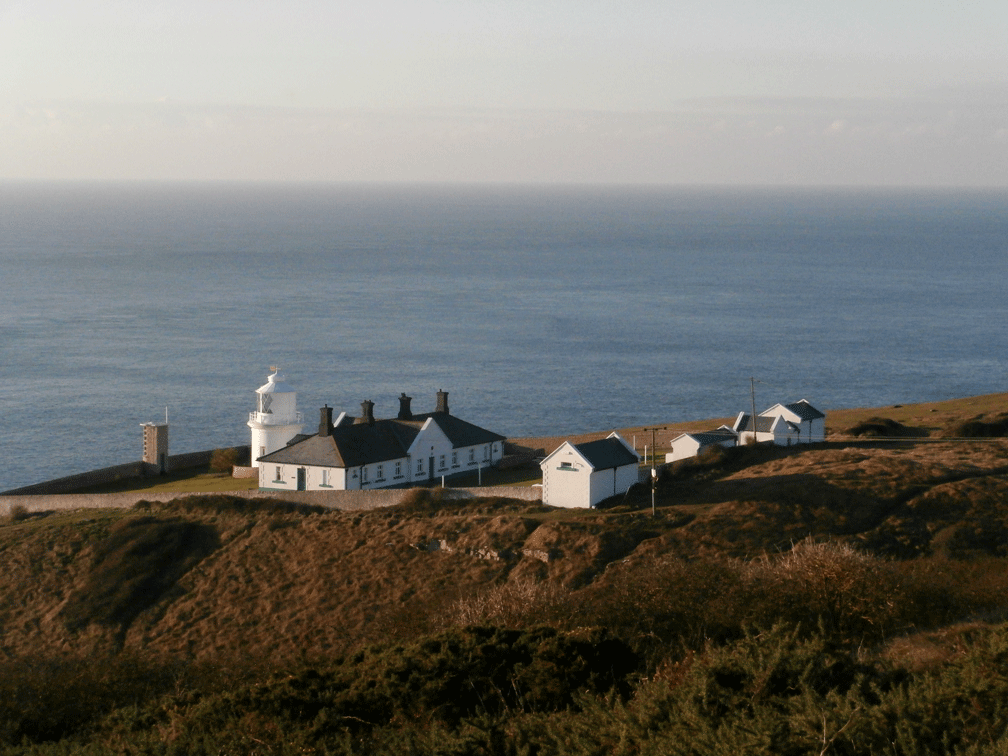
On 8th a group of us went to Durlston for one last ringing trip of the year. Predictably we only caught six birds but the main reason for going was to collect all the gear and put it in storage for the winter.

Durlston lighthouse on a clear but cold day.

This Goldfinch was one of the last birds we ringed at Durlston this year. The 2012 total was 2114 compared to 3032 in 2011. The recovery rate however remains remarkably low.
The 9th was another WeBS count (only two weeks after the last, presumably to prevent us having to go out the Sunday before Christmas). Highlights in my area of Holes Bay were similar to the 6th, with the addition of a few Turnstone, a Greenshank and a Spotted Redshank.

Large algal mats cover parts of Holes Bay and provide feeding areas for these Wigeon. The dark background is the railway embankment in shadow.
Margaret’s older brother Martin and his wife Jean have retired to Australia. During his working life he has mainly worked in the UK, Japan and Australia. Their daughter Caroline, who has married a major in the British army, now lives in Ripon, North Yorkshire. Martin and Jean had flown over to the UK to spend some time with Caroline, as her husband is currently stationed abroad.
As they have been living in different countries, Janis and Anita have never met their cousin Caroline and Anita has never met her aunt and uncle (except as a tiny baby), so we planned a reunion. Margaret only met Caroline for the first time at her wedding some six or seven years ago. Amber was keen to come but Janis couldn’t find anyone to look after Kara at the weekend and stayed in Poole, so it was Anita, Amber, Margaret and I that made the 320 mile drive on Saturday morning.
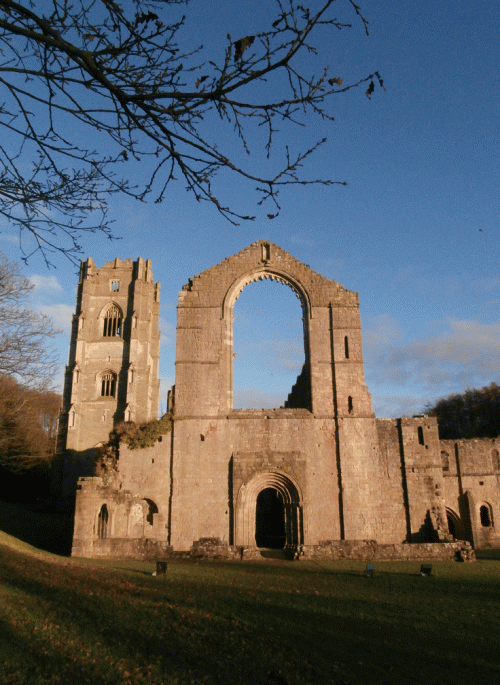
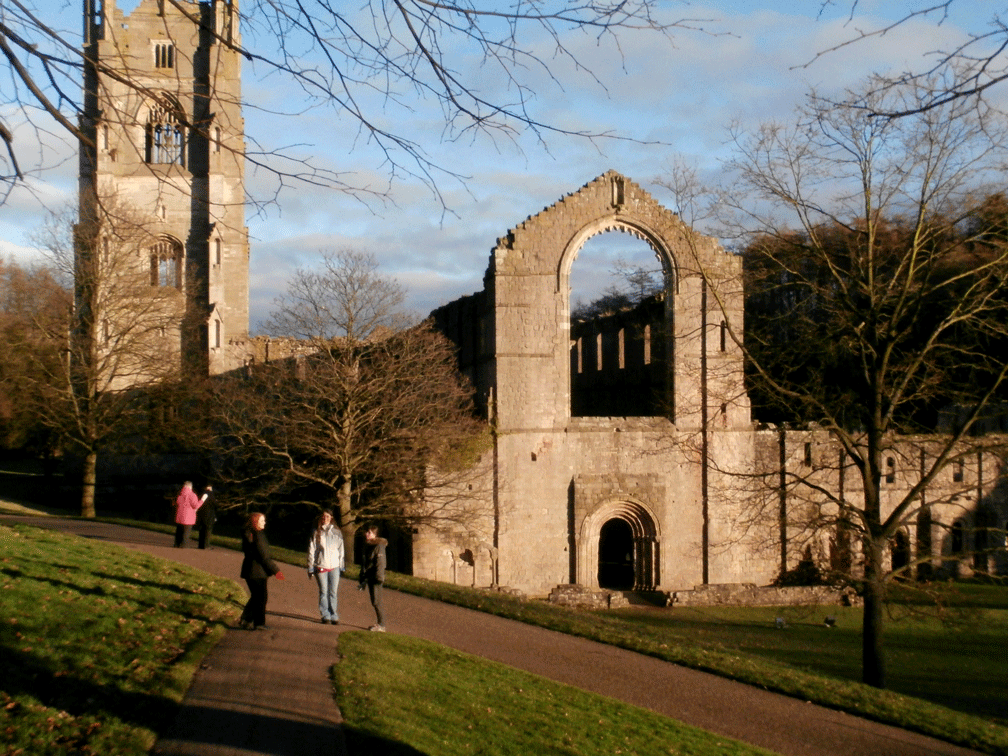
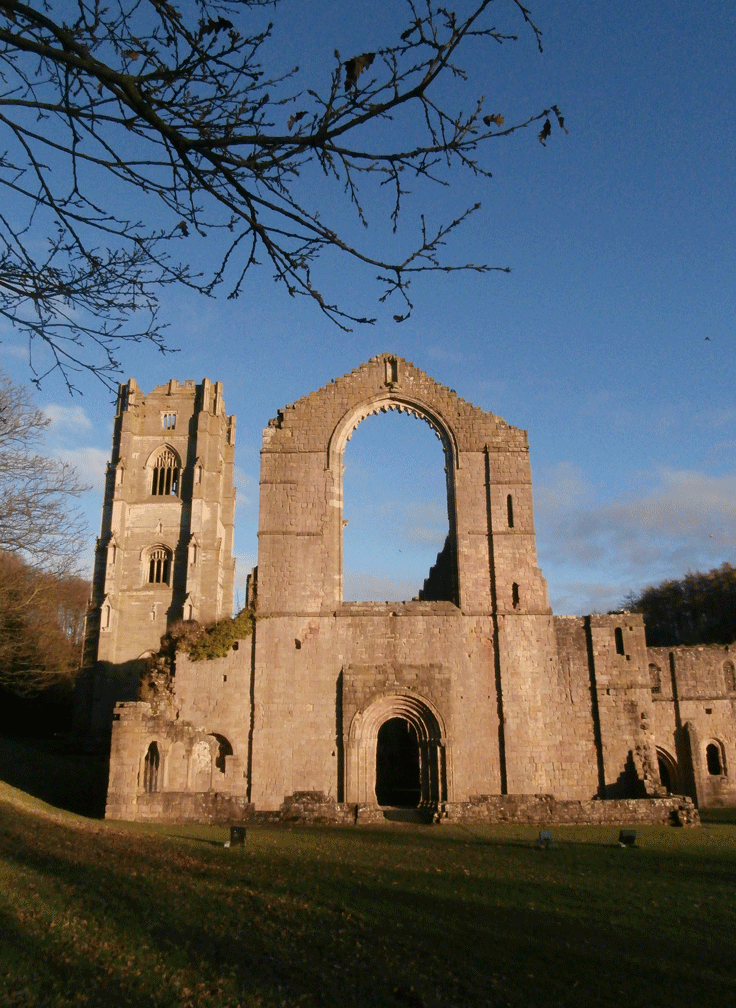
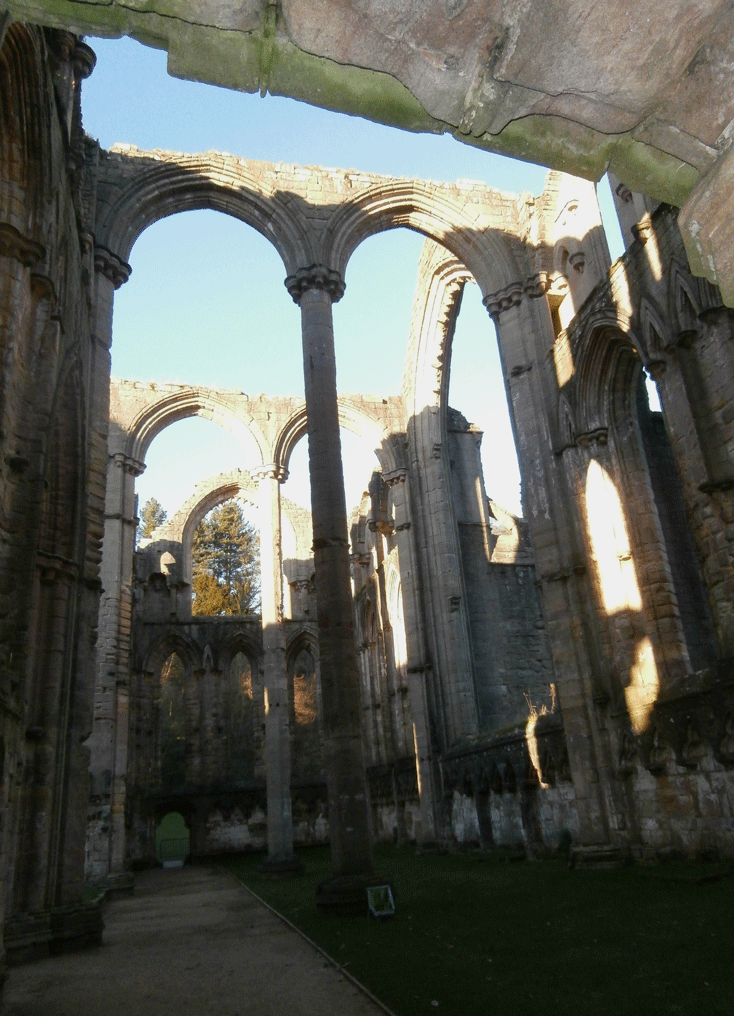
We stopped at my brother’s place in Derby on the way up and arrived at Ripon in the early afternoon. It was a glorious, if cold winter’s day, our first port of call was the impressive ruins of Fountains Abbey. Founded in 1132 by Cistercian monks, the Abbey became one of the most influential and impressive monasteries in England. it was destroyed during Henry VIIIs dissolution of the monasteries in 1539. It is now a World Heritage Site.

With all the ways you can manipulate a digital image, I wish there was an easy way to stop a building ‘falling backwards’ when you use a wide-angle lens.

Amber at Fountains Abbey

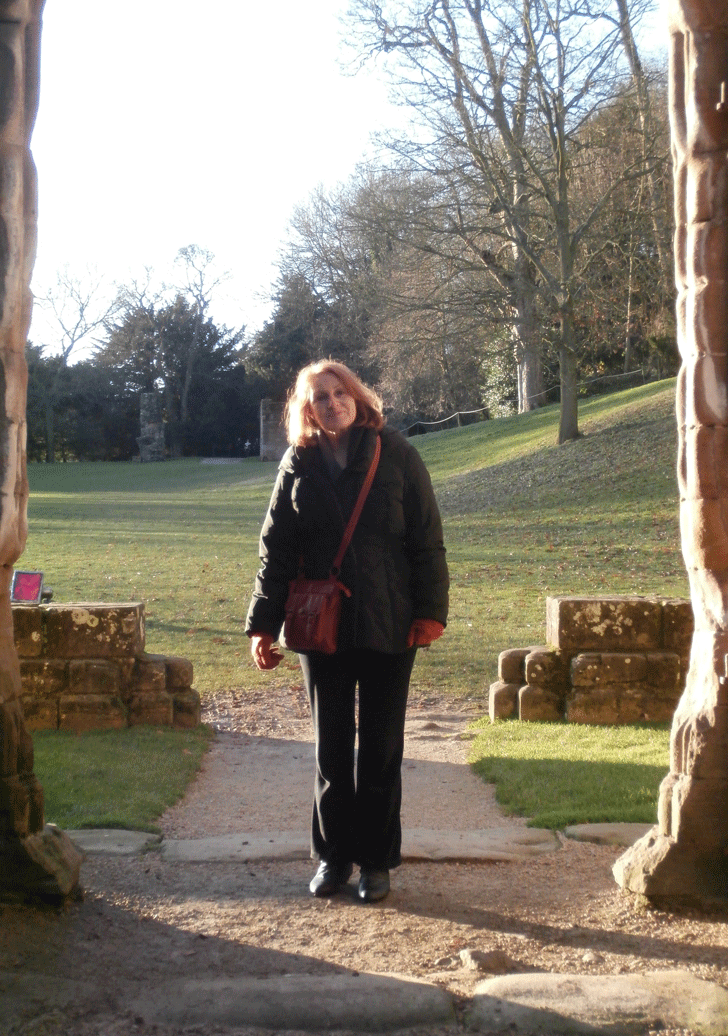
Margaret at Fountains Abbey

The ruins of the church
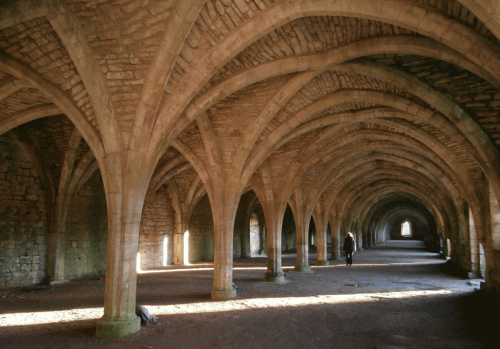
Cloisters

Fountains Abbey church tower

The Chapter House

Amber is walking backwards for Christmas
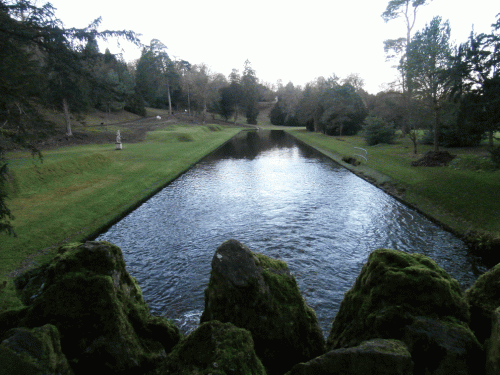
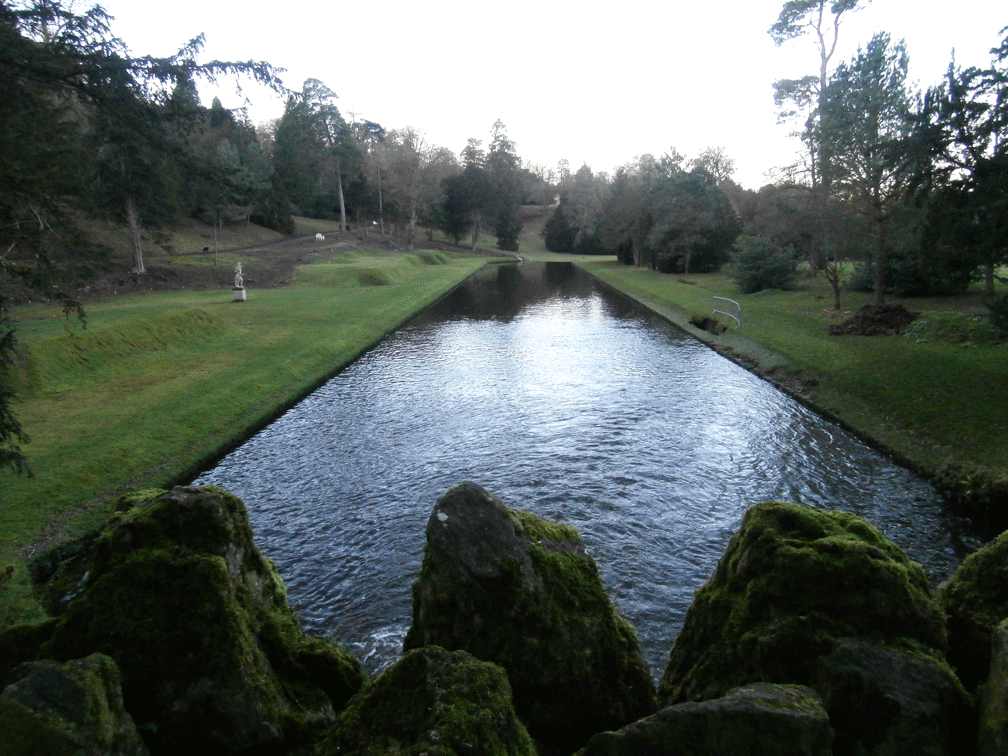
The light was fading as we walked around the extensive gardens

Bay Tree Farm, our charming, if cold, B&B
Later we drove to Caroline’s place in Ripon and met up with the family. Later, in spite of the sub-zero temperatures we walked into town and had a very pleasant meal at a pub. Martin and Jean, who had only arrived the day before, were clearly suffering from jet lag, so we left soon after the meal. I was pretty tired too, after five plus hours behind the wheel.

L-R: Jean, Caroline, Margaret, Amber, Anita and Martin
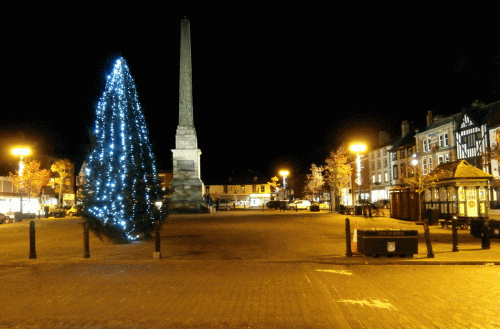
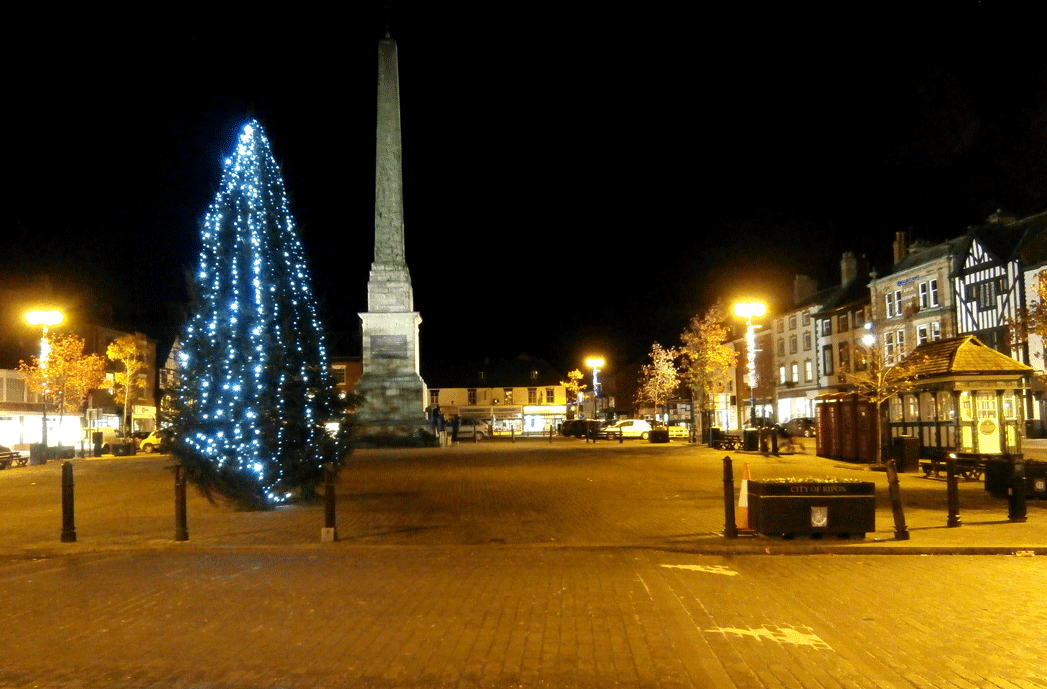
The central square in Ripon at night

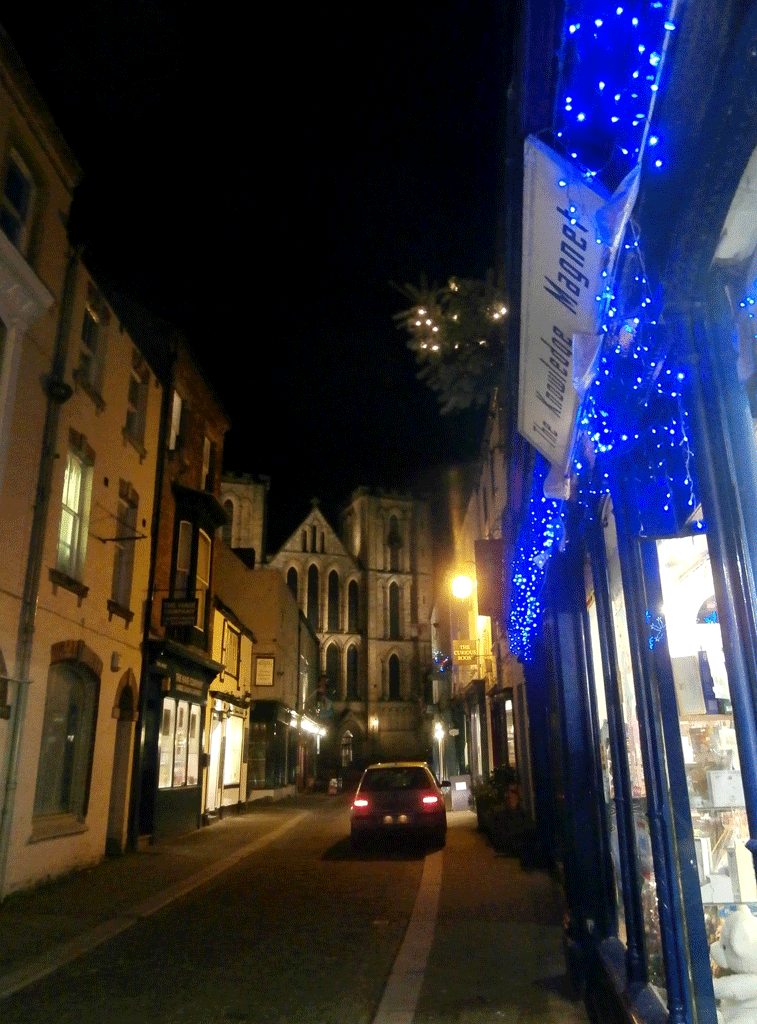
Ripon at night with the Cathedral just visible at the end of the street

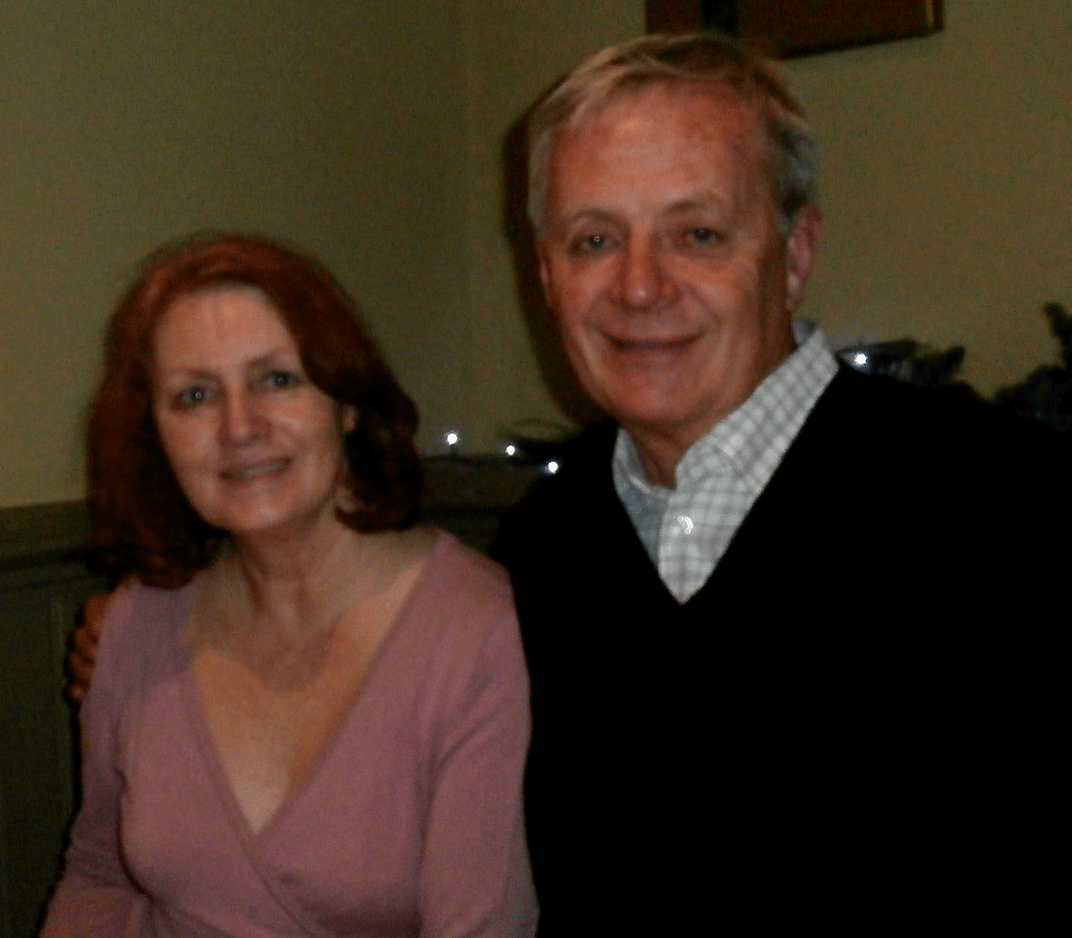
Margaret and her brother Martin

Amber using a lit candle to do an ET impression
On Sunday we visited the beautiful Ripon Cathedral and town center before warming up in cafe. We later headed for Leeds in an attempt to meet up with my old University friend Nigel, but due to various factors that didn’t prove possible. We arrived back home at about 6pm, after a tiring but most enjoyable weekend.

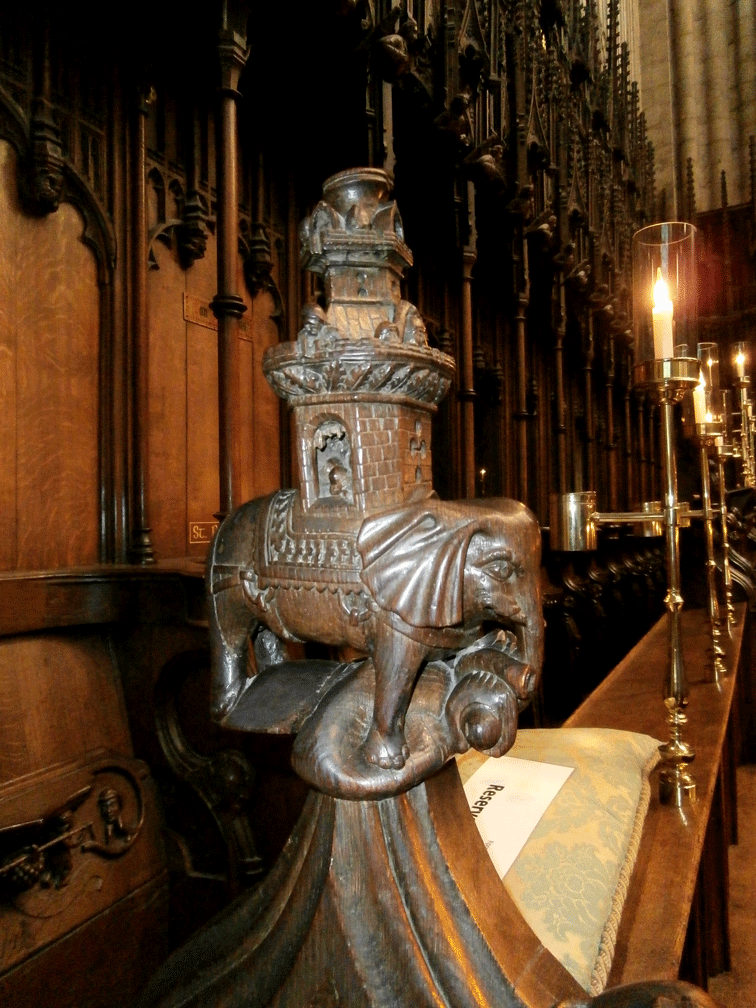
Carvings on the pews at Ripon Cathedral

Ripon Cathedral
I went into Poole today to meet Margaret for lunch and found the town in full Christmas shopping mode. We have already received our first Christmas card and it’s still only November! To be fair we have done a little Christmas shopping already and have made plans what we will do over the festive period, so I suppose we are as bad as anyone else.

The Dolphin Centre at Poole
Earlier this week on the 26th I had an early morning panic call from Amber, she had missed her school bus again. I took pity on her and took her to Wareham. I had hoped to carry on to Middlebere for some birding but rain had set in, so first I went to East Holme to see if there were any waterfowl on the flooded meadows. On arrival I found the floods were so deep that diving duck rather than the expected dabblers would have been at home there.

We haven’t has as much flooding as parts of the UK but he Frome Valley west of Wareham is completely flooded.

At East Holme the floods almost reached the road.

The water was pouring into a culvert under the road…..

…before cascading down the side road.

Looks like a boating lake rather than a field.
I later called in a Holton Lee, last winters ringing site on the opposite side of the river from Holton Lee. From the shelter of the hide I watched tits, Robins, Dunnocks, Chaffinches and Nuthatches coming to the feeders. A good number were ringed, presumably birds we ringed last winter showing a good survival in the intervening months. I had hoped to renew permission but the guy I needed to speak to was off site.
On the 27th I heard that Janis was under the weather and Amber needed someone to take her to a parent-teachers meeting. Margaret was at choir so for the first time in my life I attended one of these functions. Due to all the changes of plan we were late arriving, but some of the teachers stayed behind to talk to us. Discovering that you are a grandfather late in life brings lots of new experiences.

The view from our house, at long last the weather has started to improve.
The 29th was a glorious day, cold but sunny, a real wintry treat. After weeks of rain it was essential that I got out and enjoyed the day. I chose Middlebere again, party because its such a good area and partly because the two Ruddy Shelduck had been seen there earlier in the week. Ruddy Shelduck are neither accepted as a wild vagrant to the UK (with the exception of some old records) nor are they accepted as an established feral population (in spite of the fact that 400+ gather to moult in Holland each summer) so wouldn’t count for my year list even if I had seen them. As it was I had a lovely day out in the Arne / Middlebere area, seeing nothing rarer than some Spoonbills, a Marsh Harrier or a Merlin, but have a really nice time.

Hartland Moor. Clearing old growth gorse helps to rejuvenate the heathland.

The reed bed just of Middlebere creek is a great place to look for Marsh Harrier.

Wytch Creek from the ‘harrier hide’

Arne, looking towards Middlebere and Wytch creeks.

13 Spoonbills at Shipstal Point

Sika Deer are abundant in the Poole Harbour area and are tame and easy to see at Arne
With strong winds from the south and rain overnight, Thursday 21st looked a good day for seawatching. Most migrant seabirds have gone by mid November but there was always a chance of a Leach’s Storm-petrel or a Little Auk, both of which would be new for my year list. I first tried from Chesil Cove where an hour sheltering from the wind and rain produced a Red-throated Diver, four Common Scoter plus a few Razorbill and Gannets. I relocated to the Bird Observatory where we watched from the comfort of the Obs lounge. Best bird during my time there was a single Bonxie, but I was able to buy the new Field Guide to the Birds of Central Asia, an important addition to my ever-expanding library.

Looking along the West Weares from Chesil Cove on a wet and windy morning.

Looking north along the Chesil Bank.
In the evening Margaret and I went to see Breaking Dawn part 2, the last of the Twilight films. Whilst famous as a tale for teenagers, this hasn’t been a bad saga, a bit twee and over sentimental but with some great scenery and special effects. Coincidently Amber and her boyfriend had booked to go on the same night and she was very relieved to find we were going to a later showing, she must have thought we were going to spy on them!

‘I’ve started so I’ll finish’. We have seen four of the Twilight films for I might as well see the last. Good battle scenes, but what a soppy ending.
On Friday morning I did some birding at Mordon Bog. I have Great Grey Shrike this year in the New Forest,the chance of seeing another a few miles from home was an opportunity not to miss. Recent rain has flooded the area around the Decoy Pond but I did get to see the bird, albeit distantly.

Most of the area around Decoy Pond was flooded but the paths were passable with care.

The ever-expanding Decoy Pond.

A distant digiscoped Great Grey Shrike.
At a music festival in 1970 I was lucky enough to see the band Santana, but that was before they were famous and I can’t say I remember much about it (Led Zeppelin and Pink Floyd stole the show). I haven’t had a chance since then to see this amazing group, but a tribute band called Viva Santana were playing at Mr Kyps , a ‘sticky carpet’ venue in Parkstone, on Friday night. We went along with Gio and Jessica and some friends from Nexus.
Much better news on the music front was that on Friday morning, I was able to get some tickets to see Muse at the Emirates Stadium, London in May.

Bass, guitar and keyboards plus THREE percussionists belted out Santana’s latin rhythms.

The lead guitarist was very proficient and faithfully reproduced Carlos Santana’s wonderful guitar riffs but lacked the superstar’s subtly and passion in slow numbers like the famous Samba Pa Ti.
Saturday morning was taken up by the gruelling chore of Christmas shopping with Margaret and Anita. In the afternoon Anita’s school friend Donna, who left South Africa three years ago for London, came to stay with her overnight. We went round for a lovely meal that evening.

A night with the girls, Outnumbered six to one. L-R: Anita, Donna, Margaret, Kara, Amber & Janis.
Although Sunday morning was fine, I didn’t go anywhere until 1pm when I headed to Holes Bay for the monthly WeBS (wetland bird survey) count. There weren’t many birds in my area in the southern part of Holes Bay, which was just as well as the heavens opened as soon as I got there. The count was performed under difficult circumstances as my scope was pointing directly into the driving rain, but I got some approximate numbers. Perhaps the most interesting sighting in my area was 11 Red-breasted Mergansers and two Great Crested Grebes but in the northern section there was a strange duck which has been around the Harbour for some time and superficially resembles a Ruddy Shelduck but is thought to be a hybrid between two other shelduck species that has escaped from captivity.

A very wet Holes Bay.
Kara and Janis went up to Bradford on Sunday so Kara could compete in another Taekwodo competition. Kara did very well this time and won a gold medal.

Kara in action at the Taekwondo competition in Bradford. Photo by Janis Dreosti.
On Monday both Kara and Janis were having their Taekwondo grades assessed at Hamworthy football club, Margaret and I went along to watch.

Kara at her Taekwondo grading. I used a very high ISO rating which has made the pictures grainy rather than use a flash to avoid distracting the students.

Kara was awarded a green belt after this grading ….

Janis also was being graded and was awarded a yellow belt with green tag, one level lower than Kara.

On Wednesday Kara came round to show off her medals.

Gold from Bradford, Silver from Scotland and Bronze from Manchester.
Later on Monday night Margaret and I joined local birders for a pint. We welcome Marcus Lawson, who has just moved from Kent, to the Poole birding community.

Paul Morton and Mark Constantine are joined by Marcus Lawson (L) a newcomer to the Poole birding scene.
I often give slideshows on my travels to RSPB and other wildlife orientated groups, however the talk I gave to the East Dorset Antiquarian Society on 14th November was a completely new departure. Brian Maynard, a former colleague is a leading light in EDAS and I suggested to him that I might have enough material for a talk.
In November 2011, after my three-week bird tour of Ethiopia, I spent a further five days in the north of the country looking at the archeological wonders of Axsum and Lalibela. Their original suggestion for a title ‘Early Christian Churches in Ethiopia’ lacked impact so I suggested ‘the Lands of the Queen of Sheba, Myths, History and Endemics’, as this would allow me to dwell on the multiple ‘tall stories’ I was told on the tour, as well as showing a few pictures of endemic birds.

The EDAS meeting in Wimborne
I started by giving an overview of the stories pertaining to the Queen of Sheba and asked if there was any proof that she ever made the famous journey to Jerusalem to see Solomon or for that matter if she ever existed at all.
I then gave a brief overview of my travels around Ethiopia before starting to describe my visit to Axsum.

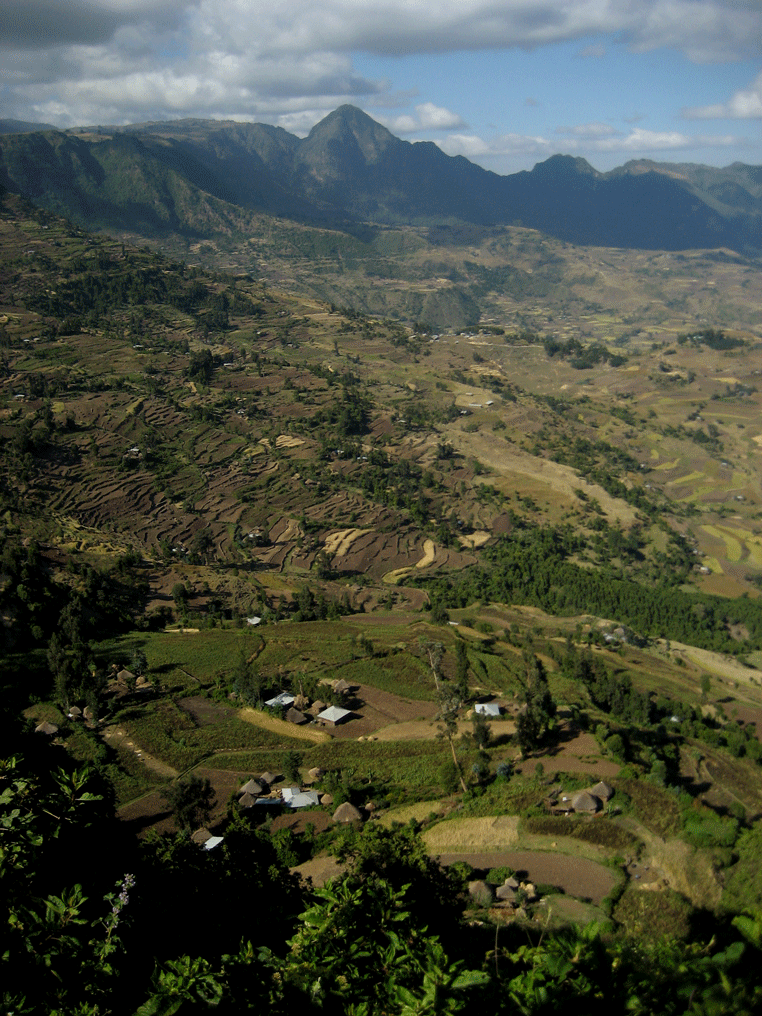
The stunning scenery of northern Ethiopia
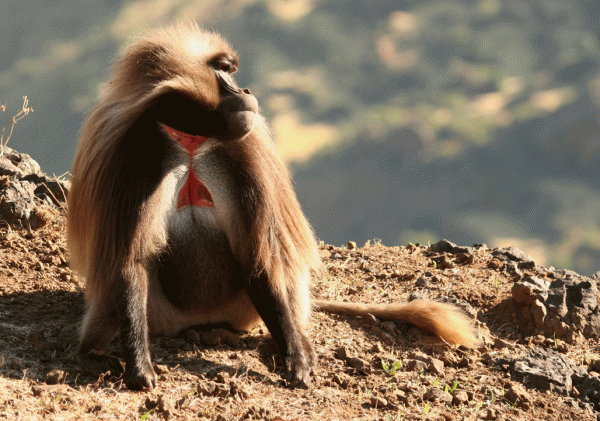
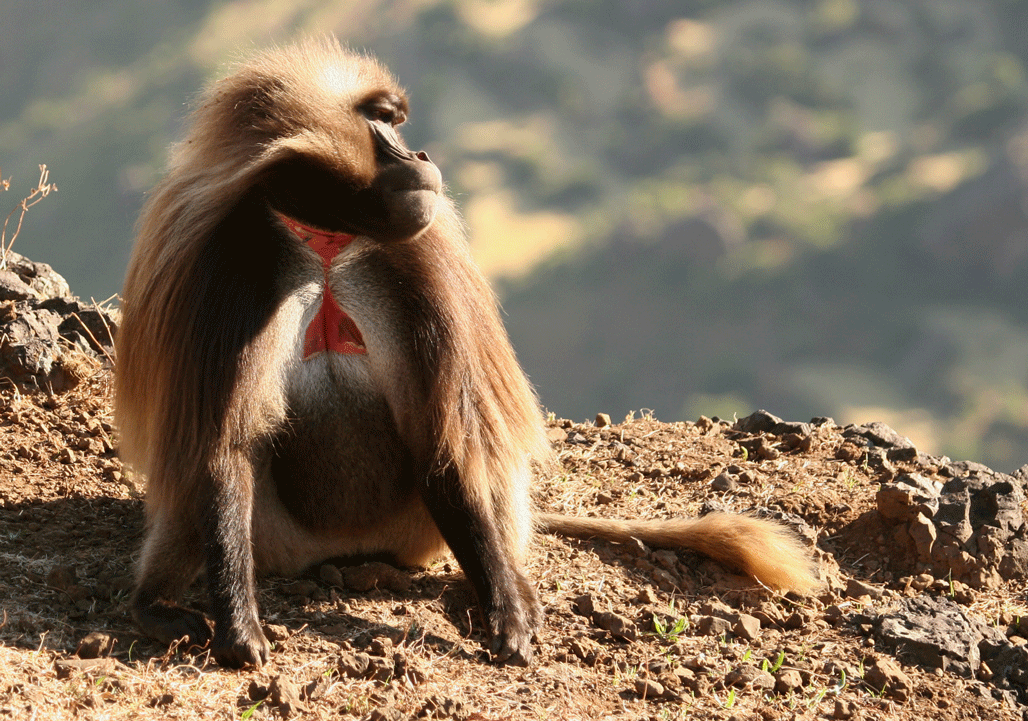
An endemic mammal – the Gelada Baboon

Perhaps the most beautiful of all the endemics: Prince Ruspoli’s Turaco. It’s titled discoverer was killed by an elephant soon after the type specimen was taken and for decades the whereabouts of this species remained a mystery. Photo by Brian Field.
At Axsum I was shown some markets, ruins that were claimed to be the palace of the Queen of Sheba (although archeology dates them to 7th century AD not 1000 BC), the famous Stele Park and the church of St Mary of Zion that is supposed to contain the Ark of the Covenant, the actual box that holds the stone tablets of the Ten Commandments, taken from the Solomon’s Temple in Jerusalem by Melanik, the supposed son of Solomon and the Queen of Sheba.
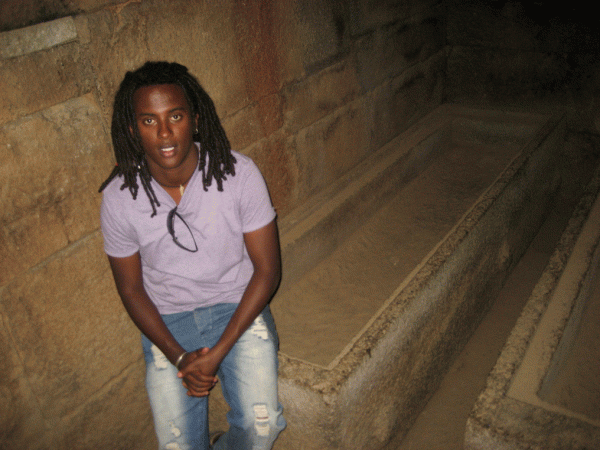
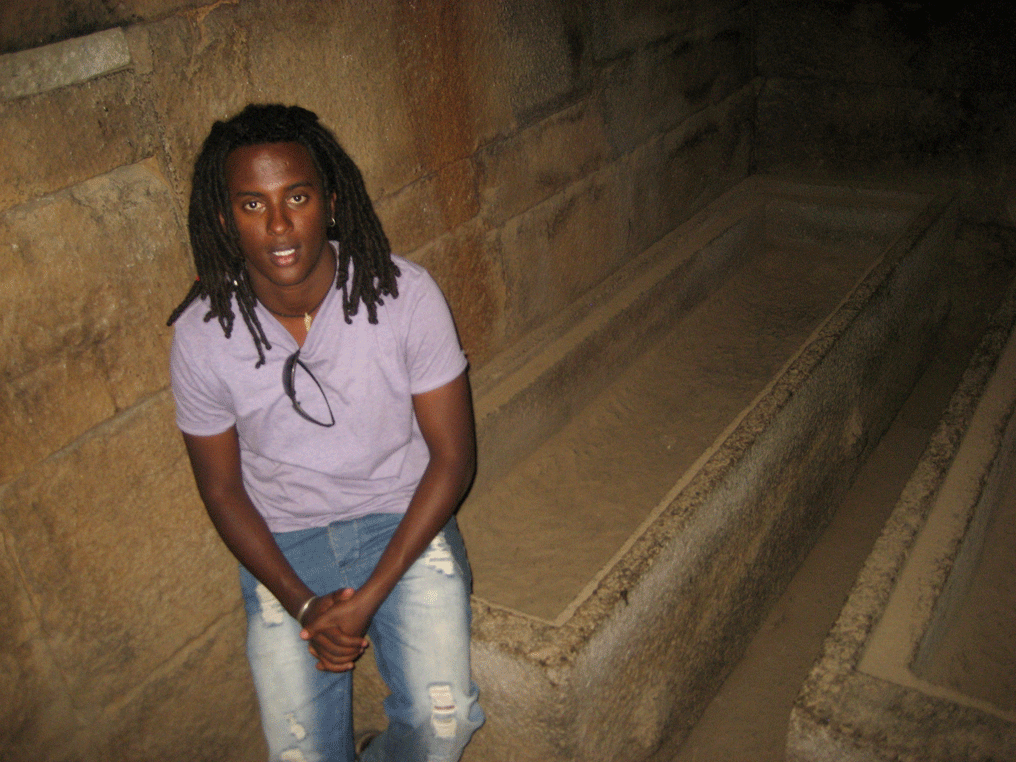
My guide in one of the royal tombs that date from the 5th century AD
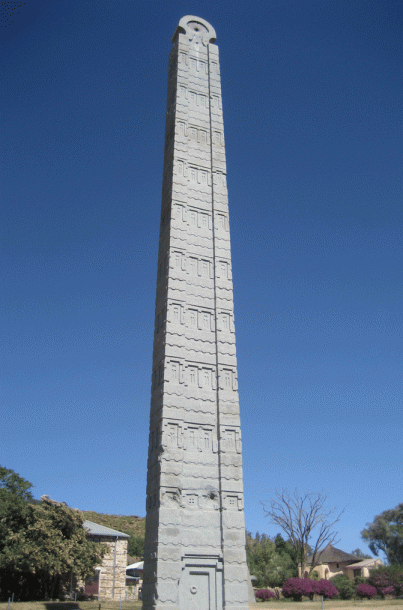
The incredible stelae, 4thC AD monoliths. 120 remain but only two are this tall, at over 24m.

The largest stele, 33m high toppled soon after erection, perhaps not surprisingly as there was only one metre of foundations. When it fell it crushed a royal tomb, the entrance of which can still be seen to the left of the stele.
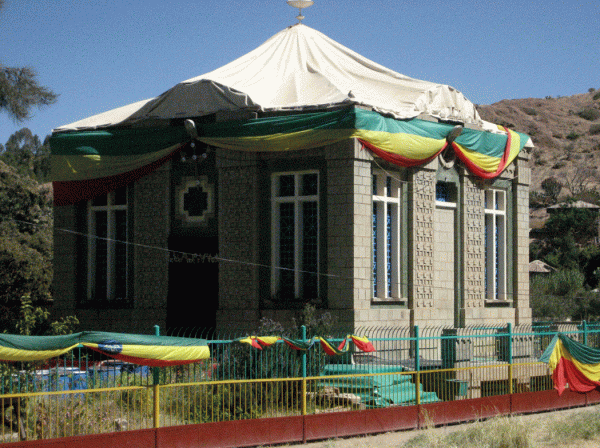
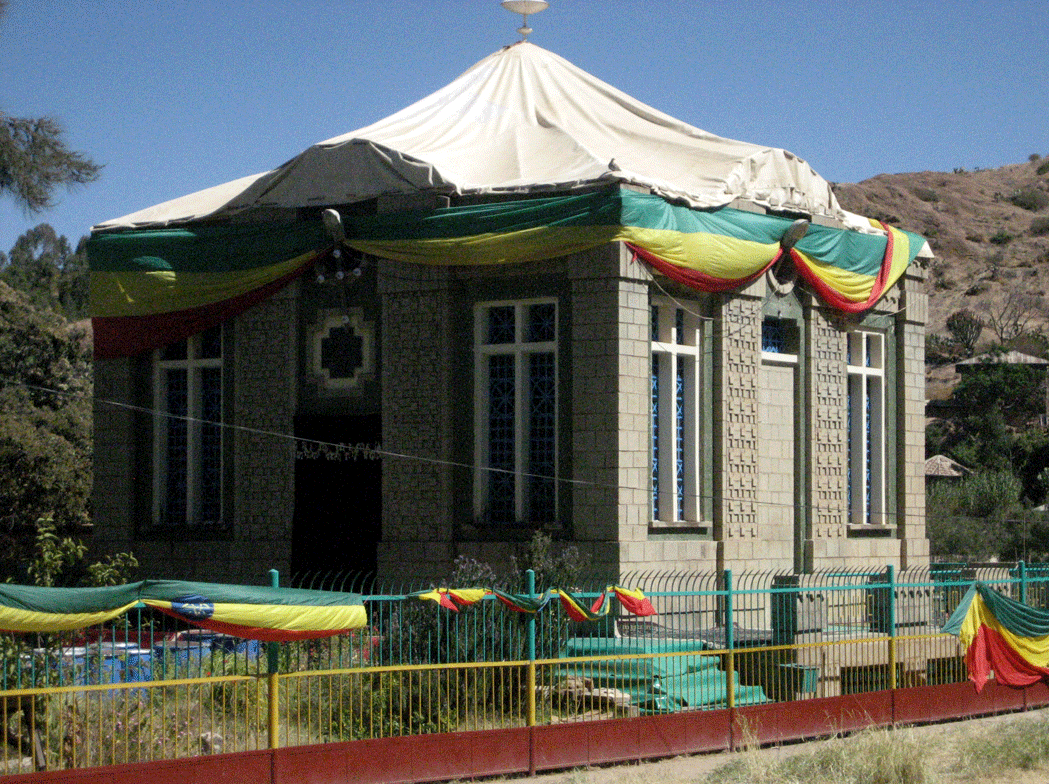
This chapel holds what Ethiopians believe is the Ark of the Covenant. Only one priest is allowed into the chapel and once there he never leaves until he dies.
After the break I showed pictures of the wonderful rock churches of Lalibela and told tales, both mythical and historical, of their construction and use.

St George’s Church, Lalibela. These remarkable rock churches are not built of rock, they are carved out of rock.
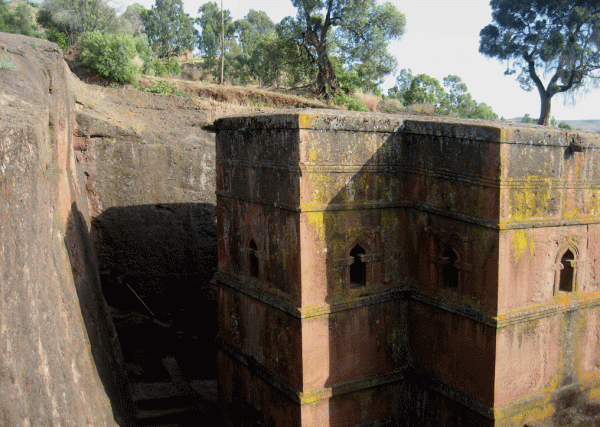
Estimated that it took 40,000 people 40 years to cut the 11 churches out of the rock although legend has it that the angels carved them in a small fraction of that time.

Most of the churches are collected by tunnels and walkways.
I then showed some shots I took in Yemen in 2009, another land that claims the Queen of Sheba as their own.
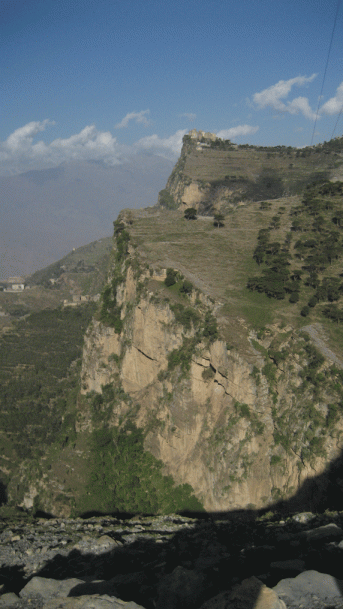
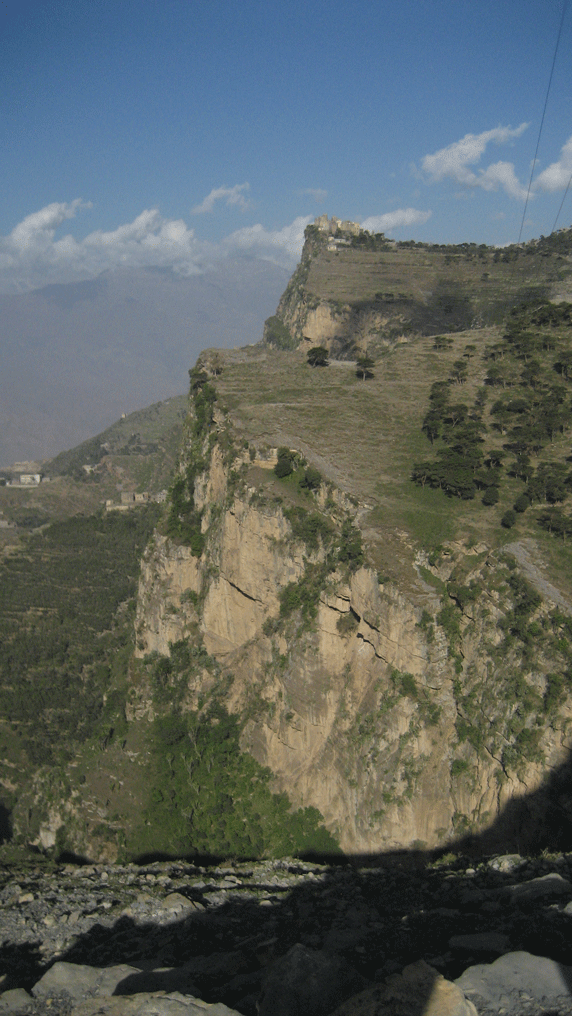
The Yemen highlands: ancient villages perched on the edge of precipitous cliffs.
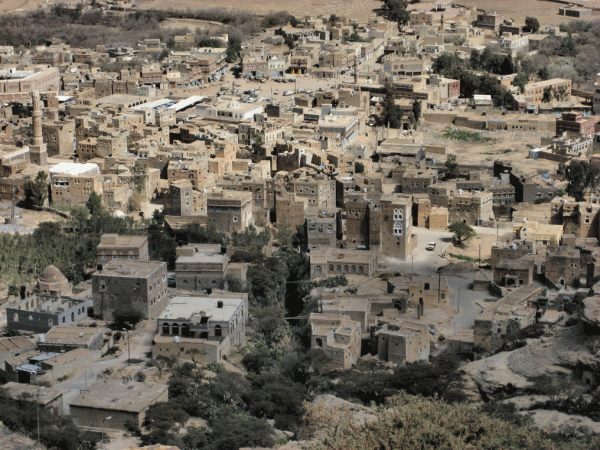
The old parts of Sana’a look unchanged since Biblical times. With some archaeological remains dating to nearly 3000 years ago. Was this really the land of the Queen of Sheba?

Lucy, named after the Beatles number ‘Lucy in the sky with diamonds’ which was playing at the time of discovery, is one of the most significant hominid fossils ever discovered.
The talk was concluded by returning to Addis Ababa, the capital of Ethiopia where I visited the National Museum to see the bones of ‘Lucy’, the 3.6 million year old Authralopithicus, one of humanities earliest known ancestors. I finished by saying that Lucy was no myth, was real history, well prehistory and was endemic to the Horn of Africa, thus bringing the three threads of this talk together at the end.
This talk had been quite a challenge, as I had never spoken to a historical society before. It had taken quite a bit of research but it had been good fun, both preparing and giving the talk and it seemed to be well received.
I haven’t posted an update for sometime, because up until yesterday there wasn’t too much to report.
Fairly poor weather and a lack of birds over the period 10th – 14th kept me mainly at home where I spent a lot of time researching for planned foreign trips in 2013 and preparing for a talk on the 14th (see separate post).
A few days ago I headed down to Middlebere in the hope of seeing a reported Ruddy Shelduck, which appeared to have gone, but I did get great views of a number of waders and a Marsh Harrier hunting over the creek. It was clearly chasing a Teal, which repeatedly dived to avoid the harrier and was probably saved by the two crows that constantly harried the Harrier until it departed. As Teal are surface feeding or dabbling ducks as opposed to diving ducks like Pochard or Mergansers, then this is the first time I have seen a Teal dive.
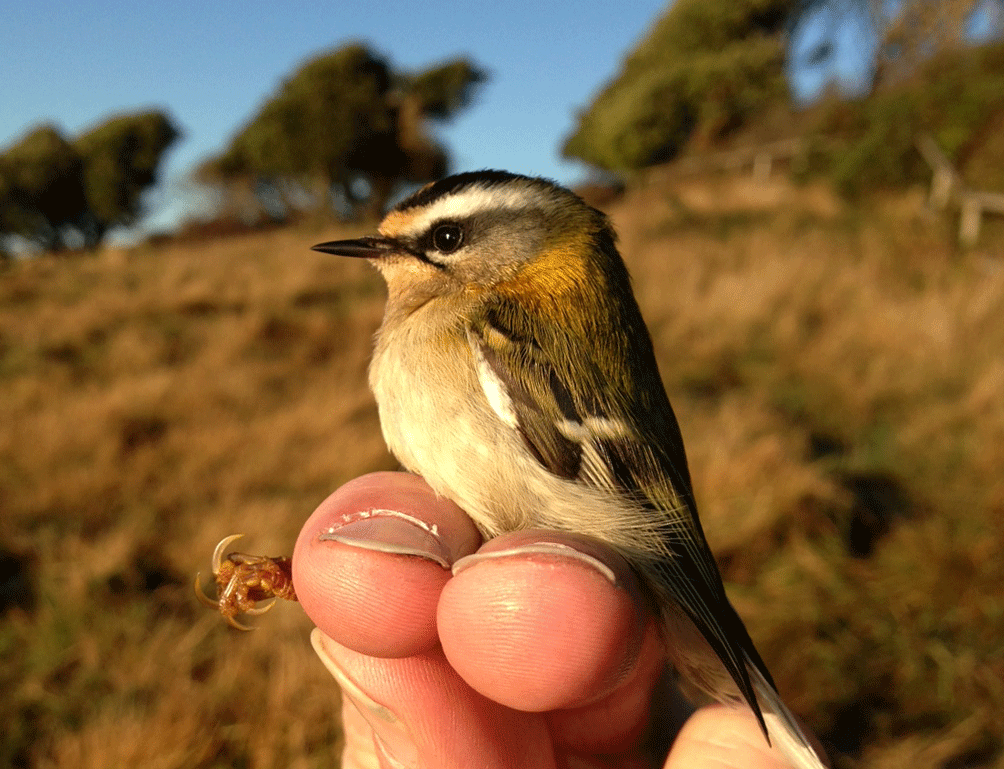
On the 15th Mick, Simon and I attempted ringing at Durlston. The season is largely over with most migrants having left, but we were pleasantly surprised to catch 35 new birds plus quite a few retraps. Best of these were ten Redwings, most of which appeared in the nets after a Sparrowhawk flushed a roosting flock at dawn. There were many Fieldfares present as well but they avoided us. Another Firecrest and a few Goldcrests provided variety and two Blackcaps showed that a few autumn migrants are on the move.
Flushed with success we arrang ed to reconvene the following day. As I left home at 0600 there was a slight drizzle, phoning Mick confirmed that the situation was the same in Swanage but we decided to give it a go. On arrival at Durlston the drizzle had turned to rain and the wind, so after a cup of coffee with Simon in the center we abandoned the attempt.
Sunday the 18th was an excellent day, sunny and still with hardly a cloud in the sky. The day started with a ringing trip to Durlston. Seven of us turned up so we decided to do both the garden and goat plots. I took Kevin and Sean to the goat plots where we ringed 13 birds including a few Goldfinches, Goldcrests and two Firecrests, whilst those in the garden ringed two Redwing, a Sparrowhawk and various other bits and bobs.

Few birds look better in the hand than a Firecrest. Photo by Kevin Lane
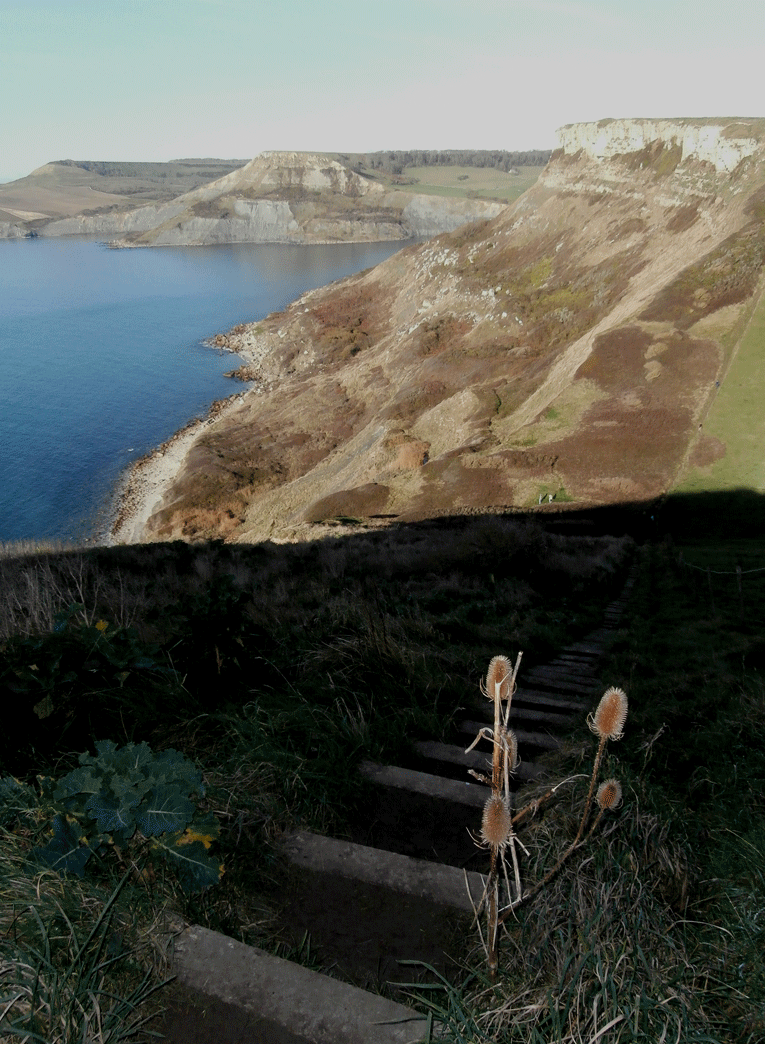
I had arranged to be picked up mid morning by Margaret and Anita, then we drove to Worth Matravers were we walked along the top of the Chapman’s Pool valley to St Aldhelm’s Head and on to Winspit.
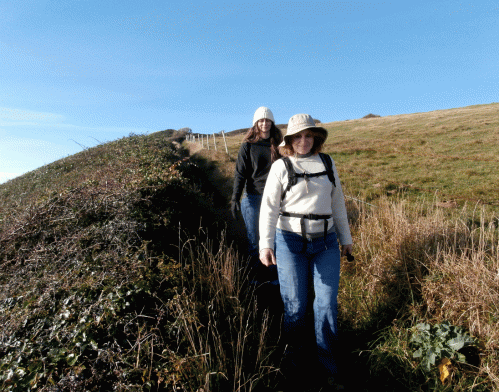
Introducing Anita to the delights of the Dorset countryside
On such a clear day we could see St Catherine’s Point to the east and Portland Bill to the west (which are 50 miles apart). In spite of making regular trips to the gym I am feeling my age and the ascent of the steps up to the coastguard lookout at St Aldhelm’s, which I once could do in one go, proved exhausting.

The view westwards from above Chapman’s Pool to Houns Tout.
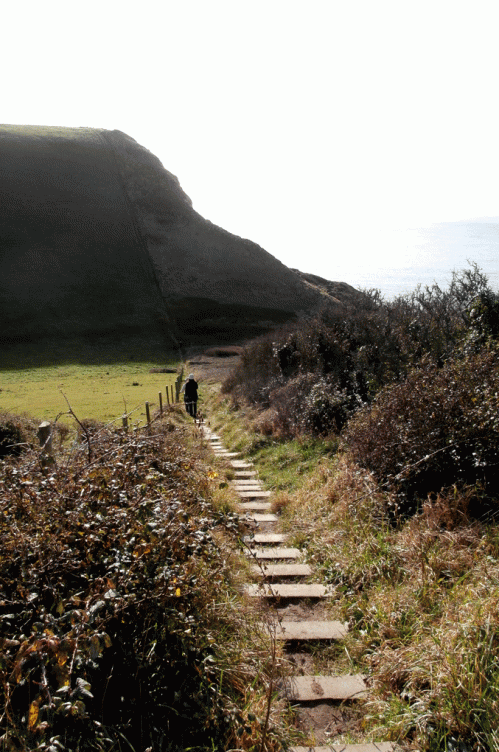
It’s a steep drop down from Emmett’s Hill, but an even steeper climb up to St Aldhelm’s Head.
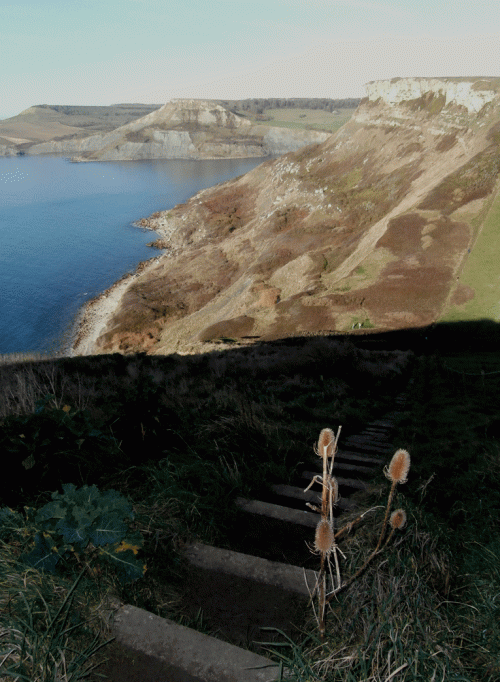
St Aldehem’s Head cast a deep shadow to the north-west.
I had a lovely surprise as we passed to coastguard lookout, my former colleague Des Halliday, who was the head of the Virology department until 2004 is now doing volunteer work at the coastguard lookout and was on duty today. We stopped to have a chat to him and it was great to catch up after all this time.

The coastguard lookout.

Margaret and Anita with Durlston Head in the background.
Moving on eastwards I checked my phone and found that a Dusky Warbler had been seen in the Winspit valley. This was most fortuitous as this Siberian species had been seen off and on at Portland during the last few days but as I was busy with other things I hadn’t gone. On arrival we found the bird was easy to hear ‘tacking’ in the dense cover but a sod to see. Eventually I got a few brief views, which added to the diagnostic call was sufficient for my year list.

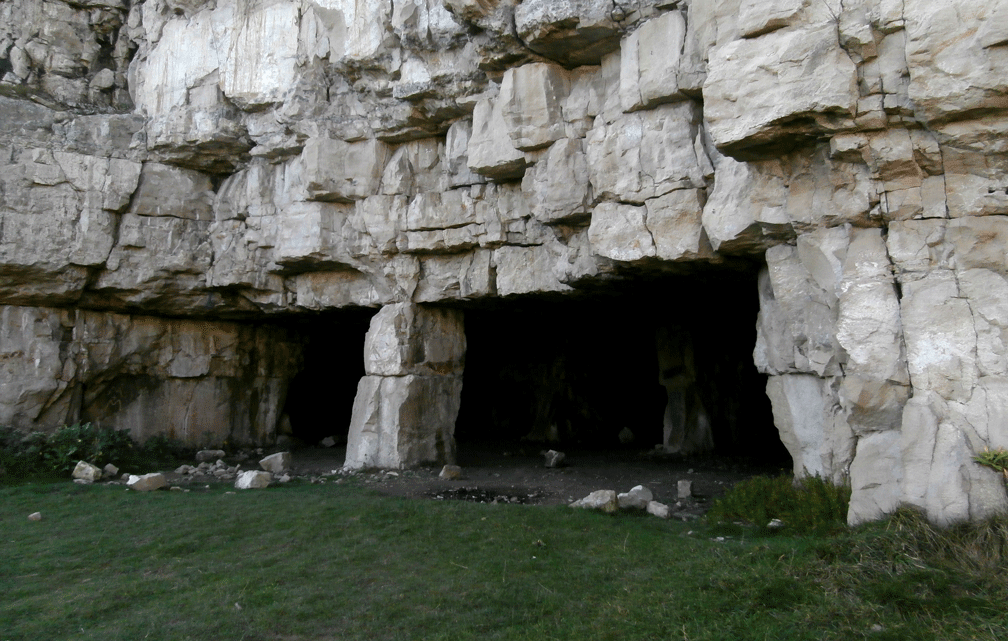
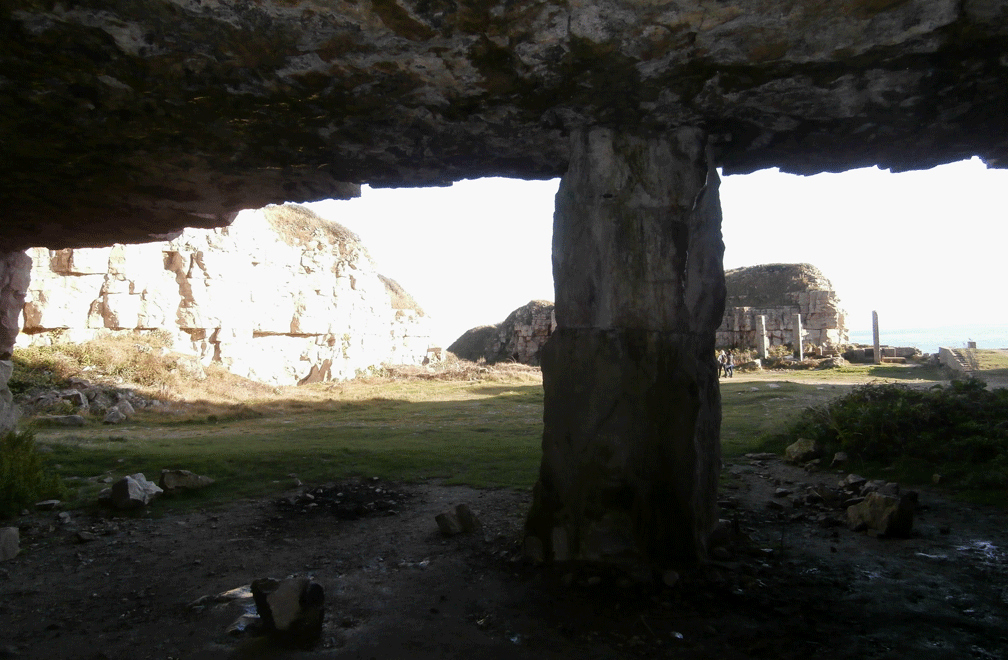
Where the Winspit valley meets the sea there are a series of caves left over from quarrying. Much of this area is now used by rock climbers.

View from inside the cave

The fields by Winspit were covered with cobwebs which glistened in the low afternoon sun.

If only we had got views like this! Dusky Warbler photographed on its wintering grounds in Malaysia. Photo from the internet.
Margaret and Anita had headed on back to the car and we reconvened at the Square and Compass, a wonderful little pub that has resisted all attempts to modernise it turn it into yet another ‘bar and grill’.
We came home to find Amber watching films on our PC and she stayed on for dinner. Janis and Kara had been all the way to Bradford for a taekwondo competition and later we heard that Kara got a Gold Medal in her weight class. More about that when I get to see her later in the week.
You might think that adding a species to your British list would be a simple matter, either find, or go and see a new species and then thats that. However there are a lot of grey areas; you might not see the bird well enough to be sure of its identity, or if you know its identity you might not be satisfied by the views. Taxonomy is another issue, checklists vary in how they treat different species, and some splits are flagged up years or even decades before they are acted on.

Confirmed as a Stejneger’s Stonecaht by DNA analysis, but although the form is treated as a full species by the IOC it isn’t by the Clements Checklist or (yet) by the BOU.
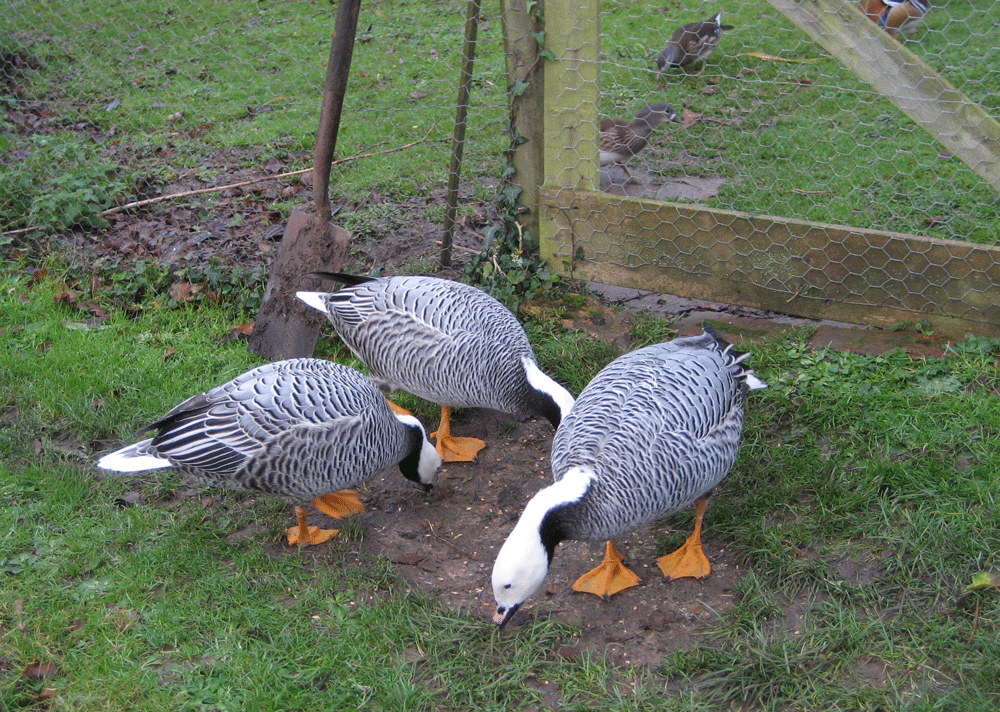
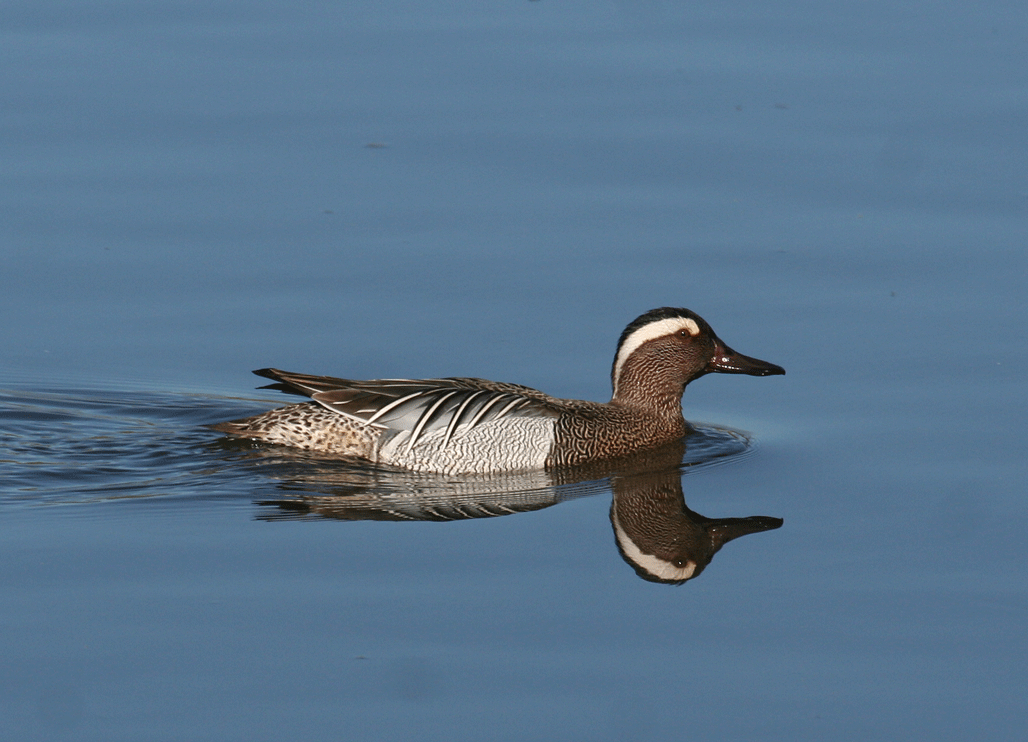
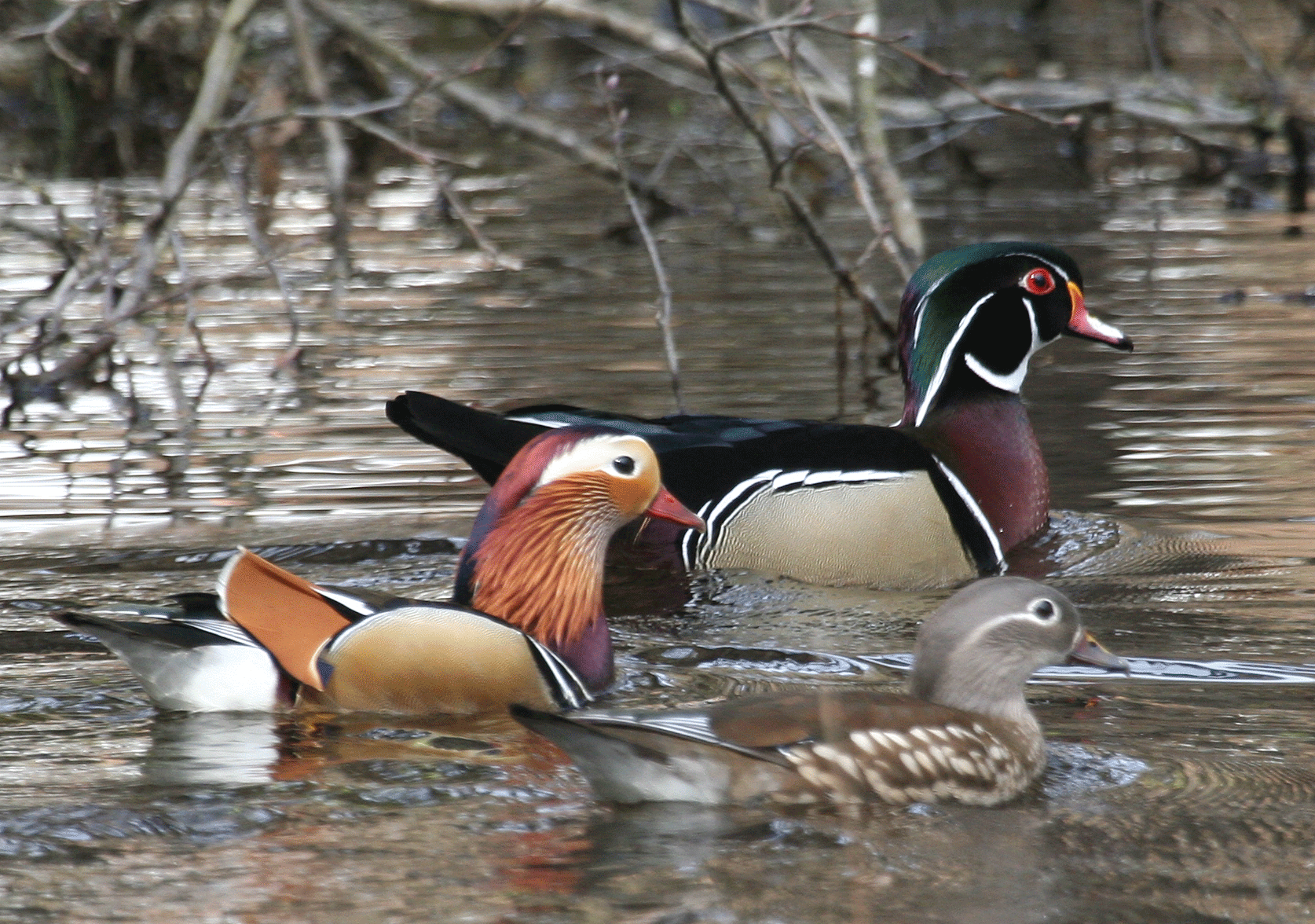
Perhaps the biggest problem in deciding what to count, at least in the UK, comes when there is a possibility that the bird in question might be an escape from captivity. Nowhere is this problem greater than with wildfowl, as escapes from wildfowl collections are far from uncommon.
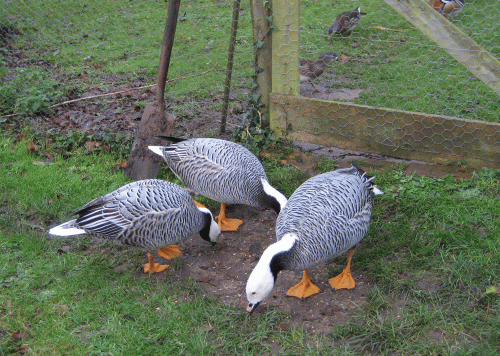
Emperor Geese occur only in western Alaska and far eastern Siberia and are only short distance migrants. occurences in the UK can definitely be ascribed to escapes from captivity.

As a long distance migrant visiting the UK only in the summer, you might think that all Garganey would be wild birds, but one male seen paired to a female Mallard on the River Stour during winter was widely considered to be an escape.

Manadrin Ducks (male left, female front) is an established introduced species and although its natural range is no closer than China, it is countable for your British list. However the American Wood Duck (at rear), although it breeds in the UK, is not established and hence not countable.
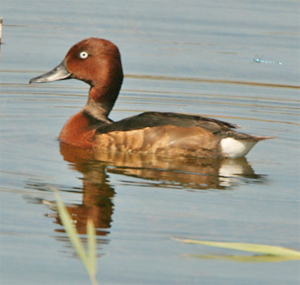
Ferruginous Duck may occur in captivity but a bird found in the UK is far more likely to be wild than an escape.
But what do you do about the American Hooded Merganser? It is on the British list as a wild bird but escapes also occur. This drake was found exhausted near Portland a few years ago but recovered enough to fly to nearby Radipole. It was widely touted as a wild bird but it never left and became quite tame. Some still consider it of wild origin but most others disagree. I have seen this bird many times but was never sure about adding it to my British list. News of a female Hooded Merganser in West Sussex made me realise that I needed to see another one. This bird was a first winter, turned up in late autumn at a coastal locality and was reasonably wary; it seemed to tick all the boxes, (except for knowing whether it will take up residence for life). As a result on the 9th of November I headed to Pagham where I had good views. I have seen this species at least four times in the UK and as this one has the best credentials, I am adding it to my British list.
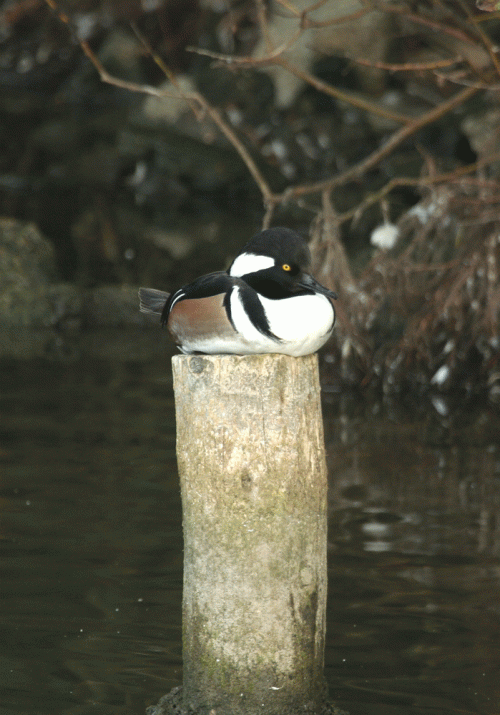
Radipole’s male Hooded Merganser.

Female Hooded Merganser at Pagham

The bird spent much of its time hiding on the edge of the reeds.
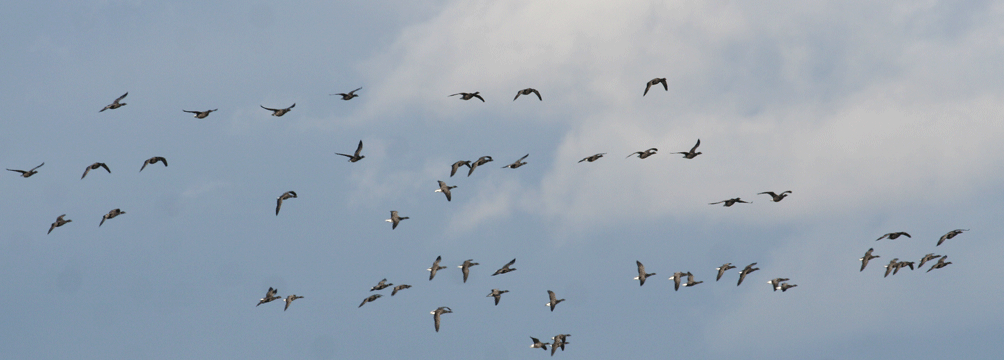
I later headed for Farlington Marshes near Portsmouth where a Red-breasted Goose had been seen. This bird also can occur as an escape, but this bird was with Brent Geese (and probably migrated with them from Arctic Siberia), turned up in autumn and indeed was probably the same bird as I saw at nearby Keyhaven earlier this year.

Brent Geese.

Brent Geese. The bird just left of centre is a juvenile, as shown by the pale fringes to the coverts. Geese often remain in family groups through the winter and the three left hand bird are probably a pair and their offspring.
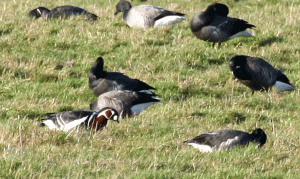
Adult Red-breasted Goose with Brent Geese.

Other recent news – on the 7th we enjoyed a meal with our friends from the Nexus group at a meal at the Ferrybridge Inn in Poole.

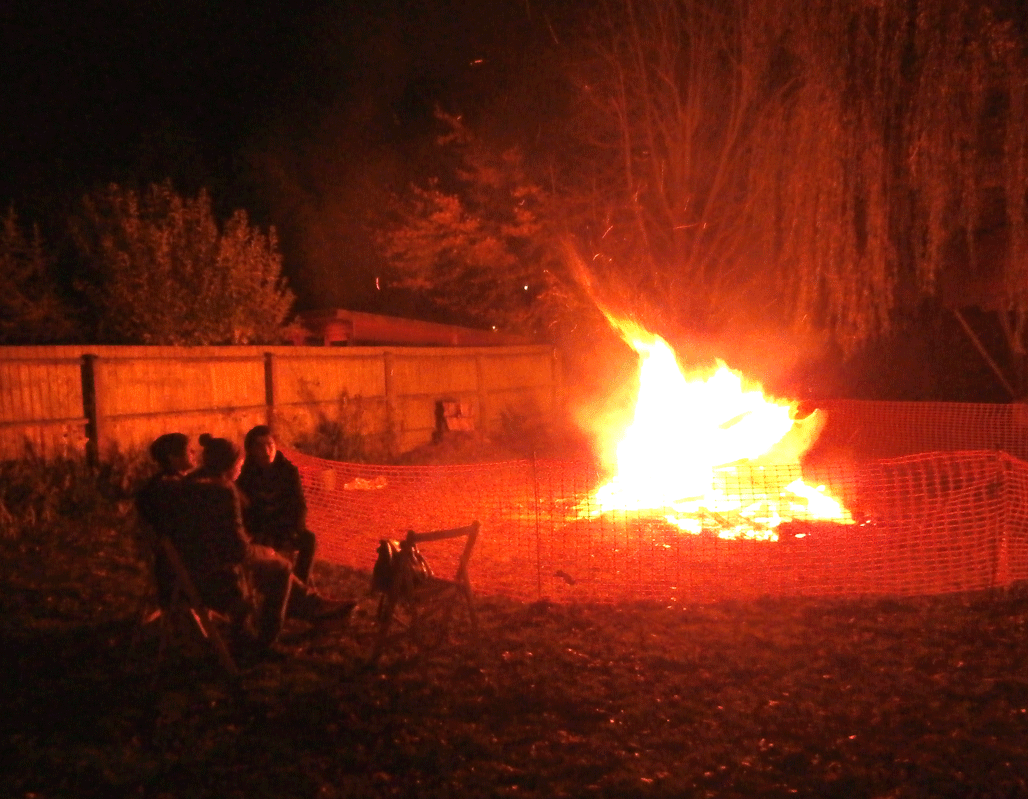
On the evening of the 9th we visited the vicarage for a Bonfire party and met up with some old acquaintances.
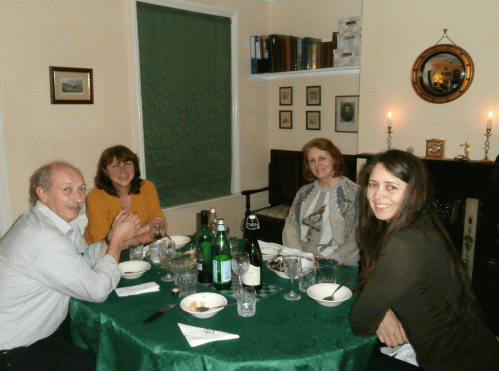
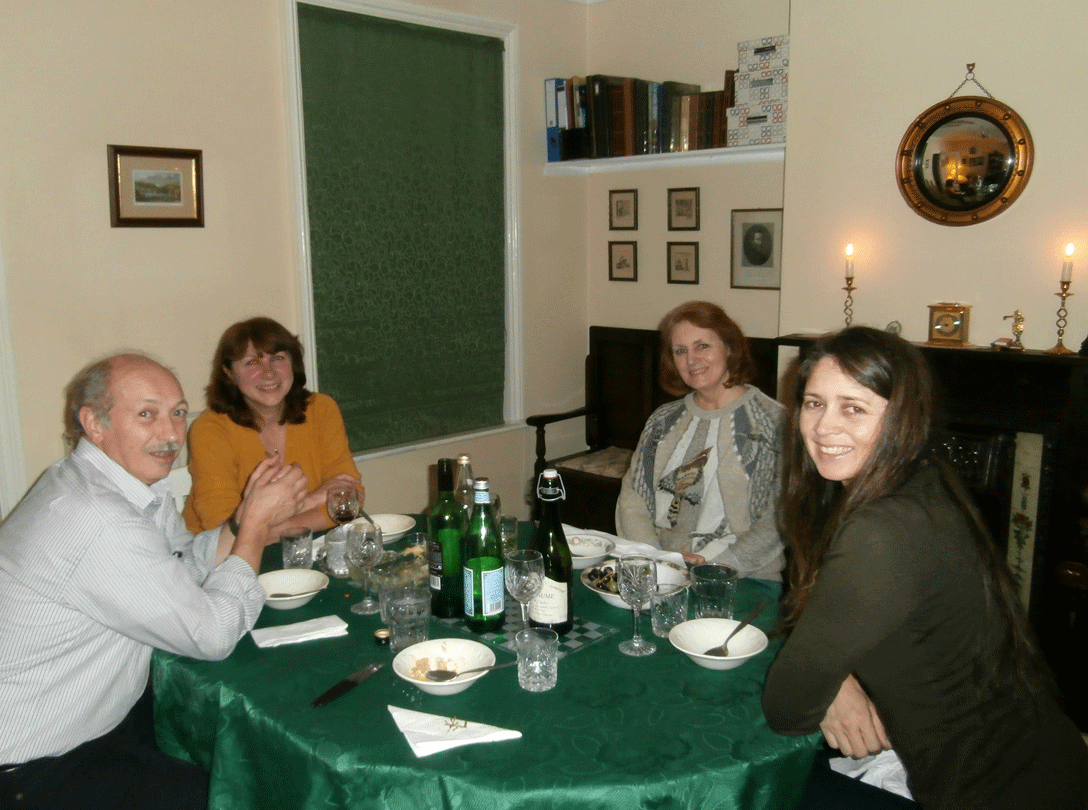
.. and on the 10th we were going to see an American folk group called the ‘Civil Wars’ in Southampton with Gio and Jessica. However at the last minute the gig was cancelled. As we were all free then Gio and Jessica asked us round for a meal.

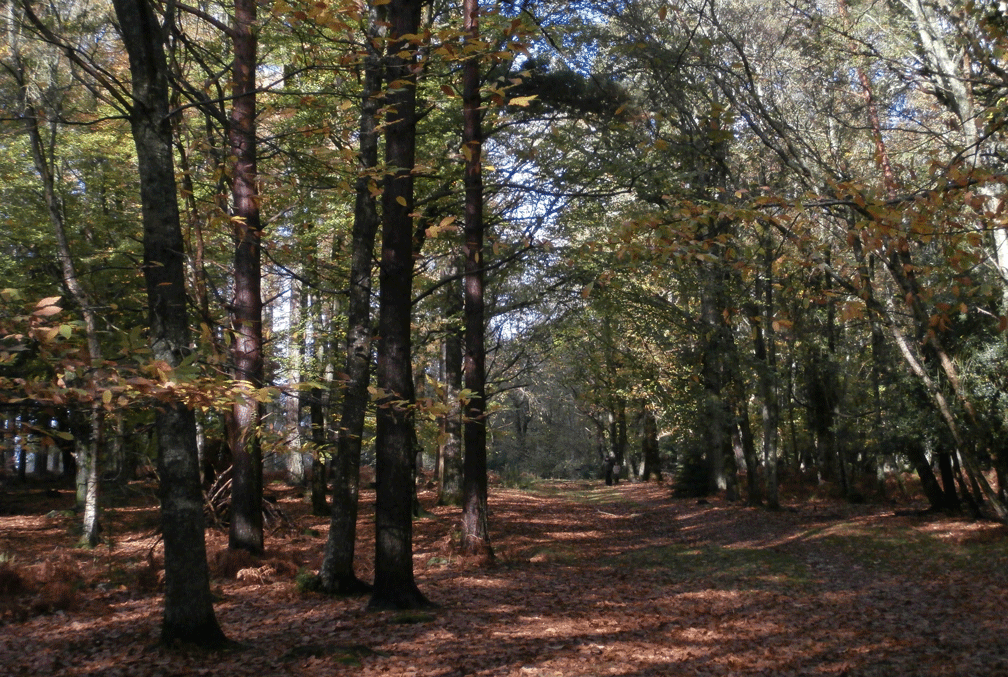
The New Forest is at its prettiest in the late autumn.
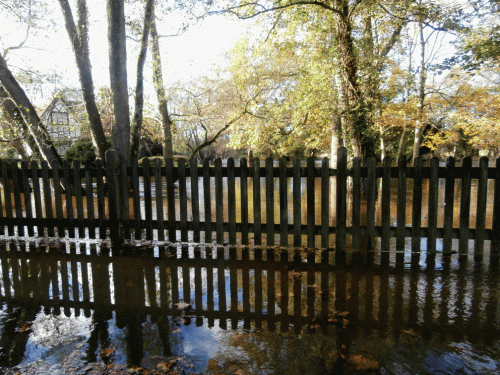
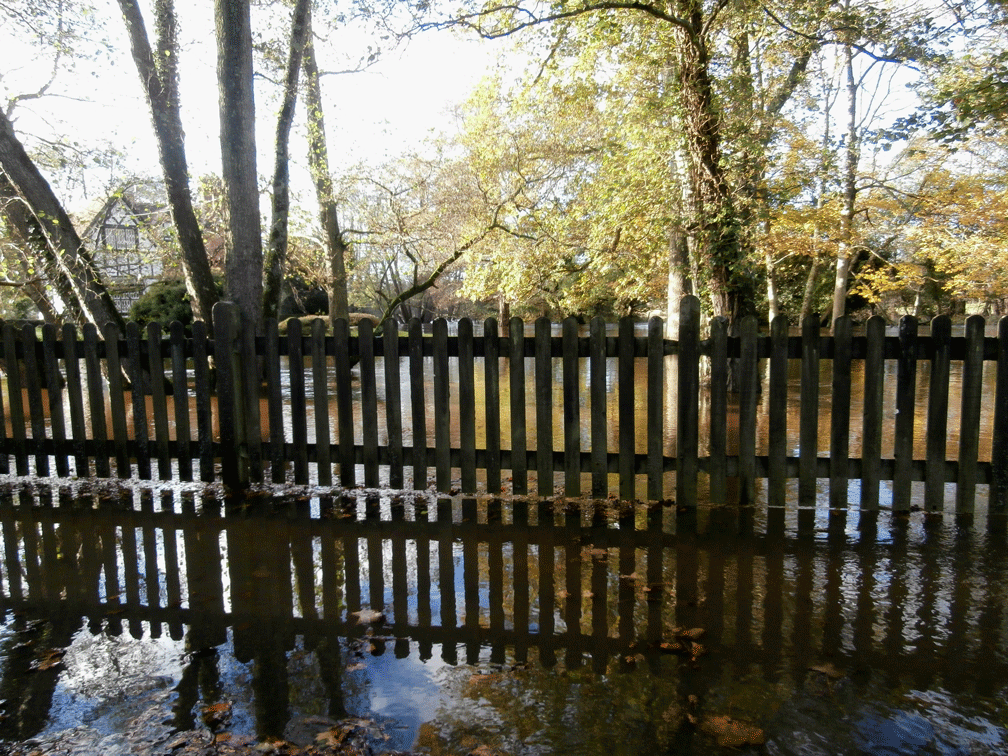
Heavy rain has flooded large areas including this garden.
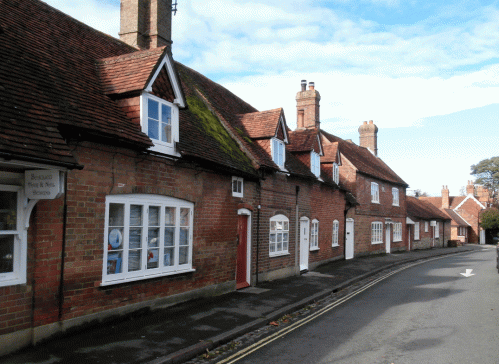
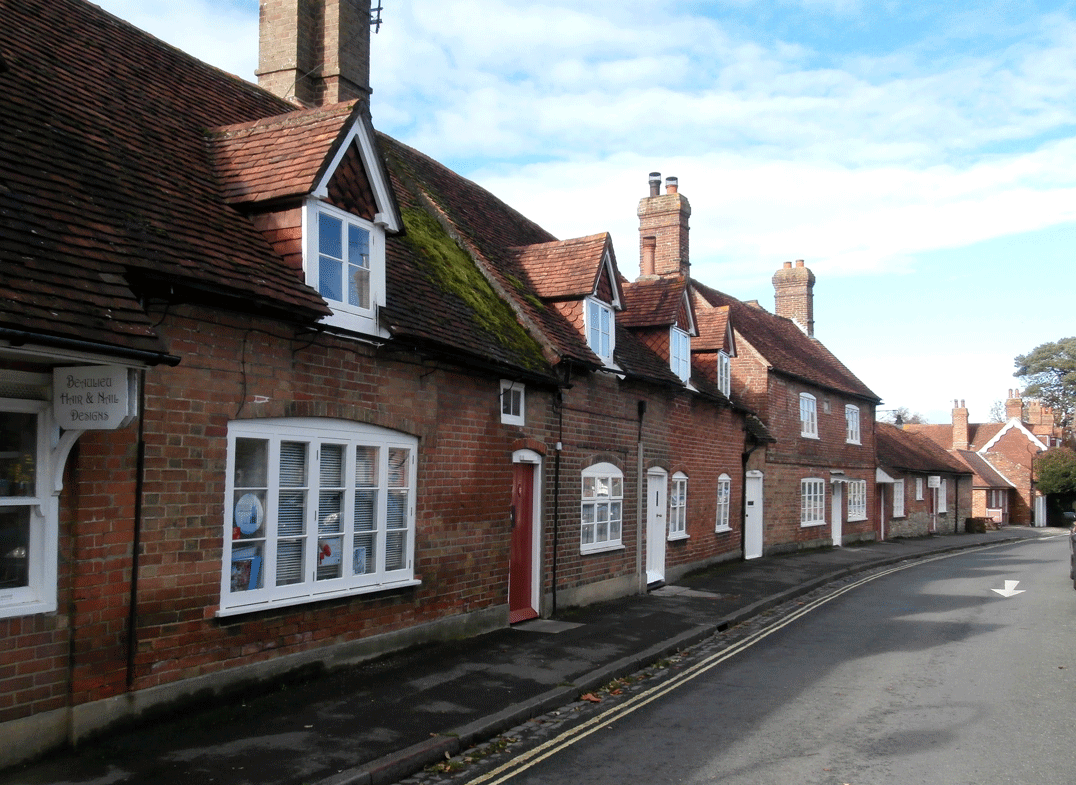
The pretty town of Beaulieu.
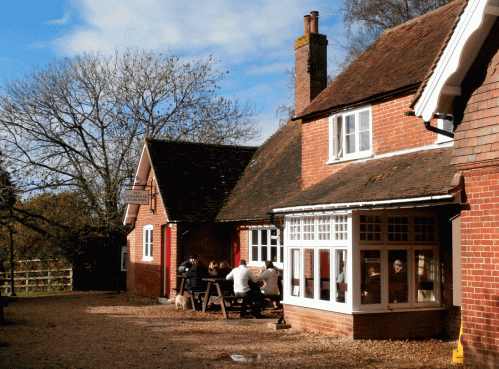
The tea room where we first met.

The house in Hythe where Margaret lived when I first met her.

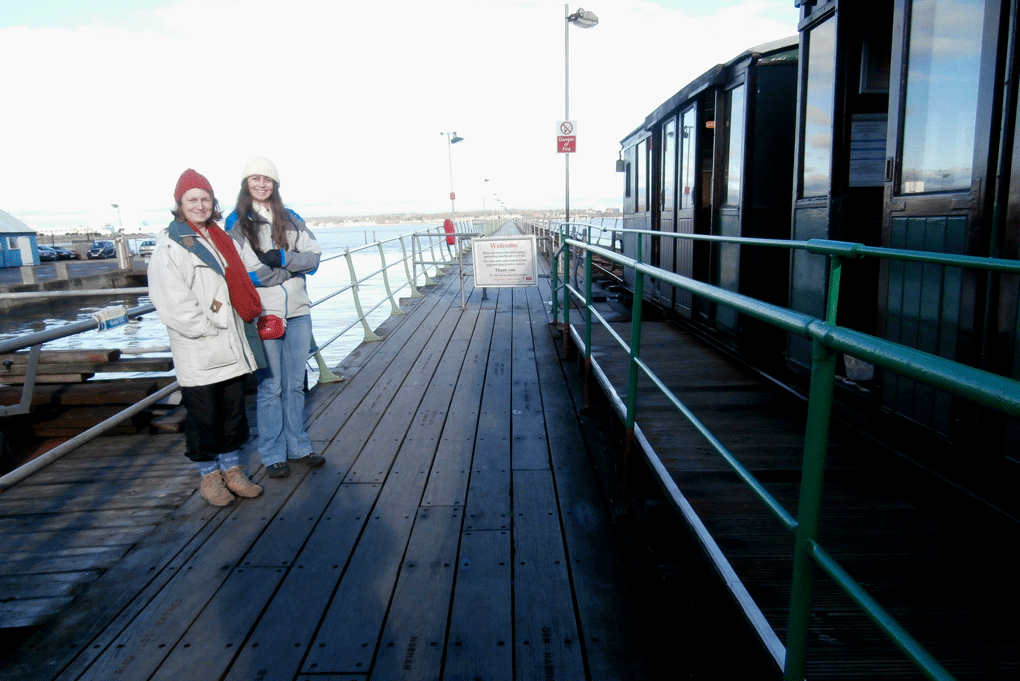
Each morning Margaret used to catch the little train to the end of Hythe pier and take the ferry to work in Southampton.

The Hythe railway is the oldest working railway in the UK.
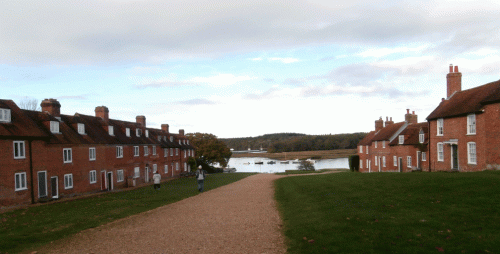
Back in the New Forest we drove to the historic ship building village of Buckler’s Hard.

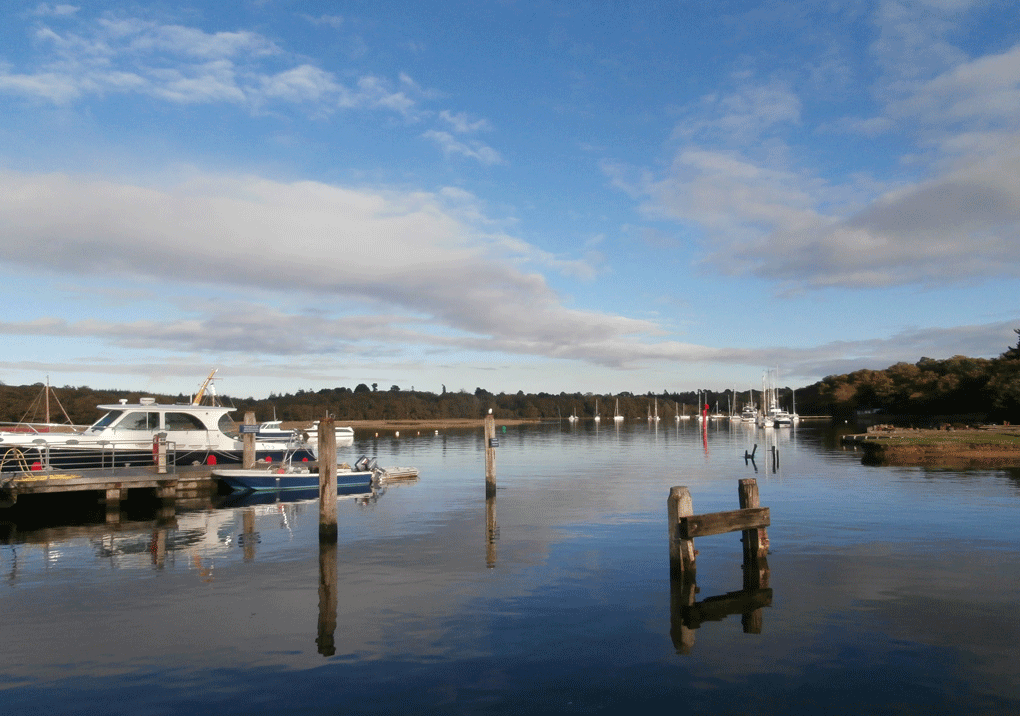
The Beaulieu River at Buckler’s Hard. From 1580 onwards wooden ships were built by and launched on this river.

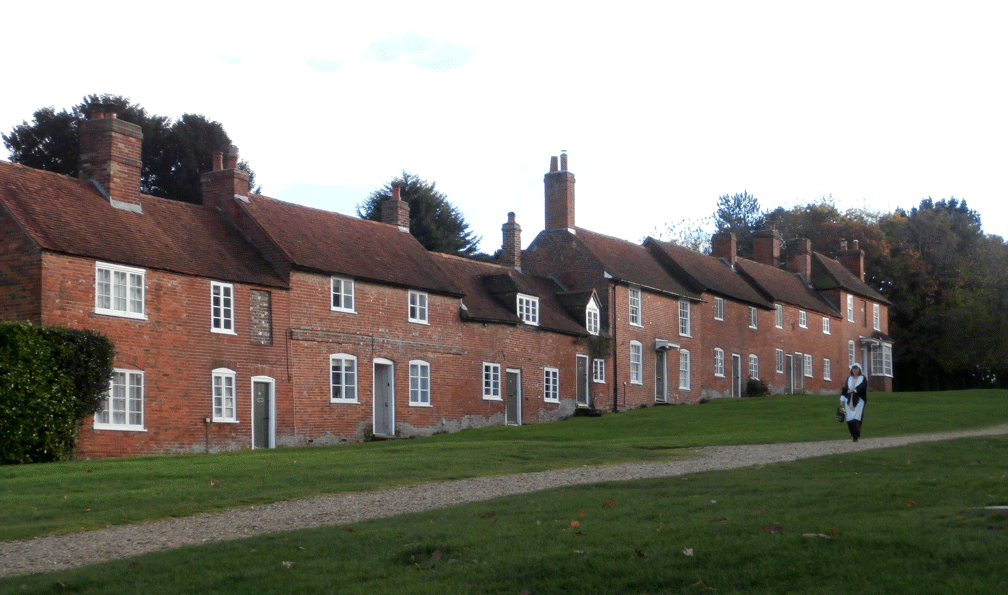
The historic cottages are lived in to this day. Volunteer guides dress in traditional costume.

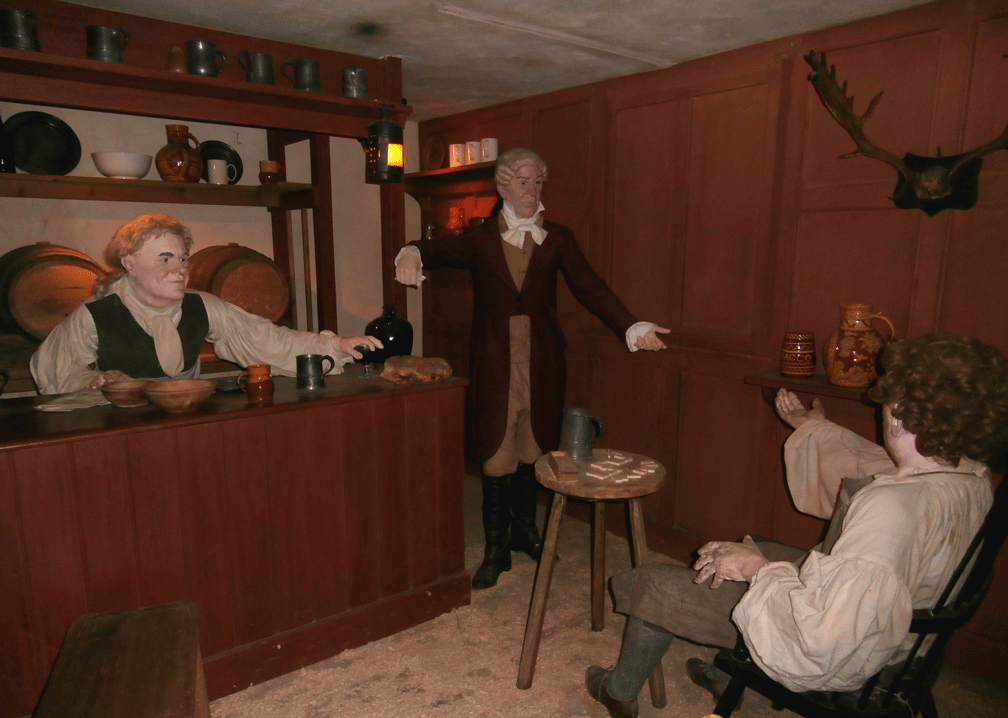
The museum has reconstructions of what life was like in those days …….

… and a model of the village in its ship building heyday.
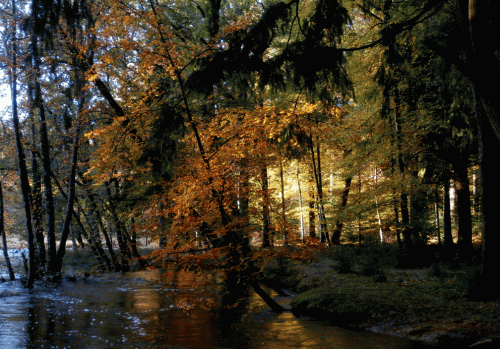
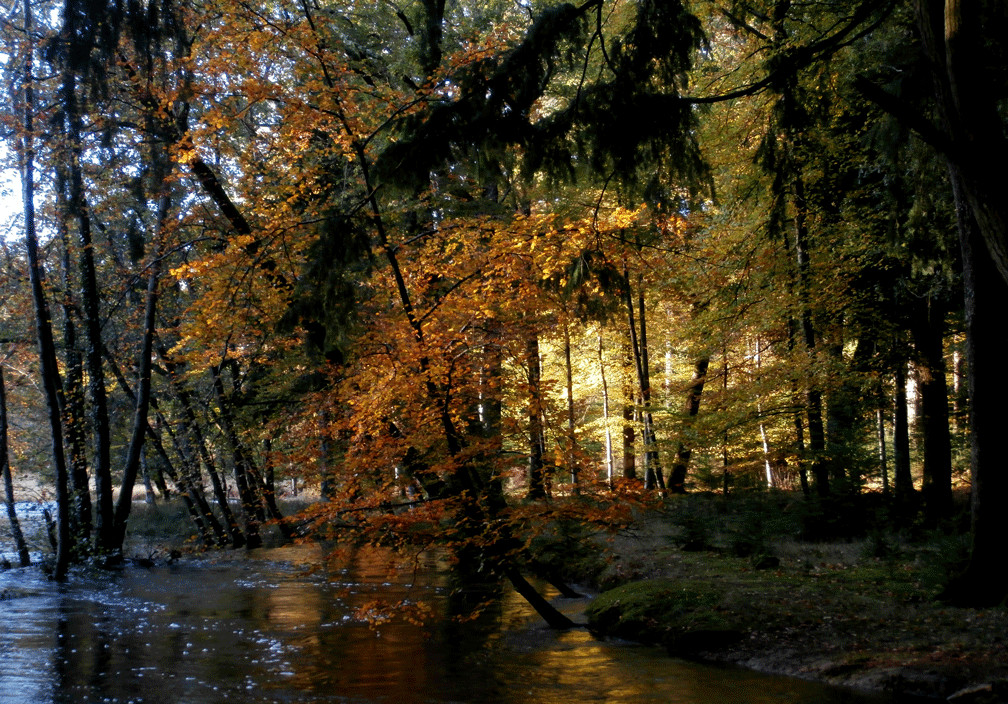
We finally stopped off at Blackwater arboretum where the nearby stream was in flood.

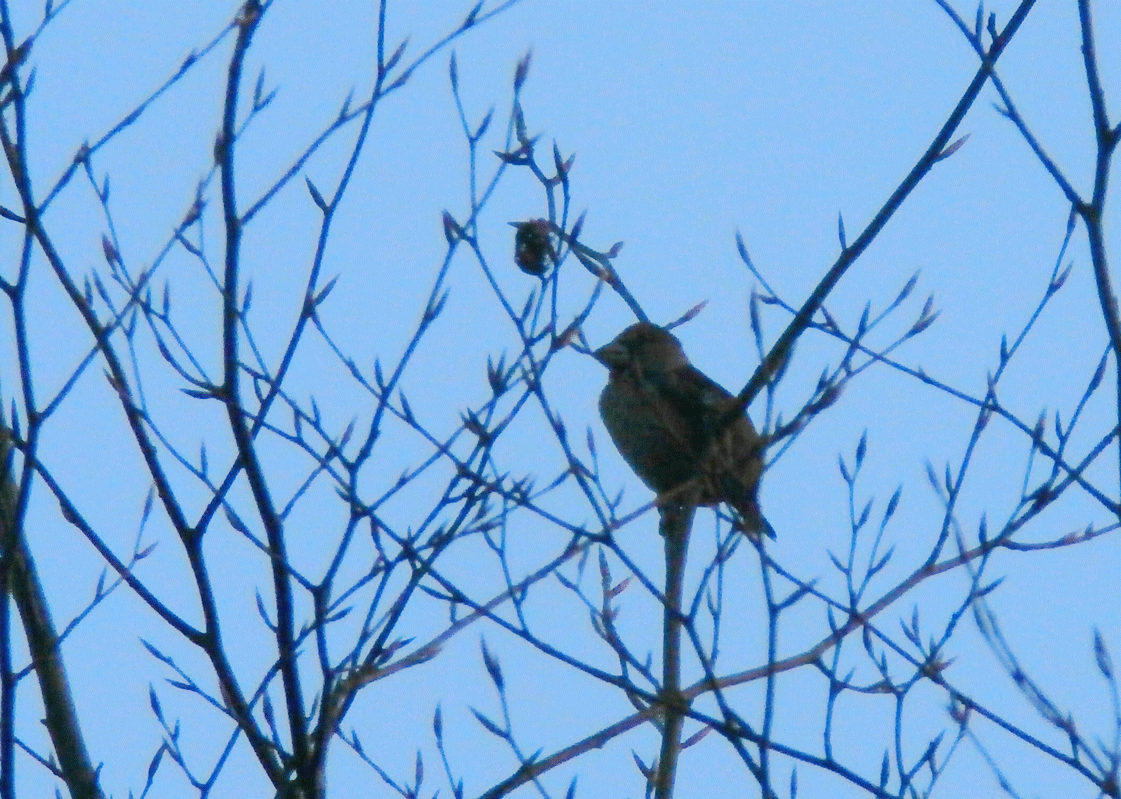
Blackwater is a well-known winter roost site for Hawfinches, but we only found one in the fading light.






































 gryllosblog
