Archive for the ‘Uncategorized’ Category
I flew back to from Shetland to Southampton on Monday and arrived home mid afternoon. Since then I have been busy catching up on paperwork, planning future trips etc.
The only things of note have been an enjoyable evening out with birding friends on Tuesday, a very busy wagtail ringing session on Wednesday and a visit to John and Anita’s new flat tonight to mark John’s birthday. I haven’t had time to edit and upload any photos. Amber has just returned from a four-day sailing course organised by the school and I haven’t even seen Kara as she is at Taekwondo most nights.
Tomorrow I am off to Penzance and on Saturday I go over to the Isles of Scilly for a week. If I can get wi-fi I will update my blog from there.
Ian
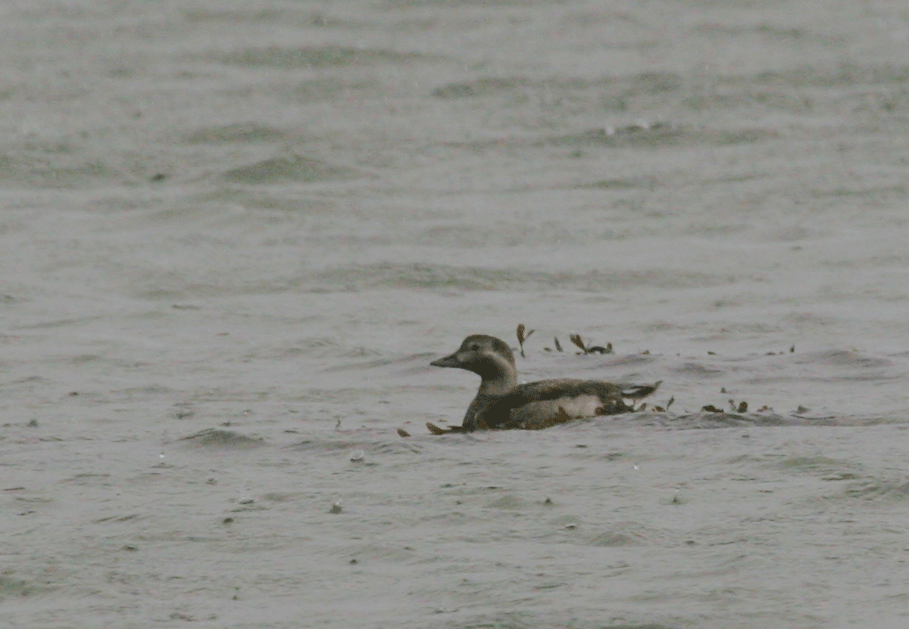
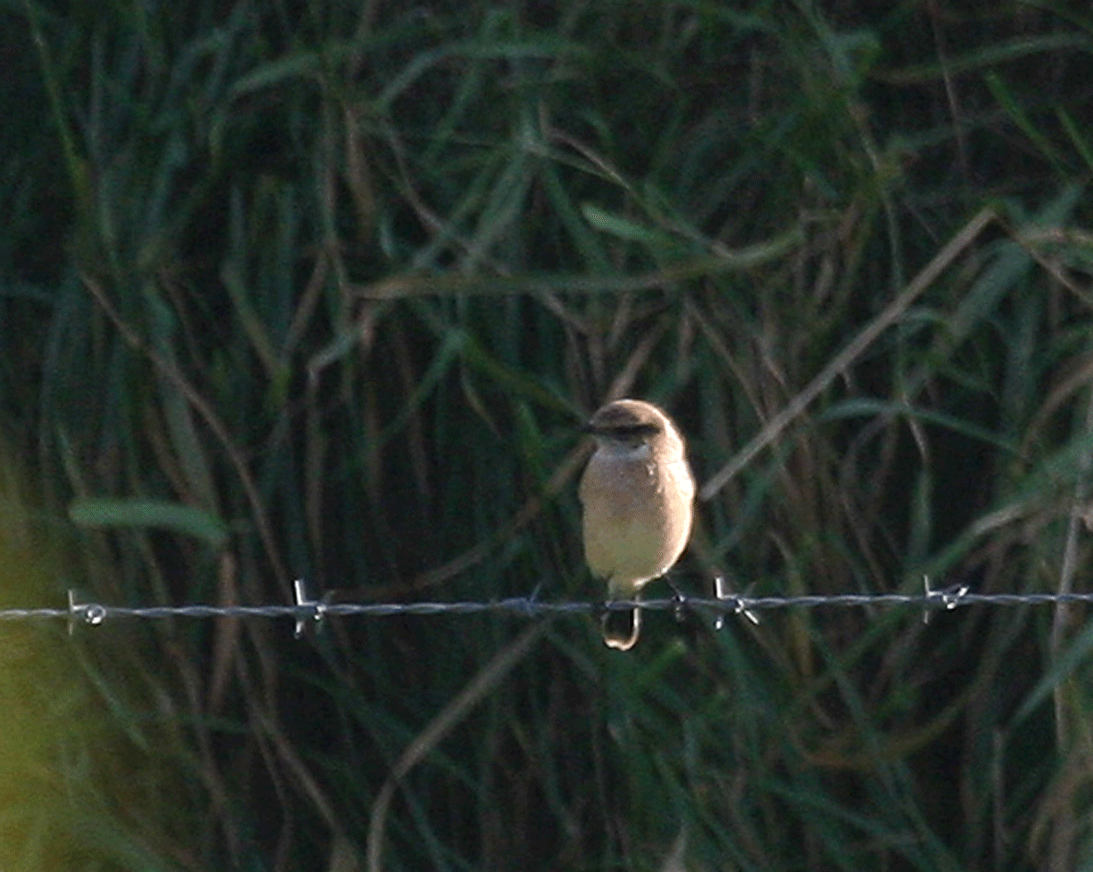
THe 6th was cold, windy and wet. During the morning I visited Grutness where I had distant views of a Red-backed Shrike, Pool of Virkie where a Long-tailed Duck showed well, Scatness, which held four Whooper Swans but little else and Channelwick where I also saw very little.
Paul and Liz have spent the last few days in Aberdeen on business and returned this afternoon, so I spent much of the rest of the day with them.
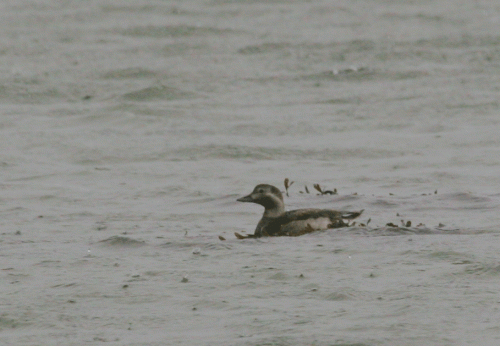
Immature Long-tailed Duck.

Bar-tailed Godwits

The island of Mousa is an RSPB reserve. Photographed from Channelwick in better conditions early in the week.
The 7th was windy too, but much drier. I visited the Pool of Virkie where I saw a few waders and two Long-tailed Ducks. A scan across the bay towards Garthness revealed big numbers of Fulmars and Kittiwakes on the move. I picked up an all dark shearwater with them, the only realistic candidate would be a Sooty Shearwater, another year tick.
Hoping it would hang around, I drove right round the bay, past Quendale to Garthness, but an hours seawatch produced nothing but Fulmars and two Bonxies with a Merlin on the way back.
In the afternoon a trip around Scatness gave me my final chance to see a goodie on Shetland but produced little but a couple of Whoopers and a few common ducks and waders.
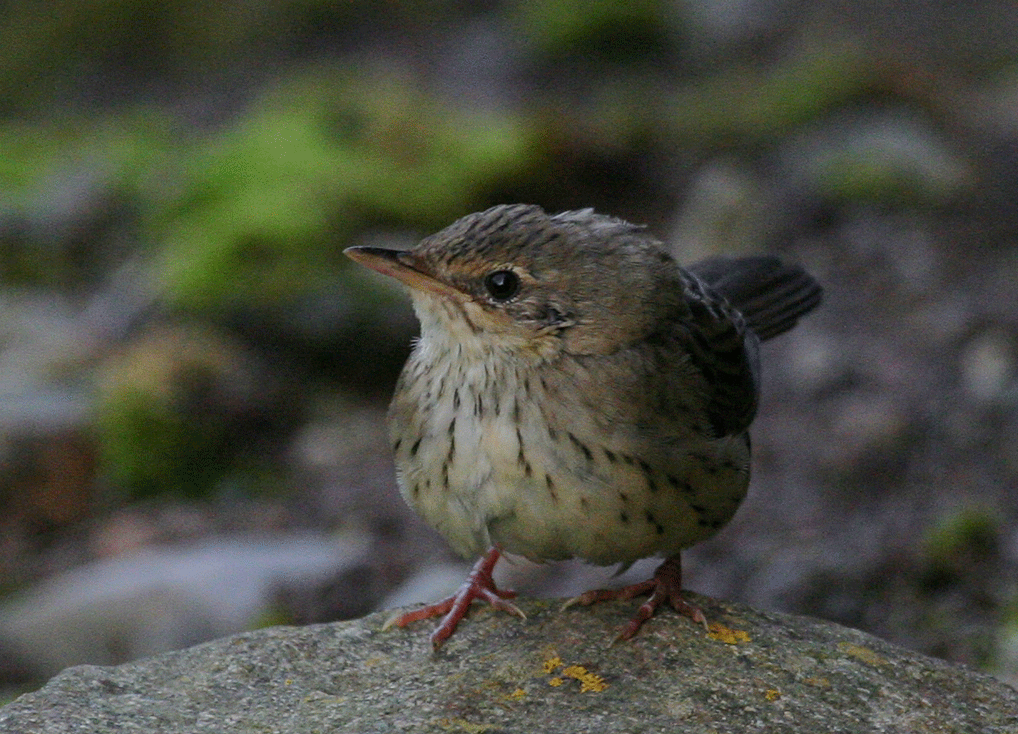
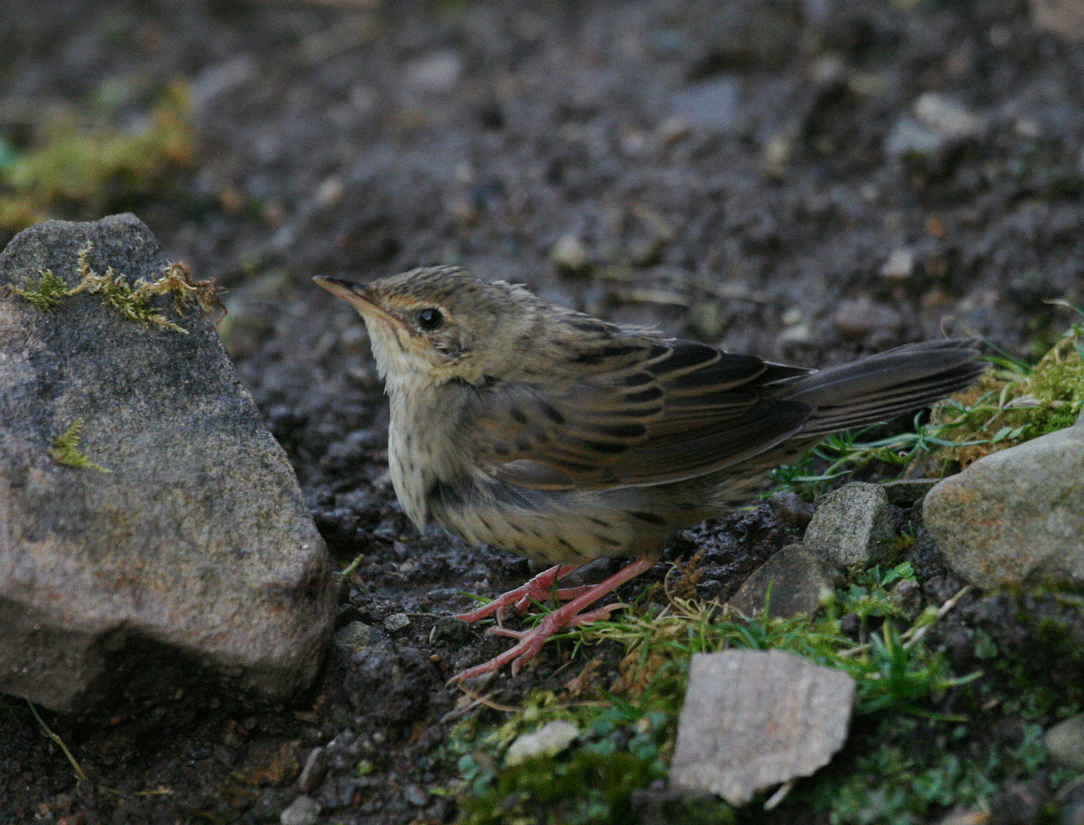
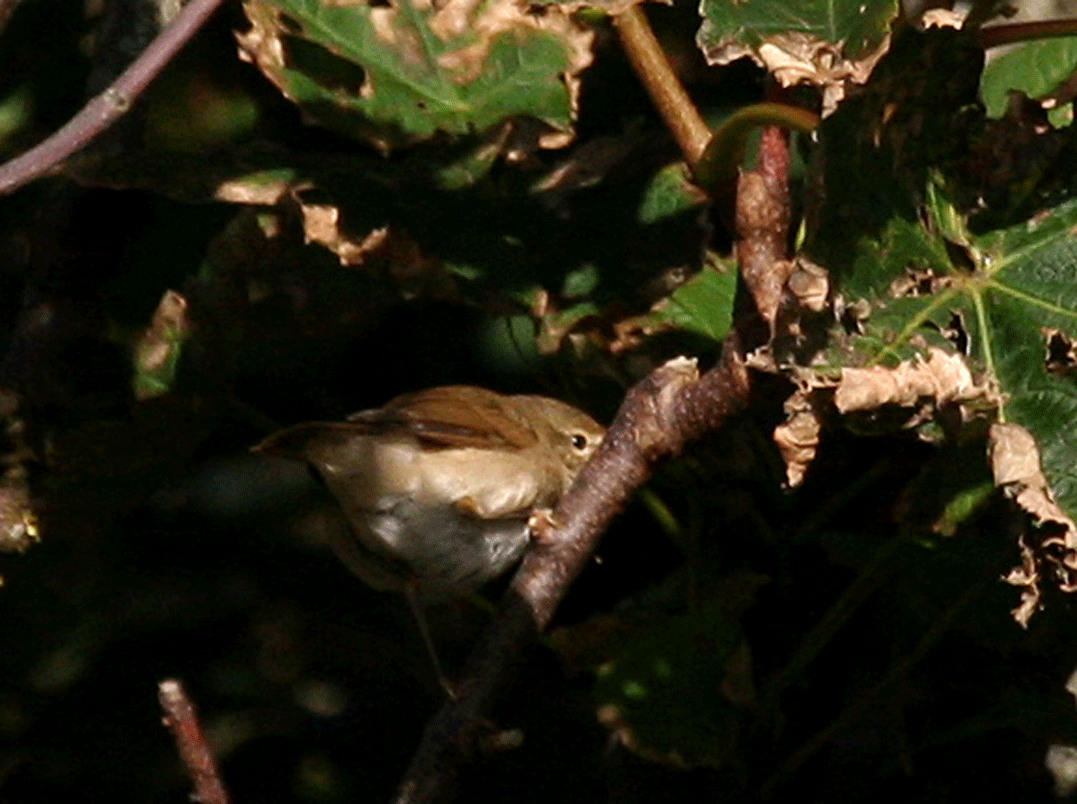
I have kept photos of my favourite bird until the end. On the 25th I had poor views of a Lanceolated Warbler on Whalsay. A day or two later Paul and I visited Sandness in the far west of Shetland mainland, where another Lancie had been seen. Originally our views were brief as it scuttled around in a mass of weeds, but then it flew to the nearby farmhouse lawn and from there to a drainage ditch, where it fed unconcerned by our presence. Lanceolated Warblers are closely related to Grasshopper Warbler and have been spreading westwards across Siberia in recent years and now breed as close as eastern Finland. Even so, they remain very rare in the UK and are hardly ever seen away from Shetland. This was one of my most desired birds of the trip and definitely gets the accolade of ‘bird of the trip’.
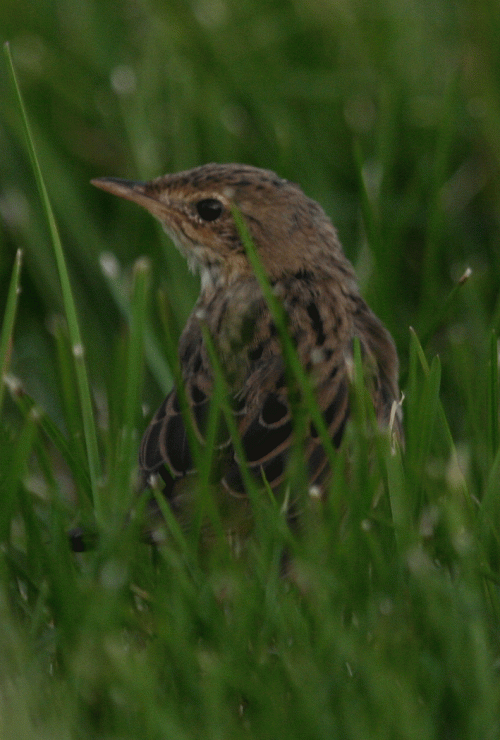
The Lanceolated Warbler played hide and seek in the weeds before flying across the road to the farmhouses lawn ……

… from there it flew to a nearby drainage ditch where it grovelled around in full view.

Lancies can be such hard birds to see that we felt really privileged to get such a prolonged and close views.
Well that’s it for Shetland, 16 days on these magic islands, 18 year ticks and two additions to my British list (Pechora and Lancie) plus some valuable ringing experience. Although much quieter during the second week than the first, it was all enjoyable.
Many thanks to Paul and Liz for their company and putting me up and particularly for Paul for the help with the birding.

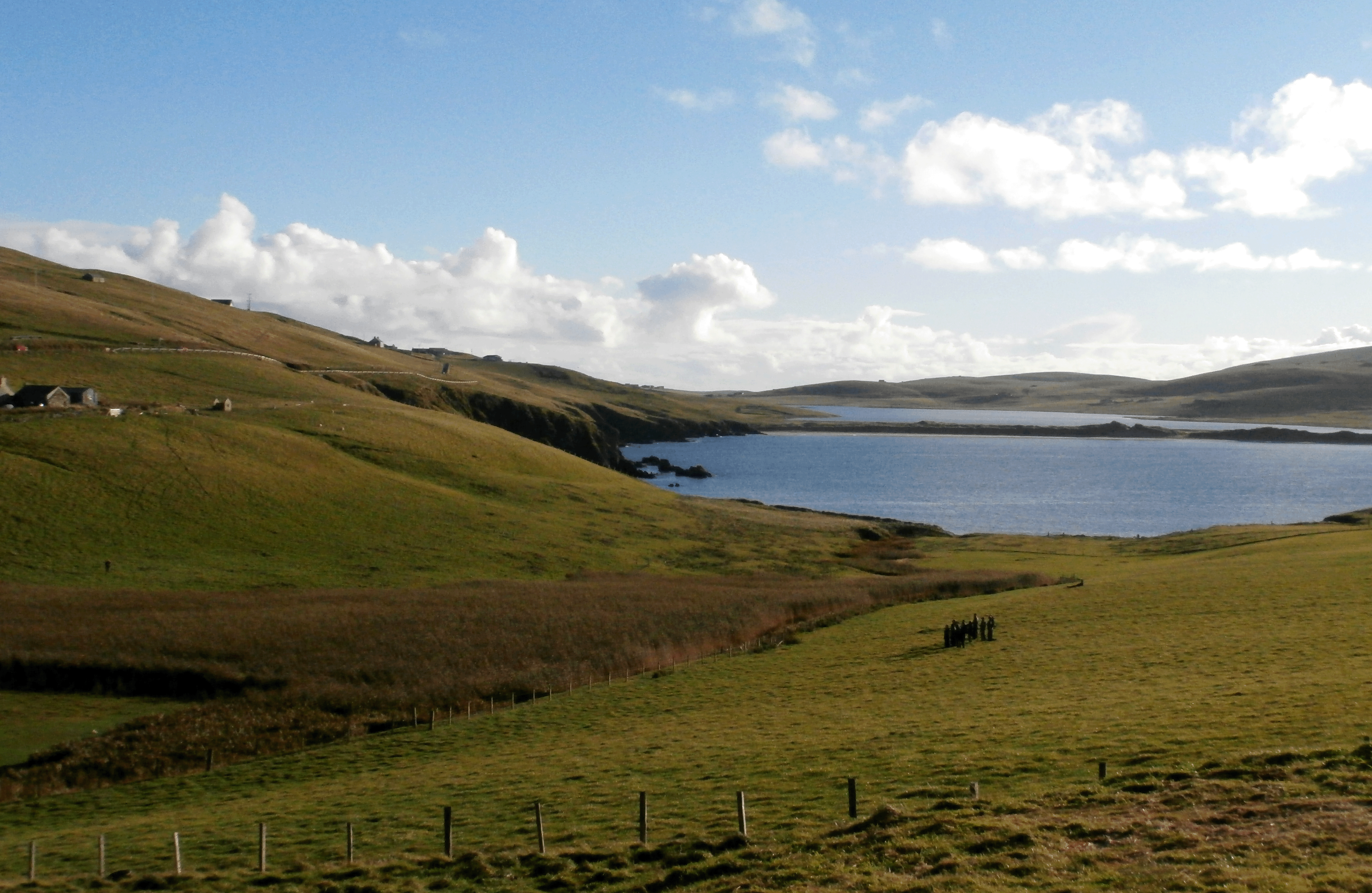
Garthness as seen from Scatness. This was my sixth visit to Shetland and it won’t be my last!
The 4th was cool, with a very strong westerly wind and regular short but heavy showers. With lots of work to catch up with, I stayed inside in the morning, but ventured out in the afternoon to try some seawatching which was followed by a visit to Loch of Hillswell, Quendale, Loch Spiggie and the Scousburgh beach which was where the Buff-bellied Pipit that I saw on the 30th was last seen.
Both seawatching and rare pipiting were unsuccessful, but I did get great views of a Merlin, a Peregrine, two pairs of Whooper Swans, a few Twite and a Scaup with some Goldeneye.
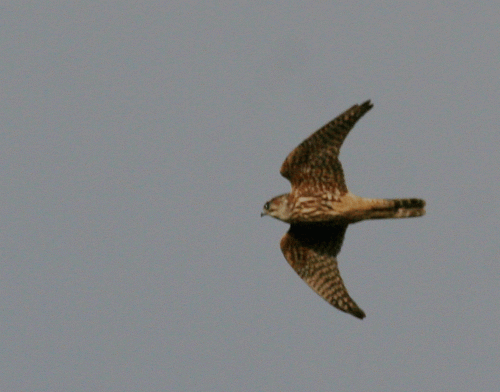
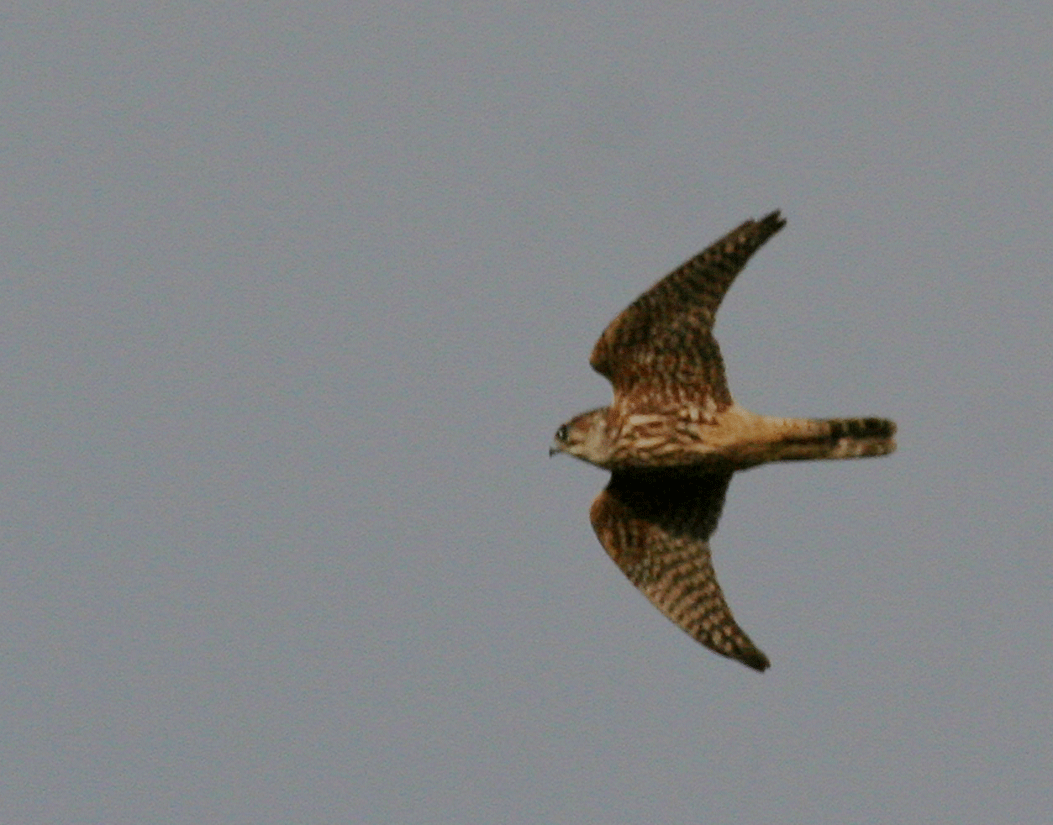
A Merlin at Quendale.
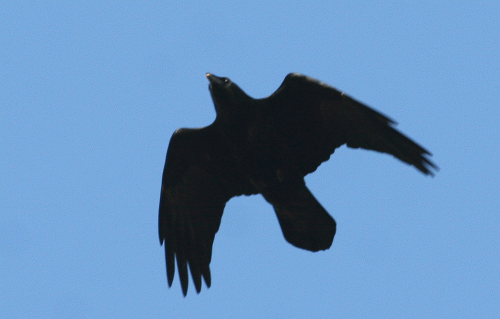
Ravens are common all over Shetland.

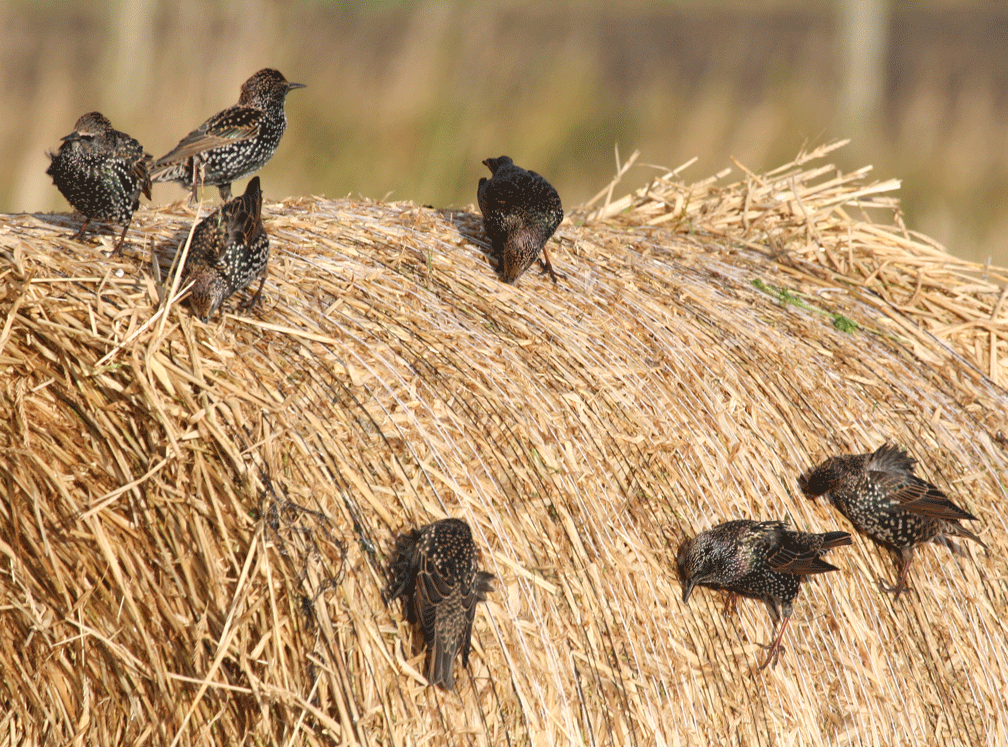
Starlings and Sparrows are also abundant across Shetland.
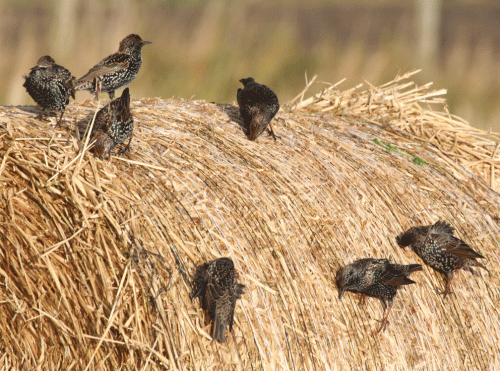
Shetland has an endemic subspecies of Starling ‘zetlandicus’ which is slightly larger and has a much darker juvenile plumage.

Two Whooper Swans on Loch Spiggie
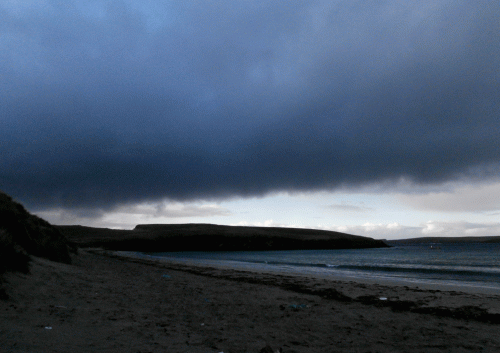
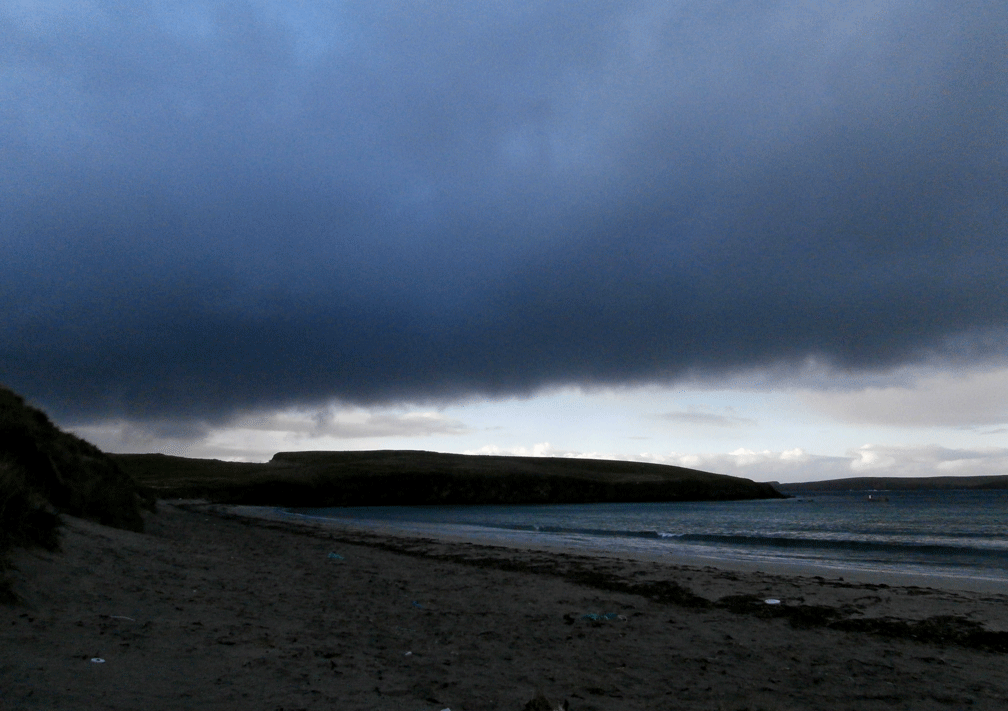
Black shower clouds were propelled across the sky on the strong winds.
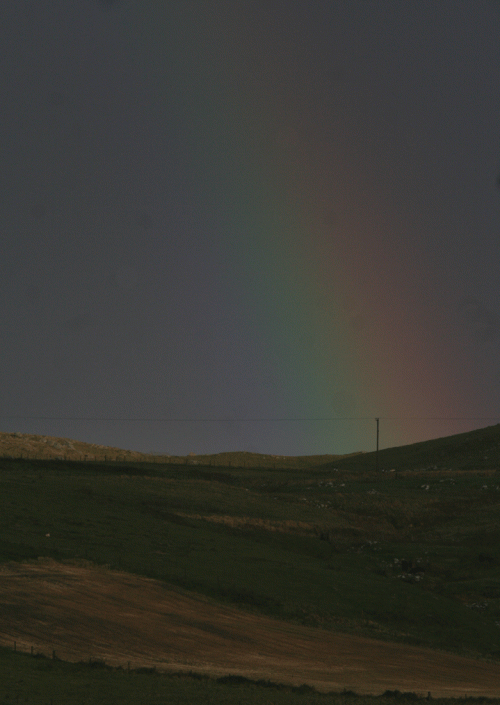
No pot of birding gold today I’m afraid.
As conditions were surprisingly still on the 5th I opted to do some ringing in Paul’s garden. It was quiet at first but about lunchtime I suddenly started catching loads of sparrows, in the end I ringed about 40. Some might think there is little point in ringing large numbers of a common and sedentary species like House Sparrow. I disagree, House sparrows have undergone a dramatic decline over much of Britain. By ringing the species in areas where they are still common, like Shetland, comparisons of population dynamics with areas that are badly affected can be made and hopefully causes of decline identified.
By mid afternoon the sparrow rush dried up so I furled and headed for the Rerwick reed bed where a Great Reed Warbler had been found that morning, eventually I got flight views; not very satisfactory but at least I saw one well at Radipole this May.
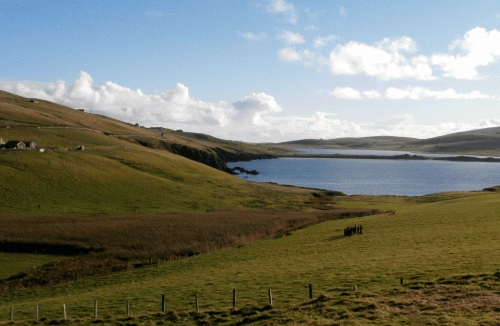
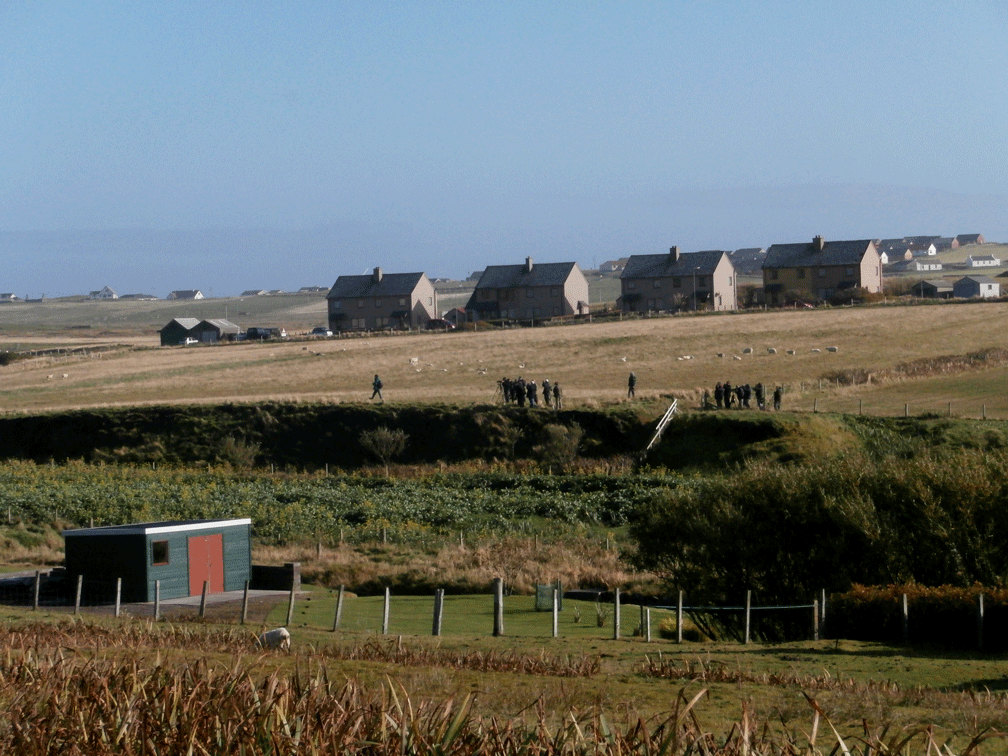
The Rerwick reedbed, the only reedbed on Shetland. Note the birders to the left waiting for the Great Reed Warbler to show. Rerwick beach where I saw the Buff-bellied Pipit is just beyond the reedbed, on the other side of the bay is Scousburgh beach where I went yesterday and in the distance Loch Spiggie can be seen.
The 2nd was a lovely day, sunny with a strong westerly wind but with very few migrants about. The day was taken up with searching for two species of shrike, the Isabelline Shrike which has been moving around the Toab/Virkie area for the last week and a Red-backed Shrike in the Sandwick area.
Much of the morning was spent wandering around Sandwick/Hoswick but to no avail and I had an equally unsuccessful afternoon at Toab. I returned and did a little ringing in the garden, catching a few Linnets coming to roost, including another control, ie one ringed elsewhere.
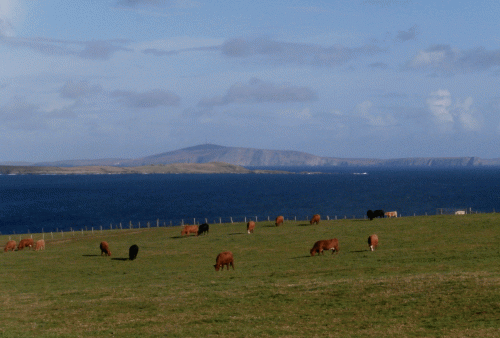
The view for Sandwick looking north.

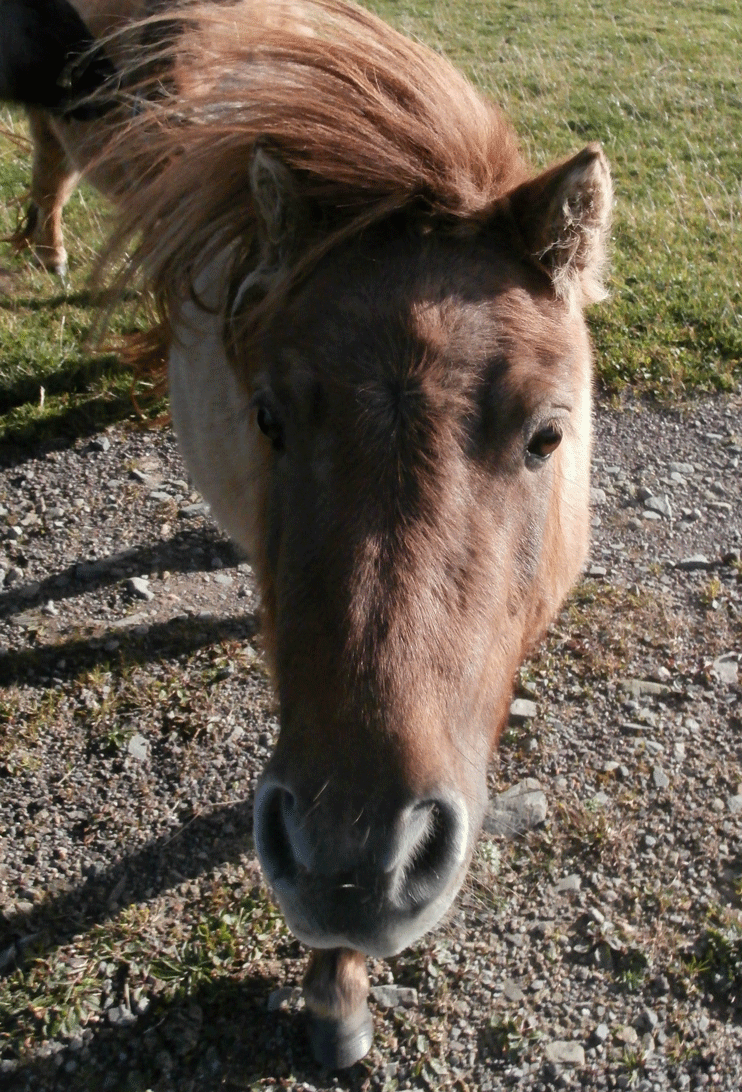
I tried photographing this herd of Shetland ponies …..

… only to find that they wanted to follow me around everywhere.
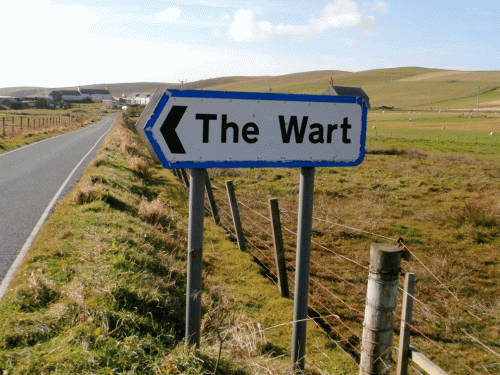
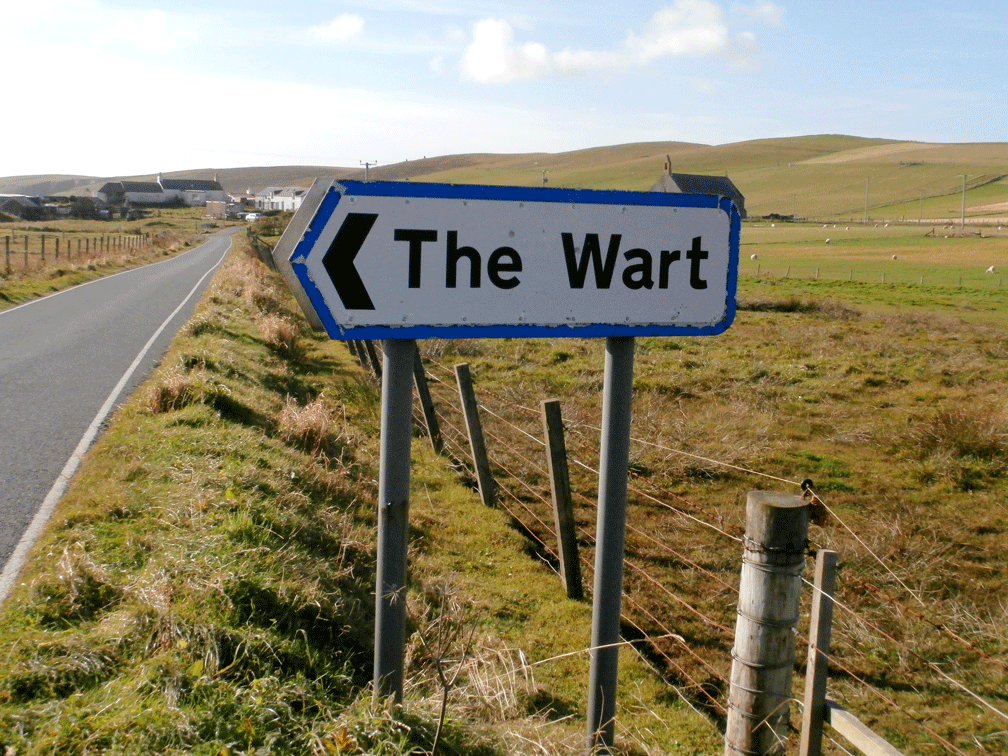
I can’t make fun at Shetland names when Dorset has places like ‘Shitterton’ and ‘Scratchy Bottom’ !

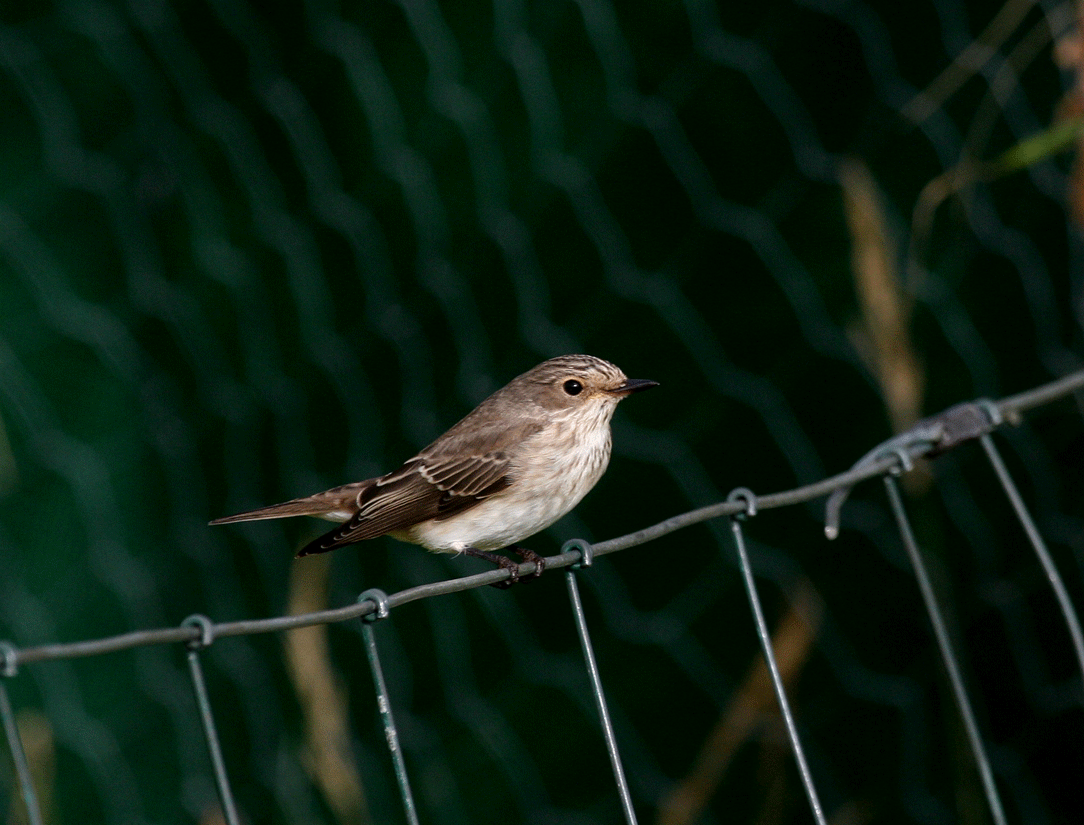
No sign of the Isabelline at Toab but a Spotted Flycatcher showed well.
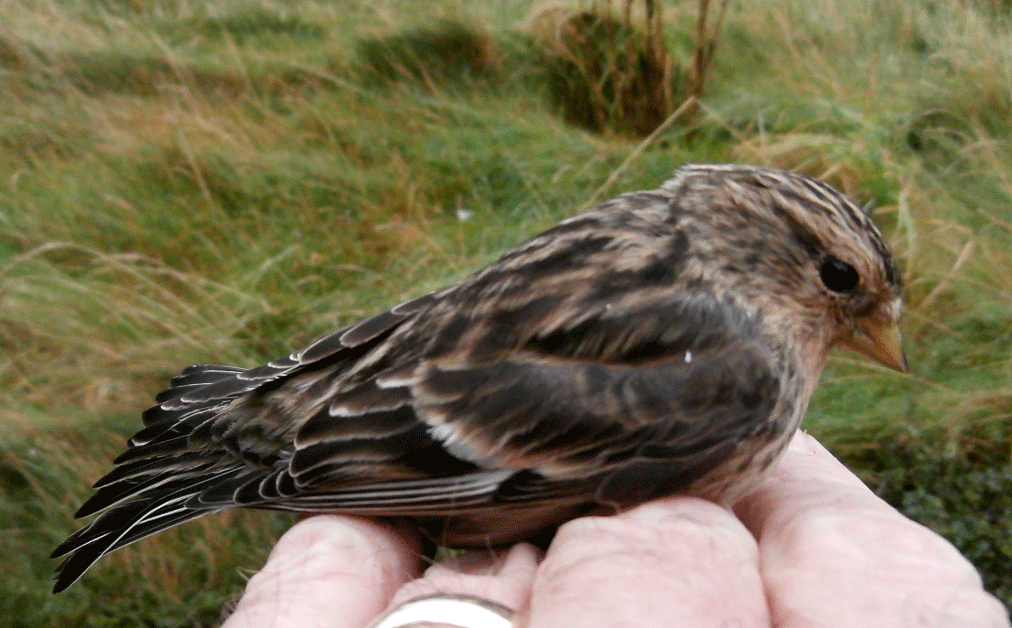
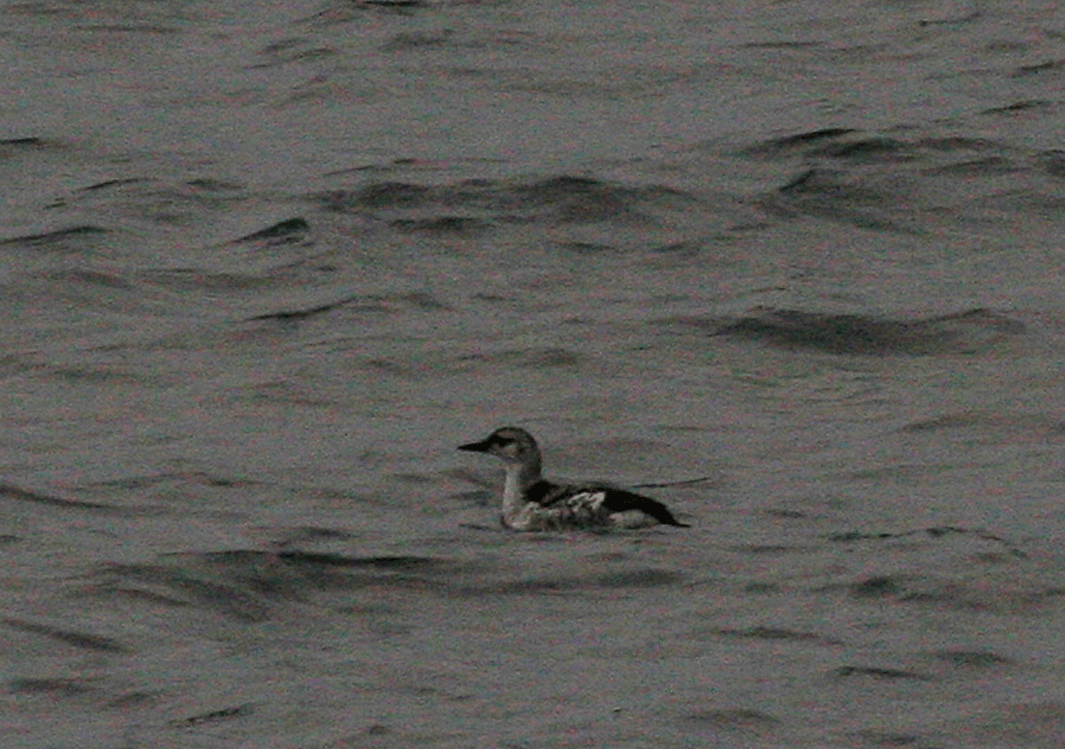
The 3rd started nice and still so I continued ringing in the garden until about 0930. Best birds caught by far were two Twite, a relative to the Redpoll and Linnet which occurs widely on the northern and western isles of the UK. The wind soon got up so I packed and headed north to Sandwick. Despite searching, along with some 10 other birders for the rest of the morning I didn’t see the Red-backed Shrike, but whilst photographing a Black Guillemot offshore I did see an Otter swimming in the surf.

The pink rump on a Twite is absent in females.

Black Guillemot or Tystie as it is called locally, in winter plumage.

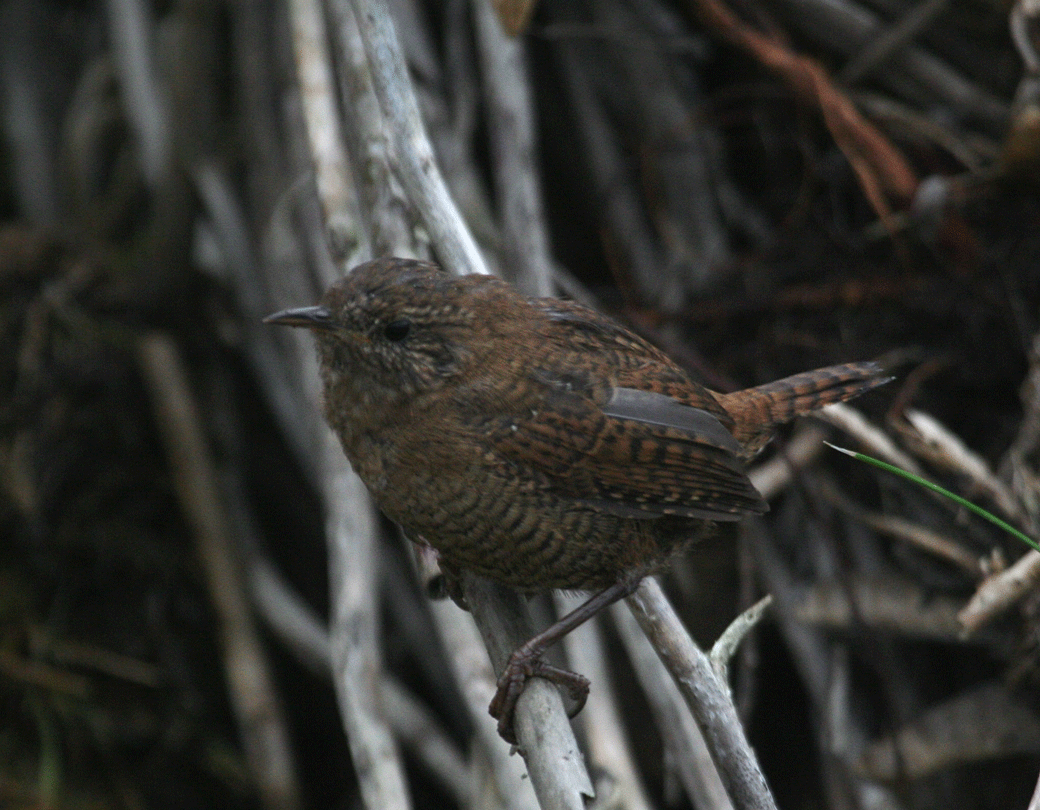
Shetland has its own subspecies of Wren, larger and darker than in the rest of the UK.
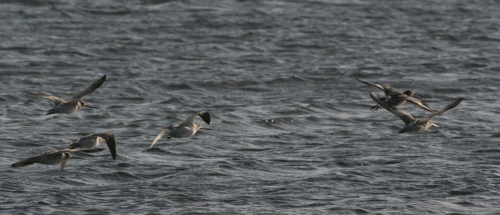
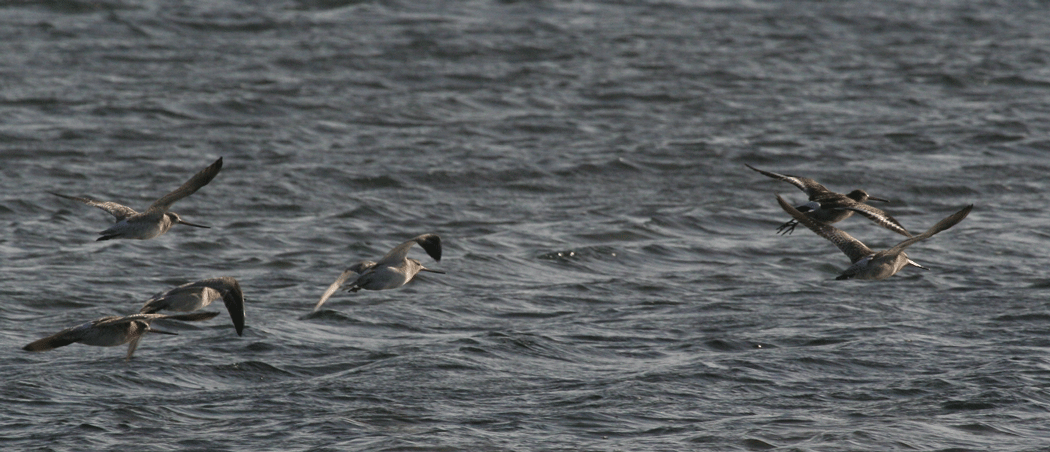
Bar-tailed Godwits with a single Black-tailed Godwit at the Pool of Virkie.
In the afternoon, at long last, I caught up with the Isabelline Shrike and in spite of wet, windy conditions and poor light even got some photos. I returned to the Sandwick area in late afternoon and was rewarded with views of the Red-backed Shrike, which was on view for just a minute before flying off into the distance. Red-backed Shrike once bred widely in the UK but now is a rare visitor, however it occurs far more often the Isabelline Shrike, which breeds only in central Asia and western China.

The word ‘isabelline’ is supposed to originate when Queen Isabella vowed not to change her clothes until the Moors were ousted from Spain. It took longer than she expected and her underwear was a buffy-grey ‘isabelline’ colour by then.
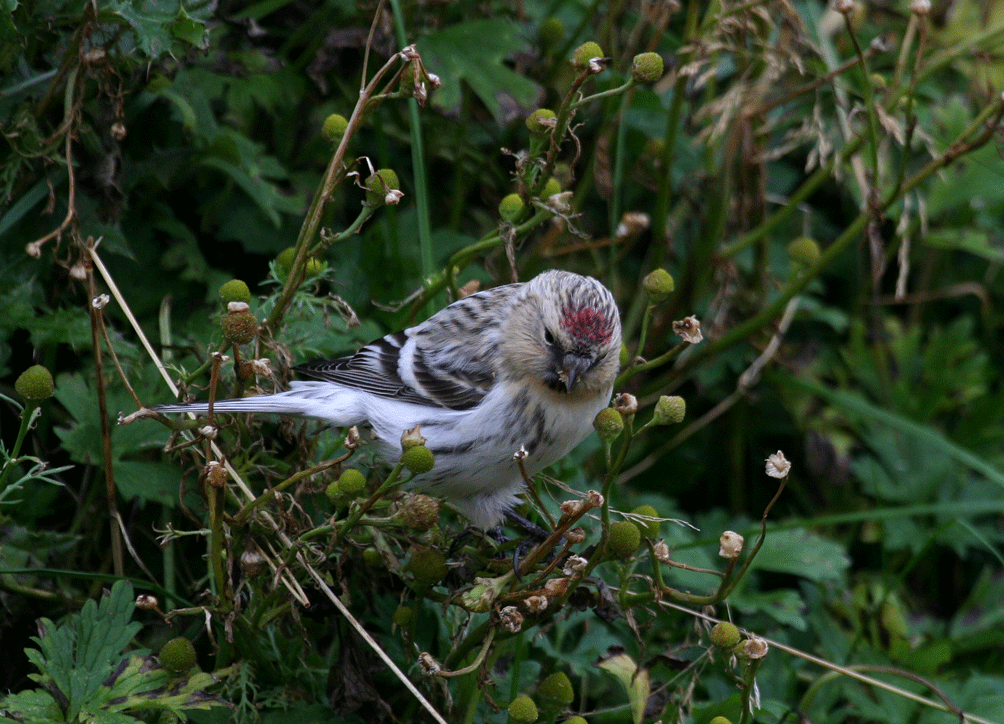
At the end of September an Arctic Redpoll was found on Unst, the northernmost of the inhabited Shetland Isles. This was followed by news late on the 30th of a Pechora Pipit, a new bird for my British list, in the same area. Also a Bonapart’s Gull, a small north American gull, had been seen although the finder and the exact location couldn’t be established. Paul needed the Bonapart’s for his Shetland list so opted to take a days leave and go with me. Incidently, Bonapart’s Gull was not named in honour of Napoleon, but after his nephew.
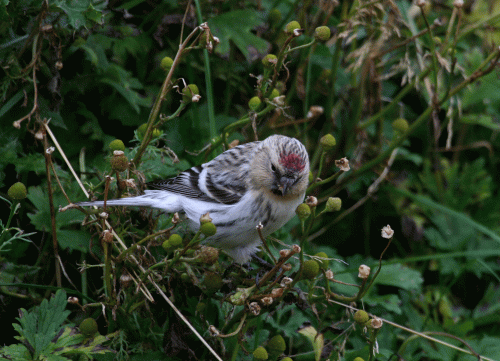
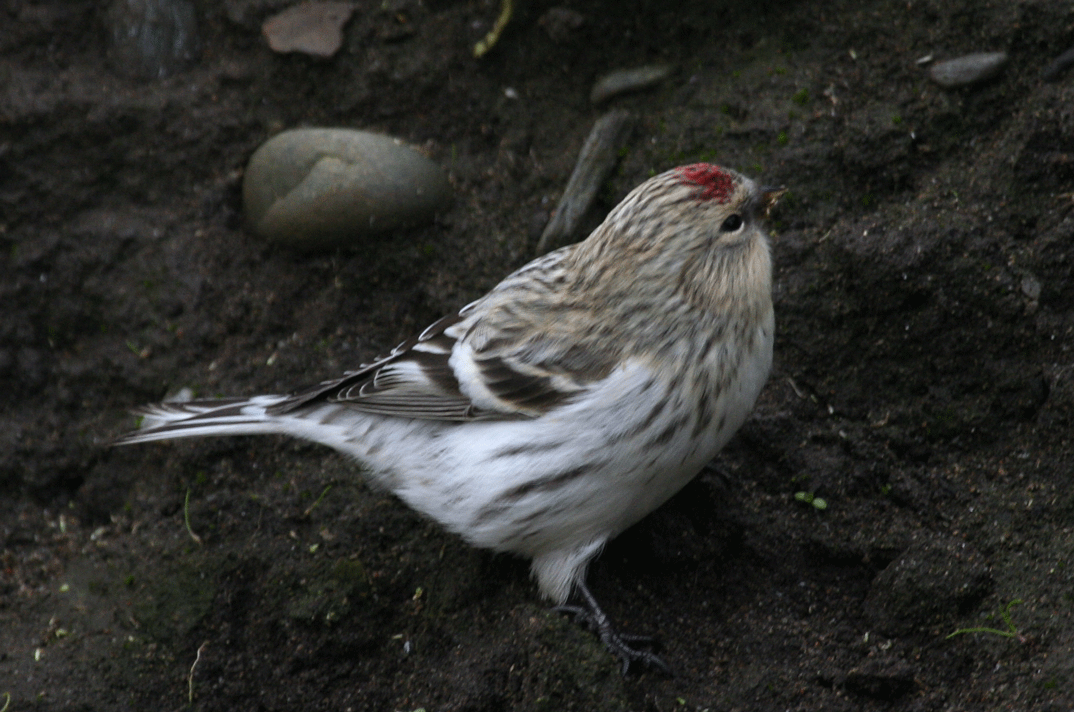
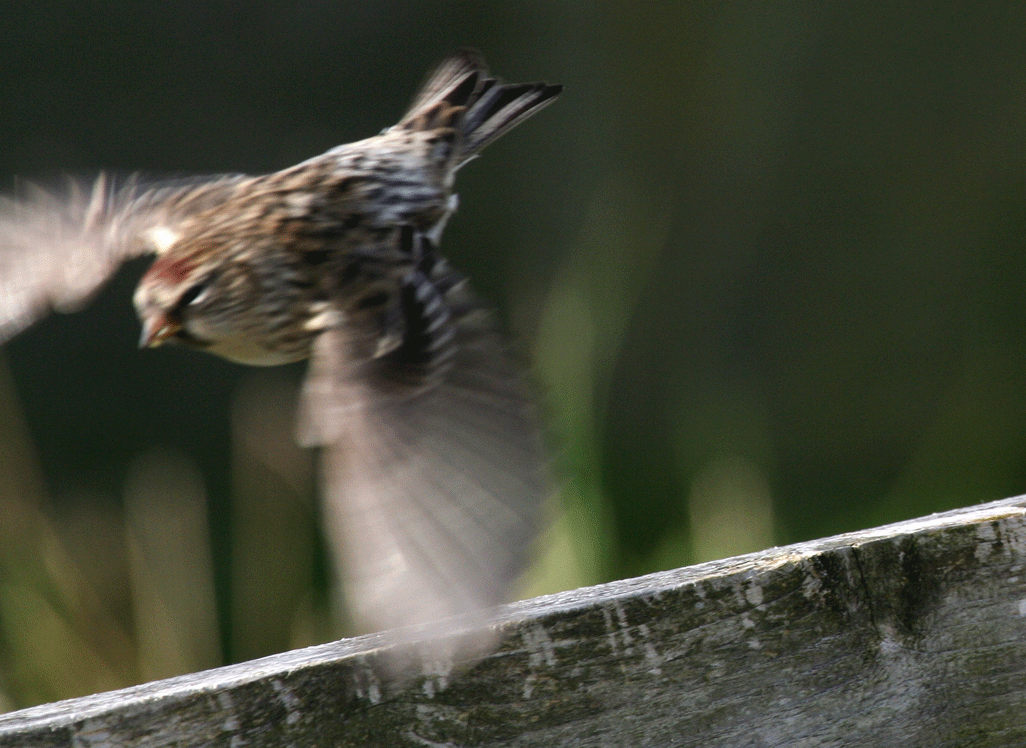
We left pretty early and arrived about 0900 to find a crowd of 30+ birders watching the Arctic Redpoll. Apart from being a year tick, I have never this race, hornemanni anywhere in the world. The species Arctic Redpoll consists of two subspecies, exilipes which is circumpolar in the Arctic except for Greenland and Baffin Island where it is replaced by the larger hornemanni which is almost as big as a Chaffinch..
Those, who for whatever reason, choose is ignore the huge volume of evidence that all species have evolved from an earlier form, often quote the supposed lack of intermediates to support their case. They need to look no further than the redpolls to see a species group where the evolution of species is still in progress (or crossbills, large white-headed gulls, the yellow wagtail group, slaty antshrikes or Darwin’s finches for that matter) . Exilipes and hornemanni could be regarded as separate species, but the population in Iceland might be a hybrid swarm between hornemanni and the large rostrata race of Common Redpoll and exilipes might hybridise with the nominate race of Common Redpoll elsewhere. As Greenland and Baffin Island are hardly easy places to conduct long-term studies, hybridisation between exilipes and hornemanni could also occur, thus the relationships between all six races in the redpoll complex remains unresolved.
Whatever the taxonomic position of hornemanni there is no denying that this was a most beautiful individual. The five ‘northwestern’ Redpolls, i.e. probable rostrata that I had seen on my last visit had now increased to over 20 and provided a good comparison with the hornemanni.
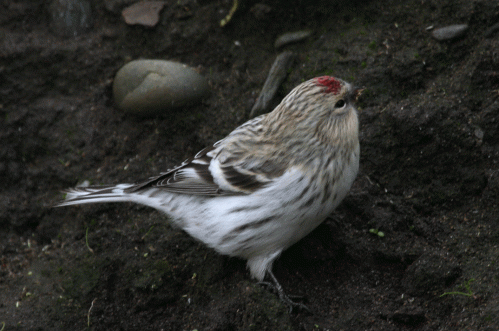
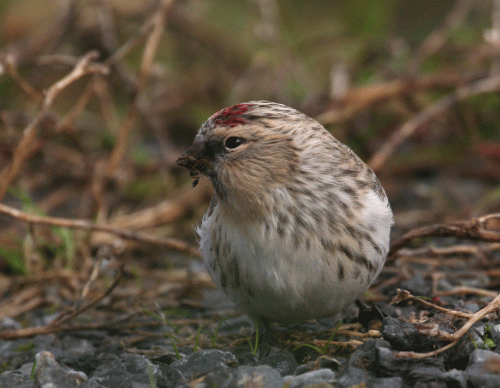
The other good bird, Pechora Pipit, was much harder to see. A vagrant from arctic Siberia, this species is hardly ever recorded in the UK away from Shetland. Not only is it rare but it is skulking and although I eventually got half a dozen flight views (some of them quite good) I never saw it perched.
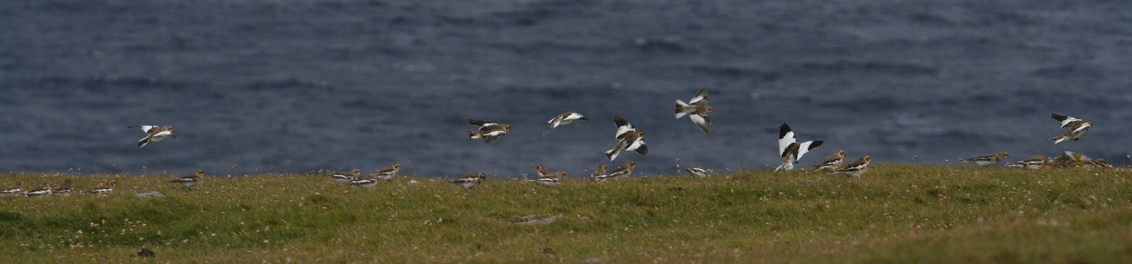
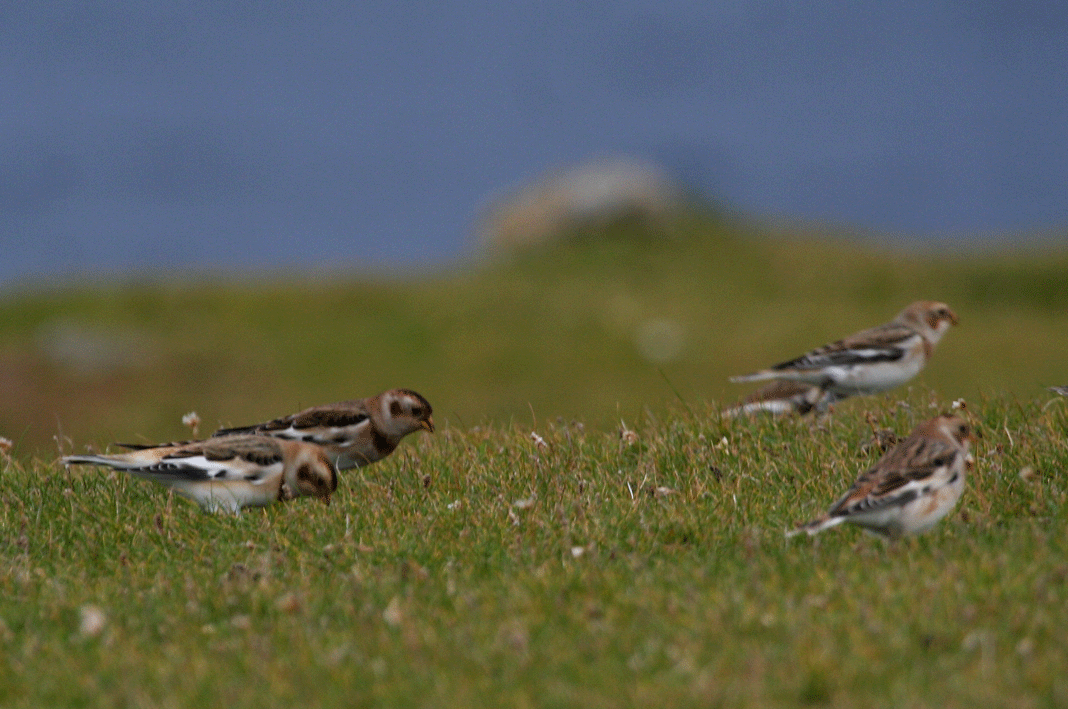
Whilst I was hanging around Northwick, Paul toured the area looking for the Bonapart’s Gull but to no avail. I joined him later in the day and was pleased to see a flock of 46 Snow Bunting on Lamba Ness.
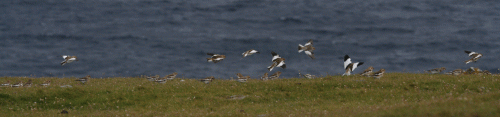
Snow Buntings reach Shetland from both the Icelandic and Scandinavian breeding populations. Judging by the dark rumps of the birds in flight this group is from Iceland.
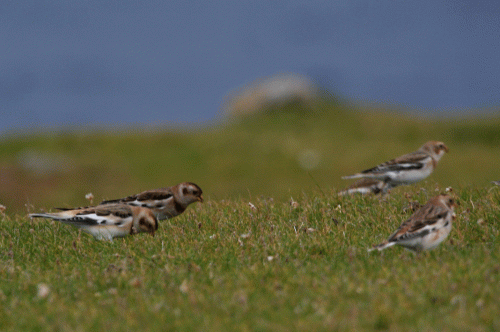
Part of the flock of 46 Snow Buntings.
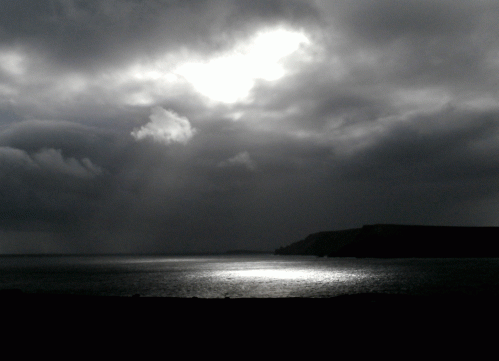
Unlike my last visit to Unst, the day had been grey with heavy showers, however the sun breaking through the clouds at Lamba Ness produced this dramatic scene.
On our way home we stopped at Brae and had good views of the Surf Scoter that I first saw last week. It had moved away from Burra Voe and was much closer, although still too far for photos.
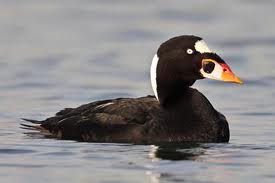
Male Surf Scoter. Photo from the internet.
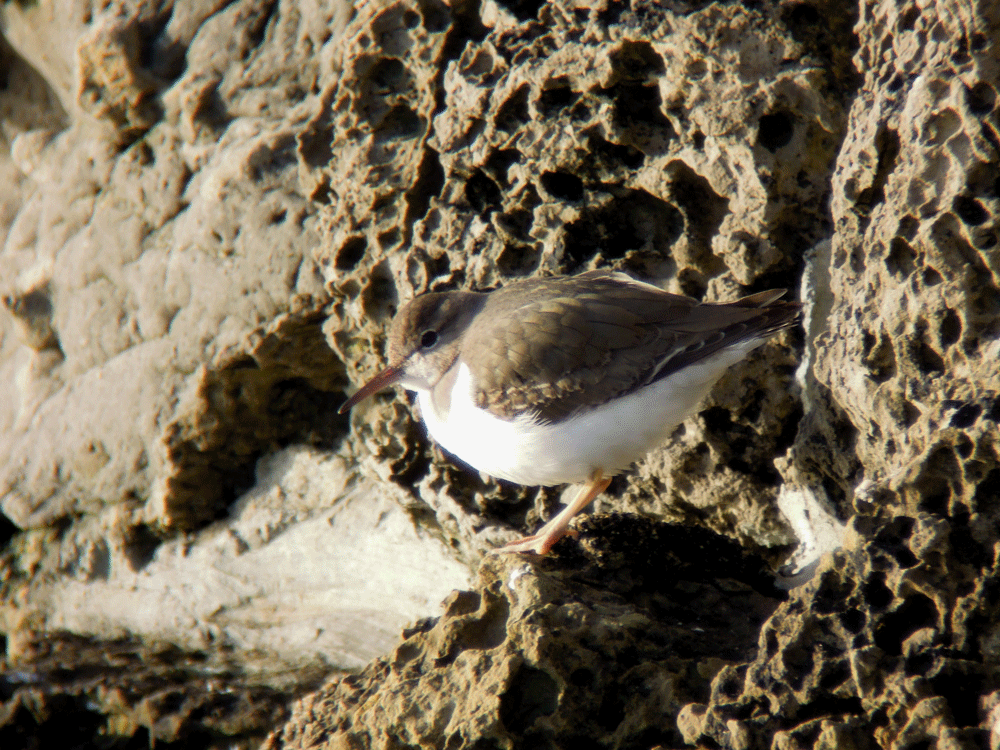
Finally we stopped at Voe, where a Spotted Sandpiper had been seen, it was found on the banks of a stream, but Paul had an appointment at 1800 and we couldn’t linger for photographs.
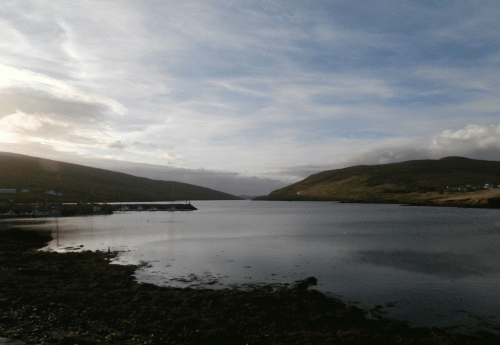
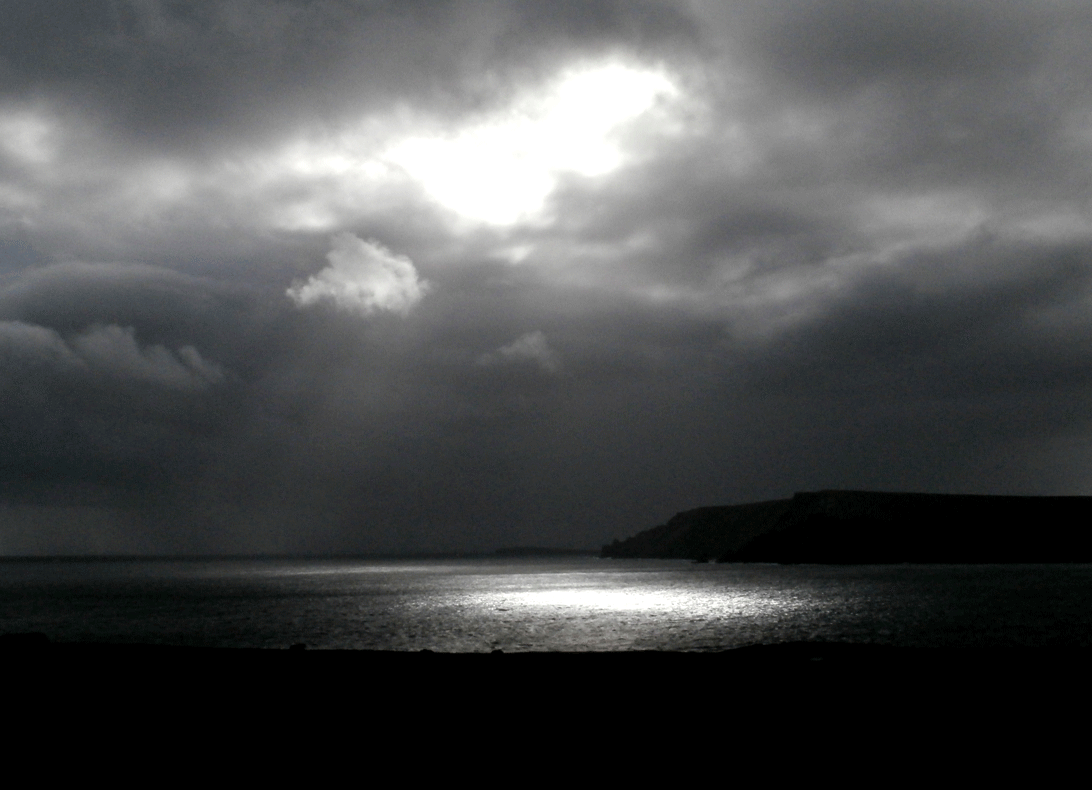
The view at Voe
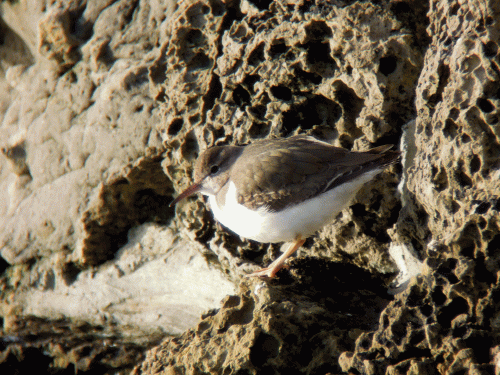
Spotted Sandpiper is the American equivalent of our Common Sandpiper. This bird was photographed at Lyme Regis in Dorset in January 2012.
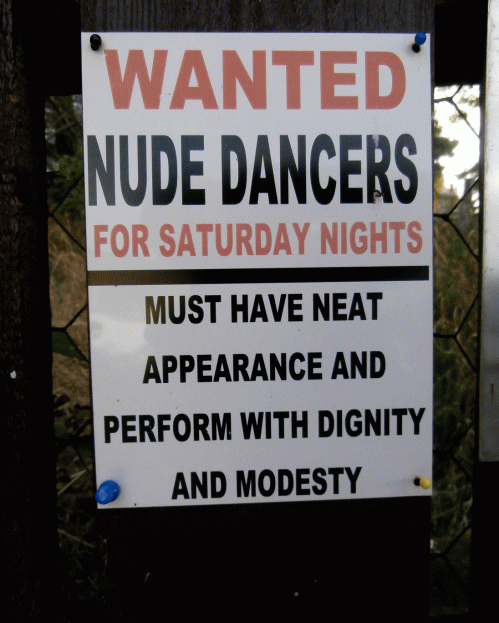
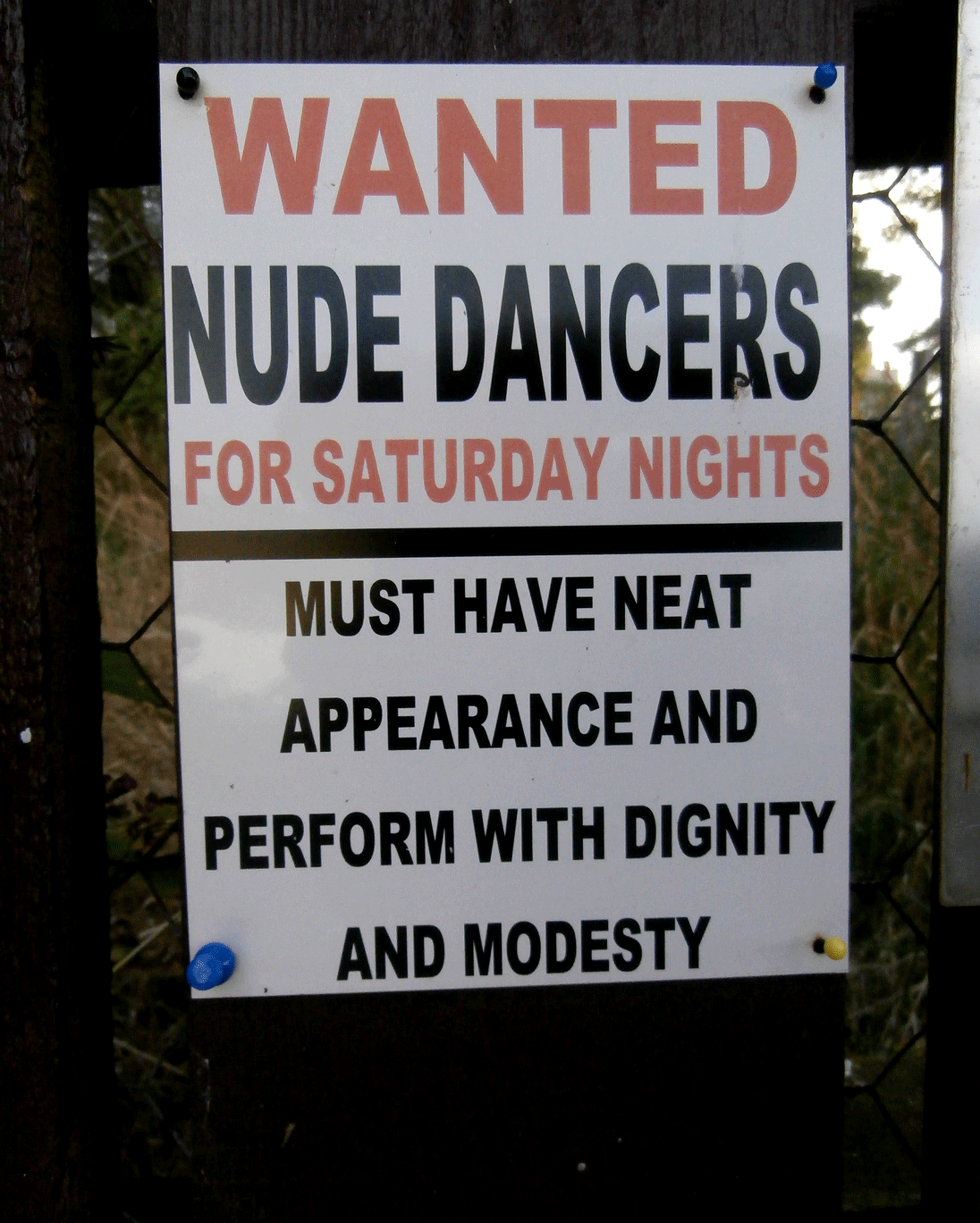
Sign on a gate at Voe. Clearly THE place to be on a Saturday night.
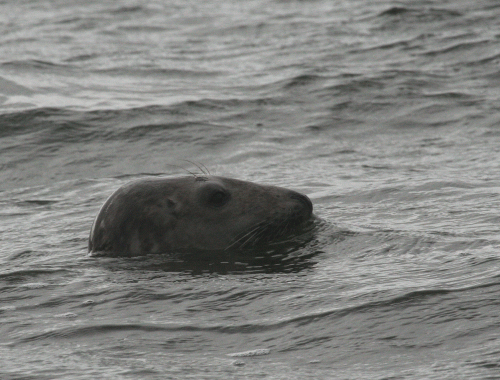
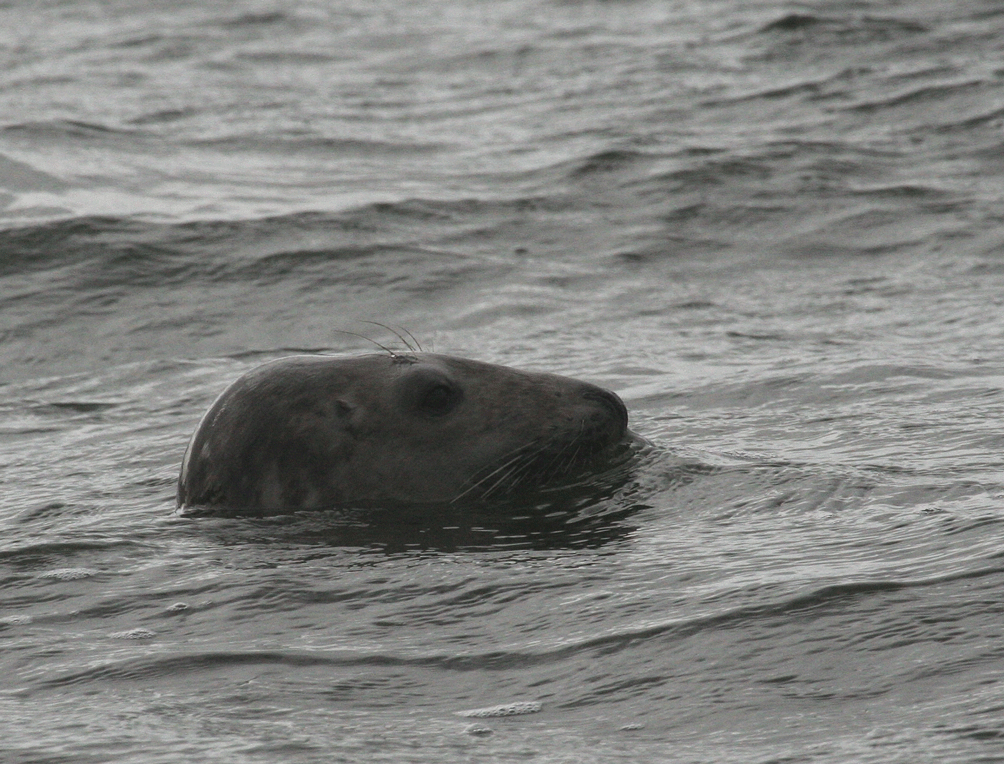
A Grey Seal, note the flat top to the head with the eyes about mid way between the nape and the snout.
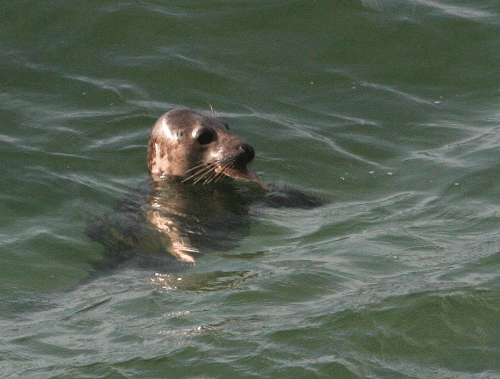
A Common (or Harbour Seal) eating a flat fish. Note the dog like muzzle with the eyes closer to the snout than the nape.

A migrant flock of Pink-footed Geese probably on their way from Iceland to Lancashire.
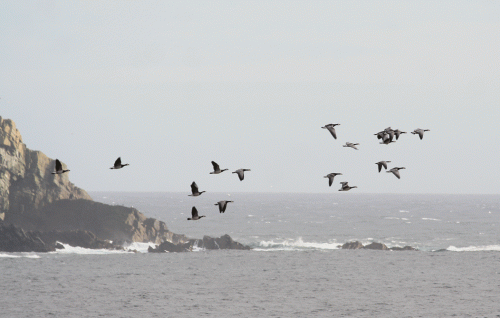
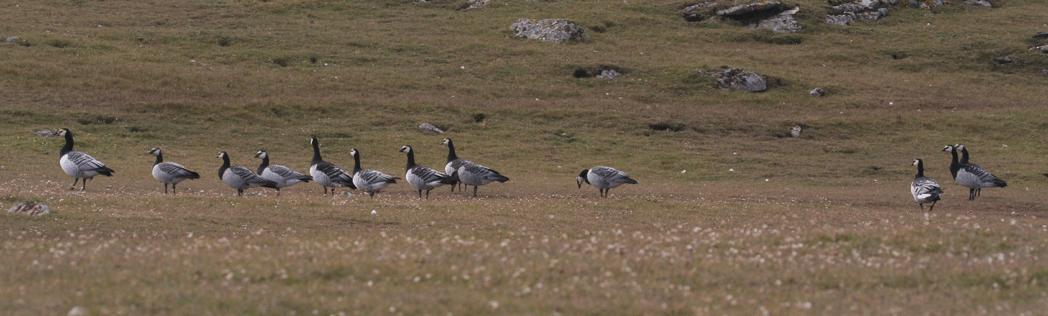
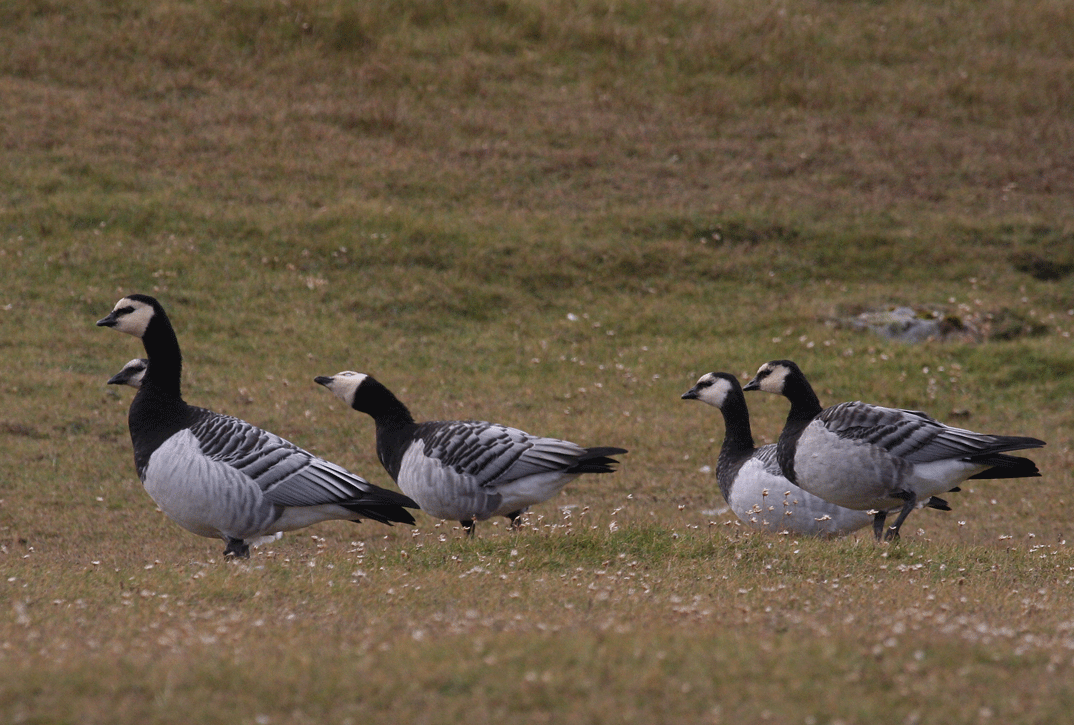
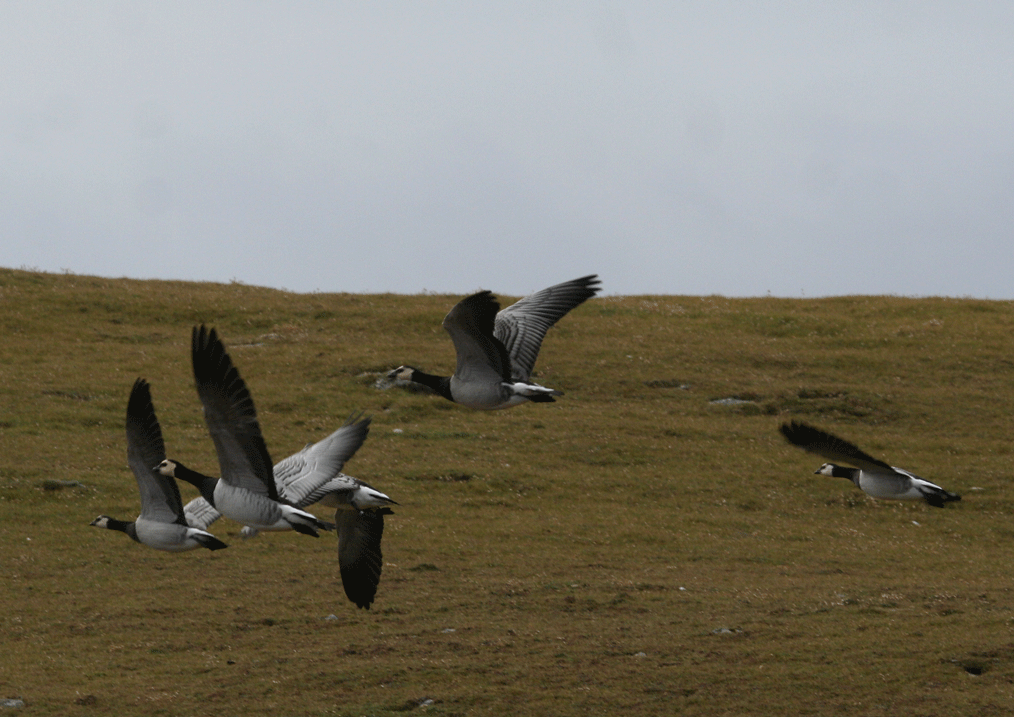
This flock of 18 Barnacle Geese flew around Sumburgh Head …..

….. before landing on Scatness.

Barnacle Geese breed on Greenland, Svalbard and Novoya Nemla. These are probably from Svalbard on their way to the Solway Firth for the winter.
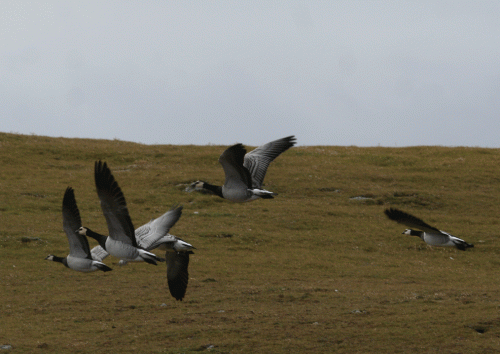
Many Barnacles seen in England are of feral origin, there was no doubt that these were truly wild.
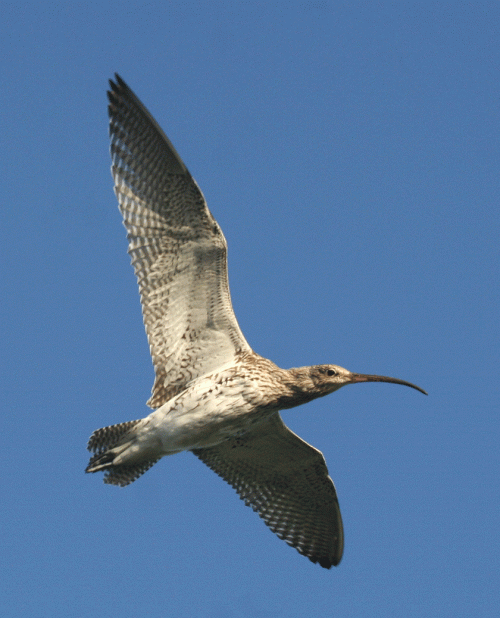
Curlews are a common breeder and still common in the autumn right across Shetland.

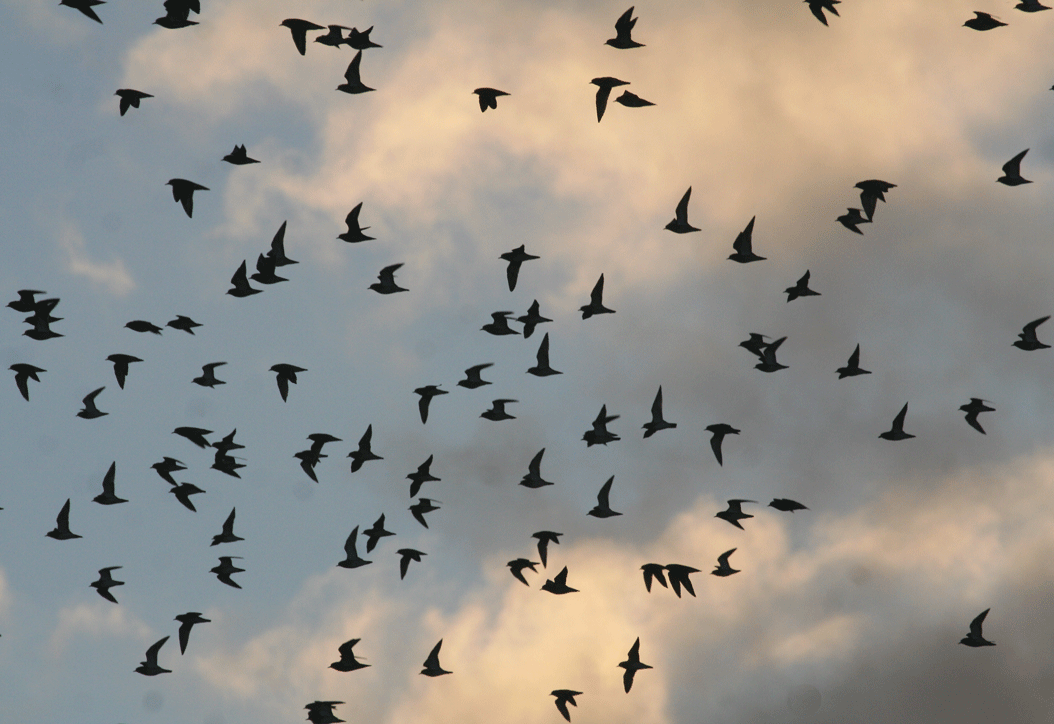
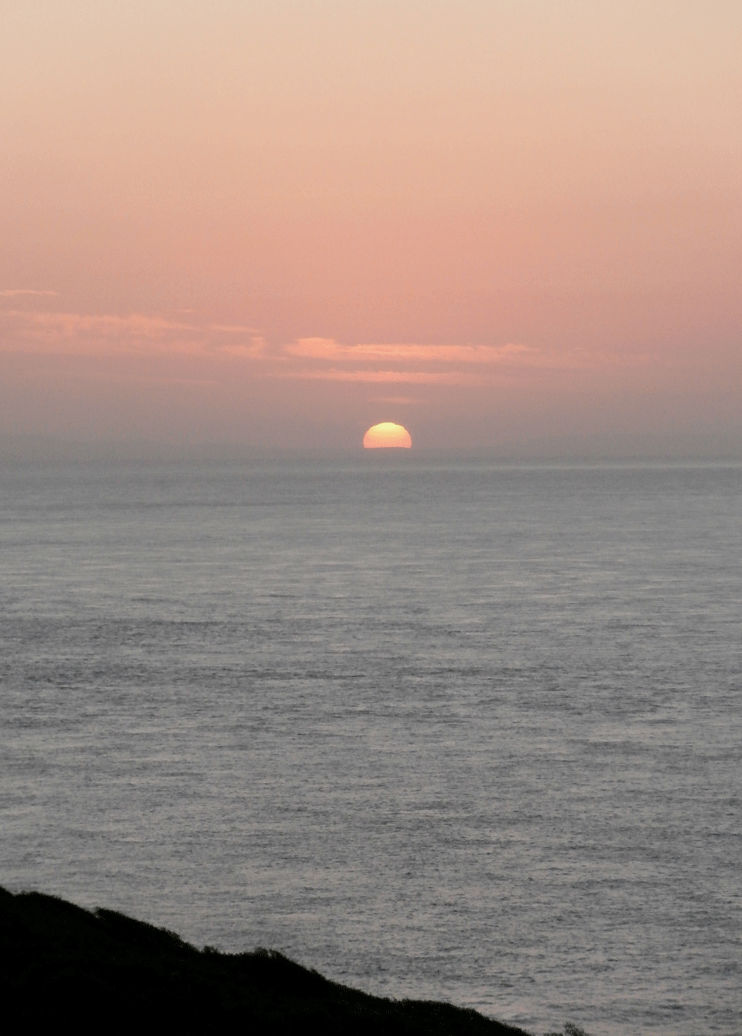
A flock of Golden Plovers. Although close to the equinox the sunrise and sunset times are similar in Shetland to Dorset, the twilight this far north seems to last for ever.
First, I have edited a few more photos taken on Unst on the 27th (see previous post)
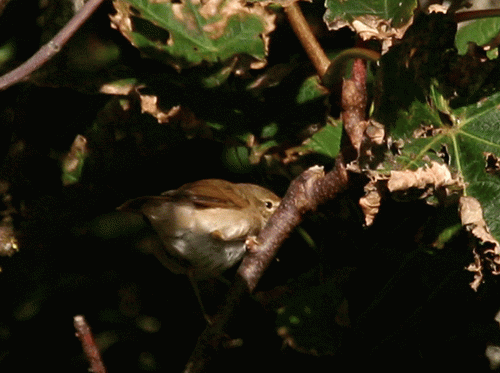
Another photo of the Blyth’s Reed Warbler. The rufous wing panel is only visible from some angles.
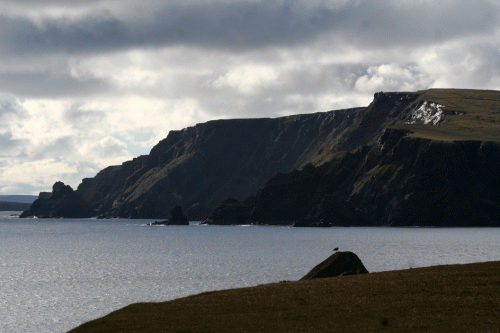
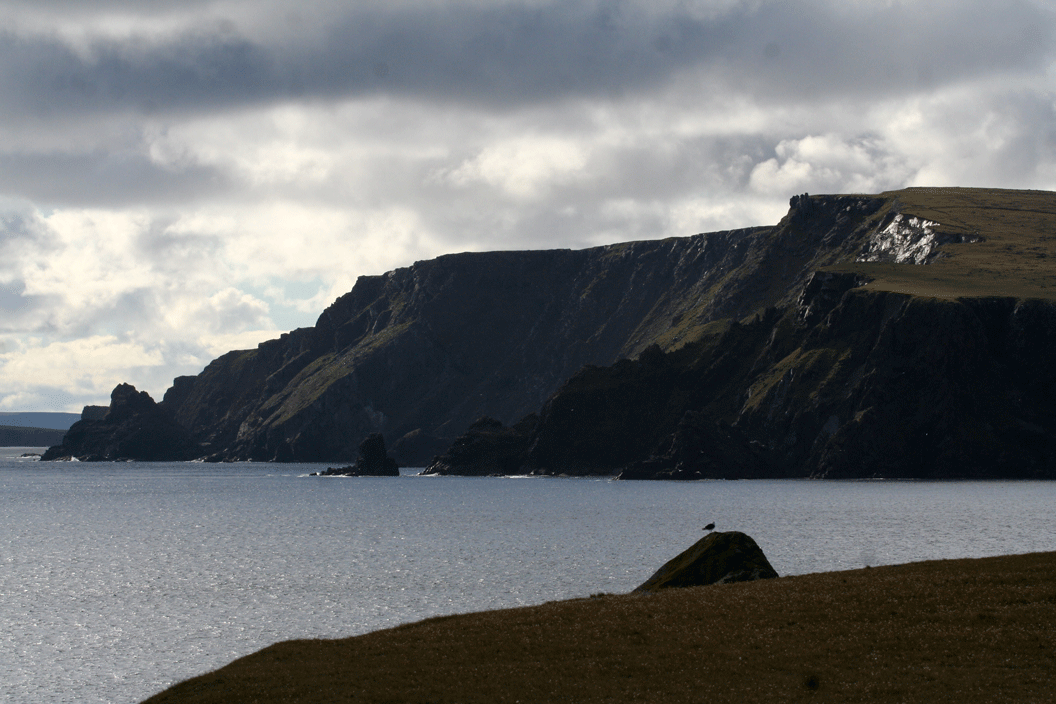
The cliffs at Lamba Ness

Gannets passing Lamba Ness

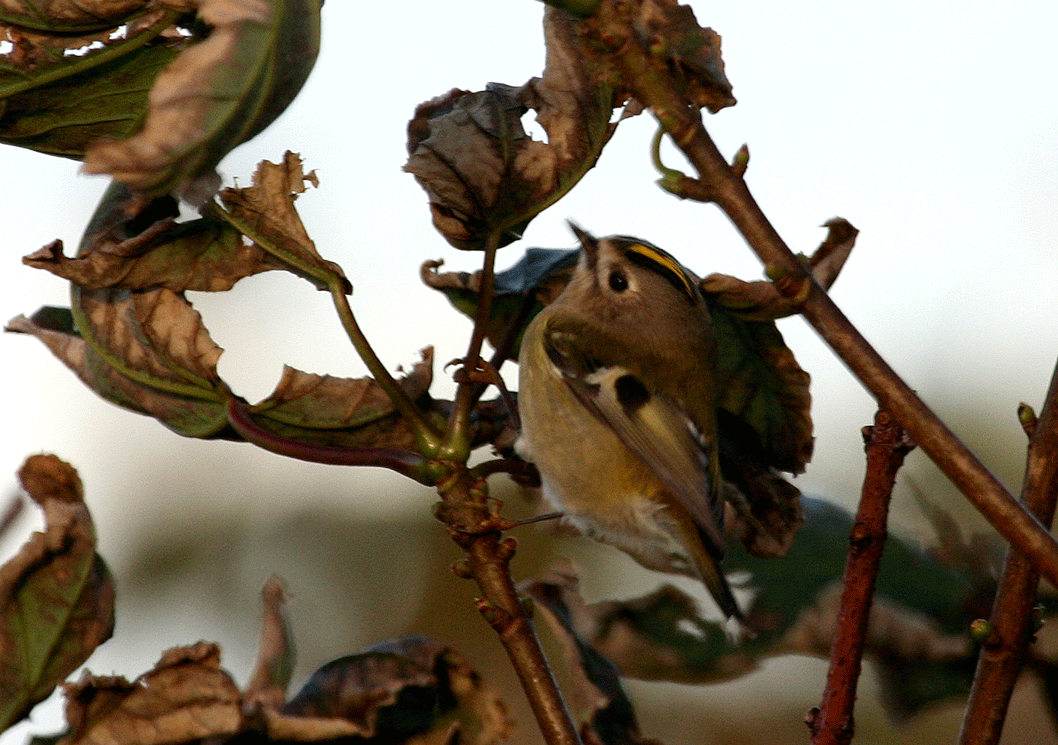
A migrant Goldcrest

A juvenile Bonxie feeding on roadkill ….
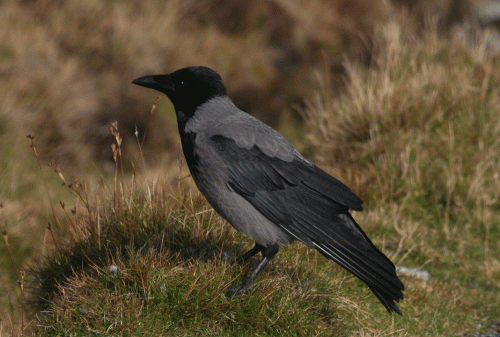
…. and a Hooded Crow waiting its turn.

Smoke from a distant cottage.
On the 28th the weather was mainly cloudy with heavy showers. With Isabelline Shrike and Olive-backed Pipit (or OBP as it usually known)nearby and a Siberian Stonechat just a few miles up the road I didn’t intend to travel far today.
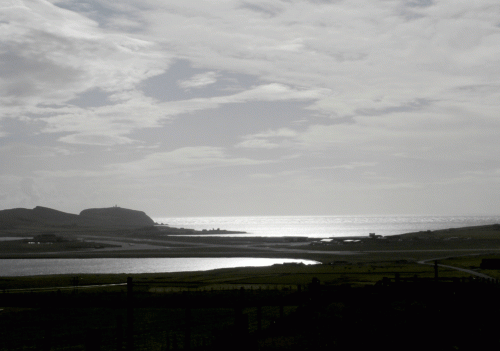
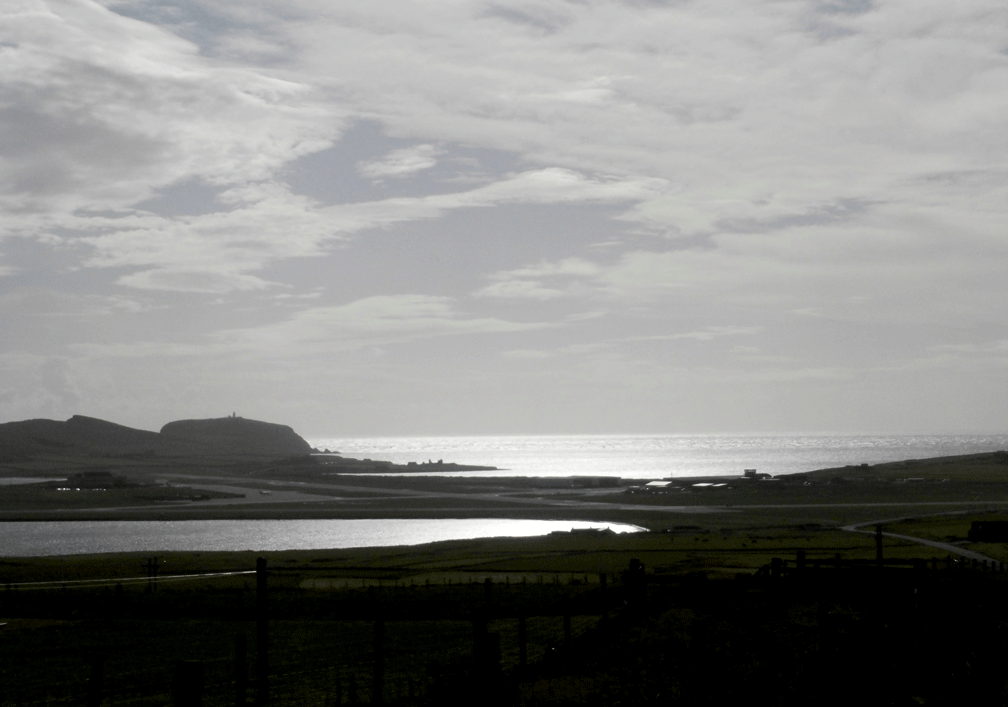
Another view from Paul and Liz’s towards Sumburgh airport and Sumburgh Head.
There was no sign of the OBP but the shrike had been seen, albeit briefly. It was relocated in a garden in Toab deep in a sycamore bush and by the time I arrived quite a group of birders had assembled, however just as it moved into view someone stood in front of me and my views were, shall we say, less than satisfactory. It then flew off and I didn’t see it again. A search around the playground produced a nice Hawfinch and a Spotted Flycatcher but no rare pipits.
My next plan was to head to Hoswick and search for a Siberian Stonechat that had been found the previous day. After several hours of searching I drew a blank so returned to Virkie for some lunch. There was rain off and on during the afternoon, so much of the time was spent at back at Paul and Liz’s but for the latter part of the day I headed for Quendale where an adult female Common Rosefinch was on show in the quarry.

I didn’t have my SLR camera with me but was pleased by this digiscoped shot of the Rosefinch. The vast majority of autumn Common Rosefinches are first years which have an obvious wing bar, so lacking both wing bars and red colouration this presumably is an adult female, although a second calendar year male cannot be ruled out.
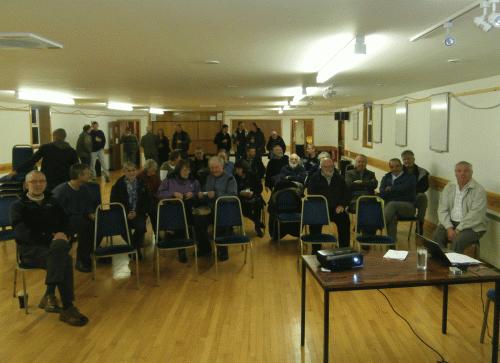
Paul asked me to give a talk to the Shetland Bird Club and I chose Tibet as the subject. I felt nervous giving a talk to so many illustrious birders!
As the 29th was a Saturday I could go birding with Paul again, the wind had turned westerly and it seemed like the run of Siberian vagrants was due to end, however we hoped that the odd American bird might be discovered. Returning to Toab we found the Olive-backed Pipit with ease but still failed to connect with the wide-ranging Isabelline Shrike.
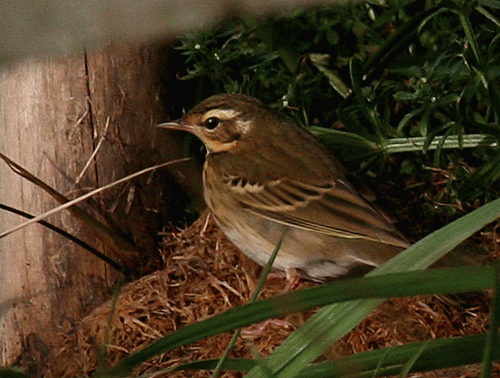
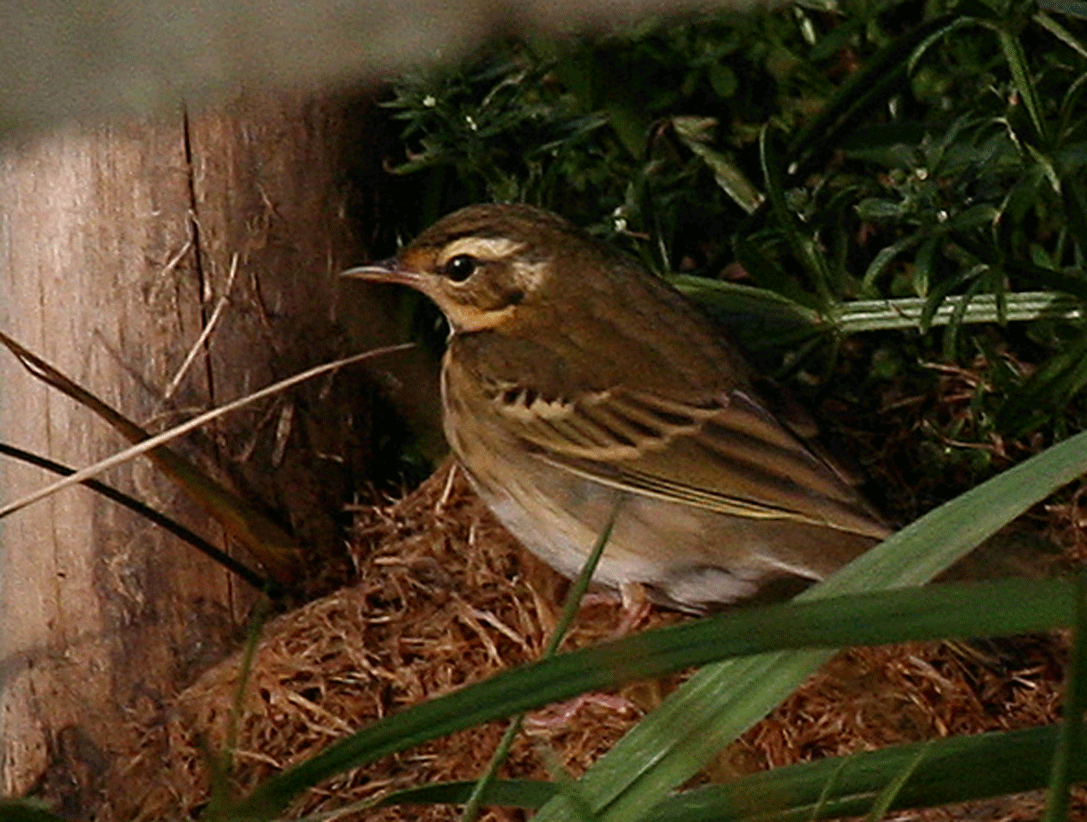
The white spot (with a black mark below it) situated behind and below the whitish supercillium is diagnostic of Olive-backed Pipit.
A lengthy thrash around a number of wet meadows produced lots of Snipe and two boot fulls of water, but little else. A report of a Richard’s Pipit at Quendale drew a blank (although it was seen again in the evening) but we had another look at the Common Rosefinch, this time I had my SLR with me.

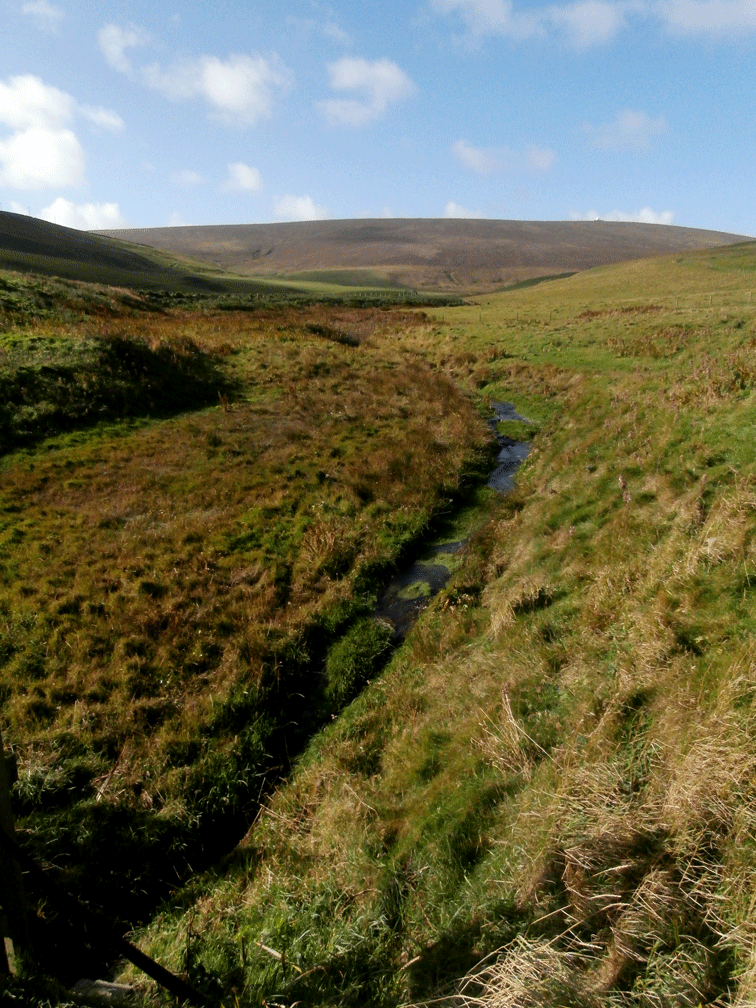
Much of Shetland birding involves finding migrants in narrow burns and wet ditches.

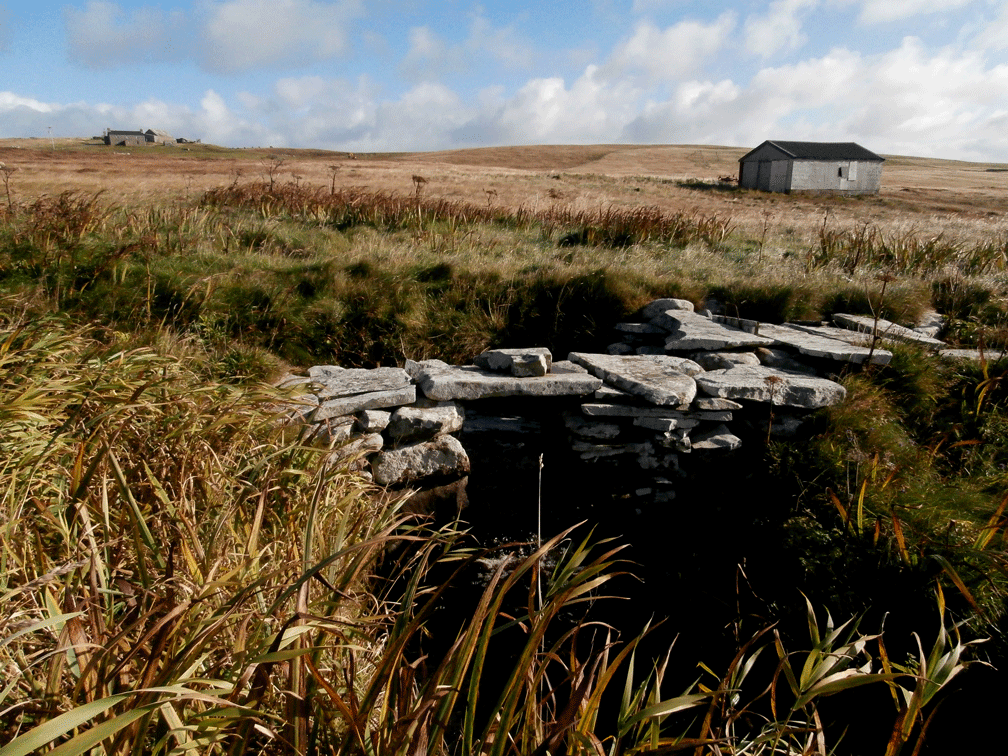
An old stone bridge over an overgrown ditch.

Disused and abandoned farm buildings dot the Shetland landscape.

The adult Rosefinch again sunning itself on the side of the quarry.
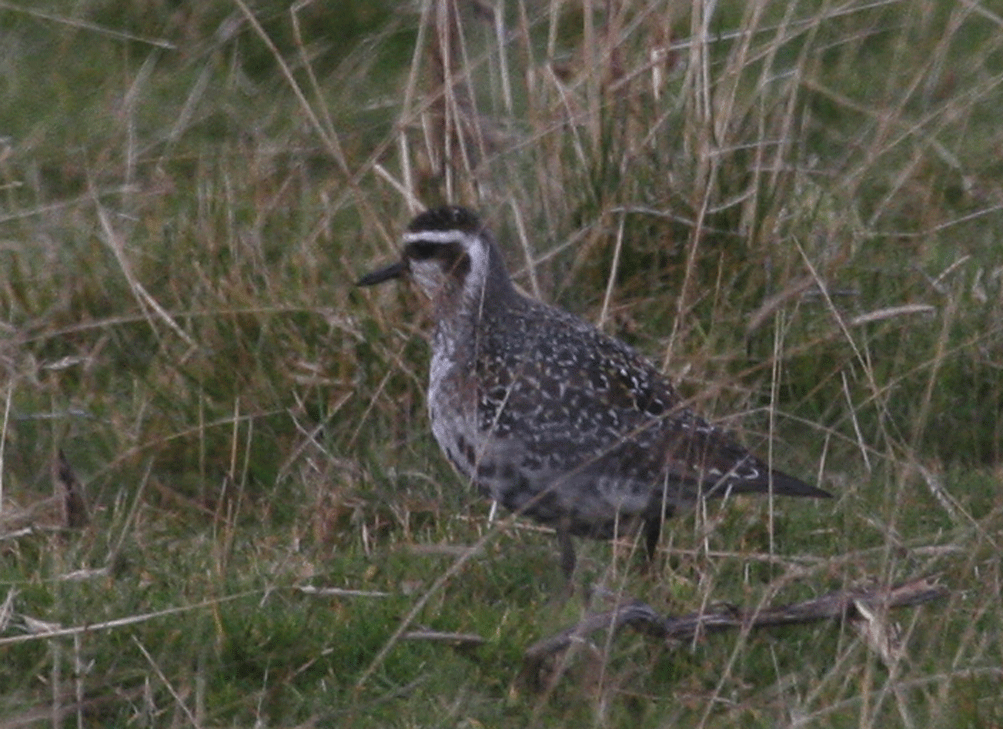
Finally a trip up to Tingwall gave us good views of an American Golden Plover in a flock of 80 or so European Golden Plovers.

Smaller and greyer than its European cousin, this adult American Golden Plover still showed some remnants of summer plumage.
On the 30th Paul and I headed to Hoswick, a short drive to the north where the Siberian Stonechat I had searched for a few days before had been relocated. After a short wait we had good views. There was a new influx of birders to Shetland yesterday and about 50 had gathered at Hoswick. Shetland is gaining in popularity as an autumn birding destination and many locals fear it will become as packed as Scilly used to be in its heyday. A nearby hedge held both Yellow-browed and Wood Warblers showing that almost any area of cover in Shetland can turn up good birds.

Some of the birders that gathered at Hoswick.

Siberian Stonechat has only recently been treated as a full species by the BOU and this is my first sighting since the ‘split’.
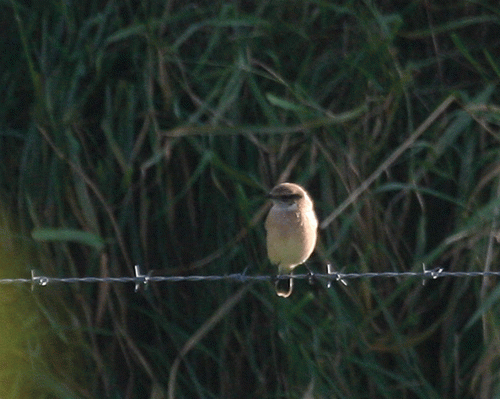
The taxonomy of Stonechats has still to be finally resolved, with races from eastern Asia, the Caspian/Caucasus and Ethiopia possibly deserving full species status.
We had arranged to meet Roger Riddington and he greeted us with the news that he had just found a Buff-bellied Pipit, the American version of our Water Pipit and Rock Pipits. It took a scramble down a cliff to get to the beach at Rerwick and the pipit performed albeit distantly. This was only the second time I have seen this species in the UK. As we left Paul informed the Shetland grapevine, whilst I contacted Birdguides. Unfortunately using their upload page, I entered Rerwick in Orkney not Rerwick in Shetland. Apologies to any Orcadian birders who may have had their hopes raised, only to be dashed minutes later.

Rerwick beach.

The distant Buff-bellied Pipit.

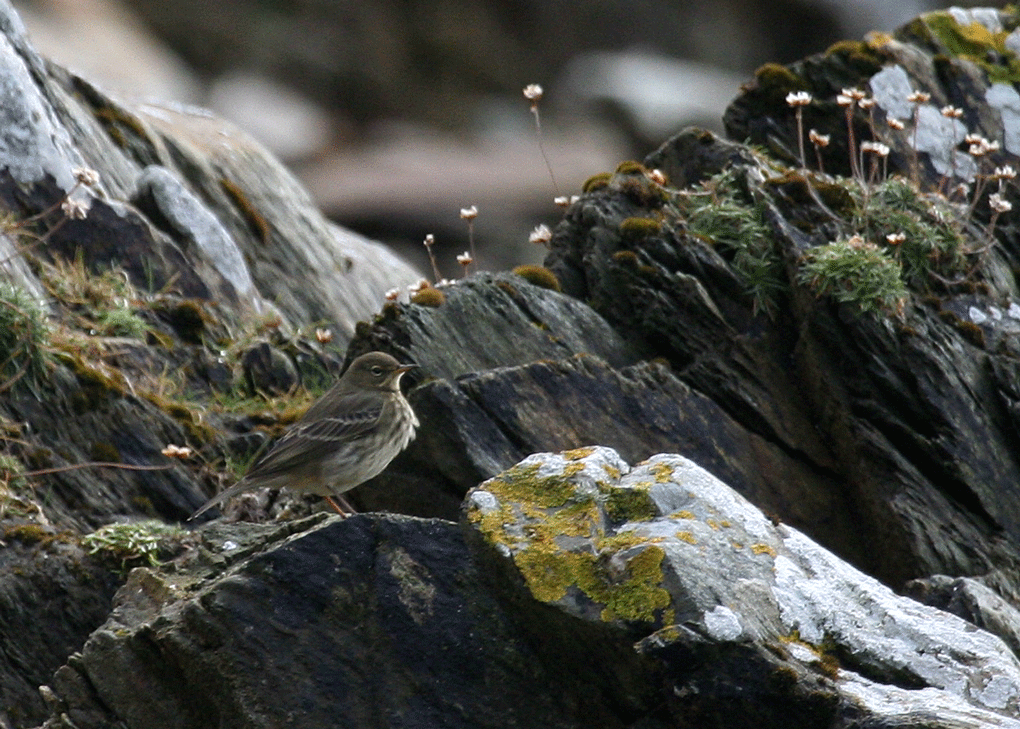
The local Rock Pipits were more obliging.
The morning of the 25th saw the Islands buffeted by a strong NE wind. I tried seawatching from Sumburgh Head, but although I saw lots of Gannets, Fulmars and Kittiwakes plus a scattering of Razorbills and Bonxies, birds that would have been new for my year list like Sooty Shearwater or either of the storm-petrels were absent.
The wind died somewhat during the morning and I combed the fields around Sumburgh Farm for migrants, but apart from the odd Wheatear and Goldcrest I saw little, a Merlin was probably the best bird. As I was heading back to the car Paul texted me to say that a Lanceolated Warbler (a Siberian species related to our Grasshopper Warbler) had been ringed on the island of Whalsay. Having established that it had been released back into the small pine plantation where it had been trapped, I headed northwards and caught the ferry from Laxo to Whalsay, arriving mid-afternoon. The plantation was very small yet surprisingly dense; for over an hour, myself and three other birders saw only Goldcrests. I had a glimpse of a bird on one of the lower pine branches which was only a few inches off the ground and on investigating saw a small greyish-brown warbler creeping through the grass like a mouse. It flicked over a broken twig showing the long undertail coverts characteristic of the genus then vanished for good. This ultra skulking nature is typical of the Lancies I have seen in Siberia or on wintering grounds in South-east Asia, but given the right viewing condition they can sometimes be seen well.

The island of Whalsay.

The little plantation at Skaw. The trees might only be six feet high but it was a devil of a job to find the Lancie.
On the 26th I tried to get a flight from Tingwall to the island of Foula as several rare birds had been seen recently. It is about a 40 minute drive to Tingwall from Paul’s so an early start was required but unfortunately all the seats on the seven seater plane were taken. As I was in the area I opted to look at the big plantation at Kergord. A few Bramblings and Chaffinches were in the area along with a few Chiffchaffs and a single Yellow-browed.
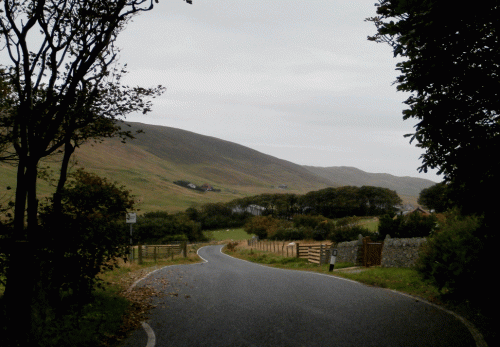
Kergord, the only truly wooded habitat on Shetland.
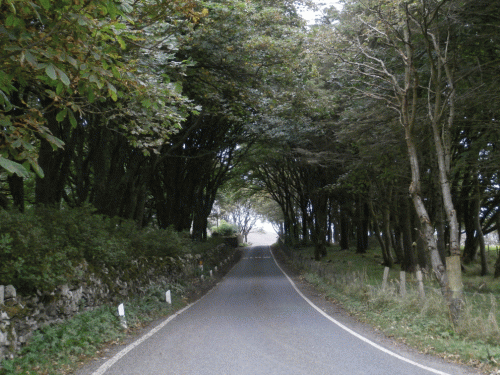
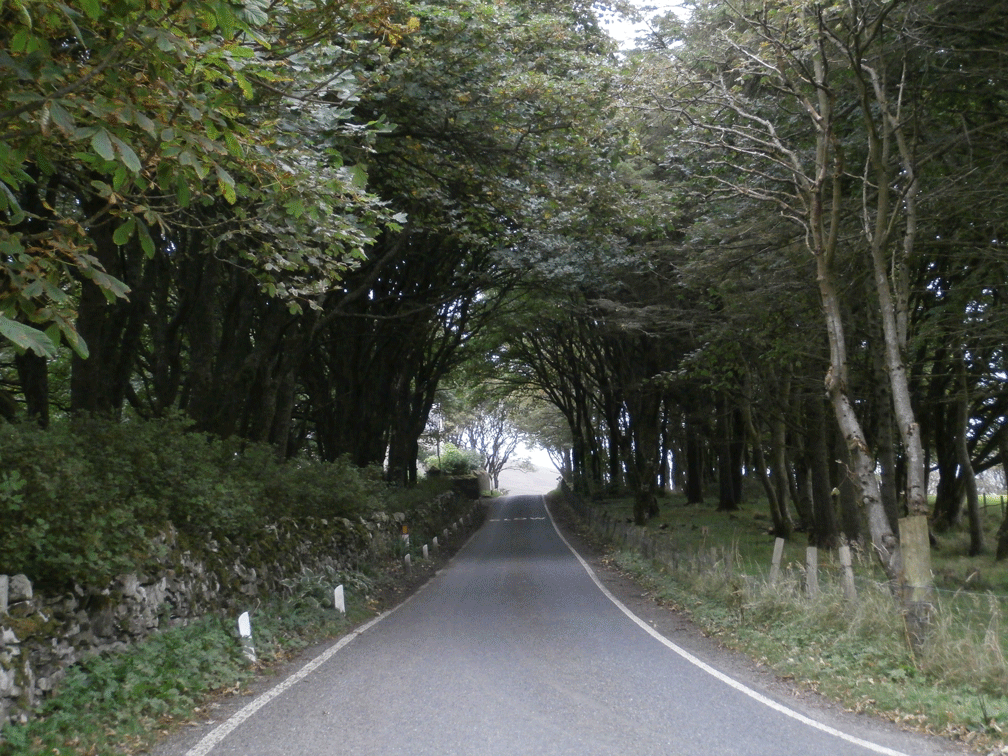
This could be a lane in Devon……
I returned to Virkie via the Loch of Tingwall where I saw a pair of Whooper Swans along with a few ducks. The wind had dropped now so I opted to put up the nets in Paul’s garden and soon trapped five Goldcrests and a Dunnock. The latter may be a common garden resident in Dorset but in Shetland it is a scarce but regular migrant. I also saw another Yellow-browed in the garden.

The orange feathers in the crown of this Goldcrest show that it is a male.
I later headed for Scatness where a Little Stint was seen with the Dunlin, a Great Northern Diver swam offshore and a Redstart was seen along with an influx of Song Thrushes. I heard from Paul that there was Little Bunting at Quendale and headed there but had no luck, however whilst searching Paul rang again to say he was watching another Little Bunting at Sumburgh quarry. I retraced my steps past Scatness and reached Sumburgh quarry just before dusk, but still in time to watch the bunting feeding in the open.
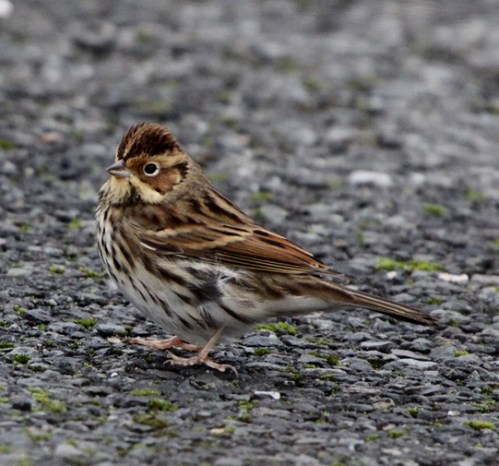
It was too dark to photograph the Little Bunting, so I took this picture of a very similar looking bird from the internet.
On the 27th Paul arranged for me to meet his mate Micky Maher on the northern island of Unst. I had to leave at 0715 to get the ferry to Yell and then on to Unst, arriving about 1000. I met Micky at Haligarth, the northernmost wood in the UK. We soon had good views of a Blyth’s Pipit that had been there for a few days. Later Micky took me to the northernmost house in the country at Skaw where we saw five ‘north-western’ Redpolls, the large Greenland/Iceland form of Common Redpoll. We then headed to the northwestern peninsula of Lamba Ness where we saw two Snow and two Lapland Buntings. Other migrants in the area included a few Redwings, Bramblings, Goldcrests, Willows, Chiffs, Blackcaps and Robins. A crop field held a Wood Warbler, a bit of a surprise to those of us who are used to seeing them singing high in oak in the New Forest.
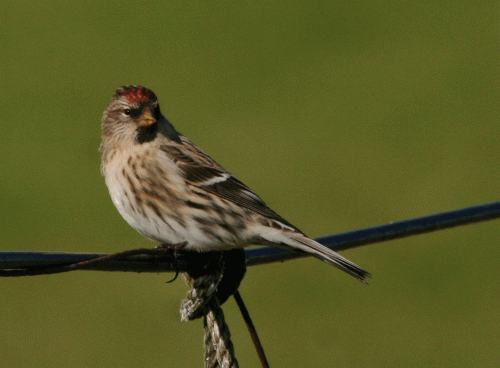
Redpolls have been considered to consist of one, two, three, five or even six (but never four) species. Currently the British recognise three species, the rest of the world recognise two!

Larger and more heavily streaked than the nominate race of Common Redpoll, the rostrata and icelandica races are rare visitors from Greenland and Iceland respectively.
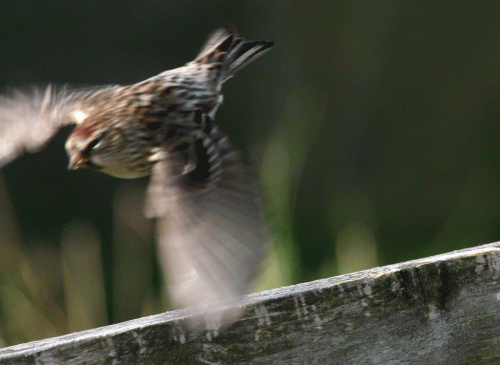
The pale, yet heavily streaked rump is characteristic of ‘northwestern’ Redpolls.

Blyth’s Reed Warbler, a vagrant from eastern Europe/western Siberia/central Asia. A colder shade or brown than Eurasian Reed Warbler with a supercillium that shows mainly in front of the eye.

The short primary projection and plain tertials can be seen in this photo. A brownish panel in the wing was visible from certain angles.
I really enjoyed my time on Unst but as I headed back south and got phone reception again, I heard of the other birds I had missed; a flyover Rough-legged Buzzard and a Booted Warbler on Unst, a Red-flanked Bluetail on Whalsay and an Isabelline Shrike and Olive-backed Pipit back at Toab near Virkie. I headed for the Whalsay ferry but missed it by minutes, so decided instead to head back to Virkie where two good birds awaited me. On arrival I found a lot of disappointed birders, both the shrike and pipit were being seen occaisionally, but both were ranging over big areas and I didn’t catch up with either.
Returning to Paul’s, I found he had opened the nets in his garden and trapped five Linnets, two of which had already been ringed, apparently some five miles away.
On the 22nd I flew from Southampton to Sumburgh via Edinburgh arriving at 1330. I picked up my hire car and headed for Pail and Liz Harvey’s house, where I would be staying for the next two weeks. Paul had just got back home and was with his friend Roger Riddington, the editor of the famous British Birds journal. It was a beautiful warm day, almost unprecedented by Shetland standards and we had a spot of lunch in the garden. The first bird I lifted my binoculars too proved to be a Yellow-browed Warbler, a scarce but regular autumn visitor from Siberia.
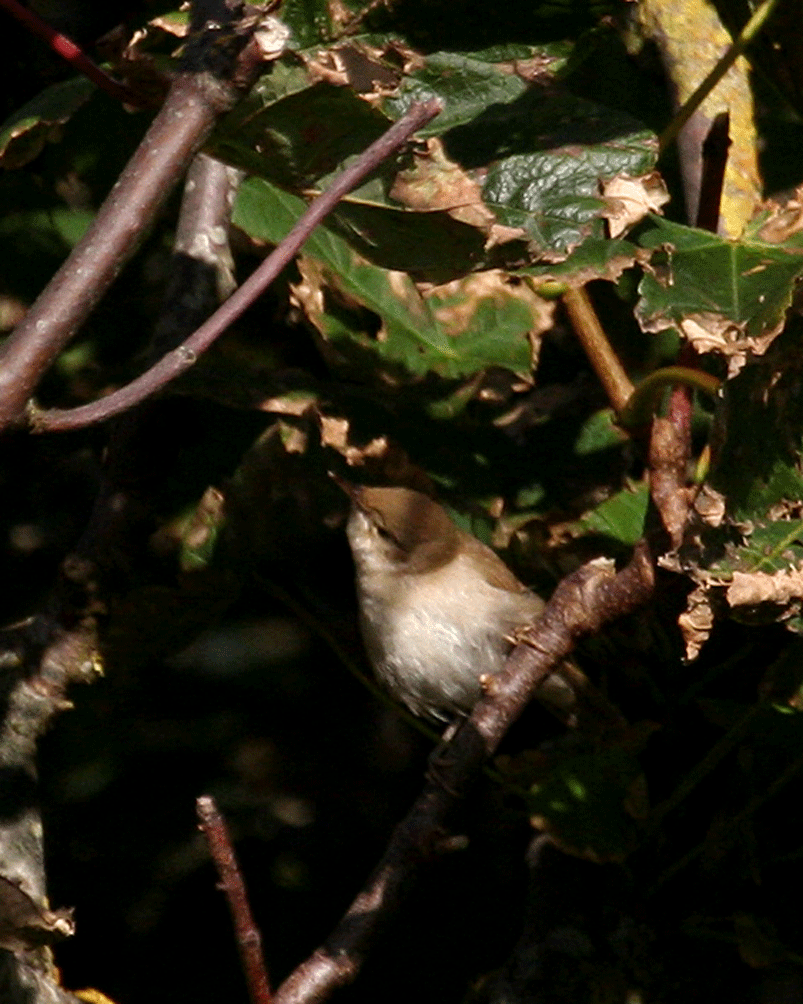
In spite my soaking up the glorious sunshine and the stunning view over Sumburgh Head with Fair Isle in the distance, Paul reminded me that the wind was in the east and there were good birds to be found. Roger, Paul and I headed for Sumburgh Farm where we stomped around the edge of the fields and eventually saw an obliging Barred Warbler near the farm-house.
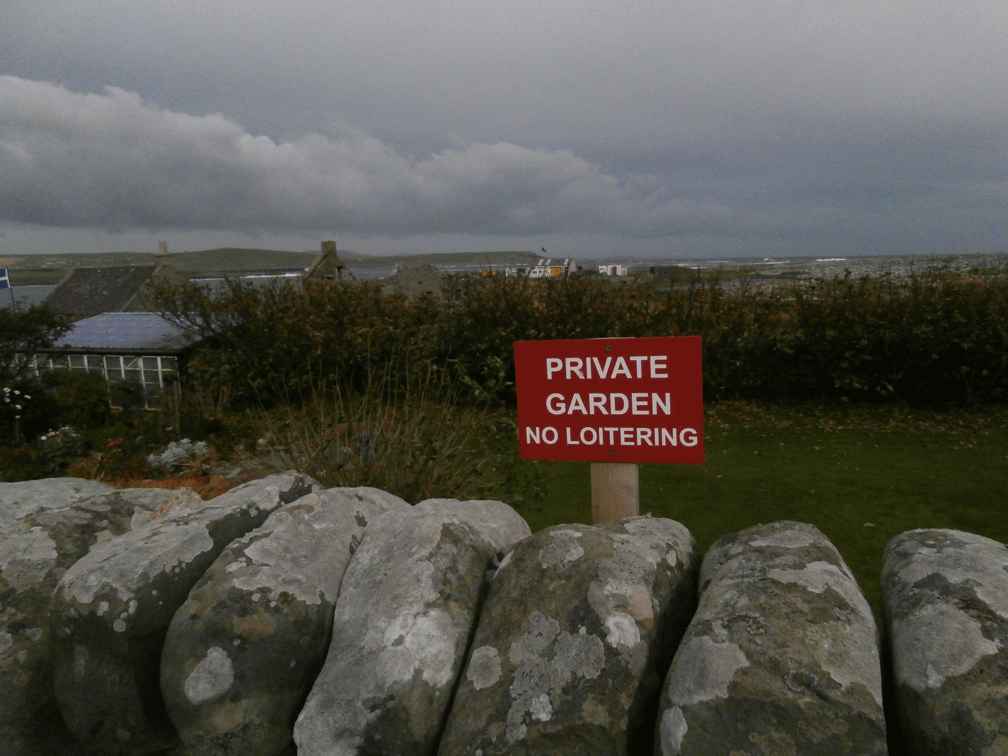
Although almost all Shetlanders welcome birders onto their land, a few do not and at nearby Grutness ‘private gardens – no loitering’ signs have been erected. This seems a bit unfortunate as the garden is on the opposite side of the road from the house, so privacy isn’t being invaded, nobody actually enters the garden and being the first cover birds encounter after making landfall on the Head, it’s a cracking birding spot. Whilst briefly pausing there and attempting to make our loitering as inconspicuous as possible, we saw two Lesser Whitethroats and an incredible three Yellow-browed Warblers, the first time I have seen more than one of this species anywhere in the UK.
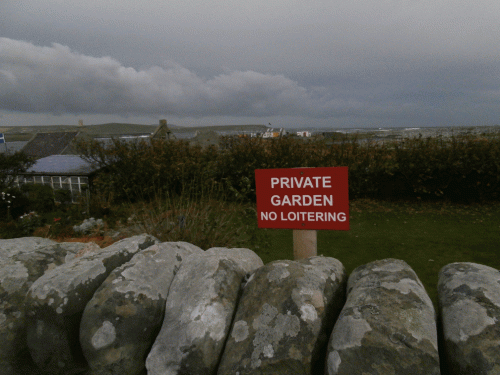
One of the best gardens for rare birds in southern Shetland (photographed on a dull day later in the week)

Lesser Whitethroats showed well but the following species stole the show, at least as far as I was concerned.

High in a sycamore a tiny fast-moving warbler showing a pale supercillium and an obvious wing bar is glimpsed, this is the stuff that drives birders to endure rain and autumnal gales on remote headlands. Most like this will prove to be a Yellow-browed but the much rarer Hume’s Leaf, Arctic, Greenish or even the ultra-rare Green or Two-barred Greenish Warblers remain possible.
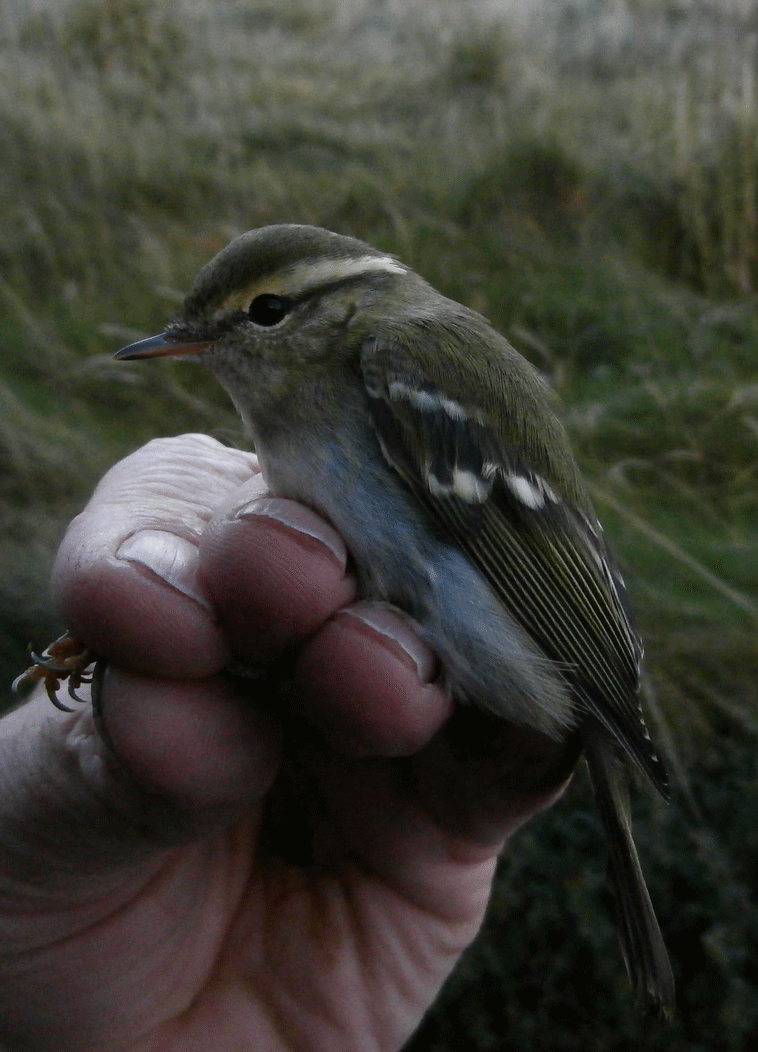
I first met Paul when I moved to Poole in 1978 and it was he, along with Ian Alexander and Pete Christian who first introduced me to ringing. Since he left the job as warden on Fair Isle, Paul’s ringing has mainly involved seabirds but we had agreed that during my stay, if wind conditions allowed, we would try some ringing in his garden. We erected a 40 foot net and immediately caught a few Blackbirds and Sparrows, pretty standard fare for anywhere in the UK, but just before dusk we trapped a Yellow-browed, a new bird in the hand for me. What an excellent start to my stay in Shetland.
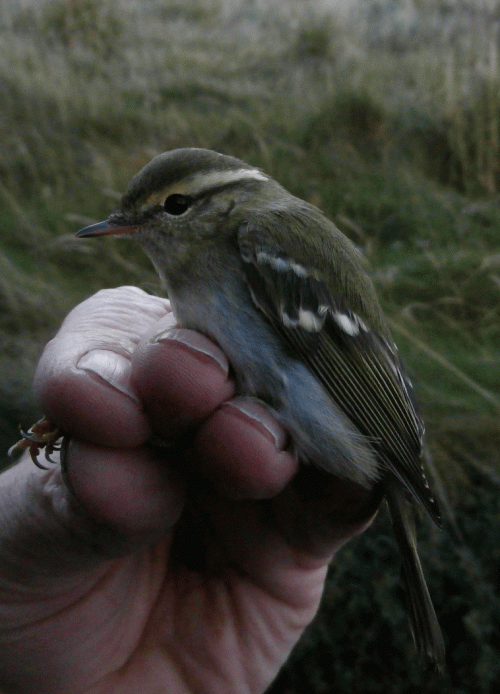
I have had a long-standing wish to see a Yellow-browed Warbler in the hand, unfortunately the light was fading by the time it was caught.
During the evening Paul and I joined a number of other birders for a drink at the Sumburgh Hotel. I had a chance to former Birdquest leader Iain Robertson, who I had travelled with to South Africa and Madagascar in the early 90s and top West Palearctic lister Pierre-Andre Crochet who is a member of the BOU taxonomic sub-committee. However the early start of the last few days was really catching up with me and by 2330 I was pretty much out of it.
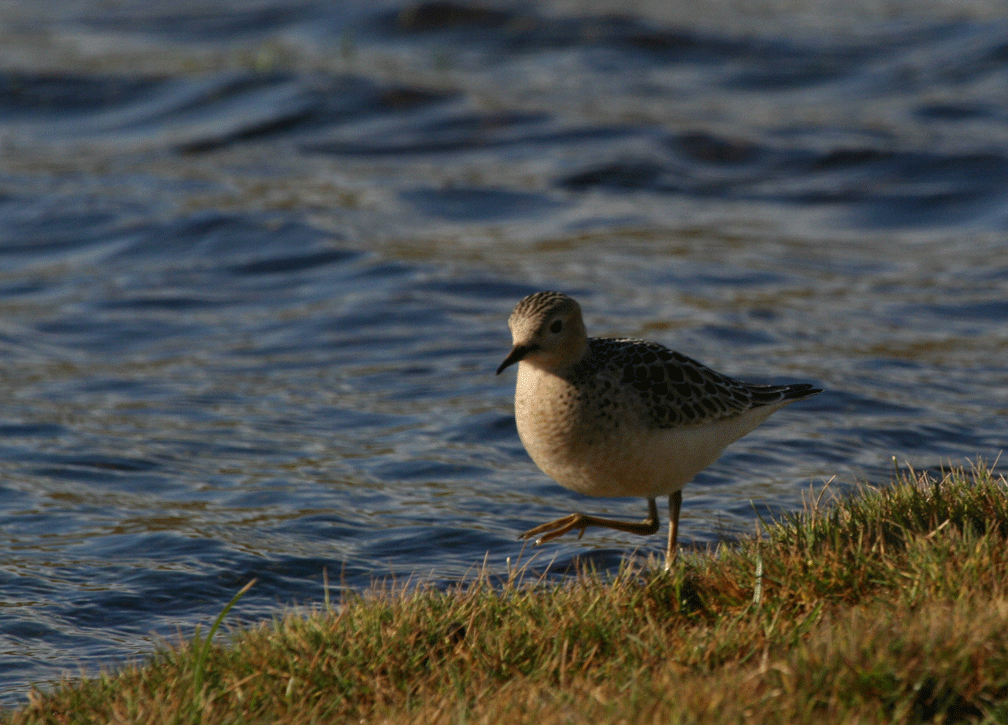
On the 23rd Paul and I birded on the Scatness peninsula but saw little of note. Paul phoned Roger to see if he had see anything and Roger invited us round for a cuppa. He also has a lovely house with a view over Grutness Bay. Roger had been out early that morning but like us had found little. Whilst we were there we were informed that a Buff-breasted Sandpiper had been found on Scatness, on the very pool we had walked past a short time before. We hurried down to Scatness, where along with other Shetland birders, we quickly located the sandpiper, a bird whose breeding range is almost totally confined to arctic Alaska. It was in the company of a Sanderling and gave cracking views until it was flushed by a Merlin and disappeared in the direction of the airport.

All the way from Alaska, yet Buff-breasted Sandpiper is one of the commoner North American waders to reach the UK……

…. and a shot showing the buff breast.
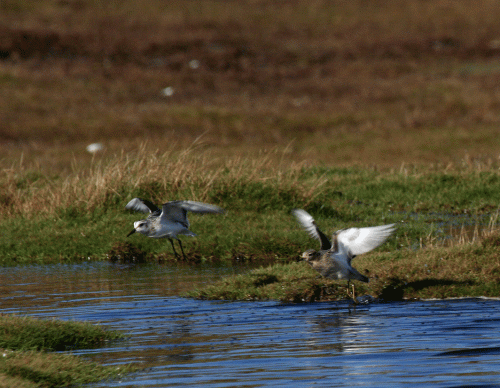
Suddenly the Sanderling and Buff-breast took flight. The startling white underwing is used in display where the wings are raised one at a time.

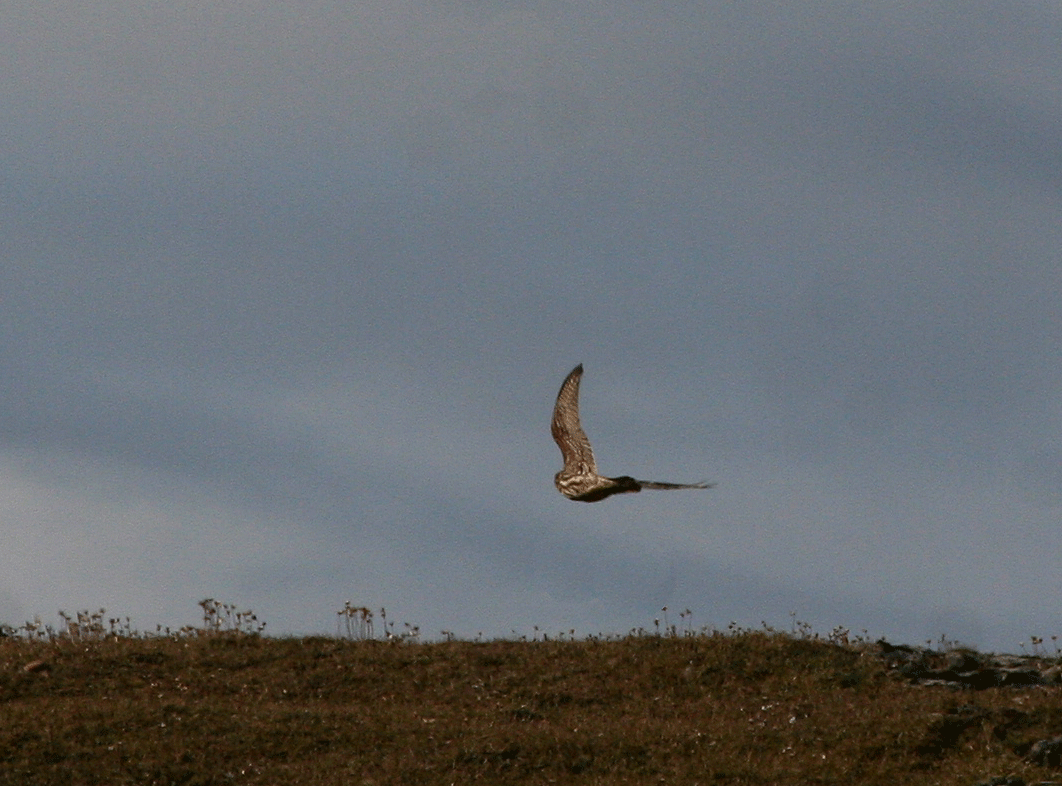
The culprit wasn’t inconsiderate birders or over eager photographers but this Merlin.
Later in the day we stomped around the ditches and iris beds at Quendale, but the best birds were seen close to the road by the old water-mill. A Red-breasted Flycatcher and three or four Yellow-broweds flitted around the bushes and even allowed photo opportunities. By the time we had climbed over multiple gates and styles and thrashed around along the stream bed I was really knackered and after checking out a number of roadside spots we returned home.

The characteristic white bases to the tail of this Red-breasted Flycatcher can be easily seen in this shot.
Although there were good birds in south Shetland it was clear as the afternoon that the best were on the remote islands of Foula and Fair Isle. Paul suggested I try to fly to Fair Isle on the 24th as they had ringed a Lanceolated Warbler that afternoon, a UK tick for me, however before I could even consider this he received the stunning news that a Magnolia Warbler had been found on Fair Isle that afternoon. This was only the second record for the UK of this American warbler and would be a British tick for just about everyone. Then Paul’s phone went crazy with local birders trying to arrange a visit. Paul explained to me that although I was staying with him, first places on any flight would have to go to the top seven Shetland listers. In the end they managed to get on a school flight to Fair Isle, albeit at considerable cost, (the plane normally goes out empty and returns bringing Fair Isle kids to school on the mainland).
I had a fairly troubled night but was up at six, Paul suggested I drive to the little airport at Tingwall just in case any of the seven Shetland top listers was a no-show. As expected this wasn’t the case; they all headed off to Fair Isle but the Magnolia had gone (although several other rarities provided some compensation).
I drove north to Muckle Roe where a Citrine Wagtail had been seen yesterday. It was a lovely location with great panoramas but there was no sign of any vagrant siberian wagtails. However I was able to relocate a somewhat distant male Surf Scoter with a flock of 200 Eiders. Not a year tick for me but a more attractive bird than the female I saw in Devon early in the year. I also birded in the Vidlin area but to little avail. Not content with seeing a load of good birds on Fair Isle, Paul and Roger met me at Quendale in the late afternoon where another three Yellow-browed were seen.

The beautiful vistas of Muckle Roe

Fresh in from Iceland, these Whooper Swans showed well.

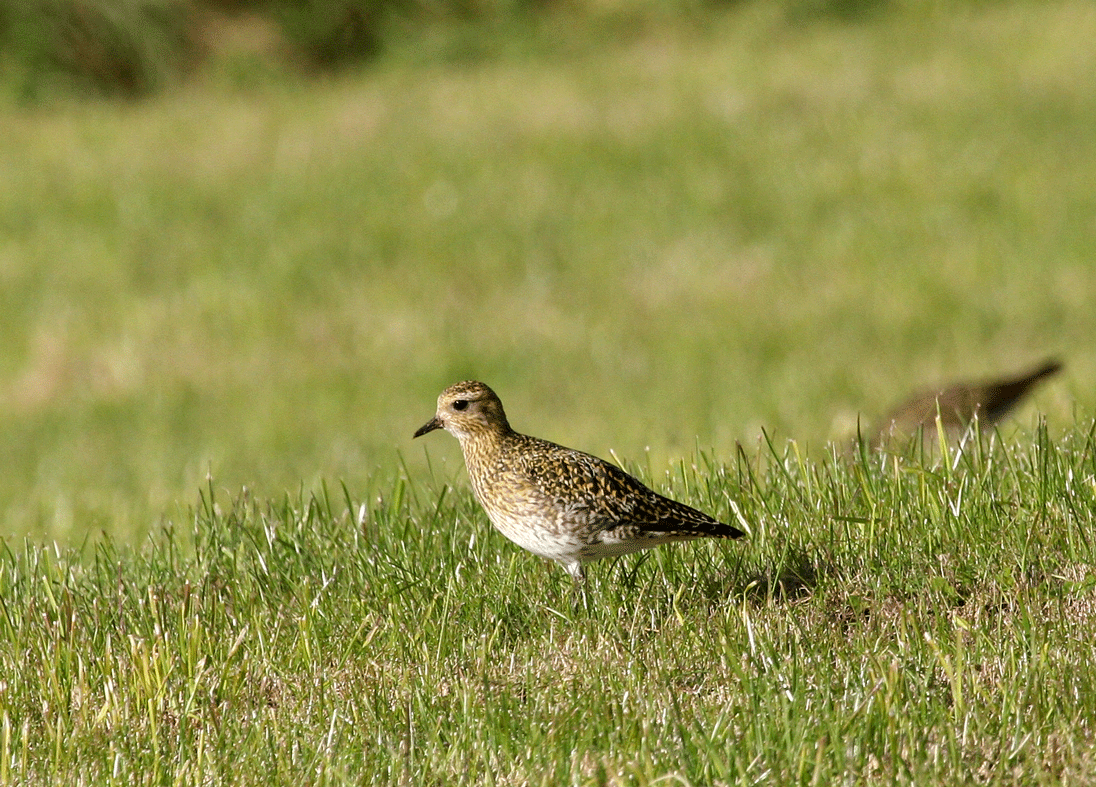
A migrant from northern Europe or Iceland or a local breeder? the origins of this Golden Plover is unclear
Over the last week or so I’ve been ringing at various times, but done little else in birding terms.
On Wednesday 12th we tried ringing Swallows at Lytchett Bay, we only caught a few but at least we were all set up for an early morning visit on the 13th. I got up early the next day but was surprised to find I was the only one there. I started unfurling the nets, but became a bit concerned by the breeze. I finally checked my phone and found a message from Shaun at 0530 ‘too windy to ring, meet at 0700 to take down’. Well, I could have had another hour in bed, but whilst I waited for the others I saw a Pintail fly over, a rare visitor to the Bay, and an Osprey fishing in the channel.
After taking in the gear some of us reconvened at the more sheltered location of Paul Morton’s garden where we were able to ring close to 20 Goldfinches.
The morning of the 15th saw six of us go to Durlston. We had enough manpower to man both the Garden and the Goat Plots and it proved to be a very busy morning indeed. We ended up with 79 birds ringed at the Goat Plots and 205 in the Garden. Surprisingly exactly the same number of Blackcaps and Chiffchaffs were caught, 118 of each (sounds like an advert for directory enquiries!). There was little variety, but we did ring two Grasshopper Warblers a few Whitethroats and Willow Warblers.

Sunrise at the Goat Plots, the last time that morning that there was time to stop and take photos.

This Chiffchaff’s tail has sheared along a fault bar. As mentioned before these fault bars occur when there is a severe shortage of nutrients when the birds are growing tail feathers in the nest. Heavy rain this summer would have produced these food shortages.
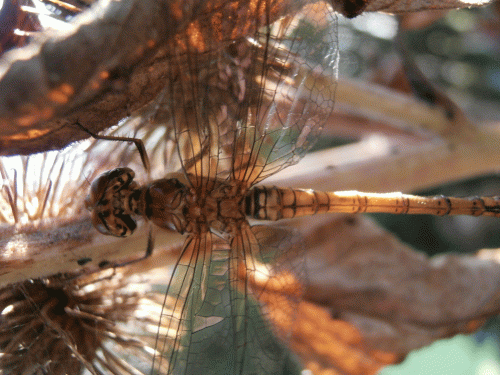
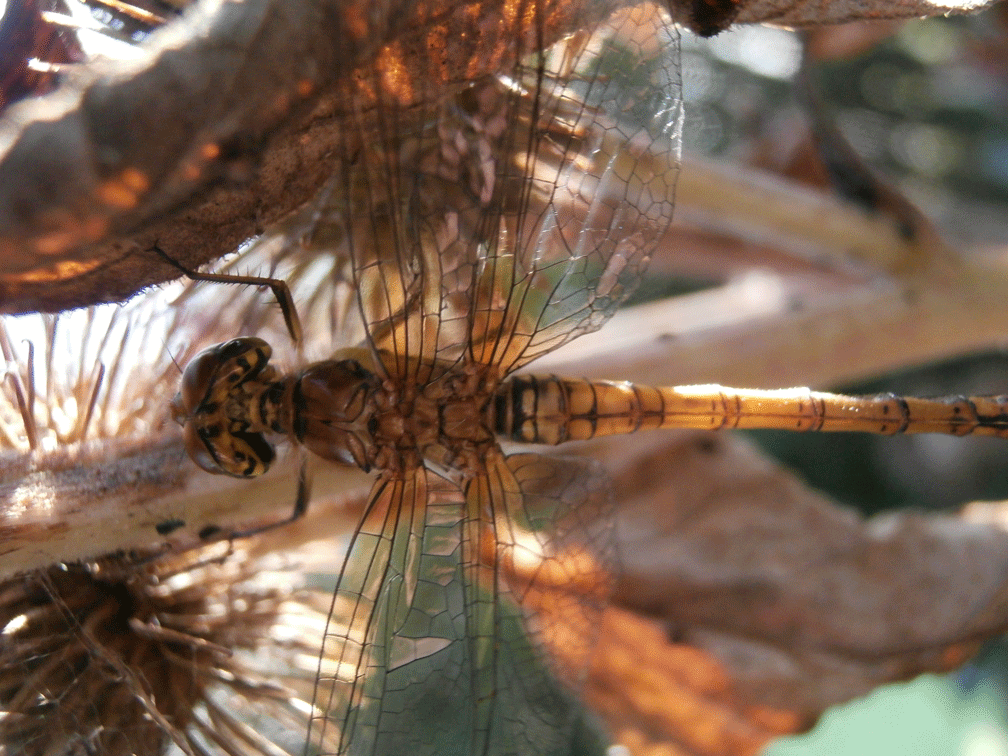
This dragonfly was photographed in Durlston garden as we were leaving. I know little about dragonfly identification, can anyone help me with the identification?
On the morning of the 17th Shaun and I had another go at ringing Yellow Wagtails and Tree Pipits at the Lytchett Bay maize filed. The maize is nowhere near as high as last year, when it was more than head height, this year it hardly comes up to my waist. We were able to improve on our experience of last week and ringed four Yellow Wags and one Tree Pipit, plus a Linnet and a few Chiffchaffs.

Early morning at Lytchett Bay

The stunted maize field, another victim of this summer’s unseasonal weather..
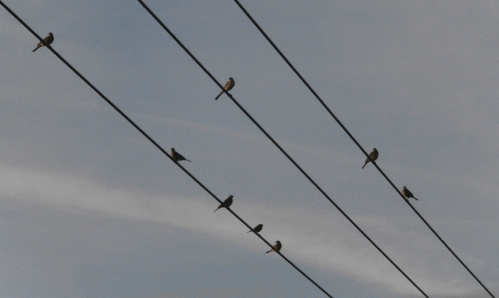
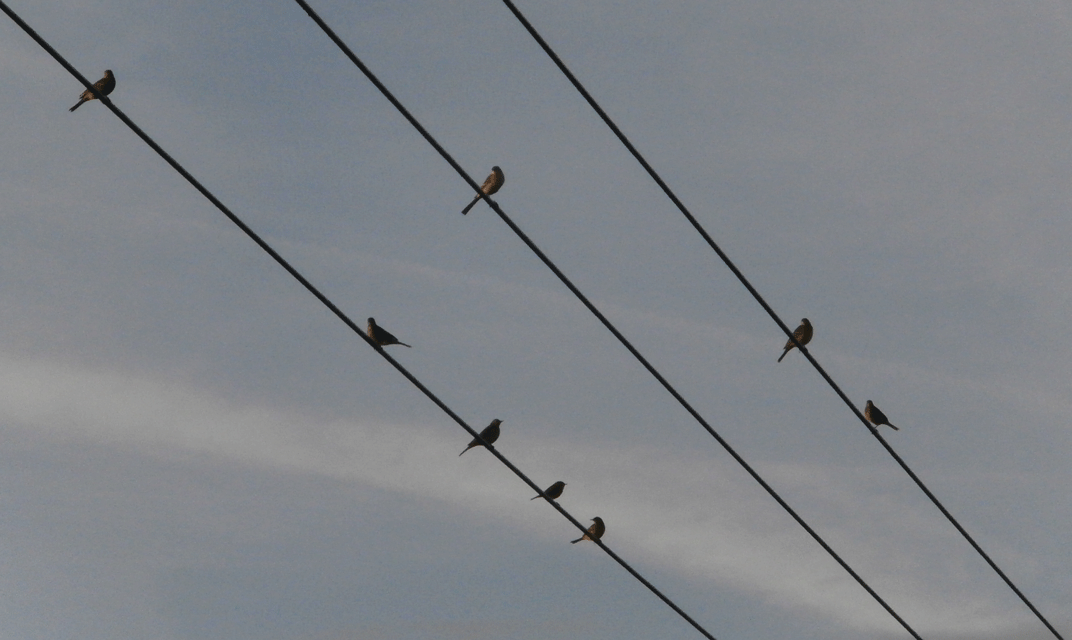
Yellow Wagtails and Tree Pipits sat on the wires above the maize field before dropping down into the crop.
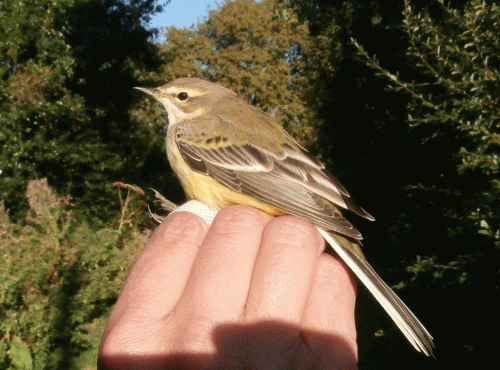
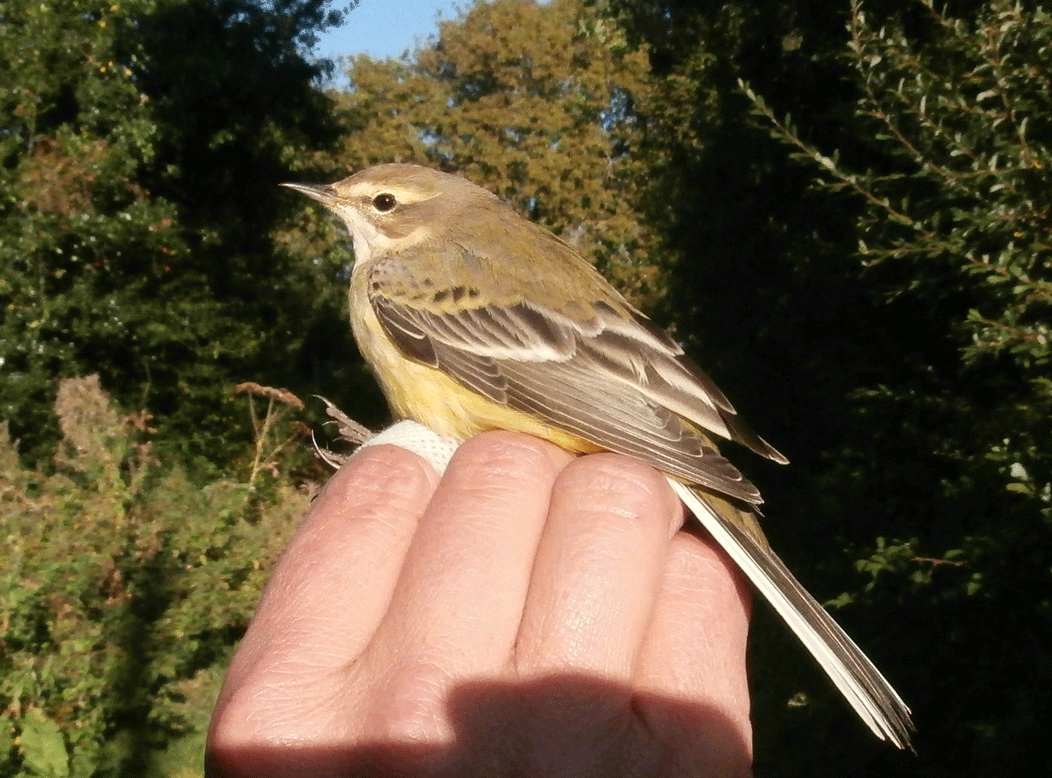
Yellow Wagtails have declined notably and no longer breed in Dorset but they still can be seen on migration. The pale tips to the greater coverts show that this is a first year bird.
Along with Sean Walls and Mike Gould, I went ringing at Durlston on Friday 21st. I had hoped for a fairly short session as I still had to pack for my trip to Shetland but it was not to be. By the time Sean and Mike left for work at 0845 we had ringed over 60 birds, almost entirely Blackcaps and Chiffchaffs, but there was plenty more to come. Blackcaps and Chiffs kept arriving, with the occasional Whitethroat. A Robin in complete juvenile plumage was a surprise for the latter half of September was a surprise. As the morning progressed huge numbers of hirundines arrived and I ringed about a hundred Swallows and House Martins plus a couple of Sand Martins. A total of 227 birds were ringed, I didn’t get away until about 3pm, much later than I had hoped for but it was a great experience. Lets hope we get a few recoveries from all those birds.

An adult Woodpigeon was an unexpected capture. I didn’t have time for photography later in the day.
And finally a couple of photos from home. I will be away visiting my friends Paul and Liz in Shetland for a couple of weeks, but hope to do some blog updates from there.

Grandmother and Auntie sort out Amber’s fringe.

Anita adopts a characteristic pose when texting.








































 gryllosblog