Archive for the ‘Uncategorized’ Category
Saturday was cold and grey with a strong north-east wind and it really was colder today than at Christmas!. Margaret was busy with an all-day choral workshop, ringing was out of the question and it didn’t look promising for a visit to Portland. I thought it would be a good idea to visit Brownsea Island, after all I could get shelter in the hides.
On arrival I found that most of the waders were congregated at the north end of the lagoon which meant looking into the icy blast through the open windows of the hide, being as it is May not January I wasn’t wearing thick gloves or thermals! There were plenty of summer-plumaged Dunlin, Bar-tailed and a few Black-tailed Godwits, the odd Greenshank, Whimbrel and best of all a partial sum plum Curlew Sandpiper which was a new bird for the year.
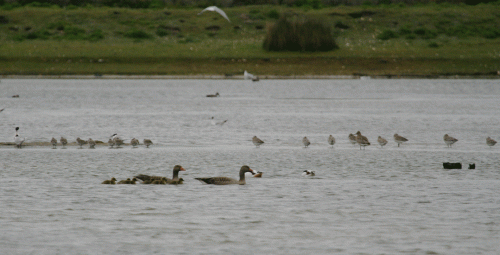
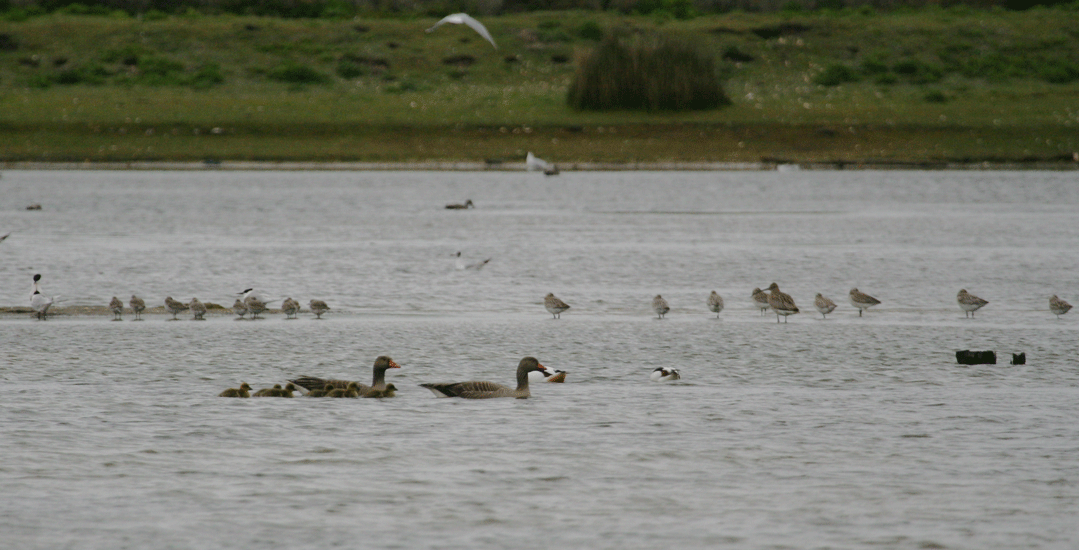
Greylag Geese with goslings with various waders and terns behind.
Sandwich Terns were already sitting on eggs in front of the hide, although Common Terns had yet to nest and several Red Squirrels put a good show by the Villa.

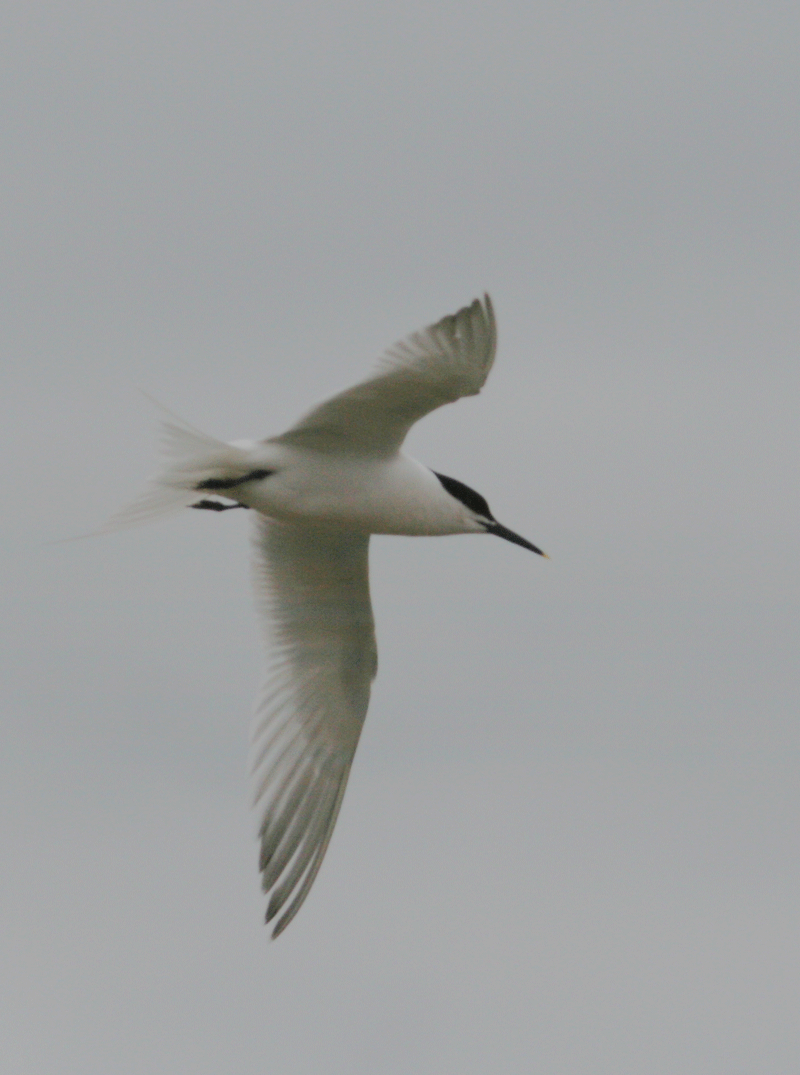
Sandwich Terns have a large colony on Brownsea and typically arrive a few weeks before the Common Terns.

Last year there were over 80 pairs of Sandwich Terns on eggs by early May, this year there are just 14.

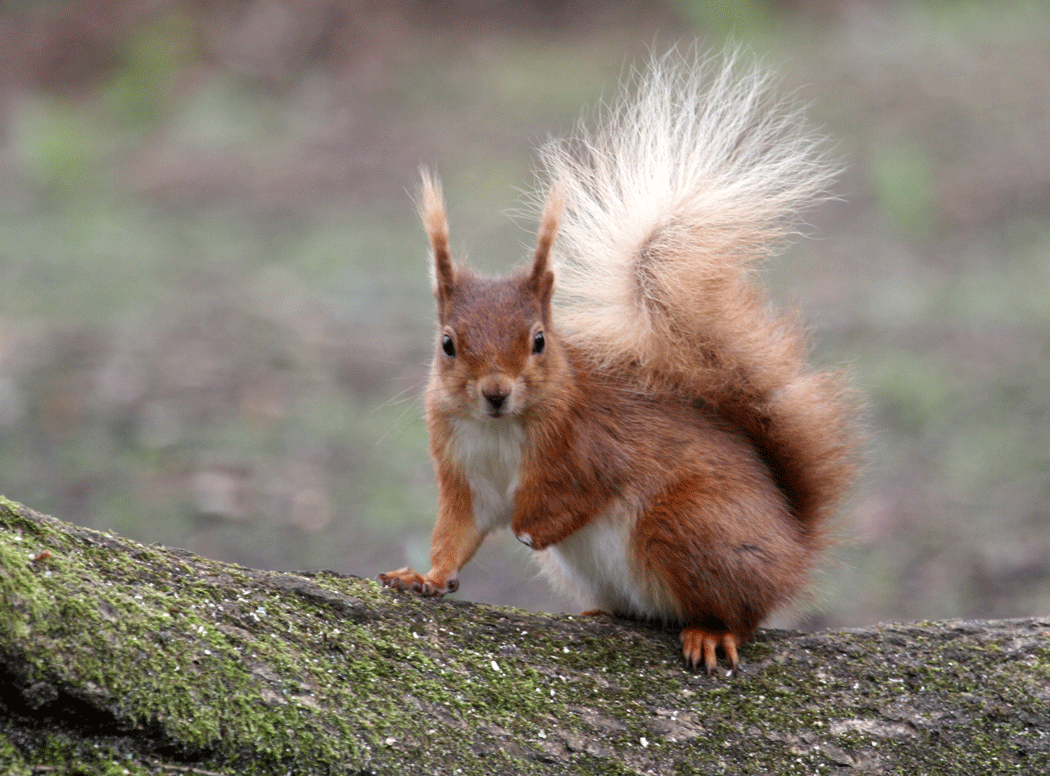
Brownsea is one of the few places in southern England where Red Squirrels can be seen. This cute three-legged individual can be seen near the Villa.
I met Frank O’Connor in 2004 on a cruise to New Zealand’s subantarctic islands, most of us were there just to see the fantastic array of seabirds in these southern oceans but Frank had another motive, adding birds to his Australian list. Our southernmost destination, Macquarie Island is in fact an Australian territory and as well several penguins and many tubenoses, Frank had a chance to add that most riveting of birds to his Aussie list – Lesser Redpoll!
Redpolls were introduced to New Zealand in the 19th century and spread down the subantarctic islands as far as Macquarie, however they remain quite rare that far south. After we had seen and photographed penguins, Elephant Seals and all the other wonders on the subantarctic, most of the group went on a concerted Redpoll hunt for Frank, but to no avail.

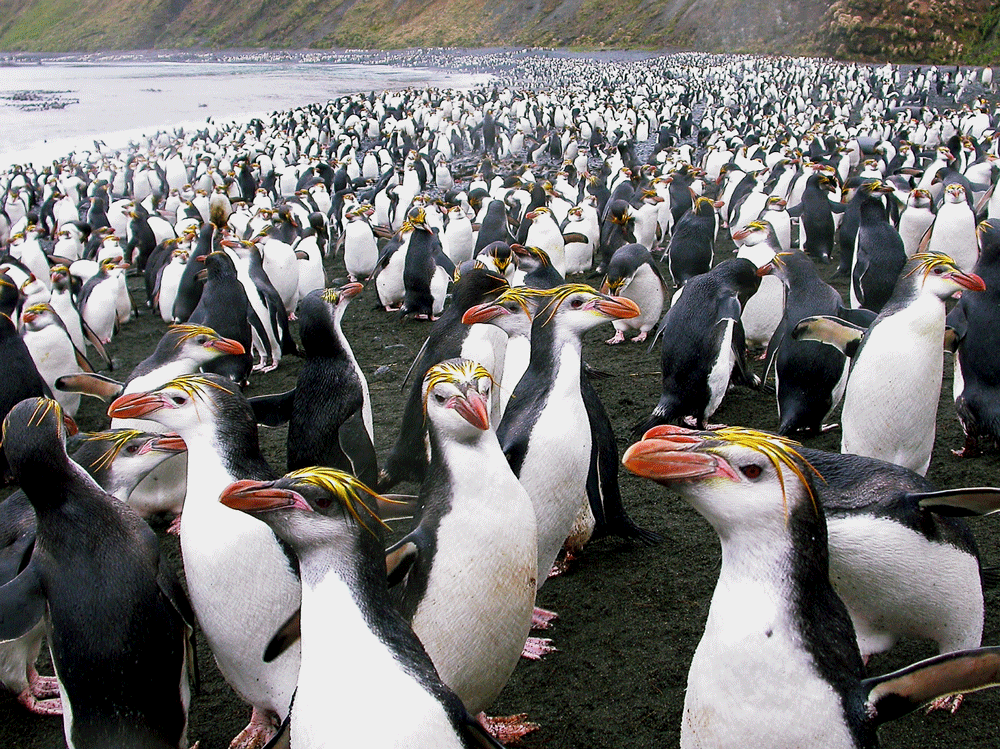
Macquarie Island – full of Royal Penguins but short on Redpolls.
Frank also obtained notoriety when he perched on a ledge in the bridge and during a 10 metre swell got catapulted across the room and into the captain, breaking his arm in the process (his arm not the captain’s).

Frank (with broken left arm) in 2004 aboard the ‘Spirit of Enderby’
Frank had recently arrived in Dorset to visit his sister in Bridport and after a number of successful visits to the Weymouth area with other birders, came to the Poole area in the hope that I could find him a few new species.
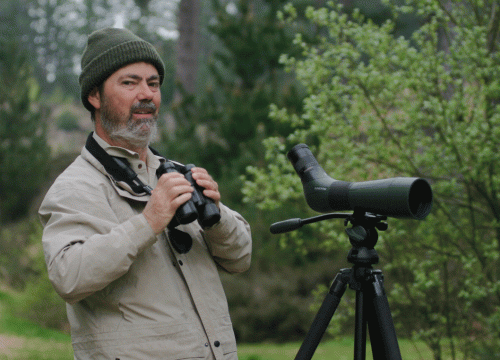
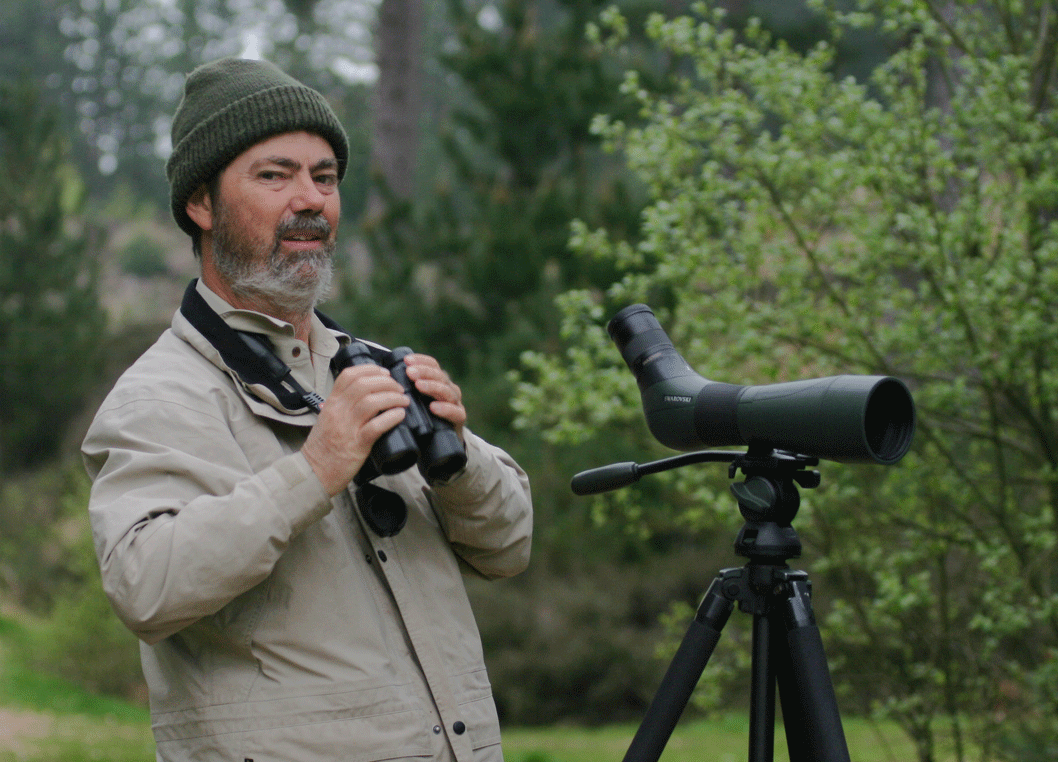
Frank at Wareham Forest in 2012
At Holton Lee we soon located a Great Spotted Woodpecker and down at Wareham Channel saw plenty of Med Gulls. At Sherford Bridge we saw a nice range of species including Frank’s first Green Woodpecker and Crossbills although we failed to get tickable views of Siskin.
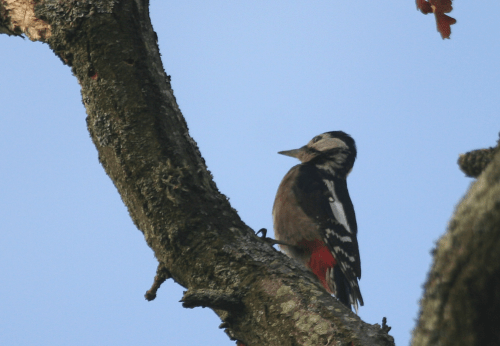
Frank had seen Great Spotted Woodpecker before in Turkey, although quite poorly, but Green was a life bird.
Finally we visited Middlebere where we found some Grey Plovers, Dunlin and Bar-tailed Godwits in summer plumage and saw a Hobby and Marsh Harrier.
In the end, in spite of it being a cold and grey day, Frank had three life birds and a whole bunch of new birds for his UK list. He had a little time the following day before his flight to Perth so I suggested Blashford Lakes as a reliable Siskin stake out. I hope he succeeded.
On Friday evening we went to a barn dance at Upton Community Centre, organised to celebrate Helen Cooper’s (a friend of ours from the Nexus organisation) 60th birthday. It was a very enjoyable and well attended evening, but I forgot to take my camera.
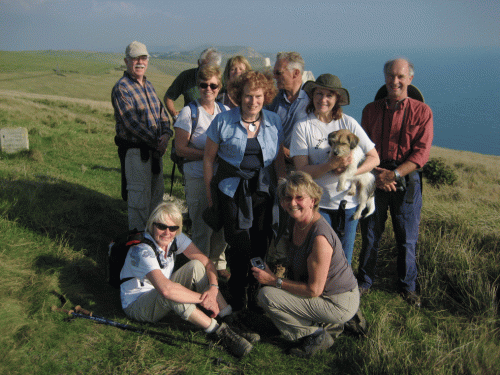
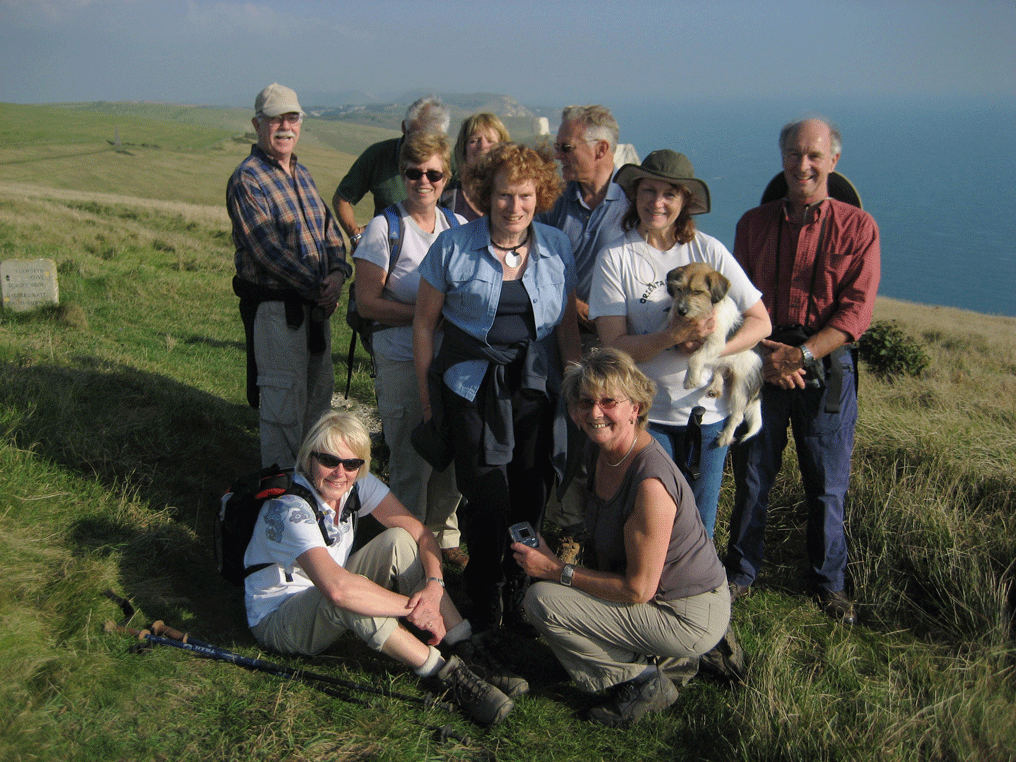
A bunch of Nexuns on a Purbeck hike. Helen is on the left, wearing dark glasses and standing up.
With a northerly breeze and cloud moving in overnight it looked perfect for a ringing session at Durlston, so I made the effort to get up at 0430. Four of us met an hour later but the wind was quite strong and coast was covered with fog and we were only rewarded with 12 new birds and 5 retraps. Whitethroat was the most numerous bird and we trapped another two that we ringed last year. On a walk around the site I flushed a Ring Ousel, quite a late date for this early migrant.

Although not all can be sexed and many cannot be aged, a Common Whitethroat with as grey a head as this must be a male.
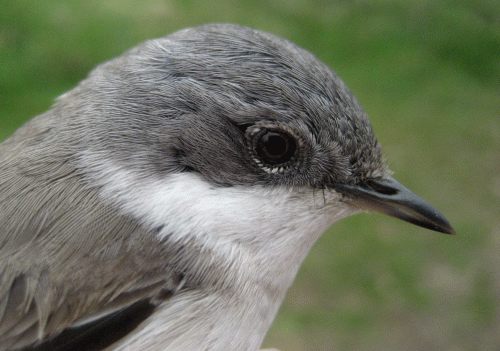
Lesser Whitethroats migrate from east Africa via the Levant and then north-west across Turkey and Europe rather than cross the Sahara.
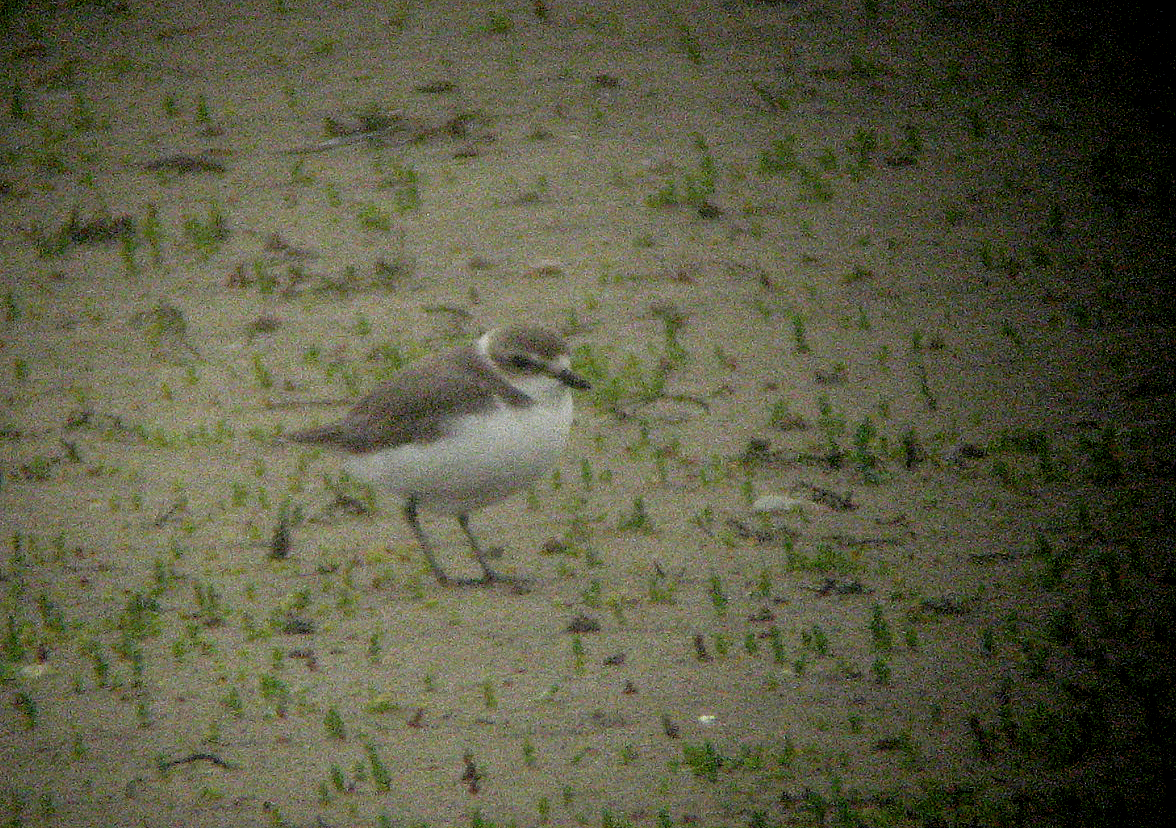
Late on the 2nd I heard about a Kentish Plover at Ferrybridge adjacent to Portland Harbour. As it is now a scarce visitor to the UK, but up to 1931 the species bred in Kent and Sussex but egg and specimen collectors caused a massive decline and tourist development finished them off.

I have seen 7 KPs in the UK, 5 of them in Dorset but this is my first since 1992.
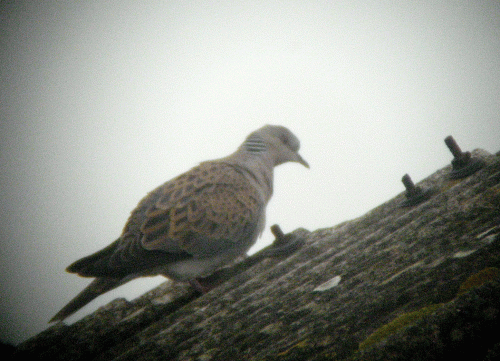
A record digiscoped shot of a Turtle Dove. Since I started birding this species has declined by 94% in the UK.
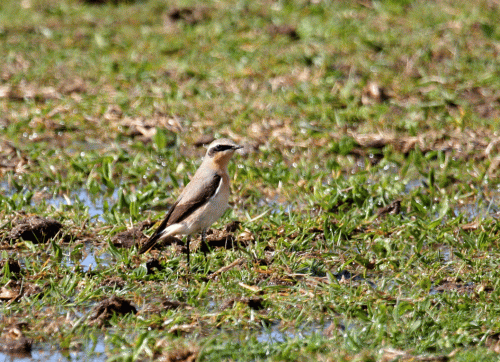
Migrant Wheatears numbered at least 50 ……

… whilst the resident Little Owl was in its usual crevice.
With strong southerly winds forecast I headed to Portland for some seawatching. Having seen Pomarine Skua on my last visit I was hoping to see Black Tern, a European marshland bird that is only see on migration in the UK.
First I headed to the Bill but to my surprise only a few other birders were present. The wind had shifted to the south-east and in these conditions the local birders head for Chesil Cove where Chesil Bank meets the Isle of Portland. Having got here I decided I might as well give it a go at the Bill and call in at Chesil Cove on the way home.
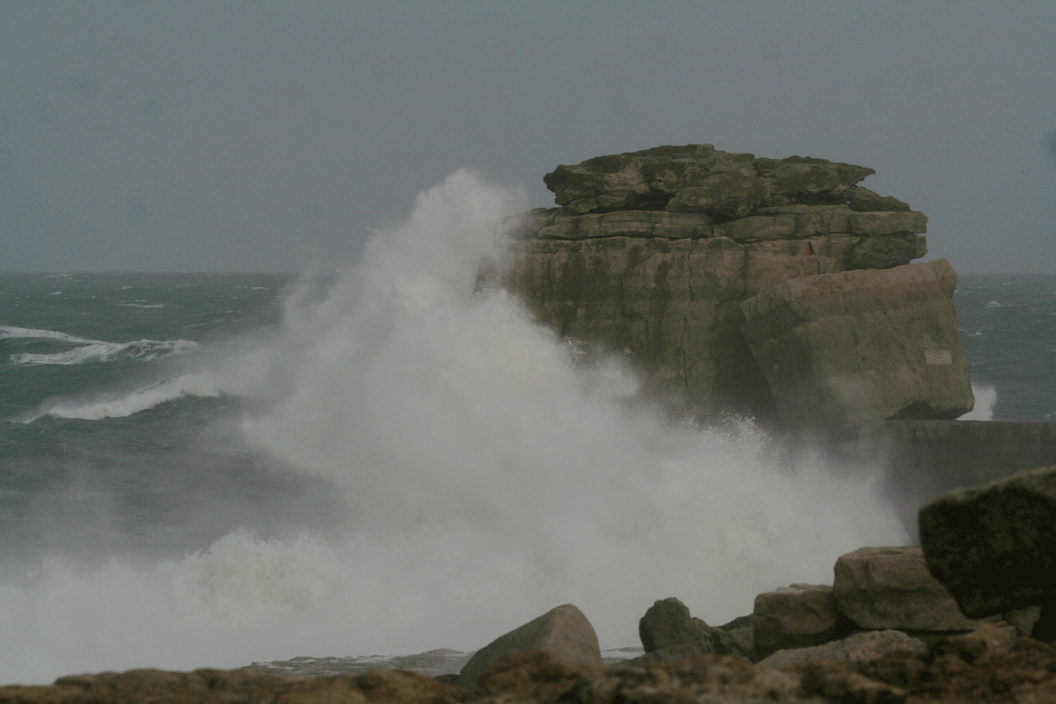
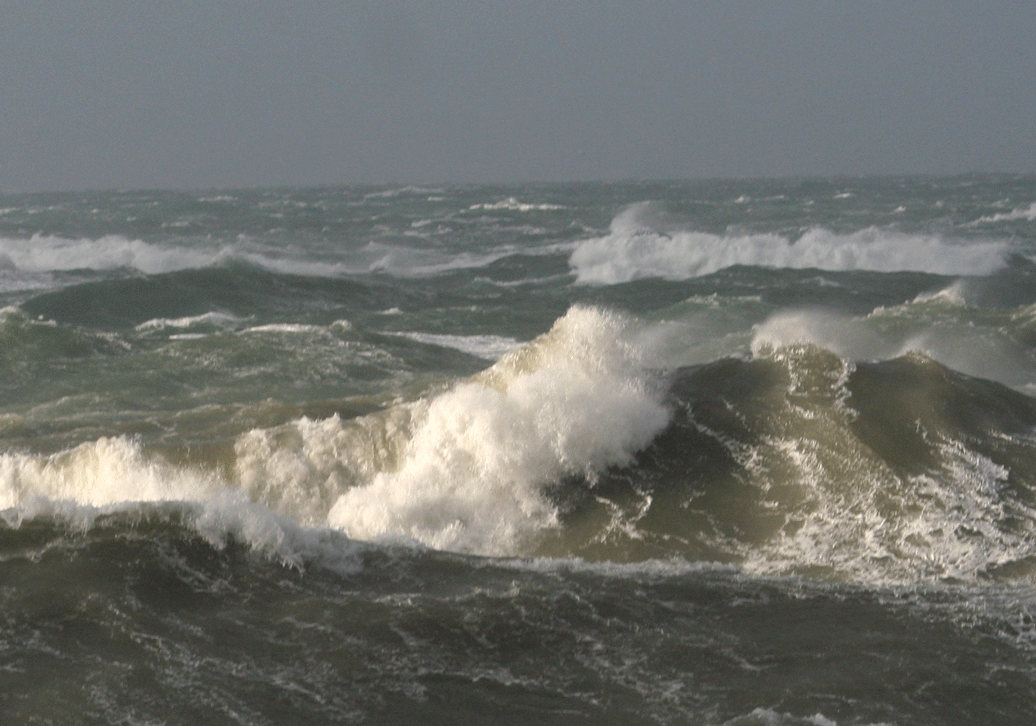
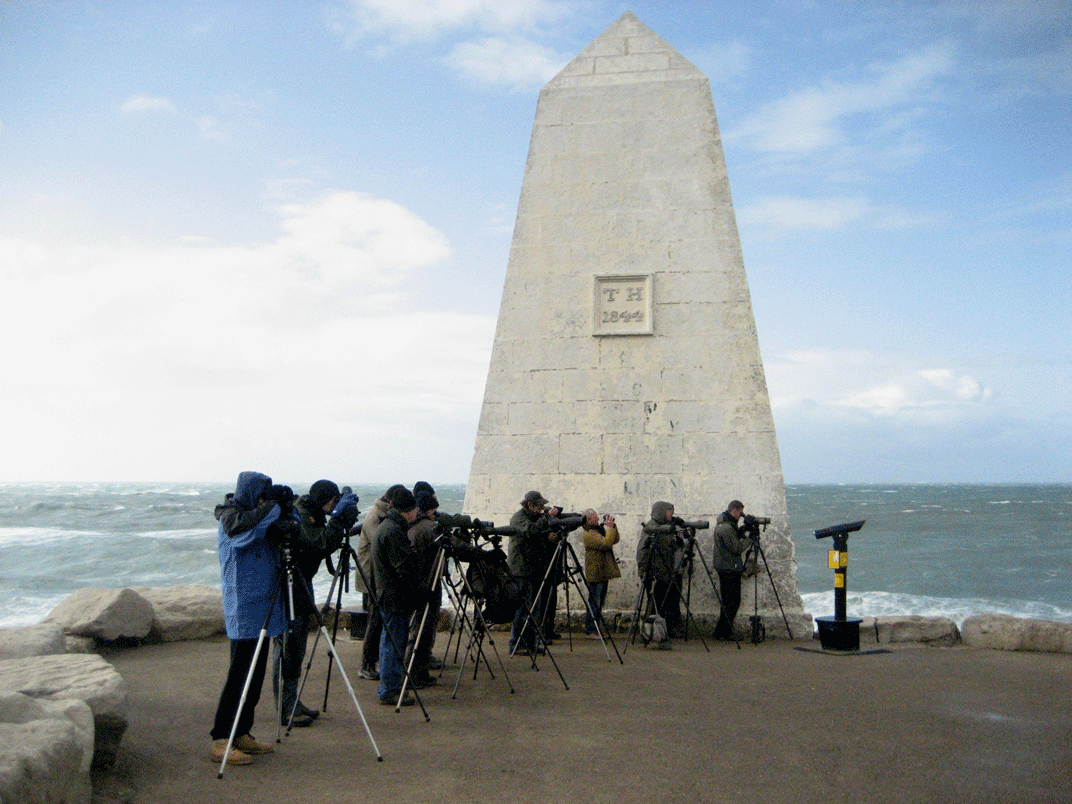
The wind had reached gale force overnight and the sea was monstrous. Waves crashing over the rocks were reaching the top of the Pulpit Rock and it was difficult to keep your scope still even when sheltering next to the Obelisk. In some ways it was too windy, terns and skuas would not battle into such a fierce wind and only the true pelagic species were on the move, with Manx Shearwaters, Gannets and Fulmars passing quite close.
After an hour of buffeting, I retreated to the Observatory where I watched the sea for another (rather more comfortable) hour. Conditions were improving and a few passerine migrants were about, so I went for a short walk but saw little. I headed down to Chesil Cove, I was to regret going on the short walk, as two Black Terns had passed the Cove just before I arrived. A further hour there produced a large flock of Common/Arctic terns (colloquially known as ‘commic’ terns), a few Scoter and an Arctic Skua, but no more Black Terns.

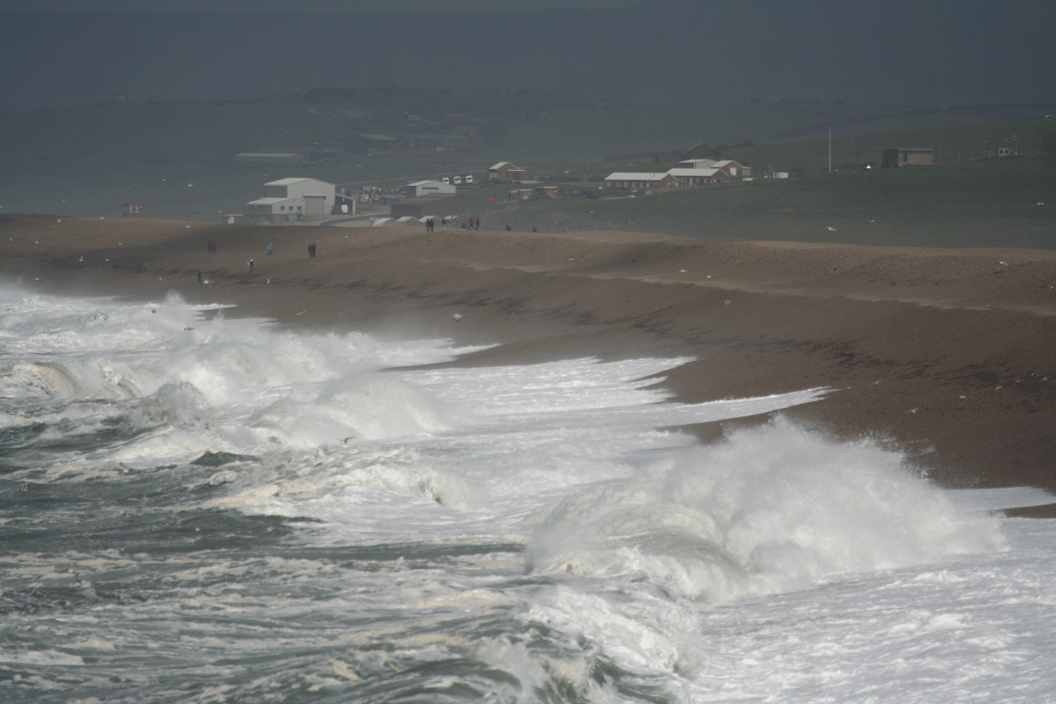
This gives some idea of the force of the waves.

The view from the Bill.

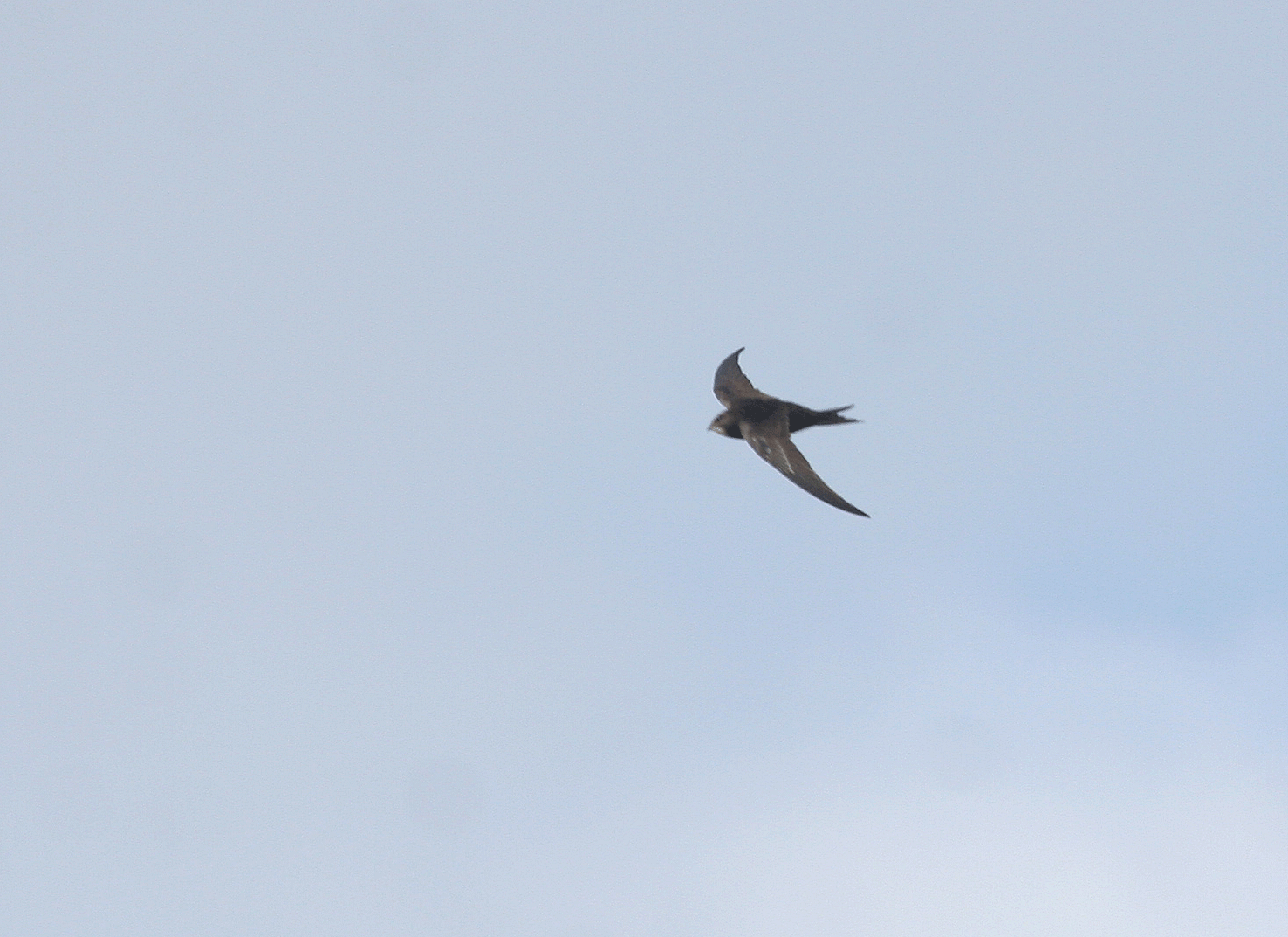
Swifts were arriving in big numbers, often seen skimming the waves.
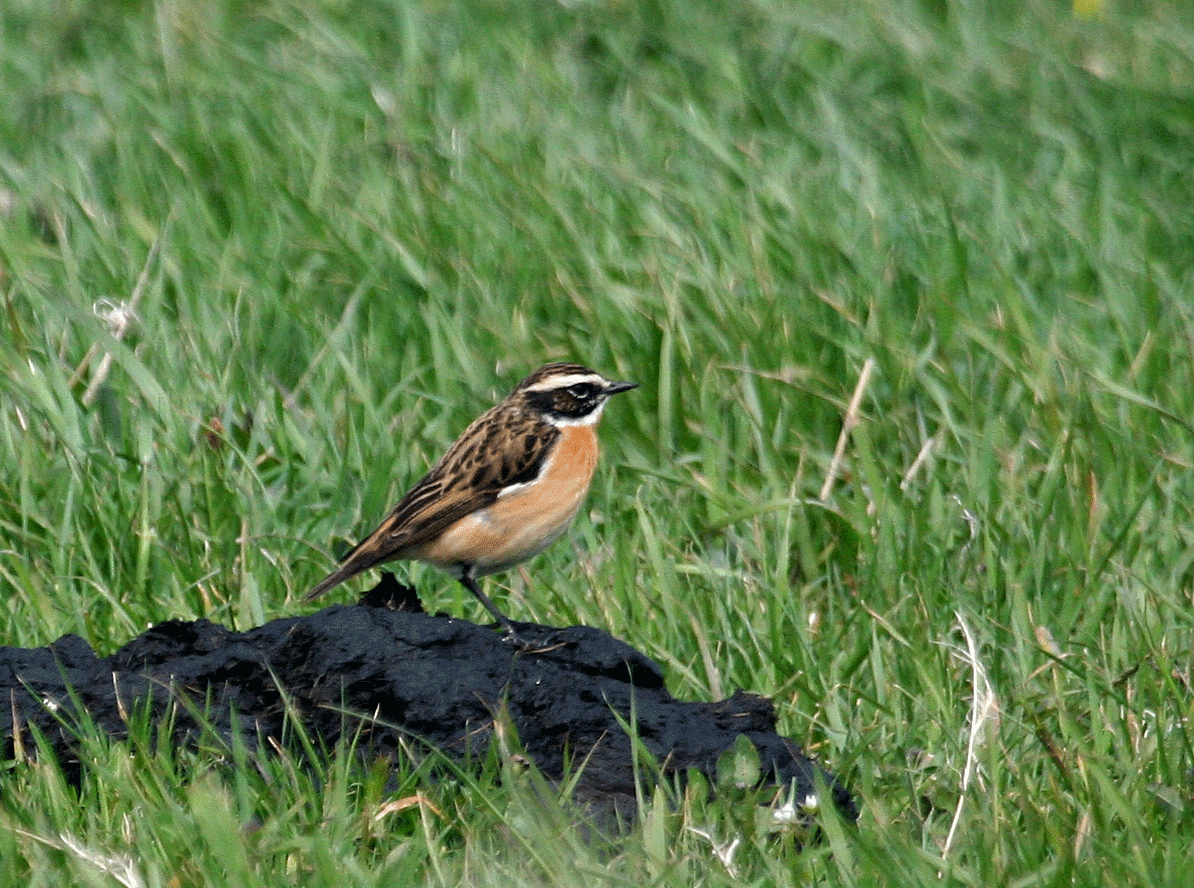
News of a Hoopoe nearby at the Fleet caused all the assembled seawatchers to abandon the Cove but by the time we arrived it had already gone. However it was clear that migrants were arriving as a Redstart, several Wheatear and my first Whinchat of the year were seen. I headed back to Ferrybridge where the Fleet flows into Portland Harbour and saw my first Little Terns of the year.
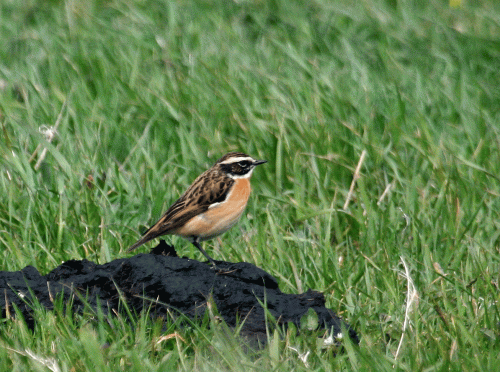
My first Whinchat of 2012
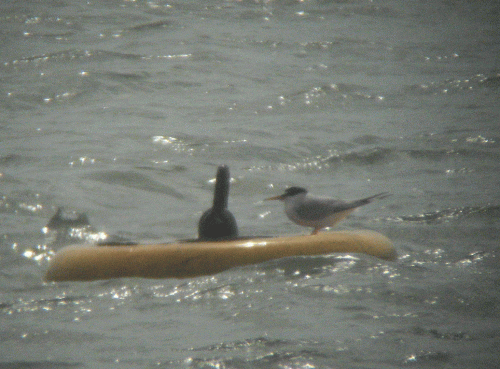
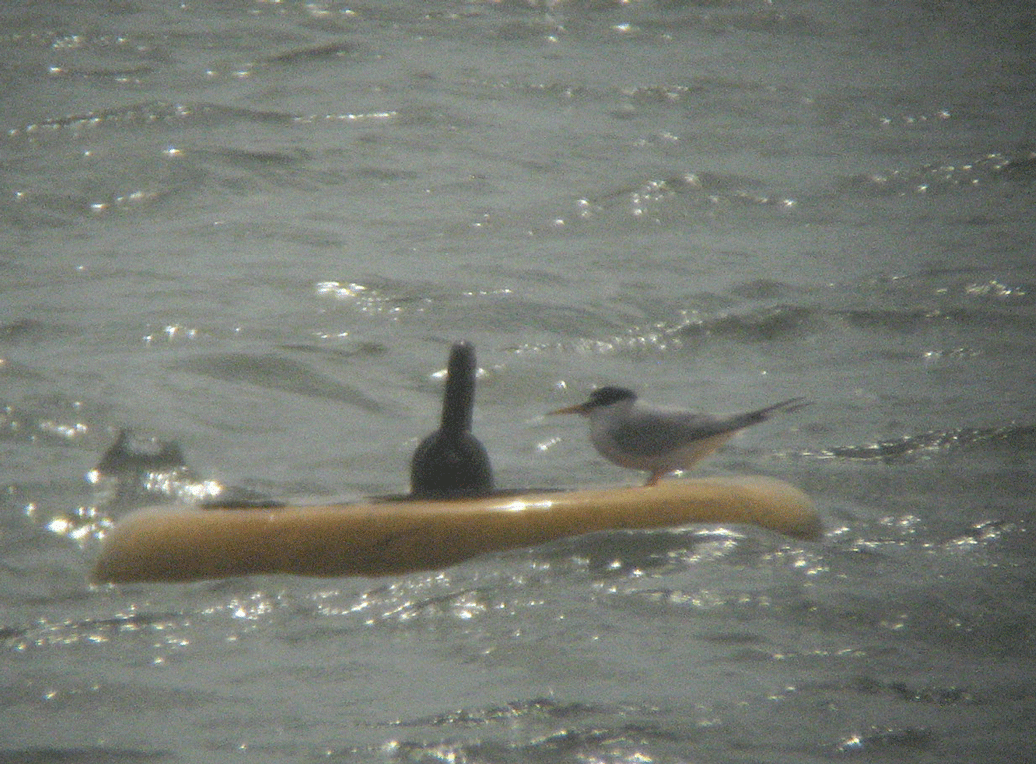
Digiscoped picture of a Little Tern at Ferrybridge. The local colony has been declining for years and looks to be heading for extinction.
My final call was at Lodmoor, but the recent heavy rain had flooded the path and my only reward was a couple of wet feet.
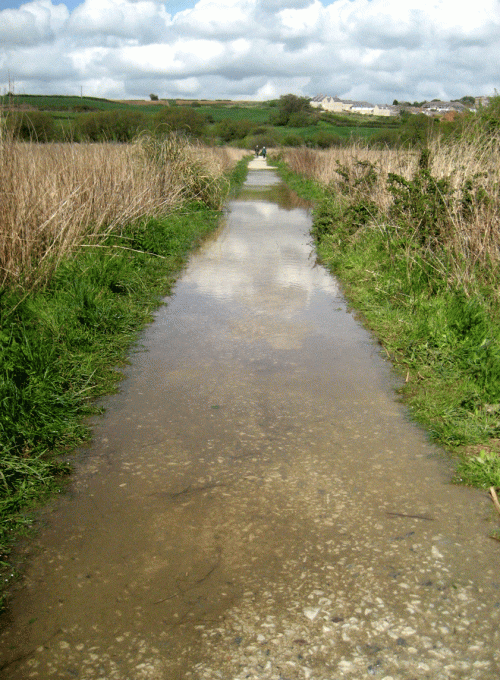
It was unusual to see small fish swimming down the main path at Lodmoor.

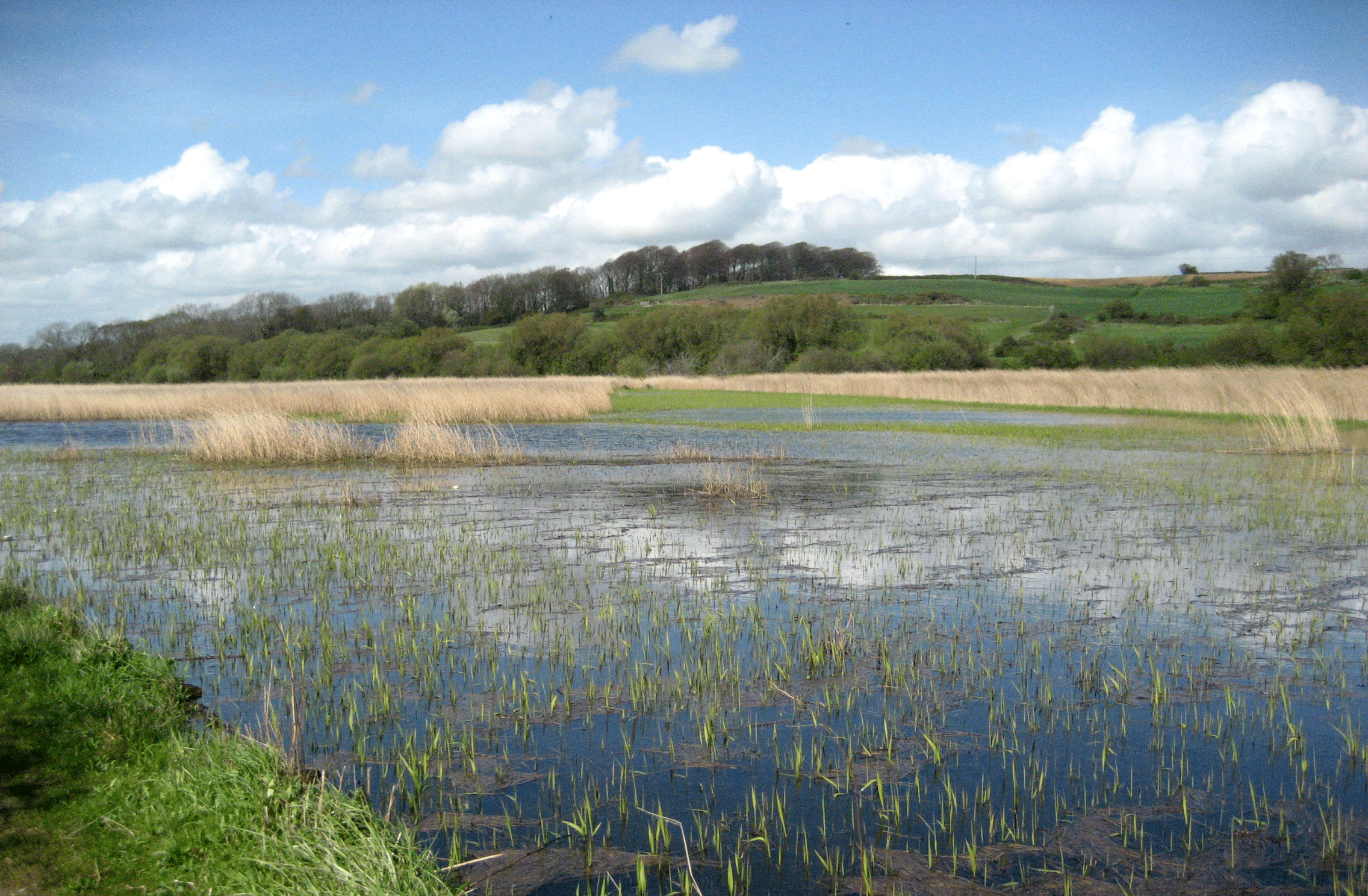
Floods at Lodmoor, the tern breeding islands are almost underwater.
With news of a couple of Black Terns at Blashford Lakes, I toyed with the idea of going there on the 30th. I had also thought about going ringing at Durlston but it rained until mid-morning at Swanage so I’m glad I didn’t. I chose the best option and returned to Portland, even though it was still raining heavily when I left. With dawn now at 0530 getting there for first light would involve getting up about 0415, this is not something I can manage every day! I arrived at the Observatory at 0815 and found that the rain (which had ceased there at dawn had brought in loads of migrants. About 200 had already been ringed but now the sun was coming out and they were moving on rapidly. It was one of those mornings where it was hard to know what to do, Graham Walbridge returned from the Reap Lane area with tales of stacks of migrants, nice birds like Redstarts and Pied Flys were being ringed at the Obs and good seabirds like Pom Skuas and Black Terns had been seen offshore. After failing to pick up a Black Tern from the Observatory one was radioed through from the watchers at the Obelisk and I had acceptable, if distant views. I also saw two Pomarine, single Arctic and Great Skua and a flock of 75 Bar-tailed Godwits on their way up from the Mauritanian coast.
I headed for Reap Lane in hope of seeing Yellow Wagtail and gave Graham a lift (as he lives in that direction). As always, I was amazed by his field skills as time after time he found and identified, Wheatears, Whinchats and migrant warblers long before I was even aware of their presence. With Yellow Wagtail and Spotted Flycatcher under the belt I walked the short distance to the West Cliffs where hirundines were passing in huge numbers. It is hard to be precise but about thousand Swallows, along with smaller numbers of Sand and House Martins were seen in about half an hour.

At long last a mass movement of Swallows and other hirundines.
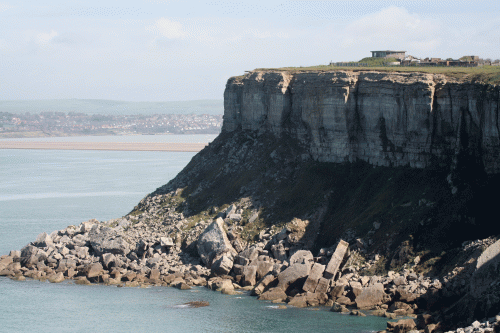
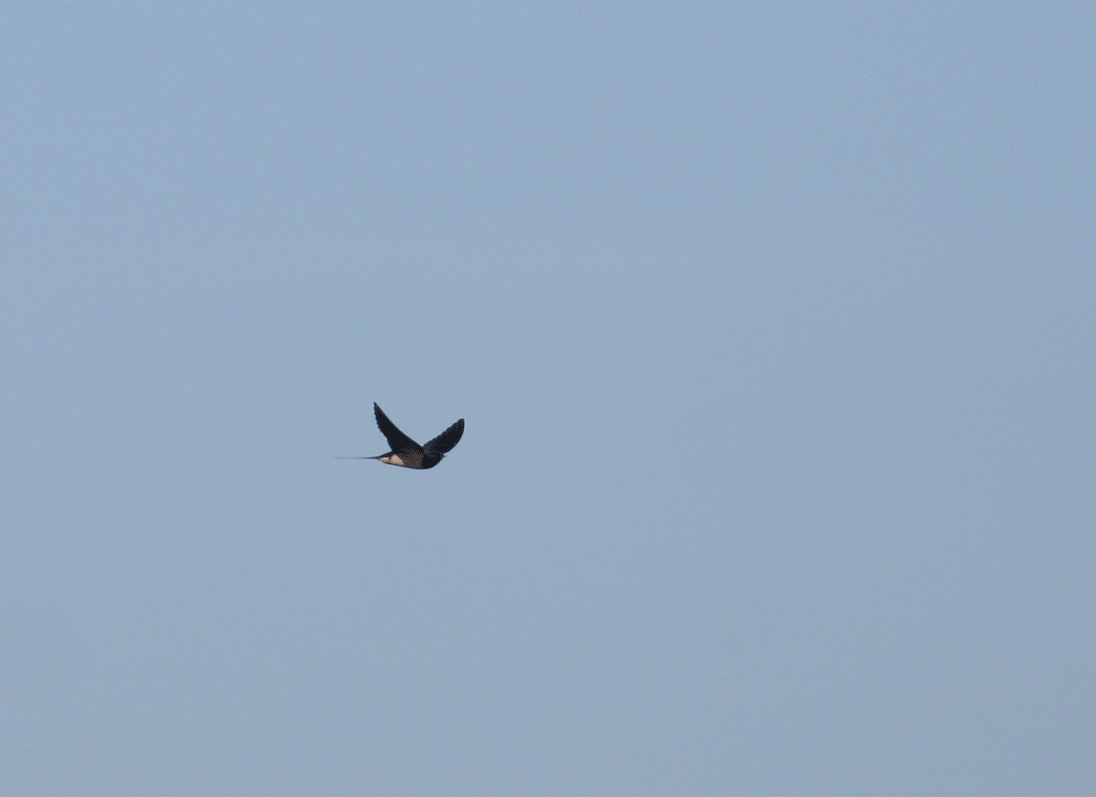
The Swallows were streaming along the West Cliffs, just another small part of the journey from South Africa to the UK.
As I have indicated before, spring migration is very late this year with some birds in worryingly low numbers that may affect the breeding population. However today showed just how many birds were held up to the south. It was difficult to estimate numbers but this is gives an indication: Warblers: Willow 300 , Garden 3, Sedge 3 heard, Reed 1 heard, Chiffchaff 30, Blackcap 50, Redstart 30, Whinchat 12, Yellow Wagtail 1, Wheatear 60 and many Swifts. Aso seen or heard, but not by me, Osprey, Hobby, Turtle Dove (I missed it by seconds), Cuckoo, Grasshopper Warbler, Wood Warbler, Nightingale plus much larger numbers of common birds mentioned above.

Along with other passerines, Whitethroats have finally arrived in force, 2 – 3 weeks late!
An hour at Lodmoor on the way home produced more goodies, a Cattle Egret (my 4th this year), a male Garganey, many Bar and Black-tailed Godwits in summer plumage and several Whimbrel.

A flock of Whimbrel at Lodmoor.

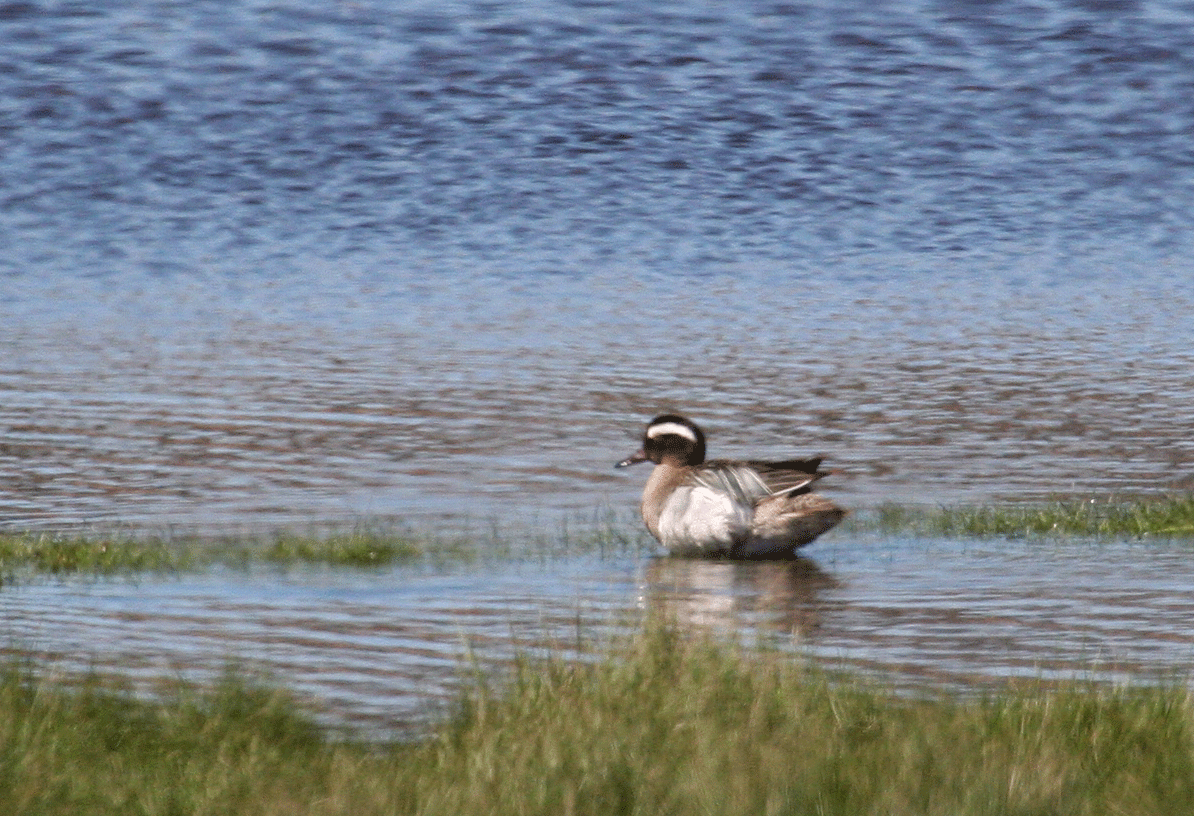
Garganey. The only duck that is exclusively a summer visitor
Of course the arrival of so many good birds wasn’t confined to Weymouth, Shaun had heard a Nightingale at Lytchett Bay in the rain that morning, I went down there at dusk but it had long gone.
After the winds of yesterday it looked like it would be still enough to ring at Durlston this morning. It was still quite windy and huge shower clouds rolled in from the sea but Sean, Mick and I only had to rush and close the nets once. We only ringed 14 birds plus 4 but this involved 15 species ,three of which are shown below. On the migrant front we saw Willow and Chiff, Blackcap and Lesser Whitethroat (which was singing in the garden) and a retrap Common Whitethroat from last year, (which was also holding territory in the garden) and there was a light passage of Swallows. Migrants aren’t exactly pouring in but at last there is steady trickle.
The threat of more heavy rain caused us to pack up about 0930.
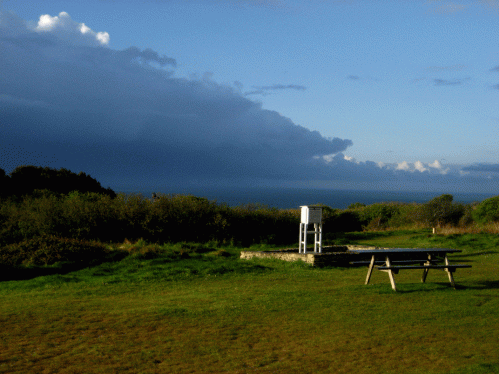
Although the winds were lighter than yesterday heavy shower clouds rolled to either side of the park.
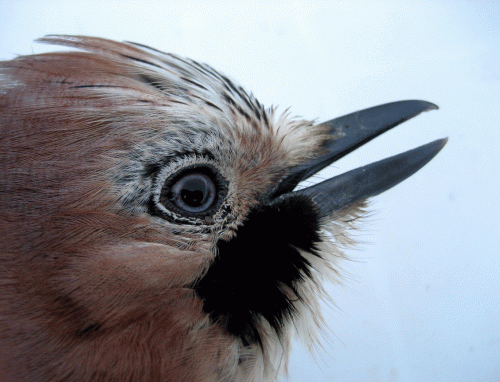
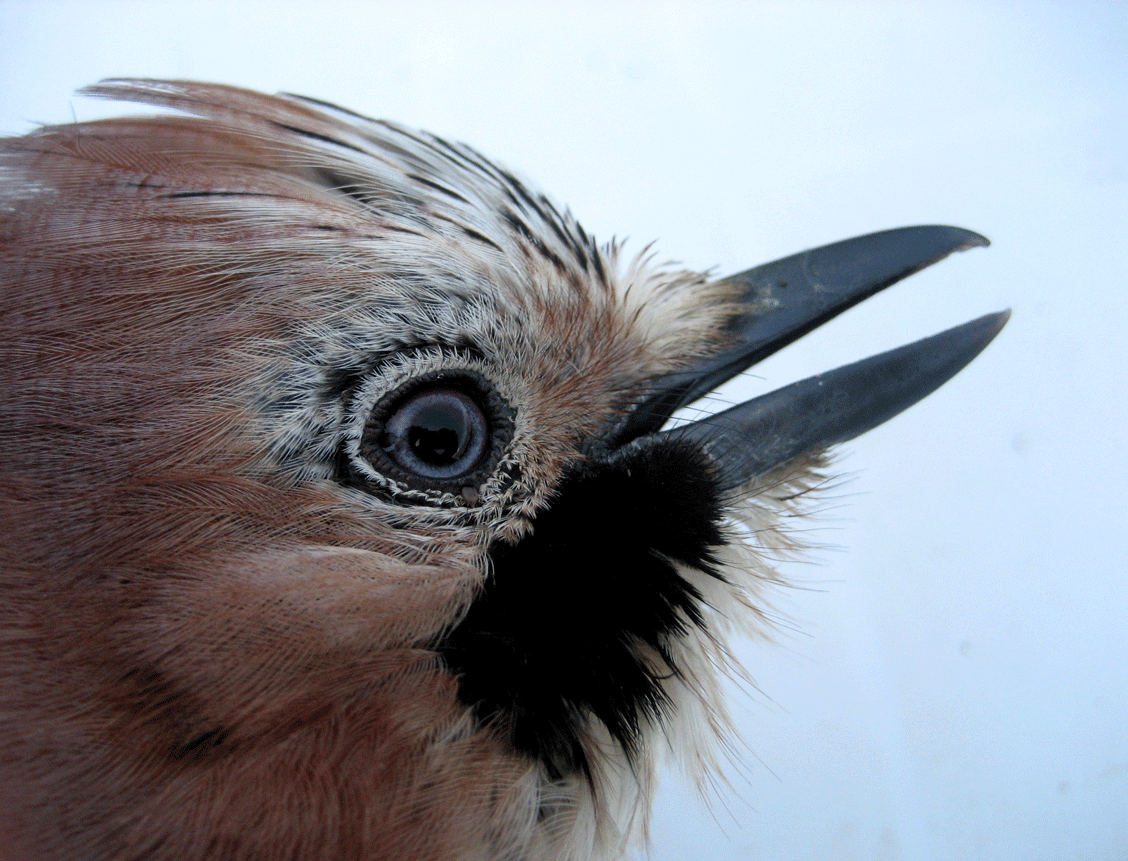
Jays are normally very aggressive in the hand but this bird was unusually docile.

Jays can be aged by the pattern and number of black bars on the outer greater coverts. This is an adult.
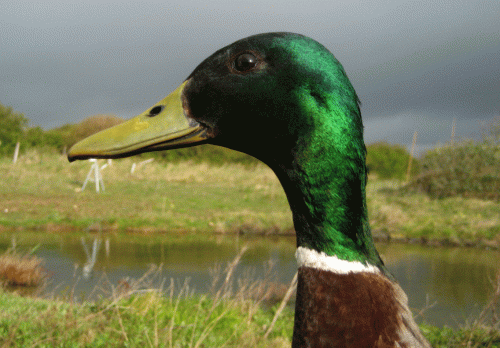
The pair of Mallards chased each other around the site until they blundered into one of the nets, but the female got out before we reached it.

Mick released the Mallard which then walked to the pond, preened, then climbed out the far side and went to sleep. Proof that ringing doesn't scare birds.
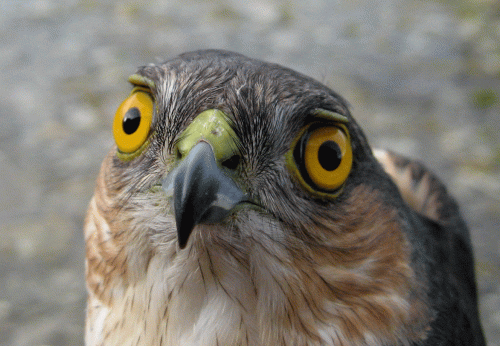
This penetrating gaze of a Sparrowhawk is probably the last thing many a small bird gets to see.
On the Saturday we were booked to give a public ringing demonstration at Durlston. I got up at 0430, arrived there at 0530 where seven of us hung around in our cars for an hour and half waiting for the rain (which the met office had failed to forecast) to end, before we gave up and headed home.
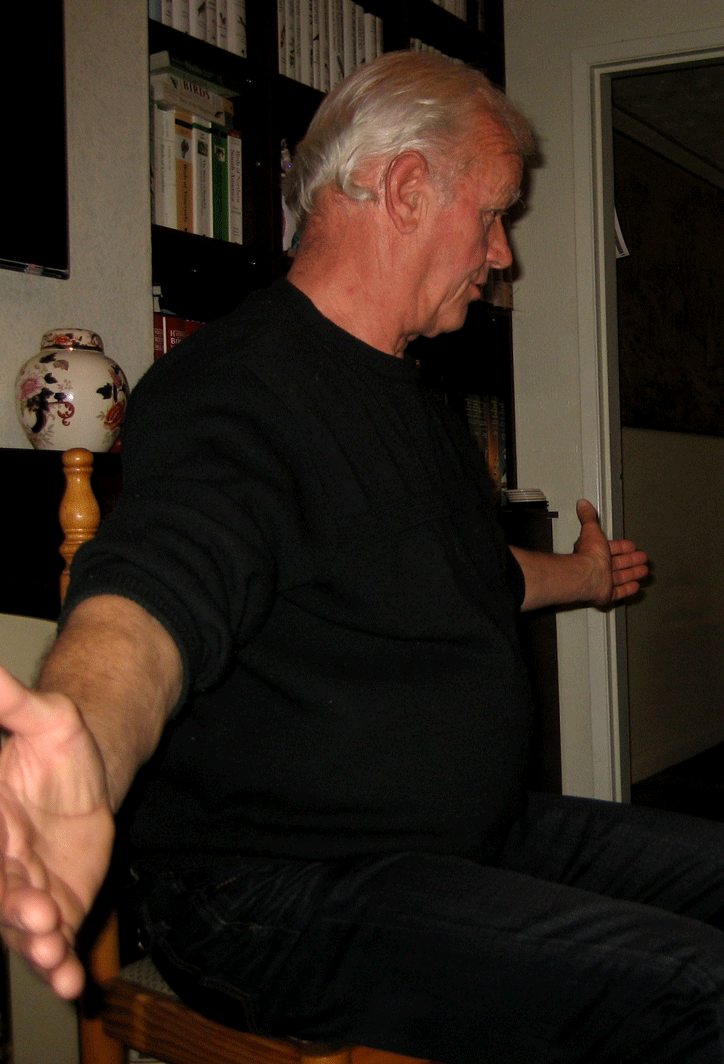
On Sunday evening my old friend and former ringing trainer Trevor Squire and his wife Sheila came round for a meal. We had an excellent evening recalling some of our former ringing adventures and hearing some of Trevor’s scary stories of ringing in various parts of Africa.
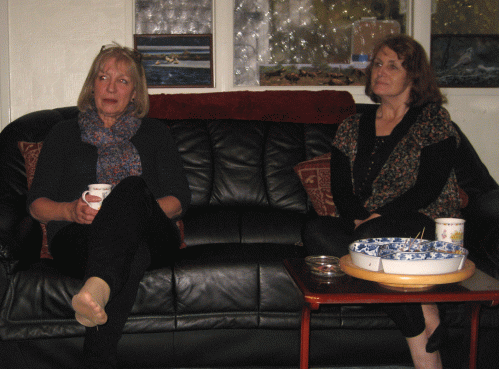
Sheila and Margaret listen intently ....
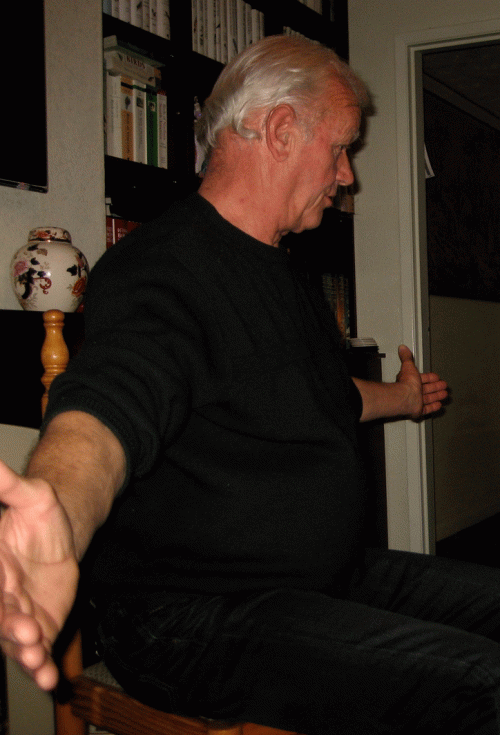
... to one of Trevor's hair-raising tales.
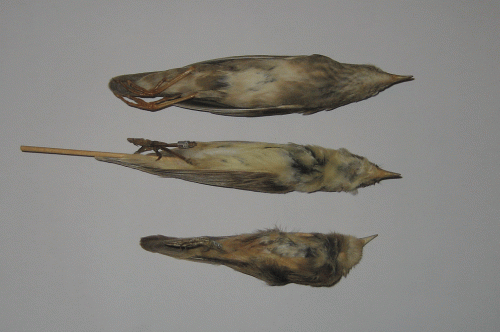
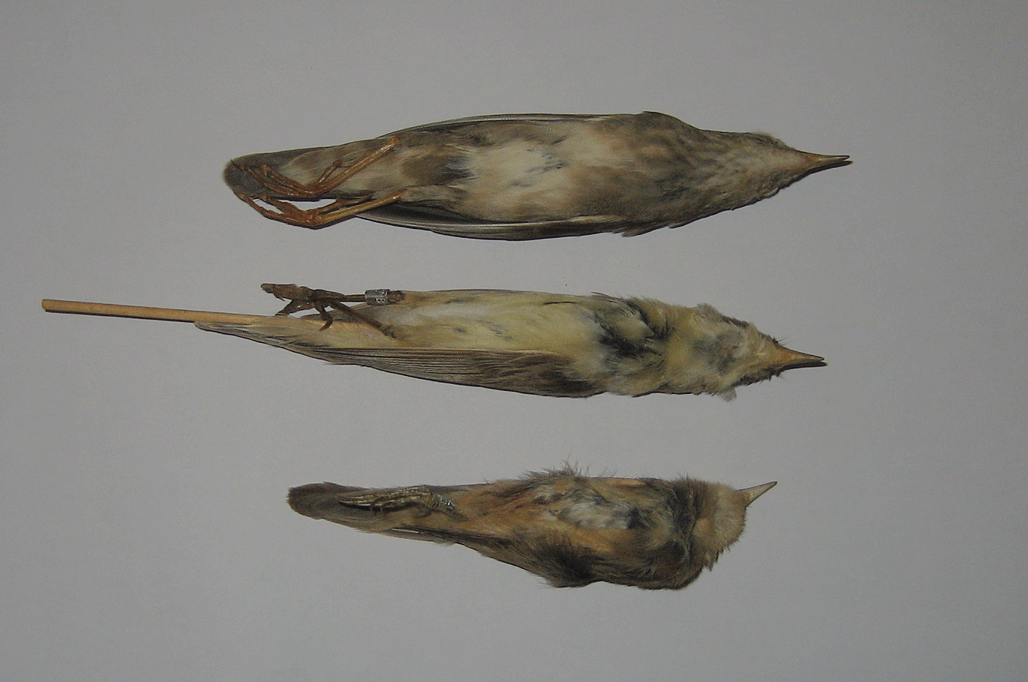
Trevor brought along some study skins from ringing in east Africa, top to bottom: River, Marsh and Reed Warbler.
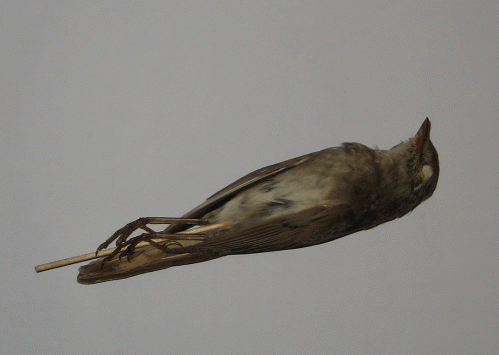
I would love to have the chance to ring a Thrush Nightingale, but I guess that isn't going to happen at Durlston or Lytchett Bay.
As a birthday present for Margaret I took her to a Bournemouth Symphony Orchestra concert at Poole Lighthouse (formerly Poole Arts Centre) on Wednesday evening. For those who know about these things the performance was Stravinsky’s Fireworks, Prokofiev’s Sinfonia Concertante and extracts from Tchaikovsky’s Sleeping Beauty. I must admit I didn’t recognise any of the music except one part of The Sleeping Beauty.
I got tickets in the choir stalls behind the orchestra, this had the advantage of giving a wonderful view of what was going on. I did wonder if the sound balance would be OK from behind the orchestra and to some extent this was true, as the cello soloist sounded a bit faint and the trombones were almost deafening but we then were only a metre away. Although I like some classical music, I have been to very few concerts, but the playing was excellent and we both really enjoyed it, but I do find some of the conventions such as no applause until the entire piece is completed, to be rather restrictive.

The view from the choir stalls.
On Thursday it was the turn of a real lighthouse, the big red and white one at Portland Bill. I had been looking forwards to a good seawatch for some time, but every time it was windy, either the wind was from the wrong direction, it was pouring with rain or I was otherwise engaged. Today I finally made it and arrived at the Bill at 0630, it was worthwhile getting there early as I was able to get a sheltered location close to the obelisk.
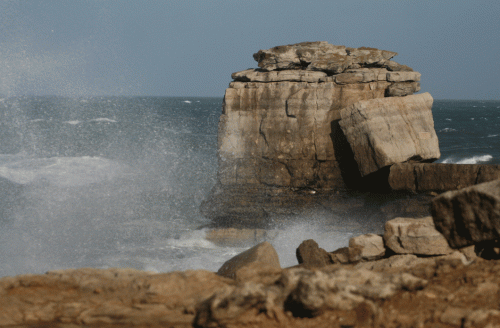
Force 6 SW but without rain, ideal for seawatching.

The earlier you arrive, the more shelter you get from the obelisk but if you are third in line .....
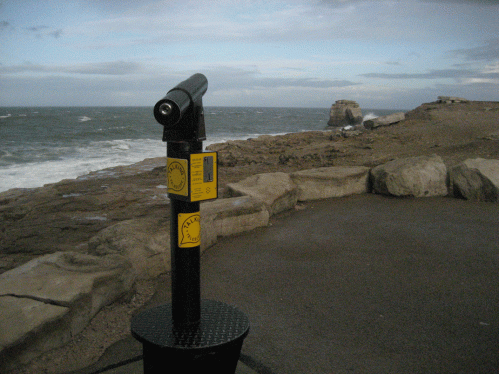
... the 'pay as you go telescope' for the grockles blocks your view as you are tracking birds along the horizon.

Looking straight out from the obelisk you get the full force of the wind and spray in your face.
Over the next three hours there was an excellent run of skuas, 20+ Great, 6 Arctic and best of all, 2 Pomarines and lots of Manx Shearwaters. There weren’t any terns or divers and I missed two distant Little Gulls, but it was a great seawatch and I was very pleased to add the scarce Pomarine Skua, with its spoon like central tail feathers, to my year list.
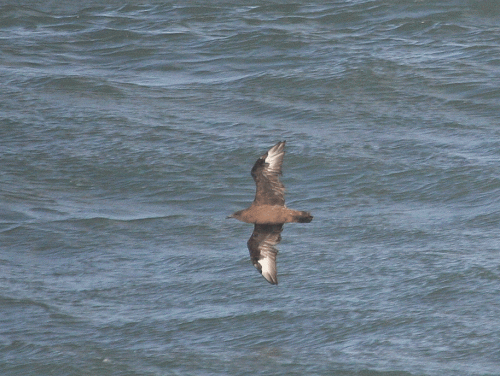
Great Skua or Bonxie (a Shetland name that is now universally used).
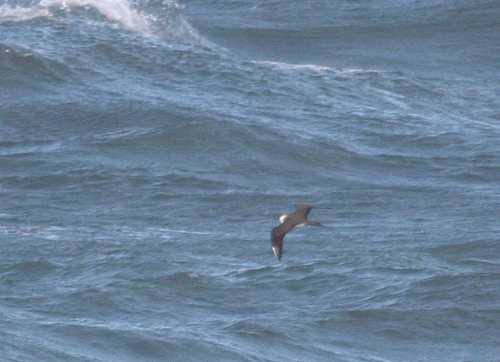
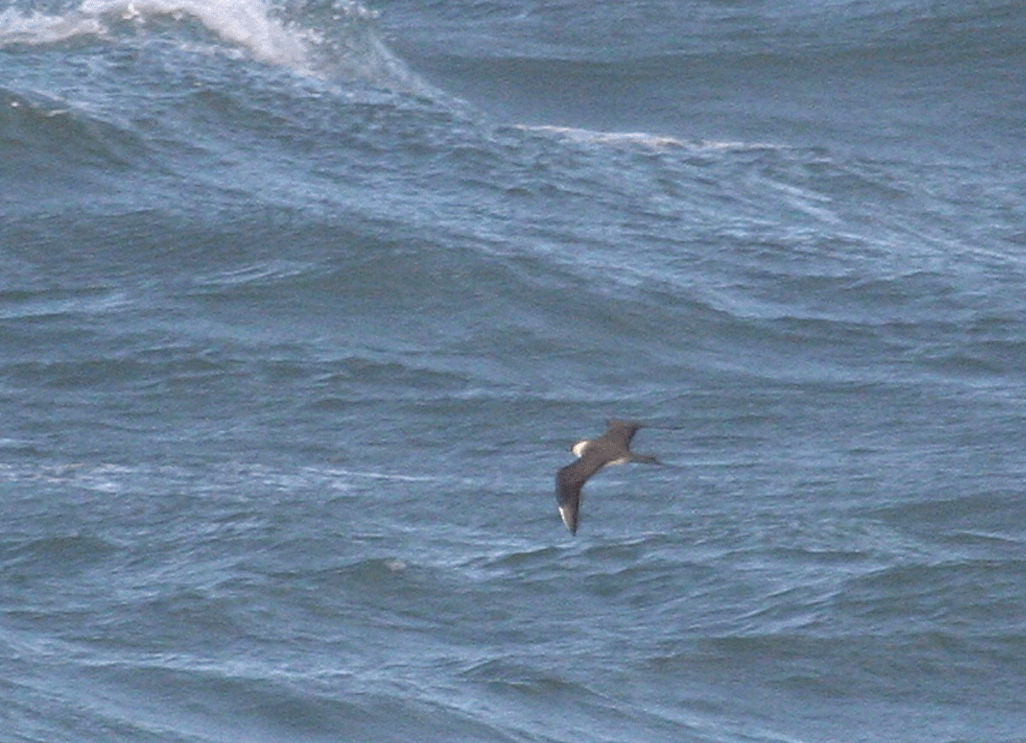
Arctic Skuas come in both light and dark phases.
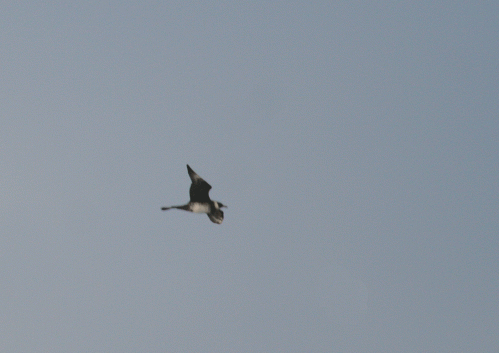
Pomarine Skua - with a full set of cutlery.
Others were seawatching from Chesil Cove where the Chesil Bank meets the Isle of Portland. Birds get blown into the Bay then either cross Ferrybridge into Portland Harbour or battle their way southwards and around the Bill. I had word that there three Pom Skuas (including the rare dark phase) sat on the sea, although by the time I got there they were fairly distant. I also saw another four Arctic Skuas whilst I was there.
A casual reader of a field guide might think that a skua is just a variant on the theme of a gull. This couldn’t be further from the truth, skuas are powerful, fast hunters often seen chasing terns and gulls making them disgorge their last meal. Seeing skuas, especially in numbers, is one of the joys of seawatching.
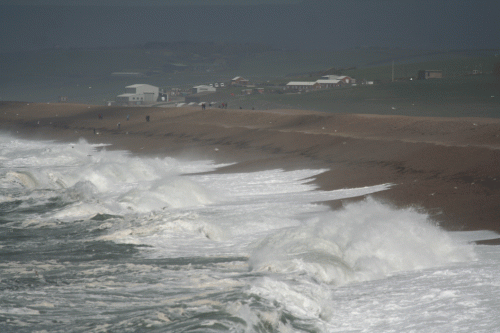
Chesil Cove - looking along Chesil Bank.

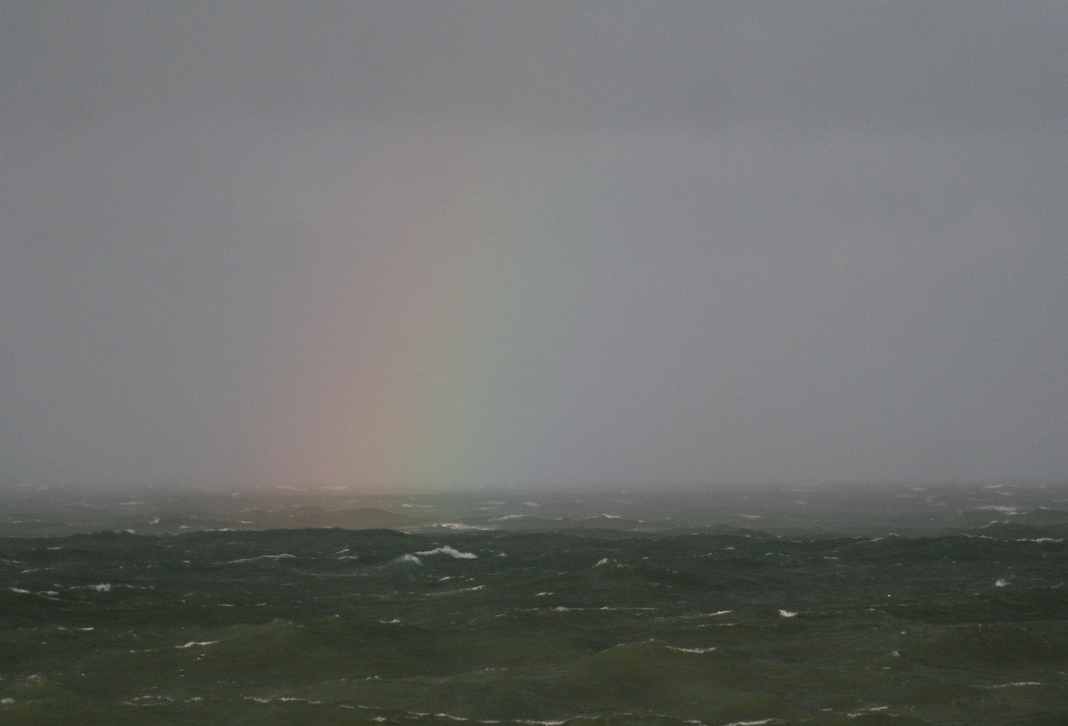
Heavy squalls blew in from the south.
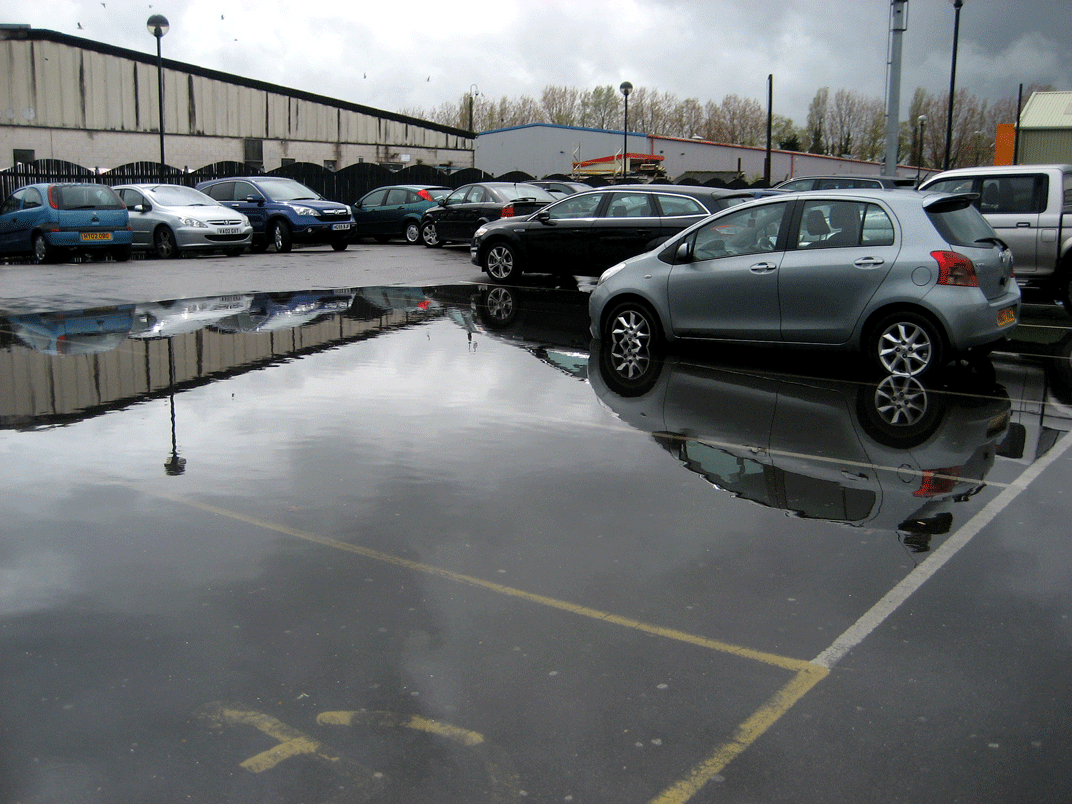
There is one sure way to make it rain, the government declares an ‘official drought’!

'Drought conditions' - the car park at the gym.
Heavy rain on the 23rd kept me at home for much of the day, but late morning I received information that there was a White Stork near Wool. I went straight away and saw a very bedraggled stork hunched up in the middle of a ploughed field. It was good job that I went when I did as the bird flew as soon as the rain stopped in the early afternoon.

I have seen about ten white Storks in the UK and over 10,000 abroad but none have looked as miserable as this one.
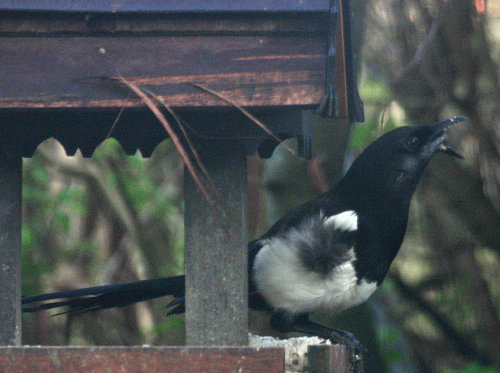
We have a pair of Magpies nesting near our garden, one has a severely damaged bill with the lower mandible being turned through 45 degrees. It must be managing to find food although it is looking a bit ragged.
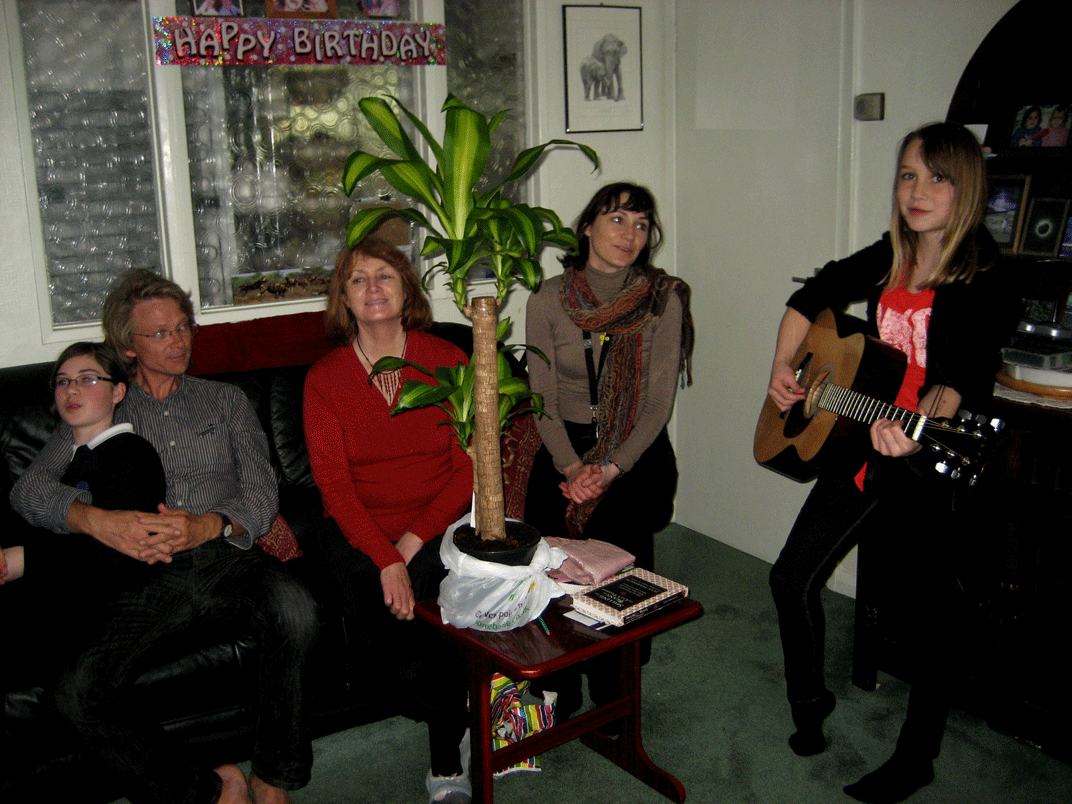
As it was her birthday Margaret and I met up for lunch. In the evening Janis and Andy and the girls came round to wish her a happy birthday.
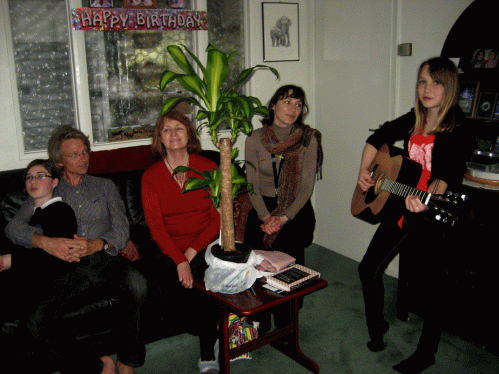
Kara had learned to play 'happy birthday' on the guitar especially for Margaret's birthday. The large plant is a present from Janis.
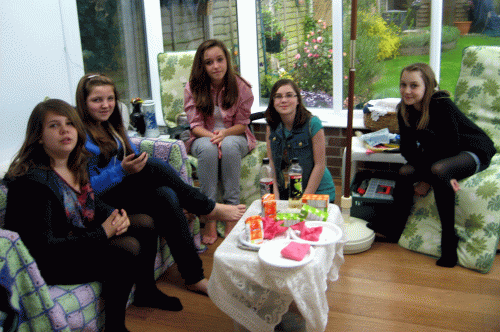
When I got back from Derby I found our conservatory had filled up with teenage girls. Kara has passed the first audition in a talent competition and the girls were helping her practice. L-R Jade, Emma, Charlie, Amber and Kara
On the 24th I spent the morning in the New Forest. First I called in at Blashford Lakes where a Black Tern had been seen yesterday. No luck with that, but I did see a Little Ringed Plover, a few Common Terns and many Sand Martins.
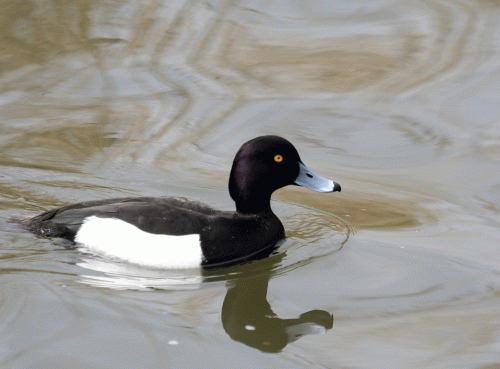
Most ducks have left Blashford for their northern breeding areas and mainly Tufted Ducks remain.

About 7,000 pairs of Tufted Duck breed in the UK but many more arrive for winter.
I spent the next few hours around the Bolderwood / Anderwood area. Blackcaps were common, I saw six Redstarts, several Treecreepers, Nuthatches and two Hawfinches but Wood Wablers hadn’t arrived yet and I only heard one Cuckoo.

At this time of the year some trees are in leaf whilst others are still bare.

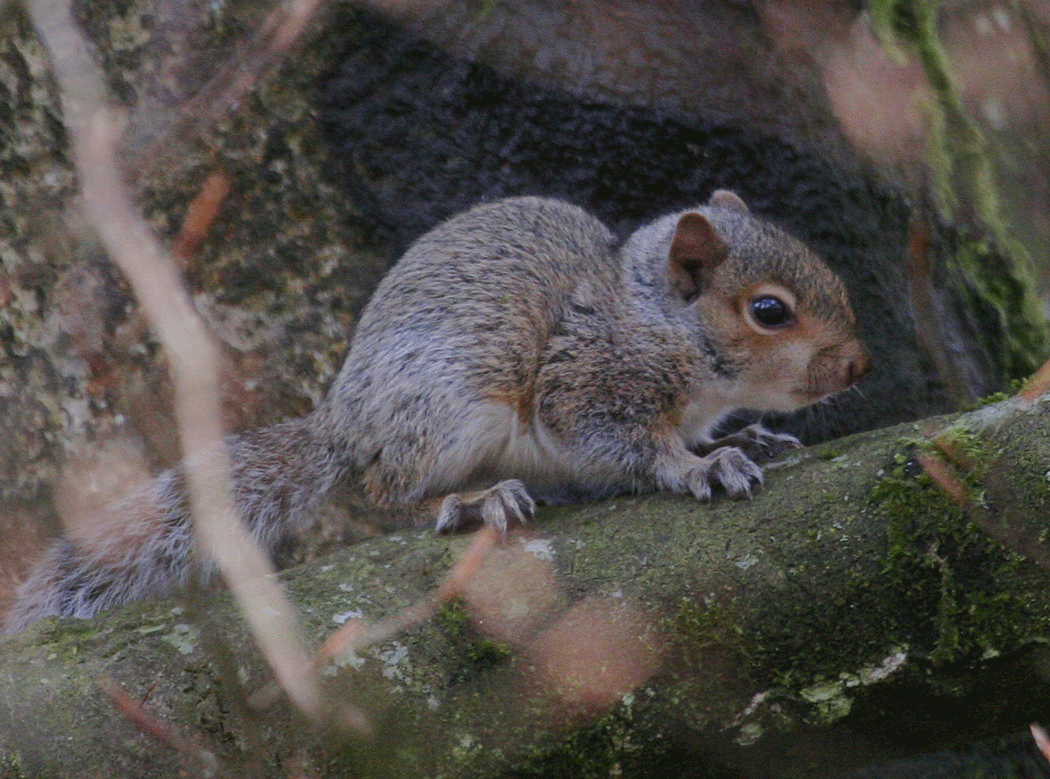
This tiny Grey Squirrel must have just have left the drey.
Attenborough NR is an excellent reserve near Nottingham. Lying beside the River Trent it comprises a series of well vegetated old gravel pits with some wet meadows and reed beds. Recent management has increased the area of reed bed and has constructed islands for LRPs and artificial cliff for Sand Martins. The reserve is close to Long Eaton where my late wife Janet’s family lived and I have been visiting there since the late seventies.

Attenborough nature reserve with the Ratcliffe-on-Soar power station in the distance.
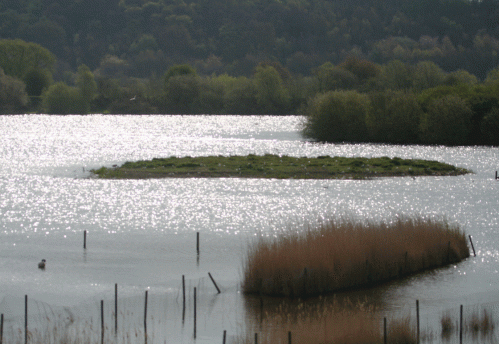
Recent habitat improvement has included planting new reed beds and building nesting islands.
It’s obviously further away from Simon’s house than say Carsington reservoir, but the range of habitats and hence birds, is greater. I left Simon’s at 0730 and spent about two and a half hours at the reserve. I normally go on a long hike to search for Willow Tit, but having recently seen a pair I spent my time around Clifton Pool with some success.

Coots were nesting ..........

.... and vigorously defended the area against all comers.
Common Tern and Sedge Warbler were new for my year list, I heard Reed and Grasshopper Warbler and Cetti’s were singing all over the place. Introduced Egyptian Geese and Red-crested Pochards provided further photo opportunities.
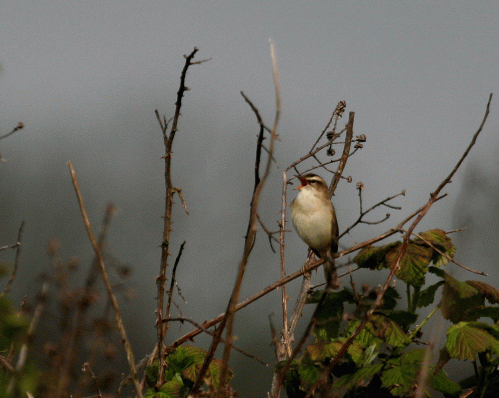
A singing Sedge Warbler.

This is the first time I have seen the highly vocal Cetti's Warbler at Attenborough.
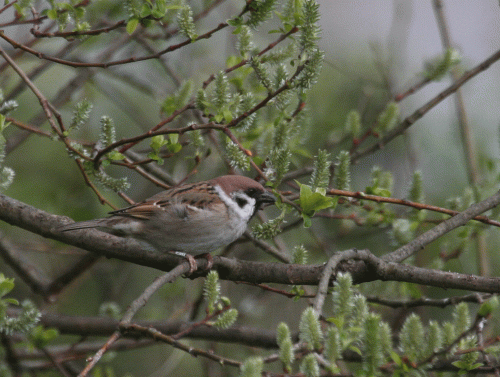
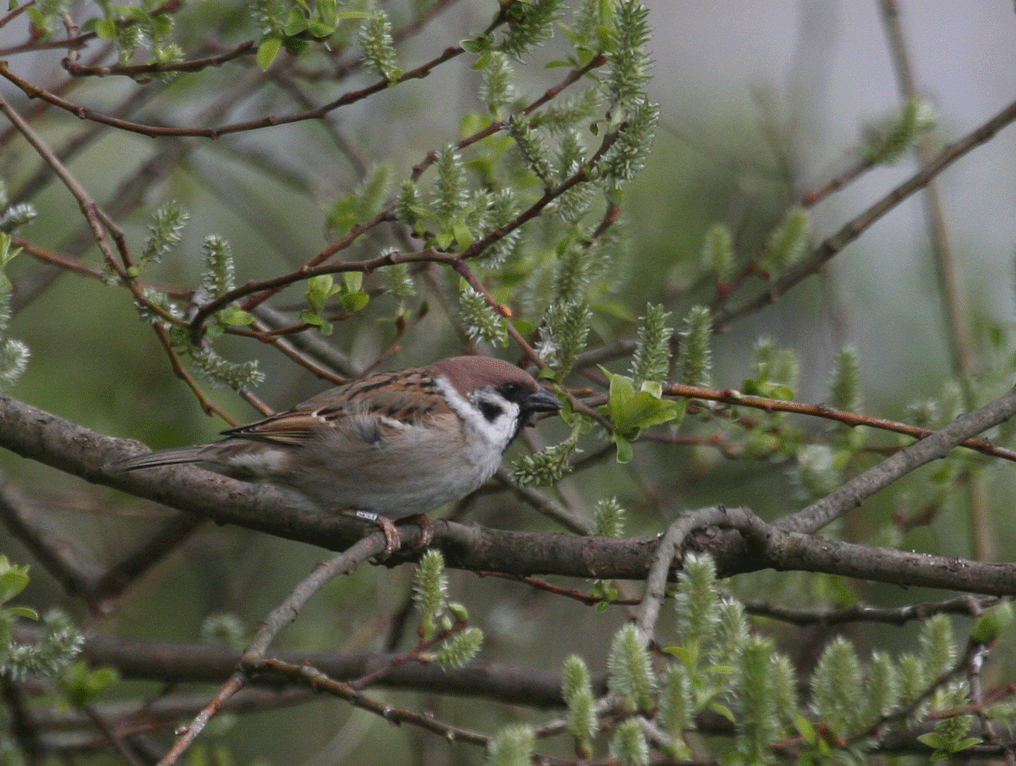
Tree Sparrows were present here in the seventies, but this is the first time I have seen them here for 34 years.
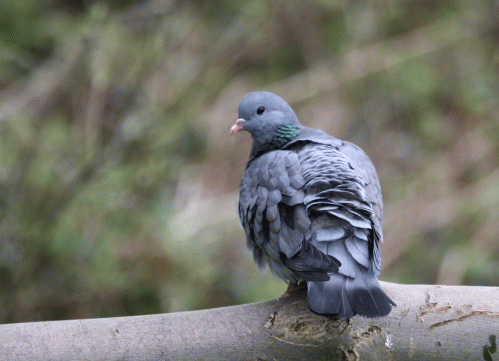
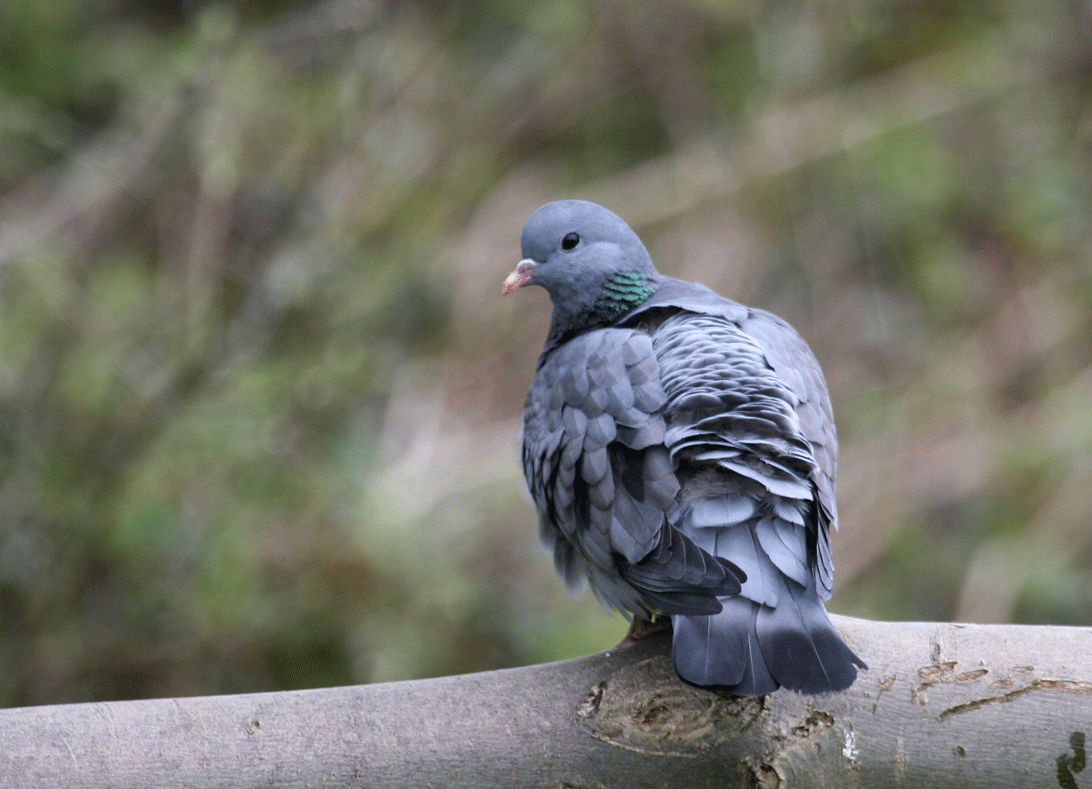
This dainty Stock Dove was giving excellent views on the branch .....
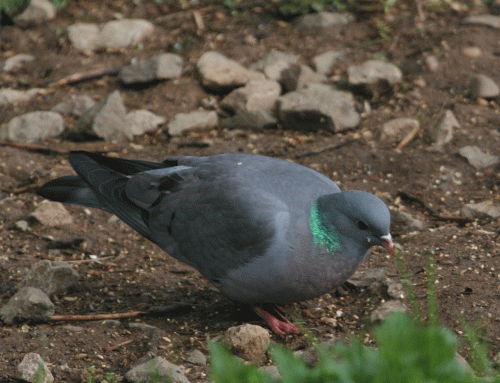
..... and whilst feeding on the ground below.
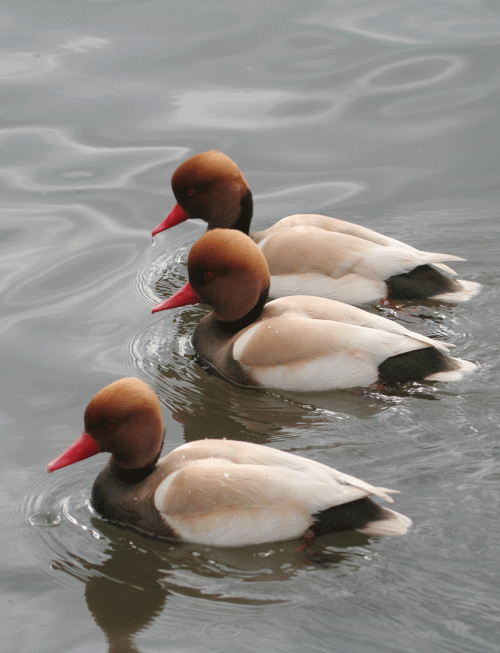
Although some Red-crested Pochards seen in the UK are thought to be from wild European populations most are of feral origin.

These three male Red-crested Pochards were particularly tame......
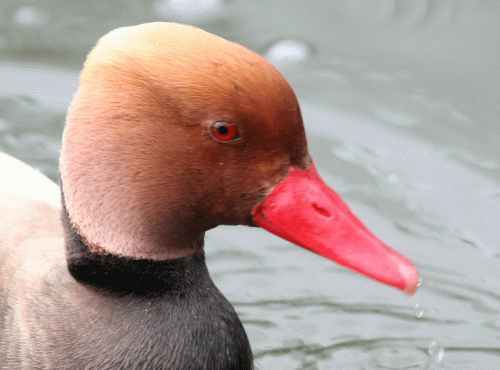
.... and gave stunning views.

This Egyptian Goose flew past on its way to the car park looking for a free handout.

There is no question about the origin of Egyptian Geese, they certainly don't arrive here from sub-Saharan Africa.
A quick visit to another site near Derby gave me the far the most interesting bird of the day, an immature male Ruddy Duck. Half a dozen of this rather cute American species escaped from Slimbridge in the 1950s and before long a feral population of several thousand pairs had built up, mainly from the Midlands southwards. This bird looked to become a welcome addition to our avifauna, until it was demonstrated conclusively that Ruddies were spreading across Europe and hybridising with the highly endangered White-headed Duck in Spain. Population modelling showed that this would lead to the global extinction of the White-headed Duck. The argument that Ruddies in Spain were actually wild transatlantic vagrants was disproved genetically. The outcome was that the government initiated not just a cull, but a whole scale eradication program. This has been successful and only a handful of Ruddies still exist and these are to be removed this year. My personal feelings are that it is a shame they have to be shot, but if this is what it takes to stop White-headed Ducks becoming extinct, then so be it. Either way, with my ‘year listing hat’ on I was delighted to see this bird, as I had written off any chance of finding one this year, indeed this will almost certainly be the last one I see in the UK.
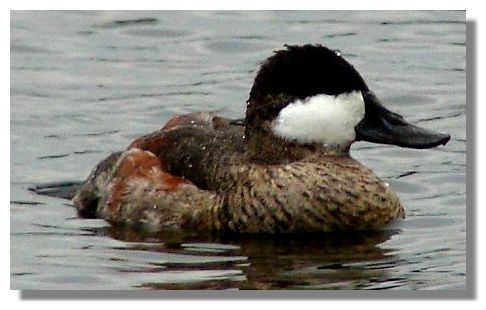
This first year male Ruddy Duck is very like the bird I saw. Photo from the internet.

The adult male Ruddy Duck is a very attractive bird and it is easy to see why its eradication has not been popular with birders. Photo from the internet.
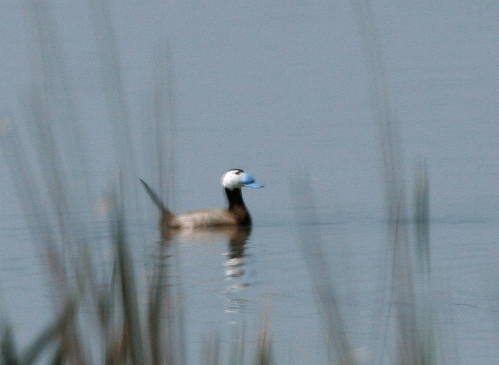
... all to protect the globally endangered and charismatic White-headed Duck. Photo taken in Armenia in 2010.
I was back in Duffield at Simon and Viv’s by 11.30 and Simon and I went to the nursing home to see Mum. There will be no photos this time, she is now bed bound and spends almost the entire 24 hours asleep. I felt sadness of course, but it was not to the following day when I listened to a track by sixties singer Melanie Safka called ‘the saddest thing’ that the true enormity of the situation hit me.
The return journey was much better than the drive up. I was pleased to see so many Red Kites between Oxford and Newbury, including six together near the M4 / A34 junction and one well south of Newbury.
One bird that has been around all year is the Rough-legged Buzzard wintering at Burpham, near Arundal, West Sussex. Although I have been to West Sussex several times this year, I have always run out of time or hit bad weather and have never made it to Burpham, indeed I thought it had gone, until two friends of mine twitched it a few days ago.
My mother’s health continues to deteriorate so I decided to head for Derby, however my brother and family wouldn’t be in until late afternoon so there was time to detour via West Sussex.
My first stop was at the village of Apuldram near Chichester. Here a potential Iberian Chiffchaff has taken up territory. I say potential, as opinions is divided as to whether it is one. This species which breeds in northern Spain and south-west France can only be safely identified on song. This bird sings Iberian Chiff phases but also give the familiar ‘chiff chaff, chiff chaff’. It is more likely that these ‘mixed singers’ are Iberians that have learnt Common Chiff song than that they are hybrids.

It looks like a Chiffchaff, it sometimes sounds like a Chiffchaff but is it an Iberian Chiffchaff?
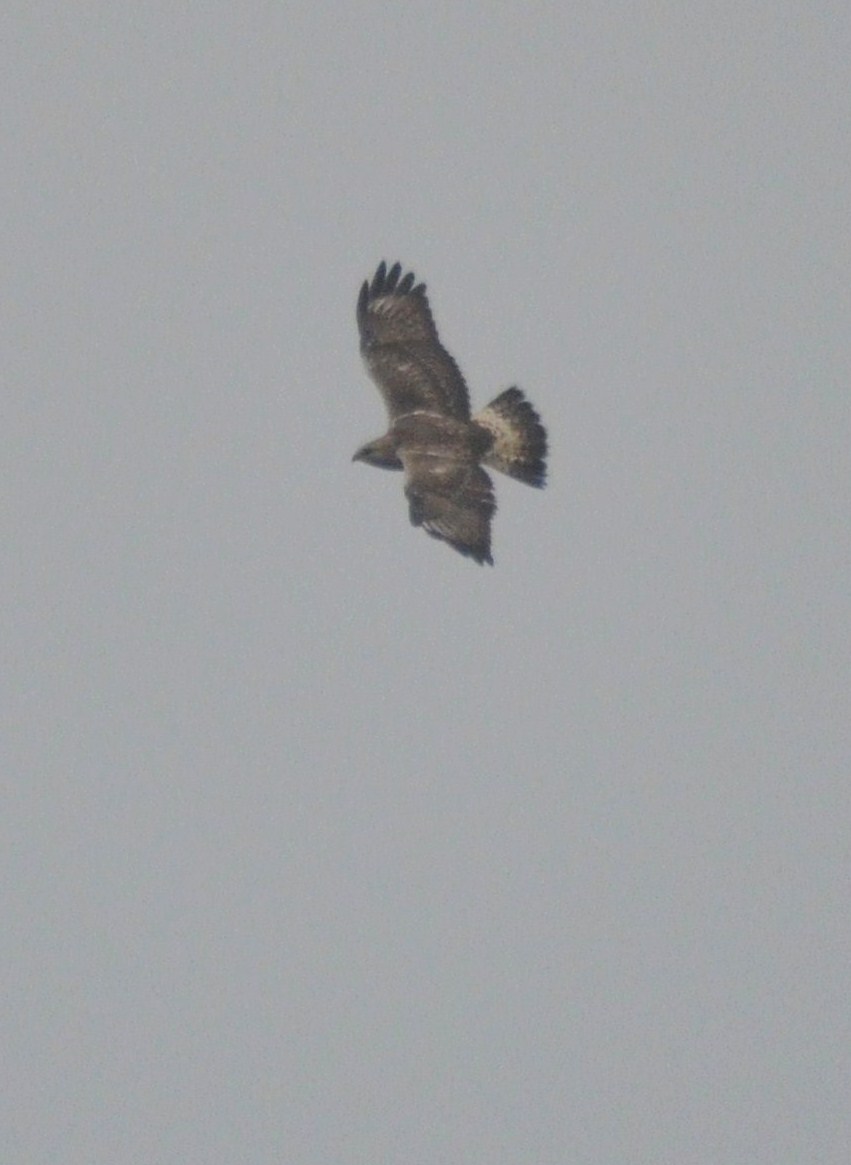
I continued onto Burpham and the area known as the Burgh. This is the same area that I visited last autumn to see a Pallid Harrier, however unlike the harrier which could be seen from the road, seeing this buzzard took a bit of a hike. I soon saw the bird flying over a distant hillside but wishing better views I continued on. Rough-legs are the larger and more robust version of our Common Buzzard. This is the ninth I have seen in the UK, it is a scarce but regular visitor to eastern England, indeed I should have seen one in January but the car break down thwarted our plans.

Rough-legged Buzzard, Burpham, photo from the Internet. Closer photos of this bird are on the net but this illustrates nicely the sort of views I obtained.
The Burgh is an area that is farmed sympathetically for wildlife, this might largely be due to shooting interests as there are feed bins everywhere. I don’t like the shooting of bird for recreation but agree that if it leads to a landscape as full of wildlife as this then it can only be beneficial. Skylarks, Corn Buntings and Linnets were everywhere, a Red Kite flew by and hares and both partridges were seen.

Notice the wide conservation margins to the fields, ideal for partridges and ground nesting passerines.
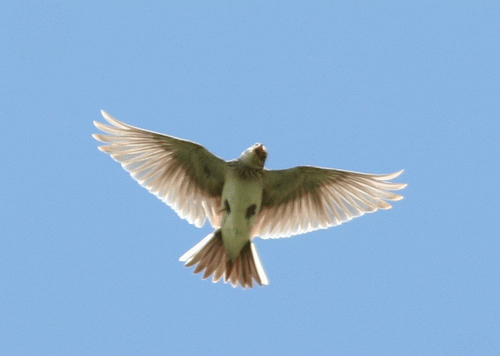
Singing Skylarks were abundant.
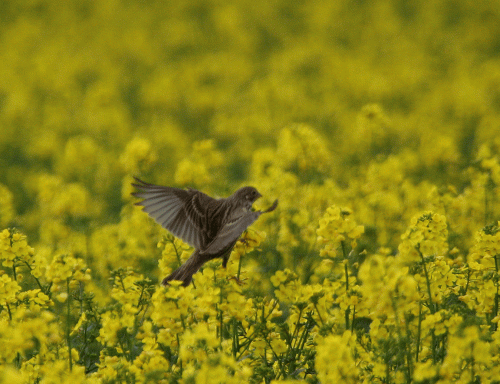
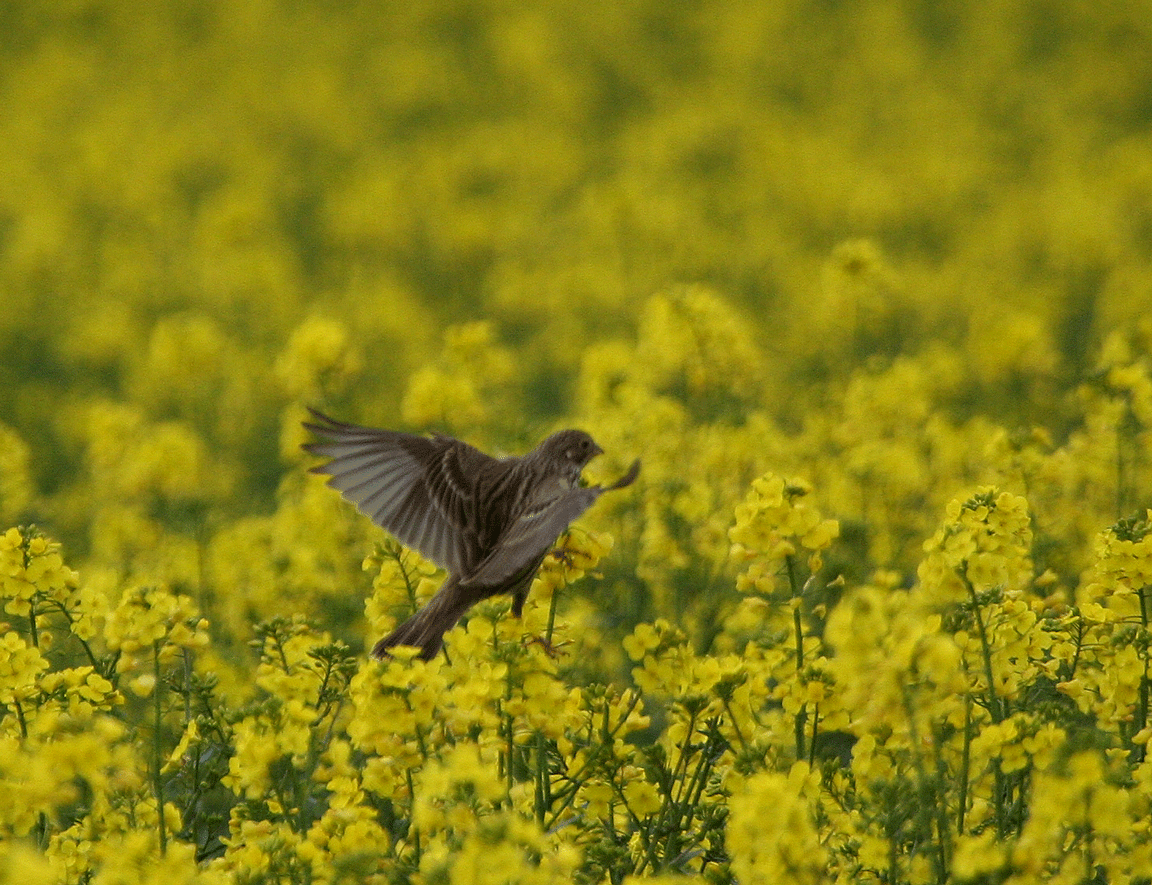
Many Corn Bunting were singing, this one flew in....

... and perched in the midst of the oil seed rape.
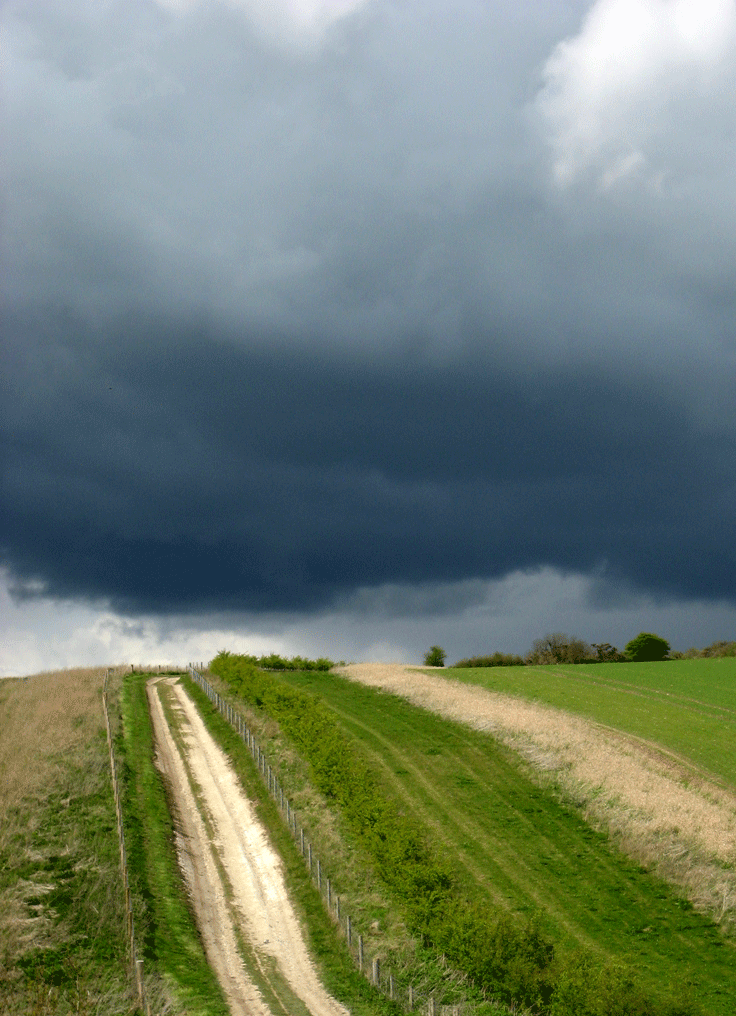
It was sunny when I arrived but soon black clouds rolled in. The first storm passed to the north and only resulted in ten minutes of heavy rain but the second an hour later was a torrential downpour mixed with hail that got me soaked.

The first storm passed to the north and largely missed the area.
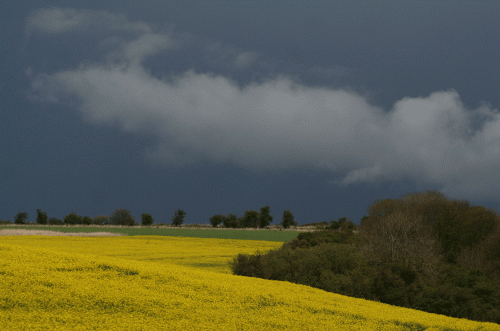
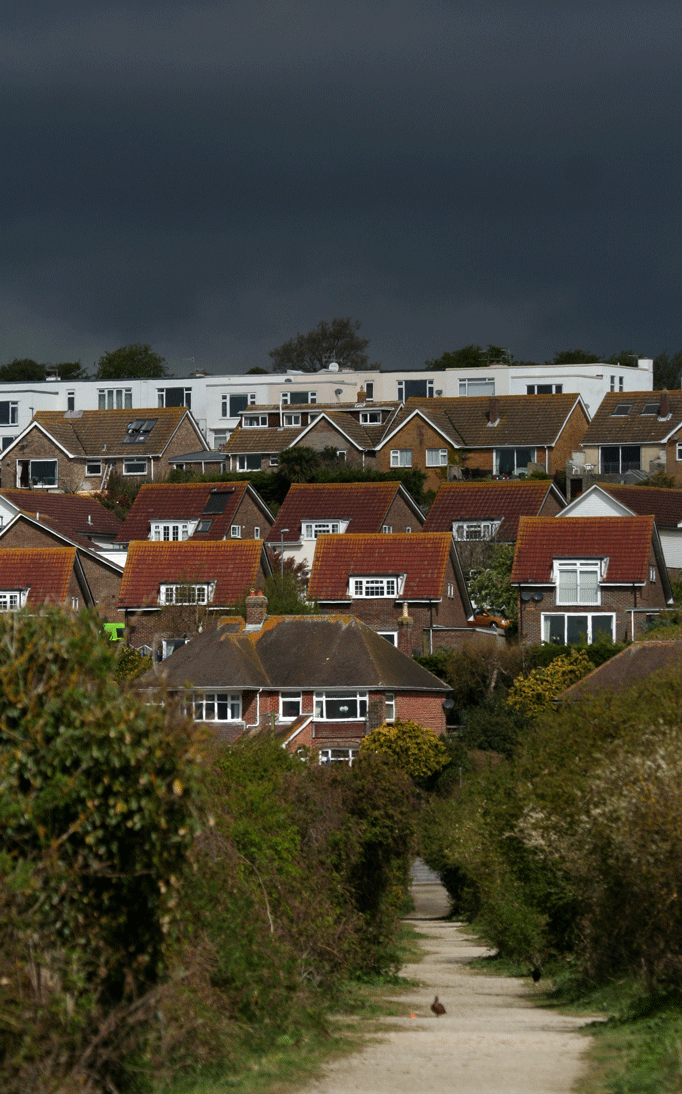
... but soon the clouds were back....
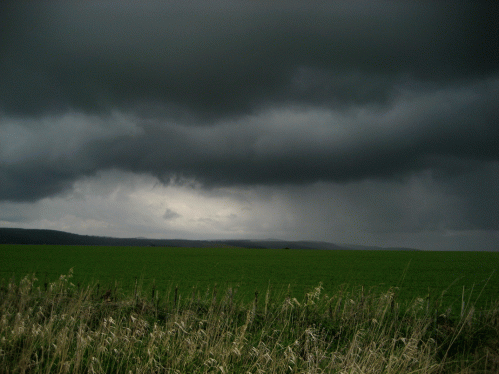
Lets hope this helps with the drought situation in the south-east!
It’s as far from Arundal to Derby as from Poole to Derby, so I expected the journey would take the usual 3.5 hours. How wrong I was. Driving on the M25 and M1 on a Friday afternoon took five hours. It was too late to visit Mum’s nursing home, but I went to see my sister-in-laws parent’s Dennis and Ida whilst Simon and Viv helped Miriam prepare for her Duke of Edinburg award expedition this weekend.
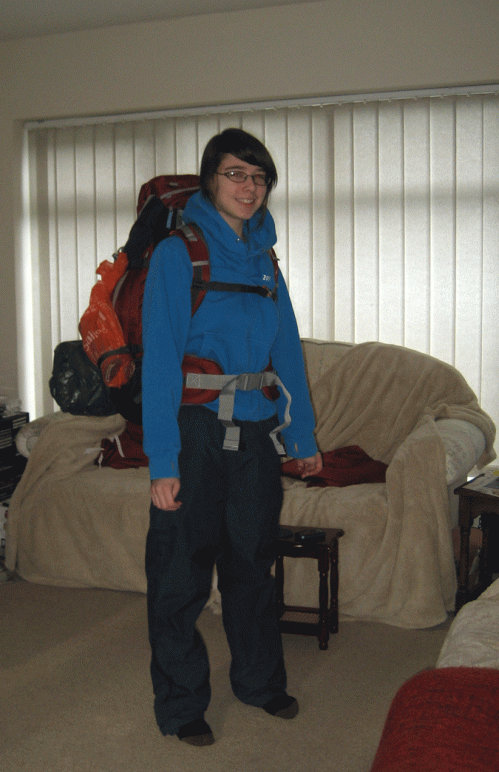
My niece Miriam has to walk 16km with all this camping gear, set camp and walk back the next day for her Duke of Edinburgh bronze award.

In spite of recent major abdominal surgery and continued treatment, Dennis remains cheerful and full of beans - as usual.
I finally made it to Portland on the 19th. The wind was in the west again. There were very few grounded migrants although there were a lot of Manx Shearwaters offshore. Several hours of watching from the Observatory resulted in a group of five Great Skuas and a few Sandwich Terns.
I later visited Lodmoor where I saw my first Whimbrel of the year. At least ten Reed warblers were singing but I heard no Sedge Warblers, usually Sedge Warblers arrive well before Reeds. Again there were no hirundines about and I have yet to see a Whitethroat.

From Lodmoor Hardy's Monument was showing well against the leaden sky.
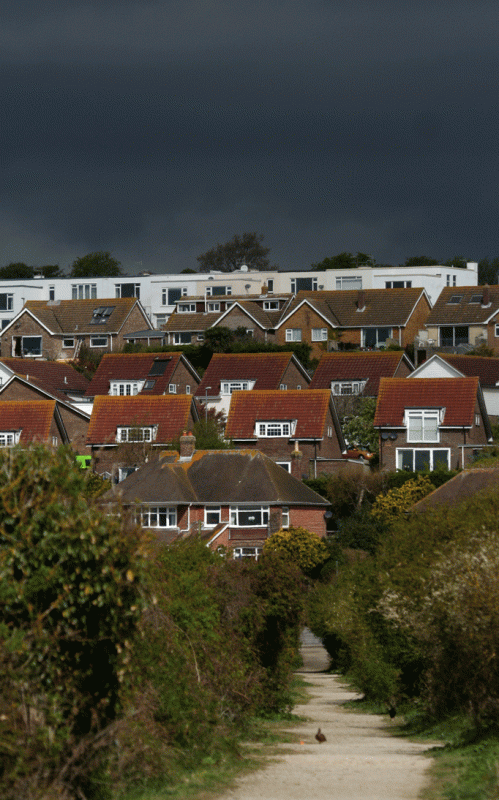
Beachdown Way, the central track on Lodmoor.
All of these birds will make it to Britain when the weather improves, but a late arrival reduces the chance of two broods and so will affect the numbers seen and ringed on autumn migration. As well as good numbers of common species in the first 19 days of April 2011 I had seen in Dorset or the New Forest: Red-flanked Bluetail 2/4/11, Short-toed Lark 7/4/11, Whiskered Tern 10/4/11, Woodchat Shrike 10/4/11, Black Stork 16/4/11, Ortolan Bunting 17/4/11 and Night Heron a year ago today.

I saw this species in the New Forest on 19th April last year but all of us except Shaun missed it when it re-appeared over Lytchett Bay shortly afterwards.
Black Stork photographed in Armenia in 2010.
































 gryllosblog