Archive for the ‘Uncategorized’ Category
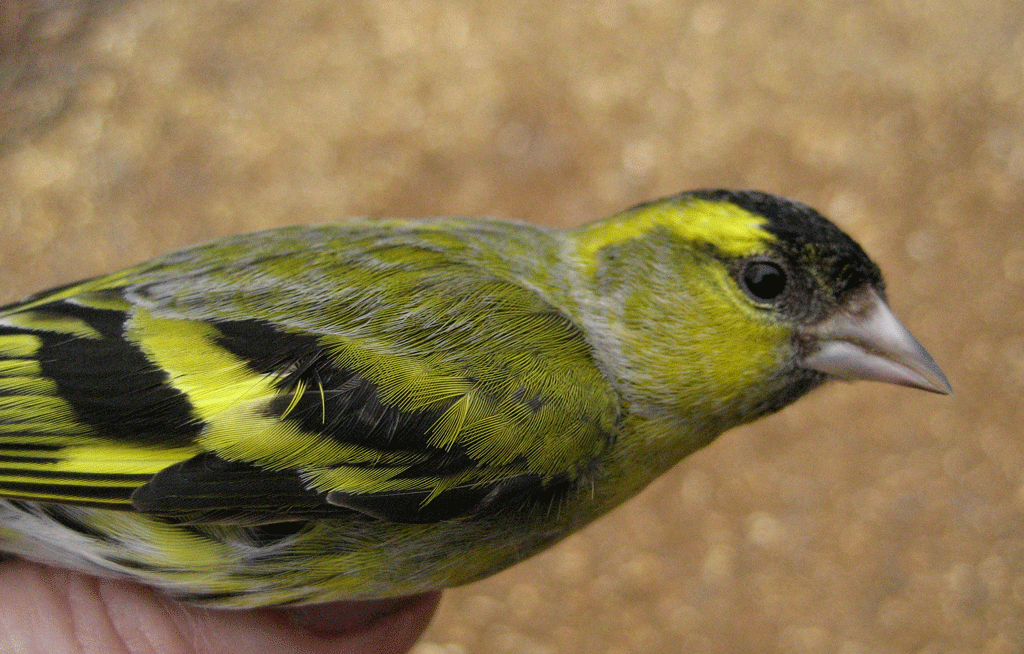
On the 15th John Dowling and I ringed at Holton Lee, we trapped about 25 birds but 15 of them were re-traps. As spring proceeds wintering flocks are breaking up and birds are dispersing to breeding areas. Even so we were able to ring a nice male Siskin and new Great Spotted Woodpecker. The latter was extracted from the net, placed in a bag and hung over the back of a wooden chain as usual manner, then to our amusement we heard a loud tapping as it pecked at the wood of the chair through the bag!

Blue Tits are by far the commonest bird at the Holton Lee feeders ..........
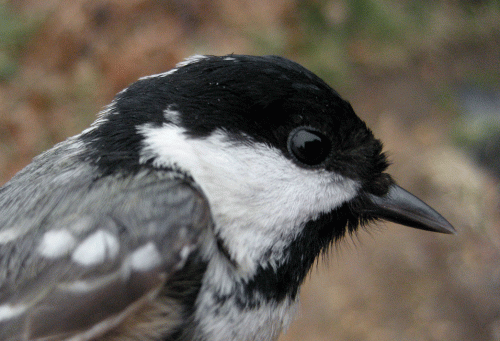
..... but Coal Tits are regular visitors.
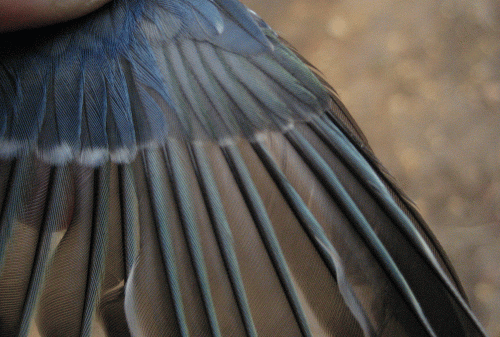
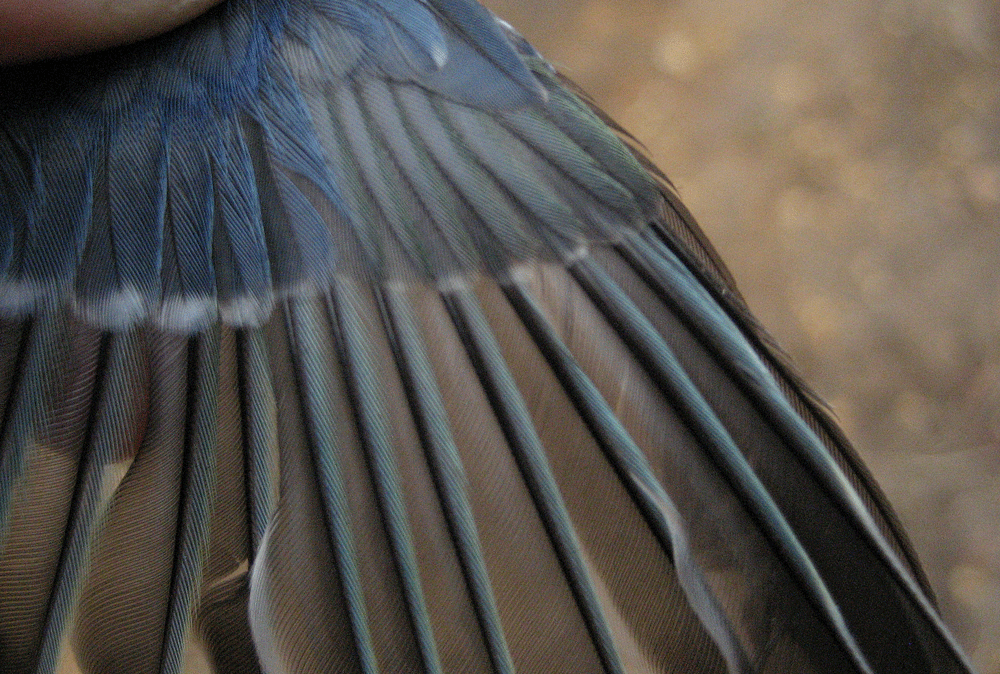
Ageing first year Blue Tits is easy based on the contrast between greenish-blue primary coverts and blue greater coverts......

..... this contrast is present but much harder to see on a first year Coal Tit.

In this feature, Great Tits are intermediate between the two, but this bird was unusually grey and the contrast in the wing on this first year bird was clearly visible.

Although this bird was unusually grey it did demonstrate typical tit aggression.
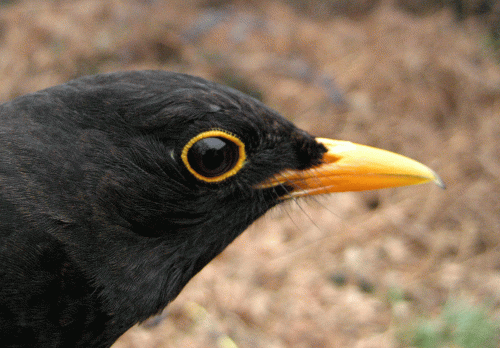
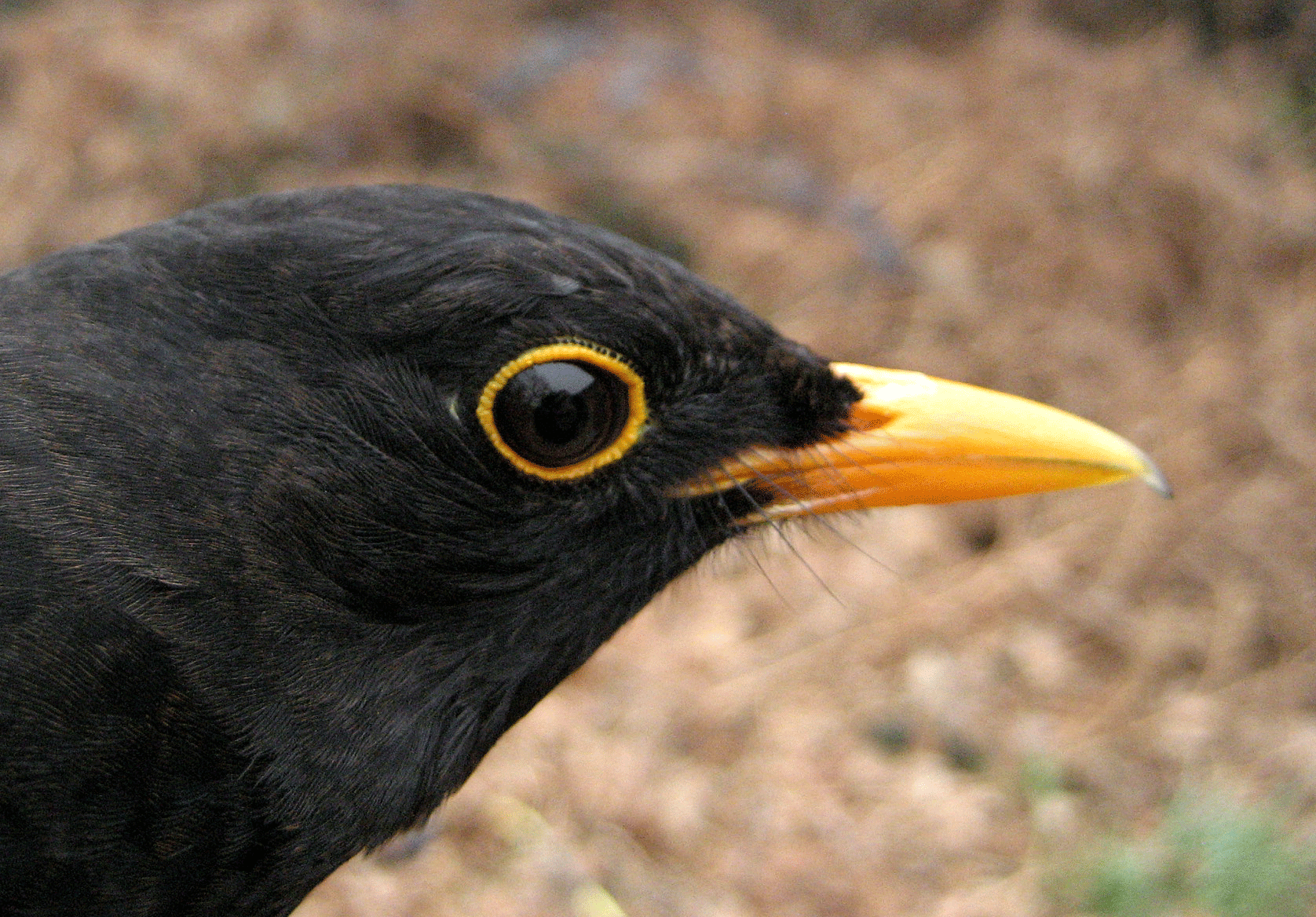
By spring first year male Blackbirds have developed adult plumage but contrast between moulted black and unmoulted brown feathers in the wing allow them to be aged.
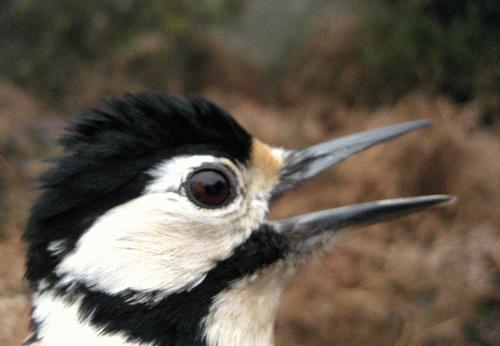
The lack of a red nape identifies this Great Spotted Woodpecker as a female. Unlike most birds woodpeckers are very vocal in the hand and can be quite deafening!

The most attractive bird ringed this morning was this male Siskin.
On the 16th I joined Terry at his ringing site on Canford Heath. This small patch of scrub has proved quite productive and we ringed some 17 birds and 11 re-traps. Most interestingly we captured a ‘control’ Reed Bunting that we have since heard was ringed at Longham on the 30th September last year. A very feisty Magpie was an unusual capture and left Terry with multiple cuts on his hands.

Terry's fingers suffer as he rings this feisty bird.

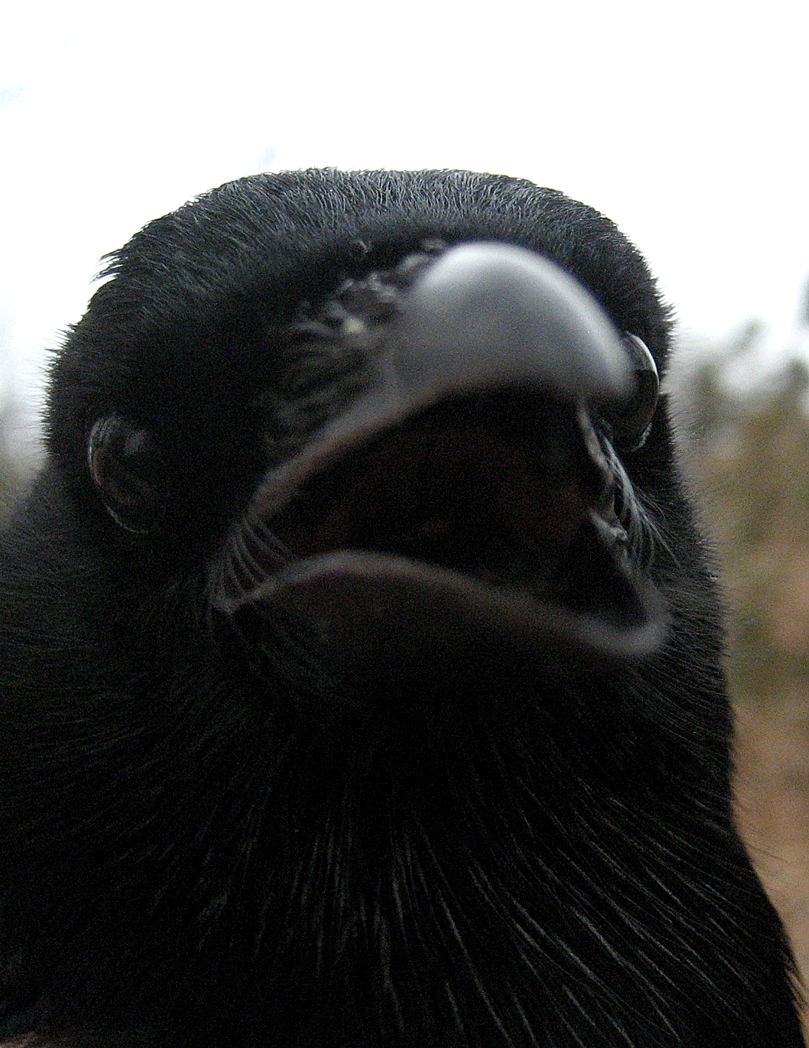
A Magpie's bill is a formidable weapon.

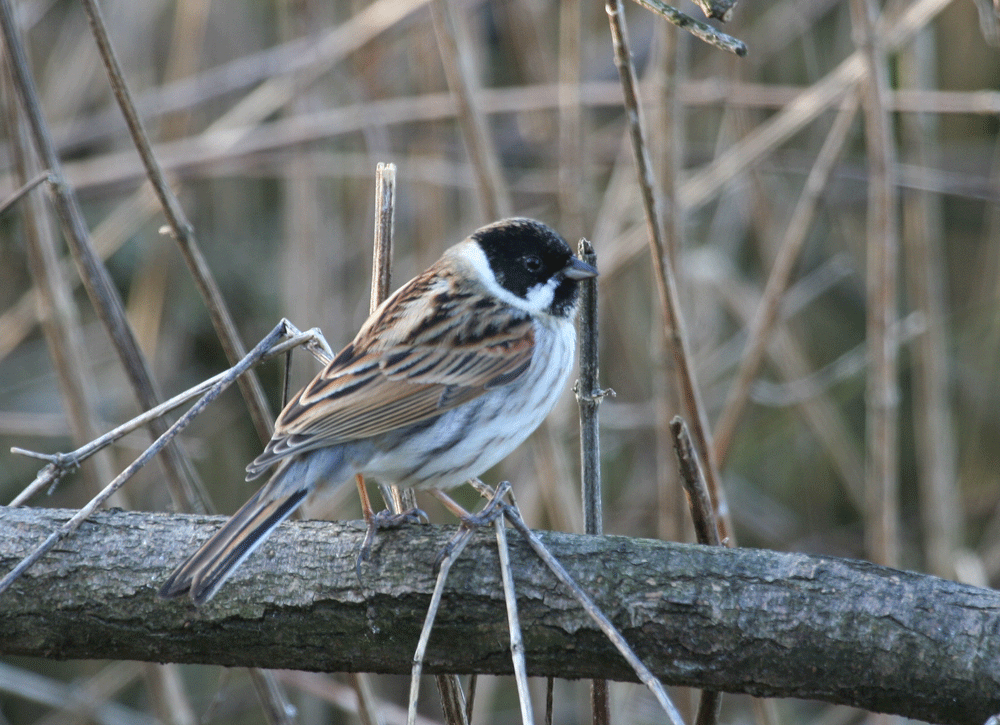
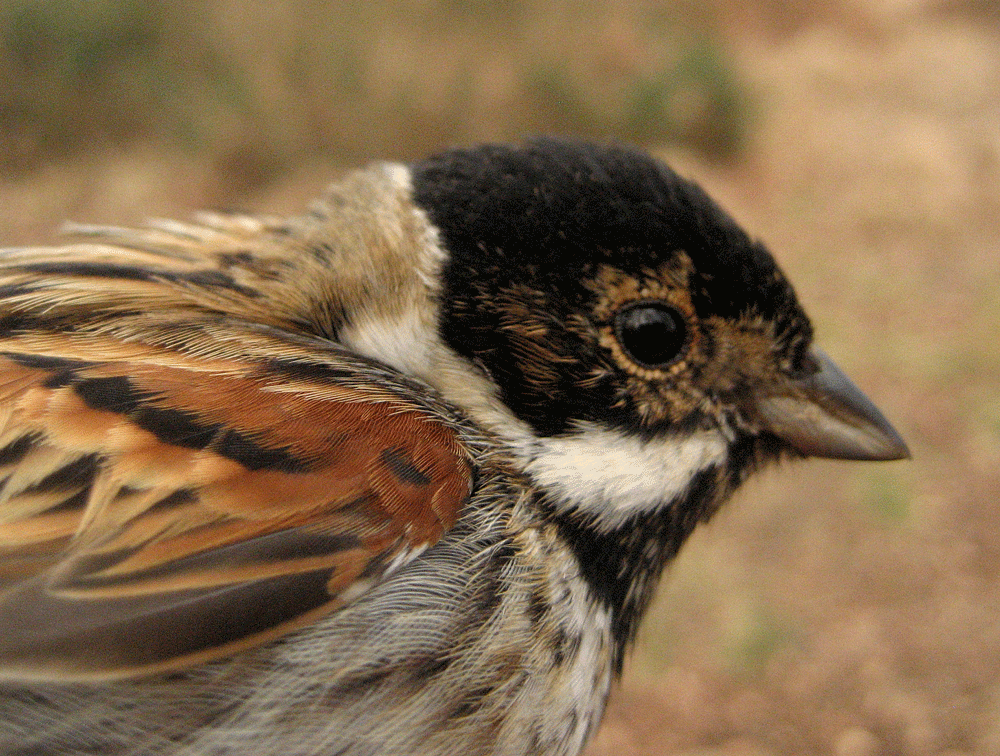
The dark face might lead you to believe that this is a male Reed Bunting abrading into breeding plumage, but the shape of the black in the crown feathers, the lack of a white collar and the wing length all go to prove it is a female.
On the 17th Shaun and I went to to Durlston and put the poles and guys in place for the forthcoming ringing season. In the evening the ringing group AGM was held at our house. Of the 17 in the group, 15 attended, it was a bit of a squash but everyone squeezed into our conservatory. We covered a lot of issues and made plans for the future and it was nice to meet up with several members who I haven’t seen in quite a long time.

Both the 12th and 13th were characterised by grey skies and low cloud/fog. True the sun did come out on the afternoon of the 12th but only after I returned home. The very dry conditions continue, Dorset seems to have avoided the recent hose pipe bans but it will only be a matter of time before they are introduced.
On the 12th I visited Ower copse in Rempstone Forest and Sherford Bridge in the hope a Lesser Spotted woodpecker. Getting to see this declining species as opposed to merely hearing one has become a bit of a mission. Plenty of Treecreepers, Great Spotted Woodpeckers, Siskins and even as few Redpoll were seen, but no LSW.

A misty morning in Rempstone Forest

Flooded woodland at Ower

A heavy dew on the cobwebs

Primroses enliven the woodland floor
I had seen Velvet Scoter in Devon earlier in the year but the views were distant, so I drove to Abbotsbury on the 13th as 2 – 3 had been reported there recently. The low cloud was so thick as I drove past hardy’s Monument that i could do little more than crawl along in second gear. Fortunately it was a bit clearer on the coast. On the Fleet only the usual diving ducks and grebes were seen.
Radipole North Hide failed to produce the couple of Glossy Ibis that have been in the area for several days now, the best bird was a Kingfisher by its nest hole. Perhaps I should have gone to Lodmoor where two Spoonbills and a Sand Martin had been seen but instead I called in at Kingston Maurward, just outside of Dorchester where a Cattle Egret was residing with the local cows. In spite of the poor visibility I got some mediocre record shots.

These sheep should have been enjoying a stunning panorama over the Chesil and on to Portland.....

When I dropped down to the Chesil the visibility was reasonable. The northern boundary of the Fleet is on the left and the sea on the right.

I had good views of the pair of Velvet Scoter offshore. Photo from the internet.

A distant Cattle Egret at Kingston Maurwood near Dorchester.
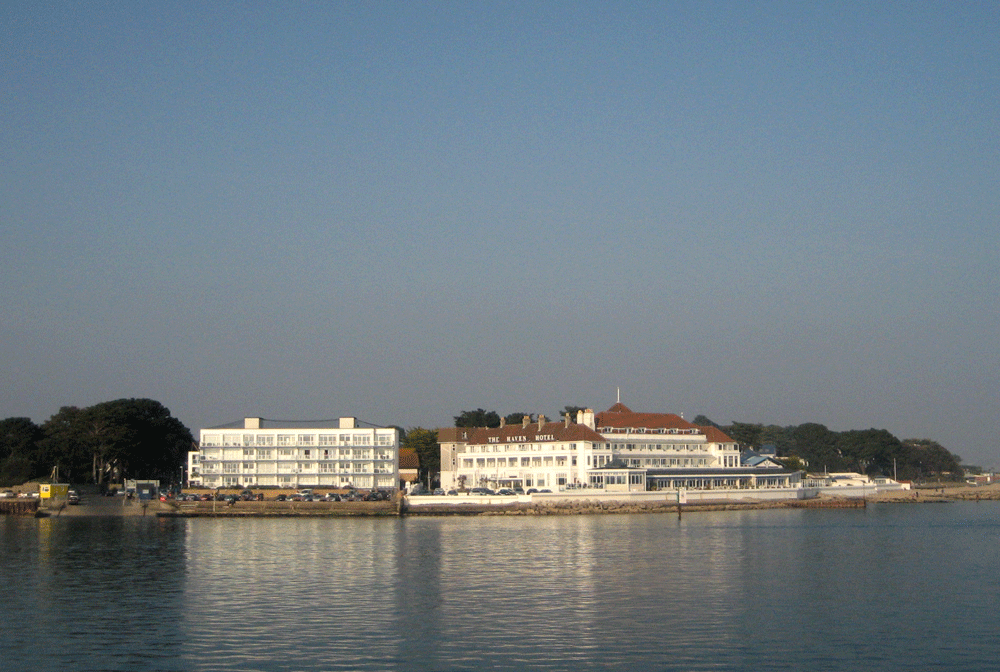
Brownsea Island was the site of the first Boy Scout camp and ‘Be Prepared’ is the Scouts motto but being prepared was something that I failed to be on our visit to Brownsea this weekend.
Stour Ringing Group has had permission to ring on the lagoon for many years. I haven’t been on many of these outings, mainly because it takes up most of the weekend and the numbers who can attend is restricted.. Catching waders in nets can only be performed at night, is best when a high tide occurs after dark and for obvious reasons cannot be carried out in the breeding season.
I left it late leaving for the 1615 rendezvous at Sandbanks (mainly because I was trying to get the previous blog post uploaded) and ended up rushing. On arrival at the island I found I had left the memory card of my camera in the PC and my water proof coat in the boot of the car. Unlike the Boy Scouts I was far from prepared!
We set up the nets before dark but I was unused to walking in my new chest waders and soon over-balanced in the sticky mud. Without a waterproof top I got soaked and as the nice warm day had ended, rather cold. Back at the Villa, I tried to get cleaned up and dried out but later needed to borrow a coat from Bob as a cold wind had got up.

Approaching Brownsea from Sandbanks. Photo by Terry Elborne

Brownsea Lagoon seen from the sea wall. Photo by Terry Elborne
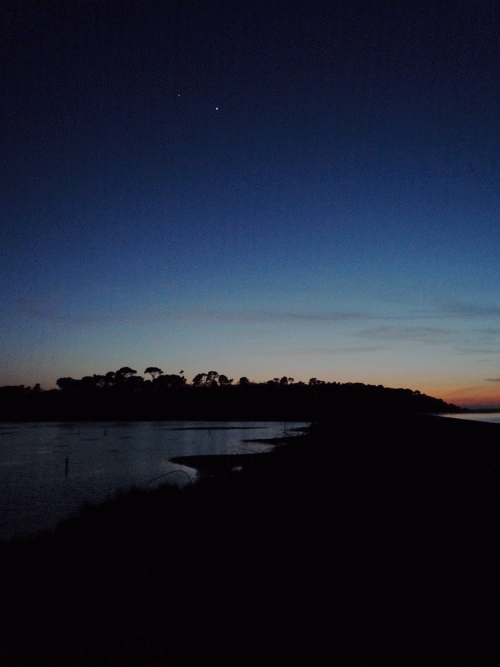
It was almost dark by the time the nets were up and I could get back and get cleaned up. Photo by Terry Elborne.
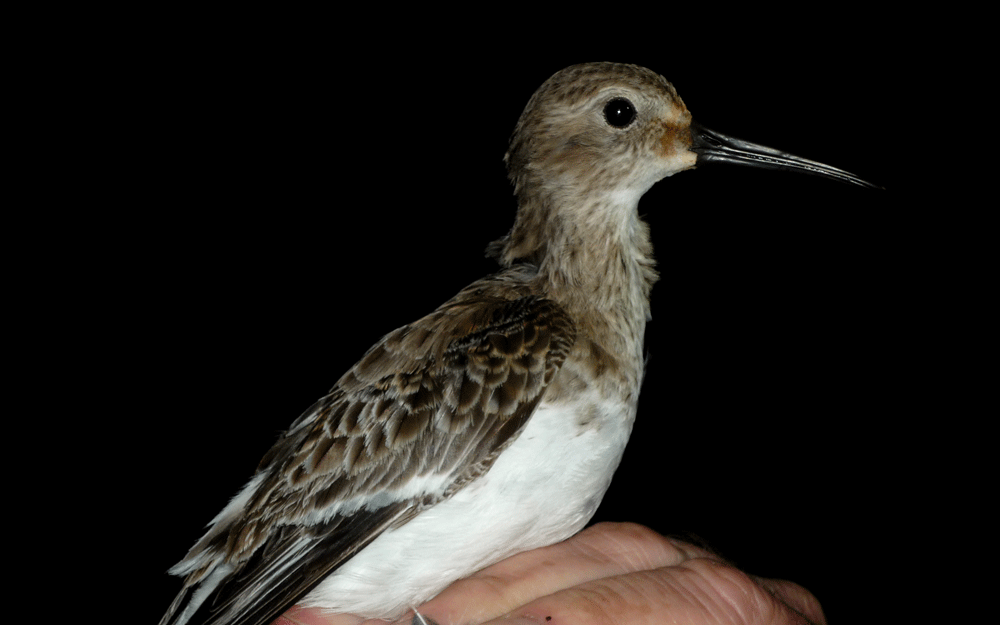
Enough about my comfort, how did the ringing go? Well the last visit trapped over 90 birds but we only caught six, 2 Black-tailed Godwits, 1 Bar-tailed Godwits, 2 Oystercatchers and a Dunlin. It wasn’t that bad however, all four species were ones I haven’t seen in the hand for a long time, there was time to examine them in detail and best of all, the Dunlin was a control, that is a bird previously ringed elsewhere.
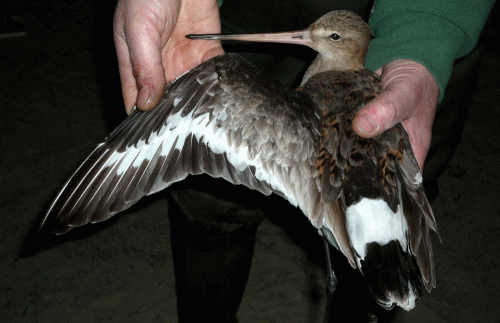
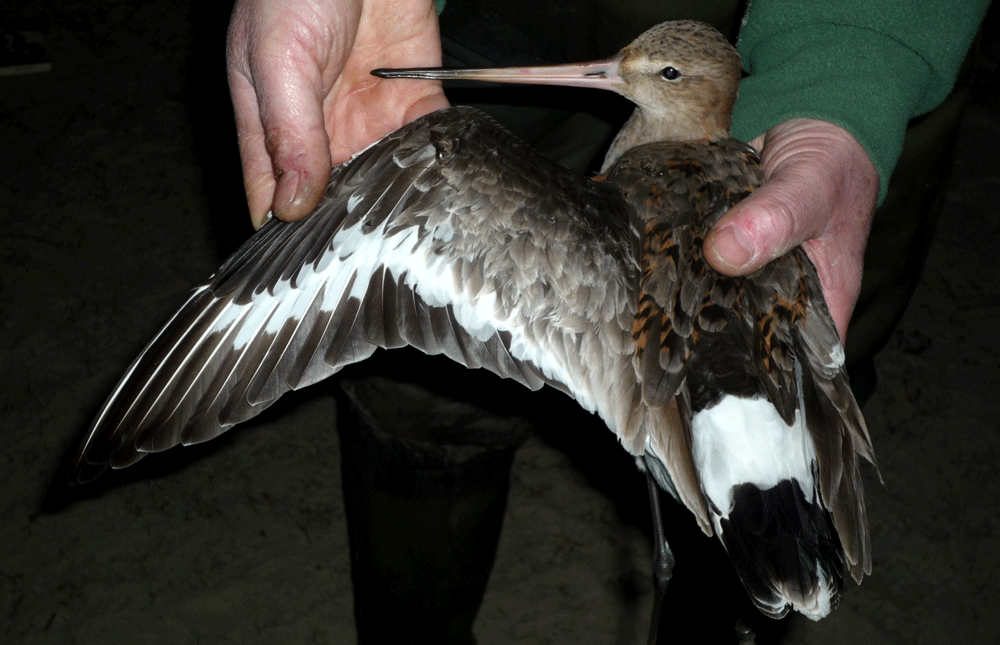
Black-tailed Godwit showing its distinctive wing pattern and the start of the moult to its brick-red summer plumage. Photo by Terry Elborne

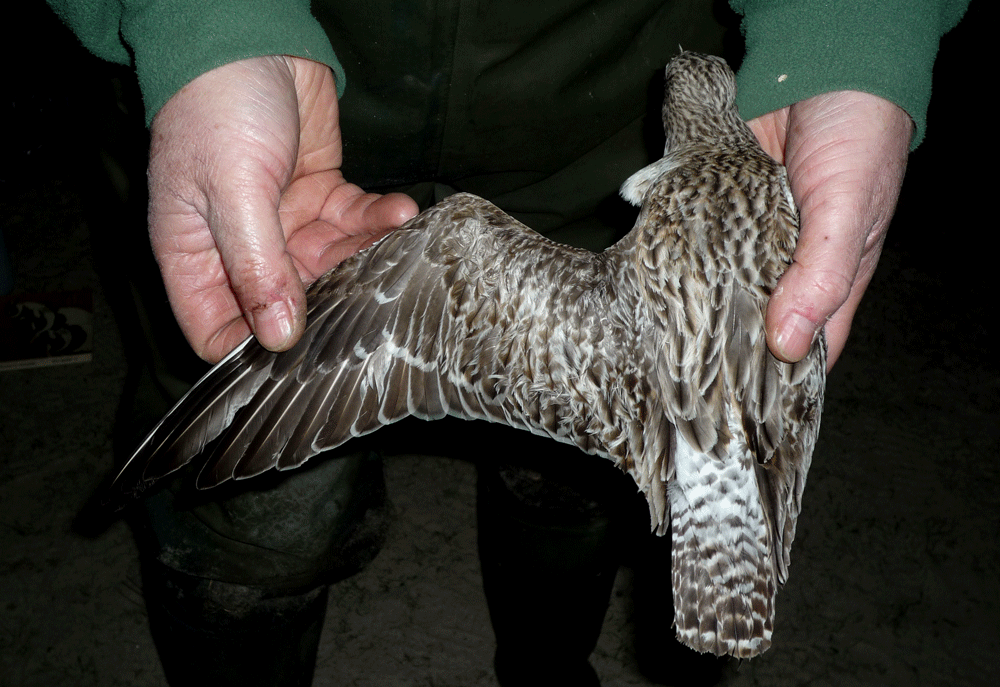
Compare the plainer upperparts of Bar-tailed Godwit.
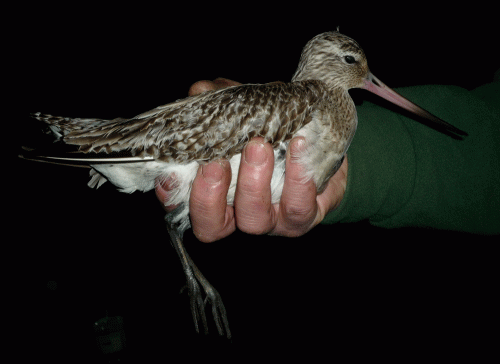
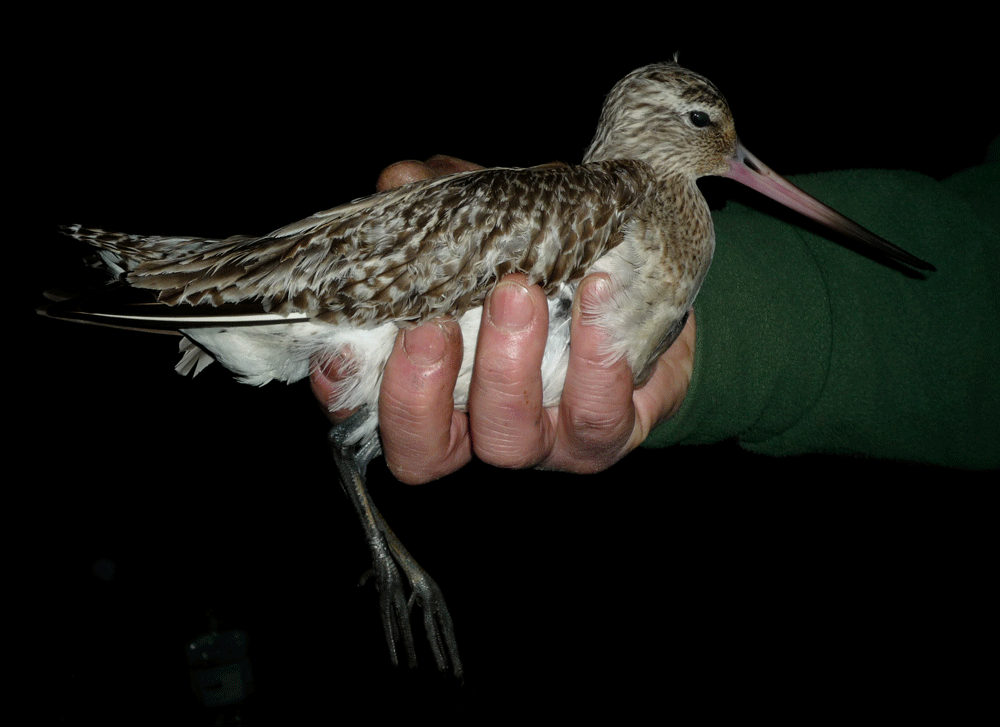
Bar-tailed Godwits have a slightly up-turned bill and shorter legs than Black-tailed Godwits. This bird will be heading for the Arctic tundra whilst Black-tailed breed in wet meadows in lower latitudes.
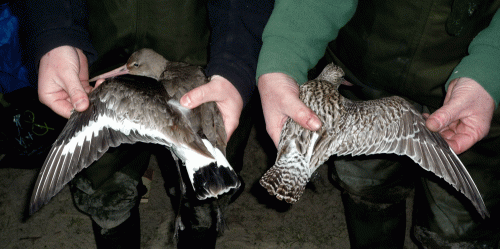
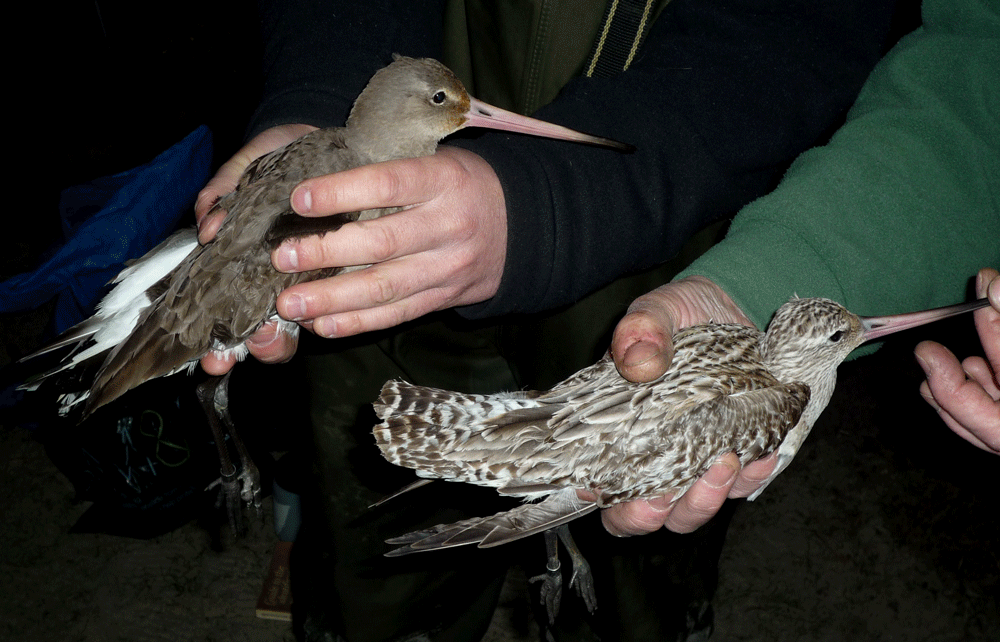
I don't think I have ever seen these two species in the hand at the same time before. Photo by Terry Elborne

Black-tailed and Bar-tailed Godwits. Photo by Terry Elborne
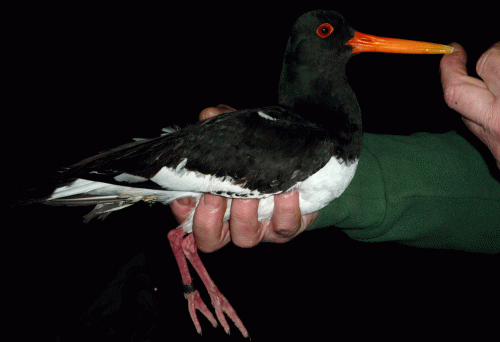
An Oystercatcher in full adult plumage, age code 8 in ringers parlance. Photo by Terry Elborne

We wait with anticipation to find out where this Dunlin was ringed. Photo by Terry Elborne
We were back at the Villa by 0115 and although the others had a lie in I was up at 0600 to do some birding before we left at 0900. Great-spotted Woodpeckers were very obvious, I could hear at least five drumming from the same point and Red Squirrels abounded (for those not aware, Brownsea Island is one of very few locations where this species still exists in southern England) and about 15 were seen. I only had time for a short scan over the lagoon but 24 Knot, 3 Greenshank, 19 Avocets and an incredible 115 summer plumaged Mediterranean Gulls. The main reason for my early departure was to add Golden Pheasant to my year list. Brownsea is only one of two locations in Dorset where this introduced pheasant can be found (the other is Furzey Island, owned by BP and closed to the public) but rhododendron clearance has reduced cover for this species and it has become harder to find. After about an hour of searching I found a pair and had beautiful views.

It might not be a native species, but the male Golden Pheasant is a stunning bird that it always a delight to see. Photo from the Internet.
I got back to the Villa in time to be ferried to the quay for the boat to Sandbanks and home for a well-earned rest. Many thanks Terry for the photos.

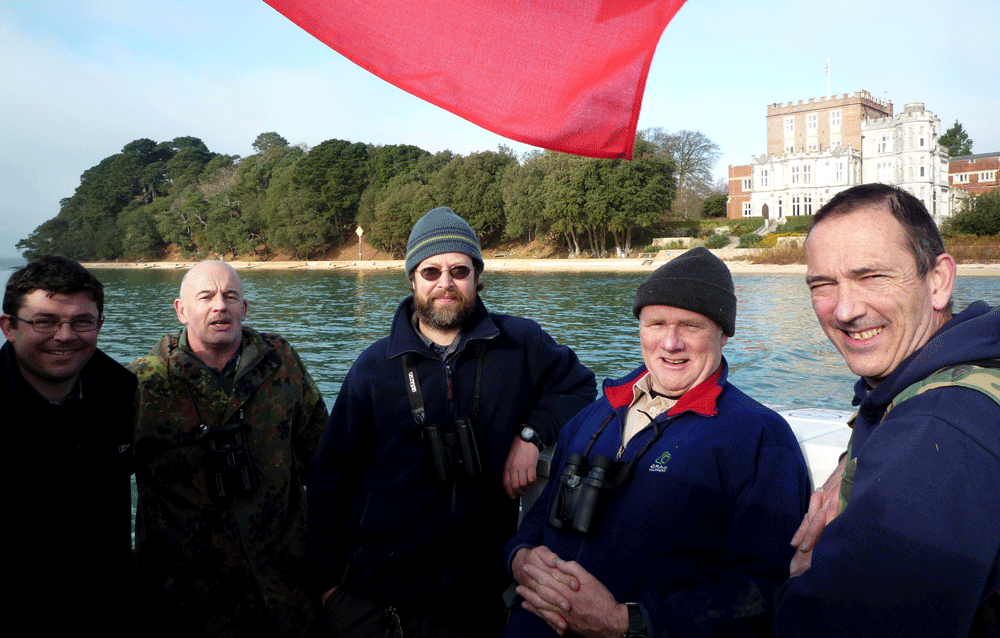
The boat back, Brownsea ringers: L-R Michael Gould, Bob Gifford, Sean Walls, me and Andy Welch with Terry behind the camera.
For reasons beyond my understanding the text of this post vanished when I uploaded it, so I have added an abridged version today (March 12th)
The 7th was a quiet day, most of it spent sorting music files. In the evening we joined friends at Nexus for a meal and a drink in Wallisdown. There is a regular ‘bar-night’ every Wednesday, but we only occasionally attend.
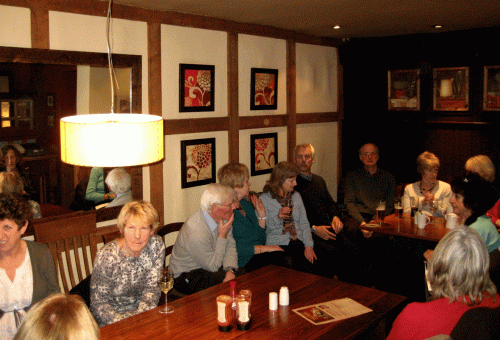
Nexus bar night
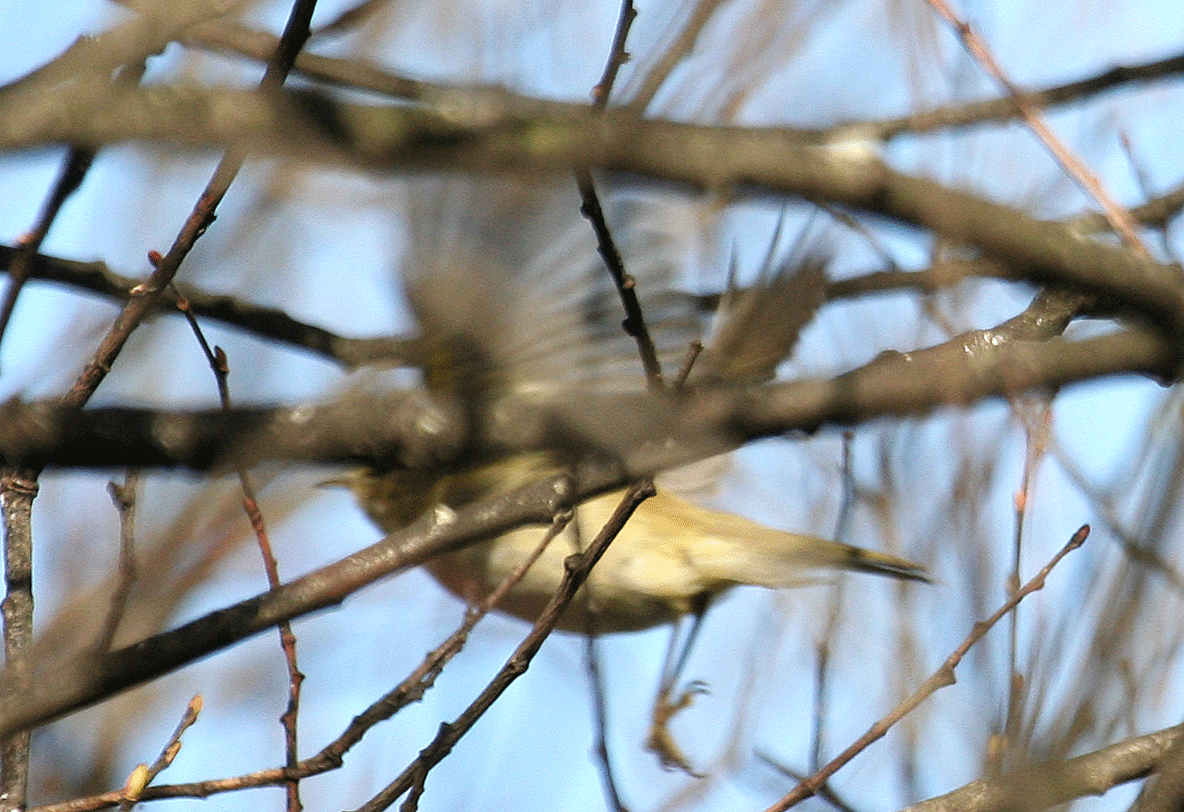
On the 8th I birded two areas in the morning, Sherford Bridge where I hoped in vain to find a Lesser Spotted Woodpecker (a species I have heard but not seen this year) and later Swineham where I saw several newly arrived Chiffchaffs at least two of which were in song. One was a brown and white type that had been found the previous day and tentatively identified as a ‘Siberian’ Chiffchaff. This bird sang briefly, giving a sppeded up warble as well as a couple odd chiff chaff notes. I am no closer to understanding what constitutes the boiundary between Common Chiffchaff and ‘Siberian’ Chiffchaff. On the way back ther was a flock of Fieldfares feeding on the rugby pitch.
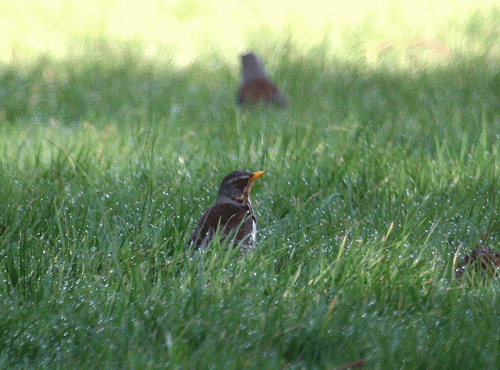
Fieldfares at the Rugby Club.
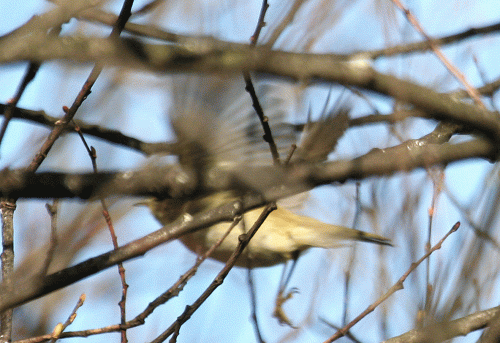
A 'Siberian' type Chiffchaff
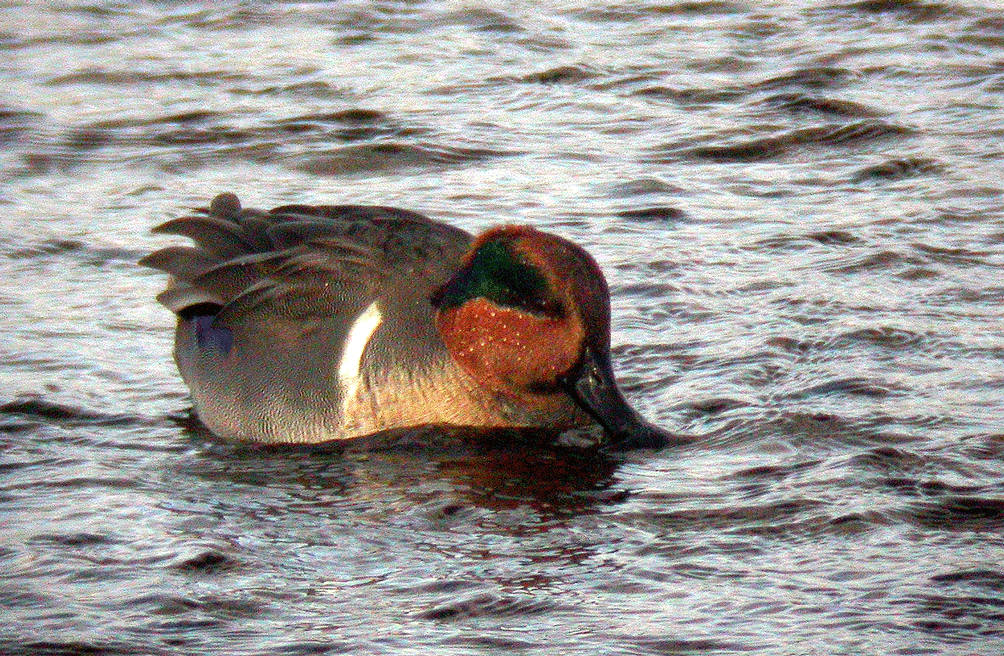
On the 9th Paul Morrison and I travelled to Farlington Marshes near Portsmouth in the hope of seeing a Green-winged Teal, the north American equivalent of our Common Teal. We arrived at 0815 but didn’t find the bird for four hours. We think it flew in on the rising tide as it was not present on our first circuit. Unlike the spring-like conditions of yesterday it was a cold and grey day but we were glad we managed we went and found this rare visitor from the Neartic.

Farlington Marshes lies alongside the very noisy M27.
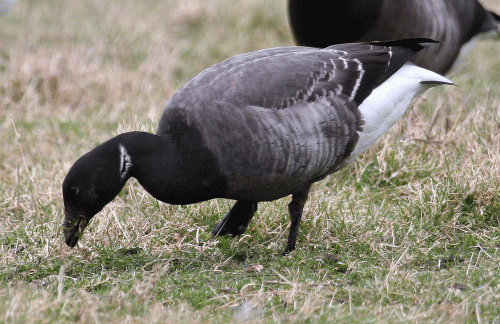
Brent Geese are the most obvious species on the marsh. The pale tips to all the coverts show this a first year bird.

The sea wall that separates the freshwater marsh from the estuary is in need of repair.

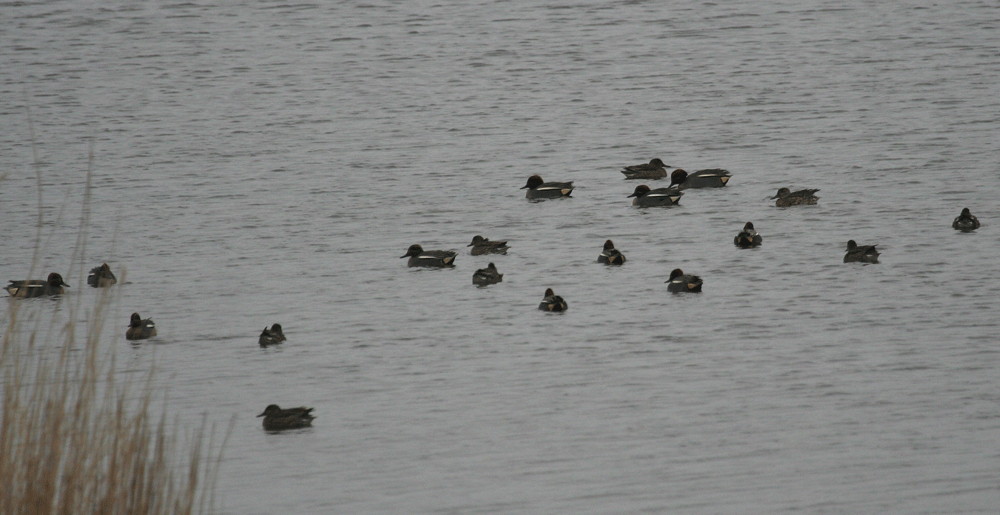
We searched through many hundreds of Common Teal....
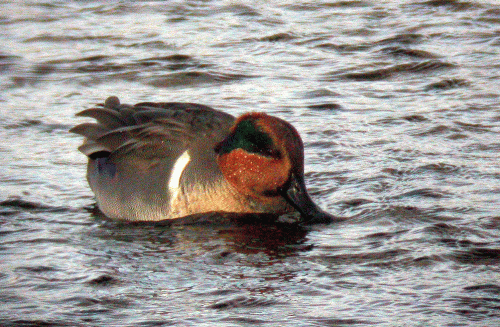
... to find the bird with a vertical stripe on the flanks.
In this post I’d like to add to or update some of the pervious postings.
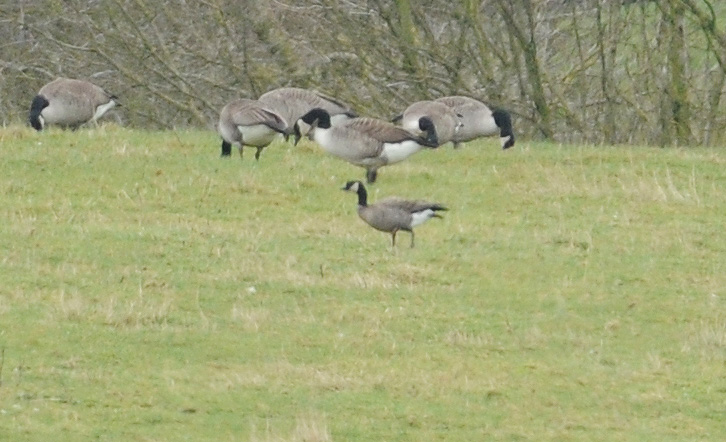
Chris Chapleo kindly sent me photos of some of the birds we saw on 24/02/12 on our Yellowthroat twitch to Gwent. On our return we stopped at Torr reservoir in Somerset and by using a 2 times converter Chris was able to get better shots of the Cackling Goose and the Iceland Gull than I did.
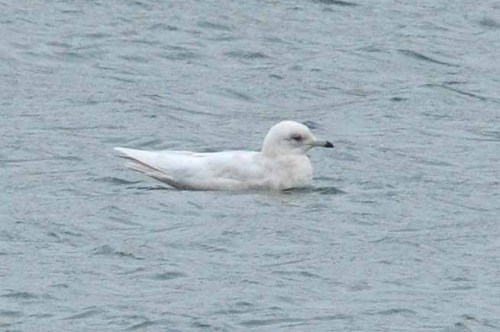
Iceland Gull 2nd winter, 24/02/12 Torr reservoir, Somerset, Photo by Chris Chapleo

'Richardson's' Cackling Goose, 24/02/12 Torr reservoir, Somerset, Photo by Chris Chapleo
Excellent photos of the Common Yellowthroat as well as the Paddyfield Warbler and Parrot Crossbill that I saw in West Sussex on 5/2 and 18/2 respectively can be seen in the recent edition of Birding World which arrived today. There is a good discussion on the provenance of the Parrot Crossbill as well as some excellent photos of that most spectacular of falcons, the Gyr.
On 6/3 well as seeing the Goshawks at Acres Down I also heard a Lesser Spotted Woodpecker, but extensive searching of the woodland below the lookout failed to produce a sighting. I am happy to include ‘heard onlys’ on my year list if I have to but would prefer to see the species concerned if possible.
A recording of a calling and drumming Lesser Spots can be heard at http://www.xeno-canto.org/browse.php?query=Lesser+Spotted+Woodpecker+%28Dendrocopos+minor%29+40&species_nr=qwtlfc
….. and finally I was amused when I called in at the farm shop at Acres Down to buy some lunch. The lady there, realising I was a birder complained that ‘all these Goshawks’ had scared the Blackbirds from her lawn and eaten all the Dartford Warblers’. I can hardly imagine a huge Gos diving into a thick gorse bush for such a tiny morsel as a Dartford! I pointed out that Goshawks, Blackbirds and even Dartfords exist side by side on the continent and have done so for millenia, that Goshawks main food is pigeons and corvids and I see no shortage of those, and that the Blackbirds were feeding in the forest not her lawn due to the mild winter. Some people have no idea of a predator / prey relationship and how the presence of a top predator like a Goshawk is beneficial for the ecosystem as a whole.
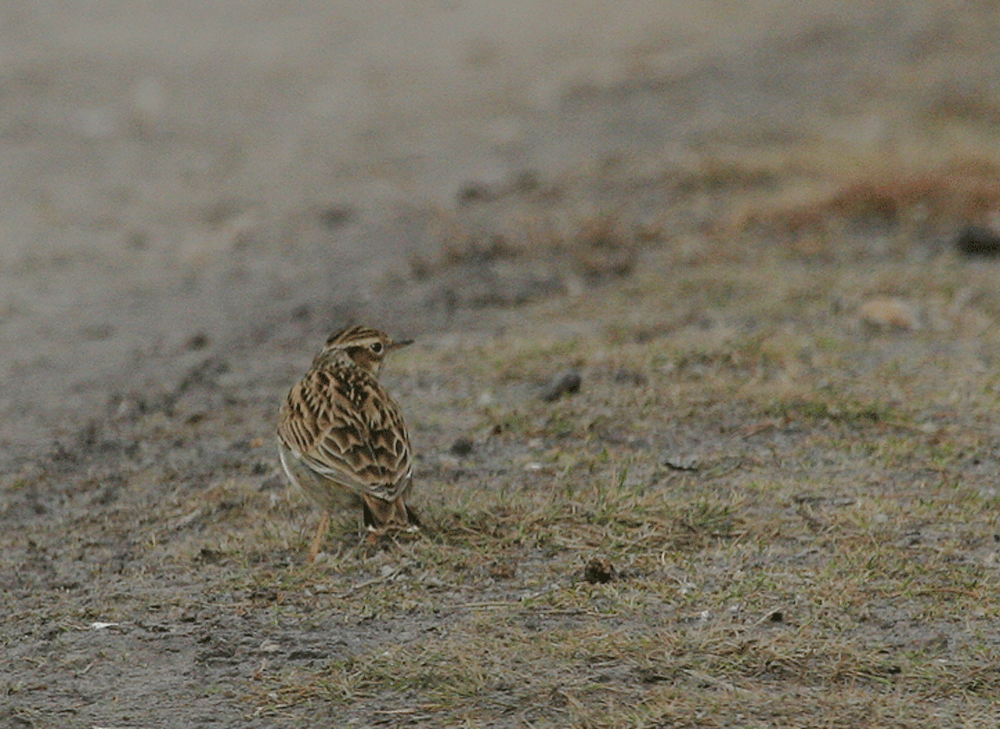
I also had good views of Wood Lark in song flight and on the ground in the New Forest. My photos from Black Down in West Sussex on 18/2 were too dark so I have repeated them here.

Wood Lark, Black Down, West Sussex 18/2

Wood Lark, Black Down, West Sussex 18/2
Whilst listening to the beautiful song of a Woodlark today I remembered that I have been asked why I don’t add sound recordings of birds to my blog. In practice I don’t have any decent sound recording equipment and you have pay for an upgrade to upload sound files, but I see now harm in providing an external link. The Xeno-Canto site has recordings of 75% of the world’s birds. For example this Woodlark song at browse.php?query=wood+lark&species_nr=
On a beautiful spring morning I set off for Acres Down in the New Forest in the hope of finding a Goshawk. This magnificent, yet secretive raptor has been making a come back the UK and numbers are increasing in the New Forest, although it remains rare in Dorset. Acres Down is a wonderful spot with an almost 270 degree view over the surrounding woodland and apart from a distant tower near Sway and the occasional plane overhead, no human artifacts visible.

Acres Down, the best raptor view-point in the New Forest
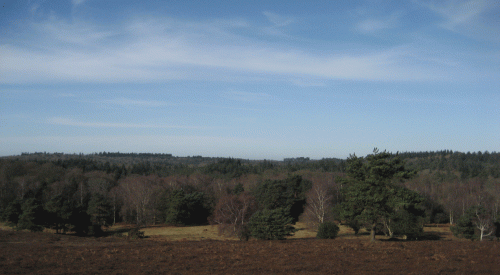
It is possible to see and identify raptors several miles away from this point.
At least a dozen Buzzards were seen along with a single Sparrowhawk, but I wasn’t there long before a female Goshawk spiraled up and displayed above the forest before folding her wings and diving almost vertically into the canopy. Not only is the female much larger than the former but performs most of the display and defence of the territory. I knew about the former, but have only just learned about the latter. That’s one of the great things about birding, you learn something new almost every day.
I later met Jackie Hull and her TwO Owls birding group, not long after they had departed, a first year (brown) Goshawk flew high over the wood and was joined by two adults, presumably defending their territory. The female showed particularly well, puffing out the white undertail coverts and sky diving over the forest. I beleive Jackie’s group caught up with at least one Gos on the walk back.

Goshawks are much larger than Sparrowhawks with deeper chests, longer more rounded tails, broader based wings with protruding secondaries and a dark cap. Photographed in Armenia in May 2010.
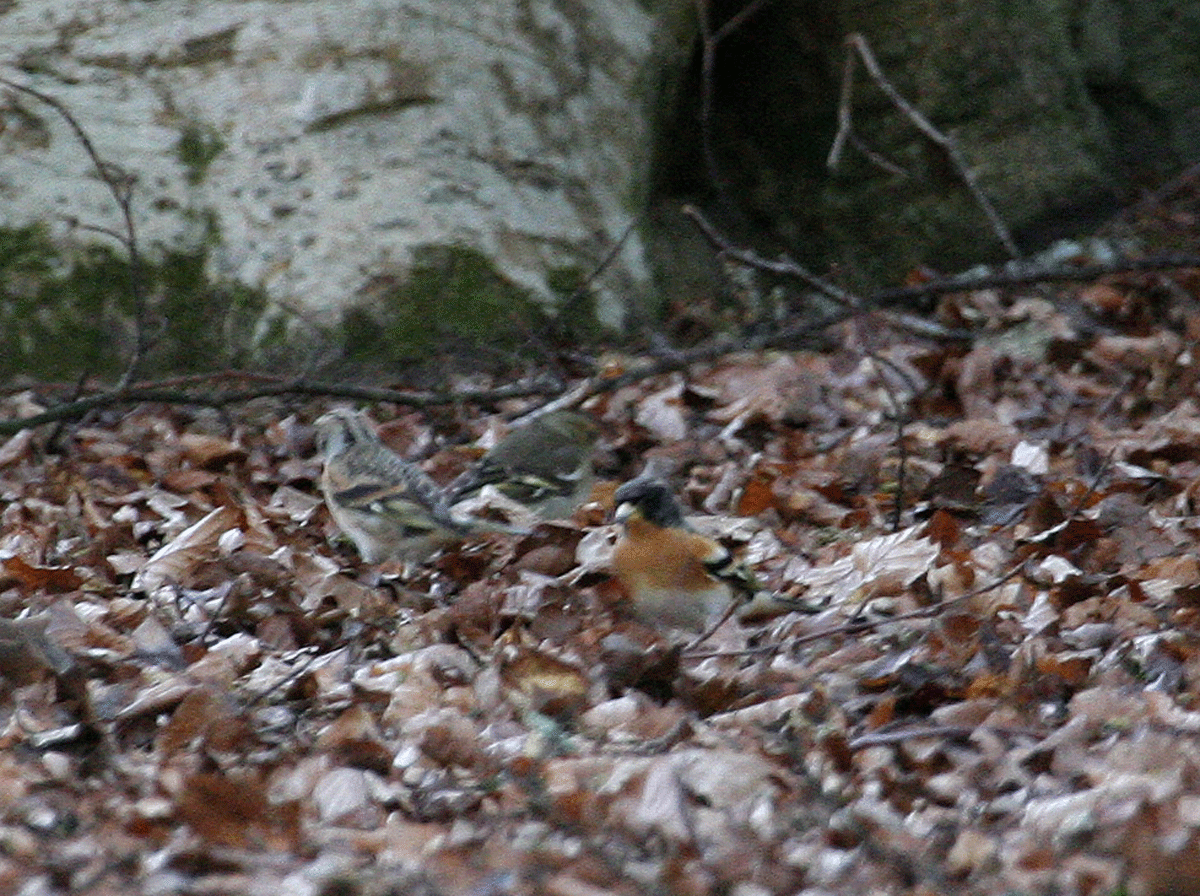
Later I visited a couple of sites in the hope that I might catch up with this winter’s bogey bird, the Brambling and after checking a few Chaffinch flocks I found three Bramblings near to Bolderwood car park. Now at last I have caught up with all the regularly wintering birds in the area.
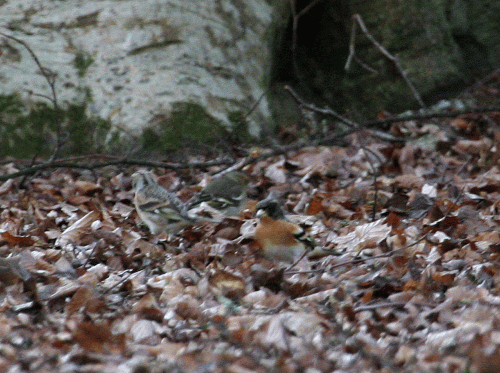
A female Brambling, female Chaffinch and on the right, a male Brambling, Bolderwood.
A report of a Sand Martin at Blashford Lakes showed that Spring had truly sprung. Hoping to see my first trans-Saharan migrant of the year, I headed for Ibsley Water but the Sand Martin had long gone. I did see a summer plumaged Black-necked Grebe along with the usual ducks and Great Crested and Little Grebes.
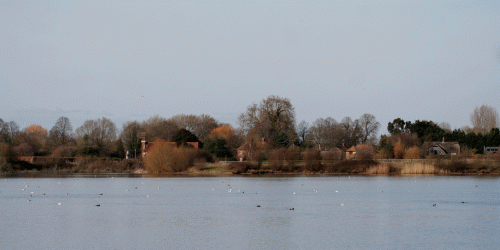
Ibsley Water, most waterfowl were on the far side.
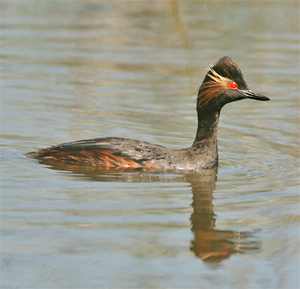
Regular in small numbers on the Dorset coast, it was a real treat to see a summer plumaged bird, even if it was at some distance. Photo from the internet.
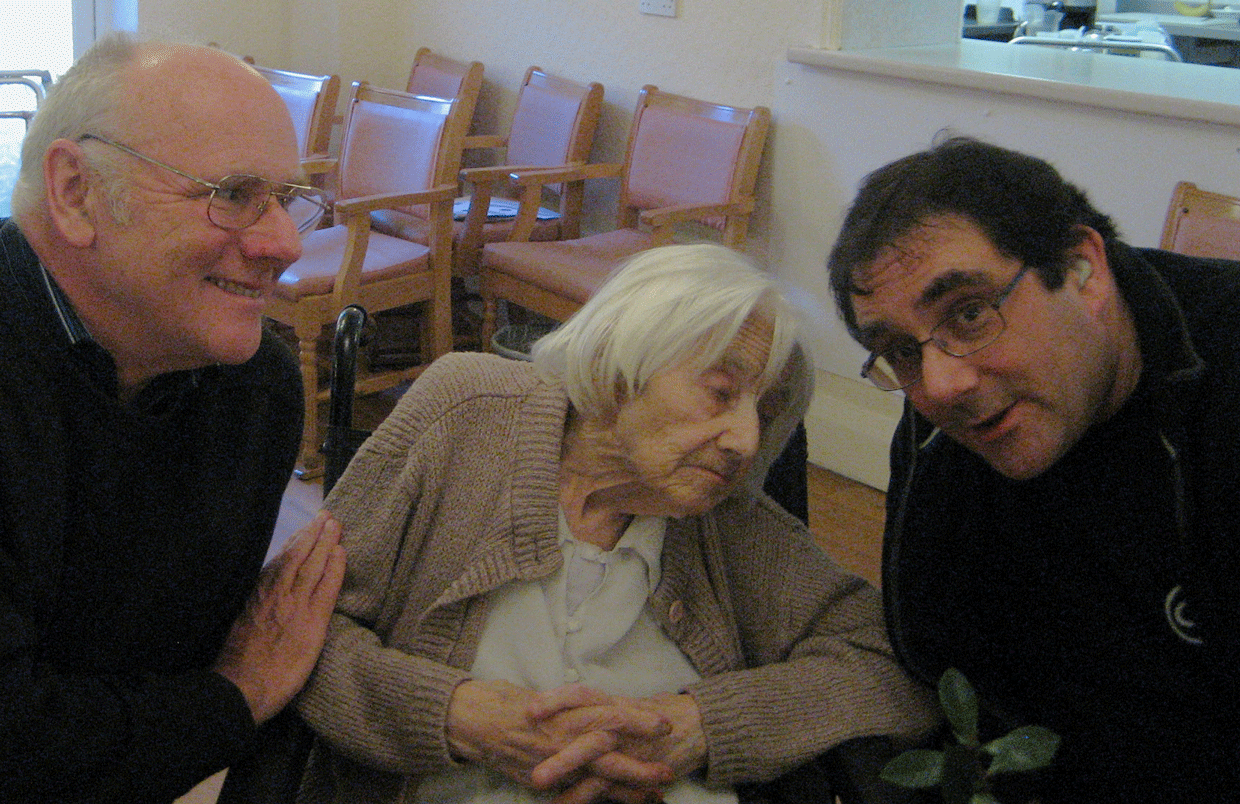
At the end of last week I received the sad news that my mother’s health is declining rapidly, she can no longer communicate and doesn’t want to eat. Plans for this weekend were quickly dropped and Margaret and I headed up to Derby on Saturday morning. Along with my brother Simon, we visited the nursing home where we spent some time with her and were able to discuss her ongoing care with the staff.
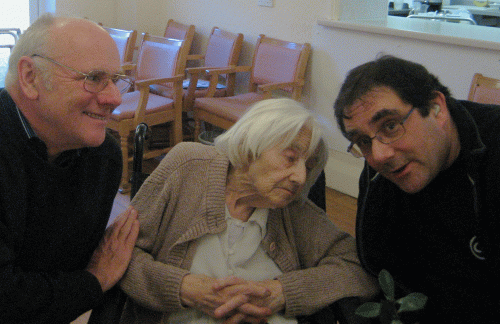
We try to look happy for the photo but in reality it is very sad to see Mum's mental and physical decline.
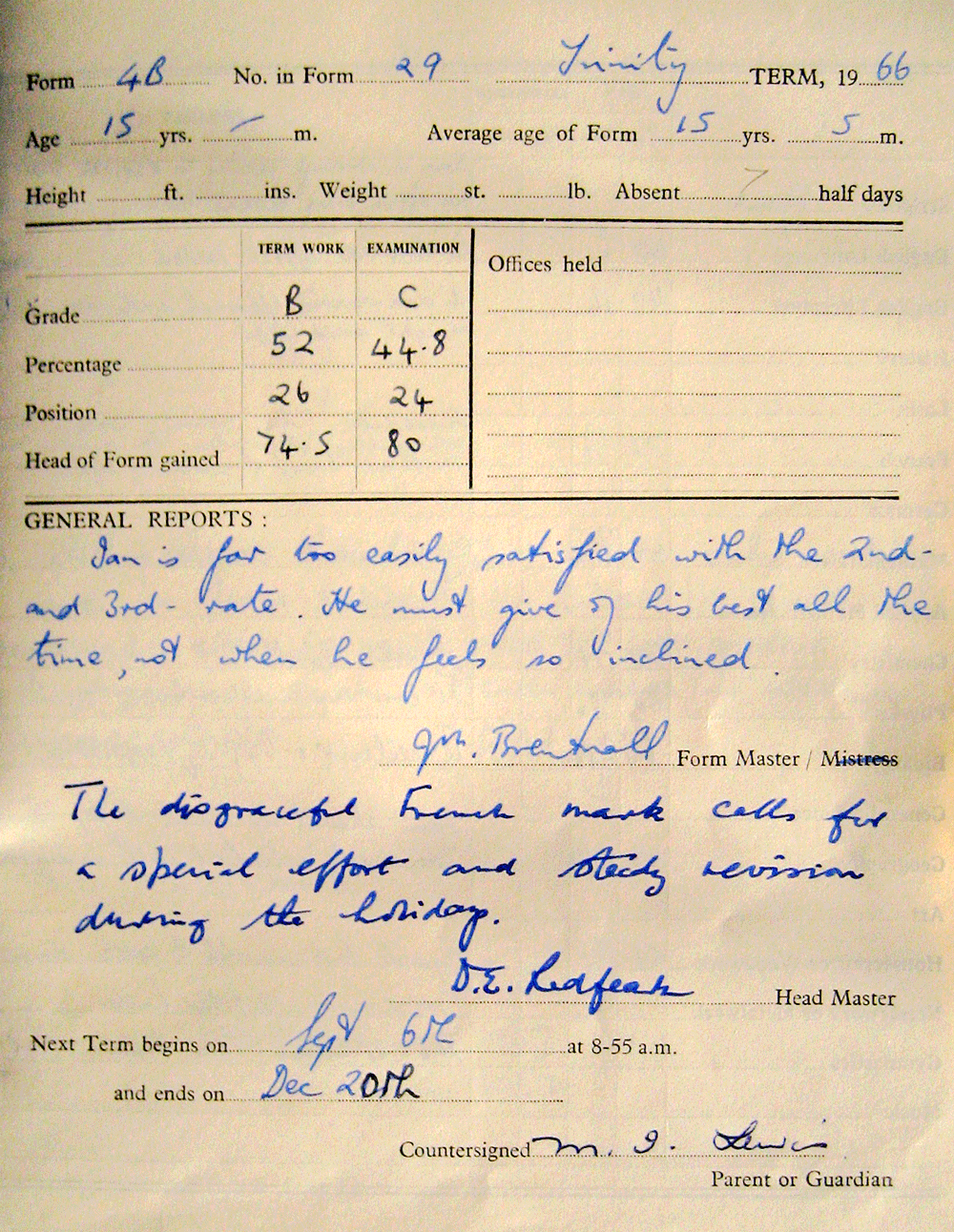
Simon has finally managed to clear Mum’s old house and has a whole lot of old paperwork to sort through. Amongst the old photos, recipes and receipts Simon found my school report, comments like ‘disgraceful French result’, ‘easily satisfied with 2nd and 3rd rate’ and ‘only works on subjects that he likes’ demonstrates that nothing has changed over the past 45 years!

Disgraceful French mark! but I did get some better comments for my science subjects as I got older. Click on the image to enlarge if you wish to read it.
Simon and Viv had other commitments so Margaret and I headed for Carsington reservoir a few miles north of Mum’s nursing home. We didn’t have long, but we saw Tree Sparrows at the feeders and best of all, a pair of Willow Tits nearby.

Carsington reservoir on a cold but sunny afternoon.
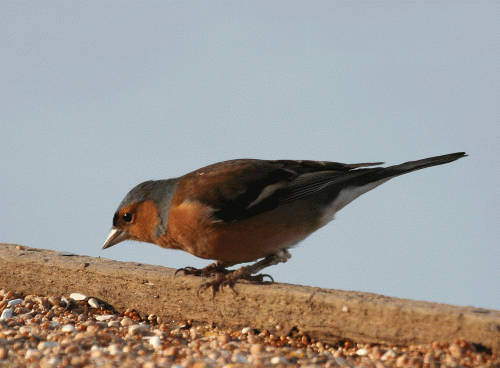
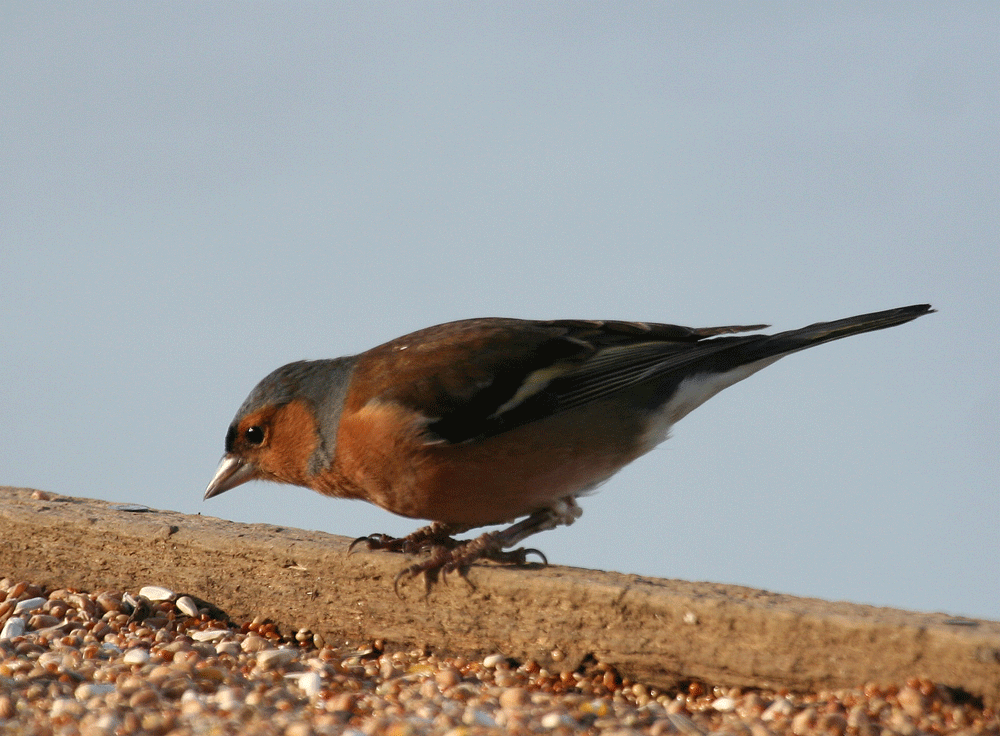
Chaffinches are expected on a bird table.......

..... but Moorhens are not!
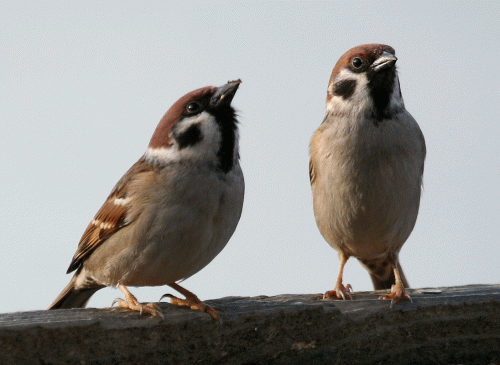
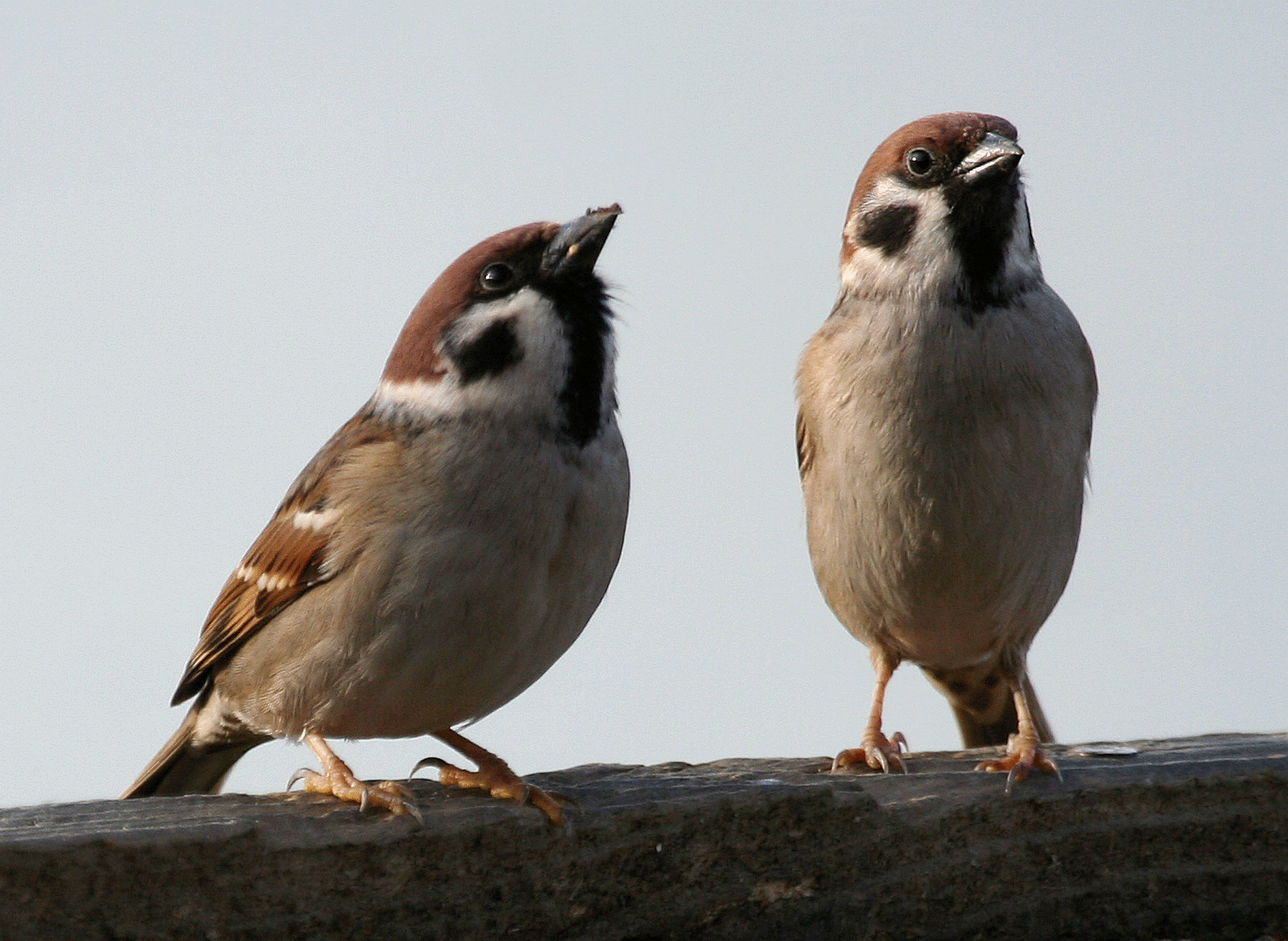
But it was these Tree Sparrows that we had come to see. No longer a regular breeder in Dorset, Tree Sparrows have declined by 90% since their peak population in the 70s..

Reed Buntings fed in the nearby scrub.
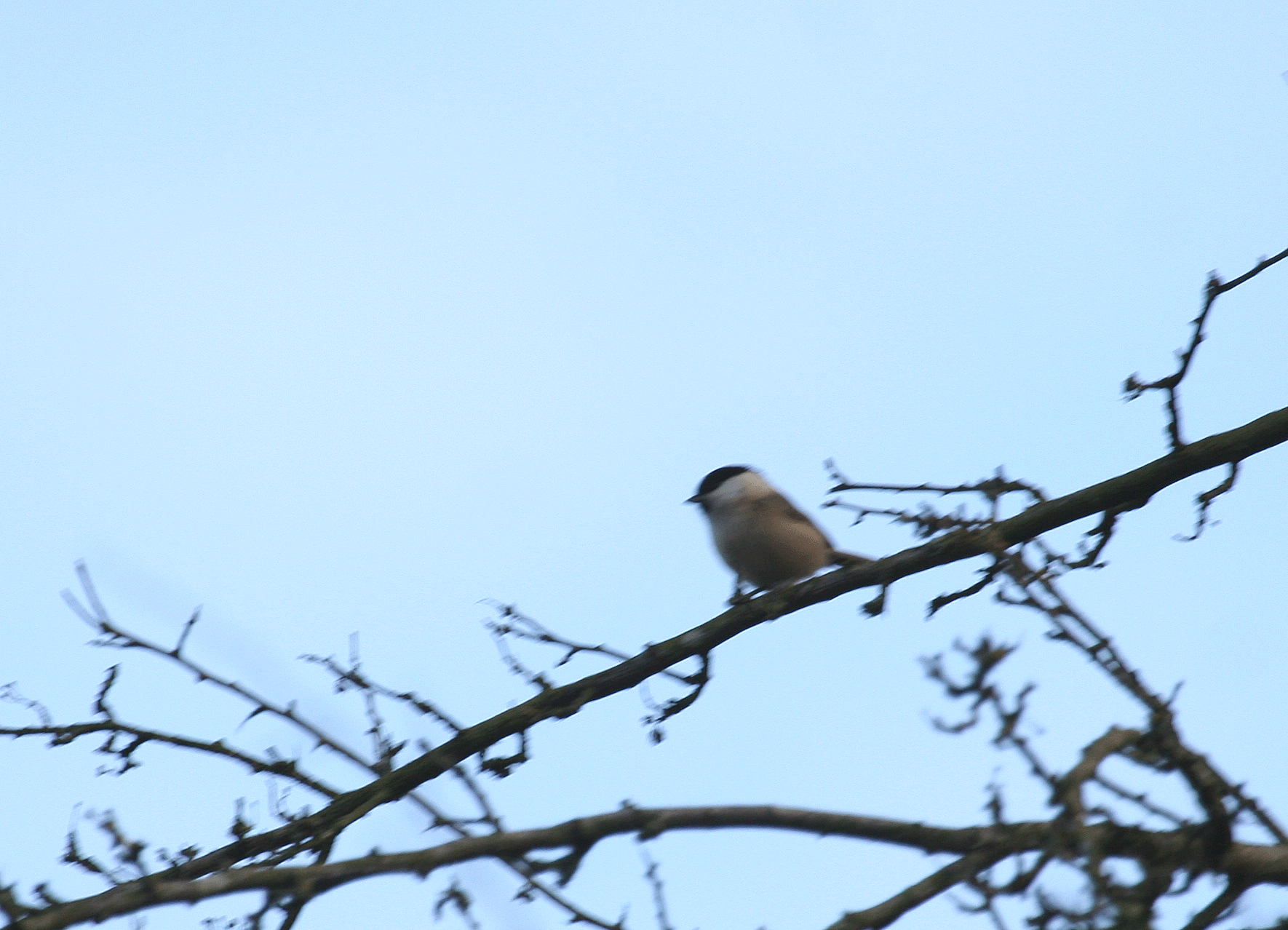
Willow Tits were regular in Dorset when I moved here in the late seventies but now are extinct. For me the most accessible birds are at Carsington north of Derby and Attenborough near Nottingham. Willow Tits are very like Marsh Tits but differ structurally, in plumage and in particularly in vocalisations.
During the evening we went to Derby’s main hospital to visit Dennis, my sister-in-law’s father who is recovering from abdominal surgery. As always Dennis was jolly with lots of witty observations on life and his stay in hospital.
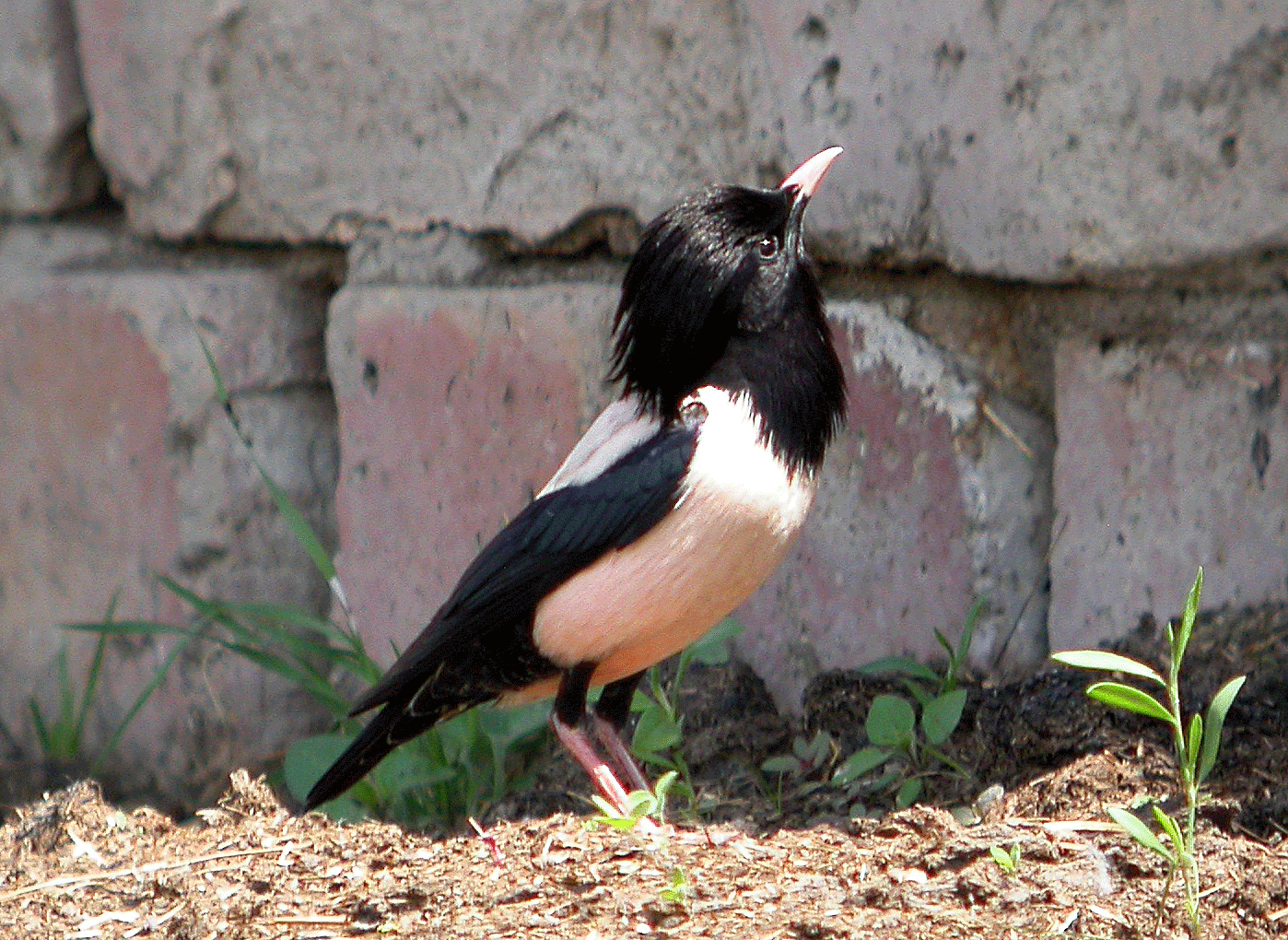
Simon and Viv were busy on Sunday so we left early and after visiting Viv’s mother, Ida, we set off home. It turned out to be an awful journey, heavy rain and spray was replaced by snow as we headed south. As we reached Ringwood the weather cleared so we opted to detour to Hordle near New Milton to see a Rosy Starling that had been reported there. It took a while to locate the small close that the bird was frequenting and even longer to locate the bird, but eventually we got good views.
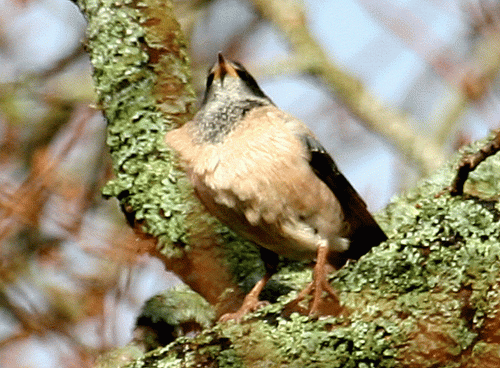
A rare visitor from the steppes of central Asia, most Rosy Starlings seen in the UK are sandy-brown juveniles, this bird is almost in full breeding plumage.
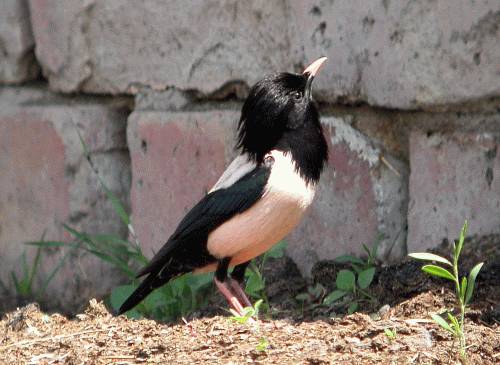
In full plumage Rosy Starlings are very beautiful birds. Photographed by Dave Farrow on my 2006 Kazakhstan tour.
This morning I joined fellow ringer Terry Elborne at his ringing site on Canford Heath, a large block of heathland on the northern outskirts of Poole. Terry has been ringing here for the last few weeks and has been feeding the site. This clearly has been most productive, as we ringed 39 birds, mainly finches and tits.

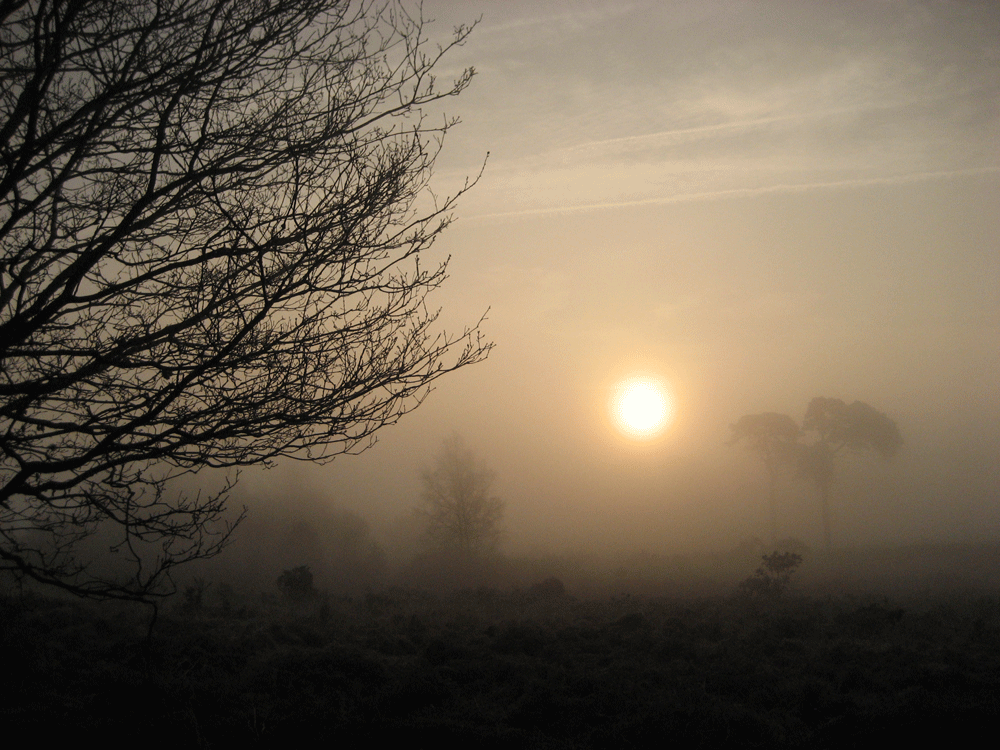
A cold and misty dawn....

... a mist that persisted in the valley where we were ringing.

Ali rings a Great Tit whilst Terry does the paperwork.

Long-tailed Tit, perhaps the cutest bird in Britain.

The breeding plumage of the male Reed Bunting is obtained through abrasion not moult. A few brown-tipped feathers remain around the eyes and the lores which should abrade to black very soon.

We caught six Coal Tits this morning.
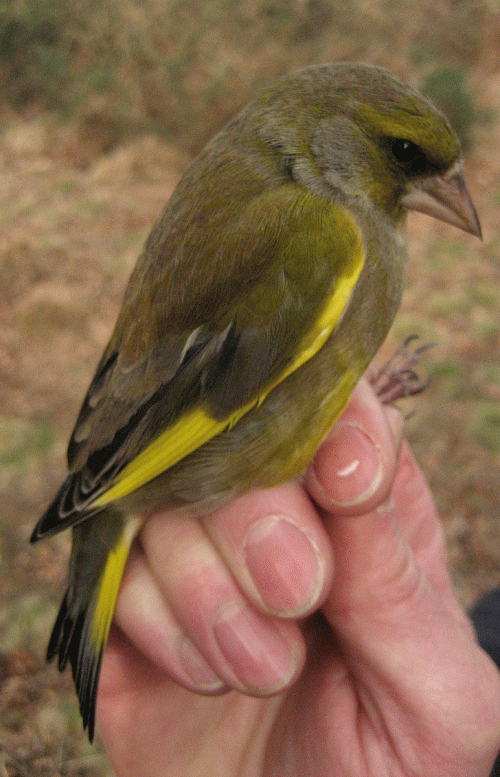
Greenfinch numbers have dropped recently due to Trichomonosis, a parasite disease, however numbers may have started to recover, there are still plenty on Canford Heath.
Today I met up with my friends and ex colleagues, Gio Petrangelo and Tim Kellaway for a walk around the Studland area. Gio suggested it was like an episode of ‘Last of the Summer Wine’ where three old codgers always end up going for a walk and on the way to pub get involved in all manner of hilarious scrapes. I pointed out that although Gio and I might pass as ‘old codgers’ this was hardly fair on Tim, who is still in his forties.
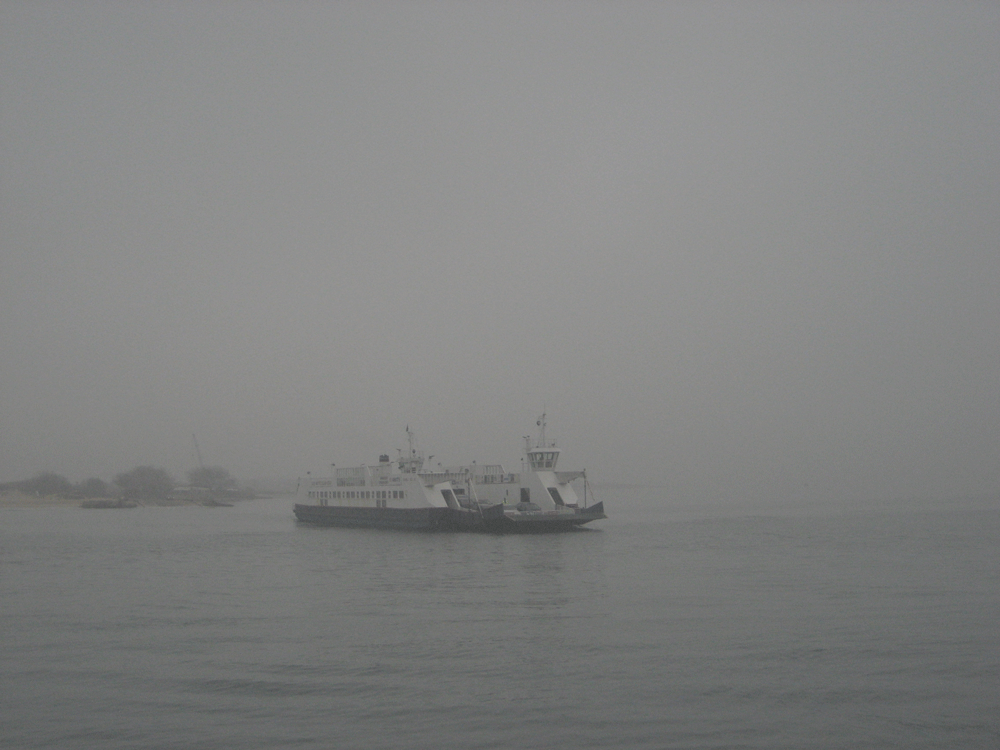
Unfortunately it was a very foggy morning when we caught the ferry over to Shell Bay. First we walked along the road towards the freshwater lake of Littlesea. Unfortunately large fish have been illegally introduced to this lake and changes in the ecology mean that it is nowhere as attractive to wintering duck as it used to be, however we were delighted to see three Otters as we approached the main viewing area.
Poor visibility at the ferry.

Formed by the formation of the dune system which cut it off from Studland Bay, Littlesea is part of the National Nature Reserve.
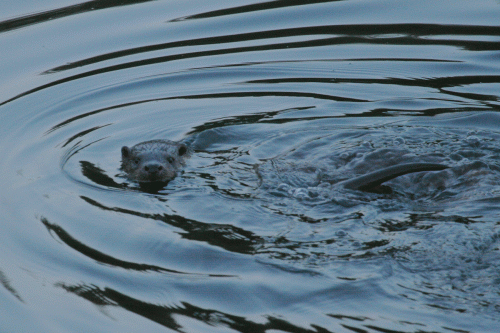
We were delighted to see three Otters, probably a female and two of last years cubs
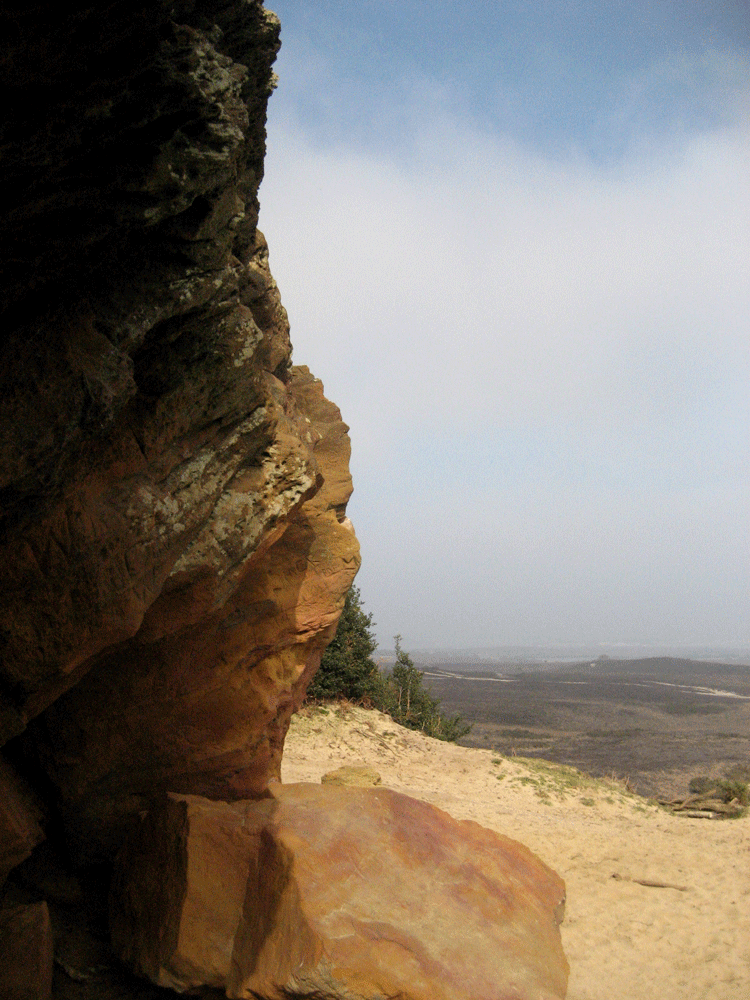
We continued across Godlingstone Heath to the Agglestone, a mighty block of sandstone perched on a hill. Legend claims it was thrown at Corfe Castle from the Isle of Wight by the Devil who inevitably missed. As we had our lunch the foggy conditions lifted and we had great views, but later whilst enjoying a pint in the garden of the Bankes Ams we noted that in the windless and still misty conditions as we still couldn’t make out the horizon, all the navigation buoys and fishing boats appeared suspended in mid-air!
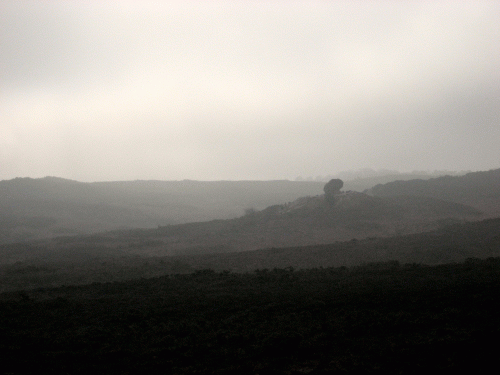
The Agglestone looms over Goddlingstone Heath.

Tim and Gio at the Agglestone, a 400 tonne block of sandstone that looks very out-of-place in the middle of the wet heath.
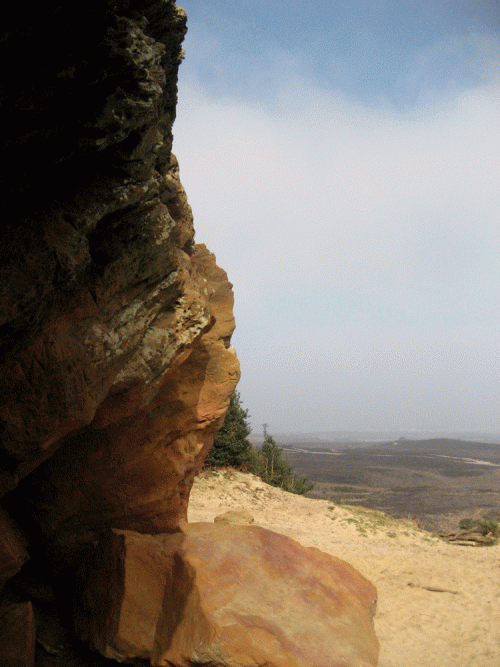
Visibility started to improve whilst we were there.

Snowdrops are to be expected a this time of year.....
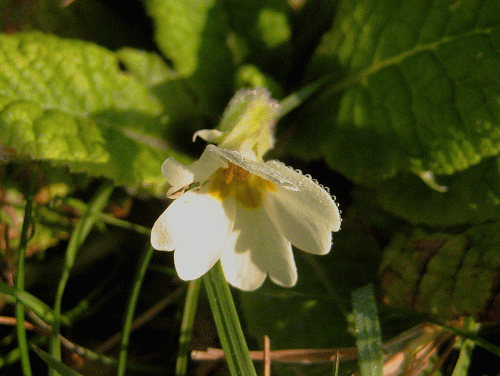
... but Primroses are a sure sign of spring.

The sea was like a mill-pond off Studland village, grebes and sea duck were offshore but I didn't have my scope.

Back at the ferry it was hardly seemed possible that the Harbour mouth was shrouded in fog just six hours ago.
So will Compo, Clegg and Foggy go on another hike? I certainly hope so, perhaps Nora Batty will come along next time.
On the 27th I managed to catch up with one bird that has been avoiding me this year, a nice male Blackcap that I saw in Ewan’s garden bringing my year list to 203. Some years I have seen fewer birds in the entire twelve months than I have in the first two of 2012.
For much of the 27th and the 28th I carried on with an non-birding project, the very time-consuming task of transferring music from old cassettes to my PC. The quality has been quite variable, after all some of the music came for old 45s I bought in the sixties, and I may have to put my hand in my pocket and buy new copies of these musical relics.
On the 29th I headed for the Ower area on the south side of Poole Harbour. A copse here has proved to be a good spot for Lesser Spotted Woodpecker, and I have seen them here several times in the past. On arrival I heard a soft tapping coming from fairly low down in the thickets, much searching failed to locate the perpetrator. I know it was too quiet for a Great Spot, too loud for a tit, I didn’t hear any Nuthatches, so I can’t escape the thought that I passed up a Lesser Spot.
The woodland was full of birds, half a dozen Treecreepers, a pair of Marsh Tits, Great Spots and Green Woodpeckers, a couple of Nuthatches (in a different area) a few Redpolls and shed loads of Siskin. I walked past Ower Farm towards Studland but failed to find any thing new. I also checked the woodland at Sherford Bridge for Lesser Spots, again without success.

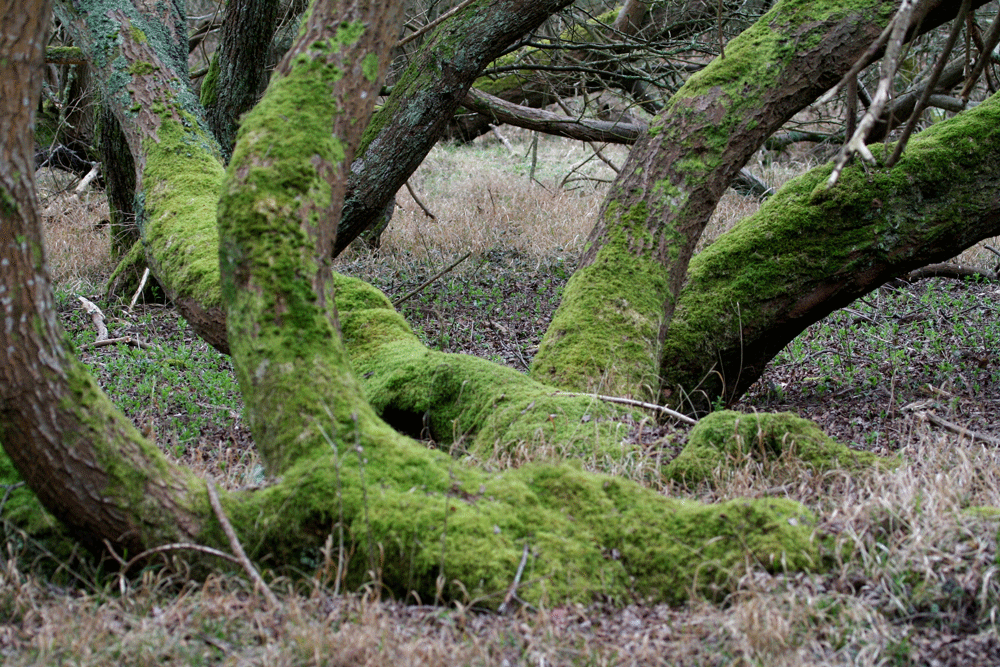
Damp, mossy woodland at Ower.

Treecreeper
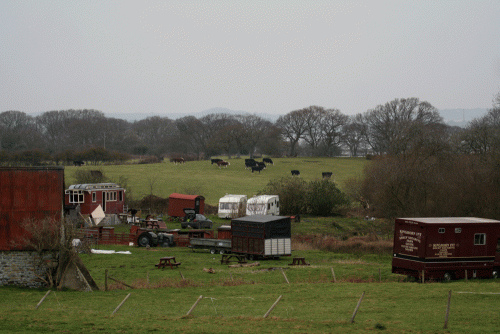
Ower Farm with Poole Harbour in the background.
In the late afternoon Carol, Terry and I attempted to ring a Reed Bunting roost at Lytchett Bay. This is the same area that we used to ring Pied Wagtails in the autumn. The net ride is very muddy and seems to have been greatly widened over the winter perhaps by local fisherman. We saw some nice birds, a Peregrine, a 100+ Redwings coming to roost and after dark, a pair of Tawny Owls but the ringing was most disappointing with a total catch of zero! I think that we have left this attempt to late in the year and that the Buntings no longer are roosting communally and are dispersing to breed.

































 gryllosblog