Archive for the ‘Uncategorized’ Category

0530 at Durlston
You have to get up early to go ringing, whilst the birds are still active and before the wind gets up. A group of three of us ringed 85 birds at Durlston CP, including a Grasshopper, 6 Garden and many Willow Warblers, 2 Redstarts and a Tree Pipit.
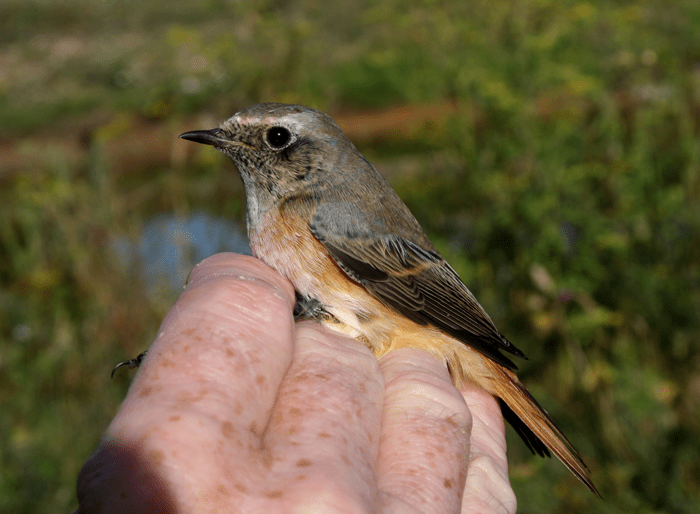
First year male Common Redstart

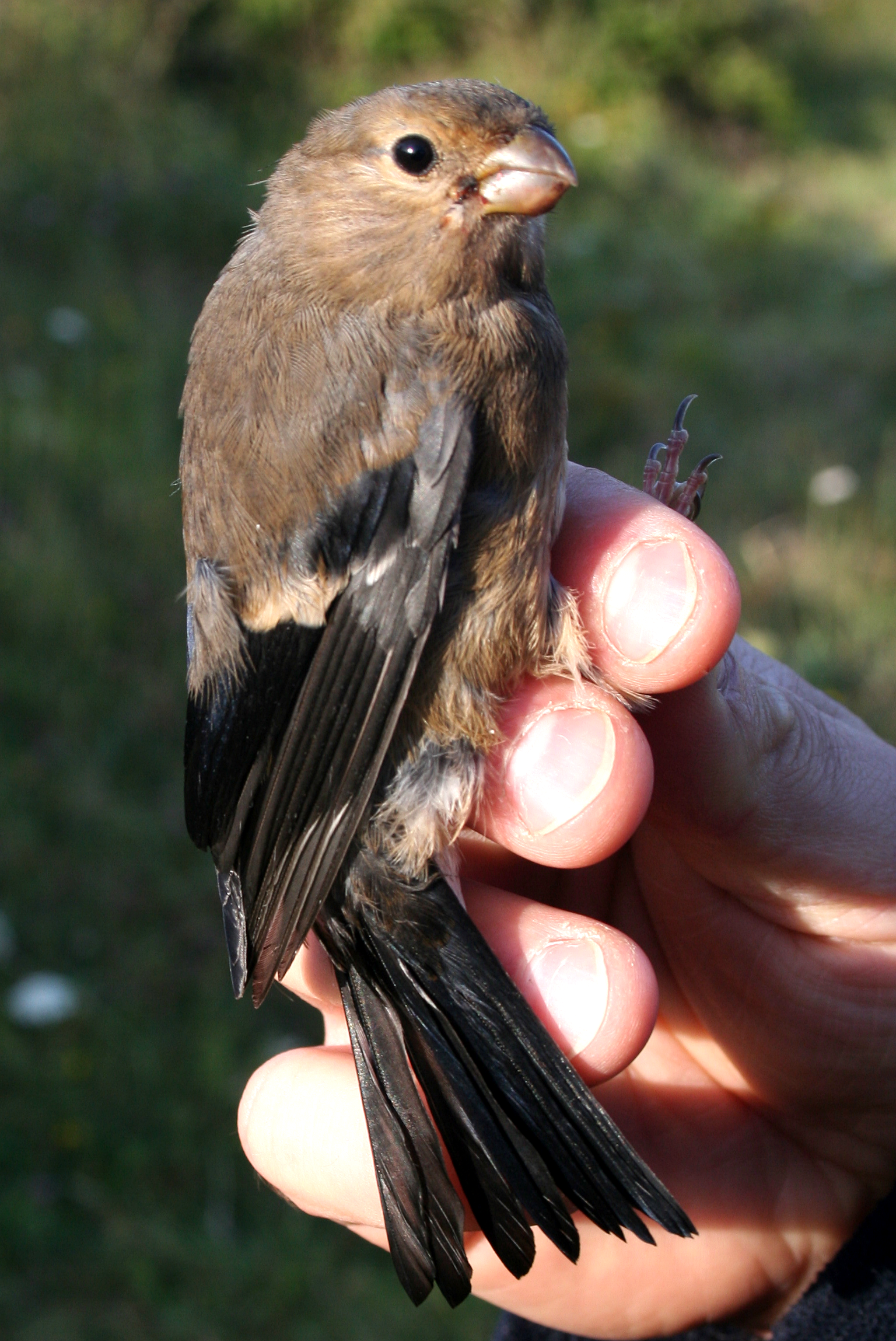
Juvenile Bullfinches can't be sexed until the post-juvenile moult commences
Meanwhile Shaun led another group at Lytchett Bay where a further 70+ birds were trapped including a French ringed bird,
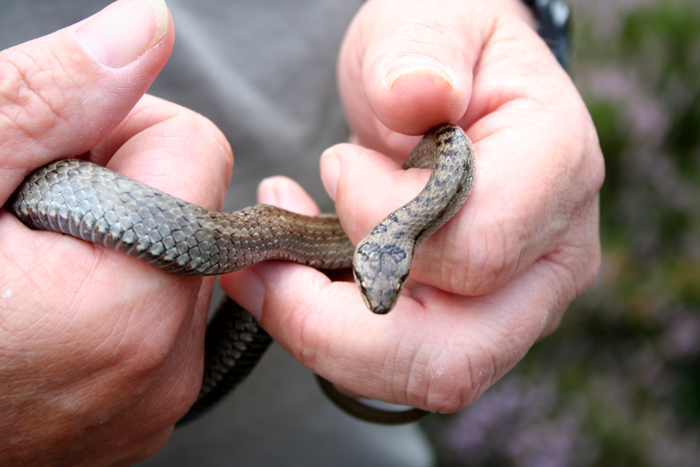
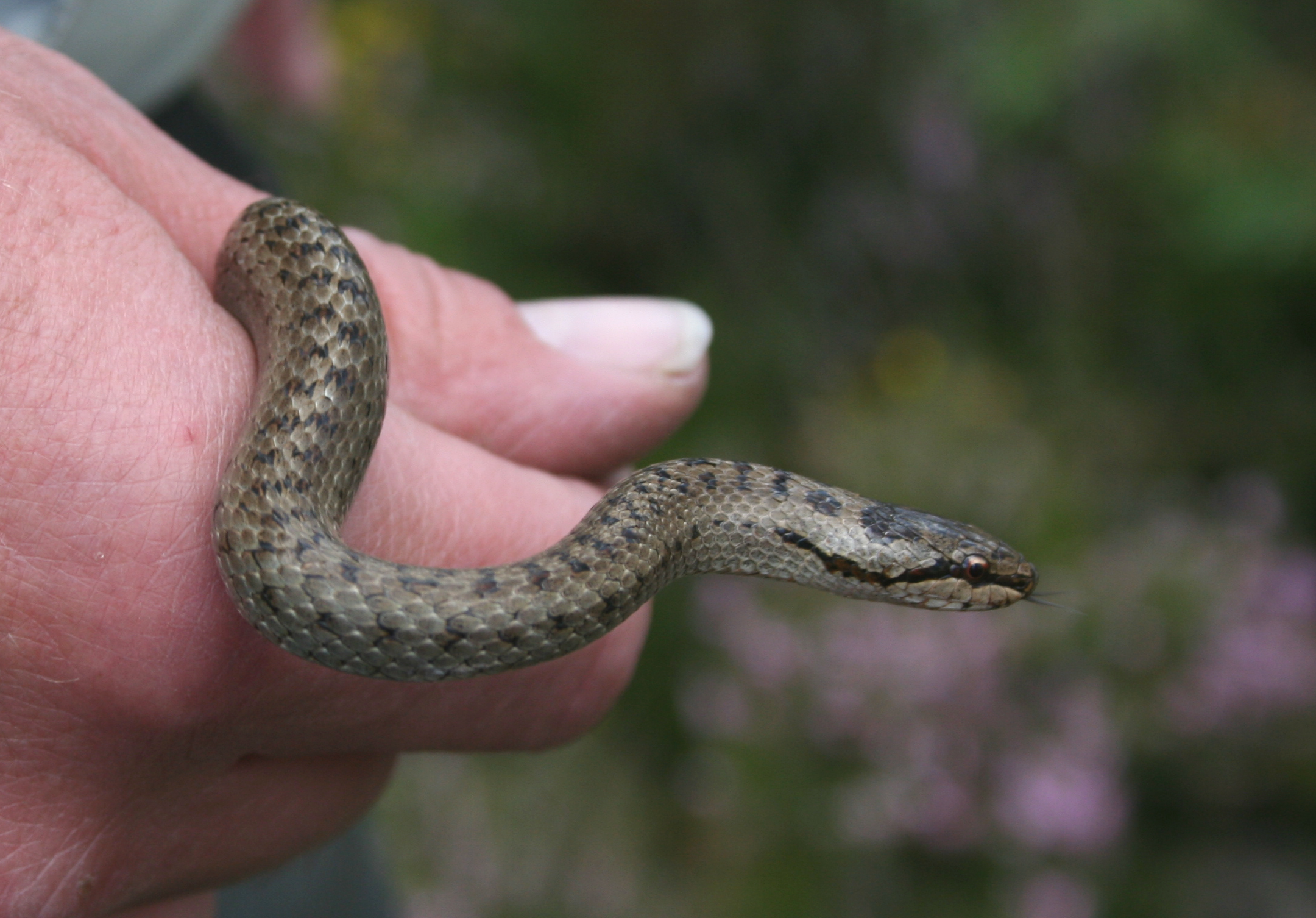
Ian Alexander had arranged for us to meet a forest ranger in Wareham Forest, another species on Paul’s hit list. It only took a few minutes before he located one and took the opportunity to check and measure it and record the unique pattern of scales on the head and neck which are as diagnostic for Smooth Snakes as fingerprints are to us.

Smooth Snake, our rarest native reptile.

I held the snake whilst the ranger completed his paperwork and it duly bit me. I'm glad he wasn't studying Adders!
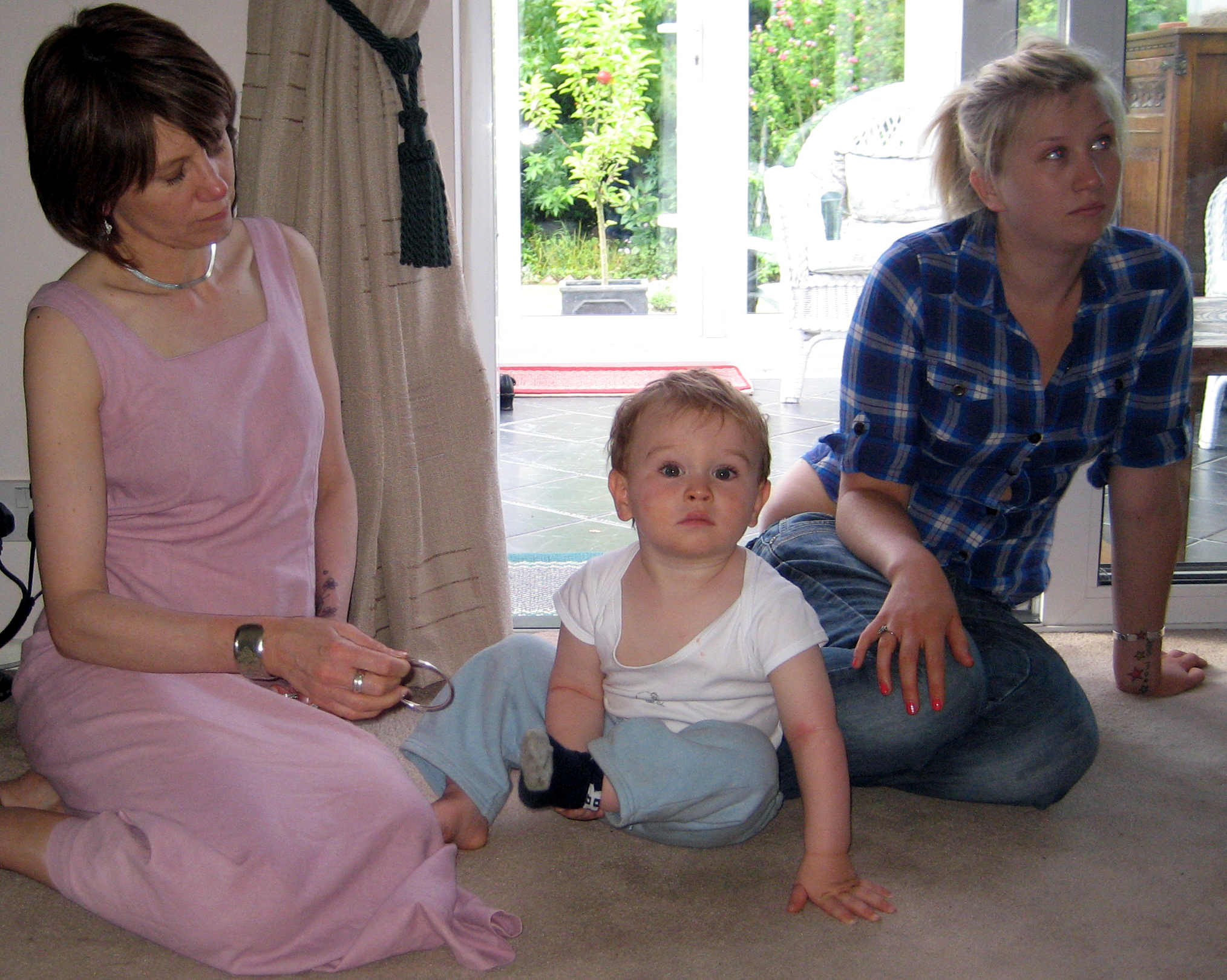
In the evening Margaret and I visited Paul’s parents and met up with Paul’s wife Liz, his daughter Bryony and grandson Harvey Paul. Fortunately Bryony has got married, so his grandson is not Harvey Paul Harvey!

L - R - Liz Harvey, Harvey Paul Edmonson and Bryony Edmonson

18 months old and with a fascination for tractors
Yesterday I was delighted to hear that another old friend, Paul Harvey, was visiting his parents in Upton. Paul moved to Shetland in the early 80’s and has lived there since. I last visited him in Shetland in January 2008 but with his parents and sisters living not far from me, we meet up at least once a year.
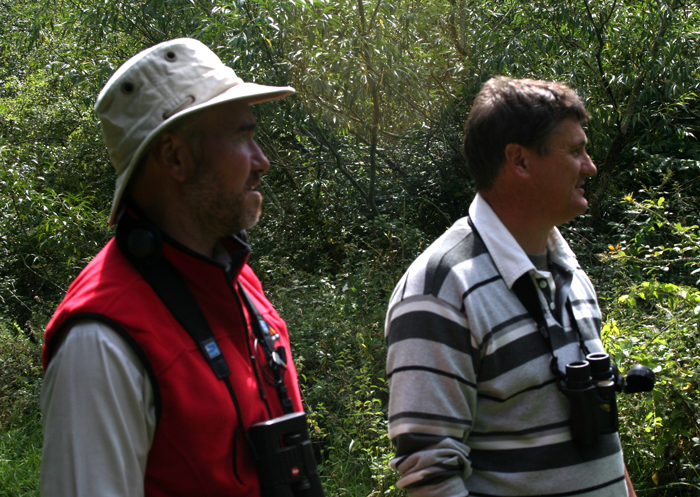
Along with our mutual friend (and Paul’s schoolmate) Ian Alexander we set off to find a few non-avian species that don’t occur as far north as Shetland.

Ian Alexander (L) and Paul Harvey (R)
Our first port of call was to see another mutual friend, Trevor Squire. Trevor trained most of us to ring birds and remains the most expert and experienced ringer I have ever met.
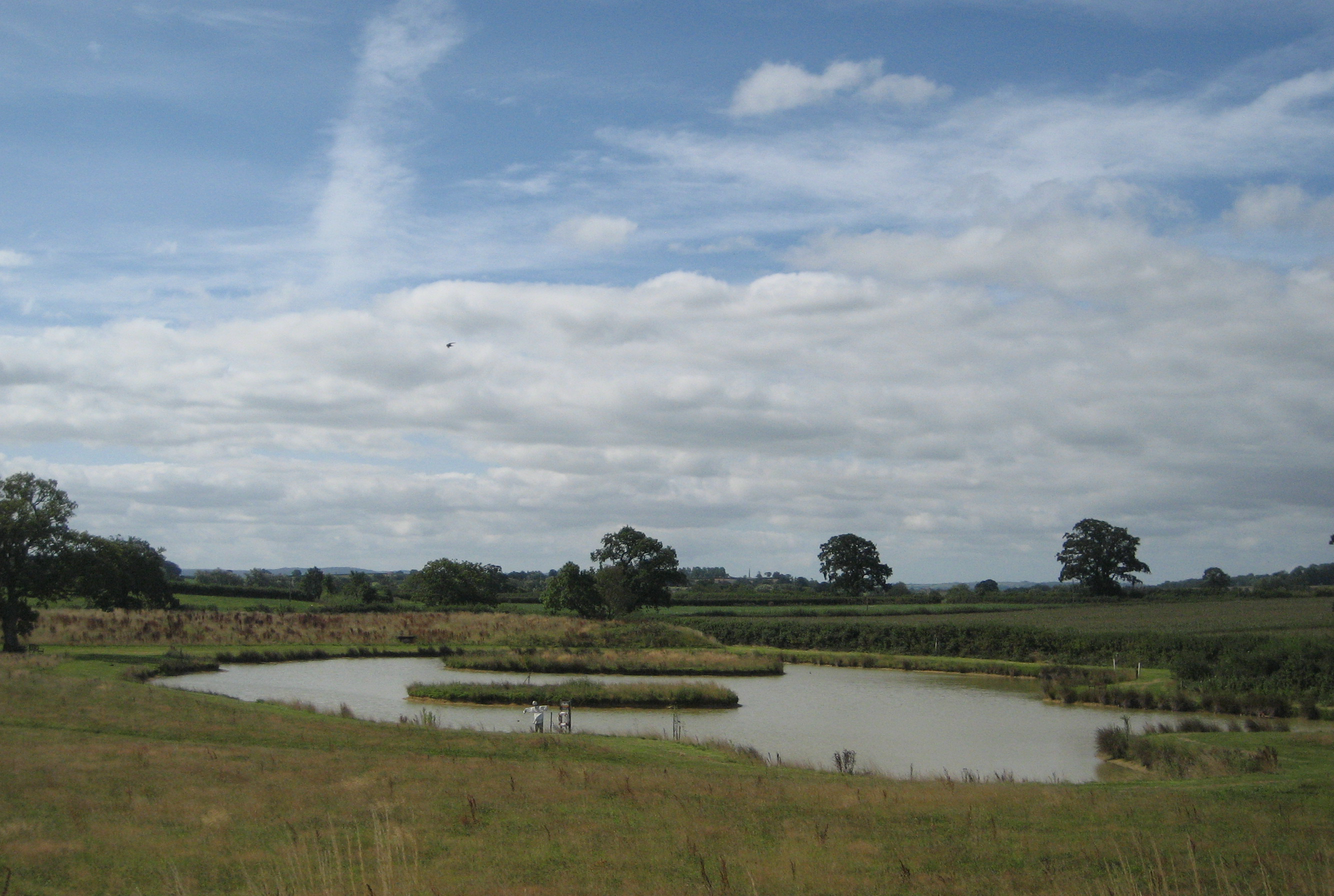
After working out of the county for a decade or more, Trevor has returned to north Dorset where he has purchased a field and turned it a few short years, from flat agricultural land to a private wildlife reserve and ringing site. The sheer effort in creating a large lake with all the associated drainage issues, planting rows of bird friendly hedges and generally turning the area into a wildlife haven, beggars belief. Much of the planted areas have yet to grow to maturity, but it is already reaping benefits with a wide range of migrant birds using the area.
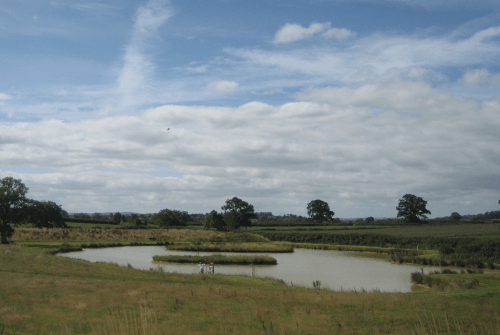
The main lake

The kingfisher pools
Later we drove to the DWT reserve of Alner’s Gorse near King Stag where Brown Hairstreak was the best of a dozen butterflies on offer.

Brown Hairstreak

and another one
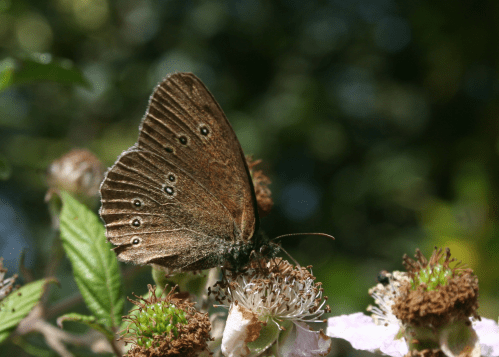
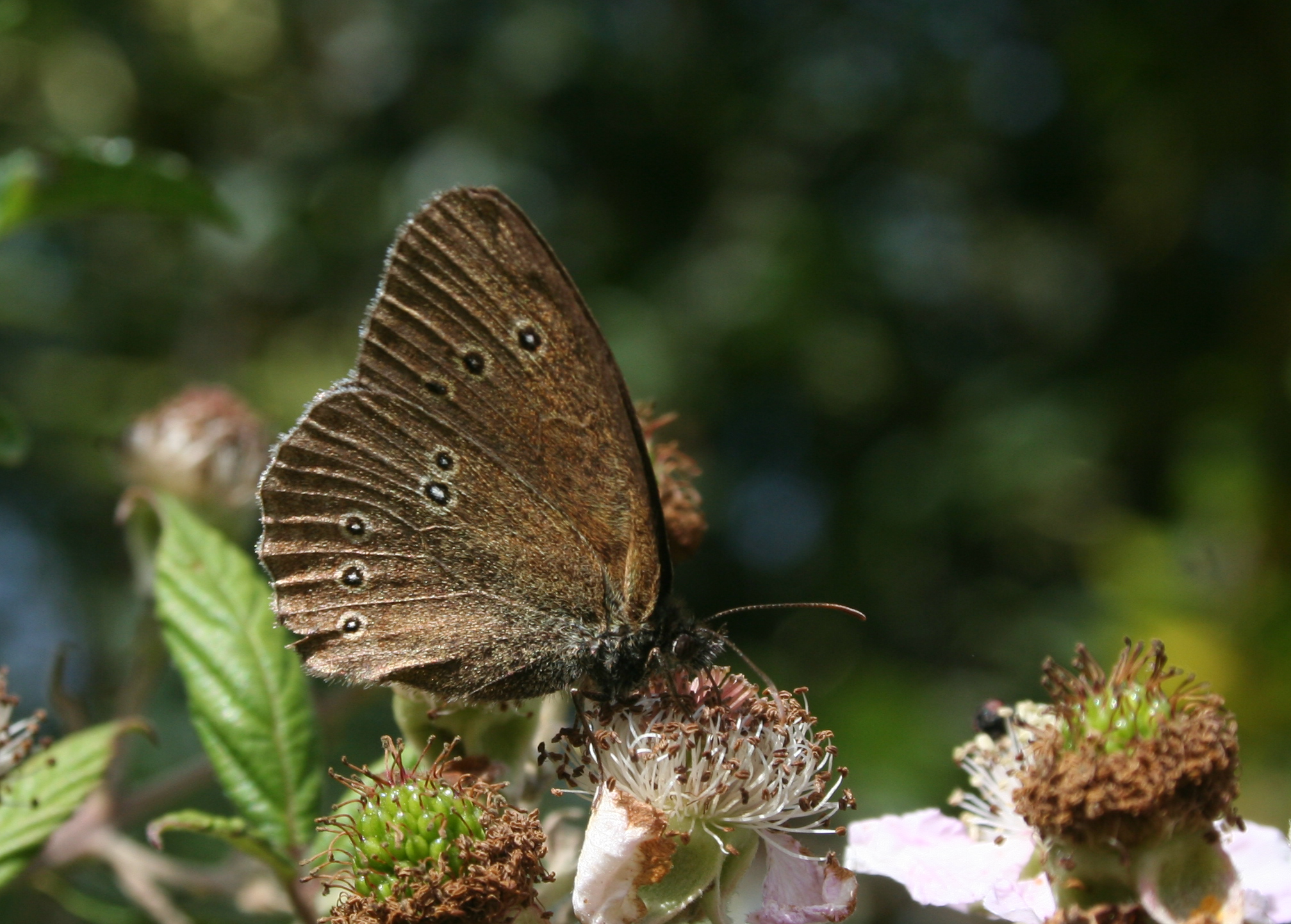
Ringlet
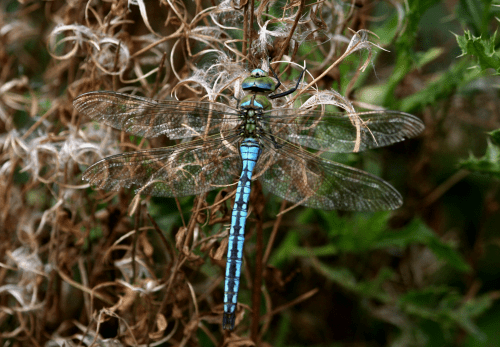
Emperor Dragonfly

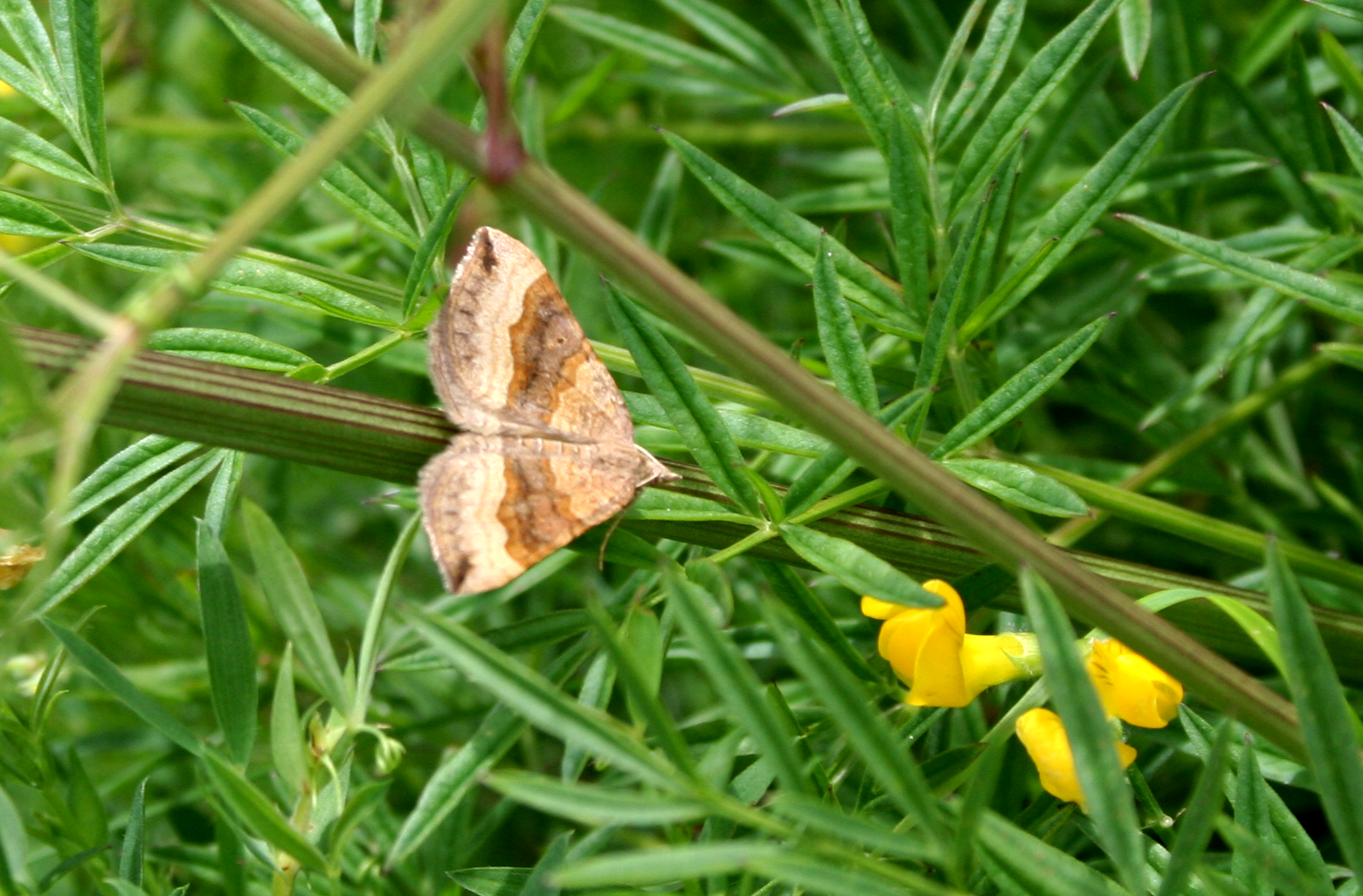
Shaded Broad-bar moth
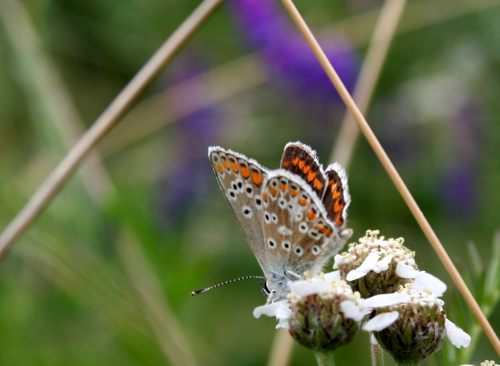
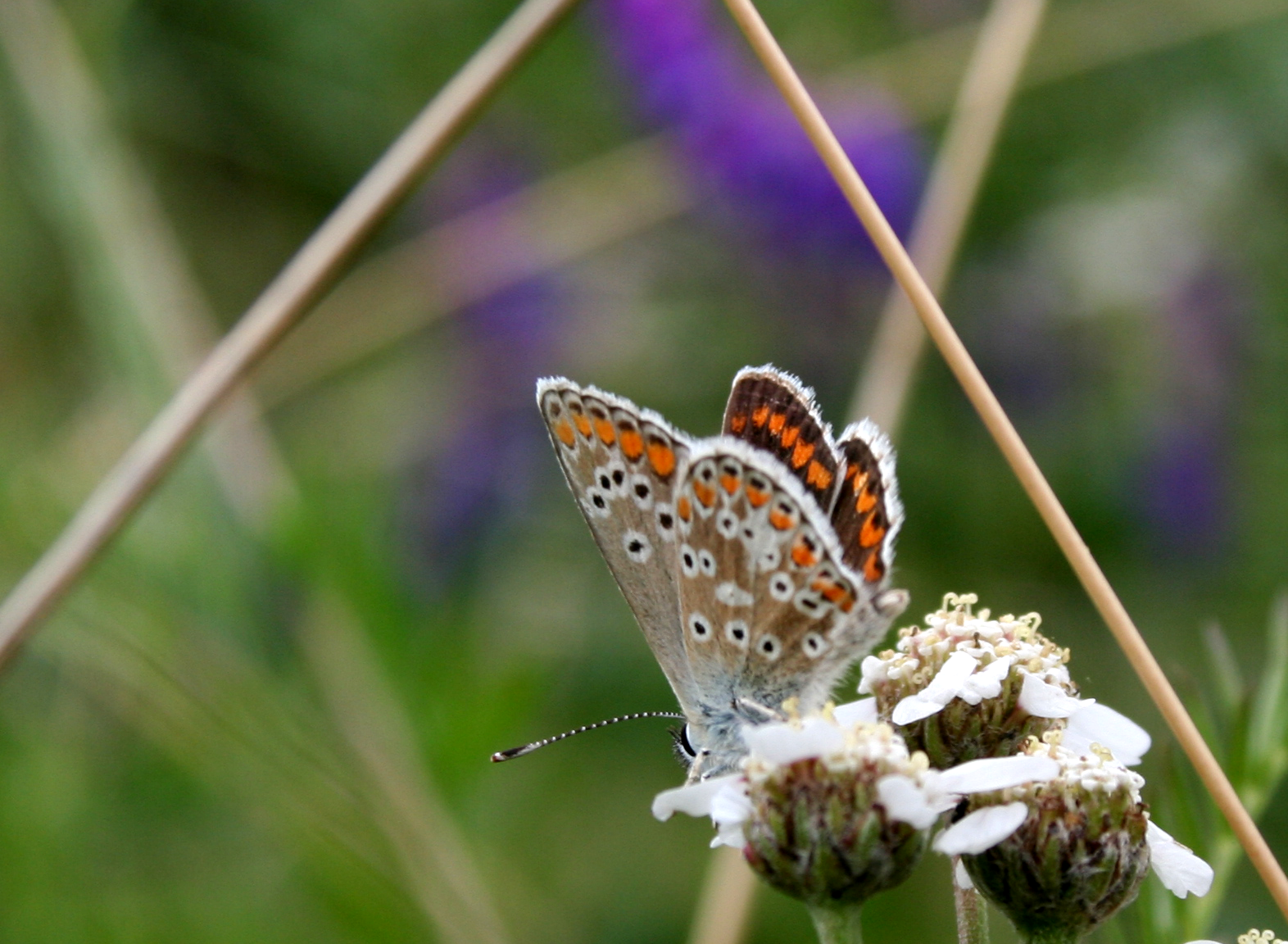
Brown Argus
Although I wished I had met the five of my old friends, who were able to get to Newcastle on Friday, under different circumstances there is no doubt that this last week has given me exceptional opportunities to keep longstanding friendships alive.
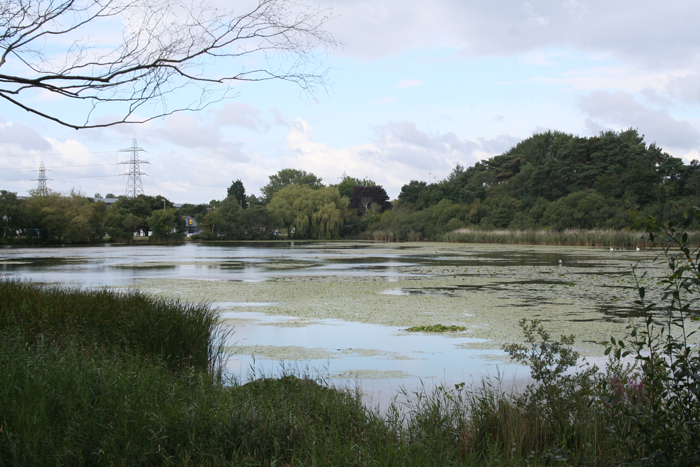
Hatch Pond is a small local nature reserve situated by the Nuffield Industrial Estate, Poole. Over the years it has hosted a number of excellent species, including Lesser Scaup, Purple Heron, Iceland Gull, Marsh Warbler and even an Otter. It is perhaps best known as a reliable site to watch Bitterns in winter and early spring, with up to four being present in recent years.
Unfortunately there wasn’t much to see today, 3 female plumaged Teal, two pairs of Great-crested Grebes being the highlight.
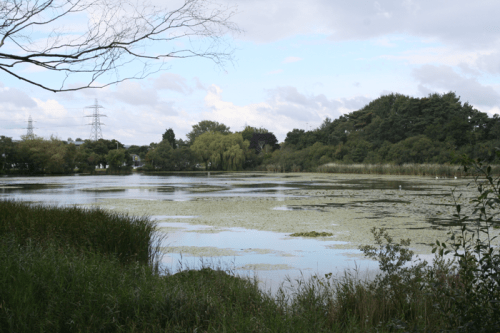
Hatch Pond
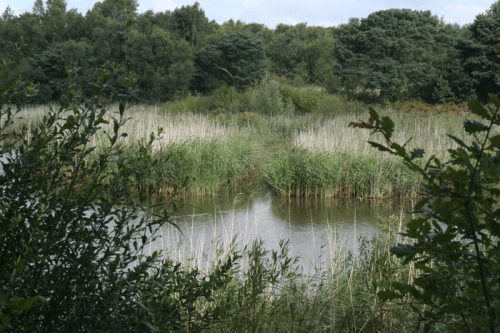
The Elborn Cut, made to help the watching of Bitterns in winter. This viewpoint is under the pines on Stinstead Road.
I later visited Lytchett Bay where a Common Sandpiper, 2 Whimbrel, 3 Greenshank and 2 adult Yellow-legged Gulls were the highlights.
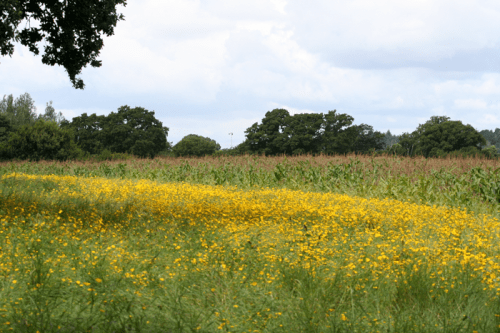
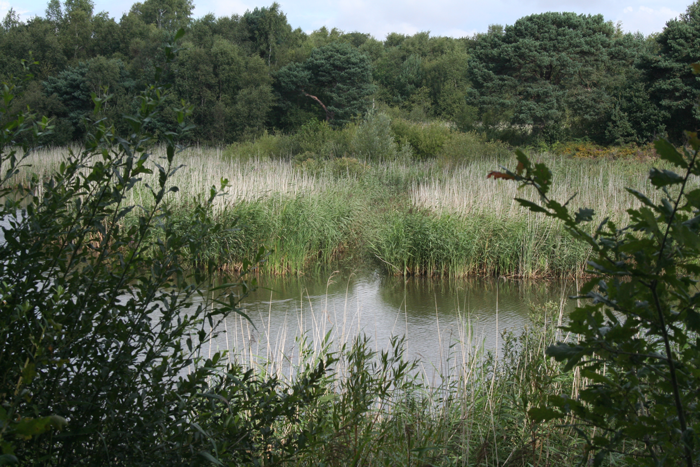
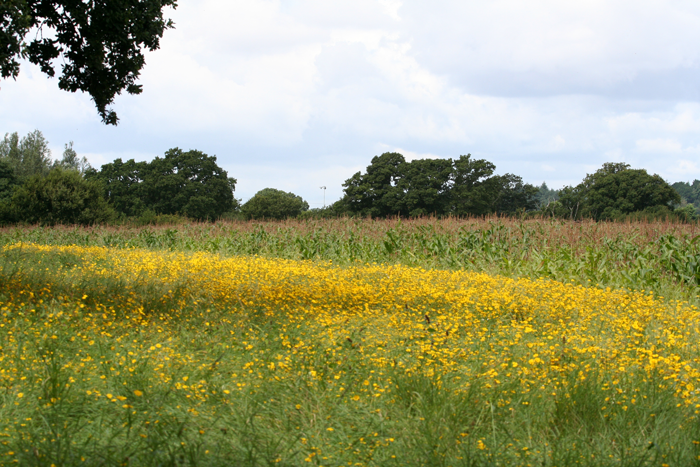
Lytchett Bay - conservation management in the 'stubble field'
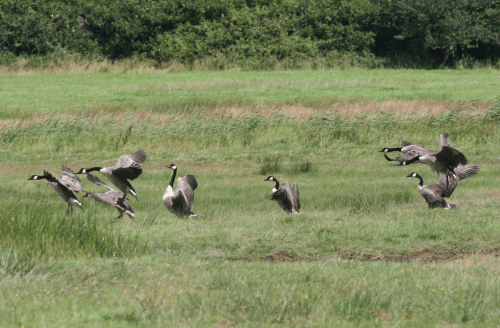
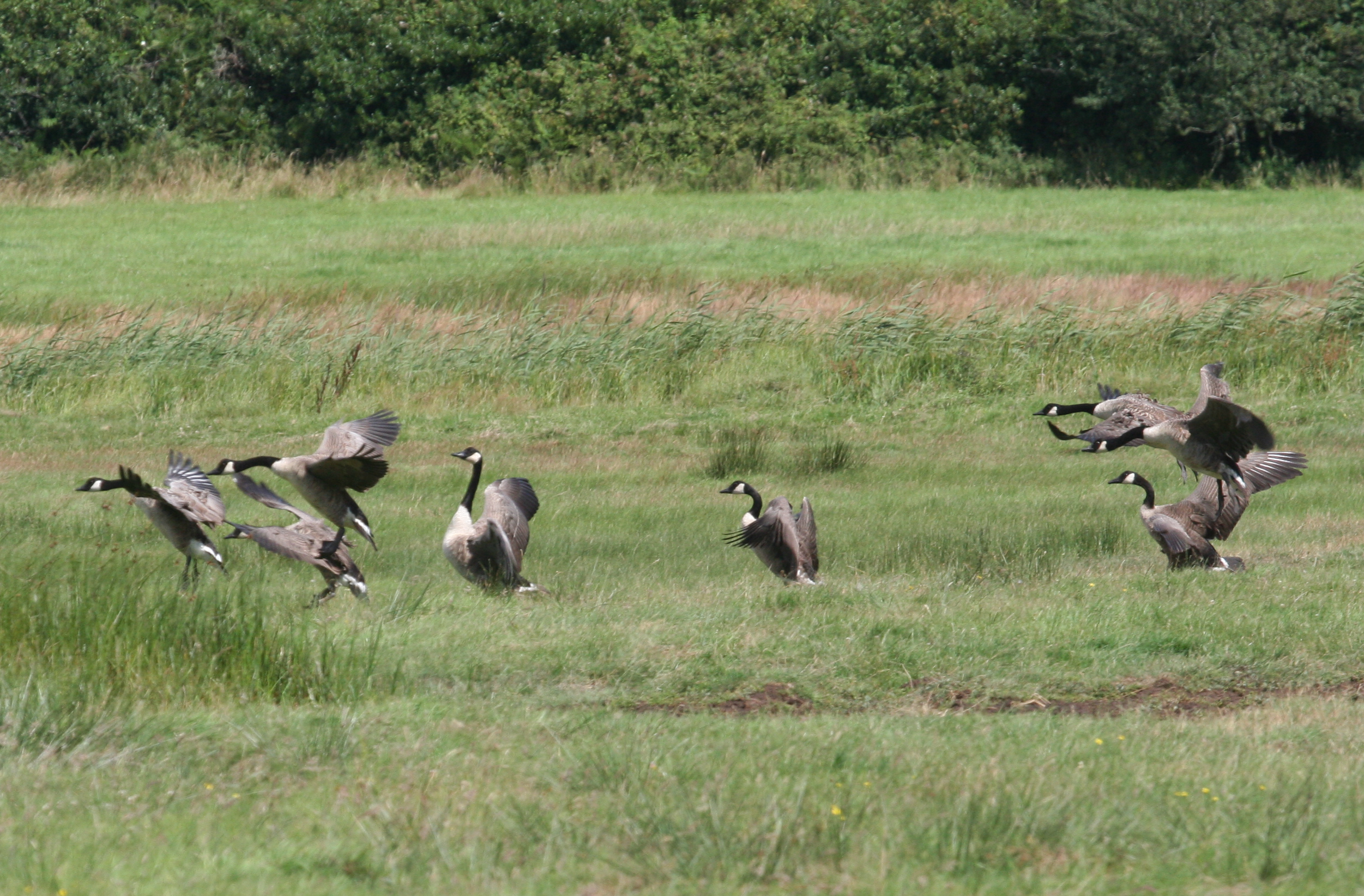
Canada Geese landing in the 'far fields'
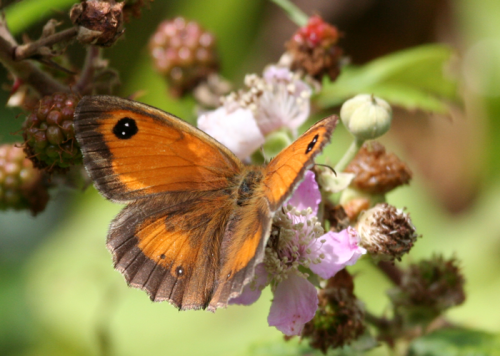
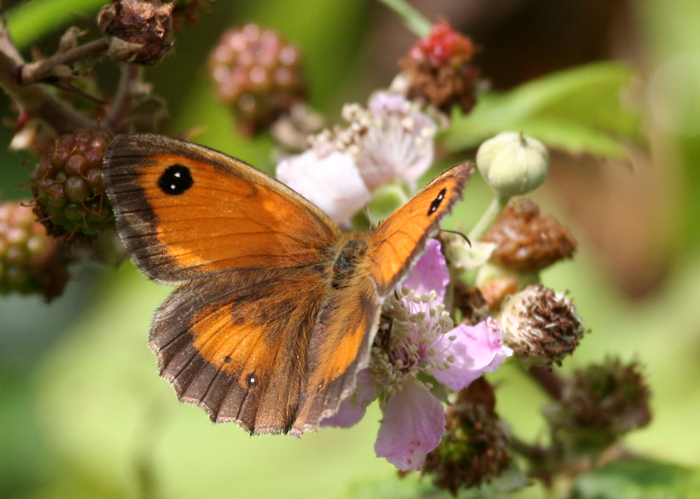
Gatekeeper
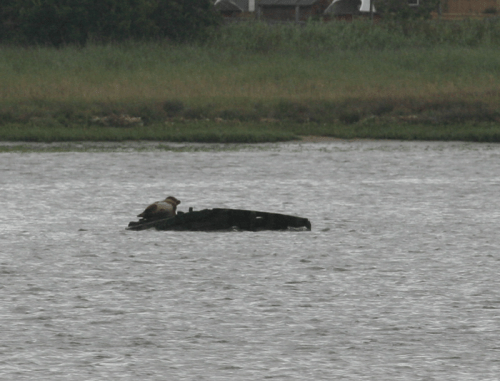
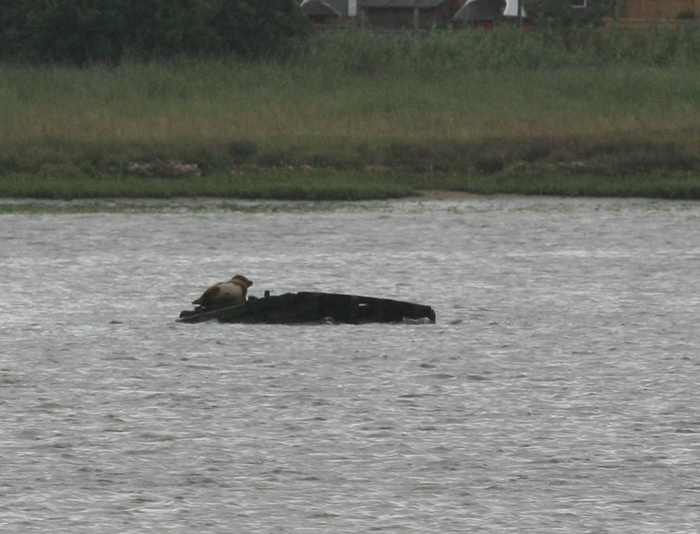
This Common Seal can be seen hauled out at low tide.
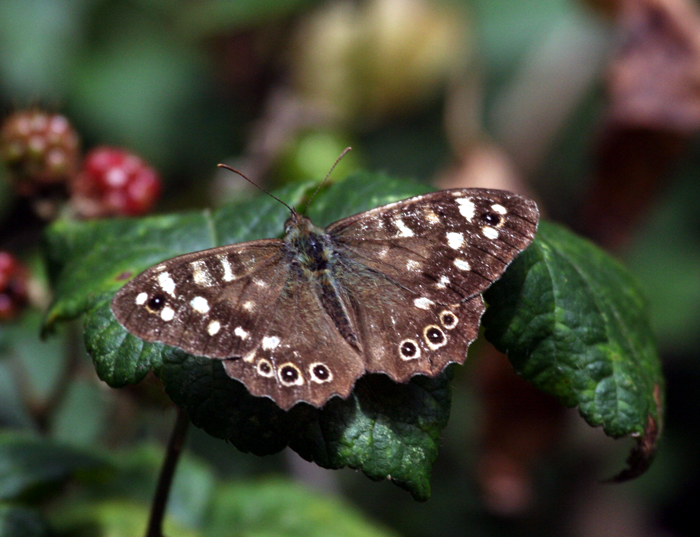
Ringing at Durlston was cancelled due to high winds but we met to continue the cutting of the main net rides. It was hard work cutting through dense scrub but we succeeded and Speckled Woods are already using the rides.
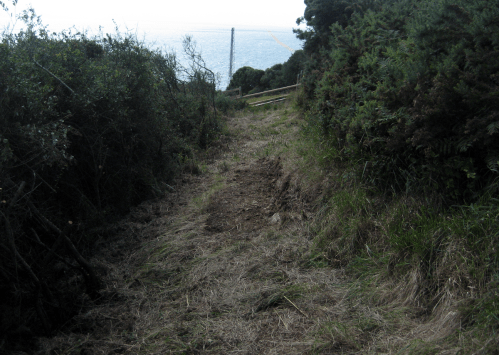
One of our new net rides
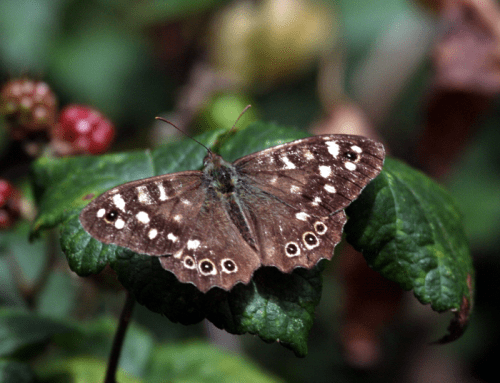
Speckled Wood
Later in the day we had a flying visit by my old friend Guy Dutson and his partner Wendy. Originally from Broadstone, Guy has worked and made ornithological explorations all over the Pacific and Australasia and at one time spent a year in the Melanesian islands, mainly in the Solomons. He is currently living in Cambridge, but he seldom stays in one place for long.!
His field guide to the Solomons, Vanuatu, New Caladonia and the Bismark Archipelago will be out in the autumn. His many ornithological achievements include describing the Vanikoro White-eye and the Furtive Flycatcher, rediscovering Fiji’s Long-legged Warbler and the Cebu Flowerpecker and publishing a whole host of papers on birds and conservation in the region.

Guy Dutson and local - Papua New Guinea 2003
In the evening we took the girls to a party held for Sophie McPhearson, a girl about their age whom they met at our wedding. I have known her mother Ann for many years and her brother, Stewart is the botanical equivalent of Guy, an adventurer and explorer. His main interest is in carnivorous plants, but he has published nine books so far on various aspects of botany and has a seven more in the pipeline. He has described 20 species of plant new to science. Amazingly he is only 28 years old ! He will soon be leading an expedition to Mount Roraima on the border of Brazil and Venezuela and intends to study the culture, wildlife and flora of al the 18 British Overseas Territories for another new book.
Not many Brits have been to West Papua, but both Guy and Stewart have done work there. Equally he was surprised to find that Margaret had sailed to St Helena one of the BOTs he plans to visit.
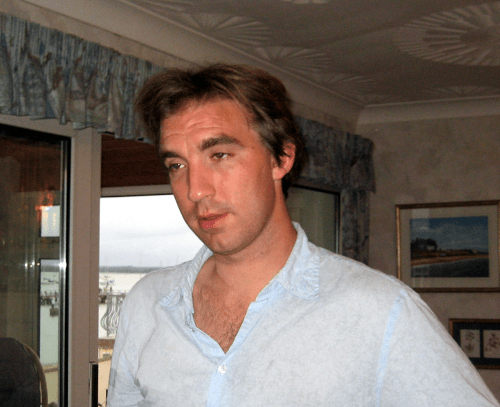
Stewart McPherson

The Angel of the North

- Five bridges cross the Tyne – but I think its now six.
I visited Newcastle-upon Tyne on Friday the 5th, stopping at my brother’s in Derby on the way up and way back.
These photos were taken in 2010 when Margaret and I visited one of my oldest friends, Clive Taylor.
On this visit I had no time for sightseeing because tragically, I was attending Clive’s funeral.
CLIVE TAYLOR 1949 – 2011
Clive hailed from East Anglia, in 1970 he started a Microbiology Degree course at Leeds University, where we met. We soon found that we had the same taste in rock music, and Clive would spend so many nights kipping on our floor, after a evening of music appreciation, that we told him he might as well move in.
Thus five of us lived in a decrepid slum for three years for the princely sum of £1.20 a week each (plenty of money left to spend on albums, concerts and beer). We had free reign of the place so we painted murals on the wall and ceiling and a ten foot Zulu on the stairs and drove the neighbours mad with our musical tastes.
After University moved to another place with four friends, including Clive’s partner Di, so although he was now in Littlehampton working with plant viruses, I saw him regularly. Like me, Clive’s main academic interest was clinical virology and after they married Clive took a job in the Royal Victoria Infirmary in Newcastle, but unlike me, Clive had drive and ambition and studied and worked hard until he was appointed director of the lab, something that would take up all of his time later in life.
We had many interests in common apart from work and music, Clive was interested in wildlife, especially birds and now, after retirement, did voluntary work for the RSPB. We often said that when we both retired, I would show him many of the species that he just didn’t have time to search out before.
Clive’s other great love was his motorcycle. He was travelling through Scotland with two friends on the 23rd of July when his bike was hit head on by a car that was on his side of the road. He was killed instantly.
We last met in April this year, when another of our gang had a retirement do in Leeds. We made plans to meet up later in the year. He was such a kind, understanding and well-meaning guy; I feel privileged to have known him for the last 41 years. Our thoughts go to his daughter Hannah, son Saul and partner Frances.

Frances and Clive - June 2009
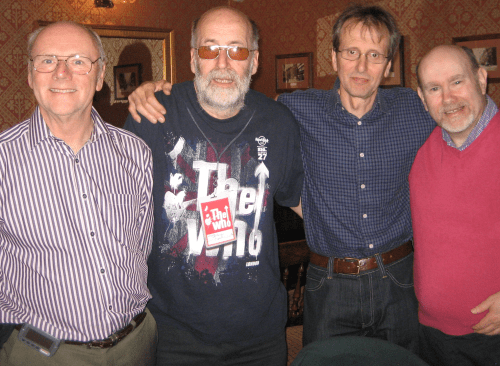
L-R myself, Dave Rolfe, Clive Taylor, Nigel Mackie - Leeds April 2011
The sad theme continues as today, 6th of August, is the seventh anniversary of first wife Janet’s death. Whilst the emotional impact of this anniversary does fade with time, it still remains a very poignant moment, especially in view of the other tragic event.

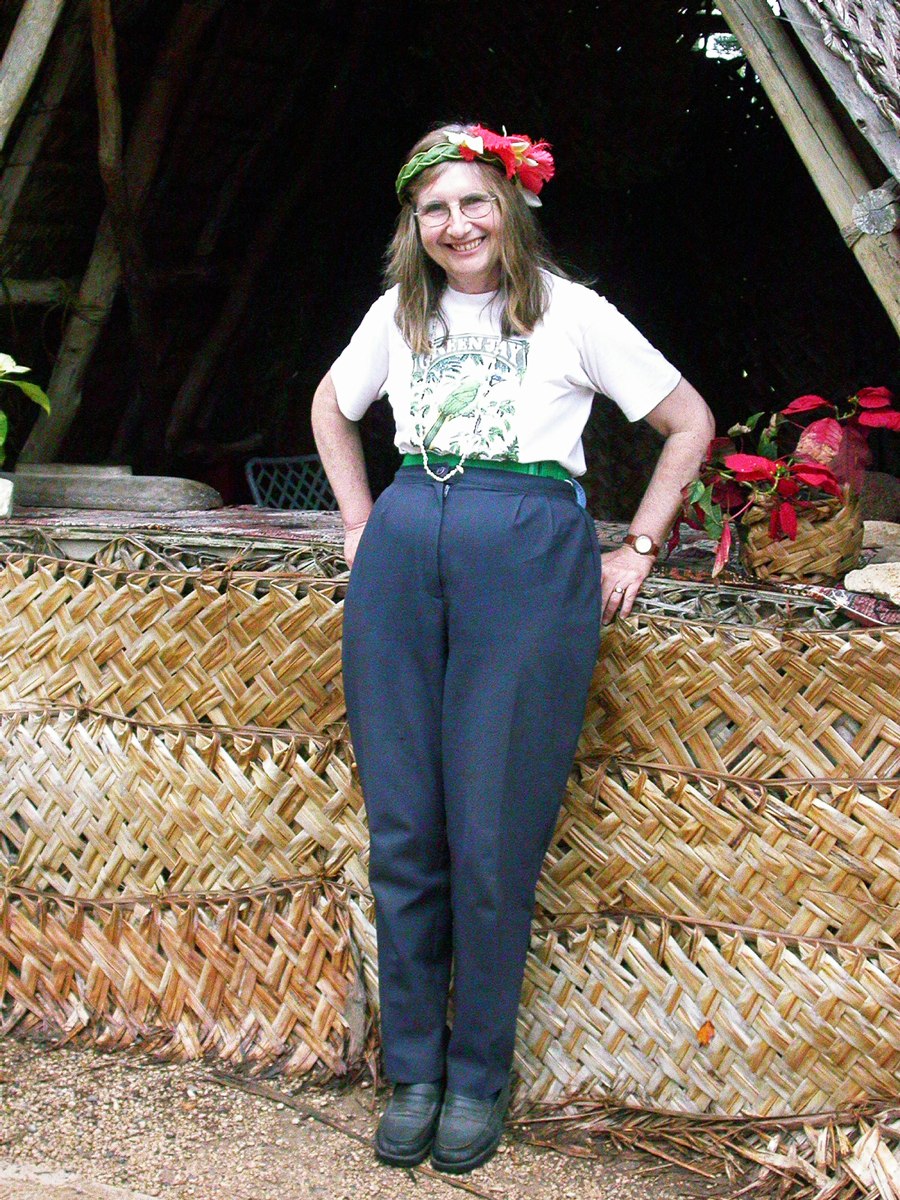
Janet Lewis - Hawaii 2003
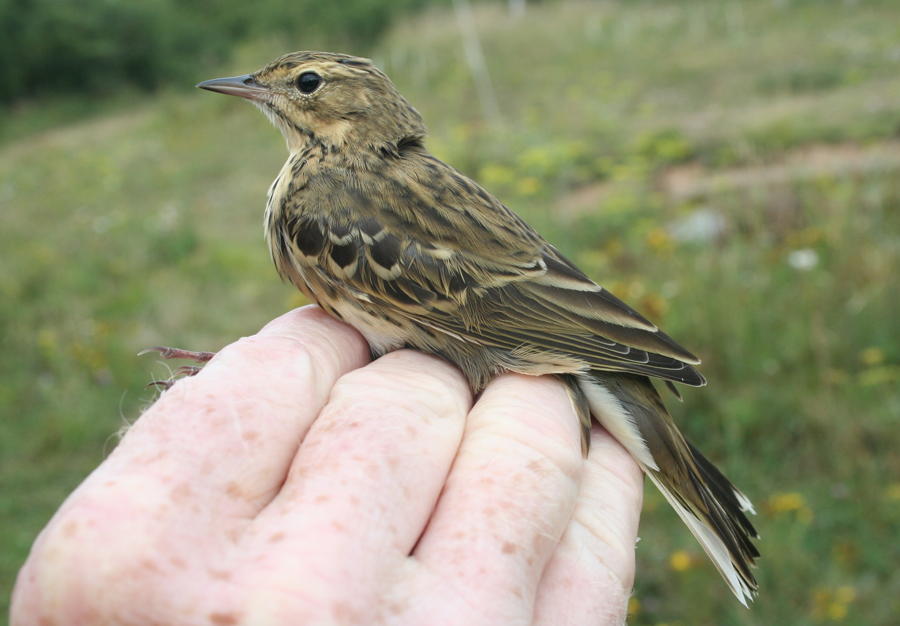
Another visit to Durlston Country Park for ringing. we had quite a crowd of us this morning and we were able to put six nets up and ring from 0600 to 0930. A total of 82 birds were ringing including six Tree Pipits and four Linnets.

- Tree Pipit, unlike the other breeding pipits in the UK, this species is a summer visitor, wintering in sub-Saharan Africa
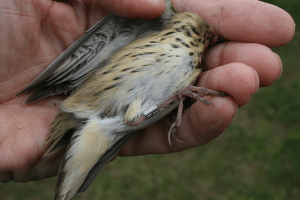
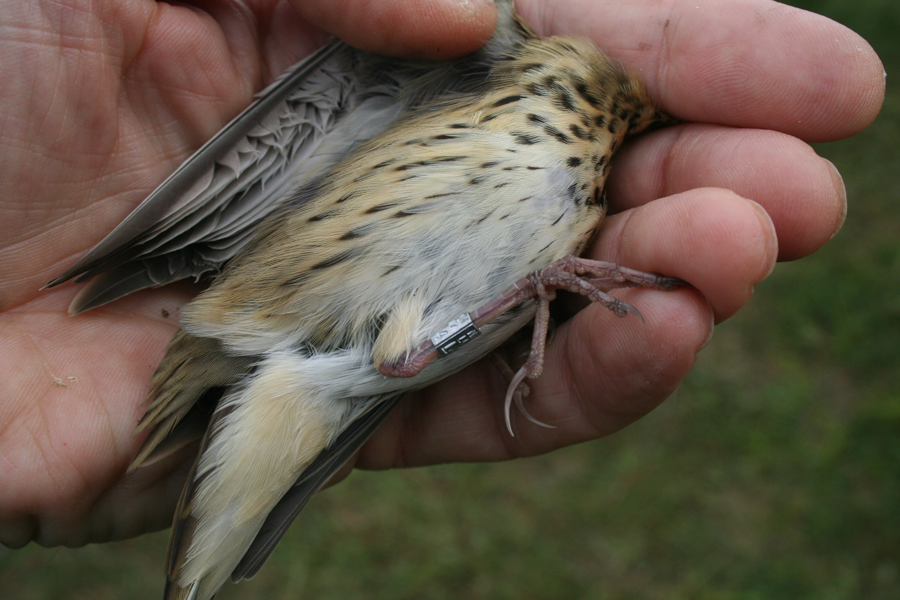
The fine streaking on the flanks, face pattern, slightly thicker bill, pinker legs and vocalisations separate Tree Pipit from the similar Meadow Pipit. In the hand the length of the hind claw is diagnostic.

Adult male Linnet

Adult Linnets have a complete moult in summer. Note the fresh moulted secondaries and inner primaries, the very worn one year old outer primaries that have still to be moulted and the primary feather that is still 'in pin'.

A break from the bush cutting.
At 1000 the ringers joined some of the Durston volunteer force to clear some new net rides in an area of scrub. To my surprise one of the volunteers was Pip Bowell, the former head of the Virology depeartment at the West Dorset Hospital in Dorchester.
Although we enjoy examing the birds in the hand, the purpose of ringing is two fold: a) to collect date about longevity, cause of death and population dynamics and b) to establish where and when the birds move to.
Recent recoveries of our ringed birds have included:
Sedge Warbler from Lytchett Bay to Belgium. Caught 10 days after ringing 400km.
Reed Bunting from Lytchett Bay to Abbotsbury. Re- caught in April following ringing last autumn. My first recollection of one of our Reed Buntings going anywhere.
Starling – Juv caught last summer killed by a cat in Upton within 200m this summer.
Sedge Warbler ringed by us in 2005 at Lytchett Bay re-caught in Brittany in 2009 on autumn migration. Another Sedge ringed by us at Lytchett in Aug 2009 was caught at the same spot in Brittany 9 days later.
Goldfinch ringed in Upton in 2009, killed by cat within 200m in summer 2011
Goldfinch ringed in Cheshire in Feb 2010 controlled in Upton in Nov 2010
And a Great Spotted Woodpecker ringed in my Upton garden retrapped in Shaun’s garden also in Upton.

Juvenile Great Spotted Woodpecker ringed in my garden in August 2010, retrapped recently near Lytchett Bay.
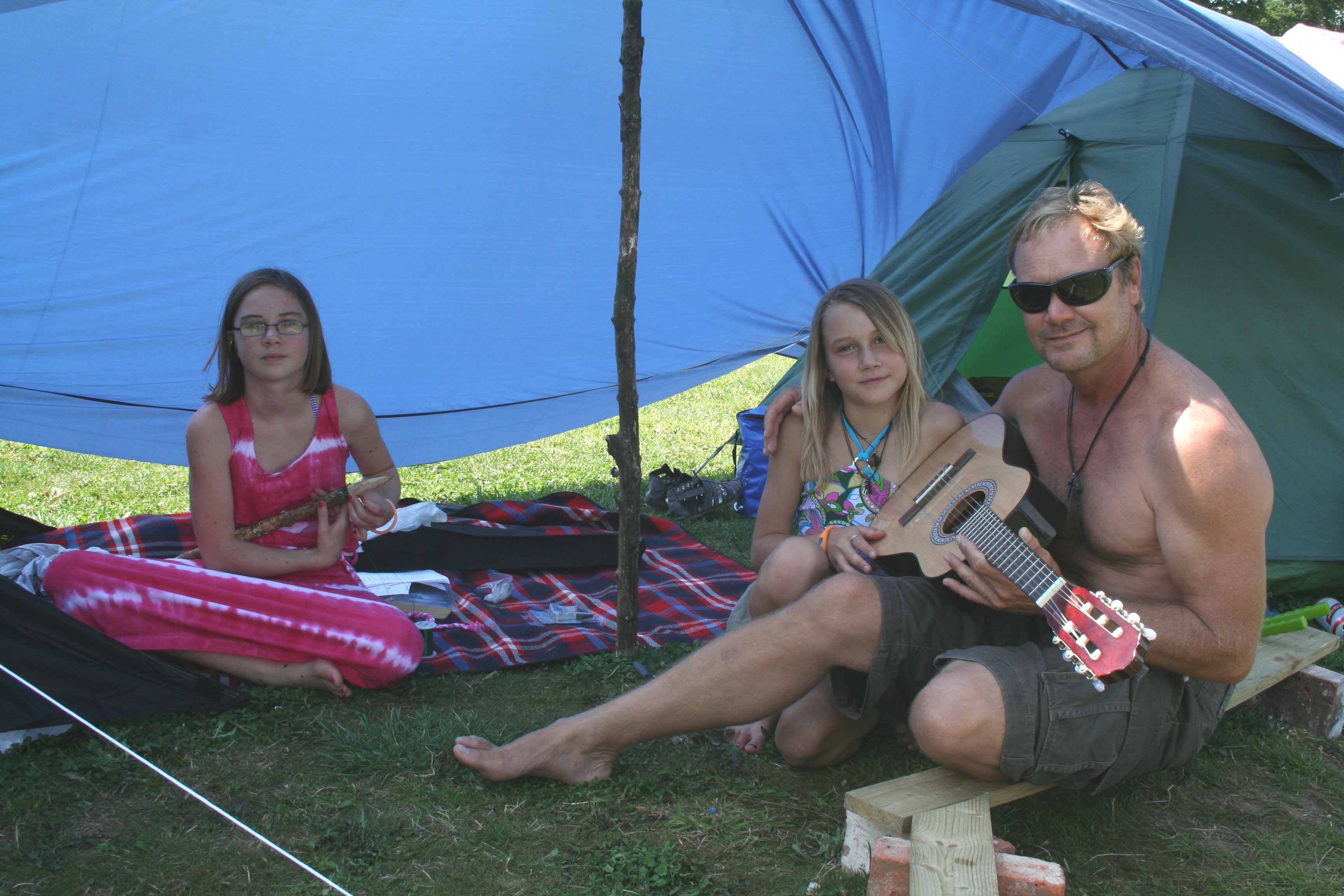
Margaret’s grandchildren’s father lives in the Caribbean working in the sailing and underwater repairs business. Recently he helped sail a catamaran from St Martin’s to Madeira for the owner and took the opportunity to fly to Britain to visit his daughters. They are now all camping at Lytchett Minster.

Happy campers - Amber, Kara and Tom Jonsonn.
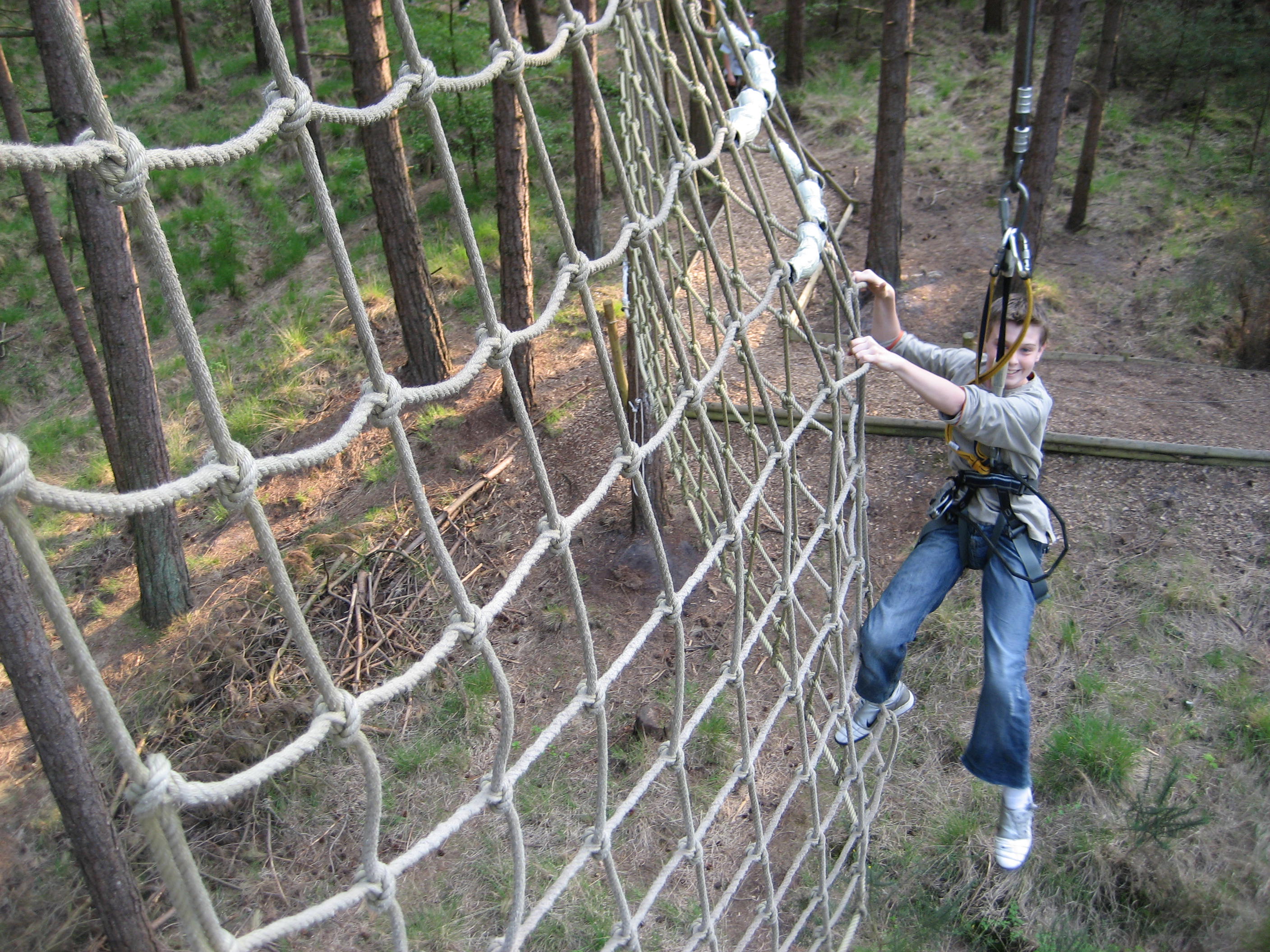
As a treat Tom and I took the girls to Go Ape at Moors Valley Country Park. A bit costly, but a great experience.
I first went there in autumn 2005 and to be honest found it really scary.
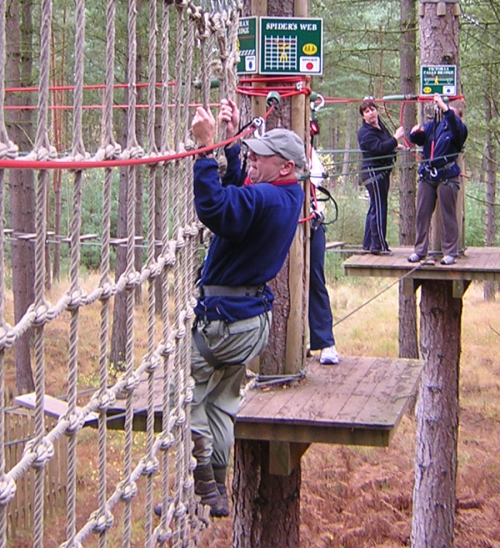
I might be clipped on but I was really suffering from vertigo !

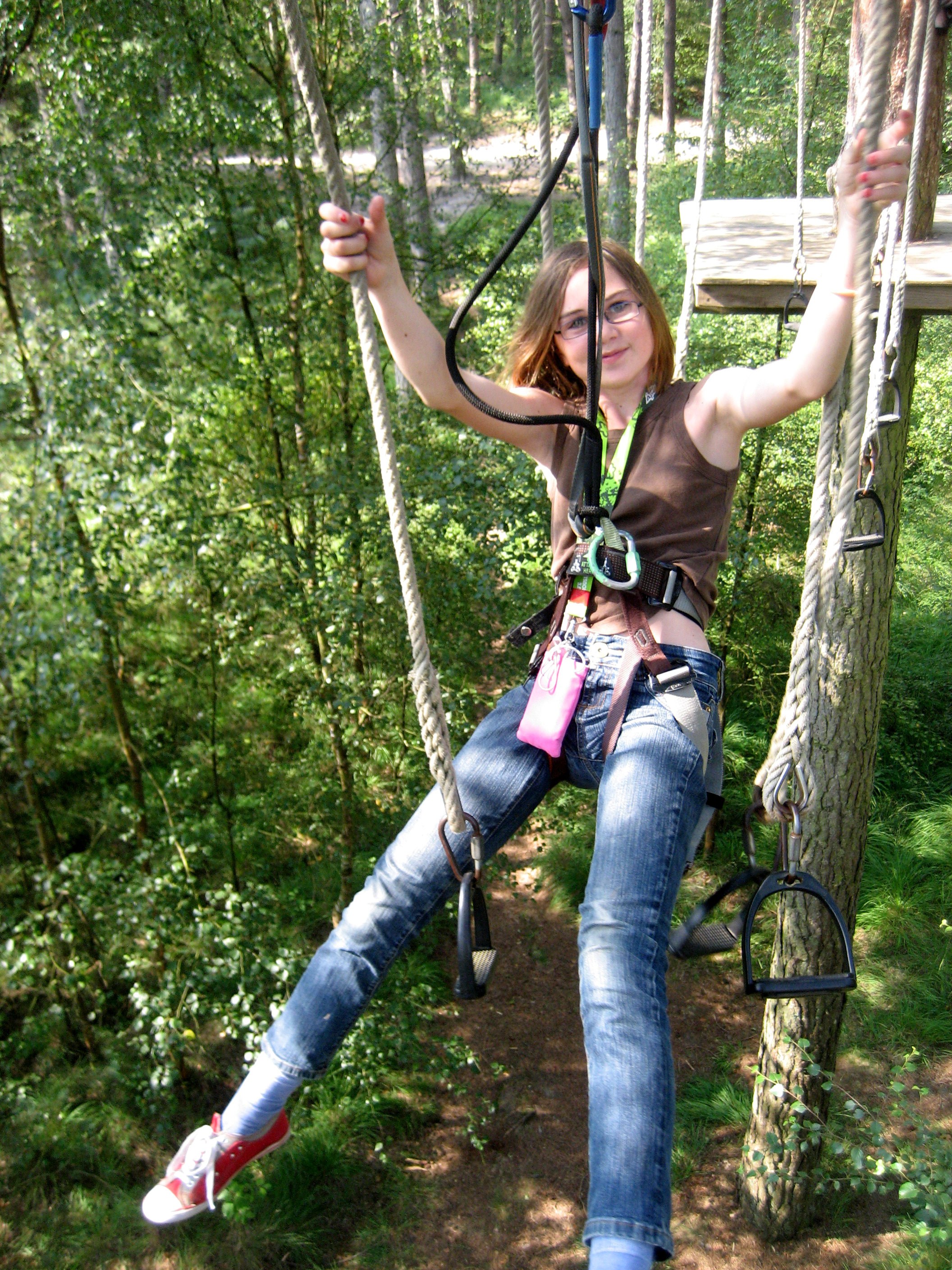
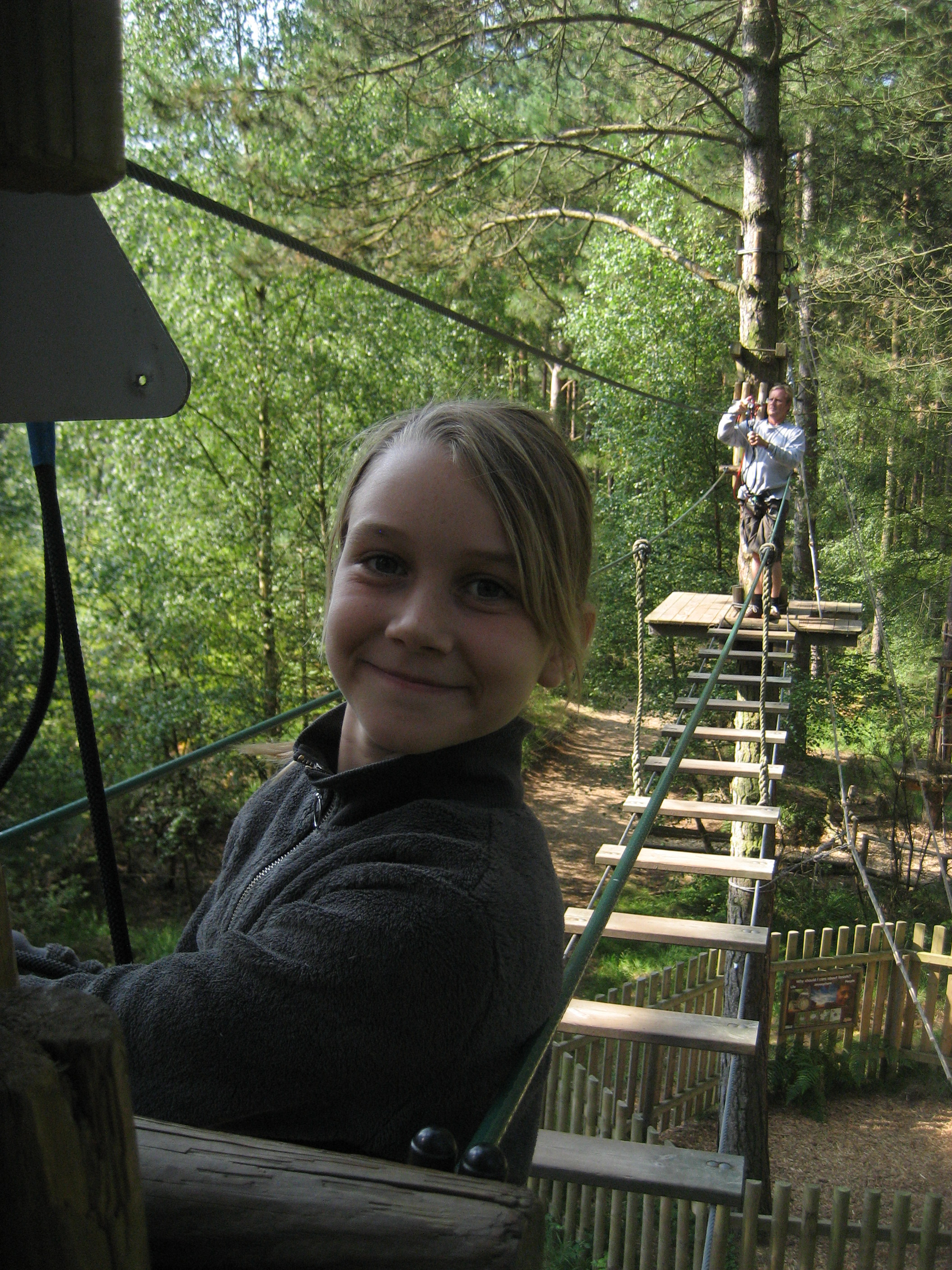
Back to 2011. Clearly Amber doesn't suffer from vertigo !

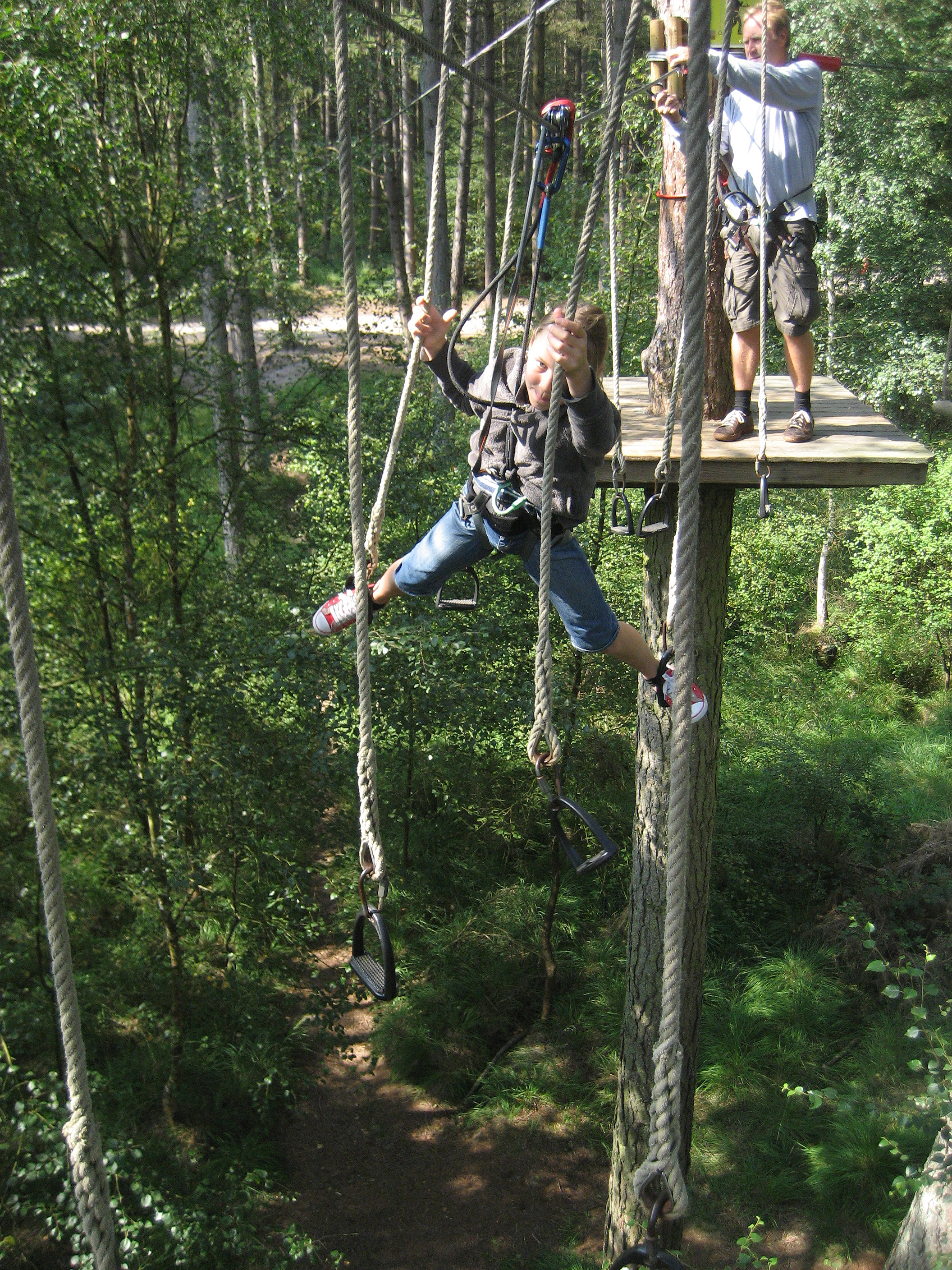
Kara on the 'stirrups'

- The scary Tarzan swing
I didn’t get a photo of the girls on the Tarzan swing, this shot was taken on my 2007 visit.

Smiles all round when the course was completed
I have just received an arrears payment from my former employer – for 5p !
Glad to know they are honest. Hope it’s not my monthly pension!
Went to Go Ape at Moors Valley today with the grandchildren.
Will post some photos tomorrow.
I have been ringing at Durlston CP both mornings. On Sunday a group of us caught 57 new birds in the ‘garden’, today I was alone for much of the morning and trapped 35 new birds.
On Sunday we had 9 species of warbler, Grasshopper (2), Willow, Sedge, Reed, Garden (6) plus Common and Lesser Whitethroat, Blackcap and Chiffchaff.
Today the best birds were a Reed and a Grasshopper Warbler.
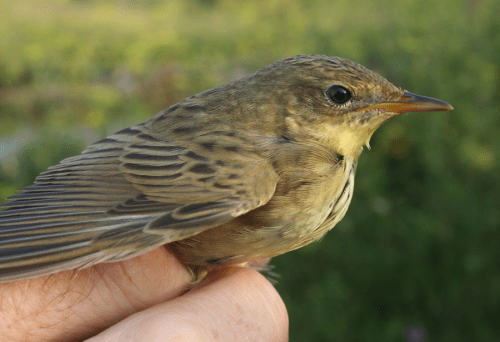
Most first year Grasshopper Warblers are brown but a few have this lovely yellow tinge.
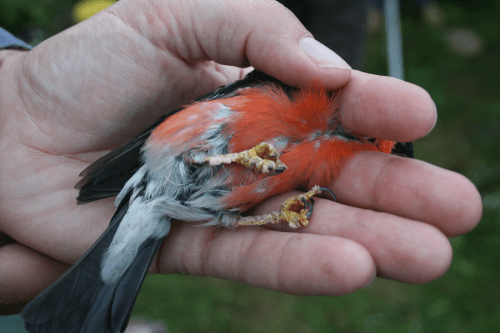
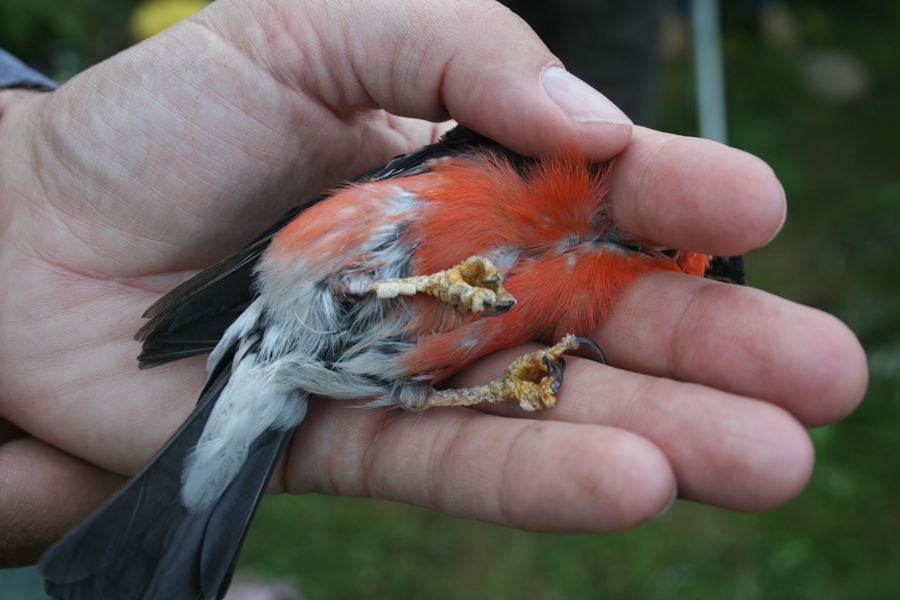
Not all birds can be ringed, this male Bullfinch is suffering from a mite infestation. This is quite common in some species of finch.

This Lesser Whitethroat had hardly started its post juvenile moult and had presumably hatched nearby.

Many Sylvia warblers such as this Garden Warbler feed on blackberries in the autumn, hence the red staining around the gape.
Later there was a public demonstation of mothing at the Wildlife Centre. The big news was a Small Marbled, a rather unremarkable little moth, but the first record for Durlston CP
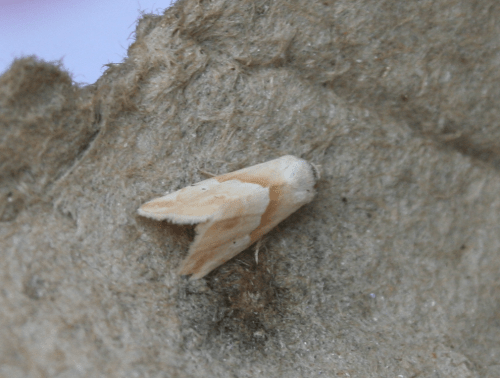
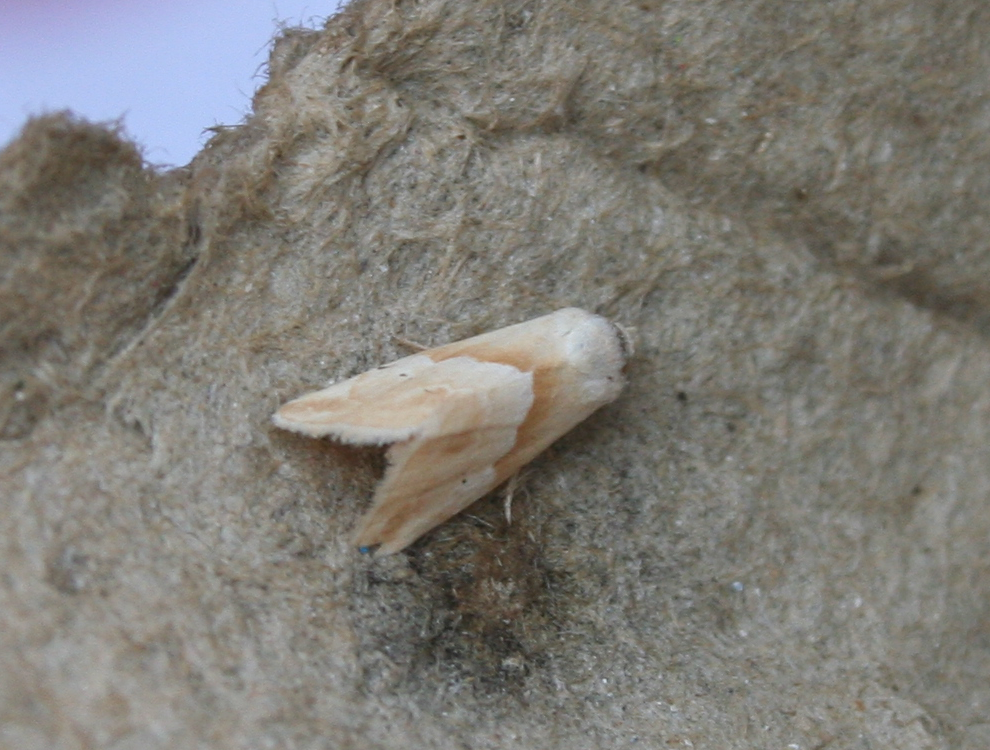
Small Marbled one of the smallest 'macro' moths. Before 2011, an extreme rarity in Dorset.
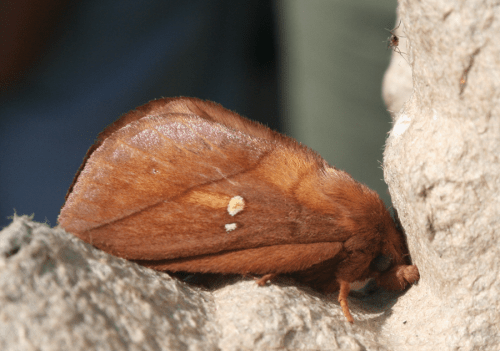
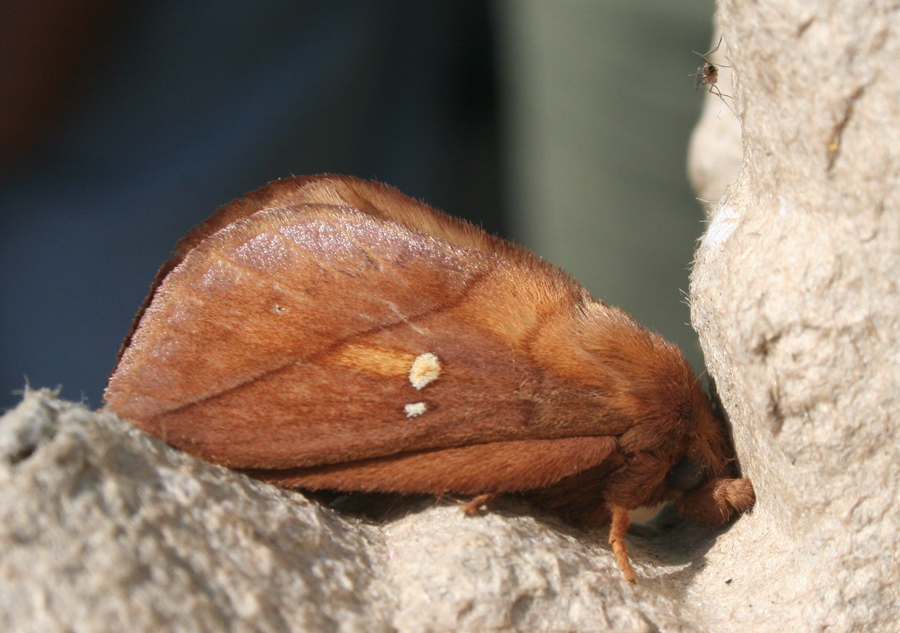
The Drinker, apparently only the caterpillar 'drinks' the adults have no proboscis.
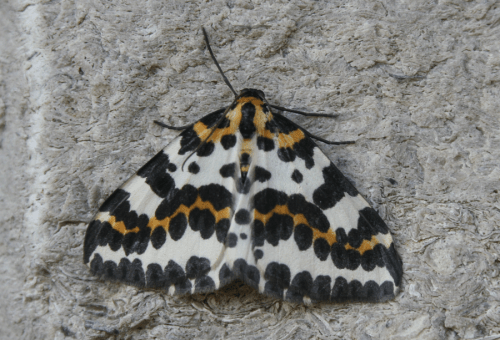
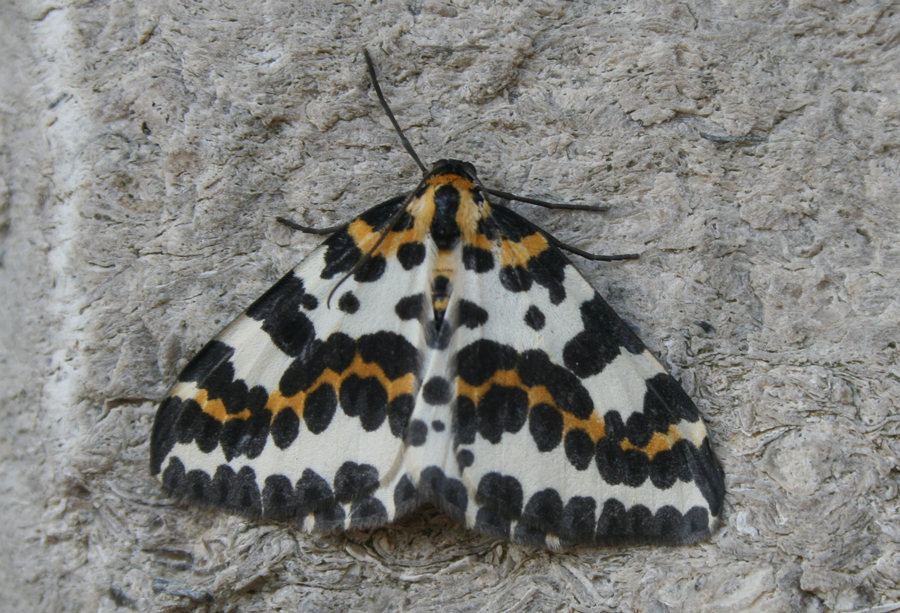
The Magpie Moth















 gryllosblog