2013 has been a really great year – dominated by foreign travel and bird ringing.
Here is a very quick summary: I did six foreign trips which included visits to 17 different countries (plus I passed through another five countries but never left the airport) this involved some 40 flights and 130 days outside the UK.
I saw or heard 1791 bird species, which is the largest year total ever, beating the previous best of 1719 in 2002. Incidentally the average number of species seen annually over the last 37 years is 882.
Of this total 245 have been new to my list (although this does include a small number of ‘heard onlys’) which brings my IOC List to 7561 plus 152 ‘heard onlys’
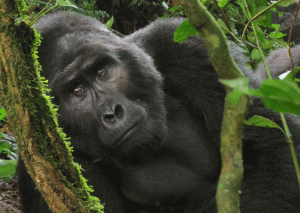
If I had to pick a single wildlife event as the highlight of 2013 it would have to be the eye-ball to eye-ball encounter with this Mountain Gorilla in Uganda.

As it is the only member of it’s family and is confined to a distant island in the Pacific, then I suppose the Kagu has to be ‘bird of the year’, but once you have got there it doesn’t take that much effort to find.
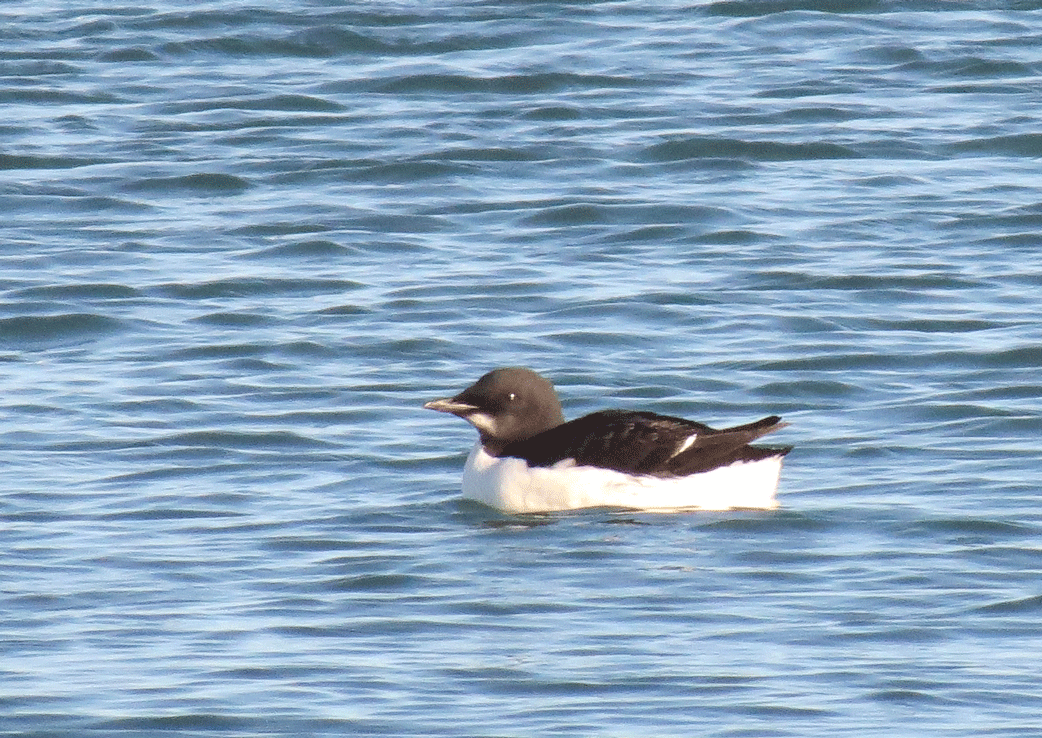
Less impressive is my record of British birding in 2013. In 2012 I attempted to set a personal record British year list and ended up with 309, this year it was a mere 218 and included just the one addition to my British and county list, the Brunnich’s Guillemot that was seen on Boxing Day.

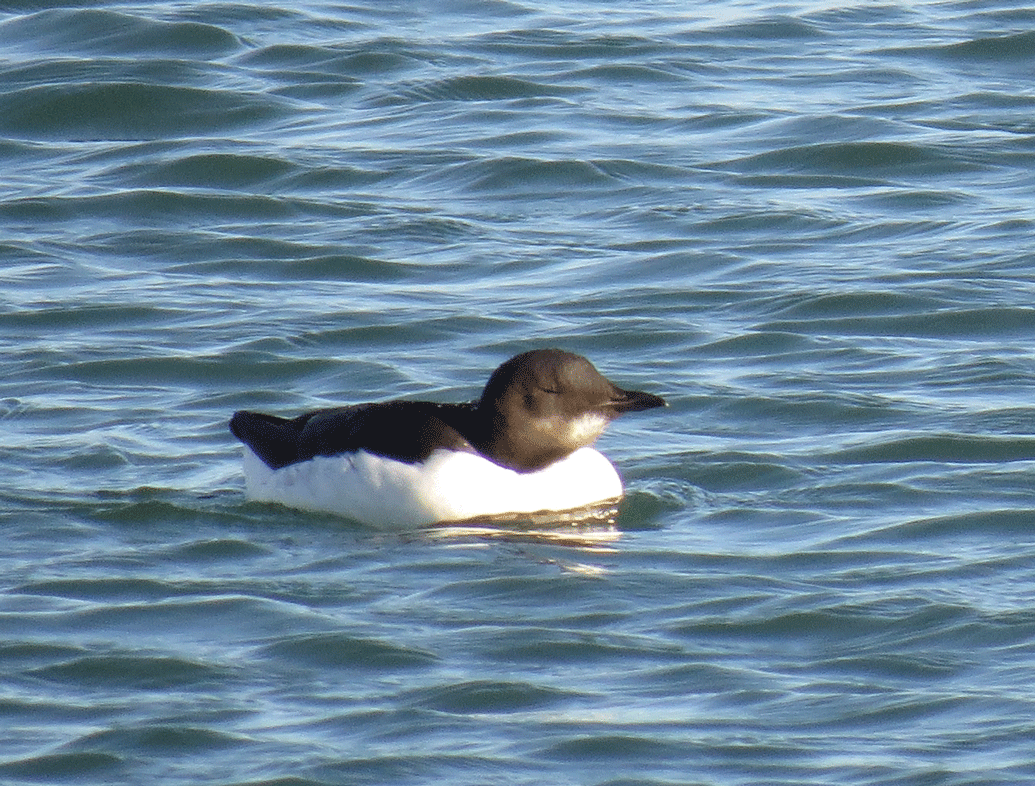
The only addition to my British List in 2013 – the Brunnich’s Guillemot which was present in Portland Harbour from 26th – 31st December.
Ringing has been highly successful in 2013. I did most of my ringing at Durlston where we ringed over 3,500 birds and whilst I wasn’t present for all of those, I was there for a high percentage. We have done well elsewhere as well and have received notification of a good number of controls and recoveries, many of which I detailed in a previous post.

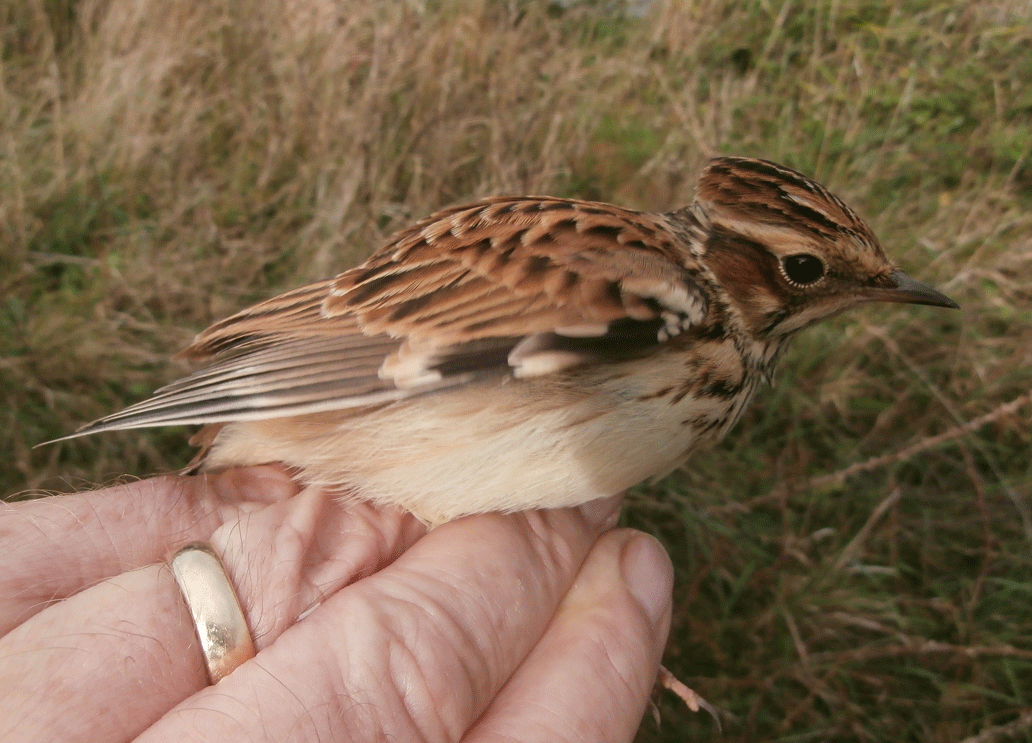
Although ringing is all about researching common species, catching a rare bird is always a delight. The Melodious and Yellow-browed Warblers that I caught this year were at least ‘on the radar’, but although far commoner in the UK, no-one had predicted we would trap this Wood Lark.
Of course there have been other great events in 2013, music concerts, visits to museums, visits to friends and family and time spent with my lovely granddaughters and wonderful wife. We have remained in good health and I have greatly enjoyed retirement. All in all, an excellent year.

Margaret ‘all goshed out’ in Jerusalem – thank you for all your love, help and support and for agreeing to my travelling to so many wonderful places.
After a quiet Boxing Day, Margaret and I drove up to my brother’s place in Duffield near Derby on the 27th. It was a dreadful journey, heavy traffic meant the normal three and a half hour drive took nearly six.

On the 28th we visited Carsington Water in the Peak District where we found two species that we never see in Dorset, Tree Sparrow and Willow Tit.

It was a longer drive than I anticipated across to Sherwood Forest in Nottinghamshire. We were searching for a group of Parrot Crossbills that are wintering in the area. They were not easy to locate, indeed one birder, with a strong Yorkshire accent, was heard to mutter ‘ if they could loose Robin ‘Ud in this lot, what chance have we got of crossbill’

After a few false alarms we eventually we came across a group of birders who had located a group of three Parrot Crossbills. These scarce visitors from Scandinavia or Russia have bigger heads and more massive bills than Common Crossbills, an adaptation to feeding on the larger pine cones. A very small number of Parrot Crossbills breed in the Caledonian Forest of Scotland but I have never knowingly seen them there. Photo from the internet.
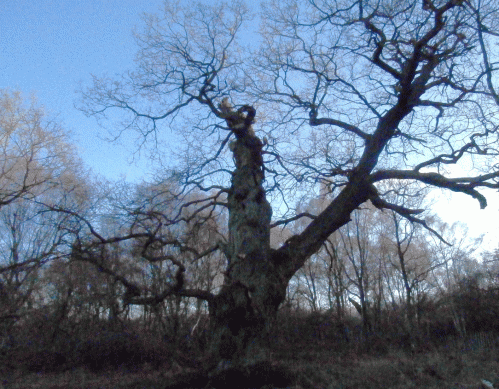
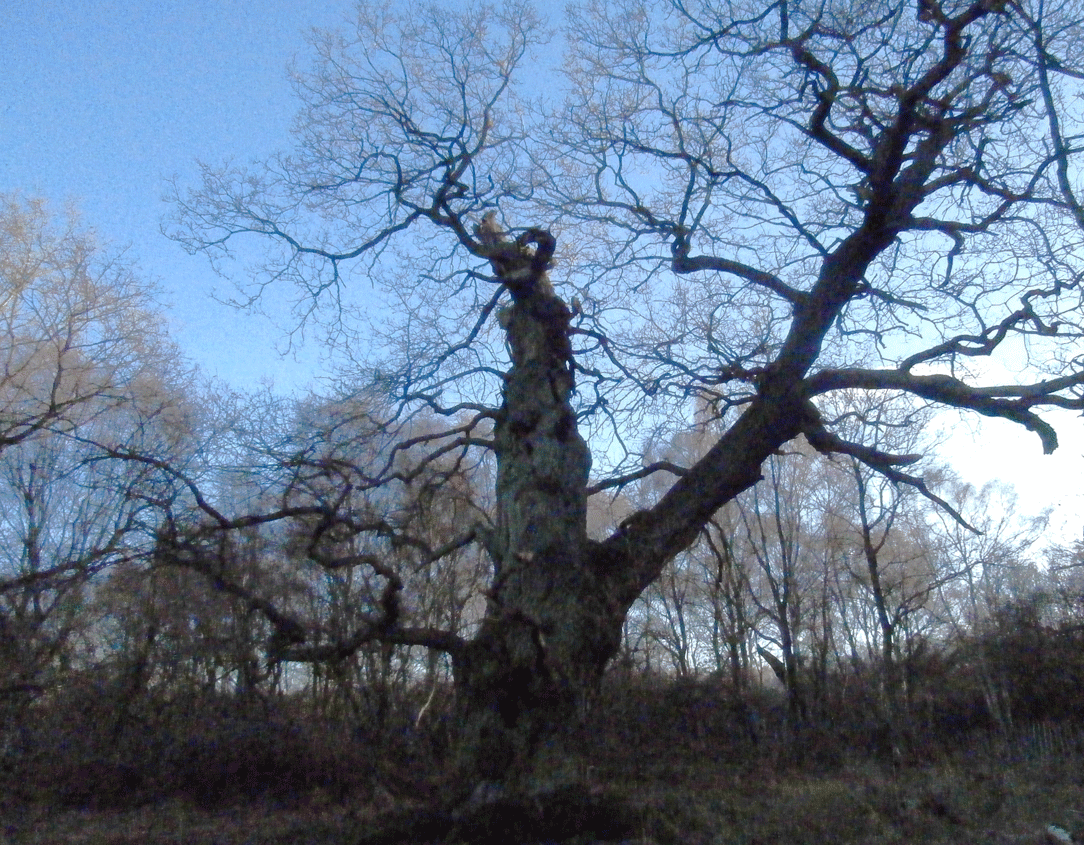
Sherwood Forest is famous for its ancient oaks. One, the Major Oak is thought to be a thousand years old and Robin Hood is said to have hidden within it, but it was now almost dark and we were very late for our next appointment, so we had to give the Major Oak a miss.

We had planned to visit Dave Murdon, a birder from Nottingham who I had met in Ethiopia and Uganda in recent years. We arrived at his place several hours later than planned but still had a nice chat and a chance to catch up. This photo of Dave was taken in Uganda in June.

The 29th was a day for socialising. My old school and university friend Nigel Mackie was in Derby from Christmas and together we visited Martin and Tricia Gadsby, more friends from our school days. It was great to see Martin (left in the photo) had recovered from the bout of ill health that has dogged him during much of the last year.

Later Margaret, Nigel and I drove to the little town of Breedon-on-the Hill to the south of Derby to meet up with Di, a friend from university days and her husband Steve.

During the evening we joined my brother Simon and his wife Viv in visiting her parents Dennis and Ida.

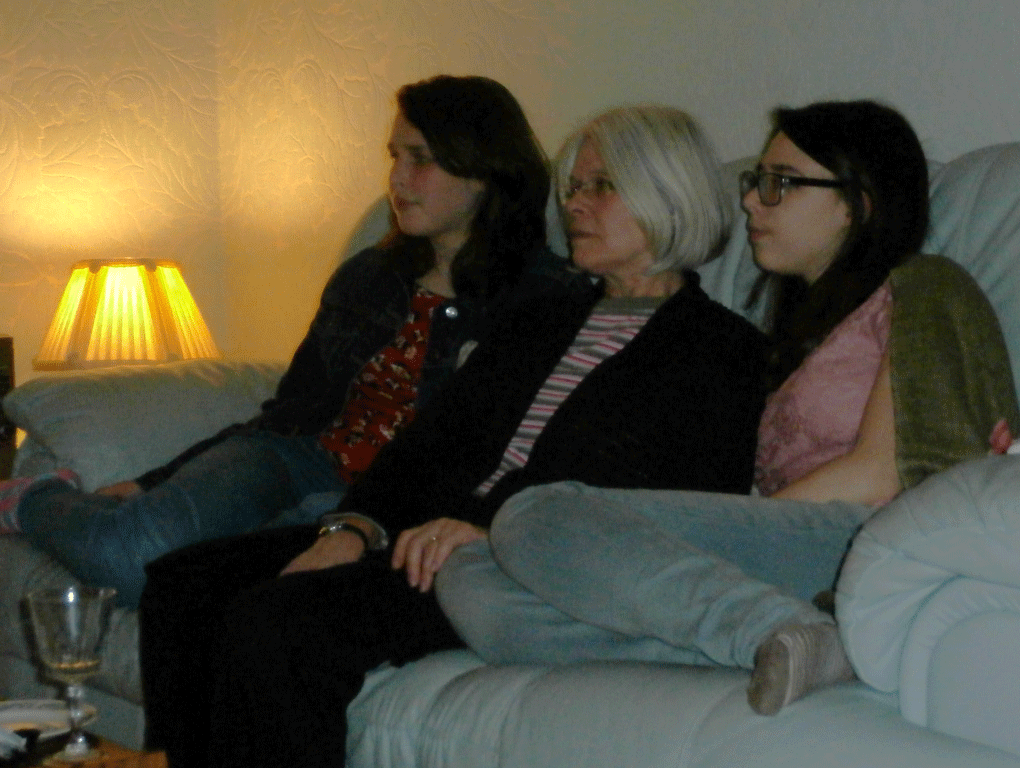
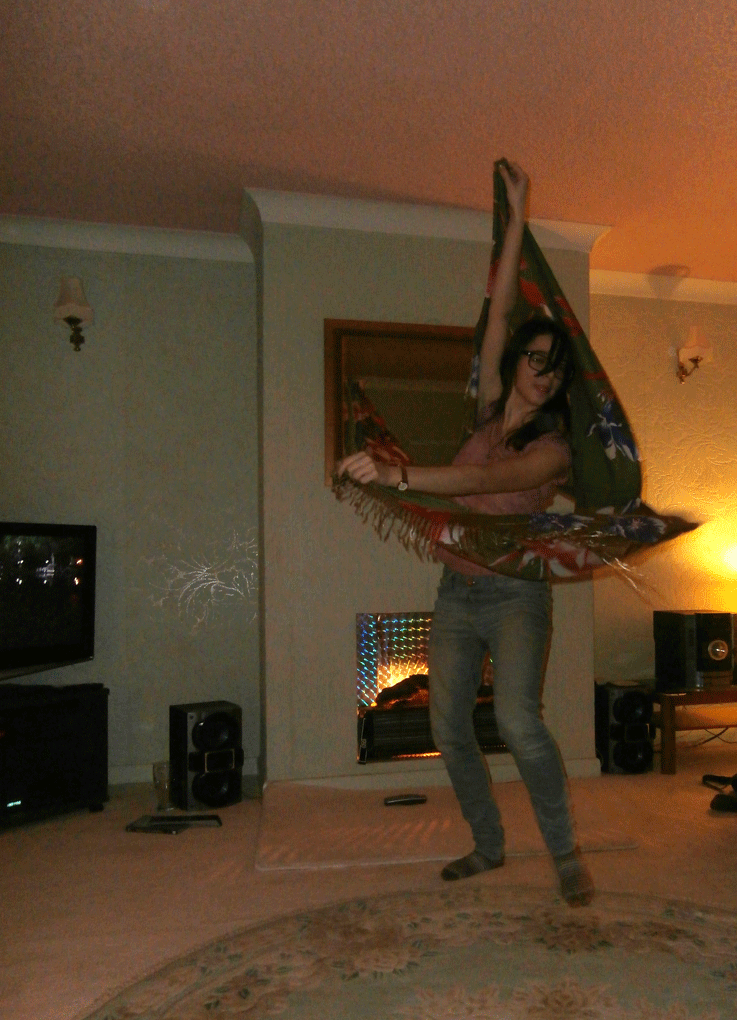
Viv with her daughters, Jenni (left) and Miriam (right) spent the evening watching a dancing video

… then Miriam decided to show off her moves …

… until grandparents Ida and Dennis (who are in their ’80’s) showed her how to do it properly!
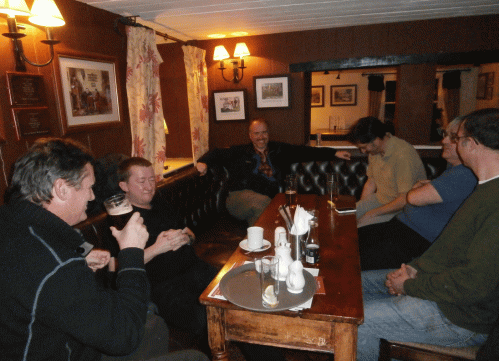
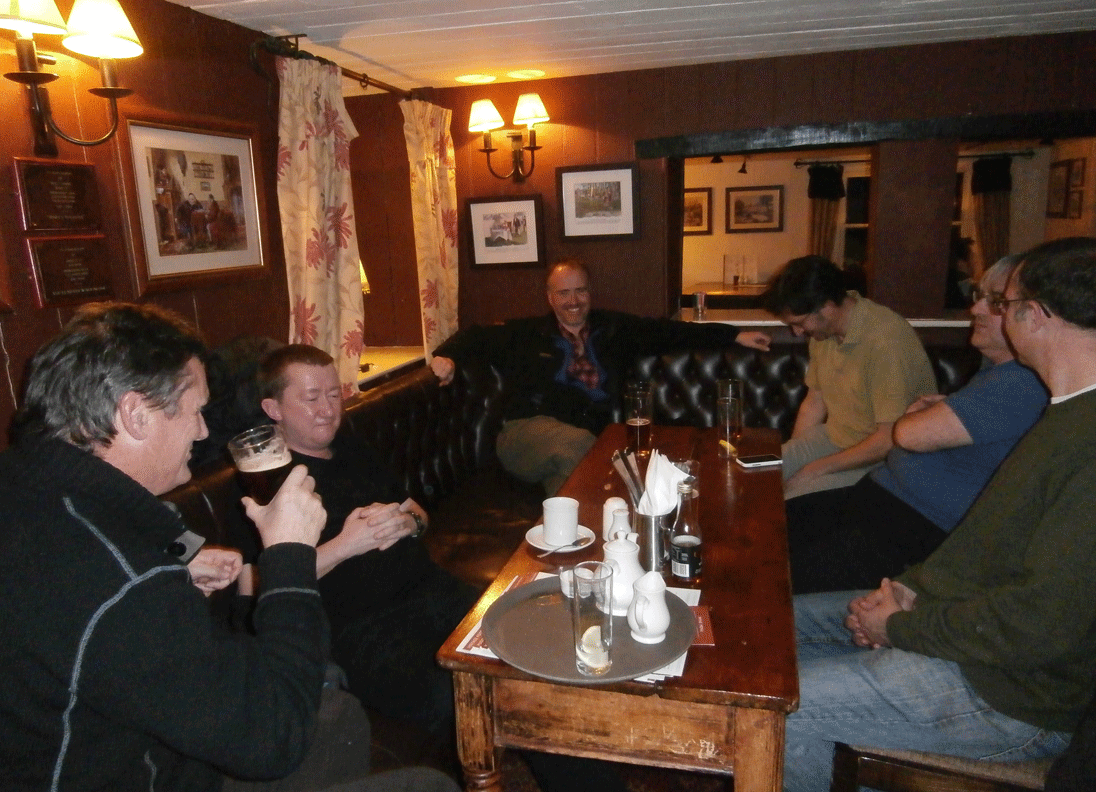
We returned to Poole on the 30th and hearing that my friend Paul from Shetland was back visiting relatives, we quickly arranged a visit to the pub that evening (L-R: Paul Harvey, Richard Webb, Ian Alexander, Shaun Robson, Trevor Warwick and Marcus Lawson.
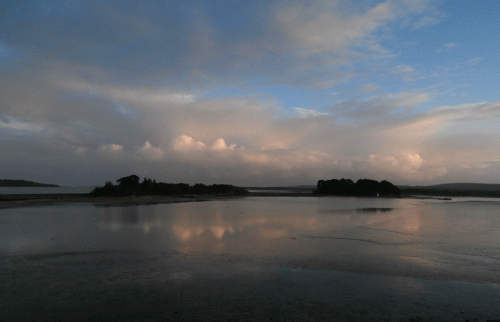
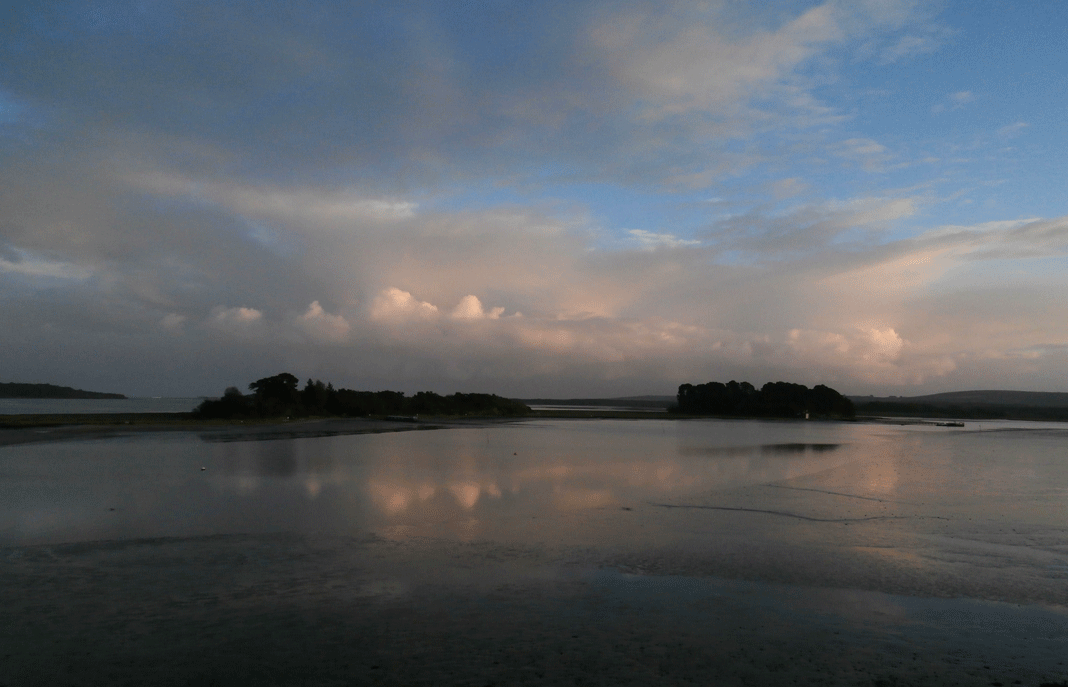
On New Year’s Eve Paul, Ian and I went birding around Studland and Arne but it was late afternoon by the time we reached Shipstall Point at Arne.

Birding in Poole Harbour has changed a lot since Paul birded here in the seventies and early eighties. Med Gulls, Avocets, Spoonbills and Little Egrets are now common, or at least regular, whilst Pochard, Scaup and Hen Harrier among others have become much rarer or even absent.

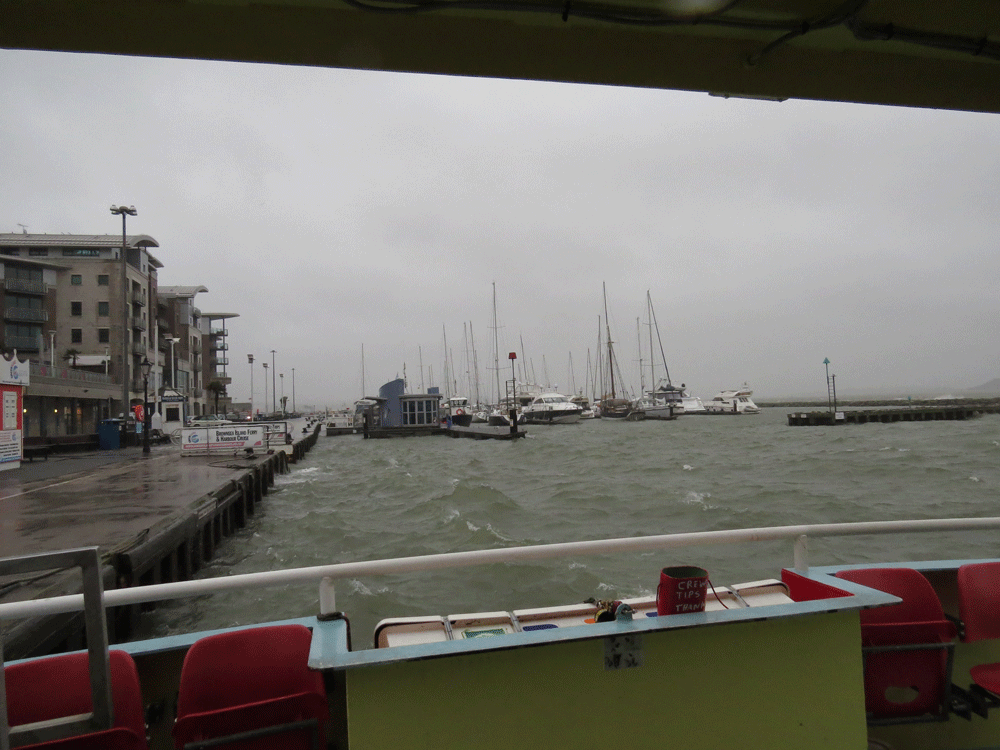
We always look forward to the New Year’s Day boat trip around Poole Harbour, most generously provided by Mark and Mo Constantine. However the weather this year meant we were unable to even leave Poole Quay. In spite of the conditions about 30 birders turned up and we spent about an hour chatting on the pleasure craft before retiring to the aptly named Storm’s restaurant for delicious soup. A great social event but at the end of the day my 2014 bird list stood at exactly six!
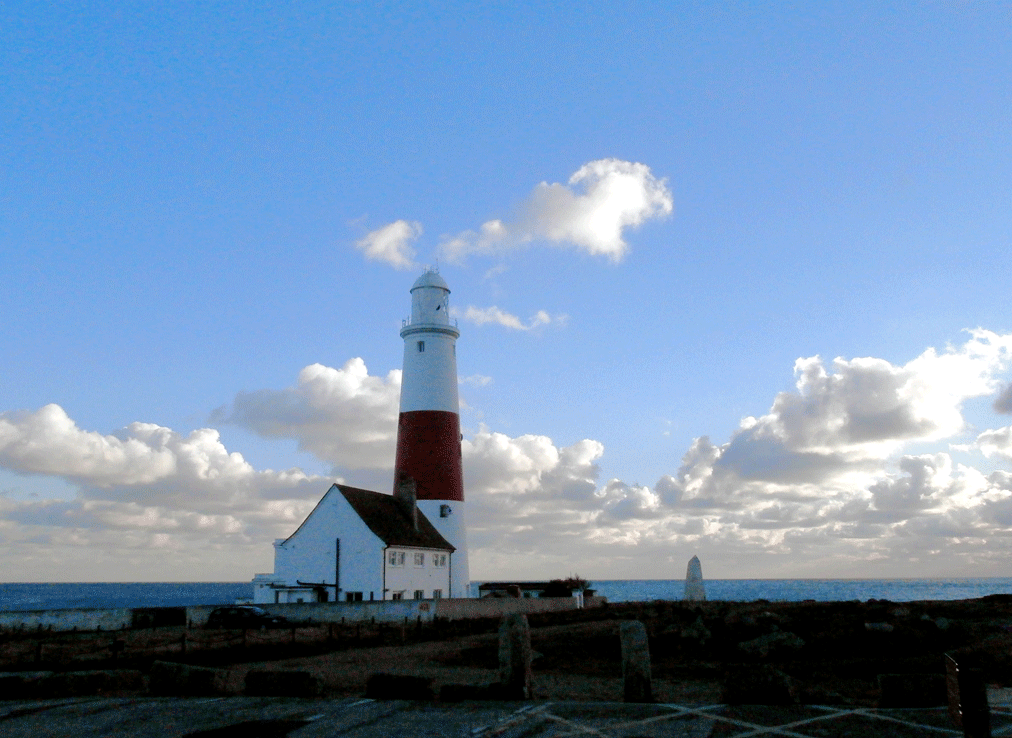
Mid-morning I received some excellent news, a Brunnich’s Guillemot had been found in Portland Harbour. This high arctic species breeds no further south than Iceland and has its stronghold in the far north in Svarlbard and northern Greenland and are an extremely rare visitor to the UK, with most records coming from Shetland. The Portland record is the first occurrence in southern Britain.
This is not only new for my Dorset list, it is also new for my British list and is actually the only British tick that I have had in 2013.
The bird was feeding close in and we had excellent views near Osprey Quay on a beautiful winters day.

There have been 42 records of Brunnich’s Guillemot in Britain. Of these 25 have been found as tideland corpses. Of the remaining only two have occurred south of the Scottish border, Farne Islands, Northumberland in 1970 and Yorkshire in November 2013. It is possible that this bird could be the same individual as the Yorkshire bird.
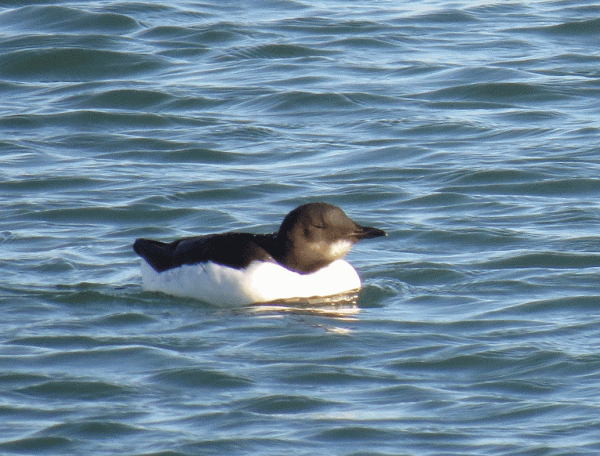
. Brunnich’s Guillemot is known as Thick-billed Murre in America. The thick bill, with a pale line on the cutting edge (particularly noticeable in summer adults), the slightly larger size, stockier appearance with shorter, thicker neck and black face in winter plumage separate it from Common Guillemot.
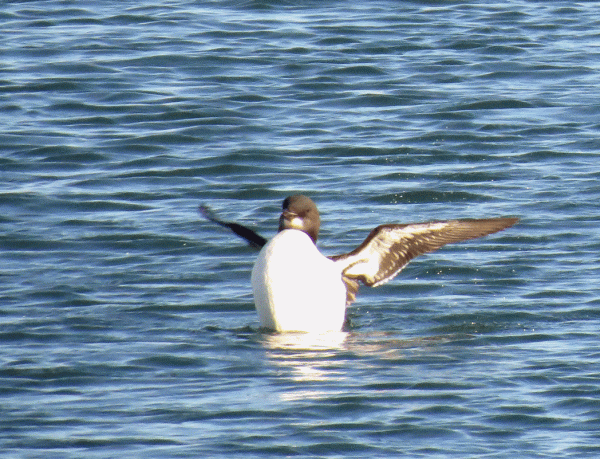
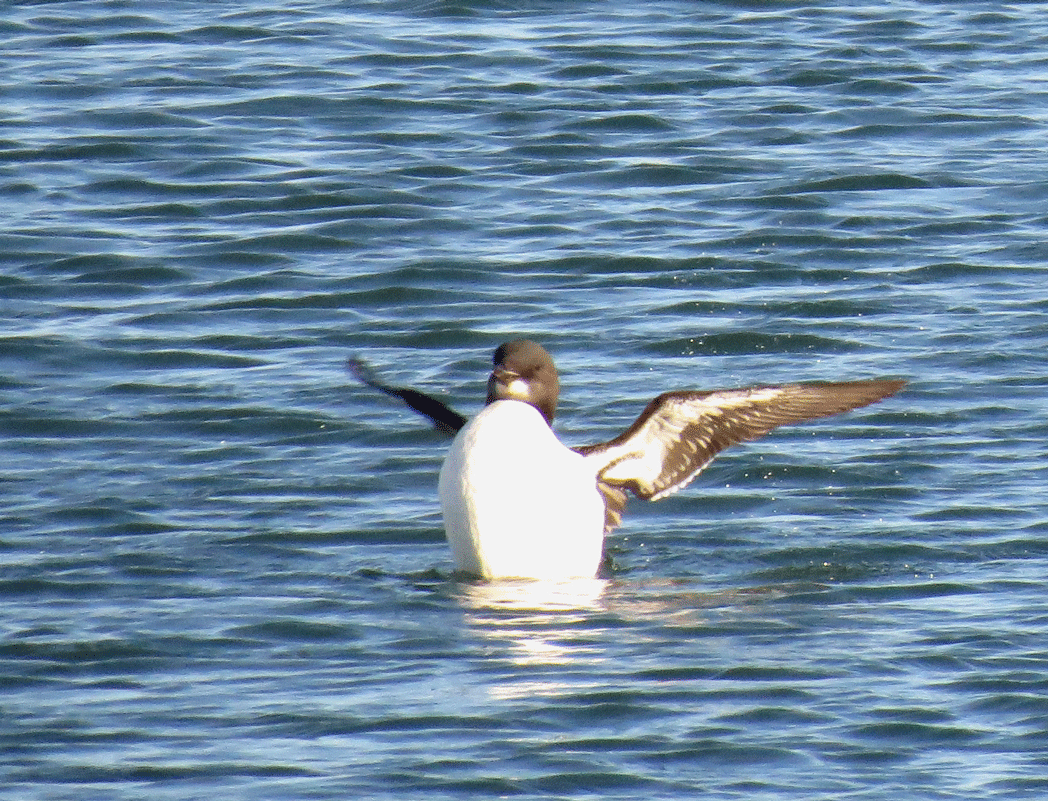
Brunnich’s Guillemot has paler axillaries than Common Guillemot.

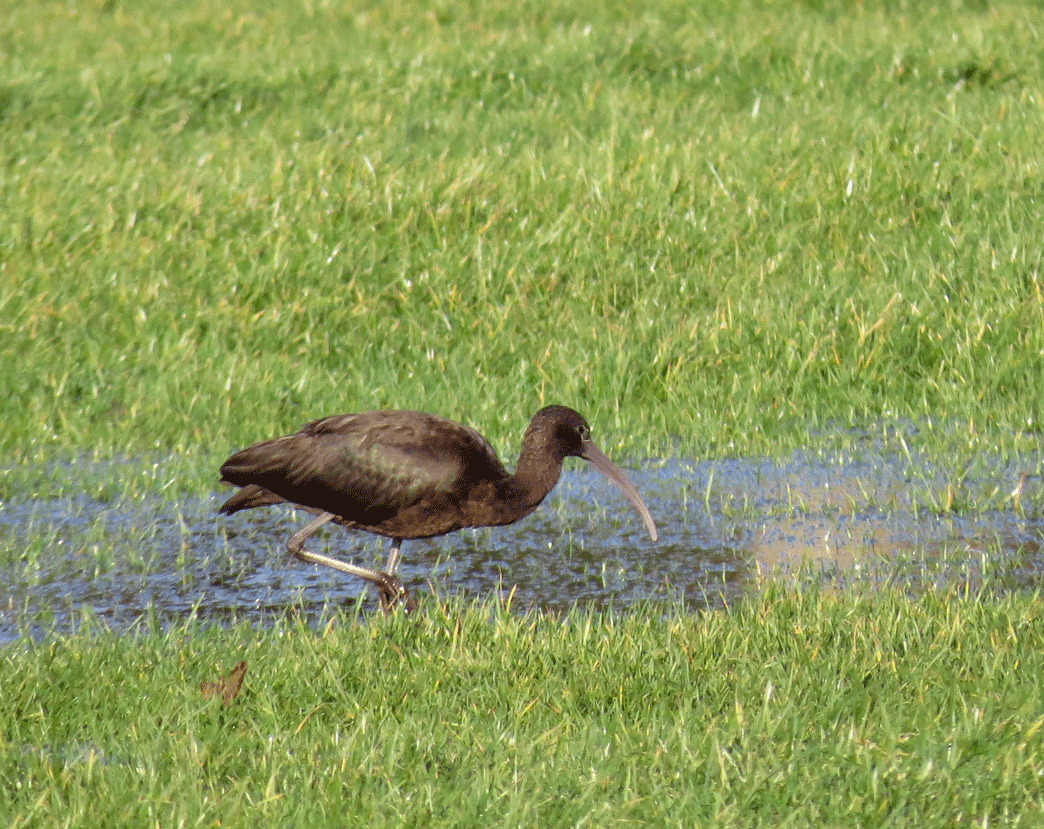
On our way back home we called in to see a Glossy Ibis that has been seen regularly on a flooded playing field near Radipole RSPB reserve.

The only other rarity that I have seen since getting back from Africa were these two juvenile Common Cranes which took up residence for a week or so near Cheselbourne.
50.570517
-2.451268

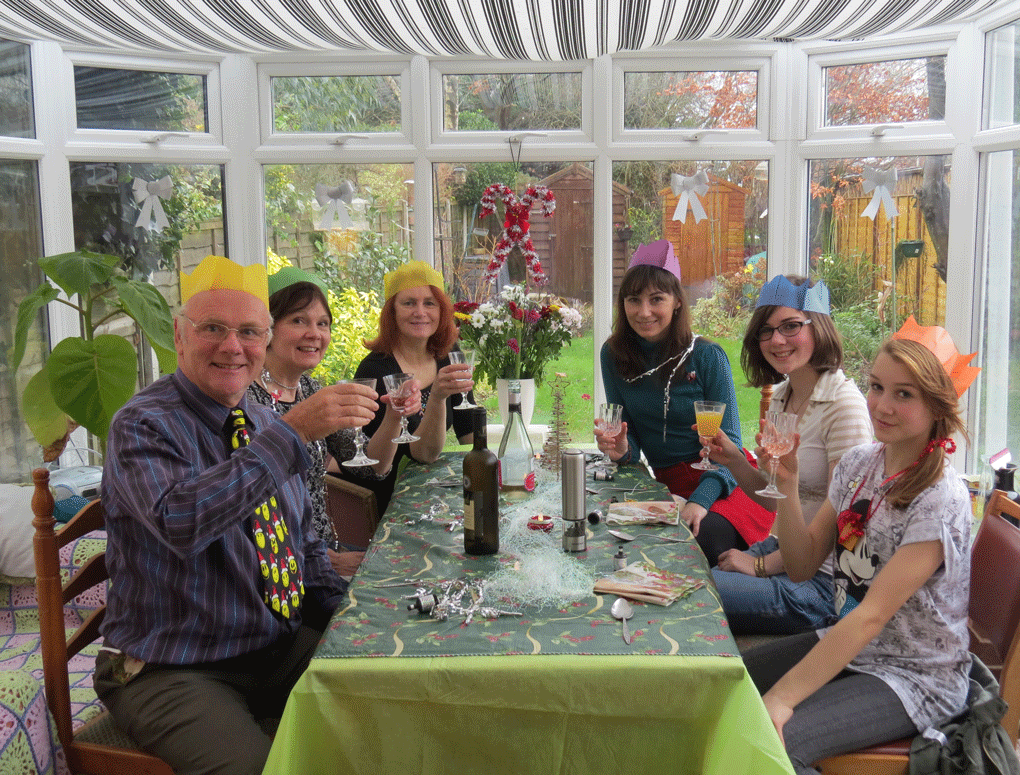
We have had a lovely Christmas Day, Janis, Amber, Kara and their friend Helen joined us for dinner (and the present opening ceremony).
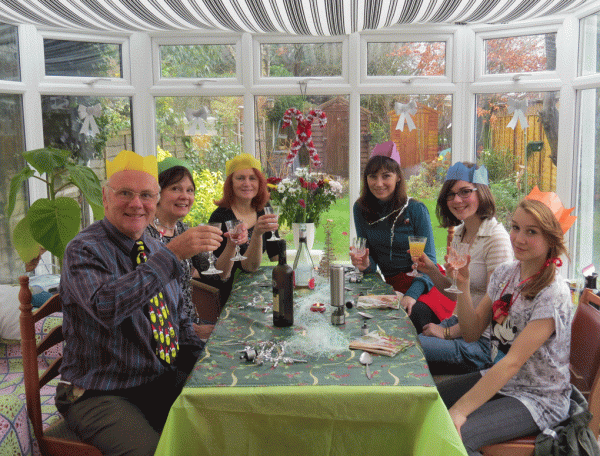
Merry Christmas from Ian, Helen, Margaret, Janis, Amber and Kara.
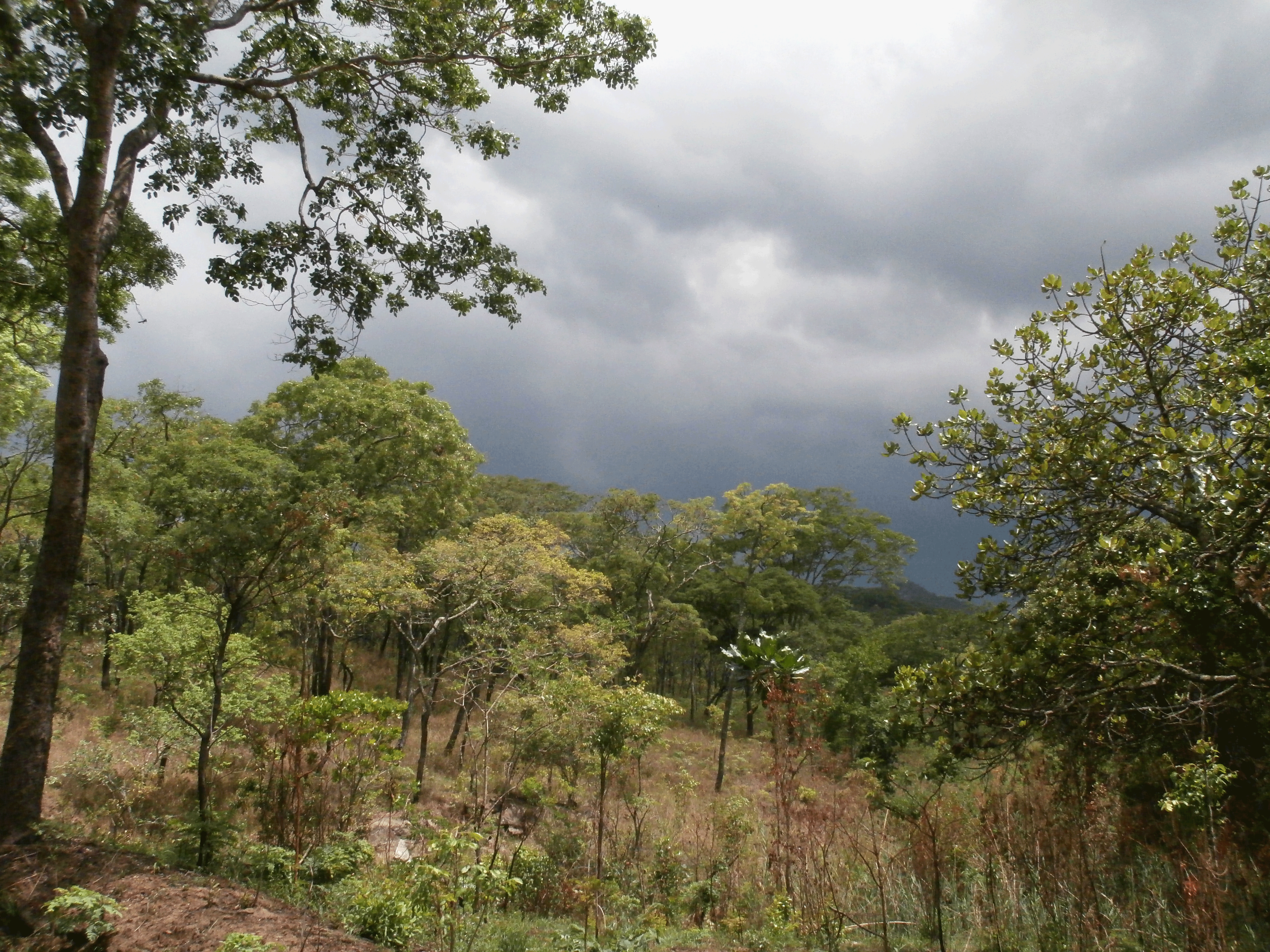
From our lodge near the Lilongwe, the capital of Malawi we traveled to Dzamalyana, an extensive area of miombo woodland. This forest type, also known as Brachystega cuts a wide swathe across southern Africa. Later we visited some forest patches situated between extensive tea plantations for more specialties before heading north. In the north of Malawi we visited another miombio woodland where we caught up with many of the specialties we had previously missed.
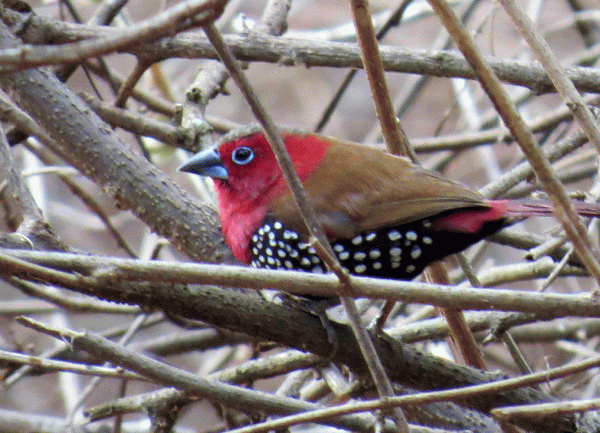
This Red-throated Twinspot was one of the first life birds of the trip, recorded on the very first afternoon.
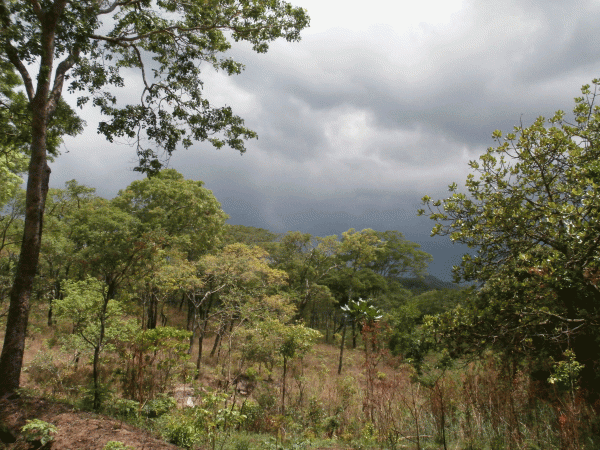
Extensive miombo woodland at Dzalanyama reserve.
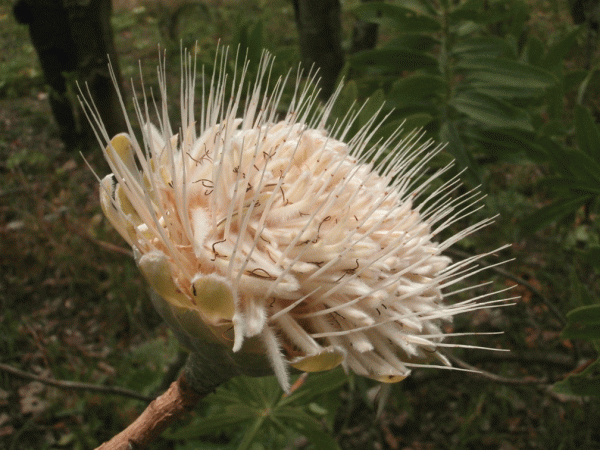
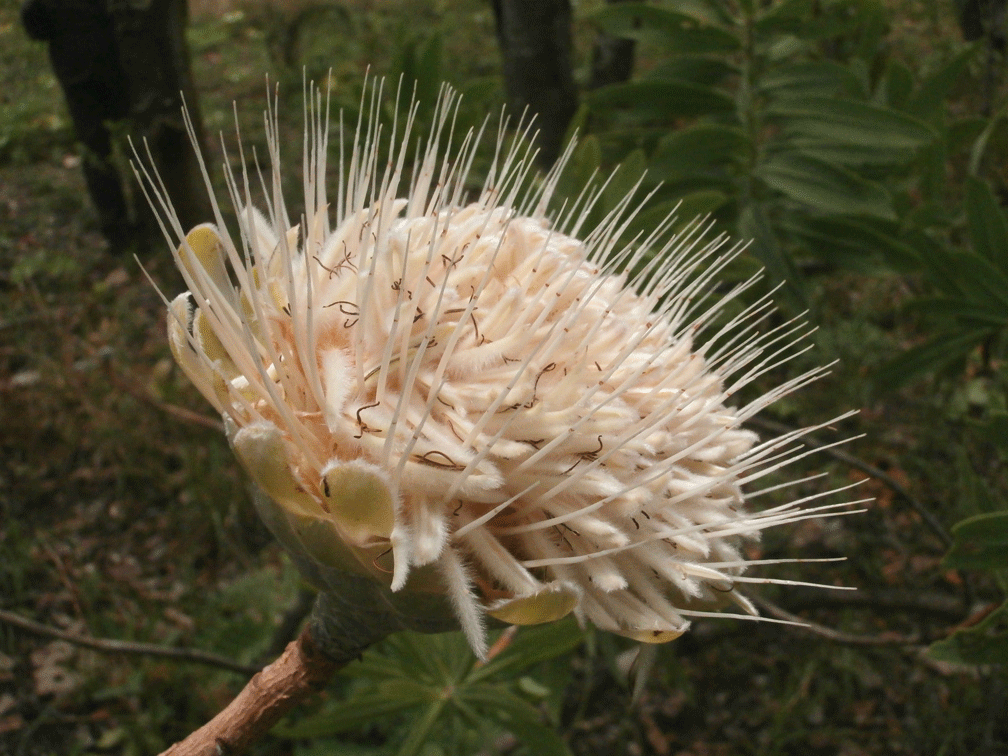
There were a few proteas in flower but not enough to attract the rarer hummingbirds.
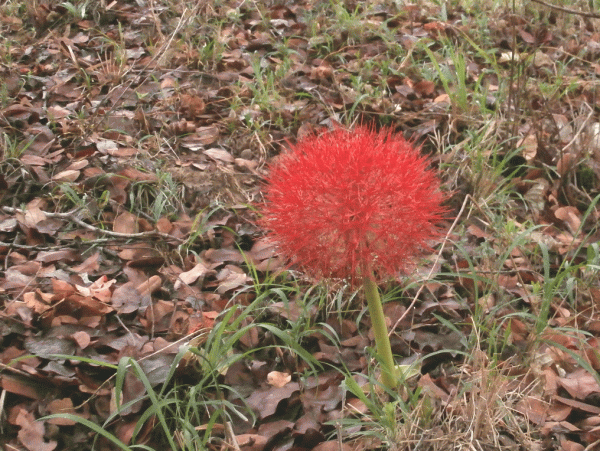
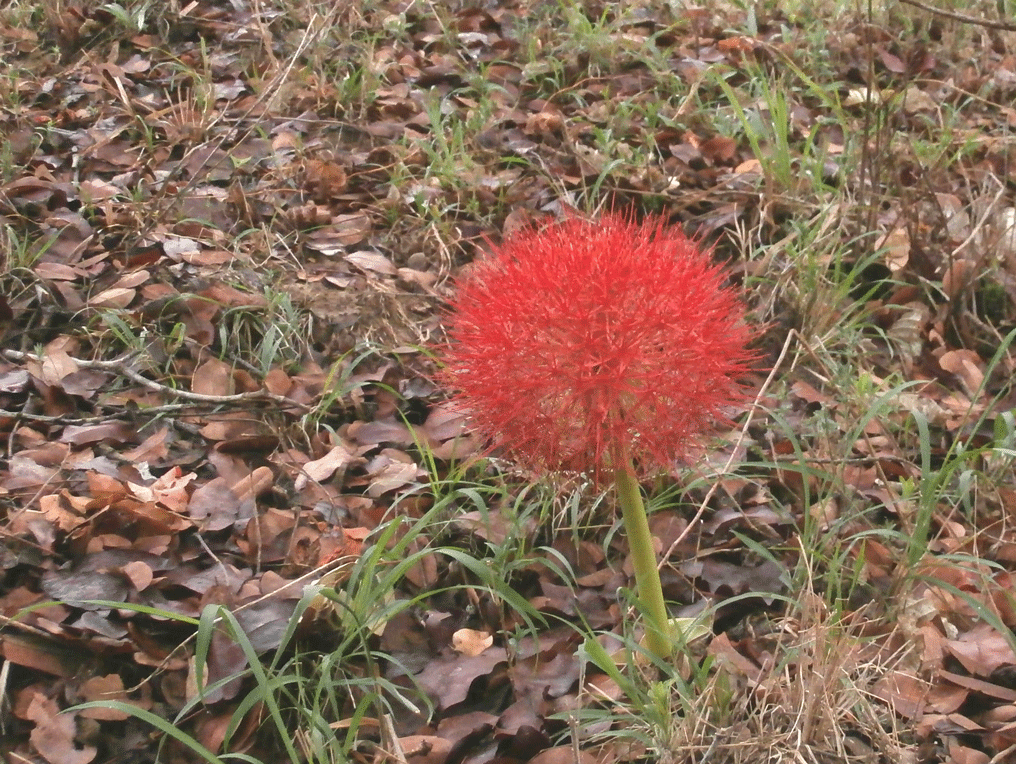
Unfortunately I didn’t note the name of these amazing red flowers
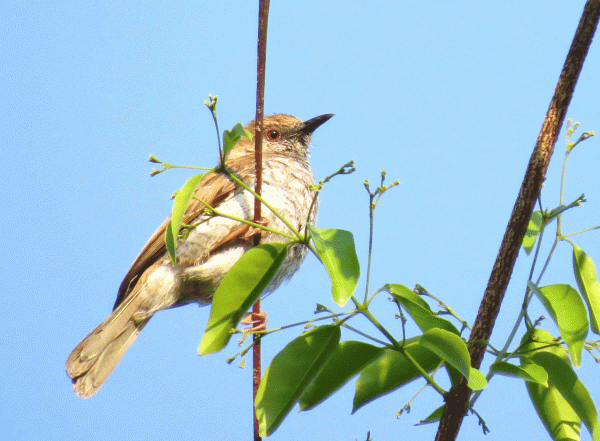
Birding is hard work in miombo woodland due to its dense foliage and the low density of its avian inhabitants, which mainly occur in fast moving flocks. This is a Stierling’s Wren-warbler.
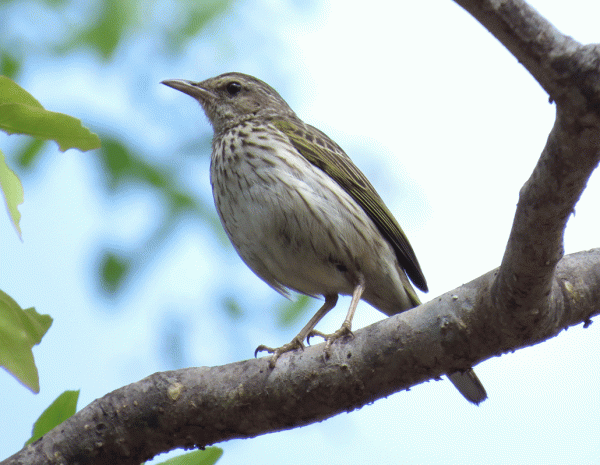
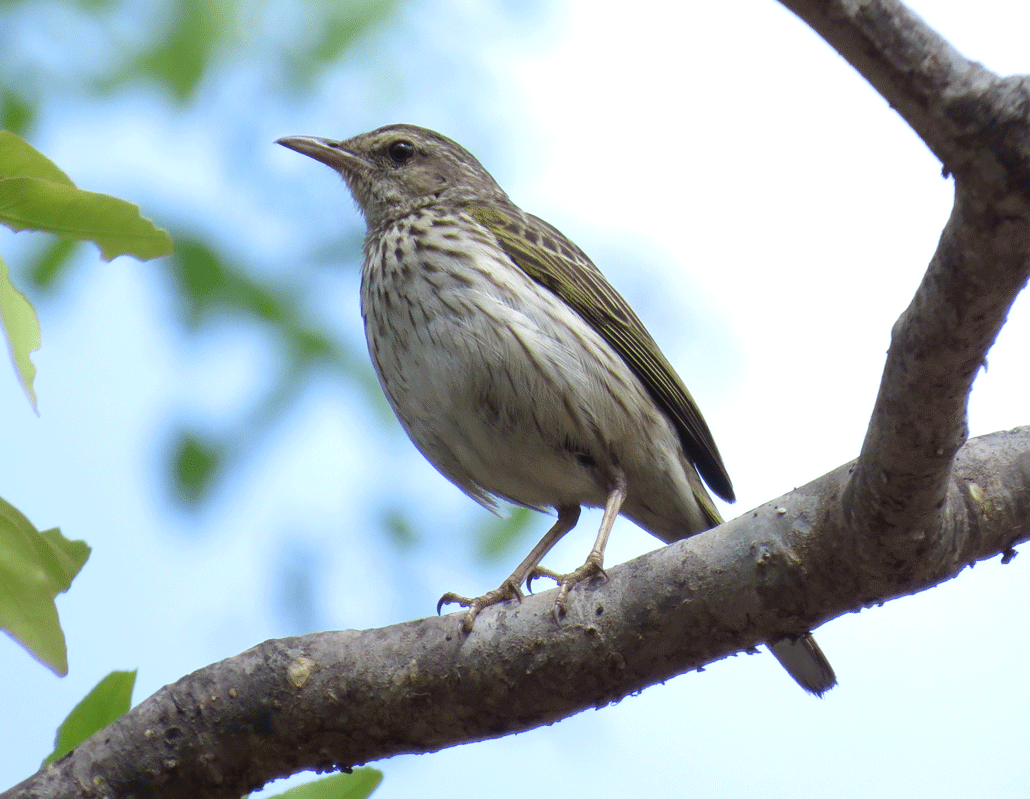
Rocky areas held good numbers of Striped Pipits, a species I had only seen briefly before, in South Africa in 1991
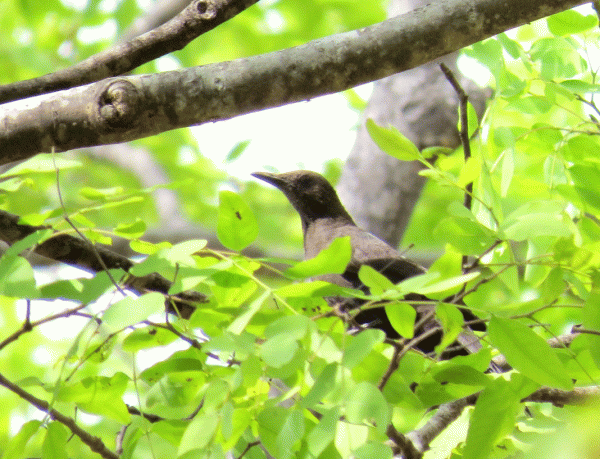
The Boulder Chat is a rare inhabitant of the rocky areas of the forest
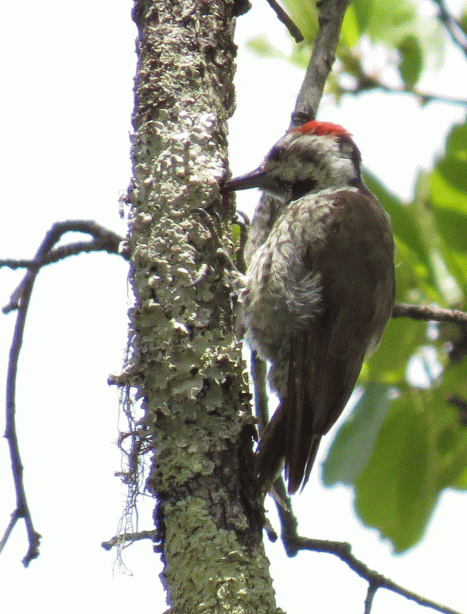
Stierling’s Woodpecker is confined to miombo woodland

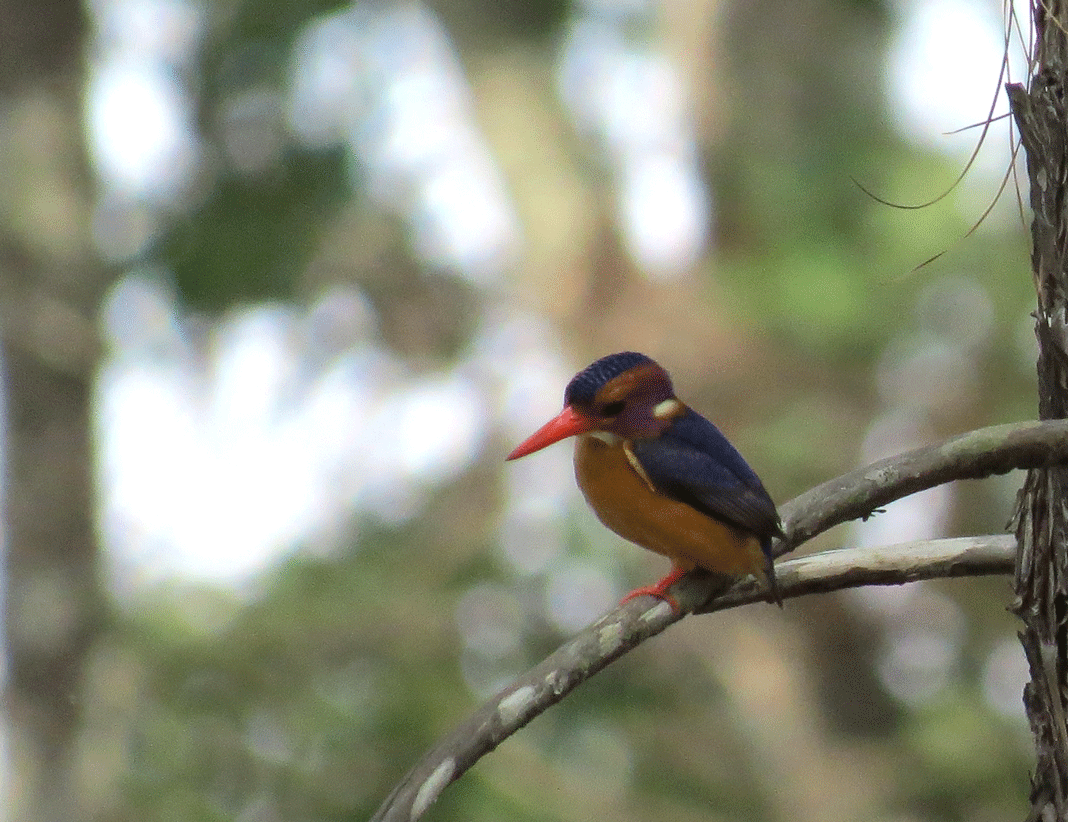
Afican Pygmy Kingfisher is associated more with woodland than wetland areas
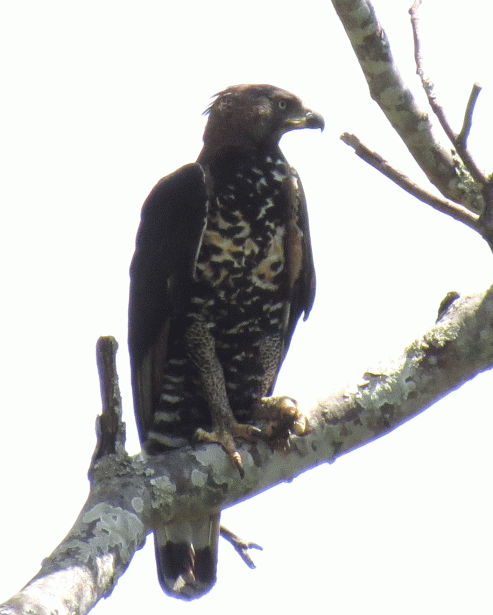
This magnificent Crowned Eagle was seen well at Dzalanyama
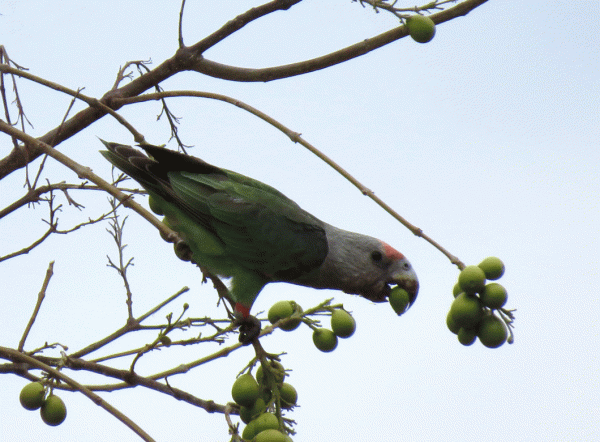
Near a village we saw a flock of 50 Grey-headed Parrots

..and nearby I found another Ovambo Sparrowhawk, this one a juvenile
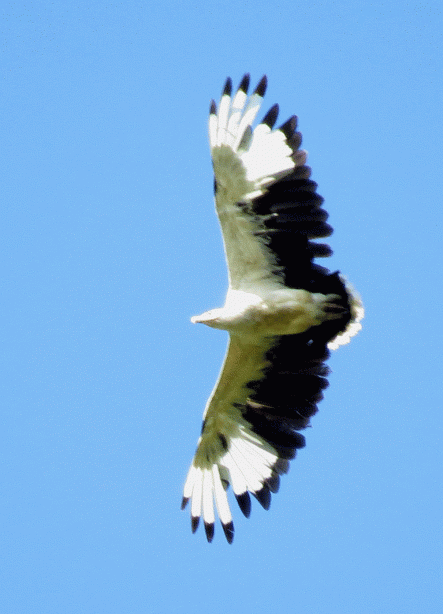
Overhead we saw the impressive, but largely vegetarian Palm-nut Vulture.

Although supposedly protected, much of the reserve is under threat from illegal logging. This is mainly from locals cutting down trees to make charcoal and large amounts of wood can be seen being transported on the backs of bicycles. Regrettably, as we left, we saw evidence of wood being removed by truck which will greatly accelerate the rate of forest loss. Even more alarming was the fact (according to our driver) that the guys on the truck were prisoners which mean that this illegal deforestation must have official approval at some level.
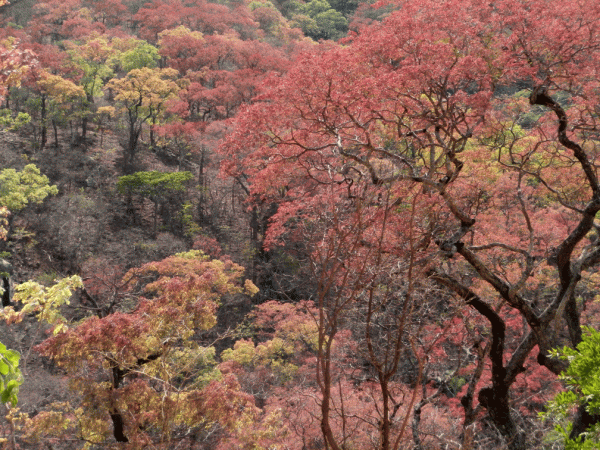
In the north of Malawi we visited another extensive miombo forest. For some reason the trees come into leaf later here. New leaves emerge with a red colouration giving the forest an autumnal feel even though its early spring.

One of the best bird seen was this White-winged Babbling Starling. Photo by Ewan Brodie
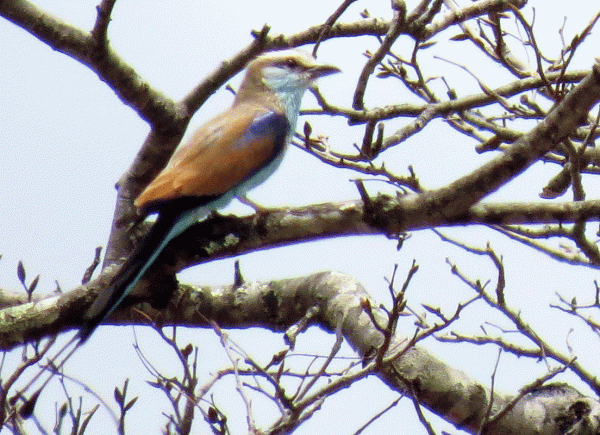
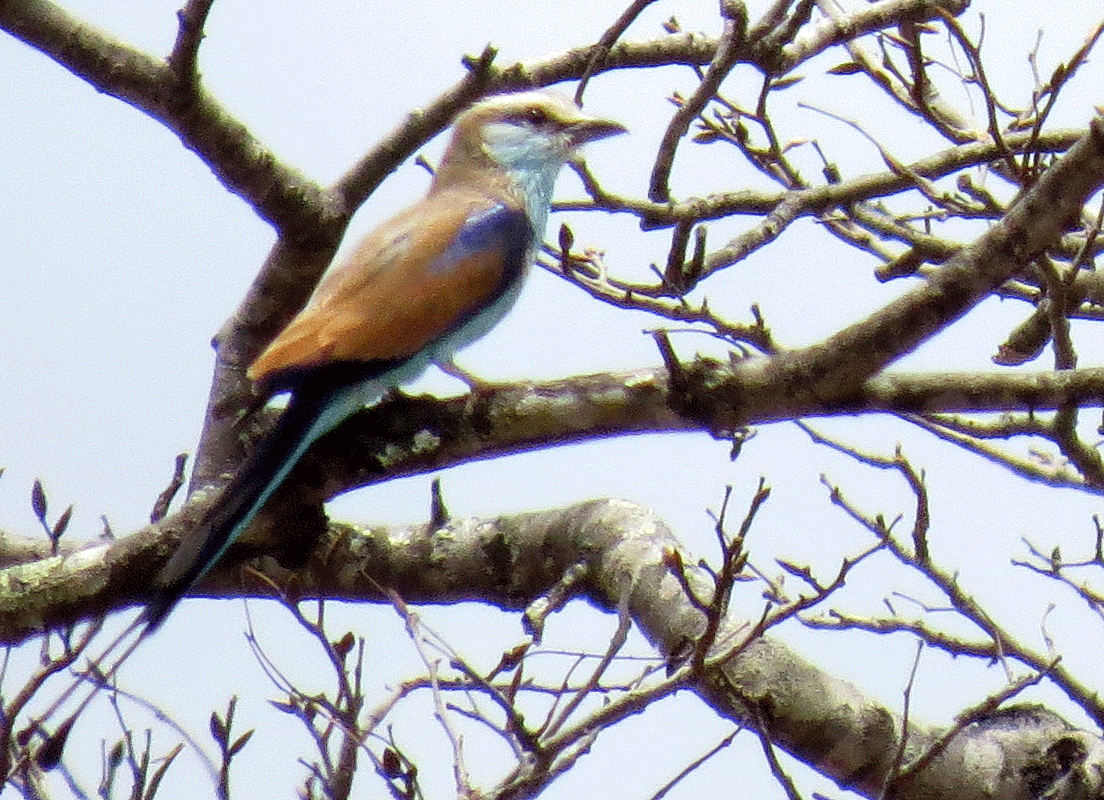
I was particularly pleased to see this Racket-tailed Roller, not only was it a much wanted miombo specialty but it was my last of the world’s eleven Roller species.
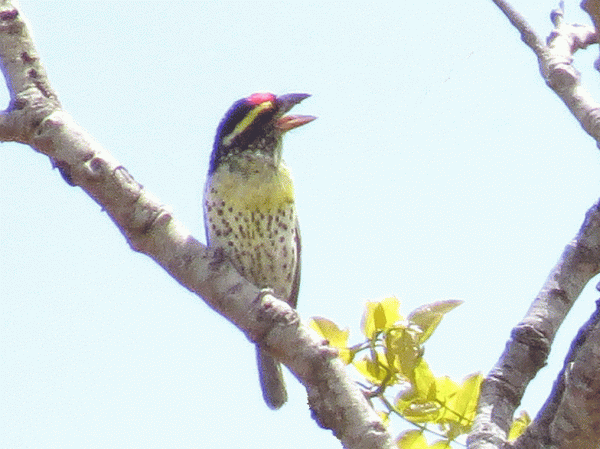
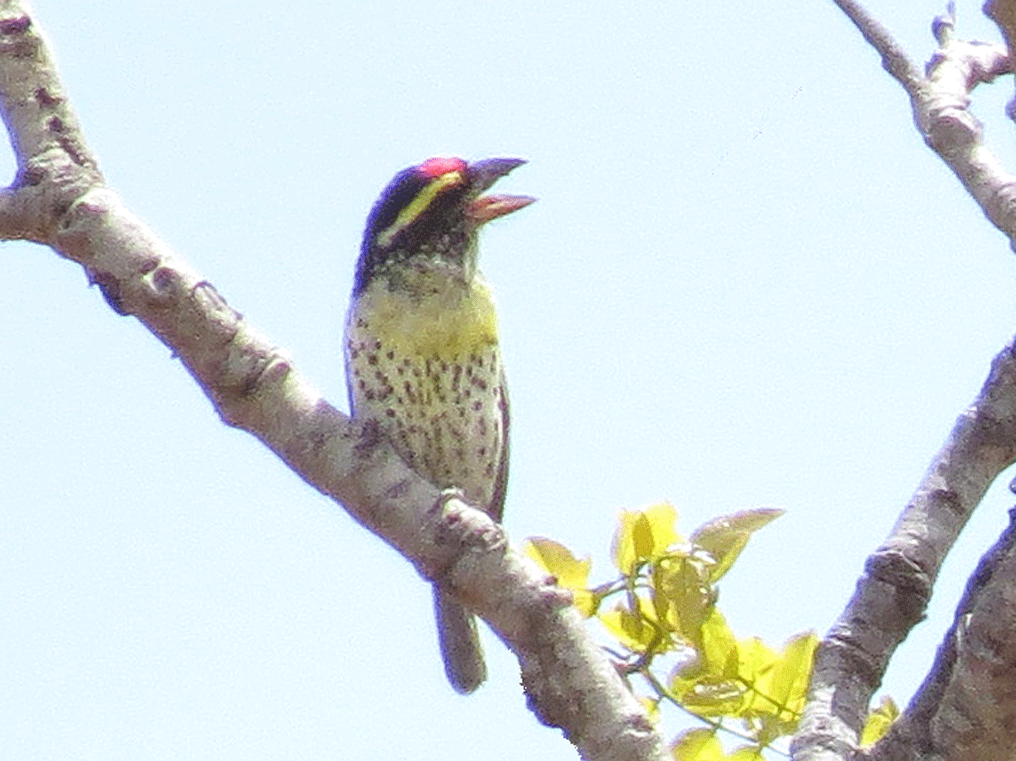
Another target was this Miombo Pied Barbet
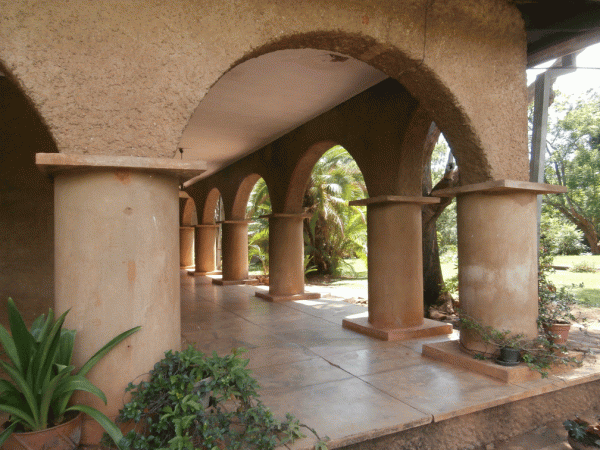
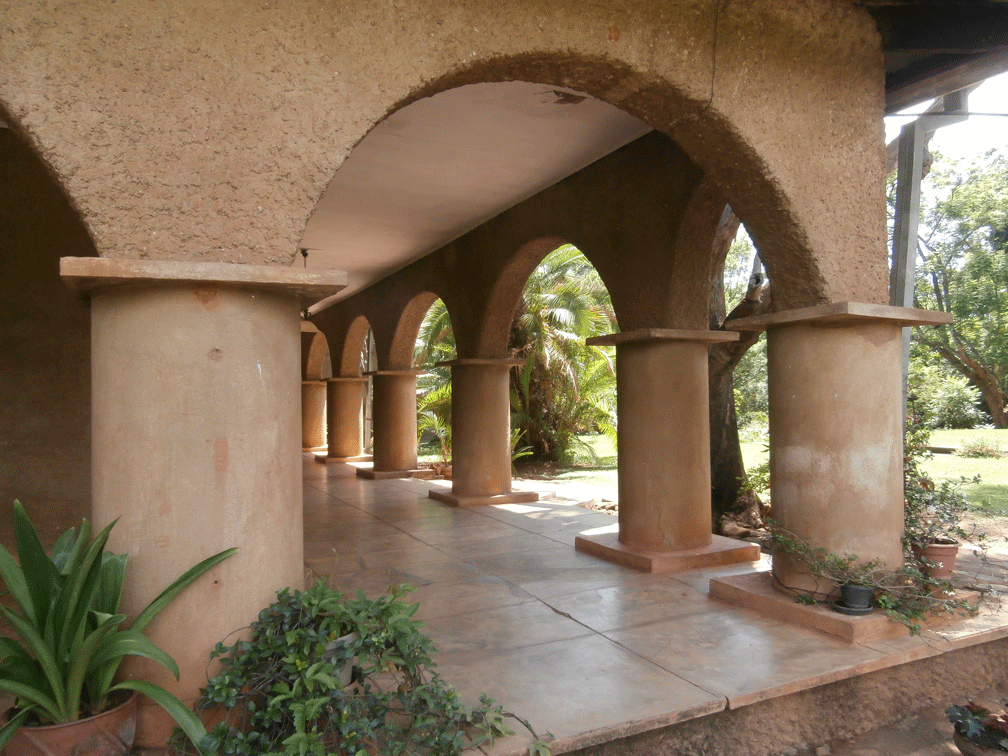
Further south we stayed at this lovely lodge in the midst of an extensive tea plantation.
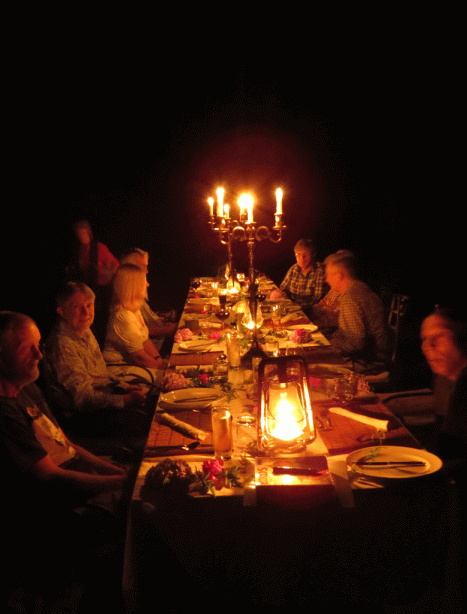
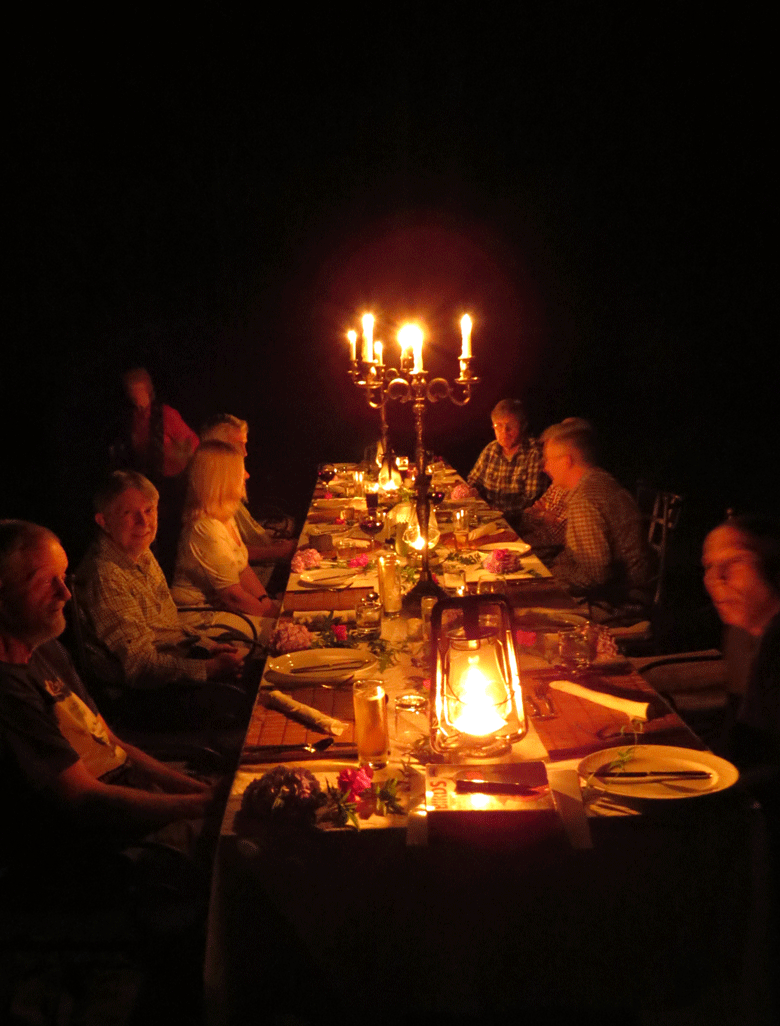
We were treated to a candlelit dinner out on the lawn.

A record shot of this Livingstone’s Turaco, one of several excellent birds in this area.

Lizzard Buzzard is a widespread bird through much of tropical Africa
During our tour around Malawi and Zimbabwe we saw a good range of night birds. Fortunately we saw most of them at roost during the day thus negating the need for lengthy spotlighting sessions (which always reduced the time available for sleep). The exception was on the Kyika Plateau in Malawi where we did a couple of very successful night drives.

In the remnant forest patches in the tea plantations south of Blantyre we came across this roosting African Wood Owl
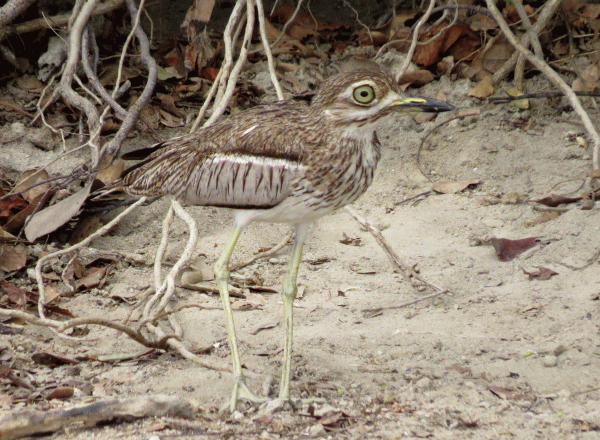
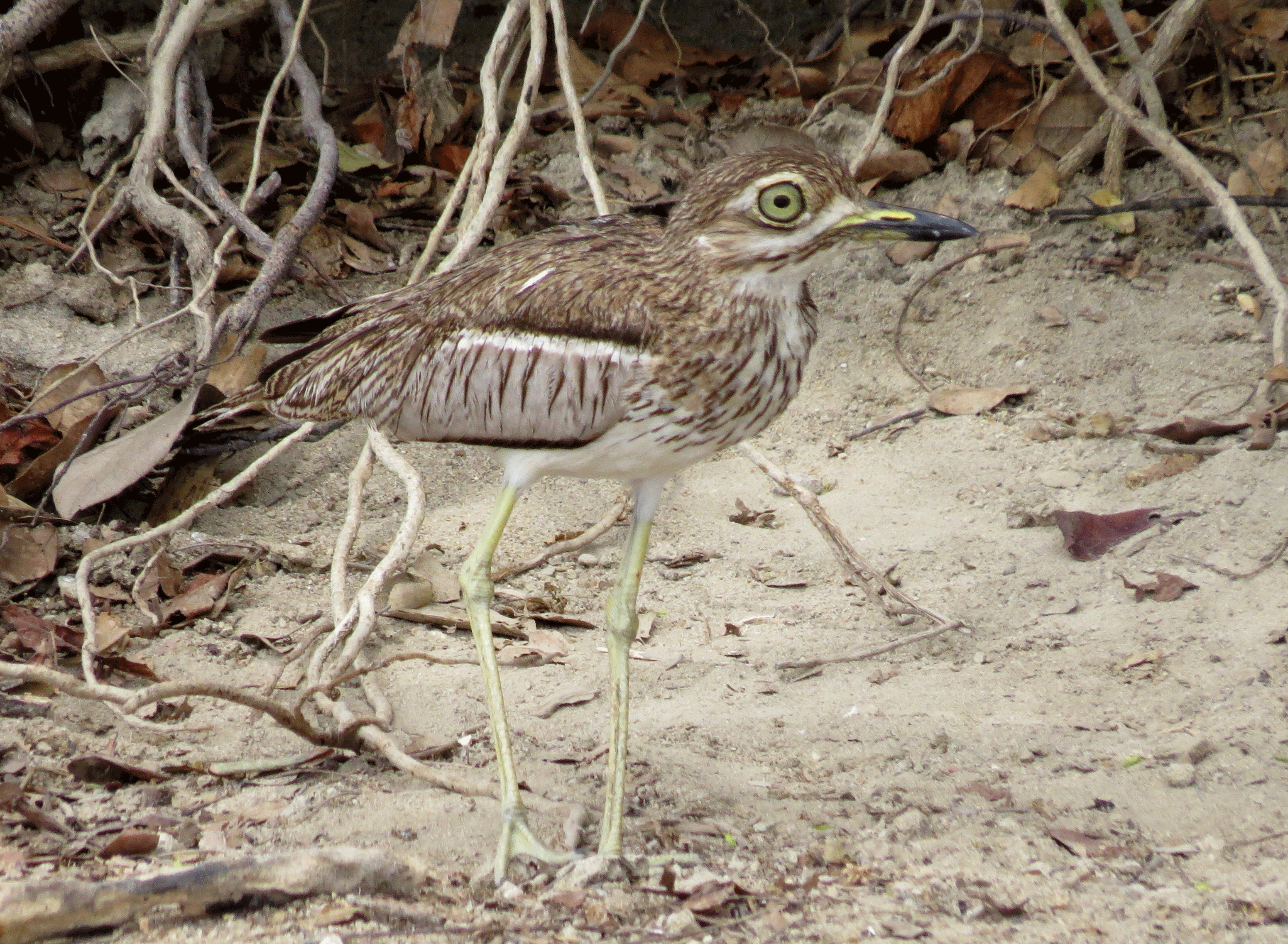
As we journeyed up the Shire River to Liwonde NP we saw a few Water Thick-knees. A relative of the European Stone Curlew, all thick-knees or dikkops are essentially nocturnal as can be seen by their huge eyes.
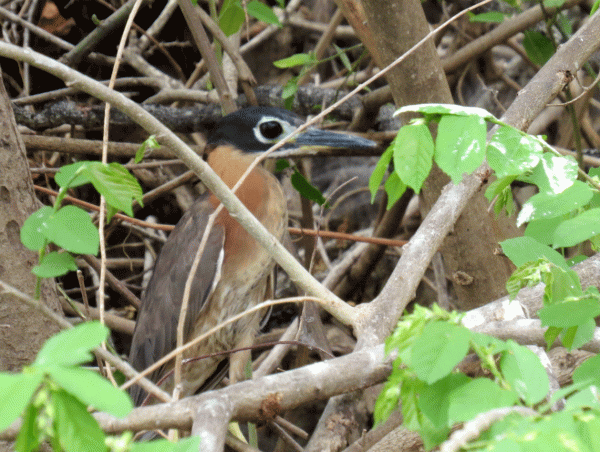
Another nocturnal bird seen roosting on the river banks was the rarely seen White-backed Night Heron. Again note the huge eyes.

At dusk over a hundred of the much commoner Black-crowned Night Herons emerged from roost and flew along the river to feed.

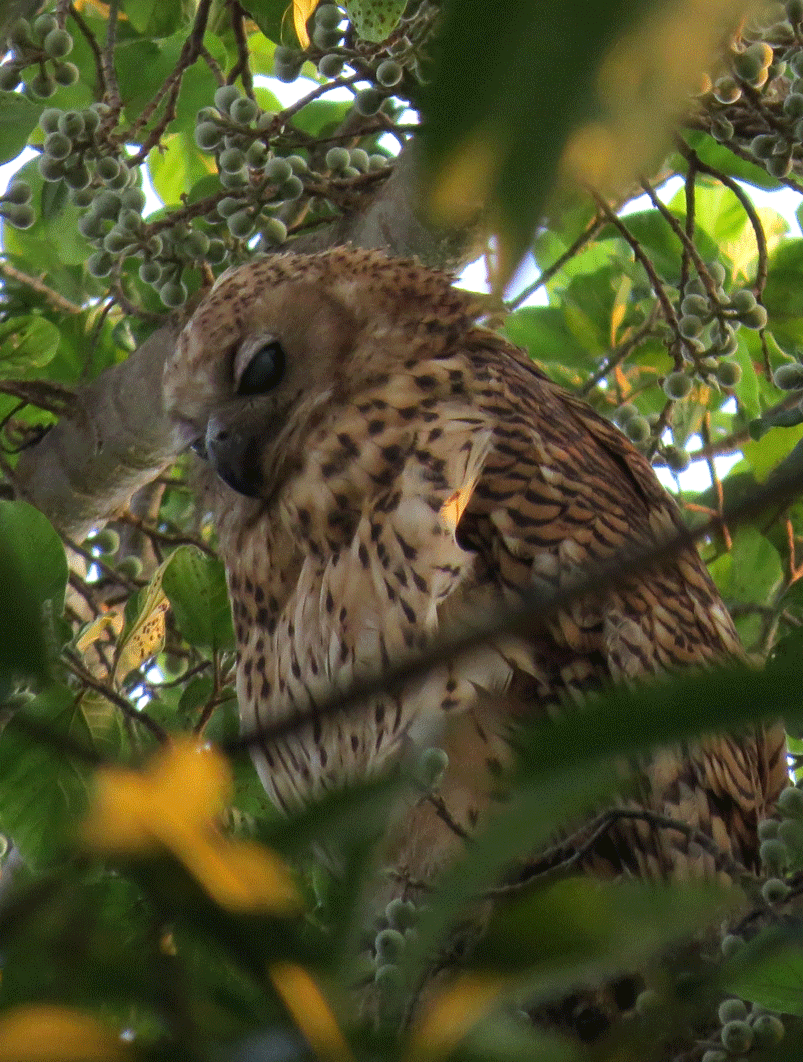
One of the highlights of the trip was seeing this enormous Pel’s Fish Owl at roost in a huge fig tree at Liwonde
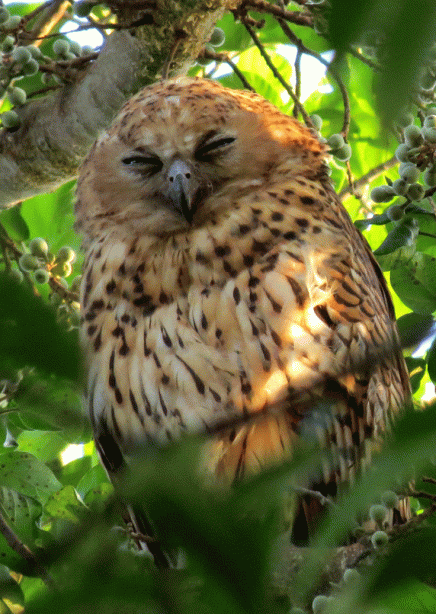
Although one of the world’s biggest owls, it is seldom observed and we felt privileged to get such a good view.

A mere 21cm long compared to 62cm for the Pel’s, this tiny African Barred Owlet stares out from a wood near the shores of Lake Malawi.

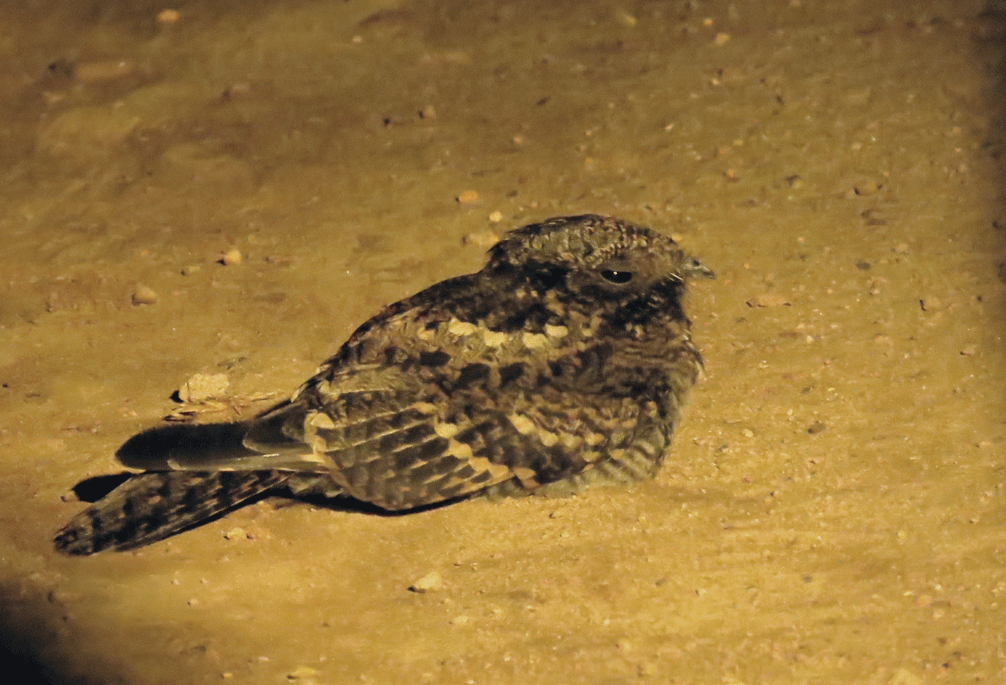
On our night drive on the Nyika Plateau we came accros this Usambara Nightjar. There are three forms in this group; Montane, Ruenzori and Usambara Nightjars are found in various montane areas of Africa. Currently Ruenzori and Usambara Nightjars are lumped and Montane split. This makes no sense to me, either all three forms should be split or they should all be lumped in to one.

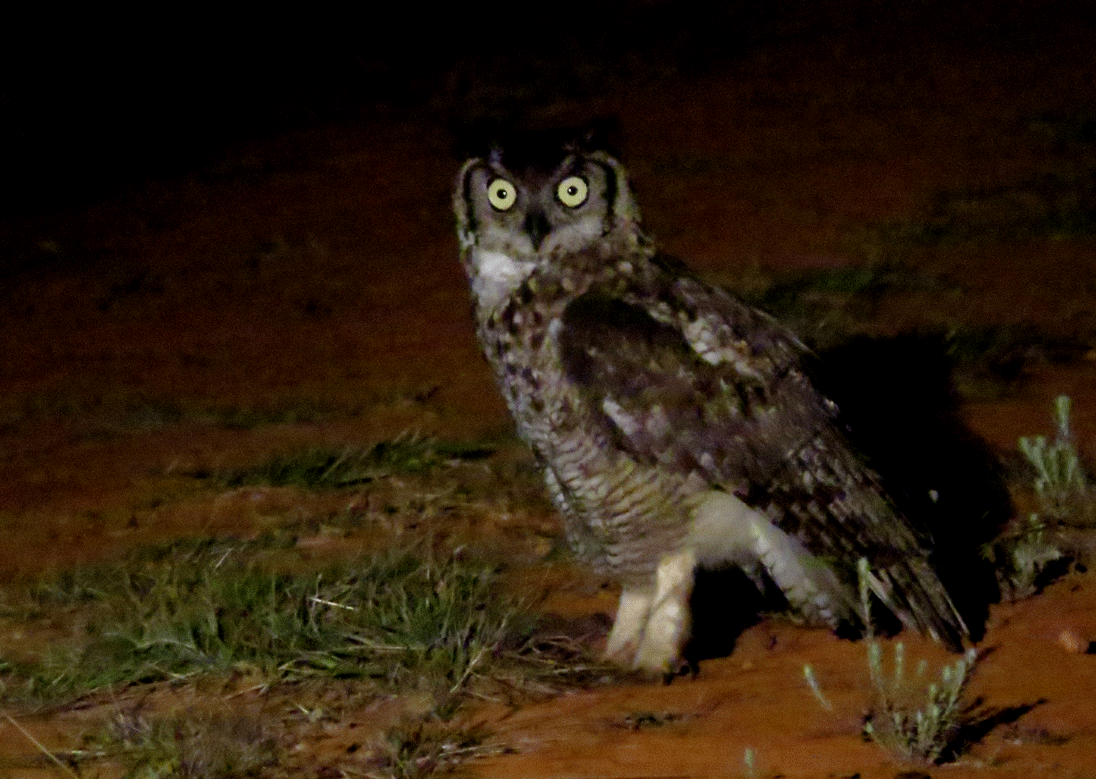
Several Spotted Eagle-owls were spotlighted on the Nyika Plateau

A female Pennant-winged Nightjar was tricky to identify but the unusual shape of the head was the clinching factor ….
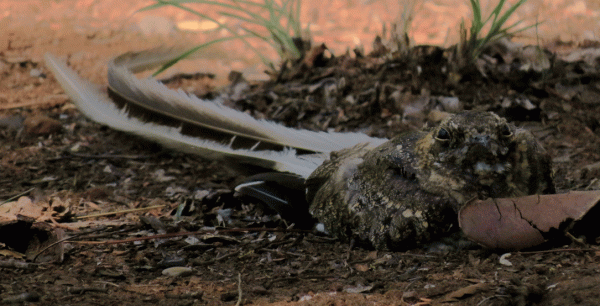
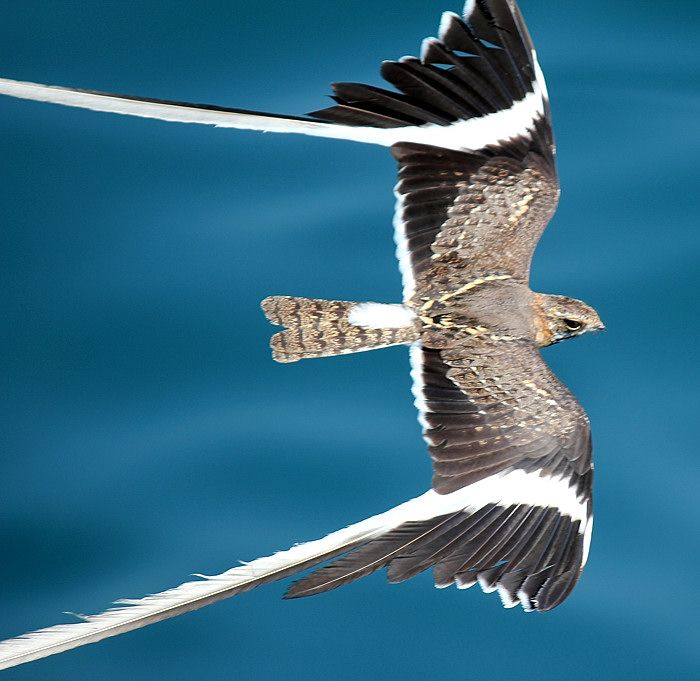
However there were no such problems in identifying a male Pennant-winged ! My friend Ewan flushed it from under foot in miombo woodland and was so surprised that his voice went all squeaky! Those are not tail streamers but massively enlarged inner primary feathers. Not without reason is this called ‘the most spectacular night bird in the world’.
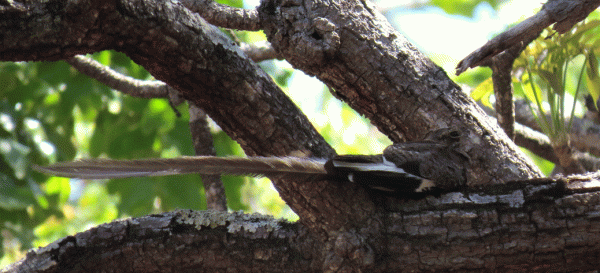
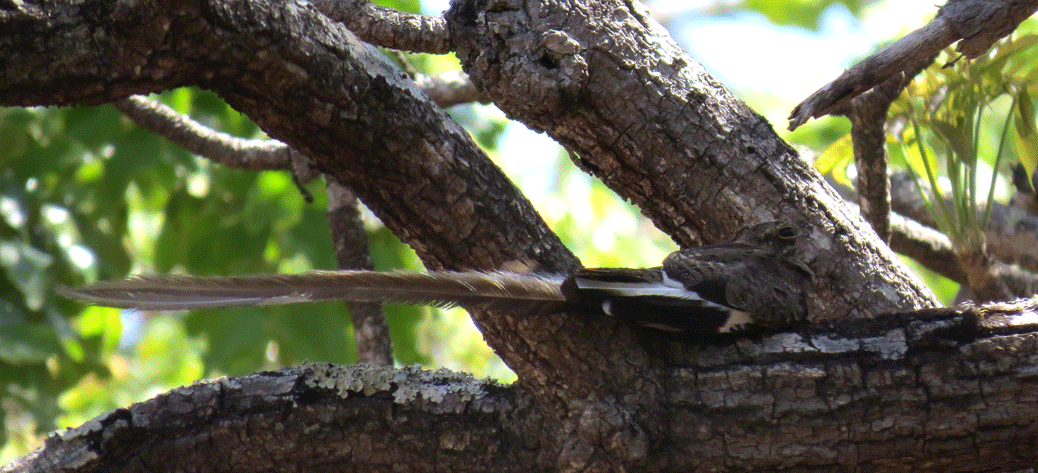
Eventually the Pennant-winged landed on a horizontal branch, where the true magnificence of its ‘pennants’ could be appreciated.
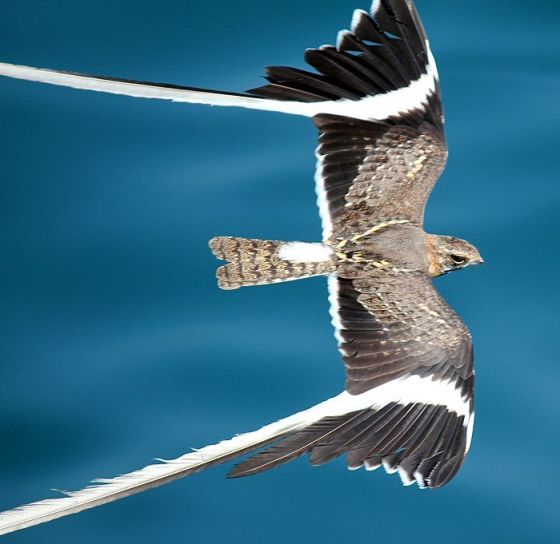
I had to go to the internet to get a photo of this amazing species in flight. Photo by Michael Butler via Pinterest
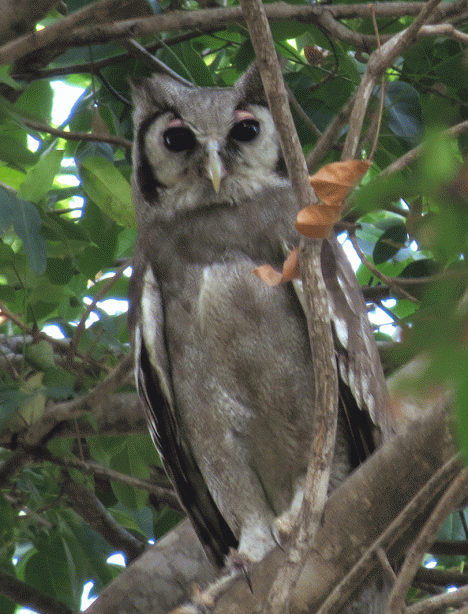
In the Zamberi valley of Zimbabwe we came across another whopper, Verreaux’s Eagle-owl aka Giant Eagle-owl. Love the pink eye-lids.

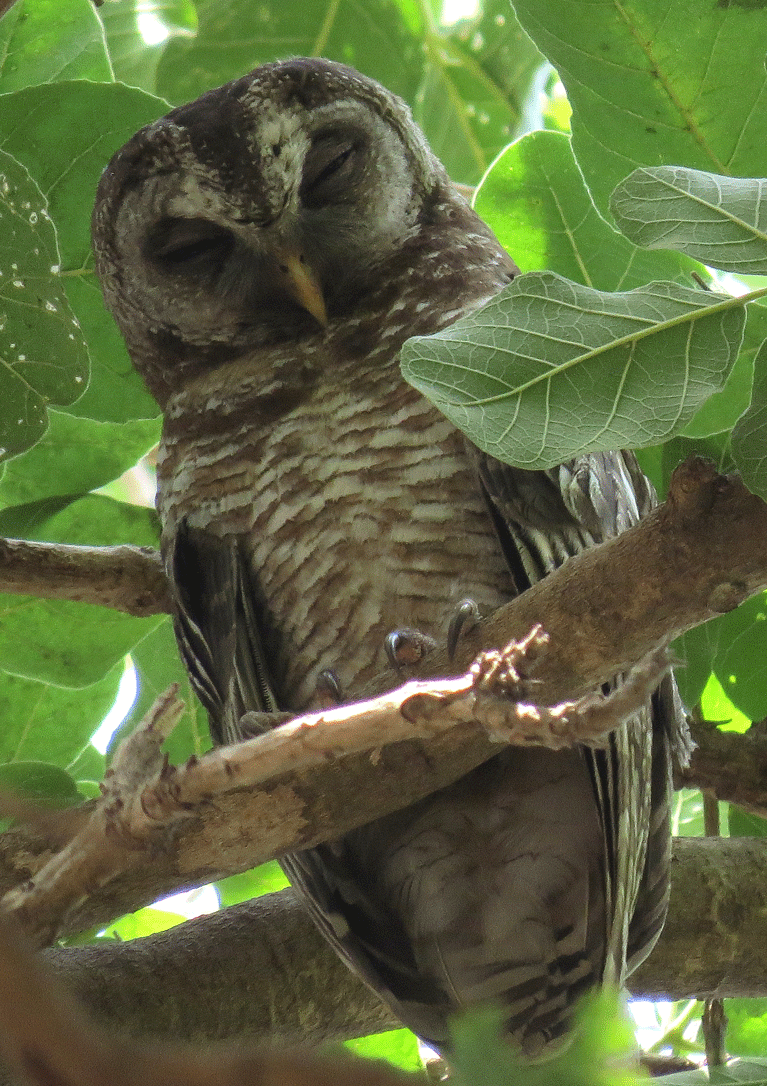
A pair of Wood Owls had taken up residence above our huts in the Zambezi valley and called all night ….

They had two adorable chicks, one of which nearly fell off the branch as it twisted upside-down to see what we were doing.
I returned on the 13th from an excellent three week trip to Malawi and Zimbabwe. Whilst not producing the huge numbers of birds and big game that you would associate with say, Kenya or Tanzania, the tour was most rewarding and I added 47 life birds to my life list.
The tour started in the capital of Malawi, Lilongwe where ever before we reached the hotel we had scored with a ‘mega’, the tiny but seldom observed Locustfinch. The following day we visited Dzalanyama forest, a wonderful area of miombo woodland that is slowly being destroyed for charcoal production. We missed a number of the key species here but were able to catch up with most of them later in the trip.

Miombo woodland, a habitat that dominates south central Africa from Mozambique to Angola. This is a difficult habitat to bird in, the trees all look the same making directions difficult, birds are scarce and only travel in fast moving parties and are easily lost in the dense foliage. Fortunately this pair of African Hawk-eagles were easy enough to see well.

As well as miombo specialties, visiting Malawi allowed me to catch up on a number of widespread, but scarce, species such as this Ovambo Sparrowhawk. I have done 13 trips within its extensive African range but this is the first time I have seen it.

Further south we birded the few remaining woodland patches in the Vomba area, most of the forest has been transformed into tea plantations.

These White-eared Barbets were eating figs at Vomba. Other good birds included Buff-spotted Flufftail, White-winged Apalis and Green-headed Oriole ,which we got by the skin of our teeth as we were leaving.

Travelling up river to Liwonde NP we saw many Elephants and Hippos from our boat.

Accommodation was at Mvuu camp within the park. We stayed in these nice chalets. Bushbuck and a range of waterbirds could be seen from the balcony and a guard had to pick you up to take you to the restaurant in case you ran into an Elephant or a Hippo on route.

We broke to long journey to the north on the shores of Lake Malawi. This is the view at dawn. The lake occupies 20% of the country’s area and the fish it provides are a major source of protein.

We had another bash at miombo woodland on the way to and the way back from the Nyika Plateau. These look like autumnal colours but are in fact the colour of newly emerged leaves in the southern spring.

Rocky outcrops, wooded valleys and extensive grassy areas make up the Nyika Plateau. part of our birding was in Zambia which co-owns the Park.

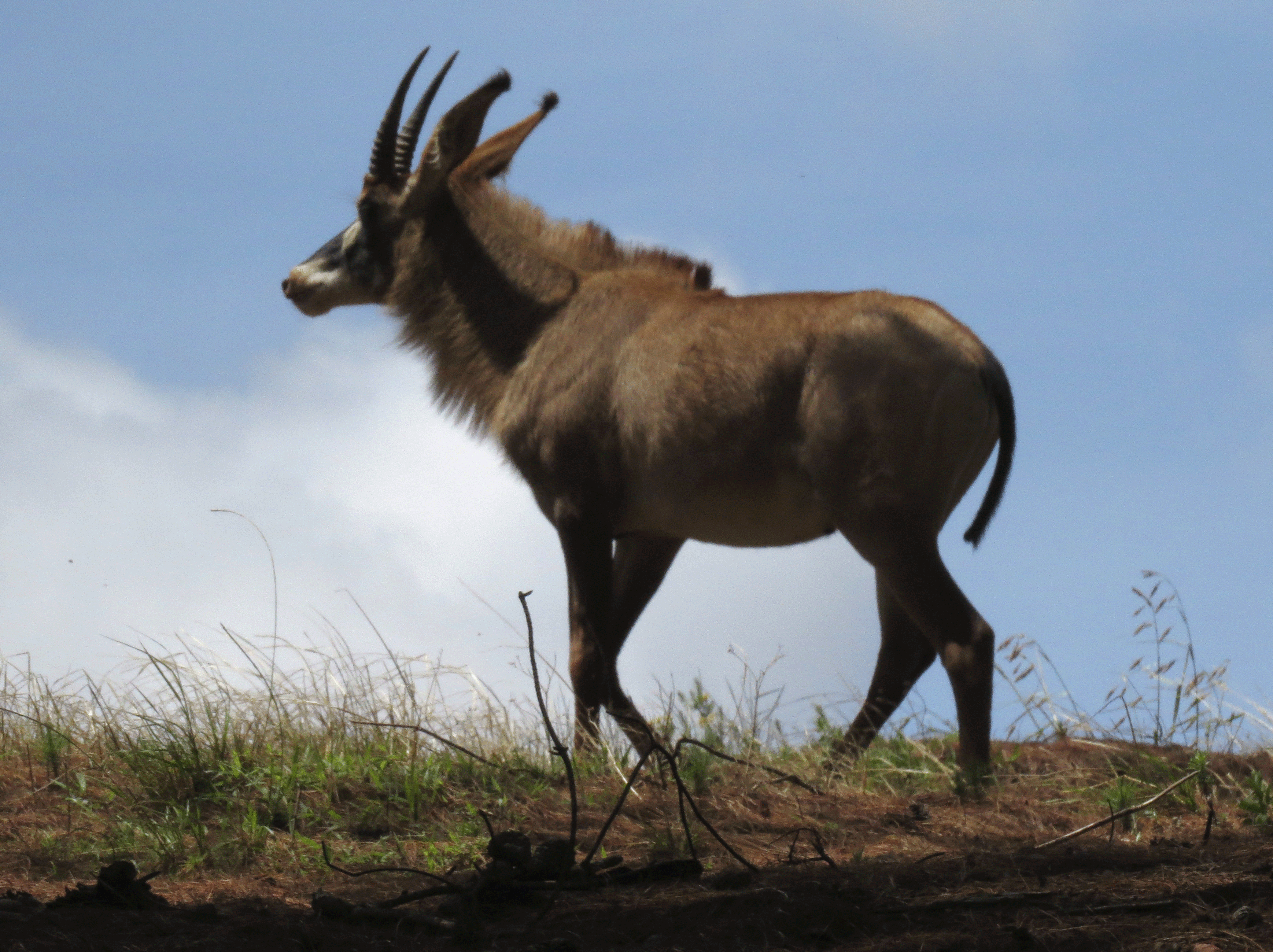
Magnificent Roan along with Eland, Zebra and Reedbuck were a common sight at Nyika.
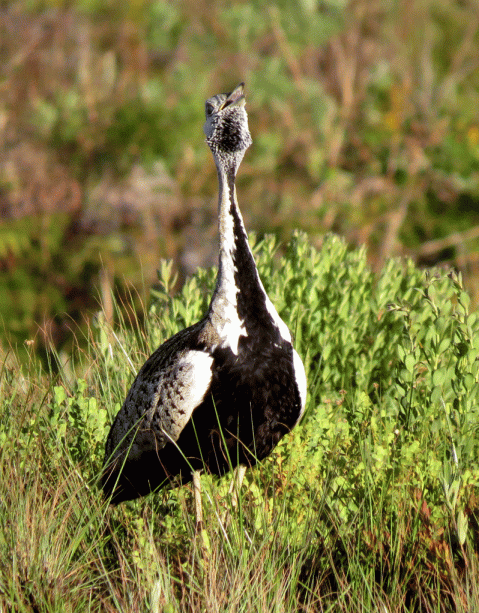
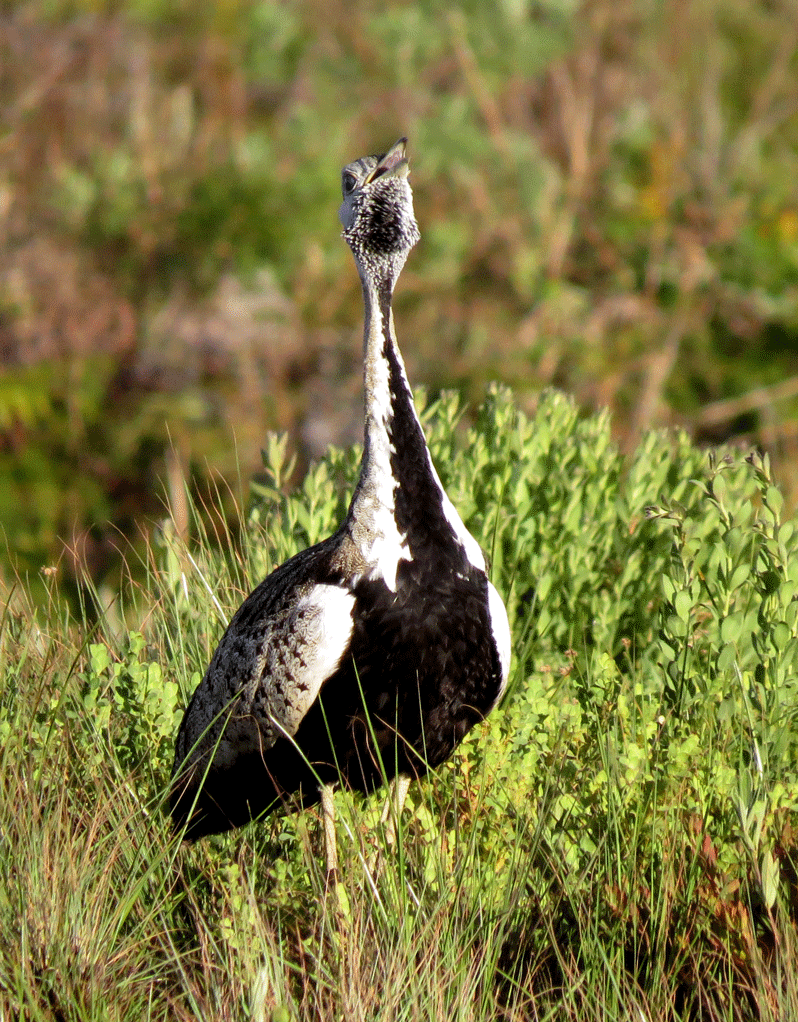
A displaying male Black-bellied Bustard. It would extend its neck, then lower it whilst making a gurgling sound, wait two seconds then open its wings and make a loud popping sound.
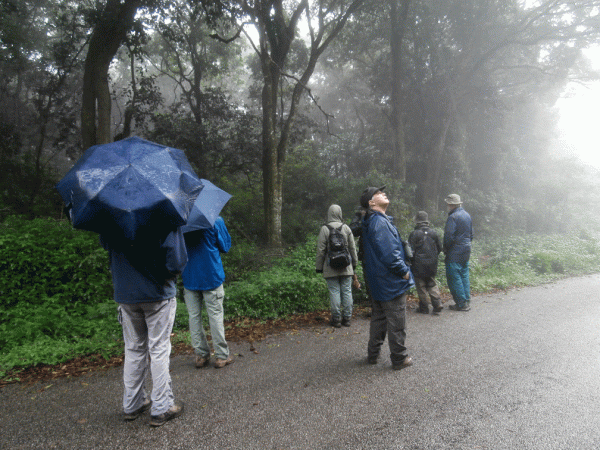
From Malawi’s capital Lilongwe we had to fly overnight all the way north to Nairobi to get a flight to Harare (a bit like flying from Edinburgh to Paris to get to Glasgow). We then had a long drive to the Vumba mountains on the Mozambique border. Unfortunately it rained for most of our stay. We got the birds but not the photos, we could have done with taking some of the rain with us to our next destination!
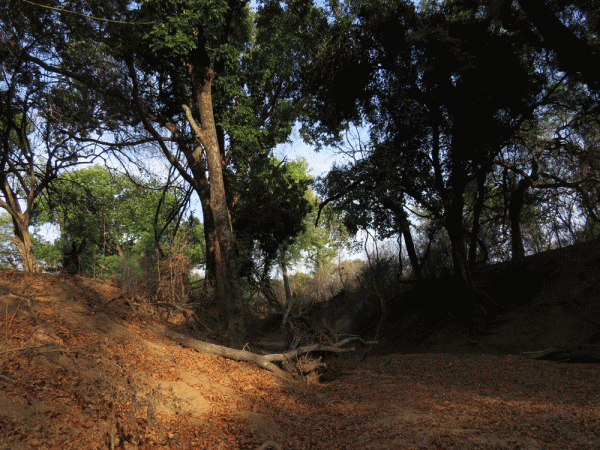
On the optional extension we drove from Harare eight hours north to the Zambezi valley. The river, a tributary of the Zambezi was dry as was this creek. We had some great birding but dipped on our primary goal, the mega-elusive African Pitta. It is only visible when the rains start and they were late this year. Hence we didn’t even hear one. Frustratingly as we were waiting at Harare airport to fly home, clouds built up and there was a rainstorm as we left.
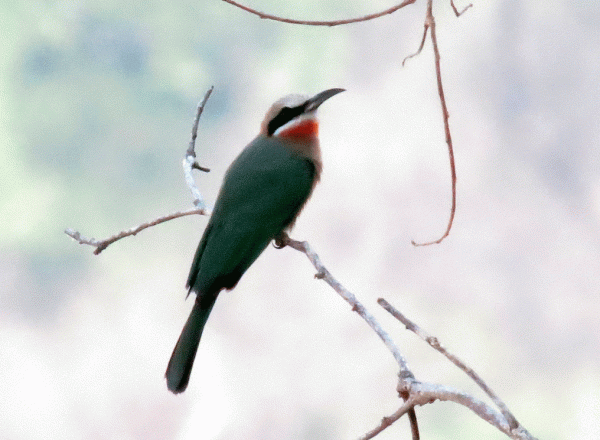
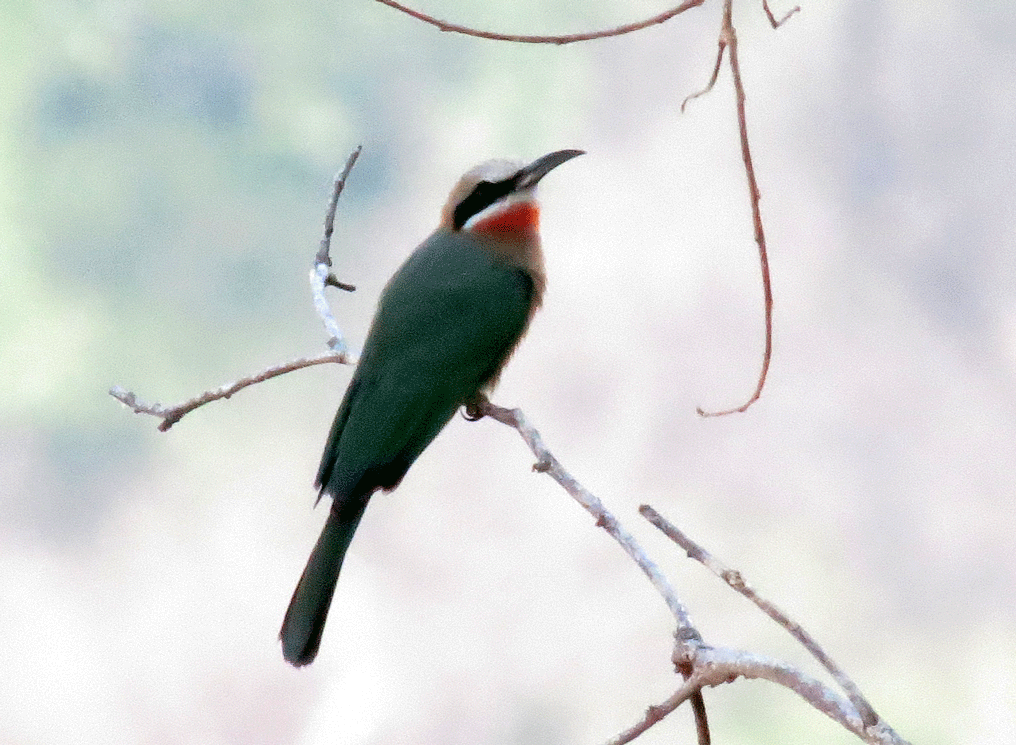
Beautiful White-fronted Bee-eaters provided some compensation for the dip.
This is a brief summary of the trip. I will upload several more posts about the trip as I go through the 1500+ photos that I took.
-13.254308
34.301525
I returned from a great trip to Africa (more about that later) on the 13th but had little time to unwind after the overnight flight, as we were off see Jools Holland and his Rhythm and Blues Orchestra at the BIC in Bournemouth that evening..

The concert started with a lovely session from American singer songwriter, Galia Arad ….

… but after the break Jools (far left) was on with the 17 members of the Rhythm and Blues Orchestra, which includes a 11 strong brass section.

- and what followed was an evening of virtuoso boogie-woogie and ska music

…. and the concert was enlivened by guest vocalists, Louise Marshall …

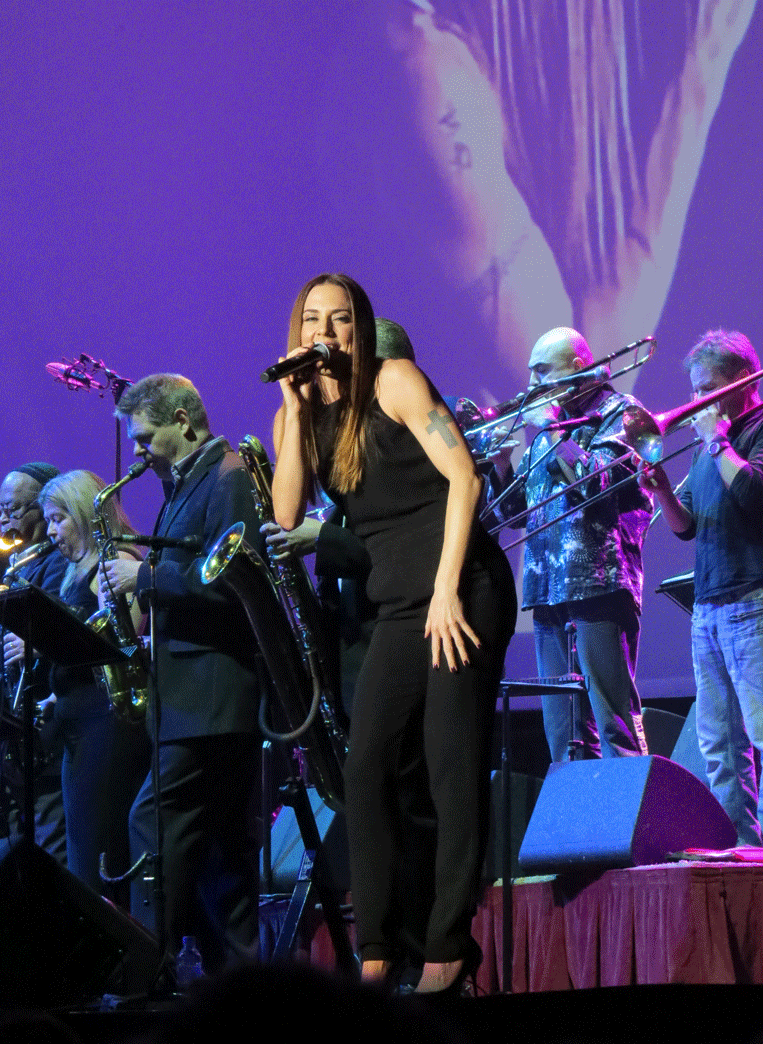
… ex Spice Girl, Mel C …..

… and soul diva, Ruby Turner.

All in all, an excellent and varied concert.
On the 15th it was Margaret’s choir’s Christmas carol concert at St Peter’s Church in Parkstone. Under the direction of conductor James Eaton, they put on a wonderful performance, including a novel version of the Twelve Days of Christmas, where each verse was performed in a different musical style.

The Barclay House Choir and St Peter’s Orchestra led by conductor James Eaton. Margaret is just visible on the far left of the second row of the choir.

Nearly all were impressed by the music, but the girls, morally obliged to go and hear grandma sing, took the opportunity to catch up with some of their homework; art for Amber and Spanish for Kara.
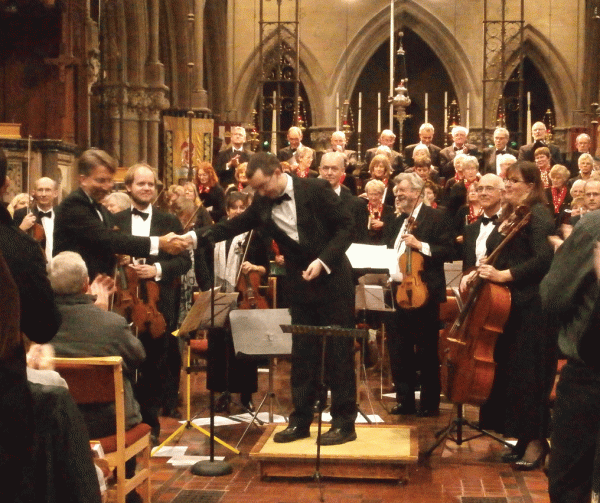
James Eaton and leader of the orchestra, Andrew Foot shake hands at the end of the concert.
No, this time it wasn’t a wader or a duck. The visitor from the New World was friend and fellow ringer Patty, who lives in Connecticut.
Patty and I met on the Remote Papua New Guinea tour in July 2012 and have remained in touch ever since. After a number of changes of plan due to events back home, Patty finally arrived last week, first visiting friends in London, then coming to Dorset before heading up to see others in Grantham.
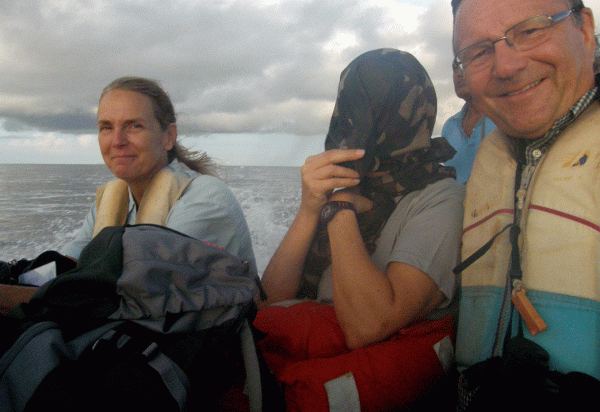
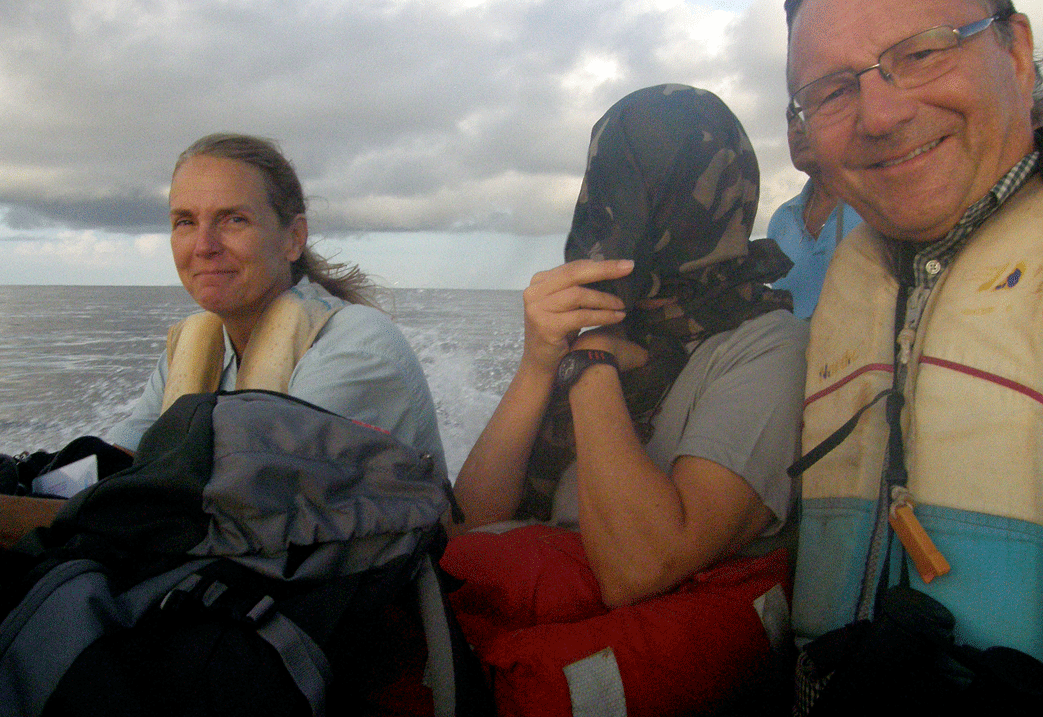
Patty (L) on a small boat to the island of Tong in the Admiralty Islands north of New Guinea July 2012, with Eric from Sweden (R) and a french lady who wished to remain anonymous.
On the 18th I took Patty around Poole Harbour, showing her our ringing sites at Fleets Lane, before birding at Holes Bay, Sandbanks and Studland.

Of course Sanderling, seen here at Sandbanks, are a familiar migrant on both sides of the Atlantic ….
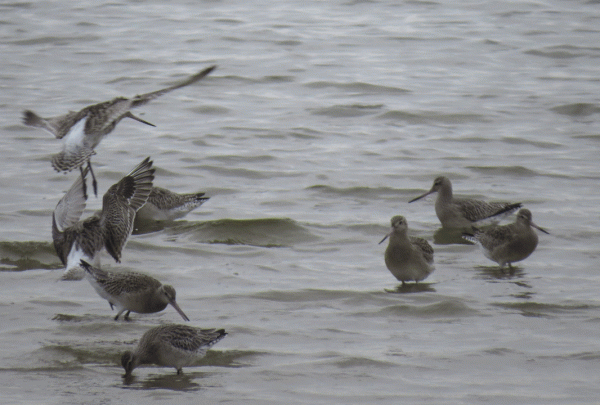
… but the same can’t be said for the almost exclusively Old World Bar-tailed Godwits

After a good look at Brands Bay and Studland Bay (Patty even got to see an American Surf Scoter here in Dorset) we moved on to Durlston, but there were few birds on show.

A tall sailing ship off Durlston. From here we went to Middlbere. It was almost dark when we arrived and we found that the big flocks of waders seen earlier in the day had departed on the tide. That evening, along with Margaret, Janis, Amber and Kara we went over to John and Anita’s in Bournemouth for a meal.
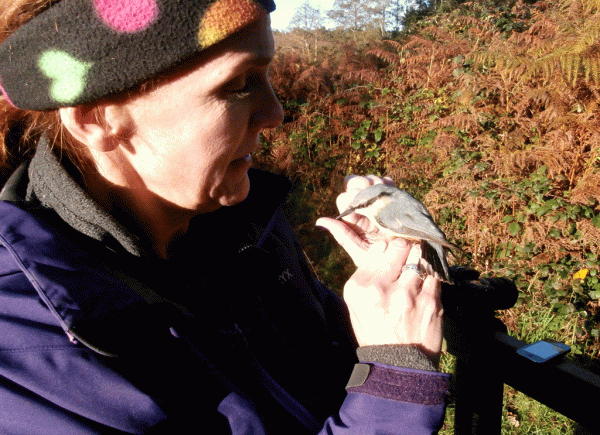
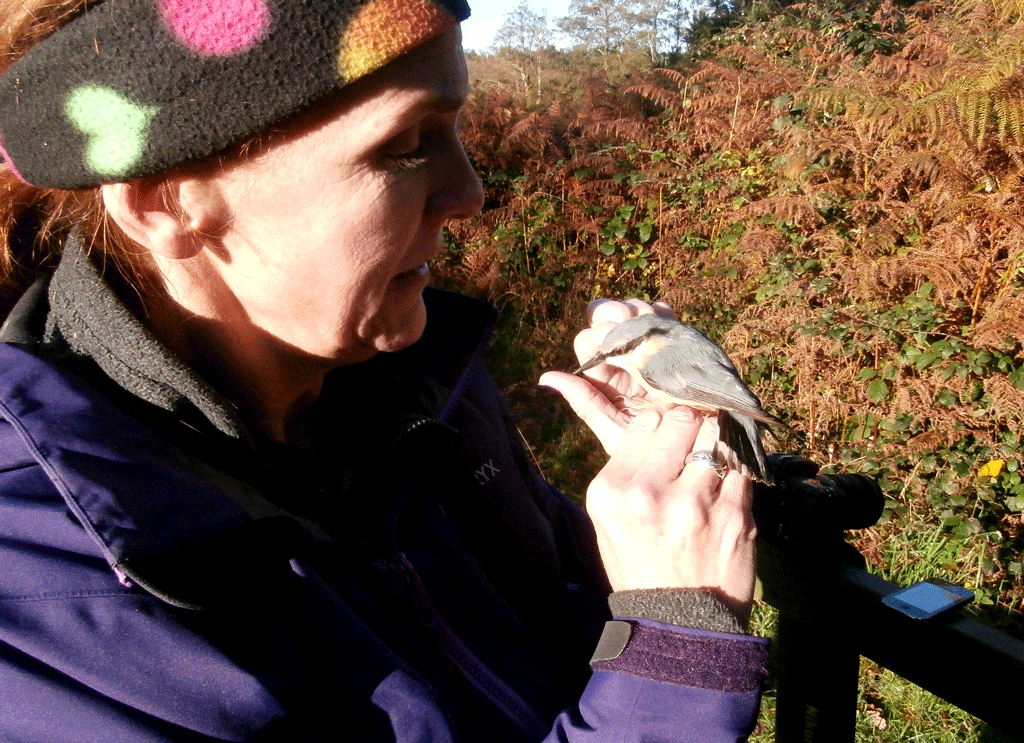
On the morning of the 19th, trainee ringer Carol and I paid our weekly visit to Holton Lee and Patty was able to handle some of the birds, after we had processed them. I have never seen someone get so excited about holding a Blue Tit or a Dunnock before. Here Patty holds a retrap Nuthatch that was first ringed in 2012.

Later, joined now by Margaret, we went to the revamped visitor centre at Ferrybridge for lunch. The large windows that once gave a view of the Fleet from the warmth of the centre are now gone, the centre seems to have been redesigned with eating rather than wildlife viewing as the priority. Margaret and Patty are at the top of Portland with Fortuneswell, Ferrybridge and the Fleet and Weymouth in the background.
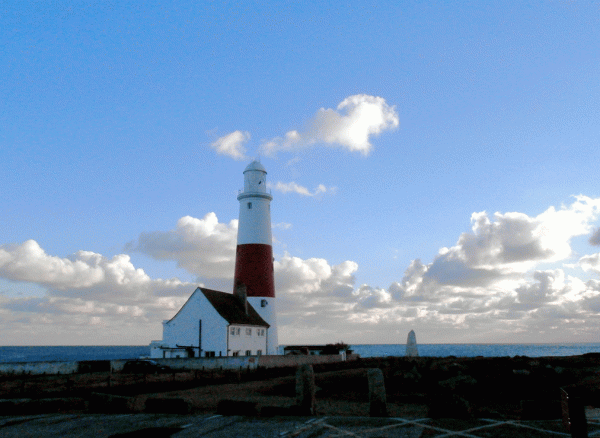
Although the skies were clear there was a bitter NW wind blowing, so our visit to Portland Bill was rather brief and pretty birdless.

We ended the day at the visitor centre at Radipole where we could watch the flocks of Mediterranean Gulls flying from the Fleet to Weymouth Bay to roost. Once a scarce visitor to Dorset, this winter has seen numbers on the Fleet rise to over a 1000 for the first time and we must have seen over 400 during the day.
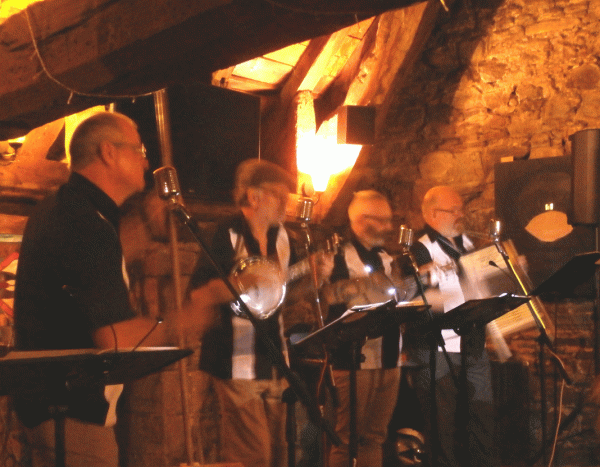
I had planned for us to meet up with the other local birders in the Blue Boar that evening but an England vs Germany football match took precedence for most, so the three of us went to the King Charles on Poole Quay, where this folk band were playing of all things ‘Willy and the Poor Boys’ by Creedence Clearwater Revival, not your traditional English folk tune.
We hope Patty has a great time during the rest of her UK visit and we hope that we will meet up again next year, either in the UK or in the USA.
I am off on my travels again later today, so this will be the last blog post for a while.
I suppose the real measure of success of a ringing trip would be whether it contributes to the science of ornithology; was some significant data collected, was one of the birds ringed subsequently re-trapped or recovered and so on. But all of these criteria will only be realised in the future, to all intents and purposes the success of any individual trip comes down to whether a reasonable number of birds were ringed or not, ie was it worth getting out of bed at some unspeakable hour for?
Bearing in mind that this index purely a bit of fun between the group members and has no significance what so ever, Ian Alexander proposed that a successful ringing trip was where the number of birds ringed was equal or greater than the number of ringers present times the number of nets erected. He later modified this by adding ten to this total which became known as the Modified Alexander Minimum Index or MAM index, that is MAM = 10+(a x b) where a = number of ringers present and b = number of nets in use.

On the night of the 17th we had a go at ringing waders and wildfowl at Lytchett Bay, but after three hours all we caught was this female Teal. 7 ringers, 11 nets, 1 bird – MAM index of 0.01

Dawn at Durlston with aircraft contrails backlit by the rising sun. That day three of us using four nets ringed 22 birds, a MAM index of exactly 1. On one of the busiest days this autumn I got a MAM index of over 18.

Of course this ‘bit of fun’ doesn’t take into account the duration of the ringing session, the quality of the birds handled or the scientific data gathered. Most ringers would rather handle Lesser Redpolls than Blue Tits ….

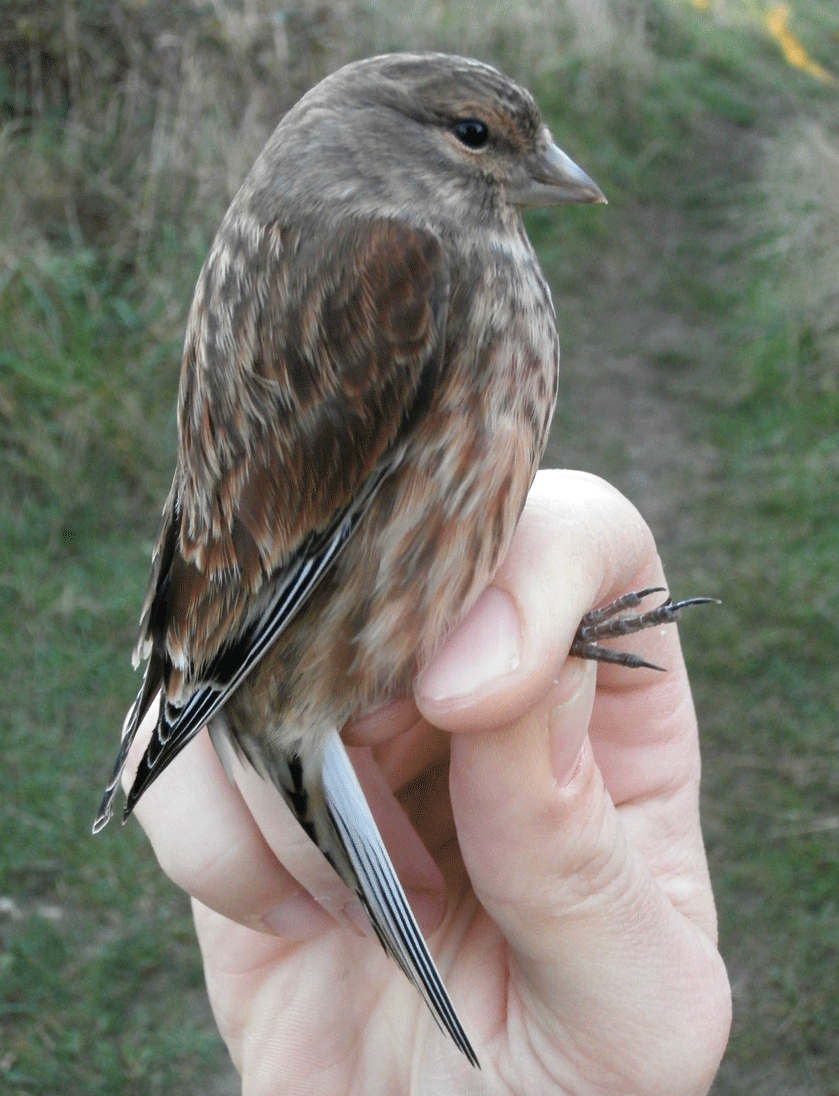
.. and the same can be said of the Linnets we ringed the same day. As I said above the MAM index is not to be taken seriously.
Incidentally no sooner had I completed the last post about ringing recoveries then a bunch more arrived. I’ll get round to entering those in due course.
















































 gryllosblog
