From the Dead Sea we climbed up into the Judean highlands and soon arrived in Jerusalem and after a little searching, found our hotel on the Mount of Olives. We had a short walk around the local area to get some supplies and I realised that due to it being an Arab district I couldn’t get any beer! Later we walked down the steep hill to the Valley of Kidron, visited the Garden of Gethsemane and made our first visit to the Old City. The second day was spent wholly within the Old City and the third day we crossed the Old City in the afternoon having being dropped off after our tour of Bethlehem (see next post).
Up to now our trip had not encountered any of the ethnic and religious issues that are the cause of so much trouble in Israel and the wider Middle East. During our stay in Jerusalem we saw many orthodox Jews, watched Bar Mitzvahs being conducted beneath the Western Wall, saw the Muslims leaving the Al Asqa Mosque after Friday prayers being met by lines of armed Israeli military and talked to a local and elderly Palestinian restaurateur about the Israeli occupation of Palestine. Whilst understanding that there are powerful arguments, both humanitarian and religious on both sides of the argument, I can’t help feeling that if the extremists on both sides could be by-passed then a lasting peace would be achievable.
Although I do not actively follow any religion, I found being in the presence of a multitude of pilgrims of different faiths and seeing sites that are sacred to so many to be a deeply moving experience. If you possibly can visit Jerusalem at least once in your life..

The view eastwards from the Mount of Olives, overlooking Palestine. The Dead Sea is just visible in the haze and the Jordanian side of the Rift escarpment is visible in the distance.

The Garden of Gethsemane, where according to tradition, Jesus was arrested prior to execution. Some of the these olive trees have been proven to be over two thousand years old so would have been witness to the events.

The Church of all Nations in the foreground is adjacent to the Garden of Gethsemane with the Russian Orthodox Church behind. You can see what a hard slog we had each day to get back to the Mount of Olives.
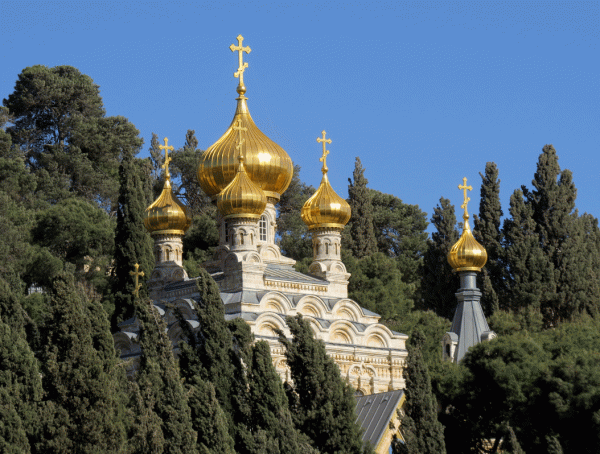
The domes of the Russian Orthodox Church
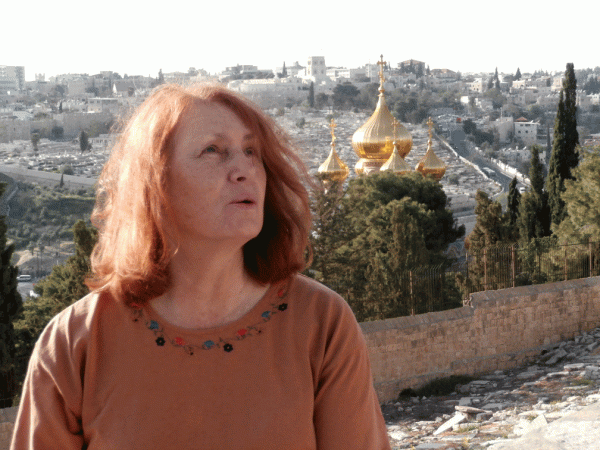
Another ‘gosh’ moment from Margaret
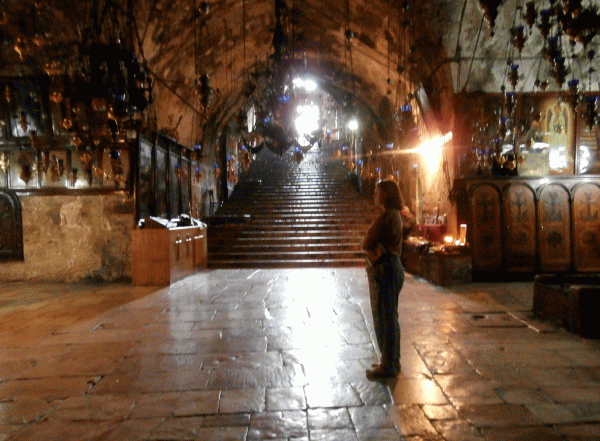
A Greek Orthodox Church marks the claimed site of the Tomb of the Virgin Mary.
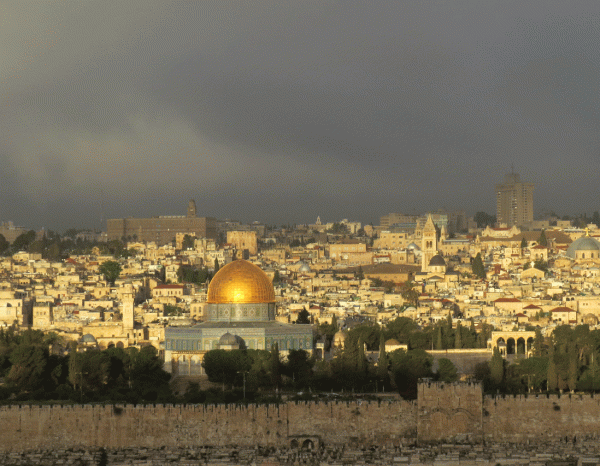
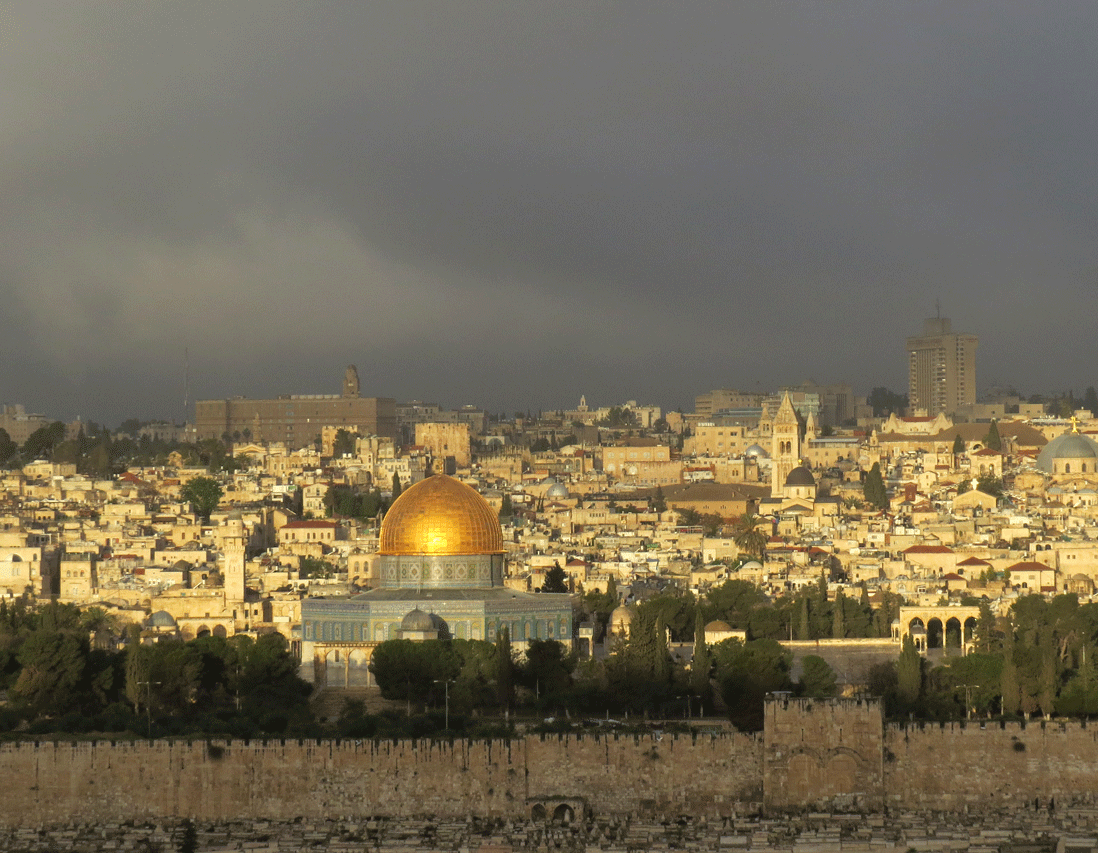
The view westwards from the Mount of Olives. The Dome of the Rock dominates the view, the Old City walls can be seen in the lower part of the picture. The weather on April 4th and 5th was cold, grey and windy.

I got up pre-breakfast and searched nearby gardens in the hope that some migrants would have been grounded but conditions were too bad for birding, however this Lesser Spotted Eagle was photographed later on our way down to the Old City and a flock of 500 White Storks was seen later in the day. The coverts are a little paler than the remiges and there is a just discernible pale double comma at the carpal, conclusive ID features.

The current Old City walls date from the Ottoman era, in the foreground is the Jerusalem Archaeological Park, and excavation of buildings from the time of King Herod.
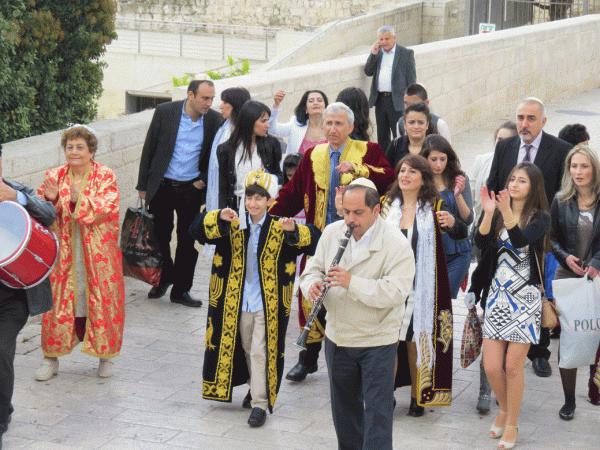
As we entered the Old City we got caught up in the numerous Bar Mitzvahs that were being conducted that day.
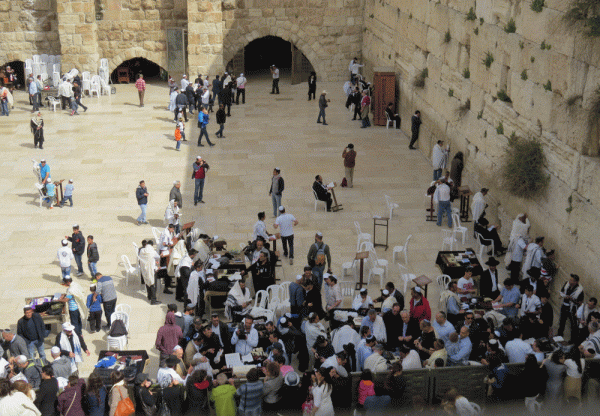
After an extensive security check we entered the plaza adjacent to the Western Wall. Jews do not enter the Temple Mount, the location of the First Temple built by Solomon and the Second Temple rebuilt in 515 BC, in case they step on, the now unknown, location of the Holy of Holies, but the nearby Western Wall is a site of pilgrimage and is considered the most holy accessible Jewish site. We could not enter any closer because of the bar mitzvahs in progress.

Orthodox Jews

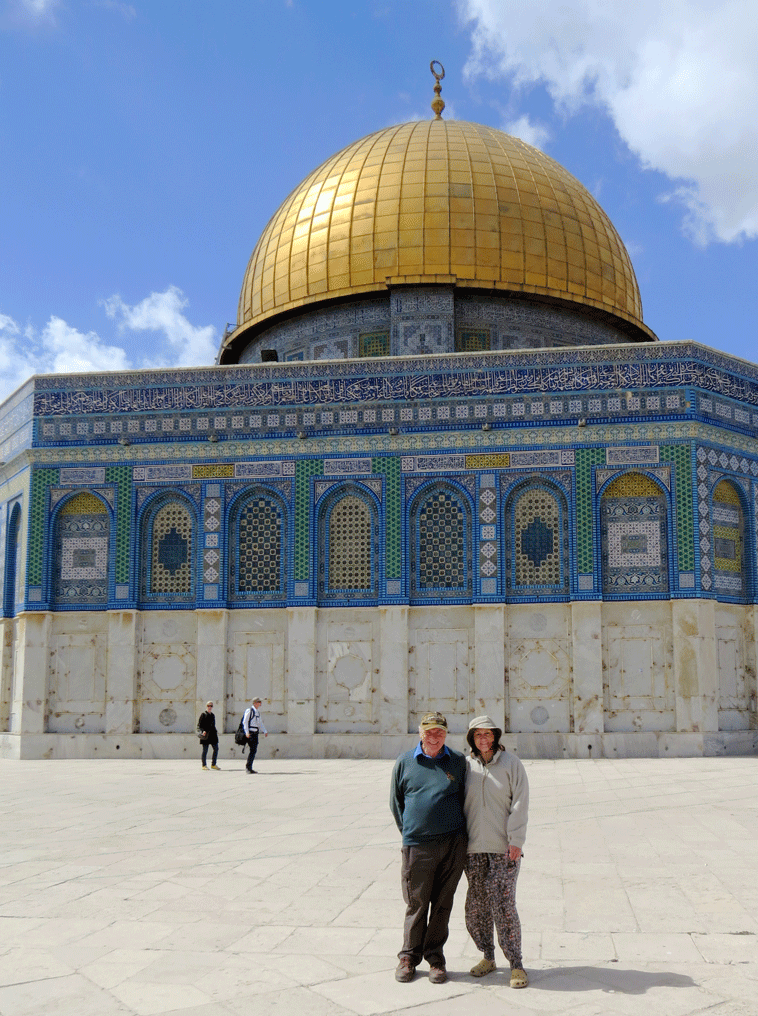
From the Western Wall it is only a few steps to the Temple Mount and the Dome of the Rock where Muslims believe Mohammed ascended to heaven and many believe Abraham prepared to sacrifice his son. It is considered by some to be the centre of the Earth and where Adam, Cain, Abel and Noah made ritual sacrifices.

Although I entered the Dome of the Rock on my visits in 1982 and 1986, we were not allowed in today.

I am always impressed by the intricacy and beauty of Islamic architecture.

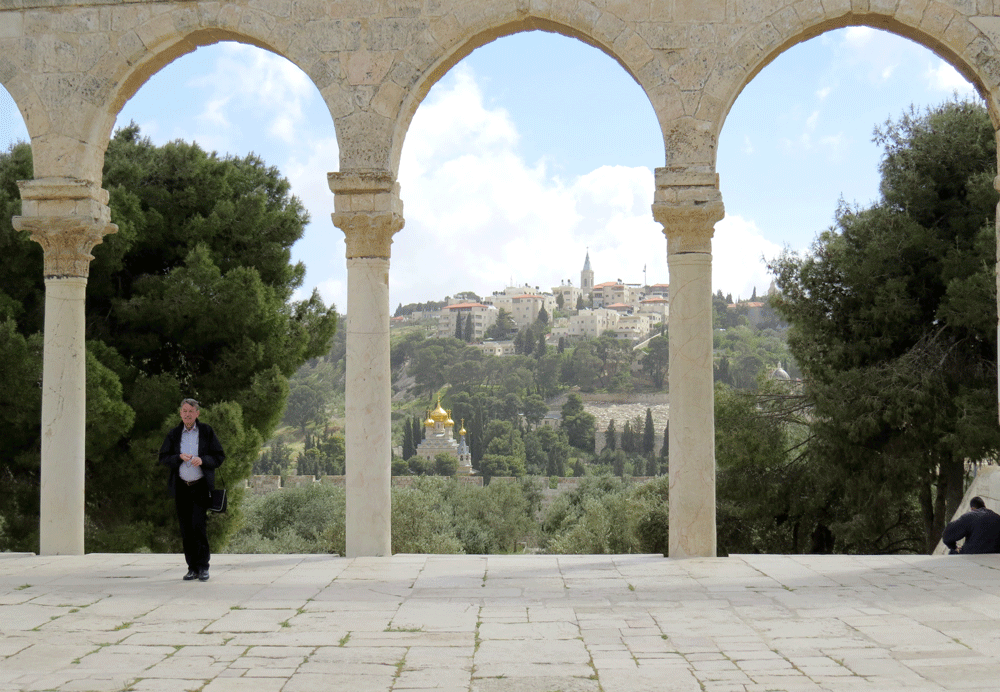
Another view of the Mount of Olives, this time from the Temple Mount. To the right of the Russian Orthodox Church can be seen one of the many huge Jewish Cemeteries that cover the western slope of the Mount. The belief that the dead will be redeemed on the Mount at the Day of Judgement has meant that many are buried here, hoping to get a good place in the queue.
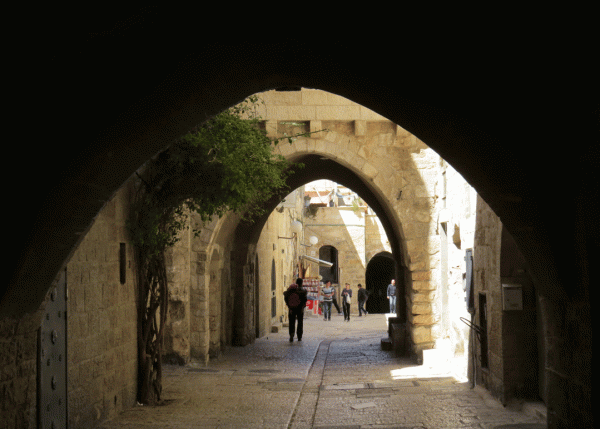
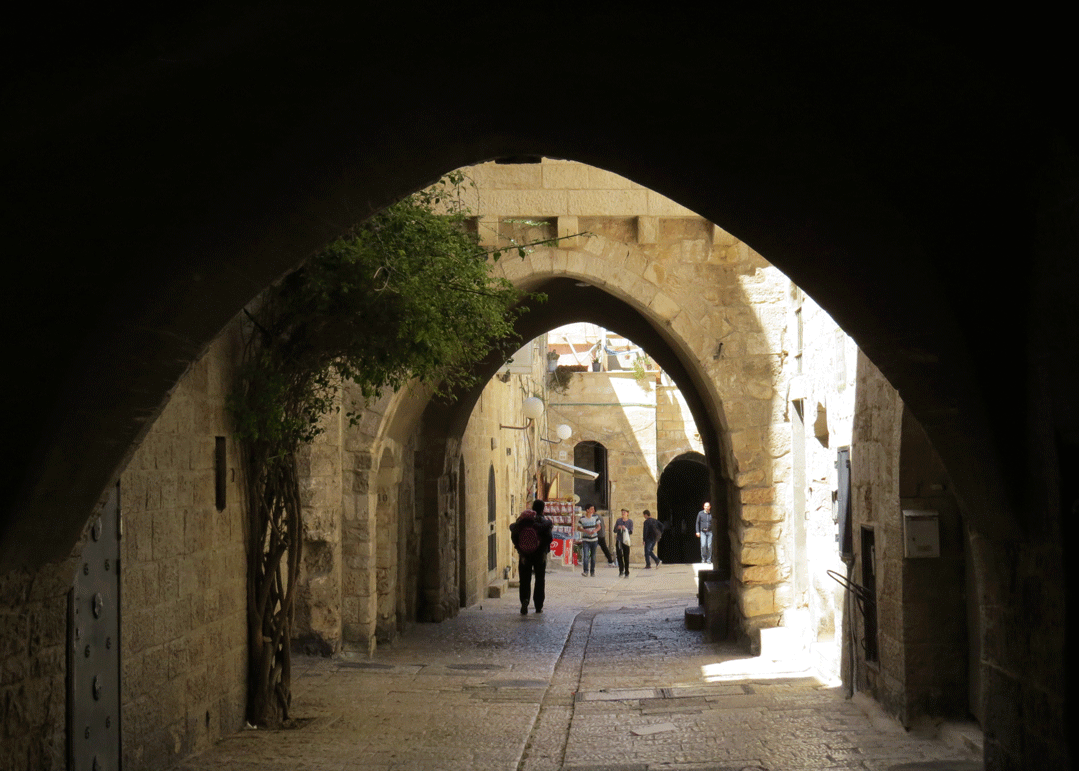
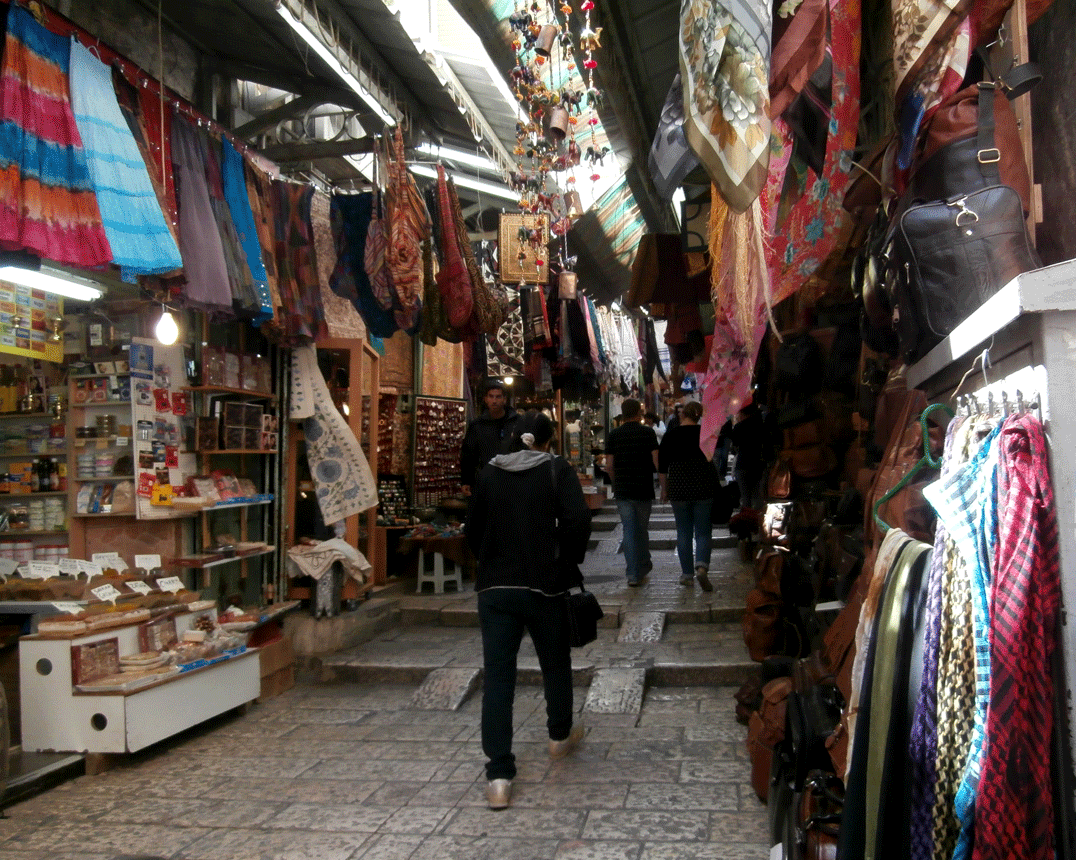
Our journey through the Old City was by way of narrow and often covered streets.

Small shops and stalls flank the narrow passages

Cauliflower is unpleasant enough in its natural state without dying it yellow or purple!

Having visited sites holy to Judaism and Islam it was the Christian faiths turn. This is the entrance to the Church of the Holy Sepulchre.

This is believed by many to be the actual site of Christ’s crucifixion.
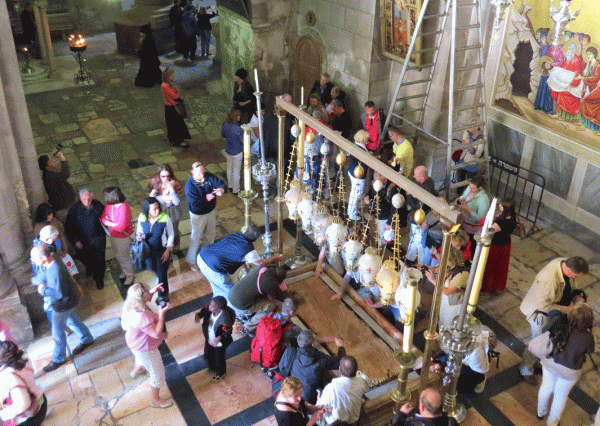
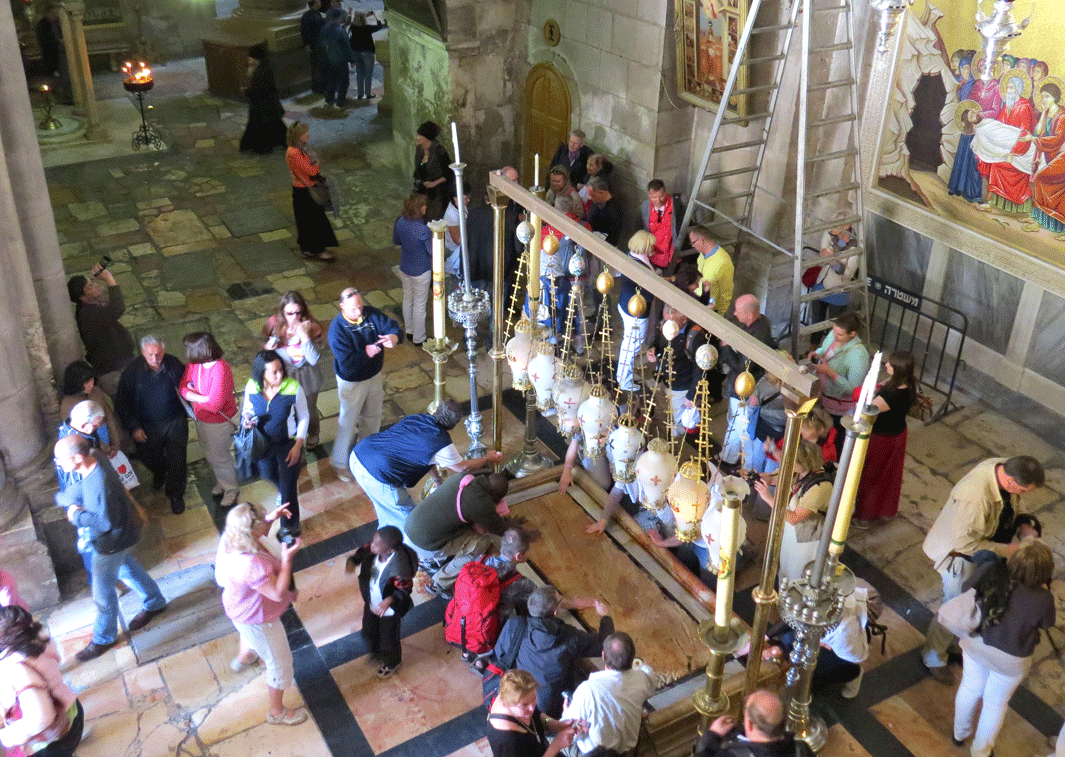
Pilgrims touch the slab on which they believe Christ’s body was lain.

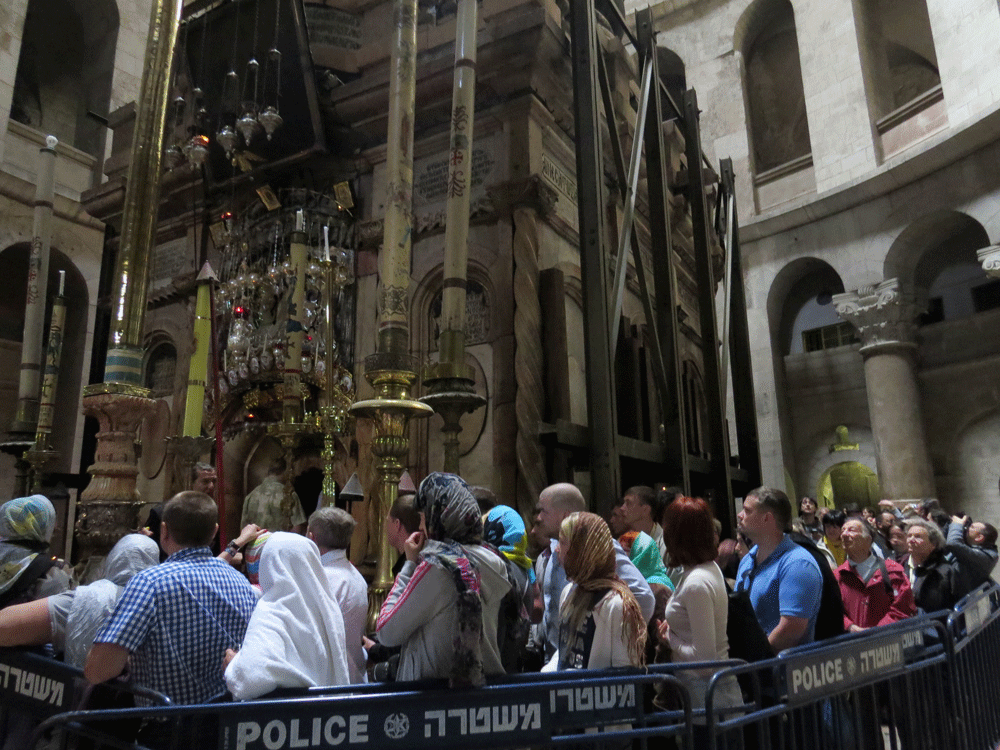
Pilgrims queued and sang praises as they waited to enter the Holy Sepulchre itself, the claimed site of Christ’s burial and resurrection.

The actual site upon which Jesus is said to have been interred.
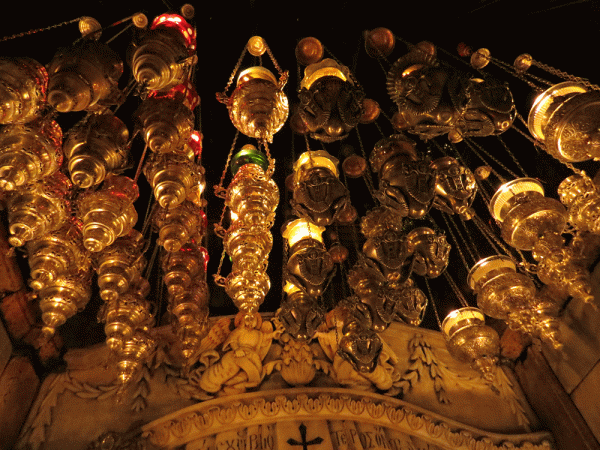
Millennia of worship by so many branches of the Christian faith has led to some superb decoration of this most holy of sites.

Back in the warren of streets, you are constantly asked to view goods and haggle over the price, especially in the Arab quarter. This is something that many tourists love but I am rather uncomfortable with.
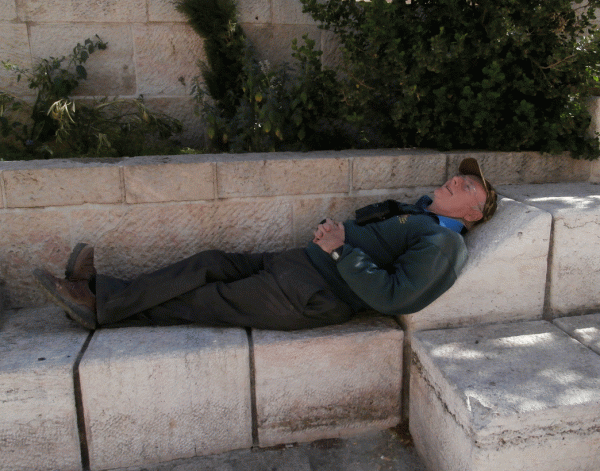
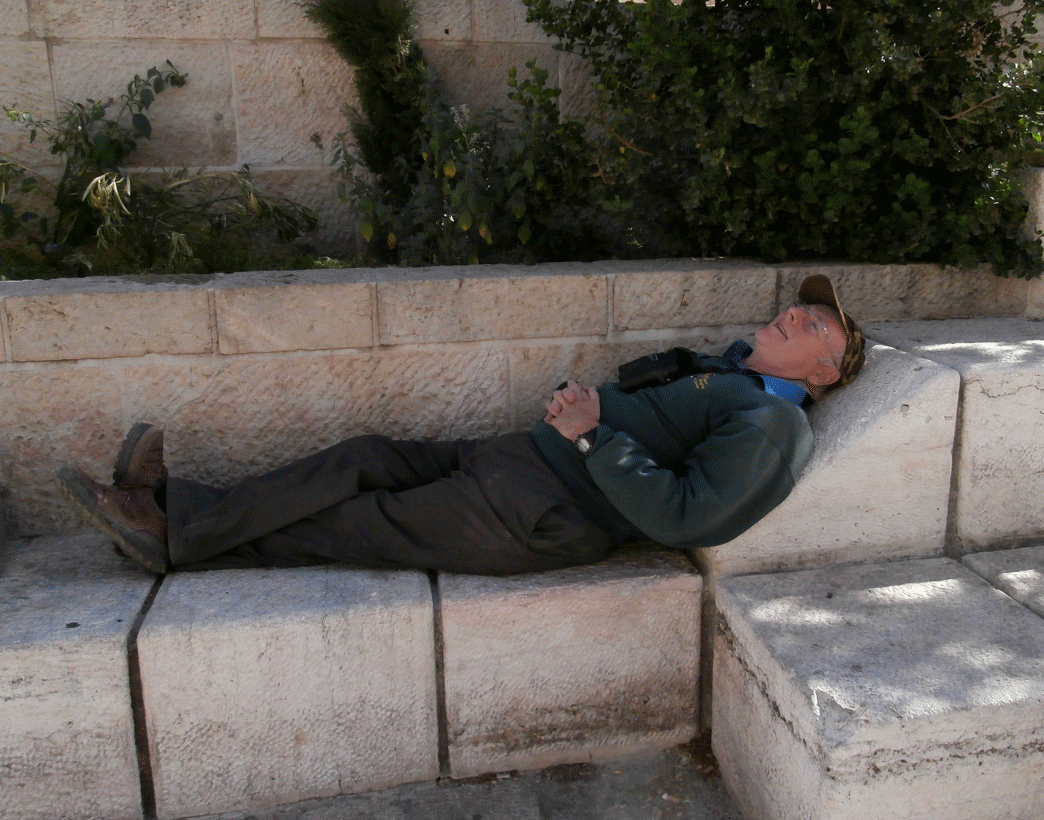
A couple of days touring Jerusalem left me pretty knackered.
At 417 m below sea level, the Dead Sea is the lowest place on the surface of the Earth. It is also one of the saltiest, being an almost saturated (34%) solution of minerals. It is also a place of scenic grandeur, a huge ancient salt beds carved into fantastic shapes by the elements and surrounded by precipitous cliffs of the Rift Valley, spoiled only by the industrial complex at the south end, which extracts valuable materials from this chemical cocktail.

With so much of the brine being extracted by the chemical works and the water from the Jordan River being totally diverted for irrigation, the level of the Dead Sea is falling rapidly. Could it follow the Aral Sea in Central Asia into extinction?

The salt pillar, known as ‘Lot’s Wife’

We left Eilat in the morning of the 2nd and after spending time at Yotvata and the Shiraf Nature reserve we arrived at the Massada Hotel mid afternoon. This is the view from our room over the salt formations to the Dead Sea beyond. The rift escarpment in Jordan is lost in the haze.

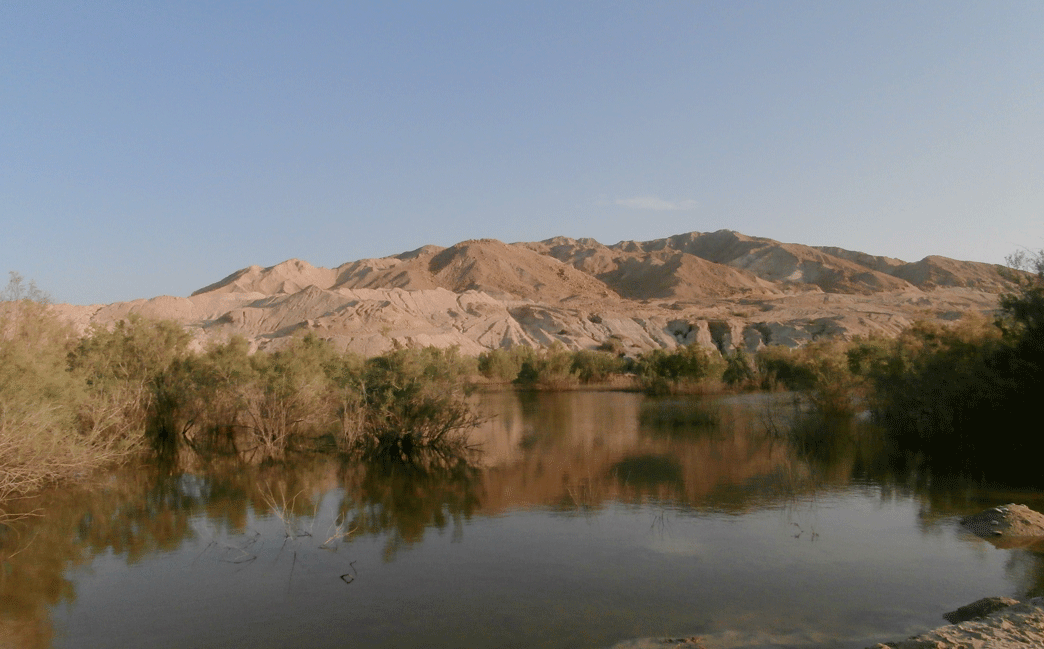
We had hired local guide Yoav Perlman; yoav.perlman@gmail.com to take us to see the Nubian Nightjars. Before it was dark we birded the nearby Lot’s Reservoir, a fresh water lake in an otherwise salty environment …..

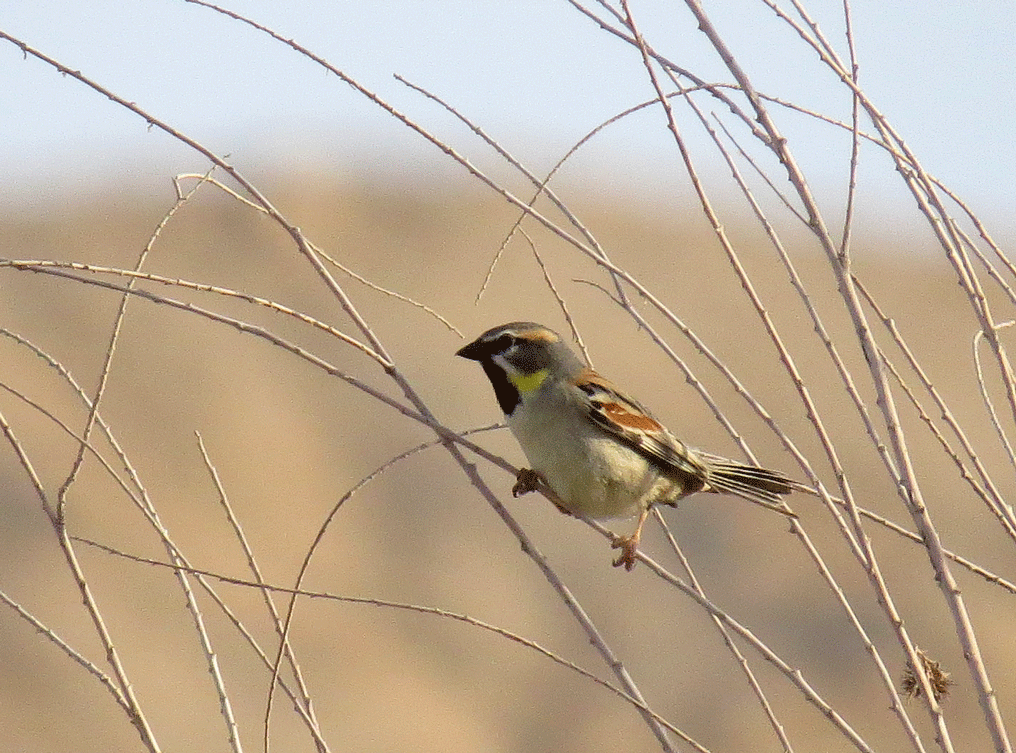
…. here we had great views of Dead Sea Sparrow ….

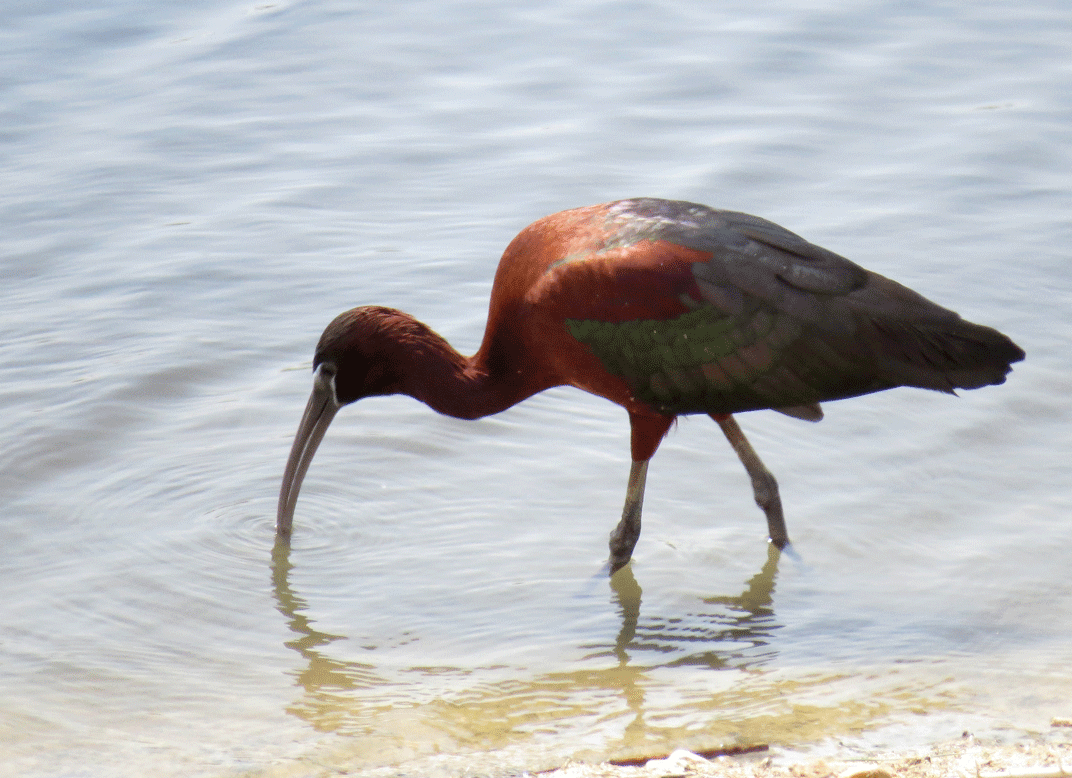
…. and this Glossy Ibis. The ones we see in the UK are mainly dull first years but this adult certainly lives up to its name.
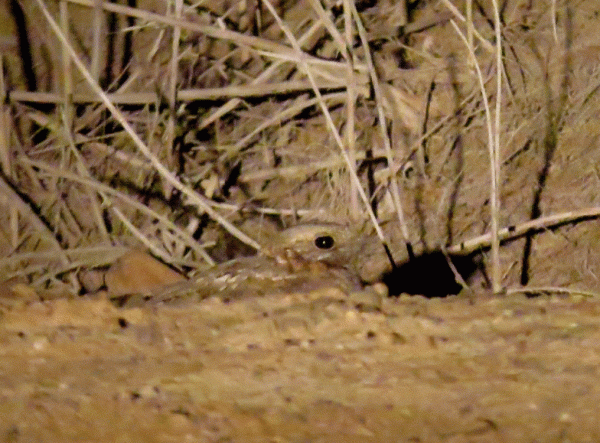
The ‘tamaricis’ race of Nubian Nightjar was once widespread in tamarisk dominated saltmarsh in the Arava Valley but due to development for hotels (Eilat) and agriculture (Yotvata) all that remains of this habitat is a small patch to the south of the Dead Sea and this is being swallowed up by poly-tunnels.

The ‘Tamarisk’ Nightjar, as it is called locally, has a world population of only 27 pairs. There are subtle differences in plumage, voice and a major one in habitat choice, compared the Nubian Nightjars in Yemen and NE Africa. It could be a full species, albeit a critically endangered one.

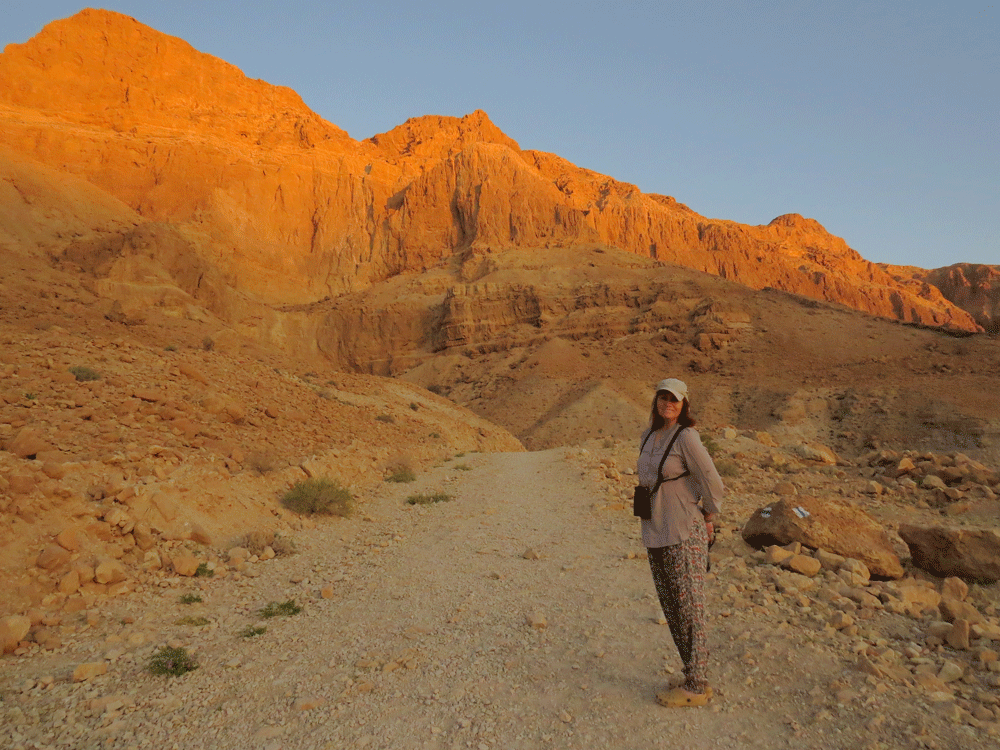
Early in the morning of the 3rd we drove to Wadi Salvadora, 20 minutes drive to the north ….

.. this beautiful rocky side valley held wonderful birds like Scrub Warbler, Sinai Rosefinch, Cretzschmar’s and Striolated Buntings

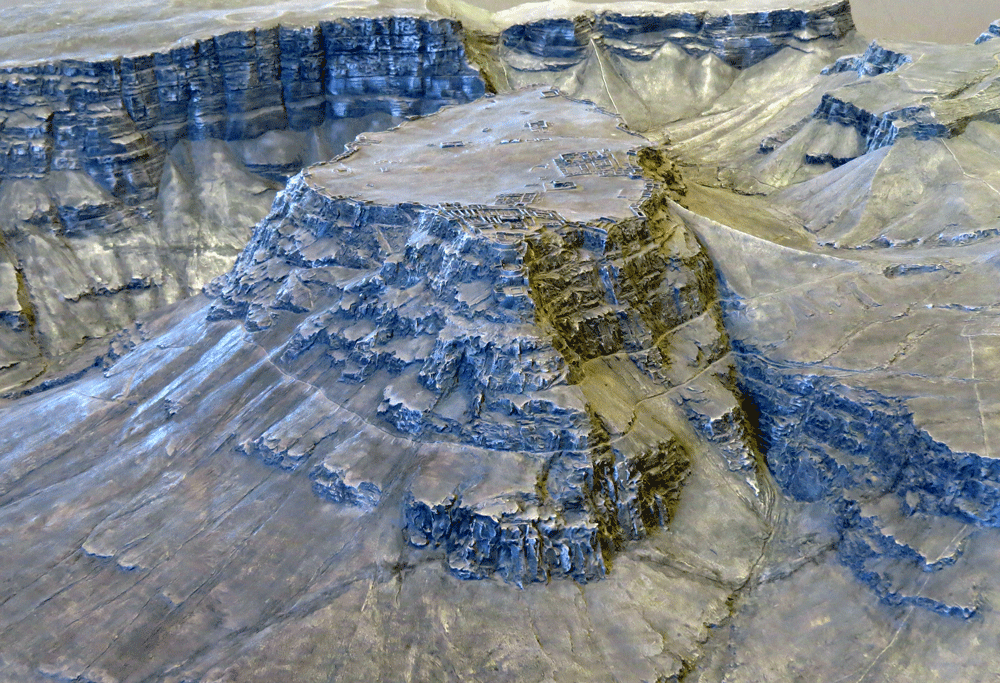
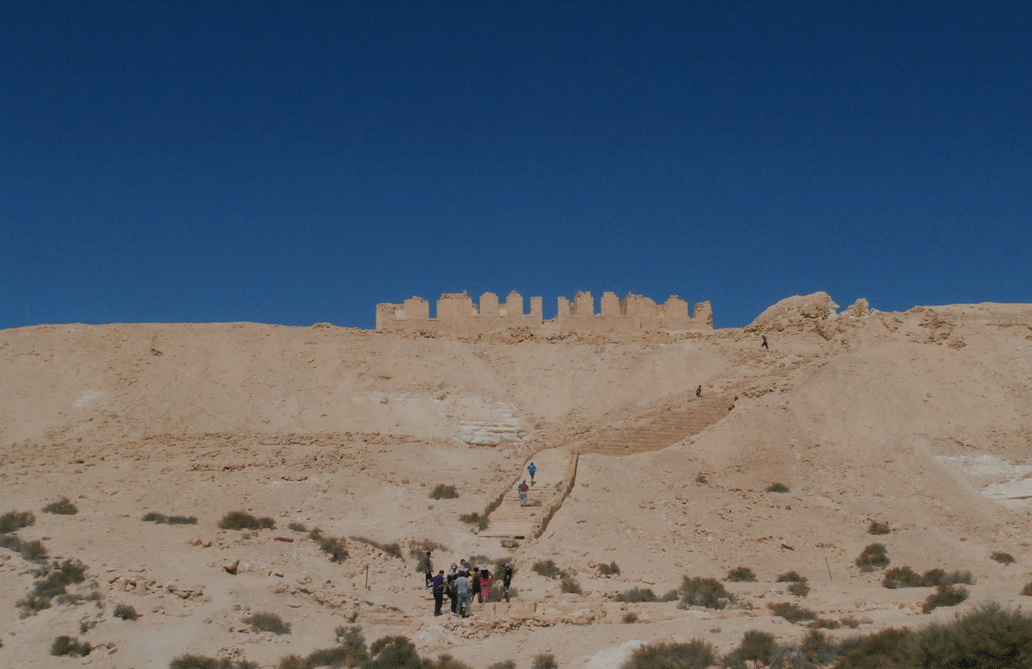
The reason we stayed at the Masada Hotel was because Margaret wanted to visit the ancient hill top fortress of Masada. The hotel is just to the left of this photo. Herod the Great built Masada as a palace for himself between 37 and 31 BC. The siege of Masada by troops of the Roman Empire towards the end of the First Jewish–Roman War ended in the mass suicide of the 960 Jewish rebels and their families holed up there. Note the long winding path to the summit.

Unfortunately Margaret suffers from vertigo and faced with an ascent in the cable car or a knackering hike ….

… she opted to study this scale model in the nearby museum. Note the remains of the assault ramp built by the Romans during the siege of Masada to the right of the mountain.
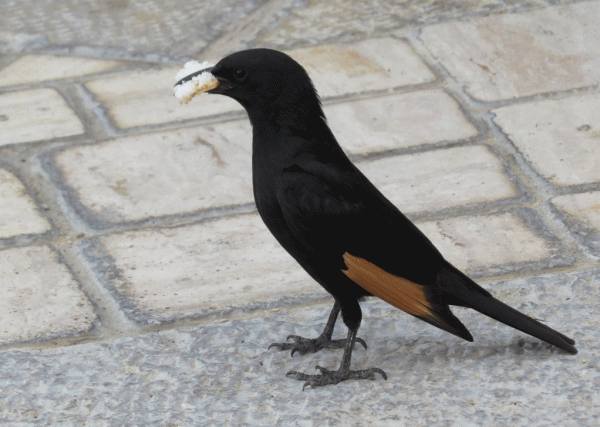
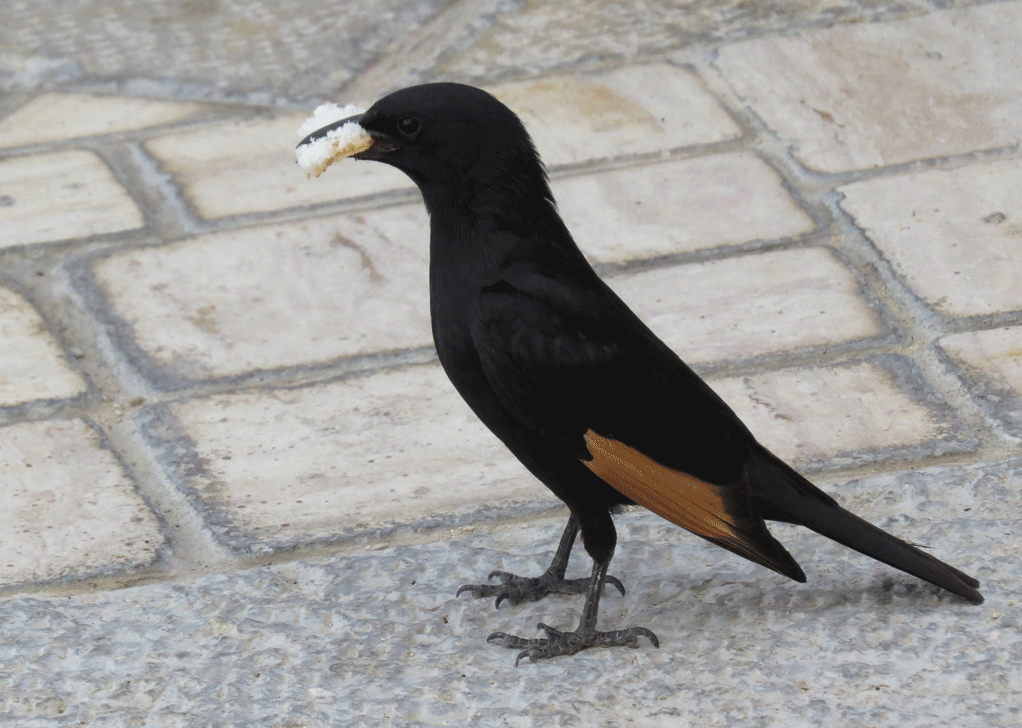
Tristam’s Starlings were common and tame around the visitor centre.

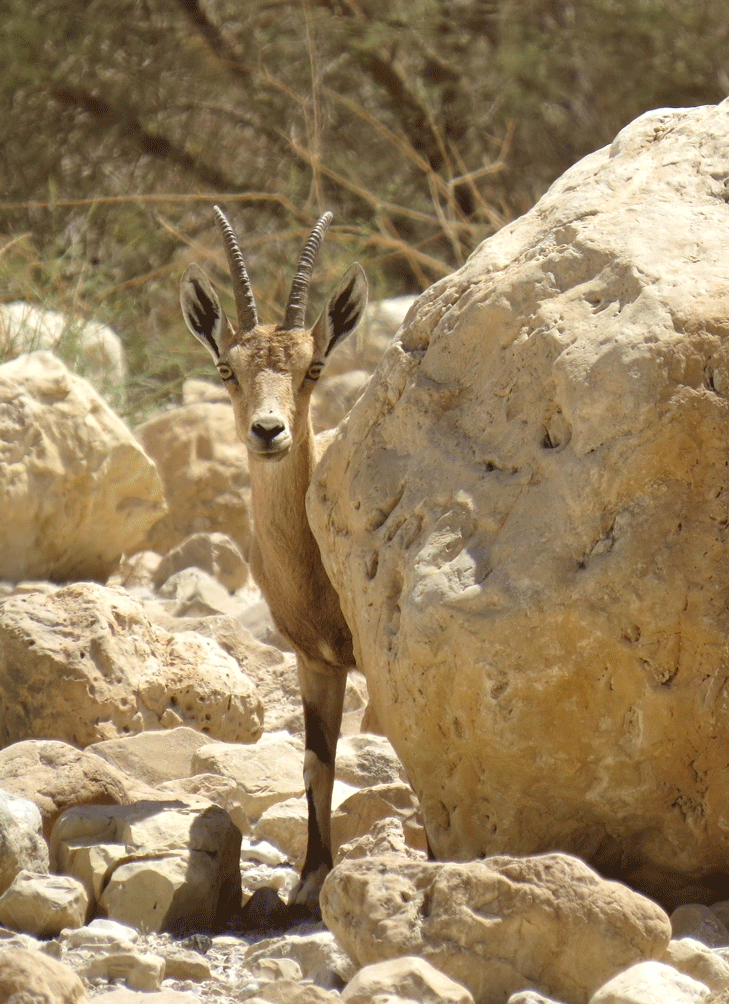
The nearby reserve at En Gedi was packed with tourists and noisy children so we opted to stay outside, this wasn’t a problem as we had great views of this Nubian Ibex ..

.. which walked straight in front of us, ….

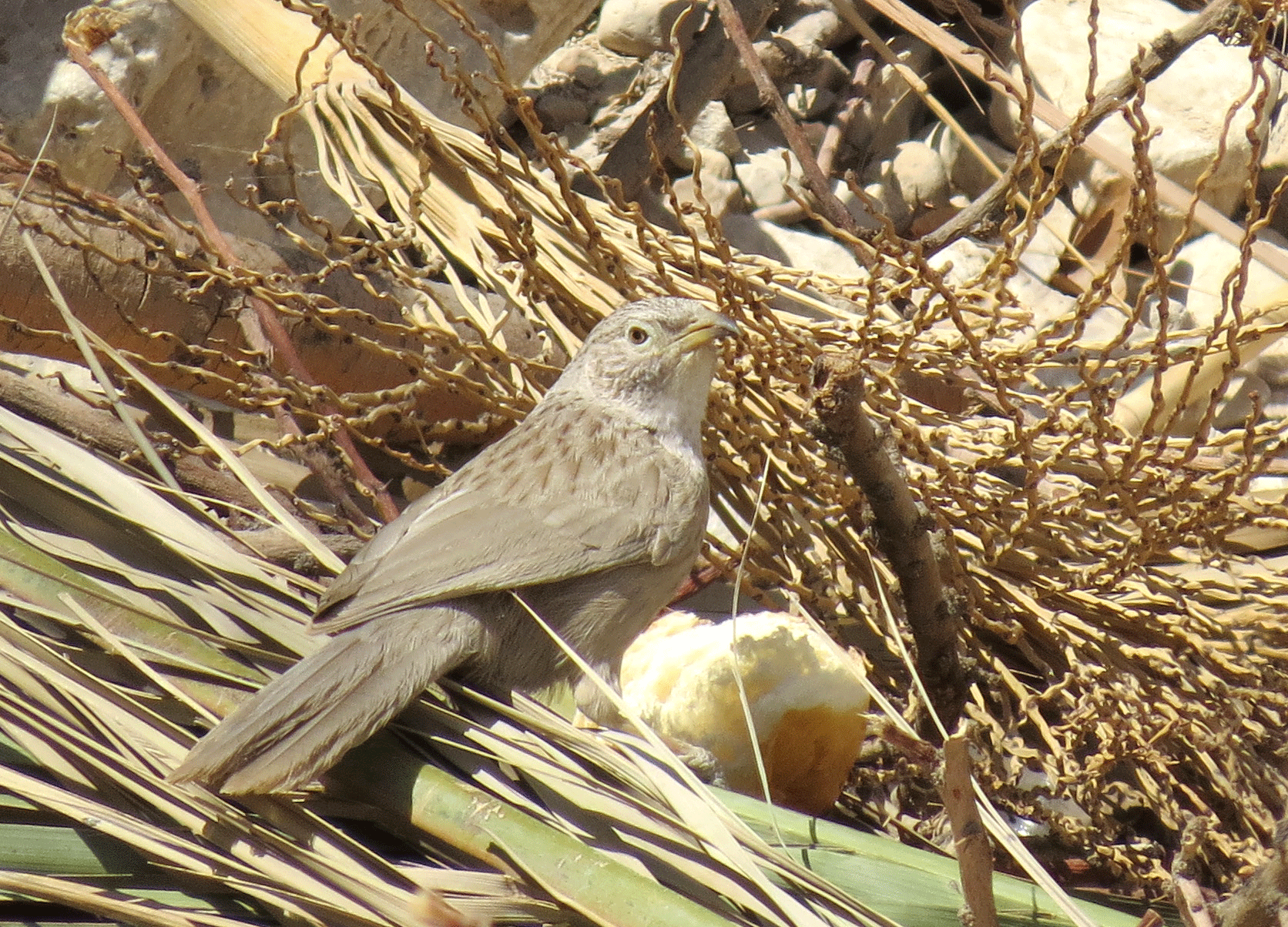
.. this cheeky Arabian Babbler and a good passage of raptors and storks, which included four Lesser Spotted Eagles.
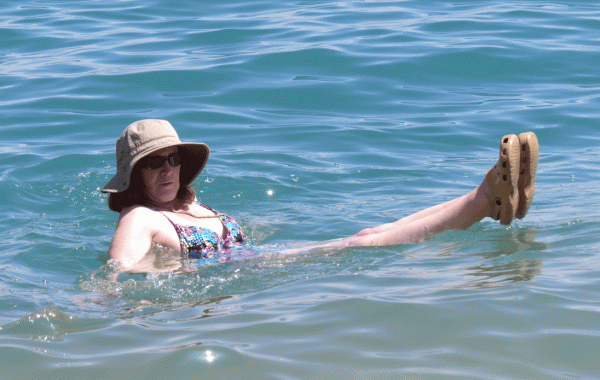
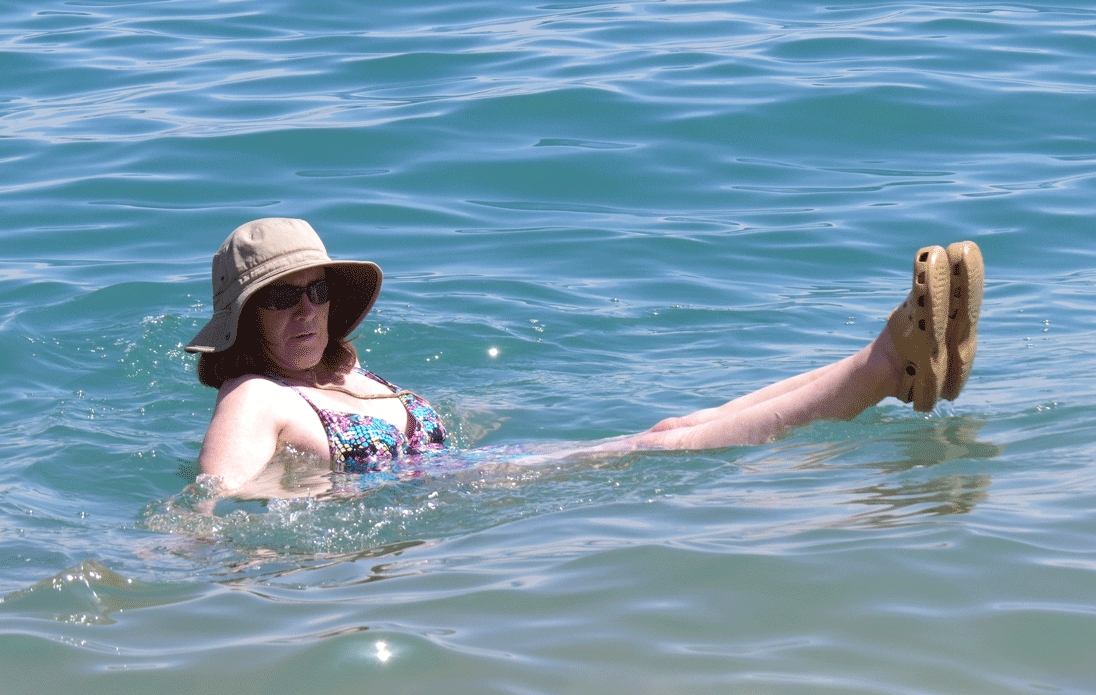
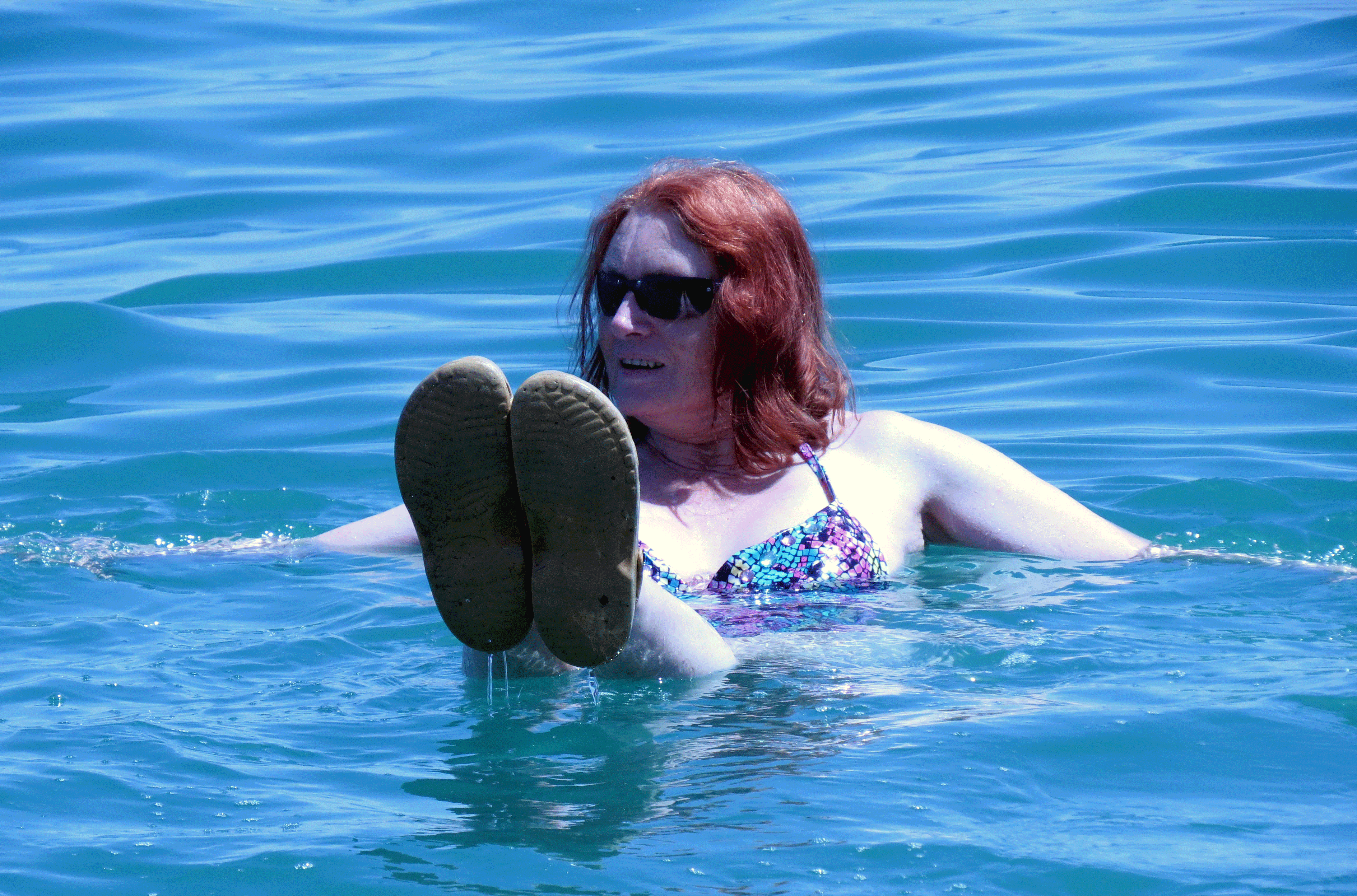
The Dead Sea had one more treat in store. Everyone should have a dip (float) in this oily solution once in their life ……
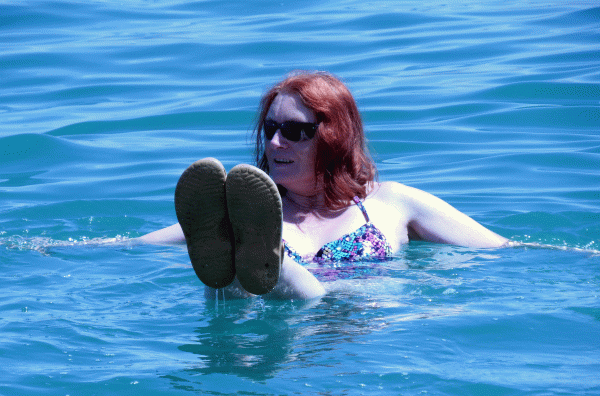
… I did that in 1986 and wasn’t keen to repeat the performance!
North of Eilat running north up to the Dead Sea lies the Ararva Valley. This is part of the great Syrian-African Rift Valley, a deformation in the Earth’s crust where two or more plates are pulling apart. Starting as far south as Mozambique, the Rift runs through Tanzania, Kenya, Ethiopia and Djibouti before following the Red Sea and the Gulf of Aqaba, to the Avarva Valley and the Dead Sea of Israel and Jordan, then north through Lebanon and Syria before finally terminating in southern Turkey.
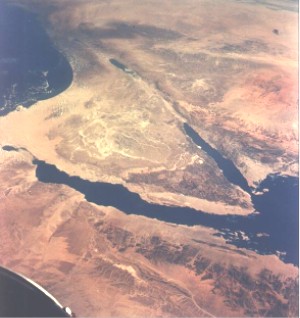
Clearly visible from space, the Rift Valley runs up the Gulf of Aqaba north to the Dead Sea and beyond. Photo from the Internet.
North of Eilat and within the Ararva valley lie a number of excellent birding sites. In this desert environment any source of water will attract birds, and in practice this means either saltpans or sewage lagoons. Unusually heavy winter rains have left pools in unexpected places and the resultant greening of the desert has meant that migrants aren’t as concentrated as usual. In addition rain in Sudan has provided an alternative stop over site on the long haul from southern and eastern Africa and the proliferation of bird netting for food along the migration route (involving hundreds of kilometers of illegal nets) is having its toll on numbers.
During our time there we birded at the nearby Km 19/20 (named after the nearby kilometer posts on Route 90), at a scenic spot called Amram’s Pillars and at Yotvata Kibbutz.
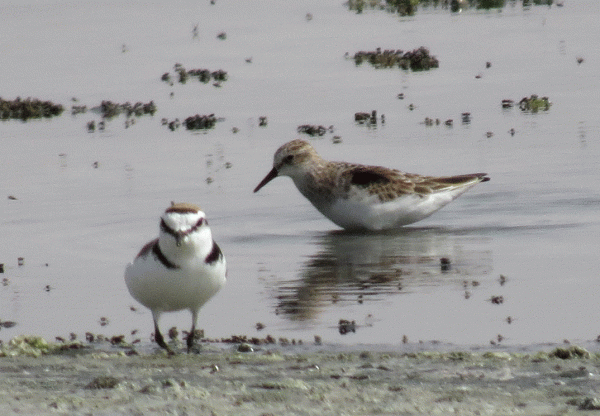
Kentish Plovers (L) breed at the saltpans at Km 20 but the Little Stints (R) are on passage to the arctic.
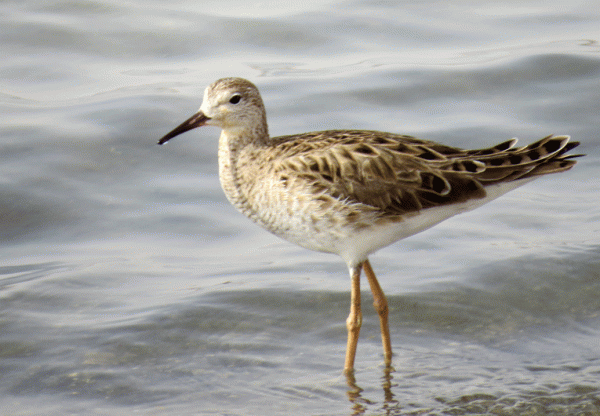
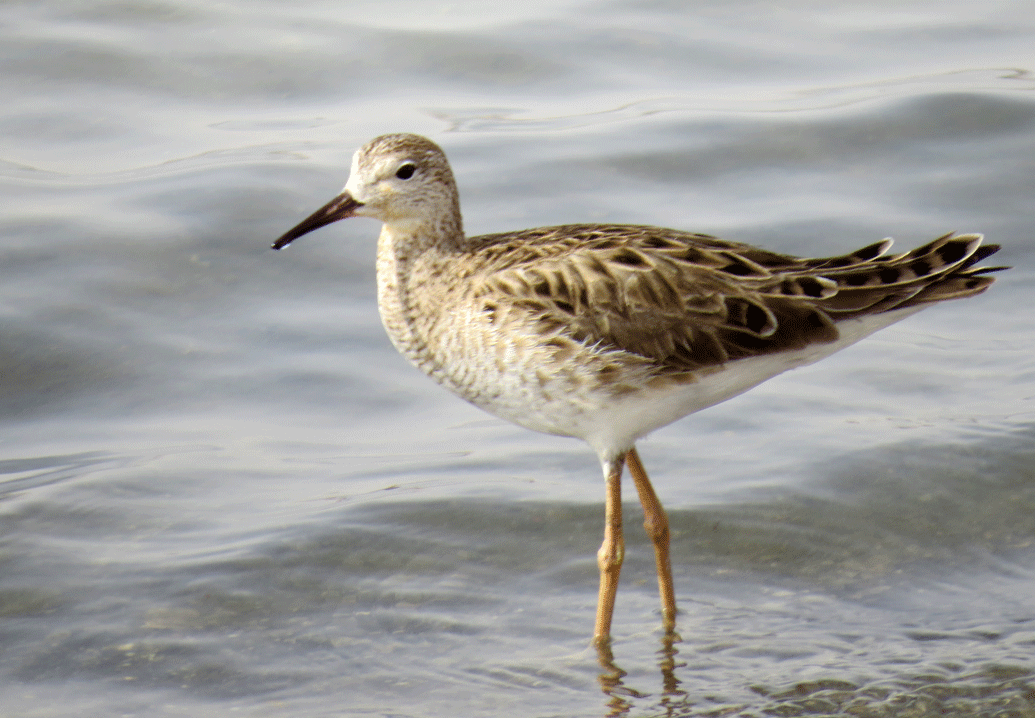
Ruff were a common migrant. They breed in both arctic tundra and wet meadows in more temperate climes.

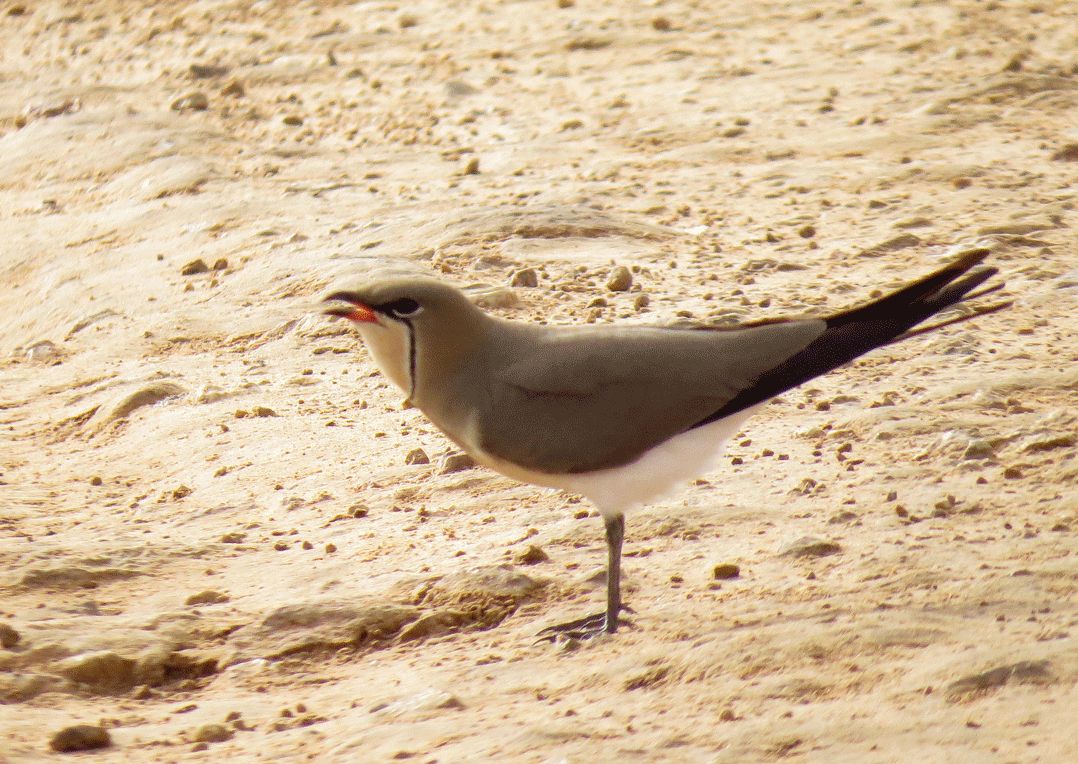
A lovely flock of 35 Collared Pratincoles. These specialised waders have a more southerly breeding distribution mainly around the Mediterranean and Black Seas.
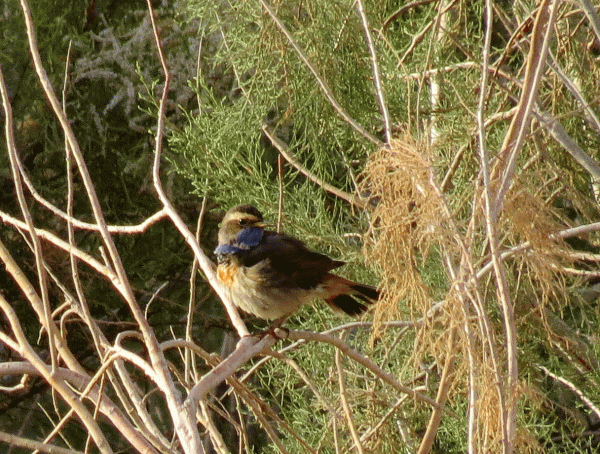
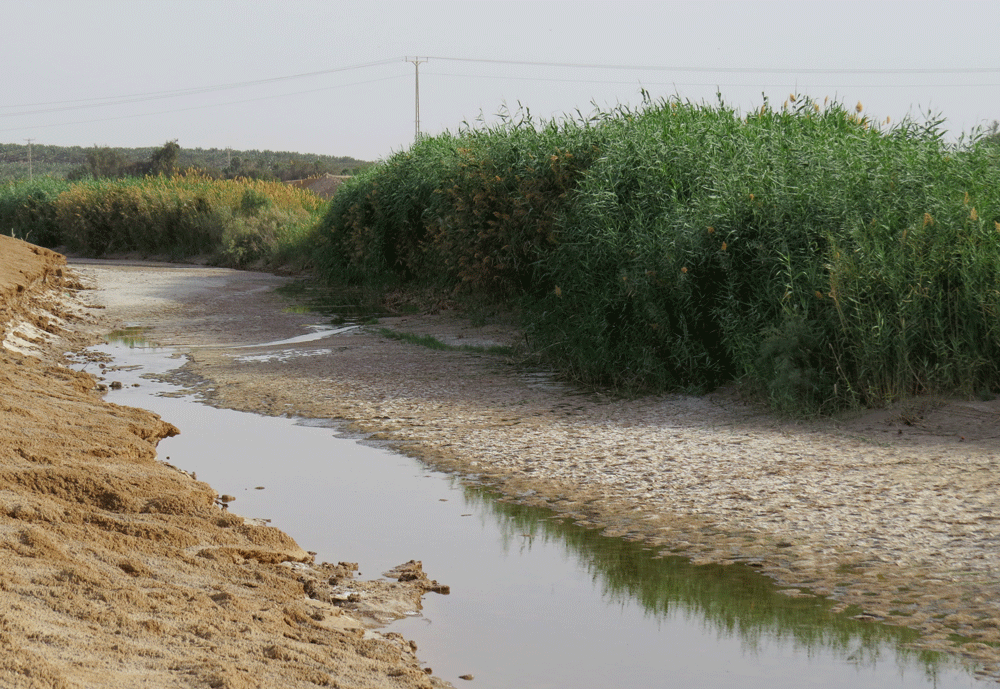
A drainage canal south of the saltpans held some great birds like this male Bluethroat

The normally elusive Spotted Crake showed well, if briefly
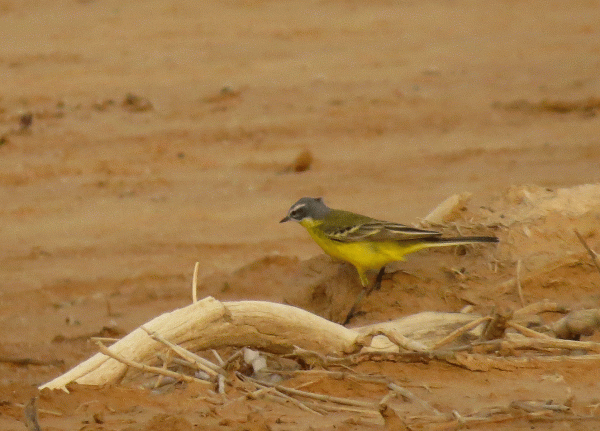
This Yellow Wagtail appears to be of the nominate race ‘flava’ but a bit of white under the eye could indicate that it is the very similar race ‘beema’

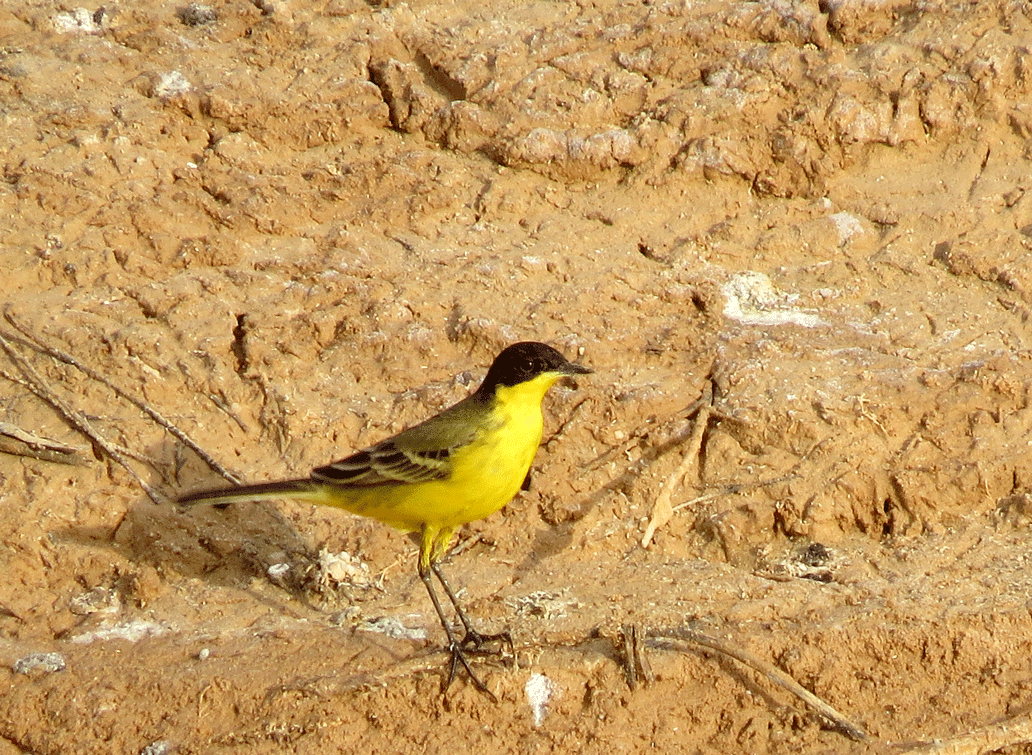
No doubting this one, a male Yellow Wag of the Balkans to Caucasus race ‘feldegg’
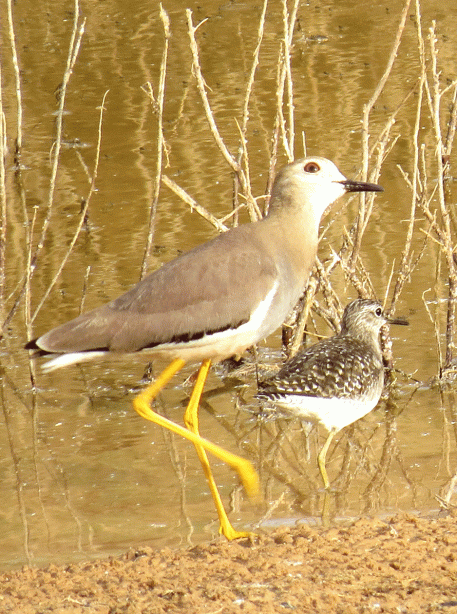
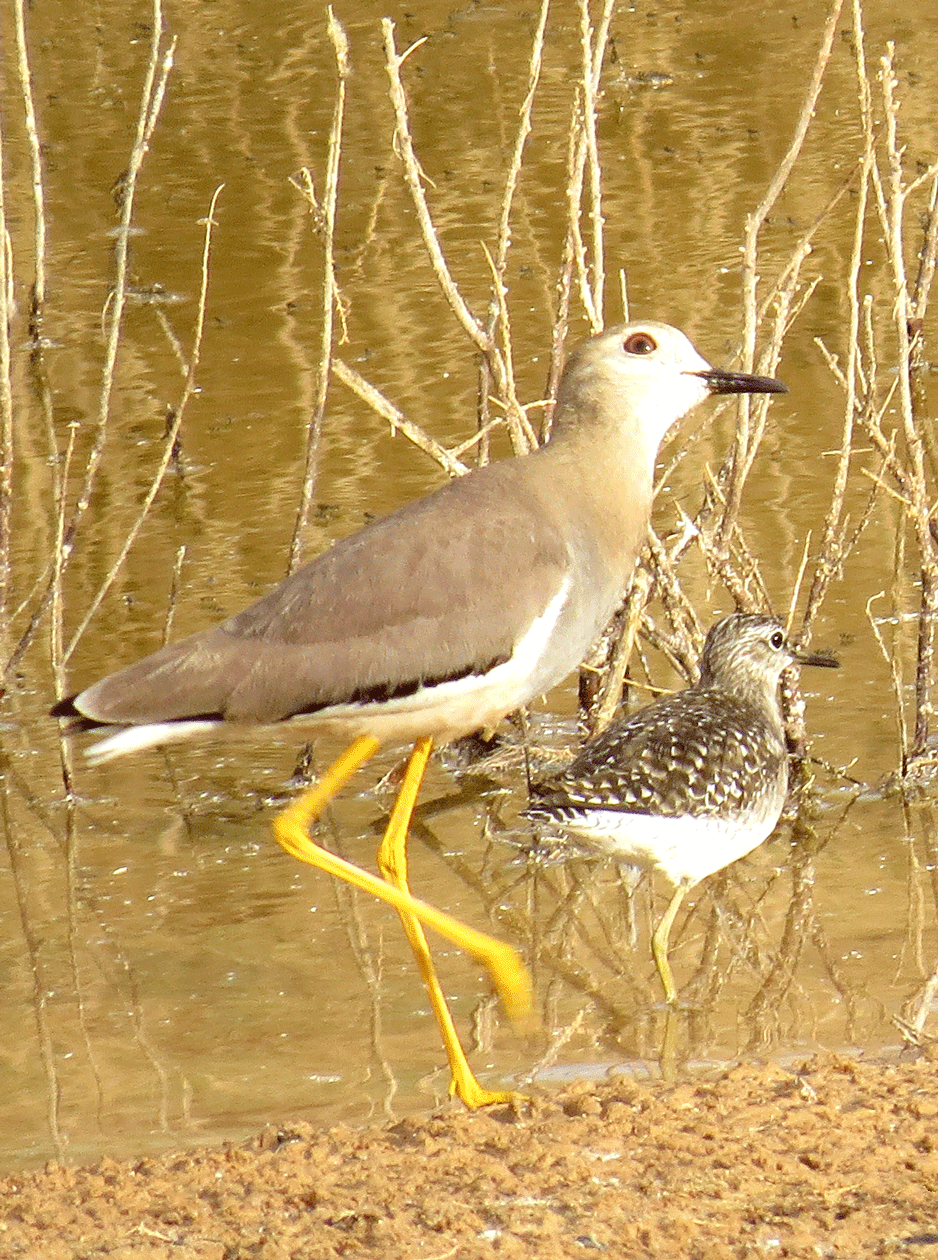
This was by far the best find at Km 19, a beautiful White-tailed Lapwing, seen here with a Wood Sandpiper. We thought we had discovered this rare migrant but later heard it had been around for at least one day.
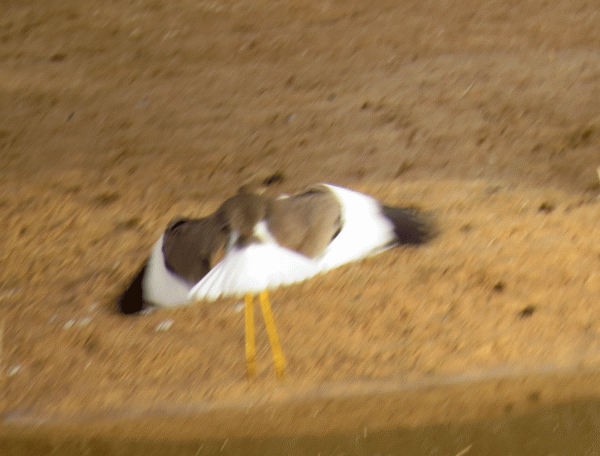
OK its out of focus, but this shot does show the White-tailed Lapwing’s amazing flight pattern.
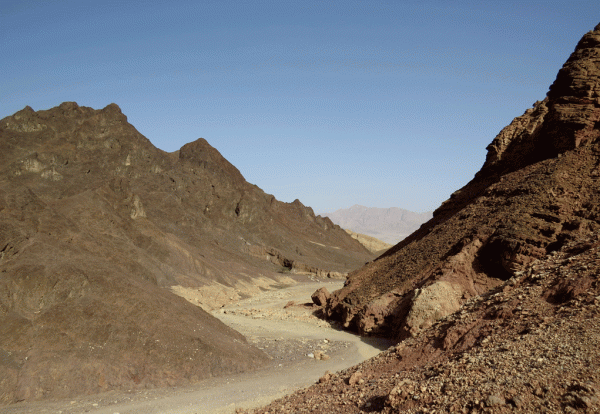
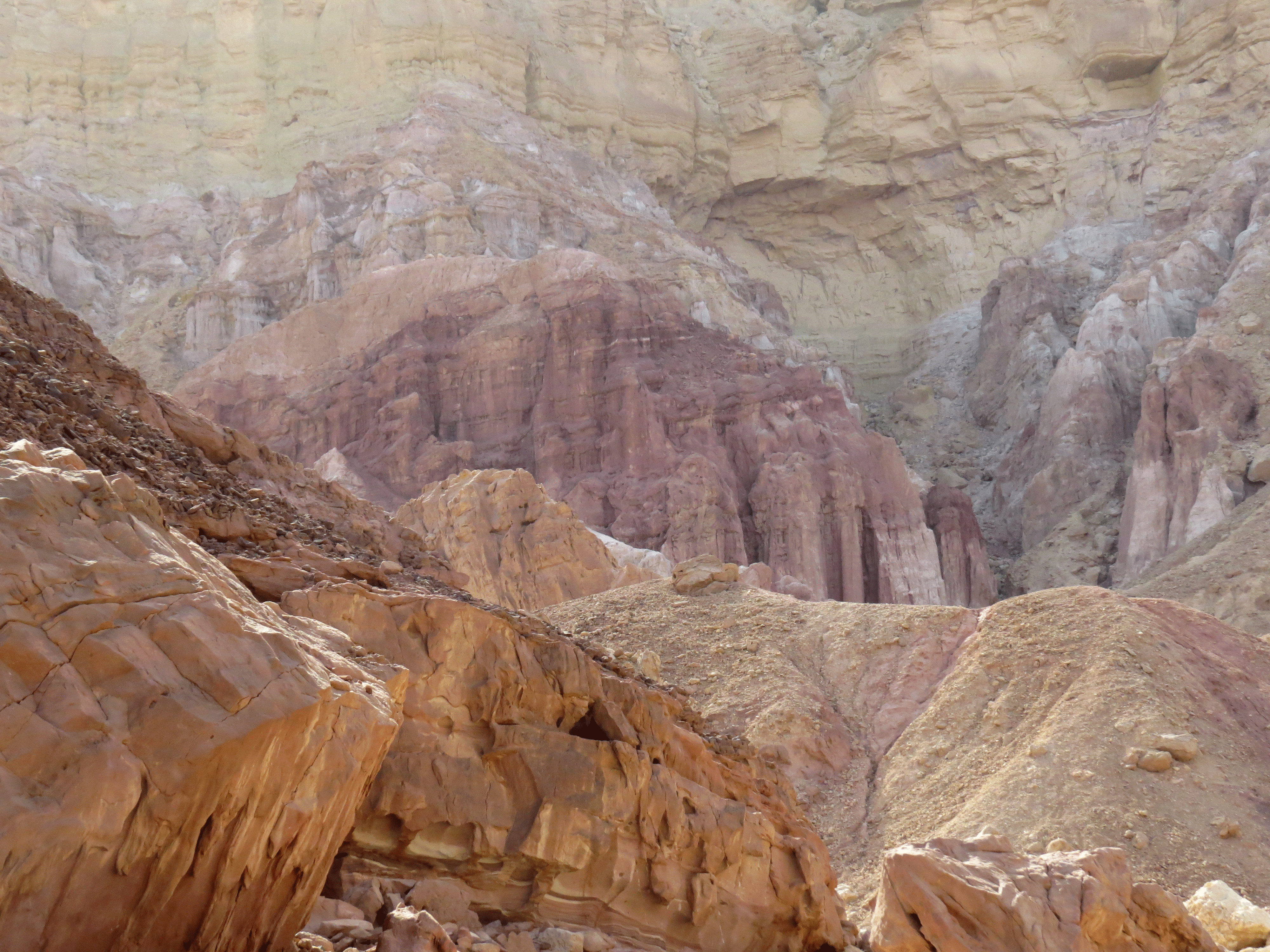
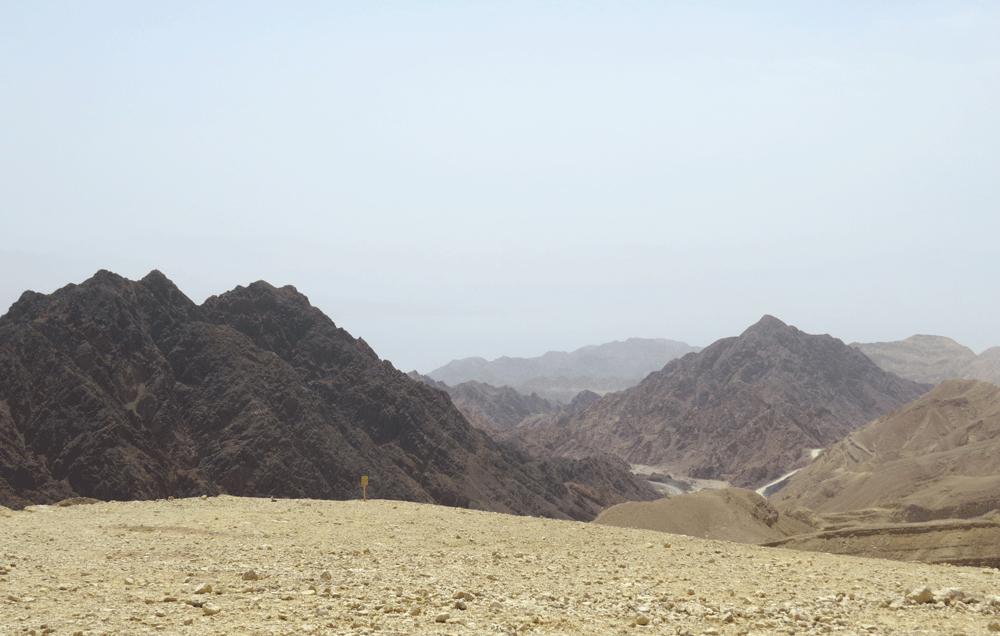
A side track took us through some wonderful scenery …

.. and deserted wadis

.. although we didn’t have this wilderness to ourselves..

Amram’s Pillars

A true desert inhabitant – a male Sand Partridge

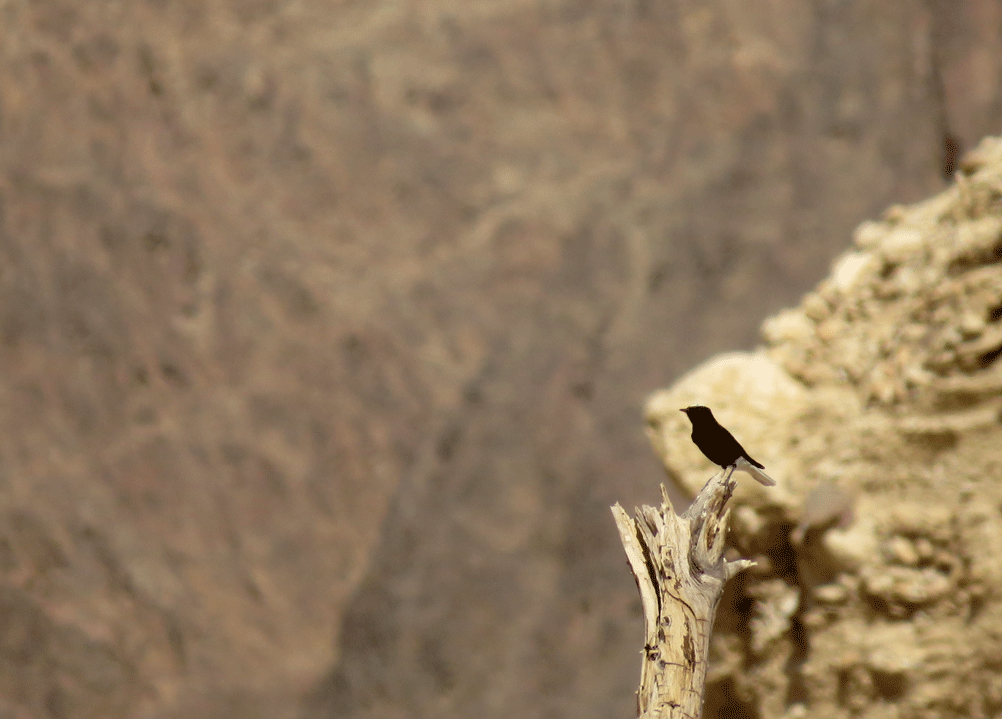
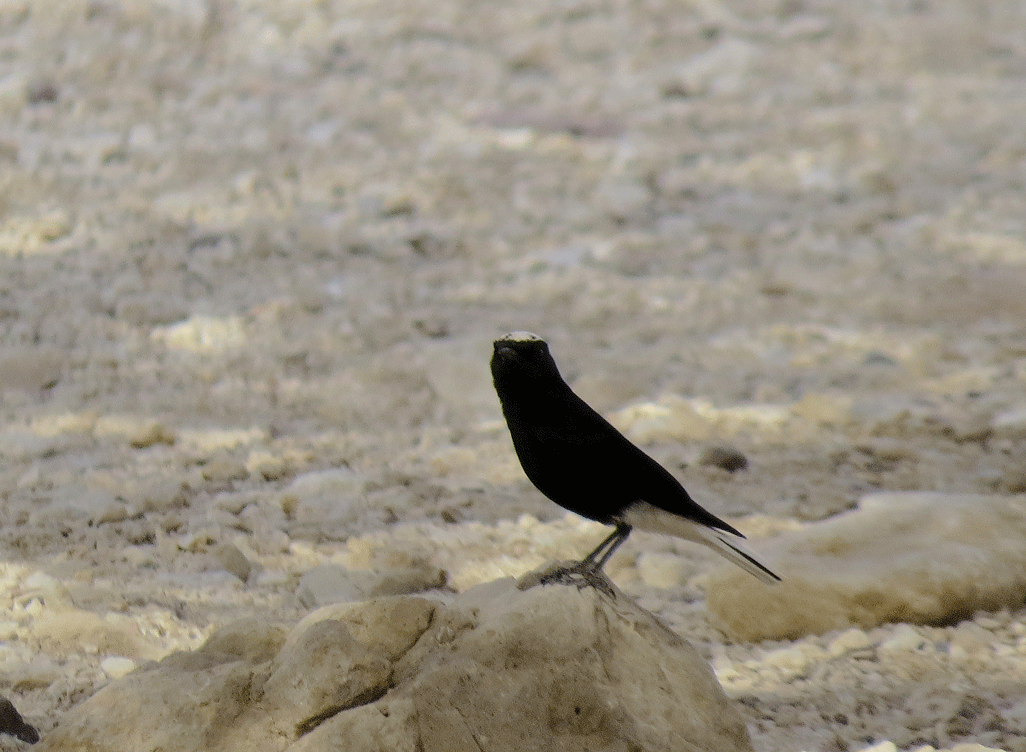
A White-crowned Wheatear perches against a dramatic backdrop

Also known as White-crowned Black Wheatear or White-tailed Wheatear, amazingly there is one record of the desert specialist from the UK.
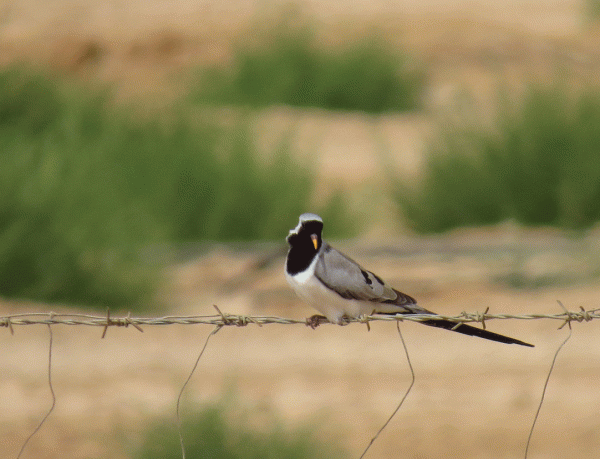
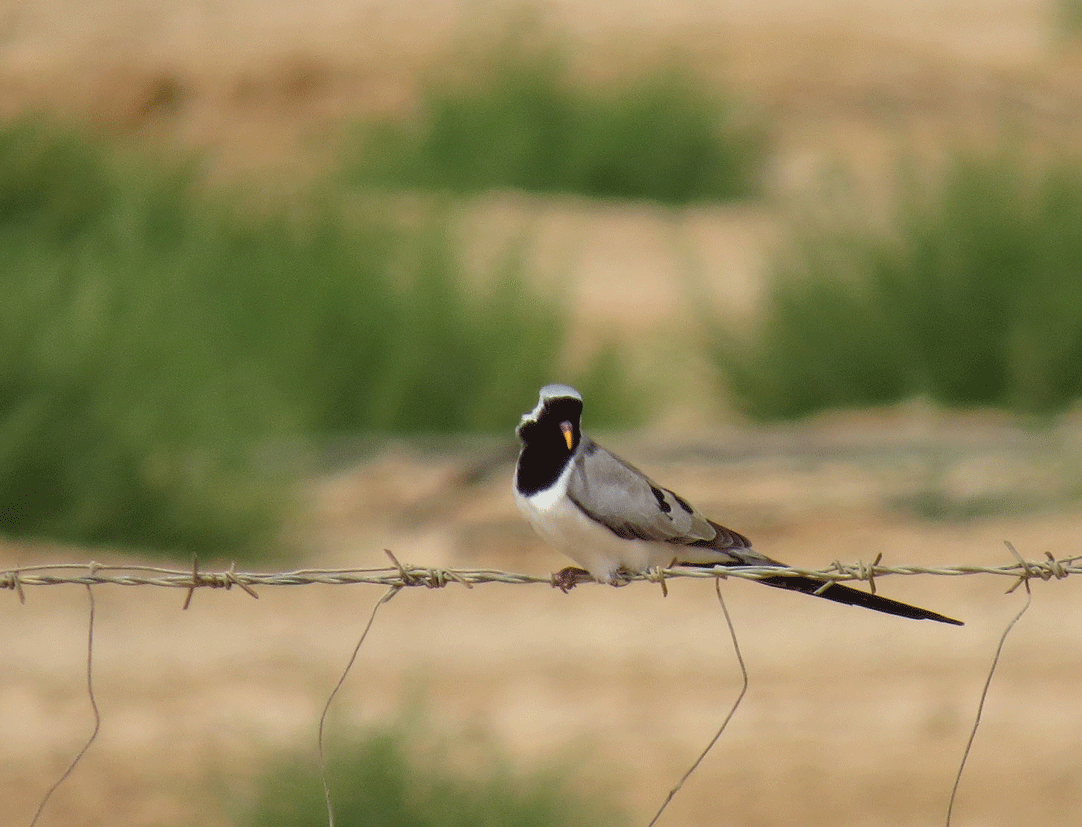
Three birds from nearby Yotvata Kibbutz: Widespread in dry area of Africa, the tiny Namaqua Dove can only be seen in the Avarva Valley within the Western Paleartic. This bird is perched on a section of the border fence that divides Israel from Jordan and I got into trouble with a military patrol for stepping off the track onto the ‘tracking lane’ that they examine for footprints of potential cross-border insurgents.
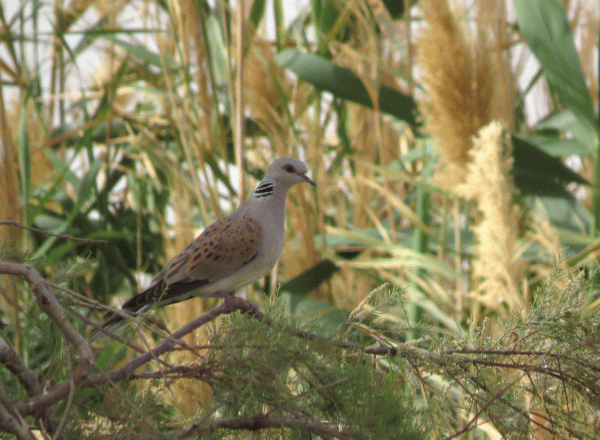
Once a common summer visitor habitat change and shooting on migration have reduced the UK’s Turtle Doves by 90% over the last 20 years.
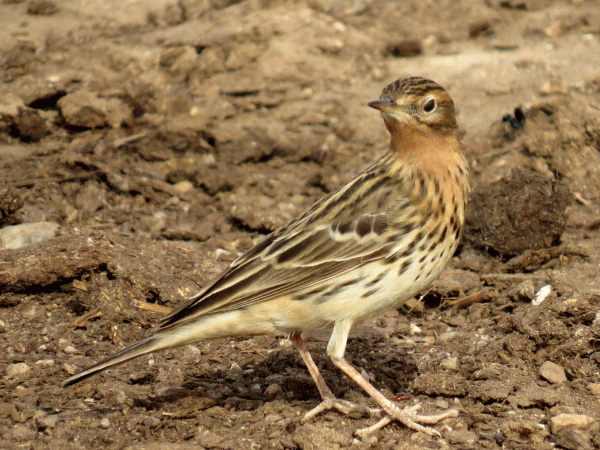
Breeding on Arctic tundra, the lovely Red-throated Pipit is less affected by changes to the breeding habitat than other migrants and remains quite common.

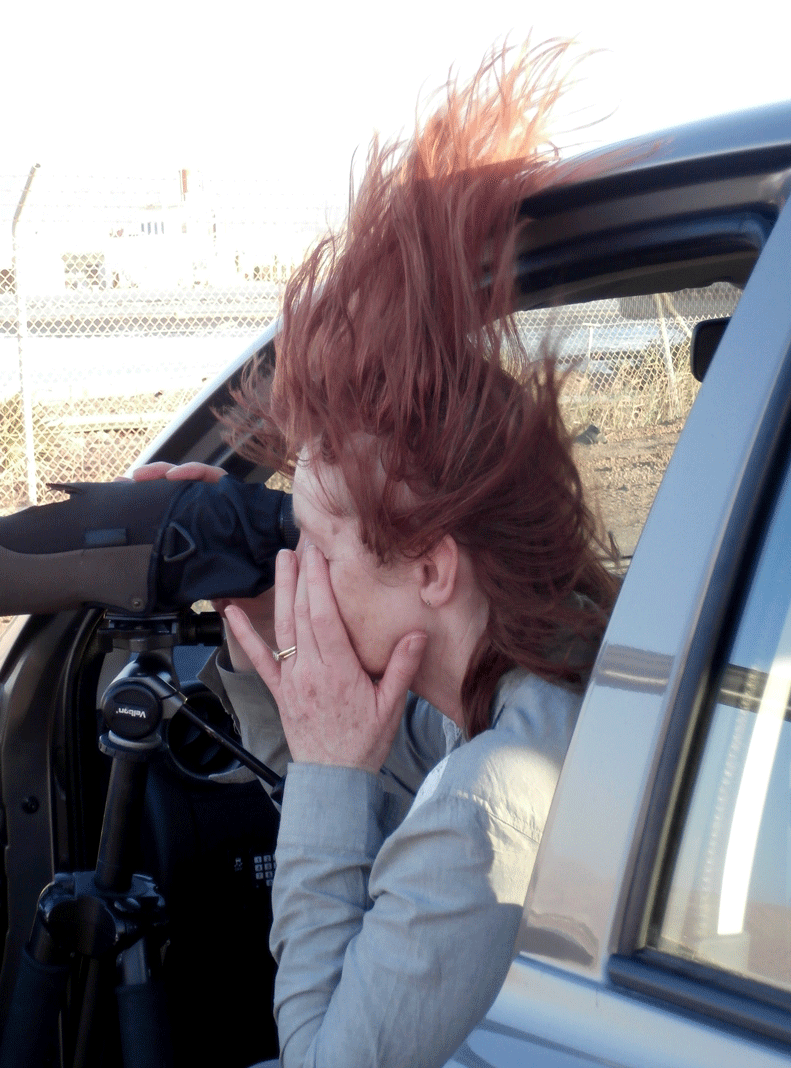
Margaret struggles with the scope (and her hair) in the wind
Returning to the Israel saga. We arrived at Israel’s southernmost town in the late afternoon on the 29th of March and after finding our hostel went down to the saltpans to look for some waders. We didn’t realise that the best views were to be had from the shelter of the Birdwatching Centre so spent an hour or so struggling to look into a strong northerly wind.
Eilat, Israel’s only Red Sea port and resort, has changed out of all recognition since my last visit in 1986. The area behind the North Beach, once scrub surrounding a military camp, is covered in high-rise hotels. The once quiet beach was packed with sun worshipers and is backed by shops, cafes, arcades, scary rides etc. We felt very out-of-place, it is no longer an easy place to find Reef Egrets, terns and gulls although a bit of searching did yield a few White-eyed Gulls in flight.
The 30th was spent in Jordan but much of our time on the 31st March and 1st April was spent around the Birdwatching Centre or at Km 19/20 to the north, the latter site will be included in the next post.

This was once a prime birding area

Even by going down to the Jordanian border we couldn’t find any peace. Hope that seabirds and herons would be found in no-mans land were thwarted by the disco volume music being blasted out over the beach behind us.
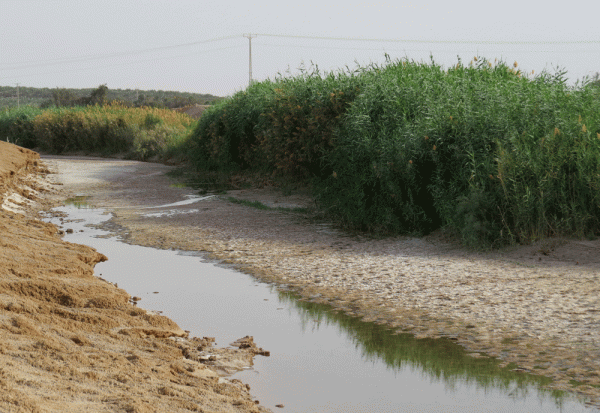
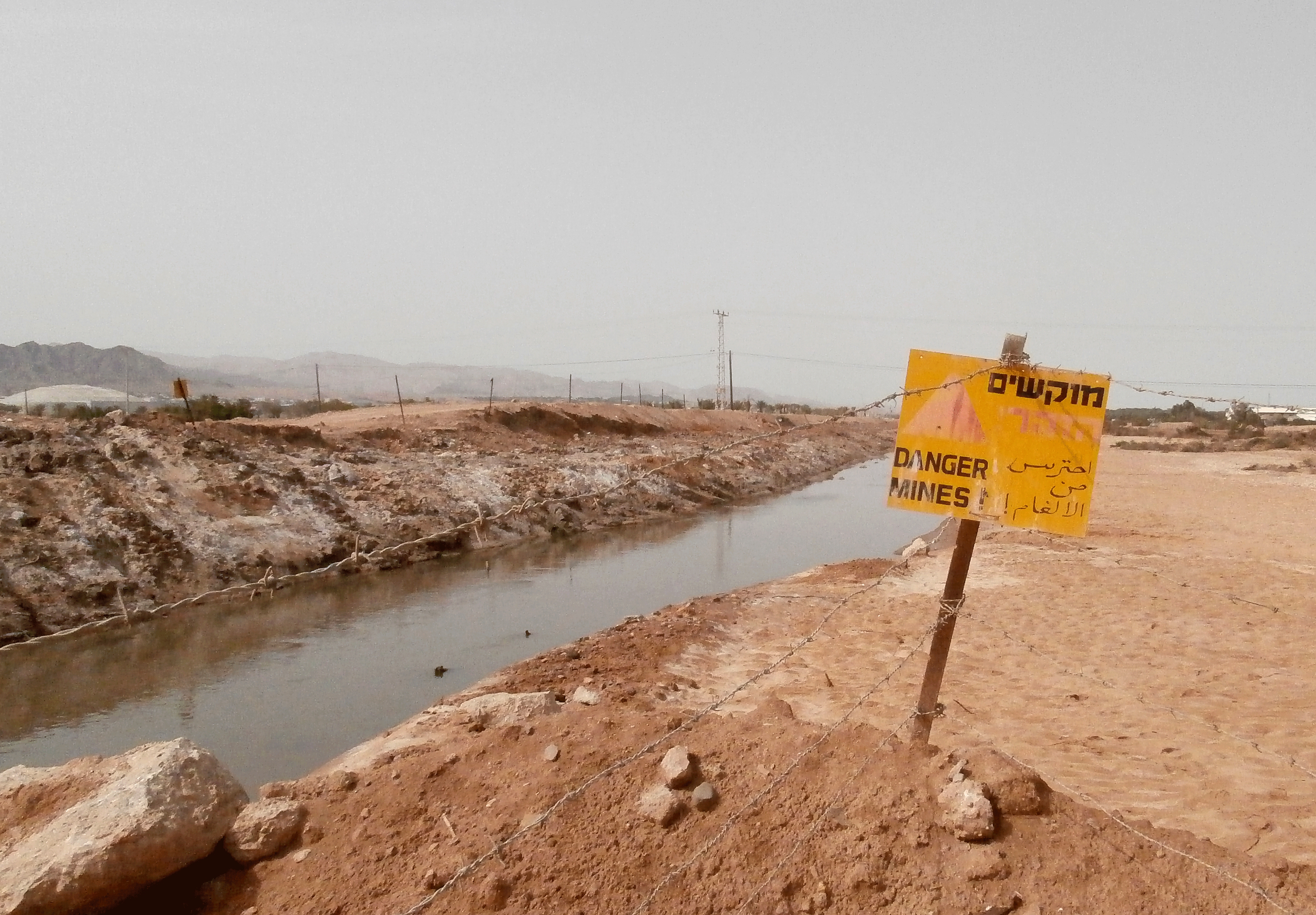
Near the Birdwatching Centre is this old drainage canal. Once this was one of the best areas to see crakes, rails, wagtails and warblers but it was partially filled in some 20 years ago. However winter rain had left some puddles ……

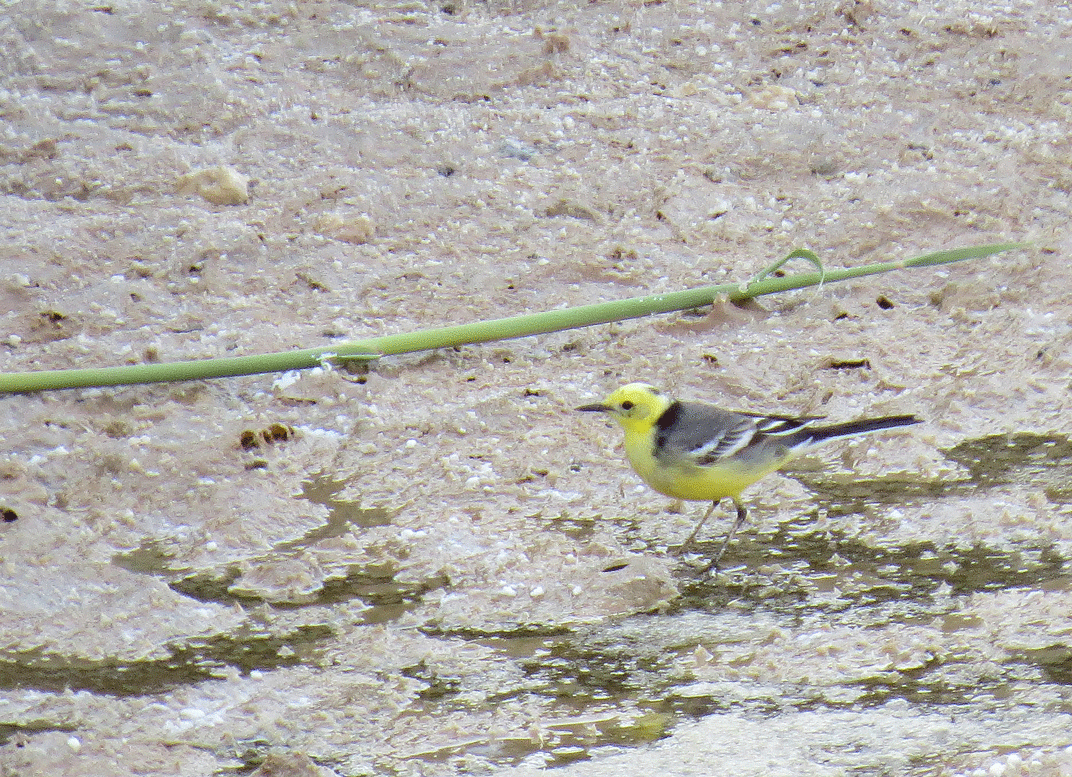
… and we saw three separate Citrine Wagtails.

Not all parts of the canal are accessible to the public. Pied Kingfisher was found on this stretch of the drainage canal.

Slender-billed Gulls were common on the saltpans …..

… as were Black-winged Stilts

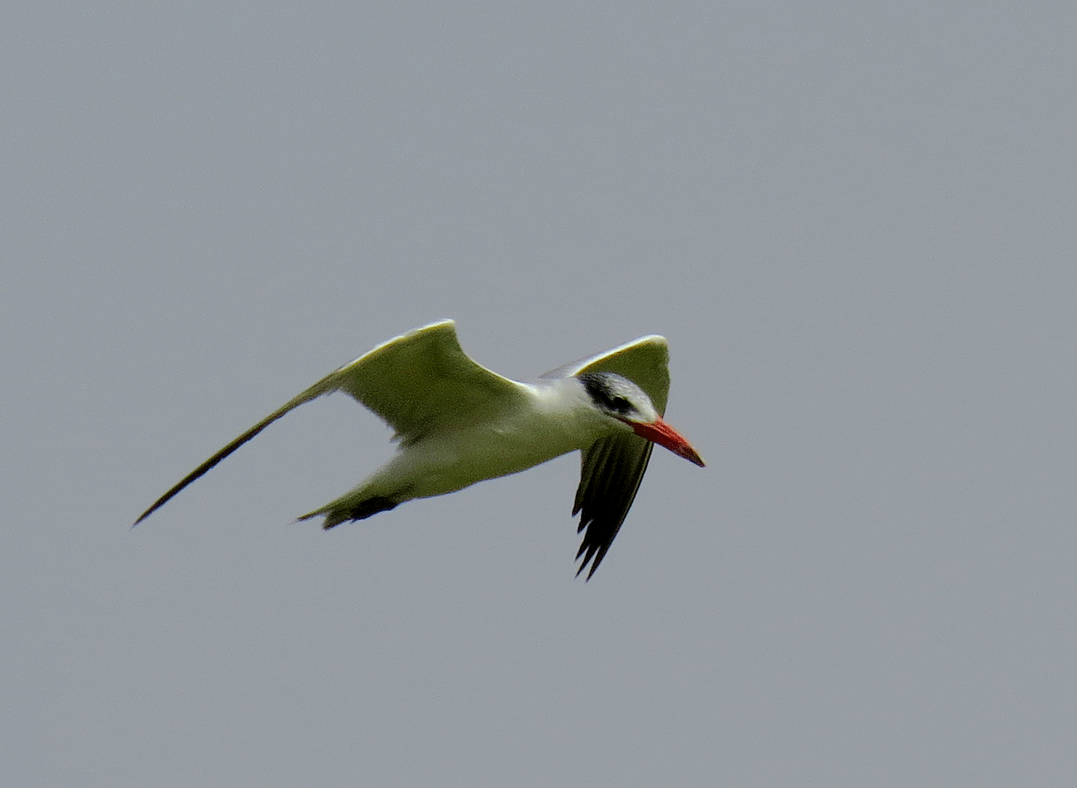
Caspian Tern, the size of a Herring Gull and the biggest tern of the world.
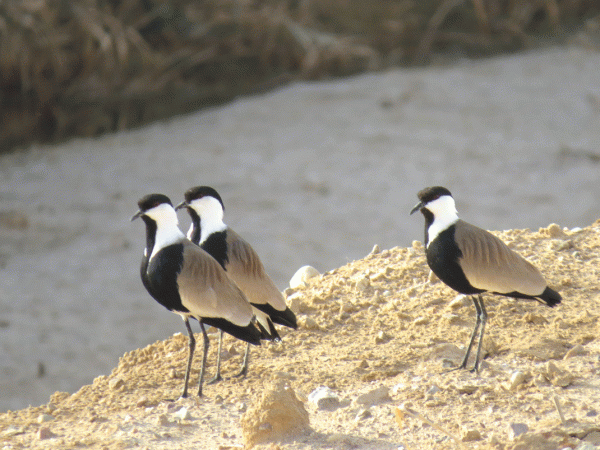
The ubiquitous Spur-winged Lapwings
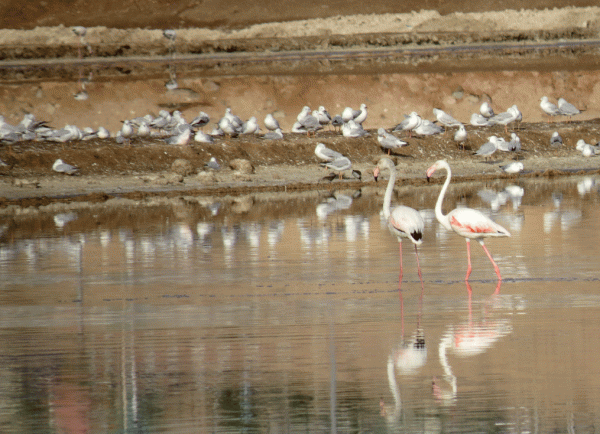
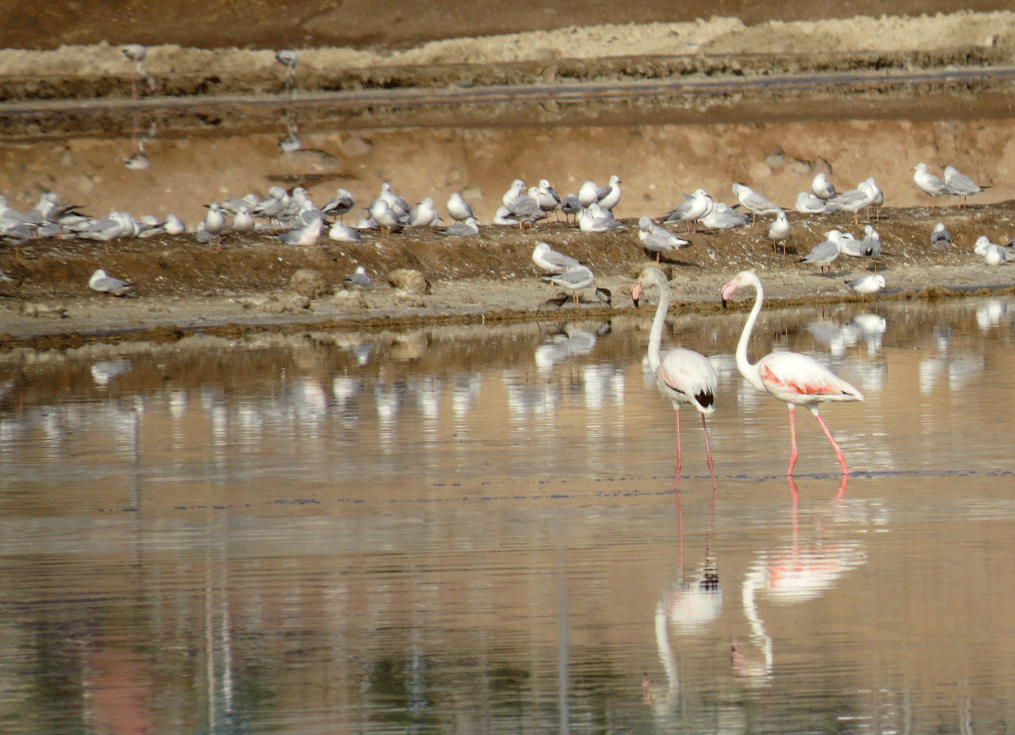
Greater Flamingos with Slender-billed Gulls in the background

Tiny Graceful Prinias were all over the Birdwatching Centre
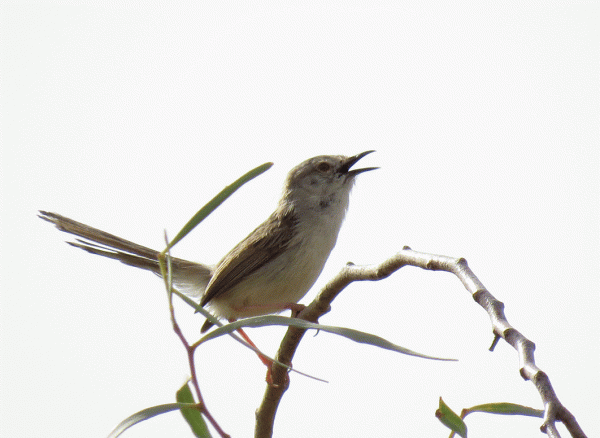
…. and could be seen singing from prominent perches.
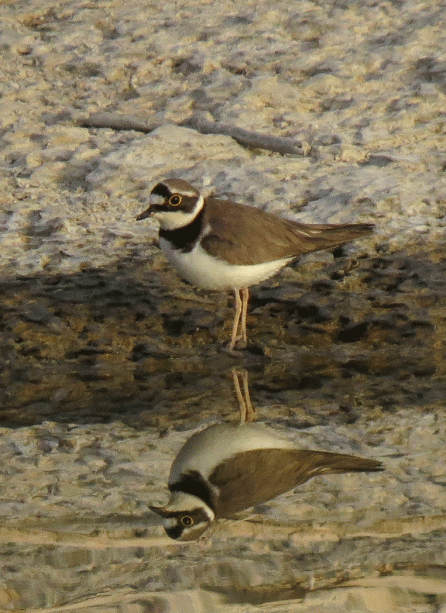
Lakes inside the Birdwatching Centre host fresh water species like this Little Ringed Plover.
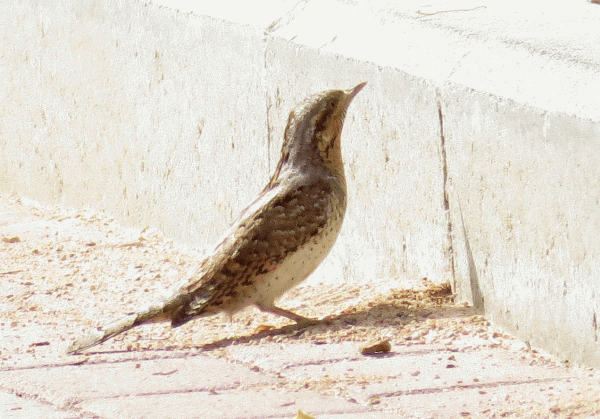
A Wryneck fed on the path

We also visited the mountains above Eilat but the impressive raptor passage, amounting to some 4000 Buzzards plus smaller numbers of eagles and kites was almost over by the time we got there

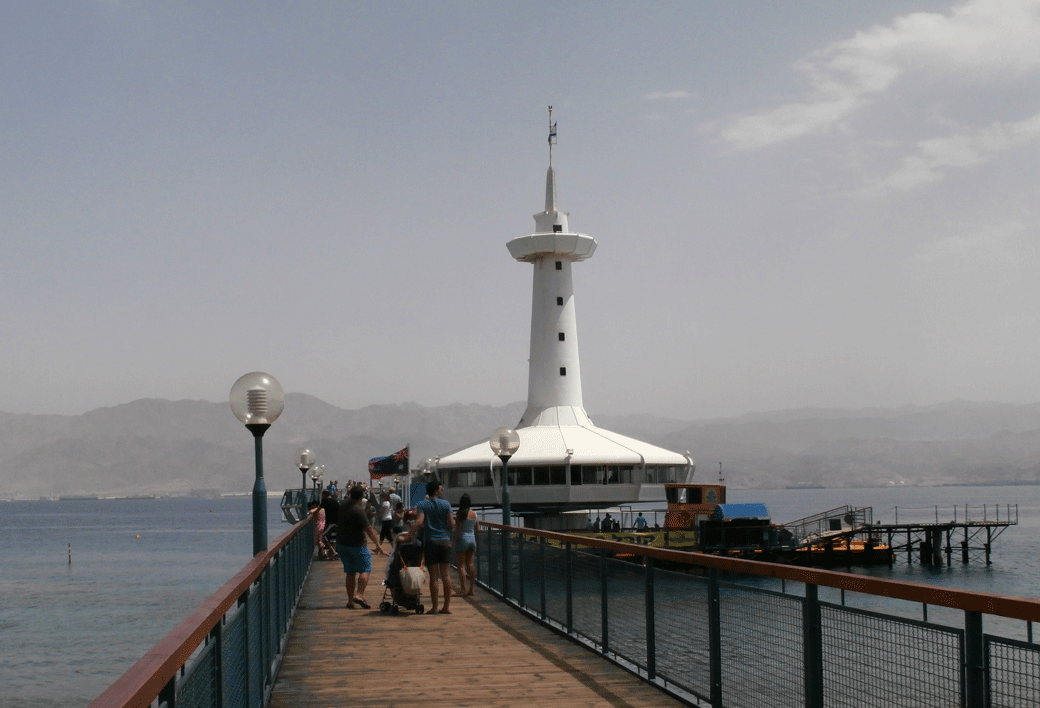
During the hottest part of one day we visited the Underwater Observatory where by descending steps to the underwater chamber you can look out onto the sea bed and the coral reefs. In common with everything at Eilat during Passover it was crowded and full of very noisy kids.

This is not an aquarium, it is an underwater view of the Gulf of Aqaba ….

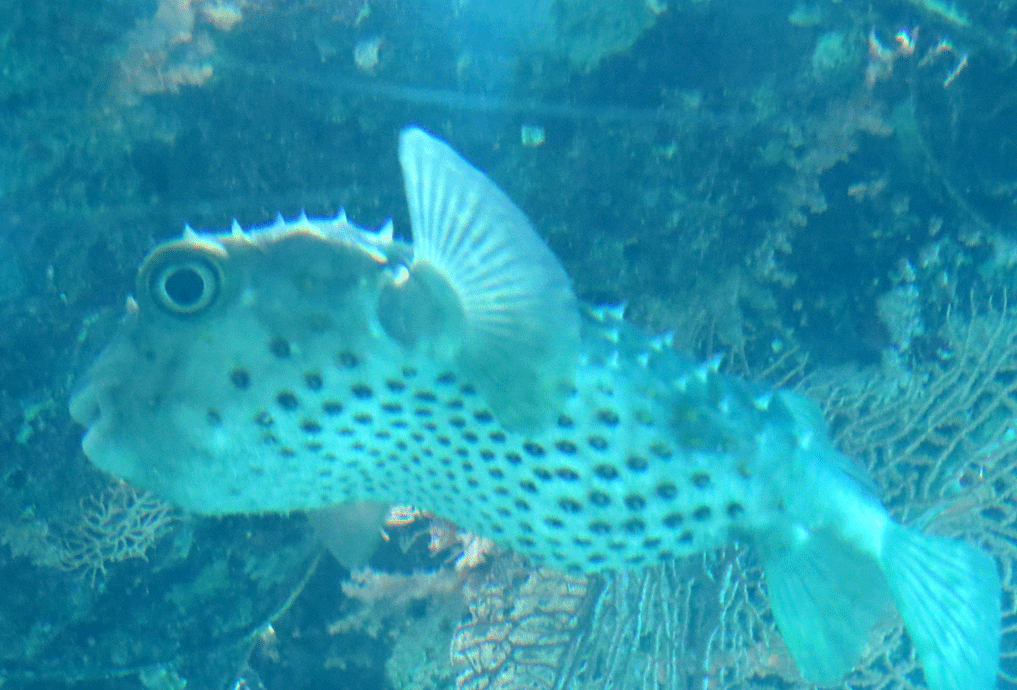
… complete with puffer fish …
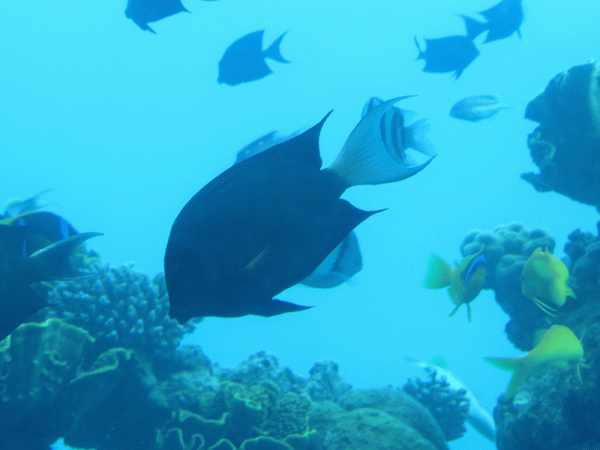
.. and many other species I couldn’t possibly name
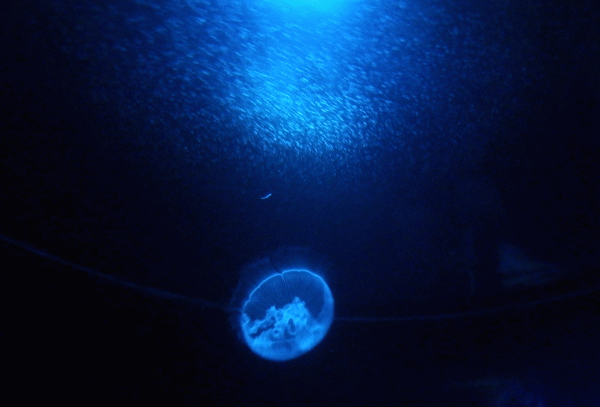
However these fluorescent jellyfish were in a darkened aquarium exhibit.
Friday 26th was clearly going to be a great day for spring migrants. The southward passage of a front overnight would be bound to bring migrants down, the only question would be whether it would still be raining at dawn. The only question was where to go, Portland? Durlston? or stay local and go to PC World drain? Shaun was free and wanted to go ringing, but he along with Paul and Kevin had to be at work mid-morning (how I wished I could have worked flexitime during my career), so we opted for PC World. We had another reason for this unusual choice, we were all surprised by the large number of migrants there last Friday and we wanted to find out if this was a regular feature.
Unfortunately it was still raining at dawn and it was 0630 before we put the nets up. Then we thought that it was all a bit of mistake, there were no birds! However after 90 minutes or so quite a few migrants arrived, and quite a nice mixture too, Blackcaps, Common and Lesser Whitethroats, Sedge Warbler, Garden Warblers, plus Willow Warblers and Chiffchaffs were all trapped, some 27 birds in total. On the other hand, at Portland, the rain had cleared by first light and over 150 birds were ringed in the first hour and a half. This confirms what we suspected, the fall occurred on the coast, our birds were ones that filtered inland and so arrived from about 0800. The high numbers we saw the previous week might have been migrants that were grounded for several days by bad weather and had concentrated in the sheltered PC World drain waiting for the chance to move on.

Lesser Whitethroat is a relatively scarce spring migrant. Strangely the entire European population migrates to and from Africa via the Levant. So some of the birds we saw in Israel a few weeks ago could have been on their way to the UK. Israel gets more foreign recoveries of Lesser Whitethroats from the UK than anywhere else.

A bit of a handful: ringing has shown Woodpigeons to be largely sedentary with a few recoveries in France and Ireland. However there is a large overhead movement through coastal Dorset in early November involving a few hundred thousand birds, the origin of these remains unknown.
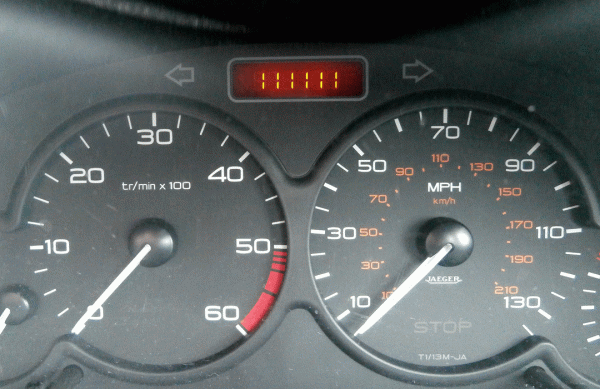
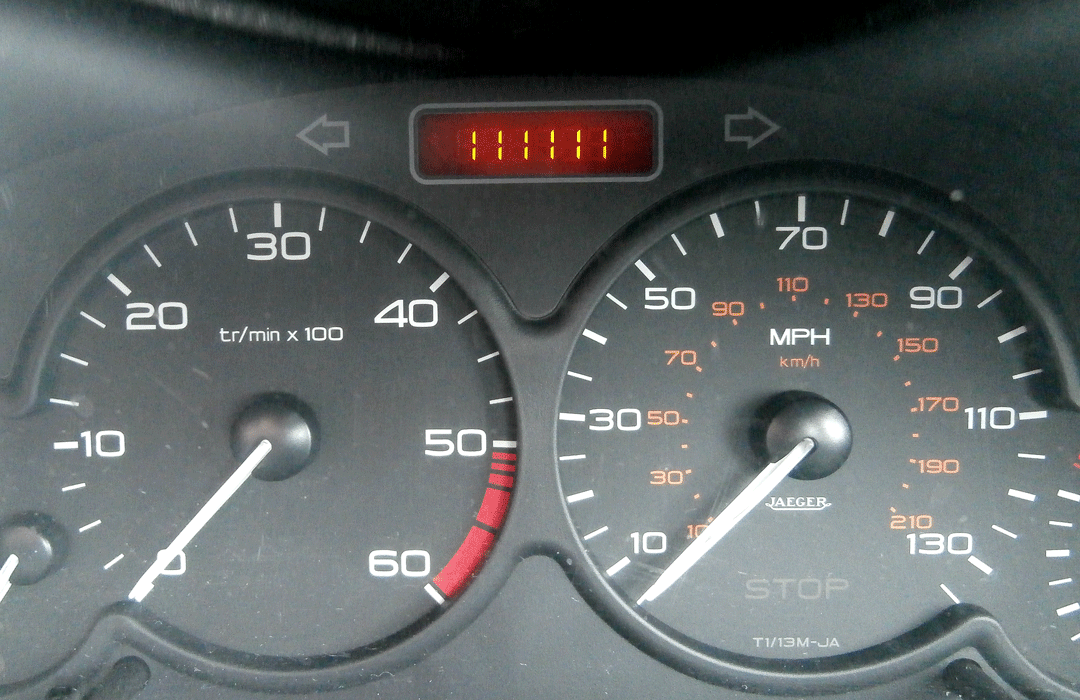
Eleventy one thousand and eleventy one miles – time for a new car?

On Saturday 27th Nick Hopper found a Yellow Wagtail at Holton Lee that appeared to be of the Spanish race iberiae. I popped down in the evening and found about 5 Yellow and 20 Pied Wagtails but they flew over to the Lytchett side of the river and never gave good views on the ground. I stayed until dusk and saw or heard my first Swift and Cuckoo of the year.

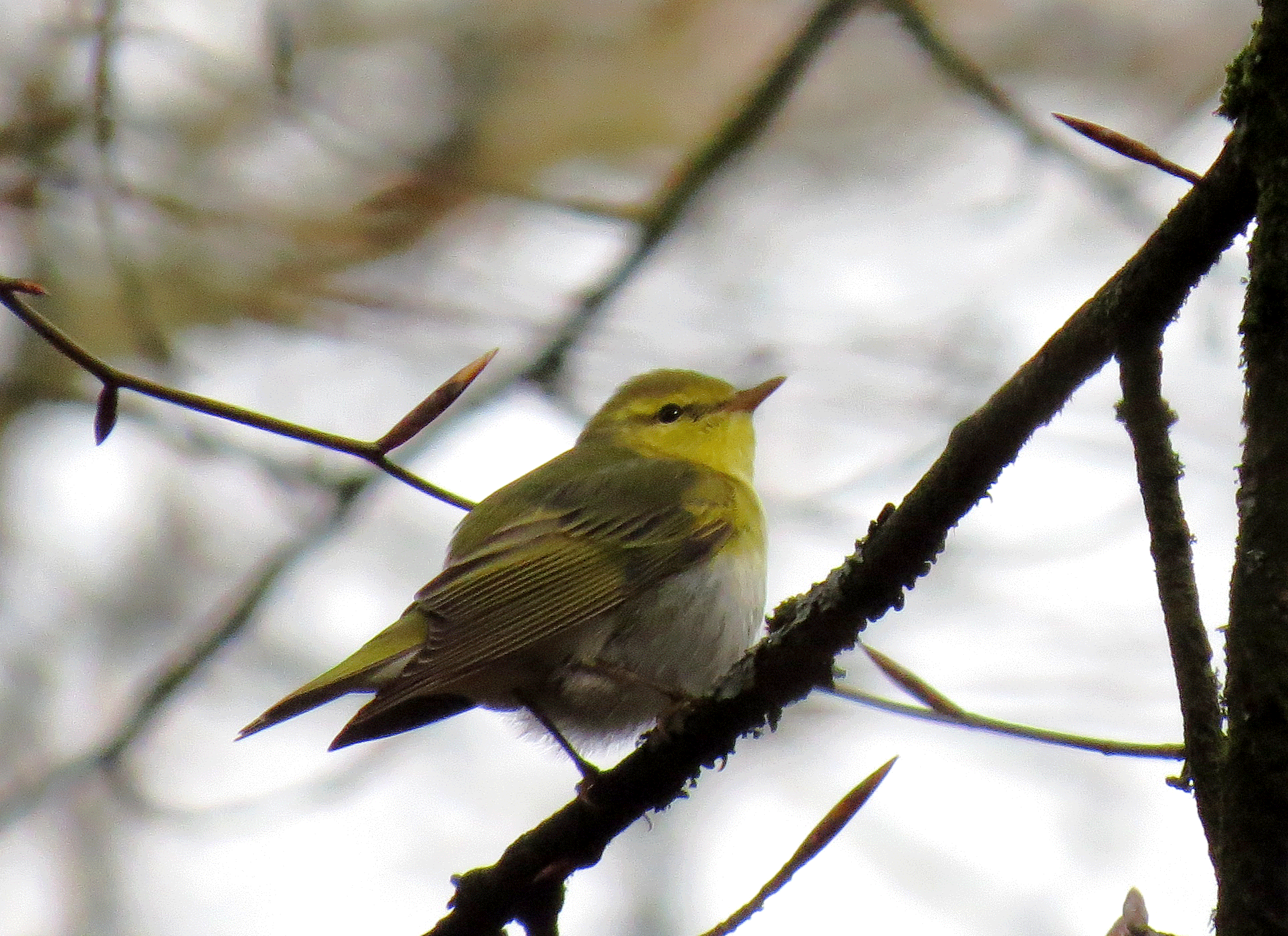
On Sunday 28th Margaret and I went to the New Forest looking for goodies like Goshawk, Redstart and the Wood Warbler shown here. This summer visitor is seldom seen on migration, having longer wings than it’s relatives it seems to be able to fly direct to its breeding grounds without a refuelling stop.
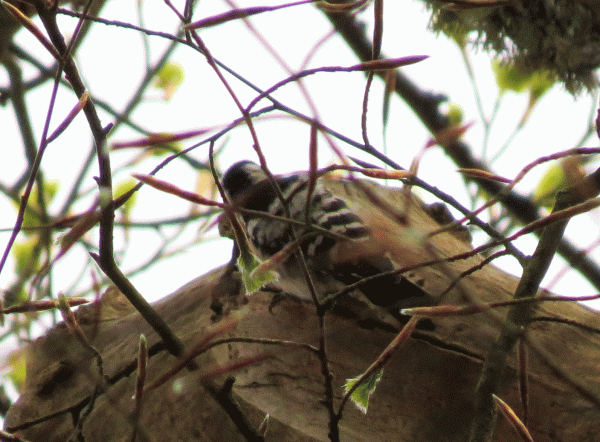
… but the highlight was this Lesser Spotted Woodpecker drumming high on a dead bough. This bird has greatly declined in recent years. Last year whilst trying for a big year list I made over 20 visits to the New Forest or Wareham Forest searching for this bird and all I managed was to hear a few snatches of drumming.
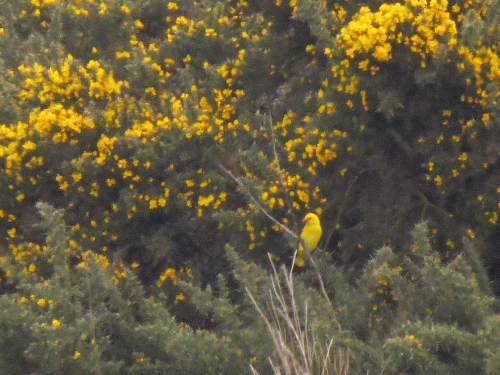
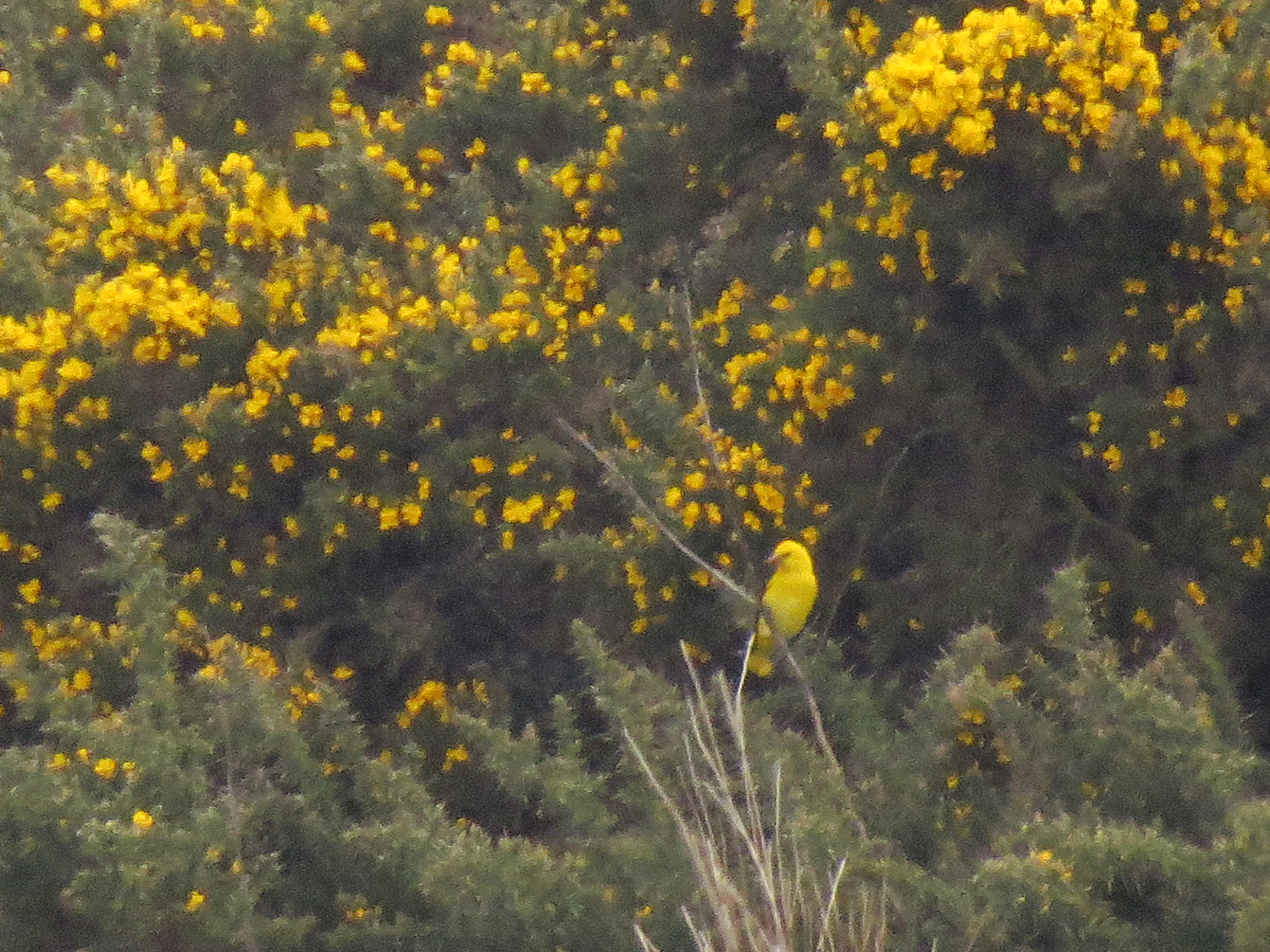
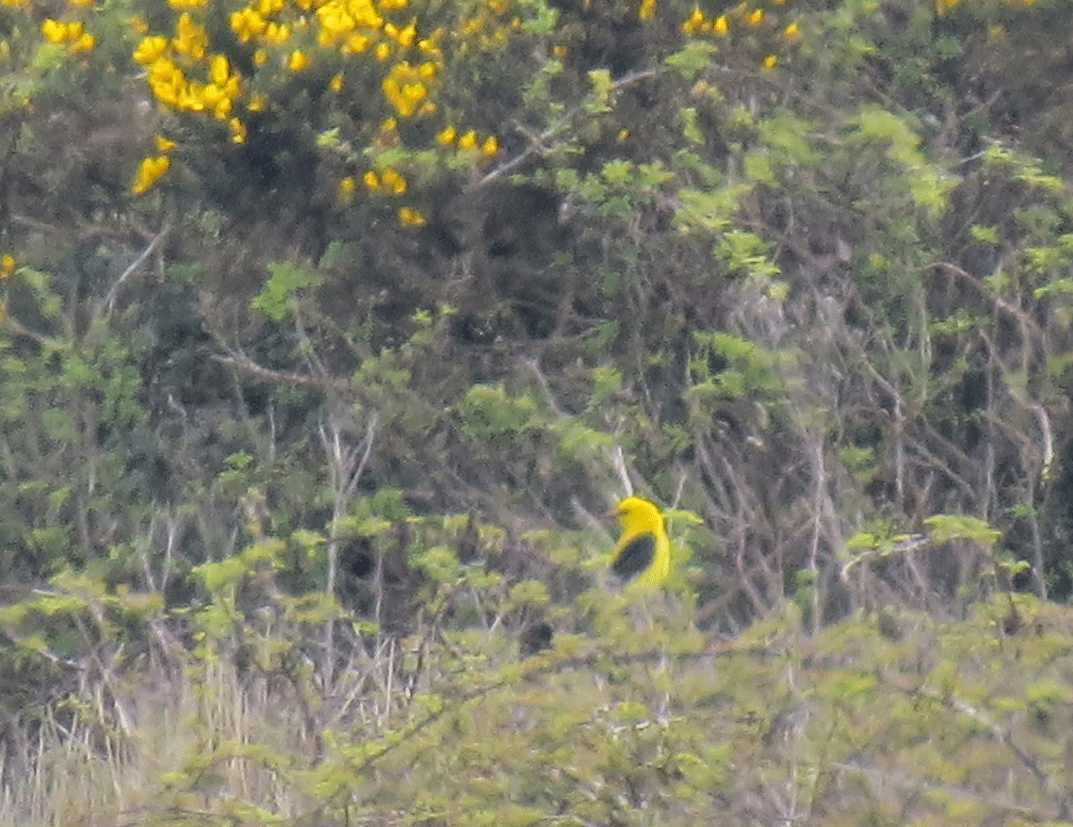
Whilst in the New Forest we heard that a male Golden Oriole that had been seen at Pennington marshes the previous day was still there ……

… the views were distant but through the scope the bright yellow bird sitting in a bright yellow bush looked fantastic. Although Golden Orioles can appear obvious in flight once amongst the leaves they effectively disappear. This is even truer for the green females.

Making it up as we go along – Simon demonstrates ringing with no birds to ring!

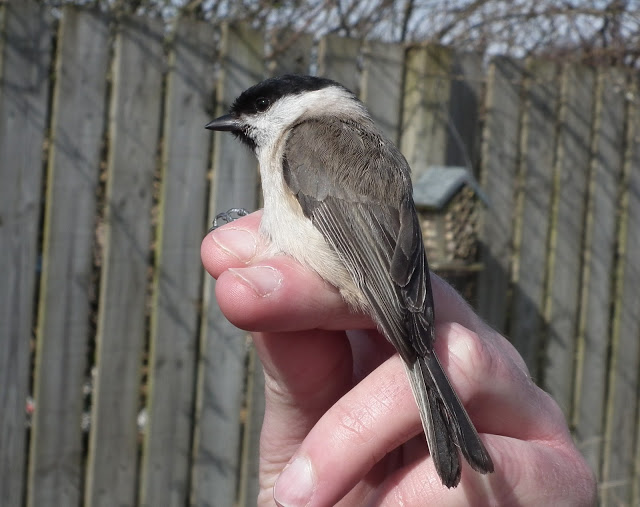
The first Marsh Tit we have seen at Durlston. This species is declining rapidly and what it was doing at Durlston away from its normal habitat of mature woodland is anyone’s guess.

Later on the 21st we celebrated Margaret’s birthday at The Sandford pub. We were joined by Anita and Janis ….

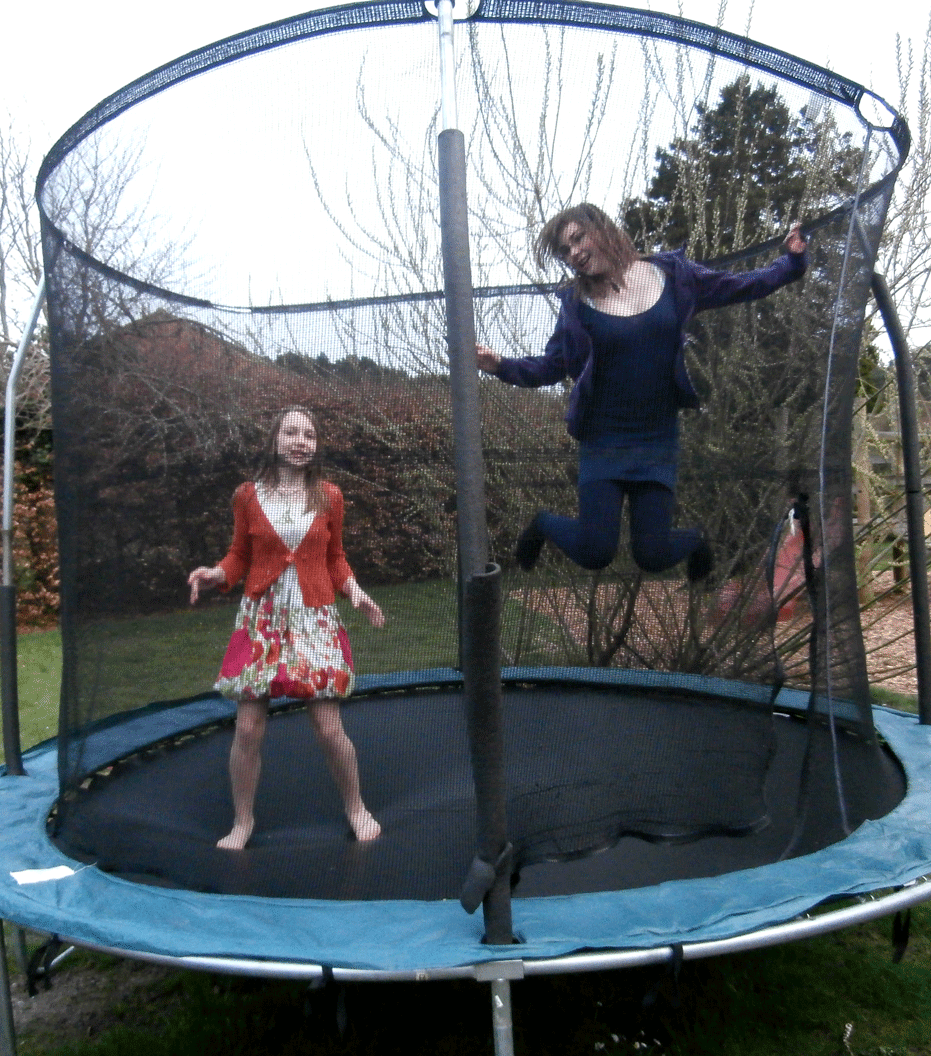
… whilst Kara and Amber played on the trampoline outside ….

… try as I might I couldn’t get a shot with both girls in the air at once.
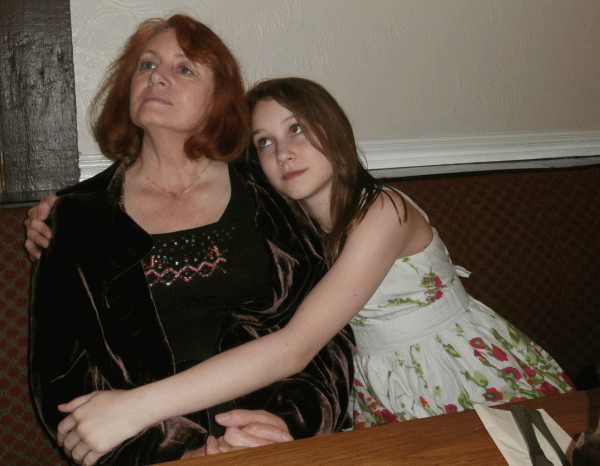
A birthday hug for grandma.

On Thursday I gave a lunchtime talk to my ex-colleagues at the lab on the subject of my three tours to New Guinea. This is a tiny island in the d’Entrecasteau archipelago in the far east of PNG.

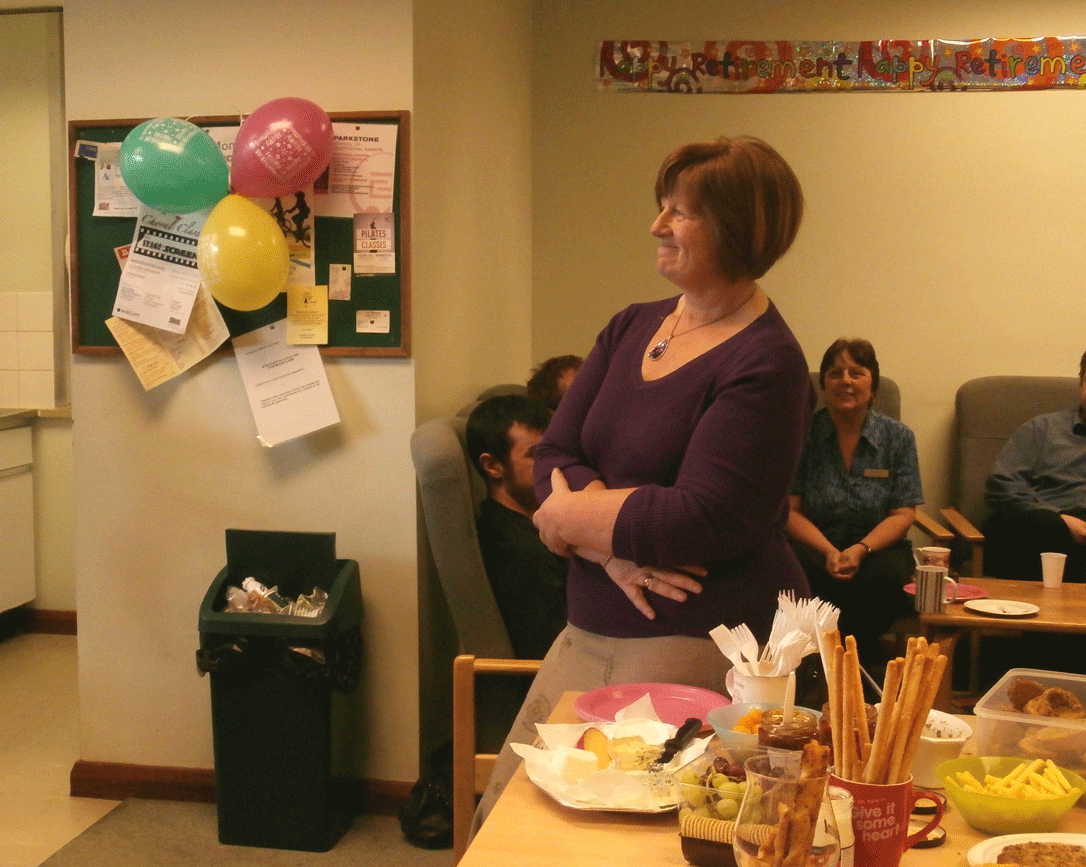
On Friday lunchtime I returned to the lab for Shirley Maynard’s retirement. Shirley, along with husband Brian worked in Microbiology in the 80’s, then after a break she came back to work in Haematology.

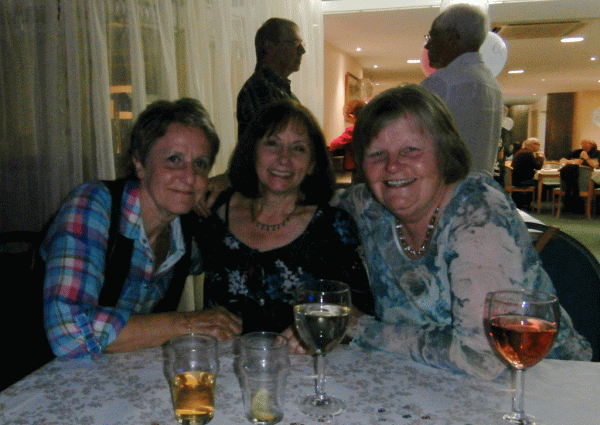
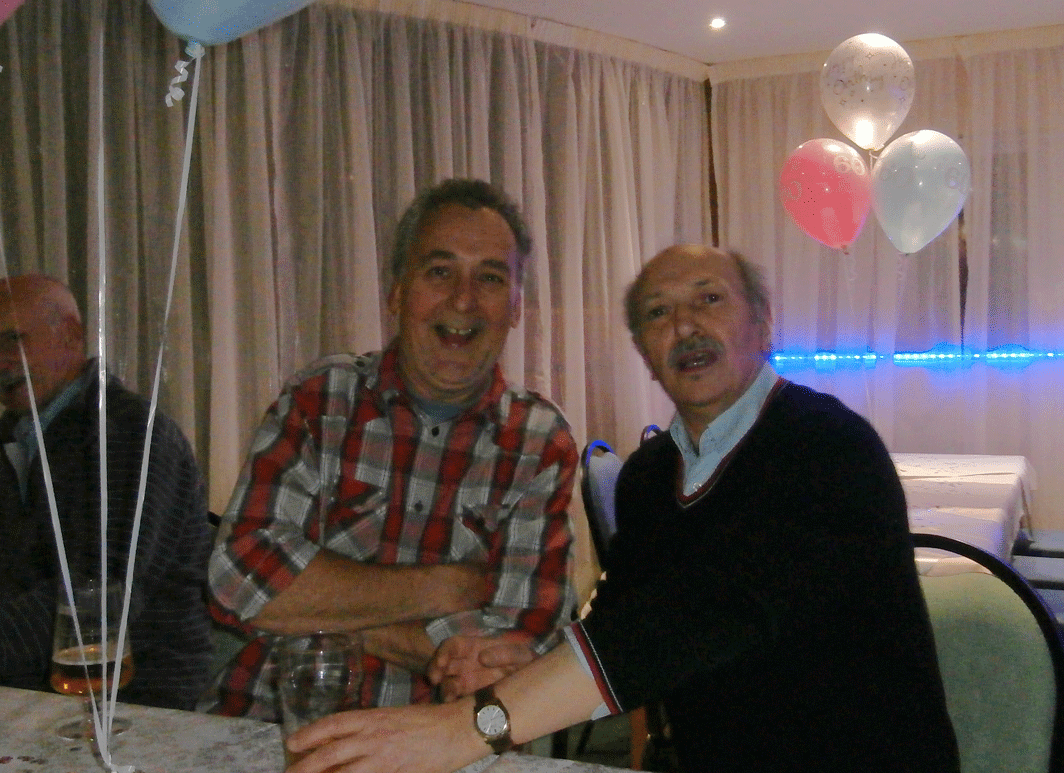
Work do’s are like busses, none for ages then three come along at once. On Friday evening another ex-colleague Sue Wolfe and her husband Chris held a party to celebrate their 60th birthdays. L – R Jessica Pietrangelo, Sheila Peace and Sue Wolfe
More ex-colleagues, L-R Ann Hitchcoe, Linda Shannon and Val Hunt.
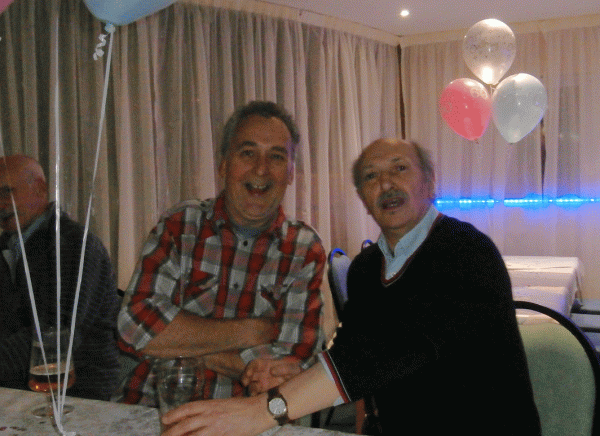
Chris Bunn and Gio Pietrangelo

It’s about 1.5km from the car park to the entrance of the Petra gorge. Not far, but tiring in the desert heat. You can travel by pony and trap.
.
Petra, the ‘rose-red city half as old as time’ lies in the mountains of Jordan, a two-hour drive over the border from Eilat. We booked with Desert Eco-tours, an Eilat company. They picked us up from our hostel and took us to the border crossing. An hour or so later we were through all the searches and formalities and on a Jordanian tour bus.
Petra, Arabic for stone, is an archaeological city famous for its rock-cut architecture and water conduit system. The location for many feature films, notably one of the Indiana Jones films. I have wanted to visit for decades, but last time I visited Israel (1986) the border was still closed. I had considered flying to Jordan just to visit Petra, but when I found that this could be incorporated into our Israel tour I jumped at the chance.
Petra was possibly established as early as 312 BC and was the capital of the Nabataeans. Situated in bowl in the mountains it remained hidden to the western world until 1812. Then Nabataeans were great traders importing goods from as far away as Yemen. As the civilisation grew they expanded beyond the confines of Petra and this brought them to the notice of the Roman Empire which in due course conquered them. After the decline of the Roman empire the location of the site was lost to all but local tribesmen.
Although it was a long day, with a lot of faffing to get a few hours of sightseeing, Petra fulfilled all my expectations; the glimpse of the Treasury seen through the narrow chasm remains one of the most memorable from any man-made site in the world. It was, due to the holiday season, rather crowded and noisy but it was still one of the highlights of the trip.
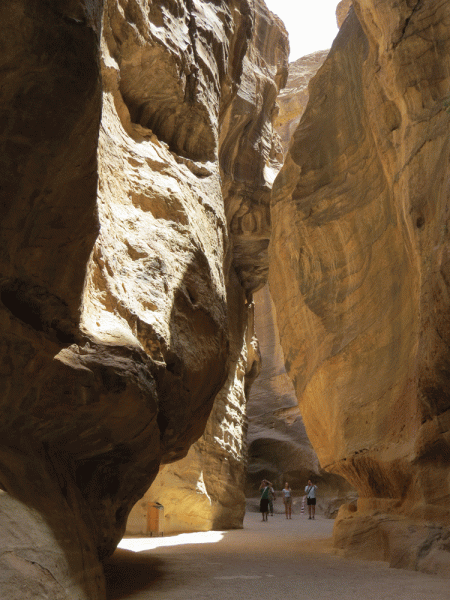
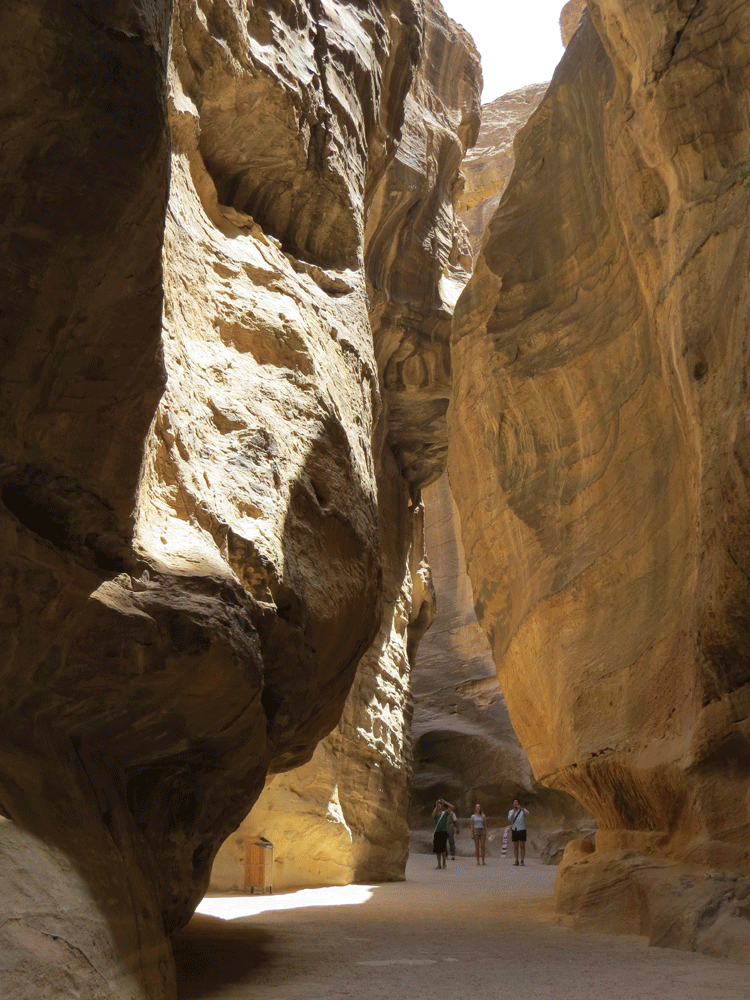
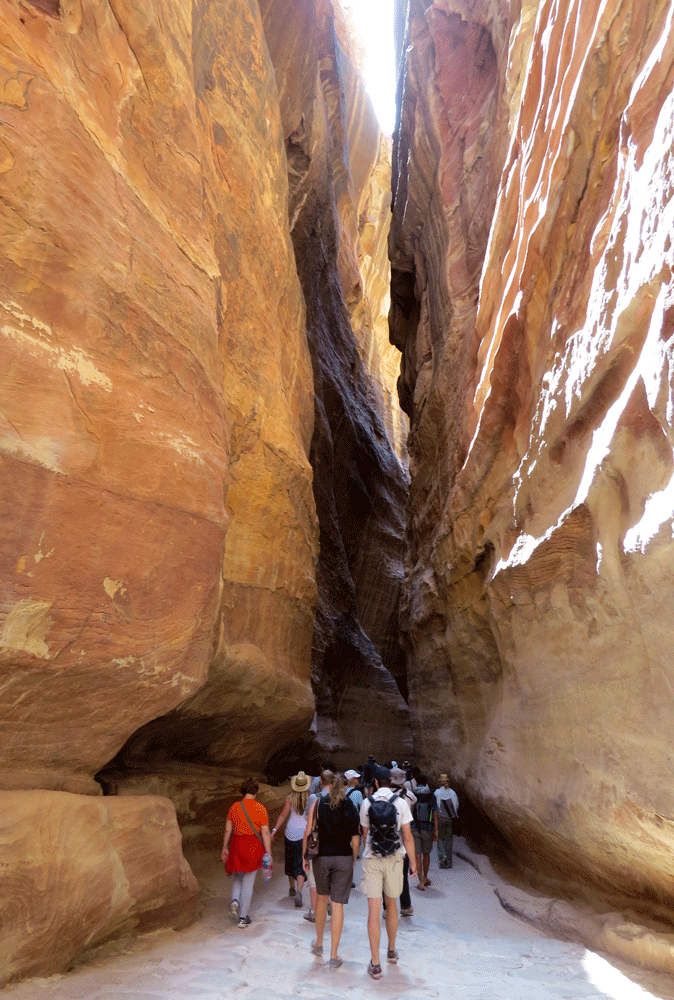
We entered the narrow chasm which extends for nearly another kilometre.
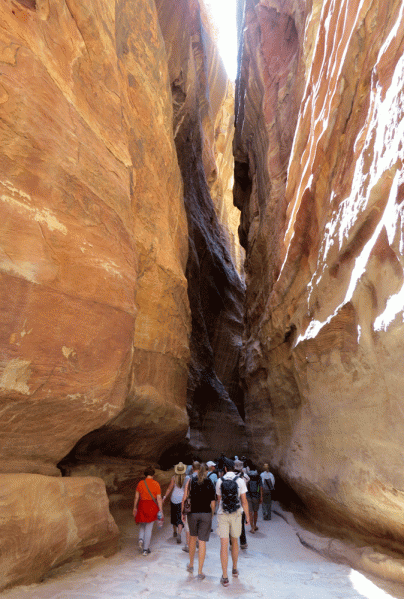
The chasm was once about 6m deeper but was filled in by the Romans after they conquered the area so that chariots could be driven through.

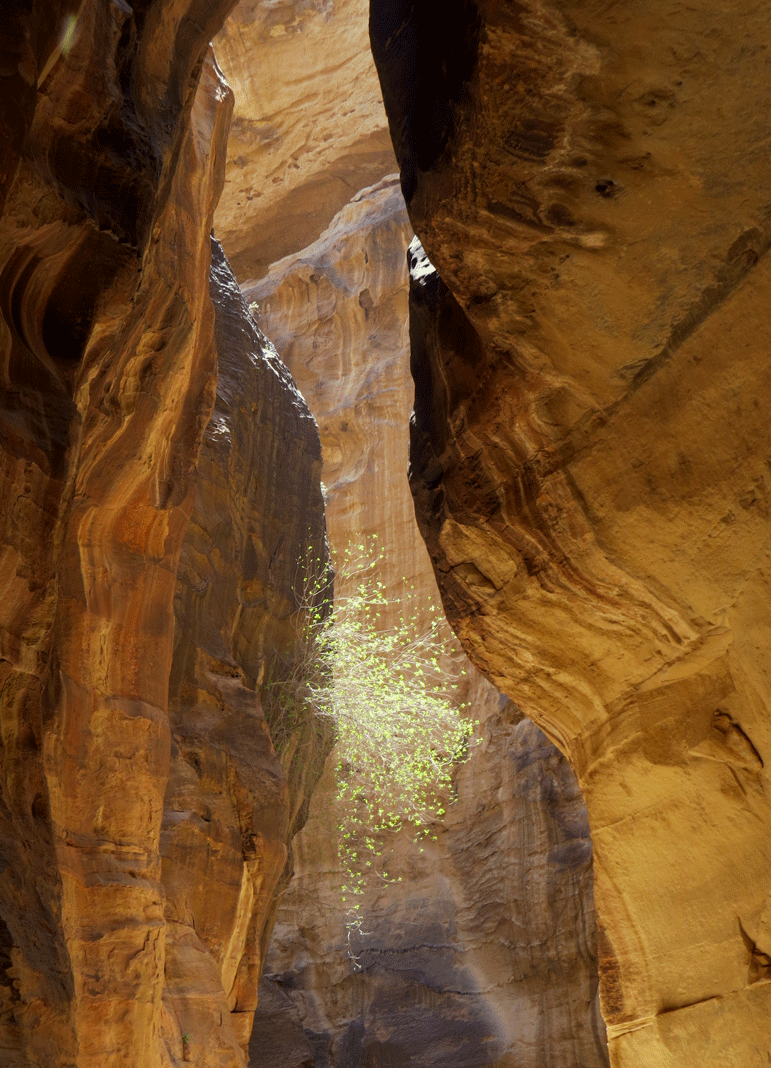
Sunlight illuminates a bush in the canyon.

At last we see one of the most wonderful views in the world – the sunlight Treasury of Petra framed by the dark walls of the chasm.

There is no evidence that this was ever a treasury, but this is the name by which it now known.

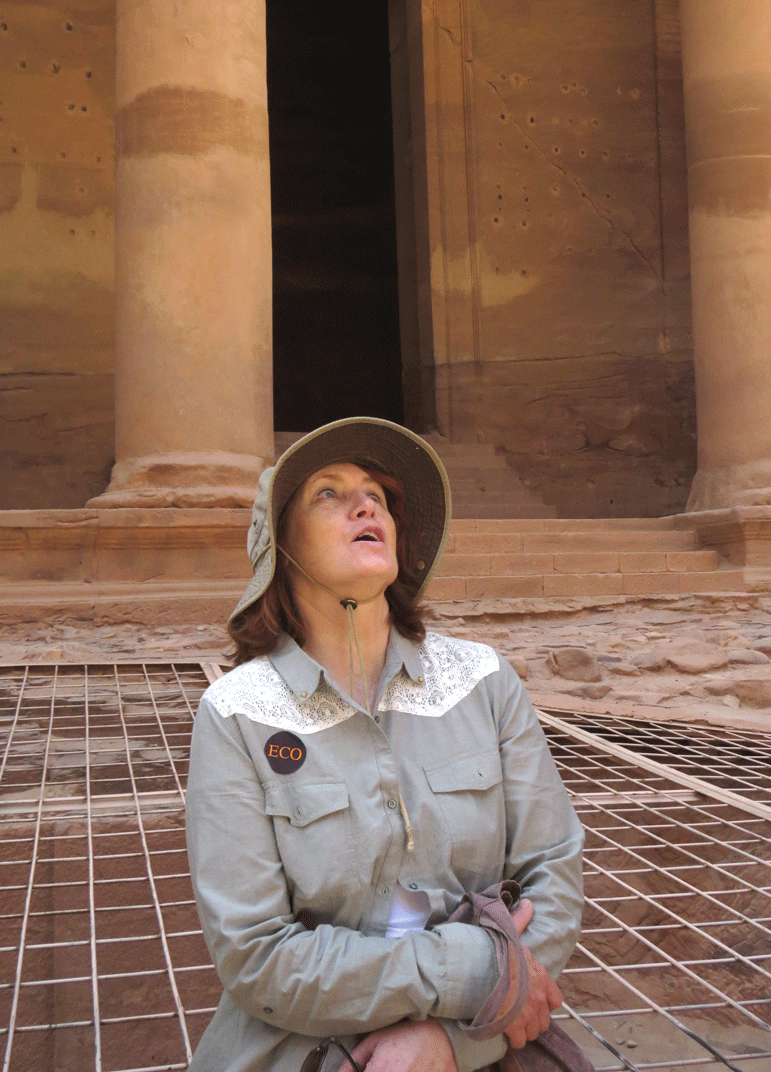
Details of the architecture.

Just one word from Margaret – ‘Gosh!’

Unfortunately due it being holiday season, Petra was packed with tourists.
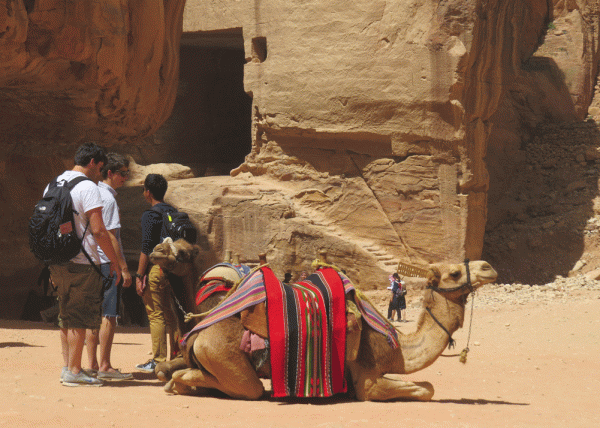
Local traders hassle you to take a camel ride.
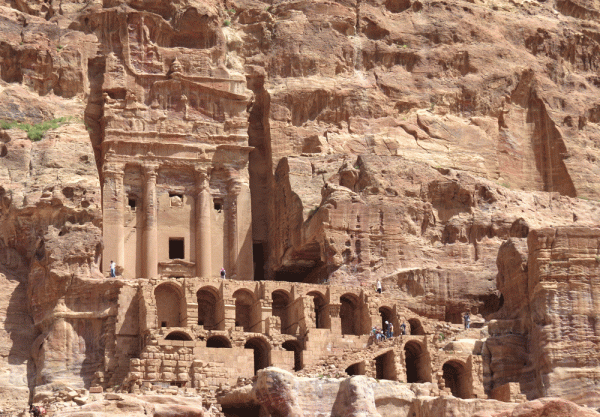
There is a lot more to Petra than just the Treasury. Most of the remaining buildings are tombs. Most of the Nabateean’s living quarters were destroyed by an earthquake.

The amphitheatre

The area is composed of sandstone which was laid down in layers over the aeons forming the banding in this cave.

Up close the rock formations are really beautiful.
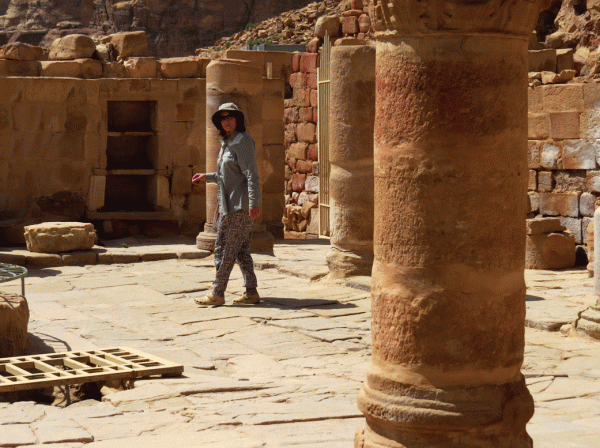
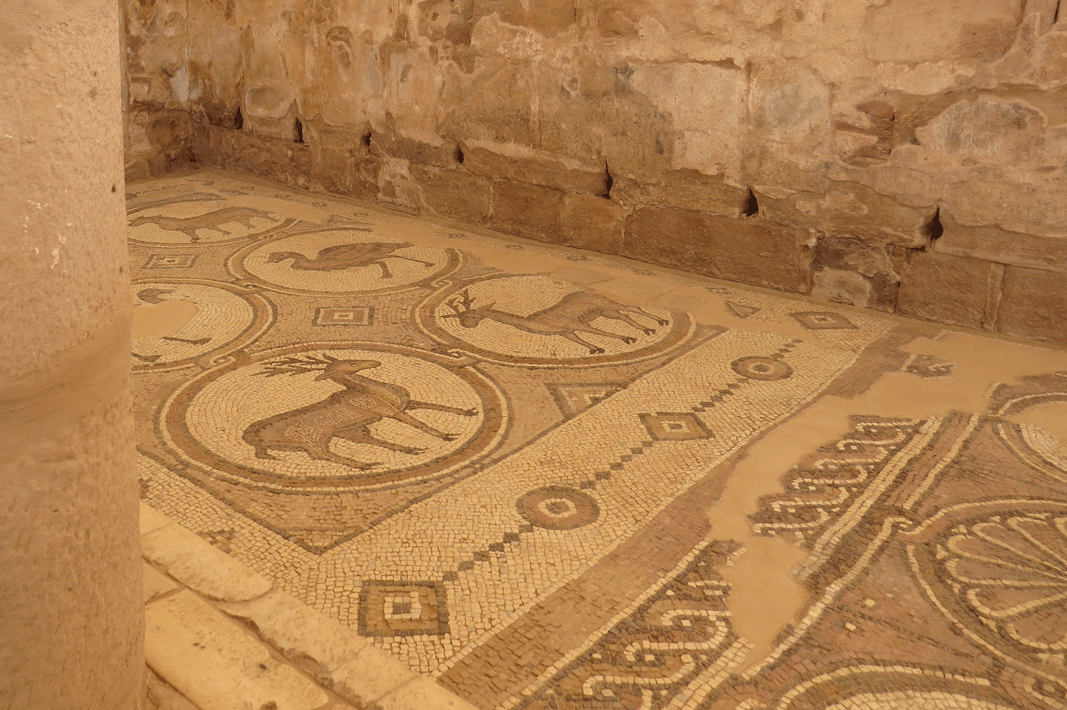
As well as the Nabataean ruins, remains of a Byzantine villa remain ………
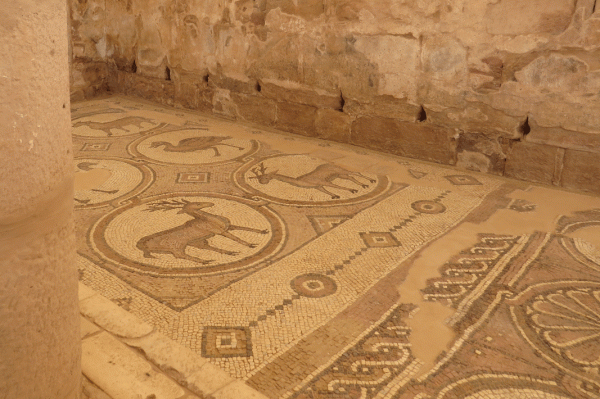
….. with wonderful floor mosaics.

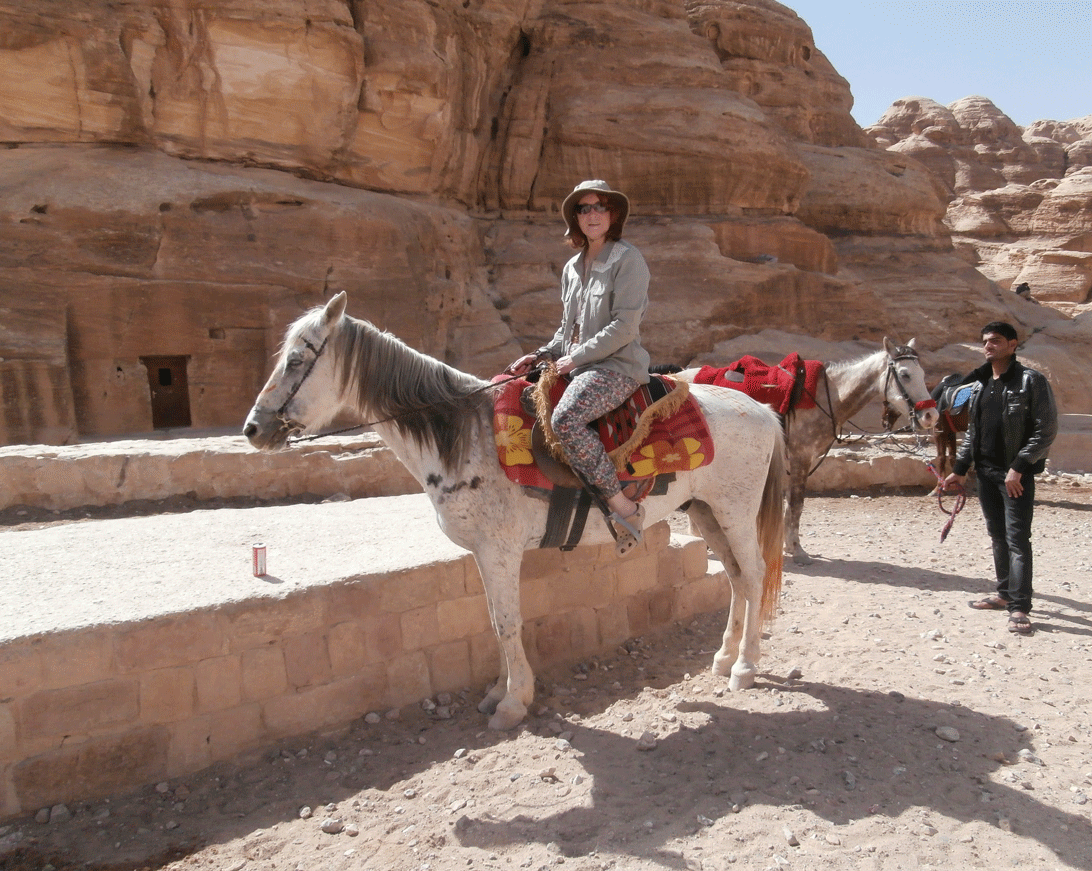
Hot and tired we took advantage of a horse ride back to the bus.
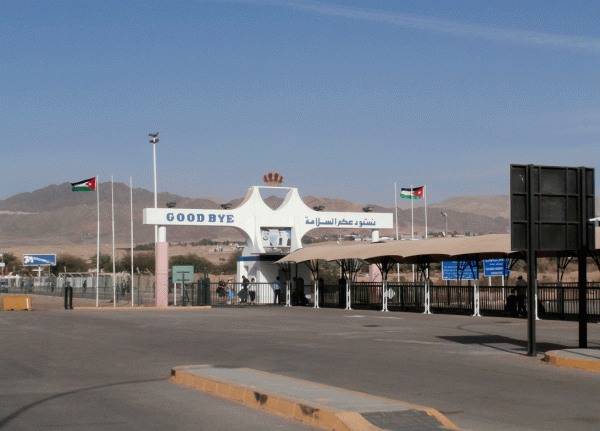
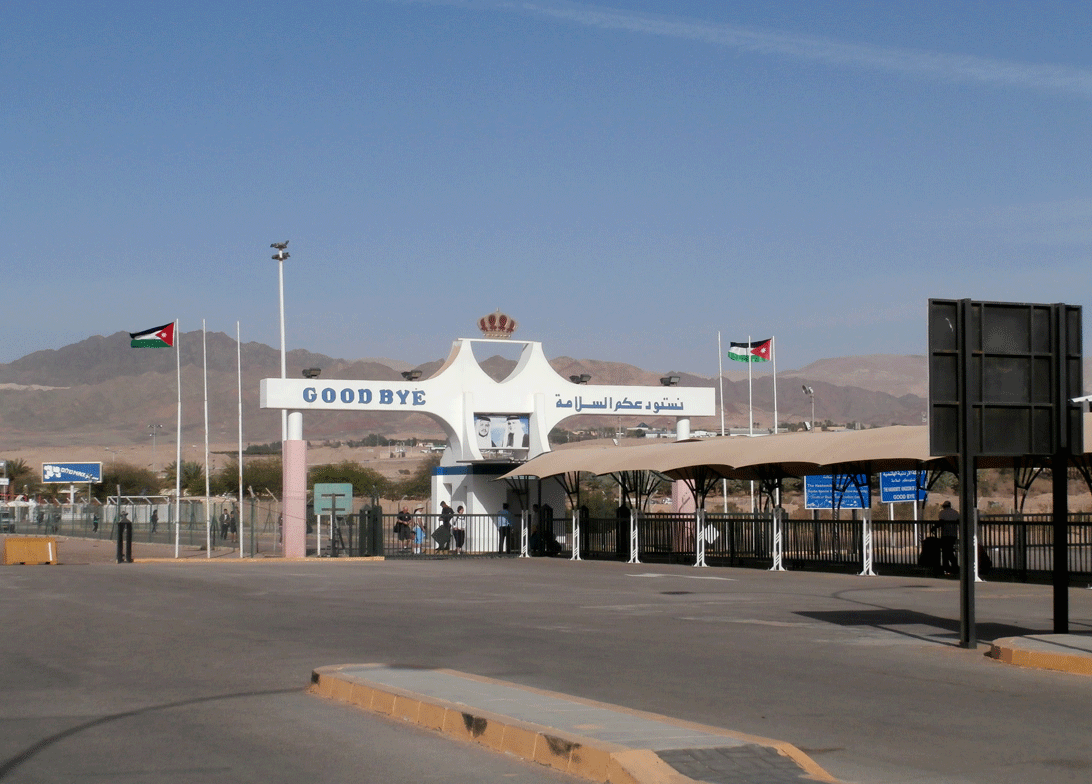
Eventually we returned to the border for lengthy checks before we were allowed back into Israel.
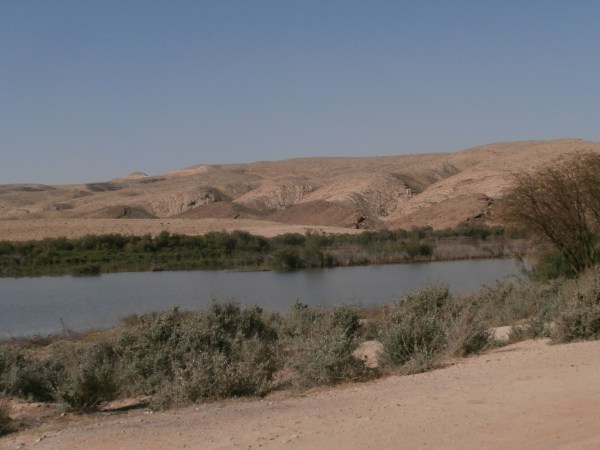
We had a stroke of luck this morning, Israel put its clock’s forwards so we could have a breakfast and still get out soon after dawn. we left Beer Sheva and drove about 30 minutes to Yerovan Lake. This site proved to be a haven for migrants and resident species alike.

This Blackstart is a close relative of the wheatears and is a resident species in parts of the Middle East.
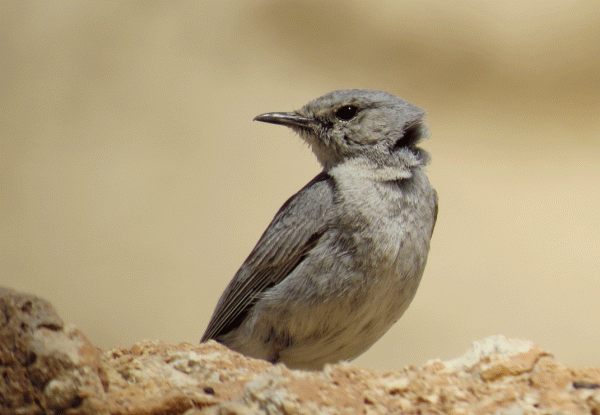
It lacks the white rump (the ‘white-arse’ that is the origin of the word wheatear) of the other species but as the name suggests has a solid black tail.
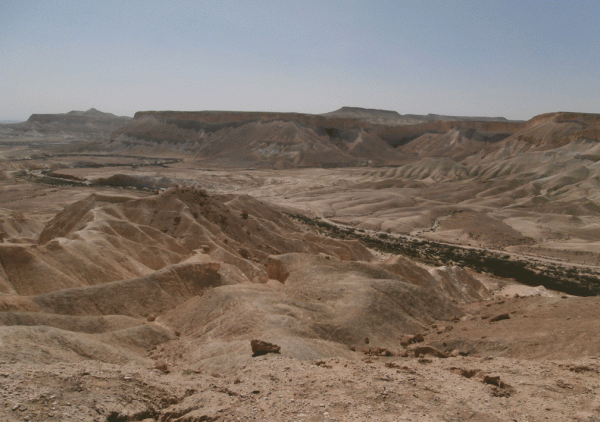
We stopped near Sde Boker at a site that overlooks the Wilderness of Zin. This area is where David Ben Gurion is buried and as it was the Passover holiday many Israeli tourists were visiting the area.

The scenic Ein Avdat canyon was full of day trippers and noisy kids. It wasn’t the best conditions to search for wildlife ……
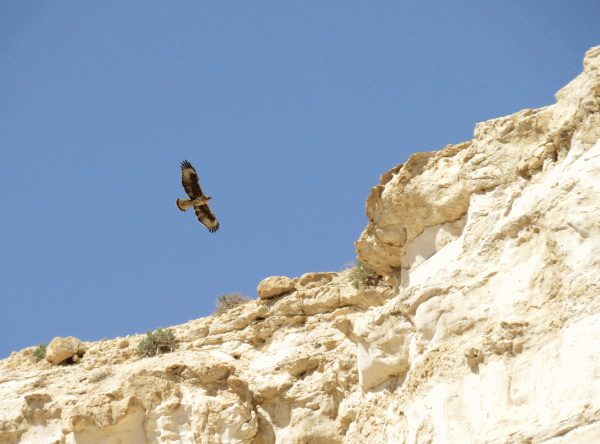
… however before long a stunning Bonelli’s Eagle flew over the canyon rim.
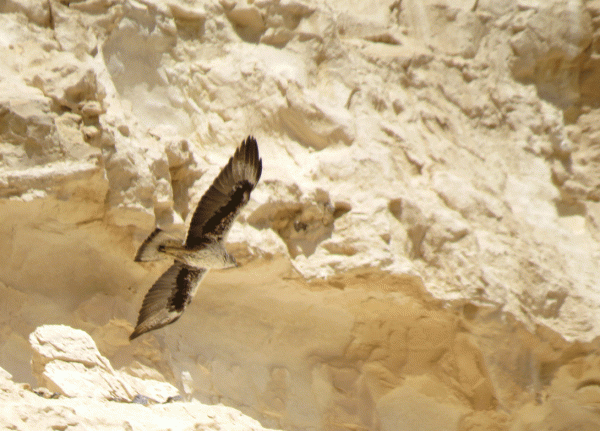
.. which flew quite close and gave great views. This resident species is named after Professor Franco Andrea Bonelli (1784 – 1830) Italian naturalist and collector.
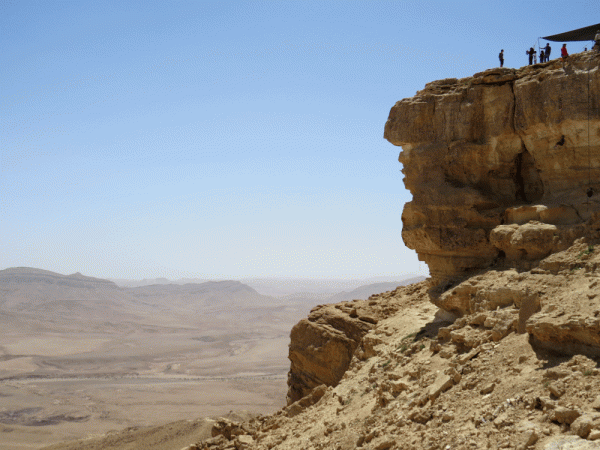
Later we reached the wonderful Ramon crater near the town of Mizpe Ramon.
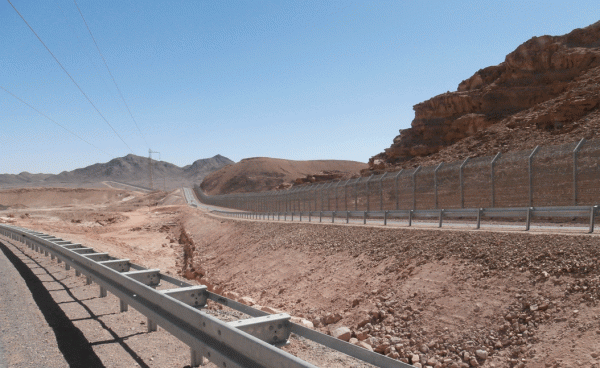
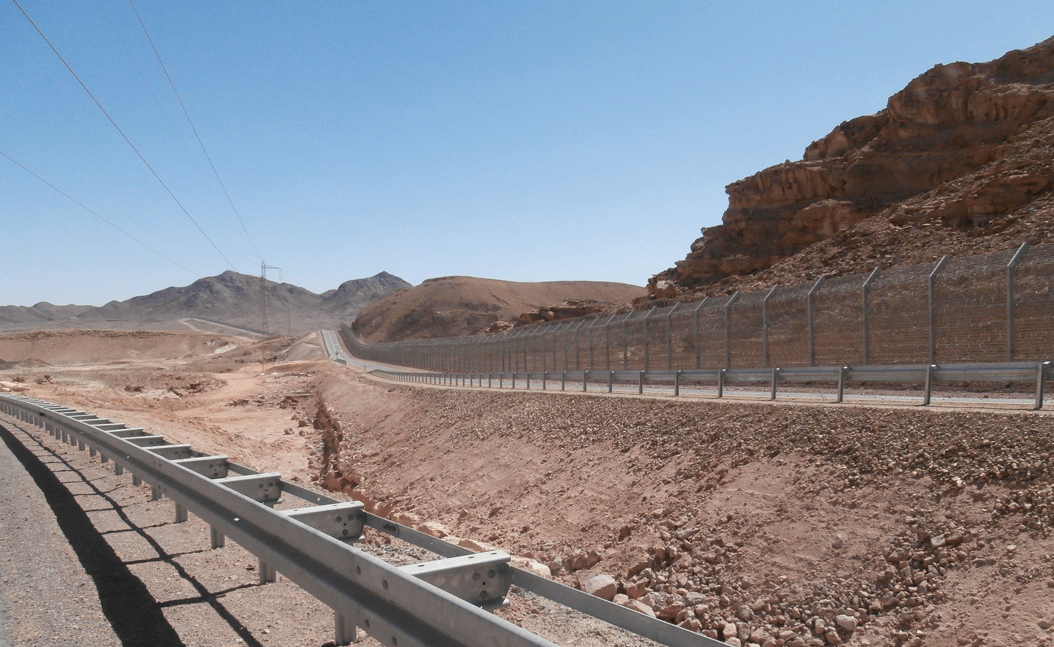
Further south you have the choice of driving to Eilat via the Avava Valley or heading towards the Egyptian border. We chose the latter. This is the 4m high security fence that marks the border.

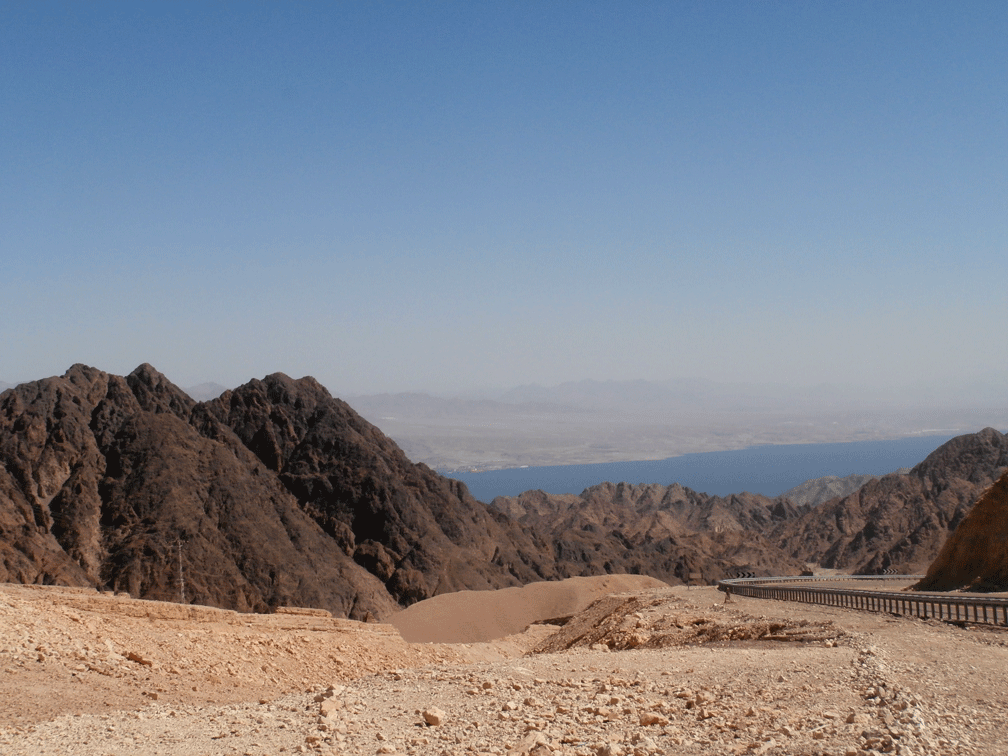
Eventually we had great views over the Gulf of Aqaba. There is a four country view from here. In the distance is Saudi Arabia, the land on the far shore of the Gulf is Jordan, whilst Egypt is just behind me. Aqaba can just be seen on the shore of the Gulf, whilst Eilat is hidden by the nearby mountains.
Breaking off from the Israel saga for the time being to bring my British birding/ringing up to date. Since my return last Sunday I have just made one visit to Portland, Radipole and Swineham and a few to Lytchett Bay.
At Portland I was in the wrong place all morning whenever the skuas went past but I did see a couple of Arctic Terns and a number of common spring migrants, at Radipole I connected with one of the Garganey that have been there recently. I visited Swineham near Wareham because I ended up running Amber to school after she missed the bus. It was a cold and very windy day and little was to be seen except for a substantial gathering of Swallows and Martins over the lake.
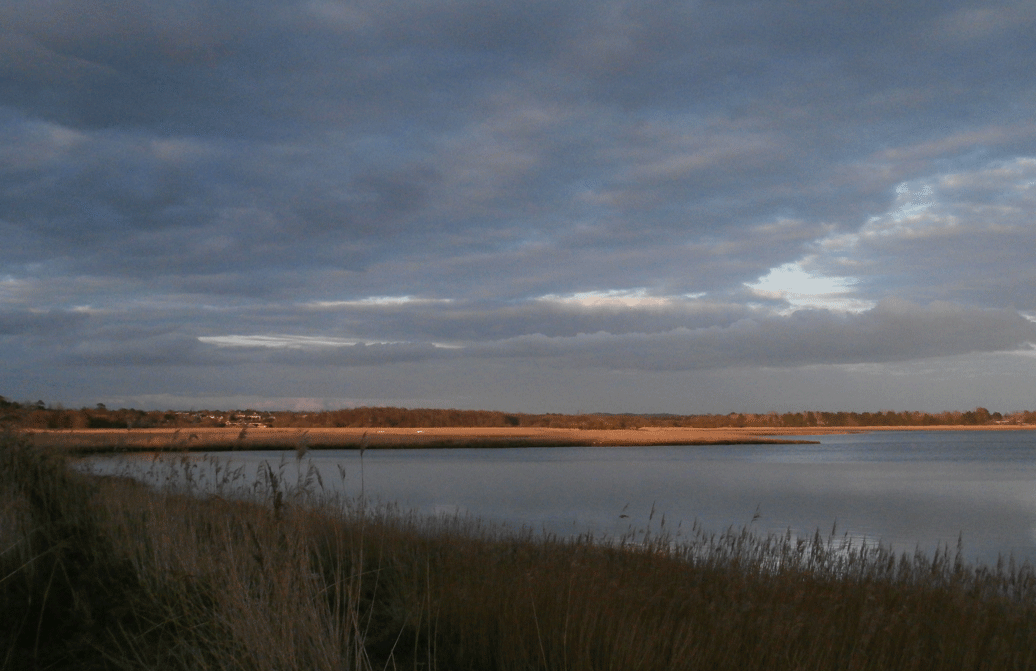
My visits to Lytchett were mainly to try and catch up with a Red-throated Diver that has been there for several days. Only the second record of this species in the Bay, I eventually caught up with it on the 20th, not in the Bay itself but just outside by Rockley Sands Sailing Club. It clearly swims in and out of the Bay under the railway bridge.
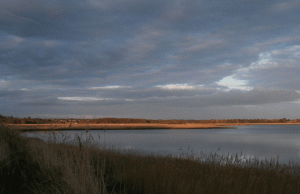
An evening visit to Lytchett Bay. Although it had only been seen a few minutes earlier by Shaun, the Red-throated Diver was nowhere to be seen.
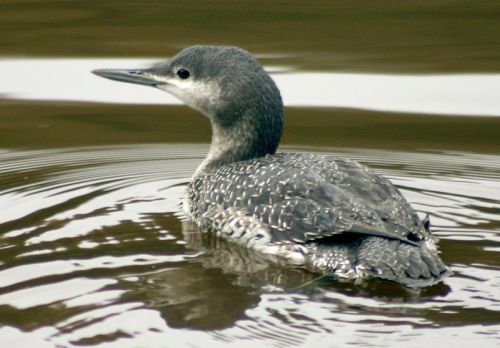
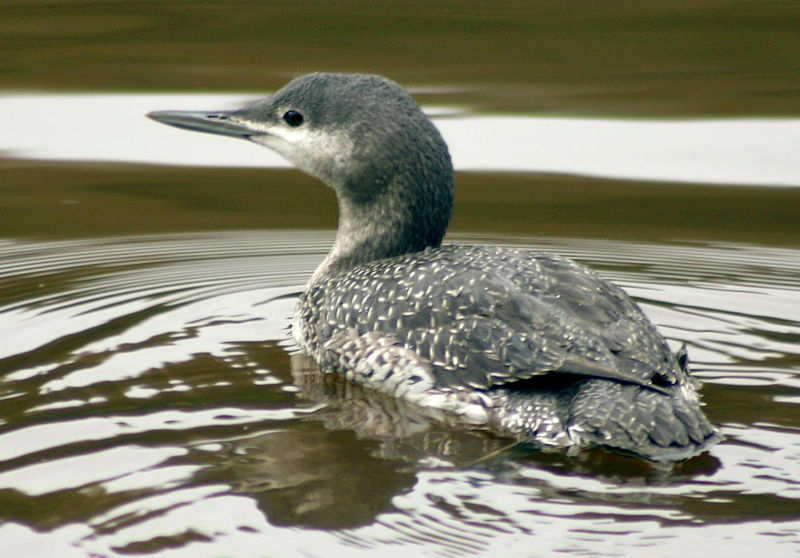
I finally saw it the following day just outside the Bay. – Winter plumaged Red-throated Diver (photo from the internet)
By far the most exciting birding of the week occurred on the 19th. Shaun and I were planning to ring at Durlston, thinking it was going to be too windy we changed our mind. Mick Cook who lives near Durlston had a go, but ringed just a single Blackcap in three hours! Shaun and I, now joined by Paul Morton set up at PC World drain, our inter Chiffchaff site. This site is well named, it is the unpleasant, somewhat odorous outflow from Poole sewage works that runs from the Broadstone relief road to Holes Bay behind PC World store.

The unpleasant, but aptly named PC World drain
This site is bordered by a strip of scrub sandwiched in-between the Upton by-pass and the Fleets Corner retail park, has earned a reputation as a good place to see Chiffchaffs in winter. Recently the occurrence of one or more ‘Siberian’ Chiffchaffs in winter has brought the place to wider recognition. In 2009 we obtained permission to ring there. Our idea was to examine the extent and site fidelity of wintering Chiffchaffs and we have succeeded in proving the latter twice. we continued the wintering Chiff study into late March this year when we caught a stunning 68 Chiffs. It was now clear that Chiffs used this strip of green as migration corridor as well as a wintering site. Further observations in April showed that Willow Warblers were also using the site but nothing could prepare us for the numbers seen on the 19th.
We ringed a total of 37 Willows, 7 Chiffs, 19 Blackcaps, 8 Common Whitethroats with single Goldcrest, Garden, Sedge and Grasshopper Warblers plus a small number of resident species, 81 birds altogether.

Catching 8 Whitethroats was certainly a surprise
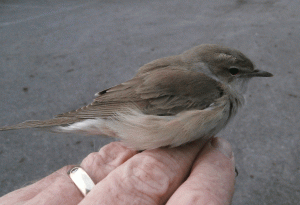
… and this Garden Warbler was one of the first to be ringed (or even seen) in Dorset this spring ….
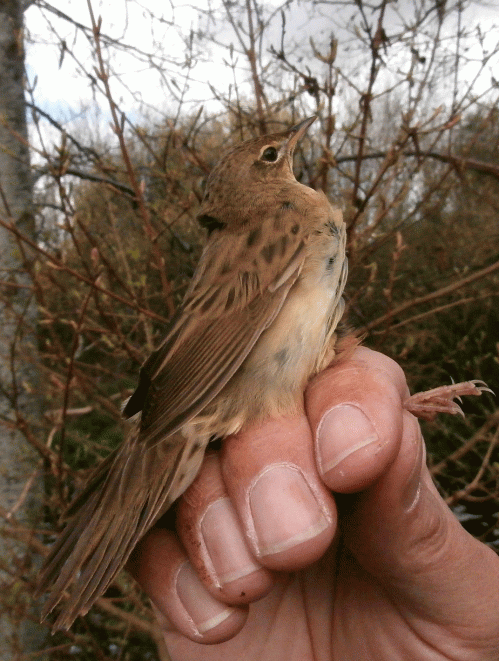
… we never ring the elusive Grasshopper Warbler in spring, most years we don’t see or hear any around Poole until return migration in August.
But the real surprise occurred about 1030. Shaun had now left for work, Paul and I were discussing what birds we could encounter there in the future. I was trying to curb his enthusiasm in expecting Nightingale or other scarce migrants when he said Subalpine Warbler. From the tone of his voice I could tell it wasn’t a prediction but a reality. I got onto the bird as it flew right and though I’d lost it but it came back and perched up for a couple of seconds. Fantastic! This is the first record of this sub-rarity for the Poole Harbour area although I have seen three previously in Dorset. A small crowd soon gathered, some having rushed from work (indeed one couple left some 40 business associates to have a ‘coffee break’ whilst they twitched it), we remained until about 1500 and some stayed even longer but unfortunately it was never seen again.

Male Subalpine Warbler. Photo from the Internet.
Why this small area should be so full of migrants when Portland, Durston and other migrant hotspots had next to nothing is a mystery. In spite of all the theories, the sheer unpredictability of birding is what makes it such a fascination hobby. Shaun, Kevin and I had another go at ‘the drain’ on the 20th but all the birds had moved on and we only ringed four Blackcaps and a Whitethroat.
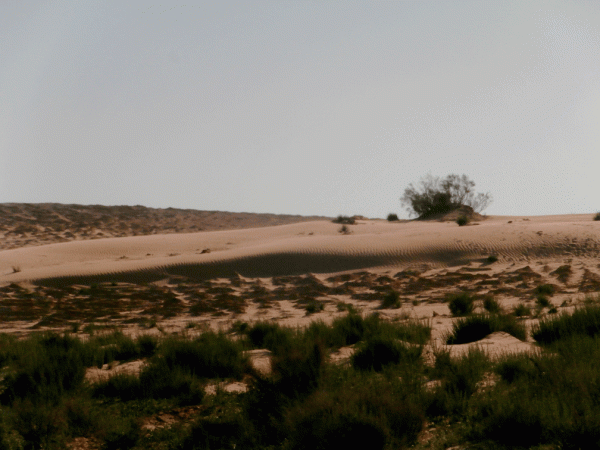
The dunes at Nizzana, near the Egyptian border. This area is famed for several sandgrouse species and MacQueen’s Bustards, but we failed to find any.

The ancient route into Egypt is guarded by the ruins of Nizzana Fort.

A side road in the Negev

A beautiful Masked Shrike, on route to the Balkans, was some compensation.
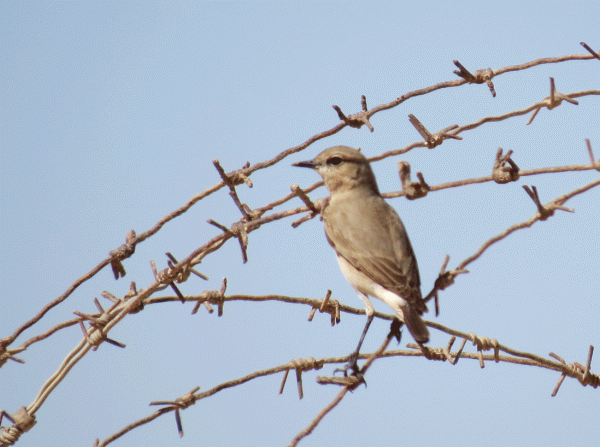
This Isabelline Wheatear might be heading for the steppes of Kazakhstan or Mongolia.
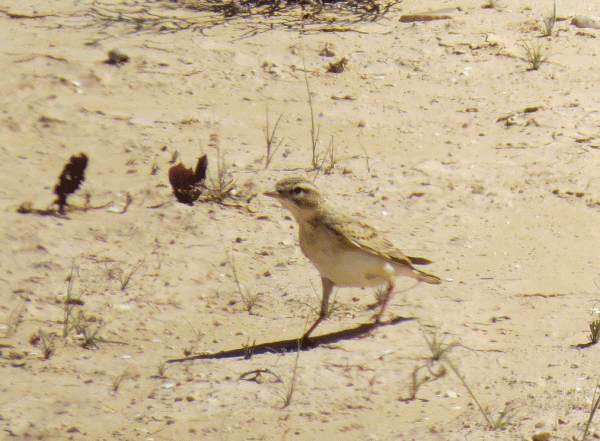
Flocks of Short-toed Larks were found alongside the road.

A desert resident – Cream-coloured Courser

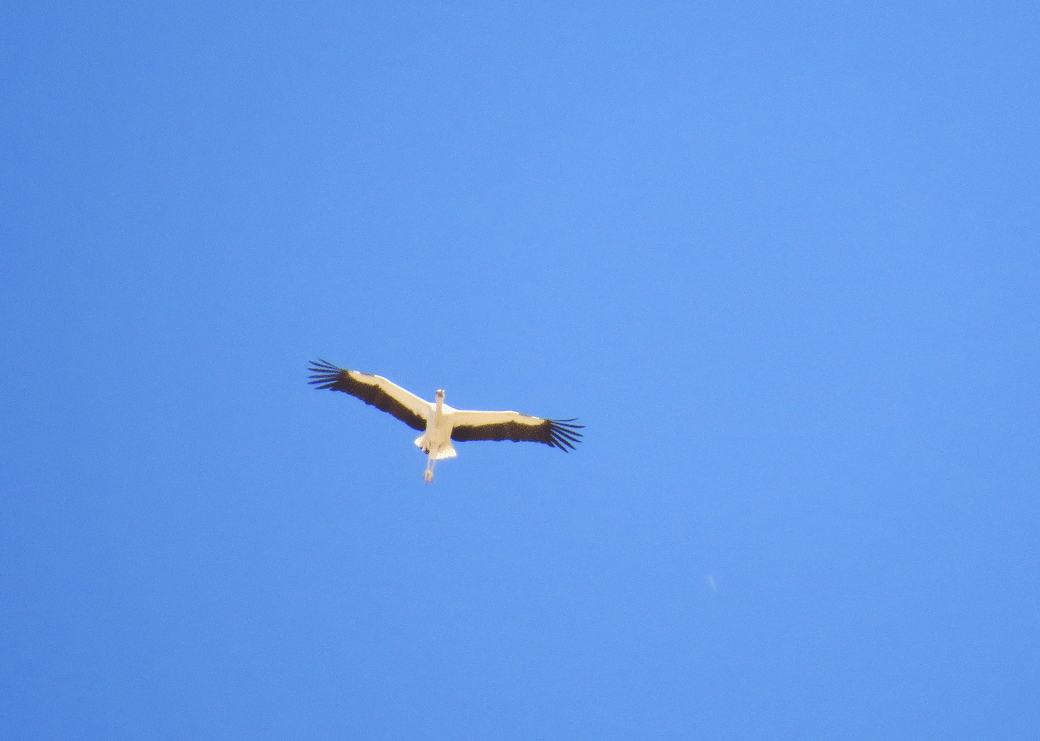
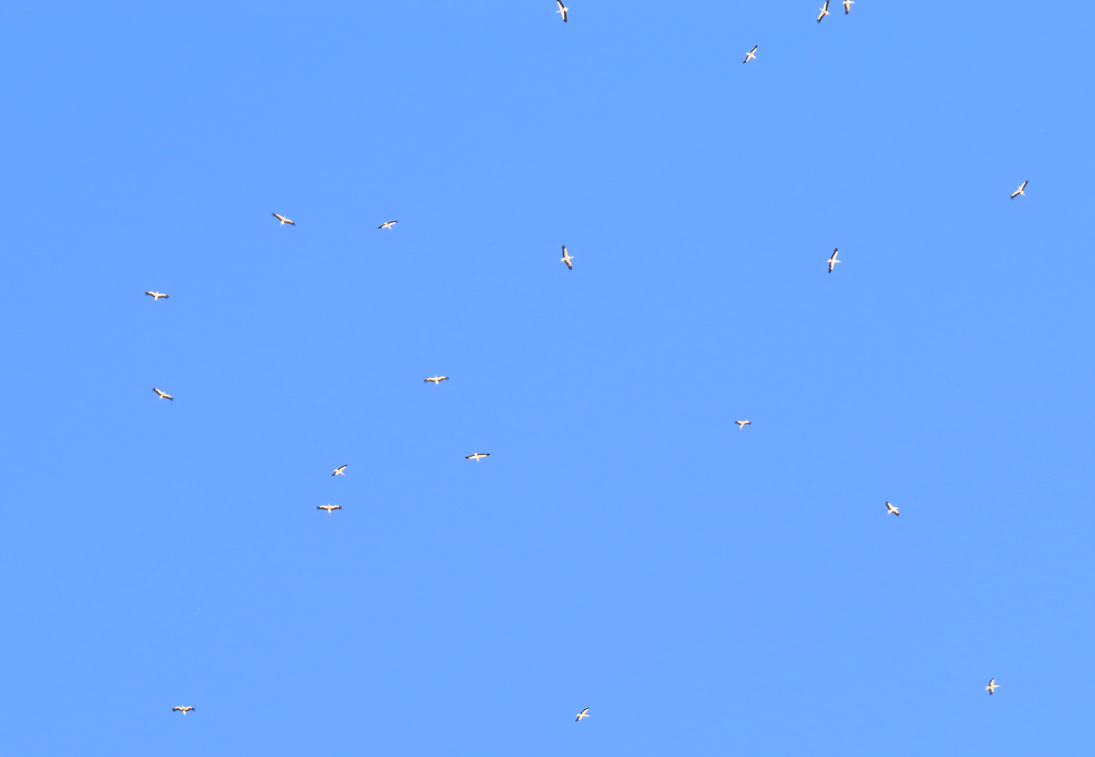
Spraying locusts with insecticides has put birds like these migrating White Storks at risk and a number have been found dead.
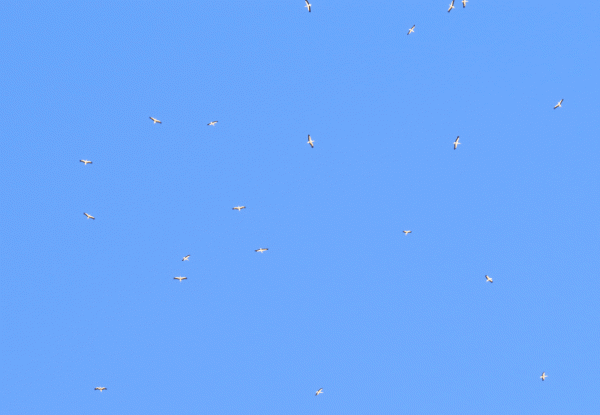
Broad winged birds like storks avoid sea crossing where there are few thermals to enable them to soar. Having crossed the Sinai, so avoiding crossing the Red Sea, they will head north through Israel and Lebanon. From here they will either cross the Bosporus into eastern Europe or the Caucasus into western Asia.
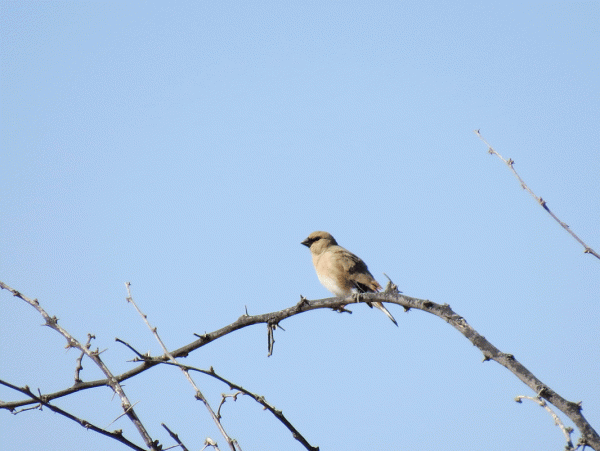
Our only Desert Finch of the trip was found in this area.
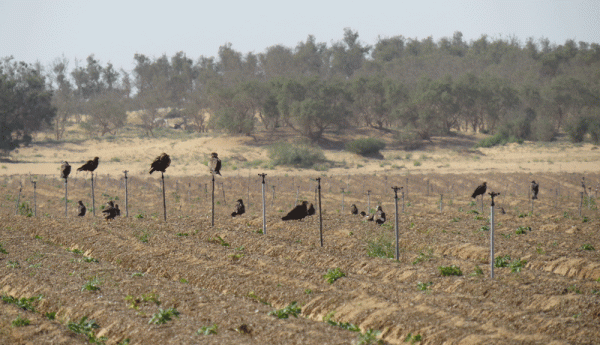
Many Black Kites were seen in the field to the north of Nizzana.

The air was full of migrating Black Kites. Over 300 were seen along one stretch of road.

Crested Lark a common breeder in arid areas of Israel, but not in true desert.






















































 gryllosblog