Archive for the ‘Uncategorized’ Category
This the final part of my account of the tour to Western India covers the last few days of the tour, which found us not in the west, but in the centre of this huge country.
There was no real birding on the 27th as the entire day was taken up with flights from Bhuj to Mumbai and from Mumbai to Nagpur. We arrived at our Nagpur hotel after dark. The following day we headed west towards the Melghat Tiger Reserve in northern Maharashtra.
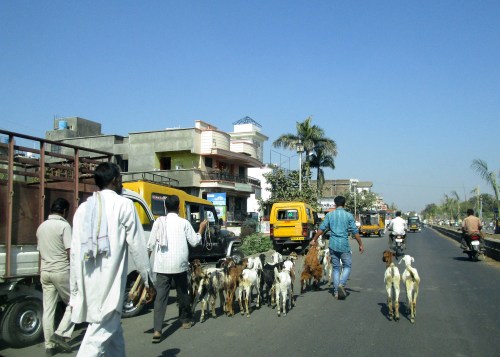
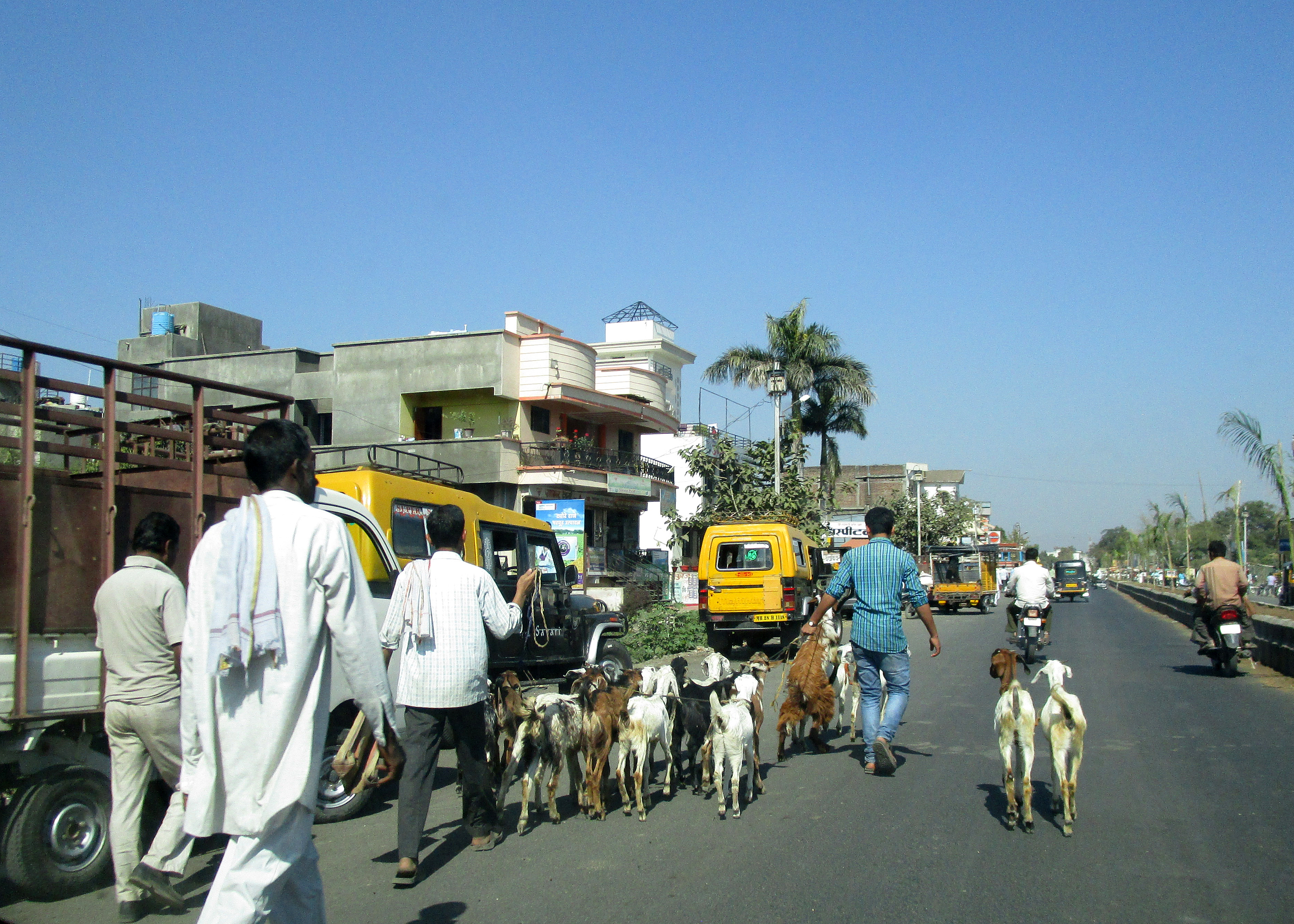
The roads were quite good in this part of India but even on a dual carriageway you could get held up by a goat-jam.

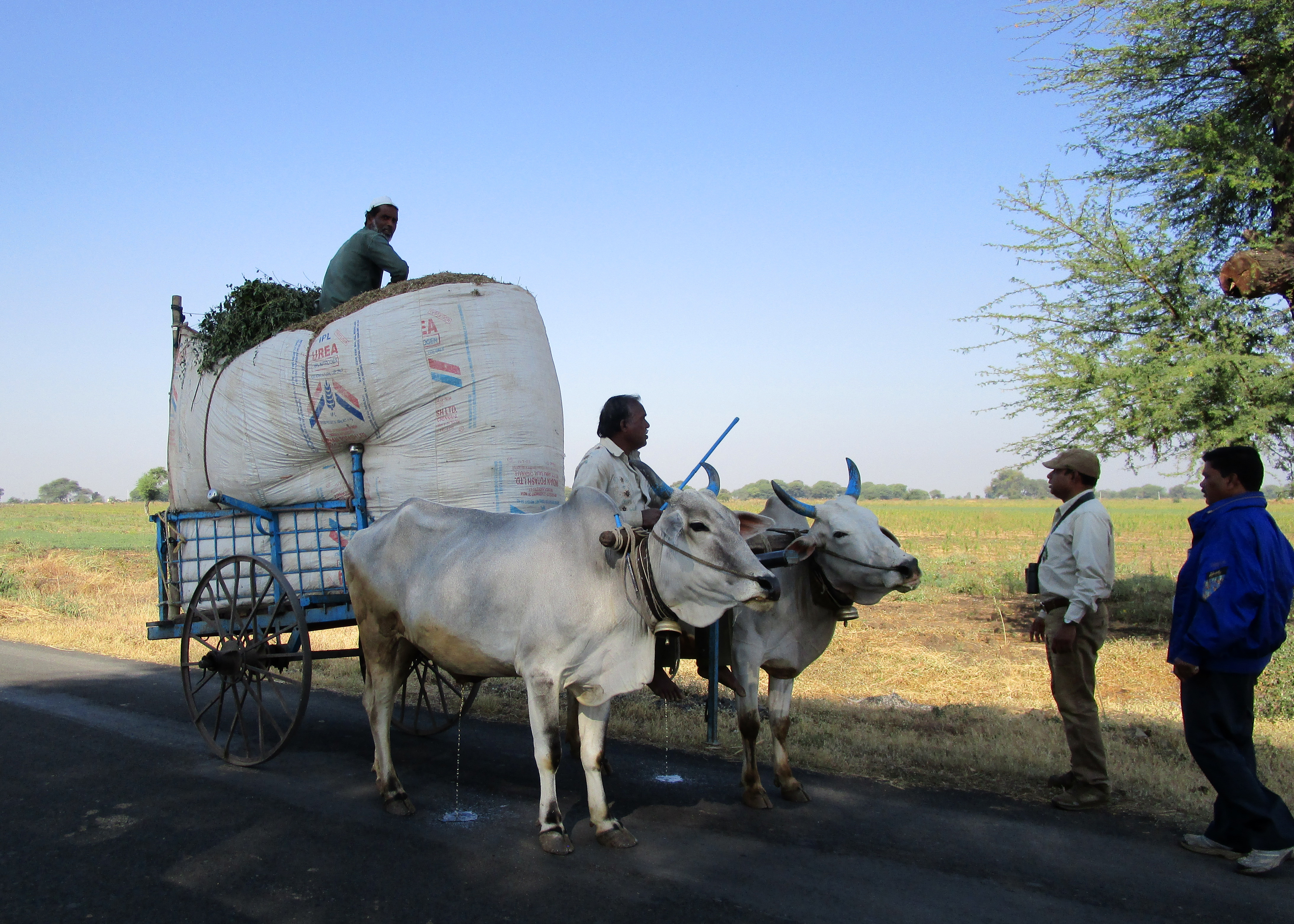
Comfort break for bullocks? When I last visited western and northern India 30 years ago much of the transport was by traditional bullock cart ….
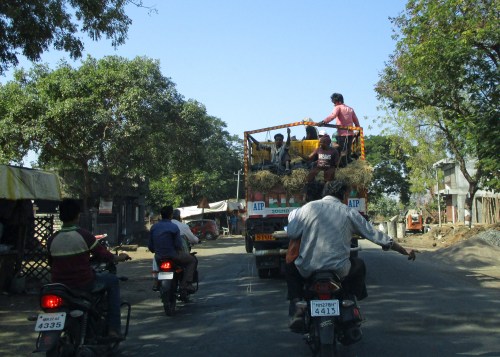
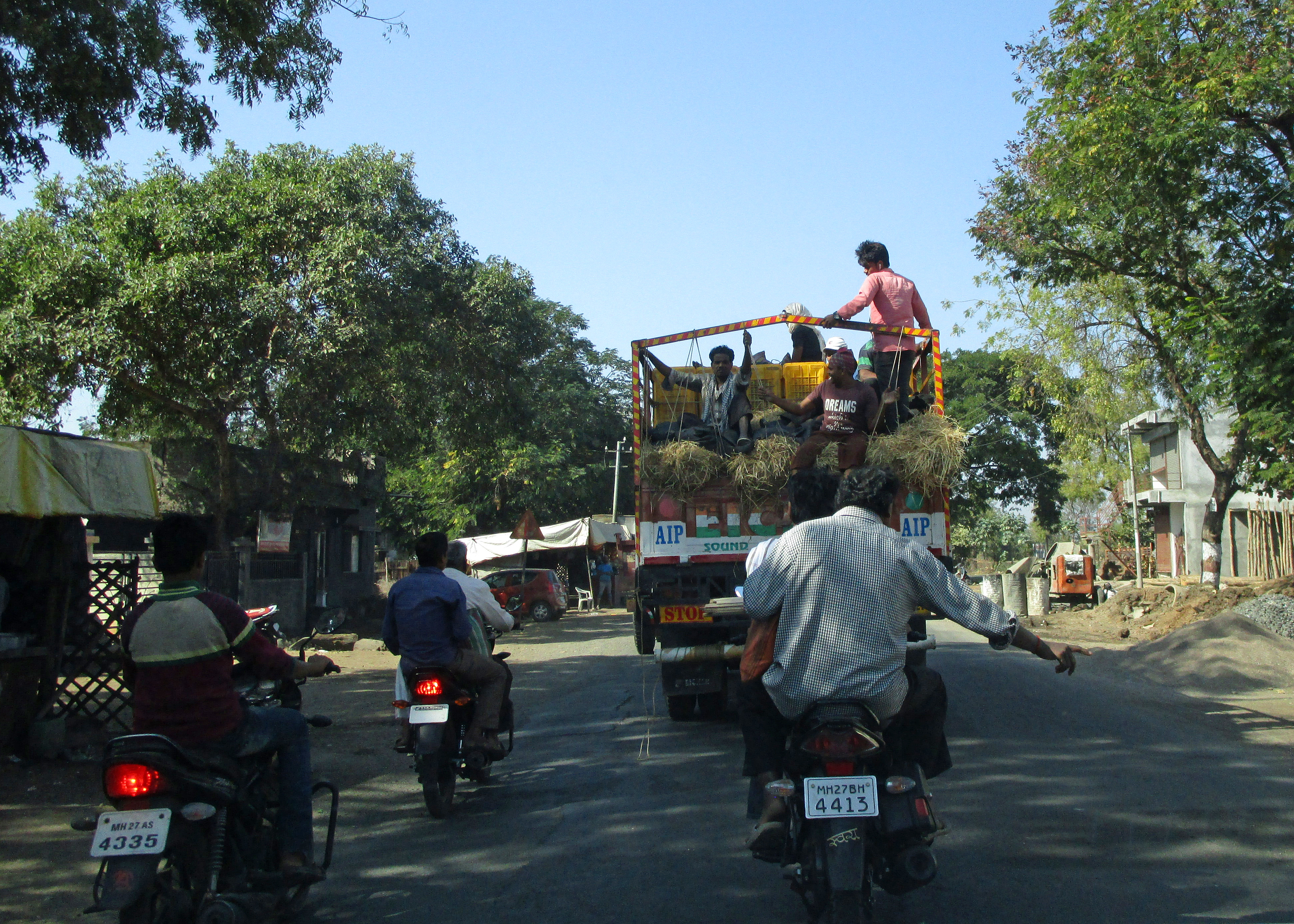
…. but now most people are using motorbikes and lorries to transport themselves and their goods.

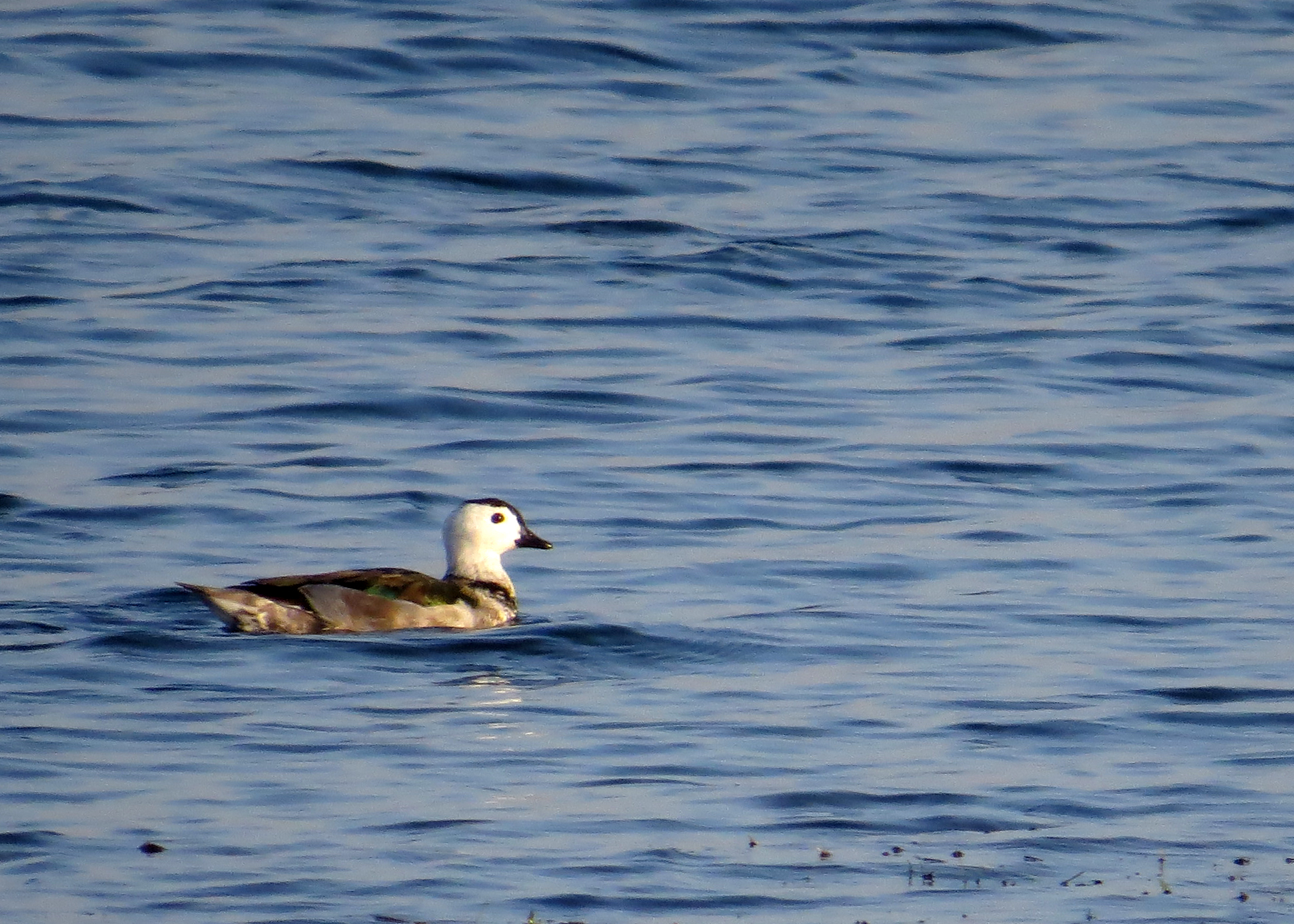
We stopped at a lake some 25 miles west of Nagpur, there was an interesting mix of water birds from the familiar Red-crested Pochards and Eurasian Coot ….
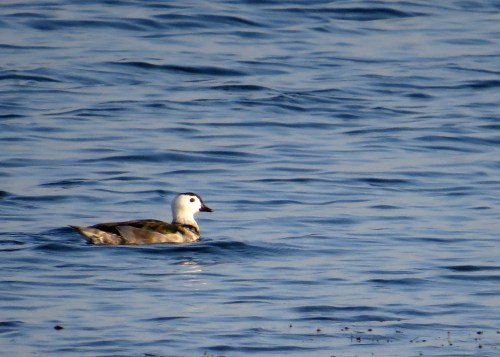
…. to the more localised Cotton Pygmy Goose.

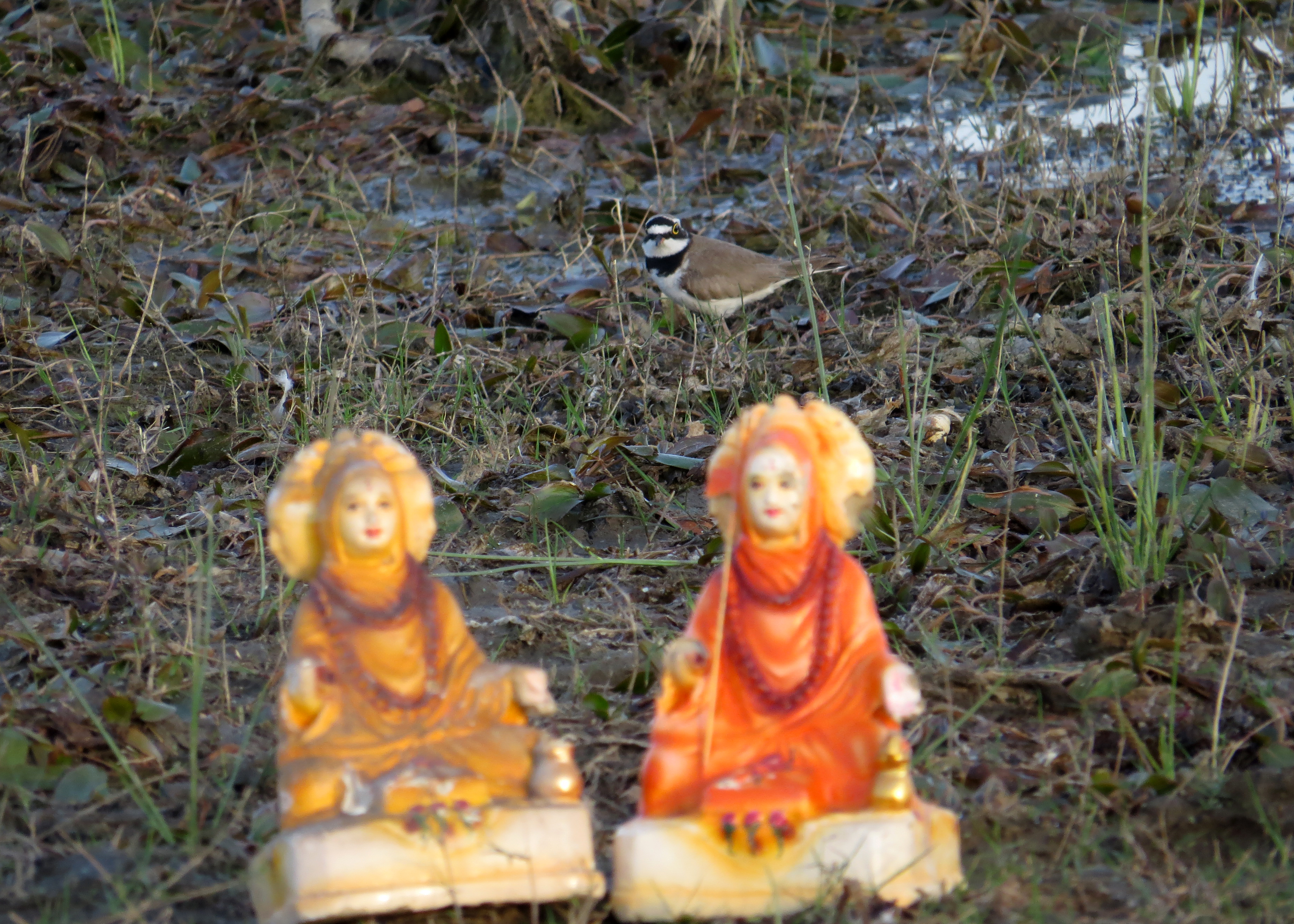
I wasn’t sure if I should focus on these little Hindu statues on the lake shore or the Little Ringed Plover behind them – the LRP won.

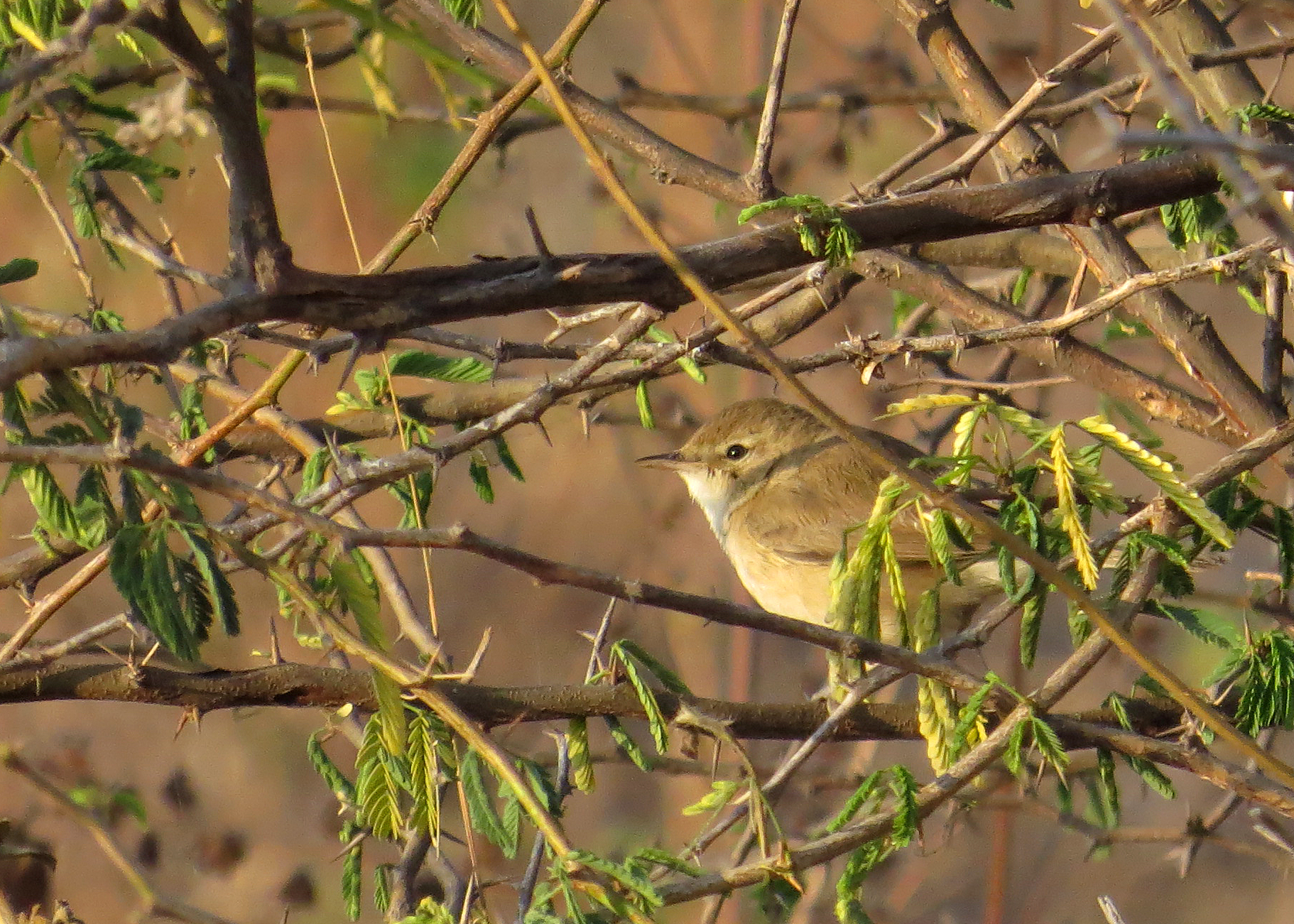
In the surrounding bushes we saw a Booted Warbler, a close relative (and formerly lumped with) the Syke’s Warblers we saw in Rajasthan. Both species occur as vagrants to the UK and indeed I’ve seen both in Dorset.

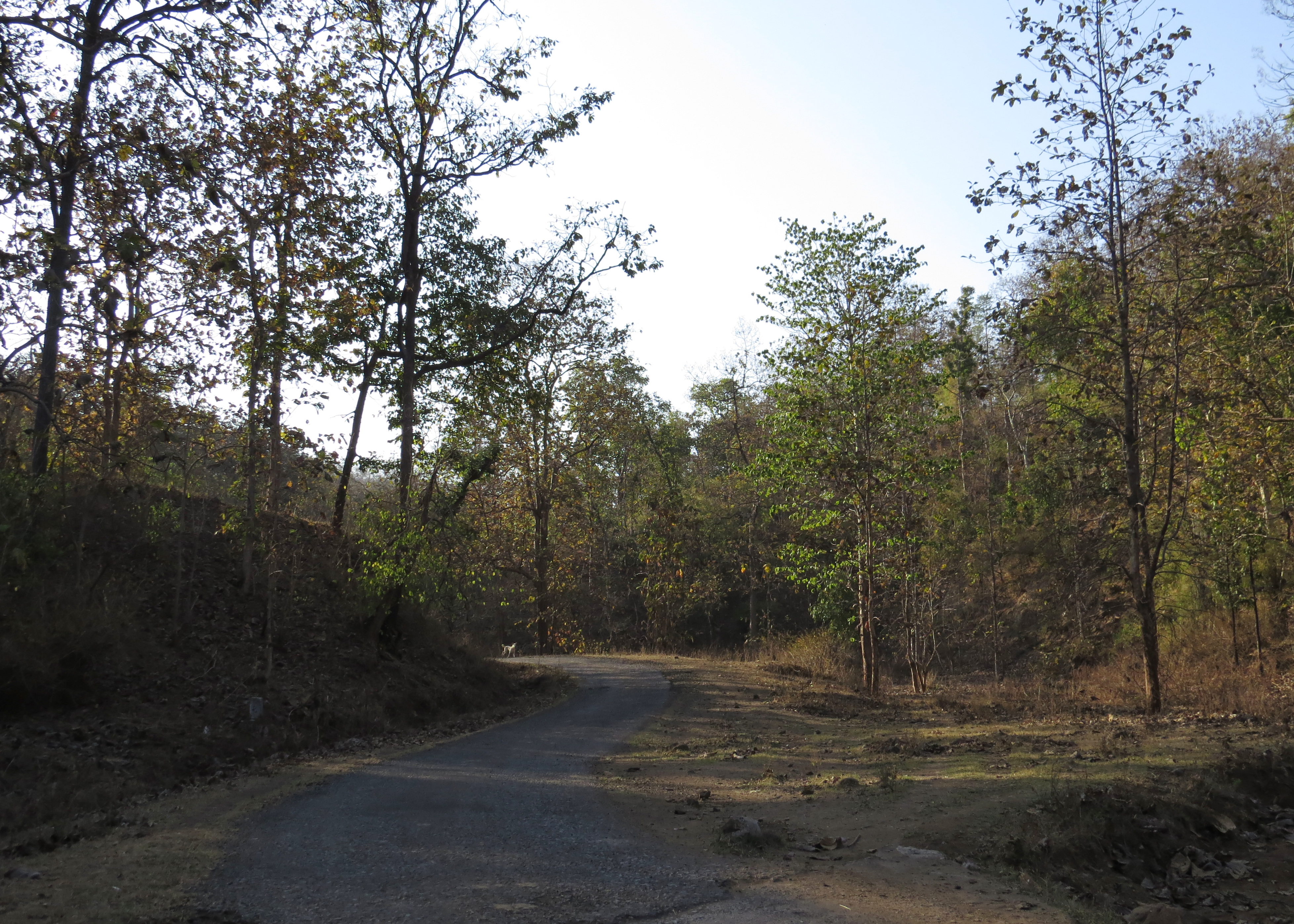
Eventually we arrived at the Melghat Tiger Reserve where we were to stay for two nights.
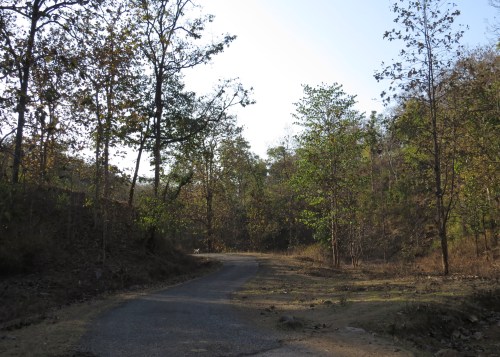
The reserve consists of 1500 square Km of mainly Sal forest. Of course it was highly unlikely that we would see any Tigers, although our guide ensured us there was a good population. A couple of locals on a bike stopped us and said they had just seen a Leopard, but the only cat I recorded was a brief view of a Golden Cat as we drove back one evening.
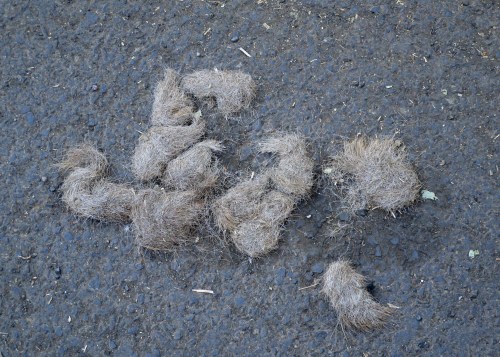
But our guide showed us some Tiger scat on the road, full of the hair of its recent victims.
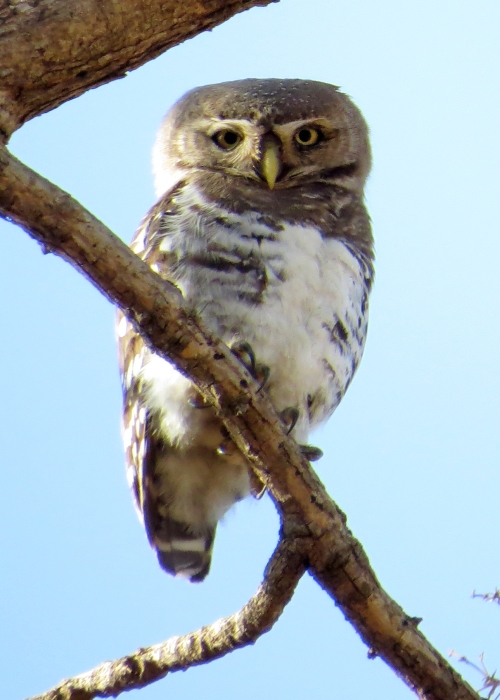
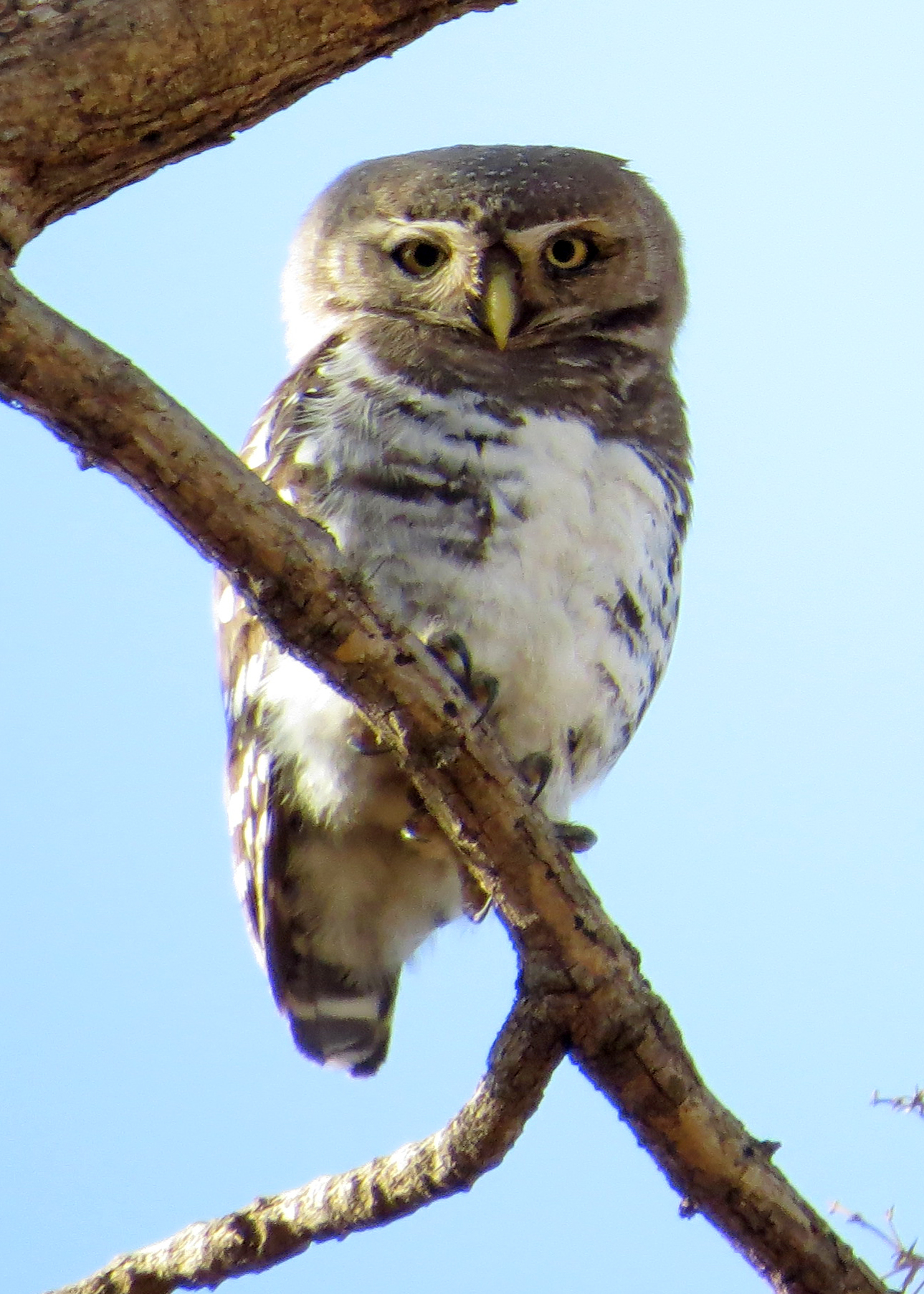
The bird we had come all this way to see was the critically endangered Forest Owlet. The estimated world population is in the range of 25 -250 individuals and is known from only 12 highly fragmented sites in northern Maharashtra and south-east Madhya Pradesh. Other sites may exist, a new location has recently been discovered close to Mumbai, possibly negating the need for future bird tours to fly to Nagpur.
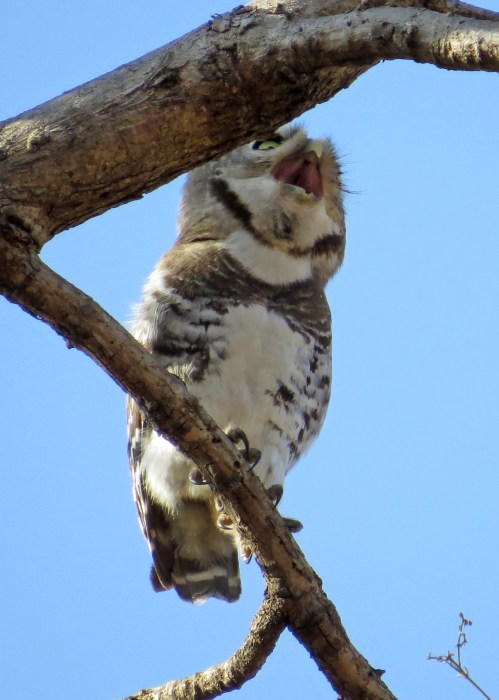
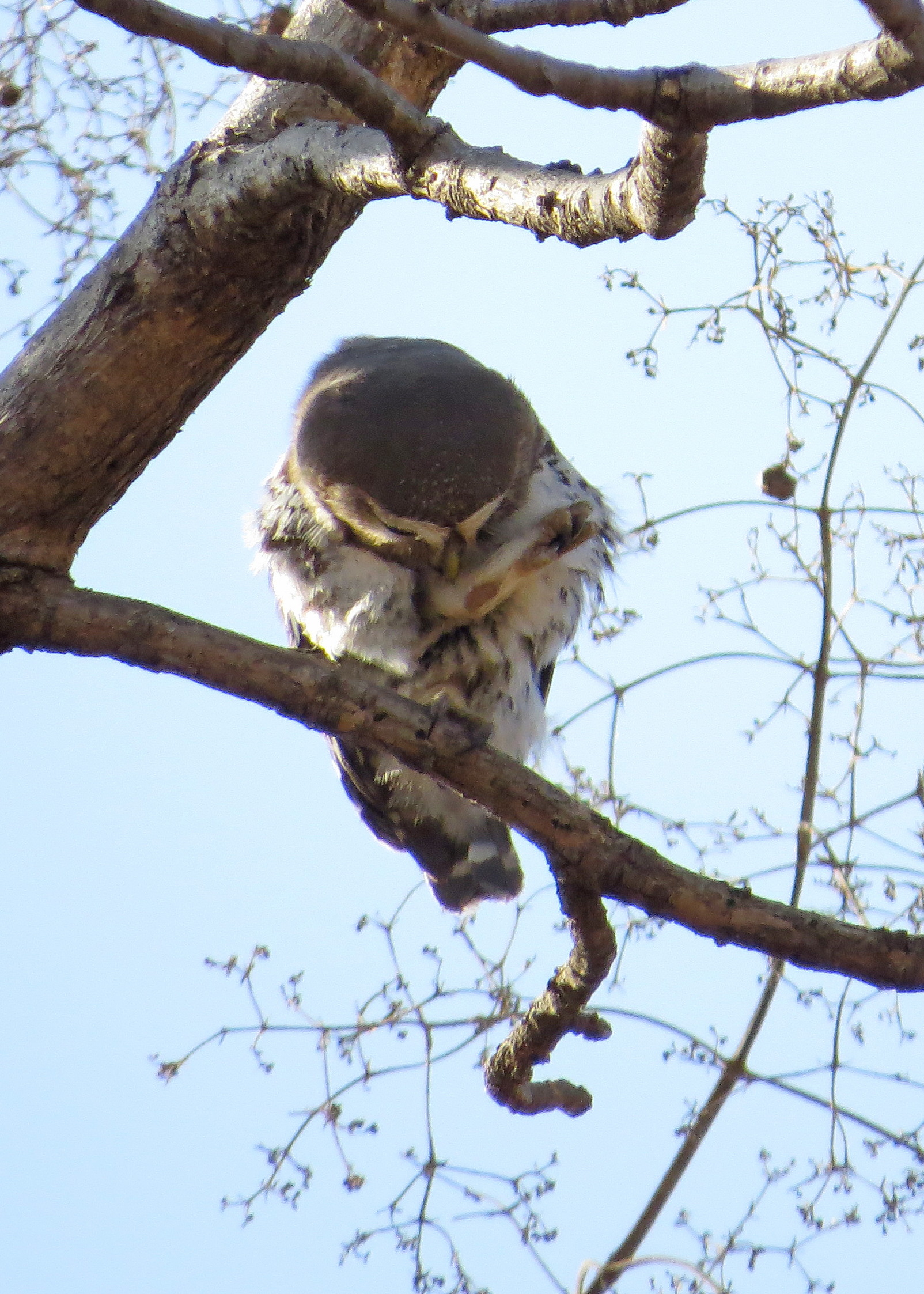
The size of a Little Owl, but with unusually large head and feet, this species is largely diurnal. Diligent searching of known locations eventually gave us stunning views. We able to watch the species calling and preening (see below) right in front of us.
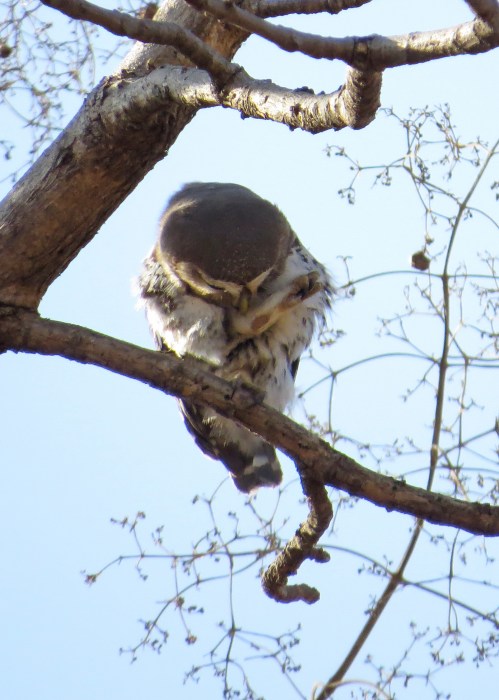
The history of the discovery and rediscovery of the Forest Owlet is one of the most bizarre in the history of ornithology. It was first collected in 1872 in eastern Madhya Pradesh by F. R. Blewitt (who is commemorating in the birds scientific name Heteroglaux blewitti) and described by Allan Hume. A further six specimens were collected in central India in the 19th century, mainly by James Davidson, but one of these was subsequently lost. Another specimen was collected by the infamous Colonel Richard Meinertzhagen in Gujarat in 1914. Subsequent searches in the 20th C in Maharashtra and Madhya Pradesh showed that the sites where the birds had been collected were largely deforested and no birds could be found. Attention switched to Meinertzhagen’s site in Gujarat, but that also drew a blank and the bird was assumed to be extinct. However by the 1990s suspicion was gathering about the veracity of Meinertzhagen’s claims and American ornithologist Pamela Rasmussen had the Gujarat specimen X-rayed. This showed that the specimen hadn’t been prepared in Meinertzhagen’s usual careful style, but in the amateur fashion of Davidson; it was the missing specimen – stolen by Meinertzhagen from the British Museum and relabeled as one of his own! In 1997 Pamela Rasmussen, David Abbott and Ben King mounted an expedition to where all the 19th C specimens had been collected, including the remaining forests of Maharashtra, and the bird was rediscovered !

Later that day we had excellent views of the much commoner and more widespread Barred Owlet.
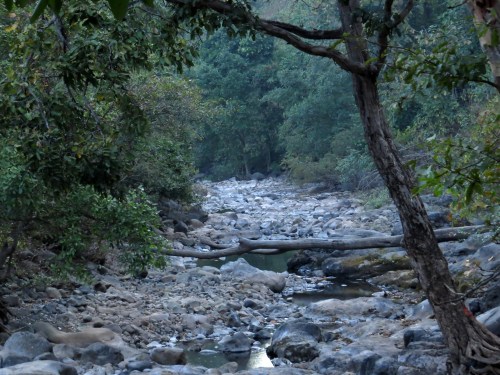
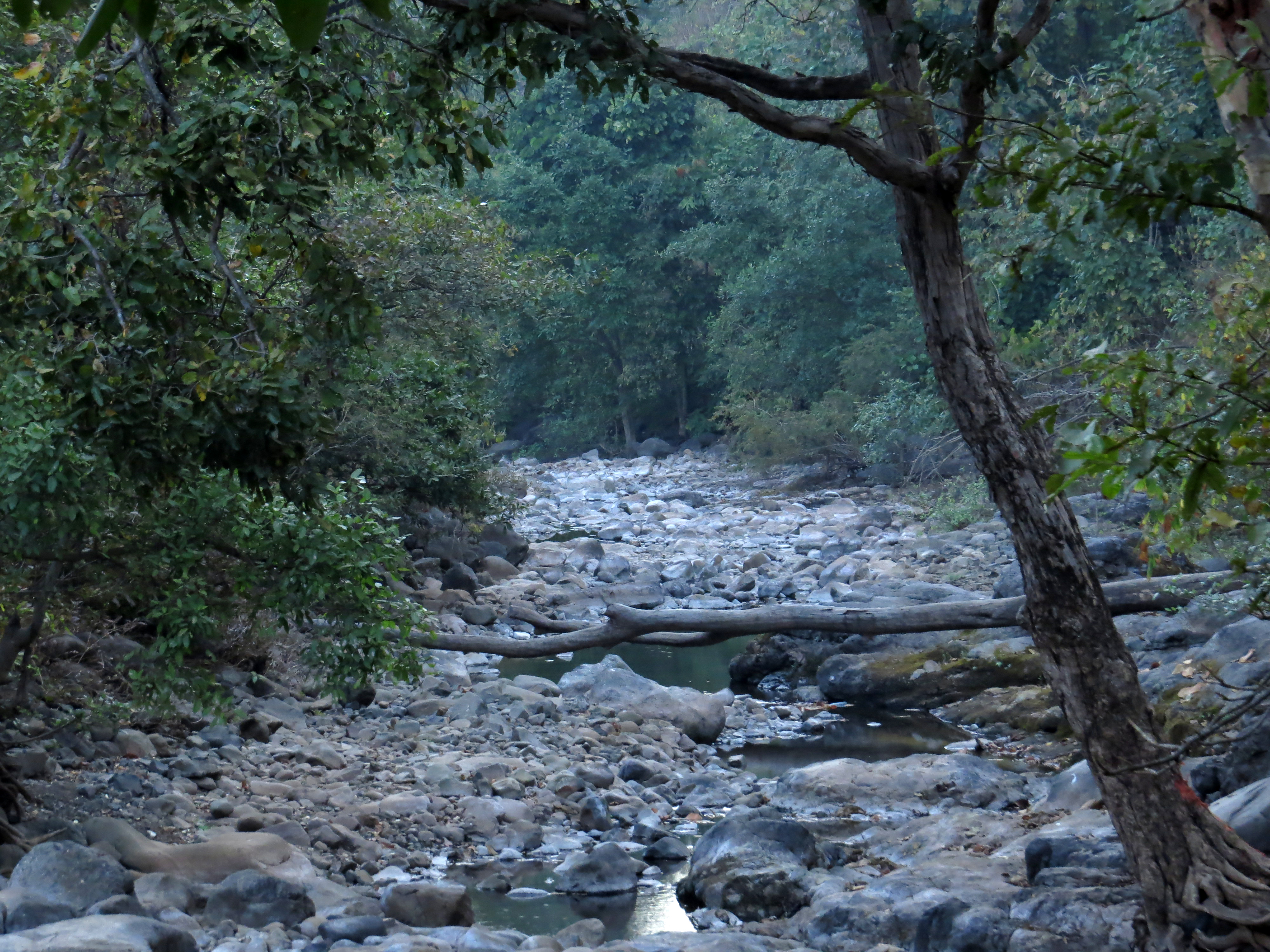
At a nearby river I picked up another life bird and one that I didn’t really expect, Malabar Whistling Thrush. It was quite distant, well behind the horizontal log ….

…. which is my excuse for why the photo is so poor!

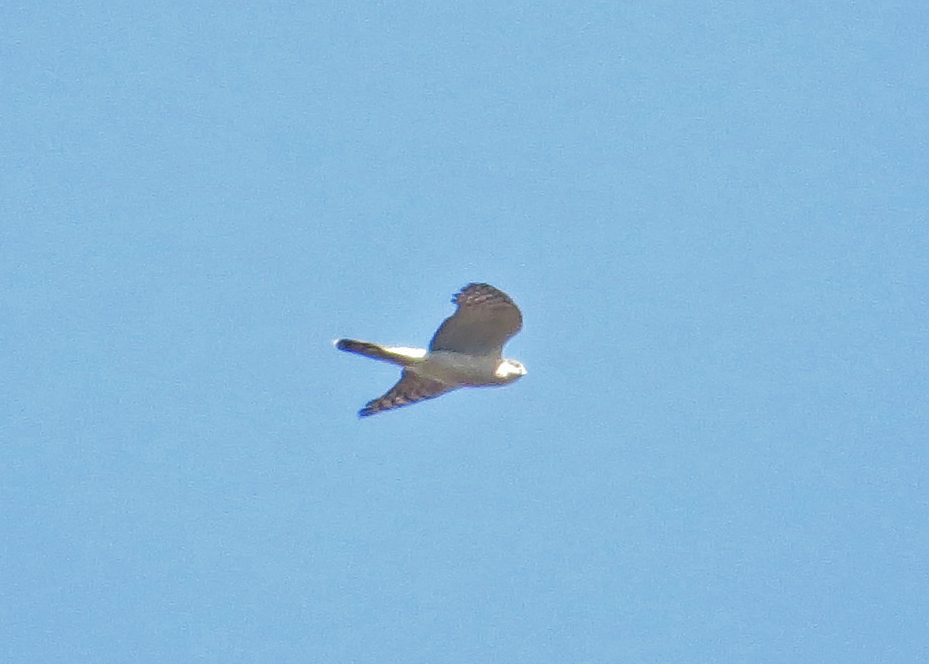
Talking of distant photos; a medium-sized raptor overhead puzzled us but I was able to get a shot and although it was just a dot in the viewfinder, blowing it up indicated it was a female Jerdon’s Baza. Well out of range (at least according to the first edition of the Ripley guide) but the wing and tail pattern all seem to match.

After a successful morning’s birding we paused for a packed lunch. Sometimes we were given a curry, which was really good and sometimes sandwiches, which weren’t. Even so after curry twice a day for 18 days I was really looking forwards to steak and chips, bacon sandwiches, roast beef etc.

It was clear that the trip was drawing to a close ….
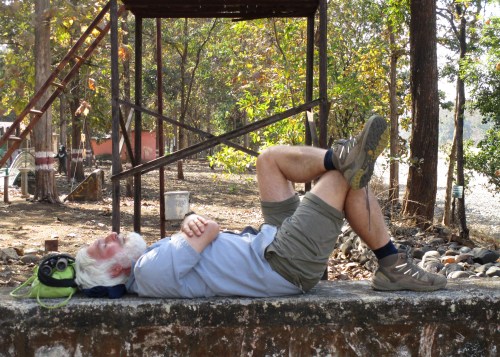
…. and that 18 days of early starts and long drives was taking its toll.

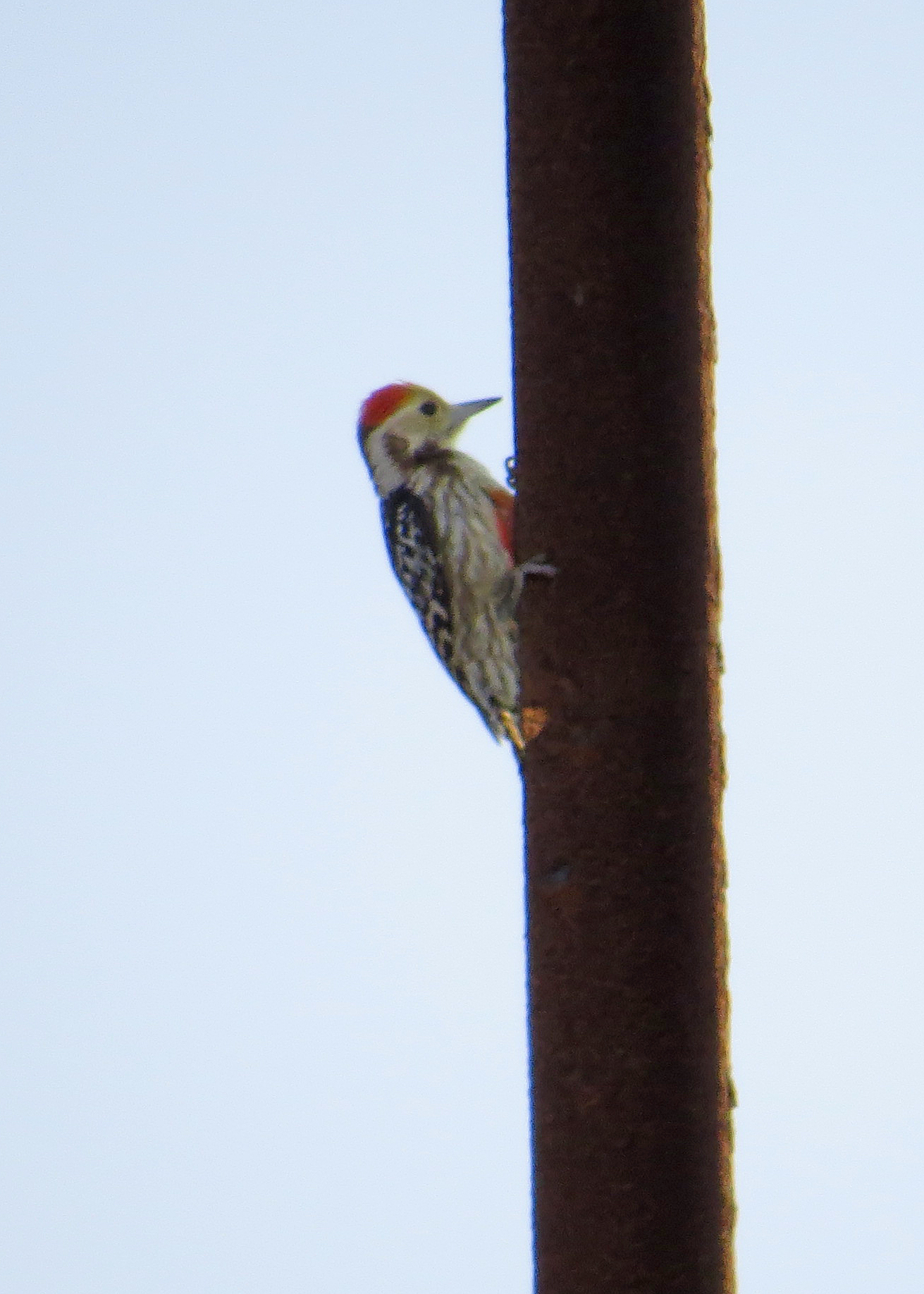
… but some stayed awake long enough to locate this female White-naped Woodpecker on a nearby tree.
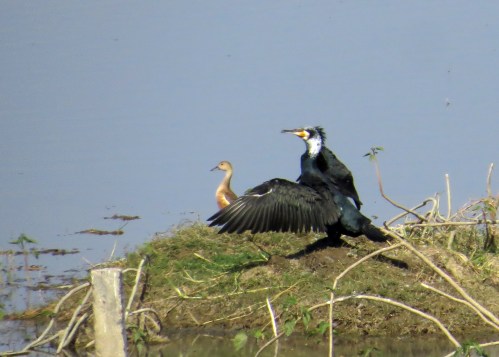
So our excellent trip to Western India drew to a close, my 65th with the company Birdquest. On the return to Nagpur we stopped at the lake again, adding Lesser Whistling Duck (seen here with a Great Cormorant) to our list. At Nagpur some stayed on for further adventures in India whilst most continued on to Mumbai and home.

It had been a good trip, with great birds and mammals, good scenery and architecture and good company, both from the other participants of the trip and the many kind and pleasant local people that we met along the way.
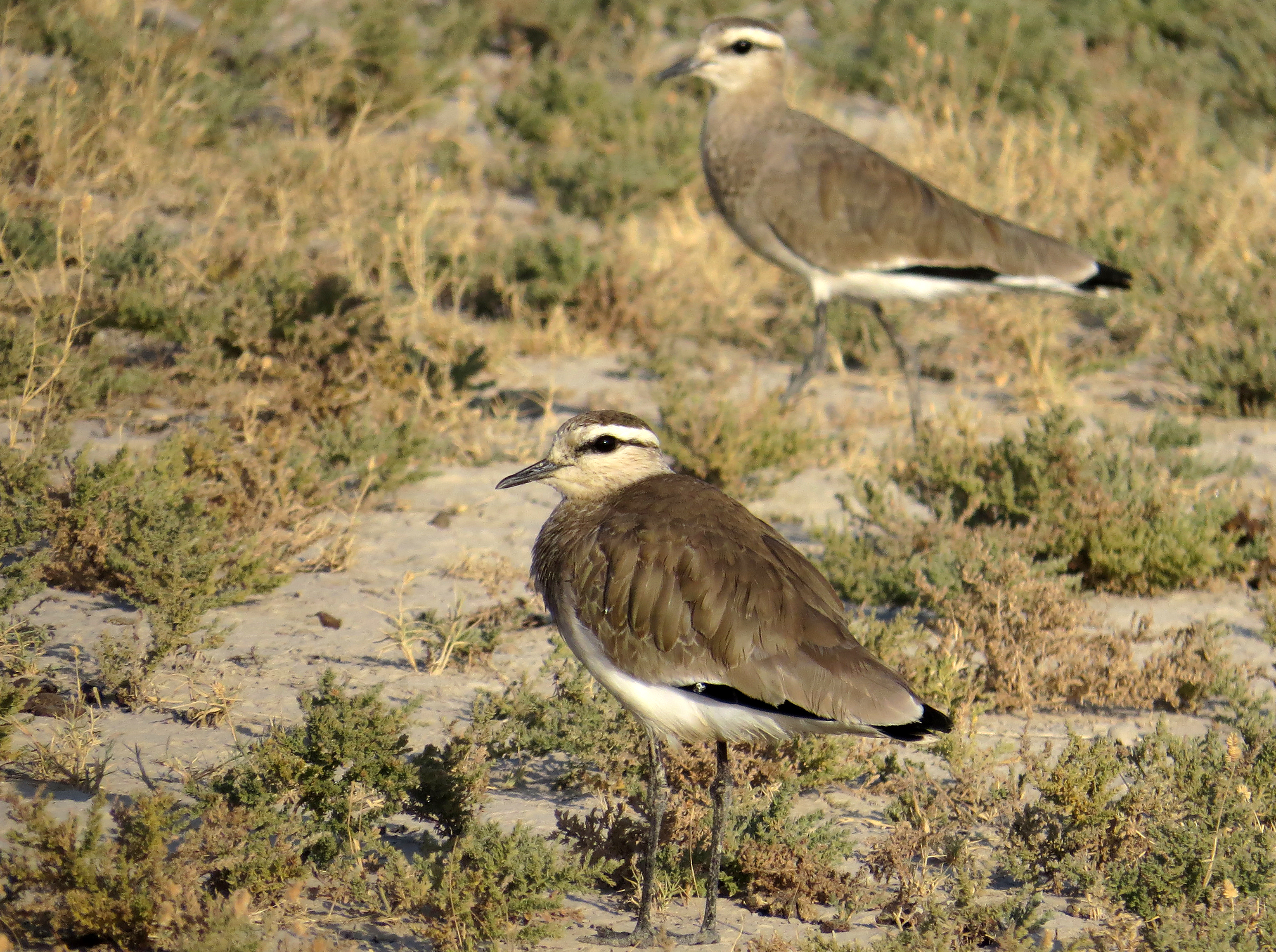
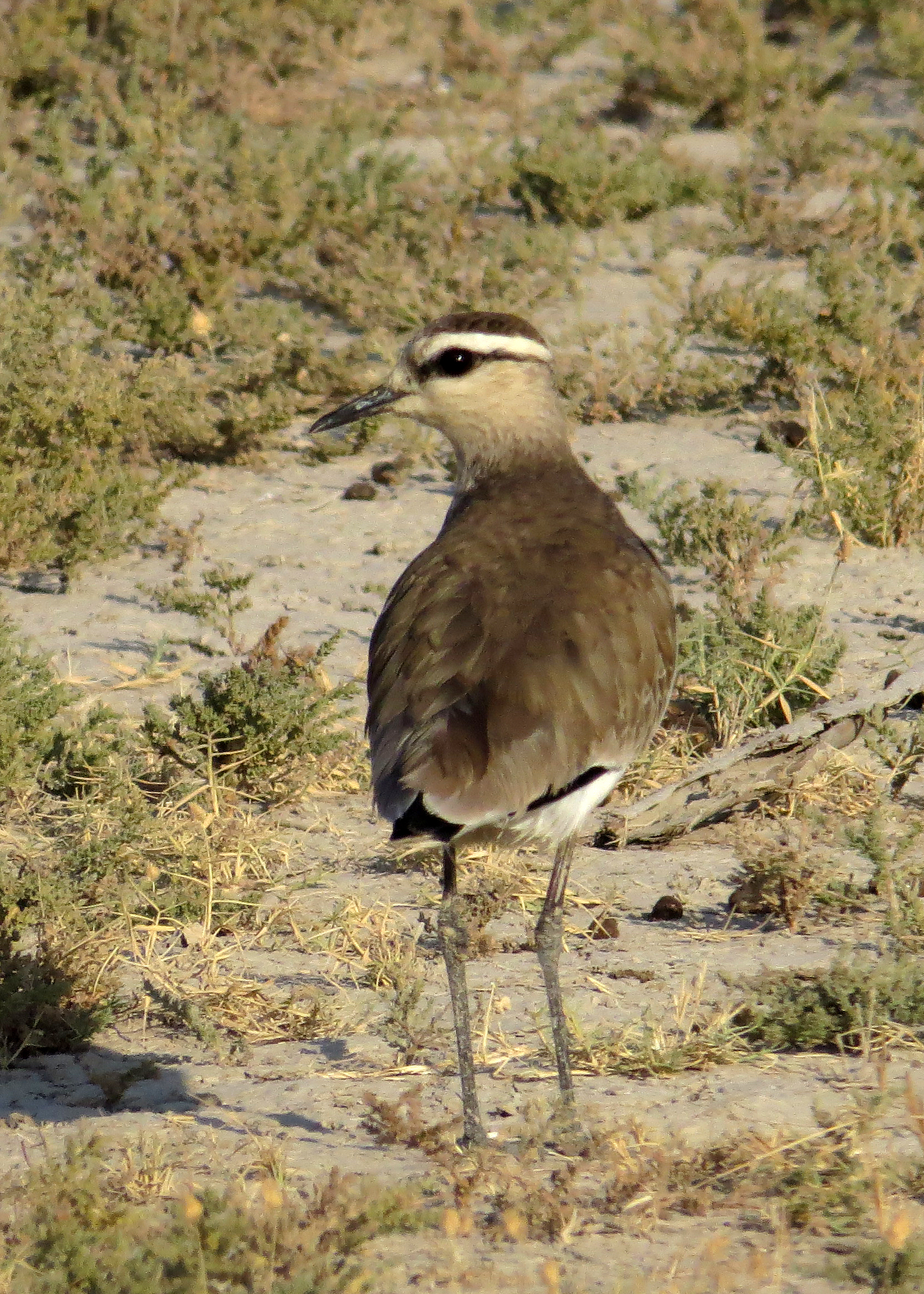
This post covers our two and a bit days in the Bhuj area of Gujarat, specifically three outings arranged by CEDO, the Centre for Desert and Oceans. We arrived in the mid afternoon and immediately boarded their jeeps for an excursion in search of the critically endangered Sociable Lapwing.

Sociable Lapwings breed on the steppes of Central Asia and pass through the Middle East to winter in north-east Africa and western India. Once plentiful, habitat destruction has reduced the population to 5,600 breeding pairs, but winter counts in the Middle East and Turkey suggest that this might be an underestimate. They are scarce in India and this flock consisted of just seven birds.
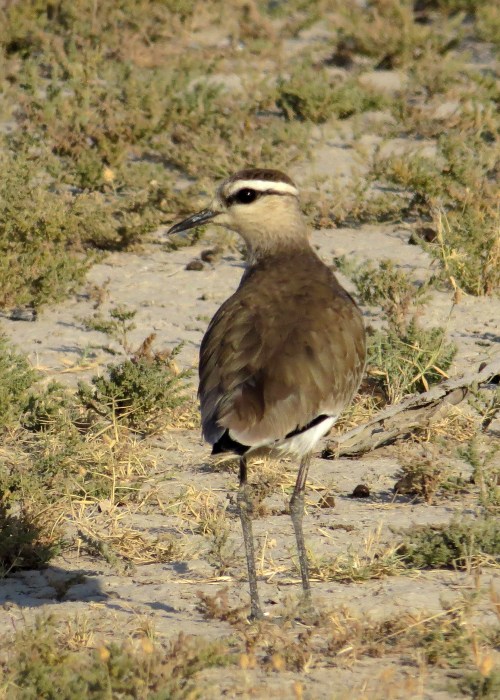
In spite of their global rarity this species has turned up in the UK as an autumn vagrant with some regularity. There have been about 40 records in the UK since 1958, although none in the last few years. I have seen this species five times in Britain, in South Wales, Kent, Hampshire, Dorset and Scilly between 1984 and 2008. I have also seen it in Oman and Kazakhstan.
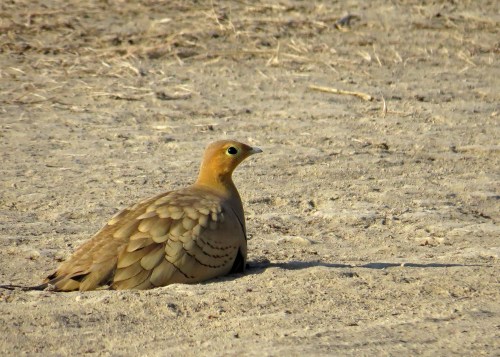
We also had good views of Chestnut-bellied Sandgrouse in the same area.

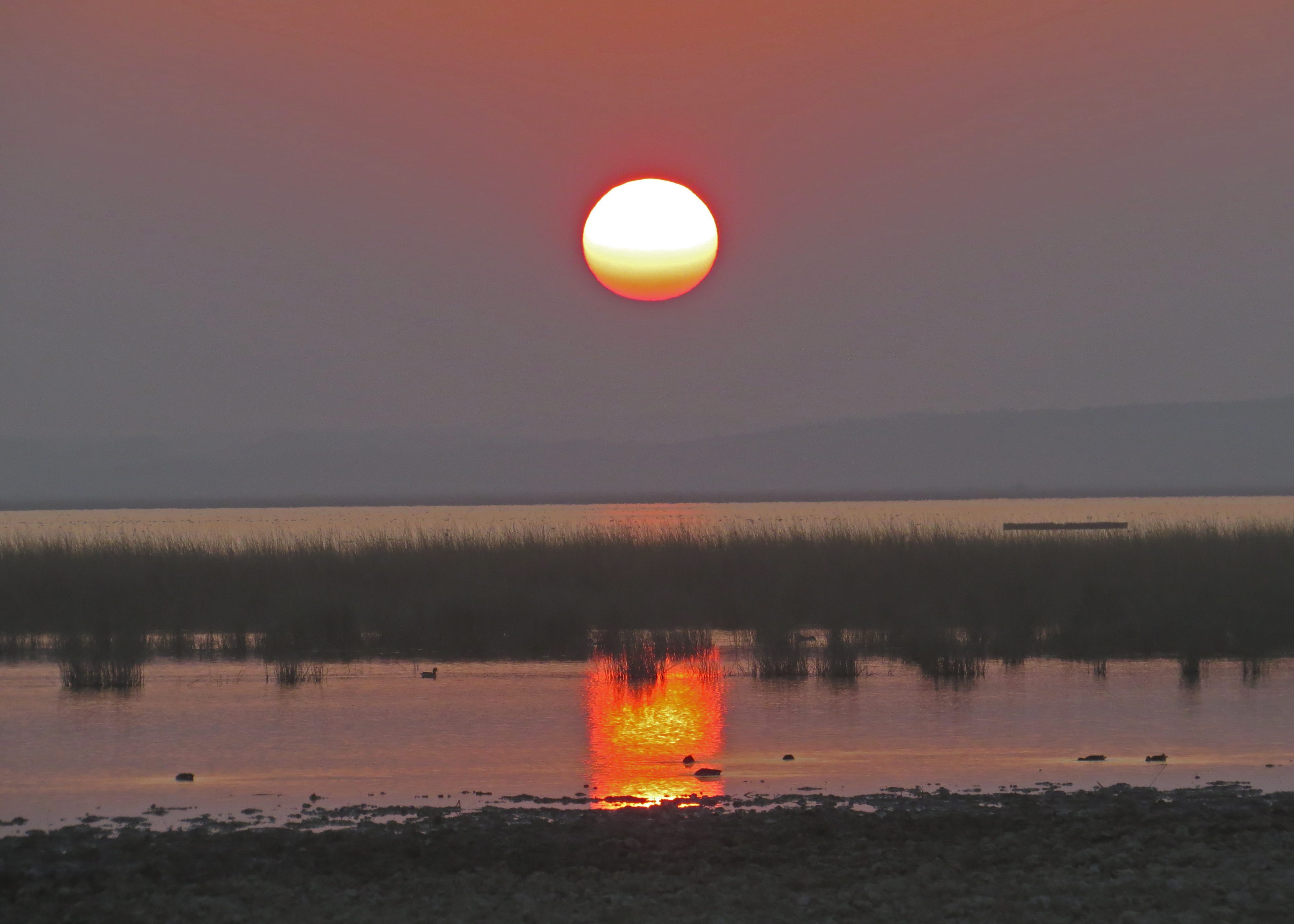
The day ended at a very birdy marsh but there were few places where we could get a view unimpeded by vegetation, and although the sunset was glorious it did little to aid the viewing conditions. In spite of this we saw many Common Cranes coming into roost, lots of waders, pelicans, a Red-necked Falcon and several Paddyfield Warblers.
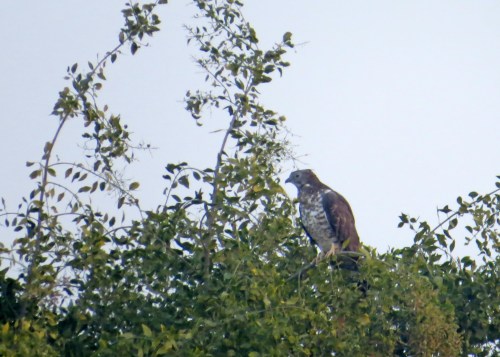
The following day we were at an area of scrub soon after dawn and found a couple of Oriental (or Crested) Honey Buzzards still at their roost.

It wasn’t long after that our main target appeared, the enigmatic Grey Hypocolius. This a much sought after bird as it is placed in its own family (although thought to be most closely related to the Waxwings). As it breeds in Iran sightings come mainly from wintering areas, especially Bahrain (where I have seen it before but only in flight) and here in Gujarat. This is a male ….

….whilst the female lacks the black mask. There were quite a few family collectors in our group so this species was voted number 2 in the ‘bird of the trip’ contest – after Great Indian Bustard of course.

Other birds we saw that day included more Red-tailed Wheatears ….

…. Yellow-wattled Lapwings ….
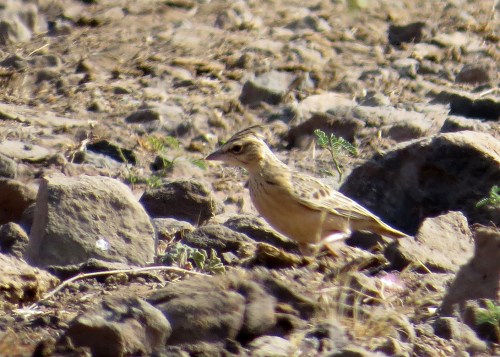
…. Syke’s Lark, which was a life bird for me ….
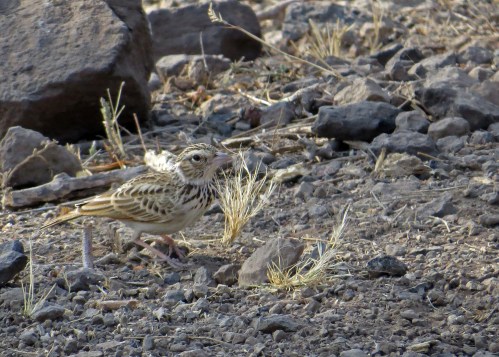
…. the bulky Indian Bush Lark ….

…. with it’s very well-marked breast ….

…. and the rare and elusive White-naped Tit (another lifer).
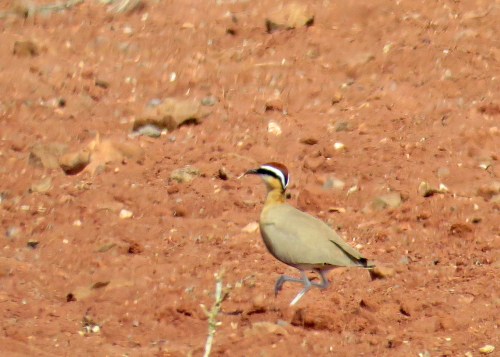
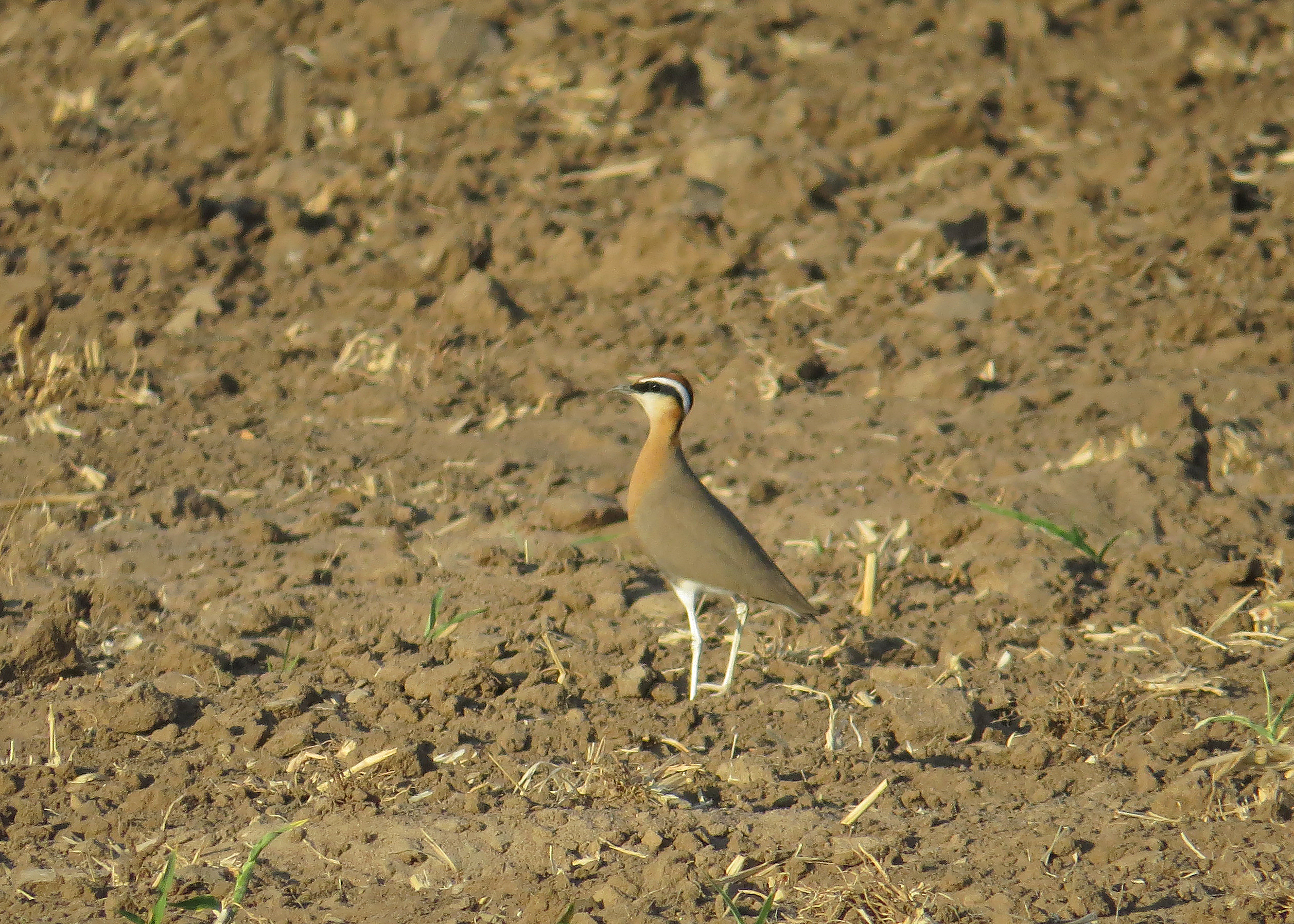
We got better views of Indian Courser ….

…. and great views of Green Bee-eater. The new Lynx Illustrated Checklist treats Green Bee-eater as three species, the all-green viridissimus in Africa, the blue-headed cyanophrys in the Middle East and the blue-throated orientalis from southern Iran eastwards.

We only saw a few woodpeckers on this trip, this Yellow-fronted Woodpecker only posed briefly.

The selfie craze has reached India, these girls knocked on the door of our vehicle and asked for a selfie with Heidi.
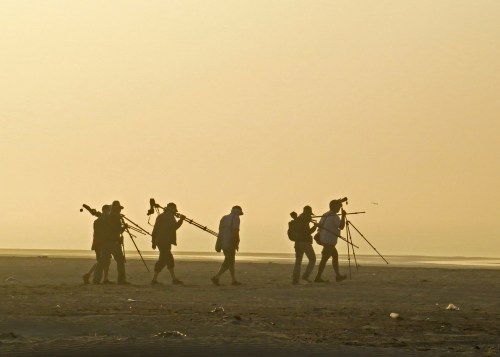
The following day we left early and arrived at the coast to the west of Bhuj at dawn

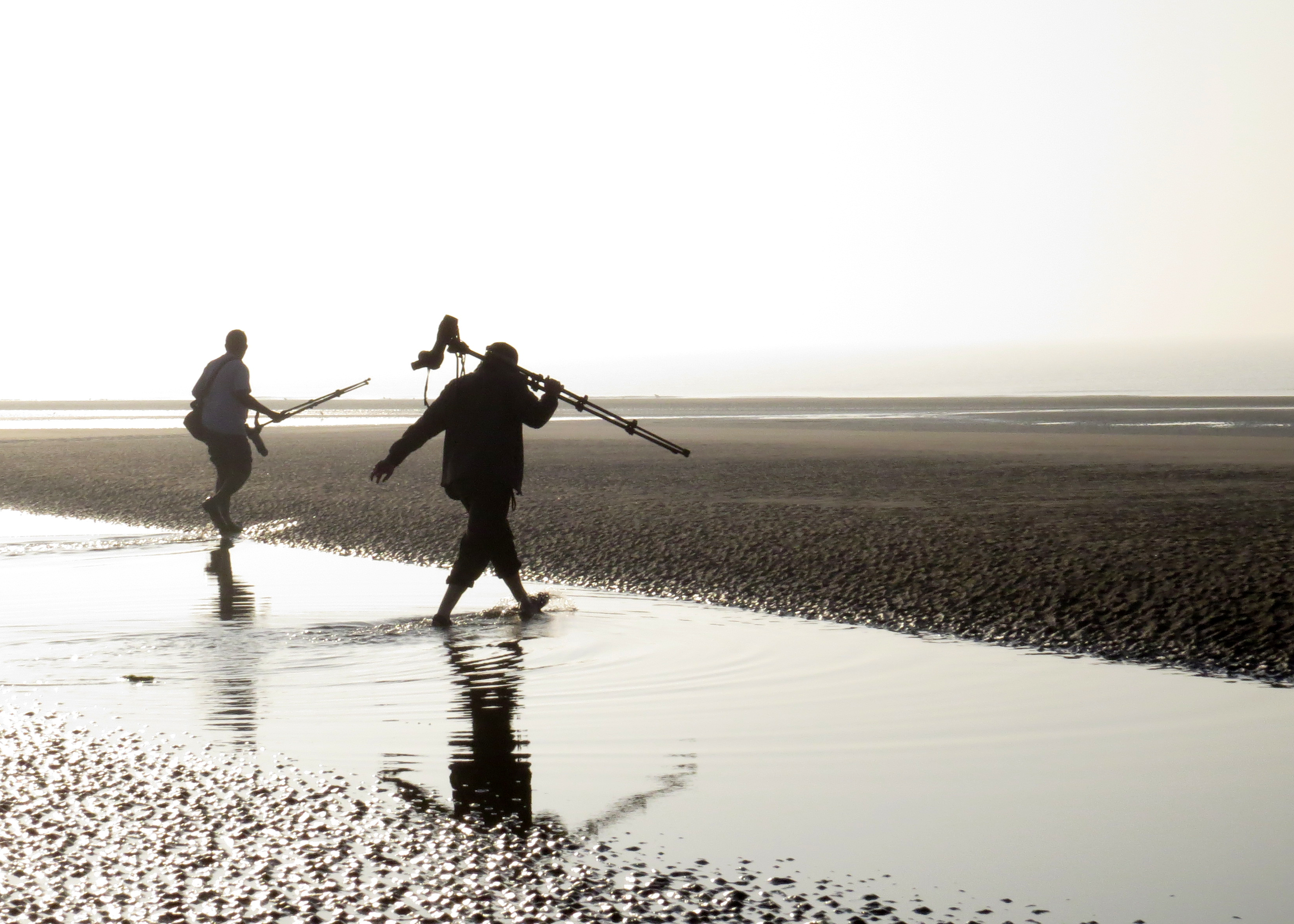
The rising sun soon backlit the flats. Crossing the channels was quite hard for those who didn’t bring suitable footwear as we sunk well past our ankles in the soft mud, however the going was easier closer to the shore.
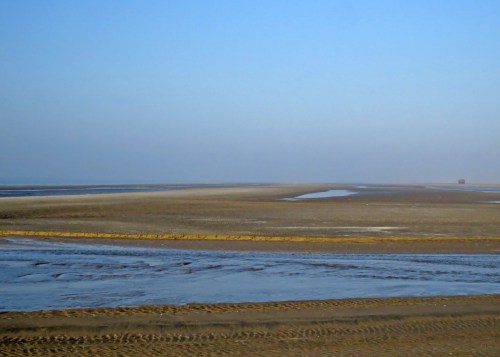
Behind us was a vast expanse of mudflats full of waders and gulls.

Wader/shorebird species included Little Stints ….

…. Sanderlings ….
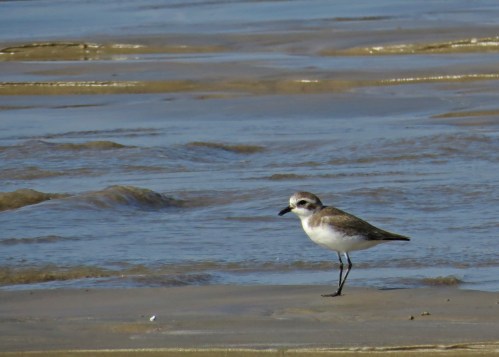
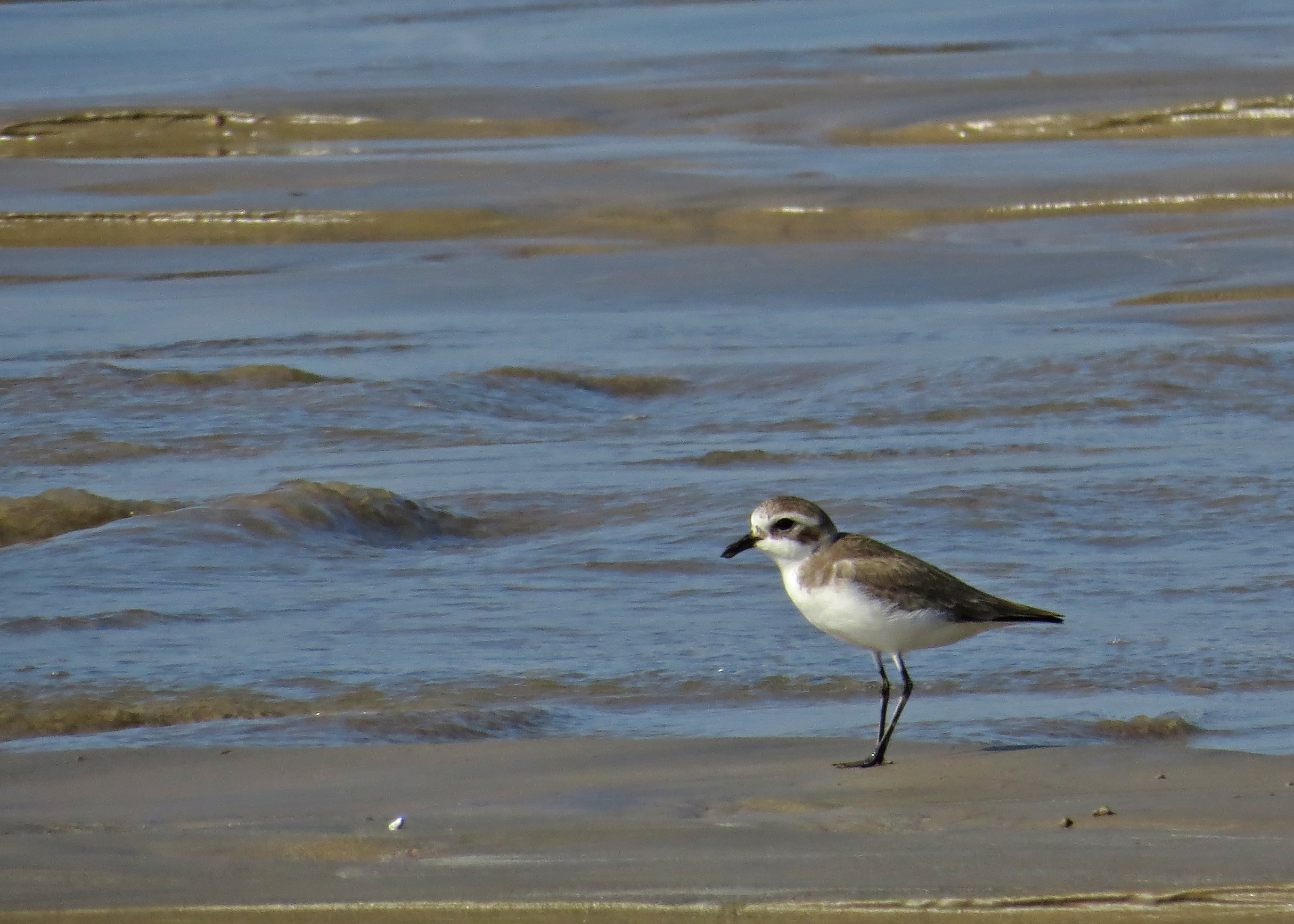
…. Lesser Sandplovers (and the occasional Greater) ….

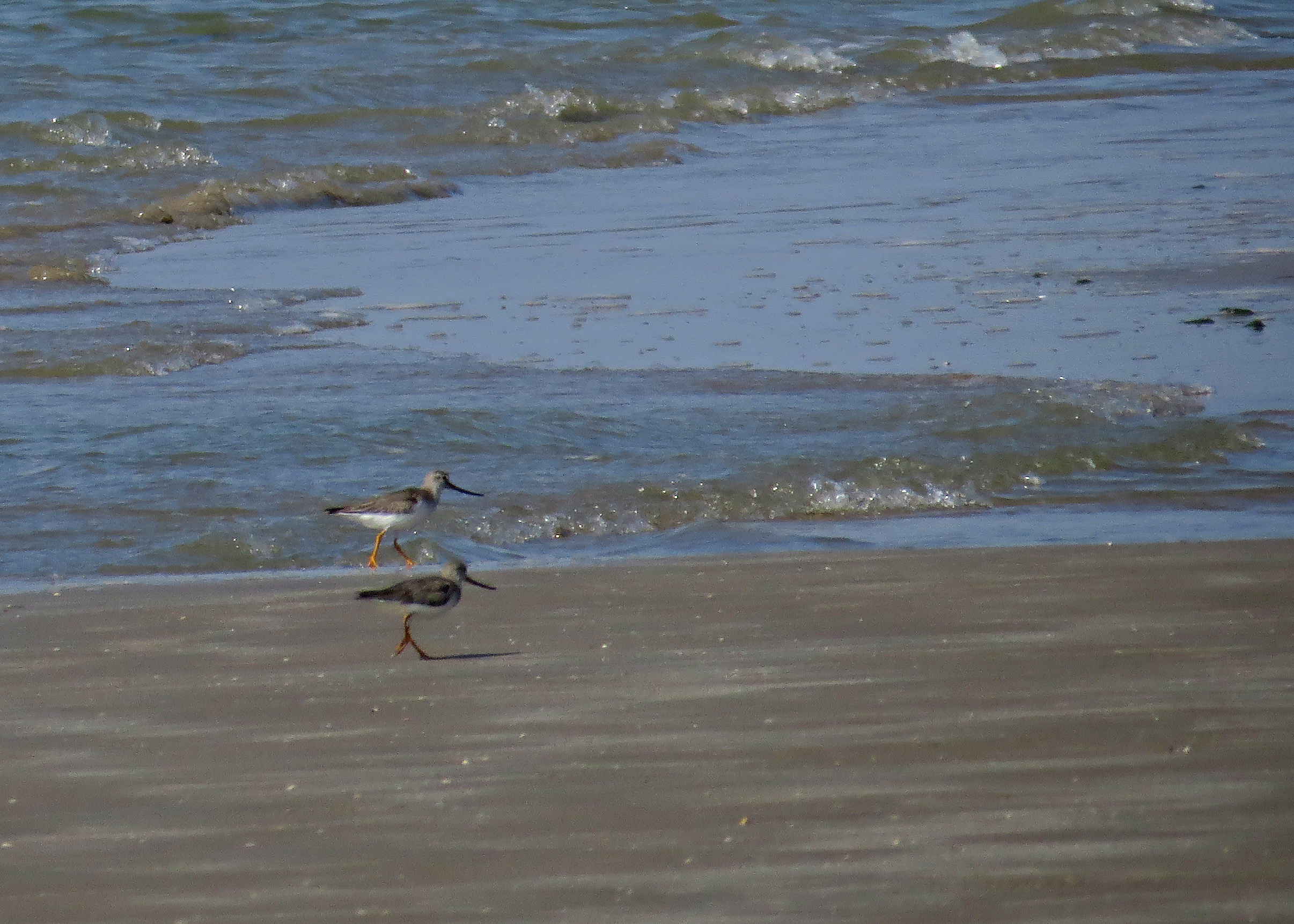
…. and Terek Sandpipers.
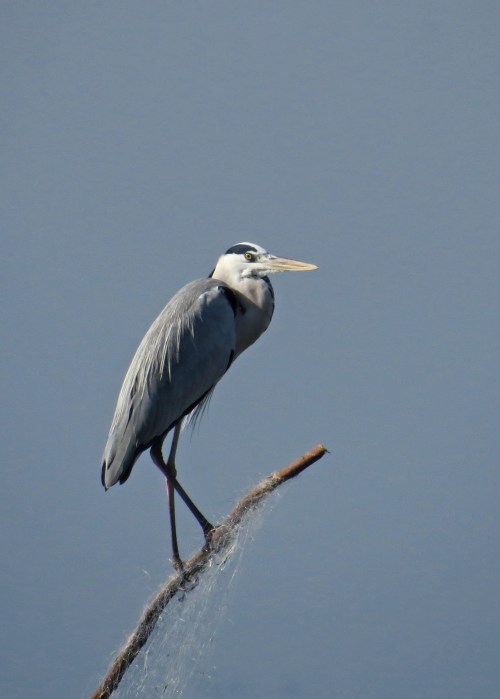
Whilst herons were represented by the familiar Grey Heron (which I hope doesn’t get tangled in the discarded fishing line)….

…. the almost cosmopolitan Great Egret (which should really be split into three species New World, Old World plus SE Asia and Australasia).
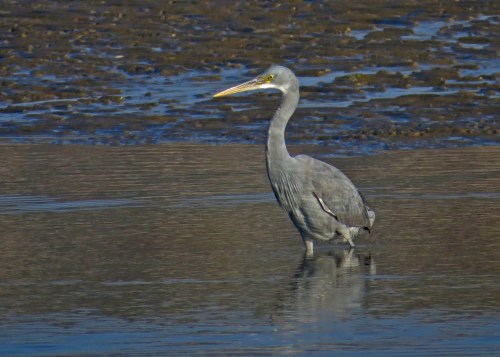
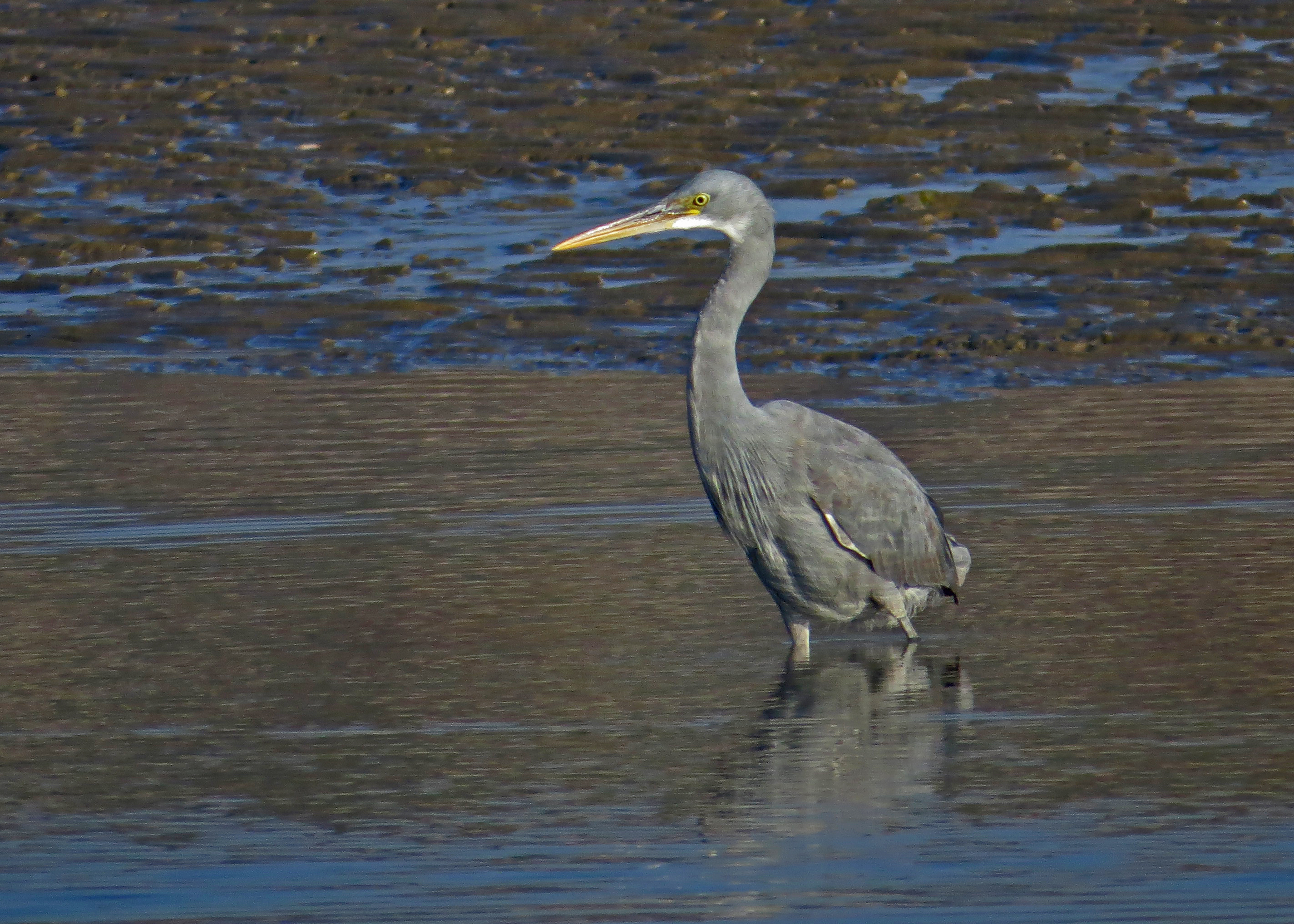
Western Reed Egrets are mainly dark phase here. In winter they occur as far east as Sri Lanka and Tamil Nadu, further east Eastern Reef Egret replaces it.

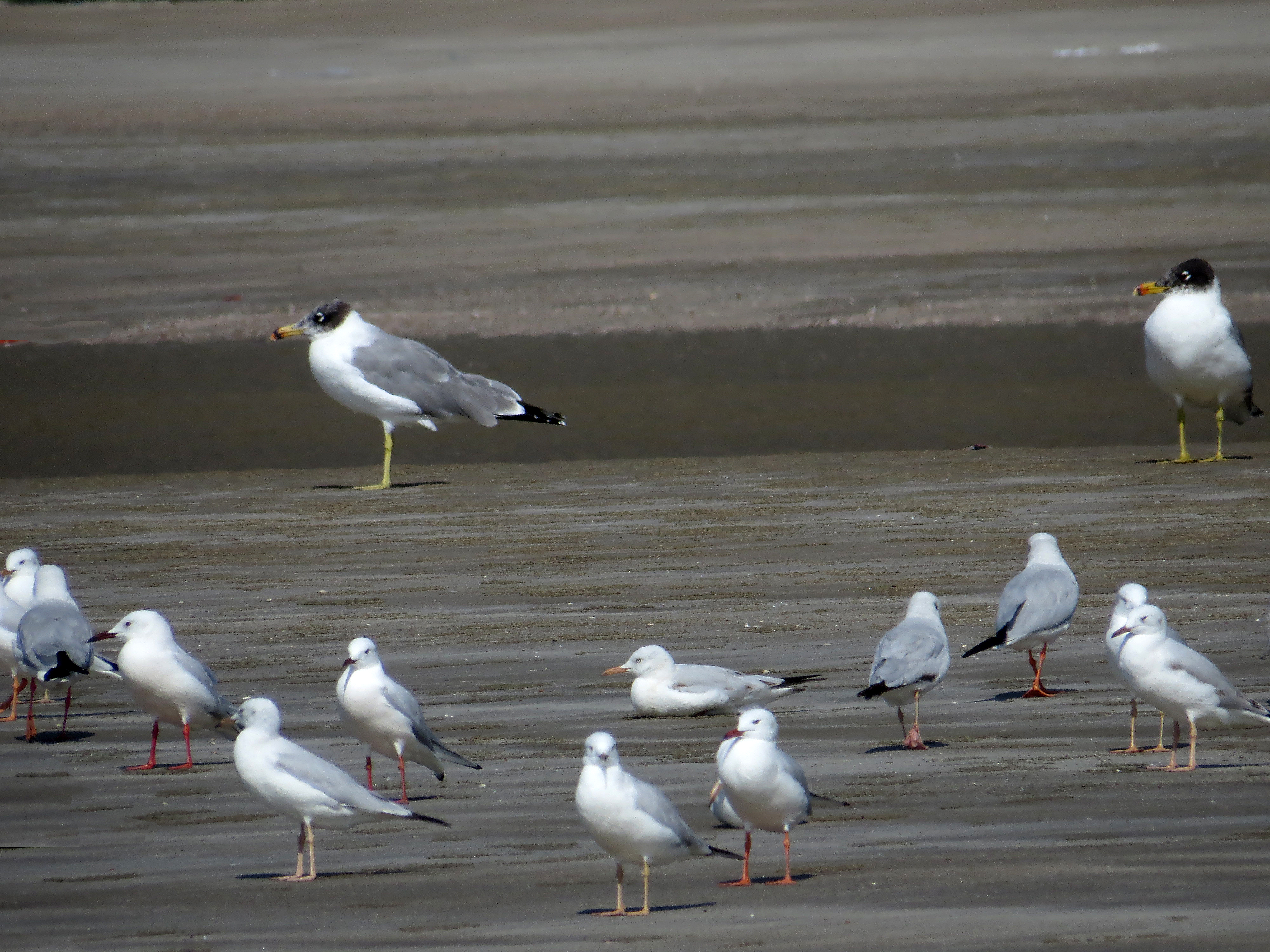
Most large gulls were Heuglin’s Gulls, currently treated as a subspecies of Lesser Black-backed Gull, but probably worth species status. The bird on the left is a Pallas’ Gull, a winter visitor from Kazakhstan, Mongolia and Tibet.

Here two Pallas’ Gulls in near adult summer plumage pose with a group of much smaller Slender-billed Gulls. Pallas’ Gulls used to be called Great Black-headed Gull but that invites confusion with the similar sounding Great Black-backed Gull and requires that the familiar Black-headed Gull’s name is given a modifier, usually Common Black-headed Gull (which in turn invites confusion with Common Gull). Pallas’ Gull also celebrates the life of Peter Pallas, a great explorer of Central Asia in the late 18th century.
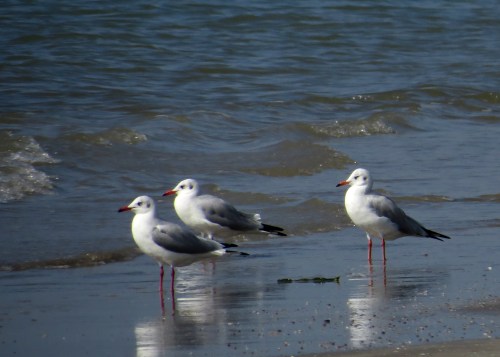
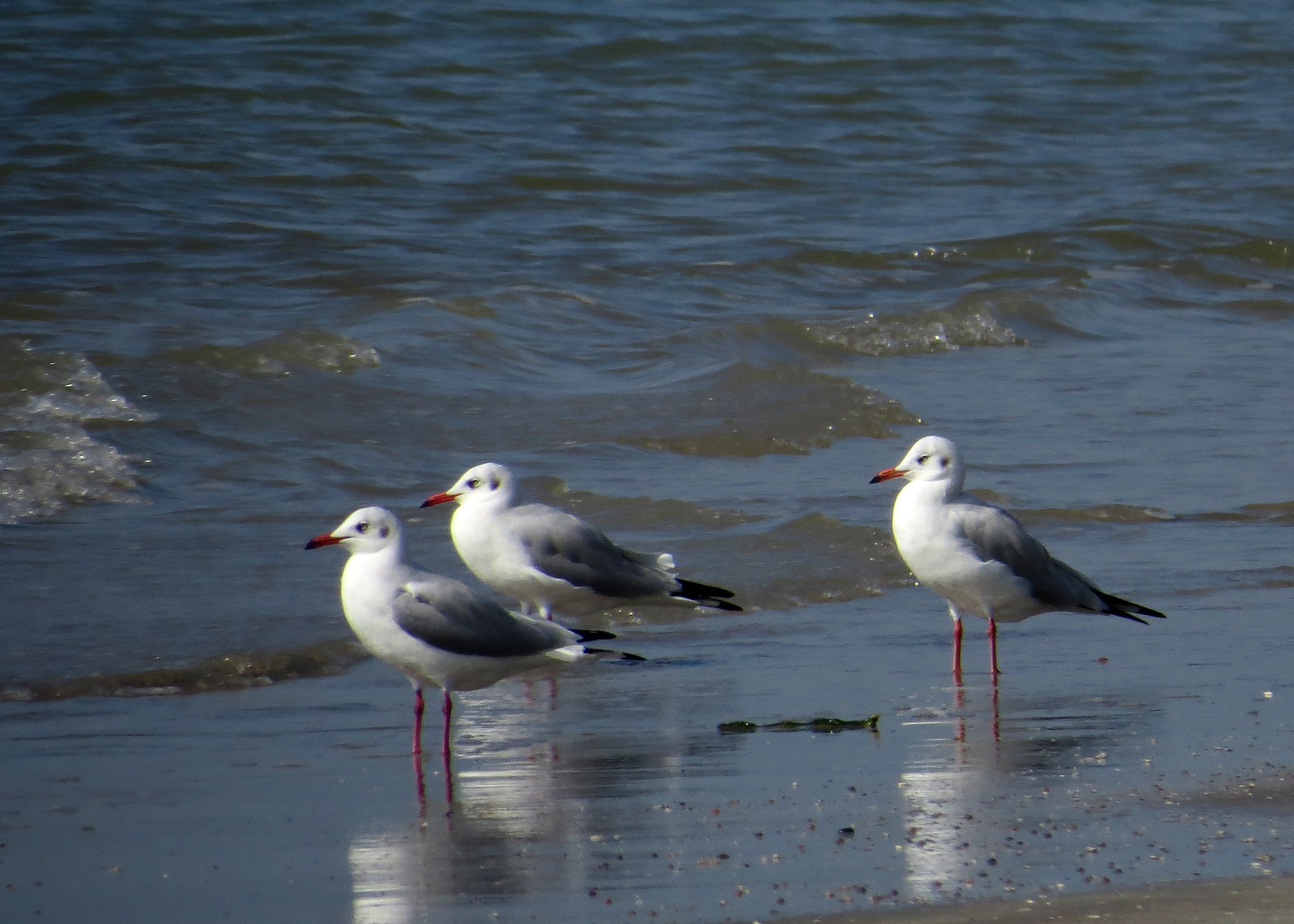
We also saw a small number of Brown-headed Gulls, quite like Black-headed Gulls at rest but with a strikingly different wing pattern in flight.
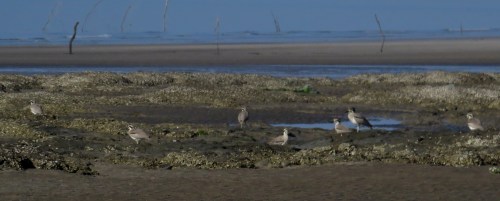
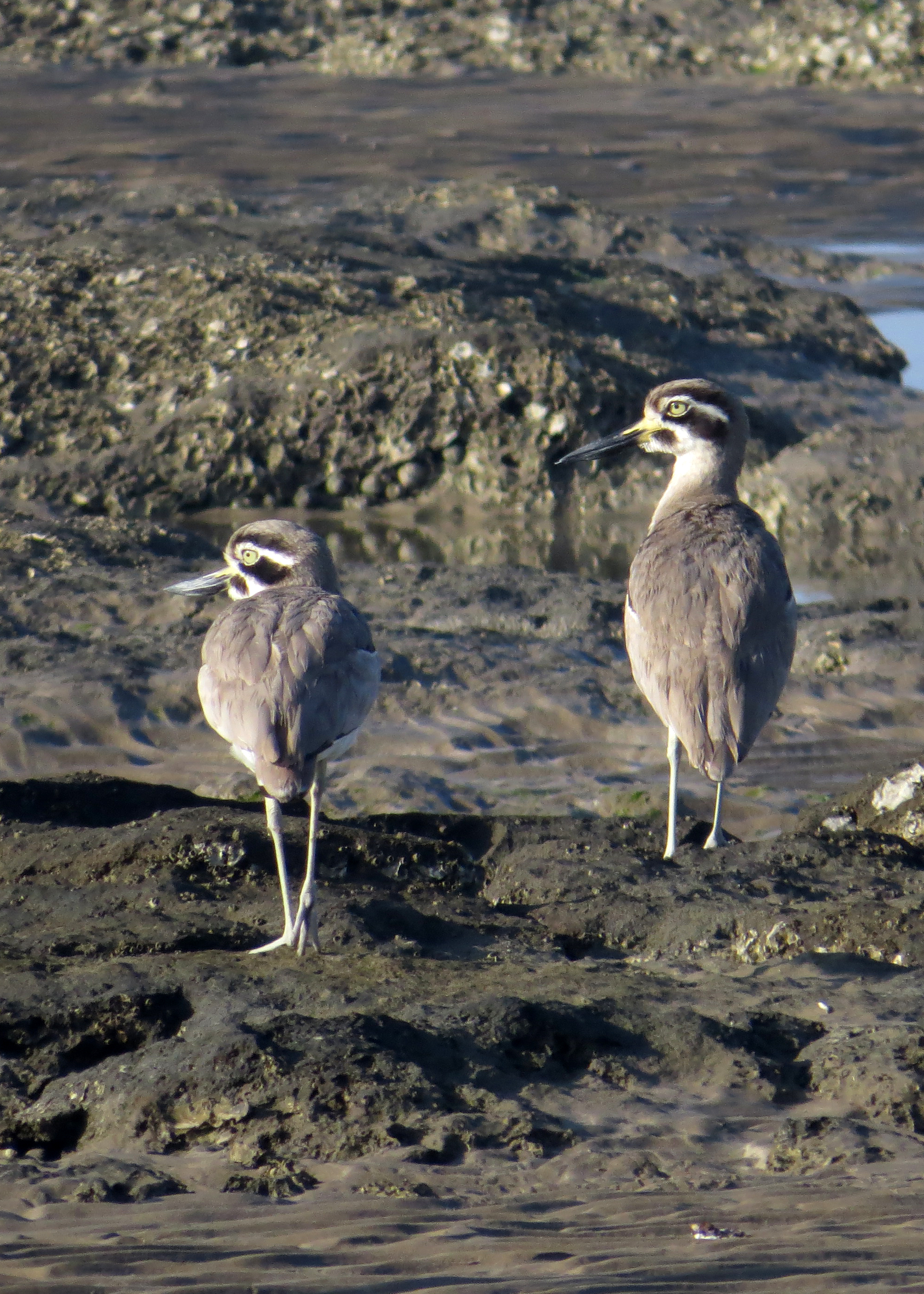
Two birds stood out in our exploration of the coast. The first was a group of eleven Great Thicknees (seven seen here), a relative of the Stone Curlew.

Only present in rocky area, they gave superb views, far better than I have had before.

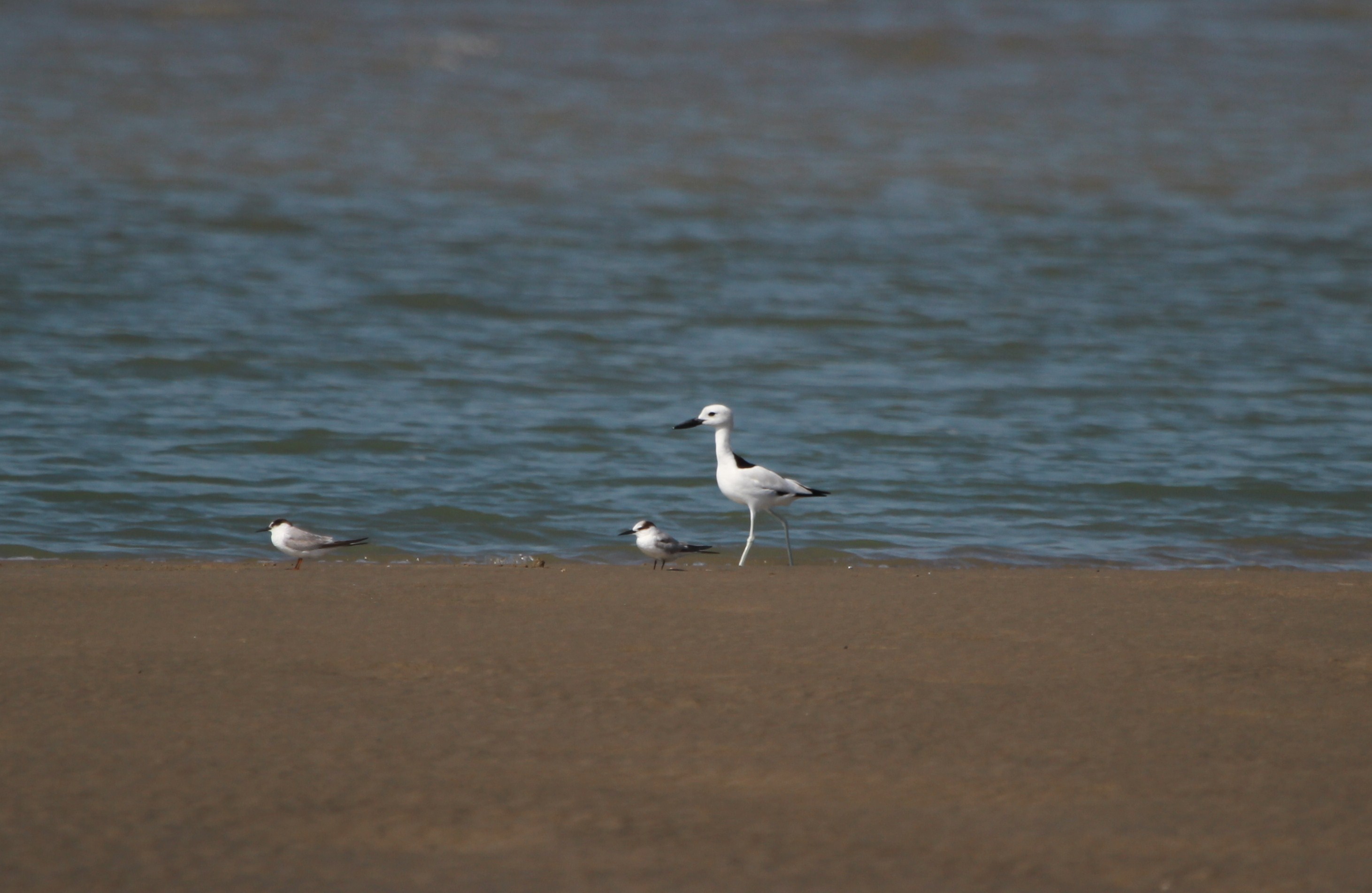
The second highlight was Crab Plover, another species in its own family. Several were seen some way off but as the tide came in they left the distant sandbar and flew towards us. At that moment my camera battery died and I found I had left he spare in the vehicle. This photo and the next were kindly given to me by tour leader Frank Lambert.
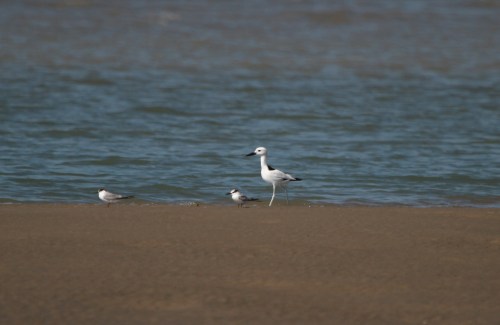
A Crab Plover with two Little Terns in winter plumage. Photo by Frank Lambert

Well that was that for the shining sands of Kutch. We headed back to CEDO making a few stops on route.

We passed through many settlements on route with their hard working villagers ….
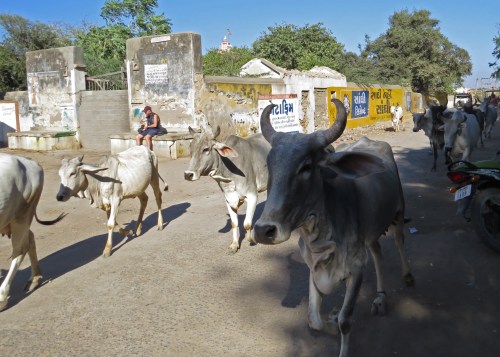
…. and inevitable cattle-jams.

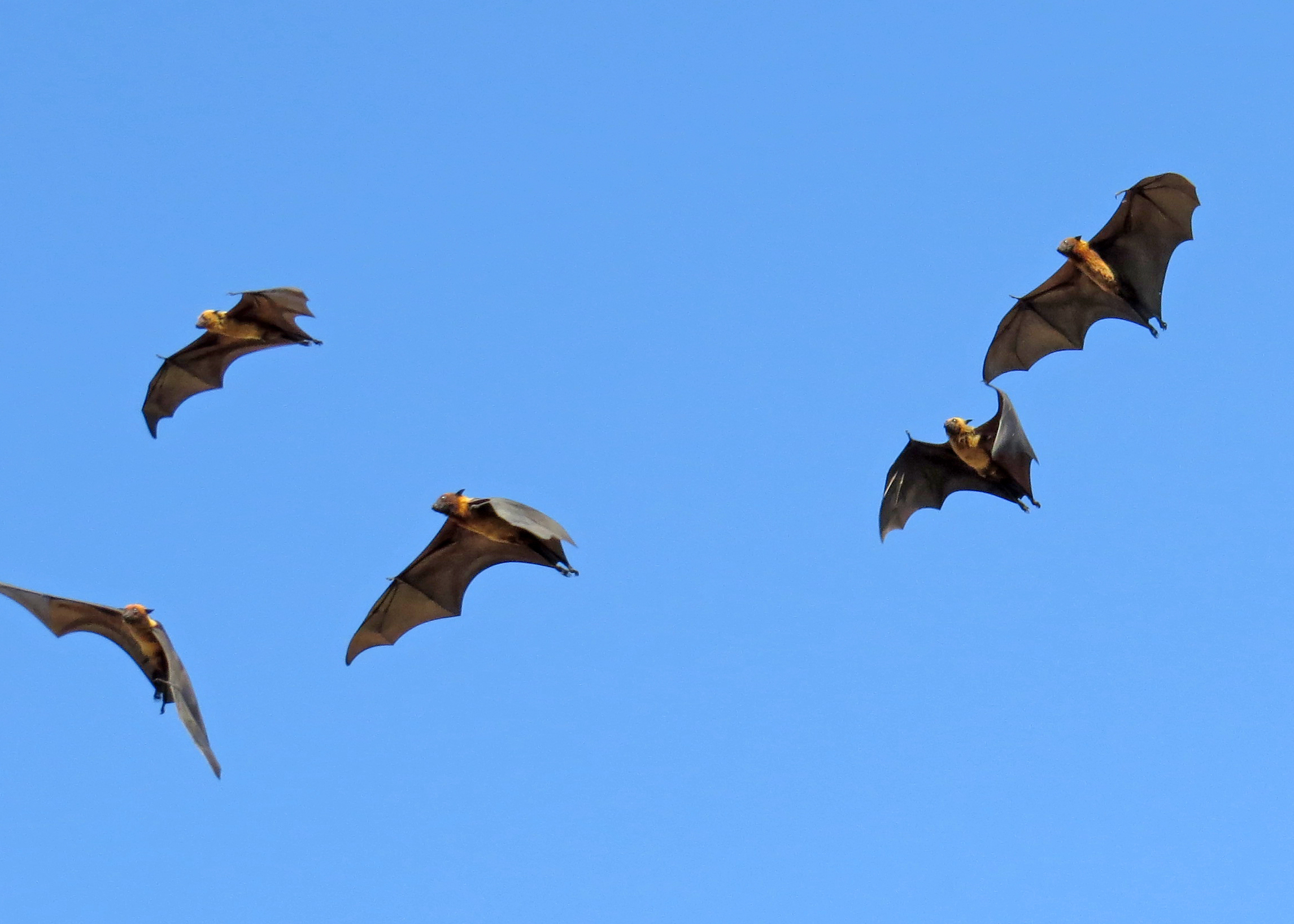
One village had a large colony of Indian Fruit Bats. In many part of the world fruit bats living so close to people would have been eaten but in India there is a respect for nature in spite of its burgeoning population.
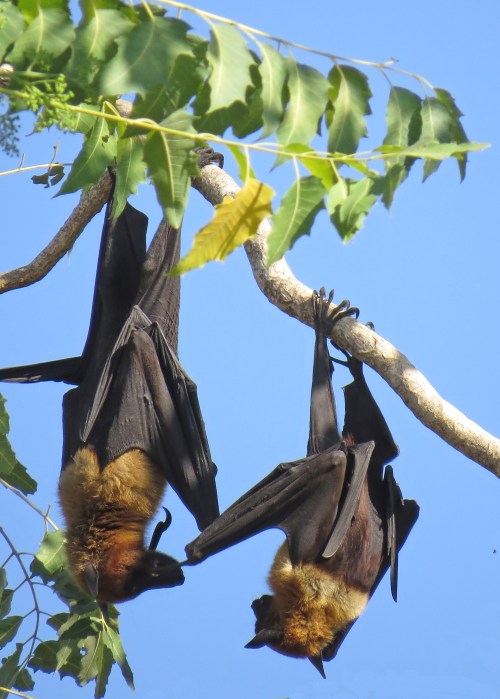
We were able to get excellent views of the colony from the roadside
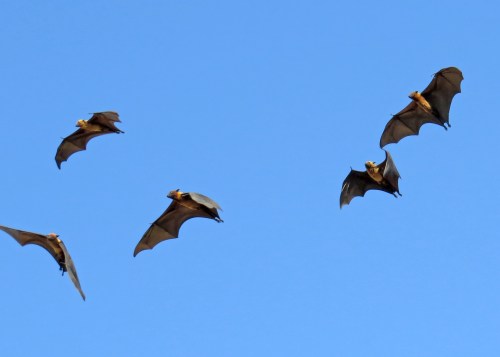
…. and watch the bats fly over the village as we enjoyed a glass of tea.

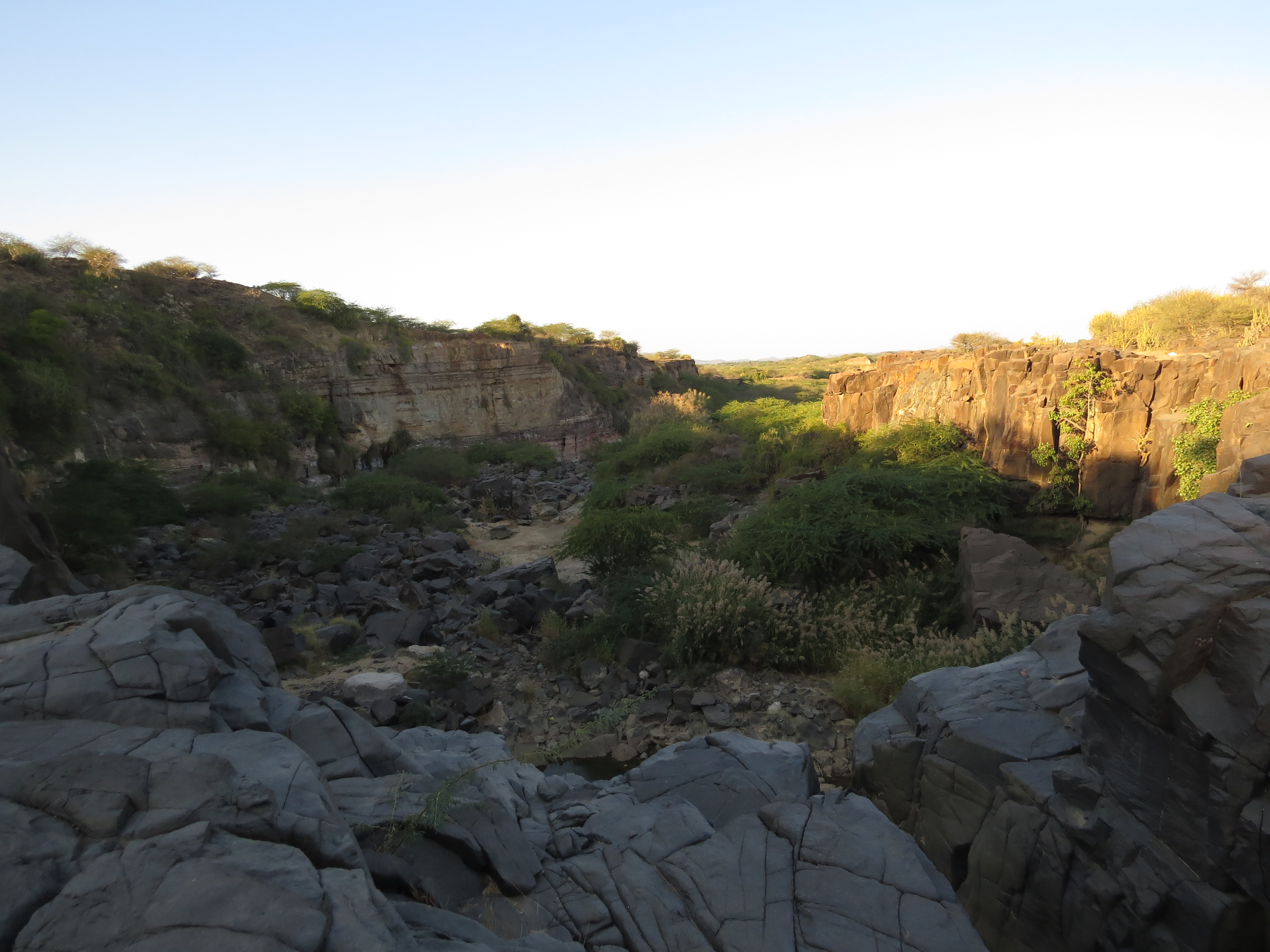
Our final stop was this gorge where we tried to improve on our earlier views of Indian Eagle-Owl, but to no avail.
That ended out time in Gujarat. The following morning we left early for a flight to Mumbai. Here we had several hours to kill before we took another flight to the city of Nagpur in the state of Maharashta, pretty much in the centre of the country. That will be the subject of the seventh and final post on Western India.
This post covers the first site we visited in Gujarat, the Desert Coursers camp near the Little Rann of Kutch.

After a final morning at Mt Abu we descended to the plain and continued south-westwards towards Gujarat. We met many cattle-jams on the road ….
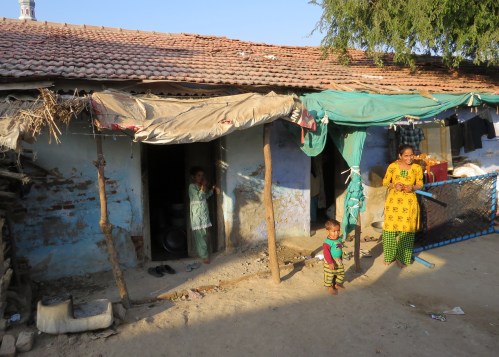
…. passed through many traditional Indian villages ….

…. and makeshift camps of migrant workers.
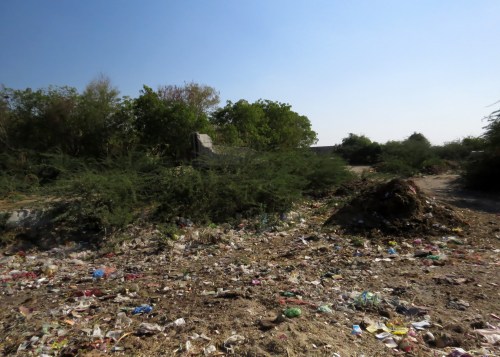
Rubbish tips beside the road were a frequent sight ….

…. although it was quite surprising to find Peacocks foraging amongst the trash.

Among the many birds we saw on route were these Bhraminy Starlings …

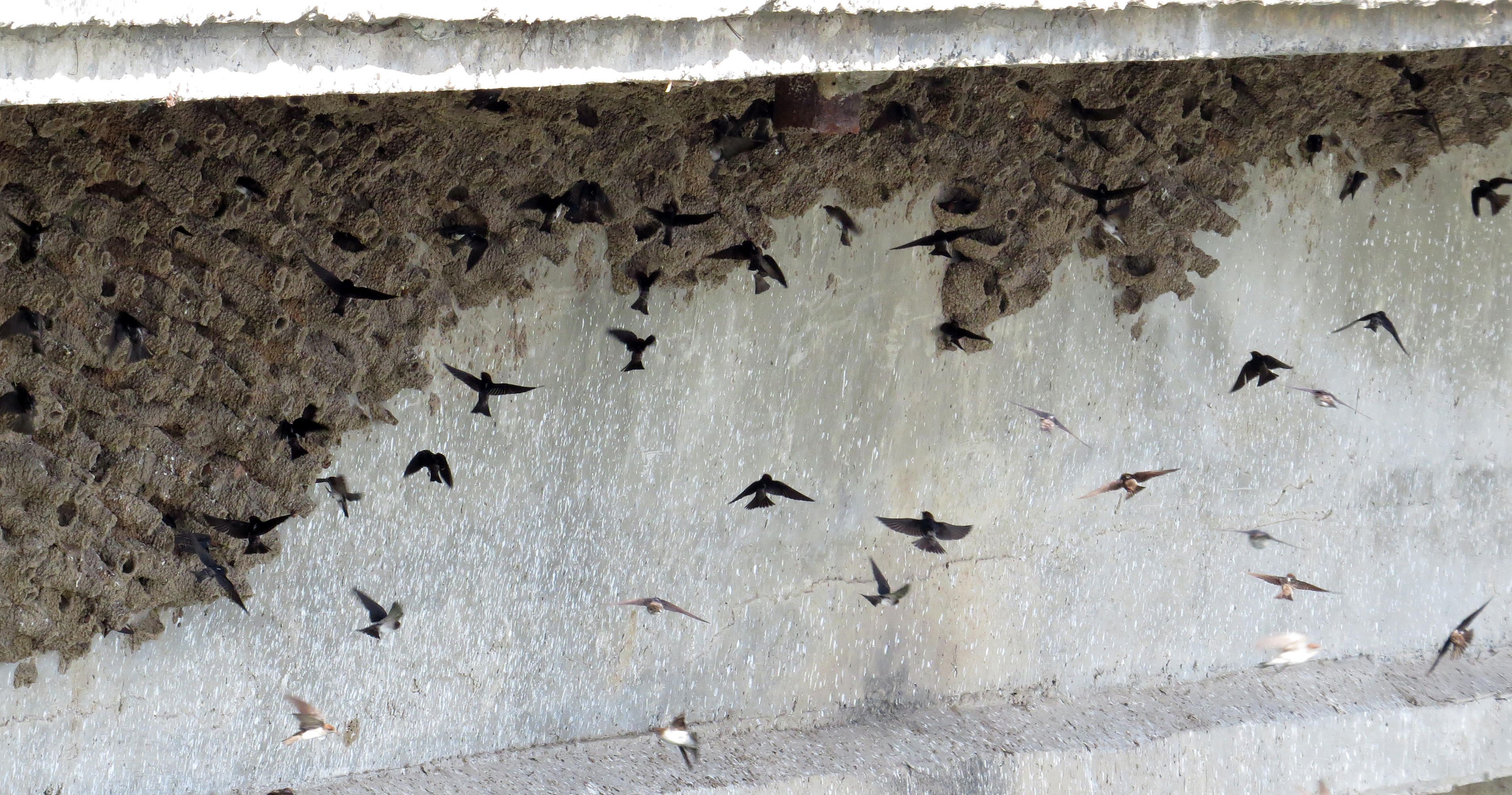
…. and under a bridge we found a large colony of Streak-headed Swallows ….

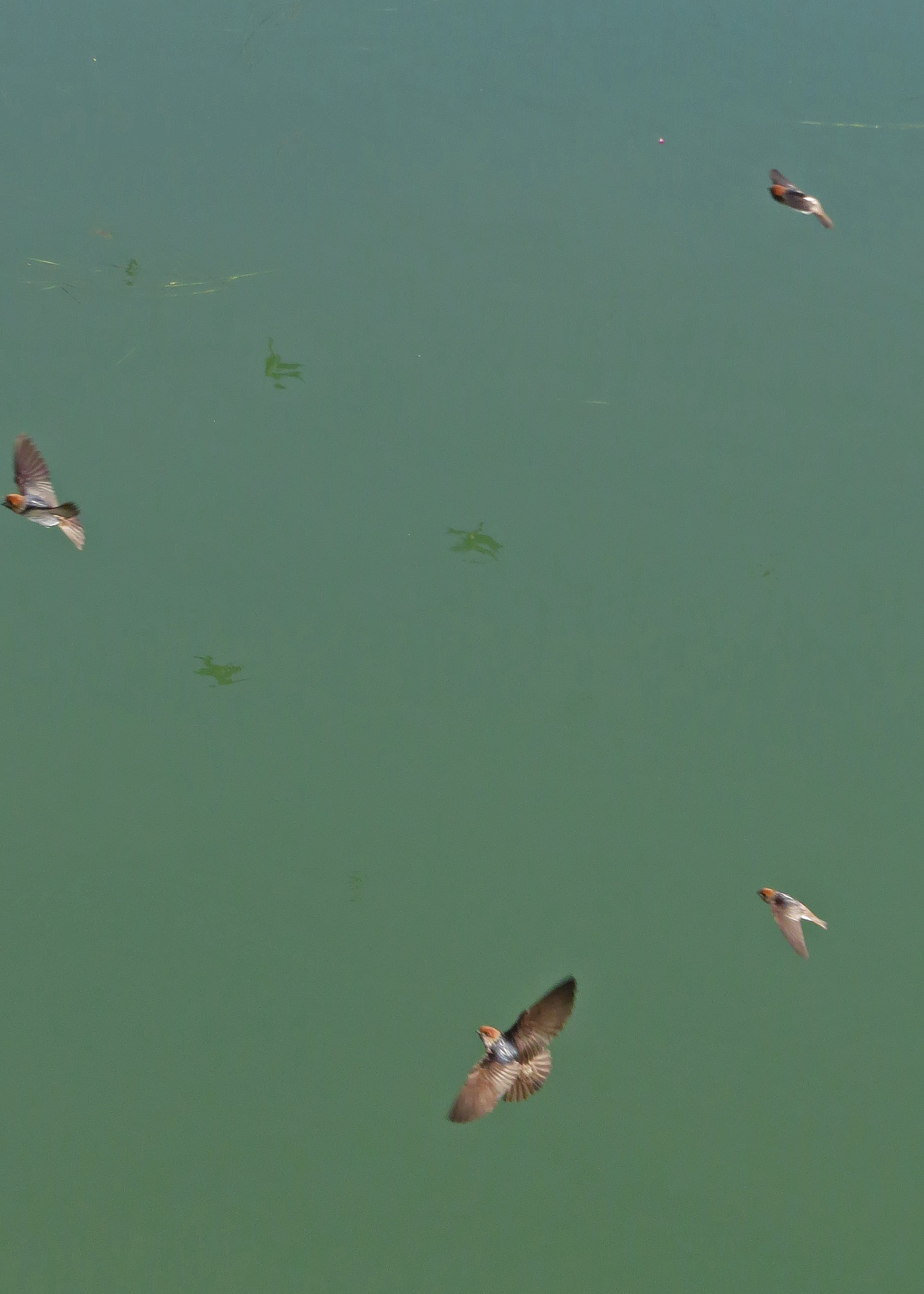
…. although it was a job to get decent flight photos of them over the water.

Even before we had checked into the lodge we were shown this very obliging Pallid (or Bruce’s or Striated) Scops Owl in the grounds. The bird looked down at me at such a strange angle that I had to rotate the photo through 90 degrees for it to appear normal.

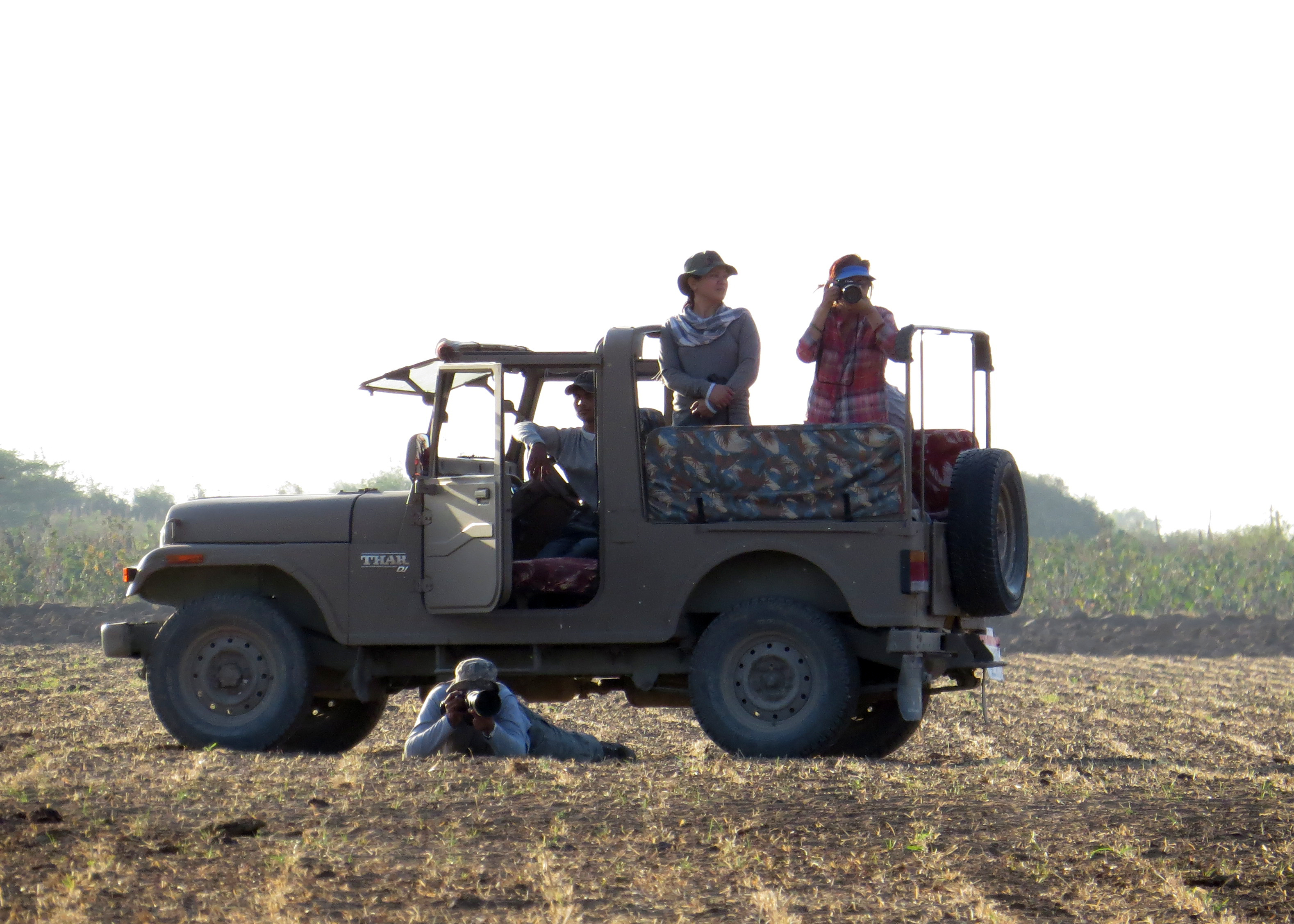
Like at Siana, transport was in these open-sided vehicles ….

which was fine in the afternoon sun, but in the early morning was very cold indeed ….

…. and extremely dusty as well.
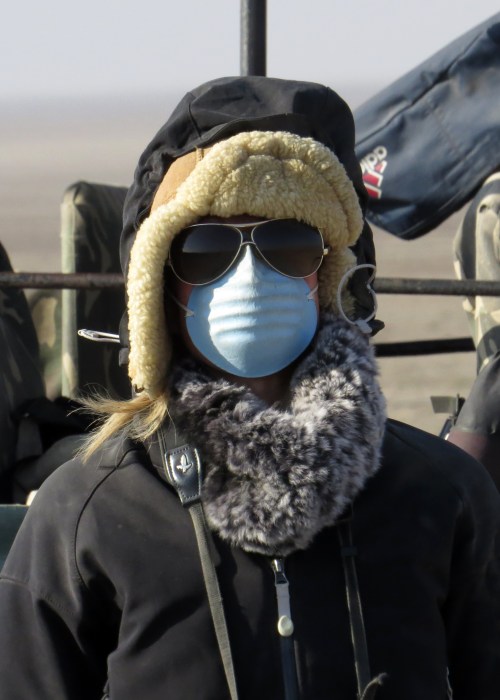
Even so, I think it would be fair to say that some tour members rather overdid the protective clothing!
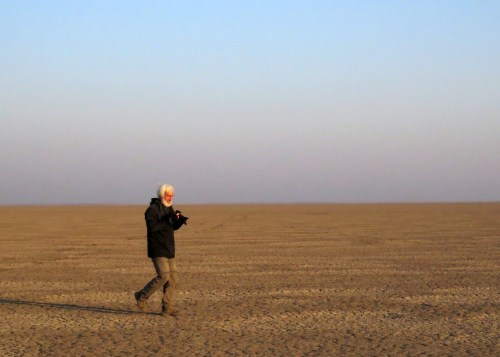
Most of the Little Rann of Kutch consists of barren mud flats. During the monsoon season storms force sea water over the area adding to the flooding caused by the heavy rain. As the water evaporates salt deposits build up over the millennia.

Temporary shelters spring up in the dry season as migrant workers harvest the salt deposits.

Salt pans can be seen in many places ….

…. and the product of their labour is piled up on the edge of the flats.

Much of the acacia woodland that surrounds the flats has been cut for firewood.
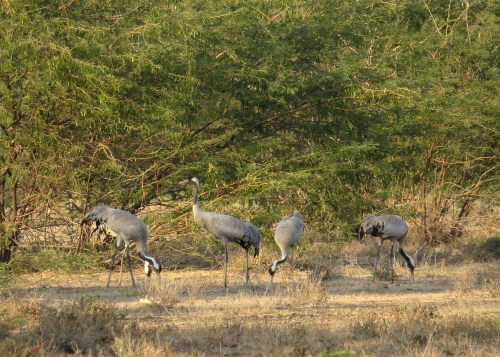
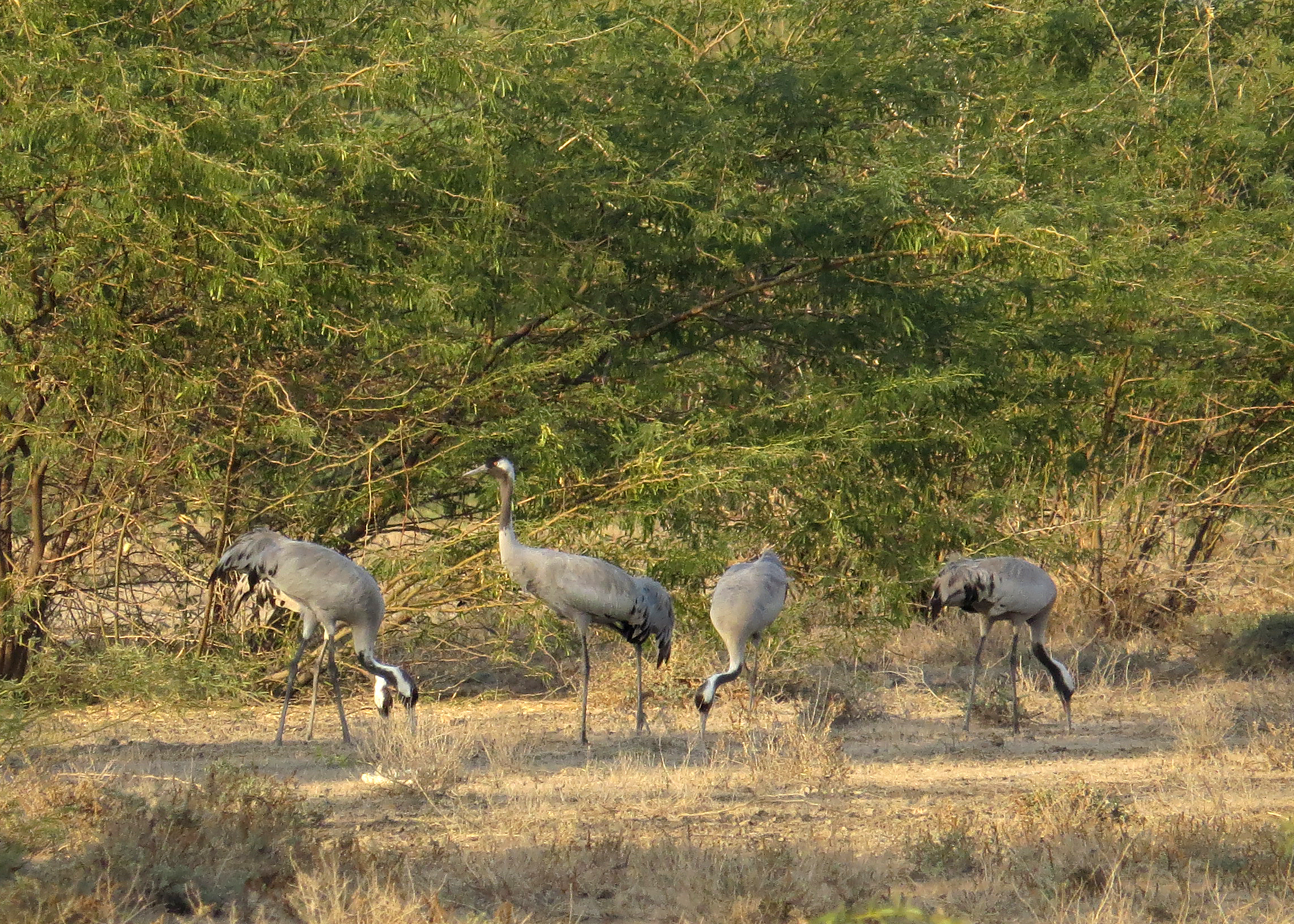
To cater for the need for firewood the Mexican mesquite bush was introduced a few decades ago and has spread explosively throughout western India. However acacia is still prefered as firewood, so the native wildlife-friendly acacia has been replaced by a wildlife-adverse alien. Shame they didn’t plant acacia saplings instead! Wintering Common Cranes are quite numerous in the area and can be seen feeding along the edge of the flats or in long Vs across the sky.
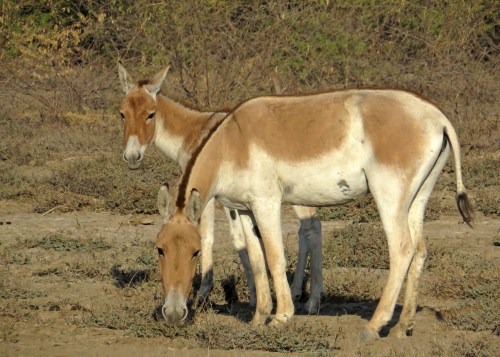
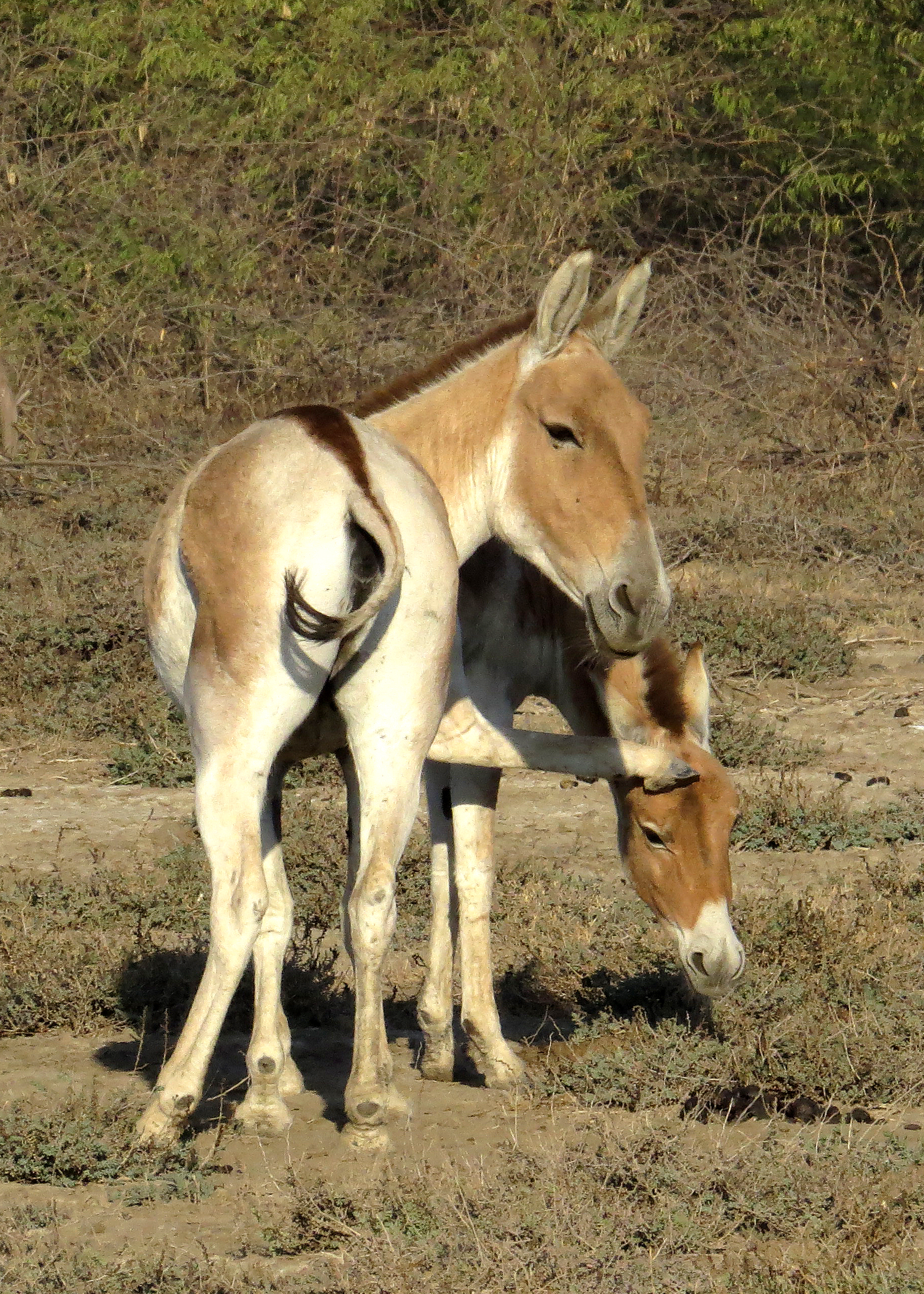
The Little Rann of Kutch is one of the last strongholds of the Asiatic Wild Ass or Onager.

The Onager is not the ancestor of the domestic donkey, that honour falls to the African Wild Ass of the Danakil area of Ethiopia and Somalia.

Once ranging from Israel to Siberia the range has contracted greatly and now only occurs in Iran, Pakistan and India plus parts of Central Asia.

As darkness fell we stayed to spotlight the restricted range Syke’s Nightjar.

After a morning of bustard searching on the flats we visited a nearby lake and in the surrounding fields found the endearing Indian Courser.
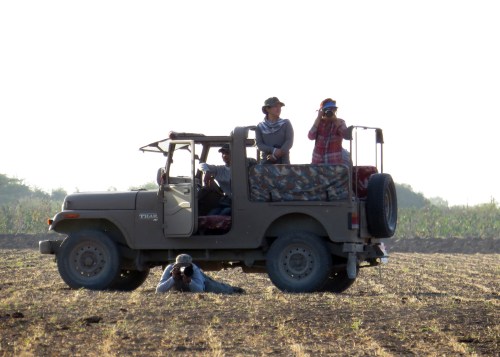
This group of Indian photographers were clearly watching what we were doing as within minutes of us finding the coursers they drove right into the field for closer views.

The lake held good numbers of Lesser Flamingos. The Little Rann of Kutch is the only area outside of Africa where Lesser Flamingos breed.

As well as Lesser Flamingos there were numerous other water birds, ducks, waders, Spoonbills and these Common Cranes.

A few Nilgai were seen along the lakeside ….
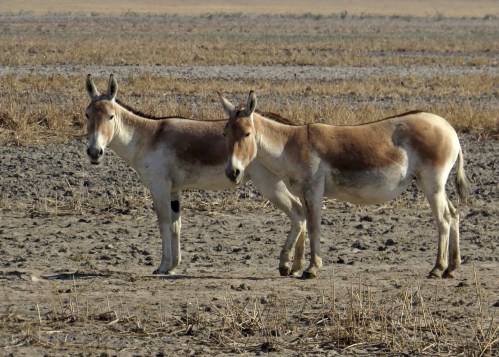
…. as well as a number of Onagers.

This stallion was getting hassled by feral dogs ….

…. but he soon gave them the boot (or should that be soon gave them the hoof?)

We were just about to leave the Little Rann of Kutch when we found this Rufous-tailed Lark close to the road.

But one of the top bird on most people’s agenda was the increasingly rare Macqueen’s Bustard which is now a scarce winter visitor from Central Asia. Formerly lumped with Houbara Bustard of North Africa and the eastern Canaries, this bird is the traditional target of Arab falconers and its numbers are dropping rapidly as a result. This bird was seen twice on the Little Rann of Kutch, both times briefly in flight and I missed it on the first occasion. Of course I didn’t get any photos so I have included one I took on the breeding grounds in Kazakhstan in 2005. This species is much smaller than the Great Indian Bustard, but just as hard to see and I only saw it on the final morning just before we headed off to our next stop at Moti Virani further north-east in Gujarat.
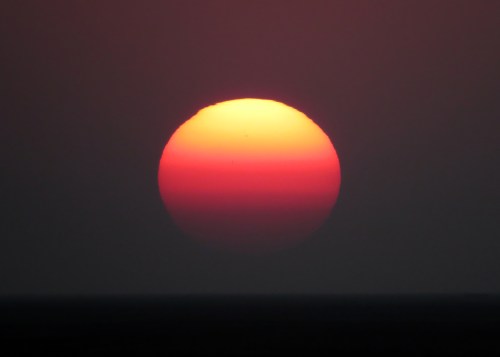
Let’s be corny and end with another glorious desert sunset.
This post covers the areas around the town/villages of Siana and Mt Abu in Rajasthan. The thorn scrub and montane woodlands held some excellent species, several of which were life birds for me.

We arrived at our lodge at Siana in the early afternoon of 19th after some birding on route.
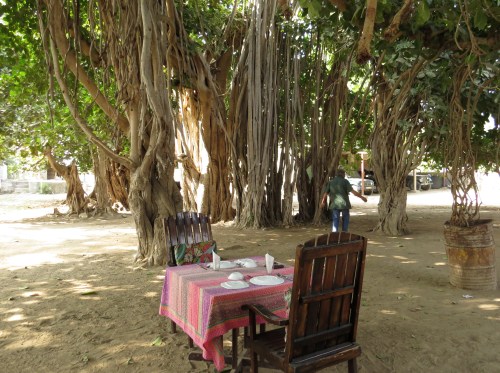
The clearing by our chalets was dominated by this huge fig.

…. and nearby trees held some enormous bee’s nests ….
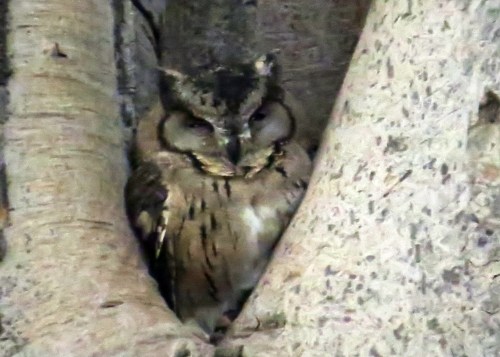
…. and a roosting Indian Scops Owl.
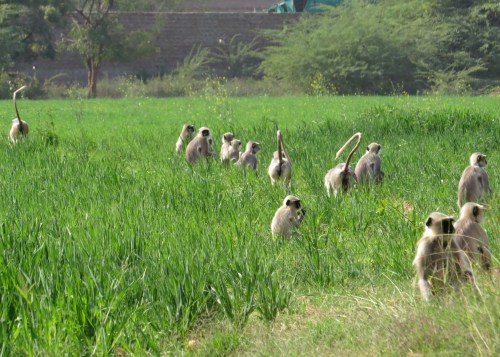
There were plenty of Hanuman Langurs in the area ….
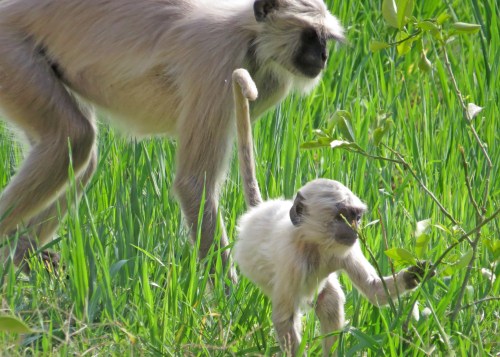
…. including this mother and baby.
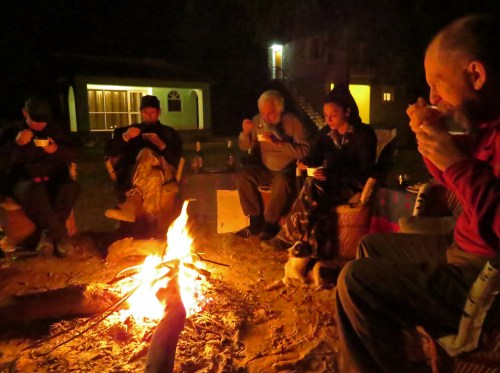
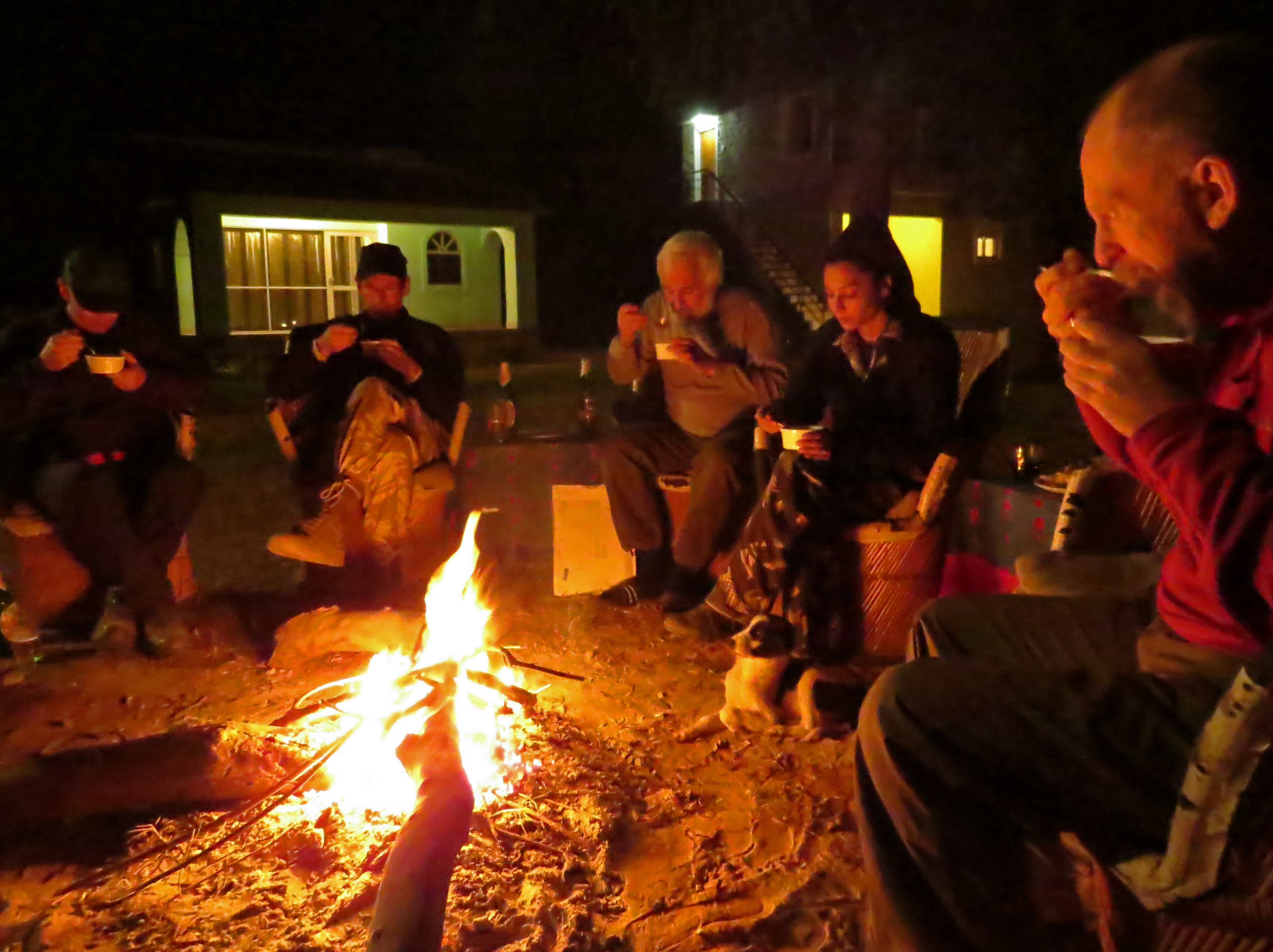
It was pretty cold at night so we huddled around an open fire to eat.
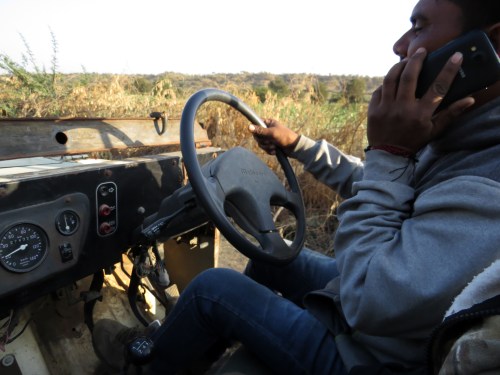
Transport in the Siana area was in these open-sided (and open-fronted) jeeps.

The area was composed of rocky hills and dense thorn scrub.

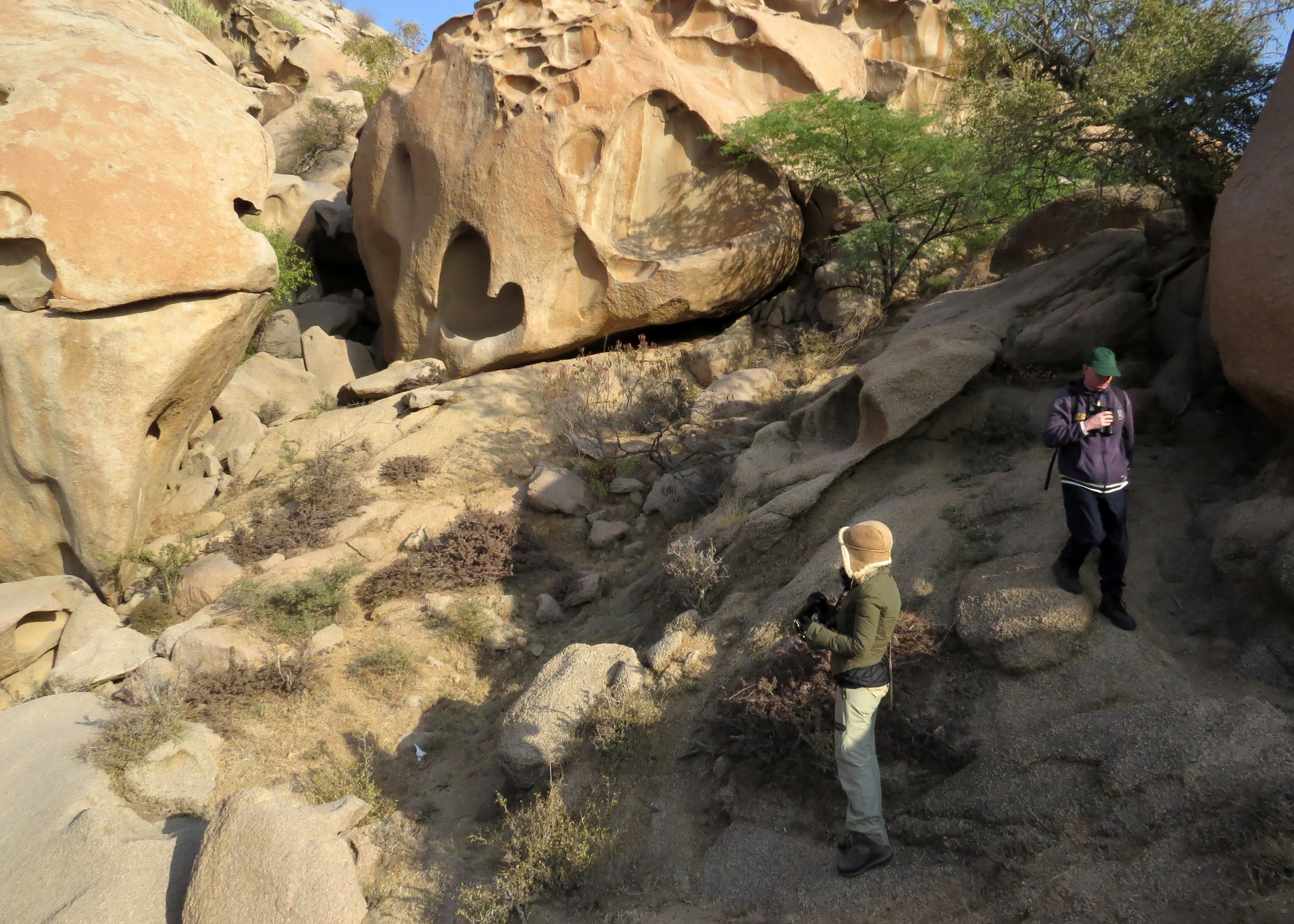
We spent some time around this rock outcrop ….
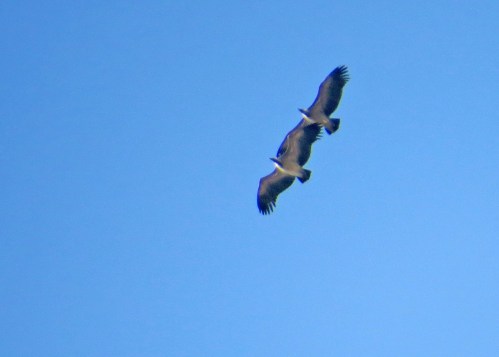
…. as this was the only place we were likely to see the critically endangered Indian Vulture which nests on the rock. We saw at least four, possibly six of these birds during our time here. See the previous post for an explanation of the catastrophic decline of India’s vulture population.
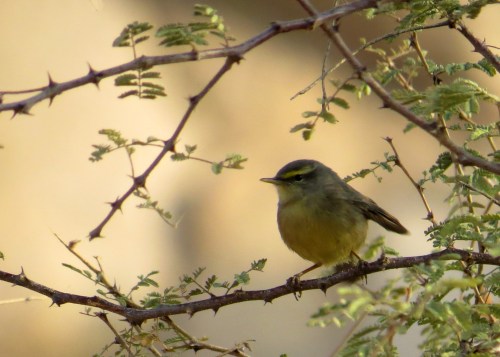
Between the rocky outcrops we saw a number of Sulphur-bellied Warblers, on the face of it just another hard to identify Phylloscopus warbler ….

…. but in practice quite easy to identify due to its habit of foraging on tree trucks and rock faces rather than among the leaves.

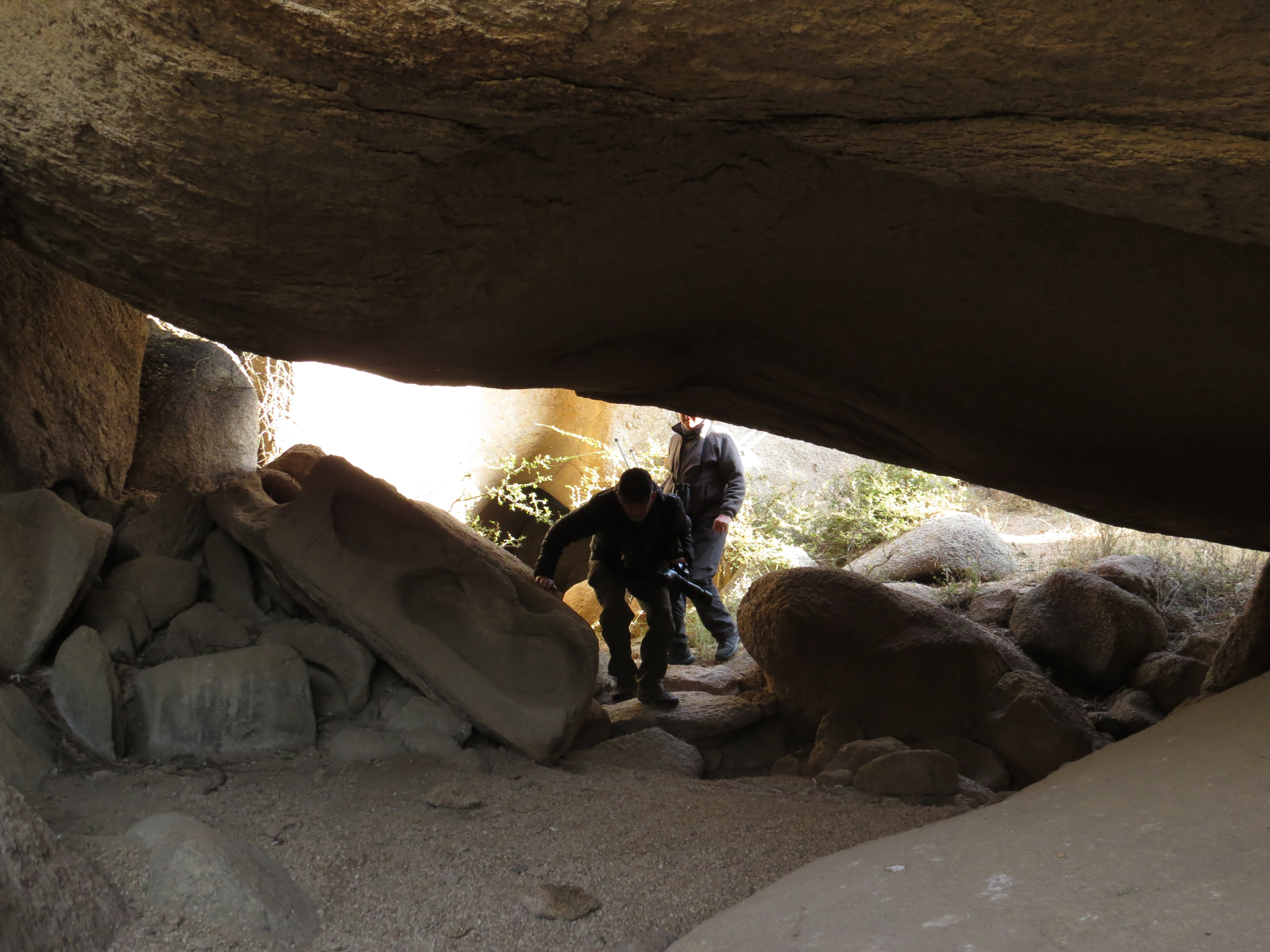
Speaking of rock faces we did a fair bit of scrambling and searching around them in an unsuccessful attempt to locate a roosting Indian Eagle Owl.
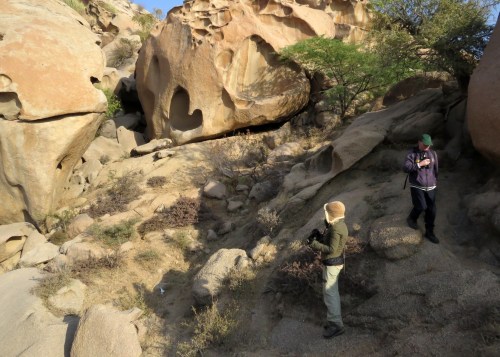
We failed to find the owl but we did hear and see one in flight in the same area at dusk.

After we had seen the eagle owl we spent some time spotlighting the escarpment and eventually picked up the eye-shine of a distant Striped Hyena. Through the scope the views weren’t bad and we could see the striped legs and flanks, powerful muzzle and huge ears. I think this was the highlight of the entire trip for me. Of course under those circumstances I couldn’t get a photo so I have included this one from the IUCN Hyena specialist group’s website which was taken using a camera trap near Tehran, Iran by Alireza Mahdavi.

On the top of one high outcrop a Short-toed Eagle peered down at us ….
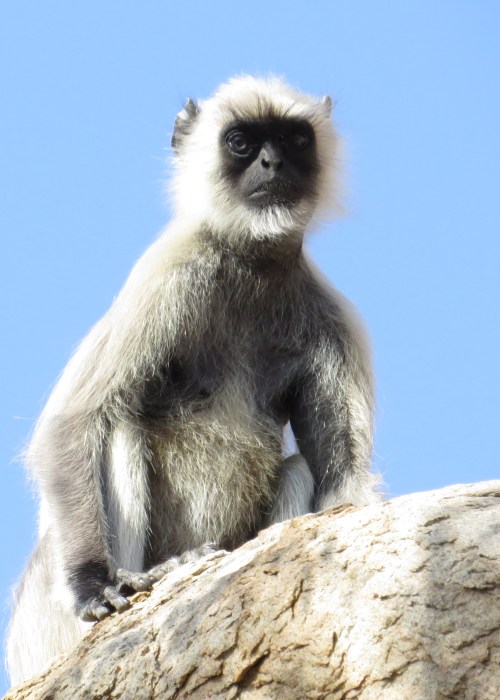
…whilst from another this Hanuman Langur stared disdainfully at us.

Whether you call it Yellow-throated Sparrow or Chestnut-Shouldered Petronia, I got the best views I’ve ever had of this often elusive bird.
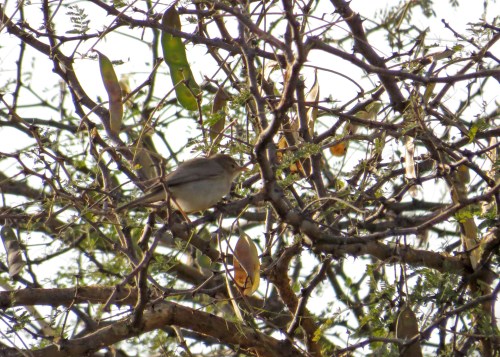
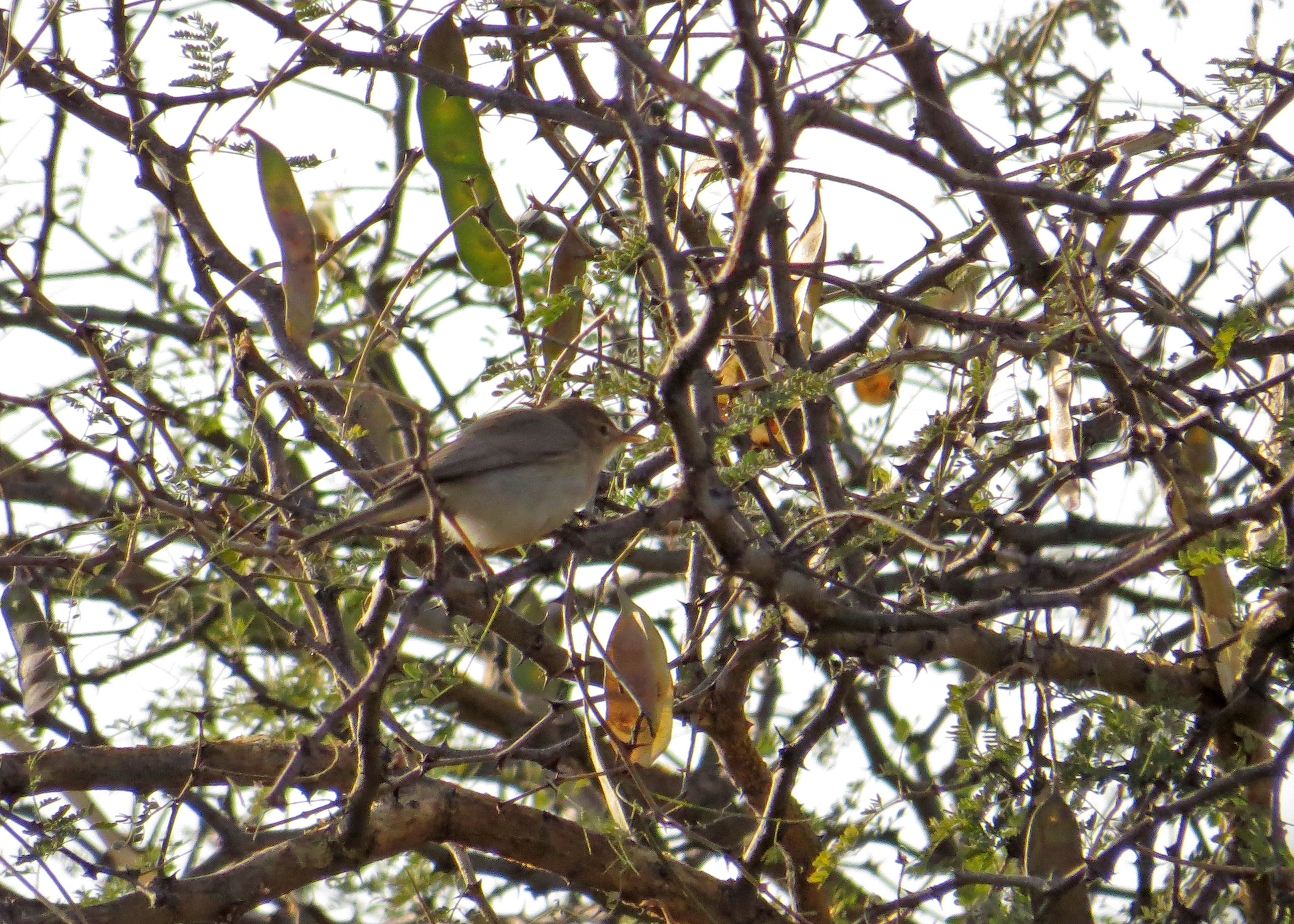
Syke’s Warblers were quite tricky as well. This scarce visitor from Central Asia has turned up in the UK on several occasions including Dorset.
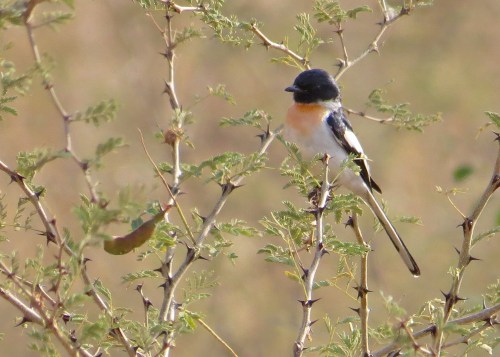
One of the key birds in this area was the beautiful, yet elusive White-bellied Minivet which we saw only once.

Late in the day we quietly hid by this pool in the hope that Painted Sandgrouse would appear. Whilst we were waiting this herd of Wild Boar came down to drink.

Eventually a pair of Painted Sandgrouse appeared but by now it was too dark for photography. This photo from the Internet Bird Collection was taken by Jugal Tiwari in Gujarat. Painted Sandgrouse was the last of the 16 species of sandgrouse in the world for me, another family 100% under-the-belt.
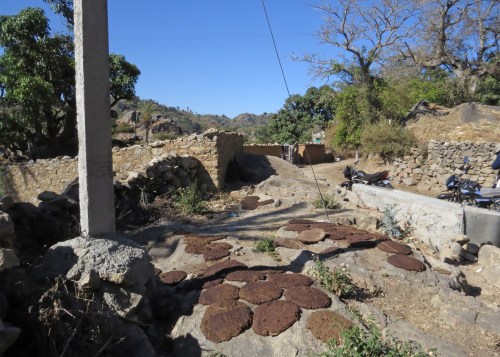
On the 21st we headed from Siana to Mt Abu, a former hill station in the Avalli range which is looking quite down-at-heels these days.
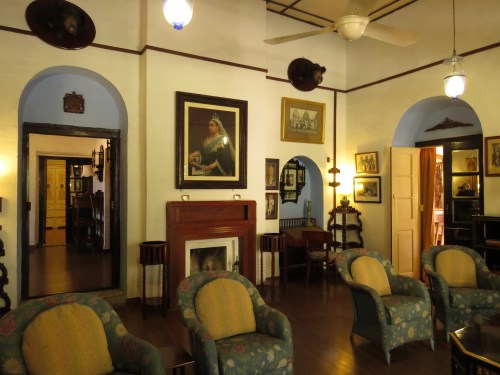
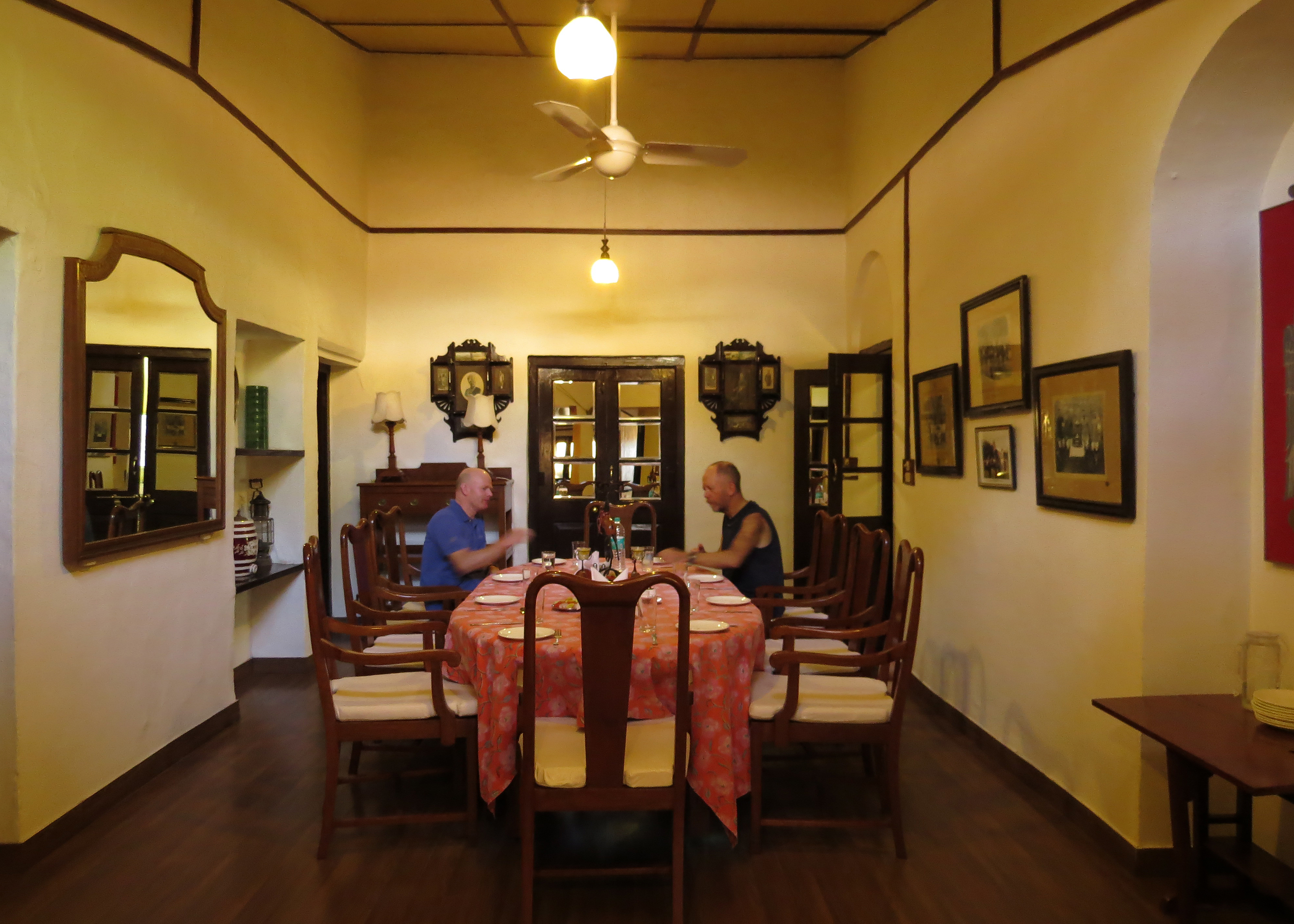
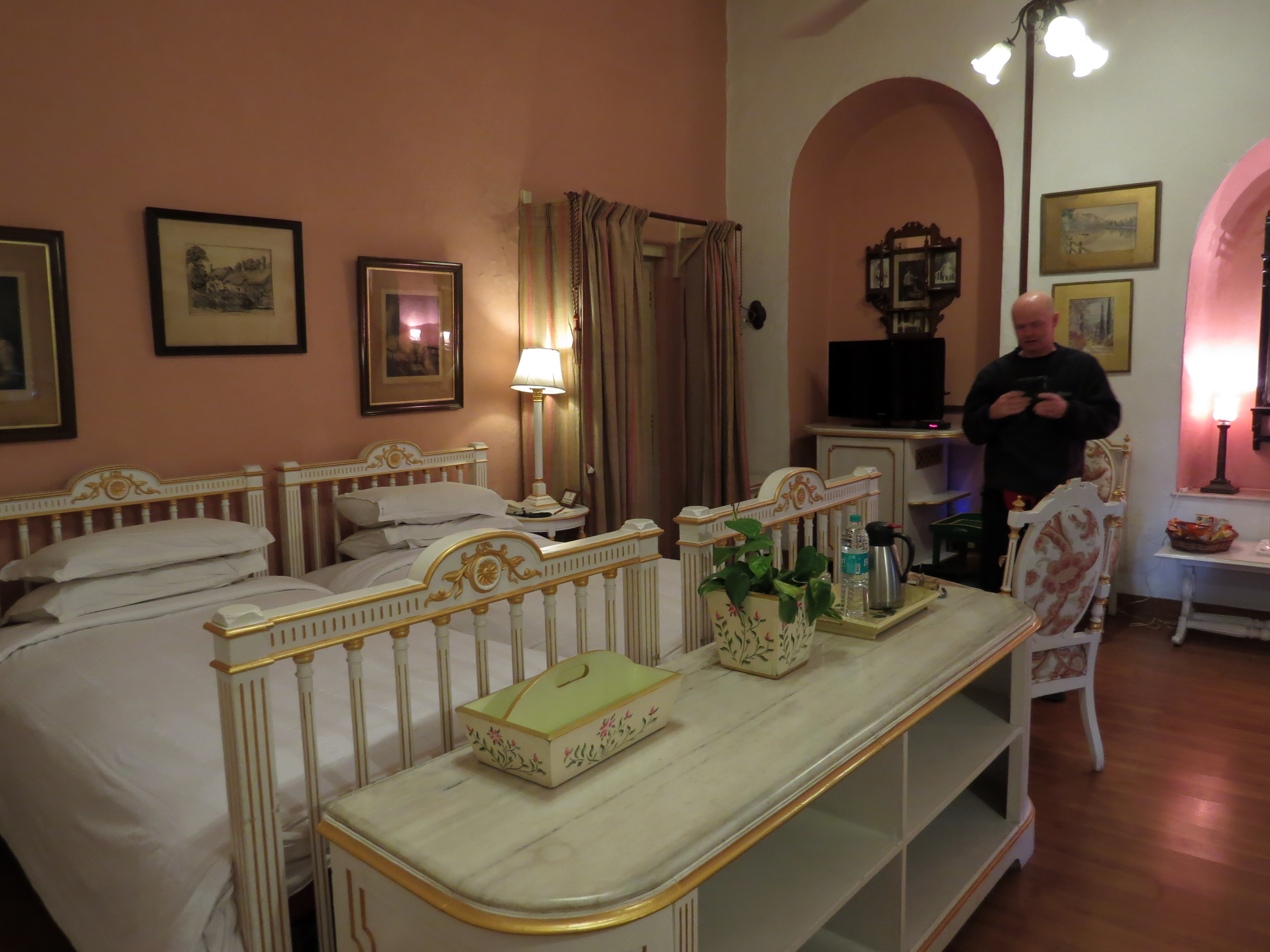
However our hotel, the Connaught House, is a throwback to the days of the Raj, with its paintings of Queen Victoria and photographs of officers and gentlemen in their finery.
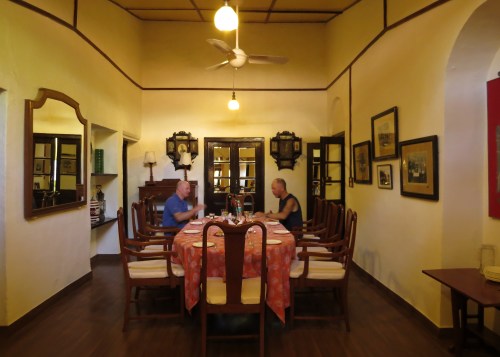
This is the dining room ….
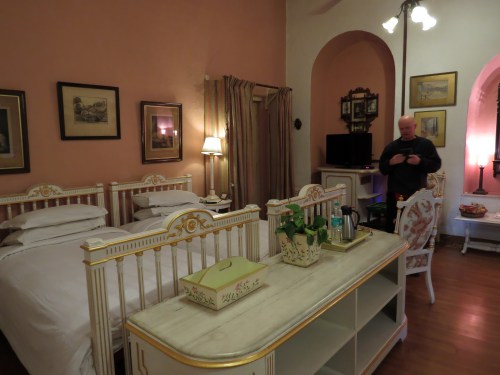
…. and here is one of the bedrooms. This place complies with the unwritten law on bird tours that the quality of the accommodation is inversely proportional to the length of stay!

Back in the village we searched the fields, animal enclosures and trees for our target species ….

…. Chestnut Bunting ….
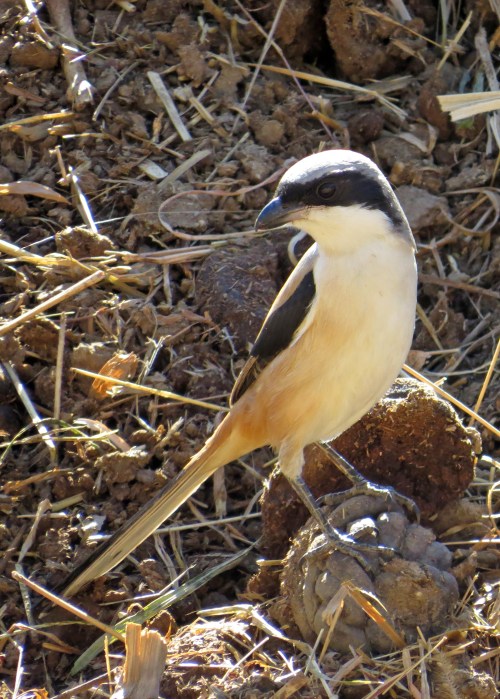
…. Bay-backed Shrike ….

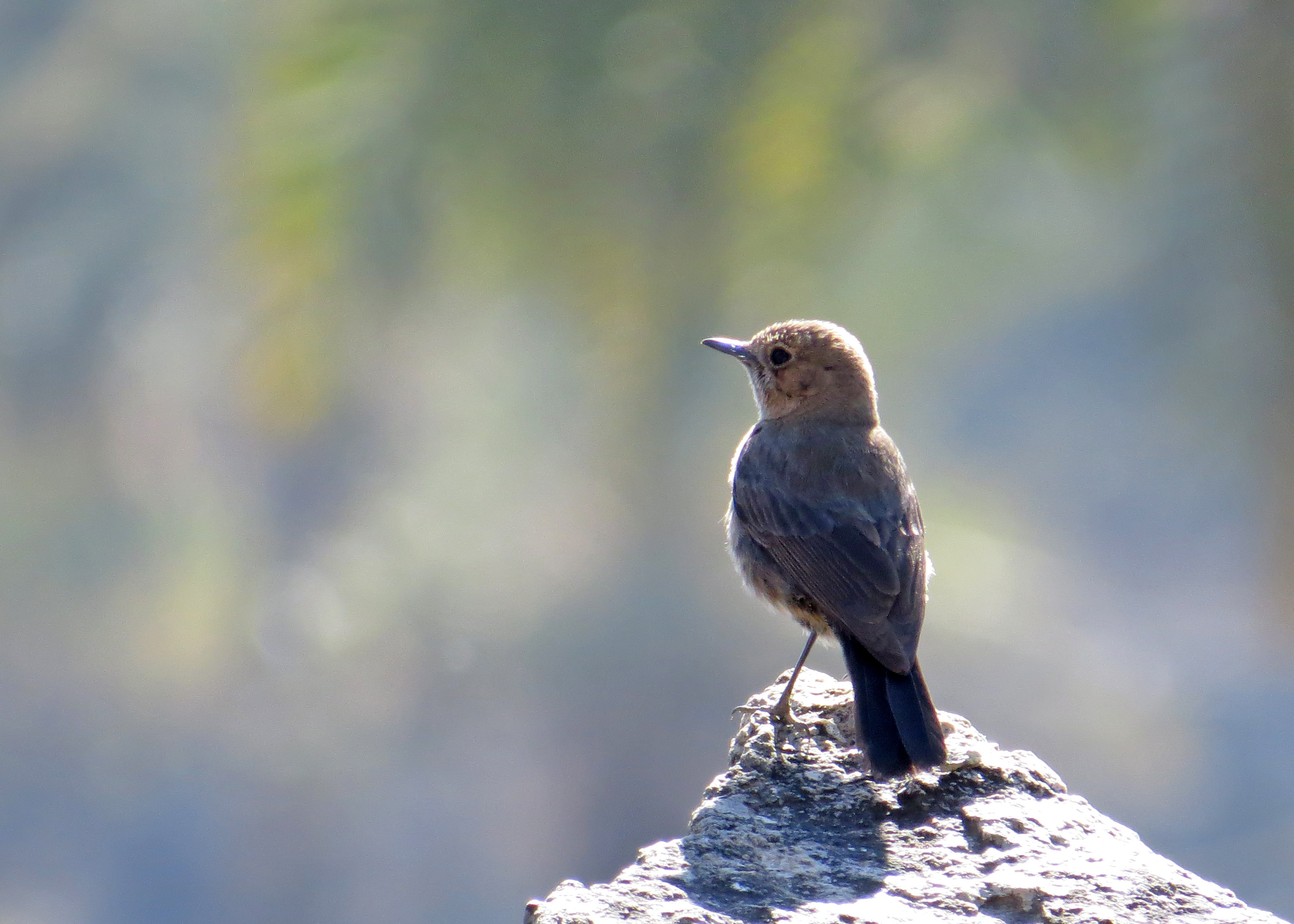
…. another Brown Rock Chat ‘doing what it says on the tin’ ….

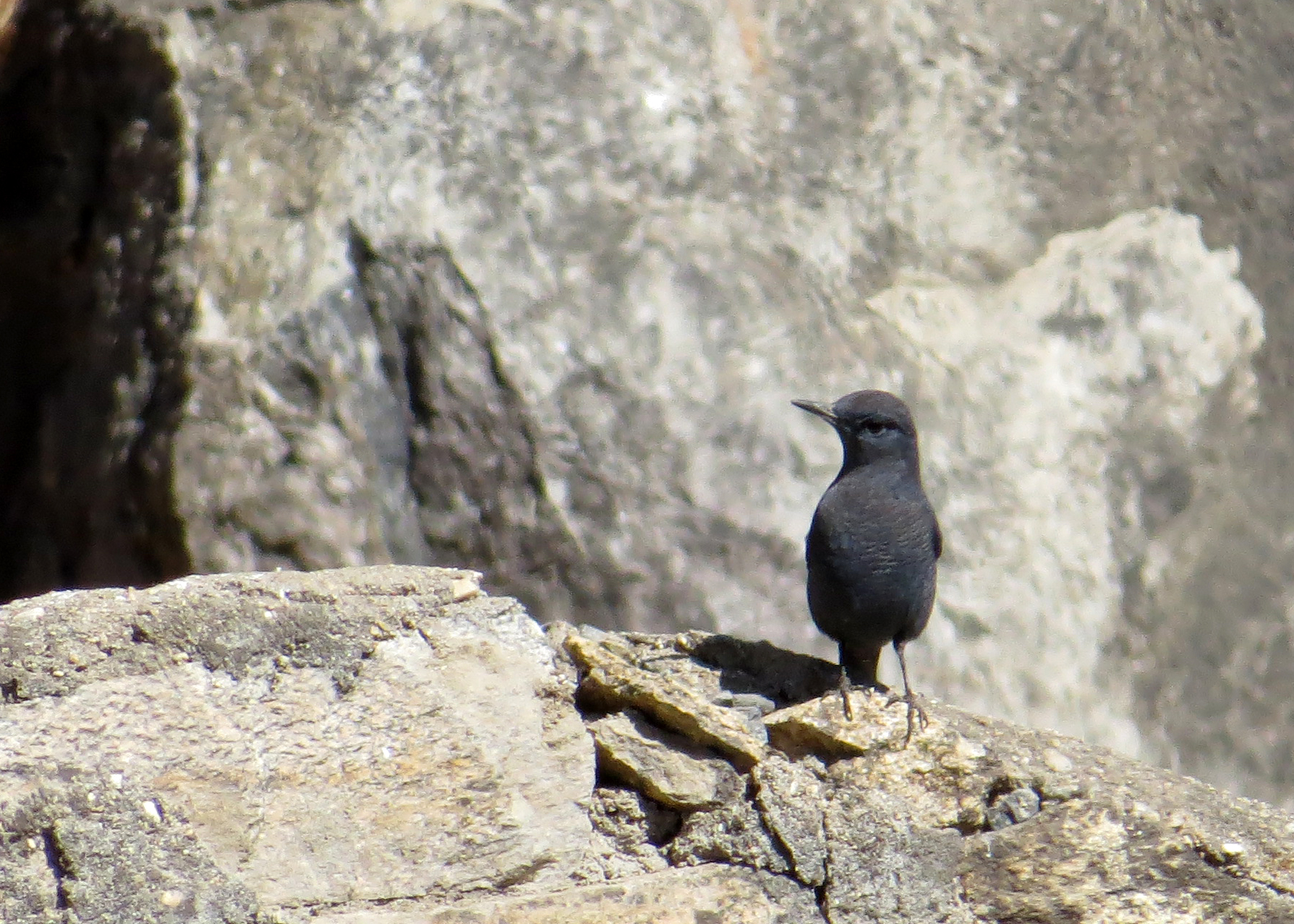
…. Blue Rock Thrush ….
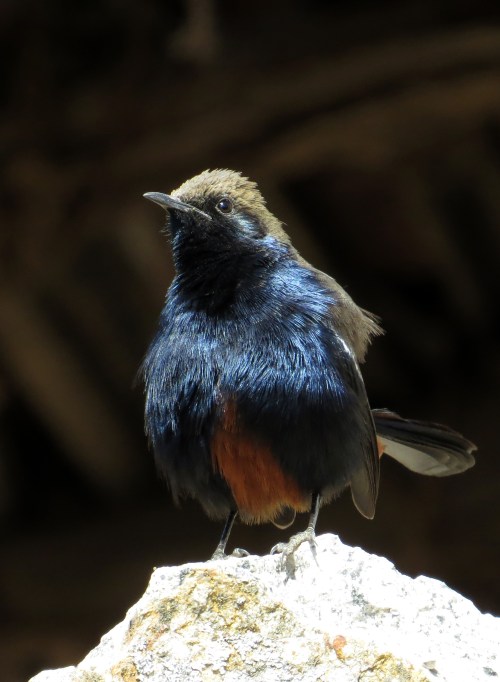
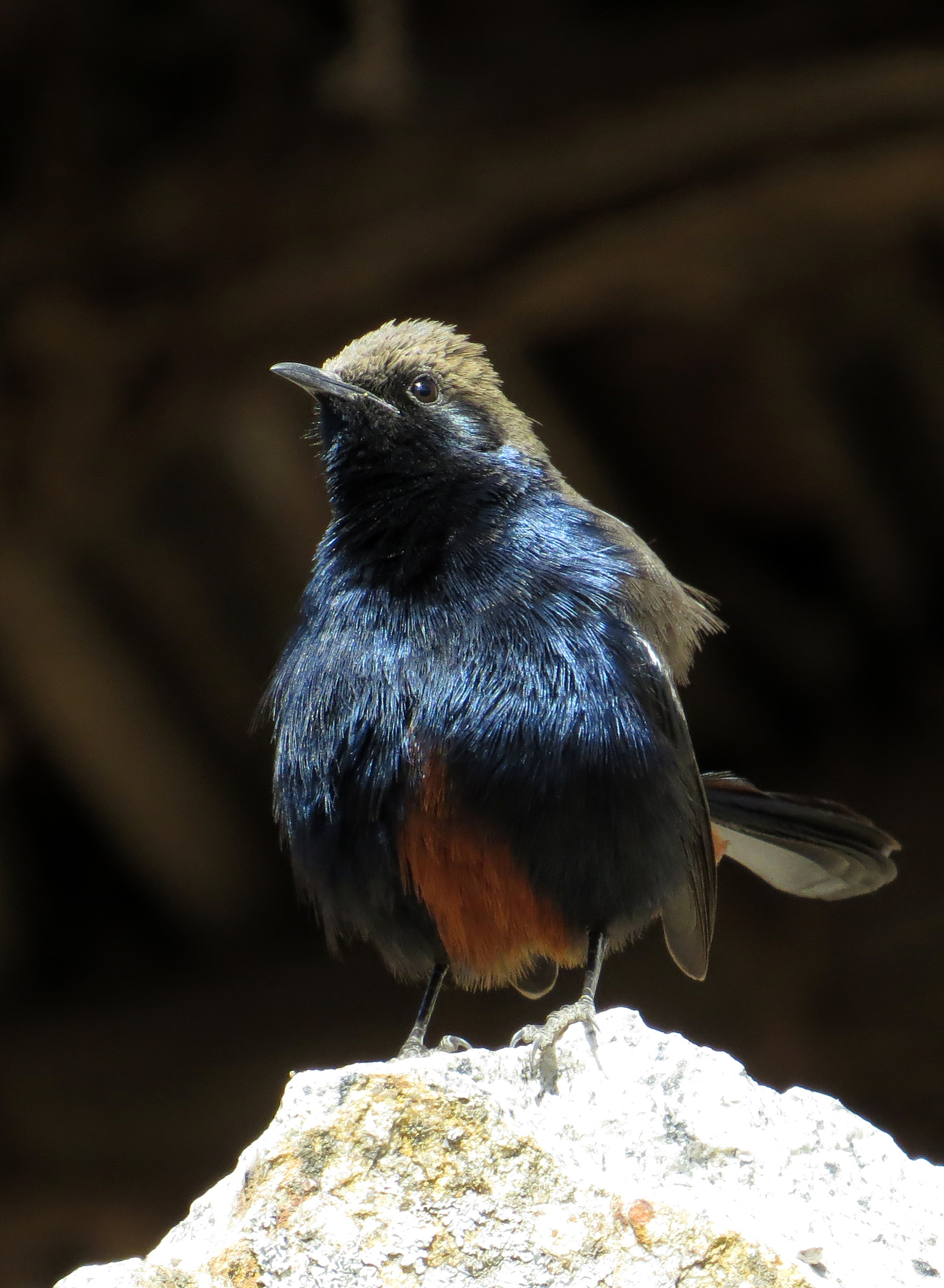
…. Indian Robin ….

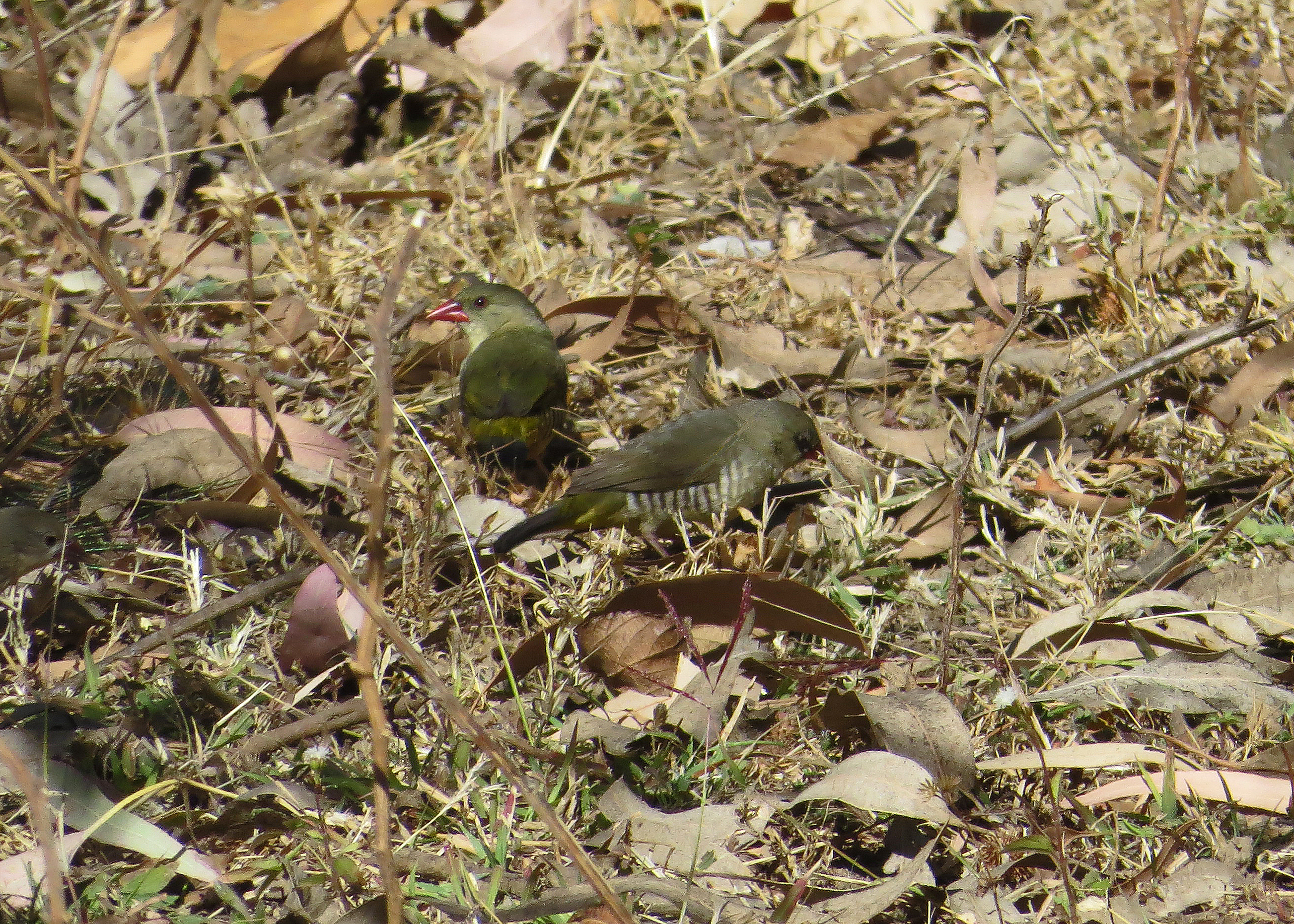
…. but most importantly a small flock of the very rare and localised Green Avadavat.
We left Mt Abu on the morning of 22nd after scoring with Red Spurfowl and Indian Scimitarbill. From here we headed into Gujarat, a state where both alcohol and meat are banned, not an attractive proposition for a beer-loving carnivore like me.
This post covers our time at Jaisalmer. visiting the Desert National Park (DNP), the Fossil Wood Park and the ancient citadel.
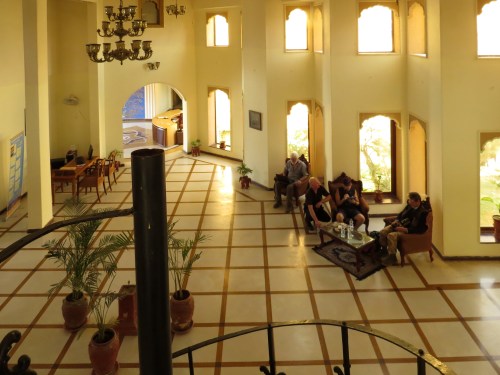
We had three nights at this very attractive hotel. We checked in during the afternoon and had time to spend a couple of hours in DNP before dark.

Much of the DNP is what you would expect, that is desert; either low desert scrub, arid grassland or, in a few places, bare sand dunes.
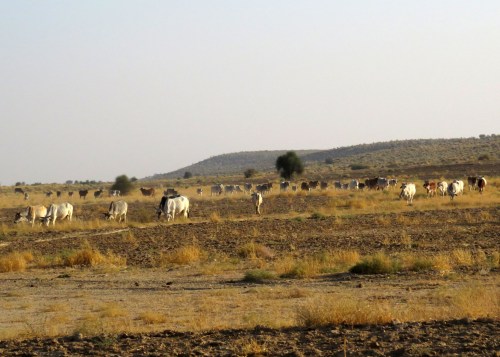
However there seems to be very little control over the use of the park and a large proportion has been taken over by pastoralists or is used for agriculture. The most famous inhabitant of the park is the Great Indian Bustard, a bird that once occurred over much of peninsular India but is now down to a few hundred individuals, mainly in DNP (plus one site in Gujarat where breeding has not been recorded for decades).

If any Great Indian Bustards attempt to leave the Park they will be in trouble, on one side is the Pakistan border where they are likely to be shot for sport and the other three sides are ringed with up to a thousand wind turbines and associated electric pylons, a death trap for a large, heavy flying bustard.
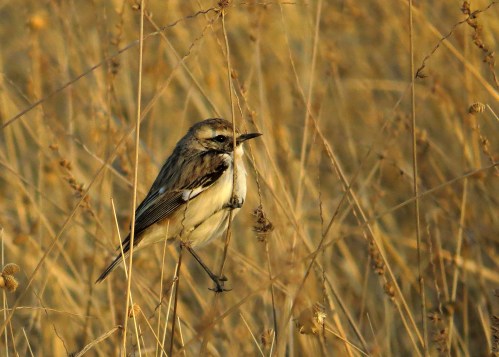
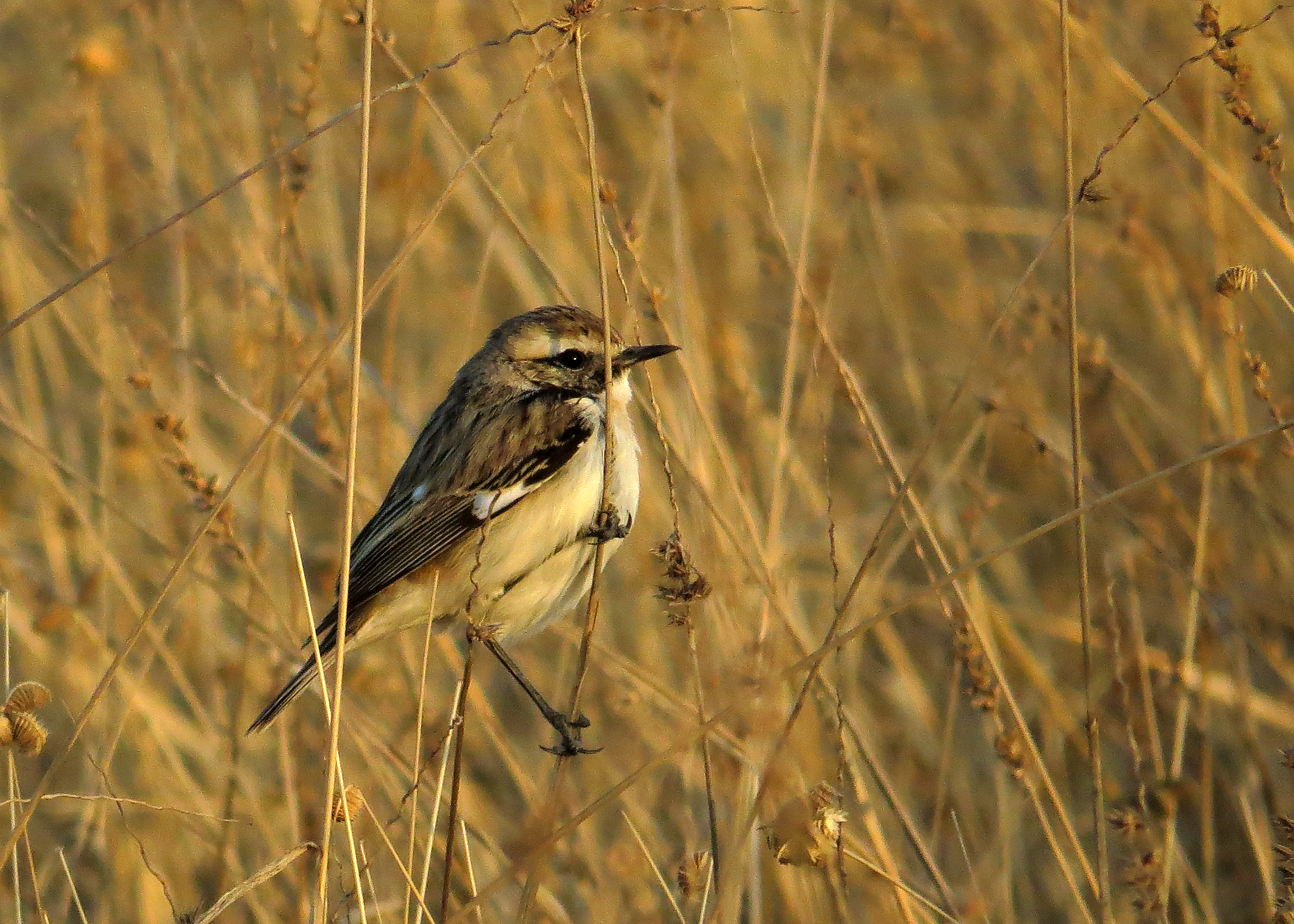
Another rare inhabitant of DNP is Stoliczka’s Bush-chat which we saw very well.
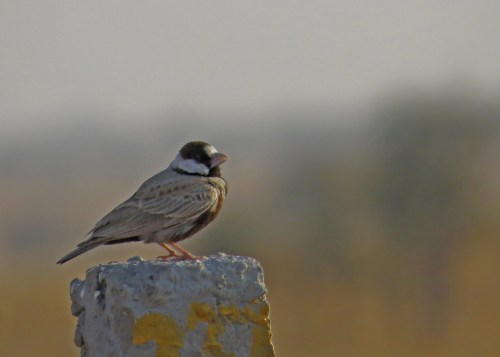
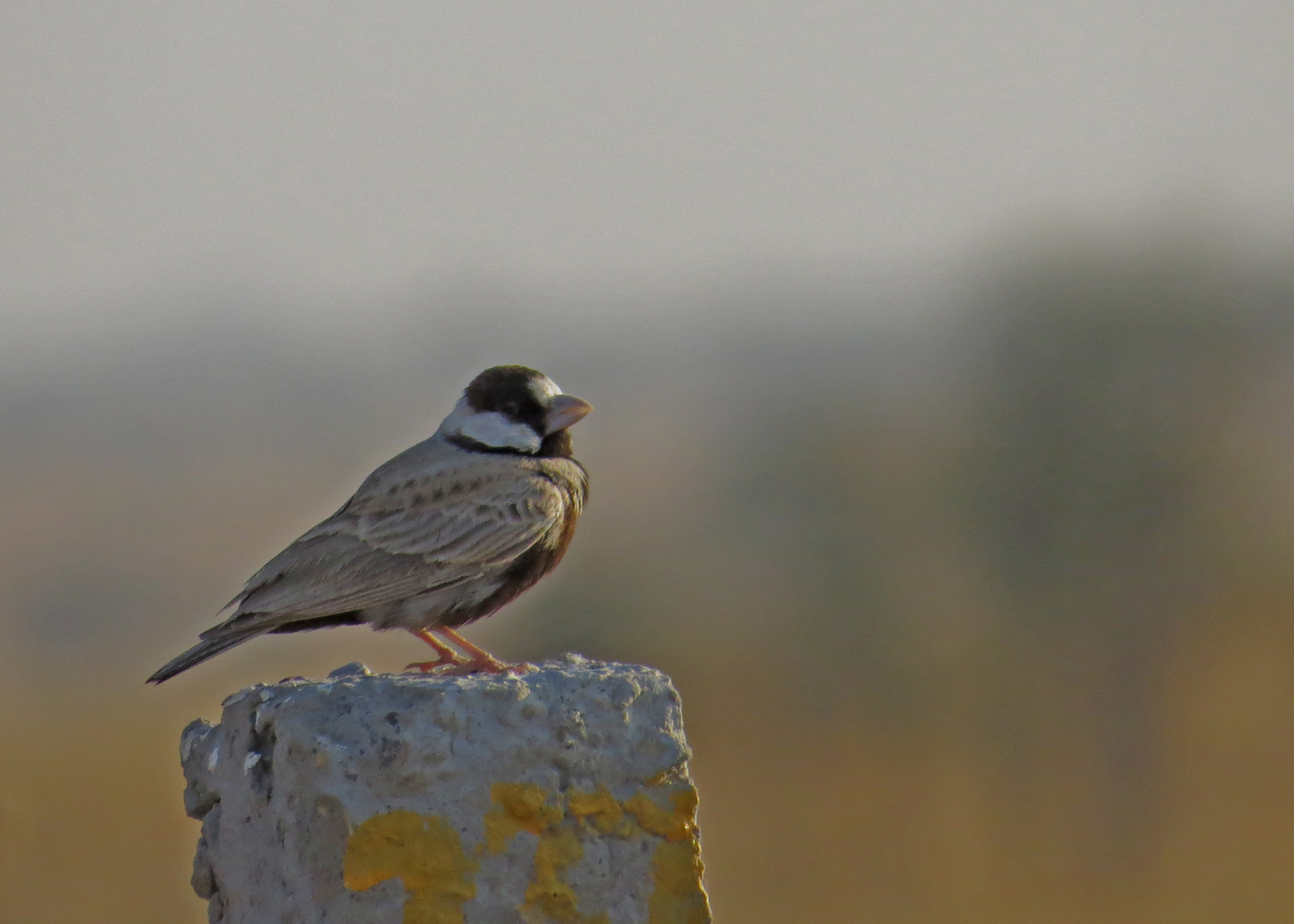
Naturally we saw many open country birds including flocks of Black-crowned Sparrow-larks ….
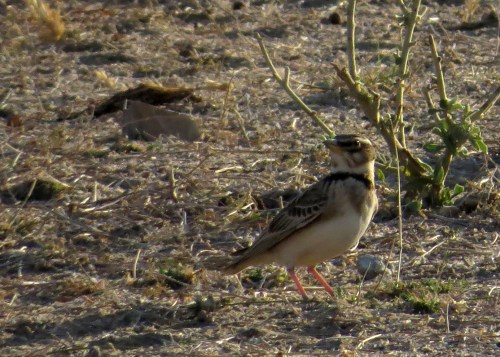
…. and the much larger Bimaculated Lark, which is showing its maculations off rather nicely in this pose. By far the commonest lark was Greater Short-toed Lark which occurred in the flocks numbering in the thousands but all remained distant and unapproachable.

Pipits were represented by the more familiar Tawny Pipit and somewhat similar Long-billed Pipit (above).

Isabelline Wheatears were if not common, at least regular. This species differs from the female of our familiar Northern Wheatear by its larger size, more upright stance, larger amount of black in the tail and the wing coverts concolourous with the mantle making the alula appear more obvious. Although I have seen many Isabellines wintering or on passage in Africa, the Middle East and South Asia and breeding in Central Asia I have always dipped when attempting to twitch vagrants in the UK.

Desert Wheatears were commoner than Isabellines and although this shot is not as sharp as I would like, it does show off the ID features quite well, including the all black tail.
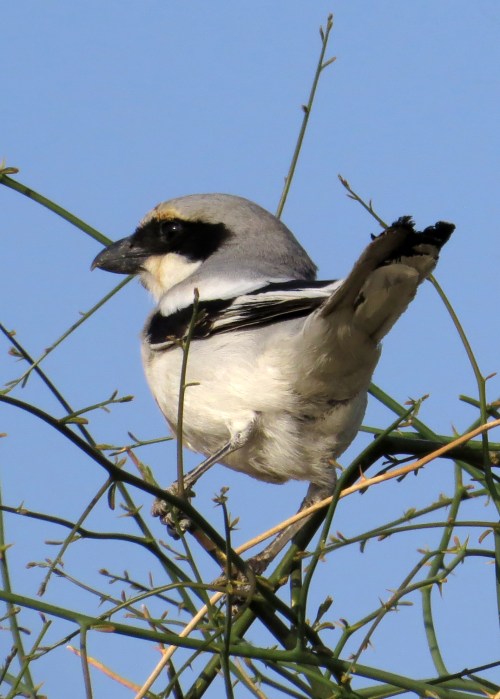
Most shrikes were Southern Greys (race laharota) ….
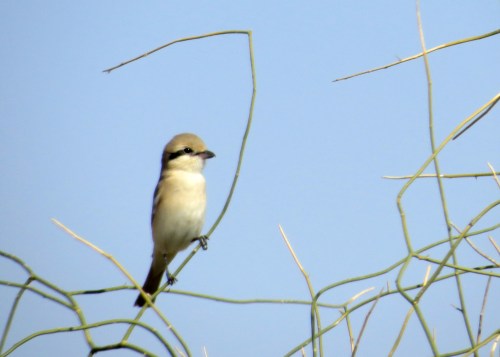
…. but we also saw a number of ‘isabelline’ shrikes. It is claimed that the word isabelline, referring to a pale yellow-brown or creamy-brown colour arises from a vow that Isabella of Castille made in 1491 to not change her clothes until the (eight-month) siege of Grenada was accomplished. Isabelline Shrikes are usually split into two species but the vernacular names are somewhat confusing. I prefer to call the more westerly phoenicuroides Turkestan Shrike and the easterly isabellinus Daurian Shrike (above) and use the name Isabelline just for the combined species. Bizarrely it is the more easterly taxon that occurs as a vagrant to Europe. Phoenicuroides winters mainly in Africa, isabellinus in the Middle East and India
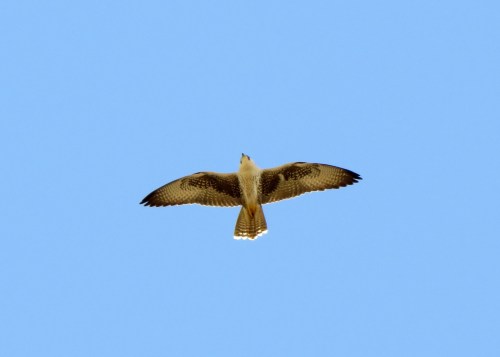
There were quite a few raptors in the park, including this Lagger Falcon ….
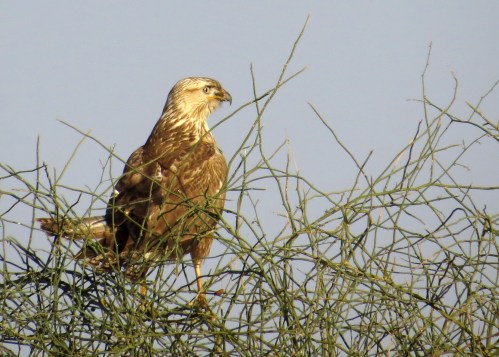
…. Long-legged Buzzard (here a pale morph individual) ….
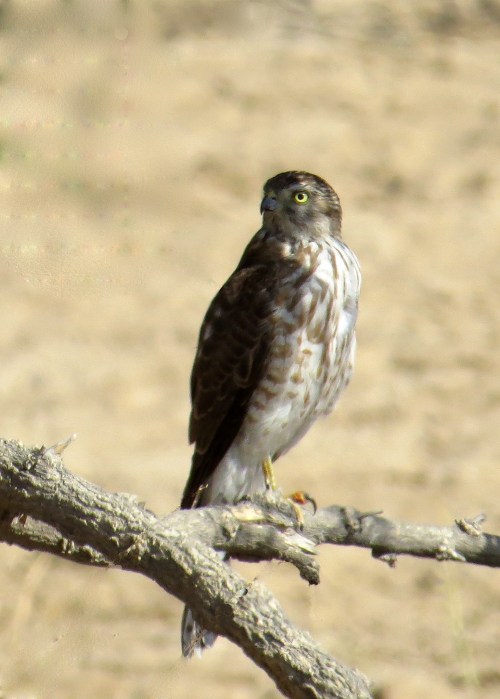
…. the little Shrika, a species of sparrowhawk ….

…. and the huge Cinereous Vulture. Often described as a flying barn door, this impressive bird is often called Black Vulture in the UK but this invites confusion with the well-known and ubiquitous Black Vulture of the New World. Cinereous, meaning ash-grey, isn’t strictly correct, they are more of a dark brownish-grey colour but it is a lot better than the dreadful ‘Monk Vulture’ that was proposed by ‘Dr Shamrock’ a decade or so ago. Cinereous Vultures are one of the biggest of the Old World raptors.

Other birds seen included White-eared Bulbul which is slowly spreading westwards into the Western Palaearctic ….
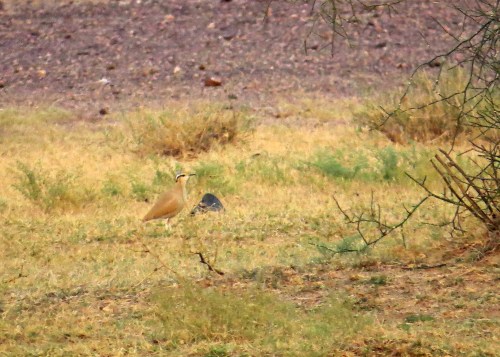
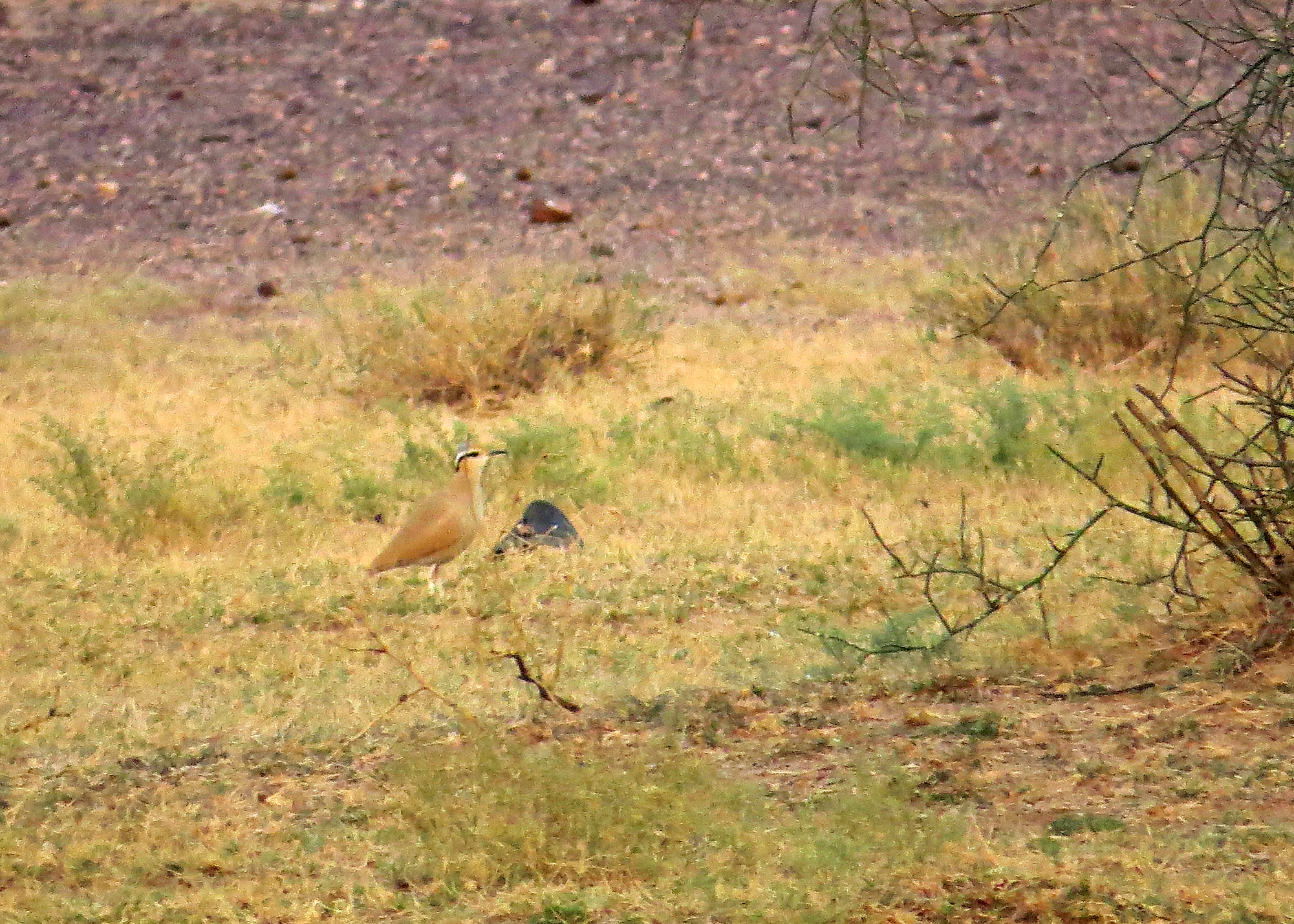
…. and after much searching and at the 11th hour, a group of Cream-coloured Coursers.
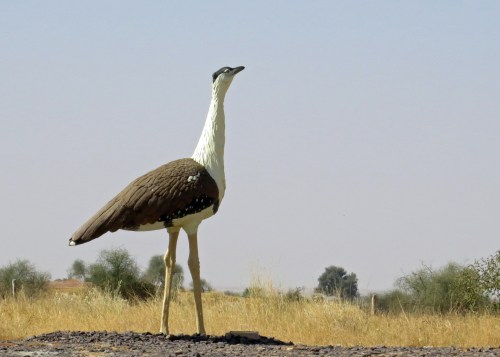
But in spite of much searching it seemed like the only Great Indian Bustard we were going to see was the giant model outside the park HQ. I was in the lucky position of having seen the species well in 1986, a time when they were much commoner, but to the rest of the group this was the raison d’être of the trip. we later found out that a rival tour group had to extend their time at DNP to three days in order to find any, something that would have annoyed me as it would have meant dipping elsewhere.
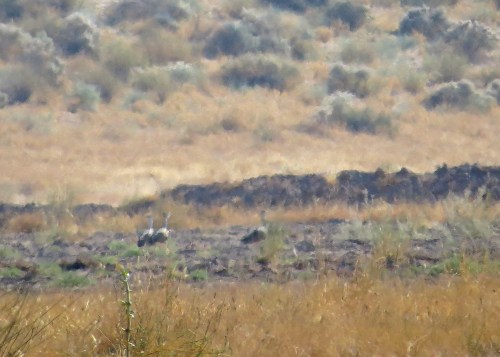
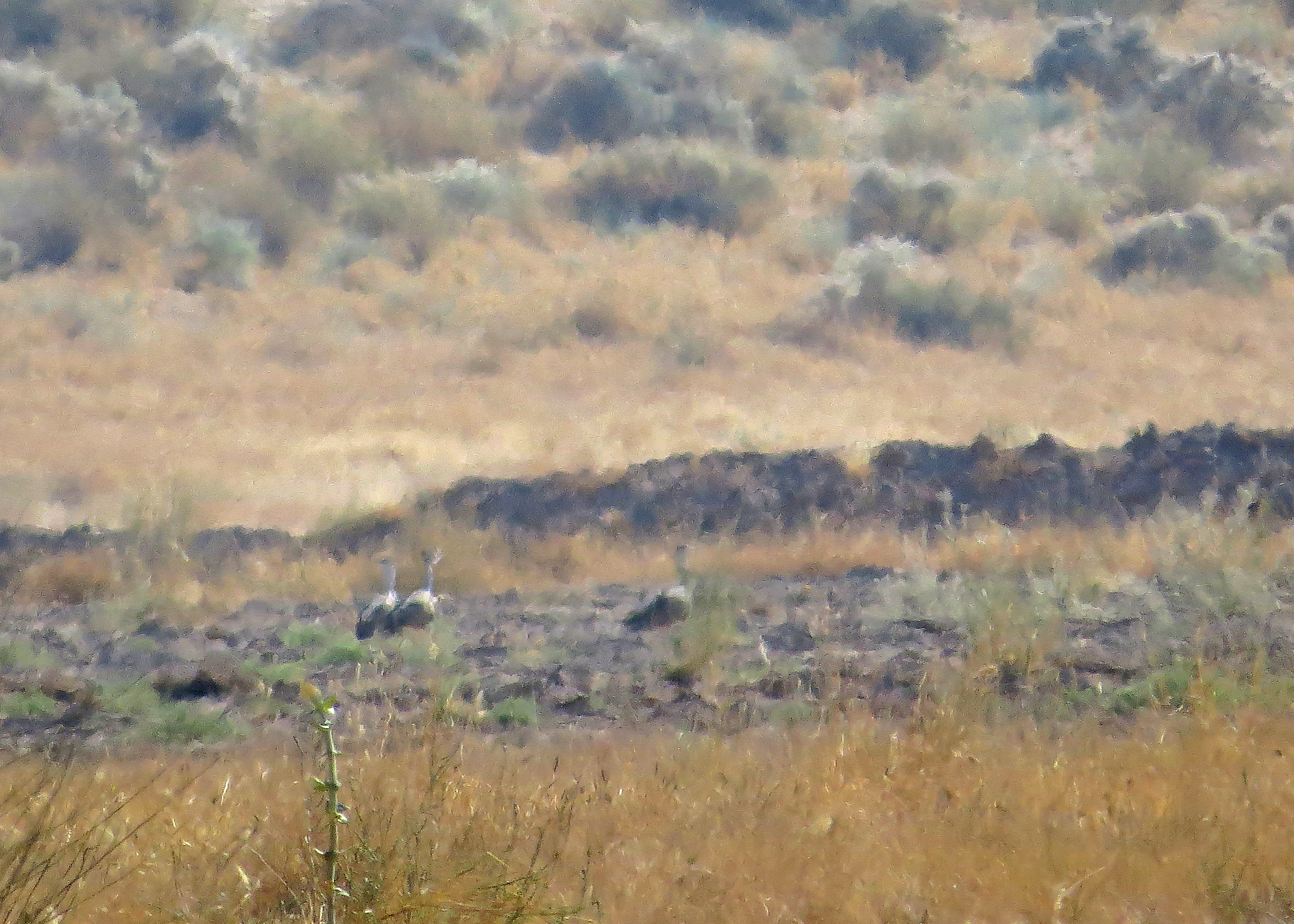
Mid afternoon we had a lucky break, a local birder had found a group quite some distance from where we we searching. We got there as soon as we could but the heat haze was dreadful and the birds just walked away if we tried to approach any closer. We had acceptable views of nine females, but as you can see no quality photographs.
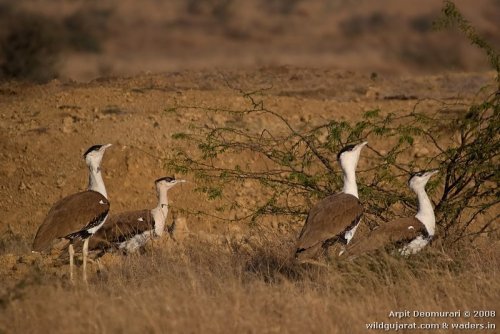
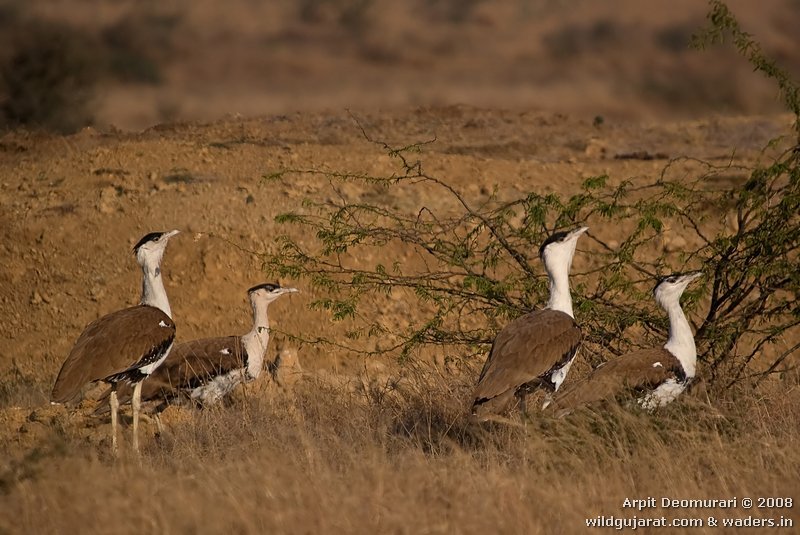
As a result I have posted this excellent photo from the Internet Bird Collection (taken in Gujarat the only other area to have any remaining Great Indian Bustards) by Arpit Deomurari.
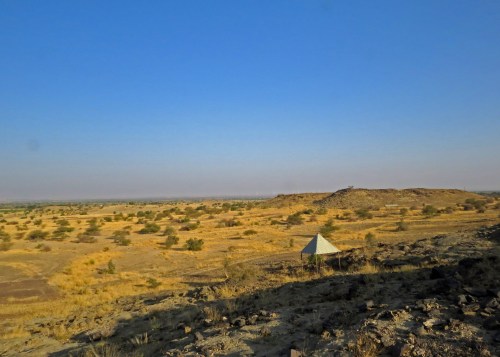
The following morning we visited the neighbouring Fossil Wood Park. The structures in the photo are shelters protecting fossilised tree trunks dating from the Jurassic period, 180-130 mya.

Unfortunately in an attempt to protect them from theft or vandalism the fossil trunks are enclosed in wire cages.
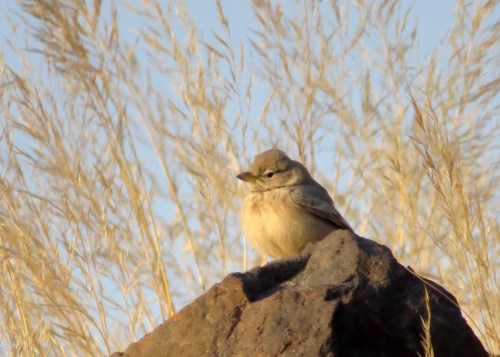
Of course we were here for the birding and as the fossil wood was on rocky slopes we saw a number of species that were absent (or harder to see) in DNP, including Desert Lark – a bird that occurs as multiple subspecies, each one with plumage exactly matching the base colour of its desert habitat.
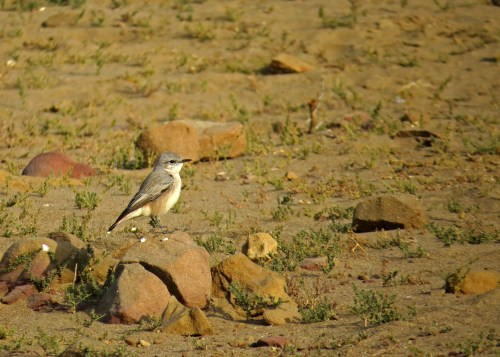
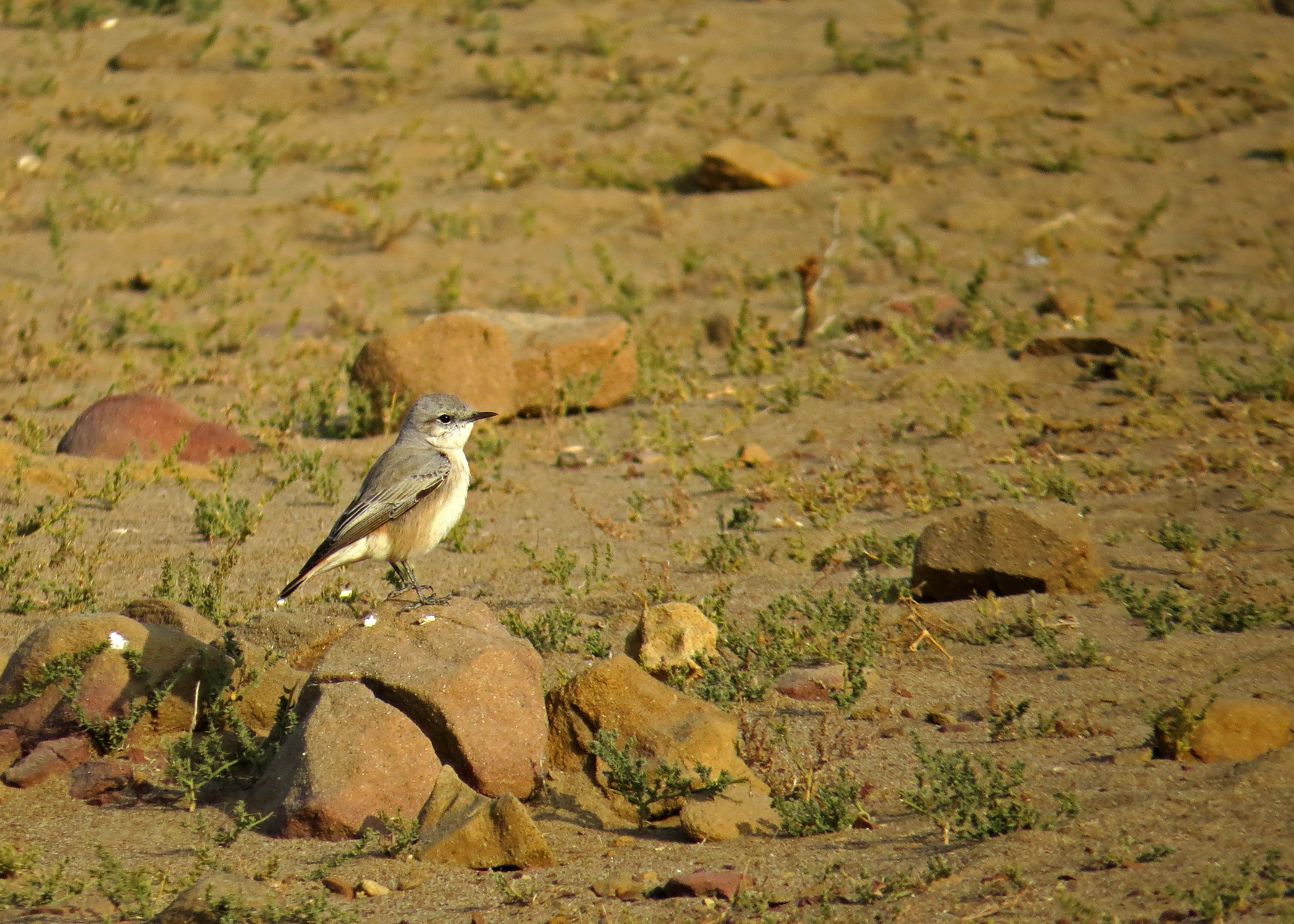
We had excellent views of ‘red-tailed wheatear’. Like Isabelline Shrike this has been recently split into two species, the westerly xanthopyrmna Kurdish Wheatear and this one, chrysopygia which sometimes retains the combined name of Red-tailed Wheatear, but I prefer the vernacular name of Persian Wheatear as it immediately identifies which is the western and which is the eastern species.

We also had some good views of Chestnut-bellied Sandgrouse making good use of what little shade was on offer.

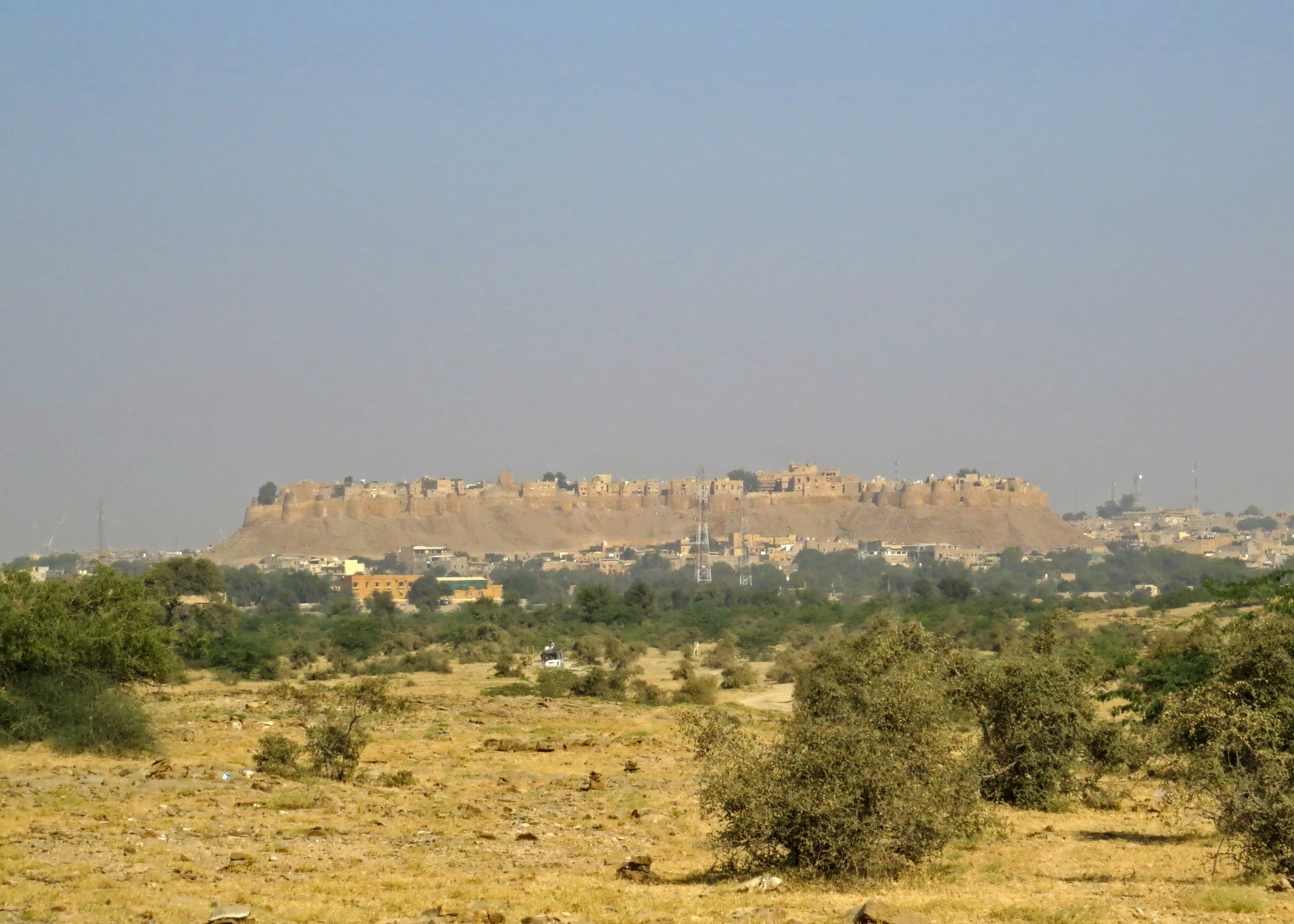
As we returned to Jaisalmer we could see the ancient fort, one of the largest fortifications in the world, rising above the plain.
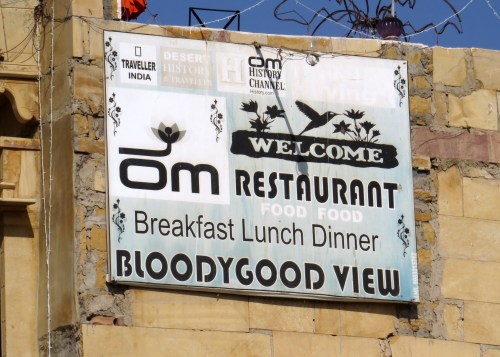
We had a tour around the ancient town during the hot part of the day near the ‘Bloody Good View’ hotel ….

…. made our way past the shop selling ‘child’ beer (? chilled beer) ….
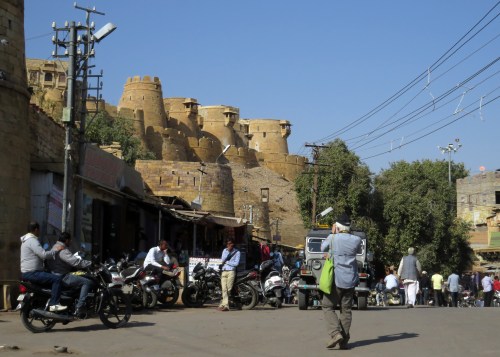
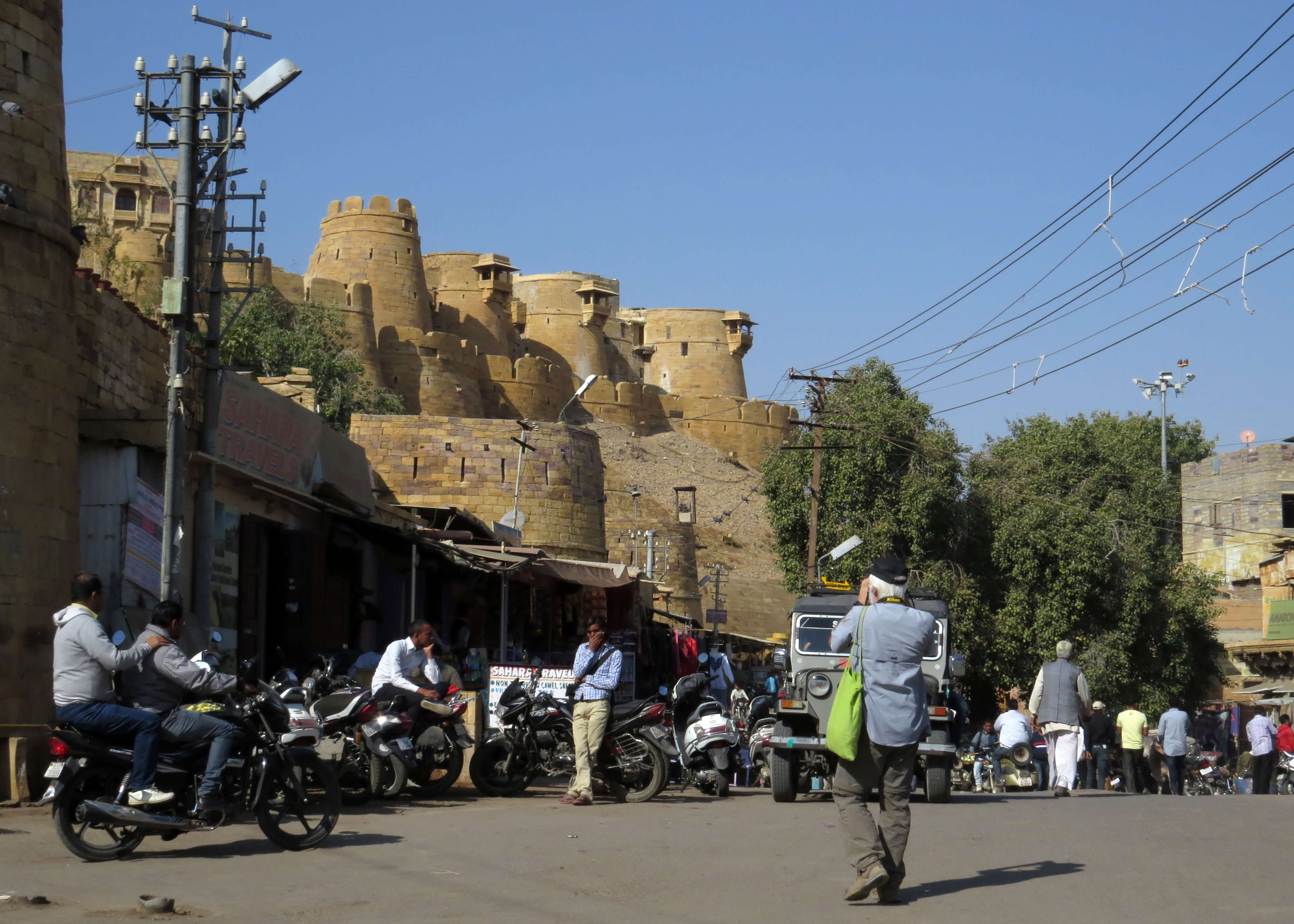
…. and made our way to the ancient citadel that dominates Jaisalmer.
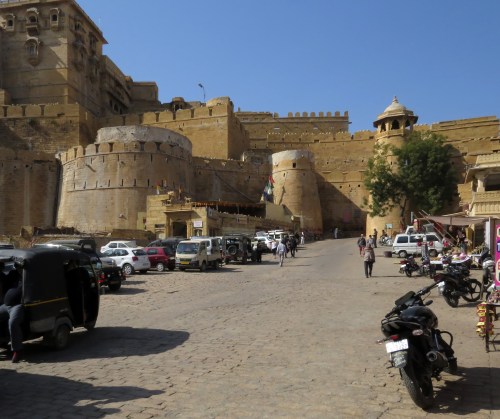
Built in 1156 but damaged and rebuilt many times during its turbulent history, the fort consists of three massive concentric walls.

This young girl was showing off her acrobatic skills for the tourists.
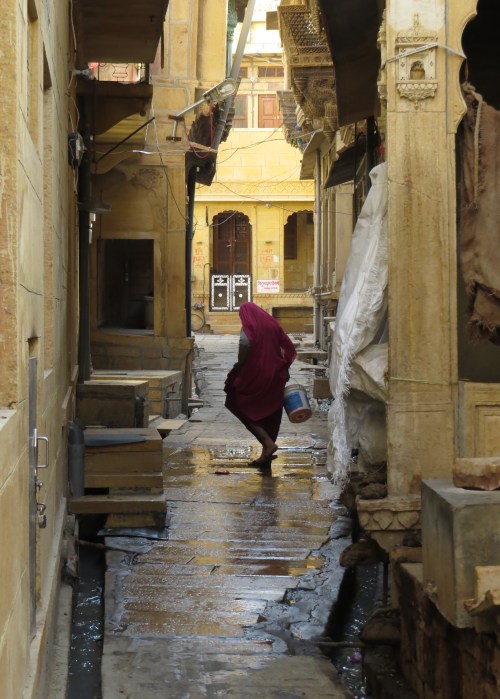
Then we entered the ancient, narrow, medieval streets of the old town.
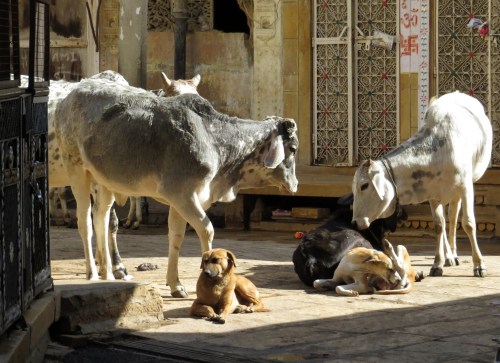
There were more cows and dogs in the road than vehicles ….

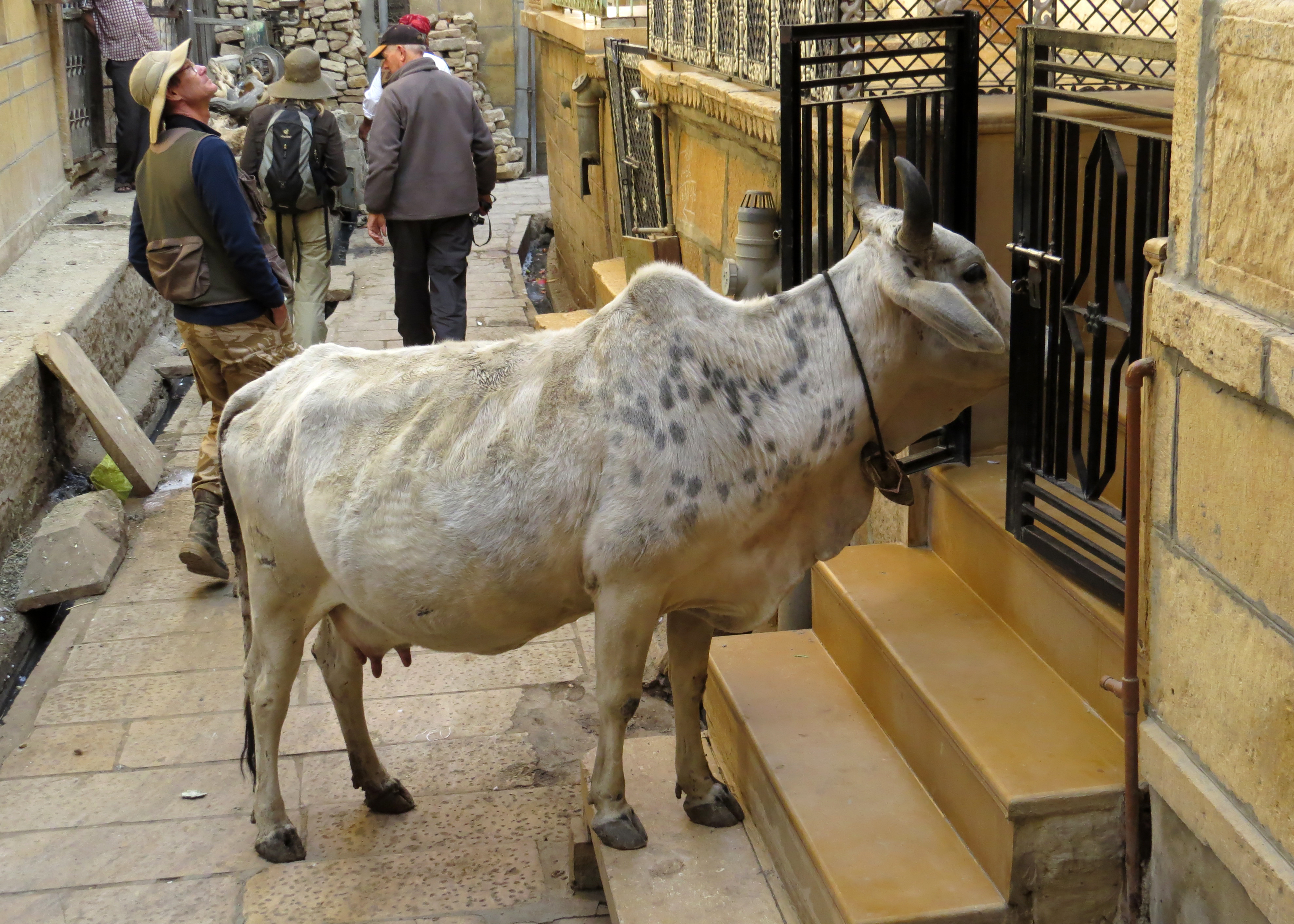
…. and some cows had learnt that they could go from house to house in the hope of some spare chapatis.
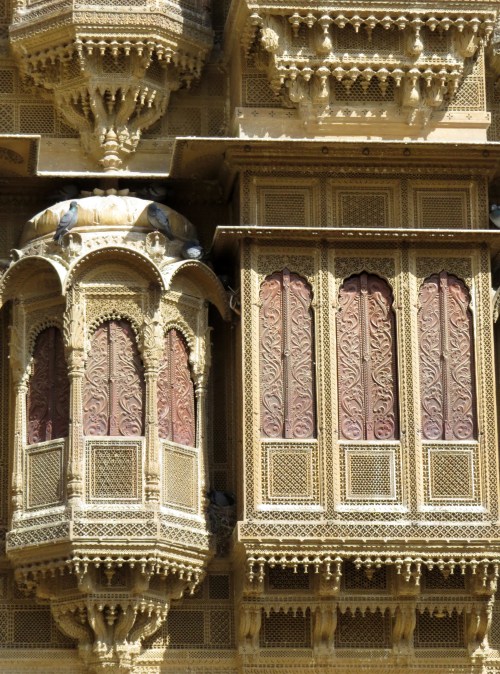
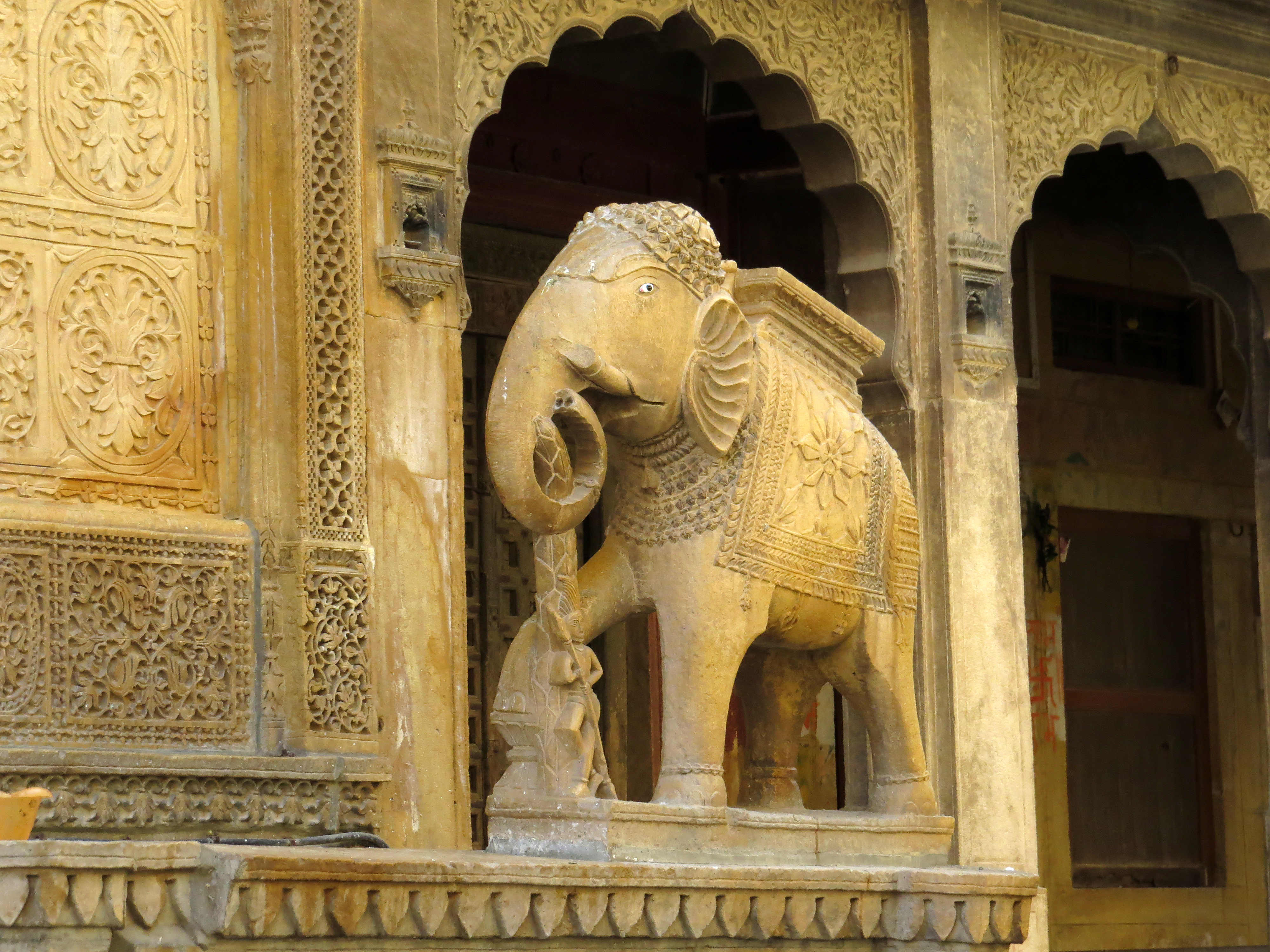
These ancient merchants houses or havelis have incredible stone carved facades, this one took 50 years to complete ….
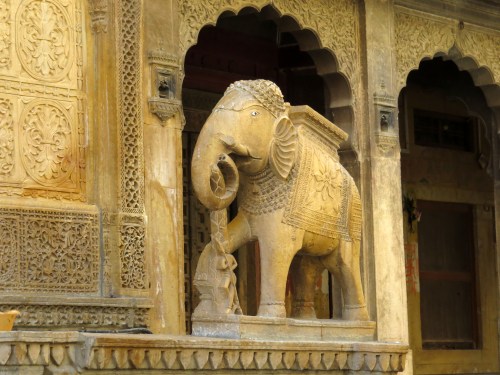
Jaisalmer grew rich on the taxes imposed on passing caravans during the spice trade and this shows in the wonderful buildings …..
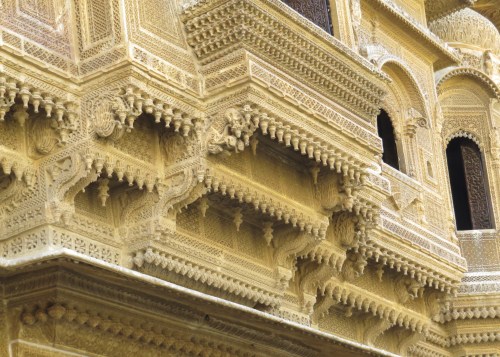
I took loads of photos of these architectural wonders but can only room to show a few here.
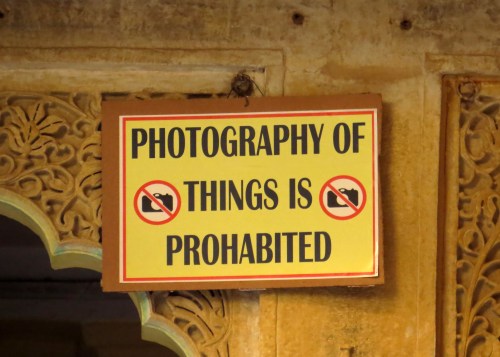
Say no more!
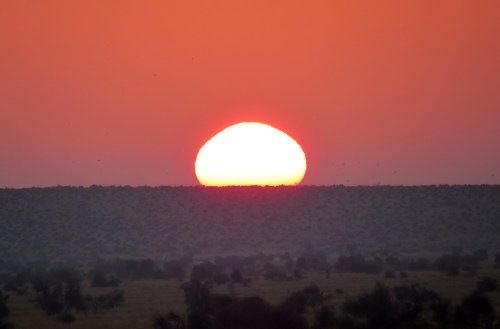
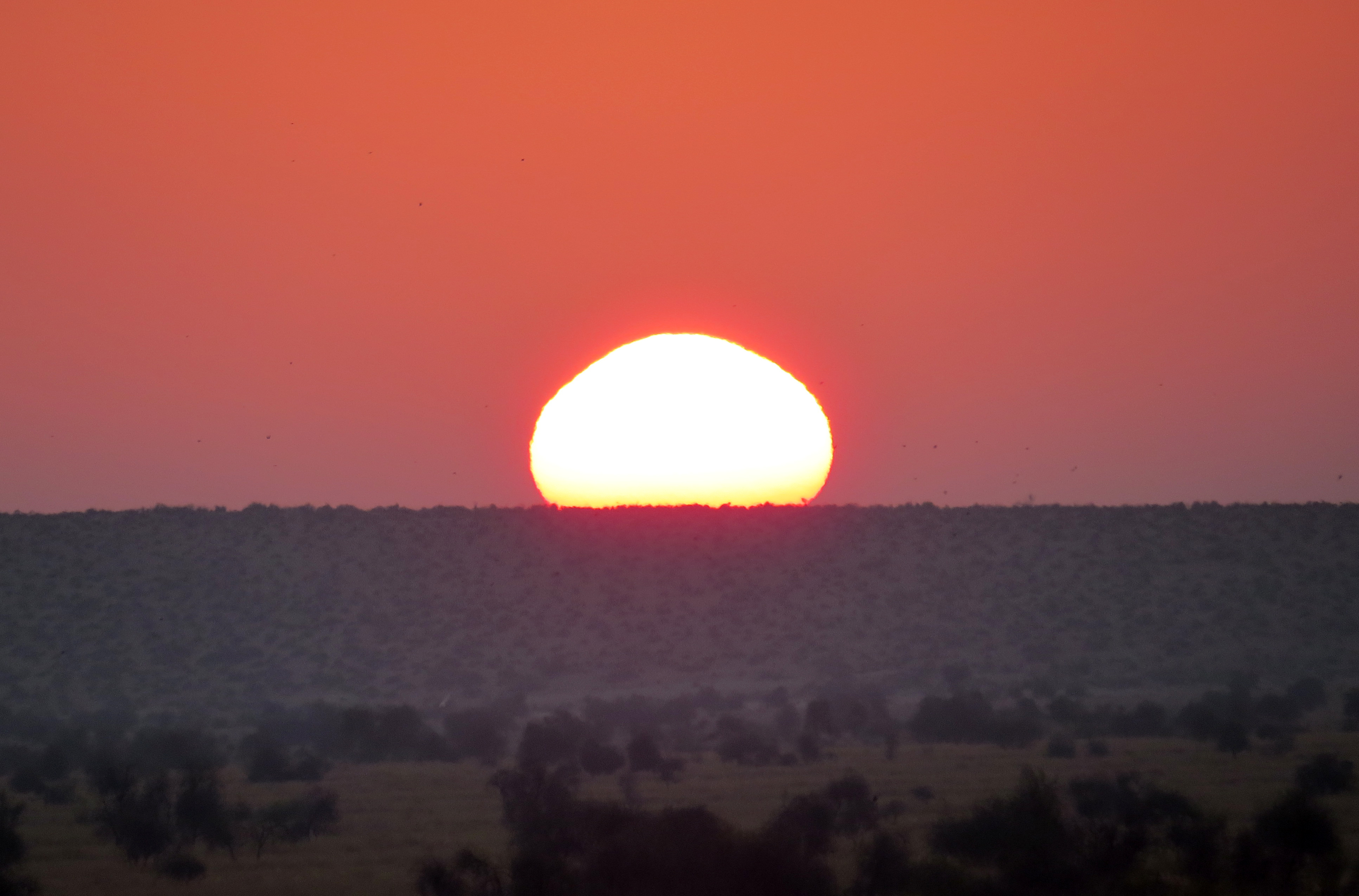
So I’ll end this post on the Desert National Park with a desert sunset.
India is famous for its raptors, but in recent years many species have undergone a serious decline, none more so than the resident species of vulture. This alarming loss of natures garbage disposal has meant that dead animals (roadkill etc) now lie beside the road to rot where they would have been consumed within hours in the past.
The cause of this dreadful decline which has reached 99.9% in most areas is due to the veterinary use of the anti-inflammatory drug diclofenac (known as Voltorol when used in humans). The drug given prophylactically to cattle will cause renal failure in most vulture species that feed on the carcass. The four large resident species, White-rumped, Slender-billed, Indian and Red-headed are threatened with imminent extinction. Only the smaller Egyptian Vulture seems to be surviving.
In 1986 vultures (mainly White-rumped) were everywhere. Although the two trips are not directly comparable, the former trip was mainly in the east of Rajasthan and also visited the Himalayan foothills, but both involved visits to the Jaisalmer area.
Sorry this table is not aligned properly – it was pre-posting!
1986 2016
Black Kite 2500 160
Red-headed Vulture 54 0
Cinereous (Black) Vulture 7 4
Eurasian Griffon Vulture 67 20
Slender-billed/Indian Vulture 36 4
White-rumped Vulture 5000 1
Egyptian Vulture 2500 160
Slender-billed and Indian Vultures were not split in 1986 hence the two species could not be separated for this table. All the ones seen on this tour were Indian Vultures. The species that showed the least decline were Cinereous and Griffon Vultures which are winter visitors (and as such have not been exposed to diclofenac to the same extent). Most of the 160 Egyptian Vultures were at the one site shown below..

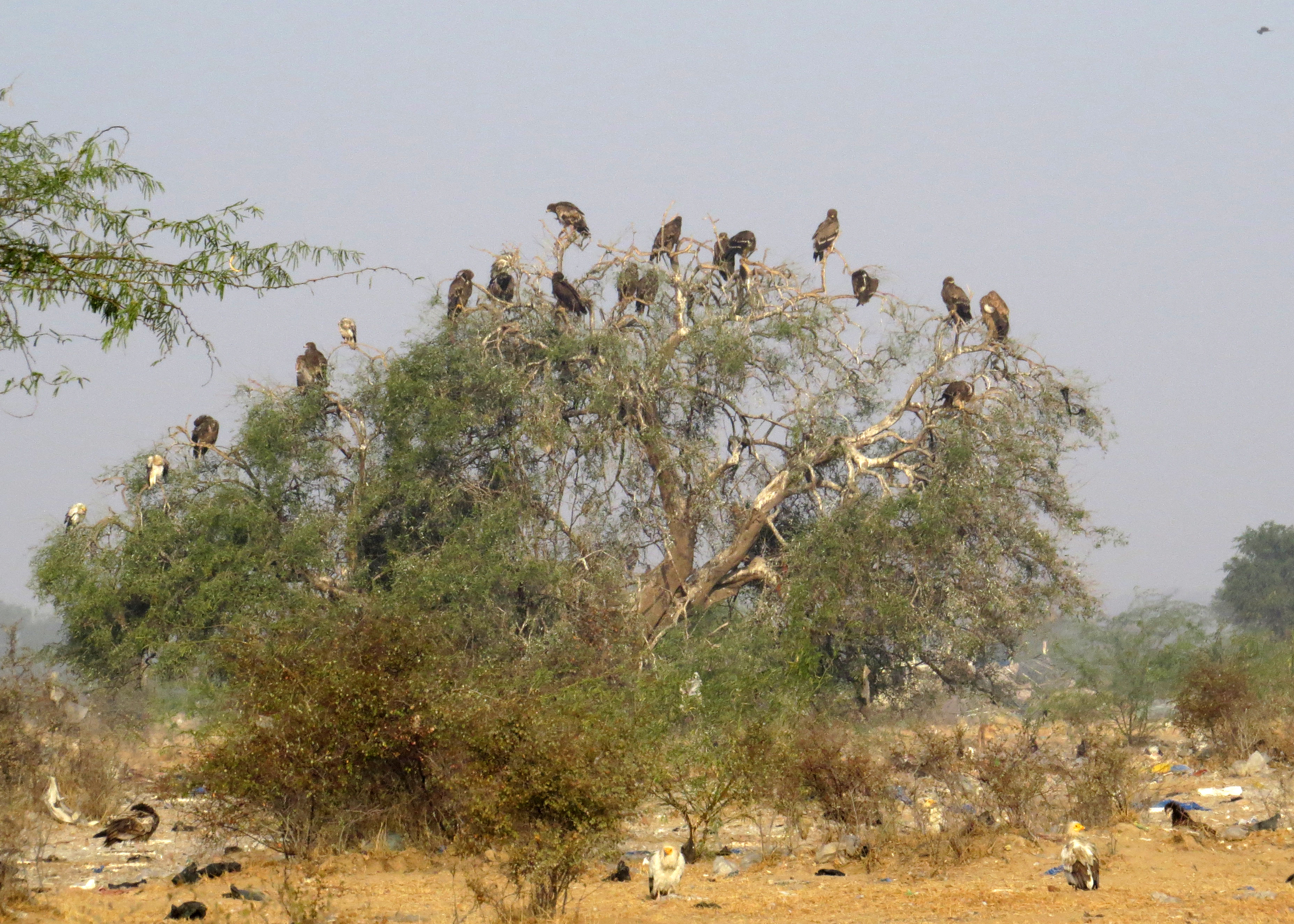
Early morning mists had not cleared as we arrived at the tip outside of Bikaner. As cattle are not for human consumption in most of India any carcasses are left in certain areas for scavengers to dispose of.
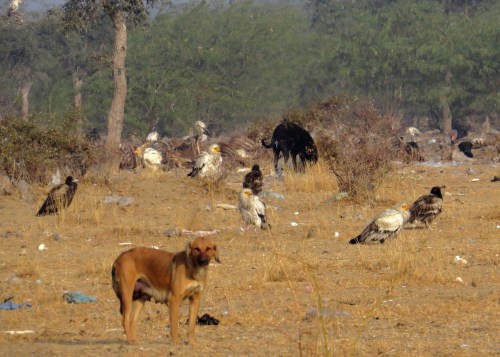
Although there were no fresh carcasses the area was full of Egyptian Vultures and feral dogs.

We found this litter of puppies in a shallow depression, proof that the dogs were living wild.
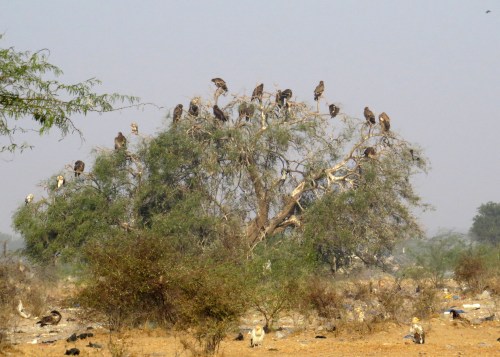
Surrounding trees were covered with Steppe Eagles and Egyptian Vultures.

Immature Egyptian Vulture.
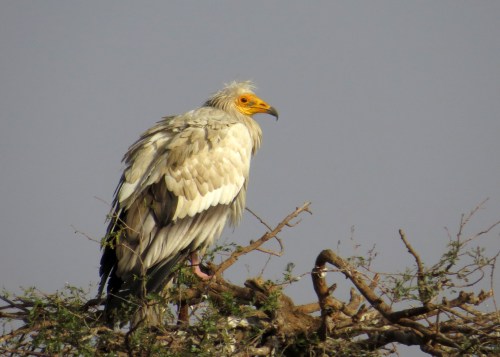
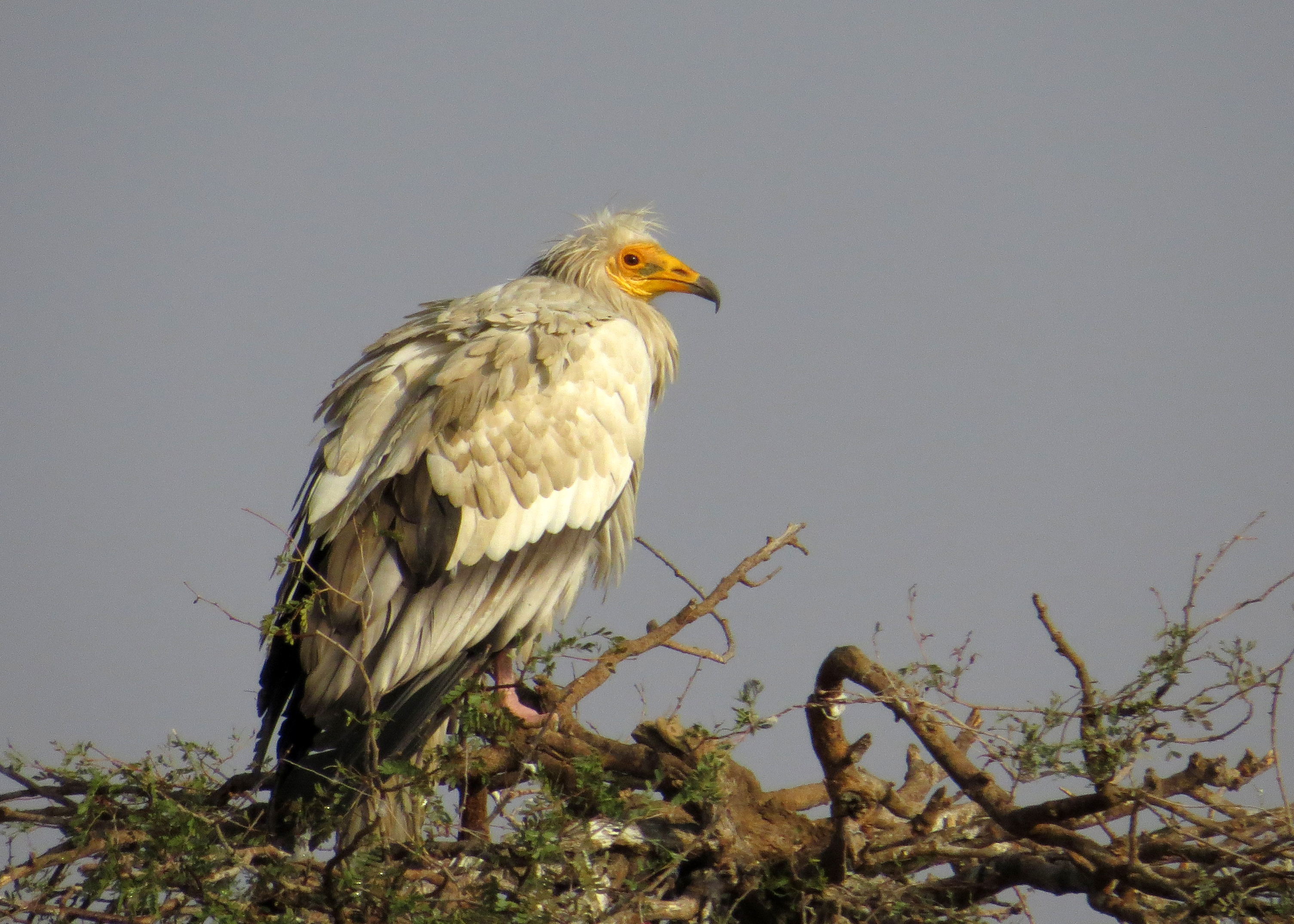
Adult Egyptian Vulture
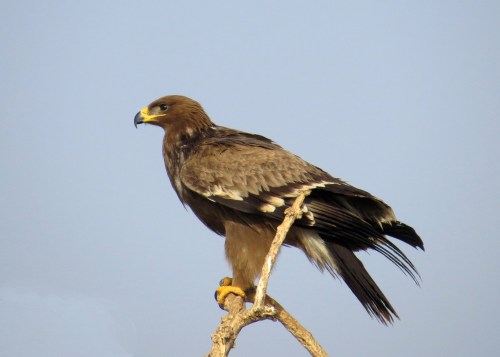
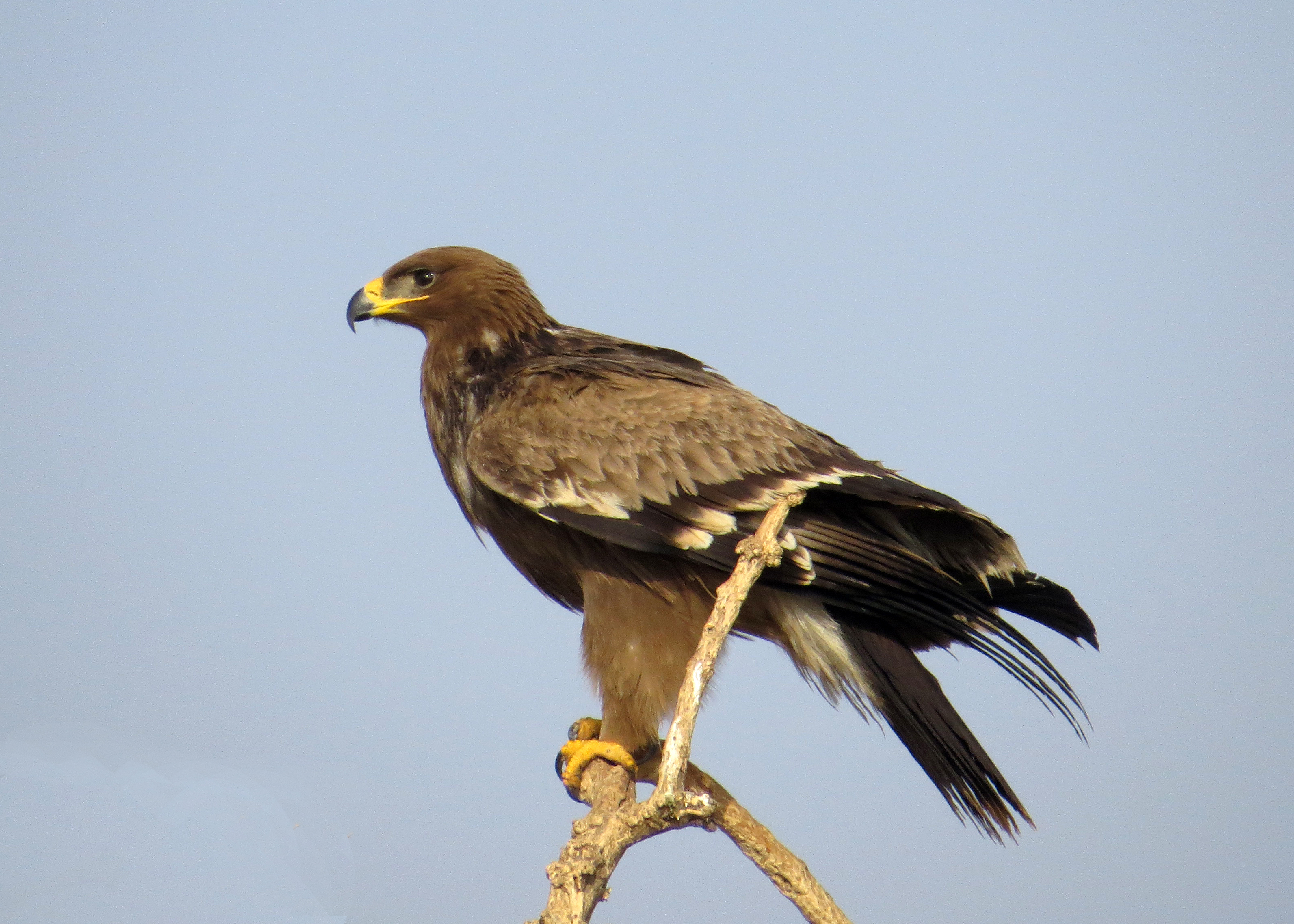
Immature Steppe Eagle – a winter visitor from Central Asia

Also in the area where small numbers of Eurasian Griffon Vultures, another winter visitor to the area, but our only White-rumped Vulture of the entire trip was one seen briefly in flight. What a change compared to my visit 30 years ago.

Although not affected by the poisoning effect of veterinary drugs, Black Kites have also shown a marked decline compared to my last visit.

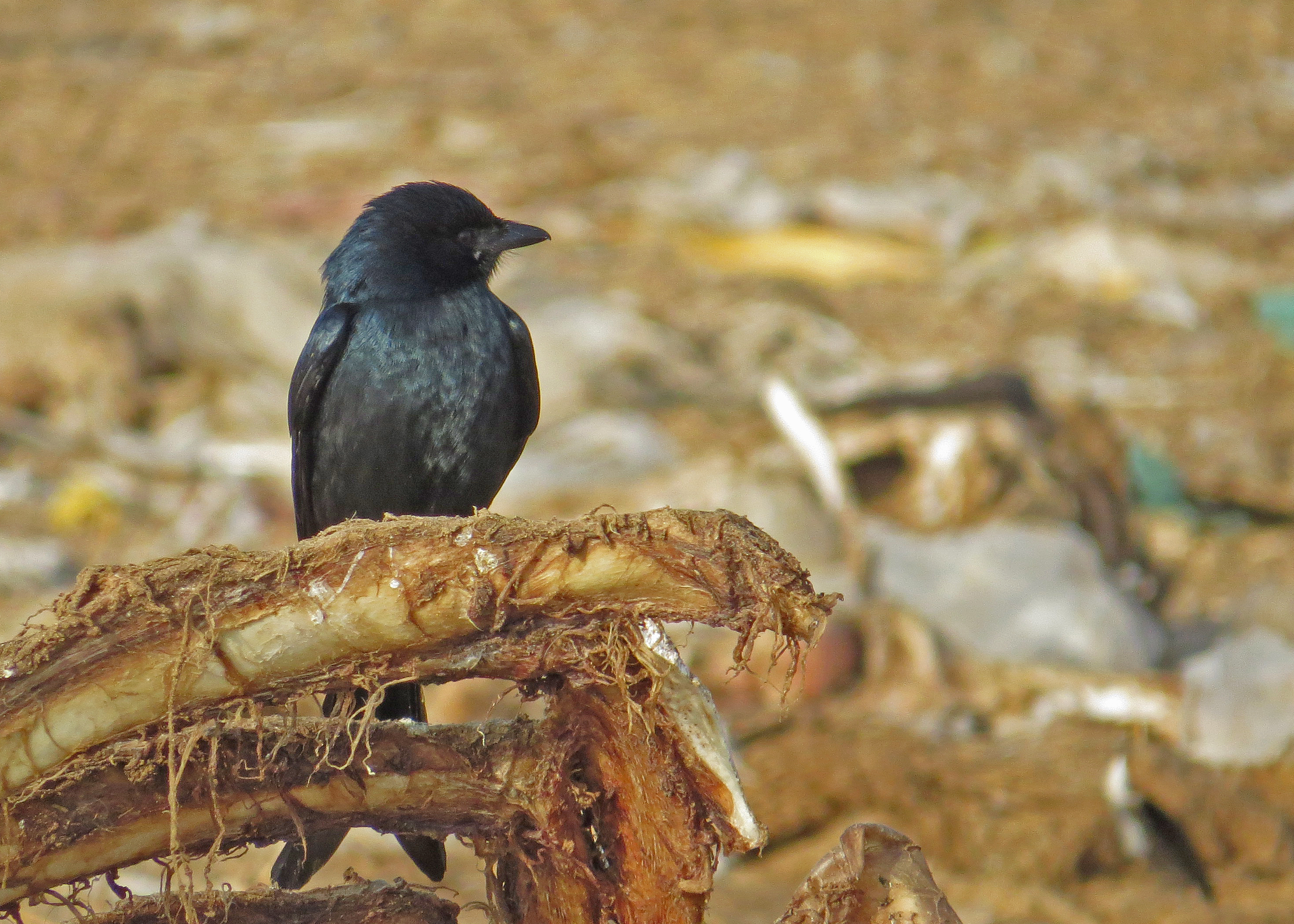
This Black Drongo chose a rather unattractive perch to pose for a portrait.

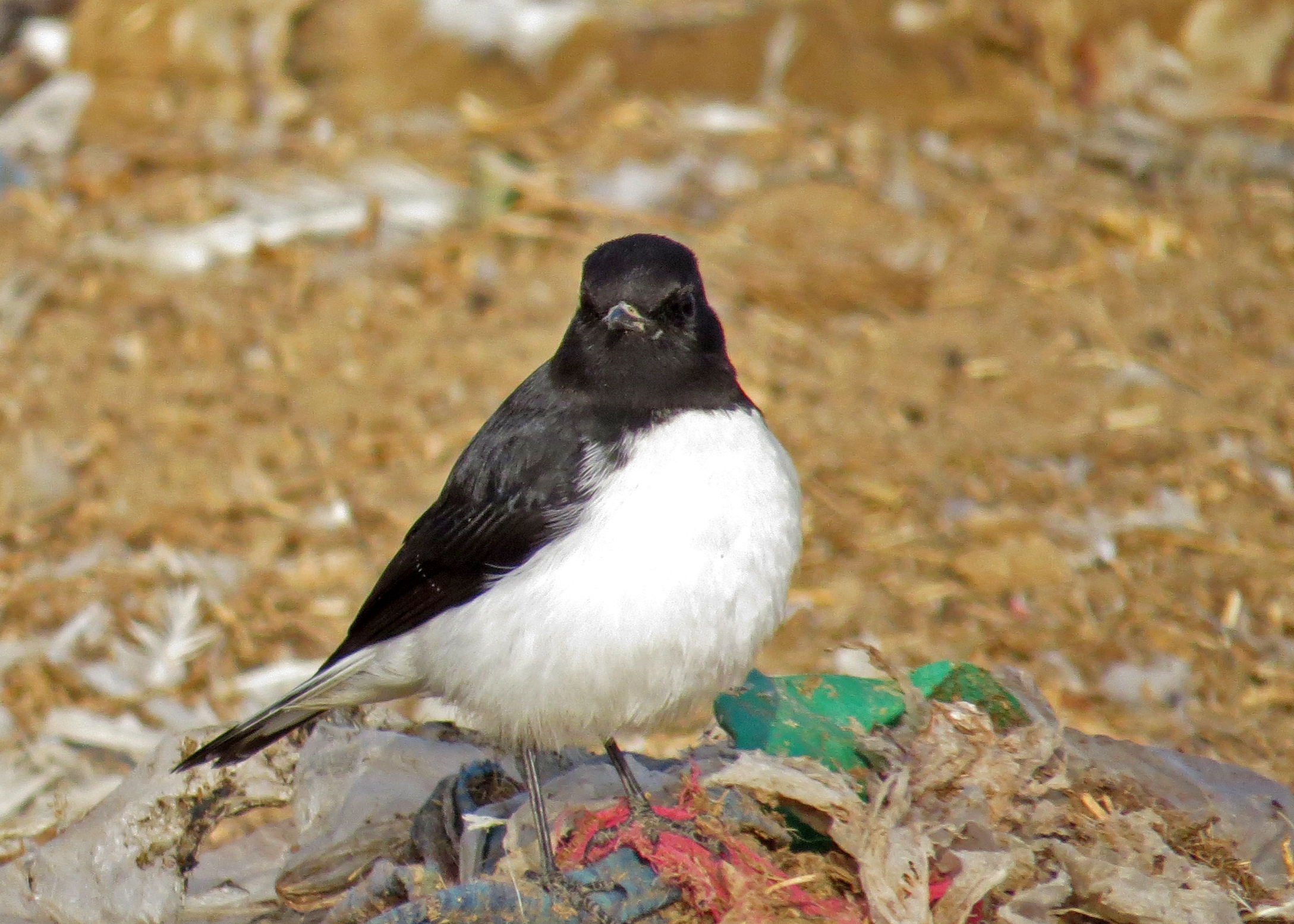
Variable Wheatears come in three forms, all from different areas to the north and west; the almost all-black opistholeuca, the white-capped capistrata and the common and widespread picata (above).
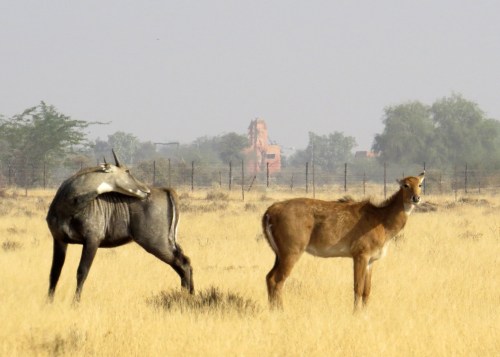
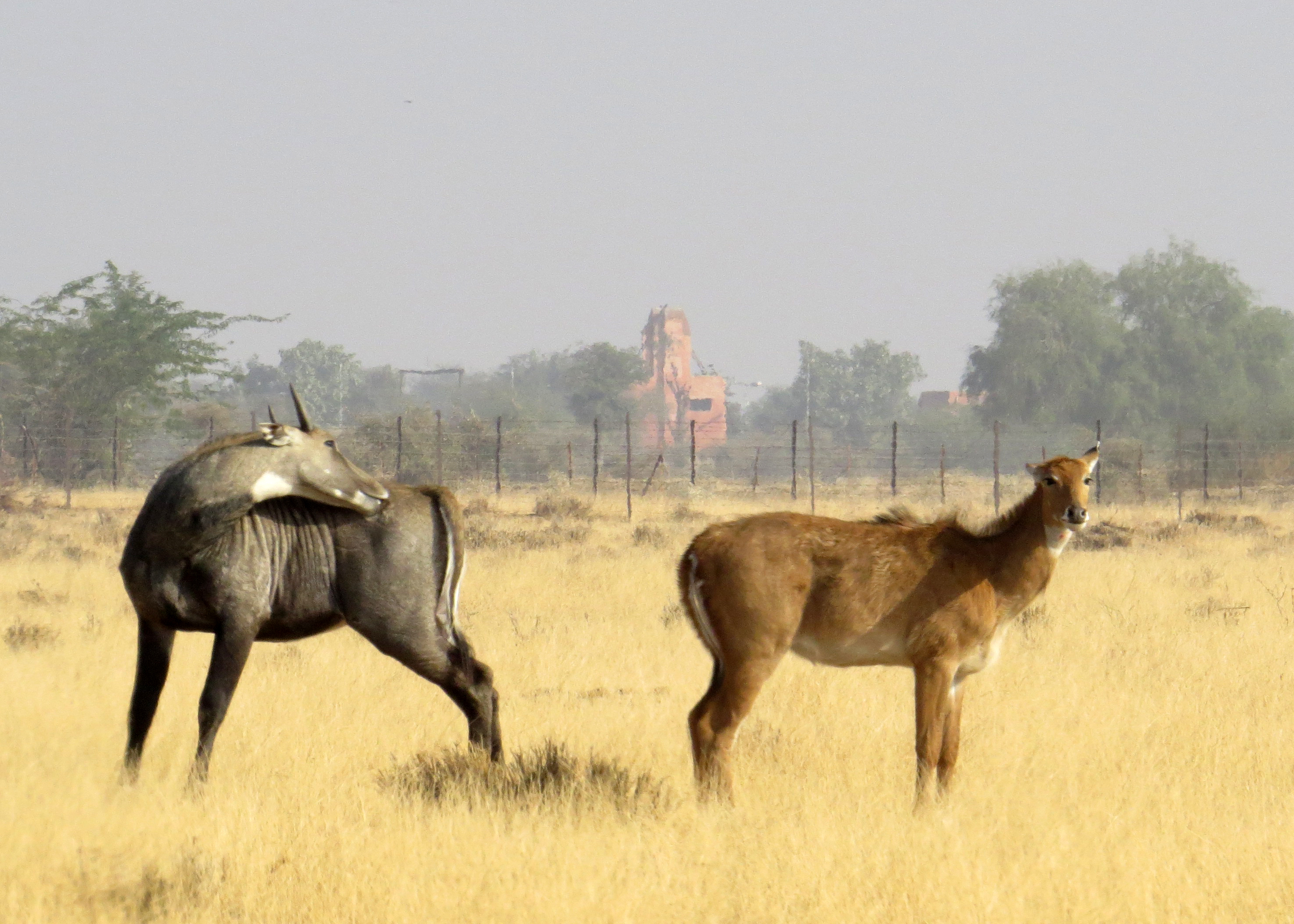
The huge Nilgai (aka the Blue Bull) is the Indian equivalent of the African Eland

A mammal I really wanted to see was the elegant Blackbuck, but all the areas where they have been seen before on this itinerary have been irrigated and turned over to agriculture.
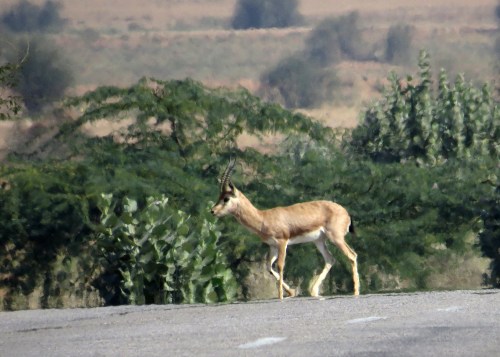
We did see the delicate Chinkara though.

Later we made our way to the little village of Khichan. On the surface it looked like any other small Indian village but it held a wonderful secret.

The Brown Rock Chat is a bird that ‘does what it says on the tin’ – its brown, it’s a chat and it perches on rocks. Nice though it is, it wasn’t the reason why we had come all this way.

Just around the corner there were a coupe of lakes absolutely packed with Demoiselle Cranes.

A rough count between those on the two lakes and those in the air came to about 8000.

As with all large gatherings of cranes their bugling calls filled the air.

I have seen spectacular large gatherings of Common, White-naped, Hooded, Red-crowned and Sandhill Cranes but these must be the most beautiful cranes of all.
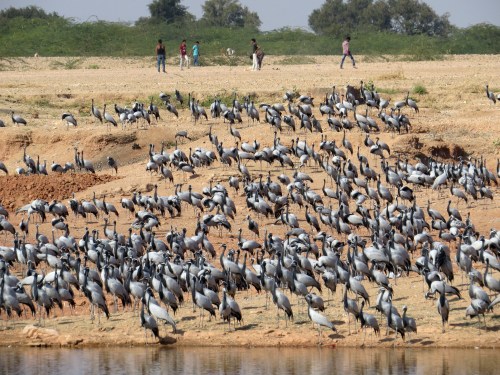
The birds seemed largely undisturbed by the passing villagers.

The smallest of the 15 species of crane, Demoiselles breed in Central Asia and migrate over the Himalayas to winter in India. Small numbers turn up elsewhere and I have seen single birds in far-eastern Russia and Japan plus good numbers on their breeding grounds in Kazakhstan
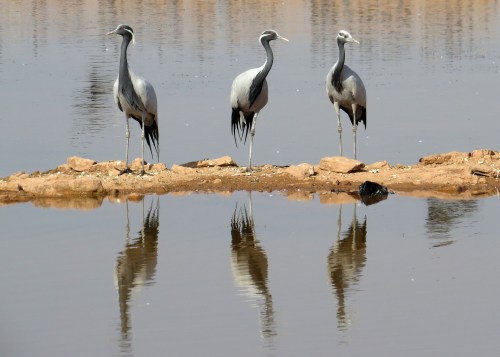
The villagers of Khichan have had a long love affair with this beautiful bird. Each winter grain is put out for the birds in an enclosure within the village. This tradition persists even though Khichan is no longer as prosperous as it once was (due to end of trans-desert camel trains) and is now supported by donations from clansmen from abroad.

We didn’t see the birds in the enclosure as we were too early for ‘feeding time’ and it seemed pointless hanging round for ages when we had such wonderful views around the lakes.

Here are a few other birds we saw around the lakes – Indian Pond Heron

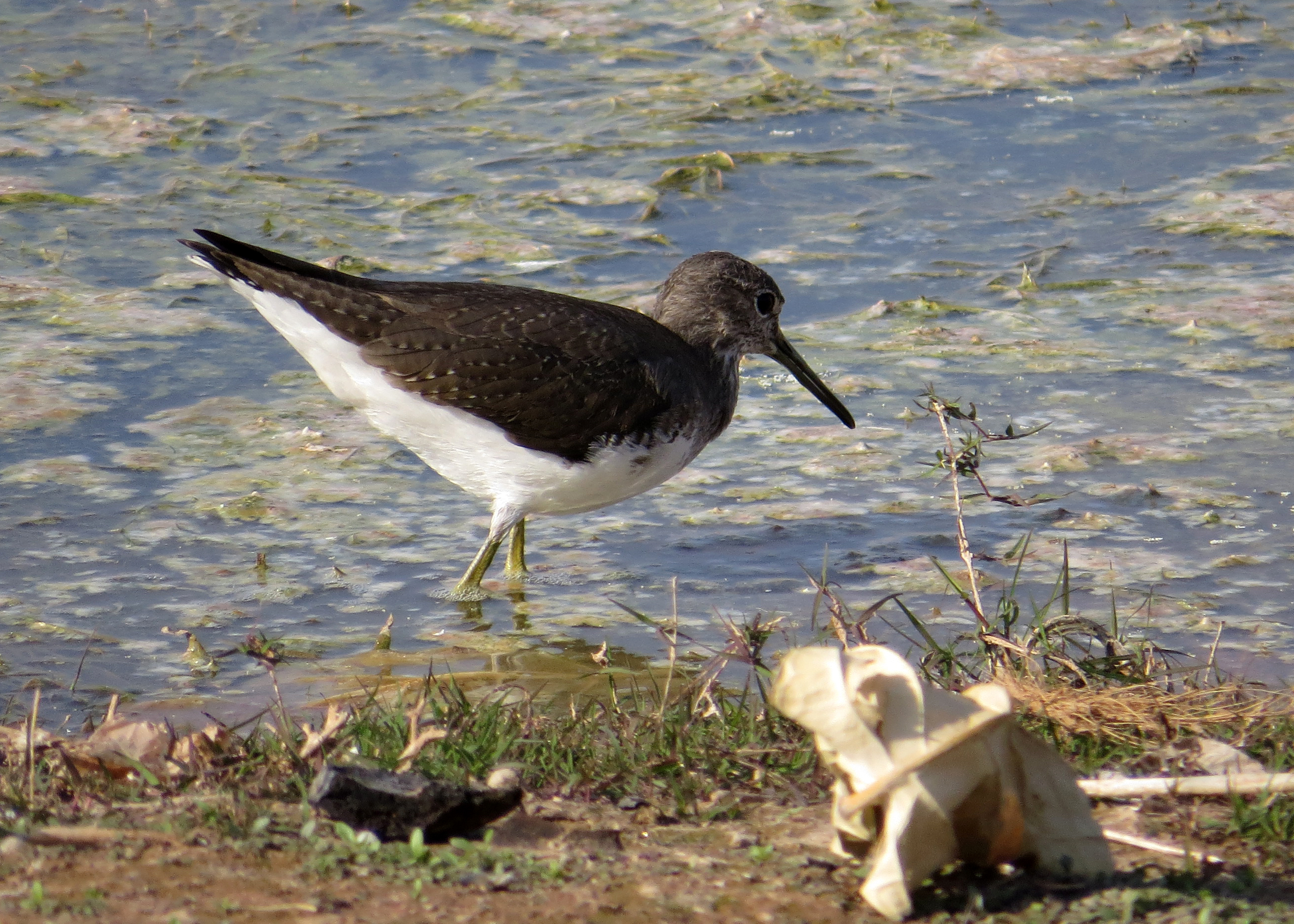
A wintering Green Sandpiper from Siberia
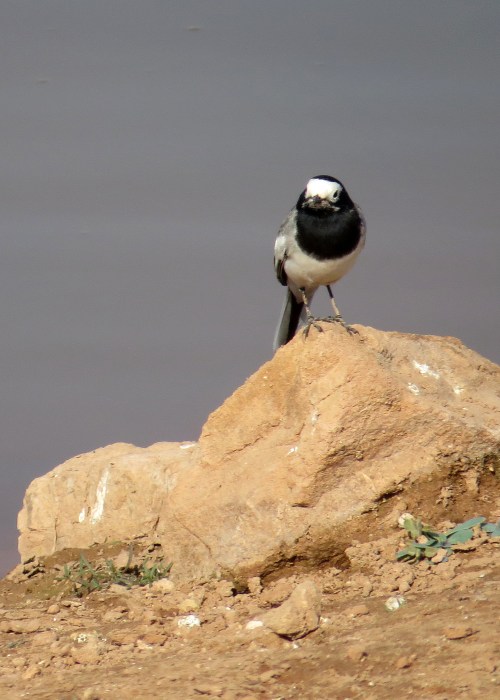
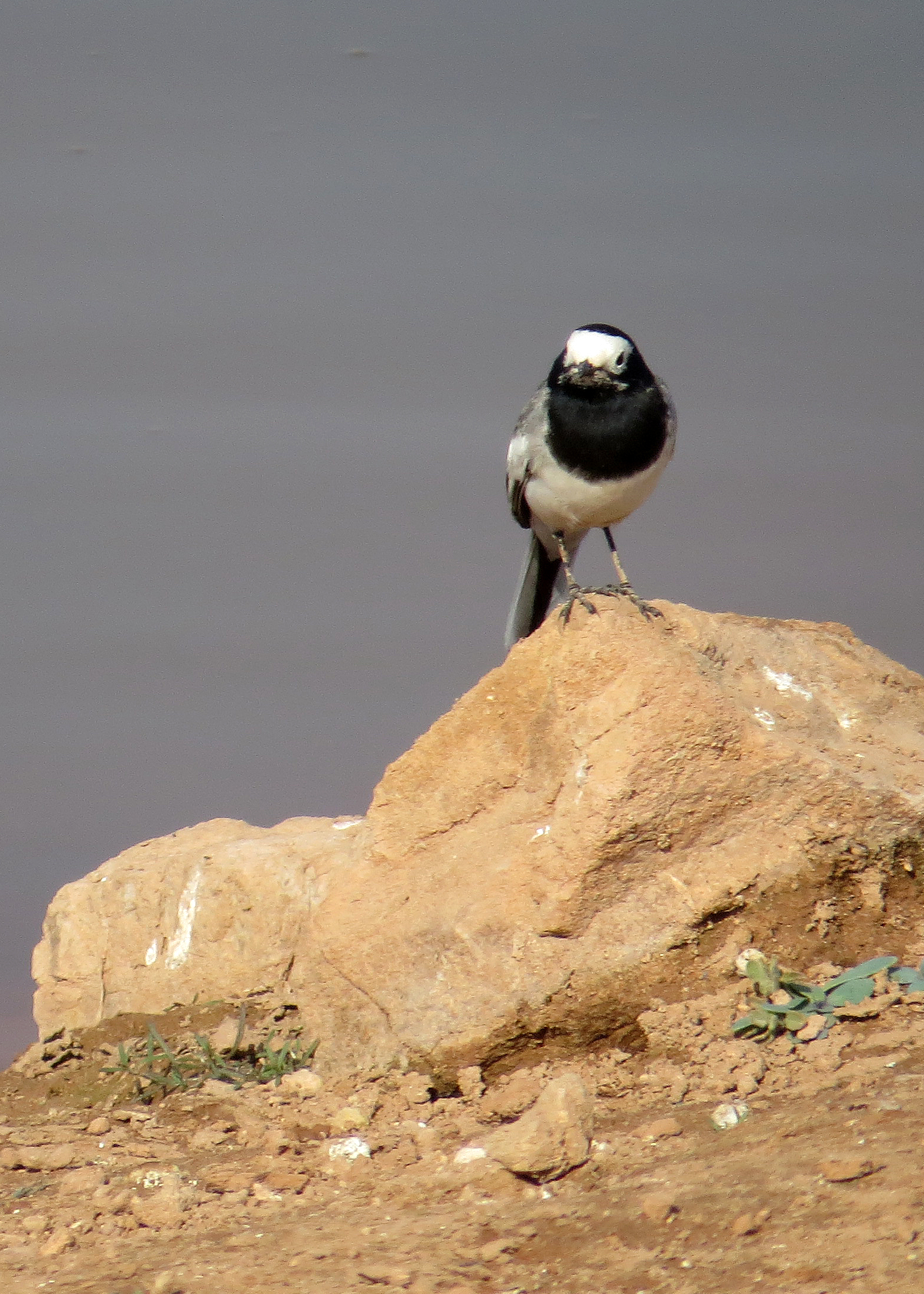
Another wintering bird, this time from Central Asia – the personata race of White Wagtail aka ‘Masked Wagtail’

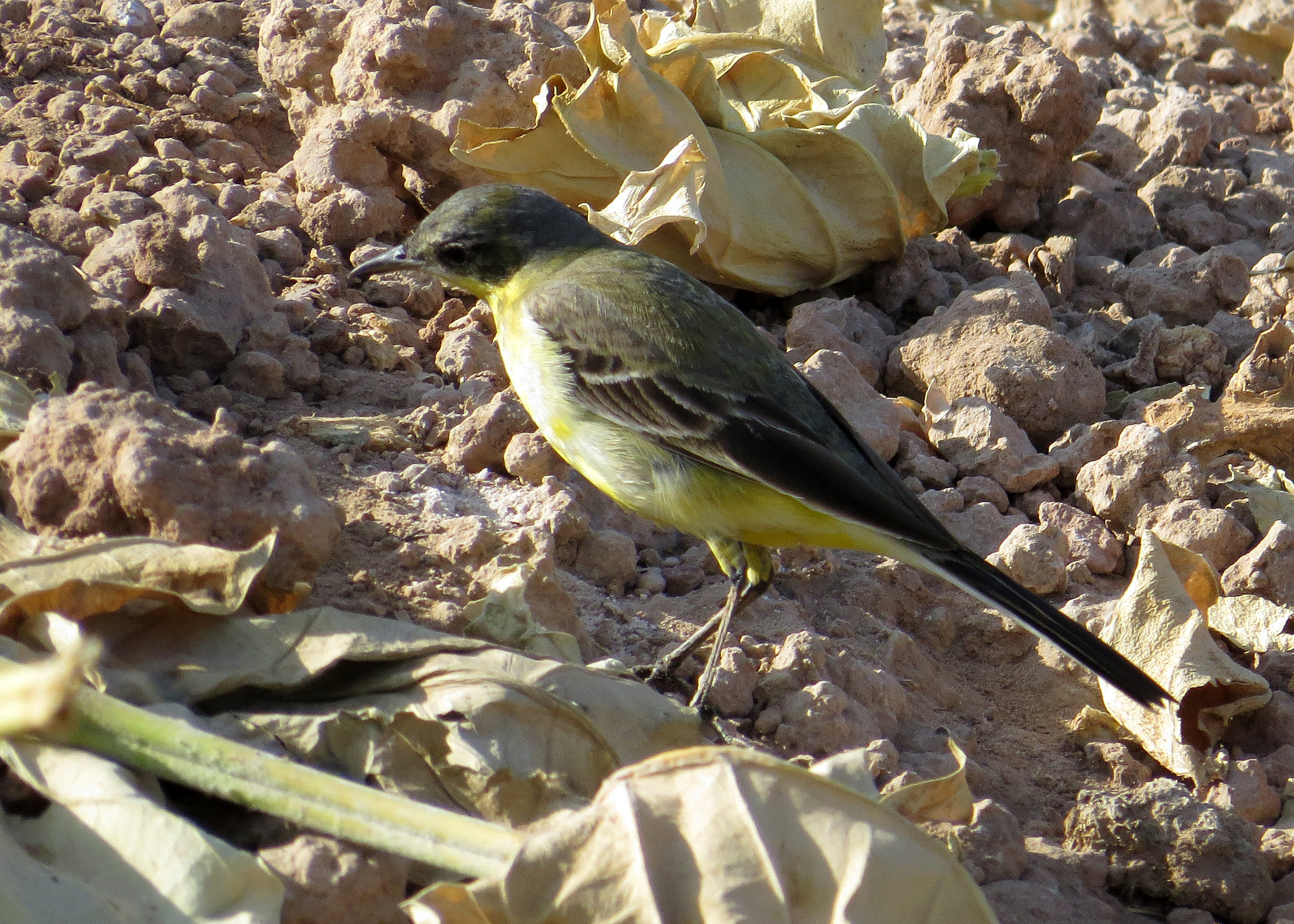
Yellow Wagtails can be difficult to assign to race when not in breeding plumage but this is probably of the race thunbergi from the boreal zone of northern Europe or Siberia
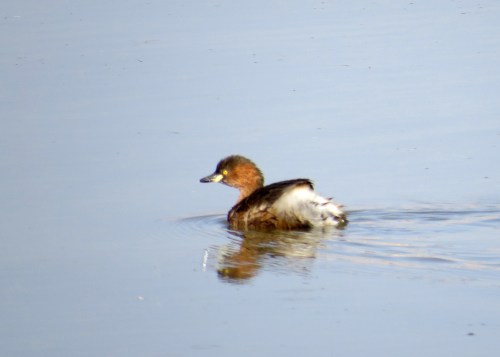
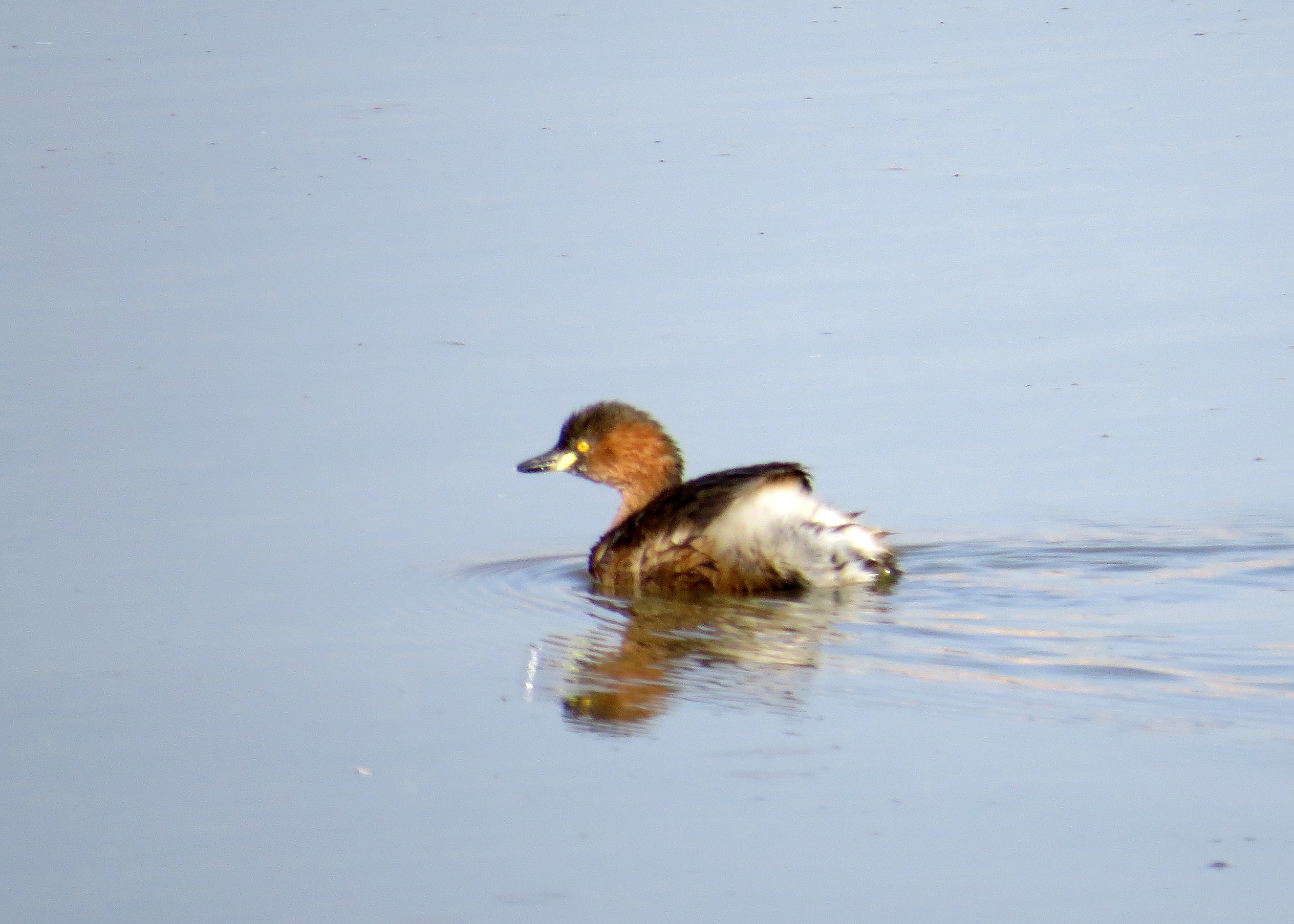
Little Grebes are a resident species ….
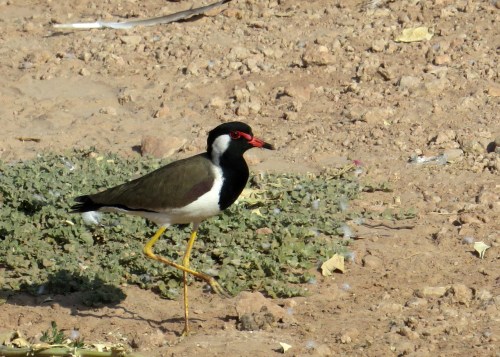
…. as is the ubiquitous Red-wattled Lapwing.
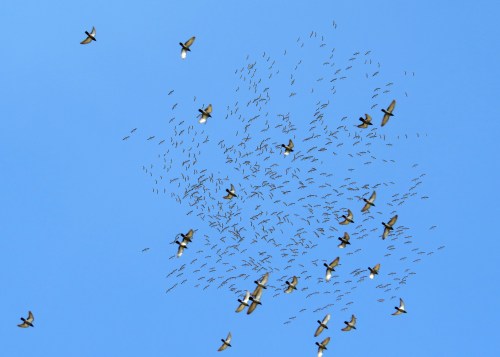
As we left a flock of Rock Doves flew over, but high above them were more Demoiselle Cranes flying in for the afternoon feast.
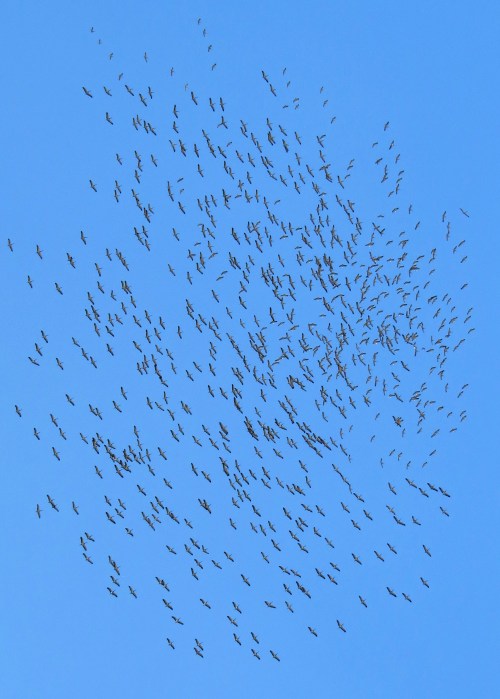
With many miles to go to our next stop, we could only marvel at this wonderful sight as we headed south to the town of Jaisalmer. Definitely one of the highlights of the entire trip.
This January I spent nearly three weeks in north-western India. This was my third visit to India and my fifth to the subcontinent (I have also visited Bhutan and Sri Lanka). My first trip was in 1986 when I joined a group of 17 for an event-filled tour of northern India with a visit to the Desert National Park in the west. My second visit in 2001 was to the states of Arunachal Pradesh, Assam and Meghalaya in the north-east.
This trip was mainly to the north-west and the states of Punjab, Rajasthan and Gujarat with a short visit to the state of Maharashtra in the centre. This post covers our time in Punjab and our visits to Amritsar and the wetlands of Harike. But first we have a morning in Delhi before our flight to the north-west
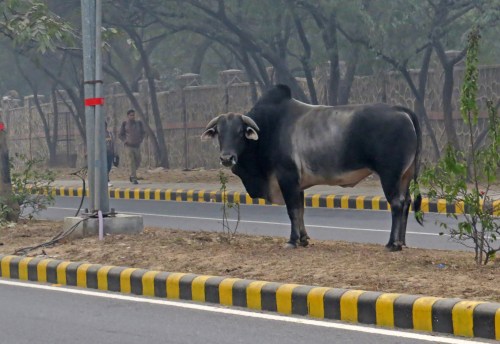
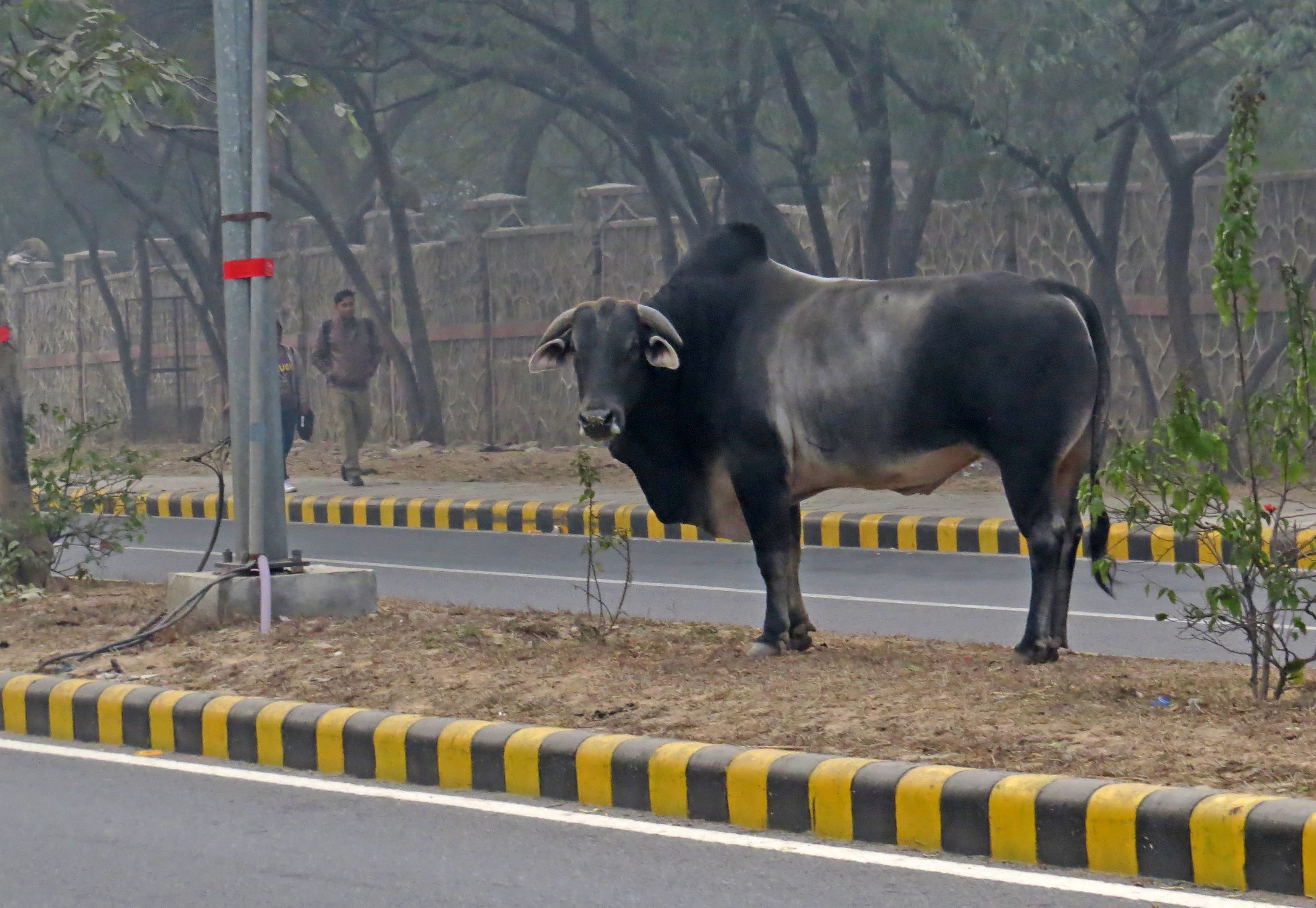
To the western visitor India is full of contradictions: modern roads full of fast traffic that have to dodge bulls that wander unrestrained even in city centres, people stopping to feed monkeys on the way to work and the very poor and very rich living in close proximity.

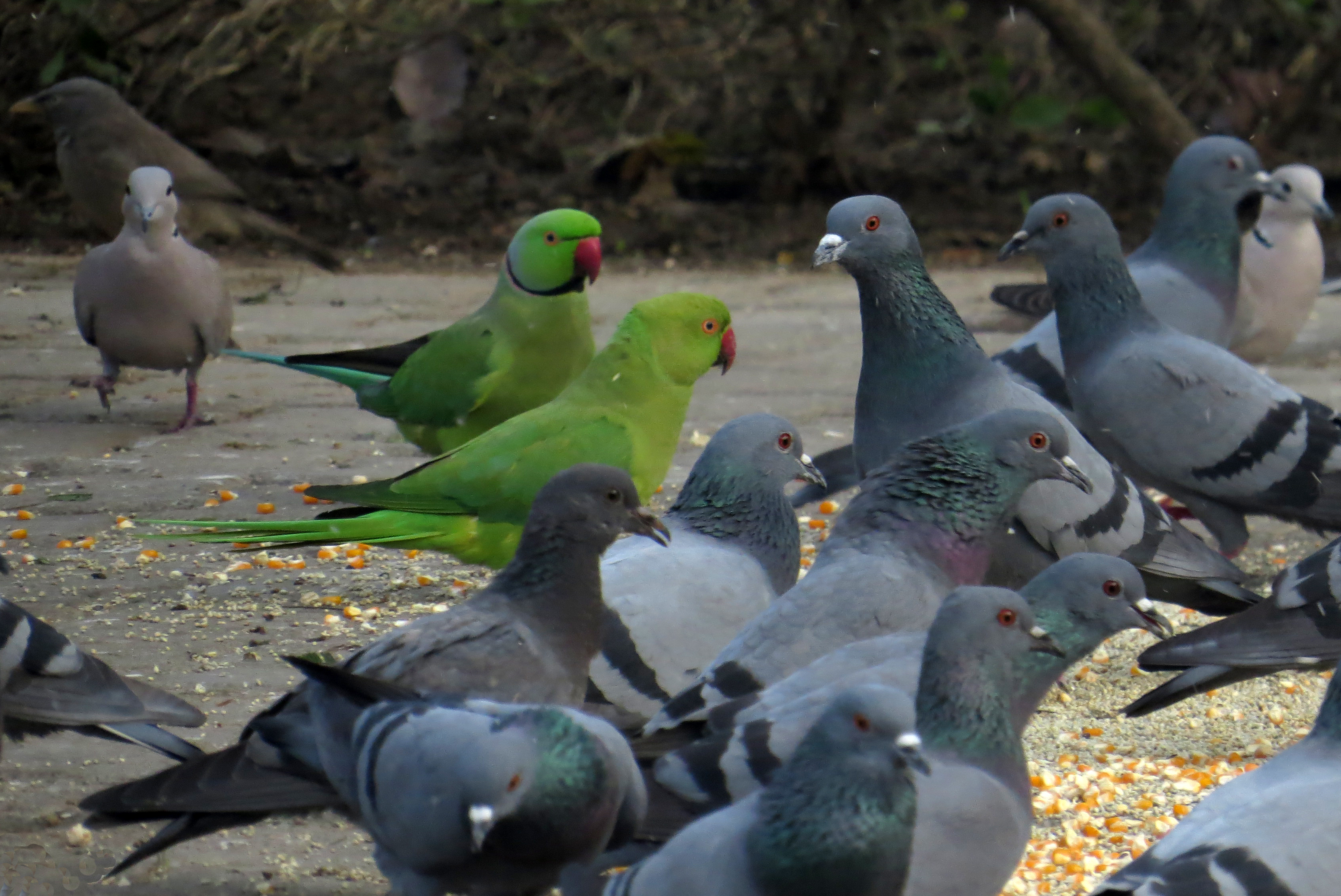
During our short time in Delhi we visited the Delhi Ridge park in the hope of seeing the rare Brook’s Leaf Warbler. The best we can say about the warbler was that we probably saw it, but most of us got better views later at Harike. India is a mixture of the familiar and unfamiliar. Here Rock and Collared Doves join Rose-ringed Parakeets, a scene that could be replicated in, for example London, but here the parakeets and the Rock Doves and are wild rather than feral.

Less familiar was the abundant and quite tame Five-striped Palm Squirrel.
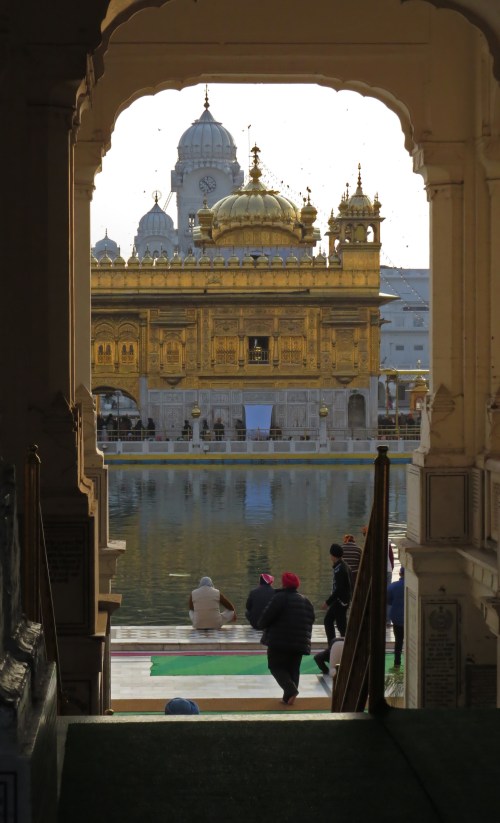
Soon after landing at Amritsar we headed off to see the wonderful Golden Temple, the Holy Shrine of the Sikh religion. Cultural aspects are in short supply on most Birdquest trips but with little quality birding close to the city we had several hours to fully appreciate this wonderful site.

Here our tour leader Frank Lambert, with whom I travelled to Tibet in 2005, stands in front of the Sri Harmandir Sahib (the Abode of God) usually known as the Golden Temple of Amritsar. As you can see we had to go bare footed, which became quite chilly as the afternoon drew on.

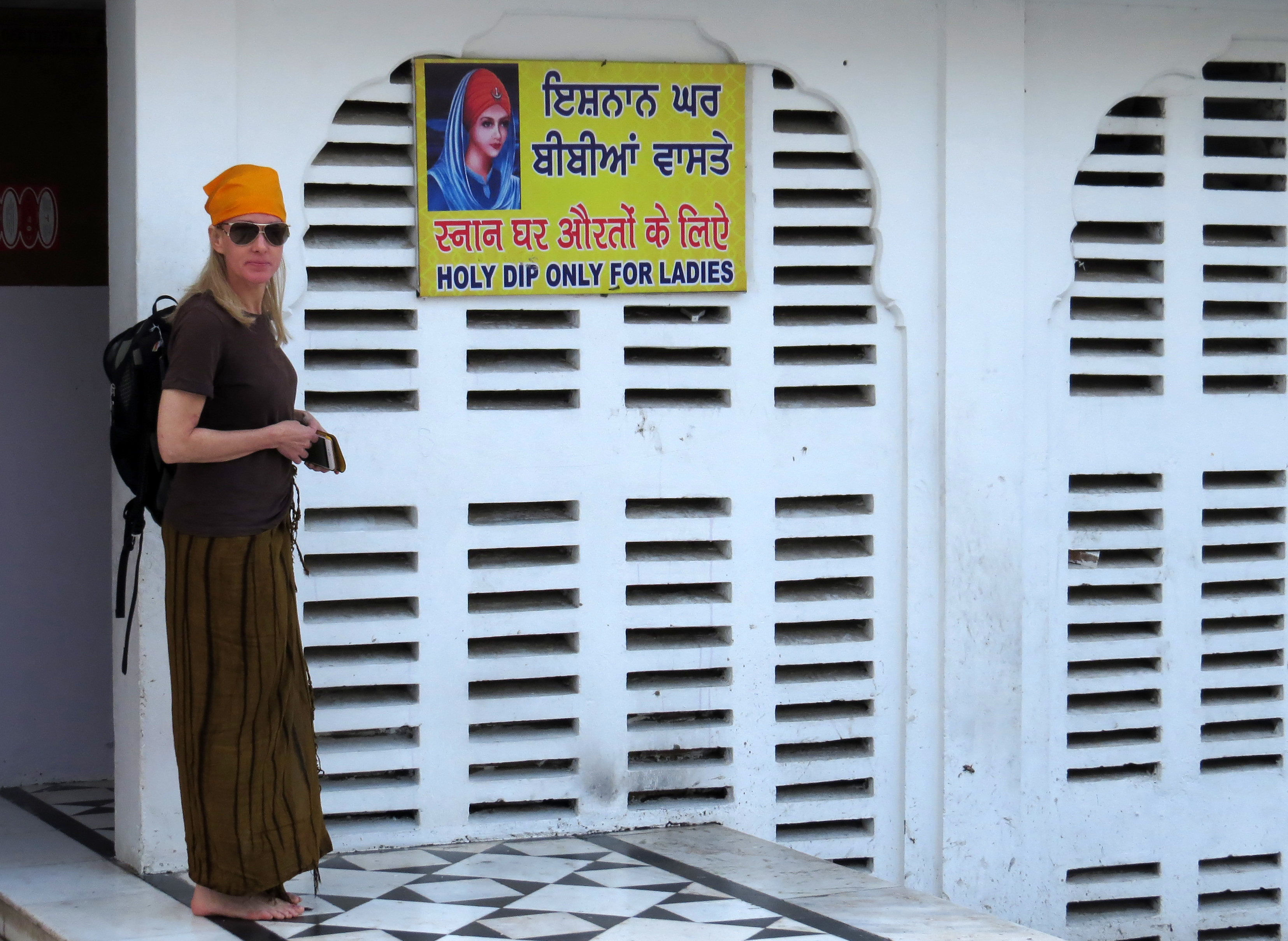
Rob and Heidi display an interesting choice in head-gear – all visitors must have their heads covered inside the temple precinct.
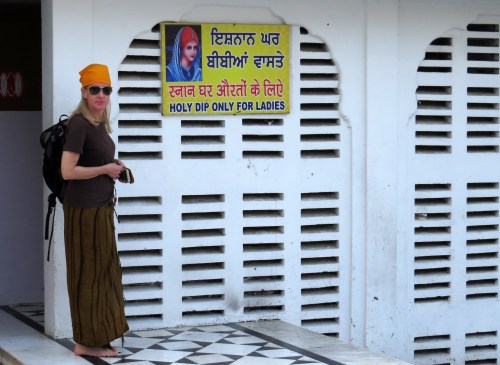
No birder likes a dip, even if it’s a holy dip just for the ladies.
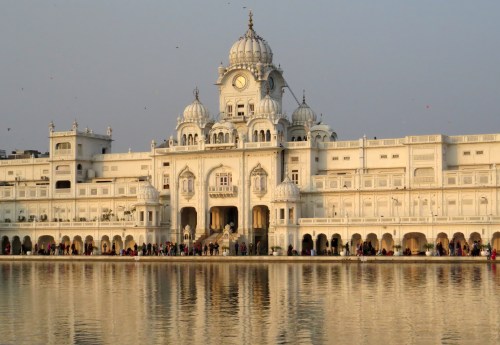
Up to 100,000 people visit the temple precinct daily to worship. We visited on the day of a holy festival, but fortunately the majority of pilgrims had left before we arrived, but the sky was full of paper kites flown to mark the occasion.
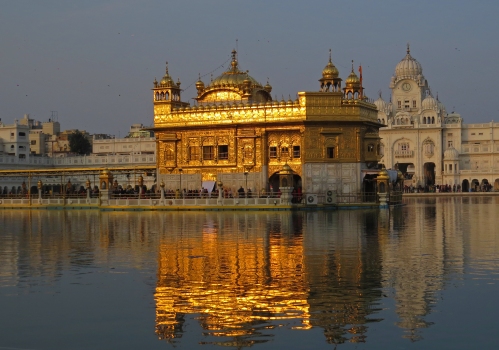
At the centre of the ‘holy tank’ is the Sri Harmandir Sahib itself, the location of the Adi Granth, the holy scripture of Sikhism. The tank was excavated from 1570 and the temple was completed in 1604 but had to be rebuilt in the 1760’s following attacks by the Afghans. The gold leaf was added in the early 19th century. More recently, in 1984, the temple came under attack from the Indian Army in an attempt to defeat Sikh nationalism, an outcome of this action was the assassination of prime minister Indira Gandhi by Sikh bodyguards..
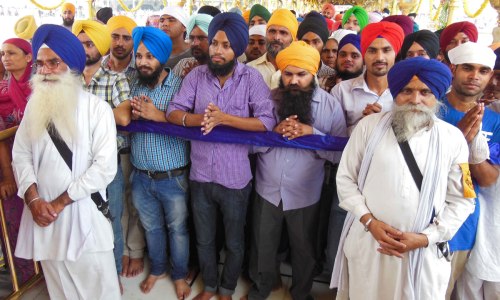
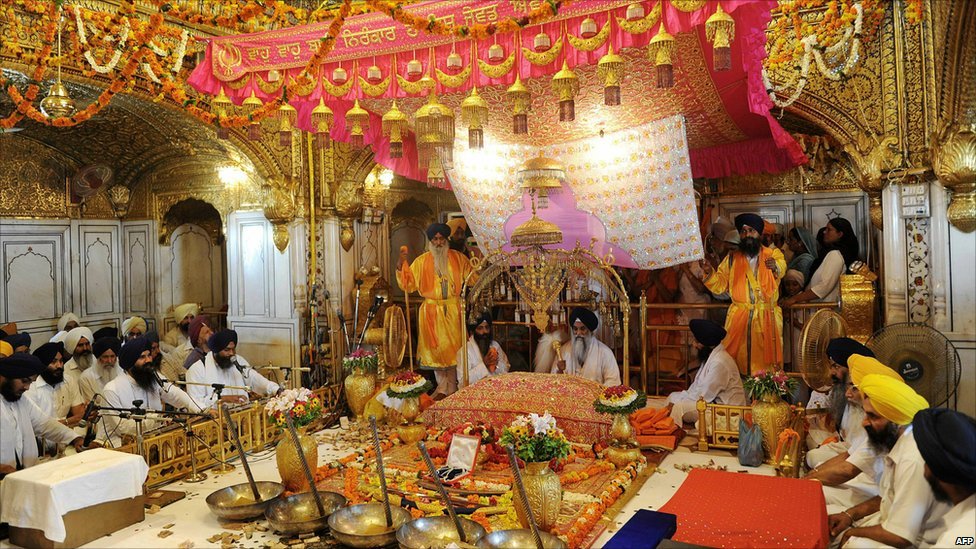
Pilgrims line up to see the Holy Book of the Sikhs, the Adi Granth inside the Sri Harmandir Sahib. Photography is not allowed inside so this photo and the next (ATP Photography) were taken from the Internet.

Within the Sri Harmandir Sahib the pilgrims sit to hear the words of the Adi Granth read out aloud.
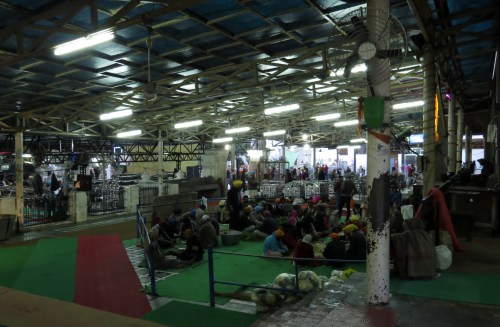
Incredibly the 100,000 pilgrims and tourists that visit daily all qualify for a free meal ….
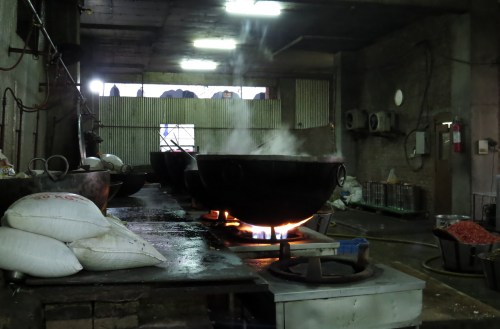
…. these kitchens serve what must be the biggest fast food joint in the world.
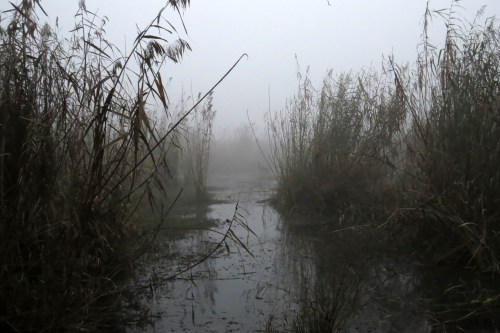
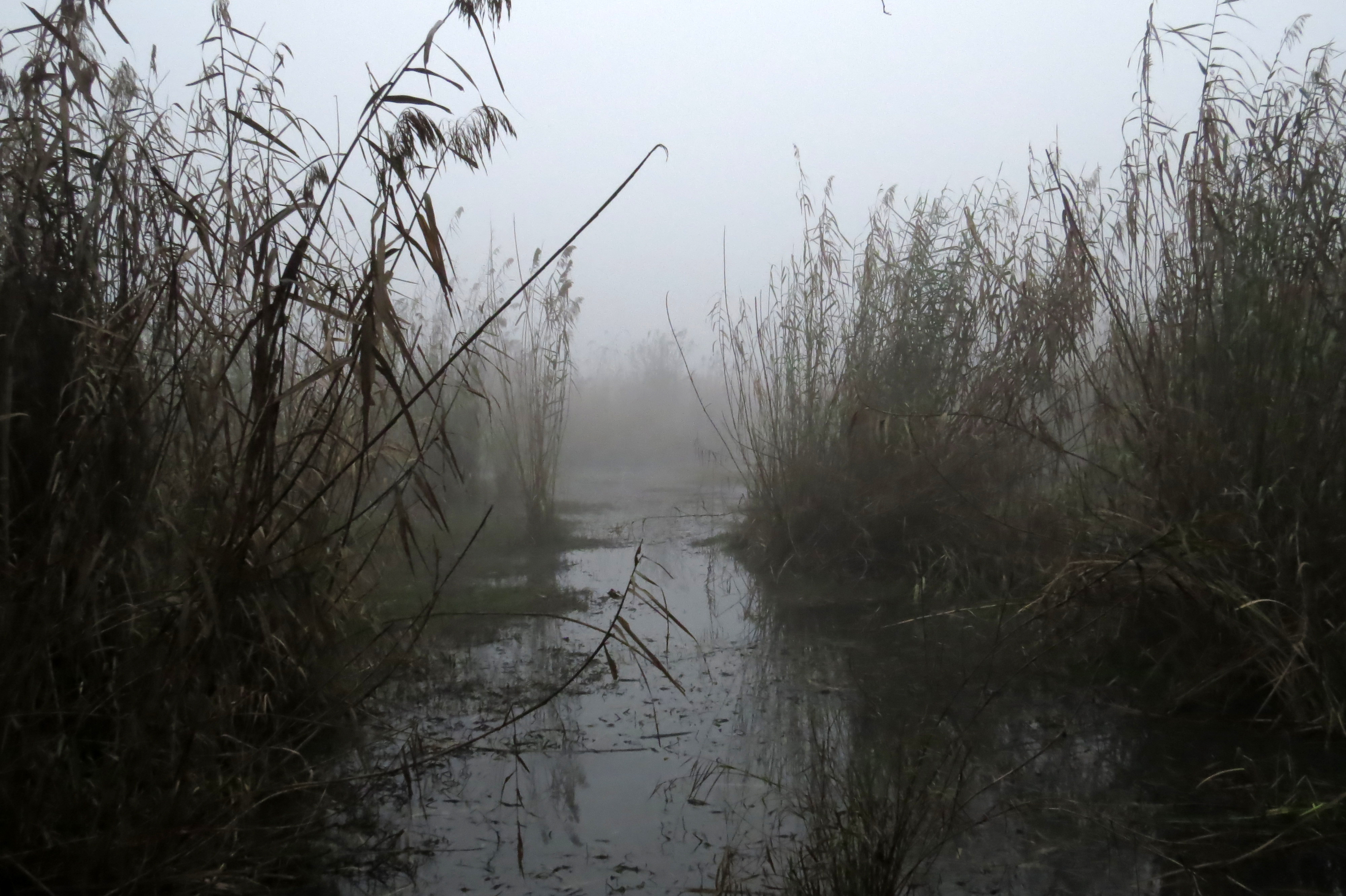
We spent the entire of the next day and the early part of the one after at Harike, an extensive wetland formed by the damming of one of the regions rivers. Whilst the dam has allowed this former arid region to flourish through irrigation and has created wildlife habitat it has also produced fog. This thick mist hardly cleared all day and it was midday before we could see 100m ahead of us. This was our least successful day of the trip with only three of the eight specialities of the area seen (although we were able to catch up with one later and only one of the missed birds was a lifer for me). Even so I saw one life bird, Rufous-vented Prinia – which is now a babbler not a prinia, but bird photography was out of the question given the conditions.

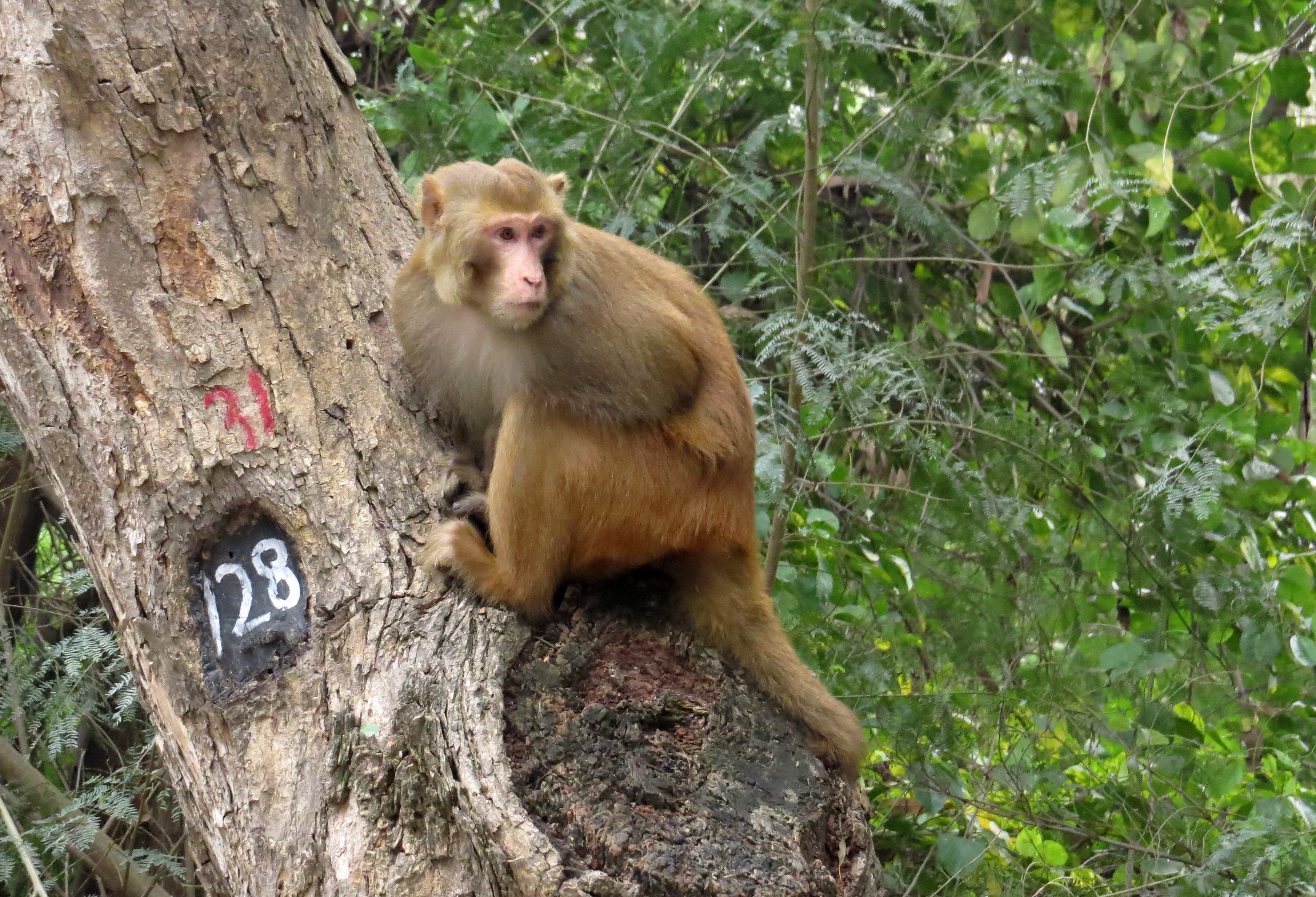
Indeed the only species I photographed was this Rhesus Macaque. With the trees all numbered it looks like she’s waiting outside of her front door
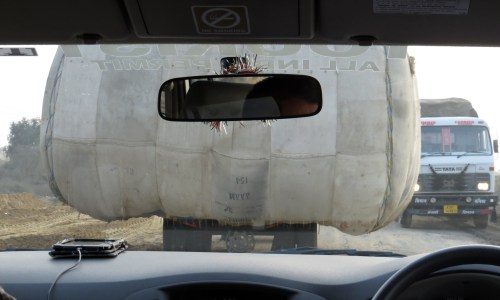
On day three, after some further dipping at Harike we headed south towards Rajasthan. As always on Indian roads there were multiple hazards, such as these loads so wide that they take up the entire road and prevent their driver having any idea of what is behind him. Indian traffic operates with completely different rules than anywhere else, driving the wrong way up a dual carriageway, overtaking a vehicle that is already overtaking another, expecting oncoming vehicles to get out of your way in spite of the fact that you are on their side of the road and the continual use of the horn seem perfectly acceptable.
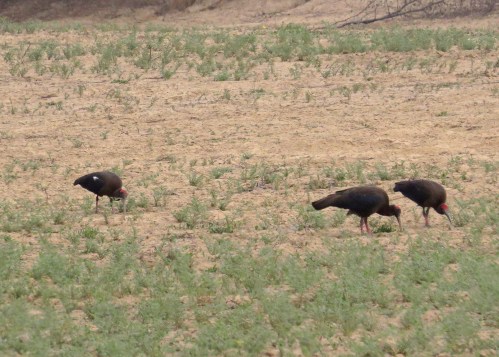
On route we came across a flock of Red-naped Ibis, a bird I missed in 1986 due to a poorly timed ‘bush stop’. I was delighted to catch up with this bird after 30 years of waiting.

Other birds seen on route included the ubiquitous House Crow, a bird that has spread around the world by hitching a ride on ships and has even established a breeding colony in Holland ….
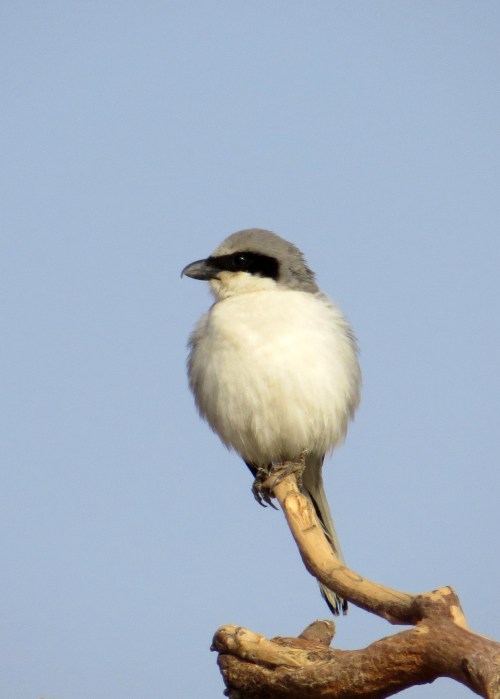
…. and the elegant Southern Grey Shrike. The grey shrikes or ‘jackie hangman’ as my wife calls them, are in taxonomic limbo, different authorities recognise one, two or three species, but a recent paper proposed seven or more species based on genetics. If this was accepted this would be Indian Grey Shrike Lanius lahtora
In the evening we arrived in Bikiner in Rajasthan, more about that in the next post.
Regular readers of this blog may have noticed that I haven’t posted anything about 2016 yet – mainly because I’ve spent three weeks in India.
I’ve just about edited all the Indian photos and will start uploading some of them soon. But first I thought I do a short post about other things that have been going on in 2016.
The weather in the UK has been a major factor, constant wind and rain, particularly early in the year, has prevented ringing and hasn’t made birding very pleasant.
We tried to organise a bird race for the first weekend in January and quite a few teams were going to take part but the weather was dreadful. We were finally able to run it on 10th January but by then only two teams took part. It was good fun but my team came a rather poor second. Even so I find the annual race to be an interesting and worthwhile challenge and I like to start the year off by searching out some of the scarcer (but not necessarily rare) birds like Marsh Tit or Barn Owl that otherwise tend to get forgotten about. We started before dawn for owls in east Dorset, headed to Weymouth for first light, visited Portland, the areas around Maiden Castle and Hardy’s Cottage before returning to Poole Harbour for the rest of the day. 113 wasn’t a great total, in 2015 we managed 126 but then its only a bit of fun.

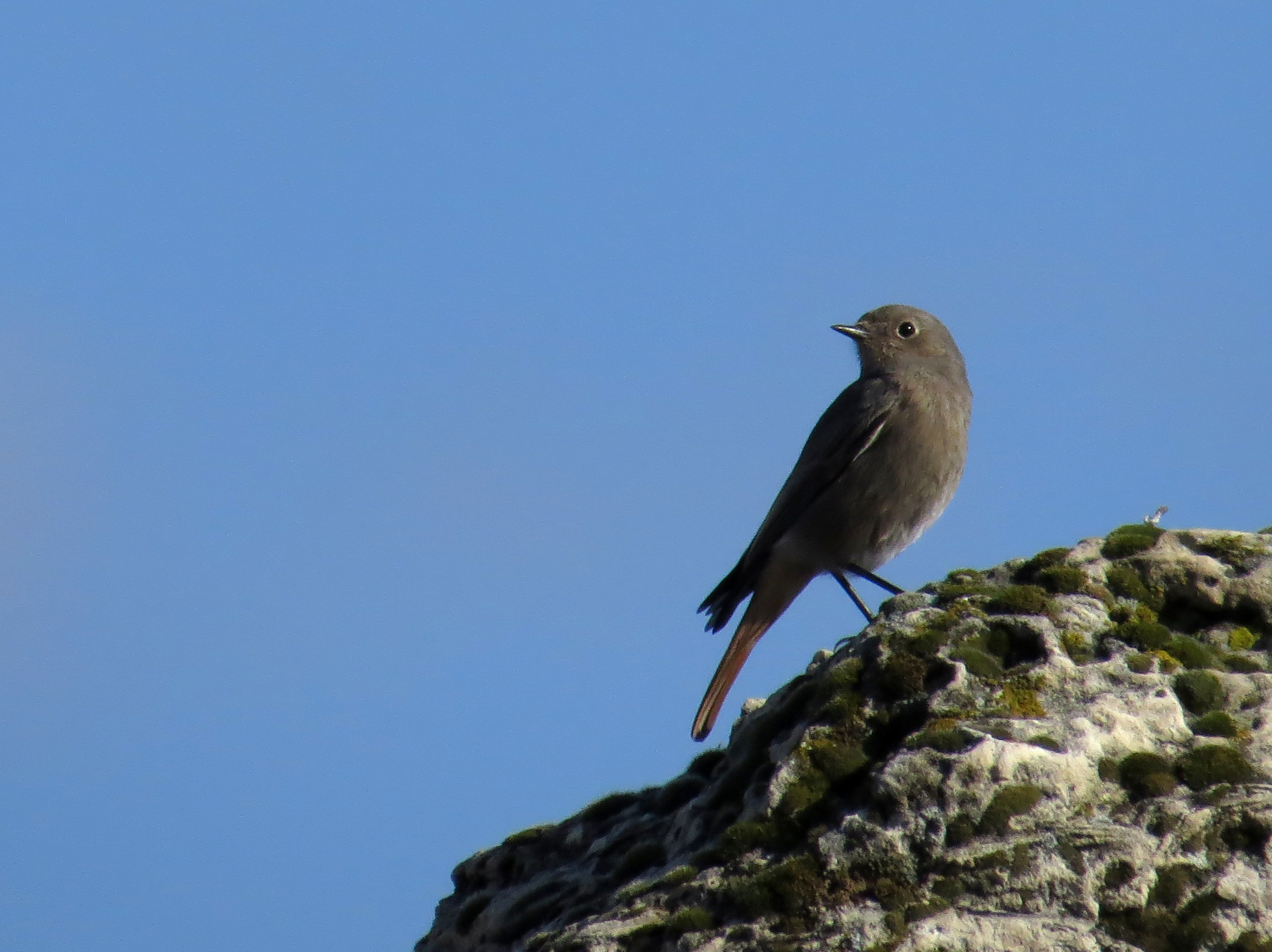
One of the many quality birds we saw on the bird race day was Black Redstart. However I didn’t stop for photographs – this one was photographed in Turkey last autumn.
On my return from India I was delighted to find that I had been offered free tickets to an Afro Celt Sound System gig at the BIC. This wonderful band (not to be confused with any other bands with a similar name) fuses traditional African and Scottish rhythms and has a unique and very infectious sound. Margaret was unable to go so I took granddaughter Amber along instead and she had a wonderful time.
There are no other bands where you can hear a duet between an oud and bagpipes or for that matter where they have four different drummers. Can’t wait for their next album, due out I believe in April. Regrettably I didn’t take my camera and these photos were taken from their website http://www.afroceltsoundsystem.org.uk/
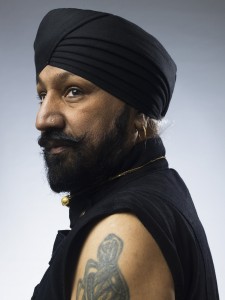
Drummer Johnny Kalsi

Bagpipe player Griogair

Traditional African instrument player Nfaly Kouyate
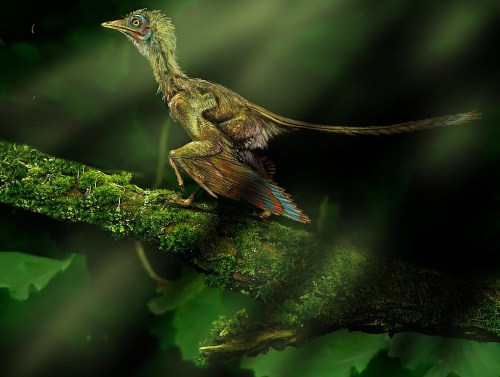
Recently I gave my talk on bird evolution and how birds spread around the world to Poole RSPB group. The talk was entitled ‘what came first the Archaeopteryx or the egg’. There are several different ideas of what the Archaeopteryx, the 150 million year old proto-bird looked like. I took this reconstruction from the internet. I have done this talk four or five times now and I think its time I came up with another subject.
Whenever conditions have allowed I have tried to continue our ringing program. During the winter I have ringed at Holton Lee where we have continued to monitor common woodland birds, and at Fleet’s Corner where the primary target is wintering Chiffchaffs. We have proved that some Chiffchaffs return to the site each year to winter and that wintering birds are a different population from breeding birds. We have caught two or three Chiffchaffs on most ringing attempts this winter but on 10th February we caught 18! Six were re-traps first ringed in November or December, one had been ringed in Southampton in early November and the rest were new. Five days later I returned, and we caught none, although two or three birds were in the area, the following day I returned just to check and found just one. In spite the fact that this is only mid February it would appear that Chiffchaffs are already on the move. It is possible that a full month before migrant Chiffchaffs wintering in the the Mediterranean and North Africa start arriving in the UK, the Chiffchaffs that winter here are already moving towards their (unknown) breeding areas.

This bird, a potential Siberian Chiffchaff, was ringed on 12/12/15 and re-trapped on 10/2/16.
Unusual birds have been thin on the ground in Dorset this winter. A Great Grey Shrike has been wintering in Wareham Forest, I have only seen it once in three visits and that was the time I forgot my camera, but I did manage a poor digiscoped image using my pocket camera.

Our young birding friend Christine (who also goes to the choir with Margaret) has recently decided to up her birding game by doing a year list. Without her own transport she isn’t going to do well, so we have offered to help her out. Visits recently to Wareham Forest, Studland, Portland, Weymouth, Abbotsbury and a few locations around Poole have added a good number of species to her list.
We recently went to a talk for the Christchurch birding group CHOG by top Israeli birder Yoav Perlman who is currently studying for a PhD at UEA. I met Yoav in Israel in 2013 where he took Margaret and I to see the critically endangered ‘tamarisk’ race of Nubian Nightjar and have met up with him since at the Bird Fair. Yoav gave an excellent talk which brought back fond memories of my three bird-filled visits to Israel.
Not having any photographs of Yoav from our Israel trip, I looked on his website http://nubijar.blogspot.co.uk/ and found this memorable photo taken on Shetland which I have reproduced below. I know or have met all five in the photo; on the left is Peter Colston, former curator of the bird collection of the British Museum who I met on a trip to French Polynesia in 1997, in the centre is Yoav, to his right is my friend and bird identification expert Paul Harvey who I have known since 1978 and on the far right is Roger Riddington, editor of British Birds magazine who I met in Shetland and at the Bird Fair. But the reason I wanted to post this photo is because of the guy to the left of Yoav, Martin Garner. Martin died recently after a long battle with cancer and the birding community has joined together to mourn his passing. Martin loved to be at the cutting edge of bird identification and many conundrums were explored in his excellent website Birding Frontiers http://birdingfrontiers.com/ and the two ‘Challenge Series’ books. Martin was a kind, generous and inspirational man, with deeply held religious beliefs and faced death with a serenity that was quite awesome. I only met Martin a few times, at a talk in Poole and at the Bird Fair but wish I could have known him better.
With 2015 over this post looks back over the year at some of the places we have been, birds we have seen, music we have heard and people we have met.
Of course, much more detailed accounts can be found clicking on the relevant month from the list on the left of the screen (or sometimes the month after if the post was uploaded a while after the event).

The year started with the traditional New Year’s Day bird boat, kindly arranged by Mark and Mo Constantine for Dorset birders. These Purple Sandpipers were photographed on the Sandbanks side of the chain ferry on 1/1/15 . Also in early January I took part in the annual winter bird race, recording an amazing 126 species in Dorset in 12 hours.

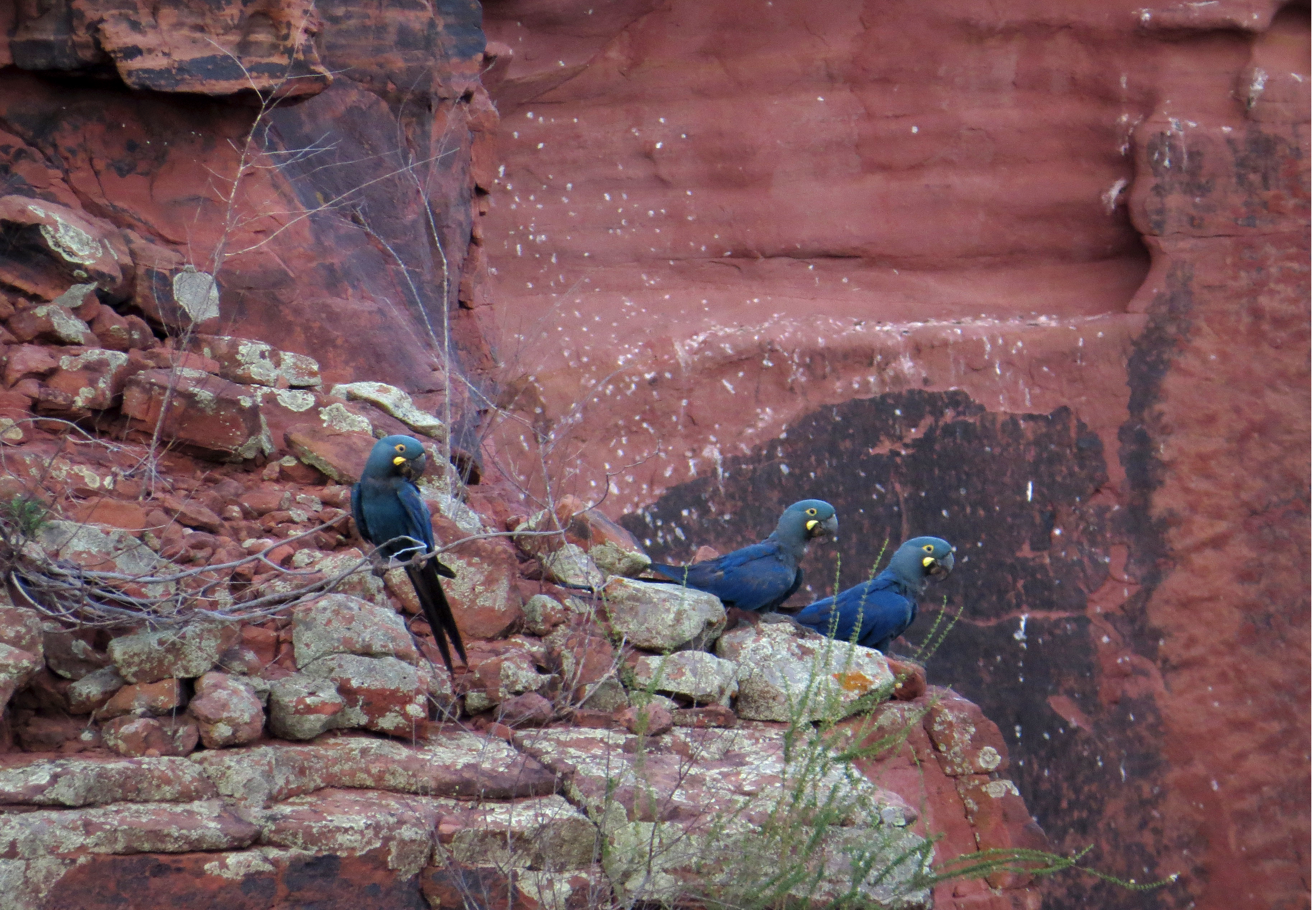
The first foreign trip was to NE Brazil which lasted more than three weeks but resulted in me seeing over 70 life birds – by far the most of any trip of the year. There were many highlights, one being cracking views of the wonderful Lear’s Macaw in a very dramatic setting.

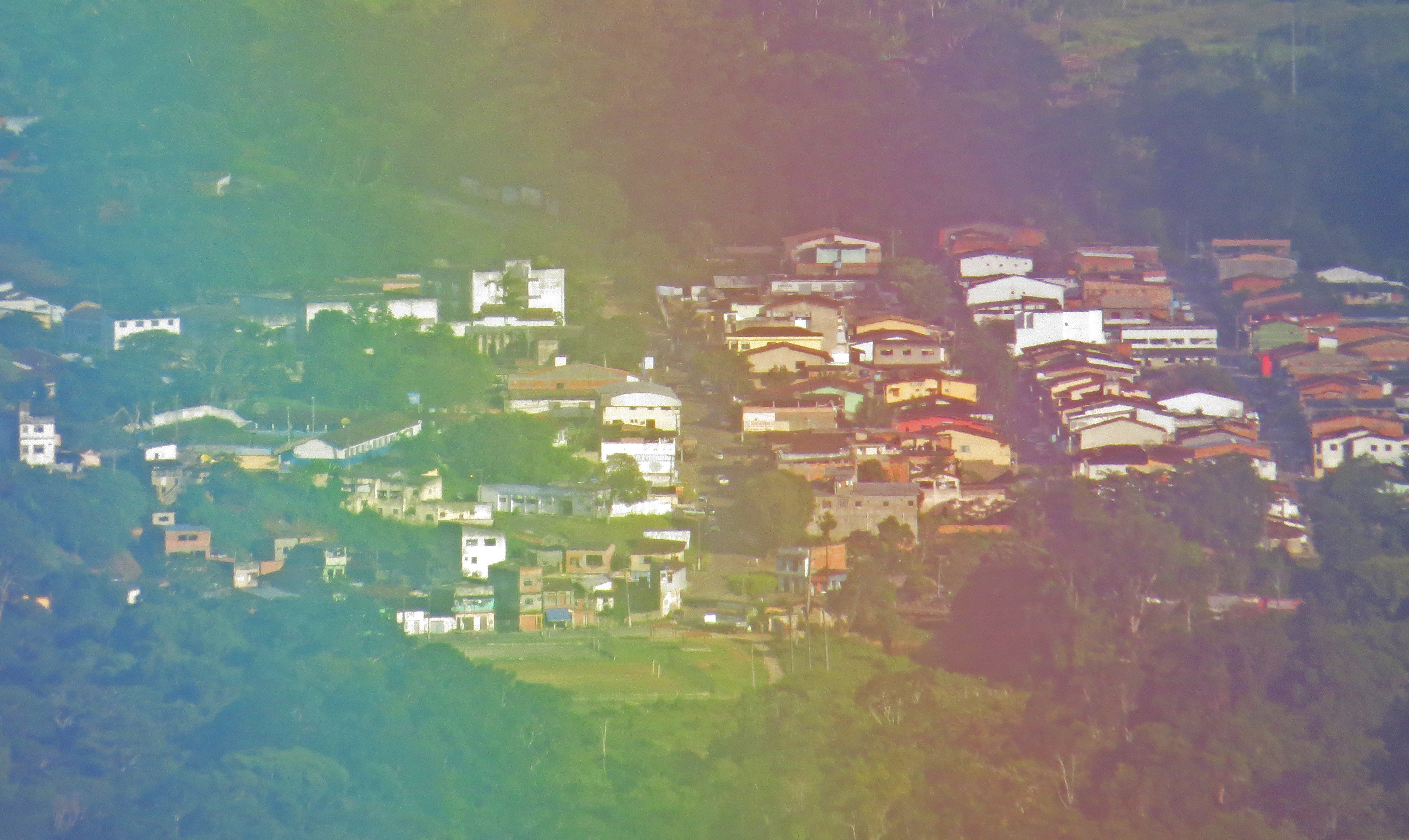
Here I photographed the nearby town through a rainbow whilst staying at the lovely and very birdy Serra Bonita reserve.
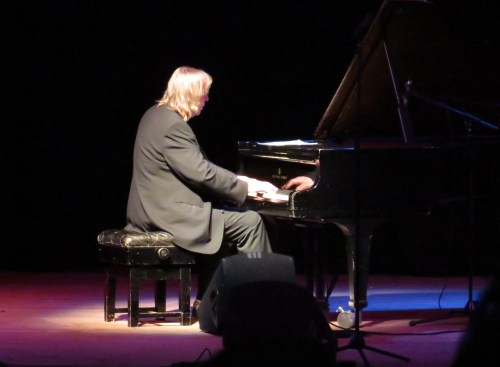
As well as travelling we both have a keen interest in music – be it old favourites from my past like Rick Wakeman, whose keyboard skills in the band Yes were much appreciated in my youth ….

…. to more modern acts like Paloma Faith. We saw Rick Wakeman in February and Paloma about a month later in Poole and Bournemouth respectively.

In early March we took advantage of a charter flight to Tromso in arctic Norway where we boarded the Hutigruten coastal steamer and journeyed around North Cape at the top of Norway in the hope of seeing the Aurora Borealis ….
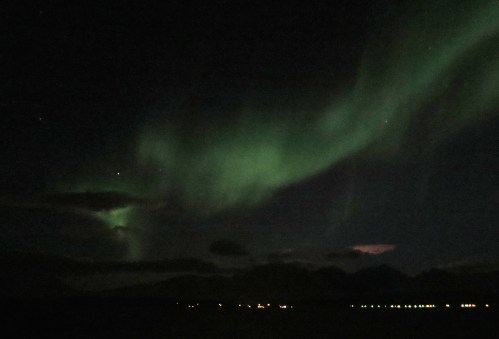
…. which indeed we did on four nights out of five. We were lucky as some do this trip yet come away disappointed, but if we had gone about 10 days later we might have had a truly spectacular display as the aurora was seen as far south as Norfolk.
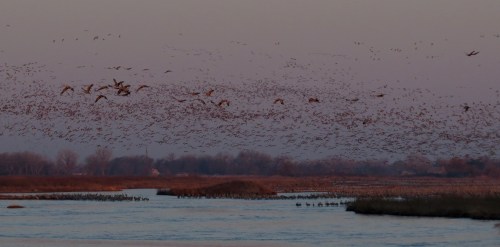
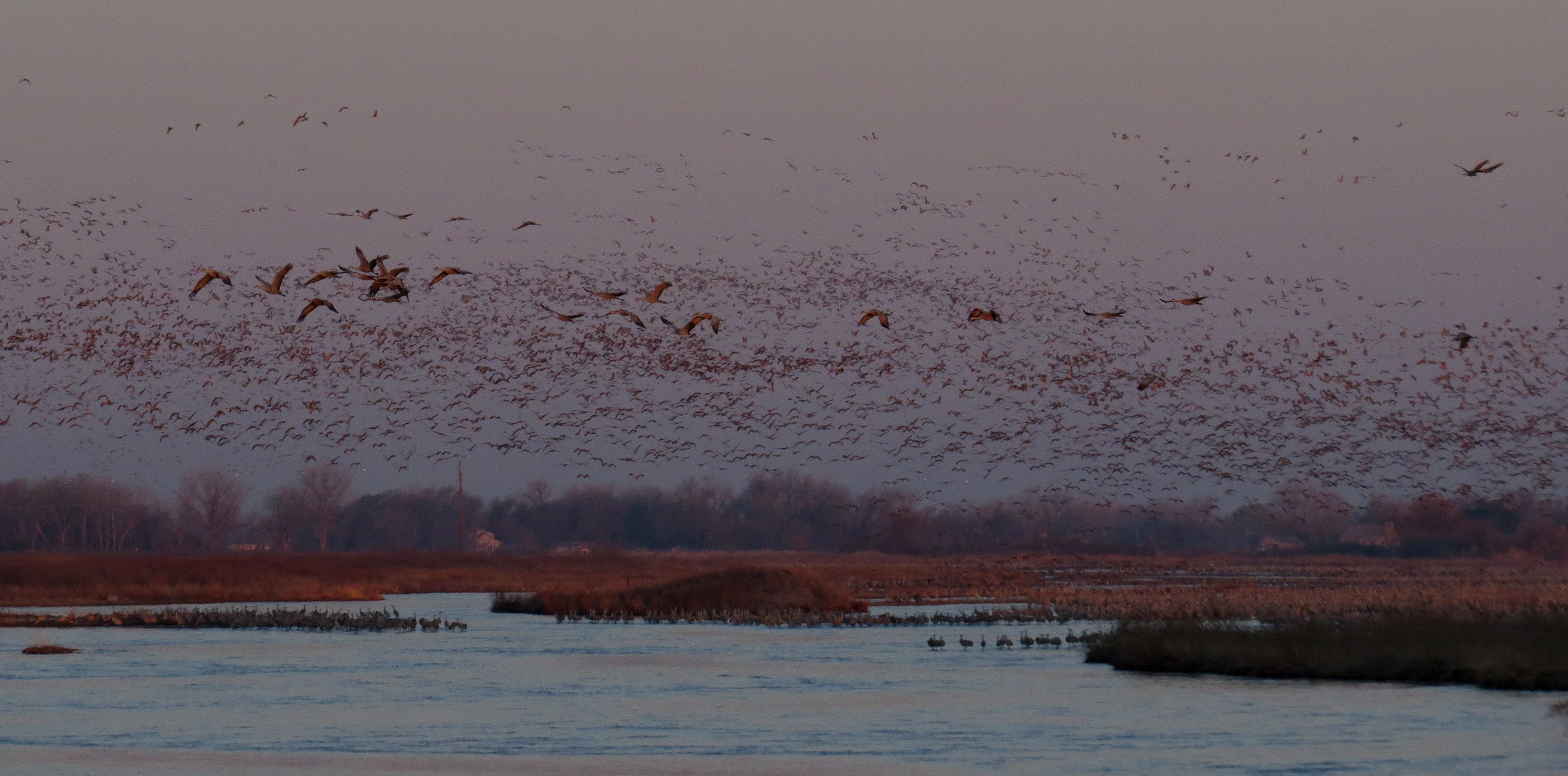
We booked on the Birdquest tour to Colorado that started on April 1st but we spent the last week of March on our own touring Nebraska, South Dakota and Wyoming. The main reason for this visit was to see the incredible gathering of hundreds of thousands of Sandhill Cranes on Nebraska’s Platte River. We also visited the Badlands of South Dakota ….
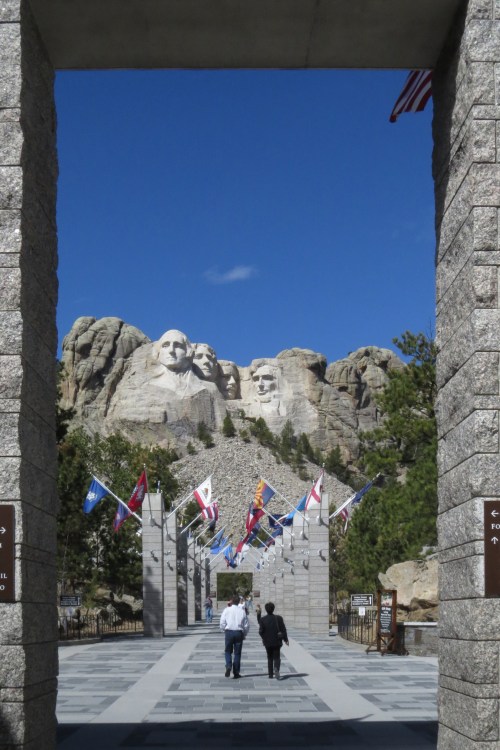
…. saw the Presidents heads at Mount Rushmore, the Devil’s Tower in Wyoming and even drove into Montana to look for the ‘dental floss bushes’.

For one reason or another I never got round to editing all my photos of Colorado nor did I post any on the blog but it was a superb trip and one of the highlights was finding these almost invisible White-tailed Ptarmigan at 12500 ft in the Rockies. Perhaps I can find time this year to sort out the Colorado pics.

Early May saw us taking a fortnight in the Alps and southern France, seeing such wonders as the Matterhorn (above), Mont Blanc and the Eiger. I also saw what was probably the last regularly occurring European bird that I needed, the elusive Rock Partridge.
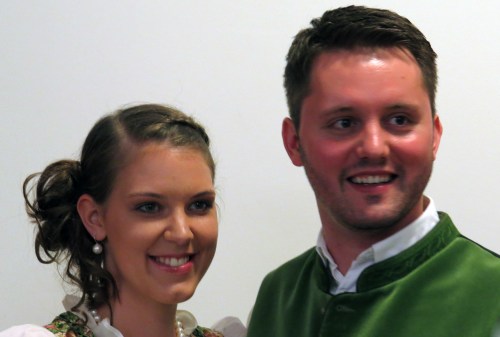
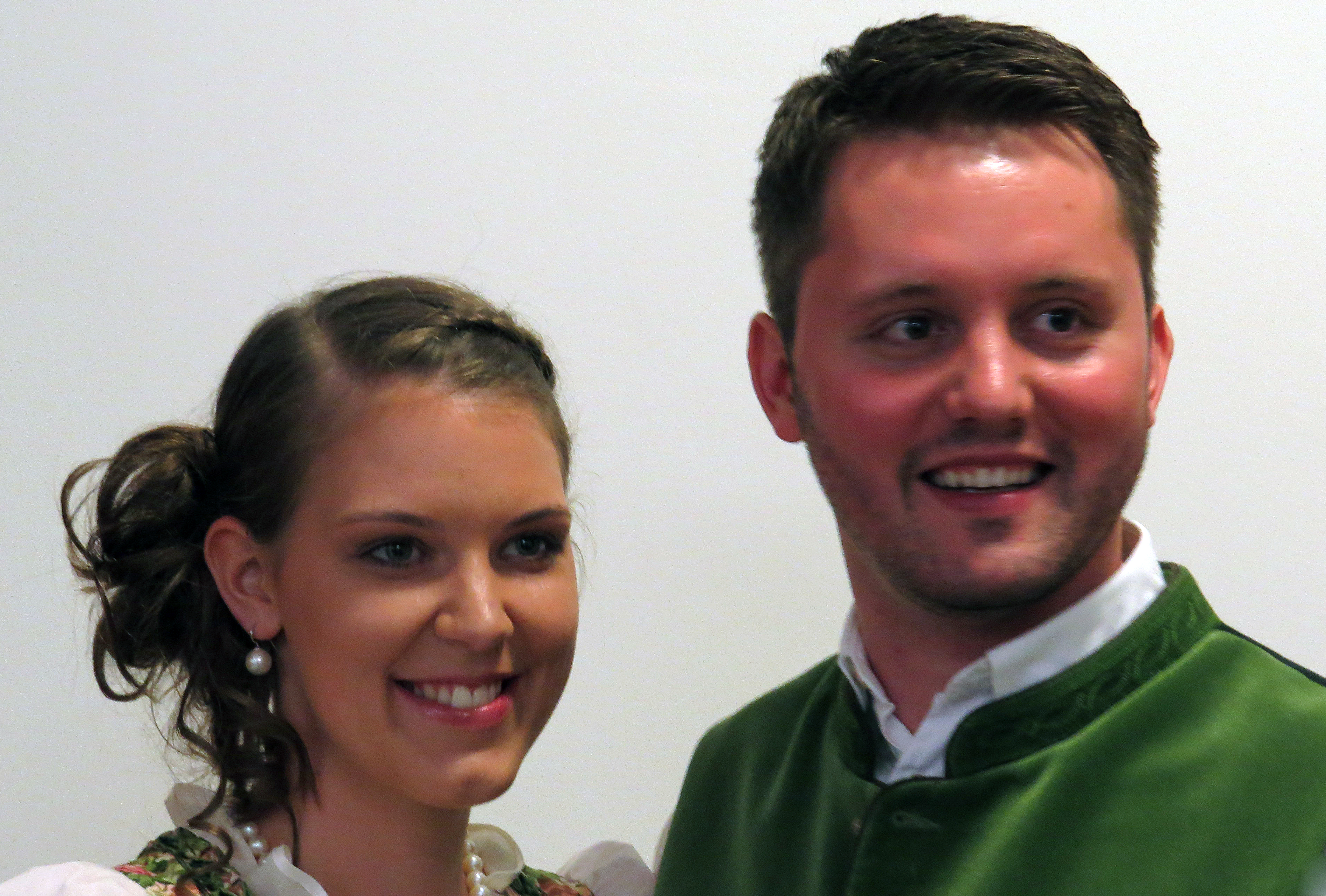
The whole trip was a prelude to attending Margaret’s nephew’s Mark’s wedding to Elizabeth in Donbirn in western Austria. The only downside to the trip was that I found out whilst there that my next tour, a cruise in far North-east Russia had been cancelled as the necessary permit hadn’t been issued by the Russians.

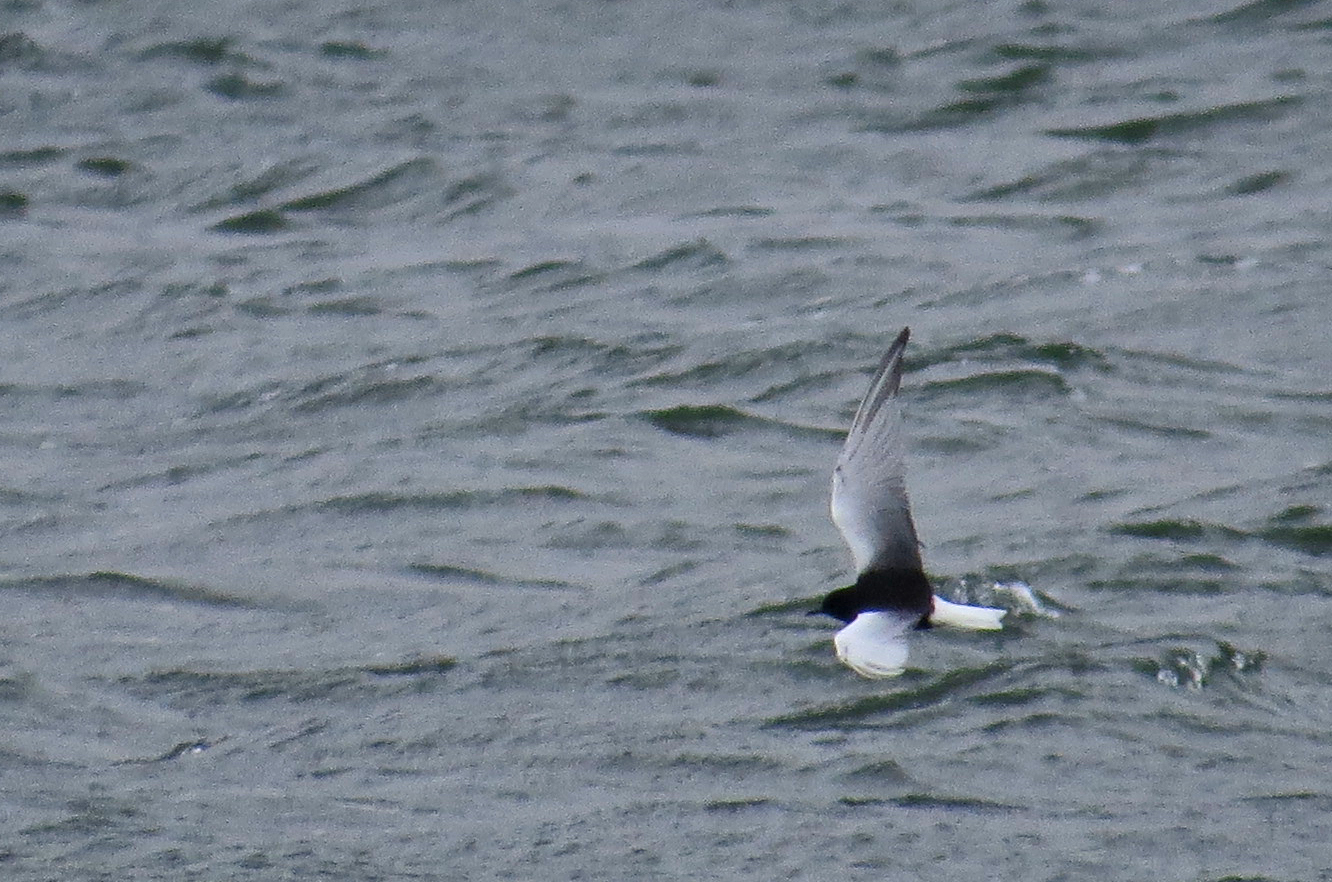
Late spring brought some great birds to the Poole Harbour area, such as the Red-footed Falcon that hung around the Wareham water meadows or this White-winged Tern at Swineham gravel pits.
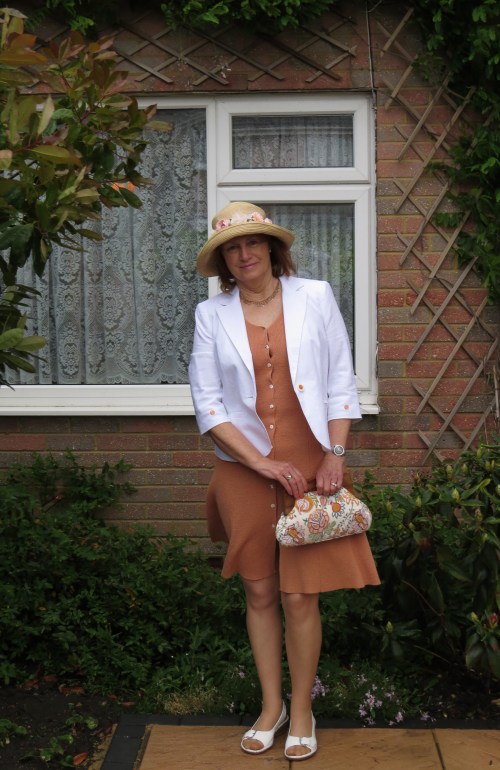
In June Margaret had the privilege of being invited to a garden party at Buckingham Palace. It was the centenary of the WI and each one of the 8000 or so WI groups across the UK was invited to send one representative.

Back to music again: we went to a very entertaining concert by the Moody Blues in June. Some great old songs with a great visual effects, the three founder members and four new ones all performed very well.

During the summer our group was asked to undertake an intensive radio tracking study on Eurasian Nightjars on one of the local heaths. The data is still being analysed but the initial results seem very interesting.

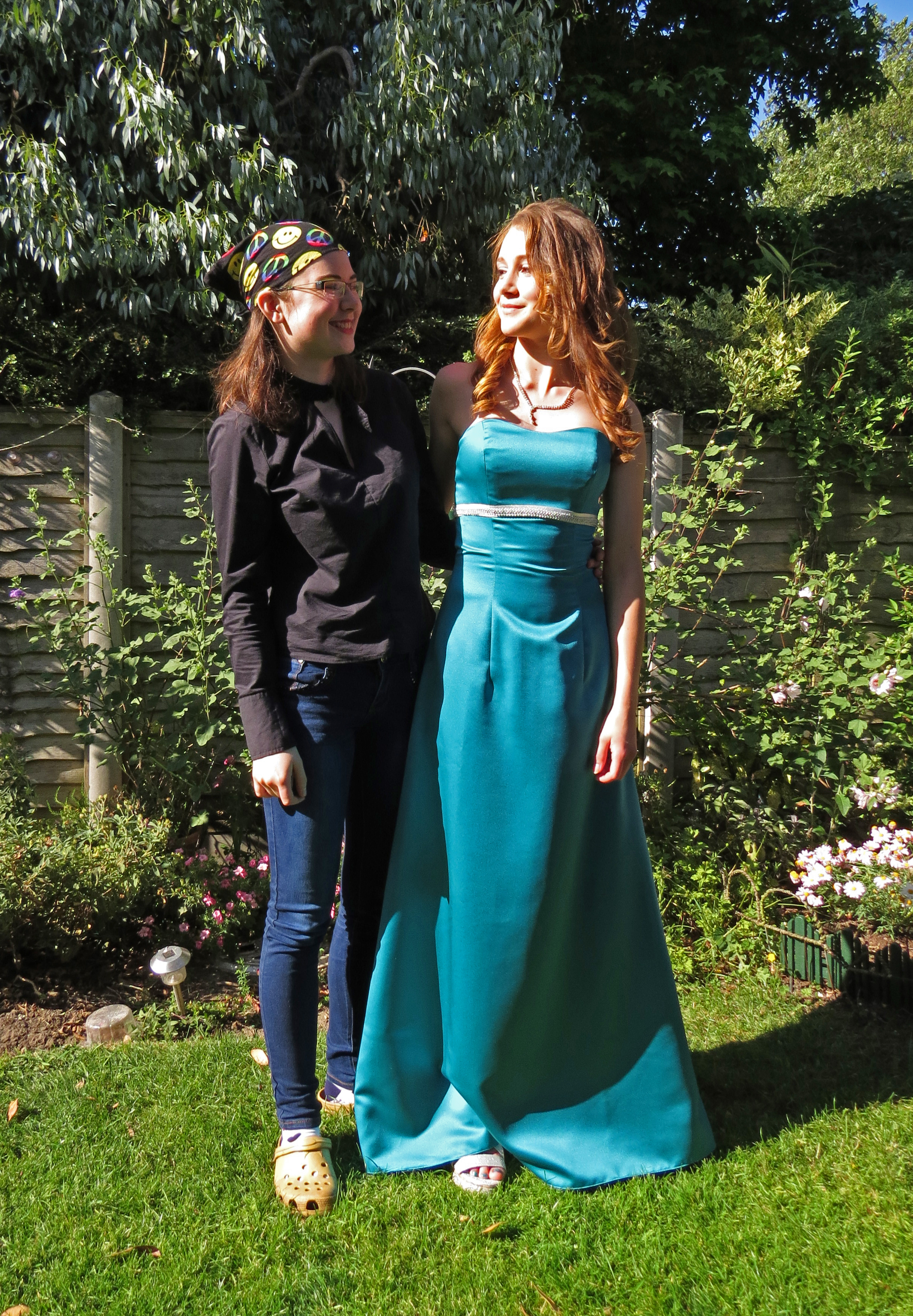
At the end of the spring term our granddaughter Kara (R) left school to attend a sixth form college. During the summer she and a friend visited relatives in the Caribbean. Her sister Amber (L) left Dorset to study and work in Cornwall.

Staying on the subject of family; during late June and early July Margaret and I visited her daughter in Essex and my brother in Derby. We also visited several sets of friends including Jennie, a friend from university days, seen here with Margaret at Wicken Fen reserve in Suffolk.
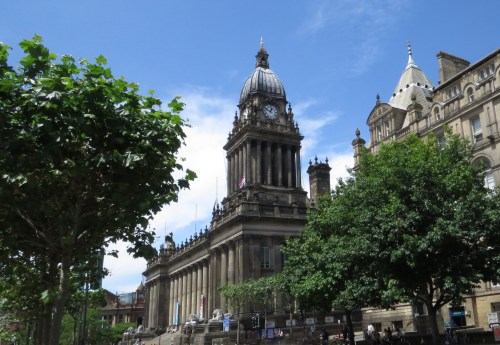
We continued on to Leeds where we spent time with Nigel, another friend from school and university days.

Much of July and August (and indeed the rest of the autumn) was spent in our ongoing ornithological research at Lytchett Bay and Durlston. We were able to start ringing at a new and highly productive site at the north end of Lytchett Bay where this photo was taken soon after dawn.

One issue that featured heavily during the summer was the campaign to save England’s remaining Hen Harriers. Although this has highlighted before on the blog it deserves repeating. All the evidence points to a systematic, ruthless and totally illegal program of raptor extermination in Britain’s uplands by a small number of people in an attempt to raise grouse stocks to hugely inflated numbers. The loss of these beautiful raptors is a national disgrace and the campaign for their protection will continue unabated in 2016.

We met many old friends at the Bird Fair in Augustand attended a number of talks. Without doubt the most inspiring was vetran birder Ian Wallace’s account of his best ever day’s birding. His contribution to ornithology and birding is immense. Here he is seen talking to another birding legend, Killian Mullarney fro Ireland.

Ringing continued on a regular basis throughout the autumn producing many interesting recoveries and useful data. The most unusual aspect was the enormous influx of Goldcrests in late October and November, but I suppose the individual bird that gave me the most pleasure was this Wryneck that I trapped at Durlston in September.

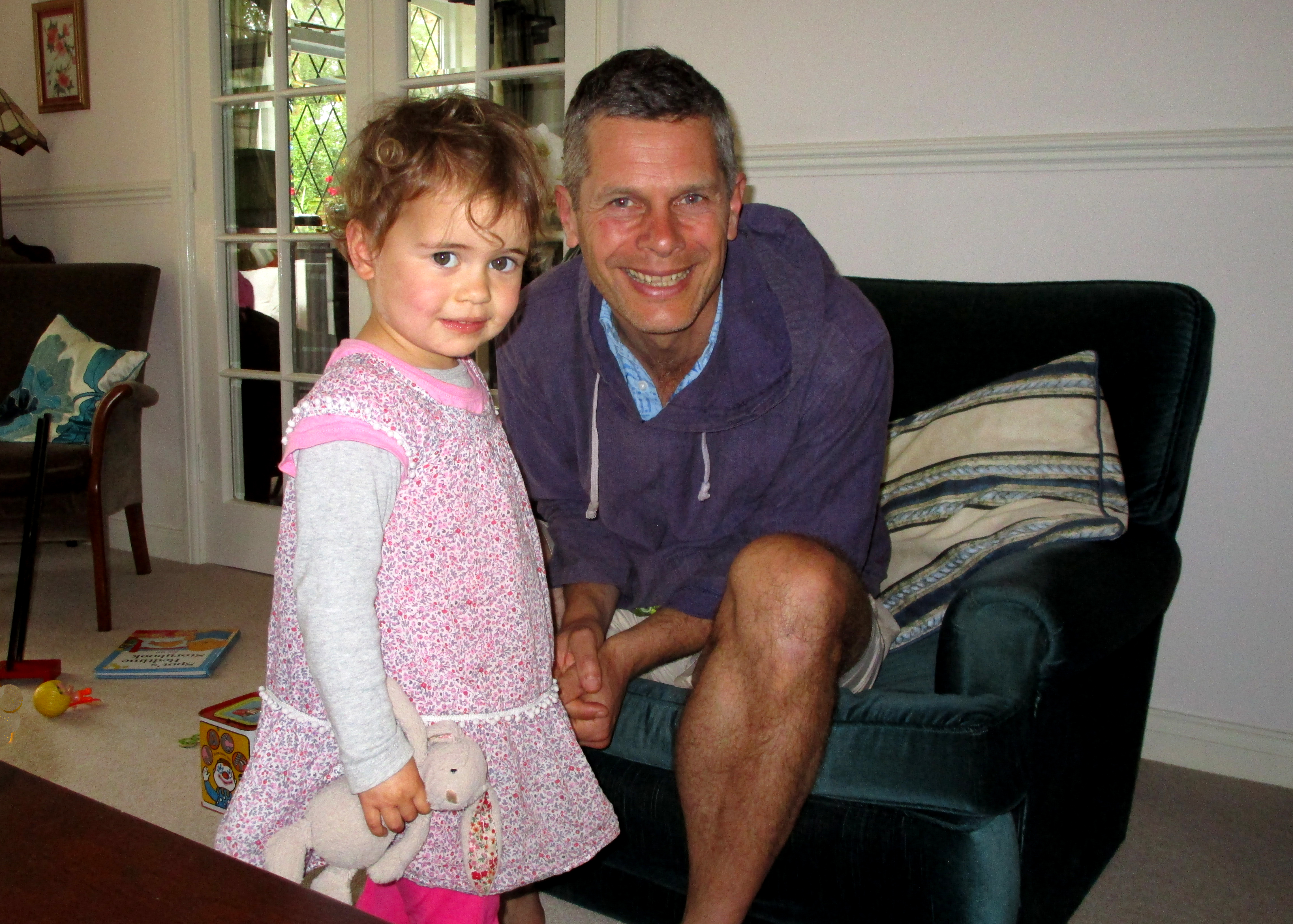
It’s always good to stay in contact with old friends and it was good to see Guy Dutson in early September, back for a short visit from Australia with his daughter Lila.
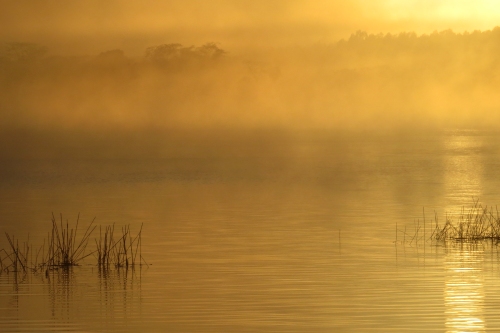
In late September/early October I went on a tour to Paraguay. The birding was excellent and the company good but it was very hot, particularly in the first week and the mammal sightings were disappointing. Compared the mountainous parts of South America, the scenery wasn’t that awe-inspiring, but the mists over Laguna Blanca at dawn were most photogenic.
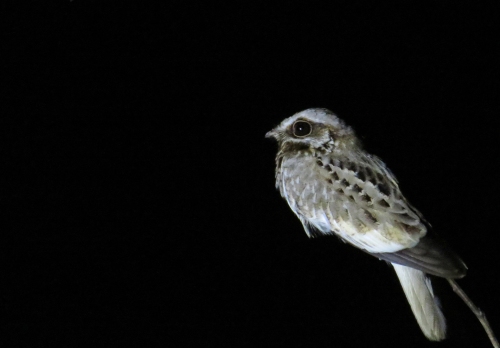
We saw some wonderful birds, non more so than these two species: White-winged Nightjar ….
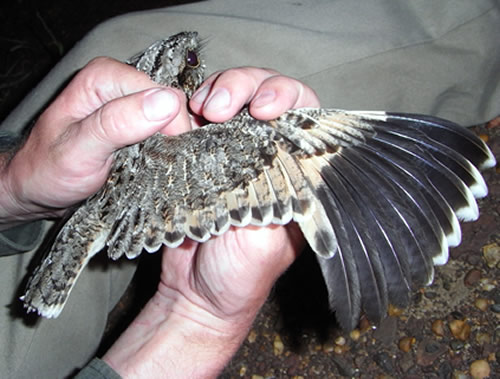
…. and Sickle-winged Nightjar. The latter was of particular importance to me as it was the 8000th species I have seen. The bird was trapped by the tour leader as he is taking part in a research program on this threatened species and he wanted to see if it was one of the individuals he had already ringed. In my photo the bird has closed its eyes which looks less appealing so I have used one taken by my friend Jonathon Newman.

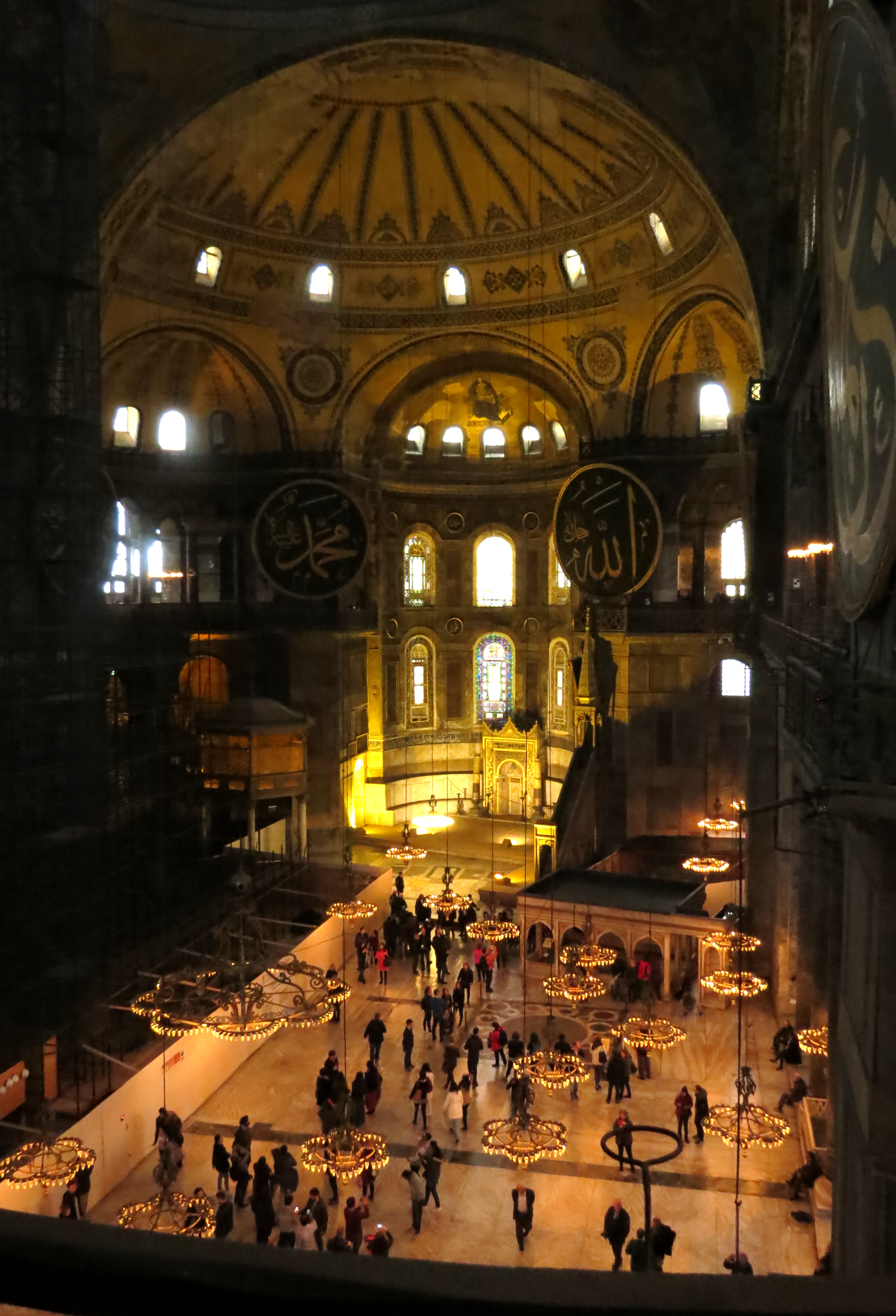
The last trip of the year was in late November to Turkey. It was a cultural, rather than a birding trip and we visited some great sites in Istanbul such as the magnificent Hagi Sophia ….

…. and some natural one too like the beautiful calcite formations at Pamukkale.

Also in the latter part of the year we went to a couple more musical performances, veteran folk singer Judy Collins in Wimborne and Jools Holland and his Rhythm and Blues Orchestra at the BIC.
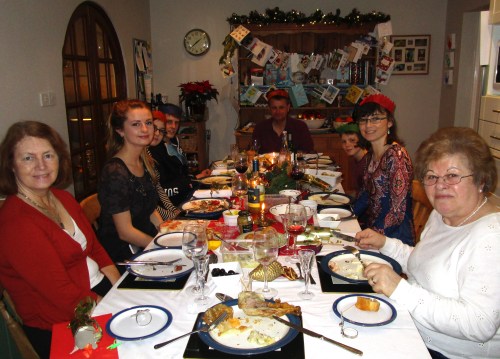
And the year ended, as all years should with get togethers with family and friends at Christmas time.
As I said at the start each picture above is taken from a blog post during the year. If you wish to see more photos from that event then cloick on the relevant month on the side bar.
Well, may I take this opportunity to wish everyone a happy 2016, if you are a birder like me, may the year bring you lots of excellent sightings, if you are not perhaps you ought to give it ago, buying a pair of binoculars and a field guide back in 1977 was one of the best decisions I ever made.
This post covers from when we returned from Turkey on 2nd December until the end of the year.
May I take the opportunity to wish all readers of this blog a very happy 2016
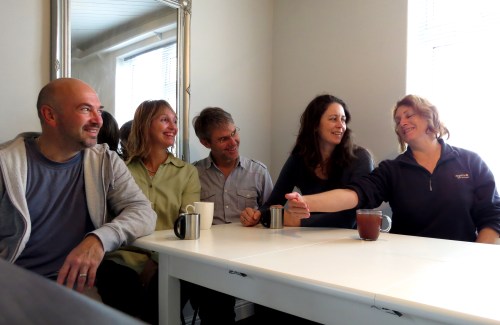
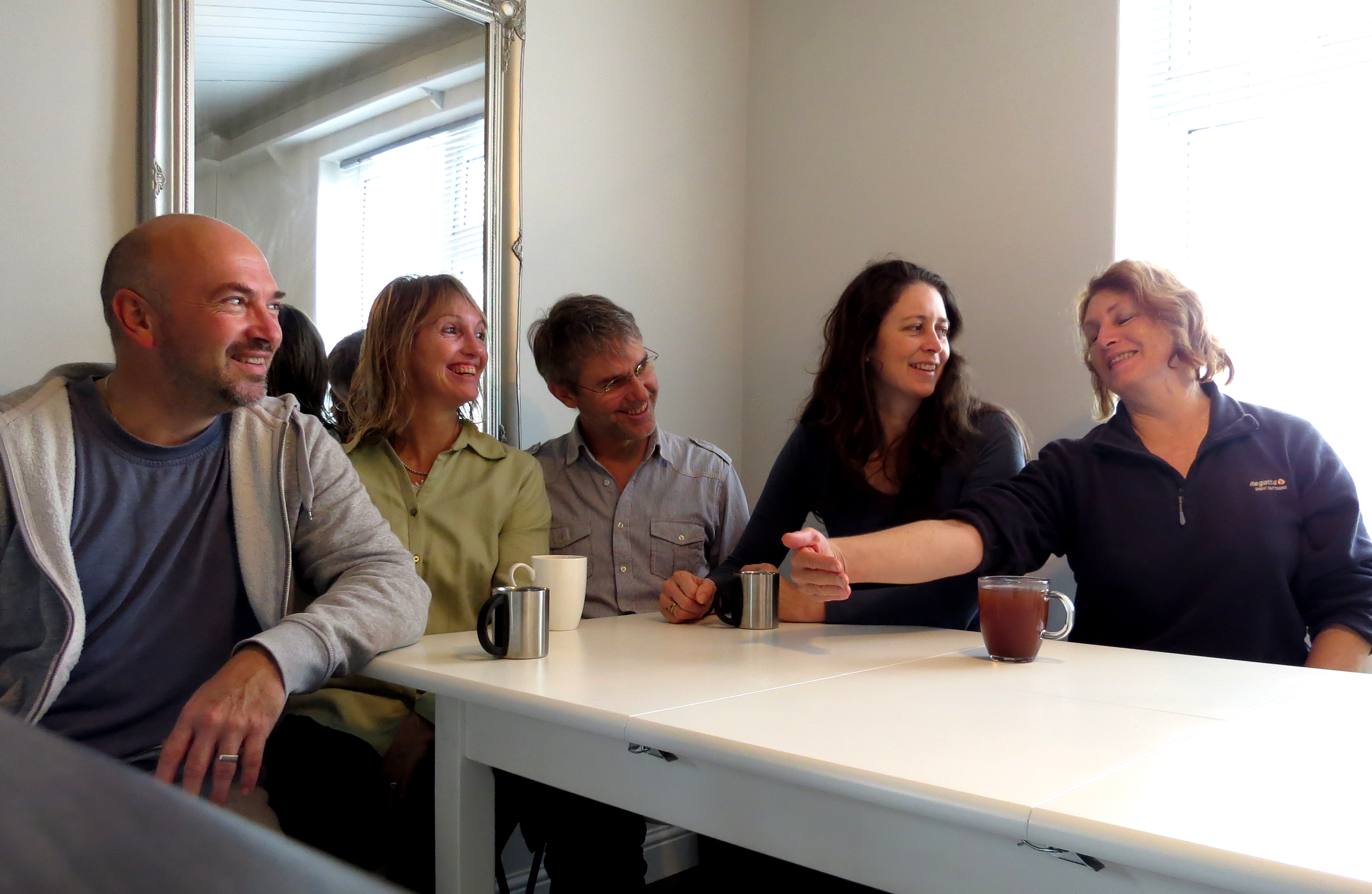
After we returned from our trip to Turkey we braved the M25 rush hour traffic and drove straight to Anita and John’s in Maldon in Essex. They will be in South Africa at Christmas time so we made our Christmas visit in early December. They have John’s sister Lois and her husband Gavin staying with them and this was the first time I had met them. L-R Gavin, Lois, John, Anita and Margaret (with an imaginary selfie-stick).
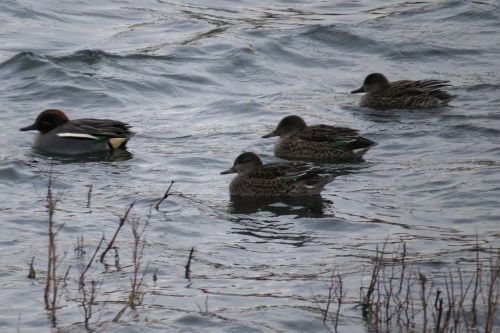
With John and Anita at work we had time on the first two days to do a little birding, first at Abberton Reservoir where large flocks of wildfowl were present, including these Teal but also many Pochard, a bird that was once abundant in Dorset in winter but is now only seen in relatively small numbers.
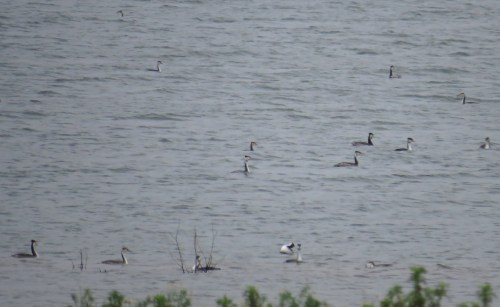
These 16 Great Crested Grebes are just a small part of flock that numbered over a hundred.

I was initially puzzled by this bird, it looks quite like a Cackling Goose, the diminutive relative of Canada Goose, but the black of the neck extending onto the upper breast and the sharp demarcation between the black breast and the grey of the belly is reminiscent of a Barnacle Goose. It must be a hybrid, either between Barnacle and a Canada, or given its small size, between a Barnacle and a Cackling. Hybridisation between geese species is not unusual in feral populations, where the ecological and geographical conditions that would normally separate them during the breeding season, are absent. Its close association with a flock of feral Greylag Geese is a further indication of its dubious pedigree.
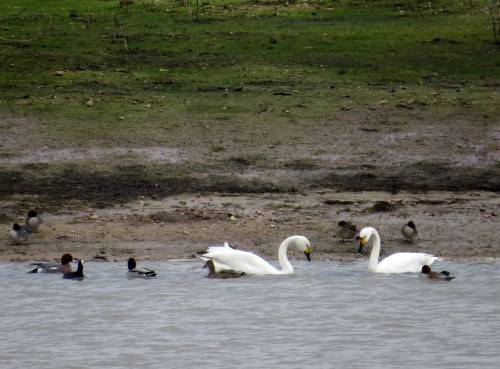
The best sighting of the day was a group of seven Bewick’s Swans, two of which posed nicely for photos.

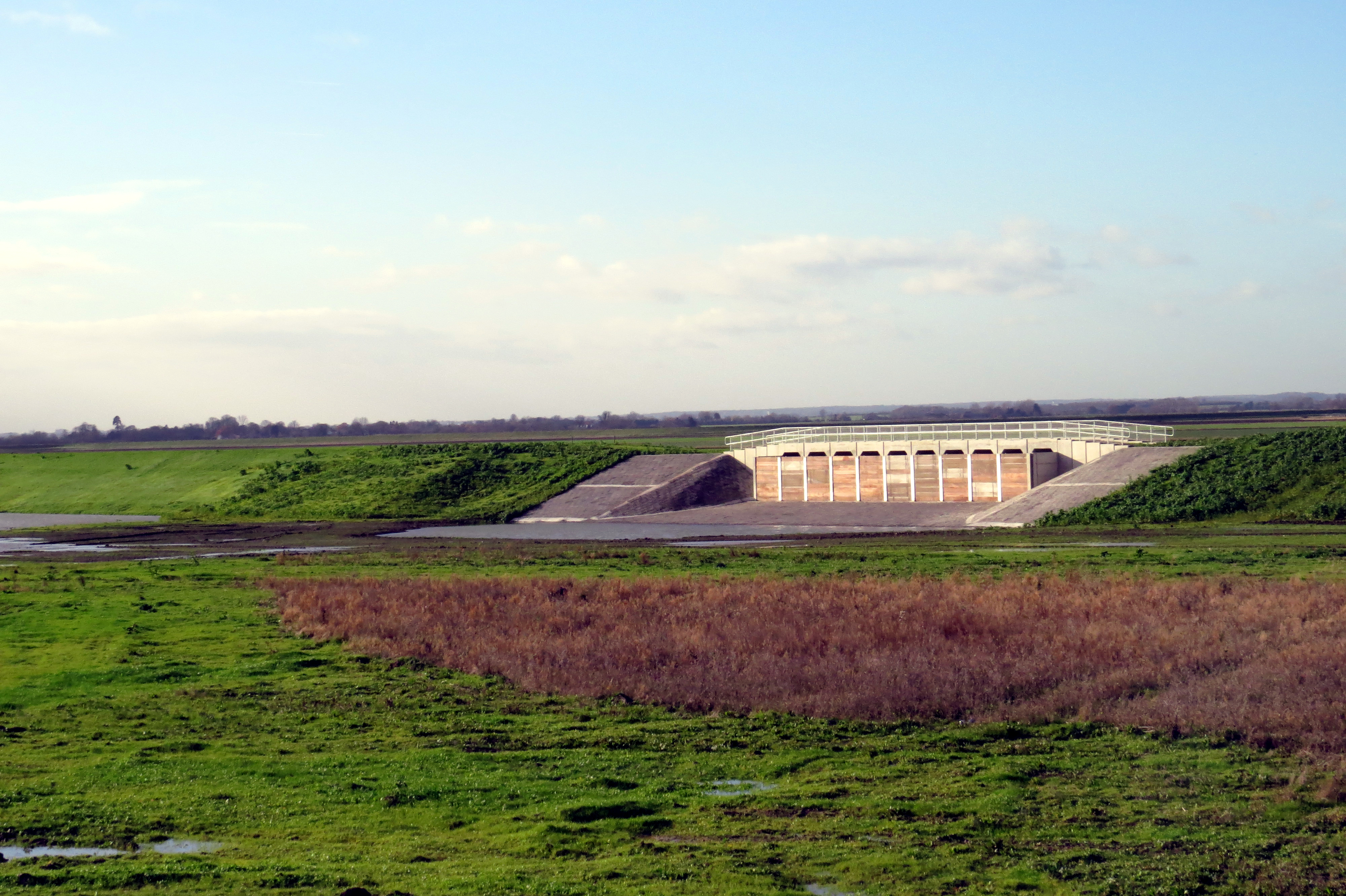
Last Christmas we paid a visit to Wallasea, the RSPB’s new 1,500 acre mega-reserve in Essex. A huge area of former farmland has been reclaimed for nature using literally millions of tonnes of spoil from Crossrail project ((I object to the term reclaimed land – changing wildlife rich coasts into farmland cannot be ‘reclaiming’ it as it was never the farmer’s land in the first place – turning farmland back into a nature reserve on the other hand is ‘reclaiming’). Since our last visit much has happened, sluice gates erected, lagoons, both fresh and saline at various heights, have been created to provide feeding habitat at all stages of the time and for the first time in 400 years the sea wall has been breached allowing the former farmland to revert to salt marsh.

Although our visit in December last year was bird-filled we were a bit disappointed this year, perhaps the very low tide meant most waders and wildfowl were still offshore, leaving the lagoons on the reserve somewhat empty, or perhaps the very mild conditions hadn’t induced many birds to come this far south and west.

A fair amount of my time was spent accompanying John and Gavin as they visited Maldon’s many pubs. I have been in Poole for 37 years but never know anyone in pubs unless I arrange to meet someone there. John has been in Maldon less than two years and Gavin as many months, but they seem to know everybody. We were often asked what was the relationship between the three of us was, Gavin would reply ‘I married his sister’ and I’d reply ‘I married his mother-in-law’.

John even took us to a free beer tasting event hosted by the local brewery.
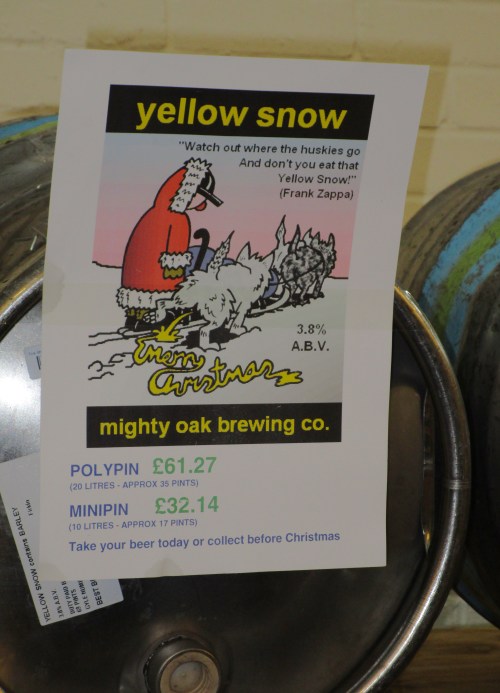
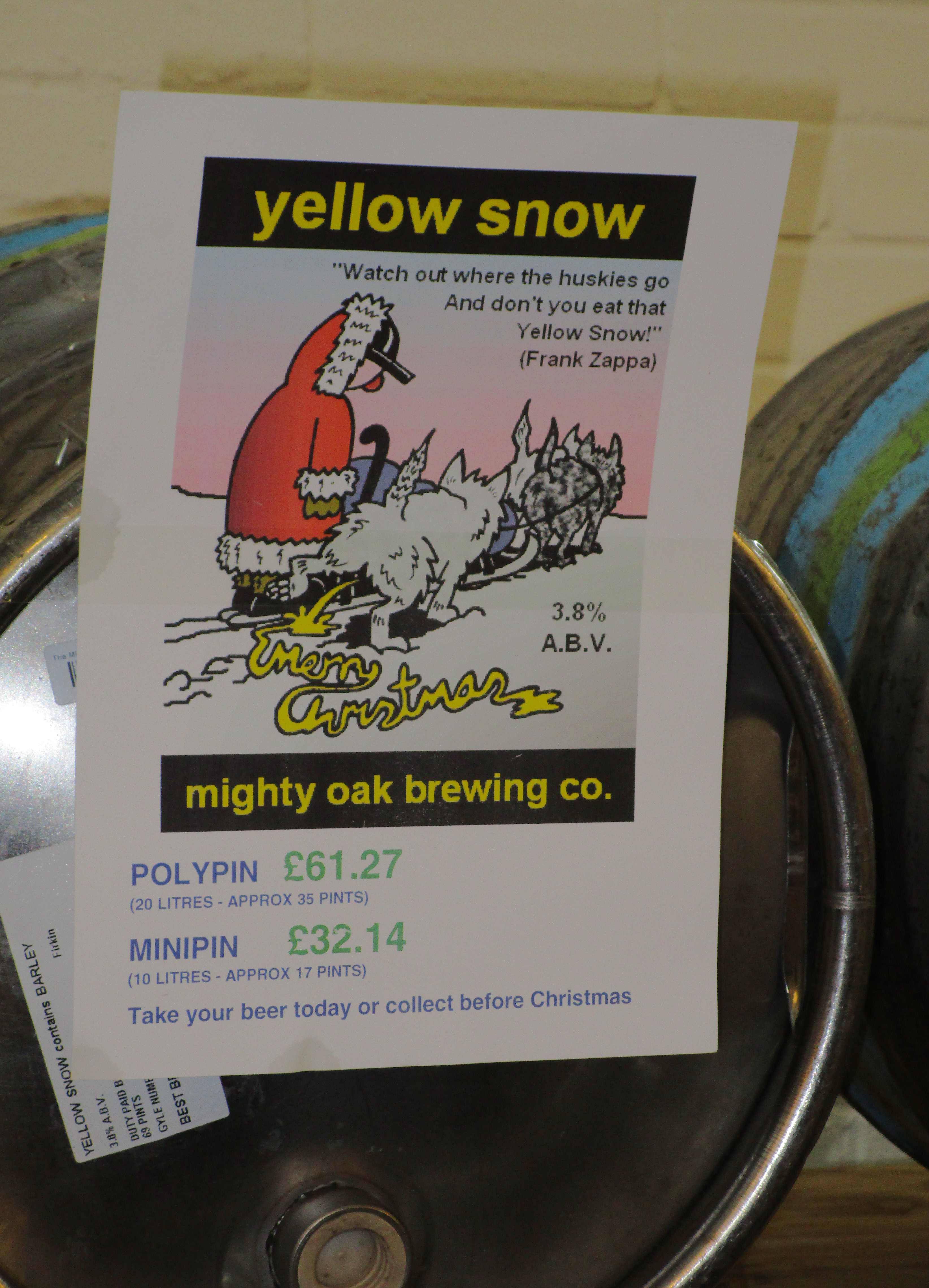
Noticing an ale called ‘yellow snow’ I commented that was the title of a Frank Zappa song, the barman nodded in agreement and pointed me to the label on the barrel. They also had a beer called ‘elementary penguin’ so the brewers clearly have a good taste in music (as well as in beer).
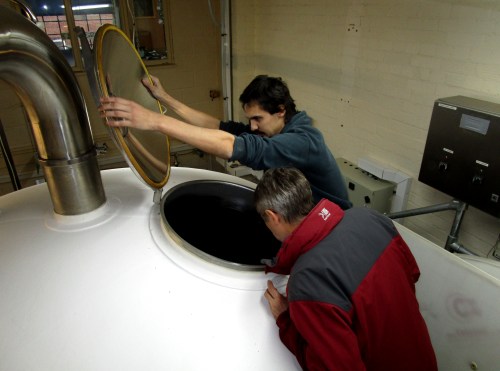
As I said, John knows everybody in Maldon, so we also given a tour of the micro-brewry by the head brewer.

Back home, mid-December was absurdly warm with temperatures reaching 15c and not dropping much lower at night. Flowers are in bloom, butterfly and bumblebees are on the wing, birds are in full song and trees are in bud. I like four seasons a year not one and half.

I had hoped to spend a fair bit of time with my two trainee ringers, Chris and Ginny, however the incessant wind that has accompanied the warm weather has reduced the opportunities.
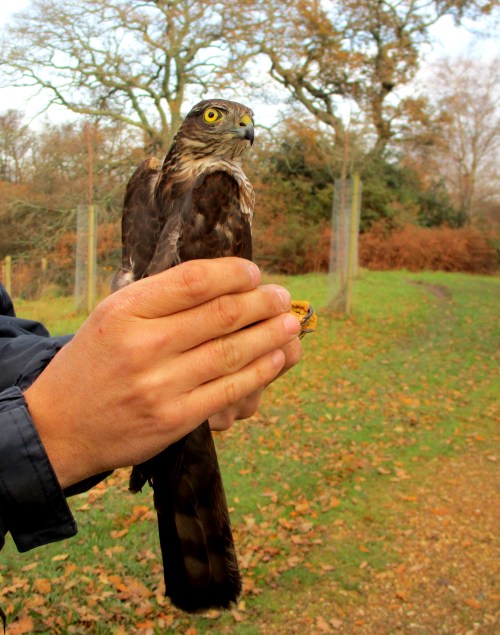
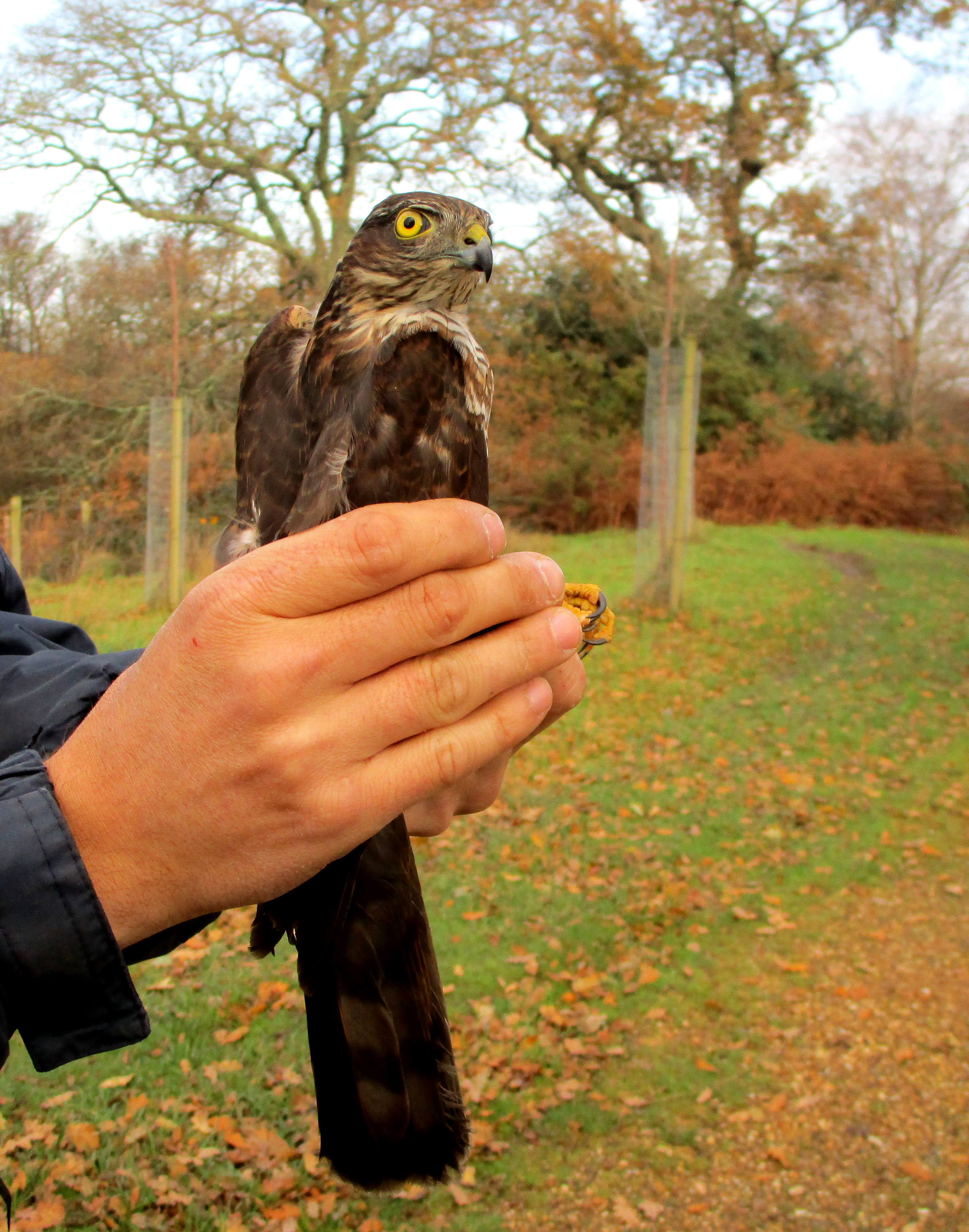
However we have taken advantage of the few lulls between the storms and have visited several of our local patches, ringing birds like this immature male Sparrowhawk ….
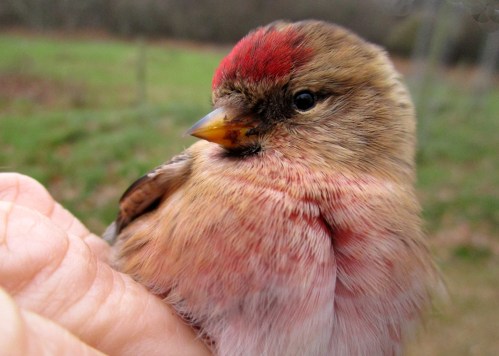
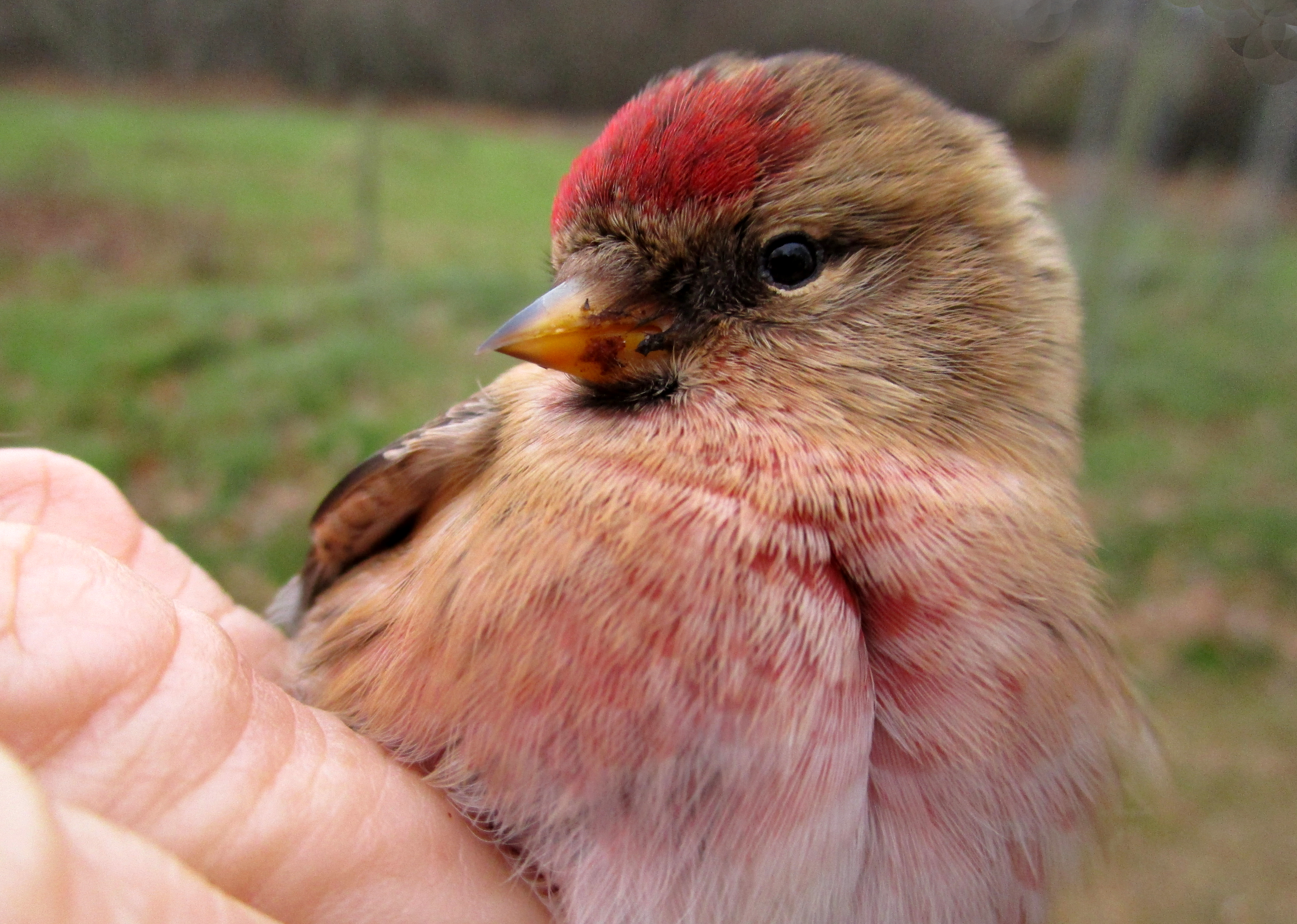
…. and this breeding plumage Lesser Redpoll.
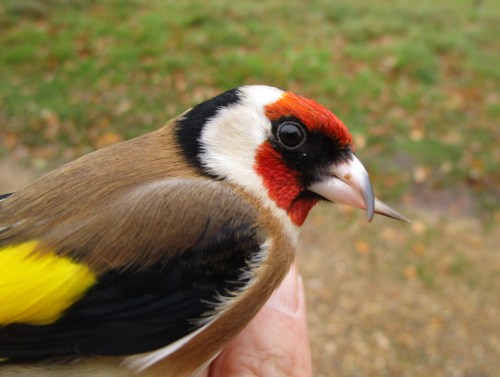
As birds are supposed to be in normal health before they are ringed we released this Goldfinch with a deformed bill without ringing it.

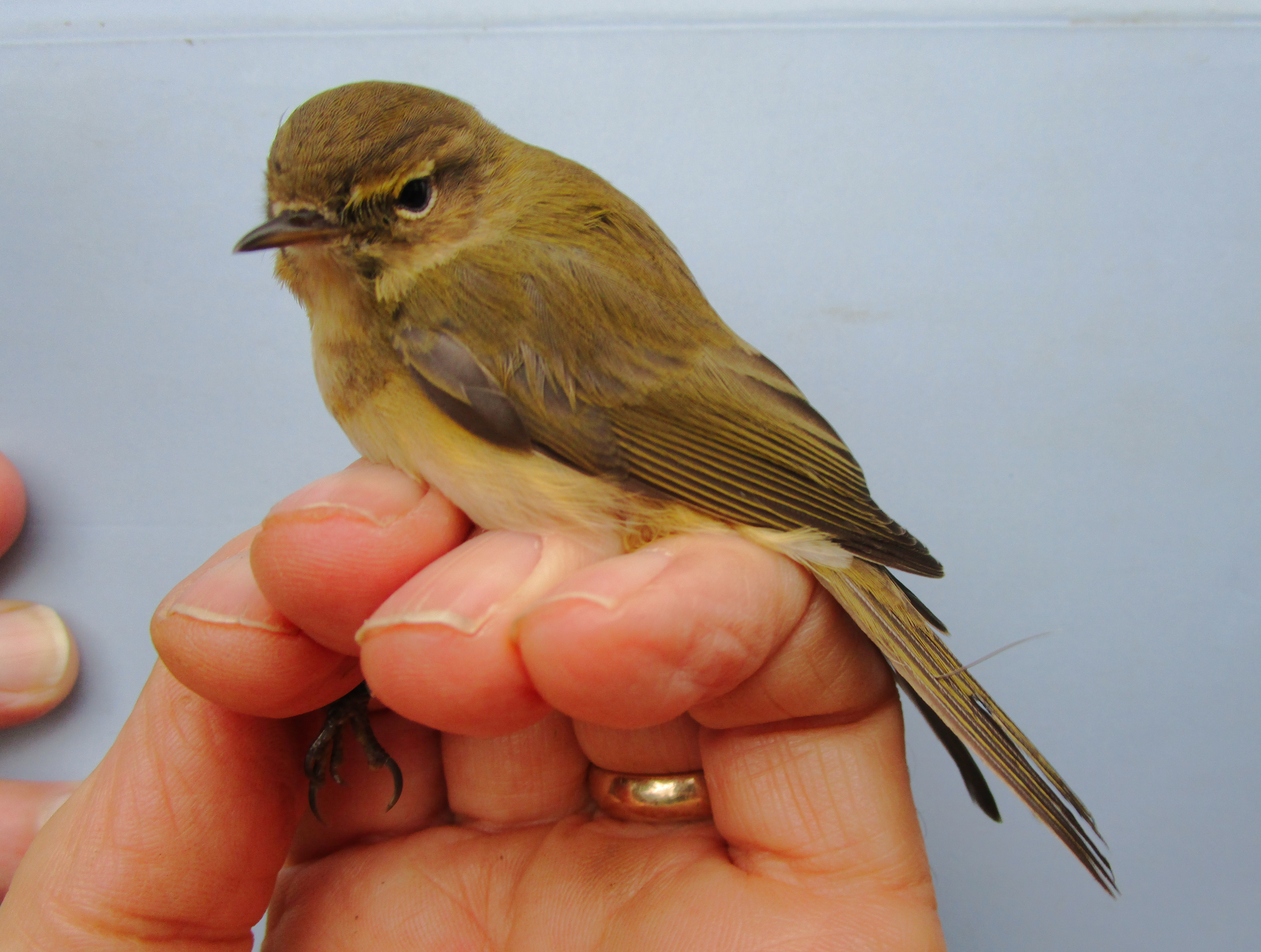
At our Fleets Lane site we trapped three wintering Chiffchaffs. One was a typical nominate collybita, but this very brown bird just might be the Scandinavian race albietinus.
This bird, trapped on the same day lacks the yellow tones of collybita but does show some green on the bend of the wing and on the fridges of the primaries, together with the prominent supercillium and the whitish belly this could indicate that it is the race tristis from Siberia. A feather from each bird, accidentally dislodged during the ringing process, will be forwarded for DNA analysis.

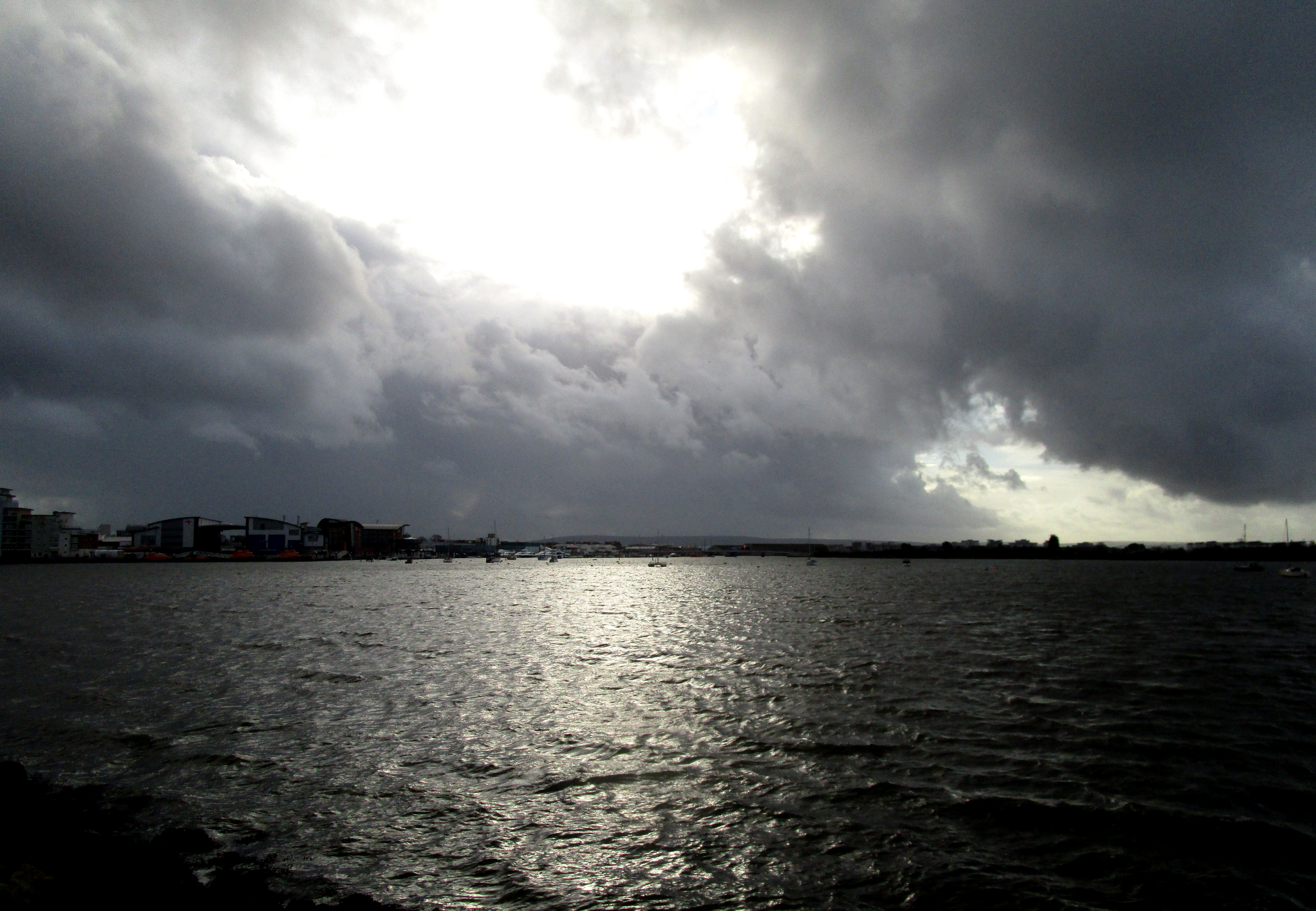
Away from ringing, I have only done a little birding but did take part in the monthly wetland bird count. My area, the southern part of Holes Bay, failed to turn up very much, but the dramatic shower clouds propelled across the Bay by a brisk SE wind were photogenic.

Being science-fiction fans we managed to get tickets to see the new Star Wars film on its opening day. The steps of the Empire Cinema in Poole were littered with stormtroopers and Jedi knights.

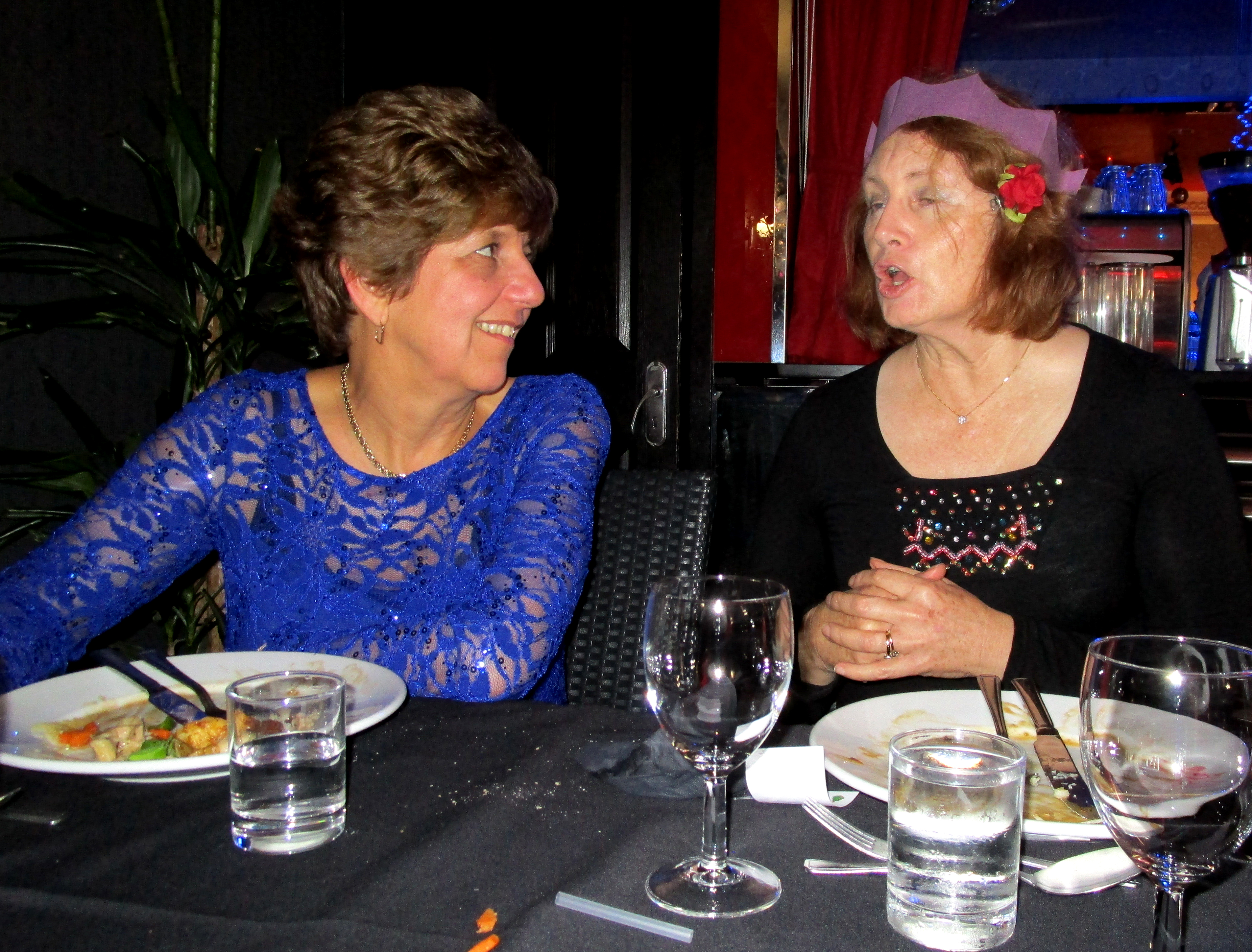
We only attended one pre-Christmas party, the annual Phoenix dinner-dance (the organisation where Margaret and I met nine years ago). Here Margaret found herself seated next to the only other South African in the Poole group.
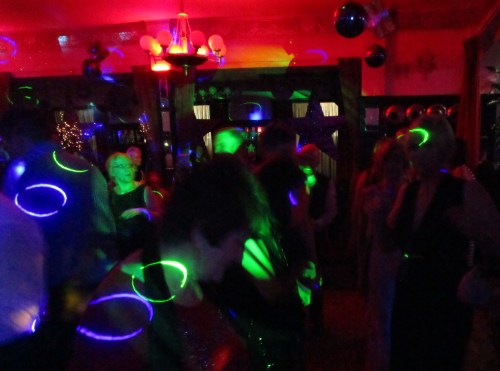
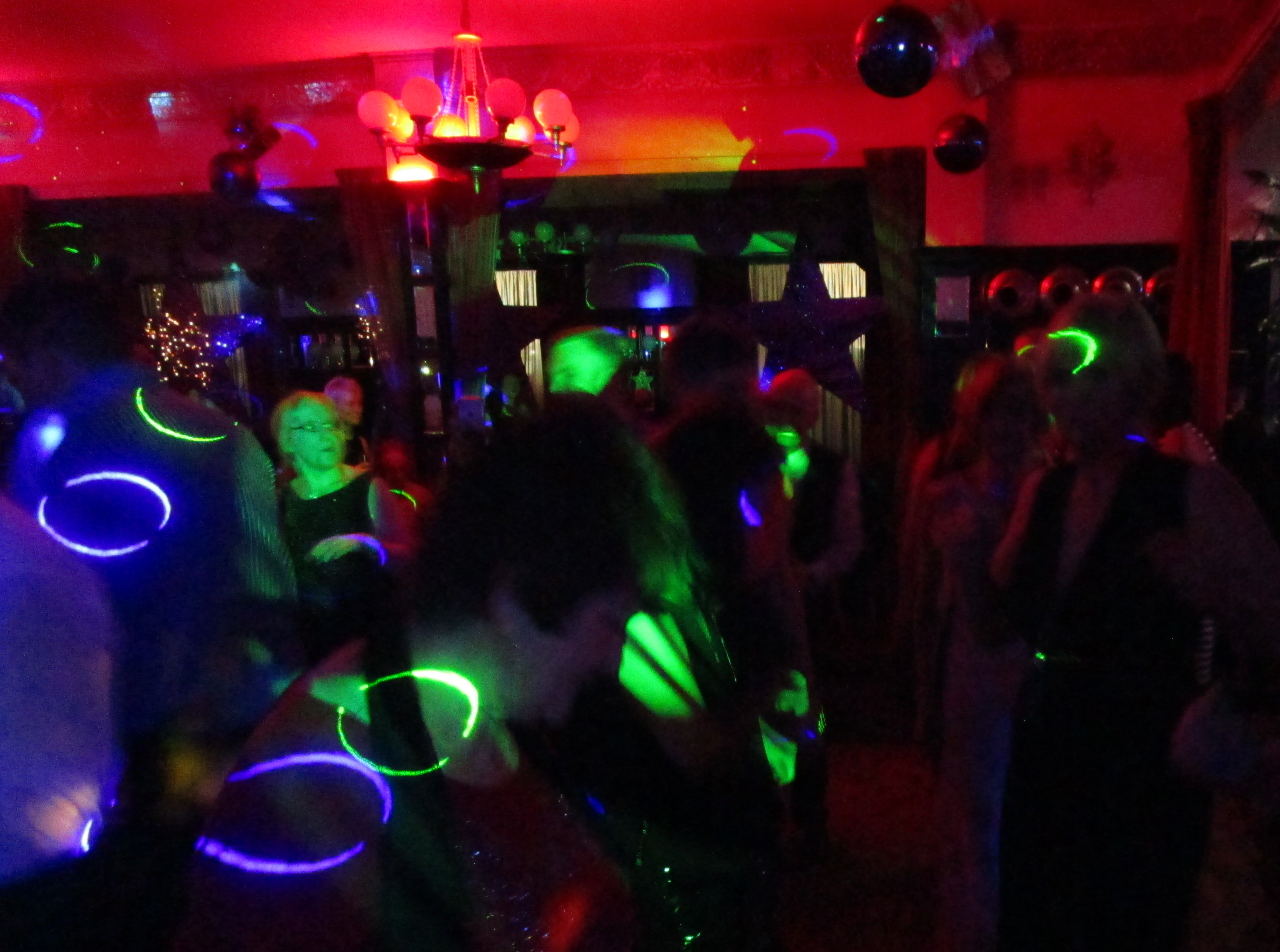
We never had lighting like that when I used to attend discos, a glitter ball was the highlight!
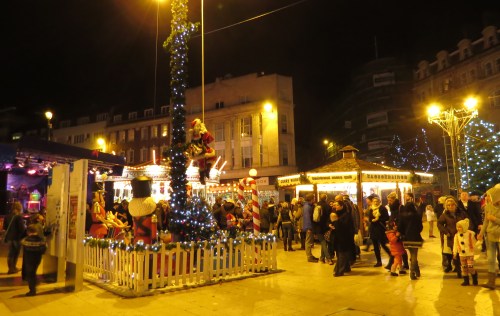
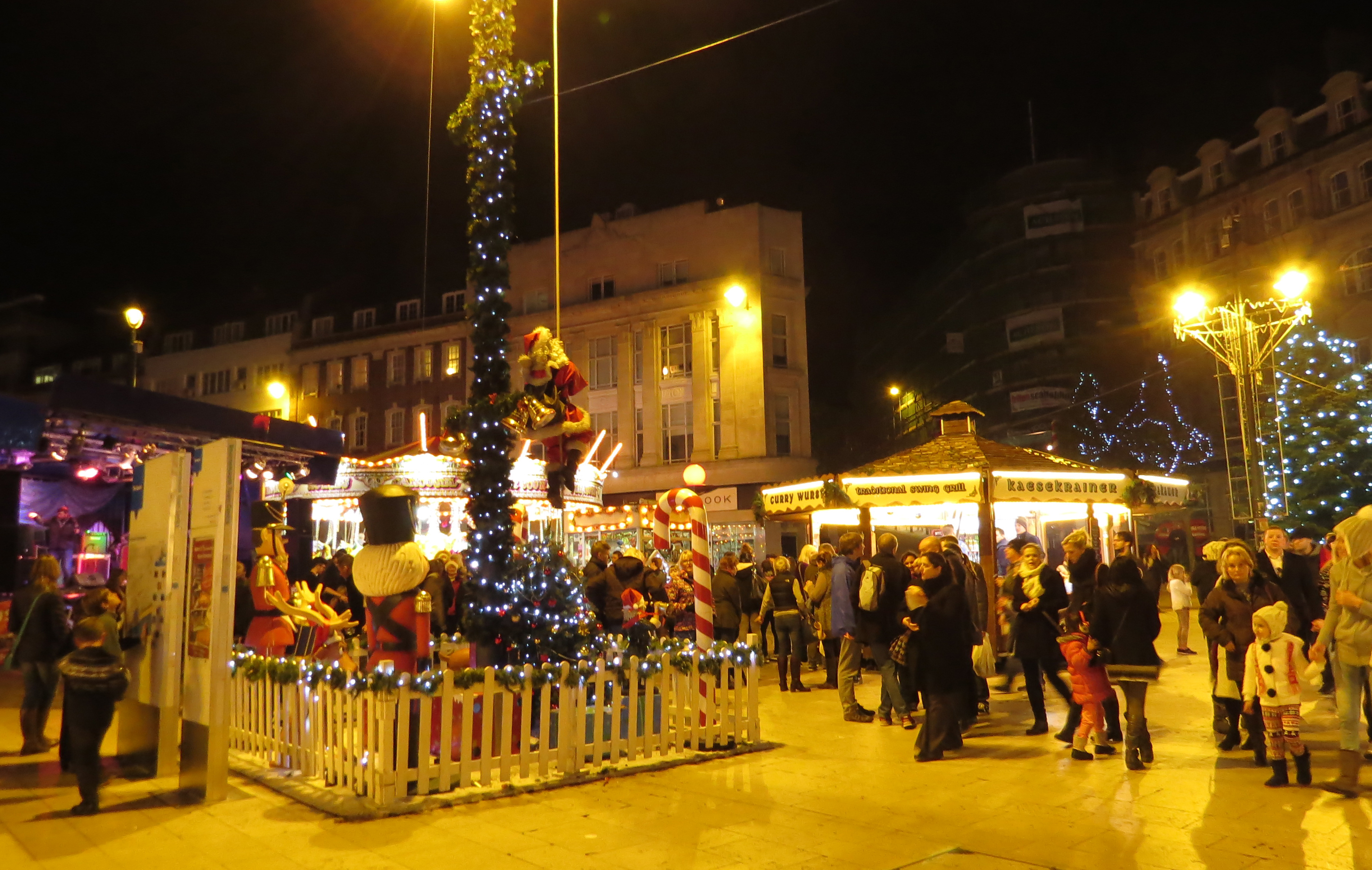
Also just before Christmas we visited Bournemouth but paused only briefly at the entertainments near the Winter Gardens ….
…. as we were on our way to see Jools Holland and his Rhythm and Blues Orchestra play at the BIC

A superb line up of top class musicians playing rhythm and blues and boogie-woogie. This is the third time I have seen him play and have enjoyed every minute of it.

As always the ‘queen of booie-woogie’ Ruby Turner gave a splendid vocal performance ….
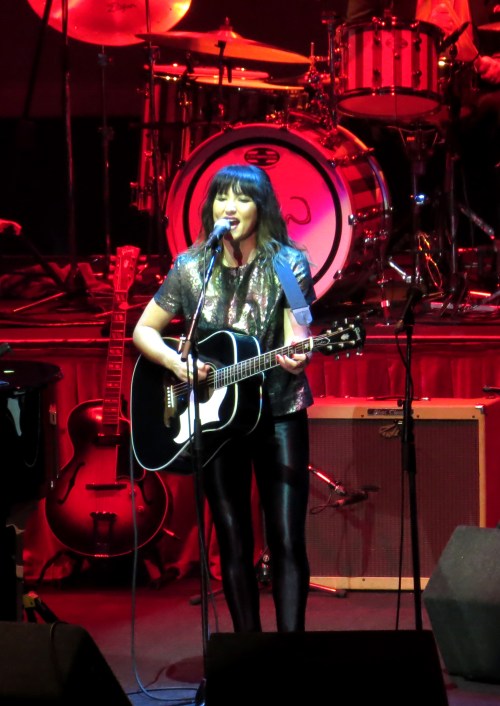
…. as did guest star KT Turnstall.

All of which more than deserved a standing ovation.
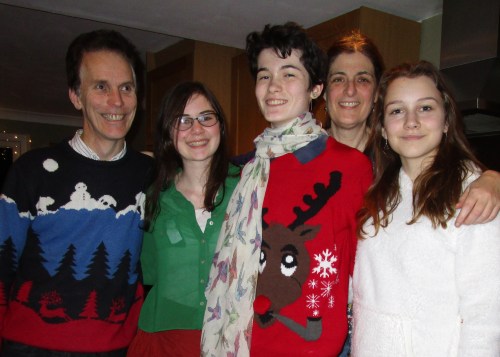
This brings us on to Christmas. This year, along with Janis, Amber and Kara we were invited over to their friends Adrian, Dominique and Francesca’s in Southampton. Amber and Kara have been friends with Francesca since nursery school. Amber has spent the last few months working in Cornwall but came back for Christmas. L-R: Adrian, Amber, Francesca, Dominique, Kara.
We had similar good fortune on Boxing Day when we were invited for dinner to Winterbourne Abbas near Dorchester by Janis’ boyfriend Nigel. L-R: Margaret, Nigel’s daughter Ellie, Amber, Nigel’s son George, Nigel, Nigel’s younger son William, Janis and the children’s grandmother Ros. (Kara is absent as she was invited to go to France by a friend and her parents for the rest of the holidays).
On the 27th we drove up to Duffield in Derbyshire to visit my brother Simon and his family. We also visited my sister-in-law’s parent Ida and Dennis, old friends from school, Martin and Tricia and Di who I knew from University day and her husband Steve in Breedon-on-the-Hill. We also we met up with Nigel whom I was at school and university with and shared a place with for many years. We also did a little birding at Carsington reservoir, a twenty-minute drive from my brother’s house looking (as usual) for Willow Tit and Tree Sparrow – two birds we never see in Dorset.
I have posted photos of friends, family and scenery in the Derby area at Christmas several times before, see these links if you wish to see more.
2014: https://atomic-temporary-24398266.wpcomstaging.com/2015/01/02/christmas-eve-2014-to-new-years-day-2015/
2013: https://atomic-temporary-24398266.wpcomstaging.com/2013/12/25/merry-christmas-everyone/
2012: https://atomic-temporary-24398266.wpcomstaging.com/2012/12/31/26th-31st-december-its-been-a-great-christmas-and-heres-to-a-happy-new-year/
2011: https://atomic-temporary-24398266.wpcomstaging.com/2011/12/25/25th-december-merry-christmas/ also a number of other posts between Christmas Day and New Year

Nigel and Steve cooking pizza, Breedon-on-the-Hill, Derbyshire.
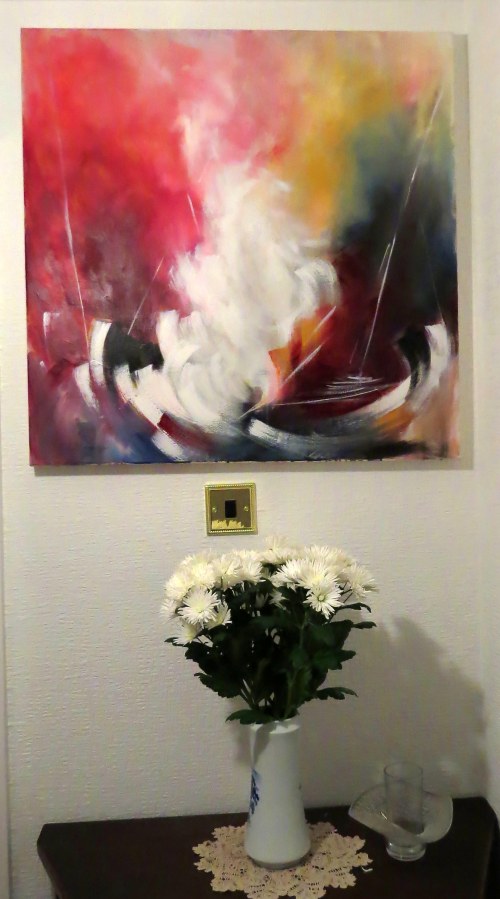
As it is Christmas we decided to treat ourselves to a very nice painting, called Red Sails. It is mounted at the top of the stairs. It was painted by Margaret’s sister Cathy in Austria.
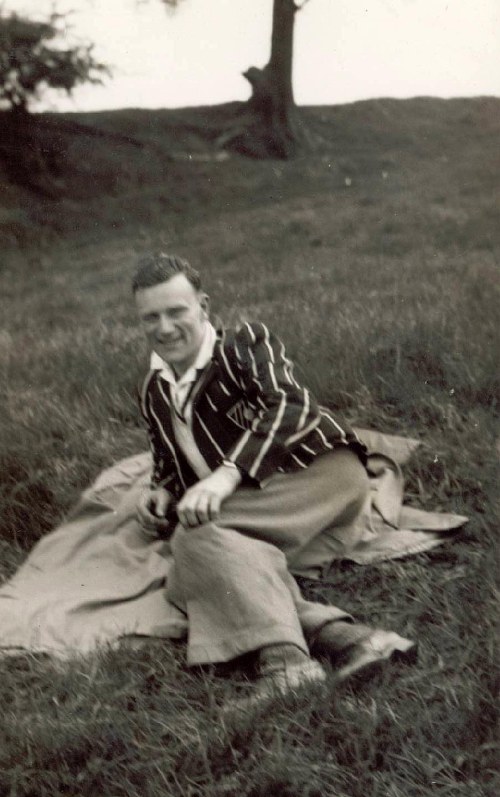
And finally I would like to pay tribute to my dear father Brian. It is 30 years today since he died and 29th December marked 100 years since he was born. Photographed here in 1940, the year that he and Mum got married. I learned so much from my father and it was from him that I got an enquiring mind and the love of discovering places, history, landscapes and wildlife. Both Mum and Dad are greatly missed of course, but their memories are with us always.
















































































 gryllosblog