Archive for the ‘Uncategorized’ Category
This post covers two things that occurred very close to each other on or near the Arne RSPB reserve over this weekend. The first was ‘just’ another vagrant bird turning up, albeit a very good one. A Black Stork was discovered flying over the Arne RSPB car park late afternoon. It was later seen in flight by a few local observers and seemed to be going to the Wytch causeway which is adjacent to the Wytch Farm oil field. Several observers went to the causeway, but I didn’t pick up the news until about 7.15 p.m. and I headed for the Wytch Channel, a great advantage as it meant I didn’t have to go anywhere near the traffic jams at Corfe Castle. I made the right choice as I arrived to find a handful of observers getting great views right in front of the hide. Not only that but it was in he company of three Spoonbills. A few Swallows, a duckling Shelduck and at least one Green Sandpiper can also be seen in the picture. There has been a small influx of Black Storks recently involving three or four birds (apparently from France as one seen in the north-east was colour ringed).

This is my third sighting of a Black Stork in the UK but the first in Dorset. In my haste I left my camera at home, but I was given permission to use this nice shot by Aidan Brown: see his ‘Dorset Diary’ http://www.surfbirds.com/community-blogs/DD

Margaret was busy with our granddaughter Kara on the 8th and opted not to go for the stork, but we returned on the 9th prior to attending the nearby ‘Hen Harrier Day’. From the heath near Middlebere we enjoyed a nice panorama but no stork.
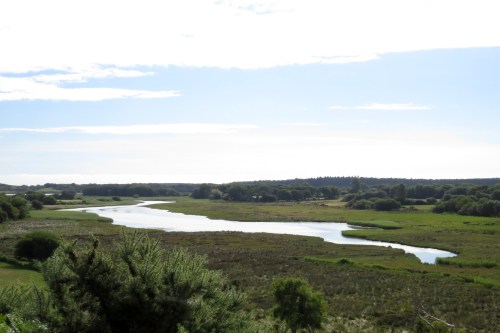
When we got to Wytch Channel where I had seen it the day before we learned that it had been present early in the morning but had since departed down the channel towards Poole Harbour.
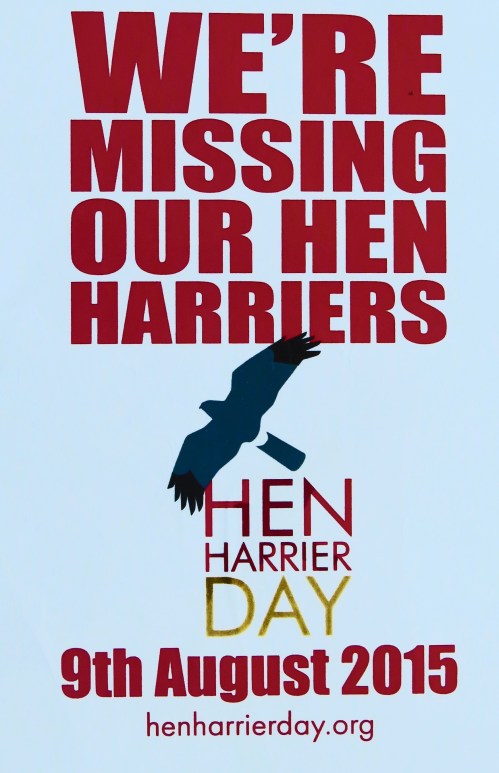
The poster for the second annual Hen Harrier Day.
So for the uninitiated, what is Hen Harrier day? In recent years it has become clear that the UK’s breeding Hen Harriers are being obliterated on their upland breeding grounds, but not all their breeding grounds, just those managed as grouse moors. Although persecution has probably always occurred the publication of a study about a decade ago showed that Hen Harriers will feed on Red Grouse (along with other things) has seen their numbers decline dramatically. In addition, to increase the size of the ‘bag’, grouse moors are burnt to provide fresh young heather shoots, this practice causes run off which affects water quality for those in the catchment area, all predators are ruthlessly slaughtered and even species that compete with them for the heather like Mountain Hares are disappearing.
I’m not against hunting per se, but feel that shooting interests can’t take the law into their own hands. Shooting of ALL birds of prey is illegal. The argument that they can’t make big profits unless they destroy raptors (as well as being an admission of guilt) is facile, what would be said if a road haulage company broke the law by forcing their drivers to speed, drive for more than the legal number of hours etc just to increase their profits, they would be prosecuted immediately.
Although the situation is bad in parts of Scotland, it is in northern England that this wanton slaughter is most acute. There is habitat enough for 300 pairs of Hen Harriers in England but this year (as far as I know) only seven pairs attempted to breed. Two of these were on Forestry Commission land but of the remaining five, all of the males disappeared away from the nest. Careful wardening has meant that those who wish to harm Hen Harriers can no longer risk approaching the nest but appear instead to shoot the males when they are foraging, the nest then fails as the eggs chill when the female leaves to feed. The shooting lobby is clearly on the defensive as deliberate misinformation has appeared on a spurious website called ‘you forgot the birds’ which claims that the RSPB’s monitoring of the nests has caused the nests to fail. Clearly not the case when it was the male who vanished away from the nest. It’s one thing to have a difference of opinion over an issue it’s another to make up blatant lies.
It appears that other raptors (Peregrines, Golden Eagles) are targeted as well, but the situation with the Hen Harrier is the most serious. I can’t cover all the arguments here, but they will be presented in Mark Avery’s new book ‘Inglorious’ http://markavery.info/2015/03/05/16924/ or see http://www.henharrierday.org/
So back to Hen Harrier Day, this is the second attempt to draw attention to the plight of these birds just as the ‘glorious twelfth’ grouse season gets underway. The get together at Arne was just one of a series of events across the country. OK, perhaps it didn’t make the headlines on the BBC news but its a start.
Remember what Ghandi said ‘first they ignore you, then they ridicule you, then they attack you, then you win’. We seem to have passed from stage two to stage three – just one more stage to go.
Hen Harriers used to be much commoner on their wintering grounds here in Dorset than they are now. We want them back!
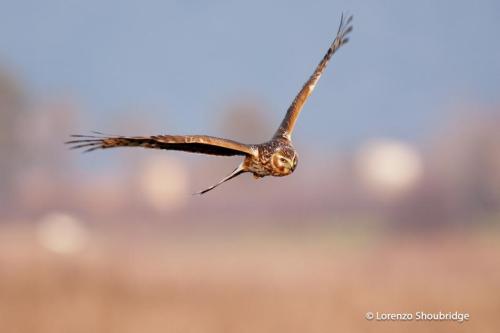
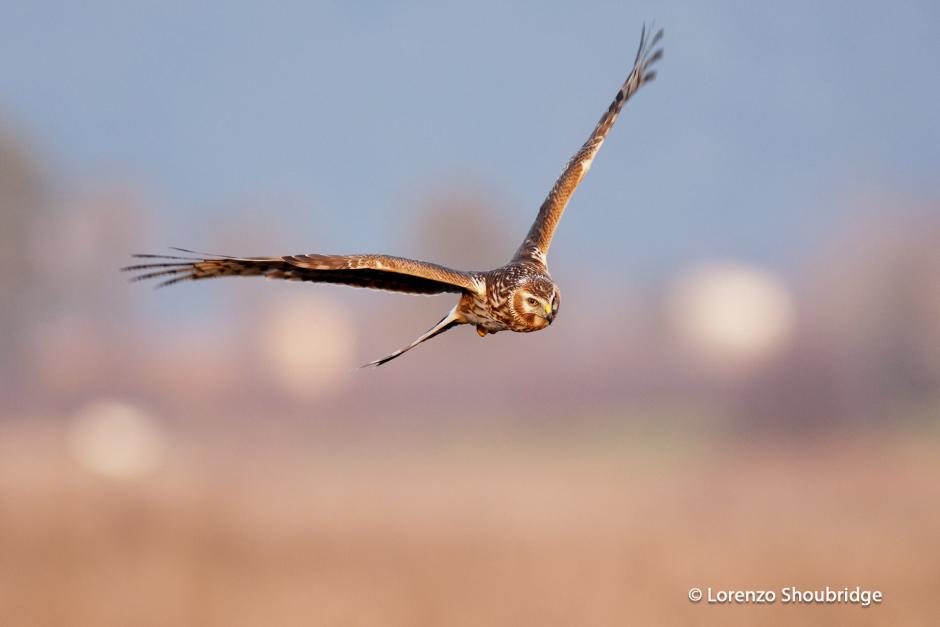
A female Hen Harrier photographed in Italy by Lorenzo Shoubridge was taken from the Internet Bird Collection.
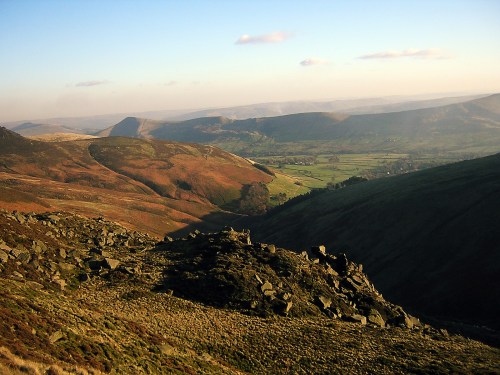
Here at Edale in Derbyshire the well-drained, porous limestone hills to the south meet the impervious millstone grit hills in the foreground. This produces a blanket bog, covered in heather which is suitable for Red Grouse. From here, the start of the Pennine Way, all the way north to Scotland lie the grouse moors, in places raptors remain unmolested, but in others they mysteriously disappear.
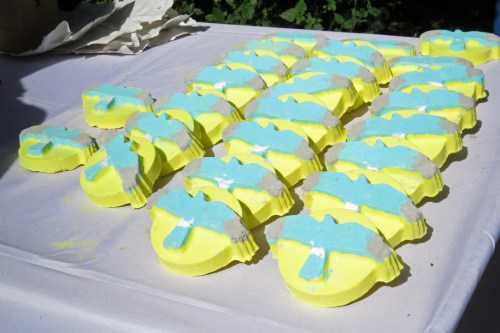
The campaign against the slaughter of Hen Harriers is led by various organisations, Birders Against Wildlife Crime, the RSPB, Mark Avery, Chris Packham and by our friends Mark and Mo Constantine of LUSH. To raise money for radio tags to monitor the lives and deaths of each years chicks, LUSH have produced a Hen Harrier ‘bath bomb’, all proceeds from their sale will go to this campaign.
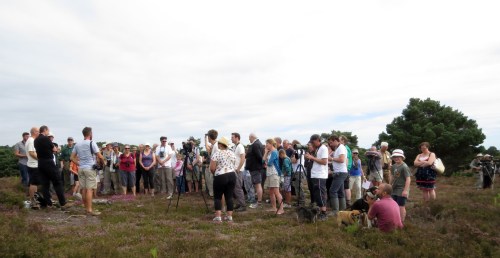
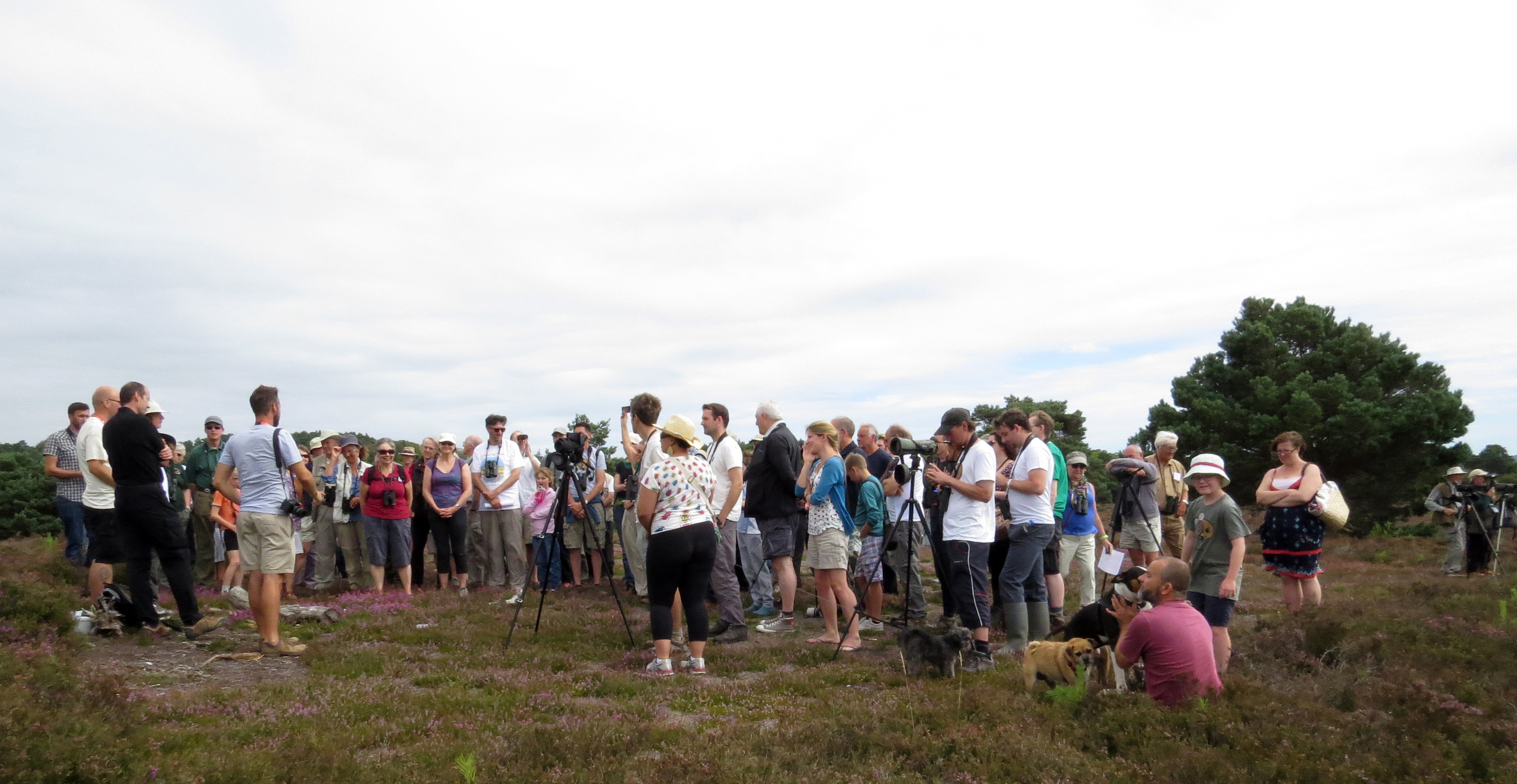
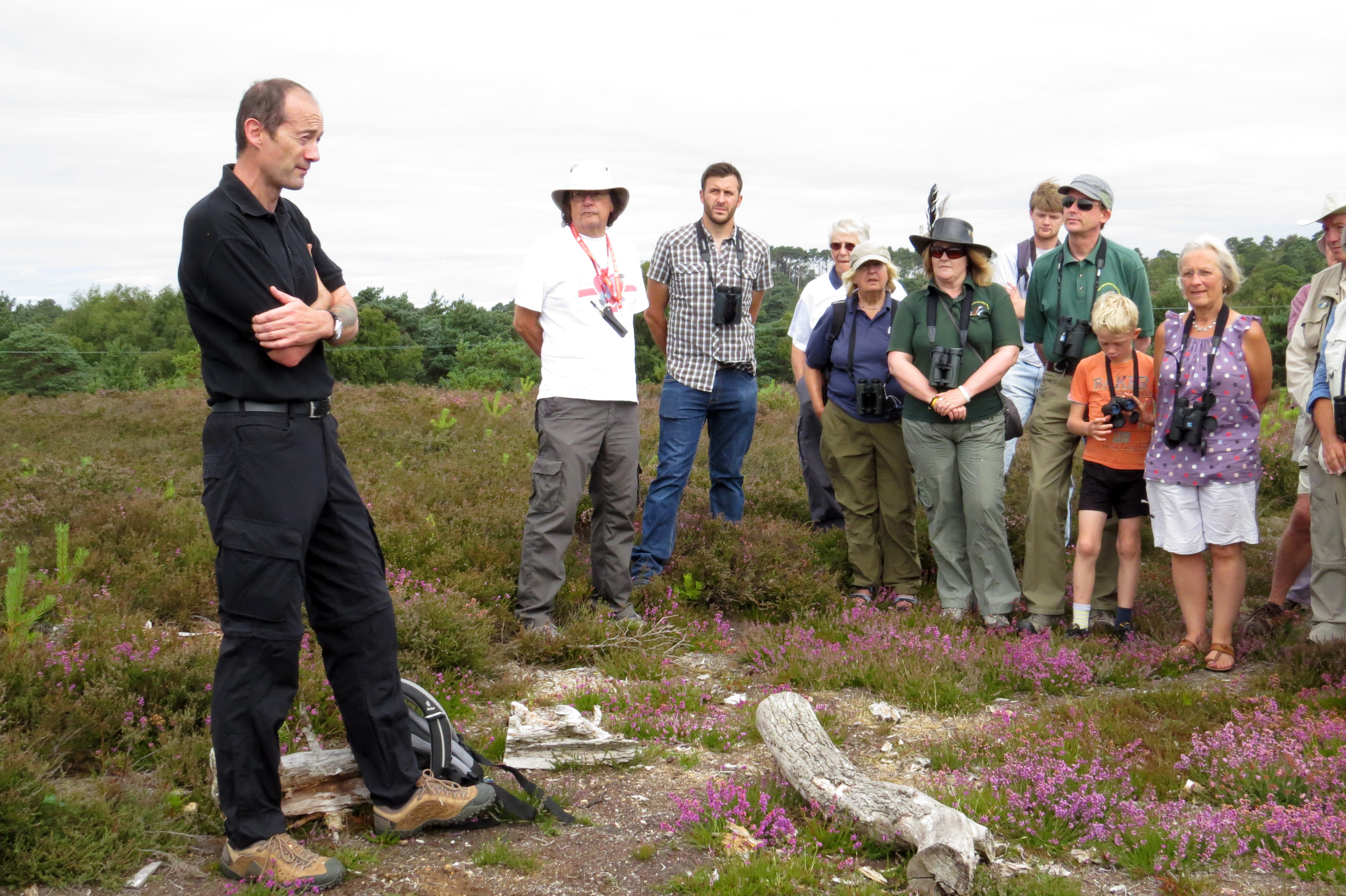
About 120 protesters assembled at the Arne RSPB car park then marched to a nearby view-point to hear the speakers.Those at the very front of the procession from the car park got brief views of the Black Stork flying up the Middlebere Channel. Several of the attendees seem keener on scanning for it than listening to organiser Luke Phillips introduce the speakers. We were lucky and had distant views of the Black Stork soaring off to the west just after the event was over, but most birders here missed it.

Mark Constantine describes how the Hen Harrier bath bomb will be promoted at every LUSH shop in the UK.

Dorset Police’s Wildlife Crime Officer explains about the Police’s roles in combatting wildlife crime, saying that the police do not consider it a low priority and if a wildlife crime is ongoing then it is perfectly in order to dial 999.

And finally another stunning photo of a Hen Harrier, this time a male. The photo from the Internet Bird Collection was taken in the Netherlands by Luuk Belgers – why would anyone want to shoot a bird as beautiful as this?
I haven’t uploaded anything to the blog since I reported on our week in East Anglia, Leeds and Derbyshire as I have been very busy preparing for the main bird ringing season.
Although we ring birds throughout the year, the maximum activity both from the birds and from the ringers is in the ‘autumn’ period from mid July to mid November. Many people roll their eyes when you describe late July as ‘autumn’ with comments like ‘we haven’t even had summer yet’ but if you’re to describe the northbound birds in March, April and May as being on spring migration, then the south bound movement which can start as early as June and is well underway by mid to late July must be the autumn migration. Indeed in early June late northbound migrants like Sanderling and some Reed Warblers can overlap with southbound ones like Green Sandpipers.
As July progresses local breeders leave their natal area and disperse and the first long distant passerine migrants like Sedge and Willow Warblers reach our sites. To continue to monitor the numbers and movements of these birds we need to be ready.

The first thing that needs to be done is to clear all our ringing areas of several months of bramble, black thorn, fern, gorse and nettle growth. In some locations a strimmer can be used in others local regulations mean it has to be done with a pair of shears. This net ride is at our Fleets Lane site in Poole.

July/August is the most fascinating time of the year for the ringer as young birds have either to start/are undergoing/or have completed the post-juvenile moult and adults are undergoing a full or partial moult depending on moult strategy of the species concerned. This 1st year Garden Warbler has undergone it’s partial post-juvenile moult before migrating and will undergo a complete moult during the winter in Africa. This species is very much the exception in the Sylvid babblers (members of this genus have been shown to be babblers and are not related to other warblers at all) as adults also have a complete moult in Africa. In almost all of the other Sylvias adults have a complete moult before migrating and hence have fresh plumage just like 1st year birds, making ageing more tricky.

Another common Sylvid babbler is the Blackcap. Juveniles of both sexes have dark brown crowns and the black cap of the male only appears during the post-juvenile moult. This is thought to be an evolutionary strategy that prevents the adult male treating his own sons as rivals.
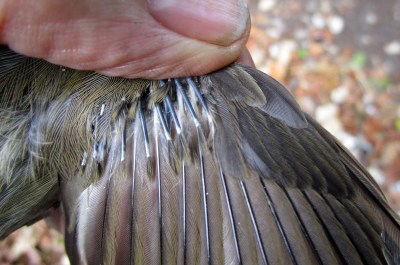
A partial post-juvenile moult means that the bird replaces body feathers on the head, body and on some or all of the wing coverts but not the primaries, secondaries or tail. Often the primary coverts and one or more of the outer greater coverts remain unmoulted as can be seen in this Blackcap. After the moult is complete careful evaluation of the contrast between (in this case) the single unmoulted outer greater covert and the new inner ones will allow this bird to be aged as a 1st year until it has a full moult at this time in 2016.
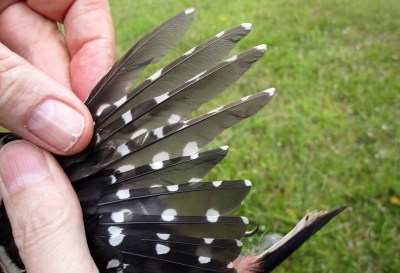
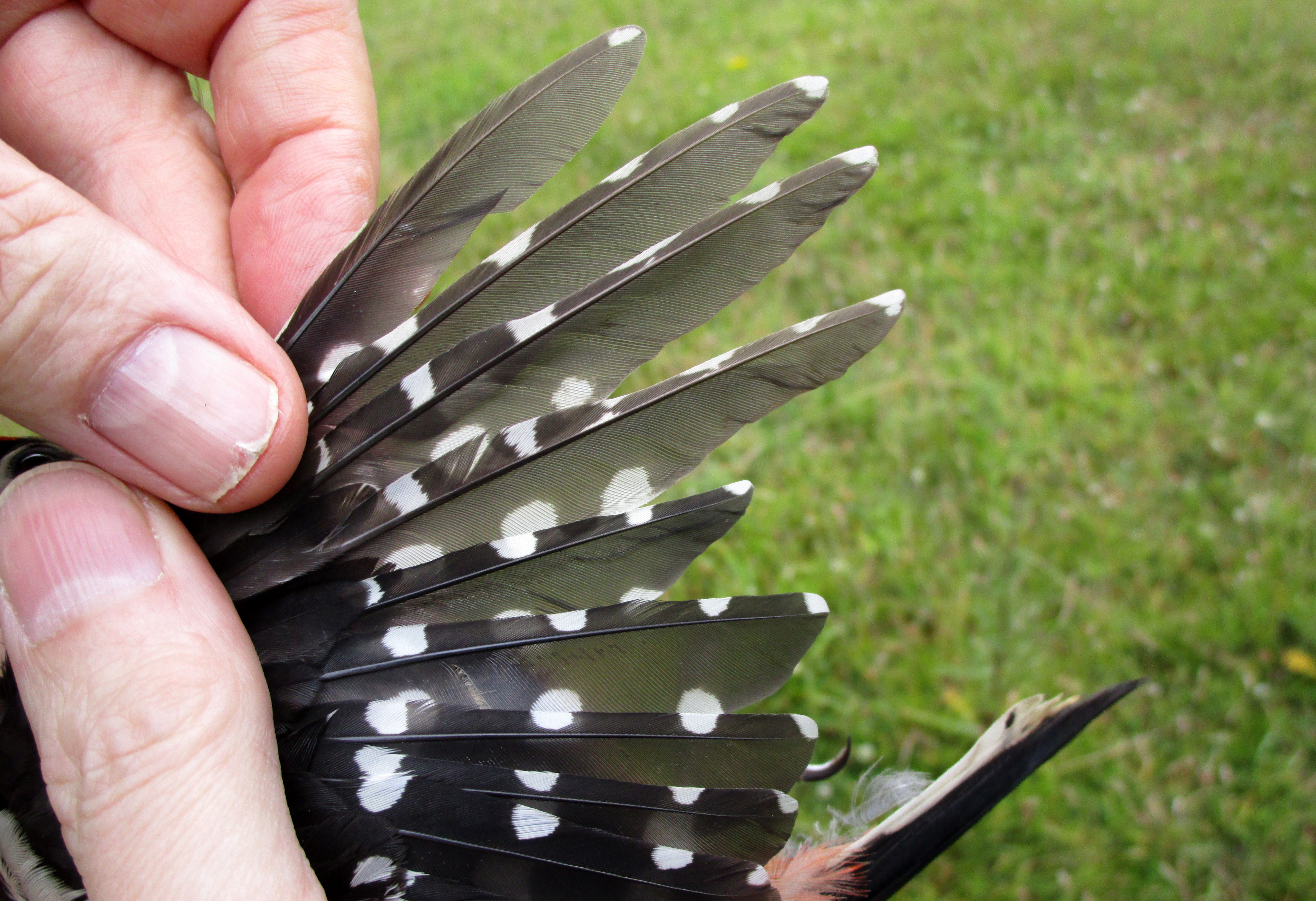
To show how complicated this moult business is, take a look at this juvenile Great Spotted Woodpecker (you will have to take my word that it has the red crown of a juvenile). Although it is only a few months old it is already undergoing a full moult with four outer primaries still to be replaced, the 5th growing and the rest completed. Strangely in its 1st year this species moults either none or some (but not all) of its primary coverts, so in the spring the primaries are fresh and the coverts are abraded.
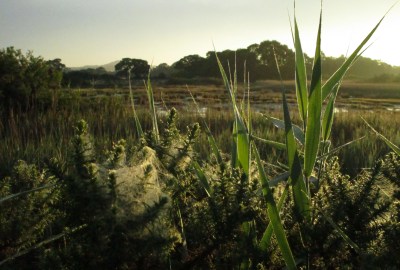
This time of year is by far the best for ringing at our rather muddy site at Lytchett Bay. Reed and Sedge Warblers are present in abundance and there is always a remote possibility of the ringing the globally endangered Aquatic Warbler that passes through in very small numbers.
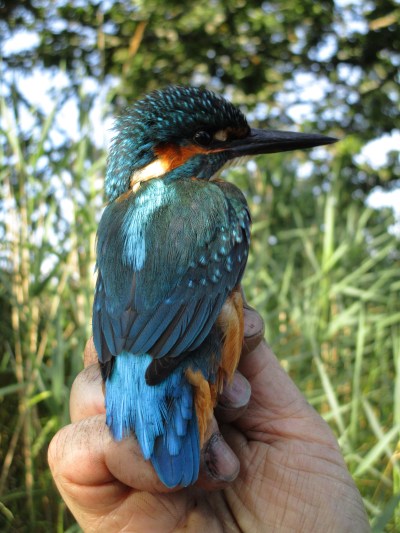
As well as Acrocepahalus warblers we also ring small numbers of Kingfishers every autumn. These birds move down the rivers to the estuaries after breeding. Usually only one or two are present at the site but up to twelve are been ringed annualy showing an ongoing migration. We often catch a bird we have ringed in previous years and one of our birds was re-trapped in Totten, Southampton.
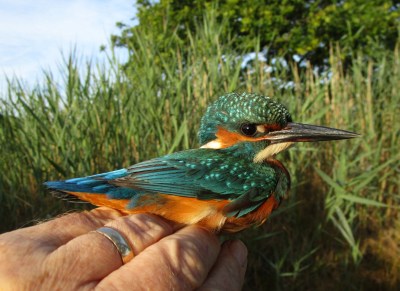
Kingfishers can be aged by the colour of the upper surfaces of their (tiny) feet, smoky in 1st years, orange in adults. The colour of the base of the lower mandible can be used to sex them, orange tones in females (in this photo) and black in males (as in the previous photo), although this difference is more marked in adults.

The RSPB has been managing some of the fields at Lytchett Bay and has built a view-point overlooking one of the ponds and has just installed an information board ….
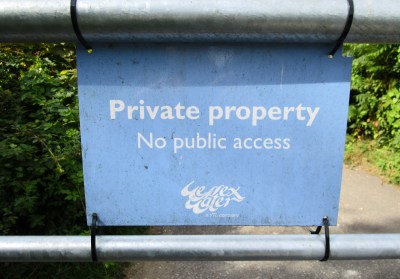
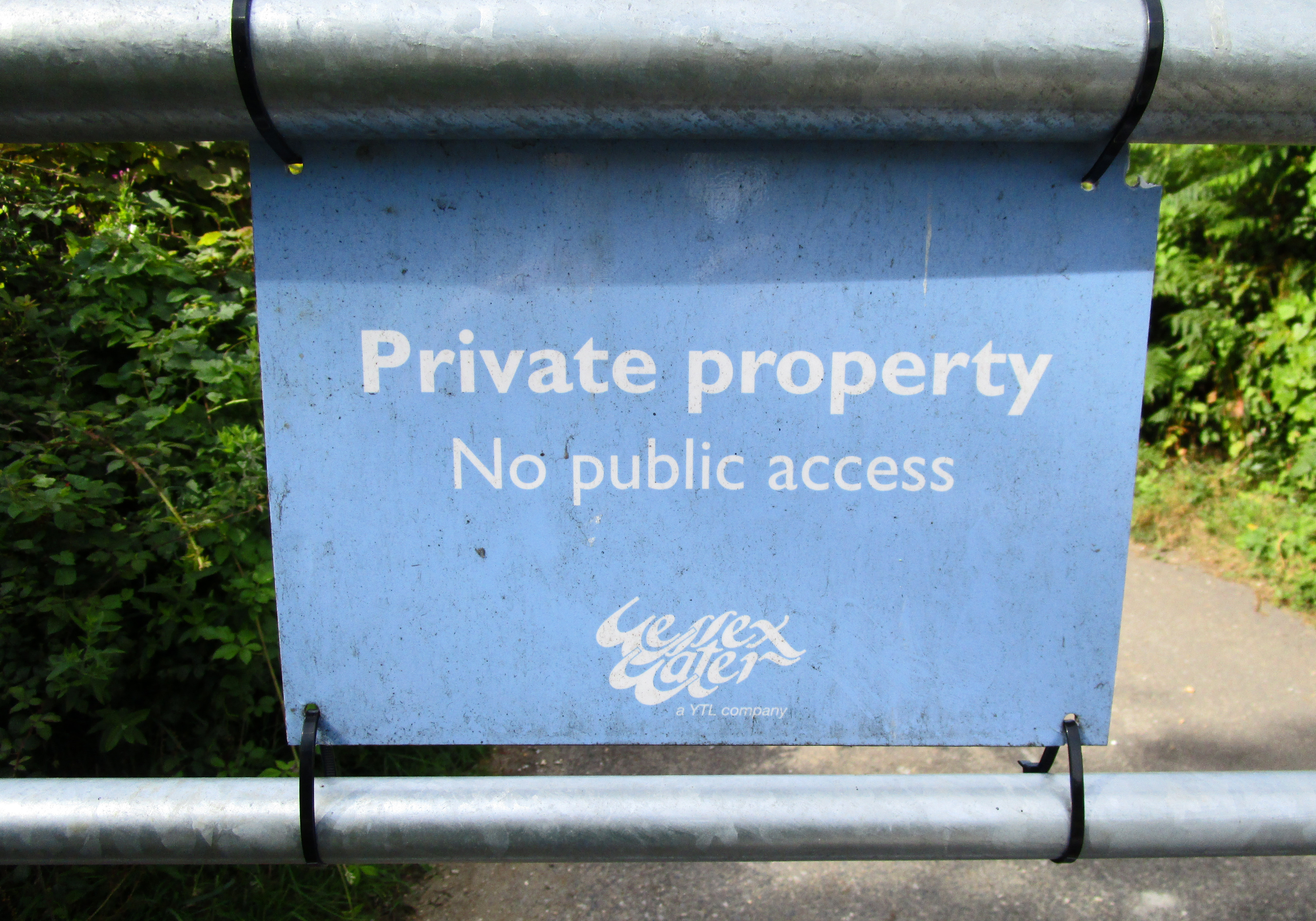
…. on exactly the same day that Wessex Water put up this sign on the lane that leads to the viewpoint (and to their water treatment works). Talk about a lack of joined up thinking!
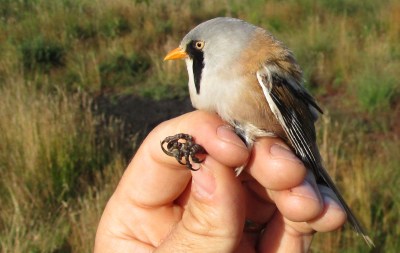
On the other side of Lytchett Bay is Lytchett Heath, an area owned by Dorset Wildlife Trust. We have permission to ring on the heath and nearby reedbeds. A busy morning last week resulted in the capture of over 100 birds including this male Bearded Tit. This is another bird of uncertain affinities, it certainly isn’t a tit, it has been allied with the Asian parrotbills, but now resides in a family of its own. It’s English name is also controversal, not a tit, so the name Bearded Reedling has been used, but it’s not ‘bearded’ either. I suppose Moustached Reedling would be a step too far.

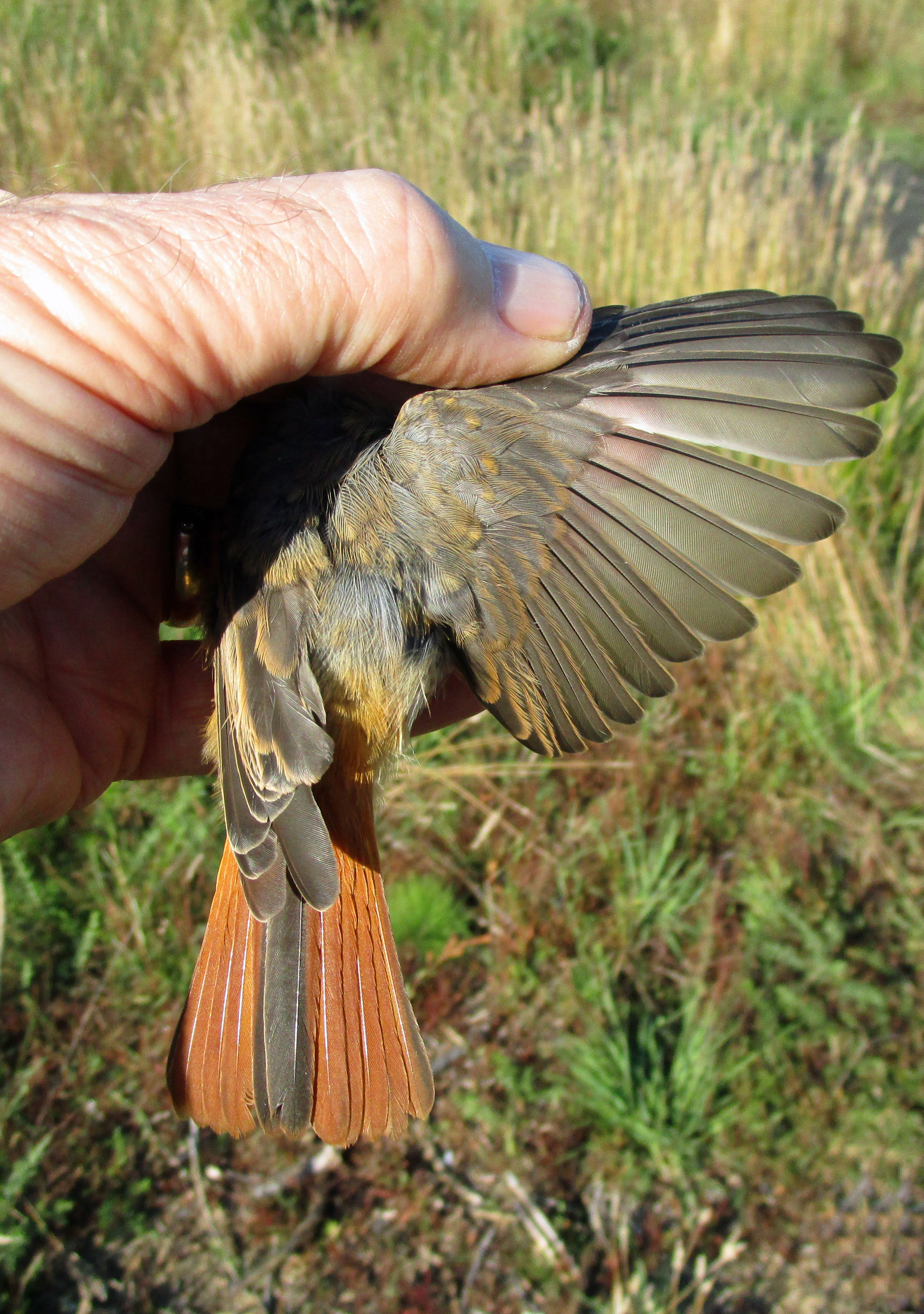
The most surprising bird at our Lytchett Heath session was this Common Redstart in full juvenile plumage. Birds are not thought to migrate until they have almost completed their post-juvenile moult, so this bird probably hatched nearby. Although relatively numerous in the New Forest, this is a scarce breeder in Dorset, for example the 2011 Dorset Bird Report mentions just three sites, seven singing males and four fledged young for the whole county.

The name of the 14 Old World species of redstart, is derived from the colour of their tail, the Old English for tail being ‘steort’. Pioneer ornithologists in America found an unrelated bird (now classified as a New World Warbler) with red in the tail and called it American Redstart, but the name ‘redstart’ was carried over to a multitude of related warblers in the Neotropics, all of which have white not red in the tail. Recent attempts to rename these Neotropical warblers as ‘whitestarts’ has met with ambivalence.

In complete contrast to my early morning and muddy ringing sessions we attended a lovely birthday celebration hosted by our friend, fellow birder and moth-er from Swanage, Phyl England.
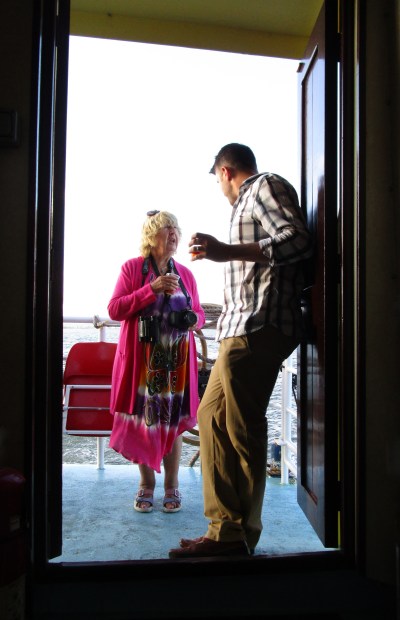
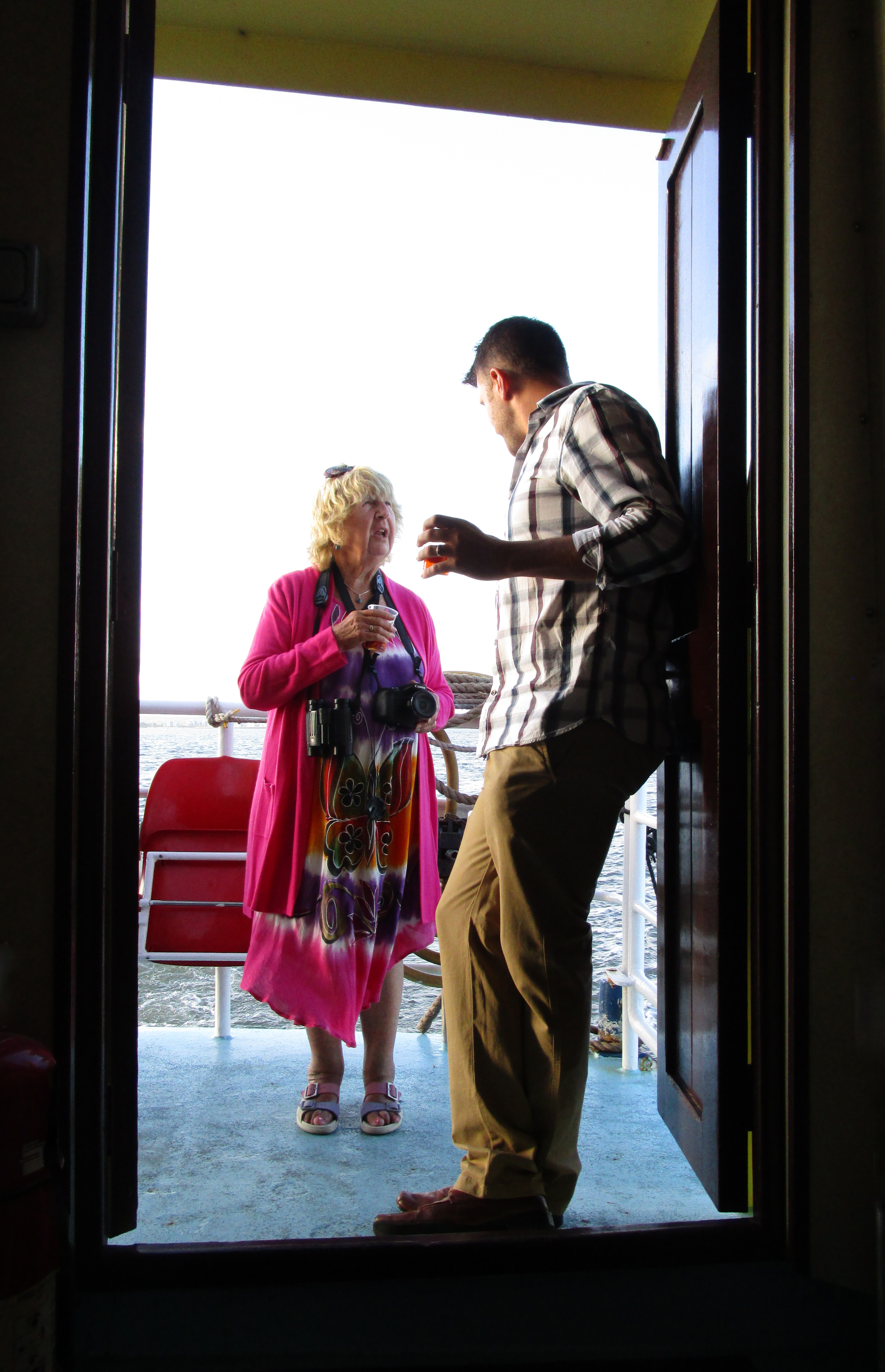
Phyl, here seen with Paul Morton, is celebrating her 80th, yes 80th birthday!
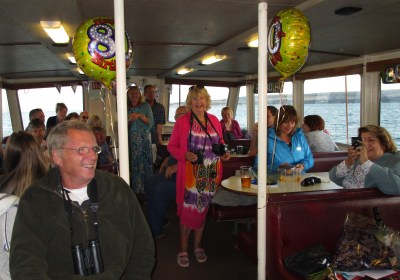
Of course, as the hired Brownsea ferry cruised around the islands of Poole Harbour, we celebrated in the traditional manner.
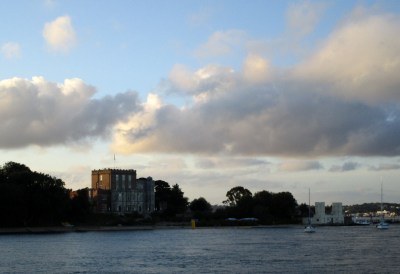
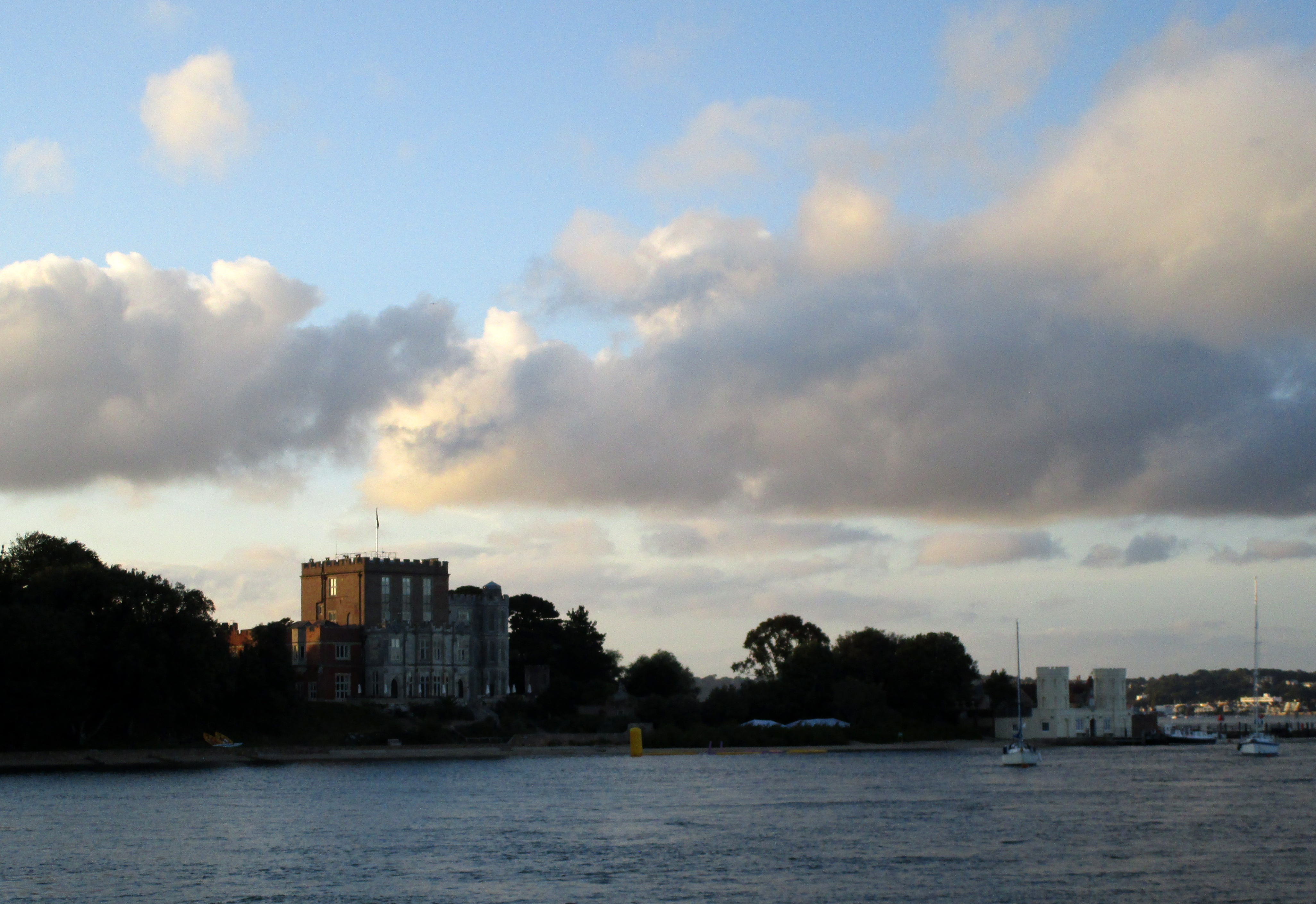
I was expecting that we would sail around the back of Brownsea, past the castle and the lagoon and return to Poole Quay ….
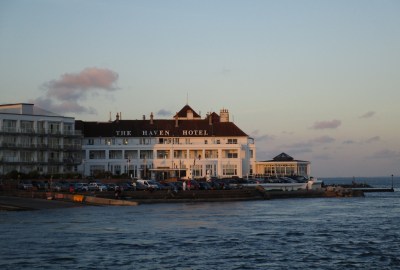
…. but instead we went past the Haven Hotel and out of the harbour mouth ….
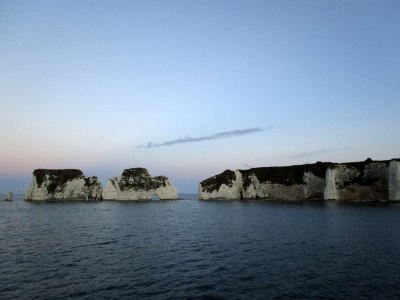
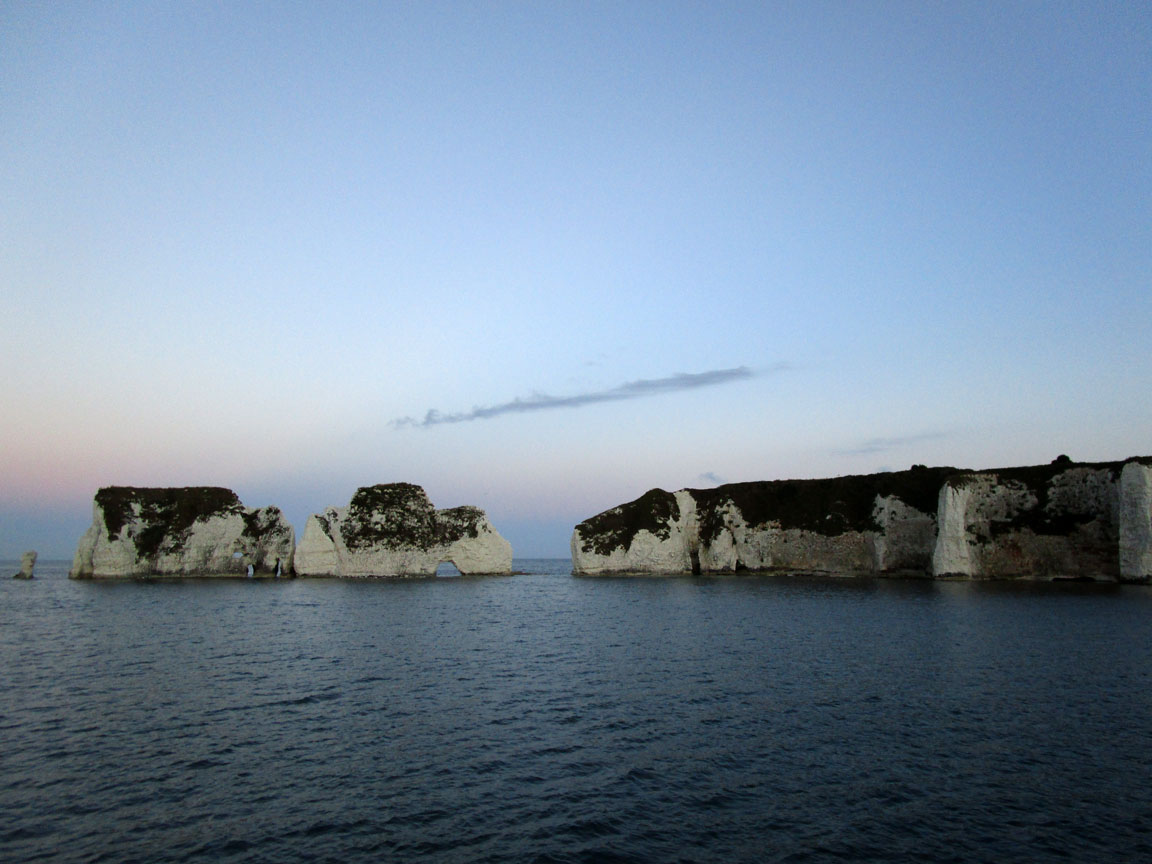
…. towards the rock pinnacles of Old Harry.

Indeed we went so far past Old Harry that we wondered if Phyl and her family had arranged to be dropped off at Swanage.

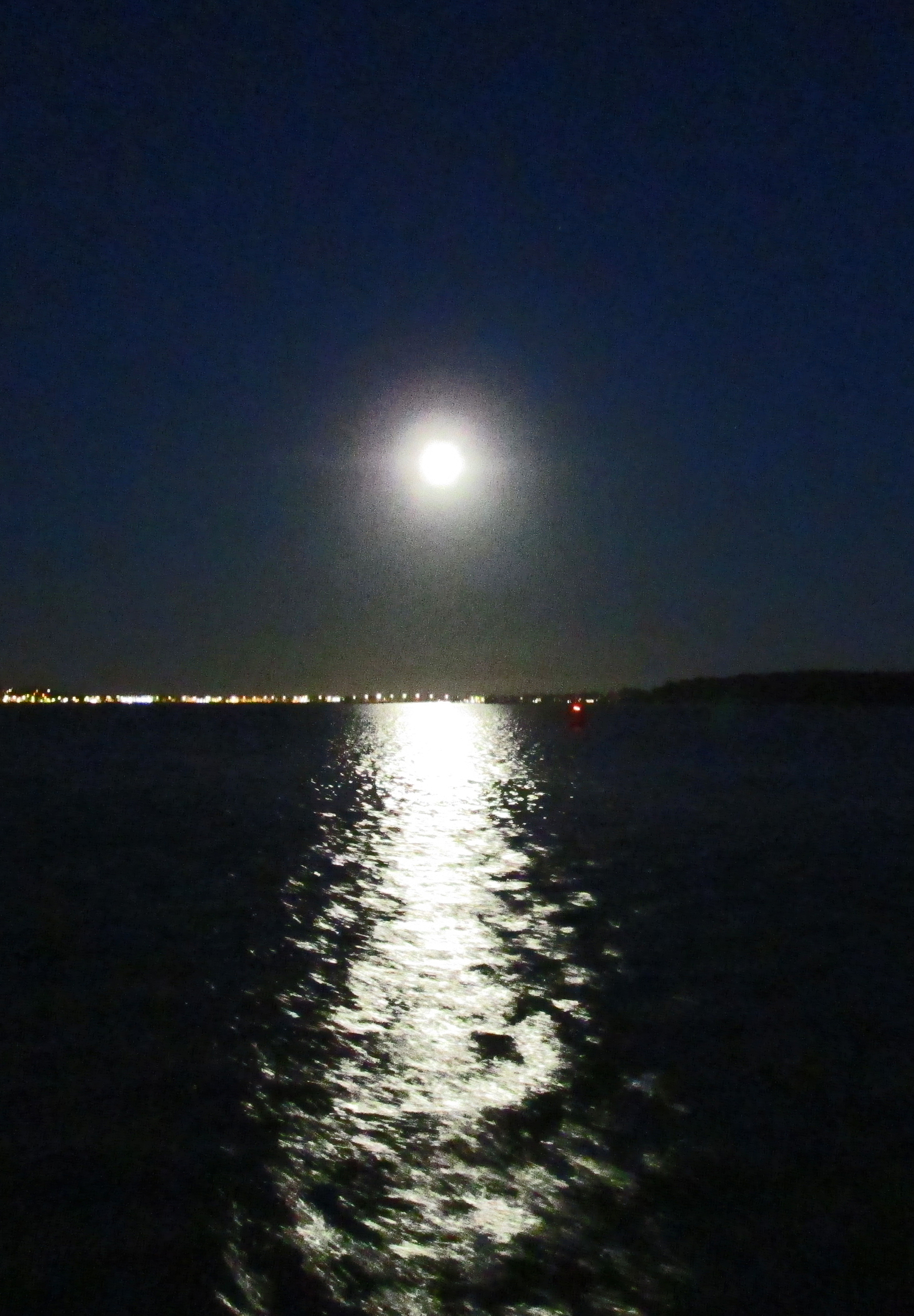
Expecting a mainly social event, I had only brought my pocket camera so I couldn’t do justice to this beautiful red moonrise.

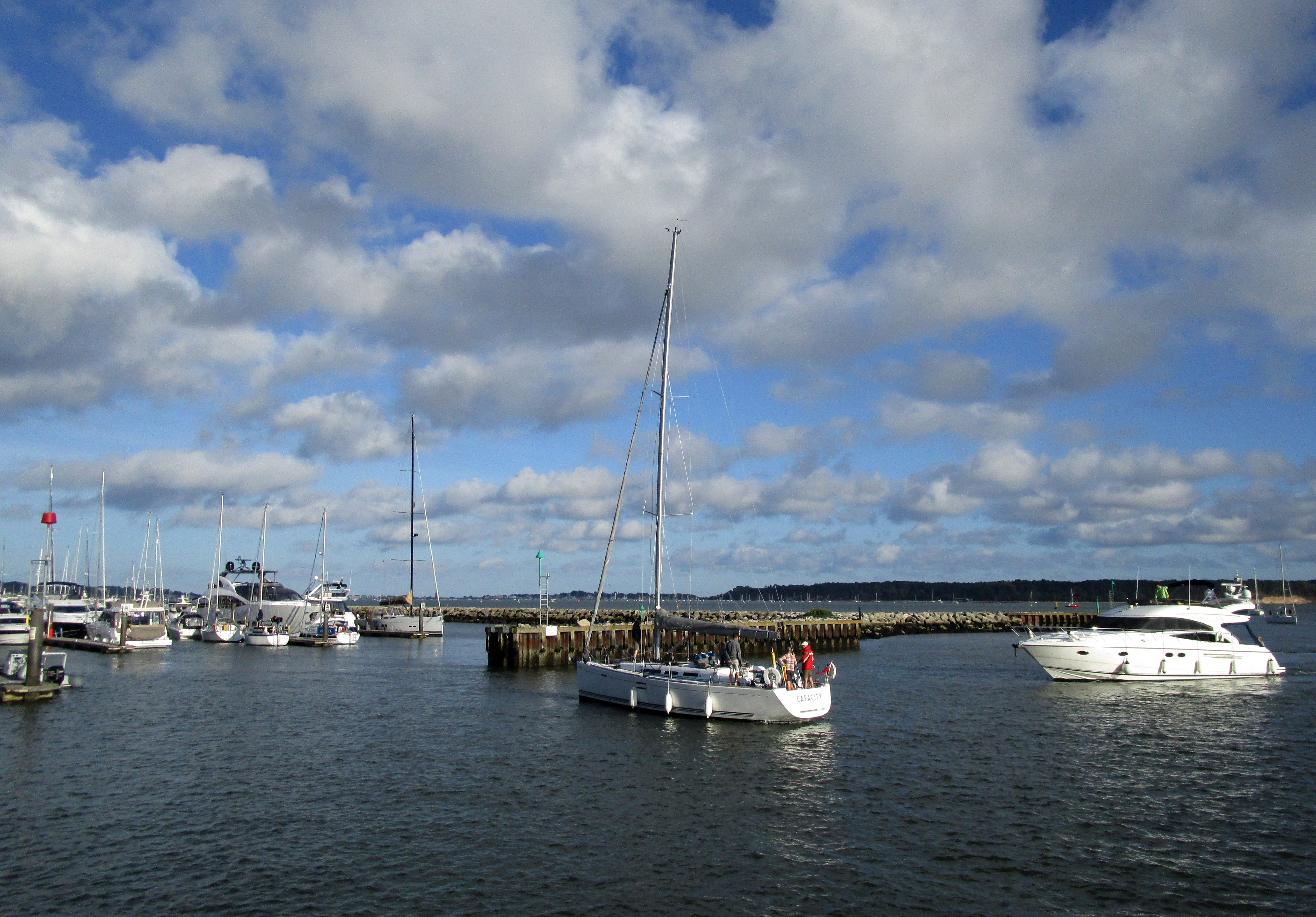
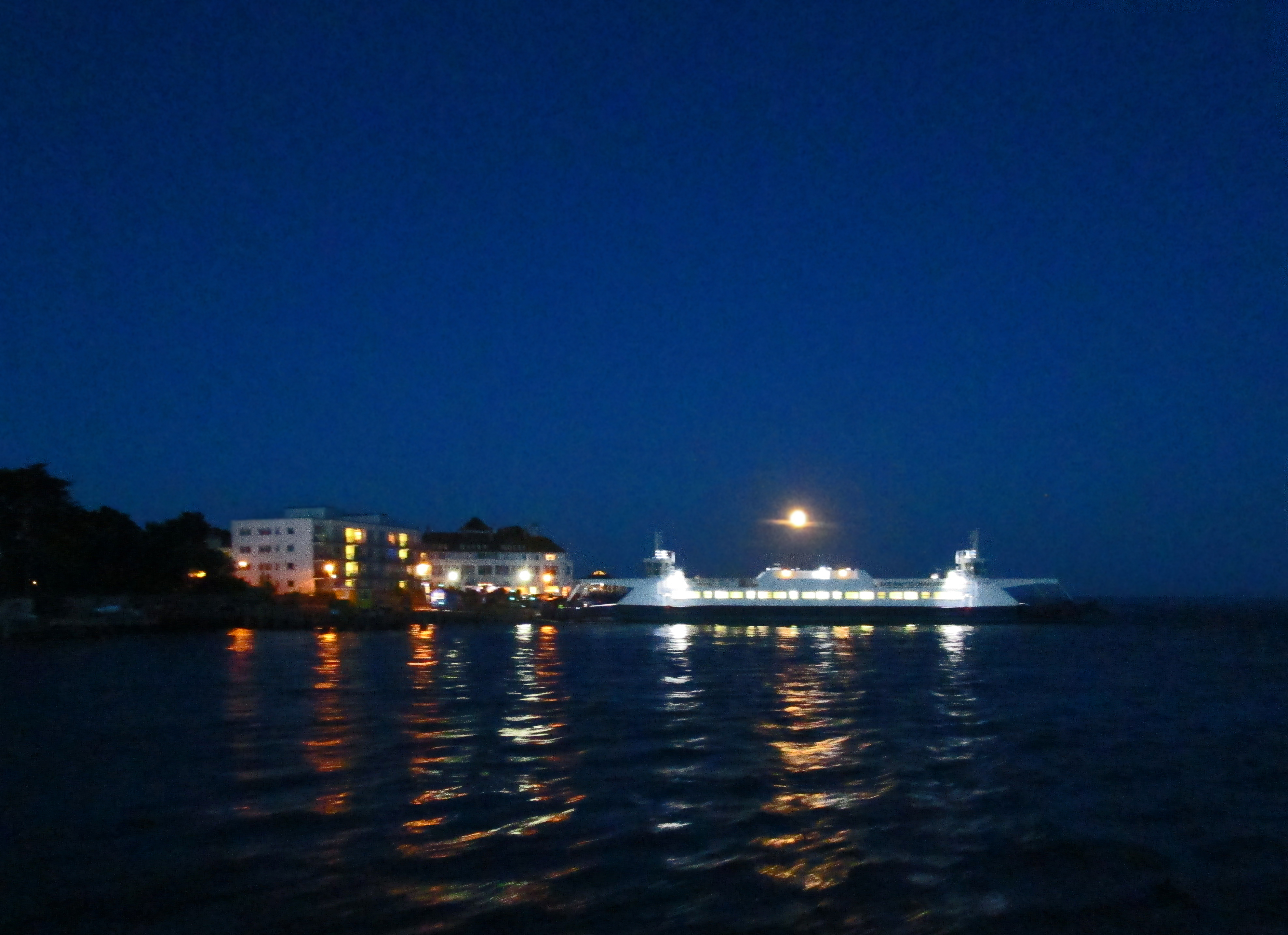
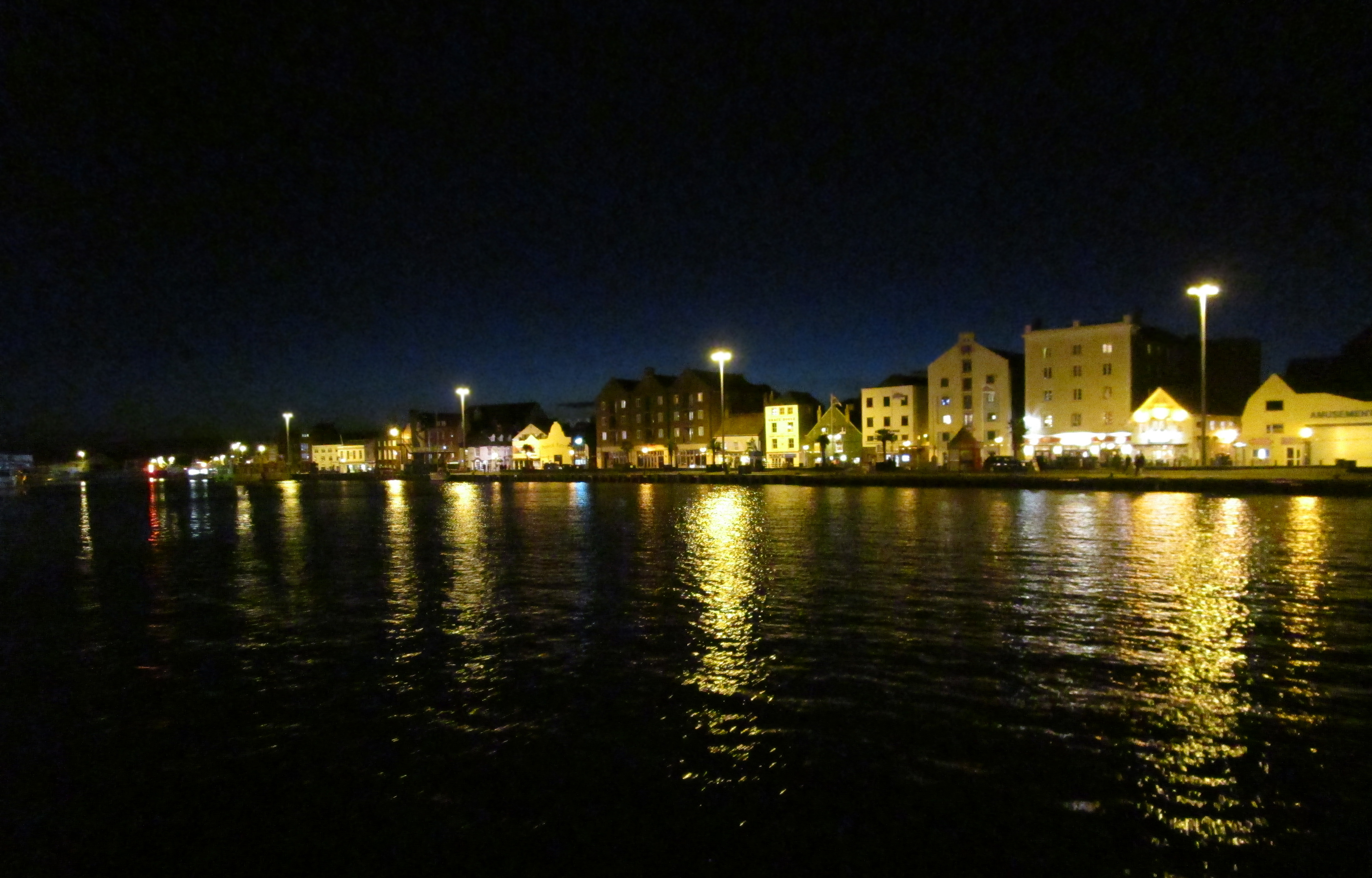
It was almost dark by the time we passed the Studland ferry re-entered the harbour.
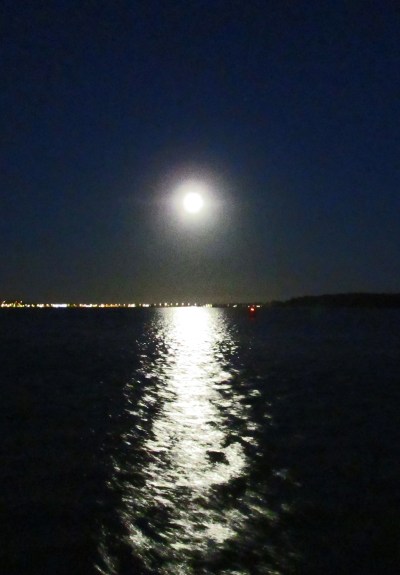
…. and with the full moon shining on the water ….

…. we got back to Poole Quay about 2220. Thank you very much for a lovely evening Phyl.
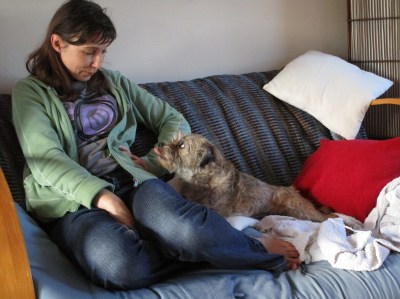
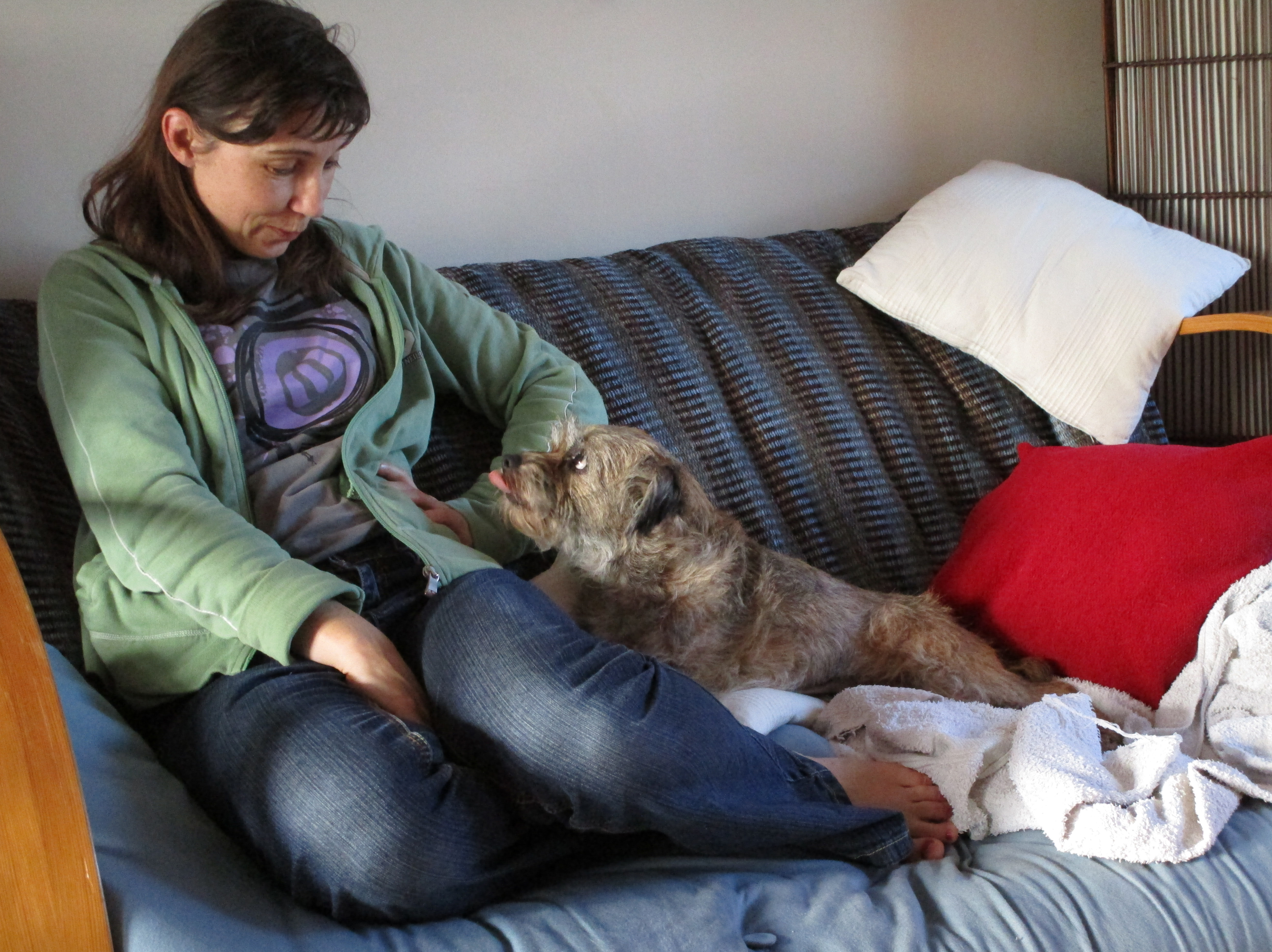
And finally Margaret’s daughter Janis has been looking after this little dog, Kitzie, for a friend.

I’m not much of a dog person, but have to admit that he was quite endearing (and no, we have no plans to get one).
In the last post I described how Margaret and I visited her daughter and three sets of friends in East Anglia between June 26th and July 2nd. We left Framlingham in Sussex on the morning of the 2nd and drove to Leeds in Yorkshire.
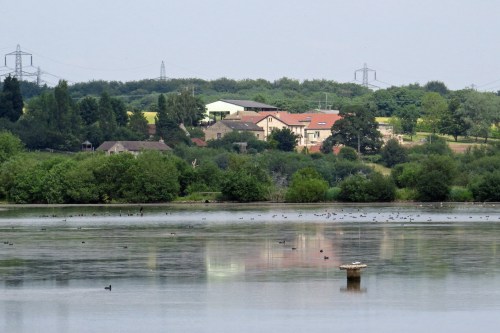
We made good progress and I considered we had enough time to visit Fairburn Ings, an RSPB reserve to the east of the city near the A1. I started birding in 1977 and although I had to catch two buses and walk a couple of miles to get there, Fairburn Ings became my ‘local patch’ until I moved to Poole in March 1978. At that time the reserve consisted of a lake and a few pools sandwiched between the village of Fairburn ….

…. and the hill in the background which at the time was a slag heap. I saw most of first waterbird species here along with a selection of passerines.

…. but there weren’t these reed beds, woods or raised walkways ….
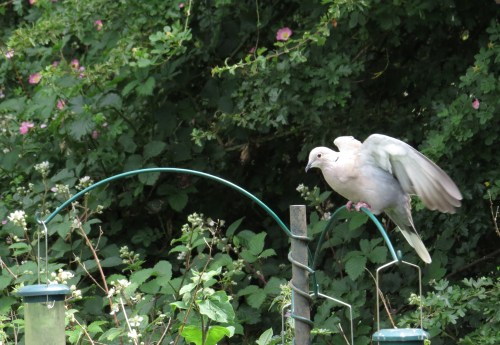
…. nor was there a visitor centre with book shop, cafe and bird feeders complete with flocks of Tree Sparrows (and the inevitable Collared Dove), I think the RSPB should be congratulated in turning this area of mining subsidence into a first class wildlife reserve.
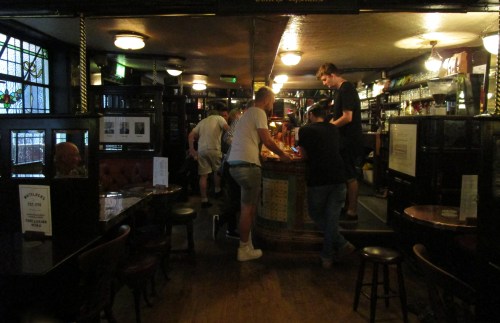
We headed for Leeds and checked into our hotel just south of the river. In the early evening we headed to a 300 year old pub called Whitelocks on Briggate in oder to meet up with my old friend Nigel.
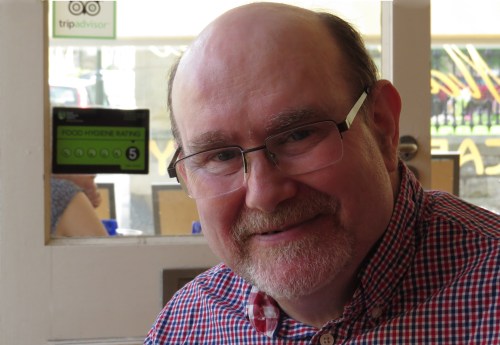
I first met Nigel in 1967 when he moved to our school in Duffield, Derbyshire to do his A levels. He was instrumental my musical education, converting me from being a fan of Motown and Soul to Jimi Hendrix, the Nice and above all The Incredible String Band. Nigel also went to University at Leeds in 1969 and we shared accommodation for much of the next seven years. Nigel remained in Leeds when the rest of the gang moved away and served as a councillor for many years and was given the title of Alderman for his services to the city.
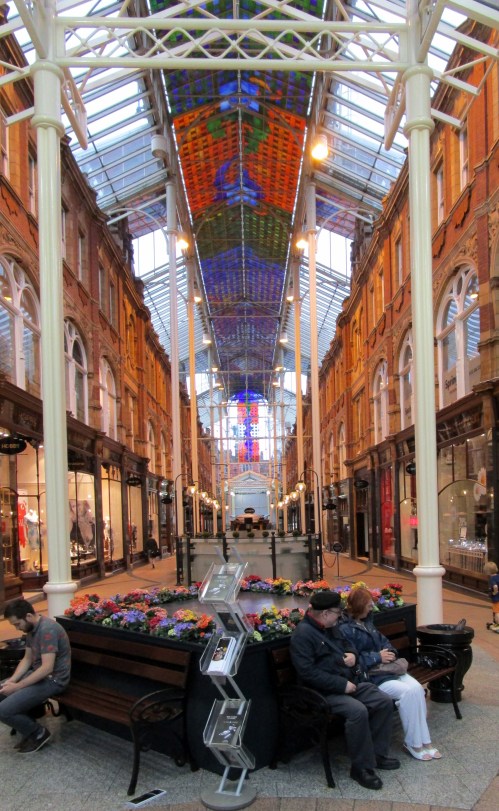
Leeds is known for it wonderful shopping arcades, one of the best being Queen Victoria Street in the Victoria Quarter between Briggate and Vicar Lane. This was a street open to the sky when I lived there.
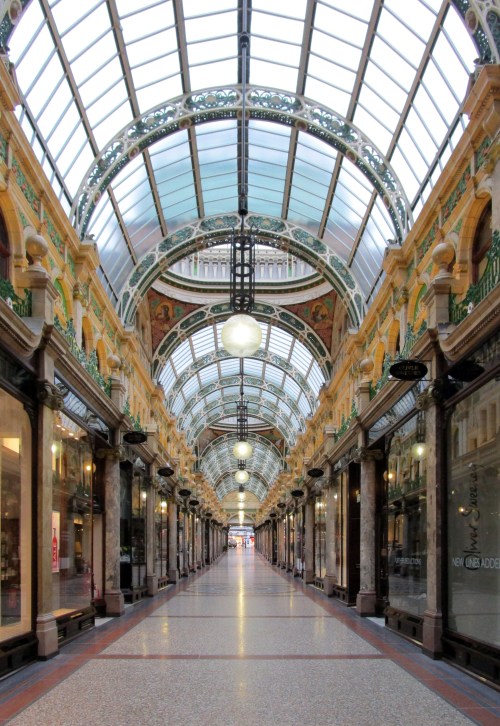
Nearby is the ornate County Arcade.
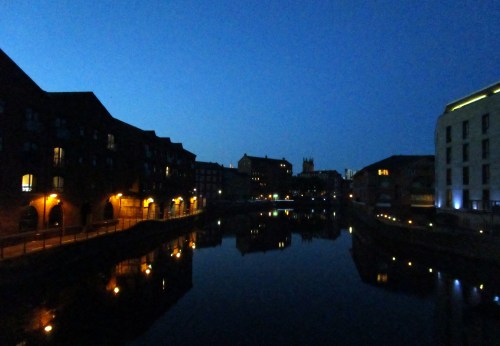
After a lovely meal and further drinks we headed back across the River Aire to our hotel.

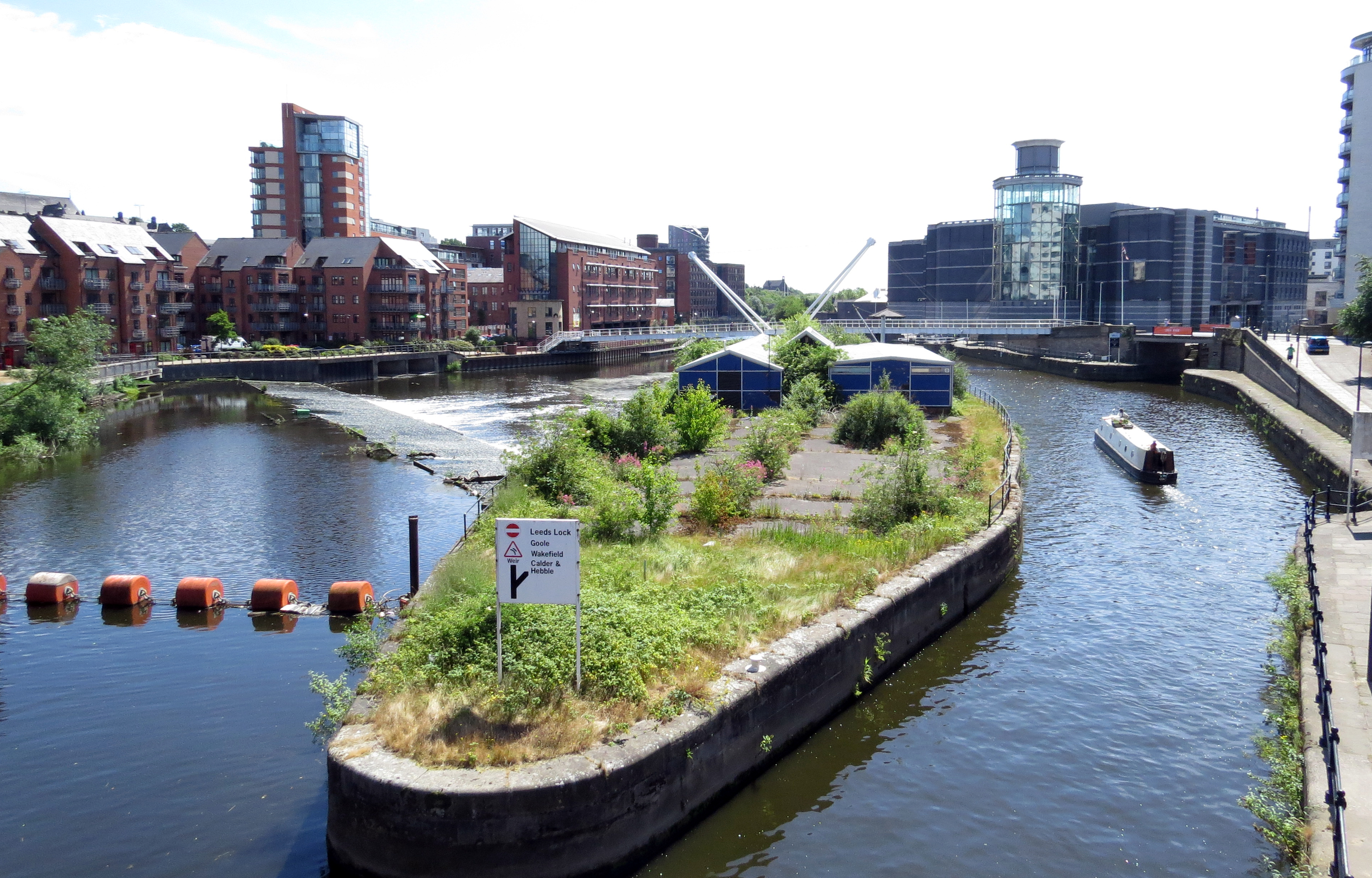
Nigel was busy the following morning so we explored the riverside area. Back in the sixties and seventies this part of the city was very down-at-heels, full of old warehouses, shabby shops and the sort of pubs where if you go in for a pint you leave quickly with just a bag of crisps. Indeed I avoided this area in general especially at night. There has been a wonderful transformation, the riverside warehouses have been turned into fashionable dwellings ….
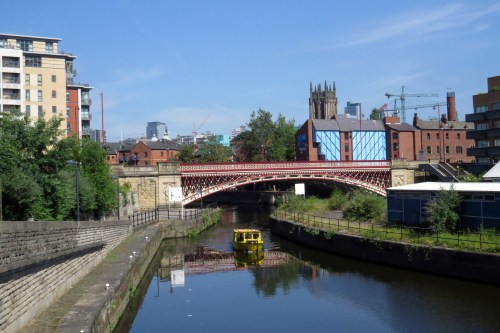
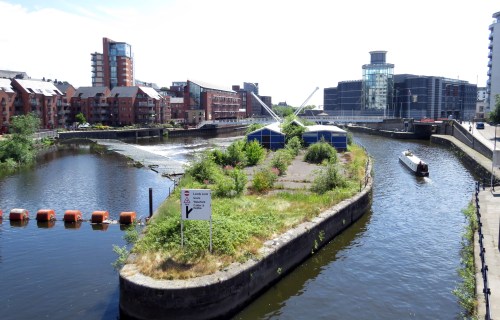
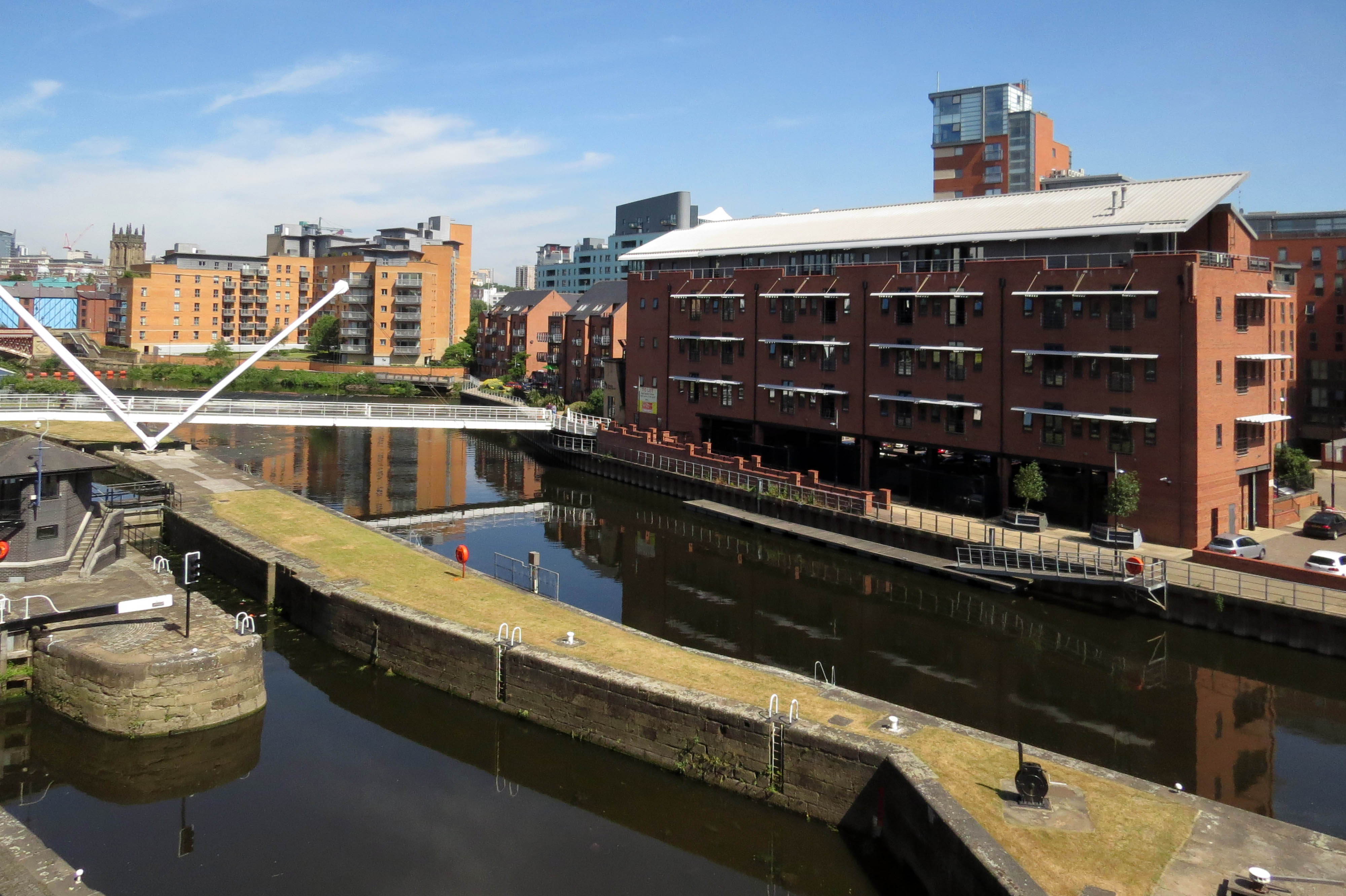
… many new buildings have been erected and the Leeds – Liverpool canal has been cleaned up and is now a place for a pleasant stroll.

Docks have been created along the canal as well as numerous high-rise buildings.

Oh no she’s not!
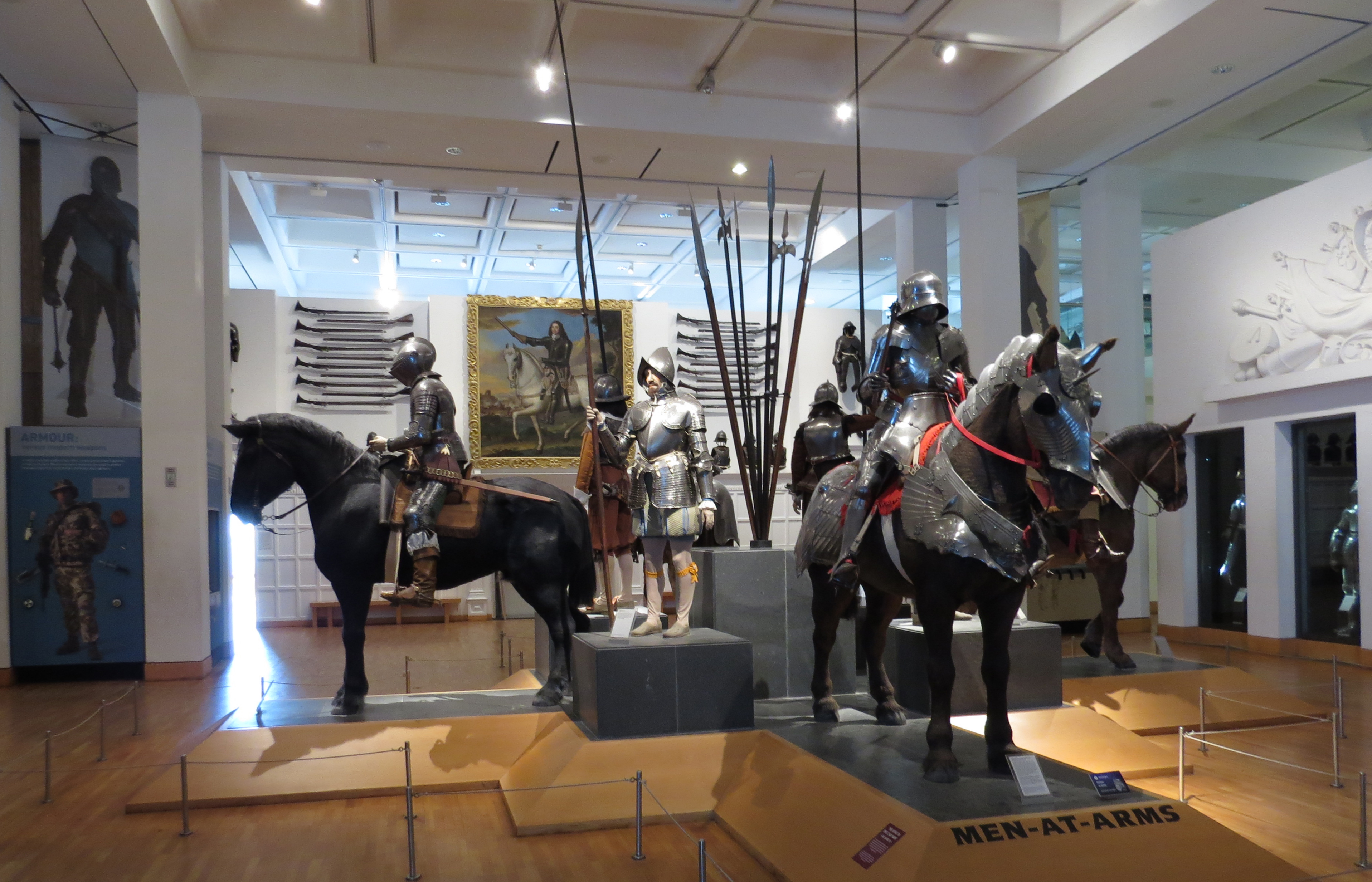
Near where the river and canal divide lies the Royal Armoury, a multi-million pound purpose-built museum that opened to the public in 1996. It was built to house a large part of the national collection of arms and armour, and displays over 8500 objects throughout its six themed galleries: War, Tournament, Oriental, Self-Defence, Hunting, and Peace.

Looking upwards into the Hall of Steel is quite awe-inspiring.
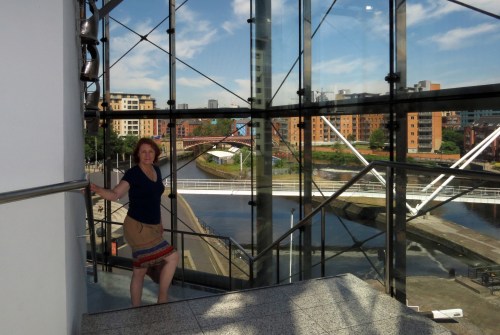
We visited the Royal Armoury on a previous visit but Margaret found the open glass staircase induced vertigo, so our visit was cut short. She has greatly overcome this fear recently (as our trip to the Alps proved) and had no problem climbing up to the third floor.
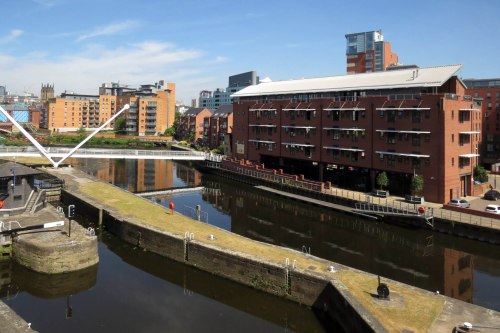
The view over the river and canal from here is quite impressive.
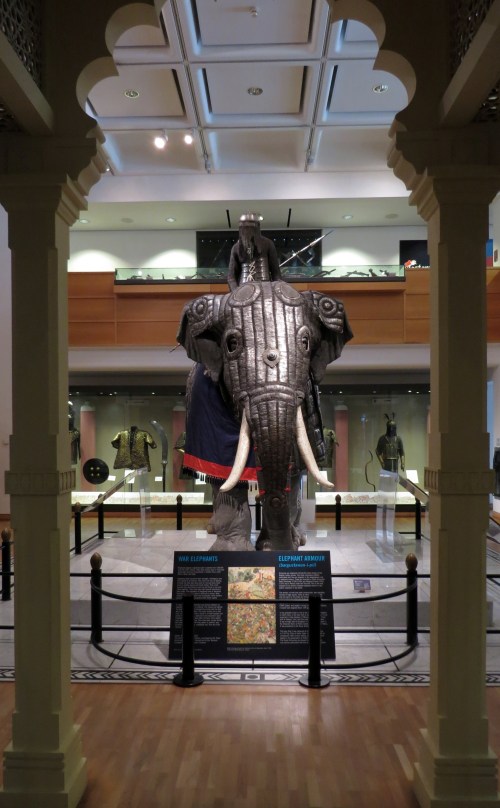
Of the many exhibits this ‘war elephant’ caught my eye.

…. and the cavalry section.

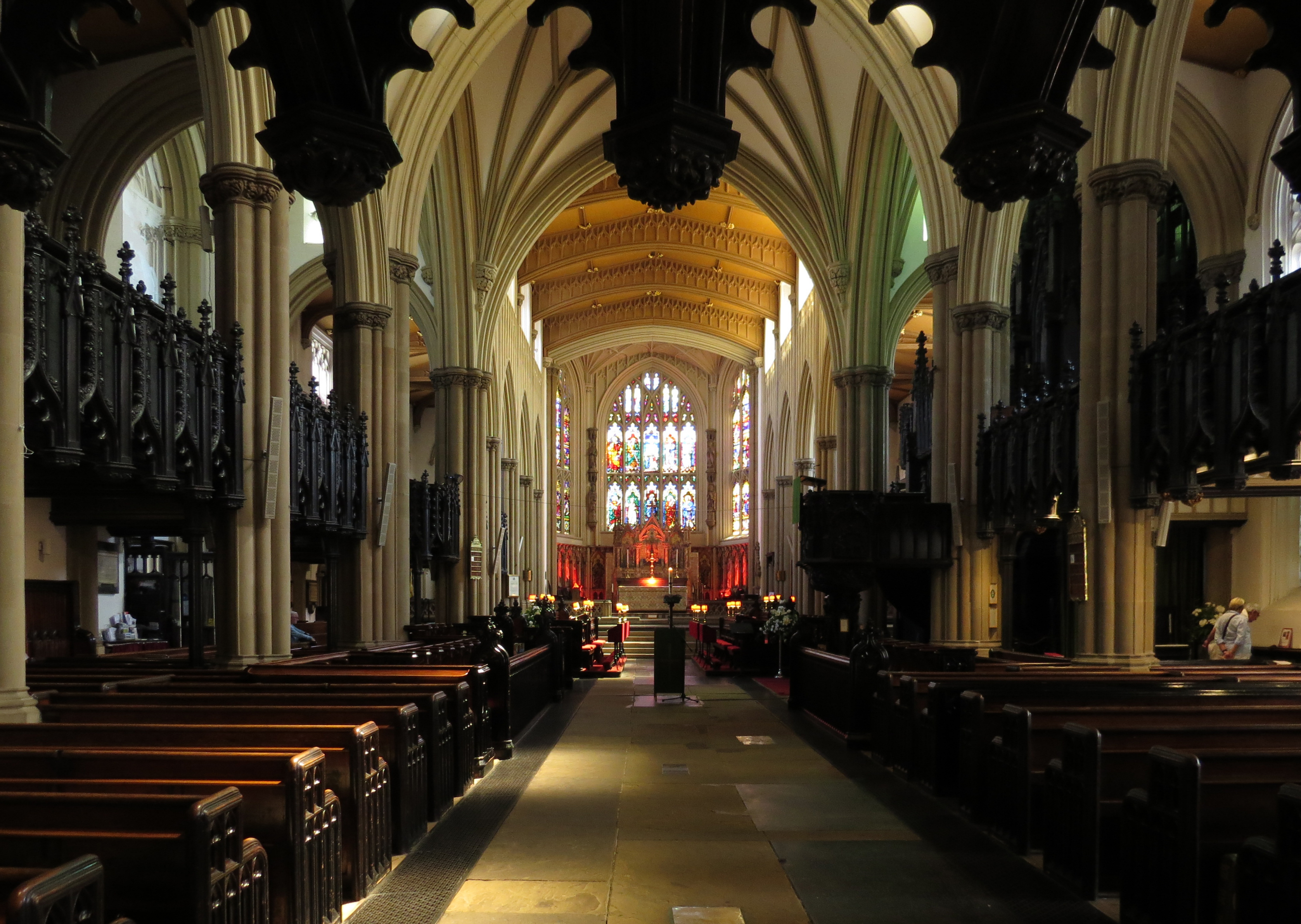
On our way to meet up with Nigel we passed Leeds Minster.

Our arrival coincided with the two-minute silence for the victims of the dreadful massacre in Tunisia and we were able to pay our respects in a most appropriate place.

As we made our way through the city centre we came across many covered shopping arcades. I remember from my time in the 70s that many of the minor roads between Briggate, Boar Lane and the Headrow were poorly lit and uninviting and in general places to avoid. Again there has been a huge transformation.
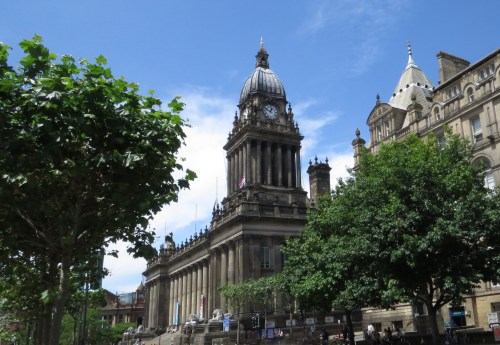
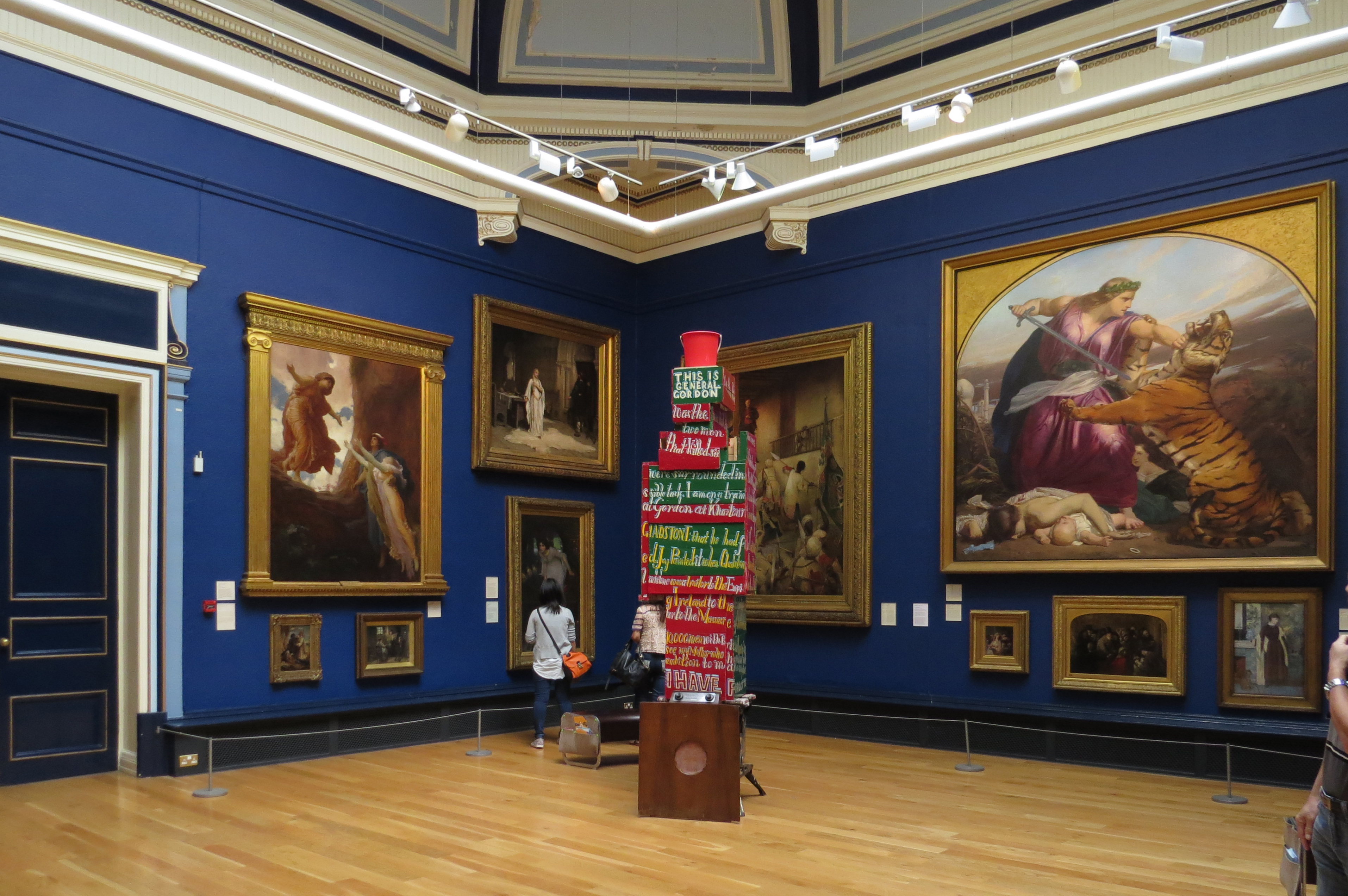
We met Nigel at the art gallery near Leeds Town Hall.
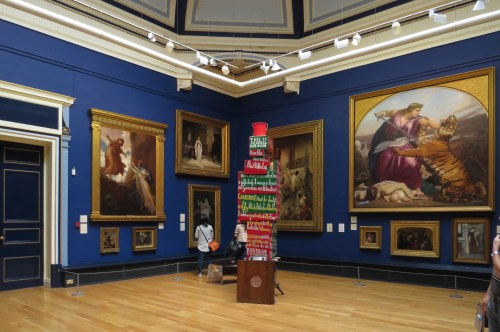
Nigel’s main interest these days is art and he showed us around the gallery. I liked the symbolism, if not the sentiment, of the large painting on the left depicting Britannia slaying a tiger, symbolic of the ruthless suppression by the British of the locals after the Indian Mutiny of 1857.
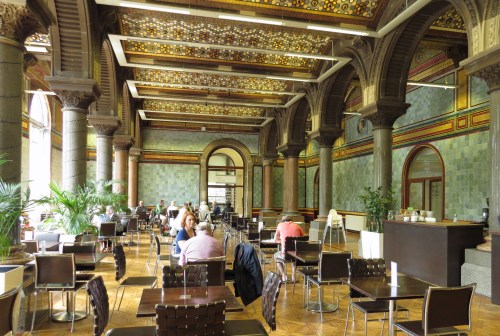
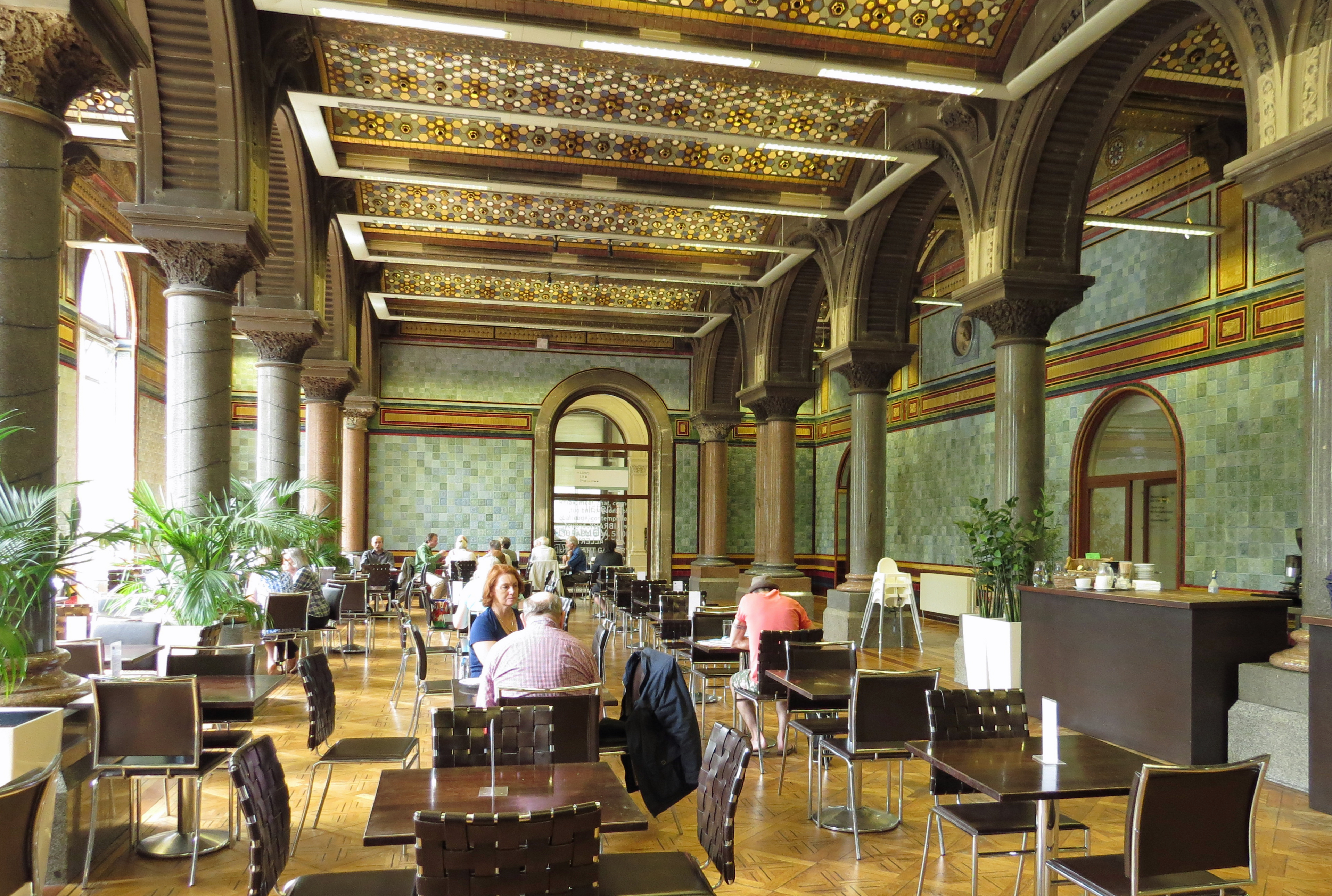
This hall houses the restaurant, incredibly this room was bricked up some time around the 60s and for years no-one could remember what was in there. Recently the room was opened up again and this gorgeous tiled interior was discovered. Wonderful that this gem still exists and wasn’t destroyed in the name of ‘progress’ but what a shame that generations of art lovers were denied the pleasure of seeing it.
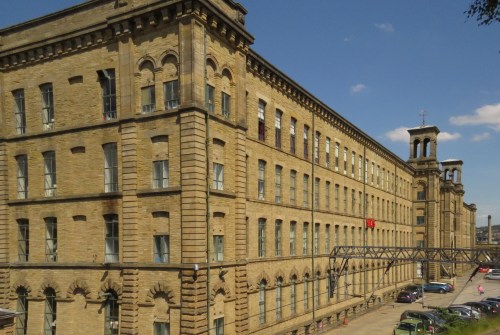
The three of us then caught a train to Saltaire, a former Victorian mill town near Shipley and a World Heritage Site. Nigel particularly wanted to show us the art collection that is now housed in the old mill.
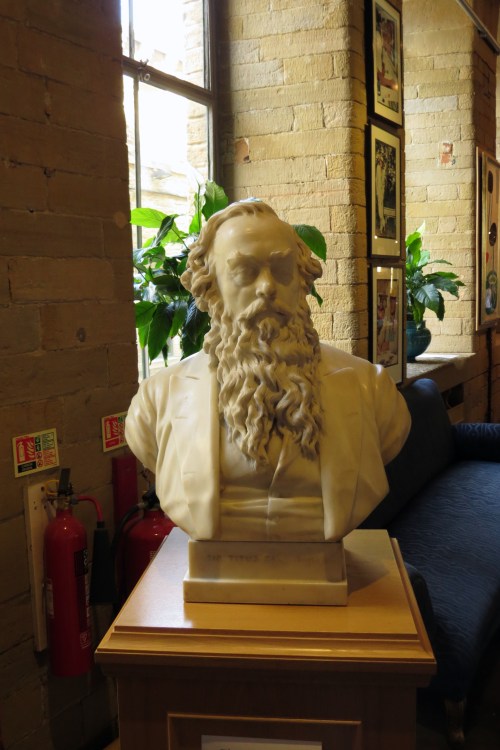
The town gets its name from a combination of the surname of its founder, mill owner Sir Titus Salt and the River Aire. The woolen mill was built adjacent to the river and the Leeds-Liverpool canal.

Titus Salt was an enlightened mill owner, building decent stone houses for his workforce with wash rooms and bath houses, a hospital and also (above) the Victoria Hall. Because of this combination of houses, employment and social services the original town is often seen as an important development in the history of 19th century urban planning.

A whole floor of the mill is dedicated to the work of the Bradford-born artist David Hockney.
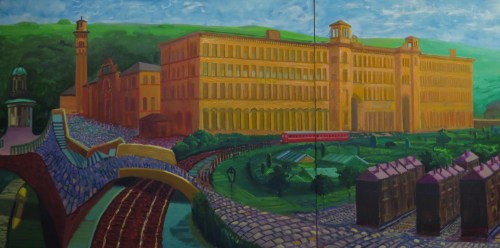
A modern painting of the mill in its heyday.

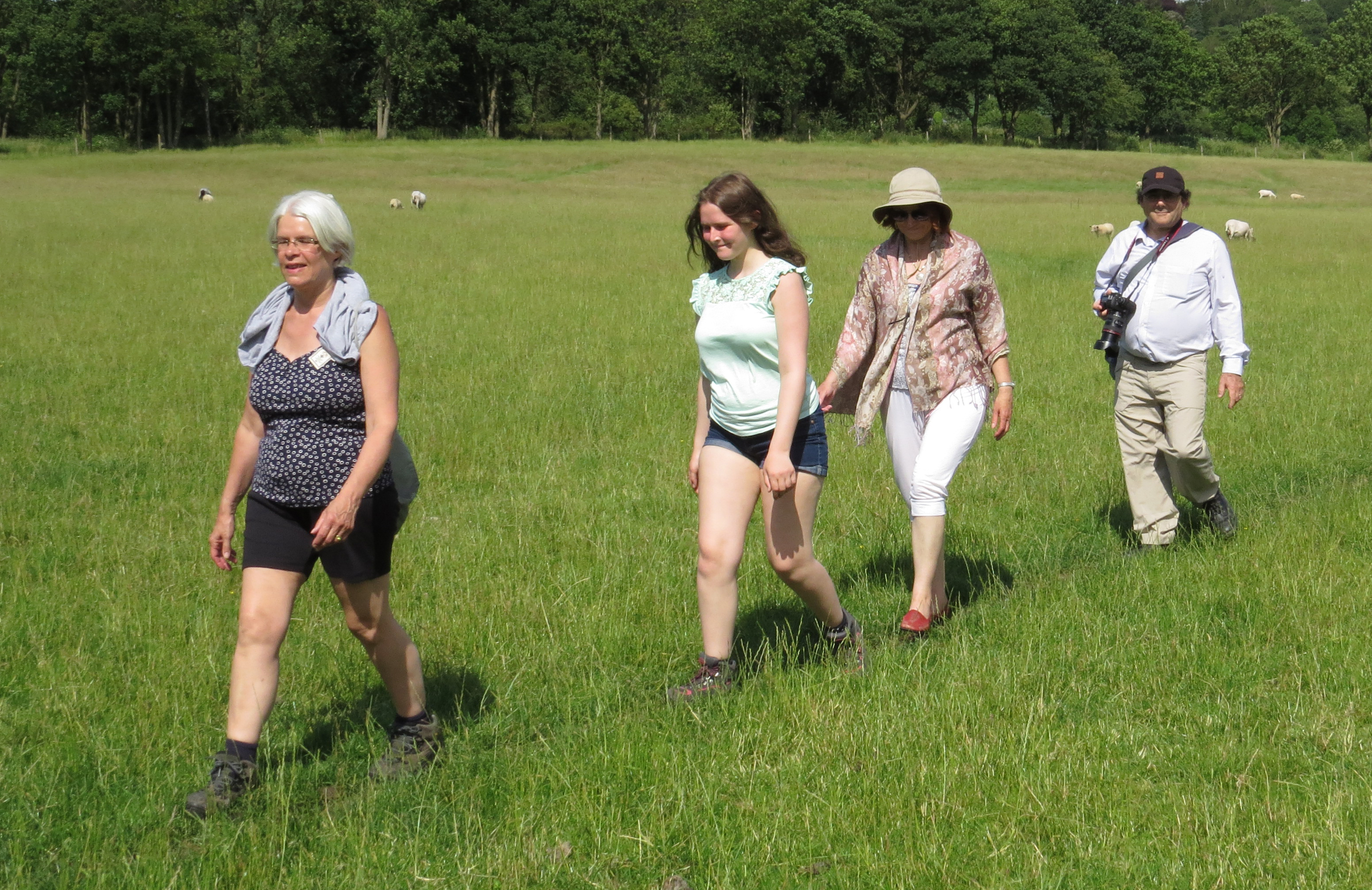
On the 4th we left Leeds and drove to Duffield in Derbyshire, a slow journey due to the almost continuous road works along the M1. We arrived at my brother’s house mid morning. In the afternoon we went for a walk along the nearby Ecclesbourne valley. L-R my niece Jennifer, my sister-in-law Viv, Margaret and my brother Simon. My elder niece Miriam is away on a gap year before University.

Simon and I used to go to the nearby Ecclesbourne grammar school which used to have a school song that went ‘a school grows here in Duffield by Ecclesbourne’s fair banks’. According to my nieces who are (or have been) at the school recently they have dropped this hideous ditty.

The Lewis’s on parade.Viv, Jenny, Margaret and Simon.
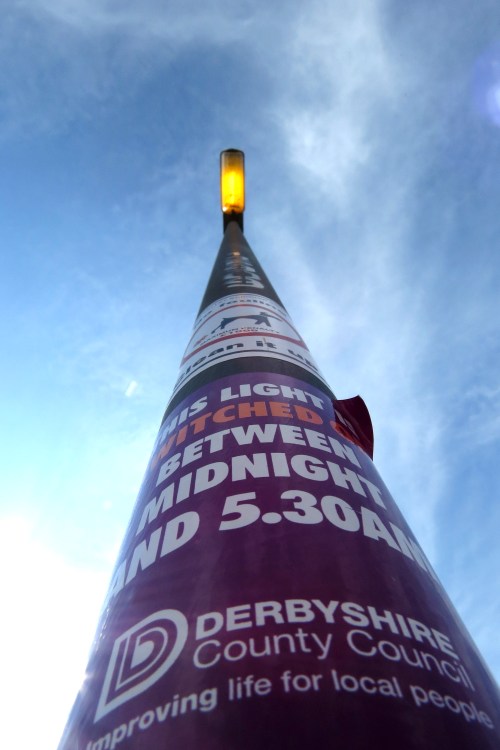
Switched off between midnight and 0530 to save electricity and turned on during the day to waste it!
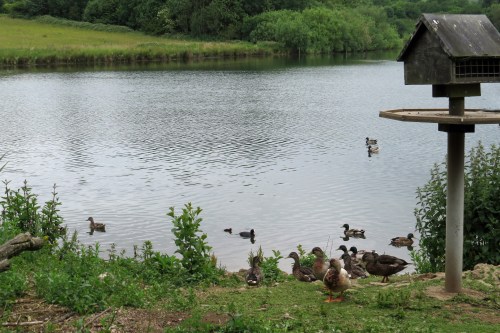
On the morning of the 5th we paid a visit to Viv’s parents, the always entertaining Dennis and Ida and called in at Carsington Reservoir. I usually visit around Christmas time when the reservoir holds many wintering wildfowl and is a good place to see Tree Sparrow and the increasingly scarce Willow Tit. Well the Tree Sparrows were in evidence but not much else, but it was a nice place to complete our journey.
So all that remained was to drive back to Dorset. A 1000 mile journey over 10 days, enjoying the company of family and old friends and seeing some interesting sights and wildlife on route.
Rather than make a number of separate weekend trips to visit friends and family this summer we decided to fit it all into a single ten-day trip, seeing Margaret’s daughter and my brother on successive weekends (as they are working) and seeing a number of retired friends during the week.
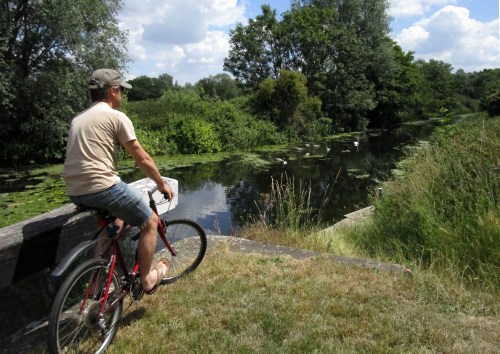
We arrived at Maldon in Essex in the afternoon of the 26th. The following day we all cycled along the River Blackwater and the Chelmer and Blackwater Canal for a picnic. Here Margaret’s son-in-law John surveys the canal.
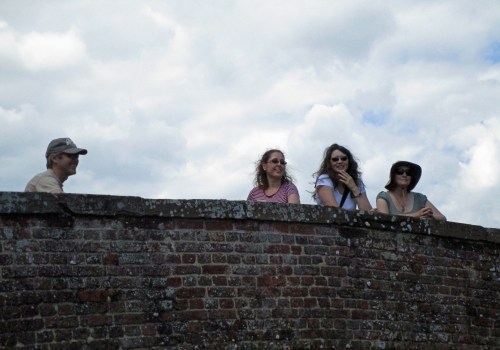
Anita, Margaret’s daughter, also had her old school friend Donna (also from South Africa and now living in London) staying with her. L-R on the bridge over the canal: John, Donna, Anita and Margaret.

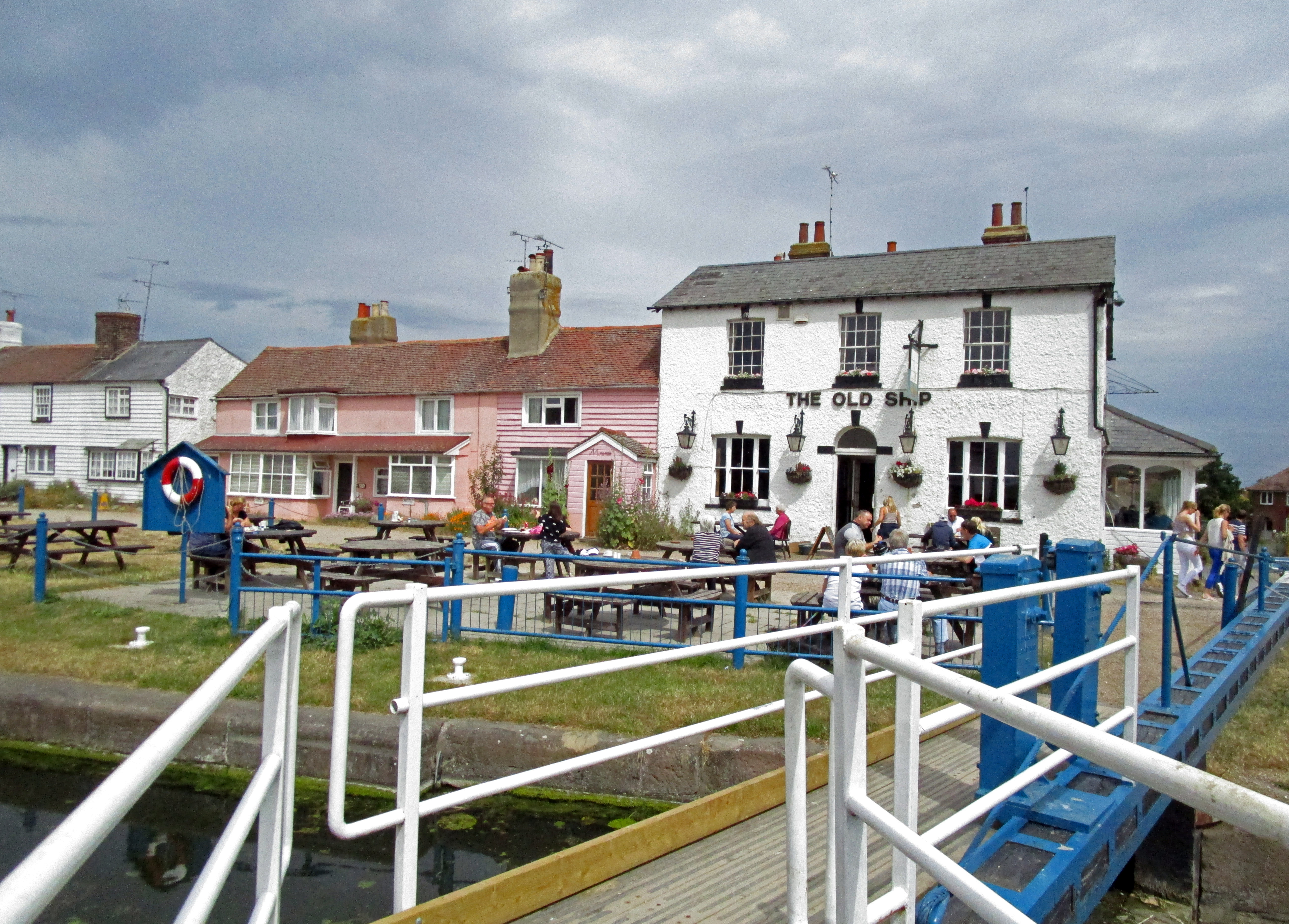
On the Sunday morning I did a little birding at Heybridge Basin where the River Blackwater and the canal flow into the sea. The footpath, popular with locals, takes you over the canal locks and along the river bank. It was a pleasant walk but the grey clouds seen above soon closed in and it started to rain.

In the winter this estuary is teeming with waders such Avocets, Curlews and Black-tailed Godwits but in late June there was little but the local breeding Oystercatchers and Common Terns.

Late on Sunday we left Essex and drove to Cottenham near Cambridge to stay with my old friend Jennie. I met Jennie in 1972 during my last year at University whilst she was doing her PhD. From 1973 – 1976 we shared a house with three others until I got married to Janet in the September of that year.

Jennie is a keen naturalist but unlike me hasn’t specialised in birds. She does volunteer work at the nearby Wicken Fen, but it was to the larger and more distant RSPB reserve at Lakenheath that we journeyed. The visitor centre’s floor is covered with hundreds of beige coloured tiles, but just three are green with a sign that says the beige tiles represent the area of East Anglia that was once covered by fen and the green ones represent what is left!

We saw some good birds including a Crane with its head poking out of the reeds, great flight views of a Bittern and several Hobbys but it was the local Marsh Harriers that put on the best show. Here a male returns with a full crop ….

… but earlier we saw a male carrying prey fly over the nest site and performed a food pass, the female (left) rose up, the male dropped the prey which the female caught in mid-air.

Butterflies abounded in the hot weather, I saw some Essex Skippers, a butterfly I haven’t conclusively identified before, but only this Large Skipper posed for the camera.
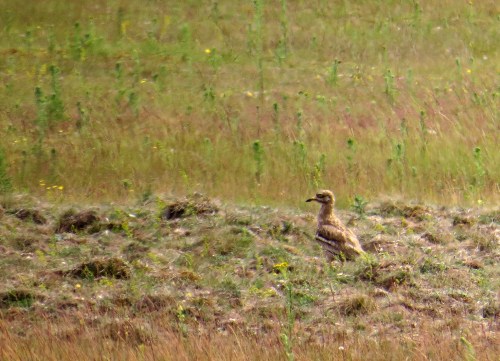
Later we visited the nearby reserve of Weeting Heath, just over the border in Norfolk. Here we had good views of several Stone Curlew a species that now is very hard to see in Dorset or its environs.

On the 30th we headed for friends in Lowestoft but on route we detoured to Hickling Broad in the Norfolk Broads.
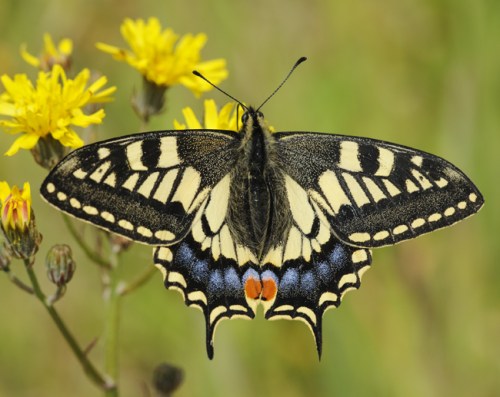
Our main aim was to see the endemic UK race of the Swallowtail Butterfly which has its UK stronghold in the Norfolk Broads. I have seen this species many times in Europe but I’ve never been to this area at this time of year before. After some searching we saw three but they were fast flying and I failed to photograph any. This photo is taken from the Norfolk Broads authority website.

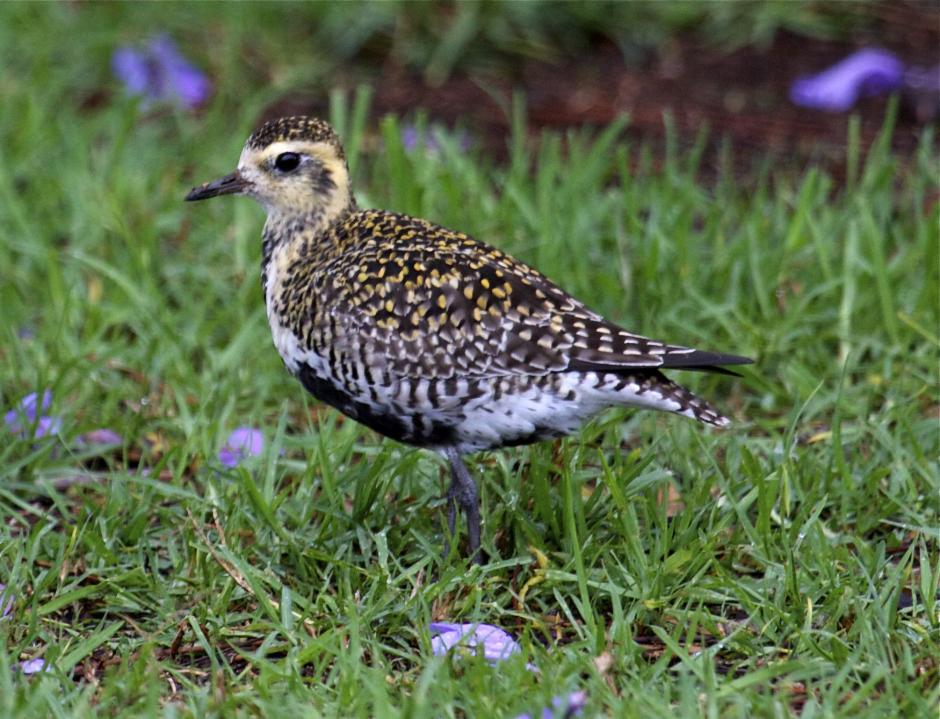
We headed south to Lowestoft and stopped off at Breydon Water near Yarmouth where a Pacific Golden Plover had been seen for the last few days. We had reasonable views but the heat haze was pretty bad and the bird often hid in the spartina grass. This photo comes from the Internet Bird Collection and was taken by Ken Harvard in Hawaii. The bird we saw was moulting out of breeding plumage unlike this one which was moulting into it and had less gold spangling on the upperparts but was similarly plumaged on the face, breast and belly. Pacific GP is a close relative of the American GP and breeds across arctic Siberia into western Alaska. The wintering range is huge, from eastern Africa across the Indian Ocean , SE Asia and all across the Pacific. There have been 83 previous records of this species up to 2013 and this is the third I have seen in the UK.
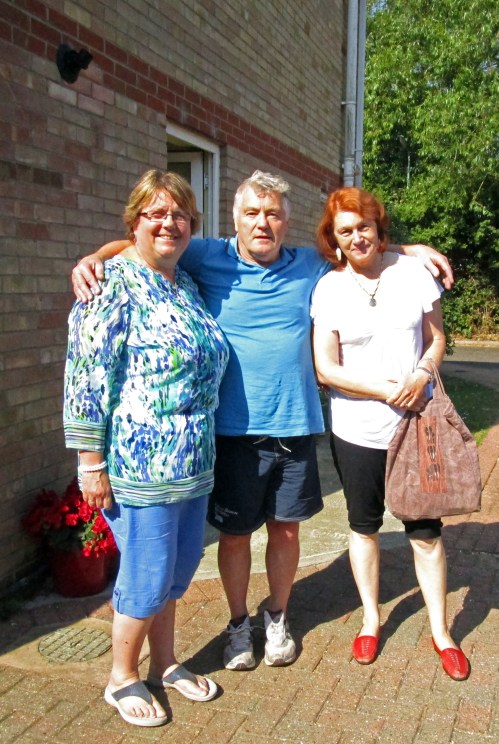
Then it was on to Lowestoft, the most easterly town in the UK to visit my old friends Alan and Debbie. I have known Debbie since 1974, but I met Alan in 1969. Whilst relaxing in a coffee bar at Leeds University I heard Alan defending the performance of Derby County Football Club, asking if he was from Derby I found that he not only had lived in the same area as me but in the same street! I had met his sister back then but not him. He joined us in the infamous Fraser Terrace ‘slum’ for the next three years and we have remained friends ever since.
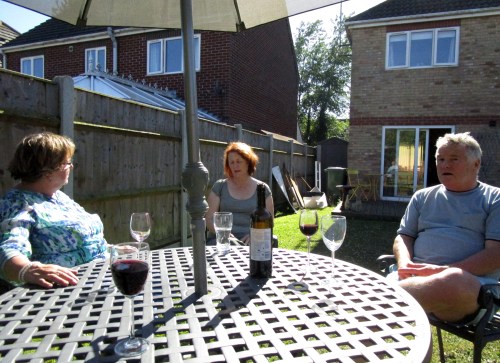
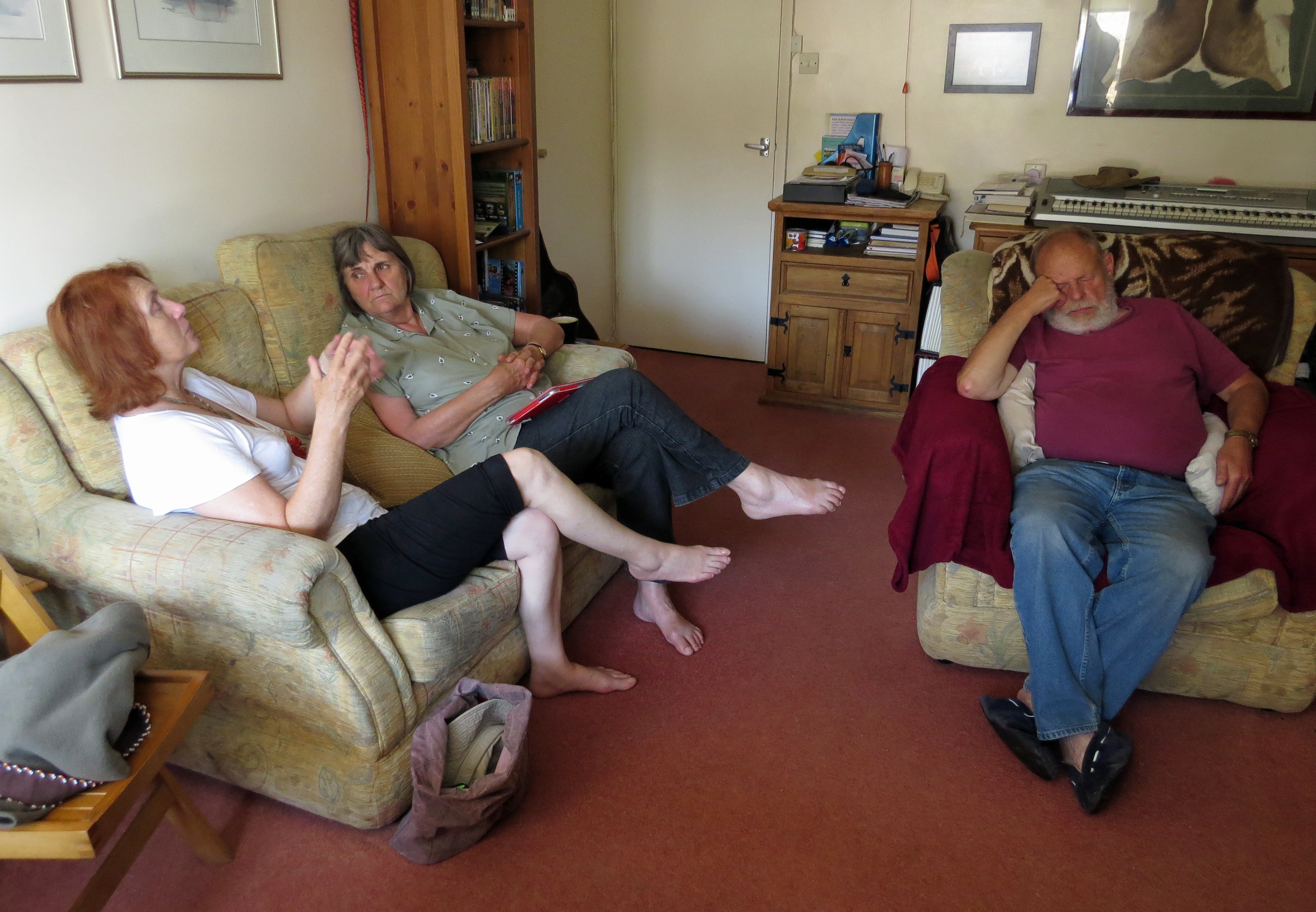
It was one of the hottest days of year with temperatures around 30c, so relaxing in the garden with a bottle of wine seemed the order of the day. Note the only one falling asleep is Margaret who was only drinking water.

South of Lowestoft lies the RSPB’s flagship reserve of Minsmere. This was the subject of this years Springwatch TV series.
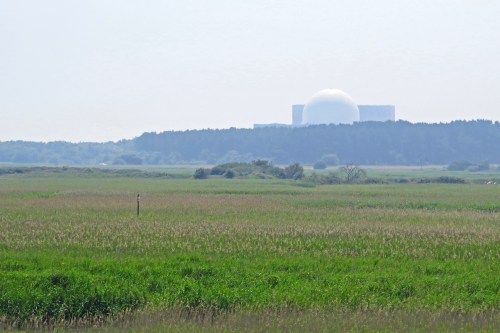
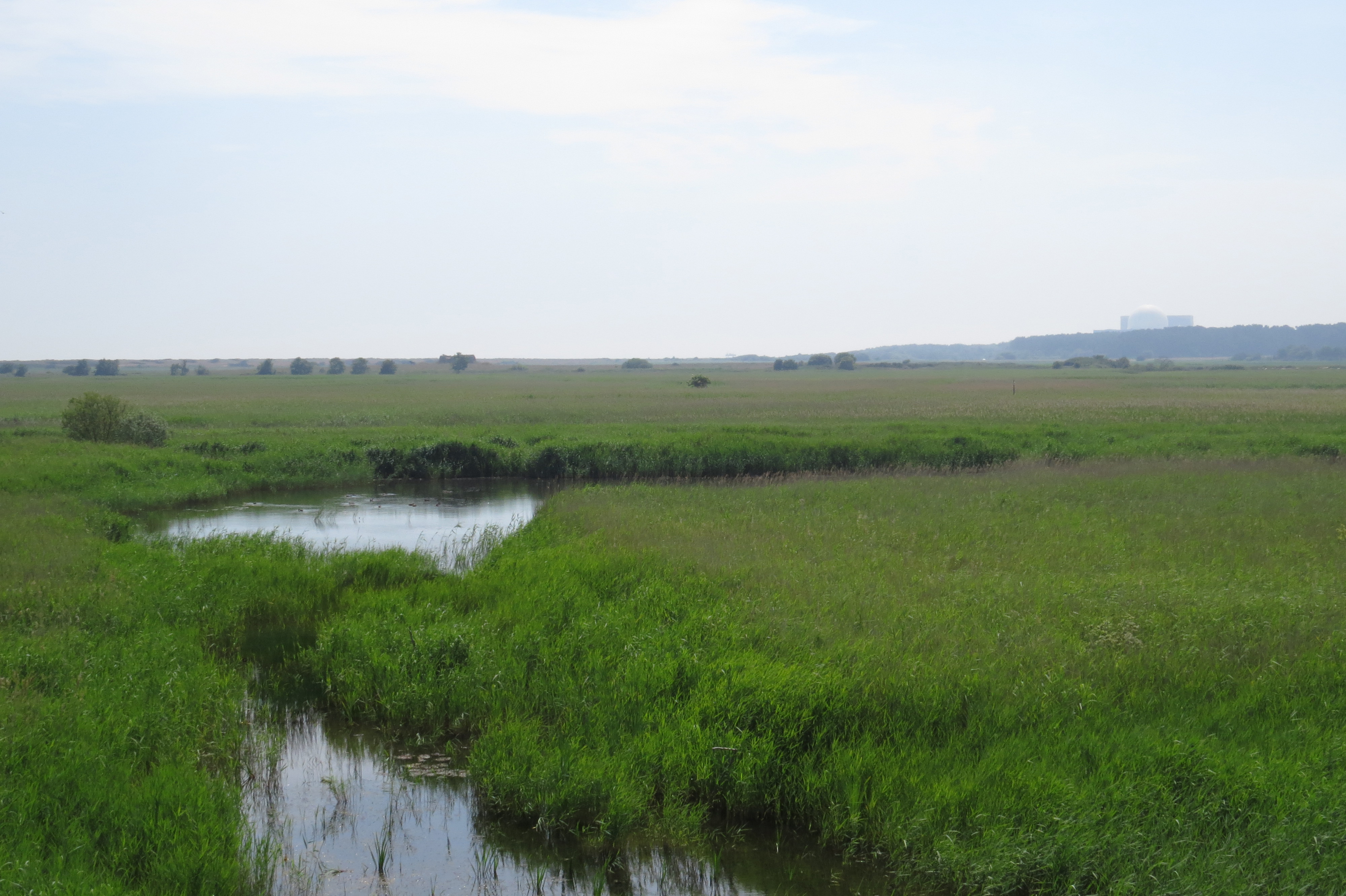
The reserve consists of extensive areas of reed bed, open water, muddy pools, heathland and woodland. In the distance is the Sizewell B nuclear power station.

Behind the beach lies ‘the scrape’ an artificially built pools that are a haven to breeding waders and migrants alike.
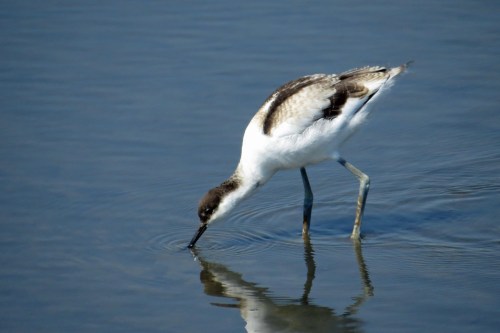
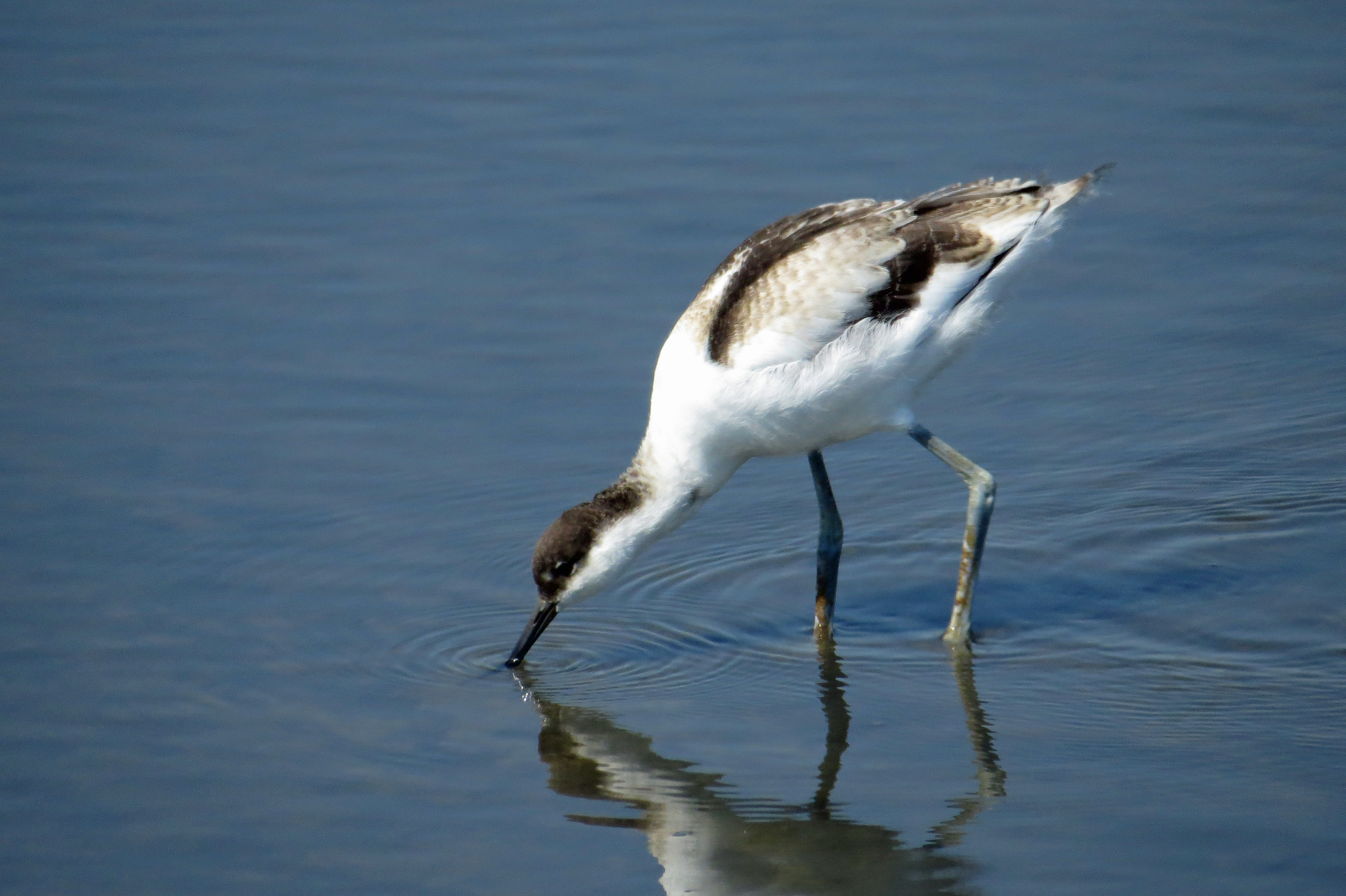
Perhaps the most famous breeding wader is the Avocet. Heavy predation of Avocet chicks by Badgers has resulted in the scrape being ringed by an electrified fence, which certainly worked as ‘the scrape’ is full of juvenile Avocets this year (compare with the Avocet chicks I photographed in Hampshire on 28th May to see how much they can grow in a month).

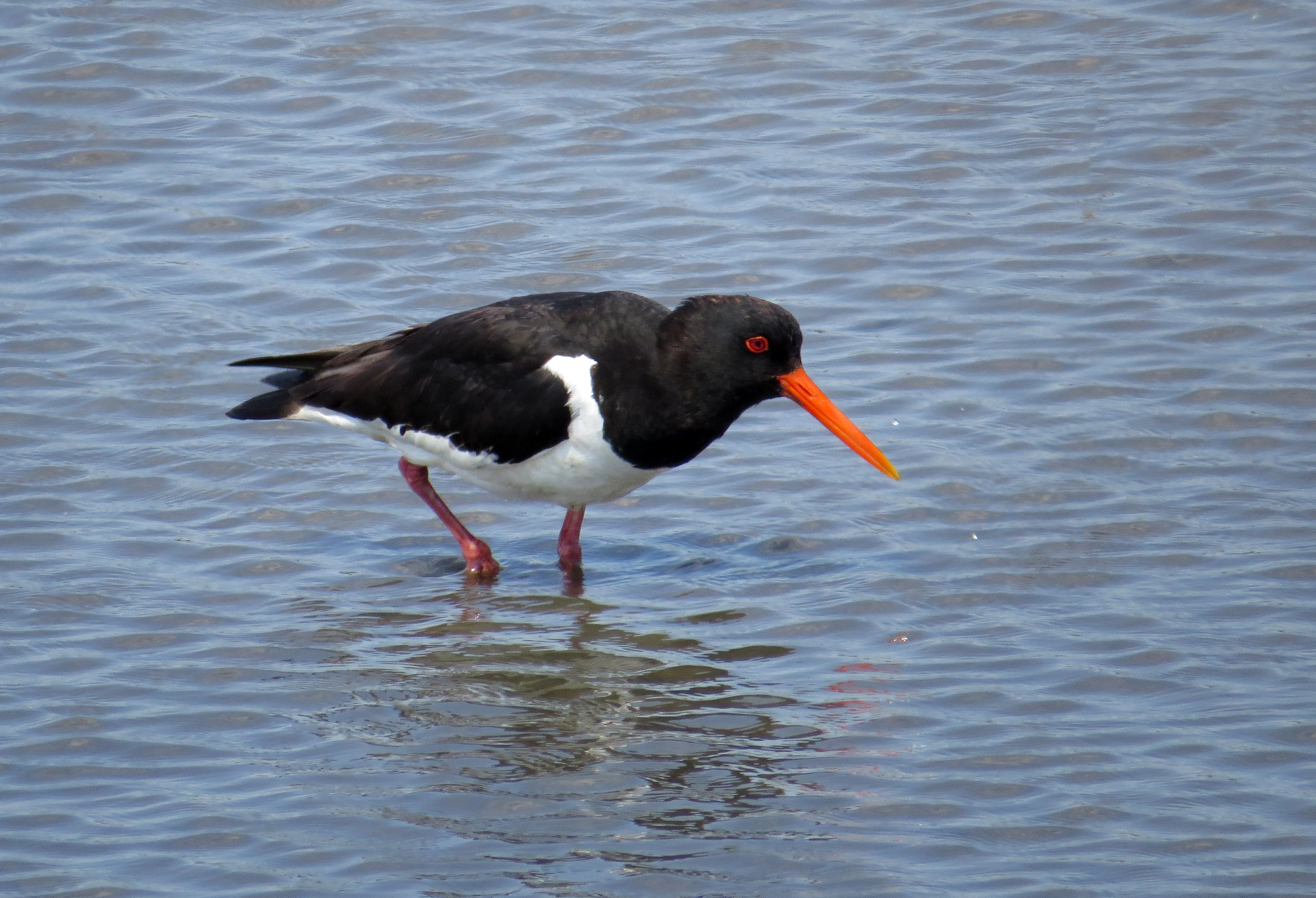
Other breeding waders included this Oystercatcher ….

… and the Oystercatcher’s chick wandered around in the company of this Turnstone, fresh in from the high Arctic.
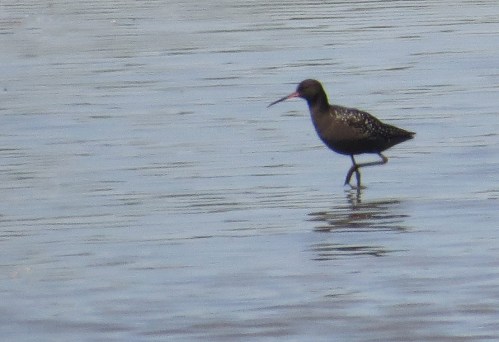
The best sighting on ‘the scrape’ was a flock of 50+ Red Knot, some still in their orangey-red breeding dress and a flock of 16 summer-plumaged Spotted Redshank (above). This species nests in boggy woodland in the arctic and uses a system of sequential polyandry, ie the female mates with one male then leaves him to incubate and raise the chicks, then may mate with another male who does the same. The females then migrate, so breeding plumage females can arrive in the UK from late June on their ‘autumn’ migration south. This species used to be much commoner in Dorset than it is today and partially breeding plumaged birds were often seen in Poole Harbour in April on their way north, but now it is mainly a scarce winter visitor to the area, a time when they are in their grey non-breeding plumage. Eastern Britain at this time of year is probably the best place to see these beautiful birds in all their finery.

For various reasons our friends couldn’t see us in the most convenient order so by the time we arrived in Framlingham we had almost done a full circle.

Terry, David and Margaret. Margaret was friends with Terry when she lived in South Africa. Recently Terry moved to the UK where she met and married David. David has a strong interest in natural history, particularly birds, and being completely blind has a great interest in their vocalisations. At the temperature was in the 30s away from the coast we spent the afternoon indoors discussing music and bird song. I took this photo in a nearby church in 2014.
On 2nd July it was thankfully a little cooler. We left Terry and David after breakfast and started the long drive to Leeds in Yorkshire. This, along with a visit to Derbyshire will be the subject of the next post.
A short post bringing the blog up to date with a few non-birdy things.
A couple of weeks ago Margaret and I took the unusual step of going all the way to Reading to see a Genesis tribute band. This might seem a long way to go just to see a tribute band, but the reason we went is that my brother has a friend who intends to manage them. The band,who haven’t even decided on a name yet, were doing a dress rehearsal and wanted an audience of friends and colleagues. My brother and his wife travelled down from Derby and spent some time at Henley-on-Thames before meeting us for a meal in Reading. It was my sister-in-law’ birthday, so that was another reason for going. Unfortunately we have no photos of the event.
The band was superb and sounded just like Genesis. However the concert did remind me why I never really got into Genesis, in spite of listening to most of the progressive rock bands in my youth. Sure, some of their numbers like ‘Los Endos’ (which the tribute band concluded with) were great as were some of the slower numbers, but Phil Collins’ voice often sounded shrill and his lyrics were often obscured by all the heavy guitar and keyboard sounds. I would have preferred it if Genesis had performed songs where the lyrics were delivered during the quieter moments (although Genesis fans probably don’t agree with me). Of course, as the tribute band were an exact copy of 1980’s Genesis they sounded just like that as well. However we really enjoyed this free concert, it was nice to see my brother and sister-in-law again and the drive wasn’t too bad, we were home by midnight.
The second concert was on the 11th June when we went to the BIC in Bournemouth to see The Moody Blues, a band that I really liked in the late sixties and early seventies and saw once during that period in Leeds. After that time I increasingly found the poems on their albums to sound bit pretentious and I just played a ‘best of’ album when ever I wanted to hear their melodic harmonies backed by the sound of a Mellotron.

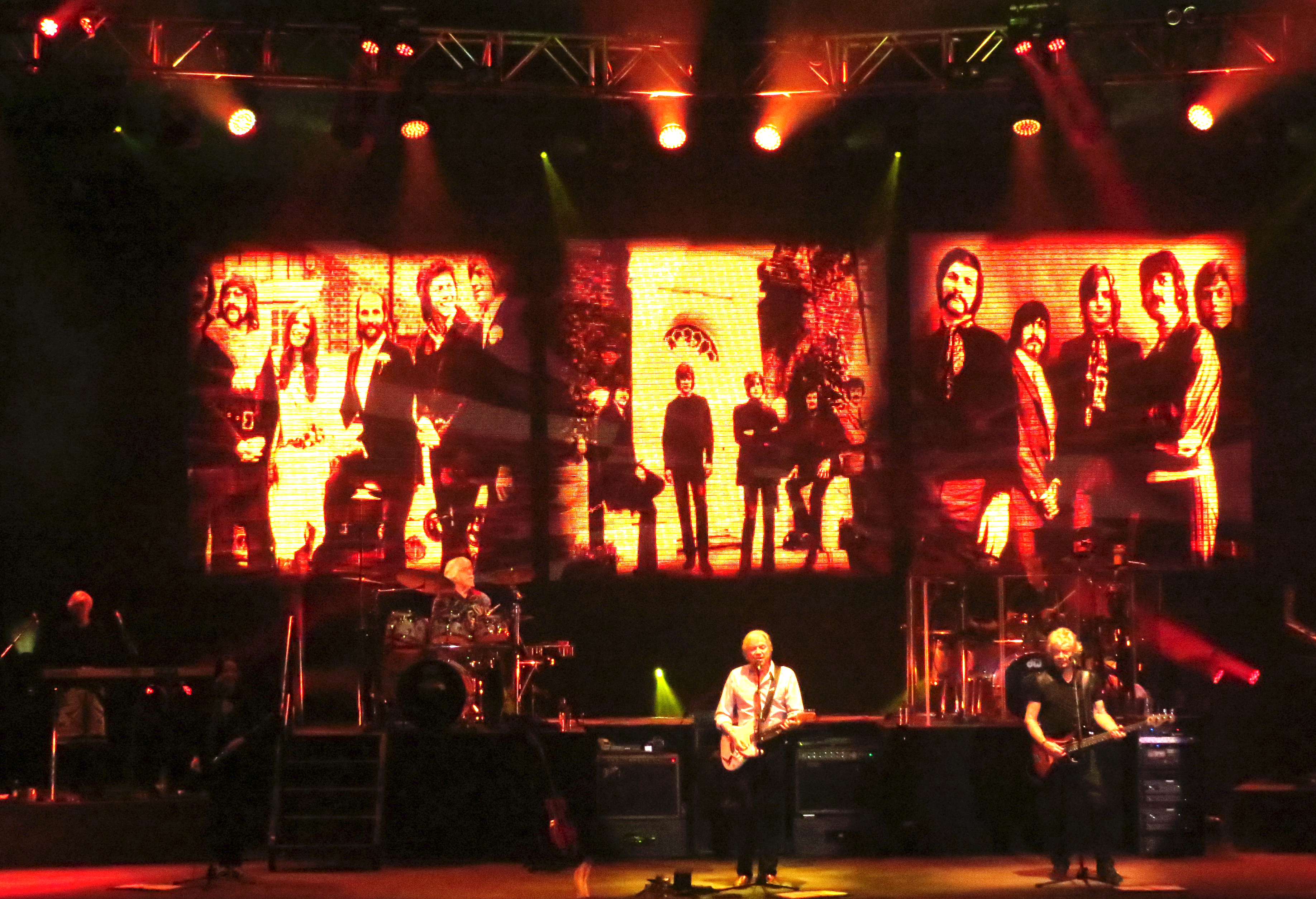
Of the now seven strong band, three members remain from the famous sixties line up: Graeme Edge (LH drums), Justin Haywood (guitar) and John Lodge (bass)

The band used some imaginative visual effects and projections ….
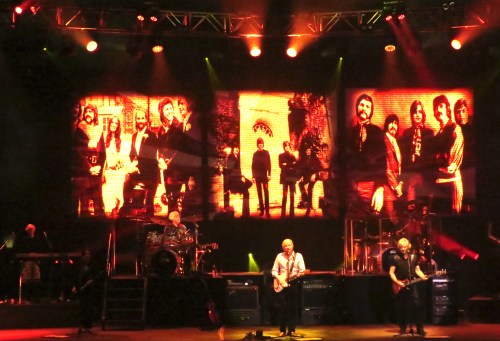
…. including lots of photos of them in their heyday.

Justin Haywood and John Lodge. The Moody Blues recently celebrated their 51st birthday although Haywood and Lodge didn’t join until 1966. Why is it that ageing rock stars don’t go bald like the rest of us?

I mainly know their songs from the late sixties and early seventies and much of the first half they performed later numbers, but they ended the first set with a lovely rendition of ‘The Story In Your Eyes’. In the second part they played more oldies such as ‘Ride My See Saw’, ‘Question’ and of course ‘Nights In White Satin’.

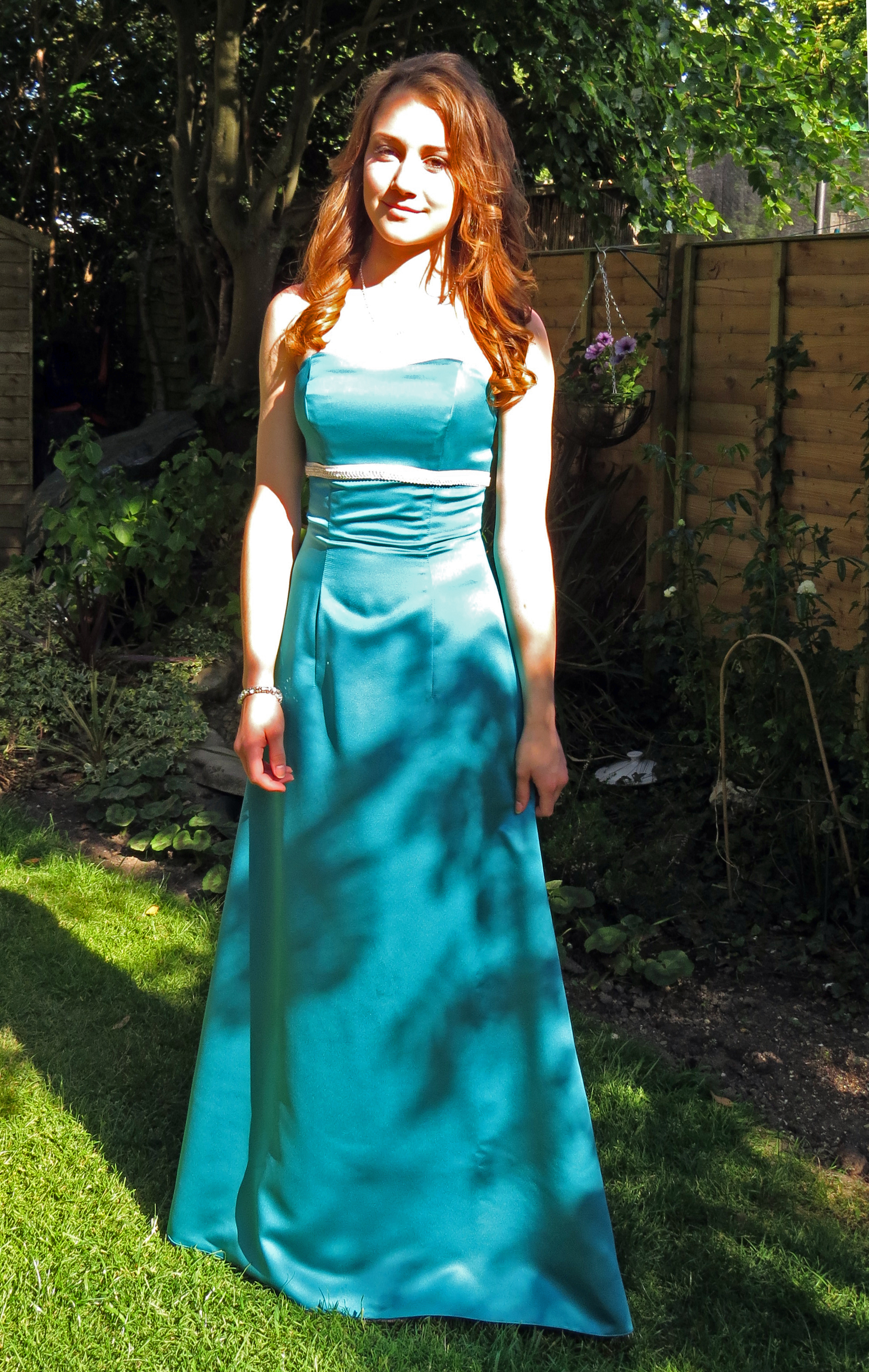
Our granddaughter Kara has just finished her GCSE exams. She came round last weekend in a state of great excitement, all dressed up for the end of school prom.

Janis and I spent some time photographing her in all her finery in our garden. Fortunately the weather was good.

Older sister also got in on the photoshoot.

Not only was Kara off to the school prom but immediately afterwards she and a friend took a taxi to Heathrow where they boarded a plane to St Maartin in the Caribbean to visit some of Kara’s relatives. We know from Facebook that she is having a wonderful time. Not bad for a 16-year-old!

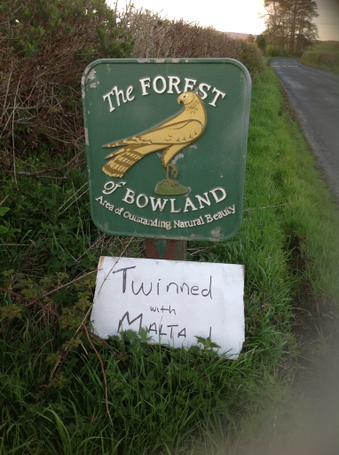
And finally returning to a bird related theme, I was amused by this photo which was sent via Twitter highlighting the shocking and totally illegal slaughter of birds of prey in the Forest of Bowland.
We have been back from our trip to the Alps for nearly five weeks now. After a very hectic schedule earlier this year I have been taking it easy and been catching up with things at home, but there has been time for some birding and ringing, something that is covered in this post.
I have already uploaded accounts of us seeing the Red-footed Falcon, White-winged Tern and Greater Yellowlegs in Dorset or Hampshire, here are a few photos of much commoner birds.
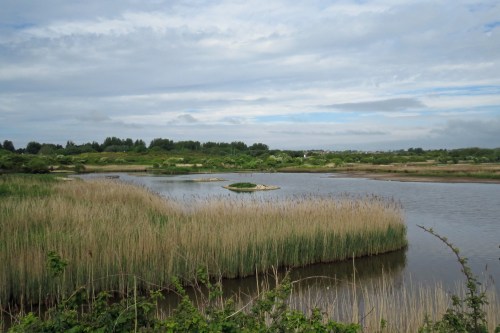
Back in late May we headed to Lodmoor near Weymouth in the hope of seeing a Purple Heron that was hanging about there. Not surprisingly we dipped, as the best time of day to see it was about 9pm as it flew to roost.

We did get to see the local breeding Common Terns and to the lower right of the photo, a summer plumaged Dunlin. The tunnels in the picture are to help protect the tern chicks from attack by aerial predators such as Kestrels. However news received today told that all the chicks on this island have been predated, possibly by a fox or perhaps gulls.

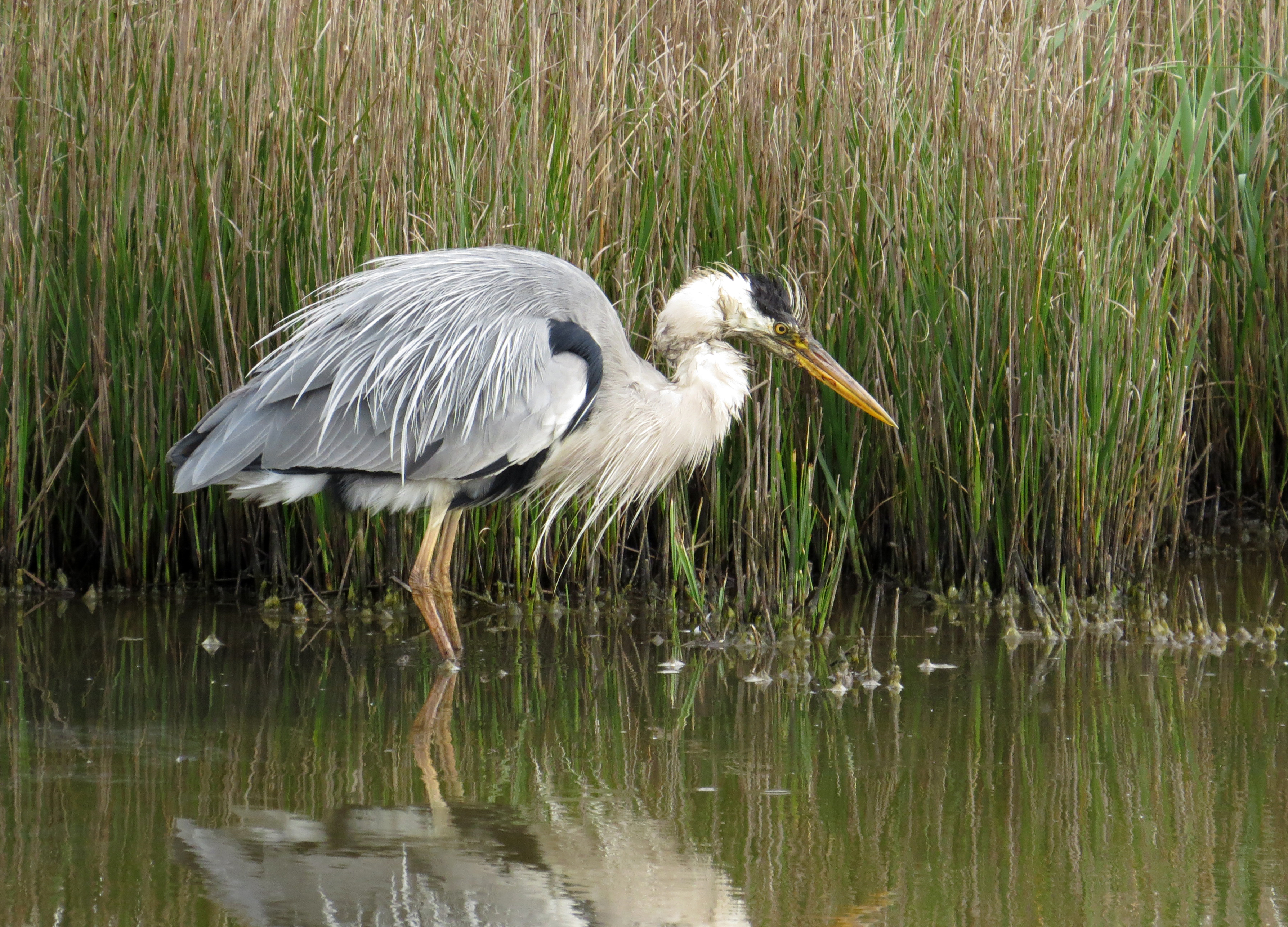
No Purple Heron but plenty of Grey ones. This bird looked particularly ragged around the neck.
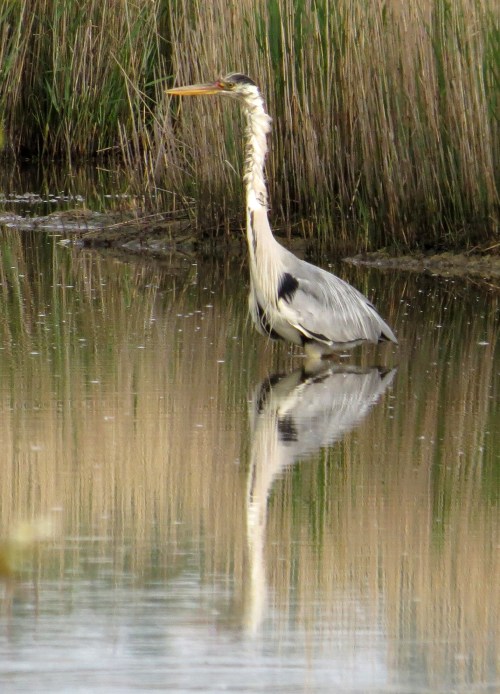
With some blood at the base of the bill I wondered if the heron had been in a fight with a large eel which had wrapped its body around the heron’s neck.

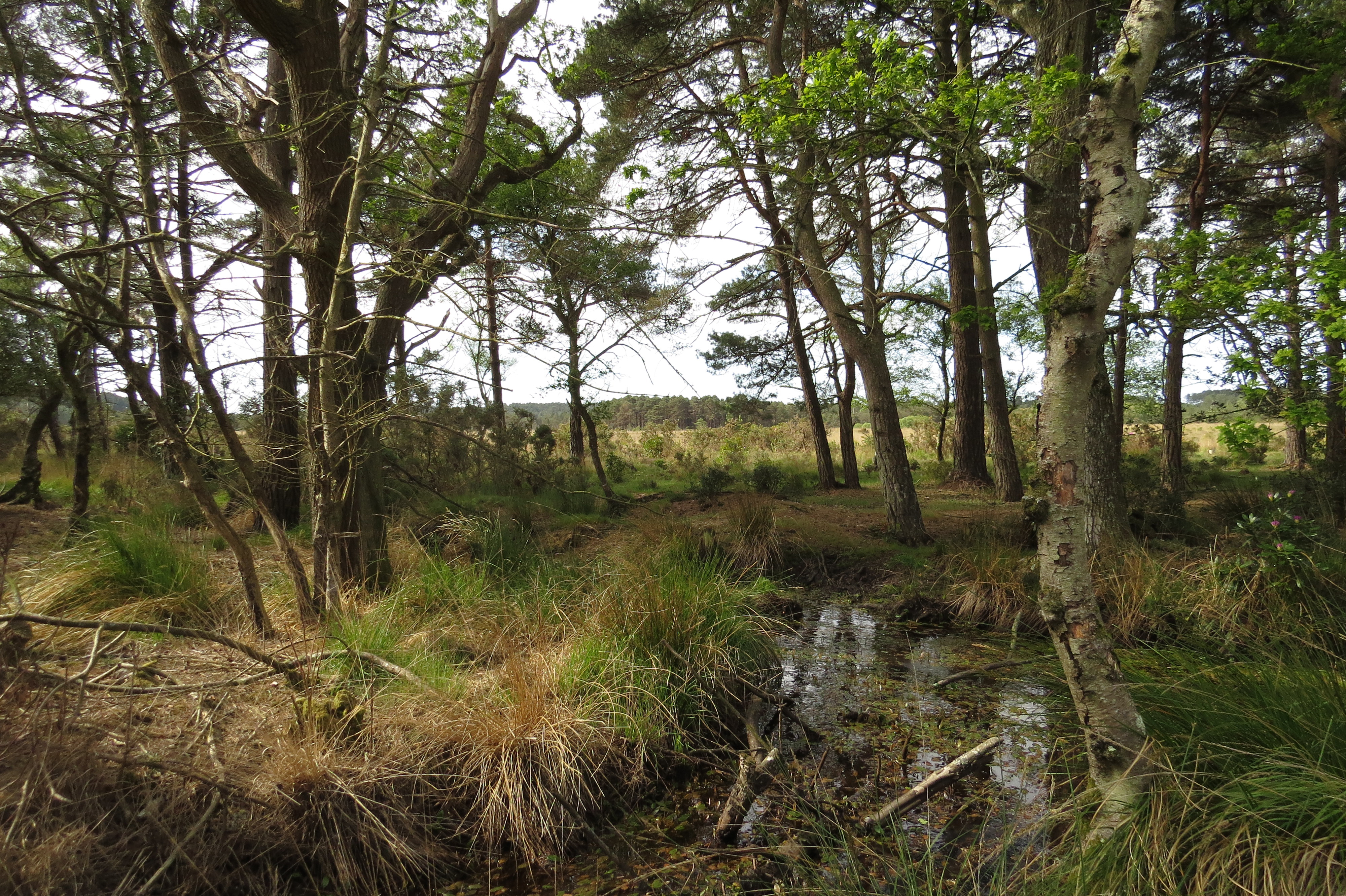
I have made a number of visits to Wareham Forest, especially the area around Mordon Bog. I didn’t get any photos of the local Spotted Flycatchers ….

…. but this male Siskin preened on a branch just in front of me.

A drake Teal was flushed from this area, unusual record in June – I wonder if they are breeding?
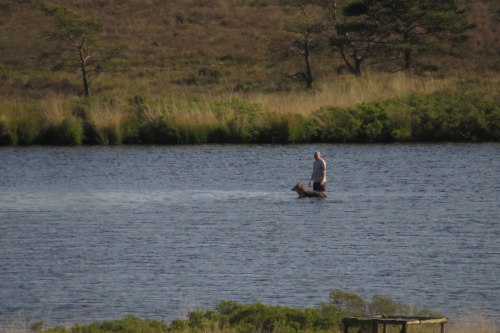
With breeding Little Grebes and possibly Tufted Duck on Decoy Pond, which is part of a National Nature Reserve, it seems regretable that this guy has chosen to take his dog for a swim.
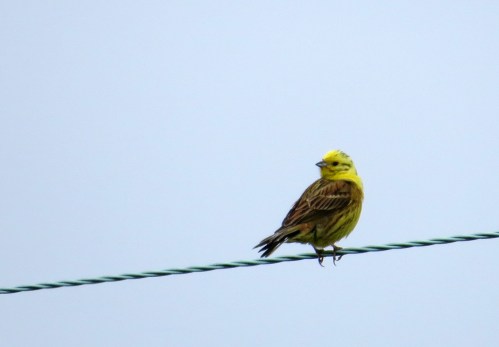
Other birds seen in the Wareham Forest area included this Yellowhammer ….

…. good numbers of Stonechats ….
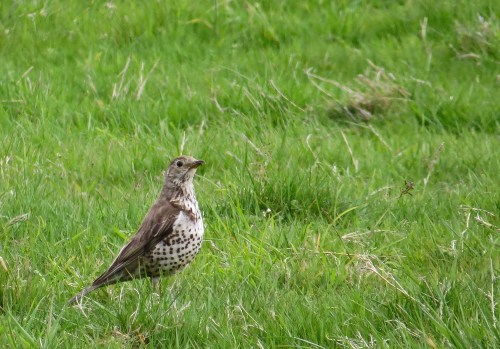
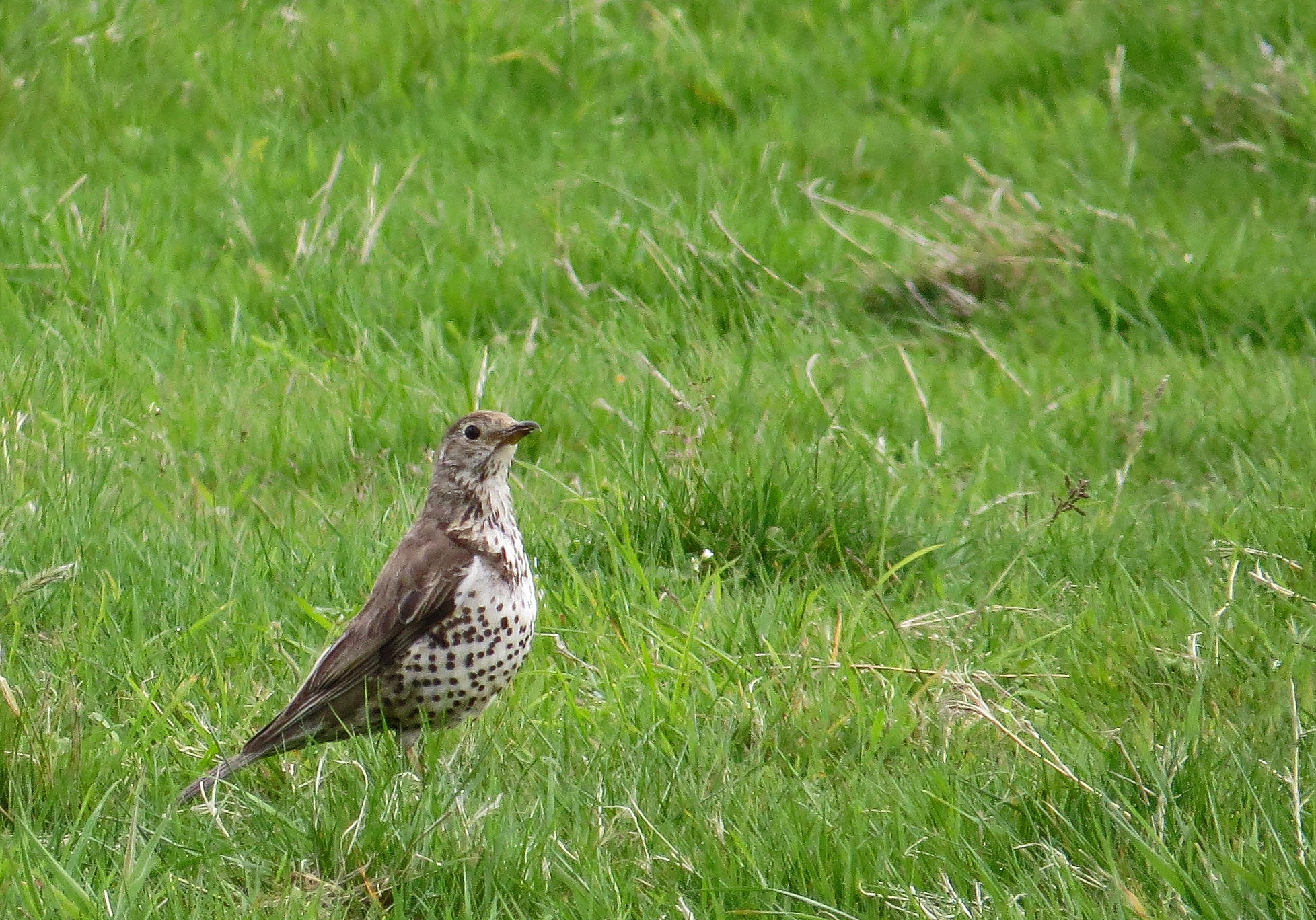
…. and on adjacent farmland, this Mistle Thrush.
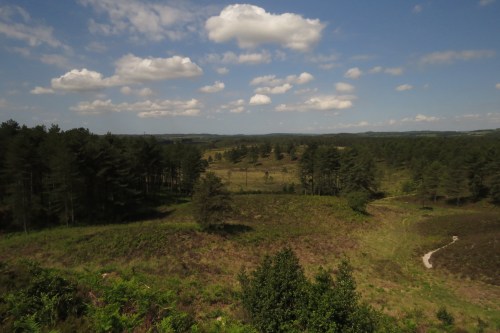
In early June several birders had distant views of what looked to be a Short-toed Eagle. I was in America last year when a Short-toed Eagle was found and extensively twitched in Wareham Forst, then later in the New Forest. Had it returned for a second summer and was I to get a second chance?
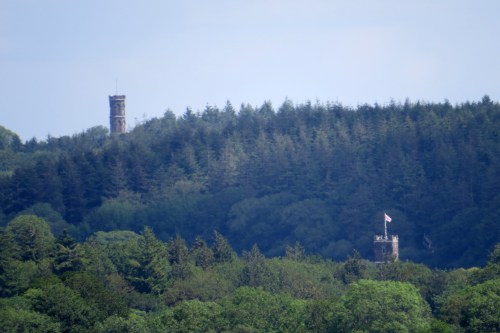
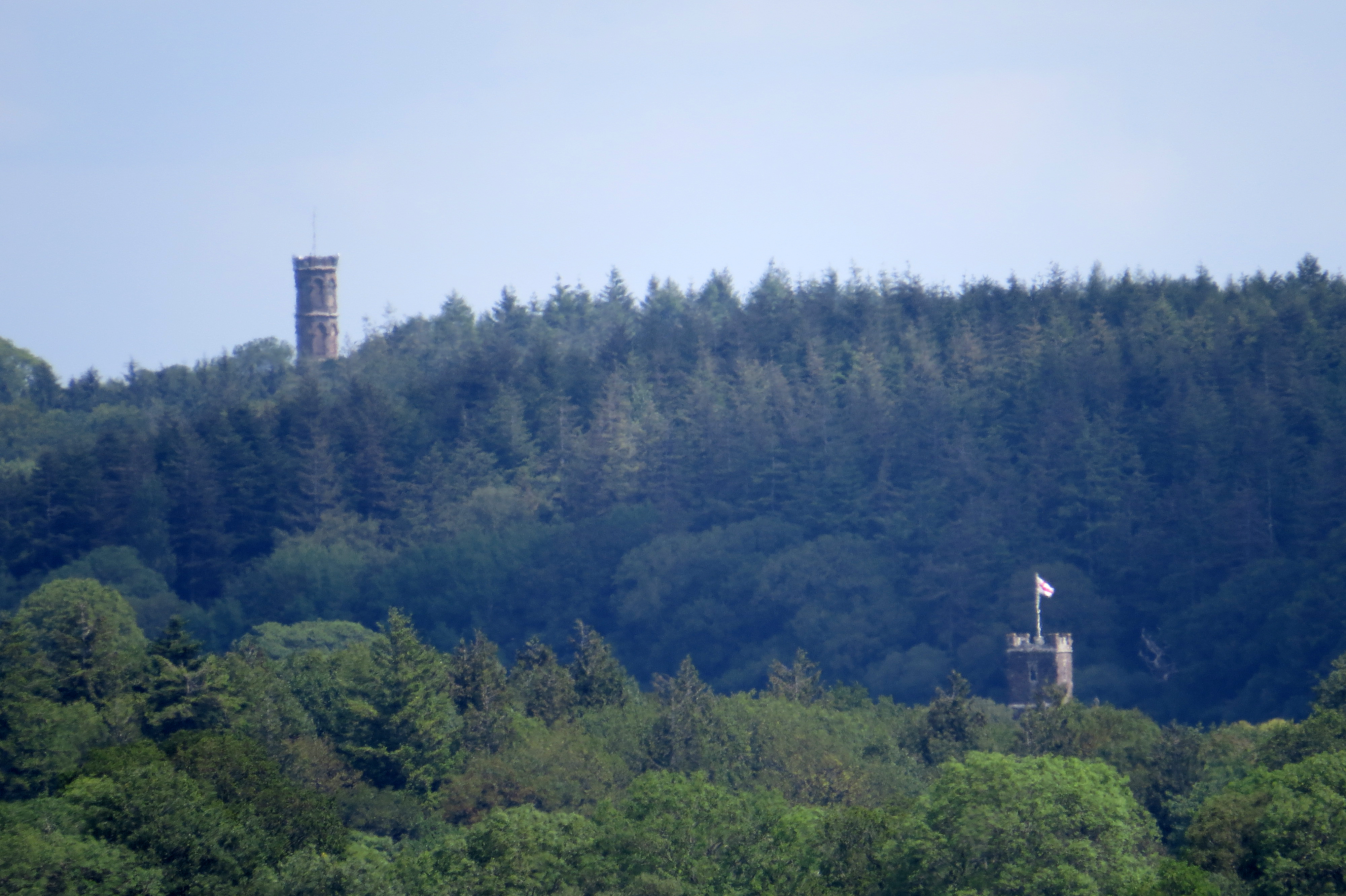
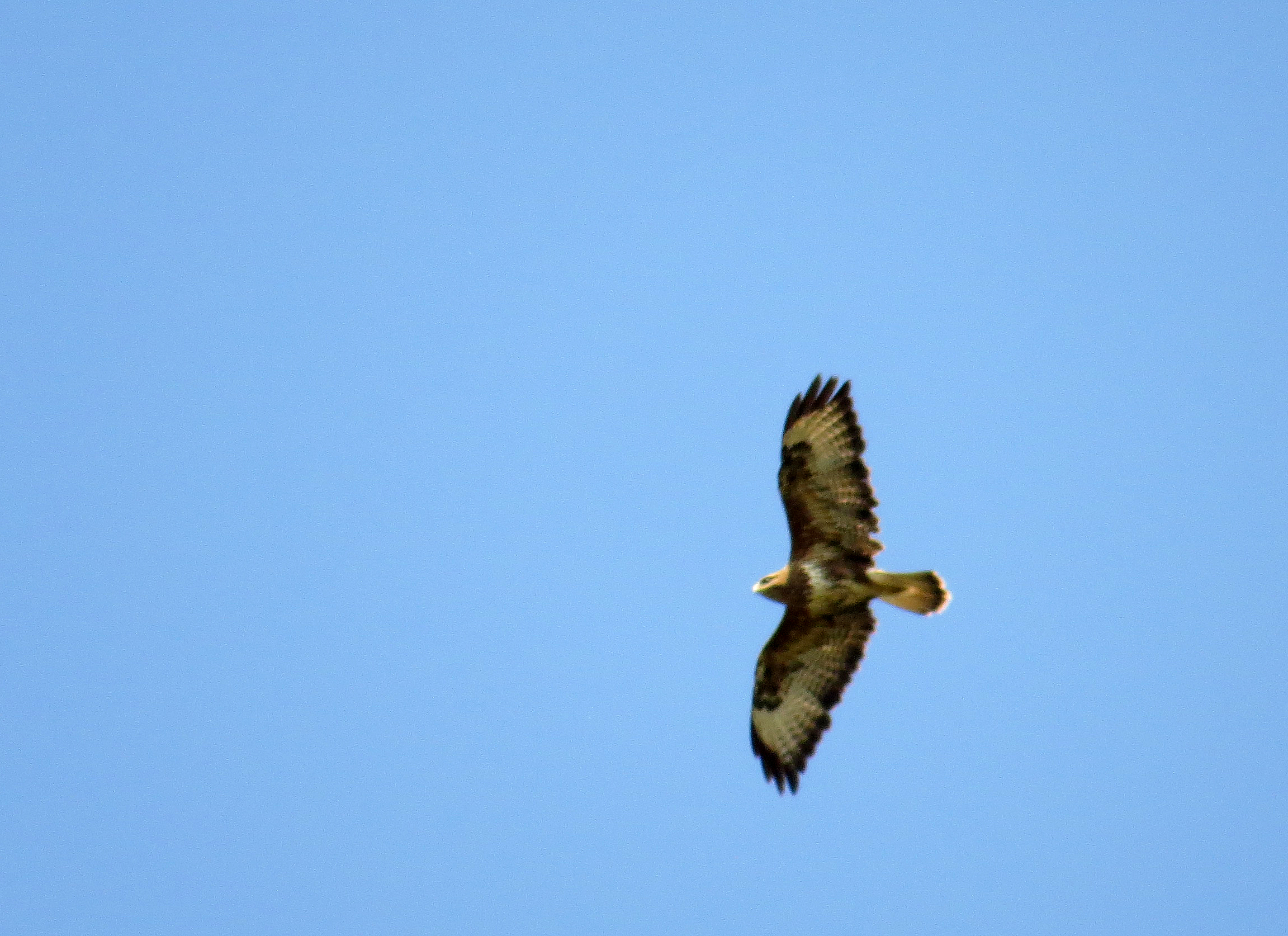
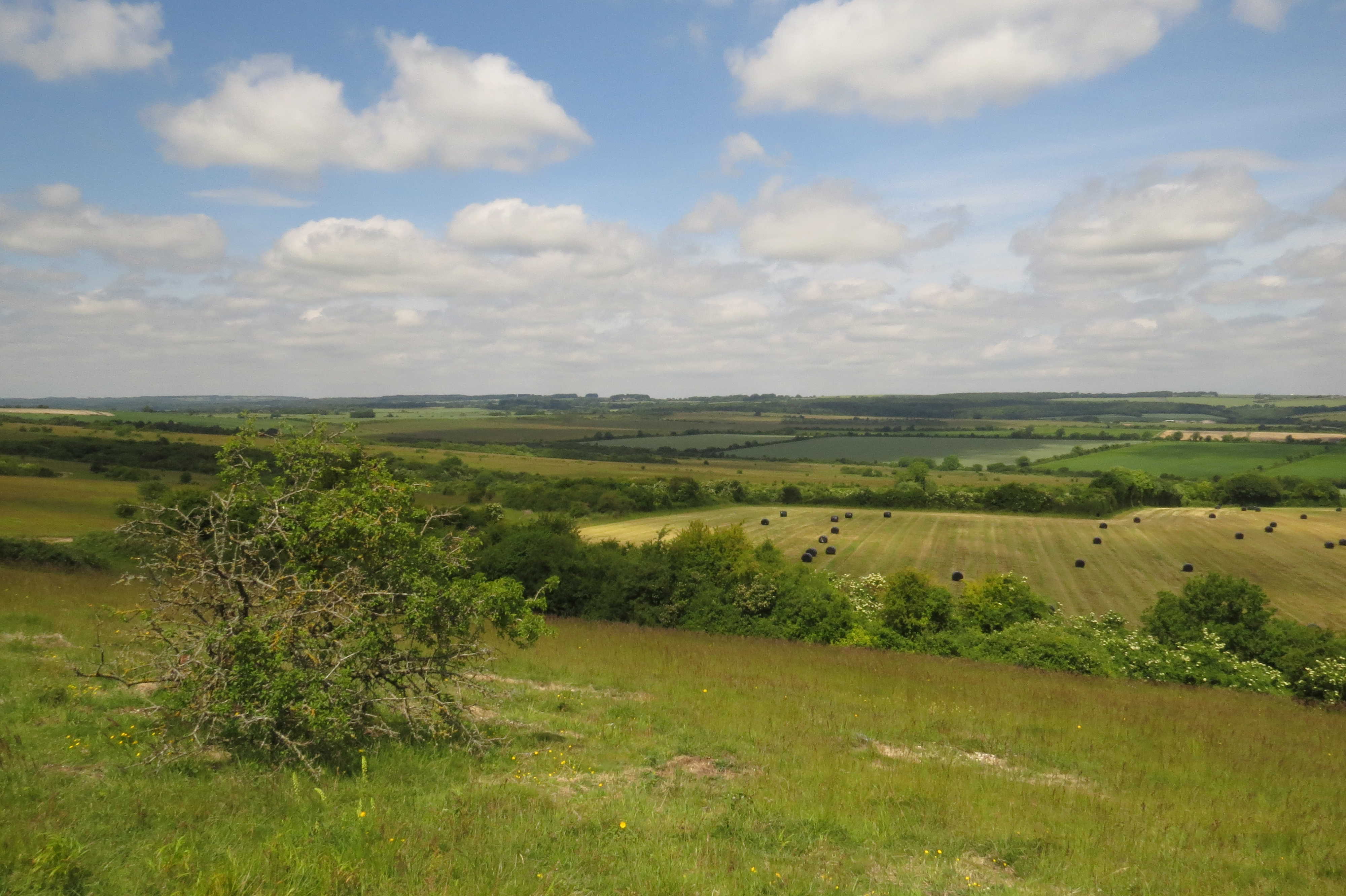
Well, I did see a large raptor along side a Buzzard briefly appear over the tree line in the photo, which is in the privately owned Charborough Park about three miles away to the north-east, but again there was nothing conclusive.

After some nine hours of scanning from various vantage points over four days the only raptors conclusively identified were Common Buzzards (above), Kestrels, Hobbies and a single Red Kite.

We recently spent one morning on Martin Down, just over the border in Hampshire.
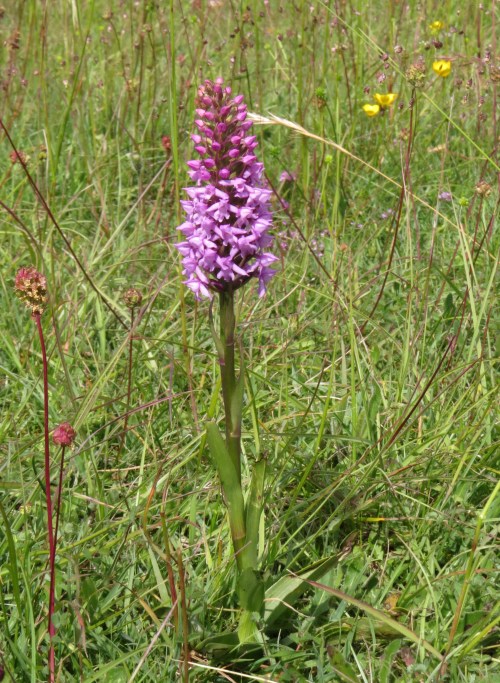
This wonderful reserve is famed for its chalk downland flora (such as this Fragrant Orchid) and butterflies but along with so many other places much of its bird life has declined in recent years. Nightingales, Willow Warblers, Grey and Red-legged Partridges and even Stone Curlew used to be common or at least regular ….
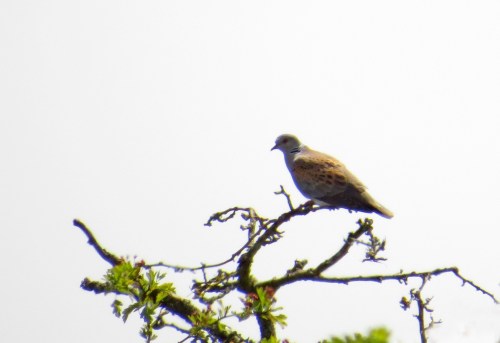
…. but at least there are still several pairs of Turtle Doves.
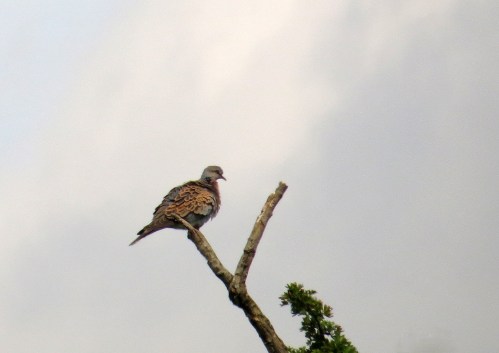
This species has undergone a precipitous decline, the result of agricultural intensification here in the UK and on their wintering grounds in Africa and wholesale slaughter on spring and autumn migration in some areas around the Mediterranean.
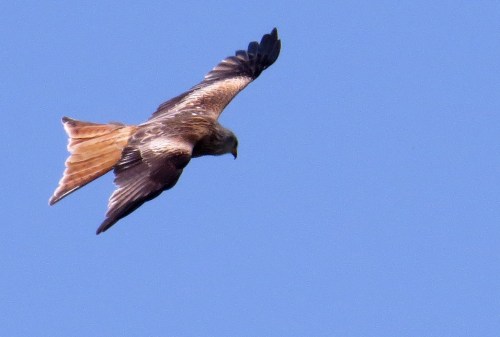
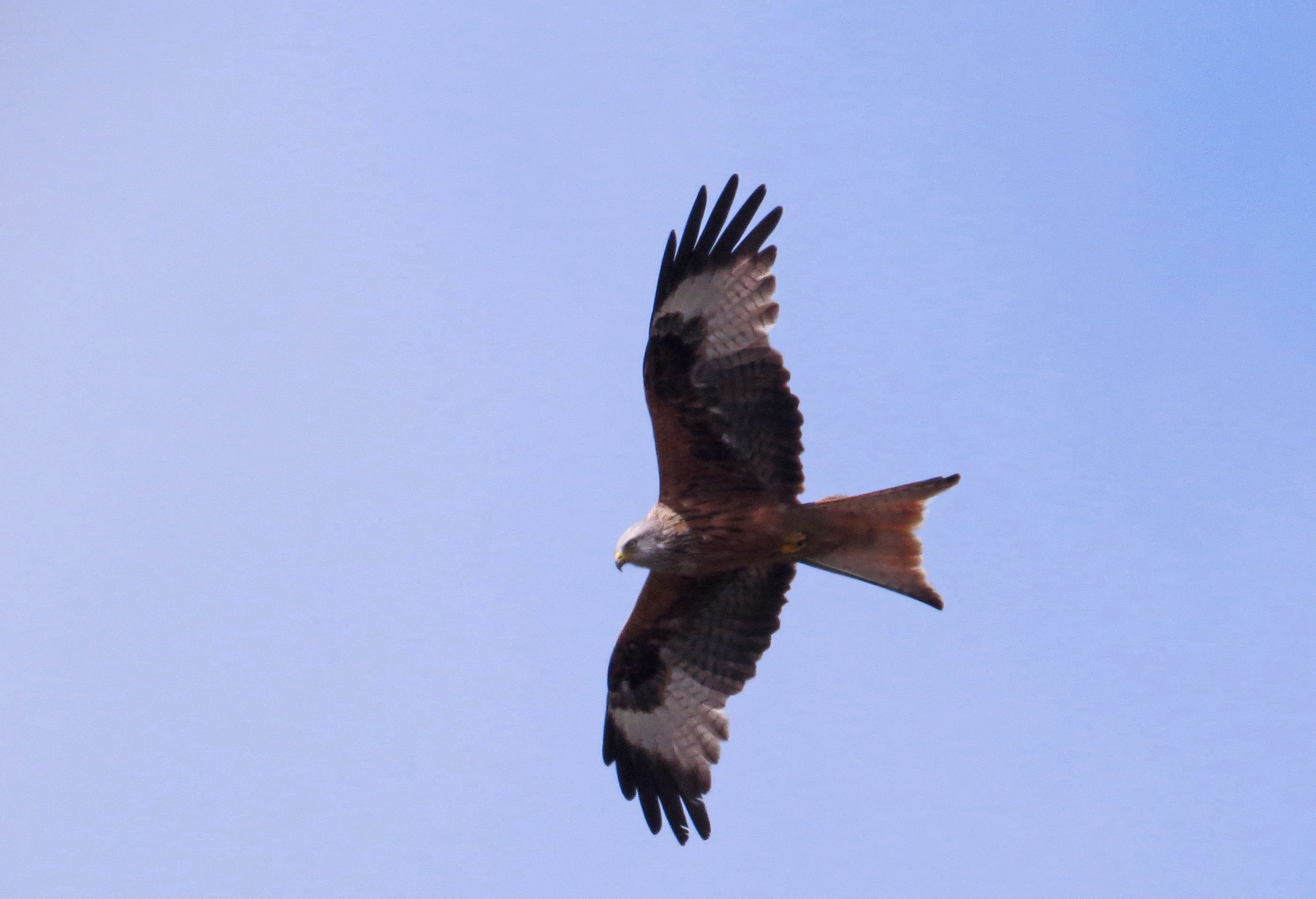
Though in many ways its ‘all swings and roundabouts’. Although some of the farmland birds have declined, others such as the beautiful Red Kite are increasing in numbers and I have recently seen two in North Dorset, one over Corfe Mullen and one near Wareham Forest. Don’t pay any attention to those misguided individuals who tell you that the increase in raptors numbers are the cause of songbird decline. It simply can’t be, under that scenario if their prey was declining then raptors would decline too. Also Nightingales and Turtle Doves declined in this area long before Red Kites made a welcome reappearance and Willow Warblers have merely moved their breeding range northwards as a result of climate change (something that others who can’t understand the principle of cause and effect choose to deny). Photo taken recently in Austria.

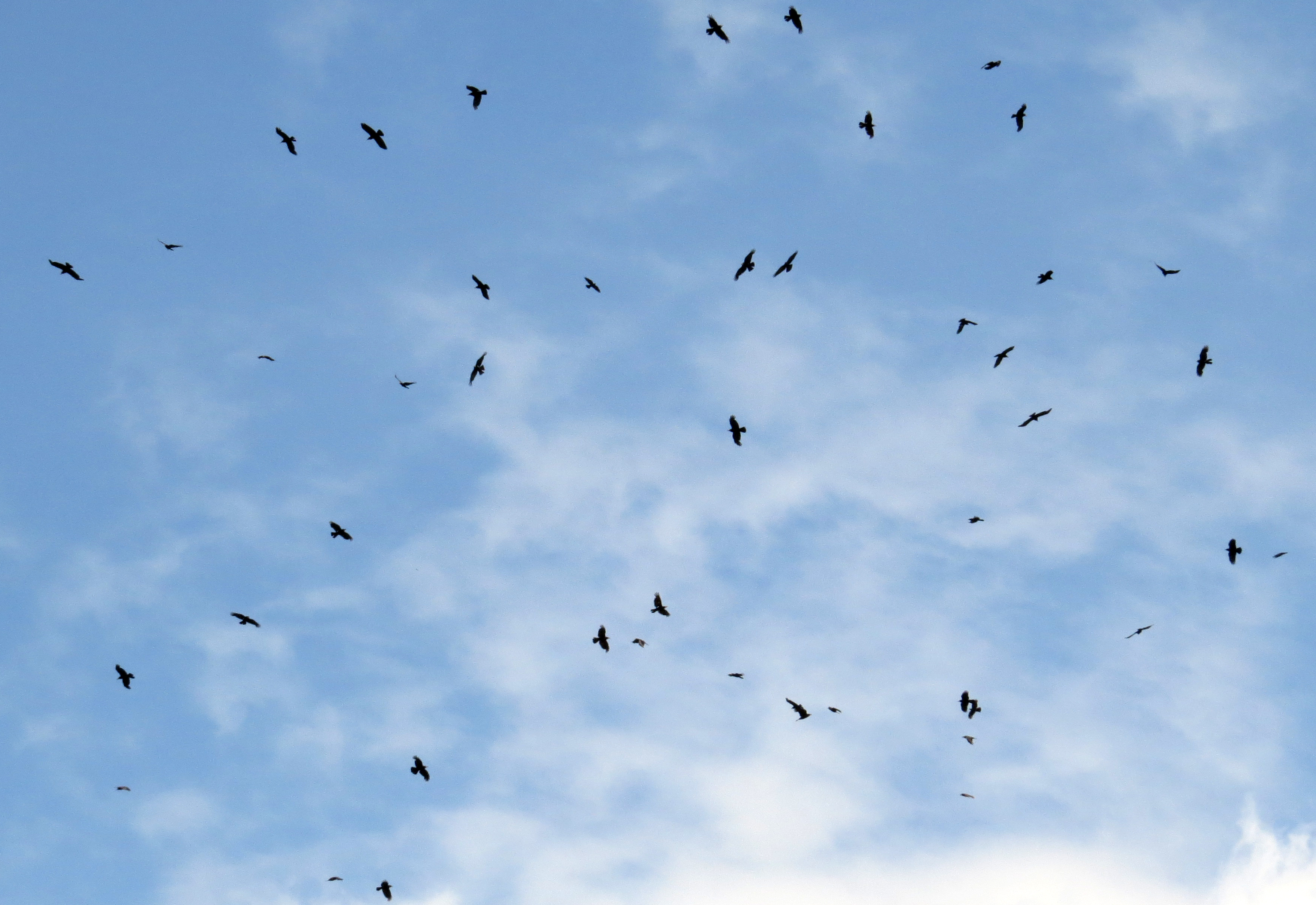
Perhaps less welcome is the large increase in corvids in the Martin Down area. Rooks, Carrion Crows, Jackdaws and even Ravens were regularly encountered, often in large flocks.
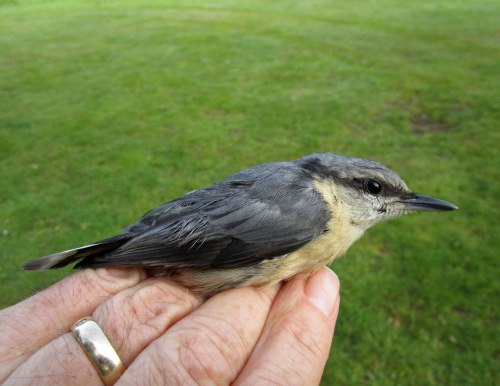
Over the last few weeks I have been doing some ringing, but for the type of ringing I usually do, migrants at a coastal locality, it is definitely the quiet period. However I have ringed at several sites, usually with trainee ringers and caught a series of juvenile birds such as this Nuthatch. I have had some interesting retraps including a Chiffchaff hatched at our Fleets Lane site last year that returned there this year to breed.

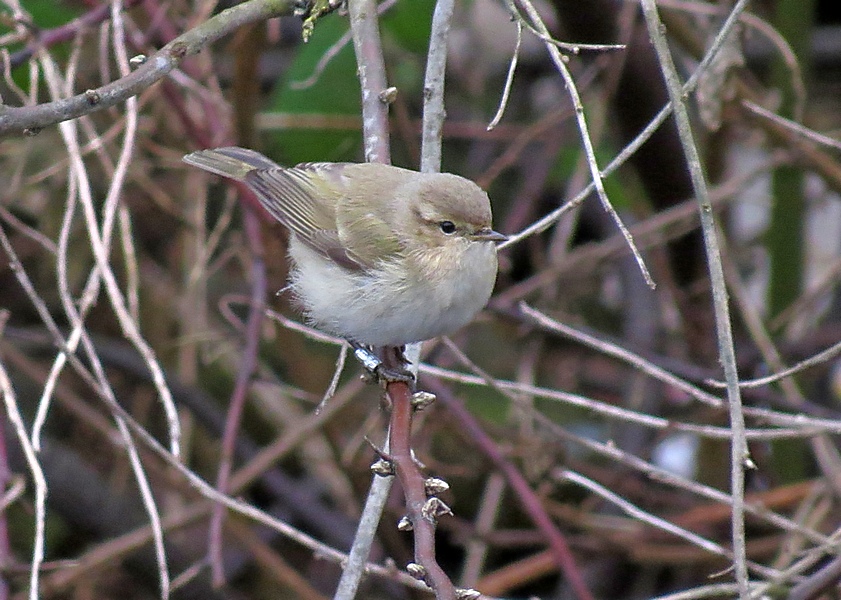
Something that we have been involved in during the winter months is the ringing of wintering Chiffchaffs. We recently sent off some feathers for DNA analysis on this bird which looked like race tristis, the so-called Siberian Chiffchaff and on another which was nowhere near as striking and indeed had lots of green tones in the upperparts. To our surprise both came back with a mitochondrial DNA sequence indicating they were tristis. The individual above had a sequence identical to those Chiffchaffs that breed in the Yenesei Basin in central Siberia. I would like to revisit this subject in a future post as I have been writing an article on it for the Dorset Bird Club newsletter, but for now I can suggest that if you find a Chiffchaff looking like the one above in the winter months then it is almost certainly a tristis. This bird was ringed by Paul Morton in January of this year and photographed by Ian Ballam in February.

Recently I have been asked if I would like to participate in an exciting project on Nightjars on one of the heathland areas in East Dorset. Researchers want ten electronic GPS tags attaching to Nightjars, which will then recaptured a few days later, the tags removed and their movements downloaded. Our ringing group, which has a lot of expertise in catching and ringing Nightjars, has been asked to help. The tags are attached to the tail feathers, so if any bird avoids recapture the tag will be shed at the next moult.

Last night we trapped a female Nightjar, which had been initially trapped on the far side of the heathland area the week before, and the tag was removed. It will be very interesting to see what it reveals. So far we have deployed nine of the ten tags and have recovered one, more will follow in subsequent weeks.
Late on the 14th we arrived at Dornbirn, the largest town in easternmost Austria. Margaret’s nephew Marc lives here (convenient as he works for a Swiss company), although her sister Cathy and husband Wolfgang live in easternmost Austria (see posts for July 2013). Photos of the birding and sightseeing we did whilst in this area have been uploaded in the last post.
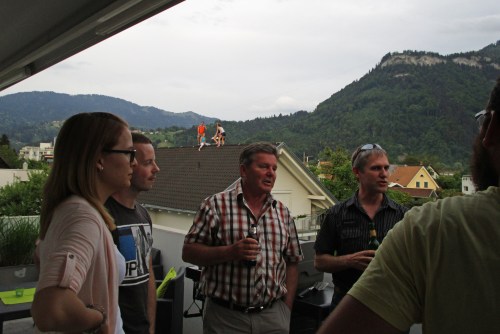
On arrival we assembled at the apartment that Marc shares with his bride-to-be Elizabeth. L-R: Rene’s fiancée Danielle; Rene, Marc’s brother; Wolfgang, Marc and Rene’s father; John, Margaret’s son-in-law now living in Essex; and with his back to the camera, Daniel, Marc’s best man. Note the neighbours are practicing their mountaineering techniques on their roof!
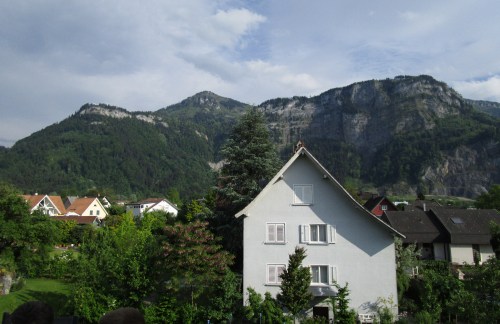
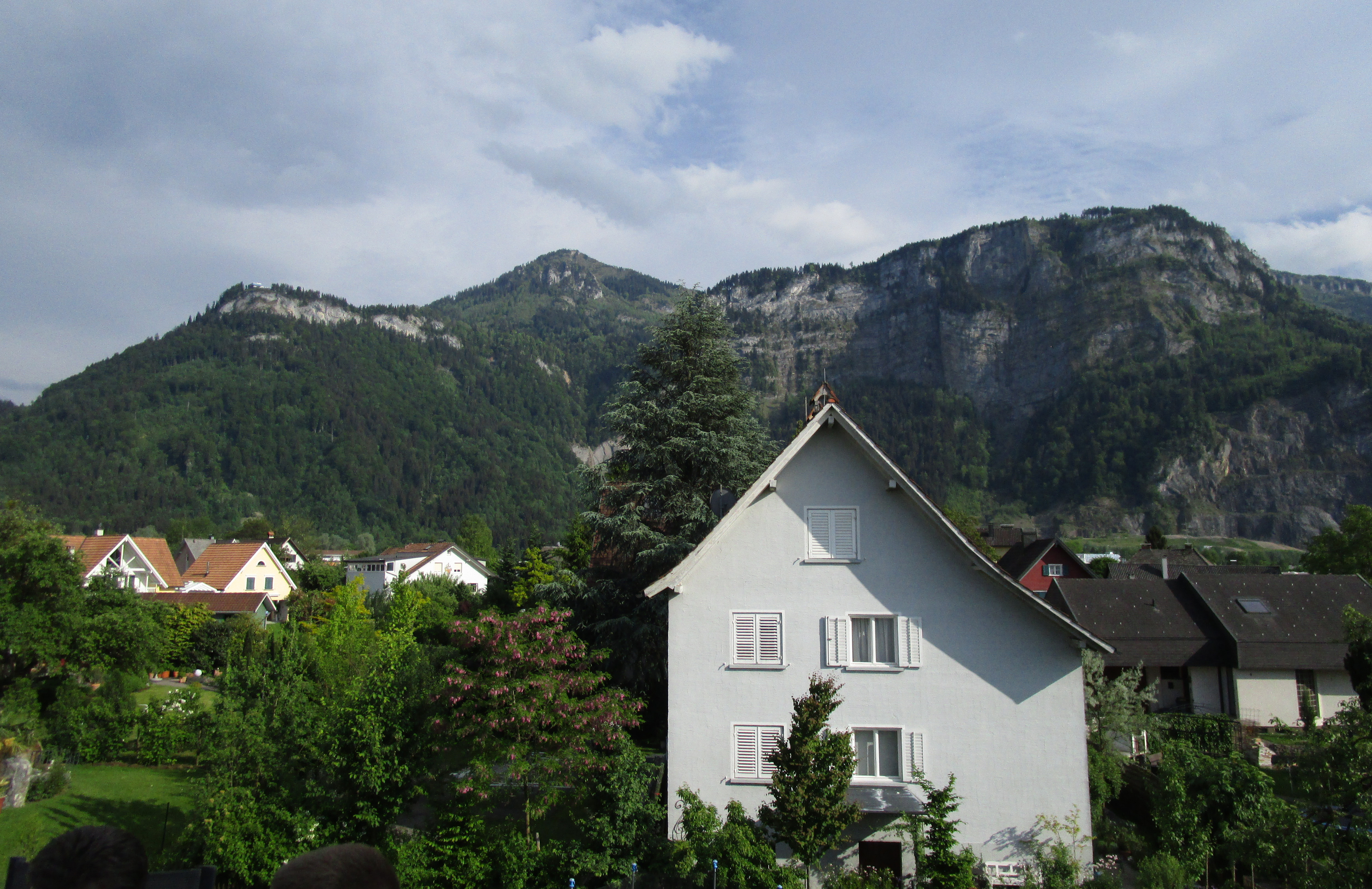
Marc and Elizabeth have a superb view from their apartment balcony. The restaurant where the reception was to be held the following day can only be reached by cable car and is situated on the left hand most peak.

Marc and Elizabeth have a beautifully equipped modern apartment. L-R: Wolfgang; Margaret (back to camera); Marc; Daniel – John’s cousin and Marc’s friend, originally from SA now in Canada; John (back to the camera); Danielle; Roual (also back to the camera) – Daniel’s brother, also now in Canada; and Rene.
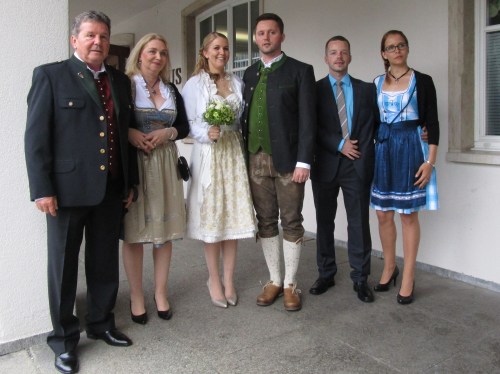
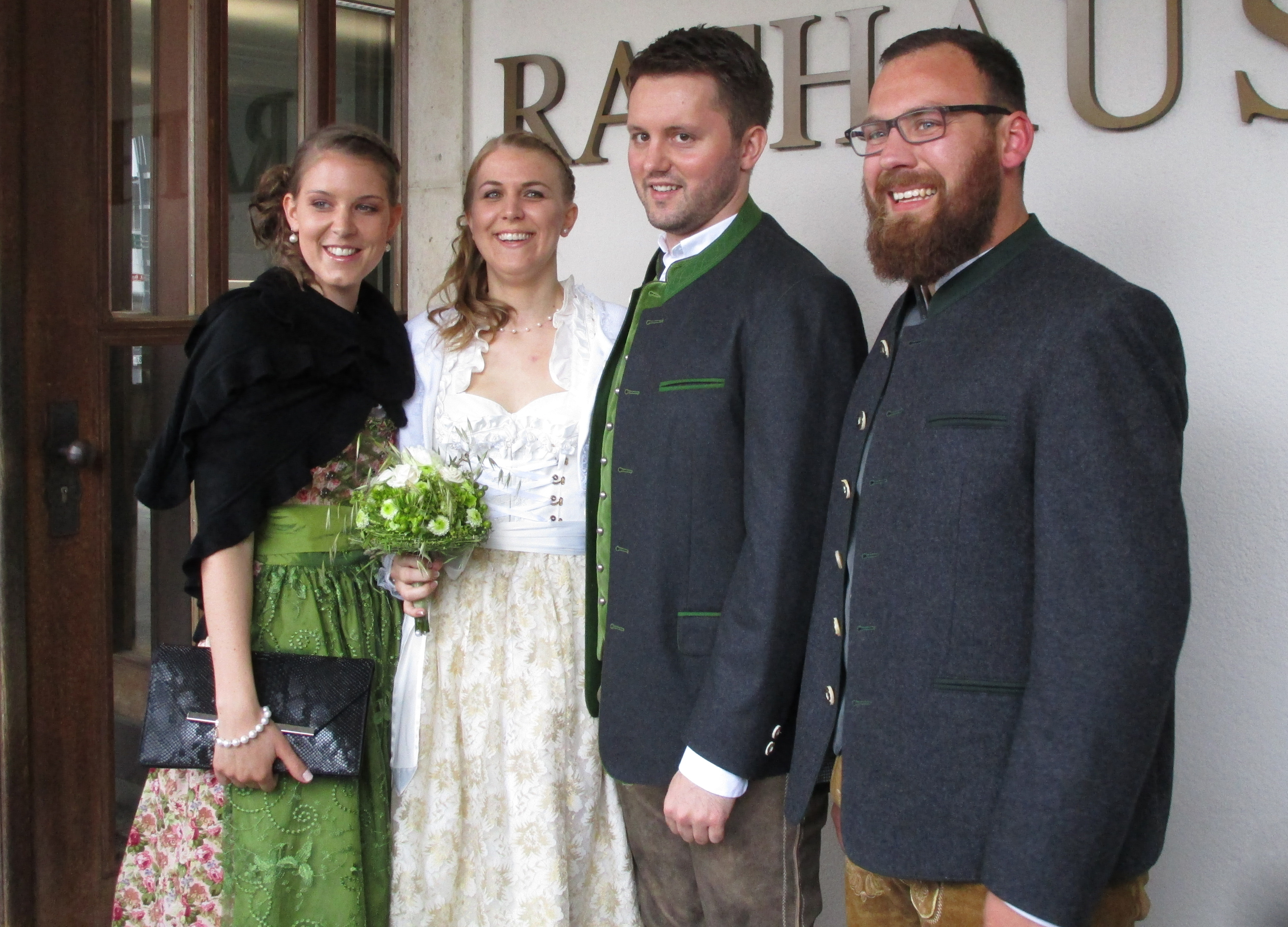
In Austria the civil wedding ceremony is held on a different day and at a different location from the church ceremony. In the afternoon of Friday 15th we assembled at the town hall for the civil ceremony with many of the family wearing traditional Austrian costumes. L-R: Wolfgang; Cathy – Marc’s mother and Margaret’s sister, Elizabeth – Marc’s bride, Marc, Rene and Danielle.
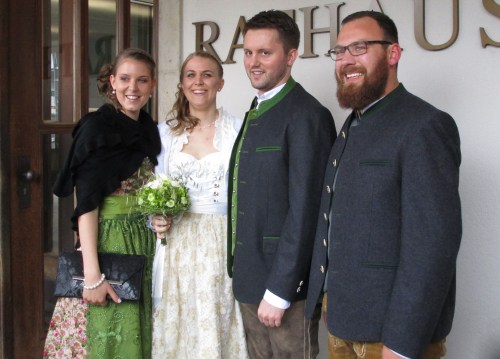
L-R: Bridesmaid Christine, Elizabeth, Marc and best man Daniel (not to be confused with Canadian Daniel).

The civil ceremony.

John poses with the ladies. L-R: Christine, John and Elizabeth.

The weather was against us but fortunately improved for the church ceremony the following day. Margaret had been dreading the ascent to the Panorama Restaurant by cable car for the reception ….

…. but by the time we got there the clouds had closed in and you couldn’t see a thing, much to Margaret’s relief.
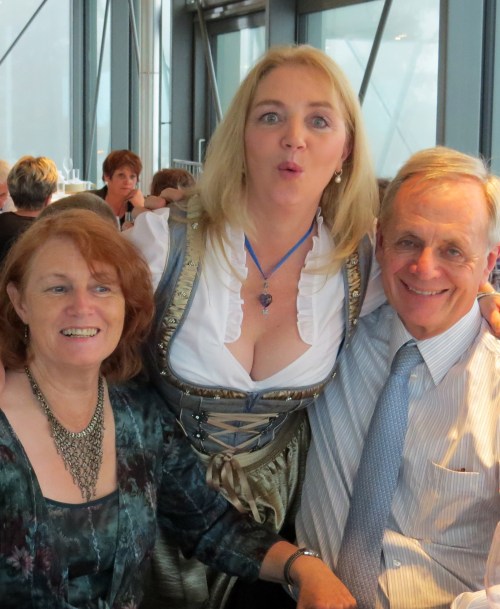
Margaret with sister Cathy and older brother Martin (who flew here all the way from Australia). Her younger brother, Duncan, was unable to make it due to work commitments, which is a shame as the four of them haven’t been together since school days.
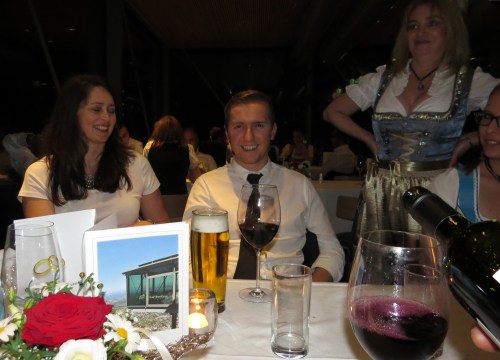
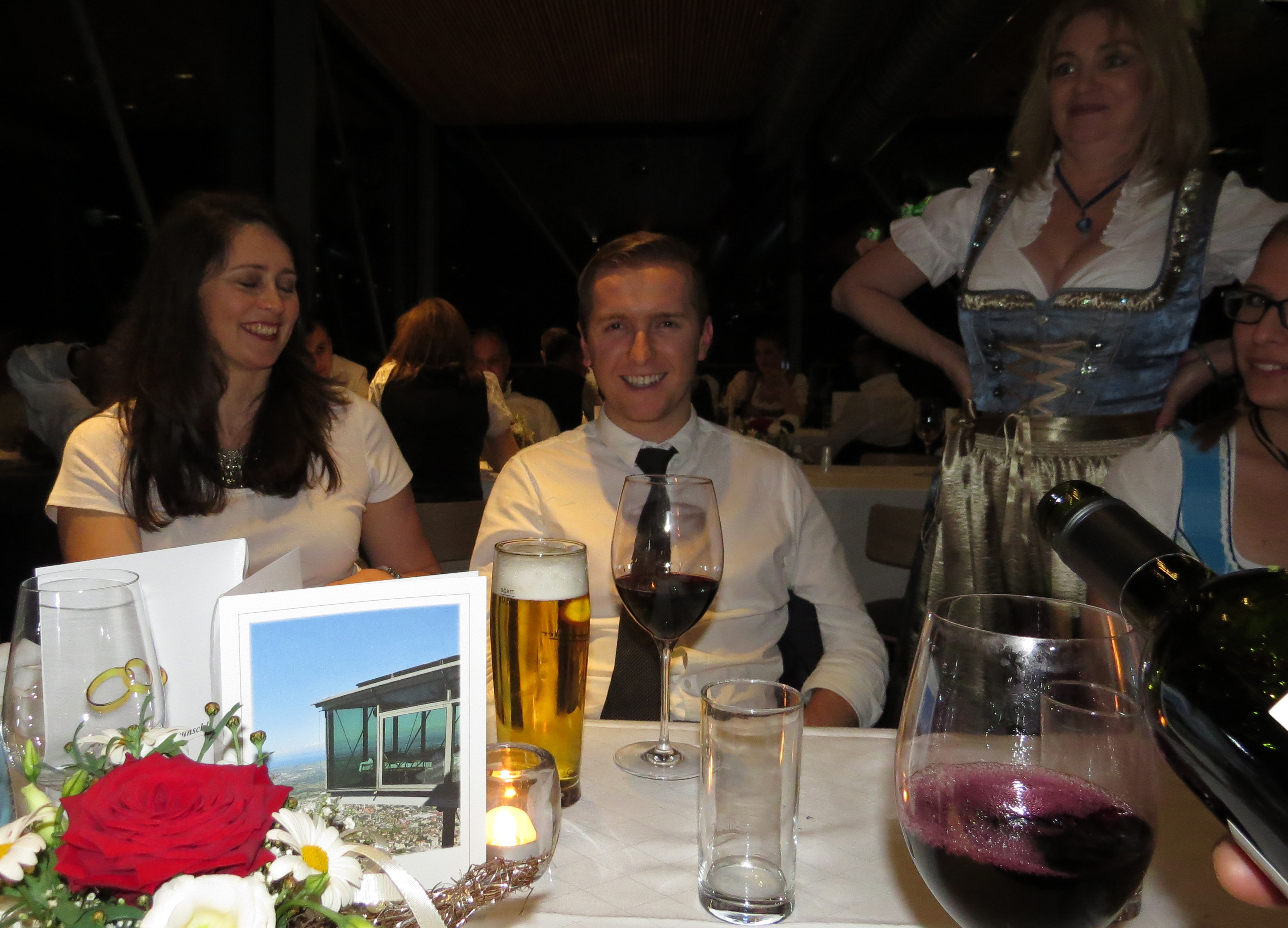
We had a lovely meal at the restaurant and as you can see from the photo quite a lot of what John calls ‘personality’, ie alcoholic beverages. L-R: Anita – Margaret’s daughter; Roual – John’s cousin from Canada; Cathy and Danielle.
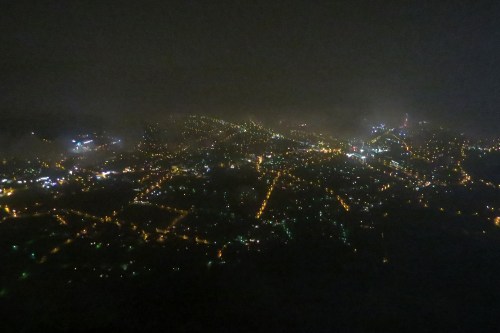
When it was time to leave the clouds had cleared somewhat, revealing this view over Dornbirn, but in the dark Margaret made the descent without any problems.

The following afternoon we gathered at the church in the nearby village of Bildstein for the church ceremony.
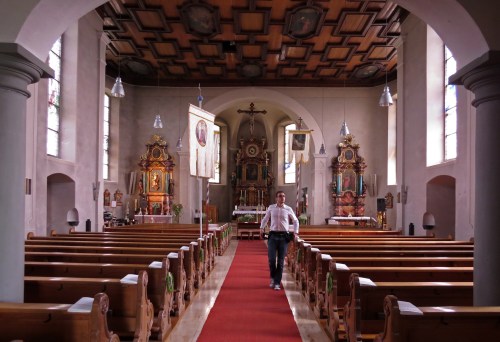
We were asked not to take photos during the service, an exception being made for the official photographer seen here, so I took this quick shot before we all went in. It was a Catholic service (which I have never experienced before) and of course was in German, so I had no idea what was going on, but the priest, a friend of Marc’s, did thank those who had travelled from Britain, Australia and Canada in English.

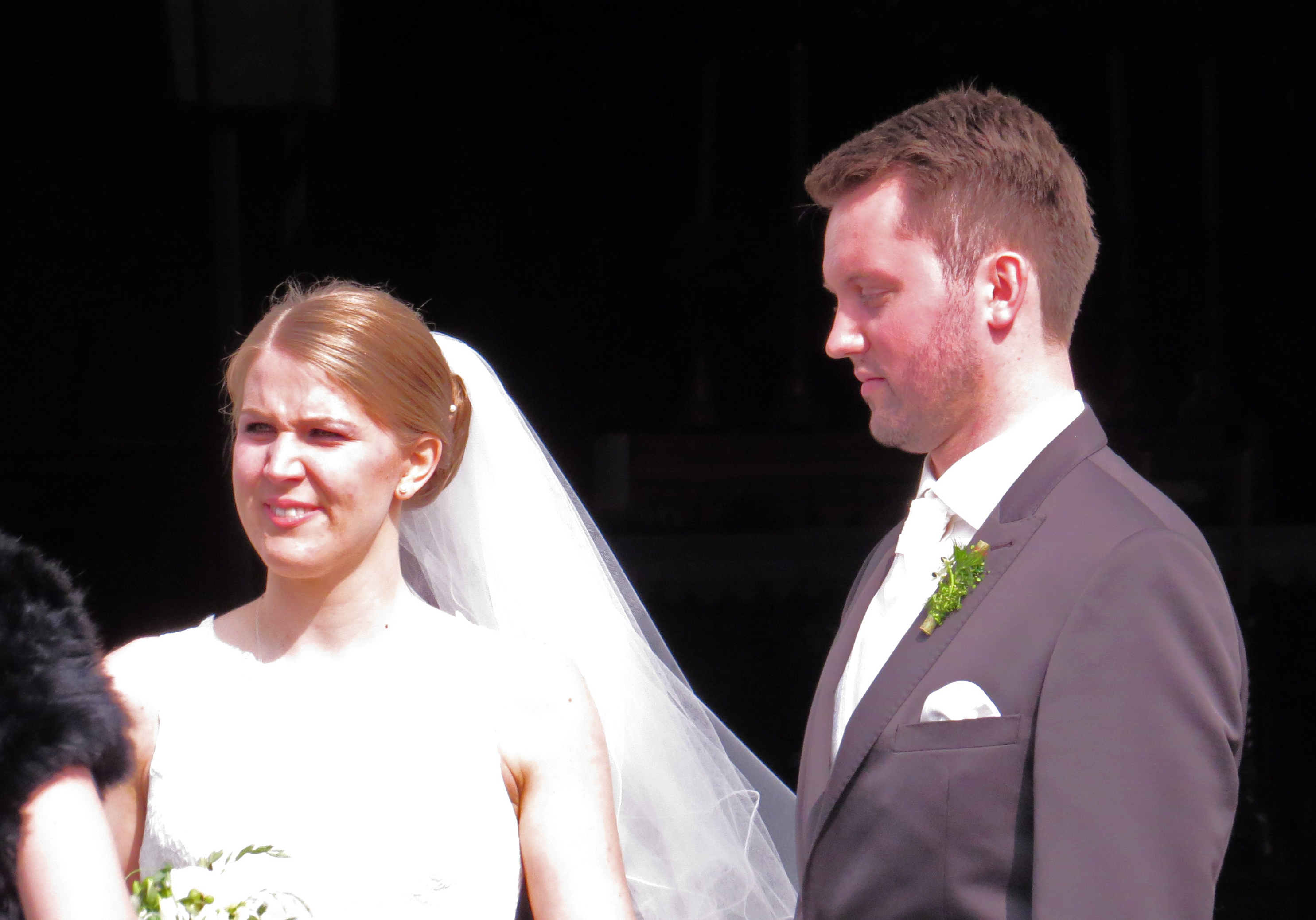
The bride and groom after the service.
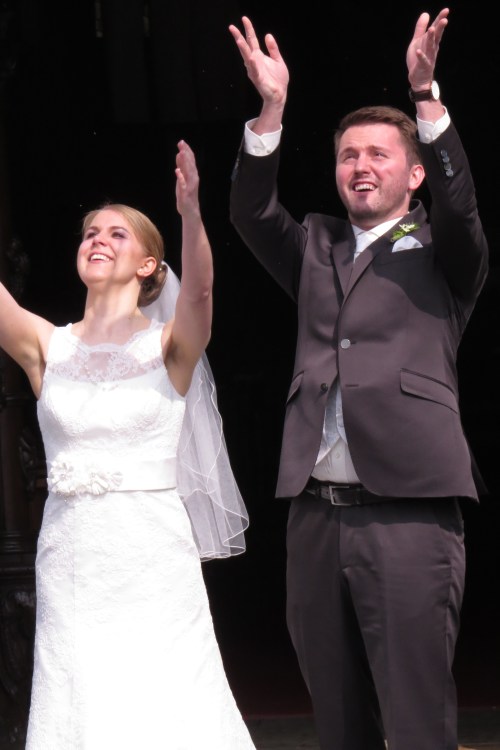
Bride and groom releasing white doves. I was a bit slow on the shutter button!
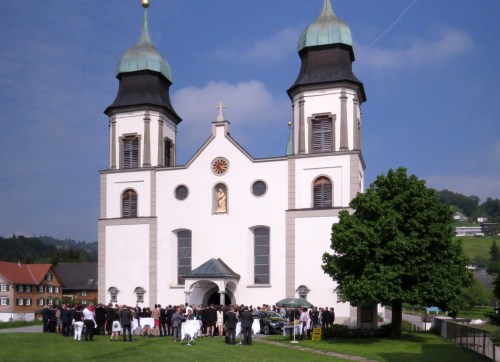
The 200 or so guests gathered outside the church for champagne and canapes

Margaret’s brother Martin and his wife Jean were joined by their daughter Caroline, who flew out from the UK just for the church ceremony.
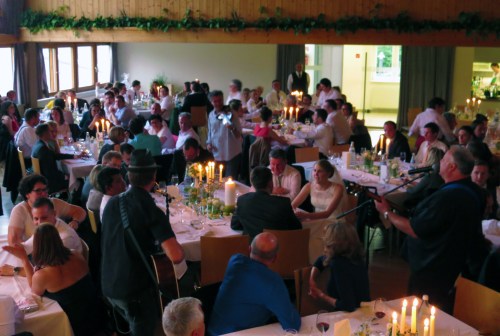
Another day, another reception and yet more alcohol.

Marc is one of the most capable and organised people I have ever met. A company director and local politician by the age of 30, nothing seems to faze him, except perhaps having take part in the first dance (particularly when your wife’s hobby is ballroom dancing).
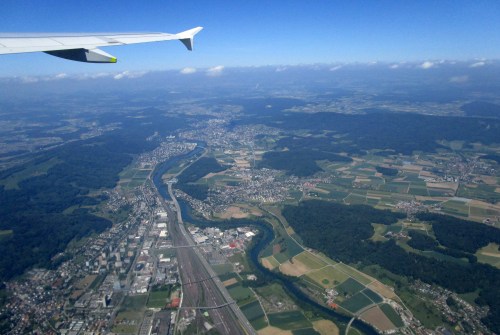
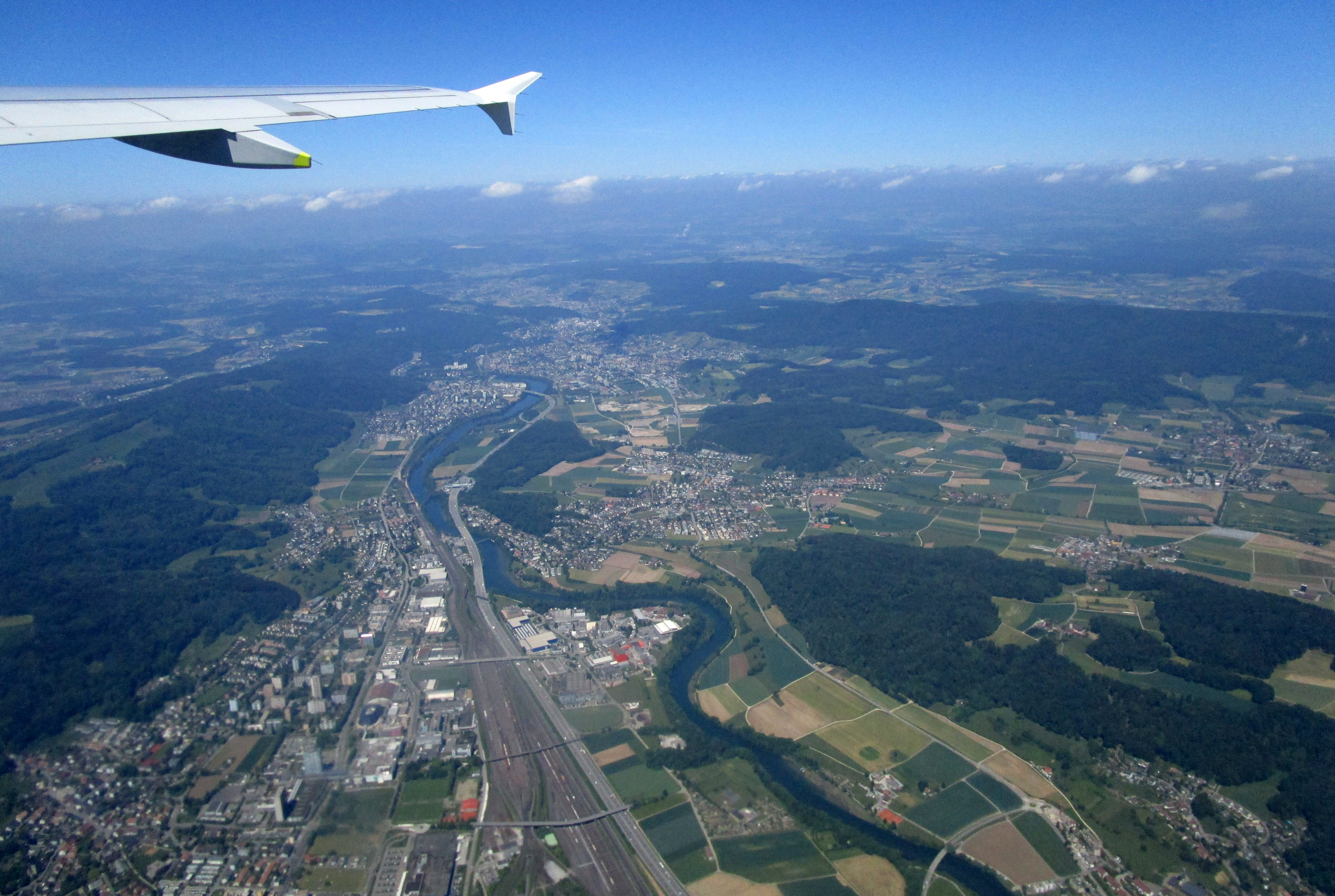
Our activities on the following day, Sunday 17th, have been detailed in the last post. On the 18th we left early to drive back to Zürich and catch the plane to Heathrow. To conclude here are a few shots from the plane of northern Switzerland ….

…. the neatly patterned fields of Germany ….
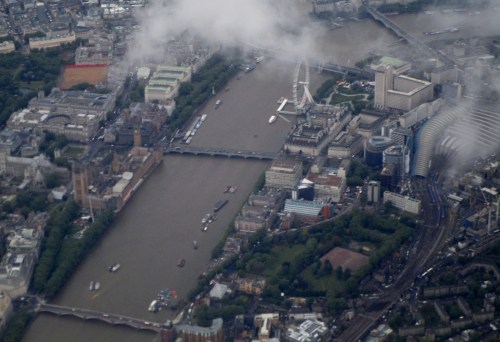
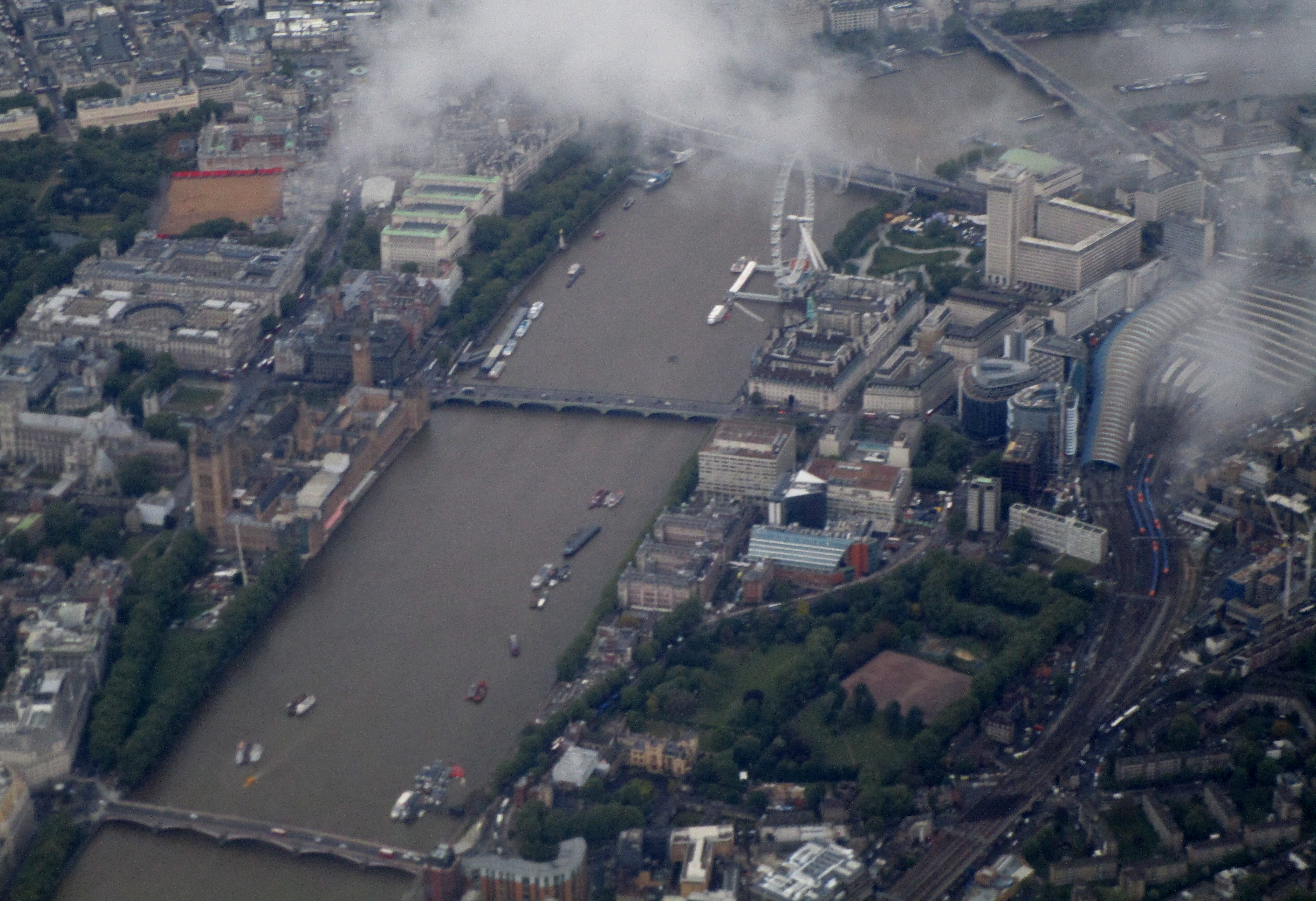
…. and the cloudier conditions as we descended over the London Eye and the Palace of Westminster.
From Lucerne we headed for the principality of Liechtenstein before arriving in Dornbirn, Austria for a four night stay. The purpose of coming here was to attend Margaret’s nephew Marc’s wedding and to meet up with other members of the family. Photos dealing with the wedding and associated social events will be uploaded in the next post. This post concentrates on our sightseeing and birding in the three countries mentioned above.
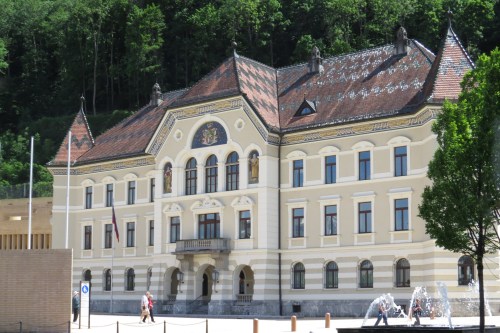
Before we arrived in Austria we spent a few hours looking around Vaduz, the capital of the tiny principality of Liechtenstein.

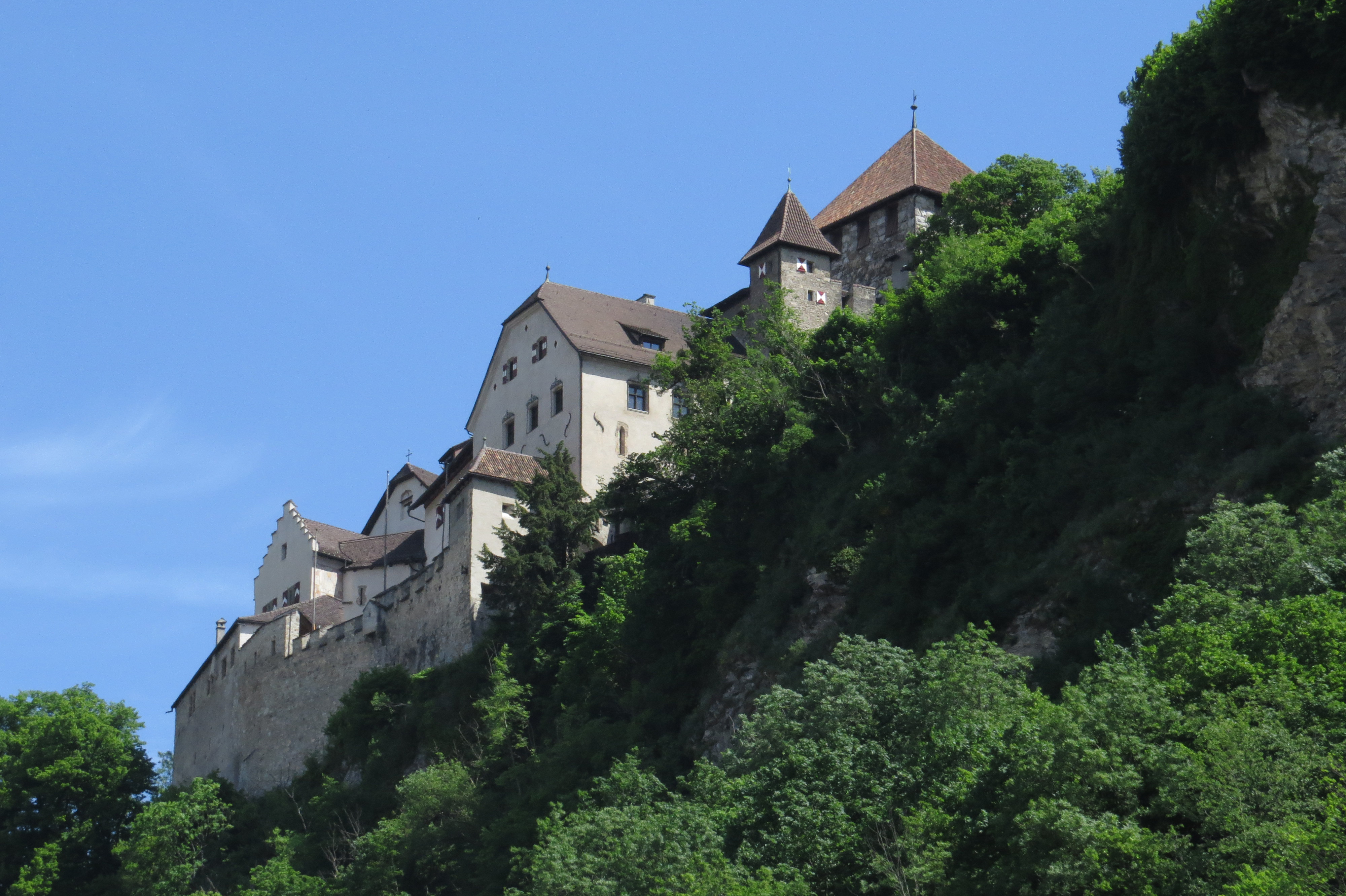
I was last in Vaduz in 1975, a brief visit as part of a long coach trip around Europe. All I can recall from that visit is seeing the castle perched high above the town. Well that looks just the same ….

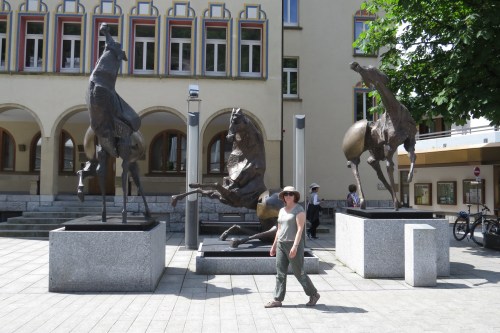
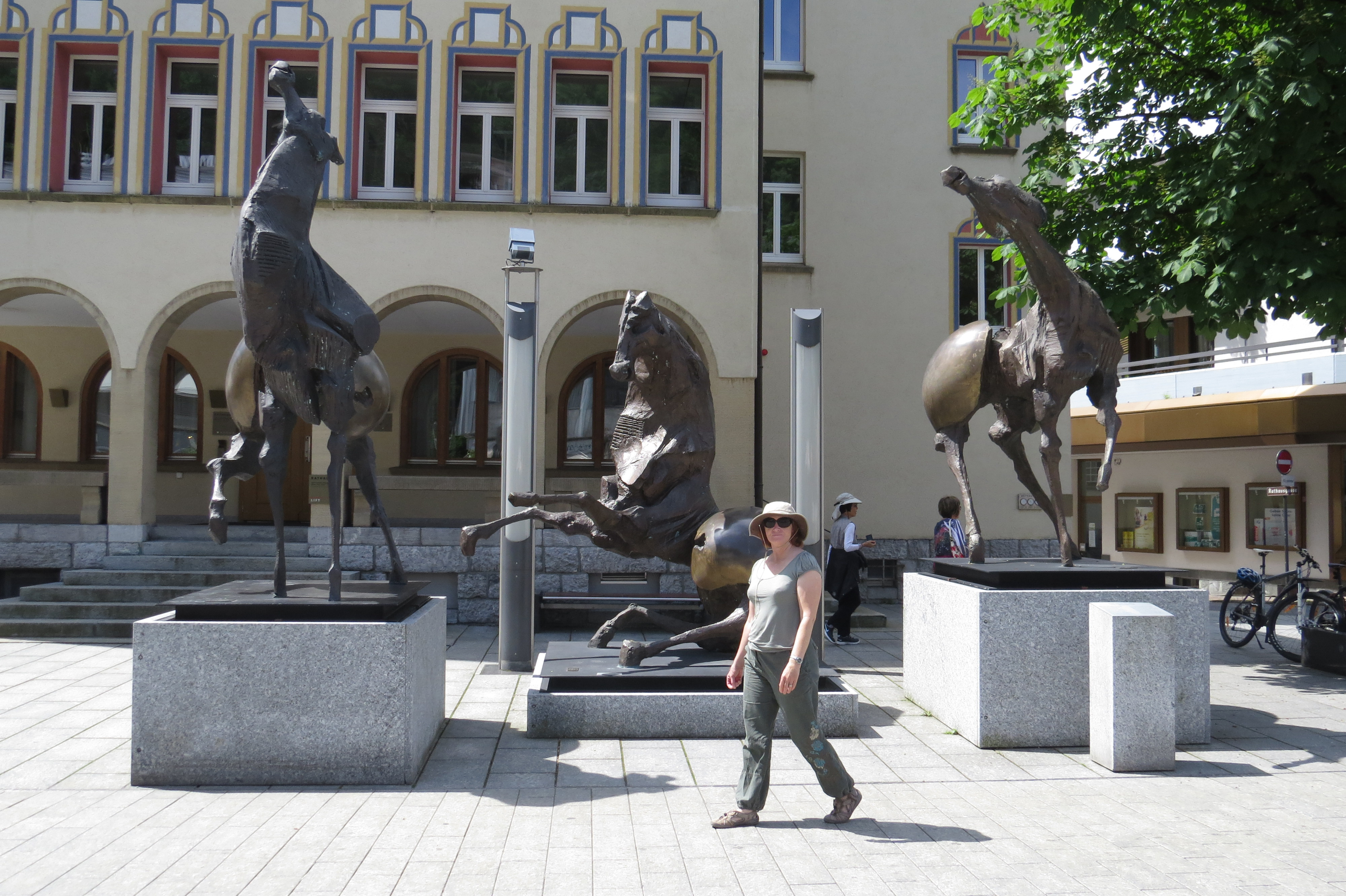
…. but the pedestrianised centre is now populated with examples of modern art ….

…. such as this representation of businessmen riding pigs.

I particularly liked this jet of water confined between two narrow, high walls. Not a drop fell on you as you stood below. By varying the shutter speed and your position with respect to the sun you could create modern art of your own.
After a tour around the various statues and pieces of art we drove to Dornbirn, the largest town in western Austria.

Our first visit to the centre of Dornbirn on the morning before Marc and Elizabeth’s civil ceremony was in heavy rain but ….

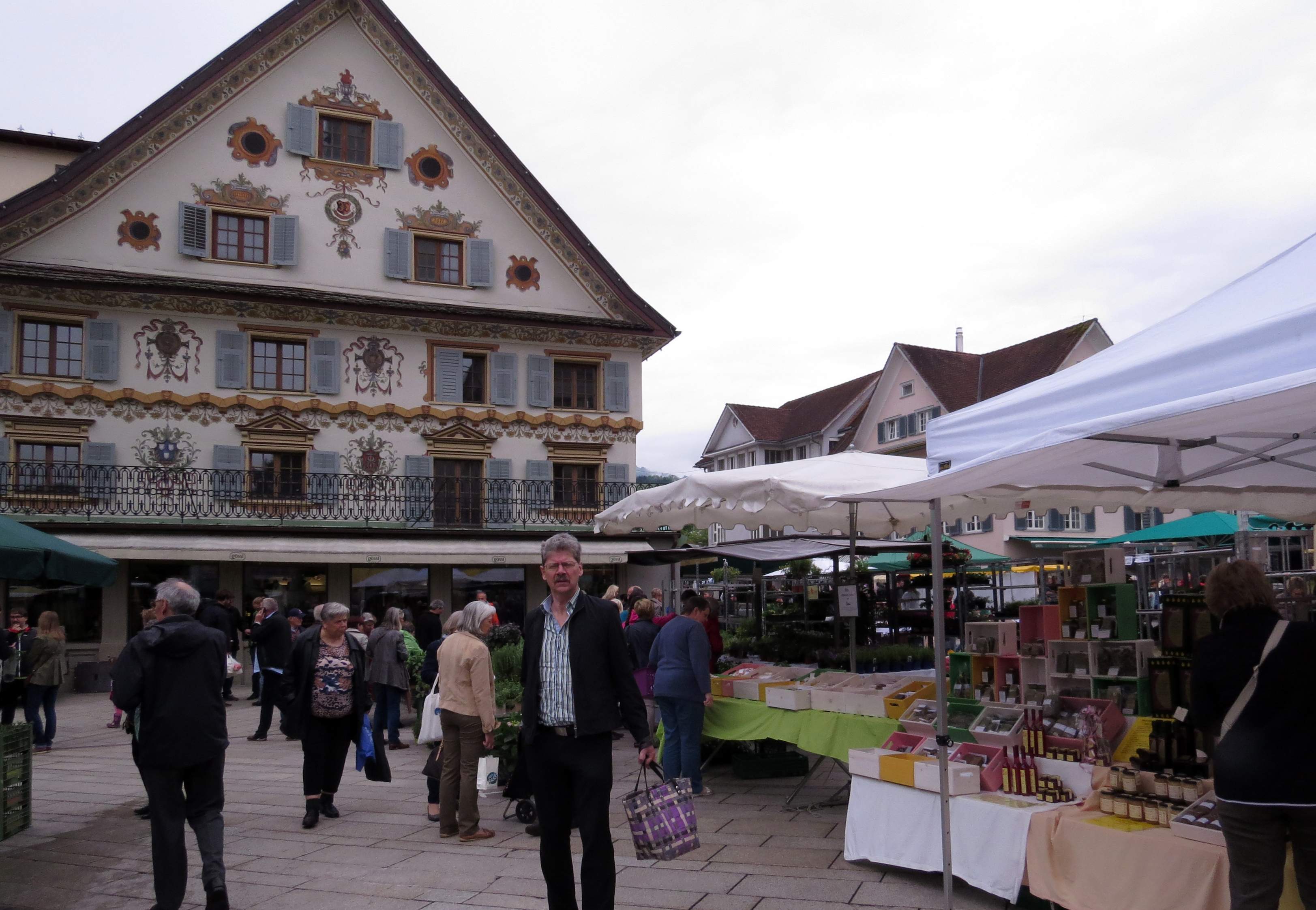
…. the following morning the weather was much better and the local market was in full swing.

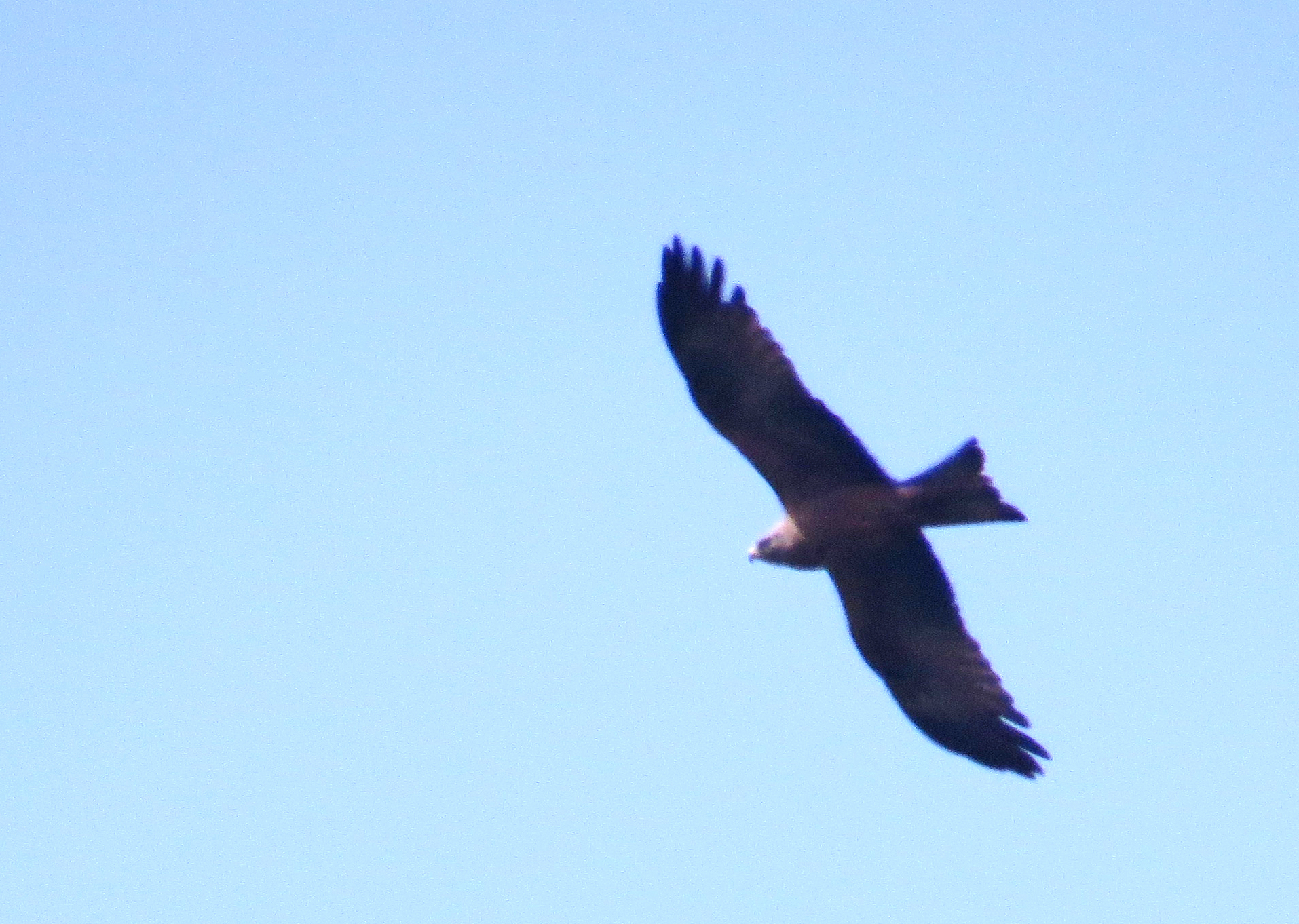
The Dornbirn area was good for raptors and over the next three days we saw a number of Black Kites ….

…. Red Kites ….

…. and even a few Honey Buzzards.

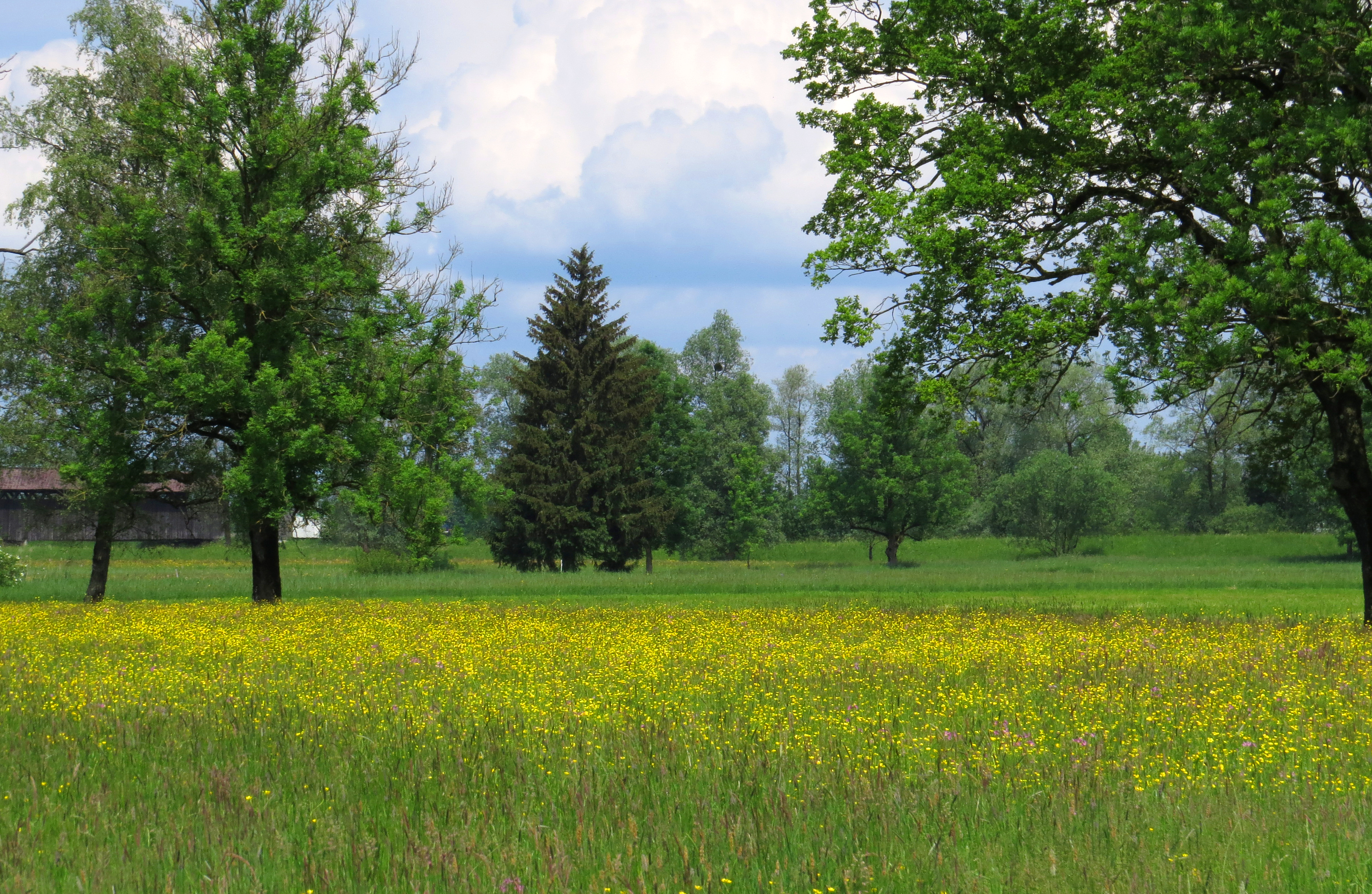
In surrounding meadows ….
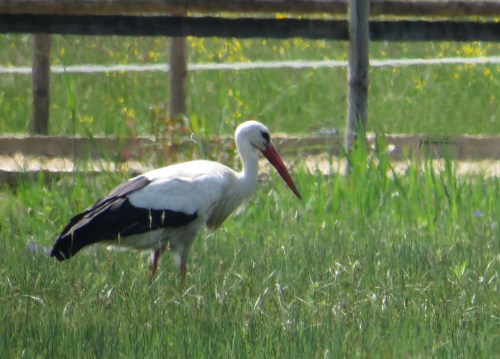
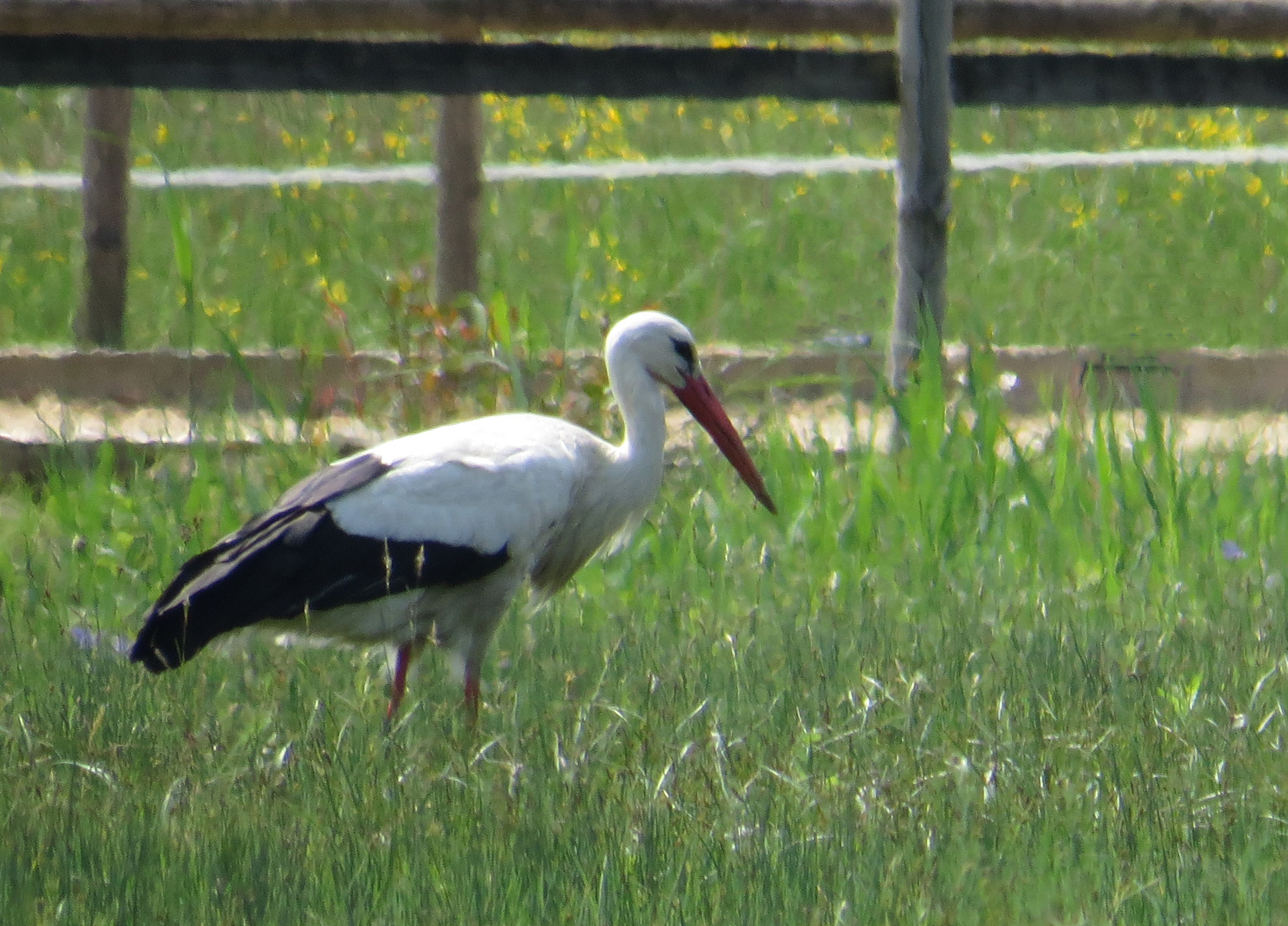
…. we found a few White Storks.
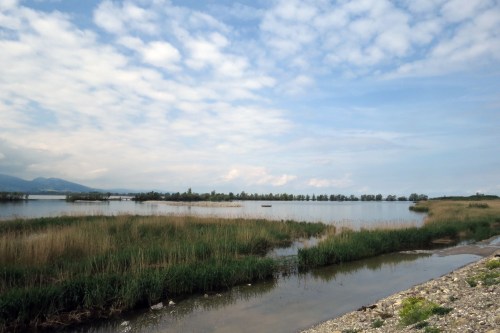
We originally thought that some of Margaret’s relatives would still be around on the Sunday following the wedding but it transpired that most had to head for home. With a day mostly to ourselves we drove to Fußach on the shore of the Bodensee for some birding.

The Bodensee itself was host to a number of Great Cormorants and Red-crested Pochards
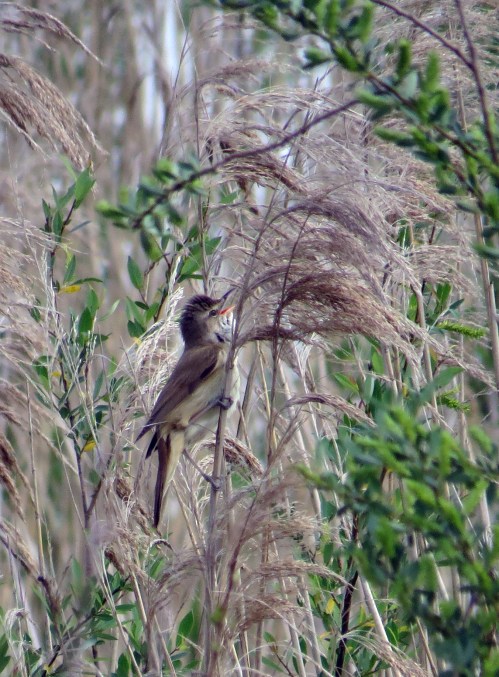
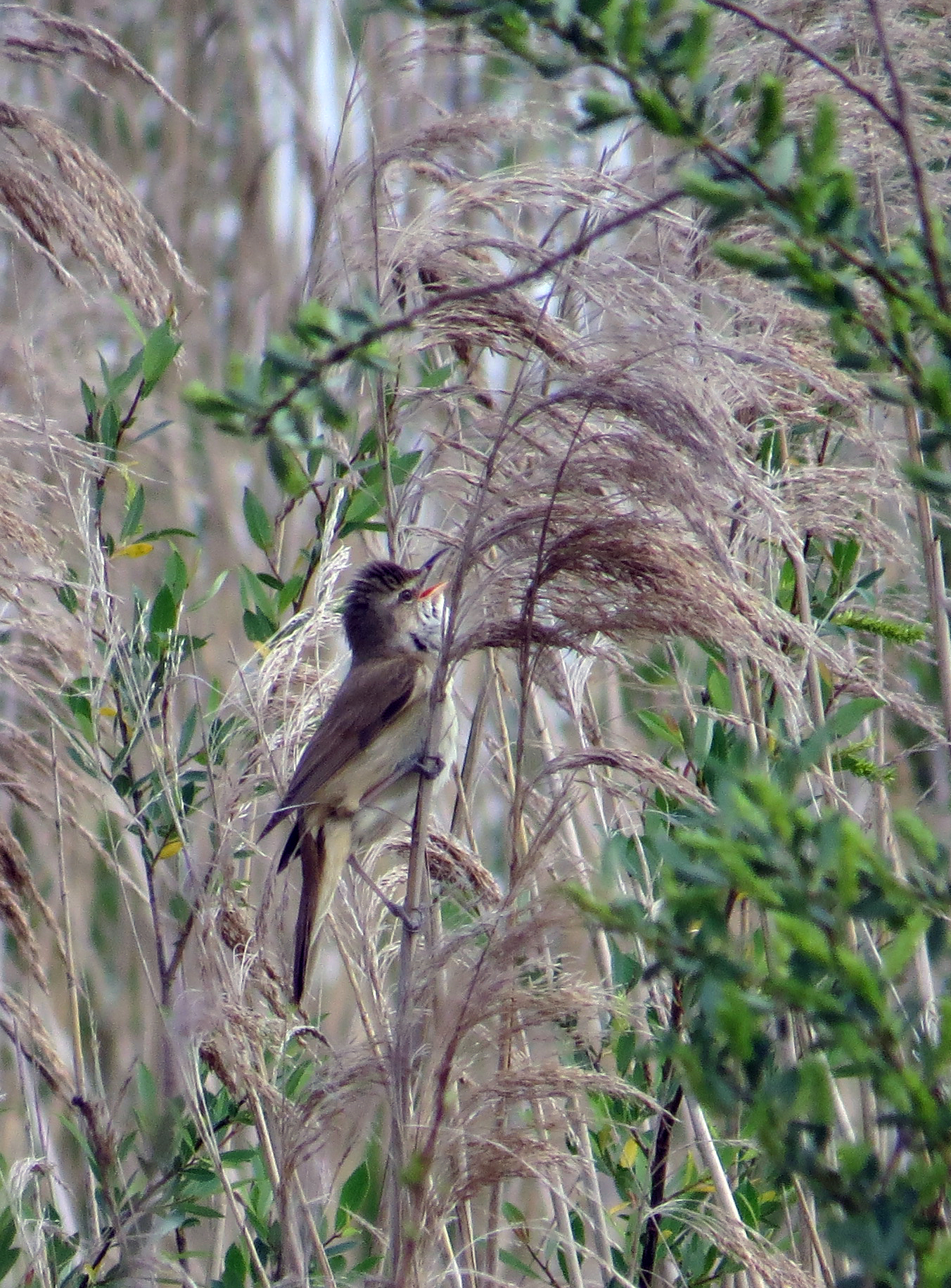
…. and in the reed beds Great Reed Warblers were quite numerous and their guttural kara-kara-gurk-gurk song was a feature of the area.
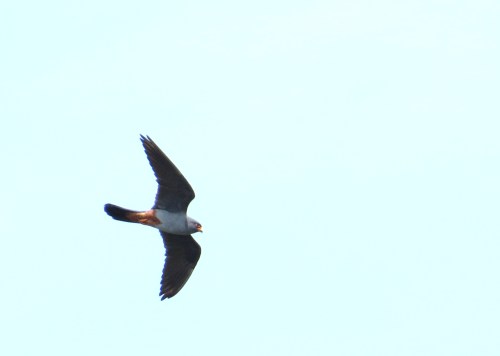
The highlight for me was views of five Red-footed Falcons, in particular this male which showed well. these birds are long-distance migrants and have just arrived from their wintering grounds in southern Africa and are pausing on route to their breeding grounds in easternmost Austria eastwards through the steppes of eastern Europe to central Asia.

We returned to Dornbirn and spent the afternoon with Anita and John, Margaret’s daughter and her husband. We visited the area of Rappenlochschlucht ….
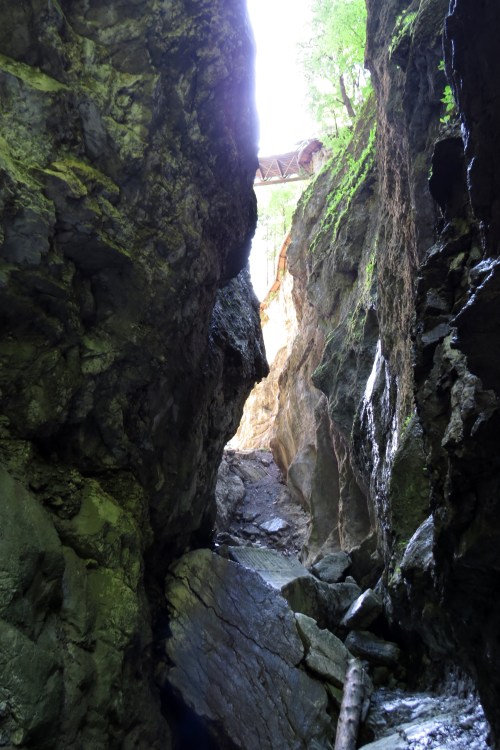
…. a picturesque area with elevated walkways, narrow gorges ….
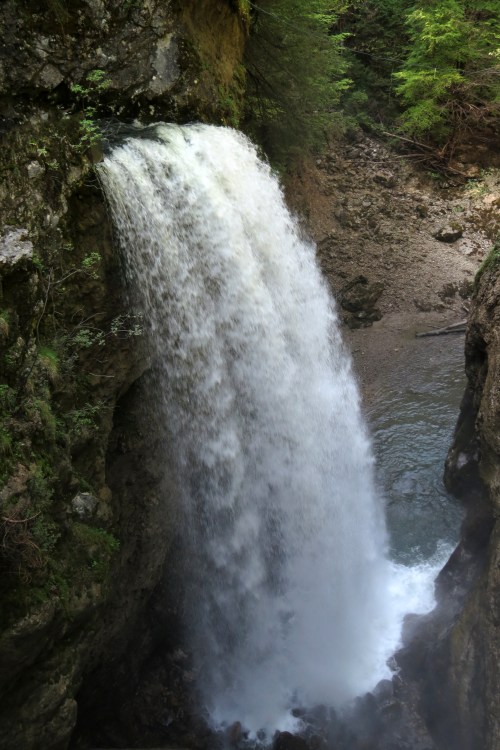
…. waterfalls ….

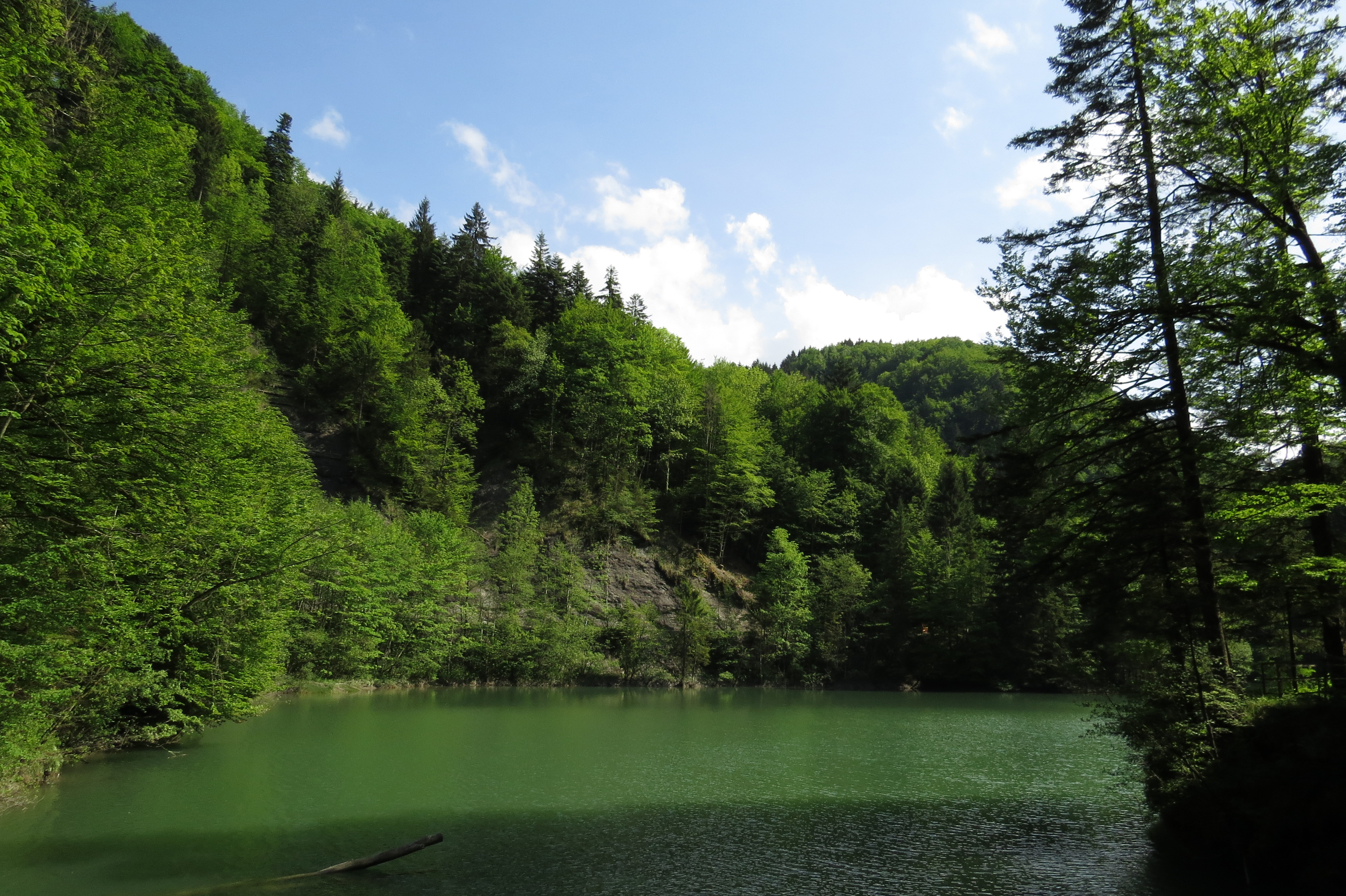
…. and lakes.

On our final evening we drove around the east end of the Bodensee and into Germany.
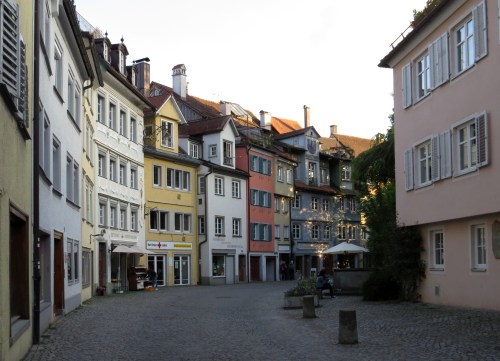
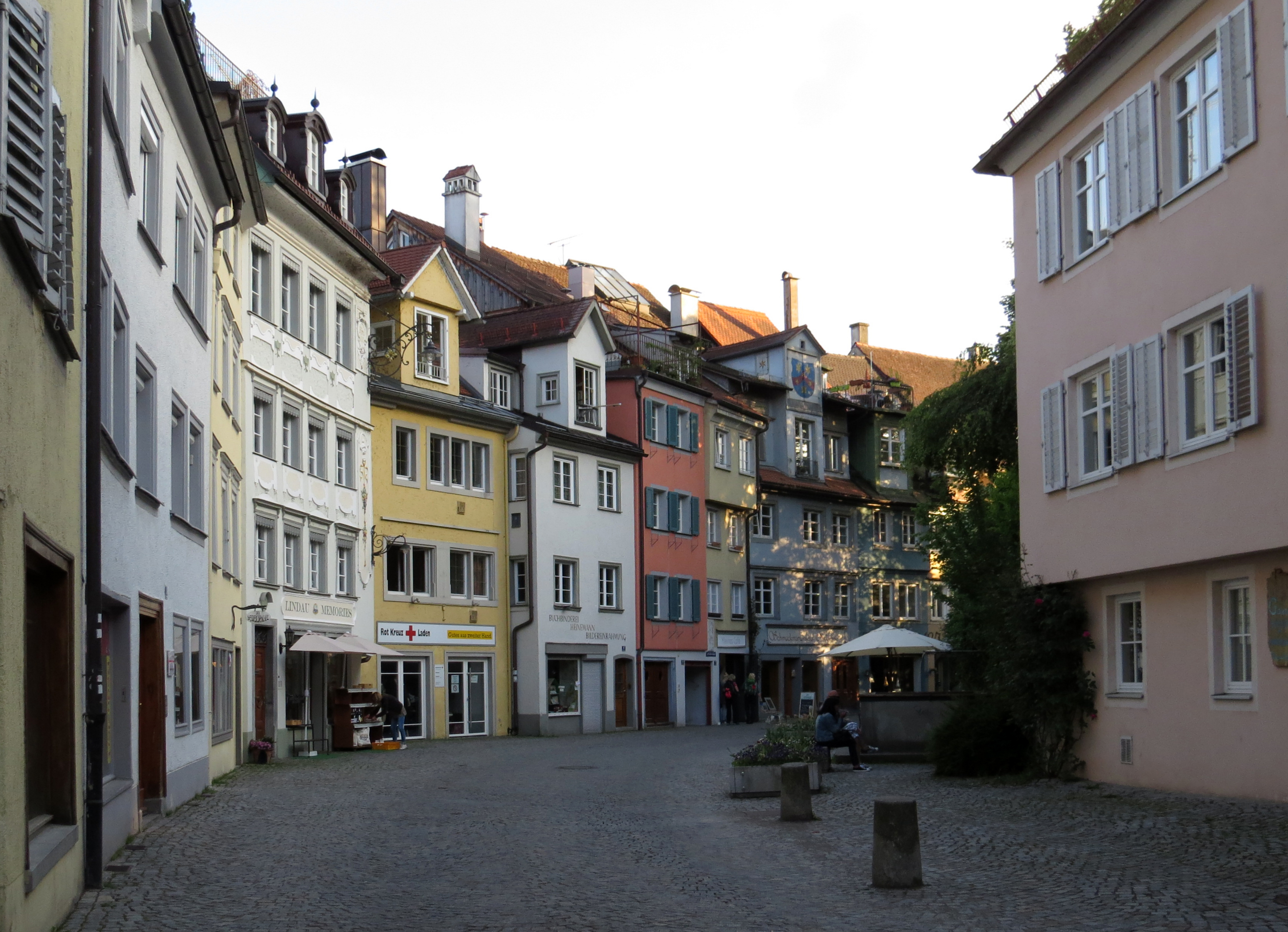
Our destination was the picturesque town of Lindau

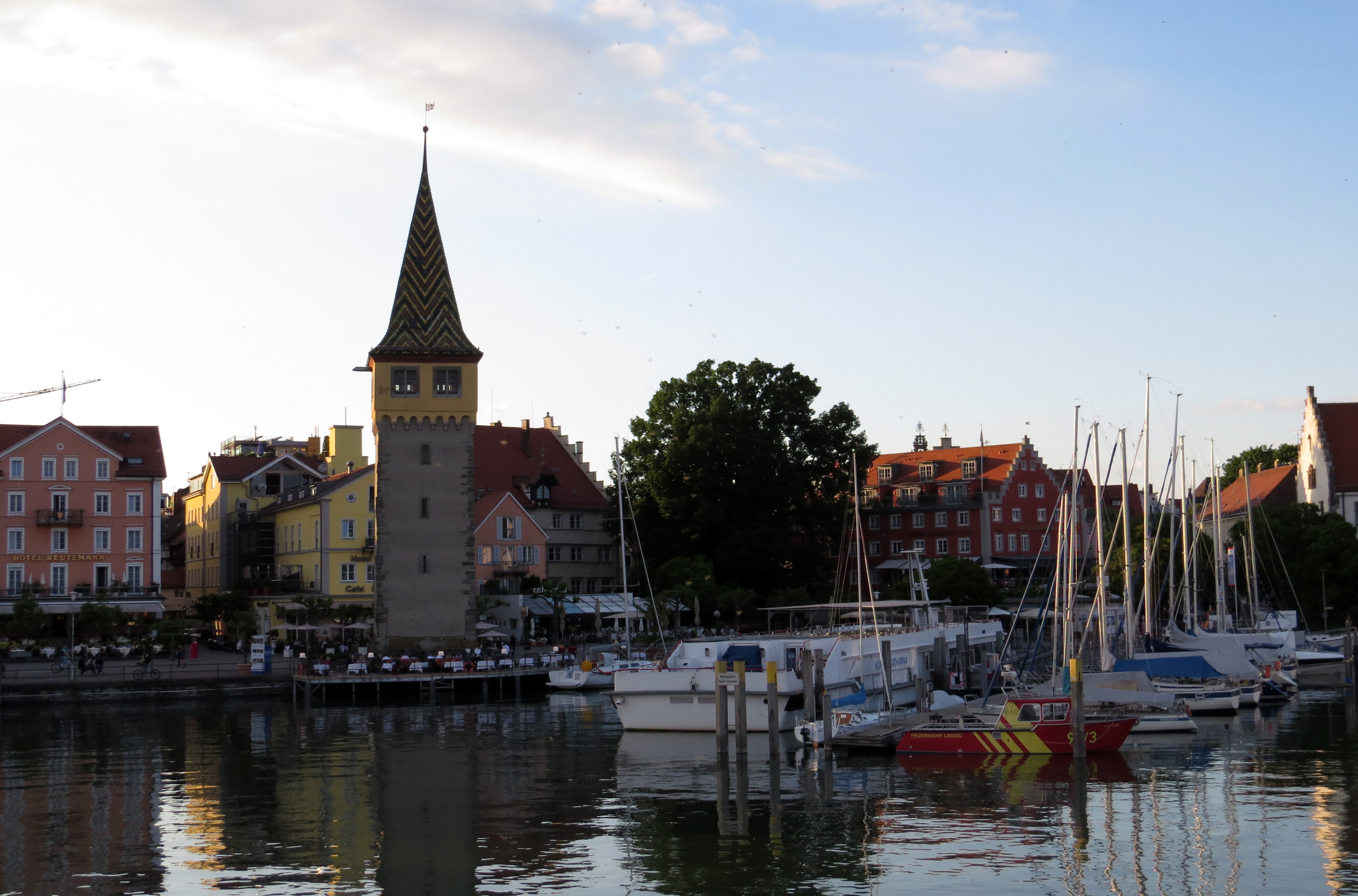
We headed for the harbour, the entrance guarded by a lighthouse and an imposing statue of a lion.
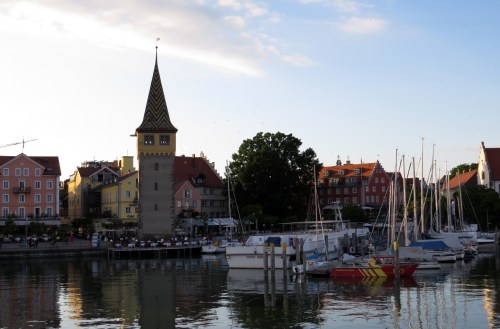
From the lion statue we had a great view of the harbour and ….

…. and could look directly down on an incubating Mute Swan.

So we concluded our trip with this lovely view of the harbour at Lindau. All that was remained was to drive back to Zürich and fly home. Over the last 17 days we covered 3000 km and visited seven countries and saw some of the best scenery in the world.
Incidently this blog is four years old today. The first entry was on 17th June 2011, the day I retired. Since then I have uploaded 446 posts, which averages just over two a week and covered many subjects, but have concentrated, of course, on my main interests of birding and travel. In that time my blog has been viewed over 66,000 times.
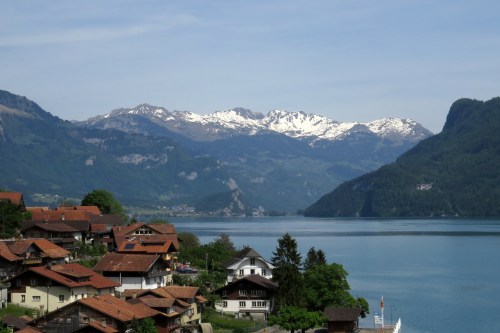
Late on the 12th we arrived in Interlaken. As the name suggests the town is situated on land between two large lakes, Thunersee and Brienzersee. This is the view a short distance east of the town over the Brienzersee.

The main tourist attraction in the area is taking the train all the way to Jungfraujoch, a view-point at 3475m between the Jungfrau and the Eiger. If you start at Interlaken West the almost 3000m climb involves three changes of train and takes about two and half hours.

A mainline train took us to Interlaken East, where we changed for Lauterbrunnen. From here another train took us steeply through the alpine meadows and coniferous forest ….

…. until, under the shadow of the Jungfrau, we were above the tree line.

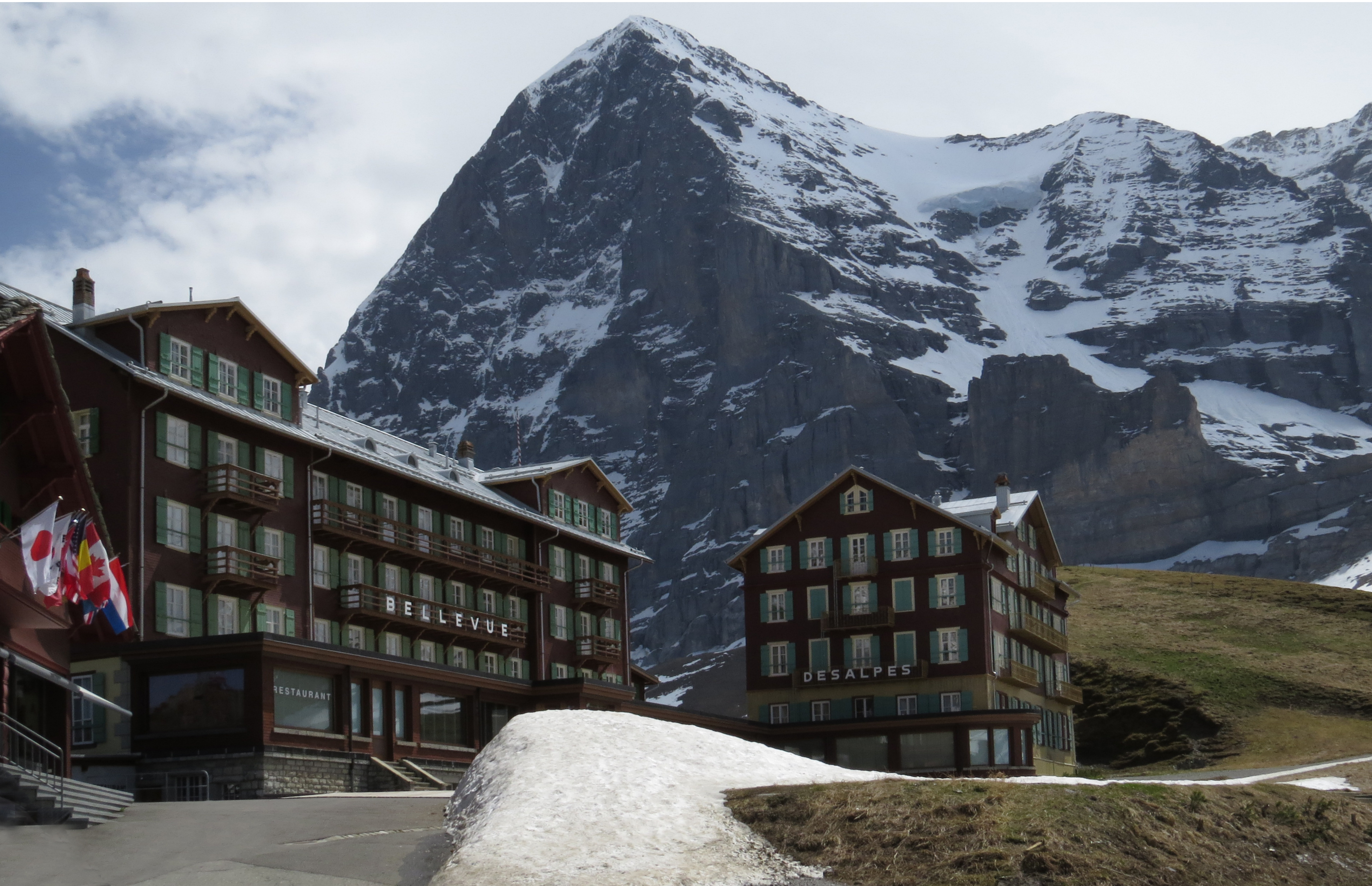
At Kleine Scheidegg, with the north face of the Eiger dominating the view, we changed again to a rack and pinion railway

…. which then climbed into a tunnel that went right under the Eiger. The terminal was still underground and we had to ascend several floors to reach the observation platforms.
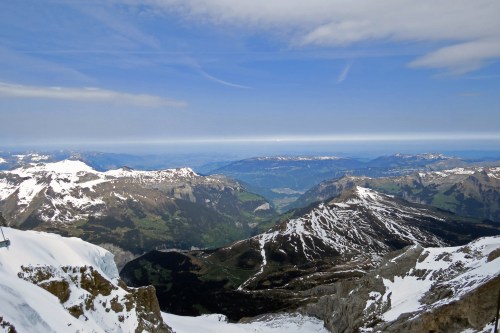
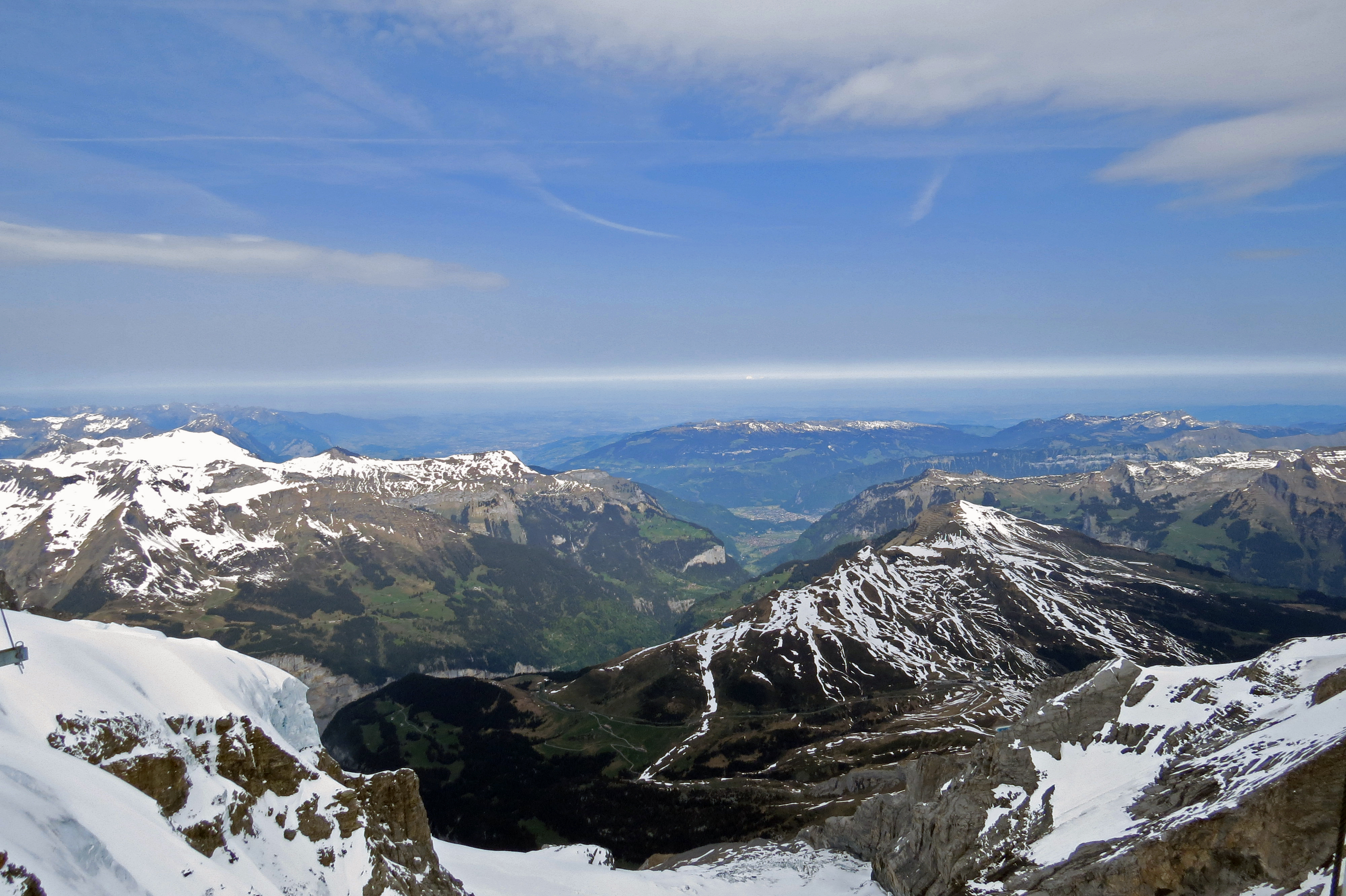
The view from the top was magnificent. This shot gives a panoramic view of the valley below.

This is the same view zoomed in.
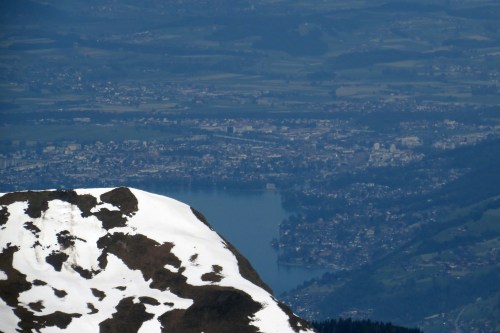
To the right Interlaken was visible in the distance.

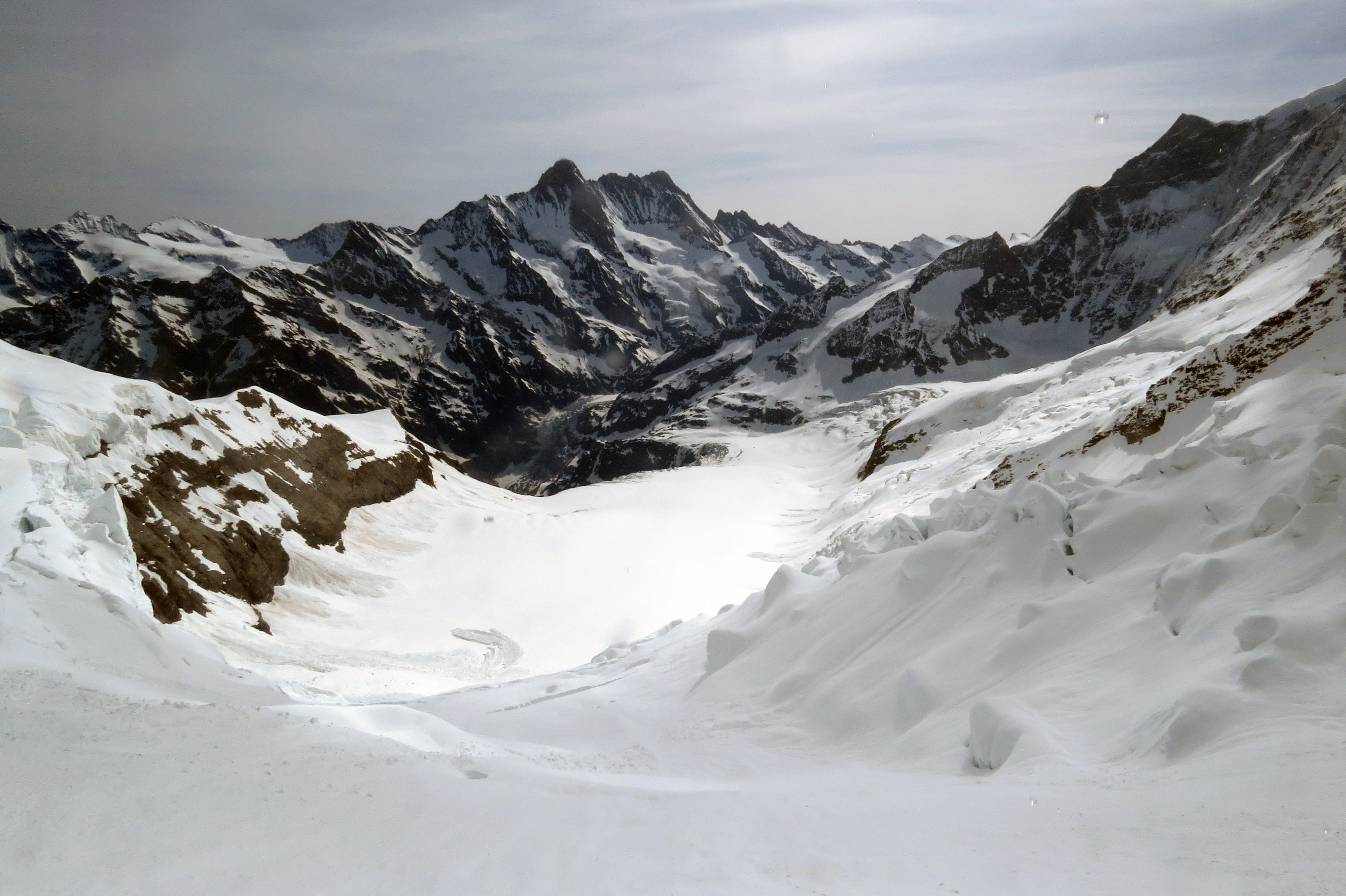
In other directions an endless vista of ice and snow was revealed ….
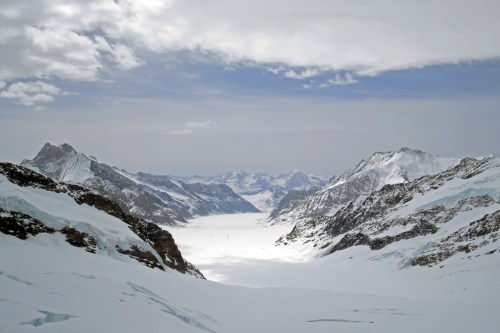
…. including this wonderful view over the Grosser Aletschgletscher, at 23 Km long, the biggest glacier in the Alps.
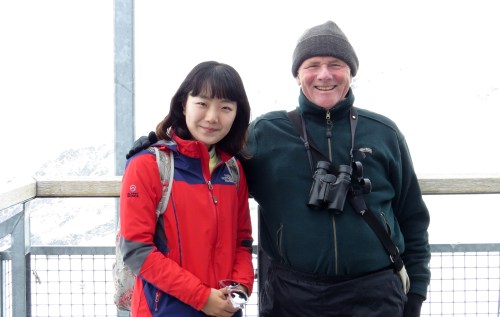
I had been chatting to some Taiwanese tourists on the way up, and this nice Taiwanese girl wanted to be photographed with me.

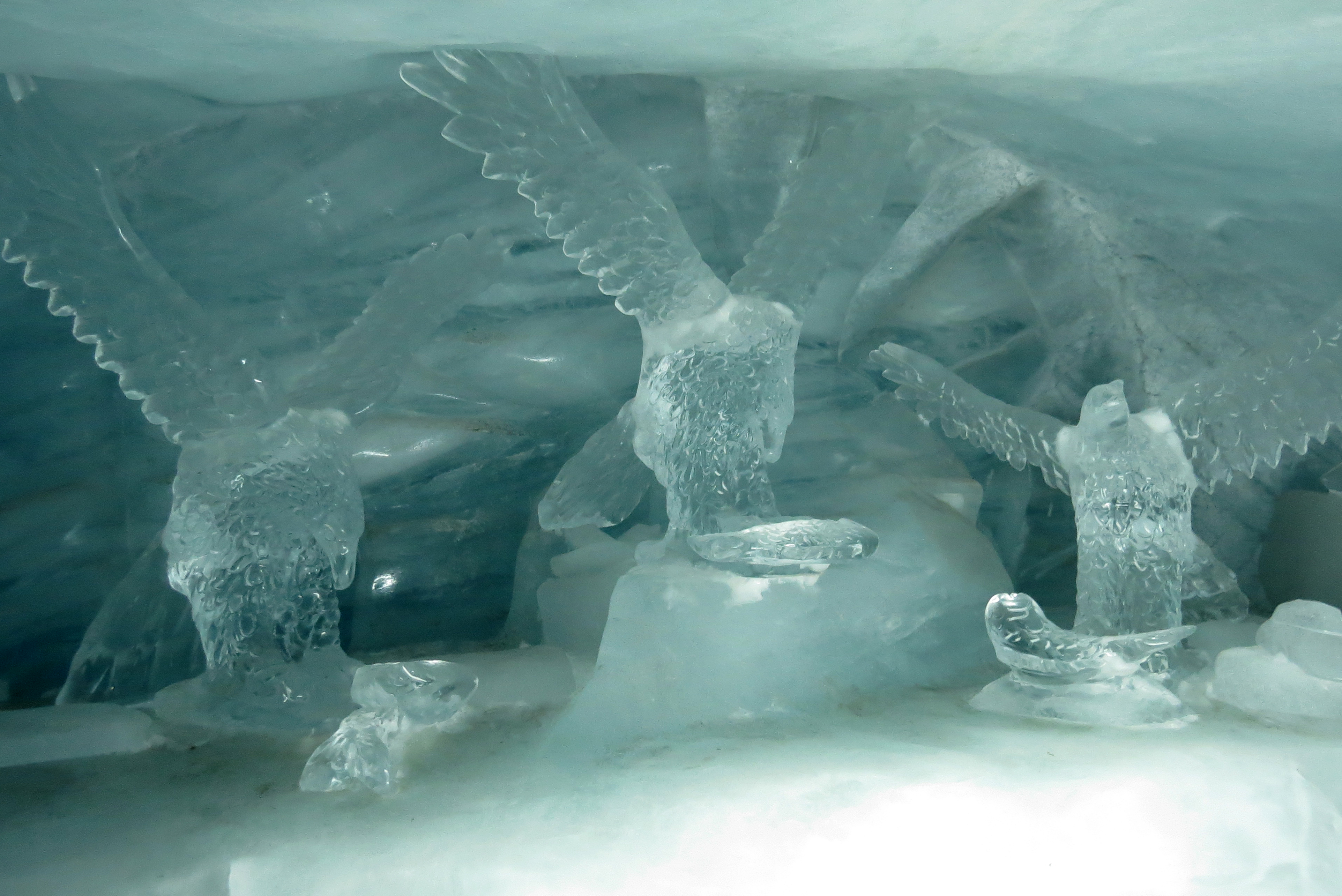
As well as being a viewpoint, the site has been developed into a bit of a theme park with a restaurant, these ice sculptures ….

…. and tunnels cut in the ice that you can slip and slide along to your heart’s content.

On the way back we changed trains at Klein Scheidegg and then returned via Grindelwald to the east. This gave a different perspective on the mountains ….
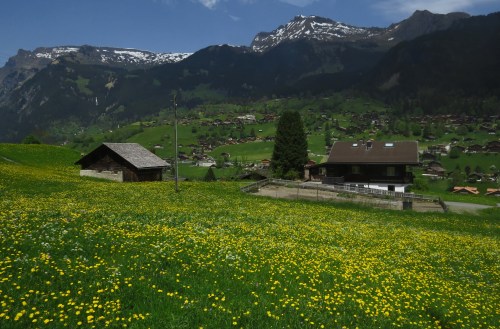
…. and also gave great views of the flower filled Alpine meadows.

I would highly recommend this journey, it’s not cheap, about 200 Euros pp from Interlaken, but it takes you through a complete cross-section of the Alpine habitats, from lowland valleys to flower filled meadows, coniferous forest, open areas above the tree-line to the land of permanent ice and snow at the top. If you want to see Switzerland and have only a short time available then here it is in a nutshell.

We spent the evening in Lucerne. First we visited the impressive church ….

…. arriving in the nick of time just as it was being locked up, there was only the opportunity for this one photo.

Apart from Les Alpilles in southern France, Lucerne was the only place we saw the somewhat inappropriately named Alpine Swift.

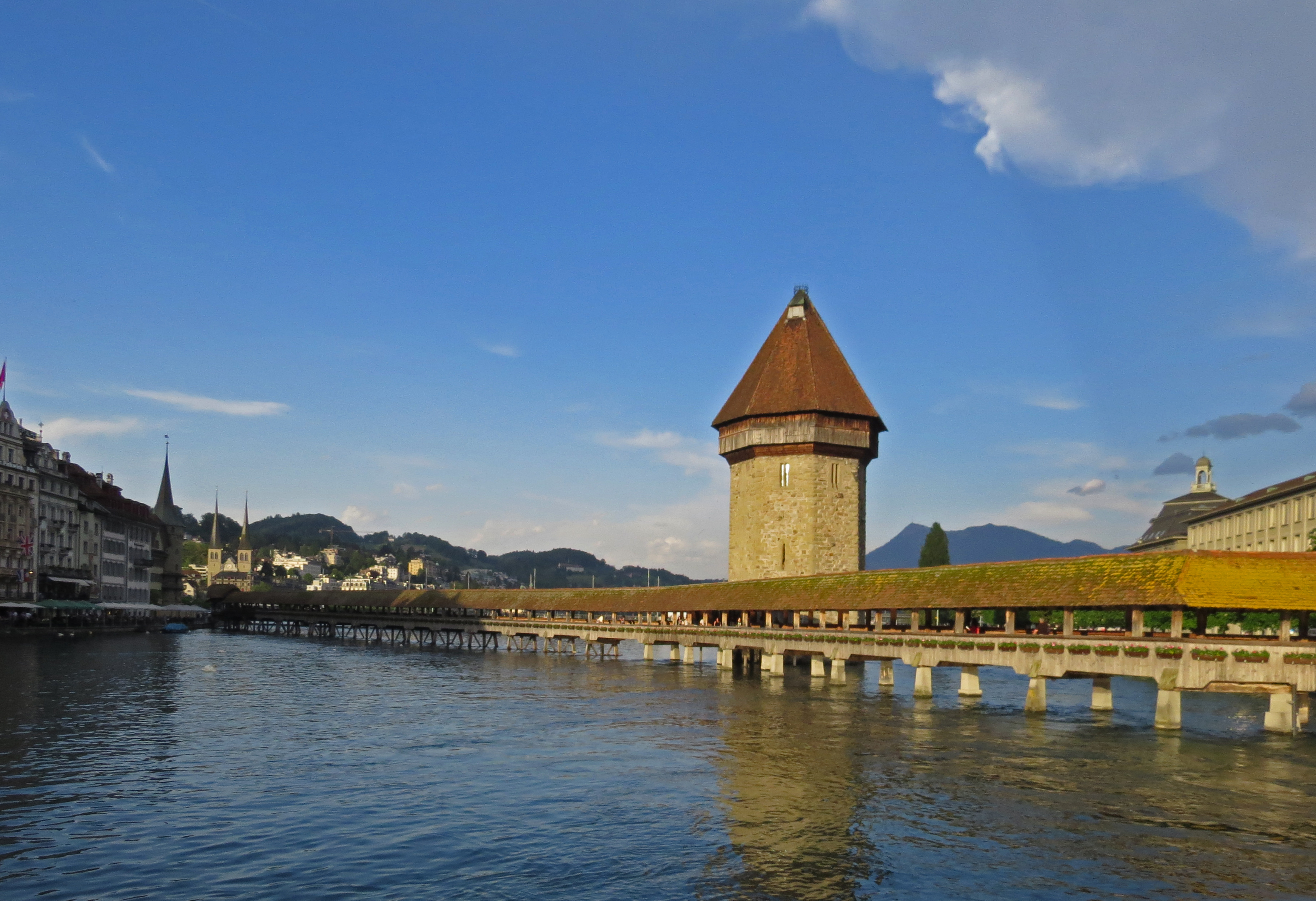
The Chapel Bridge and Water Tower were built in the 14th century and are Lucerne’s best known tourist attraction. The bridge served as a rampart and part of the town’s fortification. The Water Tower served as a dungeon, archive and treasury vault.

In the 17th century the bridge was adorned with a set of paintings depicting the development of the town and the Republic of Lucerne and the life of two patron saints.
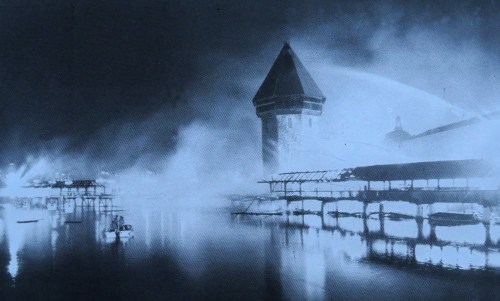
Tragically on the night of 17th August 1993 a fire broke out on the bridge, burning 81 of the 111 bridge paintings, only those at the two ends escaped. The bridge structure was quickly renovated (at a cost of about £1.5 million) and some of the paintings removed in the 19th century (when the bridge was shortened to make way for a new quay) have been hung in the place of those destroyed. Photo taken from an information board by the bridge.

The surrounding waters held a healthy population of Red-crested Pochards, some of which were quite tame ….

…. as were the Great Crested Grebes.
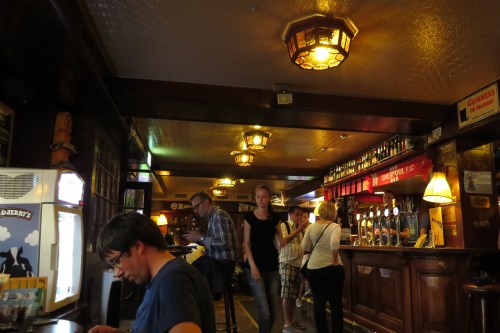
We ended up in an ‘English Pub’ for dinner. It sounds a bit corny but it must have been ok as it was patronised by many locals.

We headed back along the shore of the lake, getting our last view of the high mountains as Lucerne is at the northernmost edge of the Alps.

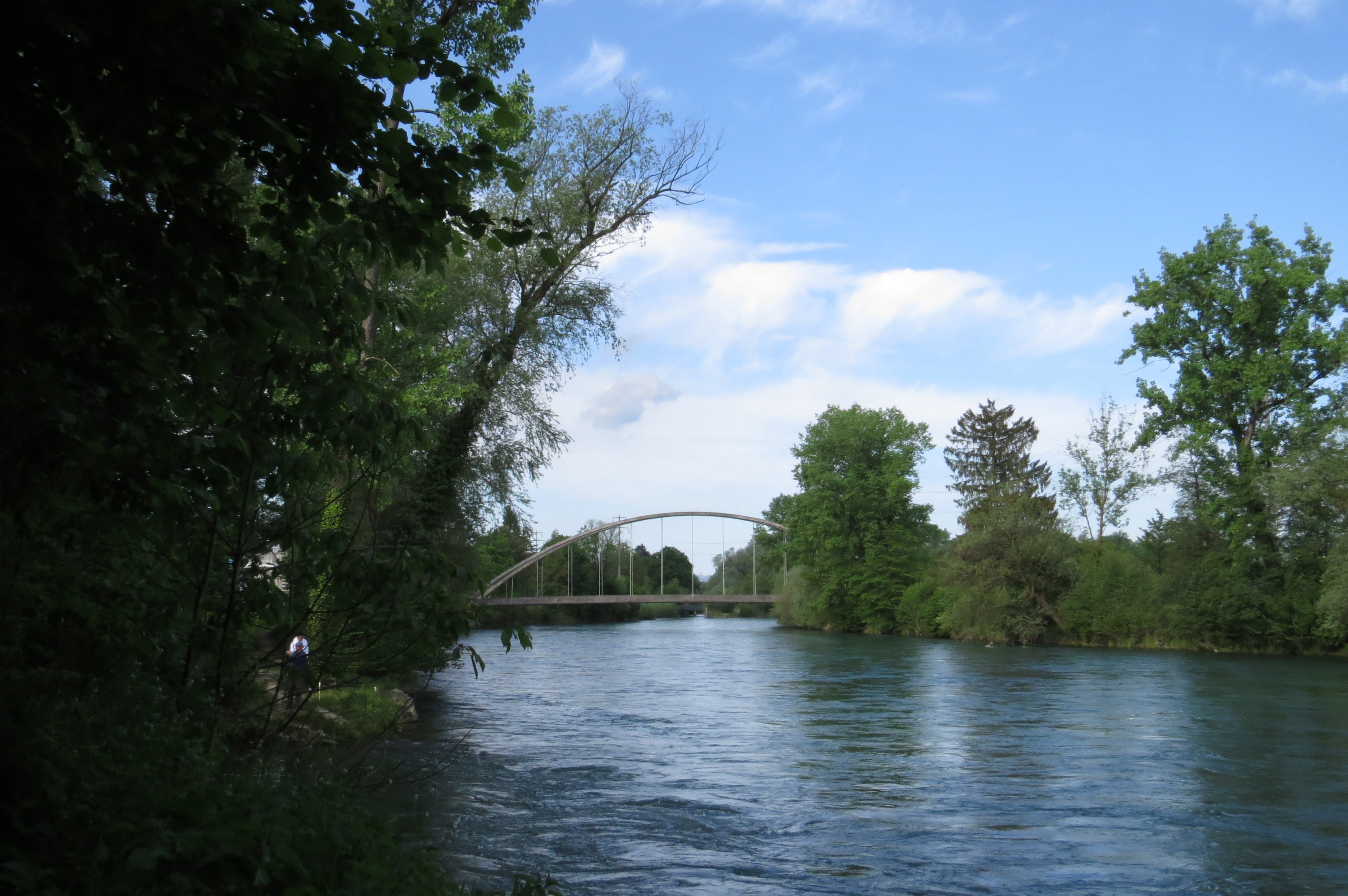
As hotels were so expensive in the centre of Lucerne we drove to one at Root, some way to the north. The following morning we took a walk along the bank of the nearby river. We came across some species more typical of the lowlands like Garden Warbler and Spotted Flycatcher. After all the mountain torrents we had checked for Dippers with limited success it was a surprise to see a pair flying over this lowland river.
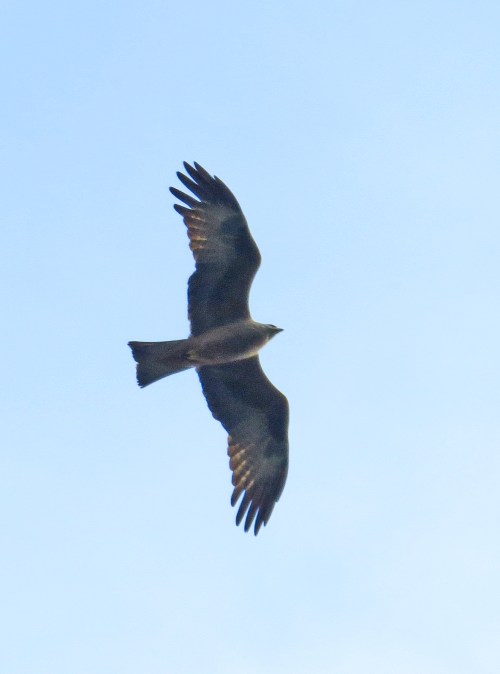
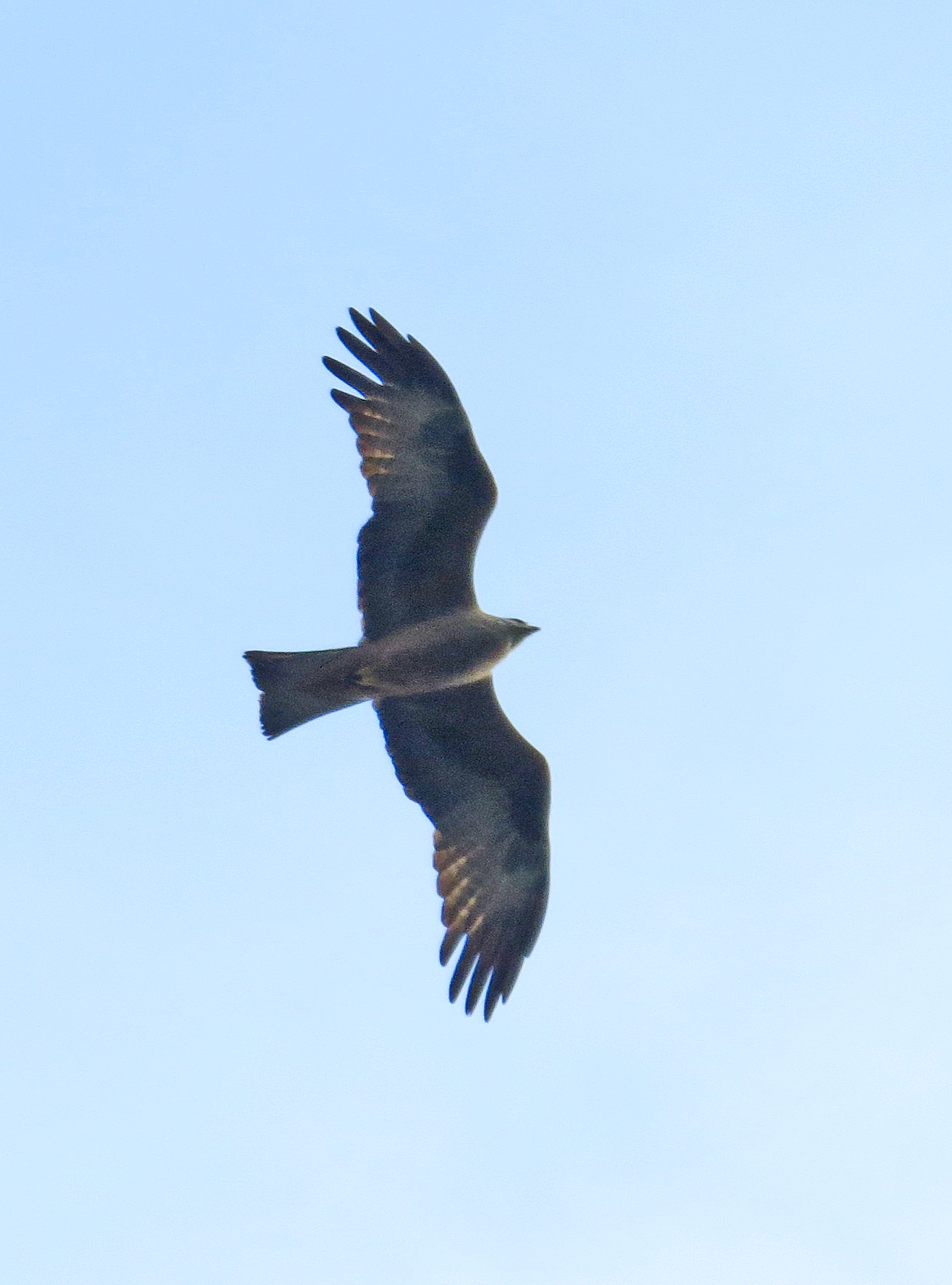
We had seen lots of Black Kites in southern France but there had been none in Italy or the mountains of Switzerland so it was nice to start encountering them again. From here we drove to the tiny Principality of Liechtenstein before meeting up with the family in Austria. More of that in the next post.
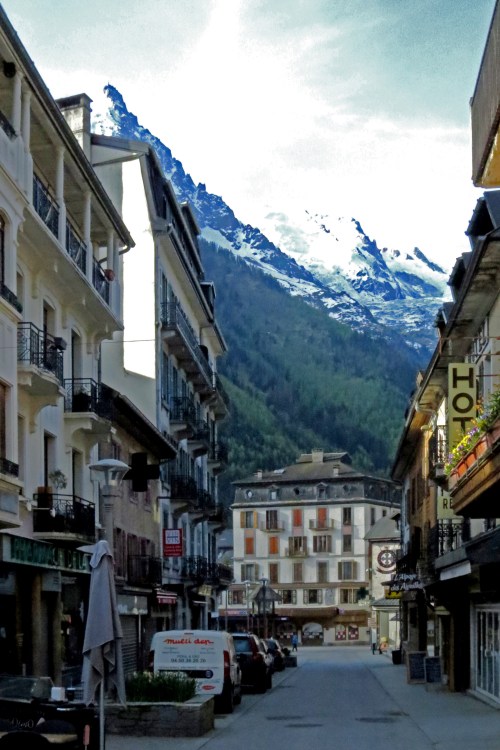
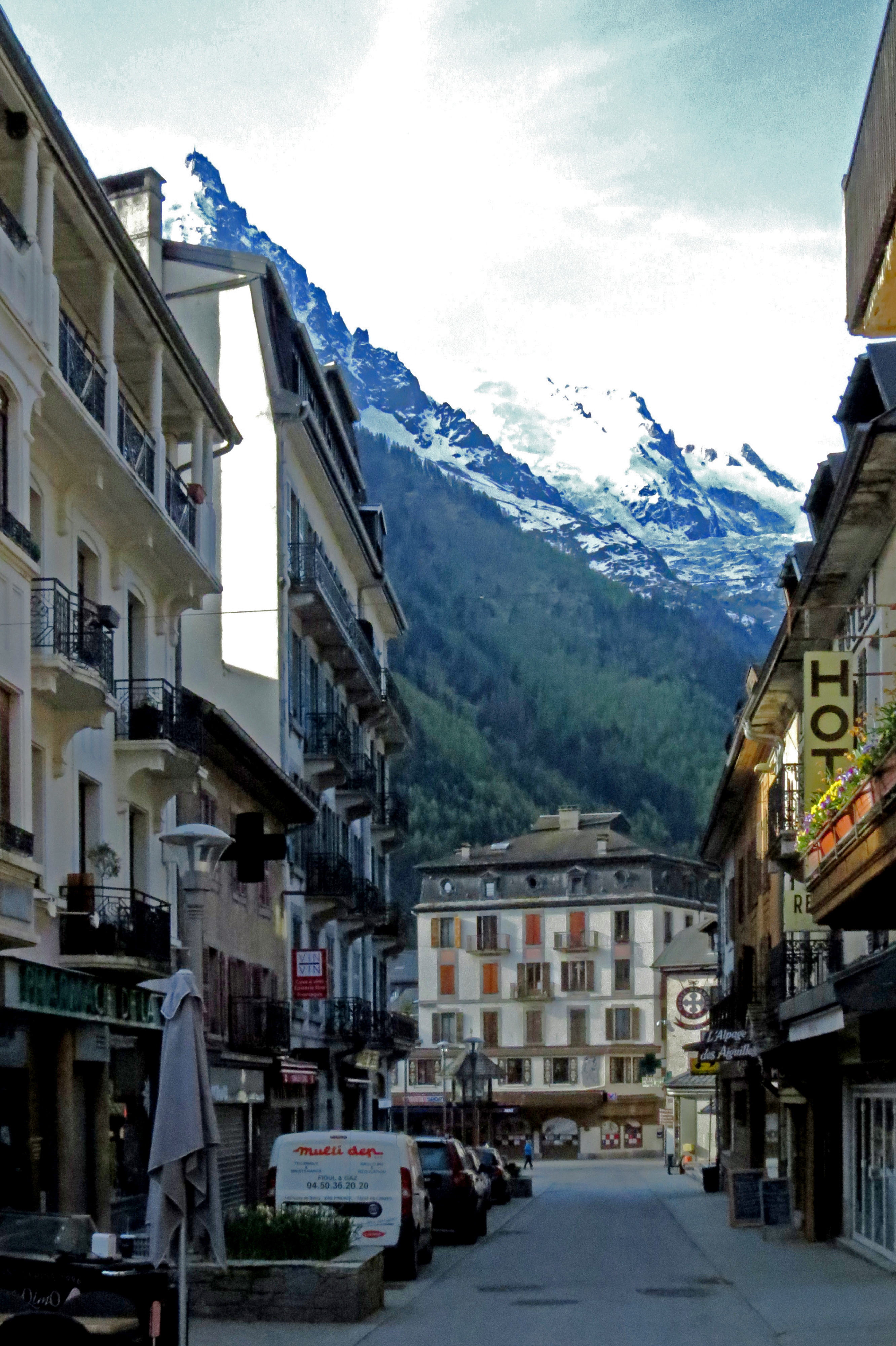
Having left Italy and briefly driven through Switzerland, we re-entered France and headed for the lovely town of Chamonix.

The town is dominated by the mountains of the Aiguilles Rouges, the most impressive of which is the Aiguille du Midi which has an observation platform at 3842m. This photo was taken from the town some 2,800m lower down.
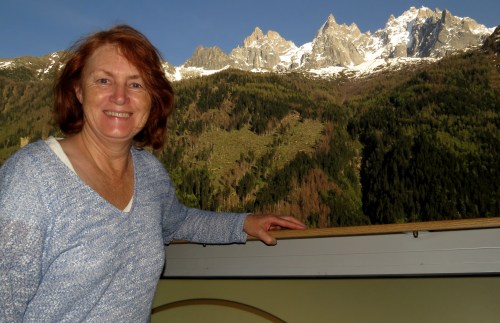
We had a spectacular view from our hotel room ….

…. and after dark the view just got better. The dot of light on the mountain to the right of centre is from the observatory on Aiguille du Midi, shown in the photo above.

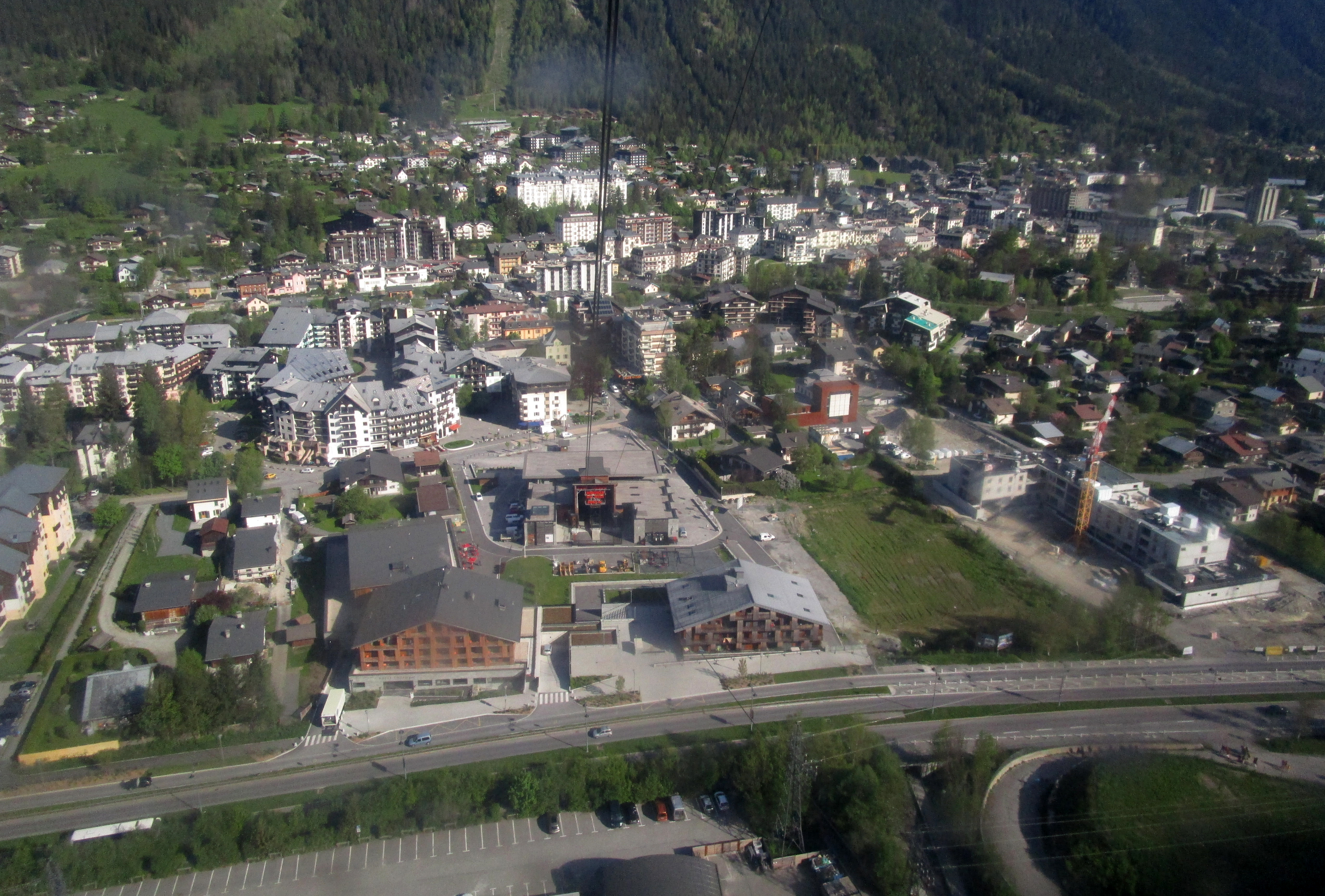
Margaret, who hates cable cars, stayed behind to do some shopping, whilst I took the highest vertical ascent cable car in the world (2807m) to the top of Aiguille du Midi.

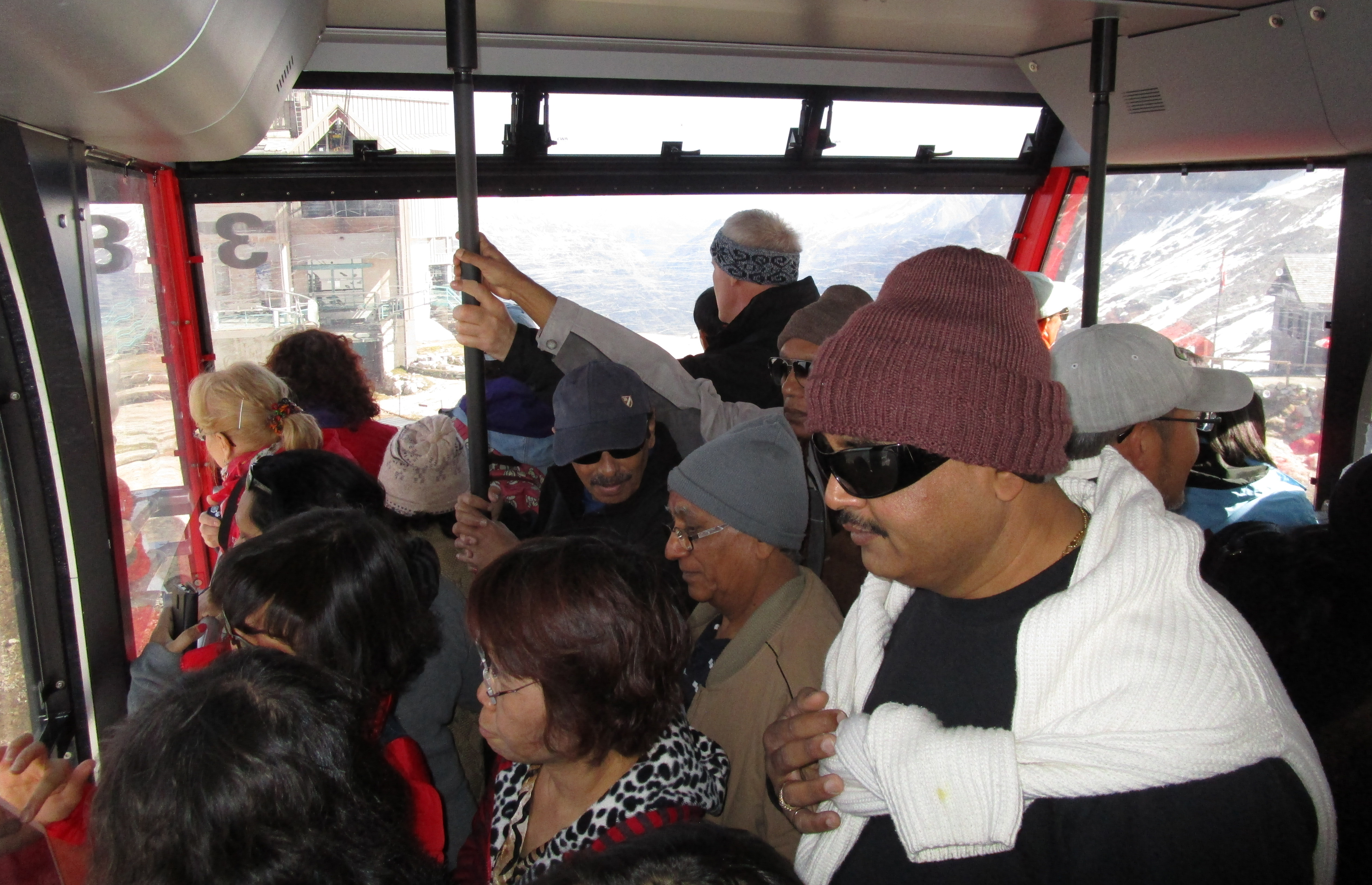
The cable car on the ascent and descent was packed. I was interested to see how many Asian tourists were visiting this area, I’m pleased that tourism is now a global affair and not just the domain of westerners.

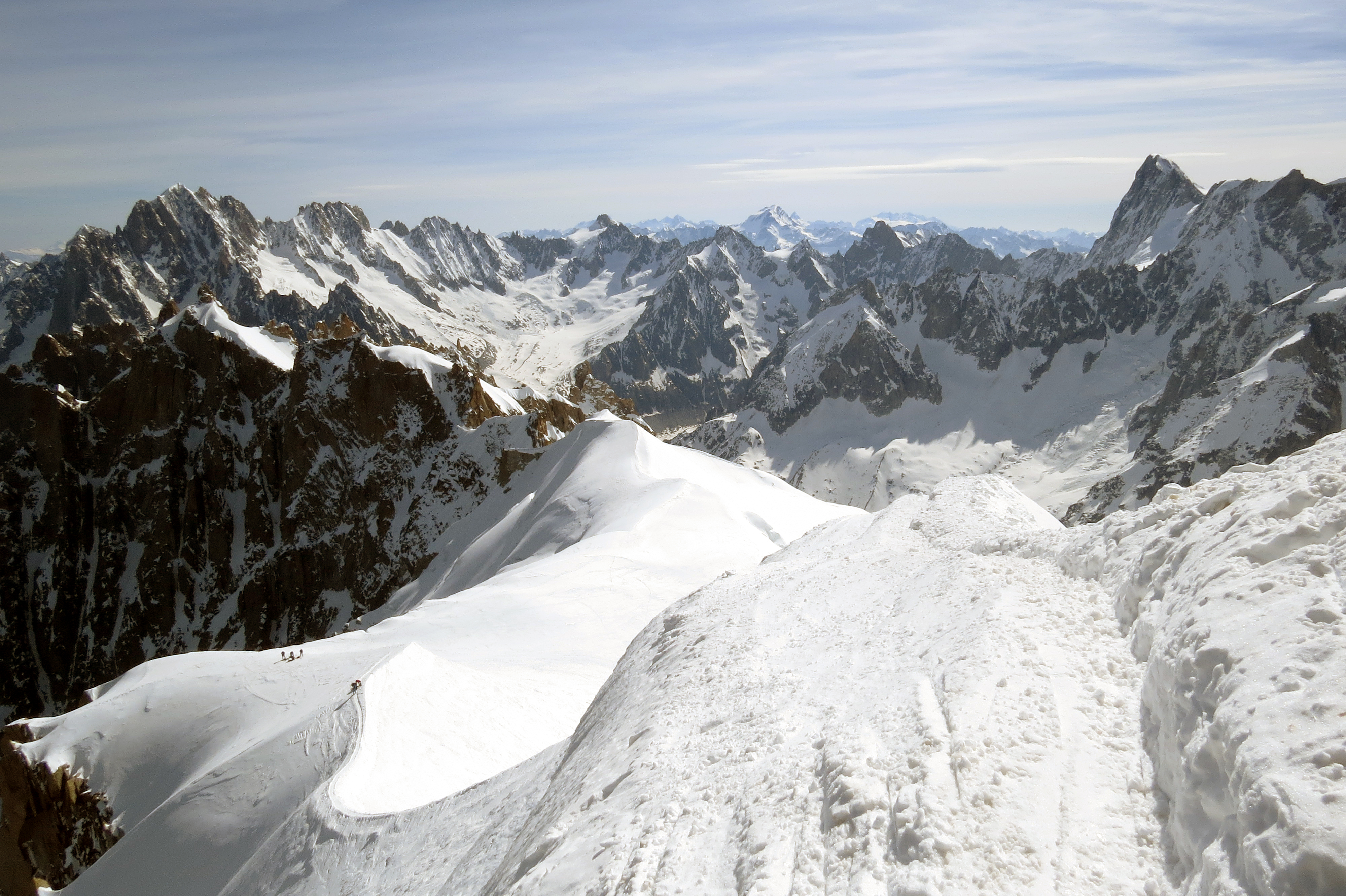
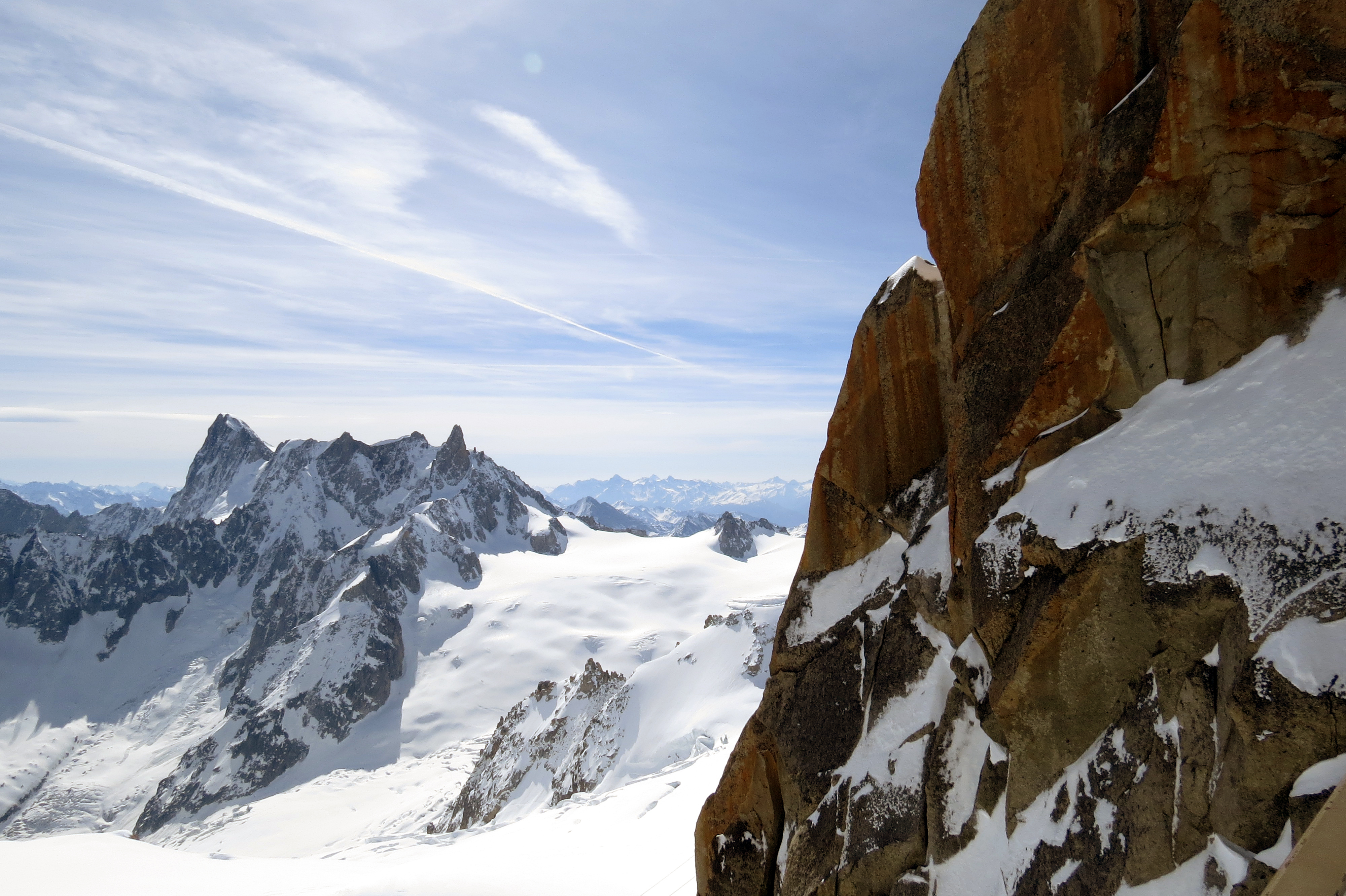
From the observation platform the views of the valley to the west ….
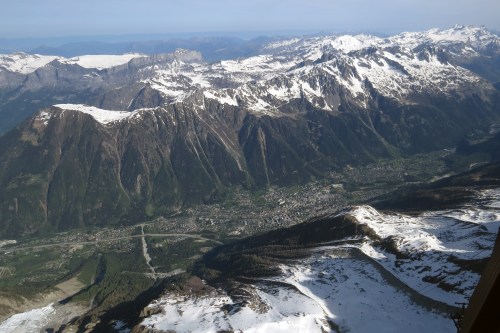
…. and the east, were spectacular.
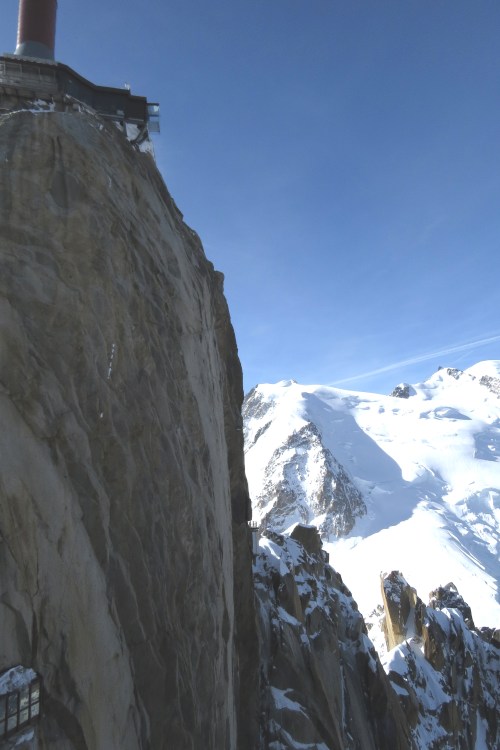
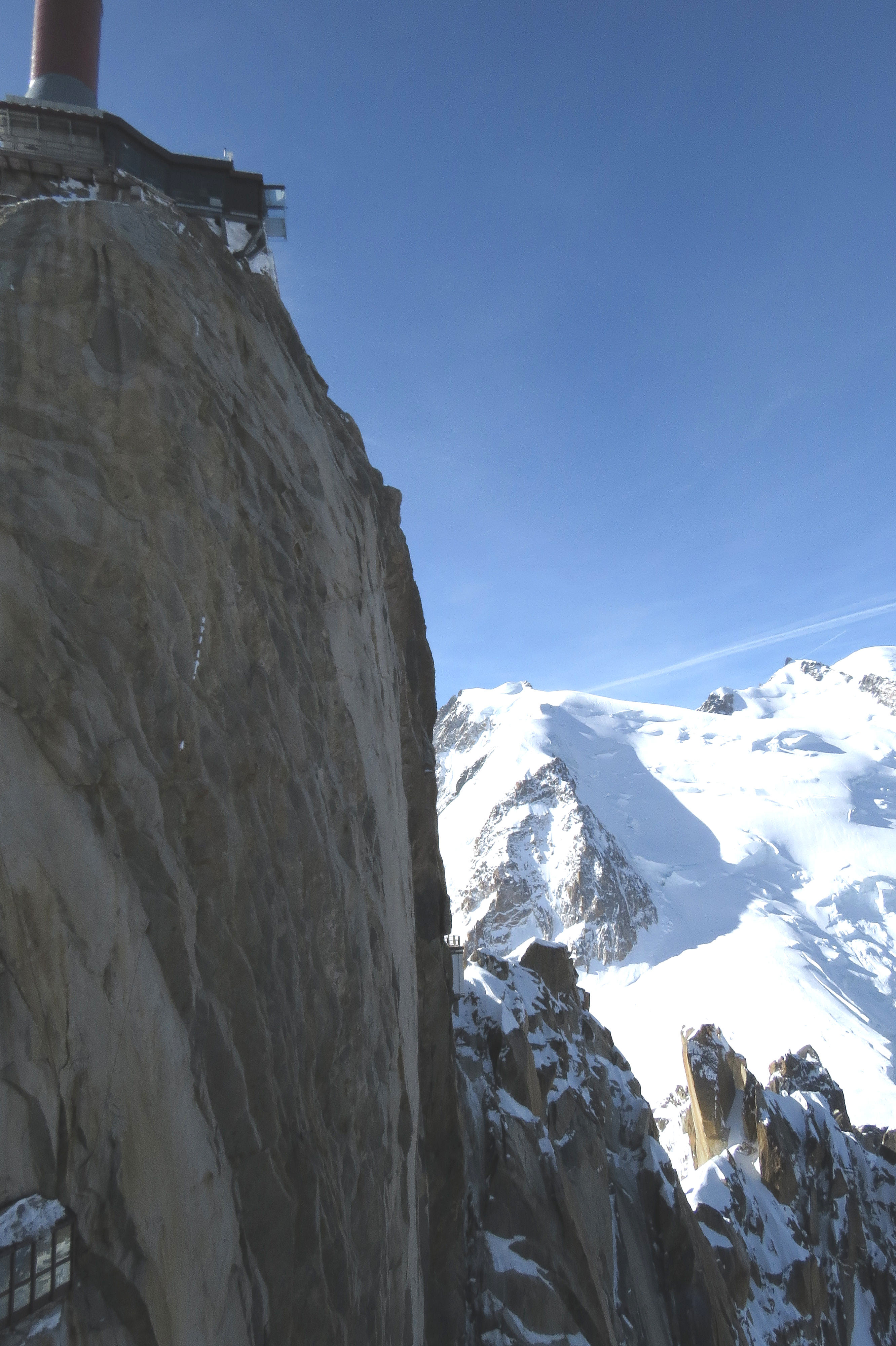
Unfortunately the upper observation deck, which gives the best view of Mont Blanc, was closed for renovation until June. On the side they have fixed a glass skywalk (a perspex box) known as ‘step into the void’. If you step into it you have an unbroken 1035m drop under your feet. I’d love to have tried it although I know I would have been scared.

With every step …..
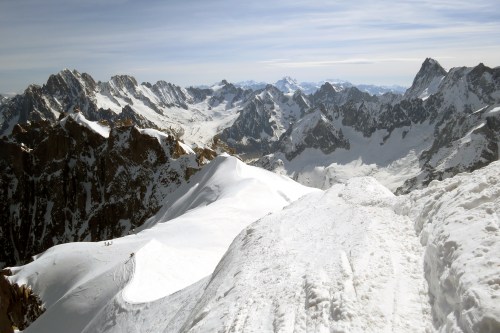
…. more and more magnificent panoramas unfolded ….

…. in the distance the peaks of Monte Rosa, at 4634m the second highest in Europe (excluding the Caucasus) can be seen.
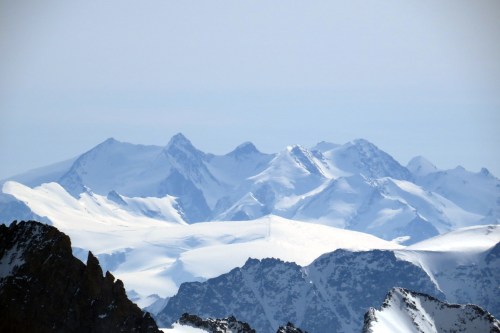
…. and zooming in, here it is in more detail.

To the south the highest peak in Europe (again, excluding the 5000m mountains in the Caucasus) can just be seen, the 4810m rounded peak of Mont Blanc.

Aiguille du Midi wasn’t just used by sightseers and skiers, large numbers of hang gliders were using it to make their near 3000m descent.
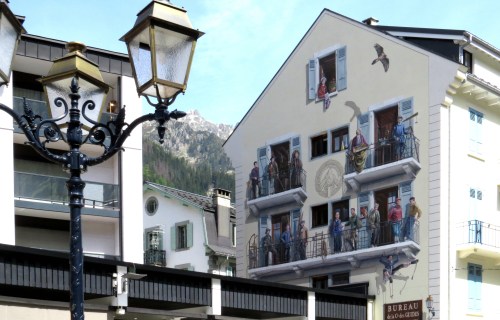
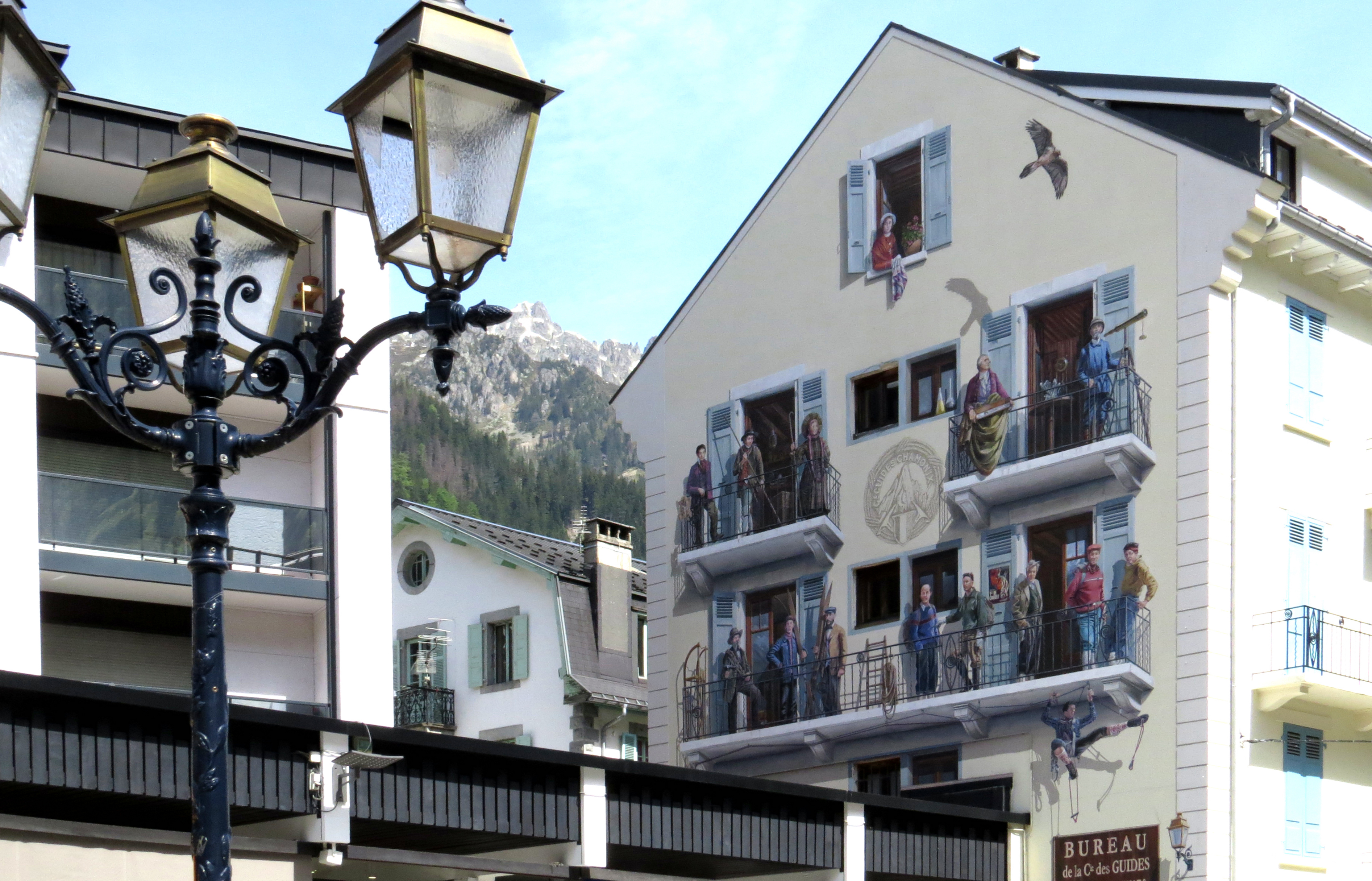
As I walked back through Chamonix I came across this building. All the balconies, windows and people are painted on. The balconies look so three-dimensional, but if you look at the shadows cast by the real balconies on the front you can see that are thrown in a different direction. Nice to see they have painted a Lammergeier on there as well.
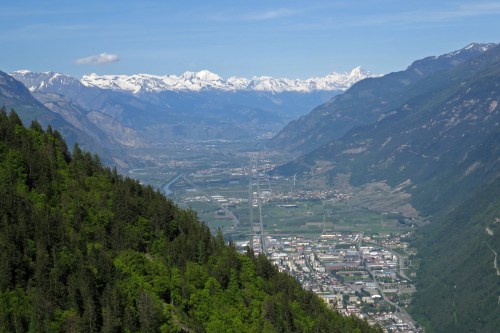
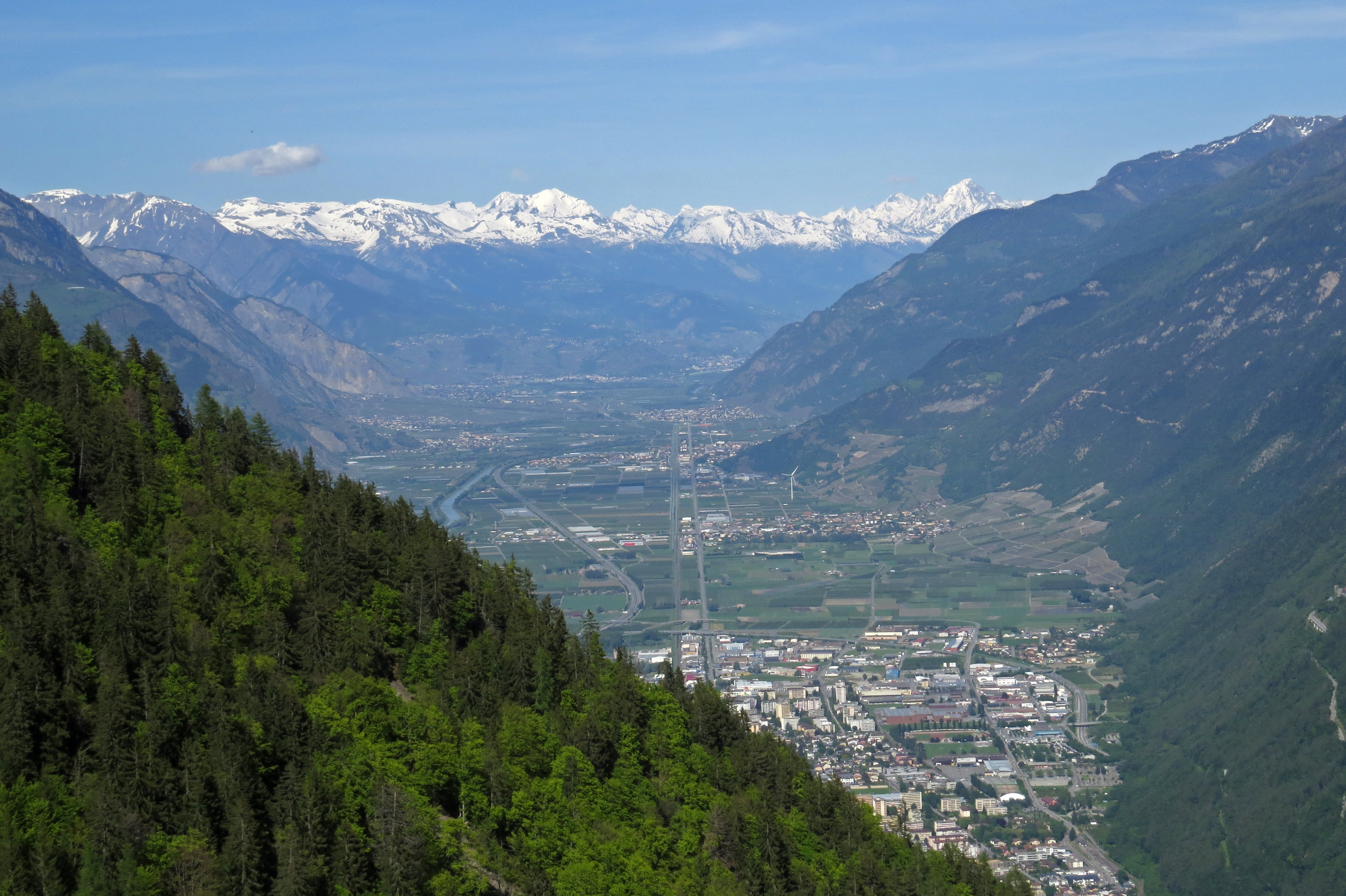
The following day we re-entered Switzerland and obtained this spectacular view over the town of Martigny in the Rhone Valley.

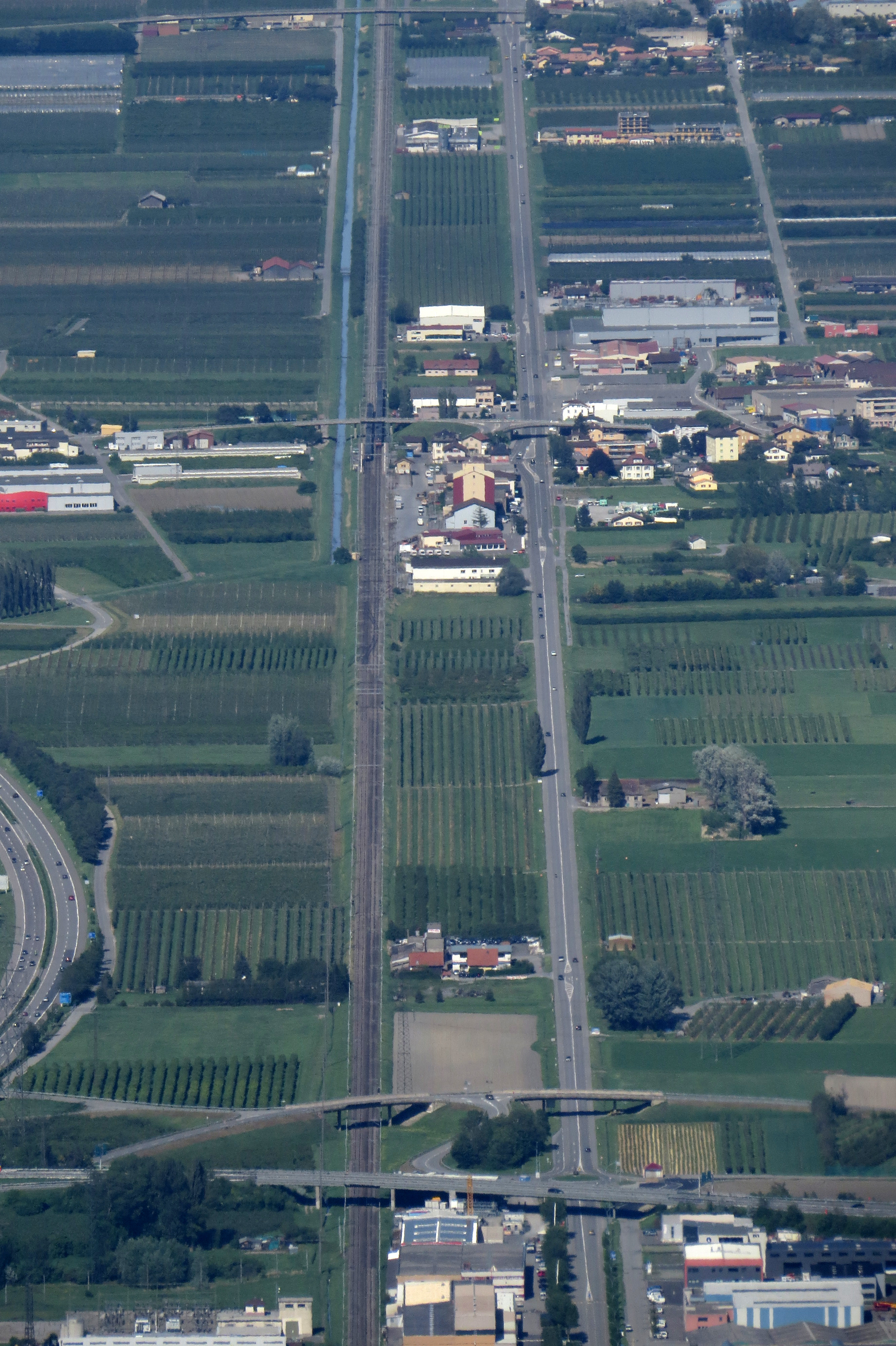
Zooming in revealed a fascinating pattern of parallel lines.

Although we had wonderful views of the Matterhorn from the Italian side, the most dramatic view is from Zermatt to the north. Fortunately we missed the sign that said you weren’t allowed to drive into Zermatt without a permit (and we really didn’t have the time to catch the train) but once in the town we got caught up with a load of lorries involved in delivering material for construction, so I just hopped out of the car, snapped this photo of the Matterhorn and retreated.
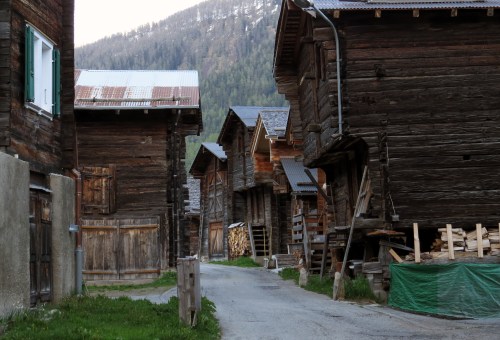
We stayed the night in a quaint little town called Munster but we learnt that all the mountain passes between there and our destination of Interlaken were closed due to snow and/or road works. It looked like we would have a five-hour drive back to Martigny, and then north to Montreux and Bern before we reached Interlaken until we found out that we could take our car on the train.
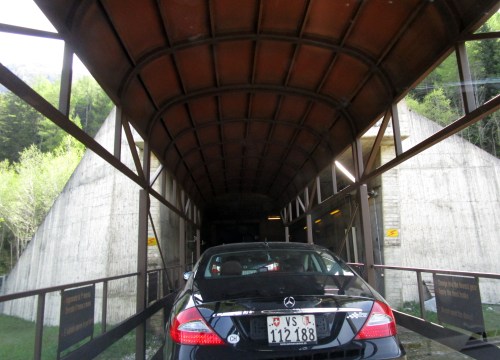
So the next morning we turned up at the station at nearby Oberwald, drove onto this train and spent 20 minutes going through a tunnel ….

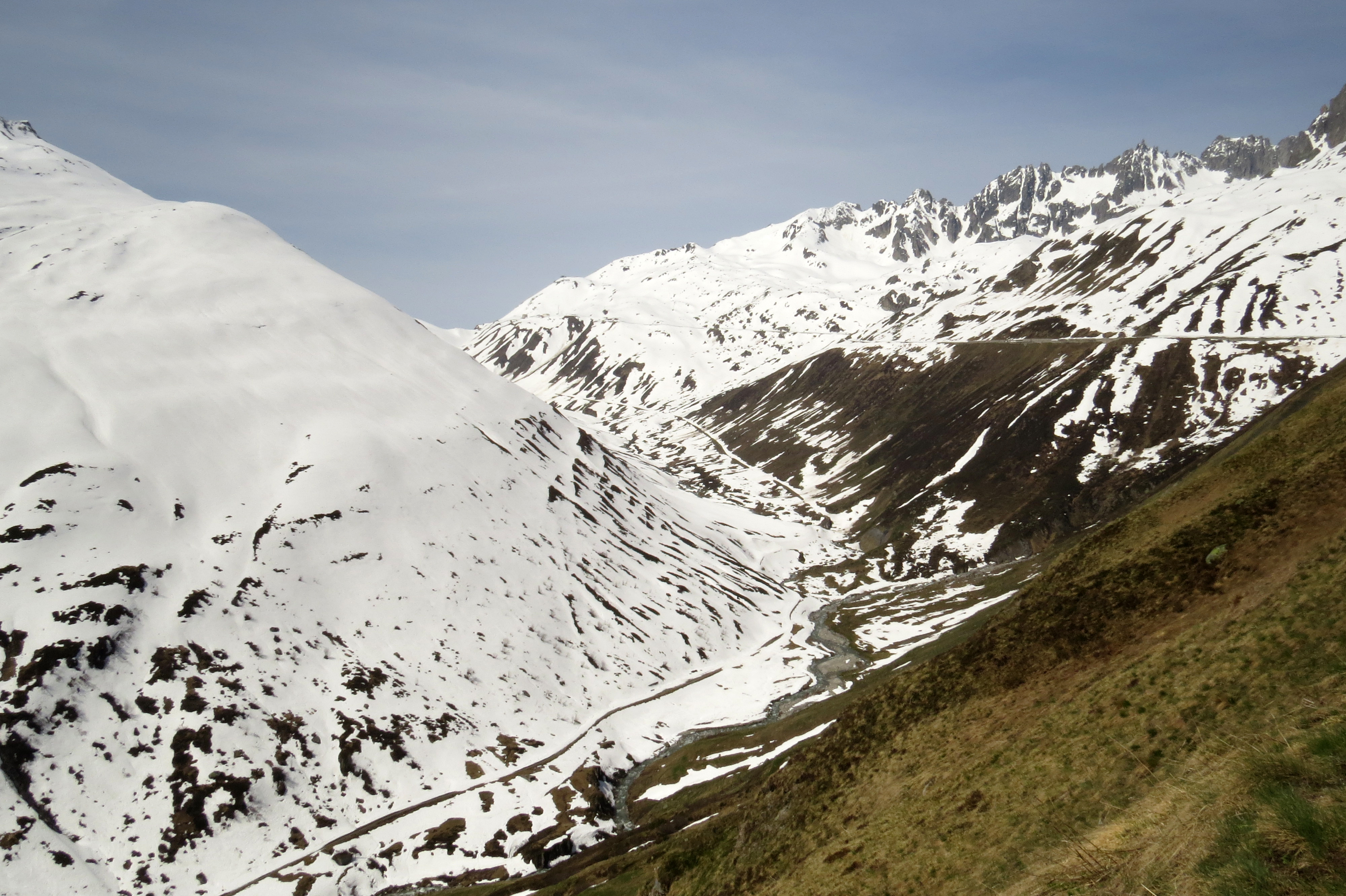
…. and then drove off again at Realp at the eastern side of the Furkapass. We still had to make a detour as far north as Lucerne before we could get to Interlaken, but it was a lot better than going via Montreux.
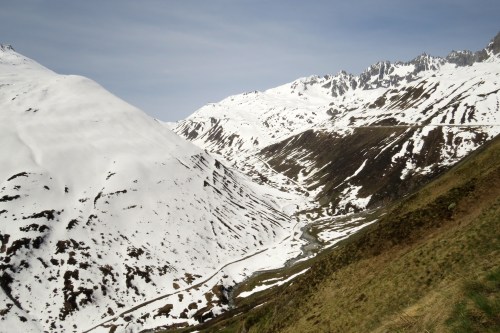
We were able to drive part the way up the Furkapass before we reached the road barrier and continued the search for high altitude species. As well as Alpine Choughs, we found some Snowfinches and Water Pipits and had brief views of an Alpine Accentor.










































































 gryllosblog


