There are 16 species of harrier in the world and five have occurred in the UK; two Northern and Pallid are vagrants and one Montague’s is a very rare breeder with just six pairs in 2013. It is the the very different fortunes of the other two species that I want to highlight in this post.
When I started birding in the seventies Western Marsh Harrier (hereafter just Marsh Harrier) was a very rare bird indeed, declines due to pesticide contamination brought the UK population down to just one pair in 1971. Since then there has been a steady recovery and the UK population now stands at between 350 and 400 pairs. The fact that many males are polygamous and provision more than one nest makes the actual number of ‘pairs’ hard to estimate.
Marsh Harriers used to breed in Poole Harbour up to the late 50’s but since then up to a few years ago they were just winter visitors/passage migrants in the county. About five years ago nesting occurred at Lodmoor and Radipole in Weymouth and last year a pair bred on the western fringes of Poole Harbour. This year there were two nests, one nest fledged one or two young, the other a remarkable four!
Although Marsh Harriers have spread from their East Anglian strongholds, they have yet to colonise south-west England. Hopefully if the high productivity of the four nesting females in Dorset plus the birds on the Somerset levels continues then we will see them spread into Devon and Cornwall in the next few years.
This morning Margaret and I went down to Swineham where a footpath overlooks the area where they breed and had good views of a female and the four offspring. Unfortunately as I mentioned in my last post I am without a working camera with telephoto lens at the moment and have had to ‘borrow’ photos from elsewhere.
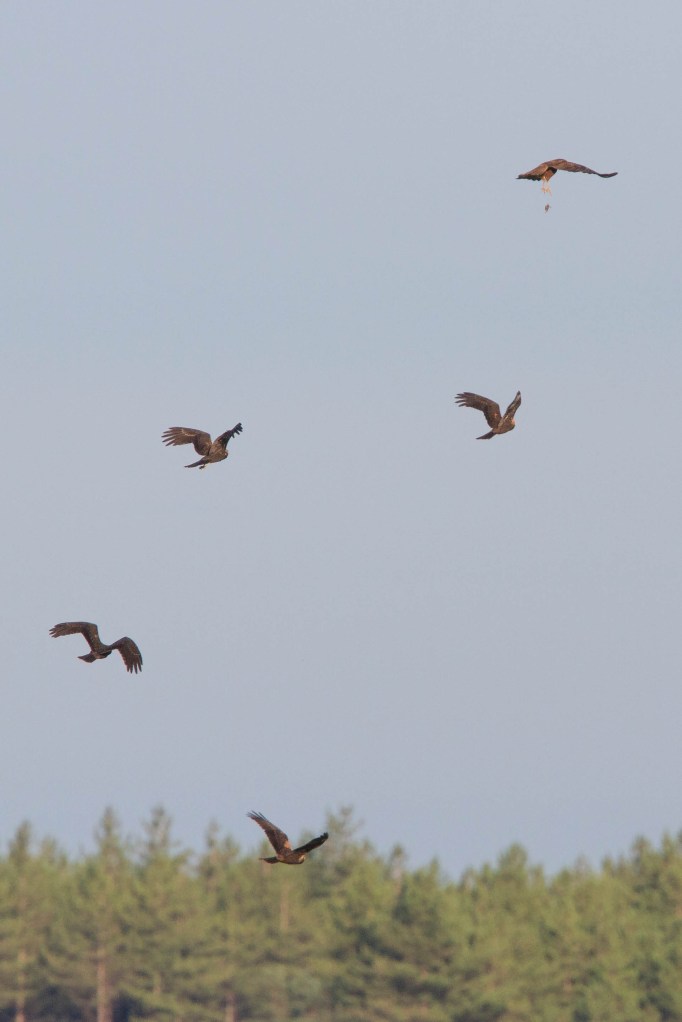
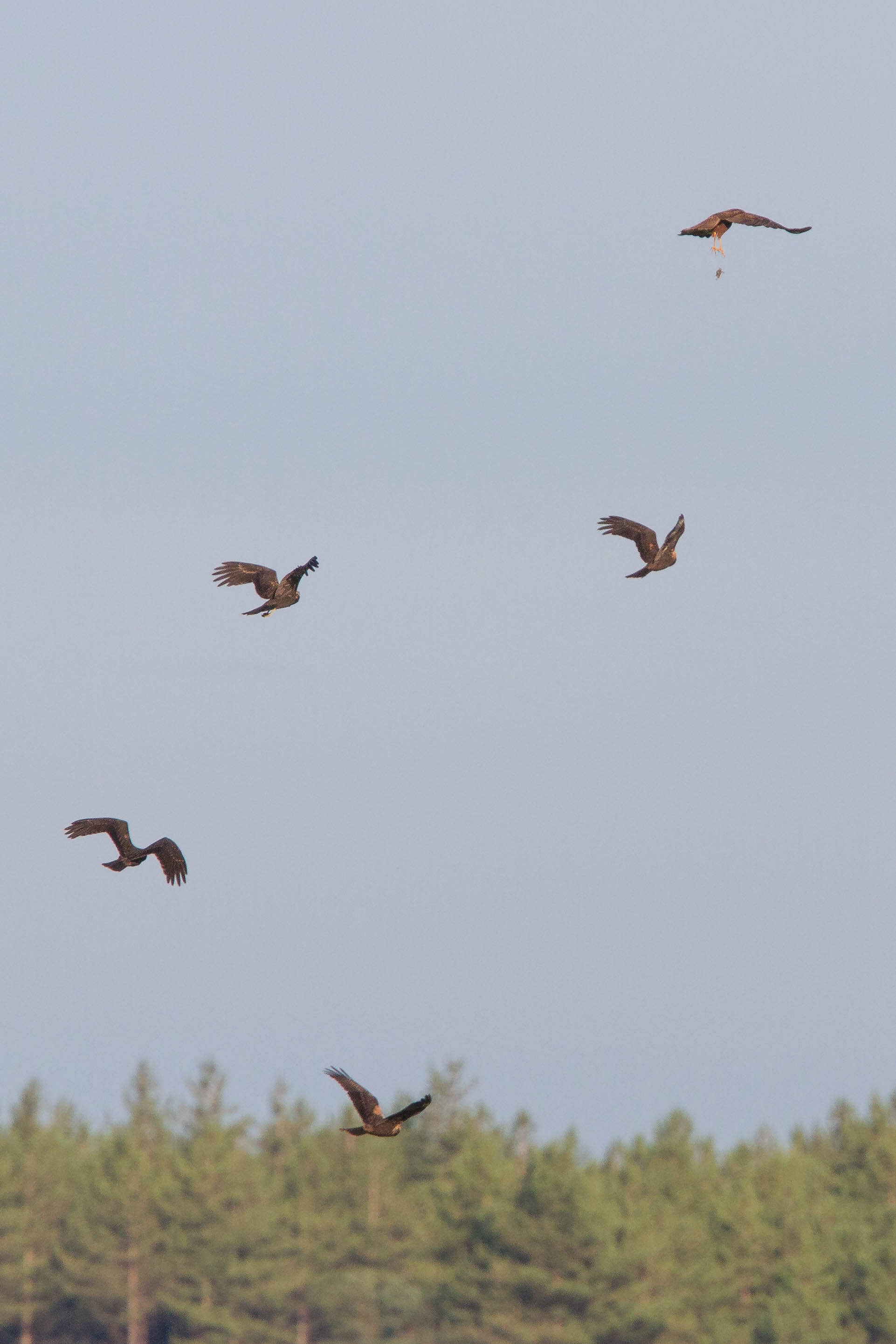
In this stunning photo by Paul Thompson the female Marsh Harrier at Swineham can be seen arriving with food, closely followed by her four offspring. see http//oakphotography.co.uk
On the other hand the fortunes of the Hen Harrier has been diametrically opposed to that of the Marsh Harrier. Since I have been birding Hen Harriers have been winter visitors to the south of England, although they may have bred in the distant past. Now their breeding range is restricted to upland areas of northern England and southern and eastern Scotland, plus other areas in the Hebrides, Orkney and the Isle of Man.
Unfortunately this beautiful bird has fallen foul of gamekeeping interests especially on driven grouse moors. It is completely illegal, but it is known that Hen Harriers have been shot and their chicks have even been stamped to death in the nest on moorland areas. It has been calculated that there is enough habitat for 300 Hen Harrier pairs in northern England, this year there were three, last year there were none. No-one ever gets prosecuted for these crimes as it hard to gain access and even harder to prove who did it, a few years ago one was even seen to be shot as it flew past the Queen’s estate at Sandringham, yet no-one was reprehended.
Fewer and fewer Hen Harriers are seen in southern England in winter and most of these probably come from the areas where there are no grouse moors.

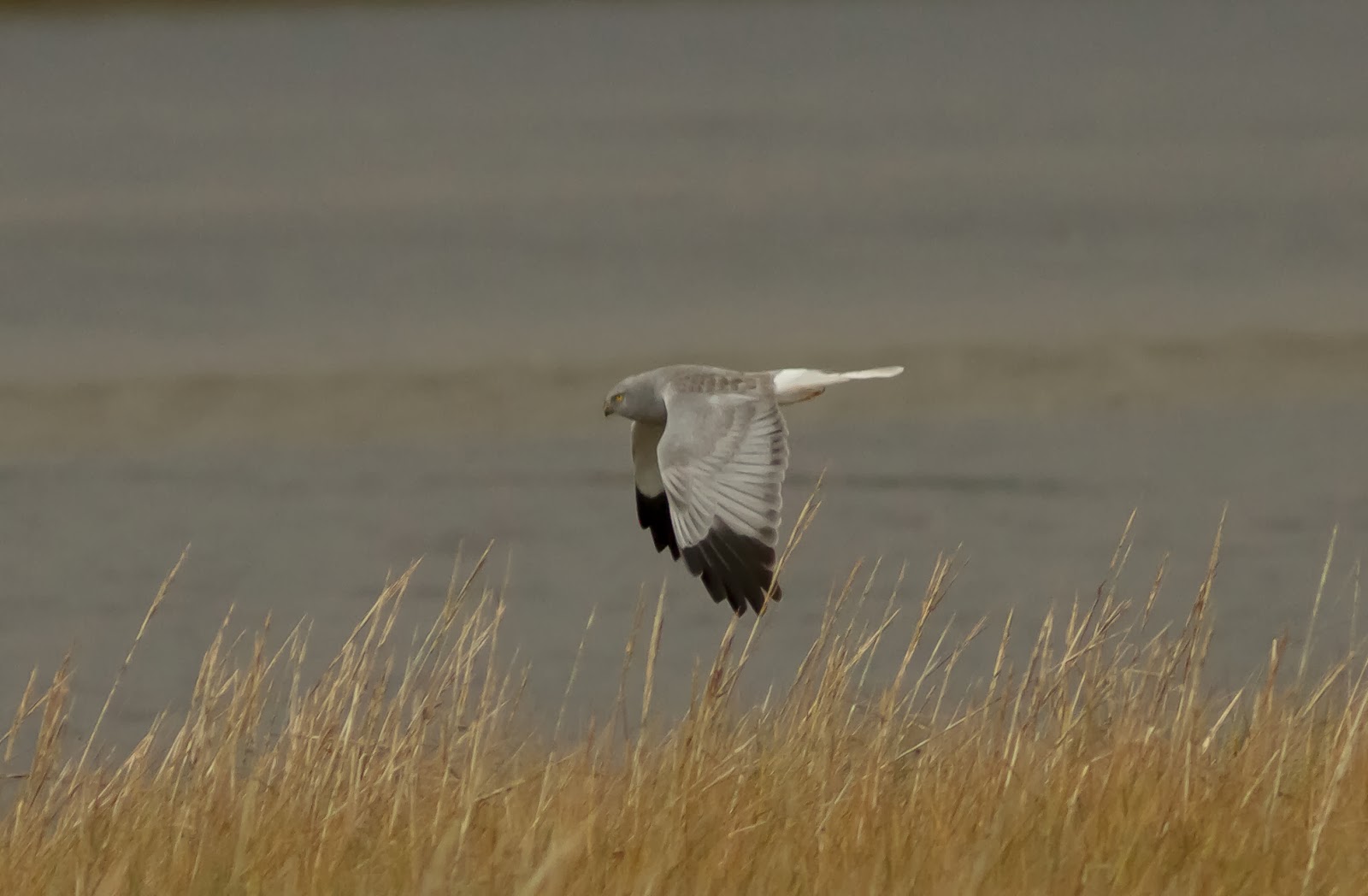
Male Hen Harrier – Poole Harbour. Photo by Phyl England.
So what can be done to help this beautiful raptor, must we see it slide into extinction over vast swathes of the country just because it might take the occasional grouse, a gamebird that is raised in large numbers for no reason than to give people something to shoot at?
There have been a number of initiatives recently. The RSPB has launched the Skydancer program (named after the males display flight) and a number of organisations and individuals such as Birders Against Wildlife Crime http://birdersagainst.org/, Mark Avery and Chris Packham are promoting a Hen Harrier day on 10th of August to coincide with the start of the grouse shooting season. Various events have been planned in northern England, see the above website for details. My friend Mark Constantine of Lush and the Sound Approach has paid for radio tags for the six Hen Harrier chicks that have fledged this year so it can be seen just where they go and where they might get killed in the future.
The RSPB recently launched an appeal for money to pay for radio tracking, monitoring and further research. I had mixed feelings about this and wrote to them to say so. Money of course is essential to the campaign, but above all I felt they should have been getting the million strong membership to write to their MP, sign petitions and generally campaign against this needless slaughter.

This old war time bunker is at the site of a former Hen Harrier roost on Sheppey Island. Who ever painted this male Hen Harrier is raising awareness with the general public and not just to a select few. Photo supplied by Peter Hadrill who has dedicated his time to monitoring our local harrier populations.
Its been a fortnight since I returned from Borneo and, as always, I have been pretty busy. One of the main projects has been to edit all the photos taken on the trip. Unfortunately my ‘bridge’ camera was ruined by a sudden downpour just a few days into the trip and after a number of days of being unable to take photos, the leader Chris Kehoe offered to lend me his camera as long as I took enough to illustrate the tour report. This was an arrangement that suited us both as he had no interest in photography, but it meant that editing my shots had to be given a high priority on my return.
To birders autumn starts as soon as south bound migration commences, which can be as early as late June. Certainly by mid July we were ringing southbound Sedge Warblers at Lytchett Bay, at least two weeks earlier than usual. At Fleets Lane we have trapped 22 juvenile Blackcaps showing that there has been an exceptional breeding season at this very small site but most seem to have already departed.
I have also tried ringing in my garden, where juvenile Robins, Starlings and House Sparrows have featured. Now that the BTO’s ringing emphasis has shifted from understanding migration routes to population dynamics, the ringing of these common garden birds is as valuable as the ringing of long distance migrants.

Juvenile Starlings can be a pitfall for the less experienced birdwatcher and indeed Margaret was puzzled when they gathered on our feeders. This bird is losing its grey juvenile feathers and adult type feathers can be seen on the primary, lesser and greater (but not median) coverts and a few spotted feathers are appearing on the flanks.

Starlings are unusual in that juveniles undergo a complete moult. This juvenile can be seen to be moulting its primaries. In all of the British passerines this moult strategy is shared only by Long-tailed and Bearded Tits, House and Tree Sparrows and Corn Bunting.

We have been out to various places in Dorset and Hampshire recently. An attempt to locate a reported Short-toed Eagle in the New Forest (a bird I missed in Dorset when I was in the USA) drew a blank , hardly surprising as that sighting (but not the original) referred to a pale Buzzard. Inland of the Purbeck Ridge in Dorset there is a lot of forest surrounding the heathland and this can be good for raptors.
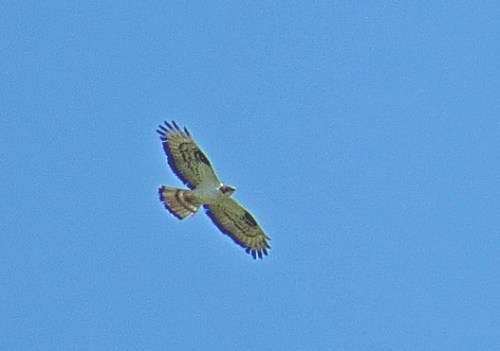
It is outrageous that even in these so called enlightened days there are those who would persecute raptors, be it by egg collection or in a misguided belief that their game rearing interests are more important than the existence of a healthy raptor population. As I result I cannot reveal the site where this Honey Buzzard was photographed. With a UK population of just 50 or so pairs we can’t take any chances. Photograph by Ian Ballam

A week ago my friend Paul Harvey came down from Shetland to visit his family. He spent a few days with his parents in Poole before going to stay with his daughter and her family in Devon. One day he went out with Ian Alexander and myself and instead of birds we targeted Butterflies and Dragonflies.

Most of our time was spent at Holt Heath near Wimborne where we found this Beautiful Demoiselle, which clearly lived up to it’s name.

A Gold-banded Dragonfly

and a Keeled Skimmer

A heathland specialist, the Silver Studded Blue Butterfly.

But the real surprise came later in the day when we heard of the existence of a rare ‘rogeri’ variant of Painted Lady. As with the Honey Buzzard the exact location cannot be revealed, as those who prefer to see butterflies pinned in a display cabinet rather than on the wing or in their cameras memory, would pay good money for someone to collect it.

A view of the underwing.

The following day we went round to Paul’s parents, Terry and Margaret. As well as Paul and family, both his sisters, who I haven’t seen for about 30 years, and their children and grandchildren were there. Above – Paul with his wife Liz, and grandsons 9 month old George and 3 year old Harvey.

Harvey last appeared on this blog two years ago, he’s grown a bit and turned into Spiderman since then.

Paul and Liz’s daughter Bryony with her son George.

On another evening we took a dusk walk to Upton Heath which lies just the other side of the Upton by-pass from our house. It didn’t take long before we saw several Nightjars displaying.

Another bird I failed to see on spring migration was the Turtle Dove so a few days ago Margaret and I spent the morning at Martin Down, one of the few sites were it can still be found.

An extensive area of chalk downland on the border of north Dorset and Hampshire, the site is a haven for chalk land plant and butterfly specialities.

We soon heard and eventually saw a couple of Turtle Doves but without a telephoto capability failed to photograph it. This shot was taken in 2011 at the same site. Turtle Dove have declined by 95% in recent decades, a combination of agricultural intensification in the UK, destruction of their wintering grounds and shooting on migration in the Mediterranean have taken their toll.

Pyramidal Orchid, one of the many chalk grassland plants to be found at Martin Down.
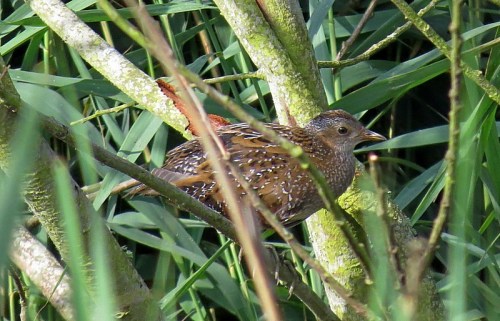
On Sunday we were just leaving for walk to Swineham near Wareham when we head that Lytchett Bay stalwart Ian Ballam had just found a Spotted Crake. I have seen this species before at the Bay 33 years ago (!) but the views this time were far, far better. Well done Ian (who also took this photo)

That evening we put on a braai (South African for barbecue) for our friends in the ringing group and their partners. As usual Margaret excelled with the food and a good time was had by all. Some group members couldn’t make it as they were away, others were stuck down the Bay trying in vain to see the crake! Clockwise: Ivana Gifford, Jane Dowling, Janis, Kimberley Elborn, Margaret, Paul Morton, Bob Gifford, Mike Gould, John Dowling, Ian Alexander, Terry Elborn, Karen Elborn.

Terry, Karen and three year old Kimberley.
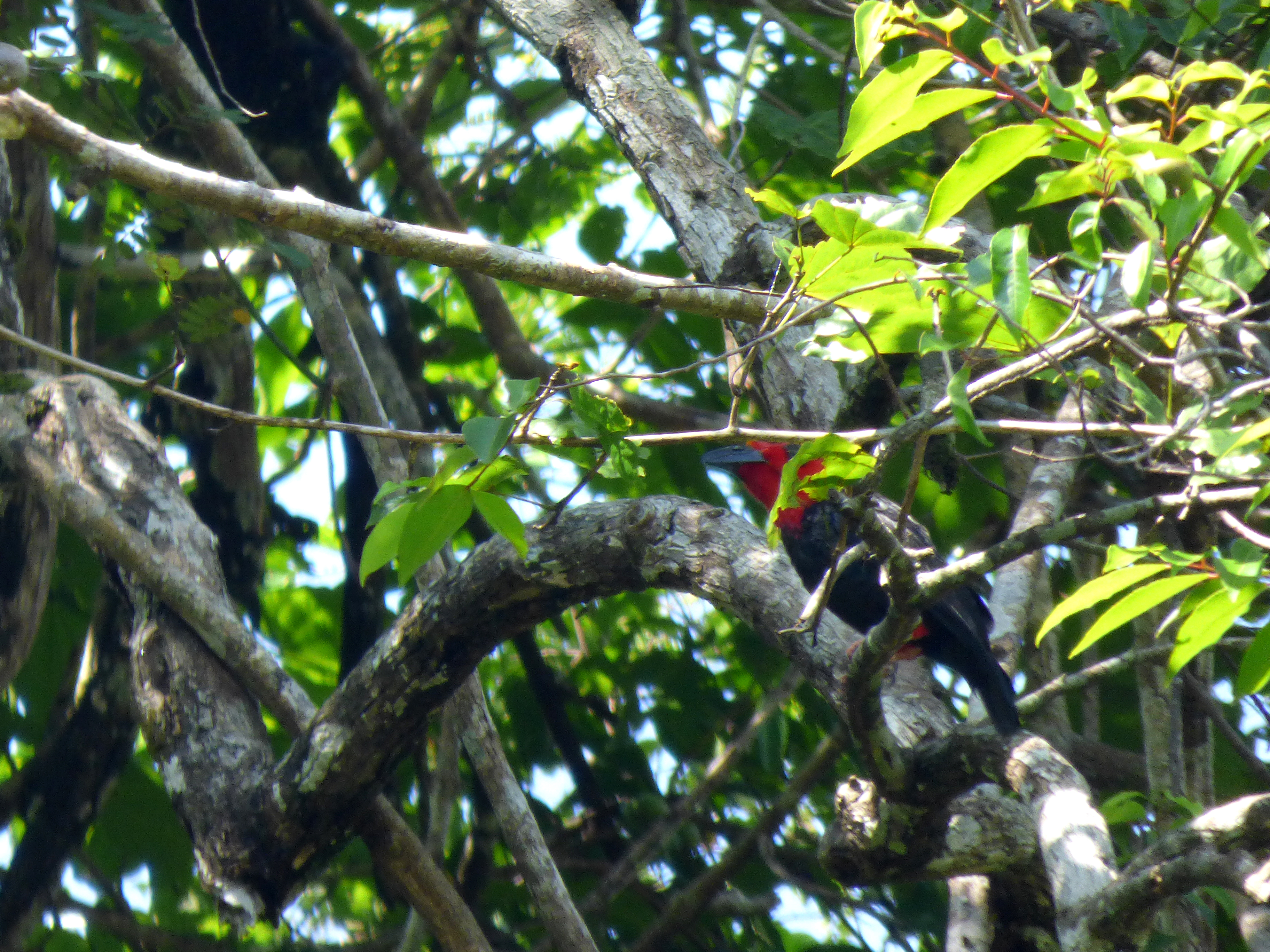
On 28th June I was part of a birding group in a small boat, slowly drifting down a tributary of the Kinabatenga River in Sabah, Borneo when our leader Chris Kehoe exclaimed that he could hear Bristleheads, a few minutes later a small flock of five or more bizarrely shaped red, black and yellow birds appeared in the tops of the riverine forest. Our first Bornean Bristleheads of the tour and the end of a thirty five year quest to see all the bird Families of the world!
Well what is a bird Family; well I don’t mean this!

Wood Duck and ducklings – photo from the internet.
A bird Family is a taxonomic unit above that of Genus and below that of Order. For the uninitiated I’d better summarise the essential, but sometimes confusing, subject of the classification of life.
To make sense of the many million types of organisms in existence a classification methodology based on Latin nomenclature was introduced by Linnaeus in 1735, which has been refined into the current system. It is universally applicable to all forms of life and strict rules govern its application, so that particular name is applicable to a single species and to no other.
All life is divided into six Kingdoms, three of microscopic organisms, plus fungi, plants and animals. Each Kingdom is divided into Phyla for example in animals all vertebrates are in the Phylum Chordata. Each Phylum is in turn divided into a number of Classes, in Chordata there are 6 Classes of fish, plus one each of amphibians, reptiles, birds and mammals. Each Class is divided into Orders and each Order into Families. In birds the huge group known as the passerines is a single Order Passeriformes and this is composed of 129 Families. For example the tits and chickadees form the Family Paridae and this in turn is divided into 61 Species in 14 Genera. Species can be further subdivided into subspecies where there is variation within a single species.
So the classification of our familiar Marsh Tit from the UK would be
Kingdom – Animalia – animals
Phylum – Chordata – vertebrates and allies
Class – Aves – birds
Order – Passeriformes – passerines or ‘perching birds’
Family – Paridae – tits and chickadees
Genus – Poecile – a collection of 15 mainly black, brown and white tits from the northern hemisphere
Species – Poecile pallustris – Marsh Tit
Subspecies – Poecile pallustris dresseri – the subspecies or race of Marsh Tit occurring in the UK
So what has all this to do with my recent trip to Sabah in Borneo. Of course I have been trying to see as many of the world’s bird species over the past 35 years (and, as sometimes subspecies are ‘upgraded’ to full species when new information about their breeding biology and genetics becomes available, I’ve been taking note of them as well) but many birders have realised is that to see as wide a range of bird groups as possible it is necessary to see the bird Families of the world. In total there are 232 extant Families (plus 5 uncertain groups or Incertae sedis that have still to be decided on).
The trouble is that whilst many Families are obvious to anyone interested in birds, for example all duck, geese and swans (except one) form one Family, grebes another and divers yet another, other groups are more obscure and changes are continually made as DNA evidence reveals relationships that morphology alone cannot; owls fall into two Families, Old World warblers have been placed in about six different Families and a few oddities like Przevalski’s Rosefinch and Spotted Wren-babbler are so unique that they have been placed in Families all of their own (the latter only a few months ago after DNA evidence showed it was only distant related to other Wren-babblers)
It is relatively easy to see the bulk of the Families once you have travelled to the major faunal regions of the world, it these oddball Families that present the challenge, for example Shoebill in Africa, Kagu in New Caledonia, Picathartes in West Africa or Przevalski’s Rosefinch in Tibet, not necessarily because they are hard to see but because it takes a lot of travel to get round to see them all. In recent years I have concentrated on seeing the last few and the Bornean Bristlehead, the sole member of its Family, was the last.
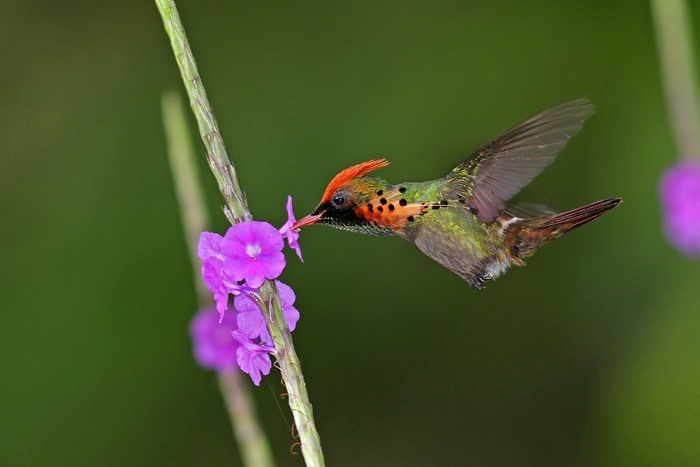
Some Families are obvious, even to the non-birder. All Hummingbirds are clearly related and all 345 species are in a single Family the Trochilidae. Peacock Coquette – photo from the Internet Bird Collection
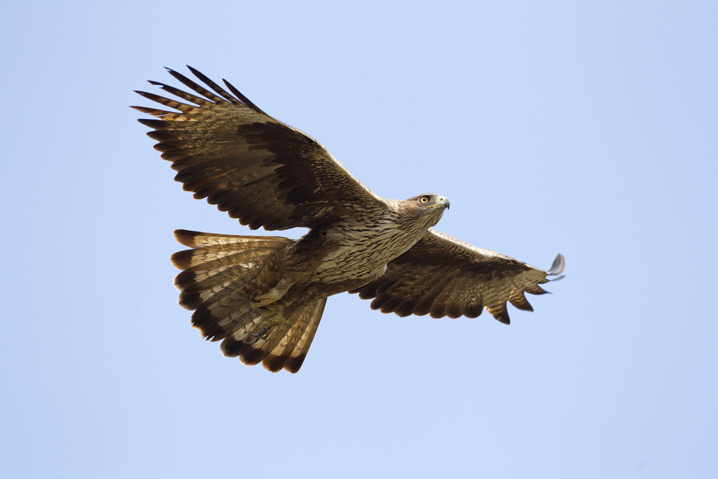
Birds of prey or raptors however fall across five Families, New World vultures form one, hawks, eagles, kites and Old World vultures form another, the Osprey and Secretary Bird are in Families of its own, whilst the fifth, the Falcons aren’t even closely related to other raptors and are now count the passerines and parrots as their nearest relatives. Bonelli’s Eagle: photo from Internet Bird Collection

There are many monospecific Families, birds that have no close living relatives. This Przevalski’s Rosefinch or Pink-tailed Bunting from Tibet, is neither a finch nor a bunting but dates from a time before those two Families diverged. Photo from the Internet Bird Collection.
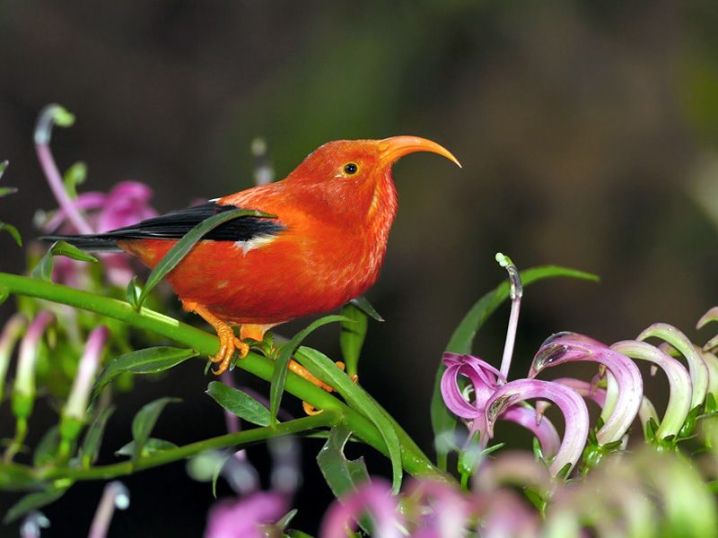
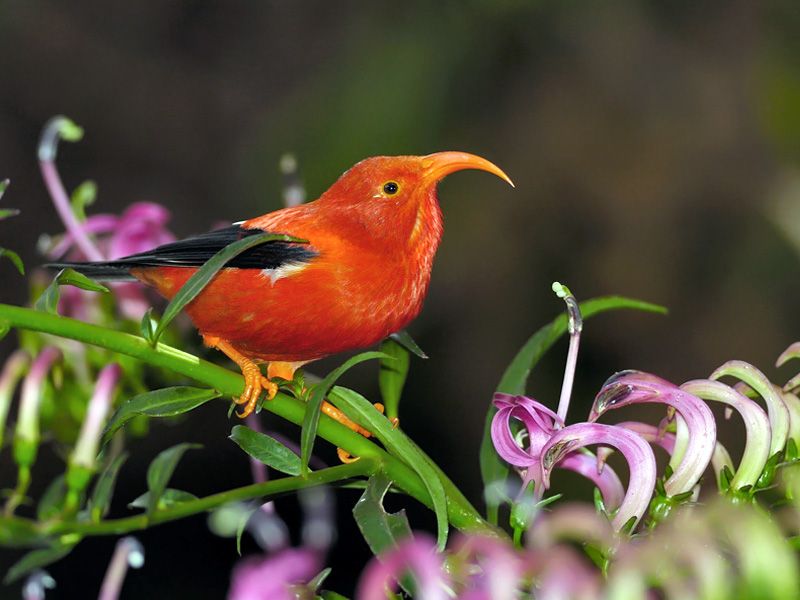
There have losses as well as gains, the diverse Hawaiian Honeycreepers were once considered to constitute a Family but now they are know to be just aberrant finches, most closely related to the Asian rosefinches. Iiwi -photo from the Internet Bird Collection.

Its a bit of a rubbish photo but it was taken at some distance, from a moving boat and on a borrowed camera! Borneo Bristlehead, Kinabatenga River, Sabah, Borneo

To get a better idea what this mega looks like, here is a close up shot by James Eaton from the Internet Bird Collection.
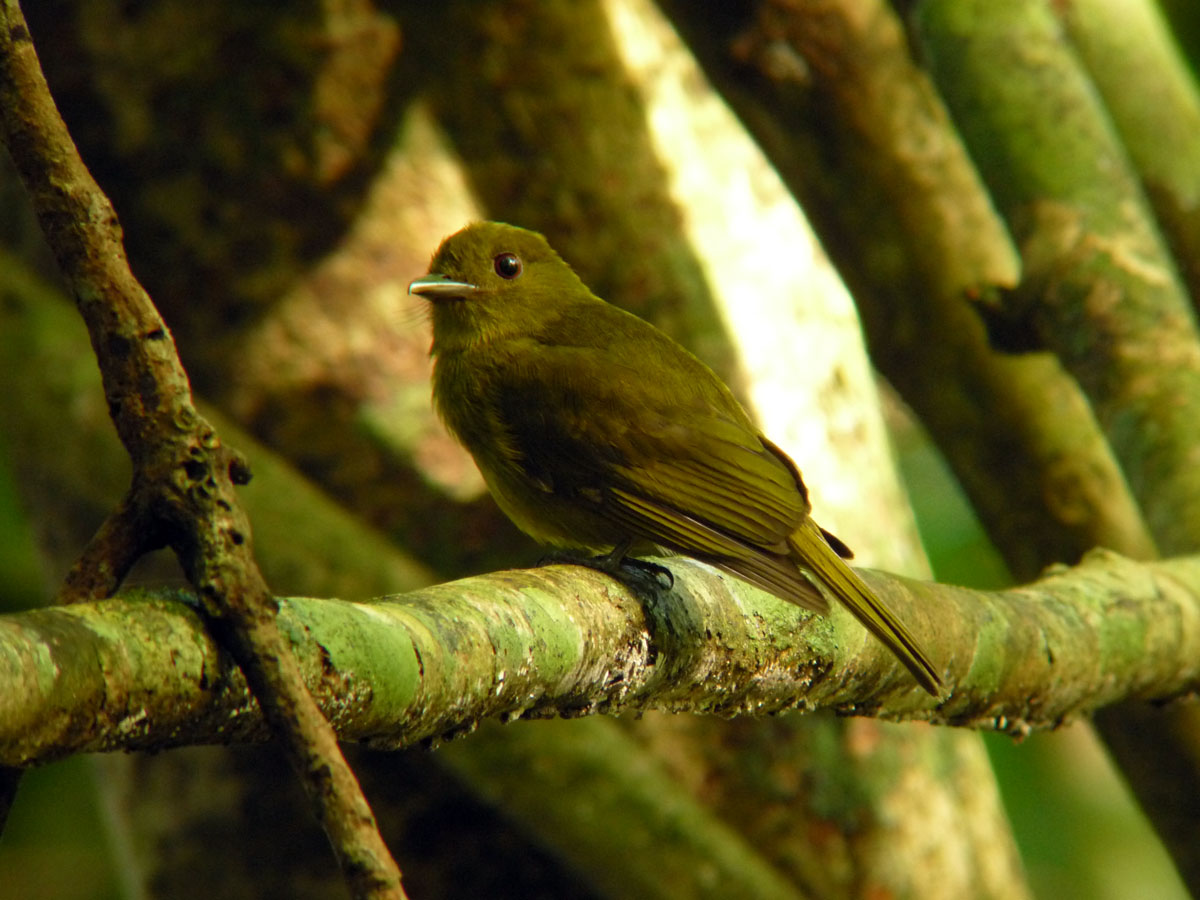
But although I am very happy to have fulfilled my ambition to see all the world’s bird Families I cannot be complacent. I follow the species and Family list as produced by the IOC (International Bird Committee) which treats the Sapayoa of the Choco region of northern South America and Panama (below) as a member of the Old World Broadbills. This species has been treated as a Manakin then a Tyrant Flycatcher, before DNA evidence showed conclusively it was a New World representative of the Broadbills. The Clements/Cornell checklist agrees in principle but places it in its own Family next to the Broadbills. I have heard, but not seen this species in Colombia.
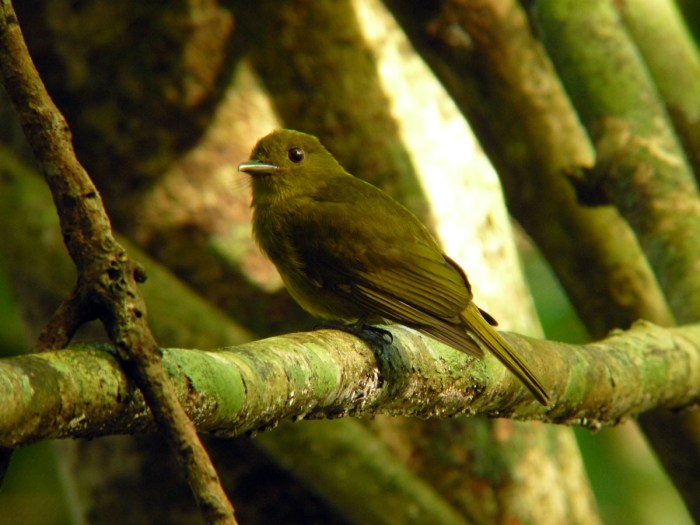
The enigmatic Sapayoa: Photo from the Internet Bird Collection
The Zeledonia or Wrenthrush was once considered in its own Family but then got moved to the Parulidae, the New World Warblers and then to the limbo of Incertae Sedis. There have been suggestions recently that it may again regain monospecific Family status. A trip to Costa Rica would be needed to see this beauty.

Zeledonia: Photo from the Internet Bird Collection.
And finally and most worryingly of all, the publisher Lynx Editions, in conjunction with Birdlife International are producing an Illustrated Checklist of Birds of the World. This is a wholly new concept for a checklist, the validity of each species being determined by a mathematical ranking. The first volume, due in a month or so, covers the non-passerines and the advertising blurb of the cover shows the non-passerine Families they recognise. This appears to show that they recognise the enigmatic flightless New Zealand parrot, the Kakapo as a monospecific Family. The Kakapo is on the brink of extinction and the few remaining birds have been translocated to an island where no-one but the wardens/researches are allowed to go. All TV film/video of this species appears to be of a captive individual known as Sirocco. The chances of ever seeing a wild individual of this species/Family would appear to be zero.
Of course the Family or species list produced by Birdlife International may not be accepted by the mainstream checklists of Clements/Cornell and the IOC, but even if the Kakapo does eventually get universally accepted as a new Family, I will have at least been able to say that at one stage in my life I had seen all the world’s bird Families!
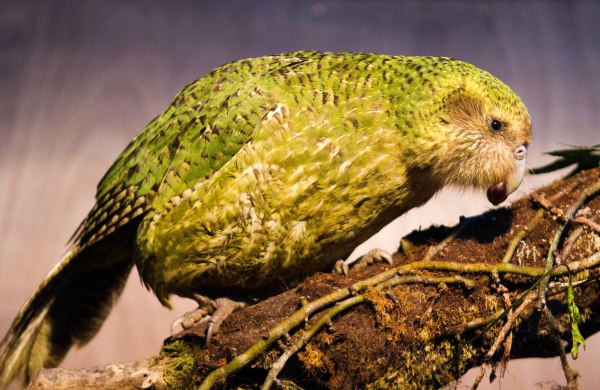
Sirocco – the tame Kakapo. Photo from the Internet
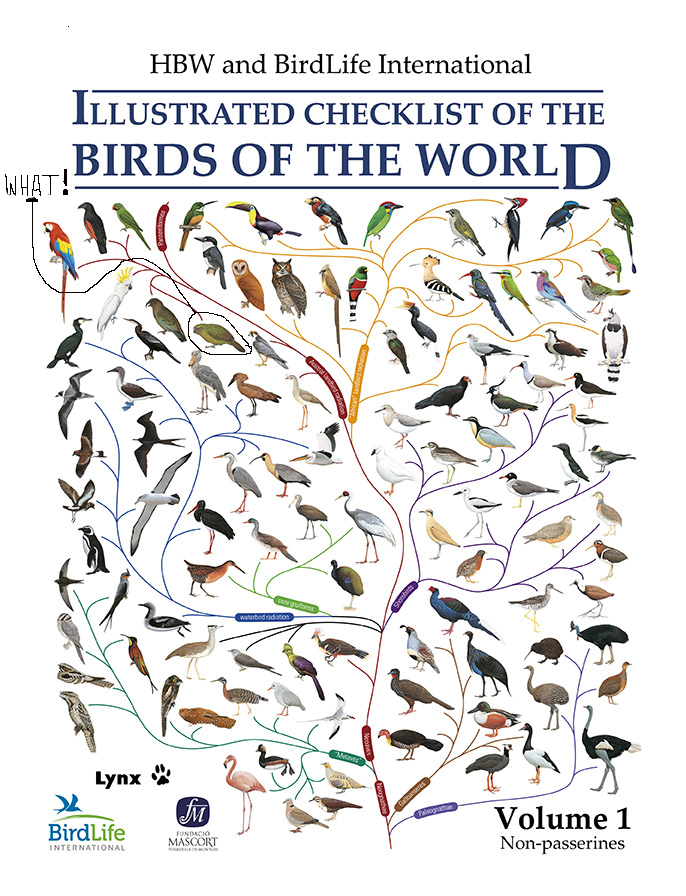
The 232 Bird Familes plus 5 Icertae sedis as recognised by the IOC. The Hawaiian Oo’s are now extinct and are not included in the total.
| Family Tinamidae |
Tinamous |
| Family Struthionidae |
Ostriches |
| Family Rheidae |
Rheas |
| Family Casuariidae |
Cassowaries |
| Family Dromaiidae |
Emu |
| Family Apterygidae |
Kiwis |
| Family Anhimidae |
Screamers |
| Family Anseranatidae |
Magpie Goose |
| Family Anatidae |
Wildfowl |
| Family Megapodiidae |
Megapodes |
| Family Cracidae |
Cracids |
| Family Numididae |
Guineafowl |
| Family Odontophoridae |
NW Quail |
| Family Phasianidae |
Game birds |
| Family Gaviidae |
Loons |
| Family Spheniscidae |
Penguins |
| Family Diomedeidae |
Albatrosses |
| Family Procellariidae |
Petrels/Shearwaters |
| Family Hydrobatidae |
Storm Petrels |
| Family Pelecanoididae |
Diving Petrels |
| Family Podicipedidae |
Grebes |
| Family Phoenicopteridae |
Flamingos |
| Family Ciconiidae |
Storks |
| Family Threskiornithidae |
Ibises/Spoonbills |
| Family Ardeidae |
Herons |
| Family Scopidae |
Hammerkop |
| Family Balaenicipitidae |
Shoebill |
| Family Pelecanidae |
Pelicans |
| Family Fregatidae |
Frigatebirds |
| Family Sulidae |
Gannets |
| Family Phalacrocoracidae |
Cormorants |
| Family Anhingidae |
Darters |
| Family Cathartidae |
NW Vultures |
| Family Sagittariidae |
Secretarybird |
| Family Pandionidae |
Ospreys |
| Family Accipitridae |
Hawks, Eagles etc |
| Family Otididae |
Bustards |
| Family Eurypygidae |
Sunbittern |
| Family Sarothruridae |
Flufftails |
| Family Heliornithidae |
Finfoots |
| Family Rallidae |
Rails |
| Family Psophiidae |
Trumpeters |
| Family Gruidae |
Cranes |
| Family Aramidae |
Limpkin |
| Family Turnicidae |
Buttonquails |
| Family Burhinidae |
Thick-knees |
| Family Chionidae |
Sheathbills |
| Family Pluvianellidae |
Magellanic Plover |
| Family Haematopodidae |
Oystercatchers |
| Family Dromadidae |
Crab-plover |
| Family Ibidorhynchidae |
Ibisbill |
| Family Recurvirostridae |
Stilts, Avocets |
| Family Charadriidae |
Plovers |
| Family Pluvianidae |
Egyptian Plover |
| Family Rostratulidae |
Painted-snipes |
| Family Jacanidae |
Jacanas |
| Family Pedionomidae |
Plains Wanderer |
| Family Thinocoridae |
Seedsnipes |
| Family Scolopacidae |
Sandpipers |
| Family Glareolidae |
Coursers, Pratincoles |
| Family Laridae |
Terns, Gulls, Skimmers |
| Family Stercorariidae |
Skuas |
| Family Alcidae |
Auks |
| Family Pteroclidae |
Sandgrouse |
| Family Columbidae |
Pigeons |
| Family Phaethontidae |
Tropicbirds |
| Family Mesitornithidae |
Mesites |
| Family Rhynochetidae |
Kagu |
| Family Opisthocomidae |
Hoatzin |
| Family Musophagidae |
Turacos |
| Family Podargidae |
Frogmouths |
| Family Steatornithidae |
Oilbird |
| Family Nyctibiidae |
Potoos |
| Family Caprimulgidae |
Nightjars |
| Family Aegothelidae |
Owlet-nightjars |
| Family Hemiprocnidae |
Treeswifts |
| Family Apodidae |
Swifts |
| Family Trochilidae |
Hummingbirds |
| Family Cuculidae |
Cuckoos |
| Family Tytonidae |
Barn Owls |
| Family Strigidae |
Owls |
| Family Coliidae |
Mousebirds |
| Family Trogonidae |
Trogons |
| Family Leptosomidae |
Cuckoo Roller |
| Family Coraciidae |
Rollers |
| Family Brachypteraciidae |
Ground Rollers |
| Family Alcedinidae |
Kingfishers |
| Family Todidae |
Todies |
| Family Momotidae |
Motmots |
| Family Meropidae |
Bee-eaters |
| Family Upupidae |
Hoopoes |
| Family Phoeniculidae |
Woodhoopoes |
| Family Bucerotidae |
Hornbills |
| Family Bucorvidae |
Ground Hornbills |
| Family Galbulidae |
Jacamars |
| Family Bucconidae |
Puffbirds |
| Family Capitonidae |
New World Barbets |
| Family Semnornithidae |
Prong-billed & Toucan Barbet |
| Family Ramphastidae |
Toucans |
| Family Megalaimidae |
Asian Barbets |
| Family Lybiidae |
African Barbets |
| Family Indicatoridae |
Honeyguides |
| Family Picidae |
Woodpeckers |
| Family Cariamidae |
Seriemas |
| Family Falconidae |
Falcons/Caracaras |
| Family Strigopidae |
NZ Parrots |
| Family Cacatuidae |
Cockatoos |
| Family Psittacidae |
Parrots |
| Family Acanthisittidae |
New Zealand Wrens |
| Family Eurylaimidae |
Broadbills, Asities, Sapayoa |
| Family Pittidae |
Pittas |
| Family Furnariidae |
Ovenbirds and Woodcreepers |
| Family Thamnophilidae |
Antbirds |
| Family Formicariidae |
Ant-thrushes |
| Family Grallariidae |
Antpittas |
| Family Conopophagidae |
Gnateaters |
| Family Rhinocryptidae |
Tapaculos |
| Family Melanopareiidae |
Crescentchests |
| Family Tyrannidae |
Tyrant Flycatchers |
| Family Cotingidae |
Cotingas, Plantcutters |
| Family Pipridae |
Manakins |
| Family Tityridae |
Tityras, Sharpbill, Becards |
| Family Incertae Sedis 1 |
Uncertain 1 (Swallow-tailed Cotinga) |
| Family Menuridae |
Lyrebirds |
| Family Atrichornithidae |
Scrubbirds |
| Family Ptilonorhynchidae |
Bowerbirds |
| Family Climacteridae |
Australasian Treecreepers |
| Family Maluridae |
Australasian Wrens |
| Family Meliphagidae |
Honeyeaters |
| Family Dasyornithidae |
Bristlebirds |
| Family Pardalotidae |
Pardalotes |
| Family Acanthizidae |
Australian Warblers |
| Family Pomatostomidae |
Australian Babblers |
| Family Orthonychidae |
Logrunners |
| Family Cnemophilidae |
Satinbirds |
| Family Melanocharitidae |
Berrypeckers, NG Longbills |
| Family Paramythiidae |
Painted Berrypeckers |
| Family Callaeidae |
NZ Wattlebirds |
| Family Notiomystidae |
Stitchbird |
| Family Psophodidae |
Quail-thrushes etc |
| Family Platysteiridae |
Wattle-eyes, Batises |
| Family Tephrodornithidae |
Woodshrikes and allies |
| Family Prionopidae |
Helmetshrikes |
| Family Malaconotidae |
Bushshrikes |
| Family Machaerirhynchidae |
Boatbills |
| Family Vangidae |
Vangas |
| Family Cracticidae |
Butcherbirds and Allies |
| Family Pityriaseidae |
Bristlehead |
| Family Artamidae |
Woodswallows |
| Family Aegithinidae |
Ioras |
| Family Campephagidae |
Cuckooshrikes |
| Family Mohouidae |
Whiteheads |
| Family Neosittidae |
Sittellas |
| Family Incertae Sedis 2 |
Uncertain 2 |
| Family Pachycephalidae |
Whistlers |
| Family Laniidae |
True Shrikes |
| Family Vireonidae |
Vireos, Greenlets |
| Family Oriolidae |
Figbirds, OW Orioles |
| Family Dicruridae |
Drongos |
| Family Rhipiduridae |
Fantails |
| Family Monarchidae |
Monarchs |
| Family Corvidae |
Crows, Jays |
| Family Corcoracidae |
Australian Mudnesters |
| Family Incertae Sedis 3 |
Uncertain 3 |
| Family Paradisaeidae |
Birds-of-paradise |
| Family Petroicidae |
Australian Robins |
| Family Picathartidae |
Picathartes |
| Family Chaetopidae |
Rockjumpers |
| Family Eupetidae |
Rail-babbler |
| Family Bombycillidae |
Waxwings |
| Family Ptilogonatidae |
Silky-flycatchers |
| Family Hypocoliidae |
Hypocolius |
| Family Dulidae |
Palmchat |
| Family Mohoidae |
Oos (recently extinct) |
| Family Hylocitreidae |
Hylocitrea |
| Family Stenostiridae |
Fairy Flycatchers |
| Family Paridae |
Tits |
| Family Remizidae |
Penduline Tits |
| Family Panuridae |
Bearded Reedling |
| Family Nicatoridae |
Nicators |
| Family Alaudidae |
Larks |
| Family Pycnonotidae |
Bulbuls |
| Family Hirundinidae |
Swallows, Martins |
| Family Pnoepygidae |
Wren-babblers |
| Family Macrosphenidae |
Crombecs, African warblers |
| Family Cettiidae |
Cettia bush warblers & allies |
| Family Scotocercidae |
Streaked Scrub Warbler |
| Family Erythrocercidae |
Yellow Flycatchers |
| Family Incertae Sedis 4 |
Uncertain 4 |
| Family Aegithalidae |
Bushtits |
| Family Phylloscopidae |
Leaf warblers and allies |
| Family Acrocephalidae |
Reed warblers and allies |
| Family Locustellidae |
Grassbirds and allies |
| Family Donacobiidae |
Black-capped Donacobius |
| Family Bernieridae |
Malagasy warblers |
| Family Cisticolidae |
Cisticolas and allies |
| Family Timaliidae |
Core Babblers |
| Family Elachuridae |
Spotted Wren-babbler |
| Family Pellorneidae |
Fulvettas, Ground Babblers |
| Family Leiothrichidae |
Laughingthrushes |
| Family Sylvidae |
Sylviid Babblers |
| Family Zosteropidae |
White-eyes and Yuhinas |
| Family Arcanatoridae |
Dapplethroat & allies |
| Family Promeropidae |
Sugarbirds and allies |
| Family Irenidae |
Fairy-bluebirds |
| Family Regulidae |
Goldcrests, kinglets |
| Family Hyliotidae |
Hyliotas |
| Family Troglodytidae |
Wrens |
| Family Polioptilidae |
Gnatcatchers |
| Family Sittidae |
Nuthatches |
| Family Tichodromidae |
Wallcreeper |
| Family Certhiidae |
Treecreepers |
| Family Mimidae |
Mockingbirds, Thrashers |
| Family Sturnidae |
Starlings |
| Family Buphagidae |
Oxpeckers |
| Family Turdidae |
Thrushes |
| Family Muscicapidae |
Chats, OW Flycatchers |
| Family Cinclidae |
Dippers |
| Family Chloropseidae |
Leafbirds |
| Family Dicaeidae |
Flowerpeckers |
| Family Nectariniidae |
Sunbirds |
| Family Passeridae |
Old World Sparrows |
| Family Ploceidae |
Weavers, Widowbirds |
| Family Estrildidae |
Waxbills, Munias & Allies |
| Family Viduidae |
Indigobirds, Whydahs |
| Family Peucedramidae |
Olive Warbler |
| Family Prunellidae |
Accentors |
| Family Motacillidae |
Wagtails, Pipits |
| Family Urocynchramidae |
Przevalski’s Finch |
| Family Fringillidae |
Finches |
| Family Parulidae |
New World Warblers |
| Family Incertae Sedis 5 |
Family Uncertain 5 |
| Family Icteridae |
NW Orioles & Blackbirds |
| Family Coerebidae |
Bananaquit |
| Family Emberizidae |
Buntings, NW Sparrows etc |
| Family Thraupidae |
Tanagers |
| Family Calcariidae |
Longspurs, snow buntings |
| Family Cardinalidae |
Cardinals, Grosbeaks & Allies |
… we had a fantastic trip to the USA instead!
When I asked Margaret where she wanted to go on holiday in 2014 she said she hadn’t seen her friend Leise who lives in central North Carolina for many years, I replied that if we going to NC I’d like to do some pelagic birding trips out of Cape Hatteras. Margaret then said that she had never been to New York and I commented that I hadn’t been to Washington either and if we were going as far north as New York we might as well carry on to New Hampshire and try for Boreal Chickadee and Bicknell’s Thrush, a couple of birds that I had not seen on my previous visits to North America.
Thus the stage was set for an epic journey that would last 24 days, take us through 11 States, the Capitol Territory and a Canadian Province, give us a chance to meet up with three lots of friends, get me six new life birds plus a ‘heard only’ and require 3,500 miles on the road.

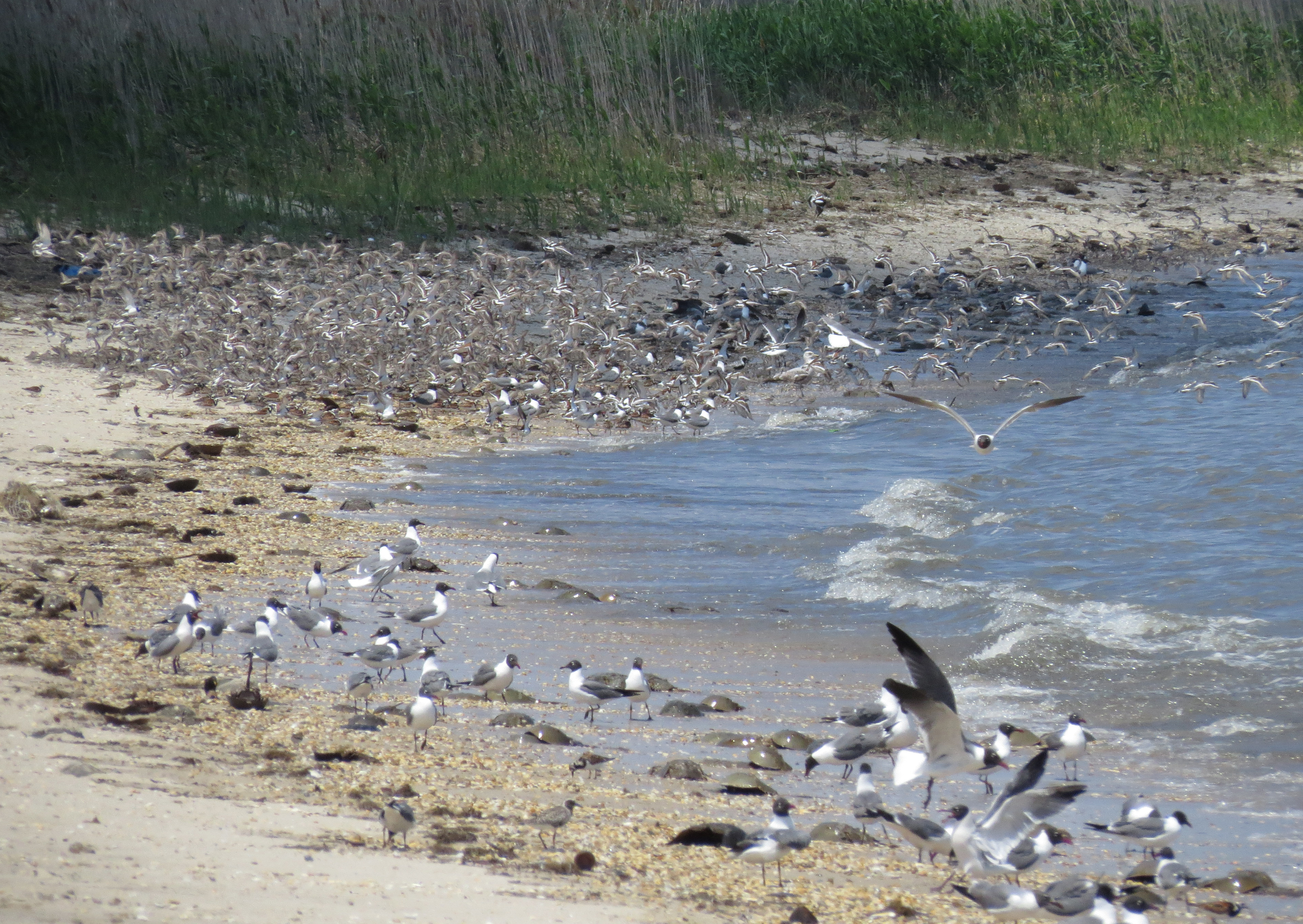
After landing at Washington Dulles airport our first destination was the Delaware coast where we enjoyed the huge numbers of shorebirds/waders and Laughing Gulls feeding on Horseshoe Crab eggs. The shorebird flocks comprised mainly of Semi-palmated Sandpipers with smaller numbers of Turnstone, Dunlin and Sanderling.
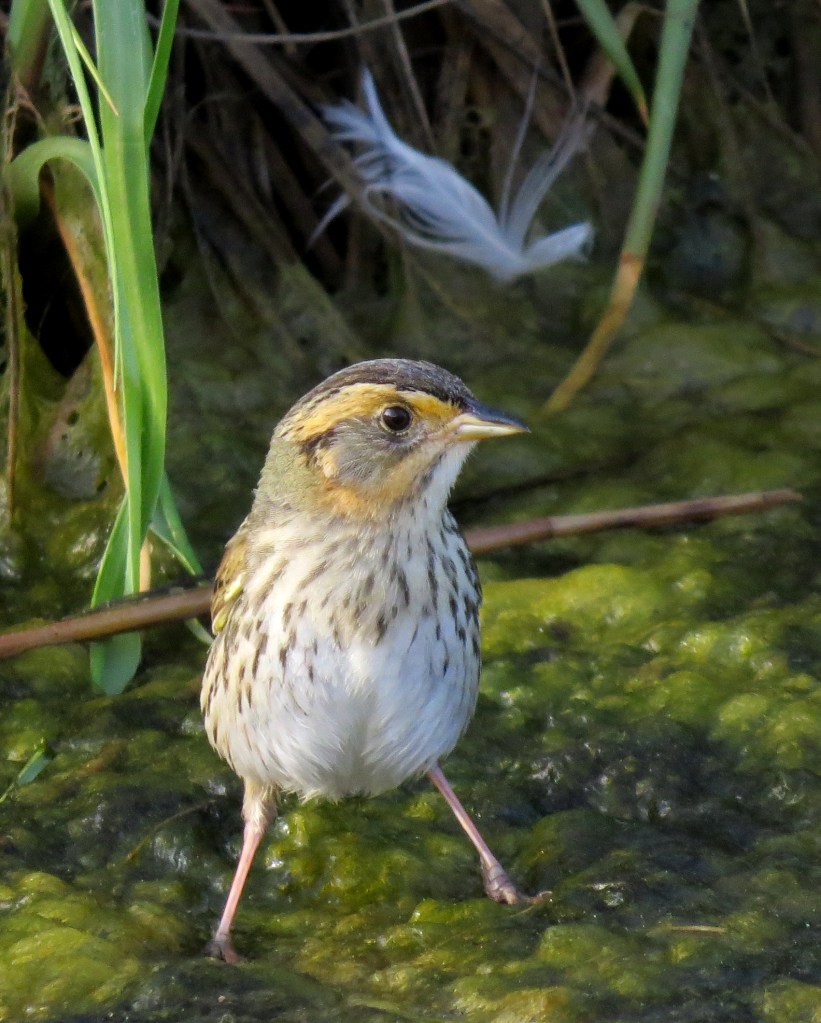
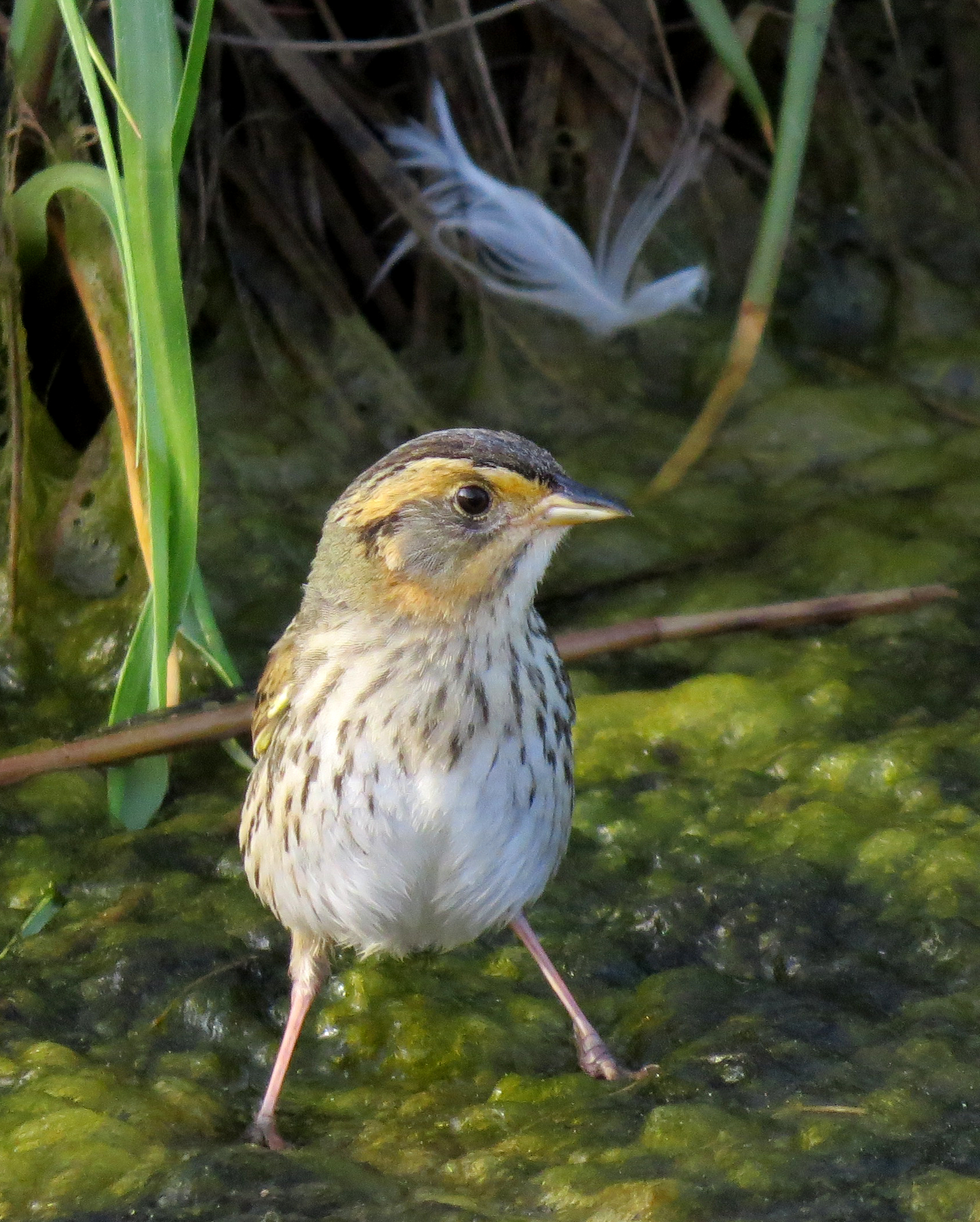
A real highlight of the Delaware coast was the sighting of a Saltmarsh Sparrow, a species endemic to the eastern coast of the USA and life bird for me. The bird was seen well at dusk but no photos were possible, however we were able to photograph several more on the coast of Maine at the end of the trip.

From Delaware we made a 500 mile drive to Salisbury in North Carolina to visit Margaret’s friends Leise and Bob, whom she met during her sailing days. I got on very well with them but they have a house full of animals, which I find a bit daunting, as unlike Margaret, I’m not a ‘dog person’.

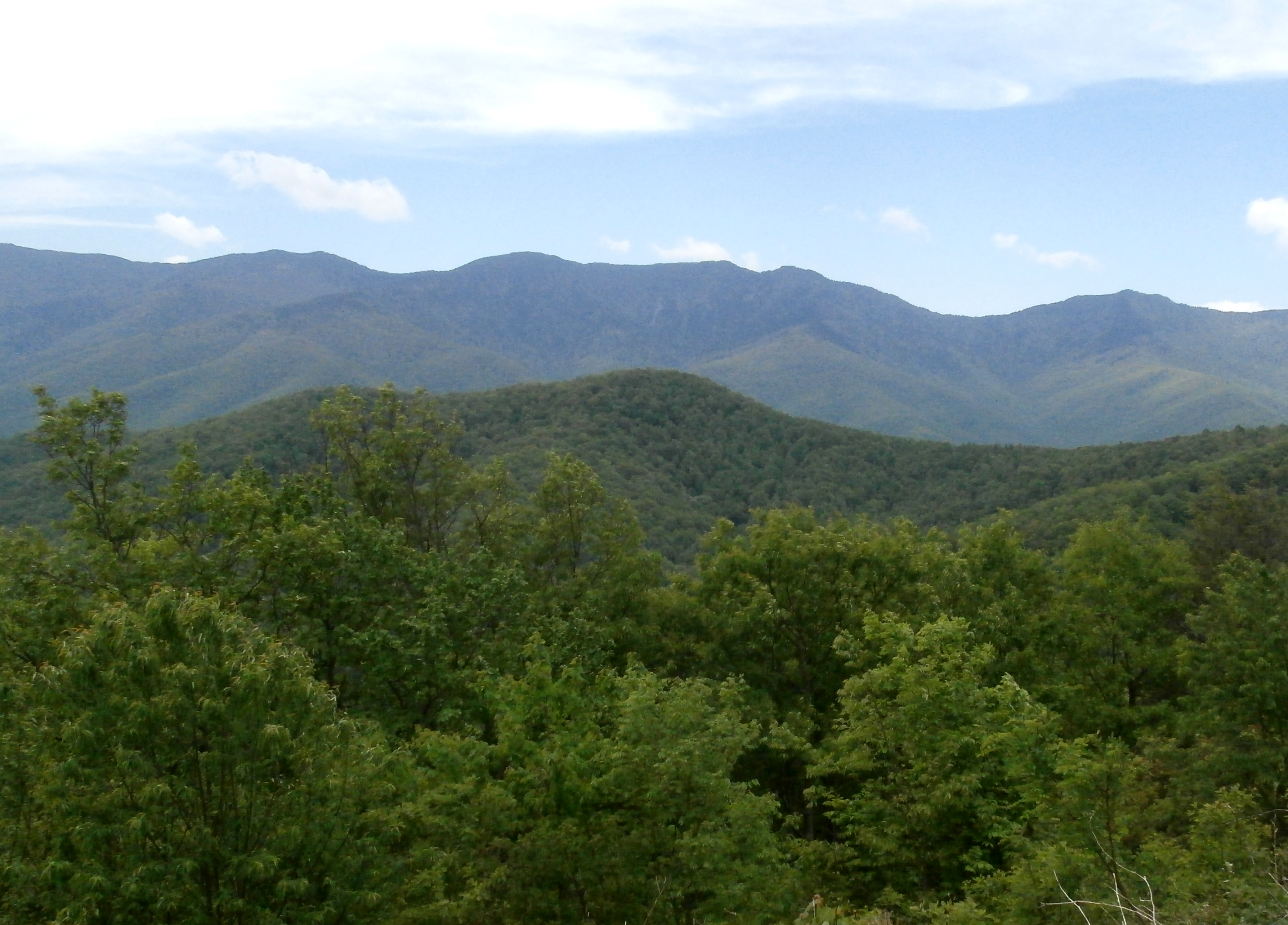
Whilst in Salisbury I did a bit of local birding and on the second day, Margaret Leise and I drove to the Appalachian Mountains. Whilst it was a glorious sunny day and the scenery was great, I didn’t see many birds, probably because, this far south the breeding season was already well advanced.

Another day was spent driving to to Outer Banks, a series of offshore barrier islands connected by bridges (or ferries) where we spent four nights. This is the iconic lighthouse at Cape Hatteras.

At dawn each day a flotilla of sports fishing boats leaves Hatteras harbour and at this time of year one of them is full of birders. The proximity of the Gulf Stream makes this the premier destination the eastern USA for pelagic birding.
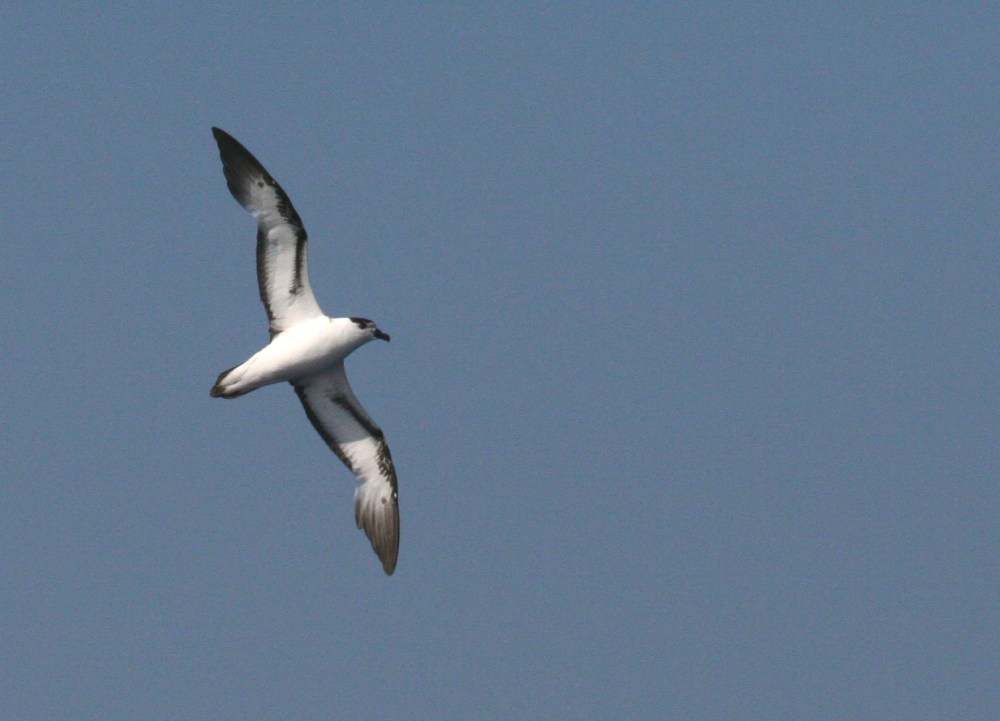
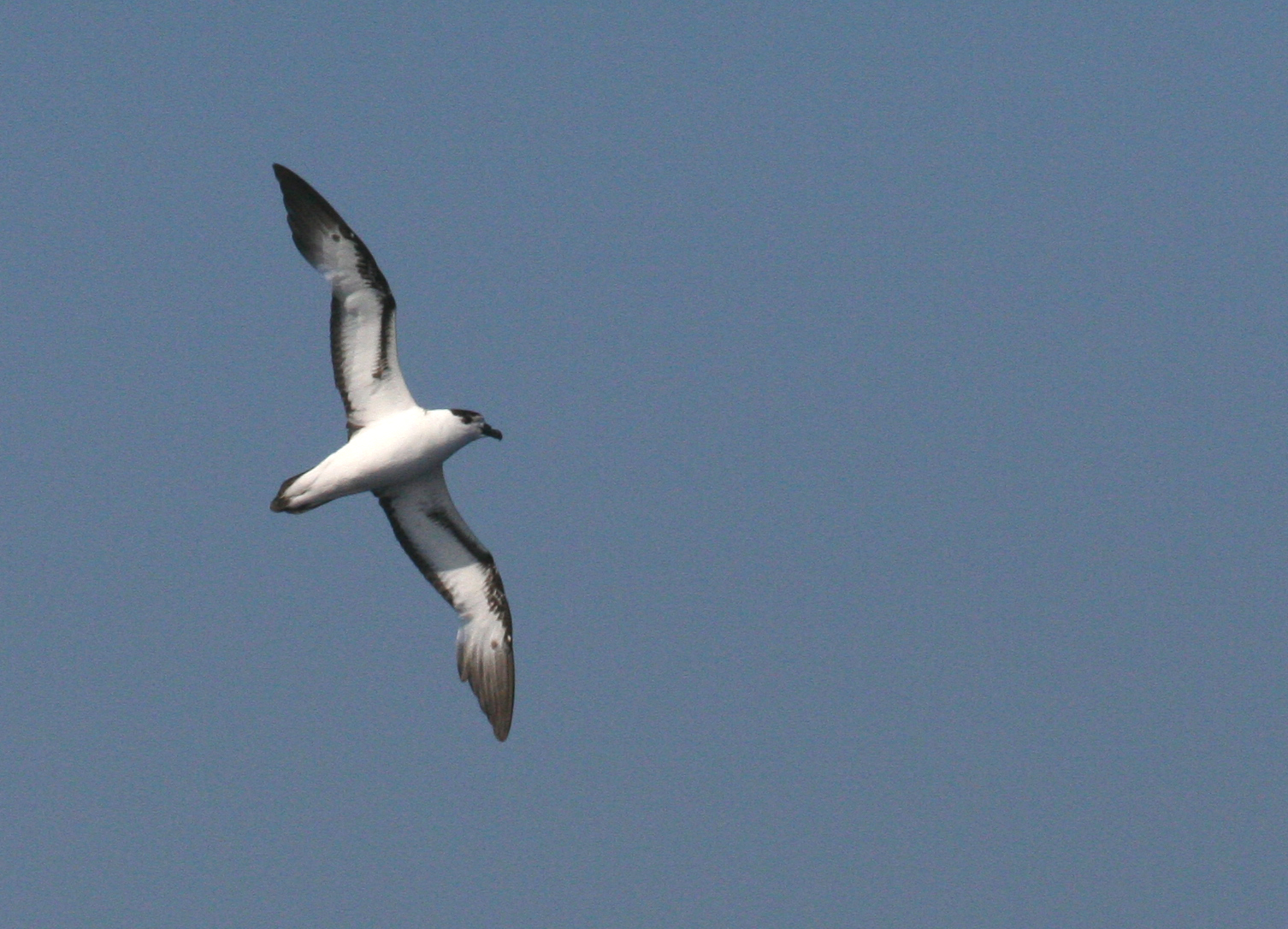
As we approached the Gulf Stream the sea temperature rose from 17 to 28 centigrade in a very short distance. We immediately started seeing a wide range of seabirds such as this Black-capped Petrel, several of which were around the boat for most of the seven hours or so we were out there. Seeing this bird has a particular significance for me as it is on the British List and one of my ambitions is to see every bird on the British List somewhere in the world (just five to go).

Seeing Black-capped Petrel was expected but the sighting of this Trindade Petrel (which breeds on islands off Brazil) was not. At least two different birds visited the chum. As can be seen from the horizon in this photo it was a fairly rough day caused by the stiff northerly wind colliding with the strong north bound current.

Perhaps the most unusual sighting was a pod of Clymene Dolphins, a recently described species, which has only been seen two or three times on these pelagics.

The day between the two pelagics we teamed up with local birder Jeff Lewis, who took us to the Alligator River reserve on the adjacent mainland. As well as a nice range of birds we had stunning views of four Black Bears.

After some final birding in North Carolina we headed for Washington where we were to stay for four nights with James and Pam Higbie. I met James in Mexico earlier this year and he kindly invited us to stay. Whilst in DC we visted all the major attractions and four different sections of the Smithsonian Museum. We were also able to get tours of the Capitol Building (above) and the White House.

No visit to Washington would be complete without a visit to the many war memorials along the National Mall. Whilst any memorial to those who gave their lives is poignant, seeing this Stars and Stripes umbrella reflected in the polished surface of the Vietnam Wall, was particularly so.

From Washington it was a half day drive to New York City where we spent nearly three days. A guided tour took us to all the major sites including a boat trip to the Statue of Liberty.

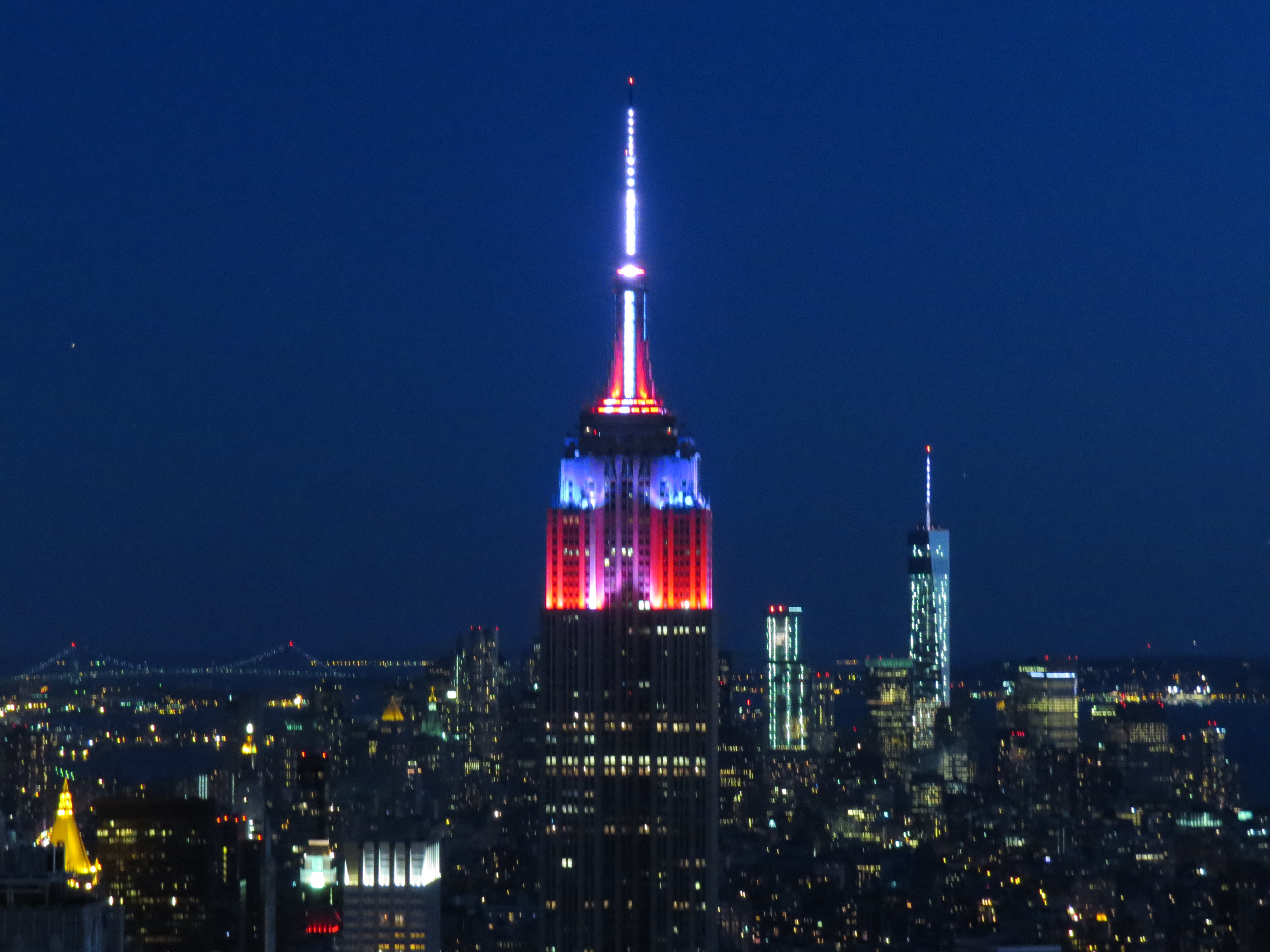
I went up the Empire State Building, but even more impressive was a visit to the Top Of The Rock at the Rockefeller Building at dusk, mainly because the Empire State dominates the view. we also met up with our friend Patty in New York and visited several museums and other attractions.

Patty offered to take us to her ringing (banding) site in Connecticut, but the weather looked like it was on the turn so instead we headed north to northern New Hampshire. Bad weather did follow, this early morning mist was photographed a few days later. We stayed in three places in New Hampshire and even managed a visit to Quebec Province in Canada.

Great Northern Divers (Common Loons) frequent the lakes in the area and can be heard giving their evocative calls in the early morning.

My main targets in New Hampshire was the attractive Boreal Chickadee. I saw it in three locations, the first being the parking lot of the motel!

My most wanted bird was this Bicknell’s Thrush, which required a 0330 alarm call, a 40 minute drive and an hours hike up a steep path. The views, when they came were exemplary, making the effort more than worthwhile. Restricted to the highest mountains of the north-east states and adjacent Canada, this is a bird that requires a special effort to see.

After a drive up the scenic Mount Washington to the Alpine/Arctic zone we ended the trip with a visit to coastal Maine. Here amongst rocky bays and saltmarshes we saw Black and White-winged Scoter, Bald eagle and Saltmarsh and Nelson’s Sparrows. We flew out of Boston on the evening of the 9th completing a very full, varied and interesting trip.
This is just an outline of the holiday. I am rather busy for the next few weeks but when time allows I will upload more photos from this very photogenic trip.
Am I sorry that I missed Dorset’s first Short-toed Eagle that occurred near to our house whilst we were away – yes. Would I rather see the Eagle than all the things we saw in America – absolutely not. It isn’t the first and certainly won’t be the last Dorset mega that I miss by travelling abroad.
The expression ‘Patagonia Picnic Table Effect’ was coined by American birders after Rose-throated Becards were discovered breeding near a picnic are at the town of Patagonia in Arizona. Birders coming to see those birds found other good birds in the area and so yet more birders came and even more goodies were found. Something similar occurred at Lytchett Bay on May 17th.
Saturday 17th was put aside for packing for our upcoming trip to the States and for Margaret’s choir concert so local birding was the last thing on my mind.
I was busy sorting out gen for birding in New Hampshire when a text from Ian Ballam said there was a Wood Sandpiper at Lytchett Bay. I used to describe Lytchett Bay as my ‘local patch’ but in all honesty I don’t go there often enough for it to maintain that description. That is clearly my loss, as stalwarts like Shaun Robson, Ian Ballam, Paul Morton and Nick and Jackie Hull continue to turn up interesting migrants.
Wood Sandpiper is a regular but scarce migrant in Dorset; there quite a good chance of encountering one if you bird Stanpit Marsh, Christchurch or Lodmoor, Weymouth on a regular basis in early autumn, but I have only ever seen six at Lytchett Bay over the past 36 years. So although all my optics were packed for travel I hurried down there and found Ian Ballam still watching it.
Margaret spent the entire afternoon at St Peter’s Church in Parkstone for the dress rehearsal with the orchestra for the evening’s performance. Having dropped her off I returned to complete my travel arrangements. I was supposed to pick Amber up and take her to the concert but then just 50 minutes before I had to leave I had news that Paul Morton whilst looking for the Wood Sandpiper had found a Temminck’s Stint at Lytchett Bay. This was the first record for the Bay and was not to be missed. This tiny wader breeds in Arctic Norway and Arctic Russia and is a very scarce migrant, usually seen in mid May. Once again the optics were hastily unpacked, wellies donned etc and a quick yomp over the wet and muddy fields followed. On arrival I found three birders including Ian Ballam (who had taken time off from the FA Cup Final to search for this bird) but none had seen the bird. After a few minutes I had to leave or I would not pick Amber up in time, but then a faint but shrill trilling was heard and the Temminck’s shot out of the marsh and towered up flying strongly to the north never to be seen again.
We got to the concert on time and I have to say that the Barclay House Choir and St Peter’s Orchestra’s rendition of Karl Jenkin’s ‘The Armed Man’, John Rutter’s ‘Gloria’ and Bob Chilcott’s ‘The Little Jazz Mass’ was just wonderful. Their new musical director has introduced some great modern pieces and hugely widened their repertoire.
Unfortunately my camera was packed so I have no photos to illustrate this remarkable day, which is a shame as we had seats at the front within feet of the orchestra. A single photo of the Wood Sandpiper from Ian Ballam and a thumbnail from Paul Morton is all I have to post.
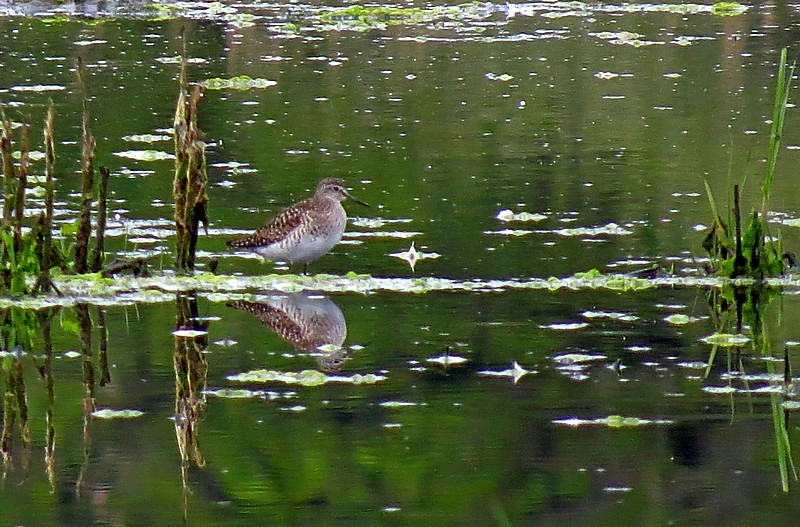
Wood Sandpiper, Lytchett Bay – photo by Ian Ballam.
This tiny thumbnail was all that was left after Paul massively enlarged his image of the Temminck’s Stint. Only the size of a sparrow and a some considerable distance away, it is remarkable that anything was photographed at all.

On the 12th May, Margaret and I spent the morning in the New Forest , followed by a brief visit to Coward’s Marsh at Christchurch on the way back.

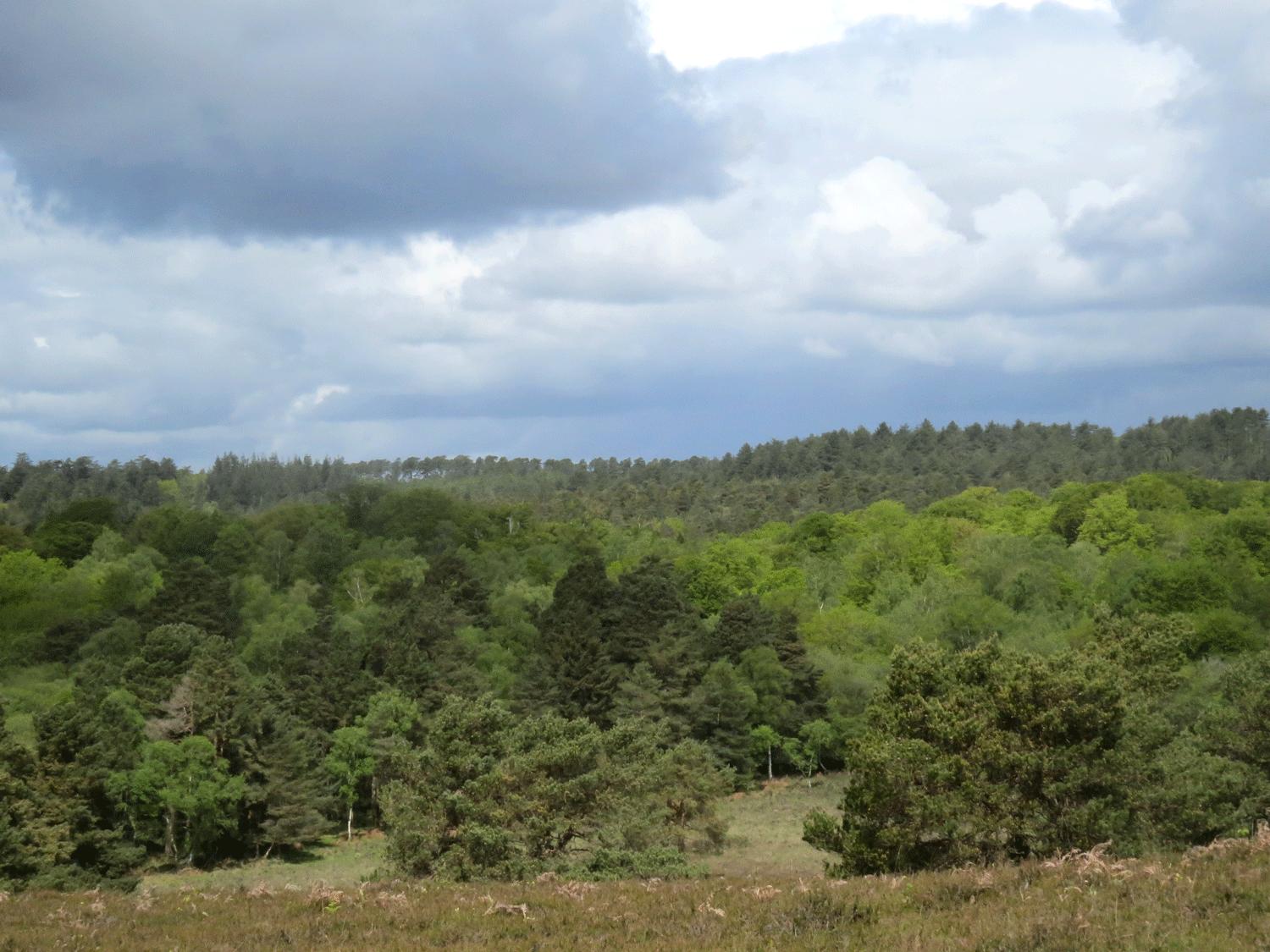
We first visited the raptor watch point at Acre’s Down. There is a panoramic view over the forest and indeed this is the only spot I know in our area where no human artifacts are visible.
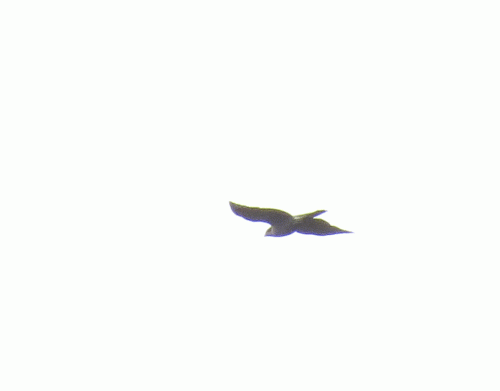
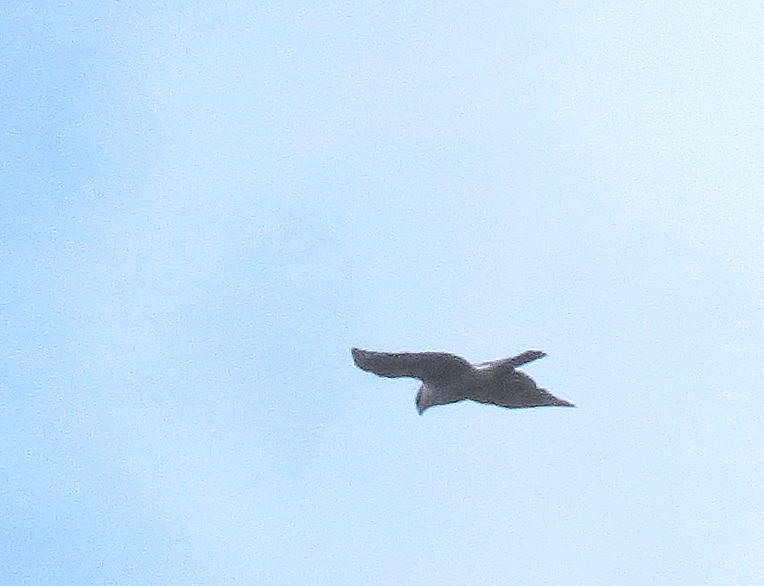
It didn’t take long until our target, a Goshawk was seen. This large bird, presumably a female was seen circling over the forest.
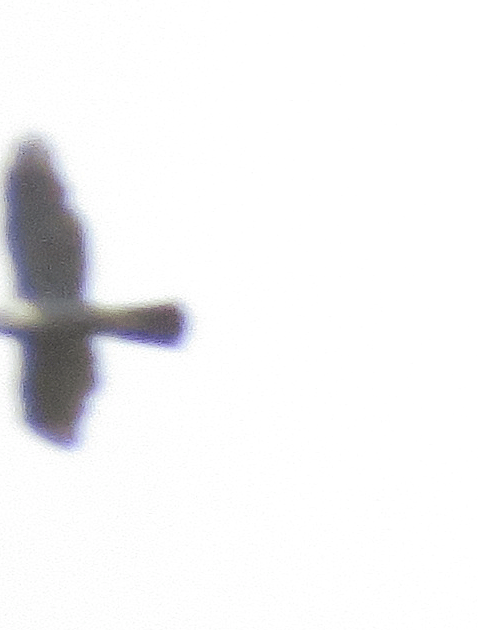
A dreadful, greatly enlarged image, but one that shows several Goshawk ID features: the deep chest, bulging secondaries, a long tail with a wide base and rounded tip (square tip in Sparrowhawk)
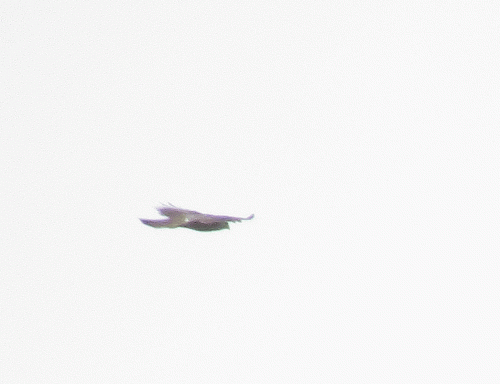
Goshawks soar on flat wings, unlike similarly sized Buzzards. The white undertail coverts can even spread out and be visible on the upper tail as can be just seen on this shot.

The bird drifted towards us and entered a blue patch of sky. The prominent white supercilium can just be seen on this picture.
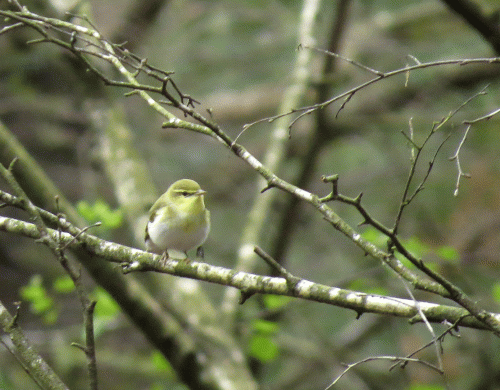
Nearby a Wood Warbler was in song. This Phylloscopus warbler is much rarer than than either Willow Warbler or Chiffchaff and in our area is confined to mature beech woodland in the New Forest.
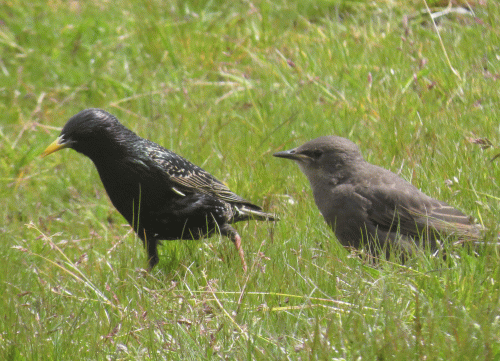
Later we headed for Coward’s Marsh near Christchurch. Close to the viewing spot newly fledged Starlings were being fed by their parents.
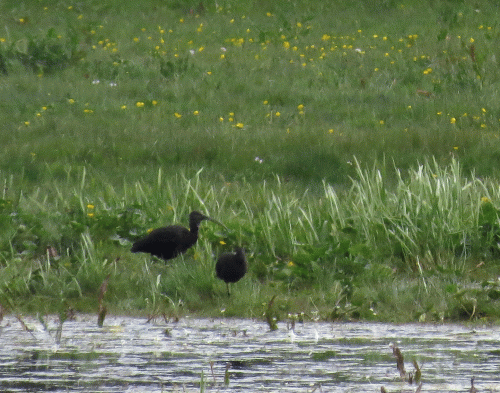
They were pretty distant, but we soon located the pair of Glossy Ibis that had spent the last few days on the banks of the River Avon. Once a mega-rarity in the UK, increased numbers breeding in Spain has led to a small numbers occurring each autumn, although spring records are still pretty unusual.
This is my fourth and final report on my February/March trip to Mexico and the second report on the Yucatan part of that tour.

After some early morning birding at Rio Largatos on the northern coast of the Yucatan Peninsula we drove south to famous Mayan ruins at Chichen Itza. As it is within easy reach of Cancun and the coastal resorts this is by far the most popular of the Mayan sites. This partially restored pyramid dominates the site. Each side has 91 steps, so with one for the top there is 365 in all, one for each day of the year. it is astronomically aligned and at certain times of the year the rising sun on the edge of the steps casts a serpent like shadow which appears to move as the sun rises.

The famous ball court. The Mayan civilisation had already faded when the Spanish conquistadors arrived and thus there are no written records.
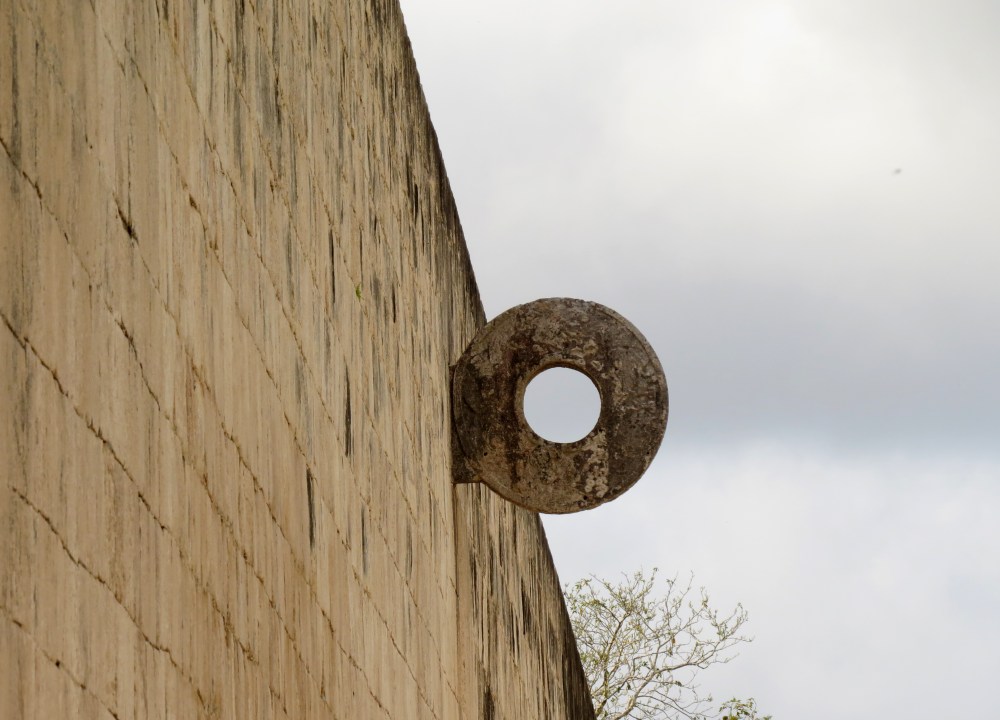
This ball court was certainly used for competitive games, the object being to throw a ball through the small circular ring on the wall, although there is no proof of the legend that the losing team (or at least their captain) was offered up as a human sacrifice.
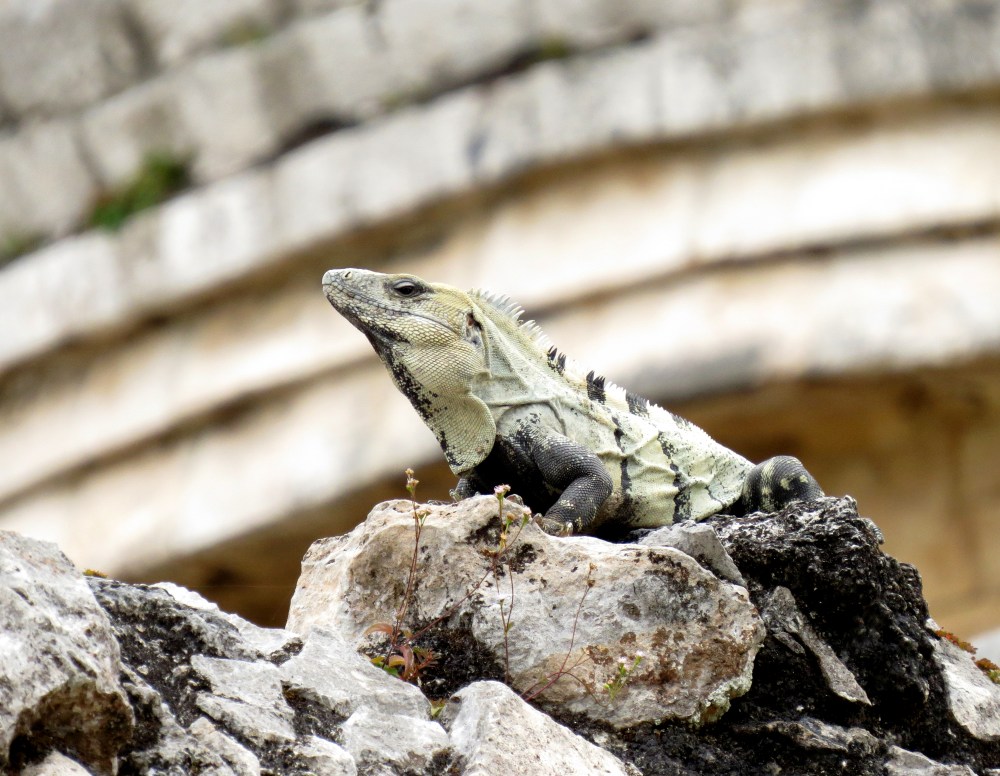
Iguanas were commonly seen around the ruins.

The visit to Chichen Itza was most enjoyable but as the morning drew on crowds of grockles from Cancun arrived and it became quite crowded. One aspect I didn’t enjoy was that the ruins were dotted with stands selling souvenirs, something that should be restricted to an area outside the ancient monuments.

We had wonderful views of Turquoise-browed Motmots in the surrounding forest.

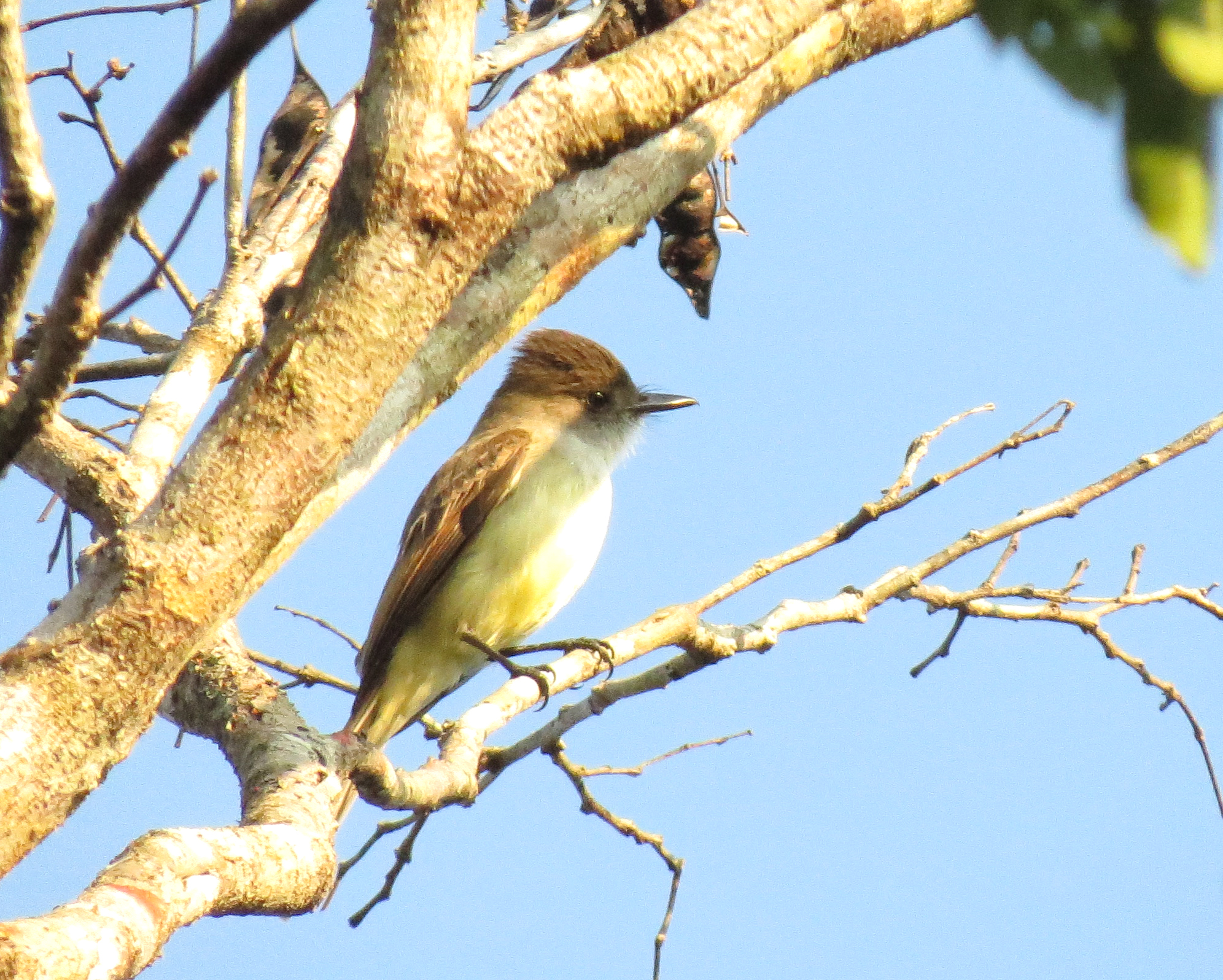
From Chichen Itza we traveled south to Felipe Carrillo Puerto where we spent a day and a half birding the locals woodlands. Birds were abundant and included this endemic Yucatan Flycather, a member of the genus Myiarchus which contains 22 very similar looking species.
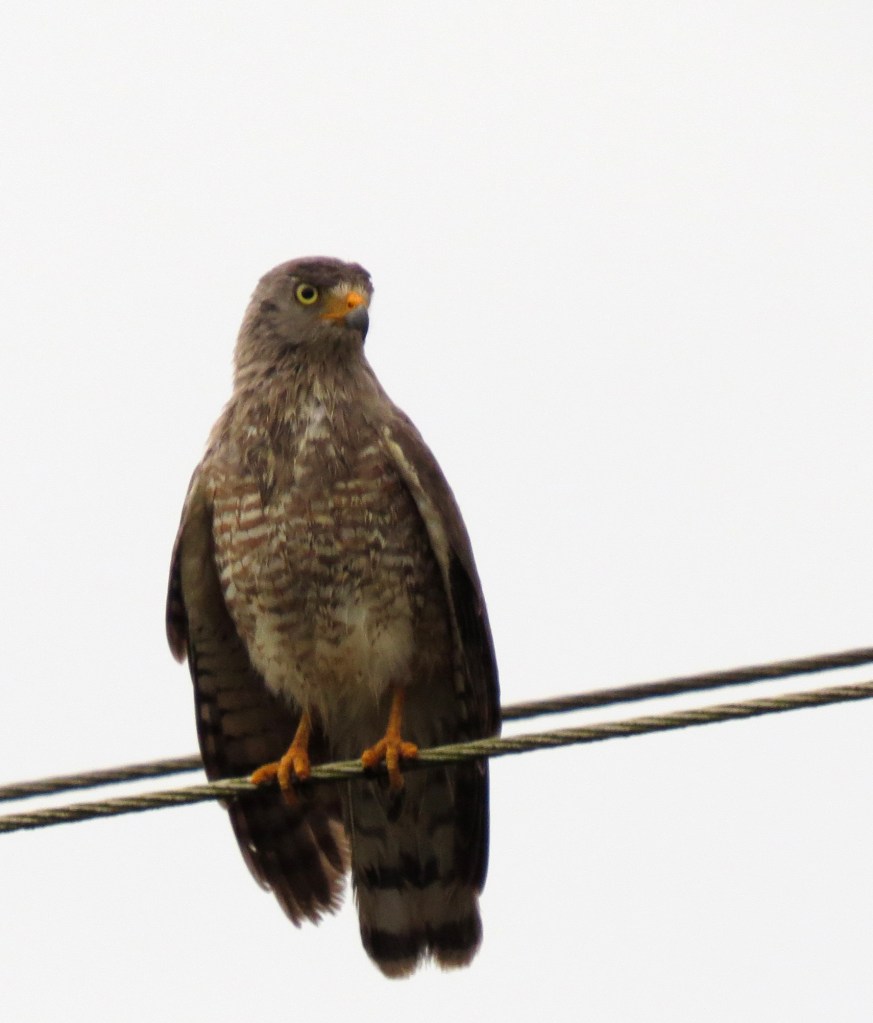
This Grey Hawk were observed on the roadside ….
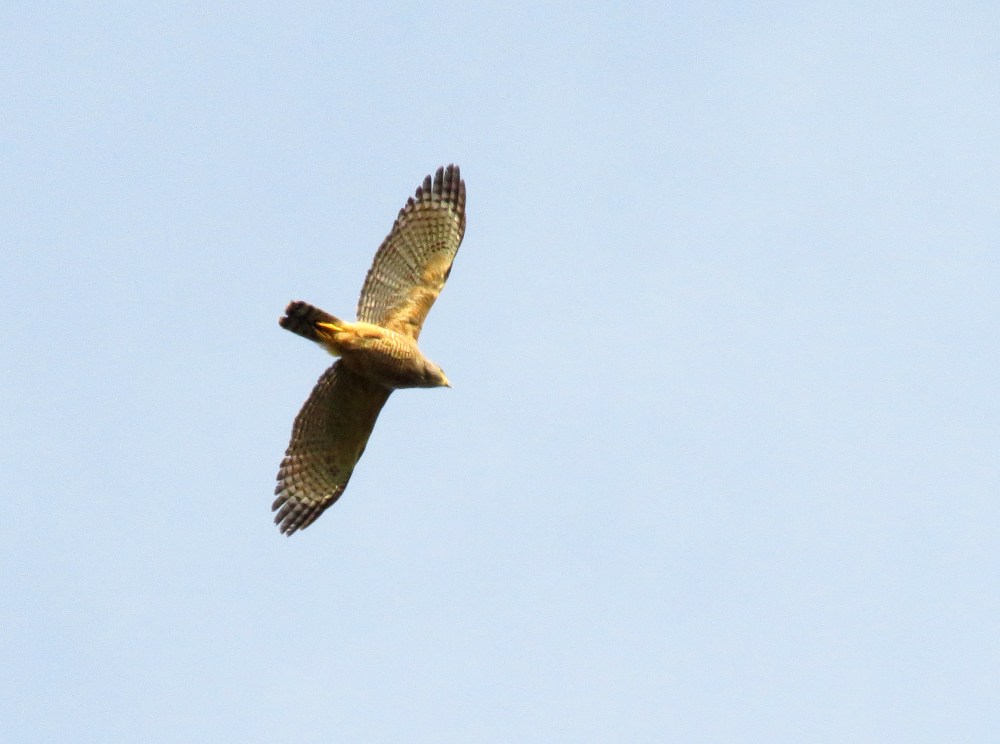
..,. whilst this Roadside Hawk wasn’t!

Other goodies included the endemic Yucatan Jay ….
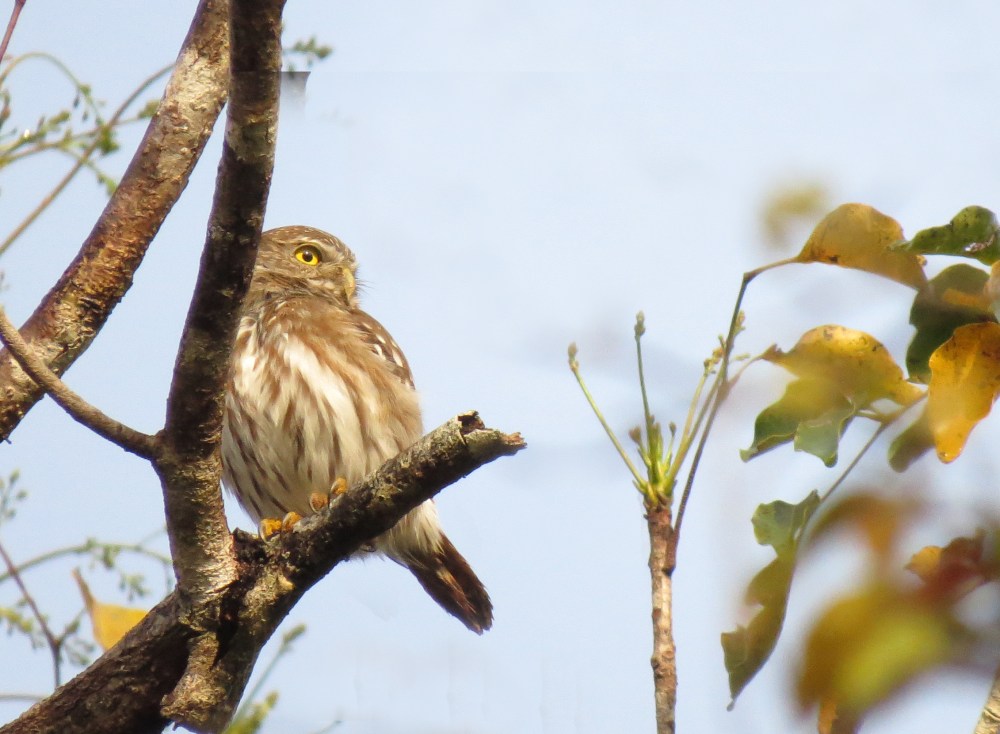
… and the widespread Ferruginous Pygmy-owl

A particular treat was multiple sightings here and at Calakmul of Northern Royal Flycatcher. One of a group of four similar species, none of which are easy to see, we had repeated good views of birds building nests over the road. When in display/alarmed the birds raise their crests, which uniquely are held across rather than along the head. I have never been lucky enough to see this amazing sight but apparently it occurs regularly with birds in the hand.

Something I would love to see: a Northern Royal Flycatcher trapped for ringing and with its crest fully extended. Photo from animalworld.tumblr.com

We continued on to Calakmul where we stayed at a pleasant lodge in midst of the woodland.

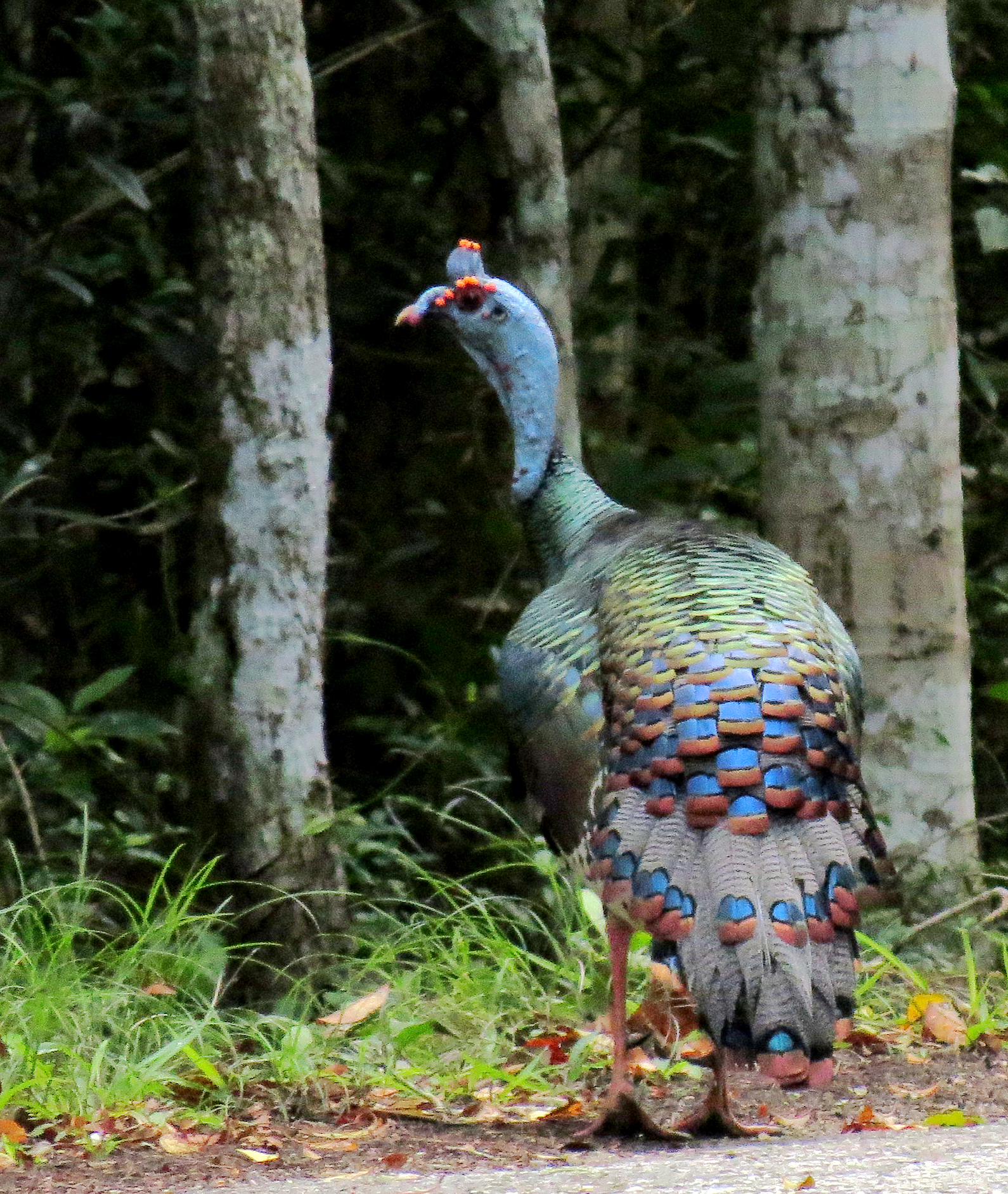
It is something like a 40km drive from the lodge to the Mayan ruins at Calakmul. We were given special permission to drive the road at dawn which was so worthwhile, as over the two days we were there we saw a total of 38 Ocellated Turkeys on the road in the early morning. Unlike its widespread and domesticated northern relative, this species is restricted to the lowlands of the Yucatan and neighboring Guatemala.

We eventually arrived at the Calakmul ruins only to hear from a Dutch couple who were driving behind us that we had just missed the Puma that crossed the road in front of them!

Most of the group at Calakmul. Leader Mark van Beirs is taking the photo and participant Leslie Coley opted to stay behind. L-R Riita Viinanan, Audry Baker, Martin Hill, Anne Hill, Andre D’Penha and me.
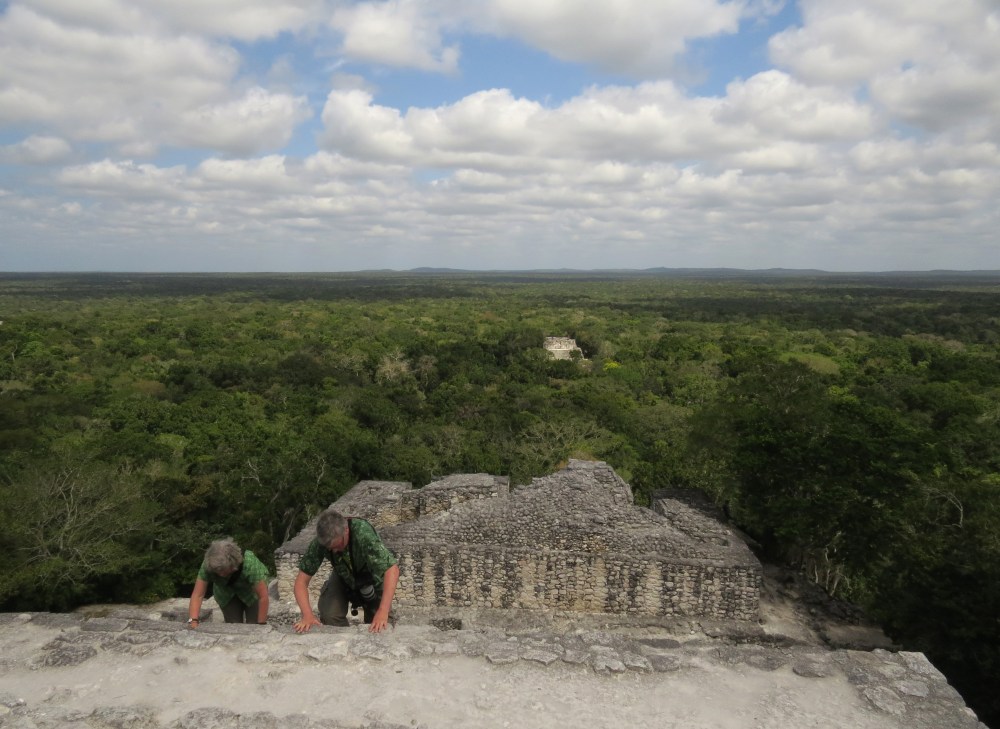
The spectacular view from the top of the highest pyramid. Situated in the 7200 square km Calakmul Biosphere Reserve there is a 360 degree vista of forest stretching to the horizon.

The view to an adjacent pyramid.

We saw and heard Howler Monkeys near the ruins and at our lodge. They produce the loudest noise of any land animal and would be in severe breach of Health and Safety if the regulations were applicable to monkeys!

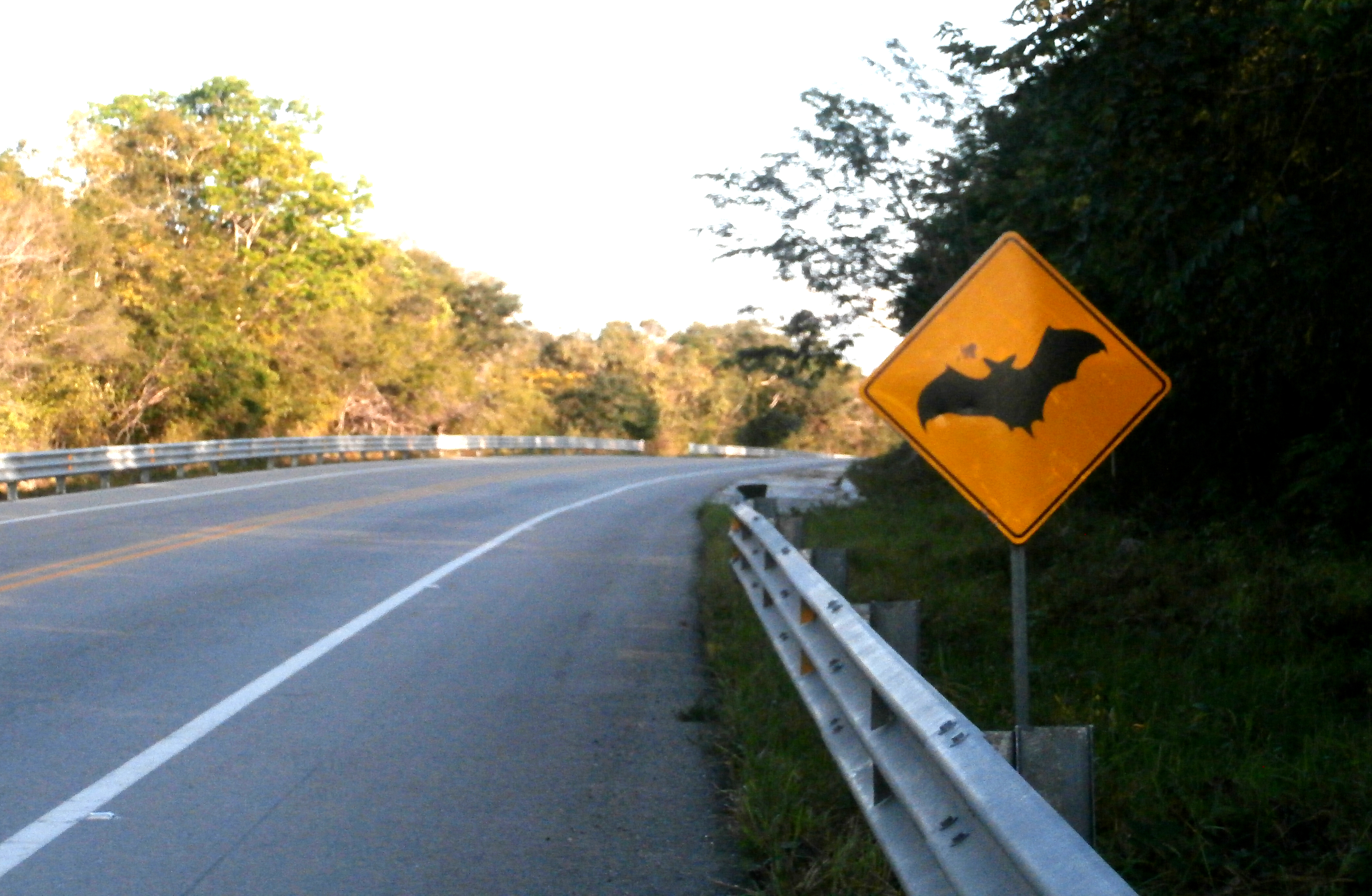
It’s not often you see a ‘danger bats ahead’ sign along the highway ….
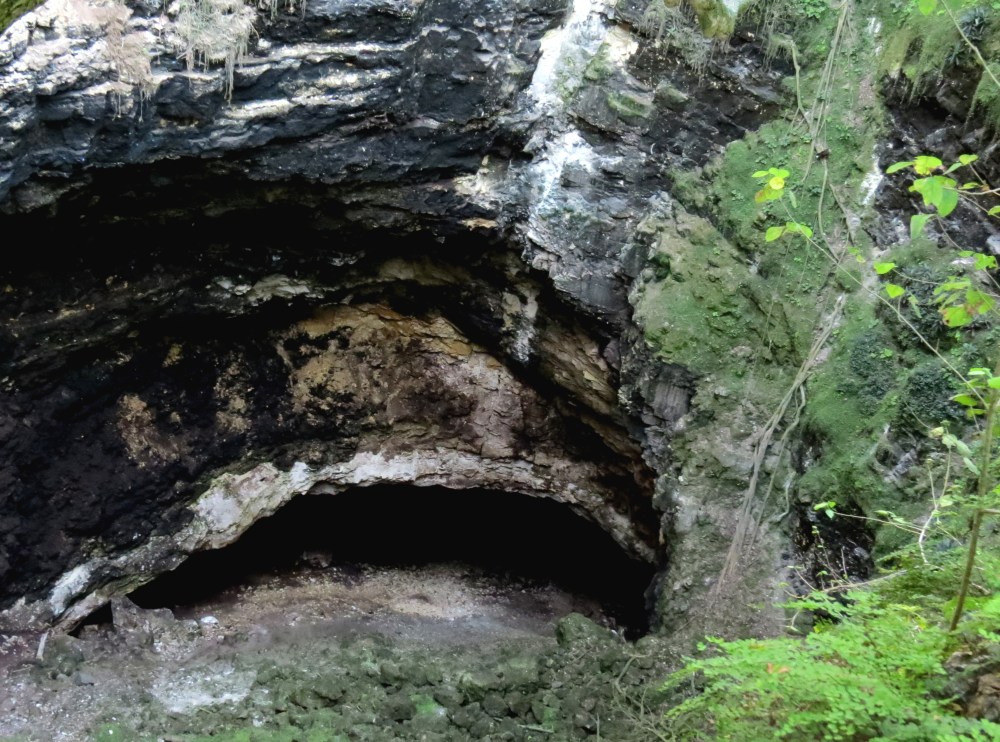
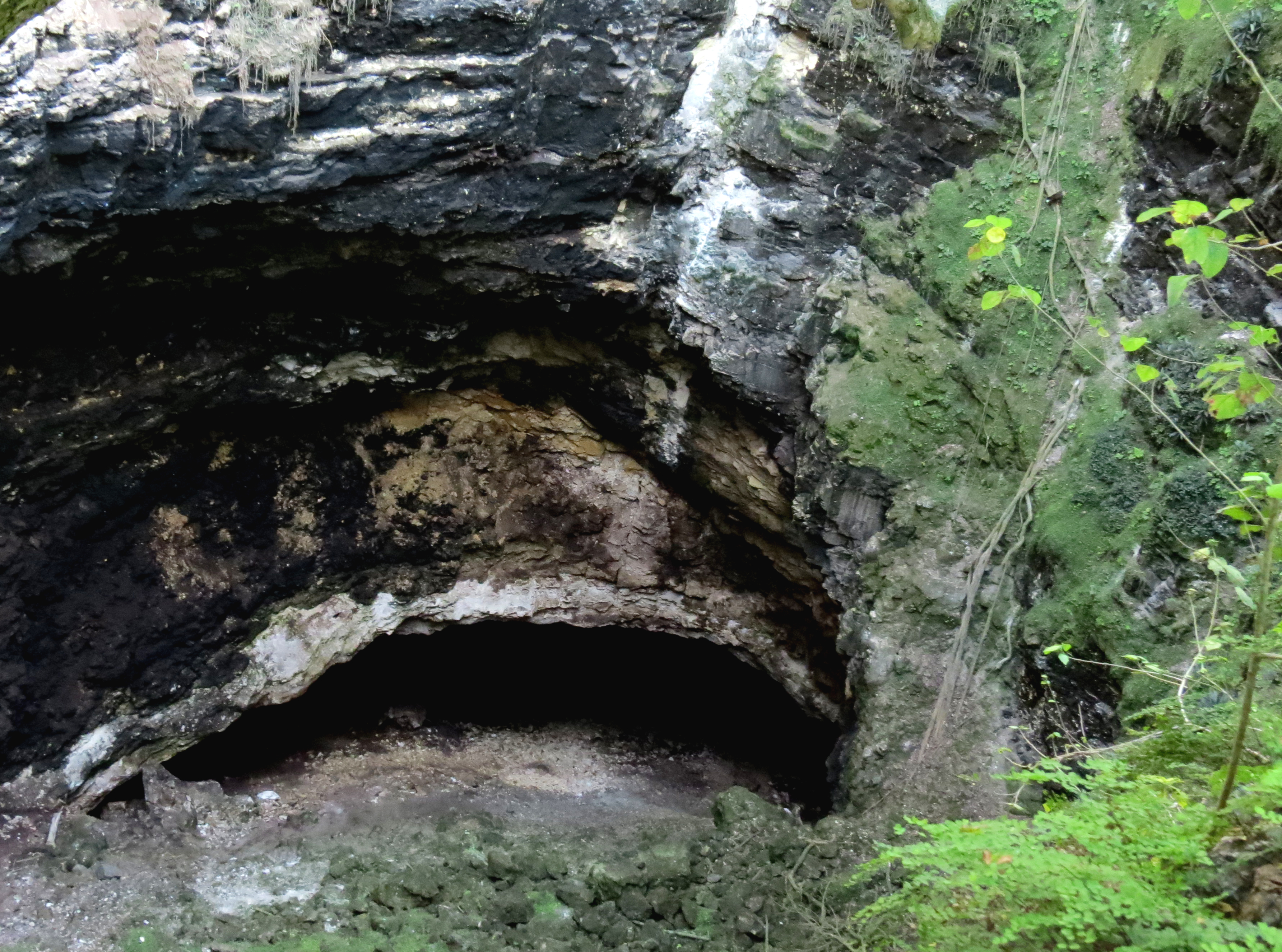
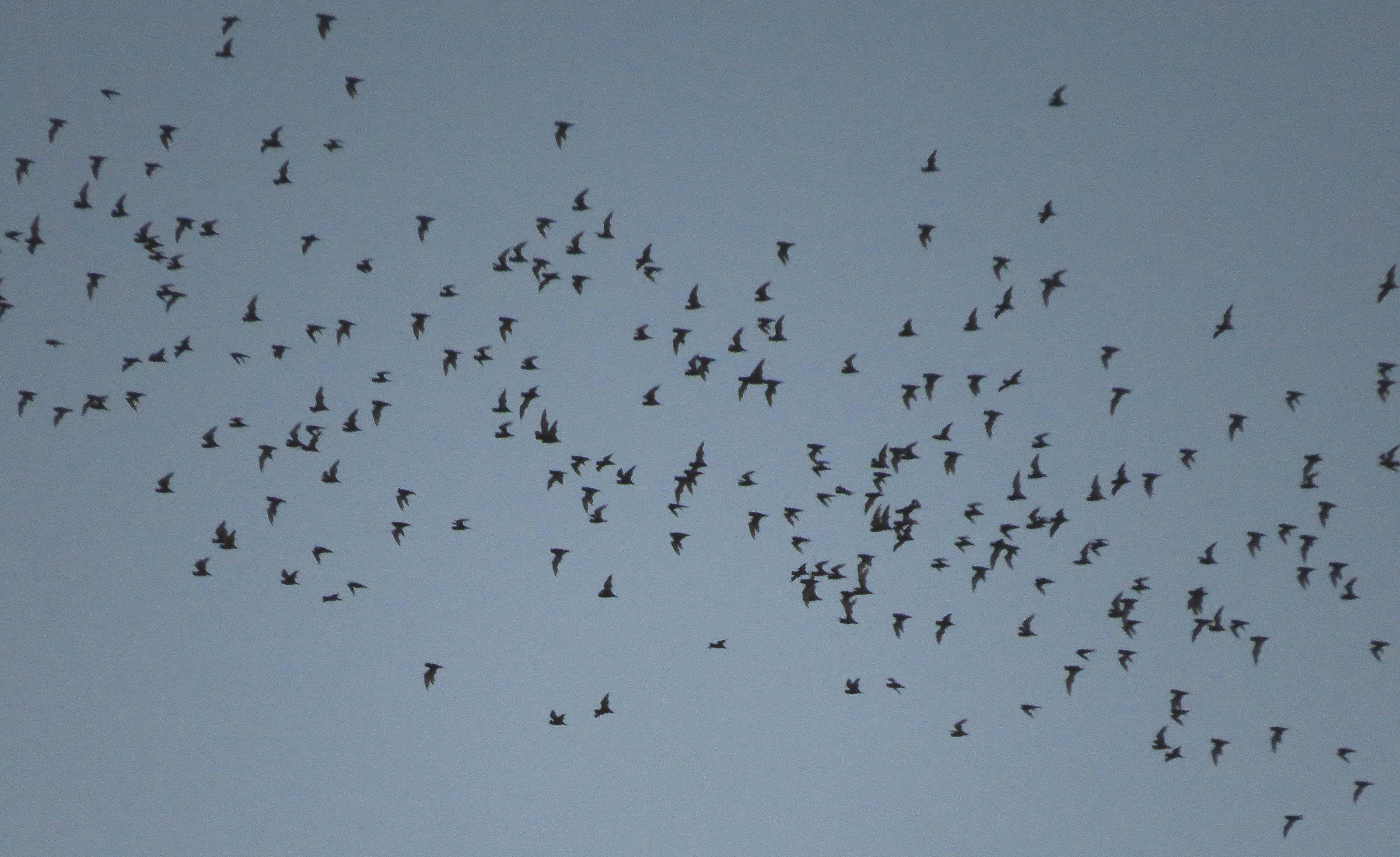
… but the hundreds of thousands, if not millions of bats that emerge at dusk from this sinkhole, can at times sweep down over the road and present a traffic hazard.
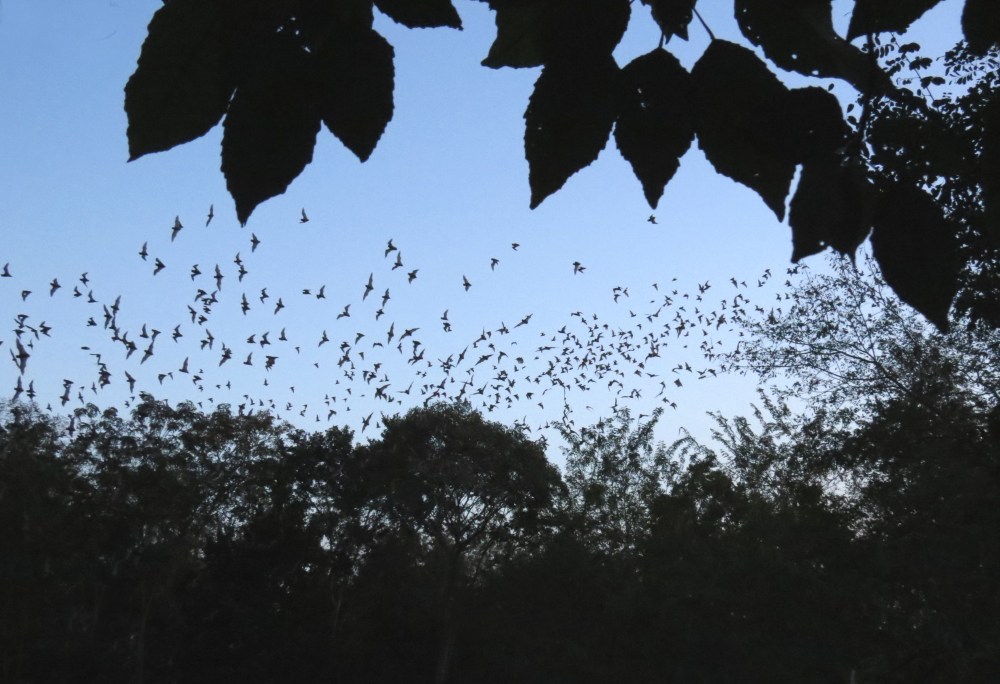
You can stand on the edge of the sinkhole and have thousands of bats pass with inches of your face yet not one will collide with you or with each other, so accurate is their echo-location.
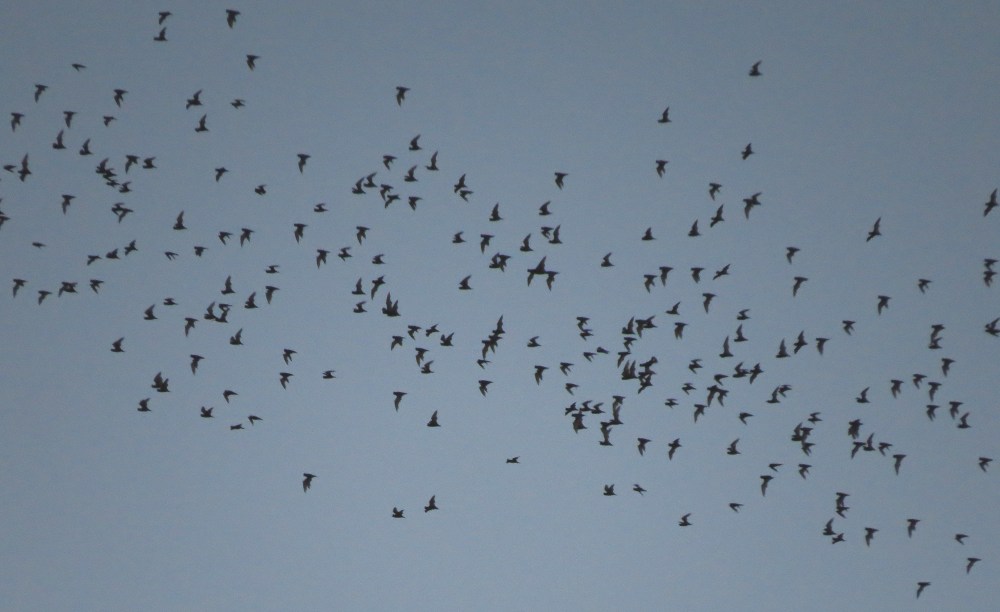
Broad-eared Bats. We watched this amazing emergence for over 45 minutes until it was too dark to see.

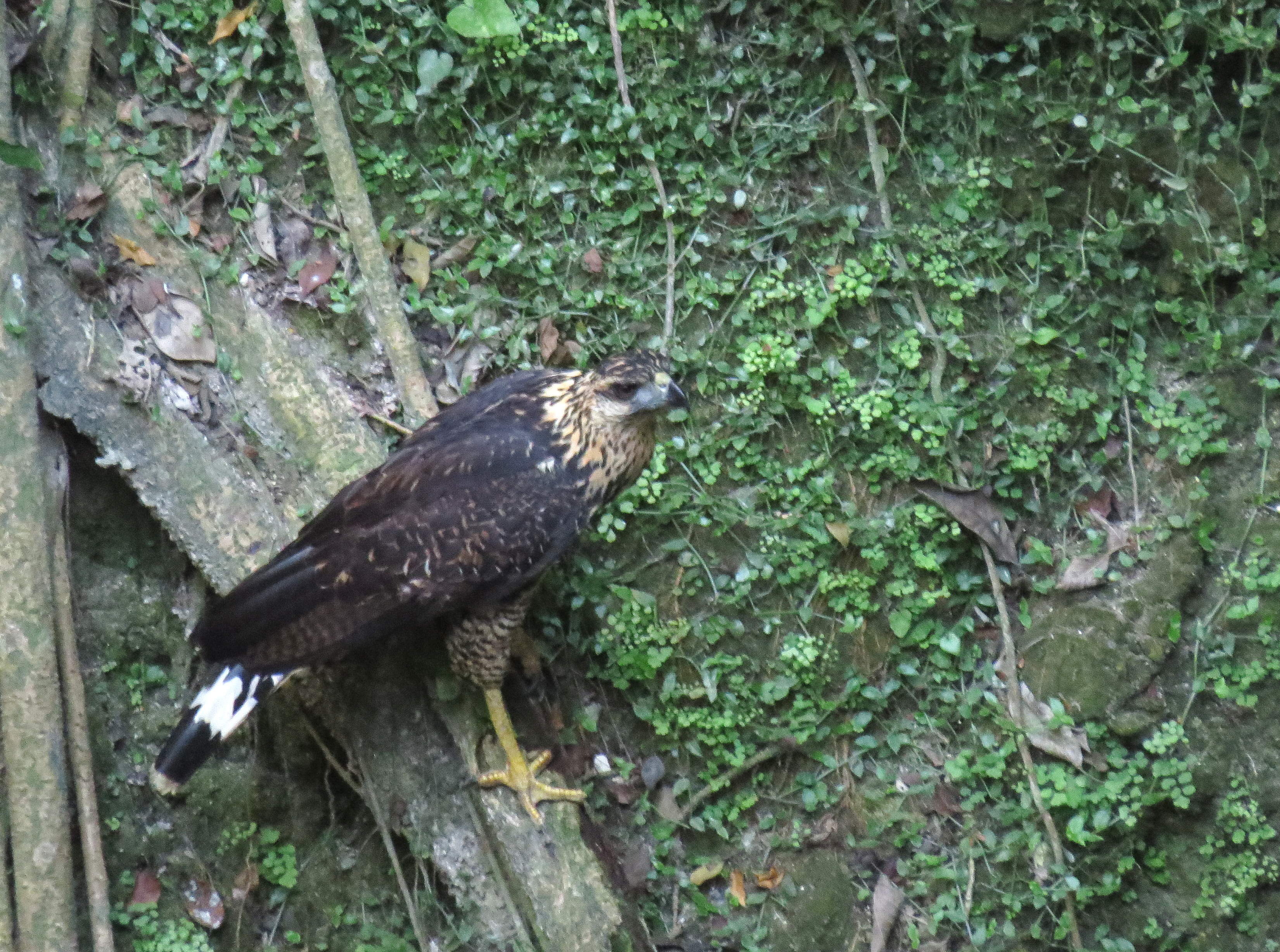
A juvenile Great Black Hawk clung to the sides of the sinkhole but in spite of being spoiled for choice it seemed to be having a hard actually catching a bat. Over our two visits we saw Zone-tailed, Cooper’s, Roadside, Bicoloured, Short-tailed and Great Black-Hawk, Hook-billed Kite and Bat Falcon turn up for their bat supper.
From here it was just a matter of returning to Cancun the next day in time for our overnight flight. The two trips, El Triunfo and The Yucatan were excellent. I have already birded Western Mexico, I need to complete the set of Birdquest Mexico trips and do Southern Mexico soon.
Of course to be able to ring birds you need a licence to show that you are properly trained. There are three classes of licence, T for trainee, which means you must be under direct supervision, C which means that you can ring on your own but your activities remain under the control of your trainer and A which means you are responsible directly to the Ringing Committee. If an A permit holder wishes to take on trainees they must have a trainer’s endorsement. I have assisted in the training of many trainees for decades but have only recently decided that I ought to take on trainees in my own right. To obtain a trainer’s endorsement you need to convince another trainer of your merit, by being observed supervising a trainee. This prevents cliques forming where bad practices are passed of from trainer to trainee ad infinitum.
With my friend Paul being ready to be assessed for his C permit we made arrangement s for us both to see Pete Morgan, a well know and long-standing ringer at Portland Bird Observatory on Tuesday 29th May. The first day would mainly be about Paul’s assessment and then we would both return later in the week for my assessment. However we were in luck, our visit coincided with a ‘fall’ and there were so many birds around that Pete could easy assess both of us on the same day.
During the day over 300 birds were ringed allowing plenty of opportunities for Paul to demonstrate his ringing abilities. The majority were, as expected, Willow Warblers, but there was a selection of other migrants including, Pied Flycatcher, Whinchat, Wheatear, Garden Warbler, Sedge Warbler, Blackcap, Common Whitethroat and Chiffchaff. Away from the nets I also saw Lesser Whitethroat and Yellow Wagtail.

Here are some of the birds that were ringed that morning: a beautiful male Whinchat
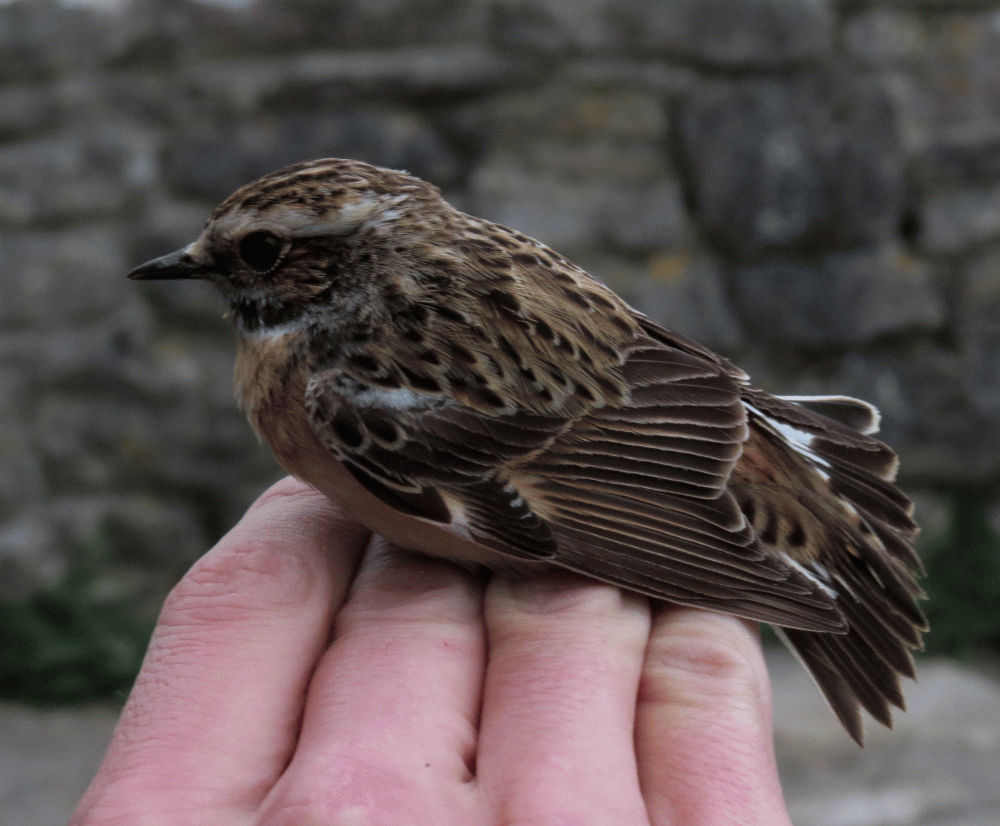
Female Whinchat

Female Pied Flycatcher
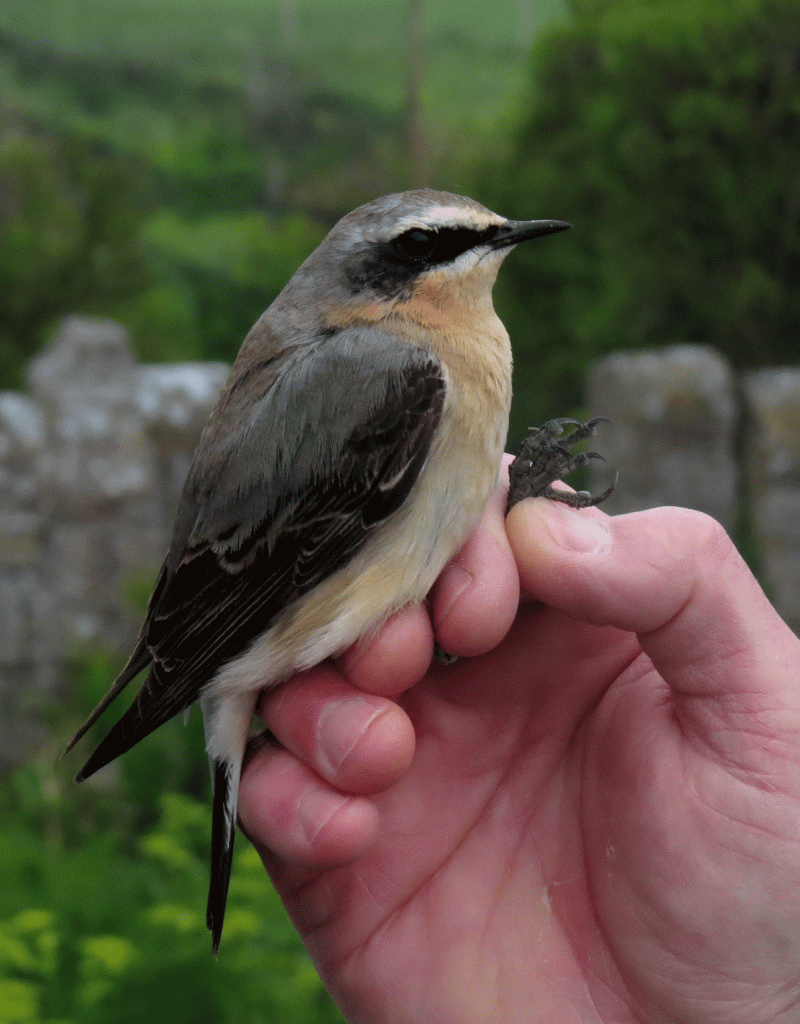
‘Greenland’ Wheatear. Most nominate race Wheatears pass through in late March and early to mid April. By early May the larger Greenland race leucorha predominates. From their African wintering grounds they briefly refuel in the UK before crossing the Atlantic to Iceland, Greenland and eastern arctic Canada, an incredible migration for such a small bird.

Margaret and I returned on Friday 2nd May for some general birding. This Peregrine was soaring overhead
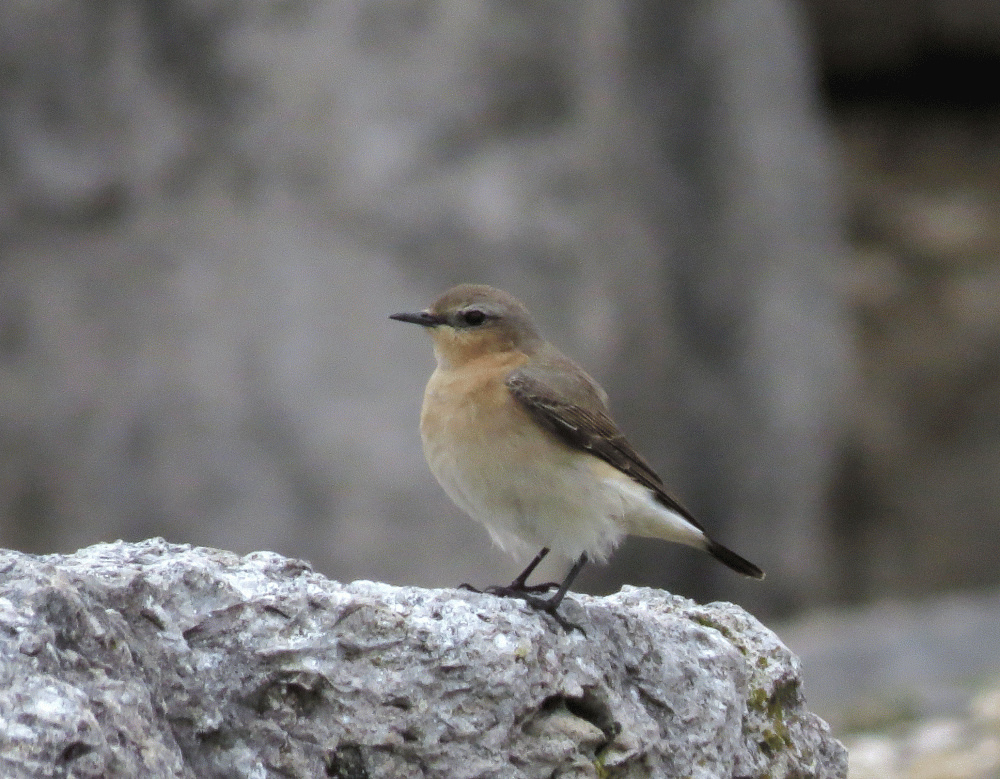
In complete contrast to three days earlier there were few migrants around, however a good number of Wheatears, mainly of the Greenland race were around the Bill.
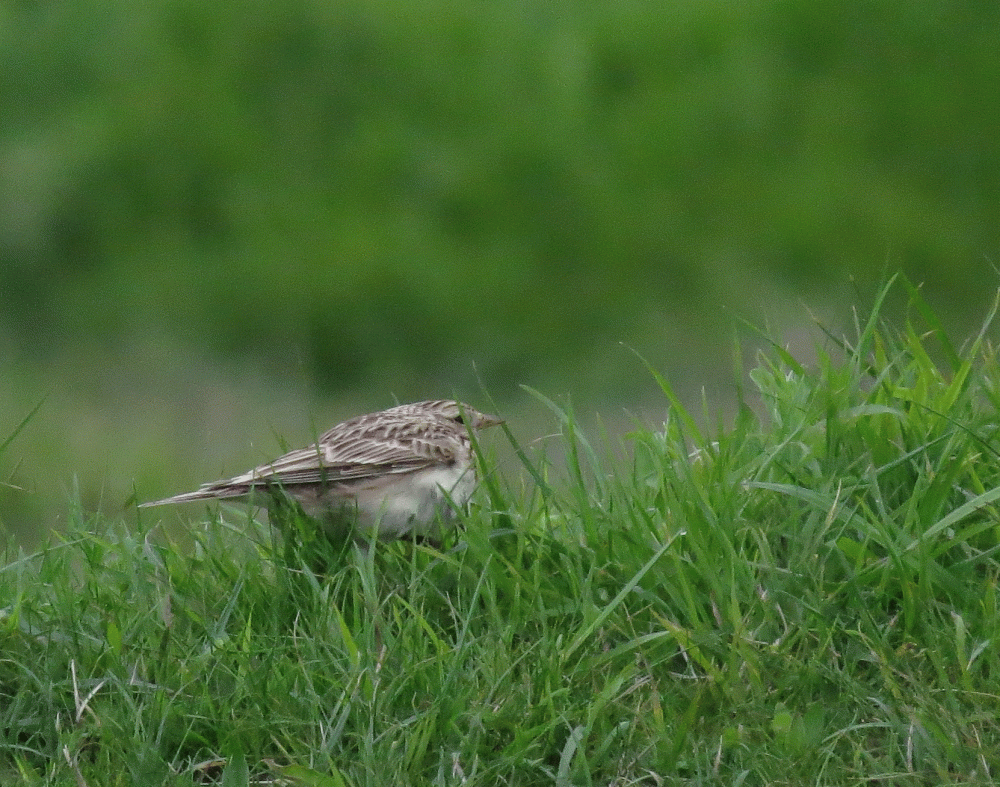
Skylarks were everywhere filling the air with their joyful song.

Later we headed down to Lodmoor where we had great views (but not photos) of Beared Tits and saw a number of Pochards above), presume local breeders

What is hiding behind this Coot?
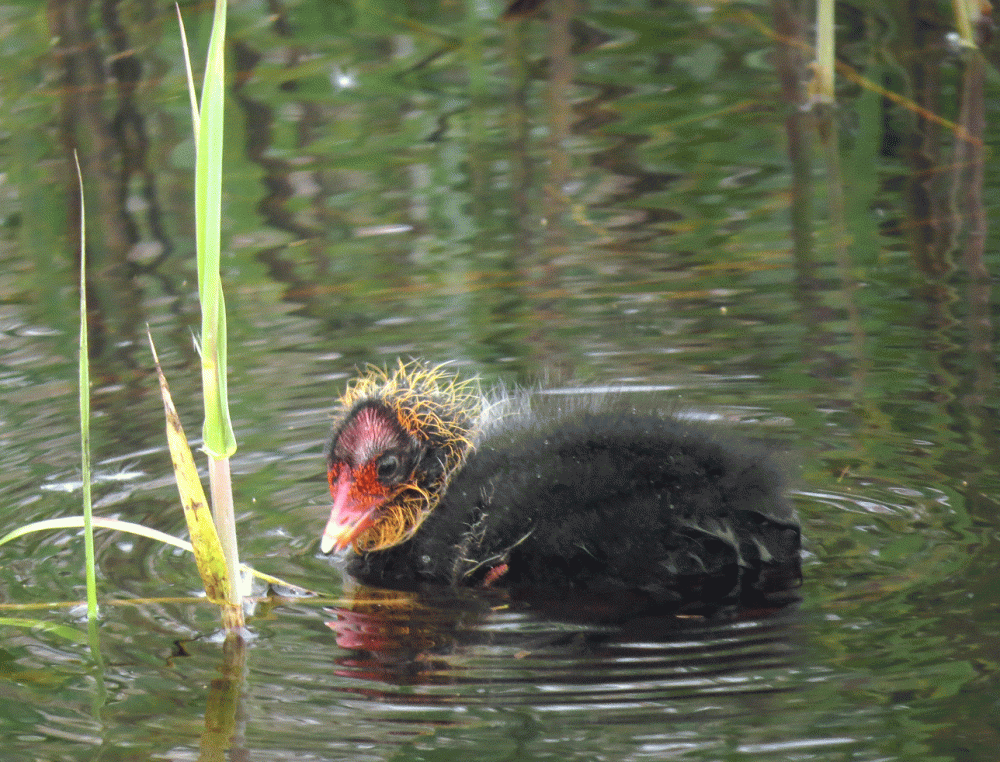
Just one of their bizarrely plumaged chicks.
On 3rd May we performed a public ringing demonstration at Durlston. We have been requested to do this as part of our permission to ring there and it helps people appreciate the birds that occur in the park. However once again we found ourselves short of anything to demonstrate with. Over the two hours that the public were about we only ringed nine birds, but we filled the time explaining what has been learned through ringing and what needs to be learned in the future.
Monday 5th I birded around the Sherford Bridge/Mordon Bog part of Wareham Forest. I should have returned to Portland as there was a large passage of seabirds, including many Pomerine Skuas. The previous night two of my friends had independently heard Spotted Crakes making their ‘whiplash’ calls from the wet meadows near Wareham. On the 6th I got up predawn and listed for them at Bestwall and Swineham. The wind was quite strong and the rhythmic banging of ropes against masts from distant yachts didn’t help. By the time I got to Swineham the dawn chorus was already underway, I am fairly sure I heard a few calls distantly but I would prefer to have another attempt. At the moment the weather is unsettled with high winds, but when that passes I’ll try again.
For a selection of recordings of singing Spotted Crakes click here: http://www.xeno-canto.org/explore?query=Spotted+crake

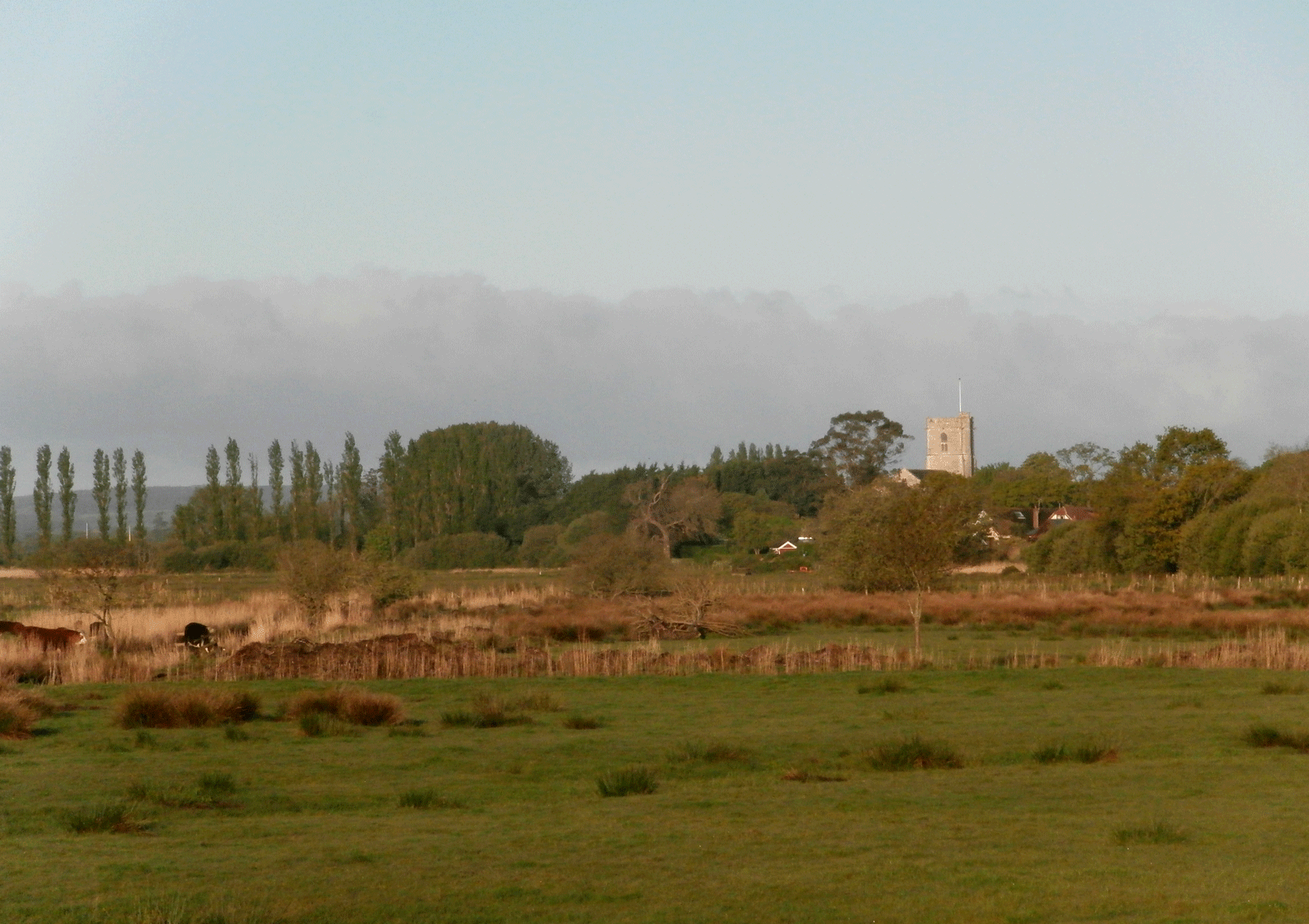
it was a beautiful dawn which gave rise to a sunny morning. The church at Wareham seen from Swineham

The River Frome at Swineham

Later on the 6th I returned to the Mordon Bog area. This photo was taken in the cloudier conditions on the 5th

Both Meadow and Tree Pipits were in song allowing close comparison of both their plumage and vocal characteristics. Tree Pipits (above) have finer flank streaking than Meadows and a shorter hind claw and a subtly different face pattern. Tree Pipits nearly always end their song flight on the top of a tall tree, whilst Meadow Pipit land on or near the ground. The song is different too see the links below.
Song of Meadow Pipit: http://www.xeno-canto.org/explore?query=Meadow+Pipit
Song of Tree Pipit: http://www.xeno-canto.org/species/Anthus-trivialis

Mistle Thrushes are regularly seen in the filed adjoining the Bog

Both conifer and deciduous trees fringe the Bog, which along with wet and dry heath gives a mosaic of habitats

On the 7th I returned to Portland. I didn’t coincide with either a fall of migrants or a large seabird passage but did see some new species for the year. It was very overcast with heavy showers but this soon passed to give a pleasant morning.

A Whimbrel paused on migration at the Bill

Within minutes of arriving at the Bird Observatory, three pale morph Pomarine Skuas went by. A further 90 minutes at the Bill failed to produce any more so I hit it just right. Photo by Paul Bowerman www.thebirdsofsouthgloucester.co.uk
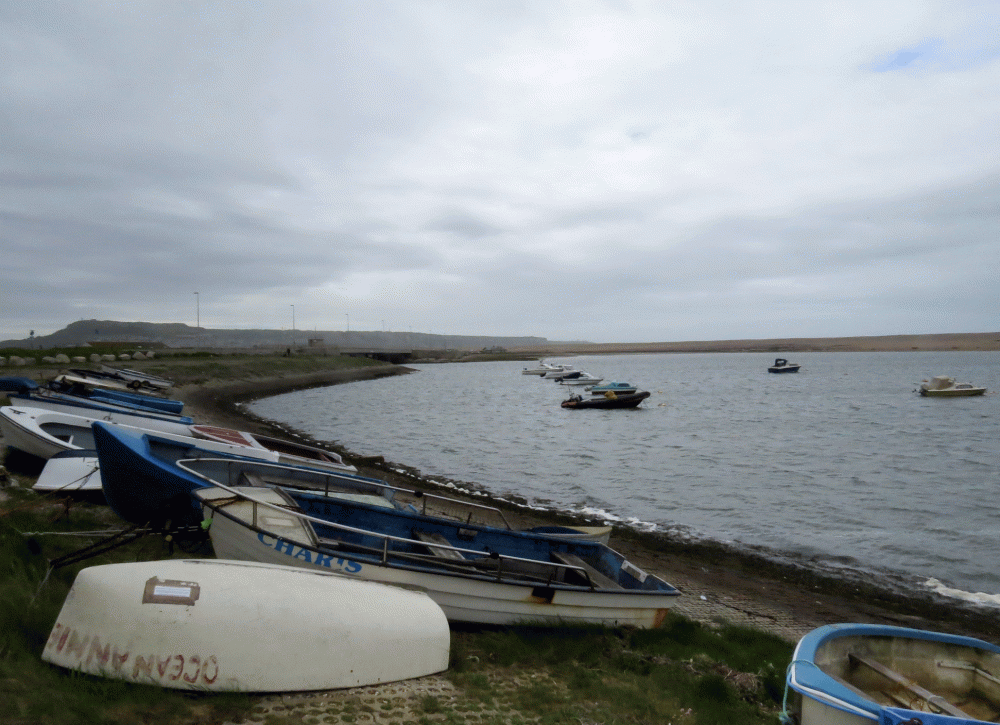
Ferrybridge, where the waters of the Fleet run into Portland Harbour is not only a good site for Little Terns and various waders but marks the spot where Margaret first made landfall in the UK when she arrived by yacht (all the way from South Africa) in June 2002.
Without wishing to sound like the old Yorkshire men in the Monty Python sketch, ‘it wasn’t like that when I was at school’. The best we had was a sixth form disco at age 18. Amber, now aged 16, has been excited about attending her school prom for some time now. Imagine the turmoil when Janis phoned to say that her car had broken down on the way back from work and she woldn’t be able to take Amber to the prom at Kingston Maurwood near Dorchester. Even worse she had Amber’s new shoes with her.
We quickly went into action, Margaret went off to help Amber get ready and I went to find Janis and rescue the shoes, whilst she waited for the breakdown services. After much faffing we eventually took a beautifully made up Amber her friend Matt’s house near Wareham, where she met up with her boyfriend Josh. Josh’s mother then took Amber, Josh and Matt to Kingston Maurwood. Sue’s comment ‘wow Amber you look like you are 21’ says it all.
These photos were taken in Wareham before they set off.




On Saturday we went over to Bournemouth for a concert, but first we called into John and Anita’s flat for one last time. They were all packed up for the move to Essex. It has been great visiting the Bournemouth flat, which overlooks the pedestrianised Old Christchurch Road, the scene of many a stag or hen party. Over the last year we have attended lots of interesting events, beach parties, concerts, firework displays etc, of course we can still go to them, Bournemouth is only a 20 minute drive away, but somehow I doubt if we will be quite so motivated.

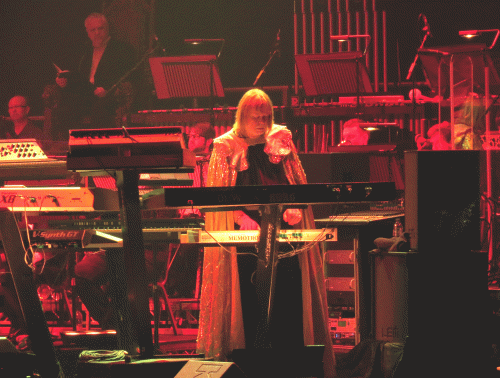
We were on our way to the BIC to see the 40th anniversary of Rick Wakeman’s ‘Journey To The Centre Of The Earth’, a musical version of the famous Jules Verne novel. I have enjoyed keyboard virtuoso’s music since his days with progressive rock band Yes. I have to say that on the records I prefer ‘The Six Wives Of Henry VIII’ to ‘The Journey To The Centre Of The Earth’ but tonight’s concert was excellent. Any fears that I might have had after the Martha and the Vandellas concerts that these ‘blasts from the past’ are not worth going to were completely unfounded. The rock band were supplemented by a full orchestra and choir and the concert was very well received by audience.
During the short first ‘half’ Rick Wakeman played just four numbers illustrating various stepping stones on the way to the performance of ‘Journey’, in addition he told hilarious stories about the original productions world tour in the 70’s.
In the second ‘half’ which was three times longer than the first and comprised of the full concert and a lengthy encore. Rick Wakeman appeared with his trademark golden cape and played his usual bank of keyboards.
In the first photo below he is joined by vocalist Hayley Sanderson during the first section, the rest are from the full concert culminating in a standing ovation.






Margaret had a significant birthday last week and of course the granddaughters were round with presents …..
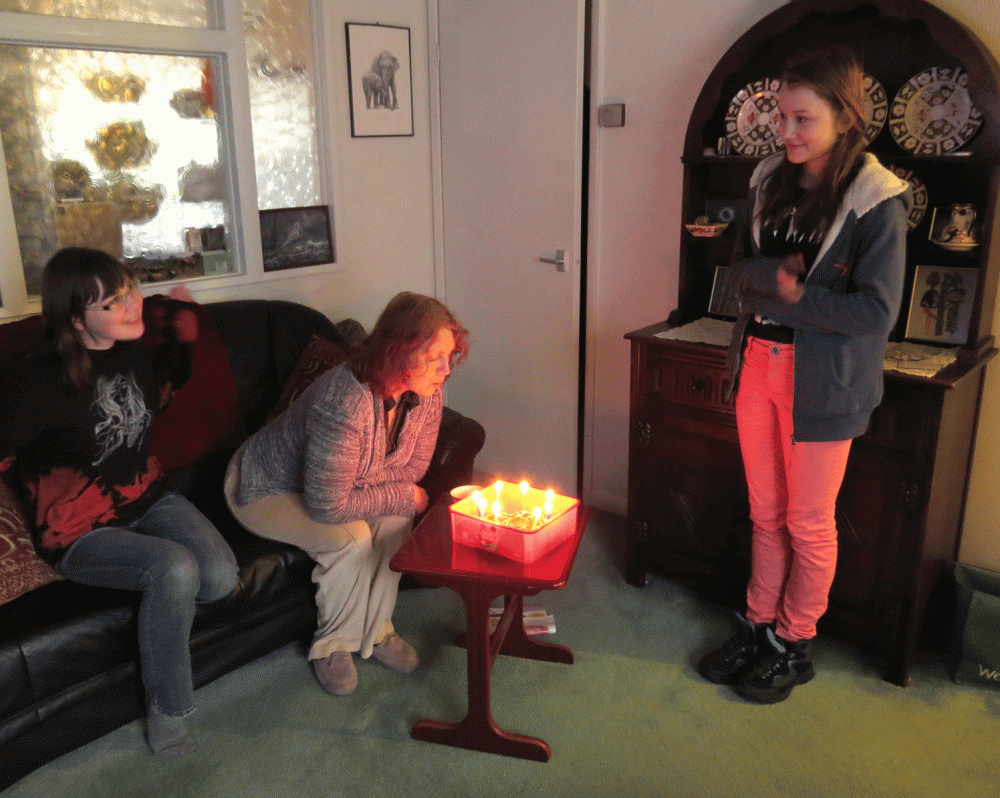
…. and a cake

Next door bought a bulldog puppy a while ago, well it’s no longer a puppy and it has started chewing holes in the fence.

Seems like it’s rather keen to get into our garden, Margaret solved the problem by painting the edges of the hole wit Ha chili paste. One more chew on the wood was enough to put him off for good.

Rather than go out on Margaret’s birthday, we waited until the weekend to celebrate when all the family could be there. We went for a meal at the Red Lion at Sturminster Marshall, which had a very nice menu and an extensive gluten free section for Janis.
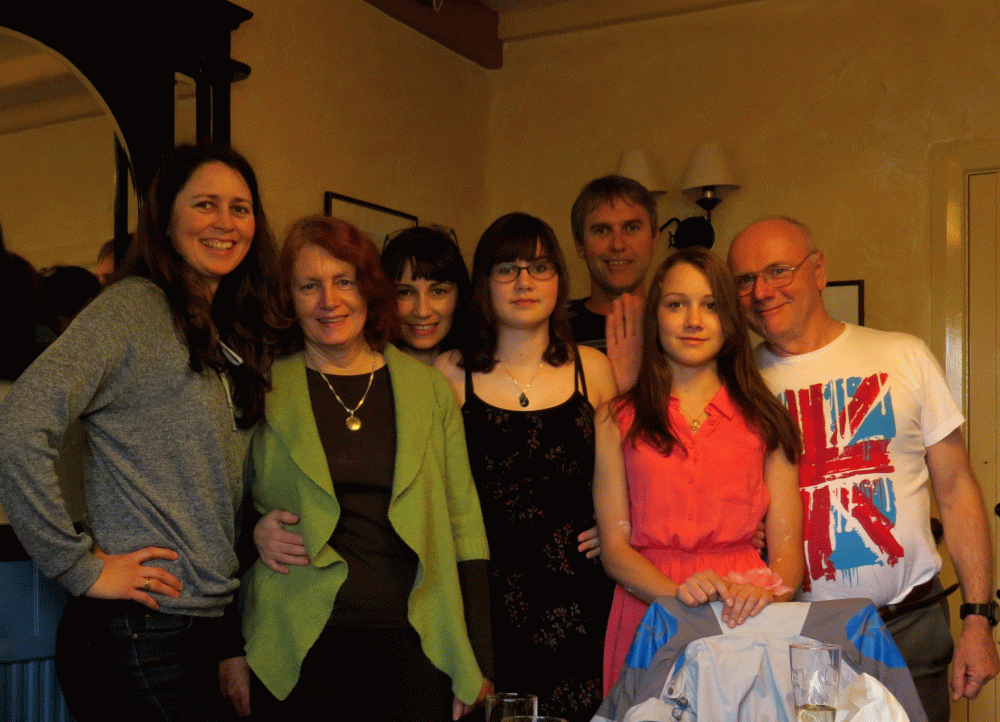
L_R Anita, Margaret, Janis, Amber, John, Kara and me

John and Anita will be moving within the next couple of days to Essex, where John has already been working for the last few weeks. We will be sorry to see them go but we are looking forwards to exploring a new part of the country when we visit them.

Sisters ……

… are doing it for themselves !

Kara wanted to look cool and reserved ….

… but balancing a ‘reserved’ sign on her head might have been going a bit too far! (The pint of beer in the last photo is mine, not Kara’s, just in case you were wondering)
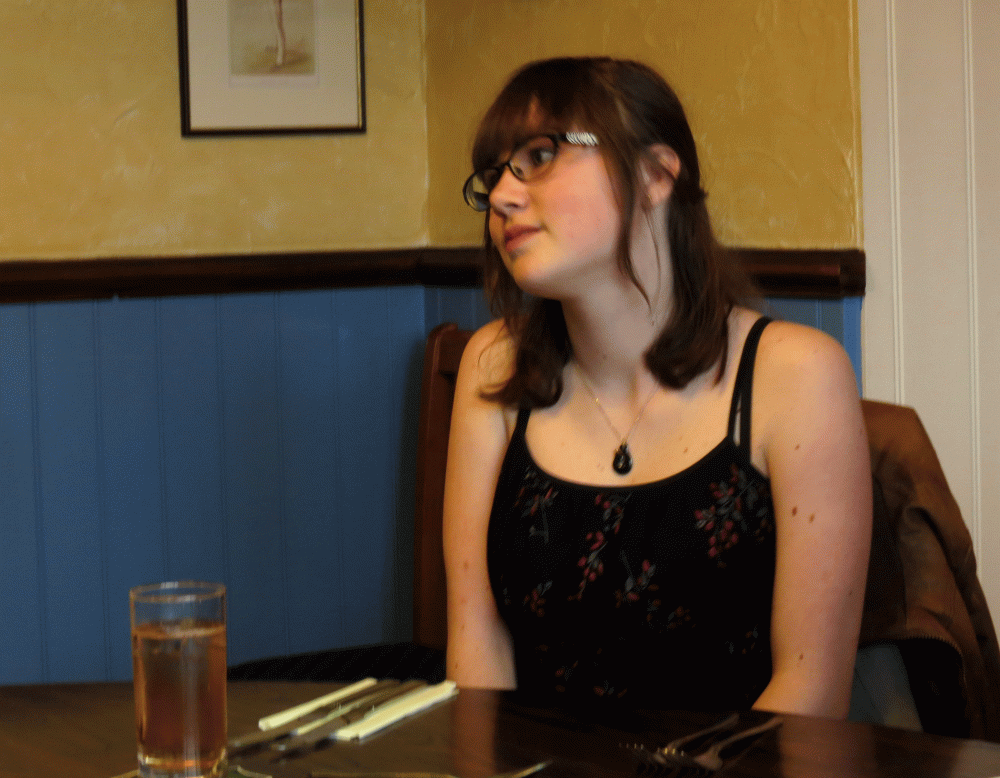
I have known the girls for just over seven years and of course they have changed dramatically in that time. However we have really noticed Amber’s transition into young lady within the last few months. By the way, I try not to use flash for indoor photos as I feel the harsh light destroys the mood, even if it does result in sharper pictures.
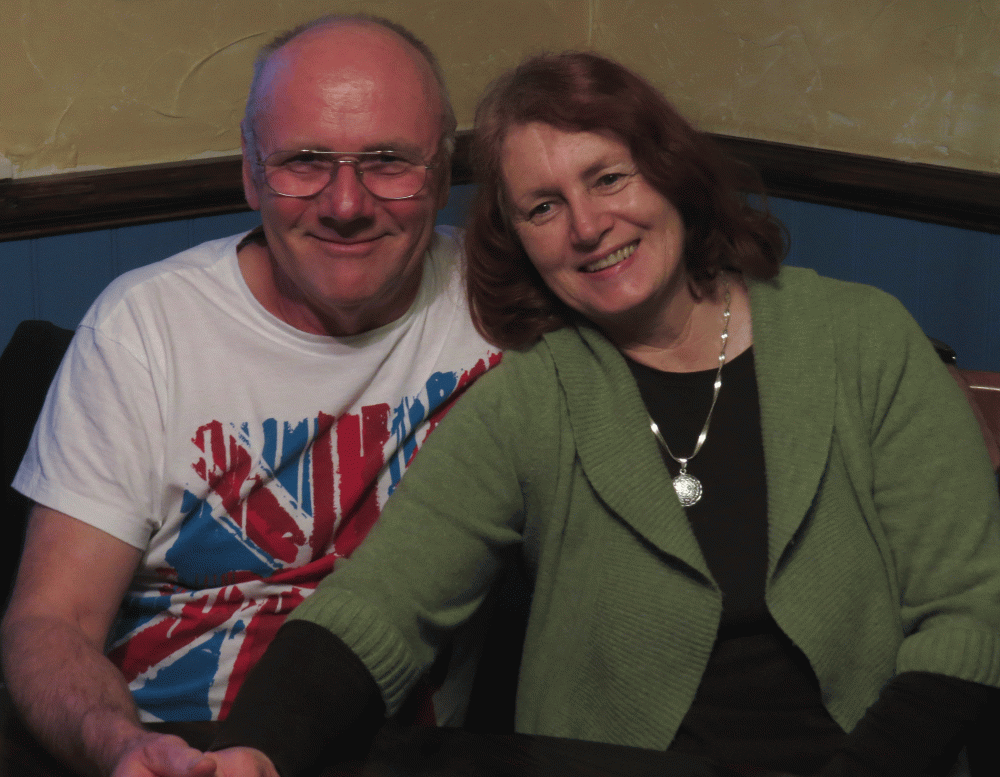
Margaret retired from her job in a solicitor’s office on the last day of April and is now a lady of leisure. We are looking forwards to doing lots of things together, both in the house, in the UK and abroad.
50.801447
-2.072435
































 gryllosblog


