Archive for the ‘Uncategorized’ Category
Continuing the story of my recent trip to the South Pacific from the last posts (uploaded on 4th and 18th September).
From Sydney I got an afternoon flight to Noumea, the capital of New Caledonia arriving at the hotel in the evening of the 4th after a 44 hour journey from home.
New Caledonia is a French Overseas Country and culturally is divided between native Karnaks and French ex-pats. Indeed just like the Falkland Islanders and Gibraltarians try to be more British than the British, New Caledonians seem to be striving hard to maintain their French identity.
The weather was surprisingly cool for an island that lies just within the tropics and indeed a sweater was needed at times. Unlike most tours I go on, this one was quite relaxed with departures at 0700 after a hotel breakfast and return in the late afternoon. Birding was fairly easy, in common with most oceanic islands there aren’t may species, On the first day I saw just 30 species, but 17 of them were ‘life’ birds. Although I call New Caledonia an Oceanic island, it is a fragment of the ancient super continent of Gondwanaland, which broke up during the dinosaur era. Thus the Kagu, a bird so unusual that it is placed in its own family may be a Gondwanaland relict.

The view from the hotel at Noumea at dusk.
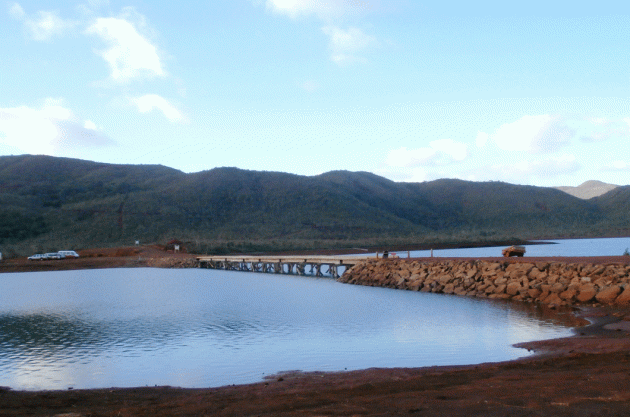
The first two days on New Caledonia were spent at Rivierre Bleu NP. This bridge that crossed the lake has been condemned. There used to be a shuttlebus on the far side but this wasn’t running. As a result we had to walk most of the 8 Km to the best birding area, but managed we got a lift on the way back from Francoise and his group of Japanese/Taiwanese tourists..
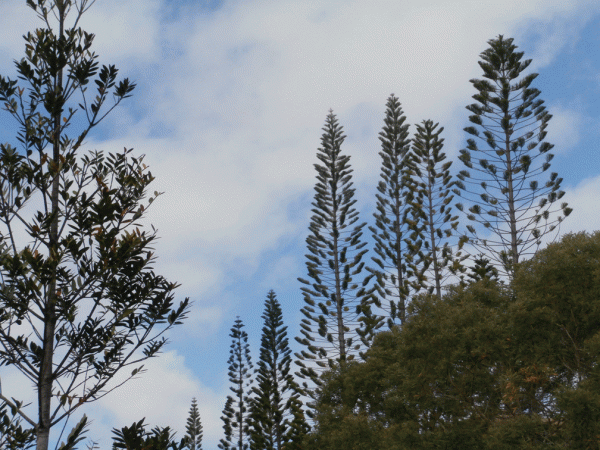
Around the entrance to the park stands of impressive, endemic New Caledonian Pines can be seen.

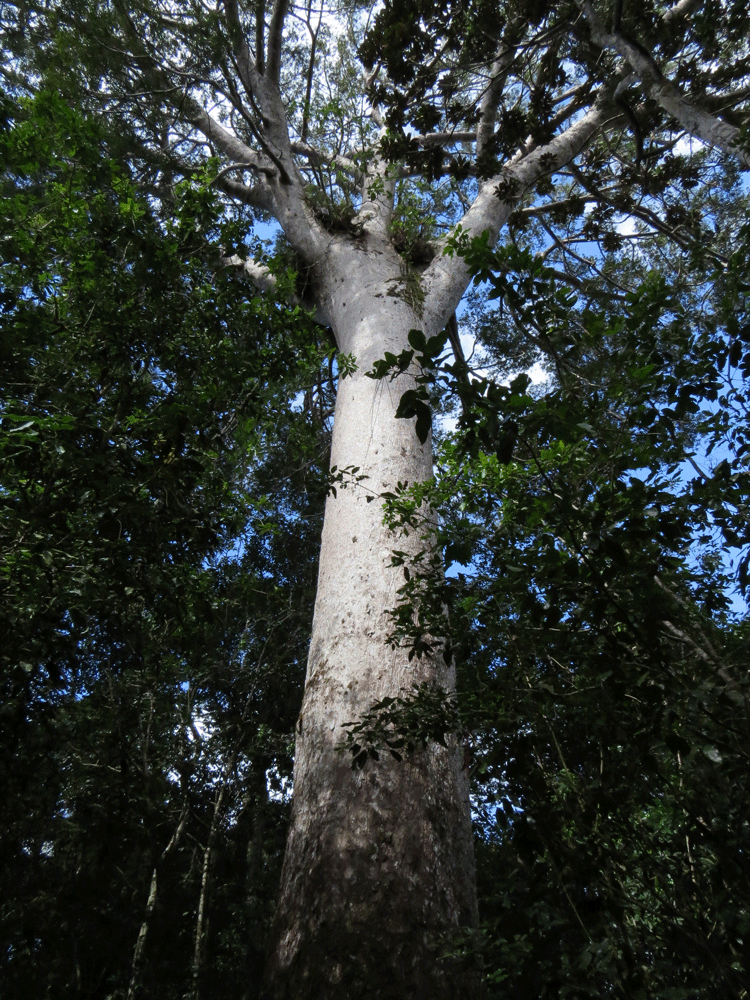
The best birding area is in the mature forest as typified by this giant Kaori Tree.
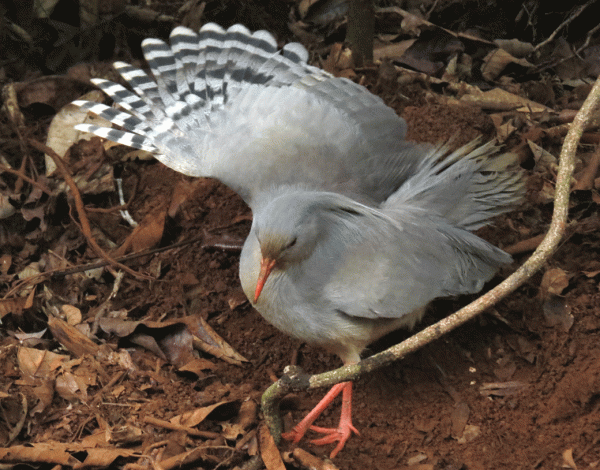
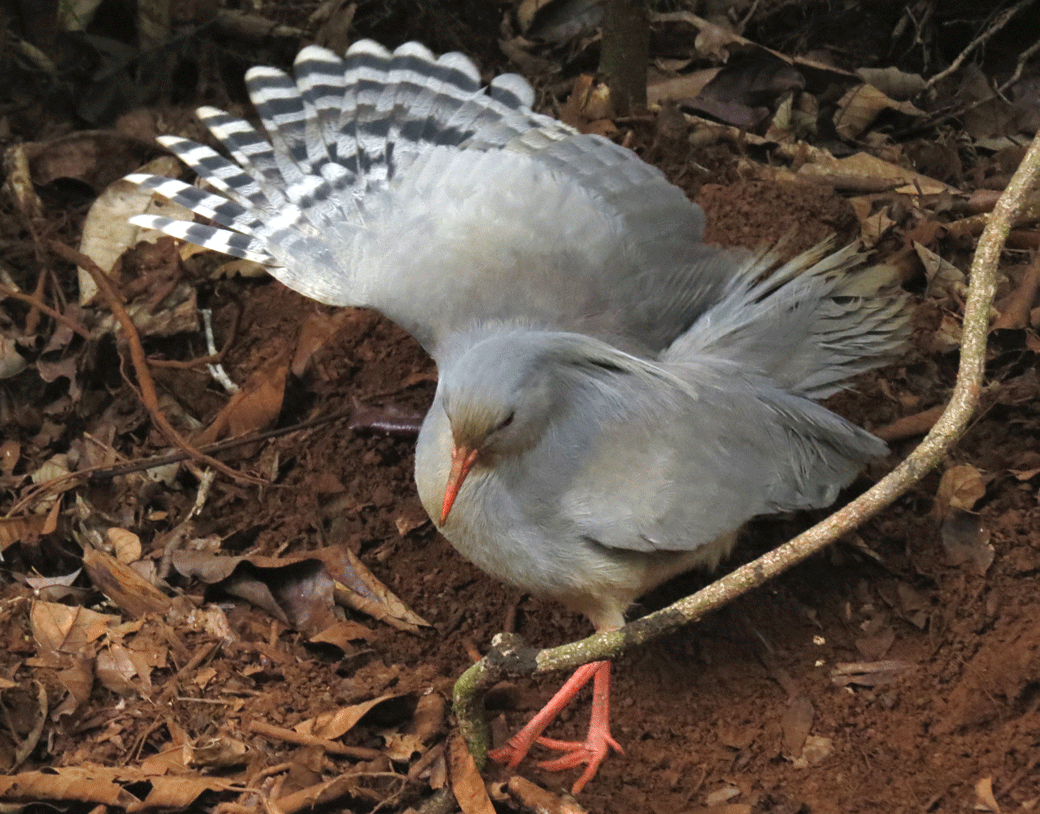
A true Gondwanaland relict. The Kagu’s nearest relative appears to be the Sunbittern of the Amazon.
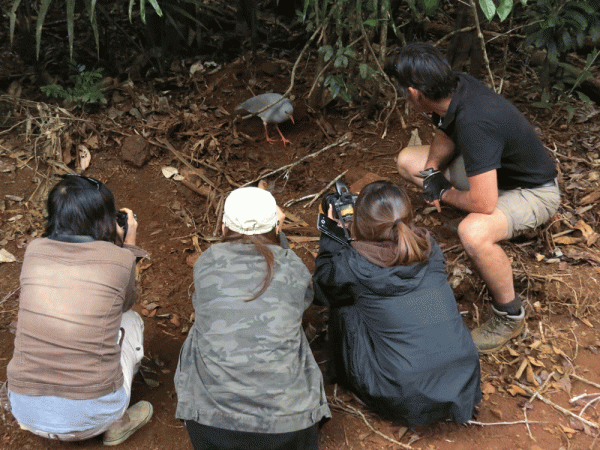
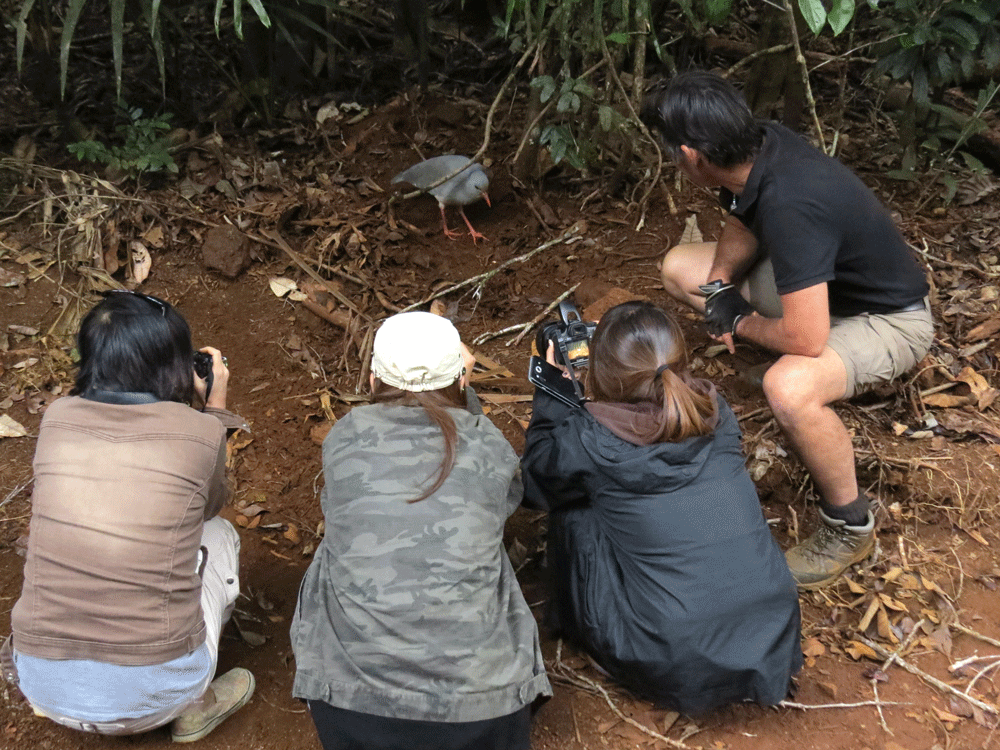
I knew the Kagu was easy to see, but I hadn’t realised it was this easy. Francoise shows New Caledonia’s most famous bird to his group of young ladies.
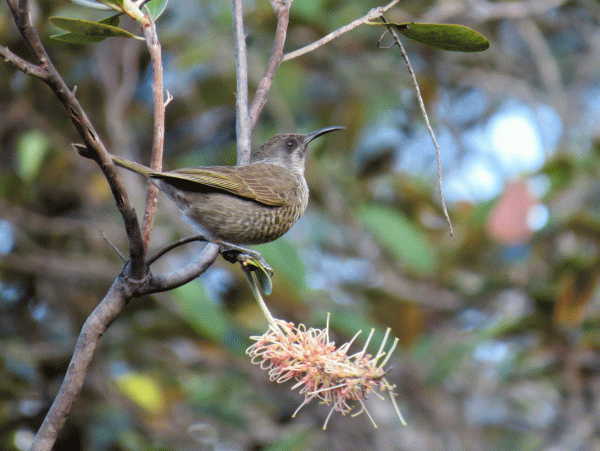
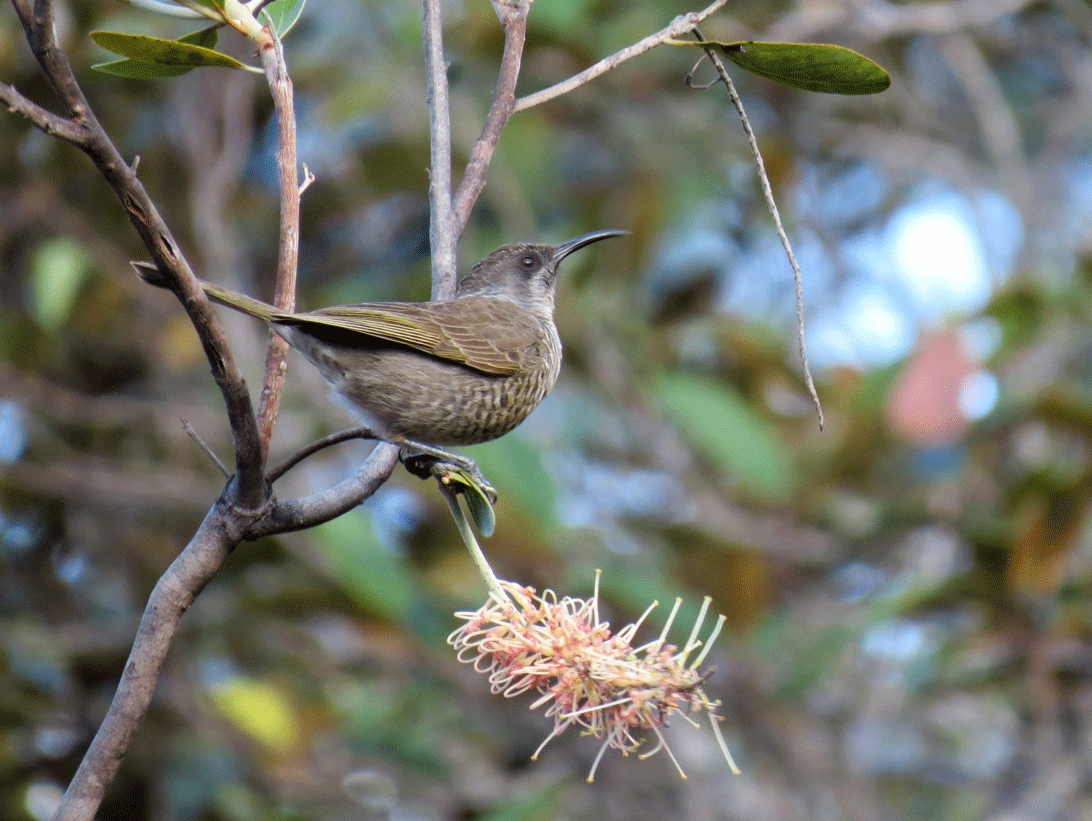
Barred Honeyeaters were quite common in scrubby areas.
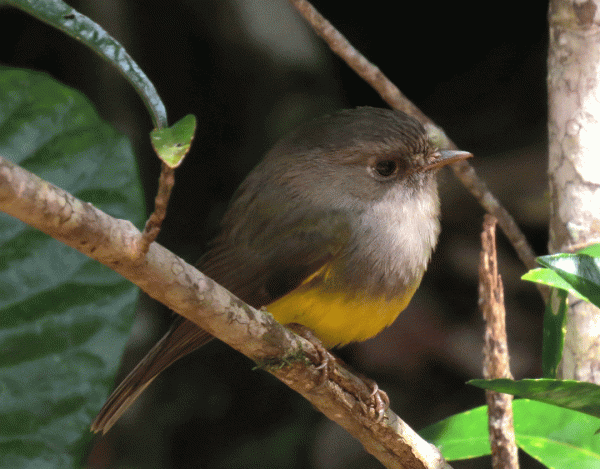
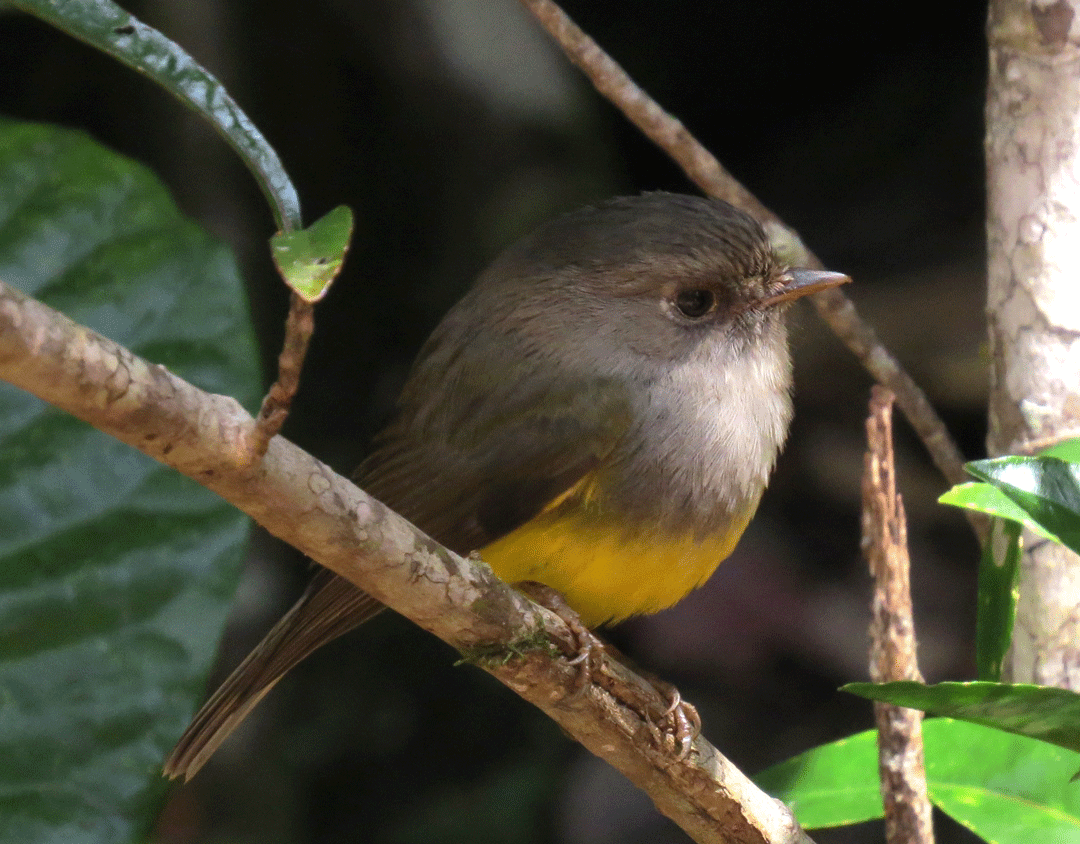
This Yellow-bellied Flyrobin accompanied us a lunch time and was clearly fond of French cheese.

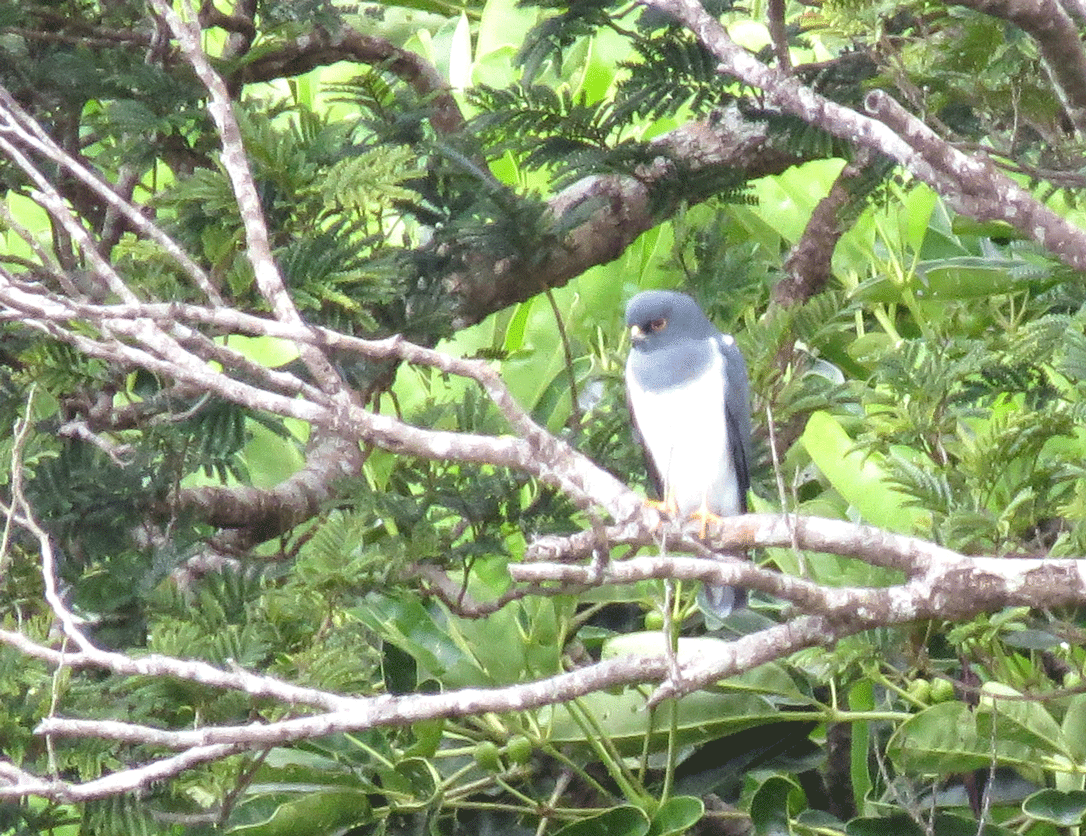
Further afield on the main island of Grande Terre we saw this impressive New Caledonian (or White-bellied or Blue) Goshawk.

The New Caledonian Crow has the reputation of being the most intelligent bird in the world, as it not only uses tools (twigs etc) to winkle grubs out of wood, but actually shapes the tools for the job in hand. However this activity has only been seen in captivity.
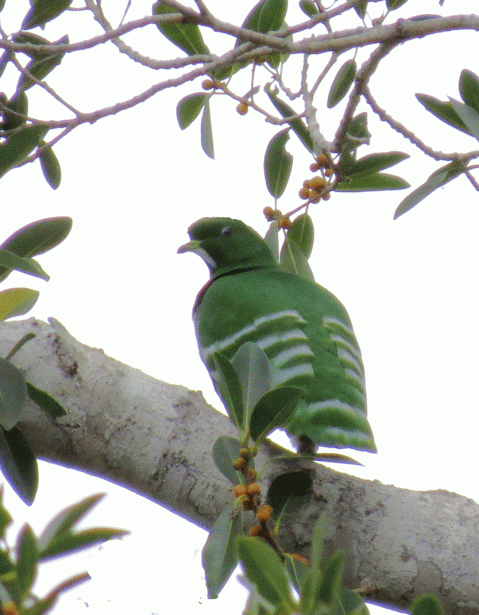
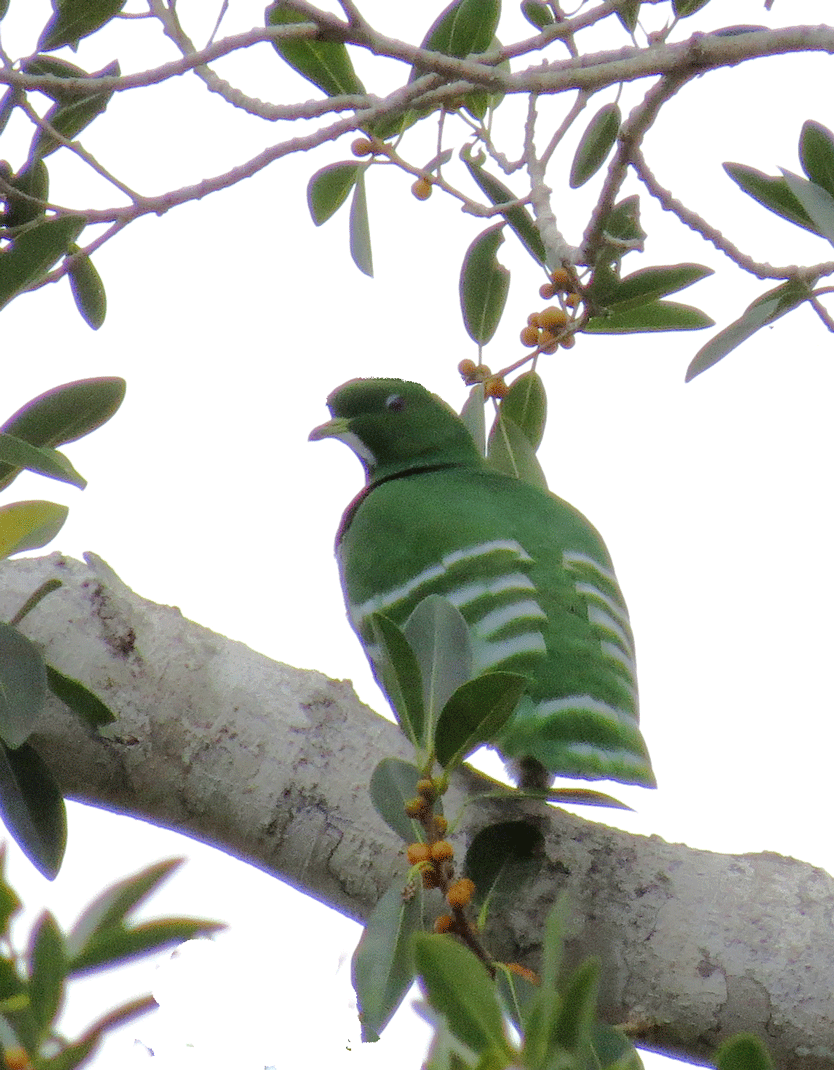
I posted a front side view of the amazing Cloven-feathered Dove on the 18th September. It’s just as gob smacking from the rear!

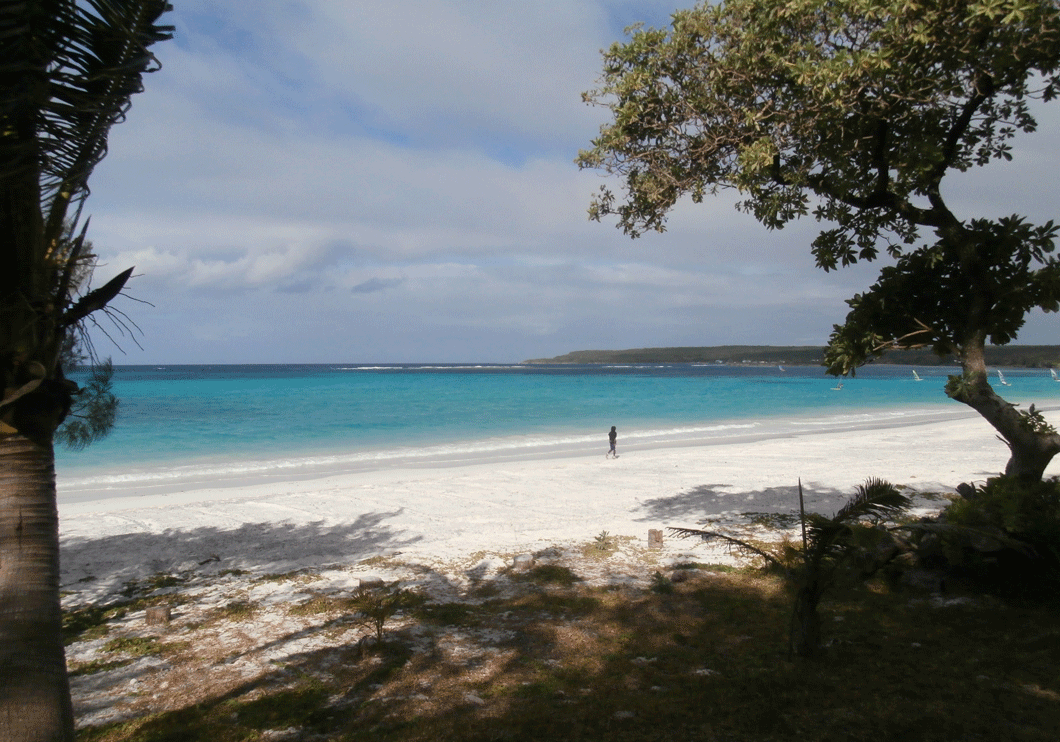
We also flew to two offshore islands in the Loyalty Island group. The first Ouvea, hosts a single endemic, Ouvea Horned Parrakeet, which I managed to photograph but rather poorly. Instead, here is a shot of one of Ouvea’s beautiful beaches.
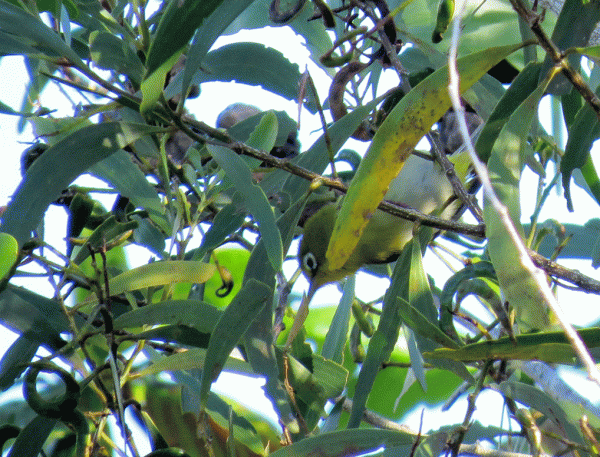
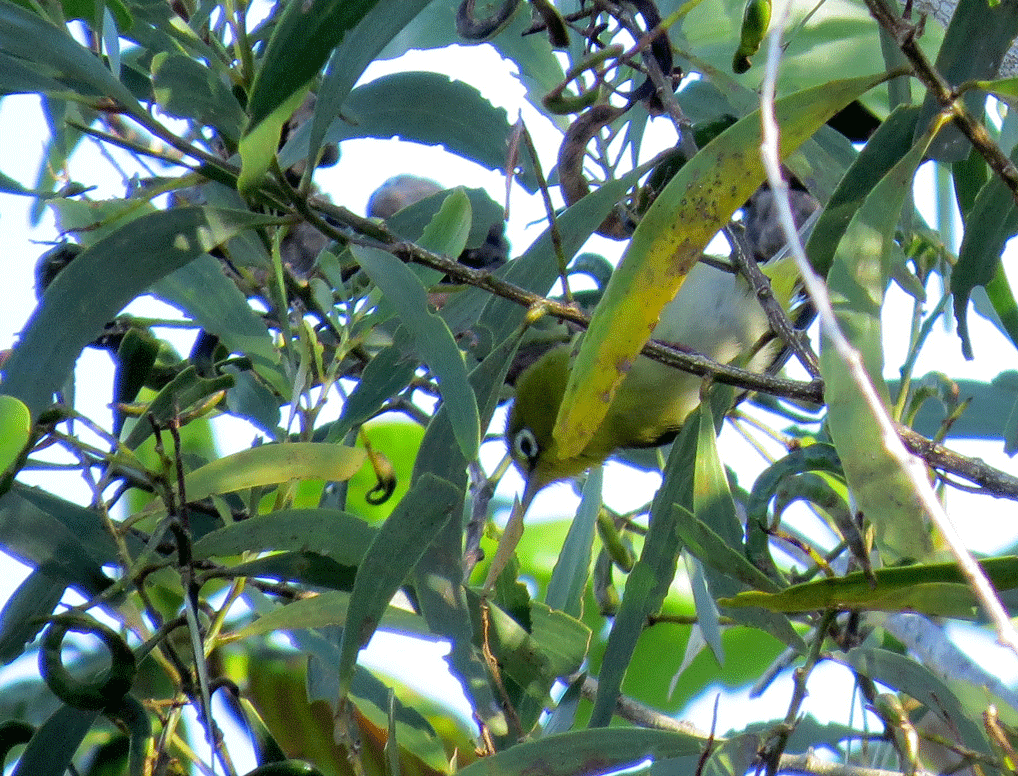
Flight timings meant we had to stay overnight on the island of Lifou. There are two endemics, the imaginatively named Small Lifou White-eye and the Large Lifou White-eye. The former, pictured above, is a typical Zosterops White-eye but the latter is larger, darker with a whopping bill, is much more elusive and has no ‘white eye’.
-22.275800
166.458000
My friends at the Sound Approach have made a stunning discovery, a species of owl new to science in Oman.
We were told about this at a pub meeting on 24th of September but sworn to secrecy. The news has been released today.
omani-owl-diary-of-discovery
Postcript
Full description
http://soundapproach.co.uk/sites/default/files/Owl%20pdf.pdf
As I have traveled the world in search of new birds I have, of course, visited a good number of countries. Of course large species rich countries like Australia, Indonesia, China or the USA require multiple visits to see their avifauna, but slowly the number of countries visited has risen until it now stands at exactly 100. I haven’t, with one or two recent exceptions (Croatia and San Marino), adjusted my travel plans merely to add a new country to my list.
Just as it can be difficult to exactly define exactly which birds constitute a species, it can be difficult to define exactly what a country is. Clearly France, USA or the United Kingdom fit the criteria but what about New Caledonia (a French Overseas Country), Guam (United States Unincorporated Territory), Gibraltar (United Kingdom Overseas Territory), Jersey (United Kingdom Crown Dependency) or Wales (a country incorporated within the United Kingdom). I have decided to follow the list of countries and territories published in the Times Concise Atlas of the World with two exceptions, Hong Kong which was a UK Overseas Territory when I first visited but is now part of China and Antarctica, which according to the Antarctic Treaty of 1959 does not belong to any state and territorial claims are held in abeyance.
I have not included countries where I have only been to the airport in transit to somewhere else (these include Bangladesh, Greece, Malawi, Martinique, Qatar, Pakistan, Singapore, United Arab Emirates and Zambia) but do include Haiti and Botswana where I have briefly crossed the border without transiting a recognised border post. The list includes the semi-autonomous Palestinian West Bank but excludes the disputed area of Northern Cyprus.
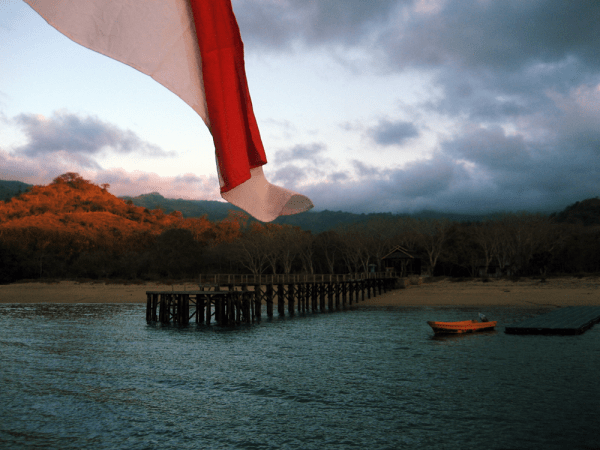
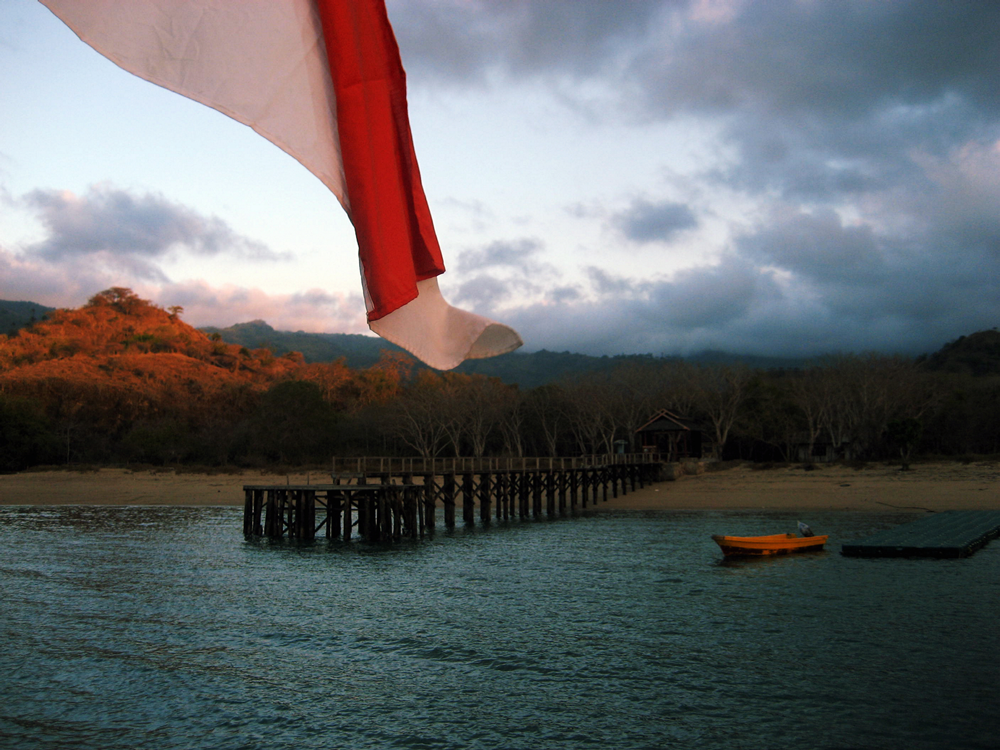
Number 46: The Indonesia flag flies from the boat that I took to the island of Komodo in 2006.
| 1 |
UK |
| 2 |
Guernsey |
| 3 |
France |
| 4 |
Ireland |
| 5 |
Italy |
| 6 |
Vatican |
| 7 |
Romania |
| 8 |
Holland |
| 9 |
Germany |
| 10 |
Austria |
| 11 |
Lichtenstein |
| 12 |
Switzerland |
| 13 |
Luxembourg |
| 14 |
Belgium |
| 15 |
Morocco |
| 16 |
Gibralter |
| 17 |
Faeroes |
| 18 |
Norway |
| 19 |
Spain |
| 20 |
USA |
| 21 |
Costa Rica |
| 22 |
Israel |
| 23 |
Thailand |
| 24 |
Gambia |
| 25 |
Malaysia |
| 26 |
India |
| 27 |
Kenya |
| 28 |
Poland |
| 29 |
Venezuela |
| 30 |
Finland |
| 31 |
Ethiopia |
| 32 |
Peru |
| 33 |
Canada |
| 34 |
Philippines |
| 35 |
Namibia |
| 36 |
South Africa |
| 37 |
Mexico |
| 38 |
Madagascar |
| 39 |
Cameroon |
| 40 |
China |
| 41 |
Hong Kong |
| 42 |
Russia |
| 43 |
Australia |
| 44 |
Ecuador |
| 45 |
Cyprus |
| 46 |
Indonesia |
| 47 |
Cuba |
| 48 |
Bulgaria |
| 49 |
Cook Islands |
| 50 |
French Polynesia |
| 51 |
Argentina |
| 52 |
Tanzania |
| 53 |
Slovakia |
| 54 |
Hungary |
| 55 |
Falklands |
| 56 |
Antarctica |
| 57 |
Jamaica |
| 58 |
Dominican Republic |
| 59 |
Haiti |
| 60 |
Puerto Rico |
| 61 |
Turkey |
| 62 |
Japan |
| 63 |
Egypt |
| 64 |
Portugal |
| 65 |
Bolivia |
| 66 |
Bhutan |
| 67 |
Iceland |
| 68 |
Greenland |
| 69 |
Papua New Guinea |
| 70 |
Brazil |
| 71 |
Sri Lanka |
| 72 |
Sweden |
| 73 |
New Zealand |
| 74 |
Senegal |
| 75 |
Cambodia |
| 76 |
Andorra |
| 77 |
Uzbekistan |
| 78 |
Kazakhstan |
| 79 |
Colombia |
| 80 |
Slovenia |
| 81 |
Croatia |
| 82 |
Oman |
| 83 |
Bharain |
| 84 |
Cape Verde |
| 85 |
Botswana |
| 86 |
Yemen |
| 87 |
Sierra Leone |
| 88 |
Georgia |
| 89 |
Armenia |
| 90 |
Guam |
| 91 |
Northern Marianas |
| 92 |
Federated States of Micronesia |
| 93 |
Palau |
| 94 |
Jordan |
| 95 |
Palestine (West Bank) |
| 96 |
Uganda |
| 97 |
San Marino |
| 98 |
New Caledonia |
| 99 |
Vanuatu |
| 100 |
Fiji |

It’s a continent but not a country. Surely worth a tick on the country list!
I returned from Fiji late on the 21st after a journey that lasted 47 hours and involved five flights. Although I have returned from the Pacific on previous trips, I have never felt so jet lagged, probably exacerbated by a nasty cold I picked up on route. My body stayed on Fiji time (eleven hours out), I would fall asleep each afternoon and then not sleep at night!
In spite of this I managed to visit Durlston on the 23rd, 25th and 26th to continue our ringing program, with several of our group away at the moment, I wished to ensure the coverage was as full as possible. We ringed good numbers of birds on the first two dates but the latter was curtailed by increasing wind and rain.
Feeling it would be too windy to ring on the 28th, I visited Portland Bird Observatory. There were very few birds about, but it proved to be an excellent social event, a chance to catch up with news and views from many of the Portland regulars, most of whom I have not seen since the spring. Also there was a chance to browse the Ob’s extensive natural history book store and of course I bought a couple of books.
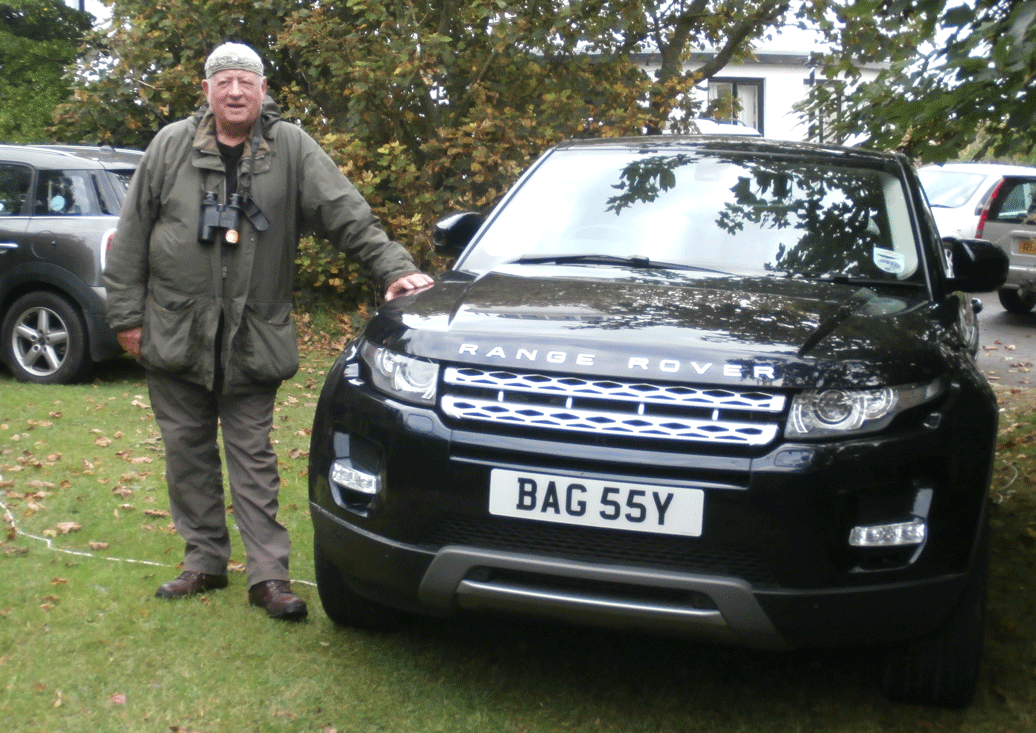
One birder I haven’t seen for ages (mainly because he has been abroad for much of the year) is Paul Baker, aka Bagsy. Paul manages to update his blog daily, something I would like to do but have failed miserably to achieve. See http://bagsy-thecaptainslog.blogspot.co.uk/

Bagsy poses with his eponymous new motor.
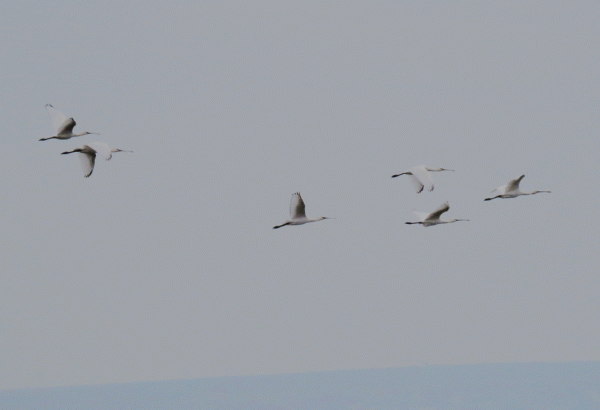
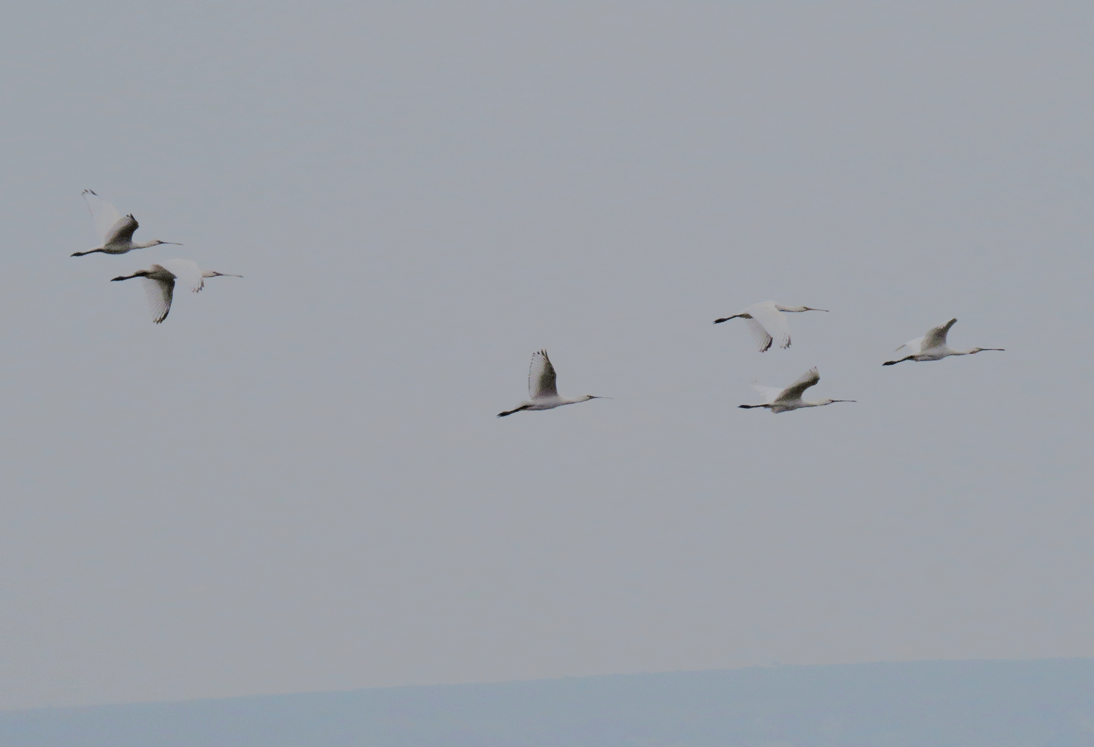
I had better luck birding at nearby Lodmoor, here six out of a flock of seven Spoonbills were photographed flying over the marsh.

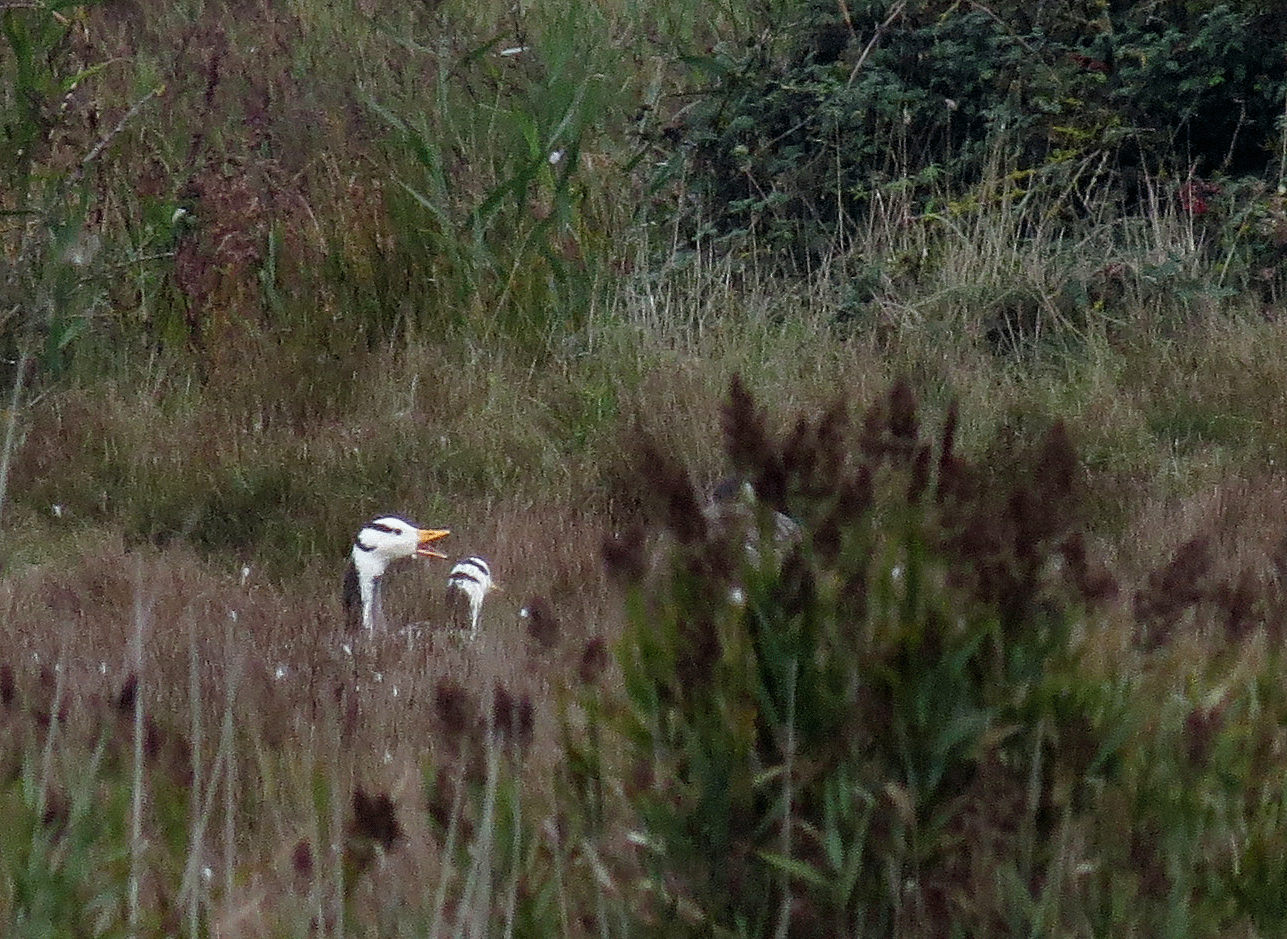
Birders at Lodmoor seemed just as interested in a pair of Bar-headed Geese out in the middle of the marsh. Although a long distance migrant (breeding in Tibet and wintering in India) the chances of them being genuine migrants are close to zero.
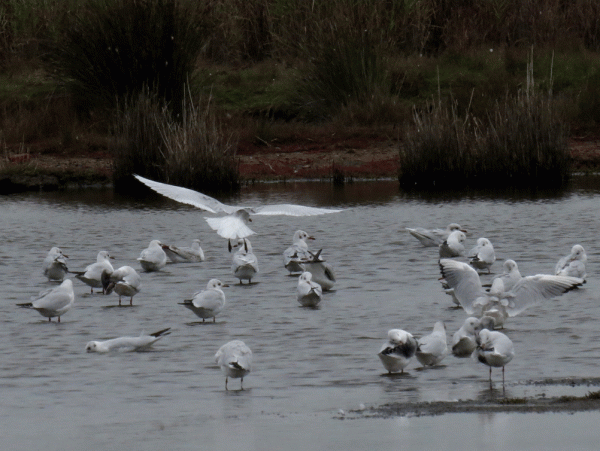
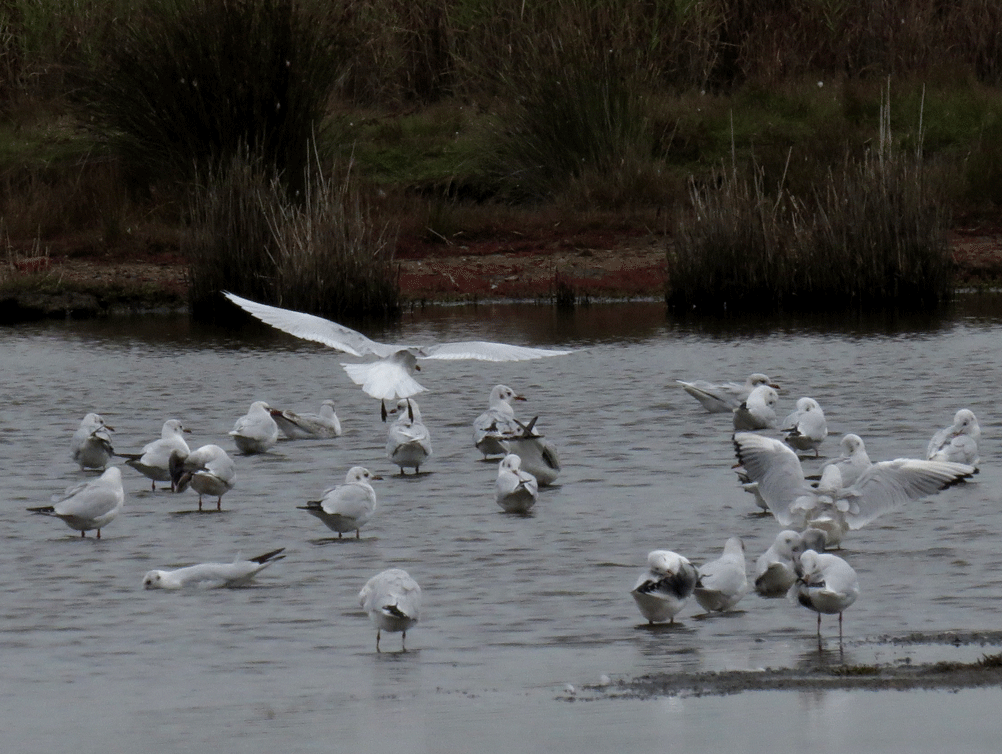
Up to 50 Mediterranean Gulls dropped in whilst I was at Lodmoor (at least four can be seen here with Black-headed Gulls). Once a scarce visitor to Dorset, now up to 100 pairs breed in the county and gatherings of up to 500 have been recorded in the Weymouth area.

A winter plumaged Grey Plover at Lodmoor.
On the 29th Paul, Ian A and I ringed at Fleets Lane in Poole. We ringed about 45 birds. At this time of year most warblers have left with two exceptions, Chiffchaff and Blackcap. Unlike most migrant warblers that winter south of the Sahara, the majority of Blackcaps and Chiffchaffs winter in north Africa and the Mediterranean. Some over winter in the UK but these are thought (at least in the case of Blackcaps) to be birds from Europe rather than European breeders.
September ended with a very busy morning at Durlston. On a grey and misty morning, Chiffchaffs and Blackcaps just poured through the garden. As always, we had to manage our operation to cope with large numbers and had to close some nets. By midday we had ringed 225 birds, all but 17 being the of two species mentioned above. Also there were large numbers of Swallows and Meadow Pipits moving overhead, involving thousands of birds. Durlston has to be one of the best places in the UK to see the spectacle of autumn migration.

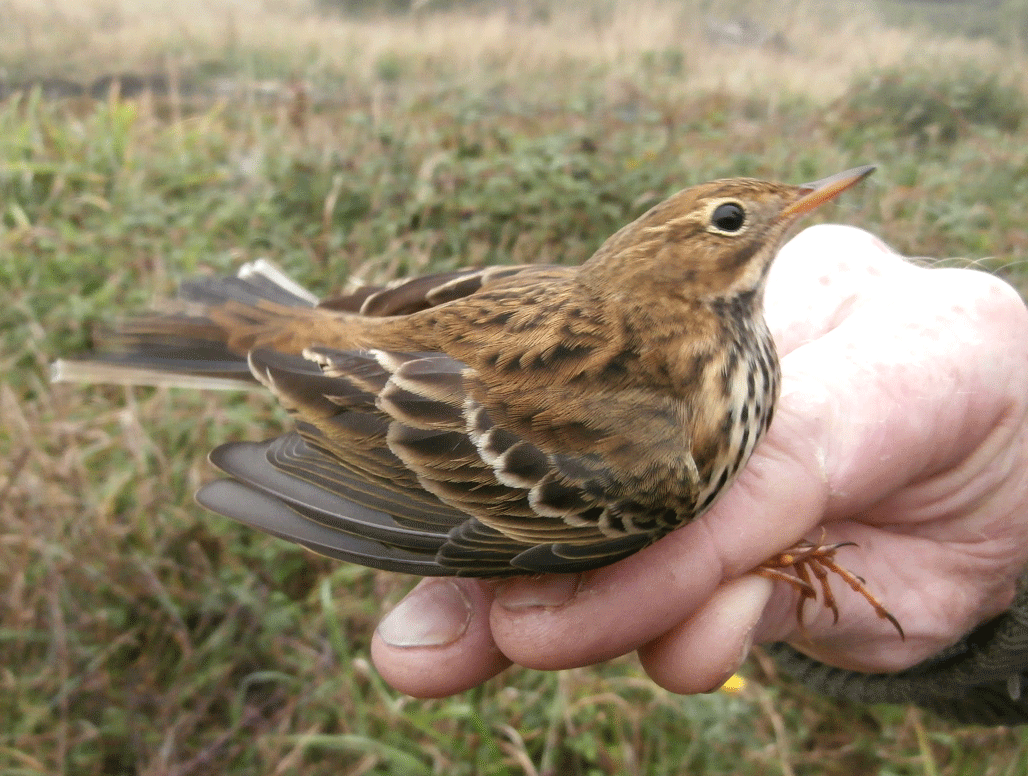
A small number of Meadow Pipits were ringed. The photo shows the very long tertials that completely cover the primaries on the folded wing.
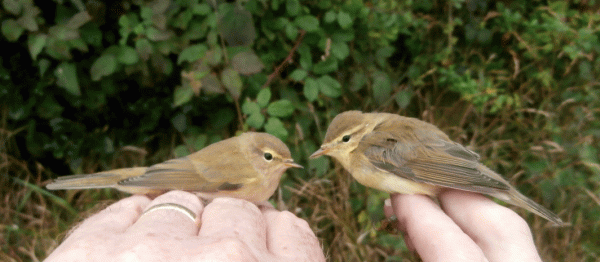
At this time of year Chiffchaffs have replaced Willow Warblers as the commonest Phylloscopus warbler. We trapped a single Willow today compared with 77 Chiffs. Although superficially similar, Chiffchaff (left) is slightly smaller, has a shorter supercilium, shorter primary extension, browner flanks and has a more rounded crown.
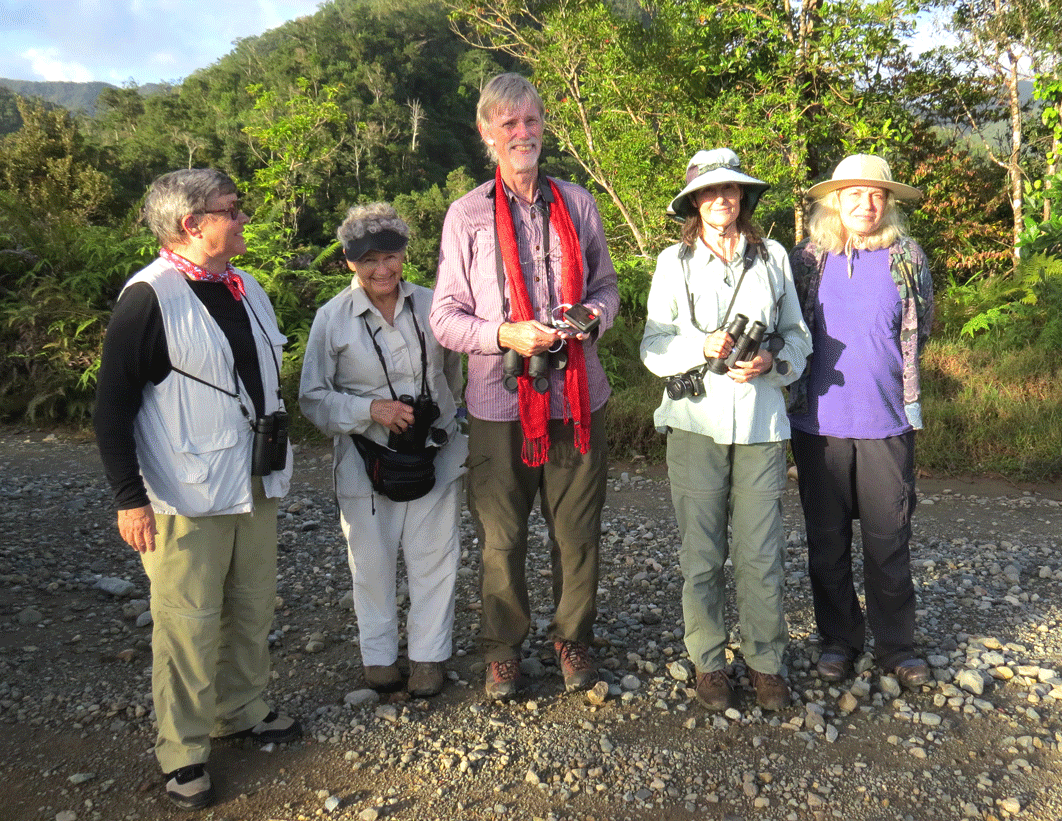
The trip to the South Pacific is nearing the end and I’ll be home at the weekend. As my usual tour company Birdquest were not running a tour to the South Pacific this year I booked with an American company Field Guides. As two of guys on this tour (including the person I was going to share with) has to cancel for personal reasons, I ended up with a tour that comprised of the leader Phil Gregory, four American ladies and me.

Phil’s angels. L-R: Ellen, Terry, Phil, Valerie and Eva.
We started the tour on the French island of New Caledonia. Here we birded mainly in the forests of the Riviere Bleu National Park, but also on two offshore islands Ouvea and Lifou.
We managed to see all the endemic birds but one, the very elusive grassbird. In particular we had fantastic views of the bizarre Kagu along with 27 other endemic/near endemic species.

The Kagu is real relict, the Coelocanth of the bird world, It appears to have remained unchanged on the island of New Caledonia and has remained unchanged for millions of years.
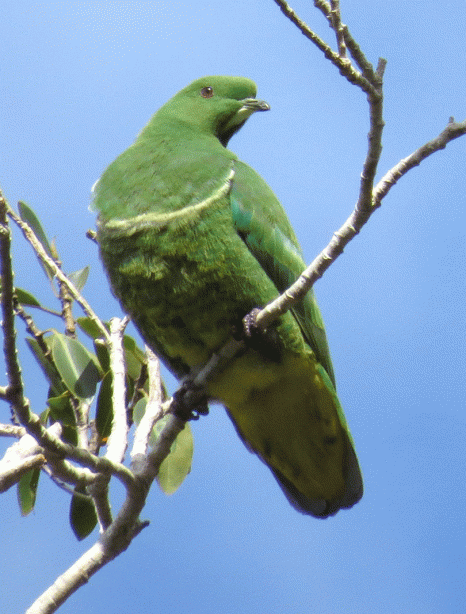
Elsewhere on the island we saw the wonderful Cloven-feathered Dove
Later we visited two islands in the archipelago of Vanuatu, with most of the time spent on Espirito Santo. Many of the endemics are found on the very hard to access highlands, which are effectively out of reach to all but mountaineers. but we found the five lowland endemics after a bit of work.

As well as birds endemic to Vanuatu we saw some regional endemics such as this South Melanesian Cuckooshrike
On Fiji we first visited the main island of Viti Levu where we found a wonderful series of endemic birds, Later we moved to the small island of Taveuni where we saw the legendary Silktail, a bizarre and elusive bird of uncertain affinities, but which probably belongs in its own family. We also saw the gorgeous Golden Dove.

Like the Kagu, the Silktail is another ancient relict. Confined to a couple of islands in Fiji, its nearest relative seems to be a the Papuan Drongo, which isn’t a drongo at all. It took a bit of bashing around in dense undergrowth to see this elusive bird, but it was well worth it.

The Orange Dove, another Fijian endemic. Can you imagine a more absurd colour scheme for a pigeon?
We have one final island to visit, Kadavu, to the south of Viti Levu, before we make the long way home. I am currently staying within a few feet of the 180 degree longitude, so I could hardly be any further from home if I wanted to.
I will update the blog with a fuller account of the trip and lots more photos of this seldom visited, (at least by British birders) region of the world when I get home.
One of the big problems with travel is the amount of time you spend doing absolutely nothing. Of course there are books to read, movies to watch and music to listen to on long plane journeys, but the reality is you are too knackered to really enjoy those things and too uncomfortable to get a decent kip.
I am on my way to New Caledonia, a French overseas territory in the Pacific. I left home before 1400 on the 2nd, took a bus to Heathrow which was delayed due to a problem with the aircon. At the airport I found I couldn’t board the plane to Sydney because I didn’t have a visa. But I protested ‘I’m not going to Australia, I’m staying in transit’. It transpired that because I was more than eight hours in transit I would have to pay £40 for a visa, although I could have got it for free if I had done it on line earlier. Nice of the travel agency to let me know! Anyway an hour later it was sorted and I could check in.
Seven hours later the plane stopped at Dubai where we all had to disembark. Once back on board we were told there was a problem with the aircon (what else?) Two hours later we were off and 14 hours after that I was in Sydney. Now due to the delay I didn’t have to wait more than eight hours for my connection so I wouldn’t have needed a visa after all (but I can’t get a refund). Oh the joys of travel, but as they say you can’t make an omelette without cracking an egg.
Its now 1000 on the 4th of September on a beautiful morning in Sydney (whatever happened to the 3rd of September) and in the afternoon I fly to Noumea, the capital of New Caledonia. As there were no British bird tour group going to this region in 2013, I have joined an American outfit, Field Guides and this is my first trip with them. The main reason for visiting New Caledonia is to see the Kagu, a chicken sized bird found only there that has such an ancient ancestry that it has no close relatives and is placed in a family of its own.
After visiting New Caledonia we travel on to the island groups of Vanuatu and Fiji for more gripping birds. It is very unlikely I will get either wi-fi or spare time once there so I will probably not be able to post updates until I return.

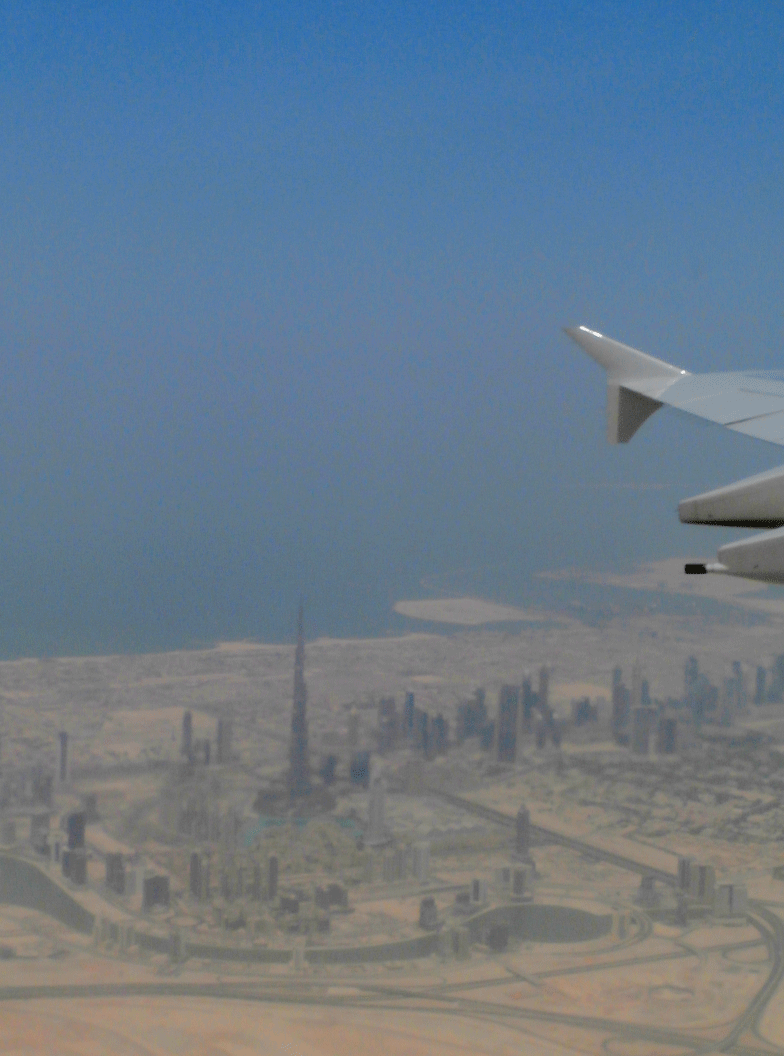
As we left Dubai there was a good view of the Burg Khalifa, at 830m the tallest building in the world. Desert haze and thick glass have reduced the image quality.
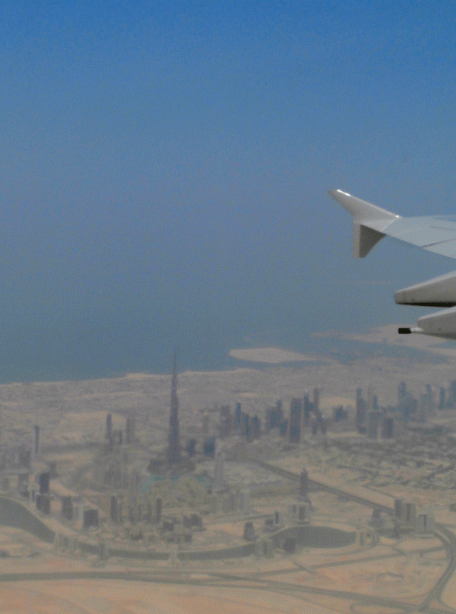
Another view of the Dubai skyline with the Arabian Gulf behind.

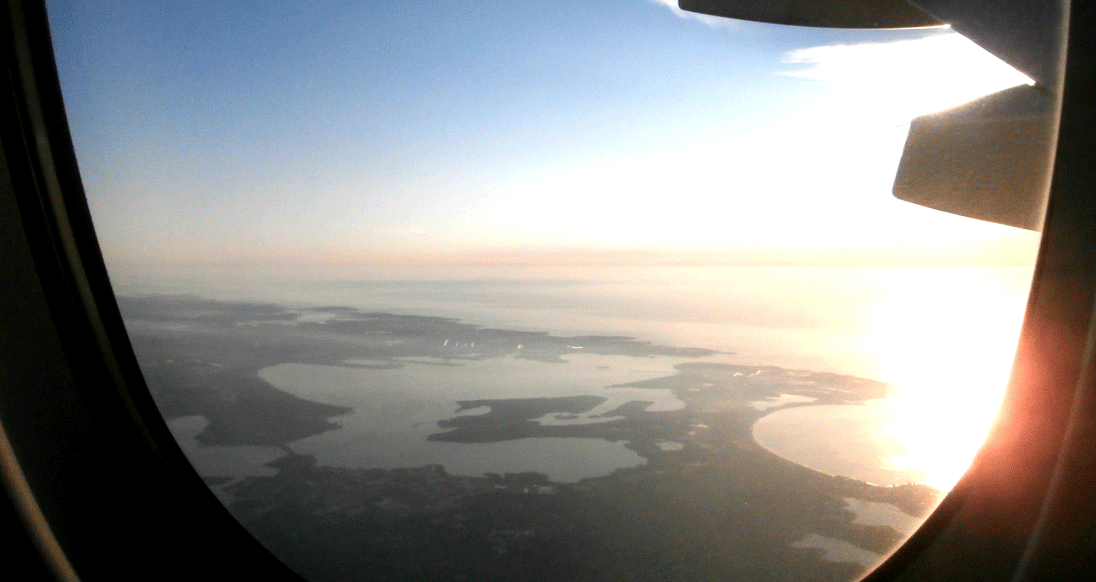
Approaching Sydney Harbour. The famous bridge can just be see in the lower left of the picture, whilst the sun is reflecting off Bondi Beach to the right.
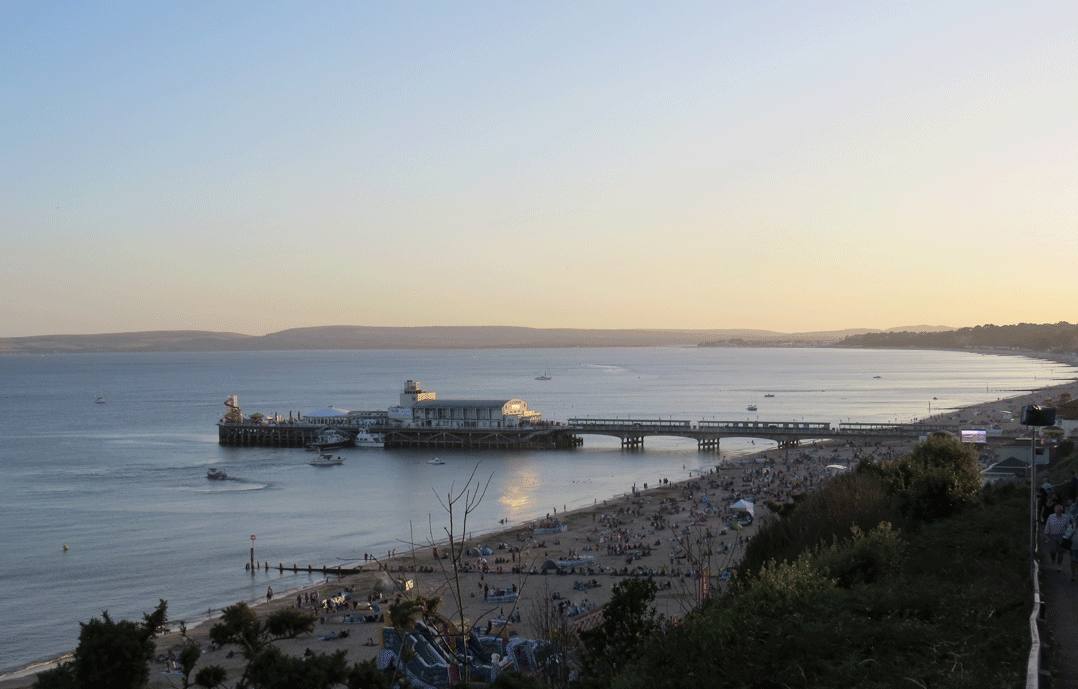
The Bournemouth Airshow has been running at the end of the summer for several years now but we have never been over to see the displays. This year we joined John, Anita and Kara on Saturday evening on the overcliff.
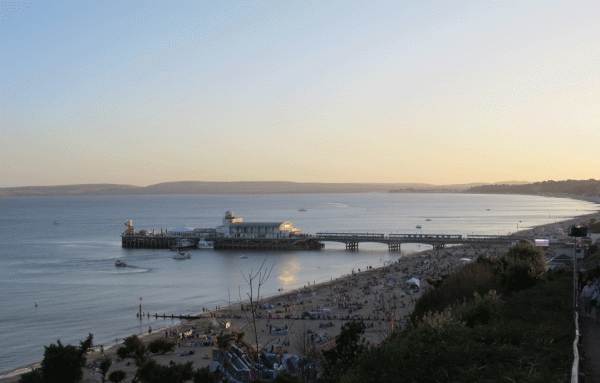
It was a wonderful evening with the setting sun illuminating the beach and the display aircraft with a soft light.
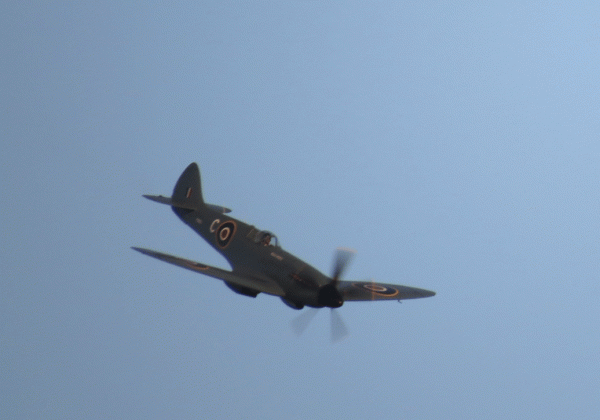
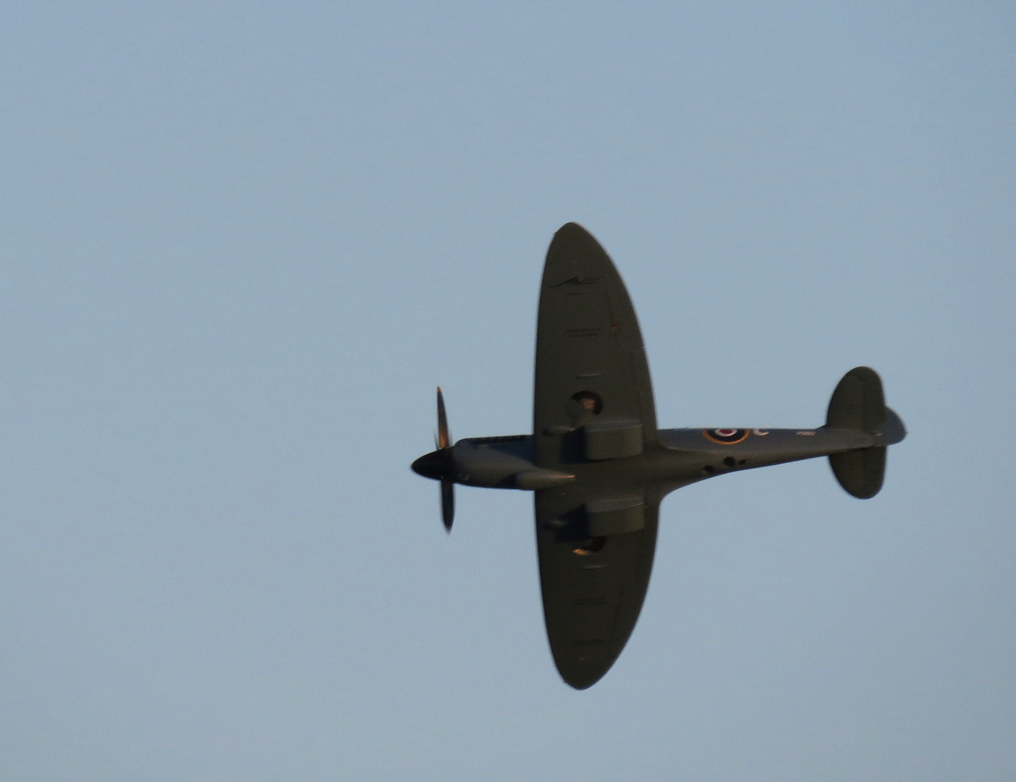
One of the highlights was the Spitfire Mk19, one of the few Spitfires that are still airworthy

. I tried to explain to Kara why this plane is held in such esteem in the UK by saying’that if it wasn’t for the Spitfire we’d all be speaking German now’.
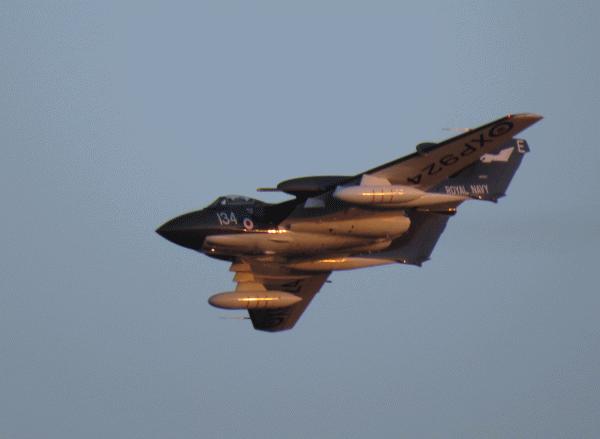
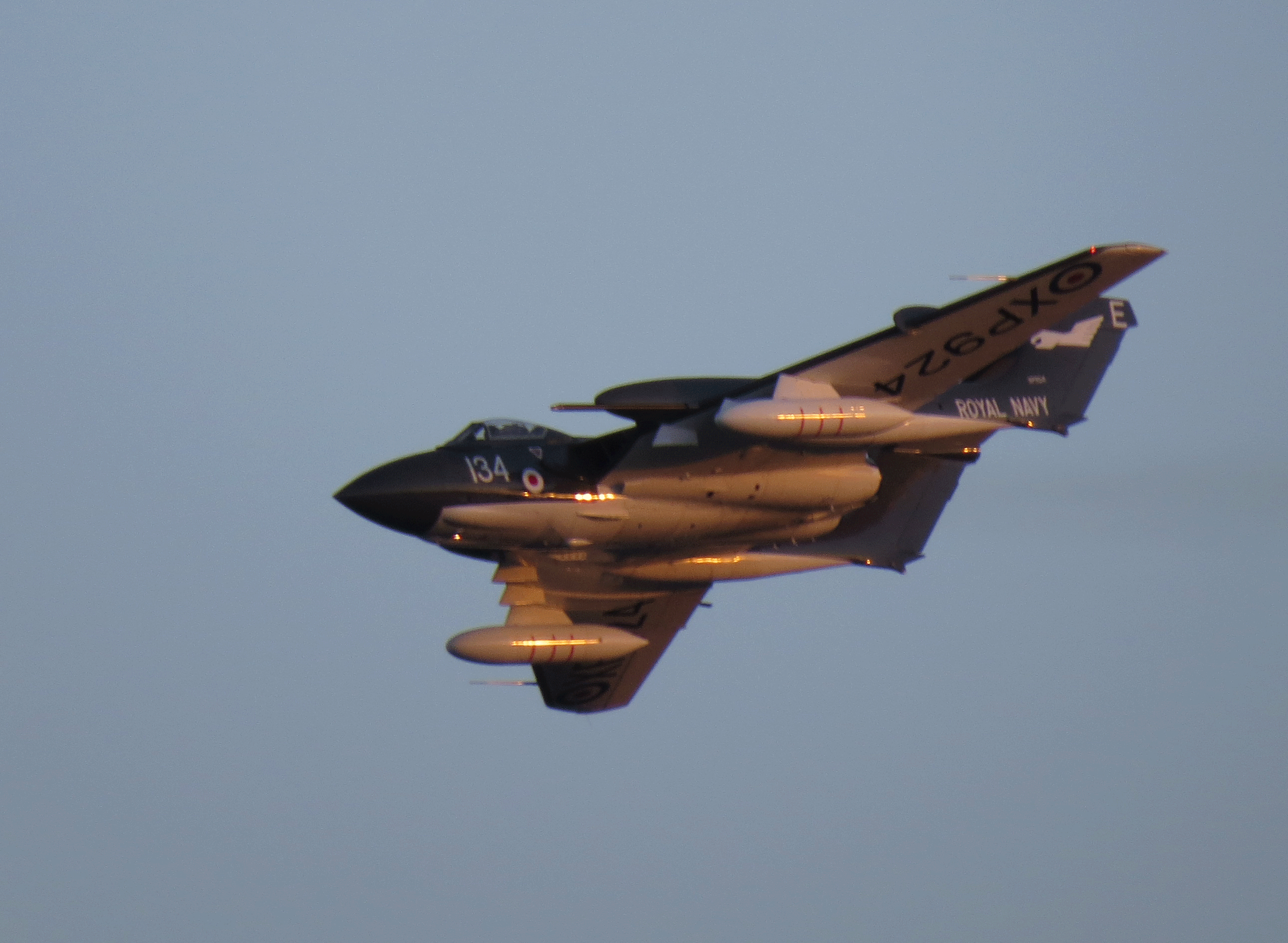
Later there was a fly-by by this very impressive Sea Vixen. Unfortunately at this point my camera battery died and I’d forgotten to bring a spare, so the dramatic sight of planes doing aerobatics with fireworks shooting from the wing went unrecorded.

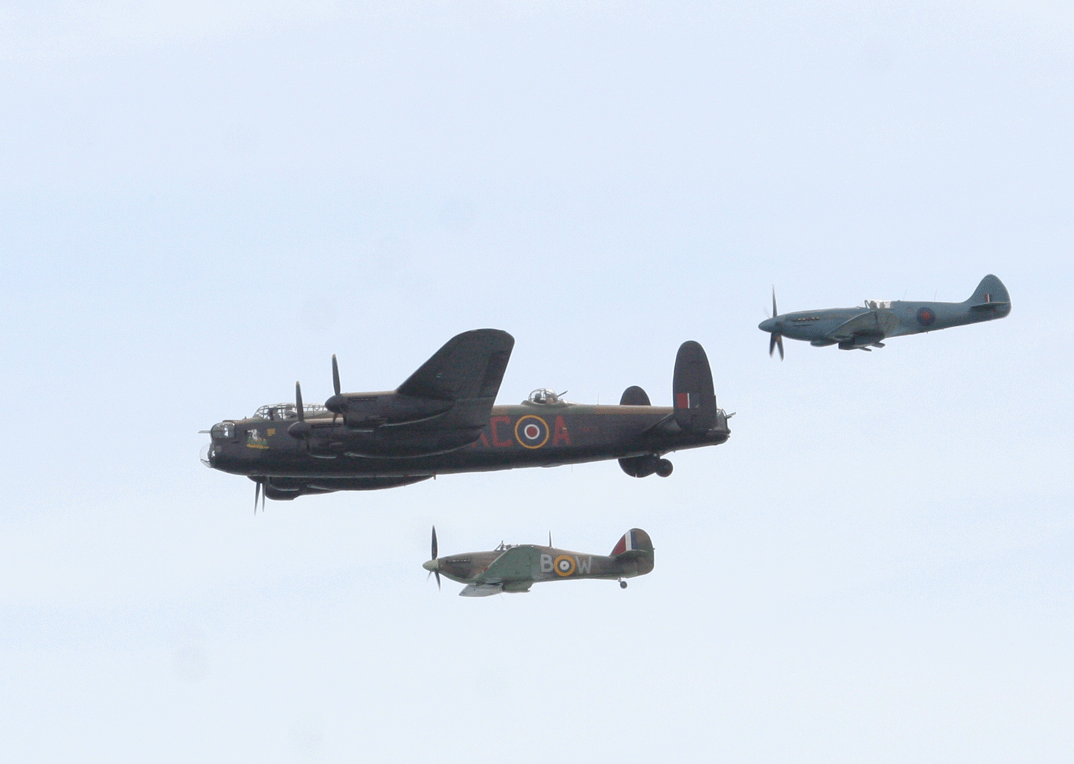
I returned on Sunday afternoon just in time to see the Battle of Britain fly past. The sight of three iconic aircraft, the Spitfire and Hurricane fighters and the Lancaster bomber in the air together was really impressive. Unfortunately the sun was now in our eyes, producing rather washed out pics.
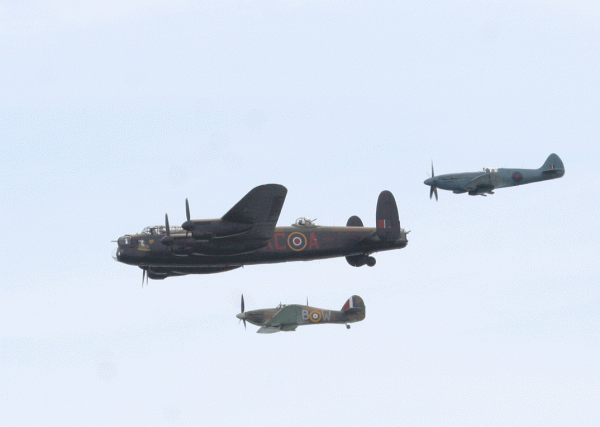
I wish my father could have seen this fly-by, he served in the RAF from 1939 – 1945.
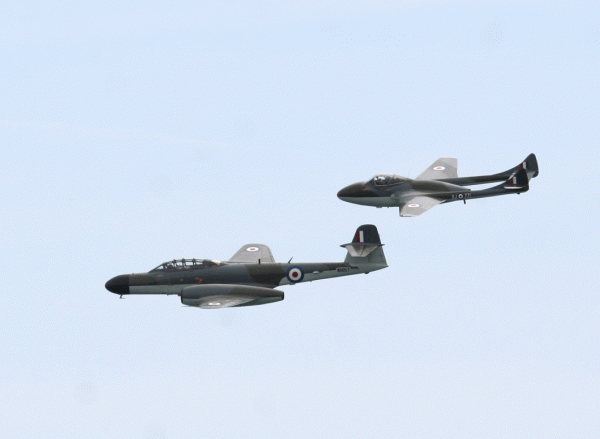
Next up was the Meteor and Vampire, early jet fighters from the late 40’s and 50’s
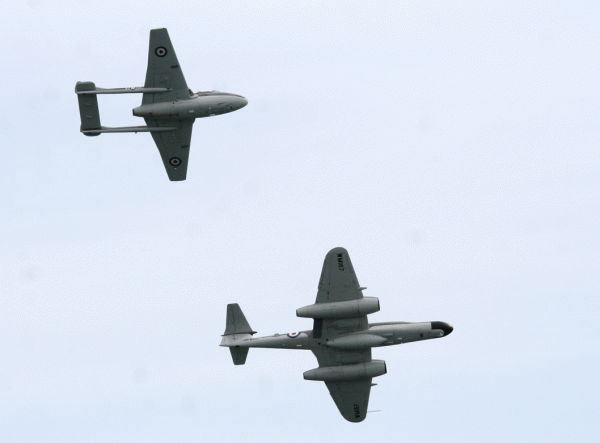
It costs a lot of money and the dedicated attention of many enthusiast to keep these old planes airworthy. I wonder if there is any chance of seeing an original Sopwith Camel at an airshow?

There was a great aerobatic display from the Blades but unfortunately we heard that the highlight of the afternoon the enormous Vullcan had gone ‘technical’ and would be unable to fly.
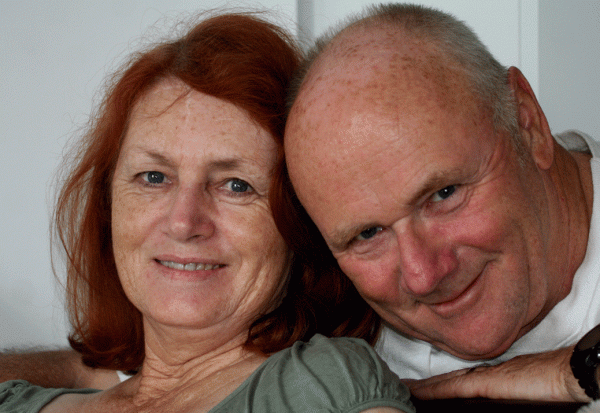
We that’s all from us for a week or two, I’m off on my travels again. I’ll update you when I return.
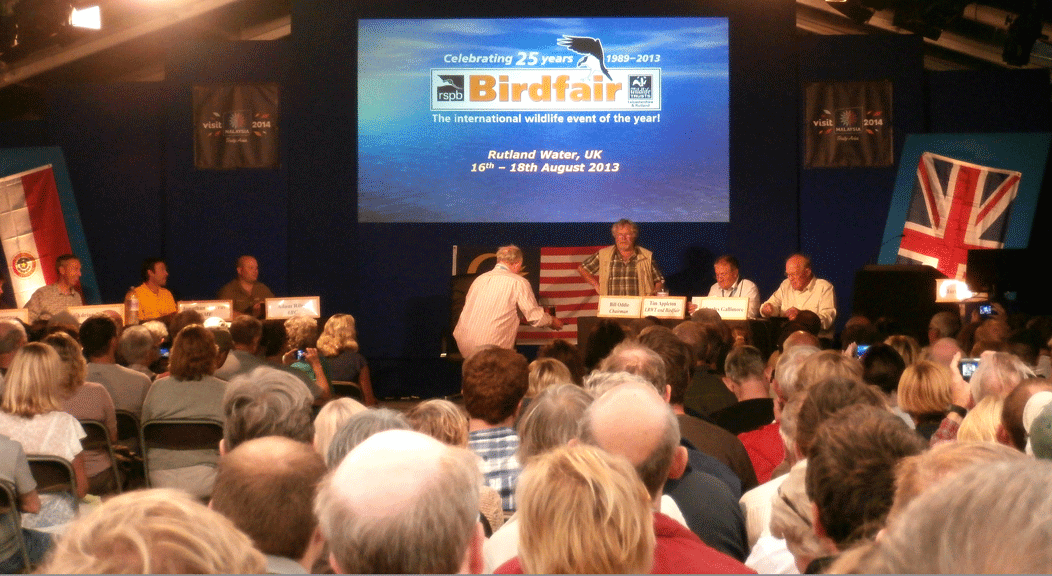
Most years we go to the British Birdfair which is held the weekend before the August Bank Holiday at Rutland Water. This event has been described as the birders Glastonbury and certainly represents every aspect of the birding scene. Conservation bodies, bird tour companies, regional bird clubs, tourist agencies from countries all over the world, natural history book sellers, outdoor clothing, camera and optic manufacturers and wildlife artists all vie for your attention. The Birdfair, now in its 25th year, attracts tens of thousands and has raised over £2,000,000 for Birdlife International’s conservation programs.
I have said repeatedly that there is too much to do on a single day and we really ought to go for two. This year at least we drove up on the Friday night and stayed at nearby Market Harborough and so were there for the start at 0900. One of the most entertaining sessions was the Birdfair’s answer to the BBC’s Mastermind. The BBC’s version fits comfortably into a half an hour slot, but chairman Bill Oddie ad-libbed so much with both the questions and answers, that it took nearly an hour!
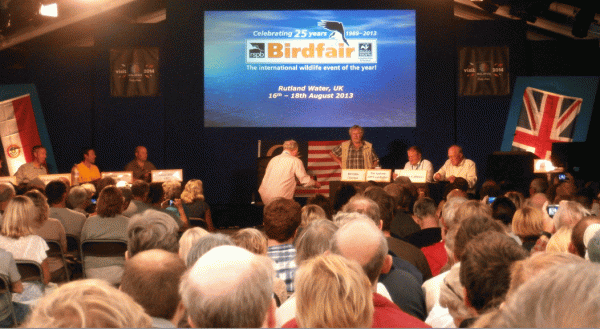
Bill Oddie warmly welcomes the guy with the beers. Bill said that he was surprised that this was the 25th anniversary of the Birdfair as he had been coming for at least 30 years and wondered what he did for the first five!

In most years after the Birdfair we continue on to Duffield, to the north of Derby to see my brother and family. This usually coincides with my niece Miriam’s birthday, who is 17 this year. One, of her friends had given her this huge cuddly monkey as a present.

Her sister Jennifer also poses with the giant monkey.
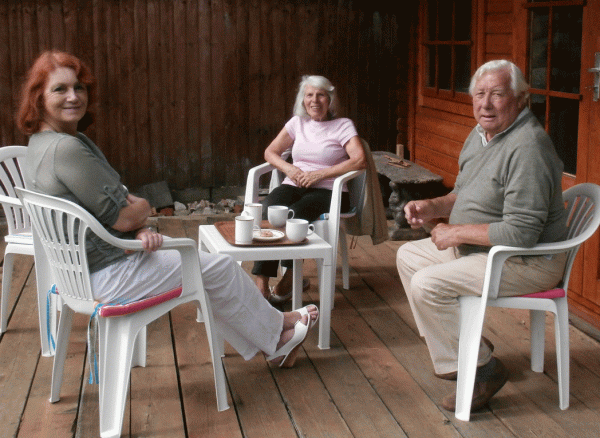
Whilst in the Derby area we always make a point of visiting Dennis and Ida, my sister-in-law Viv’s parents. They have known each other for 78 years as they were next door neighbours as children. They both have a great sense of humour and are great fun to chat to.

On Sunday afternoon we popped down to a newly establish local nature reserve. We didn’t see much of note, but that’s not the point. Small nature reserves like this form a chain of wildlife habitats all across the country preventing wildlife becoming isolated in ‘islands’ and are to be warmly welcomed.

On Friday 23rd we went over to Bournemouth to have a drink with John and Anita and found out that Kara was already there. What better place to have a pint then at BIC where we could again watch the Friday night fireworks.

We hardly ever went to Bournemouth before John and Anita moved there, but now we seem to go several times a week. On Sunday 25th we went back to the pier approach along with their friends Ken and Pam. L-R at the back: Amber, me, Kara, Anita, Janis, John, Ken and Margaret and Pam at the front.
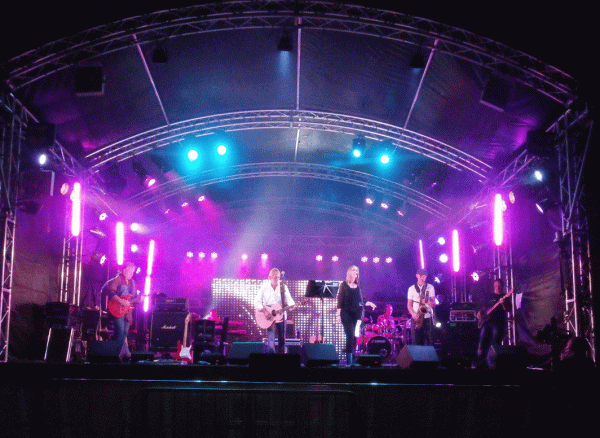
The pier approach area often has free bands playing and on this occasion it was the excellent Perfect Alibi, a Pink Floyd tribute band. Earlier on they played some of the longer and less well numbers like ‘Pigs’ from Animals and Margaret, Anita and Kara decided it wasn’t from them and headed back to the flat, but later on they performed perfect renditions of various numbers from ‘Dark Side of the Moon’ and ‘The Wall’ and ended up with a fantastic version of ‘Another Brick in the Wall’

On Bank Holiday Monday we made our annual (or near annual) visit to the beach. It was suitably hot but the sea was still cold and I didn’t go in past my knees. The beach was very crowded at the car park end but a couple of hundred yards further on there was plenty of space.
That evening we returned to Bournemouth once more to see Leonard Cohen perform at the BIC. Cohen’s music is much like Marmite , you either love it or hate it or rather you either get it or you don’t. His gruff vocals set off by the beautiful voices of the backing singers and accompanied by some exceptional musicians are spell binding, but it is the lyrics that make his songs so special. If you can be bothered to carefully listen to the moving, often introspective, lyrics that encompass religion, mythology, love and sex, yet which sometimes reveal a harder, cynical edge, then you may understand why we love his music.
At the age of almost 79 he can still fill large venues and it was a sell out at the BIC. We ended up with seats at the back and the photos were taken with my pocket camera so are of low quality.

Leonard Cohen in concert. Photo from the internet.

On this tour the saxophonist has been replaced by a virtuoso violin player which give the songs more of a ‘gypsy’ feel. To the left are the lovely singers, Hattie and Charlie Webb and Sharon Robinson, each of whom took the lead vocal on a number of songs.

An resounding standing ovation from the delighted crowd. In all the years I have been attending music events I have seldom seen such a rapturous reception.
With the weather remaining largely settled and with autumn migration in full flow it made sense to spend as much time as possible over the last two weeks at our ringing sites.
Over the last two weeks I have been out ringing as follows:
19th Durlston, 20th Fleets Lane, 21st Fleets Lane, 22nd Durlston, 23rd Lytchett Bay, 25th Durlston, 27th Durlston, 28th Durlston, 30th Lytchett Bay, 31st intend to go to Durlston. As each session involves getting up between 0430 and 0500, the 24th, 26th and 29th involved well earned lie ins and catching up on other activities.
The ringing of (mainly) young birds in the autumn is important as a measure of the annual productivity and also sheds light on the movements and dispersal of birds in their first season. Ringing has shown that many adult birds migrate earlier than their offspring and move directly from their breeding to their wintering sites, so are less likely to be trapped at our coastal migration site at Durlston. On the other hand we have ringed many adult and young birds at Fleets Lane in Poole, many of the former are in full wing moult prior to migration, something we don’t see often at Durlston.
Of course ringing is all about discovering more about the population structure, life history and the movements of birds. Information on the former is obtained by statistical analysis and the results are not always immediately apparent to those in the field, however we regularly get retraps of birds we have previously ringed, for example the adult Green Woodpecker shown below was ringed in 2011 at the same site and from time to time we catch birds that others have ringed. We have have had five of these so called ‘controls’ during the last fortnight and eagerly await details of their origins. In addition we have recently been informed the BTO of a few recoveries, the best being a Cetti’s Warbler (a supposedly resident species) that moved from Lytchett to Norfolk and a Chiffchaff from Durlston to near Madrid.
Here is a selection of photos from the above sessions.
Our site at the ‘goat plots’ at Durlston is more sheltered in a brisk northerly, however birds move through very quickly and its all over within an hour of dawn.

Back in the ‘garden’ Mick and Mike try ‘flicking’ for Swallows, that is swinging a net into the path of Swallows that are drinking at the pond. Although an accepted technique they had zero success!

The best day of the last fortnight was the 27th at Durlston when we ringed 114 birds of 20 species. There were surprisingly large numbers of Tree Pipits about, we had at least 50 over the ringing station, whilst Hamish Murray recorded 75+ elsewhere in the park (some duplication may have occurred). We managed to ring a dozen of them, our best day ever for this regular, yet tricky to see well, trans-Saharan migrant.

On the 27th we also ringed our only Pied Flycatcher of the year. The shape of the white fringe on the tertials allows this bird to aged as a first year.
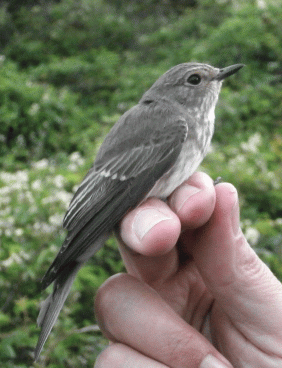
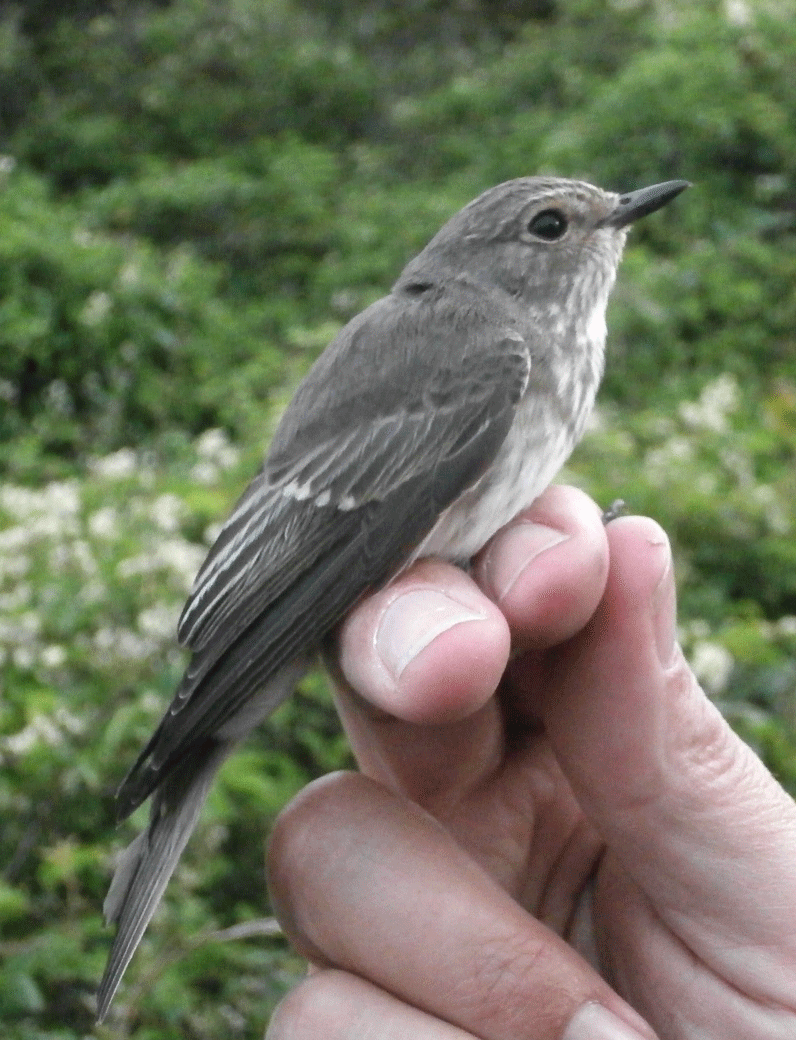
We don’t catch many flycatchers at our usual site as the nearby trees are too tall, so this Spotted Flycatcher was, like it’s black and white cousin, the first of the year.

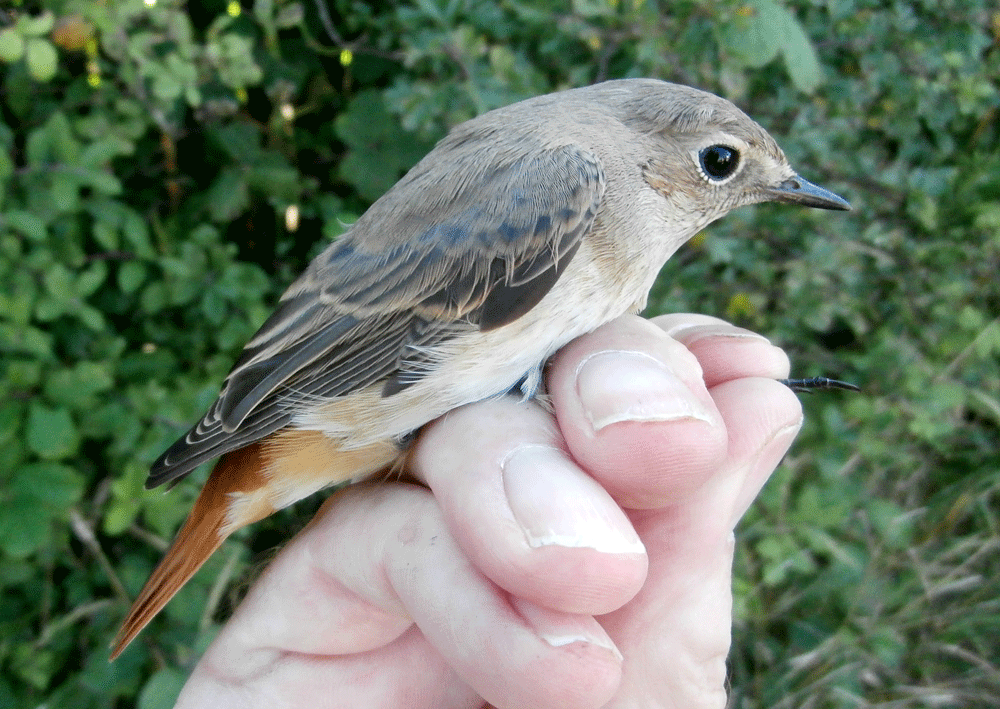
This was our 14th Common Redstart to be ringed this year. We haven’t had any recoveries/controls of this scarce migrant but it is likely that our birds originate in the sessile oak forests of Wales or south-western Scotland.
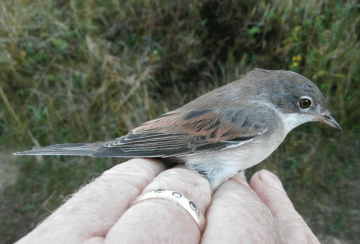
Common Whitethroats live up to their name at Durlston, being a regular breeder in some numbers. We have retrapped quite a number of birds over consecutive summers, showing site fidelity. The pale eye and (not visible in this shot) white rather than buff edges to the outer tail feathers show it to be an adult and the grey head indicates it is a male.

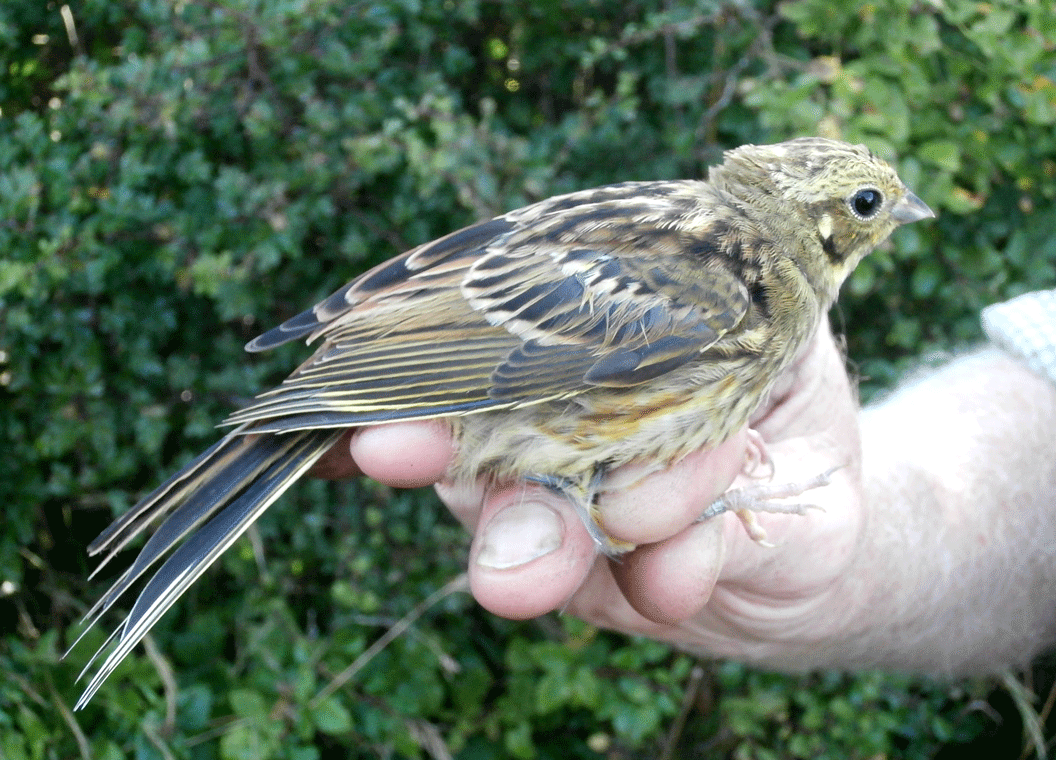
This juvenile Yellowhammer is quite unlike an adult, showing little more than a yellow tinge to the plumage.The white spot on the ear coverts becomes yellow in an adult female/winter male.
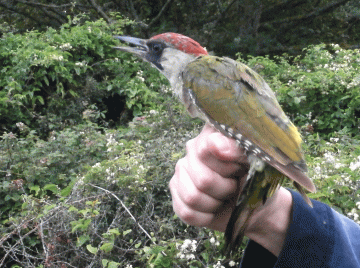
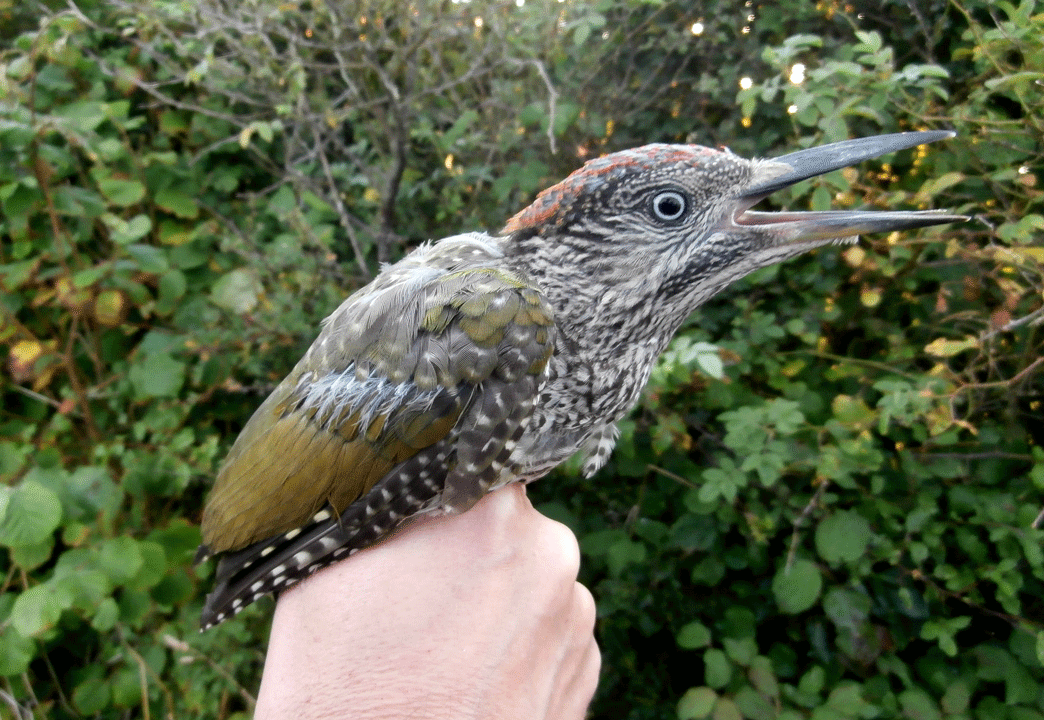
The lack of red in the centre of the black moustache shows that this Green Woodpecker is a female.

Two days later we caught her offspring. As in the adult bird above, the tail has been pressed against the ringers hand for support as if it was climbing a tree trunk.
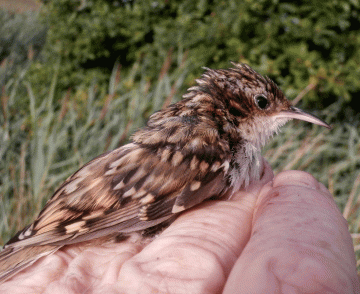
This juvenile Treecreeper was an unusual catch at Lytchett Bay.

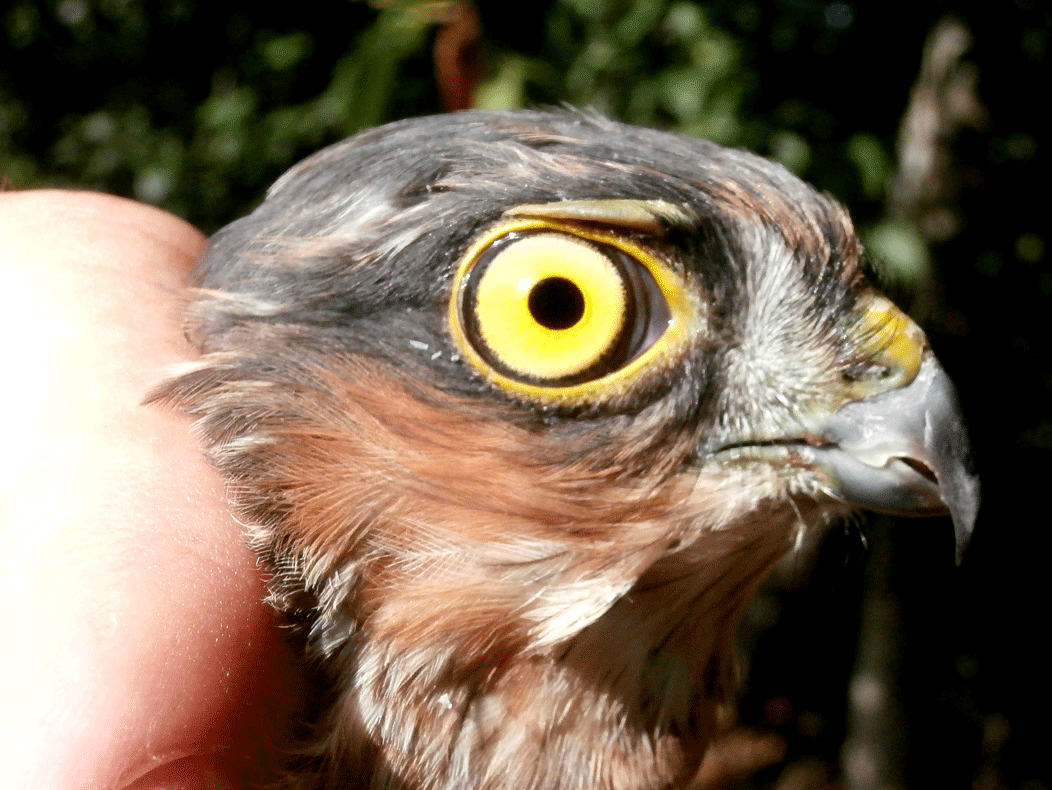
At Fleets Lane this male Sparrowhawk was an interesting capture. The yellow eye (orange in an adult), and active moult of the flight feathers whilst retaining some brown fringed juvenile feathers allowed us to confidently age it as a second year bird.
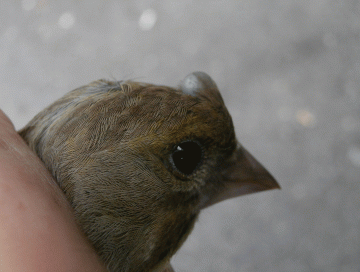
This juvenile Greenfinch has a large parasitic tick on its head.

This bird was a valuable object lesson to one of our trainees. The definitive way to separate Chiffchaff from Willow Warbler in the hand is the emargination (narrowing of the outer web towards the tip) of the 6th primary (counting downwards, ie ascendantly, and with the first primary being vestigial and hardly visible). This moulting adult appears to have a fresh 6th primary emerging from the sheath that is not emarginated making it a Willow. But it looked overall like a Chiff and the 3rd, 4th and 5th primary are of similar length, again typical of a Chiff. Close examination showed the 6th to be absent and the emergent feather was in fact the 7th primary, confirming it as a Chiff after all.



























 gryllosblog