Archive for the ‘Uncategorized’ Category
After some early morning ringing , on the 14th I went back to the lab for yet another leaving do. Natasha (Tash) Barrow was leaving to take up a teacher training post. She is about the 7th person to leave since I retired 15 months ago. Tash started in the lab in the 80s but moved to Southampton when the environmental work (foods and water microbiology) was transferred there. She later came back, working first in Biochem, then again with us. She has a wonderful sense of humour and a great taste in music, I’m sure my former colleagues will really miss her.

The lab staff and a few of us retired folks gathered in the pathology tea room to wish Tash well.

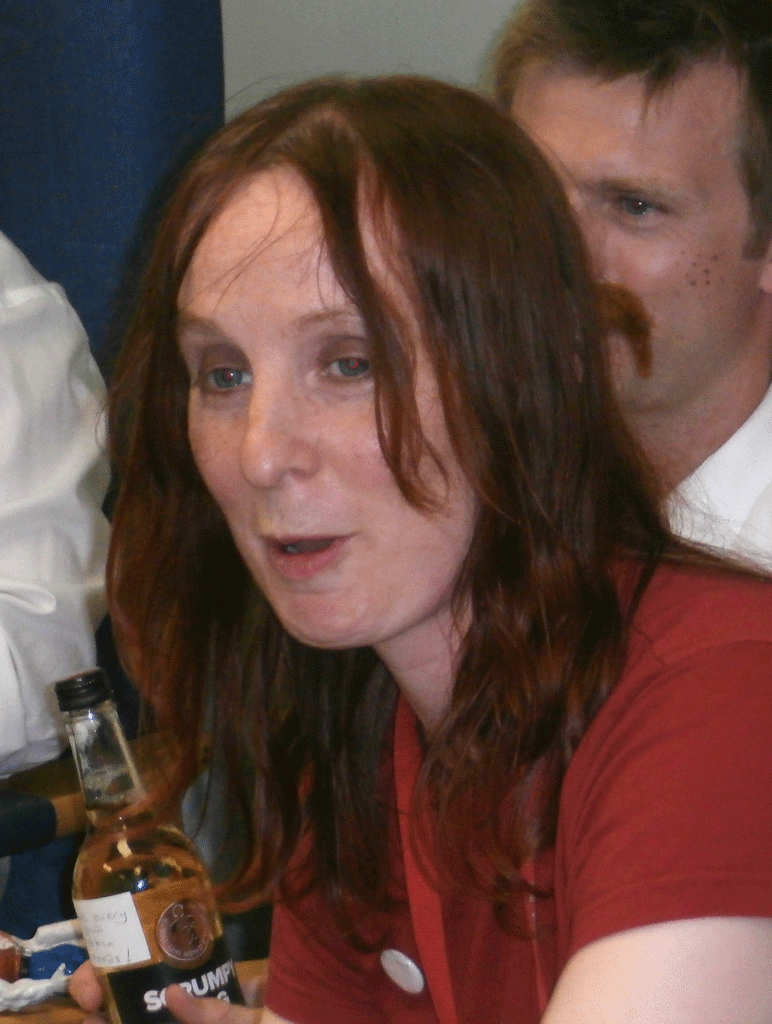
Tash expresses surprise as she unwraps her leaving presents.
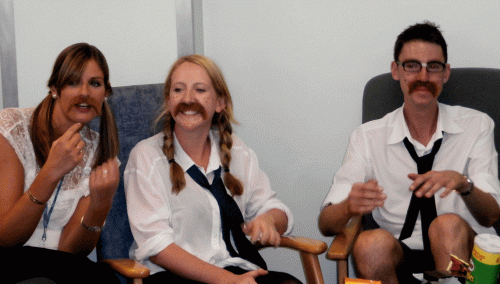
As Tash was leaving to become a teacher, a lot of the staff dressed up as school kids and wore a fake ‘tash’. L-R: Lisa, Polly and Dave.
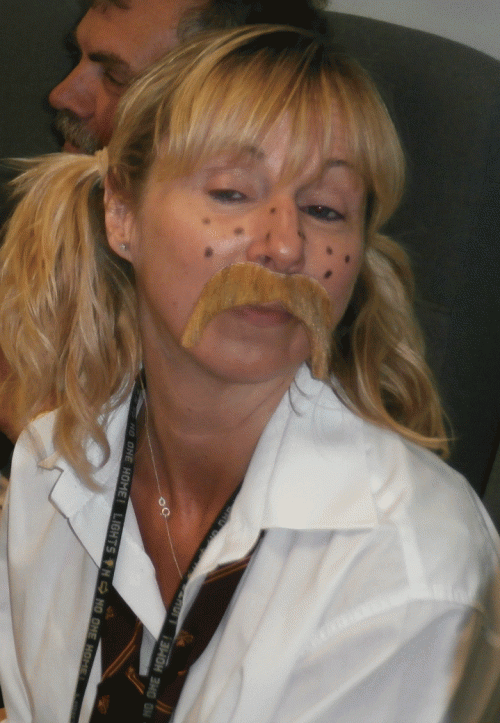
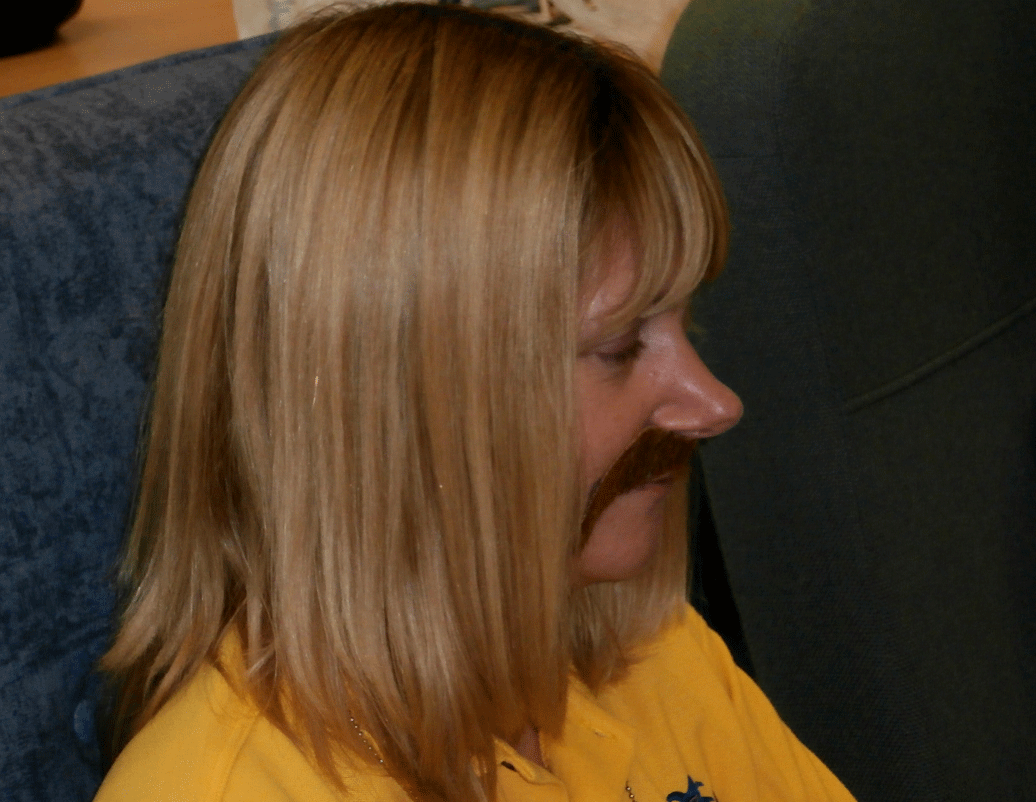
Sue displays an impressive tash ……

…. and Louise wears her school gym kit.
In the evening some of my ex-colleagues headed for the Bermuda Triangle at Ashley Cross for a farewell drink with Tash. I was up at 0530 that morning and planned to do the same again on Saturday, so we didn’t stay long.

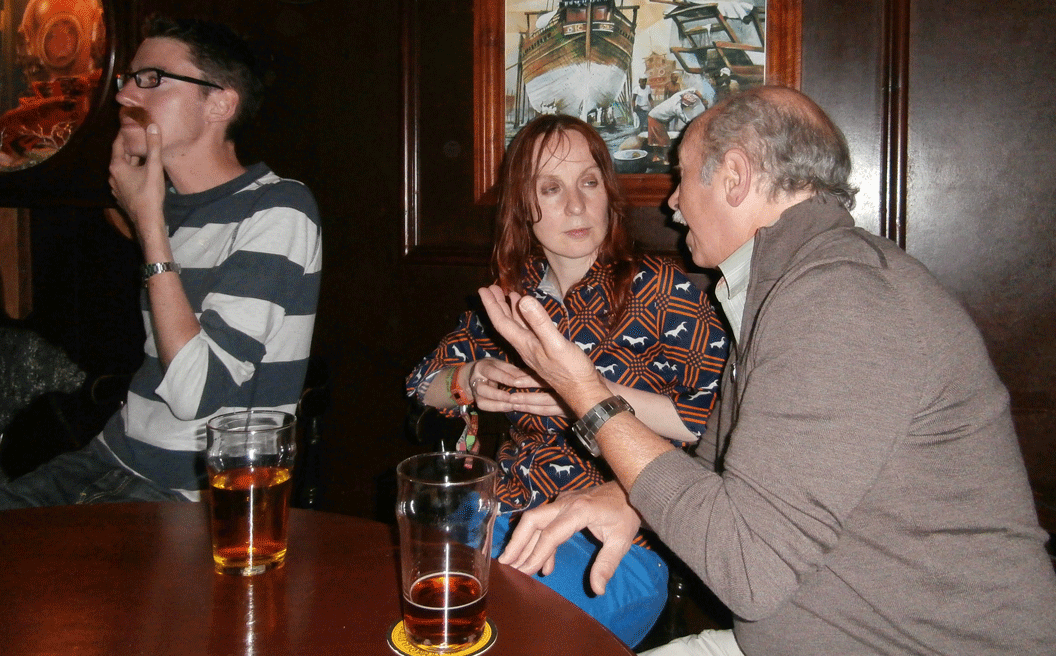
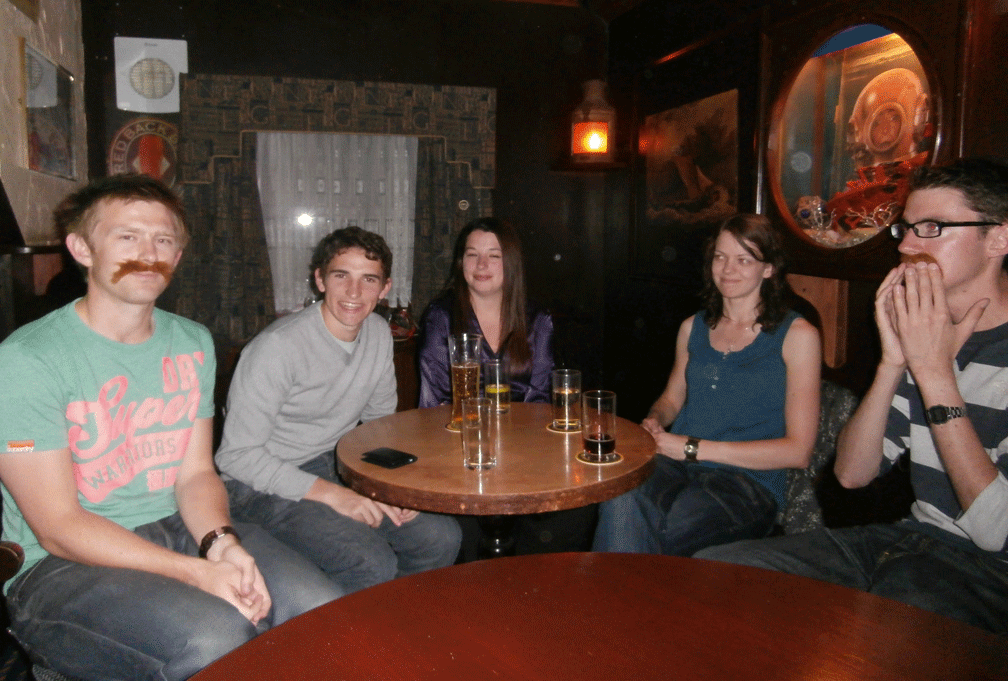
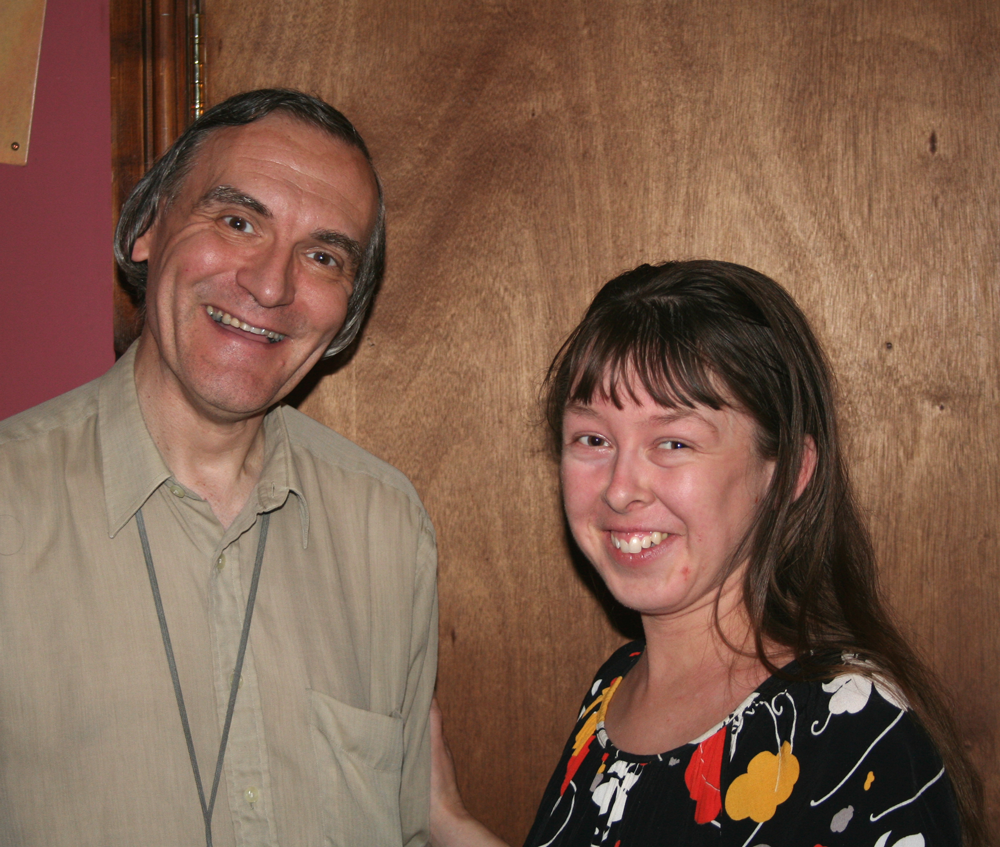
L-R. Dave (with the troublesome tash), Tash and my fellow retiree, Giovanni.

L-R: Andy, Simon, Sam, Emma and Dave (who is still trying to keep that tash in place).
Over the weekend Janis, Amber and Kara popped round from time to time. Kara brought her bronze Taekwondo medal for us all to admire, but was still hobbling following a foot injury at the championship. I also replaced my camera (for the second time) following the dip in the Sherford back in August, so I should be posting better quality photos again.

Kara shows off her bronze medal – third in the whole country in her weight class – well done girl!

The best sporting award I got at school was a swimming certificate!

The tame Layson Albatross, becalmed on the island of Rusa off New Ireland. It was fed from a bowl and kept inside at night for protection.
First a few birding updates.
The Laysan Albatross that we saw on the island of Rusa at the northern tip of New Ireland, Papua New Guinea was ringed as a chick on 1/6/1990 on the French Frigate Shoals in the Hawaiian Island chain.

Ringed at location B and ring read in the field at location A. How many miles has this bird flown in the intervening 22 years?
We have alsso had a few interesting ringing recoveries. A Fieldfare ringed in North Dorset in November last year was killed by a cat in central Sweden in the spring and a Sedge Warbler we ringed at Lytchett Bay last autumn was controlled as a breeding bird in Norfolk this spring.
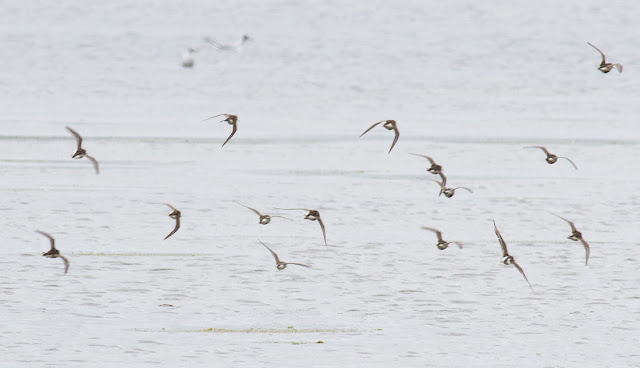
On 1st August I visited Brownsea Island to look for a White-rumped Sandpiper that had been seen the day before. I dipped, but later found that there had always been some doubt about the identification. We knew that the original finder of the bird came from the Rutland area and investigations by local birder Ian Stanley tracked him down. Photos and sketches of the bird on John Wright’s blog www.wrightswanderings.co.uk confirm that it wasn’t a pure White-rumped Sandpiper and a hybrid origin, possibly with a Dunlin, was postulated.
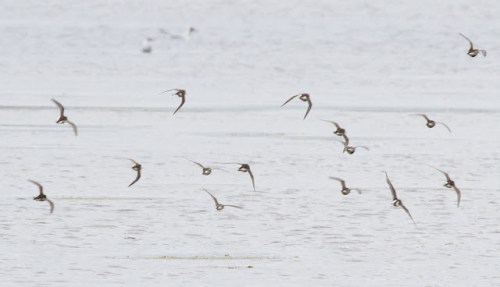
The small wader or ‘peep’ can be seen at the bottom of the flock, just left of centre. A fine black line down the white rump can be seen which is clearly wrong for a White-rumped Sandpiper. Click on the image to enlarge. Photo by John Wright.
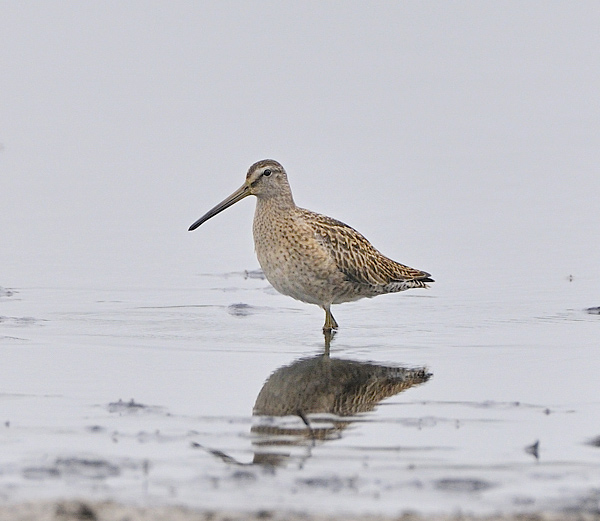
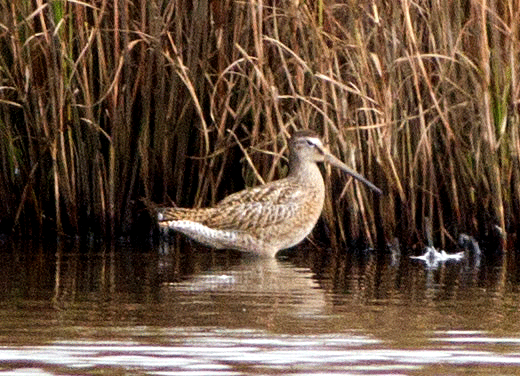
I had seen the Short-billed Dowitcher at Lodmoor on the 4th before its identification had been fully established. I returned with Margaret at the weekend but the bird was not on show. On the 13th the dowitcher showed OK, but no better than when I first saw it. However some excellent photos have been obtained by other birders. The one below was posted on Surfbirds website by Mike Lawrence.

Short-billed Dowitcher, Lodmoor. The well-marked tertials can be seen. Photo by Mike Lawrence.
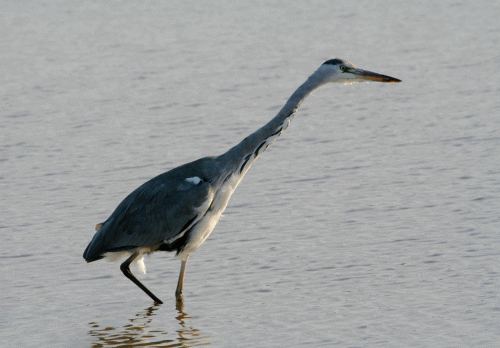
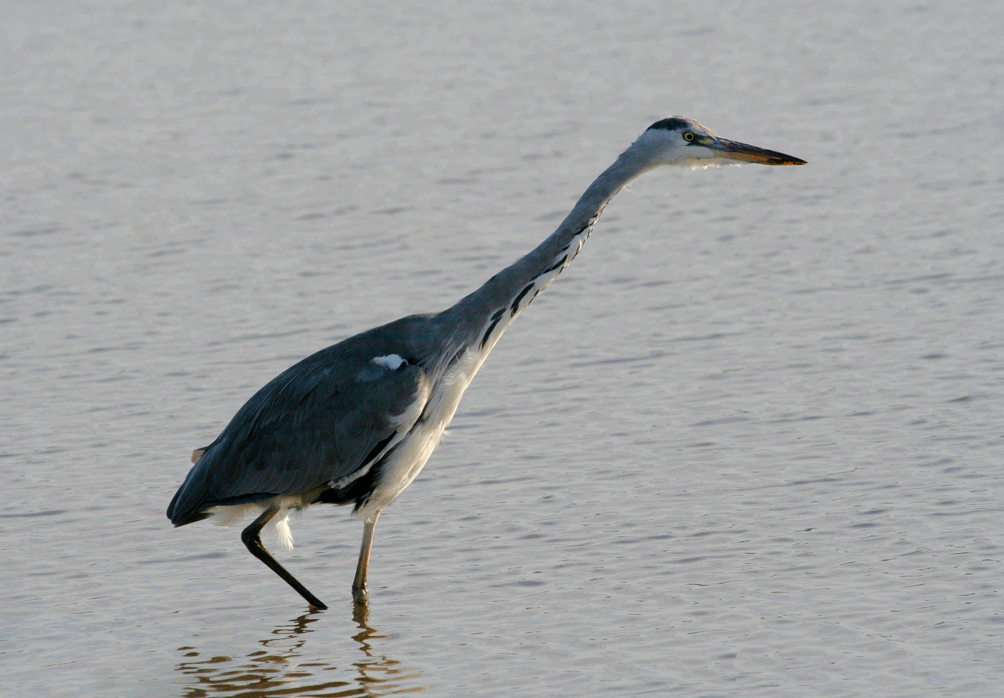
Unlike the dowitcher this young Grey Heron showed very well.
I continued on to Portland where a North American Monarch Butterfly had been seen for the last few days. It is presumed that the butterfly arrived on the same winds that brought the dowitcher, however a population of Monarchs exists on the Canary Islands (presumably a result of an earlier trans-Atlantic invasion) and some postulate it may have come from there. The local paper states that ‘over a thousand Lepidopterists have descended on Portland’. This should really have a read ‘a small number of Lepidopterists and a thousand twitchers (who came to Lodmoor see the dowitcher and made a short drive to see an unusual butterfly) descended on Portland’.

Monarch Butterfly usually occur in the UK following the passage of fast-moving autumnal weather systems, the same systems that bring American birds to our shore.

Monarch butterflies are highly migratory and travel from all over North America to winter in their millions in a few valleys in Mexico.
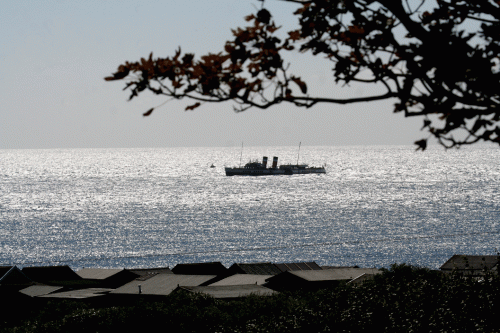
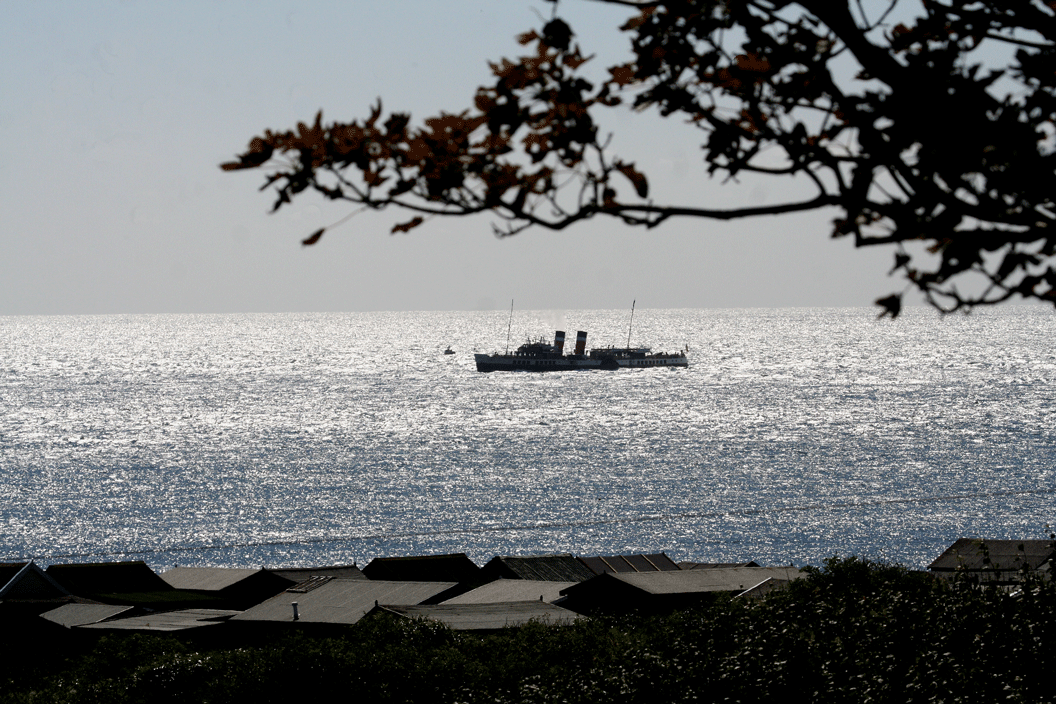
I continued on to Portland Bill where few birds were in evidence but we had a good views of the old paddle steamer ‘the Waverley’ that now runs tourist cruises around the coast.
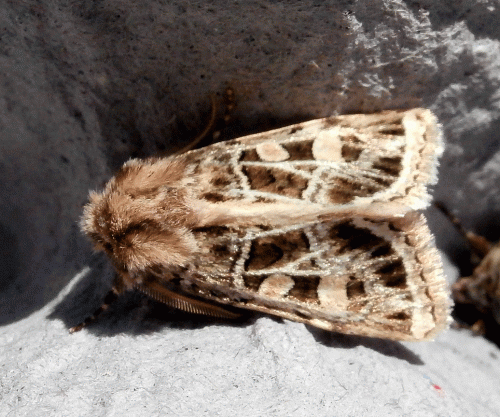
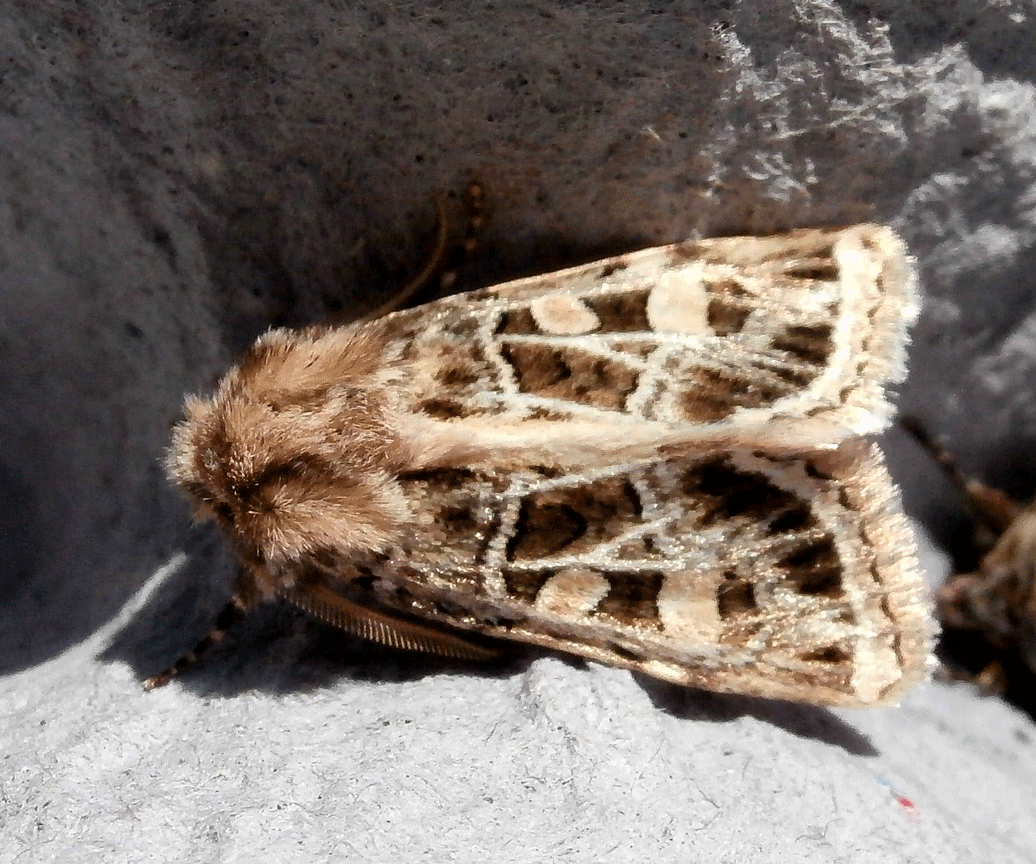
Two interesting moths that Martin had caught overnight … Beautiful Gothic …..

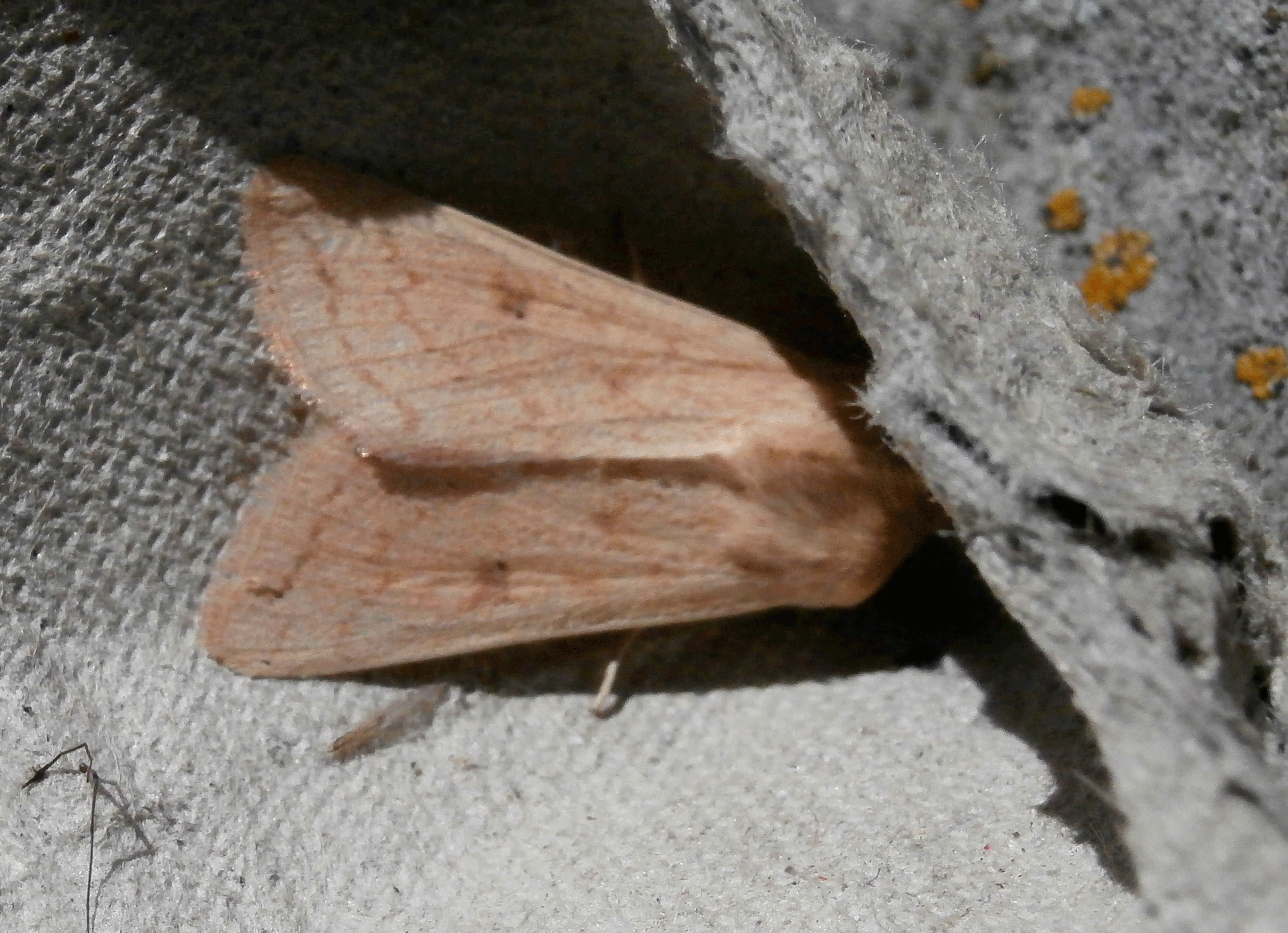
…. and The Delicate.
A few bits of family news.
Within two weeks of arriving in the UK, Anita and John have managed to find a flat in Upton (which they will move into at the end of the month), buy a car and have their gear, including their computers, delivered from Austria (where they had left them at Margaret’s sister ‘s place prior to travelling around Europe).
Having found a gap in their busy schedule, they left on Friday 7th to visit friends in Kent, the Peak District and Anglesey. Prior to them leaving we all went out to an ‘open mike’ folk session at the Portsmouth Hoy on Poole Quay on the 5th. We met up with Tim, Gio and Jessica, unfortunately Janis couldn’t make it, as the girls were returning to school the following day after the summer break.

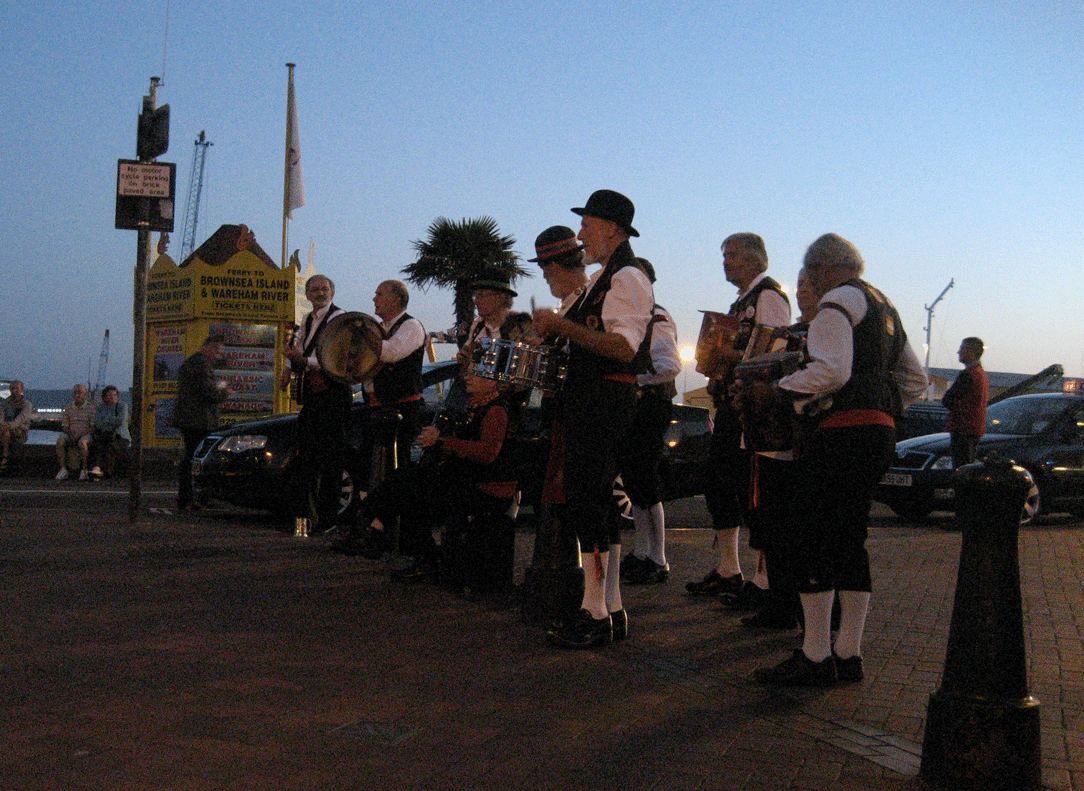
Before we arrived at the pub we paused to watch and listen to some morris dancers on the quay.

The Dorset Buttons are a well-known ladies morris dancing group. The light was fading fast by the time we arrived.

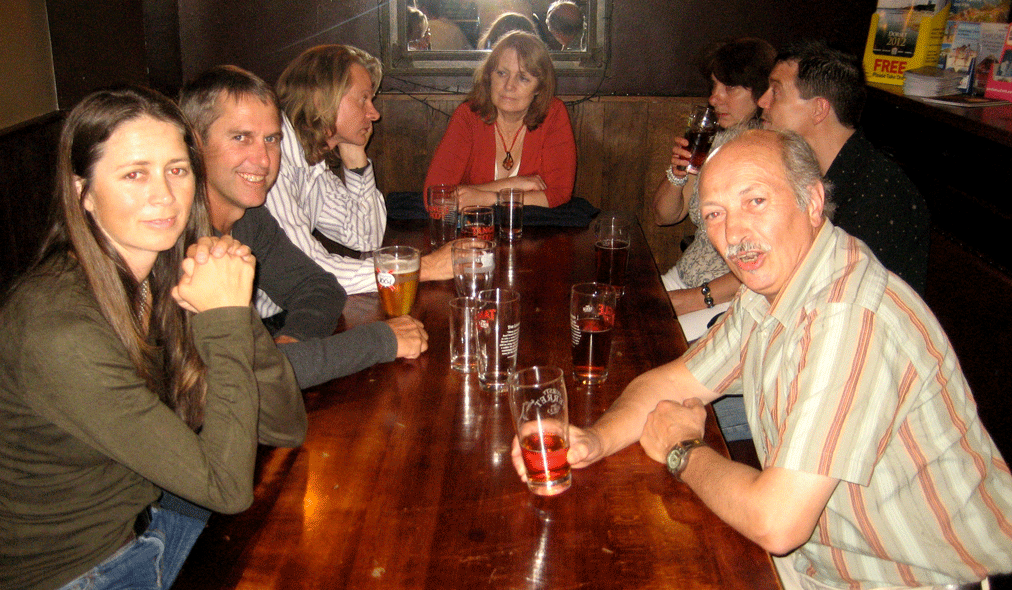
L-R: Anita, John, Andy, Margaret, Jessica, Tim and Gio at the Portsmouth Hoy.

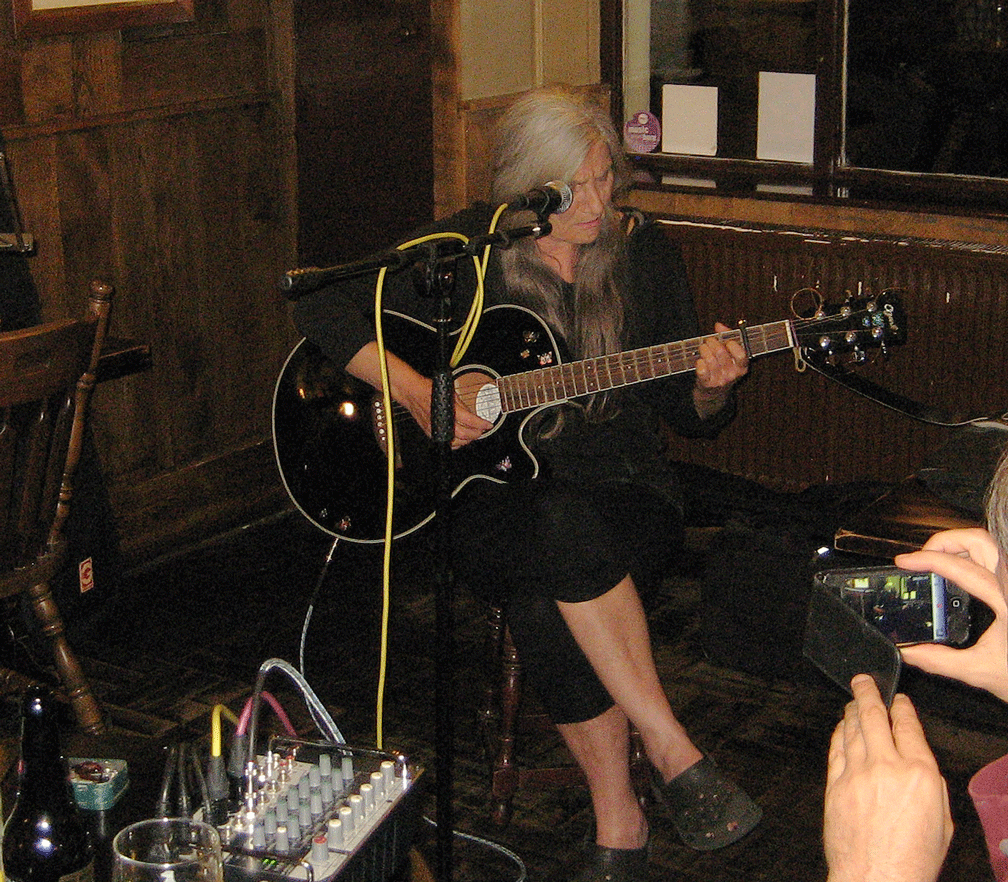
I don’t know this ladies name but she sang some beautiful songs with a clear, yet soft voice.
On Thursday 8th Amber and Kara started back at school. Amber returns to Purbeck School at Wareham, but Kara has now left Sandford Middle School and has started at Lytchett School which is much closer. It hardly seems a year since I drove them to school for their first day.

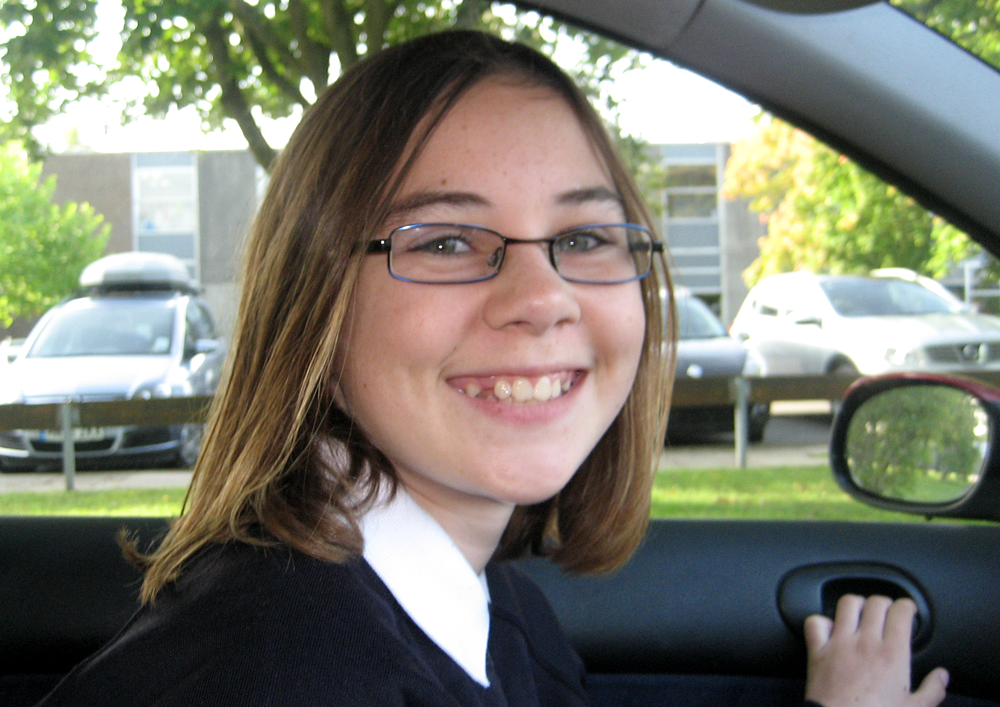
Amber arriving at school a year ago. She says she doesn’t like this picture as she has a ‘cheesy grin’, but I think it’s rather cute.
With John and Anita away and the girls back at school, the house suddenly went quiet. On Friday 8th Kara had the day off school to attend the Taekwondo national competition in Manchester. She travelled up from Southampton with others in the club, the competitions were held on Saturday and Sunday. Kara had to weigh under 38 Kg to get in the required category and had starved herself for several days before hand. It was her first real competition but managed to come third, i.e. got the bronze medal. Well done Kara.

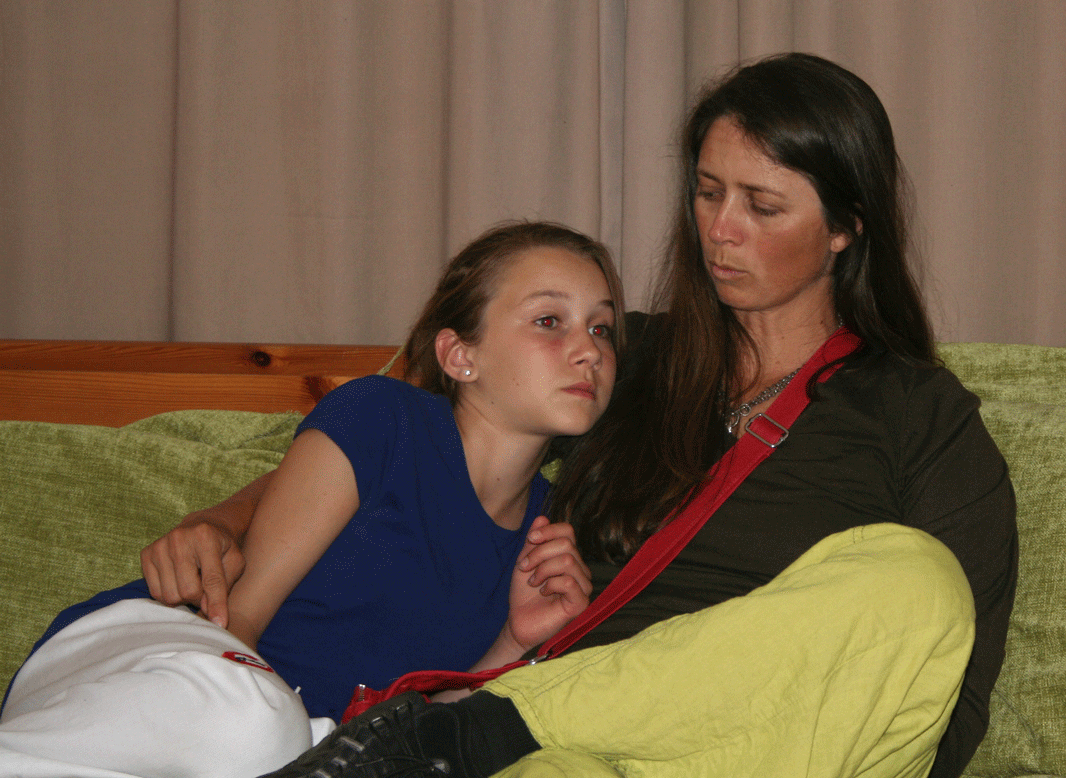
Kara and auntie Anita just before she leaves for the competition.

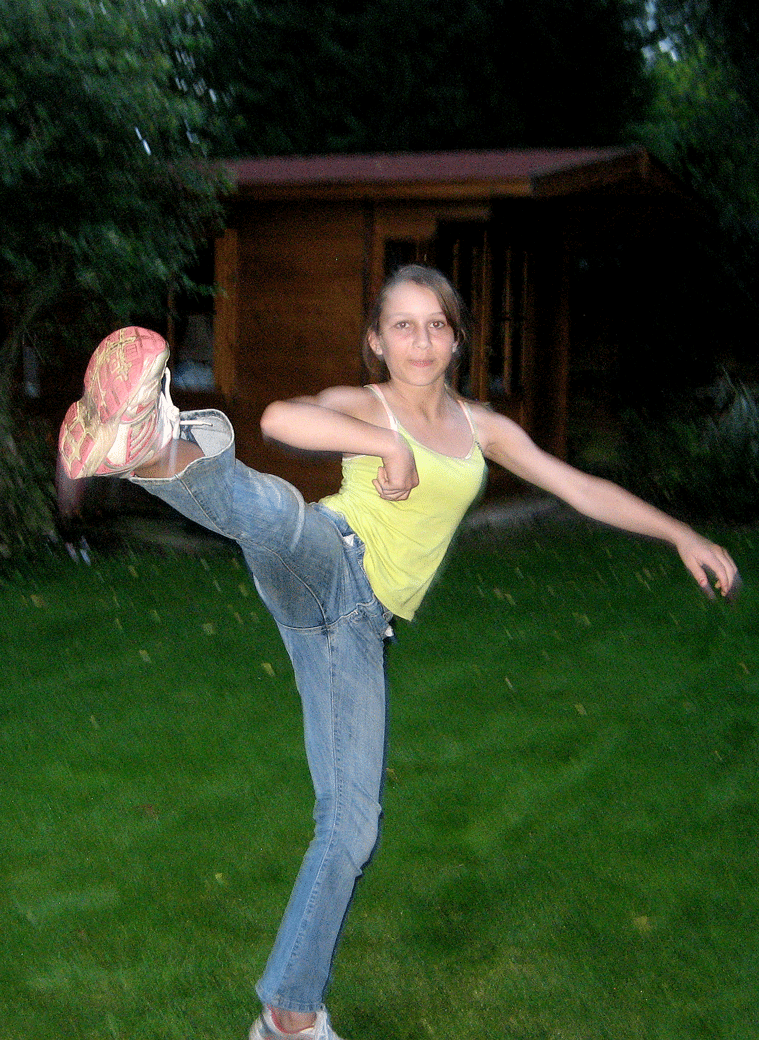
I haven’t got a photo of Kara at her Taekwondo competition but here she is demonstrating her high kicks recently on our visit to Derby.
On Sunday 9th we were invited for drink with Christine and her friend Malcolm and several of her other friends to celebrate her 23rd birthday. We first met Christine through birding but later she joined Margaret’s choir.
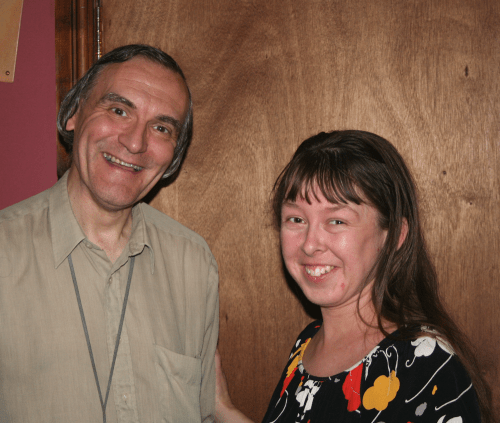
Christine and Malcolm photographed this time last year.

We retired to play billiards. I don’t think I’ve played billiards or snooker since I left University 40 years ago, and it showed!
On the 11th Margaret had her first choir session, which unfortunately clashed with our first birders pub for some time. Ten of us met for a drink and ran through the expected range of subjects: why had it taken so long for Dorset birders to identify (the admittedly very tricky) Short-billed Dowitcher, what was the real identity of the possible White-rumped Sandpiper on Brownsea and why can’t we get a decent view of the Swineham gravel pits any more.

Bird pub L-R: Roger Howell, Steve F Smith, Kevin Lane, Mark Constantine, Mo Constantine, Jackie Hull.
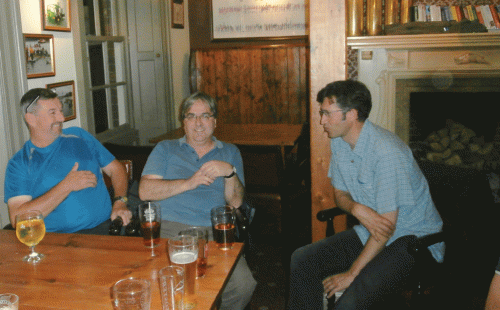
and on the other side of the table L-R: Nick Hull, Trevor Warwick, Shaun Robson.
And finally I had to include this cartoon. No I don’t think they miss me too much at work, the reality must be more like the final picture rather than the dream sequence!

On the 6th, 7th and 8th of September I went ringing at Durlston. The weather had been still and clear for nearly a week and migrants must have taken the opportunity to leave for southern climes as numbers declined markedly as the week went on.
The 6th saw a large movement of hirundines and we were able to trap over 50, (mainly Swallows, but with a few Sand and House Martins as well). The 7th saw a scattering of Willow Warblers, Chiffchaffs and Blackcaps, plus single Reed and Sedge Warblers. Now by early September Willow Warblers are being replaced by Chiffchaffs and Whitethroats by Blackcaps. On the 8th we had a similar number of migrants which included two Redstarts, two Goldcrests and a Grasshopper Warbler.
On the 8th several of the group decided to ring at Lytchett Bay as well, they had fewer migrants than we did at Durlston, but did catch three control Sedge Warblers, i.e. birds that have been ringed elsewhere; we look forwards to hearing where they were ringed.

These graphs of Willow Warbler/Chiffchaff and Whitethroat/Blackcap ringing dates in 2011 were prepared by Shaun Robson. Note that the small number of Chiffchaff and Blackcaps in August would relate to local breeders. It is clear that mid September onwards represents the main Chiffchaff migration. In 2012 Blackcap migration has started about a week later than in 2011. I had to photograph the graph on the laptop screen to blog it, hence the poor quality image.
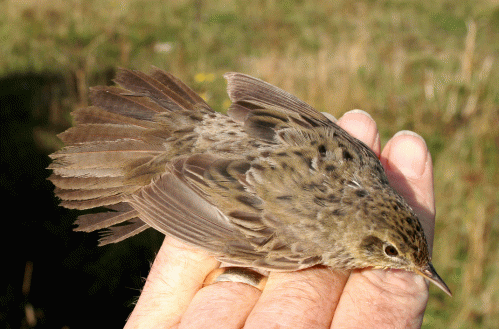
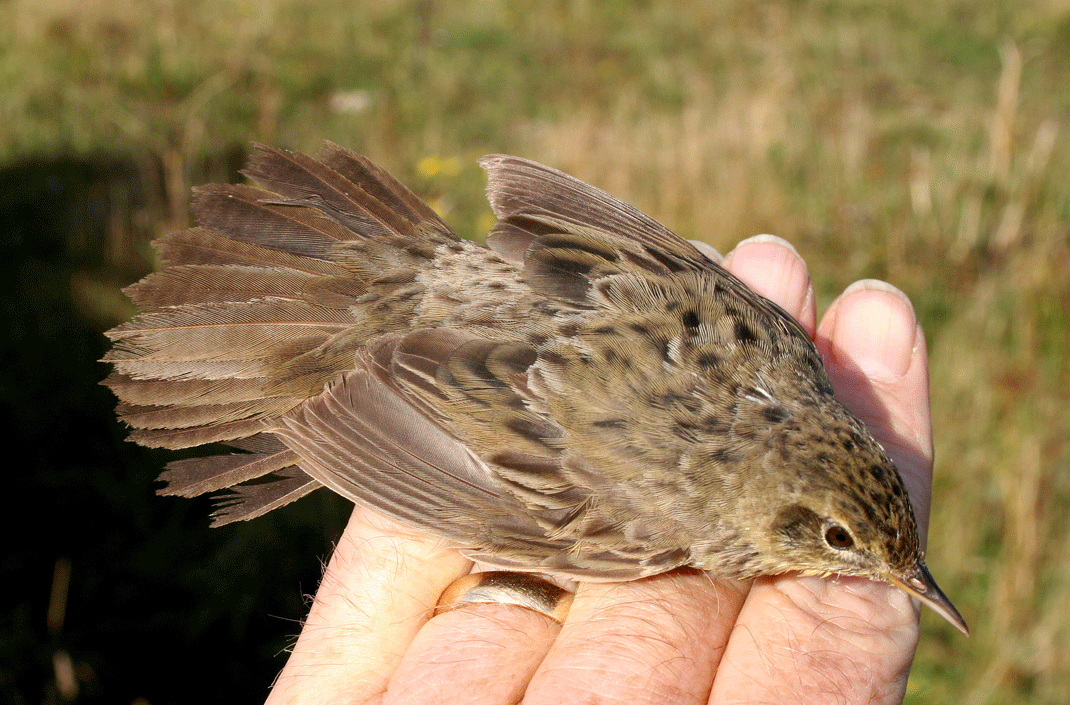
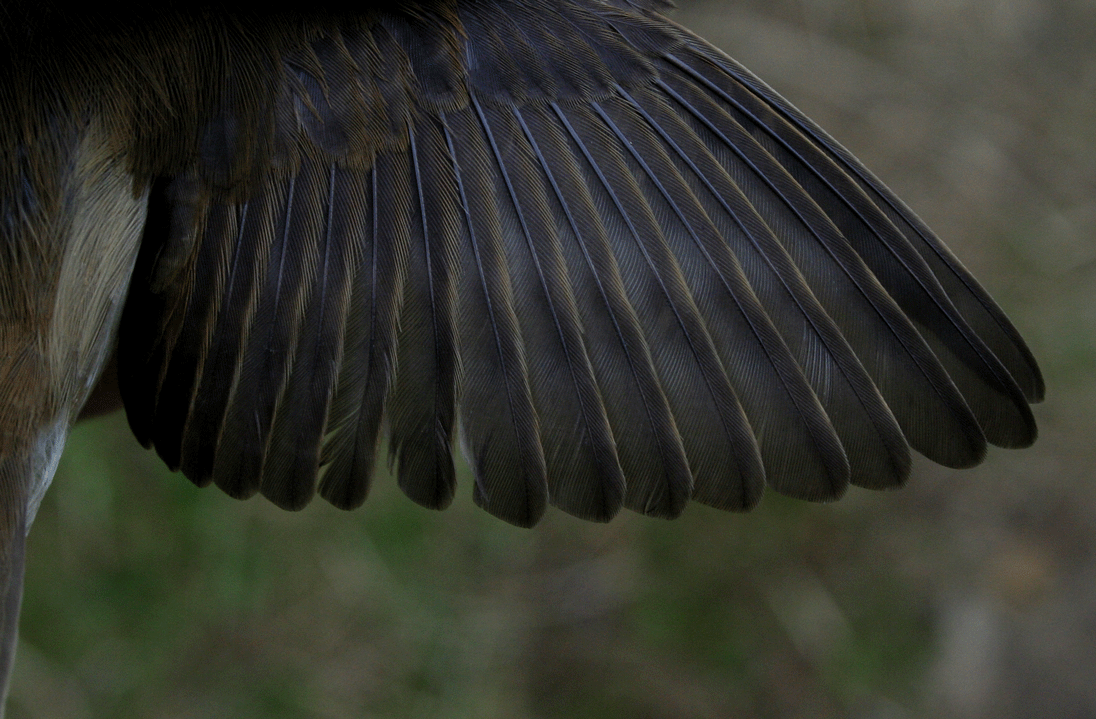
As adult Grasshopper Warblers have a complete moult on their wintering grounds, the wings and tail are very abraded by autumn. First year birds will show fresh flight feathers.
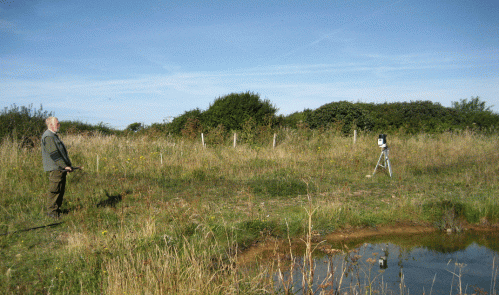
Mick tries flicking for Swallows, raising the net just as the birds leave after drinking at the pond, we caught far more seed heads than birds and returned to using a static, tethered net.
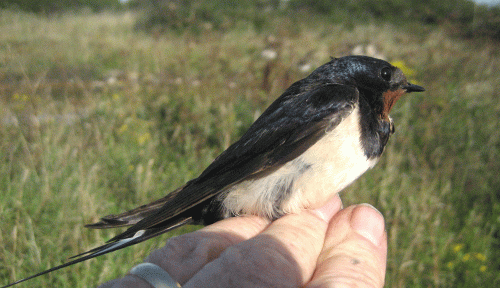
Adult Swallows can be told from 1st years by the rufous chin, glossier plumage and much longer tail feathers.
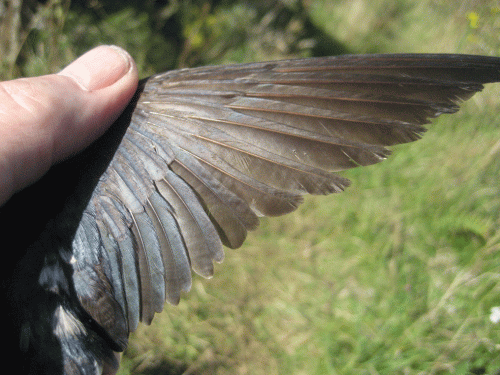
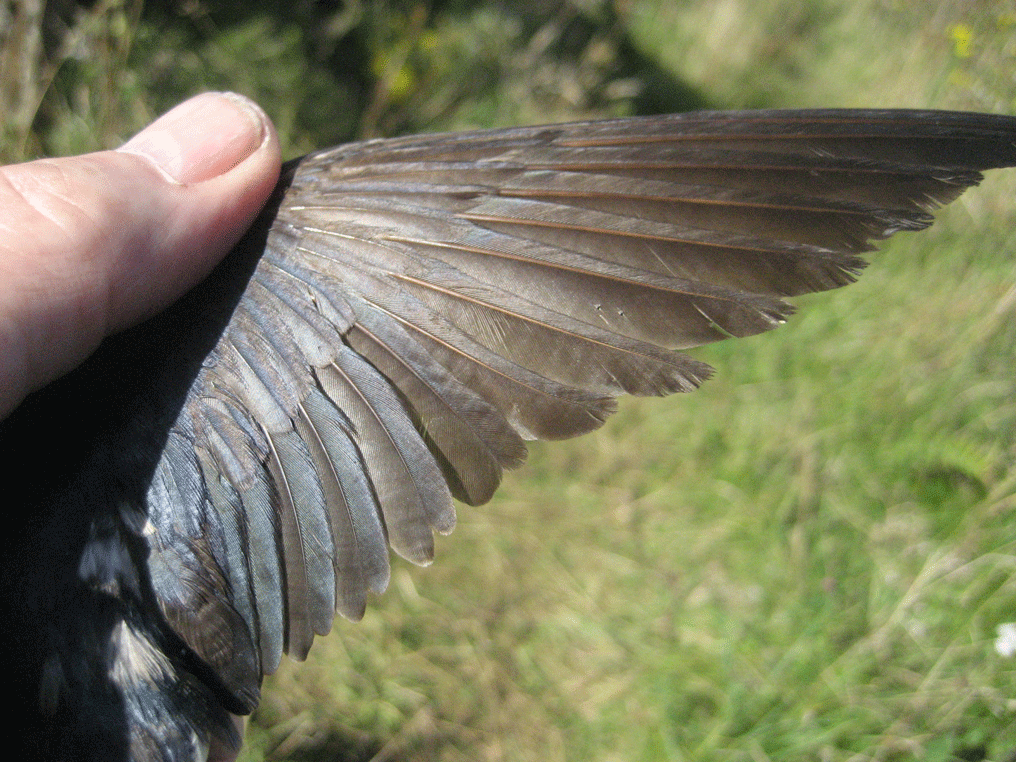
Adult and young Swallows have a complete moult in Africa. This adult however, has moulted its secondaries and greater coverts recently as can be seen by the contrast in the wing.
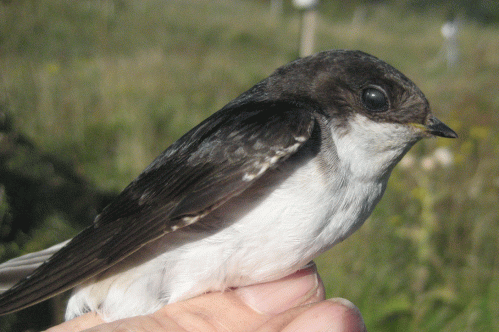
House Martins, like Swifts, maintain an ariel lifestyle away from the breeding grounds and hence have a much lower recovery rate than Swallows or Sand Martins.
On the afternoon of the 8th, Margaret and I headed to Lodmoor so she could see the Short-billed Dowitcher (see previous post). Unfortunately the bird flew into an inaccessible area of the marsh ten minutes before we arrived. We were able to watch Mediterranean Gulls, Sandwich Terns and Sanderling whilst waiting so it wasn’t a totally wasted trip.
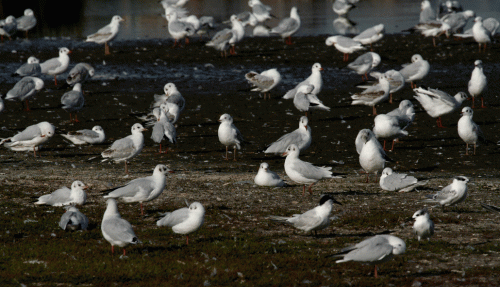
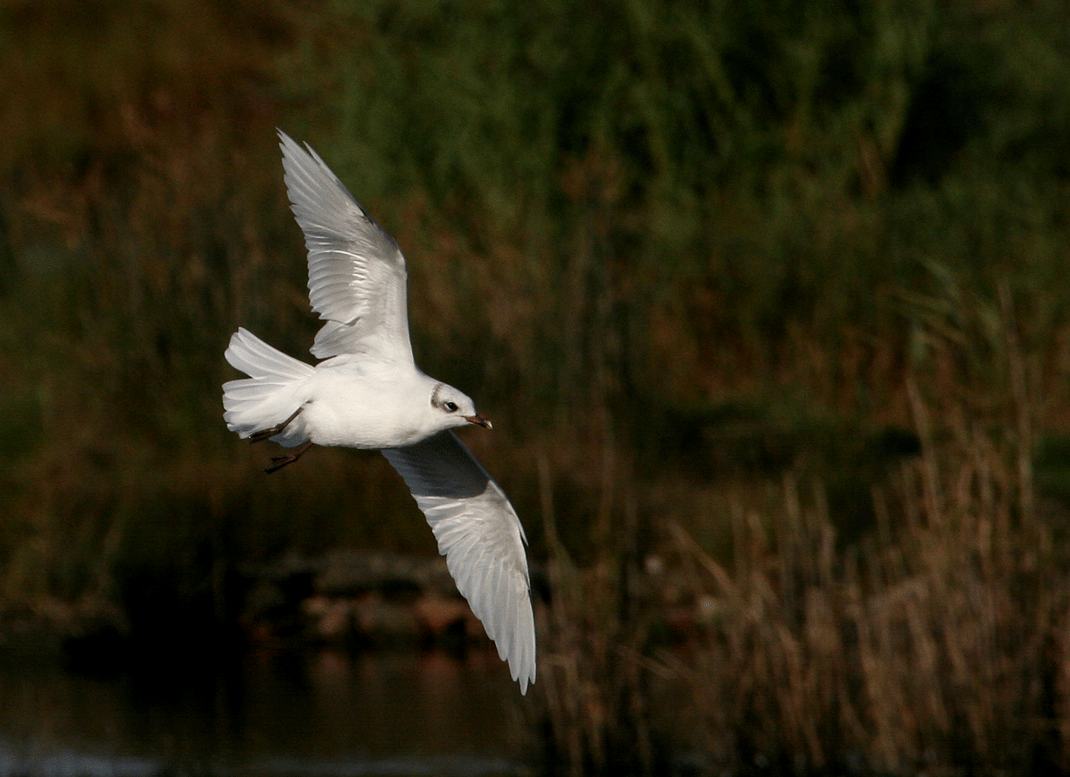
Black-headed and Mediterranean Gulls and Sandwich Terns at Lodmoor.

A Mediterranean Gull in adult winter plumage.
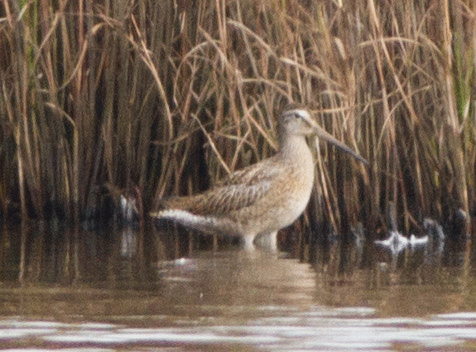
For those who were unsatisfied with their views of the mega rare Short-billed Dowitcher, Trevor Warwick has kindly provided a picture of another Mega.

Nice one Trevor!
Sunday 9th was the date for the first WEBS count of the autumn. The WEtland Bird Survey, is a monthly coordinated count all over the country. My section is Holes Bay and I try to count all the birds on the eastern side. Most wintering wildfowl and waders have yet to arrive, and it was a neap tide with little mud showing. Even so I counted over 340 Black-tailed Godwits and saw a small numbers of wintering Wigeon.
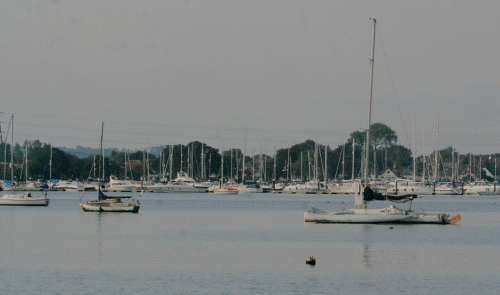
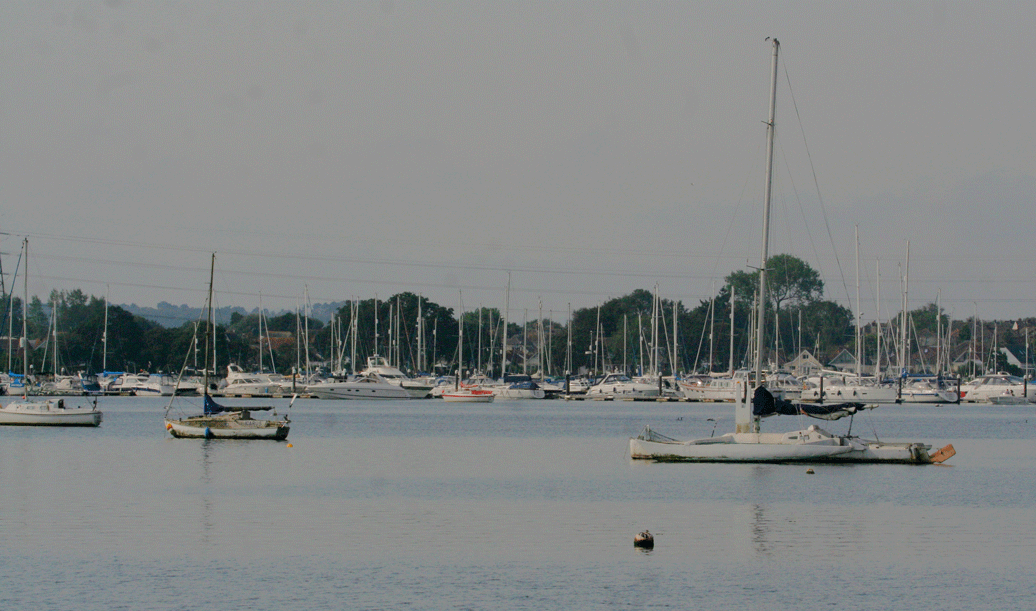
A large part of the western shore of Holes Bay is taken up by Cobb’s Quay.

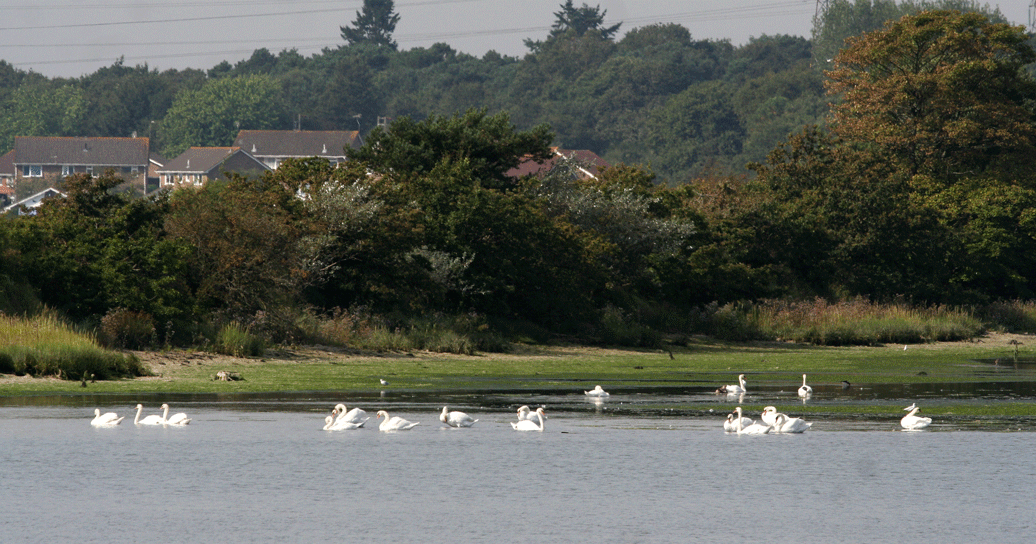
Along with Wareham Channel and Poole Park, Holes Bay is one of the main areas for Mute Swans in Poole Harbour.
Long-billed Dowitcher is a small wader than breeds along the north coast of Alaska and extreme north-east Siberia. It is a common migrant and wintering bird in the USA and has been recorded in the UK several hundred times. In the winter of 2010/11 one commuted between Lodmoor in Weymouth and Poole Park and during winter 2011/12 two were present at Lodmoor, so when Durlston on the 3rd Sep I received a text to say ‘Long-billed Dowitcher at Lodmoor’ I wasn’t unduly bothered as I considering it to be one of the wintering birds returning.
Apparently late on the 3rd a message went out saying that some had queried the identification and wondered if it could be a Short-billed Dowitcher. This very similar wader breeds much further south, mainly in the Canadian prairies and migrates about a month earlier than its long-billed relative. Back on Durlston on the 4th I was asked by Shaun if I was going to see the dowitcher after the ringing session. There has only been one previous record of Short-billed in the UK and that was in Scotland. Although it breeds closer to the UK than Long-billled its earlier migration (before the autumnal storm tracks have developed) and more southerly route (which doesn’t take it out over the Atlantic) compared to Long-billed, means it is far less likely to occur over here.
News that it was still at Lodmoor didn’t come through until I was leaving Durlston so I decided to head straight for Lodmoor where the bird was showing intermittently. The key features for separating this species pair are not as you might examine, bill length, but call and in juveniles, the pattern of the tertials and greater coverts. This bird was over 100 yards away but the tertials could just be seen through a scope, they looked patterned as in Short-billed but some people had heard it call and claimed it sounded like a Long-billed.
The overall conclusion was that it was a very well-marked and very early Long-billed and I left Lodmoor believing that I had seen a scarce American migrant that I had already added to my year list, rather than a major rarity and a British tick.
Knackered after so many pre-dawn starts, I was woken about midnight by an urgent message that the bird had been conclusively identified from photographs as Short-billed. I would have set my alarm to be there at dawn but instead was able to go back to sleep well in the knowledge that I already had it ‘under the belt’.
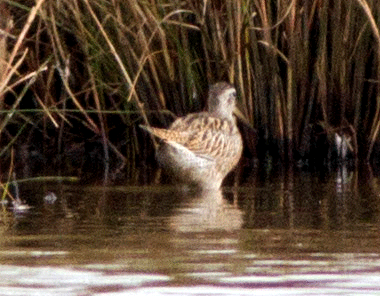
The following five photos were taken by Kevin Lane and have been intrumental in the identificcation of this bird. The bill appears particularly long, but there is considerable overlap in this feature between the two species, the internal markings of the tertials are quite clear and the internal barring of the greater coverts can just be seen.


Back at home on the 4th I found this unusual, beautiful and large moth on the bathroom window. It is called an ‘Old Lady’ presumably because of the old lace like pattern of the wings. As it was resting on glass I couldn’t use flash and trying to move it just caused it to fly off.

The recent spell of relatively settled weather has meant that I have spent every morning of the last week ringing. As we also have Margaret’s daughter Anita and husband John staying with us, I have been rather busy and have fallen well behind in my blog entries.
On the 30th I agreed to go ringing with trainee John Dowling, but it was too windy to go to Durlston, so I contacted Trevor Squire and we headed to his private ringing site in north Dorset. It was still rather windy and we only ringed about ten birds, but four of them were Grasshopper Warblers (plus caught another which was a retrap). It was nice to see Trevor again and it was John’s first visit to his site.

Trevor and John in the ringing hut.
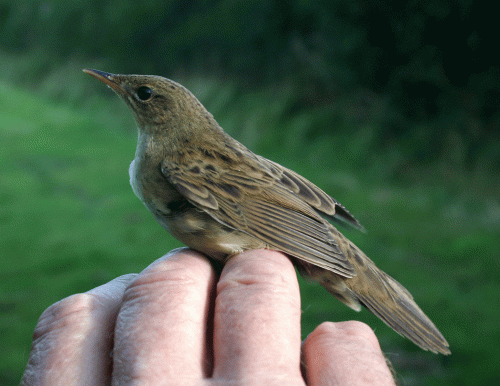
A first year Grasshopper Warbler. We only trap a few ‘Groppers’ at Lytchett and Durlston but Trevor has ringed over 90 this year!
As we left Trev’s news came through of a Sabine’s Gull at Portland. This high Arctic species is pelagic away from its breeding grounds and most UK records are of juveniles on a seawatch during gale force winds, however this was an adult in breeding plumage and was sat in a field near Portland Bird Observatory; too good an opportunity to miss. I persuaded John that a trip to Portland was worthwhile and set off south along Dorset’s narrow lanes. I went as fast as I could but clearly not fast enough, as we arrived to find it had flown off ten minutes before! There are good photos of this bird on the Portland Bird Observatory website.
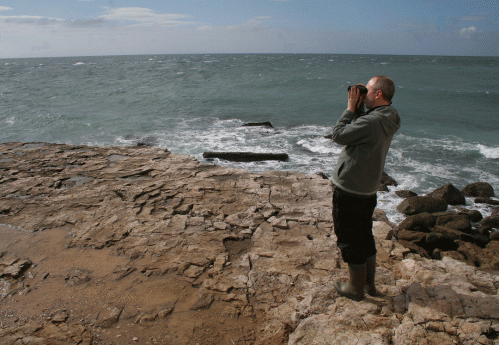
John at Portland Bill – not seeing a Sabine’s Gull
On Friday 31st we headed for Lytchett Bay. The forecast looked good for Durlston, but Shaun could only ring at the Bay up until 0800 and needed another qualified ringer to continue the session. In the end it was an excellent morning with 67 birds ringed, a very good total for the Bay. Most of the catch was Sedge Warblers, the best birds being two Grasshopper Warblers and a Wheatear. There was good birding too with two Ospreys, a Marsh Harrier and a Hobby present, plus two Whinchats that sat on the top of the net but wouldn’t go in and a number of Yellow Wagtails overhead.
We later learnt that there had been a big fall of migrants at Durlston, but what the hell, you can’t be in two places at once and we had a good time at Lytchett.

A common migrant, but one that has only been ringed a few times at Lytchett Bay, as most ringing takes place in reed beds.
Saturday 1st September saw a group of us at Durlston. It was quite cool with a reasonable breeze and birds were much fewer than yesterday’s reports would indicate. Even so we ringed 52 birds with a nice selection that included a Whinchat and a Firecrest. Margaret, Anita and John visited us at about 0830 (having got lost in Swanage) but the best birds had gone by then. Even so it was a chance to explain the purpose and methods of ringing to our South African visitors.

Whinchat is a regular migrant, breeding mainly in the north of the UK, but being more of a bird of open country is seldom trapped at our site at Durlston. The white base of the outer tail feathers is just visible.
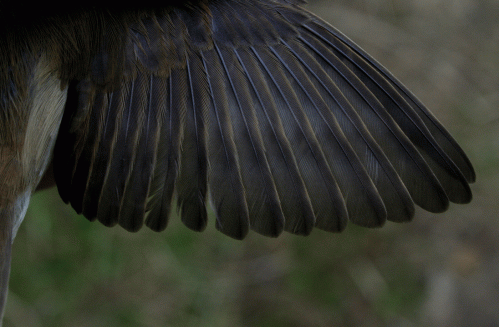
I have already mentioned the large number of young birds we have caught this year with fault bars in their tails, caused by poor nutrition during development in the nest. Less often seen are prominent fault bars in the wing as shown by this Whitethroat.
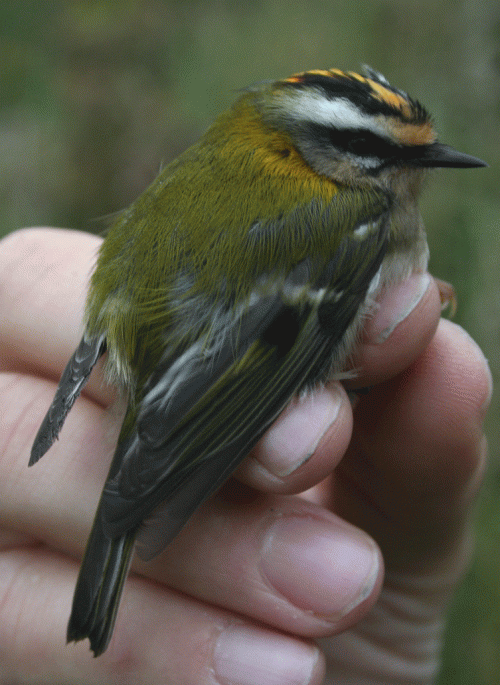
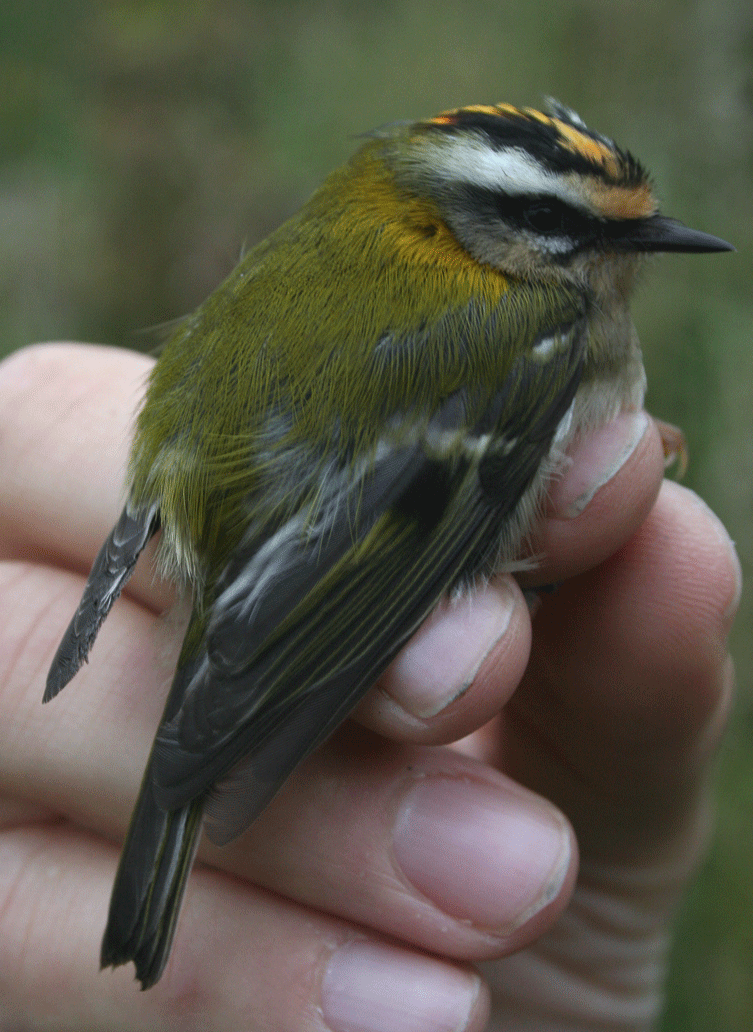
A beautiful male Firecrest. Most of our Firecrests occur in October, so this bird was exceptionally early.

This Whitethroat can be aged as an adult by its hazel coloured eye and the pure white in the outer tail feathers. The grey head indicates this is a male.
Wishing to avoid a fourth 0430 start I asked trainee Paul Morton if he would like to attempt to ring the Goldfinches that were visiting his garden in Worth Matravers. This was very succesful with 21 Goldfinches and 3 Greenfinches ringed, valuable experience for Paul and further work to monitor the population dynamics and movements of this species that has only recently taken to feeding in gardens in large numbers.
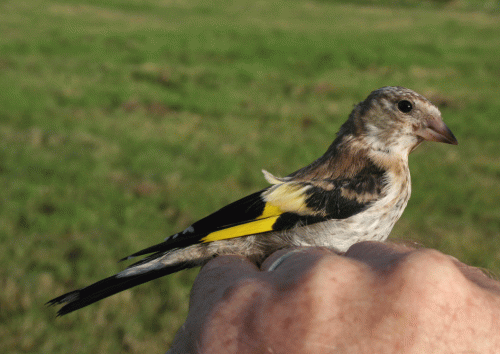
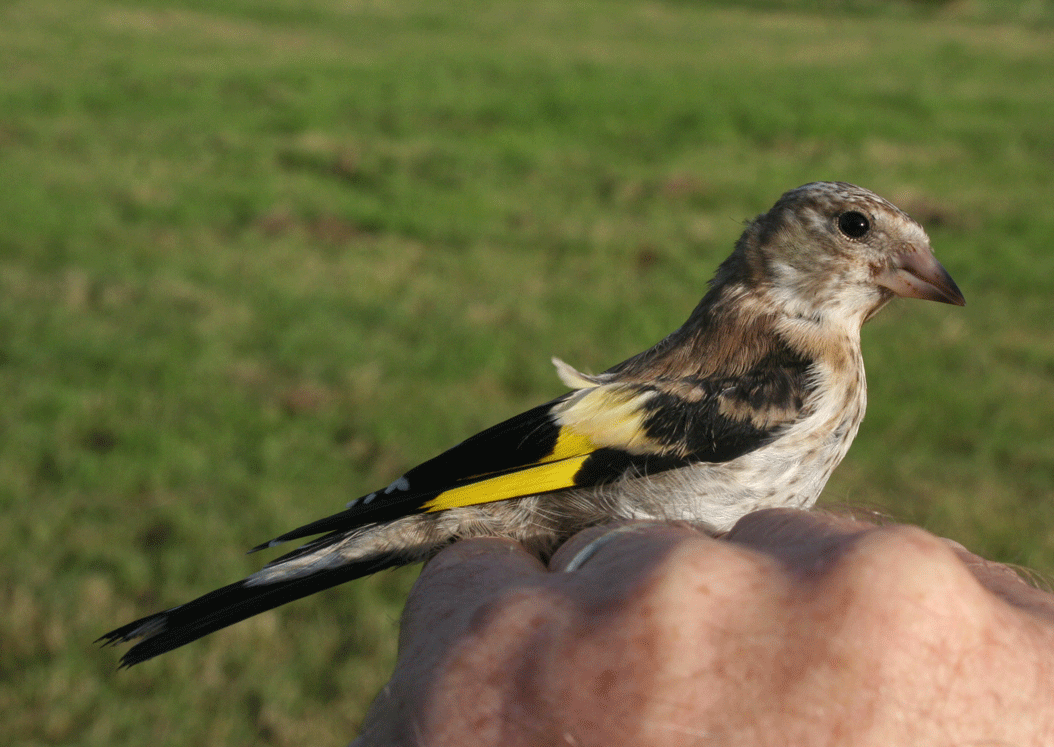
Juvenile Goldfinches do not obtain their red head feathers until much later in the autumn.
Monday 3rd and Tuesday 4th saw a return to Durlston. Both days were relatively quiet with 37 and 41 birds respectively ringed. Good birds included two more Pied Flycatchers and two Lesser Whitethroats, five Redstarts (all on 4th) and another Grasshopper Warbler.
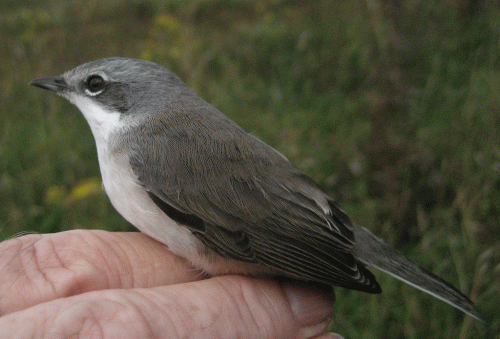
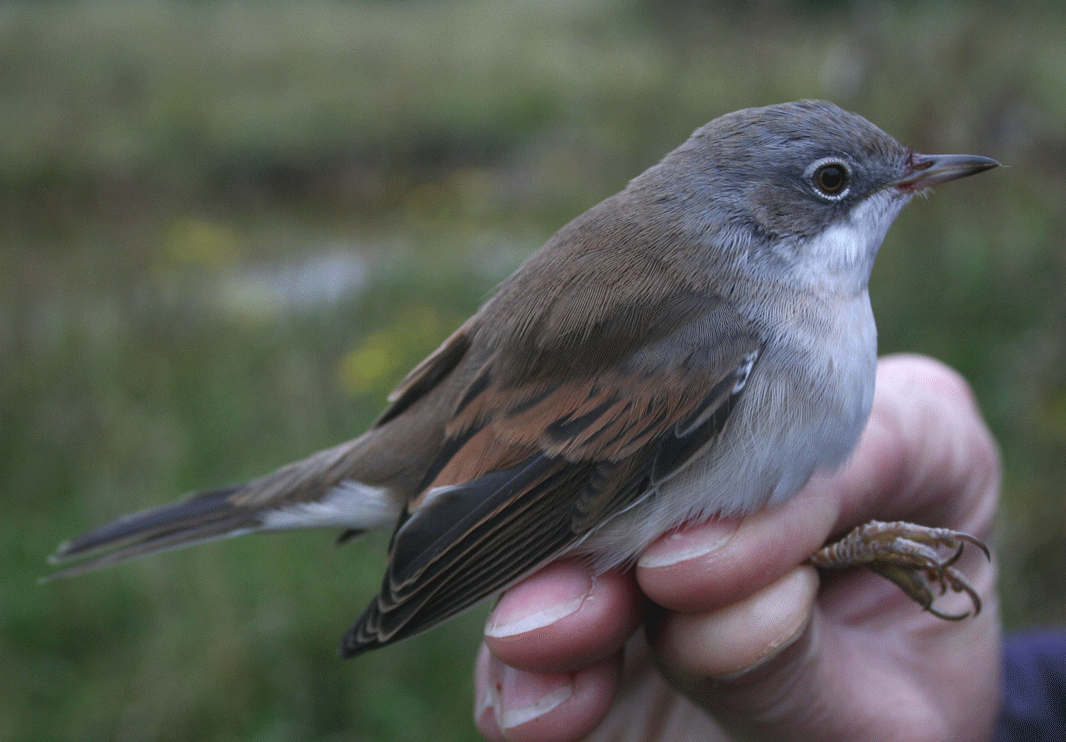
Lesser Whitethroat

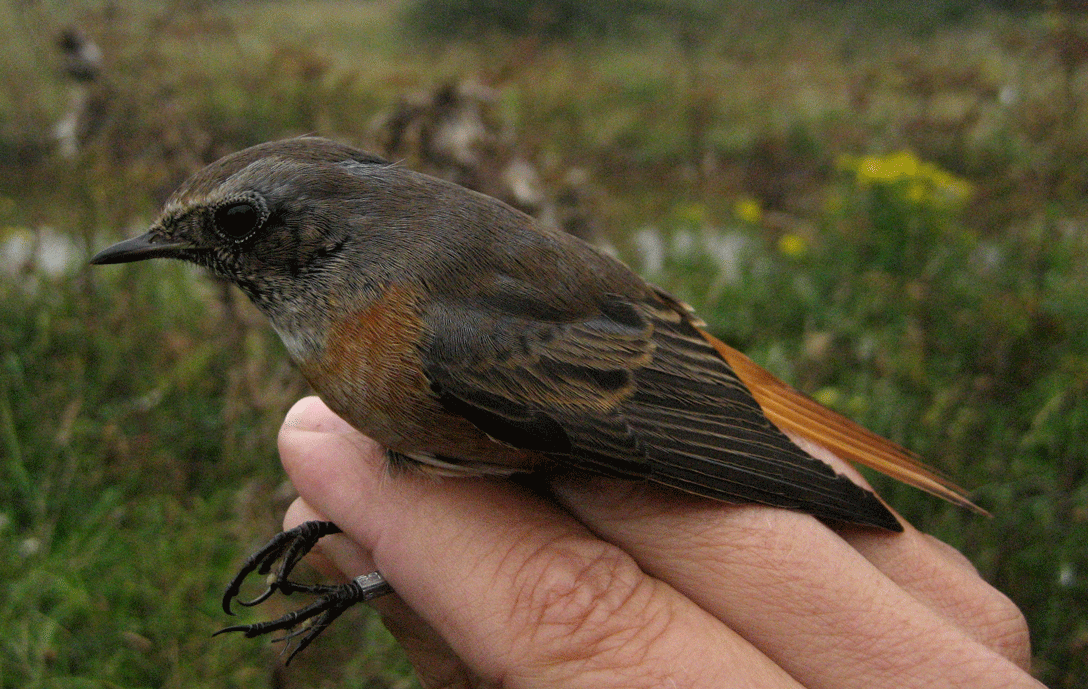
A first year male Common Redstart lacks the white border to the black face mask.
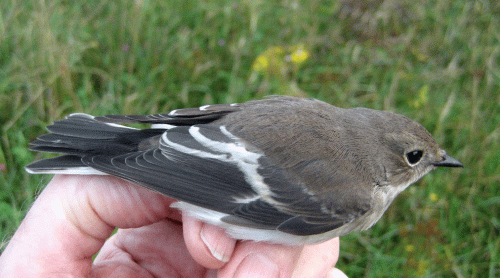
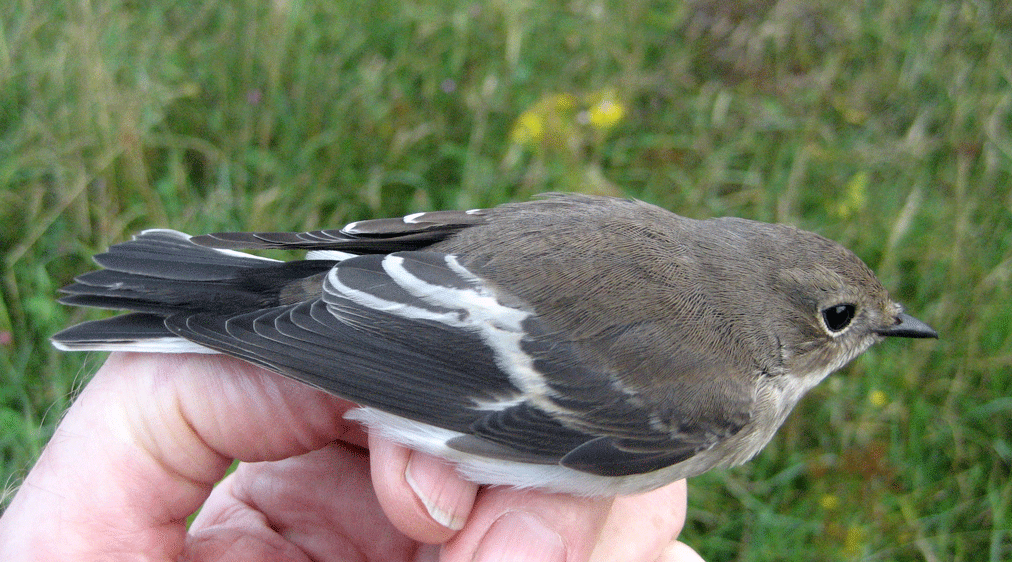
None trapped in 2011 but 13 in 2012, so far. This Pied Flycatcher can be aged as a first year by the step in the white fringe to the central tertial feather.

The step in the white fringe of the tertials is more obvious in the spread wing.
Particularly frustrating on the 4th was the sight of a very large warbler (with a Willow next to it for size comparison) perched on a bush at the end of a net ride. I had a reasonable view and Kevin (who was processing a bird at the time and hence had his hands full) got a glimpse. It was uniformly coloured except for a thin wing bar and was almost certainly a first year Barred Warbler, a scarce migrant from central Europe. However the description isn’t good enough to get it through the local records panel, of which Kevin is the chairman. As another member of the panel was to say to me later that day, ‘frustrating of course, but you would have voted against a brief description like that when you sat on the records panel’. Fair comment I suppose!
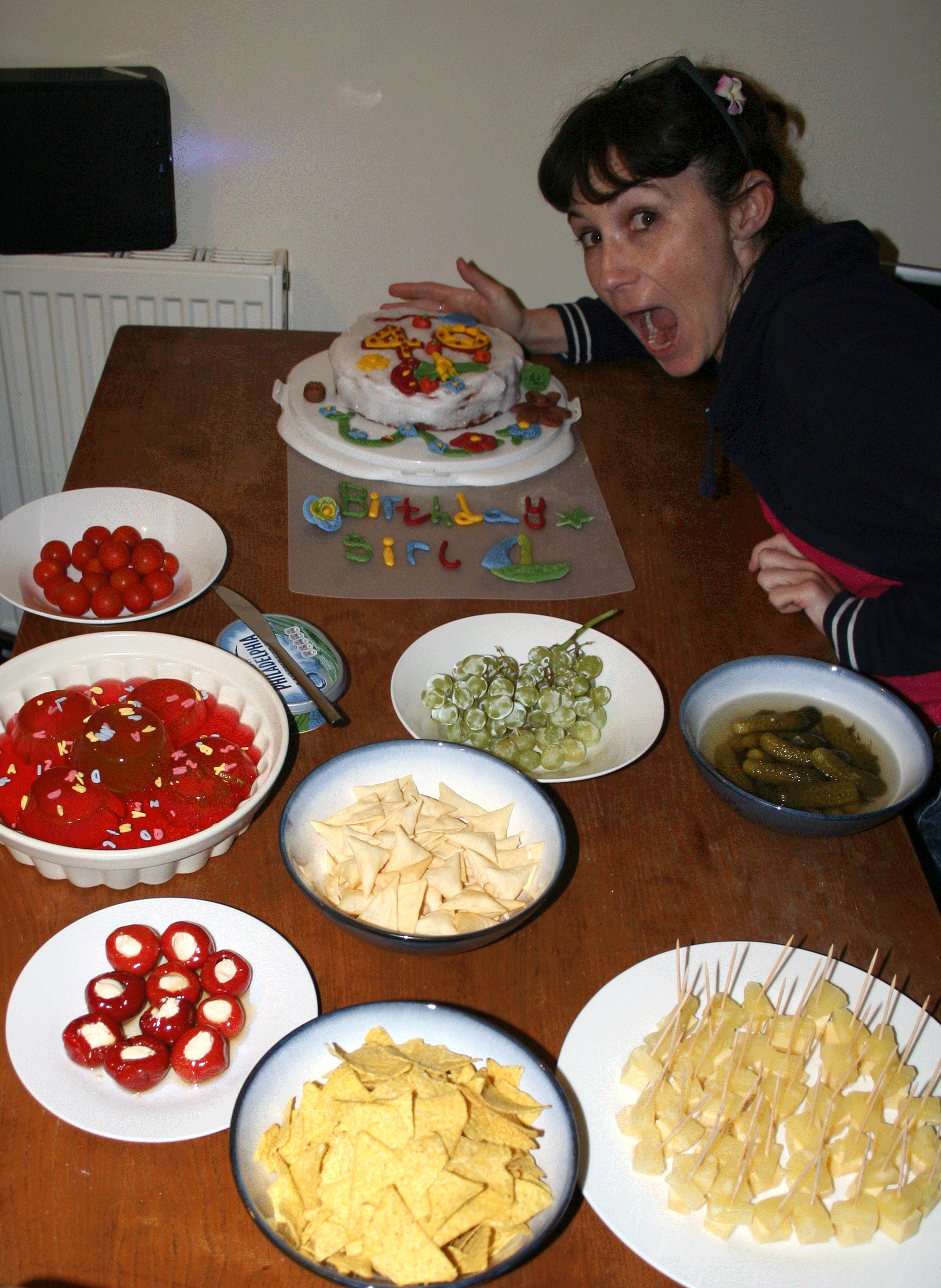
On the 28th Janis celebrated her 40th birthday, although we didn’t see her until 8.30 as she took Kara to Southampton for Taekwondo training. Amber and Kara had spent much of the previous two days making and decorating the cake and Amber produced an extensive spread of ‘nibbles’. We all gathered around at her house for a surprise party, but as Kara was texting like crazy on their return from Southampton, she had an inkling something was going on, so it wasn’t that much of a surprise.

Two days in the making – Amber and Kara’s cake for Mum.
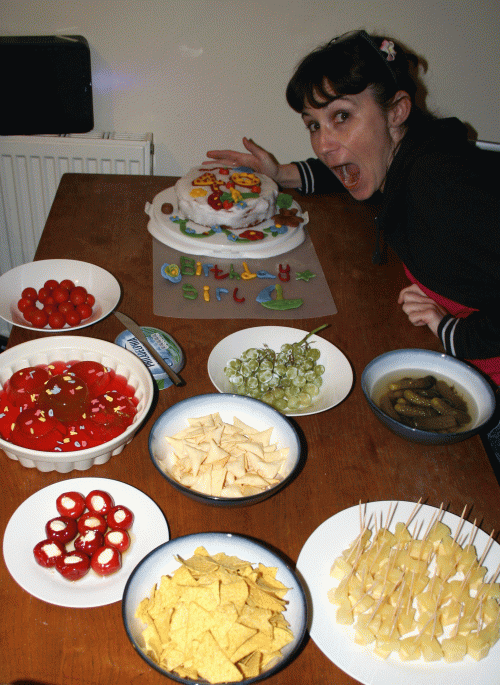
Janis tucks into Amber’s nibbles.

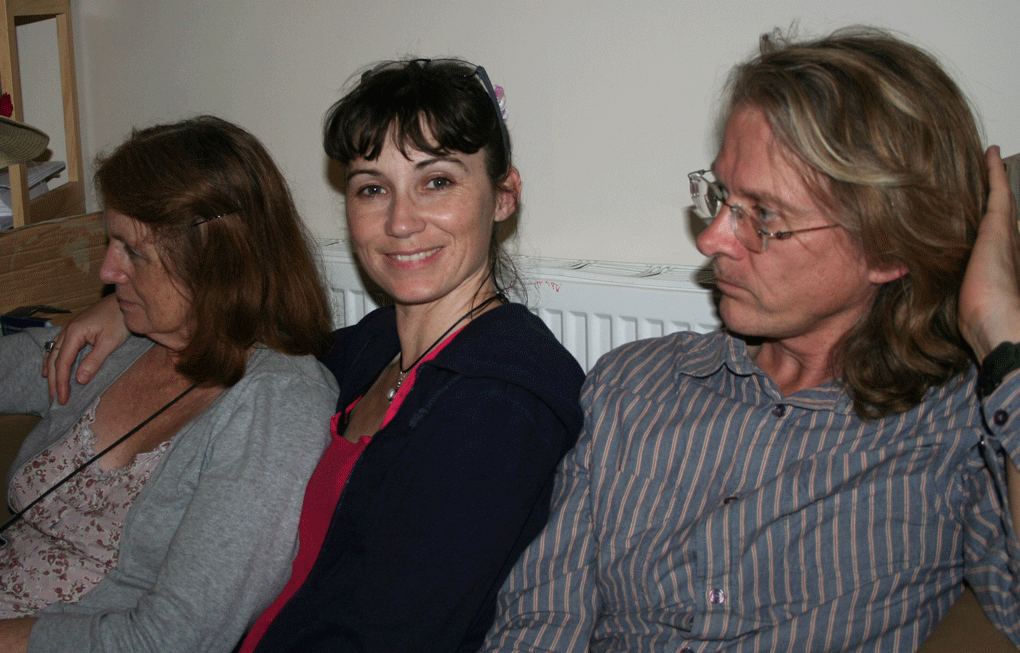
Margaret, Birthday Girl and Andy.
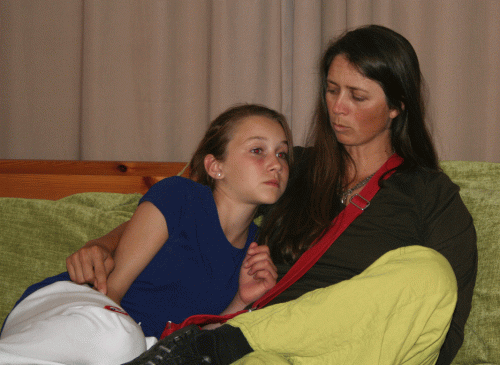
Kara and Auntie Anita
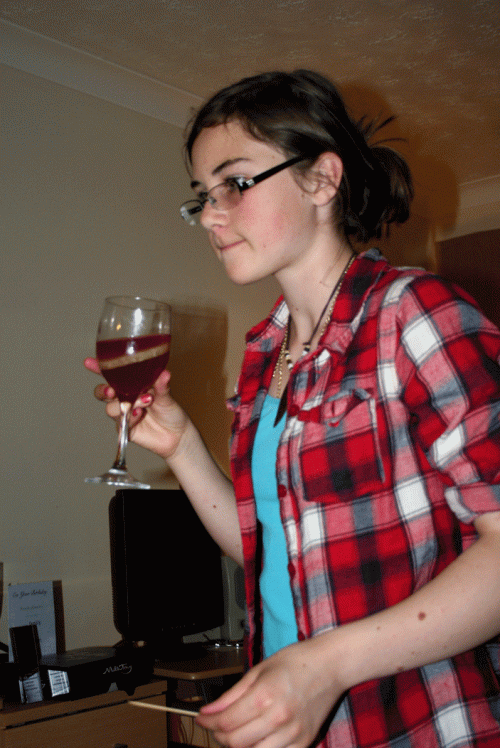
Amber experiments with a cocktail of fruit juice and a slice of pineapple
Having dipped on a Wryneck a few days ago at Portland and again on the 24th I wondered if this was becoming a jinx bird, which in a way is quite appropriate as it’s scientific name is Jynx torquilla. News of another at Middlebere had me heading down there early on the 26th where after a short wait I had brief but reasonable views of it on the lawn of the National Trust Cottages. Has the ‘jynx’ been lifted?
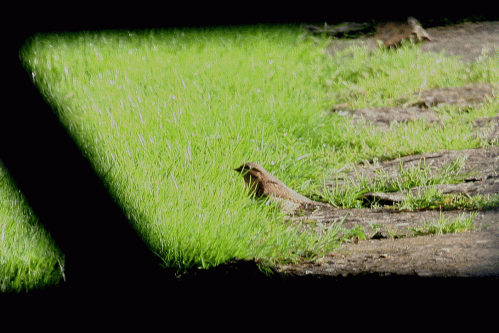
Wryneck at Middlebere, photographed through a five bar gate.
Far more important news is that Margaret’s younger daughter Anita and her husband John have arrived here for an extended stay. After leaving South Africa and travelling around central Europe for a month they flew to the UK on the 24th but a problem with bus availability meant they didn’t arrive in Poole until 0200 on the 25th. They will be staying for us for a while and we will see how their plans unfold.
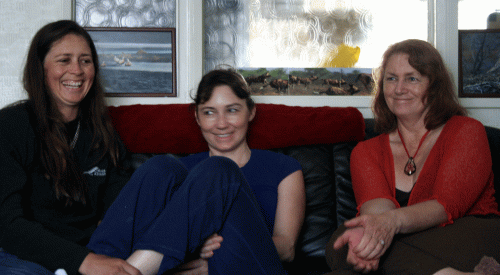
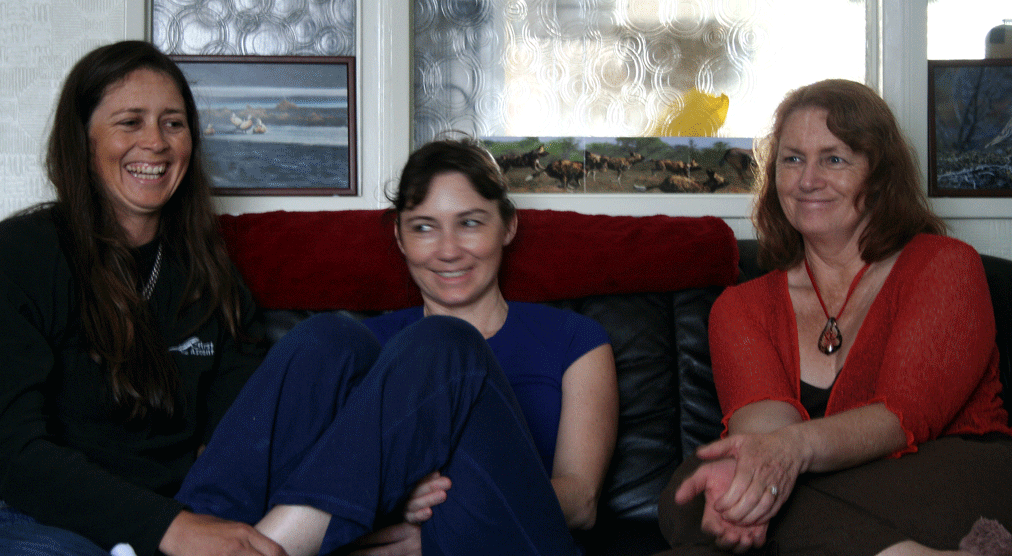
Re-united for the first time since our wedding in 2009 – Margaret with both her daughters, Anita and Janis.
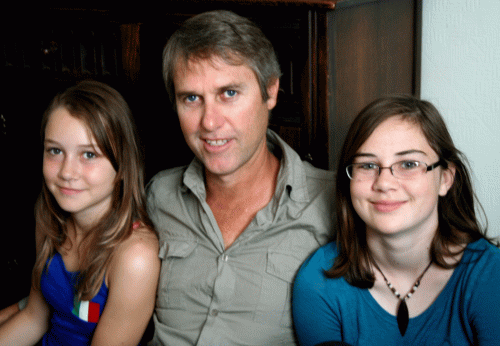
Kara and Amber with ‘favourite uncle’ John.
On the 26th Margaret, Anita and John met me at Corfe Castle after I had twitched the Middlebere Wryneck and then we all headed to Swanage and on to Durlston for short walk and a light lunch. On the way back we stopped at Kingston to show them the panoramic view of Corfe Castle. The traffic was horrendous with grockles galore and I’m glad we were heading north, not south in the early afternoon.
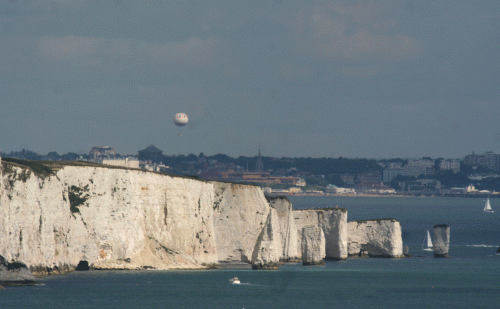
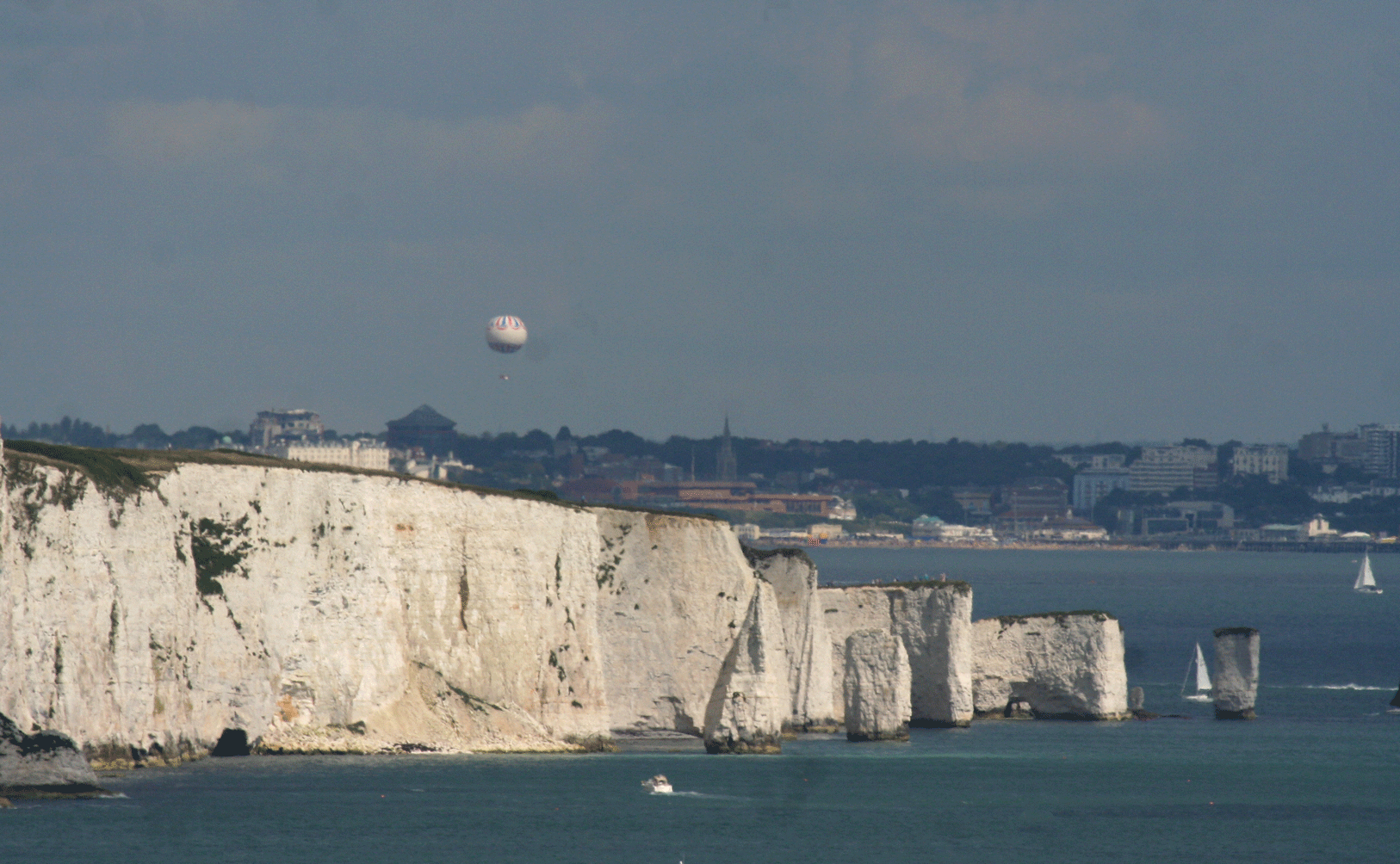
Ballard Down and Old Harry from Durlston Castle. The Bournemouth skyline and the ‘Bournemouth Eye’ (balloon) can be seen in the distance.

The 10th century Globe at Durlston.

Corfe Castle from near the Scott Arms. The Hartland and Godlingston heaths and Wareham Channel can be seen in the distance.
And the final bit of family news is that my niece Miriam got her GCSC results a couple of days after her 16th birthday. Four A*s and six A’s !!!!
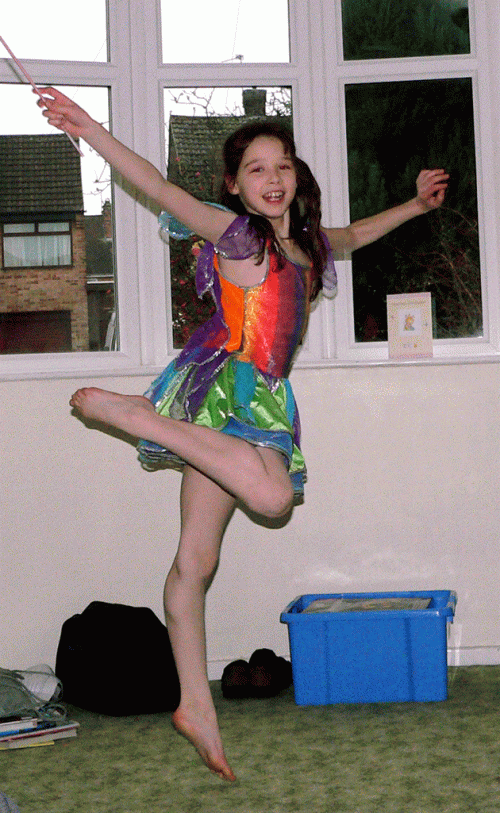
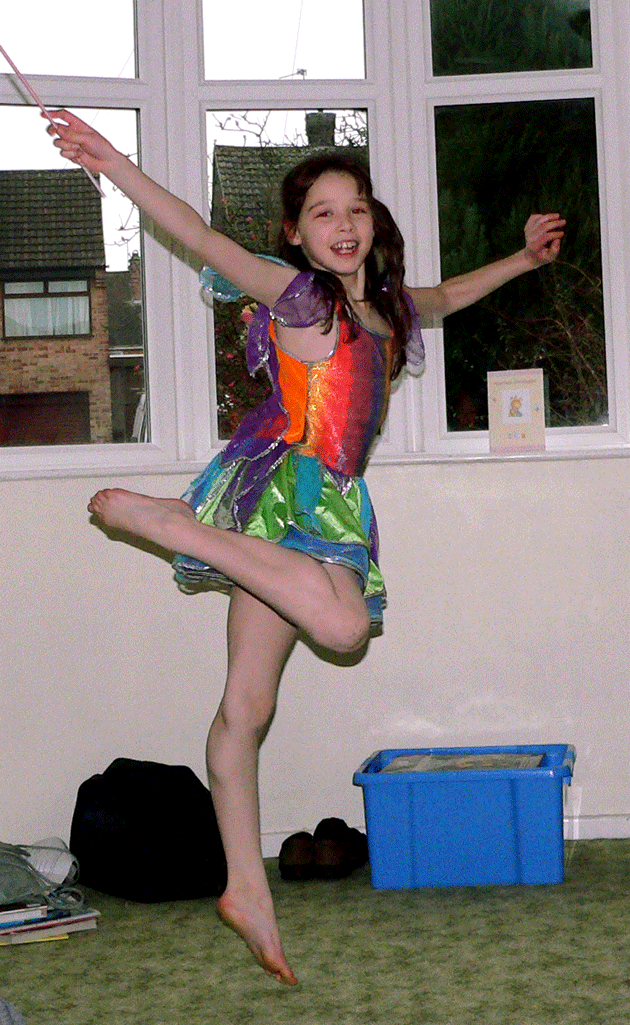
As I posted a recent photo of Miriam a few days ago, I though I’d dig out this one of her practicing ballet steps back in 2005.
Ringing at Durlston on the 20th was very successful, not only was it the best day of the year so far for numbers with 120 ringed, but we had an interesting mix of species. Single Redstart, Spotted Flycatcher and nine Garden Warblers were good enough, but these were eclipsed by the eight Pied Flycatchers we caught. We had no Pied Flys in 2011 but with the three Shaun ringed on the 19th, we have had eleven in two days. We would have probably had more had the wind not increased during the morning.
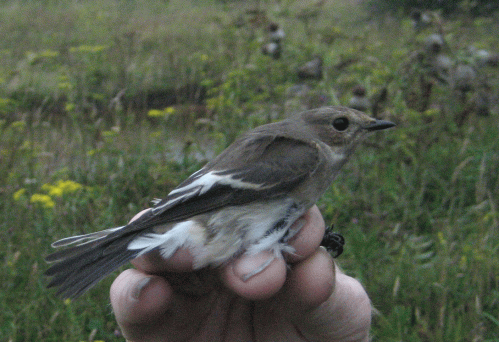
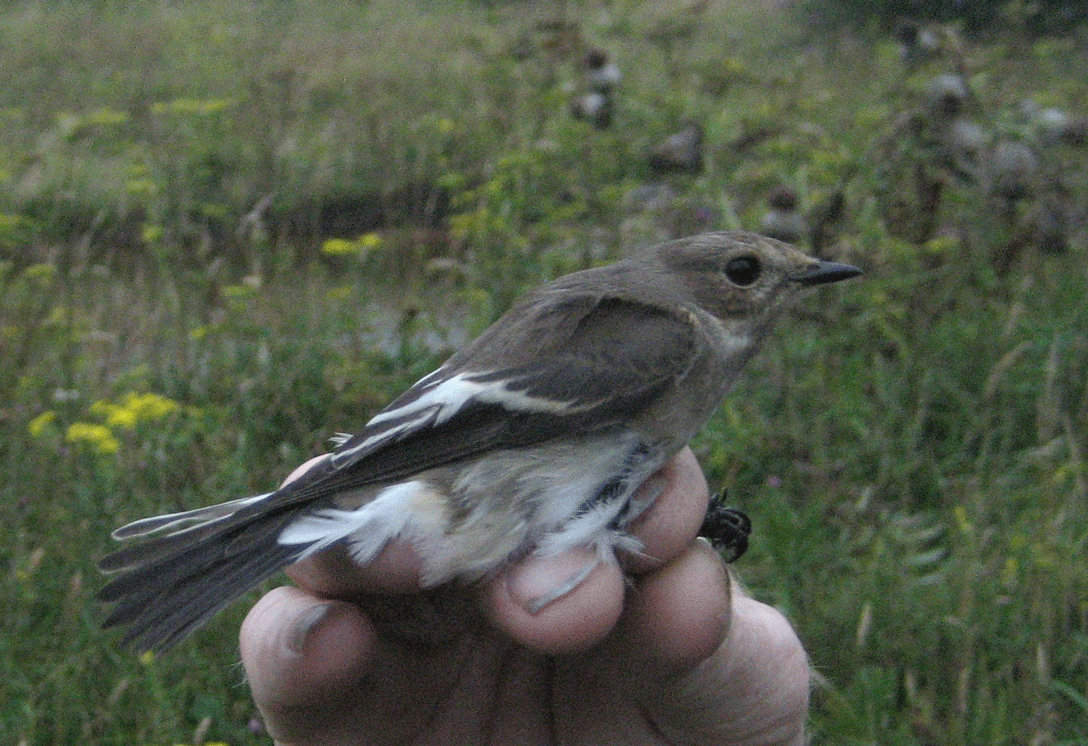
A first year Pied Flycatcher. The ruffled feathers are due to the stiff breeze that arose during the morning.
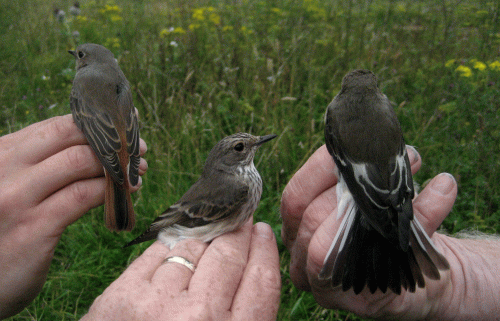
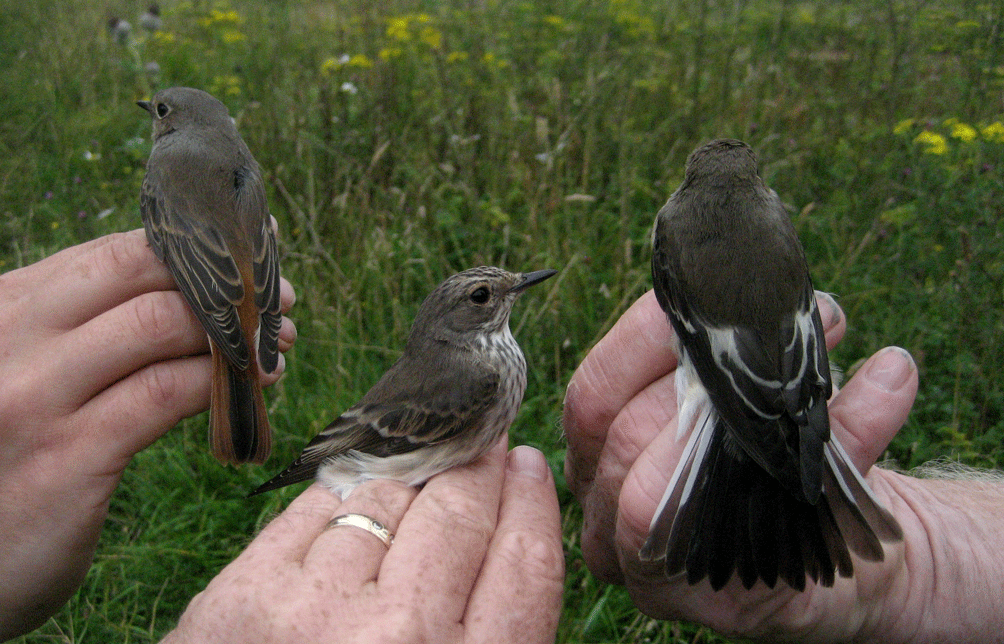
L-R: Redstart, Spotted Flycatcher and Pied Flycatcher.
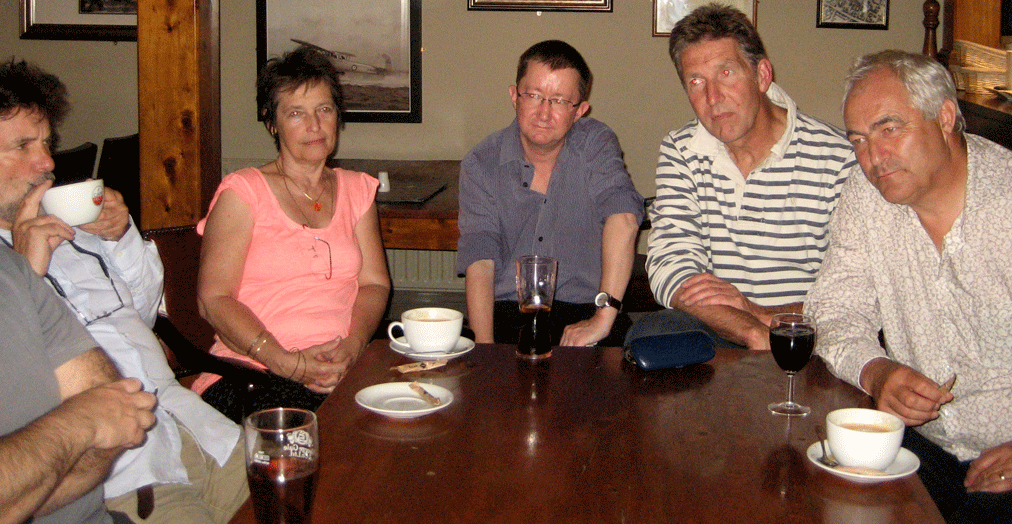
The ‘Catching The Bug’ saga continues as Mark and Mo Constantine brought Around van den Berg, Cecilia Bosman, Killian Mullarney and Magnus Robb back from the Bird Fair to Poole. A pub visit was hastily convened and 15 of us met for a drink on the evening of the 20th. Inevitably the book was the main subject of conversation and we had a good few laughs as a result.

Five of the fifteen birders at the pub, L-R: Arnoud van den Berg, Cecilia Bosman, Richard Webb, Killian Mullarney, Mark Constantine.
Going out to the pub and enjoying a few beers is not the best idea when you have to get up at 0430 to go ringing, but somehow I managed it. Michael Gould and I had a good morning but we only caught 50 birds, less than half of yesterday’s total, however a Grasshopper Warbler, two Tree Pipits and a good number of Whitethroats. Of particular interest was a family group of four Long-tailed Tits, as juveniles of this species undergo a complete moult, both the adults and young were in full wing moult, but at different stages and the year old unmoulted primaries of the adults were highly abraded. However I was on my own by that stage and photography wasn’t practical.

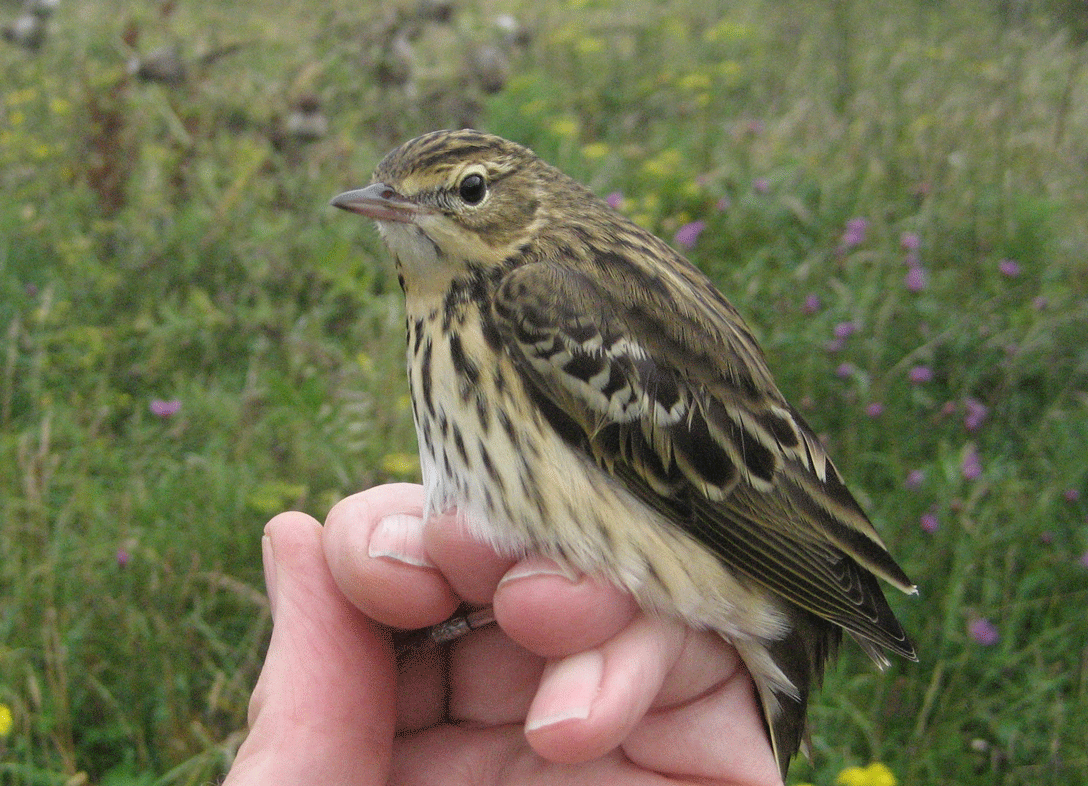
Although often seen flying overhead during migration periods, Tree Pipits are only ringed in small numbers.
After a busy weekend and two early morning visits to Durlston I had a bit of a lie-in on the 22nd, but about 0930 I headed off to the Verne on the north side of Portland where a Wryneck had been seen recently. Wryneck, a migratory woodpecker, is a scarce but annual visitor to Dorset but was once a regular breeder, it was described by Yarrell in the mid-nineteenth century as ‘a common species that was kept widely as a pet by country children’. In spite of much searching it wasn’t seen again that morning however my trip to Weymouth/Portland wasn’t wasted as I obtained good views of a Woodchat Shrike at Camp Road, although I have seen this rare migrant twice already this year and hence it didn’t add to my year list, it remains a notable sighting. Five Yellow Wagtails, similar numbers of Wheatears and lots of feeding Swallows and Sand Martins provided further entertainment.

Woodchat Shrike (photo from the internet).
On the 23rd I returned to Durlston where we had a reasonable morning, similar to the 21st with 47 birds ringed. Interesting birds ringed included four Tree Pipits, several Garden Warblers and Whitethroats and a Redstart. A Lesser Whitethroat, up to four Spotted Flycatchers (which kept perching on the top string of the nets) and a Wheatear. There was a light passage of Swallows and Sand Martins. However as so often happens, I left my memory card in the computer, so no photos from today.
Back home I was pleased to see the giant eucalyptus next door is getting a serious prune. With the trimming of our big tree a few weeks ago, it means that last our garden is getting some light.

After years of having our lawn covered with fallen eucalyptus leaves and twigs, next door’s giant blue gum is getting pruned.
As we usually do, we headed up to the Rutland Bird Fair and again year we took Amber and Kara with us. Leaving at 0630 we arrived about 0950, even at that time of the day it was hot inside the marquees. I wanted to hear a talks by Mike Watson of Birdquest on Oman (a trip I have been on with him), Mark Constantine’s talk on his new book and one on the filming of the BBC’s amazing Birds of Paradise program, all of which we managed to do. The rest of the day was spent visiting friends on various stands, although as always there was far more to do than time available.
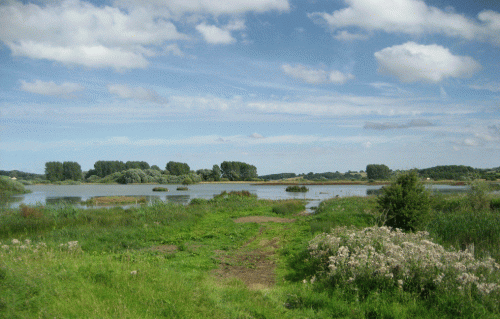
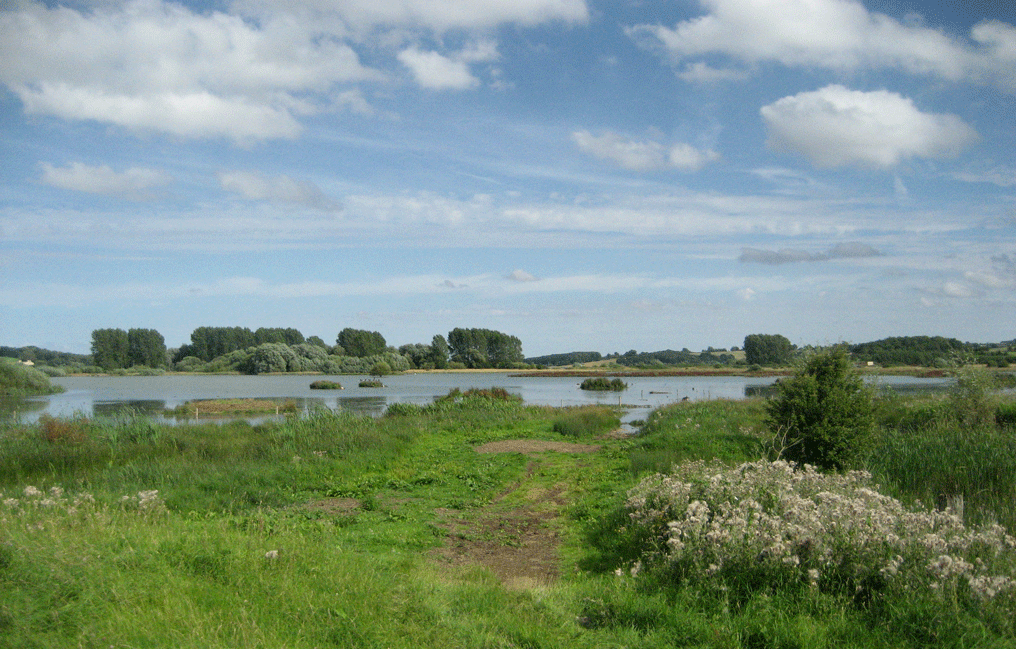
Recent rain has meant that the Rutland Water has no muddy margins, so few waders were on show, but single Osprey was seen. Conditions were so bad in July that it looked like the Bird Fair was going to have to be cancelled.
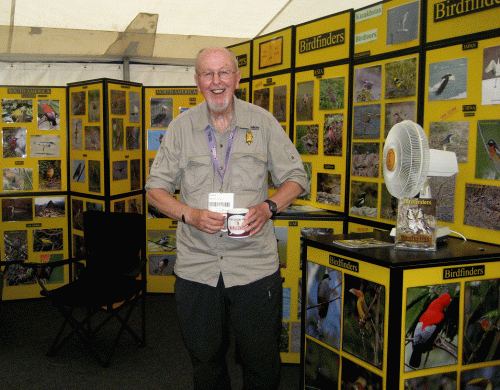
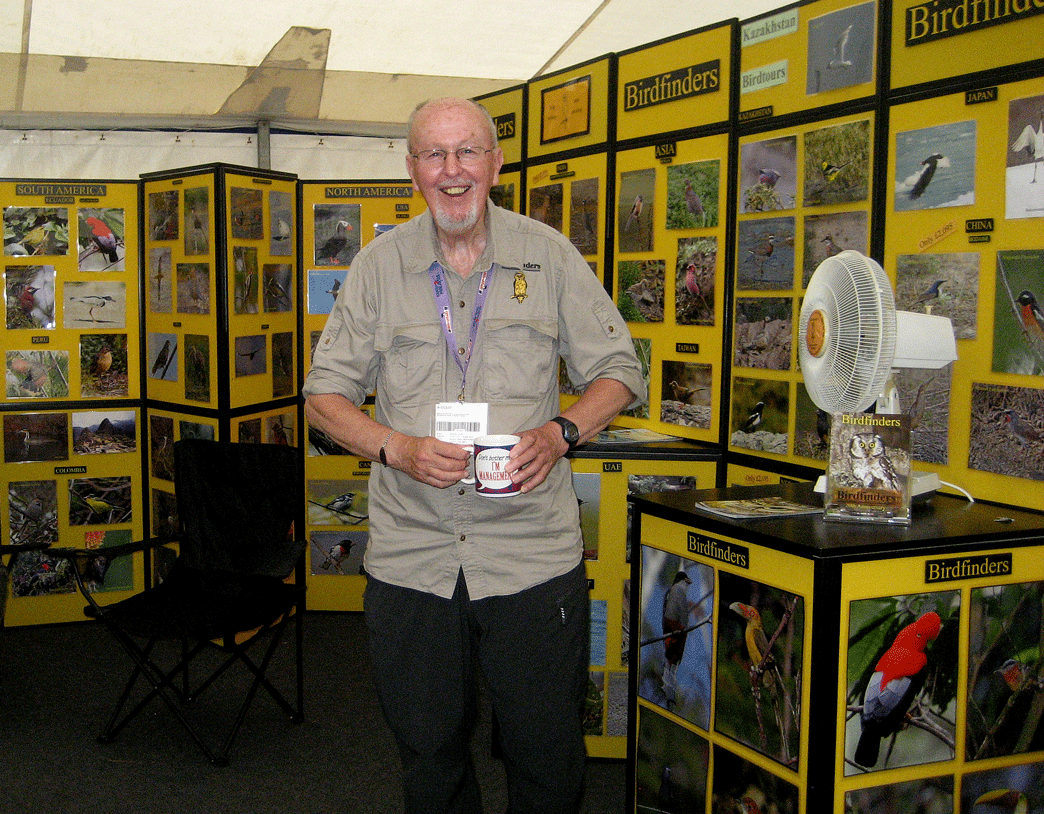
My old friend Peter Basterfield on the Birdfinders stand. Peter used to lead for Birdfinders but has had to give up following a serious road accident in India. Like me Peter used to work in medical laboratories, I first met him on Scilly in 1979 and we have kept in touch since.

I always visit the Dutch Birding / Sound Approach stand. L-R facing the camera, Around van den Berg, Magnus Robb, Rene Pop, AN Other. At the back Mark is sat down, Mo is facing left and Paul Morton is standing up with the checked shirt.

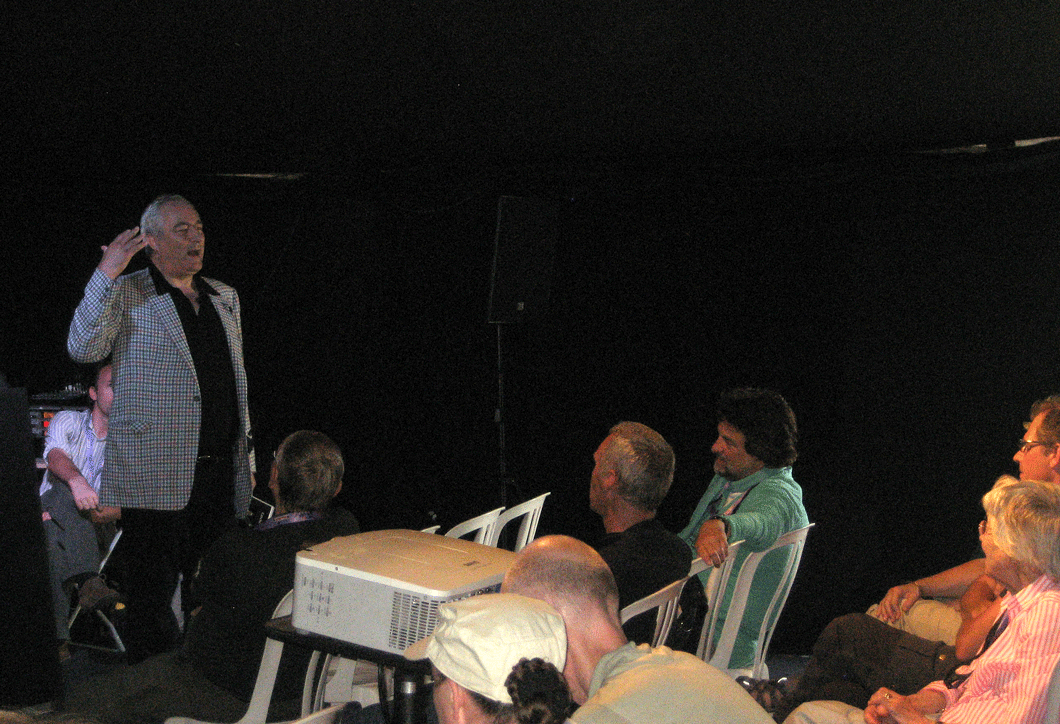
Mark giving his talk on Catching The Bug
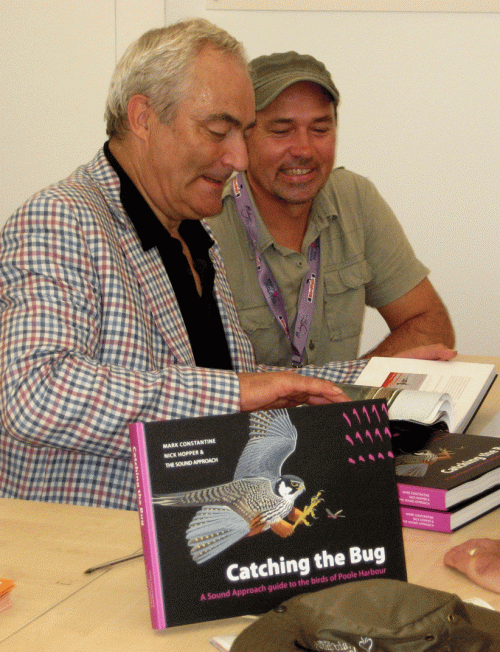
…….. and Mark and Nick signing copies of their book.

It was a long and tiring day, fortunately the driver stayed awake.
We all spent Saturday night at my brother’s place in Derby. We usually visit this weekend as it falls close to my niece Miriam’s birthday. Simon, who runs a degree course in Acoustics and Stage presentation at Derby University, went through a recording of the Olympic opening ceremony explaining how it was all done.
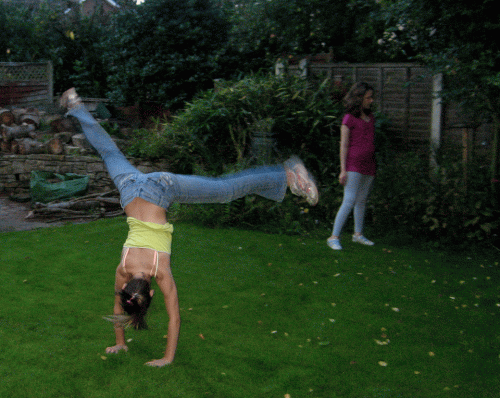
In Simon and Viv’s garden, Kara shows off her cartwheeling skills.
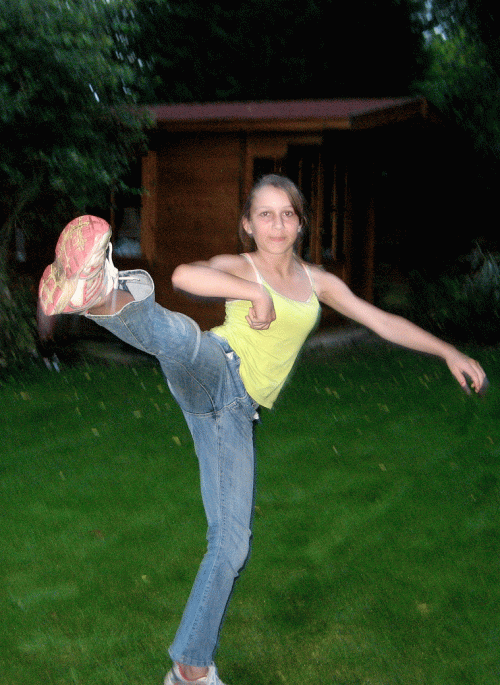
Kara has been selected to trial for the national Taekwondo team, not bad as she has been training for less than a year.
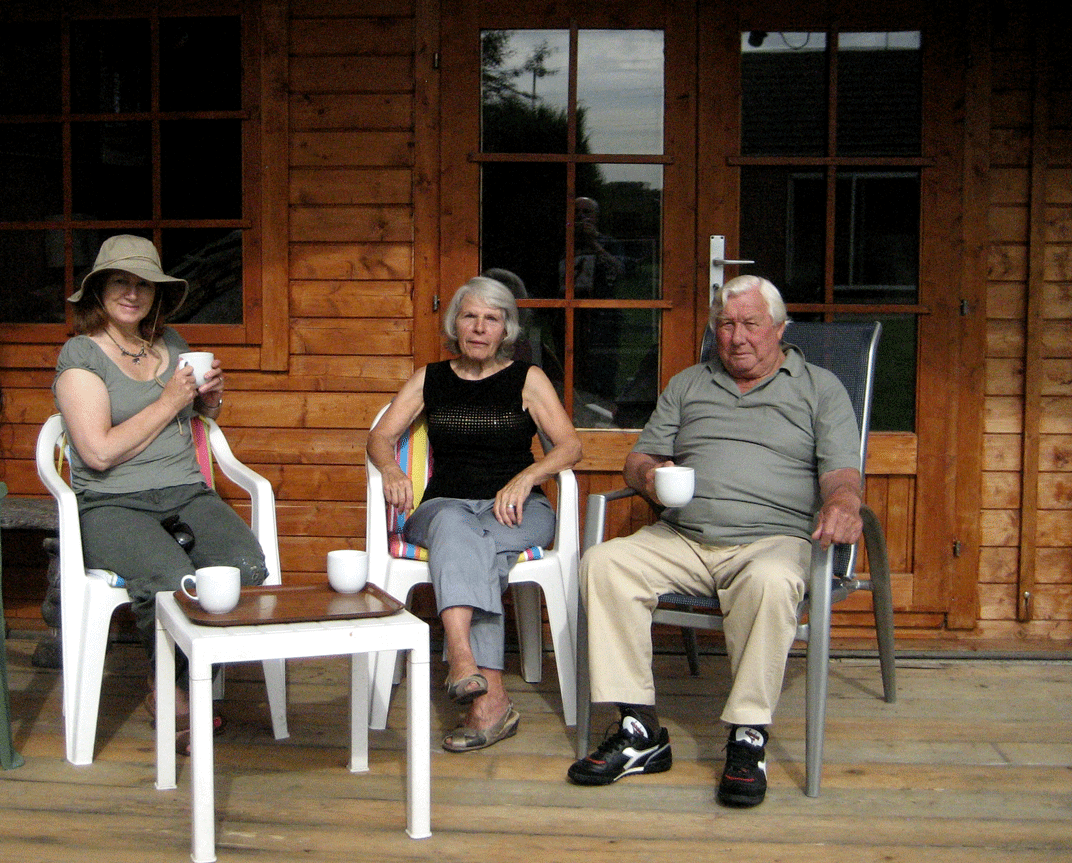
On Sunday morning we called in to see my sister-in-laws parents, Ida and Dennis and as always were entertained by their highly positive outlook on life.
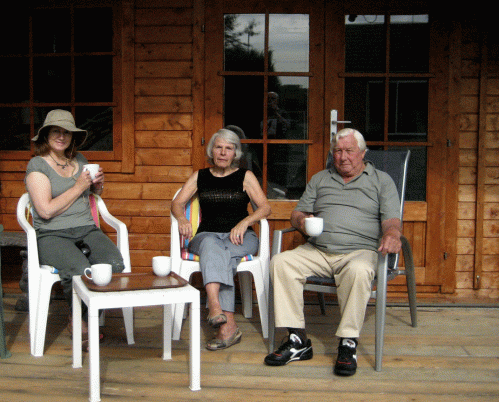
Margaret with Ida and Dennis relaxing in their garden.
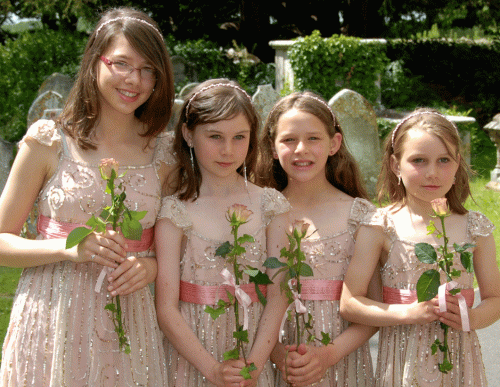
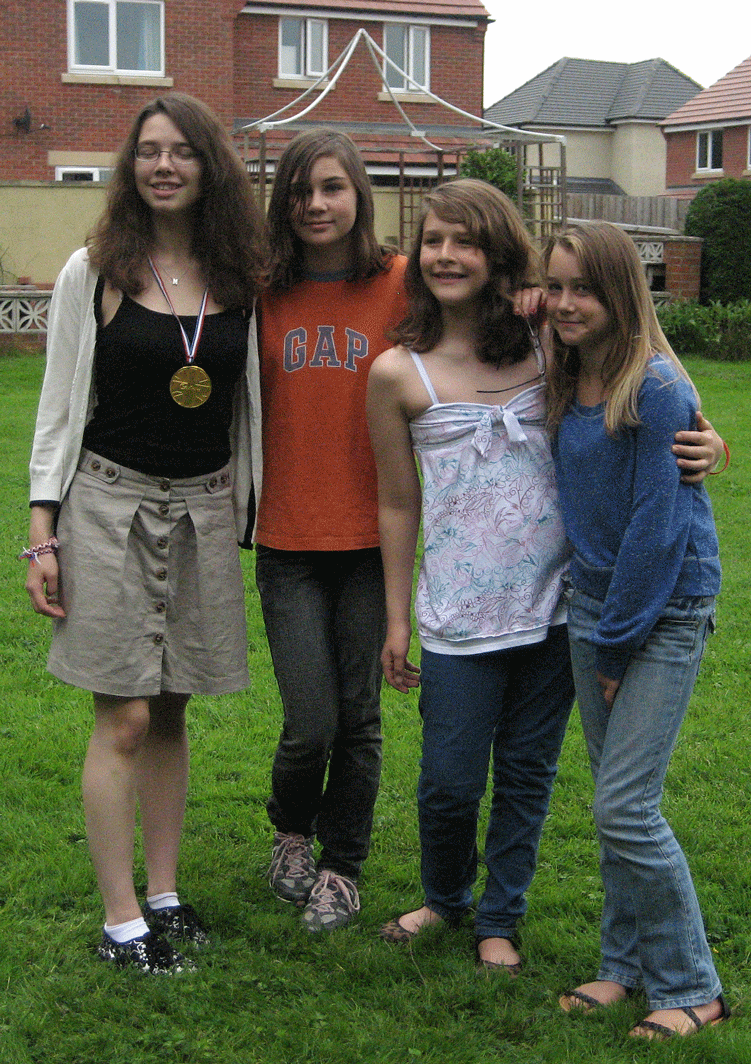
Miriam, Amber, Jennifer and Kara at our wedding in June 2009 ……….

………. and again in August 2012 – haven’t they grown up!
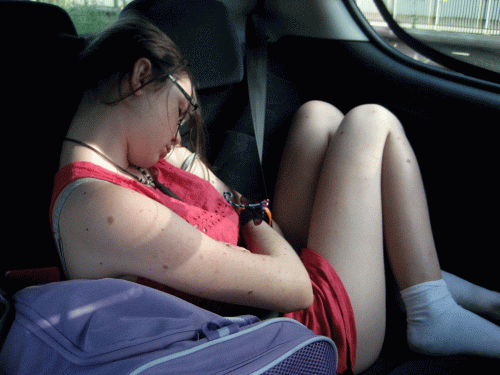
Then it was the long and tiring drive back to Poole
Well this weekend was an almost exact copy of the equivalent date in 2011, right down to what I missed by going away. Just as happened in 2011, no sooner had I got in the car, then an Aquatic Warbler was trapped at Lytchett Bay, and this year it was not an Aquatic but two! Although I have seen Aquatics before in Dorset and ringed a few, missing this globally threatened species still rankles. Yes, lightning really does strike twice!
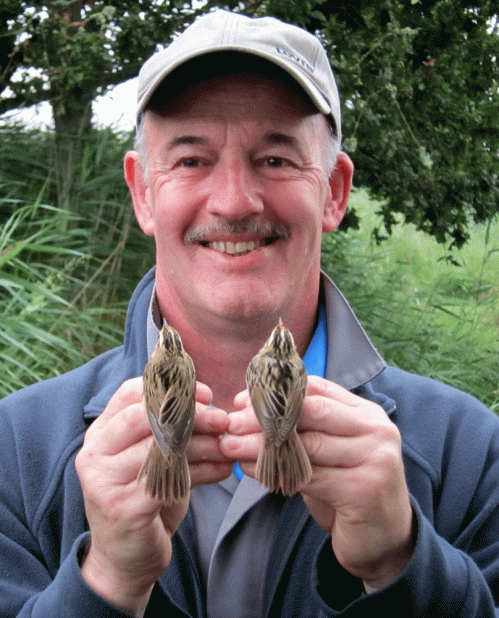
Bob with Aquatic Warblers, 18.8.12. Photo by Terry Elborne.





































 gryllosblog